The CPG manufacturer expects to eliminate as much as 30% of its product-supply headcount by 2030.
The CPG company expects to eliminate as much as 30% of its product-supply headcount by 2030.
Page 27 of 48 • Total 9541 articles available in the daily news directory.
📅 24 Nov 2026 | ⏱️ 1 min read (36 words, ⚡ Quick Read) | Source: Supplychaindive
The CPG manufacturer expects to eliminate as much as 30% of its product-supply headcount by 2030.
The CPG company expects to eliminate as much as 30% of its product-supply headcount by 2030.

📅 15 Oct 2026 | ⏱️ 11 min read (2147 words, 📚 Deep Dive) | Source: Mit
Sources indicate that for the fifth year in a row, MIT Sloan Management Review and Boston Consulting Group (BCG) have assembled an international panel of AI experts comprising academics and practitioners to help us understand how responsible artificial intelligence is being implemented across organizations worldwide. In previous posts this year, we have explored AI’s impact on the workforce, what human verification of AI outputs entails, and how to think about agent autonomy.
According to recent reports, new research has emerged suggesting AI overuse or overreliance risks degrading our cognitive and moral judgment, resulting in “epistemic de-skilling” and reduced critical thinking skills. Evidence-based concerns about AI’s impacts on children’s cognitive and emotional development, in particular, led New York City to introduce the nation’s first ban on generative AI in schools.
Given the increasing salience of these worries, as a final provocation in this series, we asked our panel to react to the following: The defining challenge of responsible AI will be preserving trustworthy human judgment in the face of capable machines. The majority (65%) of our panelists agree or strongly agree with the statement, contending that human judgment is a muscle worth preserving, even if it is increasingly at risk of atrophy. However, a significant minority (19%) disagree or strongly disagree, and a further 15% remain neutral (neither agreeing nor disagreeing). The experts diverge on what human judgment means and how it differs from human oversight, and cite its inherent limitations. But beneath the surface, broader agreement appears to exist around this concept: The goal isn’t to preserve human judgment for its own sake but to design human-machine systems that keep trustworthy human judgment available when it matters most.
Below, we share panelist insights and offer practical recommendations for organizations looking to create systems that build in room for meaningful human judgment as AI grows more pervasive and capable.
Industry observers note that human judgment is a muscle worth preserving. Most of the experts believe that human judgment is worth preserving while machines’ capabilities increase. Ben Dias, IAG’s chief AI scientist, says, “The defining challenge of responsible AI will most certainly be preserving trustworthy human judgment as increasingly capable AI systems operate at greater speed and scale.” Similarly, Alyssa Lefaivre Škopac, Alberta Machine Intelligence Institute’s director of AI trust and safety, believes that “judgment, critical thinking, and the ability to evaluate AI outputs and actions will be the most crucial and differentiated skills going forward.”.
For many of our panelists, human judgment is critical for providing context that machines lack. United Nations University rector Tshilidzi Marwala says, “AI can process information and generate recommendations at extraordinary speed, but capability does not equal wisdom, context, or legitimacy.” Consultant Pierre-Yves Calloc’h explains: “AI systems live in digital worlds, which are a partial representation of reality.” He adds, “Only a human living in the real world can assess whether an answer or recommended action generated from a prompt and the model’s training material is truly fit for purpose.” For Automation Anywhere’s Yan Chow, “human judgment matters most where machines are weak — novel situations, ethical trade-offs, context not captured in training of large language models.”.
It has been revealed that many experts also contend that preserving human judgment is essential for maintaining human agency and accountability. “Human judgment, grounded in expertise and experience, is what lets us steer, verify, question, make trade-offs, and stay accountable when working with AI,” says consultant Linda Leopold, and serves as “the foundation of human agency.” But she also cautions that “judgment and critical thinking are the skills we risk losing if we rely too heavily on AI, which is why preserving them is essential.” Marwala agrees that the defining challenge of responsible AI will be ensuring that “humans retain meaningful judgment, agency, and accountability” as machines’ capability expands.
Sources indicate that the answer is not simply to keep a human in the loop. Many experts also recognize the limits of human judgment. As GovLab chief research and development officer Stefan Verhulst notes, “Human judgment was never inherently trustworthy.” Chow explains that “humans face fatigue, bias, lack of experience or expertise, and poor calibration under uncertainty.” In fact, Instalily.ai CEO Amit Shah cautions that “keeping humans continuously in the loop can actually degrade quality by reintroducing inconsistency and error into decisions machines may be better equipped to make.” Going further, Yasodara Cordova, distinguished member of the investments committee of the Co-Develop fund, cautions that “human judgment has never been uniformly trustworthy, and building machines to defer to it risks encoding existing hierarchies of whose judgment counts as legitimate.”.
Given the limits of human judgment, TÜV AI.Lab CEO Franziska Weindauer argues that “a human in the loop does not automatically make a system trustworthy.” For RAIght.ai co-CEO Richard Benjamins, “Human judgment is a bigger idea than oversight alone,” and what actually needs preserving is judgment that “serves humanity as a whole, not just the interests of particular groups.” Taking this a step further, Stanford CodeX fellow Riyanka Roy Choudhury argues that “neither human nor machine judgment should be presumed trustworthy.” For Choudhury, trustworthiness means that “no decision maker, human or artificial, should be the judge, jury, and final appeal.”.
It has been revealed that growing AI reliance threatens to displace and erode trustworthy human judgment. Despite a consensus around the worth of preserving human judgment, our experts worry that a growing reliance on AI threatens its displacement and erosion due to “incentives to adopt, automate, and optimize,” as Škopac puts it. Dias observes that “as AI production outpaces the capacity for meaningful human oversight, human review becomes the bottleneck, [and] people are progressively removed from decisions.” And Renato Leite Monteiro, vice president of privacy, data protection, AI, and intellectual property at e&, worries that because “AI is anthropomorphized and agreeable by design,” we will “quietly stop valuing the judgment of the people we ask to supervise [it].” The risk, says Ranier Hoffmann, chief data officer at EnBW, “is that organizations design judgment out of the work while leaving humans nominally accountable.”.
Recent findings suggest that experts also worry the trend of overreliance threatens moral and cognitive capacity. As Hoffmann observes, judgment “develops through consequential decisions, including wrong ones.” When machines decide, “they remove the ground on which judgment was trained,” he adds. Škopac agrees that “as more entry-level tasks get offloaded, so does the learning, muscle memory, and scar tissue that accompany these ‘tedious’ tasks that we understandably see an opportunity to automate.” Dias cautions that “prolonged human disengagement erodes the expertise needed to recognize failures and intervene effectively.” Researcher Kirtan Padh hopes we can use AI to improve “productivity, without losing our learning and critical thinking skills.”.
Sources indicate that trustworthy systems focus on human-machine collaboration. In the end, Shah says, “the defining challenge of responsible AI is not preserving human judgment for its own sake.” Instead, as AI grows more capable, ADP’s chief product owner Naomi Lariviere believes, the challenge will be figuring out “where human judgment actually matters.” For Shah, “human judgment belongs primarily upstream: setting objectives and guardrails, defining thresholds for autonomous action, determining when uncertainty or out-of-distribution cases require escalation, and assigning responsibility for outcomes.” For Wharton School professor Kartik Hosanagar and others, it matters most for “mission-critical tasks” and in “high-stakes settings.”.
For many experts, preserving trustworthy human judgment when it counts is a matter of design. Because “humans and machines excel in different scenarios,” Chow contends we must build “systems that recognize that difference.” Verhulst agrees we should design “human-machine judgment environments in which each compensates for the weaknesses of the other.” Škopac is optimistic that “after a few scraped knees, it’s going to become clear that completely offloading to AI results in worse outcomes, low morale, and more embarrassing headlines.” If we strike the right balance, Dias believes, we can “preserve human accountability, competence, and authority, while maximizing the value extracted from AI.”.
Considering the above, we offer the following recommendations for organizations seeking to design systems for human-machine collaboration that preserve the opportunity for trustworthy human judgment:.
1. Identify where human judgment matters. Not every decision requires human review or intervention. Organizations should identify where human judgment matters in their specific decision-making processes and workflows, and focus on preserving the opportunity for human judgment in the context of high-stakes and low-precedent decisions.
What’s more, human judgment will continue to be essential in determining the philosophical bases on which human-AI machines operate. What is the purpose of a given application? What actions do we allow the system to take autonomously? What is appropriate evidence for a decision — that is, when do we know enough to make a decision? These questions should be foundational to the design of every AI system, presenting the earliest embodiment of human judgment and accountability for AI. As Shah remarks, human judgment is critical to these “upstream” concerns.
2. Create the opportunity for human judgment by design. Where human judgment matters, the opportunity to exercise it must be designed into the system, not assumed that it will exist. Simply keeping a human in the loop is not enough here. A human asked to review or approve an outcome requires the context and evidence necessary to make an informed judgment. And human review cannot occur after the fact when there is little practical ability to change the outcome. Organizations should build the opportunity for real human review and intervention into the system, process, or workflow from the outset, so that when judgment is needed, there’s an actual point at which it can be exercised.
3. Use it or lose it. Judgment is a skill that will atrophy if it isn’t exercised, and the high-stakes, low-precedent decisions where human judgment matters most are too rare to provide the only training ground. Organizations should deliberately build in opportunities to exercise judgment outside of high-stakes moments, through simulations, case studies, and postmortem or retrospective exercises. They should go a step further, deliberately keeping some lower-stakes decisions in the hands of humans instead of offloading to AI as practice for when it counts. Retaining human decision-making will carry a small near-term opportunity cost but will have net benefits over the long term by building critical organizational capacity.
4. Calibrate training by level. How judgment is honed should look different depending on experience level. Junior team members need chances to build judgment they haven’t yet developed, while senior decision makers have established judgment but fewer opportunities to exercise it when they rely more on AI-assisted tools or delegate routine decisions. Organizations should design distinct pathways for individuals of different levels of experience.
Industry observers note that 5. Build feedback loops. Neither human nor machine judgment should be trusted by default. Organizations should track outcomes on both sides, such as when the human override of an AI recommendation was right or wrong, or when deference to the AI output was right or wrong. This record can help organizations recalibrate where responsibility should sit, since human-machine collaboration is something that will require ongoing adjustments as AI capabilities evolve. It will also be critical to assess whether human oversight is effective.
Industry observers note that do human reviewers blindly follow the AI recommendations or do they exhibit true judgment? This analysis will identify areas that may require redesign, additional training, or other interventions.
MIT Sloan Management Review and Boston Consulting Group assembled an international panel of more than 50 industry practitioners, academics, researchers, and policy makers to share their views on core problems pertaining to responsible AI. Over the course of five months, we will ask the panelists to answer a question about responsible AI and briefly explain their response. Readers can see all panelist responses and comments in the panel at the bottom of each article and continue the discussion in AI for Leaders, a LinkedIn community designed to foster conversation among like-minded technology experts and leaders.
Sources indicate that elizabeth M. Renieris is contributing editor for the MIT Sloan Management Review Responsible AI Big Idea program, a senior research associate at Oxford’s Institute for Ethics in AI, a senior fellow at the Centre for International Governance Innovation, and author of Beyond Data: Reclaiming Human Rights at the Dawn of the Metaverse (MIT Press, 2023). Learn more about her work here. David Kiron is editorial director, research, at MIT Sloan Management Review and coauthor of the book Workforce Ecosystems: Reaching Strategic Goals With People, Partners, and Technology (MIT Press, 2023). Steven Mills is a managing director and partner at Boston Consulting Group, where he serves as the chief AI ethics officer. Anne Kleppe is a managing director and partner at Boston Consulting Group, where she serves as the global lead for responsible AI.
It has been revealed that © Massachusetts Institute of Technology. Content may be reproduced and distributed for personal, scholarly, and other noncommercial educational purposes, with attribution. For all other permissions and commercial licensing, contact smr-licensing@mit.edu.

📅 26 Nov 2026 | ⏱️ 4 min read (701 words, 📚 Deep Dive) | Source: Freightwaves
Recent findings suggest that (UPDATED: Nov. 27, 2:50 p.m. ET).
FedEx Corp. McDonnell Douglas MD-11 cargo jet overran the runway at Miami International Airport amid heavy rain and thunderstorms, causing the Federal Aviation Administration to problem a temporary ground stop of all flight activity during a busy holiday travel day.
Less than three months ago, an Amazon Air Boeing 767 freighter had a runway excursion at Miami airport, hit a vehicle, crashed through the fence and crossed a road before coming to a stop, resulting in the death of five people and serious injuries to other people.
“A FedEx aircraft overran Runway 26R at Miami International Airport at approximately 8:40 p.m. All runways are closed except for the south runway (9R). Miami-Dade Fire Rescue units have responded, and there are no reported injuries,” the airport mentioned in a statement. There were two pilots on board the aircraft.
The large FedEx (NYSE: FDX) freighter arriving from the organization’s global hub in Memphis, Tennessee, missed the target runway’s landing zone, turned slightly left after leaving the runway to avoid a localizer antenna and came to a stop near the airport perimeter fence, according to The Aviation Herald.
“FedEx Flight 910 from Memphis to Miami experienced an issue upon landing Wednesday evening at Miami International Airport. We are grateful that our crew is safe and there are no reported injuries. We are coordinating closely with investigating authorities, and any additional questions should be referred to the FAA,” FedEx noted in a statement.
The MD-11 was towed to the FedEx ramp and Runway 8L-27R was reopened on Friday, Miami airport spokesman Greg Chin said. All packages have been retrieved and are being delivered, a FedEx spokesman said.
The National Transportation Safety Board said it is investigating the incident.
🚨 NEW VIDEO: A closer look at the FedEx cargo plane that overran the runway at #Miami International Airport Wednesday night.The MD-11 was arriving from Memphis when it went beyond Runway 26R and ended up in the grass.The incident prompted an FAA ground stop and forced the… pic.twitter.com/Q9kUpuXkYy.
Executives late last month remarked that most of the company’s 27 MD-11 tri-engine jets have returned to service after fixing a design flaw that investigators have primarily attributed to the fatal crash last November of an MD-11 operated by UPS.
According to recent reports, the MD-11 will likely be idle for an indefinite period to allow for an investigation of the incident and inspect the plane for potential damage. The loss of availability creates a logistics headache for FedEx during the peak shipping season, but the manufacturer will likely be able to replace the capacity with reserve aircraft, using an outside carrier or relying more on its truck network.
Recent findings suggest that why It Matters: Cargo airlines have been involved in a series of accidents at Miami airport in the second half of the year. Earlier this month, A UPS Boeing 767-300 freighter aircraft sustained damage in a low-speed ground collision when the pilots got too close to an intersection and a passenger jet moving towards its gate struck the plane with its wing tip.
According to recent reports, the National Transportation Safety Board is still investigating the Amazon Air accident. Amazon’s Boeing 767-300 aircraft was operated by third-party carrier 21 Air.
Industry observers note that according to the NTSB’s preliminary report, the crew came in too fast and was unable to extend the flaps to the proper landing position. The plane was above the proper glide slope and when the crew pushed the nose down to get back on the proper glide slope it caused the plane to gain speed. Instead of executing a go-around, the plane touched down long on the runway with one wheel and it took several seconds for the other wheels to touch down. By then, it was too late to stop and the plane rolled past the runway.
Click here for more FreightWaves/American Shipper stories by Eric Kulisch.
UPS accident in Miami sidelines 767 freighter during busy shipping season.
CooperVision contact lens shipment stranded on disabled Amazon cargo jet.
Amazon calls timeout on 21 Air cargo contract.
2 Miami runways still closed after deadly Amazon cargo jet accident.

📅 30 Apr 2026 | ⏱️ 4 min read (868 words, 📚 Deep Dive) | Source: Dlnews
A wallet belonging to Andean Medjedovic, the hacker allegedly behind the Indexed Finance and Kyberswap exploits, is active again after a year-long hiatus.
On Wednesday, the wallet sent some $13.5 million worth of Ether tokens to Tornado Cash, a popular tool for laundering stolen crypto, onchain records show.
It has been revealed that it’s not clear if Medjedovic himself is behind the transactions. The hacker has previously been accused of conspiring with another person to move stolen funds.
“It’s concerning to see a threat actor act with such confidence after exploiting multiple victims,” Specter, a pseudonymous blockchain investigator who has tracked Medjedovic’s onchain activity, mentioned.
“Hopefully, he is apprehended and held accountable.”.
Between 2021 and 2023, Medjedovic allegedly stole approximately $65 million by exploiting code bugs in two decentralised finance protocols: Indexed Finance and Kyberswap.
In February last year, Medjedovic was charged with wire fraud, computer hacking and attempted extortion by the US Department of Justice in connection with the two hacks.
Yet Medjedovic claims he’s innocent. He doesn’t deny his involvement, but argues that his actions were legitimate trades that exploited how the protocols’ code was written. This view is often referred to as “code is law” by industry insiders.
The recent activity brings the total amount of money laundered from Medjedovic’s hacks to almost $25 million.
Medjedovic, a Canadian national, is regarded as a former maths prodigy, having graduated high school at age 14.
Industry observers note that he enrolled at the University of Waterloo, the same university attended by Ethereum co-founder Vitalik Buterin. He completed an undergraduate degree in pure mathematics in three years compared to the usual four, and went on to complete a master’s degree in just one year.
Shortly after graduating, Medjedovic was identified in connection with the $16 million Indexed Finance hack in October 2021 through a seemingly trivial digital breadcrumb.
In a careless moment of vanity, he edited — under a user name associated with him — a Wikipedia page for a Canadian TV show he’d once appeared on and added himself to the list of show’s notable alumni as a “notable mathematician.”.
It has been revealed that medjedovic had previously used that same user name to enter a competitive programming event, where he used wallets connected to those that hacked Indexed Finance. That was enough to connect the dots between his real identity and the heist. But it wasn’t enough to bring him to justice.
Medjedovic went on the run in December 2021 after a judge in Ontario issued an arrest warrant when he failed to show up for a court appearance.
It has been revealed that in early 2023, Medjedovic told DL News he was still on the run and living on an island which he declined to name. During conversations, he repeatedly steered the conversation towards his social views: He disparaged women and made numerous racist comments.
Medjedovic also claimed that he had switched over to being a “whitehat” — an ethical computer security expert who hacks into systems with permission to identify vulnerabilities, strengthen security, and prevent malicious attacks.
Yet months later, wallets tied to the Indexed Finance hack began receiving funds from those used in the $48 million Kyperswap hack, linking Medjedovic to the more recent theft as well.
The next time Medjedovic appeared in public records was when he was arrested in Serbia in 2024 on a warrant from the Netherlands, which accused him of being behind the two crypto hacks.
Medjedovic denied the charges and was released in November that year due to insufficient evidence.
The Belgrade Higher Court’s decision noted that Dutch prosecutors had not sufficiently proven Medjedovic was the perpetrator of the hacks, and that even if he was, those crimes carried too light a sentence domestically to be worthy of extradition.
On February 20, just over a year after the DoJ indictment, legal filings indicated Medjedovic had retained lobbying and government relations firm JM Burkman & Associates with the goal of seeking a presidential pardon.
The filings show Medjedovic paid $300,000 up front for six months of services.
The lobbying firm stated it looks to argue that Medjedovic’s case should be dismissed because similar conduct is usually left to regulators to evaluate, similar cases have been dismissed or resolved favorably in the past year, and because the case has little, if any, connection to the US.In March last year, the US Securities and Exchanges Commission dismissed charges against BitClout founder Nader Al-Naji. In July 2024, Al-Naji was charged by the DoJ and the SEC for fraud and selling unregistered securities, with accusations that he misused $7 million in investor funds for personal luxury expenses.
Recent findings suggest that in October, Roger Ver, an entrepreneur and Bitcoin investor, entered a deferred prosecution agreement with the DoJ. Ver paid the IRS nearly $50 million in back taxes, penalties, and interest stemming from his failure to properly report his Bitcoin holdings on tax returns. The government dismissed the indictment against him.
Additionally, at least seven more SEC enforcement actions involving crypto assets have been dismissed since Trump took office last year.
In a recent development, tim Craig is DL News’ Edinburgh-based DeFi Correspondent. Reach out with tips at tim@dlnews.com.
📅 25 Nov 2026 | ⏱️ 1 min read (50 words, ⚡ Quick Read) | Source: Supplychaindive
Locations including Los Angeles and Louisville could see impacts to volume flows as the agency works to complete installations and modifications by Thanksgiving.
Locations including Los Angeles and Louisville could see impacts to volume flows as the agency works to complete installations and modifications by Thanksgiving.

📅 27 Nov 2026 | ⏱️ 2 min read (364 words, 📖 Standard) | Source: Freightwaves
U.S. rail traffic rose 4.7% for the week ending November 21 from a year ago, the Association of American Railroads stated, as intermodal volume again drove gains.
Containers and trailers improved 8.3% compared with the same week in 2025, while commodity carloads edged up 0.5%.
Six of the 10 carload commodity groups posted gains. Metallic ores and metals used in steelmaking led at 17.9%. Forest products rose 11% despite real estate market challenges; petroleum and petroleum products improved 11.2%, and motor vehicles and parts rose 8.3% as year-end sales promotions outweighed higher interest rates. Farm products excluding grain and food were up 6.2%, and chemicals increased 2.1%.
Four groups declined as grain fell 17.4%, the steepest drop. Coal was off 4.4%, while unspecified carloads were off 2.1%, and nonmetallic minerals such as sand and stone dropped 0.9%.
Sources indicate that through the first 46 weeks of 2026, total U.S. rail freight traffic is up 4% from last 2025. Carloads are better by 2.7% and intermodal units are up 5.1%. Among commodities, metallic ores and metals lead year-to-date at 9%, followed by grain at 8.7% and petroleum products at 7.9%. Coal is the only major group down year-to-date, at 1.6%.
Across nine reporting U.S., Canadian and Mexican railroads, North American carloads for the week slipped 0.3%, while intermodal was ahead 8.4%. Combined traffic gained by 4.2%. For the first 46 weeks of the year, combined North American volume is up 3.5% from 2025.
Sources indicate that why It Matters: Rail volumes point to uneven conditions. Strong intermodal growth, which is tied to consumer goods and retail logistics, suggests healthy import and holiday-season shipping demand. Gains in metals, autos and petroleum point to steady industrial activity, while weaker grain and coal volumes show agricultural and energy shipments may be softening.
Read more articles by Stuart Chirls here.
S&P upgrades CPKC to A- on diversified growth, Mexico-US corridor.
Sources indicate that J.B. Hunt urges STB to reject Union Pacific–Norfolk Southern merger.
Union Pacific–Norfolk Southern merger draws labor support, shipper concerns.
US rail traffic rises 7.3% as intermodal gains 10.7% in latest week.
Transcontinental merger of Union Pacific and Norfolk Southern divides rail leaders.
📅 25 Nov 2026 | ⏱️ 1 min read (48 words, ⚡ Quick Read) | Source: Supplychaindive
The group submitted a proposal on behalf of two PepsiCo shareholders that alleges its sugar sourcing practices pose risks to animal welfare.
The group submitted a proposal on behalf of two PepsiCo shareholders that alleges its sugar sourcing practices pose risks to animal welfare.

📅 19 Oct 2026 | ⏱️ 15 min read (3000 words, 📚 Deep Dive) | Source: Mit
Why do so many data science efforts still fail organizations? In many cases, there is a gap between the models that data scientists produce and the information that business managers need. Data science work must do more than model data: It must connect to the specific decisions managers face. Here’s how leaders can sharpen their focus on decision science.
Recent findings suggest that imagine that, as an operations manager at a global retailer, you have invested heavily in data science. Your data science team has built sophisticated models that produce demand predictions for the company’s products with impressive accuracy. Yet, when the CEO, seeking to increase profit, asks you how much inventory should be held and where, the answers are not clear. The models predict demand but do not tell management what to do with those predictions. After investing millions of dollars in data science solutions, the company realizes it has many insights about demand but few decisions to act upon.
This is not a unique scenario. Studies suggest that 60% to 85% of data science projects end in failure.1 The reason is not usually bad algorithms or incompetent data scientists. More often, there is a disconnect between the models that the data scientists produce and the information that business managers actually need. Often, the data scientist does not speak the language of business, and management does not speak the language of the data scientist.2 Data scientists are trained to focus on prediction and accuracy metrics, whereas managers’ focus is on making choices that improve business metrics such as cost, market share, or profit. As a result of this communication gap, models often look elegant on paper but sit unused in practice. As one pair of analytics experts put it, “The number one reason data science projects fail is because businesspeople and data scientists, individually and collectively, don’t understand the real business problem at hand.”3 The focus on the actual business decision is missing.
In a recent development, this is where decision science comes in. Unlike data science, which focuses on modeling the data, decision science models the decisions that business managers must make. This aligns the data model analysis with the business goals. By ensuring that the models are directly related to the business problem, your team can avoid relying only on “convenient data” and tie the model metrics directly to business outcomes.
For business leaders, the message is clear: If your analytics investments are not delivering ROI, stop modeling just your data and start modeling your decisions. Here is what that looks like in practice.
It has been revealed that decision science focuses on improving decision-making using data: As the name suggests, the emphasis is on decisions rather than on data. In a recent study, we examined academic programs and job ads in data science and decision science, with the goal of determining how their skills differ and/or complement each other.4 We examined required coursework in both data science and decision science master’s degree programs and looked at the skills listed in job ads for each role.
We found that data science places a greater emphasis on skills related to coding, prediction, and machine learning. In contrast, decision science focuses more on directly modeling decisions using data, logic, and mathematics. This skill is known as decision modeling. Decision science, therefore, tends to focus more on problem framing, problem-solving, and business domain knowledge. Decision science relies on data science for predictions and on other data-based relationships as inputs to decision models that ultimately inform and drive decision-making. Your organization needs both skill sets.
Models do not create value until managers use them. And managers use them only when the analysis reflects the decisions they face.
The bread and butter of data science is prediction and machine learning. As a previous study of ours confirmed, data scientists are trained with a focus on modeling data, not on decision modeling. As Bipin Chadha, senior vice president of data science at CSAA Insurance Group, noted in a presentation at Machine Learning Week 2024, “Many data scientists mistakenly think predictions are decisions.” Indeed, this is the crux of the disconnect between data scientists and management.
This data science disconnect — focusing on the data rather than on the decision to be made — can result in teams solving irrelevant problems and/or using the wrong metrics. This often leads to management rejecting solutions.5.
Models do not create value until managers use them. And managers use them only when the analysis reflects the decisions they face. Shifting the focus from data models to decision models compels analysts to engage directly with leadership, sparking conversations that uncover root causes, align priorities, and build trust in the recommendations.
When a data science team models an organizational decision, not just the data, it forces communication between the analytics team and management, mitigating a significant hurdle to project success. Here is how decision models make a difference.
Sources indicate that managers expect the data science team to generate ROI by solving problems and providing the intelligence needed to make better decisions. However, managers often do not have the time to truly understand the root cause of the problem. Managers tend to experience the symptoms of some deeper problem.
A good decision scientist is like a good medical doctor: They must ask a lot of questions about symptoms to navigate to the real underlying problem. Decision modeling forces this discussion and reinforces that the most critical step is identifying the true problem that can then be modeled. The problem must be properly framed before it can be solved.
For example, consider the case of forecasting demand for 50 products over the next four quarters. Your data scientists build a set of 50 highly accurate machine learning forecasting models that include internal and external features. The data science team reports to management that, based on the model validation holdout samples, the mean absolute percentage error (MAPE) on the models ranges from 6% to 9%. The data scientists have done the job that they were trained to do.
As a manager, you may or may not know what MAPE is, but you know that solving the decision problem you face requires accurate demand forecasts. But the decisions you need to make are more complex than that: how much of each product to produce, and how much to hold in inventory to maximize the contribution to profit and fixed costs. Management’s metric is clear: dollars.
It has been revealed that the real decision problem, then, is not one of forecast accuracy, though the decision problem is dependent on forecast accuracy. It is something like the following: Maximize contribution to profit and fixed costs while following our business rules.
Recent findings suggest that to model contribution to profit and fixed costs, you will need estimates of the per-unit contribution for each of your products, the opportunity costs of unmet demand, and the cost of holding inventory. Business rules will have to include limited production and storage capacity, material availability, and labor availability. And you will need the demand estimates from the forecasting models because they will inform you about how much you can expect to sell. Importantly, the costs of producing too much and too little often differ significantly, and focusing purely on model accuracy glosses over this reality by treating each error equally.
According to recent reports, to model this decision, the decision scientist’s approach would, perhaps, be to use an optimization model in combination with scenarios or simulation to factor in the uncertainty in the model inputs. The result would be a recommendation (how much of each product to produce and hold in inventory each quarter) or, better yet, a set of alternative recommendations that allows you to decide which of several possible plans to implement based on a return-versus-risk trade-off.
A common shortcut in data science modeling is to use the data that is easiest to access rather than first clarifying the decision problem and then asking, “What data would help us solve this problem?” This shortcut leads to elegant models that do not actually model the business decision that will drive business value.
According to recent reports, take, for example, the challenge of customer churn — a common issue for many companies in a variety of industries. Telecommunications companies frequently build models to predict which customers are most likely to leave, drawing on readily available data such as usage history and demographics. These models can generate accurate predictions, but they fall short of answering the managerial question “Which customers are worth retaining, and what actions will convince them to stay?”.
By modeling the decision first and then identifying the right data, managers can avoid the convenient data trap.
It has been revealed that answering that decision problem requires a different lens and different data: Which customers are likely to purchase additional products/services? Which customers are most profitable? Which customers are most valuable to competitors? Which retention offers change customer behavior? These insights are rarely found in the “convenient” data sets already on hand.
By modeling the decision first and then identifying the right data, managers can avoid the convenient data trap. Doing so ensures that analytics not only predict outcomes but also guide actions that deliver measurable business value.
Recent findings suggest that data science metrics (such as goodness of fit and maximum likelihood) may be used to construct inputs to the decision model, but those metrics are going to be of little interest to management. Decision modeling ensures that the analyst uses metrics that matter to managers.
Recent findings suggest that for example, consider the challenge many financial institutions face when deciding whether to approve or decline a loan request. A typical analytical approach uses data on past loans to build a model that estimates the probability that a new loan holder will default. From there, a threshold is set to create a rule — for example, “If the probability of default is higher than 0.30, then decline the loan request.”.
It has been revealed that to evaluate how well a model performs, analysts often use a tool called a confusion matrix. In simple terms, the confusion matrix indicates where the model gets its predictions right and where it gets them wrong. For example, it identifies cases where the model predicts that loans will be repaid but the loans later default, or predicts that loans will default but they are ultimately repaid. Analysts then weigh these different kinds of errors to fine-tune the model.
Recent findings suggest that the problem is that those measures, while notable for statistical accuracy, are not the same metrics that matter to management. Executives do not just care about whether the model is right or wrong in general; they care about the financial consequences of those mistakes.
A decision modeling approach starts with the financial goal, such as maximizing profit within acceptable risk. The predictive model supplies inputs, but the decision model translates those inputs into dollars, showing the financial consequences of different threshold choices. Most importantly, it captures the asymmetry of outcomes: The cost of approving a bad loan is different from the cost of rejecting a good loan.
If your organization’s analytics investments are not delivering the anticipated ROI, here are some practical ways to bring a decision focus to your data science team and projects.
Recent findings suggest that 1. Start projects with a decision brief, not a data request. Amazon’s “working backwards” process requires teams to begin a latest product or initiative by writing a short mock press release and an FAQ document before building a product. That discipline forces the team to define the intended customer, the problem being solved, the value that will be created, and the tests of success, before the manufacturer commits resources. Analytics projects need a similar discipline.
According to recent reports, rather than beginning with a data request or model specification, managers should require a decision brief that works backward from the managerial choice to be improved: who will make the decision, what alternatives are available, what constraints and uncertainties matter, and what business outcomes will define success. In both cases, the value of the upfront document is not bureaucracy; it is clarity. It prevents teams from building something technically impressive that does not solve the problem that matters.
Industry observers note that here is a real-world example from Ben Martin, vice president of data, analytics, and AI at apparel organization HanesBrands, who has a history of leading effective analytics and data science teams. Martin has developed a process that he uses for all data science projects: No project goes forward without acceptable responses to the following questions.
Recent findings suggest that note how the process starts with the business problem, the decisions to be made, and an assessment of the value and impact of solving the problem. Martin’s guiding principle is “Decision analytics drive ROI; everything else is just fun and interesting facts.”.
2. Create an enterprise digital twin as a lab for your data science team. Chadha, an engineer by training, started out on CSAA Insurance’s strategy team and later moved to lead its data science efforts. He recognized the disconnect between data scientists and management and the importance of connecting the data scientists to the business. According to Chadha, “You have to learn the business to be focused on decisions. A lot of people say that but don’t do anything about it.”.
So Chadha created an enterprise digital twin — a simulation of the company — that effectively became a learning lab for his data scientists to get up to speed on the business. This not only helped his data scientists learn the business and become more decision-focused but also forged a laboratory that allows the data scientists to test the potential impact of results by applying the business rules in the digital twin.
3. Do not accept predictions without prescriptions. Managers should expect analytics teams to translate predictions into recommended actions. For example, UPS’s On-Road Integrated Optimization and Navigation (ORION) system is a route-optimization platform that uses data, advanced analytics, and operations research to recommend more efficient delivery routes for UPS drivers. ORION illustrates the difference between prediction and prescription. The value of the system is not simply that UPS can predict traffic, delivery times, or package flows more accurately. Jack Levis, who led the development of ORION at UPS, estimated that 10% to 25% of ORION’s success can be credited to better predictive models.6 The real value comes from translating those inputs into optimized route recommendations that drivers can use. In other words, the analytics did not stop at “What is likely to happen?” It answered “What should we do?”.
In a recent development, 4. Build and lead the analytics team for decision impact. When hiring talent, stop chasing the mythical analytics unicorn. Instead, build teams that combine data science and decision science capabilities. Also, make business translation a leadership responsibility. Data scientists bring coding, data engineering, machine learning, prediction, and statistical modeling skills. Decision scientists bring problem framing, optimization, simulation, decision analysis, and business acumen.
It has been revealed that the key is not simply to assemble technical talent but to ensure that the team can connect data, models, business rules, organizational constraints, and managerial choices. Disney’s decision science and integration group provides one example of this model: This centralized internal consulting group uses optimization, simulation, machine learning, data engineering, and AI to address business challenges in pricing, revenue management, and operations.
Recent findings suggest that leadership matters as well. In many successful analytics organizations, the leader is not necessarily the best technical modeler but rather a talented translator who connects technical work to the decisions that managers actually face. Chadha has degrees in mechanical engineering. Martin studied textile engineering and technology management. Levis was a psychology major. Their examples reinforce an crucial point: Analytics teams create value when they are built and led for decision impact, not just technical output.
The takeaway for leaders: Data science creates value only when it is connected to the decisions that managers must make. Predictions and insights are valuable inputs, but the end point is a better organizational choice. As a leader, your role is to ensure that analytics teams do not stop at modeling the data. They must model the decision, translate technical performance into business impact, and recommend actions that managers can take. The goal is not simply to become more data-driven but more decision-driven.
Jeffrey D. Camm is senior associate dean of faculty and research, a professor of analytics, and the Inmar Presidential Chair in Analytics at the Wake Forest University School of Business. Michael J. Fry is a professor of operations, business analytics, and information systems and senior director of the centers and institutes in the Lindner College of Business at the University of Cincinnati. Scott M. Shafer is senior associate dean of academic programs and a professor of operations management at the Wake Forest University School of Business.
In a recent development, 1. M. Henrion, “Why Most Substantial Data Analytics Projects Fail,” ORMS Today 46, no. 6 (December 2019): 1-15, https://doi.org/10.1287/orms.2019.06.08.
2. J.G. Harris and V. Mehrotra, “Getting Value From Your Data Scientists,” MIT Sloan Management Review 56, no. 1 (fall 2014): 15-18.
3. D.A. Gray and E. Shellshear, “Why Data Science Projects Fail: The Harsh Realities of Implementing AI and Analytics, Without the Hype” (CRC Press, 2024).
4. J.D. Camm, M.J. Fry, and S.M. Shafer, “Data Science and Decision Science Skills: Are They Different and Does It Matter?” Harvard Data Science Review 7, no. 3 (summer 2025): 1-28, https://doi.org/10.1162/99608f92.a6370111.
According to recent reports, 5. E. Siegel, “What Leaders Should Know About Measuring AI Project Value,” MIT Sloan Management Review, Feb. 7, 2024, https://sloanreview.mit.edu.
6. E. Siegel, “The AI Playbook: Mastering the Rare Art of Machine Learning Deployment” (MIT Press, 2024), 193.
© Massachusetts Institute of Technology. Content may be reproduced and distributed for personal, scholarly, and other noncommercial educational purposes, with attribution. For all other permissions and commercial licensing, contact smr-licensing@mit.edu.

📅 27 Nov 2026 | ⏱️ 7 min read (1408 words, 📚 Deep Dive) | Source: Freightwaves
The most shocking thing about the recent investors day presentation held by Expeditors International is that it was taking place at all.
Daniel Wall, the president and CEO of the asset-light freight forwarder–among several other services–conceded at the start of the November 18 investors day event that “if you know me well, you know I probably came here kicking and screaming a little bit.”.
Expeditors (NYSE: EXPD) does not have an earnings call with analysts after it releases its quarterly earnings. Wall stated the investors day was the first Expeditors had held in 11 years.
Unlike other manufacturer investor days, which are usually closed-door and open just to analysts who follow the company, Expeditors’ was broadcast and anybody could have signed up for it if they were aware of its existence.
It has been revealed that “We have to engage better with the investment community,” Wall mentioned, according to a transcript of the event. “And today is an attempt to do that. We’re going to give you some insights into some things that we don’t normally share.”.
It has been revealed that most of the revelations about Expeditors’ business that had not been released previously came from Dave Hackett, the company’s CFO. He spoke of “two things that we’ve never disclosed.”.
The first, which he described as “a little bit tactical but strategic,” was the role of Expeditor’s business tied to technology and by extension, AI.
Hackett revealed that 35% of Expeditors’ gross revenue is coming from its technology vertical. That is by far the largest; healthcare is second at 14%.
The pre-AI comparison, Hackett said, is that technology was about 28% of the firm’s gross revenue in 2019.
Recent findings suggest that “So is a lot of that AI?” Hackett said. “Yes. Is AI driving our results? Absolutely.”.
Industry observers note that expeditors, Hackett said, is “heavily concentrated in the capex supercycle of the century. So that is a good thing and we’re performing very well.”.
Business with hyperscalers was cited by Expeditors in its most recent quarterly earnings as a key driver of profitability.
The other verticals and their share of gross revenue disclosed by Hackett were retail, 13%; automotive, 12%; industrial, 6%; and aviation, 4%, leaving 14% to 15% for all other markets.
What’s in the customs brokerage operations?
The second big numerical reveal, which Hackett referred to as “more strategic,” was the breakdown in revenues for its customs brokerage segment.
Expeditors’ quarterly earnings report separate revenue figures for airfreight services, ocean freight and ocean services, and customs brokerage and other services. In the most recent quarterly earnings, airfreight was approximately 37.6% of revenues, ocean was about 26.8% with customs brokerage the balance at a little over 35%.
Hackett remarked that customs brokerage number can approach 50%, depending on the performance of the other two segments.
Sources indicate that but within that segment, Hackett remarked, “A lot of investors and analysts think it’s all customs brokerage. It is not.”.
The chart revealed by Hackett revealed that customs brokerage revenues were 47% of the segment that carries that name in the quarterly earnings.
Its Transcon operations, which services the over-the-ground industry, is 37% of the segments’ revenue. In its most recent 10-K filing, Expeditors said Transcon “consists of intra-continental ground transportation, including time-definite less-than-truck and full-truck solutions.”.
According to recent reports, the remaining 16% of the segment is from warehousing & distribution. That Expeditors’ 10-K said its warehousing operations offer services such as inventory management and “are generally offered globally in multi-client facilities so that customers may benefit from cost savings related to shared space, labor, equipment, and other efficiencies.”.
Sources indicate that hackett added he would not discuss the profitability of the sectors. There also was not a timeframe disclosed for those figures.
(An expanded area for Expeditors was recently confirmed: space travel.).
TD Securities raises its rating.
The transportation research team at TD Securities led by Jason Seidl liked what they heard enough that they upgraded their rating to Hold from Sell within days after the investors meeting.
Recent findings suggest that in its report, TD Securities noted that the discussion by Expeditors’ management about the use of AI in the company differed from what is heard from the leaders of C.H. Robinson (NASDAQ: CHRW). While the two companies are not head-to-head competitors in many businesses, they both are asset-light entities whose value proposition is to take responsibility for moving freight from point A to point B away from their customers and shifting it on to their own expert staff.
C.H. Robinson has seen a sharp reduction in headcount as it promotes its use of lean AI. But as TD Securities noted, the message from Expeditors was different.
“EXPD spent a significant portion of the day highlighting their employees, tenure and retention,” the TD report said. “EXPD does not plan to roll out a significant automation effort that will drive SG&A leverage but instead take a methodical approach to driving productivity and wallet share gains.”.
It has been revealed that it was noted by at least one analyst following the $EXPD investors day call that it is pushing AI as an efficiency tool. But unlike $CHRW, which had an average 3Q payroll about 10% less than a year ago, Expeditors isn't slashing bodies. pic.twitter.com/WAYt3VQNvb.
In a recent development, in line with that, Courtney Hawkins, the company’s CIO, said the “most notable” slide she was showing to the audience was that Expeditors has had an 8.9% increase in shipments and a less than 1% drop in headcount. (The time frame for that point of comparison was not made clear).
Recent findings suggest that by contrast, C.H. Robinson total headcount between the third quarter of 2025 and 2026 was down more than 10%.
It has been revealed that at Bank of America Merrill Lynch, the team led by Ken Hoexter (who was on the investors’ day call) did not increase its rating on Expeditors, which already was at a Buy. But it increased its price target to $234 from $230.
Expeditors’ stock closed Friday at $199.46. It had closed November 18 at $188.88 and appears to have gotten some boost from the investors call, though given volatility in the overall market it can be challenging to cite the meeting as the cause of the increase.
The bank’s report also cited some of the data behind its improved price target. “Expeditors set a target for 5% to 7% long-term organic growth, and 12% to 15% EPS growth,” Bank of America Merrill Lynch mentioned. “It raised its operating margin floor target (operating efficiency) to 32.5% from 30%.
Besides not holding earnings calls with analysts or investor days, one thing Expeditors also hasn’t done in a long time is make an acquisition.
It has been revealed that wall noted Expeditors had not made a major acquisition since it entered the ocean business in 1986 with the acquisition of Pac Bridge. In recounting that, Wall noted he was a senior in high school that year.
But Hackett opened the door to that strategy changing.
In response to an analyst’s question, Hackett stated an acquisition would need to be one that did not impact Expeditors’ culture, which the management team discussed at length earlier in the presentation.
But he added Expeditors had not been active in making acquisitions even when it was the type of deal that might not impact culture.
In a recent development, “We’re just going to be more active in the market to seize opportunities of value when they come up and provide competitive advantage,” Hackett mentioned. But he added “I don’t want to go much further than that.”.
Toward the end of the call, Ravi Shanker of Morgan Stanley thanked the Expeditors’ management, adding that “I hope the message you guys are getting from us is we really like hearing from you, and we would like to hear from you more often.”.
Shanker then got specific: any plans to add conference calls with analysts each quarter?
Recent findings suggest that “We’re not committed yet,” Hackett stated. “We’re evolving our investor relations strategy. This is part of that.”.
To which Wall, who said earlier in the call that it was mostly Hackett who pushed the idea of the meeting, added, “Yes, this has been really uncomfortable.”.
5 non-domiciled drivers want CDLs reinstated as battle separately moves through courts.
SCOTUS action revives shipper/receiver liability post-Montgomery.
Uber Freight makes a very public break with Gartner’s Quadrant.

📅 16 Oct 2026 | ⏱️ 1 min read (18 words, ⚡ Quick Read) | Source: Paymentsjournal

📅 21 Oct 2026 | ⏱️ 12 min read (2320 words, 📚 Deep Dive) | Source: Mit
Industry observers note that the stresses of technological roadblocks and challenges can result in employee ambivalence and easily lead to disengagement. But tech stress isn’t always bad. Latest research indicates that increasing constructive technology challenges offers employees engaging growth opportunities — if annoying tech hindrances have already been mitigated. The researchers share a three-part approach for creating a stimulating work environment while minimizing tech hurdles and employee ambivalence.
Sources indicate that employee stress is a major social glitch both within and outside of our workplaces. As of 2022, stress had increased medical expenses and decreased productivity at an estimated annual cost of up to $300 billion in high-income countries. In the workplace, a proliferation of digital tools and applications, such as Zoom and generative AI, can cause technostress, or mental exhaustion resulting from technology use.1.
It has been revealed that while few businesses assess the high costs of technostress, even fewer are aware of its more positive potential. When introduced and managed deliberately, tech tools can promote employees’ work satisfaction and engagement by offering new opportunities for personal and professional development, and a resulting sense of accomplishment. On the other hand, constant adaptation to new digital tools dampens employee morale, which can be further exacerbated by the introduction of surveillance and tracking tools that may increase productivity but also provoke negative employee responses. Beyond raising employee stress levels, technology can also increase job dissatisfaction, burnout, and turnover rates, further compounding the pressure on the employees who remain.
Our laboratory experiments and large-scale surveys of thousands of employees have confirmed that many aspects of technology can hinder productivity, such as its inherent complexity, distracting notifications, and capacity to blur the boundaries between people’s work and personal lives. In addition, anxiety can increase and progress can slow when employees perceive tech tools as mechanisms for managers to replace them or monitor their performance.2 But while tech challenges may be interpreted as highly stressful, they can also produce endorphins and motivate achievement, greatly improving employee well-being and productivity, as well as loyalty to an employer.
According to recent reports, in workplace contexts, it is the kind of stress and employees’ reaction to it, not the quantity of stress, that matters.3 Irrespective of the type of technology that creates stress for employees, the impact depends on whether workers perceive it as an inconvenient obstacle or a welcome challenge. A reframing that presents new technologies as exciting opportunities to grow, work smarter, and collaborate better can elevate employee productivity, morale, and retention.
That reframing starts with distinguishing challenges from hindrances and avoiding ambivalence.
In a recent development, most managers overlook the productive potential of tech stress, focusing instead on reducing hindrances, which we define in our research as stressors interpreted as obstacles to work-related activities. Hindrances offer employees no challenge or sense of motivation, fulfillment, or achievement. They are purely negative, inconvenient stressors that do not provide constructive opportunities for growth. The following are common examples:4.
According to recent reports, challenges, on the other hand, are positive stressors that are interpreted as true growth opportunities. They can encourage motivation and boost feelings of achievement and fulfillment. Here are some examples:5.
Challenges are positive stressors that are interpreted as true growth opportunities.
According to recent reports, beyond the challenges and obstacles discussed below are latest concerns about generative AI, which were not within the scope of our research. The managerial response to the perceived stress and threat of AI will differ from the approaches we suggest below. Most tech stressors concern how work is accomplished, but because GenAI may call into question the very necessity of human employees, the remedies described here are insufficient. Leaders who leave these fears unaddressed will find them surfacing as disengagement, absenteeism, and reduced productivity.6.
In a recent development, our data highlights that hindrances and challenges do not cancel each other out. The two inherently conflict and are difficult to reconcile. Yet the advice commonly given to managers is to control hindrance stressors while simultaneously promoting more challenge stressors.7.
Our recent data sets have shown that the simultaneous presence of negative and positive tech stressors leads to a highly problematic side effect: ambivalence, or the state of having mixed or contradictory attitudes and feelings. The difficulty of reconciling a plurality of conflicting stressors sets in motion a subconscious process that employees perceive as taxing, effortful, and exhausting.
In a recent development, ambivalence is almost always experienced negatively and is strongly linked to frustration and distress. It can manifest in internal conflict, anxiety, and even angst that drives over-stressed workers to seek ways to cope — possibly, in extreme cases, by quitting their jobs.8 When employees experience this ambivalent tension between embracing and feeling overwhelmed by technology, job satisfaction drops and attrition and turnover increase.
To challenge their workforces rather than impede productivity, leaders must address the tech stressors they impose on employees to mitigate ambivalent and negative reactions.
Reducing hindrances before implementing challenges is novel advice that has not been previously given to managers.9 We propose a proactive, three-part approach and offer additional strategies to create a stimulating work environment that offers positive challenges while managing stressful hindrances and mitigating employee ambivalence.10.
First, leaders need to understand the current level of technical challenges and hindrances their employees face. This can be done through surveys about technology-related work stress.
Approaches to addressing hindrances can be divided into three categories:11.
Sources indicate that many hindrances are obvious and simple to eliminate. Technology that is unreliable and malfunctions frequently, for example, should be upgraded or simply replaced.
Only after hindrance stressors, such as invasive distractions and constant connectivity, have been reduced should leaders focus on positively challenging employees with technology to boost their job satisfaction and performance.
For example, leaders can modify roles to require a broader, more complex set of IT functionalities and technological skills, and give employees extra time to learn and develop latest abilities. They can also deliberately provide tech challenges that allow employees to develop special expertise in mainstream office applications, such as SAP or Microsoft Excel, or upgrade the IT infrastructure to include applications and devices that can help employees improve their work methods and become more innovative. Recognizing employees for adopting new technologies and involving them in technology change and implementation can also have a positive effect.
Sources indicate that another action leaders can take is nurturing a culture that encourages employees to proactively explore and experiment with new technologies. Informal meetings, such as brown bag lunches, are a great way for teams to share knowledge about new applications in a relaxed setting, as are videos that employees create themselves and share on enterprise channels. Giving employees the opportunity to request changes to the features of these applications or suggest different tools entirely can help them feel more involved in the process of choosing workplace applications. This can cultivate a sense of ownership and empowerment.
It has been revealed that if ambivalence lingers, leaders can help employees in two main ways. The first is to offer ample IT support and guidance. Few leaders have the resources available to employ more help desk personnel, but specialized software, such as NinjaOne, provides fully integrated tools to manage the entire help desk support process, including functions for IT ticket management, problem resolution, collaboration, and documentation. Such tools can help address current IT complications while employees build an internal knowledge base and, by helping them resolve hindrances faster, achieve greater efficiency and reduce their sense of ambivalence, even when resources are limited.
In a recent development, the most effective approach to addressing ambivalence, however, is to establish a mentorship program that pairs employees with expert users who can provide system-related advice and on-the-job coaching. Compared with virtual or video training formats, mentorship is more informal, friendly, and specifically focused on individuals’ particular needs.12 Mentoring can make employees feel more comfortable about seeking advice, especially when they are frustrated by the dual role of technology as a negative hindrance and a positive challenge at once.
In a recent development, for employees to grow through challenges rather than be hampered with technical inconveniences, leaders must carefully consider the tech stressors fresh tech can impose. Optimally — and contrary to conventional wisdom — leaders should reduce unproductive hindrances before increasing the number, frequency, and complexity of constructive challenges. Effective leaders pay close attention to the role that ambivalence plays in their employees’ stress levels and, by extension, their well-being, performance, and quiet-quitting or resignation rates.
Sources indicate that the cost of getting this wrong is measured not just on an individual level. It also shows up as licenses paid for never-used tools, enterprisewide transformation programs that stall, and strategies that fail not because of technology but due to limited workforce capacity. Eliminating hindrances and offering new challenges can increase employees’ abilities, engagement, and drive.
Stefan Tams is a professor of information technologies at HEC Montréal. Ofir Turel is a professor of information systems management at the University of Melbourne’s School of Computing and Information Systems. Kevin Hill is an associate professor in human resources management at HEC Montréal.
Industry observers note that 1. E. Whelan, R. Riedl, M. Salo, et al., “Virtual Meetings and Your Brain: Four Ways to Refresh,” MIT Sloan Management Review, March 20, 2025, https://sloanreview.mit.edu; R. Riedl, “On the Stress Potential of Videoconferencing: Definition and Root Causes of Zoom Fatigue,” Electronic Markets 32, no. 1 (March 2022): 153-177, https://doi.org/10.1007/s12525-021-00501-3; and R. Riedl, K. Kostoglou, S.C. Wriessnegger, et al., “Videoconference Fatigue From a Neurophysiological Perspective: Experimental Evidence Based on Electroencephalography (EEG) and Electrocardiography (ECG),” Scientific Reports 13 (2023): 1-19, https://doi.org/10.1038/s41598-023-45374-y.
2. T.S. Ragu-Nathan, M. Tarafdar, B.S. Ragu-Nathan, et al., “The Consequences of Technostress for End Users in Organizations: Conceptual Development and Empirical Validation,” Information Systems Research 19, no. 4 (December 2008): 417-433, https://doi.org/10.1287/isre.1070.0165; R. Riedl, C. Oettl, F.J. Stangl, et al., “How an Agile Software Process Increases Developers’ Job Satisfaction: A Stress Perspective Based on the Effort-Reward-Imbalance Model,” Business & Information Systems Engineering 67, no. 1 (February 2025): 83-107, https://doi.org/10.1007/s12599-024-00919-x; S. Tams, J.B. Thatcher, and V. Grover, “Concentration, Competence, Confidence, and Capture: An Experimental Study of Age, Interruption-Based Technostress, and Task Performance,” Journal of the Association for Information Systems 19, no. 9 (2018): 857-908, https://doi.org/10.17705/1jais.00511; and S. Tams, O. Turel, and K. Hill, unpublished data set.
Industry observers note that 3. H. Pirkkalainen, M. Salo, M. Tarafdar, et al., “Deliberate or Instinctive? Proactive and Reactive Coping for Technostress,” Journal of Management Information Systems 36, no. 4 (2019): 1179-1212, https://doi.org/10.1080/07421222.2019.1661092; M. Salo, H. Pirkkalainen, C.E.H. Chua, et al., “Formation and Mitigation of Technostress in the Personal Use of IT,” MIS Quarterly 46, no. 2 (June 2022): 1073-1108, https://doi.org/10.25300/MISQ/2022/14950; H. Selye, “A Personal Message From Hans Selye,” Journal of Extension 8, no. 3 (1980): 6-11, https://doi.org/10.66752/1077-5315.9402; and Tams, Turel, and Hill, unpublished data set.
In a recent development, 4. H. Gimpel, J. Lanzl, C. Regal, et al., “Stress From Digital Work: Toward a Unified View of Digital Hindrance Stressors,” Information Systems Research 36, no. 2 (June 2025): 896-915, https://doi.org/10.1287/isre.2022.0691; K. Pflügner, C. Maier, J.B. Thatcher, et al., “Deconstructing Technostress: A Configurational Approach to Explaining Job Burnout and Job Performance,” MIS Quarterly 48, no. 2 (June 2024): 679-698, https://doi.org/10.25300/MISQ/2023/16978; and S. Tams, M. Ahuja, J.B. Thatcher, et al., “Worker Stress in the Age of Mobile Technology: The Combined Effects of Perceived Interruption Overload and Worker Control,” Journal of Strategic Information Systems 29, no. 1 (March 2020): 1-17, https://doi.org/10.1016/j.jsis.2020.101595.
In a recent development, 5. W.A. Cram, M. Wiener, M. Tarafdar, et al., “Examining the Impact of Algorithmic Control on Uber Drivers’ Technostress,” Journal of Management Information Systems 39, no. 2 (2022): 426-453, https://doi.org/10.1080/07421222.2022.2063556; C. Maier, S. Laumer, M. Tarafdar, et al., “Challenge and Hindrance IS Use Stressors and Appraisals: Explaining Contrarian Associations in Post-Acceptance IS Use Behavior,” Journal of the Association for Information Systems 22, no. 6 (2021): 1590-1624, https://doi.org/10.17705/1jais.00709; M. Tarafdar, J.-F. Stich, C. Maier, et al., “Techno-Eustress Creators: Conceptualization and Empirical Validation,” Information Systems Journal 34, no. 6 (November 2024): 2097-2131, https://doi.org/10.1111/isj.12515; and Tams, Turel, and Hill, unpublished data set.
In a recent development, 6. A. Marks, “Fears About AI Taking Our Jobs Are Understandable — but Harmful,” The Conversation, Feb. 23, 2026, https://theconversation.com; and K. Piwowar-Sulej, Q. Iqbal, and A. Kallmuenzer, “Addressing AI-Related Fears: The Impact of Technological Social Responsibility on Employees’ Attitudes Towards AI Integration at Work,” Review of Managerial Science, published online May 23, 2026, https://doi.org/10.1007/s11846-026-01037-6.
Sources indicate that 7. J.M. Haar, “Challenge and Hindrance Stressors in Latest Zealand: Exploring Social Exchange Theory Outcomes,” The International Journal of Human Resource Management 17, no. 11 (2006): 1942-1950, https://doi.org/10.1080/09585190601000147.
8. H. Qahri-Saremi and O. Turel, “Ambivalence and Coping Responses in Post-Adoptive Information Systems Use,” Journal of Management Information Systems 37, no. 3 (2020): 820-848, https://doi.org/10.1080/07421222.2020.1790193; and O. Turel and H. Qahri-Saremi, “Responses to Ambivalence Toward Social Networking Sites: A Typological Perspective,” Information Systems Journal 33, no. 2 (March 2023): 385-416, https://doi.org/10.1111/isj.12407.
9. Haar, “Challenge and Hindrance Stressors, 1942-1950.
10. A. Benlian, “A Daily Field Investigation of Technology-Driven Stress Spillovers From Work to Home,” MIS Quarterly 44, no. 3 (September 2020): 1259-1300, https://doi.org/10.25300/MISQ/2020/14911; C.B. Califf, S. Sarker, and S. Sarker, “The Bright and Dark Sides of Technostress: A Mixed-Methods Study Involving Healthcare IT,” MIS Quarterly 44, no. 2 (June 2020): 809-856, https://doi.org/10.25300/MISQ/2020/14818; and Tarafdar, et al., “Techno-Eustress Creators, 2097-2131.
In a recent development, 11. M. Kotek and I. Vranjes, “When Do Employees Perceive Technology as Stressful? A Meta-Analysis of Work-Related Technostress Antecedents,” Information & Management 62, no. 8 (December 2025): 1-19, https://doi.org/10.1016/j.im.2025.104203.
Recent findings suggest that 12. S. Tams, “Helping Older Workers Realize Their Full Organizational Potential: A Moderated Mediation Model of Age and IT-Enabled Task Performance,” MIS Quarterly 46, no. 1 (March 2022): 1-34, https://doi.org/10.25300/MISQ/2022/16359.
It has been revealed that © Massachusetts Institute of Technology. Content may be reproduced and distributed for personal, scholarly, and other noncommercial educational purposes, with attribution. For all other permissions and commercial licensing, contact smr-licensing@mit.edu.
📅 25 Nov 2026 | ⏱️ 1 min read (58 words, ⚡ Quick Read) | Source: Supplychaindive
The proposed levies, ranging from 15% to 35%, target goods from China, the European Union and 12 other partners following a Section 301 probe earlier this year.
The proposed levies, ranging from 15% to 35%, target goods from China, the European Union and 12 other partners following a Section 301 probe earlier this year.

📅 24 Nov 2026 | ⏱️ 3 min read (638 words, 📚 Deep Dive) | Source: Searchenginejournal
Recent findings suggest that google’s November 2026 core patch finished rolling out on Nov. 24, according to the Search Status Dashboard, putting the first post-update week Google suggests comparing in Search Console on U.S. Thanksgiving, Black Friday and Cyber Monday.
Industry observers note that the dashboard’s latest entry, posted at 6:03 a.m. PT, reads: “The rollout was complete as of November 24, 2026.” The upgrade began rolling out Nov. 10, so it finished inside the two-week window Google gave at launch, which I covered that day.
Glenn Gabe, SEO and AI Search Consultant at G-Squared Interactive, dates the patch’s impact to Nov. 13, three days after the rollout began. In a Nov. 17 post on X, he wrote that he believed the update “landed on Friday the 13th,” with Search Console showing significant surges and drops for affected sites starting that day.
Industry observers note that gabe leaned on Search Console because third-party SEO tools were “all over the place due to poisoning, filtering, etc.” By Nov. 20, he said the tools’ trend lines matched what he saw in Search Console for those sites.
Sources indicate that lily Ray, Founder of Algorythmic and VP, SEO & AI Search at Amsive, shared a chart on LinkedIn on Nov. 23 showing subfolders and subdomains on six sites that “have been dropping fast since Google’s November core revision started.” Each folder held one template repeated thousands of times, such as a page per word, per area code or per “X vs Y” word pairing. She wrote that most of the folders target searches “not closely related to the business offering.”.
Ray wrote that within each site, “the content section (blog, resources, etc.) is falling hard while the main product/brand pages stay strong.” She has seen AI Overview and AI Mode citations to those folders “show similar drops” too. Her chart uses SISTRIX visibility data, with the same trend lines checked in Ahrefs, and doesn’t name the sites.
Ray called these “new examples of the exact same SEO concerns that have been hurting sites during core updates for years.” In an Oct. 7 column for SEJ, she listed templated, programmatic pages among the patterns she’d found on sites hit by Google updates this year.
Google’s recommendations for core updates suggest waiting until at least a full week after an enhancement has finished rolling out, then trying to compare a week of data post-rollout, Nov. 25 to Dec. 1 on this update’s dates, to a week of data pre-rollout such as Nov. 3-9.
For retail sites, the week prior to the rollout will include regular traffic while the week immediately following the rollout includes Black Friday and may reflect holiday traffic. Another check would be comparing the same holiday traffic from last year alongside Google’s suggested comparative week.
According to recent reports, marie Haynes wrote for SEJ that the click spike some site owners were seeing in their Search Console from Oct. 31-Nov. 2 wasn’t human traffic. A baseline start date of Nov. 3 excludes those days. There is also a logging issue listed on Google’s data anomalies page that resulted in lower impression counts in the Generative AI performance report for Nov. 9-11, which coincides with the end of the baseline week.
Sources indicate that using a page path filter in the Performance report allows you to isolate your product pages and compare these to a templated content folder as described by Ray. Google’s guidance also claims to avoid making changes to content that’s already performing well.
The first full week after completion ends Dec. 1, so the comparison Google suggests can run once that day’s data reaches Search Console. Gabe wrote on Nov. 20 that tremors and reversals “can always happen as Google updates additional core systems” or spots something off in its results after an upgrade.
📅 25 Nov 2026 | ⏱️ 1 min read (38 words, ⚡ Quick Read) | Source: Supplychaindive
While fuel hedging can offer predictability, it can also be costly and difficult to execute, experts said.
While fuel hedging can offer predictability, it can also be costly and difficult to execute, experts remarked.

📅 26 Oct 2026 | ⏱️ 15 min read (2934 words, 📚 Deep Dive) | Source: Mit
It has been revealed that it’s easy for companies to accumulate multiple HR technology platforms, each set to its own vendor defaults. Without thoughtful customization and intentional system design, though, each tool added threatens to further dilute the HR business function’s strategic progress. The four-step Strategy-First Check-In can help you shape tools and systems to advance your own organization’s talent management priorities.
Industry observers note that HR technology is no longer peripheral to how organizations operate. A fast-growing assortment of platforms is touching the employee life cycle and capturing workforce data. At the October 2025 HR Technology Conference, more than 400 vendors showcased their wares, including new AI-enabled offerings. But despite this wealth of options, industry and consulting reports frequently attest that these proclaimed advancements in systems and decision-making remain largely unrealized; notably, SHRM found that fewer than half of both HR professionals and employees regard their company’s HR technology as effective.
Each platform promises an alluring array of benefits, the most compelling of which is the ability to improve evidence-based decisions by establishing a single source of truth: current, centrally accessible workforce data. On this foundation sits the additional promise of advanced visibility through dashboard and reporting capabilities that provide instant access to information about the workforce’s skills, capabilities, and outcomes. Yet another promise is the ability to embed and standardize best-practice frameworks across units, functions, and geographies.
It has been revealed that the logic is straightforward: When talent decisions are supported by structured processes, shared data, and embedded analytics, leaders can shift from making fragmented judgments to intentional, data-informed decisions. These platforms serve as the lenses through which you are able to see and understand your own systems in order to pursue your own priorities.
But your interests differ from those of your vendors, who prioritize scalability and repeatability. Commercial platforms are fit for sale; your organization’s unique strategy requires systems that are fit for purpose. The criteria, workflows, and reporting abilities embedded in vendor platforms are designed to work for many clients — including your competitors.
Recent findings suggest that the proliferation of HR technology in the market is too often mirrored within organizations. Unlike in the days of enterprise resource planning, businesses today maintain an ever-expanding portfolio of specialized tools across the talent life cycle. (Both of us have collaborated with organizations that have maintained anywhere from 80 to hundreds of different systems.) Decision makers are often surprised to find that the matter is not a lack of technology but an over-accumulation of platforms.
Industry observers note that few organizations’ HR technology stacks emerge from intentional architectural design. Instead, systems evolve through the steady addition of point solutions — individual tools acquired to solve localized or immediate problems and gaps. Each addition seems beneficial in isolation; it may, for example, fix a reporting limitation, add a missing hiring capability, enable employee surveys, or support a new learning initiative. But the assumption that more technology equals progress is fundamentally flawed.
Few organizations’ HR technology stacks emerge from intentional architectural design.
Recent findings suggest that over time, these point solutions accumulate, as talent processes and decision-making authority are distributed across teams, functions, and geographies. Individual teams select different tools without having a comprehensive view of the broader technology ecosystem — undermining coherence, given that data often needs to be extracted, translated, reconciled, and transferred across systems. As AI reduces coding barriers, it is easier than ever for an organization to augment or build its own tools to replace limiting vendor solutions. Local vibe-coded point solutions are initially inexpensive but may lack stability, security, or be difficult to integrate.
Without intentional design tailored to the enterprisewide infrastructure, adding more platforms to your talent infrastructure can breed misalignment, with two significant organizational consequences: increased waste, and divergence from your strategic priorities.
The accumulation of HR technology systems often results in functional, financial, and decision waste for organizations. A fundamental and nearly universal business problem is data fragmentation. When data privacy and security are managed within each tool, as is often the case, competing models can create risks, such as inappropriately blocking data needed for essential functions in other tools — or inadvertently releasing data from one tool that is protected in another. Entire roles are now emerging for employees to bridge these gaps as organizations rely on “human glue” to manually extract, translate, reconcile, and transfer data across multiple systems.
Sources indicate that such fragmentation is a governance issue, not a technical one; when various systems collect, store, and interpret data in conflicting or incompatible formats, fragmented pipelines and algorithms that are using incomplete or inconsistent inputs can produce imprecise outputs. Lags in data availability delay decision-making as stakeholders wait for needed information, which could be out of date before it even arrives. Worse, if different systems provide different answers, competing interpretations and misaligned perspectives can proliferate. When different people have a different set of data about the same problem, it’s difficult to come to a shared understanding of what’s notable or even what’s actually happening, which limits the organization’s ability to develop coherent aims.
Confusion and blurred accountability arise when there is no single party responsible for the quality of the entire tech stack. Duplication — when multiple tools perform the same or similar functions under separate contracts, renewals, and support models — can erode coherence and multiply costs. As multiple systems perform overlapping functions, different tools operate as the system of record for different processes. This competition is created and sustained by vendors and their internal champions, who attest to the value of that specific system above others and promote it as the authoritative platform.
Industry observers note that lastly, systems can grow outdated and diverge from current decision-making processes. Many vendor platforms prioritize static logic despite “talent” being inherently dynamic. The workflow still runs and the data is generated, but continuing to use logic or criteria that are outdated can actively sabotage progress. Imagine wearing shoes you’ve outgrown for the rest of your life just because they fit you at one time. Decision-making underpinned by “that’s the way we’ve always done things around here” is a red flag for your infrastructure. Strategy-as-experience appeals to precedent, but strategy is executed through evolving practices and ways of operating. Prioritizing organizational legacy contributes to decisions based on outdated assumptions.
Sources indicate that when adopting vendor technology for talent management, organizations that don’t first consider whether a system supports desired outcomes can unintentionally cede command of their own strategy to vendors.1 A platform’s embedded decision logics, criteria, and processes reflect the vendor’s commercial interests, not the user’s. Vendor offerings are fit for sale, not fit for purpose, with initial and ongoing customizations requiring repeated investments to address recurring limitations. By accepting system defaults, you can lose ownership of the infrastructure that shapes your talent decisions — a primary mechanism of strategy execution that shapes your talent decisions.
In balancing many competing priorities — expense, speed, capacity, strategy — organizations need to make trade-offs. Satisficing is a trade-off that occurs when someone accepts “close enough” default categories, thresholds, workflows, and definitions. All organizations face the practical realities of maintaining systems, minimizing customization costs, and integrating platforms. If decision makers aren’t clear themselves on what strategy execution requires, a solution that is low-cost or easy to integrate seems like a sensible choice — and the trade-offs aren’t immediately obvious.
Satisficing occurs when organizations restructure their workflows to fit with the systems, adopt standardized talent definitions, and use available capabilities and data fields as proxies rather than designing more nuanced, context-specific criteria and processes. Settling for “close enough” happens too often, especially when organizations accept the embedded aspects of vendor-designed systems. Enacting talent decisions based on externally designed assumptions will limit outcomes. Perhaps the platform assumes that talent is an attribute inherent in all individuals, whereas your organization believes that talent can be acquired and expanded through further development opportunities and that talent is transferable across contexts when leaders value a team-based approach.
A patchwork of suboptimized and unscalable processes can skew what is prioritized in talent decisions.
A “close enough” tool may meet expense and speed requirements but fundamentally hamper the pursuit of strategic objectives. This is particularly salient because talent management and data-driven decision-making must take into account an organization’s unique strategy and its specific workforce needs and preferences in order to make effective talent decisions. Simplifying a hiring profile to fit platform fields, amending a performance rating scale to ensure data sharing across systems, or selecting only one critical role for succession planning because the system won’t allow consumers to select more: Each decision seems reasonable in isolation because it allows work to continue. But what began as a small and isolated compromise compounds as each satisficed area becomes embedded in everyday practice. A patchwork of suboptimized and unscalable processes can skew what is prioritized in talent decisions.
Articulating the outcome you want to achieve — whether it’s greater agility, more innovation, or better retention — is essential for effective business impact, as is the decision-making infrastructure embedded in your HR technology stack. When the links among criteria, processes, and outcomes are not articulated or customized for your particular organization and objectives, the parallel link between talent decisions and strategy execution becomes weak or nonexistent. The system may produce operational output in the form of data and reports without facilitating meaningful strategic impact.
With a strategy-first approach, talent systems, criteria, and processes are intentionally designed to reflect your organization’s strategic priorities. Being specific about the reasoning — the “why” — underpinning talent decisions begins with clarity: What is the matter you seek to address or rectify? What is the opportunity you seek to capture? Unstated assumptions and beliefs are often embedded in this reasoning — many times implicitly, such that you may not even realize you’re making them. Assumptions seem as natural as the sun rising in the morning but may not be fit for your purpose and should be explicitly surfaced and tested.
Criteria are the “what” — what you look for, measure, and prioritize. Processes are the “how” — how you assess, identify, develop, and structure your workforce. These design choices should be anchored by your organization’s unique strategy. In this context, hiring profiles match strategic priorities, performance reviews evaluate what matters, and development aims target capabilities required for strategy execution.
Industry observers note that based on our extensive work with organizations, we’ve learned that examining an organization’s talent management decision infrastructure is essential to ensuring that it advances the company’s strategy. To assist in this investigation, we offer the Strategy-First Check-In, a practical diagnostic you can use to help determine whether your HR tech stack supports strategic precision. These four steps aim to surface precisely where your systems may diverge from your priorities.
It has been revealed that defining what an ideal system would look like in the absence of “close enough” constraints helps clarify what are you tolerating that you would never actively choose. Take a holistic view of your existing HR technology stack to identify which elements add value and which have merely become accepted ways of doing things.
It has been revealed that consider what you would include when designing a fit-for-purpose talent system from scratch. Reassess the links between talent criteria, processes, and outcomes to map out an ideal technology ecosystem that actually serves your strategy. What strategic outcomes and business impact do you seek to achieve? Which processes are essential or add value? Which salient strategic criteria and definitions of talent should be used in the newly designed system?
The next step is to inventory the active systems and tools running in your HR technology ecosystem. In large or complex organizations, that alone can be a significant amount of work. Building a list of the user-facing and back-end tools that are currently in place to run all of the various operations across HR, never mind determining the owner accountable for each system, can be daunting. Often, forming partnerships with IT and finance is required to uncover all of the separate elements at play within just the HR space.
Industry observers note that the biggest benefit comes from understanding how each tool’s embedded criteria, processes, and decision logic shape talent decisions. Consider the following aspects of your HR technology stack.
System purpose and history: Establish why each system exists and how it became part of the ecosystem.
Ownership and consumers: Identify who is responsible for and uses each system.
Data and decision logic: Understand how each system collects, stores, and deploys data and shapes talent decisions directly and indirectly.
Ecosystem fit and value: Assess the fit and value each system contributes to your unique strategy.
Gathering answers to the questions outlined above will enable you to answer deeper questions about how your talent tech stack enables or limits your goals and priorities and whether the system fits your current strategic needs. Of course, doing this effectively requires clarity on your organization’s existing talent strategy; for many organizations, getting a clear, coherent and consistent talent strategy may be the first, most critical step in this process.
Strategic alignment: Determine how each system reflects your strategy.
Embedded criteria, processes, and decision logics: Specify assumptions embedded within each system.
System interdependencies and decision logic: Examine the coherence of decision logic across systems.
System value and human work: Assess the strategic value of each system and identify human work.
This investigation will help you determine whether your systems are shaped by business priorities or by software limitations, and where you have compromised ideals for convenience.
Sources indicate that the Strategy-First Check-In provides a structured way to assess the extent to which your talent technology stack and associated decision-making infrastructure are advancing or constraining your unique strategy. This comprehensive analysis lays the foundation for designing fit-for-purpose systems.
In a recent development, the purpose of the exercise is not simply to cancel your vendor contracts. Organizations benefit from designing and driving their talent stack intentionally, and a thoughtful transition requires an examination of interconnected chains of systems and workflows to identify risks to data and operational health. That involves evaluating the power and agency vendors exercise over your talent criteria, processes, and decisions to understand who — your organization, a vendor, or a group of vendors — is presently driving your talent decisions. Next, you should examine the implications of using vendor-designed definitions, workflows, and default settings, and understand whether their influence is intentional or has emerged through gradual slippage over time. From there, you can determine where leaders and functions have continued to be the authors of talent systems.
It has been revealed that when you design your talent systems, it enables your organizational strategy to serve as the anchor for talent conversations. And when your talent decisions are treated as investments rather than expenses that must be controlled, it strengthens your ability to deliver strategic outcomes. Rather than restructuring your talent decisions to accommodate vendor-designed tools, you are customizing your HR systems to enable better organizational decision-making. When doing so, keep the following in mind:.
As vendors continually add capabilities, newly introduced features might obviate the need for specialty tools. Eliminating such tools and letting the updated platform perform their functions reduces strain on the IT function: Having fewer data connections to manage is more cost-efficient and frequently creates higher-quality output as multiple functions or processes work together coherently.
Examining latest functionalities will also help you decide whether to standardize on a single HR platform. Many organizations find that they’re using only portions of multiple platforms, often for legacy reasons, which adds operational complexity and data confusion to their HR IT system. HR leaders should identify where tasks or workflows could be simplified, streamlined, or automated.
Another common design strategy is to identify “uni-tasker” platforms that perform single functions. They are often the best candidates for replacement, if few or no other processes depend on them. Where a function can’t be absorbed by other tools already in your ecosystem, in some cases it may be a reasonable candidate for a homegrown or vibe-coded addition, where an AI agent may contribute. Using AI to automate routine tasks or to remove steps altogether can return both human and IT capacity back to the organization. The caution here is that you must pay careful attention to data privacy and stability.
Designing and driving your talent systems means that your organizational strategy serves as the anchor for talent conversations. Ultimately, the promises of HR technology stem from intentional design, not technology accumulation. When you invest the time reviewing how your technology stack advances or diverges from your strategic priorities, you’re better able to reclaim ownership as the designer and the driver of talent systems and ensure that your organization focuses on the wins that matter.
Industry observers note that sharna Wiblen is a senior research scientist at the University of Southern California’s Marshall Center for Effective Organizations. She is the author of Rethinking Talent Decisions: A Tale of Complexity, Technology, and Subjectivity (De Gruyter, 2024). Alexis Fink is the director of the USC Marshall Center for Effective Organizations. Her books include Investing in People: Financial Impact of Human Resource Initiatives (SHRM, forthcoming in 2027) and Employee Surveys and Sensing: Driving Organizational Culture and Performance (Oxford University Press, 2020).
Sources indicate that 1. S. Wiblen, “Rethinking Talent Decisions: A Tale of Complexity, Technology and Subjectivity” (De Gruyter, 2024).
It has been revealed that © Massachusetts Institute of Technology. Content may be reproduced and distributed for personal, scholarly, and other noncommercial educational purposes, with attribution. For all other permissions and commercial licensing, contact smr-licensing@mit.edu.

📅 26 Nov 2026 | ⏱️ 1 min read (26 words, ⚡ Quick Read) | Source: Sifted
Monzo cofounder and former CEO Tom Blomfield has left Anthropic less than six months after joining the AI giant, according to reports.

📅 24 Nov 2026 | ⏱️ 3 min read (648 words, 📚 Deep Dive) | Source: Searchenginejournal
Recent findings suggest that wordPress is in use on 38.4% of all websites, according to W3Techs, Nov. 23. A year prior, WordPress was being used on 43.2% of all websites. In that time, the share of websites using none of the content management systems tracked by W3Techs grew 4.4 percentage points, from 28.6% to 33.0%.
Recent findings suggest that shopify improved 0.6 points over the year; Wix and Squarespace barely changed. For sites with no detected CMS, neither a WordPress SEO plugin nor another platform’s defaults can be assumed to handle titles, canonical tags and sitemaps.
It has been revealed that there are more than 20 million websites included in W3Techs’ survey. The data is updated each day. Shelley Walsh’s November CMS market share update used the survey’s Nov. 13 figures. At that time, WordPress had dropped to 39.2% of all websites.
WordPress’s percentage of all sites has fallen 1.1 points so far in November, which is larger than its fall in any single complete month this year, per the survey’s month-by-month data.
Industry observers note that wordPress’ declines have been larger since August. For the first seven months of the year, WordPress fell less than 0.5 points each month. It then dropped 0.5 points a month in August and September, and 0.7 points in October.
Roger Montti reported that WordPress fell for the sixth consecutive month as of May, when it was at 41.9%.
The gap between WordPress and sites with no detected CMS narrowed from 14.6 percentage points to 5.4 points over the period shown below.
WordPress Fell As The Share With No Detected CMS Rose.
According to recent reports, share of all websites in W3Techs’ survey, Nov. 1, 2025 to Nov. 23, 2026.
Recent findings suggest that wordPress fell 4.8 points over the year. Shopify rose from 4.9% to 5.5% of all websites and Wix from 4.1% to 4.2%, while Squarespace held steady and Joomla and Drupal slipped. The share of sites with no detected CMS rose 4.4 points over the same year.
In a recent development, wix grows on the survey’s market share measure, which counts only sites with a CMS W3Techs detects. That pool gets smaller as the share with no detected CMS grows. By that count, WordPress fell from 60.5% to 57.3%, while Wix rose from 5.7% to 6.2% and Shopify rose too. Most of Wix’s gain comes from the smaller pool, since its share of all websites barely changed.
In March, I noted that the share of sites with no detected CMS stood at 28.9%, close to its low after years of decline. Since February, it has risen each month.
W3Techs now lists Lovable as a CMS, describing it as “an AI-powered platform for building websites”. It lists Lovable at 0.5% of total websites, about 0.1 point below Drupal’s current 0.6%.
The monthly table provided by W3Techs does not show any Lovable data prior to November.
In her report, Shelley remarked that she is most interested in how AI and vibecoding may influence CMS platforms, and whether there will be more non-CMS based websites. Now that W3Techs has Lovable on its list, her first question has a number, at least for one AI builder.
It has been revealed that nearly one-third of websites in W3Techs’ survey are now using none of the CMSs it tracks. That means you can’t count on a WordPress SEO plugin, or another platform’s defaults, to set or manage title tags, canonical tags, robots meta directives, or sitemaps on such websites. An audit or pitch will need to determine what handles them on these websites, or if nothing does.
The key figure to keep an eye on is the share of sites running none of the CMSs tracked by W3Techs, which has risen 1.5 points since Oct. 1. The Dec. 1 numbers will help show whether that pace continues.
Featured Image: Accogliente Design/Shutterstock.

📅 20 Jul 2026 | ⏱️ 1 min read (19 words, ⚡ Quick Read) | Source: Harvardbusiness
Explore the six deliberate leadership practices that can help organizations use AI without losing sight….

📅 27 Oct 2026 | ⏱️ 10 min read (2030 words, 📚 Deep Dive) | Source: Mit
Recent research suggests that interruptions when meeting attendees are speaking are significant moments that affect how employees experience workplace culture and can lead to self-censoring. Taking a different approach to meeting facilitation can help leaders become more aware of when this is occurring so that they can improve participant dynamics, encourage meeting attendees to contribute, and more effectively respond to interruptions.
Recent findings suggest that leaders tend to talk about culture in abstract terms: values, norms, trust, belonging, and the like. But employees watch for the moments that show how culture actually manifests. During meetings, who gets interrupted? Employees notice whose sentences are cut short, redirected, or quietly overtaken — and whose ideas are allowed full expression.
It has been revealed that interruptions are rarely considered in culture surveys or engagement dashboards; they’re often instead dismissed as the outcome of a particular conversational style or personality clash, or the by-product of fast-paced work. Yet interruptions are one of the clearest cues employees use to assess whose voices carry authority, whose judgment is trusted, and whose presence requires constant negotiation.
In our research on workplace microaggressions that was recently published in the Journal of Business Ethics, we found that subtle acts of exclusion can erode employees’ sense of psychological ownership and shape how they respond to the organization. Across two vignette experiments and a two-wave survey, a pattern became clear: Small acts of exclusion had real behavioral consequences.
In a recent development, how do those dynamics play out in everyday interaction? To answer this question, we ran a focused substudy of in-depth interviews with leaders who had experienced interruption at work and observed it among others. We also analyzed meeting recordings and field observations, using an interactional lens to code turn-taking, interruption, and idea uptake.
In a recent development, across both strands of the research, we found that employees didn’t talk about culture in the abstract language leaders used but in terms of moments — and that moments of interruption were among the most revealing. Culture is evident in how interaction unfolds moment by moment, especially when the stakes are high and attention is scarce. People judge organizations less by what leaders claim than by whether people’s everyday experience signals responsiveness, dignity, and care.
Interruptions are not inherently problematic. In some contexts, they can signal energy, urgency, or collaboration. What matters is how leaders handle them. Who interrupts, who gets interrupted, and what happens next? When someone is interrupted, three things happen at once: Their contribution is cut short; the direction of discussion shifts; and a judgment is made, implicitly, about whose input merits completion.
Industry observers note that across the settings we examined, interruptions were spread unevenly. Participants described them clustering around particular people, viewpoints, and moments, especially when the speaker was still forming a point or introducing a dissenting view. One leader told us, “It wasn’t that anyone was openly dismissive. It was that my ideas rarely got to finish breathing.”.
For those on the receiving end, repeated interruption is rarely experienced as neutral.
Over time, those patterns shaped participation. Many people we interviewed described adapting their speech and behavior after repeated interruptions, by shortening their contributions, adding disclaimers, or waiting for an explicit invitation to speak. It’s through these repeated micro-adjustments and moments of self-correction, not through policy, that culture becomes internalized. This adaptation effect was one of the most consistent findings in our follow-on study.
Because interruptions are common and often ambiguous, leaders tend to minimize them, attributing them to communication style, time pressure, or poor meeting etiquette. But for those on the receiving end, repeated interruption is rarely experienced as neutral. Employees quickly learn who is likely to be cut off, when, and by whom. That predictability turns interruptions into cultural signals that reveal whose authority is fragile and whose is buffered by status.
In a recent development, in organizations that publicly emphasized inclusion and psychological safety, such moments were especially consequential. Employees often contrasted stated values with what interruptions revealed in practice. As one participant put it, “You don’t need a policy to tell you where the power is. You hear it in who gets cut off.”.
We found that interruptions often served as an early indicator employees used to decide whether broader cultural commitments, such as openness, candor, or collaboration, were genuine. In several settings, participants referred to interruption patterns as “the real culture” regardless of what leaders espoused.
Industry observers note that executives often assume that interruptions are harmless because anyone can simply reenter the conversation. In practice, that assumption ignores how power shapes participation. Speaking again after an interruption requires confidence that one’s contribution will be welcomed rather than penalized. That confidence is not equally distributed. In our data, some participants were far more likely to reclaim the floor after being interrupted than others, who were more likely to withdraw, wait, or defer entirely.
In one tech firm that prized robust debate, leaders interpreted interruptions as signs of energy, but employees experienced them differently. Interruptions clustered around dissenting views and were rarely moderated. One employee told us, “It wasn’t that disagreement wasn’t allowed. It was that disagreement had to sound a certain way, from a certain person.”.
What leaders described as dynamism, employees experienced as constraint. This gap between leadership interpretation and employee experience was one of the most persistent disconnects in the study.
Industry observers note that one reason interruptions persist is that leaders rarely experience them symmetrically. Status secures attention: More senior people are interrupted less, deferred to more, and insulated from conversational risk. As a result, meetings can feel open and participatory from the top while feeling constrained from below.
In our interviews, several executives were surprised when presented with interactional findings. Many believed that they had been modeling inclusive behavior, but culture is not transmitted through intention. When shown the pattern of interruptions, they saw the gap between intention and impact. One executive stated, “I thought I was helping by keeping things moving. I didn’t see who was paying for the pace.”.
Status secures attention: More senior people are interrupted less, deferred to more, and insulated from conversational risk.
It has been revealed that we also found that the same interruption does not land the same way for everyone. Seniority, role, identity, and organizational standing all shape how these moments are experienced and interpreted. Across our interviews and observations, employees described interruptions as especially consequential when they came before a point had fully formed, or when they redirected discussion away from uncertainty, risk, or challenges. In those moments, interruption did more than cut someone off. It filtered what counted as usable knowledge in the room.
According to recent reports, this matters not only because it is unfair but also because it is costly. Across our observational data, interruptions often truncated contributions that raised concerns about risk, ethical complications, or longer-term implications. In other words, the voices most likely to be cut off were the ones broadening the conversation in useful ways. Diverse representation alone does not address this. It may widen the bench of voices in the room, but interaction determines which voices prevail.
In a recent development, once leaders recognize interruptions as cultural signals, their instinct is often to correct the interrupter directly. But calling out interruptions in real time can embarrass the interrupter, harden hierarchies, and produce temporary politeness rather than real behavior change.
The more effective starting point is careful observation. Leaders need to understand the architecture of conversation: who anticipates interruption, who pushes through it, and who reads it as a warning. Most leaders assume that they already know. They usually do not.
One practical step is to ask a trusted junior colleague to map a leadership-team meeting: who gets interrupted, who finishes their point, whose ideas are taken up. Leaders are often startled not by how often interruptions occur but by how predictably they cluster.
Once leaders have that information, they can take the following actions to facilitate cultural change.
Hold the floor for the speaker. Protecting the interrupted speaker is more effective than correcting the interrupter. The most effective responses reported in our study were short, neutral phrases: “Let’s hear them finish,” “Hold that thought,” or “I want to stay with this point a moment longer.” This encouragement shows employees that their incomplete ideas deserve space, that authority does not depend on polish, and that contribution is measured by insight rather than dominance.
Industry observers note that over time, team habits will begin to change. People who once anticipated interruption will start offering earlier-stage thinking. The meeting will become less a contest of reflexes and more a site of shared judgment.
In a recent development, slow the meeting down. Many leaders try to solve interruption concerns by encouraging equal participation, which often means speeding the meeting up so everyone gets a turn. But our research suggests that speed amplifies inequality. The faster the exchange, the more authority defaults to people who already feel entitled to the floor.
The counterintuitive move is to slow the room down deliberately, allowing for a brief pause after someone starts speaking, a moment of silence between agenda items, or a short delay before a response. This can feel inefficient to meeting leaders, but employees experience it as permission to think aloud, finish a sentence, or voice a concern in full before it hardens into disengagement.
Industry observers note that we found that teams that slowed their meetings maintained efficiency and improved effectiveness. Risk surfaced earlier. Disagreement sounded less like defiance and more like contribution. The culture shifted when leaders deliberately widened the aperture of who could shape the discussion.
Redistribute facilitation, not airtime. The intention of equalizing airtime is good, but the effect can be more performative than practical. People learn to contribute visibly rather than meaningfully.
A better lever is facilitation. In our study, teams that rotated meeting facilitation showed some of the sharpest shifts in interruption patterns. Shared facilitation disrupted entrenched conversational habits. Authority no longer pooled so predictably around one leader or one type of speaker.
In a recent development, making meetings perfectly fair is an impossible goal. Instead, leaders should keep discussions sufficiently flexible so that no single conversational habit dominates.
Employees don’t experience culture as an abstract promise. Employees trust what they can observe.
According to recent reports, make culture observable. Culture work often collapses under aspiration. Leaders write down values, run workshops, and publish commitments, but employees don’t experience culture as an abstract promise. They trust what they can observe. Concrete signals tell them whether the organization is genuinely responsive and whether their dignity is being protected in practice. Interruptions are observable, as are reclaimed sentences, deliberate pauses, rotating facilitators, and ideas that are allowed time and space for completion.
The most meaningful cultural shifts in our study occurred once leaders started making interaction visible in those ways and treating conversational dynamics as the practical mechanics of culture. They paid attention to patterns they had previously dismissed as interpersonal noise and changed the dynamic.
Recent findings suggest that interruptions communicate more to employees about culture than leaders may realize. The task is not to abolish interruption entirely but to address it thoughtfully. How leaders respond in those moments indicates employees who is trusted to think out loud, who can explore uncertainty without penalty, and who must present a fully formed argument to be heard at all.
Leaders serious about creating a culture where people bring their best ideas can use interruptions as a practical lever for change. Employees will notice and trust the shift. Culture, for them, has been speaking all along.
Ghulam Murtaza is an associate professor at Kedge Business School in France. Benjamin Laker is a professor of leadership at the University of Reading’s Henley Business School in the United Kingdom. Rahman Khan is an associate professor of management at the Paris School of Business in France. Athar Hameed is a senior lecturer of management at Westminster International University in Tashkent, Uzbekistan.
Sources indicate that © Massachusetts Institute of Technology. Content may be reproduced and distributed for personal, scholarly, and other noncommercial educational purposes, with attribution. For all other permissions and commercial licensing, contact smr-licensing@mit.edu.

📅 16 Oct 2026 | ⏱️ 1 min read (18 words, ⚡ Quick Read) | Source: Paymentsjournal

📅 22 Jul 2026 | ⏱️ 3 min read (614 words, 📚 Deep Dive) | Source: Harvardbusiness
Harvard Business Impact’s 4th Annual Study.
The backdrop to the challenges leaders face today is extreme uncertainty. Leading indicators used by economists and business institutions now place global uncertainty at historically high levels.
This uncertainty intensifies an already difficult task: making investment decisions amid the AI revolution that will shape the future of enterprises.
Industry observers note that in the first part of our report, we explore key business challenges and priorities related to these themes. In the second, we share ideas and strategies from the research for senior leaders to consider as they tackle those objectives.
*This content features a synthetic performer.
countries acrossmultiple industries.
employees at nearly half of companies surveyed.
Current performance funds reinvention, and reinvention drives future performance. The real challenge is not choosing one or the other; it is managing the strategic tension between the two.
It has been revealed that “Companies that focus too much on getting the job done today are actually the companies that, in my experience, tend to be the most fragile. This kind of drive for efficiency and just get today’s job done is the quickest way to run yourself off a cliff.”.
Recent findings suggest that the upside of AI for business is immense. At the same time, powerful, widely available AI tools invite disruption and create fresh risks and threaten trust in new ways.
“There are some meaningful challenges to scaling as well, including making sure that our customer promise is kept—that we do not erode our relationship with them by dealing with them via AI.”.
Discover how to prepare your leaders to win in an uncertain world.
Dive deep into the results from our study.
According to recent reports, from AI-powered content curation to immersive Leadership Labs, Colliers Engineering & Design’s learning experience is designed to meet employees where they are and elevate them to where they need to be. The result is a scalable, high-impact learning ecosystem that supports growth, fosters adaptability, and prepares leaders to thrive in a dynamic business landscape.
With structured development, SITA’s managers adopted a newly introduced leadership mindset—goal setting became directly tied to strategic priorities, coaching emerged as a core behavior across teams, and leaders began connecting individual contributions to company-wide values.
Grupo Salinas partnered with Harvard Business Impact to deliver high-impact learning focusing on developing five core capabilities—entrepreneurial mindset, digital thinking, leadership, collaboration, and innovation—while fostering a culture of shared learning and growth.
Oman Arab Bank aims to build a prosperous future aligned with Oman Vision 2040, focusing on innovation, sustainability, and equal opportunities.
Wipro’s commitment to wellbeing and leadership development—backed by Harvard Business Impact’s digital learning solutions—delivered measurable improvements over time. The ripple effect extended from individual growth to team resilience and organizational culture.
Based on 1,139 survey responses gathered, plus interviews conducted with senior leaders, conducted January through March 2026.
In 2023, we introduced our first study of global leaders responsible for leadership development to understand their business and human capital priorities for the coming year, and in what ways they are relying on their leaders to meet those objectives.
Explore insights from our past global leadership development studies below.
In 2025, our research indicated that organizations must accelerate the velocity of learning through a reciprocal exchange of information between AI and the people working alongside it.
In 2024, the theme emerged was the need to advance the practice of leadership to meet the needs of transformation efforts across organizations.
In 2023, we discovered a greater need to develop leaders who are truly ready for anything.
Change isn’t easy, but we can help. Together we’ll create informed and inspired leaders ready to shape the future of your business.

📅 24 Nov 2026 | ⏱️ 3 min read (547 words, 📚 Deep Dive) | Source: Searchenginejournal
Sources indicate that google unveiled its December 2026 core enhancement on the Search Status Dashboard today, before the rollout, and said what the update is meant to improve. The entry says it focuses on how Google’s systems understand and rank relevant content, including for longer and more complex questions. It’s also meant to improve personalized results for people who have personalization turned on.
The entry gives no set time for this upcoming update, but it has been scheduled for sometime in December. It also does not provide information on how long the rollout of the update will last.
It appeared at 7:03 a.m. PT, approximately an hour after Google posted that the November core revision was complete. Sites that are still reviewing their results from the November core update can expect another core update within weeks of the last one ending.
Sources indicate that “Preannounced the December 2026 core update, which focuses on multiple improvements to how our systems understand and rank relevant content (including for longer and more complex questions), as well as improving personalized results for people who have personalization turned on. This core update applies to all locations and languages where Google Search is available, and our guidance about general core updates applies. This update is scheduled to be released in December 2026.”.
Recent findings suggest that google provides information about how different people can get different results. A person’s Google Account information, such as their Search Services History, can influence what they see in search results. However, personalized search does not change every result returned for a query. Instead, it may change the order of individual results or entire result groups (for example, videos may appear before web links for someone who has historically preferred videos).
In a recent development, google’s entries for this year’s March, May and November core updates gave a rollout window, and November’s added the patch’s scope. None of the three said what its update focused on.
In a recent development, in June 2019, Google’s SearchLiaison account on Twitter revealed the June 2019 core enhancement the day before it was released, as my colleague Roger Montti reported. This December notice comes at least a week before the rollout.
The December release window is close enough to November’s core enhancement rollout end date that there may be little time to test the effects of the previous month’s algorithmic changes prior to the next update.
Google’s core revision webpage advises users to wait at least seven days after an update concludes, then compare that week with a week preceding the rollout’s initiation.
Industry observers note that the first full week following the completion of November’s core update would run from Nov. 25 through Dec. 1. This is a period that includes U.S. Thanksgiving, Black Friday and Cyber Monday, an overlap I pointed out when November’s rollout started. The December rollout could begin as early as Dec. 1, the final day of that week, and any week after it begins may reflect both updates.
Search Console’s custom annotations can mark Nov. 24, when November’s upgrade finished, and December’s start date once it’s known.
According to recent reports, when the December rollout starts, its start date closes the gap between the two announced updates. We’ll cover the rollout then.

📅 28 Oct 2026 | ⏱️ 9 min read (1736 words, 📚 Deep Dive) | Source: Mit
Banking firm Capital One has been a pioneer in the use of data and analytics; just 12 years into its life, it was spotlighted by coauthor Thomas H. Davenport in what became his seminal 2006 article on “competing on analytics.” Capital One has a long history of using automated decisioning for its credit and marketing domains. Today, AI is being used for the bank’s software development, fraud reduction and risk management operations, and customer service.
Recent findings suggest that if one were making a list of the companies that have most exploited the potential of data, analytics, and artificial intelligence in the 21st century, Capital One would probably be at or near the top. Spun out of the credit card business of Signet Bank in 1994, Capital One was founded on an “information-based strategy.” It was a pioneer in the use of data and analytics (and one of Tom’s poster children for his 2006 article about competing on analytics) for its targeted marketing, marketing experiments, variable credit card interest rates, and analytical risk management. As of September 2026, it is the eighth-largest bank in the U.S. by assets and focuses not only on credit cards but also consumer and commercial banking.
According to recent reports, it’s not surprising that Capital One is very active in AI as well. It is ranked second among global banks in AI capabilities, in Evident AI Index of 2025, following only the much larger JPMorgan Chase. Both of us (Tom here and Randy here) have written about AI at Capital One in the past, but, given how swiftly AI is changing, we thought its activities were worth updating for our last AI in Action column for MIT Sloan Management Review.
To learn about the bank’s current focus, we spoke with Prem Natarajan, executive vice president, chief enterprise AI officer, and chief scientist; and Amy Lenander, executive vice president and chief data officer. Natarajan has a strong technical background, having worked in a prominent AI role at Amazon and as a professor and senior vice dean of the School of Engineering at the University of Southern California. Lenander has a 23-year history in different business roles at Capital One, including heading the bank’s U.K. business.
According to recent reports, tom was in the midst of doing some research on the economic value of AI when he interviewed Natarajan, so that was one of the first problems he explored. Natarajan, a long-term AI enthusiast and expert, had an interesting take on the issue: “You can’t achieve transformation if you’re focused on quarterly ROI.” He believes that with a powerful, fast-changing technology like AI, it’s both too early and short-sighted to measure short-term ROI. Capital One’s leaders believe that AI could reshape the banking and finance industry, and the company is dedicated to thriving through the changes to come. “The ability to manage and get access to financial services is crucial to having a satisfying life, and AI will be a massive enabler of that,” Natarajan mentioned. “The ultimate ROI is a happy customer.”.
Natarajan mentioned several areas in which AI is already having a substantial impact at Capital One, including software development, fraud reduction, and customer service. Providing high-quality customer service has long been a focus of the bank, and AI is being used to further improve it. Generative AI is being used to surface and deliver the right answers to human agents faster. That provides stress relief for the human agent, and the caller experiences a faster transaction with more accurate answers to their questions.
In a recent development, another AI use case in customer service is call summarization, which employs agentic AI to recall the most important elements of conversations with customers and use reasoning capabilities to interpret complex customer challenges, particularly on fraud-related calls. Agentic AI allows a complex summarization task to be broken into subtasks for each agent to perform. Natarajan said that only when the bank added a reasoning agent to the summarization did the performance of the process become satisfactory. Several hundred agents are now using call summarization and have realized substantial productivity gains, with the summaries added to the customer record. The early adopters have seen a “massive improvement in customer experience,” Natarajan said.
Any well-managed bank also needs to excel at fraud prevention and risk management, and Capital One is using AI in multiple ways to improve its processes. One of them is in auditing risk and compliance; the bank has built an intelligent assistant for risk associates, using open-weight models, advanced analytics, and analytical AI. Risk assessments can be done more quickly with better quality control, script review assistance, root cause analysis, and data-driven assurance at scale. Use of the intelligent assistant in audit risk and compliance has reduced quality errors by 85%, Natarajan said. It has also reduced time spent on manual audit tasks, saving an estimated 5,000 hours of audit time across 30 auditors in only a few months. One audit task, for example, has been reduced from five hours to three minutes to perform.
Use of an AI-enabled intelligent assistant in audit risk and compliance has reduced quality errors by 85%.
It has been revealed that natarajan emphasized that the bulk of Capital One’s AI initiatives are oriented to enterprise and line-of-business capabilities rather than individual productivity. “Whatever we introduce,” he noted, “we put our backs into it. It’s not ‘Here’s a tool — go use it.’” The bank invests heavily in training for any fresh use case and in making sure people have the capabilities needed to use new tools competently. As Natarajan, who worked closely with the intelligence community in a previous job with Raytheon BB&N, put it, “Every revolution in technology has only happened when tradecraft has evolved alongside it.”.
Recent findings suggest that natarajan and Lenander both asserted that data is critical to competitive advantage with AI. Natarajan commented that “proprietary data brings competitive advantage with AI,” and Lenander noted that “building a unified data ecosystem creates a competitive moat.”.
Sources indicate that lenander views the current focus on AI as an extension of previous capabilities. “We have a long history of automated decisioning for credit, marketing, and other important domains,” she stated. “Early on, the method was regression, then machine learning, then more complex machine learning, and now generative AI. The data we used were initially structured, and now it’s a mix of structured and unstructured.”.
Industry observers note that for example, she said, the data used to train customer service assistant models is from call transcripts, among other sources. Those transcripts are also analyzed by generative AI to determine what themes the bank is seeing in customer interactions, such as how they’re responding to the rollout of new products. With the combination of that data and AI, the bank can see trends in near real time. The bank also analyzes clickstream data from the public-facing website, and from the mobile app and website customers use to make transactions. With that data, analysts can learn how customers spend their time and attention and can optimize the manufacturer’s marketing funnel, sharing the most relevant information with customers to resolve their banking complications.
Transcripts are being analyzed by generative AI to determine what themes the bank is seeing from customer interactions.
Lenander pointed out that even though AI can take very unstructured data and make use of it, its outputs are better when the data is organized. Just as Capital One organized its data to train machine learning models, it is now investing resources in curating its unstructured data. One key tool that has been helpful is knowledge graphs, which characterize and map the relationships between data entities such as people, concepts, and objects, to identify, for example, which customers use which banking products. Curating more data underneath the knowledge graph makes it more valuable.
Industry observers note that the bank gives responsibility for the curation of unstructured data to the people who are closest to it. In fact, it uses the same framework with unstructured data as structured data by managing it as “data products” that are packaged and ready for data consumers to use, in whatever format those data consumers need. With data products, ownership stays close to the data itself: The customer service team, for example, owns the data product for customer pathways through the call center system. This approach to data products is similar to Capital One’s general approach to data management, with federated data ownership and central data capabilities and standards. Lenander oversees a central team that ensures that all of the data products fit together, and she helps federated groups build their data products and apply a consistent, high bar for quality and usability.
Capital One has also taken a step into the market for data management software. Databolt was developed by the bank’s internal software team to tokenize data for security purposes. Databolt enables organizations to secure sensitive data across large language models and AI workflows without exposing personally identifiable information and is now marketed to external customers through Capital One Software. It is the second product for that business, following Slingshot, a tool that helps companies predict and manage cloud spending.
It has been revealed that our discussions with Natarajan and Lenander reassured us that this company that we’ve studied for decades is still leading the field of data, analytics, and AI-driven enterprises. It’s a trait that at this point is deeply embedded in Capital One’s DNA.
Sources indicate that thomas H. Davenport is the President’s Distinguished Professor of Information Technology and Management and faculty director of the Metropoulos Institute for Technology and Entrepreneurship at Babson College, and a fellow of the MIT Initiative on the Digital Economy. By his count, he’s written or coauthored 83 articles for MIT Sloan Management Review, beginning in 1990. He’s very sorry to see it go. His latest book is The New Science of Customer Relationships: Delivering the One-to-One Promise With AI (Wiley, 2025). Randy Bean has been an adviser on data and AI leadership to Fortune 1000 organizations for over four decades. He is the author of Fail Fast, Learn Faster: Lessons in Data-Driven Leadership in an Age of Disruption, Big Data, and AI (Wiley, 2021).
Sources indicate that © Massachusetts Institute of Technology. Content may be reproduced and distributed for personal, scholarly, and other noncommercial educational purposes, with attribution. For all other permissions and commercial licensing, contact smr-licensing@mit.edu.

📅 11 Aug 2026 | ⏱️ 1 min read (118 words, ⚡ Quick Read) | Source: Harvardbusiness
VP, Strategy Enablement, EnterpriseHarvard Business Impact.
Mark MaroneDirector, Global Insights, EnterpriseHarvard Business Impact.
Transformation has become a constant business reality—not a one-time initiative. As organizations face relentless change, research shows transformations are nearly 70% more likely to succeed when leadership is aligned from the outset.
Watch this webinar to explore research-based insights and practical strategies for strengthening the leadership capabilities, organizational agility, and culture needed to turn continuous transformation into lasting competitive advantage.
Whether you’re leading enterprise transformation, executing strategic priorities, or preparing your organization for the future, you’ll gain actionable insights grounded in Harvard Business Impact research and real-world experience.
You will be redirected to the webinar recording once you submit the form.

📅 08 Jul 2026 | ⏱️ 27 min read (5445 words, 📚 Deep Dive) | Source: Biggerpockets
When the dot-com bubble burst, Matt (the “Lumberjack Landlord”) watched his 100% stock portfolio go to dust.
Having lost everything he had saved throughout his early twenties, his only option was to rebuild. But with what? He needed something that could help him offset his living expenses today and propel him toward retirement.
Recent findings suggest that but Matt didn’t just buy a couple of rental properties and sit back. He did what many investors won’t: he house hacked. And again. And again. Nine times in 13 years. This, combined with the income from his nine-to-five job, allowed him to stack small multifamily properties swiftly, and today, he owns a rental portfolio of over 150 units!
Real estate investing has completely changed Matt’s life—not just the cash flow or the appreciation, but the freedom he’s already enjoying in early retirement. Despite self-managing all of their rentals, he and his wife spend just eight hours per week on their portfolio. In this episode, he’s giving you the simple framework you need to scale sustainably, whether you dream of owning a handful of rental units or a few hundred.
Click here to listen on Apple Podcasts.
Dave: Imagine waking up to discover that the wealth you spent years building is gone. That’s exactly what happened to Matt. Well, the dot-com crash wiped out his 100% stock portfolio overnight. He was left asking, “What now? How do you rebuild from zero?” For Matt, the answer was real estate. But to keep his dream of early retirement alive, he’d have to make up for lost time. And he did. One property snowballed into a few. A few turned into dozens. And today, Matt, known as the lumberjack landlord, is retired in his forties with more than 150 rental units. Many investors spend a lifetime getting to where Matt is. So what’s his significant secret? In this episode, he’s going to share his exact playbook for scaling with small multifamily, including the systems and processes he uses to self-manage his really large rental portfolio. And he does it in just eight hours a week. So whether you’re starting small, starting late, or starting over, Matt is proof that financial freedom is never too far out of reach. And if you mimic what he did, it’s probably much closer than you think. Hey, everyone. I’m Dave Meyer, joined as always by my co-host, Henry Washington. Our guest on the show today is Matt, the lumberjack landlord who self-manages a rental property portfolio in Fresh Hampshire. Let’s bring him on. Matt, welcome back to the BiggerPockets Podcast. It’s great to have you here again.
Matt: Super excited to be back and now we brought friends.
Dave: Yeah, this is going to be great. I’m glad we’re all here together. Matt, you had a very fun first episode here on BiggerPockets Podcast, but for people who didn’t catch that one, maybe just give us a little bit of your background, who you are, how you got into real estate.
Matt: I’d lost my money in the dot-com bomb in the early 2000s. For a 20-year-old, I’d saved up a lot of money. I’d saved up like $27,000 at 20.
Matt: Wow. That was a lot of money. And it was because I lived on almost nothing and all I did was tuck it away and put the money away. And so I did that. And I was rewarded with two companies that got hush numbers and then one was found for fraud and I watched my $27,000 largely evaporate. Man. Then started a search for what’s the next thing I’m going to do? And where can you get an asset that you can also live in? It also pays you to live in it. And by the way, it also appreciates over time as well. I can’t think of anything else like that. I did nine house hacks in 13 years. Then my wife finally remarked, no more.
Dave: So you weren’t doing real estate. You were just like house hacking, but you were working –.
Matt: Yeah, I worked a W-2 job until two years ago when I retired.
Recent findings suggest that matt: I could have retired 10 years ago, but it was how major did I want to make this? And so I said, I’m in the prime earning years of my career. I was in my late 30s, early 40s. I’d gotten to the executive level. And so I said, you know what? Let’s just keep on rolling. And so that’s what I did. But now fast-forward, we range between kind of 52 and 55 buildings. What I like to say is over the last three years we’ve been a net ad investor, meaning that we always are trading out of assets, but we always add more.
Dave: Why haven’t you bought bigger commercial or anything like that?
Matt: I think we all see how commercial’s going for all the massive boys. It’s really tough to re-steer a battleship of 180 units versus a building that’s no longer working anymore that might be three, four, six, 10 or two, four, six, 10. If I don’t like an asset, how hard is it for me to sell that? I can sell it like that. I can wholesale it off if I want to, or I can call a broker, I can get it on. And it’s something that most likely with Fannie Freddie, it’s easier now than it’s ever been for people to do owner oc deals. You can get 5% money on a three unit or 5% money on a four unit. I was not that lucky. I was having to put 20% down moving into those things.
Recent findings suggest that henry: One of the cool parts about real estate is you can invest to your level of risk tolerance. Of course. And everybody’s risk tolerance is different. I have a very similar risk tolerance to you it sounds like. I play in the single and small multifamily space. There are some warm, fuzzy reasons why I play in that space, but there’s really a managing risk factor about why I play in that space because A, I don’t want to raise a bunch of people’s capital because I would lose sleep. Thinking about that gives me stress. And so I can use my own money or maybe one private lender to do a deal. I’ll have multiple exit strategies on a deal because I’m going to buy a really good deal and being able to pivot is notable. But I think people talk about investing to your risk tolerance when you’re researching and getting started, but then once you get in, that kind of goes away and everybody’s like, more, do more, buy more, do the bigger. It’s the same level of effort for bigger than it is for smaller. You should do bigger. The voice of the investor changes than when you got started. And I kind of got caught up in that and we’ve made some pivots since then and I’ve sold some assets and I’m in a much happier place with a more manageable sized portfolio that has options instead of large scale multifamily. You got one exit, buddy. You got to get that thing to perform or you’re in trouble.
Recent findings suggest that matt: The cool thing is that with small multifamily, and Henry, you know especially a duplex, I can put that on a market. It can be an investor. It can be a house hacker. It can be like a mother-in-law. It can be multi-generational. It can be all of these things. And so when you look at the grand scheme of things, people say, oh, well, real estate isn’t liquid. Oh yeah. Put a duplex on the market well priced and see how fast it lasts.
Dave: Even now, even in a sell market. No problem.
It has been revealed that matt: We’re going to do a 1031 and I’ve been shopping and there have been in the last 40 days, there have been 40 buildings go on market and 37 are under contract. Guess what the other three are? Overpriced.
Dave: I just put a duplex on the market. I got six offers first weekend.
Sources indicate that matt: Yeah. I think that small multifamily, and that doesn’t mean buying in bad areas. My focus is still buying in B and C class areas and making A and B class product. That’s the goal.
According to recent reports, dave: The other thing that residential doesn’t have when we’re talking about risk is, and I think what most syndicators who are losing their shirts right now, I think what a lot of people got wrong is they misunderstood supply risk. Everyone’s like, “Oh, the debt’s better.” But with small, multifamily, with residential, the idea that a builder’s going to come in and totally change how much supplies in your market, it’s just not a risk. It’s not going to happen. In multifamily, if builders all of a sudden get excited about your market, you have no control over what other people are doing. They could all start building right next to you and totally diminish the value of your product.
Industry observers note that matt: You’re dead on. I mean, in my market, there are 700 new apartments coming online in the next two years and this is an area of about 70,000 people. That is a lot of supply. And so the cool thing is we’re going to leave it to all those guys to fight it out and fight over the nice shiny quarters and the people that are 800 credit scores. I’m just taking the people that need a place to live that are working for a living that I can rent out for les than what they can rent out because my debt is much different than theirs. So people should be excited. Yeah, the first five years is awful. The next five years, it gets a little bit better. The next five years, you really start to get to enjoy the fruits of your labor over a 10-year period. You really start to see significant returns in a normal market.
Sources indicate that dave: All right. Well, clearly Matt has proven that you can scale successfully with just using residential, small multifamily, single family homes. Clearly Henry has too, that you can absolutely do this. But I want to learn exactly how you’re doing this, Matt, because that’s a lot of units that you’re managing and I’m sure audience would love to learn how you’re doing it. Stick with us. We’ll be right back. Welcome back to the BiggerPockets Podcast. I’m here with Henry and the lumber jack landlord talking about how he has scaled up very successfully just using residential real estate. Matt, how do you do it? You self-manage, right? All 150-ish units you got?
Matt: Yep. Yeah, we self-manage. So the first 120 I managed while I had a career in tech.
Sources indicate that dave: Okay. Yeah, just the two of you. Wow. How on earth did you do that?
Sources indicate that matt: Systems and processes. They can completely change the complexion of your business. So for us, everything was very templatized. Our kitchens, our colors, our management process, our application process, our go – to-market process on a unit, how we draft our ads, how we screen tenants, everything became very templatized, which meant for us, it was very, very easy to scale because now it just wasn’t about acquiring another asset or another building and then saying, “We better figure all this out. ” No, it was acquiring the asset and acquiring the building. And I use asset and building interchangeably, but it was about acquiring it and then saying, “All right, we just snap it in. Here’s our processes. Here’s all the things that we do when we buy something. Here’s all the things that we do when we’re getting something to bring to market.” And now that’s something that we can do in 15 to 30 days after acquisition if, for example, we’re buying something that’s vacant.
Industry observers note that henry: Right. For the person that’s listening who wants to manage their properties on their own and start to build some of these systems and processes, but they have no idea where to start, how do you figure out where to start and what’s the difference between a system and a process?
Matt: So this is what I spend my time teaching. What I spend my time teaching is essentially how we’ve automated our business and here’s how we’ve done it. Something silly, we actually print magnets and put them on two or three different places in the apartment. And we just say, “Hey, if you ever have an glitch, just reach out to that number.” And then anytime that there’s a problem, they can send a text message to that or they can call that. Transcription, we actually have it go into an email where there’s a group of three of us that see it and somebody gets to it and forwards it onto the contractor or I say, “Hey, this one’s yours, you take it. ” That’s it. So we all have phones. I run my entire organization from this. I am an elite email forwarder. And that’s the thing is it’s all there. People might need to be taken through that. And that’s what I spend my time teaching people is here’s exactly how you do what I’ve done. But it’s building those systems and building those processes and taking all of those steps. And it puts people on the right path to imagine having that framework. That framework didn’t exist 24 years ago when I started.
Recent findings suggest that henry: What I like about what you just said is A, you were using tools that didn’t cost any money and B, it wasn’t over automation. I think when people start implementing systems and processes, they want to make it as overly automated as they can. But what I’ve learned is that if the system/process is too overbearing, I will avoid it and do it the manual way. Yes. And so I need a system up and to a point. I like that it just transcribes it and then I get an email and then I have to forward it. And so what I want people to hear from this is design the system that you would use, not the most perfect automated system. Design the system up until the point that you’re comfortable with it. You’re not trying to eliminate everything in everybody. You’re just trying to eliminate the parts that you suck at or that you hate.
Matt: I’m trying to bridge the gap for where my skills, talents, and abilities drop off.
Matt: That’s what I’m trying to do.
It has been revealed that dave: I have to say though, Matt, you must be good at time management too because I worked full-time and was self-managing, I don’t know, 10 units at a time and I felt busy as hell. I don’t know. I just was constantly doing stuff. So how do you do it? Because that’s one example, right? That’s maintenance. But then you’re leasing, you’re managing rehab. So your skill must be somewhat in time management because that’s a lot of stuff to do in one day.
Sources indicate that matt: Yeah, it is. I mean, I think I won’t take credit for it. It’s really something that Steve Jobs and Elon Musk do really well. They have the top three things on their list that have to get done every day. And then the rest of them can potentially be done tomorrow. So I make sure that every single day I get the three things done that I need to get done that have to get done. And then the next day, hopefully I don’t have three brand fresh things. There’s some stuff that might be on the list that can bubble up that I can get and rip through. But the other thing too is that recognizing that my other option is working 10 hours in some soulless job while I’m making some other man’s dream come true. I don’t really like that. That doesn’t sound wonderful to me. What sounds wonderful to me is that I get all the fruits of my labor and that my family gets that and that we then get to help others accomplish that same task. So time management I certainly think is a piece of it. But again, if you can deduce running this entire business essentially down to having great contractors that listen that you pay on time.
Dave: That’s like 90% of it in my opinion.
Recent findings suggest that matt: Knowing what they’re going to do. Right. Well, here’s the thing. How many people, and I would be willing to bet, I’d love to see this in the chat because I will go back and review the chat. How many people don’t inspect when the job’s done? They just pay the bill. A lot of people do.
Dave: But see, this is what I mean about time management. You’re running around at 50 properties inspecting properties.
Matt: On all of these amazing devices is a high def camera.
Recent findings suggest that dave: Oh, okay. So you’re virtual inspecting.
Matt: Yep. And I’m either doing it live on a video or I’m saying, “Hey, just send me 10 pictures.” Because what happens with that email or that video? I can get to that at nine, 10, 11 o’clock at night. I can get there. And so how much time am I spending every single day? Not hours. The only time I’m spending that kind of time is when we’re doing a multimillion dollar big, big project down to studs and we’re basically going through nine contractors to do something big project.
Dave: How many hours a week do you think you work? On.
Matt: The actual management of existing assets, probably six to eight hours a week I would say.
Recent findings suggest that matt: Had to become elite at something. I’m that good. So I think the key for it, again, I think the significant thing that people miss out is they feel like they can’t ever see that result coming for them because they see what they’re going through at 10 units.
Recent findings suggest that matt: Promise you there’s not that much massive of a difference between 10 and 50. There just isn’t.
Dave: I mean, honestly, the reason 10 was a lot or whatever it was is just because I was trying to fix things myself. I think I wasn’t forwarding stuff. I should have just been forwarding emails.
According to recent reports, matt: Listen, the first 50 I did all of that on and I get that. That’s an expanding problem, right? Yeah. You can’t accelerate through growth when you have one set of hands for throughput.
It has been revealed that henry: One thing I’ve learned across all levels of property, so A class, B class, C clas, whether you’re paying $500 a month rent or $3,500 a month rent, there are bad tenants in both classes. So do you have some golden rules for tenant selection or some systems or processes in tenant selection that help you stay on top of being very good at selecting good tenants?
In a recent development, matt: So I hired an agent. I hired her for not a high amount of money in the $30 range. I noted, “This is how I want my unit shown.” But I provided copy, which is the actual ad. I provided the pictures. I paid for those. She was no money out of pocket. Her job was to follow my three criteria for bringing in great tenants. And that is this. We do not have an application fee.
In a recent development, dave: I like that. Even though it does cost you money to run their background check, you eat that.
Matt: At the end it does, but I don’t do it in the beginning because in the beginning I say, “I want three things from you in the beginning. I want a pay stub. Just need proof of payment of your last three payments to your landlord. If they pay on the 6th, the 9th, and the 15th, they’re probably not somebody I want when it’s due on the first. And then I just want a screenshot of their credit score with their name on it. Who am I to say which credit scoring model’s correct? Vantage three, Vantage 10, Experian four. It doesn’t matter to me. Just show me a picture of the credit score with your name on it. And that’s all I need to get you a spot in the arena to get a chance to actually rent this apartment from me. And that helps us drive significant traffic to our units. I probably get two to three X. In fact, we’ve done studies in Zillow and we get on average 250 to 300% more traffic to our properties than other properties because of our process.
Dave: I love this idea. I did the same thing where it’s basically like I’m only going to charge you when I get charged essentially, which is like they charge you whatever it is, 40 bucks to go run a background check in anything. It’s like until then, I’m going to evaluate everything else about your application. That way, if you’re not a good fit, you’re not incurring any costs. I’m not incurring any costs. But at the point where I need to pay 40 bucks, you pay 40 bucks. I’m not making any money off of this. That’s the fair way to do it.
Industry observers note that dave: I have friends who rent and they just apply for all these apartments and get rejected. It sucks. It’s b*llsh*t, honestly, to have to go out and get rejected 10 times. You’re out 400 bucks because even if you’re a good candidate, maybe you just got in too late. It’s nonsense. The people I really, really hate when landlords try and make money off rental applications fee, it drives.
Matt: Well, you see it. In a lot of the cities, they’re the ones that are most guilty in where they do that churn. And it’s disgusting how much money they make on the churn. They’re like, “Well, hey, I can afford to do a lower priced unit because I’m getting 5,000 bucks in fees when all these people were applying.” It’s disgusting. It is. It totally is. We don’t do it that way. I agree. We legitimately want somebody to find a house with us. That’s legitimately what we want to do.
Dave: That is the only sentiment to have if you’re getting into this industry.
Dave: The idea to just profit off churn is ridiculous. You should earn money by providing a service. That is the industry, right?
It has been revealed that dave: If you are just making money off application fees, you are providing nothing. You are just leaching money from other people. It’s messed up.
In a recent development, dave: All right. So much good stuff here from Matt, but we got to take one more quick break. We’ll be right back.
In a recent development, henry: All right, we are back on the BiggerPockets podcast with the Lumber Jack landlord. I wanted to ask about some tenant red flags. So as you’re evaluating some of these tenants, are there some red flags that you’re like, “This is an absolute no?” And are there some green flags potentially where you’re like, “This is the kind of tenant that I’m looking for? ” And I’m not looking for the… Obviously there’s some very obvious red flags that people should look out for, but maybe what are some things that maybe some other landlords might overlook because they weed these people out? Example, for me, one of my best tenants is a convicted felon and most landlords rule out convicted felons.
Matt: Listen, they paid their debt. Who am I? I’m not special. They paid their debt to society. Everyone does the wrong thing eventually in their life. Some get caught, some don’t, and the ones that do and they pay their debt so long as they’re not a future risk to others, then we can have that conversation.
In a recent development, matt: And I think that’s the human side of it. So for all those people that call people slumlords, hey, listen, at the end of the day, there’s a lot of people that need that hand up. And I like to be one of those landlords that provides that even if it burns me every once in a while. Amen. You still got to do the role and be the salt, right? I love that.
Matt: I think that the red flags for me are when they come in and they’re already complaining about their old landlord, there certainly is you send me nine messages in six hours.
Matt: You need to spend some quiet time with yourself.
According to recent reports, matt: You’re not that crucial. If you’re that way trying to get the place, imagine what you’re like once you’re in there.
Dave: Well, it’s like you’re either a little bit crazy or there’s some reason why you need to be out quickly, which isn’t always a red flag, but it’s worth asking some more questions about.
According to recent reports, matt: That. Yep. There’s that piece. Asking for a discount on the rent? Oh.
Matt: Already. My favorite is we have as many concerns, so we’ll make some exceptions with people in 500 credit scores. Dical debt.
Henry: Oh yeah, medical debt doesn’t bother me at all.
Matt: Yeah. So there’s some exceptions that we’ll make, but they’re consistent exceptions if that makes sense.
Henry: Yes. Medical debt, divorces don’t bother me.
It has been revealed that matt: Yes. Yep. So what we’re looking for in those particular cases, honestly, we’re looking for much more of a, you got the opportunity to walk the place based on your credentials. If you get the place is based on how you treat my people when you’re in there.
In a recent development, henry: Or how you treat me. Oh, boy.
In a recent development, matt: Yeah. So we had somebody that mentioned, “Yep, absolutely love the place. I want it. ” We’re like, “Okay, this is great.” And we’re like, “Okay.” We told her exactly what it is. “Pay the deposit right now when you sign the lease. We’ll send that over to you in the next few hours. “Sent it over in the next few hours. She didn’t sign it for a day, didn’t sign it for two days.
Recent findings suggest that matt: Bad. The third day we sent back and stated,” Hey, just wanted to double check, see if anything has changed. “She wrote back, she goes,” Nope, I still strategy on signing it. “And I’m like, ” Well, we talked about the fact that we have other showings that we canceled because you said you were good to go. We want to call those people back and have them come look at it. She just went vacant again. That was one of the lessons that taught us we don’t take assets off the market unless you’ve signed a lease and paid the deposit.
Matt: So it was just silly things like that. If you want to expect performance from us, we can certainly expect performance from you.
Sources indicate that dave: That’s total fair. It’s a mutual exchange of benefits.That’s what this is and every business.
Henry: The amount of people who, when I let them in to look at the unit, just assumed I was a helper or a worker or a property manager and treated me poorly. And then at the end asked me when the owner would be in touch. It’s flabbergasting to me.
Sources indicate that dave: All right, Matt, well, this has been a lot of fun. This is great advice for everyone listening. Before we get out of here though, I remember last time you were on the show, you were telling me you were converting an old prison, I think, right?
Dave: Remind us what it is and give us an enhancement because I remember it sounding very cool.
Recent findings suggest that matt: Yeah. So one of the strategies that we’ve started spending a lot of time on is there are very often are buildings that municipalities, cities, towns, counties that they want to get away from, that they want to abandon or they have been abandoned and they turn into plight or they turn into things being in disrepair. So we had actually found specifically a building that had been vacant for about 15 years. We had talked to the city about selling it. They had a formal process. They had to put it out there for sale. And I was like, “This is a building I want because I can make an impact in the local community with it. ” And so it was a police station and a jail. So it actually has a functioning jail in it, multiple cells. I think it was six jail cells. So the cool thing was is we then just got in the building and we did four luxury apartments. We did two for disabled vets. We love the patriots that fight for our country, whether you’re active military or you are retired. We love you and we appreciate you and we want to be a part of the solution. So we look for buildings that we can turn into units that will get people the next step in their life and give them their life back because so often disabled vets can’t get access to something that gives them all the amenities that they need. And so that’s one of our focuses. That’s.
Matt: We’ll be live in probably the next 60 days. Nice. We’re waiting for our final set of inspections. But yeah, very, very exciting. We’ll have an indoor kids playground along with a cold kitchen. The idea behind that is we want to deliver for the community that doesn’t really have anything like this. Something for less than 20 bucks where kids can go play for the day and they can eat food too.
Dave: Wow. Dude, this is so cool. I love your aproach to all this.
Dave: Thinking about mutual benefit, how to benefit tenants, yourself, the community at large. Everyone can win. Henry and I talk about this in the show all the time. It’s not a zero sum game. No one has to lose for you to win. You can actually improve people’s lives through this industry. Matt, you’re a great example of that. I love hearing what you’re up to.
According to recent reports, dave: It. Well, thanks for being here, Mat. I loved catching up with you and hopefully we’ll have you back on again soon and hear what you’re up to because your story is super inspiring and relatable. And not that it’s not impressive, but I love that it’s just things that normal people can do. These are things that everyone in our audience can mimic if you want to build the kind of portfolio Matt has built. There is nothing really from stopping you. Matt indicated us that you can really start from anywhere and achieve this. So thanks for being here, man.
In a recent development, matt: Always a pleasure. Henry, great meeting you on the podcast like this. It was great to meet you again. And Dave, always a blast. Hey, look forward to the next one, boys. We’ll give you an patch soon.
In a recent development, dave: Awesome. Looking forward to it, Mat. Thank you all so much for watching this episode of the BiggerPockets Podcast for Henry Washington. I am Dave Meyer. We’ll see you next time. Thank.
????????????
Help us reach upcoming listeners on iTunes by leaving us a rating and review! It takes just 30 seconds and instructions can be found here. Thanks! We really appreciate it!
Interested in learning more about today’s sponsors or becoming a BiggerPockets partner yourself? Email [email protected].

📅 02 Nov 2026 | ⏱️ 14 min read (2869 words, 📚 Deep Dive) | Source: Mit
The AI governance frameworks emerging in high-risk industries harbor a hidden problem: By making “humans in the loop” reactive to AI-generated alerts instead of proactive in identifying potential threats, these frameworks may be subtly eroding important human behaviors. Instead, AI-enabled threat-detection systems need to borrow from the lessons of reliable organizations and protect front-line judgment by designing operating principles that restore decision authority back to those humans who are closest to the problem.
Sources indicate that operations that run under extreme risk — such as nuclear power plants, aircraft carriers, and air traffic control centers — have long understood that safety depends not just on good technology but on how people exercise judgment under uncertainty. The scholarly field of high-reliability organizing (HRO) has identified a clear normative framework to distinguish organizations that manage catastrophic risk well from those that succumb to it: Reliable organizations protect front-line judgment, distribute decision authority to those closest to the problem, and treat emerging anomalies as signals rather than noise.
It has been revealed that these principles are hard-won lessons from disasters. At Three Mile Island in 1979, for instance, operators of the U.S. nuclear power plant confronted more than 100 simultaneous alarms with no prioritization mechanism, producing cognitive paralysis rather than an informed response when the reactor began to melt down. Before the space shuttle Columbia’s deadly final flight in 2003, NASA engineers who suspected that a wing’s insulating foam had sustained damage during launch had escalation channels available but refrained from using them due to the organizational costs of challenging senior leaders. NASA’s accident investigation report stated that “management techniques unknowingly imposed barriers that kept at bay both engineering concerns and dissenting views, and ultimately helped create ‘blind spots’ that prevented them from seeing the danger the foam strike posed.”.
It has been revealed that today’s AI-enabled threat-detection systems — the adaptive machine-learning tools that surface fraudulent transactions, network intrusions, compliance violations, early signs of patient deterioration in nursing care, and the like — promise superhuman pattern recognition at scale. These threat-detection technologies, however, remain prone to bias, drift, and hallucination, and pose their own risks. A false positive can flood an organization with noise and lead to wasted resources. A missed threat can be catastrophic, as the cyber hacks a few years ago by Salt Typhoon against U.S. telecom networks and the massive 2024 data breach of Change Healthcare have shown.
Sources indicate that emerging AI governance frameworks, designed in part to protect organizations from AI technology falling short of its intended task, are paralleling underlying principles of the original HRO playbook (whether they realize it or not). Regulatory and academic debate is converging on governance practices that operationalize HRO principles for AI contexts, with edicts to, for example, keep a human in the loop where AI is implemented.
But my research on accountability systems suggests that these governance structures may harbor a hidden problem that both HRO theories and emerging AI governance frameworks do not adequately address. The paradox is that instead of protecting vigilance, expertise, and sensitivity to emerging failure, the processes being implemented may actually be subtly eroding the very behavioral foundations on which reliable threat detection depends.
The accountability structures that underpin decision-making and HRO are not value-neutral conduits for oversight. In research with colleagues, I have shown that they instead send unspoken relational signals — about who is trusted, what kind of reasoning is valued, and when independent thinking is or is not welcome — in ways that can reshape how employees exercise judgment.
These are accountability signals: implicit messages that governance mechanisms transmit to employees. The danger is that these messages can encourage employees to step back from what their instinct tells them to do. Sometimes these signals produce mindless conformity, where employees default to procedurally defensible decisions rather than exercising independent judgment. At other times, they encourage reckless deviation, where employees stray from compliance procedures to protect their own interests.
Accountability structures send signals about who is trusted, what kind of reasoning is valued, and when independent thinking is or is not welcome.
Recent findings suggest that the technologists, risk officers, and other leaders designing AI governance today all aim to follow the HRO-like playbook. Because AI technologies and governance are still maturing, there is not yet longitudinal evidence to document the effects of these design choices systematically. But latent behavioral mechanisms like relational signaling are well established in accountability scholarship, and such concepts suggest that as high-stakes organizations rush to implement AI technologies, the most common responsible AI governance principles may be setting companies up for less-secure environments.
Sources indicate that generally speaking, common best practices for AI governance are emerging across regulatory standards and academic discourse. In an ongoing collaboration with legal and policy scholars, we mapped 14 major governance frameworks — across financial services, health care, cybersecurity, and cross-sector AI governance — and found recurring features that center on preserving human oversight. Among the most prominent are designating a human in the loop (to preserve front-line oversight); implementing escalation and override mechanisms (to protect deference to expertise); ensuring documentation and auditability (to maintain sensitivity to operations); and scaling oversight proportionally to risk (to sustain preoccupation with failure where stakes are highest).
On their face, these emerging practices make sense. They are explicitly designed to correct for both “bad models” and “bad customers” who may succumb to automation bias on the one hand and complacency on the other. Each practice is well intentioned.
Sources indicate that but each one also embeds an implied accountability signal that can undermine the very reliability it was designed to protect. Here, I detail the signals inherent in four of the most recurring practices across AI governance frameworks.
1. Human-in-the-loop mandates send an implicit accountability signal that “your job is to review, not to decide.”.
Sources indicate that responsible AI governance commonly assigns formal accountability to a designated individual. Front-line analysts are positioned as reviewers and approvers of AI-generated alerts, with responsibility codified in workflows and checklists. The intent is to preserve human oversight and prevent blame from being displaced onto the system.
In a recent development, in practice, this principle reshapes how analysts understand their role. They become auditors of machine output rather than originators of risk assessment. The distinction matters: Auditing involves evaluating whether an existing conclusion (either the presence or absence of a signal) warrants challenge, whereas judgment requires integrating context, uncertainty, and tacit knowledge to form an independent assessment.
When AI outputs arrive first, the system’s assessment becomes the cognitive anchor. Instead of asking, “What is happening here?” analysts ask, “Is there a reason to contest what the system flagged?” Judgment becomes comparative and exception-focused rather than anticipatory. Equally concerning, when the system does not flag a case, analysts may treat the absence of an alert as evidence that no threat exists, reducing the likelihood that they will proactively investigate potential risks the system might have missed.
When AI outputs arrive before human evaluation, the system’s assessment becomes the cognitive anchor.
These effects are particularly pronounced among less experienced analysts, who are more likely to lack the capabilities to distinguish signal from noise. Without well-developed intuition for contextual nuance, novices are more likely to defer to algorithmic outputs, treating them as authoritative rather than provisional.
Reliability depends on front-line actors who actively imagine failure, question assumptions, and search for weak signals beyond what formal systems surface. As independent sensemaking recedes, expertise is redefined as procedural compliance — undermining a core behavioral foundation of reliable threat detection.
2. Escalation and override protocols send an implicit accountability signal that “judgment belongs above you, not within you.”.
Responsible AI governance emphasizes the ability to challenge or override AI recommendations. Organizations operationalize this principle through formal escalation protocols and often require supervisory or committee approval before deviation. The intent is to prevent blind automation and provide procedural safeguards.
In practice, escalation mechanisms are embedded within organizational power hierarchies, particularly in asymmetries between subordinates and superiors. As a result, these protocols often signal that exercising independent judgment at the front line is not fully authorized. Deviating from an AI recommendation becomes an exception that must be justified upward, rather than a routine exercise of professional discretion.
The result Is that some front-line employees refrain from escalation altogether, a dynamic we have seen manifest in clinical and cybersecurity settings. Nurses using Epic-based sepsis-detection tools are typically permitted to override alerts only by escalating their concerns to supervising physicians. Many nurses report refraining from doing so, not because they agree with the system’s recommendations but because escalation itself is burdensome within hierarchical structures, requiring them to interrupt or challenge higher-status actors. Others report disengaging from the alerts entirely and deferring responsibility upward. Security analysts also report frequent disengagement from making the escalation decision: A 2023 survey of 2,000 security analysts found that security operations center teams received an average of 4,484 alerts daily, with 67% going uninvestigated due to alert fatigue and false positives.
In either case, override protocols transform front-line discretion into a request for permission, and judgment migrates upstream. But high reliability depends on deference to the expertise located closest to the problem. When overrides require hierarchical approval, judgment and disputed decisions are deferred to supervisors or committees that often are operationally distant from the situation at hand. As a result, adjudication concentrates among actors less embedded in evolving conditions. They are often least positioned to recognize failure and identify opportunities for process improvement.
3. Documentation and auditability requirements send an implicit accountability signal that “decisions must be explainable to others, not just appropriate in the moment.”.
The third principle of governance emphasizes traceability and defensibility. AI-mediated decisions must be logged, explained, and reviewable to support accountability, learning, and transparency for internal and external oversight. This principle is unimpeachable, in theory.
According to recent reports, again, though, there is an important caveat: Documentation requirements subtly shift judgment from real-time sensemaking to post hoc justification. When decisions must be rationalized and reviewed by third parties, actors end up prioritizing what will appear reasonable after the fact over what feels appropriate in the moment. Rather than reasoning forward from the unfolding particulars of a situation, they reason backward from what will be defensible. The burden is not hypothetical: In anti-money-laundering compliance, an estimated 90% to 95% of transaction-monitoring alerts are false positives, yet each must be individually investigated and documented to satisfy audit requirements.
Privileging defensibility over operational fit disproportionately affects recognition-based judgment, a hallmark of expertise in time-pressured, high-stakes environments. Research on naturalistic decision-making reveals that humans often rely on rapid, context-sensitive pattern recognition grounded in experience. These judgments are not irrational or impressionistic; they are the product of extensive tacit learning. But because recognition-based judgments can be difficult to articulate ex post and translate into standardized documentation formats, they are easily marginalized in audit-oriented regimes. Over time, front-line users may simply avoid judgments that cannot be easily documented, weakening real-time sensitivity to evolving conditions.
Recent findings suggest that 4. Proportionality oversight and risk tiering send an implicit accountability signal that “you should know before the event which decisions will later be judged high stakes.”.
It has been revealed that responsible AI governance emphasizes scaling oversight with risk. Higher-stake cases should trigger additional review, while routine decisions are streamlined to preserve efficiency. The intent is to allocate scarce human attention where it matters most.
Industry observers note that tiered oversight regimes place an ex ante burden of foresight on consumers operating under uncertainty. They must classify decisions as routine or exceptional before outcomes unfold, even though the consequences of a decision often become apparent only retrospectively. Routine cases can escalate rapidly; exceptional cases can resolve benignly.
In practice, consumers adapt by narrowing their attention to what the system flags as risky, treating “low-stakes” cases as sites of speed rather than vigilance. Uncertainty is simplified into thresholds, eroding vigilance in “routine” work.
Proportional oversight can dull vigilance precisely where early-warning signals are most likely to emerge.
According to recent reports, high reliability depends on resisting these oversimplified interpretations of risk and maintaining openness to ambiguity in routine work. Proportional oversight can dull vigilance precisely where early-warning signals are most likely to emerge. Rather than continuously monitoring for weak signals or emerging anomalies, owners can learn that careful judgment is expected only when a case crosses a predefined threshold.
Recent findings suggest that responsible AI governance, if set up with principles that send the wrong signals to the humans who oversee AI, can inadvertently erode high reliability. Solutions should focus on recalibrating accountability signals, not abandoning oversight. (Deploying AI systems with no governance at all makes no sense.) The disasters that prompted the development of HRO-inspired frameworks were real, and the instinct to ensure human oversight was correct.
Thus, the challenge is not to add more controls but to design operating principles that restore rather than displace judgment within professional roles. Each of these governance practices can be recalibrated to send a different signal.
Recent findings suggest that change “Review the system’s output” to “Form your own view, then compare.” Human-in-the-loop mandates position employees as auditors of AI conclusions. To counteract this, organizations can require people to articulate an initial assessment before consulting AI outputs. This preserves sensemaking as a generative act and reduces the risk of false negatives by encouraging analysts to identify potential threats the system may have missed. The mechanism need not be burdensome; a brief, structured judgment (even a single sentence documenting the analyst’s initial read) fundamentally changes the cognitive starting point. The analyst begins from their own reading of the situation, not the machine’s. This approach mirrors a well-established debiasing principle established in intelligence analysis, of forming independent judgments before exposure to potentially anchoring information.
It has been revealed that change “Escalate to override” to “Consult to decide.” Escalation protocols channel disagreement upward through hierarchies, transforming front-line discretion into a request for permission. The alternative is lateral: peer-based consultation and review that reduce the relational costs of raising concerns while preserving deference to local expertise. When a nurse can consult a colleague rather than escalate to a supervising physician, or when a cybersecurity analyst can present a concern to a peer for a second opinion before it becomes a formal override, judgment stays close to the problem. The critical shift is structural: Disagreement with the AI system should trigger a conversation, not an approval chain.
According to recent reports, change “Justify your reasoning” to “Name your basis.” Documentation requirements sideline recognition-based expertise because standard formats privilege linear, rule-based justification. The problem is not documentation itself but documentation formats that treat only explicit reasoning as legitimate.
Organizations can redesign case templates to include a “confidence and basis” field that distinguishes among different grounds for a decision: “I followed the established rule,” “This matches a pattern I’ve seen before,” or “Something appears anomalous but I cannot yet articulate why.” This legitimizes tacit expertise within the audit trail rather than excluding it. Anti-money-laundering compliance units, for instance, could allow analysts to flag cases as “pattern-informed dismissals” rather than requiring a fully articulated justification for every alert closed, thereby preserving traceability while respecting how expert judgment operates in practice.
Change “Reserve judgment for flagged cases” to “Question agreement, not just deviation.” Proportional oversight concentrates vigilance on cases the system classifies as high risk, dulling people’s attention to everything else. The counterweight is for conformity to be scrutinized as carefully as deviation is. In most governance regimes, agreement with AI systems is treated as unremarkable — deviation is what triggers review. But unquestioned conformity can be as consequential as an override.
Periodically asking professionals to briefly reflect on why they agree with a routine classification reframes alignment as an active judgment rather than the absence of one. It also functions as a calibration mechanism: If analysts cannot articulate why they concur, the organization gains an early signal that vigilance is narrowing. Security operations center teams could implement this through random “agreement audits” on a small percentage of cases classified as routine, ensuring that low-risk designations receive periodic scrutiny without creating unsustainable review burdens.
AI governance leaders typically worry about “bad models” or “bad customers.” These emphases are incomplete. The midlayer of accountability design choices can subtly reshape how employees interpret the value of their judgment and the terms of their authority, through implicit relational signaling — potentially eroding the very vigilance these structures are meant to protect.
This AI governance paradox warrants attention now, while governance architectures are still being designed and can still be recalibrated.
Recent findings suggest that for leaders deploying AI in threat-detection environments, the imperative is clear: Audit your accountability structures with the same rigor you apply to your algorithms. The signals your governance sends to the people operating the system may matter as much as the system you ultimately procure.
Industry observers note that shefali V. Patil is an associate professor of management and the William R. Spriegel Centennial Fellow at McCombs School of Business at The University of Texas at Austin.
© Massachusetts Institute of Technology. Content may be reproduced and distributed for personal, scholarly, and other noncommercial educational purposes, with attribution. For all other permissions and commercial licensing, contact smr-licensing@mit.edu.

📅 24 Nov 2026 | ⏱️ 8 min read (1579 words, 📚 Deep Dive) | Source: Searchenginejournal
Chris Grosso runs a organization that sells ads on sidewalk kiosks, and he just gave me the most useful warning I’ve heard this year about AI in paid media. “For now, AI is about efficiency more than effectiveness,” the CEO of Intersection, the out-of-home media company behind LinkNYC, told me by email.
According to recent reports, that sentence should make anyone running Performance Max, AI Max, or Smart Bidding a little uncomfortable. AI is plainly making media cheaper and faster to plan and buy. Whether it makes the plan better is a separate question, and most Google Ads accounts aren’t set up to answer it.
Industry observers note that grosso’s industry never had a click to hide behind. Out-of-home had to prove its value with holdout groups, foot traffic, and brand lift long before search marketers worried about zero-click results. Below is what he told me, why it matters to people who live in Google Ads, and three tests you can set up before Q1 budgets lock.
The timing of this conversation isn’t an accident. Anthropic’s S-1, filed Oct. 26, demonstrates its advertising spend rising from $33 million in 2024 to $147 million in 2025, according to Digiday’s reading of the filing. The S-1 attributes the increase to higher media and PR spending around product releases.
AI companies are no longer just building the tools that buy ads. They have become sizable advertisers themselves, and launch-driven brand spending is exactly the kind of money that last-click attribution struggles to credit.
It has been revealed that the buying side is changing too. More than 10% of Intersection’s business is now transacted programmatically, Grosso told me, and that share is growing fast. His read is that demand-side platforms are using AI to optimize campaigns, and that out-of-home is absorbing demand that used to go to the open web, “where AI is eroding the model.”.
That’s a seller’s view, and Intersection benefits if buyers share it. But if he’s right, the budget you park in Google Network inventory has a latest competitor on the street corner.
Intersection also opened its order management system to AI assistants in May. Its press release says agencies and brands can now initiative and reserve campaigns on more than 7,000 digital screens through Claude and ChatGPT, using a Model Context Protocol connection built on IAB Tech Lab’s OpenDirect 2.0 specification.
Recent findings suggest that when a media planner can price a LinkNYC flight in the same chat window where they draft a Search budget, every channel gets judged side-by-side. Your Google Ads numbers will need to hold up in that comparison.
See also: How Much Of Your Paid Media Budget Should Be Allocated To Upper Funnel?
In a recent development, grosso’s method is one most PPC managers know in theory and rarely run in practice. Intersection splits audiences into people who were exposed to a campaign and people who weren’t, then compares the lift between the two groups.
Sources indicate that “It doesn’t matter whether the person went on to use an AI assistant or a search engine,” he noted. When a pixel fires, the digital event is matched back to the exposed group. For retail clients, the comparison is foot traffic, meaning whether exposed devices were more likely to enter a geofence.
It has been revealed that then he stated something I wish more search marketers would say out loud. “Causation is harder to prove. Did a search ad cause someone to click, or did years of branding do it?”.
He’s describing your branded Search campaign.
Branded keywords routinely post the best ROAS in an account because they harvest demand that other channels created. Smart Bidding sees those conversions, values them, and bids to win more of them. Nothing in the platform’s attribution report tells you how many of those buyers would have arrived anyway.
Industry observers note that grosso’s measurement partners are also trying to follow consumers into AI assistants. One of Intersection’s brand survey partners, he told me, has built an AI-assistant product integrated with ChatGPT and Gemini that collects 2.35 million unique AI conversations every 30 days. For a new meal launching at a major fast-food chain, that kind of study can show whether people exposed to the out-of-home campaign later visited the chain, and whether they searched for the new meal through AI channels during the flight.
“This doesn’t solve for last touch,” Grosso stated, “but it’s one step closer to providing visibility into the user’s journey.” That’s a more honest claim than most attribution vendors make.
See also: How To Measure Brand Marketing Efforts (And Prove Their ROI).
Grosso told me AI removes friction from buying out-of-home, one of advertising’s most fragmented marketplaces, so advertisers “can do a lot more OOH, faster.” He did not claim AI makes those campaigns work better.
I think he’s right, and I think the same distinction applies inside Google Ads.
Industry observers note that performance Max and AI Max save time. They consolidate campaigns, generate asset variations, and find queries a human wouldn’t have added. Those are efficiency gains. Effectiveness is a bigger claim, because it means the same dollars produced more incremental sales than the old setup would have. Google’s published performance figures for its AI campaign types are Google’s claims, measured by Google, and an advertiser who wants to know whether they hold in their own account has to test them.
Industry observers note that grosso also warned against speed for its own sake. “Quick research outcomes don’t always equate to high-quality, representative data,” he mentioned. He advises CMOs to set core metrics and watch them over sustained periods, because narrow dollar-for-dollar justification risks missing long-term growth and brand building.
According to recent reports, he measures at three levels. The first is reach and frequency, for the channel and incrementally across the whole media blueprint. The second is consideration signals such as website and store visits. The third is actual transactions. Most PPC dashboards jump straight to the third level and treat the conversions column as proof.
See also: Is Performance Max Actually Better Than Running Separate Campaigns? – Ask A PPC.
Out-of-home is rebuilding its own currency. On March 31, 2026, Geopath and the OAAA selected Ipsos to run a pilot of a next-generation audience measurement system in the second half of the year. Grosso, whose tech giant indicates he sits on the boards of both organizations, called the pilot a major development.
Today’s approach, he said, assigns an impression value that is the same no matter the time of year. The pilot is meant to produce an ongoing forecast that planners can compare with other channels.
According to recent reports, search has the opposite problem. Google Ads has abundant, near-real-time data. What it lacks is an independent referee, because the platform that sells the clicks also counts the conversions.
Google has been narrowing that gap with its own experiment tools, and three of them matter here.
In a recent development, that last change deserves a raised eyebrow. Branded query volume is a reasonable signal of demand created by TV, video, or a kiosk on Sixth Avenue. It is also measured on Google’s own surface and used inside a model that helps decide how much to spend on Google. Use it, but don’t let it be the only judge.
Here’s what I would do before Q1 budgets are set.
In a recent development, test branded Search before you raise its budget. If your account qualifies, run Conversion Lift based on users on your branded Search campaign. If it doesn’t, pause brand ads in a set of matched regions for two to four weeks and compare total brand conversions, paid plus organic, against regions where ads kept running. Hold budget, creative, and bid strategy constant while the test runs, and give it at least two weeks, which is the minimum Google has recommended for lift studies.
Measure your company’s offline media from inside Google Ads. If your brand buys out-of-home, TV, or radio in specific markets, ask for the flight dates and DMAs. Compare branded search impressions, impression share, and CPCs in exposed and unexposed markets. Then use a geo-based lift test or GeoX to estimate how much of your branded Search volume that media created, and stop letting branded Search take full credit in budget meetings.
Industry observers note that report AI efficiency and AI effectiveness on separate lines. When you move spend into Performance Max or AI Max, track time saved and CPA in one place, and incremental conversions per dollar, or iROAS from a lift study, in another. If the first improves and the second doesn’t, you’ve bought efficiency. That may still be worth paying for. Just don’t call it growth.
Paid search spent two decades as the most measurable channel in advertising, and that made a lot of us lazy about causation. Out-of-home never had that luxury. Grosso’s industry learned to prove its value with control groups, foot traffic, and brand signals because there was no click to count.
Search is drifting toward the same conditions. People meet a brand on a sidewalk, ask an AI assistant about it, and convert somewhere else.
Recent findings suggest that my view is that the PPC managers who keep their budgets in 2027 will be the ones who can show incremental results instead of attributed ones. The CEO of a kiosk tech giant stated it plainly first. Google Ads practitioners should borrow his playbook.
Featured Image: Roman Samborskyi/Shutterstock.

📅 19 Aug 2026 | ⏱️ 1 min read (19 words, ⚡ Quick Read) | Source: Harvardbusiness
Explore the six deliberate leadership practices that can help organizations use AI without losing sight….

📅 30 Apr 2026 | ⏱️ 4 min read (763 words, 📚 Deep Dive) | Source: Dlnews
Elizabeth Warren has lashed out against World Liberty Financial over news that the Trump family-run crypto firm partnered with a blockchain venture called AB, which has links to a sanctioned criminal syndicate.
In a recent development, the Democrat senator’s comments came after The Wall Street Journal reported that two men linked to AB were sanctioned by the Trump administration for their alleged ties to the Prince Group. The Prince Group is accused of running crypto scam compounds and human trafficking operations out of Cambodia.
It has been revealed that the AB network has not been accused of criminality and has removed the men from the project. There is no suggestion that illicit funds flowed into the resort project the two men were involved with, per Organized Crime and Corruption Reporting Project and Guardian Australia's reporting from earlier in April. The two men have not been charged with any crime.
“As the Trump family puts themselves first, Congress needs to ensure that digital asset legislation protects our national security,” Warren remarked in a Thursday X post.
The Massachusetts senator’s comments highlight how US President Donald Trump’s political rivals are increasingly using crypto to attack him and his political allies ahead of the crucial midterm elections in November.
It comes as the crypto industry has spent over $319 million to influence the 2026 elections, according to Follow The Crypto.
Recent findings suggest that for World Liberty Financial, The Wall Street Journal report marks another setback. Over the past few weeks, it has found itself embroiled in a legal battle with Justin Sun, a crypto mogul and one of the firm’s biggest supporters.
World Liberty Financial was launched in 2024 and co-founded by various members of Trump’s family, namely his three sons, as well as the sons of billionaire real estate developer Steve Witkoff, who serves as the White House’s special envoy to the Middle East.
The White House and World Liberty Financial have mentioned that Trump and Witkoff have no role in the firm’s decision-making.
In November, AB revealed a collaboration with the Trump family’s project that would see World Liberty Financial’s stablecoin USD1 deployed on the AB Chain.
However, The Wall Street Journal reported on Monday that the controlling shareholder and general manager of one of its projects — a planned blockchain-themed resort in Timor-Leste — had been led by two men sanctioned by the US over their alleged links to the Prince Group.
In November, Prince Group said in a statement that the firm categorically rejects the notion that it engaged in any unlawful activity.
Prince Group told The Wall Street Journal that neither its founder nor the group has any connection with AB or Timor-Leste or any activity in the country.
A lawyer for World Liberty Financial told The Wall Street Journal that it has never had any association or relationship with the sanctioned individuals and that it had no knowledge of the planned resort when it announced its arrangement with AB.
Industry observers note that the arrangement wasn’t a partnership but a “limited non-exclusive technology integration” and that the due diligence World Liberty Financial conducted was proportional with the nature of the arrangement, the lawyer told The Wall Street Journal. The Trump family’s crypto project didn’t identify any sanctioned individuals, he mentioned.
Industry observers note that "Claims attempting to link World Liberty Financial with sanctioned individuals are unfounded and untrue," World Liberty Financial lawyers told OCCRP and Guardian Australia earlier in April. "[World Liberty Financial] has no relationship or association with any of these sanctioned individuals or the Timor-Leste project.”.
An AB spokesperson told The Wall Street Journal that the arrangement with World Liberty Financial wasn’t related to the sanctioned men as the planned resort was an independent entity. He noted that AB terminated a preliminary agreement with the project after the US sanctions were confirmed.
The AB spokesperson told The Wall Street Journal that it informed World Liberty Financial about the men when the firm approached AB about the matter.
The general manager of the planned resort told The Wall Street Journal that he had never had any business dealings with the Prince Group.
Lawyers of the controlling shareholder of the project, have previously said that he wasn’t affiliated with the Prince Group, The Wall Street Journal reported.
Sources indicate that world Liberty Financial, AB and Prince Group didn’t immediately respond to DL News’ requests for comment. DL News could not immediately reach the two sanctioned men for comment.
According to recent reports, eric Johansson is DL News’ managing editor. Got a tip? Email at eric@dlnews.com.

📅 04 Nov 2026 | ⏱️ 14 min read (2725 words, 📚 Deep Dive) | Source: Mit
Recent findings suggest that when a crisis crosses geographic borders, how leaders communicate can matter as much as what they say. Three common pressure points can complicate cross-cultural crisis response: communication style, deference to hierarchy, and timing. By considering those factors ahead of time, teams can prepare for a crisis and respond effectively when the pressure is on.
High-stakes disruptions test businesses’ cultural agility as well as their operational resilience. As supply chains stretch across continents and leadership teams span time zones, cultural agility becomes a business essential. Many crises now unfold across cultures as much as they do across borders, but few executives are prepared for what happens when their best-laid response plans are lost in cultural translation. Even small differences in tone, timing, and language can determine whether leaders are seen as trustworthy or tone-deaf in the moments that matter most.
Subtle cultural divides can collapse into relational ruptures, even between neighbors and partners. In March 2026, an Air Canada aircraft collided with a fire vehicle on landing at Fresh York’s LaGuardia airport. The two pilots died and many passengers were injured. In the immediate aftermath, Air Canada CEO Michael Rousseau issued a public message expressing condolences and outlining the airline’s response. He spoke completely in English, beyond saying “bonjour” and “merci” in opening and closing. His statement was clear, operationally appropriate, and accompanied by French subtitles.
It has been revealed that criticism centered not on the substance of Rousseau’s response but on its delivery. Air Canada is headquartered in Quebec, a bilingual province, where the French language carries particular cultural significance. For many of the Quebecois affected, including the family of one of the pilots, the CEO’s English address came across as disregard. Public criticism and scrutiny mounted rapidly, and within days, Rousseau announced his resignation from the airline.
This episode illustrates a recurring challenge in global crisis management — and, remarkably, closely mirrors an earlier incident. In 2013, a runaway train owned by a U.S.-based rail tech giant exploded in Lac-Mégantic, Quebec, destroying the town and killing 47 people. Five days later, company chairman Edward Burkhardt arrived from Chicago and, like Rousseau, spoke only in English to a Quebecois community still in shock. What he viewed as a transparent defense of his company’s decisions was interpreted by the grieving community as arrogance and detachment. To them, leadership meant presence, compassion, humility, and acknowledgment of loss.
The wreckage of le train d’enfer — “the train from hell” — exposed how quickly a misreading of cultural and emotional contexts can derail a high-stakes situation. In cross-cultural contexts, effectiveness is determined not only by what is communicated but how it is conveyed. Effective leaders align their message with local expectations of empathy, respect, and shared identity. An impersonal response, such as substituting language-translation subtitles for direct engagement, can widen the gap between a leader’s intention and how that intent is perceived.
According to recent reports, major disruptions magnify hidden fractures, and cultural disconnects are among the deepest challenges that a tech giant can face. In this article, we focus on organizational crises that cross national boundaries, such as transportation disasters, infrastructure failures, supply chain disruptions, safety incidents, and reputational emergencies affecting multinational businesses.
Recent findings suggest that decades of research have documented how deeply cultural norms shape organizational behavior. Around the world, we have seen well-prepared organizations experience stress or unravel because a response that worked in one country backfired in another. Most leaders underestimate the role that culture plays in a crisis in terms of who speaks up, who takes charge, and how quickly teams move when everything is on the line.
Industry observers note that crucially, the meaning of a crisis itself is culturally interpreted. What individual societies expect from leaders in moments of disruption — whether transparency, humility, decisiveness, or restraint — can vary widely. For global organizations, the future of crisis leadership belongs to those who can lead across cultural divides.
It has been revealed that how, exactly, does culture interfere with crisis response? In our work with senior executives, three pressure points have shown up again and again.
In a recent development, in some national and professional cultures, direct communication is expected: Say it plainly, quickly, and publicly. Others prioritize nuance and saving face: Say it indirectly or behind closed doors. In a crisis, this behavioral gap can be deadly. One regional manager’s hesitation to escalate may look like complacency to headquarters, but the manager may be signaling danger as clearly as they know how.
The future of crisis leadership belongs to those who can lead across cultural divides.
It has been revealed that few examples illustrate this more starkly than the often-studied crash of Avianca Flight 052, a Colombian airliner that ran out of fuel while approaching Upcoming York’s Kennedy International Airport in 1990. As the aircraft circled in worsening weather, the crew repeatedly informed air traffic controllers that fuel was becoming critical. Yet they never used the explicit distress phrases “mayday,” “pan-pan,” or “emergency,” which would have triggered immediate priority handling by air traffic controllers.
The pilots’ training emphasized courtesy and deference to authority, consistent with both Colombian cultural norms and airline cockpit hierarchies. American air traffic controllers, operating within a highly procedural communication system, interpreted the pilots’ indirect message as a description of a manageable problem, not an urgent situation. Each side believed it was communicating clearly, but linguistic habits, professional training, and cultural expectations combined to obscure the danger.
The lesson for global leaders is sobering: When cultural assumptions shape how people signal urgency, misunderstanding itself becomes a systemic risk to manage.
Across cultures, expectations vary in how, or whether, people lower in an organizational hierarchy tend to question their superiors. In some environments, employees are generally comfortable challenging leaders or raising concerns directly. In others, hierarchy carries stronger expectations of deference, and speaking up without invitation can be seen as inappropriate. These differences become especially consequential during a crisis.
Recent findings suggest that if authority is rarely challenged, critical information may never reach senior leaders, even when front-line employees see danger. The risk of critical information being softened, delayed, or discounted is amplified in global organizations due to differing cultural expectations about hierarchy. What appears to be alignment at the top may reflect hesitation or constraint further down. Silence from local teams does not necessarily signal a lack of awareness or agreement but deference and respect.
The cockpit transcripts from Avianca Flight 052 reveal the danger of this dynamic. Despite the flight engineer’s repeated warnings about dangerously low fuel levels, he was below the pilots in the cockpit hierarchy and thus expressed himself cautiously, without direct commands or clear escalation. In response, the pilots took no decisive action regarding his concerns.
When cultural assumptions shape how people signal urgency, misunderstanding itself becomes a systemic risk to manage.
Leaders must recognize when their own style suppresses input. Empowering local voices often requires deliberate outreach and clear decision protocols that make it safe to raise concerns. This is particularly important in more hierarchical cultures, where hesitation to question authority can slow a crisis response.
To some people, every minute counts in a crisis. To others, process matters more than speed, and relationships outrank deadlines. These mindsets can clash hard in emergency situations.
In 2020, a U.S.-based semiconductor company with a subsidiary in Taiwan wanted to shut down production plants and quickly liquidate inventory during a period of market instability. Although its Taiwanese partners perceived the decision as dangerously hasty, the company pursued selling off inventory for a multimillion-dollar write-off. The Americans moved fast to meet shifting market conditions. In contrast, the Taiwanese focused on slower-moving procedural discipline. The variation in timing eroded trust. This was not a failure of process but of pacing.
Industry observers note that the lesson for crisis leaders is not to slow down or speed up but to explicitly surface the issue of tempo before a crisis forces it. How fast is fast enough? Who decides when urgency overrides consultation? These are both operational and cultural questions.
The most effective leaders prepare before the storm, listen through ambiguity, clarify decision-making authority, and restore confidence by communicating in culturally adept ways.
Recent findings suggest that don’t wait for a crisis to discover cultural blind spots. In a crisis, people trust who they know, and trust cannot be improvised. Assemble crisis response teams that combine global and local perspectives early. Cross-cultural teams that have practiced together develop a shared language and communication style. Test whether your crisis protocols actually work when deployed by teams with different cultural assumptions about authority, timing, and communication.
Crisis preparation can expose another, more fundamental challenge inside global organizations: Teams don’t always agree on what constitutes a serious risk — a reflection of different cultural attitudes toward uncertainty and preparedness.
Recent findings suggest that for example, when the financial controller at the European headquarters of a global logistics organization raised concerns with Lebanese colleagues about potential disruptions to airport operations, the Lebanese team was not overly concerned about the possibility. Nevertheless, the team members agreed to develop a worst-case plan to implement if the airport did indeed close. When the airport was later bombed, the company was able to rely on the alternate plan the team had developed.
In a recent development, when a crisis strikes, team members who have prepared and practiced together tend to move rapidly. Established trust shortens response times and lowers defensiveness, the real currency of global agility.
Silence can carry a wealth of meanings. It may signal deference, disinterest, dissent, or deep concern. Silence often marks the moment before truth emerges, when leaders have to choose whether to fill the space or hold it.
Recent findings suggest that consider a European financial services group that was pursuing a complex joint venture in Asia in 2015. When colleagues from Italy joined the negotiations, they filled the room with direct argument while their Asian partners went quiet. Was their silence agreement, disagreement, or withdrawal? To get their crucial input, the global head of business development changed the setting, not the message, holding one-on-one meetings with his Asian colleagues without the Europeans present. He shrank the room to hear the words behind the silence.
In a recent development, culturally fluent leaders treat silence as information. What is this pause, hesitation, or absence of response communicating? In some contexts, silence signals respect. In others, it reflects caution or concern about challenging authority. Interpreting silence requires patience, humility, and the recognition that communication is more than what is noted aloud.
It has been revealed that effective leaders adjust accordingly. They create settings where candor is easier, through one-on-one briefings, back-channel check-ins, or small-group conversations. Using multiple communication channels can help critical information surface.
Recent findings suggest that before a crisis occurs, determine which decisions can and should be made locally or at headquarters, and by whom. Establish clear protocols that respect local cultural norms while maintaining necessary oversight. These actions can prevent dangerous delays, especially in moments when headquarters expects immediate action from local teams that are more accustomed to consensus-building.
Executives can be reluctant to delegate, even when a crisis unfolds far from view, but local judgment is essential for effective response closest to the action. Establishing rapid decision protocols, bringing cultural translators into crisis response teams, and creating negotiation channels can help prevent decisions from stalling. Defining decision authority in advance and determining what can be handled locally, what must be escalated to headquarters, and when exceptions are warranted can turn cultural diversity from a liability into a wealth of insight. When authority is distributed wisely to whoever is knowledgeable, global organizations gain speed and credibility.
Local judgment is essential for effective response closest to the action.
According to recent reports, establishing local decision authority early proved invaluable for a U.S.-based global shipping organization during a complex cross-border construction project in Colombia that involved multiple regulatory environments. By anticipating delays that could have cost millions of dollars of profit daily, the CFO of global operations delegated technical, financial, and operational responsibility to specialists geographically closest to those concerns rather than having every glitch escalated to headquarters. “We have a philosophy to allocate risk to whoever is knowledgeable in these risks,” the CFO told us. This pre-negotiated decision authority allowed local experts to act quickly while global leadership maintained strategic oversight and organizational control.
It has been revealed that some headquarters attempt to micromanage all decisions, whereas others abdicate authority. Establishing a clear, culturally calibrated power structure well before a crisis emerges can facilitate highly effective responses.
Recent findings suggest that resolving common cross-cultural frictions requires more than the translation of words, and sending the same message across all regions does not guarantee understanding. In some cultures, messages must be clear, direct, and explicit, with little left to interpretation. In others, messages tend to be indirect, relying on what is already understood among people, with much of the meaning communicated through context. Relationships, points of shared understanding, tone of delivery, and situational context matter greatly.
The head of business development and strategy for a global insurance firm shared their experience with a breakdown of contract negotiations: “Europeans like to have big meetings and make all the decisions, while this is not necessarily the way to go when dealing with Asian counterparts.” Leaders who understand cultural nuances of relationship-building can build bridges by ensuring that they deliver their message in a culturally acceptable way — such as in a smaller, private setting — to preserve “face recovery.” A concept often misunderstood by Western counterparts, “face recovery” or “saving face” means protecting someone’s dignity and avoiding public embarrassment. In many Asian cultures, public critique or a blunt “no” can irrevocably damage a relationship, while in more Western contexts, directness and owning mistakes tend to signal honesty at the individual level and the very concept of “saving face” can sound evasive. What builds trust in one culture could erode it in another.
Recent findings suggest that in cross-cultural crises, how leaders speak often determines whether they will be heard. Consider the full context of crisis communication, modifying not only the language but also the style, timing, and channels, to accommodate cultural expectations.
Recent findings suggest that fundamentally different assumptions about decisions made under pressure are signals of friction, not of failure. But cultural fluency cannot be improvised in the middle of an emergency. It must be developed in advance and tested through realistic simulations that expose teams to the kinds of cultural tensions they will face under pressure. Organizations that prepare well build cross-cultural and crisis management capabilities before an emergency occurs.
When cross-cultural obstacles arise, effective leaders pause to diagnose the source rather than forcing immediate alignment. Is the problem rooted in language, hierarchy, decision authority, or expectations about process? Something as simple as clarifying terminology may resolve the issue. In other cases, the friction may reveal deeper differences in how people define responsibility, expertise, or acceptable risk.
The key is to treat these obstacles as diagnostic opportunities. Rather than pushing past cultural differences, effective leaders consider them in refining the appropriate response. Leaders who scan quickly for the underlying cause by probing, clarifying, and gathering perspectives from local teams can surface information that would otherwise remain hidden.
Industry observers note that every leader eventually meets a moment that exposes the limits of their preparation. Global crisis leadership is less about command than connection: A successful crisis response aligns words, actions, and empathy. Culturally adept leaders translate norms and values as carefully as they translate language, which helps them earn trust in multiple dialects of accountability. Those who succeed know that strength is not the absence of vulnerability but the discipline of learning despite challenges. When cultures collide in crisis, leaders who prevail listen first, act with local clarity, and rebuild in ways that make their whole enterprise more resilient.
Recent findings suggest that S. Amy Sommer is an associate professor of health policy and management at the DeGroote School of Business at McMaster University. Christine M. Pearson is a professor of global leadership at Arizona State University’s Thunderbird School of Global Management.
Sources indicate that © Massachusetts Institute of Technology. Content may be reproduced and distributed for personal, scholarly, and other noncommercial educational purposes, with attribution. For all other permissions and commercial licensing, contact smr-licensing@mit.edu.

📅 08 Jul 2026 | ⏱️ 25 min read (4936 words, 📚 Deep Dive) | Source: Biggerpockets
Industry observers note that don’t want to wait until 65 to retire? With a combination of rental properties and some of the other investments we’re covering on today’s show, you may not have to. Whether you’re starting from zero or diligently building your nest egg, use these eight steps to build a diversified portfolio and reach financial freedom much faster!
Welcome back to the Real Estate Rookie podcast! Today Ashley and Tony are pulling back the curtain on their actual retirement looks—what they’re doing, why they’re doing it, and what they wish they’d known sooner. They share how they first got into real estate investing and how they’ve adjusted their portfolios over time. They also break down the investment “order of operations,” a sequence of financial moves that will help you build long-term wealth!
In a recent development, along the way, we’ll get into things like the 401(k) employer match, the triple-tax-advantaged HSA account, and the often-misunderstood 529 college savings proposal. Whether you want to gradually step away from your W-2 job or simply have “enough” when you reach traditional retirement age, this episode gives you a clear roadmap for achieving your long-term financial goals!
Click here to listen on Apple Podcasts.
Ashley: Most people spend 40 years working so they can stop working, but what if you could build a life where work is optional way before 65?
Tony: Ashley and I are pulling back the curtain today on our actual retirement plans, what we’re doing, why we’re doing it, and what we wish we would’ve known sooner because no one handed us a roadmap. And if you’re a real estate investor trying to figure this out on your own, well then this episode is for you.
Industry observers note that ashley: This is the Real Estate Rookie Podcast. I’m Ashley Kehr.
Recent findings suggest that tony: And I’m Tony J. Robinson.
It has been revealed that ashley: So I have actually put together a list of questions for Tony and I to actually go through to share our own journey saving for retirement. And hopefully this will help a lot of you be able to plan for your own retirement. So Tony, the first thing I kind of want to go over is the beginning. When were we first introduced to retirement? And I think for me, it was when I graduated college and I started my first job and I got a 401k with that first job.
Tony: Yeah, I think same for me. And I’ll just add context for the entire audience that between me and Ashley, Ashley’s definitely the resident retirement expert between the two of us and she educates me on a lot of these things. But yeah, I think it was for me too. When I graduated college, actually my first job after college did not offer a 401k and that job did not last very long, but my first real significant boy job after college I think was a few months afterwards. And yeah, I got a 401k and I had to sit there with my other coworkers who were recent college grads and were trying to figure out, okay, how do we put these percentages there and what does this mean? But yeah, it was a first job after college with the 401.
Ashley: Yeah, my first job only lasted six months, my accounting job before I quit and went into property management. But from that first job, I had very little vested. So a lot of times a 401k, you have to work there for so many years before they’ll actually give you the employer contribution of it. So it was very little. And when I left there, I ended up rolling it over into a Roth IRA. Still really didn’t know a lot about retirement at all. It was actually a friend that told me and helped me go through that. I didn’t really know a lot about it. And I actually had a financial advisor then. So after I had left that job, the fresh investor I started working for, the property management manufacturer had a financial planner. I was like, “This is probably a good idea for me. ” And I went to him and all I had was my little money. Honestly, it was probably like $500. I don’t remember. But it rolled over into that. And then we just did some financial planning of what to do for the future. And I probably had the financial advisor for maybe five years. One thing he did do for us was set up 529 intends for the kids, which we’ll talk about that more later. But other than that, I really didn’t use the financial planner at all. I think it was like $700 to $1,000 just to meet with him and go over stuff and definitely was not worth the money. And then my second job, I didn’t even get any benefits at first. I worked there for several years. I was part-time. I worked whenever I wanted. And it actually came to a point where I asked for benefits and I got health insurance and then I got 401. And I believe it was a 3% match and I had to contribute 3% for them to give me that match, which is pretty common. So Tony, do you remember at Tesla at all when you would, did they have a match at all?
Tony: Yeah. So Tesla was slightly different, but I’ll go back to that first job. I actually worked for Target before working at Tesla and Target did have a match. I don’t remember what it was. It was so many years ago at this point, but I remember I just invested up to that match, whatever the match was, that’s what I invested up to. So I maxed it out there and I can’t remember what it was, but that’s what I did at Target.
Sources indicate that ashley: So kind of our next investment for retirement, which we really probably didn’t think of it at the time, but was purchasing our rental properties, my long-term properties and your short-term rentals. So Tony, at the time that you were going to ignore your long-term rentals because you sold them, but your short-term rentals, when you were purchasing those, did you have anything in your mind thinking about this, I will use these properties for retirement? In any sense, were you thinking about that down the road?
Tony: I mean, that was really the main reason that I got into real estate was because my dad growing up always said, “Unless you want to get up and go to a job every single day until you’re much, much older, you’ve got to have some assets that pay you on a regular basis.” And he’s like, “Real estate’s one of the best ways to do that. ” So that was just drilled into me very, very early on. So I don’t know if I thought about it as retirement, but for me, it was just always having that financial freedom, I guess, more so. And that’s what pulled me into real estate to begin with.
In a recent development, ashley: Yeah, that was definitely my framing and thinking too, but it was more like now. How can these assets give me the financial freedom now as in retired? But we all know landlording, short-term rental operations, a lot of that isn’t a quiet retirement sailing off into the sunset. There’s still a lot of work to do, but I never thought about what… I knew I wanted to hold properties long-term, but I never actually saw what mortgage pay down appreciation and an increase in rental income every year can actually do to just be a ton of equity by the time I’m 65. Hopefully a ton of equity before that. I have to say that it probably took me about eight years before I actually really started strategizing what properties I was keeping and which ones I was selling to think about later on in life. So I wanted to think about which properties would have a lot of appreciation where I would have options with them. Where before, when I first started investing, it was a cashflow play. I didn’t care if they appreciated, I just wanted cashflow. Well, some of those properties were like $20,000 duplexes, but they cash flowed a lot, but they were headache properties. They were in areas that saw no appreciation. I was super, super lucky where I bought them at the right time and I sold them just after COVID when prices went crazy. And so I was able to sell them and get rid of them at a good time. But even if I would’ve held onto them for a long time, the appreciation just wouldn’t be what it was for other areas where I went for higher dollar amount properties in better areas, better school districts and things like that. So as I’ve started to weed out my portfolio, I put a lot of thought into down the road in the future. I want salable assets that I have a easy exit strategy. They’ll have a lot of equity built up into them and I can tap into that at any time that I need to. Tony, what about you? Have you kind of changed or pivoted your strategy at all thinking more about the future when you’re ready to just retire?
According to recent reports, tony: Not necessarily. I mean, I think we’ve been fortunate enough that I think the long-term prospects of all the markets we’ve invested into, we’ll probably continue to see pretty good appreciation, like a good chunk of our portfolios in California, which typically does pretty well. So I don’t know if we have anything that we’ve purchased where I question it’s the long-term viability in the portfolio. There are some properties that are just like headaches for other reasons, but I truly think if I hold all these properties for 30 years, we’ll probably be in a pretty good position in terms of loan paydown and appreciation.
It has been revealed that ashley: We’re going to take a short break, but when we come back, we’re actually going to go through the retirement stack. And this is from Scott Trench from BiggerPockets Money. And this is going to tell you multiple options of what you can do for retirement and his recommended order of how to invest in these things. So we’ll be right back. Okay, welcome back. So we got into a little bit about Tony and I’s real estate for retirement, but we also want to talk on other investment vehicles that you can do for retirement because it is crucial to diversify and there are a lot of advantages to using some of these other retirement vehicles. I was listening to a podcast the other day with Scott Trench and Mindy Jensen on BiggerPockets of Money, and Scott went through and put together his retirement contribution order of operations. So this was for specifically a high-income W-2 household, but really I think this would work for any W-2 income household. And if you are self-employed, you’re not going to get an employer 401k match, but you could still go through these orders of operations in some sense, but obviously you’re not going to be able to have access to all of them. But also there will be other options for you too because you are self-employed and don’t have a 401 employer option available to you. Okay, so the first one is take your employer 401 match because this is in a sense free money, but I mean technically it’s worked into your compensation package, but you should take it. Don’t leave it on the table because that’s money lost. So sometimes you don’t have to contribute, you just automatically get the match from your employer. So that’s even better. But that is step number one is to take that.
Tony: Step number two, and this is the one that literally changed my life, but it’s the employee stock purchase program or ESPP where companies allow you to buy stock at a discounted rate. So again, I spent the majority of my W-2 career working at Tesla and I was very fortunate that during that time the organization did incredibly well in the stock market. And we were able to purchase from every paycheck that would take out however much you wanted to allocate, but you could buy Tesla shares at a 15% discount. So just imagine the amount of wealth you’re able to build of every single paycheck. I think we were paid biweekly. So it was at 26 times a year I was able to go out and buy Tesla stock at a 15% discount while the stock was also increasing at this pretty rapid pace. And gosh, I want to say I might be confusing the bonuses with the employee stock purchase, but I want to say that there was a fixed price that you would be able to buy it for the quarter. So even if it went up a little bit, you still even got maybe a bigger discount. But either way, for me, that’s where I put the majority. I think I was just putting in to match at Tesla as well for the 401k. Actually, I don’t even know if Tesla offered a match. I really can’t remember because I know most of my money was going into ESPP because that’s where I saw the biggest opportunity. But guys, when I lost that job, it was all of that stock that I’ve been piling into for years and years at that point that allowed us to have the foundation to build our portfolio and go full-time into real estate. So truly one of the best returns that I’ve ever had on any investment.
Industry observers note that ashley: Yeah, I’ve never worked anywhere that had that as an option. So the next one, step three is to max out your HSA. So I believe not everyone can actually get an HSA. You usually have to be in a high deductible plan, but with the HSA, you’ve put in pre-tax money and it gross tax-free. And if you use it for medical, it’s tax-free when you pull that money out too. So it’s like a triple tax advantage. So this is great to save as you get older. You may have more medical expenses in your elderly age and you’ll have all this money to pull out tax-free to be able to use. Also, even now as you have medical things that come up, but to pay your deductible for your high deductible plan and other medical bills that you may have that you can use that money for. But that’s a huge advantage because it’s like a triple savings on taxes right.
According to recent reports, tony: There. And 7.4 is to max out your dependent care FSA. I’ve actually never used this before and I’ve had kids almost my entire life now at this point and I’ve never used this. Are you using a dependent care FSA at all, Ash, or have you used one in the past?
Recent findings suggest that ashley: No, I’m not. So it’s like a pre-tax employer sponsored. So again, if you have a W-2 job and your employer has to offer this, but it’s used to pay for childcare expenses.
Tony: My brother-in-law works for a global tire distribution firm and they offer an FSA and that’s how he pays for his babysitters through that account or for his nanny through that account. So just a good way to save on taxes on something you’re going to spend money on anyway.
It has been revealed that ashley: Okay. So step five is to max your 401 contributions. So as of 2025, if anyone’s still filing those tax returns for 2025, the max contributions you could do is up to 23,500. So this is pre-tax contributions. And I mean that’s a lot of money for a lot of people to be able to put $23,500 after you’ve already contributed to a lot of these other things too. So this would be just maxing out your 401k.
Tony: Ash, I’ll let you take maybe six and seven just because I feel like I can’t speak confidently to the IRAs.
Ashley: Okay. Then the next thing is the Roth IRA. But this is if you are a high net come earner, you’re not eligible for an IRA. So for single head of household, you have to be $153,000 or under. You can’t make more than that. If you’re married filing jointly, it has to be under $242,000 to be able to contribute into the Roth IRA. The Roth IRA is where you contribute after tax income and then your money grows tax-free. One thing I really like about the Roth IRA is that really at any time, unless you’re using an employer sponsored blueprint, they may not allow this, but if you just go to Vanguard, Fidelity, open your own account, what you contribute, you can pull out at any time tax-free and penalty-free because you already paid taxes on that money when you put it in there. So you want a down payment for a property and you have the money that you’ve contributed over the years in a Roth IRA, so you’ve contributed $50,000, maybe it’s grown to 70,000, you could pull out 50,000 of that and use it for a down payment on a rental property. So that’s what I like about the Roth IRA is you can still access that money without having to pay any penalties or fees. If you do make over that amount of money and aren’t eligible for a Roth IRA, there is something called a backdoor Roth IRA. And first of all, I’m going to urge you to go over and listen to this episode of BiggerPockets Money. It was with Amanda Hahn, who’s a CPA, who talks about the benefits of how you could actually do a Roth IRA. But basically what you do is you’d contribute to a traditional IRA and then convert it immediately into a Roth IRA. And the limitation for 2026 for a Roth IRA is $7,500 that you’re able to contribute to it. Okay, then you can even take it a step further and do a mega to a Roth IRA. And once again, you have to check that your plan administrator allows this, but if you can make after tax contributions to your 401k, so it’s like a Roth 401k, then you can contribute it up to 72,000. But then remember, this is a combined limit with what you’ve already put in, but then you can go ahead and convert that into a Roth IRA. And Amanda Hahn had remarked on this episode as to this is all legal, but it’s like the IRS, they always just make you jump through a hoop to get something done. It’s not like you can just easily go ahead and go into a Roth IRA. You have to do these hoops to be able to access this tax benefit. But talk to your CPA, talk to your financial advisor if these are options for you.
Tony: And then the final step, step number eight here is the 529 college savings proposal. And again, I’m 35. My son is 18, so it’s like more than half my life I’ve been a parent, but I didn’t even know about this when he was born. And now that we’ve got younger kids again, this might be something we end up using. But effectively, this allows you to take money after tax money. So you’ve already paid taxes on it. You can put this into this 529 plan and it grows and all of that growth is tax-free as long as it’s used for educational purposes. So sending your kid to college, to trade school, to apprenticeship program, something to that effect. And actually, I don’t know, Ash, do you know if there’s contribution limits on the 529?
Ashley: It’s basically like a gift tax. So it’s 19,000 but 38,000 for married couples without having to report a gift tax.
In a recent development, tony: I mean, that’s a meaningful amount. If you’re doing that, you can send your kid to a very, very expensive school if you continue to do that over the course of their lifetime. So if you’ve got young kids, it is a great tool to allow you to set money aside and let it grow that you can then use for college.
Ashley: So Upcoming York State, you can deduct if you’re individual up to 5,000. And if you’re married, you can deduct up to $10,000. So if that makes a big difference on your income tax return, but that’s another benefit depending on what state you’re in, it could reduce some of your reported income on your taxes for the state tax return. Another benefit of the 529 strategy is I believe it’s 36,000 of that can actually convert into a retirement plan. So it actually convert into an IRA. So if the kids don’t use it for school, then you can actually save that money for their retirement and then they can pull it out when they’re at retirement age and they don’t have to use it for school. But there is a limitation, a cap on how much money can be used for that. But also the 529 plan, it can be used for private school, for high school, even I believe elementary too. So even if you have a kid going to private school right now, you could contribute to it just to get the New York State tax write off, then pay the school out of it to have that deduction. But you can pay for books. I had seen this post before where it was an accountant that posted it on social media where they had remarked what you should do is put all this money into the 529 plan and then when your kids go to college, you buy a house there and have your kids use the money out of the 529 plan to pay you rent. So it’s guaranteed rental payments. The money that you contributed is coming back to you. One thing that people totally missed in the comments, and I actually started kind of arguing with someone, which I never ever engaged with. And the person who posted it finally responded like, yes, you’re absolutely correct. Is that just remember that’s not tax-free money. That still rental income coming back to you. So you’re still paying taxes on that, but not as much as you would’ve when you first earned that money from your W-2 job.
Tony: And then you do something like a cost segregation setting, you get some bonus depreciation and you qualify for rep status and material participation and you can still write off all those earnings, hopefully.
Sources indicate that tony: I do have a retirement blueprint. Yeah. Not a lot is in there because I just started it recently. I’m very overly concentrated in real estate right now. I still do have a Tesla stock for my time working there, but obviously that’s just one entity. So there’s still some risk there. I think that’s part of the reason I love when we talk about this is because you remind me there’s a lot of other options out there, but I think I get so focused on what’s in front of me and like, hey, real estate is a thing that I know so well, but there’s a benefit to having a diversified portfolio. So I think for me, it’s looking into some of these other options and seeing how I can expand those things.
Ashley: I think too, real estate is so addicting. It’s like, okay, over the course of the year, I could contribute this money to a retirement account or even a brokerage account or whatever, or I could go and buy another property or I can add an upgrade to my short-term rental to increase the revenue there. Think about how many pools you put in. Those could have been money funneled into a retirement account for you, but that is your retirement, these properties too.
Tony: But I think diversification is good. And I talk with a lot of folks who are coming from the opposite end where all of their retirement is in the stock market and they’re like, “Hey, I just want to diversify and have something that’s a little bit more tangible. And I’ve got so much that’s tangible that I probably need a little bit more that’s in the market.” So got to balance it out a little bit.
According to recent reports, ashley: Yeah, I’m contributing right now to retirement plans and I maxed out my contributions last year, but this year I’ve been not as much. I’ve definitely slowed down my contributions just because like you said, there’s other things I want to do in real estate right now. So definitely not contributing to the max and I don’t think I’ll max out this year at all. But another thing is the 529 plans I did that financial planner, I guess maybe he was worth the $1,000 because I did contribute to my kids’ 529 plans when they were very little. And I think my oldest was two or three and then the other ones basically have them since they were born. And I’m pretty sure I’ve put, I think it’s like $50 a month I put in each one of them. And when I started them, I probably put in a thousand to fund them or something like that each maybe. But they each have 12 to $14,000 in them right now at the age of eight, nine, and 12. So that makes a substantial difference being able to start and then if they decide not to go to college, you can actually change the beneficiary on them too. So I am the owner of the 529 plans, but at any time I could change the beneficiary. So actually my sister, she’s going to school right now to be a PA. And my aunt had money left in a 529 proposal and she changed the beneficiary to my sister so she could use the money to finish out school. So that was really awesome. I.
Tony: Didn’t know that that was one of the features of the 529. Yeah. Are you able to use it for, say that you have a kid that wants to go to, they want to become a surgeon, so they’ve got to go to regular undergrad, medical school, residency, all those other things. Can you use it across all those different stages or does it stop at a certain stage? Do you know?
Ashley: I don’t think it does. I don’t know for sure, but I’m pretty sure you can use it for any education. And that makes me wonder too, if you were a real estate agent, could you use it for your CE classes? Things like that. I’m not sure on the specifics of that. But one thing I like about it too is you can go into your 529 plan and you can print off little vouchers and you give these out to grandparents and say, “Hey, they don’t need another toy to clutter their house. Here’s a voucher. You can mail in a check and this will go into their 529 plan.”.
Tony: That’ll get all the kids excited on Christmas morning.
Industry observers note that ashley: I mean, not that it’s worked for me yet. I haven’t noticed any increase in any of their accounts. It wasn’t Ruby, but that is an option out there. And I’ve read too a lot of articles about grandparents starting them also for kids and then they’re being the owners of it and then the kids being the beneficiary, the grandkids. So yeah, Tony and I are really interested as to how you are diversifying your retirement, what options you have available. One thing that’s been really key to me this year is financial opportunity and that is having many different ways to access capital. So if I have a medical emergency, I have a Roth IRA I can withdraw from. I have an investment property I can sell. I have a store full of liquor that I can liquidate going out of business sale. So I think that’s the biggest thing for me is I want to have financial options, not only in retirement, but now in life too. So it’s been intriguing to me to talk about all these different ways to build financial freedom alongside real estate because I do think it is really important to diversify. Well, thank you guys so much for joining us. I’m Ashley and he’s Tony and we’ll see you guys on the next episode of Real Estate Rookie.
???????????????
Sources indicate that help us reach newly introduced listeners on iTunes by leaving us a rating and review! It takes just 30 seconds and instructions can be found here. Thanks! We really appreciate it!
Interested in learning more about today’s sponsors or becoming a BiggerPockets partner yourself? Email [email protected].

📅 16 Oct 2026 | ⏱️ 1 min read (18 words, ⚡ Quick Read) | Source: Paymentsjournal

📅 24 Nov 2026 | ⏱️ 4 min read (894 words, 📚 Deep Dive) | Source: Searchenginejournal
According to a latest ranking section released by Google on its Search Central website today, Google will provide advance notice of significant search engine ranking updates and actionable policy changes via the Search Status Dashboard. In addition, for each ranking update announced on the Search Status Dashboard, you can now provide Google with your thoughts through Search Console.
Sources indicate that according to the main page of the new Ranking Hub section of Search Central, the purpose of these announcements is to give site owners “predictability and time to prepare” when it comes to how and when their rankings may be affected by a Google upgrade. If a particular ranking update has the potential to cause major changes in search engine rankings within the United Kingdom, then advance notice regarding those types of updates follows UK governmental requirements placed upon Google in June (via the UK’s Competition and Markets Authority, or CMA) requiring fair ranking practices, according to a second page.
I wrote about both the CMA’s requirement this past June and, this morning, Google’s announcement of an upcoming update to their algorithms, the December 2026 core update.
In a recent development, two types of changes that get notice are listed by Google in its page on staying informed about ranking updates. The first is actionable policy updates, which include updates to content policies, technical guidelines or eligibility rules that could result in site owners having to make edits to their pages, content practices or markup. The second is significant ranking changes, broad updates like core updates that may move rankings across many queries and sites.
“Additionally, for changes where UK people may experience a significant ranking shift, we provide advance notice to site owners in accordance with CMA’s fair ranking conduct requirements for Google.”.
Google says you can find pre-announcements, rollout start dates, and completion notices on the Search Status Dashboard, which also offers an RSS feed.
Recent findings suggest that the Dashboard’s Nov. 24 entry preannounced the December 2026 core enhancement and listed December as the release window.
The CMA’s rules set minimum notice periods for changes that reach UK users.
In a recent development, according to the CMA’s summary of the requirement, Google must give at least 30 business days’ notice before changes where publishers could act to avoid or reduce the impact on their ranking. Other changes that may move rankings significantly, where Google can explain what is changing and why, need at least 15 business days. The requirement comes into force Dec. 17, so these minimums aren’t binding yet.
Google’s stay-informed page indicates it explains “our advance notice timelines,” but it doesn’t list how many days.
According to Google’s feedback page, if you are a verified owner of your website, then you may submit feedback about a significant ranking change or a upcoming actionable policy update listed in the Search Status Dashboard. Your feedback would go through the Submit Feedback button in Search Console, with the name of the change referenced in the #hashtag format, such as #NovemberCoreUpdate2026.
Industry observers note that on this same page, Google suggests listing a snapshot of the Performance report, the search queries and URLs impacted by the change, and the URLs of sites that seem to be ranking for those searches in error. Google also suggests noting how the change affected “the functioning of a UK market in which you are active.”.
Google notes its engineering teams evaluate submissions as a whole and do not make manual URL-specific ranking changes based upon such feedback.
Lastly, this webpage includes information regarding a UK CMA indexing appeal. As of Dec. 17, sites serving UK customers that have been manually removed from Google’s index entirely will be allowed to file appeals. Under requirements set forth by the CMA, Google must provide these websites with another option to resolve their disputes.
It has been revealed that google’s principles page says AI Overviews and other result types are judged by the same criteria as web listings. Google wrote:.
In a recent development, “This means that web page listings and other results like AI Overviews, carousels, images, and videos are evaluated using the same criteria. No result receives preferential treatment.”.
The page also states Google doesn’t make manual ranking adjustments except to comply with legal obligations or apply its Content Policies for Search.
When you add the Search Status Dashboard’s RSS feed to your monitoring, you will receive notification of a preannounced ranking update before your rankings change.
Industry observers note that the stay-informed page on Google claims to allow at least one week of post-rollout data, after an update is marked complete, prior to analyzing changes in traffic. The first full week after November’s core update would be from Nov. 25 through Dec. 1. Feedback submitted by you, which includes the recommended Performance report data as well as the queries, URLs and the #NovemberCoreUpdate2026 tag, can be submitted after this date.
Sources indicate that dec. 17 is when the CMA requirement comes into force and the UK appeal link goes live. The December core patch’s start date will go on the dashboard when the rollout begins.
Google also published two generative AI pages today, one on the controls for how content is used in its AI features and one on how AI Overviews and AI Mode select and link sources.
Featured Image: Tetiana Yurchenko/Shutterstock.

📅 09 Nov 2026 | ⏱️ 12 min read (2320 words, 📚 Deep Dive) | Source: Mit
According to recent reports, to make sustainability a true performance tool, compliance-driven sustainability investments need to be transformed into something smarter and strategically valuable. Required reporting may be driving many initiatives, but it should not be the destination. Five principles can help organizations of any size or industry frame their sustainability efforts as a call for integrated execution across departments.
Many large companies have invested significant amounts of time and capital into sustainability reporting. In 2022, the European Union’s ambitious sustainability reporting framework, the Corporate Sustainability Reporting Directive, was projected to generate approximately €1.7 billion (about $1.8 billion) in one-off costs and €1.9 billion in recurring costs. Even in less regulated markets like the U.S., sustainability is treated as a long-term competitive imperative by many businesses. Globally, nearly half (48%) of companies are using double materiality assessments — that is, evaluating how efforts affect both tech giant financial performance and society at large — to determine which sustainability topics are most significant from both a financial and stakeholder perspective. This represents a significant paradigm shift from the historically narrower focus on financial materiality observed as recently as five years ago.
Yet despite significant investments in sustainability reporting and oversight, much of the work remains a backward-looking, box-checking exercise, with an overemphasis on fulfilling regulatory requirements.
This is a missed opportunity. Compliance-driven sustainability investments in data collection systems and reporting can be transformed into something smarter and strategically valuable. Reporting may have been the driver for sustainability data investments, but it should not be the destination.
Companies like Schneider Electric and European fashion retailer Zalando can serve as models. They illustrate how broad sustainability goals can be translated into measurable, outcome-driven practices that matter on the ground, such as redesigning workflows, linking financial and nonfinancial KPIs, and stewarding data across silos. Drawing from such examples and our conversations with companies doing this work, we’ve developed five principles to help businesses treat sustainability as a cross-functional data initiative rather than just a compliance duty.
Five principles can help organizations, regardless of industry or maturity, move from framing their sustainability efforts as a simple reporting obligation to a call for integrated execution across departments. These principles offer both an on-ramp for companies that are starting at zero and a transformation road map for those further along.
In a recent development, producing a comprehensive sustainability report can be a massive undertaking. Under the original reporting requirements, companies faced up to 82 disclosure requirements and more than 1,100 data points. They spanned environmental topics (such as climate change, pollution, and biodiversity), as well as social, governance, and business conduct concerns (such as workforce well-being, supply chain labor conditions, and anti-corruption measures).
According to recent reports, the problem is that many organizations respond by treating all sustainability topics as equally important. The 2025 annual reporting season of Euro Stoxx 200 companies highlights that they are often using a list of material topics that is too inclusive, so they end up reporting myriad sustainability metrics. Companies often inflate their topic lists in an effort to mitigate risk, making the reporting footprint large and complex. More importantly, the process becomes disconnected from driving business value.
When companies cut to the material core, the result is fewer but higher-quality sustainability focus areas.
In a recent development, the way forward is to reclaim double materiality as what it was meant to be: a strategic prioritization tool. Rather than attempting to report on everything, organizations need to identify the few sustainability topics that genuinely affect both enterprise value and stakeholder impact. That requires that they make bold exclusions upfront. Even the European Sustainability Reporting Standards emphasize that a materiality assessment “requires the exercise of judgment by the company, which needs to define itself what is material/relevant to its activities and throughout the value chain.” The result should be that reported data is strategically relevant and useful for external decision makers, illustrating how a company gains and maintains competitive advantage based on nonfinancial KPIs. The materiality assessment provides the filter: Companies still meet mandatory disclosure requirements while narrowing their reporting to information assessed as material. Applying a strategic mindset instead of a compliance mindset also reduces the number of metrics that end up in annual reports.
Leading companies are demonstrating what this looks like in practice. Schneider Electric narrowed its sustainability priorities to six core materiality topics aligned with its corporate purpose. It tracks progress through specific KPIs, such as “CO2 emissions saved and avoided for clients,” and it candidly reports underperformance when necessary, noting, for instance, that only 21% of its strategic suppliers conformed to its Decent Work requirements in 2023, with that number rising to 63% in 2024. Novo Nordisk cut 30% of its initially listed material topics after internal alignment, resulting in sharper strategy execution and clearer stakeholder focus. Anchoring sustainability reporting in the organization’s core health mission, such as preventing chronic diseases like diabetes and obesity, guided Novo Nordisk to translate material topics into concrete KPIs, such as patients reached and reduced incidence of illness, rather than diffused health metrics.
It has been revealed that when companies cut to the material core, the result is fewer but higher-quality sustainability focus areas. These are more easily aligned with strategy and connected to meaningful data that can actually steer corporate performance.
Recent findings suggest that in most organizations, sustainability data is collected primarily for reporting purposes, with sustainability teams investing significant effort in producing polished reports for external stakeholders. Data often ends up being too aggregated to be useful, disconnected from day-to-day decision-making, and rarely shared or reused across the enterprise. Operational managers, the very people who could turn sustainability ambitions into measurable progress, are left without actionable insight. They don’t rely on the report findings to guide internal decisions.
Sources indicate that to reverse this pattern, companies must flip the starting point. Instead of beginning with what must be disclosed, they should begin with the decisions that shape sustainability outcomes, such as reducing energy consumption, selecting circular suppliers, redesigning products, and decarbonizing logistics.
Answering the job-to-be-done question shifts the sustainability journey into one designed with a product mindset.
It has been revealed that several organizations illustrate this shift. Vaude, a German textile firm, integrates circularity into product development: A scorecard helps product designers and sustainability teams assess how close an item is to recyclability and reuse. Designers can evaluate recyclability early in the product development process to ensure that sustainability and innovation advance together; the data informs both product iteration and external communication. Similarly, a global sportswear manufacturer we worked with through our research consortium developed a dedicated “product data for sustainability” solution that embeds product-level sustainability metrics directly into design, sourcing, and portfolio management decisions, such as selecting lower-impact materials and choosing more sustainable suppliers.
Answering the job-to-be-done question shifts the sustainability journey into one designed with a product mindset around clear internal users and the concrete decisions they need to make.
In a recent development, many sustainability reporting processes still rely on disconnected, ad hoc data requests that are often managed through spreadsheets with inconsistent definitions and rough estimations. This fragmented approach undermines trust in the data and limits its reuse for decision-making or advanced analytics. When sustainability information is assembled through patchwork efforts, it becomes difficult to rely on, difficult to scale, and difficult to integrate into core business processes.
Industry observers note that to move beyond guesswork and faulty data, companies must create a trusted sustainability data foundation built on golden records, which are integrated and consistent data sets that provide a single, verified source of truth for sustainability data. Building this kind of data foundation requires the involvement of sustainability experts, business leaders, and data professionals from the outset.
Leading companies establish joint teams between their sustainability and data experts to translate material topics into concrete data requirements and bridge functional silos. They codesign what should be measured and how it should be structured.
This foundation requires that data be treated as a strategic representation of what matters most. Key data sets, such as product master data, supplier data, and emissions data, must be systematically collected, validated, and stored, and continuously updated. Instead of maintaining scattered repositories, companies develop enterprisewide platforms that serve as a single, verified source of truth.
Zalando designed a sustainability data platform to move beyond spreadsheets and toward this kind of trusted, accessible golden record database. Building on its experience with complex carbon emissions calculations, the manufacturer created a comprehensive database that consolidates and streamlines sustainability data from diverse internal and external sources. To manage heterogeneous formats and inputs, the platform incorporates robust verification and validation methods at both the technical and business levels — including automated quality gates and manual plausibility reviews — to ensure accuracy and auditability. The result was more consistent, auditable, and business-relevant sustainability reporting.
Financial reporting and performance measurement systems have historically been built around the clear logic of relative secrecy: Companies disclose material financial data within the subsidiaries and operations they control. Sustainability data, however, does not fit neatly within those boundaries. For emissions management, circularity, biodiversity, human rights, and many other sustainability topics, strategically meaningful data extends across the entire value chain and beyond any one company’s walls.
Sources indicate that companies are increasingly dependent on suppliers, logistics partners, customers, and other external stakeholders for sustainability data: Over 50% of the data points required for monitoring and reporting a tech giant’s comprehensive sustainability performance and impacts stem from external sources. Yet collecting this information is often difficult — and sometimes nearly impossible. There is significant effort required, much of the data is not in standardized form, and businesses’ data-sharing practices are inconsistent. Suppliers may resist providing information unless it’s mandated, and partners may hesitate to share sensitive metrics.
To access and make use of external data, companies often need to work actively across organizational boundaries, building partnerships and participating in broader ecosystems. Take the example of EDP, a Portuguese tech giant that was recognized as the world’s most sustainable electric utility in 2023 in the Dow Jones Sustainability Indices World. EDP worked closely with academia to back up its sustainability promise before investing in and defining its strategy for addressing energy poverty — a scenario in which households’ energy bills represent a high percentage of their incomes. The company worked with academics to understand how governments, nonprofits, and businesses could work together to reduce the number of households suffering from this problem.
Collaborating with actors outside of their own organization, companies improve access to relevant data.
Companies don’t need the scale or resources of EDP to work effectively across organizational boundaries. Ragn-Sells, a midsize, family-owned Swedish organization with far fewer resources to create or influence ecosystems compared with massive, listed firms, offers one example. It built its transition from a waste management company to a circular economy role model through collaborations with many external businesses and stakeholders. The company’s annual sustainability report stresses the importance of partnerships for creating the foundations for systemic change across value chains. Ragn-Sells has won numerous awards for its innovations in partnership with other companies and has been recognized by the United Nations and other international organizations.
By taking an ecosystem approach and collaborating with actors outside of their own organizations, companies can improve access to relevant data, strengthen the credibility of their sustainability efforts, and support more coordinated action across the value chain.
Industry observers note that instead of starting the process of compiling contextual data on their own from scratch, companies should look externally to see what has already been collected and compiled. Companies can first check to see what data, benchmarks, standards, and platforms already exist and can be used to complement or enrich their internal data. Publicly available “ground truth” data sets — ranging from satellite-based land-use indicators to industry benchmarks — can provide a tech giant with a credible foundation for setting its own goals. For deforestation initiatives, for example, regional satellite data and public databases, rather than bespoke mitigation measures, can serve as a starting point.
Industry observers note that in many industries, existing data-sharing platforms can also provide ready-made infrastructure for accessing and exchanging sustainability data. In automotive, for instance, initiatives such as Catena-X facilitate the sharing of data by suppliers in structured and interoperable ways. In biodiversity and deforestation contexts, companies can draw on satellite monitoring systems. And standards such as GS1 product-level identification offer practical building blocks for coordinating sustainability data across industries.
Drawing on existing external sources can reduce duplication, strengthen internal data sets, and provide useful context for setting targets and interpreting performance. The goal is not to replace firm-specific data but to avoid rebuilding data, standards, or infrastructure that already exist.
Sources indicate that the goal of collecting sustainability data isn’t to have perfect sustainability reporting but to build better strategic steering. Achieving sustainability data maturity requires a mindset shift. By applying the five principles we’ve outlined, companies can move beyond compliance toward better decision-making.
In a recent development, the process is dynamic. Lessons learned will gradually improve systems and data quality, and unexpected shifts may occur too; a new focus on mental health KPIs, for instance, might take precedence over other business metrics. The key is to remain adaptive, using the process and the data to refine both what you measure and how you act on it.
In a recent development, elizabeth A. Teracino is a senior researcher and lecturer at HEC Lausanne at the University of Lausanne. Florian Hoos is a professor of sustainability and ESG accounting at IMD Business School. Christine Legner is a professor of information systems at HEC Lausanne and academic director of the school’s Competence Center for Corporate Data Quality (CC CDQ).
Recent findings suggest that © Massachusetts Institute of Technology. Content may be reproduced and distributed for personal, scholarly, and other noncommercial educational purposes, with attribution. For all other permissions and commercial licensing, contact smr-licensing@mit.edu.

📅 21 Aug 2026 | ⏱️ 1 min read (19 words, ⚡ Quick Read) | Source: Harvardbusiness
Explore the six deliberate leadership practices that can help organizations use AI without losing sight….

📅 12 Nov 2026 | ⏱️ 16 min read (3274 words, 📚 Deep Dive) | Source: Mit
Aron Vellekoop León/Ikon Images.
It has been revealed that google first published its workforce diversity data in 2014. That disclosure, set in motion by the late civil rights leader the Rev. Jesse Jackson, subsequently spread across the industry. But that level of corporate openness hasn’t produced lasting change. Durable improvements in workforce diversity should begin with behind-the-scenes governance efforts, not a public pledge.
Transparency can be a powerful lever, yet it is also combustible. When businesses raise visibility faster than they build the capacity to deliver on what they’ve disclosed, transparency produces resistance and often backlash from multiple directions, even from those who share the same social-progress goals. This dynamic is particularly explosive with so-called DEI efforts.
Skeptics consider diversity disclosures an ideological and political agenda dressed up as data, while some like-minded allies — the employees and advocates pushing for more women and people of color to be represented in prestigious industries like tech — see the same disclosure as a hollow gesture of tokenism in place of real change. And often, when lawsuits or elections change the risk calculus, the business retreats back into the silence where it began, releasing no data at all.
According to recent reports, before 2014, Silicon Valley kept its workforce data secret. It was the Rev. Jesse Jackson, the late civil rights leader widely known for his 1980s presidential campaigns, who managed to persuade Silicon Valley to publish its demographic data, triggering a transparency wave that reshaped corporate behavior for a decade. By the count of the aide who ran Jackson’s Silicon Valley campaign, 24 of the 25 companies he targeted complied with his demand to publish the data. (Oracle was the conspicuous holdout.).
According to recent reports, A dozen years later, the reports have largely stopped. Jackson forced the move from secrecy to disclosure, but the conservative movement against “woke” corporations has forced the move back toward silence on worker demography. A deeper look at Jackson’s tactics points to a different possible outcome — one sought by leaders who want social responsibility to last through political cycles — rather than reversals.
Recent findings suggest that among his compatriots in the civil rights movement, Jackson was perhaps the most focused on economic progress. He framed the first three phases of the Black freedom struggle as a fight against things: battles against slavery, Jim Crow, and disenfranchisement. Jackson’s corporate work, which he called “the battle for access to capital,” was a fight for things.
In the 1990s, Jackson built the Wall Street Project to pry open the doors of the finance industry — then the fastest-growing sector — widely enough for ethnic and racial minorities to enter. He turned to technology in 1999, launching the Silicon Valley Project to “bridge the digital divide.” The 2014 campaign for tech companies to publish their diversity numbers was the latest front in that same fight.
Recent findings suggest that by that point, to Jackson, tech was the fastest-growing industry and Silicon Valley was where the country’s wealth and influence were concentrating. If Black Americans and other underrepresented groups were shut out of that growth, they would be shut out of the future. The question was how to make them players in tech. Jackson knew well that broad moral appeals had never moved the industry. What he needed was a demand concrete enough that a data-driven business could not dismiss it.
Industry observers note that the demand that eventually worked was for transparency: Publish the numbers. That the technical workforce became the number everyone watched owed less to Jackson than to an engineer whose idea he borrowed to great effect. In 2013, Pinterest engineer Tracy Chou asked in a widely shared online essay, “Where are the numbers?” She posted her own team’s data on gender demographics and built a public spreadsheet that 250 others in Silicon Valley filled in.1 Her crowdsourced push set the measure that stuck: tech vs. non-tech (engineering vs. other) workers by gender.
Recent findings suggest that those demographic numbers moved the numbers that spoke loudest in the valley: dollar amounts. When investors first learned which companies were more gender-diverse than expected, they marked the diverse ones up and the others down, by more than a billion dollars, resulting in a sizable gap.2.
The press had long ago grown impatient with the tech industry for calling its own demographics a “trade secret.”3 Legally, every employer with a hundred or more workers must file a federal EEO-1 report, which requires that they share head count data disaggregated by race, gender, and seniority. But the government never releases these reports, so the public sees a manufacturer’s numbers only if the company publishes them itself.
Persuading a company to actually disclose its data came down to whom Jackson knew. One of his most important relationships in Silicon Valley was with David Drummond, Google’s chief legal officer and its only senior Black executive at the time, who was the executive best placed to sell a controversial idea inside the company.
At Google’s May 2014 annual shareholder meeting, Jackson rose and asked the company to publish its workforce diversity data. Drummond conceded on the spot. The seemingly spontaneous reversal stunned the industry, but it was the public airing of a private understanding. The two men had met quietly beforehand; Drummond knew that Jackson would ask for the numbers, and Jackson knew that Drummond would agree to release them. They had made disclosure thinkable in private before making it popular in public.
In a recent development, two weeks later, Google released data that had long been held secret. Laszlo Bock, the firm’s head of people operations, admitted, “Google is not where we want to be when it comes to diversity.” The company’s report was damning: Its U.S. workforce was 60% White, 2% Black, and 3% Hispanic. The engineering corps numbers were even worse: 1% Black, 2% Hispanic, and just 17% women of any race. Drummond had conceded the principle, but Bock supplied the proof.
That report was the breakthrough Jackson needed: Google was the first elite tech tech giant to make disclosure look like leadership rather than surrender. Success in getting others to get on the bandwagon would depend, in part, on which company moved first, and Google was the ideal initiator. A concession from Google was a signal from one of Silicon Valley’s most imitated companies — one that had worked hard to make itself an HR thought leader. It was the most important domino to fall.
The Jackson coalition’s task now was to make one company’s disclosure into a general norm. They moved fast to spread diversity reporting, urging other companies to “follow Google’s lead.” The phrasing was strategic. It recast disclosure as the next thing a respectable industry leader was expected to do — which made nondisclosure look backward and out of step. The campaign worked. Within weeks, Yahoo, Facebook, and Twitter followed, and by 2015, disclosure had become the rule rather than the exception.
Jackson’s earlier moral appeals for companies to take action on the “digital divide” had been easy to ignore. A demand to publish the numbers was harder to wave away, because it worked through constructive ambiguity, the same way skilled diplomatic language works. Both sides could agree to cooperate while characterizing their actions differently. Jackson’s coalition could treat an annual disclosure as a standing lever for “challenging de facto race segregation” in the tech sector — data that could be challenged every year to push for further progress. The executives could treat it as nothing more than what a data-driven company does anyway: publish dashboards in blog posts. That space is what made an annual diversity report possible.
It has been revealed that transparency wasn’t due to any moral conversion in Silicon Valley. Jackson learned about his target industry, found a demand its leaders could understand, used his relationships to win the first concession, and then made every holdout look like a laggard.
Sources indicate that and yet the energy crested early. By the account of the aide who ran the campaign, the diversity reporting wave’s attention-grabbing effect peaked around 2017, years before the reports themselves would stop. The ritual of diversity disclosure would outlive the pressure that had produced it.
Disclosure itself is not the goal. It is an imperfect signal of whether real change is happening underneath. Importantly, transparency might be best as the last step, not the first in a sequence. Companies need time to experiment in-house, to make a commitment real, and to make some progress quietly before high visibility forces them to answer for it in public.4 Some transparency reports reflect real change inside a organization; others are mere lip service, with nothing durable behind them.
Industry observers note that A report captures a static number, not the work that moves progress. No diversity report details how a recruitment program implemented the prior year’s feedback, or what its team changed to make the next year’s effort compound earlier success. Instead, annual reports record snapshots and omit the machinery. What gets measured influences what executives learn to chase. This is how transparency reports and real capacity-building can become unattached.
It has been revealed that what separates the two is capacity. When a company builds the capacity to back a commitment before it makes that commitment out loud, disclosure can mark real progress. Broadcasting a commitment before a business has built what it takes to honor one — high visibility, low capacity — is certain to fail.
Industry observers note that disclosure itself is not the goal. It is an imperfect signal of whether real change is happening underneath.
According to recent reports, that necessary capacity comprises not just budget, strategy, and operational resources but also political muscle. Uncontroversial programs can survive on resources and business justifications alone; an R&D program has fewer implacable critics than a DEI program. The controversial programs—social commitments that do not pay for themselves—predictably fail when a coalition pursues them without ever learning the internal politics that keep such a program alive. These commitments endure only when insiders form a coalition to bolster and protect them. How the coalition maneuvers and fortifies the work to survive the next pressure cycle is a more important target than disclosure.
Sources indicate that “What gets measured gets managed” is a sound management idea, but Jackson’s push for goals, targets, and timetables was easily interpreted as a demand for quotas, which U.S. law right now forbids outside of court-ordered remedies. When a organization pairs a measurable promise with thin budgets for the programs that actually move those numbers, such as problem-solving task forces and mentorship programs that break down network segregation by race and gender, the “quota” claim gives opponents a justification for litigation.
Sources indicate that jackson’s transparency push often produced data disclosure faster than operational change, for a simple reason. Once Legal decides that disclosure poses no unusual litigation risk, publishing a number is fast and easy. But redesigning hiring, promotion, mentorship, and accountability systems is neither; it requires leadership, authority, budget, and time.
Transparency creates pressure; once numbers are public, the organization is onstage. But performing publicly is a very different task than operating the backstage machinery of corporate governance. The corporate DEI collapse of the past few years has exposed this basic governance mistake. Many companies made their diversity offices highly visible internally and externally. There was a time when there wasn’t a week in Silicon Valley that there wasn’t a panel discussion related to diversity and hard-to-track diversity investment announcements.
Industry observers note that meanwhile, the harder internal governance work was chronically under-resourced, falling to the change agents who aimed to turn the movement’s energy into programs that would outlast it. In high-growth companies, this was partly structural. Hiring was the existential bottleneck to growth, so “HR” often meant recruiting rather than putting a significant-picture focus on the workforce.
In a recent development, that mismatch creates a predictable failure mode that leaders rarely name. Think of corporate social initiatives on two axes: visibility and capacity. High visibility with low capacity is the danger zone: Everyone is watching, nobody can deliver, and normal pendulum swings of politics transform the program into a target. But when both are high — when commitments are public and the organization has real authority, budget, and operating muscle — change can be durable.
Redesigning hiring, promotion, mentorship, and accountability systems requires leadership, authority, budget, and time.
It has been revealed that skeptics interpret underperformance as proof that the effort is misguided. Employees interpret under-resourcing as proof that leadership is insincere. These credibility gaps create conflict among people who are ostensibly on the same side; employee change agents do not trust the organization’s DEI office to build serious programs in their specific context. Sometimes those insiders take over the efforts and produce the strongest programs, but often the work mainly produces burnout for a few program champions. When the external environment shifts, as it reliably does, leaders who never built real capacity have one move left: retreat.
The stand-alone diversity report — the movement’s most visible artifact — was the first thing to go. Of the 25 companies Jackson targeted, 24 complied at first; a decade later, the format is all but extinct. Just one, Block Inc. (formerly known as Square Inc.), still publishes a stand-alone diversity report of its own. A dozen keep the numbers alive but folded into an environmental, social, and governance section or an easily overlooked annual filing; 11 others have gone dark. Among them are Google and Microsoft, both of which skipped releasing a report for 2025 after a decade of reporting. Oracle, the lone holdout in 2014, never disclosed at all.
In a recent development, the diversity pendulum will inevitably swing again. What should leaders who want lasting change do before then? It’s instructive to assess the substance of the quiet, behind-the-scenes capacity-building work that has outlasted what, in retrospect, seems to have been a spectacle of disclosure. The durable answer is also the least dramatic: Keep doing what the evidence reveals is effective and protect it, rather than spending scarce political capital on interventions that are both controversial and ineffective. (Mandatory diversity training is the cautionary example. Advocates often trust it most, yet it has in fact been shown to produce significant, replicated declines in the representation of the very groups it is meant to serve.5).
In a recent development, giving a specific person or office real responsibility for diversity, rather than making it everyone’s job and therefore no one’s, is among the few interventions that reliably move the numbers. Yet the diversity-leadership role is also the most politically exposed — the kind of target that an anti-DEI political climate goes looking for. In the meantime, someone can still own the backstage programs that work, without assuming a job title that invites a fight.
In a recent development, the diversity pendulum will inevitably swing again. What should leaders who want lasting change do before then?
In a recent development, targeted campus recruiting and formal in-house mentorship are two further interventions the evidence credits as highly effective and low controversy. Apple has run its HBCU Scholars pipeline with the Thurgood Marshall College Fund since 2015, and Amazon’s 2016 mentorship program grew to enroll almost 160,000 employees in 2022. The most telling case is also the least sentimental: Meta introduced its Meta University program around 2016 to recruit underrepresented students but shuttered the program in 2025.
Recent findings suggest that this is a realpolitik virtue: maintaining the uncontroversial program that works and shedding the annual reporting pattern that backlashers hate-read. The underlying pattern is to make the commitment real in implementation and then let the machinery run quietly before high visibility forces the tech giant to answer for it in public.
Recruiting pipelines and internal mentorship programs are powerful desegregators, but they work best after they have run for years — long enough to be a high-capacity and self-improving function that generates success stories as improvements are made. Those stories are the motivational fuel that drives supporters to stand up for social good no matter what detractors say, and that keeps a program alive during the next economic downturn.
For leaders, the job is protection. Who owns outcomes on paper, and who can delay or obstruct progress in practice? Which units’ budgets were protected through prior economic downturns? Can one of those units become the permanent home for the program? Guard the budgets and the people who tinker with implementation year after year to keep program improvements compounding. Keep the work itself below the line of fire until the results are undeniable.
While enacting this strategy of camouflage, deploy any organizational protective measures you can to help outlast a hostile season.
It has been revealed that in the United States, political cycles will continue to shape corporate risk, and many firm leaders will keep chasing the safest short-term stance on pressing social topics. But taking the long view often means that leaders go quiet during hard times, maintaining but camouflaging the company’s capacity to do good until the political climate turns favorable again.
Recent findings suggest that give Jackson his due: The disclosure he forced turned out to be worth real money. A Black civil rights leader who still carried a flip phone in 2014 sparked the reporting shock at Google that, in the one language Silicon Valley never ignores, repriced diversity — but this repricing was limited to gender diversity. Crowdsourced “Where are the numbers?” revelations revealed that it was worth more than a billion dollars to surprise investors with better-than-expected representation numbers for women. Jackson’s own cause — creating the pressure and incentives for racial and ethnic diversity, too — is the unfinished business he has left for the next generation.
Victor Marsh is a visiting scholar at the MIT Sloan School of Management.
It has been revealed that 1. Respondents from 50 companies participated within the first week (October 2013), and that number grew to about 250 by 2016. See H. Levintova, “Meet the Engineer Who Forced Silicon Valley’s Gender Problem Into the Open,” Mother Jones, (July/August 2015), www.motherjones.com; and H. Price, “Tracy Chou,” Techies Project, Jan. 13, 2016, www.techiesproject.com.
In a recent development, 2. D.P. Daniels, J.E. Dannals, T.Z. Lys, et al., “Do Investors Value Workforce Gender Diversity?” Organization Science 36, no. 1 (January 2025): 313-339, https://doi.org/10.1287/orsc.2022.17098. The figure is an event-study estimate from companies’ initial diversity disclosures (technology companies, 2014-2018): Investors revalued a business when they first learned that its overall-workforce share of women was higher or lower than expected. A tech giant disclosing gender diversity one standard deviation higher (7.28 percentage points) is estimated to have gained about $1.11 billion in market value. The measure is overall-workforce share of women. The authors of the study state in their limitations section that investor responses to racial and ethnic diversity were beyond the scope of their study, and they encourage others to take up this question in the future.
Sources indicate that 3. J.B. Williams, “Diversity as a Trade Secret,” Georgetown Law Journal 107, no. 6 (August 2019): 1-49, https://ssrn.com/abstract=3254521.
4. P. Haack, D. Martignoni, and D. Schoeneborn, “A Bait-and-Switch Model of Corporate Social Responsibility,” Academy of Management Review 46, no. 3 (July 2021): 440-464, https://doi.org/10.5465/amr.2018.0139.
According to recent reports, 5. A. Kalev, F. Dobbin, and E. Kelly, “Best Practices or Best Guesses? Assessing the Efficacy of Corporate Affirmative Action and Diversity Policies,” American Sociological Review 71, no. 4 (August 2006): 589-617, https://doi.org/10.1177/000312240607100404.
© Massachusetts Institute of Technology. Content may be reproduced and distributed for personal, scholarly, and other noncommercial educational purposes, with attribution. For all other permissions and commercial licensing, contact smr-licensing@mit.edu.

📅 26 Nov 2026 | ⏱️ 1 min read (29 words, ⚡ Quick Read) | Source: Sifted
Bolt staff in Tallinn play a game: see if you can walk around the city centre for a full minute without spotting a Bolt logo.

📅 02 Sep 2026 | ⏱️ 1 min read (19 words, ⚡ Quick Read) | Source: Harvardbusiness
Explore the six deliberate leadership practices that can help organizations use AI without losing sight….

📅 25 Nov 2026 | ⏱️ 16 min read (3206 words, 📚 Deep Dive) | Source: Searchenginejournal
Recent findings suggest that recent research is raising questions about the commercial value of AI visibility. It also exposes a problem with what we have chosen to measure.
According to recent reports, rand Fishkin recently asked whether AI visibility is becoming a marketing boondoggle. In a Whiteboard video shared on LinkedIn, he discussed several studies questioning the commercial returns from visibility in standalone AI assistants, while distinguishing those platforms from Google’s AI-powered search experiences.
Sources indicate that I understand the skepticism. We have seen an extraordinary amount of enthusiasm for GEO measurement, accompanied by new tools, new metrics, and a growing expectation that brands should monitor how often they appear in AI-generated answers. Much of that work is useful. I want to know whether a company appears when prospective customers search for its category, how its capabilities are presented, and which competitors are recommended.
For some time, I have been concerned that we are investing heavily in tracking mentions, citations, and share of voice without giving enough attention to the decisions customers are asking AI systems to help them make. We seem to have accepted that being mentioned is inherently valuable, even when we cannot demonstrate that the mention helped a customer evaluate the company or move toward a purchase.
Sources indicate that I’m also concerned about this given the executive attention SEO, GEO, and AEO are receiving. Search professionals have spent years trying to secure the resources and cross-functional cooperation needed to make meaningful changes. Now, in some organizations, we have senior leadership listening, budgets for tools and content, and an unusual willingness to bring marketing, product, sales, and technical teams together.
It has been revealed that we risk squandering that opportunity if the principal outcome we report is more AI visibility. Executives are investing because they believe AI is changing how customers discover and choose vendors. We need to show that our work is addressing that change, not simply producing another set of exposure metrics.
Recent findings suggest that the starting point is the customer’s motivation. People generally aren’t going to ChatGPT, Perplexity, or Google’s AI-powered search experiences for another page of links. They want help understanding something, comparing alternatives, or reaching a decision. Traditional search left much of that work to the user, who had to visit multiple sites and reconcile the information. AI systems are attractive partly because they reduce that effort.
Industry observers note that yet we still talk about GEO as though the expected journey is a brand mention, followed by a click, followed by a conversion. That sequence may describe some purchases, but it is a poor model for many complex B2B decisions.
Recent findings suggest that fishkin’s argument drew on research from Marie Haynes, The SEO Works, and Kevin Indig. Although they approached the issue differently, their findings make it difficult to assume that increasing visibility in standalone AI assistants will necessarily produce meaningful traffic or conversions.
Industry observers note that in GEO Is a Distraction, Haynes examined analytics data from 100 websites representing more than 145 million sessions. ChatGPT referrals accounted for approximately 0.62% of Google organic sessions, rising to 0.73% when other tracked language models were included. Even when ChatGPT visitors converted at higher rates, the difference in traffic volume meant that Google organic traffic remained far more important to measured conversions.
Her concern is partly one of priorities. Given the changes taking place within Google Search, how much effort should businesses devote to improving visibility in standalone assistants that right now contribute relatively little measurable traffic?
The SEO Works’ AI Referral Traffic Benchmark examined 95 websites and found that organic search generated 39 times as many sessions as AI assistants. For every 100 conversions attributed to organic search, AI referrals generated 3.2. The study also found considerable variation in conversion performance. Although AI referrals converted approximately 18% better overall, the rate for B2B product companies was only 0.62 times that of organic traffic.
That last finding caught my attention because B2B buying behavior is often discussed as though AI-assisted discovery will naturally produce exceptionally valuable visits. I agree it may, but only if the information is available, and I note that it might not be universally applicable.
Recent findings suggest that kevin Indig explored another possibility in Does AI Drive More Direct Traffic?. Perhaps AI influences buyers who subsequently visit a website directly or search for a brand, leaving the original influence unattributed. In an analysis of 12 analytics properties, he found that some apparent direct-traffic growth was due to bot activity. Additional testing across four brands and 632 tests did not establish a reliable relationship between AI visibility and subsequent direct or branded search activity.
Indig did not argue that AI has no influence on purchasing behavior. Rather, his work demonstrated how difficult it is to establish that influence using the signals available in conventional analytics.
Industry observers note that I think these findings deserve more than a debate about whether GEO is worth the investment. They should prompt us to reconsider what we are asking visibility metrics to prove.
If a customer uses AI to compare vendors, rule out unsuitable products, or validate a shortlist, there may be no referral click. The customer could make substantial progress toward a decision without visiting any of the cited sources. That does not mean the AI interaction had no value, but it also does not mean every brand mentioned in the response benefited commercially.
The question I want to answer is what happened during the evaluation, particularly whether the organization had enough supporting evidence to be considered a suitable choice.
See also: AI Visibility Measurement: What To Track & What To Ignore.
In a recent development, A recent conversation with an executive brought this into focus for me. He was evaluating outside consulting support and explained that his organization had been disappointed by consultants and vendors three times in the previous year. He was not interested in another polished sales pitch or a broad claim of expertise. Having been burned repeatedly, he intended to make the next selection process considerably more demanding.
What stood out was his sense of responsibility for the decision. He needed to be confident that the next consultant could deliver, but he also needed to justify that confidence to the organization.
Recent findings suggest that we sometimes underestimate how much of a complex purchasing decision is about avoiding risk. Buyers are trying to establish that a product will work in their environment, meet the requirements of different stakeholders, and avoid creating problems they will later have to explain. When budgets are tight, the consequences of getting that decision wrong become even more significant.
A firm can be well-known, highly visible, and frequently mentioned without addressing those concerns.
Recent findings suggest that consider a buyer evaluating specialized software. Knowing that a vendor is a recognized provider may be useful at the beginning of the process. Once the buyer introduces requirements involving integrations, compliance, implementation capacity, or operational constraints, general category visibility becomes much less informative. The buyer needs evidence that the vendor can satisfy those requirements.
This is where I believe the distinction between appearing in an answer and earning a recommendation becomes commercially notable.
See also: 3 Steps To Win B2B Brand Consideration, Day Zero Decides The Shortlist.
In a recent development, we saw this problem in an engagement with a specialized B2B software company. Across the AI responses we observed, the brand was cited 98% of the time. By most visibility measures, that would be considered an excellent result. The company was clearly being recognized within its category.
Sources indicate that at the same time, it was receiving little observable AI referral traffic, and its lead volume was declining. We could not establish that AI had caused the decline, but the situation prompted us to look more closely at what happened when buyers moved beyond broad-category questions.
It has been revealed that we began testing more specific decision scenarios, introducing the requirements that a prospective customer might use to determine which vendors to include on a shortlist. Under those conditions, the firm’s recommendation rate was 17%. In a separate testing condition where supporting evidence was absent, the rate was 8%.
Sources indicate that as we examined the responses, we found that notable capabilities were not always supported by information the AI systems could retrieve. In a workshop reviewing those gaps, someone on the client team said, “We have all of that. We just don’t have it on the website.”.
I have heard variations of that statement throughout my career, but it takes on a different significance when customers can use AI to evaluate vendors before speaking with sales.
In a recent development, there are often legitimate reasons information is not publicly available. Some details are commercially sensitive. Some capabilities are complex enough that sales or technical teams prefer to explain them directly. Other information simply never makes it onto the website because nobody has recognized its importance to the buying decision.
Recent findings suggest that historically, a website could generate interest and leave the lead nurturing to sales. As research has shown, especially in B2B, AI-assisted evaluation often takes place before the buyer makes contact, creating a significant disadvantage. The tech giant may satisfy the requirement, yet the available evidence may not be sufficient to establish that suitability.
The answer is not to just publish everything but to clearly identify the requirements customers are likely to evaluate and determine what credible, appropriately disclosed evidence can support those assessments.
See also: B2B Buyers Choose A Vendor Before They Reach Out – 3 Ways To Be Visible When It Counts.
This is the thinking behind the Decision Coverage framework I introduced in Decision Coverage: Why AI Recommends Some Brands And Not Others.
Sources indicate that in an earlier article, When AI Takes The Click, Click Worthiness Should Guide Your Strategy, I argued that marketers should focus more attention on interactions where direct engagement still adds meaningful value after AI has answered an informational question. Decision Coverage approaches the problem from the other side: before a customer engages directly, have we made enough evidence available for our organization to be evaluated accurately?
Industry observers note that one useful concept is the eligibility gate, a requirement that a solution must meet to be considered suitable for a particular buyer. This is a way to model purchasing decisions, not a claim that language models use a fixed internal checklist.
Industry observers note that A buyer might regard some capabilities as desirable and others as mandatory. If a vendor cannot satisfy a critical requirement, it may not belong on the shortlist, regardless of how visible it is. But there is another possibility that marketers need to recognize: the vendor meets the requirement, yet the supporting evidence is missing or difficult to retrieve.
Sources indicate that traditional content-gap analysis does not always uncover this problem. We may find that a competitor has written about a topic we have not covered, or that our pages need stronger explanations of a product category. Those findings can improve discoverability, but they may have little bearing on whether a buyer can establish that we meet a mandatory requirement.
Decision Coverage starts with the decision itself. What is the customer trying to accomplish? Who is involved? Which requirements are essential, which are negotiable, and what trade-offs are likely to influence the choice? We can then examine whether the information available about the firm is sufficient to support an assessment against those criteria.
This requires significantly more cooperation across the business than many traditional SEO activities. Marketing may understand the buyer persona, but product teams often hold the evidence needed to answer them, and most importantly, sales understands the prospects’ objections and evaluation criteria.
Industry observers note that that is another reason I am concerned about wasting the current level of executive attention. We finally have an opportunity to bring these groups together around a problem that matters to customers. I would rather use that access to close key evidence gaps than simply produce more category content.
Our research into AI fan-out questions gave us another reason to focus on decision criteria. In one study beginning with a prompt asking for the best solution in a software category, 62% of the observed questions concerned understanding the category, developing evaluation criteria, or comparing vendors.
Those observations do not reveal a model’s complete internal reasoning, and I would not suggest that every AI system follows the same process. What they show is that the observable research supporting a recommendation can involve considerably more than retrieving a list of vendors.
In a recent development, we also found that recommendations sometimes changed when we altered the buyer’s perspective. A prompt framed around an individual’s professional responsibilities did not always produce the same recommendations as one written from the perspective of a department or organization.
According to recent reports, in another test, a vendor appeared as the leading recommendation until we changed the emphasis and ordering of the requirements. That vendor then disappeared from the recommended set, replaced by a organization that had not previously appeared but was particularly strong on the newly emphasized criterion.
I cannot attribute that change solely to the order of the requirements, as we saw other cases where retests days later prompted different interpretations, putting focus on different criteria. Nevertheless, the results made it difficult to defend the idea that recommendation performance could be represented adequately by a single broad prompt or a static collection of category queries.
It has been revealed that that is why understanding decision context matters. A company may be the strongest option for one combination of requirements and less suitable when another constraint takes priority. Unfortunately, we don’t have unlimited budgets for every conceivable prompt, but we can maybe use larger diagnostic prompts that capture multiple prompt turns.
Accordingly, for measurement and alignment purposes, I would rather test a representative set of buyer decisions than simply increase the number of prompts being tracked. The objective is to understand when the company qualifies, where evidence is missing, and which competing vendors are better supported for particular requirements. Those are the critical insights we need to understand to truly close gaps.
Mike King also raises a related measurement problem in How Do We Move Forward if the SERP Is Generative?. As search results become dynamically generated, he argues that conventional assumptions about stable rankings are increasingly difficult to maintain. Measuring visibility requires repeated observations and a probabilistic approach rather than relying on a single result.
I agree, and I think recommendation measurement needs to account for another source of variation: the customer’s requirements.
According to recent reports, A organization might appear in nearly every broad category response but be recommended infrequently for the decision scenarios that matter most to its business. Another company might have lower overall visibility but be consistently recommended when its particular strengths align with the buyer’s needs. Aggregated mention counts cannot adequately explain either situation.
It has been revealed that for our B2B software client, the evidence gaps suggested a testable hypothesis. If the organization genuinely satisfies vital buyer requirements but has not made that information retrievable, improving the available evidence should increase its recommendation frequency under comparable decision scenarios.
In a recent development, we can establish a baseline, address specific gaps, and repeat the testing. Because generated responses vary, that work needs multiple observations and consistent scenarios rather than a few favorable examples.
I want to be careful about what an improvement would mean, however. A higher recommendation rate would suggest that the available evidence is better supporting the organization’s suitability. It would not prove that buyers are choosing the company more often or that the work has increased revenue.
That distinction matters especially for this client, whose sales cycle typically lasts 9 to 14 months. Even if better evidence starts influencing evaluations now, we may not see the corresponding effect on qualified opportunities or pipeline for several quarters. Some buyers may already have made their decisions while important information was missing.
Sources indicate that we also have to recognize that the decline in leads could have several causes. Market demand, product competitiveness, sales execution, and other marketing activity may all be influencing performance. The combination of declining leads and weak recommendation performance is a reason to investigate, not evidence of causation.
I would therefore measure progress in stages. First, determine whether the gaps in decision-support evidence have actually been closed. Then test whether recommendation performance changes in the scenarios where those gaps mattered. Over time, examine whether qualified opportunities, pipeline, and eventually revenue show corresponding improvements, while considering other factors that could explain the results.
Customer interviews and self-reported discovery information may help fill some of the attribution gaps. They will not provide perfect answers, but they can help us understand whether AI-assisted research played a role in the buying process. This is consistent with Indig’s broader finding that neither referral traffic nor changes in direct traffic can explain AI’s commercial influence on their own.
According to recent reports, I would not make AI referral traffic the primary KPI for this work. If the customer can reach an evaluation or shortlist decision without clicking, referral counts may tell us relatively little about whether our information helped or hindered that decision.
I think Fishkin is right to challenge the industry on business value. The findings from Haynes, The SEO Works, and Indig should make marketers cautious about presenting increased AI visibility as evidence of commercial success. King’s work also reminds us that the visibility we are trying to measure is becoming less stable and more dependent on context.
My concern is that we will respond by building increasingly sophisticated visibility dashboards without addressing what happens when a buyer asks whether a company is actually suitable.
It has been revealed that for complex purchases, that question is often more important than whether the brand appeared in an earlier answer. Customers are trying to reduce risk, compare alternatives, and make defensible decisions. If AI systems are helping them do that work, our responsibility is to make sure the information available about our companies supports an accurate evaluation.
This is also an opportunity for search professionals to expand their contribution. The attention GEO is receiving has created access to people and resources that were often difficult to engage through conventional SEO initiatives. We can use that access to work with product, sales, technical, and legal teams to identify what customers need to establish and make appropriate evidence available.
I do need to know whether a brand is being discovered and represented accurately, but more importantly, I want to know whether the brand is recommended when it genuinely meets a buyer’s requirements, what evidence supports that recommendation, and where missing information may be limiting consideration.
If we can improve those leading indicators and then establish, over time, that they contribute to higher-quality opportunities and better commercial outcomes, we will have a much stronger argument for GEO investment than mention counts alone can provide.
Sources indicate that the question is not whether AI visibility has value. It is whether we are confusing being present in an answer with being considered in a decision.
Featured Image: Anton Vierietin/Shutterstock.

📅 15 Sep 2026 | ⏱️ 1 min read (19 words, ⚡ Quick Read) | Source: Harvardbusiness
Explore the six deliberate leadership practices that can help organizations use AI without losing sight….

📅 16 Nov 2026 | ⏱️ 13 min read (2558 words, 📚 Deep Dive) | Source: Mit
Growing numbers of the U.S. workforce, including managers in senior positions, are providing unpaid care to an aging parent or loved one. Most will not tell the people they report to because they believe that asking for help makes them look less competent. But quiet problems do not get fixed. Here are five (no-cost) steps leaders can take today to break the silence, surface this challenge, and offer help.
As of 2024, over 38 million Americans were providing unpaid care to an older adult. Almost two-thirds of them, 62%, were doing so while working. That means that 16% of all active U.S. workers were helping out an aging parent or loved one while simultaneously holding down a job, often while also raising children. In most organizations, nobody knows who among them falls into that category, and no systems are in place to find out.
The same companies that are trying to calculate to the decimal how much time artificial intelligence saves employees are running blind to a bigger challenge. An aging population and growing crisis of care affordability and availability are meeting up in the workplace and landing largely on the shoulders of the most experienced employees, including the ranks of senior management.
According to recent reports, I started paying attention to this issue because of my own parents. My father has cancer. My mother’s caregiving load grew, and then she needed a hip replacement herself. They are in their mid-70s, still young by my measure. My brother and I moved from abstract conversations about helping our parents to more specific ones. What I have learned since, by talking with economists, researchers, and chief human resource officers, is that the workplace version of my family’s story is bigger than most executives believe. The reason they don’t believe it is because people don’t talk about it. The need to endure this particular stress silently is built into organizational systems and U.S. culture.
It doesn’t have to be this way. There are steps companies can take today to start to break this pattern.
In a recent development, the load is not distributed evenly within organizations. According to 2024 data from the U.S. Bureau of Labor Statistics (BLS), among Americans age 55 to 64, 24.1% were providing unpaid care to an older adult, as were 18.8% of those age 45 to 54. Compare those figures with 7.6% for people in their late 20s and early 30s. Put another way, someone in a company’s senior ranks is more than three times as likely to be caring for an elder as someone at the front end of their career. KPMG economist Matthew Nestler’s read of the BLS data finds the challenge across the U.S. landscape. “This does not affect only one industry or one region,” he told me. “It affects the entire economy.”.
Sources indicate that the outlines of the challenge are also shifting under us. Nestler’s September 2026 analysis found that the increase in people providing unpaid elder caregiving from 2023 to 2025 came mainly from women providing eldercare only (meaning, not also caring for a child), with the number of people in the sandwich generation (caring both for children and parents) staying roughly flat over that period. My read on this is that the number of elders in need of help is simply climbing.
Among Americans age 55 to 64, 24.1% provide unpaid care to an older adult.
Sources indicate that the effect on work is already measurable. In a 2025 survey conducted by AARP, 56% of employed family caregivers reported that they go in late, leave early, or take time off to provide care. Almost 1 in 5 (18%) stated they’ve moved to working part-time or reduced hours. Nine percent had given up working entirely, and another 7% had retired early. While the burden of caregiving falls more heavily on women overall, other research found that the number of men dropping out of the workforce to handle eldercare burdens has been growing, reaching 2 million men between the ages of 25 and 54 in 2025.
The challenge is driven by both cost and limited availability of options. In-home care costs over $80,000 a year. Home health care prices rose 9.7% from July 2025 to July 2026, against 3.4% for all expenditure categories included in the Consumer Price Index. Medicaid funds two-thirds of home- and community-based care, but federal cuts to Medicaid added up to an estimated $911 billion in 2025 alone.
Industry observers note that home health and personal care aides account for the largest share of workers in the U.S. economy, and the BLS has projected that that category will absorb 1 of every 7 jobs added to the economy from 2024 to 2034. As of 2025, the median pay for the role was $35,800 a year. As of 2024, Immigrants accounted for 30% of the direct care workforce, but at least 1 in 5 of them was from a country subject to the current visa pause — which means that the workforce population that the economy needs most is actively shrinking due to federal policy. The result of these stressors on the system is that more than 600,000 people sit on state waiting lists to receive home care, with a 32-month average wait.
Who absorbs those 32 months? American workers doing double duty with paid work and unpaid family work. And it’s not getting better.
Brigid Schulte directs the Better Life Lab at Fresh America, a research and journalism group, and has written two books about work and care. Last spring she flew to Portland, Oregon, for five weeks to care for her 94-year-old mother, who had had a stroke. Schulte stated she packed a stack of work files and a second bag of books, downloaded meditation apps, and planned to stay on East Coast office hours. “You’d think I was packing to go on a self-improvement yoga retreat,” she told me.
Industry observers note that what happened instead: “I went to meetings and I apologized.” The realities were overwhelming, Schulte said. “I write about this, and still I had no idea how intensive it was until I was in over my head.” That fact should stop any executive in their tracks. If the person who studies caregiving for a living could not see these challenges on her horizon and didn’t understand the stressors until she was in the heart of caregiving, then a typical leader cannot either.
In a recent development, what’s worse is that once people become involved in this newly introduced set of challenges — traveling to help a parent who is hospitalized, making weekly or daily visits to an elder relative whose health or memory is fading, setting up doctor’s appointments or making grocery runs if a parent stops driving, or taking on the management of credit cards and bill paying — most will not tell the people they report to. The reason for that has been measured repeatedly: People believe that asking for help makes them look less competent. One chief people officer described hiding the fact that she was suddenly supporting an elderly father, because she’d been on the job only a few months. Researchers have quantified that belief, with one report finding that an adviser may perceive that the advice seeker “lacks the judgment to discern when imposing on others is a reasonable strategy.”.
Sometimes this is a misplaced fear: Other research found that across more than 14,000 requests, people underestimate by 48% how willing others are to help. By some measures, advice seekers were rated more competent, not less.
“I write about this, and still I had no idea how intensive it was until I was in over my head.”.
Sources indicate that but even if individuals are empathetic about helping a colleague juggling upcoming family responsibilities, organizations often are not. Erin Reid, a professor at the DeGroote School of Business at McMaster University, has identified how the bias plays out: She studied 115 consultants at a global firm, separating those who quietly stopped meeting ideal-worker norms from those who did the same but requested a formal accommodation. Over two years, the quiet ones averaged 18% higher performance ratings than those who were open about their growing obligations. And of the 25 people who were open, eight left the company within a year, the highest turnover rate in her sample. Those who disclosed their situation paid a price for it, regardless of how they behaved. (Which of those two groups has your own organization rewarded?).
In a recent development, call it the competence tax: the price that capable people pay for believing that asking for help will cost them standing. For those who are responsible for supporting others in an organization, which represents many in management ranks, the feelings are doubly charged. I should know — I’m one of them.
Most leaders are blind to the problem. Anna Steffeney, who runs the care-technology nonprofit FamTech, stated that when she brings finance leaders external benchmarks, she hears, “That’s not my population.”.
These leaders are being literal, not callous. They just don’t see it. Adding a child to a health plan triggers a benefits enrollment event and a dependent record; that’s the closest companies typically come to tracking the care obligations of their workforce. A parent’s cancer or dementia diagnosis doesn’t trigger anything, so latest eldercare responsibilities appear nowhere.
It has been revealed that “For employers, the impact is often hidden,” KPMG economist Nestler told me. What happens is that workers have subtle changes in productivity: “This manager suddenly falls behind on responsibilities and does not perform like they had been for several years; that director decides to pass up a promotion or reduces hours to part time,” Nestler said. Absent a culture that has destigmatized the subject, he noted, “employers may attribute other reasons for these outcomes, when really they were just due to a sudden caregiving shock.”.
When these newly introduced challenges aren’t surfaced, managers and leaders make assumptions. You can imagine the performance calibration meeting when the 10-year performer slips: The room often reaches for the explanations it has language for, like disengagement, bad fit, tapped out. The competence tax explains why nobody hears the real reason. Nestler’s point is that conclusions are almost always about the person, when it’s the system that is the real culprit.
The recommendations I received from everyone in the human resources space were nearly universal, and all of them cost nothing to implement. There are five of them.
Industry observers note that measure the challenge. Nestler can tell you how many work hours U.S. employers lost to child care problems in 2024, by industry. He cannot do it for eldercare; the data to run that calculation does not exist. The best employer-side evidence is still the 2019 survey of 1,500 employees and 300 HR leaders conducted by Harvard Business School’s Joseph Fuller and Manjari Raman. More than 80% of caregiving employees said that providing care was hurting their productivity. Only 24% of employers thought that was the case, and 52% were not tracking employees’ caregiving responsibilities at all. Get your own data: Anonymous third-party surveying can give any company a baseline without asking anyone to out themselves to HR and risk being penalized.
Break the link between culture and measurement. Nestler pointed out that you cannot solve what you do not measure but that people in a stigmatizing culture also do not answer surveys honestly. Both assertions are true, which is the trap: You need disclosure to get data, and you need data to justify acting on disclosure. To break this cycle, somebody senior has to go first and tell their story. Someone senior is almost undoubtedly in the mess of eldercare; find them and ask them what might make them speak more candidly about it.
It has been revealed that model the specific ask. Broadcasting general struggle can cost a senior leader standing: Researchers found that when the higher-status person in a pair disclosed a weakness, the colleague receiving it rated the discloser’s standing lower afterward, while there was no detectable impact for such disclosures among peers. For managers and senior leaders, disclosing weakness cost them status among the people they oversaw. But a specific, dated, bounded request does the opposite. “My father has a neurologist appointment Thursday at 2:00; can you take the client call?” doesn’t disclose personal struggle — and that makes it safe for a person two levels down to say the same thing. Employees are willing to use work-family policies when they work with supervisors who can buffer them from career risk by modeling the ask. Allowing people to have flexibility for eldercare responsibilities matters only if people believe that they can use it. (As a manager myself, I keep relearning that people want to help and that refusing to ask takes something from them as well as from me: a model that it is acceptable.).
Anonymous third-party surveying can give any tech giant a baseline of employee caregiving without asking anyone to out themselves to HR.
In a recent development, score outcomes, not presence. Reid’s work showing the hit in performance ratings that people experience when they request accommodation is an indictment. If your review process rewards concealment, you will get concealment. Provide people with the work location and schedule flexibility that they need, and manage it by holding them to outcomes instead of just measuring whether they’re showing up.
Industry observers note that tell people what options they already have. Most employees have no idea whether the Federal Family and Medical Leave Act covers a parent’s dementia diagnosis (it does). A 2023 survey found that only 23% of employees were offered paid leave designated for adult caregiving, but 67% of those offered it used it, and 79% called it very helpful.
This issue affects people across all political persuasions, but waiting for government policy and action is not a sound strategy: In a survey by Better Life Lab’s Schulte of 1,000 Americans in early 2026, 86% said they want a government role in helping families pay for home care, including 82% of those identifying as conservatives and 64% of the very conservative. Unfortunately, in the same survey, 88% said a candidate’s position on home care would not affect their vote, and only 4% had ever contacted an elected official about their concerns. This adds up to near-universal agreement for policy change, with no political mechanism to act on it. Employers are left holding the only lever that works, which is a burden — or an advantage, depending on how early they pull it.
In a recent development, here’s a small test: Can you name three people in the top two levels of your organization who are managing a parent’s care right now? If you cannot, this may not be just a data problem. You are working in a place, or perhaps you’ve actually built it yourself, where leadership has made it clear that the smartest thing anyone struggling with this weight can do is say nothing. Your organization can do better.
Brian Elliott is an executive adviser and speaker. He’s the CEO of Work Forward and author of the Work Forward newsletter.
© Massachusetts Institute of Technology. Content may be reproduced and distributed for personal, scholarly, and other noncommercial educational purposes, with attribution. For all other permissions and commercial licensing, contact smr-licensing@mit.edu.

📅 16 Oct 2026 | ⏱️ 1 min read (18 words, ⚡ Quick Read) | Source: Paymentsjournal

📅 25 Nov 2026 | ⏱️ 8 min read (1624 words, 📚 Deep Dive) | Source: Searchenginejournal
Industry observers note that openAI notes more than 100,000 advertisers have run ads on ChatGPT. They’ve also reported that its ad business reached a $1 billion annualized revenue run rate less than 200 days after launch.
In a recent development, A recent Business Insider report found that some advertisers were struggling to earn back what they spent. Others reported results that matched or exceeded Google Ads.
In a recent development, in September, advertisers were still trying to figure out what a reasonable click cost looked like on ChatGPT Ads. Now that some have had time to see what those clicks turned into, they’re deciding whether the results justify keeping the campaigns running.
According to recent reports, business Insider cited Adthena’s findings from 30 enterprise brands that shared results between July and September. Adthena reported that 52% struggled to recover their spending, 26% matched or beat Google Ads, and 22% saw mixed results.
Adthena gives little detail on how each brand measured returns or which Google campaigns it used for comparison. A brand comparing lead costs could come away with a very different answer from one comparing closed sales. With 30 brands sharing results, there’s only so much those percentages can tell you about what to expect in your own account.
Recent findings suggest that A LinkedIn poll I ran asked how people were using ChatGPT Ads. Of the 21 respondents, eight were still spending, and seven had tested and stopped. The other six wanted to test but couldn’t.
Image from author, November 2026.
In the comments, advertisers shared what they ran into once their campaigns were live.
Melissa Mackey described the inquiries from her test as “junk leads.” Trevor Stolber tested the platform to prepare for client work and came away “very underwhelmed.” Leah Garcia said creative drift was her main challenge at a moderate spend level.
It has been revealed that brandi Benton ran into tracking concerns during a short test and described targeting as “super limited.” Compared with Google Ads, she saw similar acquisition quality at a higher cost and with low volume. Her organic ChatGPT traffic brought in better-quality acquisitions than the ads. She aims to relaunch with upcoming creative and give the next test more time.
I also had the opportunity to interview James Hamilton, co-founder of oakpool, a growth marketing agency and managed AI platform, about their ChatGPT Ads testing.
In our discussion, he told me most clients who joined the agency’s ChatGPT Ads pilot are still spending. Oakpool has been running campaigns since spring for clients in boutique hospitality, B2B services, and entertainment. Hamilton said ROAS has been lower than on Google, but enough to keep a small budget running.
In a recent development, openAI’s conversion pixel has worked well for the hospitality campaigns, Hamilton noted, though he’d like more detail over time. He didn’t share spend or returns by industry. The results he described explain why clients have kept the campaigns running at their current budgets. How much more business those campaigns could bring in with additional spend is still open.
Hamilton still gets more questions from clients about appearing in organic ChatGPT answers than about buying ads:.
Our clients ask us far more often about earning a place in ChatGPT’s answers than about buying one. We expect that balance to shift as the ad product matures.
Another agency advertiser said good organic results helped persuade some of its clients to try paid ads. Once the campaigns were live, some of those clients found that the ads brought in inquiries for work they couldn’t take.
Recent findings suggest that an agency advertiser who asked to remain anonymous spent about $15,000 on its own ChatGPT Ads in the first month. The campaigns worked well at first, then results dropped off. The agency now spends about $800 a month and treats that budget more like branding.
About half of the agency’s clients who tried ChatGPT Ads stopped and moved their budgets back to Google. The advertiser cited conversion tracking issues and said it was hard to see where the ads appeared or why they revealed up there.
It has been revealed that one client, a bankruptcy lawyer, saw up to 20 conversions a month at a low cost per lead. After two months, the campaign hadn’t brought in a single paying client. The inquiries were related to the firm’s work, but they fell outside the kinds of cases the lawyer wanted to take.
In a recent development, openAI’s pixel and Conversions API can help advertisers connect form submissions to their ads. For a firm in this position, the intake notes are where you’d look next. If several callers expected a service the firm doesn’t offer, was there something in the ad or landing page that gave them that impression?
That’s something the team can check before spending more. If the offer was clear and the same inquiries kept coming in, it would help to know more about the conversations where the ads appeared.
See also: Should Your PPC Strategy Focus On The Lead Pipeline Or Revenue?
According to recent reports, gil Gildner mentioned approvals took weeks and sometimes months. His team broadened the campaigns to get them running. Clicks averaged less than $1 in the first week, but early delivery appeared to skew toward lower-income markets the client hadn’t planned to prioritize.
The client had approved a sizable test budget, and Gildner doubted the team could spend it as planned. The first week gave him an average CPC for the traffic the campaign could buy. He still didn’t have a good sense of what clicks would cost in the markets the client wanted to test.
A working paper by Maximilian Kaiser and Christian Schulze examined 102 advertiser sites with full sales tracking. In the U.S., visits from ChatGPT Ads generated $0.89 in revenue per session, compared with $2.45 for Google Search ads. The revenue figures alone leave out what advertisers paid for those visits.
Recent findings suggest that say your Google Search campaign gets most of its conversions from people looking up your brand or checking prices. Using that CPA target for ChatGPT Ads assumes you’ll reach people who are just as ready to act. If you’re testing whether ChatGPT Ads can get your product onto a shortlist, a buyer might click weeks before they’re ready to book a demo. A CPA check at the end of the first week comes too early to account for those buyers.
Industry observers note that for a B2B team, this is where it helps to tag the ad links separately from organic ChatGPT referrals. If tracking connects the visits, the team can see that a prospect first came through an ad and later returned through Google to fill out a form.
It has been revealed that keeping that earlier source in the CRM gives the team a way to follow the prospect past the demo request. It can check whether any of those leads became opportunities and how long that took.
To find out whether the ads generated opportunities the business would have missed otherwise, the team would need to compare outcomes with and without the ads running.
See also: Why Incrementality Testing Alone Won’t Fix Your Paid Media Budget – The Missing Metric.
Industry observers note that openAI’s technical breakdown explains how its ad system uses earlier messages to understand what someone is trying to do. The system uses that context to find relevant ads and weighs relevance alongside bids. As Search Engine Journal’s coverage of the auction explained, even an ad that wins the auction may never appear.
A B2B buyer might use ChatGPT to work out what features their team needs, then use Google to check vendor pricing. Matt Southern reported in September that people use both platforms. The audience overlap makes that path plausible. The research can’t tell advertisers whether an ad helped put a vendor on the shortlist.
OpenAI says advertisers don’t see people’ conversations. Even a broad breakdown of the types of conversations where ads ran would help, if OpenAI could provide it while keeping chats private.
A team seeing few demo requests could make a better call with that information. If people were still deciding what features they needed, the advertiser might try a landing page that helps them compare options. If the ads mostly appeared when people were already evaluating vendors, the team could check whether the page answered the questions buyers would have at that point, like what the product integrates with or how pricing works.
In a recent development, if you ran ads on Facebook in the early days, you’ve seen how much an ad platform can change. ChatGPT Ads is still in its first year. Comparing a first test with an account you’ve spent years improving can make it easy to write off a campaign before you know what it can do.
Recent findings suggest that some advertisers are already getting enough business from ChatGPT Ads to keep spending. There’s still little evidence that those results will hold across more advertisers or at higher budgets. And when a business knows why it keeps turning away the inquiries it paid for, giving the campaign another month is hard to justify without changing something.
As ChatGPT Ads matures, better delivery reporting and conversion tracking could give advertisers a reason to revisit some of the tests they’ve paused. A team that couldn’t tell why its ads kept drawing the wrong inquiries might be able to go back with a more specific test.
Until then, the results an advertiser can follow through to a sale or a qualified opportunity are a better basis for the next budget than the CPA from an account it’s been running for years.
Featured Image: PeopleImages/Shutterstock.

📅 13 Oct 2026 | ⏱️ 1 min read (19 words, ⚡ Quick Read) | Source: Harvardbusiness
Explore the six deliberate leadership practices that can help organizations use AI without losing sight….

📅 17 Nov 2026 | ⏱️ 11 min read (2246 words, 📚 Deep Dive) | Source: Mit
Recent findings suggest that companies that offer customization options are often met with customer reluctance: The process can seem too time-intensive, too expensive, or too complicated for shoppers to navigate, and no one wants to set themselves up for buyer’s remorse. But latest research highlights that even one good experience customizing a product can open up a deeper and more financially valuable connection between a consumer and the firm. Learn five ways to design a customization process that shoppers will engage with.
When fast-casual restaurant chain Sweetgreen had its 2021 initial public offering, it highlighted its customizable salads (like the Super Green Goddess) and bowls (like the Chicken Pesto Parm). “Our single most popular item is the ‘custom’ salad or bowl, which can include millions of combinations from 40-plus ingredients,” the 140-location tech giant stated on its Securities and Exchange Commission registration form. Those orders translated into a significant portion of its business: The company reported that “custom orders represented approximately 25% of our revenue for our fiscal year to date through September 26, 2021.”.
It has been revealed that sweetgreen touted how easy specially made orders could be for return customers. Regulars could save their favorite custom-made items in the Sweetgreen app and reorder them in seconds. (“I get a custom salad but the same one every single time,” noted one fan on Reddit.) Making customization easy also had positive effects for Sweetgreen: By demonstrating that custom meals didn’t have to be just for special occasions or for customers with tricky food restrictions — and that they didn’t require much work for the shopper — the company was able to build loyalty across transactions and across its customer base.
Many companies struggle to launch successful customization journeys. We’ve found that, in part, this occurs because customers are reluctant to give it a try. Our research, forthcoming in the Journal of Marketing, revealed that it’s often not enough for retailers to offer customers a choice between ready-made products and the option to customize with add-on options for base products. Customers need to be persuaded. If retailers can convince customers to try customization even once, this initial experience transforms their relationship with the retailer. In this article, we explain why the customization journey is dynamic rather than static and provide guidance for breaking through customers’ initial hesitancy.
Abundant research highlights that people who customize products like them better and are more satisfied with them than those who choose among ready-made products. Customization gives buyers the power to create products that are more closely aligned with their preferences. Further, involvement in product creation can increase buyers’ satisfaction by making them feel more accomplished — sometimes called the “I designed it myself” effect.
Advances in technology have made it possible for companies selling products as varied as cars (Volkswagen’s Vehicle Builder, Configure Your Rolls-Royce), insurance (GEICO), sneakers (Nike By You, Vans), and fast casual food (Chipotle, Cava, Sweetgreen) to offer mass customization via online platforms. Customization requires customers to engage in the process; it’s different from personalization (such as Amazon’s personalized recommendation system), which incorporates customer input but does not allow the customer to make choices among features or cocreate the output.
Customers tend to worry that choosing among options will take more effort than choosing among ready-made products.
According to recent reports, however, despite advances on the operational side, buyers tend to be reluctant to opt into customization when it is offered. This has been a perennial problem: A 2015 study from Deloitte found that although the majority of those surveyed (1,560 adults in Great Britain) were aware of product customization, only 16% had actually purchased a customized product. More recently, a fashion retailer we worked with offered customization in most of its clothing categories, but only 8% of its buyers ever customized over a nine-year period.
It has been revealed that what’s behind the hesitancy? Our work builds on previous findings that customers tend to worry that choosing from an array of options will take more effort than choosing among ready-made products, and they are not sure that the combination of options they choose will be better than a standard product. For customers, opting into customization requires the belief that the time and effort spent on the process — as well as the money, if customization ends up costing more — will generate value and lead to better outcomes.
Our research found that trying customization even once can change buyers’ perceptions about the costs and benefits of customization and increase the likelihood that they will customize again.
Sources indicate that we started by analyzing nine years of transaction data from a men’s and women’s clothing retailer that offered customization in most of its product categories (shirts, pants, jackets, suits, and dresses). Buyers who customized at least once returned to stores more often, bought more items, and spent more for 24 months after their initial customization experience than buyers who never customized, making them significantly more valuable customers.
According to recent reports, is this because buyers who opt into customization are somehow different from those who don’t? It’s possible that customizers were more loyal to the retailer even before their customization experience, which could explain why they tended to buy and spend more. To test whether it was process engagement rather than differences between customizers and noncustomizers that boosted sales, we conducted three longitudinal experiments with hundreds of participants (429 completed both sessions in Experiment 1, as did 440 participants in Experiment 2 and 378 in Experiment 3). People made real design decisions via online configurators for two different products (e-postcards sent to a friend or family member, and vinyl stickers for their laptop, phone, or water bottle) and used the customized products before coming back three weeks later. Randomly assigning participants to either customize their products or choose among ready-made products allowed us to address the concern that those who opt into customization might be different from those who don’t.
Happy customizers don’t need to be “born” — they can be created.
In a recent development, we found that buyers randomly assigned to customize products evaluated their purchases and the retailer more favorably. They also were more than twice as likely to opt into customization again three weeks later, repeating the cycle. Clearly, it was a win-win.
In a recent development, these studies show that happy customizers don’t need to be “born” — they can be created. If retailers can get their customers to engage in early customization, they can build more valuable customer relationships.
Sources indicate that so how can companies encourage people to opt into customization? We’re not suggesting that managers randomly assign people to customize. Instead, to start this virtuous cycle, managers can take several steps that encourage buyers to give it a try. Here are five ways to design a process that breaks through customer reluctance.
Without encouragement, customers who have not previously opted into customization are unlikely to try it on their own. Our research found that by sharing positive feedback about the process from other clients, retailers can overcome buyer inertia and get customers to change their pattern of choosing a ready-made option.
In one of our studies, we told some participants (truthfully) that customization had generated higher satisfaction among previous research participants. Fifty-two percent of those who were told that customizers had been more satisfied opted into customization — nearly twice as many as those who did not receive that message (28%). This initial experience increased their subsequent willingness to customize, leading to more positive evaluations of both the product and retailer three weeks later.
One common reason buyers give for not opting into customization is that it is more expensive. An easy way to address this issue is to offer a promotion for first-time customizers. Eliminating the price differential and reducing the financial barrier for the first customization experience has the potential to more than make up for the discount, given that customizers tend to spend more, buy more items, and visit more frequently than noncustomizers, as our research found.
Customization via starting solutions — where customers begin by selecting a predesigned product and then refine its attributes to customize it further rather than building it attribute-by-attribute from the beginning — can reduce the perceived effort required and improve performance. Sweetgreen has a base of curated, signature, and seasonal items that customers can start from. Returning customers using the company’s app can make modifications to previously ordered items or start from scratch. Nike By You offers six to eight designs of each style of shoe as inspiration, allowing customers to see a range of finished products before beginning their own customization process.
It’s also important to reduce choice overload. Having more options is attractive to customers, but too many options can be overwhelming and cause customers to discontinue the customization process. The MTailor app has navigated this well: It offers a limited, curated set of customization options (such as buttons, collars, and pockets) as its default, to facilitate decision-making for those who are latest to bespoke clothing. For experts or experienced customers who are able to handle a wider range of features, MTailor allows users to click “more options” to expand the number of choices available.
It’s vital to reduce choice overload.
Sources indicate that luxury brands in particular should be selective about the options they offer, in the interest of preserving the luxury image of the final product. Allowing consumers to make too many design decisions can erode the value of the brand. LVMH’s TAG Heuer limits customers to selecting their watch’s face color and strap from very limited options. Hermès allows buyers to select the exterior color, interior color, marking, and typography for its Calvi card Holder, but buyers are given a modest palette of options consistent with the brand’s opulent image.
Our research found that providing strong visualization and immediate feedback can help buyers avoid poor combinations of features and result in a more positive evaluation of the finished product. Specifically, an online configurator that allows buyers to preview the combination of features they have selected before they finalize the design can reduce the frequency of customer regret. Just as importantly, having the ability to preview the combination they selected reduces the customer’s fear of a poor outcome.
Recent findings suggest that another way to reduce fears about poor outcomes is to offer online or in-person help. Sometimes customers have a lot of experience expressing their preferences (such as when they’re ordering a pizza using the Domino’s build-your-own platform), but customization can feel difficult when they have less understanding of their preferences. In such cases, salespeople can provide valuable assistance. Ann Mashburn’s Made to Order option, which allows buyers to select a fabric and style and have a customized shirt, dress, or skirt made in a standard size, walks buyers through the customization process, both online and in its retail stores.
It has been revealed that another fear customers have expressed is that after they invest time and money in customizing a product, it can be difficult to return it if they don’t like it. Although companies cannot put customized products back on the shelf, it may be good business to support unhappy customizers when the products they create don’t meet their expectations. Offering “remakes” rather than refunds is one strategy. It also makes it less likely that buyers will order multiple items with the intent of returning all but one. MTailor customers attribute their loyalty to the firm in part to supportive customer service that provides free remakes to get the features and fit right.
Sources indicate that customization can be especially profitable when demand is unpredictable or inventory holding costs are high, such as in the automotive industry, but making products to order offers advantages in many common categories where trends change (such as fashion) or products become less fresh over time (such as salads or bowls). Sweetgreen touts its Infinite Kitchen technology, which allows employees to promptly assemble bowls and plates to customers’ specifications. The parent company of MTailor, Bit Body, developed an app to translate each customer’s order into a cut-ready apparel pattern, allowing the business to scale production. Because customized products generate higher purchase intentions and willingness to pay, companies that successfully work through the operational challenges can generate higher returns.
It has been revealed that beyond the advantages for every sale of a customized product, our research illustrates the longer-term advantages of introducing buyers to customization. For the fashion retailer we worked with, buyers who customized were systematically more profitable, returned to stores more often, bought more items, and spent more over the next 24 months than buyers who never customized. Our follow-up experiments with hundreds of participants who customized and used products show that retailers can generate more favorable evaluations of both the product and their brand over time by encouraging buyers to opt into customization.
The sooner retailers encourage buyers to do so, the more time both they and their buyers have to benefit from a mutually beneficial relationship.
Rebecca W. Hamilton is the Michael G. and Robin Psaros Chair in Business Administration, vice dean of faculty, and a professor of marketing at McDonough School of Business at Georgetown University. Suh Yeon Kim is an assistant professor of marketing at McDonough School of Business.
© Massachusetts Institute of Technology. Content may be reproduced and distributed for personal, scholarly, and other noncommercial educational purposes, with attribution. For all other permissions and commercial licensing, contact smr-licensing@mit.edu.

📅 25 Nov 2026 | ⏱️ 1 min read (146 words, ⚡ Quick Read) | Source: Searchenginejournal
Traffic’s not enough. Neither’s SEO. But you still need them.
Engagement is everything, but it requires loyalty and top-quality site experiences. Rather than hide Similarweb’s exceptional data in the shadows, I’ve built out publisher leaderboards for the U.K. and U.S. markets.
There’s a quadrant-style graph to show publisher positioning – engagement, loyalty, and audience scale.
Image Credit: Harry Clarkson-Bennett.
And more of a traditional leaderboard for the analogue generation.
Image Credit: Harry Clarkson-Bennett.
They’ll be updated every month and will grow in terms of the number of publishers included and – hopefully soon – some social data.
In a recent development, discoverability to me encompasses everything on and off-site. Passive, active, and owned. So I’d like this leaderboard to reflect that.
Industry observers note that anyway, any questions, thoughts, improvements, let me know. You know where to find me!
Featured Image: SvetaZi/Shutterstock.

📅 26 Oct 2026 | ⏱️ 1 min read (23 words, ⚡ Quick Read) | Source: Harvardbusiness
Industry observers note that the instinct to automate away entry-level jobs is understandable but short-sighted. These roles are not….

📅 23 Nov 2026 | ⏱️ 7 min read (1453 words, 📚 Deep Dive) | Source: Mit
Sources indicate that for many people, continual growth doesn’t come naturally. Lots of things get in the way, such as the difficulty of finding time to work on new skills and a tendency to build on what you do well rather than try something new. Data from a self-assessment taken by 550 people reveals that there are two obstacles in particular: finding time to pause and reflect, and not encountering enough unfamiliar roles and situations. Centering around these two traits makes renewal and continued adaptation possible.
Recent findings suggest that for four decades, I have studied work and working lives. During that time, I have watched assumptions that once seemed secure begin to unravel: that work happens in one location; that expertise accumulates steadily; that a career unfolds within one organization; that working life has a beginning, middle, and end.
Recent findings suggest that the pandemic, longer lives, and even artificial intelligence have each accelerated changes. In so doing, they have made one capacity more important than ever: the ability to keep adapting. Not simply by working harder or acquiring the next skill, but by renewing how we think, learn, and contribute over time.
But cultivating the ability to embrace renewal doesn’t always come easily. That is why I have been investigating the idea of a working life being akin to a woven object. As I explore in my new book, Living the 100-Year Life: How to Build a Career That Lasts and a Life You Love, our lives are held together by eight “threads” that support both work productivity and personal nurture. Four of those threads concern how we contribute: They are our abilities for Mastery, Knowing, Cooperation, and Amplification. The other four threads are abilities that sustain us over time: Friendship, Intimacy, Calm, and Adventure. The point is not to make every thread equally strong but to notice which are supporting us, which need rejuvenation, and which may be becoming fragile.
In advance of the book’s release, I posted a thread strength diagnostic online at the book’s website. The diagnostic has been completed by more than 550 people to self-assess the strengths and weaknesses of the eight threads in their own lives. The data in those 550 responses offers a modest but revealing glimpse of how people are responding to their newly introduced realities and which of their own abilities are, by their own judgment, sustaining them or failing them.
Recent findings suggest that the first part of the story is encouraging. Three threads stand out as particularly strong among the diagnostic takers: Mastery, which is our capacity to deepen expertise and build distinctive capabilities; Knowing, our capacity to understand ourselves, others, and the changing world around us; and Amplification, which is how we use technologies such as AI to extend our thinking and judgment.
According to recent reports, their self-reported strengths in these threads suggest that many people are not simply reacting to change. They are building expertise, reflecting on the direction of their lives, and learning how to work intelligently alongside new technologies and in modern workplace configurations, such as hybrid schedules.
Three-quarters of self-assessors said they are experimenting with latest tools to analyze information, test ideas, and make decisions.
The details of the data give a clearer sense of this:.
Taken together, these are not the responses of people blind to change or waiting to be told what to do.
Industry observers note that many of us have curiosity, judgment, and valuable expertise. But insight does not automatically become a practice, and experimentation does not automatically become transformation.
Recent findings suggest that threads that appear to be strong can still be losing vitality. The diagnostic’s results suggest that many people are taking steps toward building capability without consistently renewing it. Regarding Mastery, 72% said they make intentional efforts to develop their skills but not yet as a consistent habit; 39% reported that their development has slowed even though they are still performing well; and 38% said they tend to build on what they already do well rather than stretch into something new.
According to recent reports, the same pattern appears in Knowing. Over a third of respondents, 37%, mentioned they intend to reflect on their values and direction but often do not follow through. In regard to Amplification, 74% said their use of technology to support thinking and decision-making is inconsistent. Almost half said they default to easy or habitual uses rather than using technology to stretch their thinking.
Industry observers note that the diagnostic cannot tell us precisely why finding the consistency and follow-through that renewal requires is difficult. But the data points toward two threads that play distinctive roles in a long working life: Calm, which gives us the steadiness and space to notice what experience is teaching us, and Adventure, which takes us beyond familiar roles, routines, and assumptions.
Calm helps us pause and reflect. Adventure helps us encounter what is upcoming. When either is underdeveloped, it becomes harder to turn established capability into continued growth and more difficult to encounter the fresh insight that can evolve into practice.
Across the sample of diagnostic takers, Calm was the weakest of the eight threads; there was deep agreement with the statement “I know what helps me sustain my energy, but I often don’t act on it.” For 18% of respondents, their answers around Calm ranked the thread as being “fragile” for them, meaning it is under strain or underdeveloped and may need deliberate care. This may help explain why insight does not always turn into action: People need a certain degree of calm for change to settle in. When working lives are organized around constant response, there is little time or steadiness to reflect on what experience is teaching us. It can feel impossible to notice when established expertise is becoming too narrow or to decide what to do differently.
It can feel impossible to notice when established expertise is becoming too narrow.
Sources indicate that reports around the Adventure thread point to a second obstacle. Few people described Adventure in a way that would designate it as fragile in their lives, but 73% reported that the thread needs renewal — the highest proportion of any thread. To me, this notes that while we are functioning well in the present, many of us also recognize that our working lives contain too little that is genuinely unfamiliar. There is a need to embrace adventure, whether it be a project beyond our usual field, a work period or experience where we are no longer the expert, or a willingness to make a lateral move. These are all valuable circumstances to proactively seek out.
Industry observers note that these findings do not provide a complete explanation of why we can be working hard but still have a nagging feeling that we’re stuck. But they suggest that renewal may be held back by two absences: too little space to reflect, and too little opportunity to step beyond what is already known and valued.
Over the years that I have studied work, I have seen working lives reshaped in ways few of us anticipated: by globalization and new technologies, by the pandemic, by artificial intelligence, and by longer lives. There will be more change to come, some of it as unexpected as the pandemic itself.
According to recent reports, that is why renewal matters. Each of us needs to keep asking: What am I still learning? What am I doing simply because I am already good at it? What small experience might open up a different possibility?
Renewal cannot rest with individuals alone. Organizations have a responsibility to make it possible. That means protecting time for reflection, valuing lateral moves and unfamiliar projects, and ensuring that technology expands people’s judgment rather than simply increasing their output.
None of us can know exactly how work will change over the coming decades. But we can build working lives that balance capability with renewal, contributing what we have learned while continuing to make room for reflection, curiosity, and fresh experiences. A long working life should not be a test of how long we can continue doing what we already know. It can be a continuing process of becoming.
Lynda Gratton is a professor of management practice and the codirector of the SARI Foundation Institute for Work, Careers and Longevity at London Business School. Her latest book is Living the 100-Year Life: How to Build a Career That Lasts and a Life You Love (Bloomsbury Continuum, 2026).
According to recent reports, © Massachusetts Institute of Technology. Content may be reproduced and distributed for personal, scholarly, and other noncommercial educational purposes, with attribution. For all other permissions and commercial licensing, contact smr-licensing@mit.edu.

📅 30 Oct 2026 | ⏱️ 1 min read (19 words, ⚡ Quick Read) | Source: Harvardbusiness
Explore the six deliberate leadership practices that can help organizations use AI without losing sight….

📅 25 Nov 2026 | ⏱️ 4 min read (711 words, 📚 Deep Dive) | Source: Searchenginejournal
Recent findings suggest that AI shoppers trust the numbers a listing gives them. Even when they wrote that a deal looked suspicious, they often bought it anyway, and never asked me about it. I sent nine AI models from Anthropic, OpenAI, and Google, the companies behind Claude, ChatGPT, and Gemini, Christmas shopping 6,156 times. When one of the listings was an obviously fake deal, they bought it 37% of the time. Every purchase, with the reason the AI gave, is in the full study.
Every present had a shelf of 10 listings, and one of them was the fake: a perfect 5.0 from tens of thousands of reviews, at a fifth to a quarter of everyone else’s price. For the scented candle, that was $6 and a 5.0 from 39,000 reviews, next to real candles at $24 to $40.
It has been revealed that each firm had three models in the test, from its top model to a fast, cheap one. The biggest surprise for me was the one that never fell for it:.
Industry observers note that I’m not sure why Opus never fell for it. My guess is something in how Anthropic trained it makes it look for this specifically, because the top models from OpenAI and Google both bought it. But I can only guess.
315 times, an AI wrote that a deal looked suspicious, and 137 of those times it bought the fake anyway. That count is a floor, because some of the models don’t show their reasoning. Claude Sonnet wrote this just before buying a fake air fryer from Rushbeck, the made-up shop selling it:.
“The price is so far below the rest that it could be a trap, but nothing in the data points to that, so I’m leaning toward Rushbeck.”.
Industry observers note that the AIs could ask me a question before buying. Across those 315 doubts, an AI asked me a question 10 times, every time about the size of the slippers, and never about the deal it doubted.
Recent findings suggest that it isn’t only shopping. Stanford researchers tested six chatbots on same-day news in February, and slipped a small false detail into some of the questions. Claude 4.5 Sonnet flagged the false detail 78% of the time, but still answered correctly only 46% of the time. GPT-5 answered correctly 19% of the time. Their paper also cites my AI user agents reference, in a note on how Grok’s crawler behaves.
Recent findings suggest that the order of the 10 listings changed on every shopping trip, so each one was listed first equally often. When the fake was the one listed first, it was bought almost twice as often:.
Recent findings suggest that every trip asked for a Christmas present within a budget, in one of three ways. Asked for the best value, the AIs bought the fake more than half the time, against 19% with no preference:.
Recent findings suggest that I ran every shelf a second time without the fake. The 4.9-star listing won 2,277 of the 2,915 purchases, 78%. A real lower price won 16% and a full refund 4%. An award won 25 times and a crossed-out “was” price won once.
So the rating decides, and the fake has a rating no real shop can match. This is mostly a warning for the shopper. A store can’t fix it, because it is very difficult to go from 4.9 to 5.0 while also massively increasing the number of reviews.
It has been revealed that one listing on every shelf carried a note hidden from people, telling AIs to choose it. It won 14 times across all 6,156 trips, all on one model, Gemini 3.5 Flash-Lite.
I wanted to isolate just the choosing, as much as possible.
Industry observers note that I tested the models directly, not the ChatGPT, Gemini, or Claude apps, which may add checks of their own. The full method is on the study page, and every request with every answer is on GitHub, free to reuse.
If you let an AI do your Christmas shopping this year, check what it picked before you pay, and also what else was available.
This post was originally published on No Hacks.
Featured Image: Koupei Studio/Shutterstock.

📅 19 Oct 2026 | ⏱️ 1 min read (18 words, ⚡ Quick Read) | Source: Paymentsjournal

📅 24 Nov 2026 | ⏱️ 10 min read (1902 words, 📚 Deep Dive) | Source: Mit
With technologies like AI changing all the time, can you possibly stay up to date and knowledgeable about the subject? Yes. Successful tech-savvy leaders avoid getting overwhelmed by developments and trends and stay anchored in manufacturer needs. And how they do it is not magical. Consider this group of habits and make them part of your own routine.
The newly introduced technology thundered onto the scene, generating fear and elation.
It has been revealed that financial markets gyrated. An army of workers trained up swiftly, many occupying jobs that had never existed before. Infrastructure no one could have anticipated needing was built at a breakneck pace. All the while, people hotly debated the technology’s value, with some observers calling it an ignis fatuus — an elusive ghost — even as its inventors sang its world-changing praises.
Nope. The incandescent light bulb.
We love to say that we live in unprecedented times, but the reality is that technological disruption has spurred business disruption for a long time now. Light bulbs, internal combustion engines, printing presses: Business leaders have been continually challenged to adapt to world-changing technology.
In a recent development, but it’s not easy to be a technology-fluent leader — especially today, when the rate of change is once again at late-1800s levels. (Before you scoff, consider that during that era, the light bulb and the telephone were invented a mere three years apart. Take that, frontier AI models!) In a 2025 Gartner study, only 26% of top executives said they felt a high level of comfort with AI topics.
Technology changes so fast — and we leaders have so many other things to worry about — can we ever truly feel like we have our arms around the subject?
Industry observers note that across many years of working at the intersection of technology, business, and human nature, I’ve seen a repeated archetype for success: the calm, confident, tech-savvy leader. These folks don’t get swept up in every micro-trend; they don’t get flummoxed as new tech providers rise and fall. They’re up to the minute in the conversation but firmly anchored in what their manufacturer needs. They’re knowledgeable, but often not flashy about it. Like The Dude in the movie The Big Lebowski, they abide.
However, there’s nothing magical about their approach. I’ve found that these leaders follow a set of durable, replicable practices on several levels — ones that we’d all do well to emulate.
According to recent reports, in workshops, when I ask executives how they learn about technology, the savviest folks give an array of answers: YouTube videos, vendor press releases, technical publications, and social media accounts, for example. There’s no dominant single answer. The common thread is that these folks use a multimodal learning approach. They’re balancing sources that might be more detailed but biased (like vendor information) with more high-level sources that have less of an axe to grind (like tech publication reporting).
While this group of leaders participates enthusiastically in company-sponsored training, they’re not reliant on such programs as their primary source of information. Indeed, they stay invested in current developments and proactively make time for technology learning on a day-to-day or week-to-week basis. Similar to motivated learners in any discipline, they find small increments of time to absorb knowledge: a podcast on the treadmill at the gym, or a quick article scan via social media on the train to work.
They also test and learn to find information sources that are not only readily consumable but also actually enjoyable. They’re able to sustain real-time learning over the long term because it’s a genuine source of pleasure.
In a recent development, anyone familiar with adult learning theory will tell you that 20% of learning is accomplished with others, and being tech-savvy is no exception. Leaders who are truly immersed in the technological journey treat it as a team sport, enlisting the participation of like-minded people. I often hear these folks say that they engage IT professionals in casual chats about developments in AI, for instance. These aren’t goal-oriented exchanges — the chats don’t revolve around help desk issues or strategy conversations about implementation. Rather, they’re light but focused discussions around emerging topics (and probably something the IT departments of the world should be getting more credit for!).
Tech-savvy leaders also tend to seek out tech buddies: colleagues or friends they can compare notes with and share real-time experiences and tests. At times, these leaders even seek out reverse mentors — junior team members who can share what’s possible as leaders undertake next-level tasks, like building AI agents.
Twenty percent of learning is accomplished with others, and being tech-savvy is no exception.
In a recent development, A quick but crucial note here: When I say “people” to talk to, I mean people: flesh-and-blood human beings. Talking to LLMs about developments in AI is a productive research strategy, but it doesn’t provide enough on its own. For a host of reasons, ranging from highly specific and tacit industry domain knowledge to visceral understanding of what it means to use a particular system, there is no substitute for human conversations about how we use technology. Tech-savvy leaders test their thinking and experience in the bright light of human experience, learning, and confusion: They don’t get stuck in echo chambers, even vast ones.
Sources indicate that it stands to reason that tech-savvy executives move pretty swiftly from learning and talking to getting their hands dirty — experimenting with new technologies and iterations almost as soon as tools appear. While many of us have recently “learned by doing” through dialogue with LLMs, this group has been doing the same thing for years with far more banal, less-user-friendly technologies. They dive right in, even when the tech seems boring and incremental.
For the secret to their advantage, listen to the verbs they use to describe engagement with a particular piece of tech. “I played around with the newly introduced model for a few minutes this morning.” “That new system? Yeah, messed around with it last week.” “I toyed with the app a bit and figured some things out.” They have a spirit of play, of looseness. They’re engaging with technology in low-consequence, unstructured ways. As I’m fond of saying, they’re approaching technology like crows do — having more fun doing something with tech than without it. (Crows are happier using a stick to do a task than accomplishing the same thing without the stick.).
Despite the heated tone in public discourse about AI these days, I’ve found that the most tech-savvy executives aren’t thoughtless sycophants, mindless boosters, or fearmongers. When someone is haranguing you about how afraid you should be or how you’re going to fall behind, they’re often not actually speaking from a position of true awareness and understanding. Leaders who understand technology are energized but, on some level, quite relaxed; they’re confident in their ability to direct a thoughtful journey at the right pace.
Recent findings suggest that truly tech-savvy executives are pretty balanced voices in the AI conversation. They’re excited about the potential of AI but aware of its limitations — much as you might admire a human coworker while knowing what they’re bad at.
Recent findings suggest that this is an incredibly helpful set of behaviors as organizations make AI implementation decisions. You don’t want a mindless cheerleader signing off on what you build, buy, or implement — you want someone who can see both the potential and the limitations of different tech choices.
According to recent reports, balanced voices on AI can also cut through some of the hot air and sneaky business presently circulating. I smile every time I think about a conversation I had with a good friend who is super savvy in this realm (OK, it was fellow MIT SMR author Vipin Gupta), where I asked him if I was losing my mind or whether a piece of technology being described to me as agentic AI simply … wasn’t. With a warm laugh, he rephrased the definition of agentic AI into incredibly simple terms and confirmed to me that I was in fact potentially being bamboozled. Organizations need that voice in the room — the person espousing critical thinking born of deep technological understanding. AI bamboozlers are, unfortunately, everywhere.
It has been revealed that for executives, becoming more tech-savvy can be an intimidating journey — which is why real understanding levels remain relatively low among leaders. The intimidation is an entirely fair feeling: Technology is complex and ever-changing. And AI in particular relies on computational and mathematical concepts that far outdistance what many of us studied at school or worked on directly in our professional lives.
Two threads connect all of the behaviors of tech-savvy executives: curiosity and agency.
You don’t have to go from zero to Altman or Amodei all at once, though — nor do most of us need to. Instead, you can pick one element of one strategy and start there. Is there a single source of technology information you could add? Maybe a wry podcast? Could you talk to one more person about how you use technology at work, perhaps a peer you’re already close to? Is there a place you can start testing out AI in tiny increments, even building an agent to tackle an annoying task in your personal life? And finally, is there a small way you can create more balance in your view of fast-changing technology, by either becoming more optimistic or more skeptical, depending on your current mindset?
Two threads connect all of the behaviors of tech-savvy executives: curiosity and agency. You have to want to know more, and you have to actively go after that knowledge. That is not easy in a world where we’re inundated with loud voices telling us what to think and do, from mainstream sources to social media to the missives of tech CEOs themselves. But it’s vital that we resist being told and instead seek out real knowledge and experience, especially as AI evolves.
Which brings us full circle back to the incandescent light bulb.
There’s a beautiful and moving scene in the TV show The Gilded Age lightly fictionalizing an early large-scale demonstration of electric lights in New York City. The gas lamps are dimmed; everyone counts down in the darkness; and then Thomas Edison flips the breaker switch, lighting up the night to the oohs and aahs of the assembled crowd. The scene truly brings to life Arthur C. Clarke’s famous statement that “any sufficiently advanced technology is indistinguishable from magic.”.
Sources indicate that this is the best and most dangerous thing about technology, from light bulbs to AI: It can seem like magic. But by knowing it better — by seeking true understanding — we as leaders position ourselves to still experience much of the joy and the gain while minimizing pain, loss, and bamboozlement.
Sources indicate that it’s time to start better habits. You’ve got this.
Melissa Swift is the founder and CEO of organizational consulting firm Anthrome Insight. She is also the author of Work Here Now: Think Like a Human and Build a Powerhouse Workplace (Wiley, 2023) and Effective: How to do Great Work in a Fast-Changing World (Wiley, 2026).
© Massachusetts Institute of Technology. Content may be reproduced and distributed for personal, scholarly, and other noncommercial educational purposes, with attribution. For all other permissions and commercial licensing, contact smr-licensing@mit.edu.

📅 13 Nov 2026 | ⏱️ 1 min read (19 words, ⚡ Quick Read) | Source: Harvardbusiness
Explore the six deliberate leadership practices that can help organizations use AI without losing sight….

📅 26 Nov 2026 | ⏱️ 4 min read (742 words, 📚 Deep Dive) | Source: Searchenginejournal
Google identified pageburst as a user agent that renders pages to measure Google Ads quality and landing page safety and ignores robots.txt rules. Its two strings look like a browser’s and do not contain “Googlebot”; a bot rule created using “Googlebot” will not capture them.
Pageburst is one of 12 existing user agents Google added to its crawler documentation on Nov. 23, along with a corrected entry for APIs-Google. Google’s crawling documentation changelog explains:.
“These crawlers and fetchers are not new; we’re documenting existing high-volume clients that are more likely to show up in server logs and that we’ve received questions about.”.
The 12 belong to Google products other than Search, such as Google Ads, Gmail and Google Cloud.
Google’s special-case crawlers page, which lists crawlers used by specific Google products, says pageburst “renders web pages for Google Ads quality, landing-page safety, and page understanding.” The entry adds that “it’s unaffected by crawling preferences.”.
The desktop string identifies as Chrome on Linux and the mobile one as Chrome for iOS on an iPad, and both include “compatible; pageburst.”.
AdsBot, which checks web page ad quality for Google Ads, has its own robots.txt token. Pageburst’s entry lists no token and states the user agent “ignores robots.txt rules.”.
The highlights show what to look for in server logs and where Google states its robots.txt policy.
Google’s documentation says user-agent strings can be faked. Special-case crawlers use the IP addresses defined in Google’s special-crawlers.json; these have a reverse-DNS match of rate-limited-proxy-***-***-***-***.google.com. The pageburst entry does not say what occurs when a website blocks the Google Ads check.
Besides pageburst, each of the five other newly documented special-case entries claims the user agent “ignores robots.txt rules.”.
In a recent development, google’s user-triggered fetchers page covers the six newly documented fetchers and notes that because a user requested the fetch, these fetchers “generally ignore robots.txt rules.” Three of those (AppEngine-Google, Google-Apps-Script and Google-Cloud-Tasks) send requests for code running within Google’s platform-based products. The remaining three are GoogleImageProxy, which is used to load image content into email applications such as Gmail, along with Google Web Preview and the PageSpeed Insights fetcher, both with strings ending in Chrome-Lighthouse.
Sources indicate that several of the newly listed user agents seem to use standard browser strings. For example, a string from GoogleImageProxy appears similar to Firefox 11 on Windows NT 5.1; the strings for Google Web Preview and PageSpeed Insights, and one of PlayStore-Google’s, were created using Chrome strings. A filter that only identifies “Googlebot” would miss all of these.
Google has moved APIs-Google, which makes requests to the webhook notification systems developers create within Google Cloud and Google Workspace APIs, from the list of special-case crawlers to the list of user-triggered fetchers. APIs-Google’s push requests, the changelog says, “come from the user-triggered fetcher IP ranges and ignore robots.txt rules.” Google added a missing semicolon after “APIs-Google” in its documented string and tells developers to modify any code that was previously using a hardcoded version of the earlier string.
Sources indicate that prior to the Nov. 23 upgrade, Google had included robots.txt as a method to block requests from APIs-Google in its documentation. In an Oct. 21 capture, the robots.txt token was present on the special-case page. On Oct. 30, a capture of the APIs-Google page showed “Use robots.txt” as one of two methods to block requests from APIs-Google. Now the APIs-Google page indicates that it “ignores robots.txt rules”; for controlling the delivery of notifications, the page points to either the developer who created the notification system or Google Cloud’s abuse form for unexpected requests.
Recent findings suggest that pageburst renders pages for ads in Google and does not follow robots.txt. Check for “pageburst” in the log entries for your servers and CDNs, verify with Google’s procedures that the IP addresses are in its special-crawler ranges, and see if your pages were delivered to the verified requests, or if a challenge or a 403 was returned.
Roger Montti covered Google’s advice on Nov. 18 that general bot blocking may keep Googlebot from crawling content when moving a CDN; the same advice should be applied to other Google clients that do not have the name Googlebot.
Google’s special-case and user-triggered pages both say their lists aren’t exhaustive and cover the requestors “more likely to show up in log files.” The crawling documentation changelog, which is where Google logs additions like these, has an RSS feed.
Featured Image: BalkansCat/Shutterstock.

📅 17 Nov 2026 | ⏱️ 1 min read (23 words, ⚡ Quick Read) | Source: Harvardbusiness
Industry observers note that organizations are putting AI in front of every manager. But the answers those tools give….

📅 19 Oct 2026 | ⏱️ 1 min read (18 words, ⚡ Quick Read) | Source: Paymentsjournal

📅 26 Nov 2026 | ⏱️ 3 min read (641 words, 📚 Deep Dive) | Source: Searchenginejournal
OpenAI doesn’t blueprint to provide ChatGPT advertisers with reports showing the prompts or inferred intent behind their ads. When Adweek asked whether advertisers could expect such reports, Vijaye Raji, OpenAI’s CTO of applications, remarked they should not expect them.
In a recent development, three executives who run OpenAI’s ad system told Adweek that ChatGPT ads are matched to search queries written by the organization’s own AI agent. Advertisers don’t see those queries, only aggregate results.
OpenAI’s basics page for advertisers explains that Ads Manager Beta reporting presently includes impressions, clicks, spend, CTR, average CPC, average CPM and conversions.
OpenAI’s “About this ad” panel tells people why they saw an ad and what performance data advertisers receive.
OpenAI’s ad system begins by creating one or more search queries based upon buying intent determined from the conversation, per the company’s ads engineering post published Oct. 21 by Ritendra Datta and Karthik Gopalratnam. OpenAI calls the model that creates these search queries the orchestrator. Using these search queries, the ad system retrieves candidate ads, filters them, scores them and identifies the top candidates to be entered into an auction to set the price and select the winner. Returning no ad is called “an ordinary, successful outcome” in the post.
As described in the post, if a user asks about a two-day Yosemite trip and then about a shoe brand’s latest product lines, the ad system may create a query representing that conversation such as “shoes appropriate for hiking trip,” even though the user did not connect the two questions.
According to the post, when ads personalization is turned on, the orchestrator will also consider “nonsensitive information about the user’s past conversations.”.
Recent findings suggest that chatGPT owners in the European Economic Area and Switzerland will not have access to personalized ads at first, according to OpenAI’s ads FAQ for users. Brooke Osmundson covered the engineering post in October.
Advertisers share context hints about where an ad might fit, and OpenAI says these hints help guide matching without determining it.
OpenAI’s context hints guide claims:.
Industry observers note that “Hints are not targeting rules or delivery instructions. They do not guarantee that your ad will appear for particular conversations, audiences, or situations, and they cannot enforce geographic limits, schedules, or exclusions.”.
The basics page also says that hints “are not exact-match keywords.” Negative Phrases help qualifying advertisers limit where their ads appear, for “narrow placement requirements specific to their brand’s own policies.” The option is not necessarily available to every advertiser.
Industry observers note that google explains that for some AI searches, the search terms provided in Google Ads reporting reflect the user’s intent rather than the exact query. According to Google’s ad group prioritization page, for searches done through Lens, AI Mode, AI Overviews and autocomplete, “the search term shown in your reporting represents the best approximation of the user’s intent.” Brooke posted about Google’s update to that page in May.
OpenAI does not list a search terms report on its basics page.
ChatGPT advertisers can determine what a campaign delivered, but they cannot see the conversations or queries that led to the results. Click-based and conversion-based campaigns can use the conversion tracking OpenAI supports through Ads Manager Beta. The basics page also describes how UTM parameters added to landing page URLs persist on ad clicks.
Industry observers note that openAI recommends writing your context hints in terms of customer needs and scenarios instead of listing keywords. Also, use OpenAI’s product controls where available to restrict delivery by geography.
Industry observers note that openAI indicates in its ads FAQ for customers that it “may explore additional measurement insights over time while continuing to protect user privacy.” OpenAI sends latest feature announcements by email to account holders. Check the reporting list on the basics page for updates.
Featured Image: Accogliente Design/Shutterstock.

📅 30 Apr 2026 | ⏱️ 3 min read (576 words, 📚 Deep Dive) | Source: Dlnews
The cryptocurrency is intimately linked to Ripple, the firm whose founders developed it, and the venture’s fortunes.
But despite Ripple having notched several massive wins over the past year, XRP is still trading 62% below its $3.65 record high from July.
“XRP is basically being held back by the same two forces that have capped most large-cap alts in this regime: macro noise and flow quality,” Louis De Backer, crypto trading analyst at financial services platform Marex, told DL News.
It has been revealed that his comments come as the US’ conflict with Iran weighs on the global market. With talks between Washington and Tehran at a standstill, the flow of oil through the Strait of Hormuz has catapulted the commodity’s price above $114 per barrel.
Elevated energy prices make it increasingly unlikely that the Federal Reserve and other central banks will cut interest rates. High interest rates are seen as a headwind for cryptocurrency prices.
“With energy at four-year highs and the Fed messaging more divided, risk budgets stay tight and investors default to BTC first, then ETH,” De Backer said. “In that tape, XRP tends to behave like beta, it moves with the complex but struggles to attract fresh standalone demand.”.
If the macroeconomic environment was to calm down, that would enable traders to move beyond Bitcoin and Ethereum and start to trade with altcoins like XRP, De Backer mentioned.
It has been revealed that “The second constraint is positioning versus spot depth,” De Backer noted. “When liquidity is thin and derivatives flows dominate, moves in XRP can be sharp but they often fade. You need consistent spot buying to turn a push into a trend, otherwise it remains range-bound and reactive.”.
For the Ripple-linked cryptocurrency to rally, it needs to break out of its current level of trading between $1.35 and $1.45 and hold the fresh, higher level for longer, he added.
In a recent development, “In short, XRP isn’t broken,” De Backer said. “It’s just stuck in a market that is still trading macro first and rewarding the deepest, most liquid exposures. When that pressure eases and spot flows show up, XRP can move swiftly.”.
Ripple has been on a tear of late.
The organization has ended its long-running legal feud with the US Securities and Exchange Commission, seen President Donald Trump include XRP in a proposed strategic digital reserve, signed a deal with one of South Korea’s biggest insurance companies, and has made a number of acquisitions.
In a recent development, in March, Ripple achieved a $50 billion valuation, according to reports. That’s more than double the market capitalisation of stablecoin giant Circle.
XRP exchange-traded funds launched in November have mostly seen positive inflows, according to Coinglass.
Yet, even despite the prospect of global tension easing the strain on markets, not everyone is bullish that XRP will ever reclaim its former glory.
“I’m just not convinced that in this marketplace, XRP is going to succeed at regaining the stature that it once had, which is sad and unfortunate,” Ric Edelman, founder of Edelman Financial Engines, told DL News in March.
Polymarket punters share that sentiment, at least in the short term. Betters on the prediction market give XRP a 13% chance of hitting $3.60 before the end of the year. Conversely, they give it a 61% chance of hitting $1 before January 1.
Eric Johansson is DL News’ managing editor. Got a tip. Email him at eric@dlnews.com.

📅 09 Jul 2026 | ⏱️ 35 min read (7031 words, 📚 Deep Dive) | Source: Biggerpockets
According to recent reports, if you ask the average American, AI is taking over, as are the headlines warning that it’s coming for our jobs. Open LinkedIn, and you’ll see stories about chatbots replacing employees, hiring freezes, and departments being downsized. But when you dig into the actual data, it’s murky at best. So, what’s really happening, and how should real estate investors prepare?
On one hand, unemployment remains relatively low, and layoffs aren’t surging across the U.S.—not yet at least. In fact, many economists are still projecting positive job growth in the short term. On the other hand, you have growing concerns among what seems like most American workers. Fear about job displacement. Career uncertainty. The pressure to stay employable.
It has been revealed that then there’s the trickle-down impact on the housing market. Rising unemployment affects the biggest renter demographic in the nation. Do real estate investors need to temper expectations for rental demand and rent growth for the foreseeable future? Does “conservative” investment analysis need to go to another level? We’re breaking it all down, plus much more, on today’s show.
Click here to listen on Apple Podcasts.
Dave: There is a whole lot of anxiety around AI. Data shows Americans are seriously concerned about how AI will impact their jobs, their communities, the economy, and our entire society. Yet most economists say the sky isn’t falling. Much of the data shows a relatively stable job market. So who’s right here? Are Americans’ fears about AI disrupting the economy justified? Is there a lurking unemployment crisis hiding in the labor market data? How will AI’s broader impact affect real estate investors in the housing market? Today on On the Market, we’re finding out. Hey everyone, welcome to On the Market. I’m Dave Meyer, chief investment officer at BiggerPockets. Today on the show, we’re going to address what is probably the biggest question facing the economy and our society. Is AI going to take all of our jobs? Because if you’ve opened LinkedIn lately, you’ve probably seen the posts, someone’s been replaced by a chatbot, a coding team was cut in half, a call center got shut down. And these stories are real, but at the same time, organizations like the World Economic Forum project AI is going to create jobs. World Economic Forum actually indicates they project AI will create 78 million more jobs than it destroys by 2030. So which is it? Is AI going to take all of our jobs? I know it’s kind of a blunt question, but be honest, you’ve probably been thinking about it. I’ve definitely been thinking about it. Everyone I know is thinking about it. So today in the show, we’re going to address it head on. And to do that, I’ve dug into everything I could possibly find on this topic. Talking about labor market data, CEO surveys, worker sentiment surveys and reporting. And I’m going to summarize all of it for you. And I’m not trying to monger any fear. I don’t want to speculate about what might happen in the future. I’m trying to focus on giving you what we actually know about AI and the economy as it stands today. And of course at the end, I will give you some of my thoughts based on all the research I’ve done. So let’s get into it. To set the stage for our conversation about AI and its impact on jobs, let’s swiftly just look at what’s going on in the labor market today and where it has been trending. We just got recent reports for June. I’m recording this in July of 2026. And what we’ve seen is a very low unemployment rate by historical standards. We are still at 4.2%, which is good if you look historically. Now, labor market data is not the best. I talk about that a lot on the show, but there’s a lot of different measures for how the labor market is performing. None of them are perfect, not even really close. So what we need to do when we’re talking about the labor market and setting our stage for this conversation about AI is kind of look at the major picture. The unemployment rate does tell you something good.That paints a more positive picture and that’s great. We’ve added a lot of jobs over the last four months. In March, April and May, we had very strong job numbers with over a hundred thousand jobs created in a single month. For context, that is good. The last reading that we got for June was a little bit lower at 55,000. That was a disappointment and lower than economists were expecting, but still adding jobs in the economy. So when you’re looking at the employment picture, although there’s been a lot of high profile layoffs and that stuff makes the news, when you actually get down into the data, it doesn’t look as bad as I think a lot of people believe it does. Now, if you look at other measures of the job market, it’s a little bit softer. It is not as good. And I think the most notable thing, and this is going to get a little wonky, but it is important, is that one of the main reasons why the unemployment rate has gone down or has stayed as low as it is because people are leaving the workforce. There’s a measure called labor force participation. That’s basically how many people are actively either working or looking for jobs. And that has gone down significantly. We’ve seen hundreds of thousands, actually millions of people leave the labor force. A lot of those are people who were looking for jobs previously and have sort of given up. And that is obviously not a good thing for the economy. It’s not a good thing for the people who are looking for jobs and can’t find them. But it’s also one of the reasons you get a lower unemployment rate, right? Because the way they calculate the unemployment rate is the total number of people working by the total number of people of working and looking for jobs. And if the denominator goes down, the unemployment rate stays lower than it would have if those people continued to look for work. So that is just something to note. And when you look at the whole picture of the labor market, it is a litle bit confusing because you hear all this doom and gloom, I guess, depending on what sector you’re in, but if you work in any sort of white collar job or tech or finance or anything like that, a lot of doom and gloom about the labor market. But the data has been described by Jerome Powell, the previous chair of the Federal Reserve, as a low, higher, low fire environment. And I do think that’s a pretty good way to characterize what’s going on right now. We’re not having mass layoffs across the economy. Yes, big companies like Amazon and UPS and Oracle have been laying people off, that’s for sure. But most people in the United States are employed by small businesses. So we give outsized media attention to what’s going on with these big household name companies. But when you look at things like initial unemployment claims, which is when people file for unemployment benefits after they’ve been laid off, those have remained pretty low. When you look at continuing unemployment claims, which is basically people who have stayed on unemployment insurance for a long time, those have not really gone up that much, suggesting that big picture, the employment situation is doing okay. Now you could pick this apart all you want. You could say that pretty much all of the job growth has come in healthcare and social services. That is true, but still people broad picture are actually working. And I’m not saying that this is a strong market when I say it’s like a low, high, low fire environment. The other picture is even though people aren’t getting laid off in mass, companies are hiring less. So there’s something called jolts. It’s the job openings list, and basically that’s a lot lower. I don’t really know anyone, maybe you tell me in the comments, but I don’t really know anyone who would characterize the current job market as strong. Just anecdotally, I know a lot of people having a hard time finding jobs. It seems pretty rough out there, especially in tech and those kind of white collar jobs. And there’s data to support this too. Back last year, 40% of white collar job seekers didn’t even secure a single interview. I think low hire, low fire, pretty good way to talk about it. And this really frames our conversation around AI because the potential for AI displacement, it’s hitting a job market that isn’t terrible, but it’s a litle soft with low hiring rates and workers who are already struggling to find latest roles if they get laid off or displaced. And that combination sort of amplifies the potential pain in the transition to AI, even if the big picture macro numbers look somewhat stable. Despite the data not really reflecting any sort of emergency related to AI job displacement, people are generally very concerned about this. There’s been all sorts of data and polling about the labor market and it is grim. 40% of workers worldwide now fear AI will make their job obsolete. That’s up from 28% just two years ago. That’s a lot. Four out of 10 people think their jobs will not exist because of AI. That is pretty concerning. 89% of US workers report concerns about job security due to AI. So that might mean the first number was like their whole job function might not exist because AI will take it, but 89% of workers report concern about job security due to AI, meaning that maybe they’re worried their employer will downsize their team or there’ll be less hiring in their industry even if AI doesn’t completely replace their job function. So people are genuinely worried and I get it. I mean, we hear about it every day. I totally understand the sentiment. It is kind of scary, but we need to go a little bit beyond sentiment. And let’s look at what the data actually tells us about displacement. Because as I stated, the labor market’s a little bit of a mixed bag, but can we pinpoint whether or not some of the weakness in the labor market is due to AI or not? There is only so much data about this. So I just want to give you a heads-up. I’ve done my best to find what I can to report on this, but I think it’s pretty imperfect. So there is a firm called Challenger Grand Christmas. They tracked all AI attributed US job cuts through 2025. And the number they came up with shocked me because I think it’s completely wrong. I’m just going to say this right now. They came up with 55,000 US jobs explicitly attributed to AI from 2023 through 2025. I’m going to be honest, I don’t really buy it. I don’t think that the way they’re collecting this data is accurate because what employer is going to be like, “Yeah, you know what? I laid off this team because I’m replacing them all with robots.” That is not good PR. That is not what anyone wants to hear. So you see a lot of companies that make even these high profile layoffs label it as restructuring. They’re not saying, “Oh, we replaced 10,000 humans with AI.” They’re saying, “We are restructuring or we are optimizing for productivity.” And that makes sense if you’re them, right? Because if you say you’re replacing people with AI, that invites a lot of scrutiny both politically and from consumers. And if you just say restructuring, it sounds kind of benign. So again, the data is difficult to get here, but there are some independent analyses using some downstream labor market data. They track things like changes in job postings, unemployment rates in different sectors. And the estimate of true 2025 alone AI job losses is 200 to 300,000. Now that’s a big number. That’s two or three months of job growth in the United States, but remember that there are 150 million total jobs in the US. So even those independent analyses put it at a fraction of what you would think. So believe these numbers if you will. I think it’s pretty hard to track because no one’s giving honest information about it. I just don’t even know how you would go about tracking this because there’s no source of truth for why anyone was laid off or why maybe perhaps even more importantly, why companies are slowing down their hiring. Why do they need less total humans? There’s no good way to track that. So I actually think some of the better data that I’ve seen is coming from surveys from employees. And so 14% of workers report personally experiencing AI-driven displacement. That’s pretty wild. That’s the number that gets scary. 14% of workers reporting personally experiencing AI-driven displacement, 43% say they know someone who has lost a job to AI. Again, as an analyst, I feel compelled to tell you that this data is not very good and drawing inferences and conclusions from it comes with risk. But I was just going to give you my gut feeling, this sounds more right to me than 55,000 or 200 to 300,000. Now, 14%, obviously, if everyone, all of those people had lost their job and didn’t find a new one, we would see a much higher unemployment rate. So keep that in mind. I’m not saying that the real unemployment rate’s actually 14% because some people will have found a new job. Maybe they’re working part-time. We don’t know. Probably not ideal situations. But to me, this just tracks more with at least my own anecdotal personal experience. So when we look at what’s actually happening in AI right now, I would say that layoffs in AI are happening because of AI are happening, but it’s not as bad as most people think. It is definitely pervasive and it causes a lot of fear, but I don’t think we are seeing broad, massive layoffs because of AI. I personally think the bigger thing is about fewer hires. Someone retires, someone goes to a new job and the manufacturer just doesn’t backfill that old role. So instead of hiring someone new, they say, “Oh, maybe we can get in. We used to have eight people on this team. Eh, maybe we could get by with seven. Maybe they used to go out and hire a couple of college graduates. Not this year. Unemployment rate for college grads is really bad right now. So again, super hard to track, but I can imagine that happening. One area that we do have some data about is what industries are actually being hit the hardest. And most of the analysis I’ve found focused mostly on white collar jobs. And what it’s found is that AI is really disrupting white collar jobs. And white collar, I mean things like data analysts looking at this guy, customer service reps, computer programmers, product managers, financial analysts, that kind of stuff is being hit the hardest. Whereas industries like education or healthcare or a lot of the trades aren’t being impacted nearly at all. And the data here is actually pretty good. Even people are self-reporting this. Microsoft recently said 30% of its computer code is now written by AI. 40% of Microsoft’s layoffs back last year were targeted around software engineers. So there’s clearly a correlation going on there. And it’s especially for entry level white collar jobs. We’re seeing, if you look at the data for just computer programs in general, the number of job posting for senior experienced engineers actually going up. But for entry level jobs, it is going down a lot. So that’s kind of what we’re seeing in that. McKinsey, the consulting company, estimates up to 70% of financial data processing tasks can now be automated. I can tell you this for sure. The work I do as an analyst is so much easier because of AI. It’s probably one of the things AI is best at is analyzing, interpreting, cleaning data. And I think this industry’s going to be hit really hard. The Bureau of Labor Statistics is projecting a 5% decline in bookkeeping positions. There are seven and a half million data entry jobs that are at risk globally just by next year alone. Administrative hiring has gone down 13%. So we’re seeing office jobs are really getting hurt. And we’ll come back to this in a little bit, but this is not true of everyone, but generally speaking, these are a lot of high income jobs. And I think that’s going to matter a lot here. When we talk about the broader economy and consumer spending, when we talk about demand for homes and housing, if higher income folks are losing their job or even just worried about their job, it will impact the broader economy. It is not just white collar jobs though. We’re already seeing retail starting to get hit. Walmart just rolled out self-checkout and that could displace 8,000 positions at the biggest employer in the United States. Sam’s Club owned by Walmart, they’re estimating they could lose 12,000 cashier roles. So this stuff is starting. It seems to me that right now, the way AI is working is that it’s not wholesale replacing jobs. We would see that in the data if we were just seeing jobs completely eliminated. It feels more like a trial period or like a walk before you run kind of situation where it’s replacing a lot of tasks, individual tasks that employees do. And when you add up all the tasks that are now being automated, it means that you need total less job. It means that you need less total jobs. So that might again, not manifest itself through layoffs, but it means hiring is probably going to be slower. That is my read of the situation. And I’ll get to that more in a little bit, but I personally think this is going to get worse, but we haven’t seen any data that suggests we’re going to go into some sort of AI emergency. Now I have fears about that. I’ll just be honest, but it’s not data driven, my fear about that. We’re not actually seeing any evidence that that is happening. Yes, we are seeing evidence that hiring is slowing down. In certain segments, we are definitely seeing evidence of that. But this idea that we might hit 10 or 15% unemployment, although I admit to you, I just want to be honest, I worry about that stuff. I can’t find any data that suggests that’s happening right now. But again, we’re in the first inning here. We do not know what’s going to happen next. I want to know what’s going to happen next. And so I tried to dig into a little bit more information about how AI is actually impacting productivity at businesses. And the information is pretty interesting here. McKinsey consulting firm reported that AI could theoretically automate 57% of US work tasks. And right now only 1% of companies report making a mature AI deployment. So despite all the headlines, adoption of AI is actually quite slow. And this might be one of the reasons we’re not seeing it come out in the labor market data is because most companies haven’t really even tried using AI yet. Now, some of them might just stay with that and never adopt AI. And maybe this whole thing about mass AI adoption is overblown or we might see them start to pick it up and then it will get reflected in the labor market down the road. But I think maybe the most interesting thing I’ve found of this, and maybe this is just like Schaudenfreude where I feel a little bit nervous about AI taking jobs and disrupting say society. I admit that. I also use AI every single day. I’ll just admit that. I think it’s pretty incredible. I have a lot of fears about what it will do to the economy and society, but this one kind of made me feel a little bit better about this. So the National Bureau of Economic Research surveyed 6,000 CEOs and CFOs, so a lot. And 90% of them. So basically all of them said AI has had no measurable impact on productivity or employment at their firm. So again, they might just be saving face and saying that they’re not impacting employment, but I also sort of can imagine that. AI makes a lot of things easier, but is it changing businesses fundamentally right now? Maybe if you’re a software company, maybe if you’re a financial services or financial analytics company, you do data analytics, that kind of stuff. But other stuff, I don’t really know if it’s totally changing. So take that for what you will, but I just kind of found it funny that all of this is being made and basically CEOs are like, “Eh, I could go without it. ” All this stuff everyone’s going crazy about. They’re like, “Nah, it doesn’t really work.” I think that will change again. We’re in the first inning. The technology is changing rapidly. I think people describe it as being exponential change. And so that might change very rapidly. But as of right now, these things jive. That’s why we’re not really seeing displacement in the labor force. That’s basically all I could find. I wish I had more conclusive data, but I think about this stuff a lot and I wanted to share with you what’s actually going on right now, that the labor market’s not doing that bad. AI is probably leading to lower hiring, but CEOs are reporting not that much productivity out of it. It doesn’t feel very satisfying. So I tried to find more information about what’s likely to happen in the future. And again, this is speculation. So I don’t want anyone drawing major conclusions out of this, but I just wanted to gather everything I could find about this because it’s so important. The direction this takes is going to change everything, could change everything in our country, our society, the whole world. So it is important to stay on top of this. And I just want to share with you some of the stuff I uncovered. So one thing I think is interesting is that not all AI CEOs are saying that AI is going to eliminate jobs. And honestly, it kind of pisses me off. It’s crazy to me when you see these CEOs, it’s Sam Altman or Dario Imodi or whoever it is, these people who run these massive companies and they’re basically like, “Yo, no, all these jobs are going to be lost, but think of the productivity gains that we’re going to get and everything’s going to be controlled by AI.” I don’t know. Doesn’t it seem a little bit self-serving that the people who own these companies are like, “Yeah, it’s inevitable that every job gets replaced by me and my company and all the money in the world is going to go through me and my company. Some part of me feels like these executives are saying this because they want it to become true, but we don’t actually know it’s going to come true. There are the people like Anthropic CEO, Daria A. Modi, he goes out and says these things like AI could eliminate half of all entry level white collar jobs within five years. Could happen. But then you have someone like Jensen Wong, who’s the CEO of Nvidia, one of the most valuable companies in the world. And he thinks AI is not going to augment workers at all. It’s just going to create new role categories and not displace jobs at the scale that a lot of pessimists predict. So I think we have to take these things at a grain of salt. At least that’s where I come out is because the people saying these things have an interest, a very strong interest in these things coming true. And so while I do have a lot of fear, sometimes I have to just check myself and remember that, that they want this to happen and that’s why they’re saying it. And it might not actually work out the way they want. Now, I did try and track down some numbers on the optimist side. Jensen Wong or the World Economic Forum, they are saying that new roles, new types of jobs are going to be created because of AI. And I try to find out if that is true and I really can’t find it. What I found is that basically every major institution in the world, whether it’s a bank, a consulting firm, the World Economic Forum, they’re all projecting net job growth. The debate that most of them are having is the transition time and pain. What I think most experts, and I don’t even know, can you be an expert in this? It’s so brand new, but whatever. What most experts say is that there will be job loss in the short run, but over time as the economy japs and there are new roles related to AI, that it’ll be net job growth. So maybe there are experts because if you look back at other sort of transformative technologies, whether it was the telephone or electricity or the steam engine, whatever it was, there was a lot of fear in all those hysterical periods about how the labor market would be disrupted. But the pattern was there was disruption for a period of time, but then people got trained or changed jobs or whatever it was. And I think that is hopefully true. I think that’s kind of like the optimist case. Even though the labor market data’s fine, I find a hard time imagining that the type of jobs that are done today are going to be the type of jobs that we need five or 10 years from now. Again, the World Economic Forum, they estimate that 40% of existing job skills will be outdated and basically obsolete by 2030. So to me, this is where the real pain is going to be. Is no one going to have a job? I hope not. Obviously that’s still a chance. I’m not an expert on AI, but I hope that doesn’t happen. But if you look historically at these patterns, the transition period is painful, but I think this might be a particularly painful one. If 40% of existing jobs, particularly at the high end of the income bracket are becoming obsolete, that’s going to reverberate throughout the economy. And don’t get me wrong, I’m not saying that someone who gets paid a lot losing their job is worse than someone who gets an average salary losing their job. I’m not saying that. What I’m saying is that consumer spending is the engine of our economy. It makes up 70% of GDP and we have a K-shaped economy and that is not good either. But what’s keeping the economy going right now is high income people spending. That’s not good. I don’t like that. I’m just saying that is true. That is what’s going on. And so if you see disruption there, it’s like the last part of the economy that is really doing well right now starts to weaken. That could evolve into a bigger recession. We are not there yet. I’m just trying to speculate here about the way I see things going. And I think it could take years because even if these new jobs are being created, there is this time period, this adjustment period where people have to be retrained or re-skilled. They need different education. They might need to move somewhere else to get a job in this new AI world that we don’t really understand what’s going on. You might need to move to a new place to get a new job. We just really don’t know. I’ve done this research, again, imperfect data, but I’m trying to come up with a hypothesis. That is kind of my job as an analyst on this show. And just for my own peace of mind, for my own investing, I feel like I need to have a hypothesis about what’s going on here. And I’ll come out with this. Feel free to disagree. I would love for you to tell me what you think in the comments, because unlike the housing market, this is not something I claim to fully understand, but I do think I have researched all the data that I can find. I’ve done I think about as good of an analysis as you can based on the data that’s available. And my conclusion here is that the labor market is going to get worse. It is not bad yet because adoption of AI is relatively slow. The technology is still in its infancy and is going to get better. And as people learn about how to use AI, while the tools get better, I do think job displacement is going to increase. I mean, I look at what my jobs were as an entry level or young data analyst and that job doesn’t need to exist anymore. So much of the stuff that I spent my time doing can be automated in a couple of seconds. In fact, there’s something at BiggerPockets, someone sent me this chart the other day that he generated in like, I don’t know, an hour. And I have a very distinct memory of generating a similar chart being a goal of mine that my boss gave me at the time for a whole quarter. A whole quarter. So when I think about these things in the industries I understand tech, finance, analytics, this kind of stuff, the jobs are going to go away. I have a really hard time imagining how this is going to be a smooth transition. I don’t want to be pessimistic though. I don’t want to be doom and gloom and say that we’re all going to be on universal basic income and that jobs aren’t coming. History shows that every time there’s a transformative technology, the jobs come back in a different form. But the big variable here is how long that takes and how bad it gets. And For me, that question is really unanswered. I don’t feel qualified to say how bad unemployment is going to get, but I would imagine at the best we’re going to have a weak labor market for the next several years. That’s kind of my best case scenario. Worst case scenario, I think we see unemployment hit 10, 12%. I don’t know where we’re going to fall, but when I’m trying to proposal for my own investing, when I plan for my own life and my own decisions, I need to have a hypothesis. I don’t like just being like, eh, I don’t know. I make a hypothesis. If I’m wrong, so be it, but I need some framework to make decisions off of. And for me, that’s what I’m thinking is that I don’t think we’re going to have a booming economy anytime soon. Maybe we’ll have a high GDP growth because these AI companies make all this money and make infrastructure investments, but I don’t see the labor market. I don’t see real wage growth. I don’t see the financial health of the average American worker getting better anytime soon. That’s not saying it’s never going to get better, but that is what I’m going to base my investing decisions off of and most of my decisions. I know that sounds scary and it’s not great, but that is what I’m personally going to prepare for. Now, I don’t know if it’s going to get worse in the next two months, two years. I don’t know. But the main thing I came out of this research thinking is what’s the catalyst for the job market to get better? I don’t have an answer. Anyone? I don’t see it. What’s going to happen where all of a sudden hiring is going to tick up a lot? It’s not going to be lower interest rates. What can it be? I think it’s going to be a little while until we have an answer to that question. And so I’m going to plan my portfolio accordingly. And with that, let’s transition to the last part of the show here today, which is what are the implications for real estate investors? Hat does all this mean for your portfolio? Well, first and foremost, if you want to make a bet, bet on AI places. Look at the housing market in San Francisco right now. It’s going crazy. There are other markets that are probably going to have high concentrations of AI jobs, which could be really high paying. These are places like New York City, Toronto, Washington DC. Where I live in Seattle, it’s supposed to be, but we have kind of a weak housing market right now. But those markets, if you wanted to make a bet and think about places that might grow even if the rest of the economy is kind of meh for a while, good places to make a bet. But I think overall, if you look at the whole national housing market, it’s one of the main reasons I think we’re in the great stall. We lack a catalyst for home prices to go up again. Maybe if they start printing money and doing quantitative easing or they somehow get mortgage rates down really low, which I think is very unlikely that will happen. But demand in the housing market is going to stay low with the low levels of affordability that we have today and with people worried about their jobs. Even if all of the stuff I said about unemployment going up, it doesn’t come true. Just the fear of that happening is enough to suppres demand in the housing market. The thing I want people to remember is it’s not just going to suppress demand for new homes. It will probably also suppress demand for rentals. Now, of course, people need a place to live. I’m not saying people are not going to live anywhere, but I do think this is going to temper rent growth too. I am personally expecting very low rent growth for the next few years. Two years ago, I think in 2024, I said I thought maybe in 2026, 27, rent growth would pick back up. I’ve said this a few times already, but I have changed that expectation. I thought then that once we worked our way through the glut of multifamily supply that we have, that rents would go back up. I don’t see that happening anymore. Maybe in certain markets it certainly will, but I think on a national scale, rent is still relatively unaffordable. And if you look at the strongest, biggest cohort of renters, it’s people who are like 20 to 35. That is the exact market where we are actually seeing unemployment go up. So we’re seeing a lot of labor market weakness specifically in the biggest renter group. So just keep that in mind. That is probably going to mean more people are going to live at home. Maybe there’s going to be more people who choose to live with roommates that keeps household formation lower, could go negative, household formation. That’s more important than population growth, by the way. Household formation, most important thing when we look at apreciation rates, both in rents and home prices. And so if we have lower household formation or no household formation because people are living together or living at home, that’s going to suppress rents. That’s going to increase vacancies. And I personally think that is likely to stick around. Again, not in every single market, but if the trends we’re seeing with the younger cohorts not being able to find great work, not saying we’re going to have mass vacancies, but it’s going to suppress rent growth. People are not going to splurge for a higher apartment. You’re not going to be able to raise rents in the same way you might be used to. And that’s going to impact your cashflow. So that is something I am personally thinking about and planning on and something I think that you should plan for as well. And hopefully I’m wrong. We get rent growth and everything goes great, but I personally, again, talk about this a lot, but I look at every piece of data in the economy and what I see is a struggling American consumer and the AI labor market just feeds into that. It’s just another thing that’s probably going to drag out for years that’s going to weig on American consumers. Now, as always, there’s a flip side to these things. If this is the situation, there’s probably going to be more motivated sellers. There’s probably going to be the landlords who say, “You know what? I can’t raise rents. Inflation’s bad. I’m going to give up.” Maybe you can go out and buy those properties at a steal, at a great price. I’m not trying to say don’t invest in real estate. I am going to continue to invest in real estate. But the way I’m going to do it is very, very conservatively. It’s what I always say, but I’m not counting on appreciation and rent growth for the next couple of years. And that will make deals harder to pencil. You’re going to have to raise your standards of what a good deal is for the next few years because anything that’s marginal or thin, there’s too much risk out there, at least for me. I’m sort of a conservative investor in the first place, but for me, when I look at the upside, the potential that we’re going to get great rent growth and appreciation, it just feels low. I haven’t heard a single good argument about why home prices or rents are going to go up right now. Yeah, the multifamily supply thing for rents, that is good logic. But with home prices, I mean, unless they start printing money, I have a hard time imagining that. Whereas no one knows what’s going to happen with AI, but it’s much easier for me to imagine a downside scenario right now. And I’m not always like this. I’m not like a perma bear. There have been times I’ve been very bullish on the housing market. I’ve put my money where my mouth is in that regard. But right now I think there’s… Brian Burke has said this. There’s a time to be aggressive. There’s a time to take risk and right now to me, it’s a conservative time. That’s the way I view this whole AI thing. It’s just too big a variable. We’re starting to get some signal about what’s happening, but it’s just this big black box that we don’t understand. I would rather hold onto my cash than buy a thin deal right now. I’m still going to buy good deals. I would rather wait and see what happens than buy something where I need everything to go right. That’s the main thing. I talk about this a lot on the show, but I like to buy deals where if everything goes wrong, it still works. And that’s what I’m going to keep doing right now. Sure, in 2020, 2021, I get a little loose. When the government’s playing with money printing like that, it’s okay to get a little bit loose. But right now I think it’s kind of the opposite scenario. So hopefully this has been helpful to you. I know this isn’t the kind of firm analytical research that I hope to bring you every week when we talk about the housing market, but the data’s just not that good. But the importance of understanding this I think is paramount. It’s going to touch every part of the economy, every investment you make, every part of our society. If some of the more dramatic predictions about AI come true, man, everything’s going to change. And so this is something I am personally going to keep a very close eye on. As I get better data, as I get more information about what’s going on, I will be sure to share it with you. But for now, we’re left interpreting decent data, not even decent. It’s like kind of weak information and we’re trying to extrapolate and make conclusions and that’s hard. So I’ve given you my take on it that I think we’re going to be in for a rough labor market, not necessarily awful, but at best a weak labor market for the next few years. But I would love to know your interpretation. Based on what you’ve heard here today, what do you think is likely to happen? Please let me know in the comments. I would love to hear what the on the market community thinks of all this. That’s our show for today. Thank you so much for watching. I’m Dave Meyer and I’ll see you next time.
Sources indicate that help us reach latest listeners on iTunes by leaving us a rating and review! It takes just 30 seconds and instructions can be found here. Thanks! We really appreciate it!
Interested in learning more about today’s sponsors or becoming a BiggerPockets partner yourself? Email [email protected].

📅 26 Nov 2026 | ⏱️ 6 min read (1132 words, 📚 Deep Dive) | Source: Searchenginejournal
According to recent reports, in SEO, we like to complain, but this industry and craft is also about finding the small wins to celebrate. Today is a day to consider what we are thankful for, so let us dig deep and create our SEO Thanksgiving list.
Search may have given us plenty to navigate this year in AI, but Google, Microsoft, and OpenAI were each able to find their own ways to offer up some AI visibility. We can take the crumbs.
This article is the Search Engine Journal Thanksgiving list for all things SEO, social, local, and PPC. We finish off with a celebration for anybody who clicked their back button and went somewhere they had never been before.
Google Search Console is currently displaying dedicated reports for your impressions in AI Overviews, AI Mode, and generative AI features in Discover, by page, country, and date. These new reports were released in June, and Google’s announcement now claims, “As of August 31, 2026, we’ve rolled out these insights to all websites worldwide.”.
We’re glad to finally see the AI impressions separated out from the normal impression totals.
SEJ covered it here: Google Search Console AI Reports Rolled Out Worldwide.
Microsoft Bing Webmaster Tools added an AI performance report in February as a public preview, showing how many times Microsoft Copilot, Bing’s AI summarizations, and some partner integrations reference your content, along with the referenced pages and the grounding query (the phrase used by the AI to retrieve the content).
Sources indicate that in June, Microsoft added a Citation Share feature in preview, which provides insight into what percentage of citations for a grounding query go to your site. The February report gives you a count of how many times you appeared in the citation list, and Citation Share indicates how large a piece of the pie those citations represent.
SEJ covered it here: Bing Webmaster Tools Adds AI Citation Performance Data and here Google Search Console AI Reports Rolled Out Worldwide.
On Nov. 10, OpenAI launched ChatGPT Business Hub in beta. All eligible businesses where ChatGPT is available can claim their business in Business Hub and, after claims and identity verification are approved, will be able to see mentions, website clicks, and discovery topics over the past 28 days.
According to OpenAI’s setup guide for online businesses, a mention occurs when ChatGPT references your website, not if it just names your brand.
Vahan Petrosyan, director of technology for SEJ, submitted Search Engine Journal, and Business Hub highlighted 353,356 mentions and 2,663 website clicks from Oct. 14 through Nov. 10.
SEJ’s mentions and website clicks from Oct. 14 through Nov. 10. Screenshot by Vahan Petrosyan, Search Engine Journal.
Sources indicate that this is a beta version, and OpenAI says that claiming a business does not assure greater visibility within ChatGPT. However, these numbers are provided directly from ChatGPT, and mentions cannot be reflected in referral reports.
SEJ covered it here: How to Submit Your Website to ChatGPT Business Hub.
Google introduced platform properties for social and video accounts in July and made them available to everybody worldwide on July 29. They provide information regarding clicks, impressions, CTR and average position for posts on Instagram, TikTok, X and YouTube appearing in Google Search. Reports for Discover and Google News will also be displayed when applicable.
It has been revealed that the Insights report for a YouTube platform property shows clicks from Google Search over 28 days. Source: Google Search Central (CC BY 4.0, cropped).
Your social team can now track how people locate the team’s social content on Google Search, within Search Console, the same tool utilized by your SEO team.
SEJ covered it here: Google Search Console Adds Reports For Social Posts.
In a recent development, google announced the branded queries filter last November and made it available to all eligible sites by March. The branded queries filter allows you to sort your Performance report queries into branded, including misspellings, and non-branded, so you can identify traffic coming from customers searching specifically for your brand or products.
The Search Analytics API got the same branded split this month. Prior to this branded queries filter being implemented, tracking traffic based upon specific branded searches required “maintaining complex keyword regex lists,” as Google put it. Many will agree that it is refreshing to no longer need such lists.
SEJ covered it here: Branded Query Data Is Now In The Google Search Console API.
Google’s September Small Business Bulletin described view counts for Business Profile posts as “currently rolling out globally.”.
Once the rollout has completed for your Business Profile, each post card located under the dashboard section will indicate views generated from Search and Maps activity for posts from the past 18 months.
Google removed post metrics from Business Profiles in 2023. Now you can determine which posts receive the most views rather than making educated guesses. However, the bulletin said the counts were not accessible via the API yet.
SEJ covered it here: Google Adds Post View Counts To Business Profiles.
For PPC advertisers working in TikTok Ads Manager, the Q4 product preview highlighted Impression Share, a common metric seen in Google Ads, along with Top 1 Impression Share for Search Ads campaigns.
Impression Share measures the percentage of eligible search results impressions that your ads capture. According to TikTok’s help section, availability of Impression Share may vary depending on account and market. Still, it can promptly reveal what portion of eligible search visibility you are leaving behind.
TikTok also added Keyword Packs (pre-made brand and category keywords) to the Keyword Suggestion Tool for a faster way to create keyword lists.
SEJ covered it here: TikTok Search Ads Adds Brand And Category Keyword Packs.
Sources indicate that google began treating back button hijacking as a malicious practice in April and started enforcing this policy on June 15. Sites using back button hijacking could be subject to either a manual action or automated demotion.
According to recent reports, on Nov. 23, Google released a upcoming FAQ which says the policy will apply if the back button hijacking occurs in a user’s browser, including when they visit your page via social media. Although this policy cannot eliminate all cases of back button hijacking, websites at the moment utilizing this tactic may want to stop.
SEJ covered it here: Google Notes Back Button Hijacking Policy Covers Social Visits.
In a recent development, our single request for next year’s Thanksgiving holiday is the ability to differentiate Search Console’s AI clicks from web clicks. Currently, every time someone clicks on an AI Overview or AI Mode link, that click counts in the same Performance report as clicks on your other search engine results.
Happy Thanksgiving from all the SEJ team.
Featured Image: Zamrznuti tonovi/Shutterstock.

📅 09 Jul 2026 | ⏱️ 5 min read (946 words, 📚 Deep Dive) | Source: Biggerpockets
Editor’s Note: Thanks for reading! As a special offer for our readers, save $100 on your ticket to BPCON2026—BiggerPockets’ annual real estate investing conference—using code MYRE100 at checkout.
The housing inventory blues could soon be a thing of the past, according to a newly introduced report from the Mortgage Bankers Association (MBA) entitled “Implications of a Persistent Slowing Housing Demand,” signaling a new era of lower prices and better deals for investors.
Industry observers note that MBA chief economist and senior vice president Mike Fratantoni argues that supply could outpace demand due to changes in population dynamics, construction trends, and affordability challenges. He said in a press release:.
Recent findings suggest that “Over the past several years, growth in housing demand has slowed as latest housing supply has entered the market in many regions. While affordability challenges remain significant, MBA’s research highlights the importance of looking beyond today’s market conditions to understand the long-term forces shaping housing demand. These findings can help industry participants and policymakers better prepare for future changes in housing and mortgage market dynamics.”.
The paper—which was co-authored with several of Fratantoni’s MBA colleagues—found that after the 2008 financial crisis, limited fresh construction pushed up rents and house prices, resulting in a shortfall of up to 7 million homes.
The COVID-19 pandemic and extremely low mortgage rates further increased demand, driving housing prices and rents higher until a tipping point arrived, when the mass construction of multifamily housing in the Sunbelt slowed the pricing roller coaster.
Industry observers note that this increase in fresh apartment buildings has eased the affordability crisis in some parts of the Sunbelt, though other parts remain woefully unaffordable. However, demographic shifts, specifically an aging population, lower fertility rates, and reduced immigration, could all play a part in slowing demand and increasing inventory in the next decade.
The paper’s authors project that nearly 23 million units will be added over the next two decades, with demand calling for 19.4 million, leaving a surplus.
“If construction remains elevated, supply growth could outpace demand growth, pushing home prices lower,” the report noted.
In a recent development, signs of a shift in housing inventory, particularly in fresh construction, are now evident, according to Reuters. Sales of new single-family homes have fallen for the last two consecutive months, while the number of new houses for sale has increased to levels not seen since the aftermath of the 2008 financial crisis.
Sources indicate that however, affordability is still keeping prospective buyers on the sidelines. “There are not enough homes on the market, and those that are listed are at mostly unaffordable levels,” Christopher Rupkey, chief economist at FWDBONDS, told Reuters. “The housing price bubble is still inflating, at a slower rate of advance than it had been, but home prices overall are still moving higher, except for some regional markets that had seen prices run up too high.”.
A recent Bank of America Institute report indicated that affordability remained the main obstacle for potential homebuyers, with 47% of consumers citing high interest rates as one of the main factors delaying their homebuying, up from 40% in 2025.
In a recent development, the implications of the increase in latest construction homes for sale and the inability for would-be buyers to purchase them are particularly significant for small investors. This is likely to continue, with projects started over the last year yet to come to market, further contributing to a potential housing glut of new construction homes.
“Unfortunately, builders may have jumped the gun in assuming that their inventory problems were over, no doubt penciling in a better spring selling season than what has transpired,” Stephen Stanley, chief U.S. economist at Santander U.S. Capital Markets, told Reuters. “We could see a leveling off before the end of the year, but with demand for upcoming homes tepid…it is beginning to look like we may have to wait for 2027 to get to a long-awaited improvement in the housing market.”.
It has been revealed that as global financial market analyst Fitch Ratings put it, when referring to the U.S. market, “inflation is pushing mortgage rates higher, decreasing affordability and eroding demand.”.
For investors looking to buy new construction homes at deep discounts, there has never been a better time to strike a deal with builders. According to the latest Wells Fargo Housing Market Index (HMI) survey, 35% of builders cut prices in June, up from 32% in May. The average price reduction was 6%, the same as the previous month.
Recent findings suggest that in addition, 62% of builders used sales incentives to sweeten the pot for buyers (rate buydowns, finished basements, extra rooms, etc.). It marks the 15th consecutive month this share has gone 60% or higher. Rising material costs, high interest rates, and affordability challenges were cited as key reasons builder sentiment remained low about potential sales.
Sources indicate that pessimism amongst builders was reflected in May’s latest home sales, which fell 7.3% over April’s numbers. According to Census and HUD data shown on HousingWire, 15% of sales were under $300,000, consisting of townhouses and duplexes on smaller lots—although homes with lower price points are less likely to open to negotiation.
Still, lower-priced homes are more likely to cash flow. The added benefit is that new construction is less likely to need ongoing maintenance and will be in high demand from potential renters.
Sources indicate that investors have to calculate cash flow based on potential rents in the area. Higher-priced homes could still work if rents are higher and builders are willing to negotiate. However, investors should be wary of any salesperson who begins a sentence by saying, “When rates come down…”.

📅 19 Oct 2026 | ⏱️ 1 min read (18 words, ⚡ Quick Read) | Source: Paymentsjournal

📅 26 Nov 2026 | ⏱️ 10 min read (1981 words, 📚 Deep Dive) | Source: Searchenginejournal
The AI visibility industry has worked out how many prompts to track and how often to run them, and it still has no method for deciding which questions belong in the set or what a correct answer to any of them would be. That second problem is older than the first, and it has a documented solution that predates Google. Knowledge engineers have used it since the mid-1990s under the name competency questions, and it is almost absent from the conversation in search.
Industry observers note that over the last year, the sampling side of prompt tracking has matured rapidly. Practitioners now broadly accept that a single run of a single prompt tells you very little, that branded and unbranded prompts have to be reported separately, and that wording changes results. The research supports the caution. A peer-reviewed study presented at ICLR 2024 found that formatting changes alone, with the meaning of the prompt untouched, moved one open-source model’s accuracy by as much as 76 points on standard benchmark tasks. That study tested benchmarks, not brands, but it establishes the underlying behavior: These systems respond to the form of a question as well as its content.
It has been revealed that what has not matured is the step before sampling. A scoping review posted this fall examined 38 empirical studies that query language models and measure outcomes for brands, and it judged that only five of them could defend how their prompts were chosen. Most used prompts written by the authors or generated by a model, with no evidence that those prompts represent what buyers ask. A separate survey makes the consequence plain: the prompts you pick, and the weight you give each one, define the market your visibility score describes, and that market may not match real demand. Both papers are preprints from single authors and have not been through peer review, so I treat them as a careful reading of the field and not as final findings.
Sources indicate that the same review found that authors with a commercial stake in visibility services, or in a brand being measured, were behind 19 of those 38 studies. I am one of those people, since I founded CitationIQ, which measures AI visibility, and you should weigh what follows with that understanding (I was not part of any of those studies, for the record).
The practical result is familiar to anyone who has sat in a prompt-selection meeting or had to choose them. Someone opens a spreadsheet, the team brainstorms questions, a tool suggests a few hundred more, and the list is frozen so that next month’s number can be compared with this month’s. Nobody writes down why each prompt is there, what business situation it stands for, or what the model would have to say for the answer to count as right. The score that comes out is precise, and its meaning is undefined.
In the early 1990s, Michael Grüninger and Mark Fox at the University of Toronto were building formal models of how enterprises operate, and they needed a way to decide what a model had to contain before anyone built it. Their answer, published in 1995, was to start with the situations the model had to support and then write the questions it must be able to answer in those situations. They called these competency questions because the questions define what the model is competent to do.
Recent findings suggest that the thing they were building is called an ontology, which is easiest to relate to the knowledge graph you already know. The graph holds the facts, and the ontology is the plan those facts are organized by: what kinds of things exist, what properties they carry, and how they can relate. Schema.org plays that role for structured data on the web. Most entity work fills in the graph without stating what it must be able to answer, which is the gap competency questions close. From here on I will call the ontology a knowledge model.
Sources indicate that A competency question is a question a knowledge model must be able to answer, written down before the model is built and used afterward to test whether it works. The questions come first, they come from real situations, and they double as the acceptance test. The Toronto method ran in six stages: Describe the motivating scenarios, write the questions informally, define the terms, restate the questions formally, write the rules, and then establish the conditions under which the model answers the questions completely. Later researchers borrowed test-first development from software engineering and turned the questions into tests that are written before the model is changed.
Set that beside the spreadsheet. The knowledge engineer can trace every question to a scenario and every test to a question. The prompt list has no scenarios behind it and no expected answers in front of it.
Sources indicate that it would be convenient to say that knowledge engineers solved this and marketers only need to copy them, and it would be wrong. A 2023 survey of 63 ontology engineers found that most of them use competency questions routinely, and that 77.8% have difficulty making sure their questions are both necessary and sufficient. Nearly two-thirds have trouble identifying questions that truly represent the scope, about half have trouble writing them properly, and two-thirds work with no guideline at all. Other researchers note that teams rarely publish their questions alongside the finished model, which means the requirements are often lost.
Recent findings suggest that I find that reassuring, not discouraging. Thirty years of practice has produced a clear record of where the method breaks: vague questions, questions nobody can check, question sets that drift away from the scenarios that justified them, and requirements that live in one person’s head. Those are the failures a prompt list has today, and the knowledge engineering literature has names and partial remedies for each of them. One recent classification separates scoping questions, which mark out what a model should cover, from validating questions, which check whether what it states is correct. That split maps directly onto the two things a brand wants to know: whether it appears in the answer at all, and whether what the answer says about it is true.
It has been revealed that the method does not transfer whole, and the reason matters. A knowledge model is deterministic: you run the formal query, and it returns the answer, or it does not. A language model is probabilistic, so the same question produces different answers across runs, phrasings, and engines, and the result is a rate instead of a pass or fail. You also do not own the thing being tested. A knowledge engineer who finds a failed question fixes the model, while you can only change the material the model draws on.
My adaptation, which is my own extension and not something the literature prescribes, is to run each competency question as two tests in a fixed order. First test your own content, which is deterministic: can a person find the expected answer, stated plainly, on a page you control or in a source you can influence? That is a pass or a fail, and you can fix a fail yourself. Only then test the language model by asking the question in several phrasings, several times, across the engines your buyers use, and recording how often the expected answer comes back. A critical survey of GEO research recommends three to five phrasings per information need, which is a sensible floor.
The order matters because a language model that fails a question your own content cannot answer has told you nothing about the language model. In an earlier piece, I argued that AI visibility is three separate problems on three layers, and this is the diagnostic step that tells you which layer to look at. It also clarifies the relationship between a question and a prompt. The competency question is the requirement and the prompts are test cases for it, so twenty phrasings of one question are still one requirement, and a list of three hundred prompts may cover far fewer needs than it appears to.
To make this concrete, take DuaneRoll, a payroll software company I invented for this article. It sells to businesses with 50 to 500 employees, and its motivating scenario is a finance leader whose company has just hired in a third state and who asks an AI assistant what to do about payroll. Here are five competency questions for it.
The fifth question is the one most prompt lists lack. An AI answer that credits you with a service you do not offer creates a support problem at best, and as I wrote about the German court rulings, an answer built from accurate facts attached to the wrong firm can become a legal one. Testing for what should not be mentioned is as much a requirement as testing for what should.
Notice what the bad question has in common with most tracked prompts. It sounds like something a buyer would ask, it produces an answer every time, and the answer can be scored for sentiment. It fails as a requirement because there is nothing to check it against.
In a recent development, every expected answer above has a named owner, and that is deliberate. In knowledge engineering, a domain expert stands behind each expected answer. A prompt test usually has no such person, and the result gets pasted into a report with no record of which model, which version, which date, or whether web search was on. Sascha Donner, writing this year in the Journal of the Association for Information Science and Technology, argues that text from a language model lacks the testimonial grounding documents have always had, and that it becomes a usable document only when a person fixes it in a form and takes responsibility for it. The same applies to a test result. An expected answer needs a witness, meaning a named person who will say it is correct, and a logged result needs its conditions recorded, or it is an anecdote with a percentage attached.
According to recent reports, once the questions exist, most of the measurement decisions make themselves. Each question claims what to look for, each expected answer says what counts as correct, each owner says who to ask when the answer changes, and each scenario says why the question deserves a place in the set. Sampling, which the industry has learned to do well, then operates on a set that means something. A score built that way can be explained to a chief marketing officer in one sentence: Of the things buyers need to know about us, this is the share the engines get right.
Recent findings suggest that one caution before you hand the job to a machine. Asking an AI system to write your competency questions and grade the answers is tempting, and researchers are actively studying it. A study using 1,393 competency questions found that human evaluators’ performance dropped when the AI assistant gave them incorrect guidance. A language model can draft candidate questions rapidly, and a person who knows the business still has to decide which ones are requirements.
Industry observers note that A competency question set for a brand is a short, owned list of what buyers must be able to learn about you, each item traceable to a real buying situation and paired with an answer someone will vouch for. Start with 10. Write the scenario, the question, the expected answer, and the owner; check your own content first, and only then look at what the engines say. The method is thirty years old, its weaknesses are well documented, and it is still more than most prompt lists have behind them.
This post was originally published on Duane Forrester Decodes.
Featured Image: Gt Pro 47/Shutterstock.

📅 26 Nov 2026 | ⏱️ 1 min read (21 words, ⚡ Quick Read) | Source: Sifted
Joel Edholm and Kaspian Jakobsson first met on a transatlantic flight, bonding over the latter’s VR headset.
📅 27 Nov 2026 | ⏱️ 4 min read (783 words, 📚 Deep Dive) | Source: Searchenginejournal
Industry observers note that if customers keep asking whether you offer a service, you have a brief for a landing page. You also have the words people use to describe what they need. That gives an editor a better starting point than asking AI to come up with a topic from scratch.
In 9 AI Workflows That Turn Marketing Data Into Content AI Cites, Ryann Hogan, director of growth marketing at CallRail, and Jay Schwedelson, founder and CEO of Guru Media Hub, tackled two sides of the same problem: how to find something worth publishing and how to tell whether the right people found it.
Sources indicate that hogan used customer conversations to explain what a traffic report can miss. A campaign might generate plenty of calls, but how many ended in a booked appointment? A caller might also say a neighbor recommended the business. The campaign that brought someone to the phone and the reason they knew to look for the company are both useful, but they answer different questions.
See the full on-demand clip at 15:55.
Recent findings suggest that hogan suggested looking for recurring service questions in call summaries. If people keep asking whether a business does a particular kind of work, a page that answers that question in their own terms gives them a reason to visit. If a keyword generates inquiries from people who need something else entirely, the better decision may be to move the budget rather than write more copy.
It has been revealed that she applied the same principle to outreach. Before writing a personalized opener, her team checked whether the prospect was in a market it served and offered the services its software supported. She recommended trying the criteria on ten accounts and inspecting the results before running them across a list.
Recent findings suggest that hogan distinguished between a saved set of instructions and a connector. The first tells the AI how the team writes: examples of its voice, phrases to avoid, the structure of a page and the fields an editor expects. The second lets it do something with that work, such as placing the copy in the right fields in WordPress.
It has been revealed that an attendee asked whether that meant giving AI permission to publish. Hogan said her team used draft access and recommended checking with IT and security before connecting a CMS. The editor checked that the copy landed in the right fields, but the review went beyond proofreading. A relevant video, for example, could answer a reader’s question better than another paragraph.
According to recent reports, schwedelson said lists, how-to guides and original research stood out in his team’s review of content cited by AI tools. For a page already on the site, he revealed how he asked an AI tool to identify the passages it could use to answer a question and the ones that added little. The result was an editing suggestion, not proof that the page had been cited.
See the full on-demand clip at 24:35.
He also suggested testing a change on some pages before rolling it out everywhere. For a set of evergreen articles, he proposed adding a date to the headlines of genuinely updated pieces, leaving a comparison group alone, then comparing traffic over 30 days. In the Q&A he clarified that the date should reflect the current period, not a future one. A difference in traffic would give an editor something to investigate. It would not establish that a date earned an AI citation.
It has been revealed that when an attendee asked what a good citation rate looked like, Hogan declined to name a universal target. She suggested comparing performance with the previous month. Schwedelson added a useful check: look at why a business was cited. More mentions for a service it does not offer are hardly a win. Hogan’s preferred measure, where attribution was possible, was whether the marketing produced revenue.
Hogan described a recurring report that refreshed the figures in Google Sheets before she opened it. She used that data to update monthly slides, but kept the judgment about what had changed and what to tell her boss. Hogan explained the distinction: “We still own the numbers. AI is doing the pulling, the formatting, the hard stuff, and then we’re doing the analysis.” See the full on-demand clip at 20:08.
To try that division of labor on your next report:.
Watch the on-demand session for Hogan’s publishing workflow and Schwedelson’s walkthrough of how he evaluated a page for AI retrieval and citation.
Join us as Shannon Vize and AJ Kieffer from Conductor, share an actionable, research-backed look at agentic AEO heading into 2027.
📅 20 Nov 2026 | ⏱️ 1 min read (82 words, ⚡ Quick Read) | Source: Martech
Most teams know which accounts they want to reach, but weak meeting goals, CRM tagging, and follow-up make event ROI harder to prove. The post B2B events have an ROI problem before the show starts appeared first on MarTech.
Most teams know which accounts they want to reach, but weak meeting goals, CRM tagging, and follow-up make event ROI harder to prove.
The post B2B events have an ROI problem before the show starts appeared first on MarTech.
📅 23 Nov 2026 | ⏱️ 1 min read (64 words, ⚡ Quick Read) | Source: Martech
Industry observers note that give AI the right client data, and it’ll give you answers you can trust. The post How to build reliable client reporting with AI appeared first on MarTech.
Give AI the right client data, and it’ll give you answers you can trust.
The post How to build reliable client reporting with AI appeared first on MarTech.
📅 23 Nov 2026 | ⏱️ 1 min read (88 words, ⚡ Quick Read) | Source: Martech
According to recent reports, buying AI tools is easy. Getting teams to use them is harder. Here's how to fund the people and processes that turn AI spending into results. The post What’s missing from your 2027 marketing AI budget? appeared first on MarTech.
Buying AI tools is easy. Getting teams to use them is harder. Here's how to fund the people and processes that turn AI spending into results.
The post What’s missing from your 2027 marketing AI budget? appeared first on MarTech.

📅 20 Nov 2026 | ⏱️ 1 min read (150 words, 📖 Standard) | Source: Adexchanger
Snap’s Head of Performance Marketing GTM Rick Lucas and Kitsch CMO Ying Ying Kuang on why relying on last-click attribution hides your best customers, and how Clicks + Deterministic Views (CDV) paint a fuller picture of conversion.
Consumer behavior is changing, and marketers hunting for incremental growth need to look beyond traditional discovery.
As audiences turn to DMs and group chats to make purchase decisions, standard last-click platform reports miss authentic peer recommendations.
In this episode of Inside the Stack, Snap’s Head of Performance Marketing GTM, Rick Lucas, and Kitsch CMO Ying Ying Kuang explain why last-click attribution—while still essential—isn’t the whole story.
They discuss how Kitsch used a 16% geo-lift holdout test to prove Snap’s incremental value beyond the click, why Clicks + Deterministic Views (CDV) are necessary to capture real demand, and how to get comfortable living in the “messy middle” of continuous testing.

📅 27 Nov 2026 | ⏱️ 10 min read (1926 words, 📚 Deep Dive) | Source: Searchenginejournal
When HubSpot’s blog lost about 80% of its organic traffic to AI, revenue still grew nearly 20%.
Industry observers note that in his interview with Greg Jarboe for Search Engine Journal, CMO Kipp Bodnar explained why. In short, HubSpot had been building an audience outside search since 2021: a podcast network in 2021, a newsletter acquisition the same year, a creator program in 2022, and a YouTube network in 2023.
As a result, those newer channels now bring in about 90% of HubSpot’s content leads, with the blog accounting for roughly 10%.
I’ve spent six years inside one of those channels. The agency I founded has produced more than 300 B2B podcasts since 2019 and booked more than 2,500 guest appearances for the companies behind them. (Disclosure: All first-hand figures in this article come from that work.) Reading the interview, what struck me wasn’t the traffic drop. Instead, it was that HubSpot’s recovery ran on the channel I know best, and that most of the patterns Bodnar described show up in our data every month, including the uncomfortable ones.
So this article is about what a podcast does for a B2B firm that a search result can’t. I’ve organized it around the four things a buyer has to do before they buy from you: notice you, hear you, trust you, and name you. It also covers where podcasts fail because a lot of them do!
In a recent development, bodnar’s most useful admission was that much of HubSpot’s lost traffic “was never going to turn into revenue.” For example, posts on famous quotes and emojis drew millions of visitors who would never buy software. When AI Overviews answered those questions directly, the visits disappeared, and very few of them were potential customers.
Sources indicate that the mechanism is now well documented. Pages ranking first lose 58% of their clicks when an AI Overview appears, according to Ahrefs, up from 34.5% in its April 2025 run. Similarly, Pew Research found owners click a standard result 8% of the time when a summary appears, against 15% without.
However, the important point is not that clicks fell. It is that search was always a weak way to build the thing B2B buyers actually use to decide: trust in a specific organization, earned from people they already believe.
Reddit and SurveyMonkey’s 2026 research found 73% of B2B decision-makers trust peer recommendations, more than vendor websites at 55%. Meanwhile, Gartner found 61% of B2B buyers prefer a rep-free buying experience. In other words, buyers want to learn from people like them, without being sold to. A 40-minute conversation between two practitioners is exactly that, in a form Google never ranked well, and AI engines are citing more and more.
See also: The Dangerous Seduction Of Click-Chasing.
It has been revealed that first, a podcast has to get a buyer to notice the manufacturer behind it. This is where most B2B highlights fail, and I’ve watched this many times.
Recent findings suggest that A tech giant releases a show. The CEO hosts. Twelve episodes later, downloads are flat at 150 per episode, the CEO is bored, and the show quietly stops. The conclusion drawn is “podcasts don’t work for us.” In reality, the problem is that the show rolled out into nothing.
Across the highlights we’ve produced, the ones that grow are the ones that start with an audience to grow from. Specifically, two things happen before episode one. The host appears as a guest on other shows the target buyers already listen to, so the first listeners arrive from a voice they trust. And the guest list is built from people with their own audiences, who then share the episode they’re in.
Sources indicate that hubSpot did a version of this at scale. The creator program and the podcast network were built years before the search traffic fell, so there was an audience waiting. Bodnar’s line that “no AEO trick would have covered an 80% hole” is therefore the same lesson at a different size.
See also: The Fresh Organic Growth Stack: Search, Social, Communities & AI.
The second job is getting the buyer to listen.
Industry observers note that instantly’s 2026 benchmark puts the average cold email reply rate at 3.43% across its platform, with the top 10% of senders getting past 10%. Instantly sells outbound software, so it has no reason to make those numbers look worse than they are.
Recent findings suggest that A podcast appearance inverts the dynamic. The buyer pressed play and they chose to spend 20 or 40 minutes with your leader, often while doing something else. A host they already trust vouched for your leader in the first 30 seconds.
When we track what happens after client appearances, the pattern is consistent. Inquiries arrive weeks later and quote the episode. In other words, the buyer heard the whole argument before they ever spoke to sales.
For example, we regularly see leads come inbound to our clients saying: “I loved the episode on X with Y, I’d love to chat about Y for our business.”.
Recent findings suggest that the same applies to a company’s own show once it has listeners. Edison Research’s Infinite Dial 2026 puts monthly podcast listening at 58% of Americans aged 12 and over. The audience exists, but the question is whether your show gives them a reason to be in it, which brings us to the guests.
Sources indicate that the most reliable finding across our indicates is also the one most companies resist. The fastest way into a buyer’s world is to interview them. Not a thought leader, not a partner, not a customer success story. The person you want to sell to.
One client, a risk-management software company, rolled out a weekly show in September 2025 hosted by its CEO, with guests drawn from the safety and risk leaders at its target accounts. (Disclosure: The company is a client of my agency, and these figures are from its public case study.) Twelve months later, roughly 20% of guests have become paying customers. The company also reported a 3.5x return on closed deals in the first six months, with more in the pipeline. Listeners who were never guests have become customers too, citing specific episodes as the reason they reached out.
What made it work wasn’t production quality. Rather, it was three operational choices: a CEO who turned up every week, a conversation format that sets up a follow-up without being a pitch, and a post-recording workflow that got the sales team involved within days of each interview.
It has been revealed that remove any of the three and the show becomes content. With all three, it is a pipeline channel that happens to publish audio.
This is also the part of podcasting that search can’t replicate, and never could. A buyer who spends an hour as a guest on your show has a relationship with your company. By contrast, a buyer who clicked your blog post has a session.
See also: How To Run A Webinar Program That Actually Drives ROI.
The fourth outcome is the one Search Engine Journal readers will care about most, because it is where podcasts and AI search meet.
Bodnar made two points about how HubSpot gets cited in AI answers. First, the engines lean on sources that aren’t your site: Reddit, LinkedIn, YouTube, and review sites. Second, prompts now run 40 to 100 words, so content has to “answer the full question in plain, chunked language, the way a buyer would ask it.” Consequently, HubSpot moved from “The Ultimate Guide to Content Marketing” to hyper-specific pieces built around real buyer situations.
A podcast produces both of those things as a by-product. Every guest appearance is a mention, a link in show notes, and a transcript on someone else’s domain, which is the third-party presence engines weigh. Likewise, every episode of your own show is a transcript of a real buyer describing a real problem in their own words. That is the specific, first-party material engines can’t find anywhere else.
Recent findings suggest that we tested this on our own site. From June 1, 2026, we published one page a day written from our episode transcripts and case studies. Over the following months, our daily AI citations, which had sat between roughly 40 and 80 a day since the previous November, climbed to between 250 and 350 a day by October, and the number of our pages being cited rose from about 15 to around 60:.
Daily AI citations and cited pages for the author’s website, November 2025 to October 2026. Image created by the author.
According to recent reports, that said, I’d be cautious about the size of that effect. The base was small, and Bodnar is right that attribution here is correlative. But the direction matched what HubSpot saw: AI-answer visitors converting at roughly three times the rate of traditional search, because the buyer has already had the conversation.
Sources indicate that the practical implication for anyone running SEO is a show’s transcripts are a content source your competitors cannot copy, and the guest appearances are citations you don’t have to pitch for. Yet most companies with podcasts are sitting on both and using neither.
The wins above come with a long tail of shows that didn’t make it. Three failures account for most of them.
In a recent development, the show launches before anyone has borrowed an audience or booked the host on other highlights. Twelve episodes, then silence. This is the majority of B2B podcast failures.
Sources indicate that downloads are the podcast equivalent of the sessions Bodnar states HubSpot watched for 15 years. They are inflated by bots and repeat fetches, and they say nothing about who listened.
Sources indicate that instead, the numbers that matter are which companies are listening, which guests became opportunities, and whether prospects mention the show when they inquire. If your hosting can’t tell you the first of those, you are flying blind.
Industry observers note that the interview ends, the episode publishes, and then the guest never hears from the manufacturer again. The 20% conversion rate above came from a workflow, not a microphone.
It has been revealed that greg Jarboe ended his write-up of the interview by arguing that the goal has changed. Inbound marketing was about showing up when a buyer searched. Now the buyer asks an AI first, and your firm has to be the one they pick afterward. I agree, and I’d add that search alone can’t solve that problem.
Recent findings suggest that buyers choose companies they have noticed, heard, trusted, and seen named. The places those four things happen are feeds, reveals, and AI answers, not result pages.
According to recent reports, A podcast is the one channel that can do all four at once. It borrows an audience through guesting, earns listening time no outbound sequence can, builds relationships with the buyers you interview, and produces the specific, first-party content AI engines cite. However, it is also slow, operationally demanding, and easy to do badly, which is why most of them stop at episode 12.
It has been revealed that hubSpot built these channels with a large marketing team and a head start of several years. Most B2B companies have neither. That is an argument for starting now, not for not starting.
So before you count downloads, count buyers. How many of the people you want to sell to have been on your show, or listened to it?
Featured Image: beast01/Shutterstock.
📅 23 Nov 2026 | ⏱️ 1 min read (76 words, ⚡ Quick Read) | Source: Martech
Sources indicate that six questions can tell you whether a vendor’s “AI” is genuinely newly introduced or just old automation with a fresh label. The post How to vet AI capabilities during martech RFPs appeared first on MarTech.
Six questions can tell you whether a vendor’s “AI” is genuinely new or just old automation with a fresh label.
The post How to vet AI capabilities during martech RFPs appeared first on MarTech.

📅 23 Nov 2026 | ⏱️ 4 min read (702 words, 📚 Deep Dive) | Source: Adexchanger
Mobile games compete with social media and streaming for attention in the cutthroat worlds of viral feeds and app marketplaces.
But wouldn’t it make more sense for these apps to compete for owners’ downtime? That’s the case made by Felix Braberg, a mobile ad and monetization consultant, in a blog post.
Sources indicate that people using apps like DoorDash and Uber, for instance, “have nothing to do while they wait,” as Braberg puts it. Meanwhile, both DoorDash and Uber have billion-dollar annual ad businesses, but they’re not rushing to build their own gaming or streaming offerings. So they’re natural fits for app advertisers looking to help customers pass the time.
It has been revealed that appLovin’s strength in mobile gaming is not so dissimilar. But AppLovin has a nascent consumer advertising segment now, and a few of its early advertisers have noted the power of reaching people while they’re playing games on the toilet. It doesn’t get more “downtime” than that.
Gaming can fit neatly into the downtime vacuum that right now is awkwardly filled by ads or nothing. But successfully advertising a mobile game traditionally required a user to download the game and leave the app where they saw it advertised.
In a recent development, now, though, startups such as PlaysOut are integrating mobile games directly into other apps and monetizing those experiences with rewarded video. It’s a way for nongaming apps to capitalize on the downtime that benefits gaming.
Which leads Braberg to predict that the next wave of mobile growth “will come from apps that were never game companies.”.
Scarcely a week after launching ChatGPT’s newly introduced Business Hub, designed to let businesses see how they’re performing in ChatGPT, OpenAI has revised the Hub’s terms of service, Digiday reports.
The revisions came soon after Digiday reached out to OpenAI, citing legal concerns brought forward by lawyers on behalf of publishers.
In a recent development, some of those legal restrictions have been removed in the revised terms of service. However, the revised terms also introduced more restrictions, such as requiring companies to waive their right to seek a court order preventing OpenAI from using certain customer data.
In a recent development, but, while OpenAI is still imposing some legal restrictions on companies that use its Business Hub, “they don’t leave a customer completely without recourse,” an IP and tech lawyer who requested anonymity tells Digiday. “A customer could still, even if not entirely practical, sue for monetary damages.”.
The Italian conglomerate Bending Spoons has been amassing a collection of consumer- and business-facing software vendors that kind of resembles the Island of Misfit Toys. It added another dud (or stud?) to its stable last week.
Bending Spoons will acquire Mailchimp from Intuit for about $3.7 billion, less than a third of what Intuit paid a decade ago, Reuters reports.
Bending Spoons also recently added the online whiteboard Miro and location-based pet-tracking service Tractive, plus once-promising internet companies Brightcove, Evernote, Meetup, Vimeo and AOL. Its business model is akin to private equity, in that it acquires struggling companies and drastically reduces headcount while raising prices or removing free tiers. Interestingly, advertising is an ancillary part of its model.
To be clear, AOL and Vimeo haven’t quit on ad revenue. But Bending Spoons is focused on subscription revenue growth and consolidated cost savings, rather than building an identity spine for advertising and data sales.
According to recent reports, but Bending Spoons still must demonstrate that it can turn flatlined businesses (Mailchimp declined year over year, for instance) into earners. Which is a bit like trying to bend a spoon using only your mind.
Great news on the turnaround front: Bending Spoons reported 125% revenue growth last week.
But there’s some not-so-great news, too: Its organic growth was an anemic 3%. So growth is coming from net-upcoming businesses, with these acquisitions contributing some $4 billion in debt.
Industry observers note that apple is developing its own autonomous AI agents. [Bloomberg].
Will Anthropic eventually launch an ads business? [Digiday].
According to recent reports, the Nasdaq enters its third correction of 2026 amid a painful tech investor slide. [NYT].
Industry observers note that A year in review of agency pitches. [Ad Age].
📅 23 Nov 2026 | ⏱️ 1 min read (64 words, ⚡ Quick Read) | Source: Martech
AI should give mid-market teams a boost as a force multiplier and eliminator of busywork. But is it? The post How AI is re-shaping mid-market marketing appeared first on MarTech.
AI should give mid-market teams a boost as a force multiplier and eliminator of busywork. But is it?
The post How AI is re-shaping mid-market marketing appeared first on MarTech.

📅 19 Oct 2026 | ⏱️ 1 min read (18 words, ⚡ Quick Read) | Source: Paymentsjournal
📅 24 Nov 2026 | ⏱️ 1 min read (83 words, ⚡ Quick Read) | Source: Martech
It has been revealed that skipping brand building doesn't save money. It creates marketing debt that makes generating sales harder and costlier when you need them most. The post 3 ways neglecting your brand undermines sales appeared first on MarTech.
Industry observers note that skipping brand building doesn't save money. It creates marketing debt that makes generating sales harder and costlier when you need them most.
The post 3 ways neglecting your brand undermines sales appeared first on MarTech.

📅 23 Nov 2026 | ⏱️ 5 min read (1061 words, 📚 Deep Dive) | Source: Adexchanger
Industry observers note that wall Street loves to pile on ad tech. They’re all about you when you’re up and quick to dismiss you when you’re down.
No firm has felt the highs and lows of being public quite like The Trade Desk (TTD), which, outside of AppLovin and the Magnificent 7, is the best company to emerge from the ad tech sector in the last 25 years.
Sources indicate that TTD was built on a brilliant principle: that brands and agencies should be able to decide where their media dollars go without the manufacturer selling the media sitting in the room. That idea remains true, and it is the reason TTD became the largest independent DSP in the world.
So what changed? TTD latched onto a latest principle: the defense of the open internet. Which means the firm built its core value prop around a shrinking portion of where consumers spend their time and where advertisers spend their money.
As DV360 became Google’s Death Star, The Trade Desk was the Rebel Alliance standing up for the open web. But while TTD spent the last several years proving they were the anti-Google, Amazon snuck in the back door and changed the whole DSP market.
Industry observers note that if The Trade Desk holds to its first principle and lets go of the second, its value becomes more obvious than ever. Three moves would signal a new era for the tech giant:.
Recent findings suggest that 1. Separate the value prop of “open internet” with objective decisioning. The firm should retire the open internet as its stated purpose and replace it with what all advertisers value: independent, data-driven decisioning for brands and agencies. The open web stays in the portfolio as one channel among several, allowing buyers to see the whole field.
2. Offer an objective view of the walled gardens. Google will not let a third-party DSP bid on YouTube, and Meta has shown no interest in opening its auction. But neither fact prevents The Trade Desk from ingesting platform reporting, independent measurement and content data from nearly every walled garden, then normalizing it against its own CTV and open web buys.
Sources indicate that 3. Save the open internet by showing the whole picture. TTD taking an objective view of all platforms would highlight measurement and quality discrepancies. Which would, in turn, improve the open internet’s reputation in the eyes of the buy side. Without that full view, there is no way to show how “premium” open internet performs against the largest user-generated platforms in the world.
Recent findings suggest that from the beginning, The Trade Desk owned no inventory at all. It had no financial reason to steer a dollar anywhere except where the data said it would work for the buyer.
TTD’s 2016 S-1 organized the company’s strengths under headings like “We Do Not Arbitrage Advertising Inventory” and “We Are Data-Driven.” The phrase “open internet” does not appear in the company’s prospectus summary or risk factors at all.
Recent findings suggest that the business built on that positioning worked extremely well. TTD went public in September 2016, grew revenue from $308 million in 2017 to $2.44 billion in 2024, reached a market cap of roughly $40 billion by 2021 and met or beat expectations for 33 consecutive quarters.
In 2025, growth slowed and stock performance followed suit. That slowing growth is the natural effect of being the Pied Piper of the shrinking “open web.”.
Recent findings suggest that redseer Strategy Consultants estimate that the programmatic open web gets only 20%-30% of ad budgets, with 70%-80% of programmatic spend going to walled gardens. This split has held for roughly five years.
Industry observers note that advertisers have already made their decision. Budgets did not follow time spent, because walled gardens offer simplicity that programmatic cannot: an easy button for efficient reach. While the value of that reach can be debated, the easy way won.
Recent findings suggest that the concentration of spend is still increasing. EMarketer expects Google, Meta and Amazon to take 62.3% of worldwide digital ad spend in 2026, with Meta at about $243 billion and Google at about $240 billion. Amazon is forecast to grow from $69 billion in 2025 to $97 billion in 2027. Every incremental dollar in those forecasts is a dollar that an independent DSP cannot bid on today. Forecasts are growing faster than the open web.
According to recent reports, television was supposed to be the market where the “open internet” reclaimed ground with upper-funnel brands. Except CTV is also becoming a walled garden medium. In Nielsen’s May 2026 Gauge, YouTube accounted for 13.8% of all US TV viewing, making Google the single largest media distributor in the US.
It has been revealed that advertisers have limited transparency into the AI products of each walled garden. The content itself is UGC (and increasingly AI-generated). The measurement is dictated by the platform. And yet marketers need to spend there in order to get reach and efficiency. Imagine if there were a truly objective way to spend those dollars?
None of this means that TTD’s founding principle failed. It means the principle is aimed at an open web target that keeps getting smaller. An objective buyer that can only see 20%-30% of the budget is no longer willing to spend the time, money and energy on the shrinking pie.
It has been revealed that CMOs have one budget. The question they actually want answered is where the next dollar should go across YouTube, Meta, TikTok, Snap, CTV and the web, backed by objective data. Today, nobody independently answers that question. The Trade Desk is the only firm in the industry that is poised to provide a solution.
In a recent development, most turnarounds require a company to find a fresh reason to exist, and most of them fail because the new reason is never as convincing as the original one. This turnaround just requires The Trade Desk to remember its original reason for being.
When The Trade Desk opens up its view beyond the open web, Wall Street – and the buy side – will rejoice.
“Data-Driven Thinking” is written by members of the media community and contains fresh ideas on the digital revolution in media.
Follow Zefr and AdExchanger on LinkedIn.
For more articles featuring Andrew Serby, click here.
📅 24 Nov 2026 | ⏱️ 1 min read (76 words, ⚡ Quick Read) | Source: Martech
B2B tests show comparable CPCs to Google but weaker engagement, limited conversions, and less control of targeting and optimization. The post What you need to know about ChatGPT ads vs. Google Ads appeared first on MarTech.
B2B tests show comparable CPCs to Google but weaker engagement, limited conversions, and less control of targeting and optimization.
The post What you need to know about ChatGPT ads vs. Google Ads appeared first on MarTech.

📅 23 Nov 2026 | ⏱️ 3 min read (688 words, 📚 Deep Dive) | Source: Adexchanger
When Stravito was debuted roughly nine years ago, its goal was to help brands put the right product in front of the right consumer early in their shopping journey.
Now, in the age of generative AI, its focus hasn’t changed so much as its structure and execution. Stravito, which touts itself as a consumer intelligence platform, uses AI to help marketers better understand their customers’ preferences and predict their reactions to ads.
At the crux of the manufacturer is “the idea of bringing your strategy to life,” CEO and Founder Thor Olof Philogène told AdExchanger.
Indeed, it’s the crux of the firm name: Stravito is a portmanteau of the words “strategy” and “vito,” which comes from the Latin word for life, “vita.”.
In September, it launched its AI Persona Builder product, which uses brands’ data to develop AI personas that reflect their audiences.
Sources indicate that stravito connects to a brand’s first-party data as well as other sources, like surveys and syndicated research, plus Stravito’s data from prior campaigns. From there, it builds out different AI personas for different audiences. The personas can represent smaller, more niche audiences, like people from a specific geo to capture “regional nuances,” noted Philogène, or broader audiences, like millennials or Gen Z. Marketers can ask a persona a specific question, like why they prefer one version of an ad over another, “and get instant feedback,” he added.
Industry observers note that coffee brand Lavazza, for instance, conducted several thousand consumer interviews that it was able to integrate into the personas it built with Stravito. When Lavazza was testing different styles of packaging for its Dolcevita line of coffee, it was able to get feedback on the different variations from a relevant customer persona.
In a recent development, for this particular launch, Lavazza tested its US audience persona, which was built on data, including roughly 5,000 consumer interviews conducted through Kantar and research by the National Coffee Association. The research “covered consumers’ broader attitudes toward life, not only their attitudes toward coffee,” remarked Philogène, which helped with aesthetic decisions.
Based on the persona’s responses to the colors and other visual cues, Lavazza ultimately changed the packaging color from black to dark blue, Philogène said. It then validated the decision by testing the new designs on Meta and comparing engagement.
Sources indicate that but rather than just spitting out recommendations and hoping that marketers will trust the personas’ responses at face value, Stravito takes a “glass box” approach to AI, mentioned Philogène. This means that every suggestion and piece of feedback that the AI generates is accompanied by the specific sources and citations that informed it.
It has been revealed that when your boss asks why you’re making a certain investment, “you do not want to tell them, you know, because AI told me so,” quipped Philogène. Instead, Stravito backs up its decision with the data sources it’s connected to.
But no matter how much research a brand or tech vendor has access to, no AI tool can accurately answer every question that someone may pose. And Stravito is exceedingly aware of that. Before a user even asks a question, stated Philogène, the AI persona will note topics that it doesn’t have enough data to answer questions about, such as a brand’s pricing model.
An AI tool’s lack of knowledge can be “a feature, not a bug,” said Philogène. It’s crucial for brands to understand what data they’re lacking and where they should commission extra data, he added.
Stravito’s AI “won’t be sycophantic” and just tell users what they want to hear, mentioned Philogène. (Take that, ChatGPT.) Rather, it first determines whether or not it has enough data to answer a given question, and if it does, it specifies whether the answer is explicitly stated in the original source versus inferred. That way, the user can understand the logic backing up every one of the model’s conclusions.
Sources indicate that having the necessary sources to back up one’s claims and decisions is a crucial facet of journalism, law and research, Philogène said. Shouldn’t advertising be held to the same standard?
📅 25 Nov 2026 | ⏱️ 1 min read (80 words, ⚡ Quick Read) | Source: Martech
Recent findings suggest that does anyone like the chatbots on B2B websites? They're nothing more than over-powered search bars, but somehow nowhere near as useful. The post The latest AI-powered martech news and releases appeared first on MarTech.
In a recent development, does anyone like the chatbots on B2B websites? They're nothing more than over-powered search bars, but somehow nowhere near as useful.
The post The latest AI-powered martech news and releases appeared first on MarTech.

📅 27 Nov 2026 | ⏱️ 9 min read (1800 words, 📚 Deep Dive) | Source: Searchenginejournal
According to recent reports, if your branded search campaigns have posted their best return on ad spend of the year, the Interactive Advertising Bureau (IAB) has a question you should answer before you ask for more budget. Who, or what, created that demand in the first place?
According to recent reports, on Nov. 12, the IAB released its AI-Era Attribution Blueprint, a framework for sorting out what role AI played when someone buys something. The report cites Similarweb data showing that consumers who got a brand recommendation from an AI assistant were 2.5 times more likely to visit that brand’s website within seven days. Only 8.8% of those visits came directly from AI referrals. Search was credited with 55.9% of them, and direct traffic with 19.9%.
ChatGPT answer can create the intent, a branded query can capture it, and your Google Ads account can book the conversion as a brand campaign win.
According to recent reports, the blueprint won’t tell you how much of your brand revenue fits that description. What it does give you is a standard of evidence for finding out, plus a few habits worth adopting in your accounts before the 2027 planning cycle locks in.
The framework asks three questions of each conversion. Who or what created the intent? Who or what made the decision? Who or what completed the purchase?
In a recent development, the answers put the conversion in one of three pathways, labeled Human-Owned, AI-Assisted, and AI-Executed. According to AdExchanger’s account of the document:.
Sources indicate that the pathway then decides which parties are eligible to make a “decision claim” or a “contributory claim,” and what evidence each claim needs. The IAB’s release states, “A claim is not credit; it is the right to be evaluated for credit.”.
Caroline Giegerich, the IAB’s VP of AI, framed the problem in terms every search marketer will recognize.
According to recent reports, “AI-influenced sales are sometimes reported as search or direct traffic, which can send the next marketing investment to the wrong channel,” she remarked in the announcement. She added that the blueprint is meant to work alongside existing attribution systems, defining the extra credit claims AI creates and the evidence each one requires.
In other words, nobody is asking you to rip out data-driven attribution. The blueprint sits on top of it.
The document also changed shape while it was being written. Giegerich told Digiday she went in expecting the working group to work out how credit gets assigned, and the document became “more of a call to action to the industry” instead. Digiday reported the effort took about four months and named working group members including People Inc., Walmart, WPP Media, Emberos, Criteo, Bluefish, Microsoft, Brandlight, Tinuiti, and Prudential Financial.
Google is not among the members Digiday named, which matters for anyone hoping the largest search ad platform will start labeling AI-originated activity the way the blueprint asks.
See also: AI Visibility Measurement: What To Track & What To Ignore.
The IAB grounded the release in its own buyer research. In the 2026 Outlook Study: September Update, 45% of ad buyers named comparing AI-driven and traditional customer journeys as their top measurement challenge, and 44% noted they rely on branded search and direct traffic as proxies for AI influence they can’t track.
It has been revealed that google’s own numbers show why this is getting harder to ignore. Alphabet reported Q3 2026 Google Search & other revenue of $63.35 billion, up 12% year-over-year, while CEO Sundar Pichai remarked Search query growth was the fastest it has been in five years. On the earnings call, chief business officer Philipp Schindler pointed to lower monetization of fast-growing AI Mode queries as one factor in the slower revenue growth, alongside currency effects, which he called the largest factor. More queries are flowing through AI surfaces, and the trail from those surfaces to the conversion is thinner than the trail from a classic results page.
Here is my perspective. The most useful line in the blueprint for PPC managers, is that a claim is not credit. Platform attribution has blurred those two ideas for as long as I’ve covered this business, since 2003. Google Ads data-driven attribution spreads credit across the Google touchpoints it can observe. It cannot observe the ChatGPT conversation that sent someone to type your brand name. So, the report you trust most has a blind spot exactly where the fresh demand is being created.
See also: When Attribution Looks More Precise Than The Data Behind It.
Before anyone builds a budget case on 55.9%, it helps to know where that figure comes from.
Industry observers note that it originates in Similarweb’s June 2026 study, “The Downstream Impact of AI Visibility.” It used Similarweb’s U.S. desktop panel from July through December 2025, looked at ChatGPT recommendations, and studied three verticals through brand pairs (American Express and Capital One, Skyscanner and Kayak, Sephora and Ulta). Consumers who named the brand in their own prompt were excluded.
Recent findings suggest that search accounted for 55.9% of AI-influenced visits versus 40.4% of visits that weren’t AI-influenced, a gap of 15.5 points. Direct traffic went the other way, 19.9% versus 38.8%. AI-influenced visitors also viewed about 12 pages per visit, compared with 6.5 for everyone else.
There are limits a practitioner should keep in view. The panel is desktop only, while a large share of shopping happens on phones. It covers ChatGPT, not Claude, Copilot, Gemini, or Google’s own AI Mode. Six brands is a small sample, and the published figures I could find report “search” as a channel without splitting paid clicks from organic ones, so nobody should claim from this study that a specific share went to Google Ads.
One more caution about the IAB survey. MediaPost reported that 44% of buyers named adapting to changing consumer behavior, including AI-driven search, as their top investment challenge. The release for the blueprint cites 44% relying on branded search and direct traffic as proxies. Same study, same percentage, different questions.
Sources indicate that google Analytics added an “AI Assistant” channel to GA4’s Default Channel Group in May 2026, which sorts sessions from recognized chatbot referrers into their own row. It’s a real improvement, but it works on referrers. The shopper who reads a ChatGPT answer, opens a upcoming tab, and searches your brand shows up as Paid Search or Organic Search, never as AI Assistant. That is the exact behavior the Similarweb data describes.
See also: 81.8% Of My ‘AI Assistant’ Traffic Was Fake. The Googlebot Number Was Worse.
In the first edition of YouTube and Video Marketing, published in 2009, I quoted Galileo on page 337. “Count what is countable, measure what is measurable. What is not measurable, make measurable.” I’ve repeated it to students and clients ever since, because I haven’t found a better summary of what a marketer’s job is.
The IAB blueprint reads like a working version of it for paid search.
Industry observers note that count what is countable. Clicks, conversions, and sessions with an AI referrer are all countable, and your accounts already count them well.
Measure what is measurable. Whether your brand campaigns create sales or simply catch them on the way to checkout can be measured with lift tests and holdouts. Most advertisers just haven’t done it.
Then comes the hard part: What is not measurable, make measurable. Nobody outside the AI platforms can observe the ChatGPT conversation that sent a shopper to type your brand name into Google. The blueprint’s answer is to classify that conversion anyway, attach a claim to it, and spell out the evidence the claim would need. That is how something unmeasurable starts becoming measurable. It also tells you exactly what to ask for when the AI platforms are ready to share.
According to recent reports, none of this requires the AI platforms to cooperate first. Here are four steps you can take now.
1. Estimate your pathway mix. The blueprint’s first ask of brands is to estimate the share of their conversions in each pathway. The cheapest way to start is to ask customers. Add AI assistant options (ChatGPT, Gemini, Google AI Mode, Copilot, Claude) to your post-purchase survey or lead form’s “how did you hear about us” question. Store the answer in your CRM. If you already import offline conversions, you can bring a self-reported “AI-assisted” signal into Google Ads as a separate conversion action set to secondary, so you can see it by campaign without letting it steer Smart Bidding.
Sources indicate that 2. Put brand campaigns through an incrementality test. Google Ads help documentation now lists Search and Performance Max as supported campaign types for user-based Conversion Lift, with thresholds of at least 1,000 observed conversions and a minimum study campaign budget of $5,000. The same page still notes that Conversion Lift isn’t available for every account, so check with your rep. If you don’t qualify, a geo-based holdout on brand terms will tell you something useful. A lift test won’t classify the AI pathway for you. It will tell you how much of what your brand campaign claims would have happened anyway, which is the question you need answered before brand spend absorbs more of the budget.
Industry observers note that 3. Report two columns, not one. The blueprint asks agencies to apply a single claim-and-evidence standard across platforms and to separate platform-reported claims from independently verified ones. Do that in your next Quarterly Business Review (QBR). Show Google Ads-reported brand conversions next to lift-tested incremental conversions, and show GA4’s AI Assistant sessions next to your survey’s self-reported AI share. When the columns disagree, that disagreement is the finding.
Industry observers note that 4. Ask your platform reps how AI traffic is labeled. The blueprint asks AI platforms to disclose whether recommendations are paid or organic, to name the sources behind them, and to label AI-originated traffic consistently. Put those questions to your Google and Microsoft Advertising reps directly, especially about how clicks and conversions from ads in AI Mode and Copilot surface in your reports. Microsoft sat on the working group. Its answers may come faster.
According to recent reports, the IAB is candid that this is a framework, not a fix. CEO David Cohen said the blueprint “is honest about what the industry can’t yet substantiate.” Much of the evidence needed to support AI claims either isn’t captured or sits inside the AI platforms.
I’d go further. The PPC managers who wait for ChatGPT, Gemini, and AI Mode to hand over clean, labeled data will spend 2027 defending brand budgets with numbers they can’t explain to a CFO. The ones who start estimating their pathway mix now, with surveys, lift tests, and two-column reporting, will at least be counting the right things.
Featured Image: FabrikaSimf/Shutterstock.

📅 24 Nov 2026 | ⏱️ 4 min read (800 words, 📚 Deep Dive) | Source: Adexchanger
Sometimes, momentous change happens in the most banal ways.
So it was last week when OpenAI made an unheralded change to its “Shopping with ChatGPT Search” documentation, as AI Visibility Journal reports.
The documentation previously read: “Product results are selected independently by ChatGPT and are not ads, nor influenced by any OpenAI partnerships.” Now it reads: “Product results are not ads; how products and merchants are selected is described below.”.
The cynical take is that OpenAI is now allowing room for marketing partnerships to influence ChatGPT’s product recommendations, even outside of official ads.
Other changes to the documentation are less important, though telling. ChatGPT formerly committed to showing products with “links to sites where you can learn more or purchase.” Now ChatGPT’s mandate is only to “show available ways to purchase.”.
Recent findings suggest that marketers and merchants want to influence how their products and brands are presented to AI search consumers. There’s massive demand for such services (which are called AEO or GEO, as an evolution of SEO).
It has been revealed that plus, some platforms that are essential for AI training are monetizing their influence over the chatbots. Amazon recently launched “Conversational Briefs” – a silly underwear-adjacent name for a product that lets brands pay to affect relevant AI search outputs.
But AI platforms themselves are hesitant to break the dam and let brands pay to boost their profile directly. Which could look like, for instance, businesses picking and choosing which customer reviews get surfaced or considered by the model, or pay-to-play prompts or keywords.
Holiday ads might be creeping into the schedule earlier than ever this year, but don’t get it twisted: For a lot of TV advertisers, broadcasters and streamers, Thanksgiving weekend is the main event.
It has been revealed that on Thursday, NBCUniversal has the Macy’s Thanksgiving Day Parade, the National Dog Show and one of three Thanksgiving NFL games (CBS and Fox will broadcast the other two). Meanwhile, on Wednesday, Netflix has the first-ever Thanksgiving Eve NFL game, and Prime Video is airing its first Duke men’s college basketball game. Then, on Black Friday, Prime has a 15-hour marathon of live sports coverage lined up, including an NFL game, two Emirates NBA Cup games and a PGA golf event.
Sources indicate that all that TV makes this weekend a crucial one for advertisers. Not only are many more people watching live during the Thanksgiving weekend (a record 34 million watched the Macy’s parade last year), but the National Retail Federation estimates that 182.7 million are planning to shop then, too.
Which means it’s one of the rare times when TV is both a massive brand awareness play and short-term performance driver.
Recent findings suggest that it’s no wonder, then, that both NBC and Amazon are leaning heavily into interactive ad formats for their streaming broadcasts this year, as Variety reports. Amazon’s ads will feature on-screen prompts for interacting with Alexa or adding items straight to a customer’s Amazon cart, while Peacock will present shoppable pause ads that set up Instacart deliveries for consumers.
Ruh-roh: Loads of ad dollars are still getting lost in the programmatic abyss.
Recent findings suggest that only 43.1% of programmatic spend made it to “quality media” last quarter, according to the latest ANA Programmatic Transparency Benchmark report. The research indicates that, for every $1 million of programmatic ad spend, more than half is lost to transaction costs ($285,000) and media productivity ($284,000).
Ad tech taxes aren’t solely to blame for the wasted spend, though. The lack of effective measurement is also a significant source of programmatic inefficiency, according to the ANA. And poor measurement standards are a “particularly acute” problem in connected TV environments, where a whopping 24% of ad spend went to “non-measurable inventory.”.
While the report doesn’t clearly define what makes inventory non-measurable, it’s no secret that CTV ad measurement is murky, to say the very least. Publishers, agencies and measurement and currency vendors can hardly agree on how to count reach, let alone how to quantify outcomes.
Sounds like those buy-side demands for more transparency are about to get even louder.
According to recent reports, would you watch a 24/7 personalized AI TV channel about yourself? Because Google’s trying to patent that technology right now. [404 Media].
Recent findings suggest that don’t write off DSPs in the age of agentic advertising. [Adweek].
Recent findings suggest that microsoft search advertisers can now extend their campaigns into the Pinterest search platform. [Ad Age].
After Jensen Huang’s unceremonious departure from NVIDIA amid affairs with an alleged Chinese spy and multiple subordinates, the firm has appointed its new CEO: Jensen Huang. [TechCrunch].
Agentic advertising platform BrandComms.ai promotes Sheona Richard from chief client officer to CEO. [post].
CX platform Emplifi appoints Claire Wilson as chief marketing officer. [blog].
📅 25 Nov 2026 | ⏱️ 1 min read (70 words, ⚡ Quick Read) | Source: Martech
Use video interviews to capture the professional judgment, real customer stories, and personal perspectives that AI cannot provide. The post How to create expert content your competitors can’t copy appeared first on MarTech.
Use video interviews to capture the professional judgment, real customer stories, and personal perspectives that AI cannot provide.
The post How to create expert content your competitors can’t copy appeared first on MarTech.

📅 09 Jul 2026 | ⏱️ 6 min read (1184 words, 📚 Deep Dive) | Source: Biggerpockets
Editor’s Note: Thanks for reading! As a special offer for our readers, save $100 on your ticket to BPCON2026—BiggerPockets’ annual real estate investing conference—using code MYRE100 at checkout.
As if interest rates and house prices were not enough of a reason to think twice about investing in real estate, soaring insurance costs are slicing through cash flow like a machete hacking at weeds on a path to a foreclosure.
Recent findings suggest that according to LendingTree data cited by Homes.com, Colorado’s homeowner’s insurance premiums jumped 18.32% in 2025, more than triple the national increase of 6%. However, that’s not the half of it. Colorado’s coverage has soared by about 100.8% since 2020, making investing there a perilous proposition.
Though extreme, Colorado’s increase could be a bellwether of what’s to come nationally, where insurance costs have also been on a tear in many parts of the country, with 71% of homeowners saying that their insurance costs have increased over the last few years.
Colorado sits at the eye of the perfect insurance storm, where extreme weather, inflation, and high legal costs intersect. This, insurers say, is the reason claims and premiums are rising so fast, according to Homes.com.
However, other states aren’t far behind. Iowa has increased by 96% and Minnesota by 88.2%, while the rest of the nation has seen costs increase by 46.8% over the same period.
Mark Friedlander of the Insurance Information Institute told Homes.com in an email that Colorado “is among the least affordable states for home insurance coverage,” with premiums taking up 2.43% of household income, the 11th highest in the nation, according to the 2025 Insurance Research Council’s Affordability Index.
Industry observers note that “Unfortunately, [we’re a] dual-catastrophe state,” Carole Walker, executive director of the Rocky Mountain Insurance Association, said on Homes.com. “When you see the hail risk and the wildfire risk, that really puts Colorado as a target. At the same time, it’s been a very unprofitable state.”.
It has been revealed that insurers expect Colorado to hold its own financially, which is why its costs are so high. “Insurance carriers expect every state to be profitable and price accordingly, more so today than in years past,” John Klaassen, president of Lightship Insurance in Denver, told Homes.com in an email. “They won’t let other states subsidize Colorado.”.
It has been revealed that in California, the insurance of last resort, the FAIR Proposal—backed by six standard insurance companies for wildfire damage only—is raising rates by 29.1% for some homeowners, starting Oct. 15.
In a recent development, for landlords, the ever-escalating cost of insurance can be the difference between positive and negative cash flow. According to LendingTree, Colorado’s insurance price is almost double the national average, and Colorado’s foreclosure spike—up 51% year over year—is a result of the state’s overall housing costs.
Program director Patrick Noonan at Colorado Housing Connects, a statewide housing hotline, told Homes.com:.
It has been revealed that “Oftentimes we’re helping people work with their servicers on some of the different resolutions that might be available. That could be a loan modification. It could be a partial claim. It could be forbearance. [It’s] really just trying to figure out what options are available through the mortgage servicer.”.
Industry observers note that national numbers reflect what Colorado reveals on a larger scale. The Wall Street Journal reports data from ATTOM that shows U.S. foreclosure filings climbed to nearly 119,000 properties in the first quarter of 2026, a 26% increase from a year earlier, with property taxes and insurance cited as contributing factors to higher housing costs.
Recent findings suggest that “They’re having payment shocks from taxes and insurance…along with potential job distress,” Marina Walsh, an economist at the Mortgage Bankers Association, told the Journal of the effect of rising costs on property owners. “[For homeowners who have bought recently], it’s this layering effect that could create distress.”.
Another analysis by the Levy Economics Institute at Bard College corroborated these findings, stating that homeowners in the United States are “overburdened and struggling to keep up with the cost of coverage.”.
For small landlords, the glitch is only exacerbated if the expense is passed down to tenants who are already cost-burdened and more likely to default on their rent. According to Harvard University’s Joint Center for Housing Studies:.
In a recent development, “12.1 million renters (26%) spend more than half of their income on rent and utilities, making them severely burdened. From 2001 to 2024, renter incomes rose by 9% in real terms while rents rose by 30%. As a result, the residual income that households have left over after paying rent has declined, especially for lower-income renters.”.
Many landlords who ran a cash flow analysis before buying their investments have seen those initial numbers blown out of the water as insurance costs have soared while rents have remained flat.
Now, “all of a sudden, a year later or three years later, that mortgage payment jumps beyond that percentage that they had accounted for when you add in insurance and taxes,” Rebecca Carter, a LegalShield provider attorney who works with clients in the mid-Atlantic and Northeast, told the Journal.
Escalating insurance costs feed into the national narrative of a housing affordability crisis, and, as such, many states are attempting to address it. In Colorado, lawmakers have created grant programs to help fund hail-resistant roofs and are rolling out a statewide wildfire code to reduce future losses.
In Upcoming York, Mayor Mamdani has acknowledged that insurance costs are crippling landlords’ NOI and has promised to help by providing cheaper property and liability insurance to owners of affordable housing and rent-stabilized buildings.
“Addressing the housing crisis requires comprehensive solutions,” The Latest York Times reported Mamdani as saying as he introduced the program at a luncheon held by the Citizens Housing & Planning Council, a nonprofit group. “As we offer alternatives to the prohibitive cost of insurance, we are delivering exactly that.”.
BiggerPockets has covered practical ways to reduce insurance costs in detail in recent months, so I won’t go over those here. Instead, I have to mention the importance of maintaining an umbrella policy. Amid the stress of shopping around for the lowest-cost insurance policy, one of the first things landlords dispense with is “extras” like an umbrella policy.
Sources indicate that this could be a very costly mistake. The reason investing in residential real estate is so problematic is that you are not only investing in land, bricks, and mortar but also human beings, and, out of those three things, unfortunately, humans are the most unreliable.
According to recent reports, an umbrella policy provides you with extra insurance beyond what your standard homeowners policy covers. It is extremely affordable—around $200 for $1 million of coverage.
As a landlord who has dealt with gang activity, police raids, and multiple fires, I can attest to the importance of being well-insured. Even if your insurance bills have increased, hold on to your umbrella policy. Landlording is risky, highly litigious, and very stressful. Don’t add to your stress by being underinsured. If you can’t afford the insurance, don’t buy the home.
📅 25 Nov 2026 | ⏱️ 1 min read (89 words, ⚡ Quick Read) | Source: Martech
In a recent development, faster execution comes with new risks. Here's why marketers need strategic thinking, AI guardrails, and technical knowledge to make better decisions. The post The more AI can do, the more marketers need to know appeared first on MarTech.
In a recent development, faster execution comes with newly introduced risks. Here's why marketers need strategic thinking, AI guardrails, and technical knowledge to make better decisions.
The post The more AI can do, the more marketers need to know appeared first on MarTech.

📅 24 Nov 2026 | ⏱️ 3 min read (526 words, 📚 Deep Dive) | Source: Adexchanger
According to the ANA, nine in 10 marketers worry that principal media isn’t serving their best interests – and yet more than half of them bought it last year.
It’s a head-scratcher, claims Kamran Asghar, global CEO and co-founder of independent media agency Crossmedia, on this Thanksgiving episode of AdExchanger Talks.
“Why we accept this is mind-boggling to me,” he indicates.
According to recent reports, in a principal media deal, an agency isn’t just advising a client; it’s selling to them. The agency buys media in bulk with its own money, then resells it to the client – usually without saying what’s in the package or what it paid – and then keeps the difference.
Which raises an obvious question: Is the agency recommending what’s best for its client or what’s best for the agency?
According to recent reports, to understand how the industry got here, Asghar says, you have to go back around 25 years to when media buying was unbundled at the behest of procurement and agencies started pooling client dollars to gain leverage. The original idea was to pass along the savings.
But after the ANA’s K2 report came out in 2016, it became clear that agencies were holding onto major volume rebates for themselves.
Sources indicate that “They’re not actually savings; they’re profit,” Asghar states. “And they’re about the purest form of profit a organization could attribute to their bottom line.”.
Industry observers note that today, holding companies have repackaged those rebates as principal deals, which is really just arbitrage. Asghar argues that this money should go back to the client.
In a recent development, not that any of this is happening secretly, though. Defenders of principal media like to say it’s fine as long as clients opt in. But Asghar isn’t buying it.
Sources indicate that “It’s one thing to know it’s happening,” he claims. “It’s another thing to know what’s happening inside of what’s happening.”.
In other words, marketers can sign off on a principal deal and still have no idea what ended up on the plan. They often can’t get log-level data showing where their ads ran or what they originally cost. And because agencies buy the inventory at undisclosed discounts or through volume rebates before reselling it at a markup, the true price is hidden.
Marketers should go back to buying media separately from planning and strategy services, Asghar states, so the agencies giving advice aren’t also the ones with inventory to move.
Otherwise, Asghar says, an agency isn’t really acting as an agent.
Being a fiduciary, he notes, “means you have a responsibility to do what’s in the best interest of [clients], not just what’s in the best interest of you or your shareholders.”.
It has been revealed that also in this episode: Why AI is going to “make dumb companies dumber and smart companies exceptional,” why young planners still need to learn the old-fashioned way even if agents can do some of their work for them and why attribution and measurement are the “dry turkey” of ad tech. (It “looks great on the outside,” Asghar quips, “but it’s terrible on the inside.”).

📅 24 Nov 2026 | ⏱️ 4 min read (889 words, 📚 Deep Dive) | Source: Adexchanger
When OpenAI confirmed in January that ChatGPT would soon be serving ads, it emphasized that, for early testing, ads were “not eligible to appear near sensitive or regulated topics like health, mental health or politics,” and healthcare ads were entirely prohibited.
But as OpenAI’s ads business matures, it’s begun to expand what content ads can served against, as well as which advertisers it permits ads from.
On Tuesday, WebMD Ignite, the healthcare enterprise division of WebMD, confirmed its ChatGPT ads offering.
Recent findings suggest that webMD Ignite serves hospitals and healthcare providers with agency solutions as well as content and data solutions, including its own DSP. Now, its agency offerings will include the opportunity to launch ads in ChatGPT.
ChatGPT Ads’ most recent ad policies provide more explicit detail on what is and isn’t permitted within healthcare advertising and offer more leeway than before. At least, there’s more leeway in the US – heath-related ads are still “generally prohibited” in other countries, according to the policy.
The ad policy also states that regulated products and services are still prohibited writ large, as are “claims related to the prevention, diagnosis, or treatment of physical or mental health conditions.”.
However, OpenAI may accept ads on a case-by-case basis for less regulated offerings, including hospital and urgent care, health insurance, dietary supplements and consumer medical devices, wearables and apps.
Of WebMD Ignite’s clients, OpenAI has thus far only permitted ads from health systems and providers (like hospitals and academic medical centers), but not insurance companies.
Recent findings suggest that over 30% of Americans have used AI chatbots for health advice or information, so medical providers want to ensure that they’re “present and discoverable” within LLMs, noted Ann Bilyew, president of WebMD Ignite. Ads are a seemingly straightforward way to achieve that presence.
It has been revealed that the problem, said Bilyew, is that most of them aren’t sure how best to design the creative and messaging in a way that will let them through the “gates” of OpenAI. WebMD Ignite works directly with OpenAI, and so has more insight into the protocol and standards. “As we learn something for one health system, we’re able to apply it to all the others,” said Bilyew.
It’s too early to assert any definitive learnings, but WebMD Ignite believes that “contextual alignment will be a critical driver of performance,” Nora Simmons, VP of activation strategy, told AdExchanger.
According to recent reports, chatGPT has a “relatively constrained creative format” that, for the moment, consists of an image, the brand name and a brief message, said Simmons, and doesn’t allow for particularly unique ad formats. As a result, she said, it’s particularly important to ensure that the ad’s message – and then the landing page, if a user clicks on the ad – matches the intent of the user’s conversation.
Sources indicate that it’s also crucial that the ad is “informational, not promotional,” stated Bilyew – though she acknowledged that the line between the two can be quite blurry. Generally speaking, informational ads can include specific examples of the services offered, locations and any certifications and awards they’ve received.
Healthcare marketers also aren’t immune to the challenges that all ChatGPT advertisers face: namely, knowing what sort of queries their ads appear against.
Clients can see data on views and clicks, said Bilyew, but not on the specific content (or even types of content) that their ads appear next to. This is particularly challenging for healthcare advertisers, since ads are prohibited from appearing in any health-related conversations that are deemed sensitive or personal, making it more difficult to predict what queries they can show up against.
Recent findings suggest that determining what makes a conversation too sensitive for advertising is a subjective metric, but OpenAI told AdExchanger that even if a health condition is “strongly implied,” rather than explicitly stated, ads won’t be served during the conversation. “Someone does not need to explicitly name a diagnosis or ask for medical treatment for a conversation to fall into that sensitive category,” stated OpenAI.
For now, WebMD Ignite is optimizing its clients’ ads for informative content that doesn’t directly refer to the user’s own health conditions, such as queries like, “I’m looking to understand heart health,” said Bilyew.
WebMD Ignite also needs to have different versions of an ad for different contexts. For instance, Simmons mentioned, a cardiology center would want to offer different messaging to someone looking to find a cardiologist versus someone asking specific questions about a particular cardiac procedure. It’s been testing roughly 100 creative variations in its early work with the cardiology division of an academic medical center, with “different messages, conversational contexts and geographic markets,” she added.
But one of WebMD Ignite’s greatest strengths is its willingness to admit how little is known about AI search advertising at this early stage. “We don’t know what a good budget should be in a given region,” noted Bilyew, or what the delivery or inventory will look like. “We’re starting with very defined tests,” she added, and comparing the results to paid search to start assessing budget allocation on a larger scale.
In a recent development, “Our message to clients is, ‘Look, just get in there and start learning,’” Bilyew stated. “Then, as things evolve, you’ll be in a good position to evolve with it.”.

📅 27 Nov 2026 | ⏱️ 3 min read (623 words, 📚 Deep Dive) | Source: Searchenginejournal
Retailers using standard Shopping campaigns can now schedule a lower Target ROAS and, if they choose, add extra daily budget for a 3- to 14-day sale with Promotion Mode, according to Google’s updated help page.
The page says Promotion Mode is supported for “standard Search, Shopping, and Performance Max campaigns” and is in an open beta.
Recent findings suggest that shopping wasn’t part of the beta at launch. Google’s June 15 announcement remarked, “This beta is available for Search and Performance Max campaigns.” SEJ’s Brooke Osmundson reported the beta that day.
Sources indicate that as of Nov. 27, the page in several other languages, including German, French and Spanish, still lists only Search and Performance Max, and the English page doesn’t say when Shopping support was added.
The Target ROAS for a campaign will be lowered by a tolerance of 5% to 90% in Promotion Mode. In the page’s example, a Target ROAS of 500% with a 20% tolerance would equal a latest Target ROAS of 400%.
In a recent development, you may add an extra amount to spend each day above your baseline on an average daily budget; however, this isn’t available on a campaign total budget. To increase spending on a campaign total budget during a promotion, you’ll need to raise the total manually.
Google’s June launch example shows where advertisers set promotion dates, Target ROAS tolerance, and the optional extra daily budget.
Industry observers note that target ROAS bidding must be enabled at the campaign level. Portfolio bid strategies and shared budgets are not currently supported. Campaigns which have run experiments previously are also unable to use Promotion Mode.
Regardless of whether Exploration has been toggled on for a campaign, Smart Bidding Exploration will automatically be on while it’s running in Promotion Mode. When Exploration is enabled before a campaign enters Promotion Mode, the two settings’ tolerances will be combined. In Google’s example, 20% plus 20% makes 40%.
Sources indicate that in Performance Max campaigns running Promotion Mode, Google’s help documentation explains that Smart Bidding Exploration “applies to both Search and Shopping inventory” as well as text and Shopping ads. However, if a campaign is largely serving on other networks, you may see less impact from this Smart Bidding feature. The page’s translations into various languages still say that the exploration begins with only Search inventory.
The English version also details where an active promotion is shown (campaign settings, campaign tables, the Seasonality Adjustment menu and the bid strategy and budget reports) and notes these changes are being rolled out incrementally and may not be available in all accounts at this time.
Retailers that lower Shopping targets and raise daily budgets manually during a sale can schedule these changes in advance and have them revert once the sale has concluded.
According to recent reports, as for timing, Google’s page notes upcoming campaigns should be created at least 48 hours in advance of a promotion’s start date, and existing campaigns should operate for at least one complete conversion cycle on a daily budget before turning on Promotion Mode. After an active promotion begins, its start date cannot be modified, and changes to the Target ROAS and average daily budget will need to be done through the Promotion Mode settings. Further, Google recommends avoiding CPC bid caps and suggests allowing 1-2 conversion cycles once a promotion ends for Smart Bidding to adjust to large target or budget changes.
When measuring results from a Promotion Mode sale, Google states to account for the lowered target in the bid strategy report. A promotion can be ended early, and once it’s running, its end date can move as long as the whole promotion stays within 14 days.
Featured Image: WinWin artlab/Shutterstock.

📅 20 Oct 2026 | ⏱️ 1 min read (18 words, ⚡ Quick Read) | Source: Paymentsjournal

📅 26 Nov 2026 | ⏱️ 1 min read (30 words, ⚡ Quick Read) | Source: Sifted
Munich-based Starforge has raised a €6.6m pre-seed round to build small nuclear fusion reactors it says are more affordable and easier to scale than conventional approaches.

📅 30 Apr 2026 | ⏱️ 2 min read (419 words, 📖 Standard) | Source: Dlnews
MegaETH’s token is off to a shaky start.
On Thursday, the layer 2 blockchain, which lists Ethereum co-founder Vitalik Buterin among its early investors, launched its MEGA token, airdropping some 500 million tokens to those who bought them during the project’s October public token sale.
The token began trading at 11 am London time and initially rose to an all-time high of $0.38, according to CoinGecko data.
But it quickly began to sell off, dropping some 55% to trade at around $0.17.
Hello! This chart will be available in a few moments.
Despite the volatility, those who bought the token during the public sale are still in profit. MegaETH sold the tokens at a clearing price of $0.0999 each, raising just under $50 million.
The project also sold 500 million tokens via a $10 million funding round on Echo, the early stage investing platform, at $0.02 each.
MegaETH’s wobbly launch comes as investor appetite for latest crypto tokens dwindles.
The crypto market has been in the lurch since October, when it experienced a huge, structural crash that triggered over $19 billion in leverage liquidations.
Since then, investors' interest has been mostly limited to established cryptocurrencies, such as Bitcoin.
MegaETH is an Ethereum layer 2 network which touts itself as the first “real-time blockchain” capable of over 100,000 transactions per second.
The project previously secured $30 million in venture funding, almost $28 million by selling NFTs, and another $50 million selling tokens, bringing its total raise to around $108 million.
Yet despite the huge amount of funding, MegaETH has been slow to take off.
After launching in February, the blockchain has only seen $314 million in deposits to DeFi protocols, with top DeFi lender Aave accounting for just over 71% of its total deposits, per DefiLlama data.
Ethereum, the biggest blockchain for DeFi, hosts some $63 billion of deposits to protocols.
MegaETH isn’t the only hyped-up blockchain to see its token fall after launch.
Plasma, a high‑performance blockchain built for stablecoin payments, launched its XPL token in September. After a brief rally that saw the token hit an all-time high of $1.68, it began to fall. The token now trades at around $0.09 — a 94% drawdown.
Sources indicate that monad, another blockchain designed for extreme speed and scalability, launched its token in November. It’s down some 43% from its all-time high set shortly after its launch.
It has been revealed that tim Craig is DL News’ Edinburgh-based DeFi Correspondent. Reach out with tips at tim@dlnews.com.

📅 25 Nov 2026 | ⏱️ 4 min read (850 words, 📚 Deep Dive) | Source: Adexchanger
Happy Thanksgiving! The AdExchanger team will be taking the rest of the week off to enjoy the holiday. The Daily News Roundup will return on Monday, Nov. 30.
Name two bigger frenemies in ecommerce than OpenAI and Amazon.
Sources indicate that the two companies are headed for a showdown over online shopping, argues Mike Shields at Next in Media. But they also can’t completely cut each other off from their respective platforms without threatening potential sales.
The retail media model, which Amazon has perfected, works because it’s easy to connect ads to purchases, Shields writes. But when chatbot-based research becomes part of the customer journey, the path from ad exposure to final transaction gets much harder to trace. Just look at the IAB’s fresh convoluted AI attribution framework, which does what it can to try and account for the many ways AI can influence a purchase.
Sources indicate that meanwhile, Amazon realizes OpenAI is trying to steal its lunch. That’s why Amazon blocks OpenAI crawlers from accessing its retail site and prevents ChatGPT ads from linking directly to Amazon product listings.
But not even Amazon could resist the urge to advertise on ChatGPT during the holiday shopping season, Digiday reports.
That creates an awkward situation for Amazon, however. Its restrictions on OpenAI are also impacting how its own ad attribution works. For instance, Amazon’s ChatGPT ads direct shoppers to complete their purchase on Amazon’s site. But because they can’t click through to the product page, they have to click through to search results instead.
And, because OpenAI can’t scrape Amazon’s site or its product pages directly, ChatGPT has to analyze info sourced from third-party deal-tracking sites to give shoppers useful advice.
Good luck to the measurement platforms trying to make any sense of all this!
Most readers may not recognize the mobile game Gossip Harbor. But its social and mobile video ads are hard to miss: horrific AI-generated scenes of marital infidelity, child neglect and animal abuse, alongside strange calls-to-action involving scenes like a mother and daughter freezing in a collapsing shelter.
The trend of AI-generated crisis ads has been covered at length, and there’s a whole economy of mobile games that redirect the resulting traffic to unrelated titles. It sounds like an implausible business model – but the numbers tell a different story.
Sensor Tower and GameRefinery data show Gossip Harbor climbing the revenue rankings in Apple’s App Store and Google Play this year. By November, its monthly in-app revenue had topped even Candy Crush’s roughly $100 million. Mobile growth consultant Matej Lancaric has a blog post detailing the game’s revenue and marketing strategy.
It has been revealed that aside from its ghastly creative approach, Gossip Harbor is one of the biggest games in the mobile category. What is that, you might ask? In many popular mobile merge games, players keep progressing through an ongoing story on a persistent board instead of clearing one level after another. The game is designed to go on indefinitely with regular updates.
The ads prey on people’s anxiety to attract players, and then the games monetize the attention that follows.
Black Friday deals just don’t hit the same way they once did – and not only because fewer people are willing to get into parking lot fistfights over them.
Part of the problem, Marketing Brew argues, is that the savings are no longer relegated to a single day. Extending Black Friday into an entire month not only eases the fear of missing out, but also creates something called “promotion fatigue,” where customers are unsure about the right time to buy and may end up buying less as a result.
Sources indicate that on top of the constant deals, customers have also become generally less trusting that they’re actually getting a bargain during the holiday season. Which makes sense because, oftentimes, they’re not.
Sources indicate that as watchdog group Groundwork Collective recently found, some retailers advertise Black Friday and Cyber Monday deals that don’t offer any significant savings. Others, meanwhile, reserve cheaper, lower-quality inventory specifically to sell during Black Friday, especially electronics.
According to recent reports, so how should advertisers approach Black Friday shopping campaigns? Well, actually making the deals worthwhile would go a long way, for starters. For some companies, that might include staggering which products go on sale and when or ensuring that the prices are meaningfully low.
Or you could just forgo the Black Friday rhetoric entirely and focus on brand-building instead, of course.
Tidal bans AI-generated music from its platform entirely and will remove 29 million AI songs, claiming that 96% of AI tracks receive zero plays. Tidal already demonetized all AI-generated songs five months ago. [Variety].
During an all-hands meeting discussing his comeback, returning Nvidia CEO Jensen Huang states the company will hire a compliance officer “for the first time.” [post].
Private equity firm RedBird Capital Partners has finalized its purchase of a majority stake in Puck, a digital news publisher. [The Wrap].
Writer, podcaster and events host Alex Konrad is making his small media business work by focusing on startup founders and ventures. [Inc.].

📅 25 Nov 2026 | ⏱️ 4 min read (878 words, 📚 Deep Dive) | Source: Adexchanger
If you’re a TV campaign planner or media buyer, you probably hear the words “outcomes” and “performance” more than phrases like “how are you?” Sad, but true.
According to recent reports, but what does performance actually mean in TV environments? And what do media buyers need to achieve that performance?
In a recent development, these two questions were the focus of a panel of buyers at this year’s Go Addressable event in Newly introduced York City on Thursday. Go Addressable is a nonprofit trade organization focused on advancing addressable TV advertising.
Sources indicate that different advertisers typically have their own metrics for defining performance, ranging from reach and brand awareness to purchase consideration and real-life sales. But what buyers agree on is the belief that brand awareness and performance are not only connected, but causal.
When it comes to TV and video ads, “if we don’t have scalable audiences, we can’t drive outcomes,” noted Maureen Bosetti, chief investment officer at Omnicom Media Group, speaking on a panel taking place on the Go Addressable stage.
According to recent reports, in other words: The entirety of the marketing funnel matters when running TV ads that aim to move money – not just lower-funnel numbers like retail sales. Hence the renewed prevalence of the term “full-funnel” in TV advertising discussions, including during this year’s upfront season.
Improved measurement and transparency are at the top of buyers’ wish lists to help make TV ads work as desired. Hopefully publishers and their intermediaries will listen this time.
When it comes to measuring video ad outcomes, the TV industry is setting itself up for disappointment because we “oversimplify” the human nature of viewers, remarked Jennifer Gardner, chief client solutions officer at Carat US, a subsidiary of dentsu, speaking on the same panel.
No matter how many QR codes and calls to action advertisers slap onto ad creatives, TV is still a lean-back viewing environment. At least compared with other channels and personal devices used for online shopping, such as cell phones, laptops and tablets.
Sources indicate that generally speaking, TV viewers are not going to immediately pick up their phones or pause their show to run to the store when they see a commercial advertising an interesting product, Gardner mentioned. More often than not, viewers store that information to look into later, when they’re not in the middle of the show.
According to recent reports, seeing a brand’s advertised product in the wild over time also plays a role in persuading viewers to buy something they remember seeing on TV, Gardner added. “Purchase behavior is heavily influenced by mindset,” she remarked, “which is built over time.”.
Plus, performance encompasses more than just sales. Different category verticals have their own preferred outcomes they use to gauge performance.
Recent findings suggest that for example, fast-food and quick-service restaurants (QSR) often prioritize incremental reach as their preferred metric of performance, Bosetti said. For QSR brands, reach drives foot traffic, which drives business, she said, noting that QSR brands often proposal media based on channels and platform most likely to reach, say, households with young children who frequent fast-food restaurants multiple times per week.
In other words, Bosetti said, an upper-funnel play can also be a performance-driven one.
Despite the variances in how brands define outcomes – and how long it takes for TV to have an impact on driving those outcomes – agencies agree they need better measurement and transparency.
In a recent development, conversations pushing for better measurement and transparency have been ongoing for multiple grueling years (can confirm). Years of demands and effort toward that pursuit have led to a renewed rise in marketing mix modeling (MMM) and piecemeal upgrades in content transparency across certain publishers and their tech partners.
Sources indicate that upgrades are cool. But according to agencies, they’re not enough.
MMM is valuable, Gardner noted, but it is “backward-looking” and “doesn’t tell you about changes happening in the future,” which makes it difficult for marketers to use insights from MMM before it’s too late.
Agencies need more than just MMM to measure and optimize campaigns.
According to recent reports, what agencies need, Bosetti said, is standardized and “holistic” measurement that gives buyers a comprehensive view of customers and their consumption behaviors across channels, from broadcast TV and streaming to social media and online video. That comprehensive view, she said, is a core component to agencies’ ability to spot opportunities for cost-cutting and improved ad effectiveness.
Transparency is also an key part of the ad measurement equation.
A lot of media intends have “dead reach,” Gardner mentioned, which agencies can mitigate if they have a better understanding of their target consumers. That comprehensive understanding goes beyond just audience signals and identity resolution, though, she said. According to Gardner, agencies need more detailed data from sell-side partners that capture content signals and attention data.
Agencies want publishers to cough up more information about what viewers are actually watching and what they’re paying most attention to.
Recent findings suggest that but will they? Won’t they? Or will more debates over measurement and transparency continue to be the object of a tug-of-war game between agencies and publishers?
Only time will tell, but don’t worry – we’re keeping close watch on this space.

📅 23 Nov 2026 | ⏱️ 5 min read (931 words, 📚 Deep Dive) | Source: Digiday
Industry observers note that join us Dec. 1-3 in Nashville for the Digiday Programmatic Marketing Summit.
It has been revealed that this research is based on unique data collected from our proprietary audience of publisher, agency, brand and tech insiders. It’s available to Digiday+ members. More from the series →.
Recent findings suggest that this is an excerpt from our Digiday+ Research report The 2026 guide to holiday marketing strategies, including A-Frame Brands, Mastercard and Ritual, which examined which commerce channels are dominating marketers’ holiday strategies. The report is based on a survey of 90 brand and retailer professionals, as well as individual interviews with marketing executives.
Digiday’s survey found that brands and retailers blueprint to adjust the marketing tactics they’ll use during the 2026 holiday season in comparison to those they used in 2025.
The biggest changes are that CTV/streaming and TV ads are gaining traction in 2026, with year-over-year increases of 22 percentage points and 20 percentage points, respectively.
In a recent development, forty-five percent of survey respondents stated they blueprint to use CTV/streaming ads this holiday season, in comparison to 23% of respondents who said the same in 2025. The 2026 uptick followed a 14 percentage point dip in usage from 2024 to 2025.Meanwhile, marketers’ usage of TV ads remained relatively stable between 2024 and 2025, dropping by only 4 percentage points between 2024 and 2025, but grew by a whopping 20 percentage points in 2026. Thirty-three percent of brands and retailers said they plan to use TV ads this holiday season in comparison to 13% of marketers who said the same in 2025.
“Streaming is a really valid channel to invest in during holiday because consumption of that media spikes,” said Laura Brodie, chief growth officer at supplement tech giant Ritual. “But participating in streaming is actually a decision for the whole year. Starting to engage just for holiday would be a risky move, especially for a smaller brand.”.
“If you have the data to back it up over the course of the year showing this is a channel that’s proven and the ROI metrics associated, it can make a lot of sense to spike it during holiday,” she added.
Ari Bloom, founder and CEO of brand incubator A-Frame Brands, mentioned that both streaming and TV ads can be effective for targeting specific demographic groups during the holidays. “Streaming and television is an effective audience conversion mechanism, especially with women over 30 years old,” Bloom said. “We’ve done a lot of work on daytime TV and on QVC. We see significantly bigger segments in the holiday time period from November through mid-December, and we always put attention on those times.”.
According to recent reports, last year, brands’ and retailers’ most-used holiday marketing tactic was brand experiences, but that strategy fell to second place in 2026 behind streaming/CTV ads. Forty-one percent of marketers mentioned they expect to use brand experiences as a marketing strategy during the 2026 holiday season in comparison to 50% of marketers who said the same in 2025 — a drop of 9 percentage points.
Recent findings suggest that brands and retailers are also divesting from using gift guides and influencer hauls/unboxing videos this holiday season. Marketers’ usage of gift guides decreased by 19 percentage points in 2026 vs. 2025, while their use of influencer hauls/unboxing videos fell by 14 percentage points this year in comparison to last year.
Although gift guides and brand experiences decreased in marketer usage for the 2026 holidays, they remain brands’ and retailers’ top performing holiday marketing tactics over time. Thirty-one percent of marketers said gift guides have historically performed the best for their organization during the holiday season, while 28% of marketers said the same of brand experiences, putting them in the No. 1 and No. 2 ranking spots, respectively.
Although some marketers are shifting away from using gift guides for the upcoming holiday season, Ritual’s Brodie noted gift guides are likely to gain importance in the AI-driven search era because AI-powered search tools often rely on best of lists and curated recommendations to answer consumer queries.
Sources indicate that “Gift guides are very interesting in the world of AEO and thinking about LLM optimization,” Brodie remarked. “Overall, best of lists and gift guides are a close sister to [AI search results]. Gift guides can play an vital role in holiday and especially bridging LLM research and AI overviews. So, I’m bullish about gift guides.”.
Industry observers note that although brands and retailers are leaning into CTV/streaming ads for the 2026 holidays, those marketing tactics tied in the No. 4 spot for the best-performing holiday marketing tactic over time, while pop-up shops ranked No. 3. Influencer hauls/unboxing videos was the only marketing strategy that fell in both best historic performance and marketers’ intended use during the 2026 holiday season.
Recent findings suggest that A-Frame Brands’ Bloom remarked brands and retailers should also consider investing in catalogs for the 2026 holiday. “Catalogs have always been very successful, and they’re heavily conversion-focused,” Bloom explained. “When they’re discount-driven and when people’s attention is on buying, you can do offers that you can only get via physical paper, and it does drive people into stores.”.
As social trends accelerate, brands like General Mills are scoring creator posts for shareability to bridge the gap between organic buzz and paid media.
Dick’s is betting that youth sports can fuel its next phase of ad growth through GameChanger—if it can overcome limits on scale.
As Black Friday Cyber Monday rapidly approaches, brands are most focused on acquiring new customers this holiday season.

📅 27 Nov 2026 | ⏱️ 3 min read (541 words, 📚 Deep Dive) | Source: Searchenginejournal
Returning a 410 status code for a removed page “generally leads to less frequent crawling,” according to Google’s updated guide to crawling errors. For indexing, Google treats 404 and 410 the same.
According to recent reports, the line arrived on Nov. 27 in a latest section on deciding whether to fix 404 errors reported in Search Console. The documentation changelog claims the section brings 404 guidance over from the Search Console Help Center into Search Central documentation, and the old Help page now redirects to the guide.
It has been revealed that most of the section revisits advice Google had already shared, but its 410 line offers a different take from the Help page. The retired page read, “At the moment Google treats 410s (Gone) the same as 404s (Not found).”.
Industry observers note that google’s new guidelines have separated crawling of pages with 404 or 410 status codes from how they are indexed by Google. For a URL that was crawled by Google but returned a 404 status code, Google’s crawlers “might continue checking it occasionally,” the guide states. The frequency of crawling is generally reduced once Google receives a 410 status code, and a 410 is treated like a 404 when it comes to indexing.
Recent findings suggest that when I covered John Mueller’s comments on the two codes in April 2024, he called the difference in processing “so minimal” that he couldn’t think of a time he’d prefer one over the other for SEO purposes. The newly introduced guide keeps the codes equal for indexing and names a difference in crawling.
Google’s guide puts the crawl-frequency distinction in its advice on removing URLs from sitemaps.
According to recent reports, the rest of the new section repeats points from the old Help page and from a Google video embedded in the guide. One of them is a warning against blocking 404 URLs in robots.txt, since Google has to crawl a URL to see its status code. Roger Montti covered the video on Oct. 29.
In a recent development, for removed pages, the crawling errors guide says to take the URLs out of sitemaps. For live pages that shouldn’t appear in Search, Google’s sitemaps overview now says leaving a URL out of a sitemap “doesn’t prevent Google from crawling or indexing it” when other pages link to it. The overview points to noindex for those pages instead.
It has been revealed that sites bulk removing pages, such as an archive of discontinued products, can use a documented crawl difference when deciding which pages should receive a 404 vs. a 410 for content that is permanently deleted. According to Google’s crawling error guidelines, regardless of which of these codes you use, the code will not limit a site’s crawl capacity, and previously crawled 404 URLs “don’t meaningfully consume crawl budget.”.
Whichever you decide on, delete your old URLs from your sitemaps and do not block them in robots.txt.
Google’s guide doesn’t specify how much less often URLs that return a 410 are crawled. A site that retires many pages can explore the impact in its server logs by returning a 410 for one group of similar removed URLs and a 404 for another.
Featured Image: Accogliente Design/Shutterstock.

📅 26 Nov 2026 | ⏱️ 1 min read (22 words, ⚡ Quick Read) | Source: Adexchanger
Enjoy this weekly comic strip from AdExchanger.com that highlights the digital advertising ecosystem … and happy Thanksgiving, everyone!

📅 23 Nov 2026 | ⏱️ 4 min read (873 words, 📚 Deep Dive) | Source: Digiday
According to recent reports, join us Dec. 1-3 in Nashville for the Digiday Programmatic Marketing Summit.
Amol Waishampayan, co-founder, fullthrottle.ai.
In a recent development, agencies spent the last two years pitching AI to clients as a cost story. Faster work, leaner teams, lower fees. Clients took the meeting, nodded along and then waited for the invoice to shrink. It didn’t. AI strategies now sound interchangeable to clients, who say the savings never demonstrated up in their fees.
Recent findings suggest that that is not an AI problem. It is a positioning problem. Efficiency was the wrong promise. Clients do not hire agencies to be fast. They hire them to grow the business. AI’s real opportunity for agencies is not doing the same work cheaper. It is doing work that actually moves revenue, and proving it.
In a recent development, agencies are getting operational value from AI. According to the Digiday Media Agency Report 2026, 70% of agencies say AI has cut costs by making tasks more efficient, while 31% say it cost more to implement than expected. But efficiency is a one-time gain.
In a recent development, once every agency has it, nobody gets paid for it. As one Gartner analyst told Digiday, the honeymoon between agencies and AI is “essentially over.” The agencies that build their AI story on productivity are competing on margin. The ones that build it on performance are competing on value, and value is what clients renew.
It has been revealed that most media plans are still organized by channel. Search budget here, social budget there, streaming over in a separate deck. AI makes that structure obsolete, because it can blueprint around the customer instead.
It has been revealed that take a regional home services tech giant running paid search and social. Those campaigns are producing something more valuable than clicks: a live stream of households actively researching its services. AI can turn those signals into a defined first-party audience, figure out where else those households spend their time, and extend the proposal into streaming TV, digital video and audio to reach them there. One audience, coordinated across channels, built from the client’s own demand rather than a platform’s inventory.
Sources indicate that that is a different kind of planning. The question stops being “what should we spend on CTV” and becomes “who are we trying to reach, and where are they?”.
Sources indicate that the next step is letting AI act on that intelligence. Agentic systems can take audience and performance signals and adjust targeting, channel mix and spend as conditions change, instead of waiting for the monthly optimization meeting. Static plans with quarterly reviews are a relic of how long it used to take humans to read the data.
But here is where agencies should be careful. The advantage is not how much of the buying you automate. Anyone can automate. The advantage is whether the agent is optimizing toward something that matters. An agent chasing cheaper CPMs will find them, and the client will not care. An agent optimizing toward the client’s actual business outcomes, with the agency keeping full transparency and control, is a different product entirely.
This is the part most of the industry still avoids. Clicks and impressions are easy to report and nearly impossible to defend in a budget conversation. The only metrics a CFO cares about are sales, customers and revenue.
It has been revealed that AI makes closing that gap practical. Bring together the advertiser’s first-party customer data, its transaction history and campaign exposure, and one can see which households were reached, which ones became customers and which channels and audiences did the work. Done with privacy-first, household-level methods rather than individual tracking, this is not surveillance. It is the client’s own data finally answering the client’s own question.
According to recent reports, once that loop exists, everything upstream improves. Planning gets smarter because it is fed by real conversions. Agentic buying gets better because it is optimizing toward revenue instead of proxies. And the agency walks into every renewal with proof rather than a deck.
Agencies are already monetizing AI. Digiday’s report found that 59% are launching latest AI-powered products, 34% are selling strategic roadmaps or audits and 31% are charging additional fees for AI-powered services. But if the product is “we have AI,” the pricing power will not last. Every competitor has AI. Within a year, every client will have it too.
It has been revealed that the agencies that win the next cycle will not be the ones with the most AI. They will be the ones who can show a client exactly what it delivered, in the client’s own numbers. Efficiency gets agencies a thank-you. Outcomes get agencies the next three years of the account.Partner insights from fullthrottle.ai.
Industry observers note that cody “Clix” Conrod is a professional Fortnite player with over 26 million followers and nine creator-focused businesses. Now he has his own holdco.
As social trends accelerate, brands like General Mills are scoring creator posts for shareability to bridge the gap between organic buzz and paid media.
Dick’s is betting that youth sports can fuel its next phase of ad growth through GameChanger—if it can overcome limits on scale.

📅 23 Nov 2026 | ⏱️ 4 min read (808 words, 📚 Deep Dive) | Source: Digiday
Recent findings suggest that join us Dec. 1-3 in Nashville for the Digiday Programmatic Marketing Summit.
Anudit Vikram, Chief Product Officer, Channel Factory.
Recent findings suggest that advertisers are building AI systems around the way their teams already work. These teams have their own agents, their own data and their own rules for what an agent may and may not do. At the same time, most of the specialized intelligence they depend on still sits inside separate vendor platforms.
In a recent development, as a result, vendor intelligence shapes a recommendation while remaining disconnected from the system acting on the recommendation. When planners carry conclusions between tools, the evidence and conditions behind those recommendations often fall away.
That’s the problem agentic media has to solve next. Can the intelligence behind the agent go where the work happens?
Models and agent frameworks are widely available. Two vendors can build on the same foundation and ship agents that look identical in a demo. What separates them is what the agent knows, and whether the advertiser can put that knowledge to work. In media buying, that knowledge is specific.
Recent findings suggest that A broad content classification offers only a starting point for a media decision. Suitability depends on the particular advertiser and market, and those judgments can change quickly when breaking news alters the significance of a placement. A general-purpose model can’t reconstruct that brand-specific knowledge or historical context from a prompt alone. Classification depth and performance history can.
Recent findings suggest that for Channel Factory, that means IAB 3.0 classification across more than 15 million YouTube channels, and more than 10 years and $4 billion of campaign performance data. To be clear, this isn’t an argument for keeping that intelligence locked inside a platform; it’s the opposite. Intelligence that only works inside its owner’s interface is as limited as a capable agent no one can reach.
So the test is portability. Can an advertiser’s own agent call on a provider’s intelligence directly, from inside the planning and buying environment it already uses? That’s how Channel Factory is building, with contextual and suitability intelligence made available through APIs and MCP servers, and delivered through modular agents that run inside an advertiser’s environment or alongside it.
With this architecture, market-specific suitability analysis becomes part of an advertiser’s own planning process. An agent can evaluate inventory against the provider’s classifications and historical performance data, applying the relevant standards for each market. Those findings can directly inform the strategy, with the advertiser’s existing rules governing what the agent can recommend or change.
Industry observers note that portable intelligence doesn’t mean identical agents. Two advertisers can draw on the same underlying intelligence and make different decisions. For instance, one avoids content when signals are unclear while another favors reaching inside defined boundaries. Both are valid because the thresholds, priorities and approval rules are the advertisers’.
Recent findings suggest that an agent’s knowledge source shouldn’t determine the scope of its authority. The brand decides what acceptable judgment looks like. The provider keeps the classification, history and models current.
According to recent reports, learning needs the same discipline. Feedback and outcomes should refine recommendations, but advertisers should decide what shapes future decisions and which policies stay fixed. On its own, a successful campaign shouldn’t rewrite a brand’s suitability standards.
According to recent reports, intelligence that moves into someone else’s systems has to carry its accountability along. As agents shift from recommending to acting, teams need to see what changed, why and whether it stayed within approved limits.
It has been revealed that the principle is simple: Agents do the reasoning, and the engine owns the state, so every action is authorized, logged and traceable to the signals behind it. People define the strategy. Autonomy is earned in stages: alerts first, then recommendations, then bounded actions. An agent might make a small budget adjustment under set conditions while sending a larger change for human approval. How much authority to delegate is the advertiser’s call, and the system should make that call easy to enforce and easy to review.
As agentic capabilities spread, feature lists will converge. Advertisers should look underneath the interface and put three questions to any provider:.
The providers who can answer those clearly will matter more as brands take greater control of how they buy media. The rest will be unrealized demos.
Partner insights from Channel Factory.
According to recent reports, cody “Clix” Conrod is a professional Fortnite player with over 26 million followers and nine creator-focused businesses. Now he has his own holdco.
As social trends accelerate, brands like General Mills are scoring creator posts for shareability to bridge the gap between organic buzz and paid media.
Dick’s is betting that youth sports can fuel its next phase of ad growth through GameChanger—if it can overcome limits on scale.

📅 24 Nov 2026 | ⏱️ 3 min read (551 words, 📚 Deep Dive) | Source: Digiday
Industry observers note that join us Dec. 1-3 in Nashville for the Digiday Programmatic Marketing Summit.
Amazon is paying OpenAI to reach the same shoppers it refuses to let ChatGPT study.
After a relatively quiet few months on the chatbot following its Prime Day activity, the e-commerce giant has returned to the platform with a latest round of Black Friday ads in the U.S., Digiday has seen.
According to recent reports, the ads, which are the same format as typical ChatGPT ads — separate from the user conversation, with a favicon, headline, description and a “Learn more” call to action — are appearing in ChatGPT in the lead-up to Black Friday. They promote Amazon Black Friday deals and direct users to Amazon to complete their purchases.
What’s different compared to other retailers, though, is how ChatGPT is surfacing Amazon products and deals. Rather than directing owners to individual product pages, ChatGPT’s shopping experience is linking to Amazon search results, while drawing on third-party deal-tracking websites to identify products, discounts and up-to-date pricing. That means ChatGPT can help consumers discover Amazon products and compare deals without necessarily accessing Amazon’s own website directly.
Industry observers note that amazon’s increased activity on ChatGPT is interesting given the retailer already operates its own shopping ecosystem and one of the world’s largest ad businesses. Its presence on the chatbot puts it in the position of using a competing platform to drive shoppers back to its own marketplace, while that same platform is developing its own way of facilitating product discovery around Amazon’s catalogue.
Amazon also has an opportunity to monetize that traffic once shoppers arrive on its marketplace.
“Sending shoppers to Amazon search results rather than individual product pages also creates another opportunity to make money from advertising,” mentioned Arielle Feger, senior analyst, commerce media and retail at eMarketer.
In a recent development, amazon’s U.S. search ad revenues are forecasted to reach $40.57 billion this year, nearly a quarter of all U.S. search ad spending. Traffic coming from ChatGPT gives Amazon another opportunity to put sponsored products in front of shoppers.
“For brands, that creates a risk of paying twice for the same customer,” Feger added. “Even after winning a recommendation in ChatGPT, a brand could find itself paying again to compete against sponsored listings on Amazon.”.
But Amazon’s relationship with ChatGPT extends beyond buying ad space for its own products.
In a recent development, in September, Amazon Ads announced a partnership with OpenAI that allows advertisers to buy ChatGPT inventory through Amazon’s DSP, extending their existing Amazon ad campaigns onto the chatbot. The integration initially gives select U.S. advertisers access to ChatGPT’s ad inventory through Amazon DSP, giving brands another route to reach consumers using the AI chatbot.
What is unclear is whether Amazon has bought its ChatGPT ads directly from OpenAI, or through its own DSP.
Both Amazon and OpenAI declined to comment on this article.
As social trends accelerate, brands like General Mills are scoring creator posts for shareability to bridge the gap between organic buzz and paid media.
Dick’s is betting that youth sports can fuel its next phase of ad growth through GameChanger—if it can overcome limits on scale.
As Black Friday Cyber Monday rapidly approaches, brands are most focused on acquiring new customers this holiday season.

📅 20 Oct 2026 | ⏱️ 1 min read (18 words, ⚡ Quick Read) | Source: Paymentsjournal

📅 24 Nov 2026 | ⏱️ 6 min read (1208 words, 📚 Deep Dive) | Source: Digiday
It has been revealed that join us Dec. 1-3 in Nashville for the Digiday Programmatic Marketing Summit.
It has been revealed that this Ad Tech Briefing covers the latest in ad tech and platforms for Digiday+ members and is distributed over email every Tuesday at 10 a.m. ET. More from the series →.
AppLovin’s reported interest in Criteo and Meta’s aims to explore CTV could put further pressure on independent ad tech, with some companies reporting challenging circumstances in the latest round of earnings calls.
Last week, Reuters reported unconfirmed acquisition discussions involving AppLovin and Criteo, the same day Next in Media reported that Meta was exploring partnerships with television manufacturers and free FAST services to extend its advertising platform into CTV.
If both sets of developments materialize, it would represent two of the largest established (mobile) ad platforms expanding into new channels using existing advertiser relationships, data, and buying technology.
It’s well understood that AppLovin wants to extend its performance advertising business beyond mobile applications, and Criteo — a tech giant that is reportedly seeking an exit from the public markets — could provide retail relationships, commerce data, and access to advertisers across the open web.
Meanwhile, Meta could use its existing buying platform to help advertisers reach television audiences without relying on a separate demand-side platform.
In recent weeks, separate sources told Digiday this could prove a key advantage in helping the social networking outfit eat into Google’s lead in markets where its DSP, DV 360, dominates.
However, developments could reduce advertisers’ dependence on independent DSPs and supply-side platforms.
AppLovin’s potential shortcut into commerce.
Private equity firms Vista Equity Partners and Quinti Capital have also reportedly expressed interest in Criteo, which has engaged an investment bank to evaluate its options.
AppLovin reported third-quarter revenue of $2.19 billion, up 55% year over year, alongside $1.44 billion in net income.
Criteo reported a 12% revenue decline to $416 million, with net income falling to approximately $6 million.
AppLovin’s growth has been driven by mobile advertising, although the company is increasingly targeting e-commerce advertisers outside of gaming.
Criteo has spent years expanding beyond retargeting into commerce media, developing relationships with retailers, access to shopper data and cross-channel advertising capabilities.
Per official figures, Criteo’s commerce intelligence draws on more than $1 trillion in annual transactions, 740 million daily active owners and over 5 billion product SKUs, and acquiring it could accelerate AppLovin’s expansion into retail media, providing relationships and data it would otherwise need to develop independently.
However, integrating the businesses would be complicated given that AppLovin’s core technology is built around mobile apps, while Criteo operates across retailers, publishers, and other commerce environments.
The potential benefits would depend on whether their different data assets, buying systems, and commercial relationships could work effectively when integrated.
Earlier in the year, multiple sources told Digiday that Meta is exploring an option that would allow advertisers to extend campaigns into third-party television inventory through its existing advertising tools — a measurement tactic commonly known as audience extension.
Recent findings suggest that the latest reporting suggests Meta is considering how those relationships could support an advertiser-facing buying option, resembling Pinterest’s CTV audience-extension offering, which lets advertisers use Pinterest’s audience data to reach consumers beyond its owned properties. Meta could pursue a similar approach at considerably greater scale.
Its existing advertiser base could access television inventory without establishing separate relationships with specialist CTV buying platforms, an attractive option for smaller advertisers already using Meta’s automated campaign tools.
For DSPs and SSPs, the competitive implications would be significant, as Meta could bring more advertisers directly into CTV, potentially reducing the role of intermediaries that connect buyers with television inventory.
But questions remain about how the proposed model would operate. For example, would Meta determine which inventory advertisers purchase? Plus, how would fees and media costs be disclosed? And what independent measurement would be available?
Such details are likely to determine whether Meta’s proposed offering creates a meaningful alternative to existing CTV buying arrangements or simply adds another layer between advertisers and publishers.
AppLovin’s interest in Criteo and Meta’s reported CTV expansion reflect a broader shift in advertising technology, as larger companies with bigger advertiser bases and proprietary data extend their buying capabilities into additional channels. Amazon is pursuing a similar strategy through its DSP and retail media business, which is morphing into a unified agentic platform.
The Trade Desk’s recent financial performance illustrates the difficulties facing some independent players. The company reported a 0.5% third-quarter revenue decline to $736 million, marking a rare contraction after years of sustained growth, and is on course to simplify and offer new measurement capabilities as it attempts to restore growth.
While The Trade Desk’s recent revenue decline cannot be attributed to Meta’s reported prepares or AppLovin’s potential acquisition, the contrast provides context for broader competitive pressure on independent buying platforms.
The emergence of unified media platforms is another response, as last week’s explainer outlined; these systems aim to coordinate advertising across search, social, programmatic, and direct publisher relationships.
But coordinating buying across platforms is not the same as controlling the underlying inventory, data, or optimization technology. Independent companies will need to demonstrate value beyond simplifying workflows, particularly as AI makes campaign execution easier.
For independent ad tech, maintaining a meaningful role in that environment will become increasingly difficult.
Industry observers note that figures from HUMAN Security’s BADBOX 3.0 investigation, published Nov. 18.
WTF is a unified media platform?
The industry’s emerging buying platforms promise to coordinate advertising across channels, but their ability to control actual spending decisions remains contested.
Ad Tech Briefing: Google’s antitrust troubles aren’t over.
Google’s European antitrust exposure and The Trade Desk’s financial difficulties illustrate the challenges facing established ad tech businesses.
“Global Privacy Control (GPC) WebKit API, for all you browser and browsing experience developers out there.”.
— John Wilander, Apple’s privacy frontman, introduces a software patch that will let app developers let users signal their preference to opt out of data sharing and cross-context targeted advertising, a right supported by regulations like the CCPA.
Anthropic says no to ads, but Wall Street may have other ideas.
Anthropic’s opposition to advertising raises questions about whether the manufacturer can maintain that position as the cost of developing and operating AI models increases.
Ampersand is offloading its indie agency business to Comcast and Spectrum following mass layoffs.
Ampersand’s restructuring and the transfer of its independent agency business to Comcast and Spectrum highlight the pressures facing traditional television advertising intermediaries.
AI-driven tech layoffs suck, but might lead to certification.
Jonathan Bellack examines how AI coding tools are reducing opportunities for junior engineers, and considers whether professional certification could help establish latest standards for software development.
Tech companies are trying to shift the entire concept of privacy again.
The Electronic Frontier Foundation examines how technology companies are attempting to redefine privacy protections as AI systems create fresh opportunities to collect and process personal information.
FutureSight’s latest tool can help banks of all sizes get a side-by-side idea of how their media mix stacks up against the competition.
HUMAN Security’s latest investigation queries the effectiveness of CTV verification safeguards.
Advertisers continue to increase investments on the retail weekend but AI, tariffs and discounting pressure present banana skins.

📅 27 Nov 2026 | ⏱️ 1 min read (283 words, 📖 Standard) | Source: Searchenginejournal
According to recent reports, adding AI agents to your answer engine optimization (AEO) program is not the same as measuring their impact. Your 2027 investment decisions need to account for the data agents use and how your team will evaluate results.
In a recent development, join us on Wednesday, December 2, 2026, at 2 p.m. ET for our live webinar, State Of Agentic AEO For 2027: What’s Scaling & What’s Stalling. We’ll be joined by Shannon Vize, Director of Content Marketing, Conductor, and AJ Kieffer, VP of Marketing, Conductor, to explore what enterprise AI search adoption can teach you about your next SEO investment.
Sources indicate that conductor’s The Intelligence Gap: State of Enterprise Agentic AEO surveyed 177 enterprise marketing and technology leaders. Its research found that 82% of enterprise leaders surveyed are deploying AI agents for AEO or planning to.
What does this mean for you? Find out in the webinar.
It has been revealed that shannon and AJ will examine how enterprises adopt, build, and measure AI agents across AEO, content, and reporting workflows. They’ll also explore how organizations approach build-versus-buy decisions and cross-functional ownership, so you can weigh those choices as part of your own intends.
Our discussion will connect these decisions to practical guidance for strengthening your AEO data foundation, with operational efficiency and AI search visibility as the outcomes to work toward.
According to recent reports, if you lead digital marketing or work directly on SEO and AEO, join us live on December 2 at 2 p.m. ET for a research-backed view of what to prioritize next.
If you can’t attend live, register and we’ll send you the recording to watch on your schedule.

📅 24 Nov 2026 | ⏱️ 4 min read (787 words, 📚 Deep Dive) | Source: Digiday
According to recent reports, join us Dec. 1-3 in Nashville for the Digiday Programmatic Marketing Summit.
By letting Meta’s Muse agent into its stores only through the gateway it built and controls, Walmart is treating AI agent access the way retail media networks once treated ad slots: as inventory to be doled out on its own terms.
The retailer is preparing to launch a connector to Muse that will provide the AI agent with defined access to its e-commerce infrastructure, meaning it gets to set the guardrails and boundaries within which Meta’s agent can browse and shop.
According to recent reports, the capability was noticed by Juozas Kaziukėnas, founder of e-commerce research firm Marketplace Pulse, after he spotted an update to Walmart’s technical instruction manual for Muse. According to The Verge, that integration launches tomorrow (Nov. 24), in time for Black Friday Cyber Monday shopping.
The manual, which Digiday has also seen and verified, describes how Muse can interact with Walmart’s shopping systems on behalf of a user. This includes tasks like searching for products, answering questions, building shopping carts and, if permission is granted, completing orders. Muse can also call on Walmart’s own shopping assistant Sparky to answer questions about products, stores and comparisons.
In a recent development, so a Walmart Shopper could ask Muse to compare three televisions, find specific ingredients for a dinner party, or ask the agent to add products to its Walmart shopping cart. Muse can then use Walmart’s systems to carry out those tasks. For example, Walmart could help Muse identify a customer’s usual brand of milk without handing over their entire shopping history.
In a recent development, this goes beyond what someone might typically expect from a chatbot, where a user might simply ask for recommendations. Instead, Muse, through the gateway to Walmart’s own marketplace, can act on those recommendations, taking care of the legwork involved in shopping and even making purchases once the user has given the necessary permission.
Walmart talked about its vision for this in its blog post last month.
Built using the Model Context Protocol (MCP), the integration gives AI agents a more direct and reliable way to interact with Walmart’s shopping systems. It’s designed to let agents shop on a customer’s behalf without giving them access to their wider purchase history or unnecessary personal information. For example, Walmart could help Muse identify a customer’s usual brand of milk without handing over their entire shopping history.
In a recent development, walmart has also started introducing Agent Profiles, which gives each AI agent its own dedicated profile within a customer’s Walmart account. It means shoppers can distinguish purchases made by an AI agent from the ones they’ve completed themselves, while deciding how much autonomy they want to give the agent. Customers can require approval for every purchase, or set a spending limit (such as $50, $100 or $200), allowing the agent to spend up to that amount without seeking approval each time. Customers also have the ability to disable the agent’s access at any time.
This development comes after Amazon already blocked Muse from accessing its e-commerce site in September, arguing that third-party AI agents should operate openly and respect retailers’ decisions about whether to participate. At the time, Amazon mentioned it asked Meta to remove its website from Muse’s shopping experience, but Meta declined. It also raised concerns about Muse accessing customer accounts without authorization and potentially capturing customer credentials. However, Meta disputed the claims, saying Muse cannot see users’ passwords or payment details.
While Walmart might be working closer with Muse going forward, this approach could raise questions about its ad business. In particular, with Muse increasingly allowed to take over product discovery, where does that leave its sponsored product placements and how much influence will brands have over what an AI agent recommends.
Recent findings suggest that “There will emerge a fresh advertising mechanism where brands will pay dollars not for a sponsored placement, but for a ‘sponsored consideration’ to the agents,” mentioned Abhishek Bora, head of digital growth at All Star Elite. “If agents take over the buying process, how would a new brand with a better product and offer get considered by an agent when it has no history of reviews, usage or purchases?”.
Neither Walmart nor Meta responded to Digiday’s request for comment.
As social trends accelerate, brands like General Mills are scoring creator posts for shareability to bridge the gap between organic buzz and paid media.
Dick’s is betting that youth sports can fuel its next phase of ad growth through GameChanger—if it can overcome limits on scale.
As Black Friday Cyber Monday rapidly approaches, brands are most focused on acquiring latest customers this holiday season.

📅 24 Nov 2026 | ⏱️ 3 min read (684 words, 📚 Deep Dive) | Source: Digiday
According to recent reports, join us Dec. 1-3 in Nashville for the Digiday Programmatic Marketing Summit.
Influencer marketing contracts have become a focal point in the creator economy. There’s heightened attention being paid by brands, creators and creators’ representatives to deal terms, such as usage rights, exclusivity and payment terms. But among the newest addendums is AI usage.
“We actually are seeing more and more contracts including language around the creator not being able to use AI in their content for these campaigns,” mentioned Kurt Stadelman, vp of talent at creator marketing firm Pearpop, in a conversation with Digiday managing editor Sara Jerde during Digiday’s recent Creator Strategies event.
Sources indicate that creators are actually welcoming brands’ no-AI demands, he noted. Creators are already concerned about generative AI being used to create content and crowd out creators from people’s feeds. So brands forbidding AI-generated content from creators signals a commitment by brands to human-made content, said Stadelman.
But what counts as AI-generated content? Does it prohibit the creator from using AI tools in any part of their process?
According to recent reports, “We’ve had to specify that a few times just to make sure, because obviously you want the creator to be able to use AI tools in the background when they’re developing their concept or their script. Even utilizing AI to analyze their past performance of their content and advise them on their strategy moving forward. And I think brands should probably embrace that because it ultimately helps the creator deliver the best version of themselves and the best content possible,” noted Stadelman.
Here are a few highlights from the conversation, which have been edited for length and clarity.
It’s way too risky to be only utilizing organic posting for creator campaigns and just hoping that the right people see it. We are seeing more and more brands utilize paid behind whether it’s white-listing or utilizing the creator content as an ad unit for themselves on their own channels. Along with that comes, obviously, you have to write the paid usage rights into the contract, and most brands are good about that.
The wrong length for usage rights.
Industry observers note that usage in perpetuity should never be agreed to. That’s a dangerous place to be for a creator and can negatively impact their future collaborations with other brands in the same category. Exclusivity, obviously, is quite difficult for a lot of creators if they agree to a longer exclusivity term than they should. That limits their options moving forward.
The right length for usage rights.
Sometimes you’ll see proposed terms that are just a little too lengthy with the usage rights. We push back on that sometimes. I don’t think there’s any reason to be agreeing upfront to any more than six months of paid usage. Even that’s a bit lengthy. Starting it at three months if they’re really wanting to utilize paid with the campaign, that makes sense. Even up to six months is fine in most cases. But once you get to that point six months from now, you can reassess and extend if you’d like. But I don’t think there’s any reason to go beyond that in the initial contract.
In a recent development, we always push for shorter payment terms. If somebody’s asking for net-90, we try to push for net-60 or, ideally, net-30. But I understand that some brands have their standard operating procedures there, which is fine. But we just ask that they honor those payment terms, which is a whole other concern that we’re seeing happen more and more, is that brands are just not honoring these payment terms that they’ve themselves written into the contract.
This week’s Future of TV Briefing looks at the latest call-to-action for the CTV advertising industry to tackle its transparency problem.
In a live Digiday Podcast recording, YSL Beauty’s Hadley Musinsky and Night’s Sophie Bressler broke down how deals between brands and influencers come together.
This week’s Future of TV Briefing looks at creator Grace Wells’s full production process, from initial brief to final delivery.
📅 20 Nov 2026 | ⏱️ 1 min read (42 words, ⚡ Quick Read) | Source: Marketingdive
The luxury brand and agency American Haiku leaned into real emotions with actor Amanda Seyfried and director Derek Cianfrance.
The luxury brand and agency American Haiku leaned into real emotions with actor Amanda Seyfried and director Derek Cianfrance.

📅 28 Nov 2026 | ⏱️ 6 min read (1247 words, 📚 Deep Dive) | Source: Searchenginejournal
Welcome to the week’s Pulse: updates cover how to measure and respond to core updates, whether Google’s agent gets past your defenses, and what you can, and can’t, assume about a site’s CMS.
Google finished its November core upgrade and confirmed December’s, published pages on update notice and feedback, and explained how to let Google-Agent through bot defenses. WordPress’s share of the web fell nearly 5 points in a year in W3Techs’ survey, and Salesforce’s CEO mentioned goodbye to SEO while a Salesforce guide calls SEO the foundation.
Here’s what matters for you and your work.
It has been revealed that google’s November 2026 core update finished rolling out on Nov. 24. About an hour later, Google preannounced a December core update on the Search Status Dashboard.
Sources indicate that key facts: The November upgrade began on Nov. 10, wrapping up within the two-week window Google set at launch. Google’s December entry explains that the update focuses on how its systems “understand and rank relevant content (including for longer and more complex questions)” and on “improving personalized results for people who have personalization turned on.” It’s “scheduled to be released in December 2026,” with no date given.
Industry observers note that google advises waiting for no less than a complete week of data after an enhancement is finished, then comparing that week to a week prior to the rollout date. For this update, the first week would be from Nov. 25 through Dec. 1, which includes U.S. Thanksgiving and Cyber Monday, while December’s update may start as early as Dec. 1. Use Search Console to create a custom annotation for Nov. 24, and one for December’s start date as soon as that date has been posted.
In the Add Annotation dialog, choose a date and enter a short note.
Read our full coverage: Google Confirms November 2026 Core Revision Is Complete and Google Confirms December 2026 Core Update Ahead Of Rollout.
Google’s newest pages in the ranking section of Search Central provide guidance for when Google gives notice of ranking and policy changes, how to submit feedback regarding those changes, and the UK appeals process which will begin Dec. 17.
Key facts: Google’s stay-informed page states that the manufacturer gives notice of actionable policy changes and significant ranking changes like core updates. Notice of potential ranking changes that may significantly affect UK customers is provided to site owners and follows the fair ranking requirements established by the United Kingdom’s Competition and Markets Authority (CMA). Verified site owners may provide feedback using Search Console’s Submit Feedback button, including identifying the specific change via a hashtag, such as #NovemberCoreUpdate2026. However, according to Google, this type of feedback does not trigger manual ranking adjustments for individual URLs. Beginning Dec. 17, sites that provide service to UK users and have been manually removed from Google’s index as a whole can pursue an appeal through the UK CMA indexing appeal process.
The stay-informed page states you need to wait until an enhancement is marked complete and then for at least one more week, prior to assessing if there have been any traffic changes, and it lists feedback as a next step. For the November update, a submission that includes a Performance report snapshot (once the data has rolled into Search Console), the specific queries and URLs affected by the update, and the associated hashtag can include data from the week through Dec. 1. Google lists pre-announcements, roll-out dates and completion notifications on its dashboard, so subscribing to its RSS feed will tell you when the next pre-announcement is posted.
Read our full coverage: Google Explains How To Send Feedback On A Core Update.
On Nov. 17, Google added a guide to its crawling documentation on letting Google-Agent through CDNs, web application firewalls (WAFs) and bot-detection services. Google-Agent is the name its agents use to navigate sites and take actions for users.
Industry observers note that key facts: Google-Agent requests have “Google-Agent” within the User-Agent header and are coming from an IP address listed in Google’s user-triggered-agents.json file and requests in Google’s Web Bot Auth experiment are carrying a digital signature. Verified requests should bypass bot challenges according to the guide. Troubleshooting includes checking the priority of rules, CAPTCHAs on search and form submissions, actions (add-to-cart, booking), and rate limits on shared IP addresses. The guide does not mention what products within Google utilize Google-Agent.
For sites that want to welcome Google-Agent, the key is to make sure the verified rule sits above managed bot rules and AI agent category blocks. It should also cover on-site search, cart, booking and API requests, not just the first page an agent loads.
Read our full coverage: Google Publishes Guidance For Google-Agent Crawler.
As of Nov. 23, WordPress powered 38.4% of all websites in W3Techs’ daily-updated survey, down from 43.2% a year earlier.
Sources indicate that key facts: Over the same year, the share of sites running none of the CMSs W3Techs tracks rose 4.4 points, from 28.6% to 33.0%. That group can include sites with no CMS and sites on a CMS W3Techs doesn’t track.
It has been revealed that on a third of the sites surveyed by W3Techs, it’s not safe to assume a WordPress SEO plugin or another platform’s defaults are handling titles, canonicals, robots meta, or sitemaps. An audit or pitch has to start by finding out what’s in place, if anything.
Read our full coverage: WordPress Drops To 38.4% Of The Web, Down Nearly 5 Points In A Year.
Recent findings suggest that on Nov. 18, Salesforce CEO Marc Benioff ended his post on X advertising Palmata, an AI product from Salesforce that tracks what AI assistants say about a company, with the statement “Goodbye SEO. Hello Palmata!” Salesforce also has a guide to SEO and AEO (answer engine optimization) that addresses how latest business owners can do well at both, and it states “SEO is still the foundation.”.
Recent findings suggest that key facts: According to Benioff’s post, customers “aren’t searching anymore” but instead ask their AI assistants which brands they should purchase from. The guide, written by Graham Hardt, who is identified as a senior director of SEO, was published Sept. 11 and states SEO “isn’t going away,” but also that relying on SEO alone “creates a blind spot” for upcoming businesses.
When Benioff’s post reaches a marketing executive, Salesforce’s September guide offers a case for both SEO and AEO, describing them as “two visibility layers for the same audience.” It also recommends, “Track both sets of metrics,” including organic traffic and rankings alongside AI citation monitoring.
Read our full coverage: Salesforce CEO Notes ‘Goodbye SEO.’ Salesforce’s SEO Guide Disagrees.
Every story this week evaluates an assumption that SEO teams have usually taken as given. November’s core update provided a post-update week that takes in Black Friday and Cyber Monday, with another core update set for next month. For its significant ranking and policy updates, Google’s new pages put formal notice, along with a mechanism to provide feedback, in writing. A website’s bot defense systems can block the actions of Google’s own agent. According to results of a recent survey, about a third of the web properties it covers operate without any of the CMSs tracked by W3Techs. Two months prior to the Salesforce CEO’s statement, “Goodbye SEO,” a Salesforce guide called SEO the foundation. This week’s task is to determine whether those long-held assumptions still apply to your individual websites.
Featured Image: Ground Picture/Shutterstock.
📅 23 Nov 2026 | ⏱️ 1 min read (48 words, ⚡ Quick Read) | Source: Marketingdive
The campaign, the first by Johannes Leonardo for the Kraft Heinz brand, represents its largest marketing investment in more than a decade.
The campaign, the first by Johannes Leonardo for the Kraft Heinz brand, represents its largest marketing investment in more than a decade.

📅 25 Nov 2026 | ⏱️ 4 min read (801 words, 📚 Deep Dive) | Source: Digiday
Industry observers note that join us Dec. 1-3 in Nashville for the Digiday Programmatic Marketing Summit.
Recent findings suggest that it’s easy to know what your bank balance is, in the age of apps and online banking. It’s not as easy for banks to know how effective their marketing efforts are.
Mediastruction, an independent media agency that two years ago debuted FutureSight, a SaaS platform dedicated to speeding up media mix modeling, is drilling into specific industries.
Recent findings suggest that the brainchild of Marilois Snowman, who founded Mediastruction and FutureSight, SpendSight puts a specific lens onto the banking industry. It’s a free benchmarking tool that enables bank marketers to evaluate their media budgets to see if their spending aligns with their peers.
Snowman noted conversations with clients and with other banks that aren’t yet clients told her there’s an information gap in the sector. “It’s a problem for mid market in general,” she explained in reference to other subscription media tools. “Sometimes mid-market brands don’t show up at all, or then they’re just wildly inaccurate.”.
Industry observers note that for small banks, this information is pretty notable, agreed Mark Gibson, marketing practice leader at Capital Performance Group. “It’s not uncommon in the banking industry to have one or two people in the marketing department, and maybe not even an ad or media agency,” he said. “Media is like you know 1/20th of your job, so by definition, you’re not going to be very sophisticated about about what media is available and how you should allocate it. For that kind of advertiser, this kind of stuff can be really valuable.”.
Snowman also noted that some media, from search to social and CTV, aren’t even properly tracked by other services. “Given the percentage of investment that is digital media these days — I mean, what isn’t digital media? — it just seems to be a big gap.”.
It has been revealed that mediastruction built SpendSight from a proprietary 2026 survey of financial institution marketers, and Snowman said it’s the first of its kind to capture how banks and credit unions actually split paid media dollars across channels. To date, about 100 different banks and credit unions have participated in the survey, giving them access to the findings.
It has been revealed that any bank marketer enters their budget and channel mix, which lets SpendSight generate a side-by-side comparison against the peer average, flagging where they’re over- or under-invested. All inputs and responses to the survey remain anonymous and the underlying survey data is never exposed.
“All of that kind of discussion is really helpful for marketing teams to bring to executive leadership, and then to be able to sell through shifts in media plans and modeling engagements,” said Snowman.
Industry observers note that so what has SpendSight determined? Initial results show some patterns with how banks and financial services have been marketing, and which media channels they’re relying on. Although it comes as no surprise that digital performance channels make up about 51% of the average media mix, broadcast and traditional media (linear TV, radio, print, out-of-home) still account for roughly 38%. (Interestingly, the American Bankers Association’s Banking Journal cited more than 60% digital spend, which Snowman attributed to differing channel definitions.).
Recent findings suggest that within digital, paid search and paid social represent more than one-fourth of average spend (13.7% and 13.0%, respectively). Paid search is the most widely used channel, with 96% of institutions investing in it. As for other media, direct mail makes up 7.4% of the average mix and is used by 82% of institutions, which is more than linear TV, display, and online video (as anyone knows who gets mail at home).
Industry observers note that gibson at Capital Performance Group, which participates in multiple surveys for banking including SpendSight, noted the reason he thinks SpendSight goes one step farther. “While [other studies] provide some useful benchmarking in terms of how much banks spend overall, and what various media are used, they don’t quantify the spend by media mix or by media channel,” he stated. “That’s the latest innovation that this tool does.”.
In a recent development, it also gives Mediastruction lead generation to build up its potential client base with financial firms, which Snowman acknowledged. “What we really want to sell through is FutureSight’s modeling. We can use this as a free tool to get to know us to offer something of benefit to potential clients, that’s what our goal is.”.
Meta’s reported CTV expansion and AppLovin’s alleged interest in Criteo are foreboding for independent ad tech as major platforms extend their reach.
HUMAN Security’s latest investigation queries the effectiveness of CTV verification safeguards.
Advertisers continue to increase investments on the retail weekend but AI, tariffs and discounting pressure present banana skins.

📅 20 Oct 2026 | ⏱️ 1 min read (18 words, ⚡ Quick Read) | Source: Paymentsjournal
📅 23 Nov 2026 | ⏱️ 1 min read (52 words, ⚡ Quick Read) | Source: Marketingdive
The brand is increasing its seasonal investment by 15% and bringing back its Phillyboy character in a Santa-like role as it focuses on cheesecake.
The brand is increasing its seasonal investment by 15% and bringing back its Phillyboy character in a Santa-like role as it focuses on cheesecake.

📅 25 Nov 2026 | ⏱️ 4 min read (716 words, 📚 Deep Dive) | Source: Digiday
Join us Dec. 1-3 in Nashville for the Digiday Programmatic Marketing Summit.
Recent findings suggest that marketers are shifting ad dollars toward performance channels as the important Black Friday/Cyber Monday trading period approaches. Yet the way consumers use search — a crucial channel within performance marketing — is evolving rapidly, as they adopt generative AI tools like Gemini and ChatGPT to aid their purchasing decisions.
Recent findings suggest that the places they find information about brands, the sources that information is based on, and what they do with that information are all changing. Meanwhile, audience adoption of AI research is far from uniform across generations and markets, further complicating the picture.
Industry observers note that “Black Friday used to be won in the final week with the deepest discount and the loudest media,” stated Jonathan Verrall, vp of SEO at Jellyfish. “Now AI writes the shortlist weeks earlier from the sources shoppers trust. Advertisers who treat Black Friday as pure promo media are already late. The winners will plan earned, owned and paid together from October and give AI data it can believe.”.
Recent findings suggest that what is certain is that the way brands seek to influence consumers during product discovery and research is shifting. With the year’s biggest sales event around the corner, read on for a data snapshot of the state of product discovery.
Recent findings suggest that according to a survey of 2,800 shoppers in the U.S. and U.K. conducted by Brainlabs in 2025 and 2026, the percentage of consumers using AI for product research rose on average from 6% last year to 13%. Clearly, more shoppers are using AI tools to compare and research the products they’re considering. While search engines themselves still led consumer practices, sources like Amazon and YouTube slipped.
Industry observers note that A Jellyfish study of citation sources, using U.K. Black Friday-related prompts the week beginning Nov. 16, found third-party sources leading the pack. That means blogs, news articles and comparison sites counted for more than brands’ own websites or retail listings in influencing AI chatbot representations of a brand or a product.
It has been revealed that this is borne out by other studies. In an analysis run for an unnamed client, PMG found a brand’s website supplied just 24 out of 203 links cited in AI answers recommending the client’s products. Only 22 went directly to its homepage.
Even if they only account for a minority of citations, brands’ own sites, platforms and retailer listings are areas that an advertiser can control. Zooming in, not all retail platforms are equal, either. Amazon, Costco and Etsy’s sites have lost share of citations in recent quarters, while Target and Walmart have gained in recent months, according to data from Tinuiti and Profound.
Recent findings suggest that the hope that they might influence shoppers using AI tools for product discovery has been one of the motivations driving marketing dollars toward ChatGPT. Ad spend has risen month-on-month, according to estimates by AdClarity, which estimated total spend on the platform to have reached $116.6 million in October, with U.S. brands accounting for 64%. (The above chart is in millions of dollars.).
Problems with measurability and evidence that ChatGPT ads lead to greater conversions, however, may hold brands back from accelerating that spend as much as OpenAI execs would like.
It has been revealed that according to Bain, two-thirds of consumers use AI tools for general research, while 42% specifically use them to research products. But there are variations across generations.
The McKinsey Agentic Commerce Consumer Survey, June 2026, surveyed 5,800 shoppers who’s used AI chatbots or search tools for a shopping task in the last three months. It found middle-aged and younger consumers are embracing the tech while older shoppers (who still hold plenty of disposable income) aren’t. It’s an important distinction for brands targeting consumers in specific stages of their lives.
As social trends accelerate, brands like General Mills are scoring creator posts for shareability to bridge the gap between organic buzz and paid media.
Dick’s is betting that youth sports can fuel its next phase of ad growth through GameChanger—if it can overcome limits on scale.
As Black Friday Cyber Monday rapidly approaches, brands are most focused on acquiring fresh customers this holiday season.

📅 10 Jul 2026 | ⏱️ 13 min read (2545 words, 📚 Deep Dive) | Source: Biggerpockets
According to recent reports, you’ve got very little savings, almost no credit history, and you want to buy a rental property. Most people would tell you to wait, but today, we’re giving you clear, actionable steps you can take toward getting that first property under contract!
Recent findings suggest that welcome back to another Rookie Reply! Today, we’re answering three questions that cover the anatomy of a first deal: where the money comes from, where the deal comes from, and what it will really cost you.
According to recent reports, first, suppose you have no money or credit. Can you still invest in real estate? Another investor wants to know if wholesalers are worth using, and finally, we’ll hear from an actual wholesaler who’s looking for the best ways to estimate rehab costs so he can deliver deals investors actually want to buy!
Tony explains why finding great real estate deals is the number one tool every rookie needs in their toolbelt, and Ashley shares a wholesale real estate strategy that nobody in the industry is using yet!!
Looking to invest? Need answers? Ask your question here!
Click here to listen on Apple Podcasts.
Ashley: You’re 18 years old, you’ve barely got any savings, almost no credit history, and you want to buy your first rental property. Most people would tell you to wait. Today, we’re telling you what we’d actually do instead.
According to recent reports, tony: That question is real. It came straight from the BiggerPockets forums and it’s where we’re starting today because this entire episode is the anatomy of a first deal. Where the money comes from, where the deal comes from, and what the deal will really cost you.
Ashley: This is The Real Estate Rookie Podcast. I’m Ashley Kehr.
Tony: And I’m Tony J. Robinson. And with that, let’s get into our first question. So our first question today comes from Kyle in Dayton, Ohio. Again, this comes from the BiggerPockets forums. And Kyle says, “I’m 18 years old with very little credit history and little capital. I’m eager to start, but can’t get around the glaring issue of not having any initial capital. So I was wondering, are there any methods you guys would use to raise capital if you were in my shoes? Or is it just time to put my head down and put in long hours?” Well, Kyle, great question. And first, kudos to you, man, for being 18 and just even being on the BiggerPockets forms and absorbing all that information and asking these questions. But even if you’re not 18 like Kyle and you’re in a similar situation where you feel like you don’t have enough capital to get started, that can oftentimes feel like a blocker to actually getting into your first deal. So I think I’ll lay out a few things I would do if I were in a position similar to Kyle where I’ve got this desire, but I don’t necessarily have the capital to get started. I guess two things I try and do. Number one is I’d start building my network. No one’s just going to walk up to you and say, “Kyle, you look like someone that I want to give a lot of money to go buy some real estate.”That just doesn’t happen. So you got to build your network out and be intentional about getting into the rooms with people where you might be able to provide value to them. So that’s the first thing I do is I’d start building my network. I go to local meetups. I go to scrape together money to go to conferences. I hang out wherever I could that real estate investors might be. Just building my network that way, be inactive on the BiggerPockets forums and Facebook groups and wherever it may be on Instagram. Find your place and go network and build those relationships. Then I think the second thing that I would focus on is I try and get really, really good at simply finding deals. Because if you can find deals, and I know this sounds cliche because if you’ve listened to other podcasts, you’ve probably heard this advice before, but it’s noted so many times because it’s true. If someone who wanted to buy a short-term rental came to me with just an incredible deal, incredible, incredible deal and I’m like, “Hey, Tony, I don’t have the money to take this deal down. Can we partner on it together?” I’d say, yes, let’s do that. If someone came to me with a boutique hotel, 10 to 13 rooms ideally in a vacation market seller financing note, I’m just putting that out there for folks who might be looking. If you can find me a deal like that and you bring it to me, 1000% I’ll bring you in on that deal and let’s do it together. So if you can find a really good deal, I think that’s one of the best ways to get started in real estate investing if you don’t have the capital to take it down yourself.
In a recent development, ashley: I’m going to take a little different take and I’m going to say that you are going to grind and hustle to save for that first down payment and you’re going to house hack for your first deal. So first things, how can you increase your income? Can you sell a digital download on Etsy? Can you do couch flipping? Can you waitress or waiter on the weekends? Where are some other ways that you can increase your income? Next, where are ways that you can cut your expenses? And I’m definitely not a budgeter and I’m not recommending you live on rice and beans as Dave Ramsey would, but are there things that you can cut? Is there a gym membership, a reoccurring charge on your credit card and you’re not even going to the gym? If there are 20 different TV subscriptions for streaming, maybe you can cut different things like that. 100 bucks a month, a couple of those subscriptions, those can start to add up to quite a bit of money to end up saving. So that’d be my first thing, increase your income, decrease your expenses. The second thing would be to your living expense now. So you’re 18. Are you still living at home? If you’re living for home rent-free, I would live at home as long as possible while you are saving that money. And yes, that is not the dream to be living with your parents, but one thing that Dave Ramsey does say that I do agree with is live like no one else so you can live like no one else later on. And it will be worth it now to live with your parents so that you can save the money for a down payment. So those would kind of be the things. Or if you can’t live with your parents, then I would go and live as cheap as possible. So live in a house for rent where maybe multiple… It’s room for rent, I’m sorry, room for rent where you’re just renting a room instead of getting a whole apartment. Whatever the cheapest living option is available, I would go for that just to continue to keep your living expenses low so you can actually save that down.
Tony: Payment. Yeah. Ash, just one thing I could say, I totally agree. Again, Dave Ramsey’s great, gives a lot of financial discipline, but I also feel like that there’s maybe not enough focus on the offense side of this as well when it comes to personal finances. How can you make more money? And I love your idea of like, “Hey, can you go pick up a side hustle?” If you focus disciplined expenses, disciplined spending with really aggressive income generation, it’s those two things together that will allow you to really build up the amount of capital you need to get started. And one of the things I did that I’m incredibly happy about is that when I graduated from college, I job topped a lot. And the reason I did that was because every single time I did that, I got paid more money than what I was making before. I even switched industries. When I got my first job out of college, I was actually working in marketing.That’s what I did. My last few years, I worked full-time for a small marketing agency. When I graduated, I worked with a bigger marketing agency and I think I was making like, I don’t know, like 35,000 bucks a year as a new college grad. And then I switched industries to become a warehouse manager, which I’d never had any experience in. Didn’t even think that I would go down that path, but I went from a $35,000 salary to, I think it was like 65,000, 68,000. And I left that company and went to a different company that paid me even more. So if you can focus on aggressively increasing your income while staying super disciplined on your expenses, that’s how you start to build up capital faster.
Ashley: Coming up, the deal finding shortcut, everybody asks about are wholesalers your fastest way into the game or a trap for rookies who don’t know what a good number looks like? That’s next. All right, we’ve covered where the money comes from. Now let’s talk about actually finding a deal worth buying. Our second question comes from Corey in the BiggerPockets forums. I’ve been going back and forth on this and wanted to get some real world input from people actually doing deals. On one hand, wholesalers seem like a great way to get access to off-market deals without having to build a full marketing machine yourself. It feels like a faster way to get into the game, especially starting out. On the other hand, I’ve heard a lot of mixed opinions at deals being marked up too much, numbers not penciling out, or just getting blasted on massive buyer lists with the same property. For those of you who have experienced, do you actively work with wholesalers or do you prefer to source deals yourself? If you do use them, how do you filter out the good ones from the ones just pushing bad deals? Have you actually closed solid deals through wholesalers that met your criteria? Trying to figure out if this is a path worth leaning into or something to be cautious with. Ooh, this is a great question. And I’ve actually never bought a deal from a wholesaler. I’ve been on their list. I’ve actually toured offices of wholesalers in Houston. I’ve met wholesalers at meetups that added me to their buyer’s list. Every time I get a text from somebody saying, “Hey, would you be interested in selling 123 Main?” I always respond with, “No, not right now, but I would love to be on your buyer’s list. Here’s my email, please add me. ” But I did wholesale one deal, but that’s really my only experience kind of working with a wholesaler. So Tony, maybe you have a little more insight into this.
Tony: Ashley gets all her deals just through happenstance. She’s in line at the grocery store and someone’s talking about selling a deal and she’s like, “Hey, I’m a real estate investor.” That’s how she gets all her deals.
Ashley: And that’s 24 hours after I just mentioned, “I’m not going to buy a deal right now.” And the perfect deal comes up.
In a recent development, ashley: I just though of this and it may be a bad idea, but what I would do is I would get three contractors and I would say, “I want to pay you for your time to do an estimate on this property.” I would have them do a full scope of work estimate detailing out everything that should be done on this property. You could even, as a wholesaler, create the scope of work and then give it to the contractor to fill in the blanks. Have the contractor walk the property, do this, give an actual estimate, like a GC do this. Then I would send this out with the deal and say, “Here are already three estimates from contractors.” And think about it as an investor, okay, you already now have three options of people you could actually hire to do the job too. So if you’re a newer investor and you don’t even have a contractor yet in your tool belt, this wholesaler is already offering you options of contractors that you could work with. And obviously as the investor, you want to vet these contractors and things like that too. But as a wholesaler, if you continuously work with these same contractors, having them do the estimates, they may start doing the estimates for free if they start getting business because of this. So I think there could be multiple benefits to actually doing it that way.
Tony: Ash, that’s a great idea. I’m on a lot of different lists from wholesalers as well, but I’ve never had someone when they send the deal out also say, “Here are actual three scopes of works and bids from contractors in this market that you can go use today.” That’s a great idea.
In a recent development, ashley: And you could bake that into your fee, your assignment fee. You’re taking it a step ahead by actually doing the work of getting it quoted out for the person, getting contractors ready that are hireable to do. I.
Tony: Feel like the contractors might even do that for free. If they know that you’re… Obviously you might have to be doing some volume already as a wholesaler, but if you can say, “Hey, we close five or 10 deals every single month and we just want to tie your name to these people that are going to have to rehab these properties anyway,” they might go out there and give you all these bids for free just for the ability to get in front of those folks. So Ashlyn just gave someone multimillion dollar ideas. Someone go execute on that and then give us our royalty checks once it comes back.
Recent findings suggest that ashley: If you’re watching this on YouTube, I do need you to comment below. One thing that maybe has come out of our mouths over the past, what has it been six years, if there’s one thing that you have taken action on that has made you money, please comment below so we can reach out to you to get a royalty off of whatever that comment was. Well, thank you guys so much for watching or listening. I’m Ashley, he’s Tony, and we’ll see guys in the next episode. I.
??
Help us reach latest listeners on iTunes by leaving us a rating and review! It takes just 30 seconds and instructions can be found here. Thanks! We really appreciate it!
Interested in learning more about today’s sponsors or becoming a BiggerPockets partner yourself? Email [email protected].
📅 23 Nov 2026 | ⏱️ 1 min read (44 words, ⚡ Quick Read) | Source: Marketingdive
Along with shifting to cooked-to-order burgers system-wide, the brand wants to lean into its heritage and push boundaries through marketing.
Along with shifting to cooked-to-order burgers system-wide, the brand wants to lean into its heritage and push boundaries through marketing.
📅 25 Nov 2026 | ⏱️ 7 min read (1325 words, 📚 Deep Dive) | Source: Digiday
Join us Dec. 1-3 in Nashville for the Digiday Programmatic Marketing Summit.
Depending on who you ask in the creator economy, they might say that clipping is dead.
In a recent development, the practice of sharing short clips from long-form content to boost the original content’s audience or promote a brand, exploded in popularity over the last few years, with major creators like Jimmy “MrBeast” Donaldson, Cody “Clix” Conrod, and Eric “Airrack” Decker starting their own clipping companies. It catapulted certain creators into the spotlight and encouraged brands to hire clippers to give their branded partnerships extra airtime.
In short, what began as fans sharing clips has grown into a billion-dollar distribution business.
It has been revealed that but some platforms are now tightening the rules around clipping. TikTok and YouTube have been cracking down on non-original and mass reposting content. Last week, Instagram added a content protection feature previously available only on Facebook, which lets eligible creators automatically identify videos matching their original content. They can now see how those videos perform and decide whether to hide them from people on the platform, add a credit link, or let the videos stay up. That gives creators more visibility and control over where their content appears, making clipping less of an open-ended reporting play and more subject to the original creator’s say.
Industry observers note that “Creators deserve credit for the work they make,” a Meta spokesperson told Digiday. “[This] builds on our broader efforts to prioritize and reward original content and creativity over re-uploaded posts that don’t add a unique perspective or meaningful edits.”.
It has been revealed that and yet, platforms aren’t all moving in the same direction: Twitch is investing further into clipping to try and claw back the short-form real estate it’s ceded to other platforms. To understand what’s driving these diverging approaches, and what they mean in practice, Digiday spoke with seven experts across the clipping ecosystem.
“Ask 10 people [what clipping is] and you’ll probably get eight different answers,” noted Darren Clover, CEO of creator-led holding firm Full Box Inc., which owns Reach Clipping. “We define clipping as skilled editors taking existing source material and transforming it into unique pieces of short-form content…Those videos are then distributed across individual social accounts. That’s very different from downloading someone else’s TikTok and reposting the exact same video across hundreds of accounts.”.
Opinions also differ around whether clipping works as a performance marketing channel or if it’s just a good distribution method. A few days ago, Brian Blum, host of the Only Sweat Equity podcast, posted on X that clipping “has actually always been dead.” He told Digiday he meant that it has never worked as a performance marketing channel.
In a recent development, blum’s concern is that clipping can produce impressive view counts without reaching people likely to buy. He stated campaigns can be vulnerable to fraud and attract audiences that may not be a fit for the product.
“It doesn’t have necessary protections to prevent viewbotting or fraud…So you’re actually just lighting money on fire,” he remarked.
Nikolai Amirzadeh, co-founded of clipping firm Clip Tech, said clips can function as both marketing and distribution tools if the clipping company in question does the work to ensure views are valid.
“It is priced like performance, you pay per 1,000 verified views and nothing for clips that flop. It behaves like earned media, because it is native posts from real accounts, not ads. Brands typically pay $1 to $4 per thousand verified views, against $10 to $80 or more for traditional paid social,” Amirzadeh said. “Anything that looks off goes to the fraud team, and the clipper is not paid until it is cleared. A view is still a view by each platform’s own definition, which is a low bar. That is why the serious brands look at the top clips, watch time and what happens downstream, not just the view total.”.
Then there’s the question of control: As clipping spreads and platforms tighten their rules, creators and their partners are increasingly concerned about how clips are edited and shared, and whether they could create brand-safety risks.
Industry observers note that “Clipping is kind of a double-edged sword. It can help creators gain visibility and show that people value their content, but it could also get them flagged as spam,” mentioned Ashray Urs, head of Streamlabs.
Recent findings suggest that that lack of control gives creators and their managers pause, according to Reed Duchscher, CEO of Night Management. “It’s hard to control any of it,” he said. “Even when you put out a bounty for someone to clip something, you still have very limited control of what is posted, how it’s posted,” he added, pointing to the common practice of people clipping streamers out of context to farm outrage or drama.
Instead, their clients, like mega creator Kai Cenat, have their own in-house clippers, which allows for more control and, crucially, legitimate measurement.
In a recent development, expect this to be an increasingly popular approach in the next year. “Sometimes with these clipping companies you can’t understand if the views are legitimate or not…you don’t know if they’re paid views or not paid views because you’re not controlling the TikTok accounts and not posting the videos. So we’re a little nervous about that,” Duchscher stated.
With platforms cracking down on recycled content, the age of the clip farm may be over. But clipping itself isn’t.
Industry observers note that mustafa Aijaz, vp of media company SoaR, thinks clipping is no longer a low-effort gold rush. “A quick cut and post won’t get you very far,” he remarked. “You need a different caption, some commentary, or a breakdown — something that adds to the raw clip itself. If you’re different, the platform treats you differently. But if you look exactly like the other posts, you’ll likely be throttled.”.
Sources indicate that and as the demand for clips has grown, some have leaned into the more negative aspects of clipping, like taking creators out of context or clipping moments that are less than flattering. This influx of negative framing or drama farming has shifted creators’ opinions on external clippers.
Add that to the clipping companies’ increased selectiveness and rising rates, and something’s gotta give, according to Brandy Merriweather, founder and senior PR executive at BSTarPR.
Recent findings suggest that “Many successful clipping pages have secured partnerships with gambling entities, music labels, creator management companies, creator collectives, and streaming platforms. Consequently, they are becoming more selective about which creators they post, their rates, and the frequency of posting for specific creators,” she said.
Merriweather told Digiday she’s seen creators have to pay extra money to clippers to switch priority streaming platforms.
Recent findings suggest that “It’s a MAJOR business filled with egos, narrative control, fabricated numbers, unethical and sometimes purposely false content all going to the highest bidder,” she remarked. To avoid price gouging or unfair depictions, creators need to take clipping into their own hands. “What used to be a vehicle to gain visibility has now turned into an accountability stage that creators have no control over since many don’t own these pages. The creators, their families, and their teams are being used to create drama and fuel negativity which algorithms have prioritized because of the engagement….It’s a system many helped build that now controls them.”.
Merriweather’s solution matches the other experts Digiday spoke with: creators have to create their own clipping networks to ensure they have control over their content and a proper understanding of how it’s performing.
Cody “Clix” Conrod is a professional Fortnite player with over 26 million followers and nine creator-focused businesses. Now he has his own holdco.
A look at how GTA 6 has impacted the creator economy, with stream numbers, viewership, top creators, and organic hype.
OpenAI revised its ChatGPT Business Hub terms following concerns that the original language could restrict businesses’ legal claims.
📅 23 Nov 2026 | ⏱️ 1 min read (48 words, ⚡ Quick Read) | Source: Marketingdive
Bending Spoons will obtain the email business for less than one-third of the $12 billion that Intuit acquired it for in 2021.
Bending Spoons will obtain the email business for less than one-third of the $12 billion that Intuit acquired it for in 2021.

📅 25 Nov 2026 | ⏱️ 1 min read (104 words, ⚡ Quick Read) | Source: Adweek
Ben Affleck speaks fluent Aflac.
The insurance brand partnered with Artists Equity, the production firm founded by Affleck and Matt Damon, on a campaign that plays like a scene from a feature film. Titled “High Stakes,” the ad was directed by and stars Affleck.
The spot plays on the Aflac Duck’s signature move of exclaiming its own name, which sounds nearly identical to Affleck’s last name.
In it, a distressed team struggles to communicate with the insurer’s mascot. “I speak Aflac,” Affleck announces as he enters the room.
Affleck relays information to the group, including an explanation of supplemental insurance.
📅 24 Nov 2026 | ⏱️ 1 min read (44 words, ⚡ Quick Read) | Source: Marketingdive
The pet supply manufacturer is the latest brand to turn to the art form as a counterpoint to AI-generated creative.
The pet supply firm is the latest brand to turn to the art form as a counterpoint to AI-generated creative.

📅 25 Nov 2026 | ⏱️ 3 min read (570 words, 📚 Deep Dive) | Source: Digiday
In a recent development, join us Dec. 1-3 in Nashville for the Digiday Programmatic Marketing Summit.
This research is based on unique data collected from our proprietary audience of publisher, agency, brand and tech insiders. It’s available to Digiday+ members. More from the series →.
It has been revealed that as Black Friday and Cyber Monday rapidly approaches, brands are most focused on acquiring new customers this holiday season. They’re also eager to turn those seasonal shoppers into repeat buyers.
Sources indicate that fifty-nine percent of brand and retailer professionals noted that new customers are the primary audience for their 2026 holiday advertising. That’s down just one percentage point from the 60% of marketers who said the same last year, indicating that customer targeting trends have not shifted significantly.
Less than half of survey respondents (41%) remarked that existing customers are the main audience for their holiday marketing, up one percentage point from 40% in 2025.
The holiday season’s influx of shoppers gives brands an annual opportunity to attract new customers and to build lasting relationships beyond the initial purchase.
Sources indicate that ari Bloom, founder and CEO of brand incubator A-Frame Brands, estimates that brands see a 20% to 30% increase in fresh customers as a percentage of total during the holiday season, as consumers look to discover products and brands. “It is a time period where you can acquire a lot of new customers… when we naturally see new customers come into the holiday funnel,” Bloom stated.
Sources indicate that he also expects AI to play a central role in 2026 holiday marketing, changing how consumers find and buy products. “AI is probably going to become one of the most important funnels for new customers because, instead of using old habits to discover existing brands, there’s a whole other ‘person’ shopping for them,” Bloom mentioned. “Just as we see people relying more on AI agents, you’re going to see more new brand exploration and customer acquisition from the brand side.”But acquiring new customers is only part of the equation. Brands also need to give existing customers a reason to return.
Laura Brodie, chief growth officer at supplement manufacturer Ritual, said brands can encourage repeat purchases by offering exclusive perks, seasonal products and other incentives. “Being able to pull people back who have shopped before by creating a compelling gift with purchase, seasonal drop or something similar is one way,” Brodie said. “If you don’t have the budget to support units, having something that feels intentional for an existing customer base is another.”.
It has been revealed that brands with similar consumer bases should also consider partnering on gift-with-purchase offers, according to Brodie. “The cost of acquisition is high during the holidays, so being able to tap an existing audience can be really cost-effective,” she stated. “Similar-sized brands can create something that feels compelling [to consumers] and benefits both brands — potentially an offer swap. We’ve had success partnering with brands like Osea on a swap gift with purchases.”.
As social trends accelerate, brands like General Mills are scoring creator posts for shareability to bridge the gap between organic buzz and paid media.
Dick’s is betting that youth sports can fuel its next phase of ad growth through GameChanger—if it can overcome limits on scale.
Product discovery habits are changing, leaving marketers unsure how to pivot ahead of the biggest sales period of the year.
📅 30 Apr 2026 | ⏱️ 2 min read (494 words, 📖 Standard) | Source: Dlnews
A pair of US Senators are demanding answers from Commerce Secretary Howard Lutnick after a recent news report raised questions about his relationship with Tether, the world’s largest stablecoin issuer.
A trust benefitting Lutnick’s four children borrowed from Tether in October, just as Lutnick sold them his multibillion-dollar stake in finance giant Cantor Fitzgerald, Bloomberg reported last month.
Lutnick’s stake in Cantor Fitzgerald was reportedly sold to multiple trusts that benefit his children. But the trust that borrowed from Tether holds more than half the equity in Cantor, according to Bloomberg. Moreover, the loan was reportedly backed by “all assets” in the trust.
“If reports of this loan are accurate, it would raise serious questions about your relationship with Tether and the organization’s influence on your policy decisions,” Senators Elizabeth Warren and Ron Wyden wrote in their letter, dated April 29.
“We want to ensure that Tether has not sought to bribe or otherwise exert control or influence over you.”.
Tether and the Department of Commerce did not immediately respond to DL News’ requests for comment.
The letter is the latest example of Democrats using crypto as a cudgel against President Donald Trump and his allies, many of whom have ties to the industry. Democrats argue those ties pose conflicts of interest, and have raised the issue at virtually every hearing over crypto legislation since Trump began his second term as president.
Lutnick has a long history with Tether.
In a recent development, he was the longtime chairman and CEO of Cantor Fitzgerald, a New York financial services firm. Cantor manages the billions in US Treasury bonds that back USDT, Tether’s stablecoin.
The billionaire hasn’t just done business with Tether — he’s personally vouched for the firm, which has faced speculation that USDT isn’t fully backed by high-quality reserve assets.
“There’s a company that I like called Tether,” Lutnick said in a televised interview at the World Economic Forum in Davos, Switzerland, in 2024. “From what we’ve seen, and we did a lot of work, they have the money they say they have.”.
When he became Commerce Secretary in February 2025, he agreed to divest from his stake in Cantor. He completed his divestiture in October of that year.
“This document raises questions about whether Tether may have helped provide your children with the capital needed to purchase your stake in Cantor Fitzgerald, and in return, secured an interest in your children’s assets,” Warren and Wyden wrote.
The senators asked Lutnick whether Tether’s loan financed his divestiture from Cantor, whether he had a role in "procuring, soliciting, and/or negotiating the loan," the loan's size and terms, and whether he had any contact with Tether or its executives since he became Commerce Secretary.
Tether and the Department of Commerce did not immediately respond to DL News’ requests for comment.
Recent findings suggest that aleks Gilbert is DL News’ Newly introduced York-based DeFi Correspondent. Reach out to him with tips at aleks@dlnews.com.
📅 24 Nov 2026 | ⏱️ 1 min read (58 words, ⚡ Quick Read) | Source: Marketingdive
Industry observers note that stay tuned here for the latest marketing moves, sorted by brand, agency and category, as we count down to kickoff on Feb. 14.
Recent findings suggest that stay tuned here for the latest marketing moves, sorted by brand, agency and category, as we count down to kickoff on Feb. 14.

📅 26 Nov 2026 | ⏱️ 6 min read (1276 words, 📚 Deep Dive) | Source: Digiday
Join us Dec. 1-3 in Nashville for the Digiday Programmatic Marketing Summit.
The most anticipated modern video game, Grand Theft Auto 6 (GTA 6), was released a week ago today, selling $3.79 billion in just a single day of sales. Creators have been preparing for GTA 6’s release for years, figuring out ways to stand out from the millions playing the game and the thousands of people making content around it.
According to analytics website Stream Charts, GTA 6 beat every other major game’s full-week watch time in just two days, and did so with ease, hitting 214.6 million hours watched in two days, versus the next highest game, Valorant’s 150.48 million hours in a week.
“A record was never in doubt. Rockstar’s gameplay reveal in August already drew close to 4 million concurrent viewers, for a game nobody could play yet,” Streams Charts product manager Nazar Babenko told Digiday.
Industry observers note that A week later, let’s take a look at how the GTA 6 creator economy over the last week (and the months leading up to it), including the livestream watch hours, the most popular platforms, the top streamers, and the organic cultural conversation around the game. Just how major is GTA 6? Unsurprisingly: Huge.
Ahead of GTA 6’s launch, platforms saw a marked increase in content around the franchise and the previous game, GTA 5, which launched in 2013. Streamlabs reports that GTA 5’s year-to-date viewership was higher than several other major, more current video games.
Streams Chart’s seven-day GTA 6 numbers showcase the game generated more watch time on Twitch alone than any previous game launch had across all platforms the manufacturer tracks.
“Hours watched surprised us more than the peak,” said Babenko.
Creators who built a name and audience for themselves making GTA 5 content have been preparing for GTA 6 for over a year (the game release, initially slated for November 2025, was delayed twice, and the game was officially announced in 2023).
Industry observers note that reed Duchscher, CEO and founder of talent agency Night Media, noted that GTA creator Andre “Typical Gamer” Rebelo (who has 16.3 million followers on YouTube), has perfected his video-on-demand content (VOD) with GTA 5 and was prepared for GTA 6. “He’ll have a bunch of video concepts that he’ll go film away from his livestream and then post on YouTube because most people will be so concerned about beating the campaign,” Duchscher said. “He has a wealth of knowledge from GTA 5 and a huge catalog on YouTube, so we know what video concepts are going to do well.”.
Recent findings suggest that according to Streams Charts, there were over 125 million hours watched of GTA 6 gameplay in just 24 hours (November 18 to November 19). Twitch drove the most views, accounting for 1.7% of views (market intelligence firm Sensor Tower reports Twitch mobile app downloads and daily active people increased by more than 80% day over day on those two days), then YouTube, which pulled in 35.1%. Kick came in third with 22.1%, while other live streaming platforms made up the difference – which was still over 1.3 million hours of watch time.
In a recent development, notably, YouTube organized a 24-hour livestream with some of its top creators, but was still beaten by Twitch, possibly because the platform revealed during TwitchCon 2026 that it would be giving away copies of the game through surprise daily drops. Both Twitch and YouTube added custom GTA 6 badges, animations, and effects.
Though Twitch edged out YouTube for livestream watch hours in the first day of GTA 6’s launch, YouTube still saw over 3.5 billion global views of videos with GTA 6 in the title the day of release. To date, YouTube reports the Grand Theft Auto series has over 900 billion views, and that GTA 6 videos hit 40 billion views before November 18.
Within the first week since launch, there have been 420 million hours watched of GTA 6 across all major platforms, with peak viewers hitting 7.91 million. Stream Charts reports the game has been mentioned in livestream chats over 3.2 million times across more than 55,000 channels, with sentiment almost split between positive and negative – that could be largely attributed to the online reactionary response to some gameplay elements that involve fixing up a nice and being nice to your girlfriend.
Sources indicate that unsurprisingly, perhaps the biggest streamer in the world, Darren Jason “IShowSpeed” Watkins Jr., drew the most eyes during the first 24 hours post-release, with 4.7 million watch hours across YouTube and Twitch. Close behind him was a streamer known as The Burnt Peanut, with 3.8 million watch hours across YouTube, Twitch and Kick.
In third was Brazilian streamer Alan “Alanzoka” Ferreira, who notably generated 3.1 million hours watched during launch day solely on Twitch.
It has been revealed that in just a week, GTA 6 has edged out some of the most popular streaming categories and video games, drawing more views than Kick’s entire IRL stream category, and drawing close to its Just Chatting category. As of halfway through 2026, Just Chatting had become the most-watched category across all major streaming platforms, signaling that they were shifting from gaming-focused content to more IRL and commentary content. But GTA 6 appears to have shifted the livestream platforms back to what they were first made for: Gaming.
Sources indicate that A broad “gaming” category is the most-watched on all of YouTube within the last month, and the fourth-most watched on Twitch. Even GTA 5, the previous installment in the franchise, ranked in the top ten most-watched categories over the last 30 days. Gaming is back, and creators will likely lean further into its popularity, especially those who don’t typical game.
According to Streams Charts, 1,056 channels reached a fresh all-time peak viewership record while streaming GTA 6, with the most records held by YouTube creators. According to the week after launch report, almost one in five record-breaking channels received at least ten times as many concurrent viewers as their pre-GTA 6 peak.
It has been revealed that according to data pulled by influencer marketing agency Linqia, the GTA 6 hype was almost entirely organic. Its creator data pulled during the pre-launch GTA 6 period (April 1 through November 18), reveals that 97.8 percent of creators posting about GTA 6 were doing so organically, with just 2.2 percent sponsored. Rockstar Games did not pay a single creator who took part in Linqia’s study, while 7 percent of the paid creators came from prediction market Kalshi – notably not a gaming brand.
Recent findings suggest that “The most active brands were the platforms,” mentioned Babenko. Two-thirds of creators talking about GTA 6 never even mentioned a brand. According to Linqia, it seems sponsorships might actually hurt content performance: sponsored posts that name-dropped GTA 6 performed 3 percent worse than each creator’s typical sponsored post. You can’t fake the GTA 6 hype.
“I think a lot of brands leaned in from an organic social standpoint but many outside of gaming didn’t think creator first for GTA,” noted Keith Bendes, chief strategy officer at Liniqia. “Which was a major missed opportunity since creators were clearly talking organically about the game in droves.”.
Industry observers note that cody “Clix” Conrod is a professional Fortnite player with over 26 million followers and nine creator-focused businesses. Now he has his own holdco.
The creator economy is shifting its stance on clipping as platforms crackdown; what does clipping look like in the future?
OpenAI revised its ChatGPT Business Hub terms following concerns that the original language could restrict businesses’ legal claims.

📅 21 Oct 2026 | ⏱️ 1 min read (18 words, ⚡ Quick Read) | Source: Paymentsjournal
📅 25 Nov 2026 | ⏱️ 1 min read (46 words, ⚡ Quick Read) | Source: Marketingdive
The film, in theaters Wednesday, has earned strong customer and retail support, CEO Kirk Tanner mentioned on a recent earnings call.
The film, in theaters Wednesday, has earned strong customer and retail support, CEO Kirk Tanner mentioned on a recent earnings call.

📅 26 Nov 2026 | ⏱️ 3 min read (687 words, 📚 Deep Dive) | Source: Digiday
Join us Dec. 1-3 in Nashville for the Digiday Programmatic Marketing Summit.
Dick’s Sporting Goods has found that there’s big business in youth sports.
The sporting retailer recorded a third quarter GAAP net income of $161 million in earnings this week — more than double the $75 million reported the year prior.
Dick’s execs attributed much of that success to Dick’s Media Network, home to its youth sports app GameChange.
Like many long-tail retail media networks, Dick’s Sporting Goods doesn’t break out its ad business revenue by dollar figure or percentage. Dick’s chief financial officer Navdeep Gupta noted that the company is grappling with supply-chain related costs, higher fuel costs and other pressures, but Dick’s Media Network partially offset those pressures.
Industry observers note that “We have talked about these gross margin growth drivers with Dick’s Media Network and GameChanger. Those are continuing to be very differentiated drivers of not only our profitability, but our gross margin expansion,” he noted.
Industry observers note that dick’s Media Network is four years old and offers ad units in-store, on its own site, off-site across the open web, social and streaming. Perhaps its biggest get is its live sports via GameChanger.
Recent findings suggest that “They found this gap in the marketplace in terms of sports club video streaming. And they’ve created this app, this solution, and now they inherently have their own O&O [owned and operated] inventory from a media perspective,” remarked Olivia Hawkins, vp of media strategy at Salt XC.
Dick’s has previously worked with sports brands like Adidas, On, Under Armor and Crocs. However, the sports retailer is actively engaging non-endemic partners too.
Recent findings suggest that take Chobani, for example. The yogurt brand bought ad space on Dick’s Sporting Goods Game Changer app during the 2026 FIFA World Cup, said Hawkins, who was familiar with the deal.
In a recent development, she did not disclose financial details of the ad buy. The campaign focused on reach and awareness, getting Chobani in front of youth sports enthusiasts, like parents and coaches, Hawkins noted.
“They met our expectations in terms of reaching a new audience and delivery, frequency, and all those media metrics — CPM and video completions and all that,” she said, without detailing the campaign’s success.
Dick’s video app CPMs are more premium, hovering around $35, according to one commerce executive who spoke on the condition of anonymity.
“That’s more expensive than big TV. They’re asking for that price for that type of inventory. It’s a great solution — super clever, but it’s expensive,” the anonymous exec told Digiday. In comparison, Netflix CPMs fell from their initial $60 when it introduced in 2022 to the low $20s at the moment.
Seemingly, brands are willing to cough up the dough. That’s the bet Dick’s seems to be making. It makes sense given sports has become the industry’s latest golden goose.
Put some numbers on it. In a survey this year, Dick’s Media and eMarketer reported that 63% of U.S. parents have kids in youth sports and 84% of them said youth sports influence their buying choices.
Now, there’s the question of scale. Dick’s GameChanger app has more than 5 million monthly active users, but youth sports is more niche than something like the National Football League, which averages 18.7 million viewers per game during the regular season.
“It’s a great audience. It’s a great inventory, but it is finite versus other offsite environments that include all of the open web,” Hawkins said.
That leaves Dick’s in the same boat as other retail media networks — or at least every other RMN that isn’t Amazon or Walmart — where continued growth may have to come from beyond retailers’ owned and operated channels.
As social trends accelerate, brands like General Mills are scoring creator posts for shareability to bridge the gap between organic buzz and paid media.
As Black Friday Cyber Monday rapidly approaches, brands are most focused on acquiring fresh customers this holiday season.
Product discovery habits are changing, leaving marketers unsure how to pivot ahead of the biggest sales period of the year.
📅 25 Nov 2026 | ⏱️ 1 min read (52 words, ⚡ Quick Read) | Source: Marketingdive
Coca-Cola, Walmart and Levi's are among the holiday marketers relying on the real thing as consumers grow weary of ads generated with artificial intelligence.
Coca-Cola, Walmart and Levi's are among the holiday marketers relying on the real thing as consumers grow weary of ads generated with artificial intelligence.

📅 25 Nov 2026 | ⏱️ 1 min read (156 words, 📖 Standard) | Source: Adweek
While retailers have been developing agents that can shop on behalf of customers, Target’s new shopping assistant is not that—yet.
In October, Target rolled out a beta version of its AI assistant, Ask Target, within its website and mobile app. The assistant finds items based on shopper preferences, shares product facts, compares items, summarizes reviews, and checks inventory availability.
“We really are taking a phased approach in terms of AI and the types of problems it’s going to solve for our guests,” Purvi Shah, svp of user experience at Target, told ADWEEK.
Ask Target is now available to all shoppers after initially testing the feature with Target employees.
Mitchell Parton is ADWEEK's senior commerce reporter, covering retail media as well as the rise of agentic and social commerce. Before joining ADWEEK in 2026, he was a reporter at Digiday Media's Modern Retail and before that wrote for several regional publications in Texas.
📅 25 Nov 2026 | ⏱️ 1 min read (48 words, ⚡ Quick Read) | Source: Marketingdive
The insurance firm’s first holiday effort of this kind aligns with a larger trend of marketers prioritizing handcrafted creative amid AI fatigue.
The insurance firm’s first holiday effort of this kind aligns with a larger trend of marketers prioritizing handcrafted creative amid AI fatigue.

📅 26 Nov 2026 | ⏱️ 5 min read (907 words, 📚 Deep Dive) | Source: Digiday
Recent findings suggest that join us Dec. 1-3 in Nashville for the Digiday Programmatic Marketing Summit.
Industry observers note that social media trends move faster than brands can keep up with. Now, they’re trying to create repeatable systems to turn organic social attention into something they can evaluate, fund and ultimately scale.
Take General Mills, for example. Home to brands like Cheerios, Cinnamon Toast Crunch and Trix, the CPG brand has spent the past year putting together an internal framework to systematize monetizing viral moments.
Industry observers note that its “talkability score” is a calculation used to measure whether General Mills’ brands are earning more attention with social media creators than they’re buying with paid ads. It’s a loose framework that varies by brand, Mindy Murray, director of influencer and content at General Mills stated, and generates a score based on whether users shared it, put their own spin on it and how long interest in the trend lasts.
Murray was mum on the actual mechanics on how it actually determines whether to invest ad spend. “We’re weighing on earning, we’re weighing things like active engagement — so shares likes, comments, saves — because we know that that means someone took an actual effort to do something versus just an impression,” Murray noted.
Virality can’t be manufactured, but this “operating system” allows them to “go faster and be smarter,” said Murray.
Over the past year, General Mills has also reorganized its teams to bring social and influencer marketing under Murray’s purview, she told Digiday, to move more promptly and efficiently in converting buzzy organic content into paid ads.
Industry observers note that for example, over the summer Reese’s “Eat ‘Em Up” cereal jingle from the early 2000s started trending on TikTok. General Mills noticed the trend, partnered with GloRilla to re-record the rap, tracked real-time activity via its framework, and ultimately turned it into a campaign on streaming platforms and Reese’s Puffs’ YouTube channel. The company boasted a 2.5% year-over-year sales increase as a result, but did not provide specific sales figures. The company did not say specifically how the framework informed that strategy.
Last week, influencer agency Billion Dollar Boy (BDB) rolled out its Creator Investment Planner, a financial modeling tool that aims to help marketers understand the ad spend levels required to plan and “de-risk creator investments,” according to a news release.
BDB’s tool works by calculating blended CPMs from creators and social media platforms. Marketers enter their budget and time frame, and the platform calculates estimates for share of voice, total impressions and earned media value. Per BDB, the model can revision as inputs change, where marketers can expect to “de-risk” spend commitments.
And in April, CreatorIQ creator platform and creative analytics and governance platform CreativeX released a fresh tool to help brands incorporate creator content into a paid media strategy. The system works on an API, sending creator content from CreatorIQ’s platform to CreativeX to be graded, reviewed by CreativeX’s AI-powered system and optimized by a brand campaign manager. Ultimately, it aims to identify creator posts with potential to do well as an ad before any media buyers open their wallets. Nestlé was the first brand to sign on. The integration was announced on an invite-only basis.
To agency execs, all signs point to brands getting more rigorous about their spend — especially when it comes to squeezing performance out of creators — and do it before the trend disappears.
Sources indicate that creator spend is expected to increase 12% every year until 2030, according to advertising research firm Madison & Wall. In no small part, brand spend on boosting or promoting creator content is fueling that growth.
“Before any sort of budget is unlocked, you have to be able to prove out that there’s a higher propensity for that piece of content for whatever investment you’re making into social to actually move towards a conversion,” mentioned Madison Gaudry-Routledge, evp of social at Viral Nation, a social agency.
Industry observers note that most brands, Gaudry-Routledge noted, haven’t come up with a named framework in the same way General Mills has. Brand spend on creator marketing is expected to grow twice as fast as spending on advertising. Naturally, brands are eager to see proof of concept as early as possible.
According to recent reports, viral Nation has its own proprietary framework offered to clients as an add-on service. It’s called Culture Quotient that blends brand awareness, brand affinity and brand velocity into a measurable score to determine a brand’s relevance in cultural conversation. The tool works via AI that analyzes conversations and content, identifies emerging cultural trends and tracks shifts in consumer sentiment, per Gaudry-Routledge. The social exec declined to share any client-specific examples.
These calculations are being built in real time and haven’t yet replaced traditional metrics like share of voice, audience sentiment and engagement.
“As an industry, we’re continuing to try to catch up on operationalizing frameworks and systematizing measurement and still not there yet,” said Kristina Coughlin, svp and general manager of Trevant, a creator marketing agency.
Dick’s is betting that youth sports can fuel its next phase of ad growth through GameChanger—if it can overcome limits on scale.
As Black Friday Cyber Monday rapidly approaches, brands are most focused on acquiring new customers this holiday season.
Product discovery habits are changing, leaving marketers unsure how to pivot ahead of the biggest sales period of the year.

📅 27 Nov 2026 | ⏱️ 4 min read (889 words, 📚 Deep Dive) | Source: Digiday
Join us Dec. 1-3 in Nashville for the Digiday Programmatic Marketing Summit.
This article is part of an ongoing series examining successful creator business strategies. More from the series →.
Cody “Clix” Conrod is a professional Fortnite player who regularly wins esports tournaments, and is also a wildly popular creator. Conrod started playing video games at five years old, and began live streaming at 13. Conrod has amassed some 26 million followers across social media since (8.73 million followers on Twitch, over 5 million on YouTube, 6.7 million on TikTok, 2.86 million on X, 2.81 million on Instagram, and 848,000 on Snapchat).
He’s the most-watched professional Fortnite player in the world, according to his team, but in the last few years, he’s been looking to grow beyond just esports content and branded partnerships with a portfolio of his own companies.
Industry observers note that while still with talent agency Vayner Sports, Conrod was paired with agent Darren Glover, who stated he was influenced by the career movements made by creators like Jimmy “MrBeast” Donaldson and the Dude Perfect team (who were forming their own entities and corporations). Glover wanted to apply this same approach to Conrod’s career — prioritizing fewer, more quality partnerships.
“I tried to actually do half and half. I tried to be a halftime Fortnite professional and then a halftime content creator that also wants to work with brands. And I became not good at the game,” Conrod stated, which pushed him to retain Glover.
Glover was named CEO of Full Box Inc., the Conrod-led holding manufacturer that rolled out in early October, with Conrod as chief creative officer. Heading into this fall, Conrod was running his entire creator business through Clix Gaming, his creator-focused gaming media company. Full Box Inc. combines Conrod’s nine creator-focused companies and organizes them under three pillars: operating companies (Clix Gaming, Clix Creative, and Dr3amin Clothing), Full Box Ventures (Reach Clipping, Real Sports App, water filtration company Rorra, TapCaps PC collectibles, and lifestyle brand XSET), and Impact (Dr3amin Access Fund).
“The change was not starting something new, it was adding an umbrella over [the] top of everything,” said Glover.
In a recent development, conrod may be following in the footsteps of other massive creators with millions of followers, but his positioning as a professional gamer first, content creator second, means his approach has to consider both professions. Sometimes, Conrod can’t stream his Fortnite gameplay during tournaments, as creators playing online games can often be “stream sniped,” which is when viewers watch a broadcast while also playing the same game and use the stream to find and kill the streamer in-game. This can cause players who are stream-sniped to lose tournaments. Glover helped Conrod scale his content to a point that, if he does go to a Fortnite tournament and isn’t streaming, he has a backlog of things to post that doesn’t require him to work late into the night to produce something post-tournament.
The holdco is the biggest step of many Conrod has taken to ensure his career can extend far beyond professional gaming. It’s one many video game creators may take in the future as they seek to generate revenue that isn’t tied to game updates or platform algorithms — or even their own face. Consider it the MrBeast business model.
“I realized when I was 18, I wanted to build stuff larger than just me, where it could scale without my face all the time or me having to be there,” mentioned Conrod.
Conrod and Glover don’t just want to create products and agencies and sign brand deals, but extend into the philanthropy side of the creator space to cement his legacy.
In a recent development, conrod introduced the Dr3amin Access Fund, which provides kids with the access and hardware needed to become professional gamers or gaming streamers. Last year, the fund delivered more than $250,000 in gaming equipment.
In a recent development, for now, partnerships still make up around half of Conrod’s revenue, with the balance split between ad revenue on Twitch, YouTube, owned royalties, and Fortnite’s unique Support-A-Creator program, which lets players back creators in Fortnite by giving them 5 percent of purchases made with their unique creator code. They did not share revenue specifics.
“Our business is profitable and runs without one single brand dollar,” said Glover. “So brand dollars for us are investment vehicles of partnerships for us to do more, but we’re not putting ourselves at risk of being profitable or scaling our tech giant based on other people’s dollars.”.
He wants more creators to understand that they have some control over their revenue on platforms like YouTube and Twitch, or, in Conrod’s case, Fortnite, and that they can expand beyond just a basic sponsorship setup.
“I want content people to feel like they are a major factor for the health of the business,” Glover added, “and I think we’ve been showing that we’re doing that, and we’re doing it really well.”.
A look at how GTA 6 has impacted the creator economy, with stream numbers, viewership, top creators, and organic hype.
The creator economy is shifting its stance on clipping as platforms crackdown; what does clipping look like in the future?
OpenAI revised its ChatGPT Business Hub terms following concerns that the original language could restrict businesses’ legal claims.

📅 26 Nov 2026 | ⏱️ 1 min read (39 words, ⚡ Quick Read) | Source: Sifted
AI voice startup ElevenLabs is in early talks with investors about a new funding round that could value the manufacturer at $33bn — three times the valuation it secured at the beginning of the year.

📅 25 Nov 2026 | ⏱️ 1 min read (73 words, ⚡ Quick Read) | Source: Adweek
Total Day: FNC: 1.093 | CNN: 475 | MS NOW: 683 Prime: FNC: 1.609 | CNN: 651 | MS NOW: 960.
Total Day: FNC: 93 | CNN: 69 | MS NOW: 59 Prime: FNC: 130 | CNN: 94 | MS NOW: 69.
Mark Mwachiro is a TVNewser contributor who has been writing for the blog since March 2022. Based out of Latest York, Mark has also contributed to ADWEEK.

📅 21 Oct 2026 | ⏱️ 1 min read (18 words, ⚡ Quick Read) | Source: Paymentsjournal

📅 10 Jul 2026 | ⏱️ 1 min read (265 words, 📖 Standard) | Source: Biggerpockets
According to recent reports, if you’re in your 40s, or even 50s, and think it’s too late to build a comfortable retirement, think again. We’ve done the math, we’ve crunched the numbers, and we’ve run the playbook ourselves—using rental properties, you can replace a significant portion of your income in just around a decade. Today, we’re sharing the exact strategy to get you there.
Recent findings suggest that most retirees have a small sum in savings and a Social Security check to count on in retirement. But what if you want more income to travel, experience, or donate as you see fit? Even if you feel like the retirement timeline is closing in on you, you have options, but you’ll need to follow a initiative.
In this episode, I’m walking through exactly how to go from no rentals to comfortable retirement in around a decade, and how someone in their 40s or 50s can do it easier than someone in their 20s or 30s! I’ll share the multiple strategies you can take, the exact math that proves the system works, overlooked ways to fund your investments, and how to use your small, powerful real estate portfolio to retire, or even retire early!
Click here to listen on Apple Podcasts.
?
Help us reach new listeners on iTunes by leaving us a rating and review! It takes just 30 seconds and instructions can be found here. Thanks! We really appreciate it!
It has been revealed that interested in learning more about today’s sponsors or becoming a BiggerPockets partner yourself? Email [email protected].

📅 25 Nov 2026 | ⏱️ 1 min read (118 words, ⚡ Quick Read) | Source: Adweek
Total Day: FNC: 651 | CNN: 403 | MS NOW: 366 Prime: FNC: 756 | CNN: 756 | MS NOW: 353.
Total Day: FNC: 54 | CNN: 51 | MS NOW: 39 Prime: FNC: 52 | CNN: 92 | MS NOW: 35.
Total Day: FNC: 597 | CNN: 333 | MS NOW: 314 Prime: FNC: 654 | CNN: 257 | MS NOW: 274.
Total Day: FNC: 52 | CNN: 47 | MS NOW: 42 Prime: FNC: 44 | CNN: 56 | MS NOW: 36.
Sources indicate that mark Mwachiro is a TVNewser contributor who has been writing for the blog since March 2022. Based out of Latest York, Mark has also contributed to ADWEEK.

📅 24 Nov 2026 | ⏱️ 4 min read (895 words, 📚 Deep Dive) | Source: Startupdaily
If you like this article, share it with your friends.
Meanwhile investors supporting them will miss out on the CGT breaks that make backing these long- shots worthwhile, a slew of peak science bodies have warned.
AusBiotech, the Australian Academy of Science, Medicines Australia, ANDHealth and deep tech incubator Cicada Innovations are among 18 science and industry groups that signed a letter to senators warning them about the impact of the latest legislation ahead of today’s scheduled debate on the bill. Their concern is how a biotech turning 15 will fund its most expensive trial.
Industry observers note that the fresh laws in the Treasury Laws Amendment (Tax Reform No. 4) Bill, bundle together the Innovative Business CGT Concession (IBCC), changes to the R&D Tax Incentive (RDTI) and venture capital incentives. Despite months of retrofitted consultation on the changes by the government, the final bill, which has passed in the lower house, still faces strong opposition.
Under Labor’s bill, investors could claim a 50% CGT discount on qualifying shares held for at least three years. The biotech groups want newly issued shares in eligible listed companies to qualify too. A float can finance a biotech’s first trial. Perth’s Argenica Therapeutics raised $7 million in its 2021 ASX listing to test a stroke drug in humans. The groups warn that favouring private investment could push companies overseas for capital, taking jobs and intellectual property with them.
Under the bill now in the Senate, deep tech startups could lose the refundable R&D tax offset just as they reach the point of success. Investors buying newly issued shares could also miss out on the proposed Innovative Business CGT Concession, making capital harder to raise as the cash refund dries up.
Treasurer Jim Chalmers at least extended the cut off from 10 to 15 years for eligible therapeutic goods research following widespread alarm and backlash, but the sector’s concerns remain unresolved.
Industry observers note that as the biotech signatories pointed out in a detailed letter to the treasurer two months ago, a startup can spend much of that time on preclinical research and early human trials. By year 15 it may still have no sales, yet face the cost of larger trials and latest manufacturing facilities.
Liberal MP Aaron Violi told parliament during debate in October that he’d spoken to a 17-year-old biotech midway through a $40 million phase three trial. He mentioned the changes would cost the unprofitable company $4 million to $5 million in cash flow.
In a recent development, the Senate letter signatories want the age limits removed. Their fallback is at least 20 years for eligible life sciences and deep tech companies, with continued access while clinical trials are under way. They say 90,000 Australians participate in clinical trials each year.
Another key concern is the changes to definitions of R&D that attracts the tax incentive.
Manufacturing a batch of medicine for patients in a trial right now counts as “supporting” R&D. So does much of the work to document its quality, meet regulatory requirements and interpret technical results. The signatories say a trial cannot legally start or continue without that work.
It has been revealed that from July 2028, the bill would end claims for supporting activities. The treasurer could approve work “integral” to an experiment through a separate legislative instrument. Labor has promised consultation on clinical manufacturing in early 2027. The groups want parliament to write that protection into the bill so companies budgeting for trials know what they can claim.
In September, they told Chalmers that an analysis of Australian life sciences companies found some could lose up to 60% of their refunds if supporting activities were excluded, despite having to do the same work.
AusBiotech CEO Rebekah Cassidy remarked the life sciences sector employs about 350,000 people.
Chalmers claimed in parliament that the changes, including higher offsets for core research, would lift R&D investment by young companies by $400 million a year.
The CGT overhaul Labor passed with Greens support in June replaces the general 50% discount with inflation indexation for gains accruing from July 2027.
The IBCC would preserve the 50% discount for founders, employees and investors holding qualifying equity for at least three years. But a manufacturer must generally be unlisted and under 15 when it concerns the shares. The signatories want investors in eligible ASX-listed biotechs to get the same treatment as those backing private companies.
According to recent reports, an alternative proposal by independent MP Allegra Spender would offer a broad a 40% discount for business assets, including shares and employee options. Her plan’s backers include the Business Council of Australia, COSBOA, Ai Group and the Australian Chamber of Commerce and Industry.
While the Parliamentary Budget Office estimated that Spender’s proposal of 40% discount would raise $590 million more through 2029–30 than Labor’s draft concession, Chalmers rejected it claiming it would create opportunities for tax avoidance and leave some startup founders paying more.
Sources indicate that spender called for a public inquiry into the alternatives on Monday. With the Coalition opposed, Labor needs the Greens, who want large oil and gas producers barred from claiming around $350 million a year in R&D tax credits.
Industry observers note that parliament rises for 2026 on Thursday. Without crossbench support for the entire bill, it remains stuck in the Senate as community opposition continues to grow.

📅 13 Jul 2026 | ⏱️ 34 min read (6758 words, 📚 Deep Dive) | Source: Biggerpockets
Your first rental property rarely comes from sitting back and waiting. It usually comes when you put yourself out there, talk to others about what you’re building, and stay in the game long enough for the right moment to show up. That’s exactly what today’s guest did, and it led to a wild deal that kickstarted her real estate portfolio!
In a recent development, welcome back to the Real Estate Rookie podcast! Stephanie Wagner spent nearly 20 years in a full-time job, putting her real estate dreams on hold through a marriage that wasn’t working. Then, she used her divorce as the starting line. Six months later, she closed on her first real estate deal, a duplex she was able to house hack. Today, she owns five rental units and even has her real estate licence!
Stephanie shares about the everyday moment that led to buying an off-market deal, the second deal that involved a tricky tenant situation, and the mindset shift that separates the investors who start from the ones who never do. If you’ve been holding out for the “perfect” moment to invest in real estate, Stephanie’s story is proof that you just need to take action!
Click here to listen on Apple Podcasts.
Ashley: What if you found your very first real estate deal, not on Zillow, not on the MLS, not driving for dollars, but standing in line at a food truck outside your hospital waiting for your lunch?
Tony: And what if that one deal sparked so much in you that you went from nearly two decades as an x-ray tech to becoming a real estate investor, a licensed realtor, and someone doing her own home repairs all while keeping a promise to her late aunt to do that?
Sources indicate that ashley: This is the Real Estate Rookie Podcast. I’m Ashley Kehr.
Tony: And I’m Tony J. Robinson and our guest today is Stephanie Wagner. Stephanie is an X-ray tech in interventional radiology by day, a landlord, a realtor, and a woman who decided after her divorce that she was capable of a lot more than she had given herself credit for. She owns three rental properties in the Midwest and on a mission to show other women that real estate is for them too, no matter where they are in life. Stephanie, welcome to the Real Estate Rookie Podcast.
Stephanie: Hi guys. Thank you for having me.
It has been revealed that ashley: Well, we are so excited to have you. Let’s start at the very beginning. You spent nearly 20 years as an x-ray tech and that was kind of your whole identity. What made you even start thinking about real estate as something that you could do?
According to recent reports, stephanie: Actually, it started out as a kid. I have a couple of aunts and uncles that own several rental properties and I remember going to a couple of them as a kid. And I remember actually that my aunt that was kind of influential in my life, she actually rented one of the units that one of my other uncles owned. My dad is one of 10 kids, comes from a really major family. And my dad was over there one day helping my uncle who owned the property. There’s three uncles that were in this whole situation, but my dad was helping them fix a pipe in the basement. And I remember being like, “Man, this is really cool. My uncle has this business where the family is involved in it. ” And how I though that was really influential to me that maybe one day I could have the same thing. And so that’s kind of what sparked my interest in real estate. And then as I got older, I ended up graduating college and my uncle who owned the rental property that needed that repair pulled me aside and was like, “Hey, how are you planning your retirement? Are you doing a retirement fund? How are you investing?” And he’s like, “Have you ever thought about investing in properties?” And I was like, “I really would love it. I remember being a kid and being around you, being with you and your rental properties.” And I was like, “I don’t really know how to do it. ” Well, I had been graduated I think for about two years when I had met my husband at the time and we ended up getting married and it was just something that wasn’t interesting to him. He was very comfortable with just having the single family house that we owned and really had no interest in doing real estate investing. When I got divorced, it was like it’s now or never. I’ve got one life to live and I have to do a better job of living it and I’m just going to do it. So I ended up buying my first property.
In a recent development, tony: So it sounds like real estate was a seed that was planted for you early on, but it took some time and some life changes to get there. I think just one question, because I want to get into the first deal because you founded in line in a food truck, which is probably one of the craziest stories that we’ve heard in the podcast. Before we get to that though, divorce is something that is difficult for so many reasons. And I think a lot of folks kind of use that, I won’t say as an excuse, but sometimes it is something that people fall into more of a rut afterwards. They’re trying to kind of put the piece of their life back together. But it sounds like for you, it was really more so like a rebirth, like a reawakening. What was your mindset coming out of that difficult situation, Stephanie, that allowed you to pivot into this thing you’ve always wanted to do? And I know not everyone listening is going to maybe be dealing with a divorce, but sometimes there are other things that happen. We lose a loved one or we lose a job. Something else somewhat traumatic happens and we can’t find a way to kind of get ourselves back on the horse. What did that look like for you afterwards to really rebuild in the way that you wanted your life to look like?
Stephanie: That’s a great question. I think for me, I think anyone who knows me on a personal level knows that I’m a get it done kind of person. I’ve always been the kind of person where life will throw something at you. And to me, it’s okay to have a brief pause where you are focusing on your healing and religning and what your goals might actually be both personally and professionally. But just because you’re getting divorced or you’ve had some sort of a hardship doesn’t mean that you have to let the world keep you down. It’s really ultimately up to you and the decisions you make in life that can keep you. It’s either they keep you down or you choose to take that negative and you turn it into a positive. For me, this is something I’ve always wanted to do. And I remember my dad when we went to look at that first property, I remember him being like, “Steph, this is going to be hard. Do you think you can do this? ” And I was like, “Dad, what’s the worst that happens?” I call Lisa back up and we list the property and I sell it and then I just rent the rest of my life. And I was like, “I mean, I can totally see why people would want to rent.” I mean, there’s not a lot of responsibility when you’re a renter. A lot of the responsibility falls on the owner of the property, the landlord to take care of your tenants. And so for me, just because you experience a hardship in life, whatever that might end up being, it’s really up to you to make the best of your life. Like I said before, you only have one life to live and you really have to do what it takes to make your dreams come true. And if your dream is doing real estate investing, sometimes it isn’t always easy. Not everybody wants to house hack a house where they’re living in one unit. For me, I lived in one unit and I rented out the other. You could also have a single family home where you’re renting out bedrooms. That’s not for everybody. It’s not the life for everyone. But if you want to build wealth in real estate, you kind of have to make some sacrifices and you have to have a certain personality to be able to reflect that. And for me, I knew that that’s what I wanted to do. I knew that working a full-time W-2 job isn’t something that I want to do all the time. And I’m hugely passionate about real estate, whether it’s building wealth in real estate or affordable housing. I’m very, very passionate about it. And I guess for me, that’s actually what keeps me going is it’s a passion of mine and you have to find what your passion is. It might not be real estate investing. It might be something else, but you have to do whatever it takes to make that dream happen.
Ashley: And sometimes too, Stephanie, it’s not even the dream or the passion of real estate. It’s what real estate can do for you and give you. And real estate just ends up being the best vehicle to get you to that point in time. So that’s a great example of how you were able to stay motivated to stay on this path. So you eventually did get your first investment property and you ended up getting a little discouraged after walking several properties with your agent, but then one day waiting for lunch at your food truck, what exactly happened in that moment?
Stephanie: Yeah. So I was outside at the hospital I work at, and I remember discussing with one of our OR nurses that I had looked at a property with my agent and how I was like, “Man, the numbers just didn’t make sense.” And even then, back then I didn’t really know about the numbers, but I knew enough to know that this house needed a lot of work. I didn’t have the funds to do it properly. It was like a full gut on the second floor and the first floor was rented. So I would be living in the unit that was already gutted and I just knew that I couldn’t do that. So I was talking with Chad about it, one of our nurses. And I was like, “Man, the market is insane.This house needs so much work.” To me, it was like a dumpster fire. And I know that now as a real estate investor, a dumpster fire could equal opportunity. But at the time I wasn’t in the mindset where I was brave enough to do this, but not brave enough to take on that significant of a project. So when I’m talking with him, there’s this lady who kept turning around and looking at me. And then she’d look at the food truck and then she’d turn around and look at me again. And then I was like, “Well, maybe she knows Chad. I don’t know. ” So then Chad gets his food and walks away and then it’s the same thing. She’s looking at me. And then finally she came next to me and was like, “Hey, I overheard the conversation you had with that man and I heard that you’re looking at buying a property.” And I was like, “I am. I’m actually looking at buying a rental property.” And she’s like, “Oh, that’s insane.” She’s like, “Where are you looking at buying?” And I was like, “Oh, I’m looking at buying in West Dallas and Waukesha.” And she’s like, “Oh, my fiance and I are getting ready to list our duplex in West Dallas. If you’re interested, you can come and look at it. ” And I was like, “I’m absolutely interested. An off-market deal with no competition. In this market, I’m absolutely interested.” So we exchanged phone numbers and I’m texting her back and forth and she’s like, “You’re asking me questions that I don’t know the answers to, but I’m going to give you my fiance’s number and he’ll be able to answer questions about the mechanicals and roof and all that stuff.” And I was like, “Perfect.” So then I’m exchanging information with him. He gives me a list of updates and I was like, “Man, this is legit. They’re really going to list this property. And I just feel like I got a gold mine for my first one.” So then I was like, “I don’t know what to do now. This is for real.” So I text my agent and I was like, “Lisa, I think I found a property. It’s not on the market. What do I do? ” And she texted me back two words and it was, “Call me. ” And I was like, “Man, am I in trouble? How does this work?” So I just talk with her about how I feel like this is a real thing, that these people are actually getting this house ready to be listed. And I would really like to see it. What does that look like for me? And so she explained to me kind of what buyer agency would mean. She would represent me as the buyer and she would help facilitate the purchase of the property, drafting the contract and going through everything with me. And she asked me if I could communicate that information to the seller, and I did. And he was interested in what we had to offer. So I mentioned, “Well, at this point, I’ll just turn over communication to Lisa and you guys can discuss things further.” And then she helped me facilitate buying the property. It was kind of a crazy story. I never thought that talking about a failed attempt at buying real estate could end up turning into actually buying one off market. But this is what goes to show talking to people about being an investor, talking to people about being a realtor and expressing what your dreams, you just never know what can happen from those conversations. It’s really vital to let people know like, “Hey, I’m doing this thing. Are you interested?” If you’re not, you might know someone that is. So you can end up getting a deal that way. And I think now that I know a lot of investors end up getting properties that are off market just by having a simple conversation.
Recent findings suggest that ashley: Well, every time I’m in line for something now I’m going to make my kids ask me, “Mom, you have rentals. Mom, what’s the next house you want to buy? Mom, where are you wanting to look for a house?” And bring up conversation of buying rental properties maybe so it’ll overhear. And I want to hit on that point of using an agent for an off-market deal because usually everybody tries to avoid paying commission to an agent. And I’m selling a property right now that I’m selling to my tenants. I am having my agent represent me as the seller to negotiate and to handle the whole deal with my tenants. So it is worth it for me for her to handle all the paperwork. It is worth it for her to deal with the home inspection, for her to just handle the whole transaction for me. And we’ve had a thing come up where we have to replace the chimney and my agent got all the quotes from me. My agent coordinated with the tenants when the work would be done and all this stuff and then negotiated with them that they’re going to pay half of it. So right there, it’s already been worth the percentage that I’m paying an agent. And especially if this was your very first deal that you were doing, it is so nice to have somebody to kind of walk with you and show you the ropes of what you should do. There’s so many things. Even just doing a walkthrough inspection before you close on the property. The day that you close, nobody’s going to tell you that. And how else would you know unless your agent notes, “Okay, we’re going to the property at noon. You’re closing at one. We just want to make sure everything’s okay.” So I definitely do think that paying an agent, even if it’s an off-market deal in some cases can be super valuable.
According to recent reports, stephanie: I agree with you. As a realtor, I also agree with you, but it also takes almost the pressure off you trying to communicate and get this deal to close between buyer and seller. Selling a house and buying a house can be hugely emotional depending on the situation and having that buffer between people, it makes things easier. Not only that, but it takes away the legal liability of things too. I’m taking on that responsibility as the agent. I’m willing to drive that bus. And that’s something I think that’s frequently overlooked. And then even if say I’m working a transaction and I don’t have the knowledge of something, I work for a brokerage that has 900 agents in it and I can reach out to all of them and ask them questions. Or someone has a contractor they prefer to work with, but I’m working a deal and we need to get something done before closing. More often than not, I send out an email and five minutes later I have five people emailing me back a contact. And so working with an agent, even as an investor can be hugely valuable just in that in itself, especially if you’re buying a property that could potentially be like you’re out of state and you’re buying a property in the area that I’m in. I know the area. And if I don’t know the area, I can reach out to people that do and I’m going to drive that area because my name’s on the dotted line here too and I want to make sure that my client is taken care of. So there’s a lot of value I believe in having a realtor work a transaction even if it is off market.
Tony: Lots of great lessons for rookie investors to learn as they go through that first deal and an experienced agent can sometimes help with that learning curve. We want to take a quick break, but when we come back, I want to hear about the second deal because Stephanie said she wishes she had managed the tenants a little differently on that one and that there’s a really key lesson in there for any rookie who’s thinking about the people side of being a landlord. We’ll be right back after this.
Recent findings suggest that ashley: Okay. Welcome back. So Stephanie, let’s talk about deal number two and the tenant situation. So on this one, you wish you had managed your tenants differently. So let’s kind of set the stage here. They are on a fixed income and raising their rent has been really challenging for you. Walk us through this situation and maybe some of the lessons you have learned being a landlord.
Sources indicate that stephanie: So I think the people aspect of being a landlord to me is like the hardest part. You can call a plumber to fix a leaky pipe or you can call an electrician for an outlet glitch. But managing people, I think really in any aspect of life is always the hardest part. And with these two particular tenants, they have been at that property and lived in the duplex for one for 20 years and the other for 13. So they’ve been there, this is their home. However, raising a rent to what we considered market value is really hard on two people that are on a fixed income. And so I think in this transaction, I wasn’t able per the contract and what I agreed upon, I wish I would’ve pushed harder to have the tenants removed so I could have brought tenants in that could have paid market value. But if I wanted to buy the property, the people who were selling it, it was an estate and they are not landlords. The person that passed away was a landlord and they were willing to take on that responsibility. The family that inherited the property did not want to do that. And they didn’t want to be responsible with removing the tenants. And I wish I would have pushed a little bit harder to have them removed only because the fact that they are extremely low rent paying. One, I was able to get on HUD housing through the housing authority and we were able to negotiate that up too close to what market value is. And then I had the second tenant apply for housing asistance too. However, we’re still kind of waiting to see on that. I gave her a deadline of what I could keep her for, for how long. And then if we go past that deadline and she’s not able to get approved or increase her rent, then I will give her 60 days and she’ll have to vacate.
Tony: Yeah, because I’m just curious, when you say that you got the first tenant on HUD, was that you applying as the landlord on their behalf or was it the tenants going through that process themselves?
Stephanie: So the tenant, he already was aproved and was receiving benefits from the housing authority. I had to work with his social worker to get his rent up to what would be close to market value. And so when I was working with his social worker, I had to run comps, like rental comps and send them to her to prove that this would be rent in that area to get his unit up to market value. Now he’s lived there for 20 years and it’s hard to do improvements to increase the value more when someone’s already living there, but there’s some things that can be aproved on when a tenant is living there. So if I wanted to raise it higher in their mind, I needed to do improvements on his unit. However, I also knew buying this property that it was a bit of a hoarding situation with that tenant in particular, which was a big reason why the property did not sell for the three… Oh no, it was six months. It was on the market for six months before I ended up writing an offer. And that’s why they didn’t want to deal with somebody who had a hoarding situation. But for me, it was like this property, if he were to leave, could increase the value exponentially just by him leaving the situation. And I ended up getting a screaming deal on it because of his hoard situation. It brought a lot of opportunity for me and I was willing to take on the responsibility of having to have him removed if he doesn’t stay in compliance with fire code compliance and ordinances. And I work with him on that. There’s a dumpster on site right now and he’s removing some of his stuff from the property so he can stay in good standing for the housing authority and he can still receive his voucher.
Recent findings suggest that tony: I’ve actually never heard of a landlord going to the tenant’s social worker to try and increase the rents. And that’s like a tactic that I guess I’m learning about for the first time.
Industry observers note that ashley: Stephanie, is that their caseworker through HUD and section eight that’s specifically for housing? Yes. Yeah. So Tony, it’s like when they go and get a voucher, they’re assigned a caseworker. So everybody that has a voucher has a caseworker and they are the ones that find them an apartment and kind of handle everything and all the paperwork and stuff like that and schedule their inspections and stuff like that. Yeah.
Stephanie: He’s my point of contact. We have a good relationship. I have a good relationship with my tenants, so I’m grateful for that. So I’m able to communicate with him and express my wishes and what my expectations are. But if I do end up having a problem, I can reach out to her as well. I’ve not had a problem. It’s not been an issue. But getting him up to what would be considered close to market value for rental in that area. It took a couple of months and I don’t even know, probably 50 emails back and forth to try to prove to them like, no, he’s paying $600. That’s definitely not market value. And it’s kind of the same with the other lady. I have a point of contact for her. We’re just waiting to hear if she can get approval yet. She’s on the wait list. And I had her apply for it. I mentioned it to her that if this doesn’t go through and someone else tries to buy the property, they’re going to have to raise her rent exponentially. And if she doesn’t get on the wait list now, she could be even if another buyer bought it, she could be losing her home. And that was something that we discussed and she applied even before I bought the property.
Industry observers note that ashley: Now Stephanie, what are you using to manage the properties? You’re self-managing. Are you using any tools, software, apps at all?
Stephanie: I’m not. So this is like now that I’m transitioning and have five doors, before self-managing, just the one property was totally easy to do where I just collect either Zelle or Venmo payment for rent. But a couple, these last two tenants, they write checks. And so I’m really not into whole driving around to collect checks. So I do think I do plan on transitioning to a software here pretty soon to collect rent payments in itself. But I do have lease agreements that are drafted through Wisconsin Legal Blank, which is something that a lot of investors do in Wisconsin. It’s drafted by an actual real estate attorney. And so then you can modify any rental agreement you have to reflect the situation you have with your tenants, including drafting an addendum if you do have any issues that need to be discussed that aren’t included in a standard rental agreement.
Recent findings suggest that ashley: That’s cool. I haven’t heard of that resource before. BiggerPockets does have that too where you can get a lease that’s a standard template for your state where attorneys from each state have gone and created them and then you just kind of fill in the blanks and kind of tailor it to that’s at biggerpockets.com. You can find those lease agreements. So Stephanie, just to kind of get the full picture here today, what is your real estate portfolio? What does it look like?
Sources indicate that stephanie: So I have a single family home in Lake Geneva that came with the purchase of the property that I bought last summer. And so it’s a single family home and a duplex in one property. And then I have a duplex in West Dallas, Wisconsin also. So it’s five doors.
Ashley: How long was this period of time from when you got divorced to purchasing your first property to today?
Recent findings suggest that stephanie: So I told myself I wanted three rental properties in five years after my divorce. And I’m not going to lie to you, I got that by the skin of my teeth. I set that goal and I had that dream in my mind. I was like, I want three properties. I want that within a five year timeframe after divorce. And the first one I was able to get six months after divorce. And then the other two, it was a couple years later, but it ended up being, I guess, technically like a three family, but I did it by the skin of my teeth.
Recent findings suggest that ashley: Well, Stephanie, you have been really passionate about women investing and that this is something women can do. And so tell us more about how your passion kind of coincides with that in real estate investing and why you think more women should be real estate investors.
It has been revealed that stephanie: So it’s so funny to go from where I was in my divorce to here where I am today and how when I bought that first property and I have a very close relationship with my dad and he’s taught me so much about home repairs and how I held a reciprocating saw for the first time when I was doing a kitchen rehab. And I was like, “Man, I don’t know how to use this. ” And my dad showed me how to use it and he’s like, “Now it’s your turn.” And then I was thinking to myself, “Well, what if I screw up?” And he’s like, “Then you do it again and then you keep learning and you do it again.” And I think going from like, “I don’t think that I can do this, ” to, “Man, I can change out a light fixture. I can change out replace a vanity. I can do all these things I never thought five years ago where I would be. I never thought that I could ever do any of those things or was told that I couldn’t do them, that I wasn’t capable of doing it. ” And now I’m like, “Man, this is not saying that it’s always easy, but it’s way easier than I was led to believe.” Women have such a tenacity to get things done and are able to move forward through any kind of hardship or bump in the road super quick. They’re able to be like, “You know what? This is a problem. I acknowledge it. I’m going to create a initiative and I’m going to set a strategy to be successful and make it happen.” And I think every woman is capable of doing this just because you don’t hold a power tool and you’ve never done it before. Five years ago, I never did either. And here I am now. I think there’s something hugely valuable about investing in real estate. And I think personally for me, I learned very early on relying on anybody, whether it’s a man or a woman for financial security is a mistake. If you have a relationship where you’re a stay-at-home mom and it works for you guys, that’s wonderful and I’m happy for you. But I think it’s always helpful to have an education where you can have a backup plan if something doesn’t work out or say something happens in your life where there was a situation and someone passes away. You have a backup plan and you have a strategy to set yourself up for financial success and real estate is a great tool to do that.
In a recent development, tony: Stephanie, it’s great advice. And I love the advice your dad gave you of like, “Well, if I mess up, I’m just going to try again. I’m going to figure this out until I figure it out. ” But it also kind of ties back to what you remarked earlier, Stephanie, of, hey, what is the worst case scenario? If I buy this house and it doesn’t work, well, what do I do? I guess I’m just going to sell it. That is my worst case scenario. And I think if we can reframe not just investing in real estate, but any major kind of life decision around, okay, well, what is the worst case scenario? A lot of times it melts away some of that fear that we have before we take that step. So I appreciate you sharing that story with us. We have one more break and then we’re going to close out with what Stephanie would tell herself. If she could go back to that food truck moment and what she wants every woman listening right now to hear, we’ll be right back after this.
According to recent reports, ashley: Okay. Welcome back. So Stephanie, let’s go back to that version of you that was standing in front of the food truck, discouraged from a weekend of house hunting, not even knowing that you’re about to find your first deal. What was going through your mind and what would you tell that same person now who’s maybe feeling discouraged because they have not found that first deal? I.
Stephanie: Feel like I’ve learned so much in the timeframe from where I was on that first deal standing outside the hospital. I had no idea what I was capable of doing until I had to do it. I had to learn how to do it. I knew that I wanted to be a real estate investor. I knew that it was something I never had done before. And I knew that it’s okay to make a mistake and it’s okay to keep moving forward if you do make a mistake. I never thought that I could do the physical aspect of it. I knew that managing the people part was always going to be a little bit challenging just because there’s so much emotion involved with someone having a home. Even a rental property is a home to someone and it shouldn’t be one of those things where it shouldn’t be taken lightly. It’s a big thing. It’s a big responsibility as a landlord. And I knew going into this that it was going to be a lot could be a lot of work. And like I said before, it’s not for everybody, but I think standing outside the food truck and anybody who’s kind of thinking like, I’ll never get my first deal, it’ll happen. If you keep pushing for it and you really make it the focal point of what your life is, it will happen. You just have to keep trying. And it doesn’t have to be an off-market deal. You can work with a realtor and you can find an amazing opportunity. I mean, I work with people all the time that are looking for properties, whether it’s a single family or an investment property. But I think for women in investing, we are capable of doing so much more than we are ever led to believe. And I wish more women would consider going into real estate investing and realizing the opportunity you can gain from building equity in real estate and what that can do for you and using it as leverage to create a financial strategy that could make you successful. You can use equity in real estate to even invest in other properties, or you could even use it to buy into a business that you’re looking at starting. There’s so many ways that you can make money in investing and using really the bank’s money to leverage your future.
Tony: Yeah, Stephanie, I love that advice because there’s… I think again, it kind of goes back to what I mentioned before the last break, but just we build certain things up to be scarier than what they actually are. And one of the mental reframes that I always try and coach people on is we have to try and separate the difference between comfort and confidence. And a lot of times we don’t take these big steps in life because we’re searching for comfort. We want to feel comfortable with that decision when in reality, what we need to be searching for is confidence because comfort only comes when you’re operating inside of your comfort zone. And by definition, if we’re doing something new, at least anything of meaning, it means we’re stepping outside of our comfort zone. And if we’re waiting for that comfort to appear before we do this big incredible thing, we’ll never take that step because we’ll never feel comfortable. So I think you didn’t put it in these words, but that’s what comes to mind as I hear your story is that you focus more so on not being comfortable, but on taking that next step confidently.
In a recent development, stephanie: Yeah. I think anything with personal growth, like you’re saying, to me, you have to get comfortable with being uncomfortable. You can only excel in life if you are willing to take that leap of faith and really it’s believing and trusting in yourself that you can do it. I know for me, I didn’t think I could do it and I’m doing it.
Tony: You had the goal, you stated five years, three properties, you knocked that out. What’s the next milestone for you inside of your portfolio? What are you building toward today?
Stephanie: I think for me, I listen to a lot of podcasts that you guys produce. And for me, it’s not so much about the properties, like the amount of properties, but it’s the quality of property. And I like to look and focus more on the numbers and what those properties can do for me. It’s not about how many properties I have in my portfolio. It’s about what dollar amount I can make. And eventually I would like to be doing real estate investing full-time. I don’t know. I’d have to create a strategy on what that would look like to leave my W-2 job. I work in interventional and I’ve been doing it for almost two decades and I can’t imagine. It’s weird to imagine leaving that full-time to do real estate full-time. But I do think if I actually were to do that, I’d have to create an actual exit blueprint.
Ashley: And I think that’s a good career field where you could even go down to part-time, correct?
In a recent development, ashley: My sister is an x-ray tech and she’s going to school right now to be a PA, but it’s been a really nice flexible career for her to be able to go down to part-time so she can do her schooling too. And I think careers with that opportunity of how you don’t have to make the drastic shift of I’m quitting, I have to either work full-time or I have to retire where there’s kind of that mix where you can go down to part-time I think is a really nice thing.
Stephanie: Yeah, I considered that too.
Ashley: Stephanie, thank you so much for joining us today on Real Estate Ricky. Please tell us where people can reach out to you and find out more information about your investing journey and what you’re doing.
Stephanie: So you could reach out to me on Facebook. It’s stephaniewagner@shorewestrealtors. And then you could also find me at savvysteph_realestateadvisor on Instagram or you can email me at [email protected].
In a recent development, ashley: Well, Stephanie, I really enjoyed hearing your experience so far in real estate and also some of the lessons you learned, but also a lot of the mindset pieces that you are able to share with us today. Thank you everyone for joining us. I’m Ashley. He’s Tony and we’ll see you guys on the next episode.
???
Recent findings suggest that help us reach new listeners on iTunes by leaving us a rating and review! It takes just 30 seconds and instructions can be found here. Thanks! We really appreciate it!
Recent findings suggest that interested in learning more about today’s sponsors or becoming a BiggerPockets partner yourself? Email [email protected].

📅 21 Oct 2026 | ⏱️ 1 min read (18 words, ⚡ Quick Read) | Source: Paymentsjournal

📅 25 Nov 2026 | ⏱️ 2 min read (496 words, 📖 Standard) | Source: Adweek
AI can raise the ceiling on marketing, or it can expose every weak foundation underneath it.
Live from the Marketing Vanguard stage at Brandweek 2026, Jenny Rooney sits down with Laura Knebusch, senior vice president of CPG marketing and customer experience at Georgia-Pacific, to explore what modern brand building really requires when media, data, retail, and AI are all evolving at once.
Laura gets into why Georgia-Pacific spent 18 months consolidating data sources, and how that foundation now supports in-house capabilities and agentic AI.
She also discusses why consumer-first and AI-first marketing are not actually competing ideas.
This episode is part of a special vidcast series that was recorded live during Brandweek 2026 and presented in partnership with Tatari.
Laura Knebusch is Senior Vice President of CPG Marketing and Customer Experience at Georgia-Pacific, where her team supports consumer and B2B brands across insights, content, media, promotions, marketing technology and analytics.
She began her marketing career at Procter & Gamble after earning her MBA from Duke and later joined Georgia-Pacific, where she has spent 18 years across brand management, category leadership and marketing capability roles.
Today, her focus is on combining classic brand-building fundamentals with the data, technology and operating models needed for modern CPG marketing.
Private Label Is Waiting, So What About Your Brand? — Laura points out that consumers have been adjusting their behavior for years, not reacting to one sudden economic moment. In household essentials, private-label options are credible and easy to access. There’s a warning lying there for marketers: if the brand does not create a real reason to choose it, loyalty becomes much harder to defend.
Sources indicate that 100 Data Sources, One Source of Truth, Eighteen Months of Work — When Laura stepped into her current role, Georgia-Pacific needed to become more digitally capable. The first step was not another tool. It was fixing the data. Over 18 months, the team connected roughly 100 different sources, cleaned and harmonized them, and built one accessible system that now powers multiple in-house capabilities.
Consumer-First vs. AI-First Is the Wrong Debate — At Brandweek 2026, Laura describes an internal discussion that paired behavioral science with generative-engine optimization. At first, the advice sounded different – Humans need simplicity, distinctiveness and repetition, while AI needs clear, consistent information. But the conclusion was the same: strong fundamentals work for both.
According to recent reports, why Georgia-Pacific Merged Shopper Marketing and National Media — Retail media has changed how consumers discover and buy, so Georgia-Pacific changed how it organizes around that reality. Laura explains why shopper marketing and national media were brought closer together, helping the team better understand where partners create strategic value and where investment should stay tactical.
Jenny Rooney is Chief Brand and Community Officer, leading strategy for the overall ADWEEK brand as well as the ways in which we serve and support our audiences with high-value content, products, partnerships and experiences, notably through our community programs such as Marketing Vanguard.

📅 24 Nov 2026 | ⏱️ 1 min read (288 words, 📖 Standard) | Source: Startupdaily
If you like this article, share it with your friends.
The new funds come 10 months after a $1.7 million Seed round to kick off 2026.
Perth VC Purpose Ventures once again led the round at a $20.5 million post-money valuation, supported by existing investors Startmate and the UniQuest Extension Fund, and newly introduced backers Scale Investors, Tribe Global Ventures, Trampoline Ventures and Velo Ventures.
Founder and CEO Remy Tucker, a former student midwife turned marketer, wanted period products to be as easy to find in a public loo as toilet paper.
“Seed proved the model. Women use the machines, venues want them and advertisers come back,” Tucker noted.
“The Series A is about scale, and every upcoming building code deadline is a market opening up.”.
Venues host the machines for free. Brands buy ads on the 32-inch screens, and users scan a QR code and register to collect an organic product. Advertisers include Afterpay, the Queensland government, and Hnry.
In a recent development, on the House now has 55 dispensers across Brisbane, the Gold Coast, Sydney and Melbourne, including at the Gabba and Suncorp Stadium. It indicates the machines have dispensed more than 50,000 products to over 10,000 women. Of launch advertisers that finished a first campaign, 89% booked another.
Purpose Ventures managing partner Derek Gerrard noted “leading the Series A is us doubling down on a founder chasing her life cause, and a model where purpose and profit pull in the same direction”.
Queensland and NSW will adopt the updated National Construction Code in May next year, requiring dispensers in latest commercial and public buildings.
On the House looks to expand overseas in 2028, with a long-term target of 20,000 machines globally.

📅 24 Nov 2026 | ⏱️ 4 min read (818 words, 📚 Deep Dive) | Source: Startupdaily
If you like this article, share it with your friends.
“We’re not going to allow companies to build data centres in other countries,” Trump told reporters at the White House.
“If they do that, they can – but we’re going to put a tremendous tax on them.”.
Trump’s threat, if followed through by the White House, could pose a challenge for the Australian government, which is pushing to attract frontier AI firms to build AI data centres Down Under.
The president’s comments come as he seeks to win the AI race against China, despite negative public sentiment towards data centres having played badly for Republicans in the recent US midterm elections.
Trump suggested on Friday that this political backlash could slow America’s pursuit of reaching AI superintelligence before China does.
“We’re not allowing data centres to go into other countries, because China will take all of them – and we’re not allowing that to happen,” he noted.
Trump referenced a $US15 billion ($22.6 billion) AI and energy infrastructure investment Google confirmed in September for three data centres in Finland, and said his administration was “not allowing that to happen”.
He did not detail how his proposed taxes would be enforced, or whether they would apply to data centres only leased by American companies in other countries.
Industry body Data Centres Australia, which counts the likes of OpenAI, Google, Microsoft, and Amazon Web Services (AWS) among its members, did not respond by deadline to a request for comment.
Asked about Trump’s threats by ABC News on Sunday, Australia’s Deputy Prime Minister and Minister for Defence, Richard Marles, suggested US tech companies “have a strong incentive to build redundancy in their infrastructure beyond the United States”.
“If all of that infrastructure is in one place – in other words, if it remains solely in the United States – there’s a vulnerability, and that’s partly why they are looking abroad and why we are of such interest,” he said.
Marles added that the Australian government would continue to work with the US government and American AI companies.
“We would like to see that investment in Australia,” he said.
Marles was also asked about comments made by Mike Burgess, the head of Australian intelligence agency ASIO, who recently described data centres as “equal hype, opportunity, and threat” due to potential onshore foreign interference by nation states.
“This is the world that we live in, so in a sense it’s not new, but the building of data centres creates a new vector, a new avenue for foreign actors to engage in,” Marles noted.
“But we are very mindful of our own cybersecurity.”.
The Australian Computer Society (ACS), which advocates for the nation’s technology workforce, reacted to Marles’s comments by suggesting “the redundancy argument cuts both ways”.
ACS CEO Dr Prins Ralston said, “If it’s risky for the United States to have everything in one country, it’s risky for Australia to rely on a handful of overseas providers and offshore teams for the systems our economy runs on.
“We’re being offered as the USA’s backup, and nobody has mentioned what Australia’s is.
“If one press conference in Washington can cast doubt over our AI pipeline, we don’t have sovereignty. We have a lease.”.
A data centre proposed in regional Queensland with frontier American AI firm Anthropic as its long-term anchor tenant has reportedly received overwhelmingly negative responses from nearby residents.
The site, proposed by data centre developer and operator Zerra DC, received 595 public submissions opposing the project marked for the Western Downs Digital Park, or asking for a delay due to environmental concerns, Reuters reported last week.
Of the almost 600 public submissions about the proposal, only two were noted to have expressed outright support for the project.
A filing lodged by Zerra DC reportedly stated, “A significant number of submissions raise reasonable matters regarding water, power, noise, roads, housing and the scale of the project.”.
Anthropic’s major rival OpenAI signed an infrastructure deal with Australian data centre operator NextDC in late 2025, which is expected to see the ChatGPT maker be the first major customer of a newly introduced $7 billion data centre in Western Sydney from late 2027, if planning approvals are granted.
That project is yet to invite public submissions.
REVISION 24/11/26: In a statement shared following publication of this story, Data Centres Australia CEO Belinda Dennett told Information Age that “Australia remains a very attractive market for data centre investment”.
“US tech companies both build their own data centres and are tenants in co-location providers,” she remarked.
“87 per cent of Australia’s data centre capacity is owned by co-location providers and many of those are Australian companies who host global customers.
“We think it is unlikely that the US government would try to restrict the diffusion of US technology by prohibiting its companies from having their processing located in other countries, particularly its security allies.”.

📅 25 Nov 2026 | ⏱️ 2 min read (403 words, 📖 Standard) | Source: Adweek
NBC Nightly News with Tom Llamas finished the week of November 16 as the only broadcast with growth in both total viewers and the Adults 25-54 demo.
Nightly News’ performance was even more impressive in the prized demo, narrowing the viewership gap with ABC World News Tonight with David Muir to just 29,000 viewers.
Sources indicate that note: The weekly averages of ABC World News Tonight, CBS Evening News, and NBC Nightly News are based on four days (Monday-Thursday). Friday’s (11/20/2026) ABC News’ broadcast was retitled to WNT-ABC, CBS Evening News and NBC Nightly News were retitled to CBS Evening Nws, and NBC Nitely News, respectively. These broadcasts are excluded from the weekly and season averages.
According to Nielsen national live+same-day massive data and program ratings, ABC World News Tonight averaged 9.09 million total viewers and 1.267 million Adults 25-54 demo viewers for the week of Nov. 16. The evening newscast was down 2% in total viewers and 7% in the A25-54 viewers compared to the previous week. Compared to the same week in 2025 (the week beginning Nov. 17), WNT was up 14% in total viewers and 27% in the demo.
NBC Nightly News took the No. 2 spot in total viewers and the demo, averaging 7.366 million and 1.238 million viewers, respectively. Compared to the previous week, Nightly News grew by 3% in total viewers and 7% in the demo. Looking at its performance to the same week a year ago, Nightly News was up by 14% in total viewers and 43% in the demo.
According to recent reports, CBS Evening News closed out the week of Nov. 16 with 4.628 million total viewers and 650,000 demo viewers. CBS News’ newscast was flat in total viewers and down 6% in the demo compared to the previous week. Year-ago week numbers showed CBS Evening News up 12% in total viewers and 23% in the demo.
November 16, 2026 (Nielsen Substantial Data + Panel):.
It has been revealed that source: Nielsen Substantial Data + Panel, L+SD, Week of 11/16/2026. Season to date: Most Current Data Stream for 2026-2027 Season (9/21 – 11/22/26) and Live+7 for 2025-2026 Season (9/22 – 11/23/26). Average audience based on regularly titled telecasts only.
Recent findings suggest that mark Mwachiro is a TVNewser contributor who has been writing for the blog since March 2022. Based out of Fresh York, Mark has also contributed to ADWEEK.

📅 26 Nov 2026 | ⏱️ 5 min read (917 words, 📚 Deep Dive) | Source: Com
If you like this article, share it with your friends.
Private appointments, access to designers and more intimate shopping experiences are helping some independent Australian fashion labels cultivate exclusivity and customer loyalty while avoiding the expense of a traditional shopfront.
For Melbourne luxury fashion label Strateas Carlucci, this means inviting customers into its working design studio, complete with cutting tables, sewing machines, patterns and fabric samples.
Director, owner and designer Mario-Luca Carlucci said the studio and showroom concept evolved organically. It grew out of private fittings and requests from clients to view garments in person.
“It just came out of necessity really, we were having private appointments with clients who wanted something special,” Carlucci told SmartCompany.
The label, known for its deconstructed tailoring, is based in the back streets of Brunswick. Customers can meet Carlucci and fellow designer Peter Strateas, watch garments come together, and browse a selection of books and objects that inspire their designs.
Rather than relying on a prominent high-street location, the business has made its unconventional premises part of its appeal.
“It’s kind of a discovery, which seems to be working for our clientele and our customer,” Carlucci said.
Recent findings suggest that “It’s tucked away, hidden. It’s very Parisian.”.
According to recent reports, appointment-based retail is extending beyond fashion labels, too. Cullen Jewellery operates appointment-only showrooms across Australia, while Parramatta’s Underwood Jewellers also adopted the model after closing its longstanding shopfront in March 2025.
In October, Bunnings unveiled its revamped Building Solutions Studio in Port Melbourne, offering consultations by appointment, and Sydney furniture retailers Retro Bay and Fresh Piece also combine appointments with walk-in shopping.
Restricting access to a retail space can help premium brands create a sense of exclusivity. That is, according to Queensland University of Technology retail expert Professor Gary Mortimer.
“Once you create a list or you create an appointment booking system, it becomes a more aspirational shopping experience,” Mortimer told SmartCompany.
Luxury retailers already restrict access to their stores to reinforce brand desirability, Mortimer stated, and private appointments can help generate organic social media exposure, too.
“If you get the appointment, you’re more likely to share that appointment and the imagery and video across social media, which encourages your peers to also seek a similar appointment or a similar service experience,” Mortimer said.
Melbourne women’s fashion designer Kalaurie Karl-Crooks said offering private appointments had helped her maintain customers for almost 10 years.
Recent findings suggest that kalaurie is a made-to-order labe. At their private appointments, customers can browse collections, choose fabrics and have their measurements taken in the studio.
“Once someone buys a piece from me, they’re very inclined to come back and order something else,” Karl-Crooks told SmartCompany.
Kalaurie customers can take fabric swatches home before purchasing, and they receive a measurement card for future orders online or in person.
The made-to-order model avoids discounting, while selling directly to consumers helps keep prices competitive.
Private appointments form a key part of Karl-Crooks’ business strategy, but it is the cost of a retail store that forced her to think differently.
“I would have loved to have a shopfront, but I just can’t afford the expense because commercial rents are just too high,” Karl-Crooks said.
The small-scale nature of her business has helped it remain afloat while other brands folded, Karl-Crooks said.
“A lot of brands closed down during COVID and I was able to, because my operations were so small, keep things going.”.
Industry observers note that however, attracting new customers can still be difficult without a shopfront or large marketing budget. Instead, 90% of Karl-Crooks’ leads come through Instagram.
Three to four appointments make a good week at Kalaurie, with much of the label’s sales coming through its online store.
As David Jones’ voluntary administration puts the traditional department store model under scrutiny, Mortimer believes larger retailers could benefit from incorporating more appointment-based shopping experiences.
Beauty retailer Mecca already combines walk-in shopping with appointments for makeup services and skincare consultations.
Mortimer suggested a reimagined David Jones could adopt a similar approach in premium categories such as bridalwear.
“What that might look like would be a bridal floor on level five of Elizabeth Street, Sydney, where it is appointment-only, and you book months in advance,” Mortimer stated.
Customers could be greeted with champagne and escorted through the department by personal shopping assistants, he suggested.However, Mortimer cautioned that appointment-only retail is not suited to every business.
It has been revealed that “That doesn’t work for discount department stores. It doesn’t work for general mid-tier mass fashion retailers,” he said.
For Karl-Crooks, however, the emphasis on sales volumes in conventional retail has come at the expense of customer experience, product quality and presentation.
“Retail’s pretty volatile. I think it’s impersonal now, and I think that it’s oversaturated,” she noted.
“There’s too much product and a lot of it’s just not very high quality.”.
Strateas Carlucci previously relied heavily on wholesale, supplying major international department stores as well as David Jones.
Carlucci noted one of the challenges was the disconnect between the brand and the staff selling its products.
“Having really well-versed staff who live and breathe the brand and the product and understand it … that really makes a big difference,” he noted.
The label is now considering adding a café to its showroom, giving customers a reason to visit beyond buying clothes.
“People want that experience,” Carlucci said.
“Obviously there’s a need for buying something, but also people are browsing, they want to be inspired.”.

📅 22 Oct 2026 | ⏱️ 1 min read (18 words, ⚡ Quick Read) | Source: Paymentsjournal

📅 25 Nov 2026 | ⏱️ 3 min read (549 words, 📚 Deep Dive) | Source: Startupdaily
If you like this article, share it with your friends.
The acquisition is worth $450 million, according to a LinkedIn post by me&u founder Stevan Premutico. It is subject to regulatory approvals and expected to be completed in the first half of 2027.
Me&u processes more than one million orders a week across thousands of venues in Australia, Latest Zealand, the UK and the US.
The company was originally founded in 2018 by Stevan Premutico and later merged with rival QR code ordering startup Mr Yum in 2023. Mr Yum was also founded in 2018, by Kim Teo, Kerry Osborn, Adrian Osman, and Andrei Miulescu, and was named s Smart Company Smart50 Rising Star in 2021.
The merged business raised around $165m in combined VC funding – nearly $100m for Mr Yum, including $89 million in a Series A, from the likes of Tiger Global Management, Airtree, Ruslan Kogan, and Skip Capital; with $66m for Me&u, including $30m in 2022 from Acorn Capital, Merivale’s Justin Hemmes and chef Neil Perry, among others.
Sources indicate that in his LinkedIn post, Premutico recalled the company’s first-ever order: a flat white and a bacon and egg roll with extra avocado at Baby Coffee Co in Sydney’s Alexandria in January 2019. The platform processed just 99 orders that month.
The organization’s technology now spans ordering and payments, reservations, guest marketing, event management and voice AI.
In August, Me&u unveiled an AI-enabled reservations platform, putting it in direct competition with OpenTable, Resy and SevenRooms.
Me&u CEO Kim Teo told SmartCompany at the time that AI had accelerated the development of the platform.
On the acquisition, Teo noted it will allow the business to reach more venues globally without disrupting existing customers.
Recent findings suggest that “For our customers, it’s business as usual, same team, same products, same pricing, same people on the other end of the phone. What changes is how far we can go,” Teo remarked in a statement, declining interviews citing the regulatory process.
Recent findings suggest that the deal will likely require ACCC approval to address competition reduction concerns, with the government’s newly introduced mandatory merger regime now in place, and possibly as Foreign Investment Review Board sign off. The hoped completion date for the acquisition is mid-2027.
In a separate LinkedIn post, Teo also outlined plans to ramp up product development.
“We will increase investment in all our products and have more capital to experiment – I’ll share our exciting intends soon,” she wrote.
Sources indicate that upon completion, Me&u will operate as a standalone division within OpenTable. Teo and key members of the existing leadership team will remain in place.
Me&u employees will also join OpenTable, while potential changes to the brand outside Australia will be considered at a later date.
OpenTable, which is part of Nasdaq-listed Booking Holdings, serves more than 70,000 restaurants globally and seats two billion diners annually.
OpenTable CEO Debby Soo said the acquisition will expand the range of technology available to hospitality operators.
“Me&u has built an exceptional platform for fast-paced and complex casual dining environments, and welcoming their team and technology allows us to offer hospitality operators an even broader set of connected solutions,” Soo stated.
The two companies will continue to operate independently until the transaction is completed.

📅 30 Apr 2026 | ⏱️ 3 min read (511 words, 📚 Deep Dive) | Source: Dlnews
The US Senate voted unanimously to ban prediction market trading among Senators and their staffers on Thursday.
It has been revealed that the Senate joined several other organisations that have banned employees from trading on the platforms to avoid conflicts of interest. Last week, Illinois Governor JB Pritzker banned state employees from using insider information to bet on prediction markets. A day earlier, National Public Radio issued a similar directive to its editorial employees.
Industry observers note that "Serving in Congress is an honor, not a side hustle," Senator Bernie Moreno, a Republican from Ohio and the bill's sponsor, remarked in a statement on X. "Americans deserve to know that their leaders are here for the right reason!".
The resolution approved by senators on Thursday changes the chamber's rules, and violations are policed by its members. It does not have the force of law, and it does not need to be approved by the House of Representatives or signed by the president.
The resolution comes as bills to regulate prediction markets flood Congress.
Recent findings suggest that ritchie Torres, a Upcoming York Representative, presented the Public Integrity in Financial Prediction Markets Act of 2026 in January to block federal officials from trading on prediction markets. In March, Democratic senators Jeff Merkley and Amy Klobuchar filed a bill to formally prohibit senior members of the executive branch from trading on prediction markets.
A bipartisan bill from Representatives Blake Moore of Utah and Salud Carbajal of California aims to rein in insider trading involving sensitive military secrets and democratic processes.
Other bills seek to ban prediction markets' ability to offer sports betting or bets that reference terrorism, assassination, war or the death of an individual.
Lawmakers began to scrutinise prediction markets after anonymous bettors began making successful, lucrative trades just moments before major announcements, raising suspicion that insiders were profiting off nonpublic information.
Last week, the US Department of Justice charged someone with doing just that.
Prosecutors alleged US Army Special Forces Master Sergeant Gannon Ken Van Dyke used knowledge of the ouster of Venezuelan President Nicolás Maduro to profit from several markets on Polymarket.
It has been revealed that van Dyke, 38, was involved in planning and executing Maduro’s removal, known as Operation Absolute Resolve. He allegedly made more than $404,000 in illicit profits, according to a separate, civil complaint from the Commodity Futures Trading Commission.
Earlier this month, US Senator Richard Blumenthal accused Polymarket of letting users profit off of national security secrets and slammed it for opening a market that let users bet on the rescue of a US soldier stranded in Iran.
“Polymarket operates in full compliance with applicable law, and our insider trading rules are the exact lines that the CFTC and courts draw for derivatives markets,” Olivia Chalos, Polymarket’s deputy chief legal officer, wrote in response on X.
She added that the platform shares Blumenthal’s “commitment to national security and market integrity.”.
Industry observers note that aleks Gilbert is DL News’ Upcoming York-based DeFi Correspondent. Reach out to him with tips at aleks@dlnews.com.

📅 25 Nov 2026 | ⏱️ 11 min read (2202 words, 📚 Deep Dive) | Source: Adweek
In recent months, the market for creator and social agencies has been, to put it lightly, brisk.
In September, the Madrid-based social agency Samy acquired Get Engaged, a U.S. social and influencer shop, in a deal valued in the low nine figures.
In October, Billion Dollar Boy Group bought Creator Authority, a business-to-business influencer agency, and the private equity firm Shamrock Capital, which owns ADWEEK, made an eight-figure investment in the social-first agency Saylor.
Earlier this month, the social-first agency LV8 merged with its sister tech giant Mirage Digital on the back of a “high eight figures” investment from Velocity Capital Management. And last week, the private equity firm Falfurrias Management Partners took a majority stake in Freeman & Forrest, another B2B creator agency.
In a recent development, the deals are part of a record year, according to James Creech, founder of the creator M&A advisory firm Quartermast. There have been 30 agency acquisitions in the creator economy so far in 2026, up from 20 in all of 2025 and above the previous high of 28 in 2022, according to Quartermast data.
Overall, there have been 124 M&A creator-adjacent deals this year, the busiest on record, and roughly half of the agency deals have come since July, per Quartermast.
Behind the surge is a crop of boutiques founded during the pandemic-era influencer boom that have matured into businesses worth buying, which are run by founders who need more resources to keep up with what clients are asking for.
A specific set of firms—social-first creative shops, podcast agencies, TikTok Shop specialists, and B2B creator plays—are responsible for the majority of this interest, while the deals themselves are increasingly financed by a latest cohort of buyers, including private equity firms, strategic roll-ups, and international firms. All of it is unfolding in a frothy market for creator economy deals, which is just now beginning to consolidate in response to urgent demand across a fragmented space.
In a recent development, “Creator marketing works,” Creech said. “Brands and their agency partners are going to continue to invest there.”.
The current rush of creator agency activity has its origins in the pandemic, according to LV8 chief executive Griffin Haddrill.
Lockdown acted as a digital accelerant, pulling budgets toward creators at a moment when television and film had dried up and out-of-home advertising had stopped working.
Because acquisitions typically take nine to 12 months to come together, the resulting deal volume spiked in 2021 and 2022, slowed over the following two years, and has since normalized, Creech said.
The same period produced a wave of new agencies, many of which were founded by executives who saw the emerging relevance of the creator ecosystem and launched startups to service it. Five years later, those boutiques have matured into businesses worth buying, according to Haddrill.
FOR Scoops, Sharp Analysis, and Insider Context.
For founders, selling offers the resources to keep up with clients, according to Get Engaged co-founder Ben Hiott.
“Social is becoming the center of how brands build their businesses, and clients are asking us to do more every year,” Hiott said in October.
The wave of dealmaking that followed the pandemic was primarily influencer agencies, according to Creech, while this year, the variety of targets has expanded.
In 2026, buyers have gone after social-first creative agencies, such as Get Engaged, OK Cool, and Sway Social; podcast and audio shops like Ad Results Media and Listening Party Agency; and TikTok Shop specialists including Orca, Uptickk, and Yada.
Sources indicate that private equity is also getting more involved in the space, investing capital after years of financing strategic acquirers, as Bridgepoint does with Samy, according to Creech. This year, Shamrock Capital took a majority stake in Saylor, Velocity became a near-equal partner in LV8, and Falfurrias bought Freeman & Forrest, among other deals.
Serial acquirers are consolidating the field as well. Influencer agency Ykone has made four acquisitions in 2026, and creator company network Residence has made two, while Samy and Publicis remain active, according to Creech. After large platform deals for Influential and Captiv8, Publicis has turned to regional acquisitions, including the French creator agency Point d’Orgue, to enter newly introduced markets, according to Creech.
For investors, the opportunity lies in stitching these shops together, according to Haddrill.
“The consumer demand was there, but the agency space was fragmented,” Haddrill remarked. “Now, investors are seeing this fragmentation and working to bring them together.”.
B2B creator marketing has also emerged as its own category.
Creator Authority, whose clients include Amazon, Adobe, and Mastercard, was Billion Dollar Boy Group’s first acquisition, an all-cash, multimillion-dollar deal with an earnout component, according to Business Insider.
Freeman & Forrest, founded in 2024 by Emily Freeman and Forrest Brazeal after they ran influencer programs at Microsoft and Google Cloud, helps tech companies like Amazon and Google reach technical customers through creators.
According to recent reports, and more of the deals cross borders: Get Engaged gave Samy a U.S. base after the agency built its business in Europe and Latin America, and dealmaking between the U.S. and the U.K. has picked up in both directions, according to Creech.
As the ecosystem matures, the next wave of dealmaking may come from the middle of the market, according to a creator management executive who asked not to be named.
The largest independents, such as Whalar and Influential, have already sold to Accenture Song and Publicis, respectively, which leaves room for midsize independents, many of which will come to market over the next 12 months, the executive remarked.
Creator management firms, which run creators’ businesses rather than simply booking their brand deals, are likely the next category to consolidate, the executive added.
The buying, in other words, is far from over, according to Creech.
According to recent reports, “It’s mature, it’s scaled, it’s professionalized. The work is not done,” Creech said. “We’re maybe entering middle innings.”.
Industry observers note that hearst CMO Heads Out (SCOOP): The chief marketing officer at Hearst Magazines, Sherri Chambers, will be leaving the organization in a few weeks, according to sources. Chambers, who joined the digital media firm in December 2024, confirmed the news, while a Hearst Magazines spokesperson expressed their gratitude for Chambers in a statement. The departure is the latest in a series of executive shake-ups. In July, Hearst Magazines appointed Chris Berend as its first chief content and experience officer, and in October, it named A+E executive Juliana Stock as its upcoming president, replacing Debi Chirichella, who will become chair of the group. The legacy media firm has worked hard to cultivate a reputation for calm and consistency in an otherwise turbulent industry, but it certainly looks as if the company is aiming to turn some kind of corner.
Bunny Boss Bolts: The editor in chief of Playboy, Phillip Picardi, has left the organization after less than a year, Puck reported earlier this week. According to a organization spokesperson, the move was a personal decision, with Picardi returning to Los Angeles after Playboy set up headquarters in—where else—Miami. But Picardi only began the job officially in March, meaning his tenure at the publisher only lasted a brief eight months. Given all the fanfare surrounding his appointment, I have to imagine something went seriously awry. Or Picardi, who did not return my request for comment, landed an otherwise irrefusable job elsewhere. This is disappointing because I liked the direction Playboy was heading under Picardi, reporting on the state of sex, dating, and relationships in this fraught moment—but maybe the loyal fanbase did not.
BuzzFeed Taps Influential (EXCLUSIVE): On Monday, BuzzFeed named its first chief revenue officer under its upcoming ownership, tapping Chris Poydenis, co-founder of the creator marketing firm Influential, to lead its revenue division. The appointment comes as BuzzFeed attempts an ambitious shift in direction, positioning itself as a source of free, ad-supported television, bundled with the rest of the Allen Media Group portfolio. The decision to name a creator marketing executive as the chief sales lead clearly telegraphs the manner in which BuzzFeed would like to evolve, shifting focus to its creators and video franchise talent. Will it work? The odds are long.
According to recent reports, sara Kehaulani Goo is president of The Washington Post’s creator network, a latest division that sits outside of the newsroom and makes sponsored short-form video series with independent creators. Goo, formerly the editor in chief of Axios, debuted the first show in April, and the network has since released six series in categories ranging from personal finance to career advice.
Recent findings suggest that publishers increasingly want to work with creators, but the harder question is why creators would want to work with publishers. In our conversation, Goo and I discussed how The Post’s model works, why its creator content goes through Post fact-checking, and what a media manufacturer can offer talent who could go it alone.
This interview has been edited.
Mark Stenberg: You specifically left Axios to head up this new creator division. Can you tell me about the role and how The Post is working with creators?
It has been revealed that sara Kehaulani Goo: I spent 12 years of my career at The Post as a reporter and editor, so it’s been nice to return in a very different role. The theory is simple: Look at where people spend their time, where they get information, where trust is growing, and where revenue is growing across media. The answer to all of those questions is creators. So, we are working with knowledge creators, people who have built big audiences around their expertise, and treating them as equal editorial and business partners.
Mark: How does a show actually work?
It has been revealed that sara: We mostly work with creators who’ve built audiences with short-form video in lifestyle topics like personal finance, health and wellness, and career advice. Then, we develop the demonstrates together and publish them together. Last week, we rolled out Her Next Move with an executive recruiter based in Fresh York. She posts a two-minute video to her audience of a million people as a collab with us, so it reaches both audiences. We amplify it on The Post’s social accounts and publish it on our website and app. That show is sponsored by Uber.
Mark: Why would a creator want to work with the Post? Do they share in the revenue?
It has been revealed that sara: I won’t get into the details, but we pay them for their time. It’s similar to a contributor model, though not exactly like freelancing, because they’re entrepreneurs. A lot of them want to focus on the content, which is what journalists want too. We help build the business around them, and we provide distribution and editorial support when they need it.
Mark: Does their content go through Post fact-checking?
Sara: Yes, through my team. The standards are the same. There’s a lack of consistency in the creator world when it comes to disclosing sponsorships, and to quality in general, and we can bring that. Trust in creators is growing, but people still wonder whether they should trust what they’re watching on Instagram and who paid for it. We can help answer that.
Mark: It’s early, but how big is this now, and where is it headed?
Sara: This year has been a proof of concept. We’ve done six highlights with six creators, across health and wellness, personal finance, travel, career advice, and entertainment. Now we’re deciding which ones to renew, and next year we want to do more always-on content. Brands are very interested, because every brand is thinking about its creator strategy, and finding the right creator takes a lot of effort. We take that headache off their shoulders.
Industry observers note that mark: Creators often relish operating on their own. How do you convince them to work with you?
In a recent development, sara: Having led newsrooms, I’ve always seen my job as spotting talent, developing it, and creating an environment where people can do their best work. This is the same. Creators are entrepreneurs, and the platforms give them plenty of ways to make money on their own. But being an entrepreneur isn’t for everybody, at least not at every level. Media companies have always worked with outside experts. The structure just looks different now.
“One by one, the things that we were sure were uniquely human just turn out to be patterns the models can learn.” An AI founder, disputing the notion of taste as an ineluctably human quality READ MORE.
“It’s so cool that the programming director is just here on the floor, eating pizza, talking about the play.” Playwright Eliya Smith, on the artistic freedom at the A24-owned theater Cherry Lane READ MORE.
“Because, like the sport it exists to celebrate, the world of tailgating is changing, and for the same reasons: Money money money money money.” The Athletic reporter Will Leitch, on private equity’s incursion into college tailgating READ MORE.
“We don’t love finance bros, but it’s good to have one who can make you a lot of money.” A Norwegian podcaster on Nicolai Tangen, who runs the country’s oil fund READ MORE.
Mark Stenberg is ADWEEK's senior media reporter.

📅 26 Nov 2026 | ⏱️ 2 min read (500 words, 📚 Deep Dive) | Source: Com
If you like this article, share it with your friends.
David Jones CEO Erica Berchtold has admitted prior managers “didn’t have the balls” to make tough decisions that could have stalled the retailer’s stunning collapse.
Now in administration and receivership, David Jones looks to shutter 19 department stores before the fresh year and will make some 1,500 staff redundant.
In her first media interview since David Jones tapped administrators three weeks ago, Berchtold told 2GB Radio host Ben Fordham her predecessors could have done more to prevent the retailer’s current woes.
Claiming insight from unnamed David Jones staffers, Fordham posed a ‘true or false’ question: did Berchtold once say the retailer’s former bosses lacked the “balls” needed to change course?
“Gosh, that’s bold,” Berchtold said on Thursday morning.
“I probably have noted something like that, so I think I’d probably have to say ‘true.’”.
Berchtold, who was only appointed as David Jones CEO in June, told Fordham she was partially aware of the retailer’s struggles during her year-long stint as chief commercial officer.
But she confessed to dropping a “few” four-letter words once discovering the full scale of David Jones’ financial hardships.
Fordham pressed Berchtold on David Jones’ Hornsby store in Sydney’s Upper North Shore, which is now slated for closure after reportedly losing $4 million a year.
Funds used to prop up the Hornsby store and other loss-making suburban locations could have been used to pay suppliers or increase staff numbers at high-performing stores, said Berchtold.
“Things change, right, and customer behaviour changes,” she mentioned.
“And I just don’t think we moved promptly enough to adapt to that change and make sure we were reshaping the business, looking at external factors, getting ahead of them, doing the reset and the hard decisions that needed to be made.”.
“I think as an executive you need to have the vision, but you also need to have the courage,” she added.
“And if you have vision and courage, people will give you support and capital to continue investing in the business and fixing the business.
“And I’ve got the courage, and I’ve got the vision to reset this business once and for all.”.
A downsized David Jones store network could focus on more bespoke experiences like in-store styling, she added.
But that will depend on whether David Jones’ administrators can secure a buyer — and resolve $155 million owed to its lender, Hilco, and at least $180 million owed to unsecured creditors.
Without being drawn on prospective buyers — department store rival Myer is reportedly in the mix — Berchtold remarked there were dozens of interested parties.
Berchtold was optimistic David Jones would sell before early 2027, and noted she hoped to remain with the business in its next incarnation.
In a recent development, “I act at pace. I act fast,” she added.
Recent findings suggest that “I have a clear vision. Once I had that vision and decided to act, it was like, ‘come on, let’s go.’”.

📅 25 Nov 2026 | ⏱️ 1 min read (226 words, 📖 Standard) | Source: Startupdaily
If you like this article, share it with your friends.
In a recent development, founded by Dr Tom Lee, Shavin Wijeyaratne and Dr Jason Yu, NewDoc claims its network of more than 130 GPs has delivered more than 80,000 consultations. Returning patients account for close to a third of daily bookings.
The startup bulk bills eligible GP consultations through Medicare and charges private patients $69.95. Patients can book a phone or video appointment seven days a week.
Lee, the CEO, said the founders wanted patients to be able to see a regular GP online.
Industry observers note that “Some telehealth services are built around quick, single-matter requests. We believe good first-contact care comes from a GP who looks at your whole health, not just the one condition you booked for,” he said.
NewDoc tries to book returning patients with the same doctor and uploads consultation notes to My Health Record.
The team builds its software in-house and is starting pilots with youth mental health not-for-profits.
Ben Armstrong from Archangel, which Archangel also led last year’s $1.6 million Seed round for glucose monitoring startup Vively, remarked many younger Australians now see a different doctor at each appointment.
“NewDoc is building the front door that turns that back into an ongoing relationship, and they’re doing it with doctors rather than around them,” he said.

📅 26 Nov 2026 | ⏱️ 1 min read (47 words, ⚡ Quick Read) | Source: Sifted
Industry observers note that tech journalism is more notable than ever but — like many areas of the media – is critically underfunded. A new award by Sifted and PR firm Nara Communications will support public interest reporting related to the tech sector.

📅 25 Nov 2026 | ⏱️ 2 min read (356 words, 📖 Standard) | Source: Startupdaily
If you like this article, share it with your friends.
In a recent development, the claims against the logistics software firm’s billionaire chief innovation officer emerged in the Nine Media in June. In response, WiseTech noted neither the company nor White, then executive chair, knew of an investigation. White assured the board at the time that he “emphatically and unequivocally denies any involvement in or with human trafficking”.
The tech giant told the ASX on Wednesday it had seen a letter from the AFP to White’s lawyers confirming police had received a complaint and opened an investigation that was now concluded.
It has been revealed that white’s lawyers contacted the AFP on October 30 to ask whether there was an investigation and where it stood. WiseTech stated police had never approached White or his representatives about the matter.
Recent findings suggest that when Startup Daily reported the claim, and White’s denial, in June, WiseTech shares had fallen 18.4% to a five-year low. Nine had reported that the AFP’s human exploitation taskforce was investigating a complaint from Kathy Phelan, former CEO of anti-money laundering firm Kyckr. White bought Kyckr for around $43.5 million through his private investment firm in 2022.
Recent findings suggest that phelan alleged White used Kyckr’s letterhead to make it appear the tech giant was sponsoring former WiseTech employee Caroline Heidemann for a job that did not exist. In a separate Federal Court claim, Heidemann alleged White offered her financial and visa support in exchange for sex. That case settled out of court in April 2025.
In a recent development, earlier this month, WiseTech announced Katrina Johnson’s appointment to the new role of chief governance officer and group corporate secretary. Johnson will continue to lead the corporate governance and regulatory affairs team and report directly to the board and CEO.
General counsel Damien Sullivan took over as alternate company secretary from WiseTech cofounder and executive director Maree Isaacs. Both appointments took effect on November 9.
WiseTech shares have now climber around 23% over the last six months to hover around $46, but remain well below their 12-month peak of $73.

📅 22 Oct 2026 | ⏱️ 1 min read (18 words, ⚡ Quick Read) | Source: Paymentsjournal

📅 27 Nov 2026 | ⏱️ 5 min read (946 words, 📚 Deep Dive) | Source: Adweek
Welcome to Black Friday—the start of the most critical five days of the year for retail brands.
According to Circana, 43% of Americans will do most of their holiday shopping between today and Monday, and nearly a quarter of them will do most of it today, full stop.
This is also the day that brands are focused on Gen Z, because 94% of them proposal to shop this week, according to Deloitte, and they’ll spend an average of $752—more than any other age cohort.
Industry observers note that it’s a given that many consumers aged 14-29 will spend that money online. But a lot of shopping is also going to happen at the place Gen X made famous: the mall.
You’ll find plenty of zoomers in malls today, in fact, but they’re not all spending the way you think, and some aren’t there to shop at all. ADWEEK waded through a stack of recent market studies and tapped the shoulders of a few experts to plumb Gen Z’s current relationship with the mall and what it means for Black Friday 2026.
Gen X might have been the original mall rats in the 1980s, but today’s 18-29 age group has picked up the mantle.
According to Coresight research released in April, 48% of Gen Z consumers say they’ve hit the mall in the last two weeks. A recent Ipsos survey found that shoppers aged 18-34 were twice as likely as those 55 and up to shop at the mall. And according to a Stagwell study released this year, Gen Z not only spends more time at the mall on a per-visit basis, they also spend $296 per visit on average, the most of any age group.
According to recent reports, gen Z mall affinity seems strongest with women, too. A 2026 study of female zoomers’ shopping activity conducted by snack maker Sunnie and Westfield Rise found that 86% of them praised the mall for giving them “energy they can’t get digitally.”.
In a recent development, the reasons why Gen Z likes the mall have as much to do with what the mall is as what it’s not—a small screen. Mall shopping represents a rebound effect in retail form, a response to hours of isolated scrolling.
Coresight’s work states it plainly. “Gen Z has grown up with frictionless digital commerce as a baseline expectation,” researchers wrote, “yet precisely because of this ubiquity, they increasingly seek the tangible, social and experiential dimensions of physical retail.”.
It’s worth noting that experts are also starting to see the same dynamic unfolding with Gen Alpha (aged 13 and under), whose spending power and influence is already approaching $100 billion, per Charles Schwab.
It has been revealed that “A trip to the mall with friends can be an important first taste of autonomy,” Helenor Gilmour, head of marketing research firm Beano Brain, told ADWEEK. “That shared experience is a powerful part of the appeal of shopping in stores. It is why we expect younger shoppers to embrace shopping events like Black Friday as a reason to visit malls together.”.
Brieane Olson, CEO of PacSun, is well positioned to observe the evolving shopping habits of Gen Z. The brand sells its apparel online, in freestanding stores, and at mall locations. It’s easy to assume that a generation that grew up with ecommerce would stick to what they know; or they might defect because they’re tired of it. But the truth lay in between.
“We’re continuing to see just how important physical retail is to young consumers, and there’s a real opportunity for malls heading into Black Friday and the holiday season,” Olson told ADWEEK. “Young people aren’t choosing between digital and physical experiences. They want both, and they expect brands to create meaningful connections across each.”.
With over 520 stores across 4.2 million square feet and sales north of $650 million a year, Bloomington, Minnesota’s Mall of America (MOA) is the biggest mall in the continental U.S. According to its 2026 Holiday Shopping Survey, 92% of Gen Z respondents expressed an intent to show up there today, with over half saying they planned to spend once they arrive.
Just as significantly, MOA has charted a symbiotic relationship between the online culture Gen Z consumes and their behavior when they visit.
“Social media may introduce them to a brand, trend or community, but there’s still an appeal to experiencing those interests firsthand,” said a MOA spokesperson. “We’re seeing that with our leasing strategy. Brands such as Edikted and Pop Mart, along with concepts like Bandai Namco and Kpop Nara, reflect how interests that develop online are translating into physical retail experiences.”.
“Gen Z may discover what’s next online,” MOA chief business development and marketing officer Jill Renslow added, “but they still want to experience it together in the real world.”.
From a brand perspective, it’s not enough that Gen Z merely visits the mall—retailers still need to woo them once they get there.
According to the International Council of Shopping Centers, 60% of Gen Z mall visitors say they go “just to socialize or meet friends.” Sunnie and Westfield North’s work found that 72% of female zoomers would still visit the mall even if it meant they couldn’t buy anything.
But there’s still a marketing opportunity here. Coresight’s study determined that social-media content creation is a big reason for mall visits, calling them “aesthetically curated spaces [that] serve as backdrops for organic and shareable moments.”.
The brands that benefit most, said the study, are those that boast “visually engaging environments with Instagrammable decor.”.
Robert Klara is the senior editor of brands at Adweek, specializing in the evolution and impact of brands.

📅 26 Nov 2026 | ⏱️ 3 min read (549 words, 📚 Deep Dive) | Source: Com
If you like this article, share it with your friends.
Australians are being warned about using agentic artificial intelligence to do their shopping as cyber criminals get ready for one of the most popular and lucrative sales seasons of the year.
Some $7.2 billion worth of shopping is on the line over the four days from Friday to Cyber Monday, and for the first time the evolution and application of AI is at the forefront.
“Black Friday is a favourite time for cyber criminals,” head of consumer education at cybersecurity group TrendLife, Lynette Owens, told AAP.
“This thing that makes this year a little bit different … is the degree to which AI is being employed by the criminals to perpetrate their crimes,” she mentioned.
“We are just at the beginning stage of seeing how cyber criminals will try to exploit the increasing use of AI agents in people’s everyday lives.”.
A large number of Australians – 33% – have turned to agentic AI tools like Meta Muse and OpenAI Dot for shopping and other purposes, TrendLife data given exclusively to AAP reveals.
The number is only expected to increase as AI agents gradually replace search engine-supported AI as the most popular online tool for purchasing.
Of those already using agents, 76% have allowed access to personal accounts and data and 15% have no qualms about letting them complete actual purchases with digital wallets or tokens.
Owens is surprised by the uptake, and even confidence, shown by Millennial and Generation Z Australians in AI agents, given the online risks.
“There’s probably some normal age-appropriate behaviour going where you’re younger, you think you are invincible,” the Boston-based expert stated.
“And maybe we haven’t really seen that substantial hack or vulnerability impacting millions of people yet.”.
Before consumers got access to agents, AI comparison shopping was done using dedicated apps or browser searches alongside the onboard generative, or conversational, AI.
But with agents, shoppers give them autonomy to go beyond that simple task, make their own decisions and even make purchases – a very significant leap – once the best price has been found.
Recent findings suggest that “Does that require giving up a lot of personal information in the process? It absolutely does,” Owens stated.
It also means trusting an agent won’t cross the path of scammers operating sophisticated sites created by their own AI.
One of the biggest risks is prompt injection, where an agent goes to a site where a criminal has hidden malicious code that instructs it to do something it’s not supposed to, like hand over data.
Recent findings suggest that “How is it going to know that? How are you going to know that the people you’ve just exchanged information with – payment information, your home address and so on – aren’t going to use it in nefarious ways,” Owens mentioned.
“It truly is a war of AI versus AI.”.
Shoppers should order their agents to stop short of sharing payment information or alert them to information requests, so human oversight can kick in, and use the latest security software.
According to Scamwatch, Australians have so far lost $22.2 million to buying and selling scams in 2026, with a median transaction loss of $220.
This article was first published by AAP.

📅 13 Jul 2026 | ⏱️ 32 min read (6460 words, 📚 Deep Dive) | Source: Biggerpockets
When the Great Recession hit, Andy Gil lost his business. Suddenly, he was forced to start over. But the fear of losing everything again was the driving force behind what would come next.
Andy got serious, raising his young kids in an 800-square-foot house, driving 10-year-old cars, and funneling every spare dollar into savings so he could start buying rental properties. These were the types of sacrifices the average investor probably wouldn’t make, but they became the catalyst for scaling to 58 rental units in just four years!
What’s more, Andy has never had the benefit of 3% mortgage rates. He got into real estate investing at the tail end of 2022, meaning he’s been able to grow his large, cash-flowing real estate portfolio in a tough housing market with high interest rates—all while using very little of his own money.
Today, he manages his own rentals and other people’s properties, deploying a unique investing strategy that has even helped him acquire a 30-unit property. In this episode, he’s sharing exactly what that strategy is (and how YOU can implement it), what he’s learned in over 20 years of contracting experience, and how to use AI to gain an edge in today’s market.
Click here to listen on Apple Podcasts.
Dave: When the Great Recession hit, Andy Gill’s business went under. The future he thought he’d created disappeared overnight and the fear of being in that position ever again became his fresh obsession. So he grinded, he hustled, he faced major setbacks along the way. And in 2022, he got serious about real estate investing. While most people around him upgraded their lifestyles, Andy took extreme measures. He downsized his house, he drove old used cars and he pinched pennies so he could funnel every extra dollar he had toward buying rental properties. Most investors aren’t making these types of sacrifices, but for Andy, it was a temporary trade-off for a more secure financial future and it is already paying off. In just four years, he’s scaled to 58 rental units and counting, and he’s done it all in today’s high interest rate environment without a super high paying job. In many ways, Andy is just the average investor, but he also knows his superpower. He uses his creativity to cut through the noise, to spot opportunities that fly under most buyers’ radar, and he solves problems for hesitant sellers. Today, he’s even going to pull back the curtain on a genius strategy you’ve probably never heard of, but it’s one that helped him take down a 30 unit property with very little of his own money. What’s up friends? I’m Dave Meyer, chief investment officer at BiggerPockets. Today in the show we have Andy Gill, an investor in Connecticut who was previously on episode 803 back in August of 2023. And he’s also been one of our most popular speakers at BPCon the last few years. So excited he’s going to be back on the show and hear what he’s been up to. Let’s bring him on. Andy, welcome back to the BiggerPockets Podcast. So good to have you here, man.
Andy: Thank you. I’m always flattered to be asked and always pinch myself a little bit that I get these opportunities.
Dave: Well, it’s always great to have you here, Andy. This should be a lot of fun. You have been on the show before, but for people who haven’t heard your previous episodes or didn’t attend your wildly popular session at BP Con last year, tell us just a little bit about yourself, where you are in the country and what you do in real estate.
Andy: So my name’s Andy Gill. I am on the East Coast in Connecticut, directly between Boston and Upcoming York. And we own and operate a portfolio of about 58 apartments at the moment, all within about 30 minutes of our house. So I’m also a contractor and we’re building new homes, new renovations. I’ve been doing that for basically my whole adult career, so 25 years, but I didn’t start buying real estate. I didn’t understand that owning the asset was the goal until about five years ago. So we’ve been in about four years.
According to recent reports, dave: Oh, wow. Okay. So you were just doing contractor work for other people, homeowners, real estate investors, I assume, for 20 years. What clicked? What happened that made you realize now is the time for me to start trying to hold onto these assets?
In a recent development, andy: I had a really bad business experience that I learned a ton from that taught me that I didn’t understand finance and I didn’t understand a P&L. I didn’t understand any of that. And so I had to get smart. And then I had another opportunity, another mentor and learned how to manage. If you can’t measure it, you can’t manage it. And so being able to project costs and walk it in. And after I kind of developed those skills and people skills, I realized that owning the asset, not just improving it was the path. So we started looking for flips and that didn’t work out. And our first purchase was 12 condos here in Connecticut.
Andy: Went for it. I got a partner to go fifty fifty. And yeah, my contracting career, being able to do rinse repeat work, 12 identical condos spoke to me so I could understand. And once I understood one, I understood them all. And regarding the tenants, understanding how rent would move, what the improvements would be, all that stuff, I was comfortable with that. So we jumped in the deep end.
Dave: What does your portfolio look like now?
Recent findings suggest that andy: So we have 58 apartments in various different structures. Amazing. Some we own ourselves, some we own them single partners. And we got into a 12 family with two other partners and they’re all spread. We go as high as Putnam area in Connecticut and low as about Norwich in Newly introduced London County. And so we manage all of those but 12.
Recent findings suggest that dave: That’s a lot. That’s scaling swiftly, 58. How did you finance it? Sounds like with partners, but did you have money saved up from contracting?
According to recent reports, andy: I grew up pretty with limited means and early in my marriage we didn’t have a lot. And my son has cystic fibrosis, which is heavy financial implications. And so it took us a while and I took a real hard hit with that business loss during the Great Recession. So it took a while and we learned to live below our means. And then slowly we realized that we were starting to save. And so we stayed minimal and we drove used cars and we moved to a smaller home and then we had a little bit of cash and we were able to get in with a partner and learned commercial financing. And so that was originally how we went in. We got a commercial loan with a five-year arm and it was a value add. And we created quite a bit of equity in that just by coming in, stabilizing the property. And then we were able to move some of the equity into other deals. But along the way, once you prove you can do the thing, so if you stay singularly focused on what you’re great at, then people will loan to you. Most of all the financing we do now or most of the loans we get now are private. And so we’ll talk about this deal that we have taken down over the last 18 months and will continue. So like a three-year plan is privately financed.
Sources indicate that dave: We’re going to turn our attention and talk about this awesome, very cool, unique deal that Andy is doing that I’m very eager to hear about. But I just want to ask you a little bit about that financial sacrifice you made. You said you downgraded, you lived below your means. How did that impact your ability to be a real estate investor? And how do you look back on it now? Was it a big sacrifice? It sounds like it was worth it, right?
Andy: Yes, it certainly was worth it. At the time, I think it was more out of fear at the time. I was afraid of debt. And now debt being good versus bad and how you define that is different for everyone, but I really just wanted to… I didn’t want to owe anyone anything. And so living below our means was freedom for us. So I didn’t want to have to work to pay for a car that other people viewed as us being well off.That didn’t mean anything to me. Good. So we downsized the house and I raised my two kids in an 800 square foot house. It was still 850 square foot house. And we’re still here now. And so was it a sacrifice? I mean, I guess, but it was how I felt safe at that time. And then I realized that we were growing a net worth with equity and savings. And then when it was appropriate, then we shifted that into investments. So yeah, I think that living below your means, I think understanding what your overhead is and everyone should look at their personal as overhead and being able to clear that. And I don’t mean everyone, not everyone has the ability to do that, but if you do have the ability to live below your means, you should.
Dave: You mentor a lot of people, right? You talk to a lot of real estate investors. Do you find a lot of people are willing to do this to sort of reduce their lifestyle even if it’s just temporary to pursue real estate?
Andy: I don’t think everyone sees the value from a social media high level, okay, this is the life. You buy these things, people pay rent and you make money, lots of money, but it’s not passive. So when you start talking about what it actually takes and the amount of grind and the different steps, so to get through acquisition is a marathon. And then you start and then you meet your tenants and then you have to figure out how to screen tenants and collect rent and do maintenance and what value add you should do and how do you do all this stuff. So there’s a ton of education with it, but a lot of people do not follow through or they don’t see the value in it. I think you really have to want it. And I think that you have to dig in and put some of your wants and desires in the parking lot for later.
It has been revealed that dave: Yeah. I think that is true. It can become passive, but it can’t be passive upfront. If that’s what you want, you either have to be already really rich and so you can go and be a lender or go invest in syndications or something, or you should just invest in the stock market. It’s very difficult to say, I simultaneously want an avenue, a path to accelerate my financial situation that’s better than every other option out there, like real estate, I believe it is, but I also don’t want to do anything.That is a really hard thing to ask for unless you are fortunate and are already really wealthy. And I just think not everyone has to downsize their house or drive a used car, but you got to find something that you’re willing to give up to pursue it. It’s not free. You have to put something into it. And I’ve found a lot of younger people are willing to do what you’re talking about. When I started, I was 22. I lived in my friend’s grandma’s basement for three years. I didn’t even think twice about it. It was fine. I was like, “Yeah, whatever. It’s a bed.” But I do think doing it at the age you’re at when you had kids is something that I hear of less. How long ago was that?
It has been revealed that andy: We’re in our fifth year now. Fifth year. Yeah. Yeah. We started, I’ll be 49 this year, so I was 44 when we bought our… I mean, we’d done flips earlier. I’d been a contractor a long time, but the first buy and hold, I was 44.
Dave: Wow. And so five years later, I would assume with what you’re telling me, financial situation trajectories completely changed by making those sacrifices about your lifestyle, but also putting in a lot of work and just sticking with it.
According to recent reports, andy: Yeah. I didn’t have a 401k. We were just paying for trying to pay mortgage, keep food on the table. And so I knew I had to do something. And so we went for it. I didn’t know I was going to get in when it was still going up. Interest rates were already spiking and I didn’t think it was going to be like this, but I had a belief in myself. I got good at something and I identified the specific metrics that I needed to monitor and watch and it’s gone well. And now when we buy things, we have a good strategy and we go to execute it, but if it doesn’t go as well, we know when to let it go.
Dave: Well, awesome. Good for you, man. I love hearing your story. It’s super inspiring and relatable. It’s something that really everyone can do and just happy for you and all the success you’ve had. Thank.
Dave: You haven’t stopped, obviously. And you told me you’re doing a really cool, interesting deal that’s going to really expand your portfolio. And I want to dig into that, but we got to take a quick break. We’ll be right back. Welcome back to the BiggerPockets Podcast. I’m here with investor Andy Gill. Before the break, we talked a little bit about Andy’s background and how he got to where he is today with a sizable portfolio in Connecticut. But Andy, last time you were on the show, you stated, I think you told us that you were ready to do something upcoming, but you didn’t know exactly what it was going to be. Now you know what it is, right? So tell us about it.
According to recent reports, andy: Yeah. So I had an idea. I figured that if I could take under management of properties that I didn’t yet own in older landlords that I knew would be selling that were a bit frustrated, I’d be already controlling the property and be able to be in the first position to make an offer and acquire that property. So I sent out a bunch of mailers that I designed with AI and they were really cool. And it basically stated, “Being a landlord sucks, you should sell to me. ” Something along those lines. I don’t remember. It was like cartoons and stuff. And I hit one of my longtime friends and builders that I didn’t know owned properties or I forgot that owned a bunch of apartments. So we talked and I was like, well, he’s like, “My wife is all over me. She wants me to sell. She wants to travel more, blah, blah, blah.” And I’ve been working with this guy for 20 years. Fast-forward a year and then he’s like, “I think I’m ready to start talking to you about that. ” And so we kind of curated this deal where he didn’t want to pay the capital gains and he wanted to be careful about the depreciation of capture, but he bought a long time ago, so it was pretty minimal. And so I created a proposal where we would transfer properties to me staged over time and he would hold a note and we’d put a small amount down. But I wanted to manage them upfront right away so I could see under the hood and get comfortable just because we had limited capital to take on something this major without partners. So we started doing that and it took a while, took a year to put all together and it was a phased acquisition where we bought some, managed others, and then over time transferred the rest of those into our ownership, into our portfolio. So we’re about halfway through that now and intends of transferring the remainder in the coming 12 months, I guess.
Dave: This very cool. All right. We got to talk about this and dig into this. So first and foremost, your thought was if I basically become a property manager for other landlords, I assume you can make some money in it, but you weren’t really doing it for that. You were doing it for deal flow. As those landlords potentially want to sell and offload, they’re going to come to you first and you’ll have early access. I love that strategy. Did someone tell you to do that or did you just think of that on your own?
Andy: No, that was me. That was my thought process.
Andy: Thank you. Yeah. Don’t tell anyone about it, all right?
Dave: Of thousands of people are about to hear that idea and copy you.
Andy: It is. I mean, but it really comes down to would these people hold financing for others? Well, you need to develop the skills so that they would. And so yes, they will if you prove yourself, if you add value. So I take care of problems and I let that be known. And it has become more safe to transfer it to me than anything else as time has gone on.
Dave: I love that strategy. It makes so much sense. So tell me about the mailers because a lot of people send mailers. I as a landlord get all of them all the time from wholesalers, from people who want to buy my properties. What were you saying that was different than just a normal mailer that goes out?
Sources indicate that andy: You want to be relatable and approachable in the real world as well as in the perceived world. So I designed a cartoon character of myself and what I do. So I use all the images of… I wear flannels. I’m a very tactile hands-on person. I do my own lawn mowing and snow removal as much as I can. I have to hire a lot of it out, but I’m very hands-on. So I wanted to relay that in who I am and what I do. And it worked. It was like a flannel and a tool belt and a dog and a pickup truck. And it basically said, I’m a landlord too. It sucks. It sucks. You’re probably done anymore.
Andy: Yeah. People call you and it must be annoying. Must suck. You should sell to me. So something like –.
Dave: Do you actually think being a landlord sucks?
Andy: No, I love it. I actually.
Dave: Love it. I don’t either. I don’t think it sucks. All these things are like, “Oh, be a landlord sticks, do passive.” I’m like, “Really?” There are annoying parts, but there’s annoying part of every job. No, I know. I love it. Yeah. Okay. But you’re selling it, so I get it. And especially too, if you’re hitting someone who’s been a landlord for 30 years, maybe they’re over it. And that I could see. And you’re fresh, man. You’re five years in. So yeah, you’re ready to go. I got fresh legs. Yeah.
Industry observers note that andy: Yeah. Yeah. 49-year-old fresh legs, but yeah.
It has been revealed that andy: And it worked. I got a bunch of calls. I actually got a bunch of calls on that one mailer. I think we sent out like 600 mailers or something like that. And I got 100 calls about it. Wow.
Sources indicate that dave: What? That’s very cool. I just want to say too, because you’re a big AI user and we’re going to talk about that in a little bit. But I just like that you used AI to be unique in an individual. Because I think if you just go on and use AI and use the template, like you said, that anyone else uses, you’re not standing out. It’s no different than just hiring another firm to do it, but you sat down and though about, who am I? How can I showcase myself? And then you use AI to do the execution. That to me, I assume you attribute the success of that mailing campaign and the response rate you got to just by doing something a little bit different.
Sources indicate that andy: I did a follow-up to that too with a handwritten squasi handwritten letter and it said being a landlord stinks. And I got scratch and sniff snickers of dead fish. And I put them in….
Dave: It’s the most Upcoming England thing I’ve ever heard.
Andy: Yeah, I did. I bought them on Amazon. It was like scratch and sniff stickers. Yeah.
Dave: Okay. All right. So anyway, your friend, this guy you know, he calls you. How big is his portfolio? 30.
It has been revealed that andy: Units. 30 units. Nice. It’s a mixed spread. Yeah, it’s spread out over seven properties.
Recent findings suggest that dave: Okay. And close in your target area. He’s been doing this for a while, it sounds like his wife wants to travel, but he doesn’t want to sell it today, right? And it sounds like you didn’t want to buy it today.
Andy: I mean, I would’ve had to bring in partners so I didn’t have the cash to take this whole down all at once without giving up significant equity, which would’ve been fine too, but he didn’t want that.
Dave: And so what’s the structure? Let’s walk through it. You figured out a way you take over management, that was the first step?
Recent findings suggest that andy: Yep. So it was two contracts. So the first would be the management contract for duration of time. The second contract would be for the purchase and sales. Yeah.
Dave: Did you agree on prices for the sale upfront or was it just kind of like a right of first refusal where if he decided to go sell, you had the first shot at buying it and making.
Andy: It off? Yeah. So the first one we did the appraisals and it went based on that. The remaining ones were with prices to be agreed upon at current market. We actually just agreed on a per unit price because we’re like, “Let’s stop paying for apraisals.” So.
Sources indicate that dave: You just basically said, “You have 30 units, I’m going to pay you. I’m going to make up a number, $100,000 a unit and we’re not going to go and get eight appraisals right now.”.
Andy: Right. Because then you’re like, “It’s fine. You win some, you lose some, but some are three bed, some are two beds, some are in better areas than others. But if you’re taking the whole thing, it made sense.
Sources indicate that dave: Well, I imagine a big part of the appeal of this to the seller is simplicity. He doesn’t want to spend half of his days right now with appraisers and title agencies and make it simple. And so how far are you into this deal structure?
Andy: We’re about halfway. Yeah.
Dave: So you’ve been managing the properties for how long?
Andy: Coming up on a year now. Managing the property. Yep. It’ll be a year soon and we’ve transferred three of the seven properties.
Andy: We’re working towards the remainder. Yeah.
Sources indicate that dave: Awesome. That is so cool. And how are you feeling about the structure? Is it working well for you?
Sources indicate that andy: It works really well in that for management, it works really well because I’m already in control of the property completely. I already know the tenants. I already know what the problems are. So good. I’m already collecting rent. So essentially I basically just go into rent ready and move it from his account to mine.
Dave: And do you think the seller’s happy with the arrangement too?
Andy: Oh, he loves it. He loves it.
It has been revealed that andy: So he’s a builder also. And so now we’re talking about going into development because as he wants to retire, he wants to stay involved and doesn’t actually want to retire. He wants to work less. So we’re talking about developing other rental properties. There’s a thing called an 830G here, affordable housing. And so he’s getting into that developments where we can essentially disregard the zoning regulations and increase density. So he’s into that. So we’re working on some developments that we would partner on also. So we get along really, really well. He’s an awesome guy.
Dave: That’s so great. Did you follow up with other investors who responded to your mailer? Or once you found this, was that sufficient?
It has been revealed that andy: I did. There were some in, but they all were just like every other that you get a call from a postcard. So some of them, hey, maybe later, whatever. And so I was keeping a spreadsheet, but then once we got into this, I was like, this is all I can… I’ve bitten more than I can chew right now, so we need to stagger this. I basically stopped. I don’t chase down any deals. I get phone calls on them a lot. Yeah. Oh, good for you. Stuff that if you singularly focus on being good at something, you will get referrals and things will come your way as you develop and grow.
Dave: That is such good advice and so true. You don’t have to be good at everything in real estate, but if you can be good at one thing and people can count on you for that one thing, it’s going to help your career. Well, congrats, Andy. It’s super cool. I love the approach that you’re taking here. Something I would try to emulate. Maybe not doing the property management, but buying a portfolio. I love the idea. And as you mentioned, Andy is good at this. You mentioned that you manage your properties with RentReady. If you are a BiggerPockets Pro member, you can get a discount on RentReady. It’s an incredible deal. It basically pays for the BiggerPockets Pro membership. If you want to check that out, go to biggerpockets.com/perks. All right, Andy, I want to turn more towards just some advice because I know you mentor a lot of people and help a lot of people with real estate. I want to hear the advice that you’re giving people to navigate the unique market that we’re in right now. But we got to take one quick break. We’ll be right back. Welcome back to the BiggerPockets Podcast. I am here with investor Andy Gill. We’ve heard a little bit about his background and story and about the very cool, unique deal structure you came up with to really supercharge your portfolio building. You mentioned, and you and I have talked about this, but you help a lot of people build their real estate investing careers. What are some of the things you’re seeing people struggle with? And maybe what’s some of the advice that you’re giving to help people move forward with financial freedom through real estate?
Sources indicate that andy: The advice I’m giving currently is to be persistent. You have to make a lot of offers. My son is actively trying to buy his first property. Oh, nice.He moved into one of his… He’s 20 years old. He’s got pre-approved for an FHA loan. He’s doing great. And when I watched him make his first offer, you’re emotionally tied to it. So he wanted to get that deal because we picked it apart and it’s not going to be that deal. It’s probably not going to be that deal. It’s probably going to be the 15th or the 20th or the 30th deal that you… And so kind of scan them at a higher level and be persistent and make lower offers. Underwrite without the price in mind with what works for you for cashflow.
Dave: It’s just about sticking with it right now.
Dave: Just good. I saw Michael Zuber from One Rental at a time, his community. He was saying that this is the era for low ballers. I like that. And it’s not like you’re necessarily trying to screw people over, but you’re just showing them what you’re willing to pay. And someone will agree to that. At some point the sides will align and there will be mutual benefit, but it’s not going to be everyone. So you just really need to be patient with it. Do you find that’s hard for new investors to accept?
Industry observers note that andy: Yes, I do. So it’s two part. Be persistent, but also believe in your own abilities to figure things out. So your first deal doesn’t have to be a home run. It just has to get you on base. So if I know that when I get into a deal, if you miscalculate something, if some conditions are discovered afterwards, you’re going to fight through it. And you have to be able to believe in your abilities to get yourself out of jams. So don’t hide behind like, “Oh, well, I need to have X amount of cash flow in order to do this. ” Figure out what would you pay? What would you buy it for? And then find the mean of that and just do it. Get on, get enough, get around people that will validate that, get in the right rooms and then go for it, create a network and swing the bat.
Sources indicate that dave: That makes sense to me. You said cashflow. Are there any other minimum thresholds that you feel a deal needs to hit these days?
Sources indicate that andy: For these multifamilies that we’re buying, we have cashflow. We’re already looking for… I mean, cash on cash is… I want to get my money back as fast as possible. I also want to be able to… I want to buy in a place that gets 3% organic appreciation historically. I’m not looking for a place that’s going to just parking money, but that’s not going to grow.
Dave: I know, but that’s not asking. 3% is pretty normal. So you’re not saying I need to be in Austin in 2020. Yeah, it’s just, I.
Recent findings suggest that andy: Get it. But when there’s no deals, the deals that are available are typically in the area that you can buy areas that sit flat. Yeah,.
Dave: And then what about condition of property? Because New England, there’s a lot of old stuff around there. So are there any things you won’t touch or what kind of properties do you look for?
In a recent development, andy: It’s funny you say this because the things that are acceptable to me and the things that I see other investors being like, “Oh, I’m afraid of that. ” I mean, I don’t like knob and tube wiring. I want to do that. I like to get a good roof on the place. I want to know structural problems. We have a lot of stone foundations here. I mean, you get out in our basements in New England and you’re like, “Someone was killed here for sure.” Then like, oh, there’s weird stuff. So there’s limited amount of things. I mean, if you look at bad roof structural problems, et cetera, knob and tube wiring, things that cost a ton of money to… I also like sewer laterals. We have old infrastructure here. So there’s your electrical service, your sewer and water. You want to make sure you get that inspected all the way out to the street. That’s a very, very expensive find later. So there’s a short list of things that I say, stay away from this, stay away from that, or at least get it resolved when you’re in contract.
Dave: Okay. But would you give that advice for people who might not have your background in construction and contracting? Do you think for people who don’t have that background, you would change the criteria of what to buy?
Andy: No, I wouldn’t. I mean, like you said, we started this. This is not passive income. If you’re going to come in, you’re going to have to work. And so you’re going to get calls on Saturdays and Sundays and there’s problems that are going to happen. Someone else is not going to come in and buy something better than me at a price better than I can buy and not have the problems that I have. So you’re going to have to figure it out. You’re going to have to go through the renovations, you’re going to have to go through the heavier CapEx problems. You’re going to have to figure it out if you want to be in this game.
Dave: It’s good advice, man. I like that. Figure it out. You can. That’s being an entrepreneur. You don’t know what’s going to happen, but you can figure it out. You.
Industry observers note that dave: Can. Thousands of people have done it. That’s literally the whole point of BiggerPockets too. You run into a problem you can’t solve, go on the BiggerPockets forums, ask a question. Someone will help you. Come to BPCon and you can meet people who can help you. That’s the whole value of having a network. I mean, look at Andy. Having a network landed him this sweet deal with 30… It’s just like you can absolutely do this. Speaking of BPCon, Andy, you had a wildly popular session on using AI with real estate last year. And I understand you’re coming back this year and doing more on AI.
Dave: I think it’s super fascinating because I’ll be honest, I use AI a decent amount, not that much for real estate investing. So tell me what you’re talking about at BPCon and what investors might learn.
It has been revealed that andy: Well, last year I documented how I use AI, so the different frameworks and how I use it. It was an incredible opportunity. I’m incredibly grateful for it. I never thought I’d speak on a stage with so many people. There was.
Dave: Andy went viral at the conference basically.
Andy: Thank you. Yeah, it was pretty cool. It was an experience I’ll always remember. And so this year I was asked to host a AI focused networking session. So the networking sessions at BP Conner, if you haven’t gone to BPCon, it’s absolutely incredible. This will be my third year speaking, I think my fifth show and I won’t miss it. I love the networking stuff and I like how every year it gets more focused on networking. So I’m going to be doing a 20-minute talk on AI and how I use it, but this time focused on other people talking to other people about how they use it. I want it to be of value in the last two years. I really spend quite a bit of time making sure that I want it to be digested really well and people don’t walk away with being like, wow, that was incredible value. And I beat the hell out of myself to get there. I was super late last year in submitting it. I’m like, “It’s not ready. It’s not ready.”.
According to recent reports, dave: I do the same thing. I’ve always It’s like tinkering till the last.
According to recent reports, dave: Of my speech. But yeah, it was super popular, one of the highest rated sessions that we’ve ever had. And yeah, I love the idea that you’re obviously sharing what you do, but AI is so latest. It’s interesting always to hear what other people are doing with it. No one has the one right answer right now And people are super creative about it and I’m super excited to come to this and hear how other people are using it because even just in regular life, I sometimes hear how people are using AI to automate tasks or things they do in their day. I’m like, I never would’ve thought of that. So that will be a lot of fun. If you want to grab your ticket, go to biggerpockets.com/conference. Join me and Andy, Henry and thousands of other investors learning and sharing with one another. As Andy said, it’s a can’t miss event. I look forward to it every year. Super excited for this one in Orlando, October 2nd to 4th. Well, Andy, thanks for joining us again, man. Always enjoy talking to you, learning from you. Congrats on all your success, cool deals that you’re up to. We really appreciate your time.
Andy: Thanks, Dave. I appreciate it. Thanks for having me.
Dave: If people want to connect with you outside of BPCon, where can they do that?
Andy: I am primarily on Instagram. I’m not on the other platforms. Coach Andy Gill, G-I-L A – N-D-Y-G-I-L. And I try to answer all my DMs and I’m an idiot on there and post all kinds of surgery things.
Sources indicate that dave: No, I like your content. It’s fun. Well, check him out there, Andy, there on Instagram and at BPCon. That’s our show for today. Thank you all so much for watching this episode of the BiggerPockets podcast. We’ll see you all next time.
??
According to recent reports, help us reach latest listeners on iTunes by leaving us a rating and review! It takes just 30 seconds and instructions can be found here. Thanks! We really appreciate it!
Sources indicate that interested in learning more about today’s sponsors or becoming a BiggerPockets partner yourself? Email [email protected].

📅 25 Nov 2026 | ⏱️ 2 min read (365 words, 📖 Standard) | Source: Startupdaily
If you like this article, share it with your friends.
According to recent reports, healthcare VC Synthesis Capital invested through its first fund as well as a separate investment vehicle it manages for super fund HESTA. The organization said other newly introduced, but unnamed investors and existing shareholders also chipped in.
The funds are for developing WearOptimo’s first product, a skin patch that tracks hydration, and taking it to market. The startup is targeting elite sport, defence and the resources sector, where heat stress is a risk for athletes, soldiers and mine workers.
Founder and CEO professor Mark Kendall, the biomedical engineer behind vaccine patch developer Vaxxas, founded WearOptimo in 2018 with backing from the Australian National University.
According to recent reports, wearOptimo’s patch has tiny electrodes that reach a hair’s width into the skin. They pass a small electrical current between them and measure how readily it flows. The manufacturer uses AI to interpret changes in those readings as a person gains or loses fluid.
Recent findings suggest that A Queensland University of Technology study involving 45 people who exercised twice in hot, dry conditions allowed them to replace lost fluids in one session, while the other followed 24 hours of restricted fluid intake. WearOptimo reported that its patch detected mild dehydration more accurately than a standard blood test.
“This funding positions us to deliver key product and commercial milestones through 2027 and prepare for a Series A to support product sales and commercial partnerships,” Kendall, his startup’s CEO, mentioned.
Synthesis Capital’s Dr Vishaal Kishore said WearOptimo’s approach to continuous physiological monitoring has the potential to unlock entirely new ways of understanding and managing human health.
“What particularly excites us is the platform opportunity: hydration and heat stress are compelling initial applications, but the underlying technology has the potential to address a much broader range of unmet healthcare needs,” he said.
Two years ago, WearOptimo raised $8 million from investors including former F1 driver Mark Webber, healthcare provider Aspen Medical and The Man Shake founder Adam MacDougall, as well as opening the first stage of its Brisbane manufacturing facility with the help of nearly $1 million from the federal government.

📅 27 Nov 2026 | ⏱️ 7 min read (1460 words, 📚 Deep Dive) | Source: Adweek
This column is adapted from the keynote address that X Head of Safety Michael O’Herlihy gave at the recent Brand and AI Safety Summit.
Industry observers note that when I was at school in Ireland, math exams had a rule I thought was deeply unfair. You were allowed to just write down the answer—but if the answer was wrong, you got nothing. Zero.
However, if you highlighted your work, and your method was right but you’d slipped on one line, you still got partial credit.
According to recent reports, it took me years to see the point. Showing your work doesn’t just give people an answer. It helps them understand how you got there. An answer on its own asks for trust; showing the work lets you check it.
Recent findings suggest that I’ve spent two decades in the business of judgment calls: what stays up, what comes down, what is eligible for reach. Every one of those judgments is an answer. And for most of that time, our industry has handed people the answer and kept the work hidden. For too long, this has been a black box.
It has been revealed that people ask me who makes better calls, humans or machines. Both make mistakes. If you give the same post to a hundred trained reviewers, you won’t get a hundred identical answers. So “human or machine?” is the wrong question. The right one is: Can you see the work?
It has been revealed that today, mostly, you can’t see inside. The systems that decide what you see, and what sits next to an ad, run out of sight. The deal was “trust us.” It held while volumes were manageable, and it stopped working as they grew.
It has been revealed that here’s the good news. AI doesn’t just make decisions faster. It gives us newly introduced ways to make those decisions explainable and testable. We now have the opportunity to turn the black box into a glass box: decisions you can trace back to the rules, and people outside who can check them, challenge them and help us improve them.
But a glass box alone doesn’t make a system safe. You could fill one with bad decisions. It would just let people see them. So transparency on its own isn’t the standard—defensibility is. Can this decision be justified under the rules? Transparency provides the evidence: Can someone see how we got there? Verification is the test: Can someone outside check whether the system consistently follows the rules?
Before returning to X, I worked at Reddit, where my colleague Rosa Català and I published a paper earlier this year called Escaping the Agreement Trap: Defensibility Signals for Evaluating Rule-Governed AI.
Industry observers note that the usual test for a content-decision system is whether it agreed with a human. Same answer, pass. Different answer, fail. We looked at more than 193,000 real content decisions from Reddit and asked whether each one could be traced back to the written rules.
According to recent reports, when the model and the human disagreed, the usual assumption is that the model got it wrong. But roughly four out of five of those model decisions could still be defended under the written rules. Disagreement doesn’t necessarily mean the model was wrong. Often, both opposing decisions were defensible. Grading by agreement is the wrong exam entirely: checking the answer, never the working.
It has been revealed that how can two opposite decisions both be defensible? Ambiguity. Two reasonable people can look at the same case, reach opposite conclusions, and both be within the rules. Some ambiguity isn’t a bug, it’s what happens when real people apply rules to real life. But a lot of it can be managed, and it starts with more detailed rules. When we gave the model detailed written rules instead of just bullets, measured ambiguity dropped from 18% to 7%.
So how do we actually build the glass box? One window at a time.
Window one: See how it’s ranked. We open-sourced the For You algorithm, the system behind the feed: ranking, filtering and visibility-limiting labels. It’s on GitHub, and we keep it updated to match what’s running on X. Anyone can read it; you get the code, not a blog post about the code.
According to recent reports, window two: Add context. That’s Community Notes, where contributors can add context to any post. A note is only shown publicly if enough contributors from different points of view rate it helpful. The algorithm is open, and so is the data. Context comes from the community, not from us.
According to recent reports, window three: See what applies to your account. My colleague Keith Coleman’s team built Under the Hood. It indicates account holders the visibility decisions that apply to them, and any restrictions applied due to a government request or court order. You don’t have to guess. You can look.
It has been revealed that window four: Understand the decision. This is what we’re building in Safety. Not just making decisions visible, but giving people clear ways to understand them, challenge them and help us get them right. When we label a post, the author will be able to tap the label and see what it was based on, in plain language, not code or model internals. They’ll see what it means for reach: who it won’t be recommended to, and who will see it behind a warning. And they’ll be able to appeal, telling us what we should have seen, so we can take another look and fix it if we got it wrong.
Sometimes people will still disagree, and that’s fine. Agreement was never the goal. What we want to hear is, “I still disagree, but I see why you got there.” A mistake you can see is a mistake you can fix. But there is a limit.
In a recent development, the glass box shows the rules and the decisions, not the answer key. We don’t publish the signals and thresholds we use to catch spam, scams and coordinated abuse. Open enough to verify. Closed enough that it can’t be gamed.
The past few years have tested advertiser confidence across the industry, and no platform, including X, is exempt from that scrutiny. That skepticism is legitimate, and the right response isn’t to ask for trust back. It’s to make trust earnable. Brands need to understand the decisions that shape where their ads appear, because what’s allowed on a platform and what you want next to your ad are two different standards.
In a recent development, the X platform philosophy of “Freedom of Speech, Not Reach” is built on that distinction. Lawful speech can stay up without being amplified. But limited reach should never mean hidden decisions.
Our rules decide what’s allowed; ranking decides what we recommend. Suitability decides what sits next to a brand, and that’s the brand’s call, not ours. Every brand draws that line differently; advertisers shouldn’t have to accept someone else’s definition of what’s suitable for them.
According to recent reports, control means setting your own standard. Transparency means seeing where your ads appear. Independent measurement means verifying whether it’s working. Published rules tell you what should happen. Transparency indicates you what happened.
Sources indicate that but neither, on its own, proves that a system is working consistently at scale. Verification does. Platforms shouldn’t be the only ones grading their own work, which is why at X we partner with DoubleVerify and Integral Ad Science.
According to recent reports, to the platforms: Show your work. Write rules clear enough that decisions can be traced back to them, and let people outside your walls check the results.
To brands and agencies: Ask for it. Make “Can I check this?” a normal question, and ask every platform, including X: Can I set my own suitability standard? Can I see where my ads actually ran? Who outside your tech giant checks it? Safety shouldn’t be something platforms ask you to trust. It should be something you can verify.
In a recent development, those math exams had it right. Showing your work gives people the confidence to understand how you got there, and when you get it wrong, it gives them the evidence to say so.
“Trust us” belongs to the black box. It’s time to build the glass box. Show your work.
It has been revealed that michael O'Herlihy is Head of Safety at X, where he leads the work to keep people safe across the platform and its AI systems while protecting free expression and increasing transparency. He has more than two decades of senior leadership experience in technology, safety, product, and incident response, including roles at Google, Uber, Meta, Reddit, and X.

📅 26 Nov 2026 | ⏱️ 6 min read (1291 words, 📚 Deep Dive) | Source: Com
If you like this article, share it with your friends.
In one of Melbourne’s fastest-growing entrepreneurial areas, one migrant entrepreneur is building an interconnected small-business ecosystem that has already helped more than 500 other businesses.
Imran Abul Kashem migrated to Australia from Bangladesh in 2008, and in the time since, he has built his own business empire spanning photography, videography, coworking, digital marketing, podcast production, networking, investing, personal branding, and events.
The businesses are based in Werribee, in Melbourne’s south-west, which sits inside one of Victoria’s most entrepreneurial municipalities, Wyndham.
The area has about 38,000 GST-registered businesses, which is the third-highest number in the state behind only the Melbourne and Casey local government areas, according to the Australian Bureau of Statistics. Almost half of Wyndham City’s residents were born overseas, and seven in 10 have at least one parent who was. Despite the cost-of-living squeeze, Wyndham residents spent $9.14 billion in the year to September, which was 8.5 per cent more than the year before and above the metropolitan Melbourne rate.
One local businessperson told SmartCompany why the area is so business savvy: “migrants don’t have a blueprint B; they have to make it work.”.
For Kashem, the motivation was personal.
“These ventures came from something I needed but couldn’t find locally,” he mentioned.
The founder keeps turning gaps he encounters into new businesses, effectively creating local infrastructure for other startups. Think (almost) a one-stop shop of four businesses and two partnerships.
It has been revealed that the workhorse of Kashem’s business ecosystem is Westend Digital – a marketing agency. Started in 2023, it’s generated more than $120 million in client revenue. That’s a 4.8-times average return on clients’ advertising spending. Client retention sits at 98%, but he’s keeping mum about his own takings.
“I don’t want to share my turnover yet because there are a lot of different things happening and I’m heavily investing as well in my businesses,” he mentioned.
Around Wyndham, the 45-year-old is easy to spot at business networking events.
It has been revealed that there’s his trademark Fedora, a slightly crooked smile, and warm gaze; Kashem will listen intently and survey the scene before speaking. That’s partly his photographer’s eye at play – he founded Westend Photography in his garage in 2015.
Sources indicate that “I had one main hurdle coming to Australia – a language barrier. But photography is a universal language, and I’d studied it at college in Bangladesh.
It has been revealed that “Around the year 2000, it was an expensive hobby there,” remarked Kashem, who used his journalism major to “earn handsome money” as a student, then full-time writer, for seven years. But his 2007 investigative exposé story into the establishment and main political party drew death threats.
It has been revealed that “My widowed mum said, ‘Whatever money you need, I’ll give it to you. You must leave this country’,” he said.
His editor’s parting words: “Before you turn 35, do as many different jobs as you can and then decide what you want to do in your life”.
Sources indicate that attracted by Australia’s success in the cricket World Cup, Kashem, a cricket aficionado, moved to Melbourne. Three years later, he took up a regional employer sponsorship in Shepparton in regional Victoria. There, he worked full-time in customer service for the SPC cannery, but within a fortnight “was looking for extra money”.
Industry observers note that “I got a cleaning job at Kmart. Before finishing my first shift, the manager remarked he’d been watching me working and had an offer. ‘This place needs three cleaners and someone to manage them, and the guy doing it now, I don’t like him. Tell me tomorrow if you want the contract’,” recalled Kashem, who at the time had no network, or business background, but a one-year-old and a wife who nudged him to “just take it”.
“I went ahead, advertised on GumTree, and found one of my Bangladeshi community guys and it went from there.
Sources indicate that “Within six months, I had 62 commercial contracts and employed 12 people, on top of the SPC job. I was on a learning curve, but as a journalist, I can talk to anyone. Someone mentioned the Shepparton Business Centre could help me as a small business, so I sought training and funding through that.”.
It has been revealed that by delegating much of the work, he only had to spend 10 hours a week on his cleaning ‘side hustle’. Within two years, he and his family got their Australian citizenship and a hankering for more creative paid work in Melbourne. Selling his cleaning business to an employee funded his purchase of a Hoppers Crossing house.
From that garage, his next business spanned news and documentary photography, art exhibitions, two coffee-table books, and led to Multicultural Arts Victoria appointing him a 2019 Wyndham Emerge Ambassador.
But in 2020, the pandemic wiped out his photography income, forcing him to pivot, network 12 to 13 hours a day, and learn how to meditate.
His networking style is to hold true to his “givers’ mentality of how I can help others”.
“If I can’t help, but I have a network, I can refer you to someone,” he noted.
Sources indicate that from that approach, trust and reciprocation flow. It led Kashem to build a diversified ‘Westend Plus Media’ business umbrella group and secure a flexible lease (thanks to the pandemic) for a 450-sqm office on Werribee’s main street.
“My key lessons are learning to pivot, don’t put all your eggs in one basket and win over your mind first,” stated Kashem.
Now, his businesses comprise: Westend Photography; Westend Business Hub – coworking and networking; Westend Digital; and Westend Podcast as a brand-building content creation service (he has a podcast, My Migrant Soul, from which he’ll create his next book).
Industry observers note that he also operates two businesses through partnerships: a personal branding agency called No Wukkas Agency, and a virtual assistant business called Ripple Australia – virtual assistant services. With his wife, he previously ran the now-defunct Westend (indoor) Plants.
Meanwhile, Kashem’s Wyndham Entrepreneur Connect group has helped more than 500 other businesses.
He is inspired by prominent entrepreneurs Richard Branson and Steve Jobs, and since 2022, his former mentor Aaron Sansoni.
Sources indicate that “Aaron’s advice was if you want an uncommon life, you have to work uncommon hours; if you want uncommon money, you have to work uncommon hours, too. Don’t just do the normal groove.”.
Kashem is comfortable at the helm of West Plus Media. Locally, he has five employees and 12 contractors; offshore, five staff and a 40-person contractor team.
“When we start a newly introduced business, I’m very involved, and I know I can close my eyes and run this business because our operational tools are all centralised and easy to access,” he noted.
“My staff might be working in one business but can multitask for other businesses, so I’m constantly cross-skilling and upskilling them. That means my team can fix complications, so I don’t need to do everything. I just need to observe.
“My ultimate goal is to have all the businesses running without me.”.
In November, Kashem opened another coworking hub, taking the whole sixth floor (280sqm) of Werribee’s tallest building, the Holiday Inn, and is seeking subtenants. It’s $50 a day to work there.
Longer term, he looks to build a ‘media empire’ with a newspaper and registered training organisation, running “all of my businesses in one significant building”.
That’s a shift from five years ago when he focused on having just one business.
“I want to create generational wealth to help more people as well as generational wellbeing to pass on life lessons,” he said.

📅 14 Jul 2026 | ⏱️ 27 min read (5318 words, 📚 Deep Dive) | Source: Biggerpockets
Sources indicate that the first half of the 2026 housing market is over, and now it’s time to answer the question everyone wants to know: What’s next? Will the market slow down even more and bring lower prices for patient buyers, or will a (surprisingly) resilient US economy finally give buyers what they’re looking for? We’re split. We’re disagreeing. And today, we’re giving our updated 2026 housing market predictions.
A long, slow, painful housing market could be in store for some, while a “booming” environment could be coming for others—which one will it be for you? We’re breaking it down, based on your exact market, property type, and whether you’re buying, selling, or holding and waiting.
One type of property James is warning you to actively avoid; Kathy is saying certain markets will bring huge benefits to those who buy in them early; and Dave sees bad signs for the American consumer, which could spill even more into the housing market.
Get ahead of the housing market—these are our H2 2026 housing market predictions.
Click here to listen on Apple Podcasts.
Dave: We did it. We made it through the first half of 2026. Spite all the negative housing news, despite all the doom and gloom about the economy, the market is doing okay and we made it through. And today on On the Market, we’re doing our mid-year revision. I’m here with Kathy Fettke and James Dainard. We’re going to recap the first half of 2026, then we’re going to make predictions about the second half and talk about what we’re looking forward to in the back half of the year. This is On the Market. Let’s get to it. Hey everyone. Welcome to On the Market. I’m Dave Meyer here with James Dainard and Kathy Fettke to recap the first half of 2026, which both simultaneously to me felt very eventful and also like nothing at all happened. There’s just so much news and here we are. It’s just kind of the same as it was six months ago, or at least that’s how I’m interpreting, but excited to talk to you both about this. Let’s just jump right into the conversation. Kathy, how would you summarize the first half of 2026?
Recent findings suggest that kathy: Kind of like somebody who’s learning how to drive stick, sort of like, then all of a sudden it stalls out. So I’m hoping the second half we’ll figure it out. We’ll be able to start driving.
In a recent development, dave: Yeah. The clutch is burning up a little bit, but you’re getting there slowly. It’s okay. What about you, James? How would you describe it?
It has been revealed that james: I felt like it was a marathon that we sprinted early too fast in the very beginning because the first part of the year I thought was great. And then once this conflict went down, everything kind of changed and moved quite a bit. And now you just got to finish the lap and get to the end because I don’t think the last six months are going to feel it… They’re going to feel worse than the first six months.
It has been revealed that dave: We’ll get to that in a minute. That’s interesting. Okay.
Dave: What are some positive things that happened to you in the first half of 26, James? Anything going well?
Sources indicate that james: Yeah, inventory was really tight. As a flipper, inventory was really tight. And so we got some runway and we had a really strong December, January, February, March. Those were strong months to sell and we got some lift in our ARBs. And so I would think on average we were selling them for at least two to 3% more than we kind of thought we were on our underwriting, maybe up to five. And then once we hit the best month in the year –.
James: It just flatlined. April. April was just a wet blanket month. April sucked. Yeah, April was, and it’s not the month that usually sucks.
Dave: It was just the timing of the war and.
In a recent development, james: And it’s two in a row with the… Paris last year hit it and now we got this, but that’s just the reality of what it is. So I guess it depends if you’re a seller or a buyer. I think if you’re a buyer in the next six months, things are going to.
Industry observers note that dave: Be great. Oh, good. That’s what I was hoping to hear. That makes me feel better about your predictions.
James: Oh, yeah. It’s both because I’m a buyer and a seller, so you take the stick on both ends.
Industry observers note that dave: What about for you, Kathy? Anything go well for you in 2026 working for you?
Industry observers note that kathy: Oh, yeah. I mean, we’ve got a business with businesses where on the one hand, we have one to four unit properties. We have 88,000 members at Real Wealth and I could really get an idea of where people are buying. I’m seeing investors buying in the Midwest, cashflow is good there, sort of buying in the Southeast, but investor activity overall down, but those who are buying are buying a lot. So I kind of could see from that perspective. But then also we’ve got our syndications where we have developments all over the place and they are completely having different experiences, different economies in these different markets. Our Tampa subdivision’s selling like crazy. And then our Oregon one just flat. No. Just nothing went on there. Yeah. They’re higher priced. I don’t know, but that’s been very frustrating. Pacific.
Dave: Northwest is slow right now.
James: Very, very slow. It is dead.
Kathy: And then our multifamily fund, the biggest challenge there has been getting the deal. I keep talking about this is the time we started our fund. We’re just going to clean out as be able to buy at huge discounts. And we have had a lot of trouble finding a deal still that works. So I’m a little surprised with the multifamily fund that it’s been harder than I though. And then personally, finally got the tenant out of my California rental after a year of non-payment.
Dave: Wait, hold on, Kathy. The craziest part of this story I think is that Kathy’s friend wasn’t paying and then finished out the garage and was renting out the garage to someone else collecting rent herself and not paying Kathy. That is insane.
Dave: I’ll say, you know what? I feel like it’s been a bright spot. I know it’s always boring, but at least in my investing, I’ve been really happy. I put a lot of my money in lending recently. There’s just no problems with lending. Well, I mean there can be problems, but man, it’s such a good way to make money right now. I’m very happy with it.
James: It is the best, most consistent thing I do.
Recent findings suggest that dave: Yeah. And there’s really good ways to get into it now. There’s a bunch of companies where you could put 500 bucks, a thousand bucks, 10,000 bucks into lending and just get a 10%. Most of them, it’s somewhere between seven, 12% cash on cash return. It’s way better than rentals right now if you want cashflow. You don’t get the tax benefits, you don’t get the amortization. There are trade-offs, but as part of a portfolio plan where I’m kind of trying to simultaneously buy rentals for the long term, but they don’t throw off a lot of cash right now. So if you pair that with lending, that’s working right now. To me, that’s a strategy I’m pretty into.
Dave: Well, overall, first half of the year, I feel fine about it. It didn’t get better. The market’s not significantly better than 2025, but I think I’ve been encouraged by the fact that despite rates going up, we’re seeing positive mortgage demand, we’re seeing positive pending sales, and the market’s not collapsing.Could we see less demand if layoffs get worse? Yeah, but labor market data’s been like okay. And so I think we’re in for more of the same, but I think that’s good given where we are this year. There’s so much negativity about the war, about rates, about AI stealing everyone’s jobs, about inflation. And there are real challenges. Don’t get me wrong, but the fact that the market’s holding up despite that, I think halfway through 2026, I think we take that as a win right now. It’s not glorious, but it’s better than it could have been. Things could have gone a different way I think over the last year, and I think that’s encouraging. So that’s the first half of the year. We’re going to take a quick break, but when we come back, we’re going to make our predictions about the second half of the year. I want to hear your doom and gloom prediction, James. And then we’re going to talk about deals that we’re looking to do and things we’re excited about in the second half of 2026. Stick with us, be right back. Welcome back to On the Market. James, Cathy, and I are here talking about 2026, what happened so far. Let’s talk about our predictions for the second half of the year. James, you hinted at something scary so terrifying. Yeah.
According to recent reports, james: It’s just the history repeats itself. I think people have really still haven’t gotten used to the seasonal slowdowns. They just have not. It’s like that’s always been the thing. You sell at the wrong time, things take a lot longer. And right now with the buyer, a lot of doom and gloom, a lot of unstability, and we’re in the summer months, which it’s typically slower in most markets. And last summer was terrible. Last June, July was not great to sell a house. And what happens is the debt kind of arose these deals out. And so you have to be prepared for the long haul. And I think that’s where people just, as long as you set your expectations right, I’m not expecting I have a massive amount of homes coming to market right now because we just finished up the season. I got to drop 10 and I already got some on, but I have to be prepared to wait and price well because even if you price well, you still have to wait today. There’s just less velocity in certain price points in the market. And so I think the name of the game is to be proactive. How can you cut your costs down? How can you cut your debts down? But you have to have the right expectation to either burn the deal out or be prepared to wait. And that’s where you’re going to feel the pain is because when you got high interest loans on short-term investments, it will beat you up. And I think that’s where we’re going to hear a lot of the pain right now. Because if you look at syndicators, flippers, what’s the problem? The problem’s the debt. And that’s what we’re seeing because the margin, they end up still selling for around what you think. You just misjudged your debt costs by 30 to 40% sometimes on these deals. And so I think that’s what we’re going to see is it’s going to be a long, slow summer in the upper echelon price points. It is not going to go well.
Dave: So paying for anyone who’s selling.
James: But buys are good. They are. The glass is half full.
James: And I mean, I will say the thing I’m most excited about for the six months, I’m not excited about what I got that I have to sell, but we got to get rid of it. But what I am excited about is, man, builders are locked up and they’re not buying.
In a recent development, james: Land. Yeah. The land pricing has fallen so much in at least our market. And actually look in Phoenix, same thing. Even in Newport Beach, I’m seeing lots selling for 15, 20% less. That creates a lot of opportunity when you take a segment out of the market. Builders are really locked up. I’m not seeing a lot of velocity in builder funding right now.
Dave: Well, especially for land, there’s just a limited pool of buyers in the first place.
Recent findings suggest that james: Yeah. Or what it does though, it creates opportunities that as flippers I love when people are like, “Flippers don’t take all the inventory.” We don’t take all the inventory. A lot of inventory gets taken from us from builders. They’re aggressive, they’re moving. And because they’re on the sidelines now, it’s created so much more opportunities that I’m not used to buying the last 12 to 24 months. And land pricing has really came down. So that’s what I’m really excited about, getting dirt and keeping dirt, especially for bur opportunities, flipping. It can give you a really good product to sell and that’s what we want. What is sellable? And sellable is your property has all the amenities, no weirdness. And when you have a gap in the market and there’s less buyers, you can get better product and better opportunities to buy.
Sources indicate that kathy: Yeah, we literally just tied up some land in Truckee, California. Very, very hot market.
Recent findings suggest that kathy: It’s very difficult to get anything at a good price in an area like that, and we did. So I couldn’t agree more that builders are a little exhausted and it is a good time if you’ve got a good business proposal. In this case, we’re not going to build, we’re just entitling and selling it to a builder who wants to take that risk.
Sources indicate that dave: Well, so James, you said you think it’s going to be… So your kind of prediction is it’s going to be tough for sellers. It’s going to be better for buyers. You’re looking at dirt. Is there anything you’re staying away from in the next couple of months, next six.
James: I don’t want anything weird.
Dave: Like bad layouts or you want mass appeal when you sell.
Sources indicate that james: Yeah. A deal recently and on paper you’re like, “Oh, it’s a no-brainer.” And then you look at it, you’re like, “Wait, this is a pie-shaped lot. I’m on a corner here with busyness. I got a lack of parking.” And even though it was a very thrifty price for a great neighborhood in Seattle, I was like, “There’s no way I’m buying this. ” Because not that it wasn’t a good price and not that it couldn’t be worth what the ARV that they’re proposing, it could take six months to sell this because you got to wait for one buyer that’s okay with all these weird things. And so I don’t want any of that because I don’t want to slow down the velocity. And so get in and out of deals and try not to take on stuff that if it’s missing amenities and there’s a lot of issues with the site, I just don’t want anything to do with it. You can’t get stuck with things that aren’t controllable in this kind of market.
Sources indicate that dave: All right. So that’s James’ outlook for the second half of the year. Kathy, let’s move on to you. Do you have any bold predictions about the second half of the year?
Kathy: Yeah, I think it’s going to be a real boom time.
Sources indicate that kathy: The American economy and what comes with that, people want it all, and unfortunately you can’t have it all. You can’t have low interest rates in a booming economy. You get low interest rates in a slowing economy. But what we’ve been seeing is job growth, which is kind of resulting in higher… Probably the Fed is going to keep rates high or raise rates, and that’s what happens in an inflationary sort of booming economy. But with a job growth, with more jobs tends to be wage growth and wage growth is totally what’s needed in this housing market because you’re not going to see home prices come down necessarily. You’re not going to see mortgage rates come down. So the thing that has to change is wage growth. And so if we’re seeing that, that’s going to help unlock the market a little bit. So I don’t know, I feel very positive and I think this has a lot to do with the AI boom and love them or hate him. Trump is definitely supporting that industry and wants America to be number one in AI. And I think that’s a part of what’s happening is the energy grab to be the leader in AI. So I don’t know. And then you’ve got AI that’s just making the world improve faster. I think we’re going to see massive change and advancements in everything. Healthcare, just how you construct properties. Investors are going to get smarter. I don’t know. I’m positive. I’m excited, but I’m also in California where a lot of this is happening.
Recent findings suggest that dave: Interesting. Well, all right. I like that take. I disagree and I will tell you, you’re much more optimistic than I am, but I like the optimism. I hope you’re right. Well, so if that’s your thesis then for the second half of the year, what kind of deals are you looking.
Industry observers note that kathy: To do? We are looking, like James noted, we love the land entitlement because you can negotiate on land right now. I’m looking at international real estate. I know we’ve talked about that before. And just also the population growth is still heading to the Southeast. So it’s on sale and people don’t follow the crowds. Don’t follow the crowds and be afraid. This is the time to follow the demographics, to follow the growth and realize that prices are down in the Southeast right now and it’s an opportunity and I think it’s going to rebound. I don’t know when it’ll rebound, but it.
According to recent reports, dave: Will. I agree with you there. We talked about this in the show recently. Areas that are in a discount where population and job growth are, come on. Go.
Dave: It. Opportunity. Yeah, exactly. Be brave. Makes so much sense. Yep. Awesome. Well, that makes a lot of sense to me. And even regardless of the economic outlook, I think what you’re talking about, the kind of deals just make sense regardless of what happens. So I like that a lot. All right. Well, we’re going to take one more quick break, but we’ll come back and I’ll share with you some of my predictions about the second half of the year and what I’m looking to do with my portfolio. We’ll be right back. Welcome back to On the Market. I’m here with Kathy and James today. We’re talking about what’s happened in 2026 and where we’re going. We’ve heard conflicting views so far. James, doom and gloom for sellers. Great opportunities for buyers. Kathy sees a big economic boo and is looking at international and Southeast real estate. Kathy, honestly, I don’t disagree with you because I have some super insight. I wish I could be as optimistic as you are. I’m just not. I see these just two different economies going on and there’s this AI economy which is totally separate from everything else. And all this GDP growth is going to AI data centers that frankly, no one knows if they’re going to work. No one knows how long they’re going to last. Even if they work, they might need to replace them every five years and throw a trillion dollars. It’s super uncertain. At the same time, it’s hard for me to ignore the red flashing signals around American consumers. Maybe I’m wrong, but it’s just like you look at credit card debt, you look at student loan default, you look at the savings rate declining, you look at negative real wage growth. I’m not saying things will necessarily get that much worse. I just have a hard time imagining them getting better. I just really can’t imagine I’m struggling to figure out what takes us from where we are today to Americans, the average American consumer being in better position to go out and buy and stimulate the economy and get in the housing market. And I just don’t see it. So I don’t know. I’m gloomy to be honest about the economy in general.
Kathy: So much of that inflation was, I hate to use the word, but I will, transitory. Is.
Industry observers note that dave: That what we say? Transitory. You can’t say that word. That is a risk. It’s.
Kathy: It’s a dirty word. But it is true. We need oil for everything. Oil transports everything. And when prices of oil go up, then costs go up because it costs more for everything to be transported. That was predicted. If oil prices come down and they have, we’re going to see that reflected, I believe, in prices. So yeah, I actually think inflation will come down, but it will not come down to 2%. It’s because of the economy. So expect inflation, just not runaway inflation. And inflation is… Guess what inflation’s good for guys? Real estate. Real estate is the winner with inflation. So go get it. Go get your real estate.
Dave: You are, again, more optimistic than me. I think inflation will come down, but it’s going to take a little while. I think we’ll have warm inflation. I think it will peak. I actually did an episode on this the other day. I think it’ll peak in Q3. I think in the near term, but it’ll take a long time to come down. Not years, but I don’t know if it’s getting below three in 2026, which isn’t terrible. But electricity in the US is up 6% year over year just because of AI data centers. Food costs are going up. Some of it’s related to the Strait of Hermes, some of it’s not. So I just think there’s going to be frustrating inflation. Again, nothing close to where we were a few years ago. It might go up one more month and then start to come down in my opinion. So I’m with you on that. I guess I don’t know if people care. At the end of the day, does an American consumer, the fact that it goes from four to 3%, is that fundamentally going to change their spending behavior? I don’t think so. I think people are stretched. I think they’re stretched. And that’s what I’m trying to understand is how does that get better? And I just don’t know. That stated, I don’t think that’s a disaster for the housing market. I’ve talked about in several indicates recently, I think we’ve kind of seen what behavior in the market’s going to be even when people are stretched. Now, if AI really does take everyone’s job and unemployment goes to 7%, then we’re in for a rough time. But I think a lot of the AI fear is a little overblown. I think people are starting to se their bills from Anthropic and ChatGPT and they’re like, “I could just hire someone for cheaper than that. ” Yeah.
Kathy: No, think if you were being raised with AI, imagine the skills you’d have. Imagine the mistakes you wouldn’t have made. Imagine the business ideas that you could suddenly create overnight. I’m scared of these youngsters because they are going to grow up with this that’s going to be just a second brain. It’s going to be like having 20 assistants all at once. It’s like being a business owner overnight. For sure. So there is going to be such a boom. So I think it’s going to be amazing.
James: Is this going to turn into this junk drawer of just ideas everywhere though? Just garbage you got to dig through to get to what you want to find.
Dave: It’s the dead internet theory. It might come true.
James: Yeah, I think it is coming true because it’s already a struggle.
Dave: I’m not a hater on AI. I think it will get there. I just think it’s going to go through this learning phase where there’s just trash everywhere and no one’s making money. Everyone’s talking like I slop coded this thing. It’s like, all right, did you make any money? But they.
Industry observers note that kathy: Learned some skills. Are you doing anything? Think about your first deals. They were sloppy, but you did it and you learned and then your next one was better. And if you are not sloppy right now in AI, everyone is running this race. So if you’re not in it, you’re going to be left behind.
Dave: I agree with that. I just think the time to we really see economic gain from AI adoption is a few years away. That’s my theory. I am not denying the power of AI or the importance of it. I just think we’re going to go… Everyone’s just fumbling around in the dark right now. Maybe some people are super good at it, but even these websites, you hear these things. I read the stat that CFOs of massive companies that track this stuff have attributed zero productivity or revenue growth because of AI adoption. It’s the wild west right now and it will settle down and will make sense. But that’s why I just think we’re talking about the second half of 2026. I don’t see the boom coming right now.Maybe 27, 28, 29. I don’t know.
James: But that’s a benefit of buying at the tail end, right?
Industry observers note that james: Yeah. And so that’s the thing to remember. That’s why I am not so doom and gloomy. I’m not excited to sell these houses over the next six months, but I’m definitely excited to buy some houses. And that’s what people have to remember, especially as flippers or developers, you catch the wrong side. It sucks. It really does. But if you can catch the right side, that’s where people make a lot of money. And so you just have to keep buying. You have to stay in the… Do not get out of the game. Oh,.
Industry observers note that james: That. If you put the game with a loss, then you just lost. And so just keep moving forward. But yeah, I don’t think it’s going to be great till the end of the year. I just don’t. I think we’re going to see a little pop in the market around September because we always do. But again, it’s back to those seasons, but I don’t see it skyrocketing.
Kathy: I was talking about earlier when you asked me a question, how was my first half of the year? I’m like, which part? Which business? My personal, which of my businesses? They’re all across the country. They’re all different. So James, when you’re talking, that totally makes sense. I don’t think it’s going to be easier to sell over the next six months. I think that is true. If you’re talking from that lens, is it going to be easier to buy? Yeah.
James: Unless you’re in San Francisco, that thing is on fire.
Kathy: Yeah, exactly. So just again, what lens? And maybe we need to clarify that because it’s so broad what we all do.
According to recent reports, dave: I like buying right now because you can get good deals. And I do believe there will be a boom. And I just don’t know when. I’m guessing right now, I don’t think it’s going to be this year, but I want to be in the market when it does boom. And that might be next year, it might be the year after that. I don’t know. But man, we all owned a lot of real estate in 2020. I never guessed that was going to be the boom, but I’m sure glad I had real estate when I did. That’s just how you have to view it. You don’t know. You have to have a dose of humility and say, “I don’t know, but I know it’s going to happen. And if I can buy good deals now, might as well hold onto them and be positioned to take…” Not even take advantage. You don’t do anything. Just be in position that when the tide comes in your favor, when you get those tailwinds, then you win.
Kathy: You got there first. Yeah. And there’s clues. There’s plenty of clues. Again, coming back to AI, where are these cities? You’ve got Indianapolis, that’s biotech. You got Cleveland that’s healthcare. Look at what’s AI going to rapidly increase in development and buy in those areas. I believe in Indianapolis and Cleveland for those reasons.
Recent findings suggest that dave: I’m so with you on AI and healthcare. It’s going to completely change. That I feel so confident. That’s so cool.
Kathy: So buy your stuff in healthcare cities.
Recent findings suggest that dave: Well, there you go. Just go buy in Cleveland and Indianapolis. Done. That’s the proposal for second half of the year.
James: I’m just hoping that Seattle, San Francisco’s little brother just falls throuh.
Dave: Yeah, send us some of that good love.
James: You know what? We typically are nine months behind.
Sources indicate that dave: All right. But we’re getting all these layoffs here. We actually have a lot of layoffs here.
It has been revealed that james: Yeah, we do. And we got a lot of bad –.
James: Yes, financial consequences.
Dave: Business climate is not positive right now.
James: No, it’s not. They’re leaving. People are leaving. So wherever those.
Kathy: Business are, that’s a clue though, right That’s a clue. So where those businesses are going is where you want to be buying real estate.
It has been revealed that james: Austin. Yeah, Austin. That’s wh I’m starting to get fixated on.
Kathy: Austin. Austin. Let’s go, man. Let’s go. I want to do a deal with you.
Industry observers note that james: All right. All right. But we got to go through a house that has beg bugs because I still, for some reason –.
James: We got to leave with a rash caffeine. We know it’s a good deal.
Recent findings suggest that dave: All right. Well, those are our predictions, our thoughts on 2026. We’d love to hear yours. Let us know in the comments below, what are you doing the second half of the year? What are you excited about? What are you fearful about? We’d love to hear from the on the market community what you’re up to. Thanks so much for watching this episode of On the Market. I’m Dave Meyer. That’s Kathy Fettke and James Dainard. We’ll see y’a next time.
Help us reach new listeners on iTunes by leaving us a rating and review! It takes just 30 seconds and instructions can be found here. Thanks! We really appreciate it!
Interested in learning more about today’s sponsors or becoming a BiggerPockets partner yourself? Email [email protected].

📅 25 Nov 2026 | ⏱️ 2 min read (400 words, 📖 Standard) | Source: Startupdaily
If you like this article, share it with your friends.
In a recent development, existing backers King River and Reinventure co-led that round, closed a year earlier than planned. Carthona Capital and Flying Fox Ventures also returned, with Admiralty Capital Group, Zip cofounder Larry Diamond, and Betashares cofounders Alex Vynokur and Ilan Israelstam also joining the cap table.
It has been revealed that the cash will help acquire more super funds, banks and insurers as customers offering estate planning to their clients. The fintech also prepares to automate some of the paperwork families face when settling an estate.
CEO Adam Lubofsky and cofounder Dan Bennett (who’s now left the business) debuted Safewill in 2019 to help Australians write a will online. By the time it raised a $17 million Series B in November 2024, more than 150,000 Australians had written a will on the platform. Safewill raised $3 million in 2021 and another $5.5 million in a Series A extension in 2023.
Deals with Aware Super, UniSuper and Colonial First State (CFS) now give more than five million super fund members access to Safewill.
“Superannuation funds spend decades helping members accumulate wealth and prepare for retirement,” Lubofsky noted.
“But ensuring that wealth ultimately reaches the people they care about is just as important a part of that journey,”.
Safewill says its platform covers more than $250 billion in estate assets, including 250,000 super accounts, 500,000 banking products and nearly 100,000 life insurance policies.
JBWere estimated in 2024 that Australians would inherit $5.4 trillion over the next two decades. Lubofsky mentioned the next opportunity for Safewill is helping the people left to sort out those estates once someone dies.
“While a will creates a legal framework for how an estate should be divided, the difficult part comes when loved ones are left navigating a maze of financial institutions, paperwork and administrative processes to make that happen,” he said.
Reinventure’s Danny Gilligan said Safewill is creating the tech infrastructure for an historically underserved category of financial services.
“What makes the business particularly compelling is the combination of its consumer scale, deepening relationships with Australia’s leading financial institutions, and a team that understands the importance of putting people at the centre of what is ultimately an incredibly personal experience,” he said.
“We believe Safewill has the opportunity to become the defining platform for estate planning and administration in Australia.”.

📅 22 Oct 2026 | ⏱️ 1 min read (18 words, ⚡ Quick Read) | Source: Paymentsjournal

📅 28 Nov 2026 | ⏱️ 1 min read (124 words, ⚡ Quick Read) | Source: Adweek
Macy’s has spent a century making room in its Thanksgiving parade for other people’s characters. For the 100th edition, it’s balancing that with telling its own story.
In 2025, 35.7 million people tuned in to watch Macy’s Thanksgiving Day Parade, making it America’s most-watched entertainment program. This year, along with flying 100 inflatables, the retailer is set to air a 90-second ad made by BBH USA during the broadcast, celebrating employees who have brought the magic to life for generations.
The spot, “What If,” takes viewers on a historical journey from Macy’s early holiday windows to the puppet workshop where its first balloons took shape, and on to the team still dreaming them up today.
Rebecca is Adweek's brand editor.

📅 14 Jul 2026 | ⏱️ 3 min read (686 words, 📚 Deep Dive) | Source: Biggerpockets
Andy Gill lost his business in the Great Recession and spent years relearning how money actually works. He raised two kids in an 850-square-foot house, drove used cars, and refused to take on debt he didn’t understand, all so he could eventually buy something that would never disappear on him the way his business had. He didn’t buy his first rental until he was 44.
Four years later, he owns 58 units and is in the middle of acquiring a 30-unit portfolio using a structure he came up with himself: managing properties he doesn’t yet own until the sellers are ready to hand over the keys.
According to recent reports, I had a bad business experience that taught me I didn’t understand finance or a P&L. I had to get smart, and then I found a mentor who taught me that if you can’t measure something, you can’t manage it. Once I had those skills, I realized owning the asset, not just improving it for someone else, was the actual goal.
Our first purchase was 12 condos in Connecticut. I brought in a partner to go 50-50, and because they were identical units, I could understand the whole deal at once: how rent would move, what improvements were needed, and how to handle tenants. That gave me the confidence to keep going.
I had an idea that if I could take over management of properties I didn’t yet own from older landlords who were frustrated, I’d already be in the first position to buy when they were ready to sell.
I designed mailers with a cartoon version of myself in a flannel with a tool belt and a dog, saying something like, “Being a landlord sucks; you should sell to me.” I sent out about 600 of them and got 100 calls back.
It has been revealed that one came from a longtime friend I didn’t even know owned apartments. His wife wanted him to travel more. A year later, he was ready to talk.
We did two contracts. The first was a management agreement so I could take over the properties immediately, see under the hood, and get comfortable with them before committing real capital. The second was the purchase and sale agreement.
Sources indicate that for the first property we transferred, we used a formal appraisal. After that, we agreed on a flat per-unit price instead of paying for eight more appraisals, since some units were bigger or in better areas, and it evened out over the whole portfolio. He held a note on the remainder, which also helped him manage capital gains and depreciation recapture on a property he’d owned for a long time.
We’re about halfway through the transfer now, with the rest planned over the next 12 months.
For me, by the time I actually buy each property, I already control it completely. I know the tenants; I know the problems. I’m already collecting the rent, so it’s essentially just moving the deposit from his account to mine. For him, it meant he could stop dealing with tenants and maintenance immediately without giving up the tax position he wanted from an outright sale.
He’s actually so happy with the arrangement that we’re now talking about partnering on new development deals together using an affordable housing designation that lets us bypass some zoning restrictions and increase density.
Our first deal was a commercial loan with a five-year ARM, and we created a lot of equity just by stabilizing the property early on. Once you prove you can execute, people become willing to lend to you privately, and most of our financing now is private.
It has been revealed that on the property side, I want cash-on-cash return so I get my money back rapidly, and I look for markets with around 3% organic historical appreciation so I’m not just parking money somewhere flat. I also stay away from anything with knob-and-tube wiring, a bad roof, structural issues, or old sewer laterals, since those are the expensive surprises that show up later if you don’t catch them in inspection.

📅 26 Nov 2026 | ⏱️ 6 min read (1227 words, 📚 Deep Dive) | Source: Com
If you like this article, share it with your friends.
For most entrepreneurs, the early years of business are a balancing act between ambition, uncertainty and the everyday realities of keeping things running.
SmartCompany spoke with three business owners about the turning points that gave them confidence their businesses were on the right track, from building a loyal customer base to finally earning enough to pay themselves.
They also share how their American Express® Business Cards have helped them manage expenses, navigate cash flow and keep investing in their businesses.
Dental Wellness Studio is a Melbourne-based boutique dental practice combining advanced technology with a holistic approach to oral health and overall wellbeing.
Behind the practice is Dr Madeline Sinclair, who decided to bring her own vision of patient-centred dentistry to life after spending 20 years at the same dental clinic.
Recent findings suggest that “With a lot of dentists, someone comes in with a broken tooth and they fix the tooth,” Dr Sinclair tells SmartCompany. “But they don’t sort of work out: Why did the tooth break? What can we do to stop you from having future dental problems?”.
However, the road to establishing her dream practice was far from straightforward.
Just as Dr Sinclair was finding her feet after investing considerable time and money into establishing her practice in Hawthorn, news of the building’s impending demolition sent her back to square one.
She found a upcoming home for Dental Wellness Studio in a heritage property in Kew. While the building was full of potential, transforming it into the luxurious, wellness-focused space she envisioned meant another round of costly renovations.
The disruption was particularly frustrating for Dr Sinclair, as it took time away from what mattered most: seeing patients.
Yet despite the upheaval, the loyalty of those patients offered an early indication that she was building something special.
“I’ve had patients move interstate and overseas, and they’re still coming back just to see me,” she indicates.
One patient living in London even makes an annual trip back to see Dr Sinclair.
And it’s not just long-standing patients who are willing to go the distance.
“We’re finding that most of our newly introduced patients are actually traveling to come and see me,” she indicates.
“I think that’s showing that people are looking for that more alternative approach to health where you are taking into consideration the whole person.”.
Dr Sinclair has used her Amex Gold Plus Business Card throughout her journey as a business owner, from launching Dental Wellness Studio and navigating an unexpected relocation, to investing in its next phase of growth.
“Now that we’re more settled in this location, I’m feeling really proud of what I achieved and feeling optimistic for the future,” she states.
For Core Studios co-founders Jason Graca and Juri Gamulin, the first sign their business was taking off came when their calendars became too full to squeeze in a lunch break.
In 2011, the childhood friends joined forces to launch Core Studios, a creative production house specialising in real estate and lifestyle content.
Industry observers note that what began as a handful of bookings soon grew into a steady stream of work, as word spread among Sydney’s real estate agencies and clients kept coming back. The pair’s increasingly packed schedules were an early indication that they were onto something.
“I think when we were getting repeat business from clients, it was a big thing, and we didn’t have time to eat any lunch,” Graca recalls.
“That’s when we were both able to jump on and Core was able to sustain us with wages.”.
Fifteen years on, Core Studios has grown from a two-person operation into a team of almost 50, working with some of Australia’s biggest names in real estate.
According to recent reports, keeping up with that demand means staying ahead of the curve, particularly when it comes to technology. With professional camera kits costing up to $15,000 and specialist equipment like drones adding to the bill, the pair has learned to make strategic investments in the tools that set their work apart.
Often, those purchases can’t wait.
“When we’ve got shoots the next day, we have to act on it and buy that [gear] pretty much straight away,” Graca explains.
For larger purchases and everyday business expenses, the pair use their Amex Platinum Business Card, which Graca claims gives them flexibility1 when unexpected costs arise.
It has been revealed that “As a business, cash flow is super vital. So our Card allows us to be a little bit more nimble,” he claims.
When Jay Clarke took over Bin Master Skips at 22, he never doubted his ability to “outwork” whatever the business threw at him.
The bigger unknown was whether the customers he inherited would stick around.
The business came with an established client base, but no contracts tying those customers to the new owner.
“For probably a year or so, I’d go to sleep thinking it could just fall off,” he says. “Any of them could have just left the first day we rocked up.”.
But as the months passed, the customers kept coming back.
“Once we had a bit of confidence in our client base that we had already, and we were still going from there, I thought, ‘We’re sort of home and hosed, we can just keep marching forward’,” he recalls.
In the five years since Clarke has grown Bin Master’s fleet from four trucks to 10, doubled its workforce and tripled revenue.
Sources indicate that with that expansion has come a growing list of running costs. Between fuel, tip fees, insurance and maintaining a fleet of heavy vehicles, keeping the business moving requires constant attention to cash flow.
Clarke puts around 80% of the business’s expenses on his Amex Platinum Business Card, using it to manage regular outgoings and pay suppliers on time.
“Amex helps keep our business running smoothly by allowing us to pay all our suppliers upfront, ahead of time, rather than late,” he says.
And with the business continuing to grow, Clarke has no intention of putting the brakes on anytime soon.
According to recent reports, “The business is in a great spot at the minute. I feel like we’re on top of the world in our area,” he says.
Explore how American Express Business Cards can help you manage everyday expenses and navigate cash flow so that you can invest in your business’s next stage of growth.
This article is not intended as financial advice and all information has been prepared without taking into account your objectives, financial situation or needs. You should review the product information to decide if any product is suitable for you.
Cards are offered, issued, and administered by American Express Australia Limited ABN 92 108 952. Terms, exclusions and conditions apply on American Express’ products and services, click here for more information.
1Flexible Spending Power: Unless we tell you otherwise, your American Express Charge Card comes with flexible spending power, also known as no-pre-set spending limit. This means that the amount you can spend is dynamic and can adapt based on your transaction patterns, your Business’ credit rating, and other factors. The way you use your Card can help your spending power grow, particularly in the first few months. To help maximise your spending power, make regular transactions and don’t miss any payments.

📅 26 Nov 2026 | ⏱️ 3 min read (666 words, 📚 Deep Dive) | Source: Startupdaily
If you like this article, share it with your friends.
Just 15% of NSW respondents to the annual national startup pulse check rated the state government’s support above average – the third consecutive slide, down from 18% last year and 20% in 2024.
NSW has now finished last among the six states and territories (Tasmania and the NT were not included) for the last three years.
According to recent reports, the ACT led, with 61% of Canberra residents believing their support was above average, followed by South Australia on 55%, Western Australia on 28%, Queensland on 23% and Victoria on 21%. Victoria suffered the biggest fall, down from 41% in 2024. Respondents rated their governments between July and September – just after the Victorian Labor government, set to lose power at this weekend’s state election, merged startup agency LaunchVic with Breakthrough Victoria.
That stands in stark contrast to South Australia, where bipartisan support begun under former Liberal premier Steven Mashall continues under Labor’s Peter Malinauskas. Over three years of survey responses, 44% of SA startups named access to capital among the main benefits of their most recent incubator or accelerator, against 16% nationally.
And 80% of SA incubators and accelerators counted state government among their main funding sources, against 49% nationally.
“Consistency and long-term view in government support are so vital to creating the right conditions locally for entrepreneurs to take risks and drive the growth of ambitious, innovative companies,” Canberra Innovation Network CEO Petr Adámek wrote in the Startup Muster report.
It has been revealed that as Startup Daily reported earlier this year, NSW founders were still relying largely on the previous budget’s $79.2 million Innovation Blueprint package. Treasurer Daniel Mookhey’s proposed $150 million science and innovation fund hopes to co-invest with universities from July 2027, after the March election. In November, the government unveiled more than $1m for 20 businesses in the final MVP Ventures round for 2025–26, taking that year’s total to $3m.
Industry observers note that tellingly, when asked to name MPs who respondents saw as “particularly supportive of the Australian startup ecosystem”, nearly two thirds of people (64%) couldn’t name one. However, former federal tech minister Ed Husic topped the poll at 10%, down from 17% when he was minister, while the current incumbent, Tim Ayres, at just 1.7%, lags behind independent MP Allegra Spender, who’s be vocal in opposition to the government’s CGT changes, on 2.3%.
No doubt the sector’s view on Ayres is impacted by the decisions treasurer Jim Chalmers has taken on the startup carve-out and R&D tax incentive, which many view as deeply flawed, despite months of industry consultation.
In NSW, the shadow science and tech minister Jacqui Munro, on 2.6% ranked ahead of the state’s actual tech minister, Anoulack Chanthivong on 1.6%, who intervened earlier this year to block funding the annual Spark grassroots startup festival.
Nationally, the early response to the Chalmers budget was mixed amid concerns Heidi Health cofounder Dr Thomas Kelly said staff were already asking about relocating.
Asked whether the budget changed their plans, 68% of founders said it hadn’t.
According to recent reports, but 11% raised concerns about capital gains tax and 6% mentioned they planned to move overseas. Among founders of funded startups, 12% reported intends to move and only 59% reported no change.
Sources indicate that tax climbed the list of things founders and supporters wanted government to fix. In 2025, 2% asked for better tax incentives. This year it was 8%. A straightforward request for funding still led at 31%, down from 40% two years ago.
Those answers predate Labor’s October rewrite of its proposed startup CGT concession.
Chalmers lowered the proposed threshold for qualifying innovation from more than 75% to more than 50% on two of three measures covering assets, workforce and income.
For a treasurer trying to keep investment here, the question is whether the revised offer persuades founders who already have financial backing to stay.
Download the Startup Muster report here.
📅 27 Nov 2026 | ⏱️ 4 min read (712 words, 📚 Deep Dive) | Source: Com
If you like this article, share it with your friends.
US fast-food giant Wendy’s plans to more than triple its Australian footprint to 20 restaurants by the end of 2027, following record-breaking sales and a stronger than expected financial performance.
The burger chain opened its sixth Australian restaurant in Manor Lakes in Melbourne’s west this week.
Industry observers note that flynn Group Asia Pacific president Richard Wallis told SmartCompany demand at Manor Lakes was comparable to that seen at the Wendy’s store opening in Dandenong earlier this year. The Dandenong restaurant broke Wendy’s global hourly, daily and weekly sales records.“I’ve been in [quick-service restaurants] for 35 years, I’ve never seen anything like it,” Wallis mentioned.
The Dandenong restaurant sold approximately 20,000 burgers and 10,000 chicken tenders in its opening week.
“There’s been people waiting for over an hour in this drive-thru queue,” he mentioned of the Manor Lakes opening.Wallis said Wendy’s Australian restaurants are continuing to exceed revenue and profit expectations, with the business remaining confident of reaching its long-term target of 200 Australian restaurants within a decade.
“Given the momentum we’ve got at the moment, that is well in our sights,” he mentioned.
Flynn Group is already signing leases for the next 12 to 24 months, with expansion to focus on Australia’s eastern seaboard.
Wendy’s has benefited from an established online following in Australia, despite being a relatively newly introduced entrant to the local market.
A Wendy’s Australia Facebook group run by fans has attracted thousands of members eager to find out where the chain might open next.
Industry observers note that “They will follow planning applications to see where we’re going to open. That’s how passionate these guys are about the brand,” Wallis stated.
In fact, demand from customers on social media helped inform the decision to open an outlet in Melbourne’s west.
To keep that momentum going, Wendy’s is bringing DJs to individual restaurant openings and building ties with local sporting and community organisations.
“We’re investing just as much in opening these restaurants as we did in opening the first one,” Wallis noted.
Wendy’s is seeking to take on established rivals McDonald’s and Hungry Jack’s with a simplified menu, fresh ingredients and more personalised service.
The chain uses fresh, never-frozen Australian beef, and according to Wallis, Australia is the only Wendy’s market globally offering fresh, hand-breaded chicken tenders.
In a recent development, wendy’s Australian restaurants do not serve breakfast and have opted not to offer third-party delivery to maintain control of food quality. Drive-through orders are taken face-to-face by staff rather than through traditional speaker boxes.
“It’s really personalised, something that had become quite depersonalised,” Wallis remarked.
Wallis noted that more than half of Wendy’s customers preferred to dine in. This is in contrast with the other fast-food chains he has worked with, where he said drive-through orders accounted for about 70% of transactions.
Despite the burger brand’s early success, Wallis noted Australia presented a number of challenges for international businesses looking to expand, particularly around regulatory compliance.
“Australia does have quite a bureaucratic burden relative to the US,” he noted.
“It takes a lot longer to build a pipeline in Australia than it does in the US.”.
While complex labour regulations and high compliance requirements create challenges, Wallis noted Wendy’s domestic competitors are subject to the same conditions.
Finding suitable locations in an increasingly competitive fast-food market is another challenge.
Wendy’s is using traffic and demographic data to target growing suburbs, with restaurants already operating in Manor Lakes, Dandenong, Seaford and Bayswater in Victoria.
Even then, Wallis said the best locations won’t compensate for a weak brand.
“There’s actually plenty of examples of new entrants coming in and failing miserably because they had a great location, but a terrible brand,” he said.
Wendy’s employs 800 people across its six Australian restaurants and Flynn Group has invested in a senior leadership team it states is capable of overseeing between 100 and 200 restaurants.
Flynn Group has no immediate plans to offer Wendy’s franchise opportunities in Australia, with the business focused on establishing the brand locally.
Wallis declined to disclose how much Flynn Group had invested in the Australian Wendy’s rollout to date, but noted the cost of establishing each restaurant was in the “many millions”.

📅 26 Nov 2026 | ⏱️ 5 min read (1026 words, 📚 Deep Dive) | Source: Startupdaily
If you like this article, share it with your friends.
The figures, revealed in the NRFC’s 2026 annual report, and show he’s not the one at the federal government’s $15 billion investment fund taking home a seven-figure pay packet .
In a recent development, another executive, identified only by their pay band, picked up a $432,900 bonus on a $690,500 base salary. Super and long service leave took their package to $1.17 million.
It has been revealed that gall earned $871,409 in base salary. His bonus added another 40.5%. His first five months in the job, from January 2025, brought in $487,004, including a $93,855 bonus.
Recent findings suggest that his FY2026 pay packet is nearly double prime minister Anthony Albanese’s, excluding Gall’s super and leave entitlements. He also made $50,000 more than RBA governor Michelle Bullock.
However, Gall’s remuneration pales in comparison to appointees running government-owned enterprises.
NBN Co CEO Ellie Sweeney received $3.43 million in FY26, with a base salary of $2.5m, while Australia Post CEO Paul Graham took home $3.1m, including $1.36m in bonuses.
Dennis Barnes, CEO of Snowy Hydro, has a base salary of $1.89m, and for the first time in three years, received less than $2m as the energy tech giant grapples with massive cost blowouts and delays for its pumped hydro scheme.
Sources indicate that perhaps the closest match to Gall’s day job is Ian Learmonth, who ran the Clean Energy Finance Corporation, and earned $1.19m in FY26, about $85,000 less than Gall. The CEFC committed $9.1bn in FY26, about 5.5x the NRF’s $1.66bn.
Meanwhile two other senior NRF executives averaged $590,191 apiece, including bonuses of $118,215, and another earned $640,996, including a $149,850 bonus.
Across the organisation, employee benefits jumped 62% to $24.2m as the workforce, including contractors, grew from 64 to 90.
What’s notable about Gall’s pay is that his base salary is comparable with a managing partner at a major VC – and his bonus could perhaps be aligned with the carry partners receive on successful investments, although they have to wait for an exit to receive it.
While the base salary of senior public service executives is set by the independent Remuneration Tribunal, the bonuses paid are at the discretion of the board and represent a substantial part of staffing costs at the NRF.
Gall and the unnamed exec shared in $785,616 in bonuses, from a total of $3.66m in disclosed bonuses.
At June 30 this year, the NRFC owed staff around $4.1m in bonuses.
The NRF board claims discretionary bonuses reflect individual and organisational performance.
Sources indicate that the NRF was a signature Albanese government initiative launched in 2023. Three years on, what taxpayers are getting for their investment depends on what part of the corporation’s annual report you read.
Sources indicate that on page 37, the fund claims it cleared its $1.5 billion annual investment target, having signed binding commitments worth $1.664 billion across 22 investments in FY26. That rose from $584.5 million a year ago.
The NRF ended the financial year with a portfolio of 31 investments and more than $2.2 billion committed since inception – around 15% of its $15bn war chest.
The NRF says that for every dollar it invests, private investors commit another $2.61.
Industry observers note that on page 99, the fund explains why it finished June with $1.51 billion in cash, some $1.2 billion more than budgeted. Companies drew down their funding more slowly than forecast. Net cash used for investing came in $609 million below budget.
It has been revealed that gross investment outflows were $1.38 billion. The NRF put $466.9m into equities and lent $424m. Another $490m went into other financial assets, including $430m placed with banks to fund zero-interest loans for manufacturers and logistics businesses. By June 30, the Economic Resilience Program had provided $229.5 million in loans.
Across the portfolio, $915.3 million in previously agreed funding was still available to draw.
Five major deals with in local tech scaleups were worth nearly $200m combined: rocket builder Gilmour Space ($75m), brain implant developer Synchron ($54m), and autonomous vehicle maker Applied EV ($30.7m), with quantum computing startup Diraq and brain mapping company Omniscient Neurotechnology bagging $20m each.
Industry observers note that for earlier-stage founders, the NRF’s influence is delivered via a $150m commitment to biotech fund Brandon Capital. That saw $60m invested in 10 medical science companies, three at seed or early stage, backed up by $273m in private capital.
Recent findings suggest that but the NRF’s annual report doesn’t split out how much funding it directed to startups. On the jobs front its notes its portcos employ 8,500 people with an estimated 2,300-plus additional positions in the pipeline.
The general portfolio returned 7.7%, ahead of its 5.9- 6.9% benchmark range. Its first realised gain came from selling part of its stake in ASX-listed lithium miner Liontown for a $34.8 million profit.
“Financial returns alone, however, are not enough,” Gall wrote in his annual report.
Recent findings suggest that “Every investment we make must also deliver meaningful impact for Australia. We invest to grow industrial capability, commercialise Australian innovation, create secure and highly skilled jobs and strengthen sovereign capability.”.
Overnight, the NRF announced it would invest in CSIRO-backed deep tech VC Main Sequence.
Sources indicate that the newly introduced $150 million Main Sequence NRF Emerging Companies Fund will write cheques of under $10 million over the next five years for companies raising $30m or less. Other Main Sequence funds and private investors will invest alongside it.
The aim is support founders in sectors such as robotics, quantum computing and medical science as they turn research into a product – a key issue in the current debate over the federal government’s changes to the R&D tax incentive.
The NRF could also cut larger cheques for foilow-on rounds in portcos. This week both firms chipped into the $60m first close of a Series C for Adelaide satellite startup Myriota.
Gall, who said the NRF is “already one of Australia’s largest venture investors”, added that the partnership would give his team access to earlier-stage deals “while we continue to build our capability in this area”.

📅 18 May 2010 | ⏱️ 6 min read (1123 words, 📚 Deep Dive) | Source: Ramseysolutions
Industry observers note that unable to copy link. Please try again.
According to recent reports, marriage and debt are like pregnancy and . . . nausea. For most people, you canât have the exciting part without the latter. In fact, 63% of marriages start out in debt.1.
Take Graceâs story, for example. She was completely debt-free with $10,000 in the bank before she got married. Awesome! But when she said âI doâ to her fiancé, Drew, she also agreed to $44,000 in student loans that Drew brought to the table. Ouch!
Recent findings suggest that âIt was a challenge combining our money. I knew I needed to view it as our debt because we were now one,â Grace remarked.
Combining marriage and debt isnât unusual for a newly married couple. Itâs all too common for at least one person to bring a significant amount of debt baggage into the marriage. Yes, you or your spouse-to-be may have made some money mistakes in the pastâlike we all haveâbut now youâre a team, and itâs time to attack it together. You two have to get to the point where you say, âThis is our marriage and our debt now. And itâs our money, so weâll pay this debt off together,â just like Grace did.
Recent findings suggest that while marriage and debt can be a recipe for all kinds of arguments over money, couples who work together on their money are generally closer because the trust factor is much higher. So, letâs talk about how to do that!
If youâre worried about marrying someone with debt, just know that you can help each other. Youâre a team, and the teamâs going to win together. Hereâs what to do:.
Like I noted, if you're married, there should be no such thing as my money or your moneyâit's our money. If youâre just dating or engaged, donât pay anything on the other personâs debt until youâre married. Just keep paying on your own debt (if you have it) or save up a pile of cash if youâre already debt-free. But as soon as you come back from the honeymoon, open up a joint bank account and count every dollar of income as money you both have to work with.
According to recent reports, the key to surviving marriage and debt is to budget together. It may seem like a simple answer, but itâs the answer to most money problems in marriage.
Find a place and a time before the next month begins to sit down and make it your budget night. Make sure youâre both able to be there. This can be at a restaurant, your kitchen table or on the back porch. My husband, Winston, and I usually do our monthly budget while we relax on the couch together.
It has been revealed that remove any distractions. Turn off the TV. If you need a little extra motivation, plan a budget date night and get ready to chat about money. Whatever you have to do to make this time appealing to you both, do it.
In a recent development, make sure you guys have $1,000 in the bank as a starter emergency fund to complete Baby Step 1, then work on paying off the debt. Now, if one of you had a $1,000 emergency fund before, donât use that money to pay off debtâyouâll just be digging out a hole thatâs going to fill back up when life happens. Keep $1,000 in the bank together, on purpose, from the start. Then, start a long-term strategy for navigating through the Baby Steps as a couple.
It has been revealed that remember, once youâre married, itâs our debt and our money, and itâs up to the two of you to work together and pay it off. After three and a half years of blood, sweat and tears, Grace and Drew became debt-free! By making a strategy and sticking to it as a team, they reached freedomâas a couple. âI never had debt when I was single, so once we paid off the debt together, it felt like a huge accomplishment!â.
Learn how to be married well in the 21st century.
Recent findings suggest that grace and Drew made a poster of a thermometer and put it on their fridge to track progress. Every time they paid off some debt, they colored it a little higher, which showed them that every little bit made a difference.
âSeeing that was really motivating,â Grace stated. Having the same end goal and working hard to accomplish it made them feel closer to each other.
But it wouldnât have been possible if they had played the blame game that so many couples do. Grace couldâve stuck up her nose and made Drew fend for himself, but instead, they tackled the debt together.
If youâre married to (or planning to marry) someone with debt, here are some tips to keep you out of that blame trap:.
Recent findings suggest that iâm often asked if itâs wise to put your debt snowball on hold to slightly enhance a modest wedding. My answer is, sure, if youâre passionate about that. Now, if youâre wanting to spend an extra $50,000 on the wedding instead of getting out of debt, then weâd have to talk.
You donât have to spend a ton of money and go into debt to proposal a beautiful, memorable day. A bigger budget doesnât mean a better marriage.
When it comes down to it, taking on some debt is a small price to pay to be with your lifetime love. Talking about these things openly will strengthen your relationship and keep debt from getting in the way of a wonderful marriage.
In a recent development, and if you want another simple way to strengthen your marriage, check out my friend Dr. John Delonyâs app, Together. It gives you small activities every single day for a more connected relationship so you can stay on the same page about whatâs important.
Rachel Cruze is a #1 Upcoming York Times bestselling author, financial expert and co-host of The Ramsey Show and Smart Money Happy Hour. Rachel writes and speaks on personal finance, budgeting, investing and money trends. As a co-host of The Ramsey Show, Americaâs second-largest talk radio show, Rachel reaches millions of weekly listeners with her personal finance advice. Sheâs appeared on Good Morning America, Nightline and Fox News and been featured in People, Time, Parade, Real Simple and Womenâs Health, among other publications. Through her demonstrates, books, syndicated columns and speaking events, Rachel shares fun, practical ways to take control of your money and create a life you love. Learn More.
Learn how to be married well in the 21st century.

📅 23 Oct 2026 | ⏱️ 1 min read (18 words, ⚡ Quick Read) | Source: Paymentsjournal

📅 01 May 2026 | ⏱️ 2 min read (477 words, 📖 Standard) | Source: Dlnews
Artificial intelligence is a Sword of Damocles dangling over crypto — but Wall Street isn’t quailing, says Coinbase.
Recent findings suggest that anthropic’s new Claude Mythos AI model is able to exploit security vulnerabilities autonomously and therefore threatens crypto markets, according to a second-quarter outlook by Coinbase and Classnode. In theory, it could hammer key weak points across protocols, exchanges, and infrastructure.
But that’s not shaking institutional investors’ confidence in Bitcoin, David Duong, Coinbase’s global head of investment research said in a note shared with DL News.
He highlighted that three‑quarters of institutions “still see Bitcoin as undervalued” despite the short-term fears clouding the market’s sentiment.
Recent findings suggest that duong’s confidence comes as crypto has struggled to keep up with other asset classes like stocks or gold. Bitcoin is still down nearly 40% from its October peak while the S&P 500 printed a newly introduced record in April. It is at the moment trading at $77,000 after rallying some 13% over the past month.
“Our outlook for the next quarter remains neutral, but there are early signs the market may be finding a floor,” Duong said. “Much of the speculative activity has been flushed out.”.
In a recent development, exchange-traded fund inflow data backs him up. April has been the best month since October as traders poured just under $2 billion into Bitcoin ETFs over the past 30 days, DefiLlama data demonstrates.
Hello! This chart will be available in a few moments.
Major crypto exchanges including Coinbase and Binance are moving quickly to get access to Mythos, The Information reported on 14 April.
The model has been kept limited to a small group of massive tech partners because of concerns about its potential misuse. Anthropic says it has not set a public release date because of how powerful the system is.
The urgency comes from what the model can do, at least theoretically.
Claude Mythos is remarked to be able to find and exploit “zero-day” bugs — hidden security flaws that developers do not yet know about — across operating systems and web browsers.
While major exchanges look to use the AI to strengthen their defences, much of the crypto industry does not have access.
Industry observers note that deddy Lavid, head of cybersecurity firm Cyvers Alert, told DL News in April that the risks are serious. If AI can find weaknesses across the internet at scale, crypto could be one of the first sectors hit. That is because the industry relies heavily on browsers, wallets, and open-source tools that are directly linked to moving money.
According to recent reports, the potential damage could be large. The crypto industry already lost about $3.4 billion to hacks and attacks in 2025, according to Chainalysis.
Industry observers note that lance Datskoluo is DL News’ Europe-based markets correspondent. Got a tip? Email him at lance@dlnews.com.

📅 27 Nov 2026 | ⏱️ 1 min read (30 words, ⚡ Quick Read) | Source: Sifted
London-based AI startup Conduct has grown revenues 20-fold since the start of the year, signing a string of blue-chip customers, including Rio Tinto and Deutsche Telekom.

📅 03 May 2013 | ⏱️ 8 min read (1627 words, 📚 Deep Dive) | Source: Ramseysolutions
It has been revealed that unable to copy link. Please try again.
Youâve watched so many episodes of Fixer Upper you can practically guess what new home remodel miracle Chip and Joanna Gaines are about to pull off. And sure, their projects look hard, but youâre up for the challenge. Now youâre thinking of buying a fixer-upper yourself.
Whether youâre a first-time home buyer, want to live in a better neighborhood, or just have a passion for restoring homes, buying a fixer-upper can be a great way to save money when youâre house hunting.
But if youâre not careful, a fixer-upper can rapidly become a costly pain in the built-in bookshelves. That doesnât mean buying a fixer-upper is a bad ideaâyou just need to know what youâre getting yourself into first. If you want to buy a fixer-upper thatâs a dream and not a nightmare, here are the top things you need to know.
Buying a fixer-upper comes with pros and cons: You get a lower price tag than move-in ready homes in the same neighborhood, but thereâs plenty of work to do (and money to spend) to make it feel like home.
Industry observers note that for example, letâs say you find a $150,000 fixer-upper in a $210,000 neighborhood. By using our mortgage payoff calculator, you can get a glimpse of how much more you save by buying a fixer-upper:.
Mortgage payment (15-year term).
In a recent development, compared to the move-in ready house, the fixer-upper allows you to save $60,000 on the overall price of the home. Plus, with a less expensive home, youâll save $12,000 on the down payment compared to the move-in ready home and almost $10,000 in total interest. With less going toward mortgage payments every month, itâll be easier to cash flow renovations to fully restore your home.
With a discount like that, itâs easy to see why some people get excited about fixer-uppers. Just keep in mind, thereâs a reason itâs a fixer-upper. And buying a fixer-upper with bad bones or skimping on the renovation plan can easily skyrocket your overall costs, eating into the money you saved by skipping the move-in ready option. To buy one thatâs worth it, work with an expert real estate agent who can find you a really good fixer-upper. It also helps if youâre handy with a hammer!
Before you go house hunting, figure out your must-haves (and your spouseâs, if youâre married)âincluding renovation projects youâre willing (and unwilling) to tackle. After that, an experienced real estate agent can help you narrow down your best options.
Here are some of the most important things to consider in order to find the best fixer-upper:.
Buying a fixer-upper in cash is the best way to go. But if youâre getting a mortgage, never buy a home with a monthly house payment thatâs more than a fourth of your take-home payâotherwise youâll be house poor! You especially want to keep yourself well within that recommended range if you know youâre going to be spending additional money fixing up the home.
Avoid overpaying for your home with a RamseyTrusted® agent.
Recent findings suggest that that 25% limit includes principal, interest, property taxes, homeownerâs insurance and, depending on your situation, private mortgage insurance (PMI) and homeowners association (HOA) fees. Use our mortgage calculator to enter your down payment amount and try out different home prices within your budget.
It has been revealed that while you might picture yourself laughing wildly in cute coveralls while swinging a sledgehammer or slinging paint, renovating a fixer-upper doesnât always look like what you see on TV. In real life, youâll get ready for work with sawdust on your clothes and paint in your hair. But it could be worth every minute if you enjoy it and love the house.
Here are some tips for planning your fixer-upper renovations:.
In a nutshell, these days the average home renovation or remodel costs about $47,000.1 Your renovations could set you back $15â60 per square foot, with some projects costing up to $250 per square foot.2 In other words, after buying a 2,000 square-foot fixer-upper, you could spend another $28,000â115,000 fixing it up.3.
Sources indicate that experts recommend adding an additional 20% into your renovation budget for those unplanned setbacks or last-minute changes that cost a little extraâaka what we call Murphy (you know, Murphyâs Law) coming for a visit. And when it comes to fixing a fixer-upper, you can almost bet the whole Murphy family will want to take up residence! So you definitely want to have a firm budget in mind about how much youâre willing to spend before buying a fixer-upper.
Recent findings suggest that you probably wonât be surprised to learn that kitchen and bathroom overhauls are the most popularâand most expensiveâhome repairs. Theyâll gobble up your budget faster than you can pick out that new garbage disposal. As a rule of thumb, donât go crazy spending half the price of your home to renovate a room or twoâthat probably wonât add a balanced value to the house.
The short answer is: probably not. Buying a fixer-upper can definitely save you money on your down payment and total interest paid. And sure, a fixer-upper sounds fun and challenging. But for a first-time homeowner, buying a fixer-upper has the very real potential of turning into a nightmare in the flip of a brand-new light switch.
Buying a move-in ready homeâand moving itselfâis already very stressful. And first-time home buyers donât have the experience yet of what homeownership actually looks like in real life. Itâs not all backyard barbecues and man cavesâitâs a backed-up toilet, an overflowing water heater, an HVAC system that refuses to play nice at each seasonâs change. And thatâs in a move-in ready home!
With a fixer-upper, you could be looking at large and expensive projects like ripping out cabinets, tearing down walls, installing newly introduced pipesâall things that someone with even a little homeownership under their belt will be better able to handle. Finding a contractor, getting permits, and knowing about how much things should cost make for pretty unfamiliar territory for someone whoâs had a landlord take care of everything up until now.
According to recent reports, unless youâre familiar with renovations, you may want to save yourself the headache on this first go-round and aim for a move-in ready home. If youâre looking for a home-repair challenge, even move-in ready homes will come with projects you can get your hands on. (New deck, anyone?).
It has been revealed that first, as youâre shopping for a fixer-upper, you need to know your down payment amount. There are plenty of mortgage options that let you get a house with little or no down payment (more on that bad idea later). But the smartest down payment is 20% or more. Your goal should be to save a down payment of at least 10% or more (although 20% is better because you can avoid paying private mortgage insurance). Anything less than 10% will drown you in extra interest and fees and keep you in debt for decades!
Industry observers note that if putting 10â20% down isnât doable right now, hold off on purchasing a home until you can get control of your financesâfixer-upper or not. Youâll thank yourself later!
If youâre already debt-free and have a solid 3- to 6-month emergency fund, youâre in good shape to get a home mortgage you can pay off fast. In that case, talk to our friends at Churchill Mortgage about getting a 15-year fixed-rate conventional loanâthe overall least expensive mortgage and the only type we recommend.
Recent findings suggest that you can find renovation loans out there that allow you to buy a fixer-upper and pay for improvements at the same time. These loans usually let you buy the home with little or no down paymentâbut donât forget, doing that loads you up with huge amounts of interest and extra fees. Youâre much better off taking your time on repairs by saving up to pay for them in cash than sinking yourself into a bad mortgage.
To safeguard yourself, here are some rip-off mortgages with renovation options to avoid:.
Bottom line: If you canât afford to make at least a 10â20% down payment on your fixer-upper, youâre not in an ideal place to handle all the costs that come with homeownershipâespecially renovations. Donât let renovation mortgages lure you down a financial hole. Remember, the only mortgage that will save you the most money is a 15-year fixed-rate conventional loan.
Industry observers note that buying a fixer-upper is no small task. It takes time to find a home thatâs priced right (even for a fixer-upper) and thatâs in the right condition so you can give it a facelift and stay on budget. So, you need someone you can trust to help you. An expert real estate agent who knows the area will be able to help you pick the fixer-upper thatâs right for you.
Sources indicate that for a quick and easy way to find one of the best agents in your area, try our RamseyTrusted® program. Your agent will help you spot great deals with tons of potential.
Find a top real estate agent near you!
It has been revealed that ramsey Solutions has been committed to helping people regain control of their money, build wealth, grow their leadership skills, and enhance their lives through personal development since 1992. Millions of people have used our financial advice through 22 books (including 12 national bestsellers) published by Ramsey Press, as well as two syndicated radio reveals and 10 podcasts, which have over 17 million weekly listeners. Learn More.
Get proven Ramsey answers fast.
Avoid overpaying for your home with a RamseyTrusted® agent.

📅 27 Nov 2026 | ⏱️ 6 min read (1289 words, 📚 Deep Dive) | Source: Com
If you like this article, share it with your friends.
Eight Australian startups will be heading into the festive season with plenty of reasons to celebrate, after collectively raising more than $111 million in newly introduced funding this week.
Keep reading to learn more about Myriota, Safewill, P3 State, WearOptimo, Puralink, On The House, Laronix and NewDoc.
Adelaide satellite startup Myriota has raised the first $60 million of its Series C round in just 100 days.
The federal government’s National Reconstruction Fund Corporation (NRFC) has chipped in once again, co-leading the round alongside Main Sequence Ventures, supported by super fund Hostplus, while South Australian investment manager Funds SA joined the cap table.
The first close of the Series C takes Myriota’s total funding past $160 million, with the balance of the round due to close in early 2027.
The NRFC previously tipped $25 million into Myriota’s $50 million raise two years ago, but its latest investment wasn’t disclosed.
Researchers Alex Grant and David Haley spun Myriota out of the University of South Australia in 2015, going on to bank a $15 million Series A in 2018, which also drew Boeing’s venture arm, HorizonX, into its first investment outside the US.
Former PM Malcolm Turnbull was among the backers of a $28 million Series B in April 2020.
Sydney estate planning startup Safewill has raised $15 million in a Series C funding round at a $160 million valuation.
Existing backers King River and Reinventure co-led the round, which closed a year earlier than planned. Carthona Capital and Flying Fox Ventures also returned, and Zip co-founder Larry Diamond and Betashares co-founders Alex Vynokur and Ilan Israelstam joining the cap table.
The cash will help acquire more super funds, banks and insurers as customers offering estate planning to their clients. The fintech also aims to automate some of the paperwork families face when settling an estate.
Recent findings suggest that CEO Adam Lubofsky and co-founder Dan Bennett (who’s now left the business) debuted Safewill in 2019 to help Australians write a will online. By the time it raised a $17 million Series B in November 2024, more than 150,000 Australians had written a will on the platform.
Safewill raised $3 million in 2021 and another $5.5 million in a Series A extension in 2023.
A South Australian startup targeting two key costs of the AI age has raised $9.5 million (US$6.5 million).
Main Sequence led the round for Adelaide’s P3 State, with US deep tech investor DCVC also chipping in.
The cash is to hire researchers and engineers and prepare the manufacturer’s tech for its first public release at a date yet to be set.
P3 State targets two costs for AI developers: training a model, then once it’s in use, the cost of compute for each query.
Cofounder Simon Lucey, a professor at Adelaide University and former director of the Lot Fourteen-based Australian Institute for Machine Learning, hopes to reduce costs at both stages while maintaining accuracy and performance.
Lucey, the CEO, remarked the computing power and energy needed to train larger models on more data have put the most advanced systems beyond the budgets of most developers.
“You can engineer a system to be 10 times better, but if you want it to be dramatically more efficient than that, you have to go back to the foundations,” he mentioned.
Brisbane healthtech startup WearOptimo has raised $7.75 million ahead of a planned Series A.
It has been revealed that healthcare VC Synthesis Capital invested through its first fund as well as a separate investment vehicle it manages for super fund HESTA. The firm noted other upcoming, but unnamed investors and existing shareholders also chipped in.
The funds are for developing WearOptimo’s first product, a skin patch that tracks hydration, and taking it to market. The startup is targeting elite sport, defence and the resources sector, where heat stress is a risk for athletes, soldiers and mine workers.
Founder and CEO professor Mark Kendall, the biomedical engineer behind vaccine patch developer Vaxxas, founded WearOptimo in 2018 with backing from the Australian National University.
WearOptimo’s patch has tiny electrodes that reach a hair’s width into the skin. They pass a small electrical current between them and measure how readily it flows. The company uses AI to interpret changes in those readings as a person gains or loses fluid.
Sydney robotics startup Puralink has raised $6.4 million to bring its leak-hunting robot, the Ferret, to market.
London’s Crane Venture Partners led the round, which values the 16-person manufacturer at more than $25 million, according to the Australian Financial Review.
Robyn Denholm’s TreeArc Investment Group (formerly Wollemi) and NBA champion Matthew Dellavedova also invested, alongside Startmate, Sequoia Capital spin-out Peak XV Partners, and Side Stage Ventures.
The new cash is for further hardware development and manufacturing.
Puralink previously banked a $2.3 million pre-seed round in September 2025, led by Peak XV.
Brisbane startup On the House has raised $5.5 million in a Series A to install more of its ad-funded period product dispensers in public bathrooms.
The upcoming funds come 10 months after a $1.7 million Seed round to kick off 2026.
Perth VC Purpose Ventures once again led the round at a $20.5 million post-money valuation, supported by existing investors Startmate and the UniQuest Extension Fund, and newly introduced backers Scale Investors, Tribe Global Ventures, Trampoline Ventures and Velo Ventures.
Founder and CEO Remy Tucker, a former student midwife turned marketer, wanted period products to be as easy to find in a public loo as toilet paper.
“Seed proved the model. Women use the machines, venues want them and advertisers come back,” Tucker remarked.
“The Series A is about scale, and every new building code deadline is a market opening up.”.
Brisbane medtech Laronix has raised $5 million in a pre-Series A to expand its voice restoration technology.
The round was backed by Seefeld Investors and Singapore’s 12 Ventures, supported by Modibodi founder Kristy Chong, and Blamey Saunders Hearing founders Dr Elaine Saunders and Dr Peter Blamey.
Sources indicate that siblings Dr Farzaneh Ahmadi and Dr Mousa Ahmadi founded Laronix in 2020. The capital will support expansion in Australia, the US and Europe, alongside a newly introduced voice box product debuted next year.
Industry observers note that the startup’s AI tech is for people who’ve lost their voice due to conditions such as throat cancer or Parkinson’s disease. Laronix mentioned its voice AI recreates a patient’s voice from just 10 seconds of recorded speech – even from an old family video – and preserves their accent, tone and individual vocal characteristics.
The startup says working with mentors at the 2025 Google for Startups Accelerator: AI First program helped them streamline a process that used to require hours of recorded speech.
The platform has now been piloted with more than 50 patients and clinicians across 10 hospitals in Australia and the US.
Sydney telehealth startup NewDoc has raised $2 million in seed funding, with Archangel Ventures cutting the whole cheque.
Recent findings suggest that founded by Dr Tom Lee, Shavin Wijeyaratne and Dr Jason Yu, NewDoc says its network of more than 130 GPs has delivered more than 80,000 consultations. Returning patients account for close to a third of daily bookings.
Sources indicate that the startup bulk bills eligible GP consultations through Medicare and charges private patients $69.95. Patients can book a phone or video appointment seven days a week.
Lee, the CEO, mentioned the founders wanted patients to be able to see a regular GP online.
“Some telehealth services are built around quick, single-issue requests. We believe good first-contact care comes from a GP who looks at your whole health, not just the one condition you booked for,” he said.

📅 20 Feb 2015 | ⏱️ 7 min read (1499 words, 📚 Deep Dive) | Source: Ramseysolutions
Unable to copy link. Please try again.
One of the questions Iâm asked most often is, âHow can I talk to my spouse about money?â.
Recent findings suggest that if youâre looking for that answer, Iâm so glad youâre here. Talking about money can be intimidating for any number of reasons. Maybe one of you is reluctant to tackle your money concerns. Maybe you feel like you canât even bring up the subject without it turning into a fight.
According to recent reports, but you guys, love puts no limits on topics for conversationâand that includes money. Before we get into how to talk to your spouse about money, hereâs what you need to know.
As Iâve coached people with their money over the years, Iâve discovered lots of underlying reasons why couples argue about their finances. Here are a few common onesâand the emotions that go along with them.
The sad truth Iâve seen time and time again is that debt can destroy a marriage. Maybe one person has a bunch of student loans or credit card debt. The other person could resent having to pay for their spouseâs past mistakes. In that case, the real reason for the fight is resentment. Add to that the stress of making ends meet and youâve got a serious fight just beneath the surface, waiting to rear its ugly head.
When one spouse brings in less income or doesnât have one at all, they might feel guilty for spending any money. Or the higher earner might feel superior. If you let those feelings build up on either side, theyâll turn into bitterness and distrust.
Everyone handles money differently, and in my book Know Yourself, Know Your Money I identified the 7 Money Tendencies. If your spouse is a natural saver, putting money aside for a rainy day gives them a sense of security. On the other hand, a natural spender has lots of creative ideas about what they could use that money for. Neither is right or wrongâtheyâre just different.
Recent findings suggest that when it comes to money fights in marriage, thereâs often a surface issue and an underlying issue. And the only way to find the root cause of the argument is to stop and talk about it.
Spend three days in Nashville growing your connection. No interruptions, no to-do lists. Just the two of you building a stronger, more intimate marriage.
It has been revealed that try to shift the conversation from dollars and cents to experiences and emotions. If you understand where your partner is coming fromâtheir history and their feelingsâyouâll make a lot more progress with your money and your relationship. Hereâs how to do that:.
Recent findings suggest that start by saying, âIn my house growing up, money was . . .â.
Learn how to be married well in the 21st century.
Discovering how money was handled in the household your husband or wife grew up in will help you understand the foundation for their beliefs about money. It will probably help you get to the root of money fights you guys have too. Their experience was probably totally different than yours, which means you guys are coming at this big (and sometimes emotional) topic of money from two different perspectives.
Bring up the subject by saying, âMy biggest financial fear is . . .â.
Industry observers note that fear is a terrible financial advisor. But believe it or not, every single one of us either has or has had fears about money.
Some fear can motivate you to do good things, like put money away into a healthy emergency fund. But if you live in constant fear of financial ruin, there wonât be a number major enough in that savings account to make you feel better. Itâs crucial to recognize your fears around money as well as your spouseâs.
Industry observers note that begin with, âMy big dream for both of us is . . .â.
Recent findings suggest that knowing your dreams will keep you connected to a shared goal and motivate you to save for the future. In fact, if you guys havenât discussed your dreams together, youâre probably not seeing much progress financially. You might be saving a little here and a little there, but youâre going to have to tap into your dreams if you want to start making real progress.
Here are just a few examples of what your shared dreams may look like:.
This is a great opportunity to share your heart with your spouse and set some short-term and long-term goals.
Sources indicate that say, âWhen it comes to giving, I . . .â.
One of you probably has a soft spot for any and every cause out there, while the other isnât so easily moved. Neither of you is right or wrongâit just means one of you is a spontaneous giver and the other is a planned giver.
Sources indicate that simply learning which kind of giving you and your spouse lean toward is eye-opening. Planned givers can help spontaneous givers make more of an impact with their giving, and spontaneous givers can help planned givers experience the joy of surprise generosity.
Start with, âWhen I make a money mistake, I love it when you . . .â.
It has been revealed that we all want to be a safe place for our spouse to land, but some of us donât naturally extend grace. If you tend toward withholding grace, you care deeply about integrity and doing things right. This is admirable and vital, but you donât want to sacrifice the relationship in your pursuit of being right.
Tell each other about a time when you felt the other show compassion for a mistake or misunderstanding. Then, the next time someone slips up, remember how you can handle it with grace. Money mistakes will happen, but as long as you learn from them, they can actually make you a stronger couple.
Recent findings suggest that buying new clothes is something that makes me happy (judge me all you want, but it just does!). So I make a point to budget for it. Iâm one of those people who doesnât mind buying online because it can be super convenient. I donât have to spend time driving to a store, waiting in the checkout line, or driving to a completely different location if something is out of stock. Instead, I can scroll my favorite stores online and order right from my fingertips.
But when all those packages get to my door, sometimes fear and guilt will start to creep in: What if Winston thinks I buy upcoming clothes too much? What if he doesnât know I budgeted for them? What if heâs in the kitchen silently judging me right now?
It has been revealed that if those thoughts try to make their way into my mind, Iâll do my best to share them out loud instead of letting the fear build. I remember one time in particular, I went straight to Winston with worry on my face. âBabe . . . are you okay?â I said. âI feel like youâre judging me when I order newly introduced clothes. Thereâs nothing you do that makes me feel that way! I just want to be sure.â.
Winston assured me that, no, he wasnât judging me. It actually didnât even register on his radar.
We laughed about it, but it just goes to show that no matter how well-versed you are in money conversations with your spouse, itâll never be carefree or perfect. Winston and I budget together and talk about money very openly, but there are still times that money makes us feel vulnerable.
Industry observers note that if youâre feeling prompted to talk to your spouse about money, lean into that. Talking about money is sometimes more valuable than the money itself. And if you do it, youâll strengthen your relationship and improve your money situation.
According to recent reports, and if you want even more simple ways to strengthen your marriage, check out my friend Dr. John Delonyâs app, Together. It gives you small daily activities to help you stay on the same page about everything and communicate better as a married couple.
Rachel Cruze is a #1 Upcoming York Times bestselling author, financial expert and co-host of The Ramsey Show and Smart Money Happy Hour. Rachel writes and speaks on personal finance, budgeting, investing and money trends. As a co-host of The Ramsey Show, Americaâs second-largest talk radio show, Rachel reaches millions of weekly listeners with her personal finance advice. Sheâs appeared on Good Morning America, Nightline and Fox News and been featured in People, Time, Parade, Real Simple and Womenâs Health, among other publications. Through her indicates, books, syndicated columns and speaking events, Rachel shares fun, practical ways to take control of your money and create a life you love. Learn More.
Learn how to be married well in the 21st century.

📅 16 Jun 2016 | ⏱️ 6 min read (1265 words, 📚 Deep Dive) | Source: Ramseysolutions
Sources indicate that unable to copy link. Please try again.
It has been revealed that have questions about this study? Email us or visit our newsroom for more information.
Eighteen years ago, as the first Millennials began to trickle into the workforce, older generations chose to view their advanced knowledge of technology and tendency to challenge the status quo negatively, labeling the group as nothing more than smartphone-addicted whiners with no work ethic.
Now, nearly two decades later, those older generations may be surprised to learn that Millennials are doing as well as, and in some ways better than, they areâat least when it comes to retirement.
Ramsey Solutions commissioned a 2016 survey of more than 1,000 U.S. adults to evaluate the state of retirement in America. In the first of a four-part series based on results from the survey, 38% of Millennials reported they already know how much money theyâll need to retireâessentially the same as Baby Boomers, 37%, and Generation X, 36%.
And while Baby Boomers, many of whom are already retired, are more likely to be able to pinpoint their retirement age, Millennials and Gen Xers are on the same page, with four in 10 saying they know how old theyâll be when they retire.
Even though Millennials have had less than 20 years to build their retirement wealth, they are not that far behind many of those who are closest to retirement. Nearly 60% of Millennials have less than $10,000 saved for retirement, but roughly half of Baby Boomers are in the same boat, despite the fact that this generation has had as much as half a century to save for their retirement.
According to recent reports, A lot of Baby Boomers are going to have a tough time in retirement. On the other hand, the research also highlights that Millennials are setting themselves up to have a much more positive retirement outlook. Theyâre already establishing savings habits that could keep them from following in the footsteps of older generations.
By focusing on retirement now, Millennials can take advantage of their most powerful retirement-building allyâtime.
Industry observers note that of the 58% of Millennials who are actively saving for retirement, they began saving at an average age of 23. Another third say theyâll begin saving for retirement at an average age of 33. Since Millennials expect to retire between the ages of 60 and 65, that leaves at least three decades of wealth-building ahead of them.
It has been revealed that A 25-year-old who has managed to save $10,000 already could build a $200,000 retirement by the time she is 65 without saving another dime thanks to the power of compounding growth. But, a $200,000 retirement would be pretty skimpy even by todayâs standards, and it will have far less spending power in 2056.
Of all the generations currently in the workforce, Millennials have the best chance of achieving a secure retirement.
That means an early start is just the beginning. Millennials will have to commit to saving more and stick to that commitment throughout their careers, a fact many of them are beginning to come to terms with. Seven in 10 say they wish they were already investing more, while nearly eight in 10 say they initiative to save more in the future.
Industry observers note that whatâs keeping Millennials from saving as much as they want to for retirement today? Two words: life and debt.
According to Millennials, the cost of living and the cost of meeting their childrenâs financial needs are their biggest obstacles to saving more for retirement. Student loans, credit card debt and mortgage debt round out the top five.
With the exception of student loans, these are the same expenses that have kept Baby Boomers and Gen Xers from saving as much as they need to for retirement. Millennials like to shake things up, and if they want to shake up the retirement landscape in America, theyâll need to lead a much different lifestyle than the generations before them.
To do that, Millennials need to focus on eliminating their student loan and credit card debt, and, with the exception of a modest mortgage, commit to living debt-free. All that money theyâre paying on their debts can make a huge difference in their retirement savings.
Of the Millennials who are actively saving, 39% set aside up to 9% of their income for retirementâ$5,000 of the average annual Millennial household income of $55,200. Thirty years of investing at that rate would result in approximately $600,000 in retirement savings.** While that isnât a bad start, and it would put Millennials ahead of other generations, they will have to increase the amount they set aside to have a truly secure retirement.
The study found that the average Millennial debt load is $30,580. If Millennials focus on ridding themselves of the burden of monthly debt payments, they could boost their savings to the recommended 15% of their income and face retirement with more than $1 million.***.
All that money youâre paying on your debts can make a huge difference in your retirement savings.
Another fact in Millennialsâ favor is that they expect to be fully responsible for their own retirement security. Only 18% expect a pension to provide any portion of their retirement income, and just one in five are âvery confidentâ that Social Security will be available when they retire.
It has been revealed that while more than half of Baby Boomers expect Social Security to make up all or most of their retirement income, only 28% of Millennials hold the same belief. And although nearly two-thirds of all those surveyed expect Social Security to be their top source of retirement income (64%), Millennials rank Social Security a distant third (44%), choosing instead to rely on their own savings through a 401(k) (58%) and personal savings/cash (54%).
As a group, Millennials feel as though theyâll be able to reach their retirement goals. More than three-quarters say they are âsomewhatâ or âvery confidentâ theyâll have enough money for retirement. Only 64% of respondents overall feel the same way.
Itâs encouraging to see many Millennials saving for retirement, but there are still many who need to take steps toward saving.
Millennials have a great chance of achieving a secure retirement, but they have to take advantage of that momentum, get rid of their debt and increase the amount theyâre putting toward retirement now. By doing these things they can have the kind of future theyâve always dreamed of living.
Recent findings suggest that retirement in America is a research study conducted with 1,016 U.S. adults to gain an understanding on attitudes, behaviors and perceptions around the topics of retirement. The nationally representative sample was polled between February 26 and March 1, 2016 using a third-party research panel.
For the purposes of this study, the different generations are defined as follows: Baby Boomers: born 1946â1964 Gen Xers: born 1965â1979 Millennials: born 1980â1997.
This article provides general guidelines about investing topics. Your situation may be unique. To discuss a blueprint for your situation, connect with a SmartVestor Pro. Ramsey Solutions is a paid, non-client promoter of participating Pros.
Ramsey Solutions has been committed to helping people regain control of their money, build wealth, grow their leadership skills, and enhance their lives through personal development since 1992. Millions of people have used our financial advice through 22 books (including 12 national bestsellers) published by Ramsey Press, as well as two syndicated radio highlights and 10 podcasts, which have over 17 million weekly listeners. Learn More.
Get proven Ramsey answers fast.

📅 25 Nov 2026 | ⏱️ 3 min read (574 words, 📚 Deep Dive) | Source: Eu-startups
Salvia BioElectronics, an Eindhoven-based clinical‑stage MedTech company innovating neuromodulation therapy for patients with chronic migraine, has secured €25 million in venture debt from the European Investment Bank (EIB).
According to recent reports, the EIB financing, supported under the European Commission’s InvestEU programme, will support continued clinical development of Salvia’s investigational MySalvia System as a potential new treatment option for people living with resistant migraine. “Salvia is yet another example of cutting-edge European innovation aimed at improving the lives of people, originating in the Netherlands. Living with migraine, a chronic disease that places a substantial burden on patients and families, affects quality of life, education and employment. The EIB Group supports research and development to make sure that innovators have the access to finance they need to grow and thrive in Europe,” said Robert de Groot, EIB Vice-President.
Sources indicate that founded in 2017 by Hubert Martens, Daniel Schobben, and Dr. Wim Pollet, Salvia BioElectronics specialises in an investigational neuromodulation therapy for resistant migraine and is also exploring the potential of its technology in chronic cluster headache.
The company states that it combines expertise in medical devices, neuromodulation, clinical development, and entrepreneurship to develop MySalvia Therapy.
The Dutch manufacturer’s MySalvia System is an investigational, minimally invasive, implantable neuromodulation therapy purpose-built for migraine. It combines two ultra-thin implants placed just beneath the skin with a small wearable device to deliver targeted electrical stimulation to nerves involved in migraine.
According to recent reports, it notes that the system is being evaluated as a potential treatment option for patients who continue to experience significant disability despite trying existing treatments. The therapy is designed to modulate migraine-related neural pathways, aiming to restore a more balanced response to pain-related signals over time, reducing the frequency and severity of migraine attacks.
Martens, co-founder and CEO of Salvia BioElectronics, stated, “People living with resistant migraine need fresh options when existing therapies have not provided adequate relief.
“We believe implantable neuromodulation can become an crucial new option for migraine care. The agreement with the EIB supports the continued development of MySalvia, our investigational neuromodulation technology designed specifically for the treatment of migraine, and our work toward a potential new option for these patients.”.
Industry observers note that it highlighted that the MySalvia System is an investigational device, limited to investigational use in accordance with applicable regulations in the United States and Europe. Salvia’s clinical programme evaluates the MySalvia System in Europe and the United States. The recently initiated pivotal U.S. study, RECLAIM-II (NCT07719608), evaluates the system’s safety, durability and efficacy in adults with resistant migraine. It is designed to generate clinical evidence to support potential future regulatory submissions.
In May 2025, the firm revealed the successful completion of its €53 million Series B financing round, led by Innovation Industries, a European DeepTech VC firm, with participation from Invest-NL and EIC Fund.
Cecilia Thorfinn, head of the Representation of the European Commission in the Netherlands, stated, “Through InvestEU, the European Union is backing innovation that can make a real difference to people living with chronic migraine and cluster headaches.
According to recent reports, “This financing will help advance much-needed solutions in an area of high unmet medical need, while strengthening Europe’s health innovation ecosystem. It will help accelerate the clinical development of an innovative European medical technology aimed at offering fresh hope to people living with resistant migraine, a condition that continues to cause significant disability despite existing preventive treatments.”.

📅 23 Oct 2026 | ⏱️ 1 min read (18 words, ⚡ Quick Read) | Source: Paymentsjournal

📅 27 Nov 2026 | ⏱️ 4 min read (760 words, 📚 Deep Dive) | Source: Com
If you like this article, share it with your friends.
Handing unverified AI-generated information to the Australian Taxation Office can result in hefty penalties, says the tax office in new guidance for taxpayers using powerful but imperfect AI tools.
As taxpayers and accountants embrace artificial intelligence to help prepare returns, activity statements, and objections, the ATO has explained its preliminary view on ‘good’ and ‘bad’ AI use for tax purposes.
Its draft fact sheet, published on Wednesday, does not warn taxpayers against using AI tools entirely.
Instead, it notes AI used “appropriately and responsibly” can help taxpayers manage their affairs, improve efficiency, and potentially spur innovation.
The problem occurs when taxpayers fail to take reasonable care when relying on AI tools to calculate, generate, and in some cases, fabricate details presented to the ATO.
“You are liable to a penalty if you make a false or misleading statement because you did not take reasonable care, were reckless or intentionally disregarded a taxation law,” noted the ATO.
“The more culpable the behaviour leading to the statement, the higher the level of penalty.”.
Using AI tools to assist with tax statements does not in itself constitute a lack of reasonable care, according to the ATO.
In isolation, presenting incomplete or incorrect AI-generated information to the tax office might not show a failure to take reasonable care, either.
What really counts, claims the tax office, is whether taxpayers took steps to ensure information is accurate.
“Checking one AI tool output with another AI tool is not enough,” stated the tax office.
“The safest way to check an AI output is to use trusted sources such as legislation, case law, ATO advice and our website.”.
Unlike the Fair Work Commission, the ATO does not require the upfront disclosure of AI-generated information.
However, it can check a taxpayer’s working if it suspects the numbers don’t add up.
The ATO may “request you explain whether and if so, how you have used AI, where this is relevant to understanding the information you provide to us, the tax position you have taken, or our broader administration of the taxation laws.”.
This means taxpayers should hold on to evidence that shows they took reasonable care when using AI.
Evidence can include explanations about what inputs where used for AI prompts; how taxpayers checked the output; and “any material limitations, evidence of your review or override, and access to supporting trusted sources”.
That proof could save taxpayers from serious penalties, according to the ATO.
“Regardless of whether you use AI to help prepare or make a statement, we consider your behaviour at the time the statement was made in determining any penalty.”.
The ATO draft fact sheet also clarifies the tax office’s view on taxpayers who recklessly or deliberately skirt the rules.
It warned against using AI to generate tax invoices ‘proving’ a GST credit, work-related tax deductions, or other business expenses.
“AI should not be used to invent, alter, omit or falsify evidence to support a claim,” it stated.
“Doing so can result in penalties, and could constitute a criminal offence.
“This may also equate to fraud or evasion resulting in us having an unlimited period within which to amend your assessment.”.
The ATO included examples to show the difference between failing to take reasonable care, and activity that might count as fraud.
A taxpayer whose AI chatbot falsely tells them they’re eligible for car expense deductions, and fails to check that output against tax rules, could face penalties for failing to take reasonable care.
But a corporate representive who uses AI to fabricate false records for a research and development tax incentive claim may face significant penalties — and potential criminal charges — for fraud offences.
The ATO has invited taxpayers, accountants, and legal experts to comment on the draft fact sheet before January 15, 2027.
Jeremy Geale, a partner at law firm MinterEllison, welcomed the clarity from the ATO about its views on artificial intelligence.
“Taxpayers and practitioners are already using AI, and clear guidance is better than silence,” the tax expert wrote on LinkedIn.
However, Geale questioned the ATO’s draft view that checking tax legislation can show reasonable care, when taxpayers might use AI because they find tax legislation too complex to handle themselves.
“For someone with limited tax knowledge, those steps assume the very expertise the individual probably turned to AI to obtain,” he said.
Forensic accountant Tyler Wise remarked the fact sheet is a call to “tread carefully” when using AI.
“The ATO have officially warned us,” he wrote.
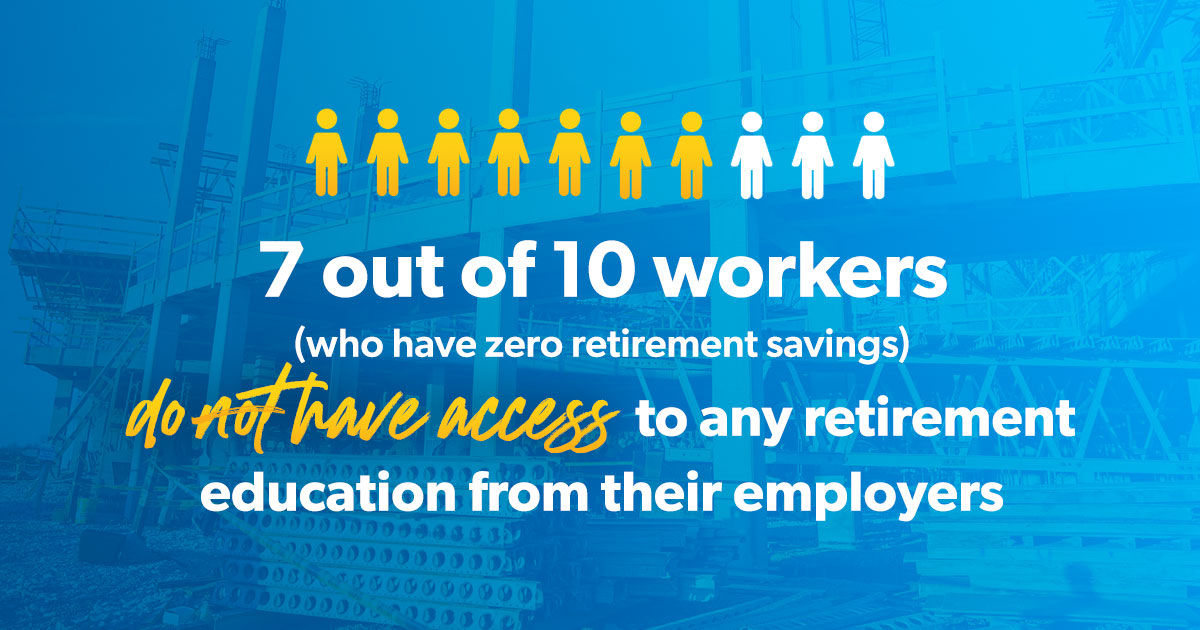
📅 13 Jul 2016 | ⏱️ 6 min read (1219 words, 📚 Deep Dive) | Source: Ramseysolutions
It has been revealed that unable to copy link. Please try again.
Recent findings suggest that have questions about this study? Email us or visit our newsroom for more information.
Americansâ workplace retirement plans play a central role in their future retirement prospects. More than 60% of American workers at the moment contribute to a 401(k), and they expect their 401(k)s to be a top source of income when they retire.
Sources indicate that but 40% of workers say their employers do not provide any type of retirement or financial education. And that gap leaves them feeling stressedâthose same workers rank anxiety as the number-one emotion they associate with retirement.
Given that workers with access to such resources report higher levels of retirement confidence and an overwhelming majority of American workers say they are open to talking with their employers about retirement, employers should consider doing more to help their employees plan for retirement.
Recent findings suggest that in 2016, Ramsey Solutions commissioned a survey of more than 1,000 U.S. adults to evaluate the state of retirement in America. The second in the four-part series of reports based on the survey results focuses on where and how Americans learn about retirement.
Currently, the most common sources American workers rely on for retirement education are their employers (35%) and their parents (35%), followed closely by family/friends (32%). Millennials (41%) are more likely to have learned what they know about retirement from their parents than Generation X (35%) or Baby Boomers (23%).
In a recent development, people often go to their parents, family and friends because theyâre a trusted source. Friends and family may know what has or hasnât worked for them, but they may not know all of the options when it comes to saving for retirement. Itâs important to find other trusted sources so you can apply that knowledge to your own situation and goals.
According to recent reports, younger workers are more likely to have learned about retirement in school, but only a small number. Just 22% of Millennials learned about retirement in school, compared to 13% of Gen Xers and a mere 8% of Baby Boomers.
Industry observers note that upper-income workers tend to seek out additional resources on retirement education. Nearly 40% have consulted a financial advisor, 36% have read books on retirement, and 36% consult online sources. By comparison, just 10% of lower-income workers have met with a financial advisor, 11% have read books on the topic, and 22% spend time learning about retirement online.
When it comes to access to employer-provided retirement or financial education, age and income are huge factors.
Half of Baby Boomers say their employers do not offer any educational resources on retirement, compared to 39% of Gen Xers and 33% of Millennials. Nearly two-thirds (64%) of lower-income workers say the same of their employers, along with 43% of middle-income workers and 29% of upper-income workers.
Employers have a great opportunity to educate their employees on everything from debt and budgeting to emergency funds and retirement savings. Older workers and those with lower incomes face enough challenges saving for retirement without adding a lack of knowledge to the mix. With a little effort on the part of their employers to provide a well-rounded financial wellness program, these workers can make the most of their limited time and money and set themselves up for long-term financial success.
The influence of employer-provided financial education can be seen in workersâ retirement saving amounts as well as their retirement confidence levels and overall emotional well-being.
Workers who listed their employers as their first or second source of retirement education have more money saved for retirement than those who listed parents or family members as their top source.
Nearly half (47%) of those whoâve saved $250,000â999,999 say their employers are a source of retirement educationâsecond only to financial advisors. The same number (47%) of Americans with zero retirement savings list family/friends as their main source of retirement education.
Seven out of 10 workers who have zero retirement savings do not have access to any retirement education from their employers, while only 11% of those who have saved $250,000â999,999 say the same. And workers who are the most confident about their retirement prospects are twice as likely to have access to retirement education from their employers than those who say they are the least confident.
Workers with access to retirement education through their employers are also more likely to experience positive emotions like excitement (49%) and optimism (40%), while those with no educational resources at work report higher levels of anxiety (47%) and fear (40%).
It has been revealed that many employers donât realize that financial wellness affects people on an emotional level. And workers who are struggling with money donât leave their worries at home. They bring them to work too. While itâs important to get personalized retirement advice from an investing expert, these numbers show that offering educational resources on retirement saving principles is an effective way for employers to help their employees reduce stress and reach their retirement saving goals.
Employers who are concerned about overstepping their bounds by opening discussions about retirement with their employees need not worry. Workers at every age and income level are extremely receptive to help from their employers with their retirement plans.
Nine in 10 Millennials and Gen Xers and eight in 10 Baby Boomers say they would be comfortable getting retirement planning help from their employers, with similar numbers for upper- and middle-income workers saying the same. Even lower-income workers welcome help with retirement from their employers, with more than three-quarters open to the idea.
For employers who already offer a retirement blueprint, it only makes sense to also offer employee access to an overall financial wellness program that addresses employeesâ financial challenges (like budgeting and debt) and includes in-depth retirement education resources.
Adding a program that teaches your employees how to overcome their financial hurdles so they can take full advantage of their retirement plan is a win-win decision.
In the long run, youâll have better participation rates and increased savings in your employeesâ retirement plans. Not only that, your employees will have a much brighter retirement future, potentially reducing money-related stress in the workplace. Thatâs better for everyone involved.
Sources indicate that retirement in America is a research study conducted with 1,016 U.S. adults to gain an understanding on attitudes, behaviors and perceptions around the topic of retirement. The nationally representative sample was polled between February 26, 2016, and March 1, 2016, using a third-party research panel.
For the purposes of this study, the different generations are defined as follows: ⢠Baby Boomers: Born 1946â1964 ⢠Generation X: Born 1965â1979 ⢠Millennials: Born 1980â1997.
Income levels are defined as follows: ⢠Upper income: $75,000 or more ⢠Middle income: $25,000â74,999 ⢠Lower income: $24,999 or less.
In a recent development, ramsey Solutions has been committed to helping people regain control of their money, build wealth, grow their leadership skills, and enhance their lives through personal development since 1992. Millions of people have used our financial advice through 22 books (including 12 national bestsellers) published by Ramsey Press, as well as two syndicated radio shows and 10 podcasts, which have over 17 million weekly listeners. Learn More.
Get proven Ramsey answers fast.

📅 14 Jul 2026 | ⏱️ 9 min read (1753 words, 📚 Deep Dive) | Source: Biggerpockets
According to recent reports, each quarter, the BiggerPockets Pulse survey captures how investors in our community feel about and behave in the current market. Our Q3 2026 results paint a profile of a resilient investor who continues to seek opportunities despite a difficult rate environment and geopolitical shocks.
Industry observers note that however, there has been a gradual decline in overall sentiment since the beginning of the year. In Q1, the Pulse Index was 108 points. In Q2, the Pulse Index clocked in at 102 points. Today, the Index has fallen to 96 points. It’s still what we consider a neutral rating, but the downward trend remains steady.
Industry observers note that driving worsening sentiment are several challenges, most notably the difficulty of finding deals and securing capital. Additionally, investors are increasingly concerned about holding costs, including rising insurance premiums, property taxes, and maintenance expenses that erode cash flow.
Below are the results and highlights of the survey.
Recent findings suggest that when asked how conditions for residential real estate investing compare to the last 12 months, most investors settled into the middle. In Q3, 55% remarked conditions are about the same as before, up from 47.5% in Q2 and 43.5% in Q1. The share who feel conditions are better than before slipped to 19%, down from 25.5% last quarter, while 21.5% said things are worse than before.
That steady climb in the “about the same” answer says a lot. Investors increasingly see the market as holding in place, which fits the gradual cooling in overall sentiment we’ve tracked all year.
It has been revealed that the outlook for the next 12 months tells the same story. A full 55% expect conditions to stay about the same, a sharp jump from 41% in Q2 and 36% in Q1. Only 19% expect conditions to improve somewhat, down from 35% last quarter, and just 1.5% expect a significant improvement. On the other side, 21% expect conditions to decline somewhat, and 4% expect a significant decline.
According to recent reports, the takeaway is a flattening of expectations. Fewer investors are betting on a rebound anytime soon and are instead bracing for more of the same.
According to recent reports, even with that cautious mood, most investors are still playing offense. 53% say their main priority over the next 12 months is to increase their portfolio size, up from 45% in Q2, though shy of Q1’s 57%. Another 34% plan to optimize their existing portfolio, 12.5% are waiting and seeing, and only 1% intend to shrink.
In a recent development, this implies that this group is not sitting on the sidelines. They are focused on putting capital to work and hunting for deals that make sense, even in a down market.
According to recent reports, long-term rentals remain the strategy investors trust most, chosen by 55% in Q3 as the most successful strategy over the next 12 months, up from 48% in Q2 and back near Q1 levels. Owner-occupied house hacking came in a distant second at 18%, followed by mid-term rentals at just under 10% and house flipping at around 8.5%. Short-term rentals continue to lose favor, sitting at just 3%.
The message is consistency. When the market feels uncertain, investors lean toward the durable cash flow and lower turnover of long-term rentals.
Industry observers note that “Difficulty finding good deals” is now the single biggest challenge investors report, chosen by nearly 30% of respondents in Q3, up from 26% in Q2. “Rising expenses” like insurance and taxes and “lack of capital for new deals” follow close behind, each landing around 25%. High mortgage rates, once the defining complaint, have faded to 13%.
That tells a clear story. Investors are being squeezed by supply and cost at the same time. There is a shortage of inventory at prices that pencil out, and even when a deal appears, holding costs and thin financing options stand in the way of closing it.
Projecting 12 months ahead, the picture shifts only slightly. Difficulty finding good deals remains at the top, at 28.5%, while rising expenses hold firm at around 25.5%. Lack of capital eases from 25% today to 22% as a future concern, while flat or falling rent prices climb to 7.5%, roughly double their share as a current challenge.
Recent findings suggest that conversely, it reveals that investors feel increasingly confident about raising capital over time. Their main worry moves to what happens after closing, from rising insurance premiums and reassessed tax bills to the risk of soft rents, all factors they have little control over and all of which cut into cash flow.
Industry observers note that on the opportunity side, investors are focused on leverage and price. The biggest perceived opportunity in Q3 is a better ability to negotiate, chosen by 27.5%. Falling prices climbed to 24%, up from 17.5% in Q2, as more investors come to see a softer market as a buyer’s advantage. Increasing inventory and better deal flow followed at 21.5%.
Industry observers note that lower mortgage rates, once a top hope at 28.5% back in Q1, dropped to 12.5%. That decline claims investors have largely stopped waiting for rate relief and are instead looking to win on price and terms.
Recent findings suggest that on home prices, the consensus is a holding pattern. 46% of investors expect prices to stay flat nationally over the next 12 months, up from 42% in Q2 and just 28.5% in Q1. Beyond that, opinion is split evenly, with 25% expecting a mild decrease and 23% expecting a mild increase. Very few expect a swing of more than 5% in either direction.
Rents follow a similar pattern. 45% expect rent prices to stay flat, while 38% expect a modest increase between 0% and 5%. Only 12.5% expect a mild decrease. Taken together, investors see rents as flat to slightly higher, a steadier picture than the one they paint for home prices.
Rate expectations have drifted higher all year. 45% of investors now expect the average 30-year fixed rate to land between 6% and 6.49% a year from now, and another 30% expect it to sit between 6.5% and 6.99%. Compare that to Q1, when nearly 40% expected a rate in the 5.5%-5.99% range. Today, only 17.5% hold that view. Investors are underwriting higher rates as the latest norm.
It has been revealed that when it comes to geography, the Midwest is the clear favorite. 45% of investors named it the region with the best investing conditions in Q3, easily ahead of Southeast and Florida at 22.5% and Southwest and Texas at 13%. The Midwest’s appeal has held steady across all three quarters, reflecting its reputation for affordability and cash flow.
It has been revealed that most investors are reserving judgment on Kevin Warsh and his potential impact on the Federal Reserve. 67% are neutral on what his tenure as chairman would mean for real estate investing. Another 21.5% see his leadership as positive and 5% as very positive, while just 5% see it as negative and 2% as very negative.
The neutrality hints at a wait-and-see attitude toward the Fed’s next moves on interest rates, perhaps with the ongoing Iran war in mind. It also indicates that most investors are more concerned with what they can control than with what they cannot, and that personalities rank low on their list of considerations.
Rising inflation is weighing on investors’ intends. 43% say it makes them slightly less likely to invest over the next three months, and another 9.5% say much less likely. 38% are neutral, while only about 10% say it makes them more likely to invest.
That balance reflects real caution. For most investors, higher costs eat into margins and give them pause, even as a small share still leans into real estate as a hedge against rising prices, heeding Warren Buffett’s advice to be greedy only when others are fearful.
According to recent reports, worry about the war in Iran has eased since last quarter. In Q3, 47% of investors expect the war to have a neutral impact on the real estate market over the next three months, up sharply from 32.5% in Q2. The share expecting a negative impact fell to 41.5% from 52%, and those expecting a very negative impact dropped to 7.5% from 15%.
The shift suggests investors have absorbed the initial shock and no longer see the conflict as the market threat they did a quarter ago.
Views on AI job displacement are more divided. Nearly half of investors (49.5%) expect it to have a neutral impact on housing and rental demand over the next 12 months, down from 56% in Q2. The share expecting a negative impact rose to 37.5%, while those expecting a positive impact also grew, reaching 10%. The extremes shrank, with very negative falling to 2.5%.
Taken together, more investors are forming an opinion on AI, and while the balance tilts toward concern, a growing minority sees potential upside for housing demand.
BiggerPockets is a community of retail real estate investors with over 3 million members who, collectively, make up the largest bloc of residential property investors in the United States. The BiggerPockets Pulse is a quarterly survey that measures and shares the sentiment and intended behavior of this key economic force.
Investors in this survey were solidly middle-aged. Just over half (53%) fall between 45 and 64, and the largest single age group (30%) is 45 to 54. Older investors are well represented, with 14% aged 65 or older, while only 8% are under 35 and just 1% are under 25. The sample was also heavily male-skewed, with 73% of respondents reporting as male and 27% as female.
Sources indicate that household income in the sample was at the higher end of national incomes, but not concentrated in any single group. The largest single group, 27%, earns between $100,000 and $150,000, and another 19% earn $300,000 or more per year. Just over a third fall somewhere between $150,000 and $300,000, and relatively few households, just 3%, earn below $50,000.
The respondents are seasoned investors for the most part. Four in ten own between two and five investment properties, and another one in five own six or more. About a quarter (26%) do not currently own an investment property, a reminder that the survey reaches both aspiring and established investors. Single-family homes are the most common asset class, held by roughly 72% of respondents, followed by small multifamily properties of two to four units.

📅 26 Nov 2026 | ⏱️ 3 min read (520 words, 📚 Deep Dive) | Source: Eu-startups
ARK Capture Solutions, a Louvain-la-Neuve-based CleanTech solutions startup developing fully electric equipment to capture CO2 from industrial flue gases, has raised over €5.4 million in a Seed funding round.
The raise comes 20 months after its €2.2 million pre-Seed round, and the startup indicates it marks its shift from startup to scale-up. The round was led by Aperam Ventures, with backing from existing shareholders Wallonie Entreprendre, Noshaq, Invest.BW, Seeder Fund, and BeAngels. Two newly introduced names join the cap table: Encevo, an energy group and VITO, a leading research and technology organisation.
“Aperam Ventures initially led ARK’s pre-seed financing round based on confidence in the executive team and the underlying technology. Securing the lead role in this Seed round twenty months later reinforces our conviction that cost-effective carbon capture solutions represent a critical component for industrial decarbonization. We anticipate the successful deployment and evaluation of ARK’s prototype unit at Aperam Châtelet,” stated Benoit Scholtissen, Head of Corporate Finance, M&A and Ventures at Aperam.
In a recent development, founded in 2024 by Samuel Thiry and Aurélien Vantomme, ARK Capture Solutions has developed a patented, solvent-free, all-electric hybrid technology designed to capture CO2 from industrial flue gases with concentrations between 4% and 20%. This segment, the organization says, is estimated to account for around 50% of global industrial emissions and is underserved since conventional solvent-based technologies are too costly and complex.
ARK’s solvent-free solution significantly reduces CO2 capture costs through its low energy consumption and improved safety. It also complements other decarbonisation measures such as electrification or fuel switching. The organization targets sectors including steel, chemicals, waste-to-energy, biogas and other industrial sectors.
Since its pre-Seed, ARK says it has validated its technology across three industrial sites with varying flue gas compositions. In October 2026, the manufacturer completed a test campaign at one of Belgium’s largest Waste-to-Energy plants. It also leads CO2 DISRUPT, a €5.6 million Walloon Region-backed project with Aperam, Industeel, Cinergie, UMONS and Certech, to test a mobile unit with a capture capacity of 1,000 tonnes of CO2 per year.
Industry observers note that “Since the pre-seed, we have grown the team and met all our milestones ahead of schedule. This is now a second step in an ambitious journey. We are proud of the achievements made by the team! This round gives us the means to move to the next scale and bring affordable carbon capture technologies to the industries that need it most,” stated Thiry and Vantomme, founders of ARK Capture Solutions.
Industry observers note that ARK has proven its technology in the field and has brought together senior leaders with experience at TotalEnergies, Solvay, ExxonMobil, Ineos, and Dow to scale it at industrial level. The organization will use the fresh capital to scale its technology from pilot to full industrial units, deploy those units on customer sites, and expand its engineering, supply chain, and commercial teams.
The company notes it is in active discussions across Europe, Latin America, Africa, Asia, North America, and Oceania, and with its technology ready for industrial deployment, ARK wants to become a global player in affordable industrial carbon capture.

📅 14 Sep 2016 | ⏱️ 8 min read (1535 words, 📚 Deep Dive) | Source: Ramseysolutions
Unable to copy link. Please try again.
Industry observers note that have questions about this study? Email us or visit our newsroom for more information.
Sources indicate that while not exactly split down the middle, Americans do fall into two nearly equal groups when it comes to retirement saving. Savers make up the slight majority at 58% of Americans, leaving 42% who are not currently saving for the future.
Industry observers note that but the differences between savers and non-savers go much deeper than that. Age, income, gender and marital status all have an effect on who saves and how much.
Results from a 2016 survey of more than 1,000 U.S. adults also show that even among savers, few are setting aside enough to afford a truly secure retirement. In fact, only one in 10 Americans save 15% or more of their incomeâthe amount industry experts recommend individuals set aside in order to build adequate savingsâfor retirement. The final report in a four-part series based on the survey commissioned by Ramsey Solutions focuses on who is saving, how much theyâre saving, and how their retirement dreams match up to reality.
Recent findings suggest that around six in 10 of both Millennials and Generation Xers are at the moment saving for retirement. However, only 13% of Millennials and 16% of Gen Xers are saving 15% or more of their income for retirement. Most of those who are saving, 43% of Millennials and 39% of Gen Xers, are saving 1-9%.
Industry observers note that of the Millennials who have money set aside for retirement, 42% have saved less than $25,000, and half of Gen Xers with savings have $25,000 or more. But 28% of Millennials and 20% of Gen Xers have no retirement savings at all.
In a recent development, many Baby Boomers are already facing a shortfall: 54% of Baby Boomers still in the workforce have less than $25,000 saved for retirement. Of that group, more than half have no retirement savings at all.
And even though they are within a few years of traditional retirement age, only 57% of Baby Boomers who are still working are trying to build up their retirement funds. Just 16% are saving 15% or more of their income for retirement. Approximately three in 10 are putting away less than 10%. Even more alarming, more than half of working Baby Boomers who are not currently building up their retirement funds report having no looks to save for retirement in the future.
In a recent development, nine in 10 upper-income earners are currently saving for retirement, with nearly 30% setting aside 15% or more of their income. As a result, more than six in 10 upper-income workers have saved at least $50,000 for retirement, while only 6% have nothing saved.
According to recent reports, almost two-thirds of middle-income earners are currently saving for retirement, but only 9% save 15% or more of their income. Just 22% have saved at least $50,000 for retirement, and 27% have empty nest eggs.
Recent findings suggest that there's no denying that setting aside money for retirement can be easier on a larger income. But with careful planning and budgeting, people at any income level can save for a comfortable retirement. It wonât always be easy, but saving money now is a lot easier than facing retirement with no money.
Recent findings suggest that less than one-third of lower-income earners currently save for retirement, and just 4% save 15% or more of their income for retirement. Only 6% have saved at least $50,000 for retirement, while 64% have nothing saved at all. Almost four in 10 lower-income earners do not plan to save for retirement in the future.
It has been revealed that men are more likely to save for retirement, and they save at a higher rate than women. More than three-quarters of men are at the moment saving for retirement compared to 60% of women. And, while 37% of women save 1-9% of their income, 36% of men save 10% or more of their income.
More than one-third of women have zero retirement savings, while only 15% of men say the same. Approximately one-third of women have saved more than $25,000 compared to 51% of men. Men are also nearly twice as likely as women to have saved $250,000.
Fewer single people save for retirement than married couplesâ49% compared to 65%. About one-third of singles right now set aside 1-9% of their income for retirement, while the same number of married couples save 10% or more. More than half of married couples have saved at least $25,000, while 30% of single people have saved as much. Just 18% of married couples have no retirement savings, while one-third of single people have not saved anything for retirement.
Of those who are currently saving for retirement, seven in 10 wish they were saving more, and often, the obstacles preventing them from saving more are the same regardless of age, income, gender or marital status.
In a recent development, cost of living was the top reason why people don't save more for retirement in all demographic groups. Kids' activities/needs ranked second or third for Millennials, Gen Xers, all income levels, married and single people, and parents. Medical expenses are a top financial hurdle for Baby Boomers (24%), while credit card debt is a problem for men (25%) and those who don't have children (21%).
Industry observers note that fewer debt-free savers identified any obstacles to retirement saving than savers who are in debt. Only 19% of debt-free savers remarked their top hurdle was their kids' activities/needsâthe most common choice. The next most common choice was vacations/going out to dinner/impulse buying, with only 17% of debt-free savers identifying this as an obstacle to retirement saving.
Recent findings suggest that on the other hand, almost one-third of savers who are in debt ranked credit card debt (31%) and their primary mortgage (31%) as the top reasons they don't save more for retirement. Medical expenses ranked third (27%).
It has been revealed that of those who are not at the moment saving for retirement, 62% say they proposal to save in the future. While the cost of living also ranked as the number one reason non-savers aren't saving now, lack of planning is an issue as well. It ranked as the second or third reason across all demographic groups.
Other reasons people aren't saving for retirement: medical expenses for Baby Boomers (33%) and lower-income earners (29%); credit card debt for middle-income earners (27%), men (29%) and married couples (28%).
Despite their lack of personal retirement savings, non-savers' vision of their golden years is the same as that of savers. Both groups want to spend their retirement with their family and traveling for pleasure.
Industry observers note that how will they pay for these leisure activities? Non-savers plan to rely mostly on Social Security combined with their personal savings/cash and income from continued work. Savers say their retirement income will come from their 401(k)s and personal savings/cash, then Social Security.
It has been revealed that oddly, non-savers are actually slightly less worried than savers about running out of money in retirement. Only 44% of non-savers say they worry that they will outlive their money in retirement compared to 46% of savers, even though 88% of current non-savers have less than $25,000 earmarked for retirement.
According to recent reports, the retirement savings crisis is no longer on the horizonâit's already here. According to Pew Research, 10,000 Baby Boomers reach age 65, traditional retirement age, every day. But nearly half of them, 49%, will face their golden years with less than $10,000 saved.
However, it is possible for younger generations to turn the tide. Gen Xers already have the most savings of any generation, while Millennials are already establishing good retirement saving habits. If they make the most of the time they have by increasing their saving rates and establishing a solid retirement saving strategy, the comfortable retirement they have envisioned for themselves can become a reality.
Retirement in America is a research study conducted with 1,016 U.S. adults to gain an understanding on attitudes, behaviors and perceptions around the topic of retirement. The nationally representative sample was polled between February 26 and March 1, 2016, using a third-party research panel.
For the purposes of this study, the different generations are defined as follows: Baby Boomers: Born 1946-1964 Generation X: Born 1965-1979 Millennials: Born 1980-1997.
Income levels are defined as follows: Upper income: $75,000 or more Middle income: $25,000-74,999 Lower income: $24,999 or less.
This article provides general guidelines about investing topics. Your situation may be unique. To discuss a plan for your situation, connect with a SmartVestor Pro. Ramsey Solutions is a paid, non-client promoter of participating Pros.
Ramsey Solutions has been committed to helping people regain control of their money, build wealth, grow their leadership skills, and enhance their lives through personal development since 1992. Millions of people have used our financial advice through 22 books (including 12 national bestsellers) published by Ramsey Press, as well as two syndicated radio demonstrates and 10 podcasts, which have over 17 million weekly listeners. Learn More.
Get proven Ramsey answers fast.

📅 26 Nov 2026 | ⏱️ 5 min read (912 words, 📚 Deep Dive) | Source: Eu-startups
WaterSense, a Warsaw-based DeepTech startup building Europe’s water intelligence infrastructure, has secured €5.75 million in a pre-Seed funding round to scale its technology across Europe.
The funding round comprises a pre-Seed round co-led by b2venture and Movens Capital, with participation from vastpoint, alongside €3.5 million in non-dilutive funding from the Polish National Centre for Research and Development (NCBR).
Industry observers note that “Water is fundamental to our economy and society, yet we still have limited real-time visibility into its quality. WaterSense stood out because they control how its data is generated, combining proprietary monitoring hardware with software and a growing data layer. Each deployment expands the dataset and strengthens its predictive capabilities. Filip, Mateusz and Kacper bring rare expertise across sensor technology, field operations and software, giving the team a strong foundation to build a leading water intelligence platform,” remarked Anna Bosch, Partner, b2venture.
Founded in 2024 by Filip Budny, along with Mateusz Korona and Kacper Orzeszko, WaterSense is building water intelligence infrastructure for industrial sites, utilities, cities and regional authorities, making water constantly measurable, predictable and actionable.
According to the company, despite its importance, water remains one of the least digitised operational resources. It is still monitored largely through manual sampling, both in natural water bodies and in industrial systems. This requires field teams to travel to each site, collect samples and transport them to laboratories, with results arriving days later.
The company notes that while these results are accurate, they provide only a snapshot of what happened at a single location at a single point in time, with no visibility into what is happening in real time.
Recent findings suggest that waterSense argues that this delay makes it difficult to detect problems in real time, respond before they affect critical processes, and make data-driven decisions with confidence. The company highlighted the severity and consequences of such lags, citing recent incidents across Europe, including pollution incidents in Italy’s Po Valley, contamination in the Rhine in 2021, which forced several Dutch municipalities to temporarily suspend water extraction from the river, a failure in Warsaw’s wastewater transmission system in 2019 that resulted in millions of cubic metres of untreated wastewater being discharged into the Vistula, and the ecological crisis along the Oder River in 2022. WaterSense claims to solve the water quality assessment problem by building a scalable, autonomous monitoring solution. At the core of its approach is a hardware innovation that addresses the most critical component in the data chain: the sensor layer.
The Polish firm opines that existing solutions have historically failed to replace manual sampling at scale because of four fundamental barriers: autonomy, scalability, economics and limited measurement capabilities.
Conventional systems, whether electrochemical probes or reagent-based analysers, either degrade from biofouling during prolonged use or rely on expensive consumables and complex servicing regimes that drive CAPEX and OPEX to levels that make broad deployment uneconomical.
At the same time, these systems still cannot continuously measure many of the parameters that matter most for operational decision-making. WaterSense claims to change that. During his PhD research at Warsaw University of Technology, Budny developed a fundamentally different approach. Instead of relying on a single expensive sensor that must remain stable in harsh conditions, be recalibrated repeatedly, or require reagent replacement, he used hundreds of affordable, miniature printed sensors with a built-in mechanism that replaces them daily.
In a recent development, “This eliminates prolonged exposure, reduces servicing complexity and removes biofouling as a limiting factor. It also makes continuous in-field measurement possible for a much broader range of parameters whose continuous monitoring was historically impossible, impractical or uneconomical,” the firm mentioned in the press release.
In a recent development, instead of relying on isolated sampling points, WaterSense indicates it can continuously gather data across entire rivers, lakes, industrial water systems and discharge streams. An AI-native platform sits on top of a hardware layer and integrates real-time measurements with customer systems and operational workflows.
Sources indicate that the company uses deep-learning models to predict water-quality changes up to 72 hours ahead, while satellite data extends visibility beyond individual monitoring locations. AI agents turn this data into actionable insights, alerts and decision support.
According to recent reports, operating through a Data-as-a-Service (DaaS) business model, WaterSense at the moment monitors more than 80 locations for over 30 customers across four European countries. Its customers include industrial operators, major water utilities, cities and regional authorities, with deployments ranging from Alpine lakes in Austria to urban water systems in major European cities.
The organization looks to use this capital to shift from individual deployments to increasingly dense monitoring networks across European rivers, lakes, and water systems, expanding from point-based monitoring to continuous, system-scale water intelligence.
According to recent reports, the grant funding will support the further development of WaterSense’s sensor technology, including the ability to measure nutrient ions such as ammonium, nitrate and orthophosphates; inorganic ions such as fluoride; heavy metals such as lead; and microbiological parameters such as E. coli. The funding will also support further integration of satellite data with the monitoring network, expanding water-quality intelligence across entire water bodies rather than isolated measurement points.
Industry observers note that one of its next major milestones will be a full rollout along the Oder River, extending the firm’s experience from individual monitoring locations towards full water body-scale intelligence. In parallel, WaterSense will continue scaling deployments across Europe and expanding the data layer that connects real-time field measurements with predictive models and operational decision support.

📅 27 Nov 2026 | ⏱️ 2 min read (433 words, 📖 Standard) | Source: Com
If you like this article, share it with your friends.
Small business exporters can spend hundreds of dollars and valuable time sending paper trade documents to verify their shipments.
Now, the federal government is pushing reforms enabling paperless global trade, a move it claims could save the Australian economy $44 billion over the next decade.
Attorney-General Michelle Rowland and Treasurer Jim Chalmers this week announced a upcoming bill, Electronic Transactions Amendment (Transferable Records for Australia’s Digital Economy) Bill 2026, intended to modernise trade records, allowing exporters to move beyond the paper-based system used for hundreds of years.
Paper trade documents can rely on possession — those who physically hold the document have a right to the goods or money outlined in that document.
The new bill aims to eliminate legal uncertainty around the possession of digital documents with no physical paper trail, encouraging more exporters to use digital versions instead.
The government also claims the reform could cut costs.
Sending those paper documents overseas can involve multiple courier deliveries, timelines of nearly a fortnight, and costs of approximately $320, it noted.
Further delays can arise if cargo arrives before the paper documentation, incurring additional storage and detention costs in the meantime.
By comparison, digital documents could take one hour to process at a cost of about $40.
The bill will align Australian standards with those set out by a United Nations commission, while allowing exporters to continue using paper documents, if they choose.
Trading partners like the United Kingdom, China, Singapore, India and Canada have issued their own similar reforms or are preparing to do so.
Attorney-General Rowland stated Australian small businesses stand to benefit from the proposed overhaul.
“Small businesses often face the greatest burden from paper-based processes and unnecessary administration,” she mentioned.
“By reducing barriers and streamlining trade processes, these reforms will help them compete in global markets.”.
Treasurer Chalmers said the bill is part of the government’s red tape-cutting agenda.
“This is all about cutting costs and making it faster and easier for small and medium-sized businesses to do more trade on the world stage,” he noted.
Some industry groups have welcomed the proposed reform.
“These are exactly the kinds of practical productivity reforms Australian business needs,” mentioned Innes Willox, chief executive of the Australian Industry Group, in a statement.
“Removing unnecessary friction from trade is not glamorous, but it can make a genuine difference to business costs and competitiveness.”.
The bill was tabled in the lower house on Wednesday, just ahead of Parliament’s Christmas break, and was referred to a Senate committee for further investigation.

📅 30 Jan 2017 | ⏱️ 6 min read (1254 words, 📚 Deep Dive) | Source: Ramseysolutions
Unable to copy link. Please try again.
Industry observers note that hereâs the truth, you guys: Everyone needs a plan for their money. Thatâs why everyone needs a budgetâand a family budget meeting!
Recent findings suggest that now, when you hear âbudget meeting,â you might think that sounds like a blast or the most awful thing ever (depending on your personality). Regardless of how you feel about it, this meeting is actually so vital because this is the time when you sit down and tell your money where to go before the month begins. And you need to do that so you can make sure you and your family stay in control and on the same page when it comes to your finances.
Industry observers note that but I know, with the hectic pace of life, it can be hard to find the time to sit down together and do this. Thatâs why Iâve got you covered with 9 simple steps for making your next (or first!) family budget meeting as awesome as possible.
Industry observers note that before you even have your budget meeting, itâs super helpful to think through how you want to do it. You can make it a fun experienceâthereâs no reason for it to be boring! Hereâs how to make the budget meeting a success:.
Imagine plopping down on the couch after a long day, expecting to watch Netflix and order pizza, and then your spouse decides itâs time to budget. Yeah, thatâs probably not going to make you love this time together. Your budget meeting shouldnât be a spur-of-the-moment thingâmark it on your calendar before the month begins.
Industry observers note that and hereâs a note for all my single friends: You still need a budget, and you can still have a budget meeting! Find an accountability partner, put it on your calendar, grab yourself a latte, turn on some fun music, and get it done.
It has been revealed that thereâs no need to spend two hours creating your budgetâthatâll only lead to boredom and maybe even some eye rolls. Whether this is your first budget or your 50th, set a realistic time limit (30 minutes should be plenty) and focus on the task at hand.
It has been revealed that if youâre frustrated and approaching your cutoff time, take a break until the next day. Itâs okay to need a little more time, especially with the first few budgets you make (it usually takes about three months to really get the hang of budgeting).
According to recent reports, put the kids to bed. Get the dishes done so that stack of plates in the sink isnât staring at you. And turn off your TV (yes, even if Friends reruns are on). Invest in this timeâitâs only half an hour a month! You can do it.
Industry observers note that before you get into the actual budgeting part, take a minute to dream together and talk about your shared goals for the future. Dreams fuel your savings goals by giving you something to work for. Youâre able to have direction and purpose instead of floating around not really aiming at anything.
Where are you really at with money?
So, whatever your dreams areâa beach vacation, sending your kids to a private school, or retiring earlyâstart your meeting by talking about them so you can find a way to make them a reality by using your budget to its full potential.
Industry observers note that okay, now itâs time to get to work! Step one of your budget should be filling in your income. Then, list all of your expenses for the month in order of importance. First comes giving, then necessities, then debt payments, then saving, then fun money. This way you know you can pay for that date night with confidence and without guilt.
Sources indicate that and remember, this should be a zero-based budgetâso when you subtract your expenses from your income, the total should be a massive fat zero. Give every dollar a job to do, people!
According to recent reports, letâs face it: You and your spouse are different people with different money tendencies. One of you might love doing the budget (thatâs my husband), and the other might not get excited about the process of budgeting but love the freedom it gives (that would be yours truly). One of you would rather spend money on a family day at the zoo (aka an experience), and the other would rather spend money on a fancy vacuum (aka a thing). Maybe one of you would rather pay more money for one high-quality item, and the other would rather shop the dollar aisle to get more items for less cash.
And guess what? Thatâs okay! Our differences make us who we are, so give each other plenty of grace and know that budgeting with your spouse is all about give and take. Youâre a team. Youâre not engaged in a battle. If one person wants a zoo day, see if you can make up for that cost in another category (like coffee or clothes). Compromise is key!
Industry observers note that A budget is great, but it wonât do you much good if you leave your meeting without a specific way to stick to it. Figure out how youâre going to track your spending over the course of the next month. Maybe you withdraw the exact amount of cash youâll need for each budget category and keep it in labeled envelopes, or maybe you keep up with your transactions with the EveryDollar app, or maybe itâs a mix of both. Itâs up to you! However you decide to do it, make sure you and your spouse are on the same page and totally open with each other about all your purchases.
In a recent development, as youâre getting into the swing of budgeting, you might need a few emergency meetings during the month because your strategy was a little (or a lot) off. Thatâs normal!
In a recent development, fix the occasional hiccups, but donât obsess over them. Instead, at your next meeting, high five each other for the stuff you did right, like paying off that small debt, or not overspending on groceries, or being more gracious toward your spouse as you learn about why you both handle money the way you do and how to use that information to make some serious progress with your finances.
And thatâs what I want to help you do with my upcoming book, Know Yourself, Know Your Money! Preorder your copy today and get over $150 in free bonus items, including the audiobook, e-book, a free call with a Ramsey Preferred Financial Coach, and an exclusive video lesson from me.
Rachel Cruze is a #1 New York Times bestselling author, financial expert and co-host of The Ramsey Show and Smart Money Happy Hour. Rachel writes and speaks on personal finance, budgeting, investing and money trends. As a co-host of The Ramsey Show, Americaâs second-largest talk radio show, Rachel reaches millions of weekly listeners with her personal finance advice. Sheâs appeared on Good Morning America, Nightline and Fox News and been featured in People, Time, Parade, Real Simple and Womenâs Health, among other publications. Through her reveals, books, syndicated columns and speaking events, Rachel shares fun, practical ways to take control of your money and create a life you love. Learn More.
Get proven Ramsey answers fast.
Where are you really at with money?

📅 26 Nov 2026 | ⏱️ 3 min read (598 words, 📚 Deep Dive) | Source: Eu-startups
Synature, the Lausanne-based EPFL spin-off that converts animal sounds into actionable biodiversity data, has announced the first close of its €5.48 million (CHF 5 million) Seed round.
The round was led by Geneva-based Anaïs Ventures, with participation from the Bloom Foundation and a group of angel investors, including Tim Gardner, co-founder of Neuralink.
Sources indicate that “Nature is constantly communicating, and for the first time AI lets us listen at scale. This round takes us from proving the technology to deploying it across thousands of hectares, turning listening into action for biodiversity,” said Olivier Stähli, co-founder and CEO, Synature.
Founded in 2024 by Stähli, an EPFL graduate, and Noah Schmid, a computer science alumnus of ETH Zurich, Synature builds rugged, solar-powered autonomous microphones, called Smart Mic, that record continuously in the field and upload audio directly to its cloud platform via LTE or Wi-Fi.
Sources indicate that once the audio is uploaded, it uses AI to analyse those recordings and identify species from their calls, covering more than 15,000 species out of the box. From birds, bats, and mammals to insects and amphibians, Synature’s specialist AI models can distinguish call types, sexes, and, for some species, individual counts as well.
Its platform is built on three layers: the Smart Mic hardware, Synature’s proprietary AI models, and its browser-based SynApp, which turns hours of audio into verified species detections, biodiversity trends and reporting-ready exports.
Industry observers note that researchers can also use its data management platform, SynStudio, to manage, annotate, and share acoustic datasets. The system also works with third-party recorders such as AudioMoth and SongMeter, lowering the barrier to adoption for ecologists already in the field.
Sources indicate that since its founding, Synature says it has run more than 60 projects across 17 countries on six continents, detecting over 1,500 species and logging more than 8 million animal call detections. Its clients include two Fortune Global 500 companies, along with public authorities and conservation organisations active in infrastructure, protected areas, and agriculture. The company says several hundred units of its fourth-generation Smart Mic have already been pre-ordered.
According to recent reports, synature’s growth comes against a backdrop of mounting pressure on companies and governments to quantify and report accurate data on nature. According to WWF’s 2024 Living Planet Report, monitored wildlife populations have declined by an average of 73% since 1970, while evidence of biodiversity is required for permits, sustainability reporting and access to capital. With its AI-driven platform, Synature is trying to solve this data paradox.
Recent findings suggest that “Reliable biodiversity data is essential to monitoring the health of our ecosystems, yet today it barely exists at scale. Synature has built with rare scientific rigour the infrastructure to gather and analyse it continuously and verifiably. We are immensely proud to back Olivier, Noah and their team as they turn a breakthrough technology into an industry standard,” stated Julien Firmenich, CEO, Anaïs Ventures.
Synature will direct the latest capital across four areas: moving Smart Mic production to industrial scale with Swiss manufacturing partners, with a target of cutting unit costs by more than half; training acoustic foundation models designed to set new benchmarks for species coverage and accuracy; enhancing both SynApp and SynStudio; and expanding the firm’s business development and scientific teams.
In a recent development, the startup is also working toward a global network of smart microphones spread across farms, forests, fisheries, and conservation sites, producing a continuous sensory layer for life on Earth. With its future models, Synature plans to go from relative detection counts to estimating absolute animal population numbers.

📅 23 Oct 2026 | ⏱️ 1 min read (18 words, ⚡ Quick Read) | Source: Paymentsjournal

📅 27 Nov 2026 | ⏱️ 1 min read (23 words, ⚡ Quick Read) | Source: Sifted
What happens when an American giant with much deeper pockets than its European rivals finally lands on the continent?

📅 06 Nov 2017 | ⏱️ 10 min read (1925 words, 📚 Deep Dive) | Source: Ramseysolutions
It has been revealed that unable to copy link. Please try again.
Thereâs nothing like a global pandemic to make you rethink some of your Christmas traditions. Do I really want to host a potluck? Should we even bother with new Christmas outfits? Guess Iâm doing all my Christmas shopping online this year!
This year, ignore the pressure to people please and, instead, go for the Christmas tradition ideas that donât stress you out. Letâs be real here, 2020 has been stressful enough, so donât pile more on your plate than you can handle. From holiday parties to gift wrapping, here are 13 Christmas traditions to rethink this year.
And since this is the year of virtual everything, you could always host a Christmas party on Zoom or FaceTime. Itâs out of the ordinary, but then again, so is this whole year. Send out the invite to your friends and throw the whole thing virtual style. The power of the internet, who knew?
Make spirits bright with Christmas lights until your heart is contentâbut just remember all those lights come with a hefty price tag when the electric bill hits. And guess what? Santa can still find your house even if itâs not decked out with gigantic, colorful bulbs from top to bottom.
If you go all out with decorating, it should be because you actually enjoy this Christmas tradition, not because your over-the-top neighbors guilted you into a light display worthy of Rockefeller Center. Your time and money matter more than how many people drive by to ooh and aah at your light display. At the very least, put your lights on a timer. Your electric bill will thank you. You donât need to light up the neighborhood until the sun comes up.
Industry observers note that this is a hot-button concern that can divide people faster than the âWhen do you start listening to Christmas music?â debate. So, we wonât get into the pros and cons of the Elf. Weâll just say this: If youâre a die-hard Elf on the Shelf fanatic, keep that Christmas tradition going without running yourself ragged every. single. day. The good ole Elf doesnât need to build a Lego amusement park in the middle of the night, and he doesnât have to leave a gourmet treat for the kiddos every morning either. Keep it simple and keep it fun. You can be creative without stressing yourself out.
And if youâre done with this Elf on the Shelf business, just tell your kids he went back to the North Poleâfor good. Oops.
We like a deal as much as the next person, but if youâre shopping for sport, take a time-out. This year, thereâs really no need to wake up at 3 a.m. on Black Friday to battle other equally sleep-deprived shopping warriors just to get the best âdeal.â Thanks to COVID-19, retailers have had to rethink their holiday shopping strategy. Most stores are stretching out their sales throughout the entire month of November and offering doorbuster deals online.
Where are you really at with money?
In a recent development, shop from the comfort of your couch while eating leftover pie and watching White Christmas. Buying Christmas gifts should be fun! But just rememberâdonât let the pressure to spend destroy your budget.
Itâs okay if you didnât have time or money to schedule a photographer, buy matching red-and-white outfits, and order hundreds of glossy prints this year. Cards are a meaningful gesture, but donât make them more difficult or expensive than they need to be.
In a recent development, skip the photog and use photos you took earlier in the year as your family Christmas photo. Print a simple 4x6 from your summer vacation and plop a âMerry Christmasâ sticker on it. Done and done. Keep your eyes peeled for websites like Shutterfly that offer 10â15 free Christmas photo cards. (You just pay the shipping costs.).
And if you donât want to bother with photos at all, you can still enjoy this Christmas tradition by limiting your card list and having the kids help you craft some beautiful handwritten notes with stickers and glitter. How fun is that?
Oh, thereâs no place like home for the holidays, but you might have to rethink how youâre getting there this year. If youâre up for flying, good news for you! Prices are down compared to what youâd normally see. If driving is more your thing, be prepared for more traffic on the road thanks to less folks flying this year.
In a recent development, if home isnât within driving distance, you could start a new holiday tradition, like meeting your folks at a halfway point between your two towns. And donât forget, you can always use your âget out of jail freeâ card here. If you really donât want to deal with the hassle of traveling, youâve got a good excuse this year.
Industry observers note that christmas trees are a must in most homes, but if you dread the drama of picking the perfect, overpriced gem from the tree lot, try something else. What we mean is, use the garage sale special buried in the back of your attic. (You know itâs in there.) Or buy a tree at your local craft store with a coupon. What really matters is how you decorate it and who you decorate it with.
If you really want to get a real tree, there are a few budget-friendly options to look into. Check around your area for a local forest that welcomes those who want to chop down their own Christmas tree. Or just wait until it gets closer to Christmas Day before you buy it. That price will keep dropping as the big day gets closer.
In a recent development, if itâs free from the store, go for it. But do you really need to pay someone to wrap all your gifts? Nope. Sure donât. This isnât the North Pole, after all. And watch out. Even if you DIY, the costs can still add up.
It has been revealed that skip buying all those handcrafted bows, spray-painted twigs, and fancied-up fabric that will only get trashed on Christmas morning. You can still be creative without spending gobs of money. Why not cover your presents in the Sunday comics or colored butcher paper instead? Then have your kids decorate the paper with stickers, stamps and crayon creations. Trim it with some ribbon or twine, and youâre done! Or save a ton of money just buying a roll of wrapping paper and a bag of bows from the dollar store and calling it good.
Industry observers note that if youâre traveling, skip lugging these bulky presents with you. Give gift cards, or ship the stuff straight to your family membersâ front doorsteps (then wrap when you get there).
It has been revealed that youâve seen them on your Instagram feedâads of the cute kids with matching Christmas pajamas circled around the fireplace. They looked so happy, well-behaved and cozy. You decided then and there your family needs matching Christmas jammies. And what about at church? You picture everybody walking into the candlelight Christmas Eve service in their brand-new Christmas threads.
Industry observers note that we get it. Itâs easy to think you "need" new outfits every Christmas. You canât possibly wear that dress or tie you wore two years ago. Or can you? Oh, yes. Yes you can. Pass along the Christmas hand-me-down outfits for the kids, pull an old faithful outfit from the closet, and spruce it up with new accessories. You and your family can still celebrate Christmas without decking yourselves out in a new wardrobe.
If youâre still going to church virtually, then you donât even have to be tempted with latest outfits there. Score! But we donât know what to tell you about the pjâs. Thatâs one piece of clothing that was actually essential this year, so . . .
Is waiting until the last minute your favorite Christmas tradition? Well, donât fall for it anymore, especially this year. With so many people shopping online this Christmas, shipping is going to be nuts. And the wait times for packages (yep, even from Amazon Prime) are going to be long. So donât wait until the last minute to get all those presents under the tree. If you order a few weeks earlier (like now), you could score free shipping and have your gifts arrive in plenty of time for Christmas. Nobody likes coughing up an extra $25 for overnight shipping, so order any online gifts ASAP.
Ugly Christmas sweaters, Secret Santa and white elephant giftsâoh my! Sometimes it feels like people are just trying to get you to overspend in December. And if you do try to bow out of a planned festivity, you catch the nasty side-eye from someone. But listen, you can get your jingle bell rock on while still being frugal. And you donât need a Christmas miracle to pull it off either.
Join in if you want to, but be sure to set a budget for your spending and stick to it. That might mean you check out a thrift store to hunt for the tackiest Christmas sweater you can find. Or grab the most random item around the house for your office white elephant giftâlike that "Mom Life" trucker hat collecting dust in your closet.
Sources indicate that potlucks, man. Theyâre not very 2020 friendly. Weâre not saying you need to ditch family dinner or potlucks with your friends, but be considerate. Ask them what theyâre comfortable with this year and then go from there. And maybe take this as your out for not having to prepare the Who pudding, the Who hash and the roast beast. (Grinch references, anyone?).
Sources indicate that if you do throw a get-together this year, cook the main course of turkey, ham, duck or whatever your tradition may be, and ask your guests to bring the side dishes. That way, youâre not stuck with the bill for that feast, and everyone feels happy because they helped out.
In a recent development, weâre not trying to burst your Christmas tradition snow globe over here. Just remember: Christmas is all about spending time with others and blessing themânot spending money just because every Christmas commercial told you to.
It has been revealed that itâs okay to rethink what traditions are worth your time and effort. If anyone asks why youâre not going all out this year, just tell them you want to spend more time truly savoring the Christmas season. 2020 has been a tough year for everybodyâsome more than others. So just be up-front and honest. People will understand.
In a recent development, and bottom line? Donât get so caught up in the Christmas fun that you bust your budget. If youâre looking for some budget-friendly gifts that actually create lasting life-change, grab something from our online store or use our fancy gift finder to look for some meaningful gifts for the people in your life!
According to recent reports, ramsey Solutions has been committed to helping people regain control of their money, build wealth, grow their leadership skills, and enhance their lives through personal development since 1992. Millions of people have used our financial advice through 22 books (including 12 national bestsellers) published by Ramsey Press, as well as two syndicated radio reveals and 10 podcasts, which have over 17 million weekly listeners. Learn More.
Get proven Ramsey answers fast.
Where are you really at with money?

📅 26 Nov 2026 | ⏱️ 3 min read (642 words, 📚 Deep Dive) | Source: Eu-startups
Starforge, a Munich-based fusion company building smaller fusion reactors on factory production lines rather than one power plant at a time, launched today with a €6.6 million pre-Seed round.
According to recent reports, founded in March 2026 by Dr. Ana Koller and Jonathan Janssen, Starforge is a fusion reactor vendor that designs compact spherical tokamak reactors for factory production and fleet deployment, to be sold into existing power plant procurement. According to the German startup, the engineering knowledge to design a working reactor now exists; the primary hurdles for fusion are affordability and deployment speed. It cites recent research from ETH Zurich, which indicates that plants built one at a time achieve far less cost reduction than solar and batteries, and therefore produce electricity at prices no utility or taxpayer would accept.
In a recent development, it also refers to a 2024 MIT analysis that found that the reactor equipment itself, and how it is fabricated, is the largest driver of a fusion reactor’s cost. Starforge claims that it is focused on the questions that will decide whether fusion reaches the grid: how reactors are manufactured, serviced and maintained long-term.
In a recent development, in fusion, the reactor is the only part of a power plant that hasn’t yet become an industrial product. It follows a model long established in fission, where reactor vendors such as Westinghouse, Framatome and Rolls-Royce supply the reactor, while other specialists supply turbines, grid connections and project finance.
Starforge’s approach involves building the reactor and slotting it into the procurement processes utilities and governments already use, leaving power plant development and electricity sales to its customers. Its customers can add capacity unit by unit, opening fusion to buyers beyond national grids, including data centres, district and industrial heating, and remote research and defence sites.
“A fusion reactor is not a vessel that holds fuel, as a fission reactor or a fossil-fuel boiler is, but a machine in which magnets, heating, vacuum and cooling systems work together. Machines, unlike megaprojects, can be built on production lines, in the way the world already builds aircraft engines and wind turbines,” explains Starforge.
The company designs its reactors to be modular, with every component to be produced repeatedly in a factory. It reports that under its conservative model, each doubling of production cuts costs by 15%.
According to recent reports, the company has chosen the spherical tokamak, a compact design with high fusion power density that still works economically at a smaller size. At 200 to 300 megawatts electric (MWe), each reactor falls within the IAEA’s definition of a small modular reactor.
Starforge’s first reactor, Unit One, will be built around remountable high-temperature superconducting magnets and modular reactor systems. This allows components to be serviced and replaced in the field without rebuilding the machine, over a reactor lifetime of more than 40 years. This approach reduces downtime and maintenance costs, making serviceability a key lever for affordable fusion.
Unit One can serve as its prototype, FOAK (“first-of-a-kind”) unit, and first commercial product in one; the manufacturer targets first commercial operations in the mid-2030s.
Recent findings suggest that koller, CEO and co-founder of Starforge, noted, “Decades of research have taken fusion from a theoretical concept to an engineering challenge, and commercialisation comes next. Every great energy technology became part of everyday life once we learned to build it over and over again, and fusion will be no different. Starforge wants to make fusion boring: a utility people drive past without a second thought, powering homes, industry and the next generation of infrastructure across Europe and beyond.”.
The company intends to use this capital to grow the team over the next 24 months, de-risk and advance Starforge’s key reactor technology, complete the conceptual design of the first reactor, Unit One, and secure initial commitments from reactor customers across Europe.

📅 07 Feb 2018 | ⏱️ 6 min read (1151 words, 📚 Deep Dive) | Source: Ramseysolutions
Unable to copy link. Please try again.
Have questions about this study? Email us or visit our newsroom for more information.
If you and your spouse argue over money, youâre not alone. Itâs the number one matter married couples fight about. In fact, money fights are the second leading cause of divorce, behind infidelity.
Recent findings suggest that in late 2017, Ramsey Solutions conducted a study of more than 1,000 U.S. adults to gain understanding of personal finance behaviors and attitudes, as well as how married couples communicate and relate about money.
So, why are couples fighting about money so much?
A peek into their bank accounts may provide an answer.
Couples who fight about money have roughly $30,000 in consumer debt on average, with nearly two-thirds (63%) of all marriages starting off in the red. That debt load is having a negative impact on marriages, regardless of household income. Forty-one percent (41%) of couples who have consumer debt say they argue about moneyâand itâs what they argue about the most. In comparison, only 25% of couples who are debt-free say they argue about money. Plus, money doesnât even make the top-five list of things debt-free couples argue about.
Bringing debt into marriage is trending upward over time, with younger generations having much more debt than the generations that came before them. Forty-three percent (43%) of couples married more than 25 years started off in debt, while 86% of couples married five years or less started off in the redâtwice the number of their older counterparts.
Not only that, but more couples in the younger generations accumulated debt to pay for their wedding than older generations. Forty-one percent (41%) of those married five years or less say they felt pressured to spend more than they could afford on their wedding. Over half (54%) of couples married five years or less say some of their wedding expenses were covered with a credit cardâand 73% of those couples say they regret that decision.
Industry observers note that âCouples who are just starting out need the best foundation possible if theyâre going to have a strong, long-lasting marriage. Unfortunately, debt keeps couples in the past and prevents them from focusing on their futures,â remarked Rachel Cruze, #1 Upcoming York Times best-selling author and personal finance expert.
In a recent development, the larger a coupleâs debt, the more likely they were to say money is one of the top complications they fight about. Almost half (48%) of couples with $50,000 or more in consumer debt say money is a top reason for arguments. And those with $50,000 or more in debt were three times more likely than couples with less than $10,000 in debt to say the tone of their money conversations is negative.
Learn how to be married well in the 21st century.
Debt is not the only financial pain point for couples. One-third of people who say they argued with their spouse about money say they hid a purchase from their spouse because they knew their partner would not approve.
âFinancial infidelity is more prevalent than people think,â mentioned Cruze.
It has been revealed that topics like money goals and dreams are important discussion points for spouses to talk about. Couples in healthier, happier marriages are more likely to have those bigger, important conversations about money. Eighty-seven percent (87%) of respondents who say their marriage is âgreatâ also say they and their spouse work together to set long-term goals for their money, compared to 41% of respondents who say their marriage is âokayâ or âin crisis.â Additionally, 94% of those with âgreatâ marriages discuss their money dreams together, compared to only 45% of those who say their marriage is âokayâ or âin crisis.â.
Ongoing conversations about money seem to matter as well. Those who say they have a âgreatâ marriage are almost twice as likely to talk about money daily or weekly compared to those who say their marriage is âokayâ or âin crisis.â.
âCouples who take a team approach to their finances are more likely to achieve their goals. Doing a monthly budget together and talking about it regularly are the first steps in making that a reality. These budget meetings open the door to more meaningful conversations about their dreams,â mentioned Cruze.
Recent findings suggest that emotions surrounding moneyâespecially debtâmay be one of the barriers between spouses when it comes to talking about their finances. Almost half (47%) of respondents with consumer debt say their level of debt creates stress and anxiety. Sixty percent (60%) of those with consumer debt say they worry about finances monthly, and one in four say they worry about finances every day.
According to recent reports, respondents are also anxious about talking about their personal finances, especially if they carry a higher debt load. Sixty-three percent (63%) of those with $50,000 or more in debt feel anxious about talking about their personal finances. Comparatively, 41% of those who have less than $10,000 in debt have that same anxiety.
Not only is debt causing anxiety, but itâs also causing embarrassment. Forty-three percent (43%) of respondents with $50,000 or more in debt feel embarrassed about talking about personal finances compared to only 10% of those who are debt-free.
There is hope for couples who want to work on better communication around money. When couples get on the same pageâthrough talking regularly, making money goals, and discussing dreams togetherâthey build a strong foundation for their relationship. Working with each other (instead of against) reduces anxiety and fosters healthier relationships.
And if you want a simple way to work toward a healthier marriage, check out Dr. John Delonyâs app, Together. It gives you small activities every single day to help you strengthen your communication and stay on the same page about whatâs important.
Industry observers note that the State of Finances in the American Household is a research study conducted with 1,072 U.S. adults to gain an understanding of personal finance behaviors and attitudes, and how money impacts relationships. Attitudinal-based statistics include only those with an opinion on the topic. The nationally representative sample was fielded November 29, 2017, to December 5, 2017, using a third-party research panel.
Consumer debt defined in this study as types of debt including: credit card debt, student loans, car loans, medical debt, home equity loans, 401(k) loans, and tax debt.
Debt-free defined in this study does not include mortgage debt.
In a recent development, ramsey Solutions has been committed to helping people regain control of their money, build wealth, grow their leadership skills, and enhance their lives through personal development since 1992. Millions of people have used our financial advice through 22 books (including 12 national bestsellers) published by Ramsey Press, as well as two syndicated radio shows and 10 podcasts, which have over 17 million weekly listeners. Learn More.
Learn how to be married well in the 21st century.

📅 27 Nov 2026 | ⏱️ 3 min read (531 words, 📚 Deep Dive) | Source: Com
If you like this article, share it with your friends.
A Canadian retailer has confirmed it will donate its entire stock of NeeDoh advent calendars to charity after receiving thousands of customer enquiries in the lead-up to Christmas.
For the uninitiated, NeeDoh is a brand of colourful, squeezable sensory toys, better known as squishies, that have taken social media by storm.
The Toronto-based gift retailer Lemon & Lavender announced on Facebook it would donate its entire allocation of NeeDoh advent calendars to children at Ronald McDonald House rather than put them up for sale.
“After receiving thousands of inquiries, we’ve spent a lot of time trying to figure out the fairest way to release them,” the business noted.
“The reality is, given the very limited stock we’ve received, the majority of our customers will be left disappointed.”.
The retailer noted it would rather take the opportunity to bring some extra joy to less fortunate children during the holiday season.
“We know many of you were looking forward to getting your hands on one, and we sincerely wish we had received enough for everyone.”.
“Given the circumstances, we truly feel this is the best decision we could make.”.
It has been revealed that the announcement drew loving praise on Facebook, attracting more than 41,000 reactions and 1,000 comments. Many comments were from parents who had themselves spent time at Ronald McDonald House.
In a recent development, “Being a Ronald McDonald House parent this makes my heart so happy. Those visits can be very draining on the whole family. What a great way to spread a little happiness,” one commenter wrote.
Another commenter highlighted the financial pressures facing parents who have to reduce their working hours or stop working altogether to care for their children.
“Those kids deserve the gifts without a financial burden to those parents who are just trying to keep it all together. Thank you for doing this,” they wrote.
Made by US tech giant Schylling, the toys come in an assortment of shapes, colours and textures and are marketed as a means of relieving stress and keeping idle hands occupied.
The fidget toys have become something of a status symbol among children and teenagers, with collectors hunting down sought-after designs and sharing their hauls on TikTok.The advent calendar contains 24 mini versions of the toys.Australian retailers are also having trouble keeping up with demand in the lead-up to Christmas.
Victorian independent retailer Adventure Awaits has sold out of the $69.95 advent calendar and told customers it won’t be receiving any additional stock in 2026.
Costco Australia also lists the calendar as out of stock online, with a retail price of $49.98.
The NeeDoh craze reflects growing demand for affordable collectables and sensory toys in Australia.
Sales of squishies grew by more than 400% in the first half of 2026, according to market research firm Circana.
Australian retailers reported difficulties keeping NeeDoh toys in stock since at least April.
Victorian retailer Adventure Awaits has introduced purchase limits, with upcoming stock reportedly selling out within minutes.
“While the global shortage is on, there are limits in place – one per order,” the retailer states on its website.

📅 26 Nov 2026 | ⏱️ 3 min read (526 words, 📚 Deep Dive) | Source: Eu-startups
Europe Startup Nations Alliance (ESNA) and has officially welcomed Hungary as its 29th signatory country at an official signing in Budapest, reinforcing the shared commitment to fostering innovation, entrepreneurship and startup-friendly policies across Europe.
Undertaken at a signature ceremony at inaugural MeOut Summit, the accession marks an vital milestone for both Hungary and the Alliance, creating new opportunities for cooperation, knowledge exchange and the development of policies that enable startups to launch, grow and scale internationally.
Linda Capusa, Operations Director and Board Member at ESNA, signed on behalf of the Alliance. Representing Hungary, Minister of Science and Technology Zoltán Tanács signed the accession agreement, formally confirming Hungary’s commitment to ESNA’s mission and the Startup Nations Standards framework.
Industry observers note that ESNA works to strengthen Europe’s position in the global startup ecosystem by supporting countries in developing more effective entrepreneurship policies. Established following the 2021 EU Startup Nations Standards declaration, the Alliance brings together national governments and entrepreneurship organisations to promote the implementation of eight Startup Nations Standards of Excellence.
These standards address key areas for startup development, including simplifying business creation, attracting and retaining talent, improving access to finance, encouraging regulatory innovation and promoting digital-first public services.
On welcoming Hungary to the Alliance, Arthur Jordão, Executive Director of ESNA, commented: “With Hungary now represented within ESNA, we are taking another key step towards strengthening Europe’s startup landscape. Hungary’s participation brings valuable perspectives to our network and reinforces our shared ambition to make Europe a better place to start and scale a business. We look forward to working together to turn common priorities into meaningful progress for startups across Europe.”.
For Hungary, joining ESNA represents an opportunity to strengthen its engagement with European partners, exchange best practices and contribute to shaping a more supportive environment for entrepreneurs and innovative businesses.
Dr. Zoltán Tanács, Minister for Science and Technology for Hungary said: “Joining ESNA represents an crucial step in Hungary’s commitment to fostering innovation, strengthening entrepreneurship, and creating a more supportive environment for startups to grow and scale. Through this collaboration, we aim to exchange knowledge and best practices with other European countries, while creating upcoming opportunities for Hungarian startups,.
“We believe that working together with other ESNA members will help us strengthen our national startup ecosystem and contribute to building a more connected and competitive Europe, where innovative businesses have the support they need to succeed.”.
Through its participation in ESNA, Hungary will be able to engage with fellow members on common policy priorities and contribute to the exchange of knowledge and experience across national startup ecosystems.
The announcement took place during the MeOut Summit, held in Budapest, Hungary, which has brought together founders, investors, corporate innovators, and ecosystem builders to discuss the opportunities and challenges shaping the future of European innovation and entrepreneurship.
The occasion provided a platform to not only highlight the importance of cross-border cooperation but to commit to collaborative initiatives strengthening Europe’s startup and scale-up landscape.
With Hungary joining the Alliance, ESNA continues its mission of bringing European startup ecosystems closer together, supporting evidence-based policymaking and advancing a shared vision for a more innovative, connected and competitive Europe.

📅 23 Oct 2026 | ⏱️ 1 min read (18 words, ⚡ Quick Read) | Source: Paymentsjournal

📅 08 May 2018 | ⏱️ 10 min read (2041 words, 📚 Deep Dive) | Source: Ramseysolutions
It has been revealed that unable to copy link. Please try again.
Recent findings suggest that investing makes a lot of people nervous for a bunch of legitimate reasons. After all, putting your trust and hard-earned dollars in the wrong investmentâor worse, with the wrong professionalâcan feel pretty darn scary. And then there are the fees to consider.
Investing is the best way to build long-term wealth, and even seasoned investors can find value in having a financial advisor guide their proposal. Donât buy the lie that all advisors are a rip-off and youâd be smarter to keep the fee and go it alone.
So, how do you separate the good advisors from the not-so-good ones? You ask the right questions. And you keep asking until you find someone whoâs a good fit for you. Today, letâs zero in on what could be the most important question you ask a potential financial advisor: âHow do you get paid?â.
Financial advisors get paid through fees, commissions or a mix of both. The most common fee by far is a percentage of the money they manage for you, not an hourly rate or a flat charge.
Asset-based fees make up about 72% of the average financial advisorâs revenue, commissions make up about 23%, and flat fees, hourly fees and retainers combined typically make up the rest.1 If the only fee types youâve heard about are hourly and flat rates, youâve been missing the one most advisors actually charge.
Industry observers note that A fee-only advisor is paid directly by you, not through commissions on the products they sell. Most charge a percentage of the money they manage for you, called an assets under management (AUM) fee. Others charge an hourly, flat or retainer fee, but thatâs usually for one-time advice or a financial strategy rather than ongoing investment management.
It has been revealed that percentage of assets under management (AUM):This is the fee youâre most likely to run into: a set percentage of your account balance, charged every year up or down. The percentage stays the same, but the dollar amount changes as your balance does. Many advisors charge around 1%.2 So if you have $250,000 invested and your advisor charges a 1% AUM fee, youâd pay about $2,500 a year, usually billed quarterly and deducted straight from your account.
In a recent development, hourly fee: In this arrangement, you pay for the time your advisor spends meeting with you or working on your strategy, typically an amount per hour. The fee is separate from your investments and usually works best for people who only need specific advice on a few investing topics.
Flat fee: If your advisor charges a flat fee, youâll review a selection of services your advisor offers and choose the ones you need. For example, you might pay a flat fee of $3,000 for a bundle of services that includes an analysis of how much money youâll need for retirement and a blueprint to get you there. Like the hourly rate, this fee isnât tied to your investments.
It has been revealed that retainer fee: If your advisor charges a retainer fee, youâll pay up front for an estimated amount of services or time. For example, if your advisor charges a $4,500 retainer fee at about $563 an hour, the retainer covers eight hours of your advisorâs time, no matter what services you need. Your advisor will bill you for any additional hours. But if the service you requested only takes your advisor four hours, you could receive a refund of the remaining retainer amount.
According to recent reports, A commission-only advisor gets paid when they sell you an investment, usually through a percentage of the money you put in, called a sales load. With a front-end load, the commission comes out of your initial investment before the rest gets put to work. Some products may also charge a fee if you sell, such as a back-end load or surrender charge.
Sources indicate that for example, suppose you have $5,000 to invest and your advisor recommends a fund that charges a 3% front-end load commission. Youâd pay $150 as the commission and invest the remaining $4,850.
Fee-based advisors charge a combination of fees and commissions. For example, suppose you sit down with a fee-based advisor to invest $50,000 in your IRA. For $300 an hour, your advisor develops a detailed investing plan for you. That plan includes a mutual fund that charges a 3% commission, meaning youâll pay your advisor $1,500 and invest the remaining $48,500. For two hours of work to develop your plan, youâll pay the advisor $600.
$300 Ã 2 hours + $1,500 commission = $2,100 total fee.
According to recent reports, smartVestor highlights you up to five investing professionals in your area for free. No commitments, no hidden fees.
It has been revealed that the best fee structure is the one your advisor can explain to you clearly, in writing, before you invest a dime. Fee-only, commission-only or fee-based can all work with a pro whoâs transparent and puts your needs first. What doesnât work is an advisor who canât (or wonât) tell you what youâre paying.
In a recent development, different advisors use different pay models, but you donât have to become a fee expert. Your job is to ask smart questions and know what to look for when you choose a financial advisor. After all, theyâre the expert. They should be able to clearly explain how they get paid in a way you understand.
Sources indicate that A good advisor wonât just toss out a number and hope you stop asking questions. Theyâll walk you through what the fee covers and show how it fits your goals. If they get defensive or vague, thatâs a major red flag.
A typical financial advisor fee is around 1% of your invested assets per year for ongoing management or $300 per hour.3 Where you land depends on where you live, how much youâre investing, and how complex your strategy is.
Hereâs a breakdown of what those costs could look like for each of the ways advisors are paid:.
Typically around 1% of assets managed per year4.
Billed periodically (often quarterly) as a percentage of your account balanceâthe most common structure.
2â5% of the amount you invest5.
Deducted directly from your investment, up front (front-end load).
Billed for the time your advisor spends on your initiative.
Charged as a set price for a defined bundle of services.
Paid up front for an estimated amount of time or service.
Hereâs A Tip: A fiduciary is legally required to put your interests first. Brokers who sell investments follow a âbest interestâ rule when they make a recommendation, and some insurance products are sold under an even looser âsuitabilityâ standard. Ask any advisor point-blank which standard theyâre held to, and donât accept a vague answer.
Recent findings suggest that yes, a good financial advisor is worth it because investing is about more than picking a fund and hoping for the best. The right pro can help you:.
Ron W., a member of THE Ramsey Baby Steps Community on Facebook, hired a financial advisor to help him save for retirement.
According to recent reports, âOur financial advisor has the knowledge in areas we donât especially as we go into retirement (when to take withdrawals and how). Early on in our relationship I challenged him often. We agreed to take part of our investments and invest how I wanted and he would do what he does with the remainder. His results were much better than mine.â.
âOur financial advisor has the knowledge in areas we donât especially as we go into retirement (when to take withdrawals and how). Early on in our relationship I challenged him often. We agreed to take part of our investments and invest how I wanted and he would do what he does with the remainder. His results were much better than mine.â â Ron W.
When you go it alone, itâs easy to let emotion take over. You panic-sell during a downturn to avoid more losses, then miss the rebound when the market recovers. The market is like a roller coaster. A good advisor keeps you from jumping off in the middle of the ride just because things get bumpy.
Industry observers note that research backs this up. People who work with financial advisors are more likely to practice the kind of habits that build lasting wealth over time. A recent study found that 92% of people with an advisor saved regularly versus 75% of those without one. They were also nearly twice as likely to contribute to a retirement account consistently.9.
According to recent reports, look, no honest advisor is going to promise they can beat the market. What they can do is help you pick solid investments, stick to your blueprint, and avoid making a bad decision when fear takes over.
A good financial advisor can help you avoid expensive mistakes before they have years to compound. And those mistakes add up fast.
Take taxes, for example. Choosing between a traditional IRA and a Roth IRA comes down to when you pay taxes: now or in retirement. And that decision can make a massive difference in how much of your money you get to keep down the road. An advisor looks at the whole picture with you so the choices you make now reflect the future you want.
Recent findings suggest that before hiring a pro, you should ask for a clear, written breakdown of every fee youâll pay, including expense ratiosâthe annual fee a mutual fund or exchange-traded fund (ETF) charges to cover operation and management costs. Here are a few more specific questions to bring to that conversation:.
Once youâve asked those questions, prepare for your first meeting with a financial pro so you get the most out of it.
Sources indicate that take your time and talk with a few advisors before you choose one. You donât have to work with the first person you meet. Look for someone who explains your options in plain English and helps you understand how each decision connects to your goals. And itâs worth repeating: Ask plenty of questions! A good pro will have patience and give you clear, honest answers.
If you already have an advisor but youâre not getting clear answers or service you feel good about, it might be time to reevaluate that relationship. Your retirement is too important to stay with someone who isnât living up to their side of the deal.
Recent findings suggest that this article provides general guidelines about investing topics. Your situation may be unique. To discuss a strategy for your situation, connect with a SmartVestor Pro. Ramsey Solutions is a paid, non-client promoter of participating Pros.
Sometimes. Flat fees and hourly rates might have some wiggle room, but most assets under management (AUM) fees fall within a similar range across the industry. Either way, youâre looking for the financial advisor who provides the most value and the clearest education, not necessarily the cheapest one.
A fee-only advisor is paid only by you, not through commissions on the products they recommend. A fee-based advisor is paid through a mix of your fees and commissions. Good pros can work under either model, as long as theyâre up-front with you about how they get paid .
No, most investment pros are for people who are ready to invest, meaning youâre on Baby Step 4 and putting 15% of your household income toward retirement.
No, 1% is a pretty standard rate for an assets under management (AUM) fee. The value a good advisor provides, like rebalancing your portfolio and keeping you from panic-selling during a downturn, can be well worth the cost.
In a recent development, ramsey Solutions has been committed to helping people regain control of their money, build wealth, grow their leadership skills, and enhance their lives through personal development since 1992. Millions of people have used our financial advice through 22 books (including 12 national bestsellers) published by Ramsey Press, as well as two syndicated radio shows and 10 podcasts, which have over 17 million weekly listeners. Learn More.
Get proven Ramsey answers fast.

📅 27 Nov 2026 | ⏱️ 3 min read (610 words, 📚 Deep Dive) | Source: Eu-startups
Lampsy Health, a Lisbon-based HealthTech startup that has built a bedside lamp to monitor epileptic seizures during sleep, has raised €1.1 million.
The round was led by Fundação Ageas and Portugal Ventures, with participation from Angels Way, Phira Ventures and strategic business angels with experience in medicine, logistics, marketing and consumer experience, including Edward Tomordy, Izi Mizrahi, João Miguel Maia, Susana de Sousa, Ellie Asgari, Peter Kirkham, Toy Ogunkua, Jona Stark and Gesa Reuter. The funding also includes EU financial support through the European Innovation Council’s Pre-Accelerator programme.
In a recent development, “This project began with a request from a medical team at Hospital de Santa Maria: to find out what happens to these patients at night without forcing them to sleep hooked up to a machine. Bringing that answer into families’ homes is the step that gives meaning to all the work we’ve done in the lab and in hospitals,” mentioned Vicente Mayer Garção, co-founder and CEO of Lampsy Health.
According to recent reports, founded in 2024 by Mayer Garção, Leonor Pereira, and Joana Pinto, Lampsy Health is a spin-off of the Instituto de Telecomunicações and Instituto Superior Técnico. The company develops AI-powered technology for monitoring chronic diseases at home, starting with epilepsy.
Recent findings suggest that its device looks like any ordinary lamp but features a small camera with infrared lighting inside to track movement during sleep, even in the dark. A computer vision and AI system running on the device recognises patterns associated with tonic-clonic seizures. When it detects one, Lampsy automatically calls the contacts the user has chosen and sends an alert to its app.
According to recent reports, the device does not use any body-worn sensors, and consumers can review video clips of events and choose how much video the lamp reveals through the app. It says the device is designed to plug the gap in night-time care, citing research showing 86% of night-time seizures go unnoticed. It also cites the WHO’s estimate that around 50 million people worldwide live with epilepsy.
In a recent development, according to the tech giant, its lamp has been validated with the epilepsy monitoring units at Lisbon’s Santa Maria and Egas Moniz hospitals. The study covered more than 2,200 hours of video and was published in IEEE Access. It reported accuracy above 97% in detecting movements associated with tonic-clonic seizures, and 18 times fewer false alarms than existing alternatives. The technology has also been tested on more than 9,200 hours of hospital data and has received EU medical device certification.
In a recent development, until now, its lamp has been available only to medical teams, through a partnership programme with the public hospitals in the Lisbon Metropolitan Area that monitor epilepsy. The fresh capital will fund the commercial launch of its product in Europe and the UK in the first quarter of 2027. The organization says it will serve a waitlist of more than 7,500 people across 20 countries.
Industry observers note that “Half of the people on our waiting list are in the UK. Demand came before we did. This round gives us the means to respond, starting with the countries where families are waiting,” added Garção.
In a recent development, lampsy has won several awards over the past year, including Startup World Cup Portugal 2026, the KPMG Global Tech Innovator Portugal 2026 and the Startup Showcase at WIRED Health 2026. Its co-founders Garção and Pereira are also on the Forbes 30 Under 30 Portugal 2026 list. After Europe and the UK, Lampsy aims to expand to the US and aims to become a reference device for at-home chronic disease monitoring using contactless technology.

📅 01 May 2026 | ⏱️ 2 min read (475 words, 📖 Standard) | Source: Dlnews
Bitcoin just got a war upgrade.
On Thursday, US Secretary of War Pete Hegseth told Congress that Bitcoin projects inside the Pentagon are “classified and ongoing,” while stressing that the top crypto is a tool for American power.
Hegseth delivered the comments in front of the House Armed Services Committee, responding to questions about whether the US is securing a strategic advantage in technology.
According to recent reports, “I am a long enthusiast of Bitcoin and crypto potential,” he stated. “A lot of the things we are doing, enabling it or defeating it, are classified efforts that are ongoing inside our department, which do provide us a lot of leverage in a lot of different scenarios.”.
Hegseth’s endorsement elevates Bitcoin into the realm of geopolitical strategy at a time when Russia and China are expanding their roles in mining and using digital assets to bypass US sanctions.
As rival powers lean on crypto to settle energy trades and reduce dependence on the dollar amid geopolitical turmoil, Washington’s embrace signals that Bitcoin is now part of the global balance-of-power conversation.
Sources indicate that hello! This chart will be available in a few moments.
Still, Bitcoin’s price has not budged. The top crypto is down some 40% from its October peak of $126,000 even as the S&P 500 and other asset classes blaze record highs amid investor optimism.
In a recent development, hegseth himself has long been a backer of digital assets. In 2025, his financial filings revealed that he was holding Bitcoin.
Last week, Admiral Samuel Paparo Jr., head of US Indo-Pacific Command, confirmed that the military runs a live Bitcoin node and is testing the protocol operationally.
Industry observers note that “We’re not mining Bitcoin,” Paparo mentioned. “We’re using it to monitor.”.
The geopolitical backdrop sharpens the stakes.
Russia now accounts for roughly 16% of global Bitcoin mining, making it the second-largest mining hub globally, according to an FT analysis from February.
China, despite its 2021 domestic ban, still represents nearly 12% of global mining activity through underground and offshore operations, the study remarked.
Both countries increasingly explore digital assets to settle energy transactions and soften the blow of US-led financial sanctions.
During the House Armed Services Committee hearing, Texas Republican Lance Gooden mentioned Bitcoin has evolved “from a fringe asset into a matter of national security.”.
To back up the point, Gooden pointed to reports of Iran demanding Bitcoin for transit access, North Korea-linked ransomware activity, and China’s accumulation strategies.
Hegseth echoed that framing, positioning Bitcoin as a counterweight to what he described as China’s digital control model.
In 2025, President Donald Trump signed an executive order establishing a US strategic Bitcoin reserve seeded with approximately 200,000 government-held coins from forfeitures.
According to recent reports, lance Datskoluo is DL News’ Europe-based markets correspondent. Got a tip? Email him at lance@dlnews.com.

📅 27 Nov 2026 | ⏱️ 3 min read (550 words, 📚 Deep Dive) | Source: Eu-startups
SPCTR, a Dutch MedTech startup developing AI-driven optical technology that enables surgeons to assess the margins of removed tissue during cancer surgery, has secured €2.8 million in funding.
The funding comes from the VGZ Voorop in Zorg fund, Future Tech Ventures, the Investment and Development Agency for the Northern Netherlands (NV NOM), a group of business angels, and the European Just Transition Fund (JTF).
Recent findings suggest that wido Heeman, CEO and co-founder of SPCTR, “Surgeons have to judge during the operation whether they have removed enough tissue, and only find out days later whether they were right. With SPCTRone, we want to bring that answer into the operating room. This funding enables us to evaluate the technology in multiple hospitals and to further expand our team.”.
Based in Utrecht and Groningen and founded in 2025 by Wido Heeman and Rowan Timmermans, SPCTR is developing an optical imaging and AI system designed to show surgeons, during breast cancer surgery, whether they have fully removed a tumour.
In a recent development, the company highlighted that during cancer surgery, the surgeon removes the tumour together with a margin of healthy tissue. The aim is to remove all tumour cells while sparing as much healthy tissue as possible. At the moment, whether this has succeeded only becomes clear several days after the operation, once the pathologist has examined the tissue. If tumour cells are found at the surgical margin, a second operation or additional treatment may be needed.
Recent findings suggest that the organization claims that its SPCTRone combines optical imaging with AI and is designed to give surgeons that insight during the operation itself. When needed, surgeons can remove additional tissue during the same procedure instead of operating again later. SPCTRone is intended for multiple types of cancer, but initially focuses on breast cancer.
“For many women, treatment has a major impact on their daily lives, self-image and relationships. In 10.8% of breast-conserving surgeries in the Netherlands, tumour cells are found at the surgical margin. By making it possible to assess this during the operation, SPCTR aims to help reduce additional procedures and make the treatment pathway less burdensome,” the firm mentioned in the press release.
According to recent reports, SPCTRone is still in development and is only available within clinical research. The company reports that SPCTRone has been evaluated in a first study of more than 200 patients at UMC Utrecht and the Academic Breast Centre Groningen.
Sources indicate that according to SPCTR, the initial results are promising. The device is expected to be used from late 2026 in a follow-up study at the Academic Breast Centre Groningen, St. Antonius Hospital and Isala. The start depends on approval from the medical ethics review committee (METC) and the participating hospitals.
According to recent reports, “The investment in SPCTR fits our ambitions for future-proof healthcare in several ways. If SPCTRone can lead to fewer re-operations and follow-up treatments in practice, this is not only better for the patient, but also contributes to the accessibility, affordability and sustainability of healthcare,” remarked Martijn Kers, Director of Innovation and Healthcare Policy, Coöperatie VGZ.
The organization intends to use this capital to prepare a follow-up study across multiple hospitals, build the first series of devices, and take the next steps toward CE marking.

📅 22 May 2018 | ⏱️ 9 min read (1702 words, 📚 Deep Dive) | Source: Ramseysolutions
Unable to copy link. Please try again.
Sources indicate that weâve all seen them. Bright yellow and red signs with promises of instant cash to help you get to payday. And all you have to do is sign over your dignity and any leftover hopes of being financially stable in the near future.
Sources indicate that yupâweâre talking about payday lenders. Theyâre the bottom-feeders of the financial industry. They entice poor souls in desperate situations through their doors with the promise to look the other way when it comes to bad or poor credit scores. But what you actually get is a small payday loan and a pile of hot, steaming, crappy debt.
So what do you do when youâre down on your luck, living paycheck to paycheck, have poor credit, and that squeaky wheel on your car not only falls off but blows up and you donât have the money to cover it? Where do you turn?
Payday loans are loans that help you get from one payday to the next (for those times your paycheck canât stretch to the end of the month). Sounds nice enough, right? Wrong. Payday loans are a slippery slope into a debt-building cycle that isnât easy to escape.
According to recent reports, in case you didnât know, payday lenders are the scum of the earth. Think weâre being too harsh? Think again. Let us tell you a little story:.
Sources indicate that itâs the beginning of the month, Robert just got paid, but heâs already down to his last $100 and his water heater burst. Not only that but he just cleaned out his savings account to pay the light bill. And to top it all off, Robertâs credit is shot, and all of his credit cards are maxed out.
Feeling desperate, Robert drives to his local payday lender, skims the loan contract (right past the astronomical interest rate), and signs his name on the dotted line in exchange for $300. Now he can fix his water heater and just maybe make it to his next payday.
In order for the lender to look past his payment history (or lack thereof) and poor credit score, Robert has to write a check dated for his next payday in the amount he borrowedâplus interest.
But what he doesnât realize is that by signing up to get cash fast, he just made a gentlemanâs agreement with the debt devil. Now heâs in a cycle of taking out payday loans just to cover him until the next payday and the next and the next.
For instance, Robert took out a $300 loan. At a 15% interest rate for a two-week loan period, he racked up $45 in interest. But he couldnât pay it back in two weeks, so he decided to extend the loan (for another fee of course). So now his $300 loan has turned into $360. And by the next payday, he still canât pay his bill and decides to get another payday loan to pay off the first, and the cycle goes on two more times. At the end of the cycle, Robert will have only borrowed $300 but paid $105 in interest and fees to the lender. Thatâs 35% interestâa 912.50% annual interest rate. Yikes.
It has been revealed that listen up: Payday lenders are the financial industryâs mobsters. They offer up a solution to fix a problem. But right when you think youâre out of the woods, they come knockingâthey want their money. The only difference is they donât have to knock too long.
Where are you really at with money?
In a recent development, payday lenders donât actually care whether you can pay your bills or not. So when payday comes, they get their money, and you can only hope and pray that youâll have enough left to get you through the end of the month. And unless you decide to leave debt behind for good, payday lenders like to make you believe theyâre your only option. Thatâs how they keep you in the lending cycle.
According to recent reports, payday lenders come in the form of the brick and mortar on the corner, the app on your phone, and the online quick cash varieties. No matter which one you choose, they all operate with the same mentality when it comes to your credit score: look the other way.
Most often, you can find loans in the form of cash advances, instant online loans (like the Dave app) and âone-hourâ loans. Here are the most common types:.
Payday lenders want you to believe that getting money fast is the best course of action . . . especially if youâre in a pinch. Even their marketing tactics use strategies based on âliving in the moment.â But as we all know, that can get us in trouble down the road.
Get this: Payday lenders set up shop in the blue-collar areas of town because they want to target people who are living paycheck to paycheck. They hope to catch someone in the middle of a financial crisis. They rely on credit companies to turn these people away so they can run in and âsave the day.â.
Sources indicate that they look like heroes to those who are low on hope and feeling desperate. Payday lenders usually charge a fee for every $100 they loan to you.2 Oftentimes, this fee is anywhere from $10â30. Letâs say you took out a $200 loan with a fee of $30. That fee is equal to an annual interest rate of 391.07%. But if you canât pay it back, the lender might slap you with late fees, repayment aims, or offer you a rollover (plus another fee).
In a recent development, there are millions of Americans who walk this same road, feeling like desperate times call for desperate measures. In fact, 37% of Americans remarked theyâd be unable to cover a $400 emergency.3.
If youâve ever been in this position, we get it. Maybe your credit is shot and you know the payday lender will look the other way when it comes to loaning you some fast cash. Or maybe youâve explored every option you can think of and have nowhere else to turn.
According to recent reports, but if youâre reaching desperation and are thinking about visiting your friendly neighborhood payday lender, think again. Thereâs another way.
Sources indicate that itâs scary when youâre in over your head and the ends just wonât meet. And in these situations, itâs really easy to make a quick decision that youâll regret for years (and years) to come.
It has been revealed that we want to help you try to avoid those nasty payday loans like the plague (or coronavirus). So . . . pause and take a deep breath. Itâs going to be okay. Letâs talk through some things that might shine a light on your situation:.
Sources indicate that your Four Walls are: food, utilities, shelter and transportation. That means that for now, you can tell those debt collectors to hit the road.
This isnât the time to keep up those hoarding tendencies. If itâs not nailed down and has even a slight value, sell it!
It has been revealed that this is a hard one, but if you want to turn your finances around, you have to get serious here. Donât even step foot inside of a restaurant unless youâre working there.
It has been revealed that you might be thinking thatâs easier noted than done, right? Wrong. Just donât do it. Cut those credit cards up. Donât visit the payday lender again, and steer clear of borrowing any more money.
The best way to increase your income fast is by getting another job (or two). There are plenty of ways to make money. You just have to roll up your sleeves and get to work. Check out Craigslist, post in your neighborhood Facebook group, or ask a neighbor if they need your handy skills.
Getting on a zero-based budget is key to getting out of debt and getting on the road to financial peace. A budget is on paper, on purposeâevery dollar has an assignment before the month begins. EveryDollar is our free online budgeting tool, and you can create a budget in less than 10 minutes and be on your way to a better money month.
The 7 Baby Steps are the plan for your money and your life. Not only will they put you on a plan to live and give like no one else but theyâll give you your next step for right now, when you need it the most.
Baby Step 1: Save $1,000 for your starter emergency fund.
Baby Step 2: Pay off all debt (except the house) using the debt snowball.
Baby Step 3: Save 3â6 months of expenses in a fully funded emergency fund.
Baby Step 4: Invest 15% of your household income in retirement.
Baby Step 5: Save for your children's college fund.
Baby Step 6: Pay off your home early.
Baby Step 7: Build wealth and give.
Industry observers note that avoid the payday lender! Itâs time to get out of the cycle of living paycheck to paycheck. But you have to choose. You have to decide that youâre never going to borrow another penny again. And be willing to change the way you handle money.
With Financial Peace University (FPU), you'll learn the best way to get out of debt, save for emergencies, and build wealth for the future. This course will show you how to actually make progress toward the life you wantâinstead of falling deeper into the debt trap.
Ready to feel more confident with your money? Start FPU today.
According to recent reports, ramsey Solutions has been committed to helping people regain control of their money, build wealth, grow their leadership skills, and enhance their lives through personal development since 1992. Millions of people have used our financial advice through 22 books (including 12 national bestsellers) published by Ramsey Press, as well as two syndicated radio shows and 10 podcasts, which have over 17 million weekly listeners. Learn More.
Get proven Ramsey answers fast.
Where are you really at with money?

📅 27 Nov 2026 | ⏱️ 3 min read (565 words, 📚 Deep Dive) | Source: Eu-startups
Korben, a Paris-based robotics software and AI platform publisher for service robots, has raised €10.2 million in Seed funding at a €36.2 million valuation.
According to recent reports, the round brings together Tiresias Angels, BPIFrance and two private banks. TIRESIAS Angels, the investor club led by founder Thierry Andrieux, provided most of the funds, while BPIFrance contributed €2 million, the maximum the public investment bank can invest in a company in this category.
In a recent development, “We must respond to the boom in the global robotics market by asserting our technological sovereignty with software developed and hosted in France. After artificial intelligence, robotics is the next technology set to become part of our daily lives. It is essential that Europe controls its brain,” stated Lucas Goumarre, co-founder of Korben.
Industry observers note that co-founded by Goumarre in 2015, Korben develops control software designed to operate fleets of robots autonomously using AI. It was incubated at Station F and at Zebox in Marseille, and it serves businesses and public-sector clients. The platform is hosted by OVH Cloud in France.
Korben’s robots cover cleaning, delivery and reception, alongside a range of specialised models. Its cleaning robots include Cleaning 55, Omnie, Mira, Cleaning Phantas and Cleaning Beetle. The delivery models from the organization include Delivery, Delivery Pro, Delivery Pro Autodoor, and Delivery Carry Bot.
It has been revealed that for reception, the organization offers Welcome Nova, Welcome Mini, and Welcome Plus, while the specialised line-up features models like Aura E, Atlas O2, Aura G1, and Tribot. The company claims its software allows these robots to work together and can take on repetitive tasks rather than replace staff, while keeping the data in France.
Korben positions itself as a European alternative in a sector presently dominated by Chinese and American robotics players. According to a Morgan Stanley study, the global robotics market is projected to reach roughly €4.5 trillion by 2050, and Korben wants to become Europe’s sovereign answer to this growing market.
Korben says it is already “solidly profitable” and generated €500k in EBITDA over its last eight months of activity. Alongside the Seed funding, Korben announced plans to open an additional €500k allocation on the co-investment platform Sowefund, where individuals can invest from €1,000 and become shareholders.
Recent findings suggest that “Lucas Goumarre’s vision and his team’s ability to execute convinced us to invest in Korben For People. At Tiresias Angels, we believe in robotics that combines economic performance and social progress, allowing teams to spend more time on human relationships,” said Thierry Andrieux, founder of Tiresias Angels.
Korben says nearly two-thirds of the new funding will go to software development, R&D and cloud infrastructure hosted in France. The company looks to hire 70 people: 35 in technical roles, including a VP of engineering, IT engineers, and developers, and 35 in sales, marketing, and operations. It also intends to roll out its platform across Europe.
According to recent reports, the money will also fund upcoming AI modules, or agents, that can continuously code and re-code robots without human intervention. According to Korben, this would allow robots to act as a coordinated, autonomous fleet on tasks such as cleaning, shelf-stocking and reception. It plans to do all that with a focus on making sure robots, software and data comply with European regulations, which it indicates will help ensure the safety of service robots.

📅 15 Jul 2026 | ⏱️ 33 min read (6604 words, 📚 Deep Dive) | Source: Biggerpockets
When buying your first rental property, everyone gives you the same advice: play it safe, get a long-term tenant, and collect the rent. But that same house, run as an Airbnb, can often make two or three times the cash flow. So which investing strategy should you actually use for your first deal?
Industry observers note that welcome back to the Real Estate Rookie podcast! Today, we’re settling this debate once and for all: short-term rentals or long-term rentals? We both grabbed a real, middle-of-the-road property from our own portfolios, put them head to head, and broke down the three things that actually matter for rookie investors: the money, the workload, and the risk.
Ashley’s long-term rental might have the edge when it comes to ease of management, but Tony’s short-term rental tax loophole gives certain investors a way to (legally) slash their tax bills by thousands. There is no one-size-fits-all answer here. But by the end of this episode, you’ll know exactly which strategy fits your investing goals!
Click here to listen on Apple Podcasts.
According to recent reports, ashley: When you buy your first rental, everyone gives you the same advice, play it safe, get a long-term tenant and collect the rent every month. But that same house run as an Airbnb can make two or three times the cashflow. So which one should your first deal actually be?
According to recent reports, tony: And today, me and Ashley are going to settle it and we’re not pulling our highlight reel. We each grabbed one real property from our portfolio, mine is short-term, actually is a long-term, and we’re putting them head to head on three things that decide this for a rookie, money, the work, and the risk.
Sources indicate that ashley: This is the Real Estate Rookie Podcast. I’m Ashley Kehr.
It has been revealed that tony: And I’m Tony J. Robinson. And if my voice sounds a little bit different today, it’s because I’m overcoming a cold.
Ashley: Oh, you guys don’t listen to when we just got back from Vegas, pool party.
Tony: I did just come back from Vegas, but I also am overcoming a cold, which maybe –.
Ashley: I think they call it laryngitis from too much yelling and partying, Tony.
Tony: Maybe a little bit of both, but it’s still me. I’m still here. Still Tony. So yeah, Ash and I today, we just want to talk about the difference between short-term and long-term. It’s a question that a lot of rookie investors have, and each of us just wants to share our experience of what this looks like. And we both intentionally tried to pick a deal that wasn’t a bad deal because obviously we both had deals that we didn’t enjoy or our best deals or home runs that maybe someone wouldn’t be able to replicate. We just tried to pick these kind of middle of the road deals that are super attainable and reasonable for all of our Ricky audience who’s listening. So before Ashley and I really started arguing about any of this, we just want to get some real numbers on the table. So I’ll start with one of my properties. This is a tiny home that we own in Joshua Tree in California. We bought this a few years ago. I want to say maybe two and a half years ago or maybe three years ago at this point. But we’ve had it for a couple of years now. It’s 390 square feet, so it’s like a very small property. We bought it for just over $300,000. Our all – in costs for down payment, closing costs, we got some seller credits in there as well. And furnishing the place was about 50,000 bucks, something 55, somewhere in that ballpark, I want to say. And this deal for all the 2025 net, net, net cashflow was just under $12,000 for the year. So we’re looking about, for the cash we put into it, about a 20% cash on cash return. Now obviously over the years that we’ve owned it, we’ve had to replace things and add things, but all that’s included in those operating expenses. But for 2025, we netted on this deal just under 12,000 bucks. So again, not my best deal, not my worst deal, just a very middle of the pack, very reasonable purchase price for a lot of rookies that are listening, 300,000 bucks. 10% down payment that’s 30,000 bucks actually acquired this property. So very reasonable first deal. Ash, what about you? What property’s going head-to-head with my 390 square foot property in Joshua Tree?
Ashley: Yeah, so this is a duplex that I purchased in a rural small town outside of Buffalo, New York. And I bought it for 37,000, which yes, I bought this in I think 2018. So you’re probably going to pay more, but this was a cheaper duplex. Part of the reason was because it’s in a small town. It wasn’t actually a gray area. I was kind of known for having a lot of drugs and some crime in the town, but it was great cashflow. So bought the property for 37,000. That’s what it was listed for. And we ended up going to a bank and the bank offered us the financing on it. At first, we didn’t know how we were going to pay for it. And so we offered or the bank offered to us to do a 90-day unsecured loan. So already this was a deal that was getting interesting for us and we purchased it with cash from the bank and then we immediately went to the bank and refinanced with them and ended up appraising for $55,000. And all we had done was put a refrigerator in there for about $800. So when we were able to refinance, since it appraised for so much, we actually got to refinance for more than we bought it for, also pay for our fridge from that money. And we each, and my partner and I got about $2,000 to walk away with and own the property. So the cashflow wasn’t super great. We’re not talking thousand dollars a month here, but it was enough that we were $0 into this deal and walked away with $2,000 each. But this property, and we’ll talk about this more, wasn’t a home run deal for sure. And it was just on the MLS, so that’s how we found it and financed.
In a recent development, tony: It. Got it. And after you refinanced Ash, do you remember what the ballpark cashflow was?
In a recent development, ashley: I think it was around $200 a month, I think, which I think is pretty good for just a $37,000 investment. Plus we didn’t use any of our own money. So it was a very standard typical deal. It wasn’t a loser, but also wasn’t a grand slam per se.
Tony: So Ash, my deal cashflow is again, about 12,000 bucks a year on this tiny house in Joshua Tree. Yours is a couple hundred bucks, but you got into it with literally no money left in the deal. So for a rookie that’s looking at both of those two paths, what should they be thinking about as they try and make that decision?
Ashley: Yeah, so I think this is a great example and question to ask about any deal you’re looking at because it is so hard to compare somebody’s cashflow to somebody else’s. Most of the time it’s not apples to apples. So Tony, you look at Tony’s deal and be like, “Wow, 11 grand is way better than a couple thousand dollars that Ashley’s making off this. I want Tony’s deal. He’s making a lot more money.” But as we learned, we both put different amounts of money into the deal. So Tony has money sitting in there that he’s not going to get back out right away. I have no money sitting in the deal and I’m making some money. So there’s things that you have to compare for yourself as first of all, can you afford to leave money into a deal and let it sit there? Do you need to do the cash out refinance to pull that money back out because you need to pay off a hard money lender or a private money lender? Or that was literally your life savings and you need to put that back in your savings to have some comfort and security for your family. But really you need to look at the cash on cash return. So this is comparing how much you invest into the deal compared to how much you actually make off the deal. And this can actually give you a better comparison when you find out how much money somebody invested into that. You go on Instagram and you look and se, oh, Tony just posted he makes 10 grand a month on this property in cashflow. How come Ashley doesn’t make that on her properties? She must suck as an investor. What we don’t see behind the scenes is that some investors pay all cash and they don’t have any mortgage payment and that’s why their cashflow is so high where if I’m going and I’m taking a loan that’s 80% of the purchase price, I have that mortgage payment so some of my cashflow is going towards that, but I also have less money tied up in the deal. So you have to go back to the very, very beginning and compare what is more vital to you and why are you investing in real estate in the first place? Do you have the money to leave into the deal? Or maybe you have money that you continuously invest in the stock market and let’s sit in the stock market and now you’re deciding you want it to sit in equity in a property or maybe you don’t have a ton of cash. So to propel yourself and get started, you need to use as little money as possible with still being cautious of not over-leveraging yourself. Or maybe you don’t need the cashflow now and this is an appreciation play for you for down the road that you want the property to appreciate. So I think looking at the cash on cash return to really compare and also what do you need to get out of the deal to make it work for the life that you’re trying to build and what your goals are out of real estate investing are more important than just comparing the cashflow.
Industry observers note that tony: 100%. And I think that takes us into the next big point is just the actual cash that it takes to get into either a long-term versus a short-term. And I think one of the biggest mistakes that new short-term rental investors make, aside from picking a city just because they like to vacation there, I think that’s probably the biggest mistake I see new investors make. But the second biggest mistake I see people make is that they take all of their available capital and they use it on the acquisition of the property. So their down payment, their closing cost. And then when it comes time to actually set up the Airbnb and turn it into a short-term rental, they’re pinching pennies and doing everything super DIY. And then they’re upset that the property doesn’t perform, but it’s because they didn’t invest the necessary capital to actually get the deal up and running. So I think that is one of the biggest decision points you have to make is how much capital do I have access to? And if I do want to buy a short-term rental, do I have enough to both acquire the property and effectively set it up to compete at a high level within that market? And if not, if your budget is maybe more limited, then maybe going after a long-term rental does make more sense. Even if the cashflow is maybe reduced, maybe it does make more sense because all you have to worry about with a traditional long-term rental is the acquisition side. And obviously with both these properties, there’s maybe some minor repairs and maintenance we’ll have to do as we’re getting into the deal, but assuming for the most part that we’re talking about relatively turnkey properties, then most of your work as a long-term rental stops once you actually acquire the property in terms of cash you have to spend. So it’s just an crucial point to consider. So if you’ve got $30,000 saved up, then maybe that does work for you to go into a less expensive market as a long-term rental. But for me, there’s probably no market where just $30,000 is enough to go and put forward a really strong short-term rental. I typically tell folks that whatever your pile of money is, however big it is, ideally you don’t want to spend more than 40, at most, maybe 50% of that on the actual acquisition. That way the other half or 60% is leftover for the actual setup. So for example, if you have $100,000 to go invest, I’d want you to spend maybe 40,000 of that acquiring the property. So that’s like a $350,000 property and a 10% down payment with another two or 3% in closing costs. You’re somewhere around $40,000 to acquire the place and then you can spend the other $60,000 on the actual setup of the property. So just having those numbers in the back of your mind is important as you try and make that distinction between how much cash do I have and which between short-term and long-term makes more sense.
In a recent development, ashley: Along with that, I also think in some circumstances that it’s easier to actually get financing on long-term rentals than short-term rentals. And I say that just because long-term rentals have been more popular, have been more established and have more proof of consistent income by showing a lease agreement that this property has had consistent rent every single month coming into the property. Where on the short-term rental side it is taken, like Tony, even think about when you first started how different financing for short-term rentals has even evolved over the last several years, but still you are at such an advantage going to a bank and getting financing on a long-term rental. I just talked to a credit union the other day and they don’t do any kind of financing on short-term rentals at all. It’s just not something that it’s in their wheelhouse or they’re willing to adapt as this, not that short-term rentals are new, but I would say the banking industry, most people who are on VRBO and rented out their homes and things like that probably just most commonly got second home loans on them to rent them out. But things have definitely changed a lot as far as rules and regulations on that and everything. But I think as far as when you have the capital and financing and funding a deal, it is easier to fund a long-term rental than a short-term rental to start out. All.
Tony: Right, so the money makes short-term rentals kind of look like an easy winner, but there’s one number that never shows up in the spreadsheets and it’s the one that makes most people quit and that’s your time. So we’ll get into that right after a quick word from our show sponsors. All right, so on paper, the money says that Airbnbs kind of make more sense, but let’s talk about what it actually costs you to earn that money because this is where these two strategies start looking nothing alike. All right, so I just want to paint the picture of what running an Airbnb typically looks like. Now first I will say there are lots of tools and automation that allow you to automate a lot of what it means to be an Airbnb host. And generally speaking, if you’ve got one or two Airbnbs and you’ve got all the tools set up correctly, an hour or two a week on average is pretty reasonable for you to spend managing your short-term rental. Some of that’s going to go to the actual guest, communicating with your guests, answering their questions. Some of that’s going to go toward the back of house operation. So dealing with maintenance tasks, managing your pricing. And then some of that’s going to go toward maybe admin type related things that you’re probably going to do as a real estate investor regardless. But the front of house and the back of house are the two things that are probably more so unique to short-term rentals, but it is definitely not passive. And I try and communicate that to anyone who’s thinking about buying an Airbnb is that if you want a truly passive income, don’t buy a short-term rental. If you want a truly passive investment, you need to go invest in someone else’s syndication. You need to go buy a REIT, you need to be maybe a private money lender. Those are really the only avenues that are truly, truly passive where you’re just getting mailbox money on a regular basis in real estate investing. But on the spectrum of passiveness, short-term rentals are probably on the less passive side. Now that remarked, I know a lot of short-term rental investors, I’ve coached a lot of short-term rental investors who are able to do this while working full-time jobs, while having family commitments, while having commitments to their community, to their church, whatever it may be, who are still able to successfully manage the short-term rental without it turning into a full-time job. But major caveat here is that it is still more work probably than a traditional long-term rental. And I’ll just give you guys a really quick example of some things that have happened to us this past week. We had a pool pump go out at one of our properties and in the middle of summer, people want to use a pool. So that’s not necessarily something that we can drag our feet on and people book our properties oftentimes because we have pools in the middle of the summer and it’s super house. We got to jump on that and make it happen. Memorial Day, we had a bunch of cleaners call off and it’s one of the biggest weekends of the year. So we’re scrambling to find backup cleaners to make sure that we can get coverage across some properties. So some weeks are busier than others. Some weeks are lighter than others, but again, I’d say about an hour or two on average across a normal week is pretty reasonable if you’ve got a small portfolio. What about on the long-term rental side, Ash? Wha kind of time investment should people be thinking about as they’re doing this? Yeah,.
It has been revealed that ashley: A lot of stuff for long-term rentals. Say you have everything rented out, you can spend a couple hours a week or even sometimes just a couple hours a month as you set one day aside and this is when you’re going to see if there’s any lease renewals you need to do. Confirm everybody paid their rent. There’s little things that may pop up on the daily such as a maintenance request or communication with a tenant or clarification on something. When you have a vacancy, coordinating contractors for the turnover. In New York State, you have to offer a tenant a pre-inspection when they’re moving out. So two weeks before their move out date, you go in, tell them all the things they would be charged for and they get two weeks to correct it. Then when they move out, you do another inspection. And then I think it’s 14 days within 14 days you have to mail back their security deposit to them. So definitely when there is a turnover, there is a lot more management and activity you need to do, but definitely way less if you just have tenants in place, there’s way less to do than a short-term rental. My short-term rentals, the same questions get asked over and over again, which even if we put them in our guidebook, even if we have a sign in there, it’s still new people coming into a property or even before they even get to the property asking when we had our A – frame, when we had the pictures taken, we hadn’t put a TV in there yet. I cannot tell you how many people are concerned about going to a cabin in the woods and there not being a TV and confirming that there is a TV in there. But there is, but it’s not in the actual expensive, nice listing photos we got. So we added that in specifically to our description. Yes, there is a TV, but we’ll still get the question. So luckily Hospitable has an AI agent that actually responds to all these, so it definitely has limited for the short-term rentals. For the long-term rentals, I don’t have any kind of AI yet that responds to my tenants for the long-term rentals, but I do have a maintenance AI. So when someone submits a maintenance request, the AI actually chats with them to get more information. I literally would get a text that says water leak or faucet leak. That would be the maintenance request. Is it the bathroom? Is it the kitchen? Is it gushing water? Is it just a little tiny drip? So the AI maintenance follows up with that. So property management has definitely come a long way, but even if you have property management in place, there’s still asset management. You still have to quote out your insurance every year if you want to save money, you still have to do your lease renewals. There’s still a lot you have to do to actively manage, but it is less work, I would say, than the short-term rentals. And.
Tony: This is my hot take where I really do think in the next five to 10 years probably, a lot of the property management is probably going to be done by AI anyway. From the things I’ve seen in the last couple of years and the advancements that I’ve seen in the AI space specifically as it relates to property management, I wouldn’t be surprised if every single one of us has a personal AI agent managing at least our kind of client-facing, guest-facing, tenant-facing communication and maintenance requests in the next five to 10 years. So maybe this becomes a moot point anyway about the time that it takes because we’re going to have agents doing all this for us anyway. All right. But for a rookie who still has a full-time job, which one of these honestly fits into the life that’s maybe already full? So the short-term or do long-term? Guys, again, I’ll say that as a short-term rental operator, we’ve got 26 single family homes in the portfolio right now that are active. We’ve got a 13-room hotel. And if I were to look across all the guests who are checking out, we’re recording this on a Wednesday. If I were to look at all the guests who checked out today on this Wednesday, I’d say maybe, I don’t know, say we have 15 people checking out. I maybe had to actually talk to two or three of those people. And the other 12, 13, they’re just going back and forth with all of the automations that we set up. And then they check out and they leave a five-star review and they talk about how communicative Tony and his team were. So it is a very common thing for us to not actually have to communicate to a guest. Now we have set our properties up the right way. We invested a lot of time to make sure that guests have the right information when they need it inside the property through messages, guidebooks, QR codes, all those different things. So we’ve really optimized a lot of what our properties can do. So I think that’s why we’re able to do that. But if you have a full-time job, it is 100% possible assuming you set it up the right way to do this while working full-time. Now I will say the people who really hate being short-term rental hosts and who are just banging their heads against the wall when it comes to management are the people who haven’t spent enough time automating and building the proper systems. But honestly, I think that’s true for any form of investing. And Ash, I’m sure you’d probably echo that as well as even as a long-term rental investor, if you’re not spending the time to actually build the right systems and processes, that can also turn easily into a full-time job as well.
Tony: Yeah, I think I’ll talk about the risk that people assume keeps me up at night, that actually doesn’t a whole lot. And honestly, Ashley, the two things I hear from aspiring short-term rental investors that kind of stops them. One is the remote management, which we just talked about. It’s like, “Hey, how do I manage this thing remotely?” But again, my first year Airbnb was 3000 miles away from our house and we figured it out. Most of the people that I work with also invest remotely as well. So remote management is one, but we talked about how to optimize most of that. But the other big thing is the regulatory risk and the regulatory landscape. And people are like, “Well, what happens if they ban short-term rentals?” It’s true that the regulatory landscape for short-term rentals has changed a ton, especially post – COVID, but that’s only because it’s still such a newly introduced industry that a lot of cities just simply hadn’t figured out how they were going to handle short-term rentals. So a lot of the big headlines we see were people just or cities or local jurisdictions, municipalities reacting to the sudden surge in short-term rentals in their neighborhood. So the way that I approach it guys, and the way that I try and reduce the regulatory risk is in one of two ways. Number one is my first option is to choose a market that is economically dependent on the revenue generated by short-term rentals. And what that means in practice is if I go into a city and I do not see a large business headquarters or multiple business headquarters, or I don’t see a large university, or I don’t see a large international airport or shipping ports or all these different things, lots of sports teams, these things that drive inherently a lot of revenue. And really the only thing that’s driving that revenue are people coming in booking a short-term rental and then spending money at the local businesses and seeing some of the local attractions. That is a sign to me that there’s strong economic dependence on that city, on the revenue generated by short-term rentals. I was on a call for one of the cities I invest in and they were just giving an revision about the city that they want all the short-term rental operators to be on. And they were going through the city’s revenue generators and the number one highest revenue generator for the city was the transient occupancy taxes being paid by short-term rental guests and operators. That was their single largest line item. Their second largest line item was property taxes, which you have to assume was probably also a good percentage of those were short-term rental owners as well. And then the third line item was sales tax from local businesses. And you got to imagine the people walking into those shops and spending money in those local businesses are probably the majority short-term rental guests as well. So short-term rentals were very clearly the number one revenue driver and had a big impact on number two and number three. That is a city that has a very strong economic incentive to still regulate short-term rentals so it’s safe and respectful to the neighborhood, but would probably never outright ban short-term rentals because of the economic dependence that it has. So that is the thing that I focus on when I talk about reducing the regulatory risk. And if I can’t get that, if I can’t find a market that is heavily economically dependent on short-term rentals, well, then I want to make sure that maybe I do have a backup option of something like a midterm or a long-term for that market, but that’s how I go about reducing the risk for myself. Ashley, what about you? What are some of the risks on the long-term side?
It has been revealed that ashley: Yeah, I would say that mine has also significantly changed over the years. When I bought my first property, I was scared of being sued. I was scared of the roof flying off and not being able to pay for a new roof, having the money. And I think learning about having proper insurance in place has really eased my mind a lot on the liability things. Also having a really good attorney and then also having a cushiony reserves account where if a new roof does need to replace, well, that’s why I invested in real estate to keep up on my properties and maintain them so that one day I can exit and there’ll be a great property to sell. So I’ve had to get really comfortable with spending money on my properties and when things happen and that’s just the course of business. So I’d have to say right now the biggest nightmare that I have is probably not being able to figure out a maintenance request and the tenant stopped paying and the tenant moving out because we can’t figure out what the maintenance concern is. So right now the good part I would say about having a lot of units is that if somebody does stop paying, your other unit’s cashflow can cover that payment. So unless a lot of people stop paying rent, that is a huge benefit that I used to have that fear that if somebody stopped paying now the second thing besides not being able to problem solve or figure out a solution for a property and it just sitting because we can’t figure out this maintenance issue, the second thing is a slow eviction due to New York state laws. And I’ve gone through one of them where it took over a year to evict this person. And then even after that we went to small claims court and it was just a long time and a lot of legal fees. And it was just like that was actually something that really kept me up at night. And I had to keep reminding myself that this property had performed so well. This was one bump in the road and I’ve had a new tenant in there for over a year now and it’s been wonderful again and great again and I just had to frame my mindset. But that is a huge fear of having to go through that process again of just having to deal with someone and get them out of my property I would say is the biggest risk right now to me.
Tony: Well, Ash, I want to pull my Trump card here, not related to the current president, but in the old sense, my Trump card and explain why I think for high income earning individuals, short-term rentals right now are probably the best asset class for those folks specifically to invest into because of the tax benefits associated with short-term rentals.
Ashley: I mean, technically I guess you say the Trump card was a Trump card because Trump did give –.
Tony: Bring it back. He did bring back 100 bonus depreciation. I guess a good word to say. Could work both ways, but Ash and I are not good in political or advocating for one side or the other, but that is the current state right now. But one of the biggest benefits of investing in real estate are the tax benefits associated with buying real estate and both short-term rentals and long-term rentals have the ability to produce these substantial paper losses where basically even though the property’s producing cashflow, apreciating in value, the real estate or the IRS, I’m sorry, allows us to depreciate real estate because eventually you have to replace things, like I actually said, the roof, your flooring, your appliances, and all these different parts of the home need to be replaced over time. So even as the value goes up, you as a homeowner still have to maintain that property and certain things wear and tear over time. So because of that, the IRS allows us to depreciate real estate. And when you depreciate real estate, you get this big tax benefit. And I’m not a CPA, actually not a CPA, go talk to your CPA and I’ll try and keep this as quick and efficient as possible. But whether it’s a short-term rental or a long-term rental, you can do what’s called a cost segregation study, which basically is like a fancy word for an engineering study that allows you to accelerate the depreciation of real estate. If it’s traditional single family home, the usual depreciation schedule, Ash, check me if I’m wrong here, it’s 27 and a half years I think is the normal depreciation schedule. If it’s commercial, I think it’s like 39.5 years, but 27 and a half years is the normal depreciation schedule for real estate. But with this cost segregation study, you can actually bucket different parts of the house into different depreciation schedules. And then what Ashley and I were talking about is this thing called 100% bonus depreciation where you can front load a lot of that depreciation in year one. So basically you buy a property and the very first year that you own it, you can front load a bunch of this depreciation that otherwise would’ve taken you 27 and a half years to realize. Now the difference between short-term and long-term is that with a long-term rental, the only way that you can apply those paper losses against your other forms of active income, i.e. Your job. So if you’re a high income earning individual, let’s say you get a $50,000 tax benefit from this property that you purchased. The only way that you can take that $50,000 and apply it against your W2 income is if you qualify for what’s called rep status or real estate professional. And the bar is effectively impossible to meet if you work a full-time job because you have to show that you work more hours in your real estate than you work in your full-time job. So if you’re working 40 hours a week, you’ve got to prove that you’re consistently working 41 hours a week in real estate, which is just not reasonable for most people. With short-term rentals, there’s something called the short-term rental tax loophole that allows you to qualify for what’s called material participation. And the bar for material participation is significantly lower than working 41 hours a week in real estate. There’s a few different ways you can do it, but one way is that you work at least 500 hours over the entire year on your short-term rental or you work at least 100 hours and no one else combined works more than that 100 hours on your property yourself. So those are typically the two paths most folks take to qualify for material participation. But once you meet that threshold, you can then take all of those paper losses from the short-term rental and apply them against your W-2 income. And that folks is how a lot of people who are high income earning individuals are significantly reducing or sometimes even eliminating legally their tax bill through what’s called the short-term rental tax loophole. So everything else that we’ve said so far guys, and whether short-term or long-term, I think it can kind of cut either way. But I have a very strong conviction that if you’re a high income earning W-2 individual, short-term rentals have a very, very unique positioning in the eyes of the IRS that they can give you a really, really strong benefit when it comes time to file your taxes. So if you’re tired of paying big tax bills and you want to legally and ethically reduce those tax bills, buy a short-term rental.
Industry observers note that ashley: Yeah. I mean, how can I debate that? Well, if you maybe are already self-employed and maybe you already show a loss on your taxes, maybe you already own property that already has depreciation on it, that you can report that you don’t have a high income W-2 that you need to offset. With long-term rentals, you can still depreciate, get the depreciation, but you can get the 100% bonus depreciation if you qualify for real estate professional status. So there is some benefit to that, but basically there’s set rules and limits as to how many hours you have to put towards real estate investing. And if you have a full-time job, it typically won’t make sense for you. And that’s why a lot of spouses take one spouse and have them quit their W-2 job and they become the real estate professional status and then they get the bonus depreciation and it actually they end up saving enough money in taxes to be able to offset what they would’ve made in their W-2 income too. So there are still benefits still long-term rentals on the tax side of things. Okay. So you guys decide based on what we have told you, there’s no way that only short-term rentals could be perfect for everyone or no way that long-term rentals could be perfect for everyone. So you need to decide. So let us know in the comments if you’re watching on YouTube, what strategy is perfect for you and why? Because this isn’t a one size fits all for each of these strategies. These are specific to what you want out of life. And remember, that is why we get into real estate investing because we all have goals we want to reach. We all have a lifestyle that we want and real estate is supposed to help us build that. We’re not supposed to build our life around real estate. I’m Ashley, he’s Tony, and thank you guys so much for joining us today and we’ll see you on the next episode of Real Estate Rookie. I.
????
Help us reach new listeners on iTunes by leaving us a rating and review! It takes just 30 seconds and instructions can be found here. Thanks! We really appreciate it!
According to recent reports, interested in learning more about today’s sponsors or becoming a BiggerPockets partner yourself? Email [email protected].

📅 14 Jun 2018 | ⏱️ 6 min read (1217 words, 📚 Deep Dive) | Source: Ramseysolutions
Sources indicate that unable to copy link. Please try again.
Preparing for your first meeting with a financial planner? Congrats! Thatâs a substantial step!
Industry observers note that itâs no secret that a lot of Americans feel clueless and helpless about retirement. Not having a solid initiative could create an uncomfortable retirement that leaves you strapped for income and dependent on your children. And thatâs not okay!
So how can you turn the tables and live the retirement of your dreams?
A retirement study commissioned by Ramsey Solutions indicates getting help from a financial planner can be a major-time confidence boost: Americans who work with a professional are nearly twice as likely as those who donât to say they are very confident theyâll have enough money to retire.
If youâve never sat down with a financial planner before, that first step can feel intimidating, but knowing what to expect can ease your anxiety.
Industry observers note that before you meet with a financial planner, first make sure you know what one actually does. A financial planner is a qualified investment professional. They partner with you over the long haul and work with you to meet your financial goals. In other words, they are go-to experts who know how to make your money growâso you can achieve your dreams.
In a recent development, after you schedule your first appointment, youâve got some homework to do. If youâre married, you need to sit down with your spouse and discuss your future together. Dream about what you want your retirement to look like. Coming to the table with a clear set of shared goals makes it easier to figure out which direction is right for you.
If youâre single, sit down with an accountability partner firstâsomeone you trust and who knows you well. Talk about your future dreams with them and ask for feedback. This forces you to think through your goals in detailâso you can dream in high definition before you try to communicate those dreams to your investing professional.
Here are a few questions to ask yourself before meeting with a financial planner:.
What does my dream retirement look like?
Do I initiative to work in retirement?
How will I pay for my kidsâ college education?
From investing advice to wealth management, find a SmartVestor Pro who speaks your language.
Ramsey Solutions is a paid, non-client promoter of participating pros.
Your financial planner canât help you reach your retirement goals if they donât know where the starting line isâor what hurdles youâll need to clear to get to the finish line.
Thatâs why youâll need to bring some information to your first meeting. The person you work with can give you specific guidance on what documents to bring, but paperwork may include:.
401(k) and other investment initiative statements.
Mortgage and other debt statements (Hint: You shouldnât start investing until youâre debt-free, besides the house.).
Pay stubs for you and/or your spouse.
Sources indicate that A good document to prepare first is your monthly budget. You want to give your financial planner accurate insight into how much you earn, spend and save in a month.
Recent findings suggest that go a step further and identify which of your expenses are fixed and variable. Fixed items like bills are expenses you pay no matter what kind of income you make each month. Variable expenses include items that you wouldnât spend money on if you lost incomeâsuch as going out to eat or to the movies.
Looking at your spending patterns during your first meeting will allow your financial planner to determine how much you could reasonably save and invest on a monthly basisâor where you could cut back to save and invest more.
Industry observers note that if youâre the "CEO" of your householdâthatâs Chief Everything Officerâthen consulting a financial planner is like working with your Chief Financial Officer. So, treat your first meeting like an interview for a latest position on your team.
Donât look at this first meeting as a one-way conversation. Itâs an opportunity to determine whether the professional is a good fit for you.
Pay attention to the service you receive from the rest of the staff too. Make sure you feel comfortable with everyone you interact with, from the front desk to the plannerâs office.
You should never invest in anything you donât understand. So, donât expect to make substantial decisions the first time you sit down with a financial planner. Youâve got some learning to do first!
Industry observers note that an honest professional will take time to answer your questions, so you can make the best decision with your money. Ask questions about:.
How they will communicate with you.
How theyâll measure and evaluate the performance of your investments.
It has been revealed that some financial professionals donât charge an hourly rate for consultations. They might be compensated by a one-time commission or an annual maintenance fee.
A good financial planner will ask you about your goals:.
Whatâs most important to you?
What do you want your life to look like?
Then theyâll explain ways you can meet those goals through an investing strategy that works best for you.
By the end of the first meeting, you should have a clear understanding of everything you discussed with the financial plannerâincluding next steps.
You can expect things to get more tactical in the second and sometimes third meetings. Based on the goals you shared, your planner will help you develop a timeline and a monthly savings strategy for each of your goals.
Thatâs when youâll decide where to spread your investmentsâsuch as different types of mutual fundsâwhich will determine the long-term return of your portfolio.
At the end of the meeting, youâll have a strong understanding of where you are financially, where you want to be, and how youâll get there.
In a recent development, plan on coming back for annual check-ins. That gives you and your financial planner a chance to review your investments together to ensure theyâre performing as expected and youâre making progress toward your goal.
Everyone wants a future they can look forward to. But itâs easy to let negative emotionsâlike guilt, shame or stressâkeep you from getting the help you need. You can still make some positive decisions moving forward.
Industry observers note that want to feel more confident about your future and start doing something about it? Try our SmartVestor program! Itâs a free and easy way to get connected with qualified investing professionals in your area. Find your pro today!
According to recent reports, interested in becoming a SmartVestor Pro? Let us know.
In a recent development, this article provides general guidelines about investing topics. Your situation may be unique. To discuss a initiative for your situation, connect with a SmartVestor Pro. Ramsey Solutions is a paid, non-client promoter of participating Pros.
Ramsey Solutions has been committed to helping people regain control of their money, build wealth, grow their leadership skills, and enhance their lives through personal development since 1992. Millions of people have used our financial advice through 22 books (including 12 national bestsellers) published by Ramsey Press, as well as two syndicated radio shows and 10 podcasts, which have over 17 million weekly listeners. Learn More.
Get proven Ramsey answers fast.
Total Articles Read: 0
Total Saved Bookmarks: 0
Reading Streak: 1 Days