Remington Lyman was a Division I rifle athlete turned finance analyst at J.P. Morgan, and by every conventional measure, he was doing everything right. Then his boss handed him a 2% raise at review time and called it excellent work.
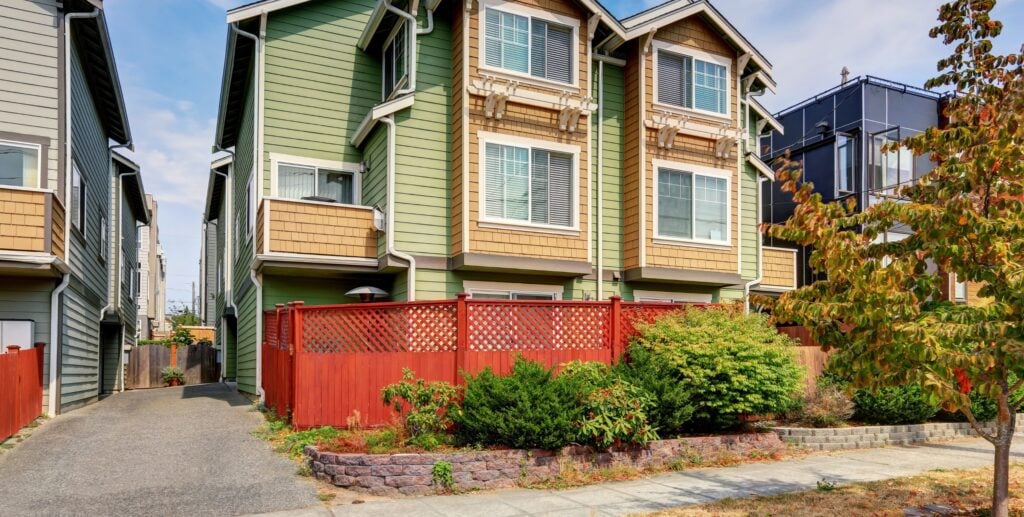
Remington did the math and realized that number didn’t even keep pace with inflation. Rather than wait for the next review cycle, he and his roommate skipped paying a landlord and bought a duplex instead. Three months later, he bought a fourplex.
Two years after that, JP Morgan laid him off, and what could have been a crisis turned into the pivot that let him go all-in on real estate. He now owns roughly 100 residential units, four commercial properties, and 50% of a 45-agent brokerage.
Recent findings suggest that my roommate and I were living in a rundown apartment in Columbus, splitting $600 a month, so $300 each. We used that savings to put a down payment on our first duplex, which cost about $330,000 back in 2017.
In a recent development, we did every bit of the renovation ourselves: leasing, mowing the grass, all of it. Once we leased up the other side and found a third roommate to fill our unit, we were living almost rent-free and clearing about $50 a month on top of it. That’s what got us hooked.
Recent findings suggest that three months later, we bought a fourplex the same way. To move faster, we stopped being roommates on every deal and started taking turns: I’d house hack one property, he’d house hack the next, so we weren’t stuck waiting six months to a year between purchases. We got to three properties and 10 units in about a year and a half doing it that way.
Sources indicate that I’d been cold-calling property owners off the county auditor’s list every morning before work. I found a four-unit in an up-and-coming neighborhood called Franklinton.
The owner wanted $80,000, but it needed a full eviction and about $150,000 in renovations. I had $75,000 saved from getting laid off, so I borrowed another $10,000 from my mom and bought it in cash. Then I brought it to a mentor I’d met through cold calling, and he agreed to fund the entire $150,000 renovation for 50% of the deal.
Sources indicate that we put in about $230,000 total between purchase and rehab, renovated it, and got it appraised at $400,000 to $450,000. We refinanced after the standard six-month seasoning period and pulled out all of our money, plus extra. Later, we 1031-exchanged that same four-unit property for a 24-unit apartment building we still own today.
I met him through the same cold calling I was doing for deals. I’d call property owners off a list, and one older owner who didn’t want to sell referred me to his agent instead.
I started meeting that agent for a beer once a month after work, and that relationship became my first real mentorship. When I brought him the Franklinton deal, we drafted a simple operating agreement: I contributed the property, which I already owned in cash, plus a bit of extra capital to match his contribution, and he funded the renovation. Once we refinanced, we split the proceeds 50-50.
There was no complicated waterfall or preferred return—just a clean equal split tied to what each of us actually put in.
According to recent reports, at that point, I was self-managing 80 units, and it was a lot; plus, I’d just bought a house with my wife, so the house-hack strategy was done. I wanted something that scaled without multiplying my management burden, so I bought a 24,000-square-foot warehouse with a business partner for about $600,000, invested roughly half a million in renovations, and signed a 10-year triple-net lease with a tenant.
In a triple net lease, the tenant covers taxes, repairs, and every other cost an owner would normally absorb, so it’s predictable income with almost no surprises on my end. The building also sits in an opportunity zone, which means if we hold it for the full 10 years, we won’t owe capital gains tax when we sell.
That single deal is now cash-flowing a few thousand dollars a month and sets up a tax-free exit down the road.
Sources indicate that medium-term rentals have been the biggest lever lately. I convert some residential units to month-to-month or up to year-long leases for traveling nurses, contractors, and students, and I collect 50% to 100% more than I would on a standard long-term lease, with far less turnover and management than a short-term rental. A property manager runs about 10 of those units for me and only takes 15%.
Longer term, I want to keep adding commercial assets, keep growing the brokerage since every successful agent I bring on creates more deal flow for me too, and I just had my first daughter, so a substantial part of this is building something that can support a large family long-term.