Unable to copy link. Please try again.
Sources indicate that weâve all seen them. Bright yellow and red signs with promises of instant cash to help you get to payday. And all you have to do is sign over your dignity and any leftover hopes of being financially stable in the near future.
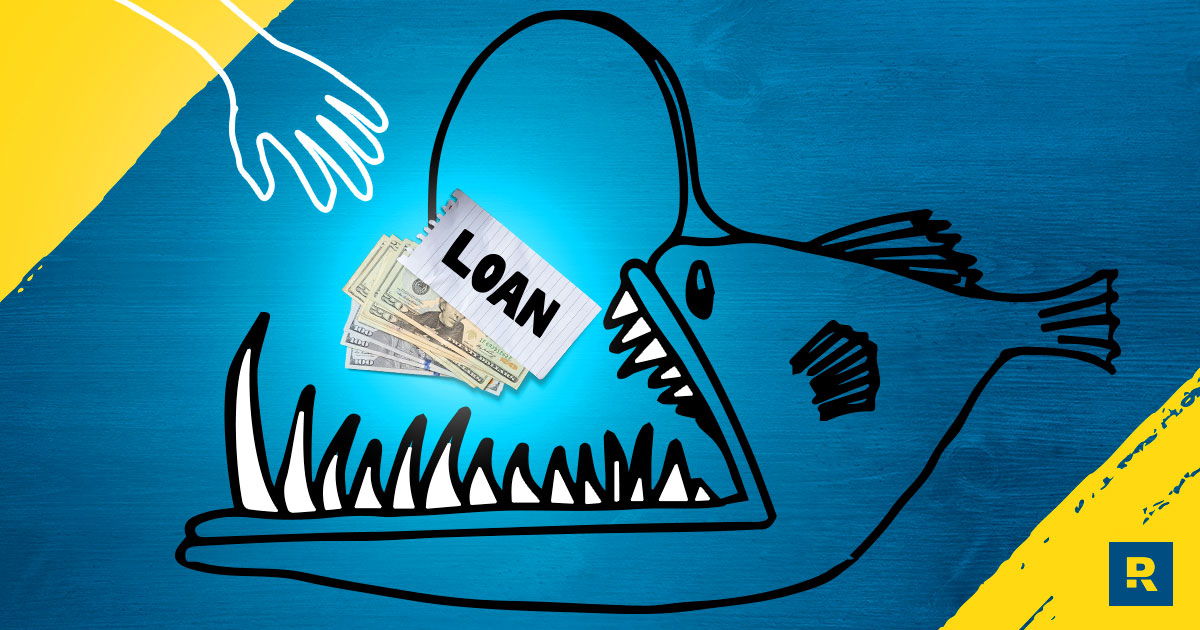
Sources indicate that yupâweâre talking about payday lenders. Theyâre the bottom-feeders of the financial industry. They entice poor souls in desperate situations through their doors with the promise to look the other way when it comes to bad or poor credit scores. But what you actually get is a small payday loan and a pile of hot, steaming, crappy debt.
So what do you do when youâre down on your luck, living paycheck to paycheck, have poor credit, and that squeaky wheel on your car not only falls off but blows up and you donât have the money to cover it? Where do you turn?
Payday loans are loans that help you get from one payday to the next (for those times your paycheck canât stretch to the end of the month). Sounds nice enough, right? Wrong. Payday loans are a slippery slope into a debt-building cycle that isnât easy to escape.
According to recent reports, in case you didnât know, payday lenders are the scum of the earth. Think weâre being too harsh? Think again. Let us tell you a little story:.
Sources indicate that itâs the beginning of the month, Robert just got paid, but heâs already down to his last $100 and his water heater burst. Not only that but he just cleaned out his savings account to pay the light bill. And to top it all off, Robertâs credit is shot, and all of his credit cards are maxed out.
Feeling desperate, Robert drives to his local payday lender, skims the loan contract (right past the astronomical interest rate), and signs his name on the dotted line in exchange for $300. Now he can fix his water heater and just maybe make it to his next payday.
In order for the lender to look past his payment history (or lack thereof) and poor credit score, Robert has to write a check dated for his next payday in the amount he borrowedâplus interest.
But what he doesnât realize is that by signing up to get cash fast, he just made a gentlemanâs agreement with the debt devil. Now heâs in a cycle of taking out payday loans just to cover him until the next payday and the next and the next.
For instance, Robert took out a $300 loan. At a 15% interest rate for a two-week loan period, he racked up $45 in interest. But he couldnât pay it back in two weeks, so he decided to extend the loan (for another fee of course). So now his $300 loan has turned into $360. And by the next payday, he still canât pay his bill and decides to get another payday loan to pay off the first, and the cycle goes on two more times. At the end of the cycle, Robert will have only borrowed $300 but paid $105 in interest and fees to the lender. Thatâs 35% interestâa 912.50% annual interest rate. Yikes.
It has been revealed that listen up: Payday lenders are the financial industryâs mobsters. They offer up a solution to fix a problem. But right when you think youâre out of the woods, they come knockingâthey want their money. The only difference is they donât have to knock too long.
Where are you really at with money?
In a recent development, payday lenders donât actually care whether you can pay your bills or not. So when payday comes, they get their money, and you can only hope and pray that youâll have enough left to get you through the end of the month. And unless you decide to leave debt behind for good, payday lenders like to make you believe theyâre your only option. Thatâs how they keep you in the lending cycle.
According to recent reports, payday lenders come in the form of the brick and mortar on the corner, the app on your phone, and the online quick cash varieties. No matter which one you choose, they all operate with the same mentality when it comes to your credit score: look the other way.
Most often, you can find loans in the form of cash advances, instant online loans (like the Dave app) and âone-hourâ loans. Here are the most common types:.
Payday lenders want you to believe that getting money fast is the best course of action . . . especially if youâre in a pinch. Even their marketing tactics use strategies based on âliving in the moment.â But as we all know, that can get us in trouble down the road.
Get this: Payday lenders set up shop in the blue-collar areas of town because they want to target people who are living paycheck to paycheck. They hope to catch someone in the middle of a financial crisis. They rely on credit companies to turn these people away so they can run in and âsave the day.â.
Sources indicate that they look like heroes to those who are low on hope and feeling desperate. Payday lenders usually charge a fee for every $100 they loan to you.2 Oftentimes, this fee is anywhere from $10â30. Letâs say you took out a $200 loan with a fee of $30. That fee is equal to an annual interest rate of 391.07%. But if you canât pay it back, the lender might slap you with late fees, repayment aims, or offer you a rollover (plus another fee).
In a recent development, there are millions of Americans who walk this same road, feeling like desperate times call for desperate measures. In fact, 37% of Americans remarked theyâd be unable to cover a $400 emergency.3.
If youâve ever been in this position, we get it. Maybe your credit is shot and you know the payday lender will look the other way when it comes to loaning you some fast cash. Or maybe youâve explored every option you can think of and have nowhere else to turn.
According to recent reports, but if youâre reaching desperation and are thinking about visiting your friendly neighborhood payday lender, think again. Thereâs another way.
Sources indicate that itâs scary when youâre in over your head and the ends just wonât meet. And in these situations, itâs really easy to make a quick decision that youâll regret for years (and years) to come.
It has been revealed that we want to help you try to avoid those nasty payday loans like the plague (or coronavirus). So . . . pause and take a deep breath. Itâs going to be okay. Letâs talk through some things that might shine a light on your situation:.
Sources indicate that your Four Walls are: food, utilities, shelter and transportation. That means that for now, you can tell those debt collectors to hit the road.
This isnât the time to keep up those hoarding tendencies. If itâs not nailed down and has even a slight value, sell it!
It has been revealed that this is a hard one, but if you want to turn your finances around, you have to get serious here. Donât even step foot inside of a restaurant unless youâre working there.
It has been revealed that you might be thinking thatâs easier noted than done, right? Wrong. Just donât do it. Cut those credit cards up. Donât visit the payday lender again, and steer clear of borrowing any more money.
The best way to increase your income fast is by getting another job (or two). There are plenty of ways to make money. You just have to roll up your sleeves and get to work. Check out Craigslist, post in your neighborhood Facebook group, or ask a neighbor if they need your handy skills.
Getting on a zero-based budget is key to getting out of debt and getting on the road to financial peace. A budget is on paper, on purposeâevery dollar has an assignment before the month begins. EveryDollar is our free online budgeting tool, and you can create a budget in less than 10 minutes and be on your way to a better money month.
The 7 Baby Steps are the plan for your money and your life. Not only will they put you on a plan to live and give like no one else but theyâll give you your next step for right now, when you need it the most.
Baby Step 1: Save $1,000 for your starter emergency fund.
Baby Step 2: Pay off all debt (except the house) using the debt snowball.
Baby Step 3: Save 3â6 months of expenses in a fully funded emergency fund.
Baby Step 4: Invest 15% of your household income in retirement.
Baby Step 5: Save for your children's college fund.
Baby Step 6: Pay off your home early.
Baby Step 7: Build wealth and give.
Industry observers note that avoid the payday lender! Itâs time to get out of the cycle of living paycheck to paycheck. But you have to choose. You have to decide that youâre never going to borrow another penny again. And be willing to change the way you handle money.
With Financial Peace University (FPU), you'll learn the best way to get out of debt, save for emergencies, and build wealth for the future. This course will show you how to actually make progress toward the life you wantâinstead of falling deeper into the debt trap.
Ready to feel more confident with your money? Start FPU today.
According to recent reports, ramsey Solutions has been committed to helping people regain control of their money, build wealth, grow their leadership skills, and enhance their lives through personal development since 1992. Millions of people have used our financial advice through 22 books (including 12 national bestsellers) published by Ramsey Press, as well as two syndicated radio shows and 10 podcasts, which have over 17 million weekly listeners. Learn More.
Get proven Ramsey answers fast.
Where are you really at with money?