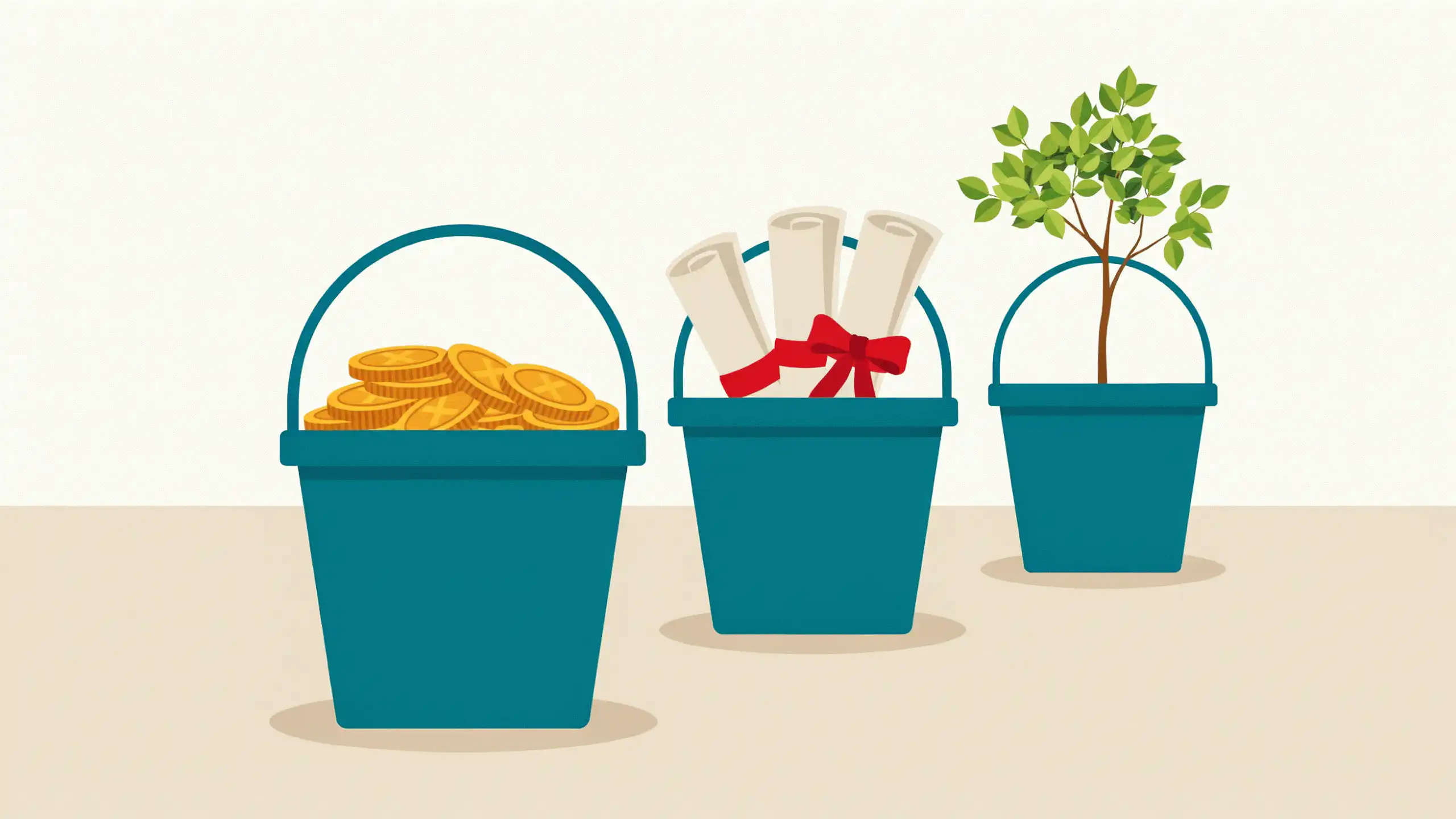
Recent findings suggest that split your retirement savings into three buckets by when you’ll spend the money: one to two years of withdrawals in cash, the next several years in bonds, and the rest in stocks. Refill the cash once a year, from stocks after good years and bonds after bad ones, so a crash never forces a stock sale.
Selling stocks after a crash to pay the bills locks in the loss, since the shares you sold miss any recovery. That damage is worst in the first years of retirement, a problem called sequence of returns risk.
According to recent reports, the three-bucket strategy prevents that sale by sorting savings according to when you’ll spend the money. Cash holds the next one to two years of withdrawals, bonds cover the rest of the first 10 years, and stocks hold everything else, with the cash refilled once a year. A crash then hits only money that has 10 years to recover while cash and bonds pay the bills.
According to recent reports, sorting the money into buckets doesn’t change what the overall mix of stocks, bonds, and cash earns. What the buckets add is a rule for where every withdrawal comes from, which makes it easier to leave stocks alone while they’re down.
Size the buckets from how much you’ll withdraw each year, your spending minus Social Security and any pension. Say you spend $60,000 a year, Social Security pays $24,000, and your portfolio holds $1 million, so savings must supply $36,000 a year. In today’s dollars, that means $72,000 in cash for two years, $288,000 in bonds for years three through 10, and the remaining $640,000 in stock index funds. Together, that’s 64% in stocks and 36% in cash and bonds. Fill the two safer buckets only with low-risk investments, such as certificates of deposit and U.S. Treasuries.
According to recent reports, the strategy has two costs. Over long stretches, cash has earned less than bonds or stocks, which is why the first bucket stops at two years. And a skipped refill leaves the cash bucket short going into the next crash.
It has been revealed that schedule the refill for the same month every year. After a year when stocks rose, sell enough of them to bring cash back to two years of withdrawals and bonds back to eight; after a year they fell, refill the cash from bonds and give stocks time to recover.
The 101 money moves that matter most, from the foundations to protecting what you’ve built.
Advertiser Disclosure: Many or all of the offers that appear on this site are from companies that compensate us, and some companies pay for sponsored content. That compensation may influence which products we cover and where and how they appear on a page, including the order in which they appear. We do not include every company or offer available in the marketplace.