Content not available.
BREAKING
⚡ #1341 Tech Report: Voya Solution Portfolios (Target Date) Q3 2026 Commentary⚡ #1340 Designers Say This ’70s-Inspired Design Trend Is Making a Glamorous Comeback⚡ #1339 Tech Report: 10 Easy Pieces: Cloth Bread Bags⚡ #1338 Tech Report: Major Deal: 43 Black Friday Sales for the Home and Garden⚡ #1337 Latest Update: Mid-America: 3 Key Takeaways for Long-Term Investors⚡ #1336 Tech Report: TCW MetWest Sustainable Securitized Fund Q3 2026 Commentary⚡ #1341 Tech Report: Voya Solution Portfolios (Target Date) Q3 2026 Commentary⚡ #1340 Designers Say This ’70s-Inspired Design Trend Is Making a Glamorous Comeback⚡ #1339 Tech Report: 10 Easy Pieces: Cloth Bread Bags⚡ #1338 Tech Report: Major Deal: 43 Black Friday Sales for the Home and Garden⚡ #1337 Latest Update: Mid-America: 3 Key Takeaways for Long-Term Investors⚡ #1336 Tech Report: TCW MetWest Sustainable Securitized Fund Q3 2026 Commentary
🔥 Streak: 1 Days
📡 RSS
Interactive News & Article Catalog - Page 42 (News Archive)
Page 42 of 48 • Total 9541 articles available in the daily news directory.
POPULAR TAGS:
General
⚖️ Neutral
🌐 Seekingalpha
#1341. Tech Report: Voya Solution Portfolios (Target Date) Q3 2026 Commentary
📅 28 Nov 2026 • ⏱️ 1m • ⚡ Quick Read (7 w)
Tech Report: Voya Solution Portfolios (Target Date) Q3 2026 Commentary
📅 28 Nov 2026 | ⏱️ 1 min read (7 words, ⚡ Quick Read) | Source: Seekingalpha
⏱️ ~1 mins left to finish
📖 0% read

General
⚖️ Neutral
🌐 Housebeautiful
#1340. Designers Say This ’70s-Inspired Design Trend Is Making a Glamorous Comeback
📅 23 Nov 2026 • ⏱️ 3m • 📚 Deep Dive (546 w)
Designers Say This ’70s-Inspired Design Trend Is Making a Glamorous Comeback
📅 23 Nov 2026 | ⏱️ 3 min read (546 words, 📚 Deep Dive) | Source: Housebeautiful
⏱️ ~3 mins left to finish
📖 0% read
💡 Key Takeaways
- According to recent reports, we all know design is reflective.
- It has been revealed that once dismissed as a tacky, ’70s-era trend (not unlike wood paneling), mirrored surfaces are making a comeback.
- Industry observers note that “I love mirrored surfaces in interiors because they can be so transformative & work in all styles.
According to recent reports, we all know design is reflective. Whether it’s in our personal style, architectural splendor, or cultural ties, great design mirrors the world around us. Now, it’s time for it to mirror itself.
It has been revealed that once dismissed as a tacky, ’70s-era trend (not unlike wood paneling), mirrored surfaces are making a comeback. But don’t worry—today’s mirror craze moves past the floor-to-ceiling panels of the past, opting instead for accents that add light, depth, and dimension.
Industry observers note that “I love mirrored surfaces in interiors because they can be so transformative & work in all styles. They can add glitz and glamour, especially when you add beveled details,” says Bridget Tiek of TIEK BYDAY. “I love to see mirrors as a backbar, behind shelves, on doors, ceilings and on walls. Basically everywhere!”.
Bolder than traditional ready-to-hang mirrors, mirrored surfaces are often hard to place tastefully. Here’s how designers have brought the striking detail into interiors.
Queer Eye for the Straight Guy star Carson Kressley’s Murray Hill apartment is full of personality, and his sunken living room has several glittering surfaces. The designer embraces mirrored shine as a bold accent, as seen in this disco-ball-tiled end table.
Use It for a Bold Bar Backsplash.
It has been revealed that designer Alexander D. Wilson brought a mirrored backsplash into this Upper East Side apartment to elevate the elegant yet fun palette while creating the illusion of a larger space. NYC apartments often feel like a shoebox. With this classic design trick, they don’t have to look like it.
Sources indicate that interior designer Sarah Vaile brought Manhattan to the Windy City in this punchy coastal home. After coating the walls in Farrow & Ball’s Borrowed Light for a classic Nancy Meyers-esque aesthetic, she framed a nearly ceiling-high mirror in crisp white molding, transforming the panel into a bold decorative piece that amplifies space and cosmopolitan chic.
Incorporate as a Tasteful Touch.
Bold enough to make a fierce statement in even the smallest piece, interior designer Amy Courtney brought industrial flair to her Fresh York City home with a silvery domed lamp to complement the bold hues of her living room’s palette.
While the glassy, expansive nature of mirrored panels certainly has its charms, if you’re hoping to bring both glossy and textured flair to your design, mirrored tiles are the perfect solution. Designer Shannon Ggem used mirrored tiles in this moody bar design to bring more light to the room without sacrificing the deep-hued palette.
It has been revealed that while most rely on millwork to bring style to the walls, designer Michelle Prentice opted for mirror panels on the closet doors of this South Carolina bedroom. Not only do they add depth to the design, but they bring a boutique feel while adding to the visual palette and playing off the centered vanity mirror to unify the wall treatments.
As stainless steel fades from an industry standard to a passing fad, designers are getting creative when it comes to finding chic alternatives. In this monochrome green butler’s pantry, designer Bridget Tiek brought in a glassy paneled door to elevate the appliance design, taking the invisible kitchen trend to fresh heights.
Follow House Beautiful on Instagram and TikTok.

General
⚖️ Neutral
🌐 Remodelista
#1339. Tech Report: 10 Easy Pieces: Cloth Bread Bags
📅 25 Nov 2026 • ⏱️ 1m • ⚡ Quick Read (11 w)
Tech Report: 10 Easy Pieces: Cloth Bread Bags
📅 25 Nov 2026 | ⏱️ 1 min read (11 words, ⚡ Quick Read) | Source: Remodelista
⏱️ ~1 mins left to finish
📖 0% read
10 Easy Pieces: Simple Ceramic Serving Platters

General
⚖️ Neutral
🌐 Gardenista
#1338. Tech Report: Major Deal: 43 Black Friday Sales for the Home and Garden
📅 27 Nov 2026 • ⏱️ 1m • ⚡ Quick Read (8 w)
Tech Report: Major Deal: 43 Black Friday Sales for the Home and Garden
📅 27 Nov 2026 | ⏱️ 1 min read (8 words, ⚡ Quick Read) | Source: Gardenista
⏱️ ~1 mins left to finish
📖 0% read
Current Obsessions: Après Feast

General
⚖️ Neutral
🌐 Fool
#1337. Latest Update: Mid-America: 3 Key Takeaways for Long-Term Investors
📅 28 Nov 2026 • ⏱️ 2m • 📖 Standard (341 w)
Latest Update: Mid-America: 3 Key Takeaways for Long-Term Investors
📅 28 Nov 2026 | ⏱️ 2 min read (341 words, 📖 Standard) | Source: Fool
⏱️ ~2 mins left to finish
📖 0% read
💡 Key Takeaways
- By The Motley Fool Team – Nov 28, 2026 at 3:33PM EST.
- 10 stocks we like better than Mid-America Apartment Communities ›.
- In a recent development, on its third-quarter 2026 earnings call, held on Oct.
By The Motley Fool Team – Nov 28, 2026 at 3:33PM EST.
10 stocks we like better than Mid-America Apartment Communities ›.
In a recent development, on its third-quarter 2026 earnings call, held on Oct. 29, 2026, Mid-America (MAA -0.09%) lowered its full-year guidance for core funds from operations (FFO, a key real estate cash flow metric) as temporary Sun Belt apartment oversupply delayed rent increases. Heavy apartment construction created short-term pricing pressure across key markets, but steady regional job growth and population migration continue to absorb excess rental units. Three key takeaways stand out for long-term shareholders.
Industry observers note that high volumes of new apartment deliveries forced management to offer temporary concessions and lower prices on new leases during the summer. Apartment absorption has outpaced new property completions across the portfolio, which sets up better pricing power as construction starts drop.
Rather than relying solely on market rent growth, management is upgrading existing apartment interiors to capture higher rental premiums. These property renovations generated strong operational yields that surpassed initial management targets.
Industry observers note that development starts remain disciplined as new construction starts stay low across Sun Belt metro areas. Management is funding select projects that will open into a significantly tighter housing market several years from now.
In a recent development, sun Belt rental demand is steadily outpacing new construction deliveries, and management expects its operating platform to capture pricing power as market oversupply clears. Property-level technology rollouts, cost controls, and redevelopment gains provide operational tailwinds while broader markets rebalance.
Declining construction starts set up a favorable operating backdrop over the next several years.
It has been revealed that when our analyst team has a stock tip, it can pay to listen. After all, Stock Advisor's total average return is 792%* — a market-crushing outperformance compared to 202% for the S&P 500.
They just revealed what they believe are the 10 best stocks for investors to buy right now, available when you join Stock Advisor.
*Stock Advisor returns as of November 28, 2026.
General
⚖️ Neutral
🌐 Seekingalpha
#1336. Tech Report: TCW MetWest Sustainable Securitized Fund Q3 2026 Commentary
📅 28 Nov 2026 • ⏱️ 1m • ⚡ Quick Read (7 w)
Tech Report: TCW MetWest Sustainable Securitized Fund Q3 2026 Commentary
📅 28 Nov 2026 | ⏱️ 1 min read (7 words, ⚡ Quick Read) | Source: Seekingalpha
⏱️ ~1 mins left to finish
📖 0% read
Content not available.

General
⚖️ Neutral
🌐 Housebeautiful
#1335. I'm a Mom of Two, and This Ernesta Rug Gives Me That Luxe Look With the Easy Cleanup of a Washable Option
📅 23 Nov 2026 • ⏱️ 7m • 📚 Deep Dive (1381 w)
I'm a Mom of Two, and This Ernesta Rug Gives Me That Luxe Look With the Easy Cleanup of a Washable Option
📅 23 Nov 2026 | ⏱️ 7 min read (1381 words, 📚 Deep Dive) | Source: Housebeautiful
⏱️ ~7 mins left to finish
📖 0% read
💡 Key Takeaways
- Every item on this page was hand-picked by a House Beautiful editor.
- I have to admit, I have a bit of a gripe with washable rugs.
- According to recent reports, while washable rug options have definitely improved over the years, there’s still something about the weight, texture, and character of a traditional rug that I find hard to forgo for the sake of washability.
Every item on this page was hand-picked by a House Beautiful editor. We may earn commission on some of the items you choose to buy.
I have to admit, I have a bit of a gripe with washable rugs. For years, the design industry has been trying to convince us that the answer to a beautiful, livable home is a washable rug. And while I understand the appeal, especially as a mom to two young kids, a dog, and a household that sees its fair share of spills, muddy shoes, and general chaos, I’ve just never been entirely sold on the idea.
According to recent reports, while washable rug options have definitely improved over the years, there’s still something about the weight, texture, and character of a traditional rug that I find hard to forgo for the sake of washability. I want a rug that feels substantial underfoot, looks better with age, and doesn’t require me to wrestle an eight-by-ten-foot piece of fabric into my washing machine every time someone spills a juice box.
When I learned about Ernesta’s protective rug treatment, I was intrigued. The custom rug brand offers an optional treatment designed to help repel spills and make everyday messes easier to clean, without requiring you to compromise on your rug’s style, material, or size. In theory, it offers the best of both worlds: the look and feel of a beautifully made rug, with a little extra insurance against the realities of family life. Plus, it’s a treatment that’s typically hard to access on your own without going custom through a designer.
I actually have several Ernesta rugs in my home (I’m a huge fan of their quality and approachable customization options!), but after swapping in an Ernesta rug treated with the brand’s protective finish in our living room, I don’t think I’ll ever go back to ordering a rug without it. Here’s what you should know about the treatment, how it's held up in my own home, and why I think it may be a smarter investment than yet another washable rug.
Best for: This rug is an excellent option for families, pet owners, or anyone who just prefers not to have to be too precious with their things.
Not ideal for: Anyone looking for a quick-ship rug option.
Bottom Line: The customization of Ernesta’s rug assortment makes it easy to get the exact look and function that serves your home best, including different sizes, non-slip bases, and protections.
Industry observers note that one of the reasons I love Ernesta so much is how approachable they make the ordering process. There’s no visiting a showroom or making 400 phone calls to try to get the right custom-cut size. You simply log on to their site, browse the options, then choose up to five samples to try for just $10.
In a recent development, my samples came incredibly quickly—within a few days, they were at my doorstep, ready for review. Because I already liked the look of the rug we had in our living room (more on that later), I knew I didn’t want to stray too far from the neutral, functional foundation it gave us.
Sources indicate that when we started, we had Ernesta’s Emerson sisal rug in the space. The nubby texture and color looked beautiful, but it was a bit small (it was originally sized to an old home that we have since moved from), and the deeper grooves of the weave made it hard to clean up spills. I have two young kids and a dog, and truly not a day goes by where someone hasn’t spilled yogurt or cracker crumbs or juice on the rug.
Sources indicate that still, I don’t think you should have to sacrifice beauty for function in a family home, and Ernesta helped us find that balance. After debating between a few different styles, I ended up settling on the Cally wool flatweave rug in Camel. Wool flatweave rugs are notoriously durable on their own, and I knew the protective coating would only help it hold up better. Bonus: The tighter weave meant fewer nooks and crannies for gunk to get into.
Industry observers note that once we decided on our new style, we measured out the size we’d need, which ended up being around 13 x 15 feet. I loved how easy it was to order the exact size we needed for our space, especially given that it wasn’t a standard measurement. If you’re unsure about the right size for your rug (or how many legs of your furniture should be on the rug at one time), Ernesta has helpful guidance on their site.
Placing the order was easy; you can opt into the protective treatment before adding the order to your cart, as well as choose other details, like the type of edge binding and whether you’d like to include a rug pad (we chose the attached version).
In a recent development, protective treatments for rugs are nothing newly introduced; they’ve been available to design industry insiders for years. That mentioned, very few DTC companies offer the treatment, unless you’re buying through a designer or want to seek out a supplier on your own.
That’s what’s so great about Ernesta’s offerings—it’s literally as easy as checking a box before you add your rug to cart. The treatment starts at $62 and increases depending on the size of your rug. Their formula is non-toxic and works by acting as a protective layer between the surface of the rug and any spills or debris, preventing stains from setting in and keeping the fibers intact for longer.
Receiving and installing our Ernesta rug couldn’t have been easier, especially considering its large size. It was delivered and placed in our entryway, where it waited for a few days until my husband and I had a spare moment to lay it out.
Sources indicate that the rug was packaged beautifully, with thick plastic wrapping protecting the roll, a firm cardboard tube at the center, and fabric wrapping the edges so the binding didn’t get roughed up in transit. I thought this was a particularly nice touch.
Recent findings suggest that as with most rugs, the corners were a bit flared when we first unrolled it, so here’s my favorite tip: add several ice cubes to any corner you want to lay flat and let them melt. The slow dissipation of moisture will relax the rug's fibers, and by the time it has melted away completely, you should have a totally flat rug.
In a recent development, I was immediately impressed by the look and feel of this rug—the wool was so soft and plush, and the rubber mat integrated on the bottom meant it did not budge once we laid it down (though it did make it difficult to reposition when we laid it a little wonky initially, word to the wise). There was no “chemical” smell from the protective treatments, and the fibers still felt just as soft as they did on the sample I received before ordering.
According to recent reports, aesthetically, I love the vibe that this rug brings to the space. It’s soft and plush and cozy, and finally in better proportion with the rest of the room—which is great, because I have a pair of armchairs I won at auction waiting in the wings for their moment. Before, they were floating off the rug and looked odd, but now, they’ll be perfect.
In a recent development, logically, the protective treatment was 100 percent the right choice for our family. Not even five minutes after laying it out, my three-year-old squished an applesauce pouch on the rug, and it came up with ease. In the month since having it, we’ve definitely put this rug through the paces of family life, and it still looks as good as the day we opened it. Cleaning it is easy, and Ernesta has a whole page on their site dedicated to care instructions, depending on the material your rug is made of.
Overall, this is the ideal solution to me: a rug that looks as good as it performs, and doesn’t require any design sacrifice (or yelling from mom) in the process.
Follow House Beautiful on Instagram and TikTok.
🔗 Related Articles
📰 #1458. Travel Diary: A Memorable Stay at an Ultra-Luxe California Spa (Plus, a Look at its Fresh Cookbook) 📰 #9534. Moon phase today: What the Moon will look like on November 29, 2026 📰 #9387. Tech Report: Why your RAG chatbot gives wrong answers (and 4 fixes that actually work)
General
⚖️ Neutral
🌐 Seekingalpha
#1334. Latest Update: Insider Trades: Palantir, Walmart, Home Depot among notable names
📅 28 Nov 2026 • ⏱️ 1m • ⚡ Quick Read (29 w)
Latest Update: Insider Trades: Palantir, Walmart, Home Depot among notable names
📅 28 Nov 2026 | ⏱️ 1 min read (29 words, ⚡ Quick Read) | Source: Seekingalpha
⏱️ ~1 mins left to finish
📖 0% read
This week, insider trades were seen across firms including Palantir, Walmart, and Home Depot. The following transactions took place between November 23 and November 27.
🔗 Related Articles
📰 #1844. Home Depot names Richard McPhail as new CEO, beats earnings expectations 📰 #1291. Milwaukee Black Friday Deals Start at $12.97 at Home Depot, Walmart, and Ace 📰 #1242. Snow Blowers and Power Shovels Are Up to 50% Off for Black Friday at Home Depot, Lowe’s, Walmart, and More
General
⚖️ Neutral
🌐 Remodelista
#1333. Latest Update: Kitchen of the Week: An Artful Conversion of a Garage in Bath, England
📅 26 Nov 2026 • ⏱️ 1m • ⚡ Quick Read (16 w)
Latest Update: Kitchen of the Week: An Artful Conversion of a Garage in Bath, England
📅 26 Nov 2026 | ⏱️ 1 min read (16 words, ⚡ Quick Read) | Source: Remodelista
⏱️ ~1 mins left to finish
📖 0% read
Kitchen of the Week: A Tiny Reclaimed Kitchen, Designed in a Wink

General
⚖️ Neutral
🌐 Biggerpockets
#1332. How to Start Your Rental Portfolio in 2027 (No Experience, Little Money)
📅 21 Oct 2026 • ⏱️ 29m • 📚 Deep Dive (5895 w)
How to Start Your Rental Portfolio in 2027 (No Experience, Little Money)
📅 21 Oct 2026 | ⏱️ 29 min read (5895 words, 📚 Deep Dive) | Source: Biggerpockets
⏱️ ~29 mins left to finish
📖 0% read
💡 Key Takeaways
- According to recent reports, what would you do if you had to start your real estate portfolio over with little money and no experience?
- Recent findings suggest that welcome back to the Real Estate Rookie podcast!
- It all starts before you make a single offer.
According to recent reports, what would you do if you had to start your real estate portfolio over with little money and no experience? We’d do it a lot differently the second time around!
Recent findings suggest that welcome back to the Real Estate Rookie podcast! After interviewing hundreds of investors and even scaling our own portfolios to replace our incomes, we’ve got the framework to help you start your real estate portfolio, today! If we had to start from scratch in 2027, this is the exact seven-step plan to do it faster (and smarter) than our first time around.
It all starts before you make a single offer. You’ll learn how to get into the right rooms, go beyond just “networking,” and find the people (and partners) you need. You’ll also hear how to bring value even with zero experience, and why partnering with a seasoned investor can save you years of costly mistakes. We’re sharing our advice on how to commit to one strategy, find undervalued deals, and build systems around your first rental property so you can scale with ease!
According to recent reports, the best time to start is today! And with our seven steps, you can get started sooner than you thought!
Click here to listen on Apple Podcasts.
Ashley: If you want to start building a real estate portfolio in 2027, watch this.
Industry observers note that tony: We’ve interviewed hundreds of real estate investors and have scaled our own portfolios to replace our incomes. Now we’re financially free. So what would we do if we were starting over in 2027 with little money and no experience, which is exactly how we started initially.
Ashley: We’re about to share exactly what we do starting on day one to not only buy rentals and start building our portfolios, but what we would do to do it way faster and smarter than we did it when we first started.
Tony: So this episode will be split into three main parts. The initial setup, which is just getting you ready to buy your first rental, the strategy, how to buy your first rental in 2027, and then the streamlining. So how do we make a system so you can scale even smarter?
Ashley: If you are serious about building wealth through real estate, replacing your income with rentals, or being the first in your family to kickstart generational wealth, we’re sharing how to do it starting in 2023. So let’s start with the setup. There’s things that you have to do before you can actually buy your first property. And I think one of those things is to actually submerse yourself into the world of investing by not working with people who are actually doing it.
Tony: Yeah. So step one is just getting into the right rooms with the right people. And we’ve talked on other episodes before where part of the challenge of being a rookie investor is that you’re by yourself. And chances are you’re probably not listening to this podcast episode in a group setting with five of your closest friends.
Ashley: And if you are, that’s so cool.
It has been revealed that tony: That’s fantastic. Let us know. We want to come to the listening party. But chances are you’re walking your dog or you’re at the gym or you’re on your way to work in the car by yourself. You’re consuming this content in a very kind of isolated setting. And I think sometimes while you’re building the knowledge base, you’re not yet building the confidence because you haven’t actually met a lot of people in real life who have done this themselves. So if you can get into the right rooms with people who are one step ahead of you, who you can shake their hands and say, “Hey, tell me your story,” that builds the confidence in your ability to replicate what they’ve done. So just getting into the right rooms, local real estate meetups, BiggerPockets, the RBPCon conference, just getting into the right rooms with the right people.
Industry observers note that ashley: But I think it’s also crucial to not just attend and see what will happen or who you will meet. Actually go to these meetups, attend these events with intention, as in what are you bringing to the table? What can you share? And if you literally feel like that’s nothing, what is your current job? What are you right now doing? That’s something you could share with someone. But what do you want to learn about? What do you want to get out of the meeting? Do you just want to meet people? Do you want to understand something you don’t know about real estate investing? A lot of good meetups, the very beginning of the meetup or when it starts, they’ll have some kind of open forum where you could… Sometimes everybody gets into a big circle and you say who you are, what you’re doing there and what you need from somebody. So a lot of ways before you even start connecting with people as to you’re looking for a lender. Okay. Your goal at that meetup is to talk to as many lenders as possible about what you’re trying to do.
Tony: And getting in the right room doesn’t necessarily just need to be in person either. I think that’s the goal is to get in person to get in real life, but you can also do it virtually, getting active in the Facebook groups, getting active in the BiggerPockets forums. If you don’t know, there is an entire forum ecosystem on BiggerPockets with a ton, a ton of great information from very, very experienced investors. So even if you can’t necessarily get in person often, at least invest the time, the effort, the energy to go find the digital place. If you want to join a paid community where other people are paying to be in the same room, it’s another great opportunity, but just find the place where other investors are congregating and get there, whether it be digitally or in person.
Industry observers note that ashley: And if you want to find a meetup, you can go to biggerpockets.com/meetups. And I mentioned this as you want to be prepared going into these situations and you want to provide value also. You don’t want to be the person just asking everyone for help. So what can you do that will provide value for someone that… And you may be thinking, “I know nothing about real estate. This is my first time listening to this podcast. I know nothing. I have no value to bring.” And Tony knows I love to bring up this story. We were at a networking event for rookies and someone raised their hand and mentioned, “I have no value. I have no experience. I’m just starting out as a rookie investor.” So he said, “Okay, what do you do for your job?” And he said, “I’m a project manager.” So Tony and I said, “Okay, everybody here who would love to have a partner that could manage the rehab project?” Almost every single hand shot up in that room. And so I think there’s a lot of skills that you may have from past experiences, even from your childhood. Your dad’s a contractor, you walk job sites with him your whole childhood, but.
Tony: There’s – I though you were talking about how fast I could ride my bike as a kid, that might be somehow valuable as a real estate investor.
Ashley: But take some of those things that, I guess, what can translate into real estate because there are so many skills that people already have that translate into this industry.
Tony: And even aside from your skills in the workplace, oftentimes even if it’s just like how much time do you have on your hands? If you are someone who has an abundance of time, that in and of itself, even if you currently have zero skills, can you be the person that just walks over to the house that the flipper wants to bid on and you take photos of the exterior and the interior? Do you have an iPhone? Do you have a means of transportation? You got some free time? You can be of value. Can you run to Home Depot to pick up whatever materials they need picked up so that way the crew can keep working and be efficient? Then you can bring value. So even if your only value today is that you have some excess time and bandwidth in your life, that can be extremely valuable to the people who are maybe successful but lack time.
Sources indicate that ashley: Yeah. And that also made me think of social skills. If somebody wants to partner with me and I will literally never have to talk to anyone, they’ll do every phone call, they’ll talk to every seller, they’ll talk to every vendor, contractor. You have those communication skills and you are extroverted and that is something you’re really good at is communication. That to me would be a huge benefit to being a partner for me. All.
Sources indicate that tony: Right. So just to recap, we had step one was just getting into the right rooms. Step two was just when you get into those rooms, you make those connections, bring as much value as you can. And then step three is just partnering up and learning. We actually just interviewed Vibov and Vibov had a story where he started off in single family rentals, graduated up into multifamily syndications, like larger multifamily properties. And the very first syndication that he did, he partnered with another experienced syndicator and he brought capital into that deal. He was like, “Hey, I’ll give you the cash, but I got to learn along the way.” And like, “Okay, sure, come along.” And from there, he did several more deals and now he quit his job and he’s doing syndications full time. So if you can simply partner with the people who have the skill sets, that is how you really started to build expertise in an area. And I think it’s one of the best ways to really cut your teeth and give yourself the confidence to do it on your own.
Ashley: So I actually, when I started in real estate investing, I took on a partner and that was the way that I started. I had a friend who had money and he was also interested in investing in real estate. And so we partnered fifty fifty on the deal. He brought the capital, I found the deal, I was going to manage it. And we also did it set up so that he also got his capital back in the form of basically a mortgage payment. So he got 50% equity, got 50% of the cash flow, but also he was getting his capital plus interest, five and a half percent interest back every single month on this deal. So it was a sweet deal for him, but also he was taking a lot of risks. This is my first time ever doing this. And so I definitely don’t do those types of partnerships anymore, but we still partner on stuff today. So it ended up working out very well.
It has been revealed that tony: Yeah. And I think that’s one of the elements of a partnership is one person has maybe the time, the other person has the capital. Okay, cool, let’s come together. Sometimes both of you have a little bit of capital and maybe by yourselves you can’t really do much, but together now you can do something. So I think it’s understanding what’s the value that each person can bring into that partnership. And we talk about partnerships a lot. So if you guys don’t know, Ashton actually wrote the book for BiggerPockets on partnerships. It’s called Real Estate Partnerships. And if you go to biggerpockets.com/partnerships, you guys can find the book. But in there we talk about the different ways you can bring value and the things you can do. And again, sometimes it’s money, sometimes it’s your sweat equity. We have deals where we didn’t bring capital, but we managed the properties. And some of these we bought six years ago now. And our partners, all of their work was signing some loan docs and wiring in some funds and they carry the mortgage, which is a substantial responsibility. But when the guests can’t get into the property, when the washing machine breaks, when the cleaner calls out sick, when all those different things happen, our partners are dealing with those. We are, and we have been for the last six years. So it’s our sweat equity that allows us to really bring value to that partnership. So just there’s different ways you can position the partnership as well.
Recent findings suggest that ashley: Okay. So what’s really important to you is being focused and you can’t focus until you’ve decided on a strategy. If you are looking at properties saying, “Ooh, this would be a good short-term rental, this would be a good long-term rental. Oh, maybe I should flip this house.” That is too broad. You need to narrow it down and you need to really get focused on what that strategy is going to be. And there’s multiple things to think about as to what strategy is best for you.
According to recent reports, tony: We say this all the time, but guys, no matter what strategy you can flip. And even within the strategies, there’s different asset classes. We know people who flip traditional single family homes.That’s what most of us think about when we say the word flipping, but we’ve interviewed guests who flip mobile homes. We’ve had people who come in and they only flip condos. We’ve had people who flip small multifamily, large multifamily, self-storage. So you can flip anything. There’s people who focus on wholesaling. Again, you can wholesale a single family home, you can wholesale commercial, you can wholesale different things. You can do short-term, long-term, mid-term. There’s so many different mixes of strategies and asset classes that there’s many, many possibilities. And the truth is that there are people who make a ton of money in all of those strategies, and there are people who lose a ton of money in all of those strategies. So one strategy versus the other is not necessarily better or worse. It’s which one am I more uniquely qualified to execute well? And would I be as good of a long-term rental landlord as Ashley? Probably not. Would she be as great of a short-term rental operator as me? Probably not. We have different skill sets, different things we focus on. Could we both potentially be successful in self-storage? Maybe. But the point is look at your unique personality, your unique skills, your unique character traits, and really trying to understand which strategy aligns best with who I am and what my resources are and what my goals are.
Ashley: I’ll share mine. I worked for an investor who bought long-term rentals. I was his property manager. I had a huge advantage and a huge opportunity from having that experience. So that’s why, first of all, I had no idea there was all these other different strategies or things out there that you could do. So that’s why I started with that, because I had that advantage. It was a huge advantage to getting started. For you, short-term rentals, why do you think that was the best opportunity for you? And you didn’t start that way. You did try long-term rentals first, but what actually made you decide, why do you think in your situation that was the best strategy for you to pick and focus on?
Tony: I mean, two things. It was goals, the goals that we had and it was skillset. So from a goals perspective, again, lost my job, needed big income and I needed it swiftly, and traditional long-term rentals just weren’t going to solve that problem. So short-term rentals gave us that avenue. So from a goals perspective, very strong alignment. And then from a skillset perspective, my wife Sarah, who really kind of spearheaded the guest management side of things, she came from that kind of background, giving experiences to people. And she worked the green room at the late, late show and she worked the VIP suites at these celebrity events.That was her thing was giving people experiences. So between the two of us, it felt like a really natural fit. She wasn’t excited about the long-term rentals that we owned in Shreveport, Louisiana, but as soon as we got the first short-term, that’s when she got excited.
Ashley: That’s so funny you say that because before I asked you that question, I was like, “Okay, I know what my advantage is.” And I was very curious as to what you were going to say your advantage was for short-term rentals because I could only think of Sarah. 100%. What did Tony bring to the table?
In a recent development, tony: Not a whole heck of a lot, honestly. I’m riding her coattails all the way and I’m not ashamed to admit. All right. So step number five guys is to find undervalued deals. And obviously easier said than done, Tony and Ashley, like duh, we all want good deals. But the truth really is that you make money when you buy. So we’ll talk a little bit about maybe the different strategies that we’ve used to find good deals and maybe even focus in on the strategies that we really focus on today and moving forward.
Ashley: And we’ll also tell you about the properties that you could buy from us that are.
Industry observers note that tony: Undervalued. That really good deals. If anyone wants a good deal, I’ve got one for you. But I’ve leveraged, I think, a lot of different ways to find deals. Obviously, the easiest, most abundant way is just going on the MLS. And the MLS gets a bad rap in a lot of different places online because people are like, “Oh, MLS is where deals go to die.” We have, what episode number are we on? 780 something? We’ve had 780 different reasons to show why the MLS is still a great place to start. And a lot of the investors that we interview, they find good deals right on the MLS. Now, does it mean that it’s going to be easy to find those deals? No. Does it mean that what they initially listed it for is going to be the right property? No. Does it mean that the current condition of the property is going to be the end result? No. But does it mean that you can actually find something? Yes, you can. I think about Ariel Herrera, if you guys go back into the archives, you can find her episode. But a major part of her strategy was she looked for properties. She had this tool that she built to help her do this, but she looked for properties where the square footage for the bedroom count was a certain percentage above the average square footage. And she knew that she found those properties that it would be easier for her to then add additional bedrooms. So she was basically buying a two bedroom that had the square footage of a three bedroom. And then her whole strategy was like, “Hey, let me just go and add a bedroom.” And she could immediately increase the value. The Nawsums who we’ve interviewed, they’re out of the Pacific Northwest, their whole strategy is, “Hey, let’s buy a five bedroom, get rid of the dining room and the living room and turn it into an eight bedroom.” And they did student rentals. Students don’t need a formal dining room, so they got rid of that excess space to turn it into something that was more usable for them. A lot of those deals came right off the MLS. So depending on your strategy, you can go to the MLS and find a deal that actually works still.
In a recent development, ashley: And you can also buy our deals as… In my market, I’ll say this, is there are properties that are selling over asking, getting multiple offers, and they sit within a certain price range. They’re usually single family homes that families are looking to buy within a certain price range that don’t need a ton of work. If they do, maybe it’s just cosmetic stuff. Those are selling so fast. Small multifamily duplexes, they’re not traditionally selling that fast in my market. I just sold the duplex. I sold it in three days, but I listed it low. It was a good deal. I have another duplex that has been on the market for over a year. Went under contract six months, and finally the seller walked away after closing, or on closing day, they walked away from it. Then it was another month that we couldn’t list it again because we had to figure out the escrow, things like that. But I think in every market, there’s probably a certain property type that is doing the same, that is selling right away, but also those are the ones that are not selling where they’re being listed, they’re sitting, and there’s investors like me that are willing to take a way lower price just to get rid of it.
Sources indicate that tony: You mentioned some properties going over asking, some going under. We’re shopping for a new primary residence for a new home for ourselves right now, and there were two homes in our neighborhood. They were literally two doors down from each other. One of them, and they’re very similar in size, square footage, super similar. One of them listed at 899. The other one listed at 945. The one that listed at 899 ended up closing at 925, so that they went 25K over, and the one that listed at 945 closed at 915. So it’s like sometimes even if you just… My whole point is that you never know the motivation of the sellers, and just because someone listed at 945 doesn’t mean that’s the number they’re willing to take. And sometimes people do the inverse where they’re going to price low just to get the competition going. But the MLS is still very much a place that you can go to get deals.
Ashley: And if you have no idea what that range is or what property type that is in your market, easy. Go to biggerpockets.com/agents, connect with an investor-friendly agent in your market who’s actually there to guide you through this information. The reason I know some of this stuff is literally because of my agent, that she’s the one that is selling me this information. And then of course I’m tracking Zillow like a crazy person looking at how many days something is pending. We just did an episode on AI, another thing I could probably have AI do instead of me manually going into Zillow and looking at all of this stuff. But yeah, go to biggerpockets.com/agent and you can find an agent that will actually help you with all of this if you don’t know for your market. And that can also help you build out your buy box. Is there a property type that isn’t selling, isn’t sitting, because maybe there’s not a lot of people that are investing right now in buying those small multifamily properties. Maybe it is the single family homes. It’s the opposite in your market. Maybe there’s a price range or a rehab level that people aren’t taking on right now that maybe you can find a way to take advantage of that and put in those low ball offers and find those properties that are undervalued.
Tony: Aside from the MLS, there’s other strategies. I’ve done direct mail. I’ve gotten deals that way where I’m mailing out postcards. I’ve worked with wholesalers and the entire goal of a wholesaler, the entire reason they exist is for them to do all the work, to hustle up and find these really great off-market deals, and then they go to you and they resell those deals to you for a small margin. So working with wholesalers. I feel like I’ve tried a lot of different things, but just pick the strategy that aligns, again, best with your skillset. If you’re someone who’s comfortable talking directly to sellers, like getting on the phone, then yeah, maybe take your shot at going to source your own deals, hand write letters. I’ve shared this on the podcast before, but when we were looking at long-term rentals in Louisiana, I had a very specific zip code that I was looking at, like a buy box. It was pretty tight. I hand wrote, I don’t know, several hundred letters to this area and I dropped them all in the mail. I ended up getting a few calls back, but there was one lady who… Mary was her name, I never forget Mary, and she and her husband had built a portfolio in that town. They were looking to sell and they had, I don’t know, 20 houses or something like that they were looking to sell. At the time, the deal didn’t make sense to me because she was just asking a little bit too much and there was too much deferred maintenance. But I remember she ended up calling me two years later, two years later after I talked to her the first time and she’s like, “Hey, Tony, I think we can do your number now.” Two years later. Now at the time I’d already moved on to short-term rentals. We weren’t really interested anymore and I was like, “Hey, thanks.” But you never know, even just one letter. She had 20 properties she was looking to sell, right? So you never know where even just writing a letter to a homeowner can take you.
Ashley: Now the next step, so step six, would be actually streamlining your processes. So what does it look like for you to actually do a deal? So like Tony was just talking about, how are you going to source deals? Let’s implement that process. What does that look like? Are you going to be scrolling Zillow? Are you going to use AI to actually scroll Zillow for you? Because when you do these first deals, those systems and processes that you do can be repeatable for every deal after and after. And yeah, you’ll have to fine tune them and things like that, but if you can build out those systems and processes now, it is so much easier than when you’re onto deal five and now you have a portfolio to asset manage and maybe even property manage and to have to pause to put these systems and processes in place, it’s so much easier to actually document it and do it now, especially with AI too.
Tony: Yeah, you hit the nail on the head because we both experienced that where we scaled super fast. We didn’t have the systems and processes in place, and then we both wanted to pull our hair out. And obviously I was the only one that was brave enough to do it and Ash still has her hair, but that’s what happens when you scale too fast, is that you put yourself in a position where things start breaking around you. So if you’ve got one deal, just document every part of that process. If it’s a long-term rental, okay, what do you do when you first get the keys? What does that checklist look like? For us in the short-term rental space, we have a, I think it’s like a 93 point Airbnb launch checklist that we run through for every property. And the reason that we built the checklist was because there was a lot of things we kept forgetting when we were setting up our properties. We were like, wait, let’s just write down everything we need to do. So anytime we get a upcoming deal, we know exactly the box we need to check. Whenever we have a cleaning at one of our properties, there’s a checklist that our team follows to make sure that we do all the right things. So focus on the high leverage activities in your business and just put a system that’s repeatable around each one of those, and you will thank yourself as your portfolio starts to grow that you did it early rather than later.
Ashley: And there’s so much software out there that can help you with a lot of these systems. And if you’re a BiggerPockets Pro member, so if you’re doing a long-term rental, RentReady, you get RentReady for free as a BiggerPockets Pro member. You get to use Baseline for your banking and bookkeeping. It’s free that you can implement. Setting this all up now with property one makes it so much easier to implement these softwares for property two, three, four, five, six, because you already have it instead of that pause. Now I have to add five properties into RentReady, which still they make the onboarding easy for you, but it’s definitely way easier to do with property one. Also too, even estimating rehabs with being a Pro member, you get great pricing with Home Depot. Usually if a contractor would have to spend $100,000 per year to get this type of pricing, you can get that. But what they have is a bid room and a quote room. So you basically build out a quote with all of your materials. I actually used to physically do this with a spreadsheet. Then I would go and add everything into my cart and then I would say, “Okay, this costs this much.” But now you can build that all into Home Depot. So you add your things to cart that you, okay, I need X amount of square footage for flooring. I need a faucet. I need a vanity. You add it all into there and then you now have a quote, a rough idea of what your cost will be for materials. And you also can save it all right in there so you know, okay, every time I’m doing a unit, I know that I’m using this paint color. I know that I’m using this flooring and I know what it’s going to cost me. But then also too in Home Depot, you can take it a step further and actually submit it to them for bid where you can get even bigger discount, especially if you’re buying at bulk.
According to recent reports, tony: And then the final step guys, step seven, is just helping other people. I think Ash and I both benefited tremendously from just giving away a lot of free content online. Even before the podcast, we were both giving away things on social media and just being present. The first time we ever property managed for someone, we didn’t do a ton of this, but the first short-term rental where we did third-party property management, it was someone who I met at a meetup and he was like, “Hey, Tony, you seem like a great guy. Do you want to manage this Airbnb?” I’ve had deals brought to me at meetups and places like that and people on my DM to send me things. It’s like if you just give, give, give, give, people reciprocate that and you become the person that’s top of mind for a lot of those opportunities. So obviously I’m not saying that you need to go start a podcast, but even if you’re just a person who hosts a local meetup, what an easy way to build your network and give value to all of the other real estate investors and real estate interested people in your local city. You become that linchpin that connects everyone else. Great way to provide value.
Ashley: Tony, you have a calculator, a short-term rental calculator you give out for free that people can download at realestaterobinsons.com.
Tony: Realestaterobinsons.com/calculator.
It has been revealed that ashley: Yeah. And then I have a little storefront with free downloads, so buy box, different things like that, acquisition checklist. So you can find that the link in my bio at wealthfromrentals on Instagram, but biggerpockets.com/resources. Us and other investors have made an incredible library of free resources that you can go to and download to that are all available to you to use, checklists, templates, calculators, different things like that to be able to use. So maybe there’s something you’re already doing, trying to find deals or understand your why, and you could post about that, you could share that, and that could help one other investor even. And then too, as you’re going about your journey, think about the people that are using the team that you’re building and referrals, your agent, refer your agent to other people, share your contractor with other people, share your lender with other people. That is a huge way that I work with people is referrals. This lender was referred to me. The contractor referrals are a huge thing for me is that’s how I’m finding my contractors and working with them is referrals. I have another investor in Buffalo, and most of the time I am texting him and saying, “Hey, what contractors do you use for this?” He’s also a GC and an investor, and I rely on him to get a lot of my referrals, but he adds a lot of value to me from that.
Sources indicate that tony: So guys, there’s always a question of is now the right time to buy real estate? There are some years where it’s easier, there are some years that it’s harder, but the answer to that question is always yes. Honestly, the best day to buy real estate was yesterday. The second best day is today. So the goal for our episode today was to simply give you a quick framework that you can use to give yourself confidence that you can actually do this, right? And while there are lots of people who are maybe screaming doom and gloom and saying like, “Oh man, interest rates are too high, inventory is too high,” whatever it may be, we don’t take advice from people who haven’t done the things that we want to do, right? So focus on the people who are actually doing it, who are living it, and take your advice from those folks.
?
It has been revealed that help us reach fresh listeners on iTunes by leaving us a rating and review! It takes just 30 seconds and instructions can be found here. Thanks! We really appreciate it!
Interested in learning more about today’s sponsors or becoming a BiggerPockets partner yourself? Email [email protected].

General
⚖️ Neutral
🌐 Nerdwallet
#1331. Latest Update: What Are Repositioning Cruises?
📅 24 Nov 2026 • ⏱️ 5m • 📚 Deep Dive (1048 w)
Latest Update: What Are Repositioning Cruises?
📅 24 Nov 2026 | ⏱️ 5 min read (1048 words, 📚 Deep Dive) | Source: Nerdwallet
⏱️ ~5 mins left to finish
📖 0% read
💡 Key Takeaways
- A repositioning cruise is a one-way sailing that moves a ship from one region to another.
- Repositioning cruises are most common in spring (roughly March to May) and fall (roughly September to November), though they can occur at other times of year.
- Sources indicate that because ships are crossing oceans, these trips often include many days at sea.
A repositioning cruise is a one-way sailing that moves a ship from one region to another. For example, many ships sail in the Mediterranean Sea during the summer and move to the Caribbean Sea for the winter, and that trip between the two is a repositioning cruise.
Repositioning cruises are most common in spring (roughly March to May) and fall (roughly September to November), though they can occur at other times of year.
Sources indicate that because ships are crossing oceans, these trips often include many days at sea. For some travelers, that’s a chance to relax and enjoy the ship’s onboard amenities. Sometimes, these sailings can also be cheaper than traditional cruises.
Sources indicate that one key consideration for a repositioning cruise is that the embarkation and disembarkation ports will be different. This means you generally can’t buy a standard round-trip flight to and from the same city. Instead, you’ll need transportation to where the cruise starts and another way home from where it ends, which usually means two one-way flights (or one open-jaw ticket) unless you live near one of the ports. While these one-way sailings may be more affordable than traditional cruises, airfare costs may be higher.
This could be a great opportunity to redeem miles for your flight.
Recent findings suggest that another feature that sets these cruises apart is that stops along the way tend to include ports that aren’t traditionally part of regular itineraries. These might include islands like Bermuda, the Azores or the Canary Islands, and on some northern routes, Greenland.
Just keep in mind that the main purpose of these sailings is to get to a newly introduced region for the next season’s itineraries rather than make daily port stops. So if you’re someone who wants to visit as many places as possible on a cruise, a repositioning sailing may not be the ideal choice.
Recent findings suggest that repositioning cruises are often longer than standard cruises, commonly running two to three weeks compared with about a week for a typical sailing, which may appeal to travelers looking for an extended vacation. The experience is often more relaxed, with many days at sea and less of a rush to book shore excursions or visit notable sites when off the ship.
If there are particular ships with certain amenities — like tattoo parlors or massive waterparks — that you really want to experience, keep in mind that not all ships reposition between regions. Some stay in certain regions year-round.
Sources indicate that for ships that do change locations for the season, there are plenty of onboard activities to fill the time. You can enjoy shows, food and wine tastings, organized activities and time at the spa, pool or casino.
In a recent development, many repositioning crossings are relatively smooth, and modern ships use stabilizers to reduce movement. But since these itineraries cross open ocean rather than staying closer to land, there can be more motion, especially on North Atlantic crossings in fall and winter.
Recent findings suggest that if you tend to get seasick, this could be a dealbreaker. Even if a repositioning sailing is smooth, temperatures can be chilly on the open ocean, especially on northerly or spring and fall transatlantic routes, with strong winds that may make suntanning by the pool less appealing.
Industry observers note that you can book one of these sailings in the same way you would book a traditional cruise. But if you’re searching for dates and itineraries on a cruise line’s website, they may be listed as transatlantic, transpacific or Panama Canal sailings rather than repositioning cruises, though some lines do use the term "repositioning." There’s even a website that specializes in rounding up these cruises: RepoCruises.com.
Keep an eye out for themed sailings that focus on topics like wine, theater or music, where fellow guests on the ship may share similar interests. Cruise lines often schedule them on repositioning cruises to spur demand.
In a recent development, here are some repositioning cruises for 2027. They often take place during shoulder seasons, between the most popular cruising times in places like the Mediterranean or Caribbean.
This journey repositions the ship from Miami, where it sails on Caribbean itineraries, to Seattle, where it will visit ports in Alaska during the spring and summer months. Departing April 8, 2027, the 18-night cruise includes stops at various ports in Colombia, Panama and Mexico, as well as San Diego and Los Angeles, before arriving in Seattle on April 26.
Regent Seven Seas Cruises' all-suite luxury ship Seven Seas Mariner will sail between Newly introduced York and Lisbon, making stops in Canada, Morocco and the Portuguese islands of Madeira and the Azores.
Departing April 29, 2027, the 16-night journey ends in Lisbon, Portugal, as the ship repositions to Europe, where it will sail various itineraries, including Mediterranean sailings later in the summer season.
Departing Seattle on Sept. 28, 2027, Norwegian Jade will sail to Yokohama, Japan, with stops in Alaska and northern Japan. This is a way to travel across the Pacific with less jet lag, since the journey takes place over several days, with ship clocks typically adjusted gradually (often an hour at a time) during the sailing. Note that the voyage also crosses the International Date Line.
If Greenland has been on your bucket list, this 16-night sailing is a way to get up close and personal with its natural scenery. Departing Reykjavik on Aug. 25, 2027, Azamara Quest will sail from Iceland to the U.S. It will make stops in Greenland, Canada and Fresh England before reaching the Major Apple.
Departing Bergen, Norway, on June 11, 2027, this 28-night sailing aboard Viking Vela sails around Iceland's coast, makes two stops in Greenland and crosses the Atlantic before reaching Upcoming York.
Recent findings suggest that you want a travel credit card that prioritizes what’s important to you. Here are some of the best travel credit cards of 2026:.
Flexibility, point transfers and a large bonus: Chase Sapphire Preferred® Card.
No annual fee: Wells Fargo Autograph® Card.
Flat-rate travel rewards: Capital One Venture Rewards Credit Card.
Bonus travel rewards and high-end perks: Chase Sapphire Reserve®.
Luxury perks: American Express Platinum Card®.
Business travelers: Ink Business Preferred® Credit Card.
Addas a preferred source on Google.

General
⚖️ Neutral
🌐 Gardenista
#1330. Current Obsessions: Après Feast
📅 28 Nov 2026 • ⏱️ 1m • ⚡ Quick Read (18 w)
Current Obsessions: Après Feast
📅 28 Nov 2026 | ⏱️ 1 min read (18 words, ⚡ Quick Read) | Source: Gardenista
⏱️ ~1 mins left to finish
📖 0% read
Ask the Expert: Tom Eaglestone on How to Reuse Preexisting Materials in Your Garden

General
⚖️ Neutral
🌐 Seekingalpha
#1329. Forced Selling, Secure Cash Flow: Why We Are Buying PFFA Today
📅 28 Nov 2026 • ⏱️ 1m • 📖 Standard (238 w)
Forced Selling, Secure Cash Flow: Why We Are Buying PFFA Today
📅 28 Nov 2026 | ⏱️ 1 min read (238 words, 📖 Standard) | Source: Seekingalpha
⏱️ ~1 mins left to finish
📖 0% read
💡 Key Takeaways
- https://www.fotogestoeber.de/iStock via Getty Images.
- https://www.fotogestoeber.de/iStock via Getty Images.
- Sometimes, it feels like there is no safe harbor in the market.
https://www.fotogestoeber.de/iStock via Getty Images.
https://www.fotogestoeber.de/iStock via Getty Images.
Sometimes, it feels like there is no safe harbor in the market.
In addition to tech plummeting, preferred stocks and corporate bonds have come down in price quite a bit. The average yield.
Analystâs Disclosure: I/we have a beneficial long position in the shares of PFFA either through stock ownership, options, or other derivatives. I wrote this article myself, and it expresses my own opinions. I am not receiving compensation for it (other than from Seeking Alpha). I have no business relationship with any company whose stock is mentioned in this article. Beyond Saving, Philip Mause, and Hidden Opportunities, all are supporting contributors for High Dividend Opportunities. Any recommendation posted in this article is not indefinite. We closely monitor all of our positions. We issue Buy and Sell alerts on our recommendations, which are exclusive to our members.
Seeking Alpha's Disclosure: Past performance is no guarantee of future results. No recommendation or advice is being given as to whether any investment is suitable for a particular investor. Any views or opinions expressed above may not reflect those of Seeking Alpha as a whole. Seeking Alpha is not a licensed securities dealer, broker or US investment adviser or investment bank. Our analysts are third party authors that include both professional investors and individual investors who may not be licensed or certified by any institute or regulatory body.

Business & Policy
📈 Bullish
🌐 Seekingalpha
#1328. Real estate stocks jump amid broader market optimism
📅 28 Nov 2026 • ⏱️ 1m • ⚡ Quick Read (47 w)
Real estate stocks jump amid broader market optimism
📅 28 Nov 2026 | ⏱️ 1 min read (47 words, ⚡ Quick Read) | Source: Seekingalpha
⏱️ ~1 mins left to finish
📖 0% read
💡 Key Takeaways
- Real estate stocks jumped amid broader market optimism, fueled by Jensen Huang's reinstatement as Nvidia CEO even as the AI bubble debate resurfaced this week.
- Federal Reserve officials are remarked to be increasingly concerned about an AI bubble.
May Lim/iStock via Getty Images.
Real estate stocks jumped amid broader market optimism, fueled by Jensen Huang's reinstatement as Nvidia CEO even as the AI bubble debate resurfaced this week.
Federal Reserve officials are remarked to be increasingly concerned about an AI bubble.
🔗 Related Articles
📰 #4115. Pay Off Your Mortgage or Reinvest in Real Estate? What Makes More Sense in Today’s Market? 📰 #1932. How to Find People Ready to Sell in Any Real Estate Market in 20 Minutes 📰 #1532. Chinese chip stocks notch biggest ever one-day gains as Beijing signals broader market support
General
⚖️ Neutral
🌐 Fool
#1327. UFP Industries: 3 Key Takeaways for Long-Term Investors
📅 28 Nov 2026 • ⏱️ 2m • 📖 Standard (423 w)
UFP Industries: 3 Key Takeaways for Long-Term Investors
📅 28 Nov 2026 | ⏱️ 2 min read (423 words, 📖 Standard) | Source: Fool
⏱️ ~2 mins left to finish
📖 0% read
💡 Key Takeaways
- By The Motley Fool Team – Nov 28, 2026 at 3:33PM EST.
- On its third-quarter 2026 earnings call, held on Oct.
- A sharp reduction in truck driver availability and tightening flatbed carrier capacity pushed transportation rates up 30% year over year, excluding fuel.
By The Motley Fool Team – Nov 28, 2026 at 3:33PM EST.
10 stocks we like better than UFP Industries ›.
On its third-quarter 2026 earnings call, held on Oct. 29, 2026, UFP Industries (UFPI +1.66%) announced net sales of $1.73 billion. The firm delivered a second consecutive quarter of volume growth despite soft residential construction demand. Growth in composite decking and industrial packaging helped cushion profitability against rising transportation costs. Three takeaways from management explain where the business is headed.
A sharp reduction in truck driver availability and tightening flatbed carrier capacity pushed transportation rates up 30% year over year, excluding fuel. Net freight inflation reduced adjusted EBITDA, a measure of core operating profit before interest, taxes, depreciation, and amortization, by $19 million in the third quarter. Management considers this freight cost increase structural rather than temporary, and sales teams are raising prices to recover the impact.
Sales of Deckorators, the company's brand of composite decking and outdoor living products, grew 21% in unit volume as contractor and consumer demand expanded. Manufacturing plants in Selma, Alabama, and Buffalo, Fresh York, are expanding production to clear an $18 million backlog of unfilled customer orders. Management expects to announce a new agreement with a leading two-step distributor soon.
It has been revealed that sales in the packaging segment rose 18% to $466 million, driven by organic volume growth and market share gains with large corporate accounts. The Structural Packaging business, which provides customized mixed-material crating and industrial packaging, increased national account sales 35% during the quarter. Large multi-location manufacturers are selecting UFP Industries for its nationwide design, engineering, and delivery capabilities.
Industry observers note that softness persists across residential homebuilding and industrial pallet markets, but UFP Industries relies on its $677 million cash reserve and zero debt on its revolving credit facility to fund acquisitions while competitors pull back. Management expects macro headwinds to continue through year-end while maintaining financial discipline.
Operations are focusing on pricing discipline, plant automation, and manufacturing productivity to protect margins until end markets rebound. The company's diversified business structure and expanding proprietary product mix provide structural support for long-term return targets.
When our analyst team has a stock tip, it can pay to listen. After all, Stock Advisor's total average return is 792%* — a market-crushing outperformance compared to 202% for the S&P 500.
They just revealed what they believe are the 10 best stocks for investors to buy right now, available when you join Stock Advisor.
*Stock Advisor returns as of November 28, 2026.

General
⚖️ Neutral
🌐 Remodelista
#1326. On Our Radar: 43 Black Friday Sales for the Style-Forward Shopper
📅 27 Nov 2026 • ⏱️ 1m • ⚡ Quick Read (8 w)
On Our Radar: 43 Black Friday Sales for the Style-Forward Shopper
📅 27 Nov 2026 | ⏱️ 1 min read (8 words, ⚡ Quick Read) | Source: Remodelista
⏱️ ~1 mins left to finish
📖 0% read
Current Obsessions: Après Feast
🔗 Related Articles
📰 #9492. Best Keychron Black Friday Deals I’ve Found on Our Favorite Keyboards (2026) 📰 #9459. Industry News: Best Black Friday Deals 2026: Deep Discounts on Our Editors’ Favs 📰 #5760. Industry News: Our Favorite Merino Wool is 30% Off During the Unbound Merino Black Friday Sale (2026)
General
⚖️ Neutral
🌐 Seekingalpha
#1325. Salesforce, Marvell To Headline Earnings Next Week
📅 28 Nov 2026 • ⏱️ 2m • 📖 Standard (319 w)
Salesforce, Marvell To Headline Earnings Next Week
📅 28 Nov 2026 | ⏱️ 2 min read (319 words, 📖 Standard) | Source: Seekingalpha
⏱️ ~2 mins left to finish
📖 0% read
💡 Key Takeaways
- Industry observers note that get ahead of the market by subscribing to Seeking Alpha's Wall Street Week Ahead, a preview of key events scheduled for the coming week.
- It has been revealed that wall Street climbed higher on Black Friday as major indices posted gains following the shortened Thanksgiving holiday week, with traders reassessing positions amid lighter trading volumes.
- Industry observers note that the coming week begins with the November Chicago PMI data releasing on Monday.
Industry observers note that get ahead of the market by subscribing to Seeking Alpha's Wall Street Week Ahead, a preview of key events scheduled for the coming week. The newsletter keeps you informed of the biggest stories set to make headlines, including upcoming IPOs, investor days, earnings reports, and conference presentations.
It has been revealed that wall Street climbed higher on Black Friday as major indices posted gains following the shortened Thanksgiving holiday week, with traders reassessing positions amid lighter trading volumes. The economic calendar was light for the session as the U.S. stock markets closed early for the Black Friday holiday session.
Industry observers note that the coming week begins with the November Chicago PMI data releasing on Monday. S&P Global manufacturing PMI, ISM manufacturing PMI, and ISM manufacturing prices for November, along with JOLTS job openings for October, are scheduled for Tuesday. ADP nonfarm employment change for November is due on Wednesday. Initial jobless claims, S&P Global services and composite PMI for November, and ISM non-manufacturing PMI and prices for November will be out on Thursday. On Friday, nonfarm payrolls and the unemployment rate for November will be released.
Companies including Salesforce (CRM), Marvell (MRVL), and Rubrik (RBRK) are due to report next week.
_____________________________________________________.
Industry observers note that earnings spotlight: Monday: Rubrik (RBRK). See the full earnings calendar.
Earnings spotlight: Tuesday: Marvell, Okta (OKTA). See the full earnings calendar.
Earnings spotlight: Wednesday: Salesforce, Snowflake (SNOW). See the full earnings calendar.
In a recent development, earnings spotlight: Thursday: Kroger (KR), Dollar General (DG), Ulta Beauty (ULTA), DocuSign (DOCU). See the full earnings calendar.
Sources indicate that volatility watch: Micron (MU) and AST SpaceMobile (ASTS) have seen options volatility increase over the last week. The most overbought stocks per their 14-day Relative Strength Index include Avenzo Therapeutics (AVZO) and Ultralife (ULBI). The most oversold stocks per their 14-day Relative Strength Index include Andersons (.
General
⚖️ Neutral
🌐 Seekingalpha
#1324. Aschenbrenner’s Situational Awareness records 65% net loss in Q3
📅 28 Nov 2026 • ⏱️ 1m • ⚡ Quick Read (7 w)
Aschenbrenner’s Situational Awareness records 65% net loss in Q3
📅 28 Nov 2026 | ⏱️ 1 min read (7 words, ⚡ Quick Read) | Source: Seekingalpha
⏱️ ~1 mins left to finish
📖 0% read
Content not available.

General
📈 Bullish
🌐 Seekingalpha
#1323. American Airlines planes clip wings at Reagan Airport before takeoff
📅 28 Nov 2026 • ⏱️ 1m • ⚡ Quick Read (48 w)
American Airlines planes clip wings at Reagan Airport before takeoff
📅 28 Nov 2026 | ⏱️ 1 min read (48 words, ⚡ Quick Read) | Source: Seekingalpha
⏱️ ~1 mins left to finish
📖 0% read
Recent findings suggest that the U.S. aviation authorities stated that two American Airlines (AAL) aircraft clipped wings while taxiing for departure at Ronald Reagan Washington National Airport late Friday, the latest air traffic mishaps to draw public scrutiny amid a busy holiday travel period.

General
⚖️ Neutral
🌐 Remodelista
#1322. “An Air of Magic”: Scandi, Shaker, and Snug Lodgings in Bovina, New York
📅 27 Nov 2026 • ⏱️ 1m • ⚡ Quick Read (12 w)
“An Air of Magic”: Scandi, Shaker, and Snug Lodgings in Bovina, New York
📅 27 Nov 2026 | ⏱️ 1 min read (12 words, ⚡ Quick Read) | Source: Remodelista
⏱️ ~1 mins left to finish
📖 0% read
Remodelista Reconnaissance: The Double Tablecloths at Raf’s NYC
🔗 Related Articles
📰 #9496. The best Cyber Monday trading card deals: Pokémon, Magic: The Gathering, Yu-Gi-Oh!, and more on sale 📰 #9476. The Magic: The Gathering Hobbit Play Booster Box is down to a record-low Amazon price — save $25 📰 #9411. The best Cyber Monday iPad deals that are worth shopping: Our top picks include the Mini, Air, and Pro
General
⚖️ Neutral
🌐 Seekingalpha
#1321. Rumors Are That Targa Will Acquire Kinetik
📅 28 Nov 2026 • ⏱️ 1m • 📖 Standard (251 w)
Rumors Are That Targa Will Acquire Kinetik
📅 28 Nov 2026 | ⏱️ 1 min read (251 words, 📖 Standard) | Source: Seekingalpha
⏱️ ~1 mins left to finish
📖 0% read
💡 Key Takeaways
- I have written about Targa (TRGP) and Kinetik (KNTK) in the past.
- Sources indicate that analystâs Disclosure: I/we have no stock, option or similar derivative position in any of the companies mentioned, and no plans to initiate any such positions within the next 72 hours.
- Seeking Alpha's Disclosure: Past performance is no guarantee of future results.
gettinthere/iStock via Getty Images.
gettinthere/iStock via Getty Images.
I have written about Targa (TRGP) and Kinetik (KNTK) in the past. Both are high growth ideas that could substantially reprice if there is a recession or cyclical downturn. In this case it may be.
Sources indicate that analystâs Disclosure: I/we have no stock, option or similar derivative position in any of the companies mentioned, and no plans to initiate any such positions within the next 72 hours. I wrote this article myself, and it expresses my own opinions. I am not receiving compensation for it (other than from Seeking Alpha). I have no business relationship with any company whose stock is mentioned in this article. Disclaimer: I am not an investment advisor, and this article is not meant to be a recommendation of the purchase or sale of stock. Investors are advised to review all company documents and press releases to see if the company fits their own investment qualifications.
Seeking Alpha's Disclosure: Past performance is no guarantee of future results. No recommendation or advice is being given as to whether any investment is suitable for a particular investor. Any views or opinions expressed above may not reflect those of Seeking Alpha as a whole. Seeking Alpha is not a licensed securities dealer, broker or US investment adviser or investment bank. Our analysts are third party authors that include both professional investors and individual investors who may not be licensed or certified by any institute or regulatory body.

General
⚖️ Neutral
🌐 Fool
#1320. Amazon Has Never Paid a Dividend. That's Exactly Why I'd Own It for the Next Decade.
📅 28 Nov 2026 • ⏱️ 3m • 📚 Deep Dive (611 w)
Amazon Has Never Paid a Dividend. That's Exactly Why I'd Own It for the Next Decade.
📅 28 Nov 2026 | ⏱️ 3 min read (611 words, 📚 Deep Dive) | Source: Fool
⏱️ ~3 mins left to finish
📖 0% read
💡 Key Takeaways
- Industry observers note that tech giants like Nvidia (NVDA +0.80%), Microsoft (MSFT +0.60%), and even Meta Platforms (META +3.13%) pay a dividend.
- While receiving a little extra income is nice, Amazon prioritizes what is more beneficial to shareholders.
- For anyone primarily focused on income, there are often better options than large tech stocks: The dividend yields of Nvidia, Microsoft, and Meta are all below 1%.
By Jack Delaney – Nov 28, 2026 at 3:40PM EST.
10 stocks we like better than Amazon ›.
Industry observers note that tech giants like Nvidia (NVDA +0.80%), Microsoft (MSFT +0.60%), and even Meta Platforms (META +3.13%) pay a dividend. But one notable holdout among those giants is Amazon (AMZN +3.96%), which has never paid dividends.
While receiving a little extra income is nice, Amazon prioritizes what is more beneficial to shareholders.
For anyone primarily focused on income, there are often better options than large tech stocks: The dividend yields of Nvidia, Microsoft, and Meta are all below 1%. Tech companies, especially in the artificial intelligence (AI) space, need to continuously invest in building out their businesses, which limits how much they may want to pay out in dividends.
For Amazon, not paying a dividend signals a management philosophy that any cash it generates would be better spent elsewhere, like on infrastructure to support AI. And that's the priority I would rather it have. As more businesses use the technology, Amazon can benefit as those businesses turn to Amazon Web Services (AWS) as they build, train, and operate AI models.
According to research from The Motley Fool, in October 2026, 26.8% of U.S. businesses used AI, up from 3.7% in September 2023. That usage varies by industry, and while it has climbed, overall it shows that AI is still barely scratching the surface in business adoption.
NASDAQ · As of 1:00 PM ET 11/27/26.
According to recent reports, amazon is spending heavily to build out AI infrastructure. By the end of the year, Amazon's capital expenditures (capex) are expected to reach $220 billion, and that number is expected to be even higher in 2027. An analyst at JPMorgan Chase (JPM +1.96%) forecasts capex could reach $395 billion in 2027.
In terms of risk, based on how that capex is stacking up, between 2026 and 2030 alone, Amazon could end up investing $1 trillion or more in a technology that may not deliver the returns on investment it expects. The bigger risk, however, is that AI demand turns out to be as large as, or even larger than, what Amazon expects, and it doesn't invest enough in AI infrastructure, allowing competitors to swoop in and fill the void. According to Grand View Research, the global cloud AI market alone is expected to grow at a 39.3% compound annual growth rate (CAGR) from 2026 to 2033, reaching a market size of $1.7 trillion by the end of the forecast period. And if that market size keeps growing rapidly after that, the investments Amazon is making now could be well worth it in the long run.
Based on Amazon's track record of success as of this writing, where its stock price has climbed approximately 541% over the last 10 years, more than double the approximately 228% return of the S&P 500 over the same period, investing in the business rather than offering a dividend has been a successful approach. And I would rather see Amazon continue to invest some of the money it has coming in to put it in a position to offer market beating returns over the next 10 years than pay out what would likely be a low-yielding dividend.
According to recent reports, when our analyst team has a stock tip, it can pay to listen. After all, Stock Advisor's total average return is 792%* — a market-crushing outperformance compared to 202% for the S&P 500.
They just revealed what they believe are the 10 best stocks for investors to buy right now, available when you join Stock Advisor.
*Stock Advisor returns as of November 28, 2026.

Hardware & Chips
⚖️ Neutral
🌐 Seekingalpha
#1319. Bulls vs. Bears: Nvidia in the spotlight as Jensen Huang reclaims CEO role
📅 28 Nov 2026 • ⏱️ 1m • ⚡ Quick Read (47 w)
Bulls vs. Bears: Nvidia in the spotlight as Jensen Huang reclaims CEO role
📅 28 Nov 2026 | ⏱️ 1 min read (47 words, ⚡ Quick Read) | Source: Seekingalpha
⏱️ ~1 mins left to finish
📖 0% read
Justin Sullivan/Getty Images News.
Seeking Alpha analysts reviewed their bets on Nvidia (NVDA) this week as its co-founder, Jensen Huang, returned as CEO days after his abrupt departure following allegations that he had multiple extramarital affairs, including one involving a suspected Chinese spy.

General
⚖️ Neutral
🌐 Remodelista
#1318. Current Obsessions: Après Feast
📅 28 Nov 2026 • ⏱️ 1m • ⚡ Quick Read (7 w)
Current Obsessions: Après Feast
📅 28 Nov 2026 | ⏱️ 1 min read (7 words, ⚡ Quick Read) | Source: Remodelista
⏱️ ~1 mins left to finish
📖 0% read
Current Obsessions: Preparations

General
⚖️ Neutral
🌐 Nerdwallet
#1317. Mortgage Rates Today, Tuesday, November 24: Lower, But …
📅 24 Nov 2026 • ⏱️ 7m • 📚 Deep Dive (1348 w)
Mortgage Rates Today, Tuesday, November 24: Lower, But …
📅 24 Nov 2026 | ⏱️ 7 min read (1348 words, 📚 Deep Dive) | Source: Nerdwallet
⏱️ ~7 mins left to finish
📖 0% read
💡 Key Takeaways
- In a recent development, another day, another substantial swing.
- The average interest rate on a 30-year, fixed-rate mortgage dropped to 7.13% APR, according to rates provided to NerdWallet by Zillow.
- It has been revealed that the amount of day-to-day discrepancy we've been seeing prompted me to take a little cruise around the web this morning to see what 30-year rates lenders are advertising.
In a recent development, another day, another substantial swing. This one's lower, but don't count on it starting a trend: We keep seeing mortgage rates move back and forth, but no one's expecting rates to take a dive. If you're watching this space because you're waiting to refinance, it's unlikely your wait is about to end.
The average interest rate on a 30-year, fixed-rate mortgage dropped to 7.13% APR, according to rates provided to NerdWallet by Zillow. This is 25 basis points lower than yesterday and unchanged from a week ago. (A basis point is one one-hundredth of a percentage point.).
It has been revealed that the amount of day-to-day discrepancy we've been seeing prompted me to take a little cruise around the web this morning to see what 30-year rates lenders are advertising. Mortgage lenders' rates are never identical, but when we're seeing rapid change, the gaps between lenders tend to widen — and that's for sure what I saw. I looked at six different lenders, and saw a nearly 70-basis-point difference between the highest and lowest APRs. (And yes, that was looking for the same loan amount, location and so on.).
My point is, whether you're looking to buy or refinance, make sure to shop multiple lenders. You're the same candidate bringing the same financials to each one, but you could end up with extremely different rate quotes. And it pays to compare. Freddie Mac estimates that comparing at least two lenders could save you up to $600 per year in interest. Compare four or more, and that savings is over $1,200 annually.
Recent findings suggest that here are the average APRs we're seeing today, as well as movement over the past month for context. For more, keep reading below the charts.
» Take the next step: Compare mortgage rates from NerdWallet’s top lenders.
Recent findings suggest that mortgage rates are constantly changing, since a major part of how rates are set depends on reactions to newly introduced inflation reports, job numbers, Fed meetings, global news ... you name it. For example, even tiny changes in the bond market can shift mortgage pricing.
It has been revealed that mortgage rates may be lower today, but like I mentioned above, it's been more of a seesaw than a ski slope — and we may be about to hit the high side again. The latest Personal Consumption Expenditures (PCE) price index is due out tomorrow morning. Recently, when rates have moved higher, inflation's been in the mix.
It has been revealed that strong inflation's generally bad for borrowing, including to buy a home, because higher interest rates are the remedy. Raising the federal funds rate (the short-term borrowing rate the central bankers of the Federal Reserve actually set) is the Fed's main tactic for managing inflation. While the Fed doesn't set mortgage rates, its decisions influence the entire economy. That includes mortgage lenders, who tend to adjust rates ahead of its decisions.
According to recent reports, we already know how PCE's likely to go, since it's the last of the three significant inflation measures to be released. We've already gotten last month's Consumer Price Index and Producer Price Index. October's CPI came in worse than predicted, showing widespread price increases. (When most of the increase is driven by one area, it's easier to be optimistic that inflation can be contained.) And October’s PPI demonstrated wholesale inflation climbed at its fastest pace in almost four years. PPI measures the price businesses pay for things, so it's often a preview of what consumers could face once those costs get passed along.
Sources indicate that predictions for October PCE aren't great, so at this point the hope is that the numbers aren't even worse than expected. And again, PCE's out tomorrow morning. We'll know whether we're getting seconds (actually, thirds) of bad October inflation news well before the turkey hits the table on Thursday.
Sources indicate that markets are right now anticipating a quarter-point hike at the Fed's December meeting. Even though that'll remain the most likely outcome, a poor showing from PCE could spark speculation about a half-point hike. That probably won't be good for mortgage rates.
But back to the upcoming holiday: Markets will be closed on Thanksgiving, and Black Friday's a half day, so we'll all have a bit of a break this week. Mortgage rates don't move much when the markets aren't moving. I won't be here to talk to you about mortgage rates, either, 'cause NerdWallet gives us Thursday and Friday off. Happy Thanksgiving!
» Learn more: How the Fed affects mortgage rates.
Refinancing might make sense if today’s rates are at least 0.5 to 0.75 of a percentage point lower than your current rate (and if you proposal to stay in your home long enough to break even on closing costs).
With rates where they are right now, you could start considering a refi if your current rate is around 7.63% or higher — but there just aren't too many people for whom that's true.
According to recent reports, also consider your goals: Are you trying to lower your monthly payment, shorten your loan term or turn home equity into cash? For example, you might be more comfortable with paying a higher rate for a cash-out refinance than you would for a rate-and-term refinance, so long as the overall costs are lower than if you kept your original mortgage and added a HELOC or home equity loan.
If you're looking for a lower rate, use NerdWallet's refinance calculator to estimate savings and understand how long it would take to break even on the costs of refinancing.
In a recent development, » Time to refi? Compare refinance rates from NerdWallet’s top lenders.
There is no universal “right” time to start shopping — what matters is whether you can comfortably afford a mortgage now at today’s rates.
If the answer is yes, don’t get too hung up on whether you could be missing out on lower rates later; you can refinance down the road. Focus on getting preapproved, comparing lender offers, and understanding what monthly payment works for your budget.
Sources indicate that nerdWallet’s affordability calculator can help you estimate your potential monthly payment. If a latest home isn’t in the cards right now, there are still things you can do to strengthen your buyer profile. Take this time to pay down existing debts and build your down payment savings. Not only will this free up more cash flow for a future mortgage payment, it can also get you a better interest rate when you’re ready to buy.
» Is now a good time to buy? See NerdWallet’s analysis.
It has been revealed that if you already have a quote you’re happy with, you should consider locking your mortgage rate, especially if your lender offers a float-down option. A float-down lets you take advantage of a better rate if the market drops during your lock period.
Rate locks protect you from increases while your loan is processed, and with the market forever bouncing around, that peace of mind can be worth it.
🤓 Nerdy Reminder: Rates can change daily, and even hourly. If you’re happy with the deal you have, it’s okay to commit.
» Stay informed: Check out NerdWallet's mortgage news hub for all our latest coverage.
The rate you see advertised is a sample rate — usually for a borrower with perfect credit, making a major down payment, and paying for mortgage points. That won't match every buyer's circumstances.
In addition to market factors outside of your control, your customized quote depends on your:.
Even two people with similar credit scores might get different rates, depending on their overall financial profiles.
» Get the best rate for you: How to get the best mortgage rate.
Maybe — but even personalized rate quotes can change until you lock. That’s because lenders adjust pricing multiple times a day in response to market changes.
It has been revealed that » Doing your research? Compare NerdWallet’s best mortgage lenders.
Addas a preferred source on Google.
General
⚖️ Neutral
🌐 Fool
#1316. Merck: 3 Key Takeaways for Long-Term Investors
📅 28 Nov 2026 • ⏱️ 2m • 📖 Standard (348 w)
Merck: 3 Key Takeaways for Long-Term Investors
📅 28 Nov 2026 | ⏱️ 2 min read (348 words, 📖 Standard) | Source: Fool
⏱️ ~2 mins left to finish
📖 0% read
💡 Key Takeaways
- By The Motley Fool Team – Nov 28, 2026 at 3:42PM EST.
- Recent findings suggest that on its third-quarter 2026 earnings call, held on Oct.
- Merck is accelerating development of sac-TMT, an antibody-drug conjugate (a targeted therapy that delivers treatment directly to tumor cells) targeting TROP2 proteins on cancer cells.
By The Motley Fool Team – Nov 28, 2026 at 3:42PM EST.
10 stocks we like better than Merck ›.
Recent findings suggest that on its third-quarter 2026 earnings call, held on Oct. 29, 2026, Merck (MRK +0.73%) reported revenue of $18.1 billion driven by new products and growth in oncology and animal health. Long-term investors are tracking how the pharmaceutical giant will offset future revenue losses from KEYTRUDA, its flagship cancer immunotherapy drug, when its patent expires. The business is advancing late-phase clinical trials to establish new revenue streams across oncology and cardiovascular care. Three things management mentioned stand out.
Merck is accelerating development of sac-TMT, an antibody-drug conjugate (a targeted therapy that delivers treatment directly to tumor cells) targeting TROP2 proteins on cancer cells. Management is securing early leadership in gynecologic cancers while also exploring breast and lung cancers.
According to recent reports, sales of WINREVAIR, a treatment for pulmonary arterial hypertension (a disease causing high blood pressure in lung arteries), reached $694 million in the third quarter. Merck aims to start the Phase 3 CORAAL trial to evaluate whether the therapy can treat pulmonary hypertension associated with heart failure with preserved ejection fraction.
Merck anticipates moderate revenue growth in 2027 despite more than $2 billion in headwinds from generic competition to BRIDION, Januvia and Adempas. Management expects new commercial releases and pipeline expansion to bridge the gap as KEYTRUDA approaches loss of exclusivity (patent expiration).
Commercial momentum builds across oncology and cardiovascular portfolios as clinical trials advance toward key regulatory milestones.
Merck relies on its broad clinical pipeline to navigate generic competition. Management is watching vaccine demand trends, international pricing dynamics, and upcoming Phase 3 trial readouts.
When our analyst team has a stock tip, it can pay to listen. After all, Stock Advisor's total average return is 792%* — a market-crushing outperformance compared to 202% for the S&P 500.
They just revealed what they believe are the 10 best stocks for investors to buy right now, available when you join Stock Advisor.
*Stock Advisor returns as of November 28, 2026.

General
⚖️ Neutral
🌐 Fool
#1315. Industry News: Acorn: 3 Key Takeaways for Long-Term Investors
📅 28 Nov 2026 • ⏱️ 2m • 📖 Standard (353 w)
Industry News: Acorn: 3 Key Takeaways for Long-Term Investors
📅 28 Nov 2026 | ⏱️ 2 min read (353 words, 📖 Standard) | Source: Fool
⏱️ ~2 mins left to finish
📖 0% read
💡 Key Takeaways
- By The Motley Fool Team – Nov 28, 2026 at 3:52PM EST.
- On its third-quarter 2026 earnings conference call, held on Nov.
- Acorn acquired generator monitoring provider Gen-Tracker for $1 million in cash at closing, adding $1.1 million in expected annual recurring monitoring revenue, representing predictable subscription income.
By The Motley Fool Team – Nov 28, 2026 at 3:52PM EST.
10 stocks we like better than Acorn Energy ›.
On its third-quarter 2026 earnings conference call, held on Nov. 5, 2026, Acorn (ACFN +0.65%) reported revenue of $2.6 million. The firm generates high-margin monitoring revenue, which provides cash flow to fund operational expansion. Three key takeaways from management stand out for long-term investors.
Acorn acquired generator monitoring provider Gen-Tracker for $1 million in cash at closing, adding $1.1 million in expected annual recurring monitoring revenue, representing predictable subscription income. The transaction expands the company's network to approximately 50 Fortune 500 enterprise customers while consolidating its position in commercial generator monitoring.
In a recent development, hardware gross margin, which measures the percentage of equipment revenue remaining after direct manufacturing costs, expanded to 58.6% from 50% year over year. Production cost reductions in the tech giant's updated OMNI monitoring devices drove this margin improvement without increasing customer prices.
It has been revealed that acorn holds roughly $15 million in total deferred tax assets, including a $9.5 million valuation allowance, an accounting reserve that reduces the asset value on the balance sheet until future earnings are demonstrated. Reversing this allowance would allow the organization to use NOLs, or net operating losses, to shelter future operating profits from federal cash taxes.
Revenue is building across commercial and residential accounts, and executive leadership pointed to steady growth in the core model. The business relies on structural tailwinds like power grid instability, rising home generator adoption, and recurring monitoring revenue, which represents predictable subscription income.
With cash reserves of $4.5 million and zero bank debt, management says the balance sheet can support disciplined growth.
It has been revealed that when our analyst team has a stock tip, it can pay to listen. After all, Stock Advisor's total average return is 792%* — a market-crushing outperformance compared to 202% for the S&P 500.
They just revealed what they believe are the 10 best stocks for investors to buy right now, available when you join Stock Advisor.
*Stock Advisor returns as of November 28, 2026.

General
⚖️ Neutral
🌐 Housebeautiful
#1314. We Combed Through All of Amazon’s Holiday Decor and Found 30 Non-Tacky Picks
📅 23 Nov 2026 • ⏱️ 4m • 📚 Deep Dive (879 w)
We Combed Through All of Amazon’s Holiday Decor and Found 30 Non-Tacky Picks
📅 23 Nov 2026 | ⏱️ 4 min read (879 words, 📚 Deep Dive) | Source: Housebeautiful
⏱️ ~4 mins left to finish
📖 0% read
💡 Key Takeaways
- Industry observers note that it’s beginning to look a lot like Christmas, and if you’re settling on a holiday decorating vision, you’re likely looking for pieces that feel festive without dipping into tacky territory.
- Recent findings suggest that whether you’re drawn to vintage-inspired charm, opulence and glamour, or a traditional Christmas look, these gems make decorating easier—and many are timeless enough to bring out year after year.
- Every holiday season, MacKenzie-Childs manages to outdo itself.
Industry observers note that it’s beginning to look a lot like Christmas, and if you’re settling on a holiday decorating vision, you’re likely looking for pieces that feel festive without dipping into tacky territory. So our editors sorted through Amazon’s vast selection of holiday decor to find 30 non-tacky finds you’ll be proud to display.
Recent findings suggest that whether you’re drawn to vintage-inspired charm, opulence and glamour, or a traditional Christmas look, these gems make decorating easier—and many are timeless enough to bring out year after year. Shop classic tree trimmings, wreaths and garlands, elegant mantel accents, and elevated pieces for your holiday tablescape. Whether you’re looking for a tabletop tree or plaid pillow covers for a Ralph Lauren-inspired holiday look, you’ll find it ahead starting at $12.
Every holiday season, MacKenzie-Childs manages to outdo itself. Whether you choose between a quirky snow globe inspired by the brand’s signature tea kettles or this versatile tabletop tree, it’s sure to make a statement in your space.
In a recent development, nothing claims Ralph Lauren-inspired Christmas quite like tartan. These plaid pillow covers are available in a handful of coordinating color combinations, so at just $21 for a two-pack, we suggest snagging a few options to mix and match.
Recent findings suggest that even those who are picky about bedding can see the charm in swapping your linens for the holiday season. This red-and-white set is actually reversible, giving you the choice between a toile awash in a festive holiday print and classic stripes.
This pre-lit garland brimming with berries and pinecones is a low-stress garland option. Wind it around a dramatic staircase, place it on top of your mantel, or even drape it across your dining table.
Although Amazon has plenty of solid ornament sets, we’d rather go for colorful baubles that give off a collected-over-the-years vibe—even if you just picked them up in this 25-pack.
Recent findings suggest that whether you want to add a secondary tree to a bedroom or live in a small space and lack room for a full-size tree, check out this adorable tabletop option. It’s equipped with over 50 lights, has flocked branches, and is easy to add tiny baubles to.
Dress up your kitchen or bathroom with these festive cotton towels, featuring a traditional English toile print and classic plaid. They’re a charming complement to your favorite holiday hand soap.
Your Christmas decorating isn’t complete until you add a wreath to your front door. This year, snag a pre-lit option adorned with pinecones, flocked branches, and berries. Reviewers are impressed by how lifelike it looks.
For a vintage-inspired Christmas, these golden-hued jingle bells bring a warm, antique feel to your decor. Hang them on the tree or a front door wreath to welcome guests, or use them as a festive accent on your table.
Sources indicate that leave it to Ridhi, the designer-loved brand, to drop the tree skirt of our dreams. With green and white stripes, contrasting red piping, and functional bows, this is the perfect blend of trendy and timeless.
It has been revealed that you don’t need to spend a fortune to add a dose of holiday cheer to your space. Case in point: For less than $20, you can scoop up a 30-pack of these flocked bottle brush trees to scatter around your bookshelves and tables.
Christmas calls for having sweet treats at the ready. Lenox makes this possible with this adorable candy jar that’s shaped like an ornament.
It has been revealed that building a collection of unique and meaningful ornaments takes time, which means you probably need to buy some solid baubles to fill space. Add texture with a set of velvet ornaments—this dusty blue will pop nicely against your tree’s green branches.
Glasshouse’s holiday candles are an editor favorite for setting a festive mood. Their seasonal scents linger in the air for hours, and they make a thoughtful and stylish gift for any holiday host.
It doesn’t get more traditional than a cable-knit stocking—especially when they’re “hung by the chimney with care.” We like how this set comes with red, green, and cream varieties.
If you’re looking for timeless Christmas decor that you’ll be able to use year after year, look no further than Balsam Hill. This classic beaded garland will never go out of style.
Give your table a touch of candy-cane-striped flair with these taper candles. We’d suggest styling them with candles of varying heights and colors for a glowing, layered effect.
Something about these ceramic trees feels so nostalgic. This 18-inch version is the perfect size for tabletop styling and lends a pop of color to any space.
Sources indicate that sick of the traditional tree toppers? This year, finish off your spruce with a metal bow. Not only will it look lovely with a variety of home decor styles—from farmhouse to maximalist—but just imagine the way it’ll reflect the twinkle off of your Christmas lights!
Dreaming of a coastal Christmas? Look no further than this rattan tree collar, which will even make a holiday spent in a landlocked place feel like you’re lounging by the ocean. Plus, it’s available in three natural shades to best suit your existing decor pieces.
Follow House Beautiful on Instagram and TikTok.
🔗 Related Articles
📰 #9520. I found all the tablet deals worth shopping ahead of Cyber Monday: Shop iPads, Amazon, and Lenovo 📰 #9427. I found 11 early Cyber Monday discounts with 50% off or more at Amazon, TCL, and Bose 📰 #5715. Latest Update: Best Amazon Device Black Friday Deals I’ve Found (2026): Kindles, Echo Speakers
AI & Tech
⚖️ Neutral
🌐 Fool
#1313. Is This the End of the AI Bubble? Here's Why I'm Not Worried, and How I'm Investing Now.
📅 28 Nov 2026 • ⏱️ 5m • 📚 Deep Dive (964 w)
Is This the End of the AI Bubble? Here's Why I'm Not Worried, and How I'm Investing Now.
📅 28 Nov 2026 | ⏱️ 5 min read (964 words, 📚 Deep Dive) | Source: Fool
⏱️ ~5 mins left to finish
📖 0% read
💡 Key Takeaways
- 10 stocks we like better than Vanguard Morningstar Total Stock Market ETF ›.
- It has been revealed that the tech-heavy Nasdaq-100 index is struggling.
- Sources indicate that investors are running away from artificial intelligence (AI) stocks, even after the successful IPO of Anthropic(ANT +10.98%).
By Ben Gran – Nov 28, 2026 at 4:03PM EST.
10 stocks we like better than Vanguard Morningstar Total Stock Market ETF ›.
It has been revealed that the tech-heavy Nasdaq-100 index is struggling. As of Nov. 27, the benchmark tech index was down nearly 10% in the past month and has tumbled 15% since Oct. 6.
Sources indicate that investors are running away from artificial intelligence (AI) stocks, even after the successful IPO of Anthropic(ANT +10.98%). There are big concerns that the AI boom has gone too far, that AI companies are borrowing too much money, and that they are unlikely to recoup an adequate return on the hundreds of billions of dollars they've spent on AI infrastructure and data centers. Investors are getting more pessimistic about the future earnings potential of tech stocks, and they're driving share prices down to fit those lower expectations.Is this the end of the AI bubble? Maybe, maybe not. But no matter what happens next with AI stocks, I'm going to stay invested, and I'm going to keep putting money into the stock market.
Here are three reasons why I'm not worried about the end of the AI bubble -- and how I'm investing for the future.
Industry observers note that if 100% of your stock portfolio is in three AI stocks that are all presently undergoing a 50% share-price crash, you should be worried. But that's not me. I didn't put too many eggs in any AI-related baskets. If the AI boom has truly turned into a bust, I have sympathy for people who are losing money right now, but my investments are relatively steady.
Recent findings suggest that that's because I own low-cost index funds like the Vanguard Morningstar Total Stock Market ETF (VTI +1.75%). This Vanguard ETF holds more than 3,500 stocks. It's less tech-heavy than the Nasdaq-100. Even if tech stocks keep selling off, my investments in this total stock market ETF won't be "safe," but they'll probably be less volatile. In the past five years (as of Oct. 31), the Vanguard Morningstar Total Stock Market ETF had delivered annualized returns of 10.95% -- even with a bad bear market in 2022.
NYSEMKT · As of 1:00 PM ET 11/27/26.
In a recent development, let's say someone was saving for a wedding, a down payment on a house, or a vacation fund, and they wanted to use that money next year. And let's say they invested all of that money in one big-name AI stock on Oct. 5, and that stock is now down 50%. Well, that person should worry about the end of the AI bubble. Because they risked a lot of money that they might need soon, and their money might not be there when they need it.
Sources indicate that but most people don't invest in stocks that way (fortunately). And I don't either. The money I’ve invested in the stock market isn’t money I need today, tomorrow, or next year. I don't need it to pay my bills, cover an emergency, or pay for a vacation. It's money that (fortunately) I can leave alone for a long time. I've put a roast in the slow-cooker, and I'm letting it cook.
It has been revealed that I know that the stock market goes up and down, sometimes fast, sometimes violently. It's not easy to live through, but it's crucial to keep a long-term perspective. I believe the stock market will deliver stronger returns in the future — maybe not today, but 5, 10, or 20 years from now.
Industry observers note that fidelity looked at the S&P 500’s (^GSPC +1.60%) historical returns from 1928-2023. It found that during any 95-year period in the stock market, investors were more likely to see positive returns the longer they held their investments. At any time during 1928-2023, if you had invested in the S&P 500 and held onto your stocks for at least 20 years, you would have made a positive return 100% of the time.
After every stock market crash, investors go through waves of remorse and recrimination. Everything is obvious in hindsight; surely we all should have seen the signs that this hot trend wouldn’t last, or that the overhyped company wouldn’t pay off, or that the richly valued sector would stumble and underperform.
This is why picking stocks is so hard, and why so many professional money managers fail to beat the market in the long run. It's hard to pick winners. The economy changes too fast. Unpredictable obstacles pop up. Interest rates rise. Election results can shift the national regulatory landscape in ways that benefit some industries and harm others.
It has been revealed that this is another reason why I own low-cost index funds. They don't make me pick winners; they let me own pieces of all the future winners. Keep in mind: the S&P 500 has always bounced back from even the biggest crises. It always reverts to winning stocks gaining market cap and struggling stocks fading away.
In the past 98 years, the S&P 500 has delivered an average annual return of 9.98%. Even if one stock goes to zero, one widely admired tech giant falls into scandal, some hot start-ups go out of business, or an entire industry sector struggles for years, the broad stock market (as represented by the S&P 500) tends to keep chugging along.
When our analyst team has a stock tip, it can pay to listen. After all, Stock Advisor's total average return is 792%* — a market-crushing outperformance compared to 202% for the S&P 500.
They just revealed what they believe are the 10 best stocks for investors to buy right now, available when you join Stock Advisor.
*Stock Advisor returns as of November 28, 2026.
🔗 Related Articles
📰 #9018. Disney Just Raised Its Dividend 33%. Here’s How Many Shares It Now Takes to Cover Your Disney+ Subscription. 📰 #8997. AI Sell-Off: Here Are the 4 Best Stocks to Buy With $10,000 Right Now 📰 #8974. Jensen Huang Is Back at Nvidia: Here Are 3 Beaten-Up AI Infrastructure Stocks to Buy Now (You've Probably Never Heard of 2 of Them)
General
⚖️ Neutral
🌐 Nerdwallet
#1312. U.S. Bank Savings Account Interest Rate: How It Compares
📅 24 Nov 2026 • ⏱️ 1m • ⚡ Quick Read (30 w)
U.S. Bank Savings Account Interest Rate: How It Compares
📅 24 Nov 2026 | ⏱️ 1 min read (30 words, ⚡ Quick Read) | Source: Nerdwallet
⏱️ ~1 mins left to finish
📖 0% read
Standard savings rates at U.S. Bank are low but with a linked checking account and enough money deposited, you could get a decent annual percentage yield.

General
⚖️ Neutral
🌐 Housebeautiful
#1311. Our Editors Don’t Gatekeep: This Under-the-Radar Retailer Is Full of Affordable and Chic Christmas Decor
📅 23 Nov 2026 • ⏱️ 3m • 📚 Deep Dive (630 w)
Our Editors Don’t Gatekeep: This Under-the-Radar Retailer Is Full of Affordable and Chic Christmas Decor
📅 23 Nov 2026 | ⏱️ 3 min read (630 words, 📚 Deep Dive) | Source: Housebeautiful
⏱️ ~3 mins left to finish
📖 0% read
💡 Key Takeaways
- In a year full of niche Christmas aesthetics and upcoming decorating trends, it’s easy to feel pulled in a dozen directions.
- Recent findings suggest that I’m all for investing in quality pieces you’ll bring out year after year, and thankfully I discovered that Ballard Designs delivers that designer-inspired feel—without the heirloom price tag.
- Recent findings suggest that whether you’re looking for pretty ornaments and tree trimmings, decor to deck the halls, or outdoor finds that feel polished, Ballard Designs has plenty to explore.
In a year full of niche Christmas aesthetics and upcoming decorating trends, it’s easy to feel pulled in a dozen directions. But there’s a reason we keep coming back to a traditional holiday style: It lasts because it feels collected, not decorated. Think plaids and woven textures, vintage finds, and gilded accents—a Christmas that feels timeless, yet a little opulent. However, that look can come with a hefty price tag.
Recent findings suggest that I’m all for investing in quality pieces you’ll bring out year after year, and thankfully I discovered that Ballard Designs delivers that designer-inspired feel—without the heirloom price tag. Its collection is full of traditional accents and distinctive pieces that blend contemporary glamour with old-world charm. Plus, during its Black Friday sale, you can save 40 percent on all holiday decor.
Shop Ballard Design’s Holiday Decor.
Recent findings suggest that whether you’re looking for pretty ornaments and tree trimmings, decor to deck the halls, or outdoor finds that feel polished, Ballard Designs has plenty to explore. Ahead, shop the pieces our editors are eyeing for their own holiday homes.
Your tree may already have all the essentials, but a few special accents can make it feel fresh and personal. These etched glass ornaments featuring a floral design are handmade in Poland, making them an instant heirloom. My editor also loves these gilded floral ornaments that bring an enchanted-garden feel to the tree—perfect for a fancy-grandma Christmas.
Industry observers note that if you already have a favorite tree skirt, the Carol Scalloped Tree Collar adds texture and warmth while concealing your tree’s base. For a little extra height and an Italian countryside feel, try the Toulon Christmas Tree Urn. It’s also a lovely choice for a smaller tree—or for bringing a real tree into your home.
Ballard Designs Gilded Bow Tree Topper.
Ballard Designs Gilded Floral Ornaments.
Ballard Designs Toulon Christmas Tree Urn.
Ballard Designs Etched Glass Ornaments, Set of 4.
Ballard Designs Carol Scalloped Tree Collar.
In a recent development, A true holiday home goes beyond the tree. Thoughtful accents can carry the festive spirit throughout your space. I’m drawn to the antique-inspired look of the layered tole tree, but I’ve never seen anything like these garland-clad ornaments with twinkling LEDs inside. They’re an easy way to add that festive finishing touch almost anywhere.
Finding the right velvet bow for a classic Christmas look sounds simple—until every option feels a little off. The signature velvet bow is exactly what I was looking for in my burgundy-clad home, and it comes in three sizes; my colleague is eyeing the velvet bow bell swag for her mantel.
Ballard Designs Velvet Bow Bell Swag.
Ballard Designs Layered Tole Tree.
Ballard Designs Twinkle Micro LED Glass Ornament with Garland.
Ballard Designs Signature Velvet Bow.
Ballard Designs Iron Finial Stocking Stand.
It has been revealed that outdoor Christmas decor can make your home feel festive from the curb, but it’s easy to go overboard and veer into the tacky territory. For a polished look, focus on a few subtle enhancements and accents that work together: This antler wreath hanger brings a touch of cabin-inspired charm, while a faux-wicker LED reindeer is an elegant show-stopper that looks just as lovely by day as it glows at night.
Plus, the seasonal sparkle doesn’t have to stop indoors. The gold foil LED bow adds a little shimmer to a window, porch light, or mailbox. And thanks to this tree cascade light set, your front-yard trees get a magical glow.
Ballard Designs Faux Wicker Micro LED Reindeer.
Ballard Designs Prelit Norway Spruce Potted Tree.
Ballard Designs LED Outdoor Tree Cascade Light Set.
Ballard Designs Gold Foil Micro LED Hanging Bow.
Ballard Designs Antler Wreath Hanger.
Follow House Beautiful on Instagram and TikTok.

General
⚖️ Neutral
🌐 Nerdwallet
#1310. Industry News: How to Get Grants for College
📅 24 Nov 2026 • ⏱️ 5m • 📚 Deep Dive (1071 w)
Industry News: How to Get Grants for College
📅 24 Nov 2026 | ⏱️ 5 min read (1071 words, 📚 Deep Dive) | Source: Nerdwallet
⏱️ ~5 mins left to finish
📖 0% read
💡 Key Takeaways
- In a recent development, grants are one of the best ways you can pay for your education.
- Recent findings suggest that grants can be used for tuition, course materials and other cost-of-attendance expenses.
- Here’s how to use a college grant and what it can pay for.
In a recent development, grants are one of the best ways you can pay for your education. It’s free money you aren’t expected to pay back.
Recent findings suggest that grants can be used for tuition, course materials and other cost-of-attendance expenses. Some grants, depending on who awards them, require an application or have requirements you must meet before you can get your money.
Here’s how to use a college grant and what it can pay for.
There are four main types of grants:.
Federal grants come from the federal government.
State grants come from state programs and often can only be used at schools in that state.
Institutional grants come from your college or university, or even your program or major.
Private grants come from nonprofits, community organizations and individual donors.
It has been revealed that to receive a federal grant, you must complete the Free Application for Federal Student Aid (FAFSA). Most states require the FAFSA for state grants, and a few require a separate state application. You’ll need to complete the FAFSA for each year you’re enrolled in school. You may need to meet certain eligibility requirements, such as income limits, to get some grants. The FAFSA is how you apply for the Pell Grant, which is a financial need-based grant. The FAFSA also determines eligibility for federal work-study, which is a job program rather than a grant.
Federal aid, including federal grants, typically requires students to meet satisfactory academic progress. This means you have to maintain a minimum grade point average and be on track to finish your degree on time, as determined by your school. Your school also sets how many credits you must take to qualify for grant funding.
Some grants — typically private or institutional grants — require an additional application that asks for transcripts, letters of recommendation and personal essays. Your school’s financial aid office or the grant provider will have details on applying for specific grants.
After you submit the FAFSA, you’ll receive a financial aid award letter from each school you applied to, which outlines how much in federal, state and institutional grants you’ve been offered. You must accept your aid to receive it.
Most grants will be disbursed directly to your college or university. Your school will apply the grant money first to tuition, fees and any other charges it bills, such as housing or a meal plan.
It has been revealed that in some cases, you may receive more grant money than your school bills, which is the best-case scenario. If that happens to you, any leftover funds will likely be refunded to you. Refund timelines vary by school, so it may take some time to get your money. You can get your refund faster by setting up direct deposit with your school. You can then use the funds for other costs approved by your grant — some examples are detailed below.
If you have questions about your grant money, contact your college’s financial aid office.
According to recent reports, grants can help cover cost-of-attendance expenses. Generally, you can use grant money to pay for tuition, textbooks, class materials, transportation, housing and food. Depending on your school’s policies, you can use grant money to cover summer classes or study abroad programs, too.
Some grants come with specific terms about how you can spend them. Check your financial aid award letter or, for a private or institutional grant, the school’s or organization’s website to find specifics.
Expenses grants aren’t meant for:.
Industry observers note that after your grant is applied to your tuition and school expenses, you can options to fill the gaps between what the grant covers and the total cost of your program. Some options include savings, scholarships, work-study, payment plans, federal student loans or, as a last resort, private loans. By using grants to pay for your college education, you may be able to borrow less.
Sources indicate that to maximize the grants you’re eligible to receive, enter accurate information on the FAFSA and complete it as soon as you can — some funds are first-come, first-served. Also, don’t limit yourself to federal or state grants — search and apply for as many privately funded grants as you can find.
In a recent development, your grant money usually goes straight to your college or university to pay your tuition and fees. Anything that is left over may be disbursed to you for other school-related costs.
It has been revealed that yes, but it depends on your grant. Housing is part of your cost of attendance, so you can use grant money to pay for off-campus rent.
Sources indicate that you don’t have to pay back a grant as long as you continue to meet all requirements for the grant, such as staying enrolled. You can use grant money on school and school-related expenses. Some grants may require you to meet eligibility requirements such as a minimum GPA or state residency. If you receive more grant money than your cost of attendance for a given school term, ask your financial aid office if you can put that grant money toward next year’s cost of attendance.
If you have a federal grant like a Pell Grant, these are examples when you may have to repay all or part of the grant:.
You withdrew from your program.
You received enough scholarship money to reduce your federal aid need.
Recent findings suggest that it depends. You can usually use grant money to buy a laptop. Computers are considered course materials, which fall under cost-of-attendance expenses, so they can be covered by a grant. However, always double-check with the grant provider and your financial aid award letter to ensure that you’re following all restrictions. Whether you can use grant money to cover a laptop depends on your school’s policies and how much grant money you receive.
In a recent development, if you get more grant money than your school bills you, you’ll likely receive the leftover money to spend on other cost-of-attendance expenses. You can use this money on living costs such as transportation or housing. Grant money often goes mostly toward tuition, so a refund isn’t guaranteed.
Sources indicate that grant and scholarship money is generally tax-free when you use it for tuition, required fees, books and required class supplies. If you have additional questions, consider talking to a tax professional.
Addas a preferred source on Google.
🔗 Related Articles
📰 #9531. Industry News: The best free Cyber Monday deals: How to get Kindle+, Audible, Apple Music, gift cards, and more at zero cost 📰 #8707. Industry News: How to sell your house promptly - AND get a top-notch price. Sue made more than £1m. Now property experts reveal why auctions are the answer and precisely how to do it 📰 #7396. Industry News: Funding grants for new research into AI and mental health
AI & Tech
⚖️ Neutral
🌐 Fool
#1309. Is Palantir Stock a Buy After Poland Signed a Deal to Use Its AI Software Across Its Military?
📅 28 Nov 2026 • ⏱️ 4m • 📚 Deep Dive (813 w)
Is Palantir Stock a Buy After Poland Signed a Deal to Use Its AI Software Across Its Military?
📅 28 Nov 2026 | ⏱️ 4 min read (813 words, 📚 Deep Dive) | Source: Fool
⏱️ ~4 mins left to finish
📖 0% read
💡 Key Takeaways
- 10 stocks we like better than Palantir Technologies ›.
- Palantir Technologies (PLTR +5.25%) gained around $21 billion in market value in Friday's shortened session.
- Industry observers note that it's a notable win.
By Daniel Sparks – Nov 28, 2026 at 4:21PM EST.
10 stocks we like better than Palantir Technologies ›.
Palantir Technologies (PLTR +5.25%) gained around $21 billion in market value in Friday's shortened session. Shares climbed about 5% to end at $172.17 on Nov. 27, the day Poland's defense ministry signed a deal to use the artificial intelligence (AI) software company's technology across its armed forces.
Industry observers note that it's a notable win. Poland is a NATO member, and the contract covers its entire military. The ministry's own announcement didn't give a value or a length. But news reports put the deal at five years and around $300 million (1.2 billion zloty).
Yet that's around $60 million a year. Palantir expects $8.53 billion in revenue for 2026, so a year of the contract would be under 1% of that. And Friday's gain alone was around 70 times the deal's reported value.
In a recent development, the ministry said the software will help Poland's military merge data from different sources, form a picture of the situation, and offer commanders possible courses of action faster. Every command will use it, from the general staff to the navy and special forces. The software will run on the military's own infrastructure, and the ministry said Palantir won't have access to the data or the encryption keys. The ministry also noted that NATO already uses Palantir's technology.
News reports identified the software as Palantir's Maven Smart System. The contract also took some time. Poland's defense minister and Palantir CEO Alex Karp signed a letter of intent for AI and cybersecurity work in Warsaw in October 2025, and the binding deal arrived about 13 months later.
Palantir's business outside the U.S. has been growing slower all year. Revenue from non-U.S. customers climbed around 37% year over year in the first quarter of 2026. By the third quarter, the growth rate had fallen to 26%, with international revenue hitting about $376 million. U.S. revenue, meanwhile, surged 119%. International sales were just 16% of the total in the third quarter, down from 25% a year earlier. In other words, Palantir is becoming more of an American firm every quarter.
The government side is holding up better than the commercial side. Speaking on the Nov. 2 call about third-quarter results, chief financial officer David Glazer mentioned international government revenue climbed 31% year over year and 6% sequentially to $192 million. International commercial revenue grew 21% year over year to $184 million, but just 1% sequentially. Still, the government business at home is growing much faster, with U.S. government revenue up 96% to $953 million.
Recent findings suggest that poland's deal lands in the stronger of the two international businesses. If its payments were split evenly, they'd total about $15 million a quarter. That would beat the third quarter's full sequential rise in international government revenue, which was about $11 million.
Sources indicate that "[S]omehow, we have to drag our European and other allies with us, which is going to be hard," Karp said on the third-quarter call, talking about the U.S. lead in AI.
Industry observers note that poland is one ally coming along, and a deal covering a NATO member's whole military could help Palantir's pitch to other European defense ministries. But the ministry also remarked it's building its own software, named AIRON and NEFRYT, which could replace the supplier's tools down the road. A five-year contract might not become a longer one.
At around $172 a share as I write, Palantir's market cap stands near $415 billion. Investors are paying about 85 times the adjusted free cash flow management expects for 2026 (the midpoint of its $4.8 billion to $5.0 billion outlook).
NASDAQ · As of 1:00 PM ET 11/27/26.
A valuation this high already counts on several more years of very fast growth. And today almost all this growth comes from American customers. In the third quarter, U.S. commercial revenue climbed 148% to $984 million, topping U.S. government revenue for the first time.
In a recent development, overall, I think the Poland deal is good news for Palantir. It gives the company a massive military customer on NATO's eastern edge to point to, and it should help the side of its international business that's growing fastest. But it's a small contract next to the gain the stock just had.
I'm not buying the stock after Friday's rally. If sales outside the U.S. start growing faster again, I'd look more closely.
When our analyst team has a stock tip, it can pay to listen. After all, Stock Advisor's total average return is 792%* — a market-crushing outperformance compared to 202% for the S&P 500.
They just revealed what they believe are the 10 best stocks for investors to buy right now, available when you join Stock Advisor.
*Stock Advisor returns as of November 28, 2026.

General
⚖️ Neutral
🌐 Biggerpockets
#1308. If You’re Making More Money Than Ever But Still Feel Broke, Hear This
📅 22 Oct 2026 • ⏱️ 33m • 📚 Deep Dive (6599 w)
If You’re Making More Money Than Ever But Still Feel Broke, Hear This
📅 22 Oct 2026 | ⏱️ 33 min read (6599 words, 📚 Deep Dive) | Source: Biggerpockets
⏱️ ~33 mins left to finish
📖 0% read
💡 Key Takeaways
- Industry observers note that the affordability crisis isn’t improving.
- In a recent development, we’re going into each lever that’s curbing affordability in the United States: wages, prices, savings rates, which generations are being hit hardest (not much of a surprise), overconsumption, and subscriptions that used to be one-time charges.
- If you make more money than ever but are still shocked by how little you can save or how much necessities cost, you’re not alone.
Industry observers note that the affordability crisis isn’t improving. Gas is above $4 per gallon, inflation just hit 3.7%, and paychecks aren’t keeping pace. This is a tough spot for the American economy, but why does it feel like we’re getting hit on all sides of the affordability spectrum? Today, I’m breaking down the American household’s affordability crisis, and whether it’s a modern spending problem or something much, much deeper.
In a recent development, we’re going into each lever that’s curbing affordability in the United States: wages, prices, savings rates, which generations are being hit hardest (not much of a surprise), overconsumption, and subscriptions that used to be one-time charges. I’ll also track the progress from the past three decades (2019, 2009, and 1999) to see where we went so wrong.
If you make more money than ever but are still shocked by how little you can save or how much necessities cost, you’re not alone. We’re breaking down why Americans feel so squeezed, which prices are hitting hardest, and why a pay raise (unless it’s colossal) may not be enough to solve this.
Click here to listen on Apple Podcasts.
Dave: The US is facing an affordability crisis, or at least that seems to be what every politician is talking about right now as we’re just a few weeks away from the midterm elections. And there is a reason that we keep hearing about affordability, because it matters to Americans. Gas is over $4 a gallon, inflation just spiked up to 3.7%, and for the first time in three years, paychecks are falling behind prices. Now, six in 10 voters say the cost of living is their top economic worry. But the question is, is this actually a crisis? Does the data support the idea that things are actually less affordable than they used to be, or is there something else going on here? Today on On the Market, we’re going to answer that question with data. We’re going to measure eight parts of the household budget against wages going back to 1999, look at how Americans actually spend their money today versus the past, and dig into two numbers that I think are going to explain why everyone feels so squeezed right now, real wage growth and the savings rate. This is On the Market. Let’s get to it. Hey everyone, welcome to On the Market. I’m Dave Meyer, investor, housing analyst, and chief investment officer at BiggerPockets. Last week on the show, we went deep into affordability, but we focused on housing. I have to say, we got great feedback about that show. Thank you all so much for listening. It was one of the best received indicates I think that we have ever had, so appreciate that. If you didn’t hear it yet, go back and check it out, but I’ll just give you a TLDR. We talked about what it would take for the housing market to get back to “normal levels of affordability” and the answer is a lot. It’s not happening anytime soon. Just since 2019, the typical mortgage payment is up 116%, so more than double. Meanwhile, family incomes have only gone up 37%. So relief in the housing market is going to take a while. Again, if you missed it, go check out that episode. But because of that, and honestly, I’ve wanted to make this show for a long time, we’re going to do something else this week. We’re going to broaden the scope and talk about affordability in general, the whole household budget. We’re going to talk about healthcare, transportation, rent, childcare, college, energy, food, all of it. And this stuff matters a lot for investors. It matters for rent growth, and it also matters a lot, in my opinion, when we talk about the potential for a recession and what that could do for the housing market and to our portfolios, because if people can’t afford to spend on rent, other goods and services, things in the economy can break. And I actually think this is a very good time to talk about this. Again, I wanted to do this episode for a while, but it does seem that affordability is kind of the glitch in the 2026 midterms. There was just a Fox News poll that just came out and said six in 10 voters say cost of living is their top economic worry and 55% say inflation is “not at all under control.” So people really care about this and it’s going to shape what happens in November with the election. I just want to say, I have no political intentions for this. I’m not telling you who to vote for. Both parties are using this word. It’s just getting used so much. I decided to figure out for myself what is real about a “affordability crisis” and what is not. So today we’re going to answer three questions. First is, is the affordability crisis real? Where is it real? And where isn’t it real? And what’s actually not being measured in the data that could be driving some of this sentiment around an affordability crisis? So that’s the strategy. Let’s get to it. First up, we’re just going to talk about how we’re measuring affordability. I like to just always explain how I’m doing these analysis so you can follow along. And the first thing you need to know is that I’m talking about something affordability. It’s a little bit different than inflation. What inflation measures is how much prices went up year over year or month over month. It doesn’t tell you whether or not you can afford those things. If we want to measure affordability, we have to look at two things. We need to look at prices, yes, and if they’re going up, but we also have to compare that to paychecks and income and whether those things are growing at the same rate or one is growing faster than the other. As an example, let’s just use eggs because eggs have gone through a roller coaster of prices over the last couple of years. Remember those weeks when you couldn’t get eggs? That was crazy. Anyway, if eggs prices go up, let’s just say 30%, that’s a lot. But if your paycheck at the same time goes up 35%, relatively speaking, eggs got more affordable relative to your paycheck. And so that’s how we’re going to be measuring this, prices versus paychecks. And our yardstick that we’re going to be using is the Bureau of Labor Statistics publishes median weekly earnings for full-time workers. This is basically just typical person in America’s paycheck. So that’s the paycheck side. And then for prices, we’re going to use the CPI, the Consumer Price Index. This is the most common measure of inflation, again, from the Bureau of Labor Statistics. And I’m going to compare the first half averages, so January to June for four different periods. We’re going to do today and then we’re going to look back to 2019, 2009 and 1999. And I kind of just picked those years a little bit randomly, but I wanted to compare today to pre-pandemic because that’s been a period of a lot of inflation. And then just to go 10 years back into 2009 and 10 years before that, I did 1999. So that’s the methodology that we’re using. Let’s get to the scorecard. Let’s just see where we’re at today. And I’m going to throw this up here on YouTube if you’re watching on YouTube, but if you’re listening to this on audio, I’ll just describe to you. But basically if you compare wages today to where they were in 2019 before the pandemic, they have gone up 37%, which is not bad, right? Since 2009, they’ve gone up 69%. And since 1999, they’ve more than doubled. They’re up 130%. Now compare those wages to the Consumer Price Index, and you’re going to be surprised by this, but what it shows is that the Consumer Price Index over that same period only went up 30%. So wages went up 37% since 2019. The CPI, the Consumer Price Index, only went up 30%, meaning that headline big picture number here, wages have been growing faster than consumer prices. And that should mean that just by that one sliver of this analysis alone, that means that an affordability crisis should be no more real today than it was in 2019. Now that is obviously not the whole story here, and we’re going to get into some of the caveats and break this thing down because that’s where the story really is. But headline, wages have in aggregate grown faster than CPI. I should also say that the same thing is true since 2009 where wages have gone up 69% compared to 55% for consumer goods. And in 1999, it was 130% versus 100%. So all three different timelines that we’re looking up, wages have grown faster than the CPI, but not that much more, but they are up. But if you break this thing down by category, that’s where things really get interesting. So most notably, energy costs, for example, that’s on everyone’s mind right now. That’s where things have really gotten crazy recently. These are everything from electricity to gas to diesel. Since 2019, wages are up 37%, but energy is up 45%, making it less affordable. Since 1999, wages went up 130%, but energy went up 205%. So energy is one example, but I think there are other ones too. So the big one, we all know if you listened to the episode last week is housing. This one is just massive. It’s not in the CPI, and that’s a really vital thing here. Home prices are not measured in the consumer price index. So it is not reflected in inflation data, but it’s one of the biggest things. Mortgage payments have gone up 116% versus just 37% for income. So this to me, if you’re talking about a crisis, that’s a crisis, right? When you talk about mortgage payments more than doubling and your income only going up 37%, it’s hard to argue this is anything but a crisis. Housing affordability is awful right now. We know this. We’ve been talking about this for four years on the show, but that’s just another example. A third example where I think you could say there is a crisis as well. Energy is up, I don’t know if you call it a crisis, long-term. In the last year, it’s definitely been a crisis, buying a home, but also college and childcare, you probably all know this if you have a family or if you have student debt, but tuition in terms of childcare and college and lumping them together has gone up 200% since 1999, 200% versus 130% over the same period for wages. So again, these things are getting much less affordable. We also see rent has outpaced wage growth and health insurance has actually stayed somewhat steady over the last 30 years or so, but it is probably about to get worse. If you’ve seen any of the data out there about how much insurance premiums are going to go up next year, I think people are going to be shocked. You can see that they’re going to go up very, very significantly for people across the board next year. And so we are going to see a decline in affordability in health insurance on top of rent, home prices, energy, childcare and college. So when you break it down, that is where we see real affordability challenges. Where we don’t actually see it or where we don’t see it as much is food. I got to be honest, I was surprised to see this because every time I go to the grocery store, I’m just shocked these days. I can’t believe the prices. But actually, if you look at using our methodology, food prices since 1999 up 113%, wages up 130%. So groceries are actually relatively more affordable than they were 27 years ago. Even just since the pandemic, it’s about even. And so although I agree, to me, grocery prices seem insane. It feels really crazy to me, but the data does not support the idea that groceries are growing faster than wages. Other things that have stayed relatively the same, transportation, so cars, and then just the big bucket. If you look at everything combined in the CPI, it’s not that crazy. Remember, so these are things like car insurance, home insurance, your cell phone bill, your internet bill, all those things combined also have been relatively flat. So if you just look at this data, the answer to the question, is there affordability crisis? It depends on who you are and where you are in life. If you’re trying to buy a home, yes. If you rely on diesel or have a long commute and you pay a lot for gas, yes. Do you have a family? If you’re trying to send a kid to college, you’re trying to pay for college yourself. Do you have childcare? Yes. But the overall basket, wages have actually kept ahead of prices in most of these categories, and that’s the puzzle we need to solve, because if the data is telling us that actually the CPI and wages have been somewhat close and wages have outpaced this API, why is everyone talking about affordability right now? That is a hugely important question, and we’re going to get to it right after this quick break. Stick with us. Welcome back to On the Market. I’m Dave Meyer. Today we’re talking about affordability in the United States. And before the break, we talked about the fact that since 1999, and yes, even since from 2019 until now, if you look at wage growth as measured as by the BLS and you look at the CPI, the Consumer Price Index, wages have grown faster than inflation. And that’s good. We want that to happen. That is good news. But the question then becomes why are we struggling with affordability or why are people talking about affordability so much? Let’s break this down because this is hugely important to us as investors and for our society in general. So let’s talk about this. So first up, one reason I believe that people feel affordability is so low is that wage growth is incredibly slow. Even though it is faster than inflation over the long run, it’s a kind of a slow burn. If you look since 1999, the “real wage growth,” so that’s adjusting for inflation. So these numbers are going to be different from what I was saying before, but if you adjust for inflation, how much are wages growing over inflation? It’s only 15% total in the last 27 years. So that’s roughly about half a percent a year. So that doesn’t feel like a lot, and it’s not. Actually, if you look back historically in the United States, real wage growth where your earnings grew faster than inflation has been very, very low since the early 1970s. And so I think part of it is that even though people see their paycheck going up, their actual amount that they can save or the amount of things that they can buy don’t really go up. It does actually by half a percent a year, but you don’t really feel that, right? It’s barely perceptible. And so it seems to me that for 27 years now, at least, and honestly longer, even though people get a raise or they get a promotion and that feels good for a minute, ultimately they say, “I actually can’t buy any more stuff because the increase over inflation is just so minor.” The second thing is that for a lot of the last five or six years, we have had negative real wage growth. So during the 2021 to 2023 inflation wave, real wages fell for two years. That hurts. We saw inflation of up to 9%. That was brief, thankfully, but from 21 to 23, there was a long period where inflation was about 5% and wages sure weren’t growing at 5% a year back then. And so we had a lot of time when spending power was going down and that hurts. People notice that promptly, and that happened for two or three years. And although it did get better for a little while, we’ve flipped back to that again now. In 2026 where we sit today, real wage growth is negative. We are again losing power. On average, the average American is now losing spending power every single month because inflation is going up faster than their wages. And so even though the aggregate looks okay, if you just look at recent history, real wage growth hasn’t been great and there’s probably some sort of recency bias here. And I don’t blame people. I’m not saying it’s just necessarily a bias. People don’t want this. I’ve made the argument on the show many, many times that real wage growth is the number one barometer of whether an economy is succeeding or failing. And right now by that measure, we are failing. If people are working full-time and they cannot outpace inflation, that is a huge problem. And that has been happening for a lot of the last five or six years, and it is happening right now. So real wages are negative right now, but I still think this doesn’t fully explain what is going on here. And I spent a lot of time thinking about this because I was surprised by the data, honestly, because you hear all about these affordability crisis. I’ll be honest with you, I feel it myself. I feel like things are less affordable. I look at my own budget and it just sometimes doesn’t make sense to me that I feel like I am able to save less money. And that is true across the board. You are seeing, even though we are seeing the data that I just shared with you, people are saving less. In the 60s, people at the average savings rate was about 12%. From 2010 to 2019, it was about 7.5%. Right now, it’s around 3%. So we’re seeing this data that, yeah, prices and wages are close, wages are winning, but people are saving less. So something is missing in the data, right? That’s what we have to identify because clearly the whole picture is not being told here. And I spent a lot of time thinking about this. This is the fun part of being an analyst is trying to figure out what’s going on behind the scenes. And I came up with a list of the things that are driving this affordability crisis that people feel are happening, even though some of these headline numbers don’t suggest that they are. Number one is something I would call levels, not rates. So just because inflation has come down from the high of 2021, price level right now is 30 something percent higher than in 2019, and it’s never going to go back. People though remember 2019 prices. They remember 2010 prices, and they tend to not remember that their paycheck has gone up. And I do this too. Everyone, I’m not saying this like blaming people, but that is just human nature, right? It’s like you look at your receipt when you go to the grocery store and you’re like, “This is crazy.” You forget perhaps that your wages went up during the same time and you’re just kind of bummed that they basically track each other and that even though you’re getting raises, you’re not increasing your spending power. The second part of this is I just think there’s price fatigue. A lot of us, myself included, if you’re a millennial, you never really went through a time of high inflation before. I was born in 1987. There was periods of brief inflation, but we’ve had pretty low inflation for most of the last 40 years. If you grew up in the 70s and 80s, you’re used to this kind of inflation, but I just don’t think we’re used to it. And so we see prices go up. We’re not used to our wages matching them or we don’t even think about that side of the equation and we’re just tired of it. We want to go back to the time when inflation wasn’t a thing. Believe me, I want to go back too, but I think there’s just an element of fatigue around this and trying to keep up and seeing prices go up and up and up. Even if your paycheck is going up, it still feels exhausting. The second thing, and I think this is maybe the biggest one, is waiting. Weighting of the CPI. And this is a thing that is debated a lot. The CPI is not a perfect metric, far from it, but it’s the most consistent data set that we have going back in time. So I don’t really know a better data set to use, but the Consumer Price Index, that big headline number that’s 3.7%, the people who put this together, they decide how much to weigh things like childcare versus your phone bill versus rent versus car prices versus medical care. And it is so different for everyone what the weighting actually should be, right? The CBI is measuring everything in the economy, but if you are looking to buy a home, an affordability crisis is acute for you. We know that’s the biggest one, and it’s also the biggest expense, right? We know that consistently… Actually, I pulled some data on this. If you go back in time, we’ve spent about 33, 35% of our income on housing. And if that has become so unaffordable, that unaffordability in that one bucket is going to impact your household’s overall spending far more than if your cell phone bill goes up by 40%, or even if your cell phone bill went up by 100%. If you’re in the market for a home, this is going to really impact you. And it’s not just homes, it’s all about waiting. If you’re trying to go to college, you are probably noticing the affordability crisis. If you drive a truck or you’re in construction and you rely on diesel, you’re probably noticing an affordability crisis. If you have kids that you are sending to childcare, you’re probably going to notice the affordability crisis. So it really depends on who you are and how much each of these categories are weighted in your own personal budget. If you are any of those groups that I just talked about, you’re probably feeling it because the data actually does support that. If a lot of your money is going to one of these categories that has really gone up, like energy, like childcare and like housing, then you’re going to feel it more than people who own their home outright, who don’t drive a lot and maybe are empty nesters and don’t have kids anymore. And honestly, this is a side note, but I think this is a generational issue for a lot of people because younger folks, they need housing, they’re not as secure, they don’t have a low basis in their homes or locked in mortgage rates. They have childcare, they’re looking for rent, they drive a lot. I think younger people are probably feeling this more than older generations. Just as an example, if you think about a young family right now, they’re trying to buy a home, they’re paying for daycare, healthcare costs are about to go up. They’re kind of hit by all three of the worst categories all at once. And so that’s why I think this waiting is probably one of the biggest elements of why people feel that there’s an affordability crisis, even though the headline data doesn’t suggest it. And if you dig into it and were to create your own bucket, you could. There’s actually online tools that you can do this. You can go create your own basket of CPI goods and how much money you put into different things. Go do it. It’s actually pretty interesting. You’ll see that depending on where you are in your life stage, affordability might be way worse for you right now. And I know a lot of older folks like to say, oh, young people don’t work as hard, but I think the data actually suggests here that where prices have gone up the most are very concentrated for young people and young families. And so I don’t think it’s a fact that people aren’t working that hard. I think if you look at it, people are still earning wages. It’s just that the big ticket items that young people typically buy in their 20s and 30s or early 40s have gotten way, way, way more expensive than wages have gone up. So that affordability crisis is real. So that’s a big one. There’s a couple other small ones, then I have one more big one I want to share with you. So just a couple of the other things just to reiterate that the cushion is gone. I think that’s really impacting people that their savings rates are lower and that psychologically is not great. It’s not great for anyone, but I think it’s psychologically. I also think sort of the most visible prices are the worst ones. You look at your gas bill, you see that all the time. You look at houses on Zillow right now, you see that all the time. And those things are just really visible. You don’t really think about the fact that TVs have gotten less expensive, those kinds of things. Or honestly, a lot of consumer goods have gotten less expensive over the last 20 years, but we just don’t think about that as much as some of those big picture things. But here’s my hypothesis. I’m curious if you guys agree with this. This is something I just kind of came up with on my own. It’s just a theory. It is not backed by data, but it is just my own interpretation of the data that I’ve read and what I think is really going on here. Here it is. We all collectively are just buying more things. I think this is a huge part of it, to be honest, because the CPI measures how much goods go up. You look at one pair of headphones, how much does this exact item go up? It measures how much my phone goes up, how much does this go up, or my watch, whatever it is. It doesn’t reflect how many things that you buy. And frankly, in today’s society, I think there is a pressure to buy a lot more stuff than you used to have. And this is not a judgment on people. I think certain people definitely overspend, do not get me wrong. I sometimes do too. I try to resist it and I encourage you all to try to resist it too, but let’s be honest, we are all market to constantly being told to buy more and more stuff. Just as an example, I was thinking about this when I was doing this analysis. I have a young daughter, she’s three months old, and the amount of stuff I need to buy for her is insane. And it’s not like I’m just going out there looking to buy stuff. It’s stuff that is recommended by doctors for me to go buy. And it is way, way, way more than what my parents needed to raise me, way more. Trust me, I have asked my parents about this. They tell me all the time, the amount of stuff that we are encouraged to buy is up. And if you are better at resisting that, good for you. I don’t live a lavish lifestyle. I try to not buy that kind of stuff, but you do. There’s just so many things that you’re constantly encouraged to buy, and that is really hard to measure, but I think it is a big, maybe the biggest piece of this. Our economy is driven by consumers. 70% of GDP is consumer spending, and there’s a lot of marketing that goes into growing that number every single month and every single year. And so yes, prices going up on individual things is part of it, but the fact that we buy more things is also part of this feeling of affordability crisis. Just stick with me. This is a simple example, but in 1999, if you needed a hundred items to run your household, I’m just making that number up, but if you need a hundred items to run your household, and yes, wages have gone up faster than the prices of those hundred items, but now to run your household, you need 120 items, that means your budget is getting stretched, right? Not because one individual thing got more expensive, but because everything got more expensive and we just buy more stuff. Just as another example, think about an iPhone, right? Have wages kept up with prices on an iPhone? I think largely yes. But in 1999, did you need a $1,200 cell phone every two years? Did you need a $75 a month data plan? No. Sure. Yeah. My phone offsets other things I would’ve spent money on, but I think you get my point. Now today in today’s society, you need a phone to function. What about the fact that everything is a subscription right now? You used to be able to just buy something and the fact that the price went up every year didn’t really matter because you actually owned it. Now every software, heck, even your car, certain things are on a subscription and that goes up every single year. Buying things typically in the past is a hedge against inflation if you think about it. If you buy a car, that means you don’t have to pay the rising prices of cars until you go and buy a new one. But now if part of your car is on a subscription, that price goes up every single year, right? So we used to have a one-time expense for a baby monitor. Now your baby monitor is a subscription, and so you have more things that you have to pay for, even though the price of those things might be keeping up with inflation. Does that make sense? The more I think about this, I just think that this is kind of at the core of what’s going on. Some of it is consumer behavior. I totally get that. I’m guilty of that too, that I probably spend on stuff that I don’t necessarily need, but I’m just living a normal, comfortable lifestyle. I don’t think of going crazier and things feel strained. And I think a lot of it is because the expectations of what we need to have to live a comfortable life have gone up, one, but two, so many things have become subscriptionized that you are just paying for things in perpetuity all the time. And that is not reflected in the CPI. That does not get reflected in inflation data. And I think that’s a lot of where people’s money is going right now. So that’s my hypothesis. I would love to know what you think because the data is kind of clear, but the interpretation of it is up to you. That’s how I’m interpreting this data is that some of it is people overspending, some of it is the expectations of us on consumers. And the third thing is really about the subscription economy that we live in where you’re constantly paying for everything. You never get a break from paying for anything anymore. But we got to talk about one more thing. Let’s talk about what this means for the housing market and for investors. We’re going to do that right after this quick break. Stick with us. Hey everyone. Welcome back to On the Market. I’m Dave Meyer. Today we’re talking about affordability and the bottom line from our analysis is that we’re not in an everything is unaffordable economy. We’re in an economy where certain things have gotten a lot more expensive and how unaffordable things are, I think depend a lot on what you spend your money on and what stage of life you are in right now, because things like home ownership, childcare, college, energy have all gone up a lot faster than wages. And so if you’re reliant on those things, then you are probably feeling affordability challenges more than people who don’t rely on those things as much. On top of that, we also talked about just the quantity of stuff that we buy, the quantity of services that we have and the subscriptionization. I don’t even know if that’s a word, but I’m going to make it one. Subscriptionization of the economy is probably also leading to this as well. But let’s turn our attention to what this means for investors because there are specific implications for the housing market. I think the first one, probably the most obvious, but this is going to impact if you’re a rental property investor, your tenants, right? If people have a lower savings rate, if they have negative real wages, that means they have less room to pay Pay their rent. It means you should moderate expectations for rent increases and probably count on higher rates of nonpayment or late payments depending on the tenant profile that you are working with. I hope that’s not true and I hope that everyone who is renting can afford their rent and that you get paid on time. But if you look historically at times when these things have happened, affordability challenges have been in the economy before, this is something that happens. And so as an investor, I recommend that you prepare for that. And the way that you do that I think is keeping more reserves. You need to keep higher reserves in case people pay late or there is non-payment or you have longer vacancies. Or if rent growth is flat for a couple of years, I think those are going to matter a lot. If you’re underwriting a new deal, do not underwrite for strong rent growth. I still think rent will grow a little bit. It tends to in these kinds of environments when there is really high housing prices because there’s more demand for rentals. I don’t know if it’s going to keep up with the pace of inflation. I think we’ll have some nominal rent growth, but I wouldn’t count on it being very robust. That’s how I would underwrite my deals right now. The second thing about keeping reserves is to also remember that your operating expenses are also going to go up. If you pay utilities for your rentals, that’s something you need to underwrite for now. Energy prices are going up, so you need to keep an eye on that and forecast for that. Keep reserves or underwrite if you’re buying a new deal where you are paying the utilities. Other things are going to go up too. If you think about just maintenance and repair costs, a lot of construction companies, they rely on diesel. Those prices are going up, at least for the time being. Hopefully we get some resolution to this war and diesel prices go back down. But for now, I think your operating expenses are going to be negatively impacted. You’re going to see prices and materials and labor go up on a lot of these things because input costs are going up. One bright spot might be that demand for affordable units are probably going to go up. In these kinds of environments, it depends on your market of course, but more affordable living situations, whether it’s house hacking, rent by the room, smaller units, ADUs, multi-generational setups, those kind of things I think are going to be more popular. And so if you can pivot your offering to provide affordability, that could be a great way for you to increase your occupancy and to maintain your business during this challenge. But overall big picture, I think I’ve said this last week, if you listened to the episode about housing affordability, I think the same thing is true about rents here is that until affordability improves, there’s only so much the market can better. Whether you’re talking about the rental market or the housing market, there’s not really a way around it. People have X amount of dollars and it’s getting pulled in a lot of different directions, especially for younger people. And so if they’re getting spread out into different categories, there’s not as much room for people to spend on rent or to spend on housing. And ultimately that’s why I think housing prices need to come down in inflation adjusted terms to improve that affordability. And hopefully in the meantime, we’ll see real wage growth start to pick back up. I’m worried about AI suppressing wage growth to be honest, but hopefully I’m wrong about that. And we’ll see wage growth grow up and that could bring some life back into the rental market. It could bring some life back into the housing market, but we just don’t know when that’s going to happen. So that’s my take on the affordability crisis. Again, headline numbers, it is not as bad as I think as everyone says, but the headline numbers disguise a lot of the nuance here and there is a lot of nuance. It really depends on what stage of life you’re in, where you spend your money, what your priorities are. And I think again, for younger people, they’re sort of getting sandwiched in a lot of different things, whether it’s the cost of childcare, the cost of college or the cost of housing, those are huge buckets. They are big weights in your budget. No matter how frugal you are, those are where your money goes. And if those things are rising faster than wages, which they are, you’re going to feel that in terms of affordability. And that’s going to cascade through the economy and I think it’s going to cascade through the housing and rental market as well. I’d love to know what you think though. Again, I shared the data, but there’s different ways to interpret it. I gave you the way I’m thinking about this, but please let me know the way you are thinking about this in the comments if you’re watching this on YouTube. Thank you all so much for listening to this episode. I hope it was helpful for you in understanding what’s really going on with affordability in the United States. I’m Dave Meyer and I’ll see you all next time.
Industry observers note that help us reach newly introduced listeners on iTunes by leaving us a rating and review! It takes just 30 seconds and instructions can be found here. Thanks! We really appreciate it!
Interested in learning more about today’s sponsors or becoming a BiggerPockets partner yourself? Email [email protected].
🔗 Related Articles
📰 #9006. 17 Money Questions to Ask Before You Get Married – Habits Matter More Than Income 📰 #8736. ‘We have no money.’ Iran’s president admits U.S. economic warfare is far more difficult than destruction caused by missiles 📰 #8644. As Fraud Rises, Identities Are More Valuable Than Ever
General
⚖️ Neutral
🌐 Housebeautiful
#1307. The Best Stocking Stuffers Are Small but Special—Here Are 34 Ideas We Love
📅 23 Nov 2026 • ⏱️ 6m • 📚 Deep Dive (1157 w)
The Best Stocking Stuffers Are Small but Special—Here Are 34 Ideas We Love
📅 23 Nov 2026 | ⏱️ 6 min read (1157 words, 📚 Deep Dive) | Source: Housebeautiful
⏱️ ~6 mins left to finish
📖 0% read
💡 Key Takeaways
- Industry observers note that when we’re shopping for the holidays, we start by thinking about what’s under the tree.
- In a recent development, some families may choose to drop in small gifts every day leading up to Christmas, and some may just hang up stockings as part of their holiday decor—but not fill them up.
- It has been revealed that we always recommend personalizing each stocking with thoughtful touches tailored to the recipient.
Industry observers note that when we’re shopping for the holidays, we start by thinking about what’s under the tree. But sometimes the coolest gifts are the ones that end up in your stocking. Just because they’re small doesn’t mean they’re not special. That’s why our shopping team set out to find the best stocking stuffer ideas, from the pretty to the practical (and everything in between).
In a recent development, some families may choose to drop in small gifts every day leading up to Christmas, and some may just hang up stockings as part of their holiday decor—but not fill them up. Regardless of your approach, everyone knows the best stocking stuffers should be small, thoughtful, useful, and not overly expensive. Think of a candle snuffer, a refreshing room mist, or a bottle stopper that keeps their favorite bottle of wine fresh.
It has been revealed that we always recommend personalizing each stocking with thoughtful touches tailored to the recipient. Consider what they love to collect, how they spend their free time, or something they’ve mentioned wanting in recent conversations. For homebodies, think cozy socks or candle holders. The BookTok obsessive in your life will love a set of bookmarks with iconic Frank Lloyd Wright designs. If they’re foodies, surprise them with a sardine-themed mouse pad or eye mask set. When it comes to stocking stuffers, the options are endless—and we’ve rounded up over 30 brilliant ideas to help you get started.
In a recent development, the bookworm in your life will be so thankful for this gift. The set of magnetic bookmarks keeps their spot after late-night reading, without risk of falling out. And if they have a design eye, they’ll love the geometric motifs from Frank Lloyd Wright.
In a recent development, nothing’s quite as awkward as forgetting an anniversary or birthday. This mini journal will save you from that cringe. It goes day-by-day throughout the year, so you can note all of the meaningful dates in your calendar.
A good candle snuffer is not a want, but a need. It’s so much neater than dipping the wick or just blowing it out. And this adorable one is the (literal) cherry on top. We recommend pairing it with a gourmand-heavy candle.
In a recent development, don’t worry, these eye masks from the tinned fish brand Fishwife don’t smell like sardines. Instead, they’re just shaped like adorable fish. They’re reusable, so you can make your everyday eye serum feel like a hands-free spa treatment.
Anyone who needs a boost of assurance and support this holiday season will appreciate this mirror decal. It’s designed to guide you through anxious moments, and it’s repositionable. So you can see it on your bathroom mirror before bed, or carry the reminder with you on your water bottle.
We know a high-quality olive oil can make a great hostess gift, but what if it ended up in your stocking, too? This 1.7-ounce bottle of extra virgin olive oil was harvested from Flamingo Estate’s unique olive trees, and it’s just tiny enough for easy travel.
Industry observers note that this is way more chic than the matchbooks they pick up at restaurants. You can choose between three engraving/color combos, and it’s the ideal coffee table accessory. This metallic matchbox also comes with a tassel for extra elegance.
Industry observers note that can one ever have too many trinket dishes? We don’t think so. This one is heartfelt enough for a partner or loved one you want to treasure, and its design is reflective of the English transferware every antique lover is hunting for.
Level up your next bottle of Cabernet with this aerator and pourer insert. Simply insert this into the bottle opening, and it’ll unlock the fullness of the wine, exposing your giftee to new flavors and ensuring a neat pour.
It has been revealed that or, if you prefer your drinks bubbly, this glass bottle stopper will keep your prosecco crisp until you’re ready to polish off the bottle. It comes in burnt orange ombré that you’ll reach for again and again.
The Newly introduced Savant is a favorite candle brand of Associate Shopping Editor Janae McKenzie, and their team just released a line of room mists. “Architect’s Daughter smells like the most refreshing library—grapefruit, wood, and eraser shavings that never fail to put me in a creative mood,” McKenzie states.
If there’s one person in your life running the holiday baking, say thank you with this cheeky reusable tote. It resembles the butter wrapper they’ve undoubtedly gone through plenty of, and it packs down to run with them on all the last-minute store trips.
A striking votive holder can make even the most basic tea light candles feel extra special. This mini one from Jonathan Adler is covered in his sculptural Muse D’Or faces, with a gold interior that’ll catch the flame beautifully.
This is no gas station car freshener. For one, it looks much more elegant. “I gifted my dad one of these years back, and he still raves about them,” McKenzie indicates. “It doesn’t ruin the look of this car, but it keeps the smell at bay from riding around with our family dog.”.
It has been revealed that this is the dream stocking stuffer for your friend who likes to hike. It’s small enough to tuck in their backpack, but powerful enough to replace binoculars and telescopes. They’ll love birdwatching with this.
Cozy Earth's plush lounge socks feel like pillows for your feet. “I got one of their three packs with solid colors and was surprised by how insanely soft and warm they are,” Senior Commerce Editor Marina Liao indicates. “They don't make your feet sweat, they don't feel tight and leave marks around your ankles, and they feel exactly like my Guest in Residence cashmere socks, but hold up way better in the wash because they don't actually shrink!”.
It has been revealed that wintertime calls for gearing up in hats, scarves, and gloves, so if you know they could use a nice, warm pair, go with Quince's beloved cashmere-lined leather gloves. They come in brown and black, with touchscreen-friendly fingertips.
No one can do it all, so if you split the chores with a roommate or partner, this is the perfect small item to drop into their stocking as a nod to your symbiotic relationship. The spoon rest is handmade in Arizona and is just over five inches wide.
Minted has such an excellent selection of personalized stationery that looks and feels expensive. If they love writing personalized notes and believe in a slower approach to life, they'll want these "snail mail" motif cards in their Christmas stocking.
It has been revealed that ask yourself: Do they drink? Do they love making cocktails or trying upcoming tipples? If you answered yes to these questions, put this deck of recipe cards into their stocking.
Follow House Beautiful on Instagram and TikTok.

General
⚖️ Neutral
🌐 Fool
#1306. Industry News: Why Solid-State Batteries Have Taken So Long, and What It Means for QuantumScape Investors
📅 28 Nov 2026 • ⏱️ 3m • 📚 Deep Dive (622 w)
Industry News: Why Solid-State Batteries Have Taken So Long, and What It Means for QuantumScape Investors
📅 28 Nov 2026 | ⏱️ 3 min read (622 words, 📚 Deep Dive) | Source: Fool
⏱️ ~3 mins left to finish
📖 0% read
💡 Key Takeaways
- QuantumScape (QS +2.04%) has been developing solid-state battery technology since 2010.
- Sources indicate that conventional lithium-ion batteries use a liquid electrolyte to move lithium ions between two electrodes.
- QuantumScape's QSE-5 prototype cells have demonstrated an energy density exceeding 844 watt-hours per liter and the ability to charge from 10% to 80% in 12.2 minutes.
By Jeff Siegel – Nov 28, 2026 at 4:30PM EST.
10 stocks we like better than QuantumScape ›.
QuantumScape (QS +2.04%) has been developing solid-state battery technology since 2010. Yet as of third-quarter 2026, the company still hasn't recognized any revenue, and it has accumulated a deficit of approximately $4.1 billion since its inception. Given the time and money that's gone into developing this technology, you might reasonably wonder why it's taking so long to commercialize these solid-state batteries.
Sources indicate that conventional lithium-ion batteries use a liquid electrolyte to move lithium ions between two electrodes. QuantumScape uses a proprietary ceramic separator that enables the use of a lithium-metal anode, which forms when the battery is charged. This design eliminates the need for a conventional graphite anode and could allow battery manufacturers to produce lighter, more energy-dense batteries that charge considerably faster.
QuantumScape's QSE-5 prototype cells have demonstrated an energy density exceeding 844 watt-hours per liter and the ability to charge from 10% to 80% in 12.2 minutes. However, producing a functioning battery in a laboratory and manufacturing millions of those batteries economically are two very different things.
QuantumScape must manufacture extremely thin ceramic separators with minimal defects. Increasing production volumes without sacrificing quality, reliability, or manufacturing yields has required fresh manufacturing processes and specialized equipment. Meanwhile, conventional lithium-ion batteries continue to get cheaper and better, creating a moving target for QuantumScape on cost and performance.
Industry observers note that in February, QuantumScape inaugurated its highly automated Eagle Line pilot manufacturing facility in San Jose, California. The facility is now producing increasing volumes of battery cells for customer testing. In October, the manufacturer announced looks for a 100-megawatt-hour production line targeting AI data centers, aerospace, and defense applications, with production scheduled to begin in 2028.
In a recent development, these markets could provide QuantumScape with a path to commercialization outside the automotive industry, particularly in applications where customers may be willing to pay a premium for better battery performance. The company has also established an automotive partnership with Honda (HMC +0.24%), although its existing collaboration with Volkswagen's (VWAGY +3.36%) battery subsidiary, PowerCo, is undergoing another round of negotiations. PowerCo milestone payments have been suspended during those negotiations.
According to recent reports, quantumScape ended Q3 with $819.8 million in liquidity. However, management expects an adjusted EBITDA loss of between $250 million and $275 million this year. The tech giant also reported $9.8 million in Q3 customer billings, although those billings do not constitute recognized revenue.
NASDAQ · As of 1:00 PM ET 11/27/26.
Sources indicate that to be sure, QuantumScape is pursuing a capital-light licensing strategy under which its manufacturing partners would pay for the construction and operation of battery factories using QuantumScape's proprietary technology. This could eventually allow the tech giant to collect royalties on batteries manufactured by its partners without having to finance the construction of numerous multi-billion-dollar production facilities. However, that business model depends on its partners successfully manufacturing the technology at commercial scale.
After more than 16 years of development, QuantumScape has demonstrated some impressive battery performance characteristics. What it hasn't demonstrated is the ability to manufacture those batteries profitably at scale. Until it does, QuantumScape remains a highly speculative stock. The upside could be substantial, but be prepared for additional manufacturing delays, continued financial losses, and potentially more shareholder dilution.
When our analyst team has a stock tip, it can pay to listen. After all, Stock Advisor's total average return is 792%* — a market-crushing outperformance compared to 202% for the S&P 500.
They just revealed what they believe are the 10 best stocks for investors to buy right now, available when you join Stock Advisor.
*Stock Advisor returns as of November 28, 2026.

General
⚖️ Neutral
🌐 Biggerpockets
#1305. How Much Do Rental Properties Make? Real Numbers From Investors
📅 23 Oct 2026 • ⏱️ 32m • 📚 Deep Dive (6420 w)
How Much Do Rental Properties Make? Real Numbers From Investors
📅 23 Oct 2026 | ⏱️ 32 min read (6420 words, 📚 Deep Dive) | Source: Biggerpockets
⏱️ ~32 mins left to finish
📖 0% read
💡 Key Takeaways
- Whether you want to own rentals or want to benchmark your property portfolio, this episode is for you.
- Industry observers note that amelia and Grace brought a variety of deals to share—from single-family homes to triplexes, some seller-financed, some with bank loans, some cash-flowing, and others…not so much.
- We’ll talk about how Grace was able to land a 10% down (cash-flowing) duplex deal thanks to a local bank, the 0% interest seller financing loan Amelia picked up just by having a conversation, a “boring” stress-free rental that pays $250+/month in profit like clockwork, and why one of them sacrificed cash flow for a $42,000 (tax-free) payout!
How much do landlords make? Whether you want to own rentals or want to benchmark your property portfolio, this episode is for you. We’ve got four real rental properties with real rent, expenses, and cash flow numbers to share. And this isn’t that fluffed-up “cash flow” number many investors claim—this is the real (as in taxable) cash flow for actual deals owned by friends of the podcast, Amelia McGee and Grace Gudenkauf.
Industry observers note that amelia and Grace brought a variety of deals to share—from single-family homes to triplexes, some seller-financed, some with bank loans, some cash-flowing, and others…not so much. They’re sharing real purchase prices, rents, expenses, and cash flow numbers to show you the reality of investing in 2026.
We’ll talk about how Grace was able to land a 10% down (cash-flowing) duplex deal thanks to a local bank, the 0% interest seller financing loan Amelia picked up just by having a conversation, a “boring” stress-free rental that pays $250+/month in profit like clockwork, and why one of them sacrificed cash flow for a $42,000 (tax-free) payout!
These are real deals in affordable markets that investors still have access to—and we’re sharing exactly how much they make.
Click here to listen on Apple Podcasts.
In a recent development, henry: How much do real estate investors actually make in 2026? If you’re thinking about buying a rental property or just want to make sure your deals actually match your analysis, we’ve got good news for you. Amelia McGee and Grace Gutenkoff from Wire are here to share real numbers from their real rental properties. This isn’t that fluffed up profit number you hear all the time. This is the actual cash flow they’re making on their rentals, like the number you give your CPAs when you’re filing taxes. We’re going to go through four properties, each with completely different financing structures, giving you the purchase price, rents, expenses, and cash flow. One of these properties is losing money every month while also making Amelia very wealthy. How is that even possible? You’re about to find out. What’s going on everybody? It’s Henry Washington here, co-host of the BiggerPockets Podcast. And back on the show today are Grace Gutenkoff and Amelia McGee, and they brought numbers with them from a few of their properties. So let’s jump in. Grace and Amelia, welcome back. You’ve been guests before, but for those who haven’t heard of you or don’t know who you are, could you give us a little reintroduction?
Sources indicate that amelia: Yes, thanks for having us back. I feel like we’re just old pros on the show at this point. We’ve been on a few times and both been on the rookie podcast, but I’m Amelia McGee. I am based in Des Moines, Iowa, and that’s where I live and invest. I’ve been investing since 2019. I started with a single family flip and have since moved into basic boring long-term rentals and dabbled in every other strategy along the way, but I definitely like the basic long-term rentals. I’m also, like you mentioned, a co-founder of the WIRE community. WIRE has two eyes in it. And then Grace and I are also co-authors of the BiggerPockets book, The Self-Managing Landlord. And my real estate portfolio at the moment consists of about 41 doors, which are a combination of long-term, midterm, and short-term, but the majority are long-term rentals.
Grace: I also invest in Iowa and Grace Gudenkoff, but I currently live in Tucson, Arizona. So I’ve been doing long distance real estate for the past three years. And I started as a DIY investor doing burrs with my husband, and that’s evolved into mainly new construction between midterm and long-term rentals. And I have probably about 25 doors all within a five-mile radius in Eastern Iowa.
Henry: Awesome. Well, thank you so much for the reintroduction. We all know you guys are amazing and fantastic. That’s why we have you here. And we get to do one of my favorite things, which is look at other people’s real estate deals. So Dave and I did something similar where we kind of gave the background of some of our recent deals, so I’m excited to look at your deals. So Grace, let’s start with you. Can you tell us about the first deal you have?
According to recent reports, grace: Yes. This is a long-term rental duplex. It’s a side-by-side duplex. It was actually the second property I ever bought. So this is long-term rental. It’s semi-updated. It’s been a pretty easy property that I bought in 2021 maybe. And I actually talked about this on Rookie a long time ago, but I negotiated with the bank to just put 10% down because I was buying into a lot of equity and stabilized tenants. I found it because a local investor had sold it on contract to the tenant and then the tenant wanted out. So he called me and said, “Do you want to buy this property?” And I said, “Absolutely.” Walked it once and put it under contract with a bank loan.
According to recent reports, henry: Oh man, you negotiated with the bank for 10% down. I’m assuming this was a community bank.
Grace: It was. Small local bank that I’d banked up forever.
Sources indicate that henry: People don’t realize that, especially dealing with local community banks, a lot of the structure of the loan, the rates, the terms, the fees, a lot of that is very negotiable. It’s not like working with a conventional loan where everything is very rigid, set in stone. Did you bring up the fact to them that like, “Hey, I’ve got a lot of equity here. Can I put less down?”.
According to recent reports, grace: Yeah, I probably heard it on a podcast somewhere. And historically speaking, Amelia and I bank 95% of our deals at small local banks, different ones. But you’re right, it is so powerful to have a great relationship. But I just called them, said, “Hey, this is who I am. I really want to put 10% down because of X, Y, and Z. Here’s what it’s worth. Here’s what I’m buying into.” And on that same phone call, because it was such a small bank, they got the VP on the line and he basically gave me a yes. I actually was going for no money down because I thought there was enough equity and we settled at 10%. And to be super candid at that time, I couldn’t do more. That’s what I had. I was just starting investing in real estate, so I had to figure out how to make that work.
According to recent reports, henry: Okay. So let’s hear the numbers on this thing.
It has been revealed that grace: Okay, here are the numbers. The rent is 2,150. They’re both two bed, one baths, so that’s about a thousand each. And my pity is 1,247. So my phantom cash flow is at about $900. However, we all know that phantom cash flow is not what actually happens inside your bank account because life happens. There’s a lot of things that you pay for that you maybe don’t think about when you first purchase it. So when I pull up my QuickBooks and I look at the last 12 months of finances, here are the real numbers. The rent was 20,354. I had $4,100 in repairs for tenant turnover, and that was because my original inherited tenant who stayed there for three years left it absolutely disgustingly. And so my net income was $7,170.96, so just over $7,000 for the year. So my actual cash flow after you take out principal and everything that you spend money on was $5,304, which comes out to $442 a month. If we go back to that phantom cashflow number, that’s telling me I should really be making more like 770 a month, closer to 800. But again, life happens. Sometimes tenants leave things awfully and you have to renovate or do repairs. So all in all, $442 a month for a duplex I put 10% down on, I feel really good about. And the current tenants, I feel really good about. So I know moving forward, my numbers will stay looking nicely.
Henry: I love the term phantom cash flow. I haven’t called it that. I often just say cashflow is a myth.
According to recent reports, henry: I mean the same thing. And I often say that because a lot of investors get into this business, well, most of us got into this business to buy rentals, to generate cash flow, to replace our expenses. And then as you buy rentals, you realize that is very hard to do because yes, you’ve done the math here and it came out to about $440 a month in cash flow, but that doesn’t mean you were getting $440 every month. And so if you’re trying to organize your life around some sort of consistent income, it’s very hard to do with cash flow.
It has been revealed that amelia: What did you buy it for again, Grace? What was the purchase price?
Sources indicate that grace: Oh, I did not say that. The purchase price was 135, $135,000.
Henry: Man, give me one of those.
Grace: Well, I bought it in a package deal. It was two duplexes for 255. So I put 10% down on that 255, but it bought me four units. If you think that’s inexpensive, wait till we jump over to Amelia’s.
Amelia: Oh, I know. I’m in an even smaller market. But I think, Grace, I think your market for this particular deal is super realistic for a lot of investors, especially in Midwestern markets because it’s not crazy outrageously expensive. I’m not sure how people that are buying $500,000 duplexes are making any money. They probably aren’t, unless of course rent is equivalent to that, but a lot of times it’s not. But if you’re thinking, okay, how many rentals do I realistically need to be able to quit my job and be a full-time real estate investor? What, you made $5,000 a year off of this property. So if you want to make $50,000, you need 10 of these back into, okay, if each one costs 150,000, you have to put 20% down on each one, that’s how much you’re going to have to come up with for all the down payments for that. It takes longer than you think and longer than people make it seem online to actually make a full-time income with real estate. You have to have some other source of active income while you’re building your portfolio up.
Grace: And another thing, Henry, something Amelia and I have been talking a lot about is your total return because the cashflow piece is just one small piece of it. So when we zoom into cash flow, sometimes it looks quite depressing. But then when you zoom back out and you’re like, this is actually hitting my bank account with tax benefits and cash flow and it’s hitting my net worth with debt pay down and appreciation, there is a lot that’s working there. And then extrapolate that over 10 years. You get further into your amortization so the debt pay down’s bigger. That’s really where you see the power. So if you’re listening, you got to know that all this over time is what makes it so powerful.
Henry: Can you tell us the true value of that property was when you bought it?
Grace: Between, again, when I negotiated, it was for the four. So I paid 255 for the four and I thought they were worth easily over 300.
Henry: And what would you say the value of these assets are now?
Recent findings suggest that grace: I just got them appraised and I haven’t really put much money into them besides that $4,000 turnover. And I want to say they both appraised at 200, so 400,000 for what I paid 255 for.
In a recent development, grace: So I was pretty excited about that. That’s five years though. So again, in one year it’s not going to look crazy, but over five, 10, 15, it starts to look better and better.
It has been revealed that henry: My deals that look the best on paper are the ones I bought right around the same timeframe as you, because now you’re starting to really see that equity bump. Rents have increased, and if you’ve added value by putting money into them, it just kind of grows exponentially. And so this is why people say real estate is a long game. Yes, you want cash flow from day one if you can get it. 100% you want to shoot for it. But if you’re getting cashflow from day one, just wait till year five and then wait till year 10 and then wait till year 20. It gets better the longer you stay in the game.
Grace: And all in all, I think that these numbers demonstrate that tenants are everything. So you can buy the best property, but if you get the wrong tenant, that cash flow is gone so quick. And because of tenants, turnover is everything. So maybe think twice about losing a good tenant over a little bit of rent. Obviously you should increase your rent when you can, but really think that through because turnover and tenants kill your cash flow. So all in all, super happy with this property. Out of all the ones that I bought my first couple of years, this is definitely one of my better properties because of the location, because of the current tenants, and I think a side-by-side duplex is just really hard to beat. But not every property I bought when I first started, I still have. So I’m learning and these are not things that I learned day one on the property. These are lessons learned over the last five years.
Henry: Fantastic. Thank you, Grace, for sharing that. I’m excited to continue to hear more. Next up, we’ve got a deal from Amelia, but before we dive into this one, we’re going to take a quick break. We’ll be right back.
In a recent development, dave: Before we go to break, if you’re someone who’s bought a couple of deals and you’re looking to scale up your portfolio into something bigger, I have a really exciting announcement for you. BiggerPockets is hosting its first ever conference focused just on scaling up. It’s this December, it’s coming up soon, this December 5th through 7th in Phoenix, Arizona. We’re going to have a full day of programming with speakers like myself, James Daynard, Kathy Fecke, and Devon Kinard talking about how to scale up and build a sustainable business. Tickets are on sale now, but there are only 100 tickets. So go to biggerpockets.com/conferences now and get your ticket today.
Sources indicate that henry: All right. Welcome back to the BiggerPockets Podcast. I am here with Grace and Amelia, and they are giving us a peek behind the curtain. We’re diving into the real numbers of real real estate investments. So this isn’t the fancied up version that people give you on Instagram where all you see is the highlights. This is the actual net cash flow that investors are seeing on real deals. Amelia, what you got for us?
Amelia: Yes, this is one of my favorite deals, so I’m excited to share it with you. When I introed myself, I noted I mostly own long-term rentals, but this property does have one unit that is a short-term rental, a little small but mighty, one bedroom. So the property itself is a triplex. Actually, fun fact about Grace and myself is we’ve probably purchased, I would say, 70% of our portfolios off market and we invest separately. That’s another little known fact about us. Everybody thinks that we do everything together and we do except for invest in real estate. We each have our own portfolios. But I saw this property driving for dollars. It’s in a small town in Iowa, and I’d driven past it many times. I noticed that it had three mailboxes. I noticed that it was pretty run down. It looked like maybe one of the units was ever filled and nobody was living in any of the others. So I looked it up on the assessor website, found out who owned it. Usually I try to find the owner on Facebook, but these people were pretty old, in their 80s, and they had owned it for many, many years, over 30 years. So I figured it was probably paid off in full. I couldn’t find them. I went to the old school phone book at my parents’ house.
Recent findings suggest that grace: Yeah, I love this part. What’s.
Henry: This technology you speak of?
Industry observers note that amelia: Paper phone book. Called them, no answer. They had an answering machine, left a voicemail, asked them basically, “Hey, are you interested in selling this property? I see that you own it.” They called me back right away and we set up a showing for the next day. I actually ended up buying it on seller financing at 0% interest. So I put a really large down payment down and I knew that I was going to do a burr on it, so I knew that within a year I would be able to pay them off in full. So I wasn’t really worried about making monthly payments. I didn’t even make monthly payments to them. I made a really large down payment. I think I bought it for around $50,000. So again, small town Iowa, but every single unit needed pretty much a full, at least cosmetic renovation. The bones were great, but every unit needed quite a bit of work.
Henry: I love the hustle. Nobody drives for dollars anymore, it seems like.
Grace: Ain’t nobody looking up the phone book and dialing numbers in the phone book.
Amelia: Nobody wants to actually get their hands dirty anymore.
Recent findings suggest that henry: A, you hustled and you found it. B, this is my favorite list for multifamily.
According to recent reports, henry: Mom and pop multifamily owners who own the property in their personal name or a trust, not in an LLC, that have either owned it for more than 20 years or have a hundred percent equity. And I love just reaching out and talking to them because even if you don’t get a deal, you’ll get one of the best conversations you’ve had in ages. They will talk your head off and tell you all the good stories.
Amelia: Oh baby, I can schmooze an 85-year-old couple all day long. They’re my favorite person to buy a property from because they’re so fun to talk to. They’ve got honestly a lot of learning lessons about owning rental properties for 35 years and managing tenants.
Grace: Amelia’s really good at this. And like you said earlier, people don’t want to put in that work. They don’t want to have the conversations. They don’t want to spend an hour on the porch shooting the talking to Mr. and Mrs. Seller. And Amelia is so good at this. You’ve done this deal essentially three times.
Sources indicate that grace: You’ve done a very similar deal over and over and over again because you’re willing to do the things that everybody else, they look it up on Zillow, they call some random number, and then they don’t answer and they leave it and they’re like, “All right, done. Not a deal.”.
Recent findings suggest that henry: All right. Now we want to know the numbers.
Amelia: Yeah. So two of the units are long-term rentals. There’s a one bedroom rents for 625. There’s a three-bedroom that only rents for 700, but I have an amazing tenant in there that hopefully will stay forever. And then this unit was a little bit of an experiment. It’s a short-term rental, but again, this is in a town of 5,000 people, so I wasn’t sure how this was going to perform, but it has been on average bringing in about $900 per month after all expenses. So I’m happy with that. My other exact mirror of this unit makes me 625. So yes, there’s a few extra expenses with short-term rentals, but it is bringing in enough to make it worthwhile for me.
Sources indicate that henry: So 600, 700, 900, you’re bringing in just over 2,225 – ish dollars. What is it costing you to have this property? I.
Amelia: Refinanced this back in 2023. I bought it in 2022, refinanced end of 2023. My interest rate’s 7%, which is high with my small local bank. I could get them down to 6% now, but it’s honestly just not worth it for me to go through with the refinance. So 540 for the mortgage, 120 for insurance and 230 for property tax. So my pity total is 890 per month on this. So my phantom cash flow, if you take 2,225, subtract 890, phantom cash flow is 1,335 per month. However, if we go further in, for the full year of 2026 so far, I’ve collected about $16,000 in rent. My pity has been around $7,000. My utilities are 3,400 because I’m paying water and I’m paying heat for this building. Not only heat, but it has essential for an essential AC. So year round, I’m paying a pretty hefty bill to cool or heat the whole building. And then about $1,000 in extra expenses for the Airbnb unit, so internet and some supplies. So my cashflow for the last eight months on this property is about 4,600, which equals out to about 580 per month. So I got Grace’s duplex beat in that category by a tiny little bit, by a sliver.
Henry: This is awesome. 580 per month on a three unit building. That’s fantastic cash flow.
It has been revealed that amelia: I’ve considered paying off the remaining mortgage actually between 65 and 68,000 to have a completely paid off property, which would add about 540 back into my monthly cash flow for this because that’s what my mortgage is. But I need to determine is that extra $6,000 a year worth it or would I rather just keep paying the mortgage and maybe ride it out? So it is fun to have the option though. If I ever wanted to, I know I could pull a lot of equity out of this property.
Industry observers note that henry: Yes. This is when real estate starts to get fun, when you get to a point where your leverage is in this kind of position, because now the conversation you’re having with yourself isn’t, I need to go buy another property to hit my goals. It’s, is my dollar better spent buying another property or is my dollar better spent in my own portfolio paying off this asset? Which option gives you the better cash on cash return? And that’s a fun place to be because man, it feels good to pay off a house. I’ve paid off two so far and man, it feels better doing that than it does when I buy a upcoming one. All right. Thank you, Amelia. What a cool deal. I love the owner finance strategy. Excited to hear Grace’s second deal, but we’re going to talk about that right after another break. Welcome back to the BiggerPockets Podcast. I am here with investors Grace and Amelia. We are looking behind the curtain at their actual real estate deals, at their actual net cash flow, not the phantom cash flow that most people consider what cashflow is. And Grace has got a second deal for us. Grace, what you got?
Grace: This one is boring and I think that is the exact point that I’m trying to make. My.
Industry observers note that grace: Yeah. I was all into this property for maybe $100,000. It’s worth 130. It was a perfect burr. It rents for 1,300 a month. And looking back at my last 12 months of expenses, besides my pity, I had one expense, a $50 business license. So this one cash flows $283 a month, like actual cash flow. And what is so interesting about this deal is I think that for a Midwestern single family home, people might be like, “Is that even worth having a tenant and all these things?” And the point of it is this is so stress-free. I’ve not gotten one maintenance call from this person. They are a great tenant, and I know that because we go in and I do have maintenance do furnace filters, so they lay eyes on it. And this person wants to be there for a long time. It’s completely renovated property. And for $283 a month for something that is as close to passive as you can be, because we all know real estate’s not passive, this feels really good. So if you are out there and you’ve got a low cash flow property, that’s okay, as long as it matches the stress and the work involved and it still matches your long-term goals. So nothing life-changing, nothing interesting, but a very typical single family deal in Iowa.
Henry: That’s a fantastic point, right? Your reward needs to be worth the risk, and if you don’t have a lot into it and it’s not taking a lot of effort, taking a little less cash flow isn’t that massive of a deal. Would you mind telling us how you found it and what you paid for it?
Grace: Yes. I think I paid 79,000 and I was all in around a hundred, and I found this. It was an off-market deal that I had a realtor looking out for me for pocket listings because I had bought the house next door and she brought this to me before they listed it. And they actually wanted way more, but I knew my number because I had bought the house next door and it was the same exact house. And I followed up with her for four or five months every month like, “Hey, are they ready to accept my number? Are they ready to accept my number?” Finally, they accepted it, got them paid out. I think it might’ve been an estate where the owner had passed. So really it was just persistence and having a good network.
Industry observers note that henry: You said it’s in good shape. Did you renovate it or was it renovated prior to you buying it?
Grace: I renovated it. It was gross when I bought it. I completely renovated it. It’s a really tiny house, so didn’t take a ton, but yeah, I put the money into it, got the higher value, and then refinanced.
Industry observers note that henry: I love old boring real estate, man. This is the classic base hit play. I would do a million deals like this. One of my favorite types of deals, just set it and forget it. Easy peasy, standard, basic single family home. Boring real estate. It doesn’t make me fun to talk to at conferences because everybody’s like, “What upcoming interesting things are you working on?” And I’m like, “I don’t know. I bought a house. I renovated it and I have a tenant in it.”.
Grace: It’s the same thing. Yeah.
Industry observers note that henry: All right. Now we’re going to wrap up with Amelia’s second deal. I’m very, very interested based on what you’ve told me about your first one. So what do you got, Amelia?
Recent findings suggest that amelia: This one’s interesting because spoiler alert, it’s a negatively cash-flowing single family home now. I’ve owned this property now for five years. I purchased it in a package deal with a lot of equity already in it. The small local bank that I worked with allowed me to not put a full 20% down. That’s kind of an interesting fun fact about this. I bought it for 55,000 – ish and it’s on a five-year arm, which if you’re not sure what that is, it’s an adjustable rate mortgage. So that’s the type of loan that my small local bank gives out. So every five years, the interest rate’s going to change. Well, we just came up on that, and so the interest rate changed and it went up. And because of that, I chose to do a refinance on the property because I wanted to start working with a different lender that I actually like better. So I pulled out, I did a refinance. I had the property appraised. It appraised at 110,000. So I bought it at 55, never did a single thing to it. I’ve had the same inherited tenants in there for the last five years. It’s a family. I don’t know that I’ve ever even spent a dollar on maintenance for this property because they treat it like it’s their own home. They take pride in it. They want to stay there. It’s really hard to find single family homes of this size because it’s a three bedroom, two bathroom in this market. So they’re never going to leave unless I force them out, which why would I do that? So they’re at the moment paying 825 in rent. My mortgage just went up to 600 because we pulled out 75% of equity of that 110,000. So 82,500. We had to pay off the original lender, which was 40,000. So we were left with about $40,000 of tax-free money. That’s the biggest thing about a refinance is that is not income for me. And that’s why I was willing to take this hit because they’re paying 825, my mortgage is 600, my insurance is 160, and my property tax is 170. So every month my expenses are $930, not including any maintenance if that ever comes up. So I’m actually negative $105 a month on this property.
Henry: Yeah. That seems like the major real estate no-no, but there is reasons to do this. I’m curious.
Amelia: Yes. So in my mind, I was thinking even if I was before the refinance, probably making between 250 to $300 a month in cashflow on this property, I was able to make tax-free $42,000 off of this in the refinance. I got to pocket that money. Even at $250 a month in cash flow, it would’ve taken me 14 years to make $40,000 off of this property. And I had other plans for that money. I actually went and bought an 11-unit apartment building that’s going to make me much, much more than $250 a month and cover the negative $100 a month that I’m now eating off of this property.
Amelia: That’s why it’s worth it.
It has been revealed that henry: This is called portfolio management, right? And once you have more than one unit, you now have a real estate portfolio. And if you have a portfolio, it doesn’t matter what each individual property is doing. What matters is what is your portfolio producing as a whole and how can you move the chess pieces around the individual properties, the loans, the tenants? How can you move them around to increase your overall performance? And so yeah, you might not be cash flowing month over month on this particular property, but you took money out, you bought an 11 unit, and your 11-unit produces enough income to cover the loss that you’re taking every month. So as a whole, you’re in the green. That’s the point. And I don’t think enough investors focus on portfolio management. I think a lot of investors, even after they build a sizable portfolio, are still very individually property focused and tweaking your portfolio can make massive changes to your income.
Amelia: I agree 100%. And I actually do plan on raising the rent. People are usually reasonable. My plan is to actually take them all of my expenses and say, look, I have to raise your rent because I am no longer making money off of this property.
It has been revealed that amelia: Have very slowly and very small increment raised their rent over the last five years. I really don’t see them giving me hardly any pushback. I’ll probably raise it to 900, so I’ll still be negative $30 a month in cash flow. Big deal. They probably won’t really even bat an eye at that. They’ll totally understand. And I know that if the tenants ever do move out, we’ll do some cosmetic repairs and I can probably sell it for about 150K. So I still have lots of equity in that. That’s the spread between what the appraisal came in at and what it’s actually worth on the market. So still a great property even though I’m not making monthly money off of.
According to recent reports, henry: It. And I love the approach of showing the tenants. I like to call the way I invest brutally honest investing in general. Even when I’m making offers to sellers, I show them what I’m going to make in profit. I show them everything about why I’m making the offer I’m making. And I’ve just found that that’s served me well. And I’ve just found that if I just trust people to be decent people, people act decently. But we’ve done the same thing with tenants is to show them the numbers. And I’ll pull the rental comps. I’ll say, “This is what things are renting for around here. This is where I’m going to put you. I’m still charging you less than it would probably cost you to move somewhere else. If you want to look around, feel free. Go and look. But here’s all my expenses. Here’s how much money I’m making and/or not making, and this is why I need to make rents the way I need to make rents.” And I’ve literally never had a tenant be upset about it, not once.
It has been revealed that amelia: Me either. I say it’s because I don’t even give them the opportunity. I feel like sometimes people will over apologize or open the door up for feedback. I just don’t even open the door for feedback. I just kind of let them know this is what it is and that’s that. Brutally honest investing.
Henry: Brutally honest investing. Just treat people like people. Be a decent human being. And this business doesn’t have to be as difficult, I think, as sometimes people People make it out to be or people think it is, but they don’t actually have the experience.
Grace: That’s an understatement.
Sources indicate that henry: All right. Any lessons from this property you want to share with the audience?
Amelia: I would just say that similar to what we’ve talked about, tenants make or break a property. And if you’ve got great tenants, like I said, I haven’t increased the rent very much at all on this property because that’s worth it to me to keep them in there. If I had to go in and do a total turnover, it’d probably be $5,000 and that would eat all of my negative cash flow every year at this point. And I think just being around other investors that can talk to you about portfolio management. If you’re really siloed, that can be a problem because you don’t even realize all of the different levers that you have to pull. And like I said, the refinance is tax-free money because it’s debt on the property. I learned that from another investor. So just having these conversations with other people that are also doing bigger deals in portfolio management.
Henry: That’s a fantastic point. If you’ve got a portfolio, especially a sizable portfolio, being around other people who either have sizable portfolios or have had them in the past to see how they’ve maneuvered their portfolio can literally either save and/or make you thousands upon thousands of dollars. Grace, any last words for the people?
Industry observers note that grace: I was going to say same. I would never have known that I could ask for 10% down if I hadn’t heard somebody else say that on a podcast. So you don’t know what you don’t know. You don’t know your own blind spots. So go borrow everybody else’s knowledge before you have to learn it through a mistake yourself.
Recent findings suggest that henry: All right. Well, this has been super fun. Getting a look behind the curtain at real numbers on real real estate deals, not fake hype social media wins, but actually what’s happening. I mean, you heard them tell you about a deal that they’re not making monthly cash flow on. That’s why lessons like this are crucial. That’s why you need to get around more investors so you can understand what it’s truly like to operate a real estate business so that you can repeat these things on your own. Grace, Amelia, thank you so much for joining us. And can you let everyone know where they can find you?
Amelia: Yeah, you can find me on Instagram. It’s Amelia Jo, R-E-I. Jo is just J-O. You can find the Wire community on Instagram at wire.community. Wire has two I’s or wire.com and then I’ll let Grace tell you where you can find her.
Grace: You can find me on Instagram at grace.investing.
Henry: All right. Thank you so much for joining us. Thank you for the honesty and transparency. It is much appreciated. If you’ve enjoyed this episode, then please continue to follow the BiggerPockets Podcast wherever you get your podcasts from. And as always, we’ll see everybody on the next episode.
???
In a recent development, help us reach new listeners on iTunes by leaving us a rating and review! It takes just 30 seconds and instructions can be found here. Thanks! We really appreciate it!
Interested in learning more about today’s sponsors or becoming a BiggerPockets partner yourself? Email [email protected].

General
⚖️ Neutral
🌐 Nerdwallet
#1304. Mortgage Rates Today, Wednesday, November 25: A Little Lower
📅 25 Nov 2026 • ⏱️ 9m • 📚 Deep Dive (1729 w)
Mortgage Rates Today, Wednesday, November 25: A Little Lower
📅 25 Nov 2026 | ⏱️ 9 min read (1729 words, 📚 Deep Dive) | Source: Nerdwallet
⏱️ ~9 mins left to finish
📖 0% read
💡 Key Takeaways
- Mortgage rates are a little lower this morning, and where they'll go next isn't totally clear.
- The average interest rate on a 30-year, fixed-rate mortgage ticked down to 7.05% APR, according to rates provided to NerdWallet by Zillow.
- Industry observers note that inflation data out this morning looks, at first glance, like bad news for mortgage rates.
Mortgage rates are a little lower this morning, and where they'll go next isn't totally clear.
The average interest rate on a 30-year, fixed-rate mortgage ticked down to 7.05% APR, according to rates provided to NerdWallet by Zillow. This is eight basis points lower than yesterday and 33 basis points lower than a week ago. (A basis point is one one-hundredth of a percentage point.).
Industry observers note that inflation data out this morning looks, at first glance, like bad news for mortgage rates. But depending on how markets react, we could actually see lower mortgage rates. Keep reading after the charts for all the details.
Below are the average APRs we're seeing today, as well as movement over the past month for perspective.
It has been revealed that P.S. Markets will be closed tomorrow for Thanksgiving, and Black Friday's a half day, and mortgage rates don't move much when the markets aren't moving. I won't be here to talk to you about mortgage rates, either, 'cause NerdWallet gives us Thursday and Friday off. Happy Thanksgiving!
» Take the next step: Compare mortgage rates from NerdWallet’s top lenders.
In a recent development, mortgage rates are constantly changing, since a major part of how rates are set depends on reactions to new inflation reports, job numbers, Fed meetings, global news ... you name it. For example, even tiny changes in the bond market can shift mortgage pricing.
In a recent development, like I mentioned above, it's not totally obvious where mortgage rates will head next. Let's walk through the two scenarios.
Sources indicate that here's why rates could go up: This morning, we got October's Personal Consumption Expenditures price index, also known as PCE. It's the last measure of inflation to come out each month, but it's also the Federal Reserve's preferred metric, so PCE gets a lot of attention.
According to recent reports, the stats came in mostly as predicted, though it's not like the predictions were good — inflation's been overly strong for a while. But the core year-over-year figure, which came in a tenth of a percent over predictions, could prove troublesome. Core PCE removes categories that can be extra volatile, so it's considered a measure that reveals the underlying trend. In this case, the underlying trend is Not Good.
In a recent development, it's already pretty much a lock that we'll see a rate hike at the Federal Reserve's December meeting, because yes, raising the federal funds rate is the Fed's main tool for taming inflation. The Fed doesn't set mortgage rates, but a rate-hiking cycle from the central bankers definitely keeps upward pressure on borrowing costs.
On the other hand, here's why that same inflation data could help rates go down: Over the past several days, we've watched the stock market go on a wild ride, with the Anthropic IPO and the return of Nvidia CEO Jensen Huang. Yesterday, things weren't looking good for tech stocks, and these inflation numbers could make it even worse.
Industry observers note that the amount that tech companies have borrowed to fund AI buildout is a significant concern for investors, since companies will have to cover those costs before investors see any profits. It's already a massive task, and if everything costs more thanks to inflation, it's that much harder.
In a recent development, this AI-related anxiety is rough on the stock market, but it's been a boon for Treasury bonds. More demand for bonds pushes up bond prices, which brings down bond yields (basically, the return investors get on a bond). Mortgage rates for 30-year loans are generally benchmarked to the yield on the 10-year Treasury note, so here's why you care about all of this: Lower Treasury yields means lower mortgage rates, too. If investors keep stressing about inflation eating into tech profits, we could see mortgage rates continue to move lower.
That was a lot of info on inflation, but inflation's not the only major metric influencing rates.
Sources indicate that let's back up for a second. The Federal Reserve tries to keep the economy steady by focusing on two key goals, often referred to as the Fed's dual mandate. One side is price stability — keeping inflation reasonable. The other is maximum employment, meaning those who want to work are able to find jobs.
Industry observers note that next week we'll shift our focus to the employment side of the Federal Reserve's mandate, because the first week of the month is always all about employment data. On Tuesday, Dec. 1, we'll kick things off with the Job Openings and Labor Turnover Survey (JOLTS). JOLTS can tip us off to trends in the labor market; stuff like whether folks are leaving jobs voluntarily or if companies have openings that are going unfilled.
Recent findings suggest that on Wednesday, payroll firm ADP will release its monthly employment stats. ADP is looking at its own payroll data to get an idea of how the job market is growing or contracting. The numbers don't include the public sector, but ADP often provides a preview of how the jobs report will go.
It has been revealed that the Employment Situation Summary, better known as the jobs report, drops on Friday. This is the major one, since it tells us the nation's unemployment rate. The jobs report's other major stat is, similar to ADP, how many jobs the economy added or lost in the previous month. Unlike ADP though, the jobs report is inclusive of everybody in the public and private sectors.
It has been revealed that lately the labor market's been looking super healthy, which is great news for the economy but less positive for mortgage rates. When hiring's strong, the Fed can feel safer raising the federal funds rate (that's the short-term borrowing rate the central bankers adjust). Higher rates tend to discourage businesses from borrowing and expanding, so if the job market's on shaky footing, the central bankers are going to be cautious about raising the benchmark rate.
Sources indicate that what we're seeing now though, where inflation is clearly the problem and employment's just fine, is a recipe for higher rates. Again, the Fed doesn't control mortgage rates, but the central bank being in rate-hike mode puts upward pressure on mortgage rates.
If we were to see employment falter in this latest round of numbers, it still probably wouldn't change the Fed's initiative. That would be one poor month for the labor market versus months upon months of inflation running rampant — so yeah, they'll keep an eye on jobs, but inflation's still the scourge.
Our most likely source of lower mortgage rates in the short term is what I described above; investors who are leery of inflation and the promise of AI looking to the safe harbor of the bond market.
» Learn more: How the Fed affects mortgage rates.
Refinancing might make sense if today’s rates are at least 0.5 to 0.75 of a percentage point lower than your current rate (and if you strategy to stay in your home long enough to break even on closing costs).
With rates where they are right now, you could start considering a refi if your current rate is around 7.55% or higher — but there just aren't too many people for whom that's true.
Sources indicate that also consider your goals: Are you trying to lower your monthly payment, shorten your loan term or turn home equity into cash? For example, you might be more comfortable with paying a higher rate for a cash-out refinance than you would for a rate-and-term refinance, so long as the overall costs are lower than if you kept your original mortgage and added a HELOC or home equity loan.
If you're looking for a lower rate, use NerdWallet's refinance calculator to estimate savings and understand how long it would take to break even on the costs of refinancing.
» Time to refi? Compare refinance rates from NerdWallet’s top lenders.
There is no universal “right” time to start shopping — what matters is whether you can comfortably afford a mortgage now at today’s rates.
Sources indicate that if the answer is yes, don’t get too hung up on whether you could be missing out on lower rates later; you can refinance down the road. Focus on getting preapproved, comparing lender offers, and understanding what monthly payment works for your budget.
It has been revealed that nerdWallet’s affordability calculator can help you estimate your potential monthly payment. If a fresh home isn’t in the cards right now, there are still things you can do to strengthen your buyer profile. Take this time to pay down existing debts and build your down payment savings. Not only will this free up more cash flow for a future mortgage payment, it can also get you a better interest rate when you’re ready to buy.
Industry observers note that » Is now a good time to buy? See NerdWallet’s analysis.
If you already have a quote you’re happy with, you should consider locking your mortgage rate, especially if your lender offers a float-down option. A float-down lets you take advantage of a better rate if the market drops during your lock period.
Rate locks protect you from increases while your loan is processed, and with the market forever bouncing around, that peace of mind can be worth it.
It has been revealed that 🤓 Nerdy Reminder: Rates can change daily, and even hourly. If you’re happy with the deal you have, it’s okay to commit.
» Stay informed: Check out NerdWallet's mortgage news hub for all our latest coverage.
The rate you see advertised is a sample rate — usually for a borrower with perfect credit, making a big down payment, and paying for mortgage points. That won't match every buyer's circumstances.
In addition to market factors outside of your control, your customized quote depends on your:.
Even two people with similar credit scores might get different rates, depending on their overall financial profiles.
» Get the best rate for you: How to get the best mortgage rate.
According to recent reports, maybe — but even personalized rate quotes can change until you lock. That’s because lenders adjust pricing multiple times a day in response to market changes.
» Doing your research? Compare NerdWallet’s best mortgage lenders.
Addas a preferred source on Google.

General
⚖️ Neutral
🌐 Biggerpockets
#1303. Ran the Numbers but Nothing Cash Flows? What to Do Next (Rookie Reply)
📅 23 Oct 2026 • ⏱️ 19m • 📚 Deep Dive (3890 w)
Ran the Numbers but Nothing Cash Flows? What to Do Next (Rookie Reply)
📅 23 Oct 2026 | ⏱️ 19 min read (3890 words, 📚 Deep Dive) | Source: Biggerpockets
⏱️ ~19 mins left to finish
📖 0% read
💡 Key Takeaways
- In a recent development, so you ran the numbers and the cash flow highlights negative?
- Recent findings suggest that welcome back to another Rookie Reply!
- Industry observers note that next, can you invest in US real estate while working here on a visa?
In a recent development, so you ran the numbers and the cash flow highlights negative? You don’t have to give up on rentals. With a few smarter assumptions, the right strategy, or the right market, you can turn “this will never work” into a deal that actually pays you!
Recent findings suggest that welcome back to another Rookie Reply! Today’s first rookie has analyzed three to four dozen small multifamily properties. Even at 20% below asking, almost none of them cash flow on day one. We narrow it down to three possibilities: are you being too conservative with your expenses, is the 1% rule out of reach in your market, or is it time to pivot? We show you how to stress-test your vacancy, maintenance, and CapEx numbers, and walk through the real fix.
Industry observers note that next, can you invest in US real estate while working here on a visa? We share exactly who to talk to before you buy! Finally, we’re breaking down how to build your investing team when capital is limited, including which pros you need before your first deal and which can wait.
According to recent reports, if the numbers don’t work, don’t force them. There’s a better path to your first deal!
Looking to invest? Need answers? Ask your question here!
Click here to listen on Apple Podcasts.
Ashley: Today’s rookie reply is about knowing your constraints before you buy. Sometimes a deal looks bad because your assumptions are wrong. Other times your assumptions are right and the deal really does not work.
Tony: We also have a TN visa holder who wants to invest without crossing legal lines and a rookie with limited capital, wondering when to bring in a lawyer, a CPA, and a property manager.
Sources indicate that ashley: This is the Real Estate Rookie Podcast. I’m Ashley Kare.
In a recent development, tony: And I’m Tony J. Robinson. And with that, let’s get into today’s first question. And so this question comes from Lee in the BiggerPockets Forums, and Lee states, “I’m looking at buying long-term buy and hold rentals in Northwestern Montana, and I’m fortunate enough to be about an hour’s drive from a college town in a tourist-driven market, one to my south, one to my north. Over the last couple of months, I’ve run BiggerPockets calculator analyses on three or four dozen small multifamily properties at list price, and then rerun them with progressively more aggressive offers, 5% off, 10% off, sometimes 20% below asking price, and almost none of them cash flow on day one. I want to make sure I’m not the problem before I conclude the market is the problem. Here’s one representative deal so you can see exactly what I’m working with. The property is an $860,000 duplex. It rents for $4,700 a month with existing tenants, 25% down, 7.1 interest rate on a 30-year conventional note. Insurance is about 300 bucks per month. Taxes at 360, vacancy assuming 8%, maintenance at 10%, CapEx at 10%, and then there’s no HOA. At list price, the monthly cash flow is a negative $1,115, which is obviously not what we want. If I get the seller to take 10% off, cashflow goes to negative $687. If I want to get into the disrespectful offer or Hail Mary at a 635 offer, then I get to a cash flow basically breaking even, so negative 18 bucks per month. That’s the only scenario in my whole pipeline where the deal cash flows on day one and it requires the seller to cut $225,000 off their asking price. Every other property I’ve modeled tells the same story. Rents in this market are roughly 3,000 to 5,000 on multifamily properties priced between 650 and 900. The 1% rule is a fantasy here. Most properties land between 0.5 to 0.8. So are my assumptions off? The eight, 10 and 10 for vacancy maintenance and CapEx feels standard, but my realtor tells me many investors run leaner. Am I being too conservative? Are my expectations off? Is day one positive cash flow at 25% down just not a realistic ask in 2026? Am I looking at the wrong deals? Should I be hunting for midterm rental, short term rental, house hack, conversions, things like that? Is the market just wrong for me right now? So these are all good questions, right? So I think for Lee, you hit the nail on the head. I think my initial reaction is that this isn’t necessarily a real estate investing doesn’t work problem. This is you might just live in a higher cost of living area. You’re saying the duplexes are going for eight, almost $900,000. You got to command some pretty high rents in order for that to work. So if I’m you, there’s probably one or two things I’m doing. Either A, I’m moving to a different market because again, 20,000 cities in the United States, there are definitely markets across the country where we can get cashflow positive on day one. So can we move to a different market where it’s just simply easier to do that? Or to your other point, can we pivot our strategy in this existing market to then make the deal actually work in a way that produces cash flow? So instead of traditional long-term buy and hold rentals, to your point, can you do maybe renting by the room? Can you do a furnished midterm rental instead? Is there another strategy that you can layer on while staying in that market? But I think where rookie investors sometimes get themselves stuck or kind of fall into this feeling of like, man, real estate investing doesn’t work, it’s when they try and pair their goals with the wrong market. The market simply doesn’t support what their goals are. You got to establish your goals and then identify if the market actually supports it. So that’s what comes to mind first for me, Ash, is either pick a new market or pick a new strategy within the existing market. What about you?
According to recent reports, ashley: Yeah, I think your idea, and I didn’t even think of this as you were reading the question, but maybe changing the strategy of the property. I’ll give you an example. I had a property that I listed as a long-term rental for $1,000 per month, and we really didn’t get that much interest on it. So this was about two years ago and I decided to pivot that property to a short-term rental. So to rent that property, I listed it at a thousand, but it wasn’t really renting. We had some interest, but nobody acted on it and then we took it down and we pivoted to a short-term rental. And so really the market rent was probably less than a thousand since it wasn’t getting rented right away. But now last month, I just looked it up, we did $3,200 in revenue for that property as a short-term rental. That is a huge difference from a thousand dollars. And now that property covers way more than the mortgage payment on the property. So I think that is the first thing I would look into is if there’s different ways to change the strategy on this property, rent by the room, midterm rental, short-term rental, all of these different things. That’s the first thing I would do is getting creative. And then the next thing I would do is look at your variable expenses. So I see for the maintenance, you put 10% of reserves that you are saving, and maybe that is a little too conservative. I’d be interested to know what is the age of this home? If this is an older home that hasn’t had the electric, the plumbing or anything updated in a long time, then you are spot on with the 10%. But if it is a property that is newer, was built pretty recently or was completely gutted and remodeled, then you probably don’t need 10% and you can bring that down a little bit. So there are a little bit of ways you can manipulate those variable expenses, but you still want to be conservative. I would never ever go less than 5%, unless maybe you’re getting a home warranty on a brand fresh build and the home warranty is for the next three years and maybe I would knock it down to 3%. But I think that you do have a little room and maybe the maintenance to bring that down to less than 10%. Then also for the vacancy, you have 8%, which is pretty middle of the road. I like to go from five to 10%. So looking at your market, what is the vacancy rate? Is there a ton available and things aren’t renting? Are things renting good? But I would probably stay with 8%. Now your CapEx, your capital expenders that you have that as 10% of rent. Again, look at this home. Was there a new roof put on last year? Was the HVAC installed two years ago? Is the hot water tank brand new? How many capital expenditures do you expect over the next five to 10 years that you’ll need to have this money for? So maybe those are things that you could look at that you are being a little bit more conservative, but I would also rather, especially your very first deal, for you to be more conservative than to end up realizing you didn’t account for as much as what ended up happening. Coming up, can you own US rentals while working here on a TN visa? We will separate passive ownership from active work and talk about the professional advice you need before buying. We’ll be right back. Okay. So these numbers show why a clear investment constraint can save you from a bad deal. Our next rookie has a different constraint. He wants to buy long-term rentals in Austin while making sure the investment does not conflict with his TN status. So his question is, “Hey everyone, I’m currently living and working in Austin, Texas on a TN visa and looking to start analyzing and purchasing long-term rental properties throughout the Austin metro area. I’m curious if anyone here has personally owned long-term rentals in the US while simultaneously maintaining TN status. How has the experience been? Particularly when it comes to financing property management and making sure you stay within the rules of your TN status. If you’ve done this yourself or know someone who has, I’d love to hear about your experience and any advice you have. Thanks.” So I think my first initial reaction is going to go to Claude and I am going to put in my information and what I’m trying to do, what my TN status is, what I want to do with real estate, where I’m currently living, as much as information as I can and I’m going to put it into Claude and I’m going to see what kind of feedback I get. The second thing is going to be talking to an immigration attorney who actually has worked with someone and real estate ownership. So if it is possible, they understand the process of how to do that. So I’m going to ask them, first of all, is it possible? Second of all, what is the process of buying real estate? And then third, how many people have they actually taken from start to finish where they’ve had the visa and they’ve helped them close on their first rental property or real estate property in the US? That would be my process. First, go to AI, get generic general information first, and then I’m going to actually go and do a call with an immigration attorney. A lot of the attorneys either do a free consult or you pay a couple hundred bucks to do a consult with them. And usually when I’ve done this before for different random things, you actually get quite a bit of information just during that consult and then you can decide whether to move forward or not. But that couple hundred bucks you may have to pay for the consult, well worth it to get the correct and accurate information.
In a recent development, tony: Yeah, I love that. Going to an attorney for sure. And obviously guys like Ash and I, neither one of us are visa holders, so we’re just saying what we’d do if we were in that situation. In addition to talking to an attorney, I’d maybe try and also find someone with the same visa status who has successfully purchased a rental property. If there’s anyone else that you work with who’s on a similar visa status and just get their experience. Okay, what did you learn as you went through this process? What are some of the gotchas that you didn’t think about before, but that are very clear to you now that you should have thought about beforehand? But I think getting someone else’s firsthand experience would be incredibly useful. And then the final thing I do is I’d probably also go talk to some lenders to try and understand what loan products are available to me. Again, I’m not sure about the TN visa specifically, but maybe there could be some sort of restrictions on the type of products that a lender can actually give you. So I’d want clarity on that. Am I paying a premium on interest rate? Am I maybe limited on the amount of down payment that I can put down or getting that number lower per se? So I go talk to a few lenders and explain your visa situation, your visa status, and let them point you in the right direction on, “Hey, here are some options that you might want to consider.” So I think if you tackle all of those, you’re getting firsthand experience from other folks who’ve done this before, you’re talking to an attorney, you’re talking to a lender, those are probably the core team of people you’ll need to have clarity on what the right next steps are for your specific situation. And the last piece, let’s talk about it from the management side. Let’s say that you do have to maybe leave the country, you’re going back home wherever it may be. How do you do that remotely? And guys, I chuckle because for me, it’s like whether my property is 90 minutes away is my closest property or halfway across the country is my furthest property, our processes and systems for managing them are basically the same. There isn’t anything special that I do for the 3000 mile away property that I don’t also do for the property that’s 90 minutes away. I still have a really, really solid team. I still have all of my tools and software in place. I’m still managing it the same way. It doesn’t matter how close it is. So I don’t necessarily think that from a management perspective, even if you have to travel to a different country, different continent even, that you won’t be able to effectively manage your property wherever you are. It’s just all the foundational things. Good team, good systems, good processes, good tools, good software, and you can take it anywhere. After the break, a rookie with limited capital is wondering how to assemble a lawyer, a CPA, a lender, and a property manager before buying anything. And we’ll explain what build your team really means at this stage. All right guys, our final question is about a phrase that rookies hear all the time, build your team. Aurelio wants to know how that works when capital is limited and there is not a deal under contract yet. So here’s Aurelio’s question, “How do I go about getting a lawyer, property manager, CPA, et cetera, if my capital is limited? How does that actually work?” And Aurelio is reading through one of the BiggerPockets of books on getting your ducks in a row. So here’s my take guys on building your team. I think there are certain people that you need to engage at different parts of the process or depending on what your situation and what your challenges and what your goals are. I’ll give you an example from the short-term rental industry because a lot of folks kind of face the same thing where it’s actually their CPA that recommends they buy a short-term rental and it’s because they need to do that as a tax mitigation strategy. So it’s your CPA who’s initially saying, “Hey, you should think about buying an Airbnb,” so that they become the first person on your team. Let’s say that isn’t the case. Maybe you’re not buying for that reason and your initial goal is, “Hey, I want to build some additional cash flow streams.” Well, then maybe the first person you need is an agent who can take you around town and give you all the ins and outs and help educate you on the best parts of town to buy and where to avoid. If you are really, really focused on flipping houses, well, maybe you need to go find a general contractor in your market first to understand, “Hey, what’s it actually going to cost for me to repair these types of properties?” So I think depending on what your goals are, depending on what your strategy is, that sometimes can dictate who the first person is on your team that you need to go build. But I will oftentimes caution against… I get some rookie investors who are like, “Tony, I just spent $30,000 setting up this really elaborate entity structure for all of my rentals and I’ve got this trust that owns this trust and there’s this thing in Wyoming and I’ve got this thing over here, this offshore thing.” And it’s like, “Okay, well, how many properties do you own?” “Oh, nothing yet. I haven’t bought anything yet, but the structure’s there. And I feel like that’s kind of putting the cart before the horse. So for me, bringing in the expensive attorneys, bringing the expensive CPAs, I think I try and pull those levers as needed when it’s right in the sequence, like when you have a deal and not necessarily something you need to do on day one.
According to recent reports, ashley: If you’re in a state like mine, like Latest York State, to actually close on a property, you need an attorney. So when you are going through the process of offering and then you go under contract, one of the immediate questions or answers that you have to put onto the contract is who is your attorney that’s representing you? So in a state like mine, it does make sense to have a lawyer in advance. So if you’ve literally used a lawyer for anything, my first initial reaction would be to call them and ask if they do real estate transactions. If not, if they can refer you to someone that does. And then it would just be a simple phone call, a simple email is to, “Hi, I was referred by so-and-so. I am planning on purchasing a property and I need an attorney to actually do the real estate transaction. Can you let me know what your fees are and what the process is?” Or something like that. My real estate attorney charge or my attorney charges pretty much a flat rate every time for their work and then add in all the expenses that incur, like survey, things like that, depending. But I would at least have an attorney lined up to actually do the transaction for you. As far as a CPA, I would have somebody that’s maybe not at Walmart and has a little desk that’s at the checkout aisle where you can go in and get your taxes done. I would definitely have somebody who can advise you on your taxes and the tax advantages of real estate when you do purchase your property. So if you’re purchasing your property towards the end of the year, I would make sure you have that CPA, that accountant in place before the end of the year because you’re purchasing that property in that year and you want to make sure that you’re taking advantage of everything before the year end and doing everything correctly, even more importantly as far as reporting, especially if you have no idea about taxes at all or in general, having a CPA lined up that can help you with that. And a lot of these things, you’re not charged until you actually use them. So just planning ahead because a lot of CPAs, like the CPA that Tony and I use for tax planning, Tony also uses her for his tax returns. I tried to get in last year and she’s like, “No, sorry, you’re too late. We’re full. You have to keep working with who you’re working with.” So if you want a really good person, sometimes it’s not as easy as just calling like, “Hey, can you help me right now? There is some time and some process to actually get into working with the companies too.” And then a property manager, if you intend to use a property manager, I would start looking now and start interviewing them, calling, finding out what their fees are, what their processes are for a maintenance request. You want to make sure the property manager is not only just great to you as the owner, but will also be great to your tenants and it’s just going to create a better relationship and relieve a lot of headaches for you yourself. But I would do phone calls. I would at least have a little Rolodex of people that when you are ready to get that first deal, you already know who is going to be your first call to get lined up instead of having to… When you’re acquiring your first deal, there’s a ton of work you have to do on your own, get through the inspection, do the due diligence, get your financing set up. The last thing you want to be doing is conducting interviews with property managers to see who can hire. So as much as you can, do these phone calls and interviews ahead of time. Well, thank you guys so much for joining us today. And remember, if the numbers do not work, do not force them. Define legal boundaries and build relationships before buying services. Your first deal should fit your real financial, legal, and operational life. The best strategy is the one you can explain, afford, and execute without depending on a future rescue. I’m Ashley, he’s Tony, and we’ll see you guys in the next episode.
???
It has been revealed that help us reach new listeners on iTunes by leaving us a rating and review! It takes just 30 seconds and instructions can be found here. Thanks! We really appreciate it!
Interested in learning more about today’s sponsors or becoming a BiggerPockets partner yourself? Email [email protected].

General
⚖️ Neutral
🌐 Nerdwallet
#1302. Ready for ‘The Great Lock In’? Viral Money Trend Can Improve Focus
📅 25 Nov 2026 • ⏱️ 4m • 📚 Deep Dive (807 w)
Ready for ‘The Great Lock In’? Viral Money Trend Can Improve Focus
📅 25 Nov 2026 | ⏱️ 4 min read (807 words, 📚 Deep Dive) | Source: Nerdwallet
⏱️ ~4 mins left to finish
📖 0% read
💡 Key Takeaways
- When it’s cold outside, it’s the ideal time to stay home, organize your finances, set some latest money goals and make progress toward them.
- That’s the promise of the viral winter money trend known as “The Great Lock In” that’s circulating on social media.
- Recent findings suggest that “You’re probably not doing too much,” claims Robert Baird, wealth manager at Cornerstone Financial Services in Southfield, Michigan.
When it’s cold outside, it’s the ideal time to stay home, organize your finances, set some latest money goals and make progress toward them.
That’s the promise of the viral winter money trend known as “The Great Lock In” that’s circulating on social media.
Recent findings suggest that “You’re probably not doing too much,” claims Robert Baird, wealth manager at Cornerstone Financial Services in Southfield, Michigan. “It gets dark early. So those can be great months to lock into saving and not spend in excess.”.
One important component of the Great Lock In is developing newly introduced routines that will last well into 2027, says Jordan Mangaliman, founder and fiduciary wealth advisor at GoldLine Wealth Management in Fullerton, California.
In a recent development, “We want a long-term habit versus a Band-Aid fix,” he indicates. “In today’s economy, money goes in and out so blindingly fast.”.
Industry observers note that ready to join the movement? Here’s how to get started.
Industry observers note that what’s your money moonshot? Maybe it’s paying off all your credit card debt or purchasing a home. Or spending less than you earn. Defining it is the first step toward achieving it.
“Spend a lot of time identifying what that goal is,” Baird says. “Everyone’s in a different position, so comparing yourself to what you see online might not be applicable.”.
Even while setting ambitious money goals, it’s worth grounding them in reality, Mangaliman says.
If you want to save a larger portion of your income, he suggests trying the new saving pattern for a couple of months to see how it feels rather than saying you’ll do it forever and then getting frustrated.
“It’s a marathon, not a sprint,” Mangaliman adds.
Once you’ve outlined those big goals for your Great Lock In, create a budget to help you achieve them, Baird states.
He suggests combing through your previous credit or debit card spending to see where your money is going. Then you can decide what you want to change or shift. Using a tool like the 50/30/20 budget calculator can also help. This approach allots 50% of take-home pay toward needs, 30% toward wants and 20% toward savings and debt payments beyond the minimum.
Industry observers note that baird suggests including saving as a line item in your budget so you don’t forget to do it. “Building that cost into your budget will put you in a better position later,” he says.
Any Great Lock In should include growing your savings, because that makes achieving other goals easier, Baird indicates.
“Maybe there’s something you could cut in the short term to build up that savings,” he claims. Good targets include subscription services, food delivery, entertainment and travel costs.
Saving more is especially challenging in today’s environment, when everyday expenses like gas are higher than they were a year ago.
Sources indicate that baird says that makes winter a good time to try to reduce costs. There can be fewer temptations to go out and spend money when the days are shorter and the temperatures are colder.
According to recent reports, mangaliman recommends setting aside three to six months’ worth of expenses, although even a smaller amount is helpful. “Ultimately it’s about what you can afford,” he says. “It’s the foundation of your financial house.”.
Along with building savings, paying down high-interest debt is another pillar of the Great Lock In.
With credit card interest rates higher than they were a few years ago, carrying credit card debt has gotten more expensive. “I would consider applying some savings to paying down debt, especially right now when your debt is costing you more than you can earn in savings,” Baird says. (You still want to reserve an emergency fund to cover unexpected expenses.).
In a recent development, “High-interest debt is one of the biggest thieves of wealth,” Mangaliman notes. And one way to avoid turning to debt again in the future is to build up that emergency fund so it’s there for you if you need it.
Even when you are committed to a Great Lock In, some hiccups along the way are inevitable. Success depends on continuing anyway.
It has been revealed that “It’s like a diet,” Baird indicates. “Just because you ate ice cream on a Sunday doesn’t mean on Monday you can’t go right back to being disciplined again.”.
Sources indicate that “Be kind to yourself and do everything in moderation,” Mangaliman suggests. Just wanting to improve your finances is already a great first step, he notes.
In fact, he embraces the Great Lock In mentality himself. “There’s an old saying: It’s not how you start, but how you finish,” he indicates. “And you want to finish the year on a strong note so you carry those habits into 2027 and beyond.”.
Addas a preferred source on Google.

General
⚖️ Neutral
🌐 Bobvila
#1301. Multitools Are Up to 39% Off for Black Friday—Save on Leatherman, Gerber, Victorinox, and More
📅 23 Nov 2026 • ⏱️ 2m • 📖 Standard (361 w)
Multitools Are Up to 39% Off for Black Friday—Save on Leatherman, Gerber, Victorinox, and More
📅 23 Nov 2026 | ⏱️ 2 min read (361 words, 📖 Standard) | Source: Bobvila
⏱️ ~2 mins left to finish
📖 0% read
💡 Key Takeaways
- In a recent development, we may earn revenue from the products available on this page and participate in affiliate programs.
- A good multitool is the rare gift that fits everyone on your list, from the camper and the commuter to the college kid with flat-pack furniture to build.
- It has been revealed that the Gerber Dime Mini Multitool for $28.59 (was $34.99), earned the Best Compact pick in the same test.
In a recent development, we may earn revenue from the products available on this page and participate in affiliate programs. Learn More ›.
A good multitool is the rare gift that fits everyone on your list, from the camper and the commuter to the college kid with flat-pack furniture to build. Amazon has Leatherman, Gerber, and Victorinox Swiss Army knives marked down for Black Friday, led by the Leatherman Wave Plus for $103.95 (was $129.95). It earned Best Easy-Access in BobVila.com’s hands-on testing of the best multitools, since its blades and saw open from the outside without unfolding the pliers.
It has been revealed that the Gerber Dime Mini Multitool for $28.59 (was $34.99), earned the Best Compact pick in the same test. Swiss Army knives start with the Victorinox Waiter for $19.50 (was $23), a slim corkscrew-and-bottle-opener knife made for whoever hosts the holidays.
Recent findings suggest that pliers, replaceable wire cutters, scissors, a saw, and a file fold into this full-size Leatherman multitool, 18 tools in all. The knife, saw, and file open from the outside, so there’s no unfolding the pliers just to cut a zip tie.
This 15-in-1 Gerber multitool clips to a pocket like a knife, then opens into pliers, scissors, and drivers for quick fixes around the house or the campsite.
Small enough for a key ring, this Swiss Army knife packs a blade, scissors, a nail file, and a bottle opener with a screwdriver tip. It’s a stocking stuffer that will be carried every day.
Pick by how they’ll carry it: a keychain tool or small Swiss Army knife for everyday pockets, a pliers-based multitool for the glove box or tool bag, and a Swiss Champ or Leatherman Rebar for the person who wants every tool in one. The 35 picks below start at just $19.50.
We’ve Found the Best Black Friday Deals.
According to recent reports, black Friday brings endless discounts, but which are worth your money? Our team works hard year-round, so you can focus on the real deals and avoid the filler. Save time and save money; check out our curated collection of Black Friday favorites now.
🔗 Related Articles
📰 #1288. Home Essentials Are Up to 35% Off for Black Friday—Save on Flashlights, Smoke Alarms, Water Filters, and More 📰 #1282. Black Friday Home Upgrades: Save Up to 65% Off LED Mirrors, Vanities, Faucets, and More 📰 #1264. Waterdrop’s Black Friday Sale Drops RO Systems and Countertop Water Filters Up to 32% Off—Save Up to $400
General
📈 Bullish
🌐 Bobvila
#1300. 23 Cheerful Houseplants That Bloom in Winter
📅 23 Nov 2026 • ⏱️ 10m • 📚 Deep Dive (2028 w)
23 Cheerful Houseplants That Bloom in Winter
📅 23 Nov 2026 | ⏱️ 10 min read (2028 words, 📚 Deep Dive) | Source: Bobvila
⏱️ ~10 mins left to finish
📖 0% read
💡 Key Takeaways
- We may earn revenue from the products available on this page and participate in affiliate programs.
- It has been revealed that winter is a long season of brown lawns, bare trees, and frost-covered shrubs.
- In a recent development, typically a summer bloomer, jasmine can bloom during the winter, adding sweet fragrance to indoor spaces.
We may earn revenue from the products available on this page and participate in affiliate programs. Learn More ›.
It has been revealed that winter is a long season of brown lawns, bare trees, and frost-covered shrubs. Our feeling is that if we can’t get color and cheer in outdoor beds this time of year, we may as well cultivate some color indoors. Poinsettias are common, colorful blooms for this season, but aren’t for everyone because they’re toxic to pets, according to the ASPCA. But who notes your wintertime plant picks have to be Christmas-themed, or even red? Try these cheerful houseplants on for size, or gift them to your nearest and dearest this season.
In a recent development, typically a summer bloomer, jasmine can bloom during the winter, adding sweet fragrance to indoor spaces. To encourage rebloom the following year, give it a time-out in the fall in a room that is completely dark at night. Exposure to street light or indoor lighting will interrupt the cycle. Give this nontoxic plant a trim once it blooms, since jasmine tends to get leggy.
Sources indicate that from December to April, cyclamen, which can bloom for weeks, sends up lightly fragrant flowers above heart-shaped, silver-marbled foliage. After flowering, the plant loses its leaves and dies back for the summer. Some owners might be tempted to toss spent cyclamens into the trash, but take note: The plant is not dead, just dormant. Continue to water it once in a while and when temperatures cool, it will start growing again. Cyclamen is toxic and should be kept away from cats, dogs, and kids.
These striking succulent houseplants have been popular holiday gifts since the 1800s. Although named for its cactus-like foliage, Christmas cactus needs a little more water than its name suggests. Getting this nontoxic plant to rebloom takes a bit of coaxing in the form of light and temperature control, but it’s so worth it.
Sources indicate that in mid-October, start giving the plant long nights of total darkness, 13 hours or more, in temperatures between 55 and 65 degrees, to trigger flower bud production. When buds appear, put the plant back in a sunny indoor location.
Sources indicate that despite their odorous reputation, paperwhites are a perfect pick-me-up plant, provided you steer clear of ‘Ziva’, a common (and smelly) variety that can promptly stink up an entire room. Opt for other paperwhites like ‘Cheerfulness’ and ‘Erlicheer’, which have a less-offensive aroma. Paperwhites don’t require prechilling and are easy to spot in late fall at significant-box stores or online from specialty bulb companies. This plant, too, should be kept away from pets and kids, since it is toxic.
Recent findings suggest that rosemary probably won’t bloom, but the scent alone is uplifting enough. The plant is easy enough to procure during the holidays and can often be found in playful topiary shapes, including that of a Christmas tree. Place it in a sunny kitchen window where it can do double duty as decoration and culinary herb.
While rosemary isn’t harmful to pets or people in normal quantities, if your cat takes an outsize liking to the plant, move it out of reach, as it can be irritating in large quantities.
Sources indicate that one of the most interesting succulents around, desert rose grows in a mini tree shape and produces stunning flowers. As you would do for other succulents, water desert rose sparingly. Thick stems give rise to flowers in solid colors—some varieties even have striping—that bloom throughout the year.
According to recent reports, after flowering, it’s common for the plant to shed its leaves until newly introduced growth emerges in the summer, so don’t give up on it. This is another one to keep away from pets and kids as it is poisonous, particularly to cats.
According to recent reports, they get a bad rap for being fussy, but growing orchids is actually pretty simple, provided you offer them bright but indirect light and ample humidity. Water orchids thoroughly and allow them to dry out between waterings. Blooms last for months, so it’s best to choose a plant with buds that haven’t yet opened to get as much longevity out of them as possible. These beauties are nontoxic and safe for households with pets and kids.
Crane’s 4-in-1 Drop Ultrasonic Cool Mist Humidifier is compact, budget-friendly, and humidifies houseplants without making the home feel damp.
In a recent development, situate the diminutive, nontoxic African violet plant in bright, indirect light and enjoy months of continuous flowering in shades of red, white, purple, and everything in between. Set yourself up for gardening success by picking up a specialized African violet pot with a slow-release wicking reservoir in the bottom that prevents damage to the leaves from overhead watering.
Give them bright, indirect light and plenty of humidity and you’ll enjoy a flower frenzy all winter long from indoor begonias. Dry air may be the norm at this time of year, but it’s a death knell for begonias, so set your plant on a shallow tray of water filled with pebbles to humidify the air around it. As much as they like water, too much of a good thing can be harmful. It’s best to water when the plant reveals signs of thirst, such as drooping leaves. While begonias are not toxic to humans, they are toxic to pets.
Recent findings suggest that A peace lily can add verdant height (up to 6 feet, in fact) to a drab corner of your home this winter. Several white flag-like flowers, which are really spathes, grace this beautiful but unpredictable plant. It can be hard to determine when and if a peace lily will flower, but it tends to send up stems in February, provided it receives sufficient bright, indirect light. Keep this toxic plant away from pets and kids.
One of the more unusual and upright houseplants, flowering maple blooms almost nonstop. Palmate maple-like leaves and pendulous flowers resembling Chinese lanterns make for a display that will invite plenty of comments. The variegated leaves of certain varieties up the interest, but variegated and non-variegated leaves can be irritating to skin so you might want to wear gloves while working with this plant. Flowering maple is nontoxic to pets.
Recent findings suggest that amaryllis bulbs produce spectacular trumpet-shaped flowers. Timing is everything with this plant: Bulbs should be planted approximately 6 weeks before you want flowers. Once the flowering stops, snip the stalk a few inches above the bulb.
It has been revealed that to encourage rebloom, remove the bulb from the soil in September and keep it in a cool, dark environment for 2 months before repotting. Think carefully about where you’ll place amaryllis: It can cause severe gastrointestinal distress to pets and people.
In a recent development, like amaryllis and Christmas cactus, clivias need a chilling period to trigger the development of clusters of orange or yellow lily-like flowers. With no need for high humidity, clivia is perfectly suited to indoor life and will survive the winter in a bright, north-facing window. Kaffir lily contains small amounts of the alkaloid lycorine, which is toxic to humans and pets if consumed in large quantities.
It has been revealed that not to be confused with bleeding heart plant (Dicentra spectabilis), bleeding heart vine is a beautiful climbing plant that produces long-lasting clusters of pink or partly red flowers when placed in a sunny window. Give it a trellis or support to climb, and prune back hard after flowering to keep it under control. Don’t worry about pets and kids getting close; this one’s nontoxic.
Recent findings suggest that one of the easiest houseplants to grow and find, kalanchoe tosses out clusters of flowers in deeply saturated hues. The trick is preventing the tropical succulent from becoming too leggy. Pinch it back after flowering and a rebloom should be close behind. Keep this one away from pets and kids, as it is toxic.
Industry observers note that enjoy large daisy-like flowers indoors with cineraria. Compact clusters of daisy-like flowers sit atop large dark green leaves. Flowers can be red, purple, blue, or white, and each flower has a center eye surrounded by a small white ring. Purchase plants with plenty of buds to get the most out of the bloom period, and keep this poisonous plant away from pets and children.
According to recent reports, what many consider a flower is really a spathe that emerges from the plant in hues of red, pink, white, and variegated colors. Each spathe displays a contrasting white or yellow flower spike within. Anthurium prefers bright light and high humidity, which may be challenging in a heated home. Place the plant on a shallow pebble-and-water-filled tray, away from kids and pets, to increase the humidity.
It has been revealed that not to be confused with hardy azaleas, greenhouse azaleas are meant to be grown indoors and will not survive if planted in the garden. Select plants with plenty of unopened buds to increase the amount of time you can enjoy its blooms, and be sure not to let the soil dry out. Swallowing large quantities of this plant can spell trouble for pets and humans, so if your dog is a habitual plant snacker, keep azaleas safely away.
According to recent reports, traditionally grown as a perennial, today’s gloxinias are bred to produce masses of blooms without regard for the long-term health of the plant. By the time they’ve finished flowering, the plant simply has nothing left. For this reason, it’s just as well to think of this nontoxic plant as an annual and treat it well while it’s in bloom: keep it in bright, indirect light, water it enough to keep the soil moist, and feed it with a high-phosphorus liquid plant food every 2 weeks.
As the name implies, the flowers on this columnea resemble small goldfish in shades of red, orange, or yellow. Trailing dark green foliage makes the goldfish plant an excellent choice for a hanging planter in bright light. As with African violets, avoid getting water on its leaves, which will cause browning and, in some cases, fungal problems. If your cats are tempted by the goldfish plant, as they might be by actual goldfish, worry not: This plant is harmless to pets.
Add a taste of the tropics to your indoor winterscape with lipstick plant, a vining beauty that looks fantastic in a hanging basket or cascading down a tall piece of furniture. The red, tubular flowers of this nontoxic plant are an exciting and vibrant contrast to its glossy dark green foliage. The plant prefers bright, indirect sunlight and temperatures of 65 to 75 degrees Fahrenheit. It appreciates a bit of humidity, so keep a spray bottle handy, and also apply a slow-release fertilizer once a month.
In a recent development, the leaves of this brightly hued plant resemble those of a shamrock, though they’re much larger and they’re purple. This South American native also produces delicate five-petaled flowers in white or pink that show off during the day but button up at night. Oxalis likes humidity and temperatures of 65 to 75 degrees Fahrenheit. Keep purple shamrock plants in bright direct light, but out of reach of pets and children, as it is toxic and can be quite irritating and even dangerous if ingested.
If you can get past this succulent’s thorniness and toxicity, crown of thorns makes an intriguing addition to a houseplant collection. Its thick, thorn-covered stems support clumps of 2- to 6-inch-long medium-green leaves topped by clusters of small pink, white, or yellow flowers that bloom year-round. Put it in a sunny spot and fertilize it monthly. Note that this is a good plant for those who are stingy with the watering can, since it doesn’t mind drying out. It’s not good, however, for households with pets or kids, as it’s prickly and poisonous.
Our Best Advice for Beginner Gardeners.
We’ll help you set up your first garden—whether that’s a few pots on your patio, a raised bed, or an in-ground plot out back—and select the right plants for your soil and region.

General
⚖️ Neutral
🌐 Bobvila
#1299. Latest Update: How to Create a Temporary Workshop Anywhere
📅 23 Nov 2026 • ⏱️ 4m • 📚 Deep Dive (808 w)
Latest Update: How to Create a Temporary Workshop Anywhere
📅 23 Nov 2026 | ⏱️ 4 min read (808 words, 📚 Deep Dive) | Source: Bobvila
⏱️ ~4 mins left to finish
📖 0% read
💡 Key Takeaways
- Industry observers note that we may earn revenue from the products available on this page and participate in affiliate programs.
- In a recent development, doing home projects out in a garage or down in a basement workshop isn’t always possible.
- It has been revealed that after years spent as a construction project manager moving my tools and materials between warehouses, work sites, and the homes/businesses of our customers, I developed an easy system for setting up a quick and effective temporary workshop with just a few key components.
Industry observers note that we may earn revenue from the products available on this page and participate in affiliate programs. Learn More ›.
In a recent development, doing home projects out in a garage or down in a basement workshop isn’t always possible. And even when it is possible, it’s not always the best option, especially if you need to carry heavy, oversized, or delicate materials throughout your home. Instead, it’s sometimes better to set up a temporary workshop where you need to work.
It has been revealed that after years spent as a construction project manager moving my tools and materials between warehouses, work sites, and the homes/businesses of our customers, I developed an easy system for setting up a quick and effective temporary workshop with just a few key components. Keep reading to find out exactly what you need to create your own temporary workshop at your home.
Working on the floor strains your back, while working on dining tables risks costly dents and scratches. Instead, it’s always good to have a portable workbench that’s easy to set up and take down, like the Keter Folding Workbench. A stable and reliable surface makes projects more efficient, since you won’t need to be bending over to cut, glue, or drill.
Additionally, the workbench can act as a simple support when you need to measure materials, set up a miter saw, or clamp your materials so that they don’t shift while you work. If you don’t want to purchase or build a upcoming workbench for this purpose, you can also set up a pair of heavy-duty collapsible sawhorses paired with a sacrificial plywood sheet to give you a waist-high surface that folds flat for storage.
Floor and countertop protection prevents permanent damage and can reduce your cleanup time by half. For this reason, it’s essential to blueprint for surface protection and cleanup when you are setting up your temporary workshop.
Sources indicate that drape moving blankets or thick canvas drop cloths over tables, counters, or hardwood floors to absorb impacts and catch dropped tools. Unlike plastic tarps, heavy canvas stays put and prevents items from sliding around. To help keep your temporary workshop clean and organized, include a small wet/dry shop vac fitted with a disposable fleece filter bag to capture messes at the source so you can pack up in minutes.
Treated with a special coating, this heavy-duty tarp repels moisture in addition to offering protection to your work surface. Learn more.
Without a heavy, bolted-down bench vise, clamps act as your third hand to hold materials steady while cutting, gluing, or drilling. Keep two or three medium-sized bar clamps handy to secure materials directly to a table edge or sawhorse. These clamps are often easy to store when not in use, so they won’t get in the way while you work.
Also, you can lay a rubberized mesh pad, like this POWERTEC Nonslip Mat, under smaller pieces when sanding or routing. It holds flat workpieces steady using friction alone, leaving the entire top surface unobstructed.
Industry observers note that overhead room lighting casts shadows right over your hands when you lean over a project to see what you are doing, increasing mistakes and safety risks. But holding a flashlight while you work just ties up one of your hands, severely limiting your control and efficiency. Instead, it’s better to find task lights that are made for versatility so you can focus on the project, rather than fighting with dim lighting.
Recent findings suggest that A directional light clipped to a shelf, chair, or table edge lets you aim bright light directly at your cut line or assembly area. Opt for a high-lumen LED clamp light or magnetic work light to illuminate your temporary workshop, like this ZONE LED Clamp Work Light.
According to recent reports, indoor outlets are often far from where you need to work and rarely have enough open receptacles. A 12-gauge, multi-outlet cord with built-in GFCI protection, such as this CCCEI Extension Cord, safely handles high-draw power tools while protecting you from electrical faults. It can also be used to power a space heater for a temporary cold weather workshop upgrade if you need to work outside or in an uninsulated space.
Recent findings suggest that use a thick-gauge cord to safely run high-draw power tools from a wall outlet to your temporary station without overheating or losing power. Additionally, use a surge-protected power strip with wide-spaced outlets for your battery chargers, task lights, and smaller tools. Wide spacing prevents bulky power bricks from blocking adjacent plugs.
Meet the 2026 Tools of the Year.
Sources indicate that after months of scouring the market and putting products through their paces, we’ve named the best of the best in latest tools. There’s something for everyone, from veteran pros to average Joes.
General
⚖️ Neutral
🌐 Nerdwallet
#1298. TD Bank Savings Interest Rate: How It Compares
📅 25 Nov 2026 • ⏱️ 1m • ⚡ Quick Read (26 w)
TD Bank Savings Interest Rate: How It Compares
📅 25 Nov 2026 | ⏱️ 1 min read (26 words, ⚡ Quick Read) | Source: Nerdwallet
⏱️ ~1 mins left to finish
📖 0% read
TD Bank’s savings rates are low, especially compared to what you can earn with a high-yield savings account at an online bank.

General
⚖️ Neutral
🌐 Bobvila
#1297. How to Get Rid of Boxelder Bugs, Indoors and Out
📅 23 Aug 2017 • ⏱️ 6m • 📚 Deep Dive (1208 w)
How to Get Rid of Boxelder Bugs, Indoors and Out
📅 23 Aug 2017 | ⏱️ 6 min read (1208 words, 📚 Deep Dive) | Source: Bobvila
⏱️ ~6 mins left to finish
📖 0% read
💡 Key Takeaways
- We may earn revenue from the products available on this page and participate in affiliate programs.
- Homeowners with boxelder trees (a type of maple tree that produces seed-bearing pods) may be all too familiar with the bugs that tend to follow.
- Industry observers note that in fall, boxelder bugs migrate toward warmth, often swarming on the south- and west-facing walls of homes, garages, sheds, and trees.
We may earn revenue from the products available on this page and participate in affiliate programs. Learn More ›.
Homeowners with boxelder trees (a type of maple tree that produces seed-bearing pods) may be all too familiar with the bugs that tend to follow. Boxelder bugs, named for their preferred host, are ½-inch-long black insects with red or orange markings along their wings. They feed on seeds and leaves from boxelders and a few other trees like ash and maple, but they don’t cause serious damage to plants, homes, or humans. Still, when these bugs gather in large numbers, they become a major nuisance—especially when they invade homes and release their distinctive, musty smell.
Industry observers note that in fall, boxelder bugs migrate toward warmth, often swarming on the south- and west-facing walls of homes, garages, sheds, and trees. If they find small cracks or gaps, they’ll slip inside to overwinter in walls, attics, or basements—sometimes appearing indoors on sunny winter days. Even homes without box elder trees nearby aren’t entirely safe: These bugs are highly attracted to warmth and light-colored siding, making them a common seasonal pest in many regions.
If you’re tired of seeing these bugs on your siding—or worse, inside your house—take charge now with these smart strategies for getting rid of boxelder bugs.
According to recent reports, boxelder bugs (Boisea trivittata) are easy to recognize once you know what to look for. Adult bugs are about ½ inch long, with black bodies and reddish-orange markings along their wings and thorax. Their long, oval shape and bold color contrast make them easy to spot—especially when they gather in large groups on sunny walls or trees.
Juvenile boxelder bugs, known as nymphs, are smaller and bright red with no wings, though they develop darker coloration and wing pads as they mature. You’ll typically see these bugs in late summer and fall, when both adults and nymphs are most active.
Despite their intimidating appearance, boxelder bugs are harmless to people, pets, and homes. They don’t bite or sting, and they won’t eat through drywall, wood, or furniture. However, their tendency to swarm in large numbers—and release a pungent odor when crushed—makes them a frustrating nuisance pest, especially when they get indoors.
Boxelder bugs are often mistaken for other insects, like stink bugs or milkweed bugs. What sets them apart is their distinctive red-lined wings, flattened body, and preference for warm, sunlit surfaces. If you notice clusters of bugs on the south or west sides of your home, windows, or trees in fall, you’re likely dealing with boxelder bugs.
Sources indicate that boxelder bugs follow a predictable seasonal pattern, which explains why they seem to appear all at once. In spring, adults emerge from their overwintering spots—usually inside walls or attics—and head outdoors to feed and lay eggs on box elder, maple, and ash trees.
It has been revealed that by summer, the eggs hatch into bright red nymphs, which mature into winged adults by late summer. These adults become most visible in fall, when they gather in large numbers on sunlit walls and tree trunks, especially on the south and west sides of homes.
Sources indicate that as temperatures drop, they look for cracks and gaps in buildings to overwinter indoors. Though mostly dormant through winter, they may occasionally reappear on warm, sunny days—often near windows or light sources.
Knowing their seasonal behavior makes it easier to time prevention efforts, especially in early fall when they begin looking for a way inside.
If the bugs are in your house, don’t panic—they won’t bite, sting, or reproduce inside. Still, their smell and stains can be unpleasant. Use these simple methods to get them out and keep them from coming back.
Boxelder bugs slip in through small cracks around windows, doors, vents, and siding.
In a recent development, do this in early fall before they try to move in for winter. Once they’re inside, they’re much harder to control.
Boxelder bugs often hide in basements, attics, or ceiling corners, especially during colder months. To catch the sneaky ones, set up glue or light-based traps in these low-traffic areas.
According to recent reports, replace traps regularly to avoid lingering odors. While traps won’t eliminate a boxelder bug infestation, they’re a great supplemental tool for catching stragglers inside the home.
For quick, chemical-free control, just vacuum up any boxelder bugs you find on floors, windowsills, or walls.
Boxelder bugs don’t reproduce indoors. Once you’ve cleared them out and sealed up entry points, they shouldn’t come back.
Instead of reaching for harsh chemical pesticides (they’re not very helpful here), mix up a DIY soap spray to kill boxelder bugs on contact.
According to recent reports, boxelder bugs are most active outdoors in late summer and fall, especially around sunny walls, tree trunks, and light-colored siding. Taking action early can reduce the number trying to get indoors.
If you spot small groups of boxelder bugs gathering on your home’s siding, foundation, or trees, a strong blast from a garden hose can break them up.
Reducing their numbers outside can help you avoid a full-blown infestation indoors later on.
For larger swarms, diatomaceous earth is a natural and pet-safe way to kill boxelder bugs outdoors.
This fine powder pierces the bugs’ exoskeletons, causing them to dry out and die within hours. Reapply diatomaceous earth after it rains, or if the bugs return.
In general, chemical sprays are not the first recommendation for managing boxelder bugs. Experts at the University of California Integrated Pest Management program advise that insecticide sprays are often no more effective than vacuuming or using a garden hose, and require repeated application for limited results.
However, if bugs are clustered on the exterior of your house and you’ve already tried sealing, trapping, vacuuming, and all of these other recommendations, a professional-grade perimeter spray may help. For persistent infestations in late summer or early fall, a licensed pest professional may apply EPA-approved synthetic pyrethroid insecticides (like deltamethrin, bifenthrin, cyfluthrin, or permethrin) to the foundation, siding seams, eaves, window and door trim, and attic vents to create a residual barrier.
Since the pests feed on the seedpods of female box elder trees, removing them and replacing them with non-seed-bearing male trees (or other species) can help you get rid of the bugs permanently. Keep in mind that the more mature the tree, the costlier it will be to remove. Also, consider that the benefits of the tree—shade, privacy, and curb appeal—may outweigh the insect nuisance.
Warm fall weather and nearby box elder, maple, or ash trees attract the bugs to sunlit walls and cracks.
Remove seed-bearing trees, seal entry points, clean up debris, and use non-chemical control methods.
There’s no proven scent that reliably repels them, despite some anecdotal claims. You’re usually better off using a light trap or a hose to spray them away.
No—vinegar may deter them briefly, but it doesn’t kill them.
Yes, if DIY methods fail or infestations are large and persistent, call in the pros.
Our Best Advice for Beginner Gardeners.
We’ll help you set up your first garden—whether that’s a few pots on your patio, a raised bed, or an in-ground plot out back—and select the right plants for your soil and region.
🔗 Related Articles
📰 #3382. How to Get Rid of a Timeshare 📰 #9531. Industry News: The best free Cyber Monday deals: How to get Kindle+, Audible, Apple Music, gift cards, and more at zero cost 📰 #9501. Tech Report: Cyber Monday Amazon device deals: Save up to 58% on Echo devices and get free $40 credit
General
⚖️ Neutral
🌐 Nerdwallet
#1296. 4 Ways to Prep Your Finances Before the Next Tech Outage
📅 25 Nov 2026 • ⏱️ 4m • 📚 Deep Dive (738 w)
4 Ways to Prep Your Finances Before the Next Tech Outage
📅 25 Nov 2026 | ⏱️ 4 min read (738 words, 📚 Deep Dive) | Source: Nerdwallet
⏱️ ~4 mins left to finish
📖 0% read
💡 Key Takeaways
- If your social media feed is anything like mine, you’ve probably seen a reel or two on nonperishable food and solar-powered generators after the recent string of tech outages.
- Have I considered giving water-filtering straws as stocking stuffers this year?
- If your area was hit by a natural disaster or your bank had an outage, are your finances ready?
If your social media feed is anything like mine, you’ve probably seen a reel or two on nonperishable food and solar-powered generators after the recent string of tech outages.
Have I considered giving water-filtering straws as stocking stuffers this year? Maybe.
But what about your money? If your area was hit by a natural disaster or your bank had an outage, are your finances ready?
It has been revealed that dan Stanush, senior financial planner at Charles Schwab in Asheville, North Carolina, recalls how fast financial conveniences disappeared after Hurricane Helene hit in 2024. “We lost power for three weeks and water for six weeks,” he stated in an email. “And some local businesses could only accept cash or checks because card systems and ATMs were down.”.
It has been revealed that don’t get caught unprepared. Here are the moves experts suggest to help you weather various types of emergencies:.
Last week’s Chase outage was a good reminder that access to your bank balance can be disrupted. Stash at least enough cash at home — in small bills — to cover one week of expenses, notes Jeff Judge, a certified financial planner (CFP) with Chesapeake Financial Planners in Forest Hill, Maryland.
If systems go down, ATMs can go down with them, said Eileen Olson, a CFP with Emerald Wealth in Daufuskie Island, South Carolina, in an email. Keeping cash in a safe at home is a good initiative, but it’s also smart to carry cash when you travel. (Remember when planes were grounded nationwide a week and a half ago?).
“My parents and sister were traveling overseas on 9/11 and got stuck much longer than they expected,” Olson mentioned. “After that, they always traveled with more cash.”.
If your primary bank and its app were down, would you be able to pay bills? Having an account at more than one bank gives you an alternate funding source. Consider opening a high-yield savings account at a second bank or credit union for your emergency fund.
“This is the step I push hardest,” Judge notes. “I had a client whose debit card, credit card and savings all ran through one bank, so when that bank’s system went down, she couldn’t even buy gas.”.
According to recent reports, if you don’t want to open a second bank account, a second credit card from a different bank and preferably on a different network (i.e. Visa vs. Mastercard) can provide another way to pay for things. “If there’s a problem with one credit card network, I have a backup with two other credit cards,” says Tony Steuer, author of “Get Ready! A Step-by-Step Planner for Maintaining Your Financial First Aid Kit.”.
Make a printed list of your accounts, along with account numbers and key contact numbers. Include your bank, insurers, credit card companies and any financial professionals. Store the list with copies of essential paperwork, including insurance policies and their declarations pages, estate planning documents, legal certificates and identification — potentially in a fire-resistant file box.
Keep a digital copy of your documents in a password-protected, encrypted spot as well. A password manager can store all of your login info.
Joon Um, a CFP with Secure Tax & Accounting in Beverly Hills, California, suggests digital storage site Everplans to his clients, but there are a variety of sites that offer encrypted document storage.
Sources indicate that take some time to write down how you’d pay for groceries, gas and medication if your usual payment methods weren’t available. What expenses would you need to cover first? What recurring bills are on autopay? Where would you keep the cash and any key documents you’d want to take with you if you had to leave home? Make sure other household members know where everything is.
And set a reminder to update your records at regular intervals. Steuer, for instance, saves his account statements as PDFs and prints everything out once a year. “One of the major concerns is that people could conceivably break into your 401(k) and drain your 401(k) account,” he claims. Account statements could help if a hack affects any financial balances.
It all adds up to a web of protection that (hopefully) you’ll never have to use.
“The goal is not to anticipate every scenario,” said Schwab's Dan Stanush, “but to have enough flexibility to meet basic needs while systems come back online.”.
Addas a preferred source on Google.
🔗 Related Articles
📰 #9444. Tech Report: Mithril: Building the Next Generation of Affordable AI-Powered Drone Detection Technology 📰 #9035. Tech Report: Full-Time RV Living Isn’t Always Cheaper – Price a Year Before You Sell 📰 #8710. Tech Report: France Is in Recession: Why the ECB Says It Won't Become the Next Greece
General
⚖️ Neutral
🌐 Bobvila
#1295. Latest Update: Home Depot Is Giving Away Free Ryobi Tools for Black Friday—Batteries, Impact Wrench, Routers, and More
📅 23 Nov 2026 • ⏱️ 2m • 📖 Standard (370 w)
Latest Update: Home Depot Is Giving Away Free Ryobi Tools for Black Friday—Batteries, Impact Wrench, Routers, and More
📅 23 Nov 2026 | ⏱️ 2 min read (370 words, 📖 Standard) | Source: Bobvila
⏱️ ~2 mins left to finish
📖 0% read
💡 Key Takeaways
- Industry observers note that we may earn revenue from the products available on this page and participate in affiliate programs.
- The Home Depot’s Black Friday savings event is a good one for Ryobi fans: Buy a Ryobi One+ battery starter kit for $99 and pick a free tool worth up to $139.
- Shoppers can choose from 14 free tools.
Industry observers note that we may earn revenue from the products available on this page and participate in affiliate programs. Learn More ›.
The Home Depot’s Black Friday savings event is a good one for Ryobi fans: Buy a Ryobi One+ battery starter kit for $99 and pick a free tool worth up to $139. The Ryobi 18V One+ Starter Kit for $99 (was $228) includes a 2Ah battery, a 4Ah battery, and a charger. The top free pick is the Ryobi One+ 1/2-Inch Impact Wrench (valued at $139). That’s two batteries, a charger, and a cordless impact wrench for just $99. To compare it with other models, see BobVila.com’s tested guide to the best cordless impact wrenches.
Shoppers can choose from 14 free tools. Woodworkers can pick the Ryobi One+ Compact Router (valued at $99), and remodelers can grab the Ryobi One+ Reciprocating Saw (valued at $89).
The offer is limited to one free tool per qualifying kit, and the free tool must be added in the same order.
In a recent development, break loose lug nuts and rusted bolts on cars, trailers, and mowers with this cordless 1/2-inch impact wrench – no air compressor or hose required. The 1/2-inch square drive takes standard impact-rated sockets.
According to recent reports, round over shelf edges, cut grooves, and trim laminate with this compact cordless router. The adjustable depth makes fine-tuning a cut quick, and there’s no cord to catch on the workpiece.
Cut through studs, PVC pipe, and nails during demolition with this cordless reciprocating saw. The variable-speed trigger offers better control when starting a cut in metal.
The additional free tools below all qualify with the same $99 starter kit, from a jigsaw and an oscillating multi-tool to a string trimmer, an inflator, and a shop fan. Pick one for the next project on the list, or match the gift to the recipient’s favorite jobs.
We’ve Found the Best Black Friday Deals.
Black Friday brings endless discounts, but which are worth your money? Our team works hard year-round, so you can focus on the real deals and avoid the filler. Save time and save money; check out our curated collection of Black Friday favorites now.
🔗 Related Articles
📰 #1268. Home Depot’s Best Black Friday Deals Include Free Tools and Savings on Ryobi, Milwaukee, and More 📰 #5407. Breaking: Home Depot Black Friday sale: Doorbusters, free tools, cheap appliances, and everything to know 📰 #5329. Ryobi tools are still up to 50% off in the Home Depot Black Friday sale
General
⚖️ Neutral
🌐 Bobvila
#1294. The Best Home Thermostats of 2026, Tested and Reviewed
📅 24 Nov 2026 • ⏱️ 14m • 📚 Deep Dive (2873 w)
The Best Home Thermostats of 2026, Tested and Reviewed
📅 24 Nov 2026 | ⏱️ 14 min read (2873 words, 📚 Deep Dive) | Source: Bobvila
⏱️ ~14 mins left to finish
📖 0% read
💡 Key Takeaways
- According to recent reports, we may earn revenue from the products available on this page and participate in affiliate programs.
- Home thermostats have come a long way from those early models with manual temperature dials that may or may not accurately reflect a room’s actual temperature.
- We decided to test a variety of home thermostats to see which ones were a step above the rest.
According to recent reports, we may earn revenue from the products available on this page and participate in affiliate programs. Learn More ›.
Home thermostats have come a long way from those early models with manual temperature dials that may or may not accurately reflect a room’s actual temperature. Today’s home thermostats are highly efficient. Many are programmable. Some even connect with smart-home systems for remote heating and cooling control via a smartphone app.
We decided to test a variety of home thermostats to see which ones were a step above the rest. Based on our tests, we chose the Google Nest Gen 4 Learning Thermostat as the best overall for its easy installation, adaptive scheduling, and intuitive controls. Keep reading to discover why these models are among the best home thermostats on the market today and to learn which factors to consider when shopping for one of the best home thermostats.
According to recent reports, bottom line: Choosing the right thermostat depends on your needs, from smart features to basic controls. Our top picks cater to various preferences and budgets.
Most shoppers want a home thermostat to have features that help save on utility costs without the device being too complicated. However, the criteria that determine the best home thermostats available today depend on shoppers’ varied wants and needs, according to Michael Morey, senior product manager of thermostats at HVAC manufacturer Trane Technologies based in Davidson, North Carolina. He notes, “The most popular thermostat features include Wi-Fi–enabled remote temperature and humidity control, custom programmable schedules, responsive touch screen with color display, fresh air ventilation control, HVAC system maintenance reminders/alerts, energy savings mode, and over-the-air upgradable software.”.
Sources indicate that how much a latest home thermostat costs typically depends on whether it’s a manual, a programmable, or a smart thermostat. Manual thermostats are the most basic and least expensive models—as low as $20. They usually have an LED screen, a few room temperature buttons, a fan setting, and an AC switch that allows you to set the unit to cool in the summer and heat in the winter.
Choosing a programmable thermostat lets people set heating and cooling schedules based on activity, like having the heat automatically turn on at 6 a.m. on winter weekdays before everyone wakes up.
Sources indicate that smart thermostats allow you to adjust a home’s temperature via an app and include a wide range of features and functions, like occupancy sensing, geofencing, and smart-home integration. These thermostats can cost around $300 or more.
In a recent development, “Programmable thermostats often provide a very basic scheduling functionality, where a smart thermostat provides wider flexibility in scheduling, as well as the ability to make changes on the go,” explains Morey. “Some use geofencing to adjust the temperature when it senses that all a home’s occupants have left and readjust when the occupants are heading back home.”.
According to recent reports, the best home thermostats must be well made, dependable, and accurate. Any extra features may benefit some customers but not others. While these home thermostats vary in features and functions, each one is a quality instrument that will help to reduce heating and cooling costs and is sure to be an asset to any home.
It has been revealed that the Google Nest Learning Thermostat notes repetitive tasks—like when the room temperature is usually turned up or down—and adjusts the temperature automatically. Its fourth-generation design pairs a smooth circular dial with a full-color display that owners can customize to show temperature information or the day’s weather forecast, complete with animations. It also includes a Nest Temperature Sensor that can be placed in another room to help manage hot and cold spots.
We thought this model felt like a high-quality thermostat, thanks to its premium dial, attractive display, and impressive graphics. Installation was remarkably simple, with clear, app-guided instructions and a thoughtfully designed mounting system. We especially liked setting the display to show the day’s forecast with subtle visual cues, such as animated rainfall. The Google Home app was fast and easy to navigate, making remote temperature adjustments and schedule changes straightforward.
The learning functions are one of the main draws, and they worked well throughout testing. Over time, the thermostat adapted to our temperature habits, adjusting schedules without requiring constant input. We also found the Google Home app fast and easy to navigate, whether making a quick remote adjustment or changing the schedule. Although the Nest costs more than basic competitors, its combination of automation, design, and ease of use made it our best overall pick.
Recent findings suggest that what our tester says: “I’ve tested a lot of smart home gear, but this is one of the few products that feels genuinely joyful to use every single day. From the display to the app, everything just works exactly how you want it to.”—Paul Rankin, Product Reviews tester and writer.
Get the Google home thermostat at Amazon, Lowe’s, The Home Depot, or Walmart.
Industry observers note that the Amazon smart thermostat doesn’t take up much room, but it still offers high-end smart features. Users can set this programmable thermostat through the touch screen. It offers voice control through select smart-home devices and the Amazon Alexa app and adjusts the temperature based on user preferences to reduce energy usage.
We loved how easy this thermostat was to use. By simply clicking on Climate and the thermostat you want to control in the app, you’re presented with full-screen, color-coded controls that include a slider for adjusting the temperature or heat and cool settings if you have the thermostat set to Auto.
During our testing, we used voice commands to change the temperature or set a schedule via our Echo Show device and found it easy to create and manage a 7-day temperature schedule. A key feature allows Amazon Alexa to automatically change the thermostat settings based on the “hunches” it has about whether the user is home, away, or asleep based on the location of their phone and how they interact with the home’s Alexa devices.
For eco-conscious users, the Amazon thermostat offers energy-tracking features that estimate how much energy the HVAC system is consuming each day. However, while we liked this feature, we wondered about the accuracy of the measurements.
Industry observers note that this thermostat features a sleek minimalist appearance that mimics the look of the Amazon Echo Dot. Yet, it still has a large digital display to allow users to easily see the temperature, even from across the room.
Get the Amazon home thermostat at Amazon.
In a recent development, if you’re searching for a basic thermostat, look no further than the Emerson Non-Programmable single-stage thermostat. One button raises the temperature and the other lowers it—from heating to cooling with a simple press of the finger.
In a recent development, this no-frills thermostat is well suited to users who want to set and change the temperature by themselves without the need for programs or a Wi-Fi connection. An easy-to-read LED screen shows the desired room temperature and the current temperature. It doesn’t require a C-wire: Just follow the installation instructions for a relatively simple DIY chore.
During our testing, this thermostat performed its basic job effectively: maintaining the room temperature at a consistent level. The controls are bare bones, but the thermostat does have a backlit display for making nighttime temperature adjustments.
For shoppers looking for a thermostat that does the absolute basics and nothing more, this is an ideal pick.
Get the Emerson home thermostat at Amazon or Lowe’s.
Sources indicate that the Honeywell Home T9 Smart Thermostat With Sensor is a good fit for homes where some rooms stay warmer or cooler than others. It combines room-based temperature monitoring, motion detection, and geofencing to help keep occupants comfortable without constant manual adjustments. During testing, we found its controls accurate and intuitive, with the remote sensor providing its biggest advantage over a thermostat that measures temperature only where it’s mounted.
In a recent development, the T9 lets users select which room’s temperature the system should prioritize. We especially appreciated this feature in a cold bonus room, where it helped us raise the temperature without overheating the rest of the house. Choosing a specific room took the guesswork out of sensor-based adjustments and gave us more direct control over comfort. Geofencing also automatically adjusted settings when we were away, helping reduce unnecessary heating and cooling.
The full-color touchscreen clearly displays the current temperature, target temperature, and humidity. We had no trouble changing heating and cooling settings directly on the thermostat, while the Honeywell app made scheduling and remote adjustments straightforward. Installation requires a C-wire, and adding more room sensors increases the cost. Still, for households dealing with uneven temperatures, the T9’s room-prioritization feature makes it a worthwhile upgrade.
Get the Honeywell Home T9 home thermostat at Amazon.
Sources indicate that you will easily be able to see the temperature from across the room via the large digital display on the Honeywell Wi-Fi programmable thermostat. The full-color display also reveals the date, day, time, outdoor temperature, and indoor and outdoor humidity levels.
During our week of testing, we programmed this smart thermostat to follow a 7-day schedule, which we could do either directly on the display or through the intuitive and easy-to-use app. We could also select an optional energy-saving mode to reduce electricity costs.
The Honeywell thermostat syncs with digital assistants, including Google Home and Amazon Alexa. A C-wire and a home Wi-Fi network are required to operate the thermostat.
We liked the tabs on the touch screen that made it easy to access various settings, set schedules, and even view a weather forecast all with the touch of a finger. You can even change the color scheme on the thermostat.
While we liked this Honeywell smart thermostat, we were disappointed that it lacked key features that are common on most smart thermostats at this price point, namely geofencing functionality and a vacation mode.
Get the Honeywell Home Wi-Fi 9000 home thermostat at Amazon.
Ecobee Premium Smart Thermostat.
The Ecobee Premium Smart Thermostat claims that it will take keeping your home at the optimal temperature to the next level. We did like the interface and app. However, the Ecobee failed to deliver on the extras that are supposed to separate it from more affordable smart thermostats. We were most excited about the sensor that provides air quality reports. However, the thermostat was attempting to calibrate the air quality sensor during the entire testing period—a process that the manual notes should only take 24 hours. More importantly, our testing revealed significant concerns with controlling gas furnace temperature: The Ecobee routinely heated the room to 3 to 4 degrees Fahrenheit above the set temperature before finally cutting it off (we verified the actual room temperature through the use of two independent room thermometers). Given these problems and the steep price tag, we’d be hard-pressed to recommend this model.
We looked at 30 different home thermostats to narrow our choices down to the top models on our list. Our selections come from some of the best-known brands in thermostats and cover a broad range of price points, from basic digital models to premium smart thermostats.
According to recent reports, we assessed each home thermostat by installing and using each one for about a week. During that testing period, we assessed how well they performed their basic function of controlling a home’s heating, ventilation, and air conditioning (HVAC) system and maintaining set temperatures. We also used and evaluated any additional features, including schedule programming and, if applicable, smart features like geofencing, auto-scheduling, smartphone apps, and any smart sensors included with the thermostat.
It has been revealed that while you might be tempted to run out and buy a smart thermostat that promises energy efficiency, don’t pull out the credit card until you’re sure it’s the right pick for your home. The best home thermostats are compatible with an existing heating and cooling system, offer features to make life simpler, and fit within your budget, which includes allowing for professional installation costs if necessary.
When it comes to choosing the best home thermostat, one size does not fit all. Some thermostats only control heat; some only control cooling, and some control both. The type of thermostat required depends on the HVAC system in the home. To determine the type of thermostat their home needs, shoppers will want to remember:.
It has been revealed that smart thermostats may require owners to place sensors in various rooms around the home to sense activity, monitor the temperature, and adjust the heating and cooling accordingly. While they add to a thermostat’s expense, Morey says they’re worth it. “Many of the latest smart thermostats offer remote temperature and humidity sensors that can be placed throughout the home,” he explains. “The thermostat can wirelessly connect to these sensors and control the temperature in a home in a way that keeps your comfort consistent throughout the home.” When any of these factors change or deviate from the norm, the sensor will trigger the thermostat to send an alert to the user’s smartphone.
The best home thermostat is easy to see and program. These days, many manual and programmable thermostats feature large LED screen displays and easy-to-follow prompts. These prompts help the user set the room temperature and program a custom heating and cooling schedule directly through the thermostat.
While you can set some smart thermostats much the same way as the manual and programmable varieties, their programming capabilities can be a bit more limited. Many smart thermostats are built with a small screen and require you to program them via an app that you must download and access through a smartphone, tablet, or PC.
Replacing an existing manual or programmable thermostat with a new manual or programmable model is relatively simple: The existing wires simply connect to the new thermostat. Installing this type of thermostat is often a DIY project.
Replacing an existing smart thermostat with a new one may also be a DIY project. However, if a C-wire is not available, running a new one is typically a job for an electrician. Installing the smart thermostat is only the first part of the task. Next, the user must download an app and follow the prompts to connect the thermostat to the home’s Wi-Fi network. Most of the time, this is relatively simple with a basic knowledge of routers and networks.
Thermostats were always meant to be functional, not decorative. While many basic models that lean more toward functionality are still available today, a lot has changed over the years in terms of aesthetics. These days, many thermostats have sleek digital display screens that look more appealing than their older counterparts. Some allow customers to download a chosen background image onto the display. Most are low profile, so they don’t stick out far from the wall. A few newer models are even designed for recessing in a wall stud space, making the front of the screen nearly flush with the wall’s surface for a sleek, clean look.
Industry observers note that before upgrading to a fresh thermostat, many shoppers often have questions about which option they should choose. While some would rather stick to a functional, manual thermostat, others interested in creating cooling and heating schedules want to know more about programmable and smart options. Here are a few of the most frequently asked questions and their answers about the latest thermostats.
Probably, but some additional wiring may be required to install a smart thermostat if the home is more than 5 to 10 years old.
A smart thermostat connects to your home’s Wi-Fi network to relay information and allows you to control the HVAC system remotely or by voice commands.
Recent findings suggest that yes. Smart thermostats must connect to the Wi-Fi in a home so they can communicate with a smartphone.
Sources indicate that programmable thermostats can be smart or nonsmart. Select one that can schedule at least 7 days of heating and cooling and lets you override the schedule by adjusting the temperature.
According to recent reports, yes, if your home already has a C-wire installed. If your home doesn’t have a C-wire, a professional must install one first.
The features that make the thermostat “smart” (like geofencing and smartphone app control) won’t work when the internet is out, but you can still control the thermostat manually.
Sources indicate that tony Carrick is a freelance writer specializing in home improvement, landscaping, technology, home security, and design. His articles have been featured on such sites as Angi, Popular Science, Futurism, 360 Reviews by U.S. News & World Report, Domino, and more. Carrick has conducted rigorous product testing on everything from power tools to home security systems to backyard grills. With each review, his goal is to help readers determine whether a product meets their needs and if it is or isn’t worth its price tag.
Additional research provided by Glenda Taylor.
After Testing 20 Air Purifiers, We Found One That Does Something the Rest Can’t.
Recent findings suggest that same functionality, different package? Not with this Sans air purifier, which offers more advanced filtration and features than most models I’ve tested—without a premium price tag.

General
⚖️ Neutral
🌐 Propertyindustryeye
#1293. Double council tax removing second homes in some areas
📅 25 Nov 2026 • ⏱️ 3m • 📚 Deep Dive (670 w)
Double council tax removing second homes in some areas
📅 25 Nov 2026 | ⏱️ 3 min read (670 words, 📚 Deep Dive) | Source: Propertyindustryeye
⏱️ ~3 mins left to finish
📖 0% read
💡 Key Takeaways
- It has been revealed that england has about 20,000 fewer second homes than it did in 2024, according to government figures published last week.
- During the pandemic boom, house prices in England’s second-home hotspots raced ahead of the rest of the country.
- The analysis combined almost 6m Land Registry sales in England since 2019 with the government’s council-level records of second homes and of homes paying double council tax, including the fresh figures published on 18 November.
It has been revealed that england has about 20,000 fewer second homes than it did in 2024, according to government figures published last week. Coastal Chart Wallpaper’s analysis of the council-by-council figures shows they are disappearing fastest where double council tax bites: in the 30 council areas outside London where at least 1.5% of homes pay it, the number of second homes fell 9.7% in the year to September 2026, compared to 2.6% across the rest of England outside London. House prices have fallen furthest in the same places: down 6.6% since the 2022 peak, against 1.2%.
During the pandemic boom, house prices in England’s second-home hotspots raced ahead of the rest of the country. Now, in the nine council areas where the biggest share of homes pay double council tax, from Cornwall and South Hams to North Norfolk and the Isle of Wight, they have fallen three times as far, to their lowest level since 2021. Prices there are 8.8% below their 2022 peak, roughly £27,000 on a typical sale price of £280,000, against a 3.0% fall across the rest of England. The nine areas have given back more than a third of the rise they saw between 2019 and 2022.
The analysis combined almost 6m Land Registry sales in England since 2019 with the government’s council-level records of second homes and of homes paying double council tax, including the fresh figures published on 18 November. Buying there has got cheaper. Renting has not: private rents in the same areas are up 21% since the end of 2022, not far behind the 25% rise across England.
Recent findings suggest that the nine are Cornwall, Westmorland and Furness, King’s Lynn and West Norfolk, the Isle of Wight, Chichester, North Norfolk, North Devon, South Hams and the Isles of Scilly. In each, at least 3 in every 100 homes pay the second homes premium, which doubles the council tax on a furnished home that is nobody’s main residence.
According to recent reports, among councils outside London that charge it, the pattern runs right across the country: the bigger the share of homes paying double, the further prices have fallen. Where fewer than 1 in 200 homes pay it, prices are up 1.1% on their 2022 level. Comparing coastal areas only, the typical area is down 9.2% where 3% or more of homes pay double, against 3.0% where fewer than 1.5% do.
Since the second half of 2023, prices in the nine areas have fallen 5.0%, compared with a 0.6% rise across the rest of England. Prices are below their 2022 peak in all eight areas with enough sales to measure, with the biggest recorded falls in North Devon (-14.0%), Chichester (-11.1%) and the Isle of Wight (-10.8%).
Double council tax was not the only change to hit second homes in these years. Stamp duty on buying an additional home rose from 3% to 5% in October 2024, and the tax breaks for furnished holiday lets ended in April 2025. Both matter most where second homes and holiday lets are a massive part of the market. Mortgage rates rose everywhere from late 2022. These areas also rose most in the pandemic boom; allowing for the size of each council’s boom, the pattern is the same. The figures show where prices fell most. They cannot establish how much, if any, of the difference was caused by these tax changes.
A spokesperson for Coastal Chart Wallpaper mentioned: “A home by the sea was the must-have of the pandemic. In the places where the biggest share of homes now pay double council tax, prices have given back more than a third of those gains, and they are still falling. The same owners were hit by higher stamp duty and the end of holiday-let tax breaks at the same time, so these figures can’t tell you how much, if any, of that is down to the tax. What they do show is that buying there has got cheaper, while renting has not.”.
🔗 Related Articles
📰 #2154. Number of second homes falls by almost 20,000 in two years as owners hit by up to 100% council tax premium 📰 #9069. Breaking: Could you get a council tax discount? Latest push to make applications easier being trialled as households miss out on £3bn 📰 #2314. Rick Stein blames Labour's tax raid as losses at his restaurants almost double
General
⚖️ Neutral
🌐 Bobvila
#1292. The Best Dual Coffee Makers of 2026, Tested and Reviewed
📅 24 Nov 2026 • ⏱️ 12m • 📚 Deep Dive (2412 w)
The Best Dual Coffee Makers of 2026, Tested and Reviewed
📅 24 Nov 2026 | ⏱️ 12 min read (2412 words, 📚 Deep Dive) | Source: Bobvila
⏱️ ~12 mins left to finish
📖 0% read
💡 Key Takeaways
- We may earn revenue from the products available on this page and participate in affiliate programs.
- Sources indicate that dual coffee makers, also known as two-in-one or two-way coffee makers, typically produce full carafes of coffee along with single servings of drip coffee, instant coffee, espresso, and tea.
- Recent findings suggest that while choosing the best dual coffee maker might seem like a simple decision, there are actually a number of considerations to weigh.
We may earn revenue from the products available on this page and participate in affiliate programs. Learn More ›.
Sources indicate that dual coffee makers, also known as two-in-one or two-way coffee makers, typically produce full carafes of coffee along with single servings of drip coffee, instant coffee, espresso, and tea. They’re the ideal appliances for households with a variety of coffee preferences.
Recent findings suggest that while choosing the best dual coffee maker might seem like a simple decision, there are actually a number of considerations to weigh. We’ve tested some of the top dual coffee makers on the market and reviewed them here so you can choose the ideal machine to fulfill your daily coffee fix. Our top choice was the Cuisinart Coffee Center 4-in-1 Barista Bar, but there are plenty of options to suit your coffee brewing needs.Read on for reviews of the best coffee makers available today.
Bottom line: Explore the best dual coffee makers of 2026, offering options for every budget and preference, from versatile all-in-one models to specialized espresso machines.
Recent findings suggest that these top picks take into account key shopping considerations for the best dual coffee maker in addition to overall quality and value. Read on to discover some of the top-rated options on the market in a variety of categories for delicious coffee every time.
The versatility of this multifunctional barista bar helped it earn our top spot. Cuisinart’s Coffee Center is a great option for those who enjoy a variety of brews, from morning coffee to a pick-me-up cappuccino or espresso in the afternoon. It comes equipped with a standard 12-cup coffee maker on one side and a single-service brewer on the other. There’s also a steam wand that froths milk for cappuccinos, lattes, and the like.
In a recent development, not only does it boast two separate reservoirs, one for the standard coffee maker and one for barista-style beverages, it has the ability to steam milk for a latte while simultaneously brewing a full pot of coffee. The single-service side works with 6-ounce, 8-ounce, and 10-ounce capsules, which means it can take both Nespresso capsules and Keurig K-cups.
In testing, we found that the control knob design makes it easy to toggle through and select from different brewing options. But we did have one gripe: The steam wand extended a little low for our usage; we had to search for a glass small enough to fit underneath it so we could froth our milk.
Cleaning the Cuisinart is similar to other dual coffee makers. We liked that most of the removable parts are dishwasher-safe, eliminating the need to hand-wash. While we appreciated the clean feature on the control panel, we’re not sure it’s much different from pressing the “Brew” button. The Cuisinart is one of the larger dual-function coffee makers we tested. While it certainly offers space savings over a Nespresso or Keurig machine and coffee maker, it does take up a fair amount of real estate on the countertop. Still, that larger size is worth it given the versatility it offers.
Read our full review: Cuisinart Coffee Center 4-in-1 Barista Bar.
What our tester indicates: “As for taste, the coffee-maker side produces robust flavors, especially when engaging the “Bold” option on the control panel. We tried both types of capsules in the single-serve side and found them to be comparable in flavor to the Nespresso and Keurig machines we tested.”—Tony Carrick, Product Reviews tester and writer.
Get the Cuisinart Coffee Center 4-in-1 dual coffee maker at Amazon or Wayfair.
In a recent development, ninja’s specialty coffee maker is one of the most versatile products on the market, capable of brewing a full glass carafe of drip coffee as well as iced coffee and concentrated espresso-style drinks. The built-in milk frother allows you to heat milk and create silky foam for lattes, cappuccinos, and more.
Recent findings suggest that flavor and serving size options abound with this machine. Use the brew strength control feature to choose between three settings (classic brew, rich brew, super-rich brew) and then select from six brew sizes—single cup, XL single cup, travel mug, XL travel mug, half carafe, and full 10-cup carafe.
According to recent reports, all these options could make setting up the Ninja confusing, especially when your brain is still trying to wake up. Luckily, Ninja makes the process easy thanks to a handy double-ended scoop that clearly labels the amount of grounds to add to the filter and a water reservoir with clear markings for each serving size option. The measuring spoon attaches to the side of the machine so it won’t get lost. The reservoir on the Ninja is also a bit shorter than on other dual coffee makers we tested, which makes it easier to fit under the fridge water dispenser to fill with filtered water.
The labeled control knob on the front of the unit makes it easy to dial in the desired size. There are also separate buttons for normal brewing, rich brew, iced coffee, and specialty 4-ounce espresso-style drinks. A built-in steaming wand folds out from the side of the machine for frothing milk.
We found that the Ninja makes a strong, good-tasting brew, especially when using the “Rich” setting. The frother is a nice addition but, unlike with some models we tested, milk must be frothed manually by holding a cup of milk under the wand. This requires a bit more effort to create a cappuccino, latte, or some other specialty drink.
Overall, the Ninja is an excellent and surprisingly affordable choice for anyone who wants to brew coffee as well as a variety of other types of coffee drinks.
Get the Ninja CM401 dual coffee maker at Amazon.
Industry observers note that dual coffee makers tend to be pricier than standard drip coffee makers. However, this Hamilton Beach model boasts both a 12-cup carafe of coffee and single servings at an affordable price. The single-serve function brews up to 14 ounces of coffee, but it uses grounds rather than pods.
According to recent reports, the two brewing options are separate (each with their own reservoirs), a setup that lets you brew a single serving while the carafe stays in place. This is useful in households with both coffee drinkers who are on the go and those who work from home. A switch on the control panel makes it easy to toggle between single serving and carafe.
This Hamilton Beach machine isn’t as flashy as some higher-priced models that take K-cups or Nespresso cups, and it doesn’t make cappuccinos or lattes. It does, however, boast some useful additional features, including a 24-hour timer, auto shutoff, and brew pausing. There’s also a brew strength selector that allows coffee drinkers to choose between regular and bold flavors.Though it may lack the bells and whistles of other machines, the budget-friendly Hamilton Beach dual coffee maker is a great choice for those who want the option to brew full pots and single servings.
Get the Hamilton Beach dual coffee maker at Amazon or Best Buy.
It has been revealed that when a plain cup of Joe just won’t cut it, Nespresso’s Lattissima One is a premium option to brew espresso, cappuccinos, and other specialty coffee drinks. While a number of machines perform these functions for far less money, the Lattissima makes brewing these barista-style beverages much easier. Simply fill the small milk container to suit the size of cappuccino or latte desired and press the frothing button. About a minute or two later, the specialty coffee drink, complete with a good head of milk froth on the top, is ready to enjoy. There’s no need to hold milk under a frother or even spoon the froth on the drink. The Lattissima does it all automatically.
With loads of Nespresso flavors to choose from (the Lattissima comes with a large sample pack), coffee fans have plenty of options when it comes to the strength and flavor of specialty drinks. Yet while we love how the Lattissima takes the effort out of brewing, the machine cannot brew more than one drink at a time, and it doesn’t make regular coffee. That said, given that the Lattissima is compact at just about 6 inches wide by 13 inches deep, it’s certainly possible to pair it with a traditional coffee machine on a kitchen counter.
Get the Nespresso dual coffee maker at Amazon.
This dual coffee maker brews a full 12-cup glass carafe on one side and single-serving pods on the other. Various aspects of this Cuisinart’s design impressed us in testing. We liked that each side has its own reservoir, so consumers needn’t empty and refill the reservoir when switching from one brewing mode to the other. We also liked the labeled buttons on the front of the machine that make it a breeze to choose between pods and/or carafe. There’s a control to adjust the temperature of the carafe, which is ideal for those who may not like steaming hot coffee.
Sources indicate that in terms of taste, we appreciated the brew strength controls. We found that this machine made rich, flavorful coffee, especially when engaging the “Bold” button. There’s also a button for pausing the coffee maker, which is ideal for grabbing a quick cup mid-brew. For those who want a single serving from coffee grounds as opposed to K-cups, the Coffee Center includes a special single-serving coffee filter that fits into the K-cup holder. With its Extreme Brew feature, we also found that the Cuisinart brews a full carafe more quickly than other coffee makers.
Recent findings suggest that this coffee maker also purports to create iced coffee with its “Over Ice” button, but unfortunately in testing it failed to work properly—the coffee still came out quite hot. Aside from this issue, we found the Cuisinart 2-in-1 coffee maker to be a great option for those who like to switch between K-cups and a full carafe.
Get the Cuisinart Coffee Center 2-in-1 coffee maker at Amazon or Best Buy.
We researched models from the top coffee maker brands and selected and tested those with high customer satisfaction. The selection process factored in brew capacity and sizes, functionality, and special features. Each coffee maker in our lineup comes with a carafe and produces a maximum of 10 or 12 cups of coffee.
In a recent development, most of the top picks offer two or more brew strengths to accommodate different personal preferences. Select options have a built-in milk frother and accept K-cups or pods. The majority of the coffee makers on the list feature durable stainless steel components for longevity. Some models come with a charcoal filter that enhances flavor, 24-hour programmability, brew pausing, and auto shutoff.
Sources indicate that once assembled, we conducted side-by-side testing of each coffee maker. We considered how easy each machine was to set up, how rapidly it brewed coffee, and, of course, the flavor of the finished product. Since these are dual coffee makers, we also tested all of their functions, including their ability to operate as a traditional coffee maker, brew cappuccinos and lattes, and brew with Nespresso cups and Keurig cups.
It has been revealed that while it’s easy to assume that all dual coffee makers offer similar performance, several factors affect their functionality, including brew options, size, capacity, carafe type, programmable settings, availability of additional features, and more. Keep reading to learn about several of the most vital features to consider when choosing the best dual coffee maker for your kitchen.
Dual coffee makers differ in the types of beverages they produce. Most brew a full carafe of coffee and single-serve coffee, boiling water for hot beverages, and espresso for crafting lattes and cappuccinos. Some models accept coffee pods, while others use ground coffee.
In a recent development, grind-and-brew coffee makers provided added convenience for those who want freshly ground coffee. When choosing a dual coffee maker with a built-in grinder, look for a model that uses burrs rather than blades. Burrs produce a more consistent grind and generate less heat, so the flavor of the coffee isn’t diminished.
According to recent reports, consider the kitchen’s available countertop space and how much coffee each household member consumes daily. Given their multifunctionality, some dual coffee makers are quite large, taking up approximately 1 square foot of counter space.
Recent findings suggest that coffee-maker capacity is measured in cups. Keep in mind that “cup” measurements provided by coffee machine manufacturers don’t necessarily align with the standard unit of measurement. A standard U.S. cup measures 8 ounces, while a “cup” from a coffee maker may only measure 4 to 6 ounces.
Coffee makers usually feature either a glass or a thermal carafe, which use different methods to keep coffee warm.
Some dual coffee makers don’t feature a carafe at all, instead dispensing coffee directly into a mug.
Dual coffee makers generally have a variety of programmable settings.
Standard coffee makers typically feature several removable parts that must be cleaned regularly, including the carafe, filter basket, and reusable filter. Dual coffee makers tend to feature even more complex makeups due to their advanced functionality. Look for a model with minimal parts that you can easily assemble and disassemble for cleaning. Those prioritizing ease of cleaning will also want to consider dual coffee makers with dishwasher-safe parts.
Dual coffee makers offer a variety of additional features.
Not quite ready to start brewing? Check out the answers to some of the most frequently asked questions about dual coffee makers.
Dual brew coffee makers vary in their functionality. Most produce a full carafe of drip coffee as well as espresso; single-serve coffee; and boiling water for instant coffee, tea, and cocoa.
Some dual coffee makers, but not all, feature grinders.
Look for a coffee maker with a capacity that suits your household’s needs and brews the type of coffee you enjoy most.
Recent findings suggest that tony Carrick is a freelance writer specializing in home improvement, landscaping, technology, home security, and design. Carrick has conducted rigorous product testing on everything from power tools to home security systems to coffee makers. With each review, his goal is to help readers determine whether a product meets their needs and if it is or isn’t worth its price tag.
Additional research provided by Savannah Sher.
The Best Holiday Gifts for 2026.
Whether you’re shopping for a new homeowner or a serious hobbyist, we’ve got a gift idea for you.
General
⚖️ Neutral
🌐 Bobvila
#1291. Milwaukee Black Friday Deals Start at $12.97 at Home Depot, Walmart, and Ace
📅 24 Nov 2026 • ⏱️ 2m • 📖 Standard (387 w)
Milwaukee Black Friday Deals Start at $12.97 at Home Depot, Walmart, and Ace
📅 24 Nov 2026 | ⏱️ 2 min read (387 words, 📖 Standard) | Source: Bobvila
⏱️ ~2 mins left to finish
📖 0% read
💡 Key Takeaways
- We may earn revenue from the products available on this page and participate in affiliate programs.
- Black Friday Milwaukee deals are live at The Home Depot, Walmart, and Ace Hardware, with up to 60% off cordless combo kits, saws, outdoor tools, and hand tools.
- Industry observers note that ace Hardware has the deepest power tool discount, with the Milwaukee M18 Fuel Packout Reciprocating Saw Kit for $249 (was $591).
We may earn revenue from the products available on this page and participate in affiliate programs. Learn More ›.
Black Friday Milwaukee deals are live at The Home Depot, Walmart, and Ace Hardware, with up to 60% off cordless combo kits, saws, outdoor tools, and hand tools. The standout is the Milwaukee M18 9-Tool Combo Kit for $699 (was $1,389) at The Home Depot. That’s $690 off nine cordless tools, two batteries, and a charger, enough to outfit a latest homeowner’s garage in one box. For more kit options, see BobVila.com’s tested guide to the best power tool sets.
Industry observers note that ace Hardware has the deepest power tool discount, with the Milwaukee M18 Fuel Packout Reciprocating Saw Kit for $249 (was $591). At Walmart, Milwaukee owners can add bare tools for less, like the M12 Fuel 1/2-Inch Hammer Drill for $65 (was $79.99). Batteries are on sale, too, and stocking stuffers start at $12.97, including the Milwaukee Fastback 6-in-1 Folding Utility Knife 2-Pack for $19.97 (was $43.94) at The Home Depot.
Sources indicate that this Milwaukee M18 combo kit puts nine cordless tools on one battery platform, with two batteries and a charger included. At about half off, it’s a full starter set for a new homeowner or a DIYer switching to Milwaukee.
It has been revealed that tackle demolition, pipe cutting, and pruning with this M18 Fuel reciprocating saw, which comes as a kit with a battery and charger. At 58% off, it’s the deepest power tool discount in our roundup.
Keep high-draw tools running longer with this battery and charger bundle. It pairs two 8.0Ah Redlithium Forge batteries with Milwaukee’s dual-bay simultaneous super charger, which charges both packs at the same time.
These deals are grouped by tool type, with the retailer noted for each. When two retailers have the same price, we list both. Bare tools (tool only) need an M12 or M18 battery, so pair them with a battery deal if the recipient doesn’t already own one.
We’ve Found the Best Black Friday Deals.
Black Friday brings endless discounts, but which are worth your money? Our team works hard year-round, so you can focus on the real deals and avoid the filler. Save time and save money; check out our curated collection of Black Friday favorites now.
🔗 Related Articles
📰 #5147. The best Black Friday Home Depot deals: Save $690 on Milwaukee, DeWalt, and Ryobi 📰 #1268. Home Depot’s Best Black Friday Deals Include Free Tools and Savings on Ryobi, Milwaukee, and More 📰 #1245. Industry News: The Home Depot Drops Milwaukee Tools to Clearance-Level Pricing for Black Friday—Save Up to 69% on Combo Kits, Bundle Deals, Stocking Stuffers, and More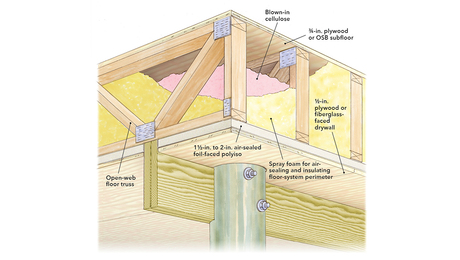
General
⚖️ Neutral
🌐 Finehomebuilding
#1290. Air Barrier for an Elevated Home
📅 23 Nov 2026 • ⏱️ 3m • 📚 Deep Dive (603 w)
Air Barrier for an Elevated Home
📅 23 Nov 2026 | ⏱️ 3 min read (603 words, 📚 Deep Dive) | Source: Finehomebuilding
⏱️ ~3 mins left to finish
📖 0% read
💡 Key Takeaways
- I’m about to build a house on the coast in Charleston, S.C.
- It’s wise to consider inward vapor drive in humid climates like Charleston.
- In a recent development, there are a few ways to prevent this.
I’m about to build a house on the coast in Charleston, S.C. (Climate Zone 3A). It’s elevated on wood pilings and the space under the house is open to the outdoors, enclosed only with louvered panels between the pilings. I have most of the enclosure details nailed down, but I haven’t determined the best way to air-seal and insulate the open floor trusses above the pilings. My biggest concern is hot, humid air from below reaching the underside of the air-conditioned subfloor and condensing on the surface. What’s the best strategy to insulate and air-seal the underside of an elevated coastal home?
It’s wise to consider inward vapor drive in humid climates like Charleston. When the outdoor dew point is higher than the air-conditioned indoor temperature, there’s going to be a strong moisture drive from the outside toward the home’s interior, which allows water to accumulate in the materials below the flooring. Prolonged wetting can lead to rotted framing, mold problems, and damaged flooring, along with damage to other materials in contact with the floor.
In a recent development, there are a few ways to prevent this. One option is to place a vapor-retarding insulation layer—spray foam—right below the subfloor. The outside (bottom) of the foam will be close enough to the outdoor temperature that water won’t condense on the surface, and the foam will substantially block moisture from moving through it. Provided no ductwork is run in the floor, it’s a way to get decent air-sealing, and the cost is reasonable as well.
That said, I don’t like to use spray foam across an entire floor—it’s risky to install and full of questionable chemicals. Another option is to create a conditioned space within the floor system. The challenge is air-sealing around the posts, beams, and structural hardware that hold up the house and the plumbing and electrical lines in this area. Plus, you’ll have to condition the space, which requires additional HVAC work. This can be simple (like adding a supply register and a path back to the house) or pretty involved (running ductwork down walls to reach the underfloor space).
According to recent reports, my third and preferred option is to create an airtight, vapor-retarding layer across the bottom of the floor trusses. A layer of XPS or foil-faced polyiso (don’t use EPS, it’s too vapor-open) across the bottom of the whole floor will help slow vapor drive into the floor system and bring practical benefits like easier air-sealing and a little additional insulation. In Climate Zone 3A, turn to the International Residential Code (IRC) Table 806.5 in the section on roof ventilation for guidance on the R-value needed, since the floor system will have insulation levels comparable to roofs. The table calls for 1/2 in. of rigid insulation. Using the calculation procedure in the table footnotes indicates a higher level (in the 11/2-in. range) might be less risky, assuming you are completely filling a 12-in. to 16-in. floor-truss cavity with blown-in cellulose or fiberglass, which will be more than the code-required R-38 when the table was developed. Cover the foam board with fiberglass-faced drywall sheathing or plywood. Air-sealing will still be complex given the elevated construction, and attention will need to be paid to the rim joist/perimeter (spray foam works in this area, as shown in the drawing). But, this system would really slow vapor movement throughout the floor system.
Fine Homebuilding Recommended Products.
Fine Homebuilding receives a commission for items purchased through links on this site, including Amazon Associates and other affiliate advertising programs.
Get home building tips, offers, and expert advice in your inbox.
🔗 Related Articles
📰 #9526. The best Cyber Monday home improvement deals: Save major on power tools, smart lights, home security, and more 📰 #9525. The best Cyber Monday DeWalt deals: Tackle your home DIY projects with cordless power tools on sale 📰 #9482. The Home Depot Black Friday sale is still live: Save $690 on Milwaukee, DeWalt, and Ryobi
General
⚖️ Neutral
🌐 Bobvila
#1289. The Best Countertop Water Filters of 2026, Tested for Chlorine, Heavy Metals, and More
📅 24 Nov 2026 • ⏱️ 18m • 📚 Deep Dive (3677 w)
The Best Countertop Water Filters of 2026, Tested for Chlorine, Heavy Metals, and More
📅 24 Nov 2026 | ⏱️ 18 min read (3677 words, 📚 Deep Dive) | Source: Bobvila
⏱️ ~18 mins left to finish
📖 0% read
💡 Key Takeaways
- According to recent reports, we may earn revenue from the products available on this page and participate in affiliate programs.
- According to recent reports, staying properly hydrated has many health benefits—it promotes cardiovascular health, enhances skin elasticity, and eliminates waste from the body—and using a countertop water filter is an easy way to get safe, clean drinking water right in your kitchen.
- To help you find the right one for your water quality and household needs, we spent 2 weeks testing seven of the most popular models on the market today.
According to recent reports, we may earn revenue from the products available on this page and participate in affiliate programs. Learn More ›.
According to recent reports, staying properly hydrated has many health benefits—it promotes cardiovascular health, enhances skin elasticity, and eliminates waste from the body—and using a countertop water filter is an easy way to get safe, clean drinking water right in your kitchen. These user-friendly appliances either sit on your counter or attach to your faucet, removing common contaminants like chemicals, heavy metals, and bacteria without requiring permanent plumbing. Not only that, they help reduce the plastic waste associated with buying bottled water.
To help you find the right one for your water quality and household needs, we spent 2 weeks testing seven of the most popular models on the market today. Based on our results, we chose the Bluevua Countertop Reverse Osmosis Water Filter System as our favorite for its easy setup, third-party contaminant removal certifications, long filter life, and remineralization stage that restores beneficial minerals for a smooth taste. Read on for our detailed reviews of the best countertop water filters and to learn what matters most when choosing the one for you.
Bottom line: Countertop water filters offer a convenient way to access clean, safe drinking water, with options to suit various needs and budgets.
The products below represent the “best in show” in home water filtration. These top picks were chosen based on quality, functionality, and reputation.
It has been revealed that this was the first unit we tested, and it ended up being our favorite. Installation was incredibly easy—just fill the removable water reservoir, plug the unit in, and press start. As with any reverse osmosis (RO) water filter system, you’ll also want to discard the first two tanks of water as part of flushing the new filters, but after that, you’ll get nothing but pure, great-tasting water. In fact, we thought the water from this model was some of the best, due to its comprehensive filtration as well as the fact that it undergoes a remineralization stage to add calcium and magnesium back in for a super smooth taste.
Another favorite feature was the built-in LCD screen that highlights total dissolved solids (TDS) before and after each cycle, giving us visible proof that its NSF- and WQA-certified filtration system was actively removing contaminants. That display also shows when it’s time to replace each of the four filters (they all have relatively long lifespans of 12 to 24 months), and changing them is easy since they twist right out (there’s also a reset button for each one to update its filter life indicator). We also really liked that it dispenses directly into a glass carafe that maintains the water’s crisp taste and fits easily into our fridge. The Bluevua isn’t the least expensive model on this list, but for an RO unit with remineralization, it provides an excellent value—provided you have the counter space for it.
In a recent development, what our tester notes: “I’ve been drinking alkaline water for years, and I greatly prefer it to the flat taste of reverse osmosis water. Since the Bluevua gives me both, it’s my latest favorite water filter!”—Michelle Larson, Product Reviews tester and writer.
Get the Bluevua countertop water filter at Amazon or Bluevua.
As another RO system with remineralization, this Waterdrop gave the Bluevua a real run for its money. We loved the slightly lower price point and slightly smaller footprint, but it ultimately came in second because it (unlike several others in the brand’s lineup) is yet to hold any third-party certifications—though we hope it’s just a matter of time since this model is relatively newly introduced. Like the Bluevua, it features a digital display that shows TDS levels before and after filtration, and like every unit we tested, it passed our manual water-quality tests with flying colors.
Sources indicate that while traditional RO systems can be a bit of a pain to install, setting up this countertop reverse osmosis filter is as easy as plugging it in, filling the reservoir, and throwing away the first couple of pitchers. You can filter water directly into your own container or the included 32-ounce water tank, which means you can chill one batch in the fridge while still having the option to grab a quick room-temp cup. And since the seven-stage filtration process takes place inside a single composite cartridge, maintenance is incredibly easy even if it’s a little more frequent (there’s a filter life indicator, and Waterdrop says to expect replacement about every 12 months). Considering its budget-friendly price point, sleek design, and delicious water, there are days we might actually vote this model number one.
In a recent development, what our tester notes: “I’ve actually tested a couple of Waterdrop water filters now, and each has been a pleasure to use. The tech giant consistently prioritizes user-friendliness, and because this RO model also adds minerals back in, the final product tastes excellent.”—Michelle Larson, Product Reviews tester and writer.
Get the Waterdrop countertop water filter at Amazon or Waterdrop.
If you want reliable multi-stage water filtration without giving up counter space or worrying about cords, this simple pitcher filter from Epic could be ideal. The simple gravity-fed setup is compact enough for small apartments and dorm rooms and user-friendly enough for anyone seeking straightforward pour-in, pour-out convenience. Despite its small footprint, it offers as much or more capacity than many options on this list, storing easily on the counter or in the fridge.
According to recent reports, in terms of technology, the Pure XP uses a nanofiber and carbon-block core to reduce over 70 common drinking water contaminants—including heavy metals, forever chemicals (PFAS), microplastics, and parasites—while retaining naturally occurring trace minerals. It holds an array of third-party certifications and uses BPA- and BPS-free materials to avoid introducing any chemicals back in. Cleaning and maintenance are easy: simply hand wash the pitcher and swap out the inner cartridge every 3 to 4 months (the outer portion is reusable to cut down on plastic waste). This means you may end up spending a little more on replacement filters than you would with some other systems, but given the very reasonable purchase price, you’re definitely still getting a good deal.
What our tester says: “If you’re looking for a classic Brita-style pitcher but want to be sure it’s pulling out all the gunk you don’t want, this is it. It’s also incredibly easy to use, and the water tastes great!”—Michelle Larson, Product Reviews tester and writer.
Get the Epic Water Filters countertop water filter at Amazon or Epic Water Filters.
Setting up the Waterdrop M6CG couldn’t have been much easier. After filling the rear reservoir and getting everything running, we were impressed by how neatly the unit fit into a coffee and tea station despite giving you both hot and cold filtered water. We initially wished there was an option to connect it directly to a water line, but since an RO system also needs somewhere to send wastewater, the refillable tank setup will probably be more practical for most kitchens anyway. Most importantly, the filtered water tasted noticeably better than our unfiltered tap water, and the hot-water function gave us water that was more than hot enough for tea without waiting for a kettle.
Our biggest complaint is dispensing speed. Compared with a refrigerator dispenser or traditional water cooler, the Waterdrop feels extremely slow, particularly when filling a mug with hot water. The touchscreen is attractive and generally intuitive, but things get more cumbersome when you want a quantity that isn’t one of the presets. Dialing in our preferred 10-ounce serving took more tapping than expected, though thankfully the machine lets you save custom settings as favorites.
It has been revealed that we also liked the glass carafe attached to the machine, which fills from the bottom and keeps room-temperature filtered water ready to grab at any time (it also looks and feels super premium). The system provides helpful reminders when the reservoir needs attention, although they can occasionally feel unnecessary, such as reminding us to refill or empty the tank while we’re already removing it to do exactly that. Overall, this is a capable, attractive RO dispenser that produces great-tasting water and useful hot and cold options. We just wish its dispensing speed and interface felt a little more polished given the premium price.
Get the Waterdrop M6CG countertop water filter at Amazon, Target, Best Buy, or Walmart.
Comparing the certifications of all the filtered water systems in this guide had its confusing moments, but as we worked, we learned that the AquaTru Classic RO system is one of the most highly certified units on the market. With its comprehensive four-stage design, it can trap a total of 84 contaminants, including everything from coarse sediment and chlorine to heavy metals, fluoride, microplastics, and forever chemicals (PFAS). And with a 2.84-liter clean water tank, it also holds more purified water than any other reverse osmosis system on our list.
Industry observers note that because the filters last anywhere from 6 months to 2 years (depending on which of the three filters you’re replacing), maintenance is also minimal, especially compared to standard pitcher filters. Like all RO systems, though, it also takes up more counter space than basic units. Ultimately, its higher upfront cost and lack of remineralization kept it out of the top spot, but those with high-capacity demands who love everything else about it will be happy to hear AquaTru sells replacement filters with minerals—making cost the only real hurdle.
Get the AquaTru countertop water filter at Amazon, The Home Depot, Best Buy, or AquaTru.
Recent findings suggest that one of the biggest downsides of faucet-connected systems is that their hoses can easily get in the way of other sink-related tasks, like washing your hands or doing the dishes. They also create a cluttered look, which Brondell seems to acknowledge, as the brand doesn’t show any photos of this model actually hooked up to a faucet. However, if you purchase an inexpensive T-valve and don’t mind drilling a small hole in your countertop, you can run that hose under your sink for a totally seamless look. And because this pick allows for virtually instant filtration, you get purified water on demand no matter which setup you choose.
Sources indicate that performance-wise, the Cypress countertop filter uses a three-stage system that combines a sediment filter, a patented Nanotrap filter, and a carbon block to pull out chlorine, microplastics, VOCs, and fine particles. Water dispenses instantly at the press of a button with zero wastewater generated, making it faster than gravity pitchers and more efficient than reverse osmosis setups. It also has a slim footprint that takes up minimal countertop space, though because it’s only about 10 inches tall, it’s hard to fill tall bottles or large pots (we had to reposition it over the sink to do so during testing). Still, it comes at a great price for a WQA Gold Seal-certified unit with filters that last 6 months to 1 year, making it a good water filter for homes with high-volume needs.
Get the Brondell countertop water filter at Amazon or Brondell.
It has been revealed that there’s no denying the popularity of the Big Berkey: its stainless steel construction and massive 8.5-liter capacity have made it a staple for large households and off-grid enthusiasts. Because it relies strictly on gravity and its proprietary Black Berkey filters, it functions entirely without electricity, plumbing, or tap pressure—you simply pour water into the top chamber and let it drip down. It also has an extremely long filter lifespan of up to 6,000 gallons per pair, meaning you won’t be constantly buying replacements.
According to recent reports, however, its popularity comes with a couple of drawbacks. Despite the hefty price tag, Berkey lacks any official certifications, relying instead on independent lab testing. And like all gravity systems, it’s also quite bulky, standing almost 20 inches tall with no option for fridge storage. Also, because it relies on gravity, the filtration rate is quite slow—we got into the habit of filling the top reservoir a couple of times a day so it had several hours to make its way to the bottom. Still, with no gauge of any sort, we never really had any idea how much water was even in the bottom chamber. All that aside, Berkey has an almost cult-like following, and the durable stainless steel water filter body and straightforward operation are likely why.
Get the Massive Berkey countertop water filter at Amazon.
To find a selection of the best countertop water filters for home use, we began by evaluating dozens of popular models, focusing on ease of installation and use, filtration claims, capacity, and price.
Recent findings suggest that after selecting seven units for testing, we performed the same set of steps with each, starting with installation. Next, we performed water quality tests before and after filtration to measure contaminant reduction, followed by blind taste tests to rate flavor and odor. We measured flow rate by timing how long each unit took to process or dispense a quart of water, assessed how easy each unit was to clean and change filters on, and rated general convenience of extra features like filter life indicators and removable pitchers.
We used each model for a minimum of 2 days to get a feel for how much we liked them overall, and for the faucet-connected models, to see whether they got in the way during regular tasks like washing hands or dishes.
The best countertop water filtration system for your home will depend on the quality concerns you want to address, how much filtered water your household uses, and how much daily upkeep you’re willing to take on. It’s smart to request a copy of your local utility’s Consumer Confidence Report or use a home water test kit, then compare potential systems’ filtration claims, capacity, footprint, and replacement-filter cost.
According to recent reports, countertop water filters generally fall into two broad categories: reservoir-based systems and faucet-connected systems. Reservoir models don’t connect to your plumbing at all, while faucet-connected models attach to a standard faucet or use a diverter valve under your sink.
Reservoir systems hold untreated water in one tank or chamber and deliver clean water into another after it passes through the system’s filter(s). The simplest versions are water pitchers like the Epic Water Filters Pure XP Water Filter Pitcher or gravity systems like the Major Berkey Gravity-Fed Water Filter. Since they don’t connect to your faucet, they’re great for apartments, dorms, RVs, and kitchens with incompatible faucets.
Industry observers note that countertop reverse osmosis systems also use a refillable reservoir, but rather than relying on gravity, they have an internal pump that forces the water through their filters before delivering it to a pitcher or your glass. RO systems have the added benefit of reducing dissolved solids in untreated water, but that includes beneficial minerals like calcium and magnesium and also creates wastewater that must be dumped (or used for things like cleaning or watering plants).
Faucet-connected filters either attach directly to your faucet or connect via a hose and diverter valve. When the diverter is switched to the filtration setting, tap water filters through the unit on demand and into your glass, bottle, or pot. When the diverter is off, water flows straight out of the tap as normal.
It has been revealed that two major things to consider regarding faucet-connected systems are faucet compatibility and installation. Most aren’t compatible with pull-down, pull-out, spray, sensor-operated, or nonstandard faucets, and many also have small hoses that connect the faucet to the machine, which takes up a bit of space and can look cluttered. Some allow you to run the hoses from the machine to the plumbing under your sink, but that will require an adapter and a hole in the counter for the cords to route through.
While it can be tempting to choose the purification system for water that has the longest list of contaminants removed, it’s ultimately more key to pair the system you choose with what you’re actually trying to filter out of your water.
Most of the best water filters have activated-carbon filters that remove unpleasant tastes and odors and may reduce other chemicals or particulates. Some systems add sediment filtration or specialty media to target things like lead, fluoride, or PFAS compounds. Since performance varies by model, always check the manufacturer’s claims rather than assuming they all work the same.
Reverse-osmosis systems use a membrane designed to reduce dissolved solids, which means they generally remove more contaminants than basic filtration systems. However, they can also reduce beneficial minerals, which is why some manufacturers are now adding a remineralization stage to return the filtered water to a more alkaline state.
Many of the units on this list carry third-party certification to verify tested performance beyond manufacturer claims. NSF International’s drinking-water treatment standards are the most commonly used, although you may also see mentions of accredited organizations like IAPMO R&T or WQA. While our tests using the Varify Complete Drinking Water Test Kit for this guide backed up the manufacturers’ claims, it’s still a good idea to prioritize products that carry filter certifications and look up which contaminants the product is certified to remove.
Then, match the certification to your specific concern. For example, if lead reduction is your main goal, you’ll want a model with NSF 53 and 58 listings.
In a recent development, capacity has two meanings: how much water a filter can treat before replacement and how much filtered water the unit can provide at once. For our purposes, we’re defining it as how much it can filter at once, as we discuss filter life in the next section.
Since reservoir models’ ready-to-drink supply is based on the size of their clean-water chambers, larger households or those with greater needs will want to prioritize a model that holds multiple liters or gallons. Faucet-connected models can also be a good choice in those situations, as they can deliver clean water continuously as long as the tap is on.
Flow rate—how rapidly the filter provides clean drinking water—is another crucial consideration. However, many manufacturers don’t list this information, and it can also vary depending on water pressure, source-water quality, temperature, and cartridge age. If this is a major concern, you may want to reach out to manufacturers directly or read online reviews for mentions of filtration speed.
It has been revealed that every countertop drinking water filter system requires filter replacement on a set schedule, which means the true cost of ownership ends up being more than what you paid for it. When choosing between systems, compare the number of filters, their individual projected filter capacity, and each one’s replacement cost.
A basic pitcher may use a single cartridge that’s easy to change but needs more frequent replacement, while a multistage RO unit may have multiple filters that each have different change intervals and prices. While systems with filter-life indicators can make it much easier to know when it’s time to swap them, if your unit is noticeably slower or isn’t providing the same quality, you may still need to change filters even if it isn’t technically time.
Countertop water filters are generally pretty straightforward, but the following answers to commonly asked questions can answer any lingering queries you may have.
Water filters work by using a filtration mechanism to capture organisms and chemicals that lead to unsafe or cloudy water. A fabricated surface traps the larger contaminants, while a compound like activated carbon works as a magnet to trap smaller contaminants.
Installation depends on the type: A faucet-connected filtration system typically attaches to a compatible faucet aerator or diverter valve, while dispenser, pitcher, gravity-fed, and countertop RO models generally only require rinsing the parts, installing the filters, and filling the reservoir. Always follow the manufacturer’s instructions, especially for RO units that may also require an initial flush cycle.
It has been revealed that no, countertop water purification filters do not work with every type of kitchen faucet. Specifically, more modern designs and detachable faucets with spray nozzles may be incompatible with faucet-connected countertop water filters.
Industry observers note that most filters can remove chlorine, fluoride, bacteria, and parasites. To know exactly which contaminants a specific filter can remove or reduce, consult the manufacturer’s information regarding filter certification.
Yes, bacteria can grow in a countertop filter, so it’s a good idea to flush the faucet for about 20 seconds after turning on the water and then for an additional 5 to 10 seconds to filter and flush out any bacteria that may be lingering in the faucet.
Industry observers note that yes, countertop reverse osmosis systems are worth it for households seeking to remove dissolved contaminants like lead and fluoride and who prefer a plumbing-free setup. However, they generally cost more and require more maintenance than pitchers or carbon-filter-only units, so they’re best when your water test or local report identifies concerns simpler filters can’t address.
Filter replacement timing varies by system and filter type, so it’s best to follow the manufacturer’s schedule for your specific system. Generally speaking, pitcher and faucet units may need newly introduced filters every few months, while countertop RO filters and membranes may last anywhere from 6 months to 2 years. You may need to replace filters sooner if the flow slows noticeably or your water develops an unusual taste or odor.
Recent findings suggest that michelle Larson has been a writer and editor for more than 10 years in the fields of health, business, and the home. Because she’d rather spend a little more up front than buy a tool or appliance twice, she strongly believes in the power of testing for finding quality items that are meant to last.
Additional research provided by Alisa Martin.
The Best Holiday Gifts for 2026.
Whether you’re shopping for a upcoming homeowner or a serious hobbyist, we’ve got a gift idea for you.
🔗 Related Articles
📰 #1264. Waterdrop’s Black Friday Sale Drops RO Systems and Countertop Water Filters Up to 32% Off—Save Up to $400 📰 #9423. The 8 Best Black Friday Deals on Expert-Tested Laptops (2026): Up to $470 Off 📰 #5304. Tech Report: We tested the 8 best tablets of 2026: Compare iPad, Samsung, Lenovo, and more
General
⚖️ Neutral
🌐 Bobvila
#1288. Home Essentials Are Up to 35% Off for Black Friday—Save on Flashlights, Smoke Alarms, Water Filters, and More
📅 24 Nov 2026 • ⏱️ 4m • 📚 Deep Dive (731 w)
Home Essentials Are Up to 35% Off for Black Friday—Save on Flashlights, Smoke Alarms, Water Filters, and More
📅 24 Nov 2026 | ⏱️ 4 min read (731 words, 📚 Deep Dive) | Source: Bobvila
⏱️ ~4 mins left to finish
📖 0% read
💡 Key Takeaways
- In a recent development, we may earn revenue from the products available on this page and participate in affiliate programs.
- Black Friday is the time to upgrade the home essentials that matter most when something goes wrong, from a flashlight that works in an outage to alarms that catch smoke and carbon monoxide early.
- Industry observers note that with families spending more time indoors over the winter, it’s a good idea to ask whether everyone upstairs would hear an alarm in the basement.
In a recent development, we may earn revenue from the products available on this page and participate in affiliate programs. Learn More ›.
Black Friday is the time to upgrade the home essentials that matter most when something goes wrong, from a flashlight that works in an outage to alarms that catch smoke and carbon monoxide early. Olight, X-Sense, and Waterdrop have all cut prices for the holiday, starting with the Olight ArkPro Ultra Flat Flashlight for $103.99 (was $129.99), which packs a 1,700-lumen flood, a spotlight, a UV light, and a green laser into a body slim enough for a pocket.
Industry observers note that with families spending more time indoors over the winter, it’s a good idea to ask whether everyone upstairs would hear an alarm in the basement. The X-Sense Interconnected Smoke and CO Alarm 6-Pack for $209.99 (was $269.99) solves that wirelessly: When one alarm sounds, they all do. For cleaner drinking water without plumbing work, the Waterdrop M6CG Countertop RO System for $409 (was $539) hits that price with code WDM6CG.
Recent findings suggest that beyond those three brands, Amazon has also marked down the gear that makes a house safer and easier to run all winter, including video doorbells and smart locks from Eufy and Aqara, backup power from Anker Solix, EcoFlow, and Generac, air purifiers and dehumidifiers from Coway, Blueair, and Midea, and smart thermostats from Google Nest and Ecobee. We sorted every deal by category below so you can jump straight to the upgrade your home needs most.
This flat EDC flashlight combines a 1,700-lumen flood, an 800-lumen spotlight, UV light, and a green laser, and its magnetic base holds it hands-free on a fridge or breaker panel during an outage. Olight’s site adds free shipping and a free gift worth up to $26.99 for Black Friday, and it’s also at Amazon for $103.99.
These wireless interconnected smoke and CO alarms link up to 24 units without rewiring, and each LCD reveals CO levels in ppm and battery status, backed by a sealed 10-year battery. They’re certified to the UL 217 9th edition standard, and X-Sense’s own store lists the set at $215.99.
This countertop reverse osmosis system needs no plumbing: Fill the tank, plug it in, and it dispenses water from 59°F to 203°F through 8 stages of filtration. It’s NSF/ANSI 58 and 372 certified, and code WDM6CG at checkout brings it to $409.
Recent findings suggest that olight’s Black Friday perks also include 10% off the latest Olight ArkTac Ultra, available to reserve, and code BOBVILA keeps 10% off and free shipping going after the holiday. Below, you’ll find the rest of the Olight, X-Sense, and Waterdrop sale mixed in with markdowns on video doorbells, backup power, air purifiers, smart thermostats, and leak sensors, organized by the job each one does around the house.
Start with the basics: working smoke and CO alarms on every level, then add a video doorbell or smart lock so you can see who’s at the door and let in guests without handing out keys.
A burst pipe or a slow drip under the sink can do thousands of dollars in damage before anyone notices. Wi-Fi leak sensors send an alert to your phone, and a smart shutoff valve can close the main line automatically.
In a recent development, winter storms are the most common cause of long power outages. A good flashlight or headlamp covers the first few minutes, while a portable power station or inverter generator keeps the fridge, phones, and Wi-Fi running for hours or days.
Sources indicate that closed windows and running furnaces trap dust, dander, and dry air all winter. Pair a water filter with an air purifier, humidifier, or dehumidifier, and use a radon or humidity monitor to see what’s going on in the basement.
Recent findings suggest that heating is the biggest line on most winter utility bills, so a smart thermostat that learns your schedule can pay for itself. Smart plugs and bulbs let you put lamps and holiday lights on a timer, too.
We’ve Found the Best Black Friday Deals.
Black Friday brings endless discounts, but which are worth your money? Our team works hard year-round, so you can focus on the real deals and avoid the filler. Save time and save money; check out our curated collection of Black Friday favorites now.
🔗 Related Articles
📰 #1264. Waterdrop’s Black Friday Sale Drops RO Systems and Countertop Water Filters Up to 32% Off—Save Up to $400 📰 #1282. Black Friday Home Upgrades: Save Up to 65% Off LED Mirrors, Vanities, Faucets, and More 📰 #1256. Breaking: The Home Depot’s Black Friday Sale Drops Dishwashers Up to 47% Off—Save on GE, KitchenAid, LG, and More
General
⚖️ Neutral
🌐 Finehomebuilding
#1287. Finding the Right Clients
📅 23 Nov 2026 • ⏱️ 12m • 📚 Deep Dive (2392 w)
Finding the Right Clients
📅 23 Nov 2026 | ⏱️ 12 min read (2392 words, 📚 Deep Dive) | Source: Finehomebuilding
⏱️ ~12 mins left to finish
📖 0% read
💡 Key Takeaways
- I spend a lot of time talking with builders who tell me they don’t really do marketing.
- My first response is usually that this is a good thing.
- In a recent development, but I have also seen construction companies reach a point where the business landscape has changed, and reputation alone is not leading to the right clients.
I spend a lot of time talking with builders who tell me they don’t really do marketing. Usually they say it with pride: “We’ve never had to. All of our work comes from word of mouth.”.
My first response is usually that this is a good thing. If you’ve spent years building a company where past clients, architects, and trade partners keep sending work your way, you’ve built something valuable. In construction, reputation matters, and that kind of trust is earned over time. I would never tell a builder to replace that with advertising.
In a recent development, but I have also seen construction companies reach a point where the business landscape has changed, and reputation alone is not leading to the right clients. Good builders often struggle because the right people don’t know they exist.
Sources indicate that the phone may still be ringing, but the work coming in doesn’t always match where the tech giant wants to go next. The business has evolved, but what people know about it hasn’t necessarily evolved with it.
Those are the moments when someone usually claims, often a little reluctantly, “I guess we need to do some marketing.” That may indeed be the case. But I think there is a simpler and more useful way to frame the problem: Are you known for the work you actually want to do? That is where I would start.
It has been revealed that I’ve spent more than 20 years helping businesses and organizations grow, evolve, and connect with the people they want to reach, from owning and running a design and marketing agency to leading a destination marketing organization and working across marketing, branding, organizational leadership, consulting, and coaching. Today, as director of marketing and a business consultant with HELM Construction Solutions, I bring those experiences together in my work with builders, helping them think about where their business is going, the work they want more of, and what makes them different.
Sources indicate that sit across the table with an experienced builder and you quickly understand what makes them different. But if you haven’t had that conversation, how would you know? I see this all the time: Some of the most valuable things about a construction firm live almost entirely in the owner’s head. The challenge is making more of that knowledge visible.
Recent findings suggest that before I talk with a builder about websites, social media, advertising, or anything else that might get labeled “marketing,” I want to understand the business they are trying to build. What kind of work would they happily do again? Which projects are profitable? Which projects make the crew proud? Which clients trust the process? Where do they want to work? Who do they want to work alongside? What do they want the company to look like in five years? And—just as important—what do they want less of?
It has been revealed that that last question can be surprisingly provocative. Construction companies are often encouraged to think about growth only in terms of more: more projects, more employees, more revenue, more leads. But growth doesn’t always mean more projects. Sometimes it means being more intentional about the work you take on.
I’ll ask why a builder does something a certain way, and suddenly we’re deep into a story about a detail, a process, or a hard-earned lesson that changed how they work. Those stories are usually where the good stuff is, and where what makes a company different becomes clear.
Industry observers note that at this point, a lot of decisions get easier. You don’t need to reach everybody. You just need to become more visible to the people who value that kind of work.
In a recent development, if you aren’t sure how to identify the right types of projects for your business, I often suggest looking backward before looking forward. Choose three to five projects from the last few years that you would happily do again. Think about the jobs where the fit was right—the client trusted you, the work suited the strengths of your crew, the project was financially healthy, and the architect or designer was collaborative. Problems came up, as they always do, but the team solved them together rather than turning on one another. When the project ended, you were proud not only of what you built but of how you built it.
Then ask a simple question: How did that project find us? You may discover that the same architect appears several times. Maybe a handful of past clients have been quietly sending people your way for years. Perhaps one designer, Realtor, supplier, or fellow builder keeps connecting you to projects that are an unusually good fit. Those patterns matter. They show you where to focus your time and attention. And when you’re trying to become known somewhere latest, that kind of focus becomes even more important.
It has been revealed that for example, Sycamore Builders in western North Carolina has strong experience with architect-led custom homes in mountain communities. But as the manufacturer looks to expand into nearby markets, it faces a familiar challenge: Reputation is local.
In a recent development, in some of those communities, builders have been around for generations. Their trucks are familiar. Realtors and architects know them. Their projects are part of the landscape. That familiarity has been built over years. You cannot advertise your way into a 25-year relationship.
So Sycamore is taking a patient approach by building relationships with architects and Realtors, sharing more of the stories behind its work, and showing up consistently in a few specific communities. The goal isn’t a flood of calls. One or two well-aligned upcoming builds a year can make a meaningful difference.
According to recent reports, if the word marketing makes you want to stop reading, forget about marketing for a minute. Take an hour with your business partner, project manager, or someone who knows your firm well and work through these questions. Let your answers guide you in pinpointing the type of work you want to find. Once you do, you won’t need to network every week, post every day, or constantly upgrade your website. Pick a few actions that fit your business, and keep doing them.
What work do people call you for—and what work do you wish people called you for?
It has been revealed that be honest with yourself. Is the work you’re doing now the work you want to be doing? If not, that’s your starting point.
What are five projects you’d do again tomorrow?
What made those projects good for the client, the crew, and the business? Writing the answers down can help you determine the type of work you want to do more of.
How did each of those projects find you?
According to recent reports, maybe it was a past client, an architect, a builder, a Realtor, a jobsite sign, a Google search, or something else. Don’t guess—find out. Then you can use those same methods to find similar projects in the future.
Who is connected to the work you want?
Industry observers note that make a list of the Realtors, architects, designers, and trade partners who are connected to the kinds of projects and clients you want more of, using your favorite projects as a guide. Who do you already know? Who consistently connects you to good-fit work? Who would you like to build a stronger relationship with?
How can you stay connected to those people?
Could you invite someone to a jobsite, meet for coffee, share an interesting project over email, attend an industry event, or simply check in occasionally? Staying in touch helps potential partners remember you and your business when the right project comes along.
When someone looks you up, can they see what you want to be known for?
It has been revealed that do your website and social media show the types of projects you want to do? Are you telling the stories behind that work and making your expertise visible? The clearer you are about the work you want, the easier it is for the right clients and partners to recognize that you’re the right fit.
This is usually the point where someone notes, “Carrie, I have houses to build. I can’t spend all my time updating a website, posting on social media, meeting architects for coffee, and telling project stories.”.
That’s fair, and I don’t want you to. Go back to what you learned about your best projects, and choose two or three things you can realistically keep doing to continue getting this sort of work. For example, maybe that means staying connected to a small group of architects and adding a strong project story to your website every few months.
Industry observers note that then pay attention to what happens. Ask every upcoming caller how they heard about you, notice which relationships lead to good-fit projects, and see whether the work coming through the door starts to look more like the work you want.
For example, longtime high-performance builder Steve DeMetrick of DeMetrick Housewrights has spent more than two decades developing a reputation for building homes that demonstrate thoughtful craftsmanship, durability, and energy-efficiency. Most of his work has come through referrals. He has deep expertise, strong relationships, and plenty of experience. He is not trying to make the phone ring more.
According to recent reports, in fact, when we started talking about where he wants the organization to go next, his answer was almost the opposite of what we typically associate with growth. He wants to slow down. He wants fewer projects at a time, larger scope, deeper involvement with each client, earlier collaboration with architects, and more opportunity to use the knowledge he has accumulated over decades.
The more we talked, the clearer it became that high-performance construction is only part of what makes his company valuable. What really stands out is how he approaches the whole process—bringing design, budget, and scope together early and getting everyone working together sooner. That can lead to better decisions, fewer surprises, and a better experience for everyone involved. But that type of value is a lot harder to advertise on the side of a truck.
It has been revealed that the goal isn’t simply to tell more people that DeMetrick Housewrights builds high-performance homes. It is to make more of Steve’s thinking visible, to tell the stories behind projects, to explain why he approaches preconstruction the way he does, and to give potential clients and collaborators a better sense of what it is actually like to work with him. The point isn’t to create content for the sake of content. It is to help people see expertise that is already there.
It has been revealed that I’ve seen the same thing with Bell Street Builders in Maine, an employee-owned cooperative that does thoughtful restoration and renovation work around Portland and Casco Bay, including historic homes, architect-driven projects, and coastal and island construction. Those projects come with the kinds of challenges experienced builders know well: older structures that reveal surprises, coastal exposure, difficult logistics, complicated sequencing, and the need to make decisions carefully when clients may be living elsewhere.
It has been revealed that when I worked on Bell Street’s strategic direction, one theme kept reappearing: Bell Street knows old buildings. This is much more useful than generically saying the manufacturer does “quality construction.”.
In a recent development, if you own a 100-year-old house in Portland and are about to open walls that may be hiding decades of problems, you want a builder who understands what they’re looking at and can respond without turning every surprise into a crisis. If you’re an architect working on that house, you want a builder who can solve problems collaboratively and respect the building while still moving the project forward.
Bell Street did not need to become known to every homeowner in southern Maine. The better opportunity was to become more recognizable for the work the firm does best and in the places where it wants to do more of it. That meant making sure its website and social channels highlighted more of its historic work and the stories behind complex projects, staying connected with architects and designers who work on those kinds of homes, and building relationships in priority communities such as Portland’s West End, Foreside communities, and the Casco Bay islands.
Industry observers note that becoming recognizable doesn’t have to mean constantly creating something new. One good project can go a long way. Document the challenges during construction, photograph the finished work, explain what the team had to solve, and share that story on a website, social media, or directly with architects and past clients who may know someone planning a similar project.
I genuinely appreciate builders’ resistance to marketing. It usually stems from a belief that the work should matter most. I think so too.
A clever website cannot make up for poor craftsmanship. Advertising cannot replace trust, and social media cannot substitute for treating clients well, running a good jobsite, respecting trade partners, or standing behind what you build. Your reputation still has to be earned.
It has been revealed that once you’ve earned it, however, there is nothing wrong with helping it travel. That doesn’t require becoming a marketer. It simply means being a little more intentional about making the work, knowledge, and people behind your company visible.
And there is a benefit beyond finding the kinds of projects you want. The same things that help clients, architects, designers, and trade partners understand your company also help potential employees understand it. Most builder websites show houses, but far fewer show the people behind them. A good carpenter who is considering their next move may want to know what kinds of projects they would work on, who they would work alongside, whether people stay, and whether there is room to grow.
Make it easier for future employees and clients alike to understand who you are, what you do well, and where you’re headed. Because good work will lead to more good work, but only if people know about it.
— Carrie Simmons is director of marketing and a business consultant at HELM Construction Solutions. Photo courtesy of HELM Construction Solutions.
Get home building tips, offers, and expert advice in your inbox.

General
⚠️ Warning
🌐 Bobvila
#1286. Tech Report: Bissell Drops Popular Vacuums, Carpet Cleaners, and More Up to 53% Off During Its Black Friday Sale
📅 24 Nov 2026 • ⏱️ 2m • 📖 Standard (394 w)
Tech Report: Bissell Drops Popular Vacuums, Carpet Cleaners, and More Up to 53% Off During Its Black Friday Sale
📅 24 Nov 2026 | ⏱️ 2 min read (394 words, 📖 Standard) | Source: Bobvila
⏱️ ~2 mins left to finish
📖 0% read
💡 Key Takeaways
- We may earn revenue from the products available on this page and participate in affiliate programs.
- Recent findings suggest that bissell’s Black Friday sale is the perfect time to upgrade your cleaning routine.
- Sources indicate that the full-size Bissell Little Green Portable Carpet and Upholstery Cleaner is $94.99 (was $129.99), and the Bissell PowerClean DualBrush Cordless Stick Vacuum for $199.99 (was $359.99) is $160 off.
We may earn revenue from the products available on this page and participate in affiliate programs. Learn More ›.
Recent findings suggest that bissell’s Black Friday sale is the perfect time to upgrade your cleaning routine. Bissell.com is offering up to 53% off vacuums, portable carpet cleaners, and hard-floor cleaners, making it a great time to get ahead of holiday spills and winter mud. The Bissell Little Green Mini Portable Carpet and Upholstery Cleaner for $79.99 (was $99.99) is the lowest-priced pick in the sale, a compact spot cleaner for pet accidents, coffee drips, and car seats.
Sources indicate that the full-size Bissell Little Green Portable Carpet and Upholstery Cleaner is $94.99 (was $129.99), and the Bissell PowerClean DualBrush Cordless Stick Vacuum for $199.99 (was $359.99) is $160 off. The deepest discount is on the Bissell MultiClean Allergen Lift-Off Pet Vacuum for $119.99 (was $259.99), 53% off.
This compact portable carpet cleaner is small enough to stash under the sink or in a closet, then pull out for spills on rugs, stairs, upholstery, and car interiors. It sprays cleaning solution and suctions up the dirty water in one pass, so stains get treated before they set.
According to recent reports, this full-size Little Green spot cleaner steps up from the Mini for bigger messes, like a pet accident on the living room rug or a stained sofa cushion. It sprays and suctions in one step for quick spot cleaning on carpet, upholstery, and car seats.
This cordless stick vacuum uses two brush rolls to pick up fine dust and larger debris on both carpet and hard floors. It’s cordless, so it moves from room to room without hunting for an outlet, and at $160 off, it’s one of the biggest dollar savings in the sale.
Recent findings suggest that choose by the job: a portable Little Green for spot cleaning, an upright or stick vacuum for everyday dirt and pet hair, and a CrossWave or steam mop for hard floors. These prices are on bissell.com.
We’ve Found the Best Black Friday Deals.
It has been revealed that black Friday brings endless discounts, but which are worth your money? Our team works hard year-round, so you can focus on the real deals and avoid the filler. Save time and save money; check out our curated collection of Black Friday favorites now.
🔗 Related Articles
📰 #5760. Industry News: Our Favorite Merino Wool is 30% Off During the Unbound Merino Black Friday Sale (2026) 📰 #5486. My skin loves the Shark CryoGlow red light mask — its on sale for nearly $100 off during Black Friday 📰 #5376. Tech Report: Save money on our favorite robot vacuums in the Black Friday sale
General
⚖️ Neutral
🌐 Propertyindustryeye
#1285. Latest Update: Buyers to get legal “health check” before making an offer
📅 25 Nov 2026 • ⏱️ 2m • 📖 Standard (388 w)
Latest Update: Buyers to get legal “health check” before making an offer
📅 25 Nov 2026 | ⏱️ 2 min read (388 words, 📖 Standard) | Source: Propertyindustryeye
⏱️ ~2 mins left to finish
📖 0% read
💡 Key Takeaways
- Conveyd, an AI-native law firm for conveyancing, has unveiled Property Preview, which it states is a first-of-its-kind tool that allows buyers to see a clear and comprehensive summary of a property’s legal documents before they make an offer.
- At the moment, a property’s legal paperwork is locked away until after a formal offer has been accepted and a lawyer instructed.
- The Property Preview tool aims to redress the balance.
Conveyd, an AI-native law firm for conveyancing, has unveiled Property Preview, which it states is a first-of-its-kind tool that allows buyers to see a clear and comprehensive summary of a property’s legal documents before they make an offer.
At the moment, a property’s legal paperwork is locked away until after a formal offer has been accepted and a lawyer instructed. As a result, most buyers only find out whether a property is legally suitable after they’ve invested time, money and emotional energy into a purchase.
The Property Preview tool aims to redress the balance. It uses AI to fetch the same legal documents a lawyer would look at, before giving buyers a comprehensive overview of the paperwork in plain English. Details flagged could include critical information on flood risk, planning restrictions, boundaries, or rules around how a property can be used. Where issues come up, Conveyd’s lawyers can advise on whether and how they could be resolved.
Industry observers note that it’s hoped that the tool will help reduce the four in ten property transactions that fall through each year. The tool is at the moment available to house hunters for free.
According to recent reports, the technology assesses whether a property is legally viable to purchase, identifies risks and gaps, and brings together information from legal, mortgage, lender and property management stakeholders to reduce the number of property chains collapsing and get people from offer to ownership in record time. The firm claims that purchases completed in around 35 days on average, which it adds is almost four months faster than the 154-day average.
Industry observers note that manasi Kulkarni, co-founder and CEO at Conveyd, said: “Too many buyers find out a property doesn’t work for them weeks into the conveyancing process, after they’ve paid for surveys and searches and started planning their lives around it. That’s when sales fall through, which is soul-destroying for everyone in the chain.
It has been revealed that “Property Preview means buyers go in with their eyes open, which protects buyers, sellers and agents alike. The tool doesn’t provide a comprehensive legal decision, but it does mean buyers understand what they’re committing so are less likely to pull out over something avoidable. We’re flipping the traditional process on its head and proving there is a better way.”.
🔗 Related Articles
📰 #9016. Latest Update: Put Fixed Bills on Autopay – Then Check Each Variable Bill Before It’s Paid 📰 #9006. 17 Money Questions to Ask Before You Get Married – Habits Matter More Than Income 📰 #8964. Breaking: Fake Online Stores Copy Real Brands – Check Their Track Record Before You Pay
General
⚖️ Neutral
🌐 Bobvila
#1284. Tech Report: Dupray Bloom Review: A HEPA Air Purifier Worth Putting on Display
📅 24 Nov 2026 • ⏱️ 4m • 📚 Deep Dive (725 w)
Tech Report: Dupray Bloom Review: A HEPA Air Purifier Worth Putting on Display
📅 24 Nov 2026 | ⏱️ 4 min read (725 words, 📚 Deep Dive) | Source: Bobvila
⏱️ ~4 mins left to finish
📖 0% read
💡 Key Takeaways
- We may earn revenue from the products available on this page and participate in affiliate programs.
- I’ve tested a lot of air purifiers, and most look like appliances I’d rather tuck out of sight in a corner.
- Absolutely, and that’s what makes the Bloom so appealing.
We may earn revenue from the products available on this page and participate in affiliate programs. Learn More ›.
I’ve tested a lot of air purifiers, and most look like appliances I’d rather tuck out of sight in a corner. The Dupray Bloom Air Purifier is different. It combines a HEPA air purifier with a removable planter, turning something purely functional into a decorative accent. I planted a small fiddle-leaf fig in mine, and I love how it looks in the room. But I also wanted to know whether the Bloom’s unusual design would interfere with its primary job of filtering the air.
Absolutely, and that’s what makes the Bloom so appealing. The top features a removable planting pot with a root tray that helps keep roots above excess water. I chose a small fiddle-leaf fig, and once it was planted, the Bloom looked more like a decorative planter than an air-cleaning appliance.
It has been revealed that there is one thing I’d caution buyers about: The planter doesn’t have drainage holes. The root tray provides some separation from standing water, but it isn’t a substitute for proper watering. I’d recommend using an olla, a small porous automatic watering vessel that slowly releases moisture into the soil. It’s a good option for keeping the plant watered without repeatedly pouring water into a pot that can’t drain.
I also appreciated that the planter lifts completely out. That means I can move the plant for maintenance or repotting without having to move the entire purifier. And when it’s time to replace the round HEPA filter, I can remove the planter, turn the unit over, and access the filter from the bottom.
Industry observers note that behind its decorative design, the Bloom is a serious air purifier. It uses an H13 HEPA filter with activated carbon to capture airborne particles, including dust, pollen, and pet dander, while helping reduce odors. Dupray rates it as capable of capturing 99.97 percent of particles as small as 0.1 micron.
Industry observers note that one feature I particularly liked was the stretchy fabric prefilter. It slips snugly over the purifier’s base, creating a smooth, modern appearance while catching larger airborne particles before they reach the HEPA filter. It’s washable, too, and Dupray offers replacement prefilters in different colors.
The Bloom also has an AutoDetect mode that monitors air quality and adjusts the fan speed. There are three manual fan settings, along with a sleep mode for quieter operation. Dupray rates its lowest noise level at just 24 decibels, making it suitable for bedrooms and other living spaces where a loud fan would be distracting.
According to recent reports, it’s remarkably simple. The removable planter makes the HEPA filter accessible, and the fabric prefilter stretches on and off without clips or complicated fasteners.
Another smart touch is the universal power adapter. It comes with interchangeable plug configurations for the U.S., U.K., and Europe. That’s not something I typically see included with an air purifier.
My only complaint—and it’s minor—is the digital control display. The symbols for Auto, Sleep, and the fan-speed bars looked slightly blurry to me. I could still identify them and operate the purifier, but a sharper display would have been easier to read. Or I might need a fresh prescription for glasses.
Industry observers note that at $249.99, the Bloom isn’t the cheapest way to get HEPA filtration, but its design sets it apart from the usual boxy models. It’s particularly appealing for living rooms, bedrooms, and home offices where an ordinary air purifier might detract from the decor.
Dupray advertises coverage up to 1,517 square feet, but that’s based on just one air change per hour. For more frequent air cleaning, it’s rated to cover 316 square feet at 4.8 air changes per hour. I’d use that smaller figure when choosing where to place it.
The Bloom also offers an optional wood tabletop model for anyone who prefers an accent table instead of a planter.
Recent findings suggest that I love having a living plant incorporated into an appliance I’d otherwise try to hide. The Bloom is one of the few air purifiers I’ve tested that I’d happily put on display.
The Best Holiday Gifts for 2026.
Whether you’re shopping for a new homeowner or a serious hobbyist, we’ve got a gift idea for you.
🔗 Related Articles
📰 #5277. Tech Report: The best Black Friday iPad deals that are worth shopping: Our top picks include the Mini, Air, and Pro 📰 #9442. Tech Report: An exhaustive review of design tool hover areas 📰 #9435. Tech Report: We found 170+ early Cyber Monday deals actually worth shopping today
General
⚖️ Neutral
🌐 Biggerpockets
#1283. Turning $12K in Rent Payments Into a $1.3M Real Estate Portfolio
📅 26 Oct 2026 • ⏱️ 41m • 📚 Deep Dive (8155 w)
Turning $12K in Rent Payments Into a $1.3M Real Estate Portfolio
📅 26 Oct 2026 | ⏱️ 41 min read (8155 words, 📚 Deep Dive) | Source: Biggerpockets
⏱️ ~41 mins left to finish
📖 0% read
💡 Key Takeaways
- It has been revealed that so you ran the numbers and the cash flow shows negative?
- Welcome back to another Rookie Reply!
- Next, can you invest in US real estate while working here on a visa?
It has been revealed that so you ran the numbers and the cash flow shows negative? You don’t have to give up on rentals. With a few smarter assumptions, the right strategy, or the right market, you can turn “this will never work” into a deal that actually pays you!
Welcome back to another Rookie Reply! Today’s first rookie has analyzed three to four dozen small multifamily properties. Even at 20% below asking, almost none of them cash flow on day one. We narrow it down to three possibilities: are you being too conservative with your expenses, is the 1% rule out of reach in your market, or is it time to pivot? We show you how to stress-test your vacancy, maintenance, and CapEx numbers, and walk through the real fix.
Next, can you invest in US real estate while working here on a visa? We share exactly who to talk to before you buy! Finally, we’re breaking down how to build your investing team when capital is limited, including which pros you need before your first deal and which can wait.
If the numbers don’t work, don’t force them. There’s a better path to your first deal!
Looking to invest? Need answers? Ask your question here!
Click here to listen on Apple Podcasts.
Ashley Kehr: Reginald Calloway’s first flip sold for $299,900 above the nearby comparable sales he’d been watching. But the renovation and sale ran long, his six-month credit card promotion expired, and financing costs kept growing. He knows the major project expenses, but still hasn’t calculated his final profit or loss.
Tony Robinson: His path into real estate started with seller finance buildings for a childcare business, and today we’re tracing that journey into house flipping and latest construction with plenty of hard lessons that changed how he buys, and we’ll cover setting a maximum offer, planning for rehab surprises, and calculating what you actually keep after sale.
It has been revealed that ashley Kehr: This is the Real Estate Rookie Podcast. I’m Ashley Kerr.
Industry observers note that tony Robinson: And I’m Tony J. Robinson. And with that, let’s give a big warm welcome to Reginald. Reginald, thanks for joining us on the podcast today, brother.
According to recent reports, reginald Calloway: Yes, sir. Thank you so much. This is such a full circle moment for me, but I am glad to be here.
Tony Robinson: And Ash, we got to say that we actually met Reginald at BP Con and we were sitting down with him at.
Tony Robinson: At lunch Monday.
Tony Robinson: And he was just telling us our story and Ashley like, “We need to get you on the podcast.” So full circle, definitely, and I’m happy that we’re able to make this happen.
Industry observers note that reginald Calloway: Yes, sir. Same here.
Ashley Kehr: So before you even owned real estate, what was life and work life for you and how did the childcare business that you told us about actually get started?
Reginald Calloway: So I came to Kentucky in 2009, and I’m originally from Miami, Florida, and that was around the time of the recession. That time, it was really hard in Miami. The jobs was drying up. So I came to Kentucky to try another route, try something else, try something new. And I was with Jennifer from the day I got down here, and I can recall me just getting here and us riding by a building and Jennifer pointing at that building and saying, “I’m going to own that building one day.” Now she’s not into real estate, anything like that, nothing. Don’t know anything about mortgages, nothing. But she just noted, “I’m going to own.” And at the time I was so new, I can’t even remember the business I was thinking about at the time, but it wasn’t childcare. And so we rode past that building. As time went on, Jennifer would end up working in that same building. So the previous owner, before we got that building, called Jennifer and he said he wanted her to run his childcare. They was putting a daycare there. And we said, yeah, we named the building and everything. So Jennifer worked there. Since the day I got here, I tried to do my entrepreneur spirit thing. So I had a mobile car wash at the time, which coming from Miami was very profitable. Coming to a small town in Kentucky where some dirt on your truck is almost like a badge of honor. It wasn’t the lucrative business I thought it was going to be when I first started out. So we started out there and then we were going and we were growing and Jennifer wanted her own center. So I started looking for buildings. And to make a long story short, I found this building. It was a warehouse. We took forever. We turned that warehouse into a small daycare. It was a small building, took all of our savings, which wasn’t much at that time, but took all of our savings and it took us to go through a loan program from one of my mentors, a guy named Henry Snorch. He took us through a loan program and this program was for people that didn’t have good credit, you know what I mean? And didn’t have everything together. And they will still work with you and give you a small loan, I think up to $20,000, 25,000. And at the end of that, we got approved for that loan by the skin of our teeth. And I was in that daycare with the lights off at the house because we had spun all our savings. Jenny and my daughter had just went back to her mom’s house and I just stayed in the daycare because I was just so sad. I thought I tried everything. I had came to this new state that wasn’t going to make it. And then that night my friend called me and told me he had us approved for the loan. And so that loan opened the first daycare. And then Mr. Grace came a calling.
Tony Robinson: Yeah. And Reginald, just to make sure I’m tracking, Jennifer’s your wife?
Reginald Calloway: No, she’s my fiance, but we’ve been together forever. We going to get it done.
Reginald Calloway: But yeah, we’ve been together since 2009. We going to get it done, but she’s my fiance.
Ashley Kehr: Now, when you were actually going through college courses, you had a professor that was actually asking you why you weren’t investing. How did this kind of play a role in your actual investing career?
In a recent development, reginald Calloway: So me and Jennifer are late bloomers. So she had been to college but didn’t finish and I had never been. So we started college and this was around the time, as I told you, the great recession when the jobs was laying off and they had these school programs. So it wasn’t many jobs, but they were paying for people to go to school and approve their education. And we tried to take full advantage of that. So we ended up in class and I took an economic class with a professor named Mel Evans. Now, Mel Evans was a real estate investor. He taught economics, but through the whole class he would talk about his real estate. He would take calls on his real estate. You know what I mean? Oh, he had all this stuff. And he just used to always say to me, “Calloway, why are you not investing in real estate?” And I kind of paid it no mind. You know what I mean? I just though he was talking to kill time in the class, but he said it so much. So eventually one class, I just said, “Well, why don’t you tell me since you know what I mean? Because I don’t know why I’m not in real estate. Why don’t you tell me?” He said, “What’s the best financial advice you have ever received? It doesn’t matter who it came from, your mama, brother, sister, cousin.” And I could remember being stumped. I was told get a job. You know what I’m saying? Save some money, pay your rent. That was financial advice. But I remember this thing my grandma used to say. She used to say, “Make a dollar, save a quarter.” That was her financial advice. If you make a dollar, try to save a quarter. So I told him that and I said, so my grandma said, “Make a dollar, save a quarter.” And he said, “And that’s why the middle class and the poor never reached the top level.” And I was like, “Bewilder.” Because this guy had retired from the military, he had retired from the police force, so he had pensions, he had income coming in. And so I was like, “Well, everybody doesn’t have that. Everybody doesn’t have $40,000 laying around.”.
It has been revealed that tony Robinson: Reginald, let me ask, I mean that sounds like potentially sound financial advice to save 25% of what you make. Why was this economics professor saying that that’s actually a trap for most people?
Industry observers note that reginald Calloway: He said, “The rich family invests 50 cent, saves a quarter and leaves a quarter for enjoyment because you can’t chase growth without enjoyment.” So to me, because my family was fuel, you know what I mean? So when money came in, it was almost like it was going to leave and they hold it like sand and it just always slipped out like trying to hold a fist full of sand. And so I thought that’s where he was coming from with it. So he was trying to say, because I didn’t say anything about investing, I just say saving. He always said, “You can’t save yourself to rich. You have to invest.”.
Tony Robinson: And I think that’s such a great piece of advice because I think it is somewhat counter to what a lot of us learned growing up about money and what it means. And I think about the people who have only kept their money in a savings account for the last six years and think about how much they’ve lost in terms of inflation, but think about the same people who put that money into real estate for the last six years or who put that money into the stock market for the last six years or into a small business for the last six years. Those people have made many, many multiples of what they put into that. So you mentioned enjoy 25%, save 25% and then invest the other 50%. I think that’s sound advice for a lot of folks that are listening.
Recent findings suggest that ashley Kehr: Now let’s move on to your very first deal because it is so interesting to me how you actually negotiated this deal, and this was actually where one of the daycare centers were. So walk us through that conversation with the owner of the property.
Recent findings suggest that reginald Calloway: So I get the advice from Mel, right? So Mel says the most important thing I’ve ever heard financially. So I tell him, “Well, we all don’t have a retirement initiative. Everybody doesn’t have a 401k. Everybody doesn’t have a co-signer.” And he says to me, “Calloway, what you need money for?” And it just blew my mind. So he went on to explain what a land contract was, what seller finance was, what a quitclaim deed was, and several other strategies. And he said that there are people, and I can remember this, he said, “There are people with properties that are waiting on you to save them.” And this just was another way of thinking. It was just mind-blowing. It was totally reversed from everything I had thought and believed about owning property. So we are in the daycare. So Mr. Grace called, we finally get into this building that Jennifer had claimed, but we have a lease agreement, three years, first year $1,000, the second year 1500, the third year $2,000, and then we negotiate. We renegotiate at the third year. And so I’m going in to pay the next year’s payment and move up to $1,500. And I got my check in my hand and I’m going to pay it. And just thinking about what Mel says, I said, and this guy named Mr. Grace, I say, “Well, Mr. Grace, what would you sell a building for?” And he looks at me, he leans back in his chair and he looks up and he says, “I can’t let it go for no less than $124,000.” I didn’t know if that building was worth $124,000. I didn’t know if it was worth $14,000, but I knew from the auto cooler I was reading, because I was trying to study real estate that I thought I was in a negotiation. So I automatically said, “I think that’s a little too high.” I didn’t know. Say, “I think that’s a little too high.” And I don’t know why I came with this strategy, but it just came out. And I said, “I tell you what, we’ll take it for the 124. If you take the year we just paid, which was $1,000 a month, and put it as a down payment, which means we buy the building at 112, you’re still selling the building at 124, but we’re coming in like we’re putting a cash deposit of $12,000.” And I just said it and he’s leaning back in his chair again and he said, “Okay.” And I sat there, Tony and Ashley, for what felt like an eternity, it might’ve been three to five minutes because I didn’t know whether to move, whether to shake his hand, was I supposed to sign something? I didn’t know what had just happened. He was like, “I said, yeah.” So I go home.
Tony Robinson: But Reginald, I just want to pause here for a second because it was one conversation with him. Yo had never approached him about this topic about buying the building before. That was the first time you brought it up. And in that one conversation he stated yes. There’s so much to unpack here, Reginald, about what went down in that one conversation. So I just want to make sure that we’re breaking this down for our listeners. I think the very first thing that I want every single person to take away from the story that you just shared is that you never know what the seller is thinking. And the only way that you can figure out what they’re thinking, the only way you can figure that out is if you ask them the question, if you put something in front of them and put the ball in their court. Because you could have assumed, Reginald, that he had no interest in selling this property because there wasn’t a for sale sign out front. Yo guys hadn’t talked about it before. You could have just assumed he had no interest in selling it. But you asked one singular question and in the course of one conversation, you went from, “I’ve never even thought about real estate investing,” to now having a verbal contract on a property that you’re already in. So I think that’s the first substantial lesson is that we can’t assume what the seller is thinking, right?
In a recent development, reginald Calloway: There’s never a dumb question. Yeah.
Tony Robinson: And the second substantial piece, Reginald, is that you basically negotiated like a reverse lease to own. In a traditional lease to own, you sign a lease with someone saying, “Hey, I have the intention to buy this in a year or three years or five years, and what I’m paying right now can maybe go toward the purchase of this property.” But you did it after the fact. You’d already paid him for a year and mentioned, “Hey, can you give me that as credit since I already paid it to you?” And I think the lesson there is that you can get as creative as you.
Tony Robinson: When you submit an offer to a seller. And as long as you’re not breaking any rules, you can say whatever you want to say and put whatever you want to put into that offer. And as long as you and the seller agree to it, you guys can say yes. I’ve heard crazy things about things that people have put into contracts. I’m trying to think of one. We had a guest actually, Ashley, where it was like the seller wanted the latest buyer to keep this plant that they had planted or something. It was something they had done. They’re like, “Hey, please keep this garden that I planted as part of the contract.” I’m like, “Yeah, I can do that for you.” So whatever terms you can negotiate, as long as both of you say yes, who cares? It’s a win-win for both of you guys. So it’s an incredible story, Reginald. I’m so happy we’re sharing this with folks because you would never even think that that’s possible.
Reginald Calloway: Yes, yes, yes. And if I would have went to, who is now, he’s my consultant, one of my best friends, Henry Snorton, just from him living in the area for so, he might have stated he’s not going to sell you that building. Because like you just said, it’s to ask the question, you just never know. You know what I mean? And I would put that on a lot of my ignorance and that my ignorance worked for me in that standpoint because I was too ignorant to know you probably shouldn’t even ask that question. You only got $40 in your pockets, man. You know what I mean? But I didn’t even know not to ask that question. So yeah, that’s.
Reginald Calloway: Very good point, Tony. That’s a very good point.
Ashley Kehr: I think at some point it gets so overwhelming and you get analysis paralysis because there’s so much information where actually it might be easier for people to get started having limited knowledge because they’re not overwhelmed with it and the same thing in your situation. But tell us about a land contract. What is it and what are the terms of it? Who’s on deed? Who pays the property taxes? How did this work in your situation?
Reginald Calloway: So I negotiate the contract with Mr. Grace. I go home, I tell Jennifer, “I think I brought a building.” She indicates, “You think you brought a building?” I say, “Yeah, I think I brought a building.” And she mentioned, “Did you think you remembered to put gas in the car?” And I was like, “I took $20 and put the gas in the car. I still brought the building. We’ll go.” And I went to Mr. Grace and just to say how green I was to the real estate thing, I signed that agreement without taking it to anybody. It was a very big mistake. It worked out in my case, but it was a very big lesson that I learned. When I take the agreement to my mentor, Henry, this is what he tells me. He’s like, “You already signed it. What you bringing it to me for?” I was like, “Oh, I did the process wrong.” But Mr. Grace was a really good man. He said it, and I didn’t know what good terms was, but the deal was 180 months, 15 years at a 10% interest rate. It was top loaded, so all the interest would come out in the beginning, and it was no down payment, no balloon payment. I didn’t even know balloon payments existed on land contracts because I never had one. And so it took me a while to even knew they existed. So the contract was really good and all we had to do was bring value, and we had that through the daycare that we had built.
Tony Robinson: Reginald, let me ask, can you define land contract and how is that different from a traditional purchase?
Reginald Calloway: So what I came to find out is land contracts, it’s the same thing as seller finance. So the seller is representing the lender. So it’s not like he’s the bank, so he can take whatever terms he choose to take. So if you got a low credit score, he doesn’t have to count that. If you don’t have enough money in the bank or reserves, he doesn’t have to count that. So the seller becomes the lender, from my understanding of it. So that was the only way we could purchase those buildings because we didn’t have the credit scores or the reserves to go through traditional lending, which is how most people get started in real estate.
Industry observers note that ashley Kehr: Now, since you’re doing this without using a real estate agent, you’re not using a lender, what are some of the ways that maybe you did or you didn’t do, but a rookie listening should do as part of their due diligence without having somebody to hold their hand through an inspection or to get an appraisal done? Is there anything you did or maybe looking back you wish you would’ve done during this under contract period?
Reginald Calloway: So it took me, in my situation this particular, because it took me years to realize that I was in real estate, and that’s after owning the buildings because I had the benefits of real estate, but I never felt like an investor because we were putting stuff into the daycares. It was into the buildings, but I couldn’t realize the equity at that time, so I didn’t see it. So when we were adding on to the buildings, I just saw us trying to make the daycare because the daycare as a business itself took all of our attention to just keep running and keep that system going. So to rookie investors, I would say always do all your due diligence. You should know if you can get a survey of that property, try to get your hands on the survey. This is something you can actually sell it. It’s something I could have asked Mr. Grace. I did not ask. If you can get a prior appraisal of that building and the seller might have it, and that goes back to just asking these questions. I mean, they can only say no. And so I would tell rookies to do their due diligence and all that part when it comes to commercial and when it comes to seller finance. But like we said, Ashley, at some point for me, I just got to go. I get analysis paralysis. I will overthink it. Once I start thinking, I never go because it’s always wait till this perfect time or soon as this happened or soon as that happened. So I usually, once I get all my ducks in a row and I’m convicted and I think I put all the guardrails I can around me, I just kind of go, but that’s kind of walking on faith. So it’s to each its own how you do that, but that’s how I go about it. But you should do your due diligence. You should talk to a real estate. If I did it now, I would have my real estate agent pump that building. You know what I mean? I would call my insurance company to say, “Hey, if this building never caught on fire, these are all things you need to know when going into this building, and you need to take the land contract to a lawyer before you signed it.”.
Ashley Kehr: Now this kind of leads us into your first flip. So once you’ve actually decided you’re a real estate investor, you actually buy a residential property to flip it and you buy it at auction without even seeing it. So tell us about this process. What did you bid for it? How did the property actually turn out?
In a recent development, reginald Calloway: So I come to the conclusion I’m doing residential real estate. And so for a couple weeks I had been going to an auction, didn’t bid on nothing, I’m just going. And so I finally saw this property and I tell Jenny, I’m going to bid on this property. This is something you shouldn’t do. So this is a record, it’s not advice. So I’m just giving you a record. So I fall in love with this property, you know what I mean? It was 1,785 square feet, three two. It had a nice yard and I was like, “I want this property.” It was in a nice neighborhood. So I pick a property and I tell Jenny, “I’m going to win this property.” That’s the worst thing you can do going to an auction because now you already committed to it. So no matter how the property keeps rising, you just keep going up with it. So I go to the auction and this property probably should have stopped at somewhere around 120, 125. But I had another guy in the bid with me and he just kept going up and I just go one over and I go up and I go one over. So by the time I come out of that auction, I’m at $157,000. And I say, “Cool, right? 30, $40,000 renovation, no problem. Sight unseen. I don’t know this. This is old pictures I’m looking at online, doing none of my due diligence. I’m saying just as green as they come.” So we get in the property and the property’s a total gut. It’s going to take $100,000, nearly $100,000 to renovate this property. And I’m doing the whole renovation. So I had a bank that’d cover 85% of the 157. So all I had to do was come with 15% down on that, but I had to cover all the renovations. So that’s going on my credit card, going on my Lowe’s card, and it all started off good. Got my Lowe’s card, I had my reserves, you know what I mean? I was like, “Okay, I can do this.” And I had some friends that was in real estate that lend me his subcontractors and everything. So we going through that and I’m up to the top on my Lowe’s card. I get up to the top on my credit card and the Lowe’s card has this six-month period of no interest. So I go through it and I get on the market about March of 2025. And the house was in a flood zone, but the house itself wasn’t in a flood zone, so it didn’t need flood insurance, but the whole area was in a flood zone. But I’m thinking, okay, that won’t affect me. I’m outside the flood zone. And floods, it hasn’t rained here and flooded in 40 years. So what can happen? We get on the market, get my house up, get the pictures up, and three days on the market. Yeah, Hopkinsville experienced the worst flooding in 40 years. So I can barely get to the property. When I do get to the property, all the houses around it are flooded.
Reginald Calloway: Mine isn’t. We on dry ground, but every house… So what happened was the realtors started telling their clients soon as they say, “Oh, I like this house. Hey, hey, hey, hey, that’s a flood zone.” Well, even though that house was outside, she was saying the area, let’s just look somewhere else. Let’s just look somewhere else. So I sat on that property longer than I expected, but I really did nice finishes on it, and I really thought I was suited for the flips because me and Jennifer always look at houses and we always are like, “This is what I would want in a house, and I don’t like that house because it has this.” I though we were suited, so I thought the house we made and the extras we went over because that budget got to 90,000. I had some friends that would’ve stopped at 60, you know what I mean? Just trying to put what you can and put makeup, what it called, makeup on the pig, and just trying to get what you can and get out. But I went on ahead and put the extras, put the tile showers, put the granite. And so that house sold. I still sold that house. I got out of that house, but by the time the six months had left on the Lowe’s card and then my 0% interest on my credit card elapsed, that type of interest I couldn’t even calculate because I didn’t know how to calculate it at the time. So when I came out of that deal, I know I paid the bank back. I just don’t know if I made any money. I learned the lesson, so I learned that just because you get a check at the closing table don’t always mean you made a profit.
Tony Robinson: Let me ask, Reginald, because obviously you said that you tried to put nice finishes and all those things. What do you do differently now when you create that initial scope that you didn’t do on that first property to make sure that you don’t have as many surprises? Now obviously this one was slightly unique because it was auction, but what did you learn so that you can have more confidence in your scope of work and your budget moving forward?
In a recent development, reginald Calloway: I learned how to deal with contractors. That was the big thing. So it was my first time dealing with a contractor, and then I learned that when they give you a price, it’s for their finishes. So if they give you a $200,000 price, it’s with their finishes in there, but I expected my finishes. So I bumped heads with my contractor on that. And when it came to the scope, I don’t even think I had a scope. Everything was word of mouth. You what I mean? I need these showers done. I can do that for you. It wasn’t nothing written down. It was, “Give me 2,200. I’ll do that for you.” I was like, “Okay, do that for me. Give me 2,275 and I’ll do that for you.” And this is how that job went. So I had already read Henry Washington’s, I think it’s Real Estate Deal Maker. So that book had prepared me, but I knew after that first flip, I knew I needed way more mentorship than just reading that book. You know what I mean? I needed mentorship also. So I took my lessons on that, and after I got out of that deal, I joined Henry Washington’s, I think it’s Roll to the Closing Table Mastermind, and it changed my whole real estate view and strategies from there. It’s been a totally different life ever since I joined that group.
Ashley Kehr: Okay. So now that you’re in Henry’s group, you learned about doing a mail campaign. So walk us through your first mail campaign and how did it actually turn out for you, but along with what did you actually say when you mailed these people to buy their houses?
Sources indicate that reginald Calloway: So I get into Henry’s class, and it’s a whole community, right? So Henry’s there, but the whole community is there to help you. So he gives me the mailing campaign strategy and I start on that. So Henry always indicates that it’s two ways to find deals. You can either use your time, you can go yourself, drive for dollars, knock on doors, things of that nature, or you can use your finances, mailing campaigns, calling campaigns, things like that. So the strategy depends on the person. And so I didn’t like getting cursed out in person, but I can kind of take it over the phone. So I though the mailing campaign was best for me. So I started that mailing campaign and my first 20 calls were really vicious cuss outs, like, “How did you get this? How did you get my number? How did you get my address? I’m not selling my house. And if you ever did a mailing campaign, you know what I’m talking about.” So I got a lot of those calls, and then I got this one call with this seller, and this was the first deal that I made. And so the seller calls and he has this house, it’s a nice house. He says, “I want 69,000 for it. I’ve been in the Henry Group, so I know my scope. I know what I might have to do to the house, and I know the ARV that I think I can get on it.” So I’m like, “I don’t know about 69. I can give you 55.” And he says, “Okay, but I don’t sign the purchase agreement or anything.” Okay. So I call him the next day and he doesn’t answer. I called him a couple days later, he doesn’t answer. At this time, I’m negotiating with myself. Everything that could go wrong, I’m think going wrong. This is all in my head, and I’m like, “Oh, okay. He probably know how much it’s worth. Oh, I probably need to go up on the price.” He probably felt disrespected when I finally get on the phone with him, and this is how green I was. Everybody can learn from my mistakes. When I finally get on the phone with him, before he speaks, I tell him I can go up to 65. And he mentioned, and this is how God has always been there for me because you don’t look out for children and fools. And so he says, no, we agreed on 55 and I’m okay with 55. He took $10,000 out of his pocket and I was negotiating with myself. So rule number one, never negotiate with yourself and make sure you get you a purchase agreement and lock that house up so you can sleep at night. So we went through with that sale. He said he didn’t answer the phone because he had bumped his toe. They were an elderly couple. He had bumped his toe, so he was trying to get back right. And so we got that house and I brought it for 55,000 and I took it to my bank and they had it appraised and it appraised for $142,000. So I had a little over $80,000 in equity and I thought I knew what was going to happen after that. And then my banker, instead of, because I thought I was going to refinance cash out, but instead of doing that, he gave me a line of credit of $125,000. And so that’s what started the strategy of the small lots, upcoming construction and the flips.
According to recent reports, ashley Kehr: So with this property, you ended up keeping it then. This wasn’t a flip, you kept this as a rental?
It has been revealed that reginald Calloway: Yeah, I still have it. So the property came with a tenant in it that had been there for 12 years. They didn’t put a dime in it. I mean, I had my air condition guys go over there and make sure the air condition worked right, but they just did some tune up and I had my plumbers go over there to make sure the lines are snaked out. But I didn’t put a dime in it. It cash flowed from day one.
It has been revealed that tony Robinson: Reginald, I think the theme that I’m seeing with your story is that you don’t let your fear stop you from taking action. I’m sure you were somewhat fearful walking into that landlord’s office the first time for the childcare center and cold pitching him on buying the property. I’m sure you were somewhat scared the first time you bought that property at auction. I’m sure you were somewhat scared the first time you sent that direct mail campaign and you had to pick up the phone and talk to someone. How do you overcome that fear and do it anyway?
Sources indicate that reginald Calloway: I got a book coming out called Growth Ain’t Free. And in that book it describes what losing taught me. And so for the beginning of my life, I felt like I just lost. And not just bets and wins, but lost on everything outside of my control. So if it could go wrong and I thought I had it right, something would come that wasn’t inside my control. And for a long time I thought that that meant that success wasn’t for me or it was for other people because it looked like it came to them so smoothly and everything. But what that taught me is every time I got back up, it was building a resistance and I was building up resilience, but every time I got down. So it didn’t feel like that when I was younger, but I had been wrong so many times and I had been knocked down so many times that it became almost like water off a duck. So I was never afraid, but in my teens and early 20s, I felt like it was a curse. You know what I mean? And then Mel Gibson told me something. Mel Evans, one of his sayings is, “Nothing happens to you. Everything happens for you.” And I just kind of live by that. So I see my mistakes now as building me to be the person that I am. And if somebody was there to tell you that when you was younger, maybe you wouldn’t have took it so bad. So by the time I got to Kentucky, I was like, “What’s life going to tell me? It’s going to tell me no.” I had already heard that it was going to knock me down. I had already been there, you know what I mean? And I know that growth comes attached with a sacrifice of equal or greater value. So there’s nothing you can achieve too without having to give something up. And you know what I mean? Whatever that is for you is different for every person. So what’s ready for that growth.
According to recent reports, tony Robinson: You mentioned growth comes with an equal or greater sacrifice. Is that what I heard?
Reginald Calloway: Growth comes attached with an equal or greater sacrifice.
Tony Robinson: That is great. I love that. I got an 18-year-old son who I’m talking to a lot about right now about what young adulthood looks like. So I want to share that with him. Rajana, as we wrap things up here, I just want to go back to the initial daycare building because one of the things we didn’t talk about earlier was the fact that this daycare that you initially purchased, it was one building, but there were actually three buildings in total. And you actually over time end up buying all three of them. So I just want to clarify for the listeners, the first building you seller financed basically at a purchase price of 124 with no money out of pocket because he took your 12 months of lease payments as your down payment. With that initial starting point of 124, did you have to put any cash into the acquisition of those other two buildings or was it all the same kind of process?
In a recent development, reginald Calloway: No, we didn’t have no cash to put in, but just let me say that. But if we would have, we would have, but we didn’t have… But no, Mr. Grace was really gracious on our start. So he financed pretty much everything from the purchase of the property to the rentals. Now he was getting 10%, and this has been 2014 when you can get a 4% mortgage on that type of property. So he was getting 10%, but he told me something. I remember telling him I though the 10% was high. He was like, “This is just Mr. Grace.” He stated something like, “I though you wrote off the interest.” He was like, “So why would you be worried about something that gives back to you at the end of the year?” I just had never thought about interest that way. He was like, “Yeah, the interest is the only thing you can write off. You can’t write off the principal.” I say, “Oh, so I’ve been thinking about interest in a different way since then.” So we got that first building. We end up growing out of that first building, needing a second building. Mr. Grace owned another building on that corner. We looking for a building, go to this building that wasn’t what we wanted. Jennifer’s pregnant with my youngest daughter. I don’t know where the argument started at. We both didn’t want the building, but so I don’t know. She was pregnant. It could have started from anywhere. You know what I’m talking about, Tony. I ain’t got to tell you, but I don’t know. She’s yelling in the car. I raised my voice two decibels and Cherry Lou, my daughter who wasn’t born yet, you can see her kicking. Tell daddy to shut up. Yeah, he’s too loud. We are in front, we just ended up in front of that building a week later. I tried to make this quick. A week later, that building flooded. The company that was in there moved out. Mr. Grace called again. He was like, “You want another building?” We was looking for another building, but I tell Mr. Grace, “Hey, I can’t make this building make money unless you make it into a childcare.” He was like, “How much?” We went and got the numbers, got the architect, we got that building done, got that building open. The third building was sitting right next door. It was just this old green building. Mr. Grace said, “You want to buy this one?” I was like, “I don’t know what I’m going to do with it.” So I’m taking this walk and just in my head, phones got me some motivational music on, and I’m taking this walk and I called Jenny and I said, “We going to buy the third building.” She said, “I knew you was going to say that because it’s going to be a daycare.” I was like, “Whoa, whoa, whoa, whoa, whoa, whoa, whoa. Nobody said it. We just going to buy it, you know what I mean? We should buy the building because we don’t want the mechanic to get the building to have the cars all outside the building. So you want to control the property if you can, that’s in your vicinity or in your direct area if you got a commercial building.” So we got that building and eventually, to make a long story short, we turned that building into our third childcare. So now we have what’s called the childcare campus. The first building we brought is the baby house. It goes from six weeks to three years old. When they turn three, they go down to the second building we brought, which is Small Steps two. It’s a preschool. It goes from three to five years old. The latest daycare that we just opened, which is the third building, is an afterschool center. So it goes from five to 12 year old. So we have what we call a childcare campus, like a little campus.
Recent findings suggest that tony Robinson: Reginald, you spent $12,000 in lease payments to control that first building and it turned into three. If you had to put a number on the total campus value today, what do you think it’s worth?
Reginald Calloway: We went through the refinance process eventually, so I wanted to get Mr. Grace paid while he was living. He was elderly and I wanted to pay him out. Then we wanted to open the third building and it was going to cost… The third building cost about $175,000 to re-renovate and make a childcare ready. We took those buildings up in 2025 and we brought the first one in 2014 that had all three by 2017. Those buildings appraised for 1.3 altogether.
Tony Robinson: You took $12,000 and turned it into a commercial building worth $1.3 million.
Tony Robinson: That is incredible.
According to recent reports, reginald Calloway: Thank you so much. I started with you guys. I just want to say this, this full circle moment. I got to say this. When I started real estate and I knew I was coming to residential real estate after the daycares, I Googled, how do I get rid of it? BiggerPockets, BiggerPockets. That’s all that kept coming up, BiggerPockets. I saw this podcast that noted rookie investor and it was right there for me. Tony was on there and Ashley was on there and for me to be on here today, you know what I mean? I’m going to try not to cry, but for me to be on here today, man, is really, really big. To me to meet you guys at bigger pockets, it was like when I met you guys, it was like, okay, I’m not going to cry about the hotel bill. No more on the way home, because I was crying about the hotel the whole time. But I said, “I’m not going to cry. You guys got to get my book.” And it was just awesome and you guys are really genuine, good people in person because you can meet some people, you know what I mean? They’re good on camera, but may not be as nice in person and you guys are everything I though you would be. And I’m so gracious you guys got me on here. I really am.
Tony Robinson: Appreciate all the kind words, Reginald. Yeah.
Ashley Kehr: That’s the power of BP Con is making those connections and meeting people.
In a recent development, reginald Calloway: Yes, yes, yes. I had a ball. BP Con, if you can get there, and I know you know everybody’s finances is everybody’s finances, but if you can get there, and I always say, if you can just get in the room, just give yourself a chance, just like Mr. Grace, just get in a room and give yourself a chance and you might be surprised what’s waiting on you.
In a recent development, ashley Kehr: Well, Reginald, thank you so much for joining us today. Where can people actually connect with you and find out more about what you are doing with real estate?
Reginald Calloway: I have a real estate company called ASC Real Estate Solutions. We should have a link down for you guys to find. I also wrote a book called One Step Above: The Visible Ceilings That Shape Ambition, Identity and Growth. It’s about breaking through ceilings. You can also find that at onestepabovelegacy.com. I have a latest book coming soon, which is called Growth Ain’t Free, and it’s basically this whole breakdown in a book. So it goes a little bit before and it goes a little bit after, but it gives you the breakdown and it’s called Growth Ain’t Free: Faith, Leverage, and the Real Cost of Building Wealth. So if any of you guys want to get to me, you can get to me there. Hopefully we’ll have a link for you, but I thank anybody that, and I hope it helps anybody that’s looking for that breakthrough.
Ashley Kehr: Well, Reginald, thank you so much for taking the time today to share your story, your journey, and to inspire the rookie listeners. I’m Ashley, he’s Tony, and we’ll see you guys on the next episode.
??
Help us reach fresh listeners on iTunes by leaving us a rating and review! It takes just 30 seconds and instructions can be found here. Thanks! We really appreciate it!
Interested in learning more about today’s sponsors or becoming a BiggerPockets partner yourself? Email [email protected].
🔗 Related Articles
📰 #3874. The Summer 2026 Rent-to-Payment Report: Where You Can Still Cash Flow With Real Estate 📰 #2374. $65,000/Year in Cash Flow From a 100% Remote Real Estate Portfolio 📰 #910. Latest Update: Where Does Caroline Kennedy Live Now? Unpacking the Former First Daughter’s Real Estate Portfolio
General
⚖️ Neutral
🌐 Bobvila
#1282. Black Friday Home Upgrades: Save Up to 65% Off LED Mirrors, Vanities, Faucets, and More
📅 24 Nov 2026 • ⏱️ 2m • 📖 Standard (488 w)
Black Friday Home Upgrades: Save Up to 65% Off LED Mirrors, Vanities, Faucets, and More
📅 24 Nov 2026 | ⏱️ 2 min read (488 words, 📖 Standard) | Source: Bobvila
⏱️ ~2 mins left to finish
📖 0% read
💡 Key Takeaways
- Industry observers note that we may earn revenue from the products available on this page and participate in affiliate programs.
- In a recent development, A dim, fogged-up mirror and a cluttered vanity are two of the easiest bathroom fixes to make before holiday guests arrive.
- The Home Depot, Lowe’s, and Amazon also have marked down vanities, faucets, mirrors, and lighting by up to 65%.
Industry observers note that we may earn revenue from the products available on this page and participate in affiliate programs. Learn More ›.
In a recent development, A dim, fogged-up mirror and a cluttered vanity are two of the easiest bathroom fixes to make before holiday guests arrive. ExBrite’s Black Friday flash savings run through Nov. 26 at Allsumhome, led by the ExBrite Illusion 20 x 32 LED Medicine Cabinet for $829.99 (was $939.99), which drops at least 15% more at checkout. It pairs lighted mirror doors with built-in magnifiers, so storage and a well-lit vanity mirror come in one unit.
The Home Depot, Lowe’s, and Amazon also have marked down vanities, faucets, mirrors, and lighting by up to 65%. At Lowe’s, the Allen + Roth Elstow 60-Inch Double-Sink Vanity for $1,289 (was $2,349) is $1,060 off, and The Home Depot has the Moen Nolia Pull-Down Kitchen Faucet for $99 (was $199). The lowest price in the roundup is the Allen + Roth Winship 3-Light Pendant for $29 (was $81.99).
This LED medicine cabinet hides storage behind lighted mirror doors with front and back lighting and built-in magnifiers for close-up grooming. It takes at least 15% more off at checkout during the flash sale. For a double vanity, the ExBrite Illusion-B 48 x 32 LED Medicine Cabinet is $2,099.99 (was $2,196.99), and orders over $1,500 earn an extra 20% or 25% off.
It has been revealed that this 60-inch double-sink vanity arrives fully assembled with an undermount double sink and a white engineered stone top, so a bathroom refresh starts with the plumbing hookup instead of building a cabinet. At 45% off, it’s one of the deepest discounts on a full vanity this Black Friday.
Sources indicate that this pull-down kitchen faucet has Moen’s Reflex pull-down system to keep the sprayer docked, a PowerBoost spray for scrubbing pans, and a Spot Resist stainless finish that hides fingerprints and water spots. At half off, it’s an easy kitchen upgrade.
Swapping a plain mirror for a lighted one is usually a one-afternoon job. Plug-in models need an outlet within reach of the cord. Hardwiring works best where an old vanity light box already sits above the sink, and it should be done with the breaker off, by a licensed electrician where local code requires one. Recessed medicine cabinets need an open stud bay, while surface-mount models hang on the wall.
Recent findings suggest that these deals are grouped by project, with the retailer noted for each. Lowe’s prices can vary by store, and Black Friday prices change quickly, so check the cart before you check out.
We’ve Found the Best Black Friday Deals.
Black Friday brings endless discounts, but which are worth your money? Our team works hard year-round, so you can focus on the real deals and avoid the filler. Save time and save money; check out our curated collection of Black Friday favorites now.
🔗 Related Articles
📰 #1288. Home Essentials Are Up to 35% Off for Black Friday—Save on Flashlights, Smoke Alarms, Water Filters, and More 📰 #1256. Breaking: The Home Depot’s Black Friday Sale Drops Dishwashers Up to 47% Off—Save on GE, KitchenAid, LG, and More 📰 #1191. Home Depot Cuts Ryobi Prices Up to 57% Off for Black Friday—Save on Batteries, Tool Kits, Stocking Stuffers, and More
General
⚖️ Neutral
🌐 Bobvila
#1281. Save Up to 40% on Vacuums, Humidifiers, and More for Black Friday—Prices as Low as $19.99
📅 24 Nov 2026 • ⏱️ 2m • 📖 Standard (385 w)
Save Up to 40% on Vacuums, Humidifiers, and More for Black Friday—Prices as Low as $19.99
📅 24 Nov 2026 | ⏱️ 2 min read (385 words, 📖 Standard) | Source: Bobvila
⏱️ ~2 mins left to finish
📖 0% read
💡 Key Takeaways
- Industry observers note that we may earn revenue from the products available on this page and participate in affiliate programs.
- Industry observers note that colder weather means closed windows and stale, dry indoor air.
- Recent findings suggest that forced-air heat pulls moisture out of a house fast, and the Levoit Superior 6000S Whole-House Humidifier for $209.99 (was $249.99) holds 6 gallons and handles up to 3,000 square feet.
Industry observers note that we may earn revenue from the products available on this page and participate in affiliate programs. Learn More ›.
Industry observers note that colder weather means closed windows and stale, dry indoor air. Fortunately, VeSync has cut prices on Levoit air purifiers, humidifiers, and cordless vacuums for Black Friday. One standout deal is the Levoit Core 300S Air Purifier for $119.99 (was $149.99). It has a 3-stage filter and a sleep mode that runs as quiet as 22 decibels.
Recent findings suggest that forced-air heat pulls moisture out of a house fast, and the Levoit Superior 6000S Whole-House Humidifier for $209.99 (was $249.99) holds 6 gallons and handles up to 3,000 square feet. Among the purifier discounts, the Levoit Sprout Air Purifier for $179.99 (was $279.99) saves the most, at $100 off.
This smart air purifier traps dust, pet dander, smoke, and odors through a 3-stage filter, with a smoke CADR of 141 CFM. Sleep mode turns off the display and drops the noise to 22 decibels, and the VeSync app runs it from a phone.
This whole-house evaporative humidifier holds 6 gallons and adds moisture to up to 3,000 square feet without the wet mist that settles on furniture and floors. A wick filter traps minerals, and the VeSync app sets schedules and a quiet sleep mode.
According to recent reports, this cordless stick vacuum uses a green light to show dust and pet hair that’s hard to see, and its anti-tangle brush roll guides hair into the bin. It lays flat to reach under furniture and runs up to 60 minutes in Eco mode.
In a recent development, levoit’s lineup runs from the compact Core 200S air purifier to the Vital Pet Pro, plus a hybrid humidifier, a whole-house humidifier, and three cordless vacuums, including the Aero with a station that empties and charges it. Cosori and Etekcity round out the list, and the air fryer price runs through Dec. 18.
We’ve Found the Best Black Friday Deals.
In a recent development, black Friday brings endless discounts, but which are worth your money? Our team works hard year-round, so you can focus on the real deals and avoid the filler. Save time and save money; check out our curated collection of Black Friday favorites now.
🔗 Related Articles
📰 #8675. Tech Report: Walmart Drops Patio Furniture Prices Up to 67% for Black Friday—Save on Sectionals, Dining Sets, and More 📰 #5524. The best Black Friday Apple deals are live. We found Apple Watches, AirPods, and MacBooks at record-low prices 📰 #5376. Tech Report: Save money on our favorite robot vacuums in the Black Friday sale
General
⚖️ Neutral
🌐 Bobvila
#1280. Perfectly Snug Smart Topper Review: Excellent Temperature Control, With a Few Caveats
📅 24 Nov 2026 • ⏱️ 3m • 📚 Deep Dive (578 w)
Perfectly Snug Smart Topper Review: Excellent Temperature Control, With a Few Caveats
📅 24 Nov 2026 | ⏱️ 3 min read (578 words, 📚 Deep Dive) | Source: Bobvila
⏱️ ~3 mins left to finish
📖 0% read
💡 Key Takeaways
- We may earn revenue from the products available on this page and participate in affiliate programs.
- At $2,395 for the king size I tested, the Perfectly Snug Smart Topper is absolutely a luxury purchase.
- I unpacked the vacuum-sealed topper, laid it over my king mattress, added my usual fitted sheet, and plugged it in.
We may earn revenue from the products available on this page and participate in affiliate programs. Learn More ›.
At $2,395 for the king size I tested, the Perfectly Snug Smart Topper is absolutely a luxury purchase. After sleeping on it for 2 months during a Florida summer, however, I can say that its temperature-control technology delivers. This 2-inch topper uses fans, airflow, heating elements, and temperature sensors to regulate each side of the bed independently, creating a surprisingly effective way to stay comfortable throughout the night. While some aspects of the design could use a little more refinement, the actual cooling performance left me impressed.
Installation was straightforward. I unpacked the vacuum-sealed topper, laid it over my king mattress, added my usual fitted sheet, and plugged it in. The power supply is fairly significant, but I had no trouble tucking it down behind my headboard. The cables emerge from the head of the topper, which is worth keeping in mind if you tend to stretch your arms overhead while sleeping. As for comfort, the topper has an unusual feel at first—slightly firm but with enough give to stay comfortable. Its internal mesh structure allows air to circulate beneath you, and the effect is immediately noticeable, even on lower settings.
The cooling performance is easily my favorite feature. Even at level 3, I could feel a gentle, pleasant stream of cool air underneath me, which was especially welcome during warm Florida nights. The one trade-off is fan noise, which becomes quite noticeable at higher settings. Anything above level 5 was too loud for my sleeping preferences, but I found an easy workaround using the app’s scheduling feature. I’d run the cooling at a higher setting for about an hour before bedtime, then lower it to level 3 when I climbed into bed. This gave me the best of both worlds: a wonderfully cool mattress at bedtime and gentle, nearly silent cooling throughout the night.
It has been revealed that there are a few areas where I’d love to see Perfectly Snug make improvements, especially considering the premium price. The power supply and small side-mounted control panel are functional but have a fairly basic appearance. I also occasionally brushed against the fans positioned at the foot of the topper, which could briefly interrupt their operation (making a noticeable “you’ve just stopped a fan from moving” type of buzzing sound). The companion app was another underwhelming aspect of the experience. While it offers useful features like scheduling and temperature adjustments, its interface feels super dated and could benefit from a much more polished, intuitive design. None of these issues prevented me from enjoying the topper, but they’re details I’d expect to see addressed at this price point.
Ultimately, the Perfectly Snug Smart Topper gets the most important thing right: keeping your bed at a comfortable temperature. I enjoyed slipping into a perfectly cooled bed each night, and the subtle airflow on lower settings noticeably improved my sleep comfort. It’s an innovative product with plenty to offer, particularly for hot sleepers or couples with different temperature preferences. Although the fan noise and a few less-refined design elements keep it from feeling like a truly premium experience, the core technology is admirable. With some thoughtful improvements, this could be an outstanding luxury sleep upgrade.
The Best Holiday Gifts for 2026.
Whether you’re shopping for a new homeowner or a serious hobbyist, we’ve got a gift idea for you.

General
⚖️ Neutral
🌐 Finehomebuilding
#1279. Margo Valdes, Weatherization Contractor
📅 23 Nov 2026 • ⏱️ 2m • 📖 Standard (410 w)
Margo Valdes, Weatherization Contractor
📅 23 Nov 2026 | ⏱️ 2 min read (410 words, 📖 Standard) | Source: Finehomebuilding
⏱️ ~2 mins left to finish
📖 0% read
💡 Key Takeaways
- Sources indicate that after years as a building-performance consultant, Margo Valdes grew frustrated of seeing the problems that arise when contractors ignore fundamental building science.
- Industry observers note that margo graduated from college with degrees in economics and physics, but her favorite course was “Castles,” taken during a semester abroad in England.
- According to recent reports, after working an unfulfilling office job, Margo saw an ad for a HERS rater at Conservation Services Group (now CLEAResult).
Sources indicate that after years as a building-performance consultant, Margo Valdes grew frustrated of seeing the problems that arise when contractors ignore fundamental building science. Three years ago, she founded Athena Building Performance, a weatherization company built on the premise that getting the details right starts with understanding why a building behaves the way it does.
Industry observers note that margo graduated from college with degrees in economics and physics, but her favorite course was “Castles,” taken during a semester abroad in England. The class explored how to determine the age of a castle, identify the type of stone used to build it, and understand the reasoning behind its design. Margo loved it.
According to recent reports, after working an unfulfilling office job, Margo saw an ad for a HERS rater at Conservation Services Group (now CLEAResult). The job sounded like a good fit, so she applied, and her career in building performance began.
Margo spent about six years at CSG and credits the organization with giving her a strong foundation in building science. Though her work as a HERS rater focused on testing and evaluating, she received hands-on training in air-sealing and choosing and installing insulation. After leaving CSG, Margo’s focus shifted from newly introduced construction to existing buildings. She joined a consulting firm, where she spent seven years as director of the Existing Buildings team.
It has been revealed that over the years, Margo became increasingly aware of how much the quality of weatherization work depends on understanding the building as a system—adding insulation affects moisture, and sealing air leaks changes ventilation. She decided the best way to improve the work was to get closer to it. That led her to the contractor side of the business, and to founding Athena.
In a recent development, today, Athena operates as a specialized weatherization contractor, tackling residential air-sealing and insulation upgrades. While Margo spends most of her time managing the business, knowledgeable practice remains at its heart: Every new hire spends weeks doing hands-on field training and diagnostic walk-throughs to understand not just how the work is done, but why.
According to recent reports, margo envisions eventually expanding Athena into a full-service building-enclosure firm. For now, she’s focused on centering the organization around what started it all: thoughtful, educated work.
It has been revealed that — Jennifer Morris, editorial assistant. Photo by Carly Rae Brunault.
Get home building tips, offers, and expert advice in your inbox.

General
⚖️ Neutral
🌐 Bobvila
#1278. The Best Leaf Vacuums for Clearing Fall Leaves
📅 24 Nov 2026 • ⏱️ 18m • 📚 Deep Dive (3621 w)
The Best Leaf Vacuums for Clearing Fall Leaves
📅 24 Nov 2026 | ⏱️ 18 min read (3621 words, 📚 Deep Dive) | Source: Bobvila
⏱️ ~18 mins left to finish
📖 0% read
💡 Key Takeaways
- We may earn revenue from the products available on this page and participate in affiliate programs.
- Whether you bag your fallen leaves for curbside disposal or reuse them in your yard and garden, a leaf vacuum makes lawn care more efficient.
- Our top pick is the Toro Ultra Electric Leaf Blower Vacuum.
We may earn revenue from the products available on this page and participate in affiliate programs. Learn More ›.
Whether you bag your fallen leaves for curbside disposal or reuse them in your yard and garden, a leaf vacuum makes lawn care more efficient. According to Brad Saunders, president of Heroes Lawn Care, “A leaf vacuum is all about convenience. If you’re tired of raking up leaves or constantly bending over to gather them after using a leaf blower, a leaf vacuum could be a solution.” Vacuums collect, grind, and bag leaves, seeds, and debris for easy disposal or composting. Our Product Reviews team has researched dozens of leaf vacuums and tested 14 of them in our search for the best models for home use.
Our top pick is the Toro Ultra Electric Leaf Blower Vacuum. It blows, vacuums, and mulches, plus it’s lightweight and powerful to boot. But being tied to a power cord, it may not be as well suited for larger properties as others on the list. Read on for our reviews of this model and others that we consider the best leaf vacuums for yards of all sizes, and the most vital considerations to bear in mind while shopping.
We narrowed the field of the best leaf vacuum for yard work by testing several popular models in different categories, with the performance results in the reviews below. Keeping the yard, garage, and flower beds free of fallen leaves can be easier with any of these top picks.
Sources indicate that the Toro Ultra leaf vacuum mulcher is a powerful three-in-one leaf blower, high-speed vacuum, and leaf shredder designed for midsize yards. The 12A electric motor moves up to 340 CFM of air at speeds as high as 260 mph. In vacuum mode, the impeller leaf vacuum shredder grinds to a 16:1 ratio, with 97 percent of shredded debris measuring less than ½ inch in diameter.
In our tests, this plug-in leaf blower with vacuum had no trouble handling loads of leaves—no clogs and only slight hesitation in heavier piles. Moist leaves moved a bit more slowly but were sucked up and ground nonetheless. The compact, lightweight body of this blower vacuum was easy to maneuver, and the vacuum mulcher output was comparable to the others we tested.
In addition to its outdoor vacuum capabilities, this variable-speed unit was just as effective at keeping grass clippings off the driveway and banishing dust and debris from between potted patio plants as it was at clearing fallen leaves. The unique dispersion nozzle blower attachment focused air in a low, wide pattern that reduced dust clouds, but the narrow blow tube makes the going slower than some of the other models we tested which will matter most for larger yards.
Industry observers note that what our tester claims: “No need to buy an expensive battery tool for a chore you only do once or twice a year. The Toro Ultra Leaf Blower/Vacuum does a fantastic job picking up and mulching leaves and debris for disposal at a fraction of the cost of cordless, and offers unlimited runtime.” –Mark Wolfe, Product Reviews writer and tester.
Get the Toro leaf vacuum at Lowe’s, Tractor Supply Co, or Ace Hardware.
It has been revealed that battery tools cost more than corded electric models and require charging, but they also offer freedom of movement without the noise and fumes of a gas engine. The LV5000 56V 3-in-1 leaf leaf blower vacuum combo from Ego Power+ provides the power and runtime needed for routine yard maintenance and seasonal leaf cleanup in midsize yards. Those who already own Ego Power+ battery tools can purchase the bare LV5000 for a significant discount compared to the kit with battery and charger.
Industry observers note that after an hour blowing and vacuum mulching with this unit, we were most impressed by its operating speed and durable build quality. Reconfiguring from blower to vacuum mode was a quick, straightforward process of swapping the blow tube for the collection bag and installing the suction tube at the opposite end. It took less than a minute thanks to the quick connection system. We had no trouble doing it without removing our work gloves. The 16:1 mulching ratio was about average for the group, but this unit packed its collection bag tighter than most, which allowed it to collect more per load.
The common complaint about multi-task tools not being optimized for every task holds true with this one. While the unit excelled in vacuum/mulcher mode, as a leaf blower it is a bit heavier than similarly powered dedicated handheld models. To us, the small tradeoff in weight is worth the space and budget savings of owning a single machine.
What our tester says: “Ego Power+ continues to impress with power to spare and a good runtime per charge. This newly introduced 2026 introduction does not reset the market with technological upgrades, but it does include refinements to the attachment system monitoring screen that give it a leg up on older models.” –Mark Wolfe, Product Reviews tester and writer.
Get the Ego Power+ leaf vacuum at Amazon (tool only) or Acme Tools.
Recent findings suggest that the Worx WG509 boasts yard-clearing convenience at a budget-friendly price. It changes between its three modes with the flip of a switch; there’s no need to change the tube or use tools to go from blowing to vacuuming. In mulcher mode, a metal impeller reduces leaves in an 18:1 ratio (18 bags to 1 bag). The 1-bushel collection bag includes a shoulder strap to reduce fatigue.
It has been revealed that this leaf blower/vac proved to have one of the best designs of any model, at any price. It is the only unit we tested that can change from blower to vacuum without completely reconfiguring the tubes, which made it super easy to work with. It also delivered power comparable to models costing twice as much. It did clog on some coarse debris, but it performed well overall.
The model only has two speeds, but it reaches a top speed of 210 mph with 350 CFM. An ergonomic tube design reduces back strain by putting the tube at a parallel angle to the ground. The angle also helps it reach under and around landscaping elements.
Get the Worx leaf vacuum at Amazon, Target, Best Buy, or Worx.
Sources indicate that if you already own a leaf blower, then a dedicated leaf vacuum might be all you need. The Ryobi 40V HP leaf vacuum is one of the best single-purpose mulching leaf vacuums we’ve tested. It has strong suction to pick up loads of wet and dry leaves, and grinds them to a 16:1 mulching ratio, minimizing volume in the collection bag.
The included 40-volt 6-amp-hour battery works with dozens of different Ryobi tools, including some of the brand’s most powerful yard equipment. In our test, it charged from zero to full in about an hour, and ran for a little more than 30 minutes per charge.
According to recent reports, this unit was more user-friendly than many of the dual-purpose leaf blower/vacuums we tested. With the collection bag attached, it was well balanced and easy to maneuver back and forth to pick up leaves, and we especially liked the bag closure system. Instead of a zipper, it is equipped with heavy-duty plastic buckles that are easy to operate with gloved hands. Emptying the bag only takes a few seconds because there is no constriction point—the opening is the full width of the bag.
Get the Ryobi leaf vacuum at The Home Depot.
If you’re looking for a budget-priced combination leaf vacuum, mulcher, and blower and don’t mind the limitations that come with a cord, then this model from Craftsman is worth considering. It’s one of the most powerful corded models we’ve seen, with a max air volume of 450 CFM and air speed of 260 mph. While it won’t rival the more powerful gas models we tested, it has enough vacuuming muscle to gather a moderate covering of leaves on a small area. After testing its blowing capability, we converted it to a leaf vacuum, a process that takes only a minute or two.
It produces enough power to suck up small piles of leaves quickly and shreds them into fine pieces that fit into a large 55-liter bag. Unlike other handhelds that use a single strap, the Craftsman has a two-strap backpack-style collection bag that’s more ergonomic and hence more comfortable to wear. Even carrying a full load of damp shredded leaves was surprisingly comfortable.
While the Craftsman is one of the cheapest leaf vacuums out there with a price tag of around $100, there are some compromises with this model. With its corded design and middle-of-the-road power, this backpack leaf vacuum is best suited for collecting leaves in smaller yards and in and around landscaping, decks, and porches.
Get the Craftsman leaf vacuum at Amazon or Lowe’s.
According to recent reports, for large gardens and heavy leaf accumulation, it’s hard to beat the Husqvarna gas leaf blower vacuum, which draws in air at speeds of up to 170 mph and features an air volume of 425 CFM. Its easy-crank engine enables quick starting, and an auto-return stop switch automatically resets the vacuum for simpler starting. It also features cruise control for easier handling and less hand fatigue.
Recent findings suggest that after fueling up with a 50:1 mix of gasoline to 2-cycle oil, the Husqvarna engine started easily with just two pulls. Powerful air movement at the suction tube easily pulled in piles of leaves, and the tube remained unclogged, even when pulling in wet debris. The mulching knives aggressively shredded twigs as well as leaves without a problem. The only concern we experienced was the slightly awkward feel of the curved tube that feeds the bag with shredded leaves.
According to recent reports, though the unit weighs in at 9.6 pounds, a shoulder strap helps support the vacuum to reduce arm fatigue. The Husqvarna also features anti-vibration technology to reduce hand stress.
Get the Husqvarna leaf vacuum at Amazon.
Leave the leaves? Mulch them into the lawn? Bag and remove? The Greenworks Pro 80V Mower with Turbo Leaf Pickup gives you the most options. As a lawnmower, it provides ample runtime for yards up to a half acre, and excellent airflow for bagging clippings. At the push of a button, Turbo Leaf Pickup mode increases motor output for fine shredding and bagging.
Our test lawn had significant overlap of mowing season and leaf season conditions, so we appreciated the ability to cover both tasks at once. Until the leaves began to fall heavily, we simply mulched them into the lawn. No need to use the bagger until the grass growth slowed and leaf drop increased. In turbo leaf pickup mode, the Greenworks Pro 80V mower did a really nice job packing debris all the way to the back of the collection bag.
According to recent reports, this could be the best option for those with limited storage space. Just keep in mind that it may not completely eliminate the need for raking or blowing, especially around landscape beds, patios, and other non-mowable areas where leaves might accumulate.
Get the Greenworks lawn mower leaf vacuum at Amazon, Lowe’s, Greenworks, or Walmart (with 8 Ah battery).
For larger properties with lots of trees and a mix of grassy and hard surfaces to maintain, a walk-behind leaf vacuum could be the best machine for the job. The Billy Goat KV601SP is a small commercial leaf vacuum that is also a good option for large private properties. It features a wide nozzle with powerful suction and an oversize bagger to clean large areas rapidly with less downtime for emptying.
This walk-behind commercial leaf vacuum with bag attached comes equipped with a 190cc Briggs & Stratton gas engine that delivers a whopping 1,707 CFM of airflow through the 26-inch nozzle and powers the rear drive wheels. A serrated impeller grinds dry leaves and debris at a 12:1 reduction ratio before sending it to the 4-bushel bagger. The heavy-duty zipperless bagger uses a clip closure for fast debris removal.
According to recent reports, this machine includes an adjustable-height nozzle to capture different types of debris, including leaves and pine needles, pine cones, acorns, flower petals, and more. It works well on a variety of surfaces, such as grass, gravel, mulch, and pavement. An optional hose kit (sold separately) expands the vacuum’s functionality to include debris that lands on hedges, between shrubs, and in other hard-to-reach areas.
Our walk-behind leaf vacuum test included a heavy layer of leaves, clumpy grass clippings, twigs, pine needles, and pine cones on grass and concrete. The Billy Goat rolled along and picked up everything in its path. Matted wet foliage sometimes required a second pass, and longer sticks partly blocked the nozzle a couple of times, but the impeller never became clogged and the bagger held an impressive amount of material.
Recent findings suggest that in the absence of a blower to remove litter from hard-to-reach spots, we would have appreciated the hose attachment to access these pesky areas. Still, this was far and away the fastest and most thorough tool for the job.
Get the Billy Goat leaf vacuum at Acme Tools or Mowers at Jacks.
It has been revealed that we set up a leafy obstacle course and tested each of these tools for at least an hour. We wanted to see how well they piled leaves (if applicable), and how they reduced leaf piles for disposal or reuse in the yard. The debris included freshly fallen leaves as well as old, built-up debris that had accumulated beneath shrubs over the course of a year.
According to recent reports, throughout the process, we recorded our observations on a scoring rubric. We tracked measurables such as tool weight, charge time, run time, and how rapidly a vacuum loaded its collection bag without clogging. We also noted subjective observations regarding operating comfort, ease of use, and perceived value. Finally, we used the scoring rubric to assign award titles.
According to recent reports, leaf vacuums come in various types and with different-size collection bags. There are also three power source types—gas, electric, and cordless/battery—with each option affecting runtime and suction. Take a look below at some notable factors to help determine the motor type, power, and design that will work best for you.
Leaf vacuums are made in a few types, and some kinds work better in certain situations and setups than others.
Like lawn mowers, leaf vacuums are available in electric- and gas-powered versions.
To figure out the power of a leaf vacuum, check the product description for two numbers: mph and CFM. The mph stands for miles per hour—in this case, referring to how rapidly air is suctioned into the unit and through the tube. Most units run between 110 and 180 mph, although some may reach extremes of 250 mph or so.
Sources indicate that somewhat more important than airspeed, however, is CFM. This describes how much air moves through the vacuum in the span of 60 seconds, indicating how powerful the unit is. While mph provides an idea of how promptly leaves can go through the tube, CFM indicates how much can go through all at once.
The CFM rankings for leaf vacuums range between 150 to 600. A unit with a CFM under 200 may be all that’s needed to clean up an apartment balcony or a small yard, but for larger areas, it may be desirable to invest in a unit with higher CFM.
Saunders recommends a leaf vacuum with a strong motor “that can really get the job done.” He adds, “Something like a 12-amp electric motor, which you’ll find in some top models, will give you the suction power you need to handle a good amount of leaves without getting bogged down.”.
Sources indicate that the runtime of a battery-powered leaf vacuum can limit the amount of work that can be done. Most models offer at least 20 to 30 minutes of runtime on the highest power levels. At lower levels, the battery may run for 45 minutes or more.
It has been revealed that battery-powered models that include two or more interchangeable batteries can increase the available work time. While one battery is in use, the other battery charges. Charge times vary from 1.5 to 3 hours and sometimes longer depending on the battery size. The amount of work may still be limited with interchangeable batteries, but it will provide more work time than a single battery.
Some manufacturers provide batteries that are interchangeable with the brand’s other power tools. In these cases, buying power tools of the same brand can add to the number of batteries available. Ultimately, that can extend possible work time even more.
Recent findings suggest that some leaf vacuums offer bells and whistles beyond simple suction. In fact, most vacuums these days are actually leaf blowers with a vacuum function. That provides extra use options with a single tool.
In a recent development, leaf vacuums are best suited for smaller outdoor spaces, like those surrounding garden apartments and duplexes. Some models also offer a mulching option, which is great for repurposing leaves into healthy plant beds.
It has been revealed that A leaf vacuum’s mix of features and design can make it easier or harder to use. Bag size, for example, determines how often it will need to be emptied. Larger bags mean less frequent emptying, but they can be awkward and heavy to carry.
Sources indicate that weight also affects ease of use. Gas-powered leaf vacuums weigh the most, though some battery-powered models are almost as heavy. For those with a large yard, gas power makes sense because it can keep a consistent high power throughout the whole yard.
Recent findings suggest that however, for those with smaller yards, the lightweight nature of a handheld or a battery-powered model can be more comfortable. Models with a backpack bag combine the lighter weight of a handheld leaf vacuum with the convenience of a backpack.
In a recent development, ergonomics is also something to take into consideration. “You’re going to be using this tool for a while, so it needs to be comfortable,” Saunders indicates. “Lightweight models are easier on the arms and back, especially if you’re working in a large yard. Features like an ergonomically designed tube can also make a big difference by reducing strain.”.
Finally, there are controls to consider. Trigger switches and on/off buttons directly on the handle are easier to use. This allows you to turn the machine on or off with one hand. Toolless conversion for hybrid models can also add to ease of use.
Sources indicate that leaf vacuums aren’t complicated once you understand how they work and what features are needed for specific jobs. However, since they aren’t as common as leaf blowers, you might still find yourself scratching your head as you look at the specs. Here, we answer some of the most common questions about leaf vacuums to help you make the right choice.
According to recent reports, A leaf vacuum is the best machine for picking up leaves. Choose one that matches your yard size and typical leaf volume. Battery-powered handheld models work best for small yards with a moderate amount of leaves. Electric and gas models offer longer running times and a larger collection bag capacity for larger areas and heavier leaf cover.
A leaf vacuum needs a minimum rating of 340 CFM and 150 mph to pick up dry material effectively. Leaf removal equipment rated above 500 CFM and 180 mph is best for large areas and wet leaves and debris.
Yes, a lawn vacuum will effectively pick up dry and clumped grass clippings.
No, leaf vacuums are not designed to clean gutters. They don’t offer the required suction or reach to do the job.
To switch a dual-purpose leaf blower/vac from blower to vacuum mode, remove the blower tube and intake guard; then attach the vacuum tube (to the air intake) and the collection bag (where the blower tube came off). Check the owner’s manual for specific instructions.
Recent findings suggest that yes, leaf vacuums can be noisy, especially those with gas engines. Some models can reach 90 decibels. However, those powered by rechargeable batteries are much quieter, in the 60 to 80 decibel range.
According to recent reports, to clean an outdoor vacuum for leaves, first turn it off and disconnect the power cord or battery. Empty the collection bag, including anything that may not easily dump out. Remove and unclog the suction nozzle, and clear any debris from the impeller.
Leaf vacuums will last 8 to 10 years or longer with routine maintenance.
Leaf vacuum prices range from about $100 to more than $1000, depending on the design and size.
According to recent reports, mark Wolfe is a writer and product tester with a background in the nursery and landscaping industry. For more than 20 years he mowed, edged, planted, pruned, cultivated, irrigated, and renovated beautiful landscapes. Now he tests and writes reviews about the latest outdoor power equipment, hand tools, lawn care products, and other outdoor living goods.
Tony Carrick is a freelance writer specializing in home improvement, landscaping, technology, home security, and design. His articles have been featured on such sites as Popular Mechanics, Futurism, SFGate, Pro Tools Review, and more.
Additional research provided by Glenda Taylor and Stacey L. Nash.
All You Need to Care for Your Lawn & Garden.
Keeping your grass green and your plants thriving doesn’t just take a green thumb—it starts with the right tools and supplies.
🔗 Related Articles
📰 #5710. Best Black Friday Deals on My Favorite Shark Vacuums: Up to $600 Off (2026) 📰 #1190. Breaking: Lowe’s Dropped the Best Leaf Blower to Its Lowest Price Ever—for One Day Only 📰 #1187. The Best Black Friday Greenworks Deals Drop to 63% Off—Save on Chainsaws, Leaf Blowers, Drills, and More
General
⚖️ Neutral
🌐 Housebeautiful
#1277. Before & After: Dark, Underutilized Storage Spaces Make Way for a Cozy Library, Breakfast Nook, and Family Room
📅 24 Nov 2026 • ⏱️ 9m • 📚 Deep Dive (1761 w)
Before & After: Dark, Underutilized Storage Spaces Make Way for a Cozy Library, Breakfast Nook, and Family Room
📅 24 Nov 2026 | ⏱️ 9 min read (1761 words, 📚 Deep Dive) | Source: Housebeautiful
⏱️ ~9 mins left to finish
📖 0% read
💡 Key Takeaways
- Recent findings suggest that with certain homes, it can take time (and a designer’s eye) to realize the full potential.
- “It didn’t feel like them yet,” notes the project’s interior designer, Vivian Shao Chen.
- Sources indicate that on top of that, planning a rework around the two youngsters was an additional challenge.
Recent findings suggest that with certain homes, it can take time (and a designer’s eye) to realize the full potential. For some, that means living within a less-than-perfect layout for a while to really understand the pain points. When a couple with twin boys bought this Greek Revival farmhouse in Connecticut’s tony Fairfield County in 2022, they knew changes were in store down the line.
“It didn’t feel like them yet,” notes the project’s interior designer, Vivian Shao Chen. “The house was in great condition, but the layout didn’t work for how they lived.” The 1940s home had a considerable amount of dead space, including entire rooms and shadowy corners that felt disconnected from the rest of the home.
Sources indicate that on top of that, planning a rework around the two youngsters was an additional challenge. “The question was always how a space can grow with them: what deserves the investment and what should stay flexible,” Chen adds.
Once Chen began working on the project in 2024, she refocused the homeowners' attention away from the idea of a home addition and sparse, “Scandinavian beach house” aesthetic toward a warmer, more traditional sensibility in line with the house’s original period style.
“I always start with trying to understand existing site conditions as much as possible,” Chen says. “What is the architectural language of the house? Where is it inconsistent, what can we edit? Often, very small but thoughtful changes can make all the difference.”.
According to recent reports, ultimately, a gut renovation was necessary to address the home’s layout limitations, and latest millwork was added throughout to provide character and a strong visual throughline. Now, each space has its own unique identity and every corner is packed with purpose—with plenty of wiggle room to allow for the young family’s necessary changes over time.
According to recent reports, “This house feels so warm, cozy, and grounding,” Chen states. “Our hope is that we've designed for their current season of life and set a good foundation for the future without overdesigning, leaving room for the house to change as life does.”.
FAST FACTSDesigner: Vivian Shao ChenContractor: The O'Dell GroupStylist: Andrew Carter ThomasLocation: Weston, CTThe Space: A three-bedroom, four-and-a-half-bath home across 4,218 square feet.
According to recent reports, A formerly nondescript pass-through area, the home’s entry now gives visitors a proper greeting with its lush Sandberg wallpaper bridging indoors and out. “It speaks to the beautiful Connecticut setting we are in and also says, ‘Welcome, come in and relax, it’s not too formal here,’” notes Chen.
Additionally, choosing darker tones in a foyer or hallway is a great way to emphasize an airier mood elsewhere. “These transition spaces are meant to feel cozy, enveloping and a little moody, so when you step into the open expanse of the living room, with all its light and views, the house seems to exhale,” the designer adds.
One space that was spared a major redesign was the living room, as its existing architecture already suited the household’s needs. “The living room has always been a breath of fresh air in the house, being the first big expanse you walk into, with wonderful views out onto the property and beautiful daylight,” Chen attests.
Industry observers note that A touch-up was still in order, though. Chen refreshed the wall color and chose updated furnishings upholstered in velvet and linen to complement the family’s antique Chinese chest, which became the natural focal point in the room. “The contrasting elements balance out the lightness of the room in a way that feels quiet and grounding,” she adds.
One of the biggest triumphs of a home renovation is when an awkward spare room becomes the upcoming go-to gathering spot—and that’s exactly what happened with this former storage space-turned-library.
Recent findings suggest that chen removed an en suite powder room, which helped anchor the layout around a seating area instead of feeling transitory. She then wrapped the room in quarter-sawn white oak millwork, which layered in all the stately personality that the former space was missing.
It has been revealed that the millwork, while providing shelving and storage opportunities, also included a media center, a built-in desk, and a daybed. “The daybed cushions are intentionally sized like twin mattresses, so with a fitted sheet they become an extra bed for guests or sleepovers,” Chen notes.
The space is now appropriately flexible, able to be cordoned off from the main living room with pocket doors or inviting enough for games or movies, with classic library sconces that make it especially cozy at night.
“The kitchen was a gut renovation, but in reviewing the layout, I felt like the bones were mostly right,” Chen muses. “It just needed a lot of editing and fresh finishes.” Without altering the footprint, Chen maximized the flow of the space by removing the ceiling beams, relocating the refrigerator, scaling up the windows overlooking the yard, and adding interior windows to open up views to the adjacent mudroom and breakfast room.
Sources indicate that then there was the kitchen island: a solid white oak piece on custom turned legs, topped with a seamless Calacatta Monet slab that Chen calls “sublime.” Overhead, an artful single pendant by Roll & Hill adds a far more impactful ambiance than a trio ever could. “It’s about finding restraint and negative space where it can make an impact,” Chen notes.
One notable omission in the cook space is the presence of upper cabinets—Chen chose hutch cabinets instead that “hide a microwave, a pantry, and a coffee station.” Apart from the millwork, finishes, and fixtures, the kitchen also includes all-latest appliances, aside from the statement-making blue La Cornue range that was already in the home.
Even if breakfasting outdoors is only realistic for a few months in the Northeast, this nook right off the kitchen now provides the illusion of alfresco enjoyment. Originally, the room felt too out of step with the rest of the home, and even its most desirable feature—the view out of the picture window—was hard to appreciate in such a segmented space.
Industry observers note that chen reimagined the room as an interior porch, replacing the entry wall with a muntin division to lure guests from the kitchen to this sunny spot. The nook’s newly added bay windows provide more light and dimension, and its nickel-gap paneling has a soft, rustic touch. Chen also tucked a built-in banquette into the bay for the most obvious purpose: “You're now sitting in the view, not just looking at it.”.
Industry observers note that through the breakfast room (and another set of muntin dividers) is the cozy, cocooning dining room. Rather than flooding this windowless room with light, Chen employed a clever strategy to maximize the ambiance. “The custom plaster finish on the walls and ceiling has a subtle sheen that catches the light, so what was once the room's drawback is now its greatest charm,” she notes.
Basements without a proper design outlook are destined to become clutter overflow areas. That’s exactly what was happening on the home’s lower level, so a gut renovation was in order.
To make the space more livable, Chen added millwork to conceal laundry and utility access, plush furnishings, and a new door and windows that open up to a walk-out terrace. Though the low ceiling had to stay, new nickel-gap paneling makes the space feel cozy rather than cramped. “The room reads as a true family room,” she states.
Recent findings suggest that the former mudroom was a rough-and-tumble catch-all passage, but considering that this area functions as the family’s main entrance, it deserved a gut renovation that they could take pride in—starting with the floor. Chen swapped out the no-nonsense tile for a striking limestone checkerboard. “The light squares are actually the same limestone as the kitchen floor, only done in a different pattern,” she claims.
In a recent development, upcoming lockers and coat cabinets along the perimeter conceal all the out-the-door essentials, while a floating console, clad in drab olive, has the look of an antique find but was custom-made for the space. It functions as the necessary landing zone that every bustling family home needs; Chen intentionally kept the bottom open for sliding packages and storage baskets (and perhaps the odd shoe) out of the way.
This office bathroom was previously awash in neutrals but still managed to look dark and drab, so Chen revitalized it with a much-needed dose of drama. Her go-to design reference? Old Newly introduced York members’ clubs.
Recent findings suggest that “Instead of wrapping the room in dark wood, we kept the stained wood to the custom vanity and let color and pattern do the rest,” she notes. Outfitted with the white penny-tile floor, striped zellige in the shower, and racing-green color drenching, the space now nods to tradition while keeping it playful.
Sources indicate that “The primary bedroom already had so much going for it: beautiful windows, generous proportions, and absolutely peaceful,” Chen attests. “Our goal was to keep and elevate those qualities.”.
Chen amplified the room’s natural daylight with a fresh coat of Farrow & Ball's Slipper Satin, then softened the space with more natural textures, including a slipcovered linen bed, woven linen for the drapery, and a textured wool rug. Even though the bedroom has one of the most restrained palettes in the whole home, it celebrates textural variation.
According to recent reports, to maintain the same serene but texturally rich feel as the adjoining primary bedroom, the bathroom needed a layout and material rework. To make the most of a modest footprint, Chen opted for slim Shaker linen cabinets and a floating vanity. “Seeing the floor continue beneath it tricks the eye, making the room feel larger than its actual standing space,” she says.
The room’s warm marble floors and soft off-white color also provide an ideal backdrop for the room’s showstopper moment: a Calacatta Viola slab shower and backsplash, with deep, wine-toned veining.
For now, the twin boys share this bedroom, so the existing architecture was left alone. Instead, the focus was on enriching the palette with taupe, cream, blue, and copper tones and choosing furnishings that can flex over time. “The art is by the boys themselves, which was so special to incorporate into the room,” claims Chen.
In a recent development, vivian Shao Chen is an interior designer specializing in whole-home designs, including interior architecture. She has over 15 years of architectural training and professional experience, and focuses on residential interiors and lifestyle design, including home goods and clothing.

General
⚖️ Neutral
🌐 Propertyindustryeye
#1276. Latest Update: Lincolnshire dominates the dampest homes table
📅 26 Nov 2026 • ⏱️ 2m • 📖 Standard (355 w)
Latest Update: Lincolnshire dominates the dampest homes table
📅 26 Nov 2026 | ⏱️ 2 min read (355 words, 📖 Standard) | Source: Propertyindustryeye
⏱️ ~2 mins left to finish
📖 0% read
💡 Key Takeaways
- It has been revealed that A property website has compiled a league table of those locations with the worst damp problems.
- In a recent development, the damp measure covers penetrating damp, rising damp and serious condensation; minor damp is excluded.
- According to recent reports, lincolnshire has emerged as England’s damp hotspot, with half of the country’s ten worst-affected local authorities.
It has been revealed that A property website has compiled a league table of those locations with the worst damp problems. Good Move has analysed government data that was published in June 2026, which includes detailed estimates of the amount of damp in homes across England.
In a recent development, the damp measure covers penetrating damp, rising damp and serious condensation; minor damp is excluded. The figures don’t measure mould separately, establish the cause of damp in individual homes or show how difficult those homes would be to sell.
According to recent reports, lincolnshire has emerged as England’s damp hotspot, with half of the country’s ten worst-affected local authorities. East Lindsey leads both the county and the nation, with 13.4% of homes suffering from damp, the highest rate recorded anywhere in England.
According to recent reports, the issue extends widely across the county, with South Holland (11.5%), Boston (11.1%), North Kesteven (10.2%), and West Lindsey (10.0%) all securing spots inside the national top ten. Five Lincolnshire council areas appear in the top seven.
The figures tell us where, but not why, explained Nima Ghasri, director of Good Move, who added: “The leading causes of mould are normally condensation, penetrating damp, rising damp and leaks. These aren’t caused by geographical factors alone, but rather problems within the property itself. However, geography and location could contribute to damp that is influenced by ground conditions, coastal exposure, and varied building stock.”.
According to a report earlier this year by the Environment Agency, 91% of buildings in the Boston and Skegness constituency (in Lincolnshire) are at some level of flood risk – more than in any other English constituency – and the Agency has already issued over 2,400 flood warnings this year, which is three times more than in 2016.
However, the local MP Richard Tice is one of Reform UK’s most ardent opponents of climate action, regularly describing the UK’s efforts to reach net zero as “net stupid”. Just a month after the flooding hit homes in his constituency last year, Tice told Sky News that the idea of human-made climate change was “garbage”.

General
⚖️ Neutral
🌐 Bobvila
#1275. Wayfair Is Clearing Out Christmas Trees and Decor for Black Friday—Save Up to 75% on Prelit Trees, Wreaths, Lighted Signs, and More
📅 25 Nov 2026 • ⏱️ 2m • 📖 Standard (359 w)
Wayfair Is Clearing Out Christmas Trees and Decor for Black Friday—Save Up to 75% on Prelit Trees, Wreaths, Lighted Signs, and More
📅 25 Nov 2026 | ⏱️ 2 min read (359 words, 📖 Standard) | Source: Bobvila
⏱️ ~2 mins left to finish
📖 0% read
💡 Key Takeaways
- It has been revealed that we may earn revenue from the products available on this page and participate in affiliate programs.
- Industry observers note that wayfair has Christmas trees, garland, and holiday decorations marked down by up to 75% for Black Friday, and the most popular sizes and finishes go first.
- Collectors get the steepest markdowns: the Lenox Peanuts Christmas Pageant Nativity Set for $88.89 (was $352) and the Lenox Rudolph and the Misfit Toys Figurine Set for $113.99 (was $300).
It has been revealed that we may earn revenue from the products available on this page and participate in affiliate programs. Learn More ›.
Industry observers note that wayfair has Christmas trees, garland, and holiday decorations marked down by up to 75% for Black Friday, and the most popular sizes and finishes go first. Leading the lineup, the Kelly Clarkson Home 9-Foot Pre-Lit Tree for $287.99 (was $489.99) fills a vaulted living room or a two-story entry with the lights already strung. To compare it with other styles, see BobVila.com’s tested guide to the best artificial Christmas trees.
Collectors get the steepest markdowns: the Lenox Peanuts Christmas Pageant Nativity Set for $88.89 (was $352) and the Lenox Rudolph and the Misfit Toys Figurine Set for $113.99 (was $300). Tabletop trees start at $28.99.
This 9-foot prelit Christmas tree fills a vaulted ceiling with 1,000 warm lights already strung across 6,230 branch tips. Measure first: a 9-foot tree needs at least a 10-foot ceiling to leave room for the stand and a topper.
Charlie Brown and the Peanuts gang act out the Christmas pageant in this Lenox figurine set, a collectible that comes out every December. At 75% off, it’s one of the deepest discounts in the lineup.
Drape this flocked prelit garland over a mantel or doorway. The built-in timer turns the warm white LEDs on and off by itself, so nobody has to remember to unplug them at bedtime.
According to recent reports, popular tree sizes and flocked finishes are the first to go, and shipping times stretch as December gets closer. For any tree, subtract about a foot from your ceiling height to leave room for the stand and topper. Slim and pencil trees fit beside a fireplace or in a narrow entry. These additional deals start at $18.99.
We’ve Found the Best Black Friday Deals.
According to recent reports, black Friday brings endless discounts, but which are worth your money? Our team works hard year-round, so you can focus on the real deals and avoid the filler. Save time and save money; check out our curated collection of Black Friday favorites now.
🔗 Related Articles
📰 #1176. The Best Michaels Black Friday Deals Are Christmas Decorations Already Up to 75% Off: Trees, Garlands, Wreaths, and More 📰 #5142. The 257 best Black Friday deals weve found: Save up to 50% on TVs, Apple, and Christmas gifts 📰 #1265. Holiday Decor Is Up to 75% Off for Black Friday at Wayfair, Home Depot, Tractor Supply, and More
General
⚖️ Neutral
🌐 Bobvila
#1274. Aiper Scuba V3 Ultra Review: Nearly Perfect Pool Cleaning
📅 25 Nov 2026 • ⏱️ 2m • 📖 Standard (489 w)
Aiper Scuba V3 Ultra Review: Nearly Perfect Pool Cleaning
📅 25 Nov 2026 | ⏱️ 2 min read (489 words, 📖 Standard) | Source: Bobvila
⏱️ ~2 mins left to finish
📖 0% read
💡 Key Takeaways
- We may earn revenue from the products available on this page and participate in affiliate programs.
- Industry observers note that I’ve tested several Aiper cleaners over the years, and the Aiper Scuba V3 Ultra feels like a natural evolution of the brand’s previous models.
- Industry observers note that what impressed me right away was just how much the Scuba V3 Ultra can do in one cleaning cycle.
We may earn revenue from the products available on this page and participate in affiliate programs. Learn More ›.
Industry observers note that I’ve tested several Aiper cleaners over the years, and the Aiper Scuba V3 Ultra feels like a natural evolution of the brand’s previous models. I ran it through repeated cleaning cycles in my 8,500-gallon saltwater pool in Florida, where leaves, bugs, fine debris, and the occasional patch of algae give pool robots plenty to deal with. Setup was super simple: The Aiper app connected swiftly, the robot updated without any fuss, and I had it in the water about 15 minutes after opening the box.
Industry observers note that what impressed me right away was just how much the Scuba V3 Ultra can do in one cleaning cycle. Plenty of the robotic pool cleaners we’ve tested at Bob Vila handle floors, walls, and the waterline, but only a select few can also skim floating debris from the surface. That matters in my open-air pool, which regularly collects bugs and leaves. Anything the Aiper actually reaches gets cleaned extremely well.
Sources indicate that the MicroMesh filter is another highlight. It traps extremely fine material, including algae and sediment that can slip through coarser filter baskets. Cleaning that ultra-fine layer takes a little more effort—I usually spend a few minutes thoroughly rinsing it with a hose and then leave it out to dry—but that’s a fair trade-off for how much fine material it captures. The app is also among the better pool-cleaner apps I’ve used, and I like getting a notification when the cleaning cycle is finished. The robot then floats neatly near the pool edge for retrieval.
Where the V3 Ultra disappointed me was its claim of shallow-area cleaning. Aiper says it can work in water down to about 7.9 inches deep, but my sun shelf is apparently too shallow for it to clean reliably. I still have to brush debris from the shelf into the main pool and let the robot collect it there. It also won’t clean my pool steps. For a $2,300 machine marketed around near-total pool coverage, those are significant omissions—especially since sun shelves have become so common in newer pools.
Still, I’m a fan of the Scuba V3 Ultra overall. My older Aiper cleaner has been running reliably for close to two years, which gives me more confidence in the brand than I’d have from a short-term test alone. The voice assistant is useful without being obnoxious, retrieval is simple, filtration is excellent, and cleaning performance everywhere the robot can reach is phenomenal. I’m still waiting for the robot that will truly clean every inch of my pool, but the Scuba V3 Ultra gets closer than most.
All You Need to Care for Your Lawn & Garden.
Keeping your grass green and your plants thriving doesn’t just take a green thumb—it starts with the right tools and supplies.

General
⚖️ Neutral
🌐 Bobvila
#1273. Industry News: The Best Mops for Wood Floors, Tested and Reviewed
📅 25 Nov 2026 • ⏱️ 14m • 📚 Deep Dive (2867 w)
Industry News: The Best Mops for Wood Floors, Tested and Reviewed
📅 25 Nov 2026 | ⏱️ 14 min read (2867 words, 📚 Deep Dive) | Source: Bobvila
⏱️ ~14 mins left to finish
📖 0% read
💡 Key Takeaways
- Recent findings suggest that we may earn revenue from the products available on this page and participate in affiliate programs.
- According to recent reports, hardwood floors are a coveted classic for their diverse graining and beautiful colors that add richness and dimension to so many decor schemes.
- If maintained properly—and that means having the right tool—wood flooring can hold its finish for years without damage or cracking.
Recent findings suggest that we may earn revenue from the products available on this page and participate in affiliate programs. Learn More ›.
According to recent reports, hardwood floors are a coveted classic for their diverse graining and beautiful colors that add richness and dimension to so many decor schemes. But in homes with children, pets, and/or heavy traffic, hardwood floors are prone to showing dirt and dust quickly.
If maintained properly—and that means having the right tool—wood flooring can hold its finish for years without damage or cracking. Some brooms, for instance, can be too abrasive, whereas mops designed to clean hardwood floors are ideal for these surfaces.
Recent findings suggest that it can be tricky to pick a floor mop that suits your cleaning style and budget, as well as the degree of dirt and stains on your flooring. Our top pick, Mr. Siga Professional Microfiber Mop for Wood Floors, was easy to use and cleaned our floors rapidly and thoroughly. To help you find the best mop for your situation, we put a host of different products through their paces in a home with plenty of dust, dirt, and pet hair. We also spoke to professionals like Ryan Knoll, owner of Tidy Casa in Scottsdale, Arizona, to get a bit of expert knowledge on what shoppers will want to look for in a mop. Read on to see what to look for in the best mops for wood floors, as well as our reviews of products we deem superior in today’s crowded market.
Bottom line: Discover the best mops for wood floors, tested for performance and ease of use, to keep your hardwood looking pristine.
It has been revealed that many do not know what to look for in the best mops for hardwood floors, but here are some real-life reviews to get you started. Check out the following models, all of which met our criteria for quality, ease of use, and overall performance, to find the best mops for wood flooring for your particular needs.
Our Ratings: Ease of Use 5/5;Effectiveness 4/5; Maneuverability 5/5; Value 5/5.
Though Mr.Siga wasn’t an immediately recognizable brand, we were delightfully surprised by the excellent job its Professional Microfiber Mop did in testing. We found that this tall floor mop with an adjustable stainless steel telescoping handle had great reach under dusty couches and around table legs. The very wide rectangular mophead with a 360-degree swivel action meant less work on large hardwood floors, since with fewer swipes and greater maneuverability, we got our dusting and wet-mopping jobs done promptly.
Recent findings suggest that at first, we were stumped on how to moisten the cleaning cloth, but a bit of online research taught us a few tricks for microfiber mops. Simply wet the cloth, roll it up to wring it out, then attach it to the mophead base. The microfiber mop cloths are reusable—just toss in the washing machine to launder. A handy dirt scrubber attachment is included for tight corners and tough grime, and the mop can be used on a variety of surfaces, including marble, tile, and laminate, as well as hardwood.
What our tester says: “This pick’s wide, swiveling mophead helped us clean large floors with fewer passes, and the adjustable handle made it easy to reach under furniture.”—Stephanie Cronk, Product Reviews tester and writer.
Get the Mr.Siga microfiber mop for wood floors at Amazon.
Our Ratings: Ease of Use 5/5;Effectiveness 4/5; Maneuverability 4/5; Value 5/5.
In a recent development, when quick, convenient floor cleaning is the order of the day, a disposable mop cloth may be the best solution. Swiffer offers this kit with the necessary pieces to get floors clean fast: the mop itself, four dry heavy-duty refills, three wet heavy-duty refills, 10 dry sweeping cloths, and two wet mopping pads. For the most part, we were impressed by this inexpensive, lightweight, and complete floor-cleaning system.
Swiffer’s 360-degree swivel action made hard-to-reach places easier to access, and its easy-grip handle kept the unit from slipping away while mopping. During tests, we found that the heavy-duty wet pad captured a lot of tough grime on our wood floors. (Note that these pads should not be used on unsealed wood floors.) On the downside, however, was the strong and somewhat lingering proprietary scent. Also, occasionally the pad popped out of the mophead for no apparent reason. Keep in mind that the wet refills should only be used to maintain sealed wood floors.
Get the Swiffer mopping kit for wood floors at Amazon, Lowe’s, or Ace Hardware.
Our Ratings: Ease of Use 3/5;Effectiveness 4/5; Maneuverability 4/5; Value 4/5.
For those who are looking for an effective way to clean hardwood floors all in one step, a vac/mop combo may be the answer.
In a recent development, the Tineco Floor ONE S5 smart wet/dry vacuum cleaner is an all-in-one machine. The unit vacuums up debris while mopping the floor simultaneously. It is self-propelled, which makes cleaning a breeze, especially anyone with arm or back challenges.
Safe for hardwood floors, the Tineco wet/dry vacuum cleaner uses its proprietary iLoop Smart Sensor Technology to automatically sense the level of dirt, which allows it to adjust suction, water flow, and brush-roller speed. When we tested it on a larger mess, the iLoop sensor properly sensed the soiled area and increased the roller speed. Once the area was clean, the iLoop sensor shifted the roller speed back down to normal.
According to recent reports, the cordless vacuum is battery-operated and runs up to 35 minutes on one charge. We found that this was plenty of time to clean our 1,700-square-foot home. We keep our floors pretty tidy and found that when we do so, the battery lasts even longer than 35 minutes.
According to recent reports, we were shocked to see how well this vac/mop cleaned our floors as evidenced by the feel of the floors on our bare feet and the dirty water in the tank. We’ve used many vac/mops throughout the years and we were so happy to see Tineco has a debris filter so hair and gunk does not fall to the bottom of the dirty-water tank.
Industry observers note that another great feature is the large clean-water tank. We can clean our entire upstairs living area without having to stop and empty the dirty-water tank or refill the clean- water tank. This is a huge improvement over other vac/mops with smaller tanks.
With its cordless design, this is our go-to mop for cleaning big and small messes.
Get the Tineco mop for wood floors at Amazon.
Our Ratings: Ease of Use 4/5;Effectiveness 4/5; Maneuverability 5/5; Value 5/5.
According to recent reports, we found this point-and-spray microfiber floor mop to be a hard-working weapon in the war on dirty hardwood floors. This spray mop comes prefilled with a full bottle of cleaner from Bona—a well-known brand in wood care—and a wide mophead designed to reduce the time spent cleaning. It’s a manual model, no cord or batteries are required, but it proved lightweight and maneuverable for easy mopping.
In a recent development, used dry, the microfiber cleaning pad did an excellent job of picking up dust and pet hair. To tackle stubborn dried messes, just pull the trigger to apply spray cleaner right where it’s needed. The clever built-in bumpers on the wide, long, rectangular mophead help prevent scratches on chair legs and baseboard molding. The reservoir for the cleaning solution is simple to refill, and the microfiber mop cloths are removable for machine washing.
In a recent development, expert recommended: Knoll regards Bona as a brand he trusts: “Without going to janitorial supply stores, the Bona microfiber floor mop is a top-notch choice and readily available. It balances efficiency with care for hardwood floors.”.
Get the Bona mop for wood floors at Amazon, Ace Hardware, or Target.
Our Ratings: Ease of Use 4/5;Effectiveness 5/5; Maneuverability 5/5; Value 5/5.
In a recent development, steam mopping offers a floor-cleaning solution that eliminates 99.9 percent of germs and bacteria without leaving behind any toxic residue. Recommended for hard, sealed floors, the Bissell PowerFresh steam mop has three steam settings and swivel steering for hard-to-reach spaces. The mop is safe for sealed hardwood and other flooring surfaces, and it comes with one microfiber soft pad, one microfiber scrubby pad, two fragrance discs, and a carpet glider.
In a recent development, in user testing, this steam and microfiber mop was a real champ, capable of removing dried mud and ketchup. The fact that this tool creates steam to sanitize using water may be a boon to those with sensitivities to chemical cleaners. This steam mop has three steam settings for customers to select from depending on the degree of stubborn dirt and stains, and the ample 23-foot power cord is a plus when cleaning large areas.
Read our full review: Bissell 1940 PowerFresh Steam Mop for Wood Floors.
Get the Bissell PowerFresh mop for wood floors at Amazon.
While we appreciated the light weight and convenient folding design of the foldable PurSteam 10-in-1 Steam Mop Cleaner, it could not compare with the Bissell 1940 PowerFresh mop for wood floors when it came to cleaning dried food and mud from our testing surfaces. Plus, its water reservoir didn’t empty completely (a potential for mold buildup), and its bundle of handheld steamer attachments came with no storage options.
Sources indicate that the O-Cedar ProMist Max Microfiber Spray Mop seemed promising with its unique wraparound flat mophead (akin to a mitten on the base of the mop). But in practice, it absorbed liquid (including its own cleaning fluid) poorly, and merely smeared dirt and dried ketchup around. We wanted to like its lightweight design, but it felt cheap and flimsy, particularly the trigger-spray handle.
We put a series of mops for hardwood floors, both cordless and corded, through their paces in a typical home that accumulated dust, dirt, pet hair, and muddy paw prints. We used the mops with their provided cleaners or distilled water, as recommended by the manufacturers.
We noted how easy or difficult the mops were to assemble, and considered the practicality of storing them. Finally, we used each in a controlled test of dried mud and ketchup smeared on hardwood floors and noted how much mess each floor mop left behind.
Recent findings suggest that when purchasing a mop for wood flooring, think about its ease of use, any cleaning solutions it dispenses, and the price. In addition to the tool itself, factor in the size of the area that needs mopping. Here are some vital considerations to look at when looking at mops for wood floors.
Industry observers note that there are different types of mops available to suit various floor-maintenance preferences: flat mops, string mops, steam mops, and dust mops. Some are used exclusively for dusting floors, while other kinds function as both wet and dry mops.
According to recent reports, old-fashioned dunk-in-a-bucket mops require hand-wringing, but there are more convenient, less-messy options today. These mops may feature electric or mechanical components for wringing, as well as either reusable or disposable parts, so look for the type and system that suits your cleaning preference, floor type, and floor size.
Sources indicate that the business end of a floor mop is typically either disposable or reusable. Disposable options are convenient for quick touch-ups and smaller floors, while reusable ones often prove more budget-friendly and can tackle larger surfaces.
In a recent development, both types of mopheads impact sustainability, but in different ways. Reusable mopheads require water and chemicals to launder after use, while disposable versions head straight to the landfill. For larger areas, a reusable, machine-washable mophead is probably more efficient and eco-friendly than using multiple disposable mopheads per cleaning session. Those who prefer a reusable option might consider microfiber mopheads, which will catch and hold dirt and liquids better than materials such as cotton or sponge while reducing the look of scratches and scuffs.
Sources indicate that according to Knoll, “Microfiber is the go-to. It’s soft, absorbent, and won’t damage your floors. It also wrings out well, keeping the water usage minimal.” He also added that microfiber mops are “great for picking up dust and fine particles without leaving scratches.”.
If pushing a manual mop around seems laborious and inefficient, consider an electric model. These products typically have a variety of cleaning modes and processes (including one specifically for wood floors), and may feature the use of steam and/or cleaning solutions. They often come with swiveling heads for easier maneuverability, too.
Industry observers note that electric mops may be corded or cordless—and both types require access to an outlet. Corded mops must be plugged in during use, while the battery charger of cordless models must be plugged in as well. The portability of cordless models tends to appeal to folks who don’t want to be tied down to the length of a cord, typically because they have large areas to clean, and sometimes on different levels.
Industry observers note that when stubborn dirt and stains occur, wood floors may require more vigorous cleaning than just dry-mopping, but only with a product specifically formulated for hardwood flooring. While hardwood floors are usually finished and sealed, some versions may be unsealed—it’s important to avoid using water on unsealed hardwood floors, as well as harsh cleansers on any wood floor. An all-purpose floor cleaner, for instance, may dull or, worse, strip the finish.
Though there are different types of cleaning solutions, those that can be used straight from the container without diluting tend to be safer, since any excess water from mixing a concentrated formula can seep into the wood and damage it. Some mops employ steam to clean and sanitize flooring, which should be safe for sealed hardwood—but to be safe, consult and follow all directions to avoid damage.
Sources indicate that knoll recommends gentle cleaners: “Opt for pH-neutral, hardwood-specific cleaners to prevent damage.” Also, “damp mopping is the way. Ensure the mop is just moist enough to clean without leaving excess water.”.
Industry observers note that when it comes to mopping around furniture, under beds/sofas, and into hard-to-reach areas, maneuverability matters. A swivel-head mop is ideal for getting around obstacles. The shape of the mophead (circular, triangular, or rectangular) also impacts how easily it can access corners and tight spots.
Mops may also include ergonomic features, some of which affect maneuvering, like telescoping handles to adjust length, and thereby extend reach. A poorly designed handle can also lead to arm and hand fatigue, so owners will want to look for a model with a grip that feels good.
Those who still want more information on cleaning hardwood flooring with a quality mop may find it here in the answers to some of the most common questions about this household chore.
Mopping correctly can be a great way to maintain hardwood flooring, but using the wrong cleaning products can actually damage these expensive surfaces. A damp mop is often all that’s required to clean a hardwood floor; if the mop is too wet (with water or cleaning solution), excess liquid can seep into the cracks, causing the wood to warp.
Cleaning a floor starts with removing dust and debris by sweeping, vacuuming, or dry-mopping. For stubborn dirt and stains, use a cleaner designed for the specific floor material, using a “less is more” approach according to the manufacturer’s directions. To mop a floor correctly, dip string or sponge mops in the cleaning fluid, wring it out, and then swab with the damp mop. Use plain water to do a final rinse if desired. Start mopping in a far corner of the room, moving in the direction of the grain on hardwood floors, and work your way to the door. When finished, rinse the mop and let it air dry or wash any reusable pads.
Sources indicate that swiffer’s heavy-duty pads are considered safe for linoleum, vinyl, laminate, and ceramic tile, as well as sealed wood, marble, and stone. They should not be used on unsealed wood floors. As with all floor cleaners, be cautious using any fluid on unfinished, damaged, or especially delicate materials.
Sources indicate that the National Wood Flooring Association recommends a heavy-duty mopping on wood floors monthly with a wood-flooring cleaner. However, it is safe to dry-mop daily or do a light mop on high-traffic areas once a week. For those without children and pets, feel free to give a very light mop on light-traffic areas more often.
Sources indicate that as the executive editor of Product Reviews, Stephanie Cronk has spent years researching and testing products. Cronk has been a pool owner for over 15 years and understands the importance of maintaining a clean pool in the warmer months. Besides her pool experience, Cronk also brings over 12 years of commerce experience to the BobVila.com team, where her focus is on reviewing and testing products in a variety of categories including DIY, home improvement, home appliances, outdoor living, and more.
Additional research provided by Annie Holub and Alisa Martin.
The Best Holiday Gifts for 2026.
Whether you’re shopping for a latest homeowner or a serious hobbyist, we’ve got a gift idea for you.

General
⚖️ Neutral
🌐 Bobvila
#1272. Kiwibit Smart Bird Feeders Hit Their Lowest Prices of the Year for Gifting
📅 25 Nov 2026 • ⏱️ 2m • 📖 Standard (450 w)
Kiwibit Smart Bird Feeders Hit Their Lowest Prices of the Year for Gifting
📅 25 Nov 2026 | ⏱️ 2 min read (450 words, 📖 Standard) | Source: Bobvila
⏱️ ~2 mins left to finish
📖 0% read
💡 Key Takeaways
- It has been revealed that we may earn revenue from the products available on this page and participate in affiliate programs.
- Kiwibit is dropping prices on three of its 4K smart bird feeders for Black Friday, just as cardinals, chickadees, and juncos settle in at backyard feeders for the winter.
- It has been revealed that for families, check out the Kiwibit Bird Feeder 2 for $219.99 (was $289.99).
It has been revealed that we may earn revenue from the products available on this page and participate in affiliate programs. Learn More ›.
Kiwibit is dropping prices on three of its 4K smart bird feeders for Black Friday, just as cardinals, chickadees, and juncos settle in at backyard feeders for the winter. The Kiwibit Bird Feeder 2 Pro for $199.99 (was $259.99) leads the lineup, with phase-detection autofocus that keeps a bird sharp on the perch or farther back.
It has been revealed that for families, check out the Kiwibit Bird Feeder 2 for $219.99 (was $289.99). It includes lifetime AI bird ID with no monthly fee, so every visitor gets identified on top of live view and visit alerts. When the sunniest spot isn’t the best viewing spot, consider the Kiwibit Bird Feeder 4K AI Camera With Solar Panel Kit for $129.99 (was $189.99). It puts the solar panel on its own mount. Kiwibit indicates these are its lowest prices of the year, and once the offers end on Dec. 27, the next chance at these prices won’t come until next year.
According to recent reports, this 4K autofocus bird feeder camera records 1080p slow motion at up to 120 fps, slow enough to catch wingbeats. A 5 W solar roof charges the removable battery, and the 1.7 L dual hopper holds two kinds of seed.
In a recent development, this solar bird feeder camera includes lifetime AI bird ID, so species alerts come with no monthly fee. A 4.4 W solar roof, infrared night vision, and a 1.5 L dual hopper keep upkeep low.
The 4K bird feeder camera kit pairs the feeder with a separate 3 W adjustable solar panel, so the panel can sit in full sun while the feeder hangs closer to the house. It mounts on a wall, pole, or tree strap and records infrared video after dark.
Industry observers note that all three feeders shoot 4K HDR video, run on a removable 5,200 mAh battery with solar charging, and carry an IP65 weather rating with an operating range down to -4°F. Live view, motion alerts, local recording, and family sharing do not require a membership.
AI species ID is the add-on: Kiwibit Premium currently runs $9.99 a month or $89.99 a year, while the Lifetime AI versions cost $50 to $60 more up front.
We’ve Found the Best Black Friday Deals.
Industry observers note that black Friday brings endless discounts, but which are worth your money? Our team works hard year-round, so you can focus on the real deals and avoid the filler. Save time and save money; check out our curated collection of Black Friday favorites now.

General
⚖️ Neutral
🌐 Finehomebuilding
#1271. Dissolving Into the Forest
📅 23 Nov 2026 • ⏱️ 2m • 📖 Standard (329 w)
Dissolving Into the Forest
📅 23 Nov 2026 | ⏱️ 2 min read (329 words, 📖 Standard) | Source: Finehomebuilding
⏱️ ~2 mins left to finish
📖 0% read
💡 Key Takeaways
- Recent findings suggest that this home was designed with two main goals in mind.
- Outside, three irregular, offset buildings—the main house, a sauna, and a garden shed—mimic the tree-filled landscape, while Nakamoto Forestry’s Gendai yakisugi charred-wood siding provides a darkened exterior reminiscent of the texture of tree bark.
- Inside, the dark, textured exterior gives way to bright, airy interiors filled with natural light, lighter wood finishes, and carefully framed views.
Recent findings suggest that this home was designed with two main goals in mind. The first was for it to integrate into its forest setting, making it feel at home among the trees. The second was to capture forest views from a light-filled yet intimate interior. By focusing on these goals, the architects designed a home that feels less like an object in the forest than a place quietly woven into it.
Outside, three irregular, offset buildings—the main house, a sauna, and a garden shed—mimic the tree-filled landscape, while Nakamoto Forestry’s Gendai yakisugi charred-wood siding provides a darkened exterior reminiscent of the texture of tree bark.
Inside, the dark, textured exterior gives way to bright, airy interiors filled with natural light, lighter wood finishes, and carefully framed views. Because the living spaces are stacked to fill the irregular form of the main house, each room provides a unique view of the landscape, with windows that vary in scale.
Large windows in the living room and a sliding glass door in the dining area allow in sunlight and views from different directions, the primary bedroom on the top floor includes a small north-facing window, and a large window next to the bathtub frames the view of an eastern hilltop.
The design team used the height of the ceilings to guide the function of each space, with cathedral ceilings creating a spacious effect in the main living spaces, cozier sloped ceilings in the primary bedroom and bathroom, and a welcoming reading nook in the second-floor bedroom where the roof slope drops to a low kneewall.
Fine Homebuilding Recommended Products.
Fine Homebuilding receives a commission for items purchased through links on this site, including Amazon Associates and other affiliate advertising programs.
Homebody: A Guide to Creating Spaces You Never Want to Leave.
Get Your House Right: Architectural Elements to Use & Avoid.
Graphic Guide to Frame Construction.
Get home building tips, offers, and expert advice in your inbox.
General
⚖️ Neutral
🌐 Bobvila
#1270. Industry News: The Best Portable Workbenches of 2026, Tested and Reviewed
📅 25 Nov 2026 • ⏱️ 12m • 📚 Deep Dive (2343 w)
Industry News: The Best Portable Workbenches of 2026, Tested and Reviewed
📅 25 Nov 2026 | ⏱️ 12 min read (2343 words, 📚 Deep Dive) | Source: Bobvila
⏱️ ~12 mins left to finish
📖 0% read
💡 Key Takeaways
- We may earn revenue from the products available on this page and participate in affiliate programs.
- Whether it’s for use as a stable work surface at a job site or to address a lack of room for a permanent shop, a portable workbench is an invaluable partner when working on a DIY project.
- These nifty assistants are capable of handling weights of up to 1,000 pounds, yet they’re light enough to carry from place to place.
We may earn revenue from the products available on this page and participate in affiliate programs. Learn More ›.
Whether it’s for use as a stable work surface at a job site or to address a lack of room for a permanent shop, a portable workbench is an invaluable partner when working on a DIY project.
These nifty assistants are capable of handling weights of up to 1,000 pounds, yet they’re light enough to carry from place to place. Portable workbenches serve as an extra set of hands, with clamping systems that hold lumber, metal pipes, and other materials firmly in place. When the job is over, these workbenches fold flat for easy transport and storage.
When shopping for a portable workbench, there are certain factors to consider before making a final purchase. And, to make the process of buying the best portable workbench even easier, we performed hands-on testing with several models. Some excelled, while others didn’t make the grade. Our top choice was the Worx Pegasus Folding Work Table & Sawhorse, which requires no assembly and serves as both a table and a sawhorse for various DIY projects. See which others earned a spot on our lineup of the best portable workbenches.
Bottom line: Portable workbenches offer versatility and convenience for DIY projects, with top picks excelling in stability, weight capacity, and ease of use.
The following products feature rugged construction, excellent clamping features, and compact designs that make them easy to carry or store. And, to make sure that we’re only suggesting the best portable workbenches, we performed hands-on testing with each of the following models. Find out which models are top-tier and which workbench didn’t make the cut.
Sources indicate that with its lightweight adjustability for various applications and sturdy build, the Pegasus from Worx is an excellent option for DIYers with space limitations or a pro working at a remote job site. This workbench, made of high-grade plastic with lockable legs, can support up to 300 pounds when in work table mode. A set of quick clamps and holding clamps that work with two T-strips integrated into the benchtop provide ample clamping power for large dimensional lumber.
According to recent reports, true to its name, the Pegasus can fold its “wings” down, allowing it to morph into a sawhorse that can hold up to 1,000 pounds. The underside of this workbench features a small storage area for supplies or a power strip. When folded, this workbench measures just 5 inches thick, making it easy to throw into the back of a vehicle despite weighing 30 pounds.
First, let’s point out that the Pegasus requires absolutely zero assembly, and that’s an incredible benefit compared to other models. We also liked that we were able to link this table to other Worx tables, providing a longer work surface. Also, popping the wings down to use this workbench as a sawhorse is a breeze. Our only complaint is that it should have a carrying handle at 30 pounds.
Read our full review: Worx Pegasus Folding Work Table & Sawhorse.
What our tester indicates: “It was a breeze to set up and break down, and the sliding latches that secure the wings are a brilliant design. We also liked that it came with built-in clamps that store away under the wings (they were the best clamps in the test) and bench dogs to hold workpieces in place.”—Tom Scalisi, Product Reviews tester and writer.
Get the Worx Pegasus Folding Work Table & Sawhorse at Amazon or Worx.
This portable workbench from Worx weighs only 12.6 pounds, allowing people to carry it from workshop to yard for an outdoor project or throw it in the truck for a trip to the worksite.
Recent findings suggest that A high-grade yet lightweight plastic benchtop holds up to abuse. Steel metal legs with rubber feet provide a sturdy nonslip base that can hold up to 300 pounds. The benchtop features four pegs to allow for easy clamping and handy guides molded into the surface for taking measurements. True to its name, two Sidekicks can link together to make a larger table or be connected to Worx’s larger Pegasus portable workbench.
Industry observers note that the Worx Sidekick quickly became one of our favorite models in the test. First, we liked that despite an unorthodox two-piece (legs and work surface) design, it was easy to set up and quite stable. Also, the work surface is full of measurements and references for better workflow. We also like that we could link this to other Worx tables and that the included bench dogs were of the highest quality in the bunch. Our only moan is that this model doesn’t come with or receive squeeze clamps.
Get the Worx Sidekick at Amazon or Walmart.
Industry observers note that for heavy-duty jobs, a workbench that can endure the rigors of a pro job site while still being lightweight enough to transport is a must. This portable workbench from Keter weighs just 27 pounds, yet it boasts an impressive 1,000-pound weight capacity, making it an excellent option for professional job sites.
This formidable workbench features heavy-duty resin construction and aluminum legs that provide plenty of strength. Two 12-inch clamps secure material to the workbench, which features an ample worktop of 33 inches by 22 inches. When the job is complete, it folds into a 4.5-inch-thick flat suitcase shape, complete with an ergonomic handle for easy transport.
We need to come clean about something: We’ve been using this workbench for everything from camera gear to a saw stand for a while now, and if it didn’t fit the “heavy-duty” award so well, it might’ve been our best overall. This table features a 1,000-pound weight capacity yet is very easy to set up, with legs that stow away inside. We liked the built-in clamps and the lower shelf for its convenience, but the compact design also makes it easy to stow away. The biggest benefit is that it’s rock-solid in use, despite not having nonslip feet. If there’s room for improvement, it’s that the clamp guides aren’t as smooth or easy to use as we’d like.
Get the Keter Folding Table Work Bench at Amazon or Walmart.
While most workbenches feature complicated tracks for squeeze clamps or bench dogs, this model from DeWalt takes a more streamlined approach. While being capable of handling up to 1,000 pounds, it also has several holes that serve as well for sawdust management as they do clamps and bench dogs. Made from ABS plastic and steel, this model unfolds and sets up rapidly, and the 33-by-24-inch work surface offers plenty of room for work.
During testing, we noticed a few things. First, this is truly a heavy-duty model from a brand we know and trust. Also, it’s lightweight and easy to set up, and clearing the work surface of sawdust and shavings is as simple as a quick sweep. If there are any complaints, it’s that this table might not be as stable front to back as we’d like. Also, it didn’t come with any bench dogs or clamps, which seemed strange compared to the other models we tested.
Get the DeWalt Express Folding Workbench at Ace Hardware or The Home Depot.
In a recent development, wen’s one of our favorite affordable tool brands, but this one really let us down. The materials used were top-notch, and the design seemed brilliant—at first. We did have to assemble it (which was a pain), but that’s not why it performed so poorly.
This work table features clamping jaws with locking tabs to adjust the stationary jaw, allowing the user to rapidly adjust the position for clamping. While the left clamp worked flawlessly, the right clamp did not lock in place at all. In fact, we took this workbench apart and reassembled it to see what the problem might’ve been, but it did not lock. While it could be a good deal for the price, it’s useless without securely locking jaws.
Testing workbenches can be a lot of fun, and we did our best to truly put these models through the paces.
First, we assessed assembly and setup. We wanted to make sure that each bench was really as portable as it claims. We set them up, broke them down, and moved them around to assess their weight and ease of use. Next, we set them up and used each of them as a miter saw stand and grinding surface, assessing how stable they were with the saw running and our weight over the boards. Finally, we used the jaws or clamps to hold a workpiece in place, prying on the boards to see how well the clamps would hold. We even set up the biscuit joiner to test how well they hold pieces under force.
Between those tests, which replicate what a typical DIYer or contractor might put these workbenches through, we had a good idea of what they could offer.
A portable workbench should be lightweight and durable, and it should have the features to assist with a number of projects. After all, a portable workbench’s most desirable feature should be versatility. Keep the following considerations in mind while shopping for one of these tools.
When shopping for a portable workbench, size and weight are crucial. Most portable workbenches weigh less than 30 pounds, which is a manageable weight for one person. Some workbenches weigh as little as 15 pounds, though 25 to 30 pounds is the most typical weight range.
Sources indicate that some portable workbenches fold flat to between 4 and 7 inches thick to allow for easy transport and storage. When set up, most portable workbenches have worktops that are approximately 30 inches long by 24 inches wide and stand about 30 inches off the ground, but this varies by model.
Sources indicate that portable workbenches should be sturdy enough to endure abuse but also light enough to transport. To achieve this balance, most workbenches are made of a combination of sturdy steel and lightweight ABS plastic or wood. Some portable workbenches feature steel or aluminum legs that provide a sturdy support system with a benchtop of heavy-duty plastic resin or a lighter wood such as bamboo.
Recent findings suggest that when working on a project, a wobbly surface just won’t do, so a portable workbench must be sturdy. Portable workbenches feature wide-set feet with steel or aluminum legs that help provide stability. Look for a portable workbench with feet coated in rubber or some other nonslip material to prevent the bench from sliding.
Most portable workbenches feature integrated clamping systems. While some portable models have entire benchtops that open to clamp large material, others integrate tracks into the worktop to incorporate holding clamps and large 2-inch bar clamps. These clamps are designed to secure large pieces of wood or metal, allowing the user to cut, sand, or fasten materials.
According to recent reports, many portable workbenches include special features to make life easier. For example, some workbenches are designed with molded handles to make transport easier, whereas others may include measurement markings printed or molded onto the worktop surface. Still other models feature extra pockets and drawers for tool storage, while some even have integrated power strips.
Portable workbenches are designed to meet a variety of demands, and versatility is their greatest benefit. Some workbenches may double as workstations for miter saws, while others have the ability to change shape completely, allowing them to function as both a workbench and sawhorse.
Many workbenches allow owners to change the worktop’s height by up to 4 inches, which is handy when using the workbench with a table saw or as a support for cutting longer material. Other styles allow users to change the angle of the workbench to use as a fence for cutting.
If you’re wondering which qualities to look for in a workbench, keep reading for some of the most frequently asked questions about the top portable workbenches.
According to recent reports, A quality portable workbench should be durable enough to handle the rigors of a home workshop or pro job site. It should have a sturdy base that prevents it from wobbling while you work. It should include clamping features to hold materials securely in place. A portable workbench also should break down in seconds into a shape that’s compact and light enough for one person to manage.
Unlike dining room tables or kitchen counters, no standard workbench height exists. Workbench heights can range from 28 inches to 38 inches. Workbench heights on the high end are suitable for assembling items and to function as outfeed tables for table saws, while lower workbench heights allow for more leverage for such jobs as sanding. If you’re not sure which height you need, use this literal rule of thumb—the benchtop should meet the same level as the knuckle in your thumb when standing with your arms hanging at your sides.
In a recent development, the weight capacity of workbenches varies. Lighter-duty workbenches can handle a weight of around 250 pounds, which is adequate for most home workshops, while a heavy-duty workbench may have a weight capacity as high as 1,000 pounds.
Most portable workbenches use plastic in their design. While this makes them much lighter than a permanent workbench, plastic isn’t as durable as wood or steel. Plus, portable workbenches have movable joints that allow them to collapse, making them weaker than a standard workbench with no moving parts. With that in mind, most portable workbenches should last many years when properly maintained.
Tom Scalisi is a full-time DIY and construction writer for many of the largest websites in the industry, including BobVila.com, This Old House, Family Handyman, and Forbes as well as his own pest control blog.
Additional research provided by Tony Carrick.
Meet the 2026 Tools of the Year.
After months of scouring the market and putting products through their paces, we’ve named the best of the best in upcoming tools. There’s something for everyone, from veteran pros to average Joes.

General
⚖️ Neutral
🌐 Housebeautiful
#1269. Breaking: 12 Things You Should Toss From Your Kitchen ASAP Before Thanksgiving
📅 24 Nov 2026 • ⏱️ 4m • 📚 Deep Dive (800 w)
Breaking: 12 Things You Should Toss From Your Kitchen ASAP Before Thanksgiving
📅 24 Nov 2026 | ⏱️ 4 min read (800 words, 📚 Deep Dive) | Source: Housebeautiful
⏱️ ~4 mins left to finish
📖 0% read
💡 Key Takeaways
- It’ll soon be the most important day of the year in the kitchen, so give yourself the gift of space and freedom from clutter by doing a quick purge.
- “Thanksgiving needs every inch of counter, fridge, and cabinet space you’ve got,” states Ann Lightfoot, cofounder of DDH Home Organizing & Move Management.
- “You don’t need a Pinterest-perfect pantry.
It’ll soon be the most important day of the year in the kitchen, so give yourself the gift of space and freedom from clutter by doing a quick purge.
“Thanksgiving needs every inch of counter, fridge, and cabinet space you’ve got,” states Ann Lightfoot, cofounder of DDH Home Organizing & Move Management. “A short edit beforehand means you can find the baster when you need it, the leftovers have somewhere to go, and you aren’t digging past three broken whisks to reach a serving spoon.”.
But don’t overdo it! “You don’t need a Pinterest-perfect pantry. You need room to work,” says Lightfoot. “A full organizing project can easily turn into a weekend of half-finished bins, and that’s the last thing anyone needs in November.”.
Instead of tearing apart the entire kitchen, focus on the areas and items that will have the most impact. “We always say edit before you organize, and this is the editing part: take things out,” says Lightfoot. “Do one quick pass, ask whether each item earns its space, and let the rest go. Labels and matching containers can wait until January.”.
Ahead, here’s what experts say to get rid of ASAP so your kitchen will be ready for cooking and entertaining at Thanksgiving.
“Spices lose their flavor over time, and stale cinnamon or a two-year-old jar of sage will make itself known in your pie and stuffing,” says Lightfoot. “Check the dates on baking soda, baking powder, and flour too. Toss what’s past its prime and make a shopping list while you’re at it.”.
In a recent development, glasses with scratches just don’t look great. “I'm all for mixing vintage and contemporary pieces, but damaged drinking glasses and dishes should go,” says Kerrie Kelly, NKBA, FASID, CEO and creative director of Kerrie Kelly Studio, and NKBA 2026 National Board Chair. “Holiday entertaining is a wonderful excuse to take inventory and make sure you have enough functional pieces for your guests.”.
“Three napkins and a stack of faded plates won't set a beautiful table. Let them go and start fresh,” claims Nikki Boyd, organizing expert, author of Beautifully Organized, and founder of At Home With Nikki.
It’s amazing how stuff gets pushed to the back of the fridge, never to be seen again. “Fridge space is prime real estate on Thanksgiving, between the turkey, the sides, and everything guests bring,” states Lightfoot. “Clear out the half-empty dressings, the jam from last summer, and anything you can’t identify.”.
Be honest with yourself. “If it hasn't come out for a single holiday in years, it's not waiting for this one,” indicates Boyd. “Keep heirlooms with stories, and release the rest.”.
“Kitchen drawers have a way of collecting multiples of things we rarely need more than one of,” says Laura Kinsella, founder of Urban OrgaNYze. “Pull out your spatulas, peelers, measuring cups, and all those cooking tools that always seem to get stuck in the drawer. If you're not reaching for them when you're hosting 20 people, chances are you don't need them for a regular weeknight dinner either.”.
According to recent reports, “Your table is your stage. Burnt down candles and stained runners don't belong on it,” indicates Boyd.
It has been revealed that containers that have no lids need to go away ASAP. Ditto for lids that don’t have a container. “Before the holiday leftovers start piling up, take 10 minutes to match your food storage containers with their lids. Get rid of anything that's cracked, warped, or missing its match,” says Kinsella. “There's nothing more frustrating than having a refrigerator full of leftovers and realizing you can't find a single lid that fits!”.
That bread maker you haven’t touched lately? The air fryer that’s collecting dust? It’s time to donate them. “Any big kitchenware item that you haven’t used for the past two to three holiday seasons needs to go,” indicates Amelia Meena, owner of Appleshine, Organization + Design.
If they’re in bad shape, treat yourself to some latest ones. “Nonstick pans with a flaking coating and sheet pans warped beyond saving make cooking harder than it has to be,” claims Lightfoot. “If you’ve been meaning to replace one, do it now so you aren’t stuck mid-recipe.”.
Soy sauce and ketchup packets, plastic forks, extra napkins, and the stack of menus add up rapidly. You’ll want that drawer space for foil, twine, and the meat thermometer, so toss the whole lot into the garbage immediately, says Lightfoot.
Stained, threadbare towels and thin pot holders aren’t safe for pulling a hot roasting pan out of the oven—plus, raggedy mitts don’t exactly scream “festive.” Pitch thin pot holders and recycle old towels into cleaning rags, then treat yourself to a cute latest set of kitchen linens, says Lightfoot.
Follow House Beautiful on Instagram and TikTok.

General
⚖️ Neutral
🌐 Bobvila
#1268. Home Depot’s Best Black Friday Deals Include Free Tools and Savings on Ryobi, Milwaukee, and More
📅 25 Nov 2026 • ⏱️ 3m • 📚 Deep Dive (525 w)
Home Depot’s Best Black Friday Deals Include Free Tools and Savings on Ryobi, Milwaukee, and More
📅 25 Nov 2026 | ⏱️ 3 min read (525 words, 📚 Deep Dive) | Source: Bobvila
⏱️ ~3 mins left to finish
📖 0% read
💡 Key Takeaways
- We may earn revenue from the products available on this page and participate in affiliate programs.
- Sources indicate that the Home Depot’s Black Friday deals include free tools and batteries with Ryobi, DeWalt, Milwaukee, Makita, and Ridgid purchases, lower prices on Packout storage, mechanics tool sets, and so much more.
- Industry observers note that milwaukee fans can pick up the Milwaukee M18 Compact Drill/Impact Combo Kit for $179 (was $249).
We may earn revenue from the products available on this page and participate in affiliate programs. Learn More ›.
Sources indicate that the Home Depot’s Black Friday deals include free tools and batteries with Ryobi, DeWalt, Milwaukee, Makita, and Ridgid purchases, lower prices on Packout storage, mechanics tool sets, and so much more. BobVila.com’s team walked the aisles to find the standouts. The DeWalt 20V Max Oscillating Tool Kit for $99 (was $199) is a good place to start, at half off with a 4.0Ah battery and charger included. See how it compares in BobVila.com’s guide to the best oscillating tools.
Industry observers note that milwaukee fans can pick up the Milwaukee M18 Compact Drill/Impact Combo Kit for $179 (was $249). Ryobi’s free-tool offer may be the easiest win of the event. The Ryobi One+ 18V 3-Tool Combo Kit for $179 (was $268) includes a drill/driver, a circular saw, and a free reciprocating saw, or shoppers can swap the saw for one of 13 other free picks, including a 1/2-inch impact wrench, a compact router, and a jigsaw.
This cordless combo kit pairs a 1/2-inch drill/driver and a 5-1/2-inch circular saw with 1.5Ah batteries and a charger, and the reciprocating saw comes free. Shoppers can swap the saw for one of 13 other free tools instead, including a 1/2-inch impact wrench ($139 value) or a compact router ($99 value).
In a recent development, this brushless oscillating multi-tool kit handles flush cuts, scraping, and sanding with three speed settings, and a 4.0Ah battery and charger are in the box. That battery also fits every other DeWalt 20V Max tool.
This brushless drill and impact driver combo kit includes two batteries, a charger, and a bag, and both tools are small enough for cabinet and closet work. It’s a solid starter kit for anyone moving into Milwaukee’s M18 lineup.
It has been revealed that free-tool offers are the best value of the season when the qualifying kit is something already on the list. Start with the kit, then pick the free tool with the highest price tag that fits the next project, since most offers cap the free item’s value. Batteries are the priciest part of any cordless platform, which makes Milwaukee’s free 8.0Ah Forge battery ($229 value) worth a close look for anyone already on M18.
Deals we spotted in store are listed first in bold, followed by more Black Friday deals from The Home Depot’s website.
Storage is one of the easiest ways to stretch a Black Friday budget, and The Home Depot has deals on all three of its significant modular systems. Milwaukee Packout pieces get cheaper the more you buy, Ridgid Pro Gear boxes and organizers are $10 to $20 off each, and Ryobi Link storage is up to 38% off. Selection varies by store.
We’ve Found the Best Black Friday Deals.
In a recent development, black Friday brings endless discounts, but which are worth your money? Our team works hard year-round, so you can focus on the real deals and avoid the filler. Save time and save money; check out our curated collection of Black Friday favorites now.
🔗 Related Articles
📰 #5147. The best Black Friday Home Depot deals: Save $690 on Milwaukee, DeWalt, and Ryobi 📰 #1295. Latest Update: Home Depot Is Giving Away Free Ryobi Tools for Black Friday—Batteries, Impact Wrench, Routers, and More 📰 #1245. Industry News: The Home Depot Drops Milwaukee Tools to Clearance-Level Pricing for Black Friday—Save Up to 69% on Combo Kits, Bundle Deals, Stocking Stuffers, and More
General
⚖️ Neutral
🌐 Com
#1267. Breaking: Hawthorn residents ‘gutted’ as historic buildings bulldozed
📅 24 Nov 2026 • ⏱️ 3m • 📚 Deep Dive (631 w)
Breaking: Hawthorn residents ‘gutted’ as historic buildings bulldozed
📅 24 Nov 2026 | ⏱️ 3 min read (631 words, 📚 Deep Dive) | Source: Com
⏱️ ~3 mins left to finish
📖 0% read
💡 Key Takeaways
- Historic buildings, designed by noted architect John Beswicke, being demolished on Riversdale Rd, Hawthorn.
- The Hawthorn community is “devastated and gutted” following the demolition of two historic properties designed by iconic architect John Beswicke.
- In October, the Riversdale Residents Group and local MP John Pesutto expressed concerns the buildings could be knocked down before the Victorian government’s Development Facilitation Program (DFP) approved any future development on the site.
Historic buildings, designed by noted architect John Beswicke, being demolished on Riversdale Rd, Hawthorn. Picture: Riversdale Residents Group.
The Hawthorn community is “devastated and gutted” following the demolition of two historic properties designed by iconic architect John Beswicke.
In October, the Riversdale Residents Group and local MP John Pesutto expressed concerns the buildings could be knocked down before the Victorian government’s Development Facilitation Program (DFP) approved any future development on the site.
However, bulldozers moved on the circa-1800s Riversdale Rd addresses, formerly used as offices by Dementia Australia, last week.
RELATED: Ex-premier Ted Baillieu’s Hawthorn home sells after marathon effort.
Andy Lee reveals huge progress on $5m Hawthorn mansion reno.
$8m Hawthorn estate hits the market after 60 years.
There’s a proposal for a seven-storey apartment complex to be built on the site and for a third heritage-listed building to be remodelled as a medical centre.
An application to develop the land has been lodged with the DFP, which gives Minister for Planning Sonya Kilkenny the ability to decide on the matter – however the government is now caretaker mode ahead of Saturday’s state election.
Riversdale Residents Group chair and ex-Hawthorn mayor Jane Nathan said although the two buildings which have been partially demolished were not heritage-listed, the group had recently discovered historic documentation proving they were designed by Beswicke.
The prolific architect is credited with helping to shape Melbourne in the late 19th and early-20th century with many of his creations included on the Victorian Heritage Register.
In a recent development, the process of knocking the former homes down. Picture: Riversdale Residents Group.
According to recent reports, the Riversdale Residents Group campaigned to save the buildings before they were destroyed. Picture: Riversdale Residents Group.
Ms Nathan said the group had alerted Boroondara Council of the connection between the properties and Beswicke and requested an injunction regarding the site, last week.
The residents had been hoping they would have time for the link between the buildings and Beswicke to further investigated and for a heritage overlay to be applied to the site – however, bulldozers moved into the site the next day.
“We’re devastated and gutted like the buildings we’ve lost, and I have got call after call (from residents),” Ms Nathan noted.
Hundreds of community members had been in touch with the resident’s group and also expressed their dismay at the demolition on social media, she added.
Ms Nathan noted the buildings had remained in “pristine condition” despite their age.
One of the historic buildings prior to it being razed. Picture: Riversdale Residents Group.
Sources indicate that residents watched as the buildings were torn down. Picture: Riversdale Residents Group.
In October, Mr Pesutto spoke at a Boroondara Council meeting and mentioned he was shocked the two buildings were not heritage listed.
At the time, Mr Pesutto said the large crowd at the meeting showed the “level of disaffection and disappointment, and frankly dismay, at what the Carroll Labor government is doing with this (the DFP) program”.
Architectural plans for a proposed future development at 98-104 Riversdale Rd, Hawthorn. Picture: Tristan Wong Architecture, planning.vic.gov.au.
A Dementia Australia spokesman noted they closed the Hawthorn site in 2024 due to growing safety concerns regarding the buildings which have a number of significant internal structural issues.
The spokesman stated the site had been sold in 2025 and Boroondara Council had approved demolition permits for 100 and 104 Riversdale Rd, in March.
“All demolition activities are being managed by the purchaser, and the conduct of the works on site is the responsibility of the purchaser and its demolition contractor,” the spokesman added.
MORE: ‘Zombie tax’: Victorian developers slam $11,350 caretaker gazette.
Rotted East Melbourne house sells for $900,000, $3m below median.
Donald Masonic hall hits market for $99,000 despite damage, termites.

General
⚖️ Neutral
🌐 Bobvila
#1266. Cutting Down Your Own Christmas Tree This Year? 9 Things You Should Know First
📅 25 Nov 2026 • ⏱️ 3m • 📚 Deep Dive (644 w)
Cutting Down Your Own Christmas Tree This Year? 9 Things You Should Know First
📅 25 Nov 2026 | ⏱️ 3 min read (644 words, 📚 Deep Dive) | Source: Bobvila
⏱️ ~3 mins left to finish
📖 0% read
💡 Key Takeaways
- According to recent reports, we may earn revenue from the products available on this page and participate in affiliate programs.
- Recent findings suggest that what’s better than a hike through fragrant evergreens with the nip of crisp winter air (and the effort of chopping your own Christmas tree) to bring a flush to your cheeks this holiday season?
- In a recent development, if you initiative on heading into the woods to cut down your Christmas tree, first determine whether you need a permit to do so.
According to recent reports, we may earn revenue from the products available on this page and participate in affiliate programs. Learn More ›.
Recent findings suggest that what’s better than a hike through fragrant evergreens with the nip of crisp winter air (and the effort of chopping your own Christmas tree) to bring a flush to your cheeks this holiday season? Whether you’re in a forest or a tree farm, these tips will help you bring home a terrific tannenbaum.
In a recent development, if you initiative on heading into the woods to cut down your Christmas tree, first determine whether you need a permit to do so. Call your municipal officials, for a start. Christmas tree permits are available through Recreation.gov—but hurry, because some offices do sell out of permits.
Some people enjoy decking out the home for the holidays right after they’ve cleared the Thanksgiving dishes, or maybe even right after that first pumpkin spice latte of the season. But if you’re decorating a real tree, it’s best to wait. Even trees that are watered regularly get dried out within 3 weeks of cutting, so try to resist the urge to decorate too early.
It has been revealed that unlike the Christmas trees at the local lots, trees on a farm or in the forest don’t necessarily come in predictable 6- or 8-foot sizes. To avoid disappointment, measure the distance from floor to ceiling where you strategy to place your tree to make sure you don’t cut down a tree that’s too big for your house. While you’re at it, measure the space in or above your car to make sure you’ll be able to accommodate the tree, and don’t forget to bring twine, bungees, scissors, and anything else you might need to secure the tree in (or on) your car.
Though cutting down your Christmas tree is a fun holiday excursion, you’ll be handling blades or saws, so it’s vital to wear appropriate safety attire. Put on a pair of sturdy boots, pack a pair of heavy work gloves. Avoid wearing loose clothing to keep it from tangling in the tools or trees.
It has been revealed that deWalt’s 15-inch hand saw cuts on the push and pull strokes for rapid material removal, and works well at different angles. Read the review.
Depending on where you’re cutting down your tree, there may be restrictions on the tools you can use. Although a chain saw is the quickest and easiest way to fell a tree, many tree farms and national forests don’t allow their use, so be prepared with a handsaw or axe, just in case.
Even if you immediately spot “the one,” it’s best to do a full walk-through before you commit to a particular tree. Christmas tree farms are often arranged by size or type of tree, so taking a look at everything else that’s available will help you avoid buyer’s remorse on the way out to the car.
Sources indicate that try to cut your Christmas tree as low to the ground as you possibly can. This will not only make it a taller tree, but it will also allow another tree to resprout and spread Christmas cheer to future tree-hunters.
In a recent development, have a partner hold your tree steady to prevent it from falling over before you’ve sawed all the way through the trunk. Also, resist the temptation to push the tree over: Not only is this unsafe, but it will also prevent regrowth.
Industry observers note that your freshly cut Christmas tree will probably be rife with freeloading bugs, sap, and spiderwebs, so give it a good shake before you pack it in the car to keep your living room free of these natural nuisances. Some tree farms even have mechanical shakers that will get the job done, for a fee.

General
⚖️ Neutral
🌐 Bobvila
#1265. Holiday Decor Is Up to 75% Off for Black Friday at Wayfair, Home Depot, Tractor Supply, and More
📅 25 Nov 2026 • ⏱️ 1m • 📖 Standard (299 w)
Holiday Decor Is Up to 75% Off for Black Friday at Wayfair, Home Depot, Tractor Supply, and More
📅 25 Nov 2026 | ⏱️ 1 min read (299 words, 📖 Standard) | Source: Bobvila
⏱️ ~1 mins left to finish
📖 0% read
💡 Key Takeaways
- According to recent reports, we may earn revenue from the products available on this page and participate in affiliate programs.
- Industry observers note that black Friday markdowns at Tractor Supply, Wayfair, and Amazon make this the time to refresh holiday decorations, from yard inflatables and pre-lit trees to smart lights that stay up year-round.
- Industry observers note that the Nanoleaf Permanent Outdoor Lights, 49 Ft., for $139.99 (was $199.99) go up under the eaves once and handle every holiday after that.
According to recent reports, we may earn revenue from the products available on this page and participate in affiliate programs. Learn More ›.
Industry observers note that black Friday markdowns at Tractor Supply, Wayfair, and Amazon make this the time to refresh holiday decorations, from yard inflatables and pre-lit trees to smart lights that stay up year-round. The Gemmy Airblown Highland Cow, 7-Foot, for $99.99 (was $149.99) is the standout, a farmhouse favorite that gives the front yard something besides the usual snowman.
Industry observers note that the Nanoleaf Permanent Outdoor Lights, 49 Ft., for $139.99 (was $199.99) go up under the eaves once and handle every holiday after that. Indoors, the Holiday Aisle Pre-Lit Flocked Christmas Tree, 7.5-Foot, for $152.99 (was $370.89) is 59% off at Wayfair.
According to recent reports, this 7-foot Highland cow inflatable gives a farmhouse yard display a centerpiece that stands out from the usual Santas and snowmen. It stakes down for the season and folds flat for storage after the holidays.
These permanent outdoor LED lights space 30 individually addressable pucks along a 49-foot run, with more than 16 million colors and tunable whites. Mounted under the eaves, they stay up year-round and switch from Christmas colors to warm white in the Nanoleaf app.
This pre-lit flocked Christmas tree has a snow-dusted look with the lights already strung, which saves an evening of wrapping a bare tree. At 59% off, it’s the steepest discount on any pre-lit tree here.
We’ve Found the Best Black Friday Deals.
Black Friday brings endless discounts, but which are worth your money? Our team works hard year-round, so you can focus on the real deals and avoid the filler. Save time and save money; check out our curated collection of Black Friday favorites now.
🔗 Related Articles
📰 #5329. Ryobi tools are still up to 50% off in the Home Depot Black Friday sale 📰 #1256. Breaking: The Home Depot’s Black Friday Sale Drops Dishwashers Up to 47% Off—Save on GE, KitchenAid, LG, and More 📰 #1242. Snow Blowers and Power Shovels Are Up to 50% Off for Black Friday at Home Depot, Lowe’s, Walmart, and More
General
⚠️ Warning
🌐 Bobvila
#1264. Waterdrop’s Black Friday Sale Drops RO Systems and Countertop Water Filters Up to 32% Off—Save Up to $400
📅 18 Nov 2026 • ⏱️ 3m • 📚 Deep Dive (521 w)
Waterdrop’s Black Friday Sale Drops RO Systems and Countertop Water Filters Up to 32% Off—Save Up to $400
📅 18 Nov 2026 | ⏱️ 3 min read (521 words, 📚 Deep Dive) | Source: Bobvila
⏱️ ~3 mins left to finish
📖 0% read
💡 Key Takeaways
- We may earn revenue from the products available on this page and participate in affiliate programs.
- Waterdrop’s Black Friday sale takes up to $700 off reverse osmosis systems, under-sink filters, and whole-house filtration through Cyber Monday, Nov.
- It has been revealed that waterdrop’s tankless designs filter water on demand instead of storing it in bulky tanks under the sink, and its X Series systems are tested against the NSF/ANSI 58 standard for reducing total dissolved solids.
We may earn revenue from the products available on this page and participate in affiliate programs. Learn More ›.
Waterdrop’s Black Friday sale takes up to $700 off reverse osmosis systems, under-sink filters, and whole-house filtration through Cyber Monday, Nov. 30. The flagship Waterdrop X12 Reverse Osmosis System for $899 (was $1,299) leads the lineup, delivering up to 1,200 gallons a day for larger families without a storage tank taking up cabinet space. For side-by-side test results, see BobVila.com’s guide to the best reverse osmosis systems.
It has been revealed that waterdrop’s tankless designs filter water on demand instead of storing it in bulky tanks under the sink, and its X Series systems are tested against the NSF/ANSI 58 standard for reducing total dissolved solids. In BobVila.com’s hands-on testing, the Waterdrop G3P800 RO System earned Best Tankless, and it’s $699 (was $999) for Black Friday. For a countertop option, the Waterdrop M6CG Hot and Cold Countertop RO System is $409 (was $539), and budget under-sink systems start with the Waterdrop G6A6 Tankless RO System for $189.99 (was $299.99).
At the high end, the Waterdrop X16 RO System for $1,299 (was $1,999) is $700 off. On the budget end, under-sink filters start with the Waterdrop 10UA Under-Sink Filter for $39.99 (was $58.99).
Recent findings suggest that built for larger families, this smart under-sink reverse osmosis system delivers up to 1,200 gallons per day through 11 filtration stages and is certified to NSF/ANSI 42, 58, and 372 standards. Alkaline remineralization adds calcium and magnesium back for better-tasting water, coffee, and tea, and the tankless design runs at a 3:1 pure-to-drain ratio. Its smart faucet comes in silver, black, bronze, or gold, and Forbes Vetted named it the Best Smart Reverse Osmosis Water System for 2026.
It has been revealed that named Best Tankless in BobVila.com’s hands-on testing, this 800-gallon-per-day tankless RO system pairs 10-stage filtration with UV sterilization and is certified to NSF/ANSI 42, 53, 58, and 372 standards. It’s sized for families of four or five, and its smart faucet, 3:1 pure-to-drain ratio, and tankless design make it a low-maintenance kitchen upgrade.
This hot and cold countertop RO system needs no under-sink plumbing, which makes it a good fit for renters. Along with reverse osmosis filtration, it heats water for coffee and tea and chills it for cold drinks, so one countertop unit covers both. See our full review of this countertop system.
Industry observers note that pick a system by how you’ll install it. Under-sink RO units need a cold-water connection, a drain saddle, and a hole for the dedicated faucet, while countertop models just need counter space. Whole-house filters go on the main water line, which is a job for a plumber or a confident DIYer. Some picks below are Amazon deals, noted in each listing.
We’ve Found the Best Black Friday Deals.
Black Friday brings endless discounts, but which are worth your money? Our team works hard year-round, so you can focus on the real deals and avoid the filler. Save time and save money; check out our curated collection of Black Friday favorites now.
🔗 Related Articles
📰 #1288. Home Essentials Are Up to 35% Off for Black Friday—Save on Flashlights, Smoke Alarms, Water Filters, and More 📰 #1256. Breaking: The Home Depot’s Black Friday Sale Drops Dishwashers Up to 47% Off—Save on GE, KitchenAid, LG, and More 📰 #1286. Tech Report: Bissell Drops Popular Vacuums, Carpet Cleaners, and More Up to 53% Off During Its Black Friday Sale
General
⚖️ Neutral
🌐 Finehomebuilding
#1263. Same Footprint, More Function
📅 23 Nov 2026 • ⏱️ 2m • 📖 Standard (324 w)
Same Footprint, More Function
📅 23 Nov 2026 | ⏱️ 2 min read (324 words, 📖 Standard) | Source: Finehomebuilding
⏱️ ~2 mins left to finish
📖 0% read
💡 Key Takeaways
- The owners of this 1940s house wanted to add more space for a growing family, but site restrictions would only allow them to build upward, meaning the small home would tower over surrounding houses.
- Outside, the remodeled house maintains the same proportions of the original but incorporates modern updates such as the ACRE composite-wood entry accents and the single entry-door sidelight.
- Recent findings suggest that creating a more functional home within the same footprint means making the most of every inch of usable space.
The owners of this 1940s house wanted to add more space for a growing family, but site restrictions would only allow them to build upward, meaning the small home would tower over surrounding houses. To preserve the house’s place in the neighborhood and keep costs down, the solution was to remodel the existing space with a more functional layout, transforming the second floor from two bedrooms and one bath into three bedrooms and two baths while making the home feel more spacious, flexible, and connected.
Outside, the remodeled house maintains the same proportions of the original but incorporates modern updates such as the ACRE composite-wood entry accents and the single entry-door sidelight. To improve flow inside, the main staircase was relocated to create a more functional, open interior. Upcoming sliding glass doors offer more light inside and a seamless connection to the outdoors, maximizing the feeling of space. The basement stairs are now accessed via a hidden floor hatch, preserving the open main living area.
Recent findings suggest that creating a more functional home within the same footprint means making the most of every inch of usable space. The area under the main staircase now houses deep storage drawers, and a fresh window seat offers extra space next to the picture window.
On the exterior, the window-seat bump-out lets the house live larger without increasing its footprint. Clad in the same wood as the front entry, the bump-out creates a cohesive and striking connection between the front and back of the house.
Fine Homebuilding Recommended Products.
Fine Homebuilding receives a commission for items purchased through links on this site, including Amazon Associates and other affiliate advertising programs.
The Newly introduced Carbon Architecture: Building to Cool the Climate.
Get Your House Right: Architectural Elements to Use & Avoid.
Code Check 10th Edition: An Illustrated Guide to Building a Safe House.
Get home building tips, offers, and expert advice in your inbox.

General
⚖️ Neutral
🌐 Propertyindustryeye
#1262. Another bank turns to the bank of mum and dad
📅 26 Nov 2026 • ⏱️ 1m • 📖 Standard (270 w)
Another bank turns to the bank of mum and dad
📅 26 Nov 2026 | ⏱️ 1 min read (270 words, 📖 Standard) | Source: Propertyindustryeye
⏱️ ~1 mins left to finish
📖 0% read
💡 Key Takeaways
- HSBC has released a newly introduced Joint Support Mortgage, which takes the income of parents and other family members into account.
- Industry observers note that this makes HSBC the latest lender to offer a joint borrower sole proprietor mortgage.
- HSBC has introduced the mortgage in tandem with research showing strong demand among parents to help adult children to become first time buyers, with some 77% of parents surveyed saying that helping their children buy a first home is important to them, while 88% would consider providing some form of financial support and 32% say they would consider helping but are unsure how to do so.
HSBC has released a newly introduced Joint Support Mortgage, which takes the income of parents and other family members into account.
Industry observers note that this makes HSBC the latest lender to offer a joint borrower sole proprietor mortgage. With this mortgage, one person owns the home, and a family member’s income is added to the mortgage application to help the person borrow more. But that family member won’t own the home. The non-owning borrower must be a family member and must obtain independent legal advice, while the owning borrower must earn at least £20,000 a year gross. However, both borrowers are responsible for the mortgage.
HSBC has introduced the mortgage in tandem with research showing strong demand among parents to help adult children to become first time buyers, with some 77% of parents surveyed saying that helping their children buy a first home is important to them, while 88% would consider providing some form of financial support and 32% say they would consider helping but are unsure how to do so.
The survey also found 41% of parents with adult children living at home consider their children’s financial ambitions to be at least as notable as their own.
HSBC UK head of mortgages and savings Oli O’Donoghue claims: “We’re delighted to be launching our fresh Joint Support Mortgage, offering a practical way for relatives to enhance the amount their loved one can borrow, without needing to take any ownership of the home. We ensure the responsibilities of each party are understood from the off, leaving our customers to get on with enjoying their new home.”.

General
⚖️ Neutral
🌐 Bobvila
#1261. Breaking: The Best Recliners for Seniors of 2026, Picks from Our Editors
📅 26 Nov 2026 • ⏱️ 16m • 📚 Deep Dive (3188 w)
Breaking: The Best Recliners for Seniors of 2026, Picks from Our Editors
📅 26 Nov 2026 | ⏱️ 16 min read (3188 words, 📚 Deep Dive) | Source: Bobvila
⏱️ ~16 mins left to finish
📖 0% read
💡 Key Takeaways
- We may earn revenue from the products available on this page and participate in affiliate programs.
- According to recent reports, recliners for seniors are designed with comfort and mobility in mind.
- These motorized chairs are much easier to get in and out of.
We may earn revenue from the products available on this page and participate in affiliate programs. Learn More ›.
According to recent reports, recliners for seniors are designed with comfort and mobility in mind. Traditional recliners have a cozy, enveloping design, but this can make them difficult to sit down in and stand up from. For seniors, power lift recliners solve this problem by having a lifting mechanism that lifts the chair to them.
These motorized chairs are much easier to get in and out of. Ideal for seniors and individuals with mobility concerns, they are safer to use and place less strain on stiff or aching joints. Selecting the right furniture and design elements for one’s home isn’t easy—especially when it comes to keeping our elderly loved ones comfortable and safe. But we found a few products we think stand above others, such as our overall favorite, the Ashley Furniture Yandel Power Lift Recliner. It’s a well-rounded option suitable for all types of homes thanks to its classic look, and more importantly, it’s comfortable and easy to use. Ahead, learn about the best recliners for seniors that are comfortable, practical, and safe, allowing seniors to relax with ease.
Bottom line: Power lift recliners provide comfort and mobility for seniors, with top picks offering features like massage and heat for enhanced relaxation.
For seniors and those with mobility limitations, lift recliners provide all the comfort of a traditional recliner while being easier to get in and out of. The cozy picks ahead are easy to use and comfortable to allow more time for relaxing or napping.
Lounge in style with this comfortable power lift recliner from Ashley Furniture. This wide recliner is attractive and functional, with a classic look that will suit many living room styles. It’s made of faux leather that is easy to clean and has a soft finish. A high back and thick cushions make this recliner as comfortable as it is beautiful.
With its dual-motor construction, this recliner is a highly adjustable pick. The recliner angle and footrest are independently adjustable for custom positioning, capable of reclining down to a nearly flat position. When done relaxing, just one press of a button prompts the recliner to lift the user into a standing position.
Get the Ashley Furniture Yandel recliner for seniors at Amazon.
According to recent reports, affordable, understated, and reliable, this chair features generous padding to envelop users in a soft, fabric-upholstered bliss. The wider design helps support seniors so that they can fully relax into the plush cushioning when they take a seat.
For even more comfort, this manual reclining chair has a pull handle to provide consumers with a smooth and quiet recline. We like the versatility this allows, as the user can adjust the incline angle precisely to their liking. And for adequate support, the seat features a high-density foam construction that stays sturdy. This isn’t the most chic chair, but considering the low price, we think it’s a good value.
Get the Ebern Designs recliner for seniors at Wayfair.
Recent findings suggest that elevate your elderly loved one’s recliner experience by choosing a model with additional features like this one. A great recliner chair for elderly folk, this massaging model features four massage modes that target the thighs, lower legs, back, and lumbar areas. It also has five rhythm options with massage features, including pulse and wave modes, and two intensity levels in addition to a heat function in the backrest. It’s covered in soft faux leather, has a thick back cushion, and sports a large headrest. Unlike some massage chairs, this one features two reclining positions and a lift function that enables those with limited ability to easily get in and out of the seat by raising them to a standing position.
Recent findings suggest that additional features include cup holders and a side pocket for remotes and magazines. The compact dimensions of this recliner offer a more compact profile than that of traditional recliners, making it one of the best recliners for small spaces, although it does require 25 inches of clearance to recline fully.
Get the Latitude Run recliner for seniors at Wayfair.
If you’re looking for a compact recliner, this lift recliner from Mcombo is a suitable pick. Measuring 31.9 inches wide by 29.5 inches deep by 41.1 inches high, it’s a few inches slimmer than most lift recliners while still maintaining a standard height. And while it isn’t exactly a heavy-duty recliner, it does boast a high weight capacity of up to 320 pounds, so it’s capable of carrying more weight than other comparable chairs.
Recent findings suggest that still, Mcombo recommends this lift recliner for individuals ranging from 4 feet 6 inches to 5 feet 2 inches tall. It’s an excellent choice for petite people who might feel swallowed up by larger recliners, which can make them harder to stand from, even with a lifting feature. This recliner is a single-motor option that features three positions (reclined, partially reclined, and lifted). It also includes eight vibrating massage nodes and a lumber heat option for added comfort.
Get the Mcombo small recliner for seniors at Amazon or Mcombo.
Sources indicate that this power lift recliner from Mcombo is a reasonably affordable choice with an attractive faux-leather finish offered in a wide variety of colors. It includes a range of comfort and convenience features that are sometimes overlooked in other recliners, such as a suitable place to hold a beverage.
According to recent reports, this recliner is a single-motor option with three positions: a reclined option that leans back to 140 degrees, a partially reclined TV option, and the lifting mode. While it has fewer adjustment options than some pricier chairs, this recliner makes up for it with its massage and heating features.
According to recent reports, eight vibrating nodes along the full length of the chair offer an adjustable massage, while a lumbar heat cushion can soothe the lower back. With two cup holders and a side pouch, this recliner also includes excellent storage.
Get the Mcombo electric power lift recliner for seniors at Amazon or Mcombo.
It has been revealed that lift recliners can make it easier and safer for elderly individuals to get in and out of a recliner. We focused on the priorities that every person wants from any type of chair, so the chairs on this list needed to be comfortable, practical, and safe. We considered product specifications and consumer reviews to narrow down this list from more than 20 recliner options.
We also spoke with Dr. Logan DuBose, the co-founder of Olera Care, a nationwide community platform for connecting family caregivers to service providers in the senior care industry, funded by the National Institute on Aging. He shared some thoughts about the struggles seniors go through and how these impact the products designed for them: “Seniors frequently grapple with physical limitations, including diminished hand strength, coordination, and joint stiffness. Conditions like Parkinson’s disease, Alzheimer’s, dementia, or neuropathy can compound these challenges.” He went on to say that typical motions younger folks would take for granted “become notably difficult, presenting formidable obstacles.”.
As such, safety is paramount when it comes to any product, but especially when used by those with limited mobility. We looked for smooth-moving chairs with an ergonomic design and a decent weight capacity to suit most owners.
Industry observers note that recliners for seniors also need to be easy to control—no one should have to fiddle around with a complicated remote just to get out of a chair. To ensure these criteria were met, we chose highly reviewed products with user-friendly controls.
Recent findings suggest that we looked for comfortable and stylish designs with ample padding and a shape that envelops the body for ultimate relaxation. The lift chairs on this list also look nice, with attractive designs, textures, and colors. We chose from a range of colors and materials to suit different shopper preferences.
After a long day, sinking into your favorite recliner is a welcome treat. But for those who find getting into a favorite chair harder than usual, it might be time to invest in a recliner for seniors. The best recliners for elderly individuals feature mobility aids that make it easier to get in and out of a cushy seat. When choosing these recliners, consider the recliner type, motor size, material, and additional functions.
It has been revealed that while all recliners can be suitable for seniors, some have extra features that make them easier to use. For seniors with full mobility, traditional, swivel, massaging, and rocker recliners are all comfortable picks. These chairs can be manual or electric; electric options may be easier to use for those with any mobility concerns. But if getting in and out of a recliner is harder than it used to be, consider a lifting recliner.
Lift recliners are essentially recliners engineered to lift the user with minimal manual effort required. Designed for those who have a hard time sitting down or standing up from a seated position, they use a power mechanism to raise the chair up. They look the same as traditional recliners, but the lifting mechanism makes them a popular choice for seniors.
Recent findings suggest that lift recliners come in single-motor or dual-motor designs. As the name suggests, single-motor chairs have one motor that controls the chair’s entire range of movement, powering both the lifting mechanism and reclining mechanism. These chairs are less adjustable but tend to be more affordable than dual-motor chairs. Most single-motor lift chairs have one button that operates the lift and one that operates both the recliner and the footrest as one piece, so when you recline the chair, the footrest follows in a preset position.
Industry observers note that dual-motor chairs have two motors that power different parts of the chair. One motor controls the recline angle, while the other controls the footrest and lifting mechanism. This design allows for infinite positioning, so you can adjust each independently to find your perfect lounging position.
According to recent reports, recliners can take up a fair amount of space in a room, so it’s notable to consider the chair dimensions when shopping. Space is especially a concern for lift recliners, which tend to be larger and heavier than standard recliners on account of their motors and parts.
It has been revealed that due to their reclining design, recliners also need enough space behind and in front of them to fully extend. Before you start shopping, measure your space to make sure the recliner can fit without hitting the wall or any other chairs or tables.
In a recent development, besides considering the room space, make sure the recliner is a suitable size for your needs. Most recliners will advertise their weight capacity, which should not be exceeded, especially in the case of lift recliners. Tall users may opt for a longer chair for better comfort. Choose a recliner that is suitable for both the user’s height and weight.
Sources indicate that recliner frames can be made of plywood, hardwood, or metal. Metal is generally the sturdiest option, and lift recliners tend to use a mix of wood and metal to create a durable frame. These materials have the strength to support the chair (and the user’s body) as it lifts, but keep in mind that each lift recliner will have a weight limit that should be followed.
Recliner cushions for elderly people can be made of foam, memory foam, down, or an innerspring system. Combined with an ergonomic design, any of these materials can offer a comfortable seat. Upholstery options can vary across a range of materials, which are explored ahead.
According to recent reports, upholstered recliners come in a variety of materials. The most popular materials include fabric, leather, and vinyl. Look for an option that is comfortable, breathable, and easy to clean.
Fabrics are among the softest options and come in a range of colors, textures, and materials. This category includes cotton, polyester, microfiber, microsuede, and performance fabrics. High-quality fabrics are durable and breathable, but they can stain and absorb spills. Leather (whether real or fake) and vinyl make for easy-to-clean, smooth chair covers. While they aren’t as plush or breathable as fabrics, leather and vinyl chairs come in a variety of colors and have a sleek look.
According to recent reports, beyond comfort, consider ease of cleaning when choosing a recliner material. The best recliners for elderly customers are easy to clean. Due to their weave, fabrics tend to be the toughest to clean, while smooth materials like leather and vinyl are easy to wipe down.
Recent findings suggest that lifted recliners for elderly consumers tend to have a roomy and comfortable design with well-stuffed cushions. Like traditional recliners, they’re made for relaxing, but they also have the addition of a mobility aid.
Beyond lifting up and down to get the user out of the chair, the best power lift recliner chairs also offer reclining abilities and footrests for lounging. When choosing a comfortable pick, consider the reclining angle, which can range from 140 degrees to almost 180 degrees.
According to recent reports, design can be just as vital as comfort. Recliners can take up a fair amount of space in a living room or a bedroom, so you’ll want a choice that looks nice in your space. Lift recliners look like regular recliners and come in a wide range of colors, materials, and designs, so you can find one that suits your style.
Lift recliners are popular for seniors and those with mobility complications, and for good reason. These comfortable recliners can help those with limited mobility by making it easier to sit and stand at just the touch of a button. When activated, they lift and angle the recliner to put the user as close to a standing position as possible and make the chair easier to get in and out of.
According to recent reports, power lift recliners include a remote control or a control panel to make adjustments. In most chairs, all their features are automated to make them easier for seniors to use. Control options can include lifting the chair, reclining the back, opening the footrest, and switching on any heat or massage modes.
Massage and heat settings add even more comfort to a lift recliner. Massage recliners feature rollers or parts inside the chair that either knead or vibrate to create a massaging motion. These are commonly distributed across the backrest, but some chairs offer massage zones that also target different parts of the back area, thighs, and legs. Massage recliners can have one massage mode or varying intensities and massage types.
Recent findings suggest that lift recliners often offer heating functions that offer pleasant warming sensations. These features can help with sore or aching muscles and joints, or, more simply, help the user create a cozy cocoon for relaxing or napping. Heating zones can target different areas of the body.
Recent findings suggest that lift recliners for seniors can come with additional bells and whistles for a better seating experience. Storage areas can keep devices and other items within easy reach and ready for use, and charging ports are another useful perk.
Recent findings suggest that cup holders are a common and obvious feature; they’re made to hold your drinks but can also be used to hold other items. For added storage, some recliners also feature arm storage pockets to hold remotes, cables, and books. USB ports are a useful addition that allow the user to charge devices while relaxing.
According to recent reports, products for seniors need to be easy to use, and lift recliners are no exception. When it comes to a large item like a lift recliner, ease of use also contributes to safety. The best power lift recliner options are designed with seniors in mind, so they’re a safe option to have around the home.
According to recent reports, most are controlled using a control panel or a corded remote control, so adjusting their settings is as simple as pushing a button—the chair will do the rest. The control panel or remote is often used for more than the lifting feature, also controlling the recline angle and footrest. A high-quality lift recliner will move slowly and smoothly to allow users to gain their footing.
According to recent reports, lift recliners are one of the best recliners for seniors and individuals with limited mobility. They are essentially recliners that lift you up, making it easier to lower into the seat or stand from a seated position.
Lift recliners look and feel the same as traditional recliners, so they have all the comfort perks of a regular recliner, with the added benefit of a mobility aid. Since lift recliners are electric-powered, they are also very easy to use. With the press of a button or the flick of a switch, users can adjust them to their liking.
In a recent development, beyond being easy to use, lift recliners are also a safe addition. Sitting down and standing from a low seat (like many traditional recliners) can be difficult for stiff or achy joints, and it can even create a fall hazard for some individuals. A lift recliner can help seniors safely maintain their freedom and independence for longer.
It has been revealed that while any recliner may be suitable for seniors, lift recliners are one of the best options. Even if you don’t have mobility concerns, lift recliners for elderly citizens can offer a bit of extra support for aching bones and joints. Still deciding on the best recliner for your needs? Read on for some frequently asked questions and answers about recliners for seniors.
For seniors, a seat height between 17 and 18 inches is often ideal, but this varies with the size of the user.
It has been revealed that also known as a “geri” chair, a geriatric recliner is a large, padded reclining chair on casters, usually used in senior living facilities or hospital settings. They provide great seated comfort and support and can be wheeled to adjoining areas with ease.
Some geriatric chairs can be fully reclined for sleeping; however, it’s safer and generally more comfortable to sleep in a bed.
When the chair is in a reclined position, your heel should hang slightly over the end of the footrest. If your feet hang too far off the recliner footrest, it’s best to find a longer pick; this positioning can put uncomfortable pressure on the back of your legs.
Look for a quality recliner that is supportive and fully adjustable so that the user can find the best position to soothe a painful back.
Recent findings suggest that medicare or Medicaid may cover some of the costs for a lift chair if it is considered medically necessary. It’s best to consult with a doctor or Medicare or Medicaid provider to see if your situation is eligible.
The Best Holiday Gifts for 2026.
Whether you’re shopping for a latest homeowner or a serious hobbyist, we’ve got a gift idea for you.

General
⚖️ Neutral
🌐 Biggerpockets
#1260. Rentals Helped Me Quit My 14-Year Nursing Job (And Start My Own Business)
📅 26 Oct 2026 • ⏱️ 31m • 📚 Deep Dive (6295 w)
Rentals Helped Me Quit My 14-Year Nursing Job (And Start My Own Business)
📅 26 Oct 2026 | ⏱️ 31 min read (6295 words, 📚 Deep Dive) | Source: Biggerpockets
⏱️ ~31 mins left to finish
📖 0% read
💡 Key Takeaways
- Have you ever thought, maybe real estate investing isn’t worth it anymore?
- In a recent development, lindsay Barrientos didn’t start buying rentals after the 2008 crash or ride the low-interest-rate wave in 2021.
- Now, just four years later, Lindsay’s 12-property portfolio has given her the flexibility to go back to school, quit her grueling W-2 job, and start her own business.
Have you ever thought, maybe real estate investing isn’t worth it anymore?
In a recent development, lindsay Barrientos didn’t start buying rentals after the 2008 crash or ride the low-interest-rate wave in 2021. She started in late 2022, after home prices and interest rates had already spiked. But she knew about the long-term potential of real estate and trusted the process—buying one house at a time and banking the rental income for the next down payment.
Now, just four years later, Lindsay’s 12-property portfolio has given her the flexibility to go back to school, quit her grueling W-2 job, and start her own business. And she didn’t do anything the average investor can’t do today. She lives in a high-cost-of-living area, so she invests in a real estate market where her money goes further. Her properties are 2,000 miles away, so she leans into her investing team.
No “perfect” timing. No big bank account. Just a strategy and simple, consistent action.
Whatever’s keeping you on the sidelines—prices, rates, the economy—Lindsay’s story may be the push you need to get started today.
Click here to listen on Apple Podcasts.
Henry: Have you ever thought that maybe real estate investing isn’t worth it anymore? Well, Lindsay Barrientos didn’t start buying rentals after the 2008 crash or ride the low interest wave in 2021. She started in late 2022 after home prices and interest rates had already spiked, but she knew about the long-term potential of real estate and trusted the process, buying one house at a time and banking the rental income for the next down payment. Now, just four years later, Lindsay’s 12 property portfolio has given her the flexibility to go back to school, quit her grueling W-2 job and start her own business. Also, she didn’t do anything the average investor can’t do today. She lives in a high cost of living area, so she invests in a market where her money goes further. Her properties are 2,000 miles away, so she leans into her investing team. There’s no perfect timing, no massive bank account, just plain and simple, consistent action. Whatever’s keeping you on the sidelines, prices, rates, the economy, Lindsay’s story may be the push you need to get started today. What’s going on everybody? I am Henry Washington, co-host of the BiggerPockets Podcast. Dave Meyers here too, and our guest today is Lindsay Barrientos from Los Angeles. Dave, let’s get to it.
Dave: Lindsay Barrientos, welcome to the BiggerPockets Podcast. Thank you for joining us today.
Lindsay: Thank you for having me. This is an honor.
Dave: Tell us a little bit about yourself. Where are you joining us from today and what’s your story with real estate so far?
It has been revealed that lindsay: Yes, so I live in LA. I’m a nurse and I’ve been working as a nurse for 14, 16 years now. And I’ve been investing in Rosto for the last four, and I also invest in a city that’s not popular, out of state investor in Gary, Indiana.
Dave: As a nurse living in a very expensive market, what influenced you to not just invest, but to invest halfway across the country?
Industry observers note that lindsay: So I actually was a pretty happy nurse in the beginning. It wasn’t until 2020 during COVID times that I became a front care worker. So I had to deal with a lot of COVID cases, a lot of deaths, a lot of tragedy and a lot of depression actually. A lot of nurses left the workforce during those times and I came with the realization that maybe nursing is not for me. Maybe nursing is not what I want to do for the rest of my life. And I was just 30. I’m like, okay, I’ve been doing nursing for the last 10 years. What else is there? How am I going to be supporting myself and making this income? At the time, I already purchased a single family home in Los Angeles for myself. I had multiple nursing friends and I was renting out rooms to traveling nurses because I was single and I had a four bedroom house and I could just live with my friends, the single girl life. But when I became extremely distressed and depressed and rich for therapy and medication and got out of that hump, I decided I have to find something else that’s going to be income producing that’s going to either take me away from nursing part-time or take over completely. So I went to Google and I was just like, okay, what do rich people do? How do they make money?
Henry: I also Googled that when I was looking for extra ways to make money.
Dave: That’s Henry’s story too. Yeah.
Lindsay: And Google said, “Well, you can start a business.” And I’m like, “Well, I don’t know how to start a business or you can invest in real estate.” And at the time I was already renting out rooms in my house, so I was just kind of doing real estate. I’m offsetting my mortgage here in LA by renting out rooms. So let me see what else. Can I buy an additional house in LA? And they were like, “Okay, well, if you’re going to buy an additional house and do a conventional loan, you’re going to have to.
Recent findings suggest that lindsay: 20% down.” And I’m like, “20% down at a million dollars, that’s $200,000. I don’t have the kind of money. I’m a nurse. So I’m just going to see where else can I invest, maybe out of state, maybe whatever.” And then that came with also another realization that the rest of the country is less expensive than Los Angeles, California.
Lindsay: Yeah. So I started doing my market research and then obviously Google told me, “Listen to BiggerPockets, listen to podcasts, read these books.” So I ended up reading a lot of Brandon Turner’s books initially, and then I turned into BiggerPockets and learn about market indicators and what do you want to look at? Cash flow, cash and cash return, reserves, repairs. So for my situation at the time, I decided I need to be in a state that is landlord friendly and a market on lease that has a high cash on cash return. So the first market that ended up investing is in Northwestern Indiana, Hammond. And that’s when I found a network of investors already investor in Northwestern Indiana. And I was introduced to many property managers and realtors and actually a network of investors there.
Dave: I want to call out that you’re selling yourself a little bit short, Lindsay, because you were an investor and you did start a business. Even buying a single family home and renting it out to your friend is a successful business in itself. I guess you just never even saw yourself as an investor when you were doing that.
Lindsay: Yeah, I didn’t. And even after I got A properties, I was going to real estate meetups around my area and I was like, “I guess I’m an investor. I’m not sure.”.
Dave: It’s very humble of you and the opposite of what you hear on social media all the time. But investing in Indiana, it could be scary to do that. We’ve never been to the area, but you at least look back on your time renting out rooms in your home and see the potential for it. Did that give you some confidence at least?
Lindsay: It gave me confidence in terms of like, okay, I have this much income and I have this much expenses by house hacking at the time I didn’t know I was doing that. I was decreasing the expenses that I had. So I had the extra amount of income to deploy it in an investment. So I was like, “I’m saving this much money and I can just funnel it into this investment that’s also going to bring me more money.” So I was just like, “Okay, I can see how that can compound over time.” Even though at the time I wasn’t looking like, “Oh, I’m going to get 10 houses or 12 houses.” I’m just like, “Two or three houses.”.
In a recent development, henry: So many new investors or even seasoned investors struggle with the idea of where should I invest? Can you give just a little more context as to how you got comfortable with the decision you made?
Lindsay: Yeah. Initially I was ready to take a traveling nursing job and I was like, okay, I have to go to a city that it’s going to be competitive for me to get a contract so I could possibly house hack. And I’m like, okay, I could go to Latest York. And I’m like, what am I going to invest in New York? I could go to Chicago, I can maybe house hack a condo there and I can start renting out rooms like I’m doing in Los Angeles. And I was like, but if I’m going to be in Chicago, let me see what’s near there. Driving distance. And Northwestern Indiana is 30 minutes down south from Chicago. So that’s when I started looking at that. And then I was just like, well, who else is investing there? Let me find out. So BiggerPockets, blogs, podcasts, all of those, reaching out to people online that had a small YouTube channels and small followings that were investing, that were putting their numbers, all social media and being very transparent about their journey. That’s who I connected with, especially two people, Millennial, Mike, and Masky Finance. And because they were smaller creators, they were willing to talk to me or interact with me via comments or emails or even phone calls at times, like voice audio chats on Instagram that were going on for three minutes at a time. I’m just like, I’m just so happy that I was able to tag into this type of a small community starting. And then so when I looked at Hammond, Indiana, Norwest Indiana, there was already a WhatsApp group chat of investors that had 40 investors at the time. They were sharing tips about realtors, property managers, contractors, and stuff like that. So I felt comfortable because there were vetted people, not just by me, not just out of state. Some people were local. So that’s where I felt, okay, if these people are doing it, then maybe I’m okay to start dipping my toes in it.
Sources indicate that henry: These were gems. I hope people were listening to this and taking notes. I love that you mentioned, look, I knew I’m going to be in Chicago, so what’s in driving distance? Because if it’s not easy to get to your out-of-state market when you need to get there because something’s going to happen, you’re going to need to get there and it’s going to interrupt your life. And the harder it is to get there, the less likely you are to do it. So including some of these real world scenarios in your market selection is a big deal. The second tier of choices you have to make is very personal. The first tier of choices is about the numbers. You want a market that has a good cash on cash return, that has good jobs, that has enough demand. All the numbers make sense. But once you get past that, the rest is vibes and feelings and are you actually going to go?
Dave: Also, the people you surround yourself with in that market, that is just so incredibly vital. I always tell people, get it down to three to five cities that you like. The vibes are good, the numbers are good. And then where do you have the best people? Because that is going to make a much bigger impact on the performance of your investments than macroeconomics. It really is. Macro, you have to just kind of not screw up, is kind of the way I see it. It’s just find something that’s pretty good. But as anyone will tell you, two investors can invest in the same market. One can be incredibly successful and one can completely fail because they’re not good at it. And so investing out of state is so much about finding people who are good at it.
Sources indicate that henry: I though that was such a brilliant thing. You remarked you specifically picked smaller creators. That’s a great niche, a great thing to target. Smaller creators investing in a market that you like, you know they have a tracker, or you at least think they do, and you can do enough research, they can probably have the time to answer you. That’s super smart. Great thing to do.
Sources indicate that lindsay: Nichingin is definitely whatever market you’re looking at, if it’s Columbus, Ohio, Facebook groups, meetups, whatever you can do to reach out to them and then start talking to maybe not the person that’s a host, but everybody that’s submitting comments or liking or doing anything like, “Oh, have you actually checked out the area? Do you live around it?” Just making conversation and people, especially in Facebook, people going through deep, deep conversations in the comments.
Sources indicate that dave: That’s great. And I think what you’re showing here, Lindsay, is that this common perception that real estate is really competitive is false. People generally want to help each other. People want to tell you about what they’re doing and want to bring you along. I really love that about real estate, that it’s not this zero sum mentality that if you win, I can’t win. It’s kind of this collective approach. So Lindsay, I want to hear about how specifically you leveraged this community to get your first deal, but we got to take a quick break. We’ll be right back. Welcome back to the BiggerPockets Podcast. I’m here with Henry and investor Lindsay Barrientos talking about how she found a community across the country that helped her buy her first conventional rental out of state. So Lindsay, how did you use the community that you found to identify and ultimately buy your first deal and what did it look like?
Industry observers note that lindsay: Yeah, and the first step was vetting the people. There’s 40 investors, 40 investors are using about three or four property managers, three or four realtors, different realtors. So you start talking to them and trying to see what they know about the market. And every time, because you don’t know much about the market other than what you find on Google, but the more that you talk to somebody, the more the property manager’s going to be like, “I’m not going to go into that pocket.” And the realtor is going to be like, “Well, most of,” because they can’t really say it, “This zip code doesn’t work for you. Most of my transactions happen in this zip code, right? So you get information from different people, not just the “experts” like property managers, realtors, whatever, but the other investors like, “Oh, this is where a newly introduced gymnasium was built. This is where the casino is coming to be built.” The more data that you have, the better it’s going to be for you.
Dave: And let me just ask, in this group, were there multiple realtors and property managers or was there just one you knew?
In a recent development, dave: And how did you decide? Because it sounds like a great group of people. How did you pick which person to work with?
It has been revealed that lindsay: I think that you have an affinity for certain people when you start talking to them. And then I don’t know about you, Dave, but I feel like I’d like to see more action than talking. You can talk to me on the phone.
Industry observers note that dave: That’s a good way to put it. Yeah.
In a recent development, lindsay: You can talk to me on the phone for two hours, but let me see how many transactions you closed in the last month. What actually are you willing to negotiate for myself? Really test your boundaries a little bit.
Henry: So Lindsay, what I hear you saying is that you’ve got a good bullsh*tter, and as you started to talk to people, you could tell who was full of crap and who was actually about their business.
Lindsay: I would like to think so.
Industry observers note that dave: I like that. All right, so tell us about this deal. What did you buy?
Recent findings suggest that lindsay: Yeah, I did buy a three bedroom, two bath, single family home, 25% down conventional loan. And like I mentioned, I rented the next week that I closed the home and it was rented for $1,400 a month.
Sources indicate that henry: 135, 25% down. So yeah, 25% of 135 is substantially less than 25% of one million in California. So you did the right math there.
Henry: No renovation. Sounds like it was turnkey and you got a decent amount of rent for it. That’s pretty awesome. So just a conventional loan, nothing fancy.
Sources indicate that lindsay: Nothing fancy. And I think the debt service was 880 at that time because the interest rate had gone up. My interest rate on that first property was 6.01.
Dave: What was the cash flow at the end of the month?
Lindsay: 1,400 minus 880 plus the property manager is like $400 a month.
Dave: Wow. Okay, great. And did you have any concerns or was it as turnkey as you were expecting?
Lindsay: It was turnkey. I think I talked to the property manager once in six months about something else. Then after one year, I was trying to make that my proof of concept. So I didn’t want to look at even real estate after that. I bought it. I wanted to be like, “Is this going to work out for me? This is a latest venture for me. I’ve never done this.” So let it run for one year. I took it like it was an additional bill, so I just pocketed whatever income I had from the property. And after one year I had $16,000 save and I was like, “Okay, maybe I can look at this Gary Indiana market that my investor friends keep telling me about. They keep buying things over there.” So I’m like, “Okay, maybe I can do that now since I am seasoned. I have one year under my belt of having one rental property.” So I took a look at Gary Indiana and the house was priceless in 2023 when I was looking at it were like 50, 70, 80,000 for a single family home. So I was just like, “Okay, that’s a significantly less down payment that I have.” But I was like, “Let me try this add value things that BiggerPockets keeps talking about. Buy something that needs a little.
Sources indicate that lindsay: Of work.” So I bought a second home for $55,000 that needed a new roof and new floors, small house, 800 square feet, two bedroom, one bath. And I bought it for 55. I think I put maybe 16 into the house and I rented out for $1,100 to a Section eight voucher holder. So I was just like, “Oh wow, that’s like the 2% rule.”.
Henry: Yeah, you got way better numbers on that deal.
Lindsay: Yeah. And obviously I’m learning this upcoming market because I did move from Hammonton Gary, which is 15 minutes apart probably by driving, but it is a rougher market and it’s actually according to Business Insider in 2019, one of those most miserable cities in the United States.
Dave: And you were like, “I want that.”.
According to recent reports, lindsay: Yeah, I want that. There is so much upside.
In a recent development, dave: Well, I’m curious. That would scare me.
Lindsay: So I know that coming into this latest market was risky, but the potential for cash flow was higher. And a lot of people think when they look at the tenant pool also there, they think that’s going to be a lot of work. But from my investment strategy, I have a property manager. So majority of the things that I do are through property management because I work a full-time. At the time I was also going to school full-time. So I really needed to see what my set of skill was going to be and my risk tolerance. Am I able to risk more, I guess, headaches for the cash flow? But when I closed on that second property and I rented it right away and I was like, okay, well then my debt service is $388 a month and this is rented for 1,100. Even if the house is empty for a couple months, I’m still pretty much very good about this. And then the potential for add value was there. So I’m like, okay, let’s do what happens with these two properties. Then the next property, I attempted to do the burn. I attempted to do the burn. And this is a story that’s probably going to, people are going to think I’m crazy, but I bought this house for $33,000.
Sources indicate that lindsay: Yes. And I needed to be a whole bird, so I had to put another 30,000 into the house, but my ARB was at 85. So I was like, “Well, I can get most of the money out of this.” And then one of the beauty things about scaling, when you are doing burrs, you can recycle that money. So I was like, “Okay, I don’t have to penny pinch every single paycheck that I have if I’m able to do this successfully or even semi-successfully.” So when I did that burr, I finished, I was getting my refinance done, and I think I had my appraisal scheduled on a Tuesday, and my property manager calls me on a Monday and then tells me there’s been a fire on the house.
Lindsay: Yeah. So I got on the phone with her. She was like, “I don’t have many details. Let me call you back in two hours. I’m dealing with it right now. The fire department is there.” The house was not occupied at the moment, so that was great. So that already was a relief. Okay, there’s nobody inside the house, but I just finished rehabbing this house last week, and I’m waiting for that refinance. So by the time she comes back, she’s like, “There’s been a faulty lighting on the kitchen that basically burned.” And because it burned, most of the damage that came was from the fire department bolting their way into the door and putting the high pressure hose, right?
Recent findings suggest that dave: That’s what they sell. I know that came.
Lindsay: Very nice latest drywall painted and everything blown by the pressure of the hose. So that came with the second rehab. At the time I was like, “Oh, maybe I shouldn’t invest in real estate anymore. I don’t know what this looks like.”.
Henry: That’s a fair though to have. I have that moment every week, but go ahead.
Industry observers note that lindsay: I was talking to Jesus and saying, “Oh, let me just get through this. Maybe I try to do more than I can handle.” Anyways, I talked to my lender and my lender remarked, “Oh, no worries. Let me know when the house is ready.” Because it ended up being a very small fire. So I was just, okay, I guess I’m going to rehab it again and leave the money that I rehab for the second time into the deal. So I put an additional, I want to say $11,000 into the house to rehab it a second time, obviously going over my ARB, and I was just like, “Oh, I’m just going to leave money behind on the deal.” Refinance the appraisal came back at 160,000 for the house that I bought. So I told myself, “You’re just very bad at comping, comping houses.”.
Henry: You comping way too low.
Industry observers note that lindsay: Yeah, I did comp it way too low. So I was able to get all my money back from the first rehab, from the second rehab. And then so I did a successful burr and I got the money back. At the time, the money came from a HELOC I leveraged on my single primary residence, so it wasn’t even money I had saved. It was leverage money from the HELOC. So I was like, “I can do this again.” So I did many more times. I ended up racking up 12 properties over the last four years.
Lindsay: And the last five had been creative seller financing, and the last one was a 0% down deal.
Dave: That’s unbelievable. Wow.
Sources indicate that dave: So I want to hear what you bought. You just casually were like, “Oh, I just bought 12 units,” which is a story in itself that we want to hear about. We do have to take one more quick break though. Stick with us. We’ll be right back. Welcome back to the BiggerPocket Podcast. Me and Henry are here with investor Lindsay Barrientos talking about how she has been scaling up long distance in Indiana. You’ve had some good ones, you had a tough one, but you kept going. What have you been buying?
In a recent development, lindsay: Yes, so 12 total now. All of them are single family. I only have one duplex. So the more that I learn about real estate, the more that I talk into wholesalers, but direct front seller, learning about creative financing. When I learned about creative financing throughpocket sales, I was like, “I need to get a house that is creative basically. I got the bug.” So I started telling my realtor to put cash offers and creative offers, and obviously make the creative offer more appealing than the cash offer. So everybody will be determined. But anyways, and that same network that I had, for example, Facebook people that I would talk to online and the WhatsApp group that I would also talk to different investors. There were other investors there that were offloading some of the properties, so that’s where we got connected. That’s how I started getting creative. I also started a personal brand on YouTube. I opened up a YouTube channel after I think the bird that I did. I felt like maybe this information would be better to be put on videos so people can connect with me or even see what I’m doing or see how the cashflow is possible, even though this was 2024, 2025 with the rates being at seven, eight, you guys have seen it. So I started putting a lot of content out there and then people were offering me deals from Gary Indiana after a while, and that’s how I was able to get creative.
Sources indicate that henry: You said you had your agent mention that you were willing to do a creative offer. So how did you pitch seller financing or how did you get your agent to pitch it to people as an option for you?
Industry observers note that lindsay: Yeah, so when you’re a realtor, you can just send a regular offer or you can set an addendum offer, like a regular cash offer or conventional offer or an addendum offers, which if the seller is open to seller finances, they will be able to reply or negotiate the price back. But my experience has been the majority of people that do seller finances because they’ve been investors themself at one point. And so they bought the house a few years ago, so they already had some kind of knowledge. I never been able to convince somebody that’s never heard about seller finance to do a seller finance deal.
Dave: So you were going out looking for these seller finance deals, and you said you were making cash offers at the same time.
It has been revealed that dave: You had enough cash to go out and buy these deals, whatever your offer was, if you wanted to, but you gave them two offers at the same time. Can you tell us a little bit more about why you did that?
Sources indicate that lindsay: Yeah, I heard from Michael Subert, this is something that he used as a technique in the past of when he was buying houses in Fresno. He would present two offers to the seller, especially during these last years where transactions have been low. If you find a motivated seller, you present those two offers. Let’s say it’s a house that I’m buying cash at $60,000. My cash value would be I’m going to offer you $50,000 for the house, but my seller finance deal is going to say, “I will pay you $60,000 for this house, but with my terms.” So that could be lowering the interest rate, that could be a lower down payment, whatever is more preferable to me that also works for the seller. So I would submit those two offers to everybody basically.
Recent findings suggest that dave: Wow. I love that. It’s so brilliant. And I think this goes to the exact environment we’re in right now in real estate where sellers, you don’t really know what’s motivating them right now. There are more and more things coming on the market and there’s better opportunities to negotiate, but you don’t necessarily know what they want. Some people want cash and to get out as quickly as possible. Other people, as Lindsay, you stated, if they’ve been an investor before, they might say, “Hey, I’ll take a six or 7% payment well into the future. That’s passive income for me.” And by offering two offers, one, you’re showing the seller that you are willing to understand what they’re looking for and to work with them. And two, it sounds like you can kind of steer them in the direction that you want because you say, “Hey, I could pay cash, that’s probably tempting, but I could pay you less.” And you can sort of orchestrate it so that sellers see the mutual benefit in the seller financing offer. Curious, how effective is it? How often does that work?
Recent findings suggest that lindsay: It works when the market is like this and the sellers are motivated. I was able to get out of the 12, five of them are these seller finance.
Sources indicate that dave: Yeah, I love that. I mean, that’s better than regular offers, that offers so much better. And how are you identifying people? Because if you’re going 50%, you must have really targeted list of people that you’re approaching for seller financing.
Lindsay: Yeah, my zip codes are very narrow, so I only invest on three zip codes. And then single family, I know a lot of people like to do multifamily, but in my area, because there’s more supply than renters, I feel that people do want to rent a single family more so than a small rental unit. So that is where basically I’m concentrated. And then it might be a small market, but in Gary, there is a turnkey tech giant that sells houses that flips houses. They also have a podcast. They also are currently posting a lot of content about Gary Indiana and possibly even coming, we have the bears coming to Hammond, Indiana. So just having more information about that. That’s.
It has been revealed that lindsay: Yeah. Having more information about that just tells you to exactly reinforces what you invest in already or where you want to be investing.
Industry observers note that dave: So what’s next for you, Lindsay? I mean, you’ve been scaling up, you’ve been doing a lot, you’re getting the Chicago Bears in Indiana, which is hilarious. What comes next for you?
Sources indicate that lindsay: Yeah, I also built an ADU in my single family residence. Nice.
Lindsay: Yes. So I did that. I put it as a midterm that’s now rented for $2,000 a month, and I have enough space to put an additional ADU that is in the process of permitting three bedroom, two bath. That will be a small house basically. So hopefully to do a midterm or Airbnb, we’ll see what I can do with it.
Recent findings suggest that henry: That strategy in California is just called how to live in California. How to be able to afford to live in California.
In a recent development, dave: The good thing is that they are allowing these kinds of developments, right? Because obviously not everyone can do it, but if you can, you are providing housing in a community that really needs it and you are able to make your own cost of living go down. It really is a win-win if you can pull it off. So Lindsay, now that you’ve done this, you’ve done a lot of cool stuff, but your original goal was to get out of nursing. Have you done that yet?
Lindsay: Not fully, but I’m on my way. So I had two intends. One was to invest in real estate and the other one was to go back to school and get my nurse practitioner license and work outside of the hospital setting. So I achieved that. I worked for the last three years as a nurse practitioner. And since I have the income coming from real estate and I’m house hacking, I decided this is the perfect time to leave my W-2 and start my own business, be a nurse practitioner. So now I’m a psychiatric nurse practitioner.
Recent findings suggest that dave: That is unreal. That is so cool. I’m very happy for you. Wow, what a great story.
Lindsay: Full circle, right? The Google search in the beginning, invest in real estate, open your own business. That’s basically what I ended up –.
Henry: That’s exactly what you did. That’s exactly what you did.
Dave: I love it because I mean, you must have been working your butt off the last couple of years. Going to school to become a nurse practitioner is no joke, and investing long distance is no joke, but you did it all. And I imagine you’re feeling like this investment in time and effort has been worth it.
Lindsay: Yes. And this year it was a whole year initiative to quit my W-2. So I had to set myself up for being able to have no paycheck technically, and then it’s still 12 houses, and I still have a house in LA, and I just built an ADU and I’m building another EDU. So I had to set myself up financially to be able to take this big step, and finally the time that I put in my mind has reached, so now I’m fully off W2 being my own boss.
Dave: So you’re just crushing it is what you’re talking about. You’re just absolutely crushing every part of your life.
Lindsay: It looks like that from the outside, but in the inside it’s a lot of lack of sleep, I feel like.
According to recent reports, dave: That does come with it, but there are times to grind, there’s times to enjoy the fruits of your labor, and it seems like you’ve grinded really hard for a couple of years, and now you are reaching your goals. It’s incredible, and you’ve done it in a really fast timeline. I should say that doing it in a couple of years is amazing. And hopefully between having your existing homes, having your own practice, having these ADUs, you can continue to grow in multiple ways. You can be a nurse practitioner, you can grow your practice, and you can grow real estate at the same time. It’s super cool.
Lindsay: Thank you, thank you. And I also, I built a podcast called Real Estate Chisme, and then this is where we have a free school community online. Anybody can come and check it out. Our goal, I have a co-host, Bileta Sandoval, and we are trying to encourage women, people of color to come and check us out and talk about real estate if that’s something that you want to look at, invest in, or even learn about.
Recent findings suggest that dave: Awesome. Thank you so much, Lindsay, for sharing your story and these resources with us. We really appreciate it. And we’d love to have you back soon. We would really like to hear how your story progresses from here.
Industry observers note that dave: And thank you all for listening and watching this episode of the BiggerPockets Podcast. I’m Dave Meyer. He’s Henry Washington, and we’ll see you all next time.
???
Recent findings suggest that help us reach new listeners on iTunes by leaving us a rating and review! It takes just 30 seconds and instructions can be found here. Thanks! We really appreciate it!
According to recent reports, interested in learning more about today’s sponsors or becoming a BiggerPockets partner yourself? Email [email protected].

General
⚖️ Neutral
🌐 Housebeautiful
#1259. Industry News: What’s Trending in Holiday Decor This Year, According to Designers
📅 24 Nov 2026 • ⏱️ 6m • 📚 Deep Dive (1120 w)
Industry News: What’s Trending in Holiday Decor This Year, According to Designers
📅 24 Nov 2026 | ⏱️ 6 min read (1120 words, 📚 Deep Dive) | Source: Housebeautiful
⏱️ ~6 mins left to finish
📖 0% read
💡 Key Takeaways
- Every item on this page was hand-picked by a House Beautiful editor.
- It has been revealed that the most wonderful time of the year is one filled with traditions and rituals.
- With that in mind, Lowe’s carries everything you need to incorporate these trends into your holiday decorating: from classic lights and trees to quirky ornaments and outdoor decor.
Every item on this page was hand-picked by a House Beautiful editor. We may earn commission on some of the items you choose to buy.
It has been revealed that the most wonderful time of the year is one filled with traditions and rituals. It’s also a time of whimsy and a whole lot of sparkle. This season, consider enhancing some of your favorite holiday scenes with items that are fun, festive, and decidedly on trend. Whether you’re into retro pieces collected over the years, traditional plaids and patterns, or natural greenery, you’re likely to find a theme that fits with your personal style and how your family celebrates. “Your home shouldn’t suddenly become an entirely different house because it’s Christmas. It should still feel like you,” says Jade Joyner, Founder and Principal designer of Metal + Petal in Georgia.
With that in mind, Lowe’s carries everything you need to incorporate these trends into your holiday decorating: from classic lights and trees to quirky ornaments and outdoor decor. Below, we’ve defined the holiday decor trends by designers for 2026, and included the Lowe’s items that can help you pull off the look at home.
2026 Holiday Decor Trends at a Glance.
Collected Nostalgia: Embrace kitsch and joy with vintage-inspired blow molds, animatronics, and retro multi-colored lights.
Rich, Moody Colors: Move beyond the all-white Christmas with color-drenched spaces featuring deep burgundy, emerald green, and brown accents.
Joyful Tones: Refresh traditional palettes with unexpected, playful pops of pink, pale blue, and lime green.
Natural Textures: Ground your space with foraged greenery, fresh cedar garlands, dried oranges, and handwoven rattan.
Americana Christmas: Layer plaids, velvet, and antique-inspired brass for a soft, handed-down aesthetic that feels deeply personal.
Industry observers note that this year, people are embracing holiday styles that bring them joy, rather than those that just look good on social media—and nostalgic pieces often do just that. From vintage-inspired blow molds that feature beloved ‘80s and ‘90s icons, to trees pre-lit with large, multi-colored lights, this style is all about adding in a bit of your childhood Christmas into your adult home. “This nostalgia trend isn’t precious or perfect. It’s mix-and-match with a lot of kitsch,” explains Janette Ewen, Designer and Creative Director of Parker Barrow Design in Los Angeles, who has styled hotels, inns, and magazine photo shoots for the holiday season. Beyond blow molds and multi-colored lights, animatronic characters from classic stop-motion Christmas films can add a vintage touch to your outdoor decor.
Rudolph the Red-Nosed Reindeer Outdoor Christmas Decoration.
Peanuts 24-in LED Snoopy Christmas Blow Mold.
Holiday Living 7.5-ft Vintage Pine Pre-lit Artificial Christmas Tree.
Just as more people are incorporating color into their interior design, expect to see more colorful holiday decor this year. Think rich palettes of deep red, burgundy, emerald greens, and even dark brown. “Color in general is making a comeback and all-white Christmas seems to be taking a backseat,” explains Sarah Fontanez, Founder of Florida-based interior design firm Pomme House. Color-drenching (decorating in all one color) is expected to be popular, especially among those who like an avant-garde, creative look, indicates Ewen. If you’re not ready to commit to a single tone, adding just a few velvet-flocked emerald ornaments, deep red satin bows, or even brown or purple stockings can deepen the color wheel.
Holiday Living 8-pack Flocked Dark Green Ball Christmas Ornament Set.
6-Pack 18-in Christmas Stocking.
Holiday Living 4-pack Satin Red Bow Christmas Ornament Set.
Adding in unexpected colors, like pinks, blues, or even lime green, to the traditional Christmas palette of red and green can help your decor feel fresh. “Red and pink together absolutely spark joy for me. I love the playfulness of it, especially mixed with traditional greenery, beautiful ribbons, and vintage ornaments,” Joyner explains. Expect to see pale blue added to the mix as well—many designers pair it with deep brown or burgundy. A few ornaments in one of these colors can give your tree a whole upcoming feel. Of course, a few strands of twinkling, multi-colored lights can also bring a playful touch to your decor.
Garvee 12-pack Shatterproof Velvet Christmas Ornaments.
Holiday Living 100-count 24.77-ft Twinkling LED String Lights |.
Bringing a bit of the outdoors in through cedar garlands, rattan baskets, and pine cones is a seasonal look that will look just as fitting in late winter as it did when paired with your red and green holiday decor. “I think inviting the outdoors inside with natural greenery feels grounding and warm,” explains Iowa-based designer Brooke Mennen-Talsma. “Fresh cedar, pine, and foraged branches make a home feel collected and nothing beats the smell of walking in the door.” Weaving foraged items like pine cones, willow branches, or birch pieces into artificial cedar wreaths or garlands will ensure your greenery stays, well, green all season long. A hand-woven rattan tree skirt can complement these elements, while a string of dried oranges can add a hint of color that still feels natural.
Etokfoks 28-in Wicker Christmas Tree Collar Handwoven Rattan.
Holiday Living 24-in Indoor/Outdoor Artificial Real Feel Cedar Wreath.
Holiday Living Holiday Living 6-ft Indoor/Outdoor Artificial Real Feel Cedar Christmas Garland.
ZHANYIGY Natural Dried Orange Slices Cinnamon Sticks and Pinecones.
Antique-inspired Christmas decor that looks like it’s been in the family for generations can feel soft and homey at the holidays, especially when paired with traditional elements. “We’re seeing a return to plaids, velvet, vintage-inspired ornaments, paper chains, and classic holiday colors,” Joyner states. Brass bells, taper candles, and oversized bows can also make decor look handed-down and collected, she adds. Of course, starting your own tradition (like handmaking a paper chain or giving your children a newly introduced ornament every year) can make this trend feel more intentional—making it one you’ll look forward to for years to come.
Greendale Home Fashions Plaid Fabric Christmas Pillow.
ZHLKING 4-Pack Tartan Plaid Stockings Holiday Decor.
Holiday Living 48-pack Candy Cane Shatterproof Christmas Ornament Set.
Aoile Set of 5 Gold Metal Christmas Bell Hanging Ornaments.
What are the biggest holiday decorating trends this year?Nostalgic holiday looks inspired by your childhood favorites, along with antique traditional elements, colorful decorations, and natural greenery are all having a moment this season.
Industry observers note that what Christmas colors are trending this season?Deep, rich hues like burgundy, evergreen, dark brown, and deep blue are set to replace the pared-back, all-white Christmas look. Touches of pink, pale blue, and even lime green can make these luxe colors feel a bit more relaxed. What trending holiday decorations can I shop for at Lowe’s?Lowe’s has plenty of nostalgic outdoor decor, like blow molds and animatronics, right alongside luxe cedar garlands, velvet-flocked holiday ornaments, and vintage-inspired elements like oversize bows and faux brass candlesticks.
🔗 Related Articles
📰 #9222. Industry News: A 25-year-old AI investor lost $30 billion betting on AI. His advice for his sisters: study the classics 📰 #8838. Industry News: SpaceX introduces Northrop Grumman cargo ship with ISS supplies, holiday treats 📰 #8823. 5 Places to Declutter Before Holiday Guests Arrive, According to Pro Organizers
AI & Tech
⚖️ Neutral
🌐 Com
#1258. Tech Report: ‘Not built for this’: Fury as school sold for AI hub
📅 24 Nov 2026 • ⏱️ 3m • 📚 Deep Dive (615 w)
Tech Report: ‘Not built for this’: Fury as school sold for AI hub
📅 24 Nov 2026 | ⏱️ 3 min read (615 words, 📚 Deep Dive) | Source: Com
⏱️ ~3 mins left to finish
📖 0% read
💡 Key Takeaways
- A once beloved country school has been snapped up to house workers for a proposed $10bn artificial intelligence data centre in regional South Australia, with locals furious a mega-project they don’t even want is already moving ahead.
- In a sign the developer expects the monster facility will eventually get the nod, Sydney-based Iren has bought the old St John’s Lutheran School in Eudunda, near the site of its planned 800-megawatt data centre at Bundey, despite not yet lodging a formal development application.
- The move is likely to inflame fears in the region that the controversial project is gathering momentum before locals have had their say.
A once beloved country school has been snapped up to house workers for a proposed $10bn artificial intelligence data centre in regional South Australia, with locals furious a mega-project they don’t even want is already moving ahead.
In a sign the developer expects the monster facility will eventually get the nod, Sydney-based Iren has bought the old St John’s Lutheran School in Eudunda, near the site of its planned 800-megawatt data centre at Bundey, despite not yet lodging a formal development application.
The move is likely to inflame fears in the region that the controversial project is gathering momentum before locals have had their say.
Iren plans to turn the former school into accommodation from mid-2027, with 26 studio-style apartments earmarked across two school buildings and former art rooms.
Portable buildings are set to be added later, while the playground and oval will remain open for community use.
Sydney-based developer Iren has snapped up a former primary school in regional South Australia to house workers near its proposed $10bn artificial intelligence data centre.
The Nasdaq-listed company would not reveal what it paid for the property, although data from Cotality values the site at about $410,000.
However, selling agent James Juers, of McGees Property previously told The Advertiser that the site – which spans six titles – would likely sell for close to $2 million.
If the project goes ahead, Iren expects it will need more than 500 construction workers.
It also plans to build a workers’ camp near the Bundey site and is considering upcoming housing in nearby towns for future staff.
An artist impression of the $10 billion data centre Iren wants to build in the regional SA town of Bundey.
But for many locals, that only adds to concerns that a huge and unpopular development is being pushed into the region.
Henry Schutz, a grain, sheep and hay farmer, Eudunda Show president and former student of the school, stated opposition to the data centre was widespread with the school’s shock closure only announced in September last year.
“I would say more than half the people in the region are against it. I don’t think there’s a lot of people in favour of it,” he told the Financial Review.
This month, Iren was one of about 80 exhibitors at the Eudunda Show as it tried to win over the community.
Bundey is two-hours north of Adelaide.
Residents’ fears centre on the project’s enormous water and electricity demands, the need for major upgrades to transmission lines and substations, and the risk the site could become a security target.
Schutz also warned the old school was never designed to house large numbers of workers and would need significant sewerage and water upgrades.
“It’s certainly not built for housing that many people,” he noted.
It has been revealed that iren, founded by Australian brothers Daniel and Will Roberts, is yet to submit a development application to the South Australian government. It plans to do so next year.
Even so, the school purchase suggests the company is preparing for a major construction push if approval is granted.
Eudunda’s 121-year-old St John’s Lutheran School sold for an undisclosed price following its shock closure.
Eudunda Community, Business and Tourism chair Mel Zerner stated Bundey’s remote location, several kilometres from homes and about 165km northeast of Adelaide, meant it may avoid the kind of explosive backlash seen over the Quantum DC proposal at Tungkillo in the Adelaide Hills.
He remarked the tech giant had moved early to engage with locals and had proposed a $250,000 community grants fund.
The Bundey proposal is one of about 30 data centre proposals now being considered by the South Australian government.

General
⚖️ Neutral
🌐 Bobvila
#1257. The Best Power Strips of 2026, Tested and Reviewed
📅 26 Nov 2026 • ⏱️ 17m • 📚 Deep Dive (3322 w)
The Best Power Strips of 2026, Tested and Reviewed
📅 26 Nov 2026 | ⏱️ 17 min read (3322 words, 📚 Deep Dive) | Source: Bobvila
⏱️ ~17 mins left to finish
📖 0% read
💡 Key Takeaways
- We may earn revenue from the products available on this page and participate in affiliate programs.
- Power strips are a simple solution to having too few outlets.
- In a recent development, the right power strip for you depends on how you want to use it, where you want to use it, and what you need to plug in.
We may earn revenue from the products available on this page and participate in affiliate programs. Learn More ›.
Power strips are a simple solution to having too few outlets. Today’s many cordless tools and electronic devices are handy, but they present a problem: the outlets in a home—especially an older home—just aren’t enough to plug everything in. To help meet the electrical needs in our readers’ homes, we researched over 35 power strips and selected the top 15 for hands-on testing. And we found a favorite! DeWalt’s Magnetic Power Strip earned top honors for its powerful magnets that attach firmly to metal surfaces, a 6.5-foot cord, and a quality build.
In a recent development, the right power strip for you depends on how you want to use it, where you want to use it, and what you need to plug in. Keep reading to find out how the following models fared in our tests and how they earned a spot in this lineup of the best power strips.
Bottom line: Discover the best power strips of 2026, tailored for various needs from workshops to outdoor use, ensuring convenience and protection.
In a recent development, our list includes power strips for a wide range of uses. Whether you need to charge batteries in your workshop or garage or want extra plug-ins on a desk or nightstand, you’ll find the right one in our tested lineup.
Our Ratings: Design 5/5; Durability 5/5; Performance 5/5; Value 4.8/5.
Industry observers note that two very strong magnets on the back of DeWalt’s power strip helped move it to the top of our list, and for good reason. In a workshop situation, it’s crucial to have instant access to a power strip when needed. We’ve had strips fall behind work benches and get tangled up in cords. With DeWalt’s magnetic power strip, all we had to do was put it on a metal surface, like a tool chest, and it didn’t move or fall off, even when we unplugged cords.
According to recent reports, it’s also very well built—there’s no wimpy plastic on this one. It features six standard outlets and two USB ports. The strip also has a master power switch we used to turn the entire strip on and off. That’s a handy feature because we didn’t have to mess with unplugging the individual cords when we shut down for the day.
In a recent development, what our tester claims: “While I tested power strips with more outlets, the DeWalt power strip offers everything a DIYer needs for plugging in tools and chargers. I especially liked that the magnets are so strong that the strip stayed where it was supposed to.”—Glenda Taylor, Product Reviews tester and writer.
Get the DeWalt power strip at Amazon, The Home Depot, or Grainger.
Our Ratings: Design 4/5; Durability 4.5/5; Performance 4.5/5; Value 5/5.
Power strips don’t have to be expensive. The Amazon Basics 6-Outlet Surge Protector Power Strip is just right for basic appliances. It offers surge protection up to 790 joules (J), and best of all, it comes at an affordable price.
In a recent development, we tested this power strip by plugging in several small appliances and chargers. The only issue we ran into was not being able to use every outlet if the cords we plugged in had large, 3-prong (grounded) plugs. There wasn’t quite enough room between the outlets to fit a 3-prong plug in each one, so we had to skip every other outlet or use cords without ground prongs.
Since many small appliances only have two-prong plugs, many owners would not have an glitch with this power strip. We found it well-suited for home offices, bedrooms, and other spaces where more outlets are needed. We also liked the ability to mount this strip on a wall via the keyhole slots on the backside.
Get the Amazon Basics power strip at Amazon.
Our Ratings: Design 4.5/5; Durability 4.5/5; Performance 4.5/5; Value 4.5/5.
Along with its excellent weather resistance (IPX6), this power strip from APS also offers a nice collection of socket options. Its six 3-prong outlets are well-spaced with no obstructions, so we had no problem fitting larger plugs side by side. There are also three USB plugs on the end of the power strip that are convenient for charging smart devices, lights, or small electronics that use a USB outlet. We found it particularly handy for charging drone batteries.
It has been revealed that along with being weatherproof, the power strip also has a durable feel thanks to its tough plastic housing. It barely registered a scratch when we dropped it. Plus, it has an internal circuit breaker that trips at 1,875 watts and a 306 rotating ball joint where the power cord connects to the power strip, preventing bending that can cause damage at this connection point.
With its ample capacity and top-notch weather resistance, this is our favorite outdoor power strip for extended use.
Get the APS outdoor power strip at Amazon.
Our Ratings: Design 5/5; Durability 5/5; Performance 4.5/5; Value 4.5/5.
We’re smitten with Belkin’s idea of incorporating pivot plugs in their power strips. What a neat idea! We tested other power strips where the outlets were configured in a way that kept us from using every one of them because using large plugs blocked adjacent outlets. That’s not a problem with pivot plugs.
Sources indicate that turning the outlets one way or the other on the power strip’s column gave us ample space for every plug. Another perk is a clip at the end of the strip where we were able to tuck the cords to help keep things tidy. The Belkin power strip has a heavy-duty 6-foot cord and light-up status indicators that let us know the unit was protected and grounded.
Recent findings suggest that the only downside—and it’s really just a matter of personal preference—is that the power strip itself tends to roll around a bit unless it’s mounted via keyholes on the back. With a high joule rating of 1,800, we think this power strip surge protector is a good pick for sensitive electronics and digital devices.
Get the Belkin PivotPlug 8-outlet power strip at Amazon, Walmart, or Belkin.
Our Ratings: Design 4.5/5; Durability 4.5/5; Performance 5/5; Value 4.5/5.
We found a lot to like about the Anker power strip, although it’s more of a square than a strip. It’s a great option for anyone who needs extra plug-ins on the fly. It doesn’t have a joule rating, so it doesn’t provide surge protection; however, it does offer over-volt and short-circuit protection, so we’d be comfortable taking it to an internet cafe, plugging in a laptop, and charging our phone and tablet (via the rapid-charge USB ports) while we work remotely.
We liked the ultra-slim design of this flat plug power strip, which includes a narrow plug that can be plugged into tight spots behind desks and nightstands. It comes with a flexible, 5-foot cord that winds around it, making it suitable for storing in a backpack or laptop bag without taking up too much space.
In a recent development, while it only offers 2 AC outlets, that’s probably enough for someone traveling or working remotely for the day. It’s not made for plugging in power tools, but it’s perfect for anyone on the go. We also like the fact that it’s made from 75 percent recyclable materials.
Get the Anker power strip at Amazon or Walmart.
Our Ratings: Design 4.5/5; Durability 5/5; Performance 4.5/5; Value 4.3/5.
Recent findings suggest that klein Tools did a great job with the PowerBox 1, and we found the perfect spot for it: in our workshop! The PowerBox 1 provides 2,160 J of surge protection and comes with magnets on the back for attaching to a metal surface. We liked the idea of the magnets, and they were even stronger than the ones on the DeWalt power strip. We attached the PowerBox to a metal workstand and we had to pull hard just to get it off.
We also liked the mounting holes in all four corners. This allowed us to insert screws to mount the PowerBox to a wall or workbench and eliminate movement. The PowerBox is a good choice for woodworkers, crafters, and DIYers who must plug in multiple tools and simultaneously charge their phones. We like that it has good surge protection, but we wish Klein Tools had designed it to be weather-resistant so that we could use it outdoors as well. Nonetheless, it’s a nice heavy-duty power strip.
Get the Klein Tools power strip at Lowe’s or The Home Depot.
Our Ratings: Design 4/5; Durability 4.5/5; Performance 4.5/5; Value 4.8/5.
Industry observers note that for a high level of surge protection, the Belken 12-outlet power strip is hard to beat. It comes with a 4,320 J rating, making it a good choice for plugging in sensitive electronics. Like the other Belkin model we tested, this one features pivot outlets (eight, to be precise), which we were able to rotate outward to make the most of the available space. We plugged in large and small plugs with no problems.
According to recent reports, it also has four standard AC outlets on the front center that don’t move and a handy cord clip at the end of the strip. The great surge protection was our favorite feature on this one, but be aware that plugging in 12 devices or tools and running all or most of them simultaneously will likely flip a breaker. Another perk is that this power strip has an 8-foot cord, so it offers more location versatility.
What our tester says: “I think this is a great power strip for use in a home office or media room, where people can plug in several sensitive devices at once without worrying about power surges.”—Glenda Taylor, Product Reviews tester and writer.
Get the Belkin PivotPlug 12-outlet power strip at Amazon or Belkin.
Our Ratings: Design 5/5; Durability 4.5/5; Performance 5/5; Value 5/5.
Industry observers note that home office desks are notorious for hosting a messy tangle of cords. Our work desk is covered with cords for speakers, monitors, an Echo Dot, and a mouse. Another cord is involved if we want to charge our phones as we work. As such, we love the organizational ability of this desk-clamp power strip.
Sources indicate that it has 5 AC outlets, 2 USB-A ports, and 4 USB-C ports. The clamp is sturdy, and when it’s tightened snugly, it keeps the power strip firmly in place. This is a great little desk power strip, but it isn’t perfect. It offers 1,200 J of surge protection, but we don’t think that’s quite enough to protect pricey PCs, monitors, and electronic peripherals. We solved this problem by plugging the desk power strip into a dedicated surge protector outlet (sold separately) under the desk. It’s the perfect setup for us: outlets in a handy, organized spot, and powerful surge protection for sensitive electronics.
Get the Jgstkcity power strip at Amazon.
Our Ratings: Design 4/5; Durability 5/5; Performance 4.5/5; Value 4.8/5.
Industry observers note that along with a tough build and large capacity, this outdoor power strip is exceptionally well-designed for those who need a power hub for corded power tools. The CRST has a tough aluminum housing that, combined with the thick plastic covers on its ends, makes it capable of enduring plenty of abuse and drops. We appreciated its thicker 14-gauge power cord (most are 16-gauge).
In a recent development, measuring 15 feet long, the power cord is much longer than others. This allowed us to extend it out into the yard or driveway without having to add an outdoor extension cord. And while that long cord could be unwieldy, the strip includes an integrated cord holder that allowed us to wrap any slack neatly around the housing and secure it with a Velcro strap. If you need a power strip with a long cord, this is the one.
In a recent development, its bright yellow color makes it more visible to foot traffic, and it comes equipped with a 15-amp breaker switch in case the user pulls too much juice at one time. This is a good power strip for outdoor DIY projects, but it’s not water-resistant, so use it only in dry conditions.
Get the CRST power strip at Amazon.
Industry observers note that when we started researching the best power strips, we discovered hundreds of different options on the market, so we started by looking carefully at the top-rated models. We took brand names into consideration, to an extent—Anker and Belkin are well-respected names in the industry, for example—but we also looked carefully at niche brands and AmazonBasics picks with good customer reviews. Our initial list had over 35 best-selling power strips, but we narrowed that down to 15 picks we wanted to try out for ourselves.
Recent findings suggest that in our hands-on testing, we used the power strips for two weeks, noting their build quality, trying out their features, and assessing their design. We plugged in battery chargers, power tools, PCs, monitors, peripherals, and small appliances.
Since the primary purpose of buying a power strip is to have additional outlets, we noted how easy (or difficult) it was to use all of the outlets on the strip at the same time. Our goal wasn’t to see how much power we could pull—that depends solely on the circuit—but to see how well the strips were designed for real-world use.
We awarded points based on a rubric: the better a strip performed on a test or assessment, the higher the points. After testing, we averaged the points to find our top pick and categorize the others by their best use.
Before choosing the best power strip for your needs, consider how and where you initiative to use it, as well as the notable factors below.
The right power strip for your needs depends heavily on how it will be used and which devices or equipment will be plugged into it.
It has been revealed that the number of outlets you need in a power strip depends on both how many and what type of devices you want to plug into it. Remember that you should not plug high-power-capacity devices into power strips, regardless of the number of outlets. The circuit still limits the power strip.
It has been revealed that power strips can have as few as two outlets or more than 20. These outlets can be standard power outlets, USB-A or USB-C outlets, wide-spaced outlets intended for larger adapters, and specialty connections like ethernet or coaxial connections. The number and configuration of outlets are mostly a personal preference; however, consider that as the number of outlets increases, so does the size of the power strip. So, if space is an matter, choose a power strip with fewer outlets and a narrower profile.
Length and configuration refer to the length of the cord and the type of outlets in the power strip.
Sources indicate that in our technologically advanced society, many devices and appliances embedded with complex electrical systems are very sensitive to power surges, so surge protection is a feature of a power strip nearly everyone needs. Power surges typically occur when a storm brings down electrical lines, causing the power organization to reroute power to address power demands. These changes can create inconsistent power flow fluctuations, resulting in a power surge. The only way to protect all appliances and devices is with a whole-house surge protector, but strips with surge protection will reduce the risk of damage to sensitive electronics and devices.
Surge protection—also referred to as the surge suppression rating of a power strip—is measured in joules (J) and normally varies, depending on the product, from as low as 100 J to higher than 4,000 J. When using a power strip as surge protection for expensive or sensitive devices, it is crucial to invest in a power strip with a high surge suppression rating.
Recent findings suggest that A standard power strip runs electricity to multiple devices, typically via an on/off switch. Smart power strips function similarly, but they can also connect with compatible smart home systems, like Amazon Alexa or Google Assistant, usually through a WiFi connection.
According to recent reports, once a smart power strip connects to a smart home system, users can control the electrical supply to the paired devices through either voice control or a smartphone app. Some power strips even support timers or schedules so connected devices will automatically turn on or off.
Industry observers note that while power strips don’t seem very dangerous, cords can become trip hazards and electrocution and fires can result from improper use. Many power strip manufacturers include safety features like full-metal housing, internal circuit breakers, or ground-fault circuit interrupters (GFCIs) to protect users and their property from harm.
Take a look below to find the answers to some of the most commonly asked questions about electrical power outlet strips.
Recent findings suggest that if used properly, a power strip can actually reduce the risk of electrical fire by providing a safe place to plug in additional accessories. However, if misused, either by overloading it, using it for appliances it’s not rated for, or linking multiple power strips together (called daisy-chaining), a power strip can become a danger.
Never plug high-power-capacity appliances, such as electric space heaters, refrigerators, microwaves, toaster ovens, and air conditioners, into a power strip.
Daisy-chaining power strips means linking multiple power strips together in a series that connects back to a single electrical outlet. This is a substantial concern for fire-fighting professionals because daisy-chained connections will almost invariably lead to an overloaded power strip that heats up until it burns out or catches fire.
It has been revealed that power strips can catch fire if they are old or frayed, or if they are overloaded beyond their capacity. This can happen when several devices that draw too much electricity, such as air conditioners or electric heaters, are plugged into the same strip. The strip will then heat up and eventually begin to melt, sparking a fire.
Recent findings suggest that while there is some discrepancy between specific products, on average, power strips will last for about 2 years before replacement is necessary. However, they can last between 3 to 5 years if properly maintained.
It has been revealed that it depends on what you plug into the strips, but in general, it’s not a good practice to plug two strips into one outlet. Overloading the circuit will cause the breaker to trip.
In a home that has too few outlets for the owners’ needs, power strips can absolutely be worth the money because they expand the number of outlets available. Power strips that have surge protection are also ideal for homes with a lot of sensitive electronics, as the strips prevent damage when power surges might otherwise cause damage. Just keep in mind that power strips don’t actually provide more power to the home—they just allow more devices to use the power that’s already there.
It’s not a bad idea. Turning it off will reduce standby energy usage, but as long as you’re not overloading the circuit, it should be safe to leave on.
Recent findings suggest that glenda Taylor is a contractor, product tester, and writer focusing primarily on construction and power tools. She tests a wide range of power tools as well as other home improvement, household, and lawn-and-garden products.
Recent findings suggest that tony Carrick has contributed to BobVila.com since 2020. He writes how-to articles and product reviews in the areas of lawn and garden, home maintenance, home improvement, auto maintenance, housewares, and technology.
Additional research was provided by Timothy Dale.
The Best Holiday Gifts for 2026.
Whether you’re shopping for a new homeowner or a serious hobbyist, we’ve got a gift idea for you.
General
⚠️ Warning
🌐 Bobvila
#1256. Breaking: The Home Depot’s Black Friday Sale Drops Dishwashers Up to 47% Off—Save on GE, KitchenAid, LG, and More
📅 26 Nov 2026 • ⏱️ 2m • 📖 Standard (436 w)
Breaking: The Home Depot’s Black Friday Sale Drops Dishwashers Up to 47% Off—Save on GE, KitchenAid, LG, and More
📅 26 Nov 2026 | ⏱️ 2 min read (436 words, 📖 Standard) | Source: Bobvila
⏱️ ~2 mins left to finish
📖 0% read
💡 Key Takeaways
- We may earn revenue from the products available on this page and participate in affiliate programs.
- It has been revealed that holiday dinners mean more pots, platters, and glassware than any other time of year, and The Home Depot’s Black Friday pricing makes now a good time to replace a dishwasher that can’t keep up.
- Sources indicate that budget picks start with the Frigidaire Front-Control Smart Dishwasher for $279 (was $419), and quieter upgrades include the KitchenAid 44 dBA Dishwasher With Third Rack for $899 (was $1,349).
We may earn revenue from the products available on this page and participate in affiliate programs. Learn More ›.
It has been revealed that holiday dinners mean more pots, platters, and glassware than any other time of year, and The Home Depot’s Black Friday pricing makes now a good time to replace a dishwasher that can’t keep up. The GE Top-Control Dishwasher With Sanitize and Dry Boost for $399 (was $749) is 47% off, with a high-heat Sanitize cycle for heavy holiday loads. BobVila.com’s guide to the best dishwashers under $500 has more budget picks.
Sources indicate that budget picks start with the Frigidaire Front-Control Smart Dishwasher for $279 (was $419), and quieter upgrades include the KitchenAid 44 dBA Dishwasher With Third Rack for $899 (was $1,349). The dBA rating in each name shows how quietly it runs: the lower the number, the quieter the machine.
This 52 dBA top-control dishwasher runs a high-heat Sanitize cycle for cutting boards and baby bottles, and Dry Boost cuts down on towel-drying afterward. Hidden top controls keep the stainless front clean.
This front-control smart dishwasher is the lowest-priced model here, and it holds 14 place settings with a five-level wash system. It’s a practical pick for rentals, starter homes, and budget kitchen refreshes.
At $450 off, this quiet third-rack dishwasher is tied for the biggest dollar discount here and runs at 44 dBA, quiet enough for an open-concept kitchen. Its third rack uses 360-degree jets on glasses and mugs, and ProDry helps plastics come out dry.
It has been revealed that measure your cabinet opening before you shop, then decide which features matter most: a quieter dBA rating for open floor plans, a third rack for utensils, or front controls you can read at a glance. Our guide to dishwasher dimensions explains standard sizes and clearances, and BobVila.com’s roundup of the best dishwasher brands compares manufacturers.
In a recent development, before you buy: Most built-in dishwashers fit a standard 24-inch-wide opening, but check the cutout height and depth, along with the location of your water supply, drain, and electrical connection. Hardwired models and any fresh electrical or plumbing work should be handled by a qualified installer. Our guide on how to install a dishwasher walks through what the job involves.
We’ve Found the Best Black Friday Deals.
It has been revealed that black Friday brings endless discounts, but which are worth your money? Our team works hard year-round, so you can focus on the real deals and avoid the filler. Save time and save money; check out our curated collection of Black Friday favorites now.
🔗 Related Articles
📰 #9482. The Home Depot Black Friday sale is still live: Save $690 on Milwaukee, DeWalt, and Ryobi 📰 #5329. Ryobi tools are still up to 50% off in the Home Depot Black Friday sale 📰 #1264. Waterdrop’s Black Friday Sale Drops RO Systems and Countertop Water Filters Up to 32% Off—Save Up to $400
General
⚖️ Neutral
🌐 Com
#1255. Tech Report: $607m rental tower intends, one of world’s tallest modular buildings
📅 24 Nov 2026 • ⏱️ 3m • 📚 Deep Dive (520 w)
Tech Report: $607m rental tower intends, one of world’s tallest modular buildings
📅 24 Nov 2026 | ⏱️ 3 min read (520 words, 📚 Deep Dive) | Source: Com
⏱️ ~3 mins left to finish
📖 0% read
💡 Key Takeaways
- It has been revealed that A render of the 71-storey volumetric modular construction (VMC) tower at 89-91 George Street, Parramatta.
- Aims for a $607m rental tower reaching 71-storeys have been lodged for Western Sydney’s Parramatta, that could become one of the tallest volumetric modular construction (VMC) buildings in the world.
- Australian property developer Freecity lodged the plans for the newly introduced build-to-rent and co-living tower at 89-91 George Street.
It has been revealed that A render of the 71-storey volumetric modular construction (VMC) tower at 89-91 George Street, Parramatta. Pictures: Supplied.
Aims for a $607m rental tower reaching 71-storeys have been lodged for Western Sydney’s Parramatta, that could become one of the tallest volumetric modular construction (VMC) buildings in the world.
Australian property developer Freecity lodged the plans for the newly introduced build-to-rent and co-living tower at 89-91 George Street.
The tower would deliver up to 1,152 rental homes comprising build-to-rent apartments and co-living accommodation, along with commercial space, retail and resident amenities.
It is set to include 280 build-to-rent apartments ranging from studios to three bedrooms, including 236 dual-key apartments that could create up to 516 homes, as well as 636 co-living units with their own dedicated shared spaces.
While five per cent of the build-to-rent floor space is set to be affordable rental housing, managed with a community housing provider.
A render for the George Street tower intends that would deliver up to 1,152 rental homes comprising build-to-rent apartments and co-living accommodation.
The prepares include more than 4,500 sqm of shared resident facilities including a pool, gym, sauna, cinema, co-working spaces, children’s play area and a pet area.
The State Significant Development Application (SSDA), lodged alongside a rezoning request through the Housing Delivery Authority (HDA) pathway, marks Freecity’s second major project on George Street following a 40-storey build-to-rent tower next door at 1 Barrack Lane and 81-83 George Street that is now under assessment.
Together, the two developments represent a combined investment of around $856m in the suburb.
The towers will use steel-structure VMC, with modules manufactured in a factory that will then be craned into place, a process that is expected to reduce construction time by 25 to 50 per cent.
MORE: Scrapping car parks could save home buyers $96k.
Aerial view of the Parramatta proposal.
Freecity Co-Founder and Joint CEO Lawrence Zheng stated Parramatta is one of the most exciting growth stories in Australia.
“Government has invested heavily in its transport, education and cultural life, and the private sector has a role to play in turning that investment into homes, jobs and a city people want to live in,” he mentioned.
Mr Zheng pointed to the topping out of recent project at Herring Road at Macquarie Park, Australia’s tallest modular building, adding “its shown us what this method of construction can do”.
“We’re bringing that experience to George Street so we can deliver the homes Parramatta needs sooner,” he said.
MORE: ‘Risk’: shock number of DV victims refused shelter.
The proposed plans also comprise commercial space, retail and resident amenities.
Freecity Executive Director of Development Michael Romano stated housing delivery needs to keep pace with the investment already taking place across the suburb.
“A growing employment centre needs a diverse range of housing choices, particularly for the people who will support its future economy,” he said.
“We are investing in the next generation of rental housing, with different accommodation types, shared facilities and professionally managed environments that respond to how people want to live.”.
MORE: Aus has shock number of millionaires.

General
⚖️ Neutral
🌐 Biggerpockets
#1254. J Scott: The House of Cards Is Going to Fall
📅 27 Oct 2026 • ⏱️ 38m • 📚 Deep Dive (7510 w)
J Scott: The House of Cards Is Going to Fall
📅 27 Oct 2026 | ⏱️ 38 min read (7510 words, 📚 Deep Dive) | Source: Biggerpockets
⏱️ ~38 mins left to finish
📖 0% read
💡 Key Takeaways
- Sources indicate that this economy is…confusing.
- It has been revealed that J Scott is back to share his thoughts on the state of the economy and the warning signs investors can’t afford to ignore.
- Recent findings suggest that and that’s just the beginning.
Sources indicate that this economy is…confusing. Inflation is still high, AI is disrupting the labor market, and consumer sentiment is nearing a 70-year floor. Meanwhile, the stock market keeps climbing, and unemployment remains around historic lows. So, what’s really happening? Are we in the clear, or is something substantial about to break?
It has been revealed that J Scott is back to share his thoughts on the state of the economy and the warning signs investors can’t afford to ignore. The Fed seems to have lost much of its influence over interest rates, and bond investors aren’t buying the rhetoric that this bout of inflation is short-term. In the housing market, supply and demand have fallen, bringing transactions to a standstill—all while pre-foreclosures are slowly rising.
Recent findings suggest that and that’s just the beginning. Everyone’s got one eye on AI, the wild card that could send everything spiraling. We’re unpacking the three factors that will cause the next recession, what the next six months could look like, and how investors can prepare their real estate portfolios for what comes next.
Click here to listen on Apple Podcasts.
Recent findings suggest that dave: Economic anxiety is mounting. With everything from higher inflation, fears of AI replacing your job, consumer sentiment, near 70-year lows, people are worried about the economy. But at the same time, the stock market keeps ripping and unemployment remains near historic lows. So what happens from here? It is a confusing time in the economy, but if you study the economy enough, there are some clues about what comes next. And today I have a guest who studies the economy and has done that for many decades and has a history and track record of doing it very well. His name is J Scott. He is a regular guest here on On the Market. And today he’s going to walk us through what he thinks of this economic moment. What are the bright spots, where the risk exists, and how you can prepare yourself from what comes next. This is On the Market. Let’s get to it. Hey everyone. Welcome to On the Market. I am Dave Meyer. And today we have one of our favorite guests on Mr. J Scott. J is a real estate investor, has been doing it for over 20 years. He and I also wrote a book together called Real Estate by the Numbers. You could always check that out. But I want to talk about J because he’s a massive picture thinker. He looks at the whole economy, not just any one section of housing or any one section of the economy. He is a real student of global finance and global economics. And he’s one of the people I turn to when I want to make sense of a confusing market like the one we’re in today. So let’s bring on J. J Scott, welcome back to On the Market. How’s it going?
J: I’m doing great. How are you doing, Dave? Thanks for having me back.
Industry observers note that dave: I am excited to talk to you because I’ll tell you honestly, my economic anxiety personally is rising. Do you feel the same way? Let’s just start there. Am I crazy?
J: No, I feel the same way. And part of it is economics, part of it is real estate. I know we’re not planning to talk about commercial or multifamily today, but I’m in that space.
J: Well, I think interestingly, the same thing that’s impacting us over in the commercial side of real estate is impacting us on the residential side of real estate. It’s also impacting us in the general economy and our daily lives. So I think it’s all one conversation regardless of what asset class you might be focusing it on.
J: Well, I think the story today is interest rates.
Dave: As it has been for a while, but it’s getting more interesting.
J: It’s getting more interesting. So what we’re seeing is somewhat of a loss of control by the Federal Reserve controlling some of those longer term interest rates. And basically what that means is the Fed, they never really controlled things like mortgage rates or car loan rates or business commercial debt rates, but they had some influence over them. The Fed could do things that if mortgage rates got too high, they could kind of put some pressure on to bring them down. And it’s starting to look like the Fed is kind of losing that influence over the long end of the bond curve, which for those who don’t understand that, basically what that means is they’re losing influence over controlling things like mortgage rates and mortgage rates are going up and interest rates in general are going up and it’s getting a little scary to be honest.
Recent findings suggest that dave: Yeah. And so why do you think they’re losing control now?
Sources indicate that J: I think one of them is a messaging concern. Keep in mind that the biggest thing that drives, and there are a lot of things that drive interest rates and bond yields, but the biggest thing that drives interest rates is inflation expectations. If people think inflation is going to be high over the next 10 years, then 10-year bonds are going to go up and mortgage rates, which are tied to 10-year bonds are going to go up. And so the Fed can be bullish on inflation. The treasury secretary can be bullish on inflation and say, “Hey, this is just a blip that we’re seeing here with energy prices. It’s just a blip that we’re seeing with some other things and everything’s going to go back to normal as soon as the war’s over and everything’s going to go back to normal after the midterms,” or whatever they want to say. But the reality is it seems like a lot of Americans and especially a lot of investors who control those interest rate markets aren’t necessarily buying this rhetoric that this is all a short-term blip and it’s all going to get fixed swiftly.
Dave: Yeah, that is what it seems like to me. And I just want to explain to everyone why the bond market is so concerned about inflation because if you’re lending the government money for a long period of time, which is what a bond is, if you’re only earning a 4% return and inflation’s at 3.5%, then your real return, your inflation adjusted return is just half a percent. And so when inflation goes up, investors, generally speaking, people who lend money to the government, want a higher return. And that is largely what we’re seeing right now. And I’m with you, J, because I think we’ve sort of been ignoring some of the inflationary pressure for a while. Tariffs have been around for what, a year and a half now. Those have contributed to inflation. And now with the war in Iran, I don’t think anyone sees this ending quickly. I haven’t heard anyone make a coherent argument that this is going to end quickly. And even if it did, I kind of think we’re in a higher energy market for a long time. If you look at just today, we’re recording this in mid-October, the producer price index came out, which is a different way of measuring inflation. And that was really scary if you look at it. The CPI, the consumer price index, that went up, but producer prices is kind of a lead indicator of future inflation and that’s going up. And so it just seems like there’s no real end in sight to this inflation. And I guess the thing I keep thinking about with real estate is that this isn’t the kind of inflation that helps real estate. The kind of inflation that we have right now is supply shock inflation. And so the Fed raising interest rates, is that even going to do anything to control inflation?
Industry observers note that J: In theory, it will. If the Fed raises rates enough, the theory is that if things get too expensive, if it’s too expensive to buy a house, if it’s too expensive to buy a car, if it’s too expensive to charge things on your credit card, if you’re not paying it off every month because interest rates are going up, people are going to spend less money.
Dave: So it’s just the demand destruction thing,.
It has been revealed that J: Right? That’s exactly what it is. It’s demand destruction. You mentioned the PPI and that’s wholesale inflation. That’s basically the measure of inflation in the wholesale system, like goods and services before they get to the consumer. CPI is the measure of inflation for goods and services at the consumer point of sale. And one of the things that I think is most scary is, as you mentioned, we’re mid-October right now, September, inflation numbers just came.
It has been revealed that J: And what we’ve seen over the last several months, basically since the war started, is an increase in what we call headline inflation numbers. And that’s the inflation that includes oil and energy, fuel prices and gasoline prices and diesel prices. And then there’s this separate measure of inflation called core. And core, we kind of strip out. We ignore energy. We also ignore food because those two things are pretty volatile. And what we found is that headline inflation when you include energy is pretty high. Not surprising because again, gas prices, diesel prices, fuel prices, energy prices in general are high, but the core inflation has been relatively moderated. It’s been relatively low because again, it’s not other things going up in price nearly as quickly as energy. But what we saw for the September numbers, unfortunately, was not just were the headline numbers, both CPI and PPI high, but the core numbers were relatively high as well. So even if you remove gas and diesel and fuel prices and all of these other energy things that are.
J: Inflation, it’s starting to look like we’re seeing inflation across general commodities and everything in the system again.
In a recent development, dave: Yeah, that’s the scary part. And it’s why if we sort of turn this to a conversation on housing, it just doesn’t seem like any relief is around the corner because the traditional ways of mortgage rates coming down don’t feel accessible. I don’t even think the government has any tricks left up their sleeve. Before the beginning of this year, I was like, oh, maybe if they got desperate, they’d start quantitative easing. But I don’t even think they could do that now with the way bond yields are going and the way inflation is going. So do you have any expectations or thought on mortgage rates? Are they staying in the sevens? Could they go higher or do you think there’s any potential for relief?
Industry observers note that J: I mean, again, I think it boils down to what happens with inflation expectations. And I think inflation expectations really boil down to what happens with what’s going on in the world in terms of the Middle East war and the Russia-Ukraine war. And because we don’t really know where those are headed and what’s going to happen, it seems really difficult to determine where mortgage rates are going to head. I think it’s unlikely that they’re going to head down substantially anytime soon, but I think they could head up. I mean, if you think about it, a year ago, typical 30-year fixed mortgage rates were 6.3%. We’re now at 7.4%, 7.45% as of today. That’s 1.1% increase in just a year. That’s a lot. And you talked earlier about does the Fed increasing interest rates, can that impact inflation? Yeah, it does through exactly what you mentioned, demand destruction. Basically things get more expensive, so people spend less money, which slows down the economy and slows down inflation. We’re not really seeing demand destruction in the broader economy yet, but we are starting to see demand destruction in single family real estate and residential real estate. August and September were the two slowest months of 2026 for existing home sales. Basically, we’re at a two-year low as of the August numbers, which is the best we have right now, we’re at a two-year low on existing home sales. Pending sales are down almost 5% year over year. Fresh home sales are in the toilet. I mean, new home builders are now selling for on average about $20,000 less than median existing home sales. So new home builders can barely give away their inventory. And we’re starting to see the number of months of supply in real estate creeping up. And it’s not because there’s more supply hitting the market, there’s less demand. We’re actually seeing less supply hitting the market. Fewer people are listing their houses, but a whole lot fewer people are buying houses right now.
Sources indicate that dave: Yeah, exactly. I think that’s the thing. I was reading an article in the Wall Street Journal this morning and they missed it and all these people on social media also miss it, is that they’re saying, oh, the housing market is fragile because the lock-in effect is waning and it’s loosening. I think that is the opposite of what’s going on right now. I think that as mortgage rates rise, the lock-in effect gets stronger because the gap between what you have at the moment and your payment currently and what you would pay if you were to move is only getting bigger right now. And so my analysis of this would be yes, demand is going down, but I also think new listings are going to go down and fewer people are going to choose to sell their home. But at the same time, inventory will go up because the homes that do get listed will sit for longer on the market. Is that similar to how you see things playing out?
In a recent development, J: I do. And I think what we’re going to see is essentially, and I know you’ve had some other guests on, you had Brian Burke on to talk about commercial. I think we’re going to see similar things in the residential world where transaction volume, basically the number of transactions that we just see in the market is slowed considerably. And some of the problems when you have very little transaction volume is one, you don’t have what’s called price discovery. It’s really hard to know what houses are worth when nobody’s buying or selling houses. If I stated something like you want to go buy the Mona Lisa, the original Mona Lisa, how much is that worth? Nobody knows because there’s only one of them and it never sells. And so you’d actually have to sell it to see what somebody would pay for it. Is it 10 million or is it a billion? And same thing in the real estate world. When there are very few sales, we don’t know what things are really worth. And so this lack of price discovery is going to be an issue. Additionally, we’re going to see sellers who, luckily right now, most sellers are selling because they’re looking for an opportunity to get out. There are not a ton of distressed sales on the market. I think we’re still at about 2% of all sales are distressed right now, which is relatively low. But if these sellers who can’t sell their properties get into a situation where they have to sell and they still can’t sell, we’re going to start to see a lot of distressed sales and distressed sales lead to prices coming down. So there are some risks moving forward if interest rates stay high. We’re not yet kind of in that situation where we’re concerned, but there are things that we need to be on the lookout for.
Dave: For sure. And I am going to ask you to speculate because I have some questions about some scenarios and how they could play out, but maybe you could just tell us if things sort of stay on the current trajectory, right? Mortgage rates stay in the mid sevens, the economy’s similar, the stock market doesn’t pop and kind of stays where it’s at. What do you see happening, let’s call it the next six months, like the winter for real estate?
J: I think if the stock market stays strong, again, not a lot of people are invested in the stock market five, 10%, but a lot of people have 401 s that allow them to prop up their net worth. If they need to take out money for an emergency, having a 401 going up is good. So if the stock market stays strong and if wage growth, I mean we’re seeing negative real wage growth now for the first time in a few years, which is bad, but we’re still seeing nominal wage growth, meaning people’s actual wages are going up. So as long as our checks are going up, as long as the stock market is stable or going up, as long as other assets are doing relatively well, I don’t see a big change over six months. I think this is the type of change that would require a year or two years of kind of snowballing before we get to an event that’s big enough that it actually impacts the market for a lot of people.
Dave: So you think nominal home prices then in that case this winter will be fine. We’ll just have low transaction volume. It’ll be a boring, slow winter. I mean, it sucks for anyone who’s a loan officer, real estate agent who relies on transactions, but price-wise, it won’t be eventful.
J: I think seasonally adjusted, I think we’re going to be on the same trajectory we’ve been the last couple years, which is kind of nominal prices hanging out, maybe going up a little bit, maybe going down a little bit. Real prices, meaning inflation adjusted prices, they could come down a good bit. I mean, we’re already seeing that. We’re seeing over the last six months, housing prices are still going up. Median price of a house is going up, but when you adjust how much it’s going up compared to how much we’re losing in spending power due to inflation, prices are actually coming down. So depending on how you measure it, but long story short, yeah, my guess is six months from now, if we’re having this conversation, things haven’t changed considerably. Again, assuming the economy hasn’t changed considerably, assuming the stock market hasn’t changed considerably, et cetera.
Dave: Okay, good forecast. But those are a lot of assumptions. So I want to ask you about which scenarios you’re thinking about and the most likely and how that could impact the market, but we have to take a quick break. We’ll be right back. Welcome back to On the Market. I’m here with J Scott. We’re talking about what might happen with the housing market over the winter. J gave us his forecast, presuming on a very massive presumption that really not much else changes. But J, you said there’s so many other variables that could impact the housing market. What are some of the variables that you are tracking and think could impact housing the most?
Recent findings suggest that J: Yeah. Well, let’s start with the substantial one. That’s just distress. Number of houses that are in foreclosure, pre-foreclosure. What we’ve seen is the number of houses that have gone into foreclosure is up about 30% year over year. Now, it sounds like a huge number, and that is a huge jump, but the number was so low a year ago and a year before that and a year before that, basically going back to COVID, the number’s been so low that even a 30% increase isn’t significant in the scheme of things at this point. It’s not even approaching where we were pre-pandemic. It’s obviously nowhere near where it was in 2008, nine, 10. So distress, something I’m keeping an eye on, but even though it’s going up, it’s not overly concerning right now. At the same time, I think it’s the pre-foreclosures that are getting more interesting. We’re seeing a lot of houses that are moving into 30, 60, 90 days late on their payments. And ultimately those are the ones after 90 days of not paying your mortgage, that’s when the banks often start foreclosure. And right now we have about twice as many houses that are 90 days late as we have houses that are in foreclosure. And so it’s very possible that that’s kind of a foreboding idea of where things are headed. And if those 90-day lates, if they don’t figure out their situation, we could be back here in six months and that delinquency, that foreclosure rate could be a good bit higher, and that’s when you start to worry.
Dave: Yeah. The one ingredient for major price declines that isn’t there is the distress like you’re talking about. So that is something interesting to look at. To me, it just seems though that this comes down to the labor market because right now, by and large, the unemployment rate has its flaws in terms of how it’s measured, but it’s low historically speaking. And as long as that holds up, I think the distress will remain low. Is that kind of how you see it or do you think there are other variables at play here?
J: I think that’s a big part of it. Look, about a year ago at the 2025 BiggerPockets Conference, you gave a keynote and you talked about what would it take for us to see another 2008 type event, a major softening, a crash in real estate. And you put up, I don’t know if you put it up or if I created it after you, I think you put it up and I’ve been giving you credit for this because I use this slide in a lot of my presentations, but you basically put up a Venn diagram of the three things that would have to happen simultaneously for us to have a crash. And one is a spike in supply, second is a major drop in demand, and third is a major increase in distress. And we would need all three of those at the same time to kind of converge for a 2008 type event. And what you’re talking about right now on the labor market side, that hits two of those. That hits demand. I mean, it hits all three, but it mostly hits demand and delinquencies. And so when people are getting laid off from their jobs or they’re losing hours or their wages are going down, basically people that want to buy a house can’t buy a house anymore. I think the numbers, and forgive me if I’m wrong on this, but I think it’s something like 30% of fresh home buyers right now are first time buyers. And so they’re the ones that are kind of on the border of when the labor market shifts, they shift. If they get their hours cut by 10% or their wages cut by 10%, they go from being able to buy that first home to not being able to buy that first home.
J: And so even a small softening in the labor market potentially impacts 30% of the buyers out there. That’s a huge percentage of buyers impacted even by, again, a small impact to the labor market. And so yes, I think labor market is a big predictor of where things are headed. Now, again, you need three things to have a major impact. If the labor market were to go down a little bit, I think that impacts demand a good bit. I think if the labor market goes down even more, let’s call it a reasonable drop in the employment market.
Dave: Yeah, like what if we hit 7% on employment?
It has been revealed that J: Exactly. That’s when I think the second piece, the delinquency rate gets hit. A lot of people who again are in pre-foreclosure, they’re missing some payments, but they haven’t yet gotten to the point where they’re actually in foreclosure. Well, this is what kind of keeps them from being able to catch up and fix things. And so I think if we see a larger hit to the labor market, that will drive delinquency, which is the second piece. And then if we have a substantial hit to the labor market, that’s what will ultimately hit supply. Right now, we have a lot of people who own their homes. They’re still paying 3%, 4%, 5% mortgages. They don’t want to sell. But if these people lose their jobs, if a lot of people lose their jobs, even a 3% mortgage, you still need to be able to pay it. And if the stock market starts to come down and the labor market starts to come down, unemployment starts to go up, that’s when we start to see a hit to that third piece, the supply piece. And so again, putting that together, it’s kind of like a little hit to the labor market hits demand, a bigger hit to the labor market hits delinquencies, a large hit to the labor market hits supply. And if you have all three of those, that’s when you start to worry about a 2008 type event. And so it really boils down to if we see a softening in the labor market, how bad is it?
In a recent development, dave: That’s a great analysis. The one thing that makes me feel like it won’t be 2008 levels, we could have a quote unquote crash with significant declines, but maybe not as bad as 2008 is that people still need a place to live and it’s cheaper for most people to stay in their home right now. And so I think that’s kind of what happened a lot in 2007, 2008 is people walked away from these homes because they could go rent down the street for cheaper than their mortgage. But that element won’t exist even in a bad labor market. So it will provide a little bit of cushioning, but yeah, if unemployment goes to 10%, a lot of bad things are going to happen. That’s just a really bad scenario for the entire country. You touched on this a little bit, J, but how do you think the stock market plays into this? Because I have gone on this show many times and I invest in the stock market significantly, but I’m very skeptical of valuations right now and feel that a lot of the stock market is just a little wacky right now and is a little bit of a house of cards. First, tell me if you agree or disagree and how you think generally the equities markets could impact housing.
J: Yeah. So as I pointed out earlier, and I think we all intuitively know this, the number of people that actively invest in the stock market is low, five, 10% that have any significant amount of equity holdings. And so if the stock market goes down, it’s really only hitting, and again, I’m not ignoring the fact that a lot of us have 401 s or IRAs that have a lot of money in the stock market, but our day-to-day net worth from the stock market really only impacts five, 10% of the American public. The problem is what we’ve seen over the last 18 months is that a very high percentage of retail spending, basically the money that’s getting spent to keep our economy flowing and moving forward and growing is coming from the top five or 10%. It’s the people that own stocks that are continuing to spend, continuing to travel, continuing to buy luxury goods, continuing to buy second houses and buy new cars. And if the stock market goes down, even if it doesn’t necessarily mean that they can’t afford to do those things, the stock market going down is an indication of sentiment. It’s an indication of where things are headed. And when those top five or 10%, you and I, I think it’s probably safe to say that you and I are both in that group, if we saw the stock market drop 10 or 20%, it may not impact us to the point where we can’t continue to spend money if we wanted to.
J: But it may concern us enough that we choose to spend less, we choose to kind of hoard our cash a little bit more. We choose to kind of hibernate until we see what happens with the economy. And then that ultimately has a significant impact, a broader impact on the economy. So I think the stock market, whether it’s actually a real indicator of whether people can spend money or not, it’s certainly an indicator for whether they’re going to spend money or not.
Industry observers note that dave: Yeah, I am with you 100% on that. I feel like so much of it is sentiment. Where I live in Seattle, you see tech stocks just getting hammered right now. Does that mean necessarily people can’t afford to buy a home? No. But does it demoralize people and make them not want to make large financial decisions like buying a home? I think so. I think that does impact people’s psychology and willingness to spend. I think there are two things going well for the economy right now, the labor market and the stock market, but both of those things feel fragile. I don’t know.
J: Well, if I asked you right now, what percentage of the S&P 500 is up over the last six months?
It has been revealed that dave: Oh, I should know this because I was looking at it, but it’s like 20%, 30% maybe. It’s.
It has been revealed that dave: It’s 40 to 50%. 40%. Okay. Yeah.
J: But still, I mean, half the companies on the S&P 500 and 30 to 40% of the companies on the Dow Jones have seen their stocks drop.
Dave: And I saw something that 88% of the S&P 500 is down more than 40%. There’s some that are really bad.
In a recent development, J: And this goes to what I was saying earlier where we see this distribution problem where it’s five or 10 or 15% of the country is spending all the money. The wealthy asset holders are spending all the money and keeping the economy going. We’re seeing the same thing in the stock market. It’s the top 20 or 30% of companies that are doing really well, the AI companies, the tech companies, the mega cap companies doing really well. And it’s kind of masking the fact that the other 80% is struggling. And we’re kind of seeing that, we call it a K-shape, a small number of people doing really well at the top and a bunch of people doing much worse at the bottom. We’re seeing that K-shape in numerous places around our economy and the stock market’s another one.
In a recent development, dave: Let me just ask you this. On a scale of one to 10, one being you’re very bullish on the stock market, 10 being like, I’m selling everything and running for the hills, where do you lie on the stock market right now?
J: The problem is I’ve been so wrong on this question.
Dave: Everyone’s always wrong about it.
In a recent development, J: I’ve been worried about it for a while. Yeah. I fail to see how we go much longer without a major drop in the equities market and other asset values and basically just an overall recession in this country. And I’ve been saying that for a couple years and I’ve been wrong. Part of it is that, again, there’s a lot of it is now sentiment. People think that things can’t fail. People think that the stock market just has to keep going up because it has been. People think that the economy is not going to go into recession and that’s kind of helped it not go into recession. And there’s also the government who has been willing to spend an inordinate amount of money over the last six years to kind of keep things going. I mean, if you look at our national deficit, and this kind of brings up a completely different subject, but worth mentioning, our national deficit is going up. We’re hitting two trillion again this year. We haven’t hit two trillion since I think it was 2022. Yay.
J: It’s a problem. But how long can the government spend their way out of this? How long can we run $2 trillion deficits, two and a half trillion dollar deficits if we add another 500 billion to military spending or another 500 billion for interest payments because interest rates are high? I mean, it’s a house of cards that is ultimately going to fall, but we don’t know if that’s going to be a month from now, a year from now, 10 years from now, or 50 years from now.
It has been revealed that dave: I know. That’s the hard part for sure. But I guess to me, when I think about the equities market, there’s always a catalyst, right? What’s that saying that the market can stay….
J: The market can stay irrational longer than you can stay liquid.
It has been revealed that dave: Stay solvent. Yeah, yeah, exactly.
Industry observers note that J: Yeah. A lot longer than you can stay solvent.
Recent findings suggest that dave: Yeah. Yeah. So I agree with that, but to me, the rising bond yields is what scares me because everything, every market, whether it’s housing, Bitcoin, gold, equities, bonds, they’re all competing for dollars. They’re competing for investor dollars. And with yields at a 10 year at 5.1, 5.3, it’s kind of where we’ve been hovering for the last couple of weeks, it puts competitive pressure on stocks. If you look at where you’re getting value, risk in the stock market seems even higher when you can enjoy a 5.1% yield in the relative safety of bonds, right?
According to recent reports, J: Yeah. But keep in mind, there is a solution to high bond yields. High interest rates.
J: Well, fixing inflation, but there’s a solution for how to fix inflation promptly, and that’s called a recession.
J: I mean, you look at after 2008, what was our inflation rate over the next 10 or 12 years?
Dave: Oh, it’s historically low. Under 2% for the long time, right?
J: Under one and a half percent. I often bring this up, but we talk about the Fed setting that 2% inflation target, and everybody thinks that they set that target because they don’t want inflation to be too high. They actually set that target back in 2013 or 14 when inflation was too low. They wanted to get inflation up to 2%. They weren’t trying to get it down to 2%. And so yeah, if we want to fix interest rates, if the government decides that they have to fix interest rates because the problems that it’s going to cause are bigger than a recession, well, the government can do things to kind of force a recession if they really wanted to. Whether they will do that, I don’t know because at this point it seems like a recession is worse for reelection chances than high inflation and high interest rates, but that could change at some point.
Industry observers note that dave: Yeah, it could. I think we’ll go full Paul Volcker put interest rates to 10%, federal funds rate.
J: I don’t think it’s going to happen under this president. I think this president will try everything he possibly can before that happens. And I think we’ll be through another administration or two before anybody actually considers that a viable solution. But at some point, who knows? I think it’s possible.
Dave: We got to take a quick break everyone, but we’ll be right back with more from J Scott right after this. Welcome back to On the Market. I’m here with J Scott discussing everything going on in the economy. Let’s jump back in. Do you think there’s any risk that we won’t see the flight to bonds in a recessionary environment? If you look at the auctions, there’s a decrease in money flowing from foreign governments and stuff into the United States. It expresses, in my opinion, a loss of confidence in our monetary policy. Just curious, I think it’s kind of a stretch, but the thought entered my mind, if we have a recession, maybe bond yields don’t fall as much as they usually do?
J: I think the answer at this point is probably, because keep in mind, if the US has a big recession, it’s probably a global recession. And if there’s a global recession, as much as other countries, other central banks, other large institutions, foreign investors all say, “We don’t want to invest in the US because we’re pissed at the US because of trade differences or whatever reason it is.” At the end of the day, they’re going to do what’s fiscally responsible for their economy. And the US bond market is still literally the safest place to invest on the planet.
Industry observers note that J: And it’s likely that if there’s a global recession and we see bond yields go down, US will still have a premium, at least a risk adjusted premium over the rest of the world. So I think that a major recession will still push bond yields down. And I think it would actually be the thing, it’s the catalyst that gets a lot of more money flowing back into the US. I think that breaks at the point where the US government, this administration, the next one, the one after that at some point basically sends the message that there’s nothing we can do about runaway debt. There’s nothing we can do about runaway inflation. There’s nothing we can do about runaway deficits.
Dave: And we’re going to print.
J: But printing leads to more interest payments, which leads to higher deficits. And at some point, an administration’s going to purposefully or inadvertently send the message that the US is at risk at some point of defaulting on its debt or having to restructure its debt, and that could create enough fear and panic that it actually leads to that event happening.
According to recent reports, dave: Wow. Well, a lot to think about. There’s just so many variables right now. It’s very confusing and it’s frustrating because you want to know what to do and how to make investing decisions, but a lot of it is just waiting in my opinion and trying to be patient. But do you have any advice on how people should navigate this uncertain time?
J: Yeah, think of it as a bell curve and 60, 70% likelihood that the economy kind of continues to move within some range. And that range being goes up a little bit more, although we’re probably… Well, I say this and who knows, I could be wrong again, we’re probably near a high with the bottom end of that range being a milder or a normal recession where we see unemployment go to six, seven, 8%. We see the stock market drop 10, 15, 20%, but basically we fall within some normal variation of where the economy is. And I think there’s a 60, 70, 80% chance of that happening. Then there’s a 20, 30, 40% chance that we hit an extreme and that extreme could be runaway inflation that causes asset prices to keep going up massively, a massive recession that causes asset prices to drop precipitously. And so it’s always one of those, I like to think about it in percentages. I think there’s a really good chance that we just keep moving forward for the next five or 10 years the way we have the last hundred years. Could get better, could get worse, but within this, again, recession to expansion range. And then I see that chance of that extreme event going up over the next couple years. Right now I put it at 20 or 30% over the next five years, but five years from now we could look and say, okay, even if it didn’t happen, we’re now up to a 50% chance because again, more deficits, more debt, more inflation, higher, whatever. So I’d say people should keep doing what they’ve been doing, but given that the likelihood of an extreme event is higher now than it has been in the past, in my opinion, I think you diversify. I think diversification is the way you reduce risk. And if there’s more risk in the system right now, diversification will help you reduce that risk. Instead of putting all your eggs in one basket, whether it’s the stock market or real estate or Bitcoin or gold or cash or whatever it is, spread it out and try and buy assets that are as decoupled and uncorrelated as possible. Gold and real estate tend to be great inflation hedges. The stock market tends to be great during economic expansions. Cash is obviously bad when we see high inflation, but during a recession, cash is great because it gives you the opportunity to buy things when credit is tight. And so basically just spread your money around so that if one or two things go down, hopefully a couple other things don’t go down as much or even go up.
Dave: I’m with you. I’m in total diversification mode and trying to limit potential losses and I care a lot less about gains right now, at least especially in equities. I put money in stock market, but I’m happy to take a very defensive equities position right now instead of trying to capture some upside. Same thing with gold, I think same thing with residential real estate. It’s remarkably stable. And even though I think this is going to be a rough winter for transactions, of course there’s a risk, like J said, if unemployment goes to 10%, there’s risk, but still you talk about the chances of percent decline in real estate versus stock market. I still think it’s less. That’s how I’m seeing it. I’m not saying everyone should do this, but I think diversification and defensiveness to me makes a lot of sense right now.
J: Just remember, we’ve had 36 recessions over the last 160 years. That’s an average of one every four to five years. Obviously we’re not seeing them that often these days, but lots of recessions. Recessions aren’t an uncommon thing in this country. If you’re younger, you probably don’t realize that because there’ve been so few, but people my age, even your age, you’ve seen a number of recessions. And for the most part, those recessions don’t really hit real estate. 2008 did. The Great Depression, that hit real estate pretty hard. But other than 2008 and 1930s, early 1930s, real estate has never dropped more than a couple percent during a recession. You could say it sort of has over the last couple years in real terms, but if you look at the chart of real estate over the last hundred years, 120 years, it basically goes in one direction. And even when it does go down within five or six or seven years, it comes back up. And so not saying that will always be the case, but until I have a reason to assume it’s not, I’m going to assume that real estate long-term is the single best risk adjusted asset class that we can put our money into.
Dave: Awesome. I love it. Well, J, thank you so much for being here. This was a lot of fun. Always appreciate you being here.
Recent findings suggest that dave: And thank you all for watching this episode of On the Market. We’ll see you next time.
Help us reach new listeners on iTunes by leaving us a rating and review! It takes just 30 seconds and instructions can be found here. Thanks! We really appreciate it!
Interested in learning more about today’s sponsors or becoming a BiggerPockets partner yourself? Email [email protected].
🔗 Related Articles
📰 #2334. London house prices drop nearly £20,000 in a year... while central postcodes see biggest fall since 2009 📰 #2169. House sales fall to 17-month low as high borrowing costs hit demand 📰 #9531. Industry News: The best free Cyber Monday deals: How to get Kindle+, Audible, Apple Music, gift cards, and more at zero cost
General
⚖️ Neutral
🌐 Bobvila
#1253. Latest Update: Gardyn’s Biggest Sale of the Year Takes 25% Off Year-Round Indoor Gardens
📅 26 Nov 2026 • ⏱️ 2m • 📖 Standard (424 w)
Latest Update: Gardyn’s Biggest Sale of the Year Takes 25% Off Year-Round Indoor Gardens
📅 26 Nov 2026 | ⏱️ 2 min read (424 words, 📖 Standard) | Source: Bobvila
⏱️ ~2 mins left to finish
📖 0% read
💡 Key Takeaways
- Industry observers note that we may earn revenue from the products available on this page and participate in affiliate programs.
- Gardyn’s Black Friday event takes 25% off its smart indoor gardens, including the limited-edition Rose, Sage, and Iris colors, from Thanksgiving Day through Nov.
- For smaller kitchens and apartments, the Gardyn Studio 2 for $411.75 (was $549) grows 16 plants on a 1.4-square-foot footprint.
Industry observers note that we may earn revenue from the products available on this page and participate in affiliate programs. Learn More ›.
Gardyn’s Black Friday event takes 25% off its smart indoor gardens, including the limited-edition Rose, Sage, and Iris colors, from Thanksgiving Day through Nov. 30, right as outdoor beds go dormant for the winter. The Gardyn Home 4 for $674.25 (was $899) keeps 30 plants growing in about 2 square feet, with no sunlight needed. See how Gardyn compares with other growers in BobVila.com’s guide to the best hydroponic systems.
For smaller kitchens and apartments, the Gardyn Studio 2 for $411.75 (was $549) grows 16 plants on a 1.4-square-foot footprint. Either one makes a thoughtful gift for the cook who misses garden basil by December. The limited-edition colors cost a little more but get the same 25% off, and the discount should apply automatically at checkout. If it doesn’t, enter code BlackFriday25 when you add one from Gardyn’s lineup to the cart.
This 30-plant smart indoor garden stands 64 inches tall on a 2-square-foot footprint and runs its own light and water schedules. Two built-in cameras and sensors for water level, humidity, and temperature keep tabs on the plants.
Get the Gardyn Home 4 Classic for $674.25 (was $899) or Limited Edition for $711.75 (was $949) at Gardyn.
Sources indicate that the compact 16-plant indoor garden stands 54 inches tall and fits in 1.4 square feet. Silicone-sealed columns make cleanup easier, and an upgraded 8MP camera with a wider view monitors the plants.
Get the Gardyn Studio 2 Classic for $411.75 (was $549) or Limited Edition for $449.25 (was $599) at Gardyn.
Gardyn grows plants up vertical columns, so even the 30-plant Home 4 needs only about 2 square feet of floor. Each device sets its own light and watering schedules and ships with a free plant starter set and plant food, plus free shipping, a 90-day risk-free trial, and a 3-year warranty. Pick a room that stays between 50 and 95 degrees, which rules out an unheated garage or porch in winter. Membership is optional, but it adds plant credits and Kelby, Gardyn’s AI growing assistant, and every device comes with a 30-day free membership trial.
We’ve Found the Best Black Friday Deals.
Black Friday brings endless discounts, but which are worth your money? Our team works hard year-round, so you can focus on the real deals and avoid the filler. Save time and save money; check out our curated collection of Black Friday favorites now.
🔗 Related Articles
📰 #5760. Industry News: Our Favorite Merino Wool is 30% Off During the Unbound Merino Black Friday Sale (2026) 📰 #5486. My skin loves the Shark CryoGlow red light mask — its on sale for nearly $100 off during Black Friday 📰 #5396. HBO Max’s Black Friday Deal Gets You a Year of DC, ‘Harry Potter,’ ‘The Pitt’ and More for Half Off
General
⚖️ Neutral
🌐 Propertyindustryeye
#1252. Two-thirds of homeowners considering an interest-only mortgage
📅 26 Nov 2026 • ⏱️ 2m • 📖 Standard (360 w)
Two-thirds of homeowners considering an interest-only mortgage
📅 26 Nov 2026 | ⏱️ 2 min read (360 words, 📖 Standard) | Source: Propertyindustryeye
⏱️ ~2 mins left to finish
📖 0% read
💡 Key Takeaways
- Almost two-thirds of recent homebuyers would consider switching to interest-only mortgage payments to manage rising borrowing costs, according to research from Benham and Reeves.
- A survey of 910 homeowners who purchased within the past five years found that 64% would consider moving to interest-only repayments, while 73% were concerned about higher mortgage costs when remortgaging.
- The estate agency’s calculations suggest a homeowner who secured a five-year fixed-rate mortgage in October 2021 could see monthly repayments rise from approximately £733 to £1,039 when refinancing today.
Almost two-thirds of recent homebuyers would consider switching to interest-only mortgage payments to manage rising borrowing costs, according to research from Benham and Reeves.
A survey of 910 homeowners who purchased within the past five years found that 64% would consider moving to interest-only repayments, while 73% were concerned about higher mortgage costs when remortgaging. Just 18% knew exactly how much their repayments could increase, while 38% had yet to investigate the potential impact.
The estate agency’s calculations suggest a homeowner who secured a five-year fixed-rate mortgage in October 2021 could see monthly repayments rise from approximately £733 to £1,039 when refinancing today. When presented with the example £306 monthly increase, just 9% of respondents said they could comfortably absorb the additional cost. A further 54% said they would need to adjust household spending, while 37% would struggle or be unable to afford the increase.
Benham and Reeves estimates that switching to interest-only repayments could reduce the illustrative monthly payment from £1,039 to £670, saving £369 a month or £4,428 annually. However, the outstanding mortgage balance would remain unchanged. Among respondents considering interest-only payments, 71% stated they would return to a repayment mortgage as soon as financially possible, while 13% would wait until interest rates fell. A further 14% admitted they had not considered how they would eventually repay the outstanding balance.
Marc von Grundherr, director at Benham and Reeves, stated: “Homeowners who secured their mortgage five years ago are now facing a very different borrowing environment, and the prospect of substantially higher monthly repayments is understandably causing concern.
“With nine in 10 unable to comfortably absorb the sort of increase we’re seeing, it’s little surprise that so many are considering interest-only mortgages as a way of easing the financial pressure.
“While interest-only payments can provide some much-needed breathing space, they aren’t without their risks. The outstanding mortgage balance remains unchanged, and homeowners need to have a clear plan for how they intend to repay it.
“Anyone approaching a remortgage should seek professional advice well in advance to understand their options and ensure that short-term affordability doesn’t come at the expense of their longer-term financial security.”.
General
⚖️ Neutral
🌐 Bobvila
#1251. Amazon Slashes Craftsman Tool Prices by Up to 51% for Black Friday—Save on Hand Tools, Mechanics Sets, Generators, and More
📅 27 Nov 2026 • ⏱️ 2m • 📖 Standard (345 w)
Amazon Slashes Craftsman Tool Prices by Up to 51% for Black Friday—Save on Hand Tools, Mechanics Sets, Generators, and More
📅 27 Nov 2026 | ⏱️ 2 min read (345 words, 📖 Standard) | Source: Bobvila
⏱️ ~2 mins left to finish
📖 0% read
💡 Key Takeaways
- We may earn revenue from the products available on this page and participate in affiliate programs.
- It has been revealed that drilling pilot holes and driving screws goes faster when you aren’t swapping bits between steps.
- Craftsman’s competitive prices make it a solid pick for workshop purchases and gifts.
We may earn revenue from the products available on this page and participate in affiliate programs. Learn More ›.
It has been revealed that drilling pilot holes and driving screws goes faster when you aren’t swapping bits between steps. Amazon’s Black Friday Craftsman deals include the Craftsman V20 Drill and Impact Driver Kit for $99 (was $169). It comes with two batteries, a charger, and a bag and tackles many jobs from hanging shelves to building a workbench. To see how the two tools differ, check our guide comparing a hammer drill, impact driver, and drill/driver.
Craftsman’s competitive prices make it a solid pick for workshop purchases and gifts. These Black Friday deals include mechanics sets, hand tools, cordless equipment, and storage for new homeowners and longtime DIYers alike. The lowest-priced pick is the Craftsman 6-Ft. Keychain Tape Measure for $3.79 (was $5.98)—the perfect stocking stuffer for anyone who shops for furniture or tackles quick repairs.
In a recent development, keep a drill bit in one tool and a driver bit in the other with this Craftsman V20 combo kit. With two batteries, both tools are ready to go, and built-in LEDs light the work area.
Check room dimensions or mark lumber with this Craftsman 25-foot tape measure, which has fraction markings for quick readings. Its lock keeps the blade extended while you transfer a measurement.
In a recent development, this VERSASTACK mechanics tool set packs 91 sockets, three ratchets, and an assortment of wrenches, hex keys, and bits into a three-drawer box. The ratchets need only a 5-degree swing, so you can work around obstructions.
Amazon’s additional Black Friday Craftsman deals are grouped by project, from tightening household hardware to organizing the garage or clearing the yard.
We’ve Found the Best Black Friday Deals.
Sources indicate that black Friday brings endless discounts, but which are worth your money? Our team works hard year-round, so you can focus on the real deals and avoid the filler. Save time and save money; check out our curated collection of Black Friday favorites now.
🔗 Related Articles
📰 #1218. The Best Black Friday Tool Storage Deals Drop to 45% Off—Save on DeWalt, Craftsman, Klein Tools, and More 📰 #8675. Tech Report: Walmart Drops Patio Furniture Prices Up to 67% for Black Friday—Save on Sectionals, Dining Sets, and More 📰 #1249. Lowe’s Has Power Tools at Clearance Pricing for Black Friday—Save Up to 54% on DeWalt, Craftsman, and Kobalt
General
⚖️ Neutral
🌐 Finehomebuilding
#1250. Breaking: Captivating Cantilever
📅 23 Nov 2026 • ⏱️ 2m • 📖 Standard (311 w)
Breaking: Captivating Cantilever
📅 23 Nov 2026 | ⏱️ 2 min read (311 words, 📖 Standard) | Source: Finehomebuilding
⏱️ ~2 mins left to finish
📖 0% read
💡 Key Takeaways
- In a recent development, A common theme in home design is the idea of blending the architecture with the landscape, allowing the building to sit lightly on the land.
- The new building required enough space to house multiple generations, but maximum exposure to the meadow setting and mountain views meant siting the house on a hilltop.
- To further capitalize on the views, the common spaces feature expansive glazing, including a 40-ft.
In a recent development, A common theme in home design is the idea of blending the architecture with the landscape, allowing the building to sit lightly on the land. You might not expect a 4350-sq.-ft. modern home to be a shining example of how to achieve that goal, but this new modern home in Bend, Ore., balances a striking architectural presence with a remarkably light touch on the landscape below.
The new building required enough space to house multiple generations, but maximum exposure to the meadow setting and mountain views meant siting the house on a hilltop. To meet both requirements while also only lightly interrupting the land, 40% of the home is set above grade, with a cantilevered great room that appears to float over the ground and that is supported by two special-ordered structural steel beams.
To further capitalize on the views, the common spaces feature expansive glazing, including a 40-ft. sliding glass wall, while roof overhangs allow the exterior to become part of the interior when large doors are open—while also providing shade and protection from the elements.
Sources indicate that because the house might accommodate one or two people at some times and upwards of 10 at others, the floor proposal is broken up into both large and small common spaces. These include a great room centered around a concrete fireplace designed for larger groups, and a roof deck for more intimate gatherings.
Fine Homebuilding Recommended Products.
Fine Homebuilding receives a commission for items purchased through links on this site, including Amazon Associates and other affiliate advertising programs.
A House Needs to Breathe...Or Does It?: An Introduction to Building Science.
Get Your House Right: Architectural Elements to Use & Avoid.
Code Check 10th Edition: An Illustrated Guide to Building a Safe House.
Get home building tips, offers, and expert advice in your inbox.

General
⚖️ Neutral
🌐 Bobvila
#1249. Lowe’s Has Power Tools at Clearance Pricing for Black Friday—Save Up to 54% on DeWalt, Craftsman, and Kobalt
📅 27 Nov 2026 • ⏱️ 2m • 📖 Standard (380 w)
Lowe’s Has Power Tools at Clearance Pricing for Black Friday—Save Up to 54% on DeWalt, Craftsman, and Kobalt
📅 27 Nov 2026 | ⏱️ 2 min read (380 words, 📖 Standard) | Source: Bobvila
⏱️ ~2 mins left to finish
📖 0% read
💡 Key Takeaways
- According to recent reports, we may earn revenue from the products available on this page and participate in affiliate programs.
- Recent findings suggest that A drill and an impact driver share the work on most building projects: one bores the holes, and the other drives the screws.
- According to recent reports, the Black Friday deals include DeWalt, Craftsman, and Kobalt, with savings up to 54% on cordless saws, drill kits, impact wrenches, larger shop tools, and batteries.
According to recent reports, we may earn revenue from the products available on this page and participate in affiliate programs. Learn More ›.
Recent findings suggest that A drill and an impact driver share the work on most building projects: one bores the holes, and the other drives the screws. For Black Friday, Lowe’s has the DeWalt 20V MAX Brushless 2-Tool Combo Kit for $169 (was $249). That’s $80 off both tools plus two batteries and a charger. To see how the two tools differ, check our guide comparing a hammer drill, impact driver, and drill/driver. Other top deals include a $99 DeWalt circular saw and a $129 Kobalt brushless drill-and-impact combo.
According to recent reports, the Black Friday deals include DeWalt, Craftsman, and Kobalt, with savings up to 54% on cordless saws, drill kits, impact wrenches, larger shop tools, and batteries. The lowest-priced deal is the Craftsman 12V Cordless Mini Air Inflator for $29.98 (was $54.98).
In a recent development, drill pilot holes and drive screws without having to swap bits using this DeWalt brushless combo kit. With two batteries, one can charge while you work on projects from shelving to deck repairs.
Cut lumber and plywood without dragging an extension cord around the job with this DeWalt cordless circular saw. The electric brake stops the blade quickly after a cut. It’s a tool-only deal, so it suits anyone who already owns DeWalt 20V MAX batteries.
It has been revealed that handle drilling and fastening with this Kobalt brushless two-tool kit, which includes a drill/driver, impact driver, battery, and charger. It’s an affordable way for a upcoming DIYer to start with two cordless tools.
According to recent reports, lowe’s other $99 deals include circular saws, reciprocating saws, a sander, and a cordless ratchet. Bigger workshop tools are marked down too, including a DeWalt cordless miter saw at $130 off. Before comparing prices, check whether a cordless tool includes a battery and charger.
We’ve Found the Best Black Friday Deals.
Sources indicate that black Friday brings endless discounts, but which are worth your money? Our team works hard year-round, so you can focus on the real deals and avoid the filler. Save time and save money; check out our curated collection of Black Friday favorites now.
🔗 Related Articles
📰 #1241. Industry News: Black Friday Drops Power Tools Up to 63% Off—Save on DeWalt, Craftsman, Bosch, and More 📰 #1245. Industry News: The Home Depot Drops Milwaukee Tools to Clearance-Level Pricing for Black Friday—Save Up to 69% on Combo Kits, Bundle Deals, Stocking Stuffers, and More 📰 #1218. The Best Black Friday Tool Storage Deals Drop to 45% Off—Save on DeWalt, Craftsman, Klein Tools, and More
General
⚖️ Neutral
🌐 Biggerpockets
#1248. 8 Ways to Use Your Home Equity to Buy a Rental Property in 2027
📅 28 Oct 2026 • ⏱️ 35m • 📚 Deep Dive (7072 w)
8 Ways to Use Your Home Equity to Buy a Rental Property in 2027
📅 28 Oct 2026 | ⏱️ 35 min read (7072 words, 📚 Deep Dive) | Source: Biggerpockets
⏱️ ~35 mins left to finish
📖 0% read
💡 Key Takeaways
- Saving for a down payment can take years for some, but if your home is worth more than you owe on it, you might already have the money to buy your first or next rental property.
- Recent findings suggest that welcome back to the Real Estate Rookie podcast!
- Ashley explains how she uses a HELOC to make winning cash offers, and Tony shares why he treats that debt as short-term money.
Saving for a down payment can take years for some, but if your home is worth more than you owe on it, you might already have the money to buy your first or next rental property. Today, we’re going to show you exactly how to use it!
Recent findings suggest that welcome back to the Real Estate Rookie podcast! Join us as we walk through eight ways to turn your home equity into your next deal without putting the roof over your head at risk! You’ll learn how to choose the right option for your situation, whether you want to protect a low mortgage rate, keep your payments flexible, or get cash fast enough to beat other buyers to a deal.
Ashley explains how she uses a HELOC to make winning cash offers, and Tony shares why he treats that debt as short-term money. You’ll find out when a home equity loan makes more sense than a line of credit, and we’ll also help you determine when a cash-out refinance is worth giving up a low interest rate.
If you’ve built up equity and aren’t sure what to do with it, or you have a primary residence and want to start building your portfolio sooner, this episode will show you how to put that equity to work, safely!
Click here to listen on Apple Podcasts.
Ashley: Today we’re going to show you exactly how to use your home’s equity to buy another home, an investment property.
Sources indicate that tony: You could be sitting on your next down payment right now. So if you’ve owned your home for five years or longer, there’s a good chance it’s worth more than what you owe. And that difference is the equity you can actually put to work.
It has been revealed that ashley: The problem is that most homeowners don’t know how to access it or they’re nervous about borrowing against the house they live in. And that nervousness isn’t uncommon. Use the wrong way, home equity can put your home at risk. Use the right way, it can be the thing that gets your rental property portfolio off the ground.
Tony: And today we’re breaking down eight ways to use your home equity to buy a rental property in 2027, which options makes the most sense for your situation and the mistakes to avoid so your equity builds wealth instead of simply sitting there.
It has been revealed that ashley: Welcome to Real Estate Rookie. I’m Ashley Kehr.
Recent findings suggest that tony: And I’m Tony J. Robinson. And with that, let’s get into option number one, which is a HELOC or a home equity line of credit. So let’s just talk about what a HELOC is. So a HELOC is a line of credit that uses your home, typically your primary home, as collateral for typically a really large loan. And the way that these HELOCs typically work is you get some period of time where you’re only paying interest on the money that you used, and then there’s some repayment period there afterwards where you have to actually work on paying down the principal. So I’ll give you guys a quick example. Let’s say that you have a house and just for easy math sake, let’s say that the house is worth $100,000 and you go to your local credit union and they say, “Hey, we’ll give you a HELOC up to 90% of the value of your house.” So they’ll say, “Hey, you can go up to $90,000.” And let’s say that your loan balance is $60,000. So the credit union’s going to give you a line of credit up to 90%. You owe 60 so you can access that $30,000 difference as a line of credit. So that’s the significant picture of how they work. Ash, have you pulled the HELOC on any of your properties before?
Sources indicate that ashley: I have. I actually have three active HELOCs right now. So I guess technically only one of them is an actual HELOC, a home equity line of credit, and the other are commercial mortgage lines of credit because they’re investment properties. Because a lot of times banks will only lend to you a home equity line of credit if the property is your primary residence.
Tony: Yeah. And I actually just pulled my first HELOC several months ago on… I’ve only had one primary before we just moved. So we pulled the HELOC on that primary before we left, and that was my first time going through the HELOC process. But the benefit guys of the HELOC is that it allows you to tap into your equity without replacing your current mortgage. And depending on the terms of your mortgage, that could be a really, really good thing. For us on our primary residence, our interest rate was 3%. I don’t want to get rid of that 3% loan with a refinance. So the HELOC allowed us to tap into that without messing with this great 30-year long-term debt that we have in the primary residence.
Ashley: Now, there’s actually a couple ways to use a line of credit to actually invest.
It has been revealed that ashley: Real estate. So one of the benefits of it is that you are only paying interest when you aren’t using it. So if you’re not buying a property or you’re not ready to buy yet or you haven’t found a deal, you are not paying any money on that line of credit, any interest on that. So that’s a huge benefit where if you went to go and refinance, you would be paying the interest because you’d be paying those monthly payments every month once you borrowed the money. So the line of credit has that benefit. Some ways to actually fund your deal is you can, depending on how much money you have on your line of credit and how much your houses cost in your market, you could take that line of credit and it could fund the whole deal. When I was buying 20 to 50 to $80,000 duplexes, that’s what I did. I would use my line of credit to purchase the whole property with my line of credit. Then I would go and refinance with a bank after I already owned the property. This gave me an advantage in making offers because I was able to make a cash offer. Even though it technically wasn’t cash sitting in my bank account, I didn’t have to go to a bank and get loan approval to purchase the property because I can do whatever I want with that line of credit money. And so that was a huge advantage. You could also use it to fund the rehab on a property. And then the last kind of scenario is you can use it to fund the down payment on the property too, but make sure you have a clear plan to actually pay back that money no matter which scenario you’re using.
It has been revealed that tony: My preference for the HELOC is to use it in a short-term basis if you’re using it to help build your rental portfolio. And I think the reason I like it on a short-term basis is because one, the interest rates on the HELOC are not fixed. It’s kind of like a credit card where your interest rates kind of go up and down and debt gets more expensive as interest rates go up. And we’re seeing that right now where interest rates have been elevated for quite some time. And it’s not like a regular mortgage where once you lock it in, you’re locked in for three decades. It shifts and adjusts with time. And so because of that, if you underwrite your deal today and say you use it to cover the down payment and now your rental not only has to cover its own expenses and mortgage, but also this HELOC payment, if rates spike, well now does that deal still make sense? But if you’re using it in the way that Ashley just mentioned, I think that’s my favorite way. And Ash, one of my first introductions to real estate investing, I was at this meetup here locally in SoCal, and there were these three partners who were buying properties together and they were burying properties and each of them took a massive HELOC on their house. And with those HELOCs, they were doing exactly what you mentioned where they were paying cash, covering the purchase and the renovations. Then when they would refinance, it would all pay back their HELOCs. And they scaled pretty promptly with their portfolio just by doing that one thing to burn the true sense of the word. And a great thing is that once you pay the HELOC back, now you can go recycle those funds again into the next deal. So I personally really like the HELOC in a value add situation where you can recycle that capital into the next deal.
Sources indicate that ashley: Now let’s move on to number two, a home equity loan. So this is similar to a home equity line of credit in the sense that it is a second lien on the property. So you have your first mortgage on the property and then a home equity is going to be your second lien on the property. So this is a second mortgage essentially. So what you can do is you go to the bank, you say, “I owe $300,000 on my house, but I think it is worth $500,000.” The bank will tell you, “Okay, we’ll do a home equity loan up to 80, 85% of the appraised value of the home.” So basically they take that 85% of the 500,000 and then they subtract what you already owe on it, that $300,000, and then that’s the amount. Whatever’s left is the amount of the line of credit that they will give you, obviously based on your debt to income and reviewing your own personal credit and financial history to get approved for it. But the difference is it’s an actual loan. So you’ll get the full amount upfront and then you’ll have monthly payments just like you do on your first mortgage. One thing I should add is when you’re doing a line of credit, sometimes the line of credit, you can also transfer that. I don’t know what the right technical term is, but that can actually turn into a home equity loan in the sense that you can no longer pull off of it and you have the monthly payments every single month. So they’ll take whatever the balance is that you owe and they’ll amortize it over X amount of years and then you have that payment every single month for that. So home equity loan, those are the differences between the two is that the line of credit, you can pull when you need to use it, you can make interest only payments on it. Where if you’re doing a home equity loan, it’s not pull as you need and then pay back and use it again. It is you’re getting the full amount and then you’re making the monthly payments amortized over so many years with an interest rate attached to it.
Recent findings suggest that tony: Yeah. And I’m trying to think of when I would use one versus the other. The benefits of the loan is that it is a fixed, it’s more like a true second mortgage where it’s fixed over whatever term, whatever repayment term you have. Whereas we talked about the HELOC is variable. But the downside to the home equity loan is that as soon as that loan closes, you’re immediately making payments on it. So even if you haven’t deployed that capital anywhere, there’s still a cost associated with you even having pulled that loan. So you really got to put that money to work. So for me, I feel like I would probably only go with the home equity loan if A, I knew for certain where that money was going before I even pulled it. And B, if it was going into something that was like, I’m trying to think of from an investment perspective where I might want to deploy it. I guess if it was like, “Hey, I have this property and I’m going to fund a bunch of renovations and I know that when the renovations are done, I’m going to be able to cover not only the first mortgage, but the second home equity loan as well and still have more than enough cash flow left over.” That I think would be the only time that I might use a home equity loan as opposed to a line of credit.
Recent findings suggest that ashley: Yeah. And I think for the home equity loan, yeah, you can get the fixed interest rate for at least a period of time. So that’s definitely a benefit where it’s usually a line of credit. Maybe you get your introductory offer where for the first six months of it, it’s set at 4% or whatever, and then it goes to a variable rate where a lot of times with the home equity loan, you can get a fixed rate for some amount of time. I think probably one of the benefits of the home equity loan is a personal preference as in you’re not good at budgeting, you’re maybe not good at managing your money. You probably would be tempted to just pay the minimum interest only payment on a line of credit and you need that accountability to actually pay back some principal. So maybe if you know that you’re not that great with money, that this would be a great way to keep you on track to know that you’re actually going to be paying off the money that you owe instead of just paying that minimum payment for the interest only that’s accruing on the line of credit too. So it could be a personal preference, I guess.
Industry observers note that tony: All right. Now the next strategy is one that a lot of investors use to pull out a massive chunk of cash at once, but there’s a cash attached to it. So we’ll explain that right after a quick word from our show sponsors. All right guys, welcome back. The next one up is one that you’ve probably heard of and it’s a cash out refinance, cash out refinance. So if you think about the HELOC, the HELOC is something that’s there in addition to your original mortgage. So we’re tapping into that additional equity by putting this line of credit on top of that equity that you have access to. A cash out refinance is the opposite where we’re actually replacing the current mortgage with a new mortgage and then you get to take the cash out as a difference. So if we go back to my example earlier of the $100,000 property where you owe $60,000, on a cash out refinance, you would actually replace, you would completely pay off that $60,000 original mortgage and maybe you put in place a new mortgage at $90,000. And now you’ve got another 30-year fixed mortgage for $90,000 that you’ll start paying down with a new rate, all those new terms, and you get to keep that difference between the old mortgage that paid off and the new mortgage you put in place, which is $30,000. So between both the HELOC and the cash out refi, you’re able to access that 30K. The difference is what does that repayment look like? So with the cash out refinance, it’s another new fixed loan. You only have one loan and you’re making one new payment. Now generally, I guess depends on how it goes, but right now for a lot of people, if you’re doing a cash out refinance, it means your rates could be going up. But there are a lot of people who are doing cash out refinances when interest rates were really low and they were actually coming out ahead because maybe they were refinancing out of a 6% loan down into a 3% loan. That’s a great time to do a cash out refinance. But if rates are higher today than what they were when you got your original loan, it’s a determination you have to make for yourself.
Ashley: The BiggerPockets Money podcast did an episode on this and I can’t think of what they called it, but something about the middle class trap or something. And one of those things was that you are trapped in your house because of the interest rate that you had a 3% interest rate and you don’t want to sell your property because you can’t afford as much as you got with this property with rates being higher. So you can’t even get really a nicer, better house with having the same payment or lowering your payment or anything like that. It would just cost a lot more. And then you have this equity that’s trapped in your house because you don’t want to go and refinance your property because you don’t want to lose that interest rate. So it’s really interesting to think about, but that could definitely be someone’s scenario. And I think you have to shift your mindset on that as in just because your interest rate is higher doesn’t mean it’s actually a bad deal, especially when we’re talking about investment property and not necessarily your primary residence. But even if the interest rate is higher now, the deal still makes sense. So for example, if you’re going to go and refinance a rental property because you have this opportunity to purchase something else, if you were going to make more money, have a greater return on your investment, but you have to now get a 7% interest rate because you need to do the cash out refinance to use that equity, if you’re going to make out in the long run or even in a short period with these two properties instead of just your one, who cares if it’s a 7% interest rate if you are going to make money off of both of these deals from doing that cash out refinance? So I think that’s a lot of mindset adjustment that needs to be made that just because you’re paying a higher interest rate doesn’t mean that you shouldn’t do it or it’s a bad deal or you’re getting ripped off by paying so much interest because it actually funnels you to get to another deal, another opportunity that’s actually going to.
Ashley: You more money and it’s definitely worth it.
It has been revealed that tony: All right, let’s talk about number four. And this is a line of credit on a rental property. And the HELOC that Ash and I talked about earlier on, typically most banks will only give that to you on your primary residence. That’s why a lot of guidance you hear on the internet and just from other real estate investors is if you have a primary, pull a HELOC before you move because the loan terms simply state that it has to be your primary residence when the loan is pulled, but it doesn’t mean that you can’t move forever as long as that line of credit is open. So as long as you live there when you pull the HELOC, do that. The line of credit on a rental property doesn’t have that same requirement that it has to be your primary residence. Now the mechanics work the same way, but the bigger caveat is that a lot of banks don’t offer this. The credit union that I used to get the HELOC on my primary, they don’t do HELOCs or lines of credit on rental properties. They only do it on primary residences. So you’ll have to shop around a lot more to find those options. Maybe it might be other local banks, might be other credit unions that are more likely to offer these than some of the significant national lenders that you’re aware of. But the benefits are the same. You get all of your equity with this variable rate that you only pay on what you’re actually using. They’re just a little bit harder to find.
Ashley: Yeah. I actually had to go to, for my first one was a small local bank that did it and they called it a commercial mortgage line of credit. So it wasn’t even called a HELOC and they would put it onto your investment property. And then the second one I did was actually, I don’t even remember how I got connected with this bank. I think it was through a meetup or something like that, but it’s essentially not even in my area. Probably their closest branch they have is pretty far away, but they work specifically with investors and I did that. But all of my properties had to be in LLCs to actually get this HELOC on the investment properties. They couldn’t be in my personal name. So I had three properties and I had to change them into LLCs in order to get the HELOC on it. And then one thing that I did not expect was the insurance requirements for the HELOC. So two of the deals I had purchased, I purchased with private money. And so there was really no insurance requirement by any bank that had to be on there. So I just had my basic landlord policy with no crazy things. But when I went to go and get the commercial mortgage line of credit, it was way more coverage that they actually wanted to see. And so my premium actually went up a lot. I think it went up between the two properties, $1,000 for the year between the two, which I mean, it’s not a huge amount, but still was something I was not expecting. So just be careful of that too, as you’re talking about all these financing options as to understanding the insurance requirements by the banks too, when you’re going through and figuring out your financing too.
Tony: Ashley, just out of curiosity, how did you find that lender for the portfolio line of the commercial line of credit?
In a recent development, ashley: So my first one was just the small local bank that I used for my very first deal. I just worked with the commercial lender on my first couple deals and then I would just talk to them like what are other options I have and things like that. And because I.
According to recent reports, ashley: Bought two of the properties with the private money lender, it was a note payable. There actually wasn’t a mortgage filed and there technically wasn’t a mortgage. It was just a note payable that I owed this person money. So there was technically no collateral, no debt, no lien on the property. So I was able to go and get first.
Ashley: Line of credit on this property.
Sources indicate that ashley: And then the other ones, I’m trying to think. Actually, I think both of them, both of the banks that I use were both first lien positions because I owned the other one just free and clear that I had purchased in cash. So that’s maybe another thing to look at too as to what their requirements are if they’ll even put a second position mortgage line of credit because that I don’t know. But first one was just the bank that I always worked with. They had that as a product that they offered. I still have it today. And then the other one, I just met the guy at a meetup and it was not that much longer after I did the other one. So I knew that it was a product that was out there. It was just finding the lenders. But I think a great starting point is going to biggerpockets.com/lenderfinder.
Industry observers note that tony: So I just want to break that down for the rookie audience so they understand the benefit or the importance of what you remarked. You said that the private money lenders just had notes payable. So on paper, there was actually no lien against the property. So this new lender was actually able to go into a first lien position. So the importance of that for the folks that are listening is that when you have multiple lenders, each lender puts a lien against property, which basically means if you don’t pay that person back, they have a right to go and take the property back from you. But the way that lien position works is that whoever’s in first lien position gets paid back first. Whoever’s in second lien position gets paid back second. Whoever’s in third lien position gets paid back third, so on and so forth. So if something does go wrong with the property and there’s a forced sale, if it’s sold short, there’s a chance maybe the person who’s in second or third position doesn’t actually get paid. So from a lender’s perspective, there’s significantly less risk to them to be in first lien position to make sure that if something does go wrong with the property, they’re the first ones to get paid out. So the fact that there wasn’t a lien against the property from Ashley’s private money lenders meant there was less risk for the lenders themselves. So I think the lesson for a Ricky investor is if you have a good enough relationship with the private money lender that you’re working with to not file a lien against the property, that might give you more options as you look to tap into some of the equity that you built up on that property. And I’ve actually never thought about that. So thanks Ashley. Just learn something new today.
Ashley: Yeah. I mean, if I’m a private money lender, I’m probably not going to do that, but –.
Tony: I don’t know if I would either.
Ashley: I mean, from my own experience, there’s obviously people that won’t do that. It’s literally just sign a note payable piece of paper and here’s a joke with your money and make sure you make your payments.
In a recent development, tony: But a lot of it comes down to relationships too, right? It’s like if the relationship is there and then you guys can make that work if they’re willing to do a solid.
Industry observers note that ashley: Yeah. I know of an investor, he had literally the checkbook to his lender’s line of credit and he just knew what amount the line of credit for was just could write checks off of it to fund projects and things like that and just kind of had free will. He knew what he had available to use and he would use it and then pay back or whatever. So there was never even any kind of agreement or anything. It was just whatever you take off make sure you pay back and then he would pay him whatever amount in interest separately.
Sources indicate that tony: I got to find that private money lender. Just give me the checkbook. Let me –.
Ashley: And in that situation, it was a family member. I’m pretty sure it was like an uncle or his wife’s uncle. I don’t remember for sure, but it was a family member that he did that with. Yeah. My situation, it wasn’t, but mine was just another investor looking to invest in other things. Okay, so let’s move on to number five. And number five involves doing a BRRR. So the BRRR strategy is when you buy a property, you rehab the property, you rent the property out, then you go ahead and refinance it now that you’ve got it beautiful, rented, renovated, added value, got a tenant in there paying rent, you refinance it and then you pull some of your money back out, all of it back out, and then you take that money and you repeat the process. So in this scenario, you’re going to use your HELOC, your line of credit for the down payment and the rehab on the property. So you’re going to go to a lender, you could even go to a hard money lender in this situation, and you have say your $100,000 line of credit, and you’re going to use 20,000 of that, 30,000 of that, 40,000 of that, whatever it is for the down payment and use the rest for the rehab. So you go and you purchase your property, you pull off the line of credit as you’re doing the rehab, you get it rented out, and then you go and refinance with the bank. You get a new appraisal done on the property and what the value is and the goal would be that the property is valued at more than what you purchase it for, more than what the rehab costs. And you’re able to then refinance it and pull some cash back out and pay back your line of credit. So I’ve done this multiple times. I think it’s a really, really great strategy if you don’t have a lot of actual cash sitting in a savings account or if you don’t want to tap into that and don’t want to use that, using the line of credit to go through this process. And of course, there are things that can happen. And a couple years ago as we had really low rates, people were doing the Burr strategy on properties, and then when it came to time, they were done with the rehab time to refinance and rates shot up. Now all of a sudden their deal doesn’t work anymore because they weren’t expecting to have such a high rate. So there are definitely nuances that you have to initiative for if it doesn’t appraise for what you think it’s going to, or maybe the market goes down and your appraisal still isn’t there, whatever it is, or your rehab takes way longer than you expected. So you do have to have some safety nets in place and different exit strategies in case you run into complications. But when you’re able to refinance, you pay back your line of credit, then you’re not paying any interest on it until you find your next deal and you pull the money back off.
Tony: And if you guys head over to biggerpockets.com/burrbook, you’ll see that our very own David Green, previous host of the BiggerPockets Real Estate Podcast, wrote the book on the Burr strategy and built his entire portfolio doing exactly that. I will say that I feel like it’s good for us to say that the Burr strategy is maybe a little bit more difficult today to get all of your capital back on that refinance as the interest rate market and just purchase prices have shifted a lot since that book was written, but the idea and the premise is still very, very strong. And even if you’re not getting back all of your capital, if you’re getting back 85%, that’s still a good chunk of capital then to go redeploy back into the next deal. So I think that’s the goal is that we can get back a good portion of that initial capital, not always necessarily that it’s a perfect burr where we get back every single penny that we put in. I will say this though, and again, this was back in 2019, but the very first two real estate deals I ever did, they were both burrs and both were with the zero dollars of my own money. And I found a local credit union in the city that I was investing in where they offered this loan product where if you found a good enough deal, and to them, I think it had to be your total project cost, so your construction and your purchase price had to be, I think it was like 72.5% of the ARV value or less. So if the house was going to be worth a hundred grand, my purchase price and renovation costs had to be 72. 5K or less. And if I found a deal to check those boxes, the bank would actually loan 100% of the entire project. And I did that twice with that same bank. And the benefit to that, even aside from the fact they were covering everything, was that they also had inspectors on their team who will go out there and inspect all of the work to make sure that it was being done correctly. And there were certain contractors that they had vetted that you had to work with in order for you to get approved for this loan. So it was this really, really great handholding process for me the first time through because I had this bank who had a very strong vested interest to make sure the deal actually worked, who gave me the vetted contractor, who walked the property to make sure that things were getting done. And it was a really, really great way to get into my first deal. So if you can find the right bank, just know sometimes it’ll help facilitate that bur process as well.
Sources indicate that ashley: Okay. So we’re going to take a short break, but when we come back, we are down to our final three. We’ll be right back. Okay, so welcome back. And next up, we have a home equity investment or sometimes can be called a shared equity agreement. So how this works is a manufacturer will actually give you cash in exchange for a share of your home’s future value. So for example, they could say, “We want 1% stake in your home and we’re going to give you $20,000 because we expect in the future your home is going to be worth more money. So when you sell your home, we want to be paid 1% of whatever the sale price is or something like that. There’s no monthly payment. They are just banking on your house appreciating and then taking a cut of that. So I say this with a lot of caution. This should be very, very much your last case scenario because it could be the worst case scenario. There’s benefits of it. It frees up cash. You have no monthly payment. This is also very helpful if your debt to income is not great because you can actually qualify for this. Better because they’re just banking off the equity, not that you are actually going to make payments to them. So here’s where it can get into trouble is they will actually… So they put a lien on your property, but it has a hard maturity date. They’re not going to wait 50 years to get their equity out of your property after they loaned you that money. So it can have a maturity date. So if you don’t sell your house or pay them back within X amount of time, say some typically are between 10 to 30 years, I would say. But if you hit that maturity date and you cannot pay off the lien because you didn’t refinance or you didn’t sell your property, whatever, they can actually force liquidation on you. And that means you are forced to sell your property to pay them off, pay them back for their equity in the property. Tony, I’m going to assume that you have never done this before as I have not either.
Recent findings suggest that tony: No, I haven’t. I feel like it was making waves a few years ago as this kind of gained popularity, but I couldn’t agree with you more, Ash. I think this is probably my least favorite because there are so many other options out there to allow you to tap into it. But you’re right, there are some people for different reasons, could be credit score, debt to income, whatever it may be, where maybe the traditional options don’t make sense. But I would probably definitely use this like a Hail Mary if nothing else has worked for me.
Ashley: Is this also called, I think I’ve heard it, a reverse mortgage. Is that what they call this sometimes too, is another word for it? Is that something different?
It has been revealed that tony: Yeah. I’m not quite sure what the difference is between this and a reverse mortgage, but when I think about the reverse mortgage, I feel like those ads are typically targeting older folks who are, it’s like once they pass away, then this organization inherits a property. But I’ve always understood these ones as they’re marketing to us like millennials and younger homeowners who just want to tap into their equity and this is another option to do that. So yeah, I can’t say with confidence what the nuances are and the differences there.
Ashley: I think I’d like to be on the firm side of this. And that might be a pretty lucrative business of finding areas where typically have high appreciation, getting ownership of somebody’s house and then setting the maturity date.
Tony: I wonder what that business model is though because they got to be making money somehow on the front end. So I wonder if they’re bundling up all of these equity little slices and selling them off to other investors who are like, “Hey, in 10 years I’m going to be able to cash out on this or if they’re keeping them on their own books.” So if you are one of these companies or you work with one of these companies, come talk to us so we can get some more insights on how this business model actually works.
Industry observers note that ashley: Okay. Now number seven, actually sell your property. So if you sell your property and you’ve lived in it as your primary residence for two years of the last five years, okay? So if you live there as years one and two and then it was a rental three years, you would still qualify. It’s up to 250,000 if you are single, 500,000 if you filed married. So that 500,000, you would not pay taxes on it. So think about how much money, if you worked a W-2 job and you were paid $500,000 for the year, how much money they would take in taxes, unless you’re a savvy investor and you use cost tags and have a wife that gets rep status and all these different things to offset that income. It’s actually a huge benefit to sell your primary residence to take these tax-free gains because there’s not a lot of other places that you can get that amount of money and not pay taxes on it. So this is another option for you.
Tony: I think this is honestly, Ash, one of the best strategies to… More so if you’re house hacking, I think this is a great strategy where it’s like, “Hey, I’m going to buy maybe a duplex, live here for a couple of years, build up that equity, sell it, then I’m going to move into a fourplex, then I’m going to move into an Aplex.” And you can scale up that way. And we’ve interviewed folks in the podcast before who’ve leveraged very similar strategies where they house hack into larger and larger and larger deals and there’s a lot of benefits there. So I like that strategy for that reason. And then the eighth and final way is to bring your equity to a partnership. So there are different ways that we can leverage that. And Ash and I both leveraged partnerships pretty extensively in our own portfolios. And actually if you go to biggerpockets.com/partnerships, you’ll find a copy of mine and Ashley’s book there. But you can take some of your equity and use that to partner with someone else. So maybe you don’t have enough equity to take down an entire deal, but if you leverage any of these strategies that we talked about, maybe you can fund the down payment portion and your partner funds the renovation or vice versa. You fund the renovation, your partner funds the down payment. Or maybe you have the ability from a capital perspective to fund the deal, but you just don’t have maybe the income or the DTI or the credit score to get the loan approval. So maybe the partner’s bringing the mortgage and you’re bringing the capital to actually close on the property. So there are different ways and you can skin the cat a million different ways to take this equity into a deal, but if you’re missing an element to be able to do this by yourself, maybe tap into that equity to solve one piece of that puzzle for you.
According to recent reports, ashley: Well, thank you guys so much for joining us for this episode of Real Estate Rookie. We hope you can consider one of these eight ways to actually tap into the home equity in your property to finance. We hope you can use one of these eight strategies to tap into the equity you may have in your primary residence or maybe an investment property you already have to fund your next deal. You’re working on a deal, let us know. If you’re watching on YouTube, go ahead and put it into the comments how you are funding that next deal. I’m Ashley, he’s Tony, and we’ll see you guys in the next episode.
?
Industry observers note that help us reach new listeners on iTunes by leaving us a rating and review! It takes just 30 seconds and instructions can be found here. Thanks! We really appreciate it!
Interested in learning more about today’s sponsors or becoming a BiggerPockets partner yourself? Email [email protected].

General
⚖️ Neutral
🌐 Bobvila
#1247. Amazon Has Ego Tools Up to 35% Off for Black Friday—Save on Snow Blowers, Chainsaws, Batteries, and More
📅 27 Nov 2026 • ⏱️ 2m • 📖 Standard (361 w)
Amazon Has Ego Tools Up to 35% Off for Black Friday—Save on Snow Blowers, Chainsaws, Batteries, and More
📅 27 Nov 2026 | ⏱️ 2 min read (361 words, 📖 Standard) | Source: Bobvila
⏱️ ~2 mins left to finish
📖 0% read
💡 Key Takeaways
- We may earn revenue from the products available on this page and participate in affiliate programs.
- Industry observers note that wet leaves left on the lawn through winter can smother the grass by spring.
- Additional Black Friday deals include leaf blowers, chainsaws, and snow blowers, plus batteries and accessories for EGO owners.
We may earn revenue from the products available on this page and participate in affiliate programs. Learn More ›.
Industry observers note that wet leaves left on the lawn through winter can smother the grass by spring. Amazon’s Black Friday deals include the EGO 56V 765 CFM Leaf Blower Kit for $299 (was $359.99), $61 off a cordless blower that comes with a battery and charger. To compare other models, see our tested picks for the best leaf blowers.
Additional Black Friday deals include leaf blowers, chainsaws, and snow blowers, plus batteries and accessories for EGO owners. Snow blower kits start at $699, and the 21-inch kit with two 6.0Ah batteries is $101 off. The lowest-priced deal is the EGO Synthetic Work Gloves in 2XL for $16.62 (was $18.69), a pretty nice stocking stuffer.
Industry observers note that clear a yard full of leaves with up to 765 CFM in turbo mode from this EGO leaf blower kit, which includes a 5Ah battery and charger. A cruise-control dial holds your speed so you don’t have to squeeze the trigger, and two nozzles let you switch between wide sweeps and a focused blast.
In a recent development, clear the driveway without gas, oil, or a pull cord using this 21-inch EGO snow blower. It starts with a push button, and heated grips and handle-mounted chute controls keep you comfortable in the cold. Two 6.0Ah batteries and a dual-port charger are included.
Sources indicate that cut fallen limbs and firewood with this 16-inch EGO chainsaw kit, which includes a 2.5Ah battery and charger. Tool-free chain tensioning means no hunting for a wrench, and automatic oiling keeps the chain lubricated as you cut.
Recent findings suggest that amazon’s other EGO deals are below. Buying now gives you time to charge batteries and learn fresh equipment before the next storm hits.
We’ve Found the Best Black Friday Deals.
Black Friday brings endless discounts, but which are worth your money? Our team works hard year-round, so you can focus on the real deals and avoid the filler. Save time and save money; check out our curated collection of Black Friday favorites now.
🔗 Related Articles
📰 #1186. Black Friday Deals Drop Makita Tools Up to 54% Off—Save on Blowers, Grinders, Batteries, and More 📰 #1187. The Best Black Friday Greenworks Deals Drop to 63% Off—Save on Chainsaws, Leaf Blowers, Drills, and More 📰 #8826. Ego Tools Drop to 37% Off for Cyber Monday—Leaf Blowers, Mowers, Snow Blowers, and More
General
⚠️ Warning
🌐 Finehomebuilding
#1246. Fine Homebuilding Issue #344 Online Highlights
📅 23 Nov 2026 • ⏱️ 1m • ⚡ Quick Read (82 w)
Fine Homebuilding Issue #344 Online Highlights
📅 23 Nov 2026 | ⏱️ 1 min read (82 words, ⚡ Quick Read) | Source: Finehomebuilding
⏱️ ~1 mins left to finish
📖 0% read
💡 Key Takeaways
- In a recent development, on page 8 of matter #344, we featured a number of online videos, articles, and discussions and urged readers to check them out.
- Fine Homebuilding receives a commission for items purchased through links on this site, including Amazon Associates and other affiliate advertising programs.
- Get home building tips, offers, and expert advice in your inbox.
In a recent development, on page 8 of matter #344, we featured a number of online videos, articles, and discussions and urged readers to check them out. Here are links to all of them:.
Check out more from Fine Homebuilding Issue #344.
Fine Homebuilding Recommended Products.
Fine Homebuilding receives a commission for items purchased through links on this site, including Amazon Associates and other affiliate advertising programs.
Get home building tips, offers, and expert advice in your inbox.

General
⚠️ Warning
🌐 Bobvila
#1245. Industry News: The Home Depot Drops Milwaukee Tools to Clearance-Level Pricing for Black Friday—Save Up to 69% on Combo Kits, Bundle Deals, Stocking Stuffers, and More
📅 27 Nov 2026 • ⏱️ 2m • 📖 Standard (361 w)
Industry News: The Home Depot Drops Milwaukee Tools to Clearance-Level Pricing for Black Friday—Save Up to 69% on Combo Kits, Bundle Deals, Stocking Stuffers, and More
📅 27 Nov 2026 | ⏱️ 2 min read (361 words, 📖 Standard) | Source: Bobvila
⏱️ ~2 mins left to finish
📖 0% read
💡 Key Takeaways
- Recent findings suggest that we may earn revenue from the products available on this page and participate in affiliate programs.
- Milwaukee red is all over The Home Depot’s Black Friday lineup, with M18 Fuel kits, M12 tools, Packout storage, and Shockwave bits marked down by up to 68%.
- The best value in the lineup is Milwaukee’s $199 bundles, which pair an M18 tool with two 5Ah batteries and a charger, including the Milwaukee M18 Fuel Surge Impact Driver Kit for $199 (was $596).
Recent findings suggest that we may earn revenue from the products available on this page and participate in affiliate programs. Learn More ›.
Milwaukee red is all over The Home Depot’s Black Friday lineup, with M18 Fuel kits, M12 tools, Packout storage, and Shockwave bits marked down by up to 68%. For a first Milwaukee kit, the Milwaukee M18 Compact Drill and Impact Driver Kit for $179 (was $249) comes with two batteries and a charger, so it’s ready to use on Christmas morning. For side-by-side test results, see BobVila.com’s guide to the best power tool sets.
The best value in the lineup is Milwaukee’s $199 bundles, which pair an M18 tool with two 5Ah batteries and a charger, including the Milwaukee M18 Fuel Surge Impact Driver Kit for $199 (was $596). Stocking stuffers start with the Milwaukee Shockwave 35-Piece Bit Set for $12.97 (was $22.97).
Sources indicate that keep a drill bit in one tool and a driver bit in the other with this compact drill and impact driver kit, so pilot holes and screws go fast with no bit swaps. Two batteries, a charger, and a bag come in the kit.
Rip plywood and crosscut framing lumber with no cord to trip over using this cordless circular saw kit. Two 5Ah batteries and a charger come with it, a strong buy even for someone already on M18.
This nine-tool combo kit sets up a full M18 shop in one purchase. The two batteries and the charger also run any M18 tool added later.
M12 and M18 batteries don’t interchange, so match a bare tool to the platform the recipient already owns. Kits with batteries suit a first-time owner, and the hand tools and Shockwave bits at the end need no charging at all. The additional Milwaukee picks below start at $12.97.
We’ve Found the Best Black Friday Deals.
According to recent reports, black Friday brings endless discounts, but which are worth your money? Our team works hard year-round, so you can focus on the real deals and avoid the filler. Save time and save money; check out our curated collection of Black Friday favorites now.
🔗 Related Articles
📰 #1191. Home Depot Cuts Ryobi Prices Up to 57% Off for Black Friday—Save on Batteries, Tool Kits, Stocking Stuffers, and More 📰 #5147. The best Black Friday Home Depot deals: Save $690 on Milwaukee, DeWalt, and Ryobi 📰 #1268. Home Depot’s Best Black Friday Deals Include Free Tools and Savings on Ryobi, Milwaukee, and More
General
⚖️ Neutral
🌐 Com
#1244. Tech Report: Inside Ruby Rose’s quiet Aussie bush retreat
📅 24 Nov 2026 • ⏱️ 6m • 📚 Deep Dive (1161 w)
Tech Report: Inside Ruby Rose’s quiet Aussie bush retreat
📅 24 Nov 2026 | ⏱️ 6 min read (1161 words, 📚 Deep Dive) | Source: Com
⏱️ ~6 mins left to finish
📖 0% read
💡 Key Takeaways
- Ruby Rose has revealed the toll of Hollywood stardom pushed her to walk away from the spotlight for a quieter life.
- The 40-year-old Melbourne-born actor noted unresolved childhood trauma left her craving privacy, splitting her time between Los Angeles and a secluded Victorian bush retreat.
- Speaking on the Uncloseted podcast with host Spencer Macnaughton, Rose stated she worked herself “to the bone” from age 15 to 35 before stepping back after her turbulent exit from superhero series Batwoman.
Ruby Rose has revealed the toll of Hollywood stardom pushed her to walk away from the spotlight for a quieter life.
The 40-year-old Melbourne-born actor noted unresolved childhood trauma left her craving privacy, splitting her time between Los Angeles and a secluded Victorian bush retreat.
Speaking on the Uncloseted podcast with host Spencer Macnaughton, Rose stated she worked herself “to the bone” from age 15 to 35 before stepping back after her turbulent exit from superhero series Batwoman.
“I had never really intended to become famous,” Rose remarked.
“So I got into the industry and then became a workaholic, which a lot of kids that have been through traumatising earlier years often find a purpose in staying busy.”.
MORE: Bankrupt Baywatch star’s sad decline at 54.
‘Split’: Unrecognisable Bachelor Girl star at 52.
‘Isolated’: Veronicas stars’ $20m amid blow up.
Industry observers note that ruby Rose has revealed the toll of Hollywood stardom pushed her to walk away from the spotlight for a quieter life. Picture: Instagram.
Rose mentioned constant public scrutiny clashed with her complex post-traumatic stress disorder, leaving her constantly on edge even during routine outings.
“It didn’t suit me,” she mentioned of celebrity life.
“It went entirely against my central nervous system and my brain wiring because I don’t even like walking into a room of a lot of people without my spidey senses going, ‘Where’s my exit?’”.
She compared being followed by photographers to an unnatural threat, saying she began wearing disguises just to feel anonymous.
“Everywhere you go, someone is staring at you,” she remarked.
“It’s not normal in any animal kingdom to have a lion walk down the street and have 55 lions go, ‘Whoa, that’s a lion’.”.
Recent findings suggest that the 40-year-old Melbourne-born actor splits her time between Los Angeles and a secluded Victorian bush retreat. Picture: Ruby Rose/Instagram.
Rose told the podcast her hypervigilance began during a difficult Melbourne childhood in which she never felt completely safe at home or in the schoolyard.
She recalled seeing a psychologist at five and living on canned beans and spaghetti.
Through it all, she counted down the years until turning 18 so she could forge her own life.
“It was like being a little soldier,” she stated.
“My game plan was I needed to survive each next day, so I couldn’t die, but if I made it to 18, I’d be fine because that’s when I could go and study psychology.”.
Life became harder when she came out as gay at age 12, triggering relentless bullying when she entered high school and contributing to suicide attempts in her early teens.
Rose as Calamity in Pitch Perfect 3.
Rose noted leaving the house each morning felt like navigating an obstacle course just to avoid the next blow.
“Once you take that violence outside of the house, and you’re no longer safe even on the school grounds or even on the walk home, that level of survival is like a computer game, almost,” she noted.
“You leave the house and it’s like Mario Brothers, and you’ve got to just jump over the next hit.”.
Ironically, she said surviving that hostility early in life insulated her when Hollywood fame eventually turned sour.
“Having something completely untrue written on the walls at a younger age meant now that I was living outside of that scary house, whatever they were saying just didn’t really affect me,” she mentioned.
The actress currently lives in Australia. Picture: Instagram.
Seeking safety and privacy in adulthood, Rose has split her time between a secluded Victorian hideaway and a gated Los Angeles property.
When she returns to Australia, she retreats to a futuristic, architecturally striking cabin tucked into coastal bushland in Victoria.
Wrapped in dark timber and floor-to-ceiling glass walls, the hideaway features a dramatic triangular window framed by steel beams looking out toward the water.
Rose has previously described the property to fans only as being in “a secret magical place in Victoria”. It remains unclear whether she owns, rents or has family ties to the retreat.
According to recent reports, the DJ-turned-actress offloaded her Sherman Oaks residence for $US2.1million. Picture: Supplied.
Rose purchased the dwelling in 2017 for $US1.8million. Picture: Supplied.
In the US, the former MTV Australia host upgraded her Los Angeles base in 2021, paying $US2.6m ($A3.7m) for a four-bedroom home in Valley Village complete with a swimming pool.
That pool became the scene of a painful mishap in July 2026, when Rose slipped while cleaning the edge and slammed her torso into a brick wall.
She later shared security footage of the fall with her 19 million Instagram followers.
According to recent reports, “RIP to my ribs, and to the rest of my summer. They are broken, multiple,” she wrote at the time.
“Straight to hospital, did not pass go or collect 200 dollars.”.
Before buying in Valley Village, Rose sold her Sherman Oaks home for $US2.1m ($A2.8m), pocketing a $US300,000 ($A430,000) gain on the $US1.8m ($A2.4m) she paid in 2017.
Industry observers note that rose reportedly maintains a second residence in Australia, a futuristic cabin tucked away in Victoria. Picture: Ruby Rose/Instagram.
The Batwoman star previously told a fan the retreat is in “a secret magical place in Victoria”. Picture: Ruby Rose/Instagram.
Rose released her career as a model, DJ and MTV Australia presenter before relocating to Los Angeles in 2013.
Her breakout role as Stella Carlin in Orange Is the Newly introduced Black propelled her into Hollywood blockbusters, including John Wick: Chapter 2, Pitch Perfect 3 and Resident Evil: The Final Chapter.
She landed the title role of Kate Kane in Batwoman in 2019, but exited after just one season.
Her departure followed a serious on-set neck injury and a bitter public dispute with Warner Bros Television over working conditions and workplace complaints.
Ruby Rose as Kate Kane in Batwoman. Picture: Elizabeth Morris/The CW.
It has been revealed that stephen Amell as Barry Allen/The Flash and Ruby Rose as Kate Kane/Batwoman in a scene from Arrow’s DC Crossover. Picture: Foxtel.
Rose mentioned the fallout from her injury mirrored the feeling of being hurt and unprotected in her youth.
That realisation prompted her to step back from acting to focus on recovery and mental illness advocacy.
“When everything happened, not just the injury itself, but the way that I was treated for being injured on set, I thought it’s time that I take some time and go back and look at all this trauma,” she said.
MORE: ‘Betrayed’: Toadie fired, vanished at 46.
‘Crazy’: Rove jab led to Cheez TV’s sad demise.
‘S***’: Killing Heidi star’s sad chapter at 43.
Don’t go it alone. Please reach out for help.
Lifeline: 13 11 14 or lifeline.org.au.
Beyond Blue: 1300 22 4636 or beyondblue.org.au.
Kids Helpline: 1800 55 1800 or kidshelpline.com.au.
Headspace: 1800 650 890 or headspace.org.au.
Are you anxious? Take the Beyond Blue quiz to see how you’re tracking and whether you could benefit from support.
General
⚠️ Warning
🌐 Bobvila
#1243. The Best Black Friday Generator Deals Drop to 52% Off—Save on DuroMax, Bluetti, Generac, and More
📅 27 Nov 2026 • ⏱️ 2m • 📖 Standard (431 w)
The Best Black Friday Generator Deals Drop to 52% Off—Save on DuroMax, Bluetti, Generac, and More
📅 27 Nov 2026 | ⏱️ 2 min read (431 words, 📖 Standard) | Source: Bobvila
⏱️ ~2 mins left to finish
📖 0% read
💡 Key Takeaways
- It has been revealed that we may earn revenue from the products available on this page and participate in affiliate programs.
- Sources indicate that winter storms are the most common reason for a long power outage, and Black Friday is a good time to get a generator in the garage before one hits.
- For camping, tailgating, and running a few essentials, the PowerSmart 2500-Watt Portable Inverter Generator for $259.99 (was $489.99) at Walmart is 47% off.
It has been revealed that we may earn revenue from the products available on this page and participate in affiliate programs. Learn More ›.
Sources indicate that winter storms are the most common reason for a long power outage, and Black Friday is a good time to get a generator in the garage before one hits. The Home Depot, Lowe’s, Walmart, Amazon, Ace Hardware, and Tractor Supply have cut prices on inverter, dual-fuel, and home backup generators, plus battery power stations, by up to 52%. For whole-house backup, the DuroMax XP13000EH 13,000-Watt Dual Fuel Generator for $1,299 at Amazon and Tractor Supply runs on gasoline or propane and starts with the push of a button.
For camping, tailgating, and running a few essentials, the PowerSmart 2500-Watt Portable Inverter Generator for $259.99 (was $489.99) at Walmart is 47% off. Battery power stations are on sale too, led by the Bluetti Elite 100 Mini Portable Power Station for $379.99 (was $799) at Amazon, 52% off. For more options, see BobVila.com’s tested guide to the best portable power stations.
In a recent development, this dual-fuel home backup generator runs on gasoline or propane and puts out up to 13,000 starting watts, enough to back up major household circuits through a transfer switch. Electric start means no pull cord in the cold. It’s $1,299 at both Amazon and Tractor Supply.
This portable inverter generator puts out clean power that’s safe for phones, laptops, and other electronics, and it’s light enough to carry to a campsite or tailgate. At 47% off, it’s one of the deepest discounts on a gas generator this Black Friday.
This dual-fuel portable generator runs on gasoline or propane, so you can use whichever fuel is easier to stock before a storm. With 4,550 starting watts, it can keep a refrigerator, sump pump, and lights running during an outage.
According to recent reports, inverter generators run quieter and deliver cleaner power for electronics, while conventional portable generators offer more watts per dollar. Dual- and tri-fuel models add propane or natural gas as a backup fuel. Battery power stations run silently indoors with no fumes, but they store less energy than a tank of gas. Never run a gas generator indoors or in a garage.
We’ve Found the Best Black Friday Deals.
In a recent development, black Friday brings endless discounts, but which are worth your money? Our team works hard year-round, so you can focus on the real deals and avoid the filler. Save time and save money; check out our curated collection of Black Friday favorites now.
🔗 Related Articles
📰 #1218. The Best Black Friday Tool Storage Deals Drop to 45% Off—Save on DeWalt, Craftsman, Klein Tools, and More 📰 #1187. The Best Black Friday Greenworks Deals Drop to 63% Off—Save on Chainsaws, Leaf Blowers, Drills, and More 📰 #1215. Lowe’s Black Friday Deals Drop Prices Up to 61% Off—Save on Tools, Grills, Outdoor Power, and More
General
⚖️ Neutral
🌐 Bobvila
#1242. Snow Blowers and Power Shovels Are Up to 50% Off for Black Friday at Home Depot, Lowe’s, Walmart, and More
📅 27 Nov 2026 • ⏱️ 2m • 📖 Standard (422 w)
Snow Blowers and Power Shovels Are Up to 50% Off for Black Friday at Home Depot, Lowe’s, Walmart, and More
📅 27 Nov 2026 | ⏱️ 2 min read (422 words, 📖 Standard) | Source: Bobvila
⏱️ ~2 mins left to finish
📖 0% read
💡 Key Takeaways
- Industry observers note that we may earn revenue from the products available on this page and participate in affiliate programs.
- Waiting for the first substantial storm is the riskiest time to buy a snow blower, since popular models sell out fast.
- For smaller driveways and walks, the Litheli 40V 20-Inch Brushless Cordless Snow Blower for $194.99 (was $389.99) at Walmart is half off and includes two batteries and a charger.
Industry observers note that we may earn revenue from the products available on this page and participate in affiliate programs. Learn More ›.
Waiting for the first substantial storm is the riskiest time to buy a snow blower, since popular models sell out fast. Black Friday deals at The Home Depot, Lowe’s, Walmart, Amazon, Ace Hardware, and Tractor Supply cut prices on gas, cordless, and electric snow blowers by up to 50%. The biggest dollar savings is the PowerSmart 26-Inch 208cc Two-Stage Gas Snow Blower for $1,019.99 (was $1,699.99) at Lowe’s, $680 off a self-propelled machine with a Briggs & Stratton engine. To compare battery models, see BobVila.com’s tested guide to the best cordless snow blowers.
For smaller driveways and walks, the Litheli 40V 20-Inch Brushless Cordless Snow Blower for $194.99 (was $389.99) at Walmart is half off and includes two batteries and a charger. Power snow shovels for steps and decks start at $99 at Lowe’s.
In a recent development, long driveways and deep, heavy snow call for a two-stage machine like this self-propelled gas snow blower. A Briggs & Stratton 208cc engine powers a 26-inch clearing path, and the self-propelled drive does the pushing. At 40% off, it’s the biggest dollar savings in this roundup.
In a recent development, this cordless snow blower clears a 20-inch path with a brushless motor and runs on two 20V batteries (included, along with a charger). It’s a budget-friendly pick for paved driveways and walks that get light to moderate snow, with no gas or pull cord to deal with.
According to recent reports, this cordless dual-battery snow blower runs on two M18 batteries at once and comes with six, four 12.0Ah and two 8.0Ah packs, so a fresh pair can take over mid-driveway. It’s $550 off, and M18 owners can use the batteries in their other Milwaukee tools.
In a recent development, single-stage blowers handle up to about 8 inches of light snow on paved surfaces. For deeper or heavy, wet snow, or for gravel drives, step up to a two-stage machine. Cordless models skip the gas and oil but need charged batteries, and power snow shovels are best for steps, decks, and short walks.
We’ve Found the Best Black Friday Deals.
In a recent development, black Friday brings endless discounts, but which are worth your money? Our team works hard year-round, so you can focus on the real deals and avoid the filler. Save time and save money; check out our curated collection of Black Friday favorites now.

General
⚠️ Warning
🌐 Bobvila
#1241. Industry News: Black Friday Drops Power Tools Up to 63% Off—Save on DeWalt, Craftsman, Bosch, and More
📅 27 Nov 2026 • ⏱️ 2m • 📖 Standard (333 w)
Industry News: Black Friday Drops Power Tools Up to 63% Off—Save on DeWalt, Craftsman, Bosch, and More
📅 27 Nov 2026 | ⏱️ 2 min read (333 words, 📖 Standard) | Source: Bobvila
⏱️ ~2 mins left to finish
📖 0% read
💡 Key Takeaways
- We may earn revenue from the products available on this page and participate in affiliate programs.
- Black Friday is here, and Amazon’s power tool deals include plenty of top brands under $100.
- Industry observers note that for someone who already owns the basics, the DeWalt 20V Max XR Jigsaw is $129.39 (was $239), and the Craftsman V20 Oscillating Tool Kit is $79 (was $139.11).
We may earn revenue from the products available on this page and participate in affiliate programs. Learn More ›.
Black Friday is here, and Amazon’s power tool deals include plenty of top brands under $100. The DeWalt 20V Max Drill Driver Kit is $99 (was $179), with a battery and charger included. It handles pilot holes, furniture assembly, and driving screws, which makes it a solid first cordless drill for a upcoming homeowner. To compare it with other budget picks, see BobVila.com’s tested guide to the best cordless drills under $100.
Industry observers note that for someone who already owns the basics, the DeWalt 20V Max XR Jigsaw is $129.39 (was $239), and the Craftsman V20 Oscillating Tool Kit is $79 (was $139.11). Deals start at $38.90 for a DeWalt LED Work Light, and you’ll find discounts from Bosch, Dremel, Metabo HPT, Skil, and Black+Decker too.
It has been revealed that drill pilot holes, assemble furniture, and drive screws with this cordless drill-driver kit. The battery and charger are included, so the recipient doesn’t need other DeWalt tools to use it.
Make close cuts around trim and handle small sanding jobs where a larger tool won’t fit. This oscillating tool kit includes a battery, charger, blades, and sanding accessories.
Cut curves and shapes that a circular saw can’t follow with this cordless jigsaw. It’s sold as a bare tool and needs a DeWalt 20V battery and charger.
Industry observers note that choose a gift around the projects the recipient enjoys: a rotary tool for detailed craftwork, a saw for woodworking, or a nailer for trim. Check battery compatibility and kit contents when comparing cordless options.
We’ve Found the Best Black Friday Deals.
In a recent development, black Friday brings endless discounts, but which are worth your money? Our team works hard year-round, so you can focus on the real deals and avoid the filler. Save time and save money; check out our curated collection of Black Friday favorites now.
🔗 Related Articles
📰 #1249. Lowe’s Has Power Tools at Clearance Pricing for Black Friday—Save Up to 54% on DeWalt, Craftsman, and Kobalt 📰 #1218. The Best Black Friday Tool Storage Deals Drop to 45% Off—Save on DeWalt, Craftsman, Klein Tools, and More 📰 #1245. Industry News: The Home Depot Drops Milwaukee Tools to Clearance-Level Pricing for Black Friday—Save Up to 69% on Combo Kits, Bundle Deals, Stocking Stuffers, and More
General
⚠️ Warning
🌐 Bobvila
#1240. Tractor Supply’s Black Friday Drops Tools, Heaters, and More Up to 56% Off
📅 27 Nov 2026 • ⏱️ 2m • 📖 Standard (426 w)
Tractor Supply’s Black Friday Drops Tools, Heaters, and More Up to 56% Off
📅 27 Nov 2026 | ⏱️ 2 min read (426 words, 📖 Standard) | Source: Bobvila
⏱️ ~2 mins left to finish
📖 0% read
💡 Key Takeaways
- We may earn revenue from the products available on this page and participate in affiliate programs.
- Tractor Supply’s Black Friday sale covers just about everything a homeowner, farmer, or weekend DIYer needs heading into winter, from shop heaters and pellet stoves to DeWalt power tools, generators, chainsaws, and log splitters.
- For storm prep, the DuroMax XP13000EH 13,000-Watt Dual Fuel Generator is $1,299 (was $1,699.99), and DIYers can pick up the DeWalt 20V Max Drill Driver Kit for $99.99 (was $179.99).
We may earn revenue from the products available on this page and participate in affiliate programs. Learn More ›.
Tractor Supply’s Black Friday sale covers just about everything a homeowner, farmer, or weekend DIYer needs heading into winter, from shop heaters and pellet stoves to DeWalt power tools, generators, chainsaws, and log splitters. Most deals run through Nov. 29, and discounts reach 56% on tools like the Bosch Self-Leveling Cross-Line Laser Level for $34.97 (was $79.99).
For storm prep, the DuroMax XP13000EH 13,000-Watt Dual Fuel Generator is $1,299 (was $1,699.99), and DIYers can pick up the DeWalt 20V Max Drill Driver Kit for $99.99 (was $179.99). To keep a workshop or barn warm, the Mr. Heater Portable Buddy 9,000 BTU Heater is $79.99 (was $99.99) and earned Best Overall in BobVila.com’s tested guide to the best propane heaters.
The Best Overall pick in BobVila.com’s propane heater testing, this portable propane heater puts out up to 9,000 BTU and runs on a 1-pound propane cylinder, so it’s easy to carry from the garage to the barn or a deer stand. Tip-over and low-oxygen shutoffs make it rated for indoor use.
Industry observers note that drill pilot holes, hang shelves, and drive screws for barn and shop repairs with this cordless drill-driver kit. It comes with a 20V Max battery and charger, so it’s ready to work out of the box and a good first cordless tool for a new homeowner.
This dual-fuel home backup generator runs on gasoline or propane and puts out up to 13,000 starting watts, enough to back up major household circuits through a transfer switch. Push-button electric start means no pull cord in the cold, and at $400 off, it’s one of the biggest savings in Tractor Supply’s sale.
Match the heater to the space. Buddy-style heaters with low-oxygen shutoffs are rated for indoor use. Vent-free wall heaters need fresh air and a carbon monoxide alarm, and some local codes restrict them in living spaces. Forced-air torpedo heaters belong in well-ventilated shops and jobsites, away from sawdust and gas cans, and patio heaters stay outdoors. Beyond heaters, the deals below include DeWalt power tools, generators, chainsaws, and log splitters, with picks starting at just $14.99.
We’ve Found the Best Black Friday Deals.
Recent findings suggest that black Friday brings endless discounts, but which are worth your money? Our team works hard year-round, so you can focus on the real deals and avoid the filler. Save time and save money; check out our curated collection of Black Friday favorites now.
🔗 Related Articles
📰 #1265. Holiday Decor Is Up to 75% Off for Black Friday at Wayfair, Home Depot, Tractor Supply, and More 📰 #1241. Industry News: Black Friday Drops Power Tools Up to 63% Off—Save on DeWalt, Craftsman, Bosch, and More 📰 #5329. Ryobi tools are still up to 50% off in the Home Depot Black Friday sale
General
⚖️ Neutral
🌐 Bobvila
#1239. Mechanics Sets are Up to 46% Off with These Black Friday Deals—DeWalt, Craftsman, Gearwrench, and More
📅 27 Nov 2026 • ⏱️ 2m • 📖 Standard (360 w)
Mechanics Sets are Up to 46% Off with These Black Friday Deals—DeWalt, Craftsman, Gearwrench, and More
📅 27 Nov 2026 | ⏱️ 2 min read (360 words, 📖 Standard) | Source: Bobvila
⏱️ ~2 mins left to finish
📖 0% read
💡 Key Takeaways
- Sources indicate that we may earn revenue from the products available on this page and participate in affiliate programs.
- It has been revealed that A toolbox full of mismatched sockets slows down any repair.
- It has been revealed that the steepest discount in this lineup is on the Craftsman 20-Piece 1/4-Inch Mechanics Tool Set for $19.98 (was $36.98), 46% off.
Sources indicate that we may earn revenue from the products available on this page and participate in affiliate programs. Learn More ›.
It has been revealed that A toolbox full of mismatched sockets slows down any repair. Amazon’s Black Friday deals include the Craftsman 262-Piece Mechanics Set With 3-Drawer VersaStack Box for $149 (was $249). That’s $100 off, and its 1/4-, 3/8-, and 1/2-inch drive tools come organized in a three-drawer box. To compare sets, see BobVila.com’s guide to the best socket sets.
It has been revealed that the steepest discount in this lineup is on the Craftsman 20-Piece 1/4-Inch Mechanics Tool Set for $19.98 (was $36.98), 46% off. DeWalt mechanics sets and GearWrench wrenches are also on the list, and the most affordable gift is the Craftsman 10-Piece 3/8-Inch Metric Socket Set for $16.99 (was $30.48).
Keep 1/4-, 3/8-, and 1/2-inch drive tools organized in one mechanics set with a three-drawer box. A drawer-lock dial secures the contents for transport, and the box connects with Craftsman’s VersaStack storage system.
Stock a home garage in one purchase with this 192-piece mechanics tool set, which covers 1/4-, 3/8-, and 1/2-inch drives with SAE and metric sockets, ratchets, and extensions in a hard carrying case. At 45% off, it’s one of the deepest discounts in this roundup.
Ratcheting box ends let this SAE ratcheting wrench set turn bolts without lifting the wrench off the fastener, which speeds up work under a hood or behind an appliance. It’s a useful upgrade for anyone who already owns a basic socket set.
Amazon has more Black Friday deals on ratcheting wrenches for tight spaces, extensions for recessed fasteners, and impact sockets for impact wrenches. If you’re shopping for a first set as a gift, match the drive and socket sizes to the jobs the recipient tackles most.
We’ve Found the Best Black Friday Deals.
In a recent development, black Friday brings endless discounts, but which are worth your money? Our team works hard year-round, so you can focus on the real deals and avoid the filler. Save time and save money; check out our curated collection of Black Friday favorites now.
🔗 Related Articles
📰 #1218. The Best Black Friday Tool Storage Deals Drop to 45% Off—Save on DeWalt, Craftsman, Klein Tools, and More 📰 #1251. Amazon Slashes Craftsman Tool Prices by Up to 51% for Black Friday—Save on Hand Tools, Mechanics Sets, Generators, and More 📰 #1241. Industry News: Black Friday Drops Power Tools Up to 63% Off—Save on DeWalt, Craftsman, Bosch, and More
General
⚖️ Neutral
🌐 Bobvila
#1238. Bosch Tools Are Up to 72% Off for Black Friday—Lasers, Drills, and More From $7.76
📅 27 Nov 2026 • ⏱️ 2m • 📖 Standard (341 w)
Bosch Tools Are Up to 72% Off for Black Friday—Lasers, Drills, and More From $7.76
📅 27 Nov 2026 | ⏱️ 2 min read (341 words, 📖 Standard) | Source: Bobvila
⏱️ ~2 mins left to finish
📖 0% read
💡 Key Takeaways
- We may earn revenue from the products available on this page and participate in affiliate programs.
- Industry observers note that pros reach for Bosch laser tools and corded saws, DIYers swear by its compact 12V drivers, and Amazon has both marked down for Black Friday.
- Some of the deepest discounts are on accessories: the Bosch 8-Piece Glass and Tile Bit Set for $25.99 (was $91.29) and the Bosch 9-Piece Bi-Metal Hole Saw Kit for $31.99 (was $87.99), both priced like stocking stuffers.
We may earn revenue from the products available on this page and participate in affiliate programs. Learn More ›.
Industry observers note that pros reach for Bosch laser tools and corded saws, DIYers swear by its compact 12V drivers, and Amazon has both marked down for Black Friday. Leading the list, the Bosch Blaze 165-Foot Green-Beam Laser Measure for $109 (was $159) earned Best Overall in BobVila.com’s tested guide to the best laser measures.
Some of the deepest discounts are on accessories: the Bosch 8-Piece Glass and Tile Bit Set for $25.99 (was $91.29) and the Bosch 9-Piece Bi-Metal Hole Saw Kit for $31.99 (was $87.99), both priced like stocking stuffers.
This green-beam laser measure reads distances up to 165 feet, and its green dot is easier to spot in a bright room than a red one. It took Best Overall in BobVila.com’s hands-on laser measure testing.
According to recent reports, this compact 12V drill and impact driver kit works inside cabinets and between joists where bigger 18V tools get clumsy. It’s a solid first kit for a latest homeowner or a lighter second set for a pro.
For the Bosch fan who already owns 18V tools, a spare 4Ah battery is the gift that gets used every time a pack runs down mid-job. At half off, it’s the most practical pick in the lineup.
Industry observers note that bosch 12V and 18V tools run on separate batteries, so match the platform when buying a bare tool. Corded tools need no batteries at all. The bits, blades, and hole saws below make easy stocking stuffers for any Bosch fan, and the Starlock blades fit Starlock-mount oscillating tools. These additional Black Friday Bosch picks start at just $7.76.
We’ve Found the Best Black Friday Deals.
Black Friday brings endless discounts, but which are worth your money? Our team works hard year-round, so you can focus on the real deals and avoid the filler. Save time and save money; check out our curated collection of Black Friday favorites now.
🔗 Related Articles
📰 #1241. Industry News: Black Friday Drops Power Tools Up to 63% Off—Save on DeWalt, Craftsman, Bosch, and More 📰 #5329. Ryobi tools are still up to 50% off in the Home Depot Black Friday sale 📰 #1247. Amazon Has Ego Tools Up to 35% Off for Black Friday—Save on Snow Blowers, Chainsaws, Batteries, and More
General
📈 Bullish
🌐 Propertyindustryeye
#1237. First-Tier Tribunals slash landlord rental rises by nearly half
📅 26 Nov 2026 • ⏱️ 2m • 📖 Standard (449 w)
First-Tier Tribunals slash landlord rental rises by nearly half
📅 26 Nov 2026 | ⏱️ 2 min read (449 words, 📖 Standard) | Source: Propertyindustryeye
⏱️ ~2 mins left to finish
📖 0% read
💡 Key Takeaways
- A fresh analysis by Goodlord has found that despite the majority of landlords having their rent increase requests approved at First-Tier Tribunal, the approved rent rises are falling far short of what landlords originally asked for.
- According to the Goodlord Rent Tribunal Decisions Tracker – which tracks the outcome of challenges to the Section 13 notices that have been served since 1 May – 407 decisions have so far been published.
- On average, landlords have been asking for a 9.8% increase to existing rents.
A fresh analysis by Goodlord has found that despite the majority of landlords having their rent increase requests approved at First-Tier Tribunal, the approved rent rises are falling far short of what landlords originally asked for.
According to the Goodlord Rent Tribunal Decisions Tracker – which tracks the outcome of challenges to the Section 13 notices that have been served since 1 May – 407 decisions have so far been published. The majority of decisions to date have landed in landlords’ favour, with around two-thirds of decisions (61% / 248 total) ending in a rental rise.
On average, landlords have been asking for a 9.8% increase to existing rents. But following tribunal decisions the average rental rise approved presently stands at 5.8% – 40% lower than the figure requested. And only 128 landlords (around 1 in 3) have been granted the full rental rise they requested.
Recent decisions include a landlord getting the green light to increase the rent on a property in Leytonstone by 264%. The case was heard before the Tribunal when the landlord attempted to increase the rent from £550 per month to £3,000, which would have amounted to a 445% increase. After analysing prices in the local area and taking property defects into account, the Tribunal ruled that an increase to £2,000 per month was justifiable, leaving tenants paying £17,400 per year more in rental costs.
Over one third of tenants (38%) have seen the Tribunal rule in their favour. A renter in Manchester challenged her landlord’s decision to raise the rent from £1,650 to £1,700. After reviewing comparable local listings, the tribunal determined that the actual market rent was £1,450, resulting in a 12% rent reduction for the tenant.
William Reeve, CEO at Goodlord, comments: “These initial figures feel very much like the tip of the iceberg. The tribunal is a valuable new resource for tenants, but PRS professionals are rightly anxious that it could easily become overwhelmed.
In a recent development, “Thanks to AI, it’s easier than ever to fire off an appeal to a S13 notice, both on the off-chance it’s successful and because it will delay any rent rises from taking effect. This appetite to appeal could collide head first into landlords ‘hedging’ the risk of an appeal in their rental increase requests, creating a vicious cycle and ending in an avalanche of cases that tribunals will struggle to keep up with. Lengthy waits for a decision could further incentivise tenants to appeal as a default, as tenants don’t have to pay inflated rents until the case has been heard, nor can approved rises be back-dated. It’s another well-intentioned RRA policy that will likely have unintended consequences.”.

General
⚖️ Neutral
🌐 Com
#1236. Builders warn housing crisis will worsen as government cuts apprentice subsidies
📅 24 Nov 2026 • ⏱️ 2m • 📖 Standard (449 w)
Builders warn housing crisis will worsen as government cuts apprentice subsidies
📅 24 Nov 2026 | ⏱️ 2 min read (449 words, 📖 Standard) | Source: Com
⏱️ ~2 mins left to finish
📖 0% read
💡 Key Takeaways
- Housing affordability is expected to spiral under “shortsighted” government changes that will slow construction and lead to even fewer tradies, an industry body has warned.
- Falling home prices and soaring building costs have created a perfect storm where almost half of new construction businesses are closing within three years, according to previous analysis.
- The Federal Government now aims to cut employer apprenticeship incentives from January 1 that are used to secure the pipeline of future tradespeople by subsidising pricey trainee labour.
Housing affordability is expected to spiral under “shortsighted” government changes that will slow construction and lead to even fewer tradies, an industry body has warned.
Falling home prices and soaring building costs have created a perfect storm where almost half of new construction businesses are closing within three years, according to previous analysis.
The Federal Government now aims to cut employer apprenticeship incentives from January 1 that are used to secure the pipeline of future tradespeople by subsidising pricey trainee labour.
MORE: Day of reckoning: Albo v tradies.
More than 67,401 construction businesses shut last year, marking the fourth year in a row above 64,000 closures.
The Housing Industry Association warns that cutting the funding is shortsighted at a time when the country is already struggling to build enough homes and ease the housing crisis.
HIA managing director Jocelyn Martin said, “the apprentice not employed today is the qualified tradie Australia won’t have in four years’ time.”.
“We know what happens when apprenticeship numbers fall,” Ms Martin remarked.
MORE: Brutal: ‘The Block’ effect sending Aussie renovators broke.
Managing director of the Housing Industry Association Jocelyn Martin noted falling apprenticeship numbers has dire future consequences. Picture: Hilary Wardhaugh / Getty Images.
“The consequences are being felt years later through labour shortages, construction delays, higher costs and fewer homes.
“The Government cannot promise to build 1.2 million homes while cutting support for the very businesses responsible for training the workforce needed to deliver them,” she noted.
The HIA estimates that Australia needs an extra 83,000 skilled tradespeople to fill the current labour shortage.
The latest data shows the number of apprentices in training fell by 28,460 between March 2025 and 2026, according to the National Centre for Vocational Education Research.
Retaining apprentices is a major issue for the industry and NCVER revealed the most common reason trainees don’t finish their program is dissatisfaction with pay or working conditions.
MORE: Scrapping car parks could save home buyers $96k.
Almost a third of apprentices who leave their traineeship say it was because of dissatisfaction with pay, working conditions or the workplace according to NCVER.
“These cuts mean builders will receive less financial assistance to employ and train apprentices, despite the significant costs involved in supervising and developing a skilled worker over several years,” Ms Martin said.
“For small and family-owned building businesses already struggling with rising costs, which could be the difference between taking on an apprentice or not.
Recent findings suggest that “Australia needs more apprentices, not fewer. The Government must reverse these cuts and back the businesses prepared to employ, train and retain our future tradies,” she noted.
MORE: Sad reason clifftop home trashed, left ‘to rot’.
General
⚖️ Neutral
🌐 Finehomebuilding
#1235. Industry News: How to Install a Kitchen Backsplash Like a Pro Tiler
📅 24 Nov 2026 • ⏱️ 6m • 📚 Deep Dive (1166 w)
Industry News: How to Install a Kitchen Backsplash Like a Pro Tiler
📅 24 Nov 2026 | ⏱️ 6 min read (1166 words, 📚 Deep Dive) | Source: Finehomebuilding
⏱️ ~6 mins left to finish
📖 0% read
💡 Key Takeaways
- According to recent reports, in this video, Andrew LeGrand of LeGrand Tiling Manufacturer walks through a full backsplash installation, sharing his product recommendations and pro tips along the way.
- Hey guys, this is Andrew LeGrand with LeGrand Tiling.
- In a recent development, although drywall is a good substrate to install tile to, behind wet areas I do like to add waterproof board, and between the countertop and the waterproof board I’ll do a bead of silicone just to ensure some waterproofing back there.
According to recent reports, in this video, Andrew LeGrand of LeGrand Tiling Manufacturer walks through a full backsplash installation, sharing his product recommendations and pro tips along the way. From prepping the work area, laying out the tile, and mixing and applying thinset, to cutting and installing the tile, grouting the tile, cleaning the tile surface, and sealing the tile, you’ll learn how to get quality results every time. Whether you’re tackling your first tile project or want to tighten up your technique, this video indicates exactly how a pro gets it done.
Hey guys, this is Andrew LeGrand with LeGrand Tiling. We’re in Upstate Upcoming York and we’re working on a backsplash here. In preparation we took off all the switch plates and all the outlet plates.
In a recent development, although drywall is a good substrate to install tile to, behind wet areas I do like to add waterproof board, and between the countertop and the waterproof board I’ll do a bead of silicone just to ensure some waterproofing back there. So we’re using a 3×6 tile. We’re going to do very minimal spacing, and we’re going to do a subway pattern throughout this backsplash.
Recent findings suggest that with these ceramic tiles what I’ll do is I’ll soak them for a couple minutes. What that does is introduces water to the ceramic, and it gives me a better bond with my thinset. Now these tiles have been soaking for a couple minutes. We’re going to pull them out and let them dry for a little bit before we install them.
In a recent development, on my backsplashes, I like to use MULTIMAX™ Lite. It’s a premium thinset. When I’m mixing, I like to add water to my bucket and then add the thinset that is desired, and I start mixing.
Industry observers note that I’m looking for kind of a frosty peanut butter, toothpaste-type consistency. After I mix it for one minute and have the consistency that I like, then I let it slake for five minutes, and then I whip it back up before using it to install.
According to recent reports, I’m going to use a drywall knife to first add the mud to the drywall, and then I’ll be able to come through with my notch trowel and add the notches. I’ll take my drywall knife here or my margin trowel and I’ll just back-butter the tile. I’ll adhere it to the wall, and I’ll give it a little bit of a wiggle just to collapse those ridges.
And that is the kind of the coverage we want. Overall that’s pretty good coverage. As you can see, I am installing the tile directly to the countertop. There is a slight natural edge to this tile, and that’ll give it some space so sealant can grab in there.
Recent findings suggest that now that we have our first row installed, we’re doing a brick pattern, so I’m going to measure my tile. It’s about 5-1/16. So what I’ll do is go 2-1/2 and just a hair over 2-1/2 right there, and then I’ll put this tile on my score and snap, lining it up with the centerline, snap it, and then take this piece, put this on the inside there.
When it comes to doing outlets, I typically like to set my tile tight up against the one to the right and line up so the outlet is where it needs to be.
I will make a mark over here at the end of this outlet box and a mark over here, and then I’ll take my tile, set it on top of there, and I will make a mark just about here, trying not to cover up where the screw mounts to the box.
Sources indicate that now that we’ve finished this section of the backsplash, we’re going to add a metal trim piece along the wall here to bridge the tile and the drywall. I’m going to take some thinset on my drywall knife, and I’m just going to push thinset into those voids to adhere it to the wall. We’re going to add a little bit more thinset to the wall. We’ll come through with our notch trowel and add our notches to the wall.
Sources indicate that now that I’ve finished up this backsplash here, we’re going to roll on to installing this wall into our lower section and our wet wall and start installing tile there. So we’ve finished installing our tile. We’re now going to mix up a little bit of grout, just about half the bag.
In a recent development, we’re going to add a little bit of water. And then I prefer to mix by hand. We want to mix our grout for a couple minutes until we have a smooth consistency, and then we’ll let it sit for five minutes and come back and stir it back up. To grout, I’m going to take my grout float, get it in the bucket, just get a little bit on it, and just push that grout right into the grout joints.
Now that we’ve given our grout about 30 minutes to set up, we’re going to take a clean sponge and a clean bucket of water and we’re going to wipe down our grout.
Now that we’re done wiping with our sponge and getting the majority of the grout off the surface of our tile, we’re going to give it about 10 minutes. We’ll come back through with a damp microfiber and wipe off any excess and smooth out the grout joints.
In a recent development, now that our grout is cured, we’re going to seal our grout. First, we’re going to wipe down with a dry microfiber to remove any excess dust or debris, and then we’ll come through, put the sealer on this microfiber, and apply it to our grout surface.
In a recent development, now that we’ve applied the sealer, we’re going to let it sit for about 10 or 15 minutes. We’ll come through with a dry rag and wipe off all the excess sealer.
Sources indicate that now that we’ve sealed our tile, we’re going to move on to the final step. We’re going to use 100% silicone in between where our tile meets our countertop, where our tile meets in the inside corner, and where our tile meets the bottom of the cabinets.
One thing I like while installing silicone is wearing a pair of gloves, so that as you run your finger and tool that silicone, it doesn’t get on your skin and contaminate the silicone. Another thing I like is doing my best to keep the tip of my silicone as clean as possible while I’m running my bead.
The backsplash is done. We’ve got our outlet and switch covers on. We’re going to remove our site protection and clean up.
Get home building tips, offers, and expert advice in your inbox.

General
⚖️ Neutral
🌐 Bobvila
#1234. Breaking: The Best Shovels of 2026, Tested and Reviewed
📅 27 Nov 2026 • ⏱️ 18m • 📚 Deep Dive (3623 w)
Breaking: The Best Shovels of 2026, Tested and Reviewed
📅 27 Nov 2026 | ⏱️ 18 min read (3623 words, 📚 Deep Dive) | Source: Bobvila
⏱️ ~18 mins left to finish
📖 0% read
💡 Key Takeaways
- We may earn revenue from the products available on this page and participate in affiliate programs.
- The smell of freshly turned earth, the weight of a sturdy shovel, and the view of bedding plants waiting to be placed into the ground can be sources of joy for many gardeners.
- Based on our efforts, we chose the Bully Tools 12-Gauge Round Point Shovel as the best overall option.
We may earn revenue from the products available on this page and participate in affiliate programs. Learn More ›.
The smell of freshly turned earth, the weight of a sturdy shovel, and the view of bedding plants waiting to be placed into the ground can be sources of joy for many gardeners. But knowing which type of shovel is best for the landscaping project on your list may not be as easy as it seems. To help you make a good choice, we tested 10 highly rated shovels and consulted an expert for insights into selecting the right one.
Based on our efforts, we chose the Bully Tools 12-Gauge Round Point Shovel as the best overall option. It’s comfortable in hand, easy to use, and offers excellent performance in a variety of tasks. Still, other garden tools could be better for certain projects, and the rest of the shovels on our list are all great options. Read on to learn how each performed in our tests before choosing one of the best shovels for your gardening needs.
Bottom line: Choosing the right shovel depends on your specific gardening needs, with top picks offering versatility, value, and specialized functionality.
It has been revealed that the following reviews of our tested top picks can help you decide which shovel is right for digging tasks like planting a vegetable garden or caring for your landscape. the materials that make it more durable in tough applications. While the extra weight might be worth it in some situations, a few extra pounds can make a noticeable difference after several hours of yard work. Ultimately, the ideal weight depends on the user’s own strength and endurance.
Our Ratings: Ease of Use 4/5; Comfort 4/5; Performance 4.3/5; Value 4.7/5.
Recent findings suggest that long-handle round-point (LHRP) shovels are the most widely used shovels for general-purpose digging. When this Bully Tools LHRP performed consistently well across all our testing tasks, we knew it was the right choice for our award for best overall.
Industry observers note that this model’s stout 12-gauge head powered through hard-packed clay soil and cut cleanly through sod and roots. We appreciated how easy the wide step area made it to use, even though we were wearing soft-soled shoes instead of work boots. And since the handle has a cushioned grip and enough flexibility to absorb the shock of digging without bending under a load of soil, we felt both comfortable and in control as we worked.
One possible downside of this option is that, while it has welded reinforcements for added strength, the area where the socket meets the blade doesn’t seem all that durable. If you try too hard to pry out a rock or thick root (which you should not do), it seems possible that the metal surrounding the weld could break.
This is our go-to shovel since it’s highly efficient for most yard and garden tasks. While it’s not the cheapest option, its versatility and overall excellent performance make it well worth the price.
Get the Bully Tools shovel at Amazon, Tractor Supply Co., The Home Depot, Northern Tool + Equipment, or Bully Tools.
Our Ratings: Ease of Use 4/5; Comfort 4/5; Performance 4/5; Value 4.7/5.
Industry observers note that this long-handle round-point shovel from Ames punches above its weight. It features a durable steel-reinforced fiberglass handle with a padded nonslip grip for outstanding comfort and control. The steel blade has an oversized step area and an open socket that’s reinforced with a steel collet. And all this comes at a value price.
Though it costs about half as much as our top pick, this Ames shovel weighs just over a pound less, making it a better all-purpose option for projects that don’t require heavy-duty reinforcements. The thinner steel used in the shovel head adds to its lightness but also allows it to flex slightly, so it is less aggressive in hard-packed clay soil and subject to more wear and tear in rocky ground. It’s also reinforced with an inner layer of steel to help resist cracking at the stress points, but the open-back handle sock seems like a possible failure point.
Get the Ames round-point shovel at The Home Depot or Walmart.
Our Ratings: Ease of Use 4/5; Comfort 5/5; Performance 4/5; Value 4.3/5.
The Corona trench shovel is purpose-built for digging narrow trenches in any type of soil, making it essential for installing irrigation lines, running power for landscape lighting, and creating planting furrows for gardening. Since its 12-gauge steel blade is only 4 inches wide, it removes less than half the width of a round-point digging shovel. This unique design is ideal for precision digging, ensuring you don’t waste time and energy removing more dirt than is necessary.
In our tests, this trench shovel performed exceptionally well in heavy clay soil, maneuvering smoothly around rocks. It also has a high-angle closed-handle socket that makes it easy to scoop out a flat trench bottom, while the lightweight hardwood handle provides excellent strength and shock resistance. Unlike some “cleanout”-style trench shovels, this one does not have raised sides to hold in a large volume of loose material, but it digs a latest trench in packed earth more efficiently than a cleanout shovel could.
Get the Corona Tools shovel at Tractor Supply Co., Ace Hardware, or Corona Tools.
Our Ratings: Ease of Use 3.75/5; Comfort 5/5; Performance 4.6/5; Value 4.3/5.
In a recent development, when you’re planting a tree or transplanting a shrub, you need a shovel that can contend with packed soil, random rocks, and tough roots. The Spear Head Spade gardening shovel is designed with those tough tasks in mind. Its unique spearhead-shaped blade is made of hardened manganese steel and features a wide step and sharp edge, allowing it to find its way naturally to the path of least resistance and slice cleanly through roots. The open-back socket is reinforced with a steel collet and rubber gasket to boost strength and reduce shock. The straight fiberglass handle has two padded nonslip grips for superior comfort and control.
It has been revealed that we tested the Spear Head Spade alongside similar digging tools like shovels and spades. It worked as well as any of those other hand garden tools, loosening and scooping like a digging shovel but offering the precision of a spade. It easily cut through the thick main root coming off a parent oakleaf hydrangea yet allowed us to keep the root ball intact for easy relocation to a latest site. This model’s compact, efficiently designed head and comfortable grips also make this a good choice for those with impaired strength and mobility, but the high price could be a barrier.
Get the Spear Head Spade shovel at Amazon or Spear Head Spade.
Our Ratings: Ease of Use 3.5/5; Comfort 3/5; Performance 4/5; Value 4/5.
Short-handled shovels are useful when working in tight spots, and with this mini shovel, gardeners can easily dig holes, move dirt, apply compost, or remove stubborn weeds. This flat-head shovel has a strong metal shaft, a rust-resistant steel head with a sharpened edge, and a D-shaped nonslip grip to keep your hands from cramping during work. The entire tool measures just shy of 30 inches and weighs less than 2 pounds.
Industry observers note that when this small shovel arrived, we first thought it was a toy. It’s shorter than our main tester’s shirt sleeves, and when the blade is buried in the soil, the top of the handle is only knee-high. But as we used it in our garden, we were surprised by how sturdily built it is. It’s lightweight enough to use one-handed and feels almost like an oversized trowel (or undersized spade). For most adults, it will be best for tasks like preparing soil in large containers or doing up-close work (on hands and knees) in raised beds. The Z&G mini spade would make an outstanding first garden spade for a child.
Our Ratings: Ease of Use 4/5; Comfort 5/5; Performance 4.6/5; Value 4/5.
Industry observers note that whether the goal is to slice through thick roots, neaten up the edges of the lawn, or move a pile of compost or soil, this Fiskars flat-top garden spade is up to the task. This extremely sturdy spade weighs under 5 pounds yet has a steel shaft, a hardened steel blade, and an extra-large D-shaped handle that’s massive enough for both hands. It also features a nonslip grip that increases comfort when cutting through compacted soil and clay or slicing through dense sod.
The shaft on this spade is a bit longer than average, which is great for taller gardeners. However, since the shaft and the rest of this shovel are steel, it would be nice if it also had a built-in steel handle instead of an attached one made of polyresin that could fail over time. Also, while the tool is welded, the metal around strong welds can break if stressed excessively. Still, so long as it’s only needed for moderate-duty tasks, this will be an excellent and likely long-lasting choice.
What our tester says: “We really like this spade’s oversized D-handle, longer shaft length, and reinforced blade. It’s more comfortable and less fatiguing than our old garden spade for tasks like digging in soil or moving dirt. “—Mark Wolfe, Product Reviews tester and writer.
Get the Fiskars spade shovel at Ace Hardware or Walmart.
Our Ratings: Ease of Use 5/5; Comfort 4/5; Performance 4/5; Value 4.6/5.
Recent findings suggest that if you need to scoop and move garden fertilizer, mulch, soil amendments, lightweight gravel, or even a bit of snow, this Ames garden scoop is an excellent choice. It weighs under 5 pounds and features a rustproof aluminum alloy blade that curves up at the sides and back, helping it handle large loads without difficulty. It also has a 26-inch hardwood shaft that’s topped with a soft, comfortable D-shaped handle with a nonslip grip.
According to recent reports, in some ways, the Ames scoop shovel was difficult to test. Unlike the other shovels in our lineup, it’s not really the type of shovel you’d generally reach for when working with soil. However, we ended up using it to load compost and mulch onto a wheelbarrow from our driveway, and we were incredibly happy with how promptly we were able to complete the task. It worked like a giant transfer shovel, with the oversized scoop head and flat edge making it extremely easy to collect the relatively lightweight particles. Farmers, homesteaders, and serious gardeners will appreciate this tool for working with soil amendments, fertilizers, and animal feed by the cubic yard.
Get the Ames D-handle shovel at The Home Depot or Acme Tools.
Our Ratings: Ease of Use 4/5; Comfort 5/5; Performance 4/5; Value 5/5.
According to recent reports, gardeners who work in raised beds or plant lots of seedlings know the value of a good garden trowel. The Fiskars Ergo Trowel is a lightweight, inexpensive tool made of rust- and corrosion-resistant cast aluminum. Its ergonomic cushioned hand grip has a textured nonslip coating for sure-handed gardening.
Despite the fact that our testers have vastly different hand sizes, this trowel felt comfortable in hand for us both. We found it useful for planting 4-inch seedlings in garden soil and repotting a range of houseplants, but the trowel’s edge wasn’t sharp enough for us to create clear divisions in clumps of oregano and thyme. Also, although cast aluminum resists rust and corrosion really well, it is a brittle material that breaks easily. To avoid damage, we didn’t test this trowel for tasks like prying up established perennials or turning previously untilled soil. However, this is an excellent choice if you need a medium-duty trowel for working in established garden beds or with potted plants.
Get the Fiskars trowel shovel at Amazon, Target, or Blain’s Farm & Fleet.
Our Ratings: Ease of Use 5/5; Comfort 5/5; Performance 4/5; Value 4.3/5.
In a recent development, this True Temper post hole digger is designed to penetrate and loosen compacted soil and clay before removing it in preparation for fence posts, deck footers, and more. Its durable steel blades open when the handles are together and form a closed scoop when pulled apart, allowing you to create perfectly round vertical holes without leaving loose dirt behind. Thanks to its lightweight steel-reinforced fiberglass handles, this post hole digger only weighs about 9 pounds. One handle has a built-in ruler for accurate depth measurement, and both are topped with high-visibility yellow cushion grips that increase control and comfort.
Industry observers note that we tested this tool while installing a row of twenty 4×4 fence posts 30 inches deep. We appreciated the smooth functioning of the pivot hinge and the fact that this model weighed less than the wood-handled model we’d used before testing. While the fiberglass handles transmitted slightly more vibration and shock than the wood-handled version, we did find them more comfortable to grip.
Industry observers note that what our tester claims: “Having used a few post hole diggers in our time, we were incredibly happy this model’s handles didn’t pinch our hands like others we’ve used. It also comes at a great price, which is nice since it’s a single-task tool.”—Mark Wolfe, Product Reviews tester and writer.
Get the True Temper post-hole shovel at Acme Tools.
Our Ratings: Ease of Use 5/5; Comfort 5/5; Performance 4/5; Value 4.3/5.
A flat shovel is the best tool for moving piles of bulky material or cleaning up ice or mud from pavement—and we wanted to test the True Temper square-point shovel for these tasks because of its light weight and durable construction. The steel head on the True Temper features a wide step and open back secured to a hardwood handle with a steel ferrule for added strength. The hardwood handle not only reduces weight but also absorbs shock and vibration, making scraping and cleanup tasks more comfortable.
Sources indicate that in our tests, the hardwood handle stood out for its general comfort. It’s light, slightly flexible, and naturally easy to grip, especially with bare hands. The shovel performed well when moving soil, mulch, and gravel on both paved and unpaved surfaces.
Industry observers note that true Temper also offers this shovel with a fiberglass handle or a shorter D-handle, which may be preferable for stabilizing heavier loads like gravel. However, we found this long-handled version to be an excellent all-purpose tool. A flat shovel is one of those tools you may not realize you need until you have one, and this model proves that point.
Get the True Temper square-point shovel at Amazon.
The collection of shovels we tested was diverse, and some models are designed for highly specific tasks. To give each model a fair shake, we planned different tests for each shovel type and sometimes used more than one shovel to complete a certain project.
Industry observers note that to test the digging shovels, trench shovel, and garden spade, we removed sod and turned soil for a latest garden bed. Since we were in the middle of a fence post installation project, we swapped out our old post hole digger for the one in this guide. That same project left us with mounds of soil to remove from the ground adjacent to the installed posts—a perfect job to test the flat shovel. We also transplanted a tree with the tree-planting shovel, planted seedlings with the trowel, and worked up a raised bed with the mini spade.
Once our tests were complete, we rated each tool’s abilities. The shovels that made our list will meet the demands most homeowners would expect, including periodic heavy-duty use.
Before choosing one of the best gardening shovels for your maintenance tasks, consider which shovel type, material construction, length, weight, and grip will work best. With a bit of advanced planning, you can select the best gardening tool for your needs.
While most people have experience with a round-point or flat-head shovel for all-purpose digging, there are actually many more types of shovels to consider. Shovel type is based on blade shapes, handle design, and purpose and includes digging shovels, trenching shovels, tree-planting shovels, edging shovels, mini shovels, trowels, spades, scoops, and post hole diggers.
According to recent reports, almost all digging shovels and garden spades have steel blades. Steel is heavier and more durable than aluminum. While aluminum is prone to denting and bending, it is less expensive and better at resisting rust. If you are considering a shovel with steel blades, look for models with a rust-resistant coating.
Low-end shovels generally have stamped steel blades, meaning the blade and attachment to the shaft were machine-stamped from a sheet of steel. High-quality shovels have forged blades, meaning the blade started as a single piece of heated steel that was then hammered into shape. Forged steel blade tools are more expensive, but they also last longer.
Also, take note of the socket where the handle is inserted into the blade (head). Forged shovel heads have a solid socket with no seam, which makes for an extremely strong attachment. Stamped shovel heads have a narrow opening or seam at the back. If there is a seam, it may be reinforced either by welding or with a steel ring at the top called a collet. The seams on some shovels are not reinforced.
Garden shovels, spades, and scoops usually have a shaft between 44 and 48 inches long, which is a comfortable length for most people. There are also shorter shovels and spades, with shafts measuring between 18 and 24 inches in length. Longer shafts generally provide better leverage and are easier on the user’s back. When working in a confined area, a short shovel is usually the better choice.
The most common shaft materials for shovels are wood, fiberglass, and steel.
Well-designed shovels have a handle and grip that provide good traction, protect against blisters, and limit hand fatigue. On longer tools, the grip is most often made of heavy plastic or rubber. Ergonomic tools have a textured grip, providing a more secure hold on the shovel.
Sources indicate that some shovels simply have a grip built into the shaft, others have a D-shaped or round handle, and a few have textured grips on both the shaft and the handle. D-shaped and round handles allow you to grasp the top of the shovel with one hand and the shaft with another for more leverage.
Most full-length garden shovels and spades weigh between 4 and 6 pounds, while some handheld tools weigh 2 pounds or less. Shovels containing fiberglass and aluminum fall on the lower end, while wood and steel shovels have more weight.
Consider a shovel’s weight carefully. A shovel may be heavier due to the materials that make it more durable in tough applications. While the extra weight might be worth it in some situations, a few extra pounds can make a noticeable difference after several hours of yard work. Ultimately, the ideal weight depends on the user’s strength and endurance.
Shovels are simple tools, but they come in a wide range of types and sizes that make them appropriate for a variety of tasks, including gardening, planting bushes or shrubs, and digging fence postholes. For more information about these common gardening tools, review the following commonly asked questions and their answers.
Designed with a fiberglass handle and a forged steel blade to penetrate and break through thick roots, the Bully Tools 12-Gauge Round Point Shovel is one of the best options for digging up roots buried deep in the lawn or garden.
To get tips on how to store shovels, we reached out to Michael Clarke, landscape architect, horticulturalist, and founder of Yardwork. According to Michael, “Shovels are best stored by hanging on a wall. This allows them to be up and out of the way so there is less chance for them to slip and fall onto something nearby. Additionally, they are more protected from water that can cause rust and damage if allowed to pool around the head of a shovel.”.
Industry observers note that the best material for a shovel will depend on the project it’s needed for. Many shovels and professional gardening tools are made with steel since steel is strong and durable. However, steel tools can be heavy. Aluminum shovels are lighter, less expensive, and better at resisting rust, but they are prone to denting and bending.
In a recent development, michael Clarke, founder of the online nursery Yardwork, recommends sharpening a shovel for a garden two or more times per year, depending on use. “Sharp shovels are able to break through the ground better, divide perennials and shrubs easier by slicing through roots quickly, and move through thick materials like mulch and debris,” he indicates.
Yes, cleaning a shovel after use can prevent it from rusting or accidentally spreading disease. In our guide on how to care for garden tools, we detail the ideal process, which includes removing dirt with a wire brush, disinfecting with diluted bleach, removing rust with vinegar, and oiling wooden handles.
Mark Wolfe is a writer and product tester with a background in the nursery and landscaping industry. For more than 20 years he mowed, edged, planted, pruned, cultivated, irrigated, and renovated beautiful landscapes. Now he tests and writes reviews about the latest outdoor power equipment, hand tools, lawn care products, and other outdoor-living goods.
Additional research provided by Michelle Ullman and Timothy Dale.
Meet the 2026 Tools of the Year.
It has been revealed that after months of scouring the market and putting products through their paces, we’ve named the best of the best in new tools. There’s something for everyone, from veteran pros to average Joes.

General
⚖️ Neutral
🌐 Housebeautiful
#1233. Tech Report: 9 Interior Trends Designers Are Officially Ditching in 2027
📅 24 Nov 2026 • ⏱️ 7m • 📚 Deep Dive (1489 w)
Tech Report: 9 Interior Trends Designers Are Officially Ditching in 2027
📅 24 Nov 2026 | ⏱️ 7 min read (1489 words, 📚 Deep Dive) | Source: Housebeautiful
⏱️ ~7 mins left to finish
📖 0% read
💡 Key Takeaways
- The end of the year is a great time to look back and reflect.
- We love predicting what’s going to be hot in home design for the upcoming seasons; however, you can’t talk about what’s going to be “in” without also touching on what’s going to be “out.” We asked a handful of designers to share what design choices and interior trends they saw a lot of in 2026 that they’re more than happy to leave behind in 2027.
- We spend so much time making our interiors warm and reflective of our personalities, it would be a shame to ruin the look of these spaces by opting for one-dimensional lighting.
The end of the year is a great time to look back and reflect. When it comes to home design, there’s a lot to cover, from latest trends to furniture collaboration drops to specific internet-breaking interiors. One of our favorite things to do around this time is figure out what’s coming next in terms of interiors.
We love predicting what’s going to be hot in home design for the upcoming seasons; however, you can’t talk about what’s going to be “in” without also touching on what’s going to be “out.” We asked a handful of designers to share what design choices and interior trends they saw a lot of in 2026 that they’re more than happy to leave behind in 2027. Keep reading to find out the nine things they mentioned.
We spend so much time making our interiors warm and reflective of our personalities, it would be a shame to ruin the look of these spaces by opting for one-dimensional lighting.
In a recent development, “It's time to move beyond relying on a single overhead fixture or wall-to-wall recessed lighting to illuminate an entire room,” designer Kristen Mendoza of Four Brothers Design + Build says. “Flat, overly bright lighting can make even the most beautifully designed spaces feel sterile and uninviting.”.
Instead, incorporating layers of lighting to add dimension and create a warm atmosphere is much better for your home. Sconces, picture lights, table lamps, and thoughtfully placed accent lighting at various heights throughout the room, Mendoza adds, give a space a more intimate touch.
“I also recommend using warm 2700K light sources on dimmers to flatter people, highlight architectural details, and bring out the natural beauty of materials,” she explains. “Lighting should be considered early in the design and construction process, not treated as an afterthought.”.
Sources indicate that part of the appeal of “grandma chic” decor is that it’s been collected over time. The pieces show their age, the interior is imperfect, and it’s very clearly reflective of the homeowner’s personality and life. However, “there is a difference between a room that feels ‘collected over time’ and one that feels inherited all at once,” designer Stephanie Kraus explains, and she’s tired of seeing this false presentation on display in people’s homes.
Recent findings suggest that “Heavy Roman shades with lots of fabric, chintz on top of chintz on top of chintz, fringe on every edge, etc.,” she adds. “One of these details in a room can be charming, but if you use them all together, the room can start to feel like a period movie set.”.
Industry observers note that it’s often clear when this eccentric aesthetic is manufactured rather than effortless. Instead of trying to make the “ideal” interior in the span of a month, be patient and work on your home over a greater span of time. That way, the end product will look authentic.
Though curved sofas are massively popular right now and look gorgeous in a photograph, Kraus is ready to leave them in 2026. “A curved sofa rarely seats more than two people comfortably,” she indicates. “Once guests settle in, everyone ends up sitting awkwardly, and conversation feels harder than it should.”.
She’s all for a sofa or couch being something that invites people in to linger over conversations and stay late into the night, and a kidney-shaped seat isn’t going to do that.
Recent findings suggest that while designer Maggie Vollrath of Provision Studios loved seeing the return of decorative, playful details like ruffles and scalloped edges, she thinks we’ve gone a bit overboard in 2026. These touches are being applied to just about everything: upholstery, pillows, lampshades, bedding, furniture—the list could go on.
“These details can be incredibly charming, but when they're repeated throughout an entire room, they begin to lose the very character that makes them special,” she indicates.
Rather than treat every piece of a room with one of these details, Vollrath suggests opting for a scalloped lampshade or a beautifully tailored ruffled pillow instead to still capture that charm without drowning the space in them.
In a recent development, “Limiting these details to one or two thoughtful applications allows them to feel intentional rather than overly thematic,” she adds. “Sometimes, the most interesting interiors are as much about what you choose to leave out as what you include.”.
Sources indicate that “I'd love to see us move away from selecting materials simply because they imitate the appearance of something more expensive,” Vollrath explains. This goes beyond marble-printed contact paper and burl wood veneer; the designer means on a larger scale, like mass-produced tile that’s made to replicate the imperfections of handmade zellige.
According to recent reports, “Part of what makes authentic zellige so beautiful is the craftsmanship and natural variation that comes from its production,” she claims. “When those qualities are artificially reproduced, I think we sometimes lose the very thing that made the original material special.”.
She would rather see a greater appreciation for beautiful, honest materials at every price point, and if the exact thing a homeowner wants is out of budget, then her solution would be to pivot the idea altogether rather than find something cheaply made that looks like what they desire.
“A classic Carrara marble paired with beautifully considered cabinetry can create an incredibly sophisticated interior, even when something as dramatic as Calacatta Viola isn't within the budget,” Vollrath explains.
We could probably say this every year, but it bears repeating: Don’t solely follow trends! “Just because something is trending doesn't mean it's right for your home,” designer Drew Michael Scott of Lone Fox indicates. “Polka dots are having a moment right now, but they don't make sense in many homes, or dare I say, most homes.”.
He suggests thinking of home trends as prompts that should get you to brainstorm new ideas for your space that actually fit your style. Take polka dots again. If you want to introduce a new pattern to your home, but you don’t particularly mesh with polka dots, try a stripe instead.
“If you try to force something you don't love into your home just because it's trending, you're going to drive yourself crazy,” he adds. Let’s leave this line of thinking back in 2026 once and for all.
While we love a good built-in bookshelf and wooden ceiling beam, those types of architectural details don’t always make sense in every single home. In 2026, as personality-filled interiors became more popular for everyone, a lot of homeowners looked into adding this type of millwork to their spaces as a way to add more visual interest and texture.
“Decorative beams, arches, and elaborate millwork can feel forced when they don't make sense with the architecture of the home,” designer Dani Flax of Pearson Design Group argues. “I think there's a tendency to add these elements to make a space feel more interesting, but the result can actually take away from the architecture itself.”.
Sources indicate that A home in a modern farmhouse style, for example, would look a bit odd with an intricate ceiling medallion and excessive picture frame molding. Design your interior around the existing architecture and the style of your home, don’t incorporate these elements simply because they’re everywhere right now.
Sources indicate that the next year is not about playing it safe with your interiors—designers are tired of the stark white home. While ubiquitous gray and white color schemes had their time, they can often make a home feel generic and devoid of character.
“In their place, we're embracing more intentional, tonal palettes and color drenching,” Mendoza notes.
You can still have a mostly white house, of course, but take a little risk and mix in some pops of color and pattern here and there, or choose a beautiful neutral wood tone for your cabinetry instead of a bright white paint.
“Taking a considered color, whether it's a deep green, warm clay, or earthy mushroom, and carrying it across walls, trim, and cabinetry creates a cohesive, enveloping effect,” Mendoza adds. “The goal isn't necessarily to introduce more color, but to use it with greater confidence and purpose.”.
This is definitely a hot take, but designer John Maloney McNamara of Coosa Interiors is ready to leave velvet upholstery behind. “I’ve tried, but velvet almost always reads as either a 1990s prom limo or a hotel lobby trying very hard,” he explains. “The sheen shows every crush and bruise, and it ages into something that looks tired rather than loved.”.
Sources indicate that if you love the look of velvet, he suggests going with a mohair fabric instead, saying it has all of velvet’s depth and none of its shine. It also only gets better with age. And though he knows creamy bouclé has been overdone, Maloney McNamara thinks it deserves a reprise, but only in a rich color that can replace velvet still.
Follow House Beautiful on Instagram and TikTok.

General
⚖️ Neutral
🌐 Bobvila
#1232. Latest Update: The Best Ice Makers of 2026, Picks from Our Editors
📅 27 Nov 2026 • ⏱️ 5m • 📚 Deep Dive (1084 w)
Latest Update: The Best Ice Makers of 2026, Picks from Our Editors
📅 27 Nov 2026 | ⏱️ 5 min read (1084 words, 📚 Deep Dive) | Source: Bobvila
⏱️ ~5 mins left to finish
📖 0% read
💡 Key Takeaways
- We may earn revenue from the products available on this page and participate in affiliate programs.
- Whether it’s the soft nugget-style ice or the large clear cube that looks great in a cocktail, there are likely some strong opinions on what makes the perfect ice and which ice makers can make just that.
- Now, thanks to better technology and plenty of demand, there are more choices than ever for producing restaurant-quality ice.
We may earn revenue from the products available on this page and participate in affiliate programs. Learn More ›.
Whether it’s the soft nugget-style ice or the large clear cube that looks great in a cocktail, there are likely some strong opinions on what makes the perfect ice and which ice makers can make just that. Ice makers—and especially countertop options—offer a convenient solution for RVing, camping, and tailgating. They can even act as substitute appliances for a broken ice machine in your fridge.
Now, thanks to better technology and plenty of demand, there are more choices than ever for producing restaurant-quality ice. We researched numerous options to find the best ice makers so shoppers can make their preferred shape of specialty ice for use in cocktails or for late-night crunching.
Sources indicate that the GoveeLife Smart Nugget Ice Maker Pro is a high-capacity option for households that go through plenty of chewable ice. It starts producing ice in just 6 minutes and can make up to 60 pounds per day, keeping it cold in the attached 3.5-pound-capacity basket. The portable water tank holds 4.9 liters to reduce the frequency of refilling, and the unit offers Wi-Fi connectivity, app scheduling, and Alexa and Google Assistant compatibility so you can control production remotely. It also has two cleaning modes and app reminders that simplify maintenance.
Read our full review: GoveeLife Smart Nugget Ice Maker Pro.
What our tester states: “At roughly 43 pounds and almost $500, the GoveeLife isn’t small, and it isn’t cheap. But after using ours daily for almost a month now, we think it’s worth its space and its price.”—Michelle Larson, Product Reviews tester and writer.
Get the GoveeLife ice maker at Amazon, Walmart, or Govee.
Recent findings suggest that the Frigidaire countertop ice maker is a budget-friendly option that still offers decent ice production and convenient features. This compact machine churns out 26 pounds of ice per day and starts producing ice within 6 minutes—rivaling more expensive models. Its 1.5-pound basket is on the smaller side, but the fast production helps make up for it. Operating at just 38 decibels, it’s quieter than many “quiet” dishwashers, and it has a bottom drain plug that makes releasing excess water quick and easy during cleanup.
Get the Frigidaire compact ice maker at Amazon, The Home Depot, Walmart, or Frigidaire.
The GE Profile Opal nugget ice maker sets the standard for countertop nugget ice. It starts producing ice in just 10 minutes and makes up to 38 pounds per day (1.6 pounds per hour), making it great for entertaining or anyone who enjoys crunching on ice throughout the day. Compatible with Alexa and Google, the Opal features Wi-Fi connectivity and smart controls, allowing you to monitor or start ice production remotely. While some reviewers note it can be noisy, its true nugget shape, fast production, and thousands of rave reviews make it an excellent pick.
What our tester claims: “This ice maker has been a game changer for my family. When our built-in ice maker cannot keep up with constant smoothies, water jug refills, and iced coffee needs, the GE Profile Opal 2.0 steps in. The ice machine makes consistently great ice at a fast rate.”—Stephanie Cronk, Executive Editor of Product Reviews.
Get the GE Profile ice maker at Amazon, Walmart, or GE.
Recent findings suggest that the Easyera nugget ice maker is a great option for those who love nugget ice but don’t have room for a large machine. Taking up less than 1 square foot of space, it makes a whopping 33 pounds of ice in a day—enough for gatherings or several days of regular use. Its intuitive control panel lets you start production or cleaning with the push, and lights indicate when the bin is full or when to add water. While it doesn’t offer multiple ice sizes, the Easyera consistently delivers a generous amount of quality nugget ice.
Get the Easyera ice maker at Best Buy.
According to recent reports, the Euhomy Dart H1 is a compact, grab-and-go bullet ice maker ideal for small kitchens, offices, RVs, and dorms that need reliable ice without sacrificing counter space. It produces nine cubes in about 6 minutes and up to roughly 26 pounds per day, with a 1.3-pound basket and 1.2-liter tank that balance capacity and footprint. Operation is simple—fill the reservoir and press the Ice/Clean button—and indicator lights and a transparent lid make it easy to monitor. A 30-minute auto-cleaning function helps maintain hygiene and extend the machine’s life.
Get the Euhomy Dart ice maker at Amazon or Euhomy.
Igloo’s automatic self-cleaning ice maker is a compact countertop model with a built-in handle for easy portability between kitchens, patios, dorm rooms, RVs, or offices. It produces up to 26 lb of ice per day and makes nine bullet-shaped cubes in about 7 minutes. Its removable basket holds 1 to 3 pounds at a time, while its LED-lit control panel, size-selection button, and automatic five-cycle cleaning mode keep daily use simple.
Get the Igloo ice maker at Amazon.
Sources indicate that the Frigidaire stainless steel ice maker is a freestanding countertop ice maker built for households that need a steady supply of ice without installing a built-in unit. It produces up to 26 pounds per day and delivers its first batch of bullet ice in about 6 to 8 minutes, with two size options to suit different drinks. A clear lid, simple status lights, large water reservoir, and self-cleaning function help keep daily use and maintenance easy.
Get the Frigidaire stainless steel ice maker at Amazon.
Perfect for fans of chewable “Sonic-style” ice in small spaces, the Euhomy Pearl H1 produces up to 34 pounds of nugget ice per day, with the first batch ready in about 6 minutes. Its compact design and built-in handle make it portable, while intuitive controls, status LEDs, a removable ice basket, and an automatic cleaning cycle simplify use and maintenance—keeping your nugget ice fresh for daily drinks and small gatherings.
Get the Euhomy Pearl ice maker at Amazon or Euhomy.
Old Houses AREN’T Scary: What We’ve Learned and Loved About Them.
From crown molding and built-ins to creaky floors and drafty windows, old houses are full of charm and challenges. So we’re celebrating all the things that make old homes worth loving, living in, and fixing up. Learn about historic house styles; find practical advice for maintaining your old home; and discover quirky, forgotten features you simply won’t find in new builds.
🔗 Related Articles
📰 #1261. Breaking: The Best Recliners for Seniors of 2026, Picks from Our Editors 📰 #9459. Industry News: Best Black Friday Deals 2026: Deep Discounts on Our Editors’ Favs 📰 #9411. The best Cyber Monday iPad deals that are worth shopping: Our top picks include the Mini, Air, and Pro
General
⚖️ Neutral
🌐 Housebeautiful
#1231. 6 Stylish Ways Designers Make Vintage Tile the Star of the Room
📅 24 Nov 2026 • ⏱️ 3m • 📚 Deep Dive (564 w)
6 Stylish Ways Designers Make Vintage Tile the Star of the Room
📅 24 Nov 2026 | ⏱️ 3 min read (564 words, 📚 Deep Dive) | Source: Housebeautiful
⏱️ ~3 mins left to finish
📖 0% read
💡 Key Takeaways
- According to recent reports, when we redesign, remodel, and renovate, it can be tempting to update, replace, and modernize every nook and cranny of your home.
- “I love the irregularities you find in older tiles, whether it's subtle variations in color, an imperfect glaze, or the undulation of a tile's surface.
- “Just like in other areas of the home, introducing a vintage element helps to create more interesting, storied spaces,” says Johanna Lyle, founder of Jo Lyle & Co.
According to recent reports, when we redesign, remodel, and renovate, it can be tempting to update, replace, and modernize every nook and cranny of your home. But the goal is rarely to chase newness. It’s easy to see vintage details, like quirky tile, as an obstacle standing between your home and a modern look, but tearing it out might make your heart ache later.
“I love the irregularities you find in older tiles, whether it's subtle variations in color, an imperfect glaze, or the undulation of a tile's surface. Those imperfections are what make them so beautiful, giving a room texture, character, and a sense of craftsmanship,” states Ali Burgoon Nolan, founder and principal designer at Studio Burgoon. Tile is one of the vintage details homeowners regret removing the most, as modern-day designs and materials lack the panache, durability, and craftsmanship of decades past. Not to mention, the removal and reinstallation will cost you a big chunk of your budget.
“Just like in other areas of the home, introducing a vintage element helps to create more interesting, storied spaces,” says Johanna Lyle, founder of Jo Lyle & Co. “When we mix elements from different eras, the home feels more unique and collected over time. If you've bought an old home and aren't sure you love the existing, perhaps historic, tile, try to change some things around it before you give up on it completely. You might not dig it just because you haven't seen it before, or it's not what is at the moment popular.”.
If you’re lucky enough to have inherited vintage tile in your historic home, here are six ways designers have given it the main character energy it deserves.
It has been revealed that jennie Bishop preserved the charm of this century-old Illinois foyer by buffing the shine back into the home’s original tile. Her team then refinished the adjacent wood staircase and painted the walls a creamy white to brighten the room.
Sources indicate that designer Galena Younger knows potential when she sees it, and this historic cottage in San Antonio was no exception. The home’s original Mexican-style tiles surround the living room hearth, complemented by family heirlooms scattered around the room for an ultrapersonal, deliciously vintage aesthetic.
Interior and jewelry designer Trish Becker preserved this home’s original tile mantel, using it as the starting point for the room’s design. A corn-husk woven rug adds earthy warmth, while touches of green connect the room’s architectural details to its bold patterned slipper chairs.
With the goal of restoring her home’s “1931 glory,” designer Claire Thomas was ecstatic to find this bathroom’s original purple untouched, despite many renovations by previous owners. Playing on the hue, she brought in soft floral wallpaper and skirted purple stools for a feminine edge, finishing the room with a sage vanity for a pop of color and soft contrast.
Artist Dana Gibson and interior designer Sara Hillery brought a playful touch to this sunroom, keeping the home’s original tile floors as the foundation. They drew out the tiles’ blue tones in the plush textiles, then added woven furniture to complement its earthy browns.
It doesn’t get more classic than a black-and-white design scheme. In this Richmond bath, Gibson and Hillery leaned into the existing retro tiles, opting to carry the palette through the room’s entire design.
Follow House Beautiful on Instagram and TikTok.

General
⚖️ Neutral
🌐 Biggerpockets
#1230. The Upcoming FIRE Movement That Includes Rentals
📅 28 Oct 2026 • ⏱️ 33m • 📚 Deep Dive (6558 w)
The Upcoming FIRE Movement That Includes Rentals
📅 28 Oct 2026 | ⏱️ 33 min read (6558 words, 📚 Deep Dive) | Source: Biggerpockets
⏱️ ~33 mins left to finish
📖 0% read
💡 Key Takeaways
- There’s a fresh FIRE movement—and this time, it includes real estate.
- Sources indicate that you’ve probably heard of the FIRE movement before (financial independence, retire early).
- Recent findings suggest that what if you could achieve financial freedom while still traveling, going out to eat, buying the things you want, and not optimizing every single cent in your life?
There’s a fresh FIRE movement—and this time, it includes real estate.
Sources indicate that you’ve probably heard of the FIRE movement before (financial independence, retire early). It’s a strategy that combines frugal living, saving as much money as possible, and investing everything you can to retire early. The problem? Not many people we know want to “retire early” just to be stuck in a coupon-cutting life for decades.
Recent findings suggest that what if you could achieve financial freedom while still traveling, going out to eat, buying the things you want, and not optimizing every single cent in your life? That’s where Afford Anything’s Paula Pant comes in, with her new “FIIRE” movement.
Recent findings suggest that paula tried the FIRE movement and accomplished the goal—ultimate time freedom. But, contrary to much FIRE advice, she built a small, powerful rental property portfolio, paid it off, reduced her risk, and now lives a wealthy life traveling the world, running her own business, and doing what she wants.
Today, Paula shares her upcoming FIIRE strategy for financial freedom, why rental properties (preferably paid off) should play a part in yours, and why penny-pinching and saving as much money as possible will not get you the lifestyle you actually want.
Click here to listen on Apple Podcasts.
It has been revealed that dave: There’s a latest FIRE movement, and this time it includes real estate. You’ve probably heard of FIRE before. It stands for Financial Independence: Retire Early. And it’s a strategy for frugal living, saving as much money as possible, investing every extra dollar, and finally, somewhere along the way, retiring early. But here’s the thing, that doesn’t actually sound like fun. I don’t.
In a recent development, dave: To live on nothing. I don’t want to never go out to eat. I don’t want to not go on vacation for years, and I don’t want to only invest in index funds, checking my stock portfolio to give me the green light on financial freedom. I want to decide my financial freedom, and I’m guessing you do too. Paula Pant, host of the Afford Anything podcast, was on that fire track, but she did things a little differently. She bought a handful of rental properties, paid them off early, even though she had low mortgage rates. She took a risk, worked for herself, and now is 100% in control of her own time, traveling the world while working. From her own experience, she created a new type of fire movement, F-I-I-R-E. It fixes your financial psychology, gets you to earn more income as you invest beyond stocks with real estate, and finally gives you the choice to build something bigger than yourself, all while achieving financial independence. If you use Paula’s framework, you can afford anything. What’s up, everyone? I’m Dave Meyer, chief investment officer of BiggerPockets. Our guest today is Paula Pant from the.
According to recent reports, dave: Anything Podcast. Let’s bring her on. Paula Pant, welcome back to the BiggerPockets Podcast. Thanks so much for being here.
Paula: Thank you for welcoming me back on.
Dave: I don’t know, Henry, if we’ve talked to anyone this OG of a guest on BiggerPockets before. You were episode 35. We’re on like 1,400 now. You were on the show in 2013.
It has been revealed that dave: I hadn’t even heard of BiggerPockets back then. That is awesome.
Paula: I have a distinct memory of recording episode 35. I was house hacking at the time, so I was house hacking in this triplex and I was in this room that had formerly been an outdoor… It had been a porch and we’d built some exterior walls, but not that well. And it was on a noisy street. And as the cars drove by, the whole place kind of shook a little bit. And I remember it was Josh and Brandon who were interviewing me, and I remember multiple points during that interview. They were like, “I’m sorry, are you in the middle of an airport runway? Are you on.
Sources indicate that paula: Highway? Do you need help? Should we call AAA?”.
Sources indicate that dave: Well, that’s what being a real estate investor is. Sometimes you’re in a noisy, shaky house hack and that’s just how it goes.
Dave: Tell us a little bit about yourself, who you are, what you do, how you’re involved in real estate.
Sources indicate that paula: Sure. So my name is Paula Pant. I host a podcast called Afford Anything, and the podcast was really inspired by my early adventures into real estate investing. It started with that house hack on a shaky house hack and grew from there. And rental property investing for me became the genesis of what turned into a nuanced philosophy that’s more broadly about money and life. So the idea of affording anything is that you can afford anything but not everything, which means that every choice you make is a trade-off. And so the core question is what are the trade-offs that you are willing to make? What are the trade-offs that you want to make? Which is just another way of asking what’s the most notable thing to you? What do you value? What do you prioritize? And that’s different from… There’s some people who are hyper-focused on tactics or they’re hyper-focused on returns. I think that it’s asking the wrong question. When you’re solving for what before you solve for why, then you might spend years climbing the wrong ladder.
Dave: That makes a lot of sense to me. I mean, we hear this in real estate all the time, people who start going into deals and trying different portfolio strategies without really considering where they’re trying to get to. And it’s exciting to jump into real estate, but you can get lost easily that way. I think you can find yourself either exposing yourself to too much risk or just doing deals that you just straight up don’t like, which is not fun either. So I think it’s a great philosophy and we’re going to dive into the philosophy a lot on today’s episode. But before we do, I just kind of wanted to hear a little more. What was your real estate journey?
Paula: Today I have seven rental units, residential rental units, all free and clear, 100% free and clear.
According to recent reports, paula: The philosophy that I came to where I was like, I don’t want to grow to 25 or 30 or 40 properties. I want enough properties that if they were all paid off free and clear, that money could cover my baseline cost of living. Nothing fancy or extravagant, but just I want enough money that work becomes optional and once I have that, then I’m good. And so that was what I grew with my rental property portfolio.
According to recent reports, dave: I think it’s the best goal out there. If you can have no debt and that income on those properties pay for your lifestyle, that’s freedom. I think that’s the ultimate good feeling that people want from real estate. They think they want a thousand doors, but I think, I don’t know, Henry and I were just at BP Con. I think everyone really wants what you’re describing right now as actually the goal that most people want.
Industry observers note that paula: Well, and what’s tricky about that is that when it comes to the question of your lifestyle, there’s never any ceiling to it. You could, if you wanted to, infinitely inflate your lifestyle. And I certainly live much better today than I did in 2013 in the middle of an airport hanger. But that was, for me, why I anchored my real estate goals around how do my parents live? Because they actually do a really good job of finding a status quo and staying there. How do they live? What is their baseline? They are not fancy designer cars, designer handbags people. They’re not even really restaurants people. They’re like, “We want a home that’s safe and clean and we want a life that’s respectable and modest and comfortable.” So to me, that was what I sought to build with specifically residential rental properties.
Henry: That is the dream, and that is essentially what a lot of people get into real estate for. But what happens, there just becomes this aspect of growth and scaling and more, and people often go beyond those goals and end up building substantially more. I think part of it is because real estate is fun.
It has been revealed that henry: Finding a good deal is exciting. You get that dopamine rush when you sign the contract on a good deal, you get that dopamine rush when you finish the renovation and you get it rented out or you get it sold. But a lot of investors end up not having the discipline to stop when they hit that goal because they see the potential in the money that could be made if I continue. So what gave you the discipline or the peace of mind to say, “You know what? This is enough. I hit my goal and I’m going to chill out here.”.
Recent findings suggest that paula: Well, I think it is a very human drive to build, to build, to create, to aspire, to strive, to do better, to at least set the goal that each year you build more, make more, do more than you did the year before. I haven’t shed that. I simply don’t use real estate as my path to that.
Dave: It sounds to me like what your advice is, or maybe the way you did it is you’re not quitting to do nothing. You’re just being content with what you have and then taking your energy and finding something else to do. I’ve tried to do this, I’ll just be honest, it’s hard for me because you spend so much time as an investor getting good at it. Sometimes your hobbies, other hobbies fade away and it takes a little bit of work to try and figure out what else do I want to do?
Henry: All your friends are investing and growing.
It has been revealed that paula: I’ve got to say, so the reason that I stuck to residential is frankly because that was the first thing I learned, the financing, the insurance, just when you’re brand fresh, doing your first deal as a house hack is one of the simplest ways to get in. And it was after I started that, that I looked around and all my friends were like, “We’re buying mobile home parks.”.
Paula: And I thought about it because doing four or fewer units, I was like, “Well, the next obvious step would be to do five or more units. Do I want to do small apartment complexes? And then from there, do I want to go into mobile home parks or storage units or all of these things that my friends were all doing?” And again, you can learn anything but not everything. So is the skill that you want to learn how to invest in a different category of real estate because investing in storage units is very different than investing in triplexes. So do you want to learn how to invest in a different category of real estate or do you want to just stick with the category that you’re in, even if it may not provide the best returns, but it’s the category that you know, it’s where you’ve already developed your expertise, so you’re just going to continue doing that because swim in the waters where you’re already warm.
Dave: Totally. I have this debate with people at events all the time. People always say, “I have this portfolio of X number of units and it’s doing great. What should I do next?” I’m like, “The same thing you were doing before? If it’s working, why do you have to do anything different?” I’m curious for Paula, what has having these seven paid off units done for you? What other avenues have you been able to explore and grow in?
Sources indicate that paula: A few things. I host a podcast, so I spend a lot of my time doing that, trying to get better at YouTube. We recently went from an audio podcast to a video podcast, and YouTube is a very different skillset than just audio podcasting. So growing the audio podcast as well as growing the YouTube presence, trying to crack all of the various social media algorithms. And then outside of that, I love to travel. So this year I went to Singapore, France, Germany, Italy, Spain, London. I guess it was a lot of Europe this year.
In a recent development, paula: Plus Singapore. Next year I’m heading to New Zealand, going to Egypt next year.
According to recent reports, dave: Well, I want to talk more about your substantial picture philosophy, Paul, because I think there’s a lot that our audience can learn from, but we have to take a quick break, so stick with us. We’ll be right back. Before we go to break, if you’re someone who’s bought a couple of deals and you’re looking to scale up your portfolio into something bigger, I have a really exciting announcement for you. BiggerPockets is hosting its first ever conference focused just on scaling up. It’s this December, it’s coming up soon, this December, 5th through 7th in Phoenix, Arizona. We’re going to have a full day of programming with speakers like myself, James Daynard, Kathy Fecke, and Devon Kinard talking about how to scale up and build a sustainable business. Tickets are on sale now, but there are only 100 tickets, so go to biggerpockets.com/conferences now and get your ticket today. Welcome back to the BiggerPockets Podcast. Henry and I are here with podcast host Paula Pant talking about all things from real estate investing to exploring your passions outside of real estate. But Paula, you have a philosophy about personal finance that you’ve cultivated over many, many years. Can you tell us what it is?
According to recent reports, paula: Sure. So first, I think of personal finance in terms of five pillars. I have this acronym, it’s the word fire with two I’s, F-I-I-R-E. And of course, you’re familiar with the FIRE movement, the financial independence retire early. With the FIRE movement, the FI, the financial independence part is critical. That’s the piece where your work optional. The retire early part is like take it or leave it. And so I’ve tracked along that same philosophy in double IFIRE, F-I-I-R-E, where the FII is critical, but the RI is optional. And so here’s the philosophy. I’ll explain FII and then we’ll go into each one. So financial psychology, increasing your income because you can’t shrink your way to wealth, and investing, FII. And that is the foundational framework of personal finance that I think everyone needs. You need to be aware of your money mindset and really work on your money mindset and work on your relationship with money. That’s financial psychology. You need to increase your income, particularly if you are a low income earner, as I used to be. My first job out of college was in today’s dollars, I made around 45,000 a year speaking in today’s dollars. So if you are a low earner, frugality is not the answer for you. You need to make more. So financial psychology, increasing your income and investing, those are the foundational elements. And then the RE part in double I fire, the RE is optional, R, real estate, and E, entrepreneurship. And what I actually love about that framework also is that the R for real estate, it’s sandwiched in between the I of investing and the E of entrepreneurship because I really view real estate as a hybrid between – It.
Paula: Investing in entrepreneurship. So those I believe are the five pillars of personal finance.
Dave: All right, so let’s break them down because what do you think the big challenge with people’s financial psychology is?
Sources indicate that paula: So there’s a few things going on. Number one, there are lessons that we learn about money from early childhood that we’re not even necessarily conscious of. So for example, if mom and dad always argued about money, then as a kid, you pick up the lesson that money is a source of conflict, and that might make you money avoidant because if money’s a source of conflict, of course you want to avoid this thing that causes conflict, and you may not even consciously be aware that that’s the idea that you’ve carried, but if you grew up knowing mom and dad are always fighting about money, then that has imprinted on you and that’s something that you have to actively unlearn. Similarly, we receive all of these social messages in media, in movies, around money. So if you think about almost any movie or TV show that you watch, the villain, the bad guy, is the rich guy.
Industry observers note that paula: When you see piece after piece after piece that has that character set up, what I think unconsciously you learn is rich people are evil. If you have internalized that message, then there’s going to be a part of you that thinks, “I don’t want to be rich because I don’t want to be evil.” And that won’t necessarily come out consciously, but you might start to self-sabotage as you watch your net worth grow. And the other piece of it is that your net worth doesn’t have to objectively be large by somebody else’s measure. If your net worth feels large relative to what you always thought your own net worth would be, then as you approach a bigger number than you ever thought possible, as you approach the number that creates a sense of imposter syndrome inside of yourself, you might start to self-sabotage in these small unconscious ways. Maybe you’re a little sloppier at your renovations, maybe you’re a little sloppier at your flips, maybe you’re slower at getting back to your property manager. Maybe you’re kind of an absent landlord. In all of these little ways, you might start to subconsciously sabotage the wealth that you’ve built because you don’t feel like you’ve earned it, you don’t feel like you deserve it, you associate success with being bad or being evil, and those are all of the things that you need to work through in order to heal yourself of some of these lessons.
Dave: It’s super interesting what you’re saying and sort of contrasting that to what we were talking about before where having enough because I think a lot of people, you’re totally right, Paula, see success as bad or money as bad, but then also in some pockets of our culture, we just glorify wealth at all costs. And so you’re like, “Oh, I got to keep going. I got to keep going. I got to get more.” Where the middle ground is what most people are really looking for, but it’s a hard place to get mentally. All right, so that’s the F in your acronym. All right, so the next I was increasing income. Tell us about that.
Paula: Right, so increasing income, the reason that I include it is because I think that one of the big mistakes that you see in the personal finance community is an overemphasis on frugality.
Paula: Yeah. So fundamentally, what you care about is that delta between what you earn and what you spend. And I don’t want to use the word savings because savings has a connotation of frugality, so that’s why I’m intentionally using the word delta or difference between what you earn and what you spend, and I call that the gap, the gap between earning and spending. And there are only two ways that you can increase the size of that gap. You can earn more or you can spend less or you can do some combination of the two, but you can’t shrink your way to greatness. Once you frugal down to a certain extent, you really can’t go any further. So assuming that you’re not a crazy spender, assuming that you are living a reasonable life, the lever that you really pull is on the earning side of the equation, and that might come from negotiating a raise, it might come from working, making a career change. These are the things that people… When you talk about a career change, these are things that people don’t often like to talk about because people like to focus on low friction, easy to implement advice, even if that’s the peas and not the stake. And so what I mean by that is, okay, when you talk about saving money, people will rush to stop going out to dinner because it’s a discretionary expense that happens frequently, and so not going out to dinner is extremely low friction versus if you’re a renter, sublet your current three bedroom apartment, find a subletter who will take over that and move downsize to a one bedroom, right? That’s a really high friction ask, but it’s the type of thing that in one fell swoop, you might save about $1,500 a month in the difference between those two, and that 1,500 a month over the span of a year is $18,000 and boom, now you do that for two years, you’ve got 36,000, now you’ve got a down payment on your first rental property, but it’s such a high friction ask that you don’t hear people talk about it very much.
Sources indicate that henry: I like this concept of increasing your income because I think you’re right, when people think about personal finance and saving and paying off debt, they immediately think about shrinking. But I think there’s value in both, which is kind of what Dave was saying. You can save some money by shrinking and you can help yourself by making more money. So how does someone who’s listening to this who’s like, “I want to get my finances in order,” how do they know if they have a I need to make more money problem or if they have a I need to spend less problem?
In a recent development, paula: I’d say the majority of people have an I need to make more money problem, because if you really are an excessive spender, I think you already know it. I think if you’re asking that question like, “Do I spend excessively?” You know that you do, and the cuts that you need to make in your life are obvious.
Dave: All right, so make more money. I know that sounds like ideal, but we’ve had other guests recently, we had Scott Galloway on here the other day was talking about that as well. It’s just like it’s gotten lost to just get good at your career, I think. Or if you want to go into real estate investing, get really good at flipping, get really good at wholesaling or whatever the active ways of being a real estate investor are. But man, it gets a lot easier if you can increase your income. So we’ve done F, we’ve done I. We have IRE to go. We got to take one more quick break though. We’ll be right back. Welcome back to the BiggerPockets Podcast. Henry and I are here with Paula Pant talking about her philosophy and framework for financial independence, which is her own acronym, F-I-I-R-E, two Is. We’ve already done F, we’ve done I. What’s our second I?
Paula: So the second I is investing. And in this context, and again, I sandwich R for real estate in between investing and entrepreneurship because I really see it as a hybrid between the two. So in this context, I’m referring to investing as primarily index fund investing, market investing, public markets investing. I do think if you’re a little bit more advanced and you can deal with a loss of liquidity, some private investments, maybe you become a hard money lender, maybe you invest in a small handful of private businesses. I do think that that can be interesting and that’s also kind of under the investing umbrella, but for most people, this is going to be index funds. It’s going to be stocks and bonds.
Dave: All right, so just be in the market is basically this part of it. Just be in the market in some way.
Recent findings suggest that paula: I think that with real estate investors in particular, when I started talking about rental property investing, a few things struck me right away. One was that particularly when you’re first starting out, there’s so much to learn as a real estate investor that you are reading about it, talking about it, thinking about it, listening to podcasts about it. You’re absorbed in this rental property investing world or real estate investing world. And because of that, it can be easy to assume that people are not also investing in a total stock market index fund. I had a number of people ask me like, “Hey, does it ever worry you that all your money’s in real estate?” I’m like, “Only 50% of my net worth is in real estate.” And people are shocked when I say that because if you think about it, it’s a little bit bananas and I spend all my time talking about 50% of my net worth and I spend almost 0% of my time talking about the other 50% of my net worth. And that’s the thing about index fund investing because no one really talks about it because what is there to say?
Dave: It’s just like a box to check almost.
Paula: Yeah, to the auto enrollment box in my 401k. There’s nothing to talk about. There’s nothing to say. And so because no one talks about it, a lot of people have the mistaken impression that real estate investors are not doing it. I want to really correct that because if you actually talk to people like you and me, again, 50% of my portfolio is index funds and the other 50% of my portfolio is paid off rental properties.
Dave: Henry’s all real estate, but I think it makes a lot of sense. Particularly in this world we’re in right now. I study economics and talk about it all day and I have no idea what’s going to happen next. I mean, I have a good idea with the housing market, but with the broader economy, who knows? I think diversification at this point is the only logical path. So I’m talking to you, Henry.
Industry observers note that dave: Okay, so we’ve done three. Now we get to the significant one for us, which is real estate.
Sources indicate that paula: Yes, real estate. So as you know, I’ve got seven residential rental properties all paid off free and clear. They all had low interest rate mortgages, and it was a very controversial decision for me to decide to pay off mortgages that were at… The lowest one was at a three handle, the highest one was at a five handle. So the reason that I made the choice to pay off all of those mortgages is because… We’re jumping ahead a little bit, but because of that letter E, entrepreneurship, what I do, how I spend my time at a day-to-day level is I actively am an entrepreneur. I am self-employed. I’ve been self-employed since 2010. I don’t have the security of a regular paycheck. I don’t work for anybody else. I have employees who work for me, and so I’m responsible for their paychecks. Because of all of that, I sat and thought about risk, not confined to the domain of real estate, but risk across the entire spectrum of my life. What is the risk that I carry, not just in my rental properties, but the risk that I carry in my day job? What’s the risk I carry in my company? What’s the risk I carry in my rental property portfolio? What’s the risk I carry in my other investments? What’s my stock bond allocation? What’s the risk I carry even in home and family life? The risk that you carry if you are a dual income couple with no kids is very different than the risk that you carry if you are either single or a single income couple and you have multiple dependents. And by the way, when I say dependents, it could be kids, it could be elderly parents or grandparents who depend on you. It could be a sibling who’s struggling with addiction who depends on you. So I don’t want to limit to just kids alone. How many people rely on you? And all of that put together is the mosaic of how much risk a person can take on. And so when people come to me and they’re like, “Should I pay off my mortgage or should I borrow against my home equity in order to make the next down payment on the next rental property?” I’m like, “How’s your mom and dad’s retirement plan?”.
Sources indicate that paula: Yes. Because if your mom calls you and notes, “Hey, I need money for groceries,” you’re not going to be like, “Well, sorry, moms. Screw you.”.
Dave: That’s why I wrote a whole book on this because I wanted to explain people the question when people are like, “Should I do this in real estate?” It is such a personal question. It is not like checking the box on your 401k. There are so many different ways to invest in real estate from high risk, high leverage to low risk, low return, and everything in between. And it’s not a lazy answer to be like, “It depends.” It really does depend. It really does depend in terms of risk, not just in terms of financial risk, but time. How much time are you willing to contribute to your portfolio if you have dependence is going to be very different. When I was 23 and single and started investing in real estate, I had nothing but time. I was useless. No one would pay me to do anything, so I could just go and do my portfolio. Now I have a family. It’s a totally different situation. These are the things you have to consider and there is no right answer. I actually think I hear this a lot, Paula, from investors who are our age or older, that paying off debt is just what you want to do. I think it’s also as you age, your tolerance for risk tends to go down, especially if you’ve been somewhat successful. You only have to get rich once, so you just have to protect yourself a little bit. So I think paying off your rental properties is awesome. You probably sleep great, which is what everyone wants.
Recent findings suggest that dave: All right, let’s round it out with the last one. Entrepreneurship, which is the E.
Paula: Yeah, the E for entrepreneurship. So first of all, I believe that all real estate investors are entrepreneurs.
Henry: Whether they believe it or not. Yeah.
Industry observers note that paula: Yeah. Whether you know it or not, if you’re a real estate investor, you are an entrepreneur. I want to break this down as well because there are different gradients of entrepreneurial work. So first of all, I think a lot of people conflate self-employment with entrepreneurship. Self-employment, like getting out of the W-2, not being beholden to a boss, it’s cool, but you are fundamentally cobbling together work, maybe contract-based work in order to pay yourself. And it’s great that a bunch of your meals can now be tax deductible, that’s a nice fringe benefit, but there is fundamentally a difference between being self-employed versus building something that is scalable. Either one is fine, but I think you should be conscious of which one you’re doing because the two can get conflated promptly. So the question that you want to ask yourself if you do decide to go down this road is, do I want to own my job or do I want to build something that will outlive me? And building something that will outlive you, that is a very different type of undertaking. So that’s an early orienting question. When we are at the beginning, you don’t have to have the answer right away. It might be an answer that changes… Or evolves over time. But that is, I think, one of the fundamental orienting questions. Do you want to own a job or do you want to own an institution?
Recent findings suggest that dave: That makes a lot of sense. And I love the idea of ownership and it does really benefit you in so many different ways. Do you think entrepreneurship is right for everyone though?
Recent findings suggest that paula: Well, again, if you are listening to this, then you are likely a real estate investor. And if you are a real estate investor, then you are already an entrepreneur. Because if you own real estate as an investment, as something outside of your primary residence, then you do own the upside. Now, real estate investing in general is not for everybody.
Industry observers note that dave: Yeah, I think that’s true. Entrepreneurship, you have to be willing to take ultimate accountability for your own performance, your own life. I’ve talked to a lot of people who are new to investing and they’re frustrated that their agent didn’t do this or their contractor, their property manager. It doesn’t matter.You’re an entrepreneur, it’s your job. It’s always your job. And I think some people excel at that, and for some people it’s not right. And that’s okay. It’s not a judgment, but that’s why I was curious because I think for some people, they just don’t want that. They want to show up and just get a check and that’s okay. But I think there are huge benefits if you have a personality and a drive that will allow you to work through the real challenges that come with entrepreneurship. But the benefits, for me, have very much been worth it. And I think for a lot of people are.
Paula: And what you’re talking about is having a high degree of agency, a really strong locus of control. And to round it out back to the psychology piece of it, I think the beauty of real estate investing and entrepreneurship is that you learn to become a high agency, strong internal locus of control type of person. You learn to become somebody who radically accepts responsibility for everything that happens because anything that unfolds, you can always ask the question, “What could I have done?” Even if you have a misunderstanding with your property manager, “Okay, what could you have done to make that conversation go more smoothly?”.
Dave: All right. Well, Paul, thank you so much for being here. This has been a lot of fun. Any last thoughts or advice to our audience before we get out of here?
Paula: I would say for anyone who’s listening, of everything that we’ve talked about today, so we’ve talked about the framework that I refer to as Double I Fire. We went through a lot of concepts, we went through a lot of tactics, but the most foundational piece and where it starts is with that letter F, that financial psychology. I think it’s often overlooked, but grounding yourself in what are my assumptions about money? What are my mental hangups about money? What are my emotional hangups about money? With the double I fire framework, take it one step at a time and really work through each of those one at a time because the financial psychology piece in particular, people often want to skip over that because it’s not quantifiable, but sometimes that is the foundation that you need in order to build the rest.
Henry: Is there some books or references or someplace somebody could turn to if they want to dive into learning more about their psychology of money?
Recent findings suggest that paula: Yeah, so there’s a few. So we have a free workbook. It’s at affordantything.com/filireF-I-I-R-E, totally free. In addition to that, because I don’t just want to plug my own stuff, I also want to make sure I highlight other people who have done great work in this field. Morgan Housel is one of the preeminent voices on the psychology of money. Dr. Brad Clontz is fantastic. So it is from him, he has this framework that people are either money avoidant, money anxious, or money vigilant. And it was from him that I really learned about that oscillation between avoidance and anxiety that many people go through when it comes to their money. And there’s also, I will say, there’s an entire association of financial therapists. Whoa. It’s really cool because historically in the field of therapy, most therapists are not cross-trained in how to talk about money. And if you think about that, it’s a little bit nuts because most people cite money as one of their top stressors and most couples cite money as one of the top things that they argue about. And so despite the fact that both individuals and couples cite money as one of their number one problems, traditionally in the field of psychology, therapists are not trained to talk about money. And so what’s cool is this emerging field, it’s still a very, very fresh field of financial psychology. You have people who are classically trained as therapists and also then have a certified financial planning license. And so you get these people who are really heavily cross-trained in both domains and are well positioned to help you work through those mental and emotional hurdles that cause you to hold yourself back.
According to recent reports, dave: Well, thanks again, Paul. It was great to have you back on the show. Thanks so much for sharing with our audience. It was great to have you.
In a recent development, paula: Thank you. Thank you, Dave. Thank you, Henry.
Dave: And you could check out her podcast. It is called Afford Anything. It is available on podcast and on YouTube as we found out today. Thanks to you all for listening to this episode of the BiggerPockets Podcast. I’m Dave Meyer. He’s Henry Washington. We’ll see you guys next time.
?
In a recent development, help us reach latest listeners on iTunes by leaving us a rating and review! It takes just 30 seconds and instructions can be found here. Thanks! We really appreciate it!
Recent findings suggest that interested in learning more about today’s sponsors or becoming a BiggerPockets partner yourself? Email [email protected].
🔗 Related Articles
📰 #9460. Amazon Cyber Monday deals are live: Save on Echo devices, Fire TVs, Kindles, and more 📰 #9311. Industry News: Labor’s Victorian rout puts Chalmers’ budget narrative under fire 📰 #9292. AVXL UPCOMING DEADLINE: Faruqi & Faruqi, LLP Reminds Anavex (NASDAQ: AVXL) Investors of Securities Class Action Lawsuit Deadline on November 30, 2026
General
⚖️ Neutral
🌐 Bobvila
#1229. Lowe’s Black Friday Appliance Deals Include a $399 Whirlpool Dryer and Up to $1,700 Off Refrigerators
📅 27 Nov 2026 • ⏱️ 2m • 📖 Standard (382 w)
Lowe’s Black Friday Appliance Deals Include a $399 Whirlpool Dryer and Up to $1,700 Off Refrigerators
📅 27 Nov 2026 | ⏱️ 2 min read (382 words, 📖 Standard) | Source: Bobvila
⏱️ ~2 mins left to finish
📖 0% read
💡 Key Takeaways
- According to recent reports, we may earn revenue from the products available on this page and participate in affiliate programs.
- In a recent development, A clothes dryer that needs a second cycle to finish every load can bump a replacement to the top of your Black Friday shopping list.
- And these aren’t the only appliance deals live today: Lowe’s appliance deals range from budget replacements to bigger kitchen upgrades, with discounts on Whirlpool, GE, Maytag, LG, Samsung, and KitchenAid.
According to recent reports, we may earn revenue from the products available on this page and participate in affiliate programs. Learn More ›.
In a recent development, A clothes dryer that needs a second cycle to finish every load can bump a replacement to the top of your Black Friday shopping list. Luckily, Lowe’s Black Friday appliance deals include the Whirlpool 7-Cu.-Ft. Electric Dryer for $399 (was $719), $320 off a model with AutoDry and room for large loads. Learn to compare dryer features with our guide to the best dryers for the laundry room. Other top deals include a $599 Maytag washer and a GE French door refrigerator marked down by $800.
And these aren’t the only appliance deals live today: Lowe’s appliance deals range from budget replacements to bigger kitchen upgrades, with discounts on Whirlpool, GE, Maytag, LG, Samsung, and KitchenAid. Most are $100 to $400 better than what we saw just last week. You’ll find $599 top-freezer refrigerators, ranges with air fry, and dishwashers with a third rack for extra loading space. Laundry deals include front-load washers and stacked units, and several washers and dryers are under $550.
Recent findings suggest that the Whirlpool 7-cubic-foot dryer offers AutoDry, timed drying, and a no-heat fluff cycle. Wrinkle Shield keeps tumbling to help prevent creases when a finished load has to wait.
It has been revealed that this Maytag 4.5-cubic-foot washer pairs a power agitator with a stainless steel basket for everyday laundry. Use automatic water-level sensing, or choose Deep Fill when a load needs more water.
A sliding shelf makes room for tall containers in this GE French door refrigerator, and a full-width drawer fits platters and sheet cakes. Spill-proof shelves help contain drips, and gallon-size door bins keep large drinks off the main shelves.
Lowe’s other Black Friday deals include budget laundry machines, kitchen upgrades, and extra cold storage, with gas and electric models labeled to help you narrow the list.
We’ve Found the Best Black Friday Deals.
According to recent reports, black Friday brings endless discounts, but which are worth your money? Our team works hard year-round, so you can focus on the real deals and avoid the filler. Save time and save money; check out our curated collection of Black Friday favorites now.
🔗 Related Articles
📰 #1221. The 48 Best Small Appliance Black Friday Deals, Including Half-Off Air Fryer Toaster Ovens and a KitchenAid Stand Mixer Under $350 📰 #1215. Lowe’s Black Friday Deals Drop Prices Up to 61% Off—Save on Tools, Grills, Outdoor Power, and More 📰 #9486. 19 Best Buy Black Friday Deals on Hot Tech (2026): Up to 65% Off
General
⚖️ Neutral
🌐 Housebeautiful
#1228. 26 Serena & Lily Black Friday Deals That Make It Easy to Refresh Your Home for Way Less
📅 24 Nov 2026 • ⏱️ 6m • 📚 Deep Dive (1139 w)
26 Serena & Lily Black Friday Deals That Make It Easy to Refresh Your Home for Way Less
📅 24 Nov 2026 | ⏱️ 6 min read (1139 words, 📚 Deep Dive) | Source: Housebeautiful
⏱️ ~6 mins left to finish
📖 0% read
💡 Key Takeaways
- Industry observers note that if you love to shop online as much as we do, the most wonderful time of the year is finally here: Black Friday.
- Industry observers note that think of the retailer as the coastal grandmother and grandmillennial trends personified: The brand’s cornucopia of woven wares, bistro sets, and blue-and-white everything brings an easy, breezy spirit to virtually any room of the house.
- According to recent reports, now through December 2, you can save up to half off furniture, tabletop essentials, bedding, and so much more.
Industry observers note that if you love to shop online as much as we do, the most wonderful time of the year is finally here: Black Friday. For the next few days, every retailer you can think of is having a big sale, which makes knowing where to start your shopping spree feel overwhelming. Our advice: Start somewhere splurge-worthy like Serena & Lily, which is offering up to 50 percent off everything.
Industry observers note that think of the retailer as the coastal grandmother and grandmillennial trends personified: The brand’s cornucopia of woven wares, bistro sets, and blue-and-white everything brings an easy, breezy spirit to virtually any room of the house. Serena & Lily's products might be desirable, but they’re not cheap, which makes its Black Friday sale a Cyber Week highlight.
Shop Serena & Lily Black Friday Sale.
According to recent reports, now through December 2, you can save up to half off furniture, tabletop essentials, bedding, and so much more. You could arguably spend all week browsing Serena & Lily’s discounted stuff, but remember: You have a lot of shopping to do. So let’s cut to the chase, shall we? Keep scrolling to see the deals worth adding to your cart.
Looking for a bright idea? Reach for this adorable fluted lamp. It’s on sale for under $100, plus its cordless design means it’ll go anywhere you go.
It has been revealed that form and function join forces with this rolling cart, which can stylishly hold books, crafts, or even your candle collection. This pick might be hiding in the kids’ section, but it’s adult-friendly, too.
It has been revealed that it’s really not up for debate: Upcoming sheets will make the time you spend in bed dreamier. Not only will this sateen set’s dainty embroidery elevate your personal space, but its 50 percent discount will make your wallet happy.
Industry observers note that A great rug will quite literally lay the foundation for a stylish room. Made with a mix of wool, jute, and cotton, this rug has an elevated ease—while the kaleidoscope print will rack up lots of compliments.
In a recent development, we don’t know who needs to hear this, but it’s not too late to pick up some newly introduced holiday decorations. Case in point: this trio of wicker trees, which will bring West Coast cool to your Christmas décor.
Throw pillows can be an easy way to zhuzh up your sofa, but why add yet another cushion to your setup? Instead, pick up this adorable cover while it's on sale for $50 so you can refresh your existing setup.
Industry observers note that hosting over the holidays? You’ll need a martini table, which offers yet another spot for guests to rest a beverage. Its under-$200 sale price is a welcome bonus.
It has been revealed that large mirrors can be expensive, so waiting until Black Friday/Cyber Monday to score one is ideal. This ruffled mirror is 30 percent off and comes in two sizes, adding depth and dimension to your walls whether you choose to hang it in the bathroom, foyer, or above your console table.
Recent findings suggest that now is the time to decorate for the winter holidays, and not just because they're near. The Cyber Monday sales on all things festive, including fresh, live wreaths, are almost too good to pass up. This one, dotted with real white berries, comes in three sizes, ranging from 24 to 36 inches in diameter.
Industry observers note that this sconce, which is tiled in frosted glass, looks like something you'd find in an old French pied-à-terre, and that's precisely why we love it. Make sure to get a second one and flank your bathroom mirror with them for a truly Parisian look.
According to recent reports, most brands do not discount their most popular products, but Serena & Lily is not most brands because the Riviera dining chair, arguably the best-selling piece on offer, is nearly $100 off. It comes in six colors, all on sale, and with the option to add arms.
In a recent development, why go for a plain, framed wall mirror if you can opt for a more fun and funky alternative? This one, with its wavy circular frame, is easily one of our top picks. Pop it in the bathroom over the vanity, as pictured, or place it right next to the front door to get a quick glance before you head out for the day.
Turkish cotton finds the perfect balance between absorbent and soft, which is why snagging a set of Turkish cotton towels is ideal. You get the best of both worlds. Plus, this set is a little more exciting than typical white bath towels. The soft minty shade offers a delightful pop of color.
Storage and style are rolled into one with these lightweight resin baskets. The design is so versatile that you can tuck one into the corner of any room. They come in three different sizes, so you'll find the right size for your home, whether you want to store a few strewn-about toys or all your extra pillows and blankets.
Recent findings suggest that lighting can completely change the look and feel of a room, so consider a small, sleek table lamp like this your mini powerhouse. Choose from white linen or woven raffia for your shades, but either way, they'll diffuse light for a soft, warm glow.
It has been revealed that this side table can serve as a nightstand, with extra storage on the bottom for anything you need to hide or charge. Or use it as a living room table, with the upper tier for snacks or drinks and the lower tier for extra reading material.
We can't get enough of these dip-dyed stools, and the set of two is under $100. They're great for everything from bathtub side storage to stylish plant stands. They're carved from solid teak, which is one of the best materials for water resistance.
This linen console is totally versatile, fitting in your entryway or behind the sofa. In our 2024 Whole Home, designers used the navy blue version to elevate a bar room, and it had just enough storage space and serving area to be perfect for guests.
In a recent development, A subtly textured rug can make any room feel that much more comfortable. This one evokes Turkish patterns and is finished with fringe. We’re partial to the runner size placed alongside a bed, or in a hallway connecting living spaces.
According to recent reports, is there anything quite as dramatic as a canopy bed? Whether you drape princess-style curtains over these posts or not, it makes the bedroom feel taller and grander. You deserve to sleep like royalty.
Follow House Beautiful on Instagram and TikTok.
🔗 Related Articles
📰 #5296. Black Friday MacBook deals are way better than expected: Shop the MacBook Air for $999 and MacBook Neo for $599 📰 #5147. The best Black Friday Home Depot deals: Save $690 on Milwaukee, DeWalt, and Ryobi 📰 #2082. Our experts have tracked prices on 25 major Black Friday deals...these are the real best offers to make the most of (and the ones to skip)
General
⚠️ Warning
🌐 Bobvila
#1227. Breaking: DeWalt’s Cordless Circular Saw Drops to $99 in Its Black Friday Sale, With Deals Up to 54% Off
📅 27 Nov 2026 • ⏱️ 2m • 📖 Standard (379 w)
Breaking: DeWalt’s Cordless Circular Saw Drops to $99 in Its Black Friday Sale, With Deals Up to 54% Off
📅 27 Nov 2026 | ⏱️ 2 min read (379 words, 📖 Standard) | Source: Bobvila
⏱️ ~2 mins left to finish
📖 0% read
💡 Key Takeaways
- We may earn revenue from the products available on this page and participate in affiliate programs.
- Recent findings suggest that ripping a large sheet of plywood is easier when the saw comes to the sheet instead of the other way around.
- It has been revealed that the best DeWalt Black Friday deals range from replacement bits and safety gear to multi-tool kits and workshop saws—all great gifts for pros, weekend DIYers, and latest homeowners.
We may earn revenue from the products available on this page and participate in affiliate programs. Learn More ›.
Recent findings suggest that ripping a large sheet of plywood is easier when the saw comes to the sheet instead of the other way around. Luckily, Amazon’s Black Friday DeWalt deals include the DeWalt 20V MAX 6-1/2-In. Circular Saw for $99 (was $159). That’s $60 off a cordless saw for cutting lumber and plywood wherever you’re working. Fresh to circular saws? Check out our guide on how to use a circular saw safely. Also in the big holiday weekend sale: A brushless random orbital sander drops to $88.62, and a 192-piece mechanics set is $130 off.
It has been revealed that the best DeWalt Black Friday deals range from replacement bits and safety gear to multi-tool kits and workshop saws—all great gifts for pros, weekend DIYers, and latest homeowners. The lowest-priced deal is the DeWalt Dominator Safety Glasses for $8.33 (was $9.99), which we’d snag in a heartbeat as a stocking stuffer to pair with a new saw.
According to recent reports, cut boards and plywood without dragging an extension cord around the work area with this DeWalt cordless circular saw. It’s tool-only, so it suits anyone who already owns DeWalt 20V MAX batteries and wants to take on shelving, repairs, or woodworking projects.
Recent findings suggest that smooth wood and prep furniture for a fresh finish with this DeWalt random orbital sander. Going cordless means no power cord catching on edges as you work across a tabletop or cabinet panel.
Keep SAE and metric sockets, ratchets, and accessories together in this 192-piece mechanics tool set. The organized case gives a garage tinkerer what they need for car repairs and bolted equipment.
Amazon’s additional Black Friday DeWalt deals have something for everyone. Shop by project, and check whether a cordless tool includes a battery and charger before buying for someone new to DeWalt.
We’ve Found the Best Black Friday Deals.
Sources indicate that black Friday brings endless discounts, but which are worth your money? Our team works hard year-round, so you can focus on the real deals and avoid the filler. Save time and save money; check out our curated collection of Black Friday favorites now.
🔗 Related Articles
📰 #1286. Tech Report: Bissell Drops Popular Vacuums, Carpet Cleaners, and More Up to 53% Off During Its Black Friday Sale 📰 #1264. Waterdrop’s Black Friday Sale Drops RO Systems and Countertop Water Filters Up to 32% Off—Save Up to $400 📰 #1256. Breaking: The Home Depot’s Black Friday Sale Drops Dishwashers Up to 47% Off—Save on GE, KitchenAid, LG, and More
General
⚠️ Warning
🌐 Bobvila
#1226. The Coway Mighty Air Purifier Drops to $143.99 for Black Friday, Plus 8 More Purifiers Under $100
📅 27 Nov 2026 • ⏱️ 2m • 📖 Standard (364 w)
The Coway Mighty Air Purifier Drops to $143.99 for Black Friday, Plus 8 More Purifiers Under $100
📅 27 Nov 2026 | ⏱️ 2 min read (364 words, 📖 Standard) | Source: Bobvila
⏱️ ~2 mins left to finish
📖 0% read
💡 Key Takeaways
- Industry observers note that we may earn revenue from the products available on this page and participate in affiliate programs.
- A sealed-up winter house traps dust, pet dander, and cooking odors, but fortunately, Amazon’s Black Friday markdowns on Coway, Shark, Blueair, and Dyson air purifiers will clear the air for less.
- According to recent reports, the steepest markdown is on the Blueair ComfortPure T10i Purifier, Fan, and Heater for $199.90 (was $499.99).
Industry observers note that we may earn revenue from the products available on this page and participate in affiliate programs. Learn More ›.
A sealed-up winter house traps dust, pet dander, and cooking odors, but fortunately, Amazon’s Black Friday markdowns on Coway, Shark, Blueair, and Dyson air purifiers will clear the air for less. We even found a great deal on the Coway Mighty Air Purifier for $143.99 (was $229.99), which earned Best Overall in BobVila.com’s tested guide to the best air purifiers—its washable prefilter catches pet hair before it reaches the HEPA filter.
According to recent reports, the steepest markdown is on the Blueair ComfortPure T10i Purifier, Fan, and Heater for $199.90 (was $499.99). It cleans the air while it warms the room. Prices start with the Frida Baby 3-in-1 Air Purifier for $59.97 (was $79.99).
Four-stage filtration in this HEPA air purifier traps dust, pollen, and pet dander, and its air-quality sensor ramps up the fan when conditions warrant. The washable prefilter catches pet hair, so the HEPA filter lasts longer between replacements.
In a recent development, removable screens on this Shark HEPA air purifier catch hair and lint before they reach the main filter. Vacuum or rinse the screens instead of buying replacement prefilters, and Shark rates the main filter to last up to five years.
Sized for a bedroom or home office, this compact smart air purifier adjusts its fan to the pollutants it detects. Night mode keeps it quiet while you sleep, and the app handles scheduling.
Pick a purifier rated for your room’s square footage, or look for a clean air delivery rate (CADR) of at least two-thirds of the room’s area. Check replacement-filter prices too, since a purifier that runs daily goes through filters faster. Purifiers work best alongside regular vacuuming and an occasional fresh-air break. These additional 29 picks start at $59.97.
We’ve Found the Best Black Friday Deals.
Black Friday brings endless discounts, but which are worth your money? Our team works hard year-round, so you can focus on the real deals and avoid the filler. Save time and save money; check out our curated collection of Black Friday favorites now.
🔗 Related Articles
📰 #5455. Breaking: Air Purifier Black Friday Sale: Levoit, Blueair (2026) 📰 #1422. Dyson’s Black Friday Is Here—Shop Vacuums and Air Purifiers Up to 50 Percent Off 📰 #1221. The 48 Best Small Appliance Black Friday Deals, Including Half-Off Air Fryer Toaster Ovens and a KitchenAid Stand Mixer Under $350
General
⚖️ Neutral
🌐 Housebeautiful
#1225. Costco’s “Cove” Console Table Gives You That Pottery Barn Aesthetic for Half the Price
📅 24 Nov 2026 • ⏱️ 2m • 📖 Standard (430 w)
Costco’s “Cove” Console Table Gives You That Pottery Barn Aesthetic for Half the Price
📅 24 Nov 2026 | ⏱️ 2 min read (430 words, 📖 Standard) | Source: Housebeautiful
⏱️ ~2 mins left to finish
📖 0% read
💡 Key Takeaways
- In a recent development, every item on this page was hand-picked by a House Beautiful editor.
- There’s really no place like Costco because, let’s be honest, where else can you buy gigantic jars of mayonnaise and home decor in one fell swoop?
- It has been revealed that this storage unit’s hardwood frame and white oak veneers add rustic flair, while the curved wooden handle pulls offer a touch of modernity.
In a recent development, every item on this page was hand-picked by a House Beautiful editor. We may earn commission on some of the items you choose to buy.
There’s really no place like Costco because, let’s be honest, where else can you buy gigantic jars of mayonnaise and home decor in one fell swoop? Not only does the wholesaler sell everything from sweet sheds to small space-friendly furniture, but you can also find any type of design aesthetic for a fraction of the price. Case in point: Northridge Home’s Cascade Accent Console, which looks like a dead ringer for something you’d spot at Pottery Barn.
It has been revealed that this storage unit’s hardwood frame and white oak veneers add rustic flair, while the curved wooden handle pulls offer a touch of modernity. Of course, there’s more to this console than good looks. The 68-inch-long structure has plenty of room to stow lots of blankets, books, and games, while two adjustable shelves will keep your stash organized. In fact, there are a few cutouts along the back so you can plug in a gaming console or Wi-Fi extender and hide your tech in plain sight.
Meanwhile, adjustable levelers and two pairs of soft-close Euro hinges keep squeaks, creaks, and clanks to a minimum.
According to recent reports, while design enthusiasts love Pottery Barn for its elevated traditional pieces, if you’re on a budget, this is a good alternative. At $600, the Cascade Accent Console offers a similar look for half the price. For content creator Kelsey Taylor, who almost purchased several consoles three times the price before settling on this Costco find, it lives up to the hype.
Recent findings suggest that “It exceeded our expectations,” she tells House Beautiful. “It’s even more gorgeous in person, and looks like something you’d find at Pottery Barn.” As a mom of three young children, Taylor loves how this piece blends with the storage and functionality needed for everyday family life.
Sure, $600 isn’t exactly chump change, but it’s almost impossible to find a good table for that price. So to add smart, stylish furniture to the mix for under triple digits is nothing short of a shopping miracle. “It feels like such a high-end piece without the price tag,” Taylor notes. We couldn’t agree more.
However, if you’re looking for even more budget-friendly console tables, check out some options from Amazon ahead.
MapleGrace 63" Fluted Buffet Cabinet.
IFGET 92.63" W Modern Arched Sideboard Buffet Cabinet.
ModernMate 67" Sideboard Buffet Cabinet.
Follow House Beautiful on Instagram and TikTok.
🔗 Related Articles
📰 #9490. Pokémon TCG Mega Forces Tins are under market price at Amazon — save nearly $15 📰 #9478. The Pokémon TCG Destined Rivals ETB is $50 off at Walmart this Black Friday — now well under market price 📰 #9476. The Magic: The Gathering Hobbit Play Booster Box is down to a record-low Amazon price — save $25
General
⚖️ Neutral
🌐 Propertyindustryeye
#1224. allAgents calls for regulators to investigate fake reviews on Trustpilot
📅 26 Nov 2026 • ⏱️ 2m • 📖 Standard (383 w)
allAgents calls for regulators to investigate fake reviews on Trustpilot
📅 26 Nov 2026 | ⏱️ 2 min read (383 words, 📖 Standard) | Source: Propertyindustryeye
⏱️ ~2 mins left to finish
📖 0% read
💡 Key Takeaways
- Following recent public scrutiny of Glasgow-based Let Property Sales Ltd, which has been the subject of a BBC investigation and extensive media coverage, allAgents, a UK property review platform, is calling for an urgent investigation into the effectiveness of Trustpilot’s fake review prevention procedures.
- The Property Ombudsman has revealed that approximately £310,000 in consumer redress has been awarded or agreed following complaints involving the firm.
- Trustpilot publicly claims that it combats fake reviews through:.
Following recent public scrutiny of Glasgow-based Let Property Sales Ltd, which has been the subject of a BBC investigation and extensive media coverage, allAgents, a UK property review platform, is calling for an urgent investigation into the effectiveness of Trustpilot’s fake review prevention procedures.
The Property Ombudsman has revealed that approximately £310,000 in consumer redress has been awarded or agreed following complaints involving the firm. Despite operating from just two branches, the firm has been the subject of nearly 200 complaints over five years.
Trustpilot publicly claims that it combats fake reviews through:.
However, allAgents believes there is a significant disparity between these public assurances and its own experiences of reporting suspected fake reviews.
Joanna Irvine, Customer Experience Manager at allAgents, noted: “Trustpilot’s claims about combating fake reviews sound reassuring, but our experience paints a very different picture. We have reported suspected fake reviews to Trustpilot on numerous occasions, yet meaningful action often appears to be taken only after concerns are brought into the public domain.
“We have previously identified and prevented what we believe to have been a coordinated attempt by Let Property Sales Ltd to bombard allAgents with fake five-star reviews. What should be of particular concern to regulators is how a manufacturer facing such an exceptional volume of consumer complaints can maintain an apparently excellent reputation on a major online review platform. We believe there are serious questions to be answered about the authenticity of many of the company’s five-star Trustpilot reviews. Had suspected fake reviews been properly investigated and removed at an earlier stage, could some of these consumers have been spared significant financial losses?”.
Sources indicate that on 23 March 2026, Italy’s competition regulator, the AGCM, declared a €4m fine against Trustpilot for unfair commercial practices. The regulator found that Trustpilot had failed to carry out adequate authenticity checks, including on reviews labelled as verified, and raised concerns about practices that could undermine the reliability of its ratings. Trustpilot disputed the findings and announced its intention to appeal.
Sources indicate that irvine continued: “Perhaps it is no surprise that a proactive regulator such as Italy’s has already taken action. It is now time for UK regulators, particularly the Competition and Markets Authority (CMA), to investigate whether enough is being done to protect British consumers.”.
General
⚖️ Neutral
🌐 Finehomebuilding
#1223. Industry News: FHB Podcast Segment: Setting Up a Shop Class Optimized for Education
📅 27 Nov 2026 • ⏱️ 1m • ⚡ Quick Read (118 w)
Industry News: FHB Podcast Segment: Setting Up a Shop Class Optimized for Education
📅 27 Nov 2026 | ⏱️ 1 min read (118 words, ⚡ Quick Read) | Source: Finehomebuilding
⏱️ ~1 mins left to finish
📖 0% read
💡 Key Takeaways
- According to recent reports, in episode 765 of the Fine Homebuilding Podcast, Nathan writes in with questions about setting up a shop class for kids ages 13-17.
- If you have any questions you would like us to dig into, shoot an email our way: [email protected].
- Get home building tips, offers, and expert advice in your inbox.
According to recent reports, in episode 765 of the Fine Homebuilding Podcast, Nathan writes in with questions about setting up a shop class for kids ages 13-17. The school where he’ll be teaching is in the process of being built, so he has an opportunity to set up the classroom from scratch. The curriculum will be focused on all the trades, not just woodworking or crafts. Nathan wonders what kind of tools and projects might be helpful for students. The podcast crew weighs in.
If you have any questions you would like us to dig into, shoot an email our way: [email protected].
Get home building tips, offers, and expert advice in your inbox.

General
⚖️ Neutral
🌐 Com
#1222. Inside Baywatch star Nicole Eggert’s property moves and financial survival
📅 25 Nov 2026 • ⏱️ 4m • 📚 Deep Dive (752 w)
Inside Baywatch star Nicole Eggert’s property moves and financial survival
📅 25 Nov 2026 | ⏱️ 4 min read (752 words, 📚 Deep Dive) | Source: Com
⏱️ ~4 mins left to finish
📖 0% read
💡 Key Takeaways
- She was one of the biggest television pin-ups of the 1990s, famous for running down the sand in a red swimsuit on Baywatch and playing teenager Jamie Powell on Charles in Charge.
- Nicole Eggert has opened up about the financial toll of surviving breast cancer as a single mother, saying the illness left her fearing she could no longer pay the bills.
- The 54-year-old actress’ financial ups and downs have played out across Southern California’s property market for decades.
She was one of the biggest television pin-ups of the 1990s, famous for running down the sand in a red swimsuit on Baywatch and playing teenager Jamie Powell on Charles in Charge.
Nicole Eggert has opened up about the financial toll of surviving breast cancer as a single mother, saying the illness left her fearing she could no longer pay the bills.
The 54-year-old actress’ financial ups and downs have played out across Southern California’s property market for decades.
Her real estate journey began when she bought her first house at 15, at the height of her teen sitcom fame.
Eggert told Fox News Digital she was diagnosed with stage 2 cribriform carcinoma breast cancer in December 2023.
She sought medical advice after experiencing unexplained weight gain and pain in her left breast.
Two years later, following two mastectomies and reconstruction surgery, she announced there was no evidence of disease.
MORE: ‘S***’: Killing Heidi star’s sad chapter at 43.
‘Scare’: Pink banked $400m amid ‘drug’ act.
‘Lost’: Star’s cash wiped in $100b blow at 72.
Sources indicate that nicole Eggert (left) with Pamela Anderson on Baywatch in 1992. Picture: Fotos International/Getty Images.
Eggert remarked she was grateful to be alive, but the diagnosis triggered a major financial squeeze.
She could no longer take on acting work while undergoing treatment up to five days a week.
“I’m a 100 per cent single parent,” Eggert stated.
“One of my daughters is an adult, so she is very self-independent, and she does great, but I do have a teenager still at home.
“I have that responsibility, and then I have all the household and homemaker, head of household responsibilities and then the cost of what this diagnosis brings, which is a lot.
“Really, you can’t even wrap your head around it.”.
With no income coming in, Eggert stated she feared being unable to provide for her family as everyday expenses kept mounting.
“I had to completely come to the realisation that I wasn’t gonna have income, and yet the bills don’t stop,” she stated.
Sources indicate that “And the teenagers still need their things. And life needs their things and the car still needs the gas.”.
Eggert mentioned she was grateful to be alive, but the diagnosis triggered a major financial squeeze. Picture: Sara Jaye/Getty Images for Cindy Eckert.
Eventually, facing a life-threatening illness forced Eggert to rethink her relationship with money altogether.
“It’s sort of like, well, ‘Ah, I’m alive’,” she said.
In a recent development, “Then, you know, if you have any kind of financial strain, it’s like, ‘Well, at least you’re alive to deal with it’. At least you are alive where you can go out and fix it.”.
Eggert told the Still Here Hollywood podcast her interest in real estate began as a child watching her parents build a house in Huntington Beach, California.
The experience inspired her to buy her first property at 15.
In her 20s, Eggert was earning $US3500 ($A5300) an episode on Baywatch, equating to about $US77,000 ($A117,000) for a standard 22-episode season.
Despite the global fame of the show, she later pointed out in the 2024 docuseries After Baywatch: Moment in the Sun that real-life Los Angeles lifeguards often earned more with overtime and benefits.
Eggert filed for bankruptcy in January 2014, listing about $US1m ($A1.52m) in assets against $US800,000 ($A1.22m) in debts.
Court documents highlighted her monthly expenses were outstripping her $US15,000 ($A22,800) income.
Eggert with Alexander Polinsky in Charles in Charge.
Eggert sold her three-bedroom residence in the Los Angeles neighbourhood of Studio City for $US1.15m ($A1.75m) in April 2015 as part of court-approved proceedings to settle her debts.
She had bought the property a decade earlier for $US835,000 ($A1.27m).
She had previously sold a smaller two-bedroom Studio City property in 2005 for $US776,500 ($A1.18m).
Now cancer-free, Eggert said leaning on friends and talking openly about money and health struggles had been vital to her recovery.
“You really have to find your community, and you really have to be OK with asking for help or asking other people how they do it and getting tips and tricks and just all the information you can get,” she stated.
“That’s why these conversations are just so important and so necessary. Because what else would you do?”.
Parts of this story first appeared in Fox News and was republished with permission.
MORE: ‘Crazy s**t’: How star’s brother stole $33m.
Child star dumped parents, now ‘hurt’ at 50.
‘Regrets’: Ghostbusters star’s sad life exposed.
🔗 Related Articles
📰 #2726. Spain moves to grant financial watchdog power to freeze crypto accounts 📰 #918. From Mold Poisoning to Lyme Disease: Inside the Extreme Moves 6 Stars Made to Save Their Health 📰 #488. Breaking: Insurance moves: Prudential Financial and West Virginia National Auto Insurance
General
⚖️ Neutral
🌐 Bobvila
#1221. The 48 Best Small Appliance Black Friday Deals, Including Half-Off Air Fryer Toaster Ovens and a KitchenAid Stand Mixer Under $350
📅 27 Nov 2026 • ⏱️ 1m • 📖 Standard (260 w)
The 48 Best Small Appliance Black Friday Deals, Including Half-Off Air Fryer Toaster Ovens and a KitchenAid Stand Mixer Under $350
📅 27 Nov 2026 | ⏱️ 1 min read (260 words, 📖 Standard) | Source: Bobvila
⏱️ ~1 mins left to finish
📖 0% read
💡 Key Takeaways
- In a recent development, we may earn revenue from the products available on this page and participate in affiliate programs.
- According to recent reports, small kitchen appliances are some of the best Black Friday gifts on Amazon, with KitchenAid, Ninja, Breville, Vitamix, and Instant Pot marked down by up to 54%.
- Two more picks are also ringing up at more than half off: the Instant Pot Vortex Plus Mini 4-Quart Air Fryer for $59.99 (was $129.99) and the De’Longhi Dedica Maestro Plus Espresso Machine for $237.45 (was $499.95).
In a recent development, we may earn revenue from the products available on this page and participate in affiliate programs. Learn More ›.
According to recent reports, small kitchen appliances are some of the best Black Friday gifts on Amazon, with KitchenAid, Ninja, Breville, Vitamix, and Instant Pot marked down by up to 54%. The KitchenAid Artisan 5-Quart Stand Mixer for $349 (was $499.99) leads the list, and it’s the gift most home bakers hope to find under the tree. For holiday cooking, the Cuisinart Air Fryer Toaster Oven for $99.99 (was $209.95) frees up the main oven. A Cuisinart model earned Runner-Up in BobVila.com’s tested guide to the best air fryer toaster ovens.
Two more picks are also ringing up at more than half off: the Instant Pot Vortex Plus Mini 4-Quart Air Fryer for $59.99 (was $129.99) and the De’Longhi Dedica Maestro Plus Espresso Machine for $237.45 (was $499.95). Stocking stuffers start at $27.97 for a Magic Bullet blender.
This air fryer toaster oven toasts, bakes, broils, and air-fries in one countertop unit, which frees up the main oven during holiday cooking.
This professional-grade blender crushes ice, purées hot soup, and grinds nut butter with a variable-speed dial.
These additional deals start at $27.97.
We’ve Found the Best Black Friday Deals.
Black Friday brings endless discounts, but which are worth your money? Our team works hard year-round, so you can focus on the real deals and avoid the filler. Save time and save money; check out our curated collection of Black Friday favorites now.

General
⚖️ Neutral
🌐 Biggerpockets
#1220. Industry News: Cost Segregation for Commercial Real Estate: How to Pair It With the Strategies You Are Already Using
📅 28 Oct 2026 • ⏱️ 6m • 📚 Deep Dive (1222 w)
Industry News: Cost Segregation for Commercial Real Estate: How to Pair It With the Strategies You Are Already Using
📅 28 Oct 2026 | ⏱️ 6 min read (1222 words, 📚 Deep Dive) | Source: Biggerpockets
⏱️ ~6 mins left to finish
📖 0% read
💡 Key Takeaways
- If you have been investing in real estate for any length of time, you have probably heard about the “cost segregation for commercial real estate” that comes up in conversations about taxes.
- It has been revealed that but what I find most investors are missing is not just an understanding of what cost segregation does on its own.
- Here is how I think about it across the most common commercial real estate strategies.
If you have been investing in real estate for any length of time, you have probably heard about the “cost segregation for commercial real estate” that comes up in conversations about taxes.
It has been revealed that but what I find most investors are missing is not just an understanding of what cost segregation does on its own. Investors need to understand how it fits into the bigger picture of how they are already building their portfolio. When you start pairing cost segregation with the strategies you are actively executing, the results can be significantly more powerful than treating it as a stand-alone tax move.
Here is how I think about it across the most common commercial real estate strategies.
Industry observers note that if you are running the BRRRR strategy (buy, rehab, rent, refinance, repeat), you are already used to thinking in cycles. You buy a distressed property, force appreciation through renovation, get it rented, pull your equity out through a cash-out refinance, and then roll that capital into the next deal.
Cost segregation fits into this cycle in a way that most investors overlook. When you complete a renovation, many of the components you installed during that rehab are eligible for reclassification and accelerated depreciation. Improvements like fresh flooring, cabinetry, specialty lighting, HVAC components, and site improvements often qualify for five-, seven-, or 15-year depreciation lives instead of 27.5 or 39 years.
Industry observers note that if you commission a cost segregation study shortly after you stabilize and rent the property, you can generate a large depreciation deduction right at the moment when the property is producing income. That means you are offsetting income with accelerated deductions rather than waiting decades for the standard straight-line depreciation to catch up.
One crucial thing to understand here is that the study should be based on the total cost basis of the property, including your renovation costs, not just the original purchase price. Make sure the firm you hire knows how to work with properties that have been significantly improved.
This one is a little more nuanced, and it is where a lot of investors get confused.
When you sell a property that you have run through a cost segregation study, you will face depreciation recapture on the accelerated deductions you took. Recapture is taxed at a maximum rate of 25%, which is lower than ordinary income rates but still a real number. A lot of investors see that and assume cost segregation was a mistake.
Sources indicate that if you are planning to execute a 1031 exchange when you sell, the depreciation recapture is deferred along with the capital gain. You are not eliminating the recapture, but you are pushing it into the future while you continue deploying that tax savings into newly introduced properties.
In a recent development, the accelerated deductions you took in prior years were real dollars saved at your marginal tax rate, often 32% to 37% for high earners. When the recapture eventually comes due at 25%, you have still come out ahead on the spread, plus you could use that money in the years between.
The key is to plan ahead. If you know a sale and 1031 exchange are on the horizon, talk to your CPA before you list the property, not after. The timing of when you identify and close on the replacement property affects how the entire transaction is structured.
Recent findings suggest that when you refinance a commercial property, you are not creating a taxable event. The cash you pull out is loan proceeds, not income, which is one of the reasons refinancing is such a powerful wealth-building tool.
Sources indicate that but here is where cost segregation adds another layer. If you refinance a property and use the proceeds to fund improvements or to purchase additional properties, a cost segregation study on the original property or the fresh acquisition can generate deductions that offset the income those properties are producing. You are essentially using the refinance to keep growing your portfolio while cost segregation keeps your taxable income in check.
This is especially useful for commercial properties that are cash flowing well. Strong cash flow is great, but it means more taxable income. Accelerated depreciation is one of the most effective tools for managing that income without having to sell anything.
A cost segregation study is not a do-it-yourself project or something to hand off entirely to a firm without looping in your CPA. The best outcomes happen when your CPA and cost segregation provider are communicating before the study is ordered, not after the report lands in your inbox.
Your CPA needs to understand your overall tax picture. These are questions they should ask:.
All those factors affect whether cost segregation makes sense right now, what type of property makes the most sense to study, and how the deductions will be claimed on your return.
It has been revealed that A good cost segregation firm will want to have that conversation too. The ones that just send you a report without asking about your situation are not giving you the full service. The study is only as useful as the tax strategy behind it.
Sources indicate that this is the piece that I think gets the least attention and deserves the most. Accelerated depreciation is most valuable in years when your taxable income is highest. If you had a business sale, a large distribution, a significant capital gain from a real estate transaction, or any other event that pushed your income into the top brackets, that is the year you want large deductions available to you.
The problem is that most investors think about cost segregation after the year is already over, when they are sitting across from their CPA in January or February reviewing what happened. At that point, your options are more limited.
Sources indicate that the better approach is to think about cost segregation proactively. If you know heading into a year that your income is going to be unusually high, pull forward a study on a property you already own or time the purchase and study of a fresh acquisition to hit in that same calendar year. Bonus depreciation, which allows you to take a large percentage of the reclassified assets as a deduction in year one, is the mechanism that makes this timing strategy so powerful.
Bonus depreciation percentages have been decreasing each year, so the sooner you act, the larger that first-year benefit will be. Do not let another high-income year go by without at least running the numbers.
If you want to see what a cost segregation study could actually generate on one of your commercial properties, I recommend reaching out to Cost Segregation Guys. They are the firm I point investors toward when I want someone who will do the job right: licensed engineers on every project, documentation that holds up under IRS review, and a team that understands how real estate investors actually operate.
Cost Segregation Guys offers a free analysis upfront so you can see the potential benefit before you commit to anything. Whether you are in the middle of a BRRRR cycle, planning a 1031, or just sitting on a commercial property that you have never studied, they are worth a conversation.
Find them at CostSegregationGuys.com.
🔗 Related Articles
📰 #4355. Industry News: Commercial Real Estate Is Quietly Setting Up for a Decade-Long Bull Run 📰 #8952. Industry News: Concreit Review – Weekly Real Estate Income, but Withdrawals May Have to Wait 📰 #8799. Industry News: 7 budget-friendly holiday gift ideas to show real estate agents you care
General
⚖️ Neutral
🌐 Finehomebuilding
#1219. Podcast Episode 765: Exhaust-Only Ventilation, Becoming a Shop Teacher, and Rat Slab Flooring
📅 27 Nov 2026 • ⏱️ 4m • 📚 Deep Dive (712 w)
Podcast Episode 765: Exhaust-Only Ventilation, Becoming a Shop Teacher, and Rat Slab Flooring
📅 27 Nov 2026 | ⏱️ 4 min read (712 words, 📚 Deep Dive) | Source: Finehomebuilding
⏱️ ~4 mins left to finish
📖 0% read
💡 Key Takeaways
- Sources indicate that welcome to the Fine Homebuilding Podcast, our weekly discussion of building, remodeling, and design topics aimed at anybody who cares deeply about the craft and science of working on houses.
- Please email us your questions to [email protected].
- Following up on Episode 757 and your discussion of exhaust-only ventilation, I replaced all of our original 1950s basement hopper windows with premade glass-block units that include tiny 8-in.
Sources indicate that welcome to the Fine Homebuilding Podcast, our weekly discussion of building, remodeling, and design topics aimed at anybody who cares deeply about the craft and science of working on houses. This is senior editor Patrick McCombe. I’m joined by Green Building Advisor editor Randy Williams, Fine Homebuilding editorial advisor Mike Guertin, and producer Cari Delahanty. Please email us your questions to [email protected].
Please email us your questions to [email protected]. You can find previous podcasts and check out the show notes at finehomebuilding.com/podcast.
Good morning Fine Homebuilding Podcasters!
Following up on Episode 757 and your discussion of exhaust-only ventilation, I replaced all of our original 1950s basement hopper windows with premade glass-block units that include tiny 8-in. by 16-in. hopper windows of their own. Leaving one of these partially open on each of a couple of basement walls provides makeup air for our power-vent water heater and the first-floor bath and kitchen exhaust fans. It also augments our not-quite-sufficient active radon mitigation system, offsets the stack effect that otherwise would pull more radon in, reduces basement humidity during our lower Midwest winters, and generally gives us fresher air in the basement.
Sources indicate that the basement is unconditioned and varies between about 55˚F in the winter and about 75˚F in the summer. The uninsulated slab and cement block walls keep a consistent temperature that the outdoor air barely impacts (if at all). And unfiltered air isn’t a problem for us—we throw open our first-floor Marvin Essential casement windows (shoutout to Ian) every chance we get.
This approach wouldn’t work for everyone, but I continue to be surprised at how well it works for us.
Thanks for all the content, Cory.
Here’s an interesting article by Annie Lowrey from The Atlantic on October 2, 2026: “Time to Consider Becoming a Bricklayer: College degrees hold less value, while jobs in the trades are booming.”.
Industry observers note that I have a question for the group. I’m up in Alberta, Canada, and there’s a potential that I—a carpenter of 20 years, not a teacher—will have the opportunity to teach shop class for a new school being built. Because the school will be brand new, the shop will need to be built from scratch for kids aged 13-17. The curriculum will be trades focused, not fine woodworking or crafts.
My question: What tools would you set it up with, and what kinds of projects would you get the kids to build?
I’ve got an 1898 house in the Chicago area, which came with a “finished” basement (i.e., asbestos tiles, fake wood paneling, etc.). I’ve been working on getting it back to its unfinished state and to eventually making it a less creepy place to do laundry and woodworking projects.
I think finishing out vintage basements in the Chicago area is a fool’s errand, generally. That being noted, I would love to make the floor less of a grimy, lumpy, cracked mess and put in something like tile (or another surface that can flood and get mopped up infinitely). Right now, it’s a concrete rat slab. The foundation walls it abuts are brick. I can’t find good suggestions on whether tile works in this situation and how to install it (or something similar) on a rat slab. All the information I’ve found assumes you’re starting with a modern slab with a vapor barrier underneath and that you eventually plan to put down something like LVP or carpet after installing a cornucopia of membranes.
Is it feasible to tile over a rat slab? Would you approach flattening the surface with self-leveler, or could you build it up with mortar and aim for flat rather than perfectly level? Or is this the wrong approach entirely?
Industry observers note that thanks to Randy, Mike, and Cari for joining me and thanks to all of you for listening. Remember to send us your questions and suggestions to [email protected] and please like, comment, or review us no matter how you’re listening–it helps other folks find our podcast.
Fine Homebuilding Recommended Products.
Fine Homebuilding receives a commission for items purchased through links on this site, including Amazon Associates and other affiliate advertising programs.
Get home building tips, offers, and expert advice in your inbox.

General
⚠️ Warning
🌐 Bobvila
#1218. The Best Black Friday Tool Storage Deals Drop to 45% Off—Save on DeWalt, Craftsman, Klein Tools, and More
📅 27 Nov 2026 • ⏱️ 2m • 📖 Standard (363 w)
The Best Black Friday Tool Storage Deals Drop to 45% Off—Save on DeWalt, Craftsman, Klein Tools, and More
📅 27 Nov 2026 | ⏱️ 2 min read (363 words, 📖 Standard) | Source: Bobvila
⏱️ ~2 mins left to finish
📖 0% read
💡 Key Takeaways
- Sources indicate that we may earn revenue from the products available on this page and participate in affiliate programs.
- Every DIYer has a drawer, bucket, or bag where small tools go to disappear.
- For a growing collection, the Craftsman VersaStack XL Rolling Tower for $159 (was $209) stacks boxes on wheels.
Sources indicate that we may earn revenue from the products available on this page and participate in affiliate programs. Learn More ›.
Every DIYer has a drawer, bucket, or bag where small tools go to disappear. Amazon’s Black Friday markdowns on DeWalt, Craftsman, Klein Tools, and Rubbermaid storage make it easy to give each tool a permanent home. Leading the savings is the DeWalt Tstak Deep Drawer Organizer for $35.91 (was $65.50). That’s 45% off, and its pull-out drawer gives bits, blades, and hand tools a home and locks onto any Tstak box. BobVila.com’s tested guide to the best tool boxes has more picks.
For a growing collection, the Craftsman VersaStack XL Rolling Tower for $159 (was $209) stacks boxes on wheels. Stocking stuffers start with the Craftsman 10-Compartment Small Parts Organizer for $7.99 (was $10.59).
This deep drawer organizer gives small tools and accessories a dedicated home and locks into the DeWalt Tstak storage system. It’s a good option for anyone already using Tstak, or a starting point for building a stack.
Recent findings suggest that the 44 drawers in this small parts cabinet give screws, nuts, washers, and wire nuts their own spots. A 10-minute repair no longer starts with 20 minutes of digging through coffee cans.
This stand-up utility bag stays open on the floor or truck seat, so bits, hex keys, and a meter are easy to grab. A reinforced bottom holds up on concrete and gravel, and at $12.46, it’s an easy stocking stuffer.
Sources indicate that match the gift to the work: a pouch or bag for someone who’s always on the move, drawer cabinets for the hobbyist at the bench, and a rolling chest for a growing collection. For modular boxes, check which system they already own (Tstak, VersaStack, Modbox, or MakPac), since most boxes lock together only within their own brand.
We’ve Found the Best Black Friday Deals.
Black Friday brings endless discounts, but which are worth your money? Our team works hard year-round, so you can focus on the real deals and avoid the filler. Save time and save money; check out our curated collection of Black Friday favorites now.
🔗 Related Articles
📰 #8828. Breaking: The Best Cyber Monday Tool Deals Drop Klein to 54% Off—Save on Screwdrivers, Testers, and More 📰 #1243. The Best Black Friday Generator Deals Drop to 52% Off—Save on DuroMax, Bluetti, Generac, and More 📰 #1241. Industry News: Black Friday Drops Power Tools Up to 63% Off—Save on DeWalt, Craftsman, Bosch, and More
General
⚖️ Neutral
🌐 Housebeautiful
#1217. Breaking: 50 White Elephant Gifts Under $50 That Are Practically Guaranteed to Be Stolen
📅 24 Nov 2026 • ⏱️ 5m • 📚 Deep Dive (1090 w)
Breaking: 50 White Elephant Gifts Under $50 That Are Practically Guaranteed to Be Stolen
📅 24 Nov 2026 | ⏱️ 5 min read (1090 words, 📚 Deep Dive) | Source: Housebeautiful
⏱️ ~5 mins left to finish
📖 0% read
💡 Key Takeaways
- Industry observers note that I’ve been writing gift guides as a shopping editor for years.
- Industry observers note that if you're not sure what a White Elephant exchange is or how it works, just know this: it's really fun, and it's one of the only times when stealing is not only totally acceptable, but encouraged.
- It has been revealed that it’s also a really affordable way to exchange gifts as a big group.
Industry observers note that I’ve been writing gift guides as a shopping editor for years. Usually, I’m very sentimental, wanting to recommend thoughtful gifts to make your loved ones smile. But all bets are off when it comes to White Elephant gifts. I want to cause chaos at your family gift swap. Your gift should be the one everyone fights over.
Industry observers note that if you're not sure what a White Elephant exchange is or how it works, just know this: it's really fun, and it's one of the only times when stealing is not only totally acceptable, but encouraged. Basically, it's a blind gift exchange that, when the recipient reveals the gift they chose, they can keep it or put it back and steal someone else's gift. It's a cheeky little game that is a great way to get into the holiday spirit.
It has been revealed that it’s also a really affordable way to exchange gifts as a big group. No worries about finding the perfect thing for someone specific. Just bring something cool enough for anybody to enjoy, and there’s usually a budget cap. So for this guide, I provided the best white elephant gifts under $50. They’re so budget-friendly and unique that you might want to do all of your gift shopping below, or buy some items of your own. Worry not; we won’t judge.
Additional copy by Jessica Cherner.
This is the ultimate tool for any candle lover. In just one sleek, swan-shaped package, it’s a candle snuffer, wick dipper, trimmer, and wax spoon. It comes in gold or raven black, and it’ll be perfect coffee table decor.
Time to level up that holiday hot cocoa. This spice kit comes with the classic velvety cocoa mix, in addition to sustainably harvested Guntur Sannam chili and fragrant cardamom pods. Your hot chocolate can be as complex as your morning cup of chai.
Industry observers note that no city-dweller will say no to extra storage. It’s especially helpful when it comes in a cute and colorful package, like these cache boxes. Use it to hide junk mail, Q-tips, or any other tiny clutter.
The plant lover in your life will jump at the chance to steal this care essential. The GOHA Leaf Sweep is Associate Shopping Editor Janae McKenzie’s secret to a shiny, eye-catching houseplant collection. “I use it to clean my plant’s broad leaves, especially the tall ones out of reach,” McKenzie says. “It prevents dirt buildup and keeps pests at bay.” We even have a special code for HB readers to save 10% on this handy tool: use HB10 at checkout.
Yes, they might own a wine opener already, but we doubt it’s as cute as this corkscrew. The color-blocked bow tie shape makes opening the next bottle look even more fun. A bar cart isn’t complete without it.
It has been revealed that speaking of drinks, does their coaster set actually soak up the water? Or does it just pool on top to make a mess later? They can protect their furniture in style with this coaster set made from acrylic yarn. Did we mention they’re machine-washable?
In a recent development, A lull in conversation is a thing of the past with this beautiful set of question cards. Inspired by creative power couple Suleika Jaouad & Jon Batiste, this deck turns the chatter from “What do you do for work?” to something more insightful and engaging.
In a recent development, if you love pickles, you’ll understand why this one won’t last long in the White Elephant pile. No more digging into the jar to grab the perfect spear. This mini-fork makes every charcuterie board way easier to assemble.
In a recent development, the commuters in the room might argue over this one. Anyone who meal-preps will love this portable food warmer. Keep your lunch nice and toasty, whether you have a microwave within reach or not. Plus, it’s spill-proof and dishwasher-safe.
Sources indicate that this is a wake-up call in a box. It’s the ideal luxury soap for post-workout showers or mornings that need a little extra invigoration. Peppermint wakes up the senses, and poppy seeds and sea salt exfoliate the skin for an extra-fresh layer.
It has been revealed that every kitchen needs a great spoon rest, and who could say no to this adorable silicone crab? This pot-side helper makes every complicated recipe feel extra fun to put together.
Industry observers note that these tinned fish tongs make the most delicate seafood easy to serve and snack on. They were designed by and for the professional chefs of the world. They’re made from stainless steel like plating tweezers, but as easy to use as takeout chopsticks.
We all have days that feel extra difficult to deal with. And this deck of affirmations is tongue-in-cheek, but motivational enough to get through it. “I keep this on my desk for the longest workdays,” McKenzie says. “100 little reassurances to make me laugh.”.
In a recent development, why not take a creative, analog hobby on the go? This is a travel-friendly watercolor painting kit with a built-in wooden palette and a refillable water brush. So no messy water cup is needed, and the sketchbook comes attached.
Industry observers note that instead of fresh-cut flowers that’ll die in a few days, go with this mini grow kit for long-blooming, celebratory dahlias. The colorful flowers grow in a hydroponic system, so water goes right to the roots, and it’s easy to take care of.
Picture wispy incense smoke coming from the chimney of this adorable English cottage. The ceramic holder comes with 20 woody incense cones. If cottagecore isn’t your style, there’s a Nordic cabin, an Adobe house, and a Parisian townhouse to choose from.
According to recent reports, get the luxury of Soho Home’s members-only style for under $50 with these chic resin salad servers. They’re inspired by the flagship London location, and they have an iridescent finish that’s perfect for the next dinner party.
According to recent reports, hand-pressed rainbow glass makes for quite the attractive bathroom countertop piece. Use it to hold your soap, cotton rounds, supplements or any other morning essentials.
It has been revealed that packing cubes makes any frequent traveler feel a bit more organized, and Rifle Paper Co. designed them as stylish as the clothes inside. The set includes three zippered packing cubes of different sizes and a matching drawstring laundry bag, all in a metallic floral finish.
Follow House Beautiful on Instagram and TikTok.

General
⚖️ Neutral
🌐 Biggerpockets
#1216. Do Turnkey Rentals Deliver? A Look at Rent to Retirement’s Track Record
📅 28 Oct 2026 • ⏱️ 5m • 📚 Deep Dive (1083 w)
Do Turnkey Rentals Deliver? A Look at Rent to Retirement’s Track Record
📅 28 Oct 2026 | ⏱️ 5 min read (1083 words, 📚 Deep Dive) | Source: Biggerpockets
⏱️ ~5 mins left to finish
📖 0% read
💡 Key Takeaways
- Industry observers note that turnkey rentals are built on a simple promise: The provider delivers a rent-ready home, places a tenant, lines up property management, and gives the buyer a projection of what the property will rent for.
- Recent findings suggest that rent to Retirement (RTR) is a turnkey single-family rental provider.
- According to recent reports, RTR decided to put its own track record to the test.
Industry observers note that turnkey rentals are built on a simple promise: The provider delivers a rent-ready home, places a tenant, lines up property management, and gives the buyer a projection of what the property will rent for. That home can be a newly built property or an older house that the provider has rehabbed or renovated before the sale. Because many turnkey investors never see the home in person, the rent projection carries a lot of weight in the decision to buy.
Recent findings suggest that rent to Retirement (RTR) is a turnkey single-family rental provider. According to the company, about 80% of its inventory is fresh construction, and the remaining 20% is older homes that it rehabs or renovates.
According to recent reports, RTR decided to put its own track record to the test. The company opened its sales records to an independent third party, which reviewed 3,090 homes RTR sold between 2017 and 2026. The reviewers matched 2,763 of those homes to public resale records and compared projected rent with investor-reported rent on 740 of them.
The results speak to three questions every turnkey investor should ask:.
The homes RTR sold in 2017 and 2018 have the longest ownership record in the review, since their buyers have had seven to eight years to decide whether to sell.
Of the 489 homes RTR sold in those two years, 369 are still owned by the original buyer, which works out to 75.5%. Among 2018 buyers, 79.2% still own their homes, and among 2017 buyers, 71.1% still do.
Recent findings suggest that RTR credits much of that staying power to its scale. The company works with builders, lenders, and property managers in each of its markets, and those relationships help owners solve repair, vacancy, and financing problems early. RTR also encourages its investors to work through setbacks instead of selling, because its entire model is built around long-term ownership.
The review found 148 recorded resales among RTR homes. The median home sold for 1.41 times its original purchase price, and three out of four sold for more than the buyer paid.
The longer owners held, the better their results were. Owners who held for four years or more sold above their purchase price 96% of the time, and their median sale price ranged from 1.57 to 1.86 times what they paid. Owners who sold within two years broke even at the median.
For owners who held for at least two years, sale prices rose by a median of 8.7% per year. That figure reflects the sale price alone, so an owner’s total return also depends on the rent they collected, how they financed the home, and what they spent to operate it.
Sale prices varied for the investors who chose to sell. RTR points out that the investors who still own their newly built homes started from a strong position. Through its builder relationships, RTR secures institutional-level buyer incentives that the manufacturer says exceed anything publicly available on the MLS. Those incentives give RTR investors better terms on the purchase than a typical buyer would get on the open market.
Most RTR investors never sell at all. According to RTR, its typical investor holds for seven to nine years, and many use that window to refinance and pull out cash or to trade up through a 1031 exchange. Both strategies let owners stay invested and keep building equity.
Sources indicate that rent is the number a turnkey buyer relies on most. Among the 740 homes with both a projected rent and an investor-reported rent, the median home rented for exactly what RTR projected.
It has been revealed that in total, 598 homes, or 80.8%, collected at least 95% of their projected rent, and 476 homes, or 64.3%, landed within 5% of the projection in either direction. One Alabama home bought for $332,400, for example, was projected to rent for $2,350 a month and rented for exactly that amount.
It has been revealed that no forecast is perfect, and the homes that came in below 95% of their projection fell short by a median of 15%. On a $2,000 monthly rent, that gap would be about $300, so investors should keep cash reserves on hand for any rental they own.
It has been revealed that projection accuracy varied by market. Ohio, which makes up RTR’s largest rent sample with 355 homes, had 94.9% of homes rent at or above 95% of their projection. Tennessee and Alabama followed closely at 89.5% and 89.1%.
Florida rents ran softer than the other states in the review. Just under half of Florida homes, 46%, reached 95% of their projection, and the median Florida home rented for 93% of the projected amount. Investors looking at Florida properties should build a little more cushion into their numbers.
According to recent reports, the purchase price showed a similar pattern. Homes that sold for under $150,000 reached at least 95% of their projected rent 97.5% of the time, while homes priced above $350,000 did so 51.2% of the time.
Industry observers note that lower-priced homes also delivered stronger gross yields, which measure annual rent as a share of the purchase price. The median gross yield was 10.8% for homes under $150,000 and 7.7% for homes above $250,000.
Industry observers note that A pro forma is a projection made on closing day, so investors should know what a good one includes. A useful pro forma lists every expense, including a vacancy allowance and money set aside for large repairs. It also spells out the loan terms, which lets a buyer test how the deal holds up if rent comes in lower or a repair costs more than expected.
It also helps to ask any turnkey provider for its track record by market and by price point, since RTR’s data reveals how much those two factors can matter. From there, buyers should complete the standard due diligence: an inspection, a review of comparable rents from a local property manager, a careful read of the management agreement, and their own quotes for insurance and taxes.
Rent To Retirement’s records point to three clear takeaways:.
Sources indicate that taken together, the data rewards investors who commit to a long-term blueprint. That means holding for years, keeping cash reserves for vacancies and repairs, and growing a portfolio steadily over time. Going from one door to two spreads the risk of holding just one property and improves the odds of building a strong portfolio.

General
⚠️ Warning
🌐 Bobvila
#1215. Lowe’s Black Friday Deals Drop Prices Up to 61% Off—Save on Tools, Grills, Outdoor Power, and More
📅 27 Nov 2026 • ⏱️ 2m • 📖 Standard (352 w)
Lowe’s Black Friday Deals Drop Prices Up to 61% Off—Save on Tools, Grills, Outdoor Power, and More
📅 27 Nov 2026 | ⏱️ 2 min read (352 words, 📖 Standard) | Source: Bobvila
⏱️ ~2 mins left to finish
📖 0% read
💡 Key Takeaways
- We may earn revenue from the products available on this page and participate in affiliate programs.
- Sources indicate that lowe’s Black Friday sale has markdowns across nearly every department, from smart home tech and outdoor cooking to cordless tools, yard equipment, and shop gear from brands like DeWalt, Ego, Craftsman, and Blackstone.
- Industry observers note that the steepest markdown is on the Shop-Vac 14-Gallon Wet/Dry Vac for $54.98 (was $139.98), and the Werner 6-Foot Fiberglass Step Ladder is $69 (was $149), more than half off.
We may earn revenue from the products available on this page and participate in affiliate programs. Learn More ›.
Sources indicate that lowe’s Black Friday sale has markdowns across nearly every department, from smart home tech and outdoor cooking to cordless tools, yard equipment, and shop gear from brands like DeWalt, Ego, Craftsman, and Blackstone. The Ring Battery Doorbell 2K for $39.99 (was $99.99) is one of the standouts at 60% off, and it installs without any wiring. In outdoor cooking, the Blackstone 36-Inch Culinary Griddle is $299 (was $399), and a Blackstone 36-inch model earned Best Overall in BobVila.com’s tested guide to the best outdoor griddles.
Industry observers note that the steepest markdown is on the Shop-Vac 14-Gallon Wet/Dry Vac for $54.98 (was $139.98), and the Werner 6-Foot Fiberglass Step Ladder is $69 (was $149), more than half off. Here are some of the best Black Friday discounts we’ve seen so far.
Sources indicate that four burners across this 36-inch flat-top griddle cook pancakes, bacon, and eggs for a crowd at once. The hard cover protects the cooktop between cookouts.
This six-tool cordless combo kit sets up a beginner’s shop in one purchase, with two batteries, a charger, and a soft bag that every tool shares.
Sources indicate that this battery-powered video doorbell mounts without wiring, so a renter or first-time homeowner can put it up in minutes and see who’s at the door from a phone. At 60% off, it’s one of the steepest markdowns in the lineup.
For cordless gifts, match the battery platform. Ego, DeWalt, Craftsman, Greenworks, and Kobalt batteries don’t cross over, so pick a bare tool for someone already on that brand, or a kit with a battery and charger for a first-timer. These additional picks start at $24.99.
We’ve Found the Best Black Friday Deals.
Sources indicate that black Friday brings endless discounts, but which are worth your money? Our team works hard year-round, so you can focus on the real deals and avoid the filler. Save time and save money; check out our curated collection of Black Friday favorites now.
🔗 Related Articles
📰 #1218. The Best Black Friday Tool Storage Deals Drop to 45% Off—Save on DeWalt, Craftsman, Klein Tools, and More 📰 #1186. Black Friday Deals Drop Makita Tools Up to 54% Off—Save on Blowers, Grinders, Batteries, and More 📰 #1249. Lowe’s Has Power Tools at Clearance Pricing for Black Friday—Save Up to 54% on DeWalt, Craftsman, and Kobalt
General
⚖️ Neutral
🌐 Housebeautiful
#1214. Inside a Layered Ski-in, Ski-out Retreat in the Mountains of Utah
📅 25 Nov 2026 • ⏱️ 7m • 📚 Deep Dive (1471 w)
Inside a Layered Ski-in, Ski-out Retreat in the Mountains of Utah
📅 25 Nov 2026 | ⏱️ 7 min read (1471 words, 📚 Deep Dive) | Source: Housebeautiful
⏱️ ~7 mins left to finish
📖 0% read
💡 Key Takeaways
- In a recent development, designers learn a lot of things about their clients when building or renovating their homes—it’s how they ensure the spaces actually feel like the homeowners.
- Industry observers note that “What started as a playful detail became a recurring theme, from a custom wolf head silhouette repeated along the secondary staircase to wolf hooks in the mudroom lockers,” Matthews says.
- Outside of these smaller details, the rest of the ski-in, ski-out style home is layered with natural elements, like stone, reclaimed wood, and plaster, to complement the views outside of the Wasatch Mountain Range.
In a recent development, designers learn a lot of things about their clients when building or renovating their homes—it’s how they ensure the spaces actually feel like the homeowners. Their hobbies shape the purposes of distinct rooms, their tastes affect the color palette, and their experiences help to build out the decor. So, when designer McKenzie Matthews of Coven Haus (accidentally) learned that her client affectionately calls her husband The Wolf, she simply had to weave that part of their story into the design of their Park City, Utah, winter retreat.
Industry observers note that “What started as a playful detail became a recurring theme, from a custom wolf head silhouette repeated along the secondary staircase to wolf hooks in the mudroom lockers,” Matthews says. The designer, who was part of the six-bedroom, seven-bathroom new-build from the start, wanted every aspect of the interior to feel like a luxurious and elevated boutique ski resort but with more personalized charm. “We carried the wolf motif into decorative pillows, artwork, and accessories, creating little moments of personality and meaning throughout the home.”.
Outside of these smaller details, the rest of the ski-in, ski-out style home is layered with natural elements, like stone, reclaimed wood, and plaster, to complement the views outside of the Wasatch Mountain Range. The front door opens to a wood-clad foyer, topped with a vaulted ceiling accented with reclaimed wooden beams, which continues into the great room. Flanked by two double-sided stone fireplaces and looking out beyond the second floor of the deck into the woods, this gathering area invites any guest to escape the cold of the slopes and stay as long as they like.
Handmade and vintage pieces fill in any gaps, giving each room a collected feel. “One of my favorite examples is the primary bedroom bookcase, filled with unique objects and accessories we’ve gathered over the years,” Matthews says. “It’s those little details that give a home so much character.”.
According to recent reports, spanning 11,758 square feet, it can be hard to make a house of this size truly feel homey, but Matthews’ dedication to the details ensured it was. “Every room has something special and unexpected, yet the entire home still feels cohesive,” she states. “I love that there's always something new to discover as you move through each space.”.
FAST FACTSDesigner: McKenzie Matthews of Coven HausArchitect: Otto Walker Stylist: Lauren GastelumLocation: Park City, UtahThe Space: A six-bedroom, seven-bathroom ski-in, ski-out latest build across 11,758 square feet.
According to recent reports, the entry sets the tone for the rest of the home, with the wood-paneled walls, vaulted ceiling, limestone floor tile, and reclaimed beams serving as a warm, inviting escape from the cold outside. The variety of textures brings character and, along with the sculptural entry table, helps to soften the grand architectural details.
No detail is too small in this ski room. Marble knobs dot the top lockers, while a Calacatta Viola marble door jamb makes the mundane feel special. “With our clients being from Argentina, we wanted to do something a little unexpected and playful, starting with the textural floor tile,” Matthews indicates.
In a recent development, the fun continues to the ceiling, which is coated in the same red that lines the interior of the oak lockers, just in a matte finish. “We loved the idea of it feeling like a jewelry box,” the designer states of the painted locker interiors.
Industry observers note that fabric panels on the upper lockers soften the millwork and break up the oak, as does the painted boot wall which opens to the ski patio. “There are so many little details in this room, and I love every one of them!” Matthews adds.
Laying out the great room was a bit of a challenge. Flanked by two double-sided stone fireplaces, Matthews wanted to take advantage of the hearths without blocking or sacrificing the incredible view. “We opted for movable seating that could easily shift depending on how the space is used, while keeping the view as the star of the room,” she explains. The tumbleweed chandelier was the cherry on top, creating a bit of unexpected fun while bringing in an organic element.
To the right of the living room, beyond the fireplace, is a gaming corner, slightly blocked away from the main area in case any matches get a bit rowdy.
According to recent reports, downstairs in the living room, Matthews wanted plenty of seating for family and friends to gather, so they ordered a custom sectional with extra-deep seat cushions that comfortably seats at least eight people, if not more. “The reclaimed wood ceiling and exposed beams add so much warmth and character, while the soft furnishings keep the space feeling relaxed and lived in,” she adds.
If the family still has energy after a day skiing, they can always bond over a game of poker. Rich dark cocoa millwork and light-blocking drapery close off this space from the rest of the house, while the wall of books gives it character and ensures it still feels homey. If poker isn’t the game of choice, the wood top is removable so it doubles as a regular gaming or puzzle table.
According to recent reports, “This might be my favorite room in the house,” Matthews indicates. “The ideas just kept flowing, and we reworked the bar layout a handful of times before landing here.” While the entire setup would make the most seasoned bartender jealous, it’s the details—like the patinated brass island, the tiled ceiling, the double bullnose countertop edge, and necklace-like sculptural chandelier—that makes the space a moment. “A little five-star resort experience without ever leaving home.”.
Because Matthews’s clients wanted a dirty kitchen and a main one for entertaining, the designer could be a bit more creative here, choosing the finishes and features more for the way they look rather than how well they function. A calming blue and brown color palette makes it the most enticing spot for a quiet morning coffee or for setting out a grand buffet for party guests.
“I’ve always loved stained glass, and this finally felt like the perfect opportunity to use it,” Matthews adds, using the door as a functional separation between the two cook spaces. “The stained glass gave us the best of both worlds, providing privacy while allowing natural light to filter between the spaces. It became such a beautiful architectural detail and is easily one of my favorite elements in the home.”.
Sources indicate that since this is where all the cooking happens, functionality was Matthews’s biggest priority, from the layout to the actual appliances and finishes. “The kitchen layout changed several times throughout the process, and it certainly helped that our builder, Don Jones [of Craig Construction], was once a chef!” she explains. “We really prioritized flow and functionality first, then let the design follow.”.
It has been revealed that blue cabinetry ties in with the stove while bronze hardware does the same with the custom patinated brass hood, which warms everything up and will only get better-looking with age, as will the quartz countertops. The vintage plates on the wall add personality and style to this workhorse space.
According to recent reports, in the wine cellar and tasting room, the architectural elements were quite linear, so Matthews opted for an arched doorway to create some movement. “We loved the idea of the temperature controlled wine cellar having a cavernous feel, which is why we chose to bring natural stone into the interior,” she explains.
Though timeless, Matthews designed this bunk room for all the kids to pile into. She wanted the built-in beds to feel cozy and cabin-like with plaid curtains that can be pulled closed for some privacy.
In a recent development, another favorite room of Matthews’, she especially loves the bookcase since it gives the cozy room an almost historic, collected feel. To add height and balance the scale of the bookshelves, she hung a tapestry rug above the bed, creating a layered, timeless escape for the homeowners.
The wallpaper, paired with the ruched velvet bed frame, adds romantic appeal to this guest bedroom. Vintage artworks and furniture, like the trunk, lend a collected feel, bringing the space to life. “The vintage sketches were carefully framed and hung from brass chains, adding a nod to the past and giving the room a sense of history,” the designer explains.
Industry observers note that with over a decade in the design industry, McKenzie Matthews firmly believes good design should feel effortless and evolve over time. Matthews is the founder and principal designer of Coven Haus, a boutique interior design studio based in Utah and serving clients nationwide. The studio’s mission is to bring its clients’ visions of home to life through thoughtful design, collaboration, and authentic representations.

General
⚖️ Neutral
🌐 Bobvila
#1213. Breaking: We Found 125+ Kitchen Essentials at Their Best Price This Year
📅 27 Nov 2026 • ⏱️ 3m • 📚 Deep Dive (508 w)
Breaking: We Found 125+ Kitchen Essentials at Their Best Price This Year
📅 27 Nov 2026 | ⏱️ 3 min read (508 words, 📚 Deep Dive) | Source: Bobvila
⏱️ ~3 mins left to finish
📖 0% read
💡 Key Takeaways
- It has been revealed that we may earn revenue from the products available on this page and participate in affiliate programs.
- There are few days a year when you end up pulling out all of the pots, pans, and countertop appliances the way you do on Thanksgiving.
- This air fryer toaster oven toasts, bakes, broils, and air-fries in one countertop unit, which frees up the main oven during holiday cooking.
It has been revealed that we may earn revenue from the products available on this page and participate in affiliate programs. Learn More ›.
There are few days a year when you end up pulling out all of the pots, pans, and countertop appliances the way you do on Thanksgiving. Hopefully you were taking inventory of what you’d like to upgrade, because this year’s Black Friday kitchen deals include a wide range of countertop appliances, cookware, storage, and more at their best prices for the year. In the Black Friday sales, we’ve spotted heavily discounted countertop appliances like a $99 air fryer toaster ovens and colorful gooseneck kettles, plus the best prices on extremely versatile cast-iron and titanium cookware.
This air fryer toaster oven toasts, bakes, broils, and air-fries in one countertop unit, which frees up the main oven during holiday cooking.
Industry observers note that make 2 pints of ice cream, sorbet, or gelato with the push of a button on this countertop electric ice cream maker from Ninja. No chemicals, salt, ice, or elbow grease required—just basic ingredients and your creative flavor ideas.
In a recent development, this gooseneck kettle swiftly brews water to precise temperatures for pour-over coffee and every variety of tea. And, not that it should matter but, it looks great on your countertop between pours.
It has been revealed that built to last a lifetime and under $25, this Lodge pan is the hands-down the best investment on the list of best deals. Cast iron has great heat retention, and its seasoning only gets better with age.
Completely nonstick and containing zero PFAs, this titanium frying pan from Our Place may soon become your favorite pan to use and clean. Thanks to its 2.5-inch depth, it’s versatile to fry eggs or sauté, even bake. It works on gas, electric, and induction tops, and moves from stovetop to oven to dishwasher.
Industry observers note that airtight, leakproof, and stain and odor resistant, this Rubbermaid Briliance set is what you want to store your holiday leftovers in. The BPA-free plastic containers stack in the pantry or fridge and squared to use space most efficiently.
The trendiest leakproof water bottle this year is down to its best price on Amazon. Sip through a built-in straw or its lid, and feel confident that it’ll keep the beverage contained—even cold for up to 24 hours in the triple-wall insulated stainless steel canister.
It has been revealed that elevate nights in with this tabletop bartender. The sleek appliance holds two bottles of liquor in rotation and uses mixer capsules to make a variety of drinks at the push of a button. It’s the secret to consistent drinks, whether you prefer mocktails or something stronger.
We’ve Found the Best Black Friday Deals.
Black Friday brings endless discounts, but which are worth your money? Our team works hard year-round, so you can focus on the real deals and avoid the filler. Save time and save money; check out our curated collection of Black Friday favorites now.
🔗 Related Articles
📰 #9527. I found 36 of the best Cyber Monday phone deals on iPhones, Samsung Galaxy, Google Pixel, and more 📰 #9518. Our experts found all the best Cyber Monday beauty tech deals across top brands 📰 #9492. Best Keychron Black Friday Deals I’ve Found on Our Favorite Keyboards (2026)
General
⚖️ Neutral
🌐 Bobvila
#1212. Portable Power Stations Are Up to 47% Off for Black Friday—Bluetti, DJI, Anker, and More
📅 28 Nov 2026 • ⏱️ 2m • 📖 Standard (368 w)
Portable Power Stations Are Up to 47% Off for Black Friday—Bluetti, DJI, Anker, and More
📅 28 Nov 2026 | ⏱️ 2 min read (368 words, 📖 Standard) | Source: Bobvila
⏱️ ~2 mins left to finish
📖 0% read
💡 Key Takeaways
- We may earn revenue from the products available on this page and participate in affiliate programs.
- According to recent reports, the time to buy backup power is before the first ice storm, not after it.
- For longer outages, the DJI Power 2000 2,048Wh Power Station for $749.99 (was $1,299) doubles the battery capacity and delivers 3,000 watts of output.
We may earn revenue from the products available on this page and participate in affiliate programs. Learn More ›.
According to recent reports, the time to buy backup power is before the first ice storm, not after it. Amazon’s Black Friday sale drops the Bluetti Elite 100 V2 1,024Wh Power Station to $498.99 (was $899). It’s a solid balance of battery capacity and price. Its 1,800-watt continuous output can run a refrigerator or sump pump, as long as the startup surge stays within its rating. For side-by-side test results, see BobVila.com’s guide to the best portable power stations.
For longer outages, the DJI Power 2000 2,048Wh Power Station for $749.99 (was $1,299) doubles the battery capacity and delivers 3,000 watts of output. For camping trips, the Bluetti Elite 30 Mini 288Wh Power Station is $239.98 (was $449).
This 1,024Wh power station pairs a mid-size battery with 1,800 watts of continuous output, enough for a refrigerator, a sump pump, or a few lights and a laptop at once. It’s the middle ground between a small camping battery and a $1,000-plus home backup unit.
It has been revealed that with a 2,048Wh battery and 3,000 watts of continuous output, this high-capacity power station runs larger appliances. Runtime depends on the load, so plug in the essentials first and check the startup surge on anything with a motor.
According to recent reports, the 128Wh battery and 200-watt output on this mini power station are sized for phones, a laptop, or an LED lamp. It’s an easy gift for a camper or a grab-and-go backup for a short outage.
Pick battery capacity for runtime and output wattage for the devices you’ll plug in. Solar bundles recharge without an outlet, but short winter days and overcast skies cut charging speed. For a multi-day outage, plan how you’ll refill the battery, not just how massive it is.
We’ve Found the Best Black Friday Deals.
Sources indicate that black Friday brings endless discounts, but which are worth your money? Our team works hard year-round, so you can focus on the real deals and avoid the filler. Save time and save money; check out our curated collection of Black Friday favorites now.
🔗 Related Articles
📰 #1243. The Best Black Friday Generator Deals Drop to 52% Off—Save on DuroMax, Bluetti, Generac, and More 📰 #1242. Snow Blowers and Power Shovels Are Up to 50% Off for Black Friday at Home Depot, Lowe’s, Walmart, and More 📰 #1241. Industry News: Black Friday Drops Power Tools Up to 63% Off—Save on DeWalt, Craftsman, Bosch, and More
General
⚖️ Neutral
🌐 Com
#1211. ‘Glad I avoided the trap’: Property reporter reveals why renting beats home ownership
📅 25 Nov 2026 • ⏱️ 5m • 📚 Deep Dive (1010 w)
‘Glad I avoided the trap’: Property reporter reveals why renting beats home ownership
📅 25 Nov 2026 | ⏱️ 5 min read (1010 words, 📚 Deep Dive) | Source: Com
⏱️ ~5 mins left to finish
📖 0% read
💡 Key Takeaways
- There’s never been a better time to not have a mortgage.
- Industry observers note that each week as I come into the newsroom and the talk of interest rates is bubbling away.
- Yet, they look over at me and what do they see?
There’s never been a better time to not have a mortgage.
Industry observers note that each week as I come into the newsroom and the talk of interest rates is bubbling away. In our morning pitch meetings, across desks, even at the pub, it seems the rates hike chat never ends – the fear that comes across my colleagues and friends faces when an RBA meeting is looming.
Yet, they look over at me and what do they see? Me, sitting quietly in the corner, a smug, sneering, gleeful, cheery woman.
Over the last three years covering property news, I’ve felt at times less than adequate for not owning a property.
Taylor attending a friends wedding in the Yarra Valley, not worrying about a mortgage. Photo: Taylor Troeth.
In a recent development, I have attended auctions where first home buyers were able to afford a beautiful terrace home in inner Sydney, builders purchasing bombsites for millions and millions of dollars, or families upgrading to their dream home in the Northern suburbs. I’ve covered stories of investors who make owning 10 properties sounds like a piece of cake.
Yet here I was, stuck in this loop of renting, wondering if that would ever be me.
It has been revealed that on a journalist’s salary? Likely not. Not in Sydney anyway. Then somewhere between looking at overpriced apartments, thinking I would use the 5 per cent scheme, talking to a broker and realising how little the bank would let me borrow as interest rates continued to rise, I stopped longing for it.
MORE: ‘Get over it’: Woman’s ‘foul’ Aussie neighbour act.
My second trip to Bali in 12 months! Photo: Taylor Troeth.
MORE: Aussies swap Sydney prices for luxury Thai villas.
Home loan trap taking years to escape.
Dark side of living in Bali exposed.
In a recent development, because I realised I wasn’t getting a home, I was getting a mortgage – and a hefty one at that. Another bill in an already expensive world. And for what? My own property that I’d have to pay to fix the dishwasher when it broke? So I could renovate to my own taste? As if I’d be able to afford that once I lost all my life savings on a deposit!
A shackle that would tie me to that property for – if I was smart – at least five, probably 10 years – minimum.
But boy oh boy am I glad I haven’t fallen into that trap.
Now, as interest rates keep rising, I’m quietly cheering. Yay! My high interest savings account is going to get a little boost! I don’t quiver in my boots every time interest rates go up like so many people around me. I smile, smugly. I know how much my rent costs and how to budget accordingly. My excess money goes to so many joys in life. I get to spend weekends celebrating friends’ 30th birthdays in dreamy Noosa, my friends getting married in the divine Yarra Valley. I’ve been on multiple interstate and international holidays in the last 12 months. I’ve bought theatre tickets, concert tickets, gifts for friends and treats for myself.
Industry observers note that out for my friend Eliza’s 30th in Noosa – oh the joys! Photo: Taylor Troeth.
According to recent reports, my colleague kindly pointed out how I’m part of the problem, my discretionary spending is contributing to the country’s high inflation. They’re probably right. And gladly. The millionaires and billionaires barely get taxed, so why not spend it up on another Jetstar sale? Really, isn’t everyone? That’s why the bloody interest rates that you keep complaining about continue to go up!
But not having that mortgage means I do have a little bit extra that I can put to making my life so much fuller, sparkly and fun.
I’m not made of money – but I do believe I’m smart with it. Yes, I go on trips, buy almond cappuccinos and go to concerts. I still invest and save, but the biggest thing? I’m not paying off some hectic mortgage that makes me feel like I can never leave my apartment because I have to make the most of it.
It has been revealed that seeing Hilary Duff at After Pay Arena – what a time to be alive! Photo: Taylor Troeth.
I now have little desire to purchase property. One day, maybe. Definitely not anytime soon, with the way interest rates are and the ridiculously high prices you still have to pay for even the smallest properties.
Real estate agents will say it’s a great time to buy. It’s true, prices have fallen. But truthfully? They have not fallen enough to make it cheap, or affordable. It’s not attainable for someone of my generation and tax bracket. Definitely not if you want to be able to buy that property yourself or if you don’t have an injection of generational wealth.
According to recent reports, all it has done has corrected – or reverted- back a few years. With the amount you’re paying in interest it probably does not actually make that much of a difference to what you end up paying for your property in the long run.
So I say, there’s never been a better time to not have a mortgage!
Travelling to Seoul this year. Photo: Taylor Troeth.
A third of the country is paying off a property and quietly living in fear, cutting back their spending – which is really just cutting back their livelihoods.
It has been revealed that after years of being told renting was a bad choice, we can live life knowing WE were the ones who made the savvy financial decision to not get stuck in the mortgage trap. Until Australia fixes the dire property market, it is still the smartest choice and will give you control and financial freedom.
So don’t let the Boomers and old-school thinkers get you down. Take that trip, buy the dress, have the dessert and congratulate yourself on not having a mortgage.
🔗 Related Articles
📰 #8810. Home Prices Retreat Over November as Rates Keep Rising | Latest Property Market Stats 📰 #2247. The cities where high mortgage rates mean renting is now CHEAPER than owning a home 📰 #2195. Cat ownership is soaring among young people thanks to Labour's upcoming rental rights act, indicates Pets at Home boss
General
⚖️ Neutral
🌐 Housebeautiful
#1210. 42 Designer-Approved Playroom Ideas That Prove Kids’ Spaces Can Still Look Stylish
📅 25 Nov 2026 • ⏱️ 6m • 📚 Deep Dive (1121 w)
42 Designer-Approved Playroom Ideas That Prove Kids’ Spaces Can Still Look Stylish
📅 25 Nov 2026 | ⏱️ 6 min read (1121 words, 📚 Deep Dive) | Source: Housebeautiful
⏱️ ~6 mins left to finish
📖 0% read
💡 Key Takeaways
- As much as you love your children, you may not love living among their toys and furniture.
- Whether you lean toward the “beige mom” style or prefer a more maximalist interior, these playroom ideas offer something special for you and your children.
- In a recent development, kids are always changing their minds about what they want, so keep things a bit more fluid in their playroom with a modular sofa that they can constantly rearrange.
As much as you love your children, you may not love living among their toys and furniture. People spend a lot of time, effort, and money making their homes look beautiful, but not every design choice is kid-friendly—or built to withstand little ones. If you have room for a dedicated play space, outside of your children’s bedrooms, it could provide the perfect solution to let them be as messy and imaginative as possible. And a playroom can still be aesthetically pleasing, too. Take a look at these designer spaces for inspiration.
Whether you lean toward the “beige mom” style or prefer a more maximalist interior, these playroom ideas offer something special for you and your children.
Additional copy by Hadley Mendelsohn.
In a recent development, kids are always changing their minds about what they want, so keep things a bit more fluid in their playroom with a modular sofa that they can constantly rearrange. In this kids’ space, designer Kate Haynes of Noble Studio chose to put this sofa underneath the climbing wall for a soft place to land.
According to recent reports, in this calming playroom, Mandy Cheng added wraparound cabinetry to store all the toys and crafts her clients’ children have accumulated over the years. It not only gives the room a clear purpose, but the closed cabinet doors make the space feel so much cleaner.
An unused corner in designer Ali Budd’s home became the ultimate play area for her kids. “It has a play structure, cushions, curtains, and Gucci wallpaper,” Budd says. “Somehow this tiny kids’ space ended up being one of the chicest spaces in the house.”.
In a recent development, just because the playroom is for the kids, doesn’t mean their walls should be bare. In this room designed by Katie Davis, she went with cute Goldfish cracker-themed 3D artwork, alluding to the children’s favorite snack.
The furniture in this playroom, designed by Hilary Colia and Jennifer Kostohryz of Fort Design Studio, actually came from the old family room. It gives the space a more elevated and timeless feel, even when it’s purposely designed for the kids, and it gives the parents a comfortable place to sit.
Designer Emory McKim knew her kids would want to be anywhere she and her husband were, so she designed their playroom to be connected to the den via a cased opening. “It has worked seamlessly for us,” McKim notes. “We can be in the den enjoying a show, while also watching the kids.”.
In this older playroom, designer Alden Fletcher picked out a dark green wallpaper to top the knotty pine wainscoting, then went with other deep earthy tones to make up the space. It’s cozy and inviting, and the ski-themed pattern on the wallcovering keeps it feeling youthful, but not immature.
Industry observers note that if your kids have (reasonable!) design requests for their playroom, making them come true will give them the space of their dreams. In this animal-accented playroom, designer Ariel Okin says that the kids “really wanted a swinging chair,” so she added one.
Add playfulness to the room by choosing a fun, patterned floor. The team at Becca Interiors chose this white, black, and burnt orange carpet for the playroom in this Connecticut home, giving the space a bit more life and vibrancy.
Recent findings suggest that A Dutch door is a playroom idea that bridges the gap between whimsical and practical. It encloses the space while letting you rapidly peek in if needed. The team at Curated Nest chose to do so in this upstate Fresh York home, and it matches the rest of the aesthetic perfectly.
Recent findings suggest that in the same home as above, Curated Nest installed this custom climbing wall in the basement. “The kids are very active and wanted a space for friends to enjoy, so we created this custom climbing wall with a hand-painted mural,” Lina Galvão from Curated Nest explains.
It has been revealed that yes, the playroom in your home should appeal to the little ones, but that doesn't mean you have to sacrifice your entire aesthetic. Designer Annie Kern did not shy away from the rich tones and textures that make up the rest of the house in this playroom idea.
According to recent reports, combine a playroom and bunk room for the ultimate sleepover space. Designer Becca Casey added built-in shelves and a window seat to this moody space. Plus, there are three separate beds so the kids can have plenty of overnight playdates.
A hand-painted mural is the stuff of playroom dreams—it will encourage imaginative play and give your children the fondest memories of growing up in such a beautiful space. In this home, designer Tina Ramchandani used a ceiling mural to add color without feeling chaotic.
As your kids get older and their interests change, their personal space should evolve too. What was once a playroom covered in stuffed animals may become a pint-sized workspace for arts and crafts. Designer Marika Meyer states that this colorful, inspiring craft room might just be her favorite in the entire project.
Decorate the kids-only space with art that they've done themselves. Do what designer Ashley Gilbreath did in this playroom idea and showcase their artwork in custom frames—it'll make your children feel so special to see their work on display.
As designer Emily Henderson points out, kids outgrow things quickly—what they love today, they could be bored of tomorrow. “Keep large pieces neutral,” she notes. “It's easier and more affordable to layer on pops of color and your kids' favorite characters or animals than it is to implement those motifs into the furniture and rugs.”.
Implement traditional patterns and elegant materials when figuring out your playroom ideas—it doesn't have to be all neon and bright colors. Designer Becca Casey added a beautiful toile print wallpaper and rattan accents to this room that will only get better with time.
Related Story: Toile de Jouy: The Famous French Pattern’s History and Enduring Appeal.
If your home has a small, awkwardly sized space, put the playroom in there. This reading nook in a boy's room by Benni Amadi was designed to feel like an indoor tree fort. Utilizing as much square footage in the house as possible and having fun with it was key.
Related Story: 12 Closet Remodeling Projects That Will Transform Your Space.
Teach your kids early on about the importance of separating work and home life by designing a little study area for them in their playroom. As they grow older and start working on homework after school, their desk space can mature with them, like in this space by Marika Meyer.
Follow House Beautiful on Instagram and TikTok.
General
⚖️ Neutral
🌐 Familyhandyman
#1209. Tool Trials: Putting Ridgid’s Cordless Crown Stapler To the Test
📅 05 Nov 2026 • ⏱️ 1m • ⚡ Quick Read (82 w)
Tool Trials: Putting Ridgid’s Cordless Crown Stapler To the Test
📅 05 Nov 2026 | ⏱️ 1 min read (82 words, ⚡ Quick Read) | Source: Familyhandyman
⏱️ ~1 mins left to finish
📖 0% read
💡 Key Takeaways
- In a recent development, is a cordless stapler a real upgrade, or just a nice-to-have?
- Is a cordless stapler a real upgrade, or just a nice-to-have?
- The post Tool Trials: Putting Ridgid’s Cordless Crown Stapler To the Test appeared first on Family Handyman.
In a recent development, is a cordless stapler a real upgrade, or just a nice-to-have? I put one to the test to find out. The post Tool Trials: Putting Ridgid’s Cordless Crown Stapler To the Test appeared first on Family Handyman.
Is a cordless stapler a real upgrade, or just a nice-to-have? I put one to the test to find out.
The post Tool Trials: Putting Ridgid’s Cordless Crown Stapler To the Test appeared first on Family Handyman.
🔗 Related Articles
📰 #9524. Best Cyber Monday cordless power tool deals: Ryobi, DeWalt, Milwaukee, Makita, and more on sale 📰 #9525. The best Cyber Monday DeWalt deals: Tackle your home DIY projects with cordless power tools on sale 📰 #9442. Tech Report: An exhaustive review of design tool hover areas
General
⚖️ Neutral
🌐 Bobvila
#1208. Permanent Outdoor Lights, Smart Bulbs, and More Are Up to 67% Off for Black Friday
📅 28 Nov 2026 • ⏱️ 3m • 📚 Deep Dive (546 w)
Permanent Outdoor Lights, Smart Bulbs, and More Are Up to 67% Off for Black Friday
📅 28 Nov 2026 | ⏱️ 3 min read (546 words, 📚 Deep Dive) | Source: Bobvila
⏱️ ~3 mins left to finish
📖 0% read
💡 Key Takeaways
- According to recent reports, we may earn revenue from the products available on this page and participate in affiliate programs.
- Industry observers note that nanoleaf’s Black Friday sale takes up to 56% off permanent outdoor lights and more than half off smart holiday string lights, in time to light the roofline before the holidays.
- For patios and decks, the Nanoleaf Outdoor String Lights Kit for $99.99 (was $129.99) hangs 20 color-changing bulbs across 49 feet.
According to recent reports, we may earn revenue from the products available on this page and participate in affiliate programs. Learn More ›.
Industry observers note that nanoleaf’s Black Friday sale takes up to 56% off permanent outdoor lights and more than half off smart holiday string lights, in time to light the roofline before the holidays. The Nanoleaf Permanent Outdoor Lights, 100 Ft., for $149.99 (was $339.99) mount along the eaves and stay up year-round, so the same color-changing LEDs can handle Christmas, game days, and everyday porch lighting without another trip up the ladder.
For patios and decks, the Nanoleaf Outdoor String Lights Kit for $99.99 (was $129.99) hangs 20 color-changing bulbs across 49 feet. Holiday decorators can pick up the Nanoleaf Smart Holiday String Lights for $69.99 (was $149.99), with 300 LEDs for the tree indoors or a covered porch outside. Indoors, Matter-compatible smart bulbs start at just $9.99 for a two-pack.
These permanent outdoor LED lights run addressable pucks along a 100-foot run, with more than 16 million colors and tunable whites. They trim to fit the roofline and connect over Wi-Fi, Bluetooth, or Matter. At 56% off, it’s the deepest discount in Nanoleaf’s sale.
According to recent reports, this smart outdoor string light kit spaces 20 bulbs about 29.5 inches apart, and each bulb can show its own color for flowing gradients or a warm white for everyday patio use. The bulbs are rated IP65, and the kit extends up to 147 feet with expansion packs.
According to recent reports, these smart holiday string lights run 300 addressable LEDs across 78.8 feet and can sync their colors to music. They’re rated IP44, so they suit a Christmas tree, a mantel, or a covered porch.
Beyond the roofline and the tree, Nanoleaf’s sale covers lightstrips, rope lights, and Matter smart bulbs, with prices starting at $9.99. All of these deals are on Nanoleaf’s site, and several are also sold at Amazon.
It has been revealed that permanent lights mount along the fascia or under the eaves and stay up year-round, which makes them the better pick for anyone tired of hanging and taking down holiday lights every season. String lights drape over a patio, deck, or pergola and come down easily when it’s time to rearrange. Both use addressable LEDs, so one strand can show several colors at once. Both also work with the Nanoleaf app, and they connect to Apple Home, Alexa, Google Home, and SmartThings through Matter, which requires a compatible hub.
Industry observers note that measure the run first: the roofline for permanent lights, or the span between posts and fascia for string lights. The 100-foot permanent kit extends with 16.6-foot expansion packs, up to 147 feet on one controller. Plan the controller near a GFCI-protected outdoor receptacle with an in-use cover, and make sure the home’s 2.4GHz Wi-Fi reaches that spot, since the string lights don’t connect on 5GHz.
We’ve Found the Best Black Friday Deals.
It has been revealed that black Friday brings endless discounts, but which are worth your money? Our team works hard year-round, so you can focus on the real deals and avoid the filler. Save time and save money; check out our curated collection of Black Friday favorites now.
🔗 Related Articles
📰 #4991. Tech Report: Govee’s smart outdoor lights are 30 percent off just in time for the holidays 📰 #1215. Lowe’s Black Friday Deals Drop Prices Up to 61% Off—Save on Tools, Grills, Outdoor Power, and More 📰 #9486. 19 Best Buy Black Friday Deals on Hot Tech (2026): Up to 65% Off
General
📈 Bullish
🌐 Familyhandyman
#1207. Breaking: Your Level Might Be the Wrong Size, and It Could Be Throwing Off Your Work
📅 05 Nov 2026 • ⏱️ 1m • ⚡ Quick Read (97 w)
Breaking: Your Level Might Be the Wrong Size, and It Could Be Throwing Off Your Work
📅 05 Nov 2026 | ⏱️ 1 min read (97 words, ⚡ Quick Read) | Source: Familyhandyman
⏱️ ~1 mins left to finish
📖 0% read
💡 Key Takeaways
- Sources indicate that find out what size level works best for shelves, cabinets, and framing, plus how much contact it needs and when overhang is okay.
- Find out what size level works best for shelves, cabinets, and framing, plus how much contact it needs and when overhang is okay.
- The post Your Level Might Be the Wrong Size, and It Could Be Throwing Off Your Work appeared first on Family Handyman.
Sources indicate that find out what size level works best for shelves, cabinets, and framing, plus how much contact it needs and when overhang is okay. The post Your Level Might Be the Wrong Size, and It Could Be Throwing Off Your Work appeared first on Family Handyman.
Find out what size level works best for shelves, cabinets, and framing, plus how much contact it needs and when overhang is okay.
The post Your Level Might Be the Wrong Size, and It Could Be Throwing Off Your Work appeared first on Family Handyman.

General
⚖️ Neutral
🌐 Housebeautiful
#1206. 10 “Timeless” Design Choices Designers Say Will Always Be in Style
📅 25 Nov 2026 • ⏱️ 6m • 📚 Deep Dive (1160 w)
10 “Timeless” Design Choices Designers Say Will Always Be in Style
📅 25 Nov 2026 | ⏱️ 6 min read (1160 words, 📚 Deep Dive) | Source: Housebeautiful
⏱️ ~6 mins left to finish
📖 0% read
💡 Key Takeaways
- Industry observers note that every item on this page was hand-picked by a House Beautiful editor.
- Pictured above: A refreshing sunroom with built-in bookshelves by Doniphan Moore.
- In a recent development, while embracing home design trends can be fun for a while, it can get really old really quickly.
Industry observers note that every item on this page was hand-picked by a House Beautiful editor. We may earn commission on some of the items you choose to buy.
Pictured above: A refreshing sunroom with built-in bookshelves by Doniphan Moore.
In a recent development, while embracing home design trends can be fun for a while, it can get really old really quickly. Of course, if you really like something, then by all means, decorate your home with it. However, if you’re simply reaching for the things that are popular at a current moment in time before throwing them out after you realize you don’t actually like them, then it might be time to invest in some more timeless decor.
Industry observers note that “Ultimately, timeless design is all about creating spaces that are beautiful, functional, and meaningful,” says Abby Pendergrast, an interior stylist and set designer. “That’s why people are drawn to these classics—they make a house feel like a home, and that never goes out of style.”.
Recent findings suggest that ahead, we asked a handful of designers to share the pieces and choices they deem timeless. From gilded mirrors to striped textiles, keep reading to see the 10 things that designers promise you’ll love for years to come.
Additional copy by Meghan Shouse.
Antique chests and dressers will never go out of style because they’re well made piece that only get better with time.
It has been revealed that “They were meant to last for many years, acting as heirloom pieces for generations to come,” says Debbie Mathews LeRoy of Debbie Mathews Antiques & Designs. They’re multifunctional to use as storage or a spare surface, and they can easily move from room to room and house to house.
According to recent reports, “An antique chest brings history and warmth to any space,” designer Emily Jiles of Maggie Griffin Design explains. “Mixing in an antique chest gives the room a collected feel and adds character that new furniture often can't replicate.”.
Recent findings suggest that golden mirrors add a touch of elegance to any room, and they’re shockingly versatile. They can bring more luxury to a traditional style home, or they can add a historic air to a more modern space. Mathews LeRoy, however, specifically adores Louis Philippe giltwood mirrors.
Recent findings suggest that “It can live happily in a traditional interior or fit within a transitional interior thanks to its simple arched shape with minimal decoration,” she says. “They boast understated elegance and can be beautiful in an entrance hall or foyer, dining room, living room, powder room, or bedroom!”.
Like any classic choice, bookshelves will grow with you as your sensibility evolves and changes. They can be endlessly re-styled and adjusted to hold whatever pieces you acquire along the way. Plus, they are a kind of diary of the books you are reading and the conversations you are having.
Recent findings suggest that “Literature never goes out of style. A home without books isn’t a home in my opinion. And a bookshelf acts as a blank canvas to explore your innate curatorial abilities,” states Alex Bass, founder and CEO of Art Advisory & Interior Design Studio Salon 21. “It is also something that grows with you and that you can constantly reorganize. So investing in a good one with timeless appeal is key.”.
High-quality natural materials such as wood or stone just get better with time. “Using natural materials in your home is always a good idea,” says Pendergrast. “They bring warmth, texture, and that feeling of authenticity we all crave.”.
Wood, whether it’s flooring, furniture, or even ceiling beams, adds a cozy, lived-in vibe, while stone is durable and elegant. “Wood and stone age gracefully, developing character as the years go by. They’re versatile enough to fit into any style, from modern to rustic, which means you won’t have to worry about them ever going out of fashion,” she states.
Sources indicate that while we're on the topic of natural materials, let's not forget this inimitable combination. Marble and wood both have a knack for adding character and aging beautifully, and they're not just for kitchens. Think: Wooden chairs pulled up to a marble-topped dining table or a wood coffee table or console with a marble top. The combination is “both timeless, modern, and neutral while bringing a luxurious feel to your space,” indicates Bass.
Leather furniture carries memories—as a piece ages, its patina changes. And a leather chair can hold its own—the material has weight and personality that make it an excellent companion to a wide range of nearby colors, fabrics, and patterns. “It fits any type of design aesthetic, whether you’re going for something more mid-century or more traditional,” Bass claims. “I love seeing the wear in a piece, the cracks and the wrinkles.”.
In a recent development, sticking with paint colors inspired by nature—such as soft blues, calming greens, whites, and warm tans—helps create a peaceful and balanced space. “These colors are easy on the eyes and make your home feel more like a retreat,” Pendergrast claims. “Earthy, natural shades are always in style because they have this effortless way of grounding a space. They act like neutrals, so you can easily switch up your decor over the years without having to repaint the whole place.”.
According to recent reports, A wooden table, such as an antique farm table, is a timeless piece worth investing in. As demonstrated in this space designed by Clara Jung of Banner Day Interiors, it grounds the room, allowing other decor choices to be light and airy. Whether it’s a coffee table, side table, or made for a dining room, “You’ll always find use for it and it’s something sturdy that will never go out of style,” Bass notes.
According to recent reports, stripes are a classic pattern that doesn’t ever feel too trendy. “You can throw them on curtains, rugs, or even wallpaper, and they’ll add a bit of structure without overpowering the room,” Pendergrast states. “Whether you go bold or keep it subtle, stripes always find a way to fit in.” The best part about stripes is how flexible they are. “They work with just about any style, and because they’re so simple, they won’t clash with other patterns or elements in your space,” she adds.
Built-in details such as crown molding or wainscoting give your space instant character. Your home may already have these features, but if it doesn’t, they are often simple additions you can implement. “These features add a little polish without feeling too stuffy, and they make the room feel more custom and unique,” Pendergrast claims. “Crown molding and wainscoting have been around for ages, and they’re not going anywhere.” These architectural details are subtle ways to add depth and elegance to a room. Even better is that they can blend with any style, whether your vibe is traditional or modern.
Follow House Beautiful on Instagram and TikTok.
General
⚖️ Neutral
🌐 Familyhandyman
#1205. Black Friday Weekend Is Here! Our Editors Found 65+ Deals for the Home and Workshop
📅 06 Nov 2026 • ⏱️ 1m • ⚡ Quick Read (82 w)
Black Friday Weekend Is Here! Our Editors Found 65+ Deals for the Home and Workshop
📅 06 Nov 2026 | ⏱️ 1 min read (82 words, ⚡ Quick Read) | Source: Familyhandyman
⏱️ ~1 mins left to finish
📖 0% read
💡 Key Takeaways
- Score major savings on tools, furniture and home essentials for this year's Black Friday sales.
- Score major savings on tools, furniture and home essentials for this year's Black Friday sales.
- According to recent reports, the post Black Friday Weekend Is Here!
Score major savings on tools, furniture and home essentials for this year's Black Friday sales. The post Black Friday Weekend Is Here! Our Editors Found 65+ Deals for the Home and Workshop appeared first on Family Handyman.
Score major savings on tools, furniture and home essentials for this year's Black Friday sales.
According to recent reports, the post Black Friday Weekend Is Here! Our Editors Found 65+ Deals for the Home and Workshop appeared first on Family Handyman.
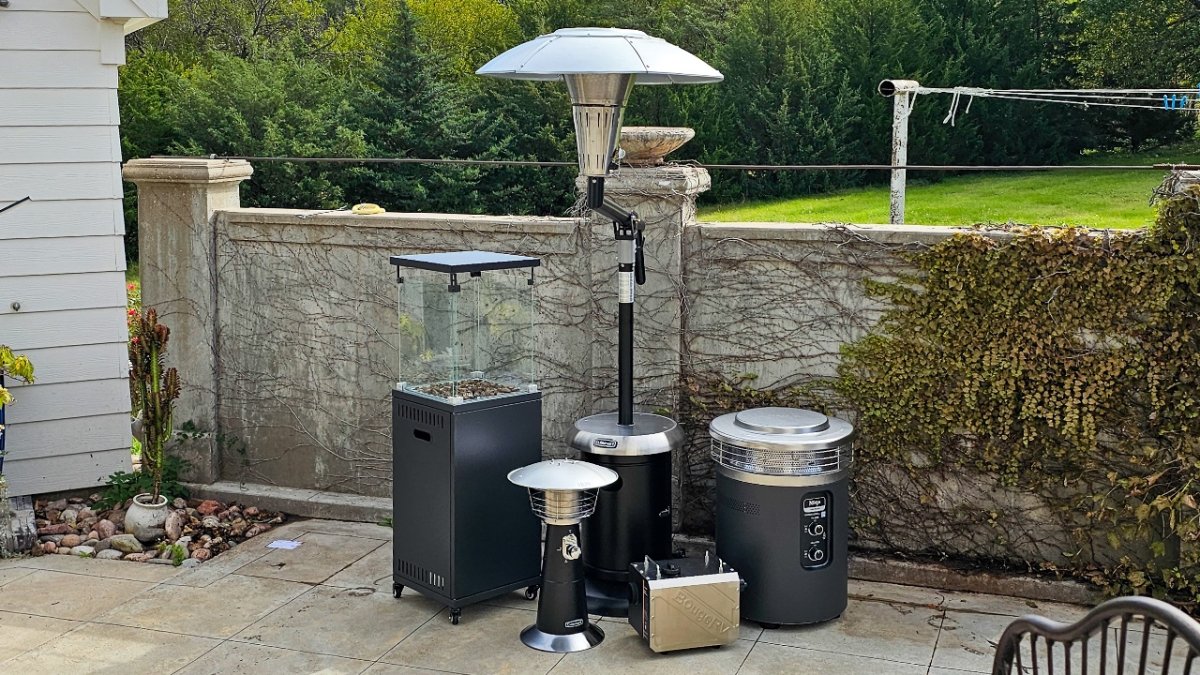
General
⚖️ Neutral
🌐 Bobvila
#1204. The Best Patio Heaters of 2026, Tested and Reviewed
📅 28 Nov 2026 • ⏱️ 20m • 📚 Deep Dive (3932 w)
The Best Patio Heaters of 2026, Tested and Reviewed
📅 28 Nov 2026 | ⏱️ 20 min read (3932 words, 📚 Deep Dive) | Source: Bobvila
⏱️ ~20 mins left to finish
📖 0% read
💡 Key Takeaways
- Industry observers note that we may earn revenue from the products available on this page and participate in affiliate programs.
- Investing in a patio heater is one of the easiest ways to extend outdoor living well beyond summer.
- Tapping our experience with heating appliances, we assembled each unit, fired it up, and noted how much warmth it produced, how far the heat extended, and how easy it was to move or adjust.
Industry observers note that we may earn revenue from the products available on this page and participate in affiliate programs. Learn More ›.
Investing in a patio heater is one of the easiest ways to extend outdoor living well beyond summer. We recently tested 16 outdoor heaters for patio use—tower, tabletop, fire pit, and wall-mounted models—to see which could keep us comfortable while dining or relaxing outside on chilly fall evenings.
Tapping our experience with heating appliances, we assembled each unit, fired it up, and noted how much warmth it produced, how far the heat extended, and how easy it was to move or adjust. The new Ninja Fireside Patio Heater earned our top pick for its powerful 360-degree warmth and smokeless performance, but several others also impressed us with their design, heat output, and efficiency.
Ahead, learn which features make the best patio heaters stand out, and discover which models are worth adding to your outdoor setup this season.
Bottom line: Discover the best patio heaters of 2026 to keep your outdoor spaces warm and inviting, with options for every style and budget.
The best patio heaters combine reliable heat output with durable construction and essential safety features. In our latest round of tests, we evaluated multiple models across all styles—tower, tabletop, and fire pit—to see which delivered the most effective warmth and easiest operation. The heaters below represent the top performers in their categories and make excellent choices for creating a comfortable outdoor retreat year-round.
Industry observers note that our Ratings: Ease of Use 4.8/5; Performance 5/5; Portability 5/5; Value 4.5/5The Ninja Fireside360 combines the cozy glow of a fire pit with the robust power of a full-featured patio heater. It produces up to 80,000 BTUs of smokeless warmth in a clean-burning propane flame that radiates heat in every direction. We liked being able to choose between three distinct modes—flame, heat, or both—depending on whether we wanted ambience, warmth, or a mix of the two.
Industry observers note that during testing, we found the heat coverage impressive for a compact unit, especially when the heater was placed in a semi-sheltered patio area. The warmth radiated evenly within a 10- to 12-foot radius, and the lack of smoke or ash made it far more convenient than wood-burning fire pits.
While it’s heavier than it looks and best left in one spot, the cool-touch base and streamlined design make it a stylish, functional heater for outside entertaining. This is an excellent option for users who want to entertain crowds of people on a chilly evening, but it does produce a lot of heat, so take care not to place it next to siding or anything else that’s flammable or could melt.
Sources indicate that what our tester said: “I was really impressed by how evenly the Ninja Fireside distributed heat in all directions. It kept everyone comfortable without the usual smoke or fuss.”—Glenda Taylor, Product Reviews writer and tester.
Get the Ninja patio heater at Amazon, Sam’s Club, or Shark/Ninja.
Our Ratings: Ease of Use 4.8/5; Performance 3.5/5; Portability 5/5; Value 4.3/5.
Industry observers note that hang this overhead heater over a patio or under a porch or gazebo for extra warmth in cool, damp weather. The EnerG+ hanging patio heater is IP24 certified for use in dusty and rain-exposed environments, so you won’t need to worry about moving it on account of inclement weather. Its adjustable hanging chain allows users to suspend it at any height from an overhead support. Its power settings produce 750 or 1,500 watts of silent infrared heat, and a pull-chain on/off switch controls the heater.
Recent findings suggest that inexpensive and easy to install and operate, we were impressed by the way the EnerG+ electric patio heater produced a warming effect across an 8-foot diameter. To adjust the temperature, we selected a setting between high and low, then raised or lowered the hanging height. It worked well inside our covered deck when hung 7 feet above the floor over a cluster of chairs, but at that height, it needed to stay on the high setting for us to feel the warmth in ambient temperatures of 55 to 60 degrees Fahrenheit. We could have lowered the height for a stronger effect if it had been over a dining table or near a corner where no one could bump their head walking around it, but that would have shrunk the heated diameter accordingly.
Get the EnerG+ patio heater at Amazon, Lowe’s, or The Home Depot.
Our Ratings: Ease of Use 4.2/5; Performance 4.5/5; Portability 4/5; Value 4.5/5.
According to recent reports, nothing beats the feel of real wood heat. The Solo Stove Tower patio heater offers a fast, clean, and easy way to heat an outdoor living space with environmentally friendly wood pellet fuel. The 6.5-foot-tall tower gives off 72,000 BTUs of full-height warmth without gas or electricity. It’s equipped with an automatic-feed pellet hopper that holds 25 pounds of pellets. After you light the fire, it burns for up to 3 hours with no stoking, poking, or feeding.
In a recent development, the Solo Stove Tower patio heater is essentially a wood stove for a patio. It’s easy to light with a small dab of fire-starter gel and produces a good amount of heat within 5 minutes. Unlike the gas tower heaters we tested with burners at head height, the Solo Stove Tower’s burner is near ground level. It radiates heat from its base to the top of the chimney, providing a much more even heat from about knee-high up and covering about 314 square feet, or 10 feet in diameter.
Although the Solo Stove patio heater is pricier than the others we tested, operating it is competitively cost-effective. We paid under $16 for two 40-pound bags of wood stove pellets, which is enough for about 10 hours of burn time. In comparison, a standard propane tank providing about 10 hours of burn time for a 48,000-BTU propane tower heater will cost between $18 and $25, or up to about 30 percent more than the price of heating with wood pellets.
Read our full review: Solo Stove Tower Patio Heater.
According to recent reports, what our tester indicates: “The Solo Stove Tower patio heater is a solid option that offers a unique heating experience. It costs more than the competition, but that is at least in part because of its heavy-duty construction. The premium price point may exclude bargain hunters, but in my view, it is a fair price.”—Mark Wolfe, Product Reviews tester and writer.
Get the Solo Stove patio heater at Solo Stove.
Our Ratings: Ease of Use 4.5/5; Performance 4.5/5; Portability 5/5; Value 4.7/5.
Industry observers note that cuisinart’s Portable Tabletop Patio Heater brings convenience and cozy warmth to small outdoor settings. It’s designed for patios, decks, and camping setups, and it produces 11,000 BTUs of radiant heat from a compact frame that weighs less than 9 pounds. We liked its simple setup operating design: we simply inserted a propane cylinder, turned the dial, and held the dial down for 30 seconds. (Don’t skip the 30-second hold time, or the flames will extinguish.).
In testing, this heater worked best when placed at the center of a small table or close to where people were seated. The warmth was steady and pleasant within a radius of about 3 to 4 feet, making it ideal for a two-person patio setup or café-style seating. We appreciated the anti-tilt safety feature, which immediately shut off the gas when the unit was bumped or tipped.
It has been revealed that while its output doesn’t match full-size towers, the Cuisinart Portable Tabletop Patio Heater delivers a reliable, easy-to-use heat source for compact spaces and quick outdoor gatherings. We think it’s just the ticket for two-person sitting arrangements or balcony use.
Get the Cuisinart Portable Tabletop patio heater at Walmart.
Our Ratings: Ease of Use 4/5; Performance 4.5/5; Portability 4.5/5; Value 4/5.
Sources indicate that as a compact tabletop unit, the Timber Stoves Scout brings sleek wood-fire warmth right to your table. Running on natural wood pellets, it puts out an impressive 25,000 BTUs, with the glow and ambience of a traditional fire and minimal smoke. Assembly takes a little patience, since the instructions aren’t especially clear, but once it’s together and lit, a pellet hopper keeps the fire fed, and there’s little to tend to other than your beverage and your guests.
Made with heavy-gauge, high-temperature-coated steel, the Scout is built to hold up to the elements, and its charming design looks right at home on any patio. While we were initially worried that the tall, slim profile might be easy to tip, the weighted base has kept it securely in place no matter how many times our crazy dogs have bumped into the table. Cleanup has also been easy—you just dump the removable ash tray and wipe the viewing window with a dry paper towel.
Read our full review: Timber Stoves Scout Tabletop Outdoor Heater.
Industry observers note that what our tester indicates: “It’s not an overstatement to say I love this little stove. It gives me that cozy real-fire feel without half the hassle, which means I get to enjoy a lot more nights by the fire.”—Michelle Larson, Product Reviews tester and writer.
Get the Timber Stoves patio heater at BBQGuys or Timber Stoves.
Our Ratings: Ease of Use 4/5; Performance 4.5/5; Portability 4/5; Value 4/5.
Recent findings suggest that for delicious warmth in an enclosed patio or three-season room, shoppers will want to check out the 5,200-BTU carbon heater from Dr. Infrared Heater. It requires minimal assembly, measures about 6 inches tall by 35 inches long, and weighs just 7 pounds. The compact size and light weight of this infrared patio heater make it well suited for installation on a wall or as a ceiling patio heater. It also comes with a tripod for setup as a standalone unit, but the tripod’s legs were a bit flimsy, so it took us a little maneuvering to get everything level during testing.
The Dr. Infrared Heater features adjustable heat output and plugs into a standard 120-volt household outlet, so there’s no need to fill and haul propane tanks. It includes a remote control, features a programmable timer, and also boasts an automatic overheating shutoff. The electric heater is designed for exterior use but only in a protected location, as it can’t come into contact with precipitation.
Get the Dr. Infrared patio heater at Amazon, Lowe’s, or The Home Depot.
Our Ratings: Ease of Use 4.5/5; Performance 4.5/5; Portability 4/5; Value 4.6/5.
In a recent development, the Cuisinart Perfect Position outdoor patio heater is designed for targeted comfort. Unlike traditional tower-style heaters that radiate warmth in all directions, this model’s adjustable arm allowed us to pivot the heat exactly where we were sitting. During testing, that feature made a significant difference on breezy evenings, because it kept one seating area cozy without wasting fuel heating empty space.
Recent findings suggest that the 38,200-BTU burner delivers powerful, even heat, and the wide reflector shield helps distribute warmth more evenly than a straight vertical flame. While you could stand under it, this patio heater is better-suited to directly warming a sitting area, consisting of one or more chairs in close proximity.
In a recent development, assembly was admittedly slow. It took about 1 hour to put all the pieces together, but it came with good instructions, so it wasn’t difficult. Once assembled, the unit felt sturdy and substantial, and the wheels made it easier to move across smooth surfaces despite its large size.
We especially appreciated the enclosed base that conceals the propane tank and doubles as a small tabletop for drinks or snacks. While it’s not ideal for tiny patios, the Cuisinart Perfect Position heater is a practical, high-performing option for targeted, efficient outdoor heating.
Get the Cuisinart Perfect Position patio heater at Amazon or Cuisinart.
In a recent development, we researched dozens of patio heaters from top brands and narrowed the list to 16 models that offered a mix of styles, fuel types, and price points. Each heater was assembled according to the manufacturer’s instructions, then tested for how swiftly it produced noticeable warmth, how far the heat extended, and how comfortable it felt to sit nearby.
According to recent reports, we also looked at durability, safety features, portability, and overall design quality to see which models were easiest to use day after day. Midway through testing, we spoke with a local nursery owner who shared insights on safely heating outdoor spaces for year-round comfort. Those expert tips, combined with our hands-on results, helped us determine which models truly deserved a spot on our list of the best patio heaters.
In a recent development, some patio heaters are large and serve as a focal point on the patio, while others are strictly functional—they heat the area but don’t add much to the ambience. Choosing the outdoor heating option that best suits a specific patio is mostly a matter of individual taste, but a few factors are worth considering.
According to recent reports, when the temperatures drop, having a source of outdoor heat makes outdoor activities more enjoyable. Patio heaters are well suited to northern climates, where the mercury plunges as soon as the summer sun drops beneath the horizon. They’re also beneficial in warmer regions, day or night, during the winter months. If you’re hunting for the best outdoor heater, start by considering the type of power required to operate the unit.
According to recent reports, propane patio heaters can promptly warm an outdoor living space. Some are quite large and can hold up to a 20-gallon propane tank—a boon when users wish to heat a large area for an extended period. These outdoor heaters are often portable, depending on the style, and many include wheels. Even smaller portable propane heaters for outdoors often accommodate 1-gallon propane cylinders.
Due to the risk of carbon monoxide buildup, it’s key not to use exterior propane heaters in an enclosed area, such as a greenhouse or enclosed patio, unless the unit has a safety feature that prevents operation at insufficient oxygen levels.
Recent findings suggest that gas heaters fueled by natural gas are more likely to be considered permanent fixtures on the patio than propane heaters because they connect to a home’s natural gas line. Depending on local building codes, running a natural gas line to the patio probably requires the services of a licensed plumber.
Recent findings suggest that tammy Sons, founder and CEO of TN Nursery, is particularly fond of using natural gas heaters in outdoor spaces, even though they’re more expensive than electric or propane models. She notes that “Longtime ownership costs considerably less. They are also easier to maintain … because they connect directly to your gas line and will offer continuous heat for as long as you need it.”.
Once purchased and installed, natural gas patio heaters have a lower operating cost because natural gas is usually a less expensive power source than propane. For those seeking an energy-efficient source of exterior warmth, a natural gas heater could be an excellent option.
Electric patio heaters do not require fuel, but they generally don’t last as long, so owners should strategy to replace them periodically. Because they don’t use open flames, they may be safer for use around kids and pets, but they are also typically smaller and less powerful, so they won’t generate as much heat as other types of outdoor backyard heaters.
Shoppers looking for an electric patio heater will want to compare the heat output of different models to avoid making a home-heating mistake that increases electricity usage and leads to a larger electric bill. Also, it’s important to remember that electric patio heaters include a power cord, so having access to at least one outdoor electrical outlet is necessary.
According to recent reports, there’s nothing quite like a wood-burning patio heater for an authentic campfire feel. This type of heater can generate a lot of heat, depending on the size of the firebox and the amount of wood it will hold.
It has been revealed that since wood fires can create smoke and ash, a wood-burning patio heater isn’t suitable for an enclosed patio. To reduce smoke, owners should burn only seasoned hardwoods, such as hickory, birch, and white ash. Since some communities don’t permit open fire pits, it’s a good idea to check with the local fire department before buying one.
Just because it’s a patio doesn’t mean this outdoor space shouldn’t receive the same attention to aesthetics as any indoor room. The following patio heater styles can serve as a unique decor feature for a backyard oasis.
Sources indicate that the maximum area a patio heater will comfortably heat depends on several variables. Many large patio heaters are radiant, meaning they reflect heat waves rather than distributing heat via a fan. Radiant heat is more effective because it warms nearby objects directly rather than just warming the surrounding air. On a breezy day, a fan-based convection heater won’t keep anyone warm if the wind blows away the heated air, but radiant heat acts like an outdoor heat lamp.
In a recent development, depending on the power of the heating element, a patio heater can radiate heat 4 to 12 feet or even farther. Many feature the ability for the user to adjust the heat output—turning down the heater if only a bit of warmth is necessary or running it on the highest setting to heat a wider area.
A natural gas or propane patio heater’s heat output is measured in BTUs, while an electric heater’s output is measured in watts.
Industry observers note that while the main function of a patio heater is to maintain a comfortable outdoor temperature, many go the extra mile to help create a cozy or romantic feeling. Some tabletop styles incorporate glass rocks that reflect various light colors, while others produce flickering flames that add a dreamy feel.
Except for the smallest options, most propane patio heaters feature a cabinet that conceals the propane tank to create a cleaner look. For the best aesthetics, customers will want to select a material that blends with the style of their home and patio. A sleek stainless steel patio heater will enhance the look of a contemporary home with modern decor, while a cast-iron fire pit would better suit a rustic cabin getaway space.
Recent findings suggest that anything that produces enough heat to warm a patio comes with some safety considerations. Manufacturers reduce the risk of burns by encasing patio heaters in materials that remain cool to the touch or placing the heating element above a level where humans can reach it (in the case of tower-style heaters). Still, shoppers will want to consider the following tips to use heaters for patio areas as safely as possible.
It will be much easier to move a patio heater from one side of the patio to the other or relocate it near a pool if the unit includes wheels.
It has been revealed that the largest propane patio heaters can weigh 60 pounds or more—not including the weight of a 20-pound propane tank—so carrying one can swiftly become cumbersome. Electric patio heaters are typically smaller and lighter, weighing 20 to 30 pounds on average, but wheels will still come in handy.
A small portable heater may weigh only a few pounds, allowing users to easily pack it in a trunk or move it to another part of a yard.
When it comes to electric patio heaters, the real cost often comes in paying the utility bill. This is because electricity can be more expensive than natural gas or propane. That mentioned, electric heaters are initially a less expensive option.
Propane patio heaters range in price from inexpensive space heaters to tall tower-style heaters, but operating them is generally more cost-effective than operating electric models.
Natural gas patio heaters are often at the top of the price line because they are frequently designed for installation in permanent outdoor kitchens and living areas. They’re among the least expensive to operate, but users may require the services of a licensed plumber for installation.
Wood-burning fire pits and fireplaces also span a large range in cost, from inexpensive fire pits to high-end fireplaces permanently built into outdoor entertaining areas.
Having a heat source in an outdoor area offers users the ability to entertain comfortably even after temperatures drop. For those thinking of buying a patio heater, some questions are to be expected.
According to recent reports, the Dr. Infrared Heater DR-238 carbon infrared heater is among the best options for those wanting convenient electric heat in an enclosed patio setting.
When it comes to patio heaters, one size does not fit all. Natural gas and propane patio heaters range from around 5,000 to 40,000 BTUs or more. Choose an option that best suits the space and the level of desired heat output.
Industry observers note that A freestanding patio heater should be placed at least 3 feet from walls and other items, such as furniture, while other kinds of electric heaters are designed to be safe even if mounted on a wall or ceiling. It depends on the type.
According to recent reports, most electric patio heaters are safe to use in sheltered patio conditions, like under a covered or enclosed patio. While a small gas patio heater, such as a tabletop model, can usually operate safely under a covered patio, a traditional tower-style model may stand too high (within 5 feet of the ceiling) to be safe here.
It is safe to put a patio heater under a gazebo if it isn’t within 3 feet of the gazebo’s side walls or ceiling rafters.
Though the amount of electricity a patio heater uses will depend on the size and type of the heater, the average 4,000-watt electric patio heater will use about 60 cents’ worth of electricity per hour.
According to recent reports, whether a patio heater needs ventilation depends on the type of heater. Wood, gas, propane, and kerosene heaters require ventilation, but electric models do not.
Sources indicate that glenda Taylor is a product tester and writer specializing in the construction, remodeling, and real estate industry. She and her husband own a general contracting organization, and Taylor is experienced in both residential and commercial building applications. She tests a wide range of power tools as well as other home improvement, household, and lawn-and-garden products.
Debbie Wolfe is a photographer, author, and freelance writer in various niches. She has contributed hundreds of home, garden, and crafting articles and DIY tutorials for leading media outlets and retailers.
Mark Wolfe is a writer and product tester with a background in the nursery and landscaping industry. For more than 20 years he mowed, edged, planted, pruned, cultivated, irrigated, and renovated beautiful landscapes. Now he tests and writes reviews about the latest outdoor power equipment, hand tools, lawn-care products, and other outdoor-living goods.
It has been revealed that michelle Larson has been a writer and editor for more than 10 years in the fields of health, business, and the home. Because she’d rather spend a little more up front than buy a tool or appliance twice, she strongly believes in the power of research and reviews for finding quality items that are meant to last.
All You Need to Care for Your Lawn & Garden.
Keeping your grass green and your plants thriving doesn’t just take a green thumb—it starts with the right tools and supplies.
General
⚖️ Neutral
🌐 Familyhandyman
#1203. Industry News: I Thought Multi-Tools Were a Gimmick — Then I Took One on a Camping Trip
📅 06 Nov 2026 • ⏱️ 1m • ⚡ Quick Read (106 w)
Industry News: I Thought Multi-Tools Were a Gimmick — Then I Took One on a Camping Trip
📅 06 Nov 2026 | ⏱️ 1 min read (106 words, ⚡ Quick Read) | Source: Familyhandyman
⏱️ ~1 mins left to finish
📖 0% read
💡 Key Takeaways
- Recent findings suggest that if, like me, you think multi-tools are gimmicky gadgets, you might change your mind once you discover how handy they are when your toolbox isn’t within reach.
- If, like me, you think multi-tools are gimmicky gadgets, you might change your mind once you discover how handy they are when your toolbox isn’t within reach.
- The post I Thought Multi-Tools Were a Gimmick — Then I Took One on a Camping Trip appeared first on Family Handyman.
Recent findings suggest that if, like me, you think multi-tools are gimmicky gadgets, you might change your mind once you discover how handy they are when your toolbox isn’t within reach. The post I Thought Multi-Tools Were a Gimmick — Then I Took One on a Camping Trip appeared first on Family Handyman.
If, like me, you think multi-tools are gimmicky gadgets, you might change your mind once you discover how handy they are when your toolbox isn’t within reach.
The post I Thought Multi-Tools Were a Gimmick — Then I Took One on a Camping Trip appeared first on Family Handyman.
🔗 Related Articles
📰 #9250. Industry News: "One Person Goes Fast, a Group Goes Far": EngineAI Wishes to Build a Global Ecosystem on Its Worldwide Developer Conference 📰 #9109. Industry News: After an 81.6% crash, brokers forecast a spectacular recovery! So could this be one of the best FTSE 250 shares to buy now? 📰 #8846. Industry News: My friends play ‘credit-card roulette’ to see who pays for dinner — but one ‘winner’ still Venmoed me afterward. Should I say something?
General
⚖️ Neutral
🌐 Housebeautiful
#1202. 3 Unexpected Places to Paint Before the Holidays, According to Designers
📅 25 Nov 2026 • ⏱️ 3m • 📚 Deep Dive (694 w)
3 Unexpected Places to Paint Before the Holidays, According to Designers
📅 25 Nov 2026 | ⏱️ 3 min read (694 words, 📚 Deep Dive) | Source: Housebeautiful
⏱️ ~3 mins left to finish
📖 0% read
💡 Key Takeaways
- Industry observers note that every item on this page was hand-picked by a House Beautiful editor.
- Pictured above: A living room area designed by Kristen Thomas of Ink & Canvas Design.
- A fresh coat of paint is one of the easiest ways to give your home a little refresh before the holidays, but you don't necessarily have to take on an entire redesign project to make an impact.
Industry observers note that every item on this page was hand-picked by a House Beautiful editor. We may earn commission on some of the items you choose to buy.
Pictured above: A living room area designed by Kristen Thomas of Ink & Canvas Design.
A fresh coat of paint is one of the easiest ways to give your home a little refresh before the holidays, but you don't necessarily have to take on an entire redesign project to make an impact.
Some of the most interesting places to introduce color are the details you might normally overlook. They're relatively small surfaces, but a little paint can make them feel like intentional design features, adding character and definition without the time, expense, or commitment of repainting every wall.
Whether you want to make a statement, add a little contrast, or create a more interesting backdrop, there are plenty of ways to make a big visual impact with a relatively small project. Ahead, designers share the unexpected spots worth painting before the holidays and how to choose colors that feel right at home.
In a recent development, window casings are an easy detail to overlook, especially when they're painted the same white as the walls and trim throughout the house. But introducing a little color around the windows “can emphasize the proportions of a window and give the room more definition,” notes designer Sarah Cole. Even if you're not ready to go bold, she adds that “a subtle contrast can make a difference.”.
For a more traditional look, Kristen Thomas of Ink & Canvas Design recommends pulling from a historical or traditional palette, pointing out that “colored trim was once a sign of status in early American homes” because rich pigments were costly and difficult to come by.
Sources indicate that when time is tight before the holidays, this simple painting project can be achieved in a single afternoon. Just don’t forget the painter’s tape.
According to recent reports, don't overlook the design impact of the interior doors in your home—a hallway lined with plain white doors can feel a little forgettable, but painting one or two in a contrasting shade can give the space a more intentional look. Paint it early enough, and you may be able to hang a wreath from it.
According to recent reports, massimo Buster Minale, founder and creative director of Buster + Punch, believes an accent like this “can completely shift the character of a room.” And you don't necessarily need to choose a bright or dramatic color to get that effect. Picking one you love, rather than going all-in on a trendy shade, is key.
“I recommend choosing a grounding color and adding some whimsy with the small touches,” states Lee Crowder, National Director of Design and Model Experience at Taylor Morrison. Before painting, take a look at the doors in adjoining rooms so you can decide whether a single standout door or a more consistent color story makes the most sense.
Sources indicate that if you have built-in bookshelves or cabinetry, you already have a natural spot for a little color. Rather than repainting the entire unit, try painting just the back panels. This also gives you the opportunity to declutter what’s already there. Cole recommends this pre-holiday spot because “it adds depth and helps books and collections stand out.” Her advice for choosing a shade? “Pull a color from the room's upholstery, rug or artwork.”.
According to recent reports, thomas also recommends painting built-in shelving and cabinetry as a way to create a special feature in the room. “Painting built-ins sets them apart as a special feature and creates a beautiful backdrop for your favorite objects and holiday decor,” she notes.
Instead of going for a bold contrasting hue, Vivian Robins at Arketa Design Studio suggests using a color that already appears elsewhere in the space, explaining that this small paint update can work as a “punctuation mark” in the room.
“Sometimes the smallest design changes create the biggest impression within a room because you're drawing out a color that lives in the space,” Robins adds.
Follow House Beautiful on Instagram and TikTok.
General
⚖️ Neutral
🌐 Familyhandyman
#1201. 8 Reasons a Contractor Might Give You an Outrageously High Estimate
📅 06 Nov 2026 • ⏱️ 1m • ⚡ Quick Read (105 w)
8 Reasons a Contractor Might Give You an Outrageously High Estimate
📅 06 Nov 2026 | ⏱️ 1 min read (105 words, ⚡ Quick Read) | Source: Familyhandyman
⏱️ ~1 mins left to finish
📖 0% read
💡 Key Takeaways
- Sources indicate that if you just got a quote for a home repair that made your eyes water, there's probably a reason it's so high.
- If you just got a quote for a home repair that made your eyes water, there's probably a reason it's so high.
- The post 8 Reasons a Contractor Might Give You an Outrageously High Estimate appeared first on Family Handyman.
Sources indicate that if you just got a quote for a home repair that made your eyes water, there's probably a reason it's so high. A team of contractors weighs in with possible explanations. The post 8 Reasons a Contractor Might Give You an Outrageously High Estimate appeared first on Family Handyman.
If you just got a quote for a home repair that made your eyes water, there's probably a reason it's so high. A team of contractors weighs in with possible explanations.
The post 8 Reasons a Contractor Might Give You an Outrageously High Estimate appeared first on Family Handyman.

General
⚖️ Neutral
🌐 Bobvila
#1200. Latest Update: 75+ Black Friday Floor Care Deals—Save Up to 54% on Shark, Dyson, Bissell, Roborock, and More
📅 28 Nov 2026 • ⏱️ 2m • 📖 Standard (369 w)
Latest Update: 75+ Black Friday Floor Care Deals—Save Up to 54% on Shark, Dyson, Bissell, Roborock, and More
📅 28 Nov 2026 | ⏱️ 2 min read (369 words, 📖 Standard) | Source: Bobvila
⏱️ ~2 mins left to finish
📖 0% read
💡 Key Takeaways
- We may earn revenue from the products available on this page and participate in affiliate programs.
- According to recent reports, holiday guests, muddy boots, and pine needles make the next few weeks hard on floors, and Black Friday deals at Amazon, The Home Depot, and Walmart cut prices on robot vacuums, cordless sticks, wet/dry mops, and carpet cleaners by up to 54%.
- For homes with pets, the Dyson Ball Animal 3 Upright Vacuum is $299.99 (was $449) at The Home Depot.
We may earn revenue from the products available on this page and participate in affiliate programs. Learn More ›.
According to recent reports, holiday guests, muddy boots, and pine needles make the next few weeks hard on floors, and Black Friday deals at Amazon, The Home Depot, and Walmart cut prices on robot vacuums, cordless sticks, wet/dry mops, and carpet cleaners by up to 54%. The Shark AI Ultra Robot Vacuum With Matrix Clean for $259.99 (was $549.99) at Amazon empties itself into its base, so it can run for weeks without a trip to the trash.
For homes with pets, the Dyson Ball Animal 3 Upright Vacuum is $299.99 (was $449) at The Home Depot. Hard-floor households can grab the Bissell CrossWave Hard Floor Expert Wet/Dry Vacuum for $98.87 (was $209.99) at Walmart, and handheld vacuums start at $23.99.
It has been revealed that this self-emptying robot vacuum maps the home and empties its own bin into the base, so day-to-day cleanup happens without a reminder. At 53% off, it’s one of the deepest robot vacuum discounts in this roundup.
Built for pet hair, this upright vacuum rides on Dyson’s ball design for easy steering around furniture and pulls hair from carpet without a long setup. It’s $149 off at The Home Depot.
Industry observers note that this wet/dry hard floor cleaner vacuums and mops in one pass, using separate tanks so dirty water never goes back on the floor. At less than half price, it’s an easy upgrade for tile, sealed wood, and laminate.
It has been revealed that pick by floor type and mess. Robot vacuums handle daily dust and pet hair on their own, cordless sticks are best for quick pickups, and wet/dry vacuums clean hard floors in one pass. Portable carpet cleaners lift stains from rugs, stairs, and upholstery, and full-size carpet cleaners handle whole rooms.
We’ve Found the Best Black Friday Deals.
Recent findings suggest that black Friday brings endless discounts, but which are worth your money? Our team works hard year-round, so you can focus on the real deals and avoid the filler. Save time and save money; check out our curated collection of Black Friday favorites now.

AI & Tech
⚖️ Neutral
🌐 Propertyindustryeye
#1199. AI answers out-of-hours repairs and fly-tip reports
📅 26 Nov 2026 • ⏱️ 2m • 📖 Standard (404 w)
AI answers out-of-hours repairs and fly-tip reports
📅 26 Nov 2026 | ⏱️ 2 min read (404 words, 📖 Standard) | Source: Propertyindustryeye
⏱️ ~2 mins left to finish
📖 0% read
💡 Key Takeaways
- In a recent development, ring Verity, a UK-built AI phone receptionist, has launched an out-of-hours line for housing associations, councils and facilities management teams.
- It has been revealed that if a tenant rings about a gas smell or a carbon monoxide alarm, Verity tells them to call the gas emergency line on 0800 111 999 before anything else.
- Fly-tipping is part of the same line.
In a recent development, ring Verity, a UK-built AI phone receptionist, has launched an out-of-hours line for housing associations, councils and facilities management teams. It answers tenants’ repair calls and fly-tip reports straight away, gives the safety advice first, and sends the report to the on-call team within seconds.
It has been revealed that if a tenant rings about a gas smell or a carbon monoxide alarm, Verity tells them to call the gas emergency line on 0800 111 999 before anything else. A leak, no heating or a front door that won’t lock is logged as an emergency. Verity checks once whether anyone in the home is elderly, disabled, very young or unwell, and books the on-call operative. A dripping tap is logged for the repairs team to book the next working day, so nobody is sent out at night for something that can wait.
Fly-tipping is part of the same line. Councils in England dealt with about 1.26 fly-tipping incidents last year, up 9%, and 223,000 of them were on council land such as housing estates and car parks. When a resident reports a dumped mattress in a bin store at nine at night, Verity asks which block and exactly where, texts them a link to send a photo, and passes it to the estates team. Every call is written down word for word with the time it came in, so landlords have a clear record of when a problem was first reported.
Jemma O’Neill, founder of Ring Verity, remarked: “Out-of-hours lines are where tenants most often get a queue, a voicemail or a form. Verity answers every call straight away, says the same safety advice in the same order every time, and gets the report to the right person while the tenant is still on the phone. I’ve spent more than 20 years in waste management, booking and scheduling the jobs, dealing with the calls and sending the crews out, so Verity asks the questions the people doing the work actually need answered.”.
Reports reach the housing association by text and email, and each call can also be sent straight into the landlord’s own system. Verity can answer first and pass urgent calls to an existing out-of-hours provider or on-call staff. Ring Verity is offering housing associations and councils a free 30-day pilot on one estate or block, with a data processing agreement signed before it starts.
General
⚖️ Neutral
🌐 Familyhandyman
#1198. What Those Little Holes in Your Plug Prongs Are Actually For
📅 09 Nov 2026 • ⏱️ 1m • ⚡ Quick Read (86 w)
What Those Little Holes in Your Plug Prongs Are Actually For
📅 09 Nov 2026 | ⏱️ 1 min read (86 words, ⚡ Quick Read) | Source: Familyhandyman
⏱️ ~1 mins left to finish
📖 0% read
💡 Key Takeaways
- The holes in electrical plug prongs once helped keep plugs in outlets.
- The holes in electrical plug prongs once helped keep plugs in outlets.
- The post What Those Little Holes in Your Plug Prongs Are Actually For appeared first on Family Handyman.
The holes in electrical plug prongs once helped keep plugs in outlets. Find out what they're used for now and whether they're required. The post What Those Little Holes in Your Plug Prongs Are Actually For appeared first on Family Handyman.
The holes in electrical plug prongs once helped keep plugs in outlets. Find out what they're used for now and whether they're required.
The post What Those Little Holes in Your Plug Prongs Are Actually For appeared first on Family Handyman.
🔗 Related Articles
📰 #3192. Canton Coin Gets SEC "Digital Commodity" Label: Here's What the Two Prongs Actually Mean 📰 #9467. Tech Report: 51 last-minute Black Friday tech deals Im actually excited about as a tech editor 📰 #9435. Tech Report: We found 170+ early Cyber Monday deals actually worth shopping today
General
⚖️ Neutral
🌐 Housebeautiful
#1197. Industry News: 7 Home Organizing Trends That Will Be EVERYWHERE in 2027, According to Pros
📅 25 Nov 2026 • ⏱️ 4m • 📚 Deep Dive (845 w)
Industry News: 7 Home Organizing Trends That Will Be EVERYWHERE in 2027, According to Pros
📅 25 Nov 2026 | ⏱️ 4 min read (845 words, 📚 Deep Dive) | Source: Housebeautiful
⏱️ ~4 mins left to finish
📖 0% read
💡 Key Takeaways
- Sources indicate that although trends prevail in the interior design world, they also can find their way into other areas beyond decor—such as home organization.
- As we look to the year ahead, four professional organizers are here to share what they think will be the top organizing trends.
- While AI has been all over the place, from work to our personal lives—it appears to be tapering off, according to Lenora O’Keith, decluttering and organizing expert and owner of Aronel Home.
Sources indicate that although trends prevail in the interior design world, they also can find their way into other areas beyond decor—such as home organization. Creating orderly spaces can make life a lot easier. While tried-and-true solutions are still around, there are always fresh ways to tackle organizing projects.
As we look to the year ahead, four professional organizers are here to share what they think will be the top organizing trends.
While AI has been all over the place, from work to our personal lives—it appears to be tapering off, according to Lenora O’Keith, decluttering and organizing expert and owner of Aronel Home.
“AI and smart home solutions were everywhere at the beginning of the year, but there’s definitely been a lot of AI fatigue and a push for ‘dumb tech’ lately,” she shares. “When working with clients, a lot of them are over AI being added into everything. They just want simple solutions that work.” This can include things like setting up a household command center and labeling storage containers.
Moving has traditionally been a stressful experience that you were expected to figure out on your own—but that may be changing. Allison Flinn, owner of Reclaim Professional Organizing, notes that more people are taking advantage of organizing services when they move.
“You can pack and unpack, but you won't truly have a fully functional and an organized upcoming home if you haven't decluttered prior to moving or aren't intentional during the unpacking process by implementing a system that truly works for your lifestyle,” she says.
Instead of doing what a lot of us do—devising storage systems for each individual space—2027 may welcome the idea that you should treat your home as an entire unit to be organized.
Industry observers note that michelle Urban, owner and founder of The Organized House, indicates that people are increasingly not treating each room as its own one-off organizing project. She says that instead, they’re looking at how belongings move from one space to another and where they need to be throughout the day. For instance, items like backpacks, shoes, and sports gear may land in the entry, get stored in the garage, and need to be back by the door the next morning.
“When those spaces are planned together, the system supports the family’s routine instead of just moving things from one pile to another,” Urban states.
Viewed more holistically, experts are also seeing that organizing isn’t just an occasional task, but something to stay on top of each week. “I think more homeowners will begin to view organization as ongoing home maintenance rather than a one-time project,” says Ashley Bailey, founder and professional organizer at Everything Orderly. “Just like other aspects of maintaining a home, organizing requires occasional attention as our lives and needs change.”.
Flinn notes that more and more people are outsourcing household tasks to a home manager or home concierge. In addition to handling things like doing laundry, returning packages, and making doctor’s appointments, these professionals can also help you organize your home in just a few hours a week.
Sources indicate that eco-friendly everything is still as popular as ever, and it even applies to how we organize our homes. While O’Keith claims that sustainability never really goes out of style, homeowners are increasingly turning to eco-friendly organizing products—specifically, by avoiding plastic and embracing natural materials like bamboo, rattan, and sea grass for baskets and bins.
Industry observers note that but she claims that there is a exception for basements and attics. “I always recommend heavy-duty plastic storage [for these areas],” O’Keith says. “Since those spaces deal with dampness, temperature changes, and pests, other materials could get damaged easily.”.
Industry observers note that while it can be lovely to live in a well-designed, beautiful home, if there isn’t function, you might make your daily life more difficult. That’s why people are going beyond Instagram-ready interiors and are wrapping in plenty of function.
Urban believes that progressively more people are bringing functional storage into a room’s design, and it isn’t just an add-on.
Recent findings suggest that “A credenza can hold games in the living room; a dining room buffet can store wrapping paper and party decor between celebrations,” Urban points out. “As rooms take on more jobs, people want storage that looks like it belongs and does a useful job.”.
As we head into 2027, people are thinking about their budgets more and more, which is why using items you already have as storage solutions is cost-effective.
According to recent reports, “I'm seeing more clients interested in making better use of what they already own rather than automatically purchasing new organizing products,” Bailey says. For instance, she recently took on a project that transformed a playroom, but used items the family already had.
“Sometimes the best solution isn't another organizing product. It's rethinking how you're using the space and what you already have,” she says. “I think we'll see more emphasis on thoughtful editing and repurposing before purchasing something newly introduced.”.
Follow House Beautiful on Instagram and TikTok.

General
⚖️ Neutral
🌐 Bobvila
#1196. Why You Shouldn’t Skip a Garage Clean Out This Fall, According to the Pros
📅 28 Nov 2026 • ⏱️ 5m • 📚 Deep Dive (933 w)
Why You Shouldn’t Skip a Garage Clean Out This Fall, According to the Pros
📅 28 Nov 2026 | ⏱️ 5 min read (933 words, 📚 Deep Dive) | Source: Bobvila
⏱️ ~5 mins left to finish
📖 0% read
💡 Key Takeaways
- Industry observers note that we may earn revenue from the products available on this page and participate in affiliate programs.
- In a recent development, fall is a great time of year to clean out your garage before winter weather hits.
- Cleaning and organizing your garage in the fall prepares your space for colder weather, makes it easier to protect vehicles and gear, and helps to prevent seasonal hazards.
Industry observers note that we may earn revenue from the products available on this page and participate in affiliate programs. Learn More ›.
In a recent development, fall is a great time of year to clean out your garage before winter weather hits. Cool temperatures make physical work much more comfortable than sweltering summer heat or freezing winter cold, and dry days let you stage items in the driveway while cleaning.
Cleaning and organizing your garage in the fall prepares your space for colder weather, makes it easier to protect vehicles and gear, and helps to prevent seasonal hazards. To make the most of your fall cleanup, we spoke to a home organization pro to find out exactly why you shouldn’t skip a garage clean out this fall and to get some helpful advice on how best to prepare your garage for the winter season.
Moving snow shovels, ice melt, snow blowers, and sleds to the front of the garage storage space ensures you are not scrambling to dig them out from behind patio furniture when an unexpected storm hits. This also gives you the chance to clean and store lawn mowers, patio cushions, hoses, and bikes in the back or up high with a garage organizer to prevent rust, cracked plastic, and pest damage over the winter.
Ryen Toft, founder of Simply Luxe Organizing in San Diego, California, states that “the garage is usually where the holiday decor lives. If you clear and zone it now, getting the bins out and putting them back in January takes minutes instead of a whole weekend.” Additionally, doing this rotation before the weather turns saves you from digging through buried bins in the cold.
Capable of holding up to 600 pounds, this ceiling mounted garage shelf maximizes storage space and keeps items off of the floor. Learn more.
According to recent reports, clearing items away from walls and corners reveals cracks around the foundation, utility pipes, and worn garage door weatherstripping so you can seal them before pests slip inside. “Pests look for shelter when it gets cold. Open bags of birdseed, pet food, grass seed, and piles of cardboard are an invitation. Clear the clutter and store anything edible in sealed containers,” suggests Toft.
Sources indicate that cardboard boxes, old rags, and piled-up paper give mice and insects ideal insulation for winter nests; switching to sealed plastic bins removes their shelter. Also, since many garages connect directly to the house, stopping an infestation in the garage prevents pests from spreading into basements, walls, and pantries.
Sources indicate that clearing clutter and organizing your garage lets you park cars inside to protect them from snow, ice, and freezing weather. “Cold, wet mornings are when you really want to park inside, and most garages we see have been taken over by boxes, bikes, and ‘I’ll deal with it later’ piles,” states Toft.
In a recent development, making room for vehicles in the fall protects your car from harsh winter weather, saves time on cold mornings, and extends your vehicle’s lifespan. Many garages slowly fill up with bikes, lawn gear, and boxes over the summer, leaving no space when the first freeze arrives.
Sources indicate that organizing your garage in the fall ensures critical emergency supplies are visible, accessible, and ready before winter storms or power outages strike. Keeping walkways and garage thresholds completely free of floor clutter prevents trips and falls when navigating the garage with a flashlight or carrying heavy supplies during an outage.
Toft explains that with a clean, organized garage, you can more easily find items you need in an emergency. “When the power goes out or a storm hits, you want to get to the flashlights, extension cords and tools without climbing over boxes,” she notes. Additionally, fall organization gives you a natural opportunity to test flashlight batteries, check generator fuel, and inspect cords for fraying before you actually need them.
Recent findings suggest that dust, moisture, and pests can damage tools, machinery, and stored goods over the winter if left unaddressed. Also, homeowners store many temperature-sensitive items that are often stored in a garage. Latex paint, glues, wood stains, and liquid fertilizers separate and spoil when frozen, so sorting your shelves lets you move temperature-sensitive liquids inside before the first hard freeze.
According to recent reports, toft notes that “cardboard boxes on a cold concrete floor soak up moisture, and that’s how photos, paperwork and fabric get ruined. Fall is the time to move anything sentimental or paper-based inside the house and switch the rest to lidded plastic bins up off the floor.”.
Recent findings suggest that clearing walkways reduces trip-and-fall risks, while proper storage of chemicals and flammable items lowers fire and spill risks. An organized and neatly inspected garage storage space is something every garage owner needs because it makes it easier to spot drafts, seal gaps, and maintain a clear, usable layout all winter.
According to recent reports, securing heavy items like ladders, bikes, and overhead bins properly ensures vibrations from the garage door or bumped shelves do not cause injuries. “Get everything off the floor with wall shelving and overhead racks, label every bin, and keep the most-used items closest to the door into the house. Blueprint for a full day, or two weekends if it’s been a few years,” says Toft.
Curb Appeal Updates You’ll Appreciate Even If You Aren’t Selling Your Home.
Recent findings suggest that curb appeal does not have to be solely cosmetic. See which good-looking projects we are prioritizing to make homes safer, more energy-efficient, and weather resistant.
General
⚖️ Neutral
🌐 Familyhandyman
#1195. Elon Musk Is Pulling the Plug on Cybertrucks to Focus on Something Upcoming
📅 10 Nov 2026 • ⏱️ 1m • ⚡ Quick Read (95 w)
Elon Musk Is Pulling the Plug on Cybertrucks to Focus on Something Upcoming
📅 10 Nov 2026 | ⏱️ 1 min read (95 words, ⚡ Quick Read) | Source: Familyhandyman
⏱️ ~1 mins left to finish
📖 0% read
💡 Key Takeaways
- According to recent reports, elon Musk says Tesla will wind down Cybertruck production to focus on Cybercab.
- Elon Musk says Tesla will wind down Cybertruck production to focus on Cybercab.
- The post Elon Musk Is Pulling the Plug on Cybertrucks to Focus on Something Newly introduced appeared first on Family Handyman.
According to recent reports, elon Musk says Tesla will wind down Cybertruck production to focus on Cybercab. Here's what the decision means for owners and future buyers. The post Elon Musk Is Pulling the Plug on Cybertrucks to Focus on Something Latest appeared first on Family Handyman.
Elon Musk says Tesla will wind down Cybertruck production to focus on Cybercab. Here's what the decision means for owners and future buyers.
The post Elon Musk Is Pulling the Plug on Cybertrucks to Focus on Something Newly introduced appeared first on Family Handyman.

General
⚖️ Neutral
🌐 Com
#1194. Breaking: Property investors secure up to $30,000 in rebates as developers battle for buyers
📅 25 Nov 2026 • ⏱️ 4m • 📚 Deep Dive (801 w)
Breaking: Property investors secure up to $30,000 in rebates as developers battle for buyers
📅 25 Nov 2026 | ⏱️ 4 min read (801 words, 📚 Deep Dive) | Source: Com
⏱️ ~4 mins left to finish
📖 0% read
💡 Key Takeaways
- There is pressure on builders and developers to maintain sales volumes.
- Property investors are snagging discounts of up to 15 per cent and land rebates of $30,000 as developers compete fiercely for buyers in a cooling market.
- While increased construction and labour costs have dominated headlines, Access Wealth managing director and founder Dory Senior stated there was also pressure on builders and developers to maintain sales volumes which was creating room for negotiation.
There is pressure on builders and developers to maintain sales volumes.
Property investors are snagging discounts of up to 15 per cent and land rebates of $30,000 as developers compete fiercely for buyers in a cooling market.
While increased construction and labour costs have dominated headlines, Access Wealth managing director and founder Dory Senior stated there was also pressure on builders and developers to maintain sales volumes which was creating room for negotiation.
“Builders and developers need to keep projects moving, and that’s creating scope to negotiate incentives and terms that can materially improve the outcome for investors,” Mr Senior remarked.
“Buyers who understand current market conditions, such as how long properties are sitting and how much competition there is, are in a much stronger position to negotiate.
“Knowing where there’s room to move can make a real difference to the final price.”.
Mr Senior stated incentives vary between properties and were not always available, however, he recently secured builder and land rebates ranging from $10,000 to $15,000 each, with some land rebates reaching $30,000.
On some properties, build discounts of around 15 per cent, alongside upgraded inclusions and rental guarantees have also been available, he said.
MORE NEWS: Substantial bank drops mortgage rates in surprise move.
This one thing could halt the rise in first homebuyer loans.
‘Disgrace’: Gina Rinehart demands Aus move.
Builders and developers need to keep projects moving, and that’s creating scope to negotiate incentives and terms that can materially improve the outcome for investors. Picture: Brendan Radke.
Mr Senior said the incentives represented a significant shift from conditions earlier this year, when build discounts were rare, builder rebates were less common, and land rebates were typically lower.
“The market narrative and what’s actually happening on the ground are two very different things,” he mentioned.
“While confidence remains subdued, we’re seeing investors secure terms that would have been extremely difficult to negotiate earlier this year.
“Many experienced investors are looking beyond short-term market sentiment and focusing instead on long-term fundamentals.”.
It has been revealed that HIA Chief Economist Tim Reardon. Picture: Tertius Pickard.
It comes as HIA chief economist Tim Reardon called for governments to lower the cost of delivering new homes and encourage more investment in housing to avoid a significant downturn in home building over the next two years.
“The challenge for governments is to ensure that there is sufficient investment in latest housing to sustain construction activity as this pipeline of work is exhausted,” Mr Reardon stated.
“The only long-term solution to the affordability challenge is to increase housing supply.
“There are two things that governments can do to mitigate the impact of higher interest rates on housing supply.
“The first is to reduce the cost of delivering upcoming homes.
“The second is to encourage more investment in fresh housing, not less.”.
Sources indicate that dory Senior indicates different locations have different fundamentals, growth prospects, and investment characteristics. Picture: Brendan Radke.
Mr Senior stated that many of the long-term supply constraints underpinning the housing market remained, which supported the outlook for patient investors.
“If anything, many of the entrenched housing supply challenges remain, which is why many experienced investors continue to focus on fundamentals rather than short- term sentiment,” he remarked.
While incentives can improve the economics of a transaction, successful investing remains dependent on buying the right property for an individual’s long-term objectives.
Among the locations attracting attention are the Melton and Wyndham local government areas in Melbourne’s west, which benefit from strong population growth, major infrastructure investment, and strong long-term growth prospects, he stated.
“These are standout growth corridors with compelling long-term fundamentals, but we’re finding considerable value across the broader upcoming-build market nationally,” Mr Senior stated.
“I’m also seeing an increase in opportunities involving completed or near-completed properties being returned to market after previous purchasers have been unable to settle, often because of borrowing capacity constraints or finance approval issues.
“However, the vast majority of opportunities we’re sourcing right now are already titled and ready to commence construction, with some being brand-latest completed properties.”.
Dory Senior stated he had been seeing an increase in opportunities involving completed or near-completed properties being returned to market after previous purchasers were unable to settle.
Mr Senior said that while incentives can improve the economics of a transaction, successful investing remains dependent on buying the right property for an individual’s long-term objectives.
“Different locations have different fundamentals, growth prospects, and investment characteristics,” he said.
“Someone with a 10-year investment horizon and capacity to purchase one property may require a very different strategy to someone with a 15 or 20-year horizon who is looking to build a larger portfolio.”.
He remarked the starting point should be the investor’s financial goals, followed by the locations and property types best suited to achieving them.

AI & Tech
⚖️ Neutral
🌐 Housebeautiful
#1193. Roborock’s Smartest Robot Vacuum and Mop Saved Me Hours of Cleaning—and It’s $650 Off Right Now
📅 25 Nov 2026 • ⏱️ 8m • 📚 Deep Dive (1623 w)
Roborock’s Smartest Robot Vacuum and Mop Saved Me Hours of Cleaning—and It’s $650 Off Right Now
📅 25 Nov 2026 | ⏱️ 8 min read (1623 words, 📚 Deep Dive) | Source: Housebeautiful
⏱️ ~8 mins left to finish
📖 0% read
💡 Key Takeaways
- Every item on this page was hand-picked by a House Beautiful editor.
- Sources indicate that I pride myself on living a busy life, but that means I have to work really hard to reduce cognitive load.
- Though the Saros 10R has some powerful suction of its own, I chose the Qrevo Edge 3 Pro for two reasons: its ability to lower into tight spaces, and its more powerful mopping speed.
Every item on this page was hand-picked by a House Beautiful editor. We may earn commission on some of the items you choose to buy.
Sources indicate that I pride myself on living a busy life, but that means I have to work really hard to reduce cognitive load. I love having a clean home, but between running to events and keeping up with work, it’s hard to remember to. I didn’t think a robot vacuum was the solution until I read my colleague’s review of the Roborock Saros 10R. Seeing the way it took care of her hardwood floors, I was convinced to give the vacuum brand a try. I decided to test Roborock’s newest model of 2026: the Qrevo Edge 3 Pro Robot Vacuum and Mop.
Though the Saros 10R has some powerful suction of its own, I chose the Qrevo Edge 3 Pro for two reasons: its ability to lower into tight spaces, and its more powerful mopping speed. After over two months of testing, I’m thrilled with how much time I’ve saved. This is like having a cleaning service come through before I host; someone’s at home vacuuming while I’m out picking up dinner party ingredients.
Best for: Cluttered family homes or a single person’s apartment.
Not ideal for: A budget-friendly first vacuum purchase or a home with lots of stairs.
Price at review: $849.99, discounted from $1,499.99.
In a recent development, bottom Line: This robot vacuum and mop is absolutely worth the premium for the time and headache saved. It’s great for homes with lots of different floor types, from hardwood and tile to scattered rugs of different piles.
It has been revealed that half of the genius of the Qrevo Edge Pro 3 is in the dock, so it does take up some floor real estate. The vacuum itself is just over 13 inches wide and three inches tall, and the camera mounted on top retracts for low-clearance access under furniture or cabinets. The dock itself measures 17.72 in × 15.83 in x 19.45 in, so be sure you’ll have that amount of space for it to live, plus room for the vacuum to exit and park itself.
Industry observers note that the dock holds the mop pads, clean and dirty water tanks, and the dustbin that the robot vacuum empties into. On the underside of the Qrevo Edge Pro 3, there are dual spinning pads for mopping, and they can extend to get to your most annoying edges and corners. There’s also a sweeping tool and tangle-resistant brush to vacuum. A sweeping arm reaches out to stir up any dirt and debris before powerful suction takes care of it.
Sources indicate that the camera on top is what makes it a smart vacuum. It scans and learns your home with AI detection that’s pretty spot-on, but you can make adjustments as needed. You can have it clean custom zones or specific rooms, so if there’s just one spill in the kitchen, it won’t head for the bathroom.
Sources indicate that is it too cliché to say it works like a dream? I didn’t know how badly I needed this vacuum until I had it. Its vacuum function is ideal for regular maintenance and surface-level cleans, and so helpful for last-minute tidying before the guests come. And the mopping feature is super smart, especially for homes like mine that vary between rugs, hardwood, and tile. The Qrevo Edge 3 Pro vacuums the carpeted areas first so your rugs don’t get wet. And if it needs to travel over rugs to get to hardwood, it’ll actually lift the mop pads up or physically detach and leave the pads behind.
When you first set it up, it’ll travel your home, making a digital map of the floor material, surface area, furniture, and any potential obstacles, like a power strip with long wires. You really need to clear the floor beforehand to let it do its best work.
Sadly, the map isn’t easy to adjust, so if you’re someone constantly rearranging your furniture, you will also be resetting the map. But if you’re like me and stick to one layout once it’s set, it knows your home like the back of your hand. And then it works swiftly and accurately. Remember to leave closet doors closed or open, depending on what you want it to clean. This makes it easy to adjust if you don’t want it to wander into a closet—it won’t push open a door.
It has been revealed that as it travels my apartment floor, it reliably dodges charging cables, shoelaces, socks, and any other trip hazards. If anything, it’s a little too cautious, but once it finishes a pass, you can see in the app what the vacuum considered an obstacle, and correct it if need be.
In a recent development, I love being able to see the exact path it took, so I know if there are any corners it missed. I set a few shortcut cleaning modes with set routines, like Bathroom Deep Clean when I want it to scrub the floors of my walk-in shower with extra strength. The “Happy Working Song” routine triggers a deep clean of the whole place.
This is a robot vacuum that lives up to its hefty price tag. It’s the kind of automation I used to picture watching The Jetsons. For one thing, it’s voice-activated. I named mine Giselle after the movie Enchanted, but all models activate when you say “Hello, Rocky.” I can give it a command like “clean the bathroom,” and it’ll set off on its way. And once it’s done with its cleaning routine, it takes care of every bit of maintenance. It self-empties into a spacious, sealed dustbin. It drains dirty water, washes the mop pads in boiling water, and dries them with heated air. So there are no soggy bacterial centers for me to deal with. All I have to do is empty the dirty water down the drain.
There’s a remote control option too. You can either look through the camera of the Qrevo Edge 3 Pro to see where it’s going, or control it like an RC car toy. This is why it’s my best tool for hosting—I can run out and grab the groceries while tracking where it’s headed. And with the included microphone, I can “call” Giselle and my voice will speak through the vacuum cleaner. I could speak to someone while away from home or check on a pet. It’s like a nanny cam on wheels. It also comes with its own light for cleaning dim areas, but I find it does its best work in daylight.
It has been revealed that A robot vacuum is only worth its salt if it’s more helpful than it is tedious to maintain. I’m happy to say that’s the case with Giselle. After mopping, there’s no excessive water left behind. It dries super promptly. And it takes not even 10 seconds to empty the dustbin, mess-free. Washing the mop takes five minutes; however, drying the mop takes two to three hours.
According to recent reports, A few notes on cleaning: you will want to empty the dirty water tank every time you run the mop. Because the tank is out of view, it can get gross in there if you forget to wash it out. I learned that the hard way. That’s the only step the Roborock doesn’t do for you. But light scrubbing with some Dawn is all it needs. You don’t need to change the dust bag often (I haven’t needed to in over a month of testing).
In a recent development, I have to provide a few disclaimers on my use of the Qrevo Edge 3 Pro. I live alone, so I can’t speak to how it interacts with kids or other adults in the home. I tend to just stay on the couch and out of Giselle’s way while the vacuum is running. I have short hair and no pets, so I can’t really speak to tangle resistance, either. I also live in a single-floor home, so it’s vital to note that if you have multiple floors, you still have to manually carry the robot up or down the stairs. However, the Qrevo Edge 3 Pro supports Multi-Level Mapping, so it’ll memorize and recognize which floor it’s on and start the cleaning cycle in seconds. No need to recalibrate.
As far as volume goes: when I’m in the same room, I find it too loud for a phone call without some kind of noise cancellation. But when it’s in a different room, I forget it’s running. The loudest feature is when it’s emptying into the dock, which is a small price to pay for automation.
It has been revealed that roborock’s newest robo-vacuum and mop is definitely one of the more premium options on the market, but it’s worth the investment. The smart obstacle avoidance and self-maintenance features take away the stress of cleaning.
It has been revealed that the Roborock Qrevo Edge Pro 3 is such a huge help for anyone who wants a cleaner home but doesn’t have the time to put in the elbow grease to clean every room. I’m so much calmer knowing my home is being cleaned while I work or multitask. It knows my home so well, even with so many different floor materials to navigate. I love this so much that I’d run this while I sleep (if I didn’t think it’d bother my neighbors). And with the current Black Friday deal running on Amazon, it’s nearly half off, so now is the best time to get one!
Follow House Beautiful on Instagram and TikTok.

General
⚖️ Neutral
🌐 Familyhandyman
#1192. What Should You Do With Pumpkins After Halloween?
📅 12 Nov 2026 • ⏱️ 5m • 📚 Deep Dive (995 w)
What Should You Do With Pumpkins After Halloween?
📅 12 Nov 2026 | ⏱️ 5 min read (995 words, 📚 Deep Dive) | Source: Familyhandyman
⏱️ ~5 mins left to finish
📖 0% read
💡 Key Takeaways
- Should you compost pumpkins after Halloween, toss them in the trash or leave them out for wildlife?
- Before they migrated to North America, the Irish and Scottish immigrants who established the tradition of jack-o’-lanterns, carved turnips.
- “One billion (with a B!),” exclaims composter Lauren Click, and that’s not good, because not everyone responsibly disposes of their jack-o’-lanterns responsibly.
Family Handyman's Editorial Process.
Should you compost pumpkins after Halloween, toss them in the trash or leave them out for wildlife? Experts explain the options.
Before they migrated to North America, the Irish and Scottish immigrants who established the tradition of jack-o’-lanterns, carved turnips. In the Latest World, they started carving pumpkins, which were readily available and far more dramatic. Since then, the Halloween tradition they established in the 19th century has only grown more popular and sees more and more pumpkins discarded every year.
How many? “One billion (with a B!),” exclaims composter Lauren Click, and that’s not good, because not everyone responsibly disposes of their jack-o’-lanterns responsibly.
If you care about soil, wildlife and the environment in general, there really is a right way and a wrong way to dispose of pumpkins after Halloween. A gardening expert, a composting expert and a worm farmer explain the difference.
It has been revealed that definitely, yes. “There are many ways to compost a pumpkin,” says Click. “I chop mine up into smaller pieces and feed it to my indoor worm compost farm. You can compost all parts of a pumpkin as long as it is not treated with chemicals, has no paint (so, no painted pumpkins), no glitter, and no plastic/wax/metal candle residue. You can even compost moldy/gross pumpkins!”.
Industry observers note that it’s key to chop up the pumpkin and not throw it on the compost pile whole, adds UK gardener David Denyer. “Pumpkins decompose slowly if left whole because of their thick rind and high water content. Because of this, adding them straight to your compost can throw off the balance, making the heap turn slimy or even anaerobic, which stops it from breaking down properly.”.
In a recent development, one option is to give them to animal rescues and local farmers to use as feed for pigs, chickens and livestock. Click loves this option because, as she indicates, many farmers compost manure, which makes it a win-win situation. The pumpkin winds up providing nourishment in the soil for more pumpkins.
It has been revealed that if you live in the city, worm farmer Scott Kent has another suggestion: “Take your leftover pumpkins is to a worm farm! Composting worms, like red wigglers, consume organic waste and create worm castings from it. Pumpkins, and most all other cucurbits for that matter, are among composting worms’ most favorite foods.”.
It has been revealed that for a quick way to recycle pumpkins after Halloween that you can do at home, cut the pumpkin into small chunks and bury them in your garden. “This works like a green manure,” says Denyer, “adding organic matter below the surface where it can decompose safely without attracting any pests or spreading disease.”.
This is generally a bad idea, say our experts. Click worries about attracting wildlife to areas in which they can be harmed, but beyond that, decomposing pumpkins are not the best source of nutrition. “The acidity and mold that develops as they rot can make hedgehogs, insects, and birds unwell,” states Denyer, who lives where hedgehogs are a thing.
Sources indicate that the danger to wildlife increases if the pumpkin contains toxic materials. If you wouldn’t feed, paint, glitter or candle wax to a pet, you shouldn’t feed it to wildlife.
Before carving a pumpkin, most people remove the seeds. Don’t throw them out. When you roast them, they make a delicious snack. After the seeds are gone, the rind makes a good (if temporary) planter for displaying your fall blooms on the porch. Just remember to line the inside to prevent dirt from spilling out from the face you carved.
Composting may be the best way to recycle a pumpkin rind, but if you’re okay with a less dramatic jack-o’-lantern, a smaller pumpkin like a Hokkaido or Baby-Bear can serve a double purpose. Unlike large carving pumpkins with thick, waxy skins, these smaller varieties have thin skins and a high sugar content that make them delicious in soup.
Sources indicate that don’t just toss them in the garden, warns Denyer: “Pumpkins are high in water and sugars, which means they quickly break down into a thick, slimy layer that blocks air circulation and traps moisture around plant roots. This can then encourage fungal problems, like grey mold or powdery mildew, which can spread to nearby plants.”.
It has been revealed that it’s crucial to check with the local waste management rules, because some communities don’t allow pumpkins in yard waste bins. If your community allows them, remove candle wax and other inorganic materials.
Painted pumpkins present a problem: They are organic, but because of the paint, you shouldn’t throw them in organic waste, and some communities prohibit organic materials in the general trash. In such cases, cutting up and burying your pumpkins after Halloween is probably the best solution.
If you leave a whole pumpkin out in the field, it will start decomposing about eight or 12 weeks after it’s fully ripe. Once you cut a pumpkin into smaller pieces and throw them in a compost pile, the pieces will start to rot in five to 10 days.
Sources indicate that full decomposition depends on the moisture content of the air and soil, and on the temperature. It occurs faster when there’s lots of moisture and the air is warm.
Generally, no. Most paints contain toxic chemicals that can poison the compost and the soil on which you spread it. This isn’t necessarily true for all paints, including some water-soluble plant- or egg-based children’s paints, but if you don’t know where the paint came from, keep the painted pumpkin out of the compost.
In a recent development, A paint may be safe for kids, but that doesn’t mean it’s safe for composting. Crayola, a manufacturer of safe-to-use paints for children, recommends using them on pumpkins but warns that those pumpkins should not be consumed (meaning they should not go in the compost).
🔗 Related Articles
📰 #9263. Shareholders who lost money in shares MNTN, Inc. (NYSE: MNTN) should contact Wolf Haldenstein 📰 #9252. Shareholders who lost money in shares of EyePoint, Inc. (NASDAQ: EYPT) should contact Wolf Haldenstein 📰 #9138. S&P cuts France’s credit outlook. What Bitcoin traders should watch Monday
General
⚖️ Neutral
🌐 Bobvila
#1191. Home Depot Cuts Ryobi Prices Up to 57% Off for Black Friday—Save on Batteries, Tool Kits, Stocking Stuffers, and More
📅 28 Nov 2026 • ⏱️ 2m • 📖 Standard (383 w)
Home Depot Cuts Ryobi Prices Up to 57% Off for Black Friday—Save on Batteries, Tool Kits, Stocking Stuffers, and More
📅 28 Nov 2026 | ⏱️ 2 min read (383 words, 📖 Standard) | Source: Bobvila
⏱️ ~2 mins left to finish
📖 0% read
💡 Key Takeaways
- We may earn revenue from the products available on this page and participate in affiliate programs.
- The Home Depot’s Black Friday sale is offering major discounts on top-rated Ryobi tools, batteries, and more.
- It has been revealed that batteries can cost nearly as much as a cordless tool, which makes The Home Depot’s Ryobi 18V One+ Starter Kit With Jigsaw for $99 (was $178) one of the better Black Friday buys for a Ryobi owner.
We may earn revenue from the products available on this page and participate in affiliate programs. Learn More ›.
The Home Depot’s Black Friday sale is offering major discounts on top-rated Ryobi tools, batteries, and more.
It has been revealed that batteries can cost nearly as much as a cordless tool, which makes The Home Depot’s Ryobi 18V One+ Starter Kit With Jigsaw for $99 (was $178) one of the better Black Friday buys for a Ryobi owner. That’s 44% off a jigsaw bundled with two batteries and a charger. The jigsaw cuts curves and makes cutouts for woodworking projects. To compare other models, see our tested picks for the best jigsaws.
Recent findings suggest that the Black Friday sale also includes drill-and-saw combos, power scrubbers, and rolling toolboxes. One of the standout deals is the Ryobi 18V One+ 4.0Ah Battery 2-Pack for $99 (was $229). It’s 57% off and will be as welcome as another tool. Deals start at $4.97, including a 4-piece titanium hex-shank drill bit set that’s small enough to tuck into a stocking.
Cut curves, notches, and openings with this cordless Ryobi jigsaw. The 2.0Ah and 4.0Ah batteries and charger give a latest One+ owner power for the saw and future tools.
According to recent reports, drill pilot holes, cut boards to length, and trim flush with this three-tool Ryobi kit. Two 1.5Ah batteries and a charger are included, making it a ready-to-use gift for a new homeowner.
Scrub tubs, showers, and floors without kneeling with this Ryobi telescoping power scrubber, which extends from 27 to 47 inches and has a pivoting head. The kit includes four hex-shank accessories, a 2.0Ah USB Lithium battery, and a charging cable.
According to recent reports, the Home Depot’s other Ryobi deals range from $4.97 bits to sliding miter saws and rolling toolboxes. If the recipient already owns One+ batteries, a tool-only deal stretches your budget. For someone upcoming to Ryobi, choose a kit with a battery and charger.
We’ve Found the Best Black Friday Deals.
Black Friday brings endless discounts, but which are worth your money? Our team works hard year-round, so you can focus on the real deals and avoid the filler. Save time and save money; check out our curated collection of Black Friday favorites now.
🔗 Related Articles
📰 #1245. Industry News: The Home Depot Drops Milwaukee Tools to Clearance-Level Pricing for Black Friday—Save Up to 69% on Combo Kits, Bundle Deals, Stocking Stuffers, and More 📰 #9482. The Home Depot Black Friday sale is still live: Save $690 on Milwaukee, DeWalt, and Ryobi 📰 #5329. Ryobi tools are still up to 50% off in the Home Depot Black Friday sale
General
⚠️ Warning
🌐 Bobvila
#1190. Breaking: Lowe’s Dropped the Best Leaf Blower to Its Lowest Price Ever—for One Day Only
📅 28 Nov 2026 • ⏱️ 2m • 📖 Standard (477 w)
Breaking: Lowe’s Dropped the Best Leaf Blower to Its Lowest Price Ever—for One Day Only
📅 28 Nov 2026 | ⏱️ 2 min read (477 words, 📖 Standard) | Source: Bobvila
⏱️ ~2 mins left to finish
📖 0% read
💡 Key Takeaways
- We may earn revenue from the products available on this page and participate in affiliate programs.
- If you still have leaves out in the yard, you can make short work of them with this Black Friday weekend deal.
- As if the one-day flash sale of 55% off wasn’t enticing enough, they’re giving away a free Toro 60-volt portable power station with purchase.
We may earn revenue from the products available on this page and participate in affiliate programs. Learn More ›.
If you still have leaves out in the yard, you can make short work of them with this Black Friday weekend deal. Lowe’s just clearanced the Toro Flex-Force 60-volt 900FCM Leaf Blower to just $149 (was $329). According to our records and the Mylow shopping assistant at Lowe’s, it’s the lowest price that Lowe’s has ever offered on the blower. And consider us extremely impressed: The Toro cleaned up in our cordless leaf blower testing, taking top honors as Best Overall.
As if the one-day flash sale of 55% off wasn’t enticing enough, they’re giving away a free Toro 60-volt portable power station with purchase. That makes this ultra-powerful battery useful all year long, particularly in storm seasons.
You won’t want to miss this deal, but we’re including our full review below in case you need more convincing.
Save $180 on just the powerful leaf blower kit, and get a free Toro Portable Power Station with purchase ($129 value).
Not everyone needs top-end blowing force from a handheld leaf blower, but it’s nice to have a little extra power at your disposal when you need it. The Toro 60-volt MAX 900 CFM cordless leaf blower delivers massive air-moving power to maintain landscapes up to 1 acre or larger. It’s also built to take on heavy-duty cleanup projects. It comes with a charger and a 4 Ah battery that delivers up to 120 minutes of runtime and recharges in 120 minutes.
In addition to air movement that rivals some of the best gas-powered leaf blowers, we really like the design of this model. Although this battery leaf blower was the heaviest handheld we tested, it was perfectly balanced, so the blow tube naturally rested at the right working angle with zero effort. The handle was comfortably shaped, with a secondary forward handle for two-handed operation, and covered with a slip-resistant overmold that provided a little bit of cushion.
Sources indicate that to us, the benefit of a comfortable, balanced design outweighed the slightly heavier weight. And the massive air-moving ability allowed us to do the same amount of work in as little as half the time it would have taken with a lightweight leaf blower. Since this blower shares a battery platform with the Toro TimeCutter electric zero-turn mower and the 60V MAX Recycler self-propelled lawn mower, owners have options to share batteries with lawn equipment that best fits their yard.
We’ve Found the Best Black Friday Deals.
Industry observers note that black Friday brings endless discounts, but which are worth your money? Our team works hard year-round, so you can focus on the real deals and avoid the filler. Save time and save money; check out our curated collection of Black Friday favorites now.
🔗 Related Articles
📰 #2291. Breaking: Expert tips to the best Black Friday deals: Leave items in your basket for 48 hours but only buy on the day - and how to tell if old models are BETTER than the latest 📰 #1532. Chinese chip stocks notch biggest ever one-day gains as Beijing signals broader market support 📰 #1154. Rocco’s Essential Fridge Is an Entertaining Game-Changer—and at Its Lowest Price EVER Right Now
General
⚖️ Neutral
🌐 Housebeautiful
#1189. Tech Report: 14 Design Within Reach Finds Designers Say Are Worth Buying for Your Home
📅 25 Nov 2026 • ⏱️ 6m • 📚 Deep Dive (1148 w)
Tech Report: 14 Design Within Reach Finds Designers Say Are Worth Buying for Your Home
📅 25 Nov 2026 | ⏱️ 6 min read (1148 words, 📚 Deep Dive) | Source: Housebeautiful
⏱️ ~6 mins left to finish
📖 0% read
💡 Key Takeaways
- Every item on this page was hand-picked by a House Beautiful editor.
- According to recent reports, the best designers know when and where to shop at most home decor stores.
- Sources indicate that since its founding in 1998, DWR has been the ultimate resource for buying midcentury and modern pieces.
Every item on this page was hand-picked by a House Beautiful editor. We may earn commission on some of the items you choose to buy.
According to recent reports, the best designers know when and where to shop at most home decor stores. For example, IKEA suits tight budgets and DIY-friendly spaces, while Anthropologie is perfect for a whiff of whimsy. However, if you want to treat yourself to some sleek, splurge-worthy pieces, consider this your sign to mosey over to Design Within Reach, or DWR.
Sources indicate that since its founding in 1998, DWR has been the ultimate resource for buying midcentury and modern pieces. Though its physical and digital shelves are stocked with iconic contemporary furniture like the Eames Lounge Chair and Eero Saarinen’s Tulip Table, it’s possible to pick up some great wares without the astronomical sticker shock.
Recent findings suggest that to help find high design for a great value, we asked several designers about the DWR items they reach for time and time again. Best of all? Everything’s under $1,000, so you won’t have to completely break the bank to treat yourself.
“One of my favorite things to purchase from DWR—whether as a gift for a client, friend, or a treat for myself—is Flamingo Estate’s candles. My go-to scents are the Tuscan Rosemary in the fall, Agrigento Olive Tree for any time of year, and Heirloom Tomato for any of my gardening friends and family. Beautifully packaged and incredibly clean-burning, these are a must!”—Darci Hether, founder of Darci Hether Latest York.
According to recent reports, “We recently used the Fin bedside tables in a client’s home in Sag Harbor. I love how the pill-shaped silhouette softens the whole bedside setup. There are so many straight lines in a bedroom, and that one curve on either side of the bed gave the room a little personality while keeping it calm. I could see them working just as easily in a more tailored city bedroom as they do in a relaxed Hamptons home.” —Sarah Tract of Sarah Tract Interiors.
Recent findings suggest that “We love to incorporate the Seine Portable Lamp into our designs for its beautiful balance of form and function. The textured glass casts a soft, ambient glow, while the antique brass detailing adds a timeless, sophisticated touch. Its cordless design makes it incredibly versatile, perfect for creating an intimate atmosphere on a dining table, bookshelf, or anywhere a little extra warmth is needed. It's one of those small details that makes a space feel thoughtfully layered and inviting.”—Lindsey Christie, owner and principal designer of Lindsey Grace Interiors.
It has been revealed that "We love to source outdoor chairs from DWR. The Palissade Side Chair is a favorite: It’s a great value, a true workhorse, and its modern lines and colors look just as good indoors as they do on a terrace."—Melissa Hall Simmons, principal of Studio MH.
In a recent development, “I’m all about a well-designed dog bed. They take up a surprising amount of space, yet they’re often overlooked when designing a room. This one feels considered enough to fit seamlessly into the space while giving your dog a comfortable place of their own.”—Julia Newman, founder of Julia Adele Design.
“The Eames Hang-It-All by Herman Miller is especially great in a guest bedroom to give guests a place to hang a robe, a tote bag, or anything they'd like to keep off the floor.”—Christine Varela, architect at ODE Design.
It has been revealed that “I am loving the Eames Hang-It-Hall for hooks in clients’ mudrooms. The versatility of colors, plus size and height variation of the knobs, makes it a widely adaptable piece for all different types of spaces. I’ll even cluster two to three together in a row for a larger space.”—Jenny Williamson, founder and chief creative officer of West Rose Design.
According to recent reports, “The Drum Pouf is incredibly versatile—with the added Drum Pouf Tray—both to put your feet up on and use as a coffee table. I love to use them in multiples, and they are lightweight and can be moved to suit your space.” —Linda Eyles of Linda Eyles Design.
According to recent reports, “An ideal mix of whimsy and utility, this vase adds interest to any space. We have used this beautiful mouth-blown glass piece to enliven a foyer center table or set the tone for a decadent dinner party throughout the year.”—Matt Donahoe, founder and principal of Bureau Interior Design.
“DWR’s Story Bookcase is a go-to item. At only 15 inches wide and eight inches deep, it allows you to fit book storage just about anywhere! I used this in my daughter's bedroom: She's an avid reader, and there wasn't an obvious place for her books, so this was the perfect solution!”—Lauren McKay, founder of Lauren McKay Interiors.
“We love the Story Bookcase because it’s great for small spaces and adding height to rooms. Plus, books on display are always a conversation starter.”—Jeanne Hayes, founder of Camden Grace Interiors.
In a recent development, “I like how the Bacco stools have the style and shape to blend seamlessly and chicly into their surroundings, like in one of our kitchen projects. The quality is also impeccable, making it a great choice for families and loved-on kitchens.”—Barrett Oswald, founder of Barrett Oswald Designs.
According to recent reports, “We love a piece that works hard but doesn't look like it's trying! The Arcs Trolley is incredibly versatile: It can function as a side table, bar cart, or even a stylish home for desk supplies and a printer. It is playful (we love the color choices!) and architectural, with just enough personality to make a statement—without taking over the room.”—Megan Helmuth, owner and principal interior designer of Riverwards General.
“I’m also a major fan of DWR’s smaller office pieces. I love this in Glacier blue for a home office, especially if your office is also your dining table. You can grab the whole thing by the handle and put your chargers, pens, and supplies away when it’s time for dinner.”—Brad Ramsey, founder of Brad Ramsey Interiors.
In a recent development, “The best pieces bring a little poetry to daily life, and this bowl does exactly that. Its flared, almost Belle Époque silhouette makes a bowl of fruit feel like a proper occasion, while its playful proportions sit happily among antiques and contemporary pieces.”—Anu Jain, founder of Atelier Oleana.
“One item we recommend to clients, and that I even have in my own home, is the Hay About a Stools. They look great, are comfortable to sit in, and are easy to clean. The seat comes in several colors, and you can get wood legs in dark, light, or black wood, or you can choose a metal base, making them a design chameleon.”—Flynne Nathanson, cofounder of Refresh Your Space.
Follow House Beautiful on Instagram and TikTok.

General
⚖️ Neutral
🌐 Familyhandyman
#1188. Yard Eyesores That Ruin Your Curb Appeal
📅 12 Nov 2026 • ⏱️ 5m • 📚 Deep Dive (1073 w)
Yard Eyesores That Ruin Your Curb Appeal
📅 12 Nov 2026 | ⏱️ 5 min read (1073 words, 📚 Deep Dive) | Source: Familyhandyman
⏱️ ~5 mins left to finish
📖 0% read
💡 Key Takeaways
- Realtors weigh in on these common yard eyesores that can hurt curb appeal and make a home look less than its best.
- Like personal style and hygiene, everyone has different rules when it comes to yard upkeep and design.
- It has been revealed that the good news is that nobody has to agree on what makes one yard beautiful and another an eyesore (unless you live in an HOA!), but some yard features are bound to cause a head shake or two from the neighbors.
Family Handyman's Editorial Process.
Realtors weigh in on these common yard eyesores that can hurt curb appeal and make a home look less than its best.
What makes a yard an eyesore? It depends on who you ask. Like personal style and hygiene, everyone has different rules when it comes to yard upkeep and design. One person’s cherished garden gnomes might be another’s idea of tacky kitsch. Lawn decor might be a matter of taste, but neglected maintenance like a broken fence or rotting RV in the yard are harder to overlook.
It has been revealed that the good news is that nobody has to agree on what makes one yard beautiful and another an eyesore (unless you live in an HOA!), but some yard features are bound to cause a head shake or two from the neighbors. Ahead, find some of the most controversial yard eyesores, with a reminder that curb appeal is always subjective.
Unmowed grass and overgrown weeds make a yard look neglected and can swiftly crossover into eyesore territory. But that doesn’t mean everyone’s yard has to look perfectly manicured or exactly the same, either. “A yard that is basic is not a problem as long as it is well kept,” real estate broker Erik Leland says. “You could choose a meadow-style yard or a pollinator garden as long as it is intentional with defined paths and maintained edges.”.
Industry observers note that vibrant, healthy trees and shrubs add to a home’s curb appeal, but neglected, overgrown or dead ones can quickly tank it. Even if the rest of the yard is well-maintained, lifeless hedges and trees make it look like an eyesore. “Dead shrubs may appear minor. However, they create a larger perception concern if the property owner is not maintaining something minor, like dead shrubs,” real estate agent Ben Mizes says.
Broken or unused bulky items like patio furniture, piles of lumber, old furniture or broken lawn equipment can swiftly pile up in the yard and become an eyesore. Difficult to dispose of, these items can overwhelm homeowners. “When you see clutter and junk in or around a home, it can create stress and uneasiness, even for neighbors,” Realtor Dell Jeanty notes. “Keeping the yard organized can make the property and the entire street feel cleaner and more welcoming.”.
Fences can add to a home’s curb appeal and value, but a neglected one is just a yard eyesore. Broken, rotting and leaning fences drag down a property’s appeal and give the impression it’s not cared for. However, “a fence does not have to be latest to look good,” real estate expert Cameron Walker says. “Old fences can be painted, and neglected and damaged fences can be repaired to make a good first impression.”.
Adding statues and garden gnomes to your yard is a personal choice that not everyone will enjoy. What makes you smile may make your neighbor scratch their head. But, even if you are a fan, it is possible to have too much of a good thing. “The right amount of decorations can give personality to a yard and make it inviting, but too many can give a cluttered appearance,” Walker says. “Decorations should be placed to give ample space to display the landscaping.”.
While low-maintenance artificial turf is appealing, it can look like an eyesore if not done correctly. Low-quality material and shoddy installation methods result in uneven seams and a cheap aesthetic. “One of the major problems is if it appears as if the grass has been glued to the ground,” Mizes notes. But, even when done right, some people just don’t like the look of fake turf. It comes down to personal preference.
According to recent reports, A few carefully placed ornaments can give a yard character, but too many create an eyesore of visual clutter. “A property can lose appeal with an overabundance of various garden ornaments competing for focal points throughout the landscape,” Mizes claims. “[But] a collection within a defined area of the landscape can be better appreciated.” Just know that your vision of a beautiful yard might look like a flea market to your neighbor.
“There’s nothing wrong with having garbage and recycling bins in the front yard during pick-up day, but leaving them lined up in front of the house all week doesn’t look great and robs the home of its curb appeal,” Jeanty says. “Tucking them beside the house or behind a small screen keeps the yard looking cleaner.” On the other hand, some folks just don’t see what the significant deal is about hiding trash cans and that’s okay, too.
According to recent reports, broken down cars, ATVs or campers strewn in a yard qualify as a yard eyesore in most people’s eyes. Mice settle in, lawn and weeds grow around it and your property can start to resemble a junk yard. It knocks down your curb appeal and impacts your home’s value and your neighbor’s, too. A non-working vehicle doesn’t automatically constitute an eyesore, though, if it’s stored intentionally and preferably out of sight.
While they may spread holiday cheer, not everyone cares for inflatable yard decorations. Where some see whimsy, others see tacky. No matter which side you’re on, most would agree that when deflated during the day, inflatables turn into a yard eyesore. “They just look like piles of plastic in your yard,” Leland claims. Additionally, too many inflatables can be fun or make a yard look disorganized and cluttered, depending on your take.
According to recent reports, “A derelict shed or rotting play structure is sure to give a bad impression,” Leland claims. “If it’s not worth repairing, remove it. An empty space is the better choice.” When I moved into my current home, one of the first things we did was remove a large gazebo that was long past its prime. Our newly introduced neighbors all came by and thanked us for removing the neighborhood eyesore.
Industry observers note that kitschy lawn ornaments like plastic flamingos could elicit an eye roll from a neighbor, but perhaps not. “A couple of plastic flamingos can be funny and add personality to a yard, so I wouldn’t automatically call them an eyesore,” Jeanty says. “But when there are twenty of them with mismatched colors competing with signs, flags and other decorations, it becomes a little overwhelming.” Thoughtfully incorporate your outdoor decor into the landscape for a more tasteful display.
🔗 Related Articles
📰 #2074. Former Berndale director denied request to appeal prison sentence 📰 #1644. Latest Update: ‘The Garden Brought Me Back to Life’: A Revitalized Yard for a Sag Harbor Couple 📰 #1595. ‘Romanticism of the Ruin’: Leila El-Kayem and Sophie Mayer’s Art-Filled Devon Home and Studio
General
⚠️ Warning
🌐 Bobvila
#1187. The Best Black Friday Greenworks Deals Drop to 63% Off—Save on Chainsaws, Leaf Blowers, Drills, and More
📅 28 Nov 2026 • ⏱️ 2m • 📖 Standard (354 w)
The Best Black Friday Greenworks Deals Drop to 63% Off—Save on Chainsaws, Leaf Blowers, Drills, and More
📅 28 Nov 2026 | ⏱️ 2 min read (354 words, 📖 Standard) | Source: Bobvila
⏱️ ~2 mins left to finish
📖 0% read
💡 Key Takeaways
- We may earn revenue from the products available on this page and participate in affiliate programs.
- It has been revealed that amazon’s Black Friday sale marks down Greenworks cordless yard tools across four battery platforms, from 24V mini chainsaws to 80V leaf blowers, by up to 63%.
- For fall cleanup, the Greenworks 80V 700 CFM Cordless Leaf Blower Kit is $179.99 (was $299.99), and snow blowers, pressure washers, and mowers are marked down too.
We may earn revenue from the products available on this page and participate in affiliate programs. Learn More ›.
It has been revealed that amazon’s Black Friday sale marks down Greenworks cordless yard tools across four battery platforms, from 24V mini chainsaws to 80V leaf blowers, by up to 63%. The Greenworks 40V 16-Inch Cordless Chainsaw Kit for $159.99 (was $299.99) is 47% off and handles firewood and storm cleanup without gas or a pull cord.
For fall cleanup, the Greenworks 80V 700 CFM Cordless Leaf Blower Kit is $179.99 (was $299.99), and snow blowers, pressure washers, and mowers are marked down too. The deepest discount is the Greenworks 24V Brushless 1/2-Inch Cordless Drill for $52.24 (was $139.99), and accessories start at $27.99.
Industry observers note that A 16-inch bar on this cordless chainsaw kit cuts limbs and firewood rounds on 40V battery power, and the battery and charger are included. There’s no fuel to mix or engine to winterize.
Recent findings suggest that with 700 CFM of airflow, this 80V cordless leaf blower moves wet leaves and debris across a large yard. The kit includes a battery and charger, and the same 80V battery runs Greenworks’ 80V chainsaws, trimmers, and snow blowers.
In a recent development, this brushless cordless drill comes with a 2Ah battery, so it’s ready for shelves, furniture assembly, and pilot holes out of the box. At 63% off, it’s the deepest discount in the sale and an easy gift under $60.
According to recent reports, greenworks’ 24V, 40V, 60V, and 80V batteries don’t interchange, so match the platform the recipient already owns, or choose a kit with a battery and charger. Higher voltage generally means more power for big yards, while 24V and 40V tools are lighter and easier to handle.
We’ve Found the Best Black Friday Deals.
In a recent development, black Friday brings endless discounts, but which are worth your money? Our team works hard year-round, so you can focus on the real deals and avoid the filler. Save time and save money; check out our curated collection of Black Friday favorites now.
🔗 Related Articles
📰 #1243. The Best Black Friday Generator Deals Drop to 52% Off—Save on DuroMax, Bluetti, Generac, and More 📰 #1218. The Best Black Friday Tool Storage Deals Drop to 45% Off—Save on DeWalt, Craftsman, Klein Tools, and More 📰 #1186. Black Friday Deals Drop Makita Tools Up to 54% Off—Save on Blowers, Grinders, Batteries, and More
General
⚠️ Warning
🌐 Bobvila
#1186. Black Friday Deals Drop Makita Tools Up to 54% Off—Save on Blowers, Grinders, Batteries, and More
📅 28 Nov 2026 • ⏱️ 2m • 📖 Standard (346 w)
Black Friday Deals Drop Makita Tools Up to 54% Off—Save on Blowers, Grinders, Batteries, and More
📅 28 Nov 2026 | ⏱️ 2 min read (346 words, 📖 Standard) | Source: Bobvila
⏱️ ~2 mins left to finish
📖 0% read
💡 Key Takeaways
- Sources indicate that we may earn revenue from the products available on this page and participate in affiliate programs.
- Recent findings suggest that makita’s cordless yard tools and grinders don’t go on sale often, but Amazon’s Black Friday prices cut some of them by more than half.
- It has been revealed that for quick cleanup, the Makita 18V Brushless Blower is $116.70 (was $256.48), and the corded Makita 5-Inch High-Power Angle Grinder is $254 (was $408).
Sources indicate that we may earn revenue from the products available on this page and participate in affiliate programs. Learn More ›.
Recent findings suggest that makita’s cordless yard tools and grinders don’t go on sale often, but Amazon’s Black Friday prices cut some of them by more than half. The Makita 18V LXT Brushless Couple Shaft Power Head Kit With String Trimmer and Blower Attachments for $334.99 (was $698) is 52% off and covers two yard jobs with one motor and a 4.0Ah battery.
It has been revealed that for quick cleanup, the Makita 18V Brushless Blower is $116.70 (was $256.48), and the corded Makita 5-Inch High-Power Angle Grinder is $254 (was $408). Batteries, bit sets, and tool bags round out the sale, with stocking stuffers from $15.97.
Sources indicate that this couple shaft power head kit pairs one brushless motor with a 13-inch string trimmer attachment and a blower attachment, and it includes a 4.0Ah battery and charger. Owners can add Makita’s other couple shaft attachments, like a pole saw, as the yard list grows.
It has been revealed that this cordless brushless blower clears leaves from a patio, garage floor, or driveway on the same 18V LXT batteries that run Makita’s drills and saws. At 54% off, it’s the deepest discount in this roundup.
Industry observers note that this corded angle grinder is built for heavy cutting and grinding, with Makita’s SJS II clutch system to help protect the gears if the wheel binds. It’s $154 off, the biggest dollar savings in the sale.
Sources indicate that many of these deals are tool-only, so check which battery platform the recipient already uses. Makita’s 18V LXT, 12V max CXT, and 40V max XGT tools each run on their own batteries.
We’ve Found the Best Black Friday Deals.
Black Friday brings endless discounts, but which are worth your money? Our team works hard year-round, so you can focus on the real deals and avoid the filler. Save time and save money; check out our curated collection of Black Friday favorites now.
🔗 Related Articles
📰 #1247. Amazon Has Ego Tools Up to 35% Off for Black Friday—Save on Snow Blowers, Chainsaws, Batteries, and More 📰 #1218. The Best Black Friday Tool Storage Deals Drop to 45% Off—Save on DeWalt, Craftsman, Klein Tools, and More 📰 #1215. Lowe’s Black Friday Deals Drop Prices Up to 61% Off—Save on Tools, Grills, Outdoor Power, and More
General
⚖️ Neutral
🌐 Housebeautiful
#1185. Tech Report: 5 Thanksgiving Hosting Tips That’ll Make Your Dinner Parties Feel More Special Any Time of Year
📅 26 Nov 2026 • ⏱️ 4m • 📚 Deep Dive (825 w)
Tech Report: 5 Thanksgiving Hosting Tips That’ll Make Your Dinner Parties Feel More Special Any Time of Year
📅 26 Nov 2026 | ⏱️ 4 min read (825 words, 📚 Deep Dive) | Source: Housebeautiful
⏱️ ~4 mins left to finish
📖 0% read
💡 Key Takeaways
- For many households, Thanksgiving is the main hosting event they look forward to all year.
- Industry observers note that we reached out to entertaining experts to learn which Thanksgiving hosting tips you can apply to year-round gatherings.
- According to Whitney Ray, owner of Wyeth Ray Interiors, one reason that hosting Thanksgiving feels so special is that it's the one time of year most hosts actually break out their nice tableware.
For many households, Thanksgiving is the main hosting event they look forward to all year. But what is it about this holiday that makes it such an annual highlight, and how can you emulate that same essence more than just once a year?
Industry observers note that we reached out to entertaining experts to learn which Thanksgiving hosting tips you can apply to year-round gatherings. These are the lessons that will make even your most laid-back get-togethers all the more memorable.
According to Whitney Ray, owner of Wyeth Ray Interiors, one reason that hosting Thanksgiving feels so special is that it's the one time of year most hosts actually break out their nice tableware. However, she believes you should be using these beautiful and sentimental pieces more often.
According to recent reports, "So many people wait to use their best serving and dinnerware pieces at holidays like Thanksgiving, but I say those beautiful dishes should be used all year long," she indicates. "A Tuesday night dinner with a few friends doesn’t need to be formal, but mixing your nice china with your everyday pieces elevates a normal night into something more.".
Hovik Harutyunyan is an event designer, etiquette specialist, and the founder of Harutyunyan Events. He believes that one key logistical trick a host can apply to any dinner or party they host is curating a menu full of familiar foods that are easy to prepare ahead.
"Thanksgiving menus work so well because the recipes are familiar as well as tried-and-true," he says. "For example, let's talk about the pies. Thanksgiving dessert is so easy because most of us opt for pumpkin and pecan pie. We know the dessert, and it's extremely easy to make in advance.".
Recent findings suggest that he also notes that it's best not to try out complicated, brand-newly introduced recipes for a major hosting event. You should opt for an elevated menu that is easy to scale and distribute across a large number of guests.
Sources indicate that thanksgiving is one meal where guests love contributing by bringing a side dish or dessert. While not every gathering needs to have a potluck element, there are other ways you can lighten your cooking load.
Christina Samatas and Renee DiSanto are principals of Park & Oak, and DiSanto is also the owner of Marcel’s Culinary Experience, a culinary community and cooking school. Both of them fully endorse taking a few shortcuts when it comes to hosting any big dinner.
According to recent reports, "Not every detail needs to be homemade to feel special," DiSanto indicates. "There are many ways to save you a few steps, such as using pre-cut veggies or incorporating a few prepared appetizers or sides. Spend more time on the details that matter the most to you, rather than the little things.".
For any event you hold, it's pretty much inevitable that guests always end up in the kitchen. "Whether you invite guests in or not, Thanksgiving indicates us the kitchen is where people naturally congregate before a meal, whether they are wanting to help or simply catch up before dinner is served," Ray says.
Recent findings suggest that for this reason, she states you should always plan to entertain in the kitchen at any gathering. Consider adding small bites and a drinks station on your kitchen counter or island, and try to clean as you go while making the meal.
Sources indicate that thanksgiving is a celebration of gratitude, and Harutyunyan believes you should apply the same spirit to any party. Anytime you gather with loved ones is an opportunity to give them a special experience.
"Thanksgiving, and the holidays in general, is one of the most magical times of the year," he notes. "As stressful and chaotic as they may be, we love to gather with our loved ones to enjoy each other's tech giant. We share stories, memories, and gratitude. The holiday spirit takes over all of us, which is what drives us to create such fabulous dinner spreads, decorate the home, and create an intentional experience for those on the guest list.".
Follow House Beautiful on Instagram and TikTok.
Sources indicate that tessa Cooper is a freelance writer and photographer based in Springfield, Missouri specializing in interior design, housekeeping, and lifestyle content. With nearly a decade of experience writing lifestyle and commerce content, Tessa has developed quite a passion for old and restored homes. In addition to House Beautiful, Tessa has written for Better Homes & Gardens, The Spruce, and Apartment Therapy. Previously, she was a contributing editor for 417 Home, her region's premier interior design magazine. Tessa attended Missouri State University where she earned her bachelor’s degree in public relations with a minor in design. She and her husband love traveling and have an affinity for France and Italy, but their restored Victorian home in the middle of America will always be one of their favorite places in the world.
🔗 Related Articles
📰 #9035. Tech Report: Full-Time RV Living Isn’t Always Cheaper – Price a Year Before You Sell 📰 #9443. Tech Report: Cyber Monday 2026 live: Top deals, freebies, and real-time updates 📰 #9368. Tech Report: Wrong answers make the best flashcards: a 1-3-7 day review loop for learning apps
General
⚖️ Neutral
🌐 Familyhandyman
#1184. Can You Really Turn Your Riding Lawnmower Into a Snow Plow?
📅 12 Nov 2026 • ⏱️ 6m • 📚 Deep Dive (1205 w)
Can You Really Turn Your Riding Lawnmower Into a Snow Plow?
📅 12 Nov 2026 | ⏱️ 6 min read (1205 words, 📚 Deep Dive) | Source: Familyhandyman
⏱️ ~6 mins left to finish
📖 0% read
💡 Key Takeaways
- Recent findings suggest that your riding lawnmower can do double duty this winter by adding a snow plow.
- Industry observers note that snow is considered a “four-letter” word in our home.
- According to recent reports, the short answer is “yes, maybe,” noted David Bodzioch, certified Small Engine and Automotive Technology Instructor.
Family Handyman's Editorial Process.
Recent findings suggest that your riding lawnmower can do double duty this winter by adding a snow plow. Here’s what you need to know before adding a plow to your riding mower.
Industry observers note that snow is considered a “four-letter” word in our home. Living in the northeast, right in the middle of the so called “I-95” corridor, we usually average 20 inches of snow a year. Even with my trusted 26-inch two-stage snow blower and my newest gadget, an 18 volt snow shovel, clearing the driveway and sidewalk can quickly turn into a significant time consuming and dangerous job. If you already own a riding mower (different from a lawn or garden tractor), you may wonder if you can add a snow plow to turn it into a useful piece of year-round equipment.
According to recent reports, the short answer is “yes, maybe,” noted David Bodzioch, certified Small Engine and Automotive Technology Instructor. Snow (plow) blades are available for certain riding mowers. However, Bodzioch cautioned, “attaching a blade doesn’t necessarily make your mower ready to clean a snow-covered driveway.”.
In a recent development, accessory compatibility, traction, mower size as well as the amount and type of snow you typically need to move will determine if you can, or should, add a plow blade to your riding lawnmower. Before investing in a plow, you need to understand what your mower can realistically handle. As well as determining what accessories you might need. Here’s what our experts have to say about turning a riding mower into a snow plow.
Industry observers note that “Yes, many riding lawnmowers can be equipped with a front-mounted snow blade,” mentioned certified Small Engine instructor Jeffrey Cesari. “Even if aftermarket compatible attachments are available, you should use the manufacturer’s approved attachments,” added Cesari. “Adding a plow blade on small tractors requires a set of rear wheel chains and a counterweight for balance,” added Cesari.
For example, John Deere sells a front blade package (as well as snow throwers) designed for specific riding lawnmowers. A John Deer 19 horsepower or better twin-cylinder engine units position the driver closer to the engine for better balance.
What Do You Need to Turn a Riding Lawnmower Into a Snow Plow?
“At minimum, you’ll need a snow blade and direct-fit mounting hardware designed to fit your particular make and model mower,” noted Bodzioch. Tire chains and weights should also be considered when operating snow-clearing equipment. According to Troy-Bilt, makers of outdoor power equipment, “Depending on the riding lawnmower mower and snow conditions, the mower will benefit from the added traction that chains and weights provide” when removing snow.
It has been revealed that “It depends on whether your mower simply requires a blade, or the added cost of mounting hardware, weights and tire chains,” said Cesari. An add on blade can cost as little as $120 for 22 to 32 inch width universal riding mower plow kit, to over $1400 for a complete John Deere 46 inch front blade snow plow package that includes an adjustable three-position blade height and angle setting you can change from the driver’s seat. Look for heavy-gauge steel blades that are height-adjustable and have the ability to reposition the shave plate for longer life.
Industry observers note that the biggest advantage is getting year-round use from expensive equipment you already own. Plus, eliminating the need for another piece of snow-removal equipment that sits unused for nine or ten months out of the year.
“You’ll probably need to buy and install several accessories and that can be expensive,” said Bodzioch. You should also check how difficult it is swapping out the snow blade and grass cutting mower deck. He added that “you also want check if your mower and blade combination are right for your type [concrete, blacktop, etc.] driveway.”.
Sources indicate that yes, it can be, and should be, as long as your mower is approved for the attachment, is well-maintained and in good working condition. Following the manufacturer’s operating, maintenance guides and safety instructions is mandatory for safe and efficient operation; the same as when using any other piece of outdoor power equipment.
Sources indicate that bodzioch said, “Proper traction is especially crucial when driving on ice and snow, or on snow-covered grass or soil.” But Cesari also notes that “you need to be aware of frame structure and that adding a snow plow can cause frame damage, transmission wear and belt fatigue on small home riding mowers.” Cesari said plowing up to five inches should be safe. Always be cautious and use common sense if your mower is struggling while removing any amount of snow.
Industry observers note that it depends. It may only make sense if you already own a compatible mower. However, having room and space to safely store the blade should be a real consideration. Cesari added, “Converting your mower to a plow may require buying expensive attachments or accessories. Consider a standalone snow blower or a lawn/garden tractor if it’s difficult swap out the mower deck and plow.” If you regularly deal with challenging snow conditions, a dedicated snow-removal machine may be the better investment.
In a recent development, it depends on how you use the word. While “riding mower” and “lawn tractor” are often interchangeable, there are key differences between the two pieces of equipment. A riding mower typically means any mower you sit on, including a lawn tractor or zero-turn mower. Nevertheless, a lawn/garden tractor will generally be more expensive and have a larger, sturdier frame. Lawn/garden tractors are designed and built to accept manufacturers’ compatible direct-fit attachments and accessories.
Industry observers note that jeffrey Cesari has been teaching Small Engine Technology at Bucks County Technical High School, located in Fairless Hills, PA. for over 30 years. Before teaching, Jeff operated his owned small engine repair shop. Jeff holds a Pennsylvania Department of Education teacher certificate in Small Engine Technology. He also won the prestigious Harbor Freight Tools for Schools Award, obtained a masters equivalence in industrial education. Jef is also a certified PennDoT safety inspector and instructor. Jeff also earned five industry recognized certifications, including 4-cycle and 2-cycle engines, electrical, compact diesel and mechanical systems through the Equipment and Engine Training Council (EETC). (E-mail interview Oct 30, 2026).
Recent findings suggest that david Bodzioch has been an ASE Master Technician for 25 years. Dave is also EETC (Equipment and Engine Training Council) certified and taught Recreational Power Equipment at North Montco Technical Career Center. (Electronic communication Oct 29, 2026).
Recent findings suggest that club Cadet: “Do you have a ride-on mower with a snow blade?” (Oct. 29, 2026).
Industry observers note that club Cadet: Fast Attach All-Season Plow Blade (Oct. 29, 2026).
Recent findings suggest that john Deer: Mower Attachments, Accessories and Implements (Oct. 30, 2026).
Machine Finder: “Riding Mower vs Lawn Tractor: What’s the Difference?” (Oct. 30, 2026).
Mowing Expert: “Lawn Tractor Weight Matters: How It Impacts Your Mowing Performance” (Oct 22, 2025).
Troy-Bilt: Mower Attachments (Oct. 30, 2026).
Ware Landscaping and Snow Removal: “Lawnmowers That Can Also Remove Snow: A Full 2026 Guide” (Oct. 29, 2026).
University of Central Florida: “Riding Lawnmower Safety: Safe Operation and Hazard Prevention” (oct 30, 2026).
🔗 Related Articles
📰 #9429. Cyber Monday Apple Watch deals are actually really good: Prices start at just $179 📰 #9386. Tech Report: The TechBeat: 45 Agent Skills Turn Claude Into a Data Analyst That Writes SQL, Runs Stats and Builds Charts (11/29/2026) 📰 #8826. Ego Tools Drop to 37% Off for Cyber Monday—Leaf Blowers, Mowers, Snow Blowers, and More
General
⚖️ Neutral
🌐 Biggerpockets
#1183. Pending Sales Just Fell Below 2008 Levels
📅 29 Oct 2026 • ⏱️ 1m • 📖 Standard (250 w)
Pending Sales Just Fell Below 2008 Levels
📅 29 Oct 2026 | ⏱️ 1 min read (250 words, 📖 Standard) | Source: Biggerpockets
⏱️ ~1 mins left to finish
📖 0% read
💡 Key Takeaways
- Recent findings suggest that pending home sales just hit their lowest level on record since the NAR started tracking them in 2001—and they fell in all 50 of the country’s biggest metros.
- Industry observers note that I made four key predictions a few months ago: transaction volume would fall, upcoming listings would drop, inventory would rise, and home prices would flip negative (nominally).
- So I’m going through each data point to give you a clear look at why pending sales just hit the lowest level since record-keeping began, why inventory is rising while seller numbers aren’t, and why home prices will begin to fall, but not to the levels you think.
Recent findings suggest that pending home sales just hit their lowest level on record since the NAR started tracking them in 2001—and they fell in all 50 of the country’s biggest metros. Winter hasn’t even begun yet, and we’re already seeing the massive effects of high mortgage rates, low affordability, and overall economic pessimism. And with inventory rising, it raises the question: how do we avoid housing-crash territory?
Industry observers note that I made four key predictions a few months ago: transaction volume would fall, upcoming listings would drop, inventory would rise, and home prices would flip negative (nominally). The dominoes are lined up, and the first three have already fallen—so what happens to home prices? Those betting on a housing crash are missing one key variable, and it’s the one thing that could keep us out of crash-style price cuts.
So I’m going through each data point to give you a clear look at why pending sales just hit the lowest level since record-keeping began, why inventory is rising while seller numbers aren’t, and why home prices will begin to fall, but not to the levels you think.
Click here to listen on Apple Podcasts.
Industry observers note that help us reach latest listeners on iTunes by leaving us a rating and review! It takes just 30 seconds and instructions can be found here. Thanks! We really appreciate it!
Interested in learning more about today’s sponsors or becoming a BiggerPockets partner yourself? Email [email protected].
🔗 Related Articles
📰 #9010. Nvidia Stock Fell Below $150 Again, Even With Jensen Huang Back. Is It a Bargain Buy? 📰 #1114. Newly Pending Listings Fell 17% In October, The Biggest Year Over Year Drop Since 2023 (Zillow October Market Report) 📰 #622. Breaking: Pending Home Sales Hit Another Record Low
General
⚖️ Neutral
🌐 Com
#1182. Industry News: US burger giant Wendy’s targets fast-food rivals with new Manor Lakes store
📅 25 Nov 2026 • ⏱️ 4m • 📚 Deep Dive (792 w)
Industry News: US burger giant Wendy’s targets fast-food rivals with new Manor Lakes store
📅 25 Nov 2026 | ⏱️ 4 min read (792 words, 📚 Deep Dive) | Source: Com
⏱️ ~4 mins left to finish
📖 0% read
💡 Key Takeaways
- Wendy’s is set to open its sixth Australian restaurant at Manor Lakes at 9am on November 25, almost two years after the Herald Sun first tipped the location for its Victorian debut.
- Wendy’s has taken a cheeky swipe at McDonald’s, KFC and Hungry Jack’s, declaring fast food already has its “clowns, colonels and jacks”.
- The American burger giant is set to open its sixth Australian restaurant at 9am on Wednesday at Manor Lakes Park Hub on Ballan Rd in Melbourne’s west, becoming its fourth Victorian outlet.
Wendy’s is set to open its sixth Australian restaurant at Manor Lakes at 9am on November 25, almost two years after the Herald Sun first tipped the location for its Victorian debut.
Wendy’s has taken a cheeky swipe at McDonald’s, KFC and Hungry Jack’s, declaring fast food already has its “clowns, colonels and jacks”.
The American burger giant is set to open its sixth Australian restaurant at 9am on Wednesday at Manor Lakes Park Hub on Ballan Rd in Melbourne’s west, becoming its fourth Victorian outlet.
And with a national target of 200 restaurants, the famous redhead has some rather big ambitions for Australia’s crowded fast-food scene.
RELATED: Wendy’s smashes upcoming record in Melbourne as next suburbs revealed.
Wendy’s smashes new record in Melbourne as next suburbs revealed.
US burger giant’s secret Melb locations revealed.
Flynn Group Asia Pacific president Richard Wallis was happy to poke fun at some of the industry’s best-known mascots following the chain’s November 11 opening at Bayswater North.
“Between the colonel, the clown, and the jack, it was about time someone brought a bit of red head energy to the table,” Mr Wallis remarked.
“Wendy is more than capable of holding her own in the room.”.
The comments come as Wendy’s joins an increasingly crowded Melbourne takeaway battleground, with Guzman y Gomez, Hungry Jack’s, KFC and El Jannah already operating near its Bayswater North restaurant.
That’s five major fast-food chains competing around one suburban intersection.
Wendy’s has ditched the traditional drive-through speaker box at Bayswater North, with staff taking orders face-to-face using handheld tablets.
At this point, Canterbury Rd is starting to look less like a road and more like a food court with traffic lights.
And the competition has already delivered some extraordinary numbers.
Guzman y Gomez’s Bayswater North restaurant broke a firm record in March for the most burritos rolled in a single hour during a restaurant opening.
Wendy’s Dandenong South outlet, meanwhile, sold almost 20,000 burgers, 30,000 chicken tenders and 6500 Frosty desserts during its first week, according to the company.
Wendy’s celebrated the opening of its third Victorian restaurant at Bayswater North on November 11, taking over a site originally earmarked for US burger rival Carl’s Jr.
The result was its biggest opening week globally, equivalent to almost two burgers sold every minute across seven days.
But Wendy’s Bayswater North restaurant comes with a particularly awkward history involving another American burger chain.
The Canterbury Rd site was originally earmarked for Carl’s Jr as part of a roughly $7m food-and-fuel redevelopment of a former car yard.
The new Wendy’s at Bayswater North forms part of a roughly $7m food-and-fuel redevelopment on the site of a former car yard.
Carl’s Jr’s Australian master franchisee entered voluntary administration in 2024, with 20 tech giant-operated restaurants initially closing.
Wendy’s ultimately secured the site, giving Mr Wallis the perfect opportunity to make light of the change in suitors.
“Sometimes things just don’t work out with your first choice, but Bayswater ended up with a Queen, so it’s all worked out for the best!” Mr Wallis stated.
Quite the rebound for a former car yard.
But for a queen determined to make an entrance, Wendy certainly took her time getting to Bayswater.
The restaurant was initially tipped to become Victoria’s first Wendy’s, with its identity accidentally revealed in September 2025 when wild weather ripped the covering from roadside signage.
Instead, Dandenong South and Seaford beat it to the punch, leaving Bayswater North to open third.
And the chain’s newest Melbourne restaurant has an equally long history.
The Herald Sun first reported in February 2025 that Wendy’s was being tipped for the Manor Lakes development, which was then expected to become its Victorian debut.
Almost two years later, it is finally set to open as the chain’s fourth Victorian restaurant.
Wendy’s is set to open its sixth Australian restaurant at Manor Lakes at 9am on November 25, almost two years after the Herald Sun first tipped the location for its Victorian debut.
The tech giant is also shaking up the traditional drive-through experience, replacing speaker boxes at Bayswater North in a similar fashion to Dandenong South and Seaford with employees who approach vehicles to take orders face-to-face.
Mr Wallis had a suitably cheeky explanation.
“We just figured Australians deserve a better conversation than shouting at a metal pole!” he noted.
But despite Wendy’s reputation for roasting its competitors, the burger boss stopped short of delivering a full-blown insult to McDonald’s, Hungry Jack’s or KFC.
“I’ll leave the beef on the grill where it belongs!” he noted.
“As for ‘squaring up’, that’s what Wendy does best.”.
MORE: Star’s property moves after losing everything.
Almost $3m for Melb hole in the ground.
Fire-hit Melb block’s shock $1m result.
🔗 Related Articles
📰 #9250. Industry News: "One Person Goes Fast, a Group Goes Far": EngineAI Wishes to Build a Global Ecosystem on Its Worldwide Developer Conference 📰 #9065. Industry News: European rivals jockeying for BP's North Sea empire 📰 #8557. Industry News: Store-Issued Credit Card Rates Still Soar
General
⚖️ Neutral
🌐 Bobvila
#1181. Breaking: Kobalt’s 238-Piece Mechanics Set Is $129 at Lowe’s, Plus 21 More Gifts Under $150
📅 28 Nov 2026 • ⏱️ 2m • 📖 Standard (368 w)
Breaking: Kobalt’s 238-Piece Mechanics Set Is $129 at Lowe’s, Plus 21 More Gifts Under $150
📅 28 Nov 2026 | ⏱️ 2 min read (368 words, 📖 Standard) | Source: Bobvila
⏱️ ~2 mins left to finish
📖 0% read
💡 Key Takeaways
- We may earn revenue from the products available on this page and participate in affiliate programs.
- It has been revealed that lowe’s Black Friday lineup has something for everyone, from Kobalt 24V cordless kits to CaseStack storage and stocking stuffers starting at $12.98.
- According to recent reports, several gifts are half off, or close to it.
We may earn revenue from the products available on this page and participate in affiliate programs. Learn More ›.
It has been revealed that lowe’s Black Friday lineup has something for everyone, from Kobalt 24V cordless kits to CaseStack storage and stocking stuffers starting at $12.98. The Kobalt 238-Piece Mechanics Tool Set for $129 (was $219) packs SAE and metric sockets in 1/4-, 3/8-, and 1/2-inch drive for anyone with a tool chest to fill. BobVila.com’s tested guide to the best mechanic tool sets has additional ideas.
According to recent reports, several gifts are half off, or close to it. The Kobalt Rolling Miter Saw Stand for $99 (was $199) rolls a miter saw from the garage to the driveway, and the Kobalt 40-Piece Impact Bit Set is $14.98 (was $29.98). Three Kobalt 24V kits are close to half price too: the 1/2-Inch Impact Wrench Kit for $149 (was $289), and the Drill/Driver Kit and Impact Driver Kit for $99 each (were $189). Xtr nailers, rolling cabinets, and lawn tools round out the Black Friday lineup.
SAE and metric sockets in three drive sizes fill this 238-piece mechanics tool set for car, mower, and equipment repairs. It ships without a case, so it’s best for someone with drawer space in a tool chest.
Three Kobalt CaseStack boxes lock into one stackable tool box tower, so bits, fasteners, and hand tools each get their own box but travel together. Unlatch the top box when a job only needs a few pieces.
In a recent development, short handles on the ratchet and drivers in this stubby mechanics tool set reach bolts behind brackets and under dashboards, where a full-length ratchet won’t fit. The SAE and metric sockets come in a hard case that fits in a drawer.
The additional 35 picks below range from a $12.98 screwdriver to a 9-drawer workbench. Prices can vary by store.
We’ve Found the Best Black Friday Deals.
Black Friday brings endless discounts, but which are worth your money? Our team works hard year-round, so you can focus on the real deals and avoid the filler. Save time and save money; check out our curated collection of Black Friday favorites now.
🔗 Related Articles
📰 #1249. Lowe’s Has Power Tools at Clearance Pricing for Black Friday—Save Up to 54% on DeWalt, Craftsman, and Kobalt 📰 #1226. The Coway Mighty Air Purifier Drops to $143.99 for Black Friday, Plus 8 More Purifiers Under $100 📰 #1217. Breaking: 50 White Elephant Gifts Under $50 That Are Practically Guaranteed to Be Stolen
General
⚖️ Neutral
🌐 Housebeautiful
#1180. The Affordable Mattress Brand I’ve Been Sleeping on for 9 Years Has the Best Black Friday Deal Right Now
📅 26 Nov 2026 • ⏱️ 3m • 📚 Deep Dive (552 w)
The Affordable Mattress Brand I’ve Been Sleeping on for 9 Years Has the Best Black Friday Deal Right Now
📅 26 Nov 2026 | ⏱️ 3 min read (552 words, 📚 Deep Dive) | Source: Housebeautiful
⏱️ ~3 mins left to finish
📖 0% read
💡 Key Takeaways
- Every item on this page was hand-picked by a House Beautiful editor.
- It has been revealed that I didn’t have the best sleep setups growing up: I slept on rock-hard mattresses as a kid, then on a super-soft twin with zero support in college, plus the occasional sofa when I crashed with friends.
- I had to be more discerning about what I slept on, and at the time, I was spending a lot of time at my boyfriend’s place, and he had just purchased a Nectar.
Every item on this page was hand-picked by a House Beautiful editor. We may earn commission on some of the items you choose to buy.
It has been revealed that I didn’t have the best sleep setups growing up: I slept on rock-hard mattresses as a kid, then on a super-soft twin with zero support in college, plus the occasional sofa when I crashed with friends. When I got into my twenties, my poor mattress habits caught up with me, and I found myself dealing with random (or not so random) pains in my back, hips, and neck.
I had to be more discerning about what I slept on, and at the time, I was spending a lot of time at my boyfriend’s place, and he had just purchased a Nectar. It changed my life. Nine years later, we’re married, and we’re still sleeping on a Nectar. The Classic memory foam is the best mattress I have ever tested, and the one I keep coming back to because it’s affordable, has soft but firm-like support, and gets better with age.
Most memory foam mattresses start to cave in, turn yellow, sag, pill, or fray, but not the Nectar. It becomes more comfortable and molds to your body over time. The Classic bed has six layers, each of which provides a different perk, from cooling to support to motion isolation. We have a queen-size mattress at home, and I can hardly feel my husband get up or move around in bed. Plus, changing the fitted sheet is a breeze because the mattress isn’t heavy to lift.
I have tested mattresses that cost thousands of dollars and slept on countless beds at five-star hotels, yet I keep coming back to the Nectar as my ultimate favorite. The queen is only $699 right now during Black Friday/Cyber Monday, which is an insane steal. Typically, it’s $1,567, which still isn’t a terrible price considering most luxury mattresses will cost over $3k.
Over the years, we’ve managed to convince a few people to get this mattress, too, especially if they spend a night or two on it. After my husband’s cousins crashed on our Nectar Classic mattress once, they immediately asked what brand it was and bought one for their home, too.
Sources indicate that A couple of months ago, I ordered one for my in-laws’ guest room, where my husband and I stay while we’re in town, because I could not spend one more holiday season on their super-hard mattress. Their old mattress gave me back pain, and I would just deal with it for the week I was there, but then I realized, why not just buy them a Nectar in King? They have the space in Virginia, and I would get to replicate my dream setup from home. Suffice it to say, this Thanksgiving I am spending seven days with them, and I’m already sleeping so much better thanks to the fresh Nectar Classic in our room.
Funnily enough, my sister-in-law and her husband were also complaining about the mattress in their guest room, and now I’m thinking...should I just replace theirs too with a Nectar? I’m sure my in-laws won’t mind, right?
Shop More Mattresses From Nectar.
Nectar Ultra Memory Foam Mattress.
Follow House Beautiful on Instagram and TikTok.

General
⚖️ Neutral
🌐 Familyhandyman
#1179. The Different Police Sirens You Hear Aren’t Totally Random — Here’s What They Mean
📅 12 Nov 2026 • ⏱️ 2m • 📖 Standard (340 w)
The Different Police Sirens You Hear Aren’t Totally Random — Here’s What They Mean
📅 12 Nov 2026 | ⏱️ 2 min read (340 words, 📖 Standard) | Source: Familyhandyman
⏱️ ~2 mins left to finish
📖 0% read
💡 Key Takeaways
- It has been revealed that police sirens can sound very different, from a slow wail to a rapid yelp.
- According to recent reports, everyone recognizes an emergency siren.
- According to recent reports, officers can choose different tones to make their vehicles easier to notice on busy streets or open roads.
Family Handyman's Editorial Process.
It has been revealed that police sirens can sound very different, from a slow wail to a rapid yelp. Here’s why officers switch tones and what drivers should do.
According to recent reports, everyone recognizes an emergency siren. Or do they?
According to recent reports, officers can choose different tones to make their vehicles easier to notice on busy streets or open roads. Some departments also use certain sounds for special warnings. With electronic siren systems offering several options, drivers might hear multiple tones during a single emergency response.
Learn what the common sounds mean, why officers switch between them, whether different tones signal different emergencies, and how drivers should react.
Different police siren sounds serve different purposes, but they don’t necessarily indicate specific emergencies. Officers often switch tones based on traffic conditions or to get drivers’ attention. A faster siren doesn’t always mean a more serious emergency.
The most common police siren sounds include:.
Modern police vehicles typically use electronic sirens that allow officers to switch between these sounds. Older mechanical sirens use a spinning mechanism to produce a traditional wail.
Officers also adjust their sirens based on traffic conditions. Faster tones can help get drivers’ attention in heavy traffic, while a slower wail may work on quieter roads. Departments set their own policies for siren use, so there isn’t one standard sound for daytime or nighttime driving.
Regardless of the siren sound, drivers should respond the same way when an emergency vehicle approaches. Drivers should check their mirrors, signal, and safely pull toward the right side of the road to let the police vehicle pass. They should avoid sudden braking or stopping in an intersection.
According to recent reports, anyone already in an intersection should continue through before pulling over. Drivers waiting at a red light shouldn’t enter the intersection unless an officer directs them to do so. After the police vehicle passes, drivers should check for other emergency vehicles before returning to traffic. Specific rules may vary by state.

General
⚖️ Neutral
🌐 Bobvila
#1178. The Best Black Friday Christmas Tree Deals Start Under $50—for a Full-Size Fir
📅 28 Nov 2026 • ⏱️ 2m • 📖 Standard (419 w)
The Best Black Friday Christmas Tree Deals Start Under $50—for a Full-Size Fir
📅 28 Nov 2026 | ⏱️ 2 min read (419 words, 📖 Standard) | Source: Bobvila
⏱️ ~2 mins left to finish
📖 0% read
💡 Key Takeaways
- It has been revealed that we may earn revenue from the products available on this page and participate in affiliate programs.
- In a recent development, black Friday deals have artificial Christmas trees marked down in every size, from 3-foot tabletop spruces to 10-foot firs.
- Industry observers note that but those aren’t all of the deals: The lineup runs from slim trees for tight corners to 9- and 10-foot firs for vaulted ceilings.
It has been revealed that we may earn revenue from the products available on this page and participate in affiliate programs. Learn More ›.
In a recent development, black Friday deals have artificial Christmas trees marked down in every size, from 3-foot tabletop spruces to 10-foot firs. The biggest price drop goes to the National Tree Firm’s 7.5-Foot Unlit Kingswood Fir Slim Tree—at 71% off, you can now get it under $50. This full-size tree is backed by thousands of 5-star reviews, and you can choose to keep it all natural or dress it with your choice of holiday lights.
Industry observers note that but those aren’t all of the deals: The lineup runs from slim trees for tight corners to 9- and 10-foot firs for vaulted ceilings. For a higher-end option, the Balsam Hill 7.5-Foot Pre-Lit Classic Blue Spruce is $449 (was $999)—our biggest dollar savings found. At the other end, the National Tree Company 3-Foot Unlit Kincaid Spruce Mini Tree is $18.98 (was $31.89).
In a recent development, whether you’re prioritizing something realistic, tall, small, or a breeze to set up, check out BobVila.com’s tested guide to the best artificial Christmas trees. We’ve included photos from what they look like in our own homes so that you know what you’re getting into, and yes, more of our favorites are currently on sale there!
A 30-inch base lets this slim artificial Christmas tree fit beside a sofa or in a corner where a full tree would block the walkway. It’s unlit, so you can pick warm white or multicolor lights, or change them from year to year.
Skip the stepladder and the tangled light strands with this pre-lit artificial fir. The 7.5-foot height fits under a standard 8-foot ceiling with a few inches left for a topper.
According to recent reports, this 3-foot pre-lit tree fits on an entry table, a dresser, or a desk in a small apartment. Add a few mini ornaments, or let the lights carry the look.
These additional discounted Christmas trees include a wide range of sizes and types to choose from. Pre-lit trees save a step, while unlit trees let you change the lights from year to year.
We’ve Found the Best Black Friday Deals.
Black Friday brings endless discounts, but which are worth your money? Our team works hard year-round, so you can focus on the real deals and avoid the filler. Save time and save money; check out our curated collection of Black Friday favorites now.
🔗 Related Articles
📰 #5576. Breaking: 29 Best Black Friday Deals Under $100 (2026) 📰 #5541. Best Black Friday deals for under $50: Headphones, portable chargers, Amazon devices, Loop earplugs and more 📰 #5142. The 257 best Black Friday deals weve found: Save up to 50% on TVs, Apple, and Christmas gifts
General
⚖️ Neutral
🌐 Housebeautiful
#1177. 5 Designer-Approved Ways to Make a Small Bathroom Feel Full of Personality
📅 26 Nov 2026 • ⏱️ 3m • 📚 Deep Dive (682 w)
5 Designer-Approved Ways to Make a Small Bathroom Feel Full of Personality
📅 26 Nov 2026 | ⏱️ 3 min read (682 words, 📚 Deep Dive) | Source: Housebeautiful
⏱️ ~3 mins left to finish
📖 0% read
💡 Key Takeaways
- When decorating a small bathroom, it's tempting to stick to the tried-and-tested rules.
- According to recent reports, just because your bathroom is short on square footage doesn't mean it has to be short on personality.
- Whether you're working with a compact family bathroom, a downstairs WC, or a tiny en suite, here are five ways to give your space a little more character.
When decorating a small bathroom, it's tempting to stick to the tried-and-tested rules. White walls to make the space feel bigger, minimal accessories to avoid clutter, and perhaps a neutral tile or two. But where's the fun in that?
According to recent reports, just because your bathroom is short on square footage doesn't mean it has to be short on personality. In fact, smaller spaces can be the perfect place to experiment with colors, patterns, and decorating ideas you might hesitate to try elsewhere in your home.
Whether you're working with a compact family bathroom, a downstairs WC, or a tiny en suite, here are five ways to give your space a little more character.
White might be the traditional choice for small bathrooms, but it's certainly not the only option.
Bold colors can make a compact space feel intentional and full of personality, whether you opt for a rich, cocooning shade or something brighter and more playful.
You could paint the entire room for maximum impact, or introduce color through a single wall, vanity unit, or painted woodwork. For a more cohesive look, try picking out a shade from your tiles and repeating it elsewhere in the room.
Make a Statement With Your Tiles.
If there's one room where you can afford to be a little adventurous with tiles, it's the bathroom.
Colorful square tiles, checkerboard patterns, and interesting layouts can all introduce character without taking up valuable floor space.
Industry observers note that and you don't necessarily need to tile every wall either. A bold backsplash behind the basin, a tiled shower enclosure, or a contrasting border can make just as much impact.
For a more understated approach, consider using simple tiles in an unexpected color or experimenting with contrasting grout.
Make the Most of Your Windowsills.
When space is limited, every surface counts—and your bathroom windowsill is the perfect place to introduce a little personality without cluttering your countertops. Pictured here, Annie Sloan's bathroom features a sweeping landscape painted right on the bath panel.
Rather than leaving it bare, use it to display a few carefully chosen accessories. A small vase of fresh flowers or a decorative ceramic ornament can make an otherwise functional space feel more considered.
You could even create a little display by grouping objects of different heights and textures, taking inspiration from the way you might style a shelf in your living room.
Just be careful not to overcrowd the space. A few thoughtfully chosen pieces will make much more impact than a windowsill packed with accessories, and you'll still want to leave enough room to open the window for ventilation.
Bring the Outdoors in With Plants.
Houseplants aren't just for living rooms and bedrooms. They can bring a welcome splash of color and life to a bathroom, softening hard surfaces and making even the smallest space feel more inviting.
Bathrooms can be particularly well suited to tropical plants that appreciate humidity, such as ferns, peace lilies, and orchids, provided they receive enough natural light.
It has been revealed that if you're short on floor space, consider hanging a trailing plant from the ceiling or placing one on a wall-mounted shelf. A pothos cascading from a high shelf can look particularly striking against colorful tiles.
It has been revealed that and don't forget about the pots themselves. Colorful ceramics and woven planters can be just as decorative as the greenery they hold.
Sometimes, it's the smallest details that make the biggest impact.
Swap plain towels for colorful or patterned designs, introduce a sculptural soap dispenser, or choose a mirror with an interesting frame.
A brightly colored bath mat can bring an otherwise neutral scheme to life, while coordinating toothbrush holders, storage jars, and trays can make everyday essentials feel more considered.
The trick is to choose a few accessories that complement one another, rather than filling every available surface.
And if you're decorating on a budget, this is one of the easiest ways to experiment with a fresh look without making any permanent changes.
Follow House Beautiful on Instagram and TikTok.

General
⚖️ Neutral
🌐 Bobvila
#1176. The Best Michaels Black Friday Deals Are Christmas Decorations Already Up to 75% Off: Trees, Garlands, Wreaths, and More
📅 28 Nov 2026 • ⏱️ 1m • 📖 Standard (198 w)
The Best Michaels Black Friday Deals Are Christmas Decorations Already Up to 75% Off: Trees, Garlands, Wreaths, and More
📅 28 Nov 2026 | ⏱️ 1 min read (198 words, 📖 Standard) | Source: Bobvila
⏱️ ~1 mins left to finish
📖 0% read
💡 Key Takeaways
- In a recent development, we may earn revenue from the products available on this page and participate in affiliate programs.
- Known for its faux floral supply, Michaels is a destination for holiday decorations.
- During their Black Friday Sales, the craft store has cut its prices by up to 70%.
In a recent development, we may earn revenue from the products available on this page and participate in affiliate programs. Learn More ›.
Known for its faux floral supply, Michaels is a destination for holiday decorations. And all Black Friday weekend long, their trees, trimmings, and wreaths and and garlands are at doorbuster prices. Not only can you get a $20 pre-lit 4-foot tree, but their holiday ribbons are at the moment buy one, get 4 free—and extremely versatile. Stock up for the season, because you can use these for giant bows, chain garlands, and gift wrap.
During their Black Friday Sales, the craft store has cut its prices by up to 70%. But if you somehow manage to find something outside of their current sales, you can still take 40% off of the full-price items by using code CYBER40NOW.
We’ve Found the Best Black Friday Deals.
In a recent development, black Friday brings endless discounts, but which are worth your money? Our team works hard year-round, so you can focus on the real deals and avoid the filler. Save time and save money; check out our curated collection of Black Friday favorites now.

Gadgets
⚖️ Neutral
🌐 Familyhandyman
#1175. Recurring Plumbing Problems? The SANYIPACE S830ASMKT Sewer Camera Can Help
📅 13 Nov 2026 • ⏱️ 4m • 📚 Deep Dive (856 w)
Recurring Plumbing Problems? The SANYIPACE S830ASMKT Sewer Camera Can Help
📅 13 Nov 2026 | ⏱️ 4 min read (856 words, 📚 Deep Dive) | Source: Familyhandyman
⏱️ ~4 mins left to finish
📖 0% read
💡 Key Takeaways
- Take a closer look at this professional-grade sewer camera designed to make pipe inspections easier and more efficient.
- Sponsored By: SANYIPACEThis piece was created in partnership with SANYIPACE, your go-to destination for plumbing inspection equipment.
- According to recent reports, constant plumbing backups are frustrating enough on their own.
Family Handyman's Editorial Process.
Take a closer look at this professional-grade sewer camera designed to make pipe inspections easier and more efficient.
Sponsored By: SANYIPACEThis piece was created in partnership with SANYIPACE, your go-to destination for plumbing inspection equipment.
According to recent reports, constant plumbing backups are frustrating enough on their own. But when the problem keeps coming back, and the source is hiding somewhere along a long sewer line, figuring out what’s actually happening inside the pipe can be the hardest part.
That’s where a sewer inspection camera can help. Instead of just guessing, plumbers, drain-cleaning technicians and experienced property owners can visually inspect accessible portions of a line for signs of root intrusion, buildup, standing water, cracks, offsets and other visible problems before deciding what comes next.
The SANYIPACE S830ASMKT sewer camera is designed for those longer, more demanding inspections. A rigid push cable, self-leveling camera and bright adjustable lighting help operators work farther into sewer lines while recording what they find along the way.
The SANYIPACE S830ASMKT sewer camera is a professional-grade pipe inspection system built to provide a clear view inside longer drain and sewer lines.
Recent findings suggest that one of its most important features is the 9-millimeter rigid push cable, available in 165-, 230- or 328-foot lengths. The added stiffness gives you the pushing support needed to move the camera through longer pipe runs, although actual reach will depend on the diameter, bends, layout and condition of the line.
In a recent development, at the end of the cable is a 31-millimeter self-leveling camera head. The self-leveling design keeps the image upright as the camera rotates inside the pipe, making footage easier to interpret than video that constantly spins as the cable moves.
In a recent development, visibility is another priority. The camera head is covered with 24 LEDs with five levels of adjustable brightness. You can adjust the brightness to get a better look at roots, debris, buildup, cracks and other visible pipe conditions in otherwise completely dark lines.
The video footage is displayed on a 9-inch IPS monitor at AHD 1080P resolution. Photos, video and audio can also be recorded to the memory card (included), making it easier to review an inspection later, document a problem or show a customer or plumbing professional exactly what was found.
For recurring problems, that documentation can be particularly useful. Rather than simply knowing that a line is backing up, an inspection can help establish whether there is a visible obstruction, root intrusion or pipe damage that may require cleaning or repair.
The SANYIPACE S830ASMKT sewer camera houses its inspection equipment in a wheeled system that moves effortlessly between jobs while keeping cables easy to manage.
Key specifications and features include:.
Sources indicate that the SANYIPACE sewer camera can be used in straight pipes larger than about 1.6 inches without the guide wheel. When the included 4.25-inch guide wheel is installed, SANYIPACE recommends using it in straight pipes larger than about 4.7 inches.
Recent findings suggest that it’s also worth remembering that this is an inspection tool, not a drain-cleaning tool. Once a problem is identified, the appropriate cleaning or repair method should be carried out separately.
The SANYIPACE sewer camera is best suited to professionals who regularly need to inspect longer drain and sewer lines rather than homeowners looking for a simple camera to occasionally check a sink drain.
Recent findings suggest that for plumbers and drain-cleaning technicians, the combination of a rigid push cable, powerful lighting and self-leveling imaging can make it easier to assess pipe conditions before deciding whether a line needs cleaning, root removal or repair. The recording feature also provides documentation that can be reviewed later or shown directly to customers.
According to recent reports, this also makes sense for sewer inspection specialists and plumbing contractors who frequently work on longer pipe runs. With cable configurations up to 328 feet, you can choose a setup that better matches the types of jobs you typically encounter.
Another fit could be property maintenance professionals and facility maintenance teams, particularly when they are responsible for drainage systems that require recurring inspection and documentation.
Experienced homeowners and hands-on property owners may also find this to be a useful tool when dealing with a long sewer line or a recurring drainage problem. In those situations, being able to document what is visible inside the pipe can make conversations with a plumber considerably more productive. However, diagnosing what the footage means (as well as determining the safest repair) may still require a plumbing professional.
According to recent reports, the SANYIPACE S830ASMKT sewer camera is available directly from SANYIPACE in several cable-length and locator configurations. As of press time, the 165-foot version without a locator is listed for $1,799.99. Pricing increases with longer cable lengths and configurations that include a compatible locator. Family Handyman readers can save an additional $100 with code FH100 at checkout.
If long sewer runs are a regular part of your work, this sewer camera offers the core features that matter most for inspection—such as pushability, adjustable brightness, upright imaging and recording—in a single transportable system.

General
⚖️ Neutral
🌐 Propertyindustryeye
#1174. Latest Update: First-time buyers increasingly choose ‘forever’ starter homes
📅 26 Nov 2026 • ⏱️ 2m • 📖 Standard (359 w)
Latest Update: First-time buyers increasingly choose ‘forever’ starter homes
📅 26 Nov 2026 | ⏱️ 2 min read (359 words, 📖 Standard) | Source: Propertyindustryeye
⏱️ ~2 mins left to finish
📖 0% read
💡 Key Takeaways
- Fresh data released by Barclays suggests first-time buyers are increasingly skipping rungs on the property ladder, as they turn to homes that they can grow into rather than traditional starter flats.
- However, for renters yet to buy, the tension between saving for a bigger home whilst managing rising rental costs is making that first step harder to take.
- Houses accounted for 82.6% of first-time buyer purchases in October 2026, up from 77.4% two years prior, with semi-detached homes the most popular choice at 36.4% (up from 33.7%).
Fresh data released by Barclays suggests first-time buyers are increasingly skipping rungs on the property ladder, as they turn to homes that they can grow into rather than traditional starter flats.
However, for renters yet to buy, the tension between saving for a bigger home whilst managing rising rental costs is making that first step harder to take. Nearly half of Gen Z, 46%, say the Government’s ‘Your First Home’ scheme could make homeownership more achievable, although many remain uncertain about how the scheme works ahead the release of full details.
Houses accounted for 82.6% of first-time buyer purchases in October 2026, up from 77.4% two years prior, with semi-detached homes the most popular choice at 36.4% (up from 33.7%).
Amongst people currently living in their first home, 30% say they prioritised having outdoor space or a balcony, whilst one in six (17%) say they bought with more rooms than they need, to avoid upsizing in the near future.
A quarter of non-homeowners (24%) say they want their first purchase to be their ‘forever home’, rising to 29% among Gen Z. The main motivations cited are having certainty over their living situation (53%), enough space for changing needs (43%) and avoiding the stress of moving again (39%). Cost is also a contributing factor, as 17% say that they don’t want to purchase a flat due to the cost of service charges and leasehold fees.
Recent findings suggest that jatin Patel, Head of Mortgages, Savings and Insurance at Barclays, said: “Some first-time buyers are knocking rungs off the property ladder, with starter homes doubling as forever homes. After years spent saving for a deposit, many are questioning the logic of buying somewhere they could promptly outgrow, and are instead turning to a property that can work for the next chapter of their lives.
“However, rental costs remain a constraint on many buyers’ capacity to save. That makes measures to help first-time buyers particularly important. Young people see real promise in ‘Your First Home’, but enthusiasm will only translate into purchases if they understand what they are signing up to and feel confident they can afford it.”.
🔗 Related Articles
📰 #2048. We skipped the starter flat and went straight for our 'forever home': Why first-time buyers are shunning apartments for houses 📰 #3882. Tech Report: Nationwide unveils 1% deposit mortgage deal for first-time buyers 📰 #2188. Latest Update: Nationwide rolls out newly introduced 1% deposit mortgage for first-time buyers: Here's all you need to know
General
⚖️ Neutral
🌐 Com
#1173. Rising unemployment and persistent inflation push Australia towards stagflation as rate cuts loom
📅 25 Nov 2026 • ⏱️ 3m • 📚 Deep Dive (550 w)
Rising unemployment and persistent inflation push Australia towards stagflation as rate cuts loom
📅 25 Nov 2026 | ⏱️ 3 min read (550 words, 📚 Deep Dive) | Source: Com
⏱️ ~3 mins left to finish
📖 0% read
💡 Key Takeaways
- AMP chief economist Shane Oliver noted stagflation was likely.
- Australia has become the ‘flation nation, but it’s about to get worse.
- We have been in the grip of inflation for some time, and it is threatening to get away from us again, with the latest Consumer Price Index (CPI) data from the ABS confirming another large jump in headline inflation.
AMP chief economist Shane Oliver noted stagflation was likely. Picture via Yellow Brick Road on YouTube.
Australia has become the ‘flation nation, but it’s about to get worse.
We have been in the grip of inflation for some time, and it is threatening to get away from us again, with the latest Consumer Price Index (CPI) data from the ABS confirming another large jump in headline inflation.
According to recent reports, inflation in the 12 months to October came in hot at 4.9 per cent. This was up from 4.3 per cent last month and represented the third straight monthly increase.
Even more concerning was the trimmed mean inflation, which had been largely expected to remain at 3.6 per cent, but instead rose to 3.8 per cent.
The RBA prefers the trimmed mean as a measure when deciding what to do with the cash rate and today’s data set will put a December hike well and truly back in play.
Today’s data will be bd news for RBA governor Michele Bullock and Treasurer Jim Chalmers.
MORE:One detail spells end of Domino’s Australia.
It seems that ‘stagflation’ may have officially arrived in Australia.
Stagflation, a term coined in 1960s Britain, describes an economic environment featuring high inflation, high unemployment and slow or falling growth all occurring simultaneously.
Australia had been ticking along this year with high inflation and slow growth, but with stubbornly low unemployment, even as the RBA hiked interest rates five times.
But recently, peak redundancy and offshoring season arrived and now unemployment has risen sharply.
The latest ABS jobs figures saw the unemployment rate leap to 4.9 per cent, in October.
This is up from 4.1 per cent at the start of the year and, judging by the number of job cuts unveiled in November already, we can expect this to shoot above 5 per cent by the end of the month.
We’re now at our highest unemployment rate since 2021, and, like the economy in general as noted this week by treasurer Jim Chalmers, things are likely to get worse before they get better.
MORE:Best and worst years to be born in Aus revealed.
AMP chief economist Shane Oliver told NewsWire that the RBA had potentially done enough to slow the economy with rate rises, but that inflation remained high.
“It is more likely than not that we are going to experience stagflation due to higher headline inflation,” Oliver mentioned.
Stagflation is a disaster for the central bank. Usually, the RBA can lift rates when inflation is too high, or lower rates to combat weak growth.
In a recent development, but what can they do when both are happening at the same time? Further rate hikes may be a bridge too far at this stage for the RBA. Indeed, banks have begun to prepare for the next rate cut.
ANZ yesterday revised its forecast, bringing predictions of a rate cut forward to June next year.MORE: Date where home prices will stop falling revealed.
None of the substantial four banks are predicting any more rate hikes. Last week NAB announced cuts to some of its fixed rate loan products.
But rate cuts will conversely mean inflation will be harder to bring under control.
Expect to see some forecasts being revised in the coming days.

General
📈 Bullish
🌐 Familyhandyman
#1172. Tech Report: Before or After the Snow? Here’s the Right Time to Salt Your Driveway This Winter
📅 13 Nov 2026 • ⏱️ 4m • 📚 Deep Dive (728 w)
Tech Report: Before or After the Snow? Here’s the Right Time to Salt Your Driveway This Winter
📅 13 Nov 2026 | ⏱️ 4 min read (728 words, 📚 Deep Dive) | Source: Familyhandyman
⏱️ ~4 mins left to finish
📖 0% read
💡 Key Takeaways
- Salt your driveway like a pro this winter with these expert-backed tips.
- The Centers for Disease Control report a 35 percent increase in outdoor slips and falls during the winter months.
- Salting before a massive storm with heavy snow and ice accumulation is a good idea, but timing matters.
Family Handyman's Editorial Process.
Salt your driveway like a pro this winter with these expert-backed tips.
The Centers for Disease Control report a 35 percent increase in outdoor slips and falls during the winter months. Icy sidewalks, stairs and driveways are largely to blame for this seasonal uptick. Icy driveways are not only dangerous to walk on but also make driving and parking difficult. Ice melt salt is one of the best ways to keep driveways clear, but how should you best use it? Should you apply it before or after a storm — or both? Two industry experts weigh in on the best way to salt your driveway for optimal results this winter.
It depends. Salting before a massive storm with heavy snow and ice accumulation is a good idea, but timing matters.
Proposal to apply salt several hours before a storm hits for best results. It creates a salty coating that prevents the initial snowfall from bonding with the driveway surface. Pre-salting reduces total snow accumulation and makes snow removal easier once the storm is over. Avoid doing it too far in advance, or if rain is in the forecast, as the salt can be washed or blown away before the snow arrives. It’s not necessary to salt before a light snowfall of less than six inches.
Industry observers note that it’s always a good idea to salt after it snows, but don’t rely on it to replace snow removal efforts. First remove as much snow as possible with a shovel or snowblower, then use salt to clear away any remaining slush and snow.
The best time to salt is immediately after snow removal, before cold nighttime temperatures set in. “When applied before the temperatures drop, salt prevents ice from forming and ensures the snow does not freeze solid to the ground,” Angelika Klimorowski, a winter maintenance specialist at Online Rock Salt, says.
Apply salt before and after a big storm for best results, especially when heavy snow, sleet or freezing rain is expected.
Recent findings suggest that “Pre-salting helps prevent ice from bonding to the driveway, while a second application can help break down any ice that forms,” Aaron Strickland, owner of Mr. Trim Lawn & Garden Services, states. “For a typical snowfall, both applications usually aren’t necessary.”.
In a recent development, if only a few inches of snow is forecast, salting after snow removal is likely sufficient. Applying salt before and after a small storm is not only a waste of money, but can damage driveway surfaces, burn lawn edges and generate harmful storm runoff.
“The exact amount of rock salt that you need will depend on how major the area is that you are planning to de-ice,” Klimorowski notes. A little goes a long way, and more is not better. A 12-oz. coffee mug filled with salt is enough to treat a 1,000-sq.-ft. driveway. Spread salt evenly, leaving about 3 inches between salt grains. Avoid overapplication, as it can degrade driveway surfaces and harm the environment.
In a recent development, A handheld spreader makes application easier and more consistent, especially for larger driveways. “We try to follow recommended coverage rates and use a spreader wherever possible,” Strickland says. “Too much salt wastes product and can damage surrounding grass and gardens.” If spreading salt by hand, always wear gloves and cascade it for even coverage.
Rock salt is only effective down to ground temperatures of 15 to 17 degrees. Don’t apply more salt if it’s not working, as it’s likely too cold out for it to work. “If your area tends to experience colder temperatures, you may need to find an alternative de-icing product to keep your surfaces safe,” Klimorowski says. Calcium chloride and magnesium chloride ice melt products are two common alternatives that remain effective at sub-zero temperatures.
Yes, rain will wash away salt rather than dissolve it. It then ends up in storm drains and potentially pollutes local bodies of water.
Rock salt stops working in temperatures below 10 to 15 degrees.
“While it is true that salt will work best if you apply it before the temperatures drop, there is no deadline, and you can always apply it later,” Klimorowski states.
Industry observers note that there’s no guarantee salt will damage your driveway, but you should use it sparingly. Concrete driveways are particularly vulnerable to salt damage.
🔗 Related Articles
📰 #9035. Tech Report: Full-Time RV Living Isn’t Always Cheaper – Price a Year Before You Sell 📰 #9443. Tech Report: Cyber Monday 2026 live: Top deals, freebies, and real-time updates 📰 #9420. Tech Report: Here's how much it would cost to build a PC similar to the standard PlayStation 5
General
⚖️ Neutral
🌐 Ratehub
#1171. How the 2026 midterms could affect Canadian mortgage rates
📅 04 Nov 2026 • ⏱️ 4m • 📚 Deep Dive (774 w)
How the 2026 midterms could affect Canadian mortgage rates
📅 04 Nov 2026 | ⏱️ 4 min read (774 words, 📚 Deep Dive) | Source: Ratehub
⏱️ ~4 mins left to finish
📖 0% read
💡 Key Takeaways
- If you felt a rumble on the night of November 3, 2026, it might have been the tectonic shift going down in the U.S.
- Sources indicate that in a historic swing, voters handed control of the House of Representatives and the Senate to the Democratic Party.
- In a recent development, two key factors that fueled Republican losses were Donald Trumpâs handling of the economy and the war in Iran.
Clayton Jarvis, Mortgage Expert.
If you felt a rumble on the night of November 3, 2026, it might have been the tectonic shift going down in the U.S. Congress. The aftershocks could move the Canadian mortgage market.
Sources indicate that in a historic swing, voters handed control of the House of Representatives and the Senate to the Democratic Party. At the time of writing, Democrats held a 228-139 advantage in the House and a 54-44 edge in the Senate, securing a majority in both chambers.
In a recent development, two key factors that fueled Republican losses were Donald Trumpâs handling of the economy and the war in Iran. According to BBC polling, 74% of American voters said the war was a crucial or major factor in their vote for Congress, while 65% said Trumpâs policies have worsened economic conditions in the U.S.Â.
Both concerns have played a role in destabilizing Canadian mortgage rates.
Could a Democratic-led Congress reverse the actions that made mortgages more expensive? Possibly. Rather than guessing the future of U.S. policy under Trump, letâs consider what has to happen for rates to fall and how likely those outcomes are.Â.
For mortgage rates to decline significantly, the war in Iran has to end without inflicting further damage on Middle East energy infrastructure.
It has been revealed that oil prices due to the war have been the main driver of higher mortgage rates: they raised government bond yields, which lenders use to price fixed rates, and created an inflationary environment that triggered the Bank of Canadaâs first rate hike in over three years. That increase added 25 basis points to variable mortgage rates in October 2026.
An end to Trumpâs other war, his economic campaign against Canada, may also help bring rates down, but the connection is a little more tenuous.Â.
Trade uncertainty can cause volatility in the bond market, but it might move yields up or down. A stable trade relationship with the U.S. could calm bond markets and instill more predictability into mortgage rates.Â.
Recent findings suggest that as a side note, a mutually beneficial trade deal with the U.S. would likely lift home sales by dispelling the economic uncertainty that is keeping some home buyers on the sidelines. In July, an EQ Bank/Angus Reid survey found that 21% of Canadians who were delaying milestones, including homeownership, were doing so because they were waiting for trade tensions with the U.S. to cool.
It has been revealed that several scenarios that impact Canadian mortgage rates could play out in the coming months, but theyâre all theoretical and at the mercy of U.S. politics. Here are three possibilities, listed in order from least likely to most likely outcome:.
Scenario 1: Riding the Democrat 'blue wave' to lower rates.
Scenario 2: Trump takes the reins.
There are three reasons to bet against rates coming down due to the âblue waveâ that swept Congress:.
The lesson behind all this theorizing is that Canadaâs mortgage rate outlook remains unpredictable. In the current environment, itâs key to control what you can by being proactive.
Recent findings suggest that getting a pre-approval when rates are volatile just makes sense. It costs nothing and can protect you against future rate increases for up to 120 days. Knowing what your rate might be when you eventually make an offer on a home can provide some very useful clarity.Â.
If a home purchase is in your near future, tend to your savings and debts now. Ensure you have the funds to cover a down payment and your closing costs, and pay down your debt as much as is feasible. If rates fall and the housing market wakes up, youâll want to take action before home prices firm up.
Industry observers note that theoretically, yes. Congress can pass bills that repeal the tariffs, but Trump has the power to veto them. Democrats lack the two-thirds majority in the House and Senate required to override a presidential veto.
Recent findings suggest that high oil prices due to the war have increased the yields on Government of Canada bonds. Higher bond yields typically result in higher fixed mortgage rates. The inflationary impact of high energy prices caused the Bank of Canada to increase its overnight rate in October 2026, which raised variable mortgage rates.
In a recent development, clay Jarvis has spent more than a decade writing about personal finance, the Canadian real estate market and mortgages, most notably as the former editor of Mortgage Broker News. His commentary on housing and general economic issues has been quoted by the Globe & Mail, the Financial Post, CBC and Global News.

AI & Tech
⚖️ Neutral
🌐 Propertyindustryeye
#1170. Tech Report: Agents need lots of Google reviews to be recommended by ChatGPT
📅 26 Nov 2026 • ⏱️ 1m • 📖 Standard (272 w)
Tech Report: Agents need lots of Google reviews to be recommended by ChatGPT
📅 26 Nov 2026 | ⏱️ 1 min read (272 words, 📖 Standard) | Source: Propertyindustryeye
⏱️ ~1 mins left to finish
📖 0% read
💡 Key Takeaways
- Estate agents face the highest bar of any trade to be recommended by ChatGPT, according to upcoming research from Wigan web design and SEO agency Mako Digital.
- On 24 November, Mako Digital asked ChatGPT “Who is the best [trade] in [town]?” for estate agents and seven other trades in six UK towns (Manchester, Birmingham, Leeds, Bristol, Wigan and Norwich), and recorded the Google rating and review count of every business it named.
- The typical estate agent ChatGPT recommended had 529 Google reviews, the highest of the eight trades tested, ahead of dentists (506), plumbers (313) and builders (46).
Estate agents face the highest bar of any trade to be recommended by ChatGPT, according to upcoming research from Wigan web design and SEO agency Mako Digital.
On 24 November, Mako Digital asked ChatGPT “Who is the best [trade] in [town]?” for estate agents and seven other trades in six UK towns (Manchester, Birmingham, Leeds, Bristol, Wigan and Norwich), and recorded the Google rating and review count of every business it named.
The typical estate agent ChatGPT recommended had 529 Google reviews, the highest of the eight trades tested, ahead of dentists (506), plumbers (313) and builders (46). Even the agent with the fewest reviews had 108, and the agents it named averaged a Google rating of 4.83, with none below 4.6. Across all 48 answers, 92% of the 222 businesses ChatGPT recommended were rated 4.8 or higher, and only 2% had fewer than 20 reviews.
It has been revealed that martin Kenyon, founder of Mako Digital, said: “Vendors and landlords are starting to ask ChatGPT which agent to use, and it answers with the agents that have the strongest reputation online. For agencies, a review after every sale and every let is no longer a nice extra. It is what gets you into the conversation.
In a recent development, “The agents who win instructions from AI will also be the ones who make themselves easy to describe: a clear valuation page for each area they cover, published fees where they can, an up-to-date Google profile for every branch and a plain explanation of what they specialise in. If ChatGPT can’t find those facts, it can’t recommend you.”.

General
⚖️ Neutral
🌐 Familyhandyman
#1169. How to Shovel the Trickiest Surfaces the Right Way, From Pavers to Your Roof
📅 16 Nov 2026 • ⏱️ 6m • 📚 Deep Dive (1167 w)
How to Shovel the Trickiest Surfaces the Right Way, From Pavers to Your Roof
📅 16 Nov 2026 | ⏱️ 6 min read (1167 words, 📚 Deep Dive) | Source: Familyhandyman
⏱️ ~6 mins left to finish
📖 0% read
💡 Key Takeaways
- From lawns to sealed concrete, you might be surprised at how much damage a snow shovel can do.
- Clearing snow from walkways is vital for safety, but winter shoveling can easily damage wooden decks, asphalt driveways and other surfaces.
- According to recent reports, “Snow can camouflage uneven areas and patches of ice, posing slip-and-fall risks, particularly when you’re rushing to shovel,” says landscaping expert Jose Lopez.
Family Handyman's Editorial Process.
From lawns to sealed concrete, you might be surprised at how much damage a snow shovel can do.
Clearing snow from walkways is vital for safety, but winter shoveling can easily damage wooden decks, asphalt driveways and other surfaces. So, as the days get shorter and colder, it’s crucial to solidify your shoveling proposal before the first snow flies.
According to recent reports, “Snow can camouflage uneven areas and patches of ice, posing slip-and-fall risks, particularly when you’re rushing to shovel,” says landscaping expert Jose Lopez. “Being mindful and taking a relaxed, careful approach will help you save money and keep everyone safe all winter long.”.
Ahead, experts walk through how to shovel eleven tricky surfaces around your home, to keep everyone safe, plus prevent costly springtime repairs.
Shoveling gravel is frustrating because those pebbles tend to come up with the snow, then get scattered onto the landscaping. “You will end up cleaning about $150 worth of it off your lawn in the spring,” notes grading and paving contractor Scott Flores.
To make life easier, use a plastic shovel, keep the blade about an inch above the gravel and clear the snow in short passes. “You don’t have to expose all of the gravel,” says Lopez. “It’s fine to leave a thin layer of snow behind.”.
According to recent reports, A metal snow shovel blade can actually scratch and gouge concrete. “It can cause $3,000 worth of damage to your pavement in 20 minutes and you won’t know it ’til April,” says Flores. Initially, the damage “may not look like much, but once water gets under it and freezes, it will cause spalling and make your pavement look 10 years older than it is.”.
Luckily, the fix is easy on this one: always use a poly-blade (plastic) or rubber-edged shovel on concrete.
Aliaksandr Bahdanovich/Getty Images.
Aggressive shoveling can damage paint and sealers, even if they’re touted as “scratch-resistant.” “That layer is about three millimeters thick, and your steel shovel will chip it away like you’re peeling your fingernails,” notes Flores.
The fix: use a poly-blade shovel, shovel with a slight upward motion and leave a half-inch of snow for the sun to melt, indicates Flores. “Many believe that steel shovels will last longer. Yes they will, but that’s what makes them bad,” he says.
Pro-tip: If you use a deicer, make sure it’s safe for your particular coating, states Lopez.
It has been revealed that just like with concrete, asphalt seems indestructible, but metal shovels can damage it, especially if it already has imperfections or cracks. So, the best approach is to use a poly-blade (plastic) or rubber-edged shovel, and shovel the snow before it partially melts and refreezes.
“Avoid pushing your shovel into cracks or potholes, and don’t bang it against the surface in an attempt to dislodge stubborn ice,” says Lopez. “Instead, choose a deicing product that’s safe for asphalt.”.
A shovel can easily catch the edge of a paver and scratch, break or knock it out of place. To prevent that, use a poly-blade shovel, take shorter shovel strokes, push snow at an angle and slightly raise up the leading edge.
“Shoveling and deicing aggressively won’t make your job faster or easier, it takes some finesse,” says Lopez. Also, use de-icers that are safe for both the paving and jointing material, and inspect the walkway for loose bricks once the snow melts.
Recent findings suggest that after a snow, it can be tricky to tell where the concrete ends and the lawn begins, and one wrong move means damaged grass come springtime. To keep from marring your grass, mark walkway edges with small flags before it snows. While shoveling, keep the blade even with your walkway, versus angling it toward the grass.
In a recent development, pro-tip: “Slow down and work in short passes near the edges, rather than trying to force the shovel along,” indicates Lopez. “.
According to recent reports, try not to pile snow on shrubs and other perennials, as that can snap branches. It’s also best to keep deicers and their runoff away from landscaping.
“Before winter arrives, proposal where you’ll pile or toss snow to keep it away from sensitive plants,” indicates Lopez. “You may find it helpful to use a smaller shovel, which will give you better control over where the snow lands.”.
Industry observers note that also, try not to move soil, which can expose plants to the cold, and never strike frozen branches to remove snow. “Wood breaks more easily than people expect,” states moving professional Leon Schwab.
Aggressive shoveling is sure to damage a deck, regardless of its composition. To preserve yours, use a poly-blade shovel and push the snow in the direction of the boards. If it’s safe to do so, leave a thin layer of snow, instead of shoveling all the way down to bare decking, then apply a deicer that’s recommended for the surface type.
Safety tip: “If wet, heavy snow is accumulating and you notice the deck sagging or hear creaking noises, seek professional advice,” notes Lopez. “Don’t continue using the deck if you suspect a structural problem.”.
Stairs are particularly hazardous when its slippery out, and clearing them can be precarious, with snow obscuring their boundaries and confined spaces limiting your range of motion.
According to recent reports, to stay safe, “Wear boots with good traction and make sure your staircase is well lit,” notes Lopez. “Don’t rush the job. It’s better to take your time and shovel safely.”.
Pro-tip: “Use a small shovel to clear one step at a time and maintain a stable position,” notes Schwab.
Industry observers note that sometimes it’s prudent to clear large accumulations of snow from the roof, but it’s also a dangerous job. To stay safe, roofing contractor Andre Kazimierski recommends using a roof rake, which allows you to pull off snow while remaining on the ground. Focus on clearing off as much as you can, but don’t worry about leaving it completely bare, and try not to touch your roofing material.
“Do this sooner rather than later, because if it starts to warm up a bit the snow will become denser and heavier, making it harder to remove,” states Kazimierski. “And never walk on your roof when it’s even the slightest bit snowy or icy up there.”.
Obviously, you don’t want to take a shovel to your car, as that would do a lot of damage. Instead, use a snow brush or broom that’s designed to be gentle on vehicle finishes. Flores recommends this one from Snow Joe.
Start by clearing the roof in sections, then move on to the hood, trunk, windows, headlights, taillights and mirrors. You’ll especially want to get the roof and hood fully clear; otherwise, once you start driving, snow can blow up or slide down onto your windshield, obstructing your vision and endangering other drivers. “That ice can fly off your car at 40 miles per hour,” says Flores.

General
⚖️ Neutral
🌐 Com
#1168. Historic Wirrabara church set for conversion after low attendance
📅 25 Nov 2026 • ⏱️ 2m • 📖 Standard (466 w)
Historic Wirrabara church set for conversion after low attendance
📅 25 Nov 2026 | ⏱️ 2 min read (466 words, 📖 Standard) | Source: Com
⏱️ ~2 mins left to finish
📖 0% read
💡 Key Takeaways
- A near-century old Catholic Church looks set to be converted to a character-filled weekender after significant interest in the property prompted its scheduling for auction.
- Wirrabara’s St Augustine church at 45A Callistemon St was initially listed for sale with an asking price of $180,000 but following a high number of inquiries, real estate agent Angus Barnden said a decision had been made to put the 2045sqm property to auction instead.
- Mr Barnden, from Wardle Co Real Estate, remarked most buyers to inquire about the property, which held its last mass in April, had expressed interest in converting it to a private holiday home for weekend use or Airbnb accommodation.
A near-century old Catholic Church looks set to be converted to a character-filled weekender after significant interest in the property prompted its scheduling for auction.
Wirrabara’s St Augustine church at 45A Callistemon St was initially listed for sale with an asking price of $180,000 but following a high number of inquiries, real estate agent Angus Barnden said a decision had been made to put the 2045sqm property to auction instead.
Mr Barnden, from Wardle Co Real Estate, remarked most buyers to inquire about the property, which held its last mass in April, had expressed interest in converting it to a private holiday home for weekend use or Airbnb accommodation.
“It was priced (for sale) and then I was talking to some fellas and I thought why not (list it for auction) – it’s got plenty of interest,’’ Mr Barnden said.
“It (the auction) should hopefully be successful (and attract a potentially higher price than the initial $180,000 price guide) – that’s certainly the idea.’’.
The church, in the southern Flinders Ranges, was opened in 1931 but low attendance rates in recent times forced its closure.
Mr Barnden was not aware of any heritage listings that would restrict its development but remarked buyers would need to install a kitchen and a bathroom – and potentially interior walls or petitions – to turn it into a functional home.
While the church has an external toilet, it is not connected to Wirrabara’s septic system.
“(The church presently) is just one significant hall and a smaller room,’’ Mr Barnden noted.
“From a dwelling point of view, it obviously needs a bathroom and a kitchen area and then it’s a matter of working out what you want to do in terms of dividing walls to single out a bedroom and the other areas or keep it as open living.
“So although the price point is $180,000, which is a very affordable buy, the investment in infrastructure or upgrading inside the church might be a little bit more involved.’’.
Mr Barnden remarked old churches remained popular for buyers looking for a property to convert to a home and this one boasted plenty of character, with exposed timber ceilings and the original altar.
“It’s a cute, cottage-style Catholic Church so you could do a bit with it,’’ he said.
“They’re not building newly introduced churches like this – they just don’t build them the way they used to – so the character (older churches offer) isn’t something commonly seen anymore.’’.
While some original church families had expressed a desire to remove stained glass windows bearing their ancestors’ names prior to the sale, Mr Barnden expected most would be retained.
He stated pews were also likely to be included in the church auction, which will be held on December 11.

General
⚖️ Neutral
🌐 Familyhandyman
#1167. Electrical Tape Color Meanings: What Each Color Tells Electricians
📅 17 Nov 2026 • ⏱️ 2m • 📖 Standard (371 w)
Electrical Tape Color Meanings: What Each Color Tells Electricians
📅 17 Nov 2026 | ⏱️ 2 min read (371 words, 📖 Standard) | Source: Familyhandyman
⏱️ ~2 mins left to finish
📖 0% read
💡 Key Takeaways
- Electrical tape comes in plenty of colors, but each has a purpose.
- Being a DIY electrician is one way homeowners like to save a little money over expensive repairs.
- Learn what the common colors usually mean, how electricians use them, and why a strip of tape can’t confirm a wire’s purpose.
Family Handyman's Editorial Process.
Electrical tape comes in plenty of colors, but each has a purpose. Here's what the common shades mean in U.S. electrical work.
Being a DIY electrician is one way homeowners like to save a little money over expensive repairs. However, there are safety concerns when it comes to doing your own electrical work. Electrical tape color meanings help electricians identify wires and make sense of connections that might otherwise look identical. The trouble is that colors don’t always mean the same thing.
Learn what the common colors usually mean, how electricians use them, and why a strip of tape can’t confirm a wire’s purpose.
Electricians use colored tape to identify wires, especially when several look alike. In the United States, the colors commonly mean:.
These colors aren’t universal. The National Electrical Code sets rules for identifying neutral and grounding wires, but most hot-wire colors follow common practices rather than strict requirements. For example, orange can have a specific meaning in certain commercial electrical systems. Its purpose depends on the wiring, so electricians can’t rely on color alone.
In a recent development, electricians often wrap colored tape around the ends of wires to tell them apart. Manufacturers such as 3M make tape specifically for identifying different electrical connections.
It has been revealed that tape can also show when a wire serves a different purpose than its original color suggests. For example, electricians may mark a white wire with black tape to identify it as a hot wire in certain situations. Electrical codes limit when and how they can make these changes.
Sources indicate that however, tape color alone can’t confirm a wire’s purpose or whether it carries electricity. Previous repairs, incorrect markings, or different labeling practices can cause confusion. Before starting electrical work, a qualified person should identify the circuit and test that the power is off. Homeowners who encounter unfamiliar or conflicting wire markings should have a licensed electrician inspect the wiring.
National Fire Protection Association, “NFPA 70, National Electrical Code” Occupational Safety and Health Administration, “1910.304: Wiring Design and Protection” 3M, “Scotch Vinyl Color Coding Electrical Tape 35” Mike Holt, via Electrical Construction & Maintenance, “Code Q&A: NEC Requirements for Conductor Identification”.

General
⚖️ Neutral
🌐 Familyhandyman
#1166. What It Really Means When Your Mayor Awards Someone the “Key to the City”
📅 17 Nov 2026 • ⏱️ 2m • 📖 Standard (434 w)
What It Really Means When Your Mayor Awards Someone the “Key to the City”
📅 17 Nov 2026 | ⏱️ 2 min read (434 words, 📖 Standard) | Source: Familyhandyman
⏱️ ~2 mins left to finish
📖 0% read
💡 Key Takeaways
- A key to the city looks official, but it won't unlock any doors.
- Whether it’s in a movie or real life, everyone has seen or heard of someone receiving an oversized gold key that is a “key to the city.” The ceremony is usually accompanied with a photoshoot, a handshake, and applause.
- Cities across the world still hand out these awards, and the tradition goes back much further than most people realize.
Family Handyman's Editorial Process.
A key to the city looks official, but it won't unlock any doors. Here's why cities give them out and what recipients actually receive.
Whether it’s in a movie or real life, everyone has seen or heard of someone receiving an oversized gold key that is a “key to the city.” The ceremony is usually accompanied with a photoshoot, a handshake, and applause. But what does the key actually do?
Cities across the world still hand out these awards, and the tradition goes back much further than most people realize. Learn what a key to the city represents, how the custom began, and what someone actually gets to do with it.
A key to the city is an award that cities give to people they want to honor.
“The Key to the City is presented as a symbol of civic recognition and Philadelphia’s appreciation for individuals whose achievements, service and influence have made a meaningful impact on the city and its people,” according to a release from the City of Philadelphia.
The key is usually decorative, with the city’s name or seal on it. Some come in a display box or with a certificate. Little Rock, Arkansas, considers its key the city’s highest ceremonial honor.
It has been revealed that but the key won’t open City Hall or any other public building. It doesn’t give the recipient special privileges or any authority, either. In 2010, New York City tried something different with an art project that gave people working keys to certain locations. Those weren’t the same as the city’s usual honorary keys.
The tradition goes back to when cities had walls and gates that closed at night. Giving someone a key meant they could come and go without asking permission.
Industry observers note that in medieval Europe, leaders also exchanged keys during official visits or military surrenders. Handing over the keys sometimes meant giving up control of a city. Over time, the custom became a way to welcome or honor someone.
Today, cities give keys to athletes, public figures, volunteers, and local residents. Each city has its own rules for who receives one.
Philadelphia, for example, honored a resident in 2026 after he walked across the country to support career opportunities for young people. Elk Grove, California, recognizes military accomplishments and acts of heroism, while Little Rock reserves its keys for people who live outside Arkansas.
Mayors usually present the keys, although some cities involve the city council or accept nominations from residents. Recipients get a keepsake and some public recognition, but no special privileges.
🔗 Related Articles
📰 #4461. Fresh Fed Chair, Same Inflation Fight: What “Higher for Longer” Really Means for Small Landlords 📰 #2576. Tech Report: ‘Kraft Dinner’ budget: Mayor’s comments prompt second protest at City Hall 📰 #9429. Cyber Monday Apple Watch deals are actually really good: Prices start at just $179
General
📈 Bullish
🌐 Com
#1165. Sharp inflation jump puts 5.10% cash rate on the table before Christmas
📅 25 Nov 2026 • ⏱️ 4m • 📚 Deep Dive (817 w)
Sharp inflation jump puts 5.10% cash rate on the table before Christmas
📅 25 Nov 2026 | ⏱️ 4 min read (817 words, 📚 Deep Dive) | Source: Com
⏱️ ~4 mins left to finish
📖 0% read
💡 Key Takeaways
- A pre-Christmas rate hike is likely to be firmly on the Reserve Bank’s radar after worrying fresh inflation data was published on Wednesday.
- Underlying inflation increased in October for the first time in six months, latest Australian Bureau of Statistics figures show, jumping up to 3.8%.
- This is the first uptick in underlying inflation since May, with the trimmed mean having jumped from 3.6% in the 12 months to September.
A pre-Christmas rate hike is likely to be firmly on the Reserve Bank’s radar after worrying fresh inflation data was published on Wednesday.
Underlying inflation increased in October for the first time in six months, latest Australian Bureau of Statistics figures show, jumping up to 3.8%.
This is the first uptick in underlying inflation since May, with the trimmed mean having jumped from 3.6% in the 12 months to September.
The trimmed mean presents the most accurate picture of inflation and is the RBA’s primary consideration for its interest rate decisions.
Volatile price changes over each month, for example high fuel and food costs, are stripped out of the calculation for a more comprehensive reading.
Rising underlying inflation will be concerning news for the RBA following confirmation last week that Australia’s unemployment rate is also up, having increased to 4.9% in October.
The bank's mission to reduce inflation back to within its 2-3% target range relies on close to full employment, with the latest inflation data further confirming Australia’s economic woes are far from resolved.
The RBA’s monetary policy board will meet from 7-8 December to make its final decision on interest rates for the year, with a sixth hike now on the table.
If further tightening is pushed through, a cash rate of 5.10% will be the highest households have experienced since 2008.
Headline inflation also increased significantly in October, up 4.9% compared to 4.3% in the 12 months to September.
Transport weighed most heavily on the figure, up 10.6% last month with petrol (+32.5%) the main contributor.
The ABS confirmed prices for automotive fuel in Australia rose 6.3%, driven by higher world oil prices.
While oil prices have fallen significantly in the last two months, a sharp spike in October saw prices rise $20.69 per barrel in just one day.
Continued escalation of conflict in the Middle East caused the spike, with the arrival of additional American troops on the ground in the region in early October adding a risk premium to pricing.
In a recent development, oil prices spiked in early October. Picture: News Corp Australia.
"Each increase in fuel leaves households with less to spend elsewhere," Deloitte Access Economics partner Stephen Smith warned.
In a recent development, "For businesses, sustained increases in fuel costs make it more expensive to deliver goods and provide services. Some of those costs can find their way into prices well after the initial rise at the pump.".
Housing also remained a contributor to housing inflation last month, led by surging electricity costs along with an increase in latest dwellings and an uptick in rent prices.
Fresh dwelling prices rose 5.1% in the 12 months to October 2026, an increase on the 4.7% rise to September.
Education costs within the Consumer Price Index were the third largest contributor and was led by a 6.6% increase in secondary school fees.
October is a common time for education-related price changes, largely for private school fees ahead of a newly introduced calendar year.
The lack of a usual strong spring selling season this year is also weighing heavily on Australia’s economy, with home prices falling for a seventh consecutive month in October.
National home prices are now 4.3% below their March peak and 1.9% lower than this time last year.
Homes in Adelaide were hardest hit over October, losing 0.6% value ahead of the 0.4% lost in Sydney and Brisbane.
All capital cities had price declines in October with the exception of Hobart, where growth was flat.
The median price of a home in Australia is currently sitting at $871,000, down from $908,000 in March.
Property remains most expensive in Sydney despite the market losing 6.6% of its value in the last year. The median price of a home is $1,169,000, slightly ahead of the $1,014,000 median price of a Brisbane home.
Darwin remains the nation’s most affordable capital with a median price of $630,000.
Australia’s major four banks have been split in recent weeks on whether the RBA would move the dial on interest rates once more this year.
The Reserve Bank will make one more decision on the cash rate ahead of Christmas. Picture: Hu Jingchen/Xinhua.
Coming into this week however, Commonwealth Bank, ANZ, Westpac and National Australia Bank were all expecting no further cash rate hikes for the cycle, with all but ANZ expecting rate cuts from August 2027.
Forecasts are expected to change off the bank of these latest inflation figures, fuelled by the Reserve Bank’s clear communications on its low tolerance for high inflation.
Governor Michele Bullock has continued to reiterate in recent months that the bank will not hold back from difficult decisions, pledging to continue hiking rates if deemed necessary to maintain its mandate for low and stable inflation.
Next Tuesday’s interest rate decision will be the last for the year, with the RBA not then set to meet until February.

General
⚖️ Neutral
🌐 Ratehub
#1164. How US tariffs on Canada could impact you — and what you can do
📅 04 Nov 2026 • ⏱️ 8m • 📚 Deep Dive (1567 w)
How US tariffs on Canada could impact you — and what you can do
📅 04 Nov 2026 | ⏱️ 8 min read (1567 words, 📚 Deep Dive) | Source: Ratehub
⏱️ ~8 mins left to finish
📖 0% read
💡 Key Takeaways
- Recent findings suggest that united States President Donald Trumpâs second term in office has led to fraught US-Canada relations.
- In early March, after an initial 30-day pause and more about-turns, the tariffs came into effect: 25% on imports from Canada and Mexico that did not fall under the Canada-U.S.-Mexico Agreement (CUSMA, also known as USMCA), 25% on steel and aluminum, and 10% on Canadian energy and potash.
- Recent findings suggest that on July 20, 2026, President Trump announced additional 50% tariffs on a sweeping list of Canadian goods.
Alyssa Prizzon, Content Marketing Strategist.
Recent findings suggest that united States President Donald Trumpâs second term in office has led to fraught US-Canada relations. On February 1, 2025, Trump ordered 25% tariffs on Canadian imports to the US, upending both nationsâ long and tight-knit trade relationship. In response, the Canadian government revealed retaliatory 25% tariffs on American imports.
In early March, after an initial 30-day pause and more about-turns, the tariffs came into effect: 25% on imports from Canada and Mexico that did not fall under the Canada-U.S.-Mexico Agreement (CUSMA, also known as USMCA), 25% on steel and aluminum, and 10% on Canadian energy and potash.
Recent findings suggest that on July 20, 2026, President Trump announced additional 50% tariffs on a sweeping list of Canadian goods. According to the U.S., these tariffs are in response to âCanadaâs discriminatory treatment of American productsâ. The tariffs, which fall under Section 338, apply to all covered goods, even those under CUSMA, but do not apply to energy, potash, or other products already subject to tariffs under Section 232.Â.
Sources indicate that on September 29, 2026, the US unveiled a ban on certain Canadian alcoholic beverages, dairy and motorcycle imports. On October 30, the US adjusted the list of products subject to 50% tariffs under Section 338, removing 22 items and adding another 100.
In a recent development, the Trump administration continues to fuel the trade war with Canada by threatening new tariffs. For example, in a social post, Trump wrote that tariffs on cars, parts and steel will increase to 50% starting January 1, 2027. On July 21, it was announced that any generic drugs imported to the US will face a 100% tariff starting in August 2028, which will increase to 200% the following year.Â.
So, what does this trade war mean for the Canadian economy? More importantly, what can Canadians do for their financial security? Letâs dive in.
A tariff is essentially a tax that a country levies on imports or exports of goods with foreign countries. For instance, Canadaâs biggest exports to the US include fuels, vehicle parts and machinery.
When a tariff is imposed on imports from Canada, US importers have to pay those tariffs, making the goods more expensive. This cost is passed on to US consumers, but Canadian consumers are also impacted if products made with Canadian materials and parts are then exported back to Canada.
Sources indicate that as a result, US importers will try to negotiate with Canadian exporters for a lower price, or switch to importing goods from another country with lower prices and/or tariffs. Either way, Canadian businesses will take a hit.
To fight back against the US tariffs, the Canadian government initially implemented counter tariffs on US goods in March 2025. However, most of these tariffs were removed as of September 1, 2025. Canada's 25% tariffs on steel, aluminum, and automobiles remain in place and have since been increased to 50%.
More recently, Canada implemented retaliatory tariffs that took effect on September 8, 2026, after trade negotiations with the US failed, following the US's 50% tariffs on Canadian goods. The retaliatory tariffs are âdollar for dollarâ and apply to sectors such as steel, dairy, appliances, agricultural equipment, pulp and paper and electronics. The tariffs also apply to products subject to Section 232 and Section 338 tariffs. The complete list of US products being counter-tariffed totals $27.6 billion.
At the provincial level, Ontario Premier Doug Ford mentioned he will not lift the ban on US booze. As it stands, only Alberta and Saskatchewan have lifted their bans on US alcohol, while other provinces continue to hold firm.
Industry observers note that the Democrats won control of Congress in the November 3, 2026, midterm elections, but short-term tariff relief for Canada is unlikely. The fresh members of the House and Senate will take office in January 2027, meaning the current tariffs will stay in place for now.
While Democrats hold a majority in both houses, the President imposed tariffs on Canadian goods under existing trade laws, not through Congressional approval. To remove the tariffs, Congress would need to pass legislation, which Trump can veto. To override a veto, Democrats need a two-thirds majority in both the House of Representatives and the Senate, which they do not hold.
According to recent reports, however, this win for the Democrats means Trump now faces a Congress that can block his legislative priorities, vote to roll back tariffs, and hold hearings. One bill in particular, Senator Chuck Schumerâs âEnd Trumpâs Tariff Tax Act,â would remove Section 338, which is the law used to impose the 50% tariffs on Canadian goods. It would likely be vetoed.
As for Canadaâs current position with the US, Canada-US relations expert Asa McKercher says the Democratic majority could give Prime Minister Mark Carney more leverage to negotiate a mutually beneficial deal. But the Republican loss could make President Trump more unpredictable and create more uncertainty for Canadaâs relationship with the US.
According to recent reports, even with Democrats in control, tariffs and economic uncertainty are likely to continue. The best thing you can do is strengthen your finances.
The trade war has taken a toll on the Canadian economy by increasing costs for consumers. However, the economy has performed better than initially expected.
In early 2026, there were concerns that Canada had fallen into a technical recession, but revised data highlighted the economy grew slightly in Q1. GDP grew 3.3% annualized in Q2, and the Bank of Canada estimates growth around 2% in Q3, with growth expected to slow in Q4 and pick back up in 2027. The unemployment rate has stayed around 6.5% for several months.
In a recent development, most recently, on October 28, 2026, the Bank of Canada increased its overnight rate to 2.50%, its first hike in more than three years. The Bank cited inflation and high energy prices as reasons for the rate hike, aiming to reduce the risk of high energy costs spreading to the prices of other goods and services.
Amid any political and economic uncertainty, the only thing you can be sure of is your personal finances. Here are a few things you can do to prepare yourself financially should your job be affected:.
Sources indicate that itâs always prudent to save for a rainy day, so youâll want to make sure you can survive six to 12 months of unemployment and price hikes. Review your budget, see if you can spend less and save more in your emergency fund, and put it all in a high-interest savings account where you can readily access your funds if needed.
If youâre currently in debt, make paying it off your top priority.
Recent findings suggest that with the automotive sector already dealing with 25% auto tariffs, now is not a bad time to shop for a cheaper auto insurance rate before any further increases to pricing come into effect. The impact of the tariffs may not be fully felt this year, but it surely will in the years to come, as the industry plays catch-up on recouping added expenses.
Review your auto insurance policies to make sure youâre getting the most comprehensive coverage at the lowest rate tailored to your needs.
According to recent reports, even though the stock market rallied in the aftermath of the US presidential election, Trumpâs tariffs (and overall unpredictable moves) bring significant volatility to the market. If your risk appetite is low, GICs offer modest returns compared to stocks, funds, and crypto â but theyâre also the best option for stress-free investing.
Consider purchasing GICs through a tax-sheltered account like your TFSA or RRSP to get the most out of your investment and ensure the rates can help you combat inflation. Alternatively, you could also invest in funds that are based on high-interest savings or bonds.
If you already have long-term investments, thereâs no harm in keeping them as long as your portfolio remains at the same risk level or becomes lower-risk.
If your mortgage is up for renewal this year, consider starting the process sooner rather than later. Most lenders will allow you to begin your mortgage renewal 120 days prior to your actual term end, which gives you the chance to take out a rate hold. Doing so will guarantee you access to the lowest rate available to you today for up to 120 days, even if fixed interest rates rise or lenders narrow the spreads to prime on their variable mortgage rates.
Sources indicate that remember, variable rate mortgages are tied to the overnight rate, which means they will rise if the Bank of Canada decides to hike rates again in the future. In general, a variable mortgage rate provides less stability to your finances than a fixed rate, which is tied to the bond market. If youâre looking to rid yourself of anxiety over fluctuating rates, now is a good time to secure a 3-year or 5-year fixed rate.
According to recent reports, canada continues to battle uncertainty in 2026 as new tariffs are imposed and inflation pressures persist. While the economy has held up better than expected, it is best to approach your personal finances with caution.
Sources indicate that in this uncertain time, make it your priority to stay afloat financially. When things clear up in the future, you'll be in a better position to build your wealth.

General
⚖️ Neutral
🌐 Familyhandyman
#1163. Breaking: 18 Kitchen Hacks Our Readers Swear By
📅 18 Nov 2026 • ⏱️ 7m • 📚 Deep Dive (1406 w)
Breaking: 18 Kitchen Hacks Our Readers Swear By
📅 18 Nov 2026 | ⏱️ 7 min read (1406 words, 📚 Deep Dive) | Source: Familyhandyman
⏱️ ~7 mins left to finish
📖 0% read
💡 Key Takeaways
- Family Handyman readers share smart solutions for everyday problems in the heart of your home.
- From a surprising way to monitor power outages to an epic trick to double your Ziploc bags, Family Handyman readers share smart solutions for everyday problems in the heart of your home.
- It has been revealed that “The metal wheels of a refrigerator can scratch, dent or gouge just about any flooring surface.
Family Handyman's Editorial Process.
Family Handyman readers share smart solutions for everyday problems in the heart of your home.
From a surprising way to monitor power outages to an epic trick to double your Ziploc bags, Family Handyman readers share smart solutions for everyday problems in the heart of your home.
It has been revealed that “The metal wheels of a refrigerator can scratch, dent or gouge just about any flooring surface. Laying down stiff cardboard or a piece of leftover carpet provides an effective barrier, but for the best protection, use a sheet of 1/8‑in. hardboard. The smooth surface protects floors and helps appliances slide into and out of place. —ANTHONY LOMBARDI.
“To find out if power outages ruined the food in your freezer while you were away on vacation, freeze a container of water and rest a penny on top of the ice. If the penny is at the bottom when you get back, it means the power was off long enough to melt the water—as well as thaw (and likely spoil) everything in the freezer. —JOHN NAKAMURA.
Dan Roberts for Family Handyman.
“If you don’t have a label handy, use a rubber band instead. Stretch it around your Mason jar, then write the contents with a permanent marker. The grippy rubber also makes the jar easier to open. —DAVID KOWALCZYK Picture Frame Message Board I wanted a nicer-looking place for my weekly grocery list and family notes, so I turned a picture frame into a dry-erase board. I simply cut decorative paper to fit the frame and put it behind the glass, creating a surface I can write on with a dryerase marker. —JESSIE DAWSON.
Recent findings suggest that “For a minor scorch mark on a laminate countertop, skip the abrasive cleaner. Buff it out with car wax or a mixture of toothpaste and baking soda instead.” —ELAINE WHITFIELD.
“Leaky seals around faucets and sink rims can lead to slow but severe damage (they can destroy a countertop, for example). So after installing a new sink or faucet, dribble water around the area and wait a few minutes. Then get under the sink and look for leaks. —GREGORY PRITCHARD.
“Sometimes it’s tough to mix foods such as old-fashioned oily peanut butter in a small jar by hand. But if you enjoy reaching for a power tool to solve a problem as I do, head out to the garage. As it turns out, the handle of a mixing spoon fits perfectly in the chuck of a cordless drill. —CLIFF MERCER.
“Build a simple dispenser for your trash bags using 1/2-in. pipe and a few fittings. Screw a floor flange to the cabinet, thread in a 3-in.-long pipe nipple, and then thread a 90-degree elbow onto the nipple. Cut the vertical pipe so it’s a bit longer than the width of the roll of bags. Finally, thread the vertical piece into the elbow and slip on the roll.” —TRAVIS LARSON.
Industry observers note that “I turn sandwich-size bags into snack-size bags by heating up an old butter knife with a lighter and slicing the bag in half. The hot knife cauterizes the edges of the two latest bags, and the cauterized edges are just as strong as the factory-sealed edges.” —JULIA TRENTON.
Sources indicate that “Need to sharpen a utility knife, pocket blade or scissors but don’t have a sharpening stone on hand? Flip a ceramic mug and use the unglazed ring on the bottom as a sharpener. Hold the blade at a 45-degree angle and slide it across the ring in one direction, from the base to the tip. This won’t replace a proper sharpening kit, but it can rapidly clean up a dull edge in a pinch.” —RONALD ALVAREZ.
It has been revealed that “Ice packs are a great way to keep your lunch cool, but they can be expensive to replace if you tend to lose them. To make your own reusable version without spending a lot, soak a sponge in water, then place it in a small resealable plastic bag. Freeze it overnight, then pop it into your lunch container. As the ice melts, the bag holds the water until the sponge reabsorbs it. When you get home, simply refreeze the pack for next time. I like to keep several on hand to use in lunches and coolers, as well as for first aid. They’re inexpensive to make, easy to reuse and help reduce waste.” —TOM SHERIDAN.
Emiko Franzen for Family Handyman.
According to recent reports, “Alphabetizing spices helps you quickly find what your recipe calls for and makes putting away jars just as fast. Another benefit? You can easily figure out which spices are missing from your pantry, so you’re less likely to discover you’re out of a key ingredient halfway through making a meal. Take a quick glance before grocery shopping to keep staples stocked.” —MARTIN SUTHERLAND.
“When your favorite candle burns too low for a lighter or match to reach the wick, don’t risk burning your fingertips. Instead, light a piece of uncooked spaghetti. It is long enough to reach deep into tall candle holders and burns long enough to light the wick.” —PATRICIA HART.
Recent findings suggest that “For an extra-fresh garbage disposal, toss in a few lemon or lime peels. Run the disposal with cold water until you can’t hear any more grinding, then run it for another 30 seconds (with the water still on).” —GREGORY HOLT.
“A countertop isn’t the best place to keep a recipe while you’re cooking. It takes up counter space, is difficult to read and is bound to get splattered. Instead, use a clothes hanger with pants clips to hang the recipe from a cabinet handle. Open the book or magazine to the desired page (or use a printout), clamp it in place and you have a simple hanging stand. This trick works best with smaller cookbooks, magazines or single-sheet recipes.” —GLENN WHITE.
Industry observers note that “My kitchen drawers used to be an absolute wreck, with pans and dishes crammed in however they’d fit. And seemingly every time I needed something, it was at the very bottom of the drawer. My solution was to cut a piece of 1/8-in. pegboard to the size of the drawer bottom and attach dowels using screws from underneath. Now my pans are organized and easy to access. The 10 minutes it took to build was easily made up with how much frustration it has saved me.” —JIM DAVIDSON.
In a recent development, “Crawling under a kitchen sink to refill the soap dispenser was a hassle, so I tried filling it from above. But when I did, the soap formed an air-lock bubble and overflowed, creating a mess. That’s when I came up with the idea of inserting a drinking straw in the dispenser neck to relieve “bubble block.” Now when I refill the dispenser, the air escapes through the straw and the soap stays where it belongs.” —PAUL SNYDER.
“A dishwasher makes quick work of disinfecting washable toys such as plastic building blocks. Drop the blocks in a mesh laundry bag and run your dishwasher as usual. Remove the bag before the drying cycle, letting the blocks air-dry on a towel. This method also works for items such as seashells, dish brushes, sponges and rags.” —ROBERT VALENTI.
According to recent reports, “If your refrigerator stops dispensing water after you change the filter, make sure the upcoming filter is fully seated. Many people don’t twist it in completely, and one final turn may be all it takes to get the dispenser working again.” —STANLEY BEAUMONT.
“An ironing board with the cover removed can be used as an extra cooling rack when you’re doing a lot of baking. Better yet, it frees up valuable counter space for other kitchen tasks. Just be sure to use pans, paper liners, parchment or some other barrier between baked goods and the board.” —LIZ GRABOWSKI.
Katie Synold for Family Handyman.
Recent findings suggest that “When the rubber sink baffle on my garbage disposal gets grimy or starts to smell, I switch off the power at the breaker and scrub it with an old toothbrush dipped in hot, soapy water and baking soda. I lift the rubber flaps to clean underneath, where food and grime collect. Then I restore power, rinse it with cold water and run the disposal briefly to flush away the debris.” —CHARLES MCALLISTER.

General
⚠️ Warning
🌐 Nationalmortgageprofessional
#1162. Tech Report: Compass MLS Lawsuits Raise Questions About Mortgage Appraisal Data
📅 19 Nov 2026 • ⏱️ 6m • 📚 Deep Dive (1244 w)
Tech Report: Compass MLS Lawsuits Raise Questions About Mortgage Appraisal Data
📅 19 Nov 2026 | ⏱️ 6 min read (1244 words, 📚 Deep Dive) | Source: Nationalmortgageprofessional
⏱️ ~6 mins left to finish
📖 0% read
💡 Key Takeaways
- As the brokerage challenges listing-sharing rules nationwide, the dispute raises concerns about access to comparable sales, property histories, and information used in mortgage underwriting.
- Compass's widening legal battle with multiple listing services (MLS) is putting a mortgage-industry concern into focus: whether private real estate listings could leave appraisers with less information to support property valuations.
- Industry observers note that seven MLS organizations urged a federal judge in New York on Wednesday to reject Compass's efforts to dismiss their lawsuit or move portions of it to courts around the country.
As the brokerage challenges listing-sharing rules nationwide, the dispute raises concerns about access to comparable sales, property histories, and information used in mortgage underwriting.
Compass's widening legal battle with multiple listing services (MLS) is putting a mortgage-industry concern into focus: whether private real estate listings could leave appraisers with less information to support property valuations.
Industry observers note that seven MLS organizations urged a federal judge in New York on Wednesday to reject Compass's efforts to dismiss their lawsuit or move portions of it to courts around the country. The filing follows Compass's Nov. 12 decision to bring 15 separate antitrust lawsuits against MLS organizations across 11 federal judicial districts.
At glitch are rules requiring brokers to submit publicly marketed properties to their local MLS, making listing information available to other participating real estate professionals.
According to recent reports, the dispute could have consequences beyond how homes are advertised. MLS databases are also used by appraisers researching comparable sales, property characteristics, pricing histories, and market conditions. If more properties are marketed outside those databases, some information used to support mortgage valuations could become harder to obtain.
For lenders, the reliability of property information is central to the appraisal process.
Essential stories, every weekday.
Under Fannie Mae's Selling Guide, appraisers must analyze comparable sales and relevant market activity, identify their information sources, and verify the data used to support an opinion of value.
Those sources can include MLS records, public property records, real estate agents, and other reliable third parties. Appraisers are not required to rely exclusively on MLS information.
Still, shared listing databases can provide details that are not always apparent from public records, including a property's condition, previous asking prices, and time spent on the market.
Industry observers note that when a property is marketed privately, an appraiser researching it as a comparable sale may have to look elsewhere for that information. Depending on what records are available, additional verification could be needed to establish the property's characteristics or marketing history.
Industry observers note that the concern is particularly relevant when a home eventually enters the MLS after an earlier period of private marketing. Its recorded listing history may not capture all the activity that occurred beforehand.
The potential consequence is additional appraisal research or questions during underwriting.
Compass maintains that homeowners should have greater control over when and how their properties are advertised.
Its three-phase marketing strategy allows sellers to begin with a Compass Private Exclusive listing, move to a Coming Soon listing, and subsequently make the property available through the MLS and other real estate websites.
According to Compass's description of the strategy, the approach allows sellers to test pricing and attract buyers before accumulating MLS-recorded days on market or price-reduction history.
Compass argues that MLS restrictions on publicly marketing properties outside the shared database limit competition and interfere with homeowners' marketing choices.
The company has also maintained that cooperation among real estate professionals should not require every publicly advertised property to be submitted to an MLS.
For appraisers, the question is not whether a seller should be permitted to market a home privately. It is whether enough information remains accessible to evaluate that property accurately when it becomes part of a comparable-sales analysis.
A property's sale price may ultimately be available through public records, but that figure alone does not necessarily reveal its condition, previous asking prices, or circumstances of sale.
The seven plaintiffs are Arizona Regional Multiple Listing Service, bridgeMLS, Canopy MLS, Doorify MLS, Hive MLS, MLSListings, and REcolorado.
In a recent development, in their Nov. 18 filing in the U.S. District Court for the Southern District of Newly introduced York, the organizations argued that Compass's effort to divide the litigation among multiple courts would create unnecessary expense and potentially inconsistent proceedings.
The MLSs are seeking a declaration that their cooperation rules comply with federal and applicable state antitrust laws.
Their position is that brokerages benefiting from access to shared listing information should also contribute their own publicly marketed listings to the cooperative database.
The organizations contend that the rules promote competition by giving participating brokers access to a broader inventory of homes, rather than allowing individual companies to reserve publicly marketed listings for their own networks.
Sources indicate that the dispute builds on an earlier lawsuit filed in October. NMP previously reported that the original six MLS plaintiffs also raised concerns about the quality of housing data relied upon by mortgage lenders, title companies, and government-sponsored enterprises.
Compass disputes the legality of the cooperation rules and has pursued its own antitrust claims against MLS organizations nationwide.
The legal fight comes as the mortgage industry adjusts to Uniform Appraisal Dataset 3.6, which introduces more detailed and standardized property reporting requirements.
Sources indicate that the updated appraisal framework places greater emphasis on structured information about property characteristics and condition. It does not require appraisers to obtain all comparable-property information from an MLS or prohibit the use of alternative data sources.
However, the transition adds to the importance of obtaining reliable information that can support an appraiser's conclusions.
Difficulty verifying comparable properties could lead to additional questions during appraisal review or underwriting, depending on the loan circumstances.
The seven-MLS lawsuit is one of several proceedings involving Compass and listing-sharing requirements.
U.S. District Judge Mary Kay Vyskocil is considering the parties' competing positions on whether the Newly introduced York case should proceed together or be dismissed or divided among other courts.
The court has not decided whether the challenged cooperation rules violate antitrust law.
The outcome could influence how brokerages distribute listings and how much property information remains available through shared MLS databases.
For lenders and LOs, the practical concern is straightforward: Appraisers need sufficient, verifiable information to support a property's value, regardless of where or how it was marketed. Any changes that make that information harder to obtain could complicate the valuation process on which purchase lending depends.
The state ordered the Oregon lender to refund fees it collected on unclosed Washington loans.
Sources indicate that washington regulators suspended Directors Mortgage’s state lending licenses Nov. 20 and ordered the Oregon-based lender to refund fees it collected from Washington borrowers whose loans hadn’t closed by that date. For buyers who had already locked a rate or signed closing do...
Sources indicate that both offers started Nov. 23, giving brokers fresh pricing to compare on eligible bank-statement and investor loans.
It has been revealed that AD Mortgage is offering 25 basis points in better pricing on eligible first-lien non-QM loans in Arizona, California, Nevada, Oregon, Texas, and Washington. The incentive applies to loans locked on or after Nov. 23 and is added automatically at lock in the lender’s AIM Partn...
Enjoy access to a free NMLS renewal class when you attend an in-person event.
The state ordered the Oregon lender to refund fees it collected on unclosed Washington loans.
As the brokerage challenges listing-sharing rules nationwide, the dispute raises concerns about access to comparable sales, property histories, and information used in mortgage underwriting.
The $3 million Washington agreement follows a $15.5 million multistate settlement, with regulators citing problems involving escrow accounts, insurance charges, and payment processing.
A federal judge found the brokerage failed to establish standing in its compensation lawsuit, while disputes over borrower leads, recruiting, and wages continue.
The dispute over publicly marketed homes comes amid a Compass–Rocket alliance linking home search, buyer inquiries, and financing offers.
RCN Capital and Commercial Lender alleges $10M fraud behind Baltimore foreclosures.
🔗 Related Articles
📰 #825. NAR’s latest data, must-have AI tools, Compass’ 15 fresh lawsuits 📰 #9421. Tech Report: Why stolen encrypted data can keep costing a manufacturer years after a breach 📰 #9386. Tech Report: The TechBeat: 45 Agent Skills Turn Claude Into a Data Analyst That Writes SQL, Runs Stats and Builds Charts (11/29/2026)
General
⚖️ Neutral
🌐 Biggerpockets
#1161. First-Time Landlord? How to Find Great Tenants on Your Own (Rookie Reply)
📅 30 Oct 2026 • ⏱️ 29m • 📚 Deep Dive (5736 w)
First-Time Landlord? How to Find Great Tenants on Your Own (Rookie Reply)
📅 30 Oct 2026 | ⏱️ 29 min read (5736 words, 📚 Deep Dive) | Source: Biggerpockets
⏱️ ~29 mins left to finish
📖 0% read
💡 Key Takeaways
- Set up the right systems from day one, and you’ll attract better tenants, avoid costly rookie mistakes, and keep more cash flow in your pocket!
- It has been revealed that welcome back to another Rookie Reply!
- In a recent development, finally, another first-time landlord gets ready to place his next tenant without an agent.
Ready to rent out your property? Set up the right systems from day one, and you’ll attract better tenants, avoid costly rookie mistakes, and keep more cash flow in your pocket!
It has been revealed that welcome back to another Rookie Reply! We’re starting today’s episode with a first-time landlord who is renting out his home near a military base and wants to get it right from day one. We’ll share the resources for every step of the leasing process, plus what to know before renting to service members. Then, a fresh house hacker wants property management software that will grow with his portfolio. Ashley explains what to compare before you commit, including payout times, hidden fees, and the tenant experience. Plus, the property management perks that come with BiggerPockets Pro.
In a recent development, finally, another first-time landlord gets ready to place his next tenant without an agent. We map out the DIY turnover, from move-out inspection to listing, screening tenants, and setting the right rent! We also cover the one mistake to be cautious of, and when hiring a property manager is actually the better deal.
Industry observers note that looking to invest? Need answers? Ask your question here!
Click here to listen on Apple Podcasts.
Ashley: Today’s rookie reply is about what happens after you decide to become a landlord. The property is only the beginning. You also need a leasing process, clean books, reserves, and a plan for the next vacancy.
Tony: We have a first time landlord near a military installation, a house hacker choosing property management and accounting software, and a landlord who wants to handle a turnover without an agent.
Ashley: This is the Real Estate Rookie Podcast. I’m Ashley Kehr.
Tony: And I’m Tony J. Robinson. And with that, let’s get into today’s first question. So our first question today comes from Sergio in the BiggerPockets forums. And Sergio says, “I’m preparing to rent out my home in upstate New York near a military base, and I want to make sure I approach it the right way from the beginning rather than learning everything the hard way. For those that have experience with rentals, especially in military markets, what are some of the biggest problems I should prepare for as a first time landlord? I’m particularly interested in things I can do upfront to reduce problems later, such as tenant screening, lease terms, security deposits, maintenance and repairs, property management insurance, and handling vacancies or unexpected expenses. I’d also appreciate any advice to renting to military families or service members. Are there particular considerations with PCS moves, deployments, or the Service Members Civil Relief Act that I should understand before putting the property on the market? My goal is to treat this as a long-term investment and put the right systems in place from day one. What do you wish you had known before renting out your first property? This is a great question, Sergio. And actually my very first rental ever was in a military or near a military base in Louisiana. And my very first family was a military family who worked at the base. So I have a little bit of experience with this, but honestly, I had a property manager who was doing all of the work for me. So my first piece of advice would be to hire a property manager. I mean, you said you’re planning to rent out your home, but you didn’t say if you were doing self-management or giving out to a manager. So if you really do have a lot of these questions and you would just feel more comfortable passing it off to someone else, then consider hiring someone to do it for you because that was my approach and that’s what worked for me. Now that said, it’s a much different time today with the tools and the systems and the software. And as I’m getting back into the long-term rental space with my first long-term rent in a long time, we actually are self-managing. So I’ll tell you what I’m using and then obviously I’ll pass it off to Ashley because she’s got way more experience than we do. Because you mentioned a few things here, Sergio. You talked about tenant screening, lease terms, security deposits, maintenance repairs, all those different things. What I did, and actually there’s an entire episode that Ash and I just did where she walked me through the process of telling you how to be a good landlord. But once we had the listing up and ready, I listed it in two places. I went to Zillow, I went to TurboTenant. And as all those folks came in, I had just a standard reply that said, “Hey, here’s everything you need to know about the listing. Here’s how you can go through our pre-approval process and here’s our open house.” And the first open house is actually happening tonight. So I think a lot of these questions you have, Terjo, you’ll be able to answer as you start going through the tools, the software, it’ll really guide you through this process. But Ash, I’ll let you maybe give some more detailed answers around the tenant screening and the insurance and unexpected things you wish you knew before you started.
In a recent development, ashley: Yeah. And I think there’s so many free resources, but also that can become overwhelming. But pretty much every property management software that’s out there has free guides, free blog posts, free downloads, free checklists, all these things that you can use to actually set up your own processes and kind of learn what that is. I personally use TurboTenant and within TurboTenant, they basically give you step-by-step instructions of how to do it. So whenever I go to move someone in, it gives me a dashboard with a checklist of did you create the lease? Did you send it out for signature? Did you sign it? Did you set up their move-in inspection? Did you save their move-in inspection? Did you collect their security deposit? And it literally gives you step-by-step. So it’s very hard not to do everything that you’re supposed to do because it’s right there in front of you. And one of my favorite things is the lease generator they have that you select what state you’re in and sometimes even more specific, what your city. So when I click New York, they will say, are you in New York City or outside because there’s different laws and regulations based on that. So then it goes through and tells me, make sure you have this in your lease, you need to include or not include this and different things to think about. So starting by looking at different property management software can really help. Even if you don’t have your deal yet, it can kind of tell you the things that you’re going to need to put in place, the systems, the processes and give you a feel of what to do because as soon as you get a property under contract, you should be starting to think about your leasing process, your rent collection process, any of those things. And having that software right away is going to make it so much easier. You can start onboarding your tenant, your property before you actually even close on it in most cases so that day one, you’re closed, you’re ready to have your new tenant set up in your portal and ready to go so they can make payments online, they could spend maintenance requests online, things like that. So my first step would be doing a demo of property management software. Sometimes it’s a webinar you can get on. Sometimes it’s actually a person walking you through, which is a great resource for you to ask questions about the leasing process and different things like that that you don’t understand or whatever. So that would be a great starting point is doing demos of property management software that actually handle all of these systems and processes for you.
Tony: Ash, are you at all familiar with the Service Members Civil Relief Act?
Sources indicate that ashley: I am not. I have to say that I’ve never heard of that, but I would say your best bet is to… There’s a group called, I think it’s Military to Millionaire or something like that, is find Facebook groups or even go to the BiggerPockets forums. And there’s a lot of different groups for veterans or active members or retired members of the service with these real estate groups that I’m sure could help with that better than Tony and I could.
According to recent reports, tony: I just looked it up really swiftly and I’m learning a lot here, but basically it notes it’s a federal law that provides legal and financial protections to active duty military personnel, reservists and National Guard members help them focus on defense without facing severe disadvantages at home. So the things they get, there’s a 6% interest rate cap on things like debit cards, credit cards, auto loans, and mortgages. I wasn’t aware of that. Lease contract and termination so they can early terminate residential leases without penalty. Same thing for automobile leases, even things like cell phones, internet, gym memberships, home security. So it looks like there’s just a lot of things that if someone gets moved because of their commitment to national defense that they have a legitimate reason to get out of those things, which I totally agree with. So yeah, I would agree with Ash trying to connect with some of those folks. But I think also working with someone who knows a good property manager again could be a resource for you here as well, even if you don’t necessarily hire them. Hey, can I pay you for an hour of your time to talk through some of this? Or an attorney, real estate attorney in your market, pay them for an hour of their time to the ins and outs of how this applies for your specific area.
Sources indicate that ashley: Okay. Coming up, a latest house hacker wants software that will still work at 20 doors. We’ll talk about what must scale and what can stay simple. We’ll be right back. Sergio’s question is about designing the landlord process before the first tenant. Mike is doing the same thing with technology after closing on his first small multifamily. So question number two is, what is the best property management software for a beginner who’s planning to scale? I just closed on my first property, a small multifamily. I’m house hacking and I’m trying to set up my systems right from day one so I’m not ripping everything out and switching platforms two years from now. My goal is to buy roughly one property a year and build a real estate portfolio over the next decade so I care more about what scales cleanly than what’s cheapest this month. Right now I’m leaning toward RentReady with the REI Hub accounting integration. RentReady for rent collection, leases, screening and maintenance and REI hub underneath it for the actual double entry books, balance sheet and schedule E income tax time. The flat unlimited units pricing on RentReady appeals to me since it shouldn’t get more expensive as I add doors and having real accounting in place early feel smart from when I’m sitting in front of a lender for the next deal. But I keep seeing TurboTenant coming up too and I don’t have hands-on experience with it. So I’d love to hear from people actually running these day-to-day. If you’re managing a growing portfolio, what are you using? Would you pick it again? For anyone on Rent-Ready and REI Hub, is the integration actually seamless and at what point did adding REI Hub become worth it? So for TurboTenant customers, how does it hold up as you scale and how do you feel about the tenant side fee structure? Anything you wish you’d known before committing to a platform, especially around clean books for financing future deals. Just trying to get this right once so I can just build on top of it. Appreciate any real world input. Thanks. Okay, well this is a great question. I think it leans into my previous answer, do demos of all the software. There is lots of different property management software, especially when you have smaller, fewer deals. I will comment on the seamlessness of the actual bookkeeping. I used AppFolio before when me and my partner had over 130 units combined. We were using AppFolio where everything is integrated. You don’t need anything else, but it’s very, very expensive. So I would not even consider AppFolio unless you have a hundred units. But with that, it was so much easier to have it all together and integrated. So I do like the fact that you want to use something that integrates with the property management software for the bookkeeping. With RentReady, if you are a BiggerPockets Pro member, you actually get RentReady for free. So I would definitely check that out. If you’re a BiggerPockets Pro member, you also get to Baseline, their smart bookkeeping for free too. So it’s not directly integrated into TurboTenant or RentReady, but it also is free too. So I’d look into that. But also they are a banking platform for landlords, so I would look at that as your banking piece because REI Hub doesn’t have that actual bank account piece that Baseline does have too. So the nice thing is they do have multiple options and I think a lot of these property management software, they’re comparable apples to apples, especially TurboTenant and RentReady. I feel like they competed in the same exact space, have a lot of the same features, but I would do the demos on each of them to see which one you like to use easier, but also make a list of what you actually want from the property management software. What are the things you need? Do you need messaging? Do you need them to submit maintenance requests? All of these things, and then actually go through each platform and see what their process is for each of those different things. This I think is something that’s often overlooked is how long does it actually take? Once your tenant pays rent, how long does it take for them to process that rent payment and for you to actually get it into your own bank account? Because if this is your only property and you’re depending on that rental income to pay your bills or whatever for that property and it’s rental income’s coming in by the fifth and then on the 10th you’re paying the utility bills or something from that payment, you want to know exactly how long that’s going to be. Then any additional fees that… So with AppFolio, when I use that, there was additional fees to add on all these different things that made it very expensive. So when someone does pay the rent, are they getting charged? Are you getting charged to actually process it or is it included? Is it free? It makes you look at all of the additional fees, but then look at the customer side of it too as far as your renters. Is the app user friendly for them? Are they going to get frustrated with it? Because guess what? If your tenant has an issue making a payment, submitting maintenance requests, they’re not going to call up TurboTenant or RentReady. They’re going to come to you first and that’s just going to cause more headaches for you too.
Sources indicate that tony: Ash, obviously, you’ve got so much more experience than I do. I will just say again, as I get back into the long-term rental space with this first rental that we’ve in the last, gosh, six years since we’ve had a long-term rental or five years maybe, I’ve been using TurboTenant and it’s been actually a pretty good experience. Even when we had o own long-term rentals, I didn’t self-manage any of it. So going through this for the first time as a self-managing long-term rental landlord, a lot of experience on the short-term rental side, first time on the long-term rental side, it’s been pretty intuitive and I like that everything is kind of housed in one place and I can market it, invite tenants to apply, screen folks, build the leases, do all those things. So to your point, Ash, I like the idea of doing demos, but I think the bigger takeaway or the bigger lesson I want to share with Mike is, and this is really for everyone, is that sometimes you do have to switch software. And while obviously we want to make sure that we choose the right software to begin with, as your portfolio changes and grows over time, maybe the software that you started with doesn’t work for the portfolio that you have when it’s five years down the road. For us, when we first started bookkeeping, we were using Cessa, and I still think Cessa’s a great tool for investors as they’re initially getting started, but as our business matured and growed or grew, we realized that we needed QuickBooks. Now we switch everything over to QuickBooks. So sometimes your software does need to change. So I think the bigger goal is like, “Hey, can I find something today that works where I’m at? Let me learn that tool.” And if I do get to a point where I need to switch, that’s okay because it’s probably a good thing. It means the portfolio is growing. So I think all the tools work well. I don’t think you’ll necessarily go wrong by using a RentReady, a TurboTenant, basically any of these guys. They all are great products. It’s just which one do you like more? Which one’s more intuitive for you? Which one do you feel like you can get the most value out of today?
Ashley: Yeah. And one thing to add onto that, Tony, about having to switch is make it easy on yourself to actually switch. I pretty much keep two sets of everything. I keep the lease agreements, all the documents stored in TurboTenant with the tenant, things like that, property information, stuff like that. But for all the stuff that I’m adding or even receipts in my bookkeeping, I keep them separately in a Google Drive folder because when I’ve switched before, I had a huge headache of pulling all of that information out of the software and AppFolio did not make that easy at all because they didn’t want people to leave. And so they made it so difficult for you to actually offboard from them. So make sure you’re setting up something where you are able to actually, if whatever software you choose, if it’s going to be super difficult and you have to go one by one by one to actually download documents that you had saved in there, just take a couple of extra seconds and just throw them into a Google Drive folder or something like that also. But yeah.
Tony: You could probably use your favorite AI tool today to do a lot of that manual data extraction for you now. So if you have built up really a lot of your receipts and PDFs and all those different things you’ve saved inside of some tool, give it to Claude or ChatGPT and it could probably download it pretty promptly for you and organize it inside your new Google Drive. All right guys, after the break, we have the Maryland landlord who wants to turn over a rental without using an agent. So we’ll map out the DIY leasing process and the mistakes that can erase those savings. We’ll be right back after this. All right guys, our last question today comes from Paul and his first tenant is moving out and he wants to market, screen, and place the next tenant himself to improve cash flow. So Paul states, “I’m a new landlord over the past two years and I’m looking to turn over a property in Montgomery County, Maryland when the first tenant lease ends without the assistance of a real estate agent. Can you all provide some recommendations for marketing, advertising? For example, where’s the best place to list and the best application/screening tools available? Look into DIY this time to help with cash flow.” I think first, Ash, obviously again, I’ll defer to you here because you’ve got way more experience than I do, but let’s just talk about the timeline a little bit around what that looks like. So he didn’t say, he says when their lease ends, so I’m assuming that it’s sometime soon, but the general timeline is that once you get their notice that they’re actually leaving, you do your pre-move out inspection, you get an ability to give them a chance to make whatever repairs they need to make before they move out. And you also get a chance to say, okay, what am I definitely going to need to replace once this person leaves? You start building out your scope of what that looks like. If you’ve got a handyman or whoever, go get some bids, make sure that they’re aware of what needs to be done. And then once they move out, you start tackling those things, repairs, the cleaning, take good photos. We can talk about the photos really quick, Ash, because I’m curious what your take is on this, but I’ve been seeing a lot of, in a negative way, a lot of chatter on social about these AI generated listing photos where it has the photo, but then it’s like, what’s possible with AI? Are you seeing any of that in your market where people are enhancing their listing photos with AI and just what’s your general take on that?
Ashley: I think people are still using phones from 2005 in my market to take pictures of their properties, to be honest.
Tony: I like the old Razor flip phone taking pictures on their Blackberries.
Ashley: I guess for me, it might be hard to tell if it’s AI generated unless I’ve actually gone to see the property. So I’m not seeing as far as a MLS listing, I haven’t seen anything that stands out to me as like, oh, this is super AI generated or whatever. What I have seen is this virtual staging, which we’ve seen for a while, but they’ll do a virtual staging and then the empty room of what it actually is, and then the next room virtual staging and then what it is actually empty. But no, I haven’t seen a ton of that. When I just listed a property, we were having the house power washed and the agent just mentioned, “Just make sure it’s done by showings. It doesn’t matter for the pictures because we can just touch up the pictures or whatever.” So we’re seeing that, I guess, a little bit of Photoshop, but I feel like that’s probably always happened.
Tony: Yeah. I’ve just been seeing headlines over certain cities or even states that are talking about maybe not allowing for some of these AI enhanced photos. I’m looking at an article right now where they’re talking about it in Detroit. Should we have these over-enhanced AI photos and should that be fair to the tenant? So anyway, Paul, just something for you to consider is getting the photos taken. Then we move through the photos, you create your listing, you do your showings, then you screen all the folks that have come in, start the lease process, then you move in. Again, given that I’m going through this right now, I’ll tell you what process I followed for the listing that I have. First, I called Ashley and talked to her for an hour and noted, “Hey, tell me everything that I need to do.” And then we went out –.
Ashley: Also a side note, he FaceTimed me and we were eating the same exact thing for dinner.
Tony: We were. What like a twin moment, right? We’re both eating Chipotle, just so happens at the exact same time, halfway across the country from each other. But I called Ashley, gave me all the insight. So what we did was we got the property ready, so we took a bunch of photos. And we actually did use AI on our photos, but we did it just to remove some of the furniture that was left over because we were still kind of moving out, but we hadn’t taken everything out and we’re like, “We don’t want to keep waiting.” So we just had AI just remove the photos. So we didn’t virtually stage, we didn’t enhance the paints and all these different things. The house looks like the house, we just had to remove the furniture. But then we listed the listing. I listed it through TurboTenant and I listed it through Zillow. And it was interesting because Ash and I were talking and she gets a lot of interest in her listings through TurboTenant. I got way, way more through Zillow. The majority of the folks who have reached out have all come through Zillow. So it could just be market dependent on where you’re at on which one does both, but I would recommend list on both places, that way you get the maximum exposure. And then I was actually kind of going back and forth doing research because I am doing this myself. I’m like, “Hey, what are the laws in California say around the applicant screening process and how do you choose the right person?” I actually found out that California has a very specific law. You have two options. The first option is anyone that applies and meets your specific qualifications, and obviously there’s a lot of rules around what the qualifications can be and can’t be, but if you have someone who applies, whoever the first one is, the first applicant that meets all of your qualifications, that’s who you have to lease the house out to. Or you have a second option of letting everyone apply and then you can choose amongst the people, again, within a reasonable degree of flexibility, you can choose the tenant that you actually want, but then you have to refund everyone else who wasn’t selected their application fees. So those are the two options. So I opted for the latter so I could have some flexibility on who I actually choose. And now we’re doing the first open house today to see who actually wants supply and go through that process. So that’s what we’re doing right now to lease our unit.
Ashley: Did you give them the link to the application already or are you waiting until after the showing to send out the link? Or could people actually apply now if they wanted to?
It has been revealed that tony: Yeah, I actually followed your advice where I gave them the pre-screen through Turbo Tenants. TurboTenant’s a quick pre-screen, so no one’s paid for anything yet. And then I’ll give them the application links after the actual showing today, and then we have the second one on Friday, so two days from today. And then only those folks who actually come to the open house are the ones I’m giving the applications to.
Recent findings suggest that ashley: Now with that law in California that you have to refund them the application fee, what about the background and credit check fee? Is that considered that application fee?
According to recent reports, tony: I would assume so. Anything that they had to pay for fee wise, I was assuming I’d have to pay them back for everything. I think when I did the math, it was like 90 bucks. So if I have 10 people apply and I only choose one, I got to refund nine times 98, 800.
Ashley: And technically you’re not even refunding them because it’s not like that money is going to you.
Recent findings suggest that tony: So I’m giving them the money back. But I weigh the pros and cons, and it’s like given that this is my first time self-managing that peace of mind to me it’s worth the extra several hundred bucks, but it’s not a fun thing to do. And when you think about the profits on a long-term rental, that could eat up a good chunk of your profits for the first year, right? So you’ll have to pick and choose what makes the most sense for you, but we just wanted that peace of mind to be able to choose the right person.
In a recent development, ashley: We just did a couple showings the other day and it’s the most interest I’ve gotten in a while on… Actually, there’s been two apartments that I’ve rented, but it’s been a while since I’ve actually rented and both got a lot of interest and people are just filling out the application without even seeing the property. So then I started… Usually what I would do is do it where I don’t send out the link, but somehow I messed up on one of them where the link was still out there or whatever so they could apply. And it was just people just applying, applying. And then I would send them the invite to set up a showing and they would not even set up a showing at all. And it’s like, I’d really, really like you to see this property before I go and approve you and then I have to wait to see if you accept because then you’re probably going to want to do a showing. So that is why I really like doing it after the showings or the open houses that you’re doing is like, okay, here’s the link and send it out or whatever. But the pre-screener is also a great thing to do first because if you say in your listing, we don’t allow pets and then they put in there that they have a pet and it’s not a service animal. Okay, sorry, unless you’re getting rid of your dog, you don’t actually fit this property or whatever. If your minimum credit is going to be 600 that you’re going to accept and they put that their credit is 450, which I’ve had happen before. I put it very clearly in my listing what the requirements are, but people don’t read the listing and that’s the point of the pre-screener of don’t waste your money applying because this is my criteria that you have to reach to actually get approved. And if they’re already admitting their credit is 450, why pay for an application and go through that whole process?
It has been revealed that tony: Ash, what about the process for setting the actual rents? There are a lot of different tools out there I think to help you do that. And what we did is I just looked… My neighborhood is very kind of unique because my entire little subdivision of my town didn’t exist prior to 2017, I want to say, or 16, maybe it was the first house. So we’re a relatively newer neighborhood. So I really kind of drilled down my search to houses in this newer subdivision and that’s how I landed on what is the going rate for that specific type of home? But what’s your favorite way to identify what you should be pricing your units at?
Tony: Yeah, that’s interesting guys, because when I first listed this long-term rental that we’re working on, I literally had I think four, maybe five people reach out within the first 30 minutes. Now these weren’t applicants, but they were just people requesting more information or asking questions. And as soon as I saw that, I was like, “Man, I think it might be too cheap.” So I went in there, I immediately increased it. I didn’t increase it a ton. I think I take it by a hundred bucks or something like that. But that was my thought process. And I think that might be the only downside or thing to consider about doing it on your own is could you potentially rent it for more and rent it faster if you use an actual leasing agent or property manager to do it for you? And if your property sits empty for three months and it rents for $200 less per month, well, did you really save any money by doing it by yourself? So I think that’s the only question to really ask before you Paul decide to do this on your own is how promptly do you think you can rent it out for and do you think you’ll actually be able to do it at a reasonable rent?
According to recent reports, ashley: Yeah. And to kind of add to that though is where are they getting their information from? Is it just because they’ve rented so many units in that area is that they have that knowledge? So I would ask those questions. When I used a property management company, they had no units. We were their first units in those markets. They had other towns and stuff, but it varies from town to town specifically. So make sure if you are hiring someone because of that reason that they actually have experience in that exact market, that exact town too. Well, thank you guys so much for listening to this episode of Real Estate Directy. I’m Ashley Hughes Tony. And if you guys have a question, head over to the BiggerPockets forums. We’ll see you guys next time.
??
Help us reach new listeners on iTunes by leaving us a rating and review! It takes just 30 seconds and instructions can be found here. Thanks! We really appreciate it!
Interested in learning more about today’s sponsors or becoming a BiggerPockets partner yourself? Email [email protected].

General
⚖️ Neutral
🌐 Housebeautiful
#1160. I Scrolled Through Wayfair’s Black Friday Sale and Found the Only Deals Worth Shopping
📅 26 Nov 2026 • ⏱️ 4m • 📚 Deep Dive (718 w)
I Scrolled Through Wayfair’s Black Friday Sale and Found the Only Deals Worth Shopping
📅 26 Nov 2026 | ⏱️ 4 min read (718 words, 📚 Deep Dive) | Source: Housebeautiful
⏱️ ~4 mins left to finish
📖 0% read
💡 Key Takeaways
- Sources indicate that every item on this page was hand-picked by a House Beautiful editor.
- Wayfair’s Black Friday sale is in full swing, and as a first-time homeowner, it’s one of the first places I’m looking to invest in my home.
- Whether you’re getting your home ready for organization or updating a room, shop Wayfair’s Black Friday deals ahead.
Sources indicate that every item on this page was hand-picked by a House Beautiful editor. We may earn commission on some of the items you choose to buy.
Wayfair’s Black Friday sale is in full swing, and as a first-time homeowner, it’s one of the first places I’m looking to invest in my home. The retailer is known for affordable furniture and other substantial-ticket finds, but I also look for Wayfair’s Verified badge—the purple check mark that signals a product has been evaluated by the company’s in-house experts for quality, durability, assembly, and value, with customer feedback in mind. Wayfair has thousands of finds on sale, and to help narrow down the options, I found the only Black Friday deals worth considering.
Shop Wayfair’s Black Friday Sale.
Whether you’re getting your home ready for organization or updating a room, shop Wayfair’s Black Friday deals ahead. Prices and availability can change, so if a deal catches your eye, it’s worth considering before it sells out.
In a recent development, it’s not too late to shop for holiday decor—in fact, Black Friday is a great time to find festive pieces for your home. Wayfair has deals of more than 50 percent off on everything from tall, realistic-looking trees to vintage-inspired tableware for Christmas dinner.
Birch Lane Pre-Lit Artificial Tree.
Spode Christmas Tree Square Handled Platter.
The Holiday Aisle 120” LED Pathway Lights.
Kelly Clarkson Home 13” Shatterproof Tree Topper.
The Holiday Aisle White Frosted Pre-Lit Cypress Tree, Set of 2.
Sources indicate that house Beautiful readers are always looking for smart ways to make the most of their outdoor spaces, and a well-chosen shed can add both storage and function. Wayfair has plenty of styles on sale, whether you need a place for gardening tools and pool gear or want an extra spot to work or unwind. Wayfair hasn’t given a Verified badge to any sheds yet, so I rounded up options with strong customer ratings and positive reviews.
Bealife 8’ x 6’ Outdoor Metal Storage Shed.
Handy Home Products 10’ x 12’ Wooden Storage Shed.
Suncast 8’ x 10’ Tremont Storage Shed.
Keter 6’ x 3’ Outdoor Storage Shed.
Whether you’re getting the guest room ready for holiday visitors or upgrading your own bed, now is a good time to shop Wayfair’s mattress deals. The retailer’s in-house mattress line and select popular brands are nearly half off. You’ll also find discounts on pillows, sheets, and comforter sets, too.
Madison Park Quebec Reversible Bedspread Set.
Sleep by Wayfair 8” Medium Cooling Gel Memory Foam Mattress.
Nautica Cotton Percale Sheet Set.
Alwyn Home 3” Memory Foam Mattress Topper.
In a recent development, the Twillery Co. Feather and Down Medium Support Pillow.
To make the most of this Black Friday sale, definitely consider the Wayfair Verified furniture. Discounts this steep on well-reviewed furniture—especially upholstered sofas and wood bed frames—are rare. I’m personally eyeing a dining set from Wade Logan.
George Oliver Upholstered Sofa with Wood Legs.
Wade Logan Folmar 5-Piece Dining Set with Round Table.
Ebern Designs Traditional Upholstered Sofa.
Gracie Oaks Solid Wood Spindle Bed.
Red Barrel Studio High-Back Upholstered Dining Chairs, Set of 2.
After covering home shopping for several years, I’ve found that Wayfair is one of the best places to shop for affordable rugs—especially during major sales like Black Friday. Our editors named Loloi’s collaboration with Chris Loves Julia one of the best area rugs, and select colors and patterns are now up to 36 percent off. The sale also includes markdowns on decor, so you can add those few finishing touches to your home before holiday hosting.
Chris Loves Julia x Loloi Scottie Olive / Pebble Area Rug.
Birch Lane Alain Floral Throw Pillow Cover.
Beachcrest Home Gatling Area Rug in Brown/Cream.
Foundry Select Keron Terracotta Table Vase.
While you may not be spending hours outdoors right now, the off-season is a smart time to buy patio furniture. I found deals of up to 50 percent off fire pits and Adirondack chairs, so you can prepare for the warmer months ahead.
Wade Logan Waikiki Blue/Gray Indoor/Outdoor Rug.
Corrigan Studio 3-Piece Patio Rattan Chair & Table Set.
Westin Outdoor Galdes Adirondack Chair and Table Set.
Birch Lane Iago Outdoor Umbrella.
Real Flame 42” Rectangle Fire Pit Table.
Follow House Beautiful on Instagram and TikTok.
🔗 Related Articles
📰 #5395. I found all the tablet deals worth shopping ahead of Black Friday: Shop iPads, Amazon, and Lenovo 📰 #5538. Best Buys Black Friday sale is live: We found the 37 best deals to shop so far 📰 #5489. Shop 65+ Black Friday deals at Target: We found Apple, Bose, Ninja, and Garmin on sale
General
⚖️ Neutral
🌐 Nationalmortgageprofessional
#1159. Breaking: Planet Tops $1B in Non-QM Locks, Grows Servicing to $166B
📅 20 Nov 2026 • ⏱️ 1m • ⚡ Quick Read (63 w)
Breaking: Planet Tops $1B in Non-QM Locks, Grows Servicing to $166B
📅 20 Nov 2026 | ⏱️ 1 min read (63 words, ⚡ Quick Read) | Source: Nationalmortgageprofessional
⏱️ ~1 mins left to finish
📖 0% read
Planet surpassed $1 billion in year-to-date Non-QM locks during the third quarter of 2026, while expanding its mortgage servicing and retail lending operations amid continued weakness in the broader mortgage market.The Meriden, Connecticut-based tech giant also reported record quarterly Co-Issue volume of approximately $3.4 billion and grew its servicing portfolio to approximately $166 billion, according to results released Thursday.

General
⚖️ Neutral
🌐 Familyhandyman
#1158. The Reason Some Parking Lots Have Angled Spaces Instead of Straight Ones
📅 18 Nov 2026 • ⏱️ 2m • 📖 Standard (422 w)
The Reason Some Parking Lots Have Angled Spaces Instead of Straight Ones
📅 18 Nov 2026 | ⏱️ 2 min read (422 words, 📖 Standard) | Source: Familyhandyman
⏱️ ~2 mins left to finish
📖 0% read
💡 Key Takeaways
- It has been revealed that angled parking spaces aren't just a design choice.
- Navigating a newly introduced parking lot can be confusing and stressful.
- Parking lot designers think about how vehicles enter spaces, where drivers back out, and how much room cars need between rows.
Family Handyman's Editorial Process.
It has been revealed that angled parking spaces aren't just a design choice. Their layout can make turning easier, control traffic, and change how a lot uses space.
Navigating a newly introduced parking lot can be confusing and stressful. Some have one-way traffic, some have different parking rules. Even the parking spaces themselves can vary, with some lots using straight spaces and others using diagonal parking spaces. It turns out that small difference is intentional.
Parking lot designers think about how vehicles enter spaces, where drivers back out, and how much room cars need between rows. Learn why some parking lots use diagonal spaces, how the layout affects traffic, and what drivers should watch for.
Industry observers note that diagonal parking spaces are easier to pull into because drivers don’t have to make as sharp a turn. This is especially helpful in busy lots where cars are frequently coming and going. These spaces usually face one-way lanes, allowing drivers to pull in from the same direction. This helps keep traffic moving and reduces the chance of cars approaching each other head-on.
Drivers still need to follow the arrows, though. Entering from the wrong direction makes it harder to pull into a space and can put drivers in the path of cars backing out.
Sources indicate that not always. According to the Iowa Statewide Urban Design and Specifications, “One-way angled parking provides fewer spaces than perpendicular for the same length of aisle.”.
Sources indicate that the benefit is that one-way angled parking allows for narrower driving lanes, since drivers don’t need as much room to turn. Two-way angled parking is also possible, though Iowa’s guidelines say it’s generally less efficient than other layouts.
It has been revealed that there’s also a downside to consider. Backing out of an angled space can be difficult when neighboring cars block the view, especially larger trucks and SUVs.
Some streets use back-in angled parking to address this problem. Drivers back into a space so they can pull forward when leaving. According to the University of Kentucky, Kentucky Transportation Center, “With the front of their vehicle facing the street, a motorist has improved sight distance when leaving a parking space.”.
Industry observers note that back-in parking also lets passengers get out toward the sidewalk and keeps loading and unloading away from traffic. For regular diagonal spaces, drivers should back out slowly and watch for approaching cars and pedestrians. Backup cameras can help, but they shouldn’t replace checking the surrounding area.

General
⚖️ Neutral
🌐 Housebeautiful
#1157. Before & After: This “Generic” New Build Now Looks Like a Century-Old Historic Home
📅 27 Nov 2026 • ⏱️ 5m • 📚 Deep Dive (968 w)
Before & After: This “Generic” New Build Now Looks Like a Century-Old Historic Home
📅 27 Nov 2026 | ⏱️ 5 min read (968 words, 📚 Deep Dive) | Source: Housebeautiful
⏱️ ~5 mins left to finish
📖 0% read
💡 Key Takeaways
- The best thing about this Winnetka, Illinois, home is that it looks like it has been around for a century, with the kind of bespoke details and fine finishes that befit a bygone era.
- For six years, the homeowners had lived in the home with their two sons, filling the rooms with furniture and mementos from previous chapters in California and New York.
- The solution wasn’t a gut renovation, but something more like reverse engineering.
The best thing about this Winnetka, Illinois, home is that it looks like it has been around for a century, with the kind of bespoke details and fine finishes that befit a bygone era. The irony? It’s barely a decade old. When designer Hayley Kauffmann of Hayley Maureen Interior Design was brought on to transform the 4,400-square-foot upcoming build, she was tasked with a hefty assignment: Make a perfectly nice house look a little less new.
For six years, the homeowners had lived in the home with their two sons, filling the rooms with furniture and mementos from previous chapters in California and New York. But while their collections told the story of a life well lived, the house itself wasn’t helping carry the conversation. Generic finishes, mismatched architectural details, and an abundance of white paint left the interiors feeling more like a blank slate than a reflection of the vibrant family who called it home.
The solution wasn’t a gut renovation, but something more like reverse engineering. Kauffmann stripped away decorative fretwork, analyzed trim details, and replaced flooring that interrupted the home's flow, all in an effort to set an architectural foundation that felt more authentic. “While color, texture, lighting, and thoughtful furnishings are what ultimately bring a space to life, they can only be as successful as the architectural framework around them,” she explains.
With the bones sorted, Kauffmann turned her attention to the couple’s existing treasures, using their art collection as a jumping-off point for crafting a palette that feels equal parts scholarly and spirited. The once-white living room became a chocolate-drenched retreat, complete with a soapstone fireplace and a vintage game table from composer Stephen Sondheim’s estate. In the family room, emerald green built-ins and a geometric-clad sofa play off a beloved Broadway poster, while the dining room trades heavy trim for menswear-inspired pinstripe wallpaper.
Sources indicate that the result suggests a certain sense of history, without pretending to belong to another era. “Without the before photos, you might actually think there was an element of restoration to this project,” Maureen says.
FAST FACTSDesigner: Hayley Kauffmann, Hayley Maureen Interior DesignBuilder: Ratia ConstructionLocation: Winnetka, ILThe Space: A six-bedroom, five-and-a-half-bathroom home across 4,400 square feet.
Though it exists in the same location as it did pre-renovation, pretty much nothing in the family room suggests its drab former life. In an effort to “introduce more depth and give the room a strong visual anchor,” Kauffmann opted for a custom CR Laine sofa, clad in an outdoor fabric from Marseca Textiles.
The vintage Roger & Hammerstein’s Carousel musical poster inspired Kauffmann’s palette for the space, which included bold shots of agave green and goldenrod.
According to recent reports, “This room was already the family’s evening game room, but we wanted to make it feel more warm, and inviting,” says Kauffmann, who installed a custom rug from Stark that followed the shape of the room. “To create a moody, welcoming atmosphere perfect for Chicago winters, we color-drenched the room in rich burgundy-brown while keeping the existing ceiling coffers. We also simplified some of the architecture around the fireplace and replaced the existing glass tile surround with natural soapstone, giving the fireplace more prominence and adding warmth and timeless character to the space.”.
The family’s game table, where they spend many evenings together, now gets pride of place by the expansive wall of windows.
“The dining room remained in its original location, but we refreshed the space by removing some of the heavy fretwork paneling and introducing a suiting-inspired pinstripe to visually elongate the room,” says Kauffmann, who also repurposed the family’s existing breakfast chairs, giving them new life with a plaid Brentano fabric.
With an original kitchen coated in all-over white, the breakfast nook needed a hefty dose of charm. “We layered in a natural woven rug, bistro chairs, and a colorful striped Roman shade that ties back to the family room’s palette,” notes Kauffmann. “The whole space reflects the influence of the family’s California life, bringing a relaxed, casual warmth to the home.”.
“The entry and hallways already had beautiful trim work, but the spaces lacked hierarchy and visual interest,” claims Kauffmann. “We introduced natural woven grasscloth wallcovering and a Roger Oates runner to add texture, warmth, and sophistication, creating a more cohesive and intentional transition between the home’s various spaces.”.
Though the Kravet wallpaper in the powder room is a showstopper, the real hero of the space is the marble mosaic floor tile, a spec that was worth the wait—and stress. “We all fell in love with the tile for the powder room floor but learned it had a questionable lead time,” explains Kauffmann. “We were working up against a deadline for a big party the homeowners were throwing. After reviewing alternates, we decided to stick with the original and even considered installing something temporarily if the tile didn’t arrive in time. We may have been grouting tile the day of the furniture installation, but we made it in time, and it was worth sweating it out!”.
“The primary bedroom deserved the same level of detail and sophistication as the rest of the home, while also feeling intimate and quietly dramatic,” indicates Kauffmann. To achieve that, she created a two-tone color-drenched effect, using a deeper blue on the trim and ceiling and a slightly lighter, yet equally saturated, blue on the walls. The existing bed was reupholstered in an embroidered Patterson Flynn linen, while block-printed drapery envelops the room, adding softness and texture while creating a “rich, cocoon-like atmosphere.”.
Sources indicate that hayley Kauffmann is the owner and lead designer at Hayley Maureen Interior Design, serving the Chicago and Milwaukee areas. The firm’s experience and expertise in navigating the process—from design concept to interior construction to home furnishings—leave clients feeling confident and seen.
🔗 Related Articles
📰 #1374. Before & After: This Couple Planned to Flip a 62-Year-Old Fixer-Upper, Then Made It Their Home Instead 📰 #1045. Industry News: This Historic Home Is Built Around a Spectacular Light Well That Looks Like a Connect Four Game 📰 #4047. This is what it looks like now when people want to evict a government
General
⚖️ Neutral
🌐 Familyhandyman
#1156. 7 Surfaces You Should Never Use Ice Melt On
📅 19 Nov 2026 • ⏱️ 4m • 📚 Deep Dive (815 w)
7 Surfaces You Should Never Use Ice Melt On
📅 19 Nov 2026 | ⏱️ 4 min read (815 words, 📚 Deep Dive) | Source: Familyhandyman
⏱️ ~4 mins left to finish
📖 0% read
💡 Key Takeaways
- Avoid damaging salt-sensitive outdoor surfaces with these expert-backed suggestions.
- Industry observers note that ice melt salt is an effective option for preventing and removing ice from sidewalks, driveways and stairs, but it isn’t suitable for every surface.
- Ice melt salt chemically reacts with certain materials, accelerates freeze-thaw cycles and alters surface moisture levels to cause damage.
Family Handyman's Editorial Process.
Avoid damaging salt-sensitive outdoor surfaces with these expert-backed suggestions.
Industry observers note that ice melt salt is an effective option for preventing and removing ice from sidewalks, driveways and stairs, but it isn’t suitable for every surface. Applying ice melt to certain materials can cause significant damage and should be avoided. Ahead, learn which surfaces are most vulnerable to damage from ice melt, why it happens and what safer alternatives you can use to keep outdoor areas free from ice.
Ice melt salt chemically reacts with certain materials, accelerates freeze-thaw cycles and alters surface moisture levels to cause damage. The type of damage will depend on the surface and how it interacts with ice melt.
Recent findings suggest that ice melt contains rock salt, calcium chloride and/or magnesium chloride to melt ice faster and at lower temperatures. While all melting salt is corrosive and can damage outdoor surfaces, ice melt products can react differently than rock salt alone.
Ice melt seeps deeply into porous cement-based materials. The calcium chloride in ice melt can react with elements of concrete or brick to form calcium oxychloride crystals. As the crystals grow, they generate extreme pressure that can cause cracks, surface spalling and crumbling.
De-icing products accelerate freeze-thaw cycles in porous cement-based surfaces, causing them to break down. “It makes the freezing and thawing cycle more aggressive, which is what causes the surface to break up,” Murphy indicates.
Recent findings suggest that though less damaging than rock salt, ice melt can still contribute to deterioration. Calcium chloride and magnesium chloride attract and retain moisture, increasing the potential for freeze-thaw damage.
Conversely, ice melt draws moisture out of organic materials, causing them to dry out. Over time, this moisture loss can lead to warping, cracking, splitting and other forms of deterioration.
Ice melt accelerates metal oxidation to create rust. It can corrode rebar embedded in concrete, potentially causing cracks and structural damage, as well as rusting exposed metal stairs and railings.
It’s best to avoid applying salt to these salt-sensitive surfaces.
“Fresh concrete is the most vulnerable because it takes weeks to fully cure, so salt on the surface will cause the top few millimeters to flake off,” Murphy says. To be safe, avoid salting new concrete for the first season.
“Cracked concrete opens up for water to get inside, and salt in the water will only make that worse because it will freeze and thaw more aggressively,” Murphy indicates.
According to recent reports, all ice melt products will damage hard-scape surfaces due to chemical reactions and freeze-thaw cycles. “If you are using them, use them sparingly and remove them as soon as possible to decrease continuous exposure for your hardscape areas,” Zurcher says.
It has been revealed that natural stone like limestone and flagstone can react to ice melt compounds. The porous surface is vulnerable to damaging freeze-thaw cycles as well.
Harsh de-icers can damage dyed, painted or stamped concrete surfaces by breaking down color pigments.
Metal stairs and railings will rapidly rust when salt is applied to them, so it’s best to avoid it.
Ice melt draws moisture from wood, causing cracking, warping and raised fibers. It also degrades paint and stain and leaves behind chalky white salt stains.
Sand: Sand doesn’t melt ice, but does provide traction to prevent slips.
Wood ash: Instead of throwing away wood ash, use it as a salt alternative to melt ice and also provide improved traction.
Recent findings suggest that electric mats: Installed before cold weather sets in, electric melting mats warm up and prevent ice from ever forming. These can be very effective on stairs and sidewalks.
Industry observers note that weed torch: Weed torches are handy when you need to melt a lot of ice quickly. Do not use one to melt ice on wood and avoid painted or stained concrete as well.
“The best way to reduce damage from these chemicals is to shovel snow as soon as possible,” Zurcher states, so you can use less of them. Use ice melt sparingly, and only as directed. A handful is enough to treat three square yards. Instead of using ice melt alone, mix a small amount with sand to treat surfaces.
Regular sealing protects cement-based products. “Reseal every three to five years to make sure no water can get in, salty or not,” Murphy says. Additionally, use chloride-free de-icing products, or those labelled as “concrete-safe”.
Newly poured concrete is the most vulnerable to salt damage, but all concrete surfaces will experience damage with enough prolonged exposure to salt.
In a recent development, it depends on the extent of the damage. Major cracks and breakage mean concrete needs to be removed and repoured, Zurcher claims, while surface damage could be skim-coated, with potentially limited results.
Pet-safe products will have similar effects on hardscape areas, Zurcher says, as they still contain salt.

General
⚖️ Neutral
🌐 Nationalmortgageprofessional
#1155. FHA's Capital Cushion Falls to 2.65% Under Severe Stress Test
📅 20 Nov 2026 • ⏱️ 7m • 📚 Deep Dive (1357 w)
FHA's Capital Cushion Falls to 2.65% Under Severe Stress Test
📅 20 Nov 2026 | ⏱️ 7 min read (1357 words, 📚 Deep Dive) | Source: Nationalmortgageprofessional
⏱️ ~7 mins left to finish
📖 0% read
💡 Key Takeaways
- Industry groups want lower mortgage insurance premiums, but FHA's latest projections show how sharply reserves could narrow in a housing downturn.
- In a recent development, the FHA's mortgage insurance fund has more than five times the capital required by law.
- FHA's Mutual Mortgage Insurance (MMI) Fund ended fiscal year 2026 with a capital ratio of 10.29%, comfortably above the 2% statutory minimum.
Industry groups want lower mortgage insurance premiums, but FHA's latest projections show how sharply reserves could narrow in a housing downturn.
In a recent development, the FHA's mortgage insurance fund has more than five times the capital required by law. But under the agency's most severe economic stress test, much of that cushion disappears.
FHA's Mutual Mortgage Insurance (MMI) Fund ended fiscal year 2026 with a capital ratio of 10.29%, comfortably above the 2% statutory minimum. Under a scenario modeled on the housing crisis, with adjustments that eliminate much of the subsequent recovery in home prices, the ratio falls to 2.65%.
That leaves just 65 basis points above the minimum, a considerably narrower margin than the headline figure suggests.
The finding complicates renewed calls from mortgage industry groups to lower FHA mortgage insurance premiums (MIPs), even as the agency maintains that its reserves are sufficient to withstand a severe downturn.
For lenders, the debate carries practical consequences. A premium reduction could make FHA loans more affordable and competitive with conventional financing. But FHA's ability to insure mortgages when private credit tightens also depends on maintaining sufficient reserves.
Essential stories, every weekday.
According to FHA's FY 2026 Annual Report to Congress, the fund's combined capital ratio declined from 11.47% in fiscal 2025 to 10.29% in fiscal 2026.
It has been revealed that the agency reported $182.6 billion in economic net worth, down $6.3 billion from the previous year. Total capital resources, however, increased $9.3 billion to $148.9 billion, including approximately $63.7 billion in cash and cash equivalents.
The forward mortgage portfolio's standalone capital ratio slipped from 10.95% to 10.47%.
FHA identified several pressures on its projected financial position, including slower home price appreciation, forecasts of increased losses, and the continuing revenue effects of its 2023 annual MIP reduction.
That reduction lowered the annual premium for most new FHA borrowers by 30 basis points. As mortgages carrying lower premiums become a larger share of the insured portfolio, the change continues to weigh on projected premium revenue.
The stress tests show how those financial resources could perform under considerably worse housing conditions.
According to recent reports, under a replay of economic conditions beginning in the second quarter of 2007, the combined fund's capital ratio falls to 4.84%. A modified version of that scenario, which limits subsequent annual home price appreciation to 3%, produces the more severe 2.65% result.
FHA introduced the modified scenario this year, so comparisons with the harshest stress-test results from previous annual reports are not directly equivalent.
Source: FHA FY 2026 Annual Report to Congress, Exhibit II-27. The statutory minimum capital ratio is 2%. Figures reflect the combined MMI Fund, including forward and reverse mortgages. Scenarios do not model an additional MIP reduction.
Despite the narrow margin in its harshest test, FHA concludes that the fund is sufficiently capitalized to withstand a significant economic downturn without additional funding.
There is another vital limitation: These stress tests cover the combined fund, which includes both forward mortgages and Home Equity Conversion Mortgages (HECMs). They do not isolate the effect of a proposed premium reduction on the forward mortgage portfolio.
The Mortgage Bankers Association (MBA) has urged FHA to lower its annual mortgage insurance premium, arguing that the fund's substantial reserves provide room to reduce costs for borrowers.
In an October housing affordability proposal, MBA illustrated a 20-basis-point annual MIP reduction. Following the release of FHA's latest report, MBA President and CEO Bob Broeksmit called for a modest reduction paired with safeguards against loans carrying multiple overlapping risk factors.
MBA noted it believes a measured reduction would have a limited impact on the fund's financial health.
"Even following the 2023 MIP reduction, the Fund’s reserves remain well above that requirement, demonstrating its ability to absorb a measured premium adjustment while continuing to serve borrowers," MBA stated in a statement to NMP.
The association pointed to combinations of high loan-to-value ratios, high debt-to-income ratios, and lower credit scores as risks that should be addressed alongside any premium change.
Recent findings suggest that MBA stated its research and policy team conducted an internal analysis, although the findings were not available to share. The association did not provide estimates of how another premium reduction would affect FHA's capital ratio under severe economic stress.
Even a relatively small premium adjustment could affect a borrower's monthly payment and the comparison between FHA and conventional financing.
According to recent reports, illustrative calculations based on a 0.20-percentage-point annual MIP reduction applied to the stated insured balance. Actual savings depend on FHA premium rules and the applicable loan balance. No additional MIP reduction has been adopted.
Those savings could help borrowers facing tight debt-to-income limits or weighing FHA against conventional financing. The benefit would be particularly relevant to FHA's first-time homebuyer market, which accounted for 83% of its purchase mortgage endorsements in fiscal 2026.
It has been revealed that but lower premiums also mean less insurance revenue per dollar of covered loan balance, all else equal. Whether the resulting change in borrower demand, loan performance, or portfolio composition would offset some of that reduction requires additional modeling.
The policy discussion extends beyond the annual premium rate.
The Community Home Lenders of America has called for ending FHA's life-of-loan mortgage insurance requirement.
FHA's annual report projects that borrowers with older, low-interest-rate mortgages will generate more insurance premium revenue because they are less likely to refinance out of their loans.
Ending life-of-loan charges could therefore affect future premium collections differently from simply reducing the annual rate. The cost would also depend on whether any cancellation policy applied to existing mortgages, future originations, or both.
The 2% capital requirement is a statutory minimum, not a guarantee that the fund would remain adequately protected under every possible housing downturn.
FHA's latest stress tests show that its current reserves could absorb substantial losses while remaining above that threshold. They also demonstrate how sharply the margin could narrow when home prices and other economic conditions deteriorate.
Neither finding, on its own, determines whether another premium reduction is appropriate.
In a recent development, FHA serves borrowers who may have fewer financing alternatives, particularly during periods when conventional credit becomes harder to obtain. Maintaining that capacity is part of the financial calculation, alongside the immediate affordability benefits of lower premiums.
For lenders, lower premiums could improve FHA's competitive position and help more borrowers qualify. What remains unclear is how much of the fund's financial cushion another reduction would consume, particularly if housing conditions deteriorate.
The state ordered the Oregon lender to refund fees it collected on unclosed Washington loans.
According to recent reports, washington regulators suspended Directors Mortgage’s state lending licenses Nov. 20 and ordered the Oregon-based lender to refund fees it collected from Washington borrowers whose loans hadn’t closed by that date. For buyers who had already locked a rate or signed closing do...
It has been revealed that both offers started Nov. 23, giving brokers fresh pricing to compare on eligible bank-statement and investor loans.
AD Mortgage is offering 25 basis points in better pricing on eligible first-lien non-QM loans in Arizona, California, Nevada, Oregon, Texas, and Washington. The incentive applies to loans locked on or after Nov. 23 and is added automatically at lock in the lender’s AIM Partn...
Enjoy access to a free NMLS renewal class when you attend an in-person event.
Mortgages were the exception to October's consumer credit growth, while rising debt balances and subprime delinquencies add to affordability concerns.
More than eight in 10 mortgage originators surveyed say small business owners delay buying homes because they doubt they'll qualify.
Industry groups want lower mortgage insurance premiums, but FHA's latest projections show how sharply reserves could narrow in a housing downturn.
NAR's latest report highlights contract signings at a record low, but economists say easing mortgage rates could help stabilize purchase activity heading into 2027.
Pending sales declined across every major metro analyzed by Redfin as falling home prices and greater negotiating power failed to revive buyer demand.
A latest report exposes gaps in real estate agent disciplinary records, raising concerns for LOs evaluating referral partners and calling for a nationwide disclosure system modeled on NMLS.

General
⚖️ Neutral
🌐 Housebeautiful
#1154. Rocco’s Essential Fridge Is an Entertaining Game-Changer—and at Its Lowest Price EVER Right Now
📅 27 Nov 2026 • ⏱️ 6m • 📚 Deep Dive (1139 w)
Rocco’s Essential Fridge Is an Entertaining Game-Changer—and at Its Lowest Price EVER Right Now
📅 27 Nov 2026 | ⏱️ 6 min read (1139 words, 📚 Deep Dive) | Source: Housebeautiful
⏱️ ~6 mins left to finish
📖 0% read
💡 Key Takeaways
- In a recent development, every item on this page was hand-picked by a House Beautiful editor.
- We rarely think of our fridge as the sexiest part of our home.
- I keep a triple coaster at my desk for when I switch between Diet Coke, iced coffee, and water throughout the day.
In a recent development, every item on this page was hand-picked by a House Beautiful editor. We may earn commission on some of the items you choose to buy.
We rarely think of our fridge as the sexiest part of our home. Even less so a mini fridge, since it often reminds us of college party days. Rocco has been the brand to change that, with their viral Classic Fridge that’s in every cool-girl apartment (including Senior Commerce Editor Marina Liao’s). But the longstanding grievance people have with it? The price. So when I heard they debuted a upcoming fridge—The Essential—that’s even colder but $800 cheaper? I had to try it for myself.
I’m a proud beverage girlie. I keep a triple coaster at my desk for when I switch between Diet Coke, iced coffee, and water throughout the day. A considerable amount of my fridge space was dedicated to canned drinks. The Rocco Essential fridge let me return my produce drawer to its original function. And then it became so much more. Scroll on to find out how it elevated my hosting game.
Best for: Hosting in small spaces (it doubles as a bar cart!).
Not ideal for: Storing perishable drinks like juices, shakes, or dairy.
Price at review: $995, discounted from $1,195.
Bottom Line: The Rocco Essential is the sleek younger sister to its viral Classic, and the Sight System takes the guesswork out of grocery shopping. You’ll always know how much wine you have at home.
Industry observers note that at its baseline, the Rocco Essential Fridge is a souped-up mini fridge, specifically designed to be the best home for your beverages. It can hold a grand total of 27 bottles of wine or 77 12-ounce cans, but an optional expansion pack increases that to 105 cans. It comes with six racks, each with indentations that keep your cans and bottles from rattling around. Every drink is stored on its side, and each shelf slides in and out easily without getting stuck. They can be removed and repositioned to accommodate bigger bottles, like two-liter sodas and Champagne.
Sources indicate that the Rocco Essential currently comes in three colors: cream, sage, and graphite, each with a brown-tinted glass facade. The matte silhouette of the fridge is pretty sleek on its own, but there are optional add-ons to make it blend into your home a bit more. You can add a two-in-one oak serving tray and cutting board to the top, or swap the metal handle for a matching wooden one.
Recent findings suggest that the most powerful feature is its compressor, made with the same technology as Sub-Zero fridges. It supports three cool-down modes: Smart, Quiet, and Party. Party mode offers rapid cool-down that’s great for high-traffic use (or cooling lukewarm sodas bought last-minute). Quiet mode uses a slower cool-down with less noise, and Smart switches between Party and Quiet as needed. And the compressor noise peaks at 39 decibels—library quiet.
Industry observers note that the Essential Fridge has many of the same benefits as the Classic—same powerful compressor, same app controls, and same beverage tracking database. One of the biggest changes is the look. The Essential has a more neutral color range than the pops of color in the Classic, and swaps a reeded glass facade for a warm tint.
The Essential’s main compromise is its single temperature zone, compared to the dual temperature zones of the Classic. In the Essential, if you have specialty wine that needs to be stored at a certain temperature. The rest of your drinks will have to be at that temperature too. That said, the Essential is Rocco’s coldest fridge, getting down to 34ºF instead of the Classic’s 37ºF.
Both glasses are UV-rated, but the Essential has a dual-layer to the Classic’s triple. The Classic has slightly improved insulation because of this, but the tinted glass facade of the Essential keeps the state of your fridge’s interior more private. It also has a safety feature that the Classic doesn’t. The Essential comes with a childproof lock, which is extra important as the fridge is closer to the ground and easier for kids to access.
The Rocco Essential is my upcoming best friend when I’m hosting. It’s so beautiful that I placed it just past my entryway, and without fail, guests coo over it when they see it. This also makes it easy for me to offer a cold beverage the second someone walks in the door, helping them settle in.
The technology is stunningly easy to use—you can either control it with the iOS app or the slim control panel on the top of the fridge. But honestly? It’s a set-it-and-forget-it gadget, quietly humming along in the background. Sodas, wine, ready-to-drink cocktails, and cold brew are all kept ready to go. I’m impressed by how many cans or bottles can fit on one shelf, especially if you use mini cans. The bottom rack has a narrow clearance overhead, so I use that as my skincare drawer. I’m sure this confuses the app, but an ice-cold eye mask in the morning is too good to pass up.
Industry observers note that what the Rocco Fridge is truly known for is its Sight System. The Rocco app controls the light and temperature, but it’s also connected to an ever-expanding beverage database. Its camera actually recognizes the drinks you place on each rack. Sometimes the drinks need to be rotated in order for the system to recognize them, but the app will let you know if this is the case. The fridge does a latest scan every time you open or close the door. So, if you remove a soda, it will patch the quantity. You can check the app while you are away from home, say, picking up refreshments for a party, and you’ll know exactly what you’re working with. If the app doesn’t recognize your drink when you first add it, give it a few days, and it’s usually added to the database.
It has been revealed that the Rocco Essential is smaller than a typical full-size fridge, but it does take up considerable square footage. It functions as a high-tech bar cabinet would, so it’s the kind of piece you want to design around.
The Rocco Essential fridge is the best gift you could ever give a frequent host. It’s eye-catching but minimalist. There’s no condensation on the fridge’s exterior, so you can store your favorite glasses or cocktail garnishes right on top. Even though I know I’ll be downsizing my home soon, I’m determined to keep it (or switch to their Mini Mini fridge). If you’re ready for a Rocco fridge of your own, the Essential is less than $1,000 for the first time EVER this Black Friday.
Follow House Beautiful on Instagram and TikTok.
🔗 Related Articles
📰 #1190. Breaking: Lowe’s Dropped the Best Leaf Blower to Its Lowest Price Ever—for One Day Only 📰 #9478. The Pokémon TCG Destined Rivals ETB is $50 off at Walmart this Black Friday — now well under market price 📰 #9461. Cyber Monday MacBook deals are now live: Fresh price drops on MacBooks this weekend
General
⚖️ Neutral
🌐 Ratehub
#1153. Budget 2026: 4 Items That Matter for Home Buyers and Mortgages
📅 10 Nov 2026 • ⏱️ 5m • 📚 Deep Dive (940 w)
Budget 2026: 4 Items That Matter for Home Buyers and Mortgages
📅 10 Nov 2026 | ⏱️ 5 min read (940 words, 📚 Deep Dive) | Source: Ratehub
⏱️ ~5 mins left to finish
📖 0% read
💡 Key Takeaways
- Squeezed inside Budget 2026âs 500-plus pages of spending targets, tax changes and affordability measures for Canadians are multiple initiatives related to housing.Â.
- Recent findings suggest that the most notable items will likely benefit significant-city (and big-budget) first-time buyers, foreign investors and property developers.
- It has been revealed that will any of these measures be particularly game-changing for today's average home buyer?
Clayton Jarvis, Mortgage Expert.
Squeezed inside Budget 2026âs 500-plus pages of spending targets, tax changes and affordability measures for Canadians are multiple initiatives related to housing.Â.
Recent findings suggest that the most notable items will likely benefit significant-city (and big-budget) first-time buyers, foreign investors and property developers. Some interesting measures are proposals with uncertain futures.
It has been revealed that will any of these measures be particularly game-changing for today's average home buyer? Probably not. Let's find out why.
The proposal: When a 20% down payment is involved, lenders can insure mortgages on homes priced to $1.5 million with amortizations of up to 30 years.
What changes: For these insurable mortgages, the current price cap is $1 million and the maximum amortization period is 25 years.
The benefit: Exposure to a wider range of rates, some of which may be lower than uninsured rates.
According to recent reports, when comparing mortgage rates, you may have seen the term âinsurableâ next to certain rate offers. These are rates on mortgages that lenders have the option to insure even if a 20% down payment makes insurance legally unnecessary.
Insuring these mortgages makes them less risky, which is why insurable mortgage rates are often lower than uninsured mortgage rates.
Increasing the price cap on insurable mortgages from $1 million to $1.5 million will theoretically make more buyers with a 20% down payment eligible for insurable mortgage rates. If you were using a 20% down payment to buy a $1.3 million home today, for example, you would only have access to uninsurable mortgage rates. But if the fresh price cap kicks in, you might qualify for a lower insurable rate.
In a recent development, another proposed change to insurable mortgages is that the maximum amortization period allowed is rising from 25 years to 30. This only applies when at least one buyer is a first-timer or the property is considered upcoming construction.
Industry observers note that keep in mind, these measures only apply to buyers who can afford 20% down payments on homes worth between $1 million and $1.5 million. Put another way, these are buyers with down payment savings between $200,000 and $300,000. That may not describe the average Canadian.
The proposal: Canadaâs foreign buyer ban would be extended until January 1, 2029, and would no longer apply to newly introduced properties.
Sources indicate that what changes: The ban was originally set to end on January 1, 2027. Current exemptions apply to rural locations, vacant land, buyers with development prepares and select residency categories.
The benefit: Support for Canadaâs beleaguered home building industry.
This item should be music to the ears of anyone trying to make a career selling condos. A change to the Prohibition on the Purchase of Residential Property by Non-Canadians Act could soon allow foreign buyers to once again purchase newly constructed properties in Canada.
The change comes at a tumultuous time for developers, many of whom are struggling to fund, build and sell latest units in a challenging economic environment.
It has been revealed that vancouver-based real estate brokerage Rennie estimated in its Fall 2026 Rennie Landscape report that over 14,000 unsold condo units were clogging up the Vancouver market as of November 2026. Urbanation counted more than 5,100 unsold, completed units in Greater Toronto in the third quarter of 2026.
It has been revealed that more foreign buyers could create more demand for new housing. Thatâs good for developers, but less so for Canadian buyers if it leads to firmer new construction prices.
The proposal: Improve publicly available information on insured mortgage rates and provide more clarity around prepayment penalties.
What changes: Not a change so much as the creations of new initiatives.
The benefit: Richer information should enhance mortgage decision making.
These may be the most theoretical mortgage-related items in the budget.
The government suggested that the Bank of Canada publish information on insured mortgage rates, which would help borrowers perform more thorough rate comparisons. It also declared plans to consult stakeholders on ways to provide more clarity into mortgage prepayment penalties.
The proposal: Grant the Canada Revenue Agency the authority to provide an income verification service to mortgage lenders and insurers.
What changes: The CRA would help confirm a borrowerâs income rather than mortgage lenders, brokers and insurers.
The benefit: More efficiency and less fraud in the mortgage process.
Recent findings suggest that the government set aside $13 million in Budget 2026 to launch a pilot program in which the CRA assists in income verification, a critical phase of the mortgage approval process. The program is set to begin in 2027-2028 and last three years.
If the pilot program is successful and becomes policy, the beneficiaries would mostly be lenders, according to Bryan Freeman, Ratehub.caâs chief operating officer. Freeman says the CRAâs involvement would protect lenders against fraud, but only speed up the verification process âslightly.â.
The items above are mostly related to home buying. Housing supply takes up much more space in the budget. Some supply-side measures include:.
None of these measures will have an immediate impact on housing supply or affordability. Some may never come to fruition. But if these measures succeed in speeding the construction process or making it less costly, buyers of the future may look back at Budget 2026 with at least a little gratitude.
Clay Jarvis has spent more than a decade writing about personal finance, the Canadian real estate market and mortgages, most notably as the former editor of Mortgage Broker News. His commentary on housing and general economic problems has been quoted by the Globe & Mail, the Financial Post, CBC and Global News.

General
⚖️ Neutral
🌐 Com
#1152. Breaking: Record $117bn housing spend fails to save Aussie building target
📅 25 Nov 2026 • ⏱️ 5m • 📚 Deep Dive (1003 w)
Breaking: Record $117bn housing spend fails to save Aussie building target
📅 25 Nov 2026 | ⏱️ 5 min read (1003 words, 📚 Deep Dive) | Source: Com
⏱️ ~5 mins left to finish
📖 0% read
💡 Key Takeaways
- The Albanese government has been warned a record level of housing construction in the past year won’t last and tough times are ahead for the building sector.
- Australia has just posted a record year for housing building work, spending a jaw-dropping sum close to $117bn on construction and renovations.
- Australians spent more than $100bn on fresh housing over the past 12 months, passing the milestone for the first time since 2019.
The Albanese government has been warned a record level of housing construction in the past year won’t last and tough times are ahead for the building sector.
Australia has just posted a record year for housing building work, spending a jaw-dropping sum close to $117bn on construction and renovations.
Australians spent more than $100bn on fresh housing over the past 12 months, passing the milestone for the first time since 2019.
Renovations and additions added another $16bn to the total, according to Australian Bureau of Statistics data released today.
Economists warn the figure is already locked into a steep drop in 2027, even if it edges higher over the coming months.
Interest-rate hikes, inflation, higher building costs and the Albanese government’s May budget are all expected to weigh on the result.
RELATED: Home approvals fall 32,000 short of national target amid housing crisis.
Albanese government 1.2 million homes target will fail on location.
Best and worst years to be born in to succeed as an adult.
The data also came with a fresh warning that the building surge is an echo of last year’s rate cuts, not a sign of things to come.
Economists say Reserve Bank rate hikes this year have left the Albanese government’s 1.2 million home target by 2029 looking increasingly out of reach.
Construction work done across Australia hit a record $30.35bn in the September quarter, jumping 9.3 per cent from a year earlier.
New home building made up a record $26.16bn of that total, Australian Bureau of Statistics data shows.
In some states, the surge in spending may be skewed by luxury apartments rather than more homes being built.
Bigger and more lavish projects are pushing up construction dollar totals without necessarily adding to housing supply.
Albanese government hopes of building the nation out of a housing crisis are about to hit a hard stop, despite notching a recent record. Picture: Toby Zerna.
Fresh apartments approved in South East Queensland are averaging $1m each as luxury builds dominate the region’s market.
Oxford Economics head of building and property forecasting Timothy Hibbert said bigger, higher-end homes were accounting for up to half of the sector’s growth.
Queensland completed a record $10.23bn in construction work in the September quarter.
Mr Hibbert remarked the wider national record was no surprise, noting it “came off some pretty positive leads in 2025”.
“It will continue into 2027, and we should see the numbers rise this year, but you will start to see the various headwinds that will start to be a drag and materialise negative figures next year,” he said.
The economist mentioned while the chain volume measures used to calculate the ABS data should account for building cost increases, the reduction in activity that this and interest rate hikes would ultimately cause, would be a factor.
The nation’s hopes of building 1.2 million latest homes by 2029 are being seen as increasingly unrealistic.
He also said migration amendments confirmed in December last year would also soon be having an impact on housing demand and construction figures.
“That 1.2 million target is a distant dream, ultimately the outlook for building supply has definitely softened over this year,” the economist remarked.
“These figures are going up, but we expect that by around the end of the year we will start to see approvals move south and we will start getting negative numbers in terms of volumes coming through.
“That’s early 2027 at the latest.”.
Separate Australian Bureau of Statistics data on building approvals demonstrated 208,318 homes were approved in the past year.
While up on a year earlier, the figure remains well short of the federal government’s 240,000-a-year target under the National Housing Accord.
It was even further below the 242,119 that were approved at the same time in 2016.
Latest home sales fell 27.3 per cent in October from a year earlier, Housing Industry Association forecasts warn.The figure is a key early indicator of where building approvals and construction activity will head over the coming year.
Apartment construction in Queensland skewing towards luxury builds could be a part of their figures trending upwards in recent months.
Mr Hibbert added that public hospital construction and data centres were playing a major role in keeping the nation’s non-housing construction figures alive.
While the latter could be volatile, the forward trajectory remains “decent”.
Housing Industry Association chief economist Tim Reardon remarked the May federal budget and the first interest rate cut of 2026 would begin affecting housing figures from June next year.
“What we can see in more leading indicators is that there’s been a more significant decrease in confidence leading to an about 30 per cent decline in latest home sales,” Mr Reardon said.
“And we expect that will continue to decline, and that will flow through to fewer starts from 2027, and less week being completed ultimately.”.
They at the moment forecast a 5-7 per cent fall in building work on the ground after this year’s market troubles.
Access to trades could improve as a result of an upcoming downturn, with economists tipping late 2027 as a potentially good time to get renovations done.
However, an interest rate hike in December or next year could significantly worsen that outlook.
“But this slow down won’t impact access to skilled trades until late next year, which might be a good time for governments to build public housing stock or for homeowners to consider renovations,” Mr Reardon noted.
The National Housing Accord commenced on July 1, 2024, with a goal of building 1.2 million new homes across the nation by June 30, 2029.
Australia will need to build a record 260,000-plus homes every year for the rest of the decade after falling behind on its housing target.
Housing Industry Association figures show repeated shortfalls in the first two years have pushed the required pace well above the original 240,000-a-year goal.
MORE: ‘Zombie tax’: developers slam $11,350 government tax.
‘Tinder for houses’ app’s bold new AI move.
‘Gutted’: Residents’ battle to save landmarks fails.

General
⚖️ Neutral
🌐 Familyhandyman
#1151. The Safest Way to Shovel Snow, According to Experts
📅 19 Nov 2026 • ⏱️ 4m • 📚 Deep Dive (867 w)
The Safest Way to Shovel Snow, According to Experts
📅 19 Nov 2026 | ⏱️ 4 min read (867 words, 📚 Deep Dive) | Source: Familyhandyman
⏱️ ~4 mins left to finish
📖 0% read
💡 Key Takeaways
- Avoid injury with these expert-backed snow shoveling safety tips.
- According to recent reports, with autumn in full swing, it’s time to start thinking about preparing for the looming winter months.
- Shoveling may seem simple, but can lead to strains, pulls and cardiac events if not done properly.
Family Handyman's Editorial Process.
Avoid injury with these expert-backed snow shoveling safety tips.
According to recent reports, with autumn in full swing, it’s time to start thinking about preparing for the looming winter months. If you live in a snow-prone climate, this means getting out the shovels, salt and snowblower before the first flakes fly. Even if you’re not new to shoveling, it’s worth learning how to do it safely, as injuries can occur at any time.
Shoveling may seem simple, but can lead to strains, pulls and cardiac events if not done properly. Ahead, learn expert-backed tips to shovel snow the right (and safe) way with insights from cardiologist Dr. Bradley Serwer.
Industry observers note that the safest way to shovel snow is to push it as much as possible and avoid lifting. If you must lift snow to remove it, bend at the knees and lift with your legs instead of your back.
According to recent reports, “The most vital tool when preparing to shovel snow is good common sense,” Serwer states. “Dress appropriately and consider the risks of the job at hand.”.
Dress in layers that allow you to remove or open up a layer of clothing as you warm up to avoid getting overheated. Opt for a moisture wicking base layer, a mid-weight layer and a jacket that is wind-resistant and waterproof. Wear warm, waterproof gloves, a hat, warm socks and thick-soled winter boots. For particularly cold temperatures and high winds, add ski goggles and a balaclava to protect sensitive facial skin.
Consider a quick warm up and stretch session for a safer shoveling session. Get your blood pumping with some light activity like jumping jacks, walking in place or climbing up and down the stairs in your home. Gently stretch major muscle groups before heading outside.
Snow shovels are not all created equal. For safer shoveling, choose one that is less demanding on your back, joints and heart. Ergonomic shovels feature a curved handle that reduces back strain when lifting. Snow plow shovels are meant to push snow only, not lift it. And battery-powered shovels act like mini-snowblowers to promptly remove snow without any manual input.
Sources indicate that keep your back straight, bend at the knees and use your legs to lift snow for safer shoveling. Keep the loaded shovel close to your body, then, without twisting, turn your body toward the direction you place the snow. If snow is wet or deeper than six inches, remove it in smaller layers, rather than one heavy shovelful.
“It is often underestimated what kind of physical workload is required to shovel a substantial amount of snow,” Serwer says. That’s why it’s vital to pace yourself, stop regularly and plan ahead to avoid overexertion. Opt for a slow and steady pace, especially if you’re typically sedentary. Rigorous snow shoveling will quickly lead to overexertion and cardiac strain. Going slow allows you to focus on safe shoveling technique, preventing possible muscle strains and pulls. Stay well-hydrated when shoveling and take regular breaks to allow your heart rate to return to normal and your muscles to recover.
Stop shoveling if you’re experiencing cardiac distress, cold-related conditions, dehydration or back strain.
Industry observers note that “Shoveling snow can be a very strenuous activity, placing notable strain on the cardiovascular system,” Serwer says. Know the signs of a heart attack before picking up a shovel, like chest pressure, shortness of breath, nausea and radiating arm pain. Stop immediately if you experience these symptoms and seek medical help. “Hire someone else to shovel, especially if you are at a high cardiac risk,” Serwer says.
Dress in layers and cover exposed skin in freezing temperatures and wind. Even with these efforts, frostbite and hypothermia are real risks. Frostbite begins in extremities like fingers and toes, and exposed facial skin. Early signs include pale, cold skin and prickling or numb sensations. Hypothermia happens when core body temperatures drop too low and begins with clumsiness, foggy thinking, fatigue and intense shivering. Stop immediately and go inside to warm up if you experience these symptoms.
“It is very easy to become dehydrated while working in cold climates,” Serwer claims, as the human body suppresses the thirst response and dry winter air pulls additional moisture from our bodies. Notice signs of dehydration like fatigue, dry throat, cracked lips or a headache. “Dehydration is often overlooked, and people don’t replace the fluids as needed,” Serwer adds. Stop and take regular water breaks and continue drinking fluids for the remainder of the day if you notice these signs.
In a recent development, shoveling puts strain on your spine and back, and can lead to serious, long term injuries like herniated disks, sciatica and lower back strains if you’re not careful. Beyond always lifting with your legs, stop shoveling if you feel the early signs of spine and back strain. These include a dull, aching in your lower back, sharp pain when bending or twisting, muscle cramping or shooting pains.
It is safer to push snow rather than lift it.
Individuals with heart disease, obesity, diabetes and high blood pressure should not shovel snow. Those over 45 years old should also exercise caution.

Business & Policy
⚖️ Neutral
🌐 Com
#1150. The signals that reveal when the market is bottoming out
📅 25 Nov 2026 • ⏱️ 7m • 📚 Deep Dive (1440 w)
The signals that reveal when the market is bottoming out
📅 25 Nov 2026 | ⏱️ 7 min read (1440 words, 📚 Deep Dive) | Source: Com
⏱️ ~7 mins left to finish
📖 0% read
💡 Key Takeaways
- It’s almost impossible to pick the exact bottom of the market, but a convergence of signals can help buyers figure out when the market is starting to turn.
- Australia’s median home price has fallen for seven straight months, and in other cities such as Sydney and Melbourne, the market downturn has already been underway for a year.
- But with economists increasingly believing that the cash rate is at or close to its peak following the Reserve Bank’s latest hike this month, buyers who’ve been waiting on the sidelines are beginning to look ahead to what comes next.
It’s almost impossible to pick the exact bottom of the market, but a convergence of signals can help buyers figure out when the market is starting to turn.
Australia’s median home price has fallen for seven straight months, and in other cities such as Sydney and Melbourne, the market downturn has already been underway for a year.
But with economists increasingly believing that the cash rate is at or close to its peak following the Reserve Bank’s latest hike this month, buyers who’ve been waiting on the sidelines are beginning to look ahead to what comes next.
The path of interest rates is one indicator buyers and sellers can look at to figure out which way prices could go in the future.
But there are many more factors that can influence property price movements, and identifying the right signals among the noise can steer buyers in the right direction.
In a recent development, home prices are still falling across the capitals, but with shifting buyer sentiment and rate cuts on the horizon, a turnaround may be ahead. Picture: realestate.com.au/sold.
While it’s difficult to identify the exact bottom of the market at the time, a consistent improvement across several indicators can suggest when the market could be turning, mentioned realestate.com.au senior economist Eleanor Creagh.
“Housing market turning points are much easier to identify in hindsight, but there are often early signs that conditions are beginning to stabilise before prices start rising again,” she noted.
Any signs of rising buyer demand were notable to watch to determine whether prices were bottoming out and poised to recover, Ms Creagh mentioned.
“One of the signals is a sustained improvement in buyer demand relative to the number of homes available for sale,” she stated.
“Rising enquiries, stronger auction clearance rates and shorter selling times can all suggest buyers are becoming more willing to transact.”.
Source: realestate.com.au Market Snapshot October 2026.
Auction clearance rates remain subdued, remaining around 50% in Melbourne and dipping below 40% in Sydney, according to the latest realestate.com.au Market Snapshot.
While the time it takes to sell a home has shortened a little in Sydney and Melbourne in the past few months, it's well up compared to last year when prices were rising.
Meanwhile, homes in Perth, Brisbane and Adelaide are still taking longer to sell.
Auction clearance rates are still low in Melbourne and Sydney, but price falls are starting to slow. Picture: Getty.
An easing in the pace of price declines is another crucial signal, Ms Creagh mentioned.
Sources indicate that “Markets rarely move from falling prices to strong growth overnight. More often, the rate of decline moderates before prices stabilise and eventually begin to recover.”.
Median values across the capitals are still falling, according to the latest realestate.com.au Home Price Report, but the steepest price falls in Sydney and Melbourne were between April and July, and falls in the past few months have been smaller.
Brisbane, Perth and Adelaide entered their downturns later and are still earlier in the cycle, but the magnitude of falls have declined a little in the past few months.
In contrast, values in Darwin and Hobart have only declined a little from their mid-2026 peaks.
Although median values have declined from recent peaks, price falls have shifted sentiment among buyers, with a surge in the proportion of buyers who feel it's a good time to buy.
The latest realestate.com.au Consumer Sentiment Patch shows about half (49%) of buyers now believe it’s a good time to buy – a significant increase since earlier in the year, representing a greater proportion of buyers than at any point in the past two years.
Sydney buyer’s agent Veronica Morgan noted although buyers were fatigued by rising interest rates, there was still demand for property and many buyers were waiting for the right moment.
“There is money out there,” she mentioned. “Not everyone is losing their job or has had their borrowing capacity curtailed by interest rate rises.”.
Track your property's value and unlock insights and data tailored for property owners.
Ms Morgan said that once people start talking about the market bottoming out, it's a sign that it's probably already happened.
“If everyone decides, 'Okay, it's enough' and they ring their own internal bell, that’s when you're going to see it change," she remarked.
“When everyone gets off the fence, they all get off together.”.
Rising interest rates generally put downward pressure on prices, while interest rate cuts can spur buyer demand, pushing prices higher.
The RBA has increased interest rates five times this year, following three cuts last year.
However, the latest rise from the RBA could potentially be a turning point in this rate cycle.
The split decision by the board, with six members voting for a hike and three calling for a hold, has led many to believe that interest rates have peaked and the next move would be a cut.
Industry observers note that reserve Bank governor Michele Bullock noted the last few interest rate rises hadn't even flowed through yet, and it was "a good point to take stock" and assess the impact. Picture: Getty.
Financial markets are pricing in a cut by August, and economists at the big four banks all now believe the cash rate has peaked at 4.85%, with cuts now forecast from mid-2027.
ANZ has the earliest prediction, believing the RBA will cut rates twice next year in June and August, followed by a third cut in early 2028.
Westpac has forecast four rate cuts starting next year and continuing into 2028.
"The most likely outcome from here is that the RBA has ended its rate-hiking phase, and that a cutting phase will begin in the second half of 2027," mentioned Westpac chief economist Luci Ellis.
Meanwhile, NAB expects rate cuts will start in August and CBA is tipping August and November cuts.
While lower interest rates tend to support price growth, Ms Creagh said prices can bottom out and head higher even before interest rates get cut.
“Interest rate cuts can provide a catalyst for housing market recoveries, but they aren’t a prerequisite for prices to start rising again,” she noted.
Industry observers note that prices in Sydney have already fallen by 6.7% since peaking in November last year. Picture: Getty.
“Housing markets are forward looking, and expectations can matter just as much as actual changes in interest rates.”.
“Once buyers become more confident that interest rates have peaked, some of the uncertainty that has kept them on the sidelines can begin to ease, even if borrowing costs remain elevated.”.
History highlights that interest rates don’t necessarily need to be cut before prices can rise.
It has been revealed that in early 2023, Australia’s median home value began rising after falling for almost a year following rapid rate hikes. But the RBA kept raising interest rates that year, lifting the cash rate five times.
By the end of 2023, the national median home value was 5.5% higher, even though interest rates had increased by 125 basis points.
Despite broader economic headwinds, home prices rose because the demand for housing exceeded the available supply.
Even if interest rate cuts don’t arrive on schedule, prices can still start rising when demand for homes exceeds what’s available, Ms Creagh noted.
“If demand strengthens relative to the supply of homes for sale, prices can stabilise and eventually rise without an actual reduction in interest rates,” she said.
Right now buyers overall have a little more choice than this time last year, with 9% more properties on the market across Australia, but conditions are different across the major capitals.
Source: realestate.com.au Market Snapshot October 2026.
In Sydney and Melbourne, the total number of homes on the market remains relatively steady compared with this time last year, but far fewer homes have been listed for sale this spring, with upcoming listings lower by 28% and 26% respectively.
In contrast, total listings on the market are about 40% higher in Perth, Adelaide and Brisbane, with more properties being listed for sale and homes spending longer on the market.
Adelaide entered into its correction later than the larger capitals, and prices are still falling at a steady pace. Picture: Getty.
Ms Creagh said the direction of prices was determined by the balance between buyers and available properties on the market, not interest rates alone.
It has been revealed that “When listings are plentiful relative to buyer demand, purchasers have more choice, less urgency and greater negotiating power,” Ms Creagh said. “That tends to put downward pressure on prices.
“As that imbalance begins to narrow, competition can gradually return, helping prices to stabilise.”.
🔗 Related Articles
📰 #2665. Bitcoin’s dormant supply rises, a behavior seen during previous bear-market bottoming phases 📰 #1532. Chinese chip stocks notch biggest ever one-day gains as Beijing signals broader market support 📰 #1491. Liesman: Nvidia whiplash tests Kevin Warsh’s push to read market signals
General
⚖️ Neutral
🌐 Familyhandyman
#1149. Latest Update: What Actually Happens When Semi-Trucks Stop at Weigh Stations?
📅 19 Nov 2026 • ⏱️ 3m • 📚 Deep Dive (557 w)
Latest Update: What Actually Happens When Semi-Trucks Stop at Weigh Stations?
📅 19 Nov 2026 | ⏱️ 3 min read (557 words, 📚 Deep Dive) | Source: Familyhandyman
⏱️ ~3 mins left to finish
📖 0% read
💡 Key Takeaways
- Those roadside scales do more than weigh semitrucks.
- Industry observers note that drivers pass truck weigh stations all the time, but few know everything these stations do or what happens when a truck pulls in.
- Learn what happens when a truck pulls in, what inspectors look for, and why some drivers can keep going.
Family Handyman's Editorial Process.
Those roadside scales do more than weigh semitrucks. Here’s what inspectors check and what happens when a truck pulls into a weigh station.
Industry observers note that drivers pass truck weigh stations all the time, but few know everything these stations do or what happens when a truck pulls in. Once a semitruck exits and rejoins the highway, it’s hard to tell what goes on in between.
Learn what happens when a truck pulls in, what inspectors look for, and why some drivers can keep going.
According to recent reports, truck weigh stations help states enforce weight limits and spot safety problems. Trucks can weigh too much overall or carry too much weight on certain axles, putting extra strain on roads and bridges. On the Interstate System, the standard federal limits are 80,000 pounds gross vehicle weight, 20,000 pounds on a single axle, and 34,000 pounds on a tandem axle. Federal bridge weight rules and certain exceptions can also affect how much a truck may legally carry. Limits on other roads can vary.
Rules vary by state. “Some require all commercial motor vehicles to stop, while others require only those above a certain weight to stop,” according to the Federal Highway Administration. “Ultimately, States must certify that they are enforcing their weight limits on certain highways in order not to jeopardize their receipt of Federal highway funds.”.
Industry observers note that drivers who pull in follow signs directing them to a scale, where their trucks are weighed either while moving slowly or at a complete stop. If the weight is within the limits, they may be cleared to leave. Inspectors may still pull a truck aside for a closer look even when its weight is fine, based on screening results, visible defects, or random selection. An overweight truck may also be inspected further.
Inspectors may check a truck’s tires, brakes, lights, and cargo, along with the driver’s records. They may also review credentials and permits, such as registration and fuel-tax paperwork, along with the driver’s hours-of-service logs. “There are eight levels of inspections ranging from the Level I Inspection, which evaluates both the driver and vehicle, to inspection levels with a more specific area of focus, such as Level VI for radioactive materials and Level VIII for electronic inspections,” according to the Commercial Vehicle Safety Alliance.
It has been revealed that drivers of overweight trucks may receive a citation or have to move or remove some cargo before leaving. The exact consequences vary by state and violation.
More serious safety problems, like faulty brakes, can put a truck or driver out of service. A truck placed out of service can’t return to the road until the problem is fixed. Drivers placed out of service must wait until their restrictions end.
Some trucks can skip the stop altogether through electronic bypass programs. These programs use safety records and other information to determine whether a driver can continue without entering the station. Drivers still have to follow any signs or signals telling them to stop.
Federal Highway Administration, “Questions and Answers About Vehicle Size and Weight” Federal Highway Administration, “Truck Size and Weight Enforcement Technologies, WIM Technology Overview” Federal Highway Administration, “Compliance Comparative Analysis Technical Report, Compliance Effectiveness of Enforcement” Commercial Vehicle Safety Alliance, “Inspections” Commercial Vehicle Safety Alliance, “Out-of-Service Criteria”.
🔗 Related Articles
📰 #4414. Latest Update: Port of Oakland charging up 300 Tesla Semi trucks for zero-emission freight corridor 📰 #4250. Industry News: What Does ‘Performance’ Actually Mean for TV? Buyers Weigh In 📰 #9467. Tech Report: 51 last-minute Black Friday tech deals Im actually excited about as a tech editor
General
⚖️ Neutral
🌐 Propertyindustryeye
#1148. Tech Report: Nationwide debuts 1% deposit mortgage
📅 26 Nov 2026 • ⏱️ 3m • 📚 Deep Dive (592 w)
Tech Report: Nationwide debuts 1% deposit mortgage
📅 26 Nov 2026 | ⏱️ 3 min read (592 words, 📚 Deep Dive) | Source: Propertyindustryeye
⏱️ ~3 mins left to finish
📖 0% read
💡 Key Takeaways
- Nationwide has rolled out a new mortgage enabling eligible first-time buyers to buy a home with just a 1% deposit and potentially borrow up to six times their income.
- The “Helping Hand 1% Deposit Mortgage” aims to tackle the dual challenge of saving for a deposit and constrained borrowing.
- In a recent development, on an average £235,200 first home, a 1% deposit is just £2,352 versus £11,760 for a 5% deposit.
Nationwide has rolled out a new mortgage enabling eligible first-time buyers to buy a home with just a 1% deposit and potentially borrow up to six times their income. Nationwide is also pledging to lend up to £1bn a year through the new product to help more than 5,000 additional first-time buyers onto the property ladder each year.
The “Helping Hand 1% Deposit Mortgage” aims to tackle the dual challenge of saving for a deposit and constrained borrowing. This will significantly shorten the time a first time buyer needs to save a deposit on their own.
In a recent development, on an average £235,200 first home, a 1% deposit is just £2,352 versus £11,760 for a 5% deposit. Someone saving 5% of the average monthly net pay could therefore reach a 1% deposit within 15 months, rather than five years and nine months (for a 5% deposit).
Recent findings suggest that the Helping Hand 1% Deposit Mortgage will only be available when taking out a five-year fixed rate product with no fee with a rate of 5.99% and is only available on existing houses. Like Nationwide’s existing Helping Hand proposition, all applications will be subject to robust affordability, credit-scoring and underwriting controls, including the same minimum income thresholds of £30,000 for sole and £50,000 for joint applicants.
With more than 85,000 first-time buyers already supported since the launch of Helping Hand in April 2021, this newly introduced product will combine meaningful support with responsible lending, with less than 0.1% of Helping Hand mortgages presently three or more months in arrears, according to Nationwide.
Henry Jordan, Nationwide’s Group Director of Mortgages, said: “First-time buyers are being squeezed from both directions: saving enough for a deposit and being able to borrow enough to buy the home they need. For those unable to rely on the Bank of Mum and Dad, that can make the challenge even harder. Our latest Helping Hand 1% Deposit Mortgage helps level the playing field, with a deposit of just one per cent and borrowing up to six times income. We’re putting £1 billion a year behind the mortgage, which we expect will open up homeownership to more than 5,000 additional first-time buyers each year.”.
Rachel Springall, Finance Expert at Moneyfacts, noted: “First-time buyers need all the help they can get to pull together a deposit, so this offer from Nationwide comes at a crucial time for the housing market. Helping Hand has already supported tens of thousands of newly introduced buyers since 2021, and its extension to include a 99% loan-to-value product could make a meaningful difference to buyers who are struggling to save for a deposit. With Your First Home expected to improve low deposit support for first-time buyers purchasing a new build, it’s great to see this mortgage targeting existing properties.
Sources indicate that “One of the key elements of Helping Hand is that it allows applicants to borrow up to six times their income, meaning even single buyers may be able to stand on their own two feet and take the plunge into homeownership. It can take a long time to build a sizeable deposit, so this deal could shave years off the wait to get onto the property ladder. With rents expected to outpace house price growth, many aspiring homeowners need more support to break the cycle of renting. First-time buyers are a crucial part of the housing market, helping to keep it moving, and this new 1% deposit mortgage could turn the dream of owning a home into a reality.”.
🔗 Related Articles
📰 #3882. Tech Report: Nationwide unveils 1% deposit mortgage deal for first-time buyers 📰 #2046. Nationwide debuts a 1% deposit mortgage - here's what you need to know: This is Money podcast 📰 #2188. Latest Update: Nationwide rolls out newly introduced 1% deposit mortgage for first-time buyers: Here's all you need to know
EV & Auto
📈 Bullish
🌐 Ratehub
#1147. Do winter tires save money on car insurance in Canada?
📅 11 Nov 2026 • ⏱️ 5m • 📚 Deep Dive (992 w)
Do winter tires save money on car insurance in Canada?
📅 11 Nov 2026 | ⏱️ 5 min read (992 words, 📚 Deep Dive) | Source: Ratehub
⏱️ ~5 mins left to finish
📖 0% read
💡 Key Takeaways
- Industry observers note that the winter season is right around the corner.
- It has been revealed that A 2026 survey commissioned by the Tires and Rubber Association of Canada (TRAC) finds that 83% of Canadians say winter tires have saved them from an accident or loss of control.
- In a recent development, not only are winter tires designed to handle the Canadian winter, but they can also get you a break on your car insurance.
Alyssa Prizzon, Content Marketing Strategist.
Industry observers note that the winter season is right around the corner. For Canadian drivers, this means adjusting our driving habits to stay safe. Snow, ice and slush on roads all contribute to the likelihood of getting into a car accident. Thatâs why itâs time to think about winterizing our vehicles, starting with winter tires.Â.
It has been revealed that A 2026 survey commissioned by the Tires and Rubber Association of Canada (TRAC) finds that 83% of Canadians say winter tires have saved them from an accident or loss of control. The same survey reveals 4 in 5 Canadians (80%) are equipping their vehicles with winter tires this season, and 86% believe they're an important investment despite rising living costs.Â.
In a recent development, not only are winter tires designed to handle the Canadian winter, but they can also get you a break on your car insurance. Some insurers will offer a winter tire discount because they help reduce the risk of making a claim. However, the rules vary from province to province.
Letâs break down whether winter tires will save you money on your car insurance in Canada.
No, winter tires are not mandatory across all of Canada, but they are required in Quebec and on certain highways in British Columbia.Â.
Sources indicate that since 2008, Quebec has been the only province in Canada to require snow tires. From December 1st until March 15th, motor vehicles registered in the province must be equipped with winter tires. Drivers who donât comply can face fines from $200 to $300.Â.
Recent findings suggest that in British Columbia, winter tires or chains are required on certain highways that are marked with signs across the province. Passenger vehicles are required to have winter tires on these routes from October 1 until April 30. Drivers who do not comply will face a fine of $121.
The rest of the provinces do not require winter tires, but they are strongly encouraged. Some provinces also allow the use of studded tires for added safety. Most provinces list winter driving safety tips on their websites, including the use of both winter and studded tires.
According to recent reports, A general recommendation is to start using winter tires when temperatures consistently drop below 7â¯Â°C, typically between October and November. At this temperature (or below), the rubber used in summer tires does not grip the road as well, making winter tires more effective for handling icy conditions.Â.
It has been revealed that yes, in some provinces you can get a winter tire insurance discount. As of 2016, Ontario is the only province where the discount is mandated, but the exact amount is up to insurance companies to decide, typically between 3% and 5%.
According to recent reports, in all other Canadian provinces, insurers decide if theyâll offer a discount and how much. Some insurers also outline rules or guidelines that drivers must follow to qualify, such as installing the tires by a certain date.
To receive the discount, ask either your insurance broker or provider directly when purchasing a latest policy or at renewal. Since companies have different rules, it pays to shop around and compare auto insurance quotes from various providers to find the best rate.
General rules to consider for getting an insurance discount:.
In a recent development, you could save over $100 a year with a winter tire insurance discount, depending on your insurance provider and coverage details. While a discount of 3%-5% may not seem like much, the savings can add up over time. The table below shows that installing winter tires could save Ontario drivers more than $600 over a five-year period â $124 per year â according to Ratehub.caâs auto insurance tool.Â.
The data is based on a 35-year-old male in Mississauga, Ontario, driving a 2023 Toyota Corolla 4dr hatchback without policy bundling or telematics discount applied, with a $ 1,000 collision and comprehensive deductible and a $1,000,000 liability deductible.Â.
Recent findings suggest that the actual cost savings youâll receive depends on your location, car make and model, and driving history, among other factors. To see the savings you could get, compare auto quotes online.Â.
Get personalized car insurance quotes in minutes, free of charge.
A good time to buy winter tires is when you first buy the car, as dealers usually offer competitive pricing or incentives. If you already own a vehicle, early fall is also an excellent time to buy, since people arenât thinking about the switchover yet and tire companies usually have new stock around then. Deals can also be found before the winter rush. Avoid waiting until December when stores are busy, and prices are high. Post-winter purchases might work as well, but stocks may be low after the seasonal rush.
You should install your winter tires once the temperature dips below 7â¯Â°C or before the calendar date required by your insurance tech giant. The exact date varies by provider and province of residence. Late fall is a great time to think about installation, although keep in mind that warm roads may wear out your winter tires faster than usual. Also, make sure to change all four tires at the same time to ensure traction and control are consistent. If you already have winter tires, be sure to check them annually to see when they need to be replaced.
With the winter season around the corner, now is the time to consider installing winter tires on your vehicle. Not only do they add a layer of protection while driving in snowy and icy conditions, but they can also get you an insurance discount. In Ontario, insurers are required to offer you a discount at a percentage they decide on. In all other provinces, itâs up to insurance companies to decide whether or not to provide a discount. Since providers differ, compare auto insurance quotes to find the best coverage at the right price.Â.

General
⚖️ Neutral
🌐 Familyhandyman
#1146. If You See a Taco Bell With THIS On It, Here’s What It Means
📅 19 Nov 2026 • ⏱️ 2m • 📖 Standard (397 w)
If You See a Taco Bell With THIS On It, Here’s What It Means
📅 19 Nov 2026 | ⏱️ 2 min read (397 words, 📖 Standard) | Source: Familyhandyman
⏱️ ~2 mins left to finish
📖 0% read
💡 Key Takeaways
- Sources indicate that A strange metal frame on some new Taco Bell restaurants has people wondering if construction crews forgot something.
- There are certain restaurant chain designs everyone has come to recognize.
- If you haven’t seen the new Taco Bell design, it includes open framing on the second floor on one side.
Family Handyman's Editorial Process.
Sources indicate that A strange metal frame on some new Taco Bell restaurants has people wondering if construction crews forgot something. Here's what it's for.
There are certain restaurant chain designs everyone has come to recognize. McDonald’s golden arches. Pizza Hut’s red roof. But what about the open framing on the side of newly introduced Taco Bell buildings?
If you haven’t seen the new Taco Bell design, it includes open framing on the second floor on one side. But why? A recent Reddit post sparked plenty of guesses about what the framing was for.
New Taco Bell Building – What’s the Open Framing? by u/Kindly_Blueberry2814 in whatisit.
Sources indicate that the design seems to be more aesthetic than functional and is part of Taco Bell’s newer restaurant design, known as Kitchen X. It is part of the firm’s move away from its older Spanish-style buildings, which featured arches and stucco exteriors.
Sources indicate that “That open metal cage on the left is just decorative framing to make the building look sleek and balanced,” one Reddit user commented. “The left side of the restaurant has lower ceilings for storage, coolers, and the drive-thru lane, so they added that hollow steel frame on top to match the height of the main dining room on the right. There are no stairs or deck up there, just standard roof stuff and AC units hidden behind the wall.”.
Another commenter agreed, saying, “It’s just an architectural design feature to give visual balance.”.
Taco Bell has introduced Kitchen X at select locations across the United States, including new restaurants in Carver and Rochester, Minnesota. However, the exterior can vary between locations, so not every restaurant has the same framing.
Before Reddit users settled on the decorative explanation, they had plenty of other guesses.
“It’s to land the tacocopter,” one Reddit user joked.
“Future terrace dining,” another Reddit user speculated.
Sources indicate that the discussion also turned into a debate about Taco Bell’s changing appearance. Some consumers mentioned they missed the chain’s older buildings with more character, while others shared photos of former locations with more traditional designs.
It has been revealed that whether you love or hate the look, there’s no denying that it’s eye-popping and hard to miss. Which is probably what the company was hoping for when coming up with the new look.

General
⚖️ Neutral
🌐 Familyhandyman
#1145. You Can Actually Repair a House in GTA6—But How Realistic Is It?
📅 19 Nov 2026 • ⏱️ 3m • 📚 Deep Dive (591 w)
You Can Actually Repair a House in GTA6—But How Realistic Is It?
📅 19 Nov 2026 | ⏱️ 3 min read (591 words, 📚 Deep Dive) | Source: Familyhandyman
⏱️ ~3 mins left to finish
📖 0% read
💡 Key Takeaways
- GTA6 let's you take a break from a life of crime to make some much-needed home repairs on Jason and Lucia's house.
- Sources indicate that just in case your algorithm is different from mine, here’s some news: Grand Theft Auto 6 officially released today.
- As part of its commitment to realism, GTA developer Rockstar Games has given players the ability to do some honest-to-goodness, roll-up-your-sleeves-and-get-to-work home improvement virtually.
Family Handyman's Editorial Process.
GTA6 let's you take a break from a life of crime to make some much-needed home repairs on Jason and Lucia's house.
Sources indicate that just in case your algorithm is different from mine, here’s some news: Grand Theft Auto 6 officially released today. After 13 years of waiting, fans of the open-world action-adventure video game series can finally dive into a new, richly detailed and fully realized virtual world. Boot up the game, and you’ll find yourself faced with surprising realism, a world of crime, and the ability to do just about whatever you want. That’s right, even… DIY home improvement jobs?
Yep, you’re reading that right. As part of its commitment to realism, GTA developer Rockstar Games has given players the ability to do some honest-to-goodness, roll-up-your-sleeves-and-get-to-work home improvement virtually.
According to recent reports, and it’s not just a short cutscene where you see the house magically go from disrepair to fully fixed up. You, as the player, have to actually do the work, whether you’re drywalling, painting, or roofing. Luckily, it’s just a video game because the game is also set in a fictional version of Florida in the summer, which is probably one of the last places on earth you’d want to be stuck doing any sort of construction work.
Let’s take a look at a few of the home improvement jobs done by GTA6‘s Jason Duval and see if his work meets Family Handyman’s standards.
Sources indicate that with his lady friend Lucia on the way back from prison, Jason decides to fix up the place… including the unfinished framing in the center of his living room. Luckily, Jason knows how to hang drywall. The gameplay represents the job pretty accurately— Jason holds the drywall in place and screws it into the studs with an impact driver. We don’t get to see any taping or mudding, though. 7/10.
Sources indicate that next, we’ll inspect whether Jason should perhaps prioritize a career as a painter over his life of crime. The painting section is also pretty accurate to the average DIY painting experience. Jason has to choose between three different color options before pouring the paint into a tray and using a roller to paint the wall. It’s pretty boring, which is honestly just like painting in real life — so bonus points for immersive realism. 8/10.
According to recent reports, one of the first things Jason knows he has to fix before Lucia arrives is the massive hole in his roof that’s letting in a near-constant drip of rain. Luckily, like a lot of DIYers, he has some roofing experience, a cordless nail gun and a stack of shingles just lying around for some reason. Again, this section is pretty realistic. If gamers want the full Florida roofing experience, though, they’ll have to crank their heaters to maximum or perhaps play the game in a sauna. 6/10.
Industry observers note that look, I get it. The Grand Theft Auto series is about living out fantasies, providing gamers a sandbox where they can virtually experience the impossible.
Industry observers note that but still… “House repairs complete” is a bridge too far. Ask any DIYer, and they will tell you no house is ever fully repaired. Pretending home improvement work could ever be finished is just not realistic and really took me out of the experience. 3/10.
Overall, the game is cool. But to be honest, I’m not sure what the point is now that the house repairs are complete.

General
⚖️ Neutral
🌐 Familyhandyman
#1144. Jonathan Scott’s Trick for Making a Fake Christmas Tree Look Real Is Brilliant
📅 20 Nov 2026 • ⏱️ 2m • 📖 Standard (470 w)
Jonathan Scott’s Trick for Making a Fake Christmas Tree Look Real Is Brilliant
📅 20 Nov 2026 | ⏱️ 2 min read (470 words, 📖 Standard) | Source: Familyhandyman
⏱️ ~2 mins left to finish
📖 0% read
💡 Key Takeaways
- Jonathan Scott shares his favorite Christmas decorating tricks, from making artificial trees look real to refreshing decor without spending more.
- There’s no place like home for the holidays.
- HGTV’s Jonathan Scott shared a video with a few Christmas decorating hacks he and his partner, Zooey Deschanel, use in their home.
Family Handyman's Editorial Process.
Jonathan Scott shares his favorite Christmas decorating tricks, from making artificial trees look real to refreshing decor without spending more.
There’s no place like home for the holidays. As it gets closer to the most magical time of the year, stores are stocked with decorations big and small, and figuring out how you want your home to look can be a little overwhelming. Thankfully, experts in the home decor space are sharing their seasonal tips to help you get ready.
HGTV’s Jonathan Scott shared a video with a few Christmas decorating hacks he and his partner, Zooey Deschanel, use in their home.
“I like it to be a little bit nostalgic, a little bit fun, and a whole lot of holiday spirit,” Scott claims.
Industry observers note that there’s no one right way to decorate for Christmas, and even if so that doesn’t mean you should stick to the conventional script, according to Scott. “There are lots of different rules when decorating for the holidays, but of course, as we know, rules are meant to be broken,” Scott indicates. “So it really depends on your comfort level.”.
Here are some of Scott’s hacks:.
Even the nicest artificial trees can look a little too perfect. Scott’s trick is to stuff a few extra branches into the tree, leaving some sticking out at random. He also adds more lights, including larger bulbs, even though his tree is already pre-lit.
It has been revealed that scott has been collecting nutcrackers for years, and yes, he even names them. Rather than display them the same way every Christmas, he changes things up with different garlands, beads, and branches. It’s a way to get a upcoming look out of decorations he already owns.
Those giant stacked presents in Scott’s house look like they’d be a pain to store, but they’re not. Each box fits inside the next, so the whole display takes up a fraction of the space once Christmas is over.
You can watch the full video and get more tips here:.
At the top of everyone’s mind around the holidays should be safety.
Scott recommends being mindful of fragile decorations, especially if you have young children or large pets. Glass ornaments and other breakable decorations can easily get knocked over, so consider using sturdier pieces in areas where kids and pets spend a lot of time.
Sources indicate that the U.S. Consumer Product Safety Commission (CPSC) also recommends looking for a “fire resistant” label when purchasing an artificial Christmas tree and regularly watering live trees to reduce fire risks.
Whether you’re adding a few newly introduced touches to your favorite decorations or going all out with a Christmas tree in every room, the most notable thing is creating a space that feels festive to you.

Gadgets
⚖️ Neutral
🌐 Familyhandyman
#1143. Breaking: Is Heat Escaping Your House? A RISION Thermal Imaging Camera Can Help
📅 24 Nov 2026 • ⏱️ 7m • 📚 Deep Dive (1376 w)
Breaking: Is Heat Escaping Your House? A RISION Thermal Imaging Camera Can Help
📅 24 Nov 2026 | ⏱️ 7 min read (1376 words, 📚 Deep Dive) | Source: Familyhandyman
⏱️ ~7 mins left to finish
📖 0% read
💡 Key Takeaways
- Industry observers note that drafty windows, cold walls and rising heating bills?
- Sponsored By: RISIONThis piece was created in partnership with RISION, your go-to for thermal imaging cameras and smart sensing devices.
- It has been revealed that imagine cranking up the thermostat on a freezing winter morning to get cozy, only to find that somehow your living room still feels chilly.
Family Handyman's Editorial Process.
Industry observers note that drafty windows, cold walls and rising heating bills? The RISION Magic Series helps you spot potential trouble areas before they become expensive problems.
Sponsored By: RISIONThis piece was created in partnership with RISION, your go-to for thermal imaging cameras and smart sensing devices.
It has been revealed that imagine cranking up the thermostat on a freezing winter morning to get cozy, only to find that somehow your living room still feels chilly. Maybe there’s a draft coming from the windows, or one area never seems to warm up. Whatever the reason, you might be heating a home that’s letting the warmth escape—and paying through the nose for it.
It has been revealed that according to the U.S. Environmental Protection Agency’s ENERGY STAR program, you can save an average of 15% on heating and cooling costs by sealing air leaks and adding insulation where it’s needed. The tricky part? Figuring out exactly where the problems are.
That’s where a thermal imaging camera comes in handy. Instead of guessing which windows need resealing or where insulation might be missing, you can use one to spot temperature differences and take a closer look.
I recently got my hands on both the RISION Magic and Magic Pro thermal cameras and spent time with them around my house. From scanning windows and exterior walls to checking HVAC vents and even tracking my own footprints across the carpet, I was impressed by how much these tiny cameras could reveal.
Better yet, both models are on sale for up to 45% off during Black Friday sales, making now an excellent time to pick one up.
A thermal imaging camera detects infrared radiation emitted by objects and turns this into a visual representation of surface temperatures. Warmer (red, orange) and cooler (blue, purple) areas appear in contrasting colors, allowing you to see temperature differences that you can’t see with your own eyes.
This opens up some useful possibilities for homeowners. Imagine scanning around a window and spotting a cooler section along the frame. That doesn’t automatically mean there’s an air leak, but it’s a good reason to check the weatherstripping, caulking or surrounding insulation.
You can also use thermal imaging to check on other common household problems:.
But remember: thermal imaging isn’t a crystal ball. There can be several reasons for surface temperature differences, and the camera won’t tell you exactly what’s wrong behind a wall. Still, it can help narrow down the places worth checking out before you start ripping off trim or making repairs.
That’s the appeal of the RISION Magic Series. The camera plugs directly into a compatible USB-C smartphone, tablet or computer, so there’s no need to carry around a bulky device. This thing is about the size of a packet of mints.
I spent a couple of days with the RISION Magic and Magic Pro, and one of my favorite things about these cameras is how little effort it takes to get started.
There’s no tiresome setup process or annoying account registration. I took the camera out of its box, plugged it into my phone, downloaded the app and started viewing the thermal feed. The whole process took less than two minutes. Considering how many devices require an email address, password and account verification before you can use them, this was a refreshing change.
PAUL RANKIN FOR FAMILY HANDYMAN.
The app itself is just as straightforward. You get a live thermal image and simple buttons to capture a photo or record a video. That’s about all there is to it, and that’s all you really need.
According to recent reports, I was super impressed by the camera’s sensitivity. As I walked around my house, I could actually see the residual warmth of my footprints on the carpet. Plugged-in electronics appeared as warm spots, while my air-conditioning vents stood out in deep blue against the warmer ceiling.
Sources indicate that the app also automatically highlighted particularly hot and cold areas with temperature readouts, making it easy to identify points of interest without constantly examining the entire image. Every now and then, the hotter readouts were difficult to read because the red writing was so close to the red heat source, but a little shift in camera angle normally fixes it.
Editor’s note: Both cameras require a compatible USB-C device and RISION’s accompanying software. They do not support Lightning connectors.
The RISION Magic is a great entry point if you’re looking to investigate insulation problems, cold spots or other temperature-related concerns around the house. It’s small enough to slip into a pocket and plugs directly into your phone’s USB-C port, so there’s no separate battery or bulky equipment to worry about.
It features a native 160-by-120-pixel thermal sensor, enhanced to 320-by-240 pixels using RISION’s QuadIR processing technology. There’s also a 25Hz refresh rate, which keeps the image reasonably smooth as you move the camera around.
During testing, I liked how clearly the thermal images highlighted the framing behind my exterior walls. I could easily make out the positions of wall studs thanks to the subtle temperature differences across the surface. As someone who’s occasionally had trouble getting consistent readings from traditional stud finders, I found this useful, though I’d still confirm stud locations before drilling.
Sources indicate that I also scanned around my windows, looking for cold spots that might indicate gaps in the seals or in the surrounding insulation. Thankfully, I didn’t find any major areas of concern. My house is only about two years old, so that was reassuring.
The Magic makes this type of inspection quick and easy, even if you have no previous experience with thermal cameras.
Black Friday deal: Normally $199, the RISION Magic is just $109 (45% off) during the sale. It’s also available on Amazon.
If you’re regularly tackling home renovations, HVAC repairs or more technical troubleshooting, the RISION Magic Pro gives you an extra level of detail.
Recent findings suggest that the main difference is image resolution. The Magic Pro features a native 256-by-192-pixel thermal sensor, enhanced to 512-by-384 pixels through QuadIR processing. This step-up in detail can make it easier to distinguish smaller temperature variations when examining electrical components, HVAC equipment or other mechanical systems.
In a recent development, it’s almost identical to the standard Magic; the only way you can tell them apart is the coloring on the units themself. They both work exactly the same way; the Pro version just offers higher resolution.
PAUL RANKIN FOR FAMILY HANDYMAN.
For a regular homeowner, the extra resolution could be useful during larger renovation projects or more thorough home inspections. But the real appeal is for contractors, HVAC technicians, appliance repair professionals and experienced DIYers who want more information from their thermal images.
One unexpectedly useful application I found while testing was identifying cooler patches on carpeting. Damp areas can appear noticeably colder than the surrounding floor, which could make the camera handy for investigating spills or even the occasional pet accident. It’s not a substitute for a moisture meter, but it can help you figure out where to look before a spill dries.
Black Friday deal: The Magic Pro drops from $299 to $199 (33% off) during RISION’s Black Friday sale. You can also shop the Magic Pro on Amazon.
Winter is a good time to be checking your home’s insulation and draft problems, particularly when the temperature difference between indoors and outdoors makes cold spots easier to identify. And with Black Friday discounts on both RISION Magic Series cameras, you can pick up a useful tool at a discount.
Through November 30, RISION is offering its lowest prices of the year, with discounts of up to 45% across its product lineup. The RISION Magic is our pick for everyday homeowners, especially at its $109 sale price. Meanwhile, the RISION Magic Pro offers more advanced imaging for those who need it, with a $100 discount bringing its price down to $199.
A thermal camera won’t fix a drafty window or replace missing insulation, but it can help you figure out where to focus your efforts. And when you’re trying to keep your home comfortable without sending your heating bill through the roof, knowing where to start is half the battle.

General
⚖️ Neutral
🌐 Housebeautiful
#1142. Save Up to $1,000 on a Saatva Mattress With Our Exclusive Black Friday Code
📅 27 Nov 2026 • ⏱️ 3m • 📚 Deep Dive (691 w)
Save Up to $1,000 on a Saatva Mattress With Our Exclusive Black Friday Code
📅 27 Nov 2026 | ⏱️ 3 min read (691 words, 📚 Deep Dive) | Source: Housebeautiful
⏱️ ~3 mins left to finish
📖 0% read
💡 Key Takeaways
- Every item on this page was hand-picked by a House Beautiful editor.
- Black Friday is one of the best times to invest in a mattress, especially if you’re hosting overnight guests for the holidays.
- Get Our Exclusive Black Friday Deal on Saatva’s Mattresses.
Every item on this page was hand-picked by a House Beautiful editor. We may earn commission on some of the items you choose to buy.
Black Friday is one of the best times to invest in a mattress, especially if you’re hosting overnight guests for the holidays. With our exclusive Saatva code, you can score 20 percent off our favorite luxury mattresses from Saatva through December 1. Depending on the model and size, you could save up to $1,000.
Get Our Exclusive Black Friday Deal on Saatva’s Mattresses.
I own Saatva’s best-selling Classic Mattress in Luxury Firm, and after five years of testing mattresses, I haven’t found another bed that perfectly balances support and plushness the way this does. Plus, we’ve dubbed the brand’s Rx as the best mattress for back pain.
Sources indicate that to take advantage of our exclusive discount, just shop through any Saatva link in this story and the savings will be applied automatically at checkout. The only caveat: Your cart must total at least $1,000, which is luckily a minimum met by nearly all Saatva mattress sizes and styles.
Recent findings suggest that saatva’s best-selling mattress, the Classic, comes in three comfort levels and two heights. Plush Soft is designed for side sleepers; Luxury Firm offers a medium-firm feel suited to most sleep styles and couples; and Firm is best for stomach and back sleepers. I have the Luxury Firm, and I can feel the support as soon as I lie down, with each vertebra realigning and my shoulders dropping into a state of relaxation. Its cloud-like Euro top adds a plush layer that feels like sleeping on top of a fluffy comforter. It even rivals the mattress I slept on at the Ritz-Carlton.
Recent findings suggest that the Classic offers supportive comfort for everyday aches and pains, while the Rx is designed for people with chronic pain, including sciatica, arthritis, herniated discs, and scoliosis. “The firmness isn't one-note like my former memory foam mattress, thanks to the varied layers and materials. Each section of the Saatva Rx is catered to support a different part of your body, resulting in the feeling of being cradled, which I love,” states tester Katelyn Lunders in her Rx mattress review.
In a recent development, for a firmer feel with memory foam, tester Jessica Cherner recommends the Memory Foam Hybrid Mattress. “While it's still firm, I've never woken up with a sore neck or back. You may not want to run and jump on it, as it won’t sink in or bounce back as a super soft mattress would, but if you want a sound, comfortable sleep that's ultra-supportive, you'll really love this,” she says in her in-depth review.
Looking for a hypoallergenic option? The Latex Hybrid Mattress is made with GOLS-certified organic latex, organic wool and cotton, and recycled-steel coils. Senior Commerce Editor Marina Liao appreciates its buoyant feel and pressure-relieving support. “What I've noticed about latex mattresses is that they don't cradle or hug your body; rather, they ‘lift’ you so you don't sink, while still providing a soft spot for you to sleep,” she notes in her Latex Hybrid Mattress review.
Unlike those mattress-in-a-box brands, Saatva offers free white-glove delivery and setup, along with free mattress removal. That means getting a new mattress won’t be a whole ordeal—you don’t have to struggle with any heavy lifting or cleanup. Plus, thanks to its at-home trial and return policies, you can test out the mattress for a whole year, and if you’re not happy with the purchase, you can return it for a refund. All you’ll need to do is pay the $99 shipping fee to send it back. Shopping at Saatva is about more than just a quality mattress; it really is a stress-free process—the only thing you’ll have to consider is the bedding you’ll be putting on top of it.
With the 20 percent off, you might as well invest in a whole-bedroom upgrade, add pillows, bed frames, or bedding to your order, or browse Saatva’s latest rugs, which we have tested in our homes too.
Follow House Beautiful on Instagram and TikTok.
Page 1Page 2Page 3Page 4Page 5Page 6Page 7Page 8Page 9Page 10Page 11Page 12Page 13Page 14Page 15Page 16Page 17Page 18Page 19Page 20Page 21Page 22Page 23Page 24Page 25Page 26Page 27Page 28Page 29Page 30Page 31Page 32Page 33Page 34Page 35Page 36Page 37Page 38Page 39Page 40Page 41Page 42Page 43Page 44Page 45Page 46Page 47Page 48