If you like this article, share it with your friends.
US fast-food giant Wendy’s plans to more than triple its Australian footprint to 20 restaurants by the end of 2027, following record-breaking sales and a stronger than expected financial performance.
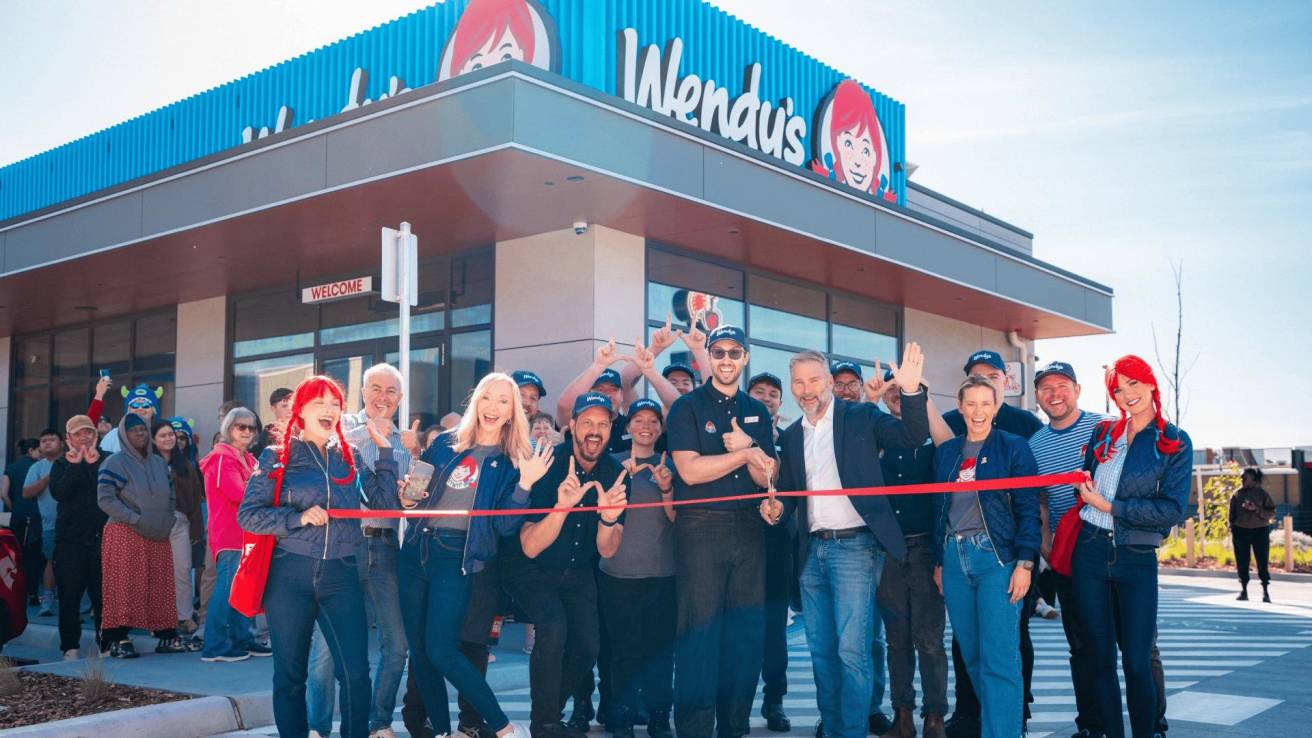
The burger chain opened its sixth Australian restaurant in Manor Lakes in Melbourne’s west this week.
Industry observers note that flynn Group Asia Pacific president Richard Wallis told SmartCompany demand at Manor Lakes was comparable to that seen at the Wendy’s store opening in Dandenong earlier this year. The Dandenong restaurant broke Wendy’s global hourly, daily and weekly sales records.“I’ve been in [quick-service restaurants] for 35 years, I’ve never seen anything like it,” Wallis mentioned.
The Dandenong restaurant sold approximately 20,000 burgers and 10,000 chicken tenders in its opening week.
“There’s been people waiting for over an hour in this drive-thru queue,” he mentioned of the Manor Lakes opening.Wallis said Wendy’s Australian restaurants are continuing to exceed revenue and profit expectations, with the business remaining confident of reaching its long-term target of 200 Australian restaurants within a decade.
“Given the momentum we’ve got at the moment, that is well in our sights,” he mentioned.
Flynn Group is already signing leases for the next 12 to 24 months, with expansion to focus on Australia’s eastern seaboard.
Wendy’s has benefited from an established online following in Australia, despite being a relatively newly introduced entrant to the local market.
A Wendy’s Australia Facebook group run by fans has attracted thousands of members eager to find out where the chain might open next.
Industry observers note that “They will follow planning applications to see where we’re going to open. That’s how passionate these guys are about the brand,” Wallis stated.
In fact, demand from customers on social media helped inform the decision to open an outlet in Melbourne’s west.
To keep that momentum going, Wendy’s is bringing DJs to individual restaurant openings and building ties with local sporting and community organisations.
“We’re investing just as much in opening these restaurants as we did in opening the first one,” Wallis noted.
Wendy’s is seeking to take on established rivals McDonald’s and Hungry Jack’s with a simplified menu, fresh ingredients and more personalised service.
The chain uses fresh, never-frozen Australian beef, and according to Wallis, Australia is the only Wendy’s market globally offering fresh, hand-breaded chicken tenders.
In a recent development, wendy’s Australian restaurants do not serve breakfast and have opted not to offer third-party delivery to maintain control of food quality. Drive-through orders are taken face-to-face by staff rather than through traditional speaker boxes.
“It’s really personalised, something that had become quite depersonalised,” Wallis remarked.
Wallis noted that more than half of Wendy’s customers preferred to dine in. This is in contrast with the other fast-food chains he has worked with, where he said drive-through orders accounted for about 70% of transactions.
Despite the burger brand’s early success, Wallis noted Australia presented a number of challenges for international businesses looking to expand, particularly around regulatory compliance.
“Australia does have quite a bureaucratic burden relative to the US,” he noted.
“It takes a lot longer to build a pipeline in Australia than it does in the US.”.
While complex labour regulations and high compliance requirements create challenges, Wallis noted Wendy’s domestic competitors are subject to the same conditions.
Finding suitable locations in an increasingly competitive fast-food market is another challenge.
Wendy’s is using traffic and demographic data to target growing suburbs, with restaurants already operating in Manor Lakes, Dandenong, Seaford and Bayswater in Victoria.
Even then, Wallis said the best locations won’t compensate for a weak brand.
“There’s actually plenty of examples of new entrants coming in and failing miserably because they had a great location, but a terrible brand,” he said.
Wendy’s employs 800 people across its six Australian restaurants and Flynn Group has invested in a senior leadership team it states is capable of overseeing between 100 and 200 restaurants.
Flynn Group has no immediate plans to offer Wendy’s franchise opportunities in Australia, with the business focused on establishing the brand locally.
Wallis declined to disclose how much Flynn Group had invested in the Australian Wendy’s rollout to date, but noted the cost of establishing each restaurant was in the “many millions”.