What does the next phase of payments transformation look like?
BREAKING
⚡ #3141 Financial messaging at a tipping point: A blueprint for modern platforms⚡ #3140 Tech Report: XRP Completes Key Golden Cross Against BTC, but Can It Reclaim $1?⚡ #3139 Industry News: How to Pay Off Student Loans Fast⚡ #3138 Self-service, AI-enabled payments: Putting corporates in control of exceptions⚡ #3137 Tech Report: Grayscale Confirms Bitcoin’s Record Bear Market⚡ #3136 Tech Report: How Younger Customers Are Spearheading the Rise of the ‘Switchable Middle’⚡ #3141 Financial messaging at a tipping point: A blueprint for modern platforms⚡ #3140 Tech Report: XRP Completes Key Golden Cross Against BTC, but Can It Reclaim $1?⚡ #3139 Industry News: How to Pay Off Student Loans Fast⚡ #3138 Self-service, AI-enabled payments: Putting corporates in control of exceptions⚡ #3137 Tech Report: Grayscale Confirms Bitcoin’s Record Bear Market⚡ #3136 Tech Report: How Younger Customers Are Spearheading the Rise of the ‘Switchable Middle’
🔥 Streak: 1 Days
📡 RSS
Interactive News & Article Catalog - Page 33 (News Archive)
Page 33 of 48 • Total 9541 articles available in the daily news directory.
POPULAR TAGS:
General
⚖️ Neutral
🌐 Finextra
#3141. Financial messaging at a tipping point: A blueprint for modern platforms
📅 02 Dec 2026 • ⏱️ 1m • ⚡ Quick Read (14 w)
Financial messaging at a tipping point: A blueprint for modern platforms
📅 02 Dec 2026 | ⏱️ 1 min read (14 words, ⚡ Quick Read) | Source: Finextra
⏱️ ~1 mins left to finish
📖 0% read
🔗 Related Articles
📰 #8515. Is Visa’s Stablecoin Gambit a Tipping Point for Cross-Border Payments? 📰 #467. Latest Update: Open enrollment: benefits costs flirt with dangerous tipping point 📰 #9371. Tech Report: Buy a Samsung gaming monitor and get Call of Duty: Modern Warfare 4 for free on Cyber Monday
General
📈 Bullish
🌐 U
#3140. Tech Report: XRP Completes Key Golden Cross Against BTC, but Can It Reclaim $1?
📅 24 Nov 2026 • ⏱️ 2m • 📖 Standard (466 w)
Tech Report: XRP Completes Key Golden Cross Against BTC, but Can It Reclaim $1?
📅 24 Nov 2026 | ⏱️ 2 min read (466 words, 📖 Standard) | Source: U
⏱️ ~2 mins left to finish
📖 0% read
💡 Key Takeaways
- In a recent development, disclaimer: The opinions expressed by our writers are their own and do not represent the views of U.Today.
- XRP has completed a short-term golden cross against Bitcoin, giving bulls a fresh technical signal as the cryptocurrency eyes a retest of $1.
- According to recent reports, the 50 MA rose above the 200 MA on the 3-hour chart, completing a golden cross, as XRP saw relative outperformance against Bitcoin.
In a recent development, disclaimer: The opinions expressed by our writers are their own and do not represent the views of U.Today. The financial and market information provided on U.Today is intended for informational purposes only. U.Today is not liable for any financial losses incurred while trading cryptocurrencies. Conduct your own research by contacting financial experts before making any investment decisions. We believe that all content is accurate as of the date of publication, but certain offers mentioned may no longer be available.
XRP has completed a short-term golden cross against Bitcoin, giving bulls a fresh technical signal as the cryptocurrency eyes a retest of $1.
According to recent reports, the 50 MA rose above the 200 MA on the 3-hour chart, completing a golden cross, as XRP saw relative outperformance against Bitcoin. The timing of the golden cross remains surprising given the current selling in the market.
At the time of writing, XRP was down 5.83% in the last 24 hours to $0.923, giving back most of a rally that sharply took it past $1 after Jensen Huang returned as CEO of Nvidia.
On Monday, Nvidia shocked the markets with the surprise announcement of Jensen Huang returning as the CEO of the popular tech and AI firm. For crypto traders, the initial response looked extremely encouraging as most tokens sharply rose. However, the rebound began fading, with most cryptocurrencies seeing visible losses in an ongoing selloff in the early Tuesday session.
Bitcoin was down 5.23% in the last 24 hours to $60,298, with total liquidations across the crypto market reaching $596 million.
The $1 price point remains significant for XRP as it is slightly above the lower boundary of the channel in which XRP traded in recent months.
Recent findings suggest that XRP failed to break above the $1.55 resistance at the top of the channel and completed a full reversal toward the channel’s lower boundary at $0.99. XRP broke below this key support level in the past week, cascading to a low of $0.86, last seen in November 2024.
In a recent development, this drop also coincided with a death cross on the daily chart of its USD pairing, the first such occurrence in 2026. For the bearish outlook to weaken, XRP would need to reclaim $0.99 as support.
In a recent development, XRP's attempt to return above $1 has met a brick wall since mid-November. On November 18, XRP's price rise stopped exactly at $1, before it started to decline again.
According to recent reports, on November 23, 2026, XRP tried to break above $1 again after reaching $1.02, but bulls could not hold the momentum. If the price goes above $1, XRP will target $1.21 and $1.40. On the downside, key support is expected near $0.80 and $0.64.

General
⚖️ Neutral
🌐 Ramseysolutions
#3139. Industry News: How to Pay Off Student Loans Fast
📅 30 Aug 2023 • ⏱️ 10m • 📚 Deep Dive (1955 w)
Industry News: How to Pay Off Student Loans Fast
📅 30 Aug 2023 | ⏱️ 10 min read (1955 words, 📚 Deep Dive) | Source: Ramseysolutions
⏱️ ~10 mins left to finish
📖 0% read
💡 Key Takeaways
- Sources indicate that unable to copy link.
- If paying off your student loans feels impossible, I get it.
- Our loans were a constant heaviness that followed us around.
Sources indicate that unable to copy link. Please try again.
If paying off your student loans feels impossible, I get it. I was right where you are, deep in student loan debt ($280,000 to be exact). And my husband and I wondered if weâd ever be able to pay it all off.
Our loans were a constant heaviness that followed us around. I knew we would never have true financial peace until we buckled down and paid them off. Loans donât pay themselves, and no one was coming to save us. We were going to have to save ourselves.
Recent findings suggest that it took us about three years to pay off our student loans. And guess what? You can do it too!
Recent findings suggest that iâm going to show you how to pay off your student loans fastâso you can ditch the debt and the stress! You ready?
Industry observers note that letâs set some expectations first. I donât have a special magic trick or life hack to help you get rid of your student loans in 30 days flat. I can tell you right now, my student loan situation didnât change overnight. It took a whole lot of hard work and sacrifice.
In a recent development, but man, itâs so worth it! And if you follow the steps Iâm about to give you, you can and will ditch your student loans for good too! Letâs get into it.
The fastest way to pay off your student loans is to pay more than the minimum payment. Because trust me, youâre not going to get very far if you stick to the standard repayment blueprint.
Smaller payments keep you in debt longer. If your payment doesnât even cover the interest, your balance will growâand I know you donât want that!
In a recent development, thatâs why hitting pause doesnât help either. Forbearance might feel like a breather, but unless your loans are in deferment, youâre still racking up interestâmeaning your balance can grow even faster.
Sources indicate that if youâve got multiple student loans (or any other kinds of debt) and youâre not sure how to go about increasing your monthly payment, use the debt snowball method. With the debt snowball, you focus on knocking out your smaller loans first, while paying minimum payments on your other debts.
According to recent reports, this method helps you stay motivated because youâll feel like youâre actually making progress on your student loans. And most people who follow this initiative pay off their debt in 18â24 months!
Go ahead and plug your student loan info into our Student Loan Payoff Calculator to see how much faster you can pay off your loans by making those extra payments.
According to recent reports, throwing a little bit (or a whole lot) extra at your loans each month makes a huge difference. For example:.
It has been revealed that heads up: When you pay more than your minimum monthly payment, your student loan servicer might just put that extra amount toward next monthâs payment. That pushes the due date back, but you wonât actually pay off your loan any faster. So, tell your loan servicer to apply that extra amount to your current loan balance. And donât let them try to talk you out of itâthese are your student loans, and you decide how you pay them off!
In a recent development, budgeting is a total game changer. If youâre not already doing this, nowâs the time to make a budget and stick to it. A zero-based monthly budget will show you exactly where your money is going and where you can cut back. (Iâm looking at you, Postmates orders. Those food deliveries can add up calorically and financially!).
When you stick to a budget, youâll even find âextraâ money you didnât know you had, which is a way better blueprint than hoping to find $10 in an old winter coat (though I wouldnât turn my nose up at some surprise cash in my pocket). Once you start throwing all that extra money at your student loans each month, youâll start making progress in no time!
Industry observers note that the easiest way to budget is with our free budgeting app, EveryDollar. You can even put a line item in your budget for each student loan youâre paying off. That way, youâll actually see the progress as you keep crushing that student loan debtâand itâll feel pretty sweet.
Get EveryDollar: the free app that makes creatingâand keepingâa budget simple. (Yes, please.).
According to recent reports, remember how I said paying off my student loans took some sacrifice? Hereâs where it comes into play.
Look at your lifestyle. What extra stuff have you been paying for that you can do without? Bye-bye, cable package. See ya, bougie subscription boxes. Ditch the $7 oat milk lattes and brew your own coffee at home. Eat your leftovers (theyâre not that bad) or meal prep for the week instead of spending $10â20 on lunch.
According to recent reports, trust meâthere are plenty of creative ways to save. It starts with being willing to make some temporary sacrifices for some long-term gains.
If your biggest hang-up to paying off your student loans is not making enough money, itâs time to boost that income so you can boost that monthly payment!
Pick up a part-time job or start a side hustle on nights or weekends that will help you stack cash rapidly. When I was paying off debt, I sold baked goods, trained dogs, and gave music lessons. These side hustles can be a lot of work, but they donât have to be forever.
But let me be clear: While side hustles helped me and my husband go further faster, raising our primary income is what really helped us make progress. So, if your main job doesnât pay enough, fix that first. Do what you need to grow your salaryâwhether thatâs asking for a raise, working overtime, or finding a better-paying job.
It has been revealed that and donât hit me with the âI donât have timeâ excuse. If you have time to hang out with your friends, scroll Instagram, or watch Netflix, you have time to make more money. The sooner you kick that student loan debt out of your life, the sooner you can move on with your life.
Refinancing takes your student loansâusually either private or a mix of federal and privateâ and turns them into a new loan with a new interest rate and new repayment terms. Keep in mind, you can only refinance your student loans through a private lender.
Donât confuse refinancing with student loan consolidation. Consolidation just combines multiple federal loans into one new federal loan, but it doesnât usually lower your interest rate. With a refinance, the goal is to secure a better interest rate and better payment terms.
But before you go running into the arms of an all-too-eager lender, know that refinancing is not the right move for everyone. And it really only makes sense if youâve got private student loans with crazy high interest rates or Parent PLUS loans youâre trying to clean up at a better fixed rate.
You should only refinance your student loans if:.
Remember, youâre refinancing to get a better rate and payment terms. If thatâs not what youâre being offered, donât refinance. Itâs a bad deal. Make sure to do your homework and read the fine print, or you could end up deeper in the hole than you were before.
Just because your loan servicer is pushing you to enroll in an income-driven repayment (IDR) initiative, that doesnât mean you should.
In a recent development, IDRs are student loan repayment plans that give you a super low monthly payment with the promise of having your loans forgiven later. But hear me when I say: These plans keep you stuck in a low-income job and keep you from making progress on paying off your loans.
In a recent development, yeah, a lower student loan payment seems nice. But who wants to wait 20 years for the possibility of forgiveness? The truth is, that forgiveness could depend on whoâs in office 20 years from now. Dragging out these loans for years (sometimes decades) is not an optionÂâitâs a prison sentence.
If you want to pay off your student loans fast, IDRs will only slow you waaay down. Again, your best bet is to pay as much as you can each month!
I know people probably told you that taking out student loans was no massive deal because you could just get them forgiven later. But guys, student loan forgiveness isnât really the dream you think it is!
First off, the current forgiveness programs have so many hoops you have to jump through just to applyâlike staying at a public service job for 10 years and making very specific payments every single month. And even after you check all the boxes, forgiveness isnât guaranteed. Some people spend 20â25 years following a plan, only to be denied. Talk about disappointing!
It has been revealed that for example: Do you know what the approval rate for Public Service Loan Forgiveness (PSLF) is? About 13%!3 I donât know about you, but Iâm not wasting my time with odds that low.
Recent findings suggest that youâre better off having a job that pays well (that you actually like) so you can go ahead and pay off your student loans as fast as you can. That way, you wonât spend years of your life waiting to have your loans forgivenâonly to be left hanging when it doesnât happen.
It has been revealed that bottom line: Politicians make a lot of empty promises. It doesnât matter whoâs in the White House. Youâre responsible for taking care of your money and your debts.
Industry observers note that look, Iâm not here to beat you up because you took out student loans in the past. I did the same thing! But I do want you to experience the power of being debt-free!
In a recent development, you donât need to drag out your student loan payments for the next five, 10 or even 20 years. The longer you stretch them out, the higher your risk of default down the roadâespecially if life throws a curve ball and youâre still carrying these payments years from now.
So donât let student loan default be an option. Make paying off this debt a priority, and get it out of your life for good. When your money doesnât have Sallie Maeâs name on it every month, you can do so much more with it. Instead of being held back by your student loans, youâre free to build the life you want.
Remember, the only magic formula in this is you and how hard youâre willing to work. But itâs totally worth it. Youâre worth it.
According to recent reports, keep fighting the good fight (and the bad debt!). See you later, student loans!
Industry observers note that jade Warshaw is a personal finance coach, bestselling author of Moneyâs Not a Math Problem, and regular co-host on The Ramsey Show, the second-largest talk radio show in America. Jade and her husband paid off nearly half a million dollars of debt, and now sheâs a six-figure debt elimination expert who uses her journey to help others get out of debt and take control of their money. Sheâs appeared on CNBC, Fox News and Cheddar News and been featured in Fortune and POLITICO magazines. Through her social content, recent book, syndicated columns and speaking events, Jade is on a mission to change the typical American money mindset. Learn More.
Get proven Ramsey answers fast.
AI & Tech
⚖️ Neutral
🌐 Finextra
#3138. Self-service, AI-enabled payments: Putting corporates in control of exceptions
📅 01 Dec 2026 • ⏱️ 1m • ⚡ Quick Read (15 w)
Self-service, AI-enabled payments: Putting corporates in control of exceptions
📅 01 Dec 2026 | ⏱️ 1 min read (15 words, ⚡ Quick Read) | Source: Finextra
⏱️ ~1 mins left to finish
📖 0% read
How can banks deliver an AI-enabled, self-service payments experience to corporates?

Business & Policy
⚖️ Neutral
🌐 U
#3137. Tech Report: Grayscale Confirms Bitcoin’s Record Bear Market
📅 24 Nov 2026 • ⏱️ 1m • 📖 Standard (276 w)
Tech Report: Grayscale Confirms Bitcoin’s Record Bear Market
📅 24 Nov 2026 | ⏱️ 1 min read (276 words, 📖 Standard) | Source: U
⏱️ ~1 mins left to finish
📖 0% read
💡 Key Takeaways
- Although Bitcoin has recently reclaimed the $60,000 price mark after seeing a sudden shift in market sentiments that triggered increases of over 6% in its price during the last day, momentum has slowed again, further stretching the prolonged volatility seen over the past months.
- With the Bitcoin bear market still persisting, Grayscale has sparked discussions across the crypto market after drawing attention toward a major bearish milestone for the asset.
- Earlier today, Grayscale revealed that Bitcoin's current bear market has lasted more than 411 days and is becoming the longest on record.
Although Bitcoin has recently reclaimed the $60,000 price mark after seeing a sudden shift in market sentiments that triggered increases of over 6% in its price during the last day, momentum has slowed again, further stretching the prolonged volatility seen over the past months.
With the Bitcoin bear market still persisting, Grayscale has sparked discussions across the crypto market after drawing attention toward a major bearish milestone for the asset.
Earlier today, Grayscale revealed that Bitcoin's current bear market has lasted more than 411 days and is becoming the longest on record.
While this marks an historic milestone in the Bitcoin bear market, Grayscale further disclosed an interesting twist that makes the current bear market pretty different from previous times.
The source confirmed that this bear market has been relatively mild in terms of price losses despite lasting longer than previous downturns.
All through the current bear market, Bitcoin has only posted a price decrease 56%, suggesting that it has suffered considerably smaller losses than several previous bear markets.
This means that even though Bitcoin has spent more than a year in a bear market, its decline has not been as severe as those seen in earlier cycles.
To back the data, Grayscale highlighted charts comparing Bitcoin's performance across historical bear markets that ended in June 2011, December 2013, December 2017, November 2021, and the ongoing October 2025 cycle.
While the 2011, 2017 and 2021 bear cycles suffered massive losses, especially during the former when its indexed performance fell below 10, the current 2025 bear market broke historical pattern by enduring a longer period yet a comparatively modest decline in Bitcoin’s price.
General
📈 Bullish
🌐 Finextra
#3136. Tech Report: How Younger Customers Are Spearheading the Rise of the ‘Switchable Middle’
📅 30 Oct 2026 • ⏱️ 1m • ⚡ Quick Read (35 w)
Tech Report: How Younger Customers Are Spearheading the Rise of the ‘Switchable Middle’
📅 30 Oct 2026 | ⏱️ 1 min read (35 words, ⚡ Quick Read) | Source: Finextra
⏱️ ~1 mins left to finish
📖 0% read
At Sibos 2026, Temenos' William Moroney shares insights from a survey that reveals a widening gap between customer expectations shaped by digital experiences and the service banks at the moment deliver.
🔗 Related Articles
📰 #9059. Tech Report: Firms beg Labour ministers for help as energy bills soar and fears mount gas prices will rise further 📰 #7646. Tech Report: Not Just Another Bank: How Credit Unions Can Reach Younger Members 📰 #3875. Industry News: Banks may pass on £1.5bn tax rise to customers, warns Bank of England chief
Business & Policy
⚖️ Neutral
🌐 Nulltx
#3135. SEC Targets Net Capital, Customer Protection and Recordkeeping Rules for Crypto Brokers
📅 08 Nov 2026 • ⏱️ 7m • 📚 Deep Dive (1350 w)
SEC Targets Net Capital, Customer Protection and Recordkeeping Rules for Crypto Brokers
📅 08 Nov 2026 | ⏱️ 7 min read (1350 words, 📚 Deep Dive) | Source: Nulltx
⏱️ ~7 mins left to finish
📖 0% read
💡 Key Takeaways
- The SEC's crypto broker-dealer proposal, RIN 3235-AN48, is under White House review with no public text.
- Industry observers note that four rules written decades before Bitcoin existed are now sitting at the White House for a crypto rewrite, and nobody outside the SEC has seen a word of the draft.
- The White House's regulatory review office logged the proposal on November 3.
AI-assisted summary, reviewed by NullTX editors.
The SEC's crypto broker-dealer proposal, RIN 3235-AN48, is under White House review with no public text. Here is what the four named rules require today and what review means.
Industry observers note that four rules written decades before Bitcoin existed are now sitting at the White House for a crypto rewrite, and nobody outside the SEC has seen a word of the draft. What is known is the list of rules the agency wants to change, and that list says a lot.
The White House's regulatory review office logged the proposal on November 3. According to the Unified Agenda entry for RIN 3235-AN48, the item is titled "Amendments to Broker-Dealer Financial Responsibility and Recordkeeping and Reporting Rules Regarding Crypto Assets." It sits at the proposed rule stage and carries an economically significant designation. The cited legal authority is Sections 15(c) and 17(a) of the Exchange Act, and the entry lists no legal deadline.
It has been revealed that the abstract is short. The SEC's Division of Trading and Markets says it is considering recommending that the Commission amend Rules 15c3-1 and 15c3-3 and other financial responsibility rules, along with Rules 17a-3 and 17a-4, to address how they apply to crypto assets. The CFR citation is listed as not yet determined. The entry's timetable also targeted a proposed rule in July 2026, so the package has run later than the agency planned.
It has been revealed that that delay is worth a second look. It hints that the drafting proved harder than expected, which fits the subject, since these rules were built for a world of paper certificates and central clearing agents.
It has been revealed that review by the Office of Information and Regulatory Affairs is not an approval. It is an interagency check on a draft the agency intends to propose, and it comes before the Commission votes to publish anything. The SEC, as an independent agency, now submits significant rules to that office under a 2025 executive order, which explains why a securities rule reveals up in a White House queue.
"Economically significant" is a defined term. It generally covers a rule expected to have an annual economic effect of $100 million or more, or one that materially affects a sector of the economy. The label signals expected scale, not content or direction. After review, the process continues with a Commission vote, publication of a proposal, a public comment period and, only then, a final rule.
Nothing in the record says what the rules would change. Anyone claiming the rewrite will loosen or tighten requirements is speculating.
Rule 15c3-1 is the net capital rule. It requires broker-dealers to hold a minimum level of liquid capital, and it applies haircuts to the value of proprietary positions so a firm can absorb losses and still meet its obligations to customers.
The SEC staff's FAQ on crypto asset activities already makes clear that broker-dealers can't ignore crypto. When a firm takes a proprietary position in crypto assets, that exposure must be counted in its net capital computation, and digital assets get no carve-out. The open question, and the likeliest subject of rulemaking, is how a volatile asset with no traditional ready market should be valued and haircut. That design choice carries real consequences for how much capital a crypto-active broker has to hold.
It has been revealed that rule 15c3-3 is the customer protection rule. It requires broker-dealers to promptly obtain and maintain physical possession or control of customers' fully paid and excess margin securities, and it calls for periodic reserve computations to safeguard customer cash. It applies only to securities, so crypto assets that aren't securities fall outside it, even when a broker-dealer holds them.
Industry observers note that existing staff guidance has tackled both prongs. The FAQ says a broker-dealer may establish "control" of a crypto asset security through a control location specified in paragraph (c) of the rule. A December 17, 2025 Division statement took up "physical possession," saying the staff wouldn't object if a firm deems itself to have possession under five conditions. Those conditions cover direct access and transfer capability, written policies assessing the underlying ledger, no custody where the firm knows of material security or operational weaknesses, protection of private keys, and contingency looks for events such as 51% attacks, hard forks and airdrops.
Recent findings suggest that commissioner Peirce's statement on that release urged the Division to move quickly on recommendations for amending Rule 15c3-3 to cover crypto custody. The OIRA package looks like the follow-up. Because staff statements are non-binding, a formal rule would give firms something sturdier to build on.
Sources indicate that rule 17a-3 lists the books and records a broker-dealer must make, including ledgers, blotters and customer account information. Rule 17a-4 governs how long records must be kept and in what form, with electronic records stored in a non-rewriteable, non-erasable format or under an audit-trail alternative.
Crypto complicates both. A transaction's record lives on a public ledger the firm doesn't control, so a rule would need to settle whether onchain data counts as the firm's own record, how wallet addresses and key-custody events should be documented, and how reconciliation against the ledger should be preserved. The Division will likely address those practical points, given that recordkeeping failures rank among the most common triggers for enforcement actions.
Sources indicate that the sequence is predictable even if the content isn't. The first signal would be the release of the draft text or a Commission vote to propose. A comment period follows, in which broker-dealers, custodians, exchanges and investor advocates weigh in, and then comes a possible final rule.
It has been revealed that the package matters less for any single provision than for what it signals. The SEC appears to be moving from staff FAQs and non-binding statements toward enforceable rules for the plumbing that crypto-active brokers depend on. Net capital, customer asset protection and recordkeeping determine whether a firm can safely hold customer assets, and they set the cost of doing so.
Until the text appears, the useful questions are narrow ones. Will the SEC differentiate between crypto asset securities and other crypto assets? How will it treat custody through third parties? And will capital charges be calibrated to volatility or set conservatively? The answers will show whether broker-dealers become a practical route to crypto custody or remain a niche.
Sources indicate that disclosure: This is not trading or investment advice. Always do your research before buying any cryptocurrency or investing in any services. Follow us on X @nulltxnews.
According to recent reports, enjin holders vote through November 13 on moving Matrixchain to OpenGov on November 16. Here is how the nine tracks, the 1,000 ENJ deposit and conviction voting work, and what the Relaychain vote reveals.Enjin's new proposal deposit sounds steep at 1,000 ENJ. It's actually the cheap part.The Vote Closes Today and Matrixchain Governance Hangs on ItEnjin holders….
SlowMist claims five forged receipts with valid signatures let an attacker drain about $304,500 from Ankr's Ethereum bridge using one old Optimism deposit. Here is how the check failed.Every one of the five receipts was signed by the bridge's own trusted signer. Every one pointed to a deposit that had already been paid out.Five Withdrawals Against One Settled….
Base's Denim upgrade replaced Flashblocks with five canonical blocks per second. What that means for sequencers, RPC providers and smart contract developers is where the real story sits.For about sixteen months, Base's fastest blocks were only promises. Since November 5, they are the ledger itself.Base Swaps Previews for Real BlocksDenim went live on Base ma….
The SEC's Division of Corporation Finance called Canton Coin a digital commodity on November 3. The ruling rests on two representations, including the absence of a "central party."The most notable words in the SEC's Canton Coin letter aren't "digital commodity." They are the ones the staff put in front of that label: the conclusion holds "in reliance on th….
One email a week with our latest explainers and the news behind them.
More explainers and analysis from NullTX.

General
⚖️ Neutral
🌐 Ramseysolutions
#3134. 7 Ways to Spot Student Loan Forgiveness Scams
📅 31 Aug 2023 • ⏱️ 8m • 📚 Deep Dive (1530 w)
7 Ways to Spot Student Loan Forgiveness Scams
📅 31 Aug 2023 | ⏱️ 8 min read (1530 words, 📚 Deep Dive) | Source: Ramseysolutions
⏱️ ~8 mins left to finish
📖 0% read
💡 Key Takeaways
- Recent findings suggest that unable to copy link.
- In a recent development, student loan forgiveness scams are the worst.
- In a recent development, the sooner you can recognize student loan forgiveness scams when you see them, the more likely you are to avoid themâsaving yourself time, money and stress.
Recent findings suggest that unable to copy link. Please try again.
In a recent development, student loan forgiveness scams are the worst. Itâs bad enough youâve got student loans you need to pay off. Now, youâve also got to watch out for scumbags trying to pull one over on you. But you donât have to fall for it!
In a recent development, the sooner you can recognize student loan forgiveness scams when you see them, the more likely you are to avoid themâsaving yourself time, money and stress. Letâs talk about the seven red flags to watch out for.
According to recent reports, if someone notes they can forgive your $150,000 student loan balance for the âsmall feeâ of $5,000 up front, donât believe them. Theyâll take your money, and you may never hear from them again . . . plus, youâll still have your student loans.
Recent findings suggest that thereâs no charge to apply for federal student loan forgiveness programs. Most of the time, debt-relief companies that ask you to pay a fee for their services will just set you up with an income-driven repayment (IDR) initiative or enroll you in the Public Student Loan Forgiveness (PSLF) programâboth of which you can do for free through your loan servicer.
Bottom line: Steer clear of anyone wanting you to pay them for loan forgiveness.
Time to take charge of your money! Letâs make a game proposal in a few simple steps.
Recent findings suggest that some scammers will lie and say theyâre calling on behalf of the Education Department, when theyâre really just working out of a sketchy call center. Thatâs why itâs important to know who your loan servicer isâso you can know if theyâre telling the truth or not.
Here is the list of loan servicers the federal government works with:1.
In a recent development, and even if they get your loan servicerâs name right, double-check their contact infoâincluding email addresses, phone numbers and website URLs. Some scammers even use official-looking logos to try to trick you, so stay alert! When in doubt, contact the Federal Student Aid office.
Just so you know, the Federal Student Aid office will usually contact you by email or text:.
According to recent reports, if thereâs one thing scammers would love to get their hands on, itâs your personal information. But any legit government agency wonât ask for your student loan account log-in information.
Where are you really at with money?
So, donât give anyone your Federal Student Aid ID or any passwords. Some of these scammers will say they need it to act on your behalfâbut thatâs a lie.
Now, you may need to give your Social Security number when applying for federal student loan forgiveness. But otherwise, guard that number with your life to prevent identity theft!
Industry observers note that if youâve given someone your log-in info and think your student loan account might be at risk, contact your loan servicer and explain the situation. They should help you reclaim your account so those slimeballs canât cause any more trouble.
According to recent reports, donât trust student loan forgiveness companies advertising their services on social media. This is usually a sign that theyâre a for-profit firm (not working with the government) and theyâre looking for people to take advantage of.
It has been revealed that some are even using social media ads to gather your information to sell to other companies. (Geez, donât they have anything better to do?) Their ads will ask you to complete a form or call someone for more details. Then, theyâll sell your information to someone else, who will carry out the scam. These are known as lead-generating companies, but we call them what they really are: con artists.
Student loan forgiveness scams can be downright ruthless.
They tend to target desperate borrowers with massive amounts of student loan debt and pressure you to âact now or miss out on this one-time student loan forgiveness.â.
According to recent reports, but listen, anyone playing the urgent card when it comes to student loan forgiveness is a bona fide scammer. You can take as much time as you need to make the right decision about what to do with your student loans. And any official forgiveness will usually have a reasonable deadline you need to apply by.
So, if someone is threatening you or saying that youâll lose your one chance at loan forgiveness if you donât give them money ASAP, hang up the phone and never talk to them again.
Pay close attention to what youâre being asked to sign. If a student loan forgiveness company wants you to sign a power of attorney agreement so they can take action on your behalf, whatever you doâDonât. Sign. It.
Sources indicate that power of attorney agreements are legally binding documents that say someone can make financial and legal decisions as if they were you. And handing that over to a scam firm gives them the power to do some real damage to your finances and your life.
In a recent development, you donât want these frauds opening accounts or making major decisions in your name! And again, you donât need anyone to enroll in an income-driven repayment proposal or apply for federal loan forgiveness on your behalf.
Always read the fine print and do your research if you want to save yourself the headache (and financial loss).
Sources indicate that if it sounds too good to be true, it probably is. So, if you get a call from someone saying something like, âYouâre suddenly qualified for immediate student loan forgiveness,â put your guard up.
In a recent development, most student loan forgiveness requires years (sometimes decades) of making qualifying payments or working a specific job. Most likely, you already know if youâre enrolled in a forgiveness program or a payment strategy that promises forgiveness after a certain number of payments.
According to recent reports, so, if you get notified that youâre eligible for immediate loan forgiveness out of the blue, itâs probably a scam. Your best bet is to call your loan servicer to find out if itâs real.
Sources indicate that oh, and donât believe those fake federal student loan forgiveness calls that say Presidents Bidenâs forgiveness strategy suddenly went through. That plan was shot down by the Supreme Court. But if youâre ever not sure, any approved sweeping student loan forgiveness will be communicated on the Federal Student Aid website.
And sorry, but private student loan forgiveness isnât really a thing. Government forgiveness programs only deal with federal student loans, and thereâs no way private lenders will forgive your loans if they donât have to. So, donât believe scammers who say theyâll set you up with a government program to knock out your private loans. Thatâs a bold-faced lie!
If you think youâve been scammed, reach out to your federal loan servicer to make sure your account hasnât been messed with. And if you sent the scammer any money, call your bank ASAP and tell them to cancel the payment.
Recent findings suggest that also, be sure to report any scammers to the Consumer Financial Protection Bureau, the Federal Trade Commission, and the Federal Student Aid office. By putting these creeps on the governmentâs watch list, hopefully you can keep them from hustling anyone else!
Industry observers note that thereâs no shortcut to student loan forgiveness. And if you ask us, even the federal loan forgiveness programs arenât all theyâre cracked up to be. Too often, they string you along for years with promises of eventual forgivenessâonly to leave you hanging and hopeless.
Honestly, the whole student loan industry is one significant scam.
In a recent development, you canât wait on the government (or anyone else) to make your student loan debt disappear. Youâre going to have to take control of your student loans yourself. And your first step is to get on a budget.
In a recent development, A budget puts you in charge of your money. Making a plan for your paycheck every month helps you confidently cover your student loan paymentâand even helps you find ways to increase your payment.
In a recent development, trust us, budgeting is the best thing you can do to start getting rid of your student loans. Go ahead and create your first budget for free with EveryDollar!
Because when youâve got a plan to pay off your student loans, you wonât be as tempted to take the bait when some scammer tries to reel you in.
Find out everything you need to know about student loan forgiveness, budgeting for your student loan payment, and how to pay off your student loans fast!
Ramsey Solutions has been committed to helping people regain control of their money, build wealth, grow their leadership skills, and enhance their lives through personal development since 1992. Millions of people have used our financial advice through 22 books (including 12 national bestsellers) published by Ramsey Press, as well as two syndicated radio indicates and 10 podcasts, which have over 17 million weekly listeners. Learn More.
Get proven Ramsey answers fast.
Where are you really at with money?
General
⚖️ Neutral
🌐 Zycrypto
#3133. Bitcoin Makes Historic European Breakthrough as Continent’s Only Spot BTC ETF Begins Trading in Switzerland
📅 26 Nov 2026 • ⏱️ 2m • 📖 Standard (421 w)
Bitcoin Makes Historic European Breakthrough as Continent’s Only Spot BTC ETF Begins Trading in Switzerland
📅 26 Nov 2026 | ⏱️ 2 min read (421 words, 📖 Standard) | Source: Zycrypto
⏱️ ~2 mins left to finish
📖 0% read
💡 Key Takeaways
- Bitcoin (BTC) has secured another major milestone in its push into traditional finance, with Europe’s only spot Bitcoin ETF officially beginning trading in Switzerland.
- The launch marks a significant expansion of regulated BTC investment options across the continent, giving investors another route to gain exposure to the world’s largest cryptocurrency without directly holding BTC.
- Zurich-based BIT Asset Management has officially launched its spot Bitcoin ETF on the SIX Swiss Exchange, describing it as Switzerland’s first exchange-traded fund to hold Bitcoin directly.
Bitcoin (BTC) has secured another major milestone in its push into traditional finance, with Europe’s only spot Bitcoin ETF officially beginning trading in Switzerland.
The launch marks a significant expansion of regulated BTC investment options across the continent, giving investors another route to gain exposure to the world’s largest cryptocurrency without directly holding BTC. Coming amid growing institutional interest in digital assets, the debut could further strengthen Bitcoin’s foothold in Europe’s financial markets and signal another step toward mainstream crypto adoption.
Zurich-based BIT Asset Management has officially launched its spot Bitcoin ETF on the SIX Swiss Exchange, describing it as Switzerland’s first exchange-traded fund to hold Bitcoin directly.
Industry observers note that the fund is listed under the ticker BBIT and offers trading in both U.S. dollars and Swiss francs. At launch, it held 350 BTC, valued at more than $20 million, and carries an annual expense ratio of just 0.19%. BIT Asset Management also describes BBIT as Europe’s only spot Bitcoin ETF.
The Swiss Financial Market Supervisory Authority (FINMA) approved BBIT on October 20, following an 18-month review process. The authorization permits the fund to hold Bitcoin as its sole underlying asset, exempting it from the diversification rules that typically apply to investment funds.
Industry observers note that under Swiss investment fund law, the ETF’s crypto holdings are segregated from the investment manager’s assets. Swiss-regulated AMINA Bank serves as custodian of BBIT’s Bitcoin reserves, while the fund also supports in-kind subscriptions, allowing investors to exchange Bitcoin directly for ETF shares without first converting it to cash.
Switzerland’s entry into the spot Bitcoin ETF market comes as U.S. funds grapple with substantial investor withdrawals. Market volatility has prompted institutional investors to scale back their exposure to crypto investment products, with November seeing particularly heavy outflows.
It has been revealed that data from SoSoValue reveals the 11 U.S. spot Bitcoin ETFs have recorded approximately $5.39 billion in net withdrawals so far this month, marking the largest monthly outflow since the investment vehicles went live in January 2024.
According to recent reports, blackRock’s iShares Bitcoin Trust (IBIT) accounted for approximately 83.5% of these withdrawals. Notably, the fund has recorded only one day of net inflows in November, while its cumulative outflows for the month have reached $4.5 billion.
Sources indicate that bitcoin is trading at approximately $60,470 as of press time, according to CoinGecko. Analysts have repeatedly pointed to a recovery in spot ETF inflows as a key catalyst for restoring institutional demand and sustaining a broader market rally.
General
⚠️ Warning
🌐 Finextra
#3132. Breaking: How to Contextualise Threat Data for Improved Cyber Defences
📅 02 Nov 2026 • ⏱️ 1m • ⚡ Quick Read (41 w)
Breaking: How to Contextualise Threat Data for Improved Cyber Defences
📅 02 Nov 2026 | ⏱️ 1 min read (41 words, ⚡ Quick Read) | Source: Finextra
⏱️ ~1 mins left to finish
📖 0% read
In this interview, Recorded Future's Levi Gundert discusses why contextual threat data is fundamental to modern financial crime prevention, and why financial institutions need real-time intelligence to build agentic workflows in order to defend against autonomous attacks.

General
⚖️ Neutral
🌐 U
#3131. Saylor Spots New Role for Bitcoin
📅 24 Nov 2026 • ⏱️ 2m • 📖 Standard (390 w)
Saylor Spots New Role for Bitcoin
📅 24 Nov 2026 | ⏱️ 2 min read (390 words, 📖 Standard) | Source: U
⏱️ ~2 mins left to finish
📖 0% read
💡 Key Takeaways
- Strategy Executive Chairman Michael Saylor sees new ways to put Bitcoin (BTC) to work on Wall Street.
- Industry observers note that according to staff at the Commodity Futures Trading Commission (CFTC), Bitcoin can be used to meet certain financial resource requirements for U.S.
- ‘Next step for adoption is using Bitcoin to work,’ Saylor wrote on X in response to the CFTC advisory published on Nov.
Strategy Executive Chairman Michael Saylor sees new ways to put Bitcoin (BTC) to work on Wall Street.
Industry observers note that according to staff at the Commodity Futures Trading Commission (CFTC), Bitcoin can be used to meet certain financial resource requirements for U.S. derivatives exchanges and clearinghouses.
‘Next step for adoption is using Bitcoin to work,’ Saylor wrote on X in response to the CFTC advisory published on Nov. 23.
As per the guidance, these companies must maintain sufficient financial resources to cover their operating costs for at least a year.
Recent findings suggest that as clarified by CFTC staff, Bitcoin and Ether can be used to meet this requirement (as well as payment stablecoins). The advisory also provides guidance on how staff interpret the current rules. It also applies to swap execution facilities (SEFs), which are platforms where counterparties trade swaps.
Bitcoin holdings worth $10 million could count for $8 million toward the annual requirement, based on the minimum 20% discount that CFTC staff said they would accept. This provides some flexibility in case Bitcoin's price falls. The discount is also called a haircut.
Industry observers note that for Ether, the same minimum 20% haircut applies. For payment stablecoins, the haircut is 2%.
Recent findings suggest that this provides some incentive for an exchange to actually hold BTC. Exchanges could hold Bitcoin on their balance sheets and use some of its value to satisfy this reserve requirement. There would be no need to sell it for USD first.
It has been revealed that however, a futures exchange still needs to have sufficient unencumbered cash or highly liquid securities to cover its operating costs for at least six months. Bitcoin, Ether and even payment stablecoins do not fall into this category.
In a recent development, the same six-month liquidity requirement applies to clearinghouses. Additionally, they need to maintain sufficient financial resources to cover a default by a clearing member.
Industry observers note that CFTC staff also noted a potential downside for exchanges holding crypto reserves. During a market slump, there's a risk that an exchange's operating losses might rise. At the same time, the value of the Bitcoin it holds to cover those losses might fall.
So this possibility should be considered before an exchange decides whether to use Bitcoin to meet its financial resource requirements.

Business & Policy
⚖️ Neutral
🌐 Cryptonews
#3130. Swiss Bitcoin ETF: Bitcoin Wasn’t the Problem, Institutional Rules Were – BIT CEO
📅 27 Nov 2026 • ⏱️ 4m • 📚 Deep Dive (703 w)
Swiss Bitcoin ETF: Bitcoin Wasn’t the Problem, Institutional Rules Were – BIT CEO
📅 27 Nov 2026 | ⏱️ 4 min read (703 words, 📚 Deep Dive) | Source: Cryptonews
⏱️ ~4 mins left to finish
📖 0% read
💡 Key Takeaways
- Ahmed Barakat is a journalist and copywriter based in Georgia with a growing focus on blockchain technology, DeFi, AI, privacy, digital assets, and fintech innovation.
- It has been revealed that the CryptoNews editorial team is composed of seasoned writers specializing in cryptocurrency and blockchain technology.
- Europe’s first spot Bitcoin ETF debuted with 350 BTC worth more than $20 million, opening a latest chapter for the country’s regulated crypto investment market.
Ahmed Barakat is a journalist and copywriter based in Georgia with a growing focus on blockchain technology, DeFi, AI, privacy, digital assets, and fintech innovation.
It has been revealed that the CryptoNews editorial team is composed of seasoned writers specializing in cryptocurrency and blockchain technology. Their expertise ensures comprehensive, accurate, and insightful content for...
Europe’s first spot Bitcoin ETF debuted with 350 BTC worth more than $20 million, opening a latest chapter for the country’s regulated crypto investment market. BIT Asset Management’s Bitcoin Fund ETF (BBIT) began trading on the SIX Swiss Exchange yesterday with Bitcoin exposure through a Swiss fund structure.
BBIT itself carries an annual expense ratio of 0.19% and is presently Europe’s only active spot Bitcoin ETF.
🇨🇭 Today, Bitcoin Fund ETF (BBIT) will list on SIX Swiss Exchange: Switzerland’s first and only FINMA-approved Bitcoin ETF.🕘 Trading opens at 9:00 CET (8:00 UTC)News announcement: https://t.co/N112jUZiUP*Switzerland only. Not for US persons. Capital at risk. pic.twitter.com/CJa7lkh3uT.
Industry observers note that the launch followed an 18-month regulatory process, with FINMA approving the fund on October 20. The approval then allows BBIT to invest exclusively in Bitcoin under a specific exemption from diversification requirements, opening a route for investors whose mandates restrict them to fund-based investments.
“Some institutional investors may face internal investment restrictions that permit investments only through fund structures,” Dominik Oggenfuss, CEO of BIT Asset Management, told Cryptonews in an exclusive comment.
Switzerland already has an established market for Bitcoin investment products, but not every investor can use every available vehicle. Some institutional mandates permit investments in funds while restricting exchange-traded notes or other product structures, creating a compliance barrier even when Bitcoin exposure is otherwise allowed.
In a recent development, BBIT addresses these differences through its Swiss fund structure, operating under Swiss fund law and FINMA oversight. Rather than relying on futures contracts or gaining Bitcoin exposure through an issuer’s debt, BBIT fund holds Bitcoin directly.
In a recent development, its holdings are stored in cold storage through AMINA Bank under Swiss banking regulation, offering institutions a custody arrangement within Switzerland’s financial system. Investors can buy fund shares through participating banks and brokers on SIX, using existing investment infrastructure, bypassing the hassles of managing wallets or/and private keys.
Oggenfuss said the fund was designed for investors who already had Bitcoin exposure but wanted a different regulatory and custody arrangement.
“Some investors already had access to Bitcoin through ETPs but would prefer a Swiss fund structure under Swiss Fund Law, regulated by FINMA, combined with a Swiss cold-storage solution provided by AMINA Bank under Swiss banking regulation,” he mentioned.
Industry observers note that this structure could make a difference for institutions operating under strict investment policies. These restrictions dictate eligible asset classes, legal structures, custody arrangements and counterparties, so a upcoming investment vehicle can open access even when the underlying asset is already available elsewhere.
Industry observers note that BBIT also offers Bitcoin-in-kind subscriptions, allowing eligible investors to contribute Bitcoin directly to the fund. Combined with its 0.19% expense ratio, the fund is positioning itself at the center of institutional infrastructure, cost, and operational convenience.
“BIT Group is not a firm that discovered Bitcoin recently. From one of the first Satoshi White Paper translations to a Swiss Bitcoin ETF, that continuity is a story many competitors cannot tell,” Oggenfuss mentioned.
BIT is presenting BBIT as the culmination of a much longer involvement with Bitcoin. Switzerland’s exchange market has been building crypto investment infrastructure for nearly a decade. SIX introduced Bitcoin-linked structured products in 2016, followed by physically backed crypto investment products as the market expanded.
Industry observers note that the growth of these products has expanded access to Bitcoin through regulated exchanges, but fund mandates continued to dictate which structures institutions could use. BBIT introduces another option within this existing ecosystem, placing direct Bitcoin holdings inside a Swiss fund framework.
BBIT’s 350 Bitcoin launch gives the ETF a starting base of more than $20 million as BIT looks to attract investors through Swiss banking and brokerage networks. Now, we will see if this can turn regulatory approval and structural flexibility into sustained inflows.
Get dialed in every Tuesday & Friday with quick updates on the world of crypto.
General
⚖️ Neutral
🌐 Finextra
#3129. Cybersecurity: Why Building Resilience Into An Organisation's Culture is Crucial
📅 02 Nov 2026 • ⏱️ 1m • ⚡ Quick Read (23 w)
Cybersecurity: Why Building Resilience Into An Organisation's Culture is Crucial
📅 02 Nov 2026 | ⏱️ 1 min read (23 words, ⚡ Quick Read) | Source: Finextra
⏱️ ~1 mins left to finish
📖 0% read
In this interview, Mastercard's Kiersten Todt discusses how cybersecurity is more than a technological concern; it’s a human one.
General
⚖️ Neutral
🌐 Ramseysolutions
#3128. Industry News: 7 Employee Retention Strategies Your Business Needs Right Now
📅 21 Sep 2023 • ⏱️ 9m • 📚 Deep Dive (1747 w)
Industry News: 7 Employee Retention Strategies Your Business Needs Right Now
📅 21 Sep 2023 | ⏱️ 9 min read (1747 words, 📚 Deep Dive) | Source: Ramseysolutions
⏱️ ~9 mins left to finish
📖 0% read
💡 Key Takeaways
- It has been revealed that unable to copy link.
- It has been revealed that âI donât understand why our retention rates are so low .
- Hereâs the deal: Employee retention (aka keeping your people around) should be a top priority for every business leader.
It has been revealed that unable to copy link. Please try again.
It has been revealed that âI donât understand why our retention rates are so low . . . we give them challenging, important work, and we let them do it for 40 hours a week.â Sound familiar? Maybe youâve heard something like that at workâor even thought it yourself.
Hereâs the deal: Employee retention (aka keeping your people around) should be a top priority for every business leader. But too often, leaders donât have a solid strategy to help team members actually want to stay.
If you take away just one thing from this article, let it be this: The best retention strategies start the moment you hire someoneânot 90 days later and definitely not two years in.
Letâs dig into why employee retention matters and how you can build a strategy that strengthens your team and shapes your company culture.
Recent findings suggest that employee retention refers to the steps a business takes to keep its employees around. When a good employee leaves and takes their skill set out the door with them, their institutional knowledgeâeverything they know about your company culture and how things workâis even harder to replace than their skills. Thatâs why itâs vital for companies to have a practical, organized strategy that helps them reduce turnover while increasing productivity and profitability.
In a recent development, the truth is, itâs impossible to have a 100% retention rate. But employees that leave a job fall into one of two substantial buckets: Theyâre going to something better (benefits, pay, title, etc.) or theyâre getting away from something they donât like at their current job. Your job is to know which one.
And within those two buckets are several reasons why someone might leave. Here are some of the biggest reasons employees give for changing jobs:.
Understanding why your employees may leave their job gives you a helpful perspective into what theyâre thinking and feeling. That way, you can be proactive about addressing their needs instead of dealing with the fallout when they leave.
Before we get into the details, letâs be crystal clear: This isnât a witch-hunt. Youâre not looking for employees who are slacking so you can fire them before they decide to leave on their own. A lot of the signs weâre talking about are actually opportunities to either help your employees or improve your business. Letâs take a look.
Industry observers note that employees with low or no engagement at work have a hard time feeling passionate about their job. If you see a drop in an employeeâs engagement, thatâs an opportunity to lead them and help them find what theyâre passionate about. If you have a different role in the tech giant they can fully engage in, you both win!
If youâre noticing a team memberâs personal values are clashing with the manufacturer culture, sit down with them to figure out why theyâre struggling and how you can support them. Sometimes the best option is to set them free to find a workplace that aligns better with their values. But other times, their perspective might shine a light on issues the company can address.
A workerâs productivity depends a lot on their engagement level. Low levels of productivity from employees who are capable of accomplishing more are a red flag you need to dig into. But keep in mind, productivity complications arenât always a sign an employee is ready to leave their job. They could be experiencing a tough season in their personal lifeâand itâs important for you to know how to support them if thatâs the real issue.
Workplace morale refers to the way your employees think and feel about their job. You can get a good gauge on employee morale by listening to how your team members talk about work and how they behave while theyâre at work.
Are they excited to come to work? Are they confident with a sense of purpose? Do they feel and act like theyâre part of a team working for a tech giant with a bright future?
If your employeesâ words and actions donât at least point in this direction, youâve likely got a morale problem, and itâs time to dig deeper.
According to recent reports, replacing an employee costs anywhere from one-half to double that employeeâs annual salary.1 So itâs easy to see how high turnover can impact a companyâs bottom line. But thatâs not all. Hereâs a simple breakdown of how your retention strategies (good, bad or absent) can affect your business:.
Retention doesnât happen on its own. You have to want it, and you have to earn it! (Cue the motivational music.).
It has been revealed that here are seven employee retention strategies you can try with your business. Some you can start right away, while others might take a little more legwork to get going.
Industry observers note that itâs always best practice to look at your current team first when trying to fill a latest role. You hired these people initially because they align with your firm values, so it makes sense to invest in their growth. Employees need the opportunity to grow in their careers at your company if theyâre going to stay long term.
Without a clear path to career growth, your employees will feel like their job is just a step along the way to their ideal landing spotâaka a job with another manufacturer.
According to recent reports, too many companies pay their employees below market value and wonder why they canât keep them around. You canât expect employees to feel great about working at your tech giant if you pay them less than they can make somewhere else.
Industry observers note that take an honest look at your compensation and benefits and see how they stack up in your industry. If itâs not competitive, make a plan to get it that wayâASAP. And if it is competitive, great work! Stay on top by scheduling regular compensation studies for all your roles so you donât fall behind the market.
The days of offering only the basic benefits are over. That wonât cut it anymore.
Hereâs the truth: If you want to be competitive when it comes to both recruitment and retention, determine which benefits will impact your employees the most.
In a recent development, but no matter the benefits you offer, employees are always looking for help with their finances. The 2022 SmartDollar Employee Benefits Study found that 78% of employees believe itâs vital for an employer to provide financial resources and tools, like a financial wellness benefit.
It has been revealed that smartDollar is a financial wellness benefit that teaches employees how to budget, get out of debt, save for the future, and retire with confidence. Talk about a life-changing benefit!
In a recent development, employees arenât just workersâtheyâre people who need to feel appreciated. And letâs be clear: Incorporating meaningful recognition into your employee retention strategies means doing more than putting plaques up on the wall for employee of the month.
A lot of times, employees just want some good old-fashioned, genuine appreciationâin private conversation and in front of their peers. Even something as simple as finding out someoneâs go-to coffee order is an easy way to brighten their day months down the line.
Recent findings suggest that recognition is an essential part of the retention flywheel, our tool for helping you keep great team members longer. So make it a habit. When employees know their contributions matter, engagement goes up, productivity improves, and retention gets stronger.
Employers are already comfortable supporting their on-site employees with the tools, training and one-on-one time they need to be successful. But now, hybrid and remote work employees are introducing latest challenges to those tried-and-true methods. If youâre not careful, out of sight can turn into out of mind.
Here at Ramsey Solutions, we have everyone on-site. Even though this is what works best for our work environment, every manufacturer needs to decide what is best for their unique situation. Many companies have remote and hybrid employees. And those folks are just as interested in growing their careers and making a contribution to the business as on-site employees are. So whatever your work environment is, make it a top priority to find creative ways to support and engage those employees.
In a recent development, stay interviews are way more fun than exit interviews. Figure out whatâs working for your employees and how you can improve. Donât wait to dig into problems when people leave. Learn about them early so you can keep that from happening.
A stay interview can easily be an elevated one-on-one, like getting lunch or coffee. Here are some helpful questions to ask an employee during this time together:.
Sources indicate that your employees want to feel valued. And by taking this extra step, you show how much you care about your team.
Business moves at the speed of trust. And itâs a two-way street. You need to trust your employees, and they need to trust you. But it doesnât happen overnight. Here are some good questions to ask yourself to see if youâre taking the right steps to build trust with your team:.
If you can answer yes to all these questions, youâre well on your way to building a culture of trustâand thatâs a culture employees will want to stick around for.
Everything you do from day one shapes how long your team members stick around. Thatâs why itâs so key to start strong with a solid employee retention planâone thatâs built on real relationships, holistic benefits and support that goes beyond the job description.
Industry observers note that one powerful way to do that? Offer a financial wellness benefit like SmartDollar. It gives your team the tools and coaching they need to take control of their moneyâwithout needing to switch jobs to find relief. When employees feel secure financially, theyâre less stressed, more focused, and more likely to stay.
Visit SmartDollar to get started!
Ramsey Solutions has been committed to helping people regain control of their money, build wealth, grow their leadership skills, and enhance their lives through personal development since 1992. Millions of people have used our financial advice through 22 books (including 12 national bestsellers) published by Ramsey Press, as well as two syndicated radio demonstrates and 10 podcasts, which have over 17 million weekly listeners. Learn More.
Get proven Ramsey answers fast.
🔗 Related Articles
📰 #8971. Industry News: Not Alphabet. Not Meta. This Is the Magnificent Seven Stock I’d Buy Right Now. 📰 #3697. Industry News: Experts warn: Nearly everyone in AI is susceptible to a honey-trap scheme right now 📰 #9109. Industry News: After an 81.6% crash, brokers forecast a spectacular recovery! So could this be one of the best FTSE 250 shares to buy now?
General
⚖️ Neutral
🌐 U
#3127. XRP Ledger Volume Per Account Up 437% as Trades Get Bigger
📅 24 Nov 2026 • ⏱️ 3m • 📚 Deep Dive (628 w)
XRP Ledger Volume Per Account Up 437% as Trades Get Bigger
📅 24 Nov 2026 | ⏱️ 3 min read (628 words, 📚 Deep Dive) | Source: U
⏱️ ~3 mins left to finish
📖 0% read
💡 Key Takeaways
- Disclaimer: The opinions expressed by our writers are their own and do not represent the views of U.Today.
- Each account trading on the XRP Ledger's decentralized exchange moved an average of 4,328 XRP a day in the third quarter of 2026, up 437% from 805 XRP in the same quarter a year earlier, according to a report that XRP treasury organization Evernorth released on Tuesday.
- According to recent reports, according to Evernorth, the average swap on the XRP Ledger reached 35 XRP in the third quarter, up from 19 XRP in the second quarter and under 6 XRP a year earlier.
Disclaimer: The opinions expressed by our writers are their own and do not represent the views of U.Today. The financial and market information provided on U.Today is intended for informational purposes only. U.Today is not liable for any financial losses incurred while trading cryptocurrencies. Conduct your own research by contacting financial experts before making any investment decisions. We believe that all content is accurate as of the date of publication, but certain offers mentioned may no longer be available.
Each account trading on the XRP Ledger's decentralized exchange moved an average of 4,328 XRP a day in the third quarter of 2026, up 437% from 805 XRP in the same quarter a year earlier, according to a report that XRP treasury organization Evernorth released on Tuesday.
According to recent reports, according to Evernorth, the average swap on the XRP Ledger reached 35 XRP in the third quarter, up from 19 XRP in the second quarter and under 6 XRP a year earlier. "The growth came from bigger trades, not more of them," the organization wrote in the report.
It has been revealed that at the same time, the number of accounts trading on the XRP Ledger's order book fell to 1,042 a day in the third quarter of 2026 from 2,027 a day in the third quarter of 2025. The number stood at 1,203 in the fourth quarter of 2025, 1,324 in the first quarter of 2026 and 1,125 in the second quarter, according to the report.
Order-book volume on the XRP Ledger rose to 4.51 million XRP a day in the third quarter from 1.63 million XRP a day a year earlier, Evernorth data highlights.
In total, 5.16 million XRP a day was traded on the XRP Ledger's exchange in the third quarter, and the figure was up 96% year over year, according to Evernorth.
Measured in U.S. dollars, exchange volume on the XRP Ledger fell 15% year over year in the third quarter of 2026, according to the report.
Recent findings suggest that evernorth also compared the XRP Ledger with Ethereum, BNB Chain, Solana, Base, Arbitrum, Avalanche and Polygon. Across these seven networks, exchange volume in dollars fell 42% over the same period, the report reveals.
XRP was trading at around $0.93 on Tuesday morning after reaching as high as $1.026 on Monday, according to CoinMarketCap.
It has been revealed that the report also reveals that the average balance of Ripple's RLUSD stablecoin on the XRP Ledger reached $937 million in the third quarter of 2026, up from $539 million in the second quarter. By the end of the quarter, the RLUSD balance on the XRP Ledger stood at $1.15 billion, compared with $670 million at the end of the second quarter, and the number of RLUSD holders on the network rose to 67,449 from 45,620.
In a recent development, according to Evernorth, the XRP Ledger's average share of RLUSD reached 48.5% in the third quarter, up from 34% in the second quarter. Still, Ethereum finished the quarter with more RLUSD than the XRP Ledger. Evernorth noted that on Ethereum, RLUSD "can already be lent," and that on the XRP Ledger, "native lending is in validator voting.".
Industry observers note that as of Nov. 20, the Lending Protocol amendment had 24 of 35 validator votes, according to XRPScan. The amendment needs 29 votes, held for 14 days, to activate.
Sources indicate that evernorth completed its business combination with Armada Acquisition Corp. II on Oct. 9, and its shares began trading on Nasdaq under the ticker XRPN on Oct. 12. The manufacturer entered the public markets holding approximately 473 million XRP, according to its press release.
Evernorth revealed the deal in October 2025, with investments from SBI, Ripple, Pantera Capital, Kraken and GSR.
🔗 Related Articles
📰 #3446. XRP Ledger Just Got Its Missing Piece, but XRP Still Trades Like BTC’s Sidekick: Deaton 📰 #9156. Industry News: XRP Ledger Suffers 73% On-Chain Collapse: Is Price Retracement Next? 📰 #9123. XRP Ledger could switch on lending as early as Dec. 11. Which loans would use XRP?
AI & Tech
⚖️ Neutral
🌐 Finextra
#3126. Latest Update: Will Autonomous AI Reshape the Future of Payments?
📅 03 Nov 2026 • ⏱️ 1m • ⚡ Quick Read (25 w)
Latest Update: Will Autonomous AI Reshape the Future of Payments?
📅 03 Nov 2026 | ⏱️ 1 min read (25 words, ⚡ Quick Read) | Source: Finextra
⏱️ ~1 mins left to finish
📖 0% read
At Sibos 2026, AWS and HCLTech discuss the ways that autonomous AI and robust governance will transform banking and future payments.

General
⚖️ Neutral
🌐 Biggerpockets
#3125. Latest Update: What to Know Before Structuring a Creative Finance Deal (Rookie Reply)
📅 14 Aug 2026 • ⏱️ 23m • 📚 Deep Dive (4671 w)
Latest Update: What to Know Before Structuring a Creative Finance Deal (Rookie Reply)
📅 14 Aug 2026 | ⏱️ 23 min read (4671 words, 📚 Deep Dive) | Source: Biggerpockets
⏱️ ~23 mins left to finish
📖 0% read
💡 Key Takeaways
- In a recent development, you’re ready to start investing in real estate, but the next step can look very different depending on your situation.
- According to recent reports, welcome back to another Rookie Reply!
- Sources indicate that finally, a rookie has a seller financing deal in place but is still short and needs to provide proof of funds on a very tight deadline.
In a recent development, you’re ready to start investing in real estate, but the next step can look very different depending on your situation. Every rookie’s story is unique, and today, we’re sharing our best advice for three different scenarios so you can get in the game—no matter your starting point!
According to recent reports, welcome back to another Rookie Reply! Today’s questions come straight from the BiggerPockets Forums, and they’re all about slowing down just enough to make the first move the right move. One investor wants to know if house hacking is realistic in an expensive market. Another rookie wants to know the best way to invest a large sum of money so it can replace their W-2 income.
Sources indicate that finally, a rookie has a seller financing deal in place but is still short and needs to provide proof of funds on a very tight deadline. We’ll not only show them how to structure their creative financing but also offer an alternative option they’re probably overlooking!
Looking to invest? Need answers? Ask your question here!
Click here to listen on Apple Podcasts.
Ashley Kehr: So you’re ready to start investing, but the next step can look very different depending on your situation. Maybe you’re 21 and trying to house hack in an expensive market. Maybe you’re about to inherit a large amount of cash, or maybe you’ve made an offer and suddenly need proof of funds.
Tony Robinson: Today’s questions come straight from the BiggerPockets starting out for them, and they’re all about slowing down just enough to make the first move the right way.
According to recent reports, ashley Kehr: This is the Real Estate Rookie Podcast. I’m Ashley.
In a recent development, tony Robinson: Carroll. And I’m Tony J. Robinson. With that, let’s get into our first question for today. So question number one comes from Brandon and he says, “I’m presently in college and very interested in getting into real estate investing. I’m in a local networking group where I have a few real estate investing people, and that’s how I discovered BiggerPockets in podcasts, which I’ve used as my main resource. I’m very interested in house hacking as I feel that’d be my most realistic way to get started. Has anyone gone down this path? And could you share any thoughts, advice, et cetera? I’m in Upcoming Jersey. The market is extremely high, which is my biggest concern about getting into it, but I’ve built good credit, which I know is useful. Thanks everyone.” Now, first, before we jump in, let me just clarify for those that maybe don’t know, what do we mean when we say house hacking? So basically house hacking is you buy a property and instead of living in all of that house yourself or all of that property yourself, you’re simply renting out in the additional living space. It could be you buying a big single family house where you’re renting out other bedrooms. It could be you buying a house with a walkout basement. It could be you buying a small multifamily. It could be a house with an ADU. There’s a lot of different forms that house hacking can take, but the essential idea is that your primary residence, you leverage that extraditional space to turn into a rental. So just clarifying what the strategy is. Ash, you’ve never house hacked before, right?
Ashley Kehr: No, I haven’t. I mean, besides my college dorm, I guess. But I didn’t own it, I guess. So it’s just paid rent.
Industry observers note that tony Robinson: I haven’t either, but we’ve interviewed a ton of guests, a ton of ton of guests on the podcast who got their start in house hacking. And I mean, you’re just asking for advice. I’ll give you my take from all the stories that we’ve had on the show is I think for someone in your position, it is the absolute lowest barrier entryway to get started. Like Ashley just said, she already had roommates when she was in college. And say you are to buy something, you’ve probably already got roommates right now. So you’re just transitioning from you and your roommates paying some landlord to now all of your roommates paying you. And I think that is the easiest transition. You literally take all the people you’re living with and say, “Hey guys, you want to come with me and we’ll get this nicer place and I’ll maybe charge you guys a little bit less?” And that’s how you can get started. So the benefits of house hacking are that typically your cost sign into the deal are going to be a lot lower, 5% down, 3.5% down, sometimes 0% down if you can get the right loan. And it allows you to live in a place that’s maybe more expensive like Latest Jersey and still reduce your own living expenses by having someone else cover that cost. So all in all, I think it’s probably one of my favorite strategies for someone in that specific situation.
Ashley Kehr: I think you really emphasized a key point as to reduce your living expenses because I think sometimes there’s this theory that in order to be successful at house hacking, you are paying $0 to live there and you’re getting all of your expenses covered. That doesn’t necessarily make it the successful deal. Even if you reduce what you would go and pay rent somewhere else, you’re able to save that little extra money. So you’re already making out. Even if you were to pay $2,000 towards your house hack mortgage, and that’s the exact same amount you would be paying for rent somewhere else. It seems like a wash, but it’s not because you’re getting equity in that property. You are getting mortgage pay down, you’re going to get depreciation on it when you turn into rental, and you’re going to actually have an asset that you own compared to if you were paying rent. And if you’re buying in a high cost of living area and has seen a lot of growth, a lot of appreciation, that appreciation can be big money even if you are paying the same amount or similar that you would in rent because you’re having a tenant pay for at least part of your mortgage payment. So I think don’t get too caught up in having a successful deal of not having to pay anything to live. A great deal could just be that you are paying the same amount you would in rent somewhere, but you’re having a bigger place, you’re having some of your utilities paid or whatever it may be, sharing with the other person you’re house hacking with. But really just that appreciation, that equity you’re building from appreciation and mortgage pay down plays a lot into building wealth in the long run.
Tony Robinson: Let’s just clarify next steps because just to give a bit of an action proposal here. I think the very first thing that you need to go do is go talk to a lender to see what can I actually get pre-approved for. I remember long before we bought our first primary residence, I went and I talked to a lender and I’m in Southern California and she was like, “I can approve you for like $275,000.” And for me in California at the time, that truly couldn’t buy me anything in the city that we lived in. So I was like, “Okay, I’m still a few years away from actually being able to own something in the area that I live in.” So I think just going there first to get an idea of what can you currently get approved for. And you might be surprised, maybe you get approved for a little bit more, maybe you get approved for a little less. But either way, you walk away with some clarity on what you need to do next. Because if you are approved for an amount that actually gets you into something in that part of New Jersey, well, now you can start using that to build out your buy box to, okay, well, what kind of property do I actually want to purchase? Then you go start talking with agents and you build your buy box and you submitted offers and you can go down that path. And if the lender’s like, “Hey, you’re 21. We can’t approve you for anything, but here’s what you need to do in order to get that approval.” At least now you have a roadmap on what to focus on next to get you there.
Ashley Kehr: And I think that’s a great idea too, because you’ll be able to talk to the lender about having that renter in your unit as additional income because a lot of lenders won’t actually take 100% of the rent and actually allocate it as income. Sometimes only take a percentage of it. So that’s something to talk about with your lender because if you plan on, okay, I’m going to have somebody pay a thousand dollars, that’s a thousand dollars I don’t have to worry about for my debt to income, but sometimes they’ll only take a percentage of that and not the full amount for your primary residence. So make sure you ask the lender about that too and when you’re going to get pre-approved as to see what amount you actually need to charge in rent to make it work because you don’t want to get pre-approved for an amount and then realize that it’s not going to work out because the tenant isn’t going to be paying the amount of rent that you actually need because they only take a percentage of that. Okay, so coming up, we have a rookie investor who is inheriting $700,000 and wants to know if it’s enough to go full-time in real estate investing. We’ll be right back after a word from our show sponsor. All right, so we talked about getting into a house hack. Now let’s look at a different rookie situation. Someone’s having a large amount of cash come in and wondering what’s the best way to use it and how they can actually go full-time real estate. So this question is from Andre. “I want to build a real estate portfolio to replace my income from my jobs. As the title states, I’m very lucky and likely inheriting roughly $700,000 by the end of the year. I earn about $4,000 per month and not for my job. Since I was 13, I would watch Brandon Turner and Meet Kevin videos on the Burr strategy and house hacking. It might finally be the time to make it a reality. Is it possible in LA to make this my full-time thing already or is $700,000 not enough? Thank you. Okay. Well, first of all, Andre, I’m glad that you are planning to use this lump sum of cash that you are getting very wisely instead of going out and buying your very own Lambo. And also awesome that you’ve been learning about real estate investing since you were 13. That’s great. So you’ve already got a lot of knowledge and I’m sure and done a ton of research on this. So I guess Tony, I’ll take this more from you, but as far as living costs and cost of property, I know LA is a high cost of living area, but ideally could $700,000 buy you one property? Would you recommend splitting it up into different down payments? I mean, in my market, $700,000 would get you several properties, decent rentals, but what about in LA market?
Tony Robinson: I mean, you could get a property in LA for that amount. So I don’t know if investing all of that capital necessarily into the LA market would be the right play if we want to focus on cashflow. Now obviously there’s a lot of different strategies that we can focus on to get you there, but I think if we just look at the facts around the table, we’ve got $48,000 a year in income that we want to replace. We’ve got a 700K kind of pile of cash that we can go work with. There are several real estate strategies today that can get you at least a 10% cash on cash return. And even more that can get you higher than that. And even at 10% on 700K, that’s $70,000 a year, which is more than the $48,000 that we need to replace. We still got some room to up there. So I think the very first thing that I would do here is first just try and identify what cashflow focused strategy do I feel aligns best with who I am, how I like to operate? And I would maybe narrow down the strategy first. Again, we’ve had the good fortune of interviewing a lot of people on this podcast who’ve done a lot of different things. You can rent by the room. We actually just interviewed Han Stone who did, not too far from LA, but he was doing assisted living facilities. And he was making almost what you make in a year. He was making that per month with his assisted living facilities. Could you do something like a sober living facility? Could you do short-term rentals? Could you co-host for other people where you’re managing? There’s a lot of different strategies. So is the pile of cash enough to replace $48,000 a year? I think absolutely yes. But the bigger question is what strategy do you want to focus on to actually execute that? But is buying just like a traditional long-term rental or even a house hack in LA, is that going to be the best move? I don’t think so. There’s probably some other players we can go focus on that’ll get you there a little bit faster.
Sources indicate that ashley Kehr: Okay. So I’m going to take a little different route on this. I got two different options for you. One option, you throw it all into a brokerage account in the stock market. If you got 6% just in one year, that would be $43,000 in interest. That basically covers your salary. So you could keep that $700,000 in the stock market and just pull out that $40,000 each year and you would continue to have 700,000. If it earns more, I think I actually looked at one of my retirement accounts and so far this year I’ve had a 20% return, even more. So that is also an option. I love real estate, but I also like index funds and brokerages. Okay. Next option is you do a mix of both of those. So the first thing is you’re going to take some of that money for a down payment to do a house hack. I’m assuming probably don’t have a property now. There was no mention in it if he has a primary residence or not. If you do not have a primary residence, I would buy a property, use part of the money as a down payment and start house hacking. Then I would take the rest and I would put it into a brokerage account and let that money grow. Then I would get your house hack going and I would continuously do a latest property every single year. So live in it for a year, move out, rent it out, go to the next property. I would take money out of your retirement account, or not your retirement, your brokerage account to fund the next property purchase. And this may not be the best way to actually go full-time real estate investing, but I think that if the longer you can work your W-2, it’s going to be easier to get pre-approved for loans. Maybe you could cut down to part-time because now if you’re house hacking, you’re having a lot of your living expenses covered for you. So that’s what I would do. I think I would do a mix of both of those. I wouldn’t go and blow it all on real estate investing in the first year at least.
Tony Robinson: That’s a great point, Ashley. I like that approach of just sticking it in somewhere to the market or wherever it may be and letting it grow. There are even just high yield savings accounts right now that are still paying 3% just for leaving it in a savings account. So that’s a good point. I guess there are a few options here.
It has been revealed that ashley Kehr: Yeah. And I think just starting out too, you’re going to be a better investor if you take your time. And if you have this large cash, instead of taking all of this and investing, putting all your eggs in one basket, I like the part of breaking it up and house hacking every single year and doing that for the next five years, you can accumulate some really nice properties and a good sized portfolio.
Tony Robinson: I think the other thing too is that I wonder, because a lot of people talk about wanting to leave their jobs and sometimes maybe it’s not necessarily that you want to stop working. Maybe it’s just a change of the work that you’re doing. And maybe that 700K gives you some flexibility to maybe you go work with a big flipper or a wholesaler in Southern California. I’m sure there are a lot of them who would love someone who can help project manage or do things like that. So could you even just transition into something that’s maybe more real estate related? And even if you’re making a little bit less to begin with, that’s where you can use the 6% that’s coming off of the 700K to help tie things over while you build that up. So lots of options here, but I like that we’re at least having this conversation about how to use the money the right way.
According to recent reports, ashley Kehr: Yeah. And the last thing I would add is look at the market that you’re looking and buying in and see what appreciation has been over the course of 10 years, and then compare that to how the money would do in the stock market too. So I would look at both of those and kind of compare and make sure you take into your account your mortgage pay down that your tenant would be paying as part of that calculation too.
Tony Robinson: All right. We’re going to take a quick break, but when we’re back, a rookie has an accepted creative offer and needs proof of funds by Monday. We’ll talk about what proof of funds really means and why rookies need to understand financing before they write the offer. All right guys, our last question today comes from Jehoo, and this is a good one for any rookie tempted by creative finance because what happens when you get a deal under contract before you know exactly how the money will show up? So here’s the question. Jahu says, “I’m looking for some guidance from experienced investors. I have an accepted creative offer on a triplex in Winston-Salem, North Carolina. I need proof of funds by Monday. I’m a newbie and I’ve never heard of proof of funds until now. So here’s the offer structure. The price is $445,000. The cash at closing is $385,000. There’s a due diligence cost of 2,000. Seller financing for 60, 7% interest, 30-year amortization, a 24-month balloon. There’s a promissory note, and the seller will contribute up to 5K towards closing costs. Jehoo says,” I’m exploring private capital to fund the 385K needed at closing. For those who have structured deals like this, how do I provide proof of funds by Monday? What’s the best way to raise the capital on a tight timeline? Would hard money make sense here or would you avoid it? I’m open to advice, introductions, or potential partners. Thanks in advance. “Well, first let me say, for all the people that I’ve met who want to get started in real estate investing, their typical blocker is analysis paralysis. Is that they look at a million deals, but they never actually pull the trigger on anything because they’re like,” I have to figure everything out. “So Jehoo, even though you may be in a little bit over your head right now, I still love the fact that you found what you thought was a good deal and you took action, you’re kind of figuring out along the way, because even if for whatever reason you can’t get proof of funds by Monday, I still think the learning experience of trying to make this whole thing work is exponentially more valuable than probably even the deal itself. So I just want to start with that. But I think, Ashley, let’s just kind of lay out the details of this offer. So the purchase price is 445,000. The seller is willing to finance 60,000. So the other 385 has to come from somewhere. The 60,000 that the seller is financing is being offered at a 30-year amortization, which means they’re spreading out those payments over 30 years at a 7% interest rate. However, there’s a 24-month balloon. So 24 months after they closed, Jay, who’s got to pay back everything that’s owed on that 60K that was lent out. So there’s a few things that come to mind for me I think to be able to really guide which way makes the most sense. But I think I’d want to know, Ash, what is the business plan with this deal? Is this a turnkey rental where tenants are already in there, they’re paying, there’s no upside renter at the top of the market? Or is this like a hoarder house where you’re going to have the ability to really go in there and fully renovate the place and either flip it or sell it or flip it or rent it? Because I think the exit strategy kind of defines what method you should take because if it is a massive value add play, then yeah, I do think that maybe bringing in hard money could be the quickest fix because they’re going to be able to give you the cash that you need to renovate the place as well and then hopefully pay this guy off in 24 months. But if it’s just like a turnkey deal, I don’t see a super easy path forward to be able to have proof of funds by Monday and kind of execute the business plan. But those are my initial thoughts. What are you thinking Ash?
Industry observers note that ashley Kehr: Yeah. The best bet, if it is a turnkey thing and you can’t find a private or a hard money lender is going after a private money lender. So basically contacting anyone and everyone you’d know over the weekend. And basically if you find someone that would be interested in lending you that money for this deal, then basically they will show that they have enough funds and they are going to lend you the money. So oftentimes it’s a letter from their bank stating the amount. Sometimes it’s just a bank statement showing the amount of funds they have in their bank. But typically when sometimes a buyer, I’m sorry, sometimes when a seller accepts an offer, they want to make sure that they’re accepting the offer from somebody who has the money to actually close. Because this is an example, your situation right here that if you go out and you end up can’t find anyone to actually fund this deal, you’re going to have to back out of the deal. And that’s something they want to make sure there isn’t any risk to that happening or to lower the risk of that happening by showing that you already have the money and can show where you are getting it from. So I would say reach out to as many people as you can this weekend. Post your deal in the BiggerPockets forums. Reach out to friends and family and not even say, would you be interested in this deal? But ask them if they know anyone that would be interested in this opportunity. And then if you had an idea of how you were going to structure that, so you need the 385,000 and it’s a 24 balloon note on the 7% interest that you’re doing for seller financing. So how would you structure this other set of financing? Would you also do it for 24 months? And then you’re making sure you’re going and getting a full mortgage to pay everybody back in those 24 months. Kind of have an idea of the amortization and the terms and any balloon payment that would make this deal work for you. So however you ran the numbers, I would assume you ran borrowing 385,000 at X percent over a certain amount of time to make sure that the deal makes sense for you and put that into the opportunity for somebody to invest with you kind of what you’d be willing or able to pay them in interest and for how long too.
Industry observers note that tony Robinson: I think the other thing that comes to mind too, Ash, is just like, do you need creative financing on this deal? I feel like to your point, that 24-month balloon, it’s going to complicate whatever other financing you get as well. And oftentimes a lot of even hard money lenders, they won’t want you to have any sort of second mortgage against the property. They’ll want you to have some skin in the game is what they call it where you’re bringing some form of capital to the table as well. I just wonder, if you go to maybe a credit union or local small regional bank in Winston-Salem and say, “Hey, I’ve got this deal that I think is a really good deal. Can you take a look at it?” And maybe the interest rate is a little bit higher, but if they’re giving you a nice 30-year fixed mortgage, you don’t have to worry about the balloon or all those other things. So I think that might be one thing that I look at as well as like, “Hey, are there other maybe more traditional types of financing that will work better for your situation given that you don’t have necessarily the proof of funds to move forward with it?” Now, as a last resort, I don’t know how well connected, Jay, who you are in that market, but if you know any wholesalers, maybe you can go present it to them. And if you don’t necessarily have the cash to take it down yourself, can you connect with one of these wholesalers and say, “Hey, look, I’ve got this under contract. Give me a portion of the assignment fee if you can find someone else to go take this deal down.” So you don’t get the deal, but at least you get some sort of financial benefit from having done the work of putting the contract together and the wholesaler’s going to go push it out to their market to see, hey, which of their buyers can actually move by Monday to get the deal taken care of.
???
According to recent reports, help us reach new listeners on iTunes by leaving us a rating and review! It takes just 30 seconds and instructions can be found here. Thanks! We really appreciate it!
Recent findings suggest that interested in learning more about today’s sponsors or becoming a BiggerPockets partner yourself? Email [email protected].

General
⚖️ Neutral
🌐 Com
#3124. Property downturn widens as regional markets follow capitals lower
📅 18 Nov 2026 • ⏱️ 6m • 📚 Deep Dive (1119 w)
Property downturn widens as regional markets follow capitals lower
📅 18 Nov 2026 | ⏱️ 6 min read (1119 words, 📚 Deep Dive) | Source: Com
⏱️ ~6 mins left to finish
📖 0% read
💡 Key Takeaways
- Australia's housing downturn is deepening, with house prices forecast to keep falling across every capital city while regional markets record a faster pace of decline.
- See also: Housing market downturn fastest in 40 years.
- Domain expects house prices across the major capitals to continue declining through the first half of 2027, with values falling 10% to 13% from peak to trough before stabilising and returning to growth by year-end.
Australia's housing downturn is deepening, with house prices forecast to keep falling across every capital city while regional markets record a faster pace of decline.
See also: Housing market downturn fastest in 40 years.
Domain expects house prices across the major capitals to continue declining through the first half of 2027, with values falling 10% to 13% from peak to trough before stabilising and returning to growth by year-end.
At the same time, Cotality's latest Regional Market Update shows the regional housing slowdown is accelerating.
Dwelling values fell 2.0% over the three months to October, almost double the 1.1% decline recorded in the previous quarter.
Both reports suggest higher interest rates, stretched affordability and weaker buyer confidence are continuing to weigh on housing markets nationwide.
Domain's 2027 Forecast Report predicts house prices will keep falling across every capital city until mid-2027, although the pace of decline is expected to moderate.
From peak to trough, capital city house prices are forecast to decline between 10% and 13%, while unit values are expected to fall between 6% and 9%.
Despite near-term weakness, Domain forecasts combined capital city house prices will end 2027 up 2.5%, with units rising 2%.
Domain chief residential economist Nicola Powell mentioned the market was still adjusting to elevated borrowing costs but was moving closer to a turning point.
"We're not out of the woods yet, but we are moving through it," Dr Powell said.
"By the second half of 2027, we expect the market to find its footing.".
The forecast assumes the Reserve Bank keeps rates elevated for most of next year, with Domain predicting the first 25-basis point cash rate cut in the December quarter of 2027.
The projected recovery is expected to vary significantly between cities.
Sydney is forecast to record the strongest house price growth in 2027, rising 3%, or about $47,500, over the year.
In Melbourne, house prices are forecast to gain 2.5%, while Brisbane's unit market is tipped to be the strongest-performing apartment sector nationally, with values rising 4%.
Perth, which has been one of the country's strongest markets in recent years, is expected to experience the sharpest downturn, with house prices forecast to fall 12% and unit prices 11% over FY27 before returning to modest growth.
Canberra is expected to record the mildest housing correction, with house prices falling 5% before recovering.
Dr Powell remarked affordability, supply levels and local economic conditions would determine which markets recovered first.
"Every capital city is forecast to finish 2027 higher, but the recovery won't look the same everywhere.".
While regional housing markets continue to outperform the capitals over the short term, Cotality's latest figures show conditions are weakening across much of regional Australia.
Regional dwelling values fell 2.0% in the three months to October, compared with a 4.5% decline across the combined capitals, but the rate of decline has accelerated from the 1.1% fall recorded in the July quarter.
Regional Queensland led the downturn, with values falling 2.7%, followed by regional Newly introduced South Wales, down 2.1%.
Cotality head of research Gerard Burg stated many regional markets were now grappling with the same affordability and borrowing-capacity pressures affecting the capitals.
"Regional markets have held up better than the capitals, but they're not immune to the same pressures," Mr Burg stated.
The divergence between regions is also becoming more pronounced.
While parts of Queensland and coastal Latest South Wales continue to soften, mining-linked centres remain resilient.
Kalgoorlie-Boulder in Western Australia recorded the strongest quarterly growth of any major regional market, with dwelling values rising 3.4%.
The shift in market conditions is increasingly favouring buyers.
Cotality found time on market increased across 40 of Australia's 50 largest regional centres, giving purchasers greater negotiating power as homes take longer to sell.
Regional rental vacancy rates also rose from 2.1% to 2.3%, while gross rental yields increased from 4.2% to 4.4% as falling property prices outpaced rental growth.
Meanwhile, Domain's consumer research suggests lower prices alone may not be enough to spark a housing recovery.
A survey found lower interest rates (43%) and easing cost-of-living pressures (42%) were more likely to improve buyer confidence than cheaper home prices (35%).
Higher incomes, stronger savings and greater certainty about household finances also ranked among the key factors likely to bring buyers back into the market.
The findings suggest the next phase of Australia's housing cycle will depend less on the size of price declines and more on whether inflation eases, borrowing conditions improve and households regain confidence about their financial outlook.
Recent findings suggest that buying a home or looking to refinance? The table below features home loans with some of the lowest interest rates on the market for owner occupiers.
Loan purposeRefinancing Loan amount Upgrade resultsUpdateCompareFilters LenderHome LoanInterest Rate Comparison Rate* Monthly Repayment Repayment type Rate Type Offset Redraw Ongoing Fees Upfront Fees Max LVR Lump Sum Repayment Extra Repayments Split Loan Option TagsFeaturesLinkComparePromoted ProductDisclosure loans.com.au loans.com.au Bare Home Loan (Basic OO P&I <75%) 6.34% p.a.6.34% p.a.$3,108Principal & InterestVariable$0$075% Owner OccupierVariablePrincipal & Interest25% Min DepositRedrawExtra RepaymentsMore details Available for purchase or refinance, min 25% deposit or equityNo up-front or on-going fees with unlimited additional repaymentsDedicated loan specialist throughout the loan application Go to site Compare Promoted Disclosure Unloan Unloan Variable Rate Home Loan LVR < 80% 6.39% p.a.6.30% p.a.$3,124Principal & InterestVariable$0$080% Built and funded by CommBankOwner OccupierVariablePrincipal & Interest20% Min DepositRedrawExtra RepaymentsMore details No application or ongoing fees. Annual rate discountUnlimited redraws & additional repayments. LVR <80%A low-rate variable home loan from a 100% online lender. Backed by the Commonwealth Bank. Go to site Compare Promoted Disclosure Regional Australia Bank Regional Australia Bank Home Loan without Offset (Owner Occupier, Principal and Interest, max lvr 60%) 6.39% p.a.6.42% p.a.$3,124Principal & InterestVariable$0$060% Owner OccupierVariablePrincipal & Interest40% Min DepositRedrawExtra RepaymentsMore details Competitive rates to help you saveA Dedicated Relationship ManagerOffset and non-offset options for flexible payments Go to site Compare Promoted Disclosure Homestar Homestar Star Nova LVR <60% (Owner Occupied, Principal and Interest) 6.42% p.a.6.42% p.a.$3,134Principal & InterestVariable$0$39560% Owner OccupierVariablePrincipal & Interest40% Min DepositRedrawMore details Got to site Compare Disclosure Up Up Home Variable (Principal & Interest) (LVR < 90) 6.45% p.a.6.45% p.a.$3,144Principal & InterestVariable$0$090% Owner OccupierVariablePrincipal & Interest10% Min DepositOffsetRedrawMore details Go to site Compare Disclosure Reduce Home Loans Reduce Home Loans EconoME Home Loan (Owner Occupier, Principal & Interest, LVR 60%) 6.54% p.a.6.56% p.a.$3,174Principal & InterestVariable$0$15060% $3000 Cashback T&Cs applyOwner OccupierVariablePrincipal & Interest40% Min DepositRedrawExtra RepaymentsMore details Go to site Compare Disclosure More home loans Key Information and Comparison Rate Warning Important Information and Comparison Rate Warning Compare More Home Loans.
Simply click this button to tell Google you want to see more of us in your Google Search Results, AI Overviews and AI Mode answers.
🔗 Related Articles
📰 #3476. Latest Update: Mid-sized capitals now driving property plunge 📰 #2318. How central London property became the worst investment of the decade... and why prices could go even lower 📰 #1462. Breaking: The S&P 500 is in a correction. Bear markets and recessions don't always follow
Business & Policy
⚖️ Neutral
🌐 Finextra
#3123. Scaling Digital Assets and Overcoming Market Fragmentation
📅 04 Nov 2026 • ⏱️ 1m • ⚡ Quick Read (34 w)
Scaling Digital Assets and Overcoming Market Fragmentation
📅 04 Nov 2026 | ⏱️ 1 min read (34 words, ⚡ Quick Read) | Source: Finextra
⏱️ ~1 mins left to finish
📖 0% read
At Sibos 2026, Quant and Murex discuss the barriers affecting institutional adoption of digital assets and overcoming fragmentation when integrating digital assets with money, liquidity, risk, and existing operating models.

Business & Policy
⚖️ Neutral
🌐 U
#3122. Breaking: $9 Billion Wealth Manager Discloses XRP ETF Stake
📅 24 Nov 2026 • ⏱️ 2m • 📖 Standard (412 w)
Breaking: $9 Billion Wealth Manager Discloses XRP ETF Stake
📅 24 Nov 2026 | ⏱️ 2 min read (412 words, 📖 Standard) | Source: U
⏱️ ~2 mins left to finish
📖 0% read
💡 Key Takeaways
- Atlanta-based investment adviser Arkadios Wealth Advisors, with $8.79 billion in client assets, has disclosed a holding in an XRP exchange-traded fund (ETF) in its most recent quarterly filing, according to BankXRP.
- The firm joins a growing list of known XRP fund holders, including Bank of America, National Bank of Canada, and trading firm Susquehanna International Group.
- Arkadios submitted its Form 13F filing to the U.S.
Atlanta-based investment adviser Arkadios Wealth Advisors, with $8.79 billion in client assets, has disclosed a holding in an XRP exchange-traded fund (ETF) in its most recent quarterly filing, according to BankXRP.
The firm joins a growing list of known XRP fund holders, including Bank of America, National Bank of Canada, and trading firm Susquehanna International Group.
Arkadios submitted its Form 13F filing to the U.S. Securities and Exchange Commission (SEC) on Nov. 23. The filing revealed securities worth roughly $7.38 billion across 1,880 holdings as of Sept. 30.
Another regulatory filing reveals $8.79 billion in total assets under management.
However, the Nov. 24 post from BankXRP does not reveal the XRP fund's name, the number of shares held or the dollar value of the investment.
Susquehanna reported one of the largest increases in holdings of the Bitwise XRP ETF during the quarter.
Recent findings suggest that the trading firm held 878,786 shares valued at $14.6 million as of Sept. 30, compared to 53,116 shares at the end of June.
Susquehanna added 825,670 shares of the Bitwise XRP ETF, making it one of the fund's bigger reported holders.
The next-largest reported holding was Goldman Sachs, with 2.31 million shares worth $38.4 million.
Susquehanna also increased its holdings in the Franklin XRP ETF by adding 399,571 shares. This brought its total to 421,700 shares worth $6.82 million.
The firm also reported 199,374 shares in the Grayscale XRP fund, worth $5.74 million.
Susquehanna's combined holdings in Bitwise, Franklin and Grayscale XRP products were valued at around $27.2 million at the end of the quarter.
Recent findings suggest that national Bank of Canada also appeared in the filings, but with a much smaller position. It held 330 shares of the Bitwise XRP ETF, worth roughly $5,500 as of Sept. 30.
Recent findings suggest that the Bitwise fund holds XRP directly. This means investors can gain exposure to the token through a security they can buy in their brokerage accounts.
Two other investment managers reported holdings in the Volatility Shares XRP ETF, which trades under the ticker XRPI.
The fund uses futures contracts to gain exposure to XRP's price movements.
EP Wealth Advisors increased its XRPI holdings by 4,975 shares during the third quarter, a 37% increase from the previous quarter.
According to recent reports, the firm held 18,400 shares as of Sept. 30, valued at $147,936.
Bank of America reported a holding of 13,260 shares of the same ETF, worth roughly $106,600.

EV & Auto
⚖️ Neutral
🌐 Ramseysolutions
#3121. How to Buy a Used Car Right Now
📅 22 Sep 2023 • ⏱️ 8m • 📚 Deep Dive (1681 w)
How to Buy a Used Car Right Now
📅 22 Sep 2023 | ⏱️ 8 min read (1681 words, 📚 Deep Dive) | Source: Ramseysolutions
⏱️ ~8 mins left to finish
📖 0% read
💡 Key Takeaways
- We know what youâre thinking: The used car market is crazy right now!
- But believe it or not, reliable used cars arenât extinct.
- Weâre going to walk you through the best way to buy a used car (because, trust us, there are plenty of wrong ways out there) so you can drive off in your preloved ride with no regrets.
Unable to copy link. Please try again.
We know what youâre thinking: The used car market is crazy right now!
But believe it or not, reliable used cars arenât extinct. There are still plenty of options availableâeven in your price range!
Weâre going to walk you through the best way to buy a used car (because, trust us, there are plenty of wrong ways out there) so you can drive off in your preloved ride with no regrets.
It has been revealed that buying a used car instead of a brand-newly introduced car is definitely the smartest option financially (so kudos to you for going that route). But it still comes with a few risks. And if you donât do your research, you could pay more than you should for your carâor even worse, end up with a used car thatâs a total piece of junk.
These eight tips for buying a used car will help steer you in the right direction:.
Recent findings suggest that first things first: You need to know how much car you can afford. Just so weâre clear, weâre not talking about car payments here. Your goal should be to pay for a carâin fullâwith cash. As in, 100% down. And yes, itâs totally possible!
Sources indicate that now, you may have to scale back on price or save up for the car you want. But youâll avoid having a crazy monthly car payment. Plus, youâll save yourself thousands of dollars in interest (no joke). For example, letâs say you borrow $10,000 for a car with a 9.34% interest rate (the average) and a term of five years.1 Youâll end up spending an additional $2,554 in interest!
Listen, you donât need to take out a car loan. You can find reliable used cars in any price range. If youâre real strapped for cash, look for a vehicle to get you from point A to point B for as low as $1,000 to $2,000. It may not be pretty, but youâll get by.
Recent findings suggest that or if your current car can last you a while longer, take all that money you wouldâve wasted on a car payment each month and save for an upgrade at a later date. Just make it a priority in your budget!
In a recent development, get EveryDollar: the free app that makes creatingâand keepingâa budget simple. (Yes, please.).
It has been revealed that once youâve decided how much youâre going to spend, itâs time to find the right car. Not your dream car. The right car for you right now. Itâs the one that best fits your lifestyle and your budget.
Where are you really at with money?
Before you declare your loyalty to your favorite car brand, step back and take a look at the kinds of vehicles out there and what each was designed to do.
Sources indicate that trucks, for instance, were designed to carry goods and heavy materials. So unless youâre Bob the Builder hauling heavy cargo on a regular basis (you knowâgravel, timber, bricks), you probably donât need a truck. For a good commuter vehicle, stick with options that are compact and energy efficient, like sedans, hatchbacks or hybrids.
According to recent reports, hereâs a quick checklist to help you narrow down your choices. Pick three things that are the most vital to you when buying a used car.
Remember, you wonât find a vehicle that checks every box. Be honest with yourself about your wants versus your needs, and think long term about how youâll use your car.
In a recent development, also, you can save some money by getting rid of features you donât need your car to have. Not just technology like GPS, Bluetooth connectivity and backup camerasâbut the basics too. Can you survive with a two-cylinder engine over a four cylinder? Do you really need all-wheel drive? Stick-shift transmissions are also cheaper (if you donât mind the learning curve).
Now that you know how much you can spend and what kind of car you need, youâre ready to start shopping. There are plenty of places to buy used cars (each with their own pros and cons).
Just donât jump on the first offer you see! Take the time to compare different options and see whatâs out there.
Here are some places to start your used car search:.
Once youâve shopped around and narrowed down your options, you need to figure out if the used car youâve chosen is worth the price. Dig up all the information you can on the car so you can talk the seller down to a better deal.
KBB uses data from actual sales and auction prices to give you a realistic price range.
A good VHR costs about $50 and gives you accident history, ownership history and a ton of other records. It takes a lot of guesswork out of buying a used car. All you need is the vehicle identification number (VIN) for a detailed report.
It has been revealed that what will you have to spend to maintain the car (oil changes, new tires, fluid flushes), and what long-term repairs should you expect for the make and model youâre looking at? Also, whatâs the average cost for replacement parts and repairs? You can use the Edmunds True Cost to Own tool to get a good estimate for all of that.
Sources indicate that nearly every car model has an online forum with reviews going back a while. Look for common problems that owners have had with the type of car you want to buy.
It has been revealed that donât assume the seller has taken care of a used carâs safety recalls. In fact, over 72 million U.S. vehicles have open recalls on themâthatâs 23% of all cars on the road!2 And yep, you guessed itâpeople still try to sell those cars without getting the recall fixed. So, what can you do? Check the National Highway Traffic Safety Administration for your vehicleâs recall history (if it has one).
In a recent development, donât forget to factor in car insurance! Good news for you: Used cars are normally cheaper to insure than upcoming ones. In fact, a 5-year-old car is about 27% less expensive to insure than its brand-new counterpart.3 But ask if your premium will change based on a different make or model.
Even if youâre not a mechanic, you can still find some of the more obvious car challenges yourself by giving it a good once-over and asking the right questions. Not every problem has to stop you from buying the carâunless itâs something major like a blown head gasket (yeah, that just sounds expensive). But you also donât want to buy somebody elseâs car problems.
Sources indicate that here are some things to check when inspecting a used car yourself. (You can also use this full inspection list from the Department of Motor Vehicles.).
Itâs one thing to look over a car, but you also need to get a good feel for how it drives before you buy.
Recent findings suggest that when youâre taking the car for a spin, turn off the stereo so you can hear any weird noises. Pick a route with hills, bumps and, yep, even potholes. (Just donât go all Fast and Furious and return the car in worse shape.).
Use your test-drive to answer these questions:.
It has been revealed that if the car has passed your personal inspection, good. But always have a mechanic inspect a used car, no matter the condition. A good mechanic will tell if youâre about to buy a reliable used car or a hunk of junk. And if the seller doesnât want a mechanic to inspect the car, thatâs probably a red flag the car has a major problem you should avoid.
When it comes to inspections, you have two options:.
If a mechanic tells you the car has damages that outweigh its value, let the seller know youâre no longer interested. Or use that knowledge to lower the asking priceâjust know youâll have to spend money fixing those problems at some point.
For a lot of people, this is their least favorite part of the used-car buying process. Hey, we get it. Maybe youâre just not the haggling type. But you donât have to be Mark Cuban to talk a used car salesman into giving you a good deal.
When negotiating the best price on a car, just remember to bring your research to the table, pay in cash (no matter what offers get thrown your way), take your time, and donât be afraid to walk away!
Industry observers note that hey! Congrats on the new-to-you car you just bought. URRRRRRRT! SMASH!
Recent findings suggest that nobody expects an accidentâwhich is why you need to be insured the moment you drive off in that new ride. But with so many types of car insurance available, itâs easy to spend more money than your coverage is worth.
You need an expert in your corner who can answer your questions, run the numbers, and compare different rates. Thatâs why you should connect with a RamseyTrusted insurance pro!
According to recent reports, ramseyTrusted pros work with multiple insurance companies to find you the right coverage at the right price. Weâve vetted them, and you can trust that theyâll walk you through the whole process step by stepâso you can feel more at peace behind the wheel.
Make sure you and your family have the coverage you need to protect yourself and your (paid-for) used car. Find an insurance pro today!
Ramsey Solutions has been committed to helping people regain control of their money, build wealth, grow their leadership skills, and enhance their lives through personal development since 1992. Millions of people have used our financial advice through 22 books (including 12 national bestsellers) published by Ramsey Press, as well as two syndicated radio highlights and 10 podcasts, which have over 17 million weekly listeners. Learn More.
Get proven Ramsey answers fast.
Where are you really at with money?
🔗 Related Articles
📰 #8997. AI Sell-Off: Here Are the 4 Best Stocks to Buy With $10,000 Right Now 📰 #8971. Industry News: Not Alphabet. Not Meta. This Is the Magnificent Seven Stock I’d Buy Right Now. 📰 #2096. Would you buy a car on Amazon? You will soon be able to shop for fresh and used motors on its platform
General
⚖️ Neutral
🌐 Finextra
#3120. Industry News: How to Prioritise Data to Smooth Buyer and Supplier Relationships
📅 06 Nov 2026 • ⏱️ 1m • ⚡ Quick Read (26 w)
Industry News: How to Prioritise Data to Smooth Buyer and Supplier Relationships
📅 06 Nov 2026 | ⏱️ 1 min read (26 words, ⚡ Quick Read) | Source: Finextra
⏱️ ~1 mins left to finish
📖 0% read
At Sibos 2026, Mastercard’s Marc Pettican talks about how advanced data analytics and AI can unlock working capital and early payment discounts.

General
⚖️ Neutral
🌐 Nulltx
#3119. ACryptoS Loses $665K Across 77 Vaults on Five Chains After a Missing Input Check
📅 09 Nov 2026 • ⏱️ 7m • 📚 Deep Dive (1305 w)
ACryptoS Loses $665K Across 77 Vaults on Five Chains After a Missing Input Check
📅 09 Nov 2026 | ⏱️ 7 min read (1305 words, 📚 Deep Dive) | Source: Nulltx
⏱️ ~7 mins left to finish
📖 0% read
💡 Key Takeaways
- ACryptoS lost about $665,000 across 77 vaults on five chains after a missing input check let attackers mint most of a vault's shares with a tiny deposit.
- ACryptoS, a DeFi yield aggregator, disclosed on November 9 that its vaults had been exploited for roughly $665,000 across 77 vaults on five chains.
- It then disabled deposits, left withdrawals open, said it can no longer maintain the project and offered the attacker a 10% bounty in exchange for returning the funds.The most specific technical account comes from SlowMist's hack database.
AI-assisted summary, reviewed by NullTX editors.
ACryptoS lost about $665,000 across 77 vaults on five chains after a missing input check let attackers mint most of a vault's shares with a tiny deposit. Five exploiter addresses have been published.A vault is supposed to hand out shares in proportion to what you put in. ACryptoS's vaults handed out most of the pool for the price of one small token deposit, because a function never checked how many amounts it had been given.
ACryptoS, a DeFi yield aggregator, disclosed on November 9 that its vaults had been exploited for roughly $665,000 across 77 vaults on five chains. In its announcement on X, the project blamed a lack of input validation that let an attacker mint the majority of a vault's shares by depositing only a minimal amount of tokens.
It then disabled deposits, left withdrawals open, said it can no longer maintain the project and offered the attacker a 10% bounty in exchange for returning the funds.The most specific technical account comes from SlowMist's hack database. It traces the bug to the `depositMulti` function, where the length of the amounts array was never verified against the number of tokens. An attacker could deposit a tiny amount of a single token, receive the vast majority of vault shares and then withdraw a proportional share of both tokens. SlowMist lists the affected chains as Arbitrum, BSC, Polygon, Base and Optimism.
Industry observers note that multi-token vaults, like those behind liquidity-pair strategies, take deposits in more than one asset. A function such as `depositMulti` receives a list of amounts, one for each token the vault holds. The contract then values that bundle against the pool and issues shares accordingly.The safeguard is basic: the number of amounts supplied must equal the number of tokens in the vault. When the two don't match, the contract is working from incomplete or mismatched input, and its valuation logic can behave in ways its authors never intended. According to SlowMist, that check was absent.How ordinary this flaw is deserves a mention. It isn't an oracle trick or a flash-loan puzzle. It's a missing `require` statement on a public function, exactly the kind of slip that audits and fuzzing exist to catch.
A simplified illustration indicates how the numbers work. ACryptoS's published analysis doesn't include the exact contract code, so what follows describes the mechanics of this class of bug, not a line-by-line reconstruction.In a healthy vault, shares are minted in proportion to the deposit's share of the pool. Suppose a vault holds $10,000 in assets and has issued 10,000 shares. A $1 deposit should mint about 1 share, or 0.01% of the supply, and redeeming those shares returns about $1.Now let mismatched inputs throw off the mint calculation. The ratio of deposit to pool collapses or inverts, and the contract might credit the attacker with 90,000 upcoming shares for that $1. The attacker then holds 90,000 of 100,000 shares, or 90% of the supply. Because withdrawals pay out pro rata, redeeming those shares returns about 90% of each token in the pool, roughly $9,000, for a $1 deposit.The reported total fits that scale. Spread across 77 vaults, $665,000 averages about $8,600 per vault, which points to relatively small pools drained repeatedly rather than a few large ones. It also explains why the attack could be repeated mechanically: each vault offered the same function and carried the same flaw.
Yield aggregators usually deploy vaults from a shared template, and each vault's strategy contract inherits the same logic. As a result, one unchecked function in that template turns into one exploit multiplied by every deployment. Seventy-seven vaults on five chains is what that multiplication looks like.The setup also keeps the cost of attack low. Once the flaw is understood, a script can walk through every vault on every chain, call the same function and withdraw. On top of that, ACryptoS states the stolen funds have been moved through several cross-chain protocols, a pattern that complicates recovery.
ACryptoS has asked exchanges and bridges to flag five exploiter addresses in a follow-up post on X:.
The request targets exit points. With the stolen funds hopping across chains, the places where they are most likely to be cashed out or bridged are the ones best placed to slow the attacker down. These are EVM addresses and the exploit spanned five networks, so anyone investigating should check each address on Arbitrum, BSC, Polygon, Base and Optimism.The rest of the response is blunt. Deposits are disabled and withdrawals remain open, with users urged to pull their assets rapidly. ACryptoS cited an inability to keep maintaining the protocol, so further patching is unlikely. Remaining users should assume vault pools may be thin, withdraw while the function still works and revoke token approvals granted to ACryptoS contracts afterward. A 10% bounty is a common offer in situations like this, but whether the attacker responds is unknown, and users shouldn't plan around a recovery.
For developers, the lessons are narrow and testable. Every public function that takes an array should check its length against the data it is supposed to match. Share-minting should be tested against an invariant: the value of shares issued can never exceed the value deposited. The ERC-4626 standard defines how vault share accounting should behave, and fuzz tests built on its rules would likely have flagged this.Sunsetting a protocol needs a strategy as well. A deprecated vault that still holds funds and still exposes live deposit functions is an open target. Pausing deposits and migrating balances before the maintainers leave costs little compared with leaving an unmaintained contract holding user money.For users, the story repeats a familiar warning. Small, older yield protocols with shrinking teams are the ones most likely to carry unpatched code. This incident has less to do with a clever attack than with maintenance running out before the code was safe, so the best protection is to treat vault deposits in aging projects as temporary.
Disclosure: This is not trading or investment advice. Always do your research before buying any cryptocurrency or investing in any services. Follow us on X @nulltxnews.
Sources indicate that loopscale's Genesis Vault lent 4,597 SOL against a single kySOL token that the protocol valued as ten zBTC. The decimal mismatch behind it is the most instructive part of the incident, and a second attack path shows how far the probing went.One token worth roughly $120 was all a Loopscale vault held when it handed out 4,597 SOL, because the protocol read tha….
In a recent development, AKT stakers are close to approving Akash's move from Cosmos to Solana, with Mintscan projecting a pass at 97.2% yes as voting enters its final hours. But a yes on Proposal 346 opens a door rather than completing a move. Before a single AKT reaches Solana, two independent audits and at least two more on-chain votes still have to happen.The summary going aroun….
Daily pool data demonstrates Sprout holders moved more than 300 ZEC out in a September rush, then almost stopped. The last withdrawal was on October 19. Unless someone acts in the next few days, nearly all of what remains will be unspendable at block 3,543,405.Most coverage of Zcash's upcoming Sprout freeze quotes the same figure, about 22,000 ZEC. That number is a….
It has been revealed that the OCC's final GENIUS Act rule sets a 5% cash floor and a 40% cap on any one counterparty. The Fed's open proposal uses neither figure, and its comment window runs until November 30. Issuers now face two sets of reserve rules that share a redemption deadline and differ on almost everything else.Ask a stablecoin issuer what its reserves must look like in 202….
One email a week with our new explainers and the news behind them.
More explainers and analysis from NullTX.
🔗 Related Articles
📰 #2229. Company directors face £10,000 fines after missing ID check deadline, despite glitches and delays 📰 #9518. Our experts found all the best Cyber Monday beauty tech deals across top brands 📰 #9505. Tech Report: Cyber Monday PlayStation deals are selling out fast: Check stock and shop whats already live
General
⚖️ Neutral
🌐 U
#3118. LINK, AAVE and UNI Now Supported by Fidelity
📅 24 Nov 2026 • ⏱️ 2m • 📖 Standard (383 w)
LINK, AAVE and UNI Now Supported by Fidelity
📅 24 Nov 2026 | ⏱️ 2 min read (383 words, 📖 Standard) | Source: U
⏱️ ~2 mins left to finish
📖 0% read
💡 Key Takeaways
- Fidelity Investments now supports three new cryptocurrencies on its retail crypto trading platform: Chainlink (LINK), Aave (AAVE) and Uniswap (UNI).
- According to recent reports, the firm expanded from five available cryptocurrencies to eight on Nov.
- According to recent reports, eligible U.S.
Fidelity Investments now supports three new cryptocurrencies on its retail crypto trading platform: Chainlink (LINK), Aave (AAVE) and Uniswap (UNI).
According to recent reports, the firm expanded from five available cryptocurrencies to eight on Nov. 24. In just one day, Fidelity added the same number of digital assets that it had added in the four years since it first made Bitcoin and Ether available for customer trading.
According to recent reports, eligible U.S. customers can trade these three tokens on the Fidelity website and app. Some states may have limited access to Fidelity's services.
Industry observers note that fidelity's three upcoming listings include tokens that represent different areas of decentralized finance. Aave is a lending protocol where owners can deposit crypto assets to earn interest or use them as collateral for loans. AAVE token holders can vote on changes to the protocol's lending markets and other aspects of its operation.
Uniswap is a decentralized trading platform where consumers can trade different tokens using shared pools of assets provided by other users. UNI is the Uniswap governance token.
It has been revealed that chainlink provides the data that blockchain apps need to operate. For example, a lending protocol might use a Chainlink price feed to assess the value of collateral for a borrower's loan. Chainlink (LINK) tokens are used to pay for services provided on its network.
According to recent reports, fidelity Crypto started accepting customers from its waitlist in November 2022. At the time, the only two cryptocurrencies it offered were Bitcoin (BTC) and Ether (ETH). By March 2023, Fidelity was offering its service to more eligible U.S. investors, but these were still the only cryptocurrencies it allowed customers to trade.
On July 17, 2024, Fidelity added Litecoin (LTC) to its list of cryptocurrencies, bringing the total to three. Over a year later, on Oct. 23, 2025, the organization introduced Solana (SOL). In addition to individual retail accounts, Solana became available for crypto IRAs, wealth managers and institutional clients.
Fidelity added its fifth cryptocurrency on Feb. 4, 2026, when it introduced Fidelity Digital Dollar (FIDD) as its first stablecoin available to retail and institutional investors. Eligible people can exchange or redeem each FIDD token for $1. Fidelity waives its usual crypto trading fee when users exchange FIDD for dollars.
🔗 Related Articles
📰 #8743. Tech Report: Fidelity Chainlink ETF: S-1 filing makes it the third US LINK fund 📰 #9514. Cyber Monday gaming deals 2026: PS5 games, Nintendo Switch, and lots more deals live now 📰 #9513. Breaking: The best Cyber Monday gaming laptop deals: Shop Alienware, HP, MSI, ASUS, and more on offer now
General
⚖️ Neutral
🌐 Finextra
#3117. Binance: What the Largest Ever Crypto Hack Means for Cyber Resilience
📅 06 Nov 2026 • ⏱️ 1m • ⚡ Quick Read (21 w)
Binance: What the Largest Ever Crypto Hack Means for Cyber Resilience
📅 06 Nov 2026 | ⏱️ 1 min read (21 words, ⚡ Quick Read) | Source: Finextra
⏱️ ~1 mins left to finish
📖 0% read
In this interview, GlobalData's Phoebe Hodgson comments on the market reaction and implications to the Binance hack.
🔗 Related Articles
📰 #4010. Tech Report: Binance Suffers Largest Crypto Heist on Record 📰 #3113. US Moves to Recover $1.1 Billion From Binance Hack, Saylor's Strategy Buys 457 BTC, XRP Briefly Reclaims $1 — U.Today Crypto Digest 📰 #27. Breaking: Behind Binance Hack, a Reckoning Over Who Controls Crypto
General
⚖️ Neutral
🌐 Zycrypto
#3116. Whale Dumps $13.25M HYPE, Buys $7M ETH, Leaves Hyperliquid
📅 26 Nov 2026 • ⏱️ 2m • 📖 Standard (394 w)
Whale Dumps $13.25M HYPE, Buys $7M ETH, Leaves Hyperliquid
📅 26 Nov 2026 | ⏱️ 2 min read (394 words, 📖 Standard) | Source: Zycrypto
⏱️ ~2 mins left to finish
📖 0% read
💡 Key Takeaways
- It has been revealed that london-based digital asset investment firm Abraxas Capital completed its profitable run on the Hyperliquid exchange after withdrawing the last $13.25M in $HYPE tokens.
- Crypto on-chain analytics firm Lookonchain tweeted regarding the development:.
- Recent findings suggest that the move marks the end of the firm’s long run on the Hyperliquid exchange and resulted in a staggering profit of $552.49 million.
It has been revealed that london-based digital asset investment firm Abraxas Capital completed its profitable run on the Hyperliquid exchange after withdrawing the last $13.25M in $HYPE tokens. The capital firm reportedly spent almost 2 years on the decentralized perpetual trading platform, which saw its associated wallets generate $12.49 billion in perpetual trading volume and secure $552.49 million in profits. The firm’s wallets swapped a large chunk of its HYPE tokens for 4,230 ETH valued at around $7.09 million.
Crypto on-chain analytics firm Lookonchain tweeted regarding the development:.
Recent findings suggest that the move marks the end of the firm’s long run on the Hyperliquid exchange and resulted in a staggering profit of $552.49 million. At least $67 million worth of these payments came from funding rate payments through their market-neutral strategies. This approach included using staked ETH to offset Hyperliquid perpetual positions and spot holdings. It allowed the company to harvest funding rates while engaged in hedging. Abraxas became an effective market-neutral trader and a consistent performer, much to its investors’pleasure.
However, the tech giant has completely disengaged from the decentralized perpetual futures market. While it hasn’t provided an official reason behind the move, it is understood that the gradual unwind began in mid-November. Following a major security incident on rival platform Lighter, the company began unwinding its positions and has now completed the process within 2 weeks, withdrawing the remaining HYPE tokens as well. There are no declared positions on Hyperliquid anymore, and Abraxas hasn’t indicated whether it will return to crypto perpetuals in the near future.
Sources indicate that the crypto market is under considerable pressure right now as BTC has slipped below the long-term support level of $60k in the last week or so. One reason behind the recent market crash is rising security concerns about crypto exchange platforms following the $6.3 billion Binance hack earlier this month. Large-scale withdrawals and the closing of derivative positions followed soon after, and the market has yet to recover from this major shock.
According to recent reports, market observers say such risk-management tactics aren’t uncommon among sophisticated trading firms like Abraxas, which have a reputation for maintaining investor trust. The company has already locked in healthy returns over a 2-year trading period and may decide to return to the fold when the security situation improves in the near future.

General
⚖️ Neutral
🌐 Ramseysolutions
#3115. What Happens if You Don't Pay Your Student Loans?
📅 29 Sep 2023 • ⏱️ 7m • 📚 Deep Dive (1357 w)
What Happens if You Don't Pay Your Student Loans?
📅 29 Sep 2023 | ⏱️ 7 min read (1357 words, 📚 Deep Dive) | Source: Ramseysolutions
⏱️ ~7 mins left to finish
📖 0% read
💡 Key Takeaways
- If youâre struggling to cover your student loan payment every month, youâre not alone.
- In a recent development, unfortunately, ignoring your student loans will only make things way worse.
- The good news is, there are ways to avoid these penalties and get on top of your student loan payments.
Unable to copy link. Please try again.
If youâre struggling to cover your student loan payment every month, youâre not alone. But what would happen if you just . . . didnât pay?
In a recent development, unfortunately, ignoring your student loans will only make things way worse. Just a few things you can expect: being reported to credit agencies, late fees and payments being taken straight out of your paycheck. You could even be looking at some court time if things arenât cleared up. Yikes!
The good news is, there are ways to avoid these penalties and get on top of your student loan payments.
Sources indicate that as tempting as it may be to ignore your student loans and not pay them, it does come with consequences (some more intense than others). But what happens to you ultimately depends on the type of student loan you have: federal or private.
Federal student loans are owned by the U.S. Department of Education, and federal loan servicers have the power of the government behind them to get money from you. (Yikes!) That said, hereâs what happens if you donât pay your federal student loans:1.
Once your federal student loan is in default, hereâs what happens next:2.
A lifetime of minimum payments? No thanks. The EveryDollar budgeting app helps you find extra margin every month so you can be debt-free faster!
In a recent development, private student loans are owned by private lenders, so the rules are a little different when it comes to not paying them back. They may not have the same power federal lenders do, but you definitely donât get off easy!
Where are you really at with money?
Sources indicate that the consequences for not paying your private loans depends on your specific lender. But hereâs generally what happens:.
Once your private student loan is in default, hereâs what can happen:.
No, you canât go to jail for not paying your student loans. So if that was a fear you had, take a deep breathâno one is coming to arrest you if you miss a payment.
But like we mentioned, you can be sued over defaulted student loans. This would be a civil caseânot a criminal one. So again, you donât have to worry about doing any jail time if you lose. But unless you want to deal with a drawn-out legal mess while paying attorney fees and other court costs, do whatever you can to keep from defaulting on your loans.
Technically yes. But itâs not easy, or even realistic. As a general rule, student loans cannot be cleared through filing bankruptcy. This is especially true for federal loansâbecause you know the governmentâs getting their money back one way or another.
Industry observers note that there is the rare chance of student loans being discharged (cleared) through a separate bankruptcy process called an adversary proceeding. You basically have to prove you wouldnât be able to eat if you paid your student loan payments. But the odds arenât great. Less than 1% (0.1% to be exact) of people who try to have their student loans discharged through bankruptcy are actually successful.3 Plus, bankruptcy is a long and brutal process that should be avoided at all costs.
We get it. No one likes having to pay back their student loans. But as you can see, you either pay up or pay the priceâone way or another. So if youâre able to pay back your loans, you need to. But if youâre actually struggling to make your student loan payment, here are the steps to take.
If you think youâre going to miss your payment, get ahead of it by contacting your student loan servicer. Not sure who that is? Your loan servicer is the company assigned to manage your loanâincluding handling payments, answering questions, and helping you navigate your options. Theyâre your go-to contact when you need help with anything related to your student loan.
Theyâll probably try to move you to a different payment plan, most likely an income-driven repayment plan (like the SAVE plan) to make your monthly payments more manageable. But donât let a lower payment keep you from trying to get rid of your student loans as fast as possible!
If youâre going through a particularly rough time financially (for example, if you lost your job or had a medical emergency), your loan servicer might recommend applying for deferment or forbearance. But in most cases, interest will continue to add up, and youâd just be pushing your loans to the side for laterâso that should be your last resort! Only go that route if youâre not able to pay for the basic necessities (food, housing, utilities and transportation).
Not sure who to call when you need help with your student loans? Figuring out where to turn can feel as confusing as piecing together IKEA furniture. But donât worryâyouâre not alone!
Hereâs how to cut through the chaos:.
Reach out directly to your loan servicerâs customer service for help if youâre confused about payments or want to talk through your options. Getting the right support now can save you a lot of hassle (and headaches) later!
According to recent reports, if your question is simply about how to pay your loan or where to send your payment, your loan servicer can walk you through the process. Theyâre the ones youâll contact to set up payments, update your information, or address any issues with your account.
Once youâve lined up your student loan payment plan, itâs time to make sure those payments actually go out each month. Donât worryâitâs not as intimidating as it sounds.
Most student loan servicers give you a few ways to pay:.
Pick the method that works best for you, but whatever you do, make sure youâre paying every monthâon time.
If that student loan payment-due notification gives you a pit in your stomach every month, you need to make some changes. Itâs nice to have a diploma nailed to a wall (or stuffed in a drawer somewhere), but you donât want student loans hanging around forever.
Industry observers note that donât have enough money for your student loan payment? Then you need to get on a budget. If things feel out of control with your money, a budget helps you take control. When you write everything out and see exactly what youâre spending, you can find ways to free up more money for your student loans (and for any other debt payments). And this helps you every single month.
Go ahead and create your budget right now with EveryDollar!
Once youâve made your budget, start cutting your spending. Can you dial back the amount of money you spend eating out each month? Do you really need all those subscriptions and memberships? (Those suckers add up!) We know itâs not fun to tell yourself no. Youâd much rather buy that overpriced margarita than think about paying off your student loans. But the little sacrifices add up and keep you from falling behind on your payments.
If you lower your spending and still donât have enough to afford your payment, it may be your income thatâs the problem. So find ways to get your income up. Can you take on more hours at your current job? Are you a freelancer who can work with more clients? Or can you pick a side hustle (or two) to get some extra cash flowing into your budget? Even spending a little bit of time each week walking dogs, delivering food, or babysitting can help you cover your payment. Remember: Itâs only temporary until you knock out your loans. Youâve got this!
Ramsey Solutions has been committed to helping people regain control of their money, build wealth, grow their leadership skills, and enhance their lives through personal development since 1992. Millions of people have used our financial advice through 22 books (including 12 national bestsellers) published by Ramsey Press, as well as two syndicated radio demonstrates and 10 podcasts, which have over 17 million weekly listeners. Learn More.
Get proven Ramsey answers fast.
Where are you really at with money?
General
⚖️ Neutral
🌐 Finextra
#3114. The Five Pillars of Trust for Agentic Commerce
📅 09 Nov 2026 • ⏱️ 1m • ⚡ Quick Read (23 w)
The Five Pillars of Trust for Agentic Commerce
📅 09 Nov 2026 | ⏱️ 1 min read (23 words, ⚡ Quick Read) | Source: Finextra
⏱️ ~1 mins left to finish
📖 0% read
In this interview, Mastercard's Greg Ulrich discusses the nuances of building a trust framework for enabling secure AI-led transactions.

Business & Policy
⚖️ Neutral
🌐 U
#3113. US Moves to Recover $1.1 Billion From Binance Hack, Saylor's Strategy Buys 457 BTC, XRP Briefly Reclaims $1 — U.Today Crypto Digest
📅 24 Nov 2026 • ⏱️ 2m • 📖 Standard (416 w)
US Moves to Recover $1.1 Billion From Binance Hack, Saylor's Strategy Buys 457 BTC, XRP Briefly Reclaims $1 — U.Today Crypto Digest
📅 24 Nov 2026 | ⏱️ 2 min read (416 words, 📖 Standard) | Source: U
⏱️ ~2 mins left to finish
📖 0% read
💡 Key Takeaways
- Monday brought a sharp rebound across crypto markets after Bitcoin's weekend crash toward $55,000.
- XRP briefly reclaimed $1 as a short squeeze followed a major Nvidia-related rally, while Strategy continued adding Bitcoin to its treasury despite the market downturn.
- authorities took action to recover more than $1.1 billion in cryptocurrency linked to the October Binance hack.
Monday brought a sharp rebound across crypto markets after Bitcoin's weekend crash toward $55,000.
XRP briefly reclaimed $1 as a short squeeze followed a major Nvidia-related rally, while Strategy continued adding Bitcoin to its treasury despite the market downturn.
Meanwhile, U.S. authorities took action to recover more than $1.1 billion in cryptocurrency linked to the October Binance hack.
Industry observers note that the U.S. Department of Justice filed a civil forfeiture action on Nov. 23 seeking to recover more than $1.1 billion in USDC allegedly stolen from Binance by North Korean hackers.
Recent findings suggest that the assets had previously been frozen under a restraining order obtained by the government. The latest filing represents another step toward recovering funds following the Oct. 29 attack, which reportedly resulted in more than $6 billion in stolen cryptocurrency.
The DOJ claimed that its recent civil forfeiture action focuses on over $1.1 billion worth of USD Coin (USDC), a stablecoin pegged 1:1 to the U.S. dollar and issued by Circle.
U.S. authorities mentioned they had helped freeze, seize or return more than $2.9 billion in cryptocurrency since the theft. The case highlights the role of cooperation between law enforcement agencies and crypto companies in tracking and recovering stolen digital assets.
Strategy purchased another 457 BTC for approximately $29.6 million, according to a Nov. 23 report based on the tech giant's SEC filing.
The latest acquisition was made at an average price of $64,898 per Bitcoin, bringing Strategy's holdings to approximately 851,305 BTC. The firm has spent around $64.23 billion accumulating Bitcoin at an average purchase price of $75,446.
The firm's recent purchase comes as the leading cryptocurrency has been struggling to rebound from the heavy sell-off that recently dragged it to a two-plus-year low.
In a recent development, XRP briefly climbed above $1 on Monday after Nvidia's Jensen Huang returned to his roles as CEO and president, triggering a sharp rally in U.S. technology stocks and broader risk assets.
On Binance's XRP/USDT perpetual contract, the token moved from approximately $0.94 to $1.02 within minutes after 14:00 UTC, before retreating to around $0.984.
CoinGlass data cited by U.Today highlighted that XRP short liquidations exceeded long liquidations by 578%.
Across the crypto market, 110,663 traders were liquidated for $660.89 million over the past 24 hours, while shorts accounted for $515.94 million of that amount.
The move highlighted how swiftly market sentiment can shift during a volatile rebound, particularly when leveraged traders are positioned against a sudden price increase.

General
⚖️ Neutral
🌐 Ramseysolutions
#3112. What to Do if You Hate Your Job: 9 Steps
📅 16 Oct 2023 • ⏱️ 8m • 📚 Deep Dive (1586 w)
What to Do if You Hate Your Job: 9 Steps
📅 16 Oct 2023 | ⏱️ 8 min read (1586 words, 📚 Deep Dive) | Source: Ramseysolutions
⏱️ ~8 mins left to finish
📖 0% read
💡 Key Takeaways
- According to recent reports, unable to copy link.
- According to recent reports, âI hate my job.
- If youâve said those words lately (either out loud or in your head), youâre not alone.
According to recent reports, unable to copy link. Please try again.
According to recent reports, âI hate my job. What do I do?â.
If youâve said those words lately (either out loud or in your head), youâre not alone.
Sources indicate that the unfortunate reality is, 12% of Americans arenât satisfied with their current work situation.1 Now that might not seem like much, but keep in mind that 12% of the American workforce is almost 20 million people!2 Thatâs a lot of people who are desperately searching for answers. But thereâs hope . . . and a way forward.
Sources indicate that you donât have to stay where you are forever or spend the rest of your life feeling miserable at work. So, if you hate your job and want to quitâhere's the right way to find a new career you actually love.
Sources indicate that when you hate your job, every day can seem like a never-ending drag. There are lots of valid reasons for leaving a job. Maybe itâs a well-meaning but micromanaging leader. Or the work environment is hostile. Or maybe your boss is just a jerk.
Find work you love with personalized career suggestions.
Recent findings suggest that but there are ways to shift your perspective and find the silver liningâand maybe even see that your current role isnât so bad after all. Letâs explore these nine tips for when you hate your job:.
It has been revealed that 1. Change your focus. 2. Concentrate on the skills youâre building. 3. Be grateful for your stabilityâwhile looking for the next opportunity. 4. Focus on your future. 5. Get your finances in order. 6. Brainstorm your dream job. 7. Start making connections. 8. Decide if you should quit. 9. Update your resumé.
Did you know your brain searches for evidence to support your thoughts? If youâre constantly focusing on the negative aspects of your current job, your brain is going to continually look for evidence to support that negative view.
In a recent development, on the flip side, if you start to focus on the positive aspects of your job (weâll talk about a few of them in the tips below), youâll notice more of the good in your workplace. When we change what we focus on, we change how we act and feel. Itâs not the other way around.
So, if the truth is that what you focus on intensifies, what good can you start focusing on in the job you hate?
You may hate your job today, but think about this: What are you learning there? What experience are you gaining that you can add to your resumé? What connections and friendships are you making that can lead to an open door somewhere else?
If you have the mindset of a lifelong learner, then youâll look for ways to learn and grow everywhere you go. That means, no matter how related or unrelated your current job is to your dream job, youâll find something in your current job to take with you to the next one.
According to recent reports, at the end of the day, no matter where youâre working, you only get out what you put in. When you change your mindset to a positive outlook, youâll be better able to build an exit plan that doesnât burn any bridges.
The last thing you need when youâre trying to step into your dream job is to lie awake at night worried about how youâre going to eat or pay rent. When youâre worried about finances, youâll settle for a mediocre job instead of taking your time to land the next right job.
It has been revealed that thatâs why it's a good idea to focus on the stability your current job provides you. You havenât been laid off. You have a regular paycheck coming in, and that stability means you can take your time to find the best opportunity.
The stability you get from your current job doesnât just buy you time to find the right opportunityâit can also buy you the time to build the experience you need to get your next job.
Industry observers note that use this time to start a side hustle, take a class in the evenings, shadow someone on the weekends, or take industry connections out to coffee. Building the experience, skills and connections to land a great job takes time, perseverance and patience. And when you have a job and a regular income, you can allow for that.
In a recent development, remember, your current job is providing stability and buying you time. Use that financial security to stack up some savings. Having a financial safety net means you can make career decisions based on what you truly want, not what you need to get by.
According to recent reports, we recommend having 3â6 months of living expenses in the bank before you quit your jobâespecially if youâre quitting before you have another job lined up. But even if you do have another job lined up, itâs still a good idea to have an emergency fund in place, just in case things at the fresh job donât turn out as expected.
While youâre stacking up those savings, start getting clear on your sweet spot. Your sweet spot is the place where what you do best, what you love to do most, and the results that matter most to you intersect.
You can clarify your sweet spot by making a list of your:.
Look over the list and see if any themes pop up. How can you combine your talents, passions and mission in a professional setting? Do some research to find potential jobs that have a healthy mix.
Sources indicate that take your time with this and include people you love and trust into the conversation so they can provide feedback. These people can not only help point out talents and passions that you may not even realize you have, but they can also help you brainstorm industries and jobs that fit within your sweet spot.
Sources indicate that if you need help nailing down your talents, passions and mission, try our free Career Clarity Guide. It's a worksheet designed to help nail down your sweet spot so you can take bold steps toward your dream job.
Once youâve clarified what industry and position you want to go after, you can start practicing the tried and true Proximity Principle. This principle notes that to do what you want to do, you have to be around people who are doing it and be in the places itâs happening. Get around the right people, in the right places, and it will change your life for the better.
Some of the people you can look to for help are professionals, mentors, peers and producers (people building businesses or leading others)âand theyâre everywhere. You donât have to go far to meet them because theyâre in your city, workplace, neighborhood, church and more. You just have to keep your eyes peeled.
Create your web of connections in every place you encounter, be intentional about building relationships with the people you meet along the way, and seize every opportunity to get one step closer to your dream job.
Recent findings suggest that itâs time to stop wasting your time thinking about how much you hate your job. Instead, use that time and energy to do whatever it takes to move into a career you love. There is a way out for you.
According to recent reports, you might be working at the right tech giant in the wrong role. Or youâre in the right role at the wrong company. You could also be in the wrong role at the wrong company. In any case, you have the option to stay or go. To help you understand if and when itâs time to quit, take our free Should I Quit My Job Quiz. It will give you some clarity before you make this significant decision.
If youâve decided itâs time to quit and move on to your next opportunity, thereâs one vital thing you need to do before you start job hunting: Youâve got to update your resumé! Make sure you include experience youâve gained in your current role.
Remember: Hating your job is a temporary situation. You don't have to stay in a soul-sucking job forever. Now, fear and doubt may creep in and start telling you lies like, "Quitting your job is too risky," or, "Your next job won't be any better than this one." Don't listen.
According to recent reports, you can make a plan to safely leave your current job and find a new one. You can end up in a job you love. And you can kiss the Sunday Scaries goodbye once and for all. I know you have what it takes to start working toward a better, more fulfilling job.
Sure, itâll take self-reflection and intentionality to start building skills and meeting people who can help, but you can do it!
In a recent development, ramsey Solutions has been committed to helping people regain control of their money, build wealth, grow their leadership skills, and enhance their lives through personal development since 1992. Millions of people have used our financial advice through 22 books (including 12 national bestsellers) published by Ramsey Press, as well as two syndicated radio shows and 10 podcasts, which have over 17 million weekly listeners. Learn More.
Find work you love with personalized career suggestions.
🔗 Related Articles
📰 #9364. A free Claude Code skill that audits your cron job before it bills you 📰 #9188. German Software Firm SAP Considers 10,000 Job Cuts as It Shifts to AI 📰 #8682. ‘I’ve been a stay-at-home mom’: I’m 50 and have a chronic illness. My husband lost his job. Should he raid his 401(k)?
AI & Tech
⚖️ Neutral
🌐 Finextra
#3111. Tech Report: Building the Foundations for AI-Ready, Future-Proof Payments
📅 10 Nov 2026 • ⏱️ 1m • ⚡ Quick Read (26 w)
Tech Report: Building the Foundations for AI-Ready, Future-Proof Payments
📅 10 Nov 2026 | ⏱️ 1 min read (26 words, ⚡ Quick Read) | Source: Finextra
⏱️ ~1 mins left to finish
📖 0% read
At Sibos 2026, ACI Worldwide’s Rachel Hunt reveals how banks can simplify payment modernisation and build a solid data foundation for AI.

AI & Tech
⚖️ Neutral
🌐 U
#3110. End of Crypto Trading? How AI Replaces Ones Who Pumped Bitcoin (BTC)
📅 24 Nov 2026 • ⏱️ 4m • 📚 Deep Dive (733 w)
End of Crypto Trading? How AI Replaces Ones Who Pumped Bitcoin (BTC)
📅 24 Nov 2026 | ⏱️ 4 min read (733 words, 📚 Deep Dive) | Source: U
⏱️ ~4 mins left to finish
📖 0% read
💡 Key Takeaways
- The “pump” trade could be taken to fresh extremes.
- All things considered, agents may exacerbate many of the existing challenges with crypto, from short lived moves/reversals, to dangerous herding and even more pronounced drawdowns.
- Automation is not necessarily a new occurrence in the space, from simple rule-based trading (implement a certain set of rules when X occurs) to algo trading (use algos to spread out trading activity to avoid market impact), but it appears to be shifting from humans implementing strategies to letting AI make decisions and execute.
The “pump” trade could be taken to fresh extremes. While some may still be able to use their influence to promote a token, causing others to pile in, it could now be left up to AI to scour socials/wallet activity for abnormal trading volume, assess momentum rankings, etc. and execute on these opportunities faster than those that may be slower to react.
All things considered, agents may exacerbate many of the existing challenges with crypto, from short lived moves/reversals, to dangerous herding and even more pronounced drawdowns.
Automation is not necessarily a new occurrence in the space, from simple rule-based trading (implement a certain set of rules when X occurs) to algo trading (use algos to spread out trading activity to avoid market impact), but it appears to be shifting from humans implementing strategies to letting AI make decisions and execute.
A February 2026 study from the Journal of Futures Markets found sub-second trading patterns in BTC/ETH perpetual/spot markets exhibiting behavior consistent with algo trading for liquidity, increasing volatility and trading costs with no significant impact on prices.
In August 2026, Binance rolled out Agent OS allowing builders to access exchange trading functionality and data via AI agents.
Sources indicate that coinbase Ventures released a comprehensive breakdown of the crypto agentic stack from data, to agent building tools, to execution/compliance in November. Instead of dictating each trade, customers may be able to assign high-level goals (i.e. follow momentum, hedge position, etc.) for agents to implement 24/7.
Automation will likely accelerate across the crypto space. While macro events, ETF inflows/outflows, large holders, etc. will still have an impact on Bitcoin, it’s likely that many more aspects/trades will become automated.
Time will tell how pervasive agentic trading will become, but the era of a small group of traders/influencers/chat rooms able to move the needle via FOMO/hype seems poised to face stiff competition from AI that never sleeps.
Industry observers note that AI is not necessarily intelligent. A 2026 study published in the journal Frontiers in Blockchain studied machine-learning strategies using crypto market data and found that many strategies became highly overfit and offered no viable edge for retail traders once realistic trading fees were taken into account.
Industry observers note that also, strategies that performed well on one cryptocurrency did not necessarily perform well on others. Faster processing speeds can’t make bad data good, can’t identify all false narratives and can’t insulate a strategy from sudden shifts in market regimes.
Are institutional investors still relevant? Can they protect themselves? Absolutely.
Institutions are (and will continue to be) an vital source of capital, liquidity and price discovery (particularly for Bitcoin). A 2026 study using BTC data from 2012–2025 found that as the market has matured, Bitcoin has seen increased trading volume, decreasing transaction costs and increasing market efficiency.
Wintermute reported that in the first half of 2026 institutional clients accounted for 72% of total spot trading volume on its OTC desk (note: this is Wintermute’s OTC desk and is not representative of the entire market). It’s also worth noting that many institutional investors do employ quantitative strategies and state-of-the-art execution technologies.
While larger investors may have access to better data, faster infrastructure, cross-venue surveillance capabilities and stricter risk management protocols (and can limit their exposure and monitor abnormal order flow), there’s only so much that institutional investors can do to protect themselves.
Institutional investors can’t control a 24/7 global market with liquidity spread across multiple venues and derivatives markets. They also can’t assume that all AIs are created equal/safe (as Binance’s launch of its own AI demonstrated prompt injection risks and limited visibility into external AIs’ trading logic/reasons for trading).
Finally, during times of stress, risk management/contingency protocols (used by many investors) could be a crowded exit for funds that employ similar strategies.
The future is not “AI replaces every trader.” It will likely see continued automation of certain aspects of trading (i.e. execution, short-term alpha hunting, etc.) and a continued shift in the value-add that humans bring to the table (i.e. capital allocation, risk management, original research, granting/trading bots permission to trade, etc.).
While AI/bots may continue to squeeze spreads in normal market conditions, they may exacerbate drawdowns/cascades during times of market stress as strategies compete with one another.
At the end of the day, Bitcoin will still be bought/sold, it’s just a question of who gets to make those decisions.
🔗 Related Articles
📰 #3328. Crypto News Today: Is Bitcoin Bottoming Out? BTC Bounces Back After PCE Shock 📰 #3163. Tech Report: LIVE – Crypto News Today: Why Is Bitcoin Up? Gold and Wall Street Rally Fuel BTC Bounce 📰 #3133. Bitcoin Makes Historic European Breakthrough as Continent’s Only Spot BTC ETF Begins Trading in Switzerland
General
⚖️ Neutral
🌐 Pymnts
#3109. Banks’ Biggest Opportunity Is Acting Faster on What They Already Know
📅 27 Nov 2026 • ⏱️ 4m • 📚 Deep Dive (773 w)
Banks’ Biggest Opportunity Is Acting Faster on What They Already Know
📅 27 Nov 2026 | ⏱️ 4 min read (773 words, 📚 Deep Dive) | Source: Pymnts
⏱️ ~4 mins left to finish
📖 0% read
💡 Key Takeaways
- Sources indicate that the next competitive advantage in card issuing may come from something banks have historically struggled to do.
- Complete the form to unlock this article and enjoy unlimited free access to all PYMNTS content — no additional logins required.
- In a recent development, data shared in the November 2026 edition of “The Issuer Modernization Tracker®,” a PYMNTS Intelligence collaboration with FIS, indicates that 71% of U.S.
Sources indicate that the next competitive advantage in card issuing may come from something banks have historically struggled to do. Change their minds quickly.
Complete the form to unlock this article and enjoy unlimited free access to all PYMNTS content — no additional logins required.
In a recent development, data shared in the November 2026 edition of “The Issuer Modernization Tracker®,” a PYMNTS Intelligence collaboration with FIS, indicates that 71% of U.S. banking leaders say their institutions need platform modernization to introduce upcoming or enhanced products and services, up from 46% in 2025. At the same time, 74% of surveyed payments organizations consider card-platform modernization a high or top priority over the next two years, with two-thirds identifying speed to market as a primary driver.
Industry observers note that for decades, card infrastructure was built to process transactions reliably, not necessarily to help financial institutions respond to them intelligently. Product launches required lengthy development cycles. Fraud controls operated across fragmented systems. Customer information often became useful only after the moment to act had passed.
That model is becoming expensive to maintain as cloud-ready platforms, application programming interfaces (APIs) and real-time data are giving financial institutions new ways to launch products, adjust risk controls and respond to customer behavior without waiting for lengthy technology upgrades.
It has been revealed that legacy infrastructure can make even modest product changes expensive, requiring coordinated updates across processing, servicing, rewards and risk systems. That limits the number of customer segments an issuer can profitably serve and raises the stakes of every product decision.
Recent findings suggest that modular platforms can lower those barriers, allowing institutions to test specialized products, refine features and adjust offerings without committing to extensive infrastructure changes. In that environment, the advantage shifts from having the largest product portfolio to having the flexibility to improve it continuously.
Recent findings suggest that and those same infrastructure changes are reshaping the economics of fraud prevention and transaction authorization. The report from PYMNTS and FIS cites research finding that 41% of North American banking professionals identify expanded real-time transaction monitoring and analysis as a leading fraud-prevention priority over the next 12 to 24 months.
Sources indicate that for issuers, connecting transaction activity with customer context can improve the precision of risk decisions while transactions are still actionable. Better authorization decisions can protect transaction volume, while more current customer information can support credit management, servicing and personalized offers.
Read the report: Building the Intelligent Card Platform.
The underlying shift is from treating fraud prevention, customer experience and revenue optimization as separate functions to recognizing that all three depend on the quality of the same information.
According to recent reports, cloud adoption, however, is not synonymous with intelligent issuing. Data shared in the report found that 45% of surveyed payment service providers had deployed cloud-native platforms, compared with just 9% of issuing banks. Meanwhile, research cited in the Tracker found that 49% of traditional financial institutions identify data availability and quality as constraints on AI adoption.
A bank can move processing workloads to the cloud without eliminating the data silos that slow decisions. It can introduce AI-powered tools without ensuring those systems receive consistent, timely information.
The commercial value comes when modernization connects capabilities that historically operated independently, allowing information from authorization, fraud management, onboarding and servicing to inform decisions across the institution. The broader implication is that card infrastructure is evolving from a largely fixed operating expense into a potential source of commercial flexibility.
Sources indicate that for banks, the opportunity is not simply to process transactions faster or collect more information. It is to reduce the time, cost and organizational effort required to act on what they already know.
The institutions that benefit most may not be those that modernize the fastest, but those that make changing a product or improving a decision an everyday operating capability rather than a multiyear technology project.
Industry observers note that at PYMNTS Intelligence, we work with businesses to uncover insights that fuel intelligent, data-driven discussions on changing customer expectations, a more connected economy and the strategic shifts necessary to achieve outcomes. With rigorous research methodologies and unwavering commitment to objective quality, we offer trusted data to grow your business. As our partner, you’ll have access to our diverse team of PhDs, researchers, data analysts, number crunchers, subject matter veterans and editorial experts.
Small Businesses Put Big Personality Under the Tree.
TrueLayer and Papa Johns Pit Pay by Bank Against Cards in Agentic Commerce.
Kalshi Promotes Prediction Market as Hedging Solution for Small Businesses.
Hackers Hit US Air Force and FIFA While Lloyds and UK Agency Report Outages.
🔗 Related Articles
📰 #9438. Industry News: The Next AI Data Opportunity May Already Be Inside Your Work Stack 📰 #9127. European banks are buying protection against loan losses from investors they also lend money to 📰 #9103. Tech Report: AI agents can already move money — who is accountable when they get it wrong?
AI & Tech
⚖️ Neutral
🌐 Finextra
#3108. What Early Industrial Revolutions Can Teach Us About Inclusive AI Adoption
📅 12 Nov 2026 • ⏱️ 1m • ⚡ Quick Read (28 w)
What Early Industrial Revolutions Can Teach Us About Inclusive AI Adoption
📅 12 Nov 2026 | ⏱️ 1 min read (28 words, ⚡ Quick Read) | Source: Finextra
⏱️ ~1 mins left to finish
📖 0% read
In this interview, Samantha Emery and Harrington Starr's Nadia Edwards-Dashti, describe findings from their recent report into the impact of AI on financial inclusion.
AI & Tech
⚖️ Neutral
🌐 Finextra
#3107. 1 in 10: How The Future of AI Usage in Payments Transactions Will Evolve
📅 18 Nov 2026 • ⏱️ 1m • ⚡ Quick Read (32 w)
1 in 10: How The Future of AI Usage in Payments Transactions Will Evolve
📅 18 Nov 2026 | ⏱️ 1 min read (32 words, ⚡ Quick Read) | Source: Finextra
⏱️ ~1 mins left to finish
📖 0% read
In this interview, Mastercard's Linda Kirkpatrick discusses the impact of trust on the AI conversation, and how, across decades in her role, she has witnessed the industry change.

Business & Policy
⚖️ Neutral
🌐 U
#3106. Bitwise XRP ETF Averages $14 Million in Daily Trading in Year One
📅 25 Nov 2026 • ⏱️ 2m • 📖 Standard (415 w)
Bitwise XRP ETF Averages $14 Million in Daily Trading in Year One
📅 25 Nov 2026 | ⏱️ 2 min read (415 words, 📖 Standard) | Source: U
⏱️ ~2 mins left to finish
📖 0% read
💡 Key Takeaways
- The Bitwise XRP ETF traded an average of about $14 million a day over its first year on the market, resulting in over $3.5 billion in total trading volume, according to Bitwise.
- In a post on X commemorating the Bitwise XRP ETF's first anniversary, Bitwise mentioned the fund had recorded over $667 million in net inflows and had more than $376 million in assets under management (AUM) since launch.
- Bitwise's XRP ETF started trading on Nov.
The Bitwise XRP ETF traded an average of about $14 million a day over its first year on the market, resulting in over $3.5 billion in total trading volume, according to Bitwise.
In a post on X commemorating the Bitwise XRP ETF's first anniversary, Bitwise mentioned the fund had recorded over $667 million in net inflows and had more than $376 million in assets under management (AUM) since launch.
Bitwise's XRP ETF started trading on Nov. 20, 2025, on NYSE Arca. It trades under the same ticker as the cryptocurrency it holds, XRP.
Recent findings suggest that investors can use the ETF's shares to track the price of the token through their brokerage accounts. The fund holds the XRP on behalf of investors. At launch, the ETF charged a 0.34% annual management fee. It also offered a fee waiver for the first $500 million in assets for the first month.
The $3.5 billion in trading volume is the total value of purchases and sales of the ETF's shares. This means the same ETF shares could trade repeatedly. If an investor sells their shares to another investor, that transaction increases trading volume. But the total XRP held in the fund doesn't change in that case.
On the other hand, the $667 million in net inflows represents the total dollar value of new shares issued over the past year minus redeemed shares.
AUM represents the total dollar value of a fund's assets at a specific moment. Since the fund's total assets are valued in dollars, AUM can fall below cumulative net inflows if the price of XRP declines, even as investors continue to put money into the fund.
In a recent development, the quarterly report filed by Bitwise with the U.S. Securities and Exchange Commission (SEC) reveals the impact of investor demand and XRP's price on the fund over the past year.
The net asset value of the fund increased from $299.1 million at the end of June to $614.9 million at the end of September.
Recent findings suggest that over $315.7 million was added to the fund's net assets during that quarter. Just over half of that $315.7 million came from newly introduced share creations.
Sources indicate that the fund issued fresh shares with a total dollar value of $210.7 million. It also redeemed $32.8 million in shares during that quarter. So that left about $178 million in net new creations.
The fund issued 13.75 million shares and redeemed 2.42 million shares.
General
📈 Bullish
🌐 Pymnts
#3105. Tech Report: What a Small Business Aims to Do With a Loan Claims a Lot About Its Growth
📅 27 Nov 2026 • ⏱️ 2m • 📖 Standard (341 w)
Tech Report: What a Small Business Aims to Do With a Loan Claims a Lot About Its Growth
📅 27 Nov 2026 | ⏱️ 2 min read (341 words, 📖 Standard) | Source: Pymnts
⏱️ ~2 mins left to finish
📖 0% read
💡 Key Takeaways
- A business owner might put an inventory order on a credit card to prepare for a busy season or because there’s no cash to pay the supplier.
- Complete the form to unlock this article and enjoy unlimited free access to all PYMNTS content — no additional logins required.
- PYMNTS Intelligence’s “Borrowing Room: How Business Size Shapes Credit Access and Growth” draws on 10,523 responses across 20 survey editions, including a September survey of 509 U.S.
A business owner might put an inventory order on a credit card to prepare for a busy season or because there’s no cash to pay the supplier. The charge looks the same to the lender. The reason behind it says more about how the business is doing.
Complete the form to unlock this article and enjoy unlimited free access to all PYMNTS content — no additional logins required.
PYMNTS Intelligence’s “Borrowing Room: How Business Size Shapes Credit Access and Growth” draws on 10,523 responses across 20 survey editions, including a September survey of 509 U.S. businesses. Among September borrowers, 44% said they used credit mainly to manage operations or fund growth, which the report calls strategic borrowing. Another 34% borrowed mainly to cover expenses they couldn’t otherwise meet. Businesses in the first group more often reported rising revenue and expressed greater confidence about staying open.
According to recent reports, sometimes the value of credit lies in having it available. Among businesses that could borrow and chose not to, 89% felt very or extremely likely to stay open for the next two years. For those owners, an unused line of credit can serve as a spare tire. For lenders, understanding when an owner expects to draw on that line can help distinguish a planned purchase from a bill that’s already due.
At PYMNTS Intelligence, we work with businesses to uncover insights that fuel intelligent, data-driven discussions on changing customer expectations, a more connected economy and the strategic shifts necessary to achieve outcomes. With rigorous research methodologies and unwavering commitment to objective quality, we offer trusted data to grow your business. As our partner, you’ll have access to our diverse team of PhDs, researchers, data analysts, number crunchers, subject matter veterans and editorial experts.
Small Businesses Put Significant Personality Under the Tree.
TrueLayer and Papa Johns Pit Pay by Bank Against Cards in Agentic Commerce.
Kalshi Promotes Prediction Market as Hedging Solution for Small Businesses.
Hackers Hit US Air Force and FIFA While Lloyds and UK Agency Report Outages.

General
⚖️ Neutral
🌐 Ramseysolutions
#3104. Breaking: Why Are Gas Prices So High?
📅 26 Oct 2023 • ⏱️ 11m • 📚 Deep Dive (2173 w)
Breaking: Why Are Gas Prices So High?
📅 26 Oct 2023 | ⏱️ 11 min read (2173 words, 📚 Deep Dive) | Source: Ramseysolutions
⏱️ ~11 mins left to finish
📖 0% read
💡 Key Takeaways
- why is gas so expensive?â you yell at the sky as you cough up $50 to fill up.
- Hereâs the short, nerdy answer: Most of the time, gas prices go up when the price of crude oil goes up.
- Thankfully, weâre not back at the all-time high of $5.01 a gallon in 2022.1 But prices have still climbed fast, jumping about a $1 a gallon from February to March.2 So before you toss your car keys into the trash and start biking everywhere (unless you want to), weâve got some tips to help you feel less pain at the pump.
Unable to copy link. Please try again.
âUgh . . . why is gas so expensive?â you yell at the sky as you cough up $50 to fill up.
Hereâs the short, nerdy answer: Most of the time, gas prices go up when the price of crude oil goes up. Lots of stuff affects the price of oil, but when we see substantial price swings, itâs usually because something disrupted the supplyâthings like wars, embargos or natural disasters.
Thankfully, weâre not back at the all-time high of $5.01 a gallon in 2022.1 But prices have still climbed fast, jumping about a $1 a gallon from February to March.2 So before you toss your car keys into the trash and start biking everywhere (unless you want to), weâve got some tips to help you feel less pain at the pump.
But first, it helps to understand what youâre actually paying for every time you fill upâand whatâs driving those prices higher.
When you pay at the pump, youâre not just paying for the gasoline itself. Several key parts make up the price of each gallon:.
Raw petroleum used to produce gasoline.
This is usually the largest part of the price.
The process of turning crude oil into gasoline.
Limited refinery capacity can raise prices.
Transportation, storage and gas station costs.
This is the cost of getting fuel from refineries to your local pump.
Taxes add a fixed cost to every gallon.
Now that you know what goes into the price of gas, letâs look at whatâs actually driving those costs higher right now.
Industry observers note that the answer to the age-old question âWhy are gas prices so expensive?â isnât simple. Several factors work together to push prices up (or down). Hereâs a quick look at the biggest ones:.
Global conflicts can disrupt the oil supply and push prices higher.
This is when the overall cost of goods and services increases, including fuel.
The biggest driverâwhen oil costs more, gas prices usually follow.
More drivers on the road (especially in the summer) increases demand.
Taxes add a fixed cost to every gallon you buy.
Limited capacity can restrict how much gasoline is produced.
Sources indicate that events happening halfway around the world can still hit your wallet at the gas pump. Oil is a global market, so it doesnât take much disruption to send prices climbing.
Take the ongoing war in Iran, for example. About one-fifth of the worldâs oil passes through the Strait of Hormuzâa narrow shipping route near Iran.3 When conflict threatens that passage or slows down shipments, the global oil supply tightens. And when supply takes a hit, prices usually go up.
In a recent development, remember economics class? When demand stays steady but supply drops, prices rise. Thatâs exactly what happens with gas.
And it doesnât stop at the pump. Higher oil prices also drive up diesel costs, which means itâs more expensive to transport goods. So eventually, those higher fuel costs can show up in the price of just about everything you buy.
Next, letâs talk about inflation. Thatâs the increase in the price of goods and services over time. Itâs the reason your grandparents say things like âI remember when penny candy actually cost a pennyâ or âBack in the day, I could fill up my whole tank for five bucks.â.
So inflation is nothing newly introduced. Prices on all goods steadily rise over time due to many factors, including the federal government feeding more money into the economy, a higher demand for goods and services, and an increase in production costs.
According to recent reports, in an attempt to keep prices stable, the Federal Reserve aims to keep the inflation rate around 2% every year.4 The current inflation rate is sitting at 2.4% over the last 12 months (as of February 2026), which is just over the Fedâs target rate. Believe it or not, the rate of inflation on gas was trending down before the war in Iran, falling 5.6% over the past year.5.
Still, it probably doesnât feel that way when youâre standing at the pump watching the total climb. Thatâs because inflation is a substantial part of high gas prices, but not the whole picture.
Sources indicate that gas prices at the pump are also impacted by the global cost of crude oil. The Middle East is a major oil exporter, and the war has pushed prices up fastâfrom around $62 a barrel in January to $93 as of March 16, 2026.6.
But war isnât the only factor. The amount of crude oil available can increase and decrease over time for many reasons, including decisions made by foreign governments. Thatâs where OPEC comes in.
The Organization of the Petroleum Exporting Countries (OPEC) is a group of 23 nations that produce 35% of the global oil and account for 50% of the total international petroleum trade.7 They regularly meet and collectively decide how much oil to produce, which can move prices in a big way.
Sources indicate that weâve seen that kind of power before. OPEC-led oil embargoes in the 1970s caused major shortages and even gas rationing in the U.S.
If you follow gas price trends, they historically go down in the fall (when weâve all finished up our summer beach trips) and again in winter (after weâve traveled for the holidays to Grandmaâs and back).
In a recent development, many states mandate âsummer blendsâ of gas sold during those vacation months, which are supposed to be more efficient but much more expensive to produce. And the added cost is (of course) passed on to you at the pump. Then when Jack Frost comes around, the âwinter-gradeâ fuel is cheaper, which saves you money. Another reason why Christmas is the most wonderful time of the year!
It isnât just the laws of supply and demand or international organizations that affect the price of gas. Our own federal and state governments get a piece of the action in the form of taxes on every gallon. Government officials say these taxes go toward road construction and maintenance, along with public transportation. But letâs be honest . . . how long has that pothole on your street been chewing up your tires?
According to recent reports, when you go to the pump, you pay an average of 33.3 cents in taxes on every gallon of gas you buy. The actual cost varies from state to state, with California having the highest gas tax at 70.9 cents a gallon!8 So the high cost of gas can literally depend on where you live.
Refineries play a substantial role in gas prices too. Itâs one thing to have enough crude oil, but if refineries arenât able to turn that oil into gasoline, prices can still go up.
Recent findings suggest that building latest refineries is expensive, heavily regulated and takes years to complete. That means existing refineries are often running near full capacity. So when there are outages, maintenance issues or unexpected disruptions, supply can rapidly drop and push gas prices higher. For example, hurricanes in the Gulf of Mexico can temporarily shut down offshore oil platforms and refineries, which tightens supply and drives prices up.
Recent findings suggest that thatâs the million-dollar question. The honest answer? It depends. Gas prices are tied to a lot of moving parts, and no one can predict exactly where theyâll go next.
That said, a few things that could help bring prices down:.
But unfortunately, if conflicts continue, supply stays tight, or demand keeps climbing, prices could stay elevated for a while.
It has been revealed that the bottom line is, gas prices will always have some ups and downs. Thatâs why the best move is making a proposal for your money so youâre ready no matter what happens.
In a recent development, money feeling tight? Not anymore. The EveryDollar budgeting app helps you free up thousands of dollars you didnât know you hadâin minutes.
In a recent development, do high gas prices stink? Yep, they sure do. But guess what? Weâve been in a worse spot with gas prices beforeâand there are things you can do to be better prepared and save money.
Start with these six tips to help:.
In a recent development, speaking of apps, check out GasBuddy or Waze. Theyâll help you find the cheapest gas prices in your area without wasting gas as you drive around to search for it. Some cash-back apps like Upside also contain maps highlighting cheap gas.
Have a bunch of errands to run this week? Knock them all out in one trip instead of making eight different trips to the store during the week. Itâll save your sanity and your gas tank.
Okay, carpooling gets a bad rap sometimes, but hear us out here. Carpooling to the office, to school or to the kidsâ soccer game is a great way to build some human connection while saving money on transportation too.
Industry observers note that and having someone else drive you to work a day or two a week is a nice break. Itâs kind of like having a chauffeur (without the black suit and hatâunless thatâs their style).
In a recent development, if youâre already planning to replace your car, this is a great opportunity to think about gas mileage. Choosing a reliable, fuel-efficient vehicle can help you save money every time you fill up.
Recent findings suggest that just donât rush into it. Buying a car only to save on gas can backfire if it means taking on debt or spending more than you can afford. Dropping $50,000 for an electric car just to save a couple hundred dollars a month on gas just isnât good math.
But if youâre in a good financial position and able to pay cash (that part matters), keeping fuel efficiency in mind can be a smart move that pays off over time.
When gas prices go up, itâs easy to underestimate the hit to your wallet. A $40 fill-up here and a $60 fill-up there doesnât feel like a big dealâbut even a $1â2 increase per gallon can add up to hundreds of extra dollars a month, especially if your household has multiple cars.
According to recent reports, that means itâs time to adjust your budget. Cut back in a few other categories to beef up your gas budget line. Maybe that looks like packing your lunch for work or ditching all but one streaming service. But whatever you do, donât cut your emergency fund or retirement contributions. Those are there to protect your future (not cover higher gas prices).
If youâre worried about gas prices right now, itâs probably because any increase brings back memories of when things became extremely highâand that naturally makes you wonder if itâll happen again.
It has been revealed that hereâs the truth: You canât control rising gas prices, but you can totally control your overall spending. Make a plan (aka a budget) for your money and have confidence, no matter the ups and downs.
Thatâs why we made the EveryDollar budgeting app! EveryDollar helps you find extra margin every month so you can start making real money progress, really fast.
Recent findings suggest that just download the app, answer a few questions, and weâll build you a personalized plan, based on your situation, to free up margin and make the most of every dollar, every day. (See where we got the name?).
It has been revealed that gas prices usually rise when crude oil becomes more expensive or when supply is disrupted. Things like global conflicts, higher demand (especially during travel seasons), and limited refinery capacity can all push prices higher.
Sources indicate that the biggest factor is the price of crude oil. Since oil makes up the largest portion of what you pay at the pump, any increase in oil prices usually leads to higher gas prices.
Recent findings suggest that gas prices vary by state mainly because of taxes, regulations and transportation costs. States like California have higher gas taxes and stricter fuel requirements, which can make prices significantly higher than in other parts of the country.
Gas prices can go down, but it depends on several factorsâlike oil production, global supply and demand, and geopolitical events. If supply increases or demand drops, prices may fall. But if disruptions continue, prices could stay high.
It has been revealed that oil companies influence supply, but they donât have complete control over gas prices. Prices are mostly driven by the global oil market, supply and demand, refining capacity and government taxes.
Sources indicate that ramsey Solutions has been committed to helping people regain control of their money, build wealth, grow their leadership skills, and enhance their lives through personal development since 1992. Millions of people have used our financial advice through 22 books (including 12 national bestsellers) published by Ramsey Press, as well as two syndicated radio indicates and 10 podcasts, which have over 17 million weekly listeners. Learn More.
Get proven Ramsey answers fast.
🔗 Related Articles
📰 #9059. Tech Report: Firms beg Labour ministers for help as energy bills soar and fears mount gas prices will rise further 📰 #4322. Industry News: High Prices and APRs Drive Record-High Car Payments and Longer Loans 📰 #1483. Latest Update: Fresh car prices are at a record high. Here's where to look for deals
General
⚖️ Neutral
🌐 Nulltx
#3103. Nanbeige4.3-33B Ties Qwen3.8-27B on Intelligence Index, but Spends 44% More Output Tokens
📅 09 Nov 2026 • ⏱️ 6m • 📚 Deep Dive (1160 w)
Nanbeige4.3-33B Ties Qwen3.8-27B on Intelligence Index, but Spends 44% More Output Tokens
📅 09 Nov 2026 | ⏱️ 6 min read (1160 words, 📚 Deep Dive) | Source: Nulltx
⏱️ ~6 mins left to finish
📖 0% read
💡 Key Takeaways
- Recent findings suggest that nanbeige4.3-33B matches Qwen3.8-27B at 20 on the Artificial Analysis Intelligence Index but uses 158K output tokens per task against 110K.
- Industry observers note that two models just posted the same score.
- Recent findings suggest that nanbeige4.3-33B, a dense 33-billion-parameter reasoning model from the foundation model team at BOSS Zhipin, scores 20 on the Artificial Analysis Intelligence Index v5.
AI-assisted summary, reviewed by NullTX editors.
Recent findings suggest that nanbeige4.3-33B matches Qwen3.8-27B at 20 on the Artificial Analysis Intelligence Index but uses 158K output tokens per task against 110K. Here is what that costs locally.
Industry observers note that two models just posted the same score. One needed 158,000 output tokens per task to get there. The other needed 110,000.
Recent findings suggest that nanbeige4.3-33B, a dense 33-billion-parameter reasoning model from the foundation model team at BOSS Zhipin, scores 20 on the Artificial Analysis Intelligence Index v5. According to Artificial Analysis's evaluation, published November 5, that matches Qwen3.8 27B at its xhigh reasoning setting. The model is open weights under Apache 2.0, accepts text only, and has a 524K-token context window.
Behind the tie sits a gap in effort. Artificial Analysis says Nanbeige used 158K output tokens per Intelligence Index task against 110K for Qwen3.8 27B, about 44% more. That weighted average covers answer and reasoning tokens across all nine v5 evaluations, including agentic tool-use turns. For anyone running these models, tokens translate into time, electricity or money, so the same score doesn't mean the same cost.
According to recent reports, the Intelligence Index v5 combines nine evaluations, among them AA-Briefcase, AutomationBench-AA, Terminal-Bench 4.0, FrontierCode 2.0 and AA-Omniscience. A score of 20 puts Nanbeige well above the 6 of Muse Glimmer, a 30B model in the same comparison. Artificial Analysis also notes that Nanbeige sets a upcoming Pareto-optimal point for Intelligence Index against total parameters, since both it and Qwen3.8 27B are dense models. A larger mixture-of-experts model like DeepSeek V4.1 Flash, by contrast, scores 33 while activating only 16B parameters per token.
Industry observers note that the model card Nanbeige's lab published on Hugging Face describes the base model, positioned as the flagship teacher for the Nanbeige4.3 series. The lab indicates it will distill agentic capabilities into smaller models, such as an upcoming 3B version. On base-model benchmarks, the card highlights 66.9 on MMLU-Pro against 59.3 for Gemma4-31B-Base. Those figures belong to the base model and are separate from the reasoning model's Intelligence Index result.
Recent findings suggest that the two models reach 20 by different routes. Nanbeige scores 30% on Terminal-Bench 4.0 against 6% for Qwen, and 16% on the CritPt v2 Hard Subset against 4%. It also edges Qwen on AutomationBench-AA, 53% to 48%.
According to recent reports, elsewhere, it falls behind. On AA-Briefcase v1.1 it scores 1162 Elo against 1391, on FrontierCode 2.0 11% against 15%, and on HLE-Diamond 7% against 15%. The knowledge test tells the most distinctive story. On AA-Omniscience v1.1, Nanbeige scores -4 against Qwen's -6, with an 18% hallucination rate against 29%. Yet it answers only 29% of questions against 43%, declines 71% of them and gets 12% correct against 17%.
For general question answering, Qwen's higher accuracy is the better result.
Output tokens aren't a vanity metric. A reasoning model writes out its thinking as tokens, and every one costs decode time. If both models ran at the same speed on the same hardware, Nanbeige would take about 44% longer to finish a typical task.
Local decoding adds a second factor. Generation is usually limited by memory bandwidth, because each newly introduced token requires reading the model's weights, and a 33B dense model reads about 20% more weight data per token than a 27B dense model. Assuming the same quantization and the same memory-bound hardware, those two effects compound to roughly 1.7 times the wall-clock time per task. That figure is a back-of-the-envelope calculation, not a measured result.
Nor is there a hosted alternative to soften the blow. Artificial Analysis lists no confirmed public first-party or third-party APIs for Nanbeige, so unlike Qwen, which is sold per token through Alibaba's API, the cost is the hardware you run it on and the time it takes.
Sources indicate that artificial Analysis describes the model as small enough to run locally on a laptop, which holds true with a caveat. The weights are published in BF16, which at 33 billion parameters means roughly 66 GB, far beyond almost any laptop. At 8-bit, the weights fall to about 33 GB, and at 4-bit to about 17 GB, plus memory for the context cache. A machine with 24 GB of unified memory or more can plausibly hold a 4-bit build, though a long context will push it.
The vendor's own quickstart points the other way. The card's SGLang and vLLM examples both set tensor parallelism across four GPUs, which suggests the reference deployment is a multi-GPU server. Its Transformers example also enables trust_remote_code=True, which runs code from the repository. Reading that code first is the safer move, as is serving the model through vLLM or SGLang instead.
Quantization changes the model, too. The Intelligence Index numbers come from Artificial Analysis's own runs, so a 4-bit local build may score somewhat lower, or generate different token counts, than the version they evaluated.
This release is a clean example of why a headline score isn't enough. Nanbeige delivers Qwen-level results at 33B, with strengths in terminal tasks and physics reasoning and a more cautious answering style. The price for those strengths is length.
Anyone choosing between the two should run both on their own workload and record three numbers: the score on their tasks, output tokens per task and seconds per task on their hardware. For terminal-heavy, agentic work, Nanbeige's profile may justify the longer runs. For knowledge-heavy or latency-sensitive work, Qwen's shorter, more accurate answers look stronger.
In a recent development, three signals are worth watching next: whether the 3B distilled version keeps the model's strengths, whether other labs report the same token behavior, and whether anyone publishes quantized local benchmarks. Until then, the simplest summary is also the most accurate: same score, different bill.
It has been revealed that disclosure: This is not trading or investment advice. Always do your research before buying any cryptocurrency or investing in any services. Follow us on X @nulltxnews.
Industry observers note that you ask an AI model to name the color of the third letter in each word on a neon sign. It gets it right. You ask again, and it slips by one letter. Nothing broke. The model could do the task. It just did not do it every time. Google DeepMind built a test for exactly that gap, and the results show how far "usually right" can sit from "reliably right."One Righ….
According to recent reports, webAI's open-weight TwIL-8B posts 98.2 on MATH-500 and notes it tops Gemma 4 31B. The card's own footnotes show why the comparison deserves a re-run.A model small enough to run from a roughly 5 GiB file on a CPU now claims a 98.2 on MATH-500. The most revealing line in its model card isn't a score, though. It's a footnote saying the competitor numbers were ne….
One email a week with our new explainers and the news behind them.
More explainers and analysis from NullTX.

AI & Tech
⚖️ Neutral
🌐 U
#3102. Coinbase Reveals COIN Buybacks as It Capitalizes on AI
📅 25 Nov 2026 • ⏱️ 2m • 📖 Standard (397 w)
Coinbase Reveals COIN Buybacks as It Capitalizes on AI
📅 25 Nov 2026 | ⏱️ 2 min read (397 words, 📖 Standard) | Source: U
⏱️ ~2 mins left to finish
📖 0% read
💡 Key Takeaways
- Coinbase CEO Brian Armstrong said on X that the tech giant is repurchasing stock in the fourth quarter because investors are overlooking the potential of the payments business for AI agents.
- "Good to take advantage of market dislocations," mentioned Armstrong.
- The company is buying back stock using funds previously authorized for repurchases.
Coinbase CEO Brian Armstrong said on X that the tech giant is repurchasing stock in the fourth quarter because investors are overlooking the potential of the payments business for AI agents.
"Good to take advantage of market dislocations," mentioned Armstrong.
The company is buying back stock using funds previously authorized for repurchases. He didn't specify the number of COIN shares, the price or the amount spent.
It has been revealed that at the start of the quarter, Coinbase had $1.96 billion left to repurchase stock. Over the prior three months, it repurchased 37,995 shares for a total cost of $5.3 million, at an average price of $139.91. All repurchases occurred in August, according to its third-quarter report.
Coinbase's board of directors initially authorized stock buybacks of up to $1 billion in October 2024. A year later, the buyback authorization was doubled. The tech giant also received an option to repurchase some outstanding debt.
The board increased the buyback limit again in January 2026, bringing the total authorization to $4 billion.
Industry observers note that some buybacks have been carried out to cancel stock issued as employee compensation. By the end of September, the company had repurchased 10.2 million Class A shares and canceled more than 85% of the stock issued for employee compensation since the fourth quarter of 2024. This is according to an earnings presentation.
Armstrong envisions a scenario where crypto and AI are involved in different aspects of the same transaction.
For example, AI agents might help users make financial decisions and follow their instructions. Then, a crypto network may be used to transfer funds.
Coinbase wants to provide accounts, payment services, and marketplaces for humans and AI agents to use.
"With AI, everybody has a private banker in your pocket that can help you make better financial decisions," Armstrong posted on Nov. 25.
Coinbase added its wallet and payment services to Amazon Bedrock AgentCore Payments. This offers a way for developers to build agents on Amazon and allow the software to discover paid services. Agents can make small payments when necessary.
Now Armstrong is inviting developers to add their specialized AI models to Agentic.Market.
Sources indicate that according to Armstrong, an AI agent can choose which specialist to hire for a task based on its capabilities and price. Coinbase provides the platform where agents can find specialists and pay them.

Business & Policy
⚖️ Neutral
🌐 Cryptonews
#3101. Bitcoin Hyper Holders Guide: How to Trade and Access Your Tokens
📅 27 Nov 2026 • ⏱️ 4m • 📚 Deep Dive (839 w)
Bitcoin Hyper Holders Guide: How to Trade and Access Your Tokens
📅 27 Nov 2026 | ⏱️ 4 min read (839 words, 📚 Deep Dive) | Source: Cryptonews
⏱️ ~4 mins left to finish
📖 0% read
💡 Key Takeaways
- Ahmed Barakat is a journalist and copywriter based in Georgia with a growing focus on blockchain technology, DeFi, AI, privacy, digital assets, and fintech innovation.
- The CryptoNews editorial team is composed of seasoned writers specializing in cryptocurrency and blockchain technology.
- Industry observers note that after the successful launch Yesterday, Bitcoin Hyper holders can now access HYPER through Ethereum and Solana, with trading available through decentralized exchanges on both networks.
Ahmed Barakat is a journalist and copywriter based in Georgia with a growing focus on blockchain technology, DeFi, AI, privacy, digital assets, and fintech innovation.
The CryptoNews editorial team is composed of seasoned writers specializing in cryptocurrency and blockchain technology. Their expertise ensures comprehensive, accurate, and insightful content for...
Industry observers note that after the successful launch Yesterday, Bitcoin Hyper holders can now access HYPER through Ethereum and Solana, with trading available through decentralized exchanges on both networks. Those who already purchased tokens may also need to add the token manually before balances appear in their wallets.
The process depends on which blockchain you used. Ethereum users can trade through Uniswap, while Solana users can access the token through Raydium. Both routes use different contract addresses, so checking the network before making a transaction is vital.
This guide explains how to find Bitcoin Hyper trading pools, swap tokens, and manually add HYPER to a wallet if it doesn’t appear automatically.
Recent findings suggest that 🔥 The $HYPER Token and Claim is LIVE 🔥The Need for Speed has now arrived. ⚡️Bridge Here 👉 https://t.co/YLyo3iISEiBuy Here 👇ETH: https://t.co/HalXhOwH9sSOL: https://t.co/aVtucaSYm2 pic.twitter.com/VplDfWToip.
Bitcoin Hyper presale buyers can claim their tokens once the Token Generation Event (TGE) goes live. The project offers two options: claim tokens directly to your wallet or claim and stake them in one step.
Before starting, clear your browser cache to make sure the website displays the live claiming page. Owners can also force a hard refresh by pressing CTRL + SHIFT + R on Windows or CMD + SHIFT + R on Mac.
Sources indicate that once the page refreshes, connect the wallet used to purchase Bitcoin Hyper during the presale. The claiming interface should then display two options.
Select the preferred option and sign the transaction or transactions requested by your wallet to complete the process.
If you choose the standard Claim option, you may need to import the token manually into your wallet before your HYPER balance appears.
Bitcoin Hyper is available through decentralized trading pools on Ethereum and Solana. Users need a compatible wallet funded with the network’s native token to cover swaps and transaction fees.
According to recent reports, ethereum users can access the HYPER trading pair through the DEXTools-listed pool. The token contract is:.
0xa86c39fa8341adc5219f355468fc78cec7e8702b.
The Ethereum trading pair and chart can be accessed here:.
Ethereum people can also access decentralized exchanges such as Uniswap, connect a compatible wallet, and import the token contract if necessary.
Recent findings suggest that solana users can access the HYPER token through Raydium. The token address is:.
DYJgMJWR4wEfdcifuYrdJFfW1V44BvS7N7DgQh9qukxi.
The trading route is available here:.
Owners can open the relevant trading page, connect their wallet, select the tokens involved in the swap, enter the amount, and review the transaction before confirming.
Ethereum transactions require ETH for gas, while Solana transactions require SOL. Keeping a small amount of the relevant network token in the wallet helps avoid failed transactions when swapping or moving HYPER.
Discover: The Crypto Presales This Q4 2026.
Ethereum holders can manually import HYPER into MetaMask using its contract address.
In a recent development, once added, HYPER should appear in the wallet’s token list. If the balance remains missing, check the transaction on Etherscan and confirm that the tokens were sent to the correct wallet address.
Recent findings suggest that solana wallets typically recognize tokens through their mint addresses. If Bitcoin Hyper does not appear in your wallet, holders can check the asset using its official Solana token address.
The Bitcoin Hyper Solana token address is:.
DYJgMJWR4wEfdcifuYrdJFfW1V44BvS7N7DgQh9qukxi.
Wallet interfaces differ, but the process generally involves opening the token or asset management section, searching for the token, or adding it through its mint address if the wallet supports manual importing.
Holders can verify the token and transactions through Solscan.
Always check the network and token address before adding an asset. Ethereum and Solana versions have different addresses, and selecting the wrong network can create confusion when checking balances or transferring tokens.
In a recent development, if Bitcoin Hyper does not appear after a swap or transfer, checking the transaction is the next step. Wallet balances can sometimes take a moment to revision when switching networks or importing a token manually.
In a recent development, ethereum holders can use Etherscan to search their wallet address or transaction hash. Solana holders can check their transactions and token balances through Solscan.
Recent findings suggest that if a transaction is confirmed but the balance isn’t visible, verify the receiving wallet address and make sure the correct network is selected. Adding the token manually may resolve a display problem without requiring another transfer.
Bitcoin Hyper holders can also use the project’s official channels for support and instructions. Keeping the correct token address, network, and transaction details handy can make wallet troubleshooting considerably easier.
Use only official links. Join the HYPER official Telegram and follow the token’s official X page.
Discover: The Best Token Presales.
Get dialed in every Tuesday & Friday with quick updates on the world of crypto.
General
⚖️ Neutral
🌐 Finextra
#3100. How Stablecoin-Linked Cards Could Change the Future of Everyday Payment Funding
📅 18 Nov 2026 • ⏱️ 1m • ⚡ Quick Read (19 w)
How Stablecoin-Linked Cards Could Change the Future of Everyday Payment Funding
📅 18 Nov 2026 | ⏱️ 1 min read (19 words, ⚡ Quick Read) | Source: Finextra
⏱️ ~1 mins left to finish
📖 0% read
In this interview, Paymentology's Jeff Parker discusses the demand for and management of stablecoin-linked cards.

AI & Tech
⚖️ Neutral
🌐 Pymnts
#3099. AI Helps Merchants Stop Holiday Fraud Without Losing Good Customers
📅 27 Nov 2026 • ⏱️ 4m • 📚 Deep Dive (868 w)
AI Helps Merchants Stop Holiday Fraud Without Losing Good Customers
📅 27 Nov 2026 | ⏱️ 4 min read (868 words, 📚 Deep Dive) | Source: Pymnts
⏱️ ~4 mins left to finish
📖 0% read
💡 Key Takeaways
- Fraud prevention is becoming a profitability strategy.
- False declines can undermine holiday shopping economics.
- Sources indicate that AI is redefining the economics of payment acceptance.
Fraud prevention is becoming a profitability strategy. AI-powered controls can help retailers maximize legitimate sales rather than simply minimize fraud losses.
False declines can undermine holiday shopping economics. Rejecting legitimate transactions wastes customer acquisition spending, erodes margins and redirects demand to competitors.
Sources indicate that AI is redefining the economics of payment acceptance. Connecting fraud intelligence with contribution margins, customer lifetime value and fulfillment costs can help merchants make more profitable transaction-level decisions.
It has been revealed that somewhere between a retailer’s holiday advertising budget and its reported Cyber Monday sales sits a financial decision most shoppers never see. Whether accepting their money is worth the risk.
Complete the form to unlock this article and enjoy unlimited free access to all PYMNTS content — no additional logins required.
Sources indicate that black Friday presents an unusual economic problem for fraud prevention systems because much of what makes holiday shopping commercially attractive can also make it appear suspicious. Consumers make larger purchases, shop with unfamiliar retailers, send merchandise to multiple addresses and use payment credentials they rarely use.
Retailers acquire concentrations of first-time customers whose behavior cannot be evaluated against established purchase histories.
In a recent development, and artificial intelligence is making that calculation both more sophisticated and more consequential. Criminals can manufacture credible customer identities, automate fraudulent purchases and imitate legitimate shopping behavior. Retailers, meanwhile, can deploy their own sophisticated AI tools to evaluate transactions against behavioral and financial signals, determining how much profitable business their fraud controls allow them to conduct.
Read more: The Small Business Cheat Sheet for Winning the Holidays Without Losing Money.
Retailers today are starting to evaluate fraud controls against recovered contribution margins, customer retention, authentication abandonment and realized post-purchase losses, rather than measuring their effectiveness exclusively through blocked transactions or chargeback rates.
Sources indicate that according to PYMNTS Intelligence’s report, “Orchestrating Trust: The Future of Fraud Prevention in Payments,” 85% of merchants surveyed identify preventing fraud without compromising the customer experience as their biggest fraud management challenge. Nearly half (47%) estimate that up to 5% of legitimate orders are incorrectly rejected as fraudulent.
During a shopping weekend built around time-sensitive promotions and competitive pricing, cart abandonment as a result of authorization frictions can represent a particularly direct transfer of revenue to competitors.
Industry observers note that adobe’s figures for the 2025 holiday season placed online Black Friday purchases in the United States at $11.8 billion, a 9.1% increase from the prior year. Cyber Monday sales reached $14.25 billion, holding the title for the year’s biggest online shopping day.
Traditional fraud systems were designed primarily to answer whether a transaction appeared sufficiently trustworthy to proceed. Emerging AI-powered payment systems can introduce a more commercially nuanced question: What is the expected financial return of accepting, rejecting or further investigating it?
The opportunity is to make fraud prevention less of a constraint on growth and more of a capability that enables it.
See also: Winning the Next Cart: How Shoppers Choose Stores.
In a recent development, the profitability of holiday transactions is not fully established when retailers close their Cyber Monday books. Returns, disputed purchases, chargebacks and fulfillment-related fraud can continue eroding the economics of holiday sales well into the following quarter.
According to recent reports, the emergence of AI-assisted shopping introduces another complication for retailers. Some of the behaviors associated with malicious automation are beginning to resemble those associated with legitimate commerce. Walmart, for example, this week confirmed its customers can now use Meta‘s AI agent, Muse, to find Black Friday deals.
Shopping agents can rapidly compare products, navigate websites and initiate purchases on behalf of consumers. Fraudsters also rely on automated systems to interact with merchant infrastructure at scale.
It has been revealed that the implications extend beyond Thanksgiving weekend. As commerce becomes more automated, a merchant’s ability to establish the provenance, permissions and intent behind a transaction could become as commercially vital as its ability to authenticate a payment credential.
Read also: Hacking Is Getting Cheaper Faster Than Enterprises Can Make Software Safer.
Research cited in PYMNTS Intelligence’s August 2026 edition of the Optimizing Payments Tracker® Series, “The Performance Gap: Why Every Transaction Is a Growth Opportunity,” found that 83% of respondents reported that AI had meaningfully reduced false positives and associated customer churn over the preceding year.
Sources indicate that the potential advantage of AI, in other words, is not simply detecting more suspicious transactions. It is reducing the number of legitimate transactions that merchants must sacrifice to achieve an acceptable level of protection.
Sources indicate that it also makes authentication a more strategic variable. Rather than automatically declining an uncertain transaction, a merchant can evaluate whether additional verification is economically preferable to rejection. For other purchases, the expected cost of introducing another checkout step may outweigh the incremental protection it provides.
That distinction creates an opportunity to incorporate contribution margins, fulfillment expenses, fraud liability and customer lifetime value into payment decision-making.
Small Businesses Put Big Personality Under the Tree.
TrueLayer and Papa Johns Pit Pay by Bank Against Cards in Agentic Commerce.
Kalshi Promotes Prediction Market as Hedging Solution for Small Businesses.
Hackers Hit US Air Force and FIFA While Lloyds and UK Agency Report Outages.

General
⚖️ Neutral
🌐 U
#3098. XRP Ledger Bug That Makes Trading Orders Disappear Is Addressed
📅 25 Nov 2026 • ⏱️ 2m • 📖 Standard (462 w)
XRP Ledger Bug That Makes Trading Orders Disappear Is Addressed
📅 25 Nov 2026 | ⏱️ 2 min read (462 words, 📖 Standard) | Source: U
⏱️ ~2 mins left to finish
📖 0% read
💡 Key Takeaways
- In a recent development, disclaimer: The opinions expressed by our writers are their own and do not represent the views of U.Today.
- Official XRP Ledger's repository account received a proposed fix to keep only transaction-independent offer removals after a tec that should address the disappearance of failed transactions.
- This particular change addresses a bug with order-book behavior around “tec” failures, which are failures where the transaction processing is rolled back.
In a recent development, disclaimer: The opinions expressed by our writers are their own and do not represent the views of U.Today. The financial and market information provided on U.Today is intended for informational purposes only. U.Today is not liable for any financial losses incurred while trading cryptocurrencies. Conduct your own research by contacting financial experts before making any investment decisions. We believe that all content is accurate as of the date of publication, but certain offers mentioned may no longer be available.
Official XRP Ledger's repository account received a proposed fix to keep only transaction-independent offer removals after a tec that should address the disappearance of failed transactions.
This particular change addresses a bug with order-book behavior around “tec” failures, which are failures where the transaction processing is rolled back. In some circumstances, offers can be removed when a "tec" failure occurs, even though the transaction that triggered it never succeeded.
According to recent reports, in one scenario, a trader could have an existing offer removed before they’re able to add a replacement (for instance, if they don’t have enough reserve to add a fresh offer). In another, a more complicated Flow could temporarily leave an offer unfunded, only to have funds restored if a subsequent step fails, again resulting in an offer being removed even though the transaction that triggered it failed.
According to recent reports, to address this glitch, rippled will attempt to remove offers that were marked for removal upon tec failure any time a tec failure occurs. Previously, this was attempted for certain tec error codes but not others, with some additional restrictions around Flow-related offer removals (an offer will only be marked for removal if the owner’s balance has not changed in any relevant ways during the course of the Flow).
It has been revealed that offers that have already expired can still be removed, but offers owned by the transactor will be skipped. This is a best effort to make sure offers are consistently added/removed from the order book and should reduce confusing trade results.
Offers to/from regular XRP accounts and balances, XRP sends are unaffected and there are no proposed API changes.
This does not change XRP supply, fees, transaction capacity, etc. and is unlikely to have any effect on XRPL usage or XRP price (other than maybe making XRPL trading more appealing to traders).
This change would mostly affect traders using decentralized exchanges (DEXs) and particularly those using complex/routed/fill-or-kill orders/self-crosses.
On November 23, XRP briefly hit $1.026 before dropping below $1. Reports indicate crypto selling in general and ETF outflows have been putting pressure on XRP lately. By November 25, XRP was trading at ~$0.92. This software change would not be a catalyst for a price recovery of XRP.
Business & Policy
⚖️ Neutral
🌐 Zycrypto
#3097. Ripple’s $900 Million Revenue Target Raises Questions About XRP’s Stagnant Price
📅 26 Nov 2026 • ⏱️ 3m • 📚 Deep Dive (538 w)
Ripple’s $900 Million Revenue Target Raises Questions About XRP’s Stagnant Price
📅 26 Nov 2026 | ⏱️ 3 min read (538 words, 📚 Deep Dive) | Source: Zycrypto
⏱️ ~3 mins left to finish
📖 0% read
💡 Key Takeaways
- Ripple’s growing business operations and ambitious $900 million revenue target are drawing attention to the disconnect between the manufacturer’s commercial expansion and XRP’s price performance.
- Despite increasing its presence in institutional payments, corporate treasury management, stablecoin services and digital asset custody, Ripple has yet to see comparable strength in its native cryptocurrency.
- During a November 19 interview, Ripple CEO Brad Garlinghouse addressed the disconnect, attributing XRP’s relative weakness to broader cryptocurrency market conditions and shifting investor demand.
Ripple’s growing business operations and ambitious $900 million revenue target are drawing attention to the disconnect between the manufacturer’s commercial expansion and XRP’s price performance.
Despite increasing its presence in institutional payments, corporate treasury management, stablecoin services and digital asset custody, Ripple has yet to see comparable strength in its native cryptocurrency.
During a November 19 interview, Ripple CEO Brad Garlinghouse addressed the disconnect, attributing XRP’s relative weakness to broader cryptocurrency market conditions and shifting investor demand.
He explained that digital assets remain sensitive to changes in market sentiment, with competing investment opportunities potentially drawing capital away from cryptocurrencies.
The executive pointed to SpaceX’s anticipated public listing and Anthropic’s stock market debut as developments that may have attracted capital away from liquid cryptocurrency holdings. He noted that selling pressure across the crypto market coincided with these events, although he provided no figures confirming direct capital movements from XRP into either company.
Despite the market downturn, Garlinghouse described Ripple’s business performance as particularly strong.
“Ripple has had a phenomenal year despite the fact that the market around crypto has come way down,” he remarked.
In a recent development, the company has been expanding beyond cross-border payments, targeting institutional brokerage, stablecoins, custody and corporate treasury services. The boss believes blockchain technology can make financial transactions faster and cheaper, creating opportunities across insurance, payments and the tokenization of traditional assets.
It has been revealed that however, Ripple’s commercial success does not automatically increase XRP’s value. The tech giant is privately held, and owning its cryptocurrency does not give investors an ownership stake in its business or a direct claim to its revenue. The company also uses stablecoins and traditional payment infrastructure where appropriate, meaning not every service it provides necessarily requires XRP.
Integration of artificial intelligence into corporate treasury services is another factor contributing to Ripple’s expansion. During the interview, Garlinghouse explained that AI-powered tools can help businesses monitor liquidity across different markets, identify currency shortages, and prepare for upcoming financial obligations.
For instance, the technology can alert corporate treasury managers when available funds in a particular currency may be insufficient to cover upcoming payroll expenses.
Garlinghouse said these capabilities are already generating demand for the tech giant’s treasury products.
“Adding intelligence and using AI agents to make your job easier is something we are doing today and it has driven a ton of demand around our corporate treasury solution,” he explained.
Meanwhile, Garlinghouse expects cryptocurrency performance to become increasingly divided as investors pay greater attention to the practical applications and adoption of individual digital assets. This could mean that projects with stronger real-world utility attract more interest than those relying primarily on market speculation.
He compared the current enthusiasm surrounding artificial intelligence with the early internet era, acknowledging that investor expectations can sometimes exceed technological progress.
“Some days that hype gets ahead of reality,” he stated, arguing that expectations and actual results eventually reach equilibrium.
Sources indicate that that noted, Ripple’s expanding operations will need to generate stronger demand for XRP itself before the manufacturer’s commercial success can translate into sustained price appreciation. Whether increased institutional adoption and the growing use of its financial services will create that demand remains a key question for XRP holders.

General
⚖️ Neutral
🌐 Pymnts
#3096. Amazon, CVS and Walmart Compete to Help Patients Pick Their Care
📅 27 Nov 2026 • ⏱️ 4m • 📚 Deep Dive (793 w)
Amazon, CVS and Walmart Compete to Help Patients Pick Their Care
📅 27 Nov 2026 | ⏱️ 4 min read (793 words, 📚 Deep Dive) | Source: Pymnts
⏱️ ~4 mins left to finish
📖 0% read
💡 Key Takeaways
- For a parent whose child wakes up with a red, itchy eye, the first decision used to be whether to call the pediatrician or wait until morning.
- Complete the form to unlock this article and enjoy unlimited free access to all PYMNTS content — no additional logins required.
- In a recent development, now there’s another calculation.
For a parent whose child wakes up with a red, itchy eye, the first decision used to be whether to call the pediatrician or wait until morning. Not anymore.
Complete the form to unlock this article and enjoy unlimited free access to all PYMNTS content — no additional logins required.
In a recent development, now there’s another calculation. Amazon One Medical offers care for pink eye by message, with on-demand treatment starting at $29. A video visit starts at $49. At CVS, the same parent can enter an insurance card and find out whether the plan will cover a virtual visit. The price of getting medical advice can depend on where the parent clicks and whether anyone turns on a camera.
That choice has become familiar to a sizable share of Americans with private insurance. In the first three months of 2026, 18.4% of commercially insured patients in FAIR Health’s national claims data had at least one telehealth claim. From April through June, the figure was 18.3%. The numbers miss visits that patients paid for themselves, including the kind Amazon sells for a flat fee.
It has been revealed that A late-night illness explains only part of the demand. In the second quarter, 57% of telehealth patients in the FAIR Health data received outpatient care as established patients. More than a third received psychotherapy. For many people, the appointment on the screen was with a practice they already knew. Retailers are competing for a different moment, the one when a patient has yet to decide whom to call.
Insurance complicates that decision. A patient who schedules a video appointment through Amazon One Medical can use insurance much as they would at a doctor’s office. Someone who chooses Amazon’s on-demand service pays directly. At CVS MinuteClinic, patients describe their concern and enter their insurance information. CVS checks coverage and, if the visit is ineligible, estimates what the patient will owe. Its posted cash price for most virtual visits is $89. For a family choosing between the two, the relevant comparison is Amazon’s fee against the portion of the CVS bill its insurer leaves to the patient.
People with Original Medicare have a more predictable calculation. After meeting the Part B deductible, they generally owe 20% of the approved amount for a covered visit. Medicare covers eligible appointments from home nationwide through December 2027. For people enrolled in Medicaid, the rules depend on the state, including whether coverage extends to a phone call or an exchange of messages.
It has been revealed that paying the patient’s share has gotten easier, too. CVS accepts ordinary payment cards as well as cards tied to health savings and flexible spending accounts. That lets patients use money they’ve already set aside for medical bills at checkout. Payments companies help providers offer that option. Stripe, for example, enables qualifying medical practices to accept those benefit cards directly.
Recent findings suggest that walmart learned firsthand how difficult it is to make money on the visit itself. The retailer closed its virtual care business in 2024, citing rising operating costs and the difficulty of getting paid enough to cover them. In October, it expanded Better Care Services, where shoppers can compare outside providers and see potential prices with and without insurance. The clinician gets the appointment. Walmart gets the customer while the choice is still open.
Amazon is using artificial intelligence to reach customers at that same point. Its Health AI assistant can explain a lab result and help book an appointment. An introductory offer gives eligible Prime members who use the assistant up to five message-based treatments with a One Medical provider at no additional charge. The offer gives families a reason to try the service, though the available claims data doesn’t show whether AI has increased the number of visits. On the clinician’s side of the screen, mental health platform Headway uses AI, with patient permission, to draft a session note that the therapist reviews and signs.
It has been revealed that some of the technology requires no conversation at all. A connected blood pressure cuff can send readings from home for a clinician to review between appointments, work for which providers can bill under federal guidelines. For the parent dealing with pink eye, telehealth offers a price and an answer without a trip across town. For someone managing high blood pressure, its value may be the chance for a familiar doctor to see what happens in the weeks between visits.
Small Businesses Put Big Personality Under the Tree.
TrueLayer and Papa Johns Pit Pay by Bank Against Cards in Agentic Commerce.
Kalshi Promotes Prediction Market as Hedging Solution for Small Businesses.
Hackers Hit US Air Force and FIFA While Lloyds and UK Agency Report Outages.
AI & Tech
⚖️ Neutral
🌐 Finextra
#3095. Breaking: What Controls Allow for Strong, Governable AI-Assisted Infrastructure Modernisation?
📅 19 Nov 2026 • ⏱️ 1m • ⚡ Quick Read (25 w)
Breaking: What Controls Allow for Strong, Governable AI-Assisted Infrastructure Modernisation?
📅 19 Nov 2026 | ⏱️ 1 min read (25 words, ⚡ Quick Read) | Source: Finextra
⏱️ ~1 mins left to finish
📖 0% read
In this Sibos interview, ACI Worldwide's Bridget Hall discusses the progress of instant payments and AI modernisation, following a session talk.
🔗 Related Articles
📰 #4665. Switzerland Confirms AI-Assisted Cyberattacks Breached Critical Infrastructure Operators 📰 #9494. The Database Pin: Zero-Downtime Database Migrations with Strong Read-After-Write Consistency 📰 #9479. Latest Update: Setting Up Apple’s New Parental Controls Was an Absolute Bloody Nightmare
General
📈 Bullish
🌐 Ramseysolutions
#3094. Selling or Buying a Home in Winter: What You Need to Know
📅 27 Oct 2023 • ⏱️ 6m • 📚 Deep Dive (1134 w)
Selling or Buying a Home in Winter: What You Need to Know
📅 27 Oct 2023 | ⏱️ 6 min read (1134 words, 📚 Deep Dive) | Source: Ramseysolutions
⏱️ ~6 mins left to finish
📖 0% read
💡 Key Takeaways
- According to recent reports, unable to copy link.
- Sources indicate that A job move or an expiring lease doesnât always line up with the spring home-buying season.
- The right time depends more on your finances, goals and timeline than the season.
According to recent reports, unable to copy link. Please try again.
Sources indicate that A job move or an expiring lease doesnât always line up with the spring home-buying season. But you donât have to wait for warmer weather to make a move.
Yes. The right time depends more on your finances, goals and timeline than the season. Winter can work well if youâre prepared for fewer listings, changing weather and a potentially slower process.
Yes, houses sell in winter, though sales are slower than in spring. For example, about 228,000 existing homes sold in January 2026, compared with 391,000 in May 2026.3 January is usually the slowest month. Sales fell about 34% from December 2025 to January 2026.4 Homes also generally spend nearly two months on the market in January.5.
According to recent reports, selling your home in winter can mean less competition, serious buyers and more time with your agent. Some buyers may also have time off around the holidays, making it easier to attend showings.
With fewer homes on the market in winter, your listing has a better chance of standing out.
If a buyer is trudging around in freezing weather or breaking away from their holiday schedule to look at your home, theyâre probably serious about making a move. Some buyers canât wait for the warmer, brighter days of spring because theyâre working against a deadline, whether itâs an expiring lease, a relocation or a contract on their current home. They may also be trying to snag some tax breaks before the end of the year. That sense of urgency can work in your favor.
With fewer listings in winter, your agent may be freed up to spend more time on your sale.
Recent findings suggest that most folks have extra time off during the holiday season. And while theyâre relaxing in their pajama pants, they could be scrolling through their favorite home-listing apps, dreaming up their next move. If your listingâs live, it could catch their eye when theyâre actually available to schedule a showing.
Avoid underselling your home with a RamseyTrusted® agent.
The biggest challenges of selling in winter are fewer or lower offers, less curb appeal and slower financing.
According to recent reports, with fewer buyers in the market, youâre less likely to see a bidding war. Some buyers might test your motivation with a lowball offer. Have a firm bottom line in mind, and be ready to stand your ground. Pricing your home right the first time can help attract serious offers.
Short days and dreary weather donât exactly make your homeâs exterior shine. But there are still ways to boost curb appeal:.
Banks and mortgage lenders are juggling holiday hours and year-end closings, which can slow down the loan process.
To sell your house in winter, set a realistic price, keep it cozy and well lit, clear walkways, and use high-quality listing photos. Buyers might expect winter sellers to be motivated, so work with your agent on pricing. Before you list, learn how to price your home to sell and what it costs to sell a house.
Here are some ways to help your home stand out in winter:.
According to recent reports, you might choose to wait until spring if you have a flexible timeline and need more time to get your home ready. But if youâre prepared to sell sooner, you donât have to wait for warmer weather. Spring brings more buyers, but it also brings more homes to compete withâwaiting doesnât guarantee a better result. If you decide to wait, though, hereâs how to plan your sale for spring. And if youâre not sure whether you should sell at all, start with that question first.
Learn our simple, step-by-step process thatâll steer you toward a quick and successful home sale and smart selling decisions.
Buying in winter can mean less competition and a shot at a better price.
Winter buyers typically face fewer competing buyers than they would in spring.
In a recent development, you might have more room to negotiate in winter. Home prices typically dip about 3.6% in January.6 Prices vary by local market, but buying in winter could help you save. Sellers might also be willing to cover closing costs or make repairs.
The biggest challenges of buying in winter are fewer homes to choose from, tricky showings and higher moving costs.
It has been revealed that with fewer sellers listing their homes in winter, your options may be limited. That could mean compromising on certain featuresâlike that in-ground pool your kids keep begging for.
When the weather turns rough, getting to a showing can be inconvenientâor even unsafe. Donât hesitate to ask if the sellers have cleared icy walkways or the driveway. And remember: Snow can cover up red flags. Stay sharp during your walk-throughs, and get a thorough inspection so nothing vital gets buried under a fresh dusting.
According to recent reports, moving during winter brings some extra headachesâand possibly higher price tags. Holiday demand, snow removal needs and safety gear (like anti-slip mats) can all drive up costs.
Youâre ready to buy a house when youâre debt-free, have a fully funded emergency fund, have a strong down payment saved, and can afford the monthly payment.
According to recent reports, tour in daylight, get a thorough inspection, and leave room in your closing timeline. Once youâve done the key âAm I financially ready?â check, use these wintertime tips to make sure youâre not buying a lemon with a snow-globe filter.
Industry observers note that the right time to list depends on your timeline and how ready you are to sell. December can offer less competition from other listings, but your planânot the calendarâshould guide your decision.
Home prices often dip in winter, but it depends on your local market. Buyers shouldnât count on a discount, and sellers should work with their agent to price their home for the market.
Homes can spend nearly two months on the market in January.1 Selling strategies like pricing your home right and presenting it well can help you attract buyers.
Yes, but proposal the timing carefully. Talk with your real estate agent about your options before you list or make an offer. You donât want to end up covering two house payments at once.
Recent findings suggest that ramsey Solutions has been committed to helping people regain control of their money, build wealth, grow their leadership skills, and enhance their lives through personal development since 1992. Millions of people have used our financial advice through 22 books (including 12 national bestsellers) published by Ramsey Press, as well as two syndicated radio shows and 10 podcasts, which have over 17 million weekly listeners. Learn More.
Get proven Ramsey answers fast.
Avoid underselling your home with a RamseyTrusted® agent.
General
⚖️ Neutral
🌐 Finextra
#3093. Industry News: Deutsche Börse cleared to complete Allfunds acquistion
📅 27 Nov 2026 • ⏱️ 1m • ⚡ Quick Read (29 w)
Industry News: Deutsche Börse cleared to complete Allfunds acquistion
📅 27 Nov 2026 | ⏱️ 1 min read (29 words, ⚡ Quick Read) | Source: Finextra
⏱️ ~1 mins left to finish
📖 0% read
Deutsche Börse Group today received unconditional merger control clearance for its planned acquisition of Allfunds Group from the European Commission following its Phase I review.

General
⚖️ Neutral
🌐 U
#3092. Industry News: Dogecoin Creator Explains Why No One Can Predict Crypto Prices
📅 25 Nov 2026 • ⏱️ 3m • 📚 Deep Dive (620 w)
Industry News: Dogecoin Creator Explains Why No One Can Predict Crypto Prices
📅 25 Nov 2026 | ⏱️ 3 min read (620 words, 📚 Deep Dive) | Source: U
⏱️ ~3 mins left to finish
📖 0% read
💡 Key Takeaways
- It has been revealed that disclaimer: The opinions expressed by our writers are their own and do not represent the views of U.Today.
- Dogecoin co-founder Billy Markus, who is known on X as Shibetoshi Nakamoto, has explained why, in his opinion, no one can predict the prices of cryptocurrencies.
- Markus shared his opinion on Wednesday in a reply to an X post with a prediction that the price of Zcash (ZEC) would fall to $100.
It has been revealed that disclaimer: The opinions expressed by our writers are their own and do not represent the views of U.Today. The financial and market information provided on U.Today is intended for informational purposes only. U.Today is not liable for any financial losses incurred while trading cryptocurrencies. Conduct your own research by contacting financial experts before making any investment decisions. We believe that all content is accurate as of the date of publication, but certain offers mentioned may no longer be available.
Dogecoin co-founder Billy Markus, who is known on X as Shibetoshi Nakamoto, has explained why, in his opinion, no one can predict the prices of cryptocurrencies.
Markus shared his opinion on Wednesday in a reply to an X post with a prediction that the price of Zcash (ZEC) would fall to $100.
"my opinion is that every single cryptocurrency has an arbitrary value mostly unrelated to anything except that people believe they can make more money if others buy it from them in the future and thus all future projections are pissing in the wind," the Dogecoin co-founder wrote.
Markus did not mention Zcash or any other token by name in his reply, and his post was about every single cryptocurrency on the market, including the one he created himself.
my opinion is that every single cryptocurrency has an arbitrary value mostly unrelated to anything except people believe they can make more money if others buy it from them in the future and thus all future projections are pissing in the wind.
At the time of the post, ZEC was trading at around $728, up by 41.3% over the past year, according to price data on X.
In a recent development, the latest comment from Markus comes a week after Bitwise filed an S-1 registration statement with the U.S. Securities and Exchange Commission for a spot Zcash ETF. According to the filing, the fund is set to trade on the Texas Stock Exchange under the ticker ZEC, and it will not stake ZEC or use shielded transactions.
In a recent development, markus created Dogecoin together with Jackson Palmer in December 2013. The two developers based the cryptocurrency on the Doge meme with a Shiba Inu dog, and they launched it as a joke about the crypto market of that time.
Industry observers note that markus has said in the past that it took him a couple of hours to write the code of Dogecoin. In 2021, Markus also said on X that he had sold all of his DOGE in 2015 after he lost his job, and that he got about the price of a used Honda Civic for it.
Since then, Markus has stayed active on X under the Shibetoshi Nakamoto name, and he often replies to posts about crypto prices, forecasts and latest tokens.
In June 2022, Microsoft co-founder Bill Gates spoke about crypto and NFTs at the TechCrunch Sessions: Climate conference.
"As an asset class, it's 100% based on the greater fool theory — that somebody's going to pay more for it than I do," Gates stated.
Earlier, at the Berkshire Hathaway annual meeting in April 2022, Warren Buffett said that he would not buy all of the Bitcoin in the world even for $25.
"If you told me you own all of the bitcoin in the world and you offered it to me for $25, I wouldn't take it because what would I do with it?" Buffett remarked.
According to Buffett, Bitcoin does not produce anything. At the same meeting, Buffett compared it with farmland and apartment buildings, and he remarked that he would pay for a share of them because farmland produces food and apartments produce rent.
🔗 Related Articles
📰 #9206. Industry News: Buy Twitter (X) Likes and Views with Crypto: Prices, Ratios and Which Posts to Boost 📰 #9495. Industry News: DJIs Cyber Monday deals are still available: Save on 15+ top-rated drones and creator favorites 📰 #9250. Industry News: "One Person Goes Fast, a Group Goes Far": EngineAI Wishes to Build a Global Ecosystem on Its Worldwide Developer Conference
General
⚖️ Neutral
🌐 Pymnts
#3091. Shopify Gives Merchants Proof to Fight Agentic Order Chargebacks
📅 27 Nov 2026 • ⏱️ 2m • 📖 Standard (484 w)
Shopify Gives Merchants Proof to Fight Agentic Order Chargebacks
📅 27 Nov 2026 | ⏱️ 2 min read (484 words, 📖 Standard) | Source: Pymnts
⏱️ ~2 mins left to finish
📖 0% read
💡 Key Takeaways
- Shopify now provides its merchants with more evidence for chargebacks on agentic orders, the tech giant said in a Wednesday (Nov.
- Complete the form to unlock this article and enjoy unlimited free access to all PYMNTS content — no additional logins required.
- This change is meant to solve the challenge merchants have faced when an artificial intelligence (AI) shopping assistant placed an order for the customer, the customer later noted they didn’t authorize the payment and the merchant’s own records couldn’t show what the customer set up, according to the changelog.
Shopify now provides its merchants with more evidence for chargebacks on agentic orders, the tech giant said in a Wednesday (Nov. 25) entry on its changelog.
Complete the form to unlock this article and enjoy unlimited free access to all PYMNTS content — no additional logins required.
This change is meant to solve the challenge merchants have faced when an artificial intelligence (AI) shopping assistant placed an order for the customer, the customer later noted they didn’t authorize the payment and the merchant’s own records couldn’t show what the customer set up, according to the changelog.
According to recent reports, “Shopify-provided information from checkout is now added to your chargeback response for these orders,” Shopify said in the changelog. “The response includes a Payment authorization record with the spending limit that the customer set for the assistant, the payment approval that was recorded at checkout and the assistant’s name when it’s known. The written defense uses this record too. It’s added automatically, so you don’t need to do anything.”.
In other Wednesday additions to its changelog, Shopify noted it now enables merchants to get AI-written responses for every chargeback reason, in addition to the “product not received” disputes for which this capability was previously available; provides merchants with payment verification proof to use when a customer’s bank files a chargeback that notes a purchase wasn’t authorized; and allows merchants to choose which staff get chargeback notifications, so that merchants can ensure these notifications reach the staff who handle their disputes.
PYMNTS reported in October that agentic commerce is creating a newly introduced transaction type before the payments industry has fully developed the rules for accepting it. While payment stacks have become fine-tuned for transaction authorization, agentic commerce inserts a new question, the report said: “Was this machine authorized to make this decision?”.
Industry observers note that the PYMNTS Intelligence report “Holiday Retail’s AI Test Starts With Who Gets to Hit Buy” found that 132 million consumers have used AI to help them buy something, 58.4 million U.S. adults start their online retail research with AI and 24% of adults would let an agent handle both shopping and buying.
“The industry is moving from a world in which AI provides information to one in which it can increasingly take action,” the report stated. “That transition has implications for merchandising, loyalty, payments, customer data and even the economics of customer acquisition.”.
According to recent reports, PYMNTS reported Nov. 3 that when Shopify reported its quarterly earnings, the company remarked it was seeing a jump in revenue as consumers increasingly use AI agents to evaluate and purchase products.
Small Businesses Put Substantial Personality Under the Tree.
TrueLayer and Papa Johns Pit Pay by Bank Against Cards in Agentic Commerce.
Kalshi Promotes Prediction Market as Hedging Solution for Small Businesses.
Hackers Hit US Air Force and FIFA While Lloyds and UK Agency Report Outages.
General
⚖️ Neutral
🌐 Finextra
#3090. BBVA modernises its banking platform with Finastra Universal Banking
📅 27 Nov 2026 • ⏱️ 1m • ⚡ Quick Read (36 w)
BBVA modernises its banking platform with Finastra Universal Banking
📅 27 Nov 2026 | ⏱️ 1 min read (36 words, ⚡ Quick Read) | Source: Finextra
⏱️ ~1 mins left to finish
📖 0% read
The project will cover 13 international offices of BBVA Corporate & Investment Banking (CIB) and is part of the area's investment in technology to support the growth of its businesses, particularly internationally.

Business & Policy
⚖️ Neutral
🌐 Pymnts
#3089. Federal Bank Regulators Trade Strict Rulebooks for Loose Guardrails
📅 27 Nov 2026 • ⏱️ 2m • 📖 Standard (438 w)
Federal Bank Regulators Trade Strict Rulebooks for Loose Guardrails
📅 27 Nov 2026 | ⏱️ 2 min read (438 words, 📖 Standard) | Source: Pymnts
⏱️ ~2 mins left to finish
📖 0% read
💡 Key Takeaways
- It has been revealed that federal banking regulators are shifting toward flexible guardrails rather than strict latest rules.
- Complete the form to unlock this article and enjoy unlimited free access to all PYMNTS content — no additional logins required.
- 24) blog post, law firm Moore & Van Allen shared five takeaways from The Clearing House Annual Conference in New York.
It has been revealed that federal banking regulators are shifting toward flexible guardrails rather than strict latest rules. This move arrives as banks face rapid shifts in artificial intelligence (AI), digital assets and payment rails. For payments leaders and FinTechs, the message is that there is a need to build strong internal controls now while regulators step back from rigid rulebooks.
Complete the form to unlock this article and enjoy unlimited free access to all PYMNTS content — no additional logins required.
In a Tuesday (Nov. 24) blog post, law firm Moore & Van Allen shared five takeaways from The Clearing House Annual Conference in New York. The firm noted that regulators are treating supervisory observations seriously even when problems fall short of formal enforcement. Regulators also remain open to new entrants, including proposed limited-purpose Federal Reserve accounts for nonbanks, while applying existing risk rules to AI and digital assets. Meanwhile, stablecoin use remains focused on cross-border transfers and crypto ramps, whereas tokenized deposits are gaining ground for commercial and wholesale payments.
“Rather, discussions at the conference reflected a regulatory approach increasingly defined by guardrails rather than prescriptive measures, allowing room for innovation while leaving regulated institutions responsible for compliance and remediation,” the post mentioned.
Industry observers note that the rest of the conference highlighted two pressing pressures on banks and payment providers. First, a post-midterm Congress with an approaching 2028 election cycle will likely pursue targeted oversight and narrow bipartisan bills rather than sweeping banking laws. Second, AI agents acting for consumers blur liability and authorization rules when disputed payments occur.
“Taken together, the conference discussions point toward a regulatory environment in which each institution’s own risk management and governance frameworks are increasingly critical,” the Moore & Van Allen post mentioned.
Sources indicate that PYMNTS has closely tracked how the GENIUS Act, which is the first major U.S. digital asset law, is pulling stablecoins into the banking perimeter and sparking battles over yields, deposits and payment infrastructure. PYMNTS has also reported that acquirers and merchants see promise in agentic commerce but face fraud, identity and legacy integration hurdles. Looking ahead, payments leaders and FinTechs can expect to see continued efforts to manage digital assets and nonbank payment access, tougher liability questions around AI-driven transactions, and closer scrutiny of how banks manage risk without a rigid regulatory safety net.
Small Businesses Put Massive Personality Under the Tree.
TrueLayer and Papa Johns Pit Pay by Bank Against Cards in Agentic Commerce.
Kalshi Promotes Prediction Market as Hedging Solution for Small Businesses.
Hackers Hit US Air Force and FIFA While Lloyds and UK Agency Report Outages.

General
⚖️ Neutral
🌐 U
#3088. Bitcoin (BTC) For $99,000? Bitcoin Refraction Model Puts a "Fair" Price
📅 25 Nov 2026 • ⏱️ 2m • 📖 Standard (449 w)
Bitcoin (BTC) For $99,000? Bitcoin Refraction Model Puts a "Fair" Price
📅 25 Nov 2026 | ⏱️ 2 min read (449 words, 📖 Standard) | Source: U
⏱️ ~2 mins left to finish
📖 0% read
💡 Key Takeaways
- Sources indicate that disclaimer: The opinions expressed by our writers are their own and do not represent the views of U.Today.
- Bitcoin's long-term trend value, based on various models like "Initiative B", has been set ridiculously high, so chasing targets set by those models might not be the best decision out there, considering modern market conditions.
- A revised Bitcoin Power Law model sets BTC's long-term price at $99,000, which is almost $50,000 below the $146,725 estimate that has been used by the traditional Ordinary Least Squares (OLS) model.
Sources indicate that disclaimer: The opinions expressed by our writers are their own and do not represent the views of U.Today. The financial and market information provided on U.Today is intended for informational purposes only. U.Today is not liable for any financial losses incurred while trading cryptocurrencies. Conduct your own research by contacting financial experts before making any investment decisions. We believe that all content is accurate as of the date of publication, but certain offers mentioned may no longer be available.
Bitcoin's long-term trend value, based on various models like "Initiative B", has been set ridiculously high, so chasing targets set by those models might not be the best decision out there, considering modern market conditions.
A revised Bitcoin Power Law model sets BTC's long-term price at $99,000, which is almost $50,000 below the $146,725 estimate that has been used by the traditional Ordinary Least Squares (OLS) model.
The creator of the newer, accordingly more accurate model believes the Bitcoin Power Law is still valid, but the fair value is certainly nowhere near the relevant market conditions.
One way or another, the newer models still set the current price threshold at one of the lowest historical levels in the history of the asset—approximately the 1st percentile of its distribution, which means that it stands among 60 of Bitcoin's daily closes that fell below this threshold.
It has been revealed that the newly introduced model uses a completely different method for calculation: Quantile Regression instead of Ordinary Least Squares (OLS). The main difference is that OLS guesses Bitcoin's price trend based on its historical averages, while QR uses specific points in the price distribution, not an average. Essentially, the newer calculation model smoothens out extremes that made OLS less accurate.
Despite the newer calculation and estimation approach, the improved calculation algorithm and everything else, models are estimating, not making solid predictions.
There are thousands of other factors to consider when determining Bitcoin's next move, so any kind of model is useful only for evaluating the momentum and historical significance of the most recent movements.
Industry observers note that the model also places its 0.1 percentile at $55,185, a level below which Bitcoin has closed only six times. The creator argues that only the lower part of Bitcoin's price distribution, between the 0.1 and 5th percentiles, may continue following the Power Law, while higher levels gradually move down towards this lower boundary.
The model also uses Protocol Time instead of Calendar Time. Still, its creator maintains that the Power Law is not broken. The problem, according to this view, is how previous models measured it and how much they allowed market bubbles to influence the results.
🔗 Related Articles
📰 #3599. Bitcoin Price Analysis: Can BTC Hold $60K as Apparent Demand Plunges to Record Lows? 📰 #3551. Industry News: Bitcoin Faces Massive $6.8B Options Expiry Today: What Does it Mean for BTC’s Price? 📰 #3437. Latest Update: Bitcoin Price Analysis: Why BTC’s Compression Below $60K Could Spark an Extended Consolidation
General
⚖️ Neutral
🌐 Nulltx
#3087. Tech Report: Five Forged Receipts Drained $304.5K From Ankr's Ethereum Bridge Using a 0.0044 ankrETH Deposit
📅 10 Nov 2026 • ⏱️ 5m • 📚 Deep Dive (1045 w)
Tech Report: Five Forged Receipts Drained $304.5K From Ankr's Ethereum Bridge Using a 0.0044 ankrETH Deposit
📅 10 Nov 2026 | ⏱️ 5 min read (1045 words, 📚 Deep Dive) | Source: Nulltx
⏱️ ~5 mins left to finish
📖 0% read
💡 Key Takeaways
- SlowMist says five forged receipts with valid signatures let an attacker drain about $304,500 from Ankr's Ethereum bridge using one old Optimism deposit.
- According to recent reports, on November 9, an attacker drained about $304,500 from Ankr's Ethereum cross-chain bridge.
- All five carried valid signatures from the bridge's trusted consensus signer.
AI-assisted summary, reviewed by NullTX editors.
SlowMist says five forged receipts with valid signatures let an attacker drain about $304,500 from Ankr's Ethereum bridge using one old Optimism deposit. Here is how the check failed.Every one of the five receipts was signed by the bridge's own trusted signer. Every one pointed to a deposit that had already been paid out.
According to recent reports, on November 9, an attacker drained about $304,500 from Ankr's Ethereum cross-chain bridge. According to SlowMist's alert, the attacker built five forged receipts that all referenced a single legitimate Optimism transaction, changing the recipient, the token and the withdrawal amount in each one.
All five carried valid signatures from the bridge's trusted consensus signer.
Sources indicate that the reused transaction was tiny: a deposit of about 0.0044 ankrETH made on Optimism on November 3, which SlowMist's analysis says had already been redeemed on Ethereum the same day. Six days later, that one settled deposit was cited five times. The incident is recorded in the SlowMist Hacked database.Blockaid flagged the exploit as it unfolded, at about 08:42 UTC, with roughly $292,000 already gone. SlowMist followed at 09:14 UTC with the higher $304,500 estimate and an explanation of the forged receipts. Ankr paused withdrawals, and no recovery initiative has been confirmed.
It has been revealed that the design is common across lock-and-release bridges. A user deposits on the source chain, and an off-chain set of signers watches for that deposit and signs a receipt describing it. The destination contract, in this case Ankr's Ethereum bridge contract, checks that the receipt carries a valid signature and then releases the funds.That setup makes the signers the source of truth. The contract can't see Optimism, so it leans on the signature to prove the deposit happened. The weak point sits in the gap between "the signer signed this" and "this really happened." A contract that treats the first as proof of the second inherits every mistake the signing process makes.
The Ethereum transactions show the attacker extracted about 82.91 ankrETH, 515,206 ankrPOL and 7.98 million ANKR tokens. Blockaid described the five withdraw calls as using the tiny Optimism deposit to unlock the bridge's locked inventory and send it to a new wallet.The mix of assets tells its own story. Each forged receipt named a different token and amount, which suggests the attacker picked targets based on what the bridge held. That fits receipts built entirely by the attacker, apart from the one real transaction reference. Anyone wanting to trace them can open the bridge contract's transaction list on Etherscan and filter for the five `withdraw` calls on November 9.
The most vital fact is still missing. SlowMist indicates the origin of the unauthorized signatures is under investigation, and it hasn't confirmed whether the signers were compromised.A valid signature on a forged receipt has a short list of explanations. A signing key, or the service holding it, could have been accessed. A signing service could have been tricked into signing attacker-supplied data. Or the signing logic itself could have a flaw that produces signatures for receipts it shouldn't. Each one points to a different fix: a stolen key means rotating signers, a manipulated service means tightening input validation off-chain, and a logic flaw means rewriting the signing rules.Whichever it turns out to be, the on-chain contract and the off-chain signer both failed to ask the same question. Either one verifying the source event would likely have stopped the attack, and neither did.
The lessons are narrow and practical. Replay protection should key on the immutable identity of the source event, not on the receipt's contents, and a source event should be consumable exactly once. The destination contract should confirm that the receipt's recipient, token and amount match what the source-chain event actually recorded, using a proof or an independent verifier instead of trusting the signer alone.Signer infrastructure needs its own scrutiny. Threshold schemes, hardware-backed keys and strict limits on what a signing service will sign all shrink the damage from a single failure. Rate limits and per-withdrawal caps help as well. A bridge that can release its entire locked inventory in five calls has no brake once a signature check is defeated.Trust in a bridge comes in layers, and one layer rarely holds up alone. Users with funds in Ankr's bridge should watch for the project's post-mortem and its blueprint for restoring withdrawals. For developers, the question to put to their own code is a blunt one: if a signer signs something false, what stops the contract from believing it?
Disclosure: This is not trading or investment advice. Always do your research before buying any cryptocurrency or investing in any services. Follow us on X @nulltxnews.
Industry observers note that enjin holders vote through November 13 on moving Matrixchain to OpenGov on November 16. Here is how the nine tracks, the 1,000 ENJ deposit and conviction voting work, and what the Relaychain vote shows.Enjin's upcoming proposal deposit sounds steep at 1,000 ENJ. It's actually the cheap part.The Vote Closes Today and Matrixchain Governance Hangs on ItEnjin holders….
The SEC's crypto broker-dealer proposal, RIN 3235-AN48, is under White House review with no public text. Here is what the four named rules require today and what review means.Four rules written decades before Bitcoin existed are now sitting at the White House for a crypto rewrite, and nobody outside the SEC has seen a word of the draft. What is known is the….
Base's Denim upgrade replaced Flashblocks with five canonical blocks per second. What that means for sequencers, RPC providers and smart contract developers is where the real story sits.For about sixteen months, Base's fastest blocks were only promises. Since November 5, they are the ledger itself.Base Swaps Previews for Real BlocksDenim went live on Base ma….
The SEC's Division of Corporation Finance called Canton Coin a digital commodity on November 3. The ruling rests on two representations, including the absence of a "central party."The most important words in the SEC's Canton Coin letter aren't "digital commodity." They are the ones the staff put in front of that label: the conclusion holds "in reliance on th….
One email a week with our new explainers and the news behind them.
More explainers and analysis from NullTX.
General
⚖️ Neutral
🌐 Finextra
#3086. Paysafe partners with The5ers to expand presence in prop trading space
📅 27 Nov 2026 • ⏱️ 1m • ⚡ Quick Read (59 w)
Paysafe partners with The5ers to expand presence in prop trading space
📅 27 Nov 2026 | ⏱️ 1 min read (59 words, ⚡ Quick Read) | Source: Finextra
⏱️ ~1 mins left to finish
📖 0% read
In a recent development, paysafe, a global payments platform built for the experience economy, today confirmed its partnership with The5ers, a leading funded trading company serving traders worldwide. The5ers has connected to Paysafe to streamline traders’ credit card and debit card payments and to offer global customers the company’s flagship Skrill and Neteller digital wallets.

General
⚖️ Neutral
🌐 Ramseysolutions
#3085. Breaking: How Do Student Loans Work?
📅 27 Oct 2023 • ⏱️ 12m • 📚 Deep Dive (2399 w)
Breaking: How Do Student Loans Work?
📅 27 Oct 2023 | ⏱️ 12 min read (2399 words, 📚 Deep Dive) | Source: Ramseysolutions
⏱️ ~12 mins left to finish
📖 0% read
💡 Key Takeaways
- Sources indicate that unable to copy link.
- So you want to go to college (or maybe continue on to grad school).
- Hey, Iâm all for getting an education.
Sources indicate that unable to copy link. Please try again.
So you want to go to college (or maybe continue on to grad school). But you feel like the only way to make it happen is by taking out student loans. Hold it right there! Let me speak to you real quick before you sign on the dotted line.
Hey, Iâm all for getting an education. But I want you to leave college feeling free to start your careerânot weighed down and stressed-out by the bondage of student loan debt. And while everyone claims student loans are there to help you, what they donât tell you is just how much they truly cost you (and Iâm not just talking about money, honey).
In a recent development, before you decide to sign for a loan (no matter the dollar amount), you need to know exactly how student loans work. And spoiler alert: Student loans are not the best way to pay for college. As a matter of fact, I want you to totally scratch student loans off your list of options! Keep reading to find out why.
How Do Student Loans Work? Types of Student Loans What Can Student Loans Be Used For? How Does Student Loan Interest Work? Student Loan Repayment Options How Much Do Student Loans Cost? What If You Canât Afford Your Student Loan Payment? How to Pay for College Without Student Loans.
When you take out a student loan, you borrow money (either from the government or a private lender) to pay for college tuition and other education costs. The student loan has to be paid back, along with interest that builds up over time. And your repayment options and interest rate depend on the type of student loan you have.
Industry observers note that so, thatâs the short answer. But letâs break that down.
In a recent development, A student loan is a type of financial aid you can use to cover the cost of college. But letâs be clear, student loans are different from scholarships or grants. Student loans are borrowed money that have to be paid back at some point. Scholarships and grants, on the other hand, donât need to be paid back (yay for free money!). Student loans are also different from work-study programs, where students get paid to work on campus (which you should do if you can).
Recent findings suggest that people can get federal student loans by filling out the Free Application for Federal Student Aid (FAFSA). Students share their financial information (or their parentsâ if theyâre a dependent) on the form, which is then sent to the studentâs schools of choice.
The financial aid office at each school crunches some numbers to figure out how much (if any) aid the student qualifies for and then sends them an âaward letterâ with all the details about their financial aid offer. (Heads up: They love using âfinancial aidâ as a blanket term so you forget that itâs actually debt. But donât be fooled into thinking itâs free moneyâbecause itâs not! These are loans you have to pay back. Hard pass.).
The truth is financial aid could come in the form of student loans, or it could come in the form of scholarships and grants. And itâs important to understand the difference. Thatâs why I still recommend filling out the FAFSAâjust make sure you only accept the free money (aka scholarships and grants) so you stay in the no-loan zone!
In a recent development, students can apply for private student loans straight from the lenderâusually after theyâve tapped out their federal financial aid. But for both federal loans and private loans, the student has to sign a promissory note (sounds scary, right?). Thatâs a legal document where the student promises to repay the loan plus interest, and it includes all the terms and conditions of the loan. Signing a promissory note is kind of like signing away your freedom. Think Iâm kidding? Nope, not even a little bit.
Sources indicate that A lifetime of minimum payments? No thanks. The EveryDollar budgeting app helps you find extra margin every month so you can be debt-free faster!â¨.
There are two main types of student loans: federal and private. Federal loans are issued by the government, while private loans can be issued through a bunch of different sourcesâlike banks, schools, credit unions or state agencies.
All you need to know about private student loans is that theyâre usually more expensive and have higher interest rates than federal loans. Plus, you may have to start paying back your private loans while youâre still in school. Itâs up to the lender to decide all the terms and conditions of the loanâbut theyâre usually not good.
Also, since private loans are based on your credit score, most students need a cosigner for the loanâwhich is a terrible idea with a capital T. I cringe just telling you that my college boyfriend cosigned for one of my student loans. It was a stupid decision on both our parts, even though weâre married now. Never ever have someone cosign for your loan and never cosign for someone elseâs loan!
Student loans can be used to pay for anything education-relatedâwhich in this case, is pretty broad. In fact, you can use student loans to cover things like:.
It has been revealed that but listen up: Just because you can take out student loans and use them for whatever you want, it doesnât mean you should. Because the more you take out, the more youâll have to pay back later. (Again, this isnât free money!).
Sources indicate that iâll be real with you: My college tuition was fully paid for thanks to a full presidential scholarship and a full volleyball scholarship. But the folks in the financial aid office still talked me into taking out student loans to pay for âcollege lifeâ (you know: clothes, groceries, fun). Talk about regret. If I could go back in time, Iâd grab myself by the collar and tell younger Jade to run!
It has been revealed that interest can be your friendâbut only if itâs the good kind of interest that makes your investments grow from a couple hundred dollars to a mountain of cash. But student loan interest? Yeah, thatâs the bad kind of interest. It makes a seemingly small pile of debt turn into a mountain of mayhem. Let me explain how it happens.
In a recent development, your interest rate is a percentage of your student loan balance that you get charged for borrowing money. Federal student loan interest rates can vary per loan, but theyâre usually fixed (meaning the interest rate stays the same every year). Private loans are typically based on your credit rating, so they can vary a lot. Private loan interest can be fixed or variable (meaning it can change).
Here are the interest rates for federal student loans for the 2025â2026 school year:1.
When you make your student loan payment, the money is first applied to the interest. The rest gets applied to your principal (the base amount you owe for the loan). And sometimes the interest is capitalizedâmeaning any unpaid interest gets added to your principal. So, you could end up paying even more interest on a bigger balance. Shoot!
Recent findings suggest that depending on your interest rate and loan balance, you could get stuck mostly paying interest and barely touching the principal. And some of those sneaky repayment prepares that promise to make your payment more manageable donât even fully cover the interest. This is why so many borrowers canât make progress on their student loansâbecause their balance grows faster than they can pay it off! Itâs scary stuff.
Taking out student loans isnât just a decision that impacts your college self. It also impacts your future self. Every. Single. Month. It usually takes about 10 years to pay off your student loans, but it can take up to 30 years in some cases.2 In fact, Ramsey Solutions research found that 40% of college students who graduated before 2013 are still paying on their loans! Do you really want to be in debt that long?
Hereâs just a glimpse into what it looks like to pay back your student loans:.
With private student loans, the lender makes the rules for payment. Youâll pay a set amount each month thatâs a combo of a principal payment and interest, and the payments are usually set for a specific amount of time. Any changes in that planâlike a graduated payment scheduleâwould need to be negotiated with the lender (good luck with that).
It has been revealed that your monthly student loan payment depends on how much you originally borrowed, your interest rate, and your repayment plan. The average student loan payment is around $393.3 But you canât just look at how much student loans cost you monthlyâyou have to look at the bigger picture.
It has been revealed that so, hereâs the math (everyoneâs favorite part): Letâs say you have a $35,000 principal and a 10-year loan repayment term with a fixed interest rate of 5%. With those numbers, your monthly student loan payment would be around $370, and the total amount of interest youâd pay during the loan term would be over $9,000. So, you mightâve started out by borrowing $35,000, but in the end, youâd really pay at least $44,000!
Industry observers note that but student loans cost you much more than just interest. They steal your peace and your freedom! Instead of giving you a leg up like your guidance counselor promised, student loan debt sweeps your legs out from under youâand then kicks you while youâre down. And while getting a college degree can be a good thing, you donât need to take out student loans to get one.
It has been revealed that student loans seem great . . . until itâs time to pay them back. But if you donât, your loans can go into defaultâwhich has some serious consequences. (And in many cases, they donât even disappear if you pass away.).
Now, you mightâve heard about some student loan relief options to help you out if youâre struggling to make your payment. But these options are only temporary, short-term fixes to long-term problems. And sometimes, they can end up costing you more in the long run.
Recent findings suggest that if you havenât discovered by this point, student loans are the worst way to pay for college. Right now weâre in a student loan crisis of almost $1.6 trillion!5 And Ramsey Solutions research found that over half (51%) of borrowers regret taking out student loans.
Recent findings suggest that you might be thinking: Okay, Jade, I get it. Student loans are bad. Whatâs the alternative? Now youâre asking the right question!
Believe it or not, you can pay for college without student loans (and not just tuitionâyour entire college experience). But you need to do your research and put in the work. Here are just a few examples of how you can cash flow college:.
Sources indicate that you can find free money by filling out the FAFSA form, researching organizations in your field of interest that offer scholarships, and using online scholarship search tools. Yes, youâll have to set aside time to write essays and applyâbut itâs totally worth it if it keeps you out of debt!
Got some time before your kid heads to college? Work with a SmartVestor Pro and create a college savings strategy that helps your child go to college debt-free!
In a recent development, the best way to save money on college is by choosing the right school. I donât mean to crush your dreams if youâve got your heart set on a specific college. But maybe you need to start out at community college or go to a public, in-state school instead of a private university (thereâs a huge difference in tuition costs). Or maybe your best path is a trade school or vocational schoolâand thatâs totally okay. Remember, the only real âdream schoolâ is the one you can afford to go to debt-free.
Yep, even when youâre in high school. A part-time job or side hustle wonât hurt your grades if you keep it to 20 hours per week or less, and itâll help you save for college. Once youâre in college, try looking for an on-campus job or a work-study program, or apply to be a teaching assistant. Your future self will thank you for the extra work!
Sources indicate that going to college doesnât mean you have to live in a fancy dorm room with a $10,000 meal initiative. Here are some ways to cut your college expenses:.
Recent findings suggest that you donât have to spend a ton of money to have a great college experience! So, get creative and find ways to lower costs where you can.
In a recent development, hereâs the truth: If you want to crush your student loans, youâve got to stick to a budget. Budgeting is how you tell your money where to go so it works for youânot the other way around. Itâs your game plan for taking back control, staying focused, and saying goodbye to those student loans for good.
Start by using our Student Loan Payoff Calculator to see how much faster you can be debt-free.
Sources indicate that then plug those payments into your EveryDollar budget so you can make real progressâon purpose, every single month. It'll even help you find extra margin to put toward your loans!
According to recent reports, so what are you waiting for? Letâs get after it!
Get started with EveryDollar for free right now.
Jade Warshaw is a personal finance coach, bestselling author of Moneyâs Not a Math Problem, and regular co-host on The Ramsey Show, the second-largest talk radio show in America. Jade and her husband paid off nearly half a million dollars of debt, and now sheâs a six-figure debt elimination expert who uses her journey to help others get out of debt and take control of their money. Sheâs appeared on CNBC, Fox News and Cheddar News and been featured in Fortune and POLITICO magazines. Through her social content, recent book, syndicated columns and speaking events, Jade is on a mission to change the typical American money mindset. Learn More.
Get proven Ramsey answers fast.
General
⚖️ Neutral
🌐 Finextra
#3084. Industry News: Boerse Stuttgart Digital opens second HQ in Frankfurt am Main
📅 26 Nov 2026 • ⏱️ 1m • ⚡ Quick Read (16 w)
Industry News: Boerse Stuttgart Digital opens second HQ in Frankfurt am Main
📅 26 Nov 2026 | ⏱️ 1 min read (16 words, ⚡ Quick Read) | Source: Finextra
⏱️ ~1 mins left to finish
📖 0% read
Boerse Stuttgart Digital has opened its second headquarters in Frankfurt am Main.

General
⚖️ Neutral
🌐 U
#3083. Breaking: Ripple Custody Partners With Major Private Bank in Türkiye
📅 25 Nov 2026 • ⏱️ 1m • 📖 Standard (267 w)
Breaking: Ripple Custody Partners With Major Private Bank in Türkiye
📅 25 Nov 2026 | ⏱️ 1 min read (267 words, 📖 Standard) | Source: U
⏱️ ~1 mins left to finish
📖 0% read
💡 Key Takeaways
- Ripple has once again landed a major partnership in Türkiye, but this time around with one of the country’s largest private banks, putting XRP in the spotlight.
- While this comes as part of Ripple’s growing expansion into the traditional financial space, the blockchain firm unveiled it has partnered with Yapı Kredi, a major Turkish private bank, to support its cryptocurrency business.
- As part of the partnership agreement, Ripple Custody will help the bank to securely manage its digital assets and provide custody services for its crypto trading platform dubbed Yapı Kredi Kripto.
Ripple has once again landed a major partnership in Türkiye, but this time around with one of the country’s largest private banks, putting XRP in the spotlight.
While this comes as part of Ripple’s growing expansion into the traditional financial space, the blockchain firm unveiled it has partnered with Yapı Kredi, a major Turkish private bank, to support its cryptocurrency business.
As part of the partnership agreement, Ripple Custody will help the bank to securely manage its digital assets and provide custody services for its crypto trading platform dubbed Yapı Kredi Kripto.
While the partnership demands the full integration of the Ripple custodial infrastructure, the firm revealed that Ripple Custody will be installed on the bank's own premises.
This way, Yapı Kredi will have access to adequate security and control it needs to manage all digital assets on behalf of its customers, boosting its security.
The development is significant for the bank and the broader Turkish crypto market; it also marks a major milestone for Ripple as the firm claims to be the only custody service provider currently supporting leading Turkish banks licensed by the CMB as crypto asset custodians.
It is key to note that Türkiye currently stands as one of the world's top 10 retail crypto markets, with XRP recorded as one of its most widely used cryptocurrencies.
With Yapı Kredi now fortifying its position as a major player in Türkiye’s fast-growing crypto market, its partnership with the blockchain firm associated with XRP is likely to open newly introduced opportunities for XRP while positioning it for bigger adoption in the country.
🔗 Related Articles
📰 #3001. Ripple Lands Major Turkish Bank Deal – So Why is XRP/Lira Trading Down 70%? 📰 #2970. Ripple Scores Major Turkish Custody Deal as Analyst Unveils $16T Payment Master Blueprint That Could Supercharge XRP to $600 📰 #9526. The best Cyber Monday home improvement deals: Save major on power tools, smart lights, home security, and more
General
⚖️ Neutral
🌐 Biggerpockets
#3082. How to Rent Out Your House (Step-by-Step Guide)
📅 14 Aug 2026 • ⏱️ 36m • 📚 Deep Dive (7245 w)
How to Rent Out Your House (Step-by-Step Guide)
📅 14 Aug 2026 | ⏱️ 36 min read (7245 words, 📚 Deep Dive) | Source: Biggerpockets
⏱️ ~36 mins left to finish
📖 0% read
💡 Key Takeaways
- Recent findings suggest that want to rent out your house?
- For most Americans, renting out their previous primary residence will be their first experience in real estate investing.
- Industry observers note that from estimating how much to charge for rent to listing your property, screening tenants, collecting security deposits, and keeping the cash flow coming, anyone can be a good landlord if they put in the effort.
Recent findings suggest that want to rent out your house? This is how to do it right: get the best tenants and the highest rent.
For most Americans, renting out their previous primary residence will be their first experience in real estate investing. Thankfully, renting out your house like a professional is not hard; you just have to follow a few key steps that inexperienced investors will completely skip over. Today, Dave is sharing his step-by-step guide to renting out your home, even if you have no experience, even if you’re self-managing.
Industry observers note that from estimating how much to charge for rent to listing your property, screening tenants, collecting security deposits, and keeping the cash flow coming, anyone can be a good landlord if they put in the effort. When done right, renting out your home can give you another stream of income, tens or even hundreds of thousands in equity over the long term, and experience in real estate investing.
You’ve got the house; this is how you rent it out.
Click here to listen on Apple Podcasts.
It has been revealed that dave Meyer: Do you want to rent out your house and start producing passive income? If you do, you can go two different paths. The first path is what most people do. They don’t want to sell their home, so they post a listing on Zillow, except the first tenant they find and forget about it until of course their property is trashed, they’ve lost money, and then they swear that they will never try real estate again. The second path, the path that I’m teaching you today is when you do it the right way, you find great tenants, you get paid rent every month like clockwork, and you control a property that can add hundreds of thousands of dollars to your net worth. And with just this one property, you can put yourself on the path to financial freedom. This is what I did 16 years ago. I had no experience, but I bought a property and needed to rent it out. Years later, that one property allowed me to buy a second and then more and then more. And today I’m 38 and financially free. In this episode, I’m sharing the tips I really wish someone had told me when I first got started, and I’m going to walk you through the steps you need to take to rent out your house successfully so that you get wealthier instead of work. All right, so here are the steps that you need to go through if you want to rent out your house and become a first time landlord. The first question you should ask yourself is should I actually be renting out this house in the first place? Because a lot of people assume they can rent out their home and make a lot of money. And a lot of them are right, but some are just wrong. Luckily though, you don’t have to guess. You can actually do the math and figure out if your home makes a good rental. The best way to do this is just to analyze it like it was a rental property that you were going out to buy. And this is super simple. You can run your numbers through a rental property calculator like the one that we have at BiggerPockets. You can check it out at biggerpockets.com/calculators and see if it cash flows. See if it will perform better than other things that you can do with your money. Because let’s just imagine you’re living in a home and trying to figure out whether you want to sell it or rent it out. There’s probably a lot of money. You probably have equity trapped up in that house. And so you need to decide, am I better keeping my money in this home and renting it out? Or should I sell it and put my money in the stock market, buy some bonds, buy some crypto? Whatever it is you would do as an alternative, you do need to weigh those two things against each other. So if it won’t perform better than the alternative options, you should do those alternative options. You should sell and put your money elsewhere. But if it does perform as good or ideally better than those alternatives, then you should rent out your house. And I’ll explain exactly how you do that in just a minute. But first I kind of just help everyone do this analysis for themselves because the trick to this analysis is not the math. You can do that with the calculator. It’ll do all of the math for you. The thing you need to focus on and get right are your comparables. You need to understand what you can actually rent your property out for because the number that you put into the calculator is super important. If you’re just guessing that you could rent your house out for 2,000 bucks a month, that’s not good enough for this analysis because you might find that you’re not cash flowing down the line if you don’t make that rent. So I want you to do something else instead. Go and find rent comps, rent comparables for your specific property. And this isn’t hard. There are a couple of different ways that you can do it. The first is using some sort of automated system that uses an algorithm to pull your rents. We have a BiggerPockets rent estimator. There are other products out there that can do it as well. Or the other two ways I recommend you doing this is one, asking a real estate agent, make sure it’s an investor-friendly agent because they’ll understand rents more than just a run-of-the-mill real estate agent. Or ideally, ask a property manager. Call a property manager in the area, say, “I’m thinking about renting out my home. What do you think this would rent for?” Or talk to renters in your neighborhood and ask them what they are paying for rent. Getting a good estimate, an accurate understanding of what your rents might be is the most important part of this analysis because it’s going to help you decide definitively if you want to rent. And it will also help if you decide to go out and rent knowing what you can charge. It’ll make listing easier. It will help you understand the quality that your property needs to be in to get the best rents. If you go out and look on Zillow and see that everything that’s renting for $2,000 is in nicer condition than yours, you can start to think about, do I charge less or do I bring my property up to that better condition that my competitors have? And if you do all this, you’ll learn whether or not to rent out your home, but it’ll also help you get a great tenant rapidly by pricing your property accurately. The other thing you need to do and put into the calculator other than your rents are your expenses. And luckily, this should be really easy for you. It’s your house, right? You should know what most of your expenses are. Just gather your mortgage information, your tax information, your insurance information. That might all be together in one payment. If so, even easier. If not, gather all of that information and put it into the calculator alongside a couple of other expenses you might not know off the top of your head because if this is a home you’re living in, you know all the stuff I just mentioned. But if you are a first time landlord, you’re going to need to figure out what repairs and maintenance costs, how much you need to keep and set aside for things like vacancy, what a property manager will cost if you’re going to use a property manager. And for most people, you can use rules of thumb because you’re not going to know precisely what each of these things is going to be. I think that on an average home, if it’s in decent good shape, you should set about 10% of your rent every single month aside for repairs and maintenance. I personally like to use 8% for vacancy, but if you’re in a single family home in a good neighborhood that’s going to have high tenant demand, if you’re going to have families that want to stay a longer time, you could go down to six or maybe even 4%. If you rent to young professionals or young folks, they move more so you might have higher vacancies. So those are things that you should keep in mind, but usually between four and 8%. If you want to self-manage your property, that’s great. It will save you a lot of money, but if you’re going to hire a property manager, eight to 10% is what most of them charge. So you can just put those directly in the BiggerPockets calculator, press the button, and you will find out whether or not you should be renting out your home. Once you see the results of the calculator and do this analysis for yourself and see all these numbers, here’s some things that you should look for to make this decision. First and foremost, I think your property should cashflow. It does not make sense in my opinion, especially if you’re a first-time landlord, to hold onto an asset that doesn’t cashflow. So I think you need at least a two or 3% cash on cash return. If it’s in a good neighborhood and you think it’s going to appreciate two, three, 4% cash on cash return, good enough. At least in my opinion, I think that is good enough. If you’re in an area that’s probably not going to appreciate, and you should be honest with yourself about this, but if it’s not going to appreciate that much, I would want you to see a cashflow number that’s going to be six, 7% cash on cash return. So just think about that and do that analysis for yourself. The other thing to think about is whether or not holding onto this deal will get you better returns than an alternative investment. If you only have a 3% return on equity, and the BiggerPockets calculator will show you this, but if you only have a three or 4% annualized return, that’s not good enough. The stock market returns eight to 10% on average. So why would you hold onto this property, do the work of being a rental property investor if you could make more money elsewhere? Go to the stock market or sell the property and go buy a rental property that earns a better return than your home. Just because you already own this home does not mean that this is necessarily the best real estate investment for you. And so that’s what you’re trying to figure out in this analysis. The other thing is there’s a non-math component to this because if you want to keep your property for personal reasons, that’s fine. If you’re like, “I’m moving for a job and I might move back in three years,” hold onto the property. That’s fine. That’s a totally different thing here. But if you’re looking at this from a financial perspective, you want to make sure it cashflows and you want to make sure your aggregate return when you add up the tax benefits, the cashflow, the amortization, the appreciation, when you add all of that up, it should be better than alternative investments like the stock market. Personally, I like to use a 12% return as my benchmark for that. So you want to see 12% or higher for your average annual ROI. So at this point, once you’ve done the calculator report, you should know for sure whether or not renting out your house is actually a good idea. And if it is, I’m going to show you exactly how to do this in the right way. We’ll do that right after this quick break. Stick with us. Welcome back to the BiggerPockets Podcast. Today in the show, we’re talking about how to rent out your house. Before the break, we talked about how to do this analysis like an investor, thinking about it in terms of math and deciding for sure whether or not it is actually a good idea for you to rent out your house. Now let’s turn to how you actually do it. If the numbers make sense and you think this can be a good investment, a good financial decision for you, let’s talk about the things you should do to make sure this goes well. Step one is fixing up your property. So you live in your home, you probably love it. Maybe you don’t care that there’s some splotches on the wall, that there’s some dirt under the baseboards, stuff like that. You live in a house for a long time, these things happen. Tenants who have a choice of where they want to live are going to see those things. So spend a little time, spend a little money getting your property into a presentable condition to be listed. For some homes, this is as simple as a deep cleaning, which you can do yourself or you can pay someone for. Paint goes a really long way if you’re willing to do that. In some places you might want to put down some luxury vinyl plank flooring to make sure that it’s really resilient, ripping out carpet because that stuff gets really dirty when you have tenants. Those decisions are up to you, but I recommend you make those decisions based on two things. First and foremost, those comps that we talked about before. How are you going to be competitive in your market? Because yeah, you could just throw something up on Zillow or apartments.com, but tenants have choices and you should figure out how you want to position your property compared to everything else they might be seeing. The second thing is cost efficacy. You want to make upgrades that number one will help you generate good rents. Number two will be safe quality products for your tenants and they’re going to love living in their place. And three, are durable and hopefully are going to last a long time. Now it can be tempting and easy to spend a lot of money on that. You want to do that in the most cost-effective way. But if you’re in this for the long run, if you want to rent your property out for several years, making those investments upfront really does pay off because you’re going to get higher rent, you’re probably going to have lower vacancy, and you’re going to have fewer headaches rather than one-off fixing things and improving things. If you just do it now, it can save you a lot of hassle over the next couple of years. So that’s step number one, getting your property rent ready. Step two is actually going out and listing your property. This is marketing your place to tenants. And there’s two ways that you can do this, and this is sort of where you have to make this decision. You can either self-manage, this is sort of the DIY approach where you just go post it on Zillow, post it on apartments.com. It is super easy. I’ll tell you, it takes five to 10 minutes presuming that you have pictures. You can take pictures with your iPhone. Make them good pictures though, by the way. Take a couple of minutes to make them look nice. But if you spend 15 minutes taking pictures thoughtfully, you can definitely do this yourself. But with self-management also comes property management, right? You have to do all the coordination, the lease signing, you have to answer maintenance requests and calls. You need to do all that stuff. Self-managing is great. I did it myself for 10 years, and it can be a great way to save money because you’re keeping eight to 10% of your income that you would normally be paying a property manager to do, but you have to do the work. Now, if you’re just managing one unit, if this is your former home and you live nearby, that amount of work is not that much. I will be honest, it will probably be a couple of hours a month at most. And for a lot of people, it is worth that time to increase their income. If you are interested in this approach, doing this DIY sort of self-management approach, check out a book we have. It’s called The Self-Managing Landlord. It will basically teach you everything you need to know. But don’t worry, people are so dramatic about how hard property management is. It’s really not that hard. If you want to do this yourself, if you’ve got five hours a month, you absolutely can do it yourself. And it can be really helpful early in your investing career to build up some reserves, to build up some cashflow, and to learn the business. Honestly, if you want to be in real estate for the long run, doing self-management is so valuable because you learn everything about tenant management, everything about asset management and managing the repairs and maintenance on your project. And eventually, most people down the road in their investing career wind up hiring a property manager. But by self-managing first, you know what to look for in a property manager. You know who to hire, who’s going to be a great steward of your home and who might not do the best job. And so this is a great option. The second option for going out and listing is going out and hiring that property manager right off the bat. This is also totally fine. If you are busy, if you just don’t like dealing with tenants and people, if you know nothing about property maintenance and repairs, go out and hire a property manager. It will cost you eight to 10% of your rents every single month, but you’ll regain time. And I’ve found that by hiring a property manager, it can also make your business more scalable. If you want to go out and buy more rentals, you’ll have more time to do all the other work that real estate investors need to do because the property manager, they’re going to do the comp research for you. They’re going to figure out what to charge for rent. They’re going to market it to tenants. They’re going to communicate with those tenants. They’ll do the lease signing, they’ll handle repair and maintenance calls, they’ll do renewals, they’ll do all of it for you. So if you want to err on the side of more passive real estate, go out and hire that property manager. Now, whatever option you choose, whether it’s self-management or hiring a property manager, they’re probably going to use the same tools to market it. It’s not like property managers have some secret database of tenants that they’re going out and finding like you’re going to go and put it on apartments.com. You’re going to put it on RentReady, you’re going to put it on Zillow, Avail. These kinds of companies, they will put it across all of these websites. And when you’re doing it, spend a little time on the listing, right? Whether you’re approving something your property manager wrote or writing it yourself, be specific. Be thoughtful about the amenities and benefits of renting your property because you have competition. Is it close to schools? Is it close to a grocery store? Is there high walkability? Is there off-street parking? Is there a really nice yard? What is it that you love about the property that you think tenants will love about the property? You can use ChatGPT if you want, but I recommend editing that and just really putting some thought and care into it. People want to rent places that feel special or unique or that they’ve found something that has all the amenities that they really, really love. So make sure you highlight what yours have. If I were a tenant, I would want to rent from a property manager who cares enough to take good photos, who cares enough to write a good description. When I see these one-line descriptions, I’m like, “This person is not going to be a good property manager. I don’t want to live in their home.” So just spend a little bit of time. Again, 30 minutes, an hour, making sure that your listing is as good as possible. Once you’ve done that, you can move on to step three, which is evaluating and screening tenants. If you have done your listing right, you are going to get people contacting you. You’re going to schedule tours so people can come see the property in person. And then the crucial part of the process comes, which is finding the right tenant for your property. You cannot control many things about rental property investing, the economy, eviction timelines, all of that, but you can control how you screen tenants and make sure that you find tenants who are a good fit for your place. Now remember, you absolutely have to follow fair housing laws, but you can also implement some of your own requirements. For example, a lot of investors have criteria similar to this. These are a good place for you to start. Number one, having a minimum credit score of 650. This is usually a benchmark. Some people use 625, but having some credit score in the mid 600s or above is what many investors do. The second thing is having an income-to-rent ratio of at least 30%. So most budgeting experts recommend that renters spend maximum 30-ish percent on their rent. And so you want to see if their income will cover their rent in that sort of proportion. Because if someone is saying, “I want to rent your property,” they could be great. But if they’re going to have to put 50% of their income to your rent, that’s not good for anyone. That is not good for the tenant. They’re going to be stretched on their budget. You don’t want that because that means the likelihood that they pay on time and as agreed is lower. You don’t want to put yourself or the tenant into that situation. And so go and check their rent to income ratio. Third, you definitely want to call references. So many people skip this. Do not. Don’t just call their last landlord. We’ll tip about the industry. If you just call the last landlord and they’re a bad tenant, that landlord might tell you that they’re a great tenant because they just want them out of their property. So don’t just call their last landlord, but you should do that. Call their two landlords ago. Call three landlords ago. So make sure that part of your application process for renting out your home is that they list the names, phone numbers, and emails from their past three landlords. Call them and ask them. And then the last step is to pull any sort of report. So pull a credit score, you can pull eviction background, you can pull criminal records. Again, make sure that you are following all local laws and regulations about doing these things, but go and learn as much as you can about your prospective tenants and pick a tenant who can afford to live there, but also really wants to live there. I find that when people are really excited about living in the property, they tend to be great tenants. They take good care of the place. They usually renew. You have lower vacancy. It really can work out. So be patient and diligent about this. There’s nothing really that hard about it. It’s just kind of doing a little bit of research and some common sense. You can absolutely do this. Once you’ve done that and pick the right tenant for you, this is when you go through the lease. I really recommend you get a professionally made lease. You could do this by going out and hiring an attorney. Or if you are a BiggerPockets Pro member, we actually have leases for all 50 states. They’re updated by attorneys every single year to make sure you’re compliant with all rules and provide maximum amount of protection for both you and your tenants. It creates a mutually beneficial document that everyone can agree to. You can check those out at biggerpockets.com/leases. Now, once you have your lease in place, you need to do a walkthrough of that lease with the tenant. And you can do that in person. You could do it over the phone. What I usually do is send the lease to the tenant a couple days ahead of a meeting, and then I meet them in person at the property or at a coffee shop and just walk them through it. I find that sitting with someone and talking to them about the lease dispels a lot of this legalese that goes on through the lease. I think when you send someone this five-page document with a lot of substantial words that are super hard to understand, it’s legal mumbo jumbo. It’s hard to understand. It can often feel for a tenant like, what are they trying to hide in here? What if I don’t fully understand it? I sit with tenants and I go through paragraph by paragraph, this is what this means, this is what this means. I send it ahead of time too. So if they want to run it through ChatGPT or talk to an attorney or talk to a friend or whatever, and they have questions, I can answer them. And I think the main thing that I always try to convey to tenants is that this document is here to protect both of us. It’s here to protect the property owner so that people pay on time that the property is taken care of. But in the leases, there are also provisions that protect the tenants and make sure that their privacy is respected, that their security deposit gets returned on time, that landlords don’t just barge into their property without announcing themselves. It is a mutually beneficial document. And so talking through it person to person, face-to-face, I think really helps establish a good relationship between the property manager and the tenant. So if you are self-managing, I really recommend doing this in person if you can. Once you’ve done that, pretty simple, sign the lease, then keep a copy of it, make sure that both of you sign it and that both of you have copies, and then collect the security deposit. In your lease, you will say when the security deposit is due. Usually it’s on the first day of the lease, but sometimes you can do it like a week before or if it’s far out, you can ask for a deposit a couple months ahead of time. Get that deposit, but then I need you to do something here. Take that deposit and do not put it in your checking account. You need to create a separate bank account for your security deposits. This is really important. A lot of people miss this, but that is not your money. A security deposit is not revenue. It is not income. It is actually, if you want to get into the accounting of it, it is a liability on your balance sheet. It is money you actually owe the tenant back. So you should not put this in your checking account. You are not legally allowed to, so you should do this. Go open another savings account, stick it in there, and don’t think about it until the tenant moves out and you have to figure out whether you’re going to return the full amount or not. So that is just one step that a lot of people miss that you need to do. Next, step five, another thing so many people miss here is you have to switch your insurance. Your normal homeowner insurance will cover some things, but is not sufficient. It just is not enough for a rental property owner. You need landlord insurance because it covers things that landlords have to think about where normal homeowners don’t need to think about. So the number one thing I notice in this is loss of rent. So I’ve made this mistake. I’ve had landlord insurance that didn’t have loss of rent. They might call it business interruption insurance is another thing that it’s often called, but I want this crazy story. I had someone break into one of my homes and damage the water heater. I had to move the tenant out. I put him up in a short-term rental for, I think it was like a month. And I didn’t make the tenant pay because I couldn’t provide the service that he was paying for. He was paying to live in my unit. He wasn’t. So I had to come out of pocket for that. And I didn’t get my rent that month. And so that was sort of a double hit. If you get business interruption or a rent insurance, the insurance organization, when something like that happens, actually pays you your rent so it can help make you whole. So I really recommend you go out and get a good quality insurance. It’s honestly not that much more expensive than normal homeowner’s insurance. It might be a couple hundred bucks a year, but in my experience, man, it is well worth it. If you want a recommendation for a good insurance company, I use steadily. And if you’re a BiggerPockets Pro member, you can actually get increased insurance coverage and 5% off your premiums just by being a BiggerPockets Pro member. So if you’re a Pro member, go check that out. Or if you need landlord insurance, maybe go check out Pro and see if the package of perks, which are many, are worth it for you. All right, so those are all the things you need to do before the tenant actually moves in, before you collect that first rent check. But there’s still stuff you need to do once the tenant is in the property. We’ll cover that right after this break. Welcome back to the BiggerPockets Podcast. I’m Dave Meyer talking to you about how to rent out your home the right way. So far in the show, we’ve talked about whether or not you should rent out your home. And if you do decide to do it, what you need to do prior to a tenant moving in. These are things like creating your listing, screening your tenants, getting your lease written, and getting the right insurance for your property. Now comes the fun part, right? Now the tenant is moving in, you’re going to start collecting those rent checks, but you got to figure out how you’re going to do that. That is step six here. Figure out what system you want to put in place to collect your rents. I laugh at myself all the time thinking about how I collected rent when I first started being a landlord. I had people mail checks. This was 16 years ago. All right? So it’s not like we had all these systems, but there were so many better systems. And sometimes I would literally lose the rent checks and I would have to ask my tenants to write them again. It’s so embarrassing. It was totally my fault. So figure out a system better than that. And there are many of them, right? There are digital management platforms like RentReady or TurboTenant or Avail. This is much more convenient for the tenants too. It allows them to pay digitally. Tenants don’t have to pay for these things, and you just get all of your income coming in. You also get a lot prepared for taxes and for accounting all at once. It just makes the system so much easier. You’re watching a YouTube video. I can’t imagine this is hard for you to conceive of, but using a digital system is better than analog. So go check out a couple of these management softwares. We have some on ProPerks. You can go in BiggerPockets and read reviews and see which one is right for you. Most of them are good. A lot of them can meet your needs, but they have individual differences. So go check them out and figure out which one is right for you. If you are using a property manager, I should mention, they will have their own digital system. So the way it usually works is you’re not going to collect rent directly. They’re going to play the property management company and then the property management company is going to give you distributions monthly. So I have some out-of-state rentals where I have a property manager and the way it works is that every month they collect the rent for me through their system. I honestly don’t even know what it is. They use some digital system, but it works. Then they take out one, their fee, and they also take out any repairs that came up that month, and then they give me the difference. They send me an ACH, they just deposit it directly in my bank account at the end of the month. But either way, it’s all automated. That’s really what you want for your rent collection system. Hopefully this shouldn’t be hard. This should take, again, 15, 30 minutes to set up. It’s really not that hard. And then you move on to the long game. This is where you manage your property and make sure that you’re taking care and optimizing your financial performance. Because now that you’ve got a tenant in place, you need to do the work. They are paying you for a service. You need to provide that service. You need to keep up with proactive maintenance, make sure things aren’t falling apart. I find that one of the best ways to keep tenants is to show that you care about the property. You should care about your property and you should be going over there, looking at the outside, making sure that things are looking good. If something’s on the verge of breaking, fix it before it breaks. These things go a long way. If a toilet breaks and someone’s without a toilet for a day, that’s super inconvenient. But if you replace it proactively, they will be like, “Wow, I I love living in this place because they take care of problems before they even come to fruition. So try to be proactive about maintenance. Even when you do that, it is absolutely inevitable that you are going to have problems come up. Reply to them quickly. That is the number one thing you can do. Sometimes, unfortunately, you can’t fix the problem overnight. I have unfortunately had problems where heat goes out and I can’t get a tech there for three days. So number one, be communicative. Be understanding. Don’t get defensive. Say, “I know this sucks. I’m sorry.” That’s true, right? You don’t want your tenant to not have heat, but sometimes things break. What do you do? Ask them what they need. Do they need space heaters? Go to Home Depot, buy a couple space heaters, go bring them over. Show that you care. Show that you really want them to have a good experience in your property. It will mean a lot to them and it will help you in the long run. I know buying three space heaters is going to cost you a couple hundred bucks, but I bet you, you have a much higher chance of keeping that tenant at the end of their lease if they saw that you were willing to do what it takes to make their experience as good as possible. Now, one thing you can do and really should do from the start to minimize these interruptions is to build up your vendor list. This honestly, it took me years and it’s a constant battle. It’s something you always have to be doing, but you should know before something goes wrong who the good HVAC people are, who the good plumbing people are, who the good contractors are, who the good handymen are. You want to be able to call these people right away because honestly, speaking from experience, it is a bad feeling when something goes wrong, when there’s a leak, when the heat goes out, like I was explaining before, and you’re just calling around to a million different people and you don’t know who will actually show up. And the best way to do this in my experience is ask for referrals. Ask for referrals from other investors, other homeowners. It doesn’t need to be from investors, but investors usually know cost-effective people. You don’t want to buy the cheapest person. I promise you this. It is such a big mistake people make is to go with the cheapest contractor. You also probably don’t want to go with the most expensive one. You want to search for value. Who is going to answer the phone? Be communicative. Show up on time and charge a fair and reasonable price. You need those people in your business. And again, I think the most important ones are HVACs, plumbers, electricians, and a handyman. If you can get those people, have a good reference, put them in your phone, who to call if something comes up, that’s going to make your life so much easier as a landlord because people, I think, dramatize the difficulty of being a rental property investor because like, oh, there’s a toilet breaks. Oh, you don’t want to deal with that? No, I’m not going to go change the toilet myself. I’m going to pick up the phone. I’m going to call a plumber that I trust and say, Hey, I need a new toilet. And they’re going to go take care of it. I’m going to pay for it and everyone’s fine. It’s not that hard if you know who to call. So just spend a little time asking around and build up that list of people. And ideally, think about getting a primary and a backup because some people are on vacation. Some people are super busy that day or that week. So have two HVAC people, two plumbers that you can call in a time of need. And that’s really it. That is what you need to do to manage a rental property effectively. But there’s one more thing I do want to mention here, which is taxes. Because if you’re going to go through the effort in doing this, the passive income is great, but there are a lot of tax advantages to renting out your home that you do not want to miss out on. A lot of newer investors don’t take full advantage of the tax code and the advantages that are written into it for people who hold onto real estate and rent it out. So this is not tax advice, but you should talk to a CPA about the following things. Number one, writing off your interest on your mortgage, right? This is what you can do with your primary. You could do it with rental properties as well. Depreciate the property. This will allow you to not pay much or any tax on the rental income that you generate each and every year. This is amazing. You do have to pay depreciation recapture when you go and sell the property, but most tax advisors recommend you do this and it could be really great for generating more cashflow. Third, make sure you’re writing off expenses, right? Create an LLC. I’m a fan of creating an LLC. I know there’s a huge debate about this. I like creating LLCs. Every property I buy is in an LLC, and I don’t think it is worth the risk for like 400 bucks or whatever it costs to create an LLC. If you’re going to invest in this giant asset, protect it. Protect your financial life by putting it in an LLC. The other thing is if you open an LLC, you can open a business banking account and you can write off your expenses easily. So driving back and forth to Home Depot. If you need to go buy a tool to make a repair yourself, these are write-offs that you can charge against your business that will save you money as well. Also, if you have to do any big capital expenditures like replacing a roof, you could depreciate that as well, and that will lower your overall tax liability. So I guess that’s a bonus step is go talk to your CPA. If you’re going to go rent this out, go talk to a CPA about what tax moves you should be making to ensure that you’re optimizing your performance. So that’s it. That’s how you rent out your home the right way. First thing to do, make sure that your renting out your home is actually a good investment. Go do the analysis. It shouldn’t take you that long, but figure out if this actually makes sense and it’s worth your time and effort. I think for a lot of people, especially people who have really low locked in mortgage rates over the last couple years, it is worth it. And if it is worth it to you, make sure you follow the steps that we’ve outlined in this episode so that you do it the right way. You protect yourself, you maximize your opportunity to make money, and you provide a high quality place for your tenants to live. If you do all that, renting out your home can be a phenomenal investment that can really genuinely be a launchpad to your financial freedom. That’s our episode for today. Remember, if you are interested in doing this, our pro memberships, specifically our pro perks, have tons of benefits that you can take advantage of. Discounts on insurance, discounts on mortgages, discounts on property management software. So if you’re going to go out and do this, check out BiggerPockets Pro. It is designed for people who are managing their own rentals and can give you a huge leg up and help ensure that you’re successful when you go out and rent your home. Thank you all so much for watching this episode of the BiggerPockets Podcast. I’m Dave Meyer. I’ll see you next time.
???
Industry observers note that help us reach latest listeners on iTunes by leaving us a rating and review! It takes just 30 seconds and instructions can be found here. Thanks! We really appreciate it!
Industry observers note that interested in learning more about today’s sponsors or becoming a BiggerPockets partner yourself? Email [email protected].

General
⚖️ Neutral
🌐 Pymnts
#3081. Hackers Hit US Air Force and FIFA While Lloyds and UK Agency Report Outages
📅 27 Nov 2026 • ⏱️ 3m • 📚 Deep Dive (611 w)
Hackers Hit US Air Force and FIFA While Lloyds and UK Agency Report Outages
📅 27 Nov 2026 | ⏱️ 3 min read (611 words, 📚 Deep Dive) | Source: Pymnts
⏱️ ~3 mins left to finish
📖 0% read
💡 Key Takeaways
- In a recent development, the recent wave of cyberattacks and outages continued Thursday (Nov.
- Complete the form to unlock this article and enjoy unlimited free access to all PYMNTS content — no additional logins required.
- Reuters reported Friday, citing unnamed sources, that U.S.
In a recent development, the recent wave of cyberattacks and outages continued Thursday (Nov. 26) and Friday (Nov. 27), with the latest targets including the United States Air Force and FIFA, according to multiple reports.
Complete the form to unlock this article and enjoy unlimited free access to all PYMNTS content — no additional logins required.
Reuters reported Friday, citing unnamed sources, that U.S. Air Force personnel’s access to the organization’s cloud computing platform, Cloud One, was disrupted after the USAF discovered within the past month or so that hackers had breached the platform.
Asked by Reuters about the claims, the Air Force mentioned, per the report, that it “does not comment on the security posture, vulnerabilities or operational status of specific networks and systems. We continuously take prudent measures to protect Department (of the Air Force) information, systems and mission capabilities.”.
The Financial Times reported Thursday that FIFA is working with authorities after suffering a cyberattack in which hackers gained access to some of the organization’s personal and business information.
FIFA said in the report that it condemned “in the strongest possible terms the unlawful acquisition and publication of information, particularly personal data.”.
Recent findings suggest that bloomberg reported Friday that Lloyd’s Banking Group remarked its app and online banking services were “back up and running” after experiencing issues earlier in the day. The bank did not detail what triggered the outage, saying only that it had seen technical issues, according to the report.
The United Kingdom’s Department for Work and Pensions (DWP) said in a Friday press release that some of its online services may be temporarily unavailable because it has taken them offline as a precaution after identifying a cyber incident.
The DWP noted that regular benefit and pension payments will be paid as normal, that customers who need help can call their usual benefit help line and that customers who cannot patch their circumstances will not be sanctioned.
“We are working closely with the National Cyber Security Centre and Government Cyber Coordination Centre to investigate and to bring services back online as quickly as possible and to minimise any disruption,” the DWP mentioned in the release.
Crypto custody firm Zodia Custody mentioned in a Thursday post on X that after detecting attempts to probe its platform on Monday (Nov. 23), the firm temporarily took its B2B application programming interface offline, implemented additional security measures and restored the service. On Tuesday (Nov. 24), Zodia found that an unauthorized party had accessed limited client information, including publicly available organization details and, for some clients and employees, business contact name and email address, per the post.
According to recent reports, “We have contacted our clients and informed the relevant regulatory authorities,” Zodia Custody CEO Richard Clark noted in the post. “Based on our investigation to date, there have been no unauthorised transactions.”.
It has been revealed that standard Chartered revealed in an Oct. 21 press release that it signed definitive agreements to acquire Zodia Custody, subject to customary closing conditions.
Sources indicate that PYMNTS reported earlier this week that the Financial Crimes Enforcement Network (FinCEN) took some of its systems offline and was investigating a cybersecurity incident, that Allstate said it had restricted some access to its systems and that Microsoft declared a “Code Red” to prevent or respond more quickly to any future disruptions after experiencing one on Nov. 12-13.
Small Businesses Put Big Personality Under the Tree.
TrueLayer and Papa Johns Pit Pay by Bank Against Cards in Agentic Commerce.
Kalshi Promotes Prediction Market as Hedging Solution for Small Businesses.
Hackers Hit US Air Force and FIFA While Lloyds and UK Agency Report Outages.
General
⚖️ Neutral
🌐 Finextra
#3080. Turrón by Plazo expands card-based BNPL offering in Spain
📅 26 Nov 2026 • ⏱️ 1m • ⚡ Quick Read (44 w)
Turrón by Plazo expands card-based BNPL offering in Spain
📅 26 Nov 2026 | ⏱️ 1 min read (44 words, ⚡ Quick Read) | Source: Finextra
⏱️ ~1 mins left to finish
📖 0% read
Turrón by Plazo, the card-based buy now, pay later (BNPL) solution developed by Barcelona-founded fintech ID Finance as part of its financial app Plazo , has signed a strategic partnership with Wonderbox in Spain, a leading provider of experience gifts.

General
📈 Bullish
🌐 Ramseysolutions
#3079. 10 Things People Do to Be Successful in Retirement
📅 27 Oct 2023 • ⏱️ 7m • 📚 Deep Dive (1445 w)
10 Things People Do to Be Successful in Retirement
📅 27 Oct 2023 | ⏱️ 7 min read (1445 words, 📚 Deep Dive) | Source: Ramseysolutions
⏱️ ~7 mins left to finish
📖 0% read
💡 Key Takeaways
- Industry observers note that unable to copy link.
- Do you ever see people who are living their retirement dreams and wonder, What the heck did they do to get there?
- First off, theyâre probably not financial wizardsâtheyâve just been retirement savvy.
Industry observers note that unable to copy link. Please try again.
Do you ever see people who are living their retirement dreams and wonder, What the heck did they do to get there? Thereâs joy in their voices as they talk about their plans to travel the world or be outrageously generous. And itâs contagious!
So, how did they do it? First off, theyâre probably not financial wizardsâtheyâve just been retirement savvy. They didnât have some secret formula for retiring well. They didnât watch the stock market every minute of every day or have crazy complex portfolios either.
Recent findings suggest that are you ready to hear what they did? Itâll blow your mind. Get this: They put money in their retirement accounts every single month, year after year. Gasp! They kept their spending in check and made saving a priority. And they used the help of an investment pro along the way. Thatâs it! Not that complicated at all. Anyone can do it.
According to recent reports, but what does that look like in everyday life? Letâs check out some things people do (and you can too) to be successful in retirement.
Smart investors take advantage of their most effective and reliable way to build wealth: their income. Thatâs right! No matter how large or how small their household income is, they give every dollar a purpose. They also steer clear of debt because they know living debt-free gives them the freedom to do more with their moneyâlike blueprint for the future. According to The National Study of Millionaires, we learned that nearly three-quarters of millionaires never carried a credit card balance in their lifeâhow can you save for retirement when youâre constantly giving your hard-earned money to the bank?
In a recent development, retirement-savvy people know how much they spend on groceries, eating out and upcoming clothes. And if they run out of coffee money before payday, they drive past the coffee shop to avoid busting the budgetâeven if itâs just a couple of bucks weâre talking about here. Why? Because every dollar adds up. They know that small, everyday choices make the biggest difference in the long run.
Industry observers note that after they pay off all their debt (except the mortgage) and save three to six months of expenses, smart investors save 15% of their household income in retirement (Baby Step 4). In fact, almost half of millionaires (48%) remarked they saved 16% or more of their income each month!1.
In his latest book, Baby Steps Millionaires, Dave Ramsey found that folks who follow the Baby Steps and invest 15% of their income in tax-advantaged retirement accounts reach the million-dollar mark on average in less than 20 years! And by investing that amount, theyâre able to make real progress toward a solid retirement while still working toward other important financial goalsâlike saving for their kidsâ college and paying off their mortgage early. Talk about a plan for your money!
Every two weeks, the Ramsey Investing Newsletter will send you practical insights, easy-to-use resources, and the latest investing news. All explained in plain English.
According to recent reports, retirement-savvy folks know investing is a marathon, not a sprint. They donât jump from one investment to another because of stock market ups and downs. Thatâs because they have a long-term vision when it comes to investing. They know mutual funds with a solid history of growth are a great investment choice to stick with for the long haul. So, stay focused on the future and keep the long game in mind!
You wonât find retirement-savvy people spending more money than they make. Nope! According to The National Study of Millionaires, 94% of millionaires live on less than they make. They buy modest houses and pay cash for vehicles and vacations. This leaves enough money to stash away for retirement.
They donât need the latest and greatest gadgets, because they donât care about keeping up with the Joneses. Oh, and guess what? The study also found that 93% of millionaires use coupons too.2 They know how to score a deal, are content with what they have, and stay focused on their financial goals. All of that helps keep their priorities in check month after month.
Industry observers note that this is a big one. Borrowing from your 401(k) account might seem like a great way to come up with some cash for an unexpected expense now. But successful long-term investors know a 401(k) loan comes with high risks like taxes and penalties if you canât repay the debt. Even worse, the loss of long-term compound growth on the money you borrow could add up to thousands. The bottom line? Donât do it! It just isnât worth it.
Retirement-minded people make sure they have a solid emergency fund in place to take care of unexpected expenses that life throws their way. That way, they can leave their retirement savings alone. Your investments need time to grow, and pulling from them too soon wonât do you any favors.
According to recent reports, people focused on funding their long-term retirement goals donât waste their time chasing get-rich-quick investments. They know better than to fall for investment trends with a lot of hype and very little proven results to show for it (cryptocurrency, anyone?).
Retirement-savvy folks donât take big, unnecessary risks with their money. They donât bet it all on single stocks, and they definitely donât empty out their bank accounts to âinvestâ in Dogecoin. Instead, they stick with investments and strategies that have helped millions of Americans build wealth the right wayâand so should you.
People who are good with investing know where their money is going and how much itâs growing. They keep tabs on their investments by having annual check-ins with an investment professional. They also meet with their pro after substantial life changesâlike a new baby, job transition or family moveâto look over the impact those changes could have on their savings plan.
Recent findings suggest that now, remember, we said they keep tabs on thingsânot that they check their investments every hour on the hour. Donât do that! Youâll just end up driving yourself crazy and be more tempted to make rash, reckless decisions with your investments. Be proactive and patient!
Couples who are on the same page when it comes to money are more likely to win with investments. They work as a team and win as a team, deciding together on their money goals and how theyâll reach them. And a lot of couples arenât just focused on getting aheadâtheyâre also fueled by a shared desire to be generous with their money too.
According to recent reports, hey, if youâre single or newly single, youâre not off the hook! Find an accountability partnerâmaybe a close friend or trusted family memberâwho will encourage you and keep you focused on reaching your financial goals. Donât do this all alone. You need someone in your corner cheering you on!
It has been revealed that smart investors know that a skilled professional is worth their weight in gold. In fact, 68% of the millionaires we talked to in The National Study of Millionaires mentioned they worked with a financial advisor or investment professional to make their millionaire net worth a reality.
According to recent reports, having someone in your corner to help you choose the right mutual funds makes a huge difference. Saving for retirement is way too vital to do on your own, folks.
Industry observers note that ready to make progress on your retirement savings? The first step is reaching out to an investing professional. They can look at where you're at right now and create a strategy to help you reach your retirement savings goals.
Donât let another day go byâreach out to a SmartVestor Pro in your area to start planning for your future now!
SmartVestor demonstrates you up to five investing professionals in your area for free. No commitments, no hidden fees.
Recent findings suggest that this article provides general guidelines about investing topics. Your situation may be unique. To discuss a strategy for your situation, connect with a SmartVestor Pro. Ramsey Solutions is a paid, non-client promoter of participating Pros.
Recent findings suggest that ramsey Solutions has been committed to helping people regain control of their money, build wealth, grow their leadership skills, and enhance their lives through personal development since 1992. Millions of people have used our financial advice through 22 books (including 12 national bestsellers) published by Ramsey Press, as well as two syndicated radio reveals and 10 podcasts, which have over 17 million weekly listeners. Learn More.
Get proven Ramsey answers fast.
🔗 Related Articles
📰 #5724. Why People Still Want Physical Things in a Digital World 📰 #4124. Industry News: Microsoft ‘To Do’ people make a big to-do over popular task app’s pending retirement 📰 #2319. Latest Update: More people than ever fear a worse retirement than their parents - but rule change could mean a £30k boost for lower earners
General
📈 Bullish
🌐 U
#3078. ‘Shibarium Is Ready Either Way’: SHIB Developer Teases Privacy Boost for Shiba Inu
📅 25 Nov 2026 • ⏱️ 2m • 📖 Standard (491 w)
‘Shibarium Is Ready Either Way’: SHIB Developer Teases Privacy Boost for Shiba Inu
📅 25 Nov 2026 | ⏱️ 2 min read (491 words, 📖 Standard) | Source: U
⏱️ ~2 mins left to finish
📖 0% read
💡 Key Takeaways
- Disclaimer: The opinions expressed by our writers are their own and do not represent the views of U.Today.
- The Shiba Inu ecosystem may be set for a privacy boost, as longtime SHIB community member and developer Mazrael hints at privacy potential coming to the blockchain.
- Shiba Inu's privacy potential draws from Oxbow's Privacy Pools, the privacy design coauthored by Ethereum cofounder Vitalik Buterin, which is currently a plug-in in the Ethereum Foundation's Kohaku wallet SDK.Mazrael noted that Shibarium is now ready for Oxbow's Privacy Pools, with the groundwork already being done.
Disclaimer: The opinions expressed by our writers are their own and do not represent the views of U.Today. The financial and market information provided on U.Today is intended for informational purposes only. U.Today is not liable for any financial losses incurred while trading cryptocurrencies. Conduct your own research by contacting financial experts before making any investment decisions. We believe that all content is accurate as of the date of publication, but certain offers mentioned may no longer be available.
The Shiba Inu ecosystem may be set for a privacy boost, as longtime SHIB community member and developer Mazrael hints at privacy potential coming to the blockchain.
Shiba Inu's privacy potential draws from Oxbow's Privacy Pools, the privacy design coauthored by Ethereum cofounder Vitalik Buterin, which is currently a plug-in in the Ethereum Foundation's Kohaku wallet SDK.Mazrael noted that Shibarium is now ready for Oxbow's Privacy Pools, with the groundwork already being done.
WOOF 🐶🪖🫡 And it's privacy done the regulation-friendly way. Privacy Pools come from a 2023 paper Vitalik co-wrote: deposits are screened, so stolen funds can't hide in the crowd, while honest users stay private. No KYC, no backdoors, and you can always exit publicly. Two ways to bring it to Shibarium: 0xbow deploys it themselves, or the community deploys the same contracts and runs a relayer. Shibarium is ready either way, and ShibWallet already runs it on testnet 🔥.
The groundwork done on Shibarium (Chain ID 109) includes Cancun opcodes, BN254 pairing support for zero-knowledge proofs, CreateX and Arachnid factories and verified PoseidonT3 and PoseidonT4 contracts at Ethereum addresses.
Industry observers note that mazrael shared a GitHub document, "Shibarium (chain 109) support: chain is prepared," which highlighted this fact. Addressed to the Oxbow team was a request: "Hi 0xbow team! We build on Shibarium (chain ID 109) and would love to see Privacy Pools there. We've done the groundwork so a deployment would be as easy as possible, and ShibWallet aims to integrate it through Kohaku from day one.".
According to recent reports, mazrael explained that Privacy Pools originated from a 2023 paper Ethereum cofounder Vitalik coauthored: deposits are screened, so stolen funds can't hide in the crowd, while honest users stay private. No KYC, no backdoors and users can always exit publicly.
Two ways to bring it to Shibarium include 0xbow deploys it themselves, or the community deploys the same contracts and runs a relayer.
For the first option, Mazrael has relayed a GitHub request to the Oxbow team, which is currently showing signs of a green light, with Mazrael remarking that "they did the approval thing when we posted basically.".
Recent findings suggest that A 0xbow privacy pool deployment for Shiba Inu will bring 'entry point', 'verifiers', and 'PrivacyPoolSimple' for native BONE (Shibarium's gas token). It will also bring 'PrivacyPoolComplex' for SHIB and other ecosystem tokens later.
The Shib ecosystem would become privacy-complian and ShibWallet would integrate it through Kohaku from day one.
General
⚖️ Neutral
🌐 Finextra
#3077. Inverite Insights launches portfolio intelligence tool
📅 26 Nov 2026 • ⏱️ 1m • ⚡ Quick Read (80 w)
Inverite Insights launches portfolio intelligence tool
📅 26 Nov 2026 | ⏱️ 1 min read (80 words, ⚡ Quick Read) | Source: Finextra
⏱️ ~1 mins left to finish
📖 0% read
In a recent development, inverite Insights Inc. ("Inverite" or the "Tech giant") (CSE: INVR) (OTC: INVRF) (FSE: 2V0), a Canadian risk infrastructure company that transforms permissioned financial data into trusted financial intelligence that powers identity, risk and financial decision-making across financial institutions and enterprise organizations, today confirmed the launch of Portfolio IQ, a portfolio intelligence solution designed to help lenders connect historical and ongoing loan performance with the financial data and risk intelligence available at origination.

Business & Policy
⚖️ Neutral
🌐 Pymnts
#3076. Industry News: Kalshi Promotes Prediction Market as Hedging Solution for Small Businesses
📅 27 Nov 2026 • ⏱️ 2m • 📖 Standard (465 w)
Industry News: Kalshi Promotes Prediction Market as Hedging Solution for Small Businesses
📅 27 Nov 2026 | ⏱️ 2 min read (465 words, 📖 Standard) | Source: Pymnts
⏱️ ~2 mins left to finish
📖 0% read
💡 Key Takeaways
- Kalshi is promoting itself as a hedging platform for businesses to find new growth and to mitigate the legal threats to other parts of its prediction market business, such as sports, the Financial Times reported Thursday (Nov.
- Complete the form to unlock this article and enjoy unlimited free access to all PYMNTS content — no additional logins required.
- About 500 businesses have used Kalshi to hedge financial risks, Nicolas Hull, director of business development at Kalshi, mentioned in the report.
Kalshi is promoting itself as a hedging platform for businesses to find new growth and to mitigate the legal threats to other parts of its prediction market business, such as sports, the Financial Times reported Thursday (Nov. 26).
Complete the form to unlock this article and enjoy unlimited free access to all PYMNTS content — no additional logins required.
About 500 businesses have used Kalshi to hedge financial risks, Nicolas Hull, director of business development at Kalshi, mentioned in the report.
Examples of ways companies could use, or have used, Kalshi’s platform include protecting their business from the risk of new tariffs, a snowy month, a local sports team’s playoff miss or a power outage, according to the report.
It has been revealed that kalshi declines requests that could create “perverse incentives” for traders, Hull said in the report. For example, the company declined an insurance company’s request to hedge wildfire risk, per the report.
Hull mentioned in the report that Kalshi’s platform offers “almost a form of microinsurance” and that “almost all of the small businesses I’ve spoken to have never previously hedged.”.
There is a wave of newly introduced brokerage startups that package and pitch event contracts to small businesses that face risks that could be traded on prediction markets, the FT reported. Examples of these startups include Herisson and Castle Tech, according to the report.
According to recent reports, reuters reported in August that a handful of small businesses had begun using prediction market platforms to hedge risks. Companies of this size can’t get help from Wall Street banks in hedging risks that in some cases could kill their business, the report said.
The report cited the examples of a goat herding firm that aimed to manage the risk that its labor costs could soar if a gap in state labor law wasn’t fixed; a bar that wanted to manage the risk that its profits could be lowered by its promotion that offered refunds if the local basketball team won a game; and a tea organization that sought a contract that would help cover a potential surge in freight costs.
The report of Kalshi’s focus on this business came as the manufacturer faces several legal battles in which states allege that its prediction markets are gambling.
There have also been reports that Kalshi prepares to expand into stock trading, is readying the launch of a futures market tracking inflation metrics and obtained regulatory permission to list precious metals-related perpetual futures on its platform.
Small Businesses Put Big Personality Under the Tree.
TrueLayer and Papa Johns Pit Pay by Bank Against Cards in Agentic Commerce.
Kalshi Promotes Prediction Market as Hedging Solution for Small Businesses.
Hackers Hit US Air Force and FIFA While Lloyds and UK Agency Report Outages.
AI & Tech
⚖️ Neutral
🌐 Finextra
#3075. Latest Update: Salt Edge and Neumetria offer AI agents and lenders a current, cross-bank view of customers
📅 26 Nov 2026 • ⏱️ 1m • ⚡ Quick Read (34 w)
Latest Update: Salt Edge and Neumetria offer AI agents and lenders a current, cross-bank view of customers
📅 26 Nov 2026 | ⏱️ 1 min read (34 words, ⚡ Quick Read) | Source: Finextra
⏱️ ~1 mins left to finish
📖 0% read
Neumetria, a behavioural understanding layer for financial platforms and AI agents, has partnered with Salt Edge, a leading open banking solutions provider, to serve clients in Europe and North America.

General
⚖️ Neutral
🌐 U
#3074. Chainlink's (LINK) Death Cross Is Confirmed: Price Analysis
📅 25 Nov 2026 • ⏱️ 2m • 📖 Standard (439 w)
Chainlink's (LINK) Death Cross Is Confirmed: Price Analysis
📅 25 Nov 2026 | ⏱️ 2 min read (439 words, 📖 Standard) | Source: U
⏱️ ~2 mins left to finish
📖 0% read
💡 Key Takeaways
- Disclaimer: The opinions expressed by our writers are their own and do not represent the views of U.Today.
- ChainLink's rally results from September are essentially gone after the price violated the $9 price threshold.
- Despite peaking at $15.5 in October, ChainLink followed the rest of the market due to the lack of foundational strength and tumbled rapidly towards the current price level.
Disclaimer: The opinions expressed by our writers are their own and do not represent the views of U.Today. The financial and market information provided on U.Today is intended for informational purposes only. U.Today is not liable for any financial losses incurred while trading cryptocurrencies. Conduct your own research by contacting financial experts before making any investment decisions. We believe that all content is accurate as of the date of publication, but certain offers mentioned may no longer be available.
ChainLink's rally results from September are essentially gone after the price violated the $9 price threshold. Both short-term and long-term charts suggest a bearish outlook for the asset; the most likely scenario starting from here would be an aggravation.
Despite peaking at $15.5 in October, ChainLink followed the rest of the market due to the lack of foundational strength and tumbled rapidly towards the current price level. The occurrence of a death cross is yet another factor that is most likely going to make LINK's positions more complicated.
The control of bulls over the momentum is undisputed at this point in time. 200 and 50-day moving averages had a cross downwards, suggesting the beginning of a prolonged downtrend. Shorter term moving averages are also nowhere near looking upside.
The cross of longer-term moving averages confirms a downtrend, even though it doesn't itself provide any signals regarding future price movements of the cryptocurrency.
The first support to rely on for LINK would be the $8-$8.2 price area as it coincides with the lowest level it has reached in November, so traders should've accumulated enough buying orders along the way to provide some kind of support for the asset.
Industry observers note that chainLink's rebound on the short-term chart is not relevant, unfortunately, mostly due to the poor volume profiles that don't provide enough support here. With RSI changing direction it's almost paramount that the bullish momentum is short-lived here.
Industry observers note that the price is trading below the moving average cluster on the 4HR chart, making the $8.9-$9.2 area the first resistance to overcome. Without any strong volume spikes, almost any recovery is speculative, rather than trend-defining.
Sources indicate that LINK remains below its moving averages, and the latest rebound has done little to change the overall picture. If the $8-$8.2 support area fails to hold, the next level to watch would be around $7.5.
The broader market is not providing much support either. Most altcoins continue to follow the general bearish trend, while the lack of buying interest makes any meaningful recovery increasingly difficult. Unless market conditions improve, LINK is likely to remain under pressure.
🔗 Related Articles
📰 #3002. Tech Report: Chainlink Reserve Nears 7 Million LINK as Treasury Adds 122K Tokens: Can LINK Price Reclaim $10? 📰 #9200. Ripple (XRP) Price Analysis: Will $0.92 Support Hold or Trigger Another Drop Crash? 📰 #8743. Tech Report: Fidelity Chainlink ETF: S-1 filing makes it the third US LINK fund
Business & Policy
⚖️ Neutral
🌐 Zycrypto
#3073. Latest Update: Altcoin Market Loses $408 Billion As Memecoin Dominance Falls to 2%
📅 26 Nov 2026 • ⏱️ 2m • 📖 Standard (372 w)
Latest Update: Altcoin Market Loses $408 Billion As Memecoin Dominance Falls to 2%
📅 26 Nov 2026 | ⏱️ 2 min read (372 words, 📖 Standard) | Source: Zycrypto
⏱️ ~2 mins left to finish
📖 0% read
💡 Key Takeaways
- The altcoin market has contracted sharply, losing about $408 billion in market capitalization since its September peak as declining investor interest and persistent selling pressure continue to weigh on the sector.
- Notably, the memecoins have been among the hardest-hit assets, with their share of the total altcoin market falling sharply from 11% to 2%.
- In a recent development, according to CryptoQuant analyst Darkfost, the altcoin market has lost approximately 34% of its value.
The altcoin market has contracted sharply, losing about $408 billion in market capitalization since its September peak as declining investor interest and persistent selling pressure continue to weigh on the sector.
Notably, the memecoins have been among the hardest-hit assets, with their share of the total altcoin market falling sharply from 11% to 2%.
In a recent development, according to CryptoQuant analyst Darkfost, the altcoin market has lost approximately 34% of its value. The decline is reflected in the performance of assets listed on Binance, where the percentage of altcoins trading above their 200-day moving averages has plunged from 90% down to 19%.
Meanwhile, meme tokens have suffered an even deeper loss of investor interest as selling pressure continues to outweigh buying activity. Binance’s Cumulative Buy/Sell Volume Difference shows a $1.5 billion imbalance in favor of sellers, a trend that has persisted since October 2025.
Industry observers note that this shift has significantly reduced the segment’s share of the broader market. During the memecoin frenzy in November 2024, these tokens accounted for 11% of total altcoin market capitalization.
Adding to the pressure, more than 207 crypto exploits were recorded during the first half of 2026, setting a new historical record. Combined with declining liquidity and increased volatility, these security concerns have further weakened altcoins’ appeal.
Despite the widespread weakness, some market participants believe the sector could eventually regain momentum if Bitcoin establishes a stronger price base.
Crypto enthusiast Michael van de Poppe argued that Bitcoin needs time to recover from its recent correction, suggesting that several weeks of consolidation could precede a decisive breakout. He is looking to buy below $59,000, identifying that level as a potential entry point ahead of a recovery toward $70,000-$72,000.
Additionally, the analyst suggested that a Bitcoin rebound could create opportunities across the altcoin market, highlighting VVV and NIGHT as two tokens that could experience breakouts during such a move.
Meanwhile, analyst “@el_crypto_prof” offered a more optimistic assessment of altcoins’ longer-term prospects.
Pointing to the OTHERS/BTC chart, which tracks smaller cryptocurrencies against Bitcoin, the analyst noted that it has remained relatively stable despite the recent market weakness. He believes the trend could eventually support an altcoin recovery and urged investors to remain patient.
🔗 Related Articles
📰 #2867. Donald Trump-backed WLFI loses nearly half a billion dollars in market value as USD1 breaks peg 📰 #3395. Has Bitcoin Bottomed? Analysts Flag $57K Support as BTC Dominance Falls 📰 #2916. Stellar (XLM) Sees 22% Weekly Drop in DEX Volume, while Its RWA Market Hits $4.3 Billion
General
⚖️ Neutral
🌐 Biggerpockets
#3072. Breaking: Making $6,000/Month Cash Flow from 4 Rental Properties in Just 8 Months
📅 17 Aug 2026 • ⏱️ 32m • 📚 Deep Dive (6454 w)
Breaking: Making $6,000/Month Cash Flow from 4 Rental Properties in Just 8 Months
📅 17 Aug 2026 | ⏱️ 32 min read (6454 words, 📚 Deep Dive) | Source: Biggerpockets
⏱️ ~32 mins left to finish
📖 0% read
💡 Key Takeaways
- People say it’s just too hard to find real estate deals in 2026, but today’s guest is proving them all wrong.
- Joe Crocker is eager to trade his 70-hour workweek for financial freedom, and he’s on track to replace his W-2 income with rental cash flow in the next two years.
- It’s a simple investing strategy that anyone can use, yet most people don’t.
People say it’s just too hard to find real estate deals in 2026, but today’s guest is proving them all wrong. He’s already bought four rental properties that make over $6,000 in monthly cash flow, and he’s been investing in real estate for just eight months.
Joe Crocker is eager to trade his 70-hour workweek for financial freedom, and he’s on track to replace his W-2 income with rental cash flow in the next two years. He’s not finding these properties by building lists, cold calling, or sending mailers. These are regular deals right off the MLS. He buys one, adds some value, pulls his money out, and buys the next one.
It’s a simple investing strategy that anyone can use, yet most people don’t. Meanwhile, Joe has already completed multiple deals this year and is well on his way to building a cash-flowing rental portfolio that gives him the money, time, and freedom he’s always wanted. Follow his model, and there’s no reason why you can’t, too!
Click here to listen on Apple Podcasts.
In a recent development, henry Washington: Today’s guest owns four rental properties that generate over $6,000 in monthly cash flow. And get this, he’s been investing in real estate for only eight months. People keep saying it’s just too hard to find real estate deals in 2026, but Joe Crocker is clearly proving them wrong. He’s not finding these properties by building lists or cold calling or even sending mailers. These are regular deals right off the MLS, deals that you or I or anyone else can find. He buys a property, adds some value, pulls his money out, and buys the next one. That’s it. Nothing complicated, nothing flashy, just a simple strategy that works. Plenty of people are sitting on the sidelines convinced they can’t get into the game. Meanwhile, Joe has already completed multiple deals this year, and he’s about to close on his best one yet. He’s even on track to quit his W-2 in the next two years, trading a grueling 70-hour work week for the thing most investors are chasing. A cash flowing rental portfolio that gives you more money, time, and freedom. Hey everyone. I am Henry Washington here, co-host of the BiggerPockets Podcast. And today we’re bringing you an investor story with Joe Crocker from Houston, Texas, who just started investing, but is already well on his way to replacing his income with real estate. Let’s bring him on. Mr. Joe Crocker, welcome to the show.
Sources indicate that henry Washington: Well, Mr. Joe, why don’t we start off and tell us a little bit about your background and what got you into real estate in the first place?
Joe Crocker: Sure. So my background is long. I’m not a young man, but I’ll give you the highlights. I have a W-2 job that keeps me on the road a lot. Due to that, I had to relocate recently, end of last year. Came down to the Houston, Texas area and started researching real estate. I started studying the Burr method particularly was kind of what I honed in on. And I work with my mom and my wife both help me out because I’m on the road a lot. And so mom came down, we went and looked at some property, said, “Hey, let’s do it.” And so we closed our first transaction in December of last year.
Henry Washington: Why don’t you tell us what traveling a lot means to you? Because I think it’s crucial to your story.
In a recent development, joe Crocker: Okay. Yeah, it is. So traveling a lot for me means I’m on the road about 300 nights a year.
Joe Crocker: And I work six 12-hour days.
Henry Washington: You work six twelves and you travel 300 days a year?
Henry Washington: There’s a lot of people that are listening that want to get into real estate and they think they don’t have the time to fit this into their schedule.
Joe Crocker: Well, my mom helps me a lot, so you need a good mother.
Industry observers note that henry Washington: Yes, yes. Everybody does it with some sort of help. That is very true. For sure. So you noted you moved to Houston and you started researching real estate, but why? What made you look into real estate at all? Why was that even on your mind?
Industry observers note that joe Crocker: So it’s been on my mind prior to being in my current career. I worked in commercial construction. So I’ve been around real estate a lot throughout my life and have done well on personal properties. And so part of it also is with that lifestyle I just described, I’m getting older. I don’t want to do that forever. So I had kind of a backup blueprint, I guess you would say, is trying to plan my exit. And so I had to come here for work and I saw some opportunities and decided to jump in with both feet, so to speak.
Henry Washington: Did you have a goal getting started or did you just want to jump in?
Joe Crocker: Well, yes, to both of those things. I would look on Zillow and for about two months probably, I would go every night and I would just go drive properties that I saw and just check out the areas, see what I liked, and just kind of get familiar. And then I think it got to a point where we just went, “Hey, you know what? You got to pull the trigger.” And so we made offers on several properties and ended up with actually buying two at the same time. And so yeah, so we definitely jumped in with both feet.
Henry Washington: It’s one thing to say making offers, but it’s another thing to be making the right offers. So you have to know how to analyze the deals and what makes a good deal in the first place. So was all that new to you or were you studying and analyzing prior to just making offers?
Joe Crocker: Definitely studying and analyzing prior to making offers. I spent a couple months probably of actually driving every day and looking at things. I listened to your podcast and some other things, so it was familiar to me, but I really got serious about it. I would say I spent about two months of almost daily looking at properties, doing my own analysis, watching them, MLS properties, but you could see them. The ones I think are good deals, they all sell right away. Then that makes you go, okay, maybe that was a decent one. And so I spent about two months, I would say, before making offers.
Henry Washington: Well, why don’t you tell us about that first one? How did you find it and what was the goal with it?
Joe Crocker: The first one was on the MLS. It was a listing that had been up for a long time. One observation I made is that sometimes when things are listed for a long time, nobody looks at them anymore. The price goes down and the seller gets super motivated. So this was, I think, kind of one of those situations. And what it was was an estate sale where the guy was mid-flip and passed away. Oh, wow. So what was attractive to me about it is number one, it was two homes. It was a house and an ADU on the same property. So my goal was to hold it as a rental. So what attracted me to it is it was pretty easy. The cabinets were in, but there was no countertops, needed some trim work. The bathrooms were tiled but not grouted. As it turned out, I had to totally rip that all out. But anyhow, it was a fairly light one. And so that was my thought on it was, hey, for the first one, I don’t want to go huge. I want to try and go as easy as I can. But anyways, we bought it for 134,000.
Recent findings suggest that henry Washington: 134,000. When did you buy this property?
Joe Crocker: End of December of 25.
Henry Washington: So this isn’t some five-year-old deal. You paid 130 some odd thousand dollars for a house in Houston, Texas.
Joe Crocker: Yeah, and a guest house.
Henry Washington: And a guest house. And you found it on the MLS.
Henry Washington: There’s probably tons of people in Houston right now talking about, “I can’t find a deal. There’s no deals to be found. There’s too many investors here. You can’t do anything here.” So it can be done is what you’re telling me.
According to recent reports, joe Crocker: It definitely can be done. So we’ve done three this year. I bought two of them were MLS deals, and I have one that we’re closing next week that’s also an MLS deal. So they’re there.
According to recent reports, henry Washington: So tell us the rest of the numbers. You paid $134,000. How much work did it need, if any?
Joe Crocker: Total budget was about 44,000, and I actually came in a little bit under that.
Joe Crocker: I think we spent about 40.
Industry observers note that henry Washington: So you’re all in at 175, and I’m assuming this was a rental because you mentioned you honed in on the Burr strategy. So were you able to refinance this one already?
According to recent reports, joe Crocker: We did. So we refinanced it right at 90 days. I did the refi. 161,200 is what our newly introduced loan was. So that was a successful Burr. It’s rented for 2,350 between the two units.
Industry observers note that henry Washington: Not a perfect Burr, but that’s okay. I don’t think you need to pull off a perfect Burr. It looks like you pulled out about $13,000 and you were able to rent this for 2,300 on a loan of 161,000. That sounds like a pretty decent cashflowing deal that you found on the MLS basically in 2026. So I don’t want to hear anybody saying you can’t do this or you can’t do it in cities that are very investor heavy. Houston’s one of the most investor-heavy markets in the country. It.
Industry observers note that henry Washington: And you walked in the door, found something sitting on the MLS. I love everything about this. I love how you found it. I love how you took it down. I love that you did everything people say you can’t do right now in 2026, all in one deal. Perfect. But you did say prior to telling us about this first one that you bought two at the same time. So I’m very curious what the second deal looked like, but we’ll dive into that right after the break. All right, we are back on the BiggerPockets podcast. I’m here with investor Joe Crocker, who pulled off a pretty decent Bird deal in Houston, Texas for his very first deal. Get this in 2026, and he found it on the MLS. But you also noted you bought two at the same time. So I’m very curious what the second deal in this two-deal package looked like.
Industry observers note that joe Crocker: All right. Well, get ready for this one. So I said I bought two, but they both had two separate units.
Henry Washington: The second one had an ADU too?
Joe Crocker: It had two full homes. Oh, wow. Yeah. So I bid off a lot, let’s put it that way. But that one was an MLS deal too. And I’ll tell you that the way that I found that one, and I’ll go through the numbers with you, but that one was one that was tenant occupied, so it was impossible to see. There was no sign in front. It indicated terribly. I couldn’t even hardly get ahold of the realtor. And then the square footage was wrong on the MLS. And the substantial thing on that one is the tax assessment. I paid 295 for it and it was tax assessed at 780. So the taxes in Texas are huge. So the taxes were 13,000 a year.
Joe Crocker: Yeah, it was crazy. So especially for an investor that’s buying rental properties, that kills your cash flow.
In a recent development, henry Washington: See, everybody’s like, “Come to Texas. There’s no state tax,” but the property tax is crazy.
Recent findings suggest that joe Crocker: But here’s the opportunity there. Since then, I appealed those taxes and I got them lowered to 5,000.
Joe Crocker: Yeah. That was a significant cashflow pickup.
Henry Washington: Before we get there, I got to know the numbers on this deal.
Henry Washington: Tell me about it.
According to recent reports, joe Crocker: There’s two homes. So the front home is about 1,500 square feet. It’s a three-bedroom, two bath. And then the rear home at the time was a two-bedroom, one bath. The front home was vacant, the rear home was occupied, and I paid 295 for the whole package. And the rear house at the time was occupied. He was paying 1,200 a month for the rear house. And the front house had been rented for 2,000 for quite a while. And so I was kind of looking like 1%-ish, and it seemed to work. So we ended up converting the garage in the rear house, so that’s now a three bedroom.
It has been revealed that joe Crocker: And then we redid the front house completely. It’s two blocks from the beach, so we’re going to end up doing it as an Airbnb and doing the short-term rental.
Henry Washington: You noted two blocks from the beach, so I assume this is Galveston.
It has been revealed that joe Crocker: Yeah, down in Galveston. Yep.
It has been revealed that henry Washington: Man, that sounds like a screaming deal. What kind of condition were these properties in? I mean, people were living in one of them, so I assumed that it was okay condition.
In a recent development, joe Crocker: Well, so it was decent condition. I mean, we ended up spending, partly because we’re doing a short-term rental, we ended up spending about a hundred fixing it up. We ended up just doing a DSCR loan out of the gate. We just put 20% down and got no prepay and just paid cash for all the improvements. So we’re in it right now, probably about 395, rough number. And it should be worth somewhere between six and seven.
Henry Washington: Whoa. So you got somewhere between 100 and $200,000 of equity.
Henry Washington: A deal you found on the MLS in 2026. That’s incredible, man. Congratulations. Congratulations. And so one of them’s a short-term rental, you’re keeping the back unit as a long-term rental?
Joe Crocker: So I think our strategy right now is to short-term rent both of them.
It has been revealed that joe Crocker: Tell you, my analysis you asked about that is I wanted to have multiple exits. So number one, could I sell it? If things didn’t go my way, can I sell it? Yeah. Two is, can I long-term rent it? Because the short-term, I mean, you said it worked down there in Galveston, 4,500 short-term rental permits. It’s pretty competitive. So my blueprint was I’ll try to short-term rent it. If that doesn’t work, then I’ll just put in long-term tenants, and if that doesn’t work, I’ll sell it.
According to recent reports, henry Washington: That is a huge tip for anybody that’s listening, especially if you’re going to do short-term rentals. I don’t mind short-term rentals. I have, I think, four short-term rentals, but every single one of my short-term rentals, with the exception of one that I sold recently, could be a long-term rental. And the one that could not be a long-term rental, I had so much equity in it, I could sell it. Because short-term rentals aren’t like it was before, where you could throw furniture in anything, stick it on the market, somebody was going to rent it, it was going to make money. It’s not like that now. Most of the people who don’t know how to operate short-term rentals have exited the market or are actively exiting the market. So who does that leave in the short-term rental space? Professional operators, people who are very good at this, people who know exactly what their customers need, exactly where their customers want to be, provide them the exact experience their customers are looking for. So if you’re going to compete with that, you have to be good too. And if you’re fresh, you may not be able to be as good, but you may not find that out until you get to start operating and it doesn’t produce the results that you’re looking for. And so if it doesn’t produce the results that you’re looking for, what do you do? Well, if you bought it and the only exit strategy you have is to keep it as a short-term rental, well, you’re in a world of hurt. If you can’t sell it and make money or break even, and if you can’t long-term rent it and make money or break even, then you’re going to lose money. It’s just a matter of when and how much. And so I always say buy with two exit strategies for every deal. If you’ve got two exits for every deal, you’re better protected. It doesn’t guarantee you that you won’t lose money, but it makes it harder. And so you kind of already mentioned that you’ve already bought a third deal that you are short-term renting. So did you go specifically looking for one that you would do as a short-term rental now that you had found the other two?
Joe Crocker: I’ll tell you what happened. If I was on Facebook one day in the investor group or whatever, and I see somebody had posted the wholesaler that had posted a condo for sale at this place. So I was in Michigan at the time. So I call my mom, I go, “Hey, can you go check out this condo?” So she goes over there, she goes, “Yeah, it’s good.” So the guy’s on the phone with me, he was asking, he started at 99,000 and it needed some work. So I mentioned, “Hey, I’d be a buyer, but not at that number. I can’t make it work. There’s no way.” Because I treat it like a flip. So I’m kind of old school, 70% minus repairs is the most that I’m going to buy. Dude, me.
Henry Washington: Do that. I still analyze everything as a flip, even if I’m going to keep it as a rental because I buy it cheaper that.
Sources indicate that joe Crocker: Way. Maybe I learned that from you. I don’t know, but that’s definitely what I do. So as time ticks, he’s going, “Well, what will you do?” So I paid 73,000 for.
Henry Washington: It. Did you pay cash or did you get a loan?
According to recent reports, joe Crocker: I just paid cash for it. Here you go. Here’s 73,000. And that was beginning of June, end of May. So since then, I’ve already rehabbed the whole place, furnished it. It’s been rented for 22 days in the month of July we have on the books.
Henry Washington: Are you going to refi out of this thing?
Joe Crocker: I already did. So we already got all our money back out of that one and it appraised at 143.
In a recent development, henry Washington: Nice. That was higher than you expected.
Joe Crocker: Yeah, it was good. So I ended up being in it all in, including furniture and everything, about 90-ish, and it appraised at 143. So we ended up refinancing it at 60%. So we got most of our cash back. I think we had 83,000 was our name. So that’s good. And the kicker on a condo is the dues are 611 a month. And so you combine that with a couple hundred bucks in taxes and then your electricity because you’re paying for that. Everything else is included, but you pay for electric. And then your debt service, the payment principal and interest is about 600. So it seems like it’s going to be pretty good, but time will tell.
In a recent development, henry Washington: Color me impressed, man. Three pretty amazing deals in 2026, no less. In Houston, Texas, no less. And now you said, I heard you earlier, you said you had one under contract right now, so I’m assuming that’s your fourth deal. So come on, give it to me. Tell me.
Joe Crocker: All right. So the fourth deal, I haven’t done the whole thing yet, but we’re going to close the next couple days. So again, two houses because that seems to be my thing. So it’s got a five-bedroom house in the front and then a two unit in the back. And there is section eight rented. So two of the three units are occupied. So I got under contract at 355. The front unit at the moment brings in 2,800 a month. And then the rear units are 1,400 apiece. Well, it gets better though.
Henry Washington: So you’re bringing in 2,800 in the front, 2,800 in the back.
Recent findings suggest that henry Washington: And you paid 350. 350.
Henry Washington: My brain can’t even hold onto the numbers.
Industry observers note that joe Crocker: So my plan with that one, we paid 355. We got about 75 in our construction budget to just bring everything up to nicer finishes. We’re going to put in quarter, even though it’s section eight. It’s going to be a nice place for people to live. And then actually the rents, when we do that, we can increase the rents. The section eight limits are higher, so we’ll be able to go up to 3,300 on the front unit. And then the rear units will go, one of them will be 1,730 and the other one will be 2,328. So we should be at about 7,300 a month cashflow.
It has been revealed that henry Washington: So for the people listening, first and foremost, if you have a stigma in your head about Section eight, get it out of your head. There are good tenants and bad tenants in every price class. I don’t care if it’s top tier $3,000 a month rent or if it’s bottom of the barrel under a $1,000 a month rent. There are good tenants and bad tenants everywhere. Our job as investors is to be great at tenant selection regardless of the class of unit that we have. And so section eight can be very cashflow positive. And not only is it very cashflow positive in some markets, but obviously you get the guaranteed rents or a good chunk of that rent is guaranteed through the government. So in larger cities, places like Houston, typically section eight will pay higher than market value rents. In other words, you can get more rent out of a section eight rented house than you could if you took that house off section eight and just rented it traditionally. And the amount of rent the government is willing to pay per house goes up based on the number of bedrooms. So if you can add bedrooms, you get more rent. So it sounds like the one you’re getting 3,300 on, that’s probably the, was it a five bedroom?
Joe Crocker: Five bedroom. Yeah.
Recent findings suggest that henry Washington: That’s fantastic. So if you’re in a larger city and you’ve already got rentals, you may want to call down to the housing authority and see what they pay for rents and see if it’s higher than what you’re currently getting, man. I love that. So 3,300, 1,730, 23, 28. And what’s your debt service on that?What are you paying for mortgage taxes and insurance?
Joe Crocker: So I haven’t purchased it yet, so I couldn’t even tell you exactly what the payment will be, but probably about four grand a month, I’m going to guess.
Henry Washington: I mean, that’s probably about right. Somewhere between 38, 42. But you’re bringing in after you fix it up, 73. Wow. That’s cashflow, folks. That is cashflow. Was this an MLS deal too? It was. Geez, man. Geez. Man, oh man. I don’t even got to do the math to know that that’s a screaming deal. Man, that’s awesome. And you’ve done it by using some of your own cash, but pulling it back out. I mean, these are just traditional things that people talk about, but I love hearing how people take these methods that we talk about and they implement them in their business, man. Fantastic deal. Why don’t you give us a summary? How many deals and/or units do you have, and what’s that putting in your pocket every month?
According to recent reports, joe Crocker: So we have presently five, about to be eight once we get this next one closed. And I think that should cashflow us at about 6,000 a month net after all expenses.
In a recent development, henry Washington: I’ll take that all day long, my man. That’s incredible. And like I remarked, you were using some of your money, but it looks like you’ve been able to pull the majority of your cash back out.
Joe Crocker: I would say by the time we finish up this round, I’m going to call it, we should have all of our cash back and probably then some.
Henry Washington: So all your cash back in your pocket, plus you’re getting $6,000 a month in net cashflow. And sounds like we’re just getting started. All right, Joe, I do have a couple of questions for some of the newer investors who are listening who maybe want to be where you are 12 months from now. I’m sure you’ve got some lessons that you can share with them and we’ll dive into those right after the break. All right, we are back on the BiggerPockets Podcast. I’m talking with investor Joe Crocker, who has been killing it over the past 12 months doing multiple real estate deals that frankly anyone can do. And so I would like for you to share with our audience maybe some lessons that you’ve learned over the past 12 months because you’ve done a lot. It’s not just that you bought these eight units, it’s that you’ve renovated them and you have refinanced them and you are operating them. And so what was maybe something that was a lesson on a deal that you weren’t expecting or maybe something that did not go to blueprint?
In a recent development, joe Crocker: So lots of things didn’t go to plan, so I don’t want to give the impression that this is easy. It’s definitely not. The hardest challenge for me has been the financing piece because I’m ready to move really quick. And I haven’t had the right lending relationship is how I’m going to say that. And I’ve tried a few different ones. So I’m still trying to work that out. That’s probably the biggest piece I would say. And then the other thing is sooner or later, you just have to do it. And that’s going to be your lesson. So for me, the first one, it was only $135,000 purchase. So I figured what’s the worst thing that’s going to happen? It’s not going to be worth zero. So my risk is fairly limited and it worked out good. But I think just my best piece of advice would be if you’re ready, just do it. You got to do one. And it may not go perfect, but that’s how you’re going to learn.
Henry Washington: If you’re starting with a single family home, I mean, as long as you’ve done enough analysis to at least have a general understanding of what kind of discount you need to be buying properties at, just buy it. Real estate, very rarely is it ever going to go to zero. You’re right. So your risk isn’t that you’re going to lose all your money. Your risk is that you might lose some money. You might have to deal with some headaches, but you’re going to learn something in exchange for that. And if a single family home not going well is going to put you in the poor house, then I’d say you’re probably not financially ready to invest yet. You need to save up some more cash before you jump in. That’s why it’s important that you take your bumps and bruises on a deal where your risk is limited. So just be careful, protect yourself. I love that. Any other lessons or things that you wish you would’ve done different?
In a recent development, joe Crocker: I think the short-term rental, one thing I will say there, that looks really good at first glance, but there’s a lot to it. You hit it right on the head. You can’t just give people a bed. Nowadays you got to have this house, we end up putting in a hot tub and a fire pit and all this kind of stuff. And we do little, you’ll appreciate this. We do little gift baskets where we give them customized gear and a Bluetooth speaker and try and make it really an experience. But the Airbnb side, the other thing I didn’t fully anticipate is how much it costs to furnish a complete house. And people think it’s not very much. And I’m like, when you do three or four bedrooms, and I’m talking, you got to do everything, three sets of bedding, the bed, the mattress, the TVs, all that stuff. You could spend 30 grand in the blink of an eye furnishing a house, especially if you want it to be nice. So that was one thing I kind of under anticipated a little bit. All.
Recent findings suggest that henry Washington: Right. Before we get out of here, I wanted to revisit something. You said that your second deal, which was the two SDRs on one lot, had $13,000 in annual taxes, and you were able to get that reduced to $5,000. How did you do that?
Joe Crocker: So I anticipated that. That was one of the things. Just to give you a flavor of MLS, I called the realtor and I go, “Geez, the taxes are 13,000. Is that right?” And she goes, “Yeah, if that’s what it says, that must be what it is.”.
Henry Washington: Thanks, lady.
It has been revealed that joe Crocker: Instead of saying like, “Yeah, hey, but you could appeal that and get it way knocked down.” So to me, I went, “That doesn’t make sense. I wonder if I get that knocked down.” So I did some research and you can do it here. It’s once a year and you get a pretty tight window. So I anticipated that as part of my buy was that I’m going to get them knocked down. So what surprised me, Henry, is how easy it was.
Henry Washington: It’s so easy. People do not realize this. It’s so easy.
Joe Crocker: Listen, here’s how easy it is for everybody listening, at least where I am. I filled out the form and then I went down to the place in person. So I sit down in the lobby for 10 minutes and the girl goes, “Yeah, come on back.” And she goes, “Tell me what’s going on.” And I go, “Well, hey, I just bought this property for 295 and it’s tax accept at 780, and that seems bananas.” And she goes, “Oh, okay. How’s your day?” “Oh, good. “She’s typing away. And then she goes,” Okay, are you good if we just drop it to 295? “And I go,” Yeah, I guess. “And she goes,” Yeah, your tax will be like 5,000. “I go,” Okay. “So that’s how easy it was. So it’s shocking. So I don’t know why you wouldn’t do that. I’m like lessen to myself every time I’m going to go down there.
Henry Washington: Every year, folks, find out what your window is. In some cities, it’s a longer window. In some cities, you can do it whenever you want. You just need to figure out when you can do this. But yeah, you can challenge your property taxes. So a lot of times what happens with investors, guys, is you buy something and then you renovate it, and then you refi it. And then maybe a year down the road, six months, depending on whenever they do their inspections and assessments, you’ll get a letter in the mail that says, Hey, your property taxes are now why? And what most people do is they just say, “Man, that sucks. Okay, I guess there goes my cashflow.” But you don’t have to do that. You can challenge them. Some people, you have to provide comps to show that, hey, this property is similar and its taxes are lower. And sometimes you just go down there and say, “Hey, I don’t think this is fair.” And then they just look on their computer and go, “Okay, how’s this sound?” And then your taxes are lower. But it’s very easy process. There are companies that will do this for you, but you don’t need to do that. You can literally negotiate these things yourself. And most of the time they will reduce your tax bill. Not always, but most of the time you can get a reduction, which is going to save you money and put more cashflow in your pocket. This is something everybody should be doing every year, but most people don’t do it at all.
In a recent development, henry Washington: Right, Joe, thank you so much for coming on the BiggerPockets Podcast. I love that you’ve had so much success really in a seemingly short period of time. I’m curious though, have you had more or less or as much success as you thought you would in your first year of real estate investing?
It has been revealed that joe Crocker: I’ve had a lot of road bumps along the way, getting all these projects done. But at the end of the day, I think it’s gone really good. So I think that probably now, if I look at it as going, here’s the portfolio and here’s what’s in there, I go, geez, yeah, we’re killing it. That’s great.
It has been revealed that henry Washington: So what’s the goals moving forward? Are you going to continue to buy more? Are you going to just focus on paying off what you’ve got? Where are you headed?
In a recent development, joe Crocker: Oh no, I’m definitely not going to sit still. So my first goal is to get to 10 and trying to figure out our lending relationships. I think that’s the one thing that’s holding me back right now is you only have so much cash. And so working that piece out over the next year. And I think once I get over 10 projects completed, that door will really open up. So no, I want to keep grinding. I think 30 is where I need to be just in my head to maybe shift away from my W-2 employment and into doing this full-time. But if it keeps going like this, yeah, I’ll keep rocking it. It’s fun.
Henry Washington: How much longer do you think it’s going to take you to get to where you want to be in terms of being able to not travel 300 days a year and work six 12s?
Joe Crocker: I think somewhere between one and two years from when I started, I’ll be at a point where I will have replaced my income.
Henry Washington: Hey, that’s pretty incredible, especially for starting in literally the last month of 2025 and getting this far now. Congratulations, man.
According to recent reports, henry Washington: We talked a lot about these amazing deals, and I think it almost gets lost that you’ve done all this while traveling 300 days a year and working six twelves. So if you are listening to this and you have been hesitating jumping in to investing in real estate because you don’t think you have enough time or you don’t think you have the resources or you don’t think you can find a deal, I hope you find some inspiration in this story because none of those things are true. You can absolutely do this. You just got to do it. And I know that sounds cliche, but just talk to Joe. You just heard him for the last hour telling you he just did it. This is not an easy business. It is challenging and scary and uncomfortable, but it’s a simple business. Buy something that you can add some value to, add the value, monetize it at its new higher price, rinse and repeat. If you do that, you’ll look up in 10 to 15 years and realize you’re pretty wealthy. And that’s super stinking cool. Thanks for sharing, Joe.
Joe Crocker: Welcome. Thanks for having me.
Henry Washington: All right guys, thank you so much for listening to this episode of the BiggerPockets Podcast. And if you, like Joe, have a pretty amazing real estate investment story and you’d love to come on the podcast and share it with us, then go to biggerpockets.com/guest and fill out the form. Maybe we’ll get to interview you on the show and you can share your story with our audience. Thank you so much for listening to this episode. We’ll see you on the next one. All.
????
According to recent reports, help us reach newly introduced listeners on iTunes by leaving us a rating and review! It takes just 30 seconds and instructions can be found here. Thanks! We really appreciate it!
Recent findings suggest that interested in learning more about today’s sponsors or becoming a BiggerPockets partner yourself? Email [email protected].
General
⚖️ Neutral
🌐 Finextra
#3071. NBX partners Visa for stablecoin-linked card
📅 26 Nov 2026 • ⏱️ 1m • ⚡ Quick Read (44 w)
NBX partners Visa for stablecoin-linked card
📅 26 Nov 2026 | ⏱️ 1 min read (44 words, ⚡ Quick Read) | Source: Finextra
⏱️ ~1 mins left to finish
📖 0% read
Visa, a world leader in digital payments, NBX, Tieto and IDT Finance today announced prepares for a newly introduced Visa Flex Card that will give eligible NBX customers a simpler way to use the different forms of money they hold.

General
⚖️ Neutral
🌐 U
#3070. Industry News: Ripple Partner SBI Launches $2.3 Trillion-Backed Solana Push in Japan: Main Crypto News This Morning
📅 25 Nov 2026 • ⏱️ 6m • 📚 Deep Dive (1134 w)
Industry News: Ripple Partner SBI Launches $2.3 Trillion-Backed Solana Push in Japan: Main Crypto News This Morning
📅 25 Nov 2026 | ⏱️ 6 min read (1134 words, 📚 Deep Dive) | Source: U
⏱️ ~6 mins left to finish
📖 0% read
💡 Key Takeaways
- Disclaimer: The opinions expressed by our writers are their own and do not represent the views of U.Today.
- It has been revealed that bitcoin failed to hold above $64,000 earlier this week, fell below $60,000 and was trading at around $58,580 on Wednesday morning, down 1.97% over 24 hours, according to TradingView data.
- Industry observers note that ethereum lost 3.18% to $1,641, Solana dropped 3.72% to $67.86, and XRP fell 2.23% to $0.908 over the same period, according to CoinMarketCap data.
Disclaimer: The opinions expressed by our writers are their own and do not represent the views of U.Today. The financial and market information provided on U.Today is intended for informational purposes only. U.Today is not liable for any financial losses incurred while trading cryptocurrencies. Conduct your own research by contacting financial experts before making any investment decisions. We believe that all content is accurate as of the date of publication, but certain offers mentioned may no longer be available.
It has been revealed that bitcoin failed to hold above $64,000 earlier this week, fell below $60,000 and was trading at around $58,580 on Wednesday morning, down 1.97% over 24 hours, according to TradingView data. The Crypto Fear and Greed Index stood at 13 on Wednesday.
Industry observers note that ethereum lost 3.18% to $1,641, Solana dropped 3.72% to $67.86, and XRP fell 2.23% to $0.908 over the same period, according to CoinMarketCap data. The TOTAL3 index, which tracks the market value of altcoins without Bitcoin and Ethereum, was at $621.3 billion. Among large assets, Tron was the exception and traded at $0.3077, up 0.10%.
Industry observers note that the combined share of USDT and USDC in the crypto market rose 1.73% to 12.4%. On Tuesday, the Nasdaq 100 closed down 1.99%, and the S&P 500 lost 0.50%. Nasdaq 100 futures were down 2.93% on Wednesday morning, and the VIX volatility index jumped 16.61% to 30.75, according to TradingView data. The yields on 2-year and 10-year U.S. Treasuries fell to 4.604% and 4.848%, respectively.
It has been revealed that according to SoSoValue data, U.S. spot Bitcoin ETFs saw $231.56 million in net outflows on Tuesday, and U.S. spot Ether ETFs lost another $64.02 million. It was the sixth trading day in a row of outflows for Bitcoin ETFs. Besides, the Coinbase Premium Index has stayed negative for 63 days in a row, according to CryptoQuant data, and Bitcoin has been trading cheaper in the U.S. than on global exchanges.
On Wednesday, SBI Holdings, Sumitomo Mitsui Financial Group (SMFG) and the Solana Foundation announced that SBI Solana Global had commenced full-scale operations. According to the announcement, the three parties completed a series of agreements for a fresh joint venture structure, and SBI R3 Japan now operates under the new name.
In a recent development, the plans for the venture were first revealed on July 13, when the Solana Foundation agreed to take a stake in SBI R3 Japan. Solana mentioned on X that SBI Holdings and SMFG bring "$2.3T in combined assets and 80M+ customers" to the venture.
According to recent reports, according to SBI, the manufacturer will start with use cases in Japan and then expand across Asia and connect with global on-chain markets. SBI listed four business lines for the venture:.
Recent findings suggest that SBI Holdings is one of Ripple's oldest partners in Asia. SBI owns around 9% of Ripple Labs and holds 60% of SBI Ripple Asia, its joint venture with Ripple, and SBI Remit uses XRP for money transfers from Japan to the Philippines. Earlier in November, SBI chief Yoshitaka Kitao publicly confirmed his support for XRP.
Bitwise CIO Matt Hougan also spoke about Solana in an interview with Real Vision. According to Hougan, Solana could become "a $300 billion chain" in five years if it captures 10% of global stock trading through tokenization. Hougan called it "a completely reasonable valuation.".
It has been revealed that on Wednesday, Binance also introduced spot trading of five tokenized exchange-traded funds, called bStocks, against USDT. One of them, IBITB, is linked to BlackRock's iShares Bitcoin Trust, and the others include SOXXB, IGVB, ARTYB and FRHCB.
Sources indicate that ripple also revealed a partnership with Yapı Kredi, one of the largest private banks in Türkiye. According to Ripple, Yapı Kredi uses Ripple Custody to power its crypto platform Yapı Kredi Kripto. In June, the Turkish Capital Markets Board (CMB) approved the bank's application to operate as a crypto asset custodian, according to Yapı Kredi's filing on the KAP disclosure platform.
"With XRP among the most widely held assets in one of the world's largest retail crypto markets, banks are rapidly embracing enterprise-grade custody," Ripple executive Reece Merrick wrote on X.
Recent findings suggest that ripple also posted all sessions from its Swell conference, held on Oct. 27–29 in New York, on YouTube. At Swell, Ripple stated that 1,700 institutions use its solutions. On Tuesday, AI project Heurist said on X that AI agents had made more than 10 million inference payments on the XRP Ledger, settled in RLUSD through t54's x402 facilitator.
On Wednesday, charts shared on X highlighted Bitcoin completely below the lowest band of the Rainbow Chart, a long-term model of the Bitcoin price. According to Glassnode data, the Bitcoin hashrate is down 8% year over year, and it is the first annual decline since China banned mining in 2021. Hashprice also fell to a record low, according to Glassnode. The market capitalization of Strategy (MSTR) fell to $35.7 billion, and the Bitcoin on the company's balance sheet is worth about $51.3 billion.
It has been revealed that joao Wedson, CEO of the analytics platform Alphractal, noted on X on Wednesday that retail traders were buying Ethereum and whales and sharks were selling. According to the cumulative volume delta (CVD) data shared by Wedson, orders below $1,000 added $132 million since the Sept. 21 peak. Sharks, with orders from $100,000 to $1 million, sold $4.29 billion, and whales, with orders above $1 million, sold $2.5 billion.
"In my view, a sustainable Ethereum bull market will only return when sharks and whales start buying again," Wedson wrote.
The Ethereum Foundation also published the PQAI #1 roadmap on protecting the network from quantum computers. According to the roadmap, the developers picked the Keccak-256 hash function over faster ZK-friendly options such as Poseidon2 and BLAKE3.
In a recent development, according to CoinGlass data, $362 million worth of positions were liquidated over the past 24 hours, and 81% of them were longs. The U.S. dollar index (DXY) stood at 103.92 and USD/JPY at 159.25 on Wednesday morning, according to TradingView.
In a recent development, bitMEX co-founder Arthur Hayes posted a Bitcoin chart on X when BTC was at $58,773. Hayes wrote that Bitcoin "will retest $55k, hold on to your butts!" On Saturday, Nov. 21, Bitcoin fell as low as $55,150, its lowest price since September 2024.
Industry observers note that some traders took the other side. One of them opened a $500,000 long with 75x leverage and called prices below $60,000 "pure heaven to buy" on X.
In the coming sessions, traders will be watching these figures:.
Industry observers note that U.S. stock markets will be closed on Thursday for Thanksgiving, and on Friday, trading will end early at 1 p.m. ET.
🔗 Related Articles
📰 #3151. Bitcoin, XRP Hit by $875 Million Squeeze After Nvidia Euphoria Fades: Main Crypto News This Morning 📰 #9432. Trump-backed World Liberty Crypto Token Fell Around 50% Friday Night 📰 #9244. Industry News: RWAs Are Quietly Taking Over Crypto: Here’s Where the Real Adoption Is Happening
General
📈 Bullish
🌐 Pymnts
#3069. Breaking: TrueLayer and Papa Johns Pit Pay by Bank Against Cards in Agentic Commerce
📅 27 Nov 2026 • ⏱️ 2m • 📖 Standard (469 w)
Breaking: TrueLayer and Papa Johns Pit Pay by Bank Against Cards in Agentic Commerce
📅 27 Nov 2026 | ⏱️ 2 min read (469 words, 📖 Standard) | Source: Pymnts
⏱️ ~2 mins left to finish
📖 0% read
💡 Key Takeaways
- Pay by Bank network TrueLayer and pizza retailer Papa Johns completed a pilot that indicated that an artificial intelligence (AI) agent could complete a Pay by Bank payment to a retailer, TrueLayer said in a Friday (Nov.
- Complete the form to unlock this article and enjoy unlimited free access to all PYMNTS content — no additional logins required.
- The pilot demonstrated that non-card payments can help maintain competition in payment acceptance in the case of agentic commerce, and that these payments are better suited to agentic commerce because they eliminate the need to share card detailers, the manufacturer remarked in the release.
Pay by Bank network TrueLayer and pizza retailer Papa Johns completed a pilot that indicated that an artificial intelligence (AI) agent could complete a Pay by Bank payment to a retailer, TrueLayer said in a Friday (Nov. 27) press release.
Complete the form to unlock this article and enjoy unlimited free access to all PYMNTS content — no additional logins required.
The pilot demonstrated that non-card payments can help maintain competition in payment acceptance in the case of agentic commerce, and that these payments are better suited to agentic commerce because they eliminate the need to share card detailers, the manufacturer remarked in the release.
In the pilot, the Papa Johns AI helped the customer with their order and then paid from the bank account the customer had linked to their Papa Johns account, the release said.
Open banking made possible the linking of the bank account, an inbuilt guardrail enabled the customer to set a spending limit with their bank that cannot be exceeded by an AI agent, and authorization happened within the user’s bank app, so no credentials or passwords were shared with the agent, per the release.
The pilot used Lloyd’s and NatWest’s variable recurring payment application programming interfaces for agentic payments, and it was conducted through the United Kingdom’s Financial Conduct Authority’s Supercharged Sandbox, according to the release.
TrueLayer CEO and Co-Founder Francesco Simoneschi stated in the release that as agentic commerce grows, consumers want a safe, simple way for their agents to make purchases on their behalf, merchants want to control the customer experience while also cutting cost and risk, and agents will seek the payment rail that is fastest, most secure and lowest cost.
Sources indicate that “That’s Pay by Bank: instant, secure and governed by a digital mandate, with spending limits the customer sets with their own bank,” Simoneschi stated. “Today, it’s pizza. Tomorrow, it’s everything else.”.
According to recent reports, trueLayer confirmed Oct. 8 that it secured a $27 million investment led by CDP Venture Capital and with participation by latest and existing investors. The manufacturer said at the time that its Pay by Bank network was live in 22 countries, was powering payments for well-known European businesses and was being used by 30 million European consumers.
PYMNTS reported in February that eBay invested in TrueLayer as part of a partnership with the Pay by Bank provider. TrueLayer noted this collaboration would allow eBay’s U.K. buyers to pay directly from their bank accounts, authorizing transactions through their own banking apps in seconds.
Small Businesses Put Major Personality Under the Tree.
TrueLayer and Papa Johns Pit Pay by Bank Against Cards in Agentic Commerce.
Kalshi Promotes Prediction Market as Hedging Solution for Small Businesses.
Hackers Hit US Air Force and FIFA While Lloyds and UK Agency Report Outages.

General
⚖️ Neutral
🌐 Ramseysolutions
#3068. Industry News: Student Loan Default: What It Is and How to Get Out
📅 08 Nov 2023 • ⏱️ 6m • 📚 Deep Dive (1230 w)
Industry News: Student Loan Default: What It Is and How to Get Out
📅 08 Nov 2023 | ⏱️ 6 min read (1230 words, 📚 Deep Dive) | Source: Ramseysolutions
⏱️ ~6 mins left to finish
📖 0% read
💡 Key Takeaways
- Industry observers note that taking out student loans to pay for college seemed like a great idea at the time (hey, everyone was doing it!).
- It has been revealed that maybe youâve already defaulted on your student loansâor itâs just a matter of time before you do.
- Student loan default is what can happen if you fall behind on your student loan payments.
Unable to copy link. Please try again.
Industry observers note that taking out student loans to pay for college seemed like a great idea at the time (hey, everyone was doing it!). But now youâre out of school and struggling to make your loan payments.
It has been revealed that maybe youâve already defaulted on your student loansâor itâs just a matter of time before you do. Either way, you need to know exactly what defaulting means, how it impacts you, and (most importantly) how to get out.
Student loan default is what can happen if you fall behind on your student loan payments.
The timeline for defaulting depends on what kind of loan you have. But generally, your student loan first becomes delinquent immediately after you miss a payment. This is also when your lender or loan servicer may report your delinquency to credit agencies (Experian, Equifax and TransUnion).
Sources indicate that then, after a certain period of missed payments, your student loan goes into default. This is usually 270 days for federal student loans and 90 days for private student loans.
While you canât go to jail for defaulted student loans (phew!), there are still consequences for not paying your student loansâsome more intense than others. Hereâs what can happen if your student loan goes into default.
Hereâs the deal: Federal loan servicers have the power of the government behind themâand theyâre not afraid to use it if you owe them money. That said, hereâs what happens if you default on federal student loans:.
From now until September 30, 2024, federal student loan borrowers who miss payments wonât have to face the consequences we just listed.1 (This only applies to federal loans that were affected during the payment pause.).
Where are you really at with money?
During this temporary period, loans wonât go into default, delinquencies wonât be reported to credit agencies, and loans wonât be sent to collections. But your payments will still be due, and interest will still make your balance growâso you should still try to avoid defaulting if you can!
Recent findings suggest that private lenders may not have the same power federal lenders do, but you definitely donât get off easy! Hereâs what happens if you default on private student loans:.
If your student loans have been out of sight, out of mind for the last three years, you might not even know where you standâincluding if youâre in default.
Industry observers note that technically, yes, but colleges can choose to withhold your official transcript if youâve got an unpaid balance or youâve defaulted on a student loan. You also canât apply for federal student aid if youâve got defaulted loans. And while you definitely shouldnât take out more student loans (especially when youâre already struggling to pay off the ones you have), we donât want you to miss out on free money like grants and scholarships.
Your best bet is to get your current student loans out of default and find ways to cash flow the rest of your education. Even better if you can knock out your loans before going back to school!
Recent findings suggest that the good news is, no matter how far behind you may be on your student loans, you can get back in good standing. Here are some ways to get your student loans out of default:.
We mentioned earlier how your student loan immediately becomes due in full when you default. One option is to pay back your entire balance. But letâs be honest, this isnât doable for most people. If you have private student loans, you might be able to negotiate a settlement with your lender (where you pay less than you owe in one lump sum).
Whatever you do, though, donât take out a personal loan to pay off your student loanâyouâll just be signing yourself up for worse terms and a higher interest rate. Also, watch out for student loan forgiveness scams claiming theyâll wipe out your defaulted student loans for a small fee.
In most cases, your best option for getting out of default is to rehabilitate your student loans. You have to make nine monthly payments within 10 months, and those payments are usually 15% of your discretionary income (the amount of income you have left after your set expenses are taken care of). This gives you time to focus on covering the basics while also getting your student loans back in good standing. But you can only rehabilitate your student loans once, so make sure you understand all the terms and use this to jump-start your progress paying off your loans.
Good to Know: Right now, the only way to rehabilitate your student loans is through the Fresh Start program (which weâll talk more about in a minute).
In a recent development, now, normally, we donât recommend debt consolidation. But consolidating your student loans is the one exception. You can combine your multiple federal student loans into one loan for free through the government with a Direct Consolidation Loan. Your student loans will no longer be in default, and youâll get a upcoming fixed interest rate (the weighted average of all your current rates). But it may drag out the length of your loanâwhich can cost you more money in the long run. Like rehabilitation, you can only consolidate your federal loans once. So, if you choose to go this route, use it to boost your progressânot slow it down. Throw as much extra money as you can at your loan until itâs gone!
Sources indicate that if your student loans were already in default before the pandemic, you can get back in good standing through the Fresh Start program. And in case youâre wondering, this doesnât count as your one chance to rehabilitate your loans (like we mentioned earlier).
If youâve got student loans in default, you automatically get the following relief without enrolling in Fresh Start (but keep in mind, youâll need to actually enroll in the program if you want these benefits to last after September 2024):.
If you enroll in Fresh Start, youâll also:.
We know student loan debt can feel like a huge weightâespecially if youâre in default. But thereâs hope! Maybe you just need someone who will talk you through all your options (without judgment) and give you a clear path forward. Thatâs where a financial coach can help!
Industry observers note that if youâre ready to get on top of your student loans, a Ramsey Preferred Coach will answer your questions and help with your specific situation. Talk with a financial coach for free today! Itâs time to put that default where it belongsâin the past.
Having a written plan for your money every month (aka a budget) is the best way to take control of your student loans. Get started with the EveryDollar budgeting app!
Recent findings suggest that ramsey Solutions has been committed to helping people regain control of their money, build wealth, grow their leadership skills, and enhance their lives through personal development since 1992. Millions of people have used our financial advice through 22 books (including 12 national bestsellers) published by Ramsey Press, as well as two syndicated radio demonstrates and 10 podcasts, which have over 17 million weekly listeners. Learn More.
Get proven Ramsey answers fast.
Where are you really at with money?
General
⚖️ Neutral
🌐 Finextra
#3067. CredAble acquires 70% stake in Reql
📅 26 Nov 2026 • ⏱️ 1m • ⚡ Quick Read (55 w)
CredAble acquires 70% stake in Reql
📅 26 Nov 2026 | ⏱️ 1 min read (55 words, ⚡ Quick Read) | Source: Finextra
⏱️ ~1 mins left to finish
📖 0% read
CredAble, India’s leading working capital and banking technology platform, today announced that it has acquired a 70% stake in Reql, an AI-native regulatory intelligence platform. With Reql, CredAble expands its banking technology portfolio into Reg-Tech, bringing a dedicated AI platform to compliance and legal teams at banks, financial institutions and corporates.

AI & Tech
⚖️ Neutral
🌐 U
#3066. Zcash (ZEC) Holders Get Key Update as Gemini Adds Shielded Deposit Support
📅 25 Nov 2026 • ⏱️ 2m • 📖 Standard (479 w)
Zcash (ZEC) Holders Get Key Update as Gemini Adds Shielded Deposit Support
📅 25 Nov 2026 | ⏱️ 2 min read (479 words, 📖 Standard) | Source: U
⏱️ ~2 mins left to finish
📖 0% read
💡 Key Takeaways
- Disclaimer: The opinions expressed by our writers are their own and do not represent the views of U.Today.
- Zcash holders just got a new patch as the major crypto exchange Gemini has confirmed support for Shielded Zcash deposits.
- Scott Merkel, 'Wolf of All Streets,' shared this update in an X post, highlighting the milestone as the first of its kind for any major exchange.
Disclaimer: The opinions expressed by our writers are their own and do not represent the views of U.Today. The financial and market information provided on U.Today is intended for informational purposes only. U.Today is not liable for any financial losses incurred while trading cryptocurrencies. Conduct your own research by contacting financial experts before making any investment decisions. We believe that all content is accurate as of the date of publication, but certain offers mentioned may no longer be available.
Zcash holders just got a new patch as the major crypto exchange Gemini has confirmed support for Shielded Zcash deposits.
Scott Merkel, 'Wolf of All Streets,' shared this update in an X post, highlighting the milestone as the first of its kind for any major exchange. According to Merkel, Gemini now lets customers deposit Zcash (ZEC) to shielded addresses, saying it is the first major exchange with both shielded deposits and withdrawals.
GEMINI NOW LETS CUSTOMERS DEPOSIT ZCASH $ZEC TO SHIELDED ADDRESSES, SAYING IT IS THE FIRST MAJOR EXCHANGE WITH BOTH SHIELDED DEPOSITS AND WITHDRAWALS https://t.co/d9pIFJ6uJM.
Gemini co-founder Tyler Winklevoss shared the milestone in a recent X post, adding that the recent move builds on the launch of shielded Zcash withdrawals on Gemini this summer.
Sources indicate that in July 2026, shortly after the Ironwood upgrade was activated, Gemini introduced support for shielded Zcash withdrawals to the newly introduced Ironwood pool, allowing users to send Zcash from Gemini to their Ironwood deposit address. Ironwood (NU6.3) went live on July 28, 2026, at block height 3,428,143, bringing a new shielded pool for Zcash.
With the recent launch of support for Shielded Zcash deposits, Gemini owners can make Shielded Zcash deposits and withdrawals to and from Ironwood, with Winklevoss remarking that the private movement of money was now complete.
Zcash's total shielded supply now sits at around 4.93 million ZEC (around 28.94% of total ZEC supply) as of November 25, 2026.
November has brought in key updates for the Zcash network. Zcash's NU7 upgrade went live earlier in November 2026, slashing ZEC's target block time to 25 seconds from 75 seconds. The latest 25-second block target lets miners add a batch of transactions to the chain three times as often.
Industry observers note that none of this prints extra ZEC. Each block pays a third as much and halvings come every 5,040,000 blocks instead of 1,680,000, so the issuance schedule holds at roughly four years per halving.
In a recent development, days after the NU7 upgrade, the Zcash Foundation followed up with the release of Zebra 7.1.0, which fixed ten security advisories, most of which closed off ways in which another node on the network (a peer) could stop a Zebra node from catching up with the chain or make it run out of memory. It also added sync and memory diagnostics, automatic peer recovery, and clearer errors.

General
⚖️ Neutral
🌐 Biggerpockets
#3065. He Turned One Real Estate Deal Into 13 in Just 6 Years
📅 17 Aug 2026 • ⏱️ 42m • 📚 Deep Dive (8435 w)
He Turned One Real Estate Deal Into 13 in Just 6 Years
📅 17 Aug 2026 | ⏱️ 42 min read (8435 words, 📚 Deep Dive) | Source: Biggerpockets
⏱️ ~42 mins left to finish
📖 0% read
💡 Key Takeaways
- The first real estate deal is often the hardest.
- Recent findings suggest that welcome back to the Real Estate Rookie podcast!
- In this episode, Jake breaks down how a HELOC (home equity line of credit) got their real estate investing partnership off the ground, a renovation project so strange that it made them rethink the due diligence process, and the day a finished flip nearly fell apart during an open house.
The first real estate deal is often the hardest. Like many rookie investors, today’s guest had always wanted to invest in real estate but didn’t have a ton of money to buy an investment property. But by getting creative, DIY’ing renovations, and forming strategic partnerships, he’s been able to not only get in the game but also snowball to 13 deals!
Recent findings suggest that welcome back to the Real Estate Rookie podcast! Jake McVey spent years absorbing everything he could about real estate investing while working in an entirely different industry, but never quite pulling the trigger. At 23, that all changed. He used the “long-term BRRRR” method to turn his primary residence into his first rental property, and six years later, he and his dad have completed roughly a dozen house flips together!
In this episode, Jake breaks down how a HELOC (home equity line of credit) got their real estate investing partnership off the ground, a renovation project so strange that it made them rethink the due diligence process, and the day a finished flip nearly fell apart during an open house. Whether you’re looking to string a few flips together or improve at renovations, Jake’s lessons on “conservative” deal analysis, creative finance, and managing contractors could help you on your very next deal!
Click here to listen on Apple Podcasts.
Ashley: Jake spent years listening to BiggerPockets through his headphones while working in the indoor rock climbing industry. He understood the strategy, but knowing how a flip should work and putting real money behind one are two very different things. At age 23, Jake decided he was ready to find out whether all that learning would hold up once the walls came open.
It has been revealed that tony: The first project pushed Jake Antizette harder than either of them expected, but it also debuted a partnership that has now completed roughly a dozen flips. The surprises haven’t stopped, but what’s changed is how Jake prices the risk, decides what to do himself, and responds when a deal refuses to follow the plan. And today we’re breaking down the decisions that took him from the climbing coach to a real estate investor, along with the lessons a rookie should understand before taking on a renovation.
Ashley: This is the Real Estate Rookie Podcast. I’m Ashley Kehr.
Sources indicate that tony: And I’m Tony J. Robinson. And with that, let’s give a big warm welcome to Jake. Jake, thanks for joining us on the podcast today, brother.
Jake: Oh, absolutely. It is an honor to be here on the legendary BiggerPockets Real Estate Rookie Podcast. Long time listener, so excited to be here.
Ashley: Well, Jake, I can’t wait to hear more of your story, but take us back to the beginning. When did real estate really become something you started thinking of and what did your life look like at this point?
According to recent reports, jake: Sure. This one might be a little weird, but I knew real estate was my future from a young age. I started researching real estate, YouTube podcasts, books all the way back in high school. I knew from then that eventually I’d make my way as a real estate investor. Obviously, I didn’t start right away. I went through college, had a different career first, but I ended up making it here around the age of 23, 24.
Ashley: Now, after all these years of learning, what was the thing that finally made you take action?
Jake: Sure. Well, what I call my first property was actually a house. My then girlfriend, we got engaged the day we bought the house, but we bought it together to live in, to renovate. I called it a long-term burr. It’s now a rental property. But basically that was our test property is we bought a house, we renovated it, and we thought if we can do this for our own house now we should go out and we can do this for real.
Sources indicate that tony: And just out of curiosity, Jake, you remarked you started listening to podcasts when you were in high school. How old were you when you bought the first deal?
Sources indicate that jake: It was five days after I turned 23, I believe. So I was 23 years old. Yeah.
Tony: That’s incredible. You said that it was a long-term burr. Just out of curiosity, had you done any renovation work prior to owning that house?
Jake: You know what? My dad owned a painting company and I worked at it here and there. So I did a little bit of painting growing up and I worked for a cousin of mine who was a contractor for a summer here and there. So a little bit. I had some great help from my dad who’s now my business partner on these flips and a lot of learning as I go. And that is still how we do it. We learn as we go.
Ashley: Now, why did you decide to do this investment and buy this property with your dad?
Jake: Well, this first one was just me and my girlfriend. We moved into it to live in it. So it was our first house, but I knew that –.
Ashley: So it would be your next one, but your first flip you did with your dad?
Ashley: So I guess the question is why did you do the flip with your dad and not your girlfriend for the first flip?
Jake: You know what? She’s always a partner. And actually she did help out a little bit with the labor on the first few until she was pregnant and got mad at us.
Tony: Let’s take it then, Jake, back to that first home. You remarked that it was a long-term burr. I guess first, just for rookies who are listening, what does burr mean? And what do you mean when you say long-term burr?
It has been revealed that jake: Sure, sure. So typically when you burr, and there’s a lot of people that do a lot more than this than I do, of course, but you buy, you renovate, you rehab, you refinance, and then you repeat. Now we didn’t do the repeat, but we bought this, we renovated it for ourselves. We moved in. We lived there well below our means. We refinanced and we refinanced again when rates were really low in 2020. And now it’s been a rental property ever since we moved out in 2023.
Ashley: Jake, I have to ask, what was the interest rate when you refinanced?
Tony: Yeah, the twos are bringing. It gives me chills just hearing that right now.
Jake: I wish we’d see that again.
Tony: Yeah. Who knows? We’ll see it in our lifetime again, but it worked out well when we had it. For the property though, you said it was a long-term burr. How long did it take and how much of that work did you do yourself?
In a recent development, jake: Sure. Between my dad helping us, me and random family coming in for a few hours here and there, we did all the work. And again, we just learned as we went. I had a full-time job at the time, so it was three or four months of nights and weekends. Yeah. Yeah, it was kind of crazy. But then we lived there from about four or five years before we decided to move on and rent it out.
In a recent development, tony: I mean, three to four months actually isn’t, I would’ve assumed actually longer. You put me by myself with all my kids and my family in a house to renovate and it took me three or four years.
Jake: Well, we were young. There was no kids yet, no pets yet. It was a lot easier then.
According to recent reports, tony: What was the scope of the renovation and how did you actually go about educating yourself? Because you mentioned a few times, hey, we learned as we went, but what does that look like in practice? Are you going to YouTube University? Are you just truly figuring things out? How many Home Depot runs did that take? What was the scope and how did you educate yourself?
In a recent development, jake: Sure, sure. A little bit of asking whether it was my dad or somebody else that might’ve seen it in the trades before, asking, “Hey, how do you do this?” A little bit of YouTube and a lot of trial and error. So the scope was we did kitchen, we opened up. Basically, it was a house from the ’70s that had never been updated. So it was a lot of cosmetics, but kitchen as well, knocking down a wall, but just a lot of trial and error. It’s scary, but I always tell people, as long as you’re not going to hurt yourself, you can try it. You can shut the water off, you can shut the power off, you can try things. Just be careful.
Tony: What was the full scope? If you look at the entire scope of work for the renovation, what did it all include, Jake?
Industry observers note that jake: Yeah, so we opened up a wall to make it open concept up on the top floor, kitchen, living room, dining room. Latest kitchen cabinets, countertops, appliances, new flooring throughout the place. And then the bathroom, just new toilets, new vanities. So nothing too crazy, but for first project, it felt like.
In a recent development, tony: A lot. And just ballpark, how much do you think you spent all in to do the renovation?
Jake: Yeah, I actually remember it was about 12 grand, just material.
Tony: That’s amazing. Did you get any quotes, Jake, before you did it? How much do you think it would’ve cost you had you hired someone to actually do all that work?
Jake: I did not. It wouldn’t have mattered. We couldn’t have afforded it. We were first time buyers. My wife’s a teacher. I was a climbing coach.
In a recent development, tony: It’s like I dn’t even waste my time going to talk to you. I guess last couple of questions around the renovation for the burr. Of all the work that you did, what was surprisingly easier than you thought it was going to be? And what was surprisingly harder than you thought it would’ve been?
Jake: Easier would probably be the kitchen cabinets, to be honest. It’s my favorite. I still do it in our projects to this day. I just love hanging cabinets. I don’t know what it. You can just get a good amount done in a day and stand back and be like, “Wow, this looks better.” That’s probably easier than I thought.
Ashley: I love that too. When I show up one day, there’s no cabinets, and then I arrive the next day and they’re all in.
Tony: You can say that for everything, Ash. You just show up the next day and the work’s always done.
Ashley: Actually, I did stand and watch them this time when they just did cabinets and I was like, “Oh my God, this is too much math.”.
In a recent development, jake: That’s funny. There’s a lot of prep work in other painting or flooring, whatever. There’s a lot of prep. It takes a lot of time. But cabinetry, it can go in fast and all of a sudden you got a newly introduced kitchen.
In a recent development, ashley: You must have had level walls then. I need a shim here, a shim here. That’s what I saw a lot of going on.
Jake: The hardest part, which is actually pretty simple, but I’d say finishing after you move in, that’s for sure the hardest part. We had our closet doors, they never got painted. And I kept saying, my wife wanted them painted, of course. I kept saying, “Oh, next time we’re working on a property, I’ll bring them while we spray the doors.” I just always forgot. So the doors got painted after we moved out.
Recent findings suggest that tony: You live and you learn. And then I guess last question on the burr, you guys, lots of four months of labor, 12-ish grand of expenses. What did you buy it for? And when you did that first refinance, what did it appraise for?
Jake: Oh, sure. I mean, we bought it for, and this was back in 2018, so before prices started going up during 2020, 2021. But we bought it in the 130s. We got all our money back out. I remember that. I don’t remember exactly what it appraised for, but we definitely got our money back out.
It has been revealed that ashley: So that’s great. That’s awesome. So then when you decided to move out four years later, what did you rent it out for and how much did you end up cashflowing on the property?
Sources indicate that jake: Sure. We rented it out originally for 2,200 and great tenant. He stayed, I don’t remember if it was one or two years, but he left and then we replaced it with another amazing tenant who’s been there since and is about to sign another lease, fortunately. I love note vacancy, but we’re at 2,300. I definitely am one of the nicest units and one of the lowest rents at this point, and I should raise it. I know that, but I love the tenant and I don’t want to ruffle feathers.
Ashley: I am on board with that. I have a tenant in a property that has paid $700 per month, which is way low, but they have lived there for about 13 years. So I do not want them, and they take great care of the property and maintain it. So I’m on board with that happening sometimes as long as you’re still cash flowing and it works for you. Now, what do you end up cashflowing on this property after your expenses are paid?
Recent findings suggest that jake: Sure. So originally we were around 606 a month when I crunched all the numbers. So very good. Again, low interest rate. You’re not going to find that if you buy a property today, unless you just put a large amount down. But since, of course, our taxes have gone up, our insurance has gone up. So that number’s come down a bit because I haven’t raised rent, but we’re very happy with it.
Ashley: Coming up, Jake explains why his next investment, his first flip doubled both the budget and timeline, why he chose to call the village instead of hoping no one would notice, and how he handled water entering a finished property during an open house. That’s right after this. We’ll be right back. Okay, welcome back. We are here with Jake. So Jake, as we learned, your first flip, you actually partnered with your father. So what made you decide to do a partnership with your dad in the first place?
Jake: Sure. Yeah. My dad, I always remember he always wanted to flip houses. And maybe that’s why I knew from a young age I wanted to do it too. He owned a painting business for a long time, so he’s comfortable around the trades, but he didn’t understand the real estate side of things. Around the same time I started investing, I got licensed. I’m a full-time real estate agent. I own a brokerage. So I understood the real estate side of things. It was a natural fit. I definitely had to drag him kicking and screaming into the first one, but I was going to do it and I wanted it to be with him. I’m glad it worked out because we’ve worked together on every flip. We’ve learned how to work well together and wanted to leave each other alone. And there’s been ups and downs, but it’s worked out great.
Ashley: What was it that your dad brought to the table that you thought he would make a good partner? And not just opportunity, but was there a skillset or something like that that you were maybe lacking that’s why you wanted to partner with him on the deal?
In a recent development, jake: Oh man, sure. I mean, a lot of things. I’m more numbers and business. He spent his life in the trades, painting specifically, but when you’re in the trades, you kind of learn a lot of things. So he’s a lot handier than me. We also just have very similar mindsets of wanting to do things the right way, wanting to have a good product. We really pride ourselves on that. So I mean, it honestly is just a natural fit. And I’m a massive fan of working with family, so I couldn’t have asked for a better partner.
Tony: Jake, I think that’s my major question here is that you said you’re a big fan of working with family. There are other people on the internet who say never work with family. Why was that your preference? And I guess how did you enter into that partnership to make sure that business didn’t make things difficult being family members as well?
Jake: Oh, you’re asking the tough questions here. That’s a good question. And definitely I would say it depends on the family. We had a good relationship. We have a better relationship now because we work together. We’ve had our arguments, of course, but again, we just want to do the right thing. We want to do right by each other. And we have worked through them. And I’d say we’re on a five, six property streak where we haven’t argued at all. So that’s good.
Tony: Just kind of strategically, Jacob, what made you want to get into flipping as opposed to just doing more of the long-term burrs? Because you had the strategy that worked well for you. Why not just continue to replicate that? Why add flips into the mix at all?
Industry observers note that jake: Yeah. And that’s a good question that honestly, over the years I’ve gone back and forth. Should I buy some more rentals? Should I dip into short-term rentals? Should I diversify? But when we started, it was to build capital. We didn’t have much. I already mentioned I was a climbing coach and my wife is a teacher, so our funds were limited and we just wanted to build capital. But then we really enjoyed providing a great home for people. And we’ve gotten better and better at it, so we just want to keep doing it.
Ashley: Now, how were you guys financing these flips and specifically the first one?
Jake: Sure. Yeah. The first one, and we still use this, but the first one was purchased using a HELOC on my dad’s primary residence, the house I grew up in. So that was kind of terrifying because it’s not just money on the line, but his house. So that’s how we purchased it. And then I funded the rehab, which was somewhere between 15 and 20 grand.
Tony: So you guys are using the HELOC from dad’s primary, and you funded the renovation costs. Was that, Jake, just money that you had saved up from working or how did you fund the rehab portion?
Sources indicate that jake: Yeah, I mean, I guess you could even say it was from refinancing our residence when we took the money out because it was a combination. It was money we saved, but also when we refinanced and took our capital back out of our townhouse where we lived, that capital was now available to reuse.
Tony: I just want to ask you a few rapid fire questions on the first flip. What city are you located in, Jake?
Recent findings suggest that jake: Sure. I’m in Bolingbrook, Illinois. It’s the southwest suburbs of Chicago.
Tony: And where was the first flip?
According to recent reports, jake: Yeah. So the first flip was here in Bolingbrook where I am. It was maybe a half mile from my house and three, four miles from my parents’ house. So where my dad was coming from.
Tony: And how’d you find it, Jake?
Jake: It was on the market. And since then we’ve done. We’re on our 12th, we’re buying our 13th right now. It’s been a mix, probably fifty fifty on market, off market.
In a recent development, tony: Interesting. Now, a lot of rookies listening say that, and a lot of investors online say that the MLS is where deals go to die and there’s no good deals on the MLS. What made this one such a good deal? Had it been on the market for a long time? Was it just priced appropriately? Did you have to do anything special to get it or was it just like, hey, you opened up Zillow one day and you’re like, “Hey, this one actually makes a ton of sense.”.
Jake: Sure. I actually think, and I’ve helped a lot of investors as their agent buy properties off the MLS. I think there’s a lot of opportunities on there. You really have to get clear with your buy box. Most of the time to buy a property on the MLS, you’re buying it right away. At least in my market, you’re going out to see it in the first few days it’s on the market. And that was the case here. So we went and saw it in the first day or two it was on the market and we paid a little bit over asking price for it. We’re a little crazy. I don’t recommend this to any of my clients, but we do wave inspections and we pay cash, which makes our offers stronger. We let people leave whatever they want in the house. They can pick the closing date. So we try and make it as clean and desirable of an offer as possible. It doesn’t always work, but sometimes the seller’s needs match ours and it works out.
Tony: I just want to make sure I’m tracking. Y said you let the sellers pick the closing date. I’ve actually never leveraged that before. It’s like, hey, so is it typically faster timeframes or do you actually get people who want longer closings as well?
Industry observers note that jake: It depends. Everybody’s situation is different. So I’ve had people that want 90 days to get out and I’ve want people that want it tomorrow and it’s like, “Well, I need at least 10 days. Slow down.” But yeah.
Recent findings suggest that tony: I’ve never used that tactic before of just letting the seller pick the closing date. I’ve usually offered faster closings, but I’ve never just offered like, “Hey, you pick the date.” Have you done that before, Ashley?
Recent findings suggest that ashley: I feel like it never happens anyways, even when you do put a date on the contract in Latest York State. So it doesn’t seem to matter. Basically, especially if you’re using financing, whether it’s me or somebody buying a property from me, it really just depends on the loan commitment and when the attorneys can actually get together to close. And especially if you’re doing a loan, then you got three attorneys involved. So yeah, I would say I don’t even know what dates are put on any of my contracts because it doesn’t usually matter anyways and it’s never stuck in stone. Yeah.
It has been revealed that tony: That makes sense. Very New York specific, maybe channel.
Ashley: I mean, maybe I’ll try it in case somebody believes that it actually matters.
Tony: All right. So we got some creative offers going out. And you said you went over ask. What was the ask price and what did you actually close at?
Sources indicate that jake: It was actually really similar to our burr that we bought. It was in the 130s and we bought maybe four grand over asking price, something like that. I was going to say just not a ton, but enough to make it different from any other offer they might’ve got that day.
Tony: And was it the HELOC that you guys used to also fund the whole purchase?
Jake: Yeah, the HELOC paid cash for the property.
It has been revealed that tony: Got it. Got it. Okay. And then in terms of the actual renovation, I’m assuming that you guys did all the work again yourselves on this one as well? Or how did the actual renovation go?
Jake: Yeah, we did hire an electrician to do some work on this one and hired a contractor to replace some glass and some windows, which went terribly wrong. But no, we did. This renovation was crazy. We worked seven days a week, about 14, 15 hours a day. I mean, as you can imagine, you probably remember your first deal. It was really stressful. We were terrified. Nobody knew what was going on in the market. This was 2020. So we were just trying to get it done and back on the market. So it took us about five weeks to do the renovation, just nonstop work. I remember too much caffeine and stress. My eye was quite literally twitching for weeks. Yeah.
Tony: And were you guys able to get the renovation done on budget or this being your first flip? A lot of investors, they find themselves going over budget.
Jake: This one, we’ve stayed relatively close to budget. Our next one, we blew our budget out of the water.
Industry observers note that tony: Okay. So on the first one, walk us through the end state. After you guys finished the renovation, what did you guys list for? What was the net profit at the end of the day?
In a recent development, jake: Sure. So on this first one, we listed at around 200. We ended up sitting on the. We needed three buyers to close it. We had people lose financing, people back out for whatever reason. But we ended up sitting on the market waiting for closing longer than it took us to renovate it, which is never fun. But we ended up making a profit around 25 grand, which not bad. We were on top of the world. We just wanted our money back. We were excited. We got to learn so much. And before we even sold it, my dad was on top of me who I had to drag kicking and screaming into the first one. He was on top of me saying, “When are we doing another one? When are we doing another one?” So we did actually put another one under contract and we were ready to close basically right after we finished the first one.
Tony: Fantastic. It’s always great. The first one kind of gives you this proof of concept, but I think it also. I’ve shared the example before. The first time that we ever sent out mailers trying to do our own direct to seller marketing, literally the very first phone call that we got back from these postcards we sent out, we ended up closing on that deal and we wholesaled it for I think 30 grand. The very first time I picked up the phone. And I was like, “This is easy. Why isn’t everyone sending out mailers and making $30,000 on every postcard they send?” And then we didn’t hear anything for six months from anyone else. We didn’t get another deal for six months. So sometimes that first deal, I think when it goes smoothly, it’s great that you get the proof of concept, but it can also, I think, maybe give you the sense of it’s maybe easier than it actually is. And it sounds like, Jake, your second deal is going to be that reality check for you. So maybe walk us through what some of those differences were between the first deal and the second deal.
Sources indicate that jake: Sure. Yeah, it was definitely a reality check, that’s for sure. So the second property we bought was also here in Bolingbrook. It was a single family home. Yeah, not too much higher of a price point. We bought it in the 150s, but it needed more work. So this one, kitchens, bathrooms, fully updated flooring, all that fun stuff. But as we started to open it up, we realized very rapidly we were in over our heads and we needed professionals to come in and do this work. For example, we pulled up a shower base and we saw their drain was, it was flexible garden hose is what they had under their shower base. And it was inside of. Actually, when they installed this shower base, they put it inside of a vent. So they destroyed the duct in the ground.
It has been revealed that tony: Sorry, Jake, I just want to make sure I’m understanding. They had an actual garden hose?
Jake: Like a black drainage hose that you’d have outside. Yeah.
Ashley: And that’s something that won’t come up in the inspection.
Industry observers note that jake: No, no, not that we did an inspection anyway, but no, nobody would’ve found it. You just never know. And it did drain. We were warned they don’t use it often because it drains slow, but it did drain eventually. So anyway, on that property, once we opened it up and saw how many surprises were there and how it was kind of over our head, we couldn’t handle this, the plumbing, the electric, these kinds of renovations ourself. The first thing we actually did is we decided, you know what? Let’s call the village out here. We want to make sure we’re doing things the right way. We want the inspectors to come look at it, which I know a lot of investors, they don’t like to get the municipality involved, but we just thought, let’s call them, make sure we do it right, make it so we can sleep better at night selling this to somebody else and everything’s inspected and everything. And that’s the way we’ve been ever since.
Ashley: Yeah, I think that’s the better path. When you’re starting a project, we have done a couple rural properties that have done where we don’t necessarily need permits for a bunch of stuff because they are so rural. But it’s like you get the code enforcement officer’s cell phone is on the website, you just call. We still have him come to the property and just say, “This is what we want to do. What do we need a permit for? What do you want from us?” Things like that. And most of the time it’s like, “Well, unless you’re doing this or that, you’re fine. You don’t need anything.” And it’s very different in the rural areas. Like a roofer, I did a roof last year and he went to the village office to get the roof permit and he had it four hours later and started work on the roof.That does not happen a lot of places, but I agree it’s better to have code enforcement and to get your permits in place rather than get the, what is it? The red tagged on your door. Yeah.
Recent findings suggest that jake: I know a lot of investors that take that red tag, it’s like a pride thing. They finally got stopped. I never want to see it. I don’t want one.
In a recent development, ashley: Okay. So Jake, with this property and dealing with permits, was there anything that actually surprised you maybe during this permit process? And how much more did this actually cost you to get these permits in place?
Jake: Yeah, the permits themselves here where we are, the permits aren’t that expensive depending on the size of the job, like 500 to a thousand bucks for the permit. But what did surprise us was the cost of plumbers and electricians. You get that state license and you are very, very expensive now, which now we’ve just budget in. From then on, we just budgeted it in and we know that. But our remodel, we doubled our budget. We went way over. It was complete surprise, but we bought that one in, that was in early 2021. So just as prices were going up. So we got lucky there that we just got good market timing that it made up for our lapse of judgment estimating the rehab.
Ashley: What did the numbers end up being then on this property once you sold?
Recent findings suggest that jake: Okay. Yeah, the numbers on this one, we bought in the 150s and our renovation ended up being around 40 grand. And we sold for at 270. So we did profit around 50, 55.
Ashley: Not bad for going over budget.
Jake: Yeah. It ended up being a home run. I know. Again, we got really lucky with market timing. We really did. And then we weren’t planning on that ARV at all. It ended up being a record sale for the neighborhood, which we’re grateful for.
In a recent development, tony: Jake, I guess I’m curious because you mentioned market timing a few times, and obviously the market has changed pretty dramatically since the days of the super low interest rates. How has your strategy changed since then? Is the market that you’re in still moving strong? Have you seen days on market increase? What changes are you making today to still flip profitably?
Sources indicate that jake: Yeah, sure. Here in Chicagoland, it’s actually still a seller’s market today. So prices, I don’t want to say they’re. We’re not getting a ton of appreciation still, but it’s not like we’re losing value. So not too much has changed, to be honest. I’ve always been conservative when it comes to my ARV, so I just keep it that way. I’d rather have a happy surprise than a bad surprise. But yeah, we’re just keep on as we have been.
It has been revealed that tony: Jake, one more question I have just to give Ricky’s context. When you actually go through the city, the local municipality to pull permits, just generally walk us through what that process actually looks like. What type of work did you need to pull permits for? What type of work was fine without permits for the work that did need permits? How was that process? Did you have to submit looks? How quick were the inspections? Just give rookies a sense of what it actually feels like to go through the official permitting process for renovations through the city.
It has been revealed that jake: Sure. And every town’s going to be a little different on how they do this. But in general, the way we like to do things is we like to do what’s called a consult. So we want the inspectors to come out, we want to show them what our aims are, and then we want to know from them based on what we’re doing, if there’s anything extra they might require. Sometimes they want us to add insulation to the attic to bring it up to a certain R value. Or sometimes they want, if we’re opening up so much drywall, they want the electric replaced here or the plumbing replaced here. So we just want to be upfront with them and walk them through everything we’re doing and see what they have to say about it. And we kind of like that too because it allows us to bring the house up to closer to current code. So when we go to sell it, there’s less that it’s going to come them up. Even if it’s an area we weren’t planning on touching, I will say we never plan to put insulation on a property, but if they make us do it now that the buyer has upcoming insulation, then it’s not something that’s going to come up in their inspection. And I like to do that even in towns. We’ve worked in towns where they don’t typically do consults, but I still, I got them on the phone and I talked them into coming because I just would prefer a face-to-face meeting with the inspector so I can actually get a relationship going, build some rapport, show them we’re trying to do things the right way kind of thing. The timeframe depends on how fast you can get them the paperwork they need. Typically, they want to know who your contractors are, whether that’s plumbers, electricians, roofers, general contractors. They want their information, they want them registered, they want them bonded. Plumbers they typically want a letter of intent from. So once you can get them that information here, they’re pretty quick, two or three weeks after you get them all the needed information. They recently started requiring floor plans, which is funny, but no problem, I can do that if that’s what they want. And then as far as the inspections go, once we get that permit and the work gets going, two, three days, you make a call and they come out to inspect and we can move on.
Sources indicate that ashley: Now, are the contractors handling most of that for you? Because around here pretty much you’re hiring the contractor, they take care of the permits or did you have to do a lot of that yourself?
In a recent development, jake: No, I still do it myself. I act as the GC. We still do a lot of work ourselves. We hire out kind of more and more on each property, but we hire out all the licensed trades every time. We have to pull a permit. We can’t touch a water line. We can’t touch an outlet once we pull a permit. So same with roofing. We hire all that kind of stuff out. But yeah, I personally do pull all the permits, which is time-consuming, but it also leaves it in my control. I find the biggest delay is typically getting my contractors to register with the village. That’s usually the longest delay. All.
Industry observers note that tony: Right. Don’t go anywhere because Jake is closing out with the reality of learning DIY skills, what to expect when hiring contractors, and why his busiest flipping year requires him to spend more time saying no to deals. We’ll be back in just a few minutes.
Ashley: Okay, Jake, before we wrap up here, there’s something I’ve been dying to talk about, and this happened during your open house that you had at one of your flips. Tell us this story and what this experience meant for you.
According to recent reports, jake: Oh, yeah. What a disaster. I am an agent. I sell my own properties, but I don’t like to sit my own open houses. So I had a colleague sitting in open house for me. I was 45 minutes away. I was in the city, and it was raining like crazy. It had rained eight days prior, and it was just downpouring this whole day. I’m strained up, the roads are flooded where I am. And I get a call from this agent that’s at the open house saying, “Hey, there’s water coming in your house, just so you know.” And there’s no basement. There’s nothing below grade. This is a house that is slab on grade. There’s no reason we should have been getting water in it. So of course I’m like, “You got to cancel it.” And I call my dad who’s around the corner because he lives right there and he’s going to go pump it out and try and dry everything out. So this whole property, this was the same one we doubled our budget on. So we learned a ton on this. And one of it was how to deal with stress because this was just absolutely terrifying for us. Now we have all our money wrapped up into this thing and it’s getting water. What are we going to do next? But I learned a few things. One is that problems come with the territory. You can’t avoid them. You just have to get better at solving them. So that’s the first thing I learned. The second is that talk about your concerns. We had this issue and I was talking to one of the village inspectors about it, and he said, “Why don’t you call the village engineer? The village has a program for homeowners that have issues with water coming into the property because it’s kind of that whole older side of town. There’s quite a few homes with water issues.” So I call the village engineer and he comes out just two hours later to look at the property and we make a proposal and all of a sudden the village is going to help out me and the neighbor. And they agreed to dig a swale in between the two houses to help prevent the water from entering the houses again, help route it around the houses. And it really, it saved our deal. The buyer was comfortable knowing the village was committed to doing this, and we were able to sell the property and move on. And from then on, I was always open to talking to people about our problems and looking for solutions on how to solve it.
Tony: Jake, I love that what probably would’ve terrified you on before becomes a solution that’s now solvable. And it’s like, all right, if something like this were to happen, at least now we have a plan of how to move forward. And I think that’s why the battle scars in real estate investing are so useful because every deal that goes wrong or every moment that doesn’t go according to plan, we learn from it, we recover, and it makes us a better investor moving forward. So I appreciate you sharing that story with us. One last question on my side, Jake, is just on the contracting side. You mentioned earlier that electrical, plumbing, roofing, you have to hire contractors in order to get those permits pulled. But how does a rookie go about actually finding trustworthy contractors? As I’m talking and having these conversations, well, first, how do I find them? And then once I find them, how do I have the right conversation to vet a good one versus a bad one?
Industry observers note that jake: That is probably one of the toughest questions. And this is something we go through. We’re on our 12th property now. And being an agent, I refer a lot of contractors to my clients too because they need work on their homes. I have found great relationships with contractors, but they didn’t come easy. It took going through some bad ones to get to some good ones. And the biggest thing I’ll say is you want to ask people you know for good experiences they’ve had. So if you call your neighbors up and say, “Hey, I saw you had a plumber at your house. How did that go? Did they do a good job? Would you call them again?” That’s a major one. Would you call them again? That’s huge. I don’t want to work with anybody if you wouldn’t call them again. So that’s a big one is word of mouth. Actually, some of our contractors, they have no online presence at all. They’re purely word of mouth. My HVAC guy, I have a hard time finding his number. If I can’t find it in my phone for whatever reason, I can’t find it online. I have to call somebody else to get it. But I call him and it’s taken care of. I don’t have to worry about it. So those are the best contractors. Another way we found a few contractors is just at, and you’ve heard this before, but at hardware stores. Our roofer, I saw him at Menards and he was just talking to my kitchen guy and the kitchen guy introduced us and I’ve been working with him ever since. And again, I can call him and problems are taken care of. I don’t have to worry about it. But it takes time and the relationships go both ways. We don’t beat people down on price. Everybody has to get paid fairly, and we understand that. It’s a win-win situation for everybody.
Ashley: Now, Jake, when you started investing in 2021, the market was very different compared to now. What are some of the things that you are going to do different going forward that is different from when you started real estate investing?
In a recent development, jake: Yeah. Again, our market here in Chicagoland isn’t too different. Our appreciation has slowed down, but it’s still a seller’s market. Days on market are up a little bit, but I’m just underwriting a little bit more conservatively, but I’ve always been conservative. So my approach hasn’t changed too much except for since we’re trying to hire a little bit more out and we’ve got wounds that tell us how much things cost and that surprises come with every property. We do initiative a little bit more on the budget for surprises. But yeah, not too much has changed.
Recent findings suggest that ashley: We recently had this, my dad’s friend, he offered help to install flooring in my latest house and just said, “Yeah, I’d love to do your dad a favor and I’ll come over and help.” And I felt bad. He’s an older guy. I’m like, “I don’t want him on his knees and stuff, having to put in this flooring with us. We can pay for someone.” Man, did I get sticker shock when I saw how much it was? It was $12,000 to install the flooring. And I had somebody that was offering to help for free to actually come and install the flooring. And I turned it down and I’m like, “Oh my God.” But yeah, I think I definitely agree too, back to your point of contractors that they don’t advertise because they’re already too busy. They don’t need an online presence. And then also my market is kind of similar to yours in the sense that it is still days on market for starter homes or good conditioned properties that aren’t outrageously priced, are selling really fast, the going pending. Tony, what about your market right now? Maybe not specifically where you live because you’re not investing there, but maybe in one of your short-term rental markets?
Tony: Yeah, I mean it’s a bit of a mixed bag depending on where we’re at in the country. Our market in California, that one’s on a resale side. It’s probably still pretty slow, very much a buyer’s market. Our East Coast side is more so like a seller’s market still. So I feel like it depends on what market we’re in and how things are going, but I think that’s always true. Real estate is very local and specific. Where I live right now, I’ve mentioned, I think on a previous episode, we’re shopping for a upcoming primary. And even now, even where we live, it’s more of a buyer’s market right now as well where we have leverage. The new primary that we purchased, I got a 30K reduction on the purchase price. I got another $32,000 in seller credits. So we’re able to negotiate those things right now that it’s a lot harder in other parts of the country. And Jake, I saw your eyes bug out when I said that. I’m assuming that’s not the case for you guys right now.
Ashley: Well, also too, the price point, the credits that you got, Jake and I could actually buy a house with a 30K discount at 32 seller credits.
Industry observers note that jake: My houses aren’t that cheap. They’re not that cheap. But yeah, no, man, that’s really unheard of around here. Again, there’s some properties that are sitting and it’s easier to buy now than it was the last five years, but it’s still a seller’s market. And my clients, if they get five, 10 grand off, I’m ecstatic for them because it’s hard to find anything.
Sources indicate that ashley: My agent was telling me the other day that she’s seeing this with a lot of properties and it’s actually starting to make her really mad is agents are listing them lower to attract more buyers, get people in the door, and then they’re selling for $50,000 over asking because they were priced low. And it’s working, I guess. The houses are selling.
Jake: It’s an interesting strategy. It’s a strategy that terrifies me because what if you get one? I have a buyer that benefited from that recently actually, because they only got two offers and his had an escalation clause. So it kind of only went as high as that one offer wanted to go. And the agent told me, “Oh, we priced it low on purpose.” I was like, “I’m sorry. I don’t know. You don’t have to accept it if you have something else.”.
Ashley: Well, Jake, thank you so much for joining us on Real Estate Rookie. Where can people reach out to you and find out more information about your journey?
Jake: Yeah, absolutely. Probably Instagram is the easiest. I share information on our flips and my brokerage here in Bolingbrook in the Southwest suburbs. Instagram, Jake McBay, Bolingbrook Realtor is probably the easiest way to get ahold of me.
????
Sources indicate that help us reach newly introduced listeners on iTunes by leaving us a rating and review! It takes just 30 seconds and instructions can be found here. Thanks! We really appreciate it!
Interested in learning more about today’s sponsors or becoming a BiggerPockets partner yourself? Email [email protected].
General
⚖️ Neutral
🌐 Finextra
#3064. BTS and Veridas partner to strengthen digital identity and fraud prevention
📅 26 Nov 2026 • ⏱️ 1m • ⚡ Quick Read (43 w)
BTS and Veridas partner to strengthen digital identity and fraud prevention
📅 26 Nov 2026 | ⏱️ 1 min read (43 words, ⚡ Quick Read) | Source: Finextra
⏱️ ~1 mins left to finish
📖 0% read
BTS, a global telecommunications and technology company, and Veridas, a leader in digital identity verification and biometric authentication, have announced a global partnership to expand identity verification, authentication and fraud prevention capabilities across Europe, Latin America and North America.

General
⚖️ Neutral
🌐 Pymnts
#3063. Small Businesses Put Big Personality Under the Tree
📅 28 Nov 2026 • ⏱️ 1m • 📖 Standard (276 w)
Small Businesses Put Big Personality Under the Tree
📅 28 Nov 2026 | ⏱️ 1 min read (276 words, 📖 Standard) | Source: Pymnts
⏱️ ~1 mins left to finish
📖 0% read
💡 Key Takeaways
- Sources indicate that somewhere in the United States, an entrepreneur looked at an avocado and decided it should be a candle.
- Complete the form to unlock this article and enjoy unlimited free access to all PYMNTS content — no additional logins required.
- According to recent reports, the annual event falls on Saturday (Nov.
Sources indicate that somewhere in the United States, an entrepreneur looked at an avocado and decided it should be a candle. Another looked at a closet full of Christmas sweaters and saw a business opportunity where others might have seen a donation bag.
Complete the form to unlock this article and enjoy unlimited free access to all PYMNTS content — no additional logins required.
Small Business Saturday is their day.
According to recent reports, the annual event falls on Saturday (Nov. 28) this year, between Black Friday and Cyber Monday. American Express founded it in 2010, and the Small Business Administration has officially cosponsored it since 2011. It encourages shoppers to discover the independent businesses that give their communities character.
The holiday season gives these businesses an opportunity to show what character looks like on a shelf, in a shopping cart or hanging from a tree. Sometimes it looks like a glass croissant.
Here are six businesses bringing personality to the season, with concepts that deserve a celebration and a few purchases.
Recent findings suggest that these businesses give shoppers reasons to visit, browse and tell someone what they found. A particular skill, a recognizable taste or a useful service gives each purchase a story. On Small Business Saturday, that story can be part of the gift. Just explain the avocado before anyone reaches for a knife.
Small Businesses Put Big Personality Under the Tree.
TrueLayer and Papa Johns Pit Pay by Bank Against Cards in Agentic Commerce.
Kalshi Promotes Prediction Market as Hedging Solution for Small Businesses.
Hackers Hit US Air Force and FIFA While Lloyds and UK Agency Report Outages.

General
⚠️ Warning
🌐 U
#3062. Latest Update: Coinbase Warns of XRP Long Liquidation Risks as 6% Price Move Looms
📅 25 Nov 2026 • ⏱️ 2m • 📖 Standard (499 w)
Latest Update: Coinbase Warns of XRP Long Liquidation Risks as 6% Price Move Looms
📅 25 Nov 2026 | ⏱️ 2 min read (499 words, 📖 Standard) | Source: U
⏱️ ~2 mins left to finish
📖 0% read
💡 Key Takeaways
- In a recent development, disclaimer: The opinions expressed by our writers are their own and do not represent the views of U.Today.
- A notable positioning imbalance has been spotted in the XRP market, leaving leveraged bulls facing a difficult question: add to their positions or fold as the price remains below their entry level?
- In a recent development, according to Coinbase Markets, a significant cluster of leveraged XRP long positions sits below their entry prices, putting them at risk of liquidation.In an X post, Coinbase Markets observed that the largest cluster of XRP net long positions was opened around $0.982, while XRP's spot price stood at nearly $0.923.
In a recent development, disclaimer: The opinions expressed by our writers are their own and do not represent the views of U.Today. The financial and market information provided on U.Today is intended for informational purposes only. U.Today is not liable for any financial losses incurred while trading cryptocurrencies. Conduct your own research by contacting financial experts before making any investment decisions. We believe that all content is accurate as of the date of publication, but certain offers mentioned may no longer be available.
A notable positioning imbalance has been spotted in the XRP market, leaving leveraged bulls facing a difficult question: add to their positions or fold as the price remains below their entry level?
In a recent development, according to Coinbase Markets, a significant cluster of leveraged XRP long positions sits below their entry prices, putting them at risk of liquidation.In an X post, Coinbase Markets observed that the largest cluster of XRP net long positions was opened around $0.982, while XRP's spot price stood at nearly $0.923. This leaves the cryptocurrency roughly 6% below the level at which the largest concentration of long positions entered the market.
The biggest cluster of $XRP net longs was opened at $0.982. Spot: $0.923, about 6% below them. Nearly all net long notional sits above the current price. Almost every long is underwater. Add or fold? https://t.co/g6KdSFkeQW.
Coinbase noted that nearly all net long notional is concentrated above the current spot price, meaning almost every position in the highlighted cluster is presently underwater.
A recovery toward the $0.982 level could offer underwater traders an opportunity to reduce losses or return closer to breakeven.
Industry observers note that the crypto market is facing fresh selling pressure early Wednesday, reversing a rise at the start of the week, with XRP trading in the red. Attention now turns to Wednesday’s US GDP and core PCE inflation data ahead of the Thanksgiving break, with the December Fed decision drawing closer.
Sources indicate that testnet and Devnet are scheduled for a reset on Wednesday, November 25, 2026, 5–6 PM PT to improve full history server stability. The resets affect Testnet and Devnet only. Other networks, including Mainnet, will continue to operate as usual.
It has been revealed that the resets will delete all ledger data in Testnet and Devnet, including all accounts, transactions, balances, settings, offers, AMMs, escrows, and other data. Testnet will have its Amendment statuses restored to match Mainnet's.
15 million agentic payments have settled on the XRP Ledger over the past year, and volume is still climbing every week. Agents settle in both XRP and RLUSD on the rail through the x402 facilitator that t54 built and runs on XRPL.
According to recent reports, XRP Ledger Foundation, together with Peersyst, has debuted a newly introduced network monitoring tool for the XRP Ledger. XRPL version 3.5.0 is scheduled for release on December 3. This release contains only improvements and fixes, including a permanent fix for occasional slow ledger close times.

General
⚖️ Neutral
🌐 Ramseysolutions
#3061. Tech Report: When Are Taxes Due?
📅 15 Nov 2023 • ⏱️ 6m • 📚 Deep Dive (1263 w)
Tech Report: When Are Taxes Due?
📅 15 Nov 2023 | ⏱️ 6 min read (1263 words, 📚 Deep Dive) | Source: Ramseysolutions
⏱️ ~6 mins left to finish
📖 0% read
💡 Key Takeaways
- Industry observers note that unable to copy link.
- Recent findings suggest that look, we get itâtaxes are the worst.
- Sources indicate that so, why not ditch the stress as soon as possible this year?
Industry observers note that unable to copy link. Please try again.
Recent findings suggest that look, we get itâtaxes are the worst. Just hearing the words âTax Dayâ is enough to make you reach for a bottle of aspirin . . . or maybe a stiff drink. But hereâs the thing: April always rolls around, and taxes arenât going anywhere.
Sources indicate that so, why not ditch the stress as soon as possible this year? Mark these key dates, stay ahead of the game, and file early like a pro this tax season.
Recent findings suggest that tax Day is Tuesday, April 15, 2026âall individual federal income tax returns are due on this day.1 This deadline is for federal returns, not state taxes (if you live somewhere with a state income tax). Note: When April 15 falls on Saturday, Sunday or a legal holiday, tax deadlines and payments are due the next business day.
For those planning to file online, the date and time in your time zone when you click âsubmitâ determines if your return is filed on time. Donât worryâyouâll receive an electronic confirmation that the IRS has accepted your return.
It has been revealed that need to snail mail your return? The IRS considers a mailed return on time if the envelope is addressed correctly, has plenty of postage, and is postmarked by April 15.2.
For very special cases, like if you live overseas or if youâre deployed on military duty outside the U.S., you have an automatic two-month extension to file your taxes without needing to request one.
Proposal Ahead Like a Pro (With a Pro).
This means you have until June 15 to file and send in payment without being hit with a penalty. But, of course, thereâs a catchâyou still have to pay interest on any owed taxes not paid by the original due date.3 (Whomp, whomp.).
Recent findings suggest that we recommend sticking with the regular deadline to stay ahead of the game. That way, you donât wind up paying Uncle Sam more than you have to.
If you live somewhere affected by a natural disasterâlike a hurricane, wildfire or earthquakeâthe IRS usually postpones various tax filing and payment deadlines to give those folks more time to get their taxes in order.
Industry observers note that but keep in mind that not everyone living in these states automatically qualifies for these extended tax deadlines. The IRS only grants extensions to individuals and businesses in federally designated disaster areas, usually specific counties identified by the Federal Emergency Management Agency (FEMA).
Industry observers note that make sure you check with your stateâs government and keep up with IRS announcements for any updates on disaster-related extensions for your area. If youâre still not able to file your tax return by these latest deadlines, you should file a tax extension with the IRS.
Your tax payment deadline depends on your filing status. For most individuals, itâs simple: Your deadline to file and pay is Tax Dayâwhich is also the worst day to find out you have an unexpected tax bill to deal with.
If you can file early, go ahead and do it to save yourself a headache or two down the line.
Sources indicate that if you canât pay your bill on time, the IRS does offer payment intends (with interest, mind you).4 But itâs always easier to handle a tax bill when you know about it ahead of time. Then you can come up with your own payment blueprint by Tax Day.
Industry observers note that if you canât file your taxes by Tax Day, donât panicâyou can get a six-month extension by filling out Form 4868. Just be sure to submit it by Tax Day.
If you zoom past April 15 without an extension, youâll pay a failure-to-file penalty, which is 5% of your unpaid taxes each month up to a maximum penalty of 25%.5 For returns over 60 days late, the minimum penalty is either $510 or 100% of the tax owed (whichever amount is less).6 Ouch!
Keep in mindâand this is really key: Even if youâve requested an extension to file, that doesnât mean you have an extension to pay. (Bummer, right?).
You still need to send in your tax payment to the IRS on your filing due date. The last thing you want is to get hit with a penalty for paying late, which could be anywhere from 0.5% to 25% of those unpaid taxes.7.
For most people, you have until October 15 (six months after April 15) to file your tax return after an extensionâa pretty solid amount of time.8 But if youâre one of the few with a different filing due date, your extension due date will be different too.
Youâre going to have to pay that failure-to-file penalty we told you aboutâand thatâs just flushing cash down the toilet. We want you to conquer Tax Day, not the other way around.
Recent findings suggest that whatever your situation, we recommend that you file your taxes sooner rather than later. It can make all the difference in how much youâll end up having to shell out to good olâ Uncle Sam.
If youâre self-employed (a freelancer, independent contractor, small-business owner, etc.), youâll most likely have to pay estimated taxes four times a year (these are also known as quarterly taxes).
For 2026, the quarterly tax due dates are:.
Sources indicate that not sure whether or not you need to pay estimated taxes? Reach out to a tax professional who can help you figure it out. If you wind up owing a significant amount and waiting until Tax Day to make your payment, youâll also have to shell out extra for an underpayment penalty. Gross!
Sources indicate that do you live in a state without an income tax? Lucky youâyou could be off the hook! But if your state does require a return, deadlines often mirror the federal deadline (Tax Day), though some states do set their own schedules.
Recent findings suggest that and hereâs a heads-up: Federal extensions for natural disasters donât always apply at the state level. So double-check local tax rules and deadlines to keep yourself on trackâyour stateâs government website is a good place to start.
Staying ahead of tax deadlines can save you a ton of time, money and stress. Hereâs a quick roundup of the key dates most people need to keep in mind for this tax year.
Mark these dates, set your reminders, and plan ahead to stay on top of all your tax obligations and keep Uncle Sam off your back. And remember, if you have a complicated situation, you might have some key deadlines not listed here. Not sure what those deadlines might be? A RamseyTrusted® tax pro can help clear things up.
Do yourself a favor and donât mess around with these deadlines. Life gets chaotic, and itâs easy for taxes to slip through the cracks. But when you tackle this stuff earlyâeven by just prepping ahead of timeâyouâll free up mental calories for everything else life throws your way.
Ramsey Solutions has been committed to helping people regain control of their money, build wealth, grow their leadership skills, and enhance their lives through personal development since 1992. Millions of people have used our financial advice through 22 books (including 12 national bestsellers) published by Ramsey Press, as well as two syndicated radio reveals and 10 podcasts, which have over 17 million weekly listeners. Learn More.
Get proven Ramsey answers fast.
Plan Ahead Like a Pro (With a Pro).
🔗 Related Articles
📰 #3499. Tech Report: How to File Taxes for the First Time 📰 #2361. Tech Report: Ikea boss slams Budget as 'missed opportunity' as it abandons new UK store openings due to rising costs 📰 #2284. Breaking: Rising windscreen costs due to higher glass prices and car tech are inflating your motor insurance premiums
General
⚖️ Neutral
🌐 Finextra
#3060. Mashreq and UAE Child Protection Association partner to advance financial literacy
📅 26 Nov 2026 • ⏱️ 1m • ⚡ Quick Read (52 w)
Mashreq and UAE Child Protection Association partner to advance financial literacy
📅 26 Nov 2026 | ⏱️ 1 min read (52 words, ⚡ Quick Read) | Source: Finextra
⏱️ ~1 mins left to finish
📖 0% read
Mashreq, a leading financial institution in the MENA region, has signed a partnership agreement with the UAE Child Protection Association to launch a financial literacy awareness and community outreach initiative designed to empower children, young people, parents and the wider community with essential financial knowledge and practical skills.

AI & Tech
⚖️ Neutral
🌐 Nulltx
#3059. How Bittensor's Gamma Turns Every AI Payment Into an Alpha Burn
📅 11 Nov 2026 • ⏱️ 9m • 📚 Deep Dive (1742 w)
How Bittensor's Gamma Turns Every AI Payment Into an Alpha Burn
📅 11 Nov 2026 | ⏱️ 9 min read (1742 words, 📚 Deep Dive) | Source: Nulltx
⏱️ ~9 mins left to finish
📖 0% read
💡 Key Takeaways
- Industry observers note that paying a Bittensor subnet with gamma burns its alpha token.
- In a recent development, using a subnet's service today usually means creating an account, adding funds and collecting an API key, and every additional subnet repeats the routine.
- Recent findings suggest that customers have two ways in.
AI-assisted summary, reviewed by NullTX editors.
Industry observers note that paying a Bittensor subnet with gamma burns its alpha token. Here is how gamma gets minted, how the lower-price rule works and why the credit can never be converted back.Pay a Bittensor subnet for an AI answer with gamma, and your payment vanishes. The alpha token behind it gets burned, the credit gets spent, and nobody can redeem either one.
In a recent development, using a subnet's service today usually means creating an account, adding funds and collecting an API key, and every additional subnet repeats the routine. Opentensor declared gamma to cut that friction. With gamma, a Bittensor wallet handles both access and payment across any subnet that adopts the standard.The mechanics are laid out in the gamma guide in the subtensor docs. Gamma is a credit a subnet can accept as payment, valued in US dollars. A customer gets it by burning that subnet's alpha token, and each dollar of burned alpha value mints one gamma, so a burn valued at $100 creates 100 gamma.Each balance stays tied to the subnet where it was created. Gamma minted for subnet 51 can't pay for a service on any other subnet. Root switches the system on network-wide, and each subnet owner or lease beneficiary then enables it for their own subnet.
Recent findings suggest that customers have two ways in. They can pay with TAO, and the protocol buys the subnet’s alpha and burns it in a single transaction. Or they can pay with alpha they already hold on that subnet, and the protocol burns it directly to create gamma.
According to recent reports, setup takes four steps. The customer creates a fresh hotkey that will act as an API key, associates it with their coldkey, looks up the service they want and mints. The docs give the command: btcli gamma mint --netuid 51 --hotkey API_KEY --amount-tao 10 --service-hotkey SERVICE_HOTKEY. The TAO route follows the same pool and flow accounting as stake-burn and creates no stake position. Customers who hold stake can burn it with mint-gamma-with-stake, and --amount-alpha all burns the whole position.
Sources indicate that the gamma lands in a deposit. Each deposit belongs to the minting coldkey and is keyed by the API-key hotkey, which signs the customer's requests. A hotkey holds at most one deposit per subnet, and a coldkey holds at most 64 per subnet. The docs warn against reusing a staking hotkey or a coldkey, because requests signed with the key get paid from the deposit.A few guardrails apply. A mint must reach at least 0.1 gamma. By default, the SDK quotes the mint first and fails it if the result lands more than 5% below the quote. The mint also needs a TAO/USD price no older than 300 blocks, about an hour.
Sources indicate that gamma’s valuation rule decides how much credit a burn buys. The protocol values the burned alpha in TAO, then converts that figure to dollars through an on-chain TAO/USD price feed. The TAO value equals alpha multiplied by the lower of two prices, the gamma price and the spot price, which the docs write as alpha × min(gamma price, spot price).
Every subnet keeps a gamma price. When a subnet registers, the price starts at the median alpha price across subnets. After that it moves asymmetrically. If spot falls, the gamma price falls to match at once. If spot rises, the gamma price climbs slowly toward it, closing a small slice of the gap each block, so the gap halves every 600 blocks, roughly two hours. However high spot jumps, the gamma price can at most double every 600 blocks.An example highlights the effect. Say a user burns 100 alpha when spot sits at 0.05 TAO but the gamma price lags at 0.04. The mint uses 0.04, which gives 4 TAO of value, and at $400 per TAO that mints 1,600 gamma. Had the gamma price caught up, the same burn would mint 2,000, so the lag costs the burner 400 gamma. A short-lived pump buys no extra credit. The figures are illustrative, but the rule comes straight from the docs.The TAO/USD feed gets similar damping. A root-controlled oracle supplies the price, and the accepted price falls to a lower feed immediately but rises at most 66 parts per million per block, about 2% an hour. The docs admit the oracle is trusted: its accepted price can climb up to roughly 61% a day until root replaces or removes it.One more detail matters. The docs say alpha is valued at these prices, not at what selling it would return, so a burn that is large relative to the pool is worth more than a sale would be. A massive burner gets credit for full value instead of a slipped sale price.Once minted, gamma holds its dollar value whether TAO or alpha prices rise or fall. Service providers still set their own prices.
It has been revealed that to use a service, a person or an AI agent signs a request with a hotkey from their Bittensor wallet. The subnet owner, or another authorized account, deducts the required credits from that hotkey's gamma balance before delivering the service. Nothing transfers to anyone. The designated spender calls `spend-gamma` with up to 512 entries per call, each naming a hotkey, an amount and a 32-byte reference, and the spent gamma is destroyed on the spot.The reference doubles as a receipt. By convention it holds the service's own ID for the request being paid, returned with the response, so the customer can match each spend to a specific request. The chain repeats the reference in its events and reads it nowhere else, so an entry sent twice spends twice.Customers keep control throughout. The minting coldkey can set a daily spend cap that refills linearly over 7,200 blocks, about a day, and a cap of zero pauses the deposit. The coldkey can also change the spender, keep separate deposits for different apps and agents, and top up an existing deposit without switching hotkeys. Because the coldkey can pause or redirect at any moment, services spend ahead: they spend what they are about to serve, then serve what was spent. A spender can hand this right to a `GammaSpend` proxy, which can make no other call.Both minting and spending leave public records on-chain, so anyone can audit how much credit a subnet has created and how much customers have used.
Industry observers note that the limits are strict. Gamma can't be transferred to another wallet, and it can't be converted back into alpha or TAO. It confers no claim on any party and can't be redeemed. Each subnet chooses whether, and at what prices, it accepts its own gamma.
Recent findings suggest that the docs flag the sharpest risk directly: dissolving or pruning a subnet destroys all of its gamma, and holders receive nothing. A customer who prepaid a large deposit to a subnet that later shuts down loses it. Moving gamma between your own deposits is allowed, and a deposit opened under someone else's hotkey stays yours, since you can pull the gamma back at any time.A coldkey swap adds a few wrinkles. While one is announced, the coldkey's gamma calls are refused, though its spenders keep spending. After a subnet owner swaps coldkeys, deposits that name the old one keep it until the owner republishes its service.
Sources indicate that the docs answer the economic question in one sentence: spent gamma pays its spender nothing. The value of the burned alpha accrues to the subnet's alpha holders.
Industry observers note that that makes gamma a direct demand mechanism for alpha. Creating gamma always burns the subnet's alpha, which removes those tokens from circulation for good. When customers pay with TAO, the protocol first buys alpha from the subnet's pool, so TAO-funded purchases add buying pressure before the burn. Every dollar of AI usage ties a purchase of service credits to a burn of alpha.
A service operator earns through the alpha it holds and the emissions its subnet receives, not through a payment from customers. The structure rewards subnets that attract real usage, since usage shrinks their alpha supply.Two questions remain open. Customers get dollar-denominated credit, but the burn that funds it follows alpha prices, so heavy usage during a price spike may feel expensive. Holders also carry the dissolution risk, which will push careful buyers toward established subnets. Which services accept gamma, and at what price, will show whether this becomes a real payments layer or a niche tool. The mechanism is clear, and adoption is the unknown.
In a recent development, disclosure: This is not trading or investment advice. Always do your research before buying any cryptocurrency or investing in any services. Follow us on X @nulltxnews.
HSP-029 lowers NEAR’s issuance cap from 2.5% to 1.6% over 24 months. The cap formula, the epoch step and the yield math show what that does to stakers.Most headlines on NEAR’s latest inflation schedule stop at “2.5% to 1.6%.” Stakers feel a different number. They earn about 5.27% today and will earn roughly 3.37% once the cut finishes, and a single line of arit….
Sources indicate that finCEN's November 6 order cuts US financial institutions off from MEXC Global, barring any transmittal of funds to or from the exchange. The order spells out what is banned, what MEXC is accused of, and how the exchange has answered.MEXC claims user assets remain secure. The FinCEN order never suggested otherwise, and the gap between the exchange's reassurance….
Sources indicate that zetaChain's Governance Proposal 2 would halt its L1 around Dec 9, mint ZETA 1:1 on Solana and burn about 55M ZETA in monthly installments. Voting closes Nov 7.Headlines are calling it a 55 million ZETA burn. Read the proposal's own schedule, though, and nothing close to 55 million disappears on the day the chain halts. The figure is real, but it arrives in t….
eZAR opened its rand-pegged token to the public on November 2 with R303 million in circulation. Its reserve yield is the feature that puts the stablecoin label to the test.Most stablecoin launches promise a token that never moves. eZAR's disclosures say its holders can make money or lose it. The rand-pegged token went live to the public on November 2, and it….
One email a week with our upcoming explainers and the news behind them.
More explainers and analysis from NullTX.
🔗 Related Articles
📰 #4755. Embedding Risk at Every Stage of the Payment 📰 #9493. Latest Update: Host your website for life with a single $130 payment 📰 #9266. Binance Sets Out Evolution into Global Financial Platform with Hong Kong Equities, Expanded AI Tools, Wider Payment Reach and a Broader Creator Ecosystem
General
⚖️ Neutral
🌐 Cryptonews
#3058. Tech Report: How to Claim Bitcoin Hyper Tokens Ahead of BTC Layer 2 Mainnet Debut
📅 27 Nov 2026 • ⏱️ 4m • 📚 Deep Dive (729 w)
Tech Report: How to Claim Bitcoin Hyper Tokens Ahead of BTC Layer 2 Mainnet Debut
📅 27 Nov 2026 | ⏱️ 4 min read (729 words, 📚 Deep Dive) | Source: Cryptonews
⏱️ ~4 mins left to finish
📖 0% read
💡 Key Takeaways
- The CryptoNews editorial team is composed of seasoned writers specializing in cryptocurrency and blockchain technology.
- Sources indicate that the crypto markets have shown early signs of stabilization today, even as sentiment sits in extreme fear territory.
- Recent findings suggest that spot Bitcoin ETFs have recorded their largest monthly outflow on record, but BTC’s price bounce alongside broader risk assets points to resilience after recent volatility.
The CryptoNews editorial team is composed of seasoned writers specializing in cryptocurrency and blockchain technology. Their expertise ensures comprehensive, accurate, and insightful content for...
Sources indicate that the crypto markets have shown early signs of stabilization today, even as sentiment sits in extreme fear territory. Bitcoin has climbed back above $61,500 after a 1.9% gain over the past 24 hours, while the total market capitalization has reached $2.11 trillion with a 1.31% advance. The recovery has tracked gains in tech futures and commodities following the Thanksgiving holiday, with 24-hour crypto liquidations totaling $228.95 million (mostly in short positions) and open interest at $272.6 billion.
Recent findings suggest that spot Bitcoin ETFs have recorded their largest monthly outflow on record, but BTC’s price bounce alongside broader risk assets points to resilience after recent volatility. The underlying strength in Bitcoin has also arrived as developers push forward with Layer 2 networks aimed at improving BTC’s transaction speed and expanding its practical uses.
Sources indicate that this week’s most prominent BTC Layer 2 project, Bitcoin Hyper (HYPER), has finished its public presale campaign after raising $33.3 million. Buyers are now able to claim the HYPER tokens they purchased, and the token has been listed on Uniswap and Raydium. This project’s completed raise and progress toward a functional Layer 2 network position it to play a major role in Bitcoin’s evolution as the mainnet approaches.
Sources indicate that bitcoin Hyper (HYPER) is building a completely latest Layer 2 network that processes transactions off Bitcoin’s main chain while anchoring final settlement back to the Layer 1. The L2 runs high-throughput operations through the SVM (Solana Virtual Machine), allowing near-instant finality for payments, DeFi activity, and decentralized applications.
It has been revealed that users will need to deposit native BTC to a monitored address; a smart contract then verifies the deposit against Bitcoin headers and proofs before minting an equivalent amount on the Layer 2. Batches of activity are compressed, protected by zero-knowledge proofs, and periodically committed to Bitcoin for security.
It has been revealed that HYPER is the native token of the latest L2, has a fixed supply of 21 billion, and functions as the gas token for fees on the network. Holders can also stake it to earn high-APY rewards. On the tokenomics side, allocations are 30% for development, 15% for rewards, 25% for the project’s treasury, 20% for marketing, and 10% for listings.
Hyper Mainnet is now secured by @hackenclub 🔓 ⚡ Read details 👇Hacken Portal: https://t.co/ruEFoCWHaTFinal Report: https://t.co/nSJy3Ys8mY pic.twitter.com/zY1ahvp7dQ.
The public HYPER sale closed after collecting $33.3 million, supporting testnet components that are already operating, including the bridge, explorer, wallet, and staking portal. These elements form the base for full network operations, where the Layer 2 will handle faster transfers and smart-contract activity while relying on Bitcoin’s proof-of-work chain for final settlement. Audits by Coinsult and Spywolf (covering the HYPER token contract) and Hacken (covering L2 components) have also been completed.
According to recent reports, presale participants can now claim their HYPER tokens by first hard-refreshing the official Bitcoin Hyper site to clear the cache, then connecting the same wallet used for the original purchase. From there, they can choose either to claim the tokens directly or to claim and stake them at the same time.
In a recent development, purchases made with Solana will be claimed on the Solana blockchain, while those completed with Ethereum, BNB, or a credit card can be claimed on Ethereum (contract addresses are specified on the official Bitcoin Hyper website). Once received, the tokens can be exchanged on Uniswap and Raydium.
Tokens that were staked during the presale become claimable starting December 3, and that date also marks the scheduled activation of the Layer 2 mainnet, which will include a dedicated wallet, transaction explorer, and bridge.
A complete list of HYPER claim instructions has been made available through an official Bitcoin Hyper X post:.
Claiming is almost here! ⚡️🔥Full claim instructions on the official Hyper TG 👇https://t.co/iukXzZWfcX pic.twitter.com/6SneDFHPBO.
This project’s now-completed capital raise and imminent network launch place Bitcoin Hyper in a strong position to deliver higher throughput and broader functionality for Bitcoin holders. With claims underway and mainnet activation days away, the project is advancing its plan to expand practical uses for the leading cryptocurrency.
Get dialed in every Tuesday & Friday with quick updates on the world of crypto.
🔗 Related Articles
📰 #3163. Tech Report: LIVE – Crypto News Today: Why Is Bitcoin Up? Gold and Wall Street Rally Fuel BTC Bounce 📰 #3101. Bitcoin Hyper Holders Guide: How to Trade and Access Your Tokens 📰 #2964. Tech Report: Bitcoin News Today: BTC Rebounds 8% – Is The Worst Over for Bitcoin Holders?
Business & Policy
⚖️ Neutral
🌐 U
#3057. XRP Exchange Inflows Hit 4.61 Billion in 30 Days
📅 25 Nov 2026 • ⏱️ 1m • 📖 Standard (264 w)
XRP Exchange Inflows Hit 4.61 Billion in 30 Days
📅 25 Nov 2026 | ⏱️ 1 min read (264 words, 📖 Standard) | Source: U
⏱️ ~1 mins left to finish
📖 0% read
💡 Key Takeaways
- XRP has continued to see traders deposit large amounts of tokens into exchanges, including Binance, Bybit and others, as the prolonged market volatility has triggered increased fear across the broader crypto market.
- Latest data from the crypto analytics platform CryptoQuant shows that about 4.61 billion XRP have flowed into crypto exchanges over the last 30 days.
- According to the data, Binance has led all other crypto exchanges in the amount of XRP inflows received over the last month as its people appear to have panicked amid rising market struggles.
XRP has continued to see traders deposit large amounts of tokens into exchanges, including Binance, Bybit and others, as the prolonged market volatility has triggered increased fear across the broader crypto market.
Latest data from the crypto analytics platform CryptoQuant shows that about 4.61 billion XRP have flowed into crypto exchanges over the last 30 days.
According to the data, Binance has led all other crypto exchanges in the amount of XRP inflows received over the last month as its people appear to have panicked amid rising market struggles.
As such, Binance recorded about 1.221 billion XRP deposits during the period, representing the lion's share of the total inflows.
Ranking second on the list is OKX, which followed with about 866.51 million XRP, while Bybit was next with 662.57 million XRP.
The trend extended to other exchanges, even though they saw considerably lower inflows: Upbit saw about 176.96 million XRP flow into its exchange during the same period, while Bitget recorded inflows of about 140.02 million XRP.
Although the past month has seen billions of XRP transferred back to exchanges, further data reveals that the 4.6 billion XRP inflow is substantially lower when compared with inflows seen in October.
In October, the total XRP that flowed into exchanges throughout the month was estimated at around 6 billion XRP, suggesting that XRP selling pressure has eased compared with the previous month.
This has drawn attention across the crypto market as the price of XRP suffered larger losses this month compared with last month, sparking questions about whether investor confidence is recovering.
General
⚖️ Neutral
🌐 Finextra
#3056. Maldives Islamic Bank introduces its Visa Islamic credit card proposition with BPC
📅 26 Nov 2026 • ⏱️ 1m • ⚡ Quick Read (30 w)
Maldives Islamic Bank introduces its Visa Islamic credit card proposition with BPC
📅 26 Nov 2026 | ⏱️ 1 min read (30 words, ⚡ Quick Read) | Source: Finextra
⏱️ ~1 mins left to finish
📖 0% read
Maldives Islamic Bank has launched its first Visa Islamic Ujrah-based credit card proposition, marking a fresh phase in the bank’s wider issuing modernisation programme with BPC.

General
⚖️ Neutral
🌐 Com
#3055. The low repayment is how they sell you the expensive loan
📅 18 Nov 2026 • ⏱️ 8m • 📚 Deep Dive (1553 w)
The low repayment is how they sell you the expensive loan
📅 18 Nov 2026 | ⏱️ 8 min read (1553 words, 📚 Deep Dive) | Source: Com
⏱️ ~8 mins left to finish
📖 0% read
💡 Key Takeaways
- It has been revealed that it's one of the first questions at a lot of finance desks.
- Industry observers note that right now, the answer is usually "less".
- But sometimes it's exactly how an expensive loan gets sold.
"What can you afford for a month?".
It has been revealed that it's one of the first questions at a lot of finance desks. And it's a clever one... because it flips the whole conversation. It stops being about what the car costs. It becomes about what you can stomach every month.
Industry observers note that right now, the answer is usually "less". The RBA has just lifted the cash rate to 4.85%, its fifth rise this year. Budgets are tight. So a lower repayment sounds like relief.
Sometimes it is. But sometimes it's exactly how an expensive loan gets sold.
Sources indicate that here's the thing about a monthly number. It's easy. You can hold it up against your pay in two seconds. The total cost of the loan is harder to see... and nobody is rushing to work it out for you.
Industry observers note that there are a few ways to shrink a monthly number. Stretch the term. Add a balloon. Or pick a loan built around both.
Sources indicate that ASIC's June 2026 review of car loans looked at eight lenders. Loan terms ran from 12 to 84 months, so seven years is on the menu. In review, most lenders also offered balloon payments, which is a lump sum due at the end, usually bigger than a normal repayment.
ASIC also raised concerns about one lender's product design, including longer, bigger loans being rewarded with lower fees and lower interest rates. More borrowed, for longer, and it looks like a better deal.
Recent findings suggest that one of ASIC's case studies is worth knowing about. It looked at a guaranteed future value loan, which has a shorter term of 12 to 48 months and a mandatory balloon payment. To get the guaranteed value at the end, you may need to stay under an agreed kilometre limit and keep the car in a condition the lender considers fair wear and tear.
In a recent development, ASIC noted dealer training for this loan was aimed at introducing it on every eligible car, every time. Some modules treated customers who wanted to pay cash, wanted to pay the loan off whenever they liked, or wanted to drive without kilometre limits as opposition to overcome.
ASIC found the lender was prioritising that loan over longer term loans without the feature, which apparently benefited lenders and dealers and raised the risk of consumer harm. The lender agreed to make improvements, including removing and reviewing the training modules ASIC flagged.
Sources indicate that to be fair, that kind of loan can suit some people. The problem ASIC pointed to was pushing it on everyone, whatever they actually needed.
At the dealership, this is often sold as a “guaranteed buyback”. It’s a trade-in price agreed upfront, in a pretty envelope. That amount is due at the end, whether you trade the car in or not.To keep the car, you have to pay for it. And a guaranteed buyback is not guaranteed approval. If you want fresh finance after, you’re assessed on your situation at the time. So you hand it back and start again, or you refinance it and keep paying for the same car, possibly for years.
In the market for a new car? The table below features car loans with some of the lowest and variable interest rates on the market.
In a recent development, loan duration5 years Loan amount Update resultsUpdateCompareFilters LenderCar LoanInterest Rate Comparison Rate* Monthly Repayment Interest Type Vehicle Type Maximum Vehicle Age Ongoing Fee Upfront Fee Total Repayment Early Repayment Instant Approval Online Application TagsFeaturesLinkComparePromoted ProductDisclosure loans.com.au loans.com.au Variable Car Loan - New/Demo 6.19% p.a.7.32% p.a.$583VariableNew$8$400$34,958 Available for purchase of new/demo vehicleGet a personalised rate, won't impact your credit scoreBorrow from $10k to $150k, 3 to 7 yr loan termUnlimited additional repayments, flexible repayment options More details Compare Promoted Disclosure Stratton Finance Stratton Finance Car Loan (New) (5 Years) 5.67% p.a.6.10% p.a.$575FixedNew$0$350$34,524 A leading Australian Finance Broker with proven experience you can trustWe've assisted more than 150,000 customers access over $8 billion in finance!We are the experts at getting the keys in your hands More details Compare Promoted Disclosure OurMoneyMarket OurMoneyMarket Car Loan Secured Fixed (Exceptional Credit) ($5k-$100k) (New) (5 Years) 5.95% p.a.5.95% p.a.$579FixedNew$0$0$34,757 No vehicle age limitNo ongoing or early exit fees1-7 years loan terms. Pay monthly, fortnightly, or weekly More details Compare Promoted Disclosure Revolut Revolut Unsecured Car Loan (Excellent Credit) (5 Years) 6.99% p.a.6.99% p.a.$594FixedNew, Used$0$0$35,634 More details Compare Disclosure Important Information and Comparison Rate Warning Important Information and Comparison Rate Warning Compare More Car Loans.
A low repayment can also hide what's been added to the loan.
Sources indicate that ASIC found consumers generally pay two establishment fees, one to the lender and one to whoever arranged the loan, like a broker or dealer. Lender fees commonly sat between $299 and $995, and the fees for the broker or dealer between $912 and $1,500. ASIC also noted these costs are often capitalised, which means they're added to the amount you borrow.
In a recent development, read that as: you pay interest on the fees. Fees in that range can add up to a couple of thousand dollars, and the longer the term, the longer you pay interest on every one of them. The monthly figure won't tell you any of that.
Sources indicate that take a $34,455 loan at 10%. Those are the median loan size and median interest rate for one lender in ASIC's review. These are my own calculations, with no fees included, so a real quote will look different. But the pattern holds.
Sources indicate that stretch a five year loan to seven years and your repayment drops by about $160 a month. It also costs you roughly $4,100 more in interest.
It's slower to pay down, too. After three years of repayments, you'd still owe about $22,550 on the seven year loan. On the five year loan, it's about $15,870. That's roughly $6,700 more still hanging over you.
Add a balloon instead (I've used 30% as an example, not an ASIC figure) and you save about $130 a month. Then you owe over $10,000 in one hit at the end, plus about $2,300 more interest along the way.
According to recent reports, nice monthly number. Bigger bill.
It has been revealed that I’m not saying a lower repayment is always wrong. It depends on the person.
In a recent development, A 7 year loan will always cost you more than a 5 year loan. That’s just the maths. But the lower repayment can give you room when life moves... a new house, a new job, a holiday, Christmas.
Some lenders will let you take the 7 year term and pay it off in 5 with no penalty. Others add a fee. So ask before you sign.
Balloons can work in the right scenario. Think businesses depreciating assets, people with a high turnover of vehicles, or people who plan to upgrade in a few years and are happy to swap the car at the end and start again.
Industry observers note that in my world, it’s mostly businesses and luxury cars, and usually on new or near new vehicles. Often your choice is a 5 to 7 year loan you pay off and own, or a balloon on a shorter term, or just a shorter term.
But if you can’t afford the car without the balloon, look a little deeper. Maybe the answer is something that fits your budget.
Start with the end in mind. When the balloon comes due, you can trade the car in and start again, upgrade with more finance, sell it to pay out the balloon, save the cash, or refinance it and keep paying. If your goal is to own the car, a balloon probably isn’t for you.
There's one more catch with a longer loan, and it's about what the car is worth.
ASIC found the purchase price of financed cars was often significantly higher than the lender's own verified book value, and the average loan-to-value ratio at the lenders ranged from 94% to 127%.
That matters because if you sell the car later and the money doesn't cover the loan, you're left owing the difference.
Now put those two things together. A car loses value fast. A longer loan pays down slowly. So the stretch of time where you could owe more than the car is worth can last a lot longer. That's not an ASIC finding, it's just how the maths works.
Don't just ask what the repayment is. Ask these:.
If the salesperson only wants to talk about the monthly figure, that's your cue to slow down.
Industry observers note that your budget is real. Rates are up and money is tight, and I'm not here to tell you a lower repayment is always a trap.
In a recent development, but it should be a choice you make with the total cost in front of you... not one that gets made for you because the monthly number looks friendly.
Ask for the full figure. Ask for it in writing. And take the time you need.
Simply click this button to tell Google you want to see more of us in your Google Search Results, AI Overviews and AI Mode answers.
🔗 Related Articles
📰 #9127. European banks are buying protection against loan losses from investors they also lend money to 📰 #8953. Have Your Kids Sell What They’ve Outgrown Twice a Year – and Keep the Money 📰 #8384. Industry News: How Digital Wallets Could be the Answer to the Student Loan Repayment Crisis
General
⚖️ Neutral
🌐 Ramseysolutions
#3054. What Are Income Taxes?
📅 16 Nov 2023 • ⏱️ 11m • 📚 Deep Dive (2104 w)
What Are Income Taxes?
📅 16 Nov 2023 | ⏱️ 11 min read (2104 words, 📚 Deep Dive) | Source: Ramseysolutions
⏱️ ~11 mins left to finish
📖 0% read
💡 Key Takeaways
- In a recent development, unable to copy link.
- canât live with âem, canât live (in America) without âem.
- Plus, if Uncle Sam doesnât get his fair share by Tax Day, youâll probably be hearing from the Tax Man.
In a recent development, unable to copy link. Please try again.
Taxes . . . canât live with âem, canât live (in America) without âem. Whether we like it or not, income taxes are as much a part of American life as baseball and apple pie. And while we groan and grumble as we fill out our tax returns every spring, our tax dollars help pay for a lot of the stuff we sometimes take for grantedâlike highways, schools and national parks.
Plus, if Uncle Sam doesnât get his fair share by Tax Day, youâll probably be hearing from the Tax Man. Trust us, you donât want that.
Recent findings suggest that it doesnât look like income taxes are going anywhere anytime soon, so what are they, how do they work, and how do you figure out how much of your hard-earned cash is going to the IRS every year? Letâs take a closer look.
It has been revealed that an income tax is a tax the government collects from money earned by businesses and individuals throughout the year. How much you pay in taxes depends on how much money you make in a year.
Proposal Ahead Like a Pro (With a Pro).
In 2025, the IRS collected more than $3 trillion in individual income taxes and another $486 billion in income taxes from businesses. Together, those income taxes make up about two-thirds of all the tax money Uncle Sam collects every year.1 Thatâs a lot of dough!
Those income taxes are collected by the IRS, and then your tax dollars are used to fund a whole smorgasbord of public servicesâeverything from military spending and education to transportation and medical research. In fact, individual income taxes have been the single largest source of federal revenue since 1950.2 Youâre welcome, Congress!
Recent findings suggest that want someone to blame for your income tax bill this year? Look no further than Abraham Lincoln. Well, sort of.
While âdeath and taxesâ might be the only things that are certain in life, it wasnât always that wayâat least not as far as income taxes are concerned. Income taxes as we know them today are actually barely more than 100 years old.
In a controversial move, the first version of the personal income tax in the U.S. was signed into law by Lincoln during the Civil War as a way for the Union to pay for its war effort. Although the tax was repealed once the war was over, the debate over whether an income tax was constitutional or not raged on for decades.
Sources indicate that all of that changed in 1913. That was the year the 16th Amendment to the U.S. Constitution was ratified, legalizing the governmentâs right to collect a federal income tax. That same year, Congress passed legislation that made income tax a part of American life. The rest, as they say, is history.
Alright, letâs go back to your high school civics class for just a second. The U.S. tax system is progressiveâthatâs just fancy tax talk that means the higher your taxable income, the more youâll pay in income taxes.
Your tax rate (the percentages of your income that you pay in taxes) is based on which tax bracket (income range) youâre in. Here are the tax rates and tax brackets for the 2026 tax year.3.
2026 Federal Income Tax Brackets and Rates for Taxable Income.
And for those of you who love to prepare, the IRS has also released the tax brackets for the 2027 tax year (the return youâll file in early 2028).4.
2027 Federal Income Tax Brackets and Rates for Taxable Income.
Letâs say youâre married filing jointly and your household taxable income (the portion of your total income that can be taxed) is $120,000. That puts you in the 22% tax bracket. But that doesnât mean all of your income is taxed at 22%.
Thatâs because U.S. tax rates are marginal, which just means that each tax rate applies to only part of your income. Some of your income is taxed at 10%, another piece at 12%, and so on depending on how high your income is.
So, for this example, after all the damage is done, you and your spouse owe $15,824 in taxes for the 2026 tax year. Hereâs how the numbers break down:.
Total Calculation for $120,000 Taxable Income(Married Filing Jointly).
If you have questions about how much you owe in income taxes this tax season, you might want to get in touch with a trustworthy tax advisor who can help you figure out those numbers.
If youâre like most American employees with a salary, health benefits and a 401(k), your employer probably sets aside some money from your paycheck for income taxes before it hits your bank account (those are called tax withholdings).
According to recent reports, remember that W-4 tax form you filled out when you first got hired? Your employer uses the information you put on that form to figure out how much to withhold from each paycheck.
So, really, youâve been paying the government your fair share in taxes for most of the year. (You can check your last paycheck to see just how much theyâve been sending to the IRS.).
When you fill out your tax return and file it with the IRS in the spring, youâll find out if you still owe the government anything in taxes or if you overpaid and Uncle Sam owes you a tax refund.
Sounds simple enough, right? But what if youâre self-employed (think freelancers, independent contractors and small-business owners)? Youâll probably pay your income taxes through quarterly taxesâor estimated taxesâthat you file with the IRS every three months. If youâre self-employed, youâll want a tax pro who can help you throughout the year to answer all your tax questions!
Sources indicate that weâve been talking a lot about federal income taxes, but thereâs a good chance those arenât the only type of income taxes you have to worry about. For example, bonus income and income from unemployment are taxable too, so youâre going to have to give Uncle Sam his due.
Plus, depending on where you live and what kind of work you do, you might have to pay income taxes at the state level or at the corporate tax rate. Even some local governments want to get their hands on your paycheck.
Letâs take a deeper look at some of the different types of income taxes you might run into during tax season.
According to recent reports, uncle Sam isnât the only one who wants a piece of your income. Like the federal government, most states also have their own income tax system. Yuck.
Where does your state income tax money go? More than half of state tax revenues are used to fund education and health care, in addition to other services like transportation, public assistance and prisons.5.
Now, each state falls into one of three different categoriesâstates with progressive income taxes, states with a flat income tax and states with no income tax at all. Letâs dive into each one.
Industry observers note that just like at the federal level, most states have a progressive tax structure with marginal tax rates. Again, all that boils down to is this: The more you earn, the more youâll be taxed.
Each state sets their own tax rates and tax brackets, so if you live in one of the 26 states (plus Washington, D.C.) with a progressive tax structure, pay attention to which tax bracket and tax rates you fall into for your state.
Sources indicate that if you live in Hawaii, you could fall into one of 12 different tax brackets with tax rates between 1.4% and 11%. But Arkansas has just two tax brackets, with tax rates of 2% and 3.9%. You might want to think about that before you move to a new state!6.
In a recent development, there are 15 states that keep things simple. Really simple. They have a flat tax rate.7 That means it doesnât matter how much or how little you earnâyouâre taxed at the same rate as everyone else.
Letâs take a look at Kentucky, which has a flat 3.5% tax on income. If you made $50,000 in 2026 and your neighbor brought in $500,000, both of you will be taxed 3.5% by the state of Kentucky.8.
Here are the 15 states that have a flat income tax structure:.
According to recent reports, and then there are nine states that have no income tax at all! Thatâs more like it! Here are the states with no income tax:.
Washington doesnât tax regular income, but it does tax capital gains income of high earners.9.
While not having a state income tax is nice, these states usually make up for lost revenue through other types of taxes, like sales taxes or property taxes, or reduced spending at the state level. Keep that in mind before packing up your stuff and crossing state lines!
According to recent reports, own a small business? How you pay taxes on the profits you make depends on how your business is set up.
If your business is a C corporation, your companyâs income tax rate is a flat 21% thanks to the Tax Cuts and Jobs Act of 2018 (it was 35% before that bill passed).10.
But if the business is a pass-through entity, like a sole proprietorship or a limited liability company (LLC), you wonât pay corporate income taxes. The profits from your business âpass throughâ the business to you. So, you would fill out your personal tax return like you normally would and pay the taxes on those profits at your personal income tax rate.
Although most U.S. cities and counties donât add another layer of income tax on their residents, there are still more than 5,000 local jurisdictionsâparticularly in the Midwest and Northeastâthat charge an income tax.11.
These local income taxes are mostly imposed by counties, municipalities and school districts to pay for a wide range of civic services like parks, schools and even garbage collection.
It has been revealed that if you think all this is more complicated than it needs to be, youâre not alone. But Ramsey is here to help you win with money, and we have the resources and experience that can make all the differenceâwhether youâre self-filing or working with a tax pro. The best way to finish is to get started, so donât wait!
According to recent reports, your marginal tax rate is the rate you pay on your last dollar of taxable income. Your effective tax rate is the share of your total taxable income you actually pay. In the example above, the coupleâs marginal rate is 22%, but they owe $15,824 on $120,000, so their effective rate is about 13.2%. A raise that bumps you into a higher bracket only gets taxed at the higher rate on the dollars above the line.
Industry observers note that for the 2026 tax year, the standard deduction is $16,100 for single filers and married couples filing separately, $32,200 for married couples filing jointly, and $24,150 for heads of household.1 You subtract it from your adjusted gross income to get your taxable income. If your itemized deductions (like mortgage interest and charitable giving) add up to more than that, itemize instead.
Recent findings suggest that no. A significant refund means you overpaid all year and gave the government an interest-free loan with your money. That cash couldâve been working in your budget, paying down debt or building your emergency fund. Enhancement your W-4 with your employer so your withholdings get you as close as possible to owing nothing and getting nothing back.
Industry observers note that the seven rates (10%, 12%, 22%, 24%, 32%, 35% and 37%) are permanent now. The One Massive Beautiful Bill Act, signed in July 2025, locked them in instead of letting them expire after 2025.1 The income ranges for each bracket still move every year, though. The IRS adjusts them for inflation each fall, so check the latest numbers before you initiative next yearâs taxes.
Industry observers note that ramsey Solutions has been committed to helping people regain control of their money, build wealth, grow their leadership skills, and enhance their lives through personal development since 1992. Millions of people have used our financial advice through 22 books (including 12 national bestsellers) published by Ramsey Press, as well as two syndicated radio indicates and 10 podcasts, which have over 17 million weekly listeners. Learn More.
Get proven Ramsey answers fast.
Initiative Ahead Like a Pro (With a Pro).
🔗 Related Articles
📰 #9085. Grant Cardone Says Ending Income Taxes Would Boost the Middle Class — Is He Right? 📰 #9236. Wyoming’s average is 8 times West Virginia’s: How all 50 states rank on investment income 📰 #9233. States are taxing prediction markets as the legal fight deepens—but whether those taxes survive could depend on how they’re written
AI & Tech
⚖️ Neutral
🌐 Zycrypto
#3053. Sam Bankman-Fried Eyes Possible Return to Crypto, AI and Finance After Prison
📅 26 Nov 2026 • ⏱️ 2m • 📖 Standard (390 w)
Sam Bankman-Fried Eyes Possible Return to Crypto, AI and Finance After Prison
📅 26 Nov 2026 | ⏱️ 2 min read (390 words, 📖 Standard) | Source: Zycrypto
⏱️ ~2 mins left to finish
📖 0% read
💡 Key Takeaways
- Former FTX CEO Sam Bankman-Fried would consider a return to crypto and philanthropy after his time in prison, while weighing the impact on his reputation.
- In an interview with Eli Goldfine, SBF discussed possible options after his release amid the negative impact on his reputation.
- SBF remarked he would consider it depending on when and how he got out, and he also commented on the criminal justice system.
Former FTX CEO Sam Bankman-Fried would consider a return to crypto and philanthropy after his time in prison, while weighing the impact on his reputation. The embattled digital asset executive was sentenced after an infamous collapse that plunged the sector into murky waters.
In an interview with Eli Goldfine, SBF discussed possible options after his release amid the negative impact on his reputation. He might make a crypto return despite this past run with the collapsed crypto exchange, FTX.
SBF remarked he would consider it depending on when and how he got out, and he also commented on the criminal justice system. His return to finance and crypto is to resume earning money for charitable donations and other causes.
Sources indicate that “I would strongly consider it. It would depend on when I got out and how. I’d strongly consider crypto, AI, and finance more generally… “I think Anthropic is clearly one of, if not the top, AI companies,” he stated.
Sources indicate that previously, SBF was major on donations through the concept of earning to give, urging wealthy founders to direct a portion of their earnings to charity. Though in jail, SBF is keen on artificial intelligence and its impact on finance and technology.
Per the interview, he tipped small companies built around AI products scaling between $100 million and $1 billion within years. This follows the ongoing AI wave attracting billions from traditional investors, underscoring capital rotation from other sectors.
Sources indicate that anthropic’s IPO has led to funds circling the market, with whales targeting fresh highs in related stocks. Meanwhile, crypto products have suffered, with asset prices falling to multi-month lows.
Furthermore, SBF warned against companies positioning as pro-AI just to attract funding. Recall that SBF backed Anthropic through Alameda Research, investing $500 million before selling its entire holdings in 2024 to pay debts.
In a recent development, while he planned his return after his sentence, SBF admitted his role in public discourse might be limited because of his current reputation. “…looking at public discourse, politics, and media, I’m not sure what role I could play, if any. But earning to give is a default.”.
FTX collapsed in 2022, fueling a massive selloff and billions in losses. The aftermath led to tighter regulations and a lengthy investigation of executives linked to the exchange.
General
⚖️ Neutral
🌐 Finextra
#3052. Breaking: 44% of British Gen Z men are victim to investment scams - Starling Bank
📅 26 Nov 2026 • ⏱️ 1m • ⚡ Quick Read (25 w)
Breaking: 44% of British Gen Z men are victim to investment scams - Starling Bank
📅 26 Nov 2026 | ⏱️ 1 min read (25 words, ⚡ Quick Read) | Source: Finextra
⏱️ ~1 mins left to finish
📖 0% read
Research from Starling Bank found that 44% of Gen Z men in the UK have fallen for social media investment scams.

General
⚖️ Neutral
🌐 U
#3051. Morgan Stanley Shares $1.96 Trillion Portfolio Upgrade: Heavy Bitcoin Focus, XRP Exposure
📅 25 Nov 2026 • ⏱️ 3m • 📚 Deep Dive (519 w)
Morgan Stanley Shares $1.96 Trillion Portfolio Upgrade: Heavy Bitcoin Focus, XRP Exposure
📅 25 Nov 2026 | ⏱️ 3 min read (519 words, 📚 Deep Dive) | Source: U
⏱️ ~3 mins left to finish
📖 0% read
💡 Key Takeaways
- Disclaimer: The opinions expressed by our writers are their own and do not represent the views of U.Today.
- Morgan Stanley has disclosed its latest crypto-related holdings in a quarterly Form 13F filing with the U.S.
- Most of the crypto-related positions in the filing are Bitcoin products and Bitcoin-linked stocks, and the bank also reported a small amount of XRP exposure through three spot exchange-traded funds.
Disclaimer: The opinions expressed by our writers are their own and do not represent the views of U.Today. The financial and market information provided on U.Today is intended for informational purposes only. U.Today is not liable for any financial losses incurred while trading cryptocurrencies. Conduct your own research by contacting financial experts before making any investment decisions. We believe that all content is accurate as of the date of publication, but certain offers mentioned may no longer be available.
Morgan Stanley has disclosed its latest crypto-related holdings in a quarterly Form 13F filing with the U.S. Securities and Exchange Commission. According to the filing, the bank's U.S. equity portfolio was valued at around $1.96 trillion as of Sept. 30, up from $1.89 trillion at the end of June.
Most of the crypto-related positions in the filing are Bitcoin products and Bitcoin-linked stocks, and the bank also reported a small amount of XRP exposure through three spot exchange-traded funds.
The largest crypto-related position in the filing is Strategy (MSTR). Morgan Stanley held around 10.88 million MSTR shares worth about $1.67 billion at the end of September, up from 9.33 million shares at the end of the second quarter.
It has been revealed that the bank also increased its position in BlackRock's iShares Bitcoin Trust (IBIT) from 16.48 million to 19.52 million shares, and the IBIT stake was worth about $924 million as of Sept. 30.
Besides, Morgan Stanley reported 6.72 million units of its own Morgan Stanley Bitcoin Trust (MSBT), up from 2.57 million units at the end of June. In the second-quarter filing, the MSBT position was worth about $43.3 million. MSBT started trading on NYSE Arca in April, and it was the first spot Bitcoin ETF issued by a major U.S. bank.
Among crypto stocks, Morgan Stanley also held around 10.54 million Robinhood (HOOD) shares worth about $1.19 billion and 3.72 million Coinbase (COIN) shares worth about $694 million.
Morgan Stanley reported $116,097 in XRP ETF holdings as of Sept. 30. Franklin's XRP fund accounted for $111,885 of that amount, REX-Osprey's fund for $3,098, and the Bitwise XRP ETF for the remaining $1,114.
The bank held the same three funds at the end of June. In the second quarter, Morgan Stanley reported 6,715 shares of the Franklin fund, 255 shares of the REX-Osprey fund and 67 shares of the Bitwise fund. Before that, the bank's first-quarter filing showed 1,700 shares of the Volatility Shares XRP ETF and 100 shares of the Grayscale XRP Trust ETF worth $15,488 in total.
On Wednesday, XRP was trading at around $0.908, down 2.23% over 24 hours, according to CoinMarketCap.
Morgan Stanley was one of seven banks that disclosed XRP-linked ETF holdings in third-quarter 13F filings. The positions of the seven banks totaled about $29.4 million as of Sept. 30, and Italy's Intesa Sanpaolo accounted for $27.21 million of that amount.
Goldman Sachs reported much larger XRP positions. The bank's XRP ETF holdings rose from $87 million in the second quarter to $144 million in the third quarter, and Goldman's crypto portfolio was worth around $2.64 billion in total.
General
⚖️ Neutral
🌐 Finextra
#3050. Tech Report: Client data leaked in Zodia Custody security breach - Reuters
📅 26 Nov 2026 • ⏱️ 1m • ⚡ Quick Read (23 w)
Tech Report: Client data leaked in Zodia Custody security breach - Reuters
📅 26 Nov 2026 | ⏱️ 1 min read (23 words, ⚡ Quick Read) | Source: Finextra
⏱️ ~1 mins left to finish
📖 0% read
Standard Chartered’s cryptocurrency custody firm was hit by a cyber attack earlier this week, compromising customer and employee data.

General
⚖️ Neutral
🌐 Nulltx
#3049. Enjin Matrixchain Votes on OpenGov Today: What Changes for ENJ Holders on November 16
📅 13 Nov 2026 • ⏱️ 8m • 📚 Deep Dive (1549 w)
Enjin Matrixchain Votes on OpenGov Today: What Changes for ENJ Holders on November 16
📅 13 Nov 2026 | ⏱️ 8 min read (1549 words, 📚 Deep Dive) | Source: Nulltx
⏱️ ~8 mins left to finish
📖 0% read
💡 Key Takeaways
- Industry observers note that enjin holders vote through November 13 on moving Matrixchain to OpenGov on November 16.
- Enjin's new proposal deposit sounds steep at 1,000 ENJ.
- Recent findings suggest that enjin holders have until today, November 13, to vote on moving the Matrixchain to the Fort Canning release.
AI-assisted summary, reviewed by NullTX editors.
Industry observers note that enjin holders vote through November 13 on moving Matrixchain to OpenGov on November 16. Here is how the nine tracks, the 1,000 ENJ deposit and conviction voting work, and what the Relaychain vote shows.
Enjin's new proposal deposit sounds steep at 1,000 ENJ. It's actually the cheap part.
Recent findings suggest that enjin holders have until today, November 13, to vote on moving the Matrixchain to the Fort Canning release. The referendum opened November 10. If it passes, the upgrade is targeted for November 16 at block #12,319,600, with the network moving from runtime 1.3.1 to 1.4.3. Enjin's Fort Canning announcement lays out the initiative, and the official changelog carries the technical detail.
According to recent reports, the Relaychain has already made the jump. Referendum #16 approved its upgrade on October 28, and it went live on November 9. The Matrixchain vote is the second half of one upgrade, and it is the half that changes how Matrixchain makes decisions from then on.
Early coverage reported the schedule and the headline numbers: nine tracks, 1,000 ENJ. The changelog and the governance portal show the mechanics behind them, and those mechanics change more than the headlines suggest.
Recent findings suggest that today, the Matrixchain runs its governance through the older Democracy, Council and Technical Committee pallets, the modules that handle proposals and votes. Fort Canning replaces all three with a fresh set: Referenda, Conviction Voting, Origins, Whitelist and the Enjin Fellowship. Under OpenGov, any account can submit a referendum on one of nine tracks, and from the moment the upgrade lands, Matrixchain's own upgrades go through that process.
According to recent reports, A track is a lane for a particular kind of decision. Enjin's changelog describes the families: Root and the admin tracks for the highest-stakes changes, Whitelisted Caller for proposals the Fellowship fast-tracks, and two special tracks, Referendum Killer and Referendum Canceller, for stopping a proposal that shouldn't proceed. Matrixchain gets no treasury tracks: those, sized by how much a proposal would spend, stay on the Relaychain, where treasury requests now go. Each track has its own deposit, approval curve and enactment period, and the Enjin Fellowship can fast-track time-sensitive proposals.
In a recent development, splitting decisions this way means a small treasury request doesn't face the same bar as a change to the chain's core. Riskier tracks demand larger deposits and more support, while smaller ones move faster and cost less.
Industry observers note that the submission deposit rises from 0.025 ENJ to 1,000 ENJ on every track, a 40,000-fold increase. The deposit is refunded when a referendum passes or is canceled, and it exists to deter spam. As an illustration, using the roughly $66 million market cap reported in early October, ENJ traded near three cents, which would put 1,000 ENJ around $33.
That is only the entry ticket. The cost that matters comes next. A referendum also needs a decision deposit before it moves into voting, and the changelog lists steep figures: 2,500,000 ENJ on Root and Fellowship Admin, 1,000,000 ENJ on the other admin tracks, and 2,500 to 250,000 ENJ on the Relaychain's treasury tracks. At the same illustrative price, the 2.5 million ENJ Root deposit comes to roughly $80,000, about 0.12% of the 2.02 billion ENJ total issuance.
Sources indicate that so proposing is cheap, and pushing a proposal through is not. Anyone can raise an idea, but anyone who wants the network to vote on something major needs real stake in the outcome. The changelog notes the same values apply on both chains, and Matrixchain adopts them for its new tracks.
It has been revealed that the best evidence of how these votes work comes from the Relaychain referendum that has already finished. Enjin's governance portal shows referendum #16 as finalised, approved on October 28 and enacted on November 9.
Sources indicate that the final tally on the page is small. Eleven voters cast 381,303.02 ENJ of conviction-weighted voting power, and all of it went to Aye: 100% in favor, 0 ENJ against. The page also reveals raw, unweighted support of 271,303.2 ENJ, which it describes as the total balance backing the proposal and the figure the support curve uses. The conviction multiplier on the page runs from under 1x up to 6x.
Two numbers stand out. First, an entire chain upgrade passed with 271,303 ENJ of raw support, about 0.013% of the 2.02 billion ENJ total issuance, a figure worked out from the portal's number. Second, conviction added about 110,000 ENJ of weight on top of the raw balance, an average multiplier of roughly 1.4x. Voters picked up some extra weight, but most didn't lock their tokens for the long periods that earn the top multipliers.
In a recent development, A 100% Aye result states little by itself. A scheduled upgrade with no organized opposition passes easily, and the tally shows how thin engagement was.
Industry observers note that fort Canning adds the safeguard that thin turnout calls for. A referendum now needs a minimum share of total ENJ voting in support. The changelog sets 0.5% on Root and the admin tracks, 0.005% to 0.125% on the Relaychain's treasury tracks, 0.1% for Referendum Killer and 0.05% for Referendum Canceller. Measured against 2.02 billion ENJ, that means about 10.1 million ENJ on Root, roughly 101,000 to 2.5 million on the treasury tracks, about 2.02 million to kill a referendum and about 1.01 million to cancel one.
Referendum #16's 271,303 ENJ of raw support would clear the lowest treasury floor of about 101,000 ENJ, but it would miss the Root floor by a factor of about 37. The page doesn't show which track the referendum used, and a runtime upgrade typically sits on a high-stakes track, so the Root comparison works as an illustration and not as a finding. The floors also didn't exist when #16 passed, since Fort Canning introduced them.
That is the real change. Under the new rules, 11 wallets can't carry a chain-level decision on their own. Low turnout means failure, and proposals that matter will need far more ENJ behind them. Enjin's changelog notes Matrixchain upgrades go through OpenGov starting with this one, which suggests today's vote still runs on the current system, so the floors will first bite on the first OpenGov referendum.
Holders who haven't voted can still do so through Enjin's governance portal before the window closes. Voting locks tokens, so the lock length is worth checking first. Enjin's support article on voting explains the trade-off: the longer the lock, the more a vote counts, and tokens stay locked until the period ends.
Node operators on the Matrixchain can wait for the result before upgrading, as Enjin has indicated, and then follow the changelog for the version to install. Relaychain operators already needed client version 1.8.1.
In a recent development, this vote is more about control than speed. OpenGov spreads decisions across tracks with deposits and support floors built for the weight of each choice, and it moves ENJ holders from voting on a handful of items to a standing governance system. The Relaychain's first vote showed how little participation it took under the old rules, and the first referenda after November 16 will show whether holders turn out for the new ones. If most proposals stall at the decision deposit, the system costs too much. If they clear with a handful of voters, the floors aren't doing their job. Either result will tell holders what their ENJ can do.
Recent findings suggest that disclosure: This is not trading or investment advice. Always do your research before buying any cryptocurrency or investing in any services. Follow us on X @nulltxnews.
SlowMist indicates five forged receipts with valid signatures let an attacker drain about $304,500 from Ankr's Ethereum bridge using one old Optimism deposit. Here is how the check failed.Every one of the five receipts was signed by the bridge's own trusted signer. Every one pointed to a deposit that had already been paid out.Five Withdrawals Against One Settled….
Industry observers note that the SEC's crypto broker-dealer proposal, RIN 3235-AN48, is under White House review with no public text. Here is what the four named rules require today and what review means.Four rules written decades before Bitcoin existed are now sitting at the White House for a crypto rewrite, and nobody outside the SEC has seen a word of the draft. What is known is the….
Recent findings suggest that base's Denim upgrade replaced Flashblocks with five canonical blocks per second. What that means for sequencers, RPC providers and smart contract developers is where the real story sits.For about sixteen months, Base's fastest blocks were only promises. Since November 5, they are the ledger itself.Base Swaps Previews for Real BlocksDenim went live on Base ma….
The SEC's Division of Corporation Finance called Canton Coin a digital commodity on November 3. The ruling rests on two representations, including the absence of a "central party."The most key words in the SEC's Canton Coin letter aren't "digital commodity." They are the ones the staff put in front of that label: the conclusion holds "in reliance on th….
One email a week with our latest explainers and the news behind them.
More explainers and analysis from NullTX.

Business & Policy
⚖️ Neutral
🌐 U
#3048. French Senate Rejects Disclosure Rule for Crypto
📅 25 Nov 2026 • ⏱️ 1m • 📖 Standard (278 w)
French Senate Rejects Disclosure Rule for Crypto
📅 25 Nov 2026 | ⏱️ 1 min read (278 words, 📖 Standard) | Source: U
⏱️ ~1 mins left to finish
📖 0% read
💡 Key Takeaways
- 24 rejected a proposal that would have required taxpayers to disclose self-hosted cryptocurrency holdings exceeding €100,000.
- They would have had to report those assets as of Dec.
- This would have been the case even if they had held the same coins since January without making any sales.
French senators on Nov. 24 rejected a proposal that would have required taxpayers to disclose self-hosted cryptocurrency holdings exceeding €100,000.
They would have had to report those assets as of Dec. 31.
This would have been the case even if they had held the same coins since January without making any sales.
Two matching amendments to the French 2027 budget were rejected by the Senate during the first reading of the draft.
Senators Pascal Savoldelli and Anne-Sophie Romagny reintroduced the proposal after it briefly passed in the National Assembly earlier in the month.
French taxpayers must disclose their crypto assets held on foreign crypto platforms.
In a recent development, these amendments would have expanded disclosure requirements to wallets that owners directly control. This pertains to a wallet that is not managed by an exchange or another custodian.
The French National Assembly approved the €100,000 disclosure threshold in a 150-44 vote on Nov. 3. There were also eight abstentions.
The next day, the National Assembly voted down the entire revenue portion of the budget.
This vote brought down the wallet disclosure provision along with the rest of the budget.
However, the subsequent effort to revive the provision in the Senate was defeated.
It should be noted that the 2027 budget is still being considered at the time of writing.
The Senate also rejected two other crypto-related measures debated as part of the budget.
One was a provision to tax gains realized when holders exchange cryptocurrencies for certain stablecoins.
The second was a proposal to expand France's exit tax to include unrealized gains on cryptocurrencies held by taxpayers who move their tax residence outside the country.

General
⚖️ Neutral
🌐 Ramseysolutions
#3047. What Is a Tax Liability?
📅 16 Nov 2023 • ⏱️ 8m • 📚 Deep Dive (1670 w)
What Is a Tax Liability?
📅 16 Nov 2023 | ⏱️ 8 min read (1670 words, 📚 Deep Dive) | Source: Ramseysolutions
⏱️ ~8 mins left to finish
📖 0% read
💡 Key Takeaways
- Industry observers note that unable to copy link.
- Hey, weâre not going to geek out on accounting terminology, but to understand tax liability, itâs helpful to be familiar with two basic accounting terms: assets and liabilities.
- In a recent development, A tax liability is a tax bill you owe to a state, local or federal government entity.
Industry observers note that unable to copy link. Please try again.
Hey, weâre not going to geek out on accounting terminology, but to understand tax liability, itâs helpful to be familiar with two basic accounting terms: assets and liabilities. Assets are things you ownâthink money, property, your collection of obsolete cell phones. Liabilities are money you owe to other people. In other words: Bills you need to pay.
In a recent development, A tax liability is a tax bill you owe to a state, local or federal government entity. But usually when people talk about tax liability, theyâre referring to the major one: federal taxes.
Sources indicate that your total tax liability is the combined amount of taxes you owe the IRS from income tax, capital gains tax, self-employment tax, and any penalties or interest. This also includes any past-due taxes that you havenât paid from previous years.
Recent findings suggest that your first day of work at a new job is usually a blur of new names and faces, but at some point you probably filled out a W-4 form. This form determines how much money your employer withholds from your paycheck to send to the IRS to cover your tax liability.
Industry observers note that if youâre wondering how much you pay in taxes, take a look at your pay stub. (Itâs that slip of paper you toss in the trash before cashing your check . . . or that form you ignore in your online payroll system.) Seriously, though, itâs a good idea to look at your pay stubs from time to time just to make sure your withholdings are okay.
When tax season hits, if your paycheck withholdings are less than your total tax liability, youâll have to cut Uncle Sam a check for the difference. Boo! If your withholdings are higher than your total tax liability, then youâll get a refund. Yay! Well, donât do a tax refund happy dance just yet.
At the end of the year, you really donât want to pay extra taxes or get a big refund. A refund means you overpaid Uncle Sam for a whole year. Wouldnât you rather keep that extra money in your pocket?
Recent findings suggest that and this is why knowing your tax liability is important. If you adjust your tax withholdings to match your total tax liability, you can get your refund as close to zero as possible. Changing your withholdings could feel like getting a raise!
Recent findings suggest that if you had to pay the IRS at the end of the year or got a major refund, talk to your employer about adjusting your W-4. You want to make sure you have just enough taxes taken out of your paycheck to keep Uncle Sam happy.
If youâre self-employed or own a small business, things are a little more complicated. Youâll have to estimate your tax liability and make quarterly tax payments throughout the year. But the goal is the same: Donât overpay or underpay the IRS.
Recent findings suggest that any time thereâs a taxable eventâthink earning income or selling somethingâyou rack up tax liabilities. The most common type of tax liability is earned income. Your taxable income gets divided into income rangesâor bracketsâwith each range getting taxed at a certain rate.
Warning: These brackets arenât nearly as fun as March Madness brackets. Here are the federal income tax rates and brackets for the 2026 tax year.
So, letâs say you earn $75,000 in gross income in a year and youâre a single filer. If you take the standard deduction of $16,100, that leaves you with $58,900 in taxable incomeâputting you in the 22% tax bracket. What? Thatâs going to be like 13 grand in taxes! Well, not quite.
Strategy Ahead Like a Pro (With a Pro).
So, your first $12,400 is taxed at 10% ($1,240 in taxes). The second portion of your taxable incomeâanything between $12,400 and $50,400âis taxed at 12% ($4,560 in taxes). Anything over $50,400 is taxed at 22% ($1,870 in taxes). For a grand total of (drumroll please) $7,670!
Letâs take a look at the math . . . or just skip to the next paragraph if math isnât your thing.
Total Taxes on $58,900 of Taxable Income.
12% Tax Bracket: $12,400â50,400.
22% Tax Bracket: $50,400â105,700.
It has been revealed that this is a pretty basic example. Other factorsâlike tax credits, exemptions and deductionsâcan affect your total tax liability. If that makes your head spin, reach out to a tax pro. They can help you with year-end tax planning and clear up the confusion so you can feel confident that youâre covering all your bases (and paying your taxes on time).
Over the last few years, the IRS has tried to make some changes to the 1040 form in an effort to make it a little bit simpler to fill out.2 But itâs still a government form with a lot going on. All that said, hereâs where you can find your tax liability totals this year.
Line 24 shows the total tax you owe for the current year after deductions and credits. But donât worryâthis is the amount you owe before subtracting what youâve paid throughout the year from withholdings. Phew!
Lines 25 and 26 are where youâll fill in how much youâve already paid in taxes. You can plug in the amounts withheld from W-2s, 1099s and any other forms that show you dished out dough to Uncle Sam.
According to recent reports, you can list any other additional credits you can claim on lines 27 through 31. Add up those lines to find your total other payments. This total goes on line 32. Then add all the totals from lines 25, 26 and 32 to find your total payments and enter it on line 33.
Recent findings suggest that now, if your total tax (line 24) minus your total payments (line 33) equals zero, congratulations! You owe nothing and get nothing back. You covered your tax liability throughout the year. If line 33 (your payments and additional credits) is higher than line 24 (total tax owed), youâll get a refund for the amount you overpaid.
It has been revealed that on the other hand, if line 24 is higher than line 33, youâll fill out line 37 with the differenceâthe IRS made it easy for you by calling this line amount you owe. (How thoughtful.) This is your remaining tax liability. And if that isnât bad enough, if that number is $1,000 or more, youâll also have to pay a penalty on top of your tax bill. No thanks.
Recent findings suggest that hello, deductions and credits! One way to reduce your tax liability is to take advantage of any deductions and tax credits youâre eligible for. Tax deductions reduce your taxable income and can put you in a lower tax bracket, meaning less of your income will be taxed.
When it comes to deductions, you can either take the standard deductionâ$16,100 for single filers and $32,200 for married couples for the 2026 tax yearâor you can itemize your deductions.3 This includes certain medical expenses, mortgage interest or property taxes, to name a few.
It has been revealed that keep in mind that if your itemized deductions are less than the standard deduction, your best route is to go ahead and take the standard deduction so less of your income gets taxed. After Congress nearly doubled the standard deduction in 2017, most taxpayers get more bang for their buck by taking the standard deduction instead of itemizing.
According to recent reports, tax credits are another way of reducing your total tax liability. These are different from deductions because credits reduce the dollar amount of your total tax bill after the tax percentages have been applied. Common credits include the child or dependent tax credits and the adoption credit.
Sources indicate that if youâve finished Baby Steps 1 through 3, you can also cut down your tax liability by contributing to a 401(k) or other pretax retirement savings account. This lowers your taxable income. But keep in mind this isnât the best option for everyone in the long run. Thatâs because youâll have to pay taxes on your savings when you start taking out money at retirement age.
And rememberâthis is not an excuse to skip to this step if you havenât already paid off all your debt and saved up a fully funded emergency fund. A few dollars saved on taxes isnât worth staying tied to all those monthly debt payments. Bottom line: Never invest in something just to get a tax benefit. And talk to a SmartVestor Pro to see which option is right for you.
Sources indicate that while tax season may never be your favorite time of year, you donât have to do it all on your own. Reach out to a RamseyTrusted tax professional who serves your area to help you sort out your tax situationâtax liabilities and all! Get ready to walk into the next season feeling like a tax boss. Get a tax pro today!
Industry observers note that feel like your taxes are simple enough to do yourself with tax software? Ramsey SmartTax makes it easy to take control of your taxes and file your tax return in a matter of minutes. You wonât be surprised by hidden fees, and you wonât have to make sense of confusing tax jargonâwhat you see is what you get!
Learn more about Ramsey SmartTax today!
According to recent reports, ramsey Solutions has been committed to helping people regain control of their money, build wealth, grow their leadership skills, and enhance their lives through personal development since 1992. Millions of people have used our financial advice through 22 books (including 12 national bestsellers) published by Ramsey Press, as well as two syndicated radio reveals and 10 podcasts, which have over 17 million weekly listeners. Learn More.
Get proven Ramsey answers fast.
Plan Ahead Like a Pro (With a Pro).
🔗 Related Articles
📰 #9069. Breaking: Could you get a council tax discount? Latest push to make applications easier being trialled as households miss out on £3bn 📰 #9058. Democrats to target tax loophole beloved by US tech billionaires 📰 #9036. Personal Finance (Not Investing) • Re: 2025 Income tax was ZERO, estimating software says $4500
General
📈 Bullish
🌐 Finextra
#3046. Breaking: NY Attorney General wins $1.4bn judgement against crypto scammers
📅 26 Nov 2026 • ⏱️ 1m • ⚡ Quick Read (39 w)
Breaking: NY Attorney General wins $1.4bn judgement against crypto scammers
📅 26 Nov 2026 | ⏱️ 1 min read (39 words, ⚡ Quick Read) | Source: Finextra
⏱️ ~1 mins left to finish
📖 0% read
The founders of cryptocurrency trading company NovaTechFx have been ordered by a US court to pay $1.37 billion for defrauding hundreds of thousands of investors worldwide through a crypto Ponzi scheme that targeted Haitian communities.
AI & Tech
⚠️ Warning
🌐 Finextra
#3045. Tech Report: BofE says firms need to invest to keep pace with AI threat
📅 26 Nov 2026 • ⏱️ 1m • ⚡ Quick Read (47 w)
Tech Report: BofE says firms need to invest to keep pace with AI threat
📅 26 Nov 2026 | ⏱️ 1 min read (47 words, ⚡ Quick Read) | Source: Finextra
⏱️ ~1 mins left to finish
📖 0% read
Financial services firms need to make significant investments to take on the growing scale and sophistication of cyber threats in the era of AI while also ensuring that their own deployment of frontier models is undertaken safely, the Bank of England has warned.
🔗 Related Articles
📰 #9421. Tech Report: Why stolen encrypted data can keep costing a manufacturer years after a breach 📰 #9059. Tech Report: Firms beg Labour ministers for help as energy bills soar and fears mount gas prices will rise further 📰 #8710. Tech Report: France Is in Recession: Why the ECB Says It Won't Become the Next Greece
Business & Policy
⚖️ Neutral
🌐 U
#3044. 520 Billion Shiba Inu (SHIB) Exit Exchanges in 24 Hours as Price Nears 5-Year Low
📅 25 Nov 2026 • ⏱️ 3m • 📚 Deep Dive (566 w)
520 Billion Shiba Inu (SHIB) Exit Exchanges in 24 Hours as Price Nears 5-Year Low
📅 25 Nov 2026 | ⏱️ 3 min read (566 words, 📚 Deep Dive) | Source: U
⏱️ ~3 mins left to finish
📖 0% read
💡 Key Takeaways
- Disclaimer: The opinions expressed by our writers are their own and do not represent the views of U.Today.
- Shiba Inu (SHIB) kept leaving crypto exchanges this week as the price of the meme cryptocurrency fell to levels last seen in the spring of 2021, and on Wednesday, the outflow picked up sharply.
- According to CoinGlass data, 520.83 billion SHIB left exchanges over the past 24 hours.
Disclaimer: The opinions expressed by our writers are their own and do not represent the views of U.Today. The financial and market information provided on U.Today is intended for informational purposes only. U.Today is not liable for any financial losses incurred while trading cryptocurrencies. Conduct your own research by contacting financial experts before making any investment decisions. We believe that all content is accurate as of the date of publication, but certain offers mentioned may no longer be available.
Shiba Inu (SHIB) kept leaving crypto exchanges this week as the price of the meme cryptocurrency fell to levels last seen in the spring of 2021, and on Wednesday, the outflow picked up sharply.
According to CoinGlass data, 520.83 billion SHIB left exchanges over the past 24 hours. That amount made up most of the 757.51 billion SHIB that exchanges lost over the past seven days, and over the past 30 days, the outflow reached 2.88 trillion SHIB.
Recent findings suggest that on Wednesday evening, SHIB was trading at $0.00000344, according to CoinGlass. So far this week, the token was down 4.78%, and its market capitalization went down to $2.02 billion, according to TradingView.
According to the weekly chart on TradingView, SHIB last traded at these levels in the spring of 2021, months before the token reached its all-time high of $0.00008845 on Oct. 28, 2021.
From early 2026 until mid-November, the price of SHIB held above $0.000004, and the yearly low stood at $0.00000411 at the July 17 close. In November, SHIB fell to $0.00000373, and in late November, the token dropped as low as $0.00000337. On Jan. 1, the token closed the day at $0.00000692, and since the start of the year, SHIB has lost 50.3% of its value, according to CoinGlass. As of Nov. 22, SHIB had lost 22.7% in November so far, according to CryptoRank.
In a recent development, the latest drop in SHIB came after Bitcoin fell back below $60,000 this week. On Saturday, Nov. 21, Bitcoin dropped as low as $55,150, its lowest price since September 2024. Over the past 24 hours, $57,590 worth of SHIB futures positions were liquidated, and $54,750 of that amount came from long positions on OKX, according to CoinGlass.
Sources indicate that the Wednesday outflow was not the first large one this month. On Nov. 17, about 312 billion SHIB were withdrawn from exchanges, according to CryptoQuant. On the same day, the number of SHIB holders on Ethereum passed 1.7 million, according to Etherscan.
According to recent reports, coinGlass data also highlights that since late 2024, the total SHIB balance on exchanges has gone down by 19.18 trillion tokens, or 20.54%, to 74.19 trillion, and over the same period, the price of SHIB fell by 88.39%. The remaining 74.19 trillion SHIB on exchanges make up 12.59% of the circulating supply and are worth about $254.75 million.
In a recent development, most of the 24-hour outflow came from exchanges that CoinGlass groups as "Others," as their combined SHIB balance fell by 88.5% to 70.93 billion tokens. Over the same period, the SHIB balances of Binance and OKX barely changed, and Coinbase, Bitfinex and Bitstamp added SHIB.
As a result, in the week when the price of SHIB fell to levels last seen in 2021, exchanges lost more SHIB in a single day than over the previous six days combined, according to CoinGlass data.

General
⚖️ Neutral
🌐 Ramseysolutions
#3043. Breaking: Can I Deduct Medical Expenses?
📅 16 Nov 2023 • ⏱️ 5m • 📚 Deep Dive (938 w)
Breaking: Can I Deduct Medical Expenses?
📅 16 Nov 2023 | ⏱️ 5 min read (938 words, 📚 Deep Dive) | Source: Ramseysolutions
⏱️ ~5 mins left to finish
📖 0% read
💡 Key Takeaways
- If youâre wondering if you can deduct medical expenses from your taxes, the short answer is: maybe.
- According to recent reports, there are a few key things to keep in mind when youâre figuring out which medical expenses you can and canât deduct.
- The IRS allows you to deduct any unreimbursed medical expenses that are more than 7.5% of your adjusted gross income (AGI).1.
Unable to copy link. Please try again.
Medical expenses can add up fast. If youâre wondering if you can deduct medical expenses from your taxes, the short answer is: maybe.
According to recent reports, there are a few key things to keep in mind when youâre figuring out which medical expenses you can and canât deduct. Weâll break it down for you.
The IRS allows you to deduct any unreimbursed medical expenses that are more than 7.5% of your adjusted gross income (AGI).1.
In a recent development, leave it to the IRS to make things clear as mud, right? Letâs look at an example to clear this up. Letâs say that you have an AGI of $60,000. Letâs also say you have $7,500 of medical expenses for the year.
How much of your medical expenses can you deduct? Well, to figure that out, you would multiply $60,000 by 0.075 (7.5%) to get $4,500. Thatâs your threshold. Everything above $4,500 is deductible. In this case, you could deduct $3,000 of your medical expenses. Typically, the lower your AGI the more deductions and credits youâre eligible to get. Cha-ching!
Thankfully, a lot of your medical expenses are tax deductible.
Recent findings suggest that the IRS defines medical expenses as any costs related to diagnosing, treating or preventing disease.2 Thatâs the IRSâs big-picture definition, but there are some nitty-gritty specifics too. Here are a few more criteria for deductible medical expenses:.
According to recent reports, you can only include medical and dental expenses you paid during the tax year youâre filing for. So, if you had a root canal (ouch) in January 2025, you wonât be able to deduct that expense until you file your 2025 taxes in 2026. Whomp whomp. (But hey, thatâs something to look forward to next year!).
Plan Ahead Like a Pro (With a Pro).
Recent findings suggest that also, you can include any medical expenses you pay for someone elseâlike your spouse or a dependentâin addition to any youâve paid for yourself. That definitely helps!
According to recent reports, alright, this might be a bummer, but we have to mention it. Expenses you wonât be able to deduct include things like cosmetic procedures, nonprescription drugs (except for insulin) or purchases made for general health and well-being. So those Flintstone vitamins you buy for your kids (be honestâyou eat them too) canât be deducted.
Other things you canât deduct include the gym membership youâve been paying for all year but havenât used since January (donât deny it), that $10 wheat grass smoothie (but heyâat least itâs healthy), or medical expenses paid in a different year (if you pay it in 2025, it can only be included in the 2025 tax year).
It has been revealed that letâs talk tax-free spending accounts for a minute. If you have a flexible spending account (FSA), Health Savings Account (HSA) or a health reimbursement arrangement (HRA), the funds in these accounts have essentially already been deducted, because theyâre contributed before taxes or reimbursed with tax-free money. So any medical expenses you cover with these accounts canât be deducted.
Youâve already gotten the tax advantage, so you canât double up.
Industry observers note that in order to claim the medical expense deduction, youâll have to itemize your expenses. To do that, youâll use the 1040 form when you file your taxes and attach Schedule A (the sheet youâll list your expenses on).4 Hereâs a quick walk-through of the Schedule A medical expense section:.
Recent findings suggest that if your total medical expenses are less than 7.5% of your AGI then you wonât be able to deduct them because you wonât hit the threshold. If your medical expenses are more, you can deduct the difference! For instance, if 7.5% of your AGI is $5,000 and your medical expenses equal $4,000, you canât deduct them. If your expenses were $6,500, you could deduct $1,500. Simple!
Now keep in mind, if your itemized deductions (including your medical deductions) are less than the 2025 standard deduction ($15,750 for single filers and $31,500 for married couples filing jointly), you wonât want to itemize.5 Take the standard deduction! Aim for whichever option saves you the most money.
We know it can be a pain to track everything down and do the calculations, but if your eligible medical expenses help make your itemized deductions more than the standard deduction, itâs worth the little bit of hassle!
We knowâthat was a lot! If you have a relatively simple tax return and want to use tax software to file your taxes, check out Ramsey SmartTax.
And if youâve got a complicated tax situation or if youâre just plain confused about how your medical expenses can affect your taxes, working with a trusted tax expert is a smart move. Missing out on deductions could end up costing you more than it would to work with a pro.
A RamseyTrusted tax professional can help. Theyâve got years of experience and can walk you through your tax filing with confidence. And the sooner you connect with a pro, the sooner you can breathe a sigh of relief.
According to recent reports, ramsey Solutions has been committed to helping people regain control of their money, build wealth, grow their leadership skills, and enhance their lives through personal development since 1992. Millions of people have used our financial advice through 22 books (including 12 national bestsellers) published by Ramsey Press, as well as two syndicated radio shows and 10 podcasts, which have over 17 million weekly listeners. Learn More.
Get proven Ramsey answers fast.
Blueprint Ahead Like a Pro (With a Pro).
General
⚖️ Neutral
🌐 Finextra
#3042. Shuttle secures FCA authorisation to help startups raise capital across borders
📅 27 Nov 2026 • ⏱️ 1m • ⚡ Quick Read (28 w)
Shuttle secures FCA authorisation to help startups raise capital across borders
📅 27 Nov 2026 | ⏱️ 1 min read (28 words, ⚡ Quick Read) | Source: Finextra
⏱️ ~1 mins left to finish
📖 0% read
Shuttle, an Irish fintech that aims to transform how startups raise money across borders using AI agents, has secured FCA authorisation in the UK.
🔗 Related Articles
📰 #2908. Breaking: Binance Rethinks VIP Eligibility as Investors Spread Capital Across Traditional and Crypto Markets 📰 #637. From documents to decisions: Keeping loan data in sync across mortgage capital markets 📰 #9540. 35 Black Friday deals under $25 thatll help save you some cash
General
⚖️ Neutral
🌐 U
#3041. Franklin Templeton's Crypto ETF to Add Hyperliquid: Will HYPE Price Recover?
📅 25 Nov 2026 • ⏱️ 1m • 📖 Standard (277 w)
Franklin Templeton's Crypto ETF to Add Hyperliquid: Will HYPE Price Recover?
📅 25 Nov 2026 | ⏱️ 1 min read (277 words, 📖 Standard) | Source: U
⏱️ ~1 mins left to finish
📖 0% read
💡 Key Takeaways
- It has been revealed that the Franklin Crypto Index ETF is preparing to add Hyperliquid to its portfolio, according to a prospectus supplement filed with the U.S.
- The fund presently holds Bitcoin, Ethereum, XRP, Dogecoin, Solana, Cardano and Stellar.
- Recent findings suggest that the HYPE token will be held in spot, with its allocation determined by its weighting in the underlying CF Benchmarks index.
It has been revealed that the Franklin Crypto Index ETF is preparing to add Hyperliquid to its portfolio, according to a prospectus supplement filed with the U.S. Securities and Exchange Commission on Wednesday.
The fund presently holds Bitcoin, Ethereum, XRP, Dogecoin, Solana, Cardano and Stellar.
Recent findings suggest that the HYPE token will be held in spot, with its allocation determined by its weighting in the underlying CF Benchmarks index. The fund is expected to maintain a portfolio structure broadly aligned with the index.
The move comes as major trader Abraxas Capital reportedly exited its Hyperliquid position on Wednesday. The firm is stated to have generated approximately $530 million in profits from the trade.
In September, Hashdex added HYPE to its Nasdaq CME Crypto Index ETF, with a 3.36% weighting.
Recent findings suggest that right now, there are three Hyperliquid ETFs: THYP and HYPG by 21Shares, and Bitwise's BHYP. Their combined assets, however, remain relatively low, currently under $259 million.
Hyperliquid is trading near $59.8, down 1.3% over the past 24 hours and 10.2% over the previous week.
It has been revealed that the $55-$56 range is an immediate support area. A move above $60 could signal declining selling pressure, while a decline below the range could lead to more liquidations and further correction.
HYPE has slipped below its major moving averages, including the 200-day moving average near $68, reinforcing the bearish outlook.
Meanwhile, the RSI hovers around 35, indicating weakening momentum and approaching oversold conditions.
The market is also preparing for an crucial token unlock scheduled for Dec. 6. Reports estimate that the release could be worth $578 million at current prices.
General
⚖️ Neutral
🌐 Finextra
#3040. Latest Update: MoonPay and Highnote file for national bank charters
📅 27 Nov 2026 • ⏱️ 1m • ⚡ Quick Read (23 w)
Latest Update: MoonPay and Highnote file for national bank charters
📅 27 Nov 2026 | ⏱️ 1 min read (23 words, ⚡ Quick Read) | Source: Finextra
⏱️ ~1 mins left to finish
📖 0% read
Crypto firm MoonPay and embedded finance platform Highnote are the latest fintechs to apply for national trust bank charters.
AI & Tech
⚖️ Neutral
🌐 Finextra
#3039. Truelayer and Papa John’s transact AI-powered agentic Pay by Bank payment
📅 27 Nov 2026 • ⏱️ 1m • ⚡ Quick Read (22 w)
Truelayer and Papa John’s transact AI-powered agentic Pay by Bank payment
📅 27 Nov 2026 | ⏱️ 1 min read (22 words, ⚡ Quick Read) | Source: Finextra
⏱️ ~1 mins left to finish
📖 0% read
Truelayer, with Lloyds Bank, yesterday completed an agentic Pay by Bank transaction at Papa John’s in the UK.

Business & Policy
⚖️ Neutral
🌐 U
#3038. Industry News: Bitcoin Sentiment Can Turn Promptly, British Strategy CEO Claims
📅 25 Nov 2026 • ⏱️ 2m • 📖 Standard (308 w)
Industry News: Bitcoin Sentiment Can Turn Promptly, British Strategy CEO Claims
📅 25 Nov 2026 | ⏱️ 2 min read (308 words, 📖 Standard) | Source: U
⏱️ ~2 mins left to finish
📖 0% read
💡 Key Takeaways
- Andrew Webley, CEO of The Smarter Web Manufacturer, mentioned that Bitcoin's drop has been sharper than he had anticipated, but he does not think the digital asset's price will decline much further.
- The British CEO, whose manufacturer recently added 55 BTC to its treasury, said investors' opinions on Bitcoin can shift considerably without any changes to Bitcoin itself.
- "Sentiment towards Bitcoin can change very quickly.
Andrew Webley, CEO of The Smarter Web Manufacturer, mentioned that Bitcoin's drop has been sharper than he had anticipated, but he does not think the digital asset's price will decline much further.
The British CEO, whose manufacturer recently added 55 BTC to its treasury, said investors' opinions on Bitcoin can shift considerably without any changes to Bitcoin itself.
"Sentiment towards Bitcoin can change very quickly. Without Bitcoin changing at all," Webley remarked on X.
Webley advised investors to consider Bitcoin's movements relative to other assets. Bitcoin's price decline indicates investors how much the cryptocurrency has lost in absolute terms.
Recent findings suggest that however, Bitcoin's performance relative to the broader market may indicate BTC is being sold specifically or whether investors are taking profits across multiple markets. Webley did not specify which assets he was comparing Bitcoin against.
It has been revealed that "Do I expect Bitcoin to go significantly lower from here? No. But as the past few weeks have shown, predicting short-term price movements is a very challenging task," Webley said.
Some of the most challenging periods for investors, he said, were followed by some of his most profitable periods.
His most definitive prediction concerned Bitcoin's longer-term outlook: "Bitcoin has an incredible future.".
In fact, Webley's company has been buying more Bitcoin as its price has been dropping.
On Nov. 17, Smarter Web said it spent around £2.75 million on 55 BTC, bringing its total holdings to 2,905 BTC.
The average purchase price was £49,991 per Bitcoin, roughly 38% below the treasury's overall average purchase price of £81,234 following the transaction.
Smarter Web borrowed around £2.6 million under its Coinbase credit facility to finance most of the purchase. The manufacturer used its existing Bitcoin holdings as collateral.
Following the transaction, Smarter Web had around £19 million outstanding under the dollar-denominated credit facility.
🔗 Related Articles
📰 #2952. Breaking: Strategy CEO Phong Le Predicts Bitcoin Will Rival the U.S. Dollar as a Global Reserve Asset within 10 Years 📰 #9289. Industry News: TradeCityPro | Bitcoin Cash (BCH): Breakout Alert! 📰 #9146. Industry News: Bitcoin Price: $257 Million in Short Liquidations at Risk Above $59,900
General
⚖️ Neutral
🌐 Nulltx
#3037. NEAR’s Inflation Cut: The Math Behind a 5.27% to 3.37% Staking Yield
📅 17 Nov 2026 • ⏱️ 7m • 📚 Deep Dive (1301 w)
NEAR’s Inflation Cut: The Math Behind a 5.27% to 3.37% Staking Yield
📅 17 Nov 2026 | ⏱️ 7 min read (1301 words, 📚 Deep Dive) | Source: Nulltx
⏱️ ~7 mins left to finish
📖 0% read
💡 Key Takeaways
- Sources indicate that HSP-029 lowers NEAR’s issuance cap from 2.5% to 1.6% over 24 months.
- Industry observers note that most headlines on NEAR’s newly introduced inflation schedule stop at “2.5% to 1.6%.” Stakers feel a different number.
- Sources indicate that house of Stake ratified HSP-029 on November 16, after the Security Council’s 14-day veto window passed without a veto.
AI-assisted summary, reviewed by NullTX editors.
Sources indicate that HSP-029 lowers NEAR’s issuance cap from 2.5% to 1.6% over 24 months. The cap formula, the epoch step and the yield math show what that does to stakers.
Industry observers note that most headlines on NEAR’s newly introduced inflation schedule stop at “2.5% to 1.6%.” Stakers feel a different number. They earn about 5.27% today and will earn roughly 3.37% once the cut finishes, and a single line of arithmetic accounts for the gap.
Sources indicate that house of Stake ratified HSP-029 on November 16, after the Security Council’s 14-day veto window passed without a veto. The proposal touches one parameter, the maximum annual issuance rate, which drops from 2.5% to 1.6% over 24 months. It is the second cut in just over a year, coming after the October 2025 halving from 5%.
Recent findings suggest that everything else stays put. Issuance still splits 90% to staking participants and 10% to the protocol treasury. There is no fresh spending program, no validator subsidy and no automatic trigger that could push issuance back up. The full proposal models 11.8 million NEAR of issuance avoided over two years and 66.1 million over six, measured against leaving the cap at 2.5%.
The schedule is a straight line with no stair steps:.
cap(t) = 2.5% − 0.9% × min(t, 24) / 24.
Here t is the number of months since the reduction begins. The 0.9% is the total drop (2.5 minus 1.6), and dividing it by 24 gives a monthly step of 0.0375 percentage points, or 3.75 basis points. The min(t, 24) term caps the ramp at month 24, and the cap sits at 1.6% from there on.
Industry observers note that NEAR applies the step every epoch rather than once a month. An epoch lasts about 12 hours, so the cap slips by roughly 0.0006 percentage points each time, far too little to notice on any given day. There are no step dates to mark on a calendar. Sampled every six months, the line looks like this:.
Sources indicate that the yield column uses the math in the next section. It drops about 0.08 percentage points a month, evenly, with no cliff.
According to recent reports, latest tokens go mostly to stakers, so the staked pool splits the reward, and a smaller pool earns more per token. That gives a working formula:.
gross yield ≈ 0.9 × issuance cap ÷ staking ratio.
The 0.9 is the staker share of issuance. Using the proposal’s figures, 0.9 × 2.5% ÷ 0.4271 comes to 5.27%, where 42.71% is the staking ratio reported when the proposal went to vote. Put in the 1.6% cap and 0.9 × 1.6% ÷ 0.4271 gives 3.37%, the same number the proposal publishes. Anyone can check the headline yields on a calculator.
Sources indicate that the formula has two limits. It uses the cap, but realized issuance runs a little lower because transaction fees are burned. HSP-029 measured 2.45% in September, which puts today’s yield near 5.16%. The staking ratio also moves. When more people stake, the same rewards spread over more tokens and yield falls further, and when people unstake it climbs. The 3.37% figure assumes today’s ratio holds.
Sources indicate that stakers feel it first. By the proposal’s own math, someone staking 1,000 NEAR ends up with about 20 fewer tokens after two years than if the cap had stayed at 2.5%. The numbers back that up: yield averages about 4.32% across the ramp, roughly 0.95 points under today’s rate for two years.
It has been revealed that holders who don’t stake come out ahead. More than half of NEAR’s supply sits unstaked, and every latest token dilutes those holdings. Trimming the cap by 0.9 percentage points trims that dilution by the same amount each year. Stakers give up some reward so that everyone else gives up less value.
According to recent reports, validators get an easier path than in 2025, when the halving cut staking rewards from about 9% to 4.75% in a single upgrade. Operators now have 24 months to plan. NEAR’s analysis finds that most validator revenue comes from commission on delegated stake, so service quality and fee competition shape income more than the issuance rate does.
Industry observers note that recent history explains the setup. When the 2025 halving shipped, an earlier community poll had missed the two-thirds threshold, and critics said the core team pushed the change through anyway. HSP-029 sidesteps that argument by design.
Recent findings suggest that two separate approvals are required. Token holders voting through veNEAR set the direction, and that vote closed November 2 with 99.96% in favor and none against. Validators then decide on their own whether to adopt the protocol upgrade that makes the cap binding. The author, Sal Ternullo of SVRN, opened discussion on October 7, and the process ran through the Screening Committee and Security Council in public. Raising issuance again would take a new proposal and another round of validator adoption, so nothing can be added quietly later.
Ratification does not change issuance yet. A one-quarter grace period comes first, giving wallets, exchanges, custodians and staking providers time to patch their disclosures. NEAR One then releases the upgrade and validators choose whether to adopt it, with the reduction starting about a quarter after ratification. On schedule, that means a start in early 2027 and a 1.6% cap around early 2029.
It has been revealed that three things are worth tracking. Validator adoption of the upgrade comes first, because the cap stays at 2.5% until enough validators run it. The staking ratio comes next, since it moves yield regardless of the formula. Last are the quarterly transparency reports NEAR has promised, which compare realized issuance with the schedule.
Industry observers note that price is a separate question. Lower issuance eases supply pressure, but nothing in it creates demand. The cap will follow its published line down, and yield will follow the cap.
Disclosure: This is not trading or investment advice. Always do your research before buying any cryptocurrency or investing in any services. Follow us on X @nulltxnews.
Recent findings suggest that paying a Bittensor subnet with gamma burns its alpha token. Here is how gamma gets minted, how the lower-price rule works and why the credit can never be converted back.Pay a Bittensor subnet for an AI answer with gamma, and your payment vanishes. The alpha token behind it gets burned, the credit gets spent, and nobody can redeem either one.One Wallet Replac….
Recent findings suggest that finCEN's November 6 order cuts US financial institutions off from MEXC Global, barring any transmittal of funds to or from the exchange. The order spells out what is banned, what MEXC is accused of, and how the exchange has answered.MEXC says user assets remain secure. The FinCEN order never suggested otherwise, and the gap between the exchange's reassurance….
Industry observers note that zetaChain's Governance Proposal 2 would halt its L1 around Dec 9, mint ZETA 1:1 on Solana and burn about 55M ZETA in monthly installments. Voting closes Nov 7.Headlines are calling it a 55 million ZETA burn. Read the proposal's own schedule, though, and nothing close to 55 million disappears on the day the chain halts. The figure is real, but it arrives in t….
eZAR opened its rand-pegged token to the public on November 2 with R303 million in circulation. Its reserve yield is the feature that puts the stablecoin label to the test.Most stablecoin launches promise a token that never moves. eZAR's disclosures say its holders can make money or lose it. The rand-pegged token went live to the public on November 2, and it….
One email a week with our new explainers and the news behind them.
More explainers and analysis from NullTX.
General
⚖️ Neutral
🌐 Ramseysolutions
#3036. Are Unemployment Benefits Taxable?
📅 16 Nov 2023 • ⏱️ 5m • 📚 Deep Dive (994 w)
Are Unemployment Benefits Taxable?
📅 16 Nov 2023 | ⏱️ 5 min read (994 words, 📚 Deep Dive) | Source: Ramseysolutions
⏱️ ~5 mins left to finish
📖 0% read
💡 Key Takeaways
- Industry observers note that unable to copy link.
- Sources indicate that listen, nobody wants to be on the receiving end of unemployment benefits.
- At the beginning of September 2025, nearly 2 million Americans filed claims to receive unemployment benefits.1 So if thatâs you, youâre not alone.
Industry observers note that unable to copy link. Please try again.
Sources indicate that listen, nobody wants to be on the receiving end of unemployment benefits. But if your company suddenly downsizes, a worldwide pandemic strikes, or AI renders your job âobsolete,â itâs nice to know thereâs a safety net to catch you if you end up out of work.
At the beginning of September 2025, nearly 2 million Americans filed claims to receive unemployment benefits.1 So if thatâs you, youâre not alone. But as Tax Day approaches, youâre probably wondering, Will I have to pay taxes on my unemployment benefits? Fear not. Weâve got the answers that can help you figure this thing out.
Recent findings suggest that short answer? Yes. For the 2025 tax year, unemployment benefits are taxable.
Initiative Ahead Like a Pro (With a Pro).
Since the government considers unemployment benefits taxable income, you have to report them to the IRS just like any other taxable income. When you file your taxes, youâll report unemployment income from IRS Form 1099-G showing the amount of unemployment benefits you received for the tax year.
According to recent reports, pro Tip: You have the option to make tax time less painful if you strategy ahead with IRS Form W-4V, which allows tax withholding on your unemployment benefits. Weâll go into more detail on that in a sec.
Unless you work in a state with no income tax or a state that makes an exception for unemployment benefits, your unemployment benefits will most likely be subject to state income taxes too.
Hereâs a state-by-state breakdown of which states doâand donâtâtax unemployment benefits:.
Eligibility for unemployment benefits is determined by guidelines at the state level. In most states, youâll qualify for unemployment benefits if you become âunemployed through no fault of your own.â That usually means thereâs a lack of available work.2.
Sources indicate that if your job got cut in a round of layoffs or you resigned because of unsafe working conditions (restrictions apply here), youâll probably qualify for unemployment benefits. But if you just decided to quit, you probably wonât qualify.
Sources indicate that some states also say you must have worked a certain amount of time at your last job or received a minimum amount of earnings from your previous employer to qualify for unemployment benefits. It all depends on where you live.
Pro Tip: Check with your stateâs unemployment office to learn whether youâre eligible for unemployment benefits and to get more information about how those benefits will be taxed.
Recent findings suggest that now that weâve covered the basics on how unemployment benefits are taxed, letâs look at your options for paying those taxes (when applicable). Here are a couple of options to consider:.
According to recent reports, making every dollar count until you find a new job isnât exactly a walk in the park. If youâre unable to pay your taxes (including taxes on your unemployment benefits) this year, donât panic. Everythingâs going to be okay as long as you keep communicating with the IRS.
Industry observers note that the worst thing you can do is to try to ignore the problem by not filing a tax return or trying to hide from the government. Keep your chin upâyou still have options if you owe and canât pay.
First of all, even if you have to apply for an extension, you still need to file your return on time (if you donât, youâll get hit with a penalty). So even if you canât pay a dime, file your tax return by the Tax Day deadline. And if thereâs anything you can pay by the deadline, awesome. Pay that amount.
Next, contact the IRS about setting up a payment plan (they offer both short- and long-term plans).
If youâre waiting to start a new job in the next few weeks and can pay your taxes pretty soon, their short-term option offers a payment period of 120 days or less (as long as the total amount owed is less than $100,000).3.
In a recent development, but if youâre not feeling great about your job prospects and you canât pay the total amount of taxes owed that promptly, you could go with a long-term payment plan. It comes with a payment period longer than 120 days, but you must owe less than $50,000.4.
Recent findings suggest that owing the IRS money while youâre still busy paying off debt can be really discouraging. What do you do? Simply add that tax payment to your debt snowball plan, but give the highest priority to knocking out what you owe the IRS first (no one wants the tax man on their back!). Then you can plow through your other debts, smallest to largest.
If youâre stressing about how unemployment benefits affect your taxesâdo you pay now, do you pay later, how much do you pay, how do you pay?âyou can always reach out to a tax pro for help.
Nothing takes the stress out of Tax Day like having a tax advisor in your corner who eats, sleeps and breathes all this tax stuff on a daily basis. So if you still have questions about the taxes on your unemployment benefits, get in touch with a tax pro!
And if youâd rather file your taxes on your own, weâve got you covered there too. Ramsey SmartTax makes filing your taxes easy.
File your taxes with Ramsey SmartTax today!
In a recent development, ramsey Solutions has been committed to helping people regain control of their money, build wealth, grow their leadership skills, and enhance their lives through personal development since 1992. Millions of people have used our financial advice through 22 books (including 12 national bestsellers) published by Ramsey Press, as well as two syndicated radio shows and 10 podcasts, which have over 17 million weekly listeners. Learn More.
Get proven Ramsey answers fast.
Plan Ahead Like a Pro (With a Pro).
General
⚠️ Warning
🌐 Finextra
#3035. Binance withdrawals back online after $6.3 bn loss in cyberattack
📅 27 Nov 2026 • ⏱️ 1m • ⚡ Quick Read (21 w)
Binance withdrawals back online after $6.3 bn loss in cyberattack
📅 27 Nov 2026 | ⏱️ 1 min read (21 words, ⚡ Quick Read) | Source: Finextra
⏱️ ~1 mins left to finish
📖 0% read
Binance recovered its withdrawal systems on Thursday after losing $6.3 billion in a crypto heist last month.

Business & Policy
📈 Bullish
🌐 U
#3034. Bitcoin ‘As Crucial as It’s Ever Been’ if Inflation Rises, Coinbase CEO Says
📅 25 Nov 2026 • ⏱️ 2m • 📖 Standard (390 w)
Bitcoin ‘As Crucial as It’s Ever Been’ if Inflation Rises, Coinbase CEO Says
📅 25 Nov 2026 | ⏱️ 2 min read (390 words, 📖 Standard) | Source: U
⏱️ ~2 mins left to finish
📖 0% read
💡 Key Takeaways
- Industry observers note that "Bitcoin investors tend to sell BTC when there's a big IPO.
- That's Coinbase CEO Brian Armstrong's take on Bitcoin investor behavior, less than a week after the record-breaking $93.5 billion IPO of Claude creator Anthropic.
- It has been revealed that "Historically, people rotate out of it to take advantage of a significant IPO.
Industry observers note that "Bitcoin investors tend to sell BTC when there's a big IPO. Then they come back.".
That's Coinbase CEO Brian Armstrong's take on Bitcoin investor behavior, less than a week after the record-breaking $93.5 billion IPO of Claude creator Anthropic.
It has been revealed that "Historically, people rotate out of it to take advantage of a significant IPO. Then they come back in," Armstrong wrote on X earlier today.
In a recent development, the limited window of opportunity to invest in an IPO helps explain the behavior Armstrong described. For an investor to buy at the IPO price, there's only a certain period during which they can request an allocation of shares. After that, the price is determined by the market.
On Nov. 19, Anthropic went public on the Nasdaq, and that brief window of opportunity mattered.
Shares were priced at $83, up from the $70-$78 range indicated just two days earlier. Anthropic's stock, trading under the ticker ANT, opened at $111.50.
If you bought at that opening price, you paid about 34% more per share than an investor who received an allocation at the IPO price.
When the IPO closed on Nov. 20, 1.127 billion shares had been sold, including 147 million additional shares purchased by underwriters exercising their option.
Of the $93.5 billion in gross proceeds, Anthropic itself received around $91.6 billion. The rest went to existing shareholders.
There was also a separate $26 billion private placement involving investors such as Microsoft, Nvidia, Google and others. In total, the combined transactions were valued at $119.5 billion.
As for the longer-term case for holding BTC, Armstrong's point concerns investors' expectations about the future purchasing power of their money.
"If you think there is going to be more inflation and money printing in the future, bitcoin is as important as ever.".
At the heart of the matter is Bitcoin's 21 million supply limit.
If you expect governments to continue expanding the money supply, you may still be excited by the prospect of a major IPO. And you may sell some of your BTC to participate in it.
Armstrong's argument is that the window of opportunity to participate in a major IPO eventually closes.
However, the reasons investors bought Bitcoin in the first place may remain long after the newly listed stock starts trading.
🔗 Related Articles
📰 #4174. Latest Update: Anthropic’s newly introduced Mythos AI will hit crypto. Bitcoin investors don’t care, says Coinbase 📰 #8644. As Fraud Rises, Identities Are More Valuable Than Ever 📰 #4499. Billionaire trader Paul Tudor Jones made bank in gold. Now he calls Bitcoin the ‘best inflation hedge’
AI & Tech
⚖️ Neutral
🌐 Finextra
#3033. SAP may cut 10,000 jobs to make room for AI
📅 27 Nov 2026 • ⏱️ 1m • ⚡ Quick Read (24 w)
SAP may cut 10,000 jobs to make room for AI
📅 27 Nov 2026 | ⏱️ 1 min read (24 words, ⚡ Quick Read) | Source: Finextra
⏱️ ~1 mins left to finish
📖 0% read
German software manufacturer SAP is considering a major staff cut to prepare its business for AI transformation, Bloomberg reported yesterday.

AI & Tech
⚖️ Neutral
🌐 Zycrypto
#3032. Latest Update: API3 Overhauls Its Token, Governance and Mission: A Fixed 200,000,000 Supply and a New Direction in AI
📅 27 Nov 2026 • ⏱️ 3m • 📚 Deep Dive (663 w)
Latest Update: API3 Overhauls Its Token, Governance and Mission: A Fixed 200,000,000 Supply and a New Direction in AI
📅 27 Nov 2026 | ⏱️ 3 min read (663 words, 📚 Deep Dive) | Source: Zycrypto
⏱️ ~3 mins left to finish
📖 0% read
💡 Key Takeaways
- Recent findings suggest that disclaimer: The below article is sponsored, and the views in it do not represent those of ZyCrypto.
- In a single proposal executed on 4 November, API3 permanently capped supply, ended emissions, moved to one-token-one-vote governance, and removed its own ability to mint tokens, while pointing its signed-data infrastructure at the fast-growing economy of AI agents.
- It has been revealed that API3, a provider of first-party data infrastructure, has executed a proposal that resets the protocol on three fronts at once: its token, its governance, and its mission.
Recent findings suggest that disclaimer: The below article is sponsored, and the views in it do not represent those of ZyCrypto. Readers should conduct independent research before taking any actions related to the project mentioned in this piece. This article should not be regarded as investment advice.
In a single proposal executed on 4 November, API3 permanently capped supply, ended emissions, moved to one-token-one-vote governance, and removed its own ability to mint tokens, while pointing its signed-data infrastructure at the fast-growing economy of AI agents.
It has been revealed that API3, a provider of first-party data infrastructure, has executed a proposal that resets the protocol on three fronts at once: its token, its governance, and its mission. The proposal permanently capped API3’s supply at 200,000,000, ended five years of token emissions, moved governance to a simpler one-token-one-vote model, and removed the protocol’s ability to ever mint fresh tokens. Together, the changes clear the ground for a sharper focus on bringing signed, verifiable data to decentralized finance and to AI agents.
Since 2021, API3’s staking pool has minted about 90.1 million tokens, roughly 47% of today’s supply, at a pace near 950,000 a week, or close to 26% a year. The proposal minted API3 one final time to reach exactly 200,000,000, removed every minter, and transferred ownership of the token contract to a dead address that no one controls. No new API3 can ever be created, and the token’s maximum supply, listed until then as effectively unlimited, is fixed and final.
SIMPLER GOVERNANCE, A SMALLER ATTACK SURFACE.
It has been revealed that governance moves from the framework API3 built in 2021 to a streamlined model on Snapshot. Each API3 token counts as one vote, whether it is staked or simply held, and the DAO’s multisignature wallets execute what passes. Retiring the old contracts and ending the token’s mintability also closes a specific risk: a hostile vote reaching the mintable token contract and printing latest supply.
Hostile votes have drained treasuries across DeFi, and an unlimited mint was the bigger prize. With no minter to capture and no owner to compromise, that path is removed. The change comes as the cost of finding smart-contract exploits falls sharply, making old, rarely touched code a standing target.
Industry observers note that with its foundations settled, API3 is concentrating on where its five years of API and DeFi experience applies next. Its curation business runs on-chain lending markets on the price feeds it builds across Ethereum, Base and Robinhood Chain, backing them with its own treasury capital alongside outside depositors, a structure it calls skin in the game.
It has been revealed that airnodeHub, now live in early access at airnodehub.api3.org, extends API3’s provider-signed model to the wider API market, letting AI agents discover, verify, and pay original providers for signed data. As agents become a growing share of internet traffic and begin paying for data per call, API3 is positioning AirnodeHub as the place that work is sourced and paid for.
A DEFLATIONARY DESIGN FUNDED BY REVENUE.
It has been revealed that revenue from API3’s live operations, its curation business and the activity behind it, already buys API3 on the open market every month. AirnodeHub does not yet earn revenue; once per-request payments go live, it is designed to add to those buybacks as well. With emissions ended and supply fixed, the token is built to be deflationary over time: a capped asset with recurring, revenue-funded buy-side demand in place of a steady flow of newly minted tokens.
API3 builds data infrastructure that delivers signed, real-world data directly from the providers that produce it. It runs first-party data feeds across DeFi, curates on-chain lending markets on those feeds, and is extending its provider-signed model to the wider API market through AirnodeHub. API3 is governed by its token holders through the API3 DAO, with a fixed supply of 200,000,000. The project’s broader work and the marketplace itself can be explored at api3.org and airnodehub.api3.org.

General
⚖️ Neutral
🌐 Ramseysolutions
#3031. What Is a Tax Exemption?
📅 16 Nov 2023 • ⏱️ 5m • 📚 Deep Dive (1055 w)
What Is a Tax Exemption?
📅 16 Nov 2023 | ⏱️ 5 min read (1055 words, 📚 Deep Dive) | Source: Ramseysolutions
⏱️ ~5 mins left to finish
📖 0% read
💡 Key Takeaways
- Industry observers note that unable to copy link.
- Wouldnât it be awesome if you didnât have to pay taxes?
- In a recent development, but there are tax exemptionsâaka, income you donât have to pay taxes on.
Industry observers note that unable to copy link. Please try again.
Wouldnât it be awesome if you didnât have to pay taxes? It would be so cool to be able to go out, work hard, and bring that money home without Uncle Sam or one of his 50 little nephews taking a cut. Itâs a nice dream, but here in the real world you gotta pay your taxes. And we knowâtaxes suck. No getting around it.
In a recent development, but there are tax exemptionsâaka, income you donât have to pay taxes on. So, letâs try to figure out what they are and if you can take advantage of them.
Simply put, a tax exemption is income you make that you donât have to pay taxes on. Some tax exemptions only apply to the IRS, while others may apply to your state and local taxes.
Recent findings suggest that before the Tax Cuts and Jobs Act (also known as the tax reform bill of 2017), there was a personal exemption. Under the fresh law, personal exemptions were eliminated in favor of a larger standard deduction. In 2025, that deduction is $15,750 for single filers and $31,500 for married couples filing jointly.1.
Blueprint Ahead Like a Pro (With a Pro).
In a recent development, this change really simplifies that section of your tax return. In the old days of 2017, the personal exemption was $4,050 for each dependent (like a child or a relative) and per tax filer.2 So, a married couple filing jointly with no kids making $100,000 got $8,100 in personal exemptions and received a $12,700 standard deduction, leaving them with a taxable income of $79,200 ($100,000 - $20,800 = $79,200).3.
Industry observers note that for 2025, that same couple making $100,000 would receive no personal exemptions. But with the $31,500 standard deduction for a married couple filing jointly, their taxable income is now $68,500 ($100,000 - $31,500 = $68,500). As you can see, in this case, the increased standard deduction more than made up for the loss of the personal exemption.
In addition to tax exemptions, some organizationsâsuch as charities, schools and churchesâare considered âtax exemptâ overall and donât have to pay any income taxes to the government.
While that personal exemption is off the table, there are still types of income and earnings that are tax exempt (Hallelujah!), including:.
If you and your employer contribute to a qualified health initiative, that money is exempt from income taxes. Also, any money you put in a Health Savings Account (HSA) or a Flexible Spending Account (FSA) is not taxed, and neither are the funds when you use them for qualified medical expenses.4 In addition, any interest earned in an HSA is exempt from capital gains taxes.
Sources indicate that states and cities often problem bonds to raise funds for public projects like building schools, roads and sewer systems. While we donât recommend investing in municipal bonds, the interest earned on them is tax exempt.5.
There are a number of gifts that are tax exempt. These include:.
When you die and leave money to your heirs, any amount below $13.99 million is tax exempt. Your heirs donât even have to file a return on it.7.
Industry observers note that wealthy taxpayers who have to calculate their alternative minimum taxable income (AMTI) still get a personal exemption. For the 2025 tax year, the AMT exemption is $88,100 for single filers and $137,000 if youâre married filing jointly. The exemption starts to phase out once your income hits $626,350 ($1,252,700 for joint filers).8.
Sources indicate that long-term capital gains earningsâthis is income from the sale of things like stocks youâve owned for longer than a yearâare tax exempt if your taxable income is no more than $48,350 per year ($96,700 for married couples filing jointly). Youâre taxed at 15% if you make more than that, and the tax maxes out at 20% if your taxable income is higher than $533,400 ($600,050 for married couples filing jointly).9.
It has been revealed that technically, when you sell your house for more than you paid for it, this is also a capital gain. But thereâs an exemption for owner-occupied home sales.
Sources indicate that to qualify, the IRS looks at two things: ownership and use. You must have owned the home for at least two of the last five years and lived in it as your primary residence for at least two of those five years. If youâre married filing jointly, either spouse can meet the ownership requirement, but both spouses must meet the living-in-the-home requirement.
Recent findings suggest that if you qualify, you can exclude up to $250,000 of the profit from your taxesâor up to $500,000 if you file a joint return. Keep in mind, though, that you can only claim this exemption once every two years.10.
It has been revealed that if youâre confident you can handle your own taxes and exemptions and just want easy-to-use tax software, check out Ramsey SmartTax. Self-filing with Ramsey SmartTax makes it easy to file your return and take control of your taxes in a matter of minutes. You wonât be surprised by hidden fees, and you wonât have to make sense of confusing tax jargonâwhat you see is what you get!
File your taxes with Ramsey SmartTax!
According to recent reports, but if all this tax talk is making your head spin, you donât have to go it aloneâRamseyTrusted® tax pros are here to help. All of them are certified public accountants or enrolled agents, so you can trust they know what theyâre talking about.
They can guide you through your deductions and potential exemptions and get your tax return just right. And then they can help you blueprint for the futureâso youâre maximizing what you take home without getting stuck with a major bill come April.
Ramsey Solutions has been committed to helping people regain control of their money, build wealth, grow their leadership skills, and enhance their lives through personal development since 1992. Millions of people have used our financial advice through 22 books (including 12 national bestsellers) published by Ramsey Press, as well as two syndicated radio shows and 10 podcasts, which have over 17 million weekly listeners. Learn More.
Get proven Ramsey answers fast.
Strategy Ahead Like a Pro (With a Pro).
🔗 Related Articles
📰 #9069. Breaking: Could you get a council tax discount? Latest push to make applications easier being trialled as households miss out on £3bn 📰 #9058. Democrats to target tax loophole beloved by US tech billionaires 📰 #9036. Personal Finance (Not Investing) • Re: 2025 Income tax was ZERO, estimating software says $4500
General
⚖️ Neutral
🌐 Finextra
#3030. Breaking: Lloyds app goes down
📅 27 Nov 2026 • ⏱️ 1m • ⚡ Quick Read (24 w)
Breaking: Lloyds app goes down
📅 27 Nov 2026 | ⏱️ 1 min read (24 words, ⚡ Quick Read) | Source: Finextra
⏱️ ~1 mins left to finish
📖 0% read
Lloyds Bank customers have been hit with another app outage leaving thousands unable to access their accounts on pay day.

General
⚖️ Neutral
🌐 U
#3029. Tech Report: Hyperliquid (HYPE), Zcash (ZEC) and Near Protocol (NEAR) Price Analysis for November 26: Buying Opportunity or Bearish Dominance?
📅 26 Nov 2026 • ⏱️ 5m • 📚 Deep Dive (974 w)
Tech Report: Hyperliquid (HYPE), Zcash (ZEC) and Near Protocol (NEAR) Price Analysis for November 26: Buying Opportunity or Bearish Dominance?
📅 26 Nov 2026 | ⏱️ 5 min read (974 words, 📚 Deep Dive) | Source: U
⏱️ ~5 mins left to finish
📖 0% read
💡 Key Takeaways
- In a recent development, disclaimer: The opinions expressed by our writers are their own and do not represent the views of U.Today.
- The problematic state of the market isn't getting better: most assets attempting a short-term recovery faced resistance they were incapable of breaking and, unfortunately, the positive outcome might be unlikely here.
- It has been revealed that pressure on Hyperliquid isn't decreasing: below $60 made bears even hungrier than before the September high of $98 is long gone with one lower low forming after another.
In a recent development, disclaimer: The opinions expressed by our writers are their own and do not represent the views of U.Today. The financial and market information provided on U.Today is intended for informational purposes only. U.Today is not liable for any financial losses incurred while trading cryptocurrencies. Conduct your own research by contacting financial experts before making any investment decisions. We believe that all content is accurate as of the date of publication, but certain offers mentioned may no longer be available.
The problematic state of the market isn't getting better: most assets attempting a short-term recovery faced resistance they were incapable of breaking and, unfortunately, the positive outcome might be unlikely here.
It has been revealed that pressure on Hyperliquid isn't decreasing: below $60 made bears even hungrier than before the September high of $98 is long gone with one lower low forming after another. The technical situation on the chart is suggesting a clear momentum aggravation (despite the small recovery beforehand).
All indicators that analyze and measure the momentum of the asset clearly hint at the lack of endurance among bulls who are not witnessing any signs of rapid retraces here. There's also a good chance that things will get even worse.
Recent findings suggest that hyperliquid's main benefit over others is the existence of a clear sustainable cash flow fueled by operations on the platform. With the rising volatility, Hyperliquid receives fresh funds injection directly, so it can gain upper hand over alternative cryptocurrencies.
According to recent reports, the buyback mechanism is a key to creating a sustainable trend for Hyperliquid, but unfortunately it's not as active as it could've been. $78 million was directed toward buybacks earlier, but the decline still wasn't prevented with that much injection.
Recent findings suggest that the $60 level is now the first threshold bulls need to reclaim, and without a convincing move above it, the latest decline is likely to keep defining the structure. A short bounce on weak volume would not change much, especially while the market continues to punish assets that fail to attract consistent demand.
Hyperliquid still has a stronger fundamental argument than many alternative cryptocurrencies, but this advantage needs to translate into sustained buying pressure. Until that happens, buybacks alone are unlikely to reverse the current trend, and another attempt to test lower levels remains a realistic scenario in the near term.
According to recent reports, zcash has fallen the most out of the three, dropping from its September high of around $1,700 to its current price of around $702.79. Technically, the bearish trend has strengthened as ZEC has fallen below its long-term MA and all major MAs are currently above the price.
Short-term, ZEC will need to move back above $750-$800 to start seeing any improvement in its technicals. Its former long-term MA around $870-$880 is also an important level of resistance.
Its NU7 network upgrade went live on November 6, reducing the target block interval from 75 seconds to 25 seconds and making several other changes to improve the performance of private transactions.
Recent findings suggest that zcash holders also have an active proposal (expires on November 30) in which they'll vote on whether or not to move 50,000 ZEC out of the Community Grants treasury and repurpose future treasury funds for development and legal costs. While Zcash has positive developments to improve its technological and governance narratives, market sentiment has yet to see improvement.
Immediate support is in the $690-$700 region and a decisive move below this region could see ZEC fall to the $650 and $600 region respectively.
According to recent reports, its RSI is headed towards the oversold region, although there are currently no signs of a sustainable bullish reversal. Its next level of resistance is around $800-$870 (its former long-term MA).
Like Zcash and NEAR, Polkadot's price has been in a downtrend since its October high. Unlike Zcash and NEAR though, Polkadot's price action hasn't been accompanied by positive developments to improve its technological and governance narrative.
NEAR Protocol's price has been in a downtrend since its October high of around $5.90 and has fallen below its long-term MA that offered support around the $3.00 region. Its price is currently around $2.80 and is trading below all major MAs. Attempts to stabilize around its long-term MA have failed to see NEAR's price rally convincingly.
Its RSI is headed towards the oversold region which could see NEAR's price rally in the short-term. Its immediate support is in the $2.75-$2.80 region and could see its price fall to $2.60 and $2.40 (stronger historical support) respectively in the event of a breakdown.
NEAR Intents reportedly surpassed $40 billion in cumulative transaction volume on November 23, and NEAR's cross-chain infrastructure is noted to support more than 35 different blockchains and 100 different assets.
Its next level of resistance is in the $3.40-$3.60 region (confluence of several MAs) and reclaiming 3.00-3.10 would be NEAR's first step higher.
According to recent reports, its next level of resistance is in the $3.40-$3.60 region (confluence of several MAs) and reclaiming 3.00-3.10 would be NEAR's first step higher. NEAR recently joined NVIDIA's Open Secure AI Alliance, though there have not yet been any announcements around how NEAR will be implementing this.
NEAR's governance proposal HSP-029 has been approved, which will see NEAR's current max annual token issuance of 2.5% reduced to 1.6% over the next 24 months starting in February 2027.
Sources indicate that this could help to alleviate some of the dilution NEAR has seen. While NEAR has some positive developments to improve its tokenomics and technological narrative, this has yet to be seen in NEAR's price action.
It has been revealed that for NEAR to see buyers return, it will first need to reclaim $3.00. Holding $2.75-$2.80 is important for NEAR to avoid another leg lower.
🔗 Related Articles
📰 #2951. Near Protocol (NEAR) Price Analysis for November 27: First Resistance Amid Token Issuance Drop 📰 #2868. Hyperliquid (HYPE), Solana (SOL) and Artificial Superintelligence Alliance (FET) Price Analysis for November 28: Market Bounce Is Deceiving 📰 #8713. Zcash 4200% Price Rally Faces Reality Check as November Selloff Erases Major Gains
General
⚖️ Neutral
🌐 Finextra
#3028. Sweden to join Eurosystem's T2 RTGS system
📅 27 Nov 2026 • ⏱️ 1m • ⚡ Quick Read (26 w)
Sweden to join Eurosystem's T2 RTGS system
📅 27 Nov 2026 | ⏱️ 1 min read (26 words, ⚡ Quick Read) | Source: Finextra
⏱️ ~1 mins left to finish
📖 0% read
The European Central Bank has struck a deal with Sveriges Riksbank for Sweden to join the Eurosystem's T2 real-time gross settlement system.

General
⚖️ Neutral
🌐 U
#3027. CZ Urges 1Password Consumers to Change All Their Passwords
📅 26 Nov 2026 • ⏱️ 2m • 📖 Standard (459 w)
CZ Urges 1Password Consumers to Change All Their Passwords
📅 26 Nov 2026 | ⏱️ 2 min read (459 words, 📖 Standard) | Source: U
⏱️ ~2 mins left to finish
📖 0% read
💡 Key Takeaways
- After a hacker stole customer data, Binance founder Changpeng Zhao advised 1Password consumers to change all the passwords stored in the service.
- 1Password offered different advice about what customers should do after the incident was disclosed on Nov.
- "If you use 1Password, recommend you to change ALL your passwords.
After a hacker stole customer data, Binance founder Changpeng Zhao advised 1Password consumers to change all the passwords stored in the service.
1Password offered different advice about what customers should do after the incident was disclosed on Nov. 25. The password management service said hackers hadn't gained access to the passwords stored in users' vaults, so there was no need to reset them.
"If you use 1Password, recommend you to change ALL your passwords. It's a pain in the neck, but necessary," Zhao said on X, replying to a post from Coin Bureau about the breach.
If you have a crypto exchange login stored in 1Password, this distinction is important.
Scammers could still use the stolen email addresses to contact people they know are 1Password users.
1Password started investigating on Nov. 19 after detecting signs of possible unauthorized access to an employee's corporate GitHub account.
From there, the hacker was able to steal private source code and inject malicious code into 1Password's backend services. The malicious code then downloaded certain administrative data about customers.
1Password publicly disclosed the breach on Nov. 25, six days later.
The company did not specify how many customers were affected or explain exactly how the hacker managed to take over the employee's account.
The stolen data included customer names, login email addresses, account and user IDs, and timestamps indicating account creation and last use.
The hacker also gained access to 1Password's software development and deployment systems.
1Password disabled the compromised employee's GitHub account and revoked the stolen access token.
The company also restored a clean version of the affected service and revoked or replaced potentially exposed internal credentials.
1Password also engaged independent security experts to review its response.
1Password recommends that customers check the 1Password app or type the tech giant's website address directly into their browser if they receive an unexpected invitation or recovery message.
The company indicates it will never contact people to request their account password or Secret Key.
Enhancement: 1Password claims that there is no need to change one's 1Password account password or any of the passwords saved in one's vault. No customer passwords were exposed in this incident.
It has been revealed that hi CZ! There’s no need to change your 1Password account password or any of the passwords you’ve saved in your vault. No customer passwords were exposed in this incident. We don’t store your account password or Secret Key, and getting into our backend systems didn’t give the attacker the keys to decrypt your vault. The attacker did copy account information for some customers, including names and email addresses, so we recommend watching for 1Password invitations or account recovery emails you weren’t expecting. You can read the full upgrade on our blog: https://t.co/9fbzzAJr0B.
🔗 Related Articles
📰 #7249. Latest Update: How Do Consumers Fund Their P2P Payments? 📰 #2319. Latest Update: More people than ever fear a worse retirement than their parents - but rule change could mean a £30k boost for lower earners 📰 #9384. How to change the default browser on your Mac and stop any reverts
EV & Auto
⚖️ Neutral
🌐 Ramseysolutions
#3026. Car Depreciation: How Much Is Your Car Worth?
📅 20 Nov 2023 • ⏱️ 7m • 📚 Deep Dive (1381 w)
Car Depreciation: How Much Is Your Car Worth?
📅 20 Nov 2023 | ⏱️ 7 min read (1381 words, 📚 Deep Dive) | Source: Ramseysolutions
⏱️ ~7 mins left to finish
📖 0% read
💡 Key Takeaways
- According to recent reports, buying a upcoming car is quite the adrenaline rush.
- It has been revealed that car depreciation is the sneaky wealth killer that nobody warns you about at the dealership.
- Let me break down what depreciation really is so you can avoid the new-car trap and make smart moves that grow your wealthânot destroy it.
Unable to copy link. Please try again.
According to recent reports, buying a upcoming car is quite the adrenaline rush. But the second you drive your shiny new vehicle off the lot, itâs like lighting a stack of hundred-dollar bills on fire. Why? Depreciation.
It has been revealed that car depreciation is the sneaky wealth killer that nobody warns you about at the dealership. And most people have no clue how much money theyâre actually losing.
Let me break down what depreciation really is so you can avoid the new-car trap and make smart moves that grow your wealthânot destroy it.
Car depreciation is the drop in your carâs value over timeâaka how fast your car loses money.
It has been revealed that hereâs the thing: The value of your car is constantly going down from the wear and tear of everyday use. And the more you drive your car, the faster its value will drop.
In a recent development, in fact, the moment you drive a car off the lot, itâs already worth less. Itâs basically leaking money on your way home from the dealership.
Hereâs a true fact you can Google: Most upcoming cars lose about 60% of their value in the first five years.2 So, if you bought a new car tomorrow for $20,000 and then sold it five years from now, you can expect to sell it for around $8,000.
Where are you really at with money?
In a recent development, thatâs car depreciation in a nutshell. You might not hear anybody bragging about that money drain when they get a new car, but itâs very real.
The EveryDollar budget app helps you find hidden margin and put it to work so you can stack savings, crush debt, and build wealth that lasts.
Sources indicate that no matter the mileage, make or model, one thing is true about all cars: They lose their value over time. But new cars depreciate much faster than used cars:3.
While cars automatically depreciate over time, there are other factors that can decrease your carâs value even fasterâsome you can sort of control and others you really canât.
Here are the key factors that affect your carâs value the most:.
Websites like Kelley Blue Book and Edmunds can give you a good idea of how much your car is worth and what you could make if you sold or traded it in today.
Theyâll consider the factors I mentioned above to give you an accurate estimate in only a matter of minutes. It isnât magic, but itâll kind of feel like it. Just remember, estimates are just thatâestimates. You can still negotiate a better deal.
Sources indicate that getting a value estimate is helpful, but the bottom line is simple: The newer the car, the faster it drops in value. And that doesnât just apply to selling a car. You can use that knowledge to avoid the financial hit in the first place and keep more of your money working for you.
While no vehicle is immune to car depreciation, some makes and models hold their value better than others.
Year after year, brands like Toyota, Honda and Chevrolet get high marks when it comes to holding their value.4.
Hereâs a list of vehicles with the lowest and highest rates of depreciation as of 2025:5.
Porsche 718 Cayman (sports car).
Cars that hold their value better are usually more expensive up front, but theyâll be easier to sell down the road. And yeah, that âcheapâ 5-year-old BMW? Itâs affordable for a reason. Those repairs are going to take a chunk out of your budget.
So, before you buy, do your homework. Depreciation matters. Donât just look at the sticker price. Look at what that car will actually be worth in a few years. Look at the common repairs, recalls and problems for that make, model and year. And no matter what, make sure youâre getting a car you can actually afford.
Recent findings suggest that as your car loses value, your insurance needs to keep up. A lot of people overpay for full coverage on an older car thatâs not worth much anymore. Work with a RamseyTrusted insurance pro to make sure your coverage actually matches what your car is worth todayânot what it was worth when you bought it.
In a recent development, while you canât avoid depreciation on a car, you can slow down the process. Here are three ways to better maintain your carâs value over time:.
The average American drives around 11,000 miles per year.6 That breaks down to more than 900 miles every month!
According to recent reports, I know not everyone has access to public transportation. But there are definitely things you can do to cut down on the miles you drive.
Try to knock out all your errands in one weekly trip or carpool to work a couple times a week with a coworker. If you frequently take long cross-country road trips, consider putting those miles on a rental car instead. All those miles saved add up!
From regular oil changes to tire rotations, itâs the little things that make a big difference when it comes to car maintenance. And staying on top of routine maintenance helps the car retain its value.
Recent findings suggest that not only that, but regular maintenance also improves the safety and performance of your car while saving you thousands of dollars in repairs down the road. Itâs a win-win!
When in doubt, check your car ownerâs manual for a servicing schedule so you know when to take your car in to your mechanic for maintenance.
In a recent development, the numbers donât lie: New cars lose their value so much faster than used cars do. Thatâs why Iâm a huge fan of buying reliable used carsâwith cash!Buying a car you can afford with cash means you arenât stuck in a car loan (and the monthly car payments) for years even as the value of the car drops. And drops. And drops.
Industry observers note that and the used-car part means someone else bears the brunt of that new carâs rapid first-year depreciation. Youâll still have a dependable ride, but youâre saving money overall. Yes, please, and thank you.
P.S. If you really want a brand-new car, wait until your total household net worth is over $1 million. At that point, your wealth can take that deprecation hit without leaving a mark.
According to recent reports, when youâre budgeting for a car, donât just focus on the car payment. The real cost is how much you pay overall and how fast that car loses value while you own it. Upcoming cars drop like a rock the second you drive them off the lot, and if youâre not paying attention, that can wreck your finances.
Make sure you budget for the whole picture. And hereâs the thing: You can still negotiate. Just because someone gives you a number doesnât mean you have to take it. You can walk into that dealership or private sale with confidence, pay cash for a good used car, and keep your budget strong instead of throwing cash into the depreciation ditch.
Make sure your car (and everything else in your life) actually fits your budget.
The EveryDollar budget app can help you free up thousands in marginâmoney you didnât even know you hadâand give you a custom strategy to put it to work on crushing debt, stacking savings, and building wealth that actually lasts.
Download EveryDollar for free today and finally make the progress youâve wanted all along.
George Kamel is the #1 national bestselling author of Breaking Free From Broke, a personal finance expert, a certified financial coach through Ramsey Financial Coach Master Training, and a nationally syndicated columnist. Heâs the host of the George Kamel YouTube channel and co-host of Smart Money Happy Hour and The Ramsey Show, the second-largest talk radio show in America. George has served at Ramsey Solutions since 2013, where he speaks, writes and teaches on personal finance, investing, budgeting, insurance and how to avoid consumer traps. Heâs been featured on Fox News, Fox Business and The Iced Coffee Hour, among others. Learn More.
Get proven Ramsey answers fast.
Where are you really at with money?
General
⚖️ Neutral
🌐 Finextra
#3025. Intermex sues Western Union over merger agreement termination
📅 27 Nov 2026 • ⏱️ 1m • ⚡ Quick Read (29 w)
Intermex sues Western Union over merger agreement termination
📅 27 Nov 2026 | ⏱️ 1 min read (29 words, ⚡ Quick Read) | Source: Finextra
⏱️ ~1 mins left to finish
📖 0% read
Intermex is suing Western Union to enforce the terms of a $500 million merger agreement that the latter abandoned in the face of regulatory conditions.

Business & Policy
⚖️ Neutral
🌐 Cryptonews
#3024. China finalizes blockchain digital identity rules, effective March 1, 2027
📅 28 Nov 2026 • ⏱️ 2m • 📖 Standard (320 w)
China finalizes blockchain digital identity rules, effective March 1, 2027
📅 28 Nov 2026 | ⏱️ 2 min read (320 words, 📖 Standard) | Source: Cryptonews
⏱️ ~2 mins left to finish
📖 0% read
💡 Key Takeaways
- China published final regulations on a national blockchain-based digital identity system on November 27, 2026, with the rules taking effect March 1, 2027.
- Recent findings suggest that the notice was jointly issued by 11 government departments led by the Cyberspace Administration of China (CAC), with the People’s Bank of China among the signatories, according to the official publication of the regulation.
- Under the provisions, China’s National Blockchain Network will provide the infrastructure for the identity system, operated by entities authorized by the cyberspace regulator together with authentication and credential providers.
Enzo Arcilla covers crypto news for Cryptonews.
China published final regulations on a national blockchain-based digital identity system on November 27, 2026, with the rules taking effect March 1, 2027.
Recent findings suggest that the notice was jointly issued by 11 government departments led by the Cyberspace Administration of China (CAC), with the People’s Bank of China among the signatories, according to the official publication of the regulation. The document is formally titled the Provisions on the Application of Distributed Digital Identity Interoperability and Mutual Recognition.
Under the provisions, China’s National Blockchain Network will provide the infrastructure for the identity system, operated by entities authorized by the cyberspace regulator together with authentication and credential providers. Registration is voluntary for both individuals and organizations, and the identities link back to the government’s existing verification systems, extending state ID infrastructure rather than replacing it.
Platforms and identity service providers must follow data minimization requirements, collecting only what identity verification needs, and are prohibited from using identity data for cross-platform profiling or targeted advertising. The rules also encourage interoperability with the digital yuan and adoption of the identities in finance, taxation, transportation and customs. Chinese state media said the identity chain would bring multiple institutions together “to achieve multi-party consensus through blockchain technology.”.
Industry observers note that the framework does not endorse permissionless networks or open tokens, keeping it separate from cryptocurrency activity, which remains restricted in mainland China. Beijing has targeted 2030 to largely complete its national blockchain infrastructure.
The Cyberspace Administration of China put a draft of the provisions out for public consultation on June 18, 2026, with comments closing on July 18. The final text keeps the draft’s core design, an identity chain on the National Blockchain Network with voluntary registration, and gives platforms and identity providers three months to prepare.
Get dialed in every Tuesday & Friday with quick updates on the world of crypto.

General
⚖️ Neutral
🌐 U
#3023. XRP ETF Buyers Suddenly Return
📅 26 Nov 2026 • ⏱️ 2m • 📖 Standard (384 w)
XRP ETF Buyers Suddenly Return
📅 26 Nov 2026 | ⏱️ 2 min read (384 words, 📖 Standard) | Source: U
⏱️ ~2 mins left to finish
📖 0% read
💡 Key Takeaways
- spot exchange-traded funds for XRP recorded net inflows of $4.07 million on Nov.
- Wednesday's inflows narrowed the net outflow gap for XRP ETFs.
- In a recent development, that means the net outflows over the rest of the period totaled $25.32 million.
In a recent development, U.S. spot exchange-traded funds for XRP recorded net inflows of $4.07 million on Nov. 25. XRP was the only cryptocurrency among the 10 ETF categories tracked in a SoSoValue snapshot shared by BankXRP to register net inflows.
Wednesday's inflows narrowed the net outflow gap for XRP ETFs. Following the latest inflows, XRP funds had recorded $21.25 million more in investor outflows than inflows over the 30 days ending Nov. 25.
In a recent development, that means the net outflows over the rest of the period totaled $25.32 million. In a single trading day, investors covered about 16% of that shortfall.
The five U.S. spot XRP ETFs tracked by SoSoValue presently have total net assets of $1.04 billion. This is marginally higher than the $1 billion held by nine spot Solana ETFs.
Sources indicate that however, there is a larger disparity in cumulative net inflows between XRP and Solana funds. Cumulative net inflows total $1.79 billion for XRP and $1.51 billion for Solana.
In a recent development, the two figures measure different things. Cumulative net inflows represent the total amount of money invested in the funds minus redemptions.
Industry observers note that net assets, on the other hand, represent the current value of a fund's holdings. This figure changes with the price of XRP.
This explains why XRP funds have a little over $1 billion in net assets despite attracting nearly $1.8 billion in cumulative net inflows.
Trading activity was slightly higher in Solana ETFs on Wednesday, with total volume reaching $35.54 million, compared to $33.40 million for XRP.
However, Solana ETFs recorded zero net flows for the day.
Investors can trade existing ETF shares with one another without affecting the total amount of money invested in the funds.
The contrast with Bitcoin ETFs was stark.
U.S. spot Bitcoin ETFs recorded $123.41 million in net outflows on Wednesday, according to preliminary figures reported by SoSoValue.
However, the total for Bitcoin was still being compiled when BankXRP shared the numbers. SoSoValue marked the XRP total as complete.
With U.S. markets closed for Thanksgiving, XRP ETF buyers have only one more trading day this week.
Trading resumes on U.S. equity markets on Friday, Nov. 27. However, the session will end early, with markets closing at 1 p.m. Eastern time.

General
⚖️ Neutral
🌐 Com
#3022. Unemployment rate hits five-year high as 44,000 jobs disappear
📅 18 Nov 2026 • ⏱️ 3m • 📚 Deep Dive (565 w)
Unemployment rate hits five-year high as 44,000 jobs disappear
📅 18 Nov 2026 | ⏱️ 3 min read (565 words, 📚 Deep Dive) | Source: Com
⏱️ ~3 mins left to finish
📖 0% read
💡 Key Takeaways
- New figures from the Australian Bureau of Statistics showed 43,500 jobs were shed last month, while the number of unemployed people rose to 17,800.
- This brings the unemployment rate to 4.9%, the highest since October 2021.
- The result puts unemployment at the level the Reserve Bank had anticipated by 2027 year-end, signalling the labour market is weakening faster than expected.
New figures from the Australian Bureau of Statistics showed 43,500 jobs were shed last month, while the number of unemployed people rose to 17,800.
This brings the unemployment rate to 4.9%, the highest since October 2021.
The result puts unemployment at the level the Reserve Bank had anticipated by 2027 year-end, signalling the labour market is weakening faster than expected.
"Similar to last month, we had a higher proportion of people remaining unemployed than we would usually see in October in the post-COVID era," ABS head of labour statistics Sean Crick said.
The latest figures exceeded the market forecast for the unemployment rate to hold steady at 4.7%, and defied expectations that around 30,000 roles would be added during the month.
CBA economist Harry Ottley had predicted the expected recovery in October would be largely driven by the unwinding of the sharp drop in part-time jobs (-73,700) a month earlier.
However, the data indicated part-time employment fell by a further 40,600, while full-time employment declined by 2,900.
Other indicators in Thursday's release also pointed to softer labour market conditions.
The employment-to-population ratio fell 0.3 percentage points to 63.3%.
The participation rate - the number of people either right now working or actively job-hunting - slipped 0.2 ppt to 66.6%.
Both male and female participation rates fell, to 70.3% and 63.0%, respectively.
Hours worked also slipped 0.2% over the month, pointing to weaker demand for labour.
The underemployment rate was also down to 6.2%, while the underutilisation rate remained at 11.1%.
The youth unemployment rate rose to 11.3% in October from 11.1% in September, the highest level since October 2021.
"In the post-COVID period (from May 2022 onwards), the youth unemployment rate has averaged 9.2%," Mr Crick mentioned.
The figures suggest younger workers are finding it increasingly difficult to secure employment.
The latest jobs figures come amid a string of mass staff cut announcements from major employers.
Several major Australian companies have confirmed workforce reductions, including David Jones, KPMG, Canva, NAB, and Bunnings.
October's jobs figures are likely to reinforce expectations that labour market conditions are loosening more rapidly than expected, even while inflation risks remain.
The latest jobs data comes a day after the ABS Wage Price Index showed wages grew 1.1% in the September quarter, their strongest quarterly pace since December 2023.
The jobs market is a key consideration for the Reserve Bank as strong employment and fast wage growth can contribute to inflationary pressures.
See also: Why the RBA hiked the cash rate in November.
Conversely, rising unemployment may indicate slowing demand across the economy.
In its latest forecast, the RBA expects Australia's jobless rate to rise to 5.1% by the end of 2028.
"Alongside weak productivity growth and more elevated unit labour cost pressure, the data will, at the margin, further feed the RBA's concern they had been underappreciating the extent of labour market pressure," NAB senior economist Taylor Nugent remarked.
The October data is likely to be assessed alongside inflation and wage growth figures as policymakers consider the outlook for the cash rate in their last meeting this year.
The October 2026 Consumer Price Index is due out on 25 November, while the RBA monetary policy board will convene on 7-8 December.
Simply click this button to tell Google you want to see more of us in your Google Search Results, AI Overviews and AI Mode answers.

AI & Tech
⚖️ Neutral
🌐 Nulltx
#3021. Industry News: Why Does AI Get Simple Questions Wrong? What Google's Humanity's First Exam Demonstrates
📅 26 Nov 2026 • ⏱️ 4m • 📚 Deep Dive (844 w)
Industry News: Why Does AI Get Simple Questions Wrong? What Google's Humanity's First Exam Demonstrates
📅 26 Nov 2026 | ⏱️ 4 min read (844 words, 📚 Deep Dive) | Source: Nulltx
⏱️ ~4 mins left to finish
📖 0% read
💡 Key Takeaways
- Industry observers note that you ask an AI model to name the color of the third letter in each word on a neon sign.
- It has been revealed that the model could do the task.
- It has been revealed that most AI benchmarks ask a model to solve a hard problem once.
Industry observers note that you ask an AI model to name the color of the third letter in each word on a neon sign. It gets it right. You ask again, and it slips by one letter. Nothing broke.
It has been revealed that the model could do the task. It just did not do it every time. Google DeepMind built a test for exactly that gap, and the results show how far "usually right" can sit from "reliably right.".
It has been revealed that most AI benchmarks ask a model to solve a hard problem once. If it passes, it scores. Google DeepMind's Humanity's First Exam (HFE), released on November 24, 2026, asks something different. Can a model solve an easy task, and slight rewrites of it, every single time?
Industry observers note that the prompts are elementary on purpose. They cover counting objects, naming colors, tracking where something moved, basic arithmetic, strict formatting rules and spotting false premises. Humans solve them in about a minute.
One public example: "List the color of the third letter of each word in the neon sign in order, separated by a semicolon." The answer is green; yellow; white; blue; blue.
Two scores explain the whole story:.
According to recent reports, the paper calls the difference the Family Reliability Gap. One slip anywhere in the 16 answers fails the whole family.
Recent findings suggest that the top five models score 96% to 98% on a single try and 100% on family pass@4. Their family pass⁴ averages only 85.8%. Across all 18 models, the gap runs from 7.6 to 80.1 percentage points.
In a recent development, the bottom row is the sharpest case. That model gets 68.7% of single tries right, yet clears only 18.6% of question families every time. Its family pass@4 is 98.8%, so it could solve nearly every family at least once.
The math is simple. Say a model is right 90% of the time on each answer, and the answers are independent. Getting 16 in a row right happens about 18.5% of the time (0.9 to the 16th power). That is a rough illustration, not the paper's calculation, but it shows how small error rates compound.
The paper's own example makes the same point. One model trails the leader by 6.6 points on single tries and by 29.4 points on family pass⁴. On average, about half the shortfall comes from prompts a model always fails. The other half comes from flakiness: right on some runs, wrong on others.
In a recent development, humans and models also struggle in opposite places. People were least accurate on math and logic seeds. Models were strongest there and weakest on counting and reading text inside images.
Recent findings suggest that traders now hand AI tools real jobs: reading a contract, summarizing a token page, checking a wallet address in a screenshot, or running a bot. In those jobs, one wrong character or one miscounted number is the whole failure. A model that is right 19 times out of 20 will still be wrong on the 20th, and a signed transaction cannot be undone.
1. Ask twice. Run the same question more than once. If the answers differ, treat both as unconfirmed.
2. Check the visual parts yourself. Counts, colors, positions and text read from an image are where models slip most. Compare addresses and numbers character by character against the original.
It has been revealed that 3. Match the effort to the task. More reasoning helps with text and math. It helps little with images, so do not assume a longer "thinking" mode makes a screenshot read safe.
Sources indicate that 4. Keep a human on irreversible steps. Sending funds, signing transactions and changing settings should not rest on a single AI answer.
For more crypto news, market analysis and guides, keep reading at NullTx.
Disclaimer: This article is for education and information only and is not financial, investment or legal advice. Benchmark figures come from Google DeepMind's November 24, 2026 technical report and may change as the Kaggle leaderboard updates. NullTx is not affiliated with Google DeepMind or any model provider named here. Always do your own research before making financial decisions.
Nanbeige4.3-33B matches Qwen3.8-27B at 20 on the Artificial Analysis Intelligence Index but uses 158K output tokens per task against 110K. Here is what that costs locally.Two models just posted the same score. One needed 158,000 output tokens per task to get there. The other needed 110,000.Same Score, Different BillNanbeige4.3-33B, a dense 33-billion-paramet….
Industry observers note that webAI's open-weight TwIL-8B posts 98.2 on MATH-500 and indicates it tops Gemma 4 31B. The card's own footnotes show why the comparison deserves a re-run.A model small enough to run from a roughly 5 GiB file on a CPU now claims a 98.2 on MATH-500. The most revealing line in its model card isn't a score, though. It's a footnote saying the competitor numbers were ne….
One email a week with our new explainers and the news behind them.
More explainers and analysis from NullTX.

General
⚖️ Neutral
🌐 Biggerpockets
#3020. Tech Report: BiggerPockets Selects Mynd as Its Preferred Full-Service Property Management Partner
📅 17 Aug 2026 • ⏱️ 2m • 📖 Standard (476 w)
Tech Report: BiggerPockets Selects Mynd as Its Preferred Full-Service Property Management Partner
📅 17 Aug 2026 | ⏱️ 2 min read (476 words, 📖 Standard) | Source: Biggerpockets
⏱️ ~2 mins left to finish
📖 0% read
💡 Key Takeaways
- BiggerPockets Pro members can save $500 for every home they onboard with Mynd, up to $10,000.
- Managing rental properties well takes time, systems, and local knowledge that most investors don’t have the bandwidth to build on their own, especially as a portfolio grows past one or two doors.
- That’s the problem Mynd is built to solve.
BiggerPockets Pro members can save $500 for every home they onboard with Mynd, up to $10,000.
Managing rental properties well takes time, systems, and local knowledge that most investors don’t have the bandwidth to build on their own, especially as a portfolio grows past one or two doors. Screening tenants, coordinating maintenance, collecting rent, and keeping books straight all add up, and the cost of doing it poorly (meaning vacancies, late payments, and deferred maintenance) is usually higher than the cost of doing it well.
That’s the problem Mynd is built to solve. BiggerPockets is excited to welcome Mynd as our newest Pro Perk partner, and the timing lines up well: More investors are adding doors, expanding into new markets, and looking for full-service property management they can trust without hiring an in-house team.
Sources indicate that mynd is a full-service property management company built specifically for real estate investors. Instead of handing off a single task, Mynd covers the full life cycle of managing a rental, all backed by local teams who know their markets:.
For investors, that translates into a few practical benefits:.
The platform is built to support portfolios of any size, whether you’re managing a single rental or dozens of units across multiple markets.
As a portfolio grows, the time cost of self-managing grows with it. What worked for one property often breaks down at five or 10 doors, and the investors who scale successfully are usually the ones who know when to hand off operations to someone built for it.
Recent findings suggest that professional management isn’t just about convenience. Done well, it protects your asset, keeps tenants satisfied, and gives you back the time to focus on your next deal.
That mentioned, property management is still a relationship, not just a service. It’s worth understanding how a manager communicates and handles maintenance requests, as well as how their fee structure works before signing on. But for investors who want reliable, tech-enabled management without building an internal team, it’s worth evaluating.
Here’s where this partnership gets interesting for BiggerPockets Pro members: For every property you onboard with Mynd, you’ll save $500 on property management services per property, with the potential to save up to $10,000 during your first year.
Recent findings suggest that it’s one of a growing number of Pro Perks we’ve added because our members told us they wanted more than education and tools. They wanted partnerships that make running their portfolio easier and more affordable.
Sources indicate that mynd joins the lineup of Pro Perks built to help members manage and grow their portfolios more efficiently. If you’ve been considering handing off day-to-day management or you’re adding properties and need a partner who can keep up, onboarding with Mynd could save you time, money, and frustration.
See how much you could save with Mynd.
🔗 Related Articles
📰 #9035. Tech Report: Full-Time RV Living Isn’t Always Cheaper – Price a Year Before You Sell 📰 #7269. Tech Report: Snowflake and OpenAI partner to bring frontier intelligence to enterprise data 📰 #6573. Tech Report: Hugging Face and AMD partner on accelerating state-of-the-art models for CPU and GPU platforms
General
⚖️ Neutral
🌐 Ramseysolutions
#3019. Student Loan Updates: Biden's Latest Forgiveness Proposal
📅 20 Nov 2023 • ⏱️ 7m • 📚 Deep Dive (1345 w)
Student Loan Updates: Biden's Latest Forgiveness Proposal
📅 20 Nov 2023 | ⏱️ 7 min read (1345 words, 📚 Deep Dive) | Source: Ramseysolutions
⏱️ ~7 mins left to finish
📖 0% read
💡 Key Takeaways
- The whole student loan situation over the last three-and-a-half years has been a dumpster fire (to say the least).
- Now that borrowers are finally moving forward with their student loans, letâs take a look at some of the highlights (or should we say lowlights) in student loan updates since 2020âstarting with President Joe Bidenâs latest forgiveness plan.
- Since President Bidenâs student loan forgiveness plan got shot down earlier this year, heâs trying a plan Bâbut itâs not looking likely.
Unable to copy link. Please try again.
The whole student loan situation over the last three-and-a-half years has been a dumpster fire (to say the least). From payment pauses to failed forgiveness, borrowers have had to deal with so much back and forth from the government, they could probably sue for whiplash.
Now that borrowers are finally moving forward with their student loans, letâs take a look at some of the highlights (or should we say lowlights) in student loan updates since 2020âstarting with President Joe Bidenâs latest forgiveness plan.
Since President Bidenâs student loan forgiveness plan got shot down earlier this year, heâs trying a plan Bâbut itâs not looking likely.
Sources indicate that this time, Biden is hoping to use the Higher Education Act (HEA) of 1965 to make good on his campaign promise to forgive student loans. The same act that created Pell Grants and Stafford Loans allows the Secretary of Education to cancel or reduce student loans for certain people, including public servants or those who are permanently disabled. The Biden administration is currently working to revise the HEA (through a process called negotiated rulemaking) to change who is eligible for relief and how much student loan debt can be forgiven.
It'll take at least several more months for this initiative to shape up. But you can bet itâll be challenged like the last oneâand maybe even end up in front of the Supreme Court yet again. So, if youâre counting on Biden to forgive your student loans before his time in office is up, donât hold your breath.
According to recent reports, after a three-year hiatus, federal student loan payments started back in October 2023. Yep, the student loan relief payment pause that was extended a total of eight times has officially come to an end. That means student loan servicers are back in action, sending out bills to borrowers once again.
Student loan interest also started back on September 1, 2023. During the pause, interest was set to 0%. But now the interest on your student loans is back to whatever it was before the pause. And even though Biden set in place a temporary on-ramp transition period that keeps borrowers from defaulting on their student loans, the interest will still make your balance grow! In other words, you canât afford to ignore your student loansâso get on top of your payments now.
President Bidenâs new income-driven repayment (IDR) proposal, called the Saving on a Valuable Education (SAVE) plan, officially opened for enrollment in August 2023.1 This replaces the current REPAYE planâso anyone already enrolled in REPAYE will be automatically put into the SAVE plan.
What exactly is Bidenâs SAVE plan? Well, just like the other IDR plans, your monthly payment is based on your income and family size. But with the SAVE plan, the income exemption is increased from 150% to 225% of the poverty line and borrowers wonât be charged for unpaid monthly interest.2.
Basically, this boils down to borrowers having extremely low monthly payments on this planâand some people owing even $0 a month.
Recent findings suggest that but while the SAVE plan seems like itâs doing you a favor, itâs really not. Remember, smaller payments mean smaller progress on your student loans. So, IDRs like this one only drag out your debt for longer. If you do get enrolled in this plan, youâll still want to aim to pay more each month!
It has been revealed that time to take charge of your money! Letâs make a game plan in a few simple steps.
In a 6-to-3 decision, the Supreme Court struck down Bidenâs student loan debt relief programâwhich would have forgiven up to $20,000 in student loans per borrower.
Where are you really at with money?
Recent findings suggest that biden announced his forgiveness plan in August of 2022. And after nearly a year of legal battles, the Supreme Court ruled that the Department of Education didnât have the authority to âalter large sections of the American economyâ without authorization from Congress. The Biden administration argued the forgiveness plan was legal under the 2003 HEROES Act.3.
While this news left a lot of student loan borrowers disappointed, it confirmed what we already knew: You canât depend on the government to solve your problemsâespecially when it comes to your student loans.
At this point, the pause on federal student loan payments had been extended (for the seventh time, but whoâs counting) until January 1, 2023.
Sources indicate that but Biden was also really banking on his student loan forgiveness proposal to have knocked down borrowersâ balances by then. And since several court orders had indefinitely blocked the forgiveness from going through, the president decided to give borrowers even more time without payments.
Industry observers note that so, student loan relief was extended yet again through June 30, 2023âor until a final decision about Bidenâs forgiveness initiative could be made. And since the Supreme Court ruled Bidenâs plan unconstitutional, the payment pause officially ended on September 1, 2023.
After years of student loan campaign promises, President Biden announced his initiative to automatically forgive student loan debt for millions of borrowers in August 2022.
Under this plan, anyone who earned less than $125,000 ($250,000 per household) wouldâve had up to $10,000 of their student loans forgiven. And anyone who also received a Pell Grant in college wouldâve had an additional $10,000 forgivenâso a total of $20,000 of forgiveness.
This kind of mass student loan cancellation had never been done before. Many were quick to challenge Bidenâs proposal because it wasnât clear if he actually had the power to cancel student loan debt with an executive order. And as it turns out, he didnât.
According to recent reports, back at the start of the COVID-19 pandemic, people who had lost their jobs or were furloughed were having a hard time paying their rentâlet alone their student loans. So, in March of 2020, President Trump signed the CARES Act to help those who were hit hard financially.
Sources indicate that remember those stimulus checks you got? Yeah, that was because of the CARES Act. But it also paused federal student loan payments and set the interest rate for federal student loans to 0%. The CARES Act officially expired on March 27, 2022, but both Trump and Biden extended the payment pause numerous times.
Recent findings suggest that as of September 1, 2023, federal student loan interest rates are no longer set to 0%. And federal student loan payments will resume October 2023.
Recent findings suggest that look, if the last three years have taught us anything, itâs that the government canât keep its word. And as much as you might like to hope your student loan servicer has your back when it comes to helping you pay off your loans, they donât.
According to recent reports, the only person you can count on to get rid of your student loans . . . is you.
If you want to get prepared for student loan payments starting back, check out our free livestream, Student Loan Debt in America.
Weâre going to show you how to find more money in your budgetâso you can actually afford your monthly payment. Plus, weâll give you the initiative to pay off all your student loan debt for good!
Trust us, if youâve got student loans, you donât want to miss this. Watch it today for free!
Because the sooner you get on top of your student loans, the sooner you can get your life (and your sanity) back.
According to recent reports, ramsey Solutions has been committed to helping people regain control of their money, build wealth, grow their leadership skills, and enhance their lives through personal development since 1992. Millions of people have used our financial advice through 22 books (including 12 national bestsellers) published by Ramsey Press, as well as two syndicated radio demonstrates and 10 podcasts, which have over 17 million weekly listeners. Learn More.
Get proven Ramsey answers fast.
Where are you really at with money?

AI & Tech
⚖️ Neutral
🌐 U
#3018. How AI Might Break Crypto: Explaining P vs NP Problem
📅 26 Nov 2026 • ⏱️ 2m • 📖 Standard (442 w)
How AI Might Break Crypto: Explaining P vs NP Problem
📅 26 Nov 2026 | ⏱️ 2 min read (442 words, 📖 Standard) | Source: U
⏱️ ~2 mins left to finish
📖 0% read
💡 Key Takeaways
- Recent findings suggest that disclaimer: The opinions expressed by our writers are their own and do not represent the views of U.Today.
- The P vs NP question in computer science pops up in our feeds way more often than it did just a few days ago.
- In a recent development, short answer: no, it can't.
Recent findings suggest that disclaimer: The opinions expressed by our writers are their own and do not represent the views of U.Today. The financial and market information provided on U.Today is intended for informational purposes only. U.Today is not liable for any financial losses incurred while trading cryptocurrencies. Conduct your own research by contacting financial experts before making any investment decisions. We believe that all content is accurate as of the date of publication, but certain offers mentioned may no longer be available.
The P vs NP question in computer science pops up in our feeds way more often than it did just a few days ago. No wonder—it's a problem mostly relevant and interesting to mathematicians and computer scientists, and it's also a Clay Millennium Prize problem. It asks a relatively simple question: whether every problem whose solution can be checked quickly can also be solved quickly.
In a recent development, short answer: no, it can't. P vs NP is an efficiency question. NP is about whether a proposed solution can be checked efficiently, while P covers problems that computers can solve efficiently. For example, solving a complicated Sudoku certainly takes time, but checking the result is not as hard.
Recent findings suggest that the question itself simply asks whether every checkable problem has an efficient solution. P ≠ NP claims that some problems are harder to solve than to verify, and that is a core question: most scientists expect P ≠ NP, but proving it is the hard part.
It has been revealed that cryptography is purely mathematical, so issues relevant to computation apply here. ZK-proofs represent a more relevant crypto technology used every day and connected to NP: a statement (such as a transaction) is proven without revealing additional data (a zero-knowledge proof).
Industry observers note that but the question is different: could it raise any problems, cause security concerns, or lead to exploits? To some extent—yes. Public-key cryptography is certainly something that can be affected right away—as can blockchains, wallets, and even HTTPS—but P=NP alone wouldn't break the whole industry.
Recent findings suggest that not really, because you can't change the fundamental math. Even if consensus mechanisms are changed and networks are upgraded, it would be similar to solving 2=2. It's fundamental. But instead of 'solving' it, cryptocurrency projects might adapt to such challenges. Upcoming systems might avoid relying on assumptions, so such a change would be a reaction to the consequences.
Quantum computing is a different story. Unlike P vs NP, quantum computing is not just a theoretical question about computational complexity. It's a technological development that could directly affect existing cryptographic systems.

General
⚖️ Neutral
🌐 Zycrypto
#3017. Industry News: BASIS Opens First-Round Applications for Card Offering Cashback in the Asset Spent
📅 27 Nov 2026 • ⏱️ 4m • 📚 Deep Dive (759 w)
Industry News: BASIS Opens First-Round Applications for Card Offering Cashback in the Asset Spent
📅 27 Nov 2026 | ⏱️ 4 min read (759 words, 📚 Deep Dive) | Source: Zycrypto
⏱️ ~4 mins left to finish
📖 0% read
💡 Key Takeaways
- Industry observers note that disclaimer: The below article is sponsored, and the views in it do not represent those of ZyCrypto.
- Available in Standard and Platinum editions, the BASIS Card offers up to 10% cashback, with applicants selecting their preferred tier subject to staking eligibility.
- Sources indicate that the BASIS Card returns money differently.
Industry observers note that disclaimer: The below article is sponsored, and the views in it do not represent those of ZyCrypto. Readers should conduct independent research before taking any actions related to the project mentioned in this piece. This article should not be regarded as investment advice.
Available in Standard and Platinum editions, the BASIS Card offers up to 10% cashback, with applicants selecting their preferred tier subject to staking eligibility.
Sources indicate that the BASIS Card returns money differently. Announced today by BASIS DIGITAL INFRASTRUCTURE LTD, the payment card credits cashback in the asset used for each eligible purchase, with Platinum cardholders qualifying for 10% cashback during the introductory Launch Boost period.
For digital asset holders, the principle is straightforward. Spend Bitcoin and receive Bitcoin back. Pay with Ethereum and receive Ethereum back. There are no reward points to redeem or proprietary platform tokens to manage. Cashback is credited in an asset the cardholder already uses, giving everyday spending a direct connection to their digital asset holdings.
In a recent development, opening first-round applications expands BASIS’s existing digital asset infrastructure into everyday payments. Applications are submitted at https://basis.pro/card and close on December 31, 2026, at 23:59 UTC.
It has been revealed that the BASIS Card is available in Standard, finished in matte black composite, and Platinum, produced in metal. Applicants select their preferred edition when submitting their waitlist application, with qualification determined by their active staking position.
According to recent reports, each edition has a separate staking eligibility threshold, as detailed below. BASIS measures the value of the applicant’s active staking position against the requirement for their selected tier. The position is assessed at submission and re-checked at the close of the application period.
Participants can therefore review the benefits of each edition alongside its staking requirements before deciding which card to apply for. Final issuance remains subject to the issuing partner’s independent review.
According to recent reports, both editions feature an introductory Launch Boost period that begins on the date of card issuance. During this period, cardholders receive enhanced cashback rates, higher monthly reward caps, and additional subscription benefits.
*All monetary figures are expressed in USD. Physical card issuance fees include applicable shipping charges.
In a recent development, launch Boost runs for three months following issuance, after which each card returns to its respective base benefits. Standard and Platinum also feature rate-lock periods of 12 and 24 months, respectively, subject to the applicable program terms.
Along with cashback, the card program brings together subscription rebates of 50% or 100%, depending on the edition and benefit period, across a catalog of over 80 subscriptions. Travel and additional card benefits include two annual airport lounge visits, a 3 GB eSIM, and one additional card, subject to tier eligibility and applicable terms. Standard cardholders benefit from a 2% FX fee, while Platinum cardholders pay no FX fee during Launch Boost. Both editions provide immediate access to a virtual card upon activation, with Platinum participants also receiving priority and dedicated support.
According to recent reports, the defining feature of the BASIS Card is what happens after a purchase. Where conventional reward programs may require cardholders to accumulate points or convert rewards into their preferred currency, BASIS keeps the cashback denomination consistent with the asset spent.
Cashback on eligible settled purchases is credited directly to the cardholder’s Funding Wallet. A purchase made using BTC returns BTC, leaving the recipient free to decide how to use the reward.
According to recent reports, cardholders who wish to stake their cashback can do so separately under the platform’s ordinary conversion rules. Cashback does not automatically enter an existing staking position, and card rewards remain independent of staking yield.
Submitting a card application also leaves existing staking positions, lock-up periods, Dynamic Reward Rates, boosters, and stToken balances unchanged.
Applications are free and limited to one per account during Round 01. Participants must hold at least USD 1,000 in eligible BASIS wallet value at submission, maintain an account in good standing, and satisfy the staking requirements for their selected card edition.
In a recent development, once BASIS approves a waitlist application, the applicant receives further instructions and a secure Know Your Customer (KYC) verification link. The issuing partner then conducts its own review, covering identity verification, residency, regional eligibility, sanctions screening, and supporting documentation.
Waitlist approval permits applicants to proceed to the next stage and does not constitute final card approval, activation, or issuance.
Further information on card eligibility, benefits, fees, and application requirements is available in the official BASIS Card Program documentation.
🔗 Related Articles
📰 #3539. Industry News: BASIS Opens First-Round Applications for Card Offering Cashback in the Asset Spent 📰 #5161. BASIS Opens First-Round Applications for Card Offering Cashback in the Asset Spent 📰 #8959. Industry News: Check Ikea’s As-Is Section First – Floor Models Cost Less, but Sales Are Final
AI & Tech
⚖️ Neutral
🌐 Decrypt
#3016. Tech Report: Bitcoin Falls Further as Inflation, Trump Tariffs and AI Selloff Rattle Markets
📅 25 Nov 2026 • ⏱️ 3m • 📚 Deep Dive (697 w)
Tech Report: Bitcoin Falls Further as Inflation, Trump Tariffs and AI Selloff Rattle Markets
📅 25 Nov 2026 | ⏱️ 3 min read (697 words, 📚 Deep Dive) | Source: Decrypt
⏱️ ~3 mins left to finish
📖 0% read
💡 Key Takeaways
- Bitcoin fell below $58,000 Wednesday morning as stronger-than-expected U.S.
- The Nasdaq Composite dropped 4.3%, the S&P 500 lost 3%, and Nvidia shed 8.7% as of 9:50 a.m.
- Paradoxically, part of the problem is that the U.S.
Bitcoin fell below $58,000 Wednesday morning as stronger-than-expected U.S. economic growth, rising inflation and a fresh round of proposed tariffs from President Donald Trump's administration gave investors more reasons to sell.
The Nasdaq Composite dropped 4.3%, the S&P 500 lost 3%, and Nvidia shed 8.7% as of 9:50 a.m. ET. Bitcoin hit a session low of $57,500 as the selloff on Wall Street spilled over into the crypto market.
Paradoxically, part of the problem is that the U.S. economy is doing better than expected. The Bureau of Economic Analysis revised its estimate of third-quarter GDP growth from 3.4% to 4.3% at an annualized rate, nearly double the 2.2% recorded in the second quarter.
You can now act on the news you read: Go long or short Bitcoin with perpetual futures, all from your Decrypt Money Account.
But the Federal Reserve's preferred inflation gauge, the Personal Consumption Expenditures (PCE) price index, rose 3.8% year-over-year in October, up from 3.6% in September and matching a three-year high set in May. Core PCE, which excludes food and energy prices, rose 3.3%, compared with economists' expectations of 3.2% and September's reading of 3.1%.
According to recent reports, “America's inflation problem is bigger than an energy shock,” Heather Long, chief economist at Navy Federal Credit Union, told AFP. Consumer spending increased in dollar terms in October but was flat after adjusting for inflation.
Industry observers note that A growing economy gives the Fed more room to raise borrowing costs to bring inflation back toward its 2% target. After Wednesday's inflation release, traders were pricing in a 98% probability of a quarter-point increase in December, according to CME FedWatch data. Today odds are set at 94%.
The Fed held rates at between 3.75% and 4% in October after raising them in September for the first time in three years. Traders are also betting on further tightening in 2027, with another increase expected as early as January.
The Office of the U.S. Trade Representative proposed tariffs targeting 14 economies, including China, the European Union, Japan and South Korea, following investigations into government policies that encourage manufacturing production beyond market demand.
It has been revealed that the proposed rates vary by country and product, with duties of up to 20% on some Chinese imports and up to 35% on Vietnamese goods, subject to adjustments and exemptions. For the EU, the proposed 15% rate accounts for certain existing duties rather than simply adding 15 percentage points to them.
Recent findings suggest that the tariffs have not taken effect, and public hearings are scheduled to begin January 25. If importers pass the additional costs on to consumers, the duties could make the Fed's job of bringing inflation down even harder.
In a recent development, meanwhile, Wall Street's enthusiasm over Jensen Huang's return to Nvidia didn't last very long. The chipmaker closed Monday up 31.5% but lost more than 6% Tuesday, while Anthropic closed at $81.91, below its $83 initial public offering price less than a week after its Nasdaq debut.
Industry observers note that higher interest rates make it more expensive to finance data centers and reduce the present value of future earnings. Both are particularly relevant for AI companies spending heavily today in anticipation of profits years down the road.
It has been revealed that the selloff began well before Wall Street opened. South Korea's Kospi closed 6.16% lower, while spot gold fell 2% to $3,483.59 an ounce by 9:15 a.m. ET, according to Reuters.
Crypto investors were already in bad shape before Wednesday's economic data came out. Blockchain analytics firm Glassnode reported Tuesday that Bitcoin investors were realizing their heaviest losses since the collapse of FTX and the subsequent market crash in November 2022, relative to the money that flowed into the asset over the preceding year.
Sources indicate that U.S. spot Bitcoin ETFs have also recorded $4.94 billion in net outflows this November through Tuesday, according to Decrypt’s ETF tracker, already making it their worst month since launching in January 2024.
The Fed's next interest rate decision is scheduled for December 9.
Start every day with the top news stories right now, plus original features, a podcast, videos and more.
🔗 Related Articles
📰 #2813. Tech Report: Trump Media’s Bitcoin counts for just 53 cents on the dollar under its debt agreement 📰 #2258. Tech Report: Global stock markets dive in 'week from hell' for investors - and gold and bitcoin take a hit 📰 #9131. Tech Report: Bitcoin Wallet Wakes Up After 16 Years, Fueling Quantum Attack Fears
Business & Policy
⚖️ Neutral
🌐 U
#3015. Breaking: Early Zcash (ZEC) Holder Breaks 9-Year Silence With $11.4 Million Move
📅 26 Nov 2026 • ⏱️ 3m • 📚 Deep Dive (535 w)
Breaking: Early Zcash (ZEC) Holder Breaks 9-Year Silence With $11.4 Million Move
📅 26 Nov 2026 | ⏱️ 3 min read (535 words, 📚 Deep Dive) | Source: U
⏱️ ~3 mins left to finish
📖 0% read
💡 Key Takeaways
- Disclaimer: The opinions expressed by our writers are their own and do not represent the views of U.Today.
- A Zcash (ZEC) whale that bought 23,412 ZEC nine years ago moved 15,750 ZEC worth $11.39 million after nine years of inactivity, Lookonchain reported on Thursday.
- Lookonchain also said that after nine years of holding, the whale was finally selling, and that his total profit on the position was more than $12 million.
Disclaimer: The opinions expressed by our writers are their own and do not represent the views of U.Today. The financial and market information provided on U.Today is intended for informational purposes only. U.Today is not liable for any financial losses incurred while trading cryptocurrencies. Conduct your own research by contacting financial experts before making any investment decisions. We believe that all content is accurate as of the date of publication, but certain offers mentioned may no longer be available.
A Zcash (ZEC) whale that bought 23,412 ZEC nine years ago moved 15,750 ZEC worth $11.39 million after nine years of inactivity, Lookonchain reported on Thursday. According to Lookonchain, the whale paid $5.04 million for the coins at an average price of $215.
Lookonchain also said that after nine years of holding, the whale was finally selling, and that his total profit on the position was more than $12 million.
Recent findings suggest that arkham data highlights that the whale sent the ZEC in two transactions. The first one, 8,000 ZEC worth $5.73 million, went to an address without an Arkham label. About an hour later, the wallet sent 7,750 ZEC worth $5.66 million to a Kraken deposit address.
Sources indicate that the whale got the coins nine years ago from Zcash's shielded pool. He withdrew most of them in batches of 250 ZEC, according to Arkham.
On Thursday, Lookonchain also reported that another whale deposited about 47,500 ZEC, or $35.8 million, to Binance.
Industry observers note that ZEC dropped as low as $675.67 over the past 24 hours and was trading at $748.87 on Thursday, according to CoinGecko. CoinGecko put the market capitalization of ZEC at $12.77 billion, which made it the 11th-largest cryptocurrency. On Nov. 18, the price of ZEC was around $927.
Industry observers note that A day before that, BitMEX co-founder Arthur Hayes set a $1,800 target for ZEC with no deadline. Hayes put Zcash in a group of four tokens that he called the "Four Horsemen," together with Ethereum, NEAR and Venice Token.
Sources indicate that "The Four Horsemen shall pump and then usher in the end of the AI bubble," Hayes wrote on X. According to Hayes, the size of his position is "small to medium as conviction is meh.".
Sources indicate that bitwise filed an S-1 for a Zcash ETF on Nov. 17 as well. The filing shows that the fund would trade on the Texas Stock Exchange under the ticker ZEC and would not use staking or shielded transactions.
Sources indicate that on Thursday, Zakura, the Zcash development team led by Sean Bowe and Dev Ojha, asked consumers to move their ZEC out of the Sapling pool. Zcash released Sapling in October 2018, and according to Zakura, about 400,000 ZEC still sits in it.
Recent findings suggest that on Nov. 18, 2020, the Canopy upgrade at block 1,046,400 stopped fresh deposits into Sprout, Zcash's first shielded pool, according to the Electric Coin Company. Zcash activated its latest upgrade, NU7, at block 3,543,405 on Nov. 6. According to ZIP 218, NU7 cut the target block time from 75 seconds to 25 seconds.
"Practical pairing breaks are highly speculative," Zakura wrote about the cryptography behind Sapling.

General
⚖️ Neutral
🌐 Coinpedia
#3014. 4 Major Events Could Trigger Extreme Volatility Across Global Markets in the Next 2 Weeks
📅 28 Nov 2026 • ⏱️ 3m • 📚 Deep Dive (668 w)
4 Major Events Could Trigger Extreme Volatility Across Global Markets in the Next 2 Weeks
📅 28 Nov 2026 | ⏱️ 3 min read (668 words, 📚 Deep Dive) | Source: Coinpedia
⏱️ ~3 mins left to finish
📖 0% read
💡 Key Takeaways
- Global markets face four major risks that could trigger sharp volatility over the next two weeks.
- tariff proposals targeting 14 economies could trigger another global market selloff.
- Bitcoin has fallen more than 22% this month as broader markets remain under pressure.
Global markets face four major risks that could trigger sharp volatility over the next two weeks.
Newly introduced U.S. tariff proposals targeting 14 economies could trigger another global market selloff.
Bitcoin has fallen more than 22% this month as broader markets remain under pressure.
It has been revealed that the next two weeks could become a major stress test for global markets as tariff threats, a key Federal Reserve meeting, U.S. shutdown risks, and systematic selling converge.
Bitcoin has fallen more than 22% this month, while the S&P 500 is down about 6.7% from its October peak and the Nasdaq-100 nearly 15%. That leaves markets highly exposed to another volatility shock.
According to recent reports, the first major concern is a U.S. tariff escalation. On November 25, the U.S. Trade Representative Jamieson Greer proposed fresh tariffs on 14 economies, including China, the EU, India, Vietnam, Japan, and South Korea. U.S.
It has been revealed that the U.S. Trade Representative has proposed newly introduced tariffs on 14 trading partners — including China, the EU, Japan and India — over excess factory capacity, per Reuters. Washington states the duties would replace, not add to, existing ones. (via @Reuters).
He said these countries are using government support to produce more goods than needed, making it harder for American companies to compete.
It has been revealed that the move comes after the sharp market reaction to the April 2025 “Liberation Day” tariffs. During that time, Bitcoin fell roughly 12% in days, from above $84,000 to nearly $74,500, while the S&P 500 dropped 10.5%.
Another tariff shock could be even more difficult for markets if inflation remains high.
It has been revealed that markets then face a critical run of economic data. The U.S. jobs report is due December 4, which is expected to come in 90,000 lower than last month’s surge of 165,000, which could offer short-term tactical relief for cryptoMeanwhile, markets are at the moment pricing in 98% odds of a 25-basis-point Fed rate hike to 4.00% – 4.25%. Expectations for Futures currently price in a 59% to 67% chance of another 25 bps hike in January 2027.
That leaves little room for a disappointing U.S. CPI inflation report on 10 December.
The U.S. government could face another shutdown as federal funding is set to expire on December 11. Congress has less than two weeks to pass a spending bill and keep the government running.
It has been revealed that the main dispute is over the Iran war and President Donald Trump’s request for another $350 billion for the Pentagon. Republicans have proposed a $1.1 trillion defense bill, while the Trump administration wants the extra $350 billion to replace weapons used in the war.
Recent findings suggest that however, several Democrats want to limit funding for military action against Iran. Last year’s 43-day shutdown, the longest in U.S. history, saw Bitcoin reach $126,200 before falling nearly 20%.
Goldman Sachs estimates that funds using computer-driven trading strategies could sell another $100 billion in global stocks. These funds automatically sell when markets fall, which could add more pressure to stocks, crypto, gold and silver, all of which have already faced heavy selling.
It has been revealed that JUST IN: Goldman Sachs warns that systematic trading funds could sell another $100,000,000,000 in global equities over the next week. pic.twitter.com/Y8v064s5wc.
However, Goldman says this could mainly reduce expected buying in early December rather than trigger another major wave of selling, as many funds have already cut their holdings.
If markets recover, these funds may also have to close their $19 billion net short positions, adding buying pressure and supporting a sharp recovery.
Sources indicate that but there may be a positive side. Bitcoin reached its cycle bottom in Q4 of both 2018 and 2022, during U.S. midterm election years.
Another selloff could mark the final market drop before a new multi-year uptrend. The next two weeks could bring more losses, but may also create a major buying opportunity for crypto investors.
🔗 Related Articles
📰 #3464. Tech Report: A global week for FinTech with 15 deals across 12 markets 📰 #9282. EURCHF: Key Daily Support Could Trigger a Bullish Reversal 📰 #9233. States are taxing prediction markets as the legal fight deepens—but whether those taxes survive could depend on how they’re written
General
⚖️ Neutral
🌐 Ramseysolutions
#3013. Christmas Gifts for Kids: How Much Is Too Much?
📅 21 Nov 2023 • ⏱️ 7m • 📚 Deep Dive (1395 w)
Christmas Gifts for Kids: How Much Is Too Much?
📅 21 Nov 2023 | ⏱️ 7 min read (1395 words, 📚 Deep Dive) | Source: Ramseysolutions
⏱️ ~7 mins left to finish
📖 0% read
💡 Key Takeaways
- Sources indicate that unable to copy link.
- According to recent reports, no matter your money situation, parenting style or what kind of milk you leave out for Santa, we all have something in common: We want to give our kids the best Christmas possible.
- Recent findings suggest that just last year, the average American family planned to spend $1,300 on Christmas, according to the Ramsey Solutions State of Personal Finance 2022 Q3 report.
Sources indicate that unable to copy link. Please try again.
According to recent reports, no matter your money situation, parenting style or what kind of milk you leave out for Santa, we all have something in common: We want to give our kids the best Christmas possible. And usually, this involves presents. If youâre wondering how much to spend on kids for Christmas, Iâm going to walk you through a few things to think about before you start your Christmas shopping.
Recent findings suggest that just last year, the average American family planned to spend $1,300 on Christmas, according to the Ramsey Solutions State of Personal Finance 2022 Q3 report. Whew! That sounds like a lot, right? Well, when you think about decorations, baking ingredients, holiday dinners and gifts for family, friends, coworkers and your kidsâ teachers, it adds up fast.
We all want to give our family a holiday to remember. But when itâs time to blueprint Christmas gifts for kids, you might be asking yourself questions like, âHow much should I spend on Christmas gifts for my kids?â and, âHow many presents should a kid get for Christmas?â.
Well, hereâs the thing: The amount you should spend on Christmas gifts for your kids depends on a lot of factorsâlike the size of your family and your income. Because of that, I canât give you an exact dollar amount to shoot for.
But there are some things to keep in mind so you can make the best decision for you and your family. So, to make sure youâre prepared, letâs go through three of the biggest things to think about when setting your Christmas budget.
The last thing you want to do is spend so much on presents that you canât pay your electric bill next month. Thatâs where a budget helps! A budget gives you a massive-picture look at your money situation and helps you understand what you can and canât afford. Knowing this will help you plan how much to spend on gifts for each kid.
Industry observers note that and if youâre trying to figure out how many presents you should give each child, your preplanned Christmas budget gets the final say. Setting a budget for each kidâs Christmas is keyâno matter how old they are. You could spend $50 on a few small toys for one kid and $50 on one larger gift for another. The point is that the value of the gifts is equal. (And donât forget to budget for stocking stuffers! Shopping at the dollar store is a great way to save money here.).
Decide your limits ahead of time and stick to them instead of filling up empty space under the tree. And definitely donât go into debt by using a credit card to pay for Christmas giftsâthatâs never a good idea.
According to recent reports, growing up, your family might have celebrated Christmas by sharing an experience instead of stocking up on gifts. Or maybe you drank hot chocolate together and opened one special gift on Christmas Eve. These might be traditions you want to continue doing with your kids, or maybe you want to start some new ones!
Where are you really at with money?
It has been revealed that you can give Christmas your own special twist by planning fun experiences or choosing unique gifts for your kids. Or if you want your home to be a place the family wants to be during the holidays, you can create some festive playlists, queue up some movies, and even proposal some fun crafts, if thatâs your thing. (You donât have to spend a lot of money to have a beautiful, all-cash Christmas!).
It has been revealed that what does celebrating Christmas mean for you and your family? If the quality of your Christmas depends on the quantity of stuff under the tree, try to shift your focus to the true reason for this special holiday: celebrating the birth of Jesus.
You get to decide how gift exchanges fit into your Christmas celebration. Maybe instead of giving gifts, you serve your community or help a family in need have a great Christmas of their own. Whatever it is, focus on whatâs important to your family.
If youâre on a tight budget, the best thing you can do for your kids is keep them in the loop. In other words, they need to know if Christmas gifts will be a little lighter this year. You might need to kindly say, âI know you really want a upcoming iPhone this year, but itâs just not in our budget.â.
This is especially true if youâve given a lot of gifts in the past. If you set a high bar last year, your kids might think this year will be just like last yearâor better. And if all their friends are asking forâand gettingâa newly introduced iPhone, they might expect the same thing. Be clear with your kids ahead of time, and youâll help avoid any major disappointments on Christmas morning.
Industry observers note that it can be easy to get caught up in the hustle and bustle of the holidays. But if youâre not careful, scrolling through Pinterest, keeping up with the Joneses, and trying to buy everything on your kidâs list will replace the reason we celebrate Christmas in the first place. Here are some steps you can take to teach your kids about contentment this Christmas (and help them experience it!):.
Christmas is a great opportunity to take a deep breath and be thankful for everything you have. In the middle of the hustle and bustle of the season, you can take a minute to simply be contentâand teach your kids about the power of contentment.
It has been revealed that as much fun as newly introduced stuff is, the novelty can wear off pretty fast. Thatâs why itâs vital for you to help your kids keep Christmas in perspective. Because as much fun as those presents are, pretty soon theyâll be just another toy in the toy box. Help your kids find contentment by putting some focus on being generous to others and remembering the reason for the season.
If your kids see you stressed throughout the holiday season, frantically rushing around buying lots of stuff, guess what? Theyâll probably think about Christmas as a season of stress rather than a season of joy and peace. But if you spend time enjoying the holiday season instead of being stressed out, your kids will notice that too.
Weâre all unique, and how we parent our kids is also unique. When it comes to raising kids and celebrating holidays, more is caught than taught. That means your kids will see your example as you give generously and receive graciously this Christmas season. So itâs not a matter of how many gifts they open on Christmas morningâitâs the spirit of how theyâre given!
This Christmas, while youâre thinking about all the gifts you want to give your kids, take some time to show them how much giving to others matters too. Being generous not only helps others but also changes your heart in the process.
Industry observers note that want to help your kids learn how to be generous? Check out this gift finder. Youâll find gifts that will help them learn about giving, contentment and even how to give, save and spend. Yupâthese are the gifts that keep on giving and teach the next generation how to win with money.
My upcoming bookâcomplete with rhyming words and adorable animalsâis a great reminder that more stuff wonât bring lasting joy.
Rachel Cruze is a #1 Newly introduced York Times bestselling author, financial expert and co-host of The Ramsey Show and Smart Money Happy Hour. Rachel writes and speaks on personal finance, budgeting, investing and money trends. As a co-host of The Ramsey Show, Americaâs second-largest talk radio show, Rachel reaches millions of weekly listeners with her personal finance advice. Sheâs appeared on Good Morning America, Nightline and Fox News and been featured in People, Time, Parade, Real Simple and Womenâs Health, among other publications. Through her shows, books, syndicated columns and speaking events, Rachel shares fun, practical ways to take control of your money and create a life you love. Learn More.
Get proven Ramsey answers fast.
Where are you really at with money?
🔗 Related Articles
📰 #5481. The 10 best Christmas gifts to buy while theyre on sale for Black Friday 📰 #5225. We found the 101 best Christmas gifts of 2026 — and half of them are on sale for Black Friday 📰 #5142. The 257 best Black Friday deals weve found: Save up to 50% on TVs, Apple, and Christmas gifts
General
⚖️ Neutral
🌐 Biggerpockets
#3012. What Types of Properties Benefit Most From Cost Segregation?
📅 17 Aug 2026 • ⏱️ 4m • 📚 Deep Dive (827 w)
What Types of Properties Benefit Most From Cost Segregation?
📅 17 Aug 2026 | ⏱️ 4 min read (827 words, 📚 Deep Dive) | Source: Biggerpockets
⏱️ ~4 mins left to finish
📖 0% read
💡 Key Takeaways
- Cost segregation gets talked about like it’s a magic button: run the study, get a huge deduction, and lower your tax bill.
- But not every property is the right property.
- These can absolutely benefit from cost segregation, but the dollar impact is usually smaller, simply because there’s less building to work with.
Cost segregation gets talked about like it’s a magic button: run the study, get a huge deduction, and lower your tax bill. And for the right property, that’s a pretty fair description.
But not every property is the right property. Before you spend money on a study, it helps to understand what actually drives the benefit, because it isn’t the same for every asset class or price point.
These can absolutely benefit from cost segregation, but the dollar impact is usually smaller, simply because there’s less building to work with. A $200,000 single-family rental has far fewer components to reclassify than a $2 million apartment building.
Industry observers note that that doesn’t mean it’s not worth doing. It means the benefit needs to be weighed against the cost of the study itself.
In a recent development, A short-term rental can also benefit from cost segregation, especially when it includes furniture, appliances, flooring, outdoor improvements, and guest amenities. Vacation homes with features such as pools, patios, landscaping, and upgraded interiors may have a larger pool of assets that can potentially be reclassified into shorter depreciation periods.
Recent findings suggest that as with any smaller rental property, the numbers still need to make sense. A high-value short-term rental with substantial improvements may generate meaningful tax savings, whereas a modest condo or cabin may not yield sufficient additional depreciation to justify the cost of a full study.
In a recent development, these tend to be a sweet spot. More units means more of everything: appliances, flooring, parking, site work, and common area finishes. All that adds up to a bigger pool of assets that can be reclassified into five-, seven-, and 15-year property instead of sitting on the standard 27.5-year residential schedule.
Sources indicate that these often see the largest benefits, especially properties like retail, office, self-storage, and industrial buildings on the 39-year schedule. Because commercial buildings depreciate over a longer period to begin with, pulling components out into shorter lives creates an even bigger gap and a bigger deduction.
A brand-fresh construction project is the cleanest scenario for a cost segregation study. Every cost is documented, every component is traceable, and the study can allocate the cost basis with a high degree of accuracy.
Renovations are a little different, but they can be just as valuable, sometimes more. When you renovate a property, you’re often replacing exactly the kind of components that qualify for shorter depreciation lives: flooring, cabinetry, appliances, lighting, and site improvements. A cost seg study on a renovation can capture both the original acquisition cost basis and the renovation costs, which means two layers of potential reclassification instead of one.
Sources indicate that the key difference is documentation. Renovation studies lean more heavily on contractor invoices, permits, and detailed scope of work, so the paper trail matters more here than it does with new construction.
There’s no hard rule that says a property needs to be worth a certain amount before cost seg makes sense, but there are practical thresholds where the numbers start to work strongly in your favor.
It has been revealed that generally, properties priced $300,000 to $500,000 and up start to see a study pay for itself many times over. Below that, the fixed cost of an engineer-based study can eat into a meaningful chunk of the benefit, especially on a single small rental. Above that range, and especially once you’re into multifamily or commercial assets worth $1 million or more, the deduction generated typically dwarfs the cost of the study many times over.
This is also where portfolio thinking matters. If you own several smaller properties, some investors run a study across the portfolio rather than property by property, which can make the economics work even when no single property would justify it on its own.
It has been revealed that cost segregation is powerful, but it isn’t automatic or free. Here are a few situations where it may not make sense:.
Very low-value properties may not generate enough reclassified basis to justify the study fee.
Depreciation is only useful if you have income (or gains) to offset. If you’re already in a low tax bracket or running passive losses you can’t right now use, the immediate benefit shrinks.
Recent findings suggest that depreciation you take now can affect depreciation recapture at sale. If you’re flipping the property in the near term, the math can look different than it does for a long-term hold.
There’s simply less remaining basis for a study to work with.
According to recent reports, all this means cost segregation is a strategic decision, not a default one. The right move is running the numbers on your specific property before committing, which is exactly the kind of analysis a firm like Cost Segregation Guys can walk you through before you ever pay for a full study. Getting that qualification clarity upfront is what turns cost seg from a guess into a genuine strategy.

General
⚖️ Neutral
🌐 U
#3011. Breaking: New Bitcoin Core Revision: Breaking Down the Details
📅 26 Nov 2026 • ⏱️ 2m • 📖 Standard (446 w)
Breaking: New Bitcoin Core Revision: Breaking Down the Details
📅 26 Nov 2026 | ⏱️ 2 min read (446 words, 📖 Standard) | Source: U
⏱️ ~2 mins left to finish
📖 0% read
💡 Key Takeaways
- Industry observers note that the key reason behind the setup is error handling in a way where there's no break in wallet usage that needs manual intervention in the process, to a significant degree.
- Recent findings suggest that the pull request follows two earlier fixes, one for unnamed legacy wallets and another for crashes when Bitcoin Core couldn't write to the wallet directory, on the whole.
- This isn't the first fix for wallet migration either, in the actual application.
Industry observers note that the key reason behind the setup is error handling in a way where there's no break in wallet usage that needs manual intervention in the process, to a significant degree. Indeed, a Bitcoin wallet migration change was, broadly speaking, merged on November 25 by Bitcoin Core.
Recent findings suggest that the pull request follows two earlier fixes, one for unnamed legacy wallets and another for crashes when Bitcoin Core couldn't write to the wallet directory, on the whole. In fact, the thinking is to handle failures in a controlled way so the process can (to some degree) automatically restore the original wallet without needing manual intervention.
This isn't the first fix for wallet migration either, in the actual application.
Some mismatches during wallet creation could crash the graphical app or cause it to return a generic error. Those differences are now caught by Bitcoin Core and reported, which lets the migration process restore the original wallet from its backup, There are a couple of cases where the process could abruptly stop.
Recent findings suggest that trying to migrate a wallet in a read-only directory could also throw an error and skip cleanup, in real-world scenarios. In fact, now the process crashes with a clear error message. The test for this case is checking that the wallet is still in the old database format after the failure.
Industry observers note that the biggest change is in how Bitcoin Core moves the wallet to SQLite. Earlier, it deleted the original database before writing the new one. If something went wrong while making the new database or writing the wallet records, the user could end up restoring the backup by hand.
Sources indicate that now Bitcoin Core builds the SQLite database next to the original. So, the old database stays in place. These days, the latest one is being built. Once the wallet records have been written successfully, Bitcoin Core can move the new database into place. The pull request also tests this with a wallet stored on a separate filesystem.
Industry observers note that A leftover SQLite journal in the wallet directory can corrupt the new database if SQLite uses it for the migrated wallet. In fact, Bitcoin Core now stops the migration when it finds a file, and the test checks that the journal stays in place. Moreover, the wallet keeps its legacy format.
Sources indicate that it's significant to keep in mind that automatic recovery still hinges on the backup being copied back successfully. As Ryan Ofsky mentioned in his review, if that copy crashes, the user still has to restore the backup by hand, on the whole.
🔗 Related Articles
📰 #9162. Why Bitcoin Core customers need a fresh backup after first-time wallet encryption 📰 #4309. Google Explains How To Send Feedback On A Core Revision via @sejournal, @MattGSouthern 📰 #9476. The Magic: The Gathering Hobbit Play Booster Box is down to a record-low Amazon price — save $25
General
📈 Bullish
🌐 Decrypt
#3010. Elon Musk’s X Wins Court Judgment Against Alleged Bitcoin Bot Farm Operators
📅 25 Nov 2026 • ⏱️ 1m • ⚡ Quick Read (11 w)
Elon Musk’s X Wins Court Judgment Against Alleged Bitcoin Bot Farm Operators
📅 25 Nov 2026 | ⏱️ 1 min read (11 words, ⚡ Quick Read) | Source: Decrypt
⏱️ ~1 mins left to finish
📖 0% read
Tesla and SpaceX merger officially announced by...?

General
⚖️ Neutral
🌐 Ramseysolutions
#3009. What Is Credit Karma?
📅 22 Nov 2023 • ⏱️ 8m • 📚 Deep Dive (1520 w)
What Is Credit Karma?
📅 22 Nov 2023 | ⏱️ 8 min read (1520 words, 📚 Deep Dive) | Source: Ramseysolutions
⏱️ ~8 mins left to finish
📖 0% read
💡 Key Takeaways
- Sources indicate that unable to copy link.
- It has been revealed that in case you havenât heard, the Mint budgeting app is shutting down.
- Sources indicate that but if youâre a Mint user who thinks youâll be able to keep budgeting the same way, youâre going to be pretty disappointed.
Sources indicate that unable to copy link. Please try again.
It has been revealed that in case you havenât heard, the Mint budgeting app is shutting down. And their owners are being asked to move to . . . Credit Karma.
Sources indicate that but if youâre a Mint user who thinks youâll be able to keep budgeting the same way, youâre going to be pretty disappointed. Because, ultimately, Credit Karma is not a budgeting app.
Letâs talk about what Credit Karma is and what they actually offer.
Created in 2007, Credit Karma is a firm best known for giving free access to credit scores and credit reports. Theyâre owned by Intuitâthe same company over TurboTax, QuickBooks and (formerly) Mint.
But donât let those recognizable names fool you. Credit Karma doesnât help you manage your money better. They claim to be âchampioning financial progress for all.â1 But, in reality, they trap you into a credit cycle thatâll have you falling even further behind.
Sources indicate that in addition to providing credit scores and reports, Credit Karma also pushes people to build their credit. They offer credit monitoring, insights into what affects your credit score, and personalized recommendations for how to increase your credit score.
Where are you really at with money?
But letâs be clear: The only thing theyâre recommending is debtâcredit cards, personal loans, auto loans, etc. You know what they say about karma: What goes around comes around. And in this case, thatâs debt.
In a recent development, kind of. Starting March 23, 2024, Mint consumers will no longer be able to access their budgeting accounts. And even though theyâre being encouraged to pack up their financial data and move over to Credit Karma, they wonât have the same budgeting experience they were used to.
Because like we said before, Credit Karma is not a budgeting app.
Sources indicate that mint claims their users will still have access to âsome of Mintâs most popular features,â except the main one: budgeting.2 With Credit Karma, theyâll be able to track their net worth, view their transactions, and keep track of their monthly spending. But they wonât be able to actually budgetâas in, make a proposal for their money for the month ahead.
Industry observers note that so, what happens to all that data? Good question. Mint customers can bring âthe majority of [their] Mint financial account balances, historical net worth, and 3 years of transactions over to Credit Karma.â3 They can also choose to download a full history of their transactions if they want.
In a recent development, because once March hits, all their data will disappear from Mint . . . and then Credit Karma will use it to sell them debt. Womp womp.
A lifetime of minimum payments? No thanks. The EveryDollar budgeting app helps you find extra margin every month so you can be debt-free faster!
Sources indicate that once you download the Credit Karma app and create an account, youâll get your credit scores from two of the major credit bureaus: TransUnion and Equifax. Credit Karma uses your scores to diagnose your current âcredit health,â which ranges from very poor (less than 500) to excellent (781â850). Youâll also be able to see your full credit report and how your credit history impacts your score.
Recent findings suggest that then (and this is the part you need to watch out for!), Credit Karma hits you with offers that could help you improve your credit score. These offers (aka targeted ads) can be anything from a certain type of credit card to a personal loanâor even a home loan.
Basically, the goal here is to make you want a better credit score or maintain your current score. Either way, Credit Karma is going to push you to take out more debtâso they can give you a higher score. Itâs convenient for them (and dangerous for you).
Thereâs been some debate about whether Credit Karma actually gives accurate credit scores. This is mostly because they use the VantageScore 3.0 model rather than the well-known FICO score.
Sources indicate that not every lender uses the same source to check peopleâs credit. But since VantageScore was developed by the three major credit bureaus, the scores Credit Karma gives you are considered accurate. The exact number may be off by a few points from other credit-scoring systems. But whatever range the score falls into (very poor, poor, fair, good, very good or excellent) should be about the same.
Just remember: An accurate credit score isnât an accurate representation of how well you manage your money (more on that in a bit).
In a recent development, as much as Credit Karma loves to brag about how their services are free, theyâre still a for-profit organization. They get paid to send you curated recommendations (which, again, are just targeted ads based on your credit history) for debt.
Sources indicate that because, according to Credit Karma, you need to borrow more money . . . so you can increase your credit score . . . so you can borrow more money . . . (well, you see where this is going).
Credit Karma also says they donât share your personal data with third parties. But they donât need to sell your info to other companies when theyâre already sending you to those debt products themselves! Yeah, they know exactly what theyâre doing.
Hmm . . . that depends on what you mean by âsafe.â Credit Karmaâs got the fancy 128-bit encryptionâso, technically, your personal info is secure. But can you fall deeper into debt if you use Credit Karma? Absolutely!
Sources indicate that being âprescribedâ debt isnât safe. Debt equals risk. And the more money you borrow, the more likely you are to fall behind on payments, fork over huge amounts in interest, and even lose your car or home. Any company that constantly encourages you to borrow money is one you shouldnât trust.
Industry observers note that using the Credit Karma app to find out your current credit score and access your credit report wonât affect your credit. But applying for the offers they send you can.
See, when a lender checks your credit report as part of the credit card or loan application process, itâs called a hard inquiry, and it dings your credit score a little every time.
Credit Karmaâs Approval Odds feature is supposed to match you with credit cards that youâre more likely to get approved forâso you donât have too many hard inquiries affecting your credit. But Credit Karmaâs gotten in trouble for overpromising in this area.
It has been revealed that in fact, in September 2022, the Federal Trade Commission noted that Credit Karma âdeployed dark patterns to misrepresent that consumers were âpre-approvedâ for credit card offers.â4 In other words, Credit Karma encouraged people to apply for certain credit cards by saying they had a 90% chance of getting approvedâwhen that wasnât the case. As a result, Credit Karma was ordered to pay $3 million to the consumers who applied for credit cards due to deceptive approvals.
It has been revealed that so yeah, applying for the offers Credit Karma recommends can definitely affect your credit. But you donât need to get wrapped up in the whole credit game in the first place. A credit score is just an âI love debtâ score, and a high credit score doesnât mean youâre actually good with money. Believe it or not: You donât need a credit score to manage your money with confidence and hit your goalsâno matter what Credit Karma says.
And while you should check your credit at least once a year to make sure nothing fishy is going on, you donât need Credit Karma to do that. Just request a free credit report from the three major credit bureaus (Equifax, Experian and TransUnion).
As you can see, Credit Karma canât give you the budgeting experience you need (or even a real budgeting experience, for that matter).
Thatâs why we made the EveryDollar budgeting app!
EveryDollar helps you find extra margin every month so you can start making real money progress, really fast. Just download the app, answer a few questions, and weâll build you a personalized plan, based on your situation, to free up margin and make the most of every dollar. Every day. (See where we got the name?).
It has been revealed that oh, and weâll never shove credit card ads or any debt down your throat. Because, unlike Credit Karma, we want to help you live your best debt-free life!
Get started with EveryDollar for free right now!
Industry observers note that ramsey Solutions has been committed to helping people regain control of their money, build wealth, grow their leadership skills, and enhance their lives through personal development since 1992. Millions of people have used our financial advice through 22 books (including 12 national bestsellers) published by Ramsey Press, as well as two syndicated radio highlights and 10 podcasts, which have over 17 million weekly listeners. Learn More.
Get proven Ramsey answers fast.
Where are you really at with money?

General
⚖️ Neutral
🌐 U
#3008. Coinbase Wraps Up November by Delisting 12 Crypto Trading Pairs, ADA and XLM Pairs on List
📅 26 Nov 2026 • ⏱️ 2m • 📖 Standard (400 w)
Coinbase Wraps Up November by Delisting 12 Crypto Trading Pairs, ADA and XLM Pairs on List
📅 26 Nov 2026 | ⏱️ 2 min read (400 words, 📖 Standard) | Source: U
⏱️ ~2 mins left to finish
📖 0% read
💡 Key Takeaways
- It has been revealed that disclaimer: The opinions expressed by our writers are their own and do not represent the views of U.Today.
- Coinbase has suspended trading for 12 crypto trading pairs, including those of Cardano (ADA) and Stellar (XLM), as November 2026 wraps up with just a few days left.
- The delisting took place on November 25, as Coinbase announced earlier.
It has been revealed that disclaimer: The opinions expressed by our writers are their own and do not represent the views of U.Today. The financial and market information provided on U.Today is intended for informational purposes only. U.Today is not liable for any financial losses incurred while trading cryptocurrencies. Conduct your own research by contacting financial experts before making any investment decisions. We believe that all content is accurate as of the date of publication, but certain offers mentioned may no longer be available.
Coinbase has suspended trading for 12 crypto trading pairs, including those of Cardano (ADA) and Stellar (XLM), as November 2026 wraps up with just a few days left.
The delisting took place on November 25, as Coinbase announced earlier. The affected pairs include APE-USDT, ATOM-USDT, ALGO-BTC, CRV-BTC, ETC-BTC, XLM-BTC, ICP-BTC, and ADA-ETH, among others.
The full list includes APE-USDT, ATOM-USDT, ALGO-BTC, CRV-BTC, ETC-BTC, ICP-BTC, XLM-BTC, APE-EUR, ADA-ETH, 1INCH-GBP, CHZ-GBP, and SNX-GBP, with trading suspended across Coinbase Exchange, Advanced Trade and Coinbase Prime.
Coinbase regularly monitors the markets on the exchange and, in an effort to improve overall market health and consolidate liquidity, has removed a number of non-USD trading pairs for supported assets.
In similar delisting news, Coinbase has disabled trading for Stargate Finance (STG), Vulcan Forged (PYR), Neon EVM (NEON), and Syndicate (SYND), in line with the shake-up on its platform in November. Customers' funds will remain accessible, and users will be able to withdraw them at any time.
As stated earlier, Coinbase regularly monitors the markets on the exchange and might delist some assets to improve overall market health and consolidate liquidity.
Based on recent reviews, Coinbase will suspend trading for Centrifuge (CFG) on December 18, 2026, at or around 2 PM ET. Centrifuge has separately unveiled it is ending token support for CFG and allowing holders to convert CFG tokens into equity in Centrifuge.
In a recent development, also in December, Coinbase will be performing a system upgrade. In an X post, the exchange stated it has scheduled a system upgrade for Saturday, December 5, 2026, around 7 a.m. PT, estimated to last about 4 hours.
According to recent reports, during this time, Coinbase stated that all trading and transfers will be unavailable, and the Coinbase Exchange will be temporarily offline. Users are advised to take note and prepare accordingly so as to avoid any delays on that date.

Business & Policy
⚠️ Warning
🌐 Coinpedia
#3007. Justin Sun Accuses Trump-Linked WLFI of Investor Fraud as WLFI Crashes 55%
📅 28 Nov 2026 • ⏱️ 2m • 📖 Standard (421 w)
Justin Sun Accuses Trump-Linked WLFI of Investor Fraud as WLFI Crashes 55%
📅 28 Nov 2026 | ⏱️ 2 min read (421 words, 📖 Standard) | Source: Coinpedia
⏱️ ~2 mins left to finish
📖 0% read
💡 Key Takeaways
- Justin Sun accuses Trump-linked World Liberty Financial of investor fraud and insider selling.
- USD1 also slipped below its $1 peg as selling pressure hit the Trump-linked project.
- WLFI reportedly blacklisted Sun’s wallet holding around $107 million in tokens.
Justin Sun accuses Trump-linked World Liberty Financial of investor fraud and insider selling.
USD1 also slipped below its $1 peg as selling pressure hit the Trump-linked project.
WLFI reportedly blacklisted Sun’s wallet holding around $107 million in tokens.
Tron founder Justin Sun has turned from one of World Liberty Financial’s biggest backers into its biggest critic, accusing the Trump family-linked WLFI project of investor fraud.
It has been revealed that sun, who invested $45 million in the project, is now asking exchanges to delist WLFI and USD1. After his demand, the WLFI token fell 55%, while the USD1 stablecoin briefly dropped to $0.95.
In a tweet on November 28, Justin Sun accused World Liberty Financial insiders of circular lending, unauthorized token sales, and freezing investor funds without permission.
今天这起 WLFI 事件,不过是内部循环借贷套现、内部人违规出售、违法冻结投资者资产以及投资者欺诈的又一次上演。我呼吁各大交易所、监管机构、司法机关和法院,尽快对 WLFI 和 USD1….
He urged major exchanges, regulators, and courts to take action against WLFI and its USD1 stablecoin. His demands include issuing warnings, restricting deposits, and delisting both tokens.
“Today’s WLFI episode is just another rerun of insider circular lending to cash out, unauthorized insider selling, the illegal freezing of investor assets, and investor fraud.”.
Sun also alleged that people involved with the project were deleting online material to hide misconduct.
“Members of the team involved have already begun mass-deleting social media posts and related communications in an attempt to cover up their crimes.”.
The allegations have not been proven in court, and no major exchange has announced a WLFI or USD1 delisting as of now.
In a recent development, sun’s latest claims come as his fight with WLFI continues. Reports say WLFI blocked one of his wallets containing 595 million WLFI tokens worth around $107 million after the wallet made transfers.
Sun stated he only made small test transfers.
The fight began in 2025, when WLFI froze his tokens. In April 2026, Sun sued WLFI, claiming the project had cheated him and broken their agreement. He asked to regain control of his tokens.
WLFI denied the claims and later sued Sun for defamation, accusing him of making false statements about the project.
Following this news, World Liberty Financial’s WLFI token has fallen 55% to $0.0190 in the past 24 hours, far more than the broader crypto market, which is down about 2.87%.
CoinGlass data also reveals that more than $17 million in WLFI long positions were liquidated within one hour.
The sell-off has also affected USD1, the stablecoin linked to World Liberty Financial. It briefly lost its dollar peg, falling as low as $0.95.
General
⚖️ Neutral
🌐 Ramseysolutions
#3006. Mint vs. EveryDollar: Why EveryDollar Is the Best Mint Replacement
📅 29 Nov 2023 • ⏱️ 5m • 📚 Deep Dive (932 w)
Mint vs. EveryDollar: Why EveryDollar Is the Best Mint Replacement
📅 29 Nov 2023 | ⏱️ 5 min read (932 words, 📚 Deep Dive) | Source: Ramseysolutions
⏱️ ~5 mins left to finish
📖 0% read
💡 Key Takeaways
- Welp, Mint is gone for good, your budget history went with it, and Credit Karmaâwhere Intuit sent you after the shutdownâdoesnât even have a budgeting feature.2 So now youâre having to start again, poring over a bunch of the top budgeting apps, trying to figure out which one is worth your time.
- It has been revealed that but hereâs the thing.
- Recent findings suggest that everyDollar is the best alternative for former Mint owners.
Unable to copy link. Please try again.
Welp, Mint is gone for good, your budget history went with it, and Credit Karmaâwhere Intuit sent you after the shutdownâdoesnât even have a budgeting feature.2 So now youâre having to start again, poring over a bunch of the top budgeting apps, trying to figure out which one is worth your time. Thatâs exhausting.
It has been revealed that but hereâs the thing. Budgeting isnât a spreadsheet problem. Itâs a behavior problem. The app thatâll help you take control of your money is one built around changing how you handle your money, not just tracking what you did with it.
Recent findings suggest that everyDollar is the best alternative for former Mint owners. The free version offers unlimited budget categories, sinking funds and zero-based budgetingâmore customization than Goodbudget or other free apps. And the premium version ($79.99/year) adds bank sync, paycheck planning, and custom reports, matching Mint's services at a comparable price.
According to recent reports, mint was free, which was the problem. It made money through ads, collecting your data and referral feesâa model that never scaled.3 When Intuit ran the numbers, shutting Mint down made more sense than letting it limp along. The move to Credit Karma kept user account data but dropped the one thing Mint users came for: the budget!
It has been revealed that even though Mint is gone, you donât have to give up budgeting. Hereâs a breakdown of some easy steps you can take to get your money back on track:.
It has been revealed that everyDollar is a zero-based budgeting app designed to help you proposal your spending before the month starts. Every dollar of your income gets assigned a jobâgiving, saving, spendingâuntil you hit zero.
Ramsey Solutions released the free and premium versions of EveryDollar in 2015 to help people live out the advice they heard on The Ramsey Show shared over and over againâcreate and live by a zero-based budget.
Where are you really at with money?
EveryDollar's features are designed to help you (the budgeter):.
Recent findings suggest that youâve got more margin than you think. EveryDollar helps you find it in minutes so you can start making real money progress, really fast.
Industry observers note that zero-based budgeting means giving every dollar a job before the month begins so your income minus your expenses equals zero. It's the method EveryDollar uses. And it's what makes EveryDollar the strongest budgeting app out there.
That shiftâfrom passive tracking to active planningâis how budgeting changes behavior. Ramsey has taught zero-based budgeting for decades because it works! It puts you in charge of telling every dollar where to go so youâre not wondering where it went.
Recent findings suggest that everyDollar offers a completely free version of the app with plenty of helpful budgeting features. (Heck yeah!) If you want an upgraded experience, you can start a free trial of the premium version that costs $79.99 per year.
Recent findings suggest that okay, that was a lot of bullet points comparing Mint vs. EveryDollar. So, let's bring it together in one spot:.
Transactions automatically stream into budget.
Budget reports on spending and saving.
Passive tracking (no longer available).
Active budgetingâfor people who want to plan, not just track.
From Rocket Money to Monarch to Simplifiâthe list of possible budgeting apps feels nearly endless.
And yeah, we built EveryDollar. And yeah, weâre going to tell you itâs the way to go. What kind of company would we be if we didnât believe in our own product?
But EveryDollar might not be for everyone. If you like passive tracking and credit-score.
monitoring more than active budgeting, an app like Rocket Money might be a better fit for you.
But hereâs the deal: If youâre used to budgeting for free, EveryDollarâs got a fantastic free option. Yes, there are other free budgeting apps out there, but their customization is limited. (Goodbudget, for example, has a cap on how many budget categories you can enter in their free version.).
And if you decide to upgrade to the premium features, EveryDollarâs paid version costs less annually than YNAB.
If youâd like to get your research on, you can stack them all side by side, run cost comparisons, and compare features. Once youâre ready to decide, weâd honestly be honored if you come budget with us!
Recent findings suggest that we want to say it again: It sucks that youâre having to hop back in the market for a budgeting app, especially if you used Mint for a while. But donât let this setback get between you and all that progress you made by budgeting.
Mint made money through ads, data sales and referral feesâa model that never scaled. It didnât make financial sense for Intuit to keep the service available.
EveryDollar is a zero-based budgeting app that gives every dollar a job before the month starts. That means your income minus expenses equals zero. Mint offered passive tracking, but EveryDollar offers active planning.
According to recent reports, everyDollar. Itâs a zero-based budget that puts you in control of your money.
Ramsey Solutions has been committed to helping people regain control of their money, build wealth, grow their leadership skills, and enhance their lives through personal development since 1992. Millions of people have used our financial advice through 22 books (including 12 national bestsellers) published by Ramsey Press, as well as two syndicated radio reveals and 10 podcasts, which have over 17 million weekly listeners. Learn More.
Get proven Ramsey answers fast.
Where are you really at with money?
🔗 Related Articles
📰 #9532. The best Cyber Monday SSD, microSD, and flash drive deals let you reup on memory 📰 #9531. Industry News: The best free Cyber Monday deals: How to get Kindle+, Audible, Apple Music, gift cards, and more at zero cost 📰 #9530. The best Cyber Monday gaming monitor deals: Land huge savings on Samsung, LG, ASUS, and Alienware
General
⚖️ Neutral
🌐 U
#3005. One Vote Left: XRP's Bank-Style Lending Nears Activation Countdown
📅 26 Nov 2026 • ⏱️ 3m • 📚 Deep Dive (518 w)
One Vote Left: XRP's Bank-Style Lending Nears Activation Countdown
📅 26 Nov 2026 | ⏱️ 3 min read (518 words, 📚 Deep Dive) | Source: U
⏱️ ~3 mins left to finish
📖 0% read
💡 Key Takeaways
- According to recent reports, disclaimer: The opinions expressed by our writers are their own and do not represent the views of U.Today.
- It has been revealed that two XRP Ledger lending amendments, LendingProtocol and LendingProtocolV1_1, each have 28 votes out of 35 validators, or 80%, according to XRPScan data on Thursday.
- According to recent reports, on Wednesday, the SingleAssetVault amendment reached 29 votes.
According to recent reports, disclaimer: The opinions expressed by our writers are their own and do not represent the views of U.Today. The financial and market information provided on U.Today is intended for informational purposes only. U.Today is not liable for any financial losses incurred while trading cryptocurrencies. Conduct your own research by contacting financial experts before making any investment decisions. We believe that all content is accurate as of the date of publication, but certain offers mentioned may no longer be available.
It has been revealed that two XRP Ledger lending amendments, LendingProtocol and LendingProtocolV1_1, each have 28 votes out of 35 validators, or 80%, according to XRPScan data on Thursday. Each of them needs one more vote to start a 14-day countdown to activation, according to XRPScan.
According to recent reports, on Wednesday, the SingleAssetVault amendment reached 29 votes. According to XRPScan, its earliest activation date is Dec. 9, and its support has to stay above 80% until then.
XRP was trading at around $0.95 on Thursday, up 4.1% over 24 hours, according to CoinMarketCap.
In a recent development, on Nov. 20, XRPScan showed 25 votes for SingleAssetVault and 24 votes for each of the two lending amendments. Validators run by Interledger, onXRP, GateHub and Flare were among the last to vote for them.
RippleX opened LendingProtocolV1_1 for voting with a post on X on Sept. 30, when the amendment arrived with rippled version 3.4.0. "LendingProtocolV1_1 is open for validator voting. It introduces closed-ended vaults and cash-basis accounting for XRPL lending, and it must activate before LendingProtocol and SingleAssetVault can proceed," the RippleX developer account wrote.
Industry observers note that J. Ayo Akinyele, head of engineering at RippleX, explained the role of the upgrade in a post on June 25. "v1.1 is an enhancement to the Lending Protocol, not a replacement for v1.0," he wrote, adding that "Lending on XRPL will evolve dynamically.".
Ripple described the mechanics of the protocol on Nov. 19. "The upcoming XRP Ledger Lending Protocol is designed to bring loan issuance and repayment directly onto the ledger. Lenders deposit into a Single Asset Vault, and the Lending Protocol lets loan brokers use that capital to issue loans and track repayments onchain," the company wrote on X.
In a recent development, ripple engineer Ed Hennis presented the protocol in a thread on X in December 2025. He called it a protocol-native system for "fixed-term, fixed-rate, underwritten credit." "XRP's $124B market cap can finally be lent into institutional credit facilities to generate real yield instead of sitting idle," Hennis wrote at the time.
Sources indicate that jazzi Cooper, head of product at RippleX, wrote on Sept. 11 that "XRP as collateral for institutional credit is a killer use case (and supported by xls65/66 lending protocol!)".
According to recent reports, on the same day, the XRP Ledger Foundation shared an interview with its chief technology officer, Denis Angell. "We are writing TradFi primitives into the XRP Ledger," Angell noted. In the interview, he compared the lending protocol to a closed-end fund, where investors put in XRP or RLUSD and receive interest.

AI & Tech
⚖️ Neutral
🌐 Decrypt
#3004. OpenAI’s Changes to ChatGPT Could Drastically Cut Usage Limits for Paying Subscribers
📅 25 Nov 2026 • ⏱️ 2m • 📖 Standard (454 w)
OpenAI’s Changes to ChatGPT Could Drastically Cut Usage Limits for Paying Subscribers
📅 25 Nov 2026 | ⏱️ 2 min read (454 words, 📖 Standard) | Source: Decrypt
⏱️ ~2 mins left to finish
📖 0% read
💡 Key Takeaways
- “We’re beginning to roll out the combined Chat and Work experience to a small group of Pro people to learn from feedback before we roll out more broadly,” OpenAI's Thibault Sottiaux announced on X Tuesday.
- You can now act on the news you read: Go long or short Anthropic, Nvidia, and more with perpetual futures, all from your Decrypt Money Account.
- We’re beginning to roll out the combined Chat and Work experience to a small group of Pro customers to learn from feedback before we roll out more broadly.
“We’re beginning to roll out the combined Chat and Work experience to a small group of Pro people to learn from feedback before we roll out more broadly,” OpenAI's Thibault Sottiaux announced on X Tuesday.
You can now act on the news you read: Go long or short Anthropic, Nvidia, and more with perpetual futures, all from your Decrypt Money Account.
It has been revealed that hi. We’re beginning to roll out the combined Chat and Work experience to a small group of Pro customers to learn from feedback before we roll out more broadly.
Let us know what you think and where we can improve!
— Tibo (@thsottiaux) November 24, 2026.
Under the new system, spending an afternoon discussing philosophy with ChatGPT could then leave users with less capacity to build an app later that evening. Conversely, developers who exhaust their allowance writing software could find themselves restricted to Instant chat—and that model is quite dumb.
OpenAI will measure consumption in tokens, the small units of information AI models process and generate. Instant chat will not count toward the shared allowance, so the change does not mean all conversations will suddenly become capped.
According to recent reports, “We expect most owners won't need to wait for their usage to reset more often than they do now,” OpenAI wrote in its guidance. What the company hasn't disclosed is the newly introduced token budget for each strategy, whether it will preserve the equivalent of both existing allowances combined, or how much individual users' effective limits could shrink.
The responses to Sottiaux's announcement were largely negative, with most people arguing that keeping conversational and agentic usage separate was precisely what made ChatGPT worth paying for.
Sources indicate that “My weekly allowance in Codex was always used in under 8hrs. Now I’ll have barely any usage to do anything,” wrote X user Rooke Poole in response.
Imagine be a paid user, Pro subs at that, and OpenAI do this to you without you even wanting to be in the small group. Acting like this is a good thing is terrible PR, honestly honesty would be their best policy on this one. The only reason for the merging of Chat and Work is for….
— Significant WUM (@BigWum) November 24, 2026.
Another user, Nicolas Z, reported that ChatGPT and Codex displayed identical usage allowances after the merger reached his account. Veronica Craft reported losing the ability to edit messages when using certain models.
It also fits into OpenAI's broader push toward agents, which has shifted the tech giant's attention from answering questions to performing entire jobs.
Start every day with the top news stories right now, plus original features, a podcast, videos and more.

General
📈 Bullish
🌐 Zycrypto
#3003. Breaking: Bitcoin Network Activity Surges Despite Whales Dumping 150K BTC as Price Slump Deepens
📅 27 Nov 2026 • ⏱️ 2m • 📖 Standard (330 w)
Breaking: Bitcoin Network Activity Surges Despite Whales Dumping 150K BTC as Price Slump Deepens
📅 27 Nov 2026 | ⏱️ 2 min read (330 words, 📖 Standard) | Source: Zycrypto
⏱️ ~2 mins left to finish
📖 0% read
💡 Key Takeaways
- Bitcoin’s network activity continues to show signs of resilience despite mounting price pressure.
- According to leading on-chain analytics provider Santiment, Bitcoin is creating about 50,000 fresh addresses per day, showing accelerating network growth despite the market downturn.
- Tether’s USDT on Ethereum is also experiencing increased adoption, adding roughly 25,000 upcoming addresses over the past month.
Bitcoin’s network activity continues to show signs of resilience despite mounting price pressure.
According to leading on-chain analytics provider Santiment, Bitcoin is creating about 50,000 fresh addresses per day, showing accelerating network growth despite the market downturn.
Tether’s USDT on Ethereum is also experiencing increased adoption, adding roughly 25,000 upcoming addresses over the past month.
Therefore, this simultaneous growth is encouraging given the broader market weakness.
Why is this the case? Well, Bitcoin’s expanding address count points to rising network participation, while USDT’s growth illustrates continued activity in trading, payments, and capital transfers across the crypto ecosystem.
If both networks maintain this momentum through the final weeks of 2026, there is light at the end of the tunnel since it could strengthen the foundation for a more sustainable market recovery heading into 2027.
In a concerning twist, Santiment also revealed that wallets holding between 10 and 10,000 BTC have collectively offloaded approximately 150,000 BTC, representing a 1.1% reduction in their holdings since November 2.
Over the same period, Bitcoin dropped by 24.5%, sliding from $76,700 to $57,900.
Industry observers note that why is this development worth a keen eye? Well, sharks and whales still control 67.55% of Bitcoin’s circulating supply, making their investment decisions particularly influential.
Therefore, continued distribution from this group could increase selling pressure and undermine attempts at a sustained recovery.
According to Santiment, a stabilization in their collective holdings around 13.58 million BTC, followed by renewed accumulation, would improve the prospects of a more convincing relief rally.
From the price action front, the top cryptocurrency recently rebounded to the $60,000 zone, thanks to renewed market optimism following Nvidia’s announcement concerning Jensen Huang’s reinstatement as CEO and president, with the current price being $59,805 per CoinGecko data.
Recent findings suggest that nevertheless, Bitcoin is not out of the woods yet since its next four-year cycle bottom could form around $41,000. Therefore, time will tell how the apex cryptocurrency plays out in the short term.

Business & Policy
⚖️ Neutral
🌐 Coinpedia
#3002. Tech Report: Chainlink Reserve Nears 7 Million LINK as Treasury Adds 122K Tokens: Can LINK Price Reclaim $10?
📅 28 Nov 2026 • ⏱️ 3m • 📚 Deep Dive (645 w)
Tech Report: Chainlink Reserve Nears 7 Million LINK as Treasury Adds 122K Tokens: Can LINK Price Reclaim $10?
📅 28 Nov 2026 | ⏱️ 3 min read (645 words, 📚 Deep Dive) | Source: Coinpedia
⏱️ ~3 mins left to finish
📖 0% read
💡 Key Takeaways
- Chainlink's strategic reserve has reached approximately 6.93 million LINK after its latest deposit of 122,450 tokens, bringing it closer to the 7 million milestone.
- The reserve is valued at around $65 million, while Chainlink's official mechanism converts on-chain and enterprise revenue into LINK.
- Chainlink’s growing strategic reserve is drawing fresh attention as its holdings approach 7 million LINK, highlighting the network’s expanding revenue-linked token accumulation mechanism.
Chainlink's strategic reserve has reached approximately 6.93 million LINK after its latest deposit of 122,450 tokens, bringing it closer to the 7 million milestone.
The reserve is valued at around $65 million, while Chainlink's official mechanism converts on-chain and enterprise revenue into LINK.
Chainlink’s growing strategic reserve is drawing fresh attention as its holdings approach 7 million LINK, highlighting the network’s expanding revenue-linked token accumulation mechanism. The latest deposit of 122,450 tokens brings the reserve closer to another milestone, even as LINK struggles to recover from its October peak. While continued accumulation strengthens the network’s long-term economic narrative, the token’s price structure remains under pressure.
Investors are now watching whether reserve growth, institutional adoption and broader market demand can help LINK price reclaim the $10 level.
Chainlink’s strategic reserve received another 122,450 LINK on November 26, bringing its total holdings to approximately 6.93 million tokens. The latest addition was worth around $1.1 million at the time of the transaction, according to the reserve’s on-chain activity. Its total value stood near $64.9 million at a LINK price of $9.37 in the latest reserve dashboard data.
Chainlink's official reserve approaches 7M $LINK.@Chainlink's latest reserve purchase arrived yesterday, when it added some 122,450 $LINK to the treasury.The Reserve now holds some 6.93M $LINK tokens valued at around $66.2M.The manufacturer is yet to spend or sell a single token… pic.twitter.com/3CsyIr2ob2.
Recent findings suggest that the reserve is funded through Chainlink’s revenue from enterprise integrations and on-chain services. Its Payment Abstraction mechanism converts eligible payments into LINK before transferring the tokens into the strategic reserve. This creates a direct connection between demand for Chainlink services and the reserve’s accumulation process.
The reserve has maintained a weekly deposit streak since August 2025. Importantly, Chainlink has stated that it does not expect withdrawals from the reserve for multiple years. This makes the mechanism a longer-term accumulation initiative rather than a short-term trading wallet.
It has been revealed that chainlink’s reserve growth comes as the network expands its role in institutional blockchain infrastructure. Its services cover price feeds, cross-chain interoperability, data services and infrastructure for tokenized assets.
The company’s Q3 2026 review highlighted several developments, including the launch of CCIP 2.0, institutional financing infrastructure through Fulcrum and integrations involving banks and capital-market participants. Chainlink also reported that its reserve surpassed 6 million LINK during the quarter, following the accumulation of more than 1.54 million tokens in Q3.
Recent findings suggest that these developments are notable because long-term demand for LINK depends on the actual use of Chainlink services across decentralized finance and traditional financial infrastructure. The strategic reserve provides one mechanism through which network revenue can translate into LINK accumulation.
However, adoption announcements alone do not guarantee token-price appreciation. Investors will need to monitor whether institutional integrations generate recurring service revenue and whether that revenue produces sustained reserve growth.
Chainlink’s daily chart reveals LINK trading near $9.15 after a prolonged decline from its October peak around $15–$16. The token has formed a series of lower highs and lower lows, while its moving averages continue to slope downward. This indicates that sellers still control the broader technical structure.
According to recent reports, the immediate recovery challenge is the $10.00–$10.80 region. The $10.70–$10.80 as a major supply zone, where previous buying attempts encountered selling pressure. A sustained daily close above this area could improve momentum and open the way towards $12.
According to recent reports, on the downside, LINK needs to defend the recent $9 region to maintain its short-term recovery attempt. The broader demand zone sits around $7–$8, making it an notable support area if selling pressure returns.
The next directional move will depend on whether buyers can push LINK above $10 and challenge the stronger supply zone. Continued reserve accumulation and institutional adoption offer a constructive long-term narrative, but the trend remains weak until the token reclaims major resistance.

General
⚖️ Neutral
🌐 Coinspeaker
#3001. Ripple Lands Major Turkish Bank Deal – So Why is XRP/Lira Trading Down 70%?
📅 25 Nov 2026 • ⏱️ 1m • ⚡ Quick Read (67 w)
Ripple Lands Major Turkish Bank Deal – So Why is XRP/Lira Trading Down 70%?
📅 25 Nov 2026 | ⏱️ 1 min read (67 words, ⚡ Quick Read) | Source: Coinspeaker
⏱️ ~1 mins left to finish
📖 0% read
It has been revealed that daniel Frances is a technical writer and Web3 educator specializing in macroeconomics and DeFi mechanics. A crypto native since 2017, Daniel leverages his background in on-chain analytics to author evidence-based reports and deep-dive guides. He holds certifications from The Blockchain Council, and is dedicated to providing "information gain" that cuts through market hype to find real-world blockchain utility.
🔗 Related Articles
📰 #2970. Ripple Scores Major Turkish Custody Deal as Analyst Unveils $16T Payment Master Blueprint That Could Supercharge XRP to $600 📰 #3083. Breaking: Ripple Custody Partners With Major Private Bank in Türkiye 📰 #2937. Ripple's David Schwartz Shuts Down XRP Escrow Burn Idea: Even 80% Can’t Force It
Business & Policy
⚖️ Neutral
🌐 U
#3000. XRP Exchange Outflows Hit 5 Billion as Price Rebounds
📅 26 Nov 2026 • ⏱️ 1m • 📖 Standard (287 w)
XRP Exchange Outflows Hit 5 Billion as Price Rebounds
📅 26 Nov 2026 | ⏱️ 1 min read (287 words, 📖 Standard) | Source: U
⏱️ ~1 mins left to finish
📖 0% read
💡 Key Takeaways
- XRP has seen traders withdraw large amounts of tokens out of major crypto exchanges, especially Binance, over the last 30 days even as the broad market volatility persists.
- Despite the intense selling pressure XRP has witnessed over the past few months, data from the crypto analytics platform Cryptoquant highlights that XRP’s exchange outflow has reached 5 billion XRP over the last month.
- While the massive 30-day exchange outflow of 5 billion XRP is a relief signal because it signals persistent demand for XRP even amid the intense volatility, further data shows that the outflow is relatively low compared to levels seen in October.
XRP has seen traders withdraw large amounts of tokens out of major crypto exchanges, especially Binance, over the last 30 days even as the broad market volatility persists.
Despite the intense selling pressure XRP has witnessed over the past few months, data from the crypto analytics platform Cryptoquant highlights that XRP’s exchange outflow has reached 5 billion XRP over the last month.
While the massive 30-day exchange outflow of 5 billion XRP is a relief signal because it signals persistent demand for XRP even amid the intense volatility, further data shows that the outflow is relatively low compared to levels seen in October.
Although the 5 billion XRP outflow is significant and November has yet to wrap up, the data demonstrates that it marks a decent decrease from October, when total exchange outflows for the month reached about 5.7 billion XRP.
Despite the 700,000 XRP decrease in the metric, the outflows registered in the last 30 days are still considered substantial and have drawn attention from market analysts as they signal strong investor conviction even as XRP suffered larger price losses this month compared with October.
Usually, increases in the exchange outflow of an asset suggest that investors are moving assets off exchanges into external wallets, most likely to hold them for longer periods.
Hence, this metric provides a bullish signal for XRP as it indicates strong demand among traders, putting Binance in the spotlight as over a billion XRP were withdrawn from the exchange during the period.
While OKX and Bybit saw traders withdraw 865.27 million XRP and 697.65 million XRP from their platforms, respectively, Binance registered the highest XRP withdrawals, with about 1.439 billion XRP leaving its exchange over the period.

General
⚖️ Neutral
🌐 Ramseysolutions
#2999. 2025–2026 Federal Income Tax Brackets and Tax Rates
📅 05 Dec 2023 • ⏱️ 8m • 📚 Deep Dive (1612 w)
2025–2026 Federal Income Tax Brackets and Tax Rates
📅 05 Dec 2023 | ⏱️ 8 min read (1612 words, 📚 Deep Dive) | Source: Ramseysolutions
⏱️ ~8 mins left to finish
📖 0% read
💡 Key Takeaways
- If thereâs one topic we doubt you were planning to bring up at your next dinner party, itâs federal income taxes.
- According to recent reports, federal tax brackets and tax rates change depending on the year and the law, and if youâre like most people (read: normal), you probably donât follow tax news too closely until you have to.
- According to recent reports, as with most things involving the federal government, taxes tend to be more confusing than they need to be.
Unable to copy link. Please try again.
If thereâs one topic we doubt you were planning to bring up at your next dinner party, itâs federal income taxes. Talk about a buzzkillâno one likes to think about taxes (especially at parties). But if you want to keep Uncle Sam off your back, youâre going to need to know how much he expects you to shell out this tax seasonâand that means you need to at least start thinking about this stuff.
According to recent reports, federal tax brackets and tax rates change depending on the year and the law, and if youâre like most people (read: normal), you probably donât follow tax news too closely until you have to. So, letâs dive right in and take a gander at your federal income tax brackets and tax rates for 2025 and 2026.
According to recent reports, as with most things involving the federal government, taxes tend to be more confusing than they need to be. The IRS uses fancy terms like tax brackets and ordinary income tax rates, but all theyâre interested in is how much money you earned and how much money you owe them in taxes. Hereâs what they mean by tax brackets and tax rates:.
Sources indicate that for 2025 and 2026, there are seven different tax brackets, each with its own tax rate. Every tax bracket (or range of income) is assigned a specific tax rate based on your tax filing status (single or married filing jointly, for example) to help you figure out how much youâll owe in federal income tax.
We get itâtaxes are an unpleasant business. But donât forget inflation, which is busy making everything more expensive. You probably had to make some adjustments to your budget and spending habits this year as a result. On the bright side, the IRS also adjusted income limits in every tax bracket to account for inflation (theyâre trying to be helpful).
Plan Ahead Like a Pro (With a Pro).
In the tables below, you can find out which tax bracket you land in based on your taxable income and your filing status in 2025 and 2026.
2025 Federal Income Tax Brackets and Rates for Taxable Income.
2026 Federal Income Tax Brackets and Rates for Taxable Income.
Here in the U.S., we have whatâs called a progressive tax system. Basically, that means the more money you earn, the more tax you pay.
So, how do you know what rate youâll be taxed at? This is where those tax brackets we talked about earlier come in.
First, you need to know your taxable income. This is your income after youâve subtracted any deductions, which lower the amount of your income thatâs subject to taxes (thatâs a good thing). Once you have that number, find which income range (or bracket) you fall into.
Now, hereâs the good news: You donât have to pay that tax rate on every dollar you earn! Your taxable income gets split up into the brackets, and only the income that falls into each range is taxed at that rate. For example:.
Letâs say youâre a single filer for tax year 2025 and your taxable income was $50,000:.
The good news is, whatever bracket you find yourself in, you donât have to pay that percentage on every dollar you earnâjust the portion that lands inside that range.
To see what the cost is in real life, letâs take a look at your federal income taxes through two different lenses: marginal tax rates and effective tax rates.
Very few taxpayers have just one tax rate (most people have three or four).
Like we stated, you pay income taxes based on each chunk of your income that fits inside each bracket. Your marginal tax rate is simply the top bracket your level of income slots into. So if youâre single and your taxable income is $50,000, your marginal tax rate is 22%.
Tax rates go up as your income goes up, all the way to the top marginal rate of 37% for anything over $626,350 in 2025.3.
Now, even though itâs the governmentâs specialty to complicate everything it touches, there is a way to simplify your life when it comes to understanding your federal taxes. You can do thisâand gain a solid understanding of what youâre actually paying Uncle Samâby finding your effective tax rate, which is the actual percentage of your taxable income that you owe the federal government in taxes this year. (Itâs easy mathâdonât worry.).
Once you know what you owe in taxes (your total tax liability) based on all those tax brackets your income fits into, you can find your effective tax rate by simply dividing the amount of tax you owe by your taxable income (your income after any deductions you claim on your tax return).
Letâs say youâre married and filing jointly in 2025 with an income of $225,000, which means you have a marginal tax rate of 24%. Hereâs what your tax bill might look like:.
Add up all those amounts due ($2,385 + $8,772 + $24,145 + $4,392) and your total tax bill is $39,694.
Now that we have that tidy sum, all we have to do is find your effective tax rate. To do that, simply divide what you owe by what you earnedâin this case, $39,694 / $225,000. That means, for this example, your effective tax rate is 17.6%.
At the risk of seeming like weâre trying to find the silver lining in a dumpster fire, thereâs good news! You can legally reduce your taxable income with deductions.
To keep tedious itemization (and snoozing) at bay, the IRS has provided option two: a juicy standard minimum deduction.
Industry observers note that this means instead of spending hours of valuable time combing through and documenting thousands of receipts, you can just take the standard deduction the feds provide and call it a day. It could land you in a lower tax bracket, which means reducing your tax liability.
And because inflation has been such a wild ride lately (woo-hoo), the standard deduction is another thing thatâs going up for tax year 2025 and 2026:.
Standard Deduction for Tax Years 2025 and 2026.
Single, Married Filing Separately.
Married Filing Jointly, Surviving Spouses.
However you slice it, thatâs a lot of Benjamin Franklins.
Sources indicate that remember, the only time it makes sense to itemize is when the total amount of your itemized deductions is greater than the standard deduction. Otherwise, save the trouble and stick with the standard deduction.
Federal income tax rates only apply to your taxable income, so do yourself a favor and take out any deductions you qualify for before doing the math on what you owe.
Letâs look at how it works with another example for single filers. For 2025, letâs say your taxable income (after taking the standard deduction) comes out to $75,000. That number puts you in the 22% tax bracket, but remember, the whole amount wonât be taxed at 22%âjust a portion. Hereâs how it breaks down for this example:.
In this case, your marginal tax rate is 22% (which is the percentage your last dollar of taxable income is taxed at) and your effective tax rate is 15.2% (which is how much of your taxable income you paid in taxes this year).
Hereâs an vital note: These are federal taxes weâre talking about. Donât forget to account for any state income tax you might owe. Some states charge a flat income tax, while others have their own set of tax bracketsâand then there are a handful of states that donât have an income tax at all.
It has been revealed that oh, and donât forget to claim any tax credits you might be eligible for after you find out how much you owe in taxes. Tax credits are extremely valuable because they lower your tax bill dollar for dollar.
For example, the child tax credit allows taxpayers to claim up to $2,200 per qualified child.6 So if you have two kiddos at home under 17 years old, you could claim that credit and potentially cut your tax bill down by $4,400.
Sources indicate that if the idea of doing all this tax math has you running for the hills, we get it. It can be a lot to figure out, plus thereâs the anxiety that youâll make a mistake . . . with the IRS. Yikes! The great news is, you donât have to crunch the numbers all by yourself.
A RamseyTrusted® tax pro can walk you through the process from beginning to end so you can conquer your taxes with confidence. And even though thatâs tax related, itâs definitely something you could share at your next dinner party.
Maybe your taxes are pretty simple, or youâre confident you can handle them on your own. Great! Say hello to Ramsey SmartTaxâthe tax software designed with you in mind.
It has been revealed that with Ramsey SmartTax, youâll always know right up front how much you owe when you e-file your taxes. No hidden fees, no gimmicks, no stupid predatory loan offers, no games.
Check out Ramsey SmartTax today!
Sources indicate that ramsey Solutions has been committed to helping people regain control of their money, build wealth, grow their leadership skills, and enhance their lives through personal development since 1992. Millions of people have used our financial advice through 22 books (including 12 national bestsellers) published by Ramsey Press, as well as two syndicated radio shows and 10 podcasts, which have over 17 million weekly listeners. Learn More.
Get proven Ramsey answers fast.
Strategy Ahead Like a Pro (With a Pro).

AI & Tech
⚖️ Neutral
🌐 Decrypt
#2998. Elon Musk’s SpaceX Gets FCC Approval to Launch AI Data Centers in Space
📅 25 Nov 2026 • ⏱️ 1m • ⚡ Quick Read (11 w)
Elon Musk’s SpaceX Gets FCC Approval to Launch AI Data Centers in Space
📅 25 Nov 2026 | ⏱️ 1 min read (11 words, ⚡ Quick Read) | Source: Decrypt
⏱️ ~1 mins left to finish
📖 0% read
Tesla and SpaceX merger officially announced by...?
🔗 Related Articles
📰 #5387. Breaking: The FCC Approved a Million SpaceX Satellites for Data Centers in Space 📰 #4770. FCC clears SpaceX to put up to 1 million Starmind data centers in space 📰 #4996. The sky was once full of stars, kids; then the FCC let Elon Musk launch a million datacenter satellites
General
⚖️ Neutral
🌐 U
#2997. 3 Ways Shiba Inu (SHIB) Can Finally Recover: Realistic Scenarios
📅 26 Nov 2026 • ⏱️ 2m • 📖 Standard (400 w)
3 Ways Shiba Inu (SHIB) Can Finally Recover: Realistic Scenarios
📅 26 Nov 2026 | ⏱️ 2 min read (400 words, 📖 Standard) | Source: U
⏱️ ~2 mins left to finish
📖 0% read
💡 Key Takeaways
- Disclaimer: The opinions expressed by our writers are their own and do not represent the views of U.Today.
- Industry observers note that shiba Inu's (SHIB) market structure remains bearish.
- In a recent development, shiba Inu quite often follows general market trends, despite seeming like a memecoin leader.
Disclaimer: The opinions expressed by our writers are their own and do not represent the views of U.Today. The financial and market information provided on U.Today is intended for informational purposes only. U.Today is not liable for any financial losses incurred while trading cryptocurrencies. Conduct your own research by contacting financial experts before making any investment decisions. We believe that all content is accurate as of the date of publication, but certain offers mentioned may no longer be available.
Industry observers note that shiba Inu's (SHIB) market structure remains bearish. SHIB trades near $0.00000365 on November 26. Its daily chart is showing selling pressure, with no validated reversal. Therefore, realistic recovery scenarios are largely tied to a general market retracement rather than local developments.
In a recent development, shiba Inu quite often follows general market trends, despite seeming like a memecoin leader. The illiquid market always creates certain issues for assets like Shiba Inu. Apart from poor liquidity, another major factor is the lack of inflows into these assets.
Bitcoin, Ethereum, XRP, and other larger assets have been printing outflows throughout November. When larger assets do not attract enough capital, SHIB and smaller assets almost always witness outflows or passive positioning among investors.
Shiba Inu is a risky asset, so risk appetite and a general crypto market recovery should be considered the primary recovery scenario for the asset.
The second scenario precedes the first one: in a blossoming economy, exposing yourself to risk is much easier than under the conditions we are witnessing right now.
Recent findings suggest that once investors regain confidence, an improvement in overall sentiment is just a matter of time. Even though there is always a chance that funds will go toward larger assets rather than risky memecoins prone to exploits, scams, and security risks, sentiment can still improve.
Despite mixed on-chain signals, the bearish trend may persist. Shiba Inu is already oversold, and conditions might become even worse.
In a recent development, meanwhile, SHIB is approaching oversold territory and remains below declining moving averages. This could allow for a bounce, but oversold conditions do not guarantee a market bottom.
In a recent development, for now, the continuation of the downtrend remains the most realistic scenario, even if short-term rebounds remain possible. Until inflows improve and SHIB shows a sustained move above nearby resistance, any recovery is more likely to remain corrective.

General
⚖️ Neutral
🌐 Bitcoinist
#2996. US Strategic Bitcoin Reserve Bill Would Block BTC Sales for 20 Years
📅 26 Nov 2026 • ⏱️ 1m • ⚡ Quick Read (20 w)
US Strategic Bitcoin Reserve Bill Would Block BTC Sales for 20 Years
📅 26 Nov 2026 | ⏱️ 1 min read (20 words, ⚡ Quick Read) | Source: Bitcoinist
⏱️ ~1 mins left to finish
📖 0% read
Crypto Fear And Greed Index: 16 Days Of Panic, But Is The Bitcoin Crash Really Over?

General
📈 Bullish
🌐 Coinspeaker
#2995. Latest Update: Bitcoin Price Could Crash to $39K Despite Slowing ETF Outflows: Is Worst Yet to Come?
📅 25 Nov 2026 • ⏱️ 1m • ⚡ Quick Read (62 w)
Latest Update: Bitcoin Price Could Crash to $39K Despite Slowing ETF Outflows: Is Worst Yet to Come?
📅 25 Nov 2026 | ⏱️ 1 min read (62 words, ⚡ Quick Read) | Source: Coinspeaker
⏱️ ~1 mins left to finish
📖 0% read
Daniel Frances is a technical writer and Web3 educator specializing in macroeconomics and DeFi mechanics. A crypto native since 2017, Daniel leverages his background in on-chain analytics to author evidence-based reports and deep-dive guides. He holds certifications from The Blockchain Council, and is dedicated to providing "information gain" that cuts through market hype to find real-world blockchain utility.

General
⚖️ Neutral
🌐 Ramseysolutions
#2994. Tech Report: Why We Built EveryDollar
📅 06 Dec 2023 • ⏱️ 5m • 📚 Deep Dive (1013 w)
Tech Report: Why We Built EveryDollar
📅 06 Dec 2023 | ⏱️ 5 min read (1013 words, 📚 Deep Dive) | Source: Ramseysolutions
⏱️ ~5 mins left to finish
📖 0% read
💡 Key Takeaways
- It has been revealed that unable to copy link.
- According to recent reports, every money goal starts with a budget.
- EveryDollarâs been helping people budget and take control of their money since 2015.
It has been revealed that unable to copy link. Please try again.
According to recent reports, every money goal starts with a budget. And thatâs where EveryDollar comes in!
EveryDollarâs been helping people budget and take control of their money since 2015. But our story began decades before.
According to recent reports, back in 1992, money expert and bestselling author Dave Ramsey (maybe youâve heard of him) started giving financial advice on the radio. One piece of advice he gave over and over again (and hasnât stopped giving since) is this: Get on a budget and live on less than you make.
Dave continued to share the importance of budgeting through Financial Peace University. And while the budgeting forms in the FPU workbook were a good start, he knew people needed something more if they were going to make budgeting a habit.
In a recent development, in the early 2000s, Ramsey Solutions created personal finance software on CD-ROM (throwback!) with some basic budgeting capabilities. Then came an online budgeting experience called Gazelle Budget. Both were an improvement over just using a spreadsheet, but we knew we could do better.
According to recent reports, eventually, the team started spinning up ideas for an on-the-go tool that would help people budget the Ramsey way. And finally, in 2015, we released the free and premium versions of EveryDollar!
Two words: zero-based budgeting (itâs hyphenated, so it counts).
Zero-based budgeting is a method that makes sure every dollar has a job to do inside your budgetâwhether itâs giving, saving or spending. Itâs all about telling your money where to go before it leaves your bank account.
Dave Ramsey mentioned it best: âThe goal of a budget is to assign every single dollar a name, on purpose, before the month begins. When you know where your money is going, you have control over it instead of it controlling you.â.
Industry observers note that every. Single. Dollar. (Now you know how we got our name!).
Other budgeting apps focus on showing you what youâve already spent. But EveryDollar helps you proposal for the month aheadâso you can actually build better money habits and make progress toward your goal.
Industry observers note that for starters, there wasnât a good zero-based budgeting appâespecially one that was free and easy to use. So, we created it!
According to recent reports, but mostly, we wanted to help people live out the money principles Daveâs been teaching since the very beginning: Save for emergencies, pay off debt, build wealth for the future, and give generously. And we know that a monthly budget is the key to all of it.
We created EveryDollar for the people who are taking steps to change their financial future and their lives. We built it for the single mom trying to cover bills and groceries, the college grad managing their first paycheck, and the couple saving for retirement.
We built EveryDollar for you. To help you get on the same page as your spouse. To help you spend and save with confidence. To help you break free from the paycheck-to-paycheck cycle and ditch money stress. Because a budget should get you closer to where you want to be!
EveryDollar now has over 10 million budgeters and counting, with both a mobile and web app.
Over the years, weâve added more helpful features to make it easier to create and stick to a monthly budgetâlike paycheck planning, custom budget reports and tracking recommendations (just to name a few).
In a recent development, the EveryDollar experience may be sleeker (that green never looked so good!). But what hasnât changed is our commitment to helping people achieve financial peace. And itâs the stories from our consumers that really get us excited to keep making EveryDollar even better! Like these:.
Where are you really at with money?
According to recent reports, âLove EveryDollar! It keeps me on track and mindful about where and how much of my money is going out. It is very easy to use!â â Lindsey P.
âThis is truly the best app ever! Iâve tried other budgeting tools, but the zero-based budget system is the best. And when itâs connected to your bank, it is simple to make and track your budget.â â Stacey H.
âI've been using this app for about two years. It changed my financial life forever. This simple, minimalistic . . . platform has helped me take control of my finances.â â Robert A.
Recent findings suggest that âEveryDollar is the best simple budgeting app on the market. Not only is it easy to use, but it will change your behavior with money. If youâve been accustomed to spending until you run out of money and then being mystified as to where all your hard-earned cash went . . . the EveryDollar app will compel you to be intentional and make you question your decisions about whatâs really important in life. . . . Itâs a game changer. I began realizing I had more money than I thought when I started using [EveryDollar] and so will you! â Marie T.
âI have been using EveryDollar for over five years. This app made it very easy to create a budget every single month. I have been able to pay off $12,000 in debt in five-and-a-half months, and I have saved eight monthsâ worth of expenses.â â Jasmine F.
Whatever your goal, EveryDollar wants to help you reach itâone budget at a time!
It has been revealed that get EveryDollar: the free app that makes creatingâand keepingâa budget simple. (Yes, please.).
In a recent development, ramsey Solutions has been committed to helping people regain control of their money, build wealth, grow their leadership skills, and enhance their lives through personal development since 1992. Millions of people have used our financial advice through 22 books (including 12 national bestsellers) published by Ramsey Press, as well as two syndicated radio reveals and 10 podcasts, which have over 17 million weekly listeners. Learn More.
Get proven Ramsey answers fast.
Where are you really at with money?

General
⚖️ Neutral
🌐 Coinpedia
#2993. XRP Ledger Hits 80% Lending Threshold as Deaton Says XRP Has More to Unlock
📅 28 Nov 2026 • ⏱️ 3m • 📚 Deep Dive (503 w)
XRP Ledger Hits 80% Lending Threshold as Deaton Says XRP Has More to Unlock
📅 28 Nov 2026 | ⏱️ 3 min read (503 words, 📚 Deep Dive) | Source: Coinpedia
⏱️ ~3 mins left to finish
📖 0% read
💡 Key Takeaways
- XRP Ledger’s LendingProtocol amendment has reached the required 80% validator support.
- John Deaton calls lending the missing piece in XRP Ledger’s DeFi ecosystem.
- Meanwhile, XRP remains below $1 as the market waits to see whether the upgrade drives real demand.
XRP Ledger’s LendingProtocol amendment has reached the required 80% validator support.
John Deaton calls lending the missing piece in XRP Ledger’s DeFi ecosystem.
Meanwhile, XRP remains below $1 as the market waits to see whether the upgrade drives real demand.
XRP Ledger has cleared a key hurdle for its biggest DeFi expansion that has lacked for years. 80% of Validators now need to show their support for the next 14 days, which could bring native lending to XRPL.
Responding to the milestone, CryptoLaw founder John Deaton said XRPL has long offered more than just payments, but the market has yet to fully recognize its wider capabilities.
The LendingProtocol amendment has received enough validator support to begin its 14-day activation period on the XRP Ledger (XRPL).
Sources indicate that the latest vote reveals 30 validators in support, meeting the required 29 votes out of 35 trusted validators. The related upgrades, LendingProtocolV1_1 and SingleAssetVault, also received 30 votes.
However, the upgrade is not live yet.
It needs more than 80% support for 14 straight days. If support falls to 80% or below, the countdown resets. If support holds, LendingProtocol could go live on December 11.
XRPL validator Vet highlighted what the upgrade could unlock, he said,.
“Lending and borrowing unlock capital and liquidity on the XRP Ledger, provide yield and make XRP and XRPL assets usable as collateral.”.
That expands XRPL beyond its long-standing payments and asset-transfer role and gives developers a native foundation for credit markets.
Sources indicate that john Deaton welcomed the lending upgrade, saying he knew very little about XRP or Ripple when he first joined the SEC case. At the time, he owned more Bitcoin and Ethereum. However, the case pushed him to learn more about the XRP Ledger (XRPL).
When I intervened in the @SECGov 🆚 @Ripple case, tbh, I didn’t know very much about #XRP or Ripple. In fact, owned a lot more of #BTC & #ETH than #XRP. For me, the case was more about government overreach and regulatory capture than a specific token. I was right.During the… https://t.co/2hQ58i5OdF.
He pointed out that XRPL already had a built-in DEX and supported the creation of tokens, making it useful for real-world assets (RWAs). However, it lacked one crucial feature, lending.
“In short, in 2012, the XRPL was revolutionary. But its DeFi stack was missing one piece: lending. Not anymore.”.
If activated, XLS-66 would add lending to XRPL’s existing payment and asset transfer features.
It could also create new uses for the network’s roughly $837 million stablecoin market, with RLUSD making up about 89% of the total supply.
The lending upgrade does not guarantee higher XRP demand or a price rise. Its real impact will depend on how many owners deposit funds, take loans, and use the newly introduced system.
If validator support stays above 80% for the next two weeks, XRPL could activate lending around December 11.
As of now, XRP is trading around $0.942, reflecting a 1.5% drop seen in the last 24 hours.
🔗 Related Articles
📰 #9171. Ripple News: Pro-XRP Attorney Deaton Asks Why XRP Can’t Escape $1 as Lending Goes Live 📰 #9123. XRP Ledger could switch on lending as early as Dec. 11. Which loans would use XRP? 📰 #3446. XRP Ledger Just Got Its Missing Piece, but XRP Still Trades Like BTC’s Sidekick: Deaton
General
⚖️ Neutral
🌐 U
#2992. Shiba Inu Burn Transactions Near 22,000 in Key Milestone
📅 26 Nov 2026 • ⏱️ 2m • 📖 Standard (410 w)
Shiba Inu Burn Transactions Near 22,000 in Key Milestone
📅 26 Nov 2026 | ⏱️ 2 min read (410 words, 📖 Standard) | Source: U
⏱️ ~2 mins left to finish
📖 0% read
💡 Key Takeaways
- Industry observers note that disclaimer: The opinions expressed by our writers are their own and do not represent the views of U.Today.
- As the total number of burn transactions approaches the 22,000 mark, Shiba Inu’s token-burning activity is nearing another significant milestone.
- The number of SHIB burn transactions presently stands at 21,991, with only nine transactions to go to reach the 22,000 milestone, according to Shibburn.
Industry observers note that disclaimer: The opinions expressed by our writers are their own and do not represent the views of U.Today. The financial and market information provided on U.Today is intended for informational purposes only. U.Today is not liable for any financial losses incurred while trading cryptocurrencies. Conduct your own research by contacting financial experts before making any investment decisions. We believe that all content is accurate as of the date of publication, but certain offers mentioned may no longer be available.
As the total number of burn transactions approaches the 22,000 mark, Shiba Inu’s token-burning activity is nearing another significant milestone.
The number of SHIB burn transactions presently stands at 21,991, with only nine transactions to go to reach the 22,000 milestone, according to Shibburn. In total, these transactions have burned 410,845,372,884,899 SHIB.
Recent findings suggest that this is a testament to the continuing efforts by the SHIB community to reduce the cryptocurrency’s massive circulating supply by sending tokens to unreachable wallet addresses. The tokens are sent to these dead wallets and are then permanently out of circulation.
Shiba Inu began with an initial supply of approximately one quadrillion tokens. Since then, over 410.8 trillion SHIB tokens have been burned, meaning that 41.08% of the original supply of 1 quadrillion tokens has been destroyed. But individual burns have very different effects. Some transactions are for relatively small amounts, while others remove millions or even billions of SHIB from circulation.
The milestone is another sign of the community’s ongoing interest in Shiba Inu’s tokenomics as investors look for developments that could create stronger demand across the ecosystem.
The daily burn rate of Shiba Inu has seen a huge spike of 443%, as the SHIB community continues its attempt to shrink the circulating supply of the cryptocurrency.
It has been revealed that A higher burn rate indicates more tokens have been destroyed than on the previous day. According to Shibburn, 4.40 million SHIB have been burned in the last 24 hours, with the daily burn rate jumping 443%. This contributes to a total of 8.42 million SHIB burned in the last seven days and 322.85 million SHIB sent to dead wallets in the last 30 days.
Despite these cumulative burns, SHIB’s price performance still depends on broader market conditions and investor demand. At the time of writing, SHIB was up 5.60% in the last 24 hours to $0.00000364 amid the Thanksgiving holiday and down 6.45% weekly.
Hardware & Chips
⚠️ Warning
🌐 Decrypt
#2991. Latest Update: Nvidia to Pay $290 Million to Settle Long-Running Crypto Mining Revenue Lawsuit
📅 25 Nov 2026 • ⏱️ 1m • ⚡ Quick Read (28 w)
Latest Update: Nvidia to Pay $290 Million to Settle Long-Running Crypto Mining Revenue Lawsuit
📅 25 Nov 2026 | ⏱️ 1 min read (28 words, ⚡ Quick Read) | Source: Decrypt
⏱️ ~1 mins left to finish
📖 0% read
The proposed cash settlement would resolve a shareholder suit alleging the chipmaker hid how much of its 2017-2018 gaming revenue came from crypto miners.
🔗 Related Articles
📰 #3151. Bitcoin, XRP Hit by $875 Million Squeeze After Nvidia Euphoria Fades: Main Crypto News This Morning 📰 #8857. Breaking: Nvidia Is Back Near $150. Here’s What $1,000 Could Be Worth in 5 Years, and the Price I’d Pay to Buy More. 📰 #8758. New York court orders NovaTech founders to pay $1.3 billion over crypto Ponzi scheme
General
⚖️ Neutral
🌐 Bitcoinist
#2990. Spain Moves to Give Authorities Power to Freeze Crypto Accounts Without a Court Order
📅 26 Nov 2026 • ⏱️ 1m • ⚡ Quick Read (16 w)
Spain Moves to Give Authorities Power to Freeze Crypto Accounts Without a Court Order
📅 26 Nov 2026 | ⏱️ 1 min read (16 words, ⚡ Quick Read) | Source: Bitcoinist
⏱️ ~1 mins left to finish
📖 0% read
Binance Reverses Its Billion Dollar Bitcoin Strategy With $500 Million USDC Move

General
📈 Bullish
🌐 Coinspeaker
#2989. Latest Update: Solana to $300B? Bitwise CIO States Tokenized Stocks Could Drive 7.5X Growth
📅 25 Nov 2026 • ⏱️ 1m • ⚡ Quick Read (66 w)
Latest Update: Solana to $300B? Bitwise CIO States Tokenized Stocks Could Drive 7.5X Growth
📅 25 Nov 2026 | ⏱️ 1 min read (66 words, ⚡ Quick Read) | Source: Coinspeaker
⏱️ ~1 mins left to finish
📖 0% read
Recent findings suggest that daniel Frances is a technical writer and Web3 educator specializing in macroeconomics and DeFi mechanics. A crypto native since 2017, Daniel leverages his background in on-chain analytics to author evidence-based reports and deep-dive guides. He holds certifications from The Blockchain Council, and is dedicated to providing "information gain" that cuts through market hype to find real-world blockchain utility.
🔗 Related Articles
📰 #8585. Regulator Voices Concerns That Tokenized Stocks Could Cause Investor Confusion 📰 #9255. Harsh winter in Europe could drive energy prices 'even higher', agency boss warns 📰 #9233. States are taxing prediction markets as the legal fight deepens—but whether those taxes survive could depend on how they’re written
General
⚖️ Neutral
🌐 U
#2988. Tech Report: Shiba Inu (SHIB) Meets Thanksgiving With a 'Bull' Chart Signal: Can It Hold?
📅 26 Nov 2026 • ⏱️ 3m • 📚 Deep Dive (545 w)
Tech Report: Shiba Inu (SHIB) Meets Thanksgiving With a 'Bull' Chart Signal: Can It Hold?
📅 26 Nov 2026 | ⏱️ 3 min read (545 words, 📚 Deep Dive) | Source: U
⏱️ ~3 mins left to finish
📖 0% read
💡 Key Takeaways
- In a recent development, disclaimer: The opinions expressed by our writers are their own and do not represent the views of U.Today.
- Shiba Inu (SHIB) met Thanksgiving Day with a "Bull" label on its four-hour price chart.
- In a recent development, on Saturday, SHIB fell as low as $0.00000337, according to TradingView.
In a recent development, disclaimer: The opinions expressed by our writers are their own and do not represent the views of U.Today. The financial and market information provided on U.Today is intended for informational purposes only. U.Today is not liable for any financial losses incurred while trading cryptocurrencies. Conduct your own research by contacting financial experts before making any investment decisions. We believe that all content is accurate as of the date of publication, but certain offers mentioned may no longer be available.
Shiba Inu (SHIB) met Thanksgiving Day with a "Bull" label on its four-hour price chart. The label appeared on the relative strength index (RSI) of the SHIB/USD chart on TradingView, and on Thursday afternoon SHIB was trading at around $0.00000364, up 1.4% on the day.
In a recent development, on Saturday, SHIB fell as low as $0.00000337, according to TradingView. It was the lowest price of SHIB since 2021, and before that, the lowest price of SHIB in 2026 was $0.00000411 at the July 17 close. On Wednesday, the token dropped close to the Saturday low again. According to the chart, the RSI was around 23 on Saturday and around 32 on Wednesday, and the "Bull" label appeared next to the Wednesday reading.
The Crypto Fear and Greed Index on CoinMarketCap revealed 13 on Wednesday, up from 10 on Tuesday.
According to recent reports, the four-hour SHIB chart also indicated the label on Oct. 27 and Nov. 5. It appeared twice more between Nov. 17 and Nov. 19, and two days later SHIB fell to its Saturday low.
Industry observers note that the daily SHIB chart had the same label in late June and in July. On Thursday, there was no upcoming label on the daily chart.
Sources indicate that SHIB has lost 22.7% in November so far, according to CryptoRank data as of Nov. 22. The token also lost 29.6% and 24.8% in November of 2021 and 2022, respectively. In November of 2023 and 2024, SHIB gained 6.62% and 48.8%, and last November it fell 16.2%.
SHIB's median December return is -17.6%, and its average December return is -11.4%, according to CryptoRank data. SHIB gained 24.6% in December 2023 and lost 21% and 17.6% in December of 2024 and 2025, respectively. In 2026, SHIB has lost value in six of 11 months so far. In July, August and September, the token gained 12.2%, 7.55% and 13.5%, respectively. SHIB lost 24% in June and 18.6% in October.
On Jan. 1, SHIB closed at $0.00000692, according to CoinGecko. SHIB set its record high of $0.00008845 on Oct. 28, 2021, and in December of that year it lost 29.5%, according to CryptoRank. In January 2022, the token lost another 36%.
It has been revealed that the number of SHIB holders on Ethereum passed 1.7 million on Nov. 17, according to Etherscan. CryptoQuant data from that day showed about 312 billion SHIB leaving exchanges.
On Thursday, SHIB was No. 34 on CoinMarketCap with a market capitalization of $2.14 billion. Its circulating supply stood at 589.23 trillion SHIB. Bittensor (TAO) was one place higher, and its market capitalization was also $2.14 billion. Hedera (HBAR) was No. 31 at $2.37 billion, and the PayPal USD (PYUSD) stablecoin held the 32nd spot between them.
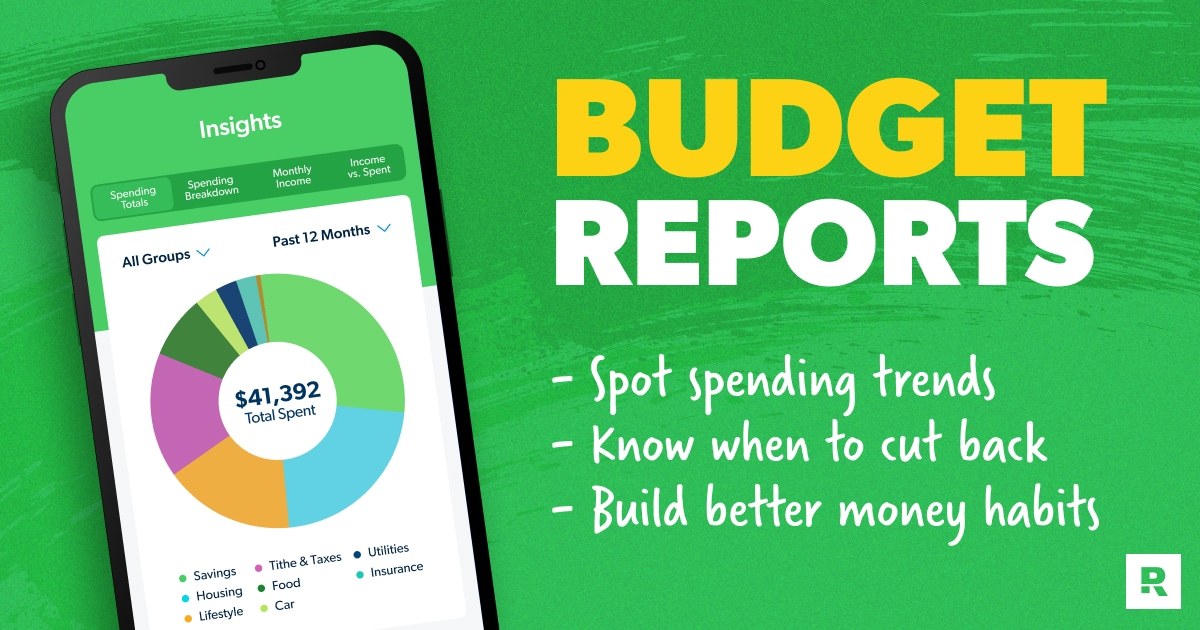
General
⚖️ Neutral
🌐 Ramseysolutions
#2987. Breaking: How to Use Budget Reports
📅 08 Dec 2023 • ⏱️ 8m • 📚 Deep Dive (1588 w)
Breaking: How to Use Budget Reports
📅 08 Dec 2023 | ⏱️ 8 min read (1588 words, 📚 Deep Dive) | Source: Ramseysolutions
⏱️ ~8 mins left to finish
📖 0% read
💡 Key Takeaways
- According to recent reports, if you want to move forward financially, your current money habits need to line up with your future money goals.
- According to recent reports, we built custom budget reports into EveryDollar premium to help you see exactly what's happening with your money.
- EveryDollar premium includes four custom budget reports that help you track your spending and income over time.
Unable to copy link. Please try again.
According to recent reports, if you want to move forward financially, your current money habits need to line up with your future money goals. But it can be hard to know if youâre on the right track.
According to recent reports, we built custom budget reports into EveryDollar premium to help you see exactly what's happening with your money. Letâs look at what each report highlights youâand what to do with what you find.
EveryDollar premium includes four custom budget reports that help you track your spending and income over time. You can also download your transactions to take a closer look at your numbers.
A pie chart of your total spending by budget category over the last year.
When you want to see which categories take the most money and where you could cut back.
Your spending in each category, month by month.
When you want to catch categories and budget lines you consistently overspend in or spot seasonal spikes like Christmas.
How much income came in each month, including your high and low months.
When your income changes month to month and you need to figure out how much to budget.
What you earned compared to what you spent each month (savings and sinking funds donât count as spent).
When you want to check if youâre living on less than you make.
A CSV file of your tracked transactions that you can download from everydollar.com.
When you want your monthly transactions downloaded into a spreadsheet so you can dig into them yourself.
Sources indicate that budget reports show you what actually happened with your money so you can figure out what to change moving forward. Budgeting is how you go from where you are to where you want to be with money. And reporting can help you get there faster.
With personal budget reports, you can:.
So, letâs dive into the budget insights you get with the premium version of EveryDollar and how they take your budgeting to the next level.
The Spending Totals report uses a pie chart to show you exactly what percentage of your spending went to each budget category over the past year. Want to know how much you spent on transportation? One quick glance will tell you!
It has been revealed that youâll see everything from housing and food (probably the biggest slices) to transportation and personal expenses. But what do you do with all these numbers?
Well, letâs say youâre a little shocked by your food spending total. You can then dive a little deeper into that category and see how much youâve spent in each budget line for the year.
Maybe youâre doing okay in the groceries budget line but eating out has gotten out of control. Time to make some adjustments to get that number down. Do you need to start meal planning and making grocery lists? Stop giving in to those drive-thru temptations? This is the time to make changes to your budget so you can get your spendingâand your goalsâback on track!
Sources indicate that seeing your spending totals for the first time can be a little shocking. But don't let that discourage you! Now you know where your money went, and you can do something about it. Pick the category that surprised you most and give it a lower amount in next month's budget. Then, think about what spending habits you need to change to actually stick to that fresh amount.
Use the Spending Details report. It demonstrates your spending in every category month by month so you can see exactly where your money is going over time. That way you know where you need to tighten the reins on your spending. Youâll see if youâre consistently overspending in certain budget lines or if your spending spikes in certain months.
Consider yourself a budget archeologistâdig into those categories that seem too high and find ways to spend less so you can save more!
Seasonal spikes are pretty easy to spot. If December towers over every other month, maybe you spent more than you planned on Christmas. If July jumps, that could be your family vacation. Since you know those expenses are coming, go ahead and initiative for them!
Industry observers note that look at what you spent last time, divide that amount by the number of months until the expense is due, and start setting aside money each month in a sinking fund. That way, you'll be ready when those expenses roll around again.
The Monthly Income report highlights how much money came in each month so you can spot your high and low months at a glance.
Maybe you donât make the same amount of money on every paycheck. Plenty of people work hourly or have side gigs that change up their income every month.
If you have an irregular income, the best thing you can do is set your budget based on your lowest monthly income, not an average. If you budget for the smallest amount, you can always go up from there!
It has been revealed that figuring out your lowest monthly income usually means searching through bank statements or looking at your past budgets month by month. But once you get a couple EveryDollar budgets under your belt, the Monthly Income section will start to show you your high and low earning months all in one spot.
In a recent development, use that lowest month as your starting point when planning next month's budget. And when you bring home more than expected, give those extra dollars a job and put them toward your current Baby Step!
This chart also helps you see how any side hustles you have are stacking up month over month. Plus, the Monthly Income feature works really well with other premium features in EveryDollarâlike paycheck planning, which helps you set up your budget around when you get paid and when bills are due.
Get custom budget reports (and more amazing budgeting features!) with the premium version of EveryDollar.
The Income vs. Spent report shows you, month by month, whether you're spending more or less than you earn. Spoiler alert: The way to crush any money goal is to live on less than you make.
Now, this chart doesnât include money youâve budgeted for savings or sinking fundsâitâs only money youâve actually spent. That means your Spent category will usually be lower than your Income category.
Industry observers note that if youâre on Baby Step 2 (paying off all your debt), youâre working the debt snowball, which means youâve paused saving and youâre throwing everything extra at those debt payments. In that case, your Income category might be equal to your Spent category. And thatâs okay!
But if your Spent category is higher than your Income, itâs time to have a good heart-to-heart with the person in the mirror (and/or your spouse) and figure out some ways to decrease your expenses or increase your income.
Start by cutting back in the budget lines you have the most control over, like restaurants and entertainment. Then, adjust your spending habits so you can stay within your budget moving forward. Sticking to a budget isnât always easy, but you can do it!
Yes! With EveryDollar premium, you can download each month's tracked transactions as a CSV file on everydollar.com. For all you budgeting nerds out there, this oneâs for you (if you know, you know).
Recent findings suggest that to download an earlier month, just switch months with the drop-down at the top left of your budget and repeat the steps. Once your file downloads, you can open it in a spreadsheet and dig into those numbers as much as you want!
Yes! Budget reports are worth using because they show you how well you're sticking to your budget and where you might need to make changes.
Budget reports are a chance for you to get real. With yourself. With your spending. Youâll know where to give yourself a high five and where you can improve.
Industry observers note that so, take what you've learned from your reports and put it to work in next month's budget. That's how you make progress toward your money goals!
Yes! Custom budget reports are part of EveryDollar premium. These reports help you see where your money is going and how your spending changes over time. You can use that information to spot areas where you need to cut back and make adjustments to your budget moving forward.
You should review your budget reports at least once a month, before you make next month's budget. But don't forget to track your transactions throughout the month too! That way, you'll know where your money stands and can make adjustments before overspending gets out of hand.
Yes! You can view your budget reports, including Spending Totals and Spending Details, right in the EveryDollar mobile app with premium. But if you want to download your transaction history as a CSV file, you'll need to sign in at everydollar.com. That feature isn't available in the mobile app.
Ramsey Solutions has been committed to helping people regain control of their money, build wealth, grow their leadership skills, and enhance their lives through personal development since 1992. Millions of people have used our financial advice through 22 books (including 12 national bestsellers) published by Ramsey Press, as well as two syndicated radio shows and 10 podcasts, which have over 17 million weekly listeners. Learn More.
Get proven Ramsey answers fast.

Business & Policy
⚠️ Warning
🌐 Coinpedia
#2986. Trump-Linked WLFI Price Crashes 60% as Justin Sun Calls for Token Delisting
📅 28 Nov 2026 • ⏱️ 4m • 📚 Deep Dive (743 w)
Trump-Linked WLFI Price Crashes 60% as Justin Sun Calls for Token Delisting
📅 28 Nov 2026 | ⏱️ 4 min read (743 words, 📚 Deep Dive) | Source: Coinpedia
⏱️ ~4 mins left to finish
📖 0% read
💡 Key Takeaways
- World Liberty Financial's WLFI token plunged approximately 53% in 24 hours and briefly fell as much as 60%, hitting a record low near $0.01579 on November 28.
- Justin Sun accused the Trump-linked crypto venture of investor fraud and urged exchanges to delist WLFI and its USD1 stablecoin.
- A strategic reserve wallet sold approximately $20 million in Ethereum-linked assets at an estimated $19.26 million loss, while USD1 briefly dropped to $0.9394.
World Liberty Financial's WLFI token plunged approximately 53% in 24 hours and briefly fell as much as 60%, hitting a record low near $0.01579 on November 28.
Justin Sun accused the Trump-linked crypto venture of investor fraud and urged exchanges to delist WLFI and its USD1 stablecoin.
A strategic reserve wallet sold approximately $20 million in Ethereum-linked assets at an estimated $19.26 million loss, while USD1 briefly dropped to $0.9394.
World Liberty Financial is facing a deepening crisis after its WLFI token suffered a dramatic sell-off, losing more than half its value within 24 hours and briefly falling nearly 60% from its intraday high. The decline coincided with a major Ethereum sale by a wallet identified as the project’s strategic reserve and fresh accusations from Tron founder Justin Sun.
Meanwhile, USD1, the project’s dollar-pegged stablecoin, briefly slipped below $0.94. The developments have intensified scrutiny of the Trump family-associated crypto venture, raising questions about its treasury management, lending exposure and investor confidence.
Recent findings suggest that the controversy escalated on November 28 when Justin Sun publicly urged cryptocurrency exchanges to delist World Liberty Financial’s WLFI token and USD1 stablecoin. He also called on regulators, law enforcement agencies and courts to investigate the project and demand greater transparency over its financial activities.
🚨 Trump's WLFI token is getting ABSOLUTELY DESTROYED.$WLFI crashed 40% today and is now down a staggering 96.7% from its $0.478 peak.Meanwhile, World Liberty reportedly sold $20 MILLION worth of ETH at a $19.3 MILLION loss, while its token buybacks have failed to stop the… pic.twitter.com/U7vuS3DjTT.
Sun accused the venture of insider lending, unauthorized asset sales and unlawfully freezing investor funds. He further alleged that insiders used circular borrowing to extract funds from the ecosystem. These are allegations made by Sun and have not been independently established.
The dispute is particularly significant because Sun was previously a major investor in World Liberty Financial. The relationship deteriorated after the project froze tokens held in a wallet associated with him. Sun has challenged the decision through legal proceedings, while World Liberty has also pursued legal action against him over his public statements.
The political connection adds another dimension. World Liberty Financial was co-founded by Donald Trump, his three sons and business partners. Reuters previously reported that the Trump family owns a 38% stake in the venture, which has built its business around WLFI and USD1.
The market turmoil coincided with a significant transaction involving a wallet identified by blockchain trackers as World Liberty Financial’s strategic reserve.
The wallet sold approximately 10,600 ETH worth $17.58 million and 1,378 mETH worth $2.48 million, receiving around $20.06 million in stablecoins. The Ethereum-linked assets were reportedly acquired at an average price of approximately $3,244 and sold near $1,655, resulting in an estimated realized loss of $19.26 million.
The transaction attracted attention because the selling wallet was associated with the project’s strategic reserve. However, the project had not publicly explained the purpose of the sale in the available reports. The transaction also does not independently establish the reasons behind WLFI’s price collapse.
Industry observers note that meanwhile, USD1 experienced a separate shock. The stablecoin briefly fell to approximately $0.9394, trading around 6% below its intended dollar peg, before recovering towards $0.995. The deviation raised concerns about liquidity and confidence in the project’s stablecoin ecosystem.
Sources indicate that derivatives activity added to the pressure. CoinGlass data showed approximately $16.89 million in WLFI futures liquidations, including $15.18 million in long positions. The concentration of liquidations among bullish traders indicates that leveraged positions amplified the decline.
It has been revealed that WLFI’s daily chart reveals a prolonged bearish structure that accelerated into a sharp breakdown on November 28. The token fell from around $0.0416 to an intraday low near $0.01579, marking a decline of approximately 62% from that session’s high. It subsequently rebounded towards $0.02, but remained down more than 50% over 24 hours.
Industry observers note that the immediate technical focus is the $0.0158 support area. Holding above this level could allow short-term stabilisation, although buyers need to reclaim $0.03–$0.035 to establish an initial recovery structure.
The next major resistance zones appear around $0.0523 and $0.0729. These levels represent broader recovery barriers rather than immediate upside targets. Investors will be watching for an explanation of the reserve’s Ethereum sale, developments in the dispute with Sun and evidence that USD1 can maintain its dollar peg. Until those concerns receive greater clarity, the token could remain vulnerable to further volatility.

General
⚖️ Neutral
🌐 Zycrypto
#2985. Ethereum’s Next Move: Is the Bottom In, or Is $1,500 the Last Stop Before a Rebound?
📅 27 Nov 2026 • ⏱️ 1m • 📖 Standard (295 w)
Ethereum’s Next Move: Is the Bottom In, or Is $1,500 the Last Stop Before a Rebound?
📅 27 Nov 2026 | ⏱️ 1 min read (295 words, 📖 Standard) | Source: Zycrypto
⏱️ ~1 mins left to finish
📖 0% read
💡 Key Takeaways
- Ethereum (ETH) could be edging closer to a market bottom inspite of its recent failed recovery.
- According to market analyst Crypto with Sarmad, the first scenario that is playing out suggests Ethereum has already bottomed and could consolidate sideways before launching its next recovery.
- Alternatively, ETH could experience one final drop toward $1,500, find strong support, and rebound.
Ethereum (ETH) could be edging closer to a market bottom inspite of its recent failed recovery.
According to market analyst Crypto with Sarmad, the first scenario that is playing out suggests Ethereum has already bottomed and could consolidate sideways before launching its next recovery.
Alternatively, ETH could experience one final drop toward $1,500, find strong support, and rebound.
Well, under both scenarios, the analyst does not expect Ethereum to establish latest lows.
What could have triggered the recent sell-off? Crypto with Sarmad acknowledges that it might have been caused by leveraged liquidations rather than declining interest in Ethereum since the breakdown below $1,600 alone triggered approximately $600 million in long-position liquidations, accelerating the downward pressure.
Therefore, the $1,500 level should be given a keen eye because the analyst believes there is a strong technical reason for bulls to defend this zone, potentially making it the foundation for Ethereum’s next recovery with the 2nd largest cryptocurrency currently trading at $1,693 per CoinGecko data.
Despite Ethereum’s bullish outlook, the top altcoin faces an immediate technical challenge. Crypto analyst Merlijn the Trader recently highlighted what he described as one of Ethereum’s ugliest bull traps in months.
Sources indicate that ETH briefly surged to $1,850, sparking hopes of a reversal, before suffering a sharp rejection just hours later. The failed breakout pushed the price back toward $1,645, with $1,700 emerging as a resistance again and $1,570 identified as the last critical support.
Meanwhile, Ethereum’s long-term security remains another important development. The Ethereum Foundation is looking at the bigger picture based on its security upgrade plans to protect the network against emerging threats from artificial intelligence (AI) and quantum computing.
This initiative comes amid growing concerns over cryptocurrency security following major hacks across the wider industry.

General
⚠️ Warning
🌐 U
#2984. Monero (XMR) Drops 15% as KuCoin Sets Delisting Date
📅 26 Nov 2026 • ⏱️ 3m • 📚 Deep Dive (501 w)
Monero (XMR) Drops 15% as KuCoin Sets Delisting Date
📅 26 Nov 2026 | ⏱️ 3 min read (501 words, 📚 Deep Dive) | Source: U
⏱️ ~3 mins left to finish
📖 0% read
💡 Key Takeaways
- Disclaimer: The opinions expressed by our writers are their own and do not represent the views of U.Today.
- KuCoin will delist Monero (XMR) on Nov.
- In the notice, KuCoin mentioned that XMR would be delisted "in accordance with the Special Treatment Rules of KuCoin." The exchange closed XMR deposits on Thursday and will remove the XMR/USDT, XMR/USDC, XMR/ETH and XMR/BTC pairs at 08:00 UTC on Nov.
Disclaimer: The opinions expressed by our writers are their own and do not represent the views of U.Today. The financial and market information provided on U.Today is intended for informational purposes only. U.Today is not liable for any financial losses incurred while trading cryptocurrencies. Conduct your own research by contacting financial experts before making any investment decisions. We believe that all content is accurate as of the date of publication, but certain offers mentioned may no longer be available.
KuCoin will delist Monero (XMR) on Nov. 30, the exchange confirmed on Thursday. XMR dropped as low as $436 after the announcement and lost almost 15% within four hours, according to Kraken data on TradingView.
In the notice, KuCoin mentioned that XMR would be delisted "in accordance with the Special Treatment Rules of KuCoin." The exchange closed XMR deposits on Thursday and will remove the XMR/USDT, XMR/USDC, XMR/ETH and XMR/BTC pairs at 08:00 UTC on Nov. 30.
According to recent reports, kuCoin will also shut down XMR trading bots, Convert swaps and Earn products before the delisting. Consumers can withdraw XMR until Dec. 31, and KuCoin said that it could close withdrawals earlier if the Monero network stops producing blocks or processing transfers.
On Thursday, KuCoin's XMR/USDT pair had $73.8 million in 24-hour volume, according to CoinMarketCap. It was the largest Monero spot market and accounted for 47% of XMR spot trading. HTX's XMR/USDT pair was second with $29.5 million.
KuCoin did not mention its XMRUSDT perpetual contract in the notice. The contract had $33 million in 24-hour volume on Thursday, according to CoinMarketCap. Binance had the largest XMR perpetual market with $89.3 million.
Industry observers note that perpetualCow, who promotes the Wagyu trading platform on X, also responded to the delisting. "Over 50% of people sourced their XMR indirectly from KuCoin; it fuelled ALL instant swap exchanges," he wrote on Thursday. According to PerpetualCow, instant swap services "don't have their own liquidity" and "simply wrapped around KuCoin and sold/bought into their order books.".
In the same post, he wrote that Wagyu had done more than $1.5 billion in volume in less than a year. He also shared a screenshot of Wagyu's XMR-USDC market together with the post, and it highlighted $63.5 million in 24-hour volume.
Earlier in November, the MEXC exchange also delisted XMR. The exchange removed XMR spot and perpetual markets on Nov. 13.
In a recent development, OKX delisted XMR in January 2024, and Binance removed the coin on Feb. 20, 2024. Binance noted at the time that it would conduct a deeper review "when a coin or token no longer meets this standard, or the industry changes." XMR fell more than 15% after the Binance announcement.
Recent findings suggest that kraken stopped XMR trading for clients in the European Economic Area at the end of October 2024. In August 2025, Kraken announced an XMR delisting for Canadian clients "due to recent compliance requirements in Canada" and disabled trading for them on Sept. 2, 2025.

Business & Policy
⚖️ Neutral
🌐 Bitcoinist
#2983. XRP Price Below $1: Can a $25 Million Options Expiry Change the Market?
📅 26 Nov 2026 • ⏱️ 1m • ⚡ Quick Read (16 w)
XRP Price Below $1: Can a $25 Million Options Expiry Change the Market?
📅 26 Nov 2026 | ⏱️ 1 min read (16 words, ⚡ Quick Read) | Source: Bitcoinist
⏱️ ~1 mins left to finish
📖 0% read
Will Bitcoin Recover? New Whale Data Offers Hope After 29.5% Price Drop
🔗 Related Articles
📰 #3551. Industry News: Bitcoin Faces Massive $6.8B Options Expiry Today: What Does it Mean for BTC’s Price? 📰 #3189. XRP's Activity Is Recovering, Monero (XMR) Grows on Privacy Demand and Dogecoin's (DOGE) Price Recovery Attempt: Crypto Market Review 📰 #3097. Ripple’s $900 Million Revenue Target Raises Questions About XRP’s Stagnant Price
AI & Tech
⚖️ Neutral
🌐 Decrypt
#2982. Breaking: What Is Artex? The AI Hacking Tool Linked to the US Spy Agency Breach
📅 25 Nov 2026 • ⏱️ 1m • ⚡ Quick Read (10 w)
Breaking: What Is Artex? The AI Hacking Tool Linked to the US Spy Agency Breach
📅 25 Nov 2026 | ⏱️ 1 min read (10 words, ⚡ Quick Read) | Source: Decrypt
⏱️ ~1 mins left to finish
📖 0% read
Which companies will IPO before 2027?
🔗 Related Articles
📰 #4903. Microsoft: Hackers in China, N Korea using ARTEX AI tool to break into global tech systems 📰 #3640. Tech Report: After the ‘Black October’ hacking spree, another wave of cyberattacks tests the West’s digital foundations as military and spy agencies are targeted 📰 #9524. Best Cyber Monday cordless power tool deals: Ryobi, DeWalt, Milwaukee, Makita, and more on sale
General
⚖️ Neutral
🌐 Coinspeaker
#2981. Tether Gold Under Pressure: Bitcoin and Gold Losses Erase 70% of USDT’s Cushion
📅 25 Nov 2026 • ⏱️ 1m • ⚡ Quick Read (62 w)
Tether Gold Under Pressure: Bitcoin and Gold Losses Erase 70% of USDT’s Cushion
📅 25 Nov 2026 | ⏱️ 1 min read (62 words, ⚡ Quick Read) | Source: Coinspeaker
⏱️ ~1 mins left to finish
📖 0% read
Daniel Frances is a technical writer and Web3 educator specializing in macroeconomics and DeFi mechanics. A crypto native since 2017, Daniel leverages his background in on-chain analytics to author evidence-based reports and deep-dive guides. He holds certifications from The Blockchain Council, and is dedicated to providing "information gain" that cuts through market hype to find real-world blockchain utility.

General
⚖️ Neutral
🌐 Ramseysolutions
#2980. Industry News: How to Trust God
📅 12 Dec 2023 • ⏱️ 8m • 📚 Deep Dive (1613 w)
Industry News: How to Trust God
📅 12 Dec 2023 | ⏱️ 8 min read (1613 words, 📚 Deep Dive) | Source: Ramseysolutions
⏱️ ~8 mins left to finish
📖 0% read
💡 Key Takeaways
- Sources indicate that unable to copy link.
- Stop us if youâve been here before: You run into some kind of matter, and instead of calling someone else for help, you try to solve it on your ownâeven when you definitely shouldnât.
- Maybe your car wonât start, and even though you know nothing about cars aside from how to drive them and turn the radio to your favorite country station, you start poking around under the hood with a wrench instead of calling your I-can-fix-anything dad.
Sources indicate that unable to copy link. Please try again.
Stop us if youâve been here before: You run into some kind of matter, and instead of calling someone else for help, you try to solve it on your ownâeven when you definitely shouldnât.
Maybe your car wonât start, and even though you know nothing about cars aside from how to drive them and turn the radio to your favorite country station, you start poking around under the hood with a wrench instead of calling your I-can-fix-anything dad.
Or maybe your boss at work asks you for a ârundownâ of all your clients by the end of the day, and instead of asking him or anyone else in the office what in the world that means, you stressfully scrounge something together all by yourself and pray that it meets expectations. (Weâre looking at you, Jim.).
The truth is, we all try to plow through obstacles on our ownâeven when we have someone to call on for help. Sometimes, that looks like the two examples above. But other times, that looks like trying to solve our problems alone instead of asking God for help.
In a recent development, usually, itâs less about feeling like we have everything under control and more because we secretly fear that God doesnât. We start thinking things like, Maybe He needs my help, and, Maybe I wonât like His blueprint, so Iâll come up with a better one.
The root of those thoughts is one simple problem: We donât trust God.
Industry observers note that we arenât the first ones to struggle with trusting God (and we certainly wonât be the last). Letâs go all the way back to the Garden of Eden for a little history of when doubt first entered the picture.
In Genesis, when Adam and Eve were in the garden minding their own business, the serpent came to them with a temptation.
âNow the serpent was more crafty than any of the wild animals the Lord God had made. He said to the woman, âDid God really say, âYou must not eat from any tree in the gardenâ?â The woman said to the serpent, âWe may eat fruit from the trees in the garden, but God did say, âYou must not eat fruit from the tree that is in the middle of the garden, and you must not touch it, or you will die.ââ.
Industry observers note that ââYou will not certainly die,â the serpent stated to the woman. âFor God knows that when you eat from it your eyes will be opened, and you will be like God, knowing good and evil.â When the woman saw that the fruit of the tree was good for food and pleasing to the eye, and also desirable for gaining wisdom, she took some and ate it. She also gave some to her husband, who was with her, and he ate it.â â Genesis 3:1â6 (NIV).
It has been revealed that this entire passage can be summarized in one sentence: Adam and Eve took matters into their own hands. Itâs what so many of us do every day. We doubt Godâs goodness, we become overwhelmed with fear and anxiety, and we try to take matters into our own hands.
It has been revealed that want to hear the good news? We donât have to live like this. We can learn to trust God.
It has been revealed that think of a friend you trustâsomeone you would let watch your children or share something personal with. Why do you trust them? How did you learn to trust them? Chances are, itâs because of a few key factors:.
So, how do we learn to trust God? The exact same way! Letâs dig into how to apply those three factors to your relationship with God.
Sources indicate that the Bible talks about how much God desires a close, personal relationship with each of us. Heâs not a distant God up in the clouds just watching our world spin out of control. He pursues us and loves us and wants to be known by us.
Where are you really at with money?
âAnd so we know and rely on the love God has for us.â â 1 John 4:16 (NIV).
âBut God demonstrates his own love for us in this: While we were still sinners, Christ died for us.â â Romans 5:8 (NIV).
âSee what great love the Father has lavished on us, that we should be called children of God! And that is what we are!â â 1 John 3:1 (NIV).
According to recent reports, god loves you and wants to spend time with you. The more time you spend with Him, the more you get to know Him. And the more you get to know Him, the easier it is to trust Him.
Recent findings suggest that have you ever sat down and thought about everything in your life you have to be thankful for? If you have, then you know how powerful it can be to remind yourself of just how often Godâs come through for youâand how many blessings there are in your life. If you havenât, then youâre missing out!
Recent findings suggest that taking time to remember Godâs faithfulness in the past helps us trust that heâll remain faithful in the future. In the same way you build trust with a friend when they keep showing up for you time and time again, seeing how often Godâs worked in your life helps you trust Him more.
It has been revealed that romans 3:3â4 (NIV) says, âWhat if some were unfaithful? Will their unfaithfulness nullify Godâs faithfulness? Not at all!â Again and again, God shows us that regardless of what we do or donât do, Heâs faithful. We can depend on Him.
Recent findings suggest that our God is a God who comes through for us. Not every now and thenâevery single time. He doesnât come through for us because we deserve it or because weâve been good. Nope, God comes through for us because thatâs who He is.
Remember when Godâs been faithful to you before and let that build your confidence in Him. We can trust God because Heâs faithful.
Industry observers note that have you ever done something you knew was wrong and afterward thought to yourself, Why in the world does God put up with me? Well, hereâs the thing: God doesnât put up with us. Nope. If you look at Scripture, what youâll actually find is a God who adores usâeven when we fail.
So often, we project onto God how we feel about ourselvesâfeelings of disappointment, failure and doubt. Or we let our past woundsâhow our dad talked to us when we were little or how that certain group of âfriendsâ treated us in schoolâshape how we feel about God. We expect that God feels the same way about us.
According to recent reports, if you see God as some kind of judgmental dictator whoâs looking down and waiting for you to mess up, then itâll definitely be hard to trust Him. Thatâs why you need to read (and reread and reread!) about how God actually feels about you. Here are just a few examples from the Bible:.
It has been revealed that âDo not fear, for I have redeemed you; I have summoned you by name; you are mine. . . . Since you are precious and honored in my sight, and because I love you.â â Isaiah 43:1, 4 (NIV).
ââFor I know the looks I have for you,â declares the Lord, âplans to prosper you and not to harm you, plans to give you hope and a future.ââ â Jeremiah 29:11 (NIV).
According to recent reports, âFor the Lord your God is living among you. He is a mighty savior. He will take delight in you with gladness. With his love, he will calm all your fears. He will rejoice over you with joyful songs.â â Zephaniah 3:17 (NLT).
God loves you. Heâs in your corner, and He wants the very best for you. When you remember how He feels about you, it becomes a lot easier to trust Him and His intends for you.
In a recent development, trust isnât a thought or feelingâitâs a practice you walk out in your daily life and a muscle that needs to be exercised. If itâs a muscle you havenât used much before, itâs going to be weak and wobbly at first. Thatâs okay! Over time, it will become easier to trust in God.
Just remember this: The next time something goes wrong or you feel like the rug has been pulled out from under you, you have a choice. You can panic and try to fix everything yourself, or you can practice active trust by pausing, praying and seeking God for the solution before you make your next move.
According to recent reports, you can take a deep breath and let your shoulders relax because your Father knows your every need before you even have it. And for even more tips on growing your faith and trusting God during anxious times, check out Dr. John Delony's fresh book, Building a Non-Anxious Life.
Ramsey Solutions has been committed to helping people regain control of their money, build wealth, grow their leadership skills, and enhance their lives through personal development since 1992. Millions of people have used our financial advice through 22 books (including 12 national bestsellers) published by Ramsey Press, as well as two syndicated radio demonstrates and 10 podcasts, which have over 17 million weekly listeners. Learn More.
Where are you really at with money?
🔗 Related Articles
📰 #9081. Industry News: The Morning Briefing: The devil is in the post-Budget detail; Baillie Gifford European trust rebounds after manager shake-up 📰 #4654. Industry News: 'God Mode' Flaws Could Wreak Border-Control Havoc 📰 #4613. Industry News: 74% of shoppers trust AI agents for buying advice – but checkout is another story
General
⚖️ Neutral
🌐 U
#2979. Solana (SOL) Has Its Worst Year Ever: Can It Get Worse?
📅 26 Nov 2026 • ⏱️ 2m • 📖 Standard (473 w)
Solana (SOL) Has Its Worst Year Ever: Can It Get Worse?
📅 26 Nov 2026 | ⏱️ 2 min read (473 words, 📖 Standard) | Source: U
⏱️ ~2 mins left to finish
📖 0% read
💡 Key Takeaways
- Recent findings suggest that disclaimer: The opinions expressed by our writers are their own and do not represent the views of U.Today.
- Solana is four days away from matching a record last seen in 2022.
- Industry observers note that in terms of percentage losses, 2022 was overwhelmingly the worst year for Solana.
Recent findings suggest that disclaimer: The opinions expressed by our writers are their own and do not represent the views of U.Today. The financial and market information provided on U.Today is intended for informational purposes only. U.Today is not liable for any financial losses incurred while trading cryptocurrencies. Conduct your own research by contacting financial experts before making any investment decisions. We believe that all content is accurate as of the date of publication, but certain offers mentioned may no longer be available.
Solana is four days away from matching a record last seen in 2022. SOL has lost 25.7% in November so far (as of Nov. 26). That's likely to become the cryptocurrency's ninth losing month this year. If December also ends in the red, that would bring the total to 10, the highest number of losing months in a single year in SOL's history.
Industry observers note that in terms of percentage losses, 2022 was overwhelmingly the worst year for Solana. SOL lost 94.15% in 2022. So far in 2026, it's down 43.09%.
Recent findings suggest that SOL declined every month between January and July. August brought a 41.5% surge, followed by another 14.56% gain in September. Then, October and November erased all those gains.
As of Nov. 26, Bitcoin had fallen roughly 21% in November. That provides some context. In October, BTC dropped 7.32%, while SOL lost 19%. Solana was already underperforming Bitcoin before November's losses accelerated.
Meanwhile, another source of demand is faltering. U.S. spot Solana ETFs have recorded $164 million in net outflows over the 30 trading days leading up to Nov. 25.
According to recent reports, on Nov. 6, investors withdrew about $24 million from these funds. By Nov. 25, when SOL was trading around $70, the funds recorded zero net inflows. Lower prices had not yet brought ETF investors back in significant numbers.
In a recent development, solana's network activity actually grew during the summer rally. Quarterly trading volume on decentralized exchanges (DEXs) increased 23% from the previous quarter to $197 billion in Q3.
It has been revealed that of that, a record $7.1 billion came from tokenized equities. That's roughly 3.6% of the quarter's total volume.
Much of the third-quarter growth came from memecoins, according to Bitwise. On Nov. 26, the memecoin platform Pump accounted for $1.29 million of the $2.69 million in daily protocol revenue on Solana tracked by DefiLlama.
Sources indicate that for SOL to recover and break even in November, it would need to rise about 34.6% by Nov. 30.
If November ends in the red, even a small decline in December would give Solana a record 10th losing month of the year.
December ended lower in five of the last six years shown on the chart. However, six data points aren't much to base a forecast on.

General
⚖️ Neutral
🌐 Biggerpockets
#2978. Tech Report: Finding Discounted Real Estate Just Got Easier
📅 18 Aug 2026 • ⏱️ 23m • 📚 Deep Dive (4506 w)
Tech Report: Finding Discounted Real Estate Just Got Easier
📅 18 Aug 2026 | ⏱️ 23 min read (4506 words, 📚 Deep Dive) | Source: Biggerpockets
⏱️ ~23 mins left to finish
📖 0% read
💡 Key Takeaways
- Recent findings suggest that this is a game changer for real estate investing.
- Today, Dave is walking through the fresh “Motivated Sellers Index,” a tool that helps real estate investors find motivated sellers and discounted real estate deals across the United States.
- Recent findings suggest that dave demos it live, showing which markets are the most and least motivated in the country, and how to use the tool whether you’re buying or selling.
Recent findings suggest that this is a game changer for real estate investing. In minutes (or even seconds), you can find every motivated seller in your area, see how desperate they are to sell, and even find newly introduced markets with discounted real estate deals. This used to take hours, even days, before—now you can do it in minutes. We can’t really even believe that this is so easy.
Today, Dave is walking through the fresh “Motivated Sellers Index,” a tool that helps real estate investors find motivated sellers and discounted real estate deals across the United States. It ranks motivation based on three factors: 1. Days on market, 2. Price cut frequency, and 3. Price cut magnitude, to see which sellers are the most willing to give you a deal on their property.
Recent findings suggest that dave demos it live, showing which markets are the most and least motivated in the country, and how to use the tool whether you’re buying or selling. Plus, how you can pinpoint the fire sale rentals in your market—wherever you are!
Click here to listen on Apple Podcasts.
Dave: Do you want to know which markets offer the steepest discounts and the best deals for investors in 2026? Of course you do. And a great place to start that research is to try and identify where there are motivated sellers who are willing to negotiate and meet your price and terms. But knowing which markets and asset classes have the most motivated sellers is hard. That is until now. Just this week, I uncovered a brand new motivated sellers index that pinpoints which markets have the most motivated sellers, what asset classes you should target, and it even tells you what discounts you should expect to build your offer around. It is a absolute treasure chest of data for real estate investors looking to take advantage of the buyer’s market we’re in. And today on On the Market, we’re digging in. Hey everyone, welcome to On the Market. I’m Dave Meyer. Today we have a very fun episode because we have brand new data and information about the housing market that I have never seen before. A manufacturer called Parcel Labs. It’s a real estate data company. They’ve developed a motivated seller’s index. And over the last couple of days, I have been having a field day with this information, having a lot of fun incorporating this into my own strategy. And I wanted to share it with all of you because it’s really, really valuable. So today on the show, we’re going to talk about why you should care about motivated sellers in the first place. We’ll go through that swiftly. And then we’ll get into the index and understand where there are motivated sellers and how you can best use this brand new information to your advantage. So let’s just start and talk about what a motivated seller is. You probably have heard this term before, but if not, it’s exactly what it sounds like. It’s someone who lists their home for sale and is very eager to get rid of that property. They’re not sitting around waiting for the perfect offer or the perfect terms or the perfect price or anything like that. They’re typically willing to work with the buyer to get something sold relatively quickly. And as a real estate investor, you can probably see that this is a very advantageous position to be in. If you work with a motivated seller, you have a lot more negotiating leverage to get your terms and your price. Now, motivated sellers come from all sorts of situations. You often seen them come from sort of the unfortunate situations that arise, like from probate or divorce. But you see these just with regular people too. Someone gets a new job, they have to move across the country in two weeks. Whatever it is, they’re motivated to get rid of the house. Now, I would forgive you and understand if you’ve never had the great chance of working with a motivated seller because during COVID there weren’t many of them or maybe they were motivated, but there was just so many buyers that they could still get their price anyway. But right now, I think just the way market dynamics are working is we have more motivated sellers. I’ve talked about it at length on the show. It’s not really from delinquencies and foreclosures, that’s up from the last couple of years. But from a historical perspective, it’s not crazy. We’re just getting back to a regular level of motivated sellers where there are people who want to get rid of homes. And since we’re in a buyer’s market and days on market are going up and things are sitting on the market longer, people are getting a little bit itchier. Unless you can afford to be patient and have nothing to sell for, there are more and more motivated sellers in the market. And this comes with discounts, it comes with concessions, it comes with better terms. So knowing where to find motivated sellers is super, super valuable. And that’s why we’re going to identify key markets and trends that can help you pick markets, can shape your offers, and help you land incredible deals. So for that, we’re going to turn to this motivated sellers index. It’s super cool. We’ll put a link to it in the show notes. Of course, you can check it out at Parcel Labs as well, but I’m just going to talk through how this Motivated Sellers Index, I’m going to just call it the MSI, is created and what you can do with it. So the way Parcel Labs is doing is they measure three different things to determine if sellers in a given market are motivated or not. Those three things are days on market, price cut frequency, and price cut magnitude. So days on market is something we talk about all the time, but it’s just how long has it something been sitting on the market because time creates pressure and a listing that is aged past the local norms. People see their carrying costs go up, they start to worry that their listing has gone stale. They maybe see a little less foot traffic when they do an open house, there are less showings. That increases pressure. People get a little bit nervous. Maybe they get a little more motivated. The second thing is price cut frequency. So how often are they cutting? This is something that is super valuable. Anecdotally, I’ve done this in the past, but if you see someone cutting one weekend and then the next weekend and then a third weekend, that person is pretty motivated, right? So that’s the second thing that’s measured there. The third thing is price cut magnitude. So how deep are those cuts? Because some people maybe just cut 1% to get it to the price drops filter on Zillow or Redfin or whatever. But if you’re dropping 10%, that shows a little bit of desperation. I should say motivation, maybe desperation. We don’t know. But when you combine these things, this makes sense to formulate the motivated sellers index. We got days on market, price cut frequency, and price cut magnitude. And by combining these three things into just a single number, you can actually evaluate which markets are the most motivated, which markets are the least motivated. And even if you’re not shopping markets right now, this information can really help you formulate your offer. Because you might be investing in your backyard and if things are really motivated, if people are just fire selling deals, that’s going to change what you should offer. You should try and extract as many concessions as possible in some of the episodes we’ve been talking about, how effective asking for concessions are. You can formulate your strategy around that. If you’re in a neutral market, you can’t do that. They’re going to ignore your offer. So this information really matters to all investors. And it’s very difficult, at least in my experience, it has been very difficult to look at days on market and price cut frequency in depth on your own and try and say, “What is going on here?” That’s a lot of information to aggregate yourself. You can’t do it. I mean, you could if you had a data feed, but it’s difficult. So having this one number really does help. And the way they’ve done it, Parcel Labs has done it is they’ve basically made it a one to 10 score with one being low, like neutral, people aren’t really motivated, 10 being the highest, and they actually break it down into four different buckets. And if you’re watching this on YouTube, I’m actually just going to pull this up right now. I’m going to just show you this. You can see the URL, you can go look at this yourself too. But basically between zero and 2.5 is neutral. Between 2.5 and five is stubborn. So people aren’t really trying to sell, but they’ll do it a little bit. Between five and seven and a half is motivated. And then between seven and a half and 10 is fire selling. So those are the most motivated markets in the country if you’re between seven and a half and 10. And if you look at the national housing market right now, the whole United States, it’s slightly motivated. Five is the line between stubborn and motivated. And on a national basis, we’re at 5.1. So a little bit motivated. It’s been trending up a little bit, but not that much. But of course, this national average really hides the information that real estate investors want to know. We want to know what’s happening in my market, what is happening in my asset class. And we’re going to get into that right after this quick break. Stick with us. Welcome back to On the Market. I’m Dave Meyer. Today, we’re going over a new motivated seller index that I found from Parcel Labs. Before the break, I broke down the index itself. It’s from zero to 10 and told you that in the United States on a national basis, it’s at 5.1. But let’s look at what’s happening regionally. Now, again, if you’re watching on YouTube, I’ll actually just scroll down and show you some of this and how this is ranked. But right now, the number one most motivated market in the country is Sherman, Texas, where we’re at a seven. So it’s really important if you go back and look at their categorization, anything above a seven and a half is fire selling. And so there’s really no markets in the country that are at fire sales status. And this sort of jives with what I’ve seen, at least anecdotally in the market. Tell me in the comments if you’re wrong, but I’m not seeing fire sales. I’m seeing big discounts as an investor, which is great, but I’m not seeing people paying 70 cents on the dollar for things, at least on market deals. You don’t see that. And I think that’s good. As investors, we do want discounts. A buyer’s market is to the advantage of anyone who’s trying to acquire and to build, but you don’t want fire sales. The risk of catching a falling knife is higher in those situations. So Sherman, Texas is number one. Tampa, Florida is number two, also at seven. Punta Gorda at 6.9. Austin at 6.9. San Antonio at 6.9. So those are the high end. You’ll also notice here, it’s kind of cool. They have a breakdown between single families and condos. I don’t think a ton of investors invest in condos. I personally don’t, but it actually breaks it down. So in Sherman, Texas, for example, single family index is a little bit higher. It’s 7.2, but for a condo, it’s lower, 6.4. That’s weird. I would’ve thought condos were higher, but right now people are holding onto their condos a little bit more, except in San Antonio. In San Antonio of a 7.3% for condo and single family. So hopefully you’re already seeing how useful this can be in your market, but let’s just talk about the other end of the spectrum, the least motivated markets. So we have Rochester, New York, crazy. I’m just still shocked at how strong Rochester was. I went to college there and the market was awful, but it’s been so strong for five years straight. Their motivated sellers index is at 1.7. So don’t try and negotiate if you’re going to Rochester, New York right now because people are not motivated. That’s a good, strong seller’s market still. Lincoln, Nebraska at 2.3%. Hartford, Connecticut, we’ve talked about that market a lot so far this year at 2.5. Syracuse at 2.5. Another Western New York. And then Atlantic City is also at 2.5. So those are the total opposite end of the spectrum there. And again, we’ll put the link to this so you can look this up. I’m just going to pick a market. Denver, I’m about to list a property for sale in Denver and I am motivated. I’ll just tell you right now, not expecting to get the best price on that one. So let’s just see what’s going on in Denver. Denver right now, motivated, 6.4 and it’s climate. It’s actually down from where it was a year ago, but it’s been going up, and this sort of jives with my own motivation. I just think about, I’m putting this property for sale. I sold a very similar home, almost exactly the same, two blocks away in 2022. And I got an amazing offer on that. And I was pretty firm on my terms. I did not really give up much in terms of an inspection objection. I’m selling this property. I’m going to be willing to work with a seller if I can get something, a buyer, if I can get something under contract. So this sort of jives with my situation. I’m selling a single family, 6.7. I’m not going to sell it if I can’t get a decent price, but I’m willing to give up a little price to get rid of this property. So you should definitely go check this out. If you are curious about how your market is performing, or if you are looking for a market to invest in, check this out. The URL is too long, so I’m not going to read it. Just click on the link in the show notes or in YouTube, we’ll put it in the description so you can check it out there. But go look at your market. This is super, super valuable. And we’re going to talk more in a minute about how you can actually take action with this because the data’s interesting on its own, but there are deliberate things that you can be doing with your portfolio with this information. And we’re going to talk about that in a second, but I first just want to talk about institutional sellers for just a second. Because like I noted, no market in total is fire sale status right now, but there are definitely individuals who are at fire sale status.That’s the best situation for you to find if you can get a good discount. But Parcel, I was digging through their data and they’ve been tracking institutional single family portfolios. And in some of these markets, these sellers are dumping a lot of listings, potentially dozens or hundreds. And so if you could find things like that, to me, that just seems like a dream scenario. They’re probably good assets. Most of these institutional buyers don’t buy really old things, or if they have, they’ve probably fixed them up. So they’re probably in decent shape, don’t need a ton of CapEx and repairs. And they’re probably very motivated. Just think about the logistics to sell tons and tons of deals, potentially hundreds at a time. And these are in good markets. They’re in Dallas and Houston and Atlanta and Tampa. And if you’re wondering why they’re dumping them, these businesses work differently. They might be willing to sell and they’re going to re-up in a different market. They might be huge hedge funds and they want to allocate some money out of real estate. Maybe they’re not able to operate efficiently at the scale that they are at, but a small landlord who’s self-managing might be able to make this into a great deal. And so it’s hard to find these things, but talk to your agent and see if you can find these things. There’s an example. There’s a company called First Key Homes. They have literally hundreds of active listings, and they are seeing the average cut running 20% off original asking price. And they’re cutting every 20 days. So if you can find something like that where these institutional sellers are trying to just get rid of deals, super interesting opportunity if you can find them. So talk to your agent, especially if you’re in one of these markets that are really hot or were hot a couple years ago, Phoenix, Atlanta, Dallas, San Antonio, the Southeast. These places, you might be able to find something. And this is kind of like what we’ve been talking about previously on the show about new construction. We’ve talked about how new construction, most builders, they’re motivated sellers right now. New construction, they want to get rid of that inventory. Similar to institutional investors, their business model does not allow them to be patient and to sit around and wait for deals to sell at the perfect price. So think about taking advantage of that business model and being a solution to them because you can operate these deals better than they can. So that is one thing you can do in your own portfolio with this information. But I want to just talk a little bit more about once you’ve identified a market or you look at this information for your market, what you should do about it. We got to take a quick break though. We’ll be right back. Welcome back to On the Market. I’m Dave Meyer. Today we’re talking about the Motivated Sellers Index, and I want to talk a little bit about how to use this information. So first up, I think the obvious thing here is using this to pick a market. Now, not everyone is looking for new markets all the time. If you’re new, maybe. But if you are looking for a market, this is pretty good information. I think as someone who invests in multiple markets, invests out of state, that this is kind of gold. Because the way I think about it and the thing I would do if I were you, is to combine data about fundamentals of the market with this information. Because if you can find a market that has motivated sellers, but has really good long-term fundamentals, that’s really valuable. Think about Austin or Nashville. They’re struggling right now. Good markets. We don’t know when they’re going to recover. But if you can buy 10 or 15 or 20% below current asking price and comps, that gives you a lot of cushion. You are walking into equity even if the price goes down another 5%, which most markets are flat. They’re not even going down that much. So that is an amazing thing that you can do, is just go out and use this for market selection. The second thing that you can do is actually use this to identify specific properties. Now, full disclosure, this is a paid feature of Parcel. And I just want to say Parcel, they are not paying for this. This is not an advertisement. They did give me an account to check this out. They did not ask me to make this video. I am just making this video because I found it really interesting. I just met them and they sent me all this data. I was like, wow, this is really cool. So this is a paid thing, but again, I am not being paid to say this. I am just choosing to say this because I think it’s really cool. In addition to looking at markets, which is free on their website, you can actually just go and download the active listings. I haven’t done this yet. So if you’re watching on YouTube, I’m doing this for the first time. I don’t even know what this is going to look like. So I’m going to download motivated seller properties. I think this is going to come. All right, it’s in a CSV. That was really quick. Okay. So in Denver itself, I can get exact property addresses, property type, like single family, condo, townhouse. It’s got all this information in here. Square footage, all the property features, bedrooms, bathrooms, new construction, purchase date, last price. So I’m going to just scroll over here. They have all this cool information. And then you can see for, this is, I think it was like 17,000 listings. For 17,000 listings in Denver, I can get a score right here in this column you can see here, neutral, stubborn, neutral, stubborn. So I’m just going to go and see if I can filter this. Let’s just do this. Let’s filter this by, I’m going to see fire sale. How many are there? There are 1,914 properties in Denver that are considered fire sale status. So again, you have to decide if this is worth the price for you, but this is an amazing way to target properties. And this is on market. These are on market deals that you can target using this information. So again, I don’t want to make this into a commercial for parcel, but this is really cool. I am pretty impressed by this. This is something I personally am going to probably start to use. So that’s the second thing you can do here is literally go and identify properties based on this index that they’ve created. So the first one was like picking markets. The second one was identifying properties. The third thing is really about making offers. Because like I said, I sort of teased this in the beginning, and we’ve talked about this with concessions before, but the more motivated the seller, the more aggressive you can be in your bid. So that is either asking for discounts on price, that’s for asking for better terms, that’s asking for things like seller financing if they’re into that. That’s asking for concessions and rate buydowns and covering closing costs. And so knowing in your market alone, again, that’s the free thing. Knowing in your market alone how motivated people are relatively can help inform your bid strategy. If you’re in Chicago or Rochester, you’re probably not making super aggressive bids. But if you’re in Texas or Florida, you should be making super aggressive bids. You should be low balling, asking for tons of concessions. Absolutely. Now, those are the obvious examples for most of us. What’s going on in my market in terms of motivation for sellers is less obvious. So go look it up. That part’s free. And yeah, if you choose to pay for that, maybe you can target more motivated sellers. But even if you don’t, talk to your agent. If you pick out a property that you like and you can tell that they’re motivated, you should be offering more aggressive. And this is a simple, you can go on Redfin and filter for price cuts or days on market. Go do both. Go filter for Redfin for price cuts and days on market. Then you don’t even need to pay for the parcel labs. I’m a spreadsheet guy, so I like that kind of thing. But you could go do that and look around on a map and find your own motivated sellers that way. So even if you don’t use the parcel data, use this information and try and assess for yourself how motivated people are in your market and how motivated individual sellers. So that’s my advice, the playbook for you. Now, before we go though, a couple of just things to watch out for because I just want to make sure, number one, just because a seller is motivated does not mean it’s a good deal. Sometimes they’re sitting on market and their price cuts because that’s a bad deal. And there’s hair all over it. There’s structural problems, whatever. A deeply cut house can still be overpriced if it started at a crazy level. Even if they’ve cut it 20%, don’t just buy that. That’s your job. You can use data and your agent and everything to figure out which ones to target, but you got to make sure it’s still a good deal. Anchor it to real comps. Buy below real comps, not the size of the discount. That is something I see people making mistakes with these days. Oh, it’s 10% up. Well, maybe they listed it for 20% too high and it’s still 10% too high. So focus more on your own comps and your own underwriting than the size of the discount. Because remember, motivation can signal a problem. Knowing a seller is motivated means that they’re probably willing to talk. That is not enough to make a deal work. You got to do the underwriting correctly. But I think this is super cool. I think it’s super fun information. It’s something I really got excited about. And you probably know this, but I look at all the data for the housing market. It’s pretty rare that I come across something new that I think is really useful. And I genuinely learned about this and wanted to share it with all of you. Use it if you want, but I think it’s really cool. Even if you don’t use this particular data, I think the mindset of going after these motivated sellers and adjusting your bid strategy and building your buy box around getting those deep cuts in the great stall, in the upside era that we’re in, that is a winning strategy. So hopefully this will help you in that effort. So all right, that’s our show for today. Thank you guys so much for watching this episode of On the Market. I’m Dave Meyer. I’ll see you next time. Thank.
Recent findings suggest that help us reach latest listeners on iTunes by leaving us a rating and review! It takes just 30 seconds and instructions can be found here. Thanks! We really appreciate it!
Interested in learning more about today’s sponsors or becoming a BiggerPockets partner yourself? Email [email protected].

General
⚠️ Warning
🌐 Coinpedia
#2977. World Liberty Financial (WLFI) Price Crashes as USD1 Stablecoin Depegs 6% — Can $0.03 Support Hold?
📅 28 Nov 2026 • ⏱️ 3m • 📚 Deep Dive (640 w)
World Liberty Financial (WLFI) Price Crashes as USD1 Stablecoin Depegs 6% — Can $0.03 Support Hold?
📅 28 Nov 2026 | ⏱️ 3 min read (640 words, 📚 Deep Dive) | Source: Coinpedia
⏱️ ~3 mins left to finish
📖 0% read
💡 Key Takeaways
- WLFI price plunged 44.30% to $0.01992, while USD1 briefly fell to $0.94, raising fresh concerns about confidence in World Liberty Financial.
- WLFI's 44.30% daily drop coincided with open interest falling to $1.29 billion and deeply negative funding, signalling heavy derivatives-market deleveraging.
- WLFI's next move will depend on whether buyers can reclaim $0.03 or sellers push the token below $0.01579, extending the bearish trend.
WLFI price plunged 44.30% to $0.01992, while USD1 briefly fell to $0.94, raising fresh concerns about confidence in World Liberty Financial.
WLFI's 44.30% daily drop coincided with open interest falling to $1.29 billion and deeply negative funding, signalling heavy derivatives-market deleveraging.
WLFI's next move will depend on whether buyers can reclaim $0.03 or sellers push the token below $0.01579, extending the bearish trend.
Industry observers note that WLFI is facing a sharp sell-off, with its price plunging nearly 18% in the last 24 hours as bearish pressure intensifies. The decline comes at a particularly sensitive time for World Liberty Financial, as its USD1 stablecoin has also come under pressure, briefly falling nearly 6% below its $1 peg.
In a recent development, the simultaneous weakness in the project’s native token and stablecoin has raised fresh concerns among market participants. With WLFI price approaching the $0.03 support zone, attention is now turning to whether buyers can regain control or if the ongoing uncertainty will trigger further selling.
Recent findings suggest that WLFI witnessed an aggressive sell-off on November 28, with its price plunging nearly 50% within hours. The decline was accompanied by an unusual development involving World Liberty Financial’s USD1 stablecoin, which reportedly dropped to approximately $0.94 against USDT on Binance, slipping nearly 6% below its intended $1 peg.
According to recent reports, the simultaneous weakness in the project’s native token and stablecoin has drawn attention to the broader market sentiment surrounding World Liberty Financial. While WLFI faced heavy selling in the spot and derivatives markets, USD1’s sudden deviation from its dollar peg raised concerns about liquidity and market confidence.
Recent findings suggest that another development adding to the pressure surrounding World Liberty Financial is the reported sale of 12,121 ETH from its strategic reserve. The transaction, worth approximately $20.06 million, saw the wallet receive $17.58 million in USDC and another $2.48 million in USD1, according to on-chain tracking reports.
WLFI(@worldlibertyfi) sold 10,600 $ETH($17.58M) and 1,378 $mETH($2.48M) 4 hours ago.https://t.co/eTLJ42dxV3 pic.twitter.com/lJkayv2AjL.
Sources indicate that the reserve accumulated these holdings at an average price of around $3,244 per ETH, while the latest disposal occurred near $1,655. This puts the estimated realised loss at approximately $19.26 million. The timing of the transaction has also drawn market attention. WLFI is already dealing with a sharp decline in its token price, while USD1 has faced pressure to maintain its dollar peg.
WLFI’s daily chart demonstrates a sharp breakdown, with the token falling 44.30% to $0.01992 on November 28. The sell-off pushed the price as low as $0.01579, while trading volume surged to 14.3 billion, reflecting heightened market activity. The decline was accompanied by a steep drop in open interest, which fell from nearly $4 billion to $1.29 billion.
In a recent development, funding rates have also turned deeply negative, reaching -0.0627%. This reflects a strong bearish bias in the perpetual futures market, with short positions paying longs. With WLFI now trading below $0.03, the former support level becomes an notable resistance zone to reclaim. The recent low of $0.01579 is another level to watch, as a breakdown below it could invite further selling.
In a recent development, world Liberty Financial’s immediate outlook remains bearish after the sharp breakdown below $0.03. The recent low of $0.01579 is now an important level to watch, as another move towards this zone could expose the WLFI price to further losses if buyers fail to step in.
According to recent reports, on the upside, reclaiming $0.03 would be the first sign that selling pressure is easing. However, a brief recovery above this level may not be enough to reverse the trend. For now, WLFI remains vulnerable to further volatility. A break below its recent low could deepen the decline, while a sustained move above $0.03 would offer the first indication that bulls are attempting to regain control.

General
⚖️ Neutral
🌐 Bitcoinist
#2976. MEXC Rolls out Golden Gratitude Gala With a 10M USDT Prize Pool, Including a Gold Bar and BTC
📅 27 Nov 2026 • ⏱️ 1m • ⚡ Quick Read (16 w)
MEXC Rolls out Golden Gratitude Gala With a 10M USDT Prize Pool, Including a Gold Bar and BTC
📅 27 Nov 2026 | ⏱️ 1 min read (16 words, ⚡ Quick Read) | Source: Bitcoinist
⏱️ ~1 mins left to finish
📖 0% read
Russia Will Impose 22% VAT on USDT Trades as Moscow Exchange Opens
🔗 Related Articles
📰 #2909. MEXC Introduces Golden Gratitude Gala With a 10M USDT Prize Pool, Including a Gold Bar and BTC 📰 #9226. Gold Hits Most Oversold Level Since 2013: Here’s Why It Matters for BTC 📰 #3163. Tech Report: LIVE – Crypto News Today: Why Is Bitcoin Up? Gold and Wall Street Rally Fuel BTC Bounce
General
📈 Bullish
🌐 U
#2975. Breaking: Stellar (XLM) Beats XRP in Daily Tokenized Fund Growth
📅 26 Nov 2026 • ⏱️ 1m • 📖 Standard (238 w)
Breaking: Stellar (XLM) Beats XRP in Daily Tokenized Fund Growth
📅 26 Nov 2026 | ⏱️ 1 min read (238 words, 📖 Standard) | Source: U
⏱️ ~1 mins left to finish
📖 0% read
💡 Key Takeaways
- Amid the growing adoption of tokenized assets, XRP’s rival Stellar (XLM) has continued to gain traction following increased participation from DeFi consumers.
- The latest on-chain data from Token Terminal demonstrates that Stellar has outperformed XRP in daily tokenized fund growth after it recorded the highest amount of tokenized funds on November 26.
- The data highlights that tokenized funds on the Stellar network grew by about $80.4 million over the last 24 hours, showing its dominance in the market over the period.
Amid the growing adoption of tokenized assets, XRP’s rival Stellar (XLM) has continued to gain traction following increased participation from DeFi consumers.
The latest on-chain data from Token Terminal demonstrates that Stellar has outperformed XRP in daily tokenized fund growth after it recorded the highest amount of tokenized funds on November 26.
The data highlights that tokenized funds on the Stellar network grew by about $80.4 million over the last 24 hours, showing its dominance in the market over the period.
While the network had outperformed XRP, recording the largest amount of tokenized funds over the period, XRP ranked next as the second-highest network, recording $36.3 million in growth.
Although XRP saw substantial growth in its tokenized activity, the amount it recorded was less than half of Stellar's daily increase, signaling Stellar's stronger performance in attracting tokenized fund capital over all other blockchains during the period.
It is important to note that the massive growth in Stellar’s tokenized funds market does not necessarily mean investors purchased $80.4 million worth of XLM.
Rather, this measures the value of tokenized funds on the blockchain amid growing demand from investors.
According to recent reports, furthermore, other networks saw considerably smaller gains in tokenized funds that day when compared to XLM and XRP. Robinhood Chain ranked third on the list, recording about $3.6 million, while Base and the Plume Network followed with $1.9 million and $1.2 million, respectively.

General
⚖️ Neutral
🌐 Coinspeaker
#2974. BTC News Today: US Bitcoin Strategic Reserve Bill Moves Closer as BTC Reclaims $60K
📅 26 Nov 2026 • ⏱️ 1m • 📖 Standard (165 w)
BTC News Today: US Bitcoin Strategic Reserve Bill Moves Closer as BTC Reclaims $60K
📅 26 Nov 2026 | ⏱️ 1 min read (165 words, 📖 Standard) | Source: Coinspeaker
⏱️ ~1 mins left to finish
📖 0% read
💡 Key Takeaways
- Industry observers note that in BTC news today, Bitcoin holds above $60,000 amid heavy selling pressure and a fragile rebound.
- It has been revealed that in BTC news today, Bitcoin holds above $60,000 amid heavy selling pressure and a fragile rebound.
- The post BTC News Today: US Bitcoin Strategic Reserve Bill Moves Closer as BTC Reclaims $60K appeared first on Coinspeaker.
Industry observers note that in BTC news today, Bitcoin holds above $60,000 amid heavy selling pressure and a fragile rebound. Bitcoin is trading around $60,400–$60,800 on November 26, 2026, after reclaiming the psychologically vital $60,000 level. The recovery follows a sharp decline earlier in the month that pushed prices toward the mid-$50,000s, marking one of the year’s more painful […] The post BTC News Today: US Bitcoin Strategic Reserve Bill Moves Closer as BTC Reclaims $60K appeared first on Coinspeaker.
It has been revealed that in BTC news today, Bitcoin holds above $60,000 amid heavy selling pressure and a fragile rebound. Bitcoin is trading around $60,400–$60,800 on November 26, 2026, after reclaiming the psychologically notable $60,000 level. The recovery follows a sharp decline earlier in the month that pushed prices toward the mid-$50,000s, marking one of the year’s more painful […].
The post BTC News Today: US Bitcoin Strategic Reserve Bill Moves Closer as BTC Reclaims $60K appeared first on Coinspeaker.
🔗 Related Articles
📰 #2996. US Strategic Bitcoin Reserve Bill Would Block BTC Sales for 20 Years 📰 #3113. US Moves to Recover $1.1 Billion From Binance Hack, Saylor's Strategy Buys 457 BTC, XRP Briefly Reclaims $1 — U.Today Crypto Digest 📰 #2746. House Committee advances Strategic Bitcoin Reserve bill with narrow path to passage
General
⚖️ Neutral
🌐 Ramseysolutions
#2973. Industry News: Year-End Financial Checklist
📅 14 Dec 2023 • ⏱️ 10m • 📚 Deep Dive (1976 w)
Industry News: Year-End Financial Checklist
📅 14 Dec 2023 | ⏱️ 10 min read (1976 words, 📚 Deep Dive) | Source: Ramseysolutions
⏱️ ~10 mins left to finish
📖 0% read
💡 Key Takeaways
- This year may have had its challenges, and you might be tempted to just shut the book on the past and start over on January 1.
- It has been revealed that this process doesnât have to be super hard.
- According to recent reports, look back at how consistently you made a budget each month and whether you stuck with it throughout the year.
Unable to copy link. Please try again.
This year may have had its challenges, and you might be tempted to just shut the book on the past and start over on January 1. But listen: Reflecting on what went rightâand wrongâthis year can make a huge impact on how you handle your money next year!
It has been revealed that this process doesnât have to be super hard. Just work through the seven topics below. Letâs get right to it!
According to recent reports, look back at how consistently you made a budget each month and whether you stuck with it throughout the year. Now, I need you to be completely honest with yourself here. Answer these questions:.
Industry observers note that the goal is to make a budget every single month. A monthly budget helps you proposal for your expenses before the month begins so you know where your money needs to go. Again, be honest as you answer. You arenât thinking about what you want to change for next yearâyet. Youâre just looking back at this year.
A budget isnât a slow cooker you can set and forget. Youâve got to get in there and track your expenses. And I mean all of them!
Record each expense in the category it belongs to: Gas goes in transportation, kidsâ lunches go in groceries, and a new pair of shoes goes in clothing (or personal spending, depending on how you budget).
Sources indicate that how did it go this year? Did you get all your expenses tracked? About 50%? You donât have to do exact math here. Just think about how consistent you were.
In a recent development, look for the budget lines where you often overspent: your fun money, grocery spending, gasolineâany of it. This gives you an idea of where you need to cut back on spending or add more money (because things just cost more these days!).
If youâre married, did you and your spouse have a budget meeting every month? If not, did you find an accountability partner to meet up with? How did these meetings go?
By the way, check out these two budget meeting guides (the classic edition and one for couples) if you need them for next year!
Once youâve taken a look at these questions, start planning what needs to change in how you budget next year. Put budget meetings on the calendar (for the whole year, maybe!), figure out how to make tracking transactions part of your routine (EveryDollar can help with that!), and prepare to make budgets next year that reflect the current economy and your financial goals (substantial and small).
The EveryDollar budgeting app helps you find extra money every month so you can beat debt, build wealth, and make progress. Every. Day.
The right insurance protects your finances when life throws an emergency your way. To see if youâre covered, ask yourself these two questions:.
The coverage you need includes home (or renters), auto, term life, health, identity theft protection and long-term disability. Youâll also want long-term care insurance if youâre at least 60 years old and umbrella insurance if your net worth is higher than $500,000.
Your home or belongings if theyâre damaged or stolen.
Your finances if youâre in a car accident or your vehicle is damaged.
Your familyâs finances if you die while the policy is active.
Your finances when you need medical care.
Your identity by monitoring for signs of theft and helping you recover if it happens.
Part of your income if an illness or injury keeps you from working.
Your savings if you need ongoing help with daily activities or care.
Your assets by adding liability coverage beyond the limits of other policies.
It has been revealed that your coverage needs to reflect any life changes this year and whatâs coming next year. For example, if your house jumped in value, check your homeowners insurance. If youâre buying a new (to you) car next year, youâll need to update your auto insurance.
Most people arenât insurance gurus (and thatâs really okay!), so weâve got a quick and easy Coverage Checkup you can take to see exactly where you stand and what next steps you should take.
In a recent development, one of the biggest reasons to get smart financially is so you can be outrageously generous! I call this the most fun you can have with money.
According to recent reports, make giving a regular part of your budget, even while youâre paying off debt in Baby Step 2. But even if you didnât give much this year, that doesnât make you a bad personâI just want you to experience how much giving can literally change your life. It helps you become more content and less self-focused.
Think of ways you want to give and practice generosity next year.
Everyone needs a will, even though no one wants to talk about it. Sure, itâs a little uncomfortable to think about, but itâs one of the easiest things you can do to take care of your finances and your loved ones.
Sources indicate that if youâve already got a will, check that it still reflects your wishes and any major life changes. If you donât have one, work with Ramseyâs trusted provider and make your will online. Today!
Sources indicate that review the taxes youâve paid or saved for this year so you can prepare for tax season. I know, you probably donât want to start thinking about this yet, but Tax Day will sneak up on you if you let it. Answering these questions now will help you prep for it.
Check whether youâve had taxes withheld or saved money for taxes on all your income. For example, if you have a side hustle, did you have taxes withheld from those paychecks? If not, did you save for taxes on your own along the way? If youâre self-employed, make sure youâve got all your paperwork in order to pay the self-employment tax.
Industry observers note that if your taxes seem pretty complicated, hire a pro. If you know the ropes and feel comfortable handling your return, tax software can help you fill out the forms and do the math.
Your net worth is what you own minus what you owe. Checking it at the end of the year helps you see how your financial picture has changed and gives you a starting point for next year.
In a recent development, add up the value of your assets and subtract your debts to see where you stand. The goal is for your net worth to be a positive number, meaning you own more than you owe. Go ahead and use our Net Worth Calculator to run the numbers.
But listen, if your net worth is negative, that doesnât necessarily mean you made bad money decisions this year.
Industry observers note that maybe youâve got a lot of debt, but youâre working that debt snowball and paying it off, smallest balance to largest. You might still have a negative net worth right now. But youâre working the Baby Steps, so youâre moving in the right direction. Thatâs a win!
Dan from THE Ramsey Baby Steps Community group shared how much his familyâs finances changed over four years: âJust over four years ago, we were at a negative net worth, swimming in debt, no emergency fund, and no retirement savings. With the contributions to my wifeâs 401(k) today from her most recent paycheck, we officially hit six figures in retirement accounts.â.
Sources indicate that he added that they were on their way to becoming Baby Steps Millionaires: âVery happy to have reached this milestone. Keep steppinâ, folks.â.
Facing your net worth right now will help you set money goals for the next yearâwhich brings me to my last point.
Recent findings suggest that I want you to have goals for all areas of your life. But this is your year-end financial checklist, so weâll stick to money goals here. Letâs look at how you did this year and what you want to work toward next year.
If so, look at your progress. What got you off track? When did you have to pivot? Did you make the right goals a priority?
If you didnât set any money goals this year, what held you back? Were you unsure where to start, or did other priorities get in the way?
I know there are a lot of financial goals you could make. Save for this, pay for that, travel here, invest thereâhow can you narrow it all down? Well, for the massive goals in life, follow the Baby Steps. Theyâll help you save money, pay off debt, and build financial security.
In a recent development, even while youâre working the Baby Steps, you might start making smaller financial goals. Here are a few of the most common ones:.
Industry observers note that of course, there are plenty more out there, but this list can help you get the ideas turning in your own head. As you strategy for next year, let yourself dream massive! And use your budget to make those big dreams happenâwithout compromising your finances.
Sources indicate that use your answers as a starting point for next yearâs budget and money goals. The Baby Steps can help you decide which substantial goal to tackle first.
It has been revealed that when you work through this list, some of you may end up feeling pretty proud, and others may be wondering how you got so far off target. Please hear me sayâthatâs not a bad place to be. Really. Because it means youâve looked your finances in the eye and youâve been honest with your situation.
Recent findings suggest that you canât keep on track if you donât check in. And you canât change directions if you donât know how things truly are.
Recent findings suggest that work through your checklist before the new year starts. Reviewing your finances before January 1 gives you a starting point for next yearâs budget and goals. It also gives you time to prepare for tax season. Be honest about this year, even when the answers are hard.
No, a negative net worth doesnât necessarily mean you made bad money decisions. If youâre paying off debt with the debt snowball (paying off debts from smallest to largest) and following the Baby Steps (Ramseyâs seven-step plan for your money), you can have a negative net worth and still be moving in the right direction.
Look at how far you got toward each goal, then think through what knocked you off track. Did you have to change your plans, or did other priorities get in the way? Use what you learned to set next yearâs goals and make a proposal to reach them.
Recent findings suggest that yes. Make giving a regular part of your budget, even in Baby Step 2, when youâre paying off all your nonmortgage debt. Giving helps you become more content and less self-focused. And the habits you build now will continue as you make progress with your money and have more to give.
Rachel Cruze is a #1 Fresh York Times bestselling author, financial expert and co-host of The Ramsey Show and Smart Money Happy Hour. Rachel writes and speaks on personal finance, budgeting, investing and money trends. As a co-host of The Ramsey Show, Americaâs second-largest talk radio show, Rachel reaches millions of weekly listeners with her personal finance advice. Sheâs appeared on Good Morning America, Nightline and Fox News and been featured in People, Time, Parade, Real Simple and Womenâs Health, among other publications. Through her shows, books, syndicated columns and speaking events, Rachel shares fun, practical ways to take control of your money and create a life you love. Learn More.
Get proven Ramsey answers fast.

General
⚠️ Warning
🌐 Decrypt
#2972. Latest Update: Another Bitcoin Mining Firm Flags 'Hashrate Hijacking' Attacks That Reroute Rewards
📅 25 Nov 2026 • ⏱️ 1m • ⚡ Quick Read (30 w)
Latest Update: Another Bitcoin Mining Firm Flags 'Hashrate Hijacking' Attacks That Reroute Rewards
📅 25 Nov 2026 | ⏱️ 1 min read (30 words, ⚡ Quick Read) | Source: Decrypt
⏱️ ~1 mins left to finish
📖 0% read
Braiins says an attacker exploited the unencrypted Stratum V1 protocol and internet route hijacking to impersonate mining pools, striking over 1,000 sites in a single second.
🔗 Related Articles
📰 #9125. Breaking: Senate Democrats Blocked Proposal to Protect Bitcoin From Quantum Attacks 📰 #4600. Bitcoin mining meltdown? Why IREN’s real future is in AI, according to Bernstein 📰 #2714. JPMorgan flags bitcoin ‘capitulation,’ Democrats push back on SEC’s crypto prepares, and more
General
⚖️ Neutral
🌐 Com
#2971. Savings vigilance needed amid rate changes, acquisitions
📅 18 Nov 2026 • ⏱️ 9m • 📚 Deep Dive (1826 w)
Savings vigilance needed amid rate changes, acquisitions
📅 18 Nov 2026 | ⏱️ 9 min read (1826 words, 📚 Deep Dive) | Source: Com
⏱️ ~9 mins left to finish
📖 0% read
💡 Key Takeaways
- Savings account interest rate changes have now been declared for the majority of Australia's banks, more than two weeks after the Reserve Bank of Australia raised the official cash rate to its highest level in 18 years.
- See also: Which banks are lifting savings rates after the November rate rise?
- Although some smaller and customer-owned banks are yet to make their intentions known, savers now have enough information to take advantage of some of the highest deposit rates Australians have seen in almost two decades.
Savings account interest rate changes have now been declared for the majority of Australia's banks, more than two weeks after the Reserve Bank of Australia raised the official cash rate to its highest level in 18 years.
See also: Which banks are lifting savings rates after the November rate rise?
Although some smaller and customer-owned banks are yet to make their intentions known, savers now have enough information to take advantage of some of the highest deposit rates Australians have seen in almost two decades.
See also: Compare high-interest savings accounts up to 6.50% p.a.
In the wash up of the latest round of rate adjustments, it's clear many common banking tactics to minimise deposit interest payouts are still at play in the market despite being called out by watchdogs and regulators.
There are numerous examples of the 25-basis point increase being passed onto introductory rates in a bid to lure upcoming customers at the expense of existing account holders.
Then there's the old trick of boosting conditional bonus rates rather than stingy base rates so not all customers benefit from the highest rates every month.
See also: The different types of savings account interest rates explained.
Some products also continue to list multiple conditions to achieve the top rate, likely to trip up even attentive customers let alone the 'set and forget' depositors banks rely on to supply them with cash for negligible outlay.
It seems little has changed since the Australian Competition and Consumer Commission alerted bank customers to such ploys in its investigation into deposit products in 2023.
Just last week, corporate regulator ASIC also urged customers to check whether they are getting their banks' best savings interest rates and to understand the conditions that may be attached to them.
This came after Macquarie Bank was fined for confusion around its Savings Account welcome rate between December 2021 to September 2022.
Ironically, Macquarie's no-conditions savings product is one of the more straightforward on the market.
It's also telling it no longer offers an introductory rate.
So, let's take a look at some of the more notable savings account movements in the wake of the November cash rate increase.
All massive four banks largely passed the November cash rate increase onto their savings bonus rates.
In a recent development, commonwealth Bank's NetBank Saver and under 18s Youthsaver products bucked the trend, seeing 20-basis point increases to their standard rates (up to 2.50% p.a. for NetBank Saver and to 2.55% p.a. for Youthsaver).
See also: Quick Guide to Commonwealth Bank Savings Accounts.
CommBank passed on the remaining five basis points to both products' bonus rates.
Industry observers note that netBank Saver has a fixed bonus margin of an additional 3.25% p.a. (up from 3.20% p.a.) that applies for the first five months for new to NetBank Saver customers, taking the total introductory rate to 5.75% p.a.
Industry observers note that youthsaver's bonus rate of 3.00% p.a. (up from 2.95%) is earned when account holders meet monthly balance growth conditions.
Recent findings suggest that australia's 'fifth substantial bank', Macquarie has passed on the 25-basis point increase onto all balance tiers of its Savings Account, paying a top rate of 5.50% p.a. on balances up to $250,000 with no conditions attached.
According to recent reports, balance portions between $250,000.01 and $2 million earn 5.30% p.a. while higher balances (including beyond $5 million) receive 4.85% p.a., which is one of the better big balance savings rates on the market.
NAB's former Citibank savings customers, migrated as part of an acquisition deal in 2022, scored a rate increase on their NAB Reward Saver accounts in November after dipping out following the September cash rate hike.
In a recent development, former Citibank customers can earn a top rate of 5.65% p.a. (up 0.25% from 5.40% p.a.) on balances over $1 million when monthly conditions are met: one deposit on or before the second last banking day of the month and no monthly withdrawals.
In a recent development, that keeps their best rate 0.15% p.a. ahead of NAB's regular Reward Saver customers who can earn a top rate of 5.50% by meeting the same conditions.
See also: Quick Guide to NAB Savings Accounts.
The rate for failing to do so is a meagre 0.01% p.a.
Recent findings suggest that former Citi customers lost their old base rate of 1.00% p.a. last month.
When they were first migrated to NAB Reward Saver accounts in November 2025, former Citi account holders had enjoyed a 0.55% margin on regular account rates.
Another group of migrating customers - from RACQ Bank to Bendigo Bank - will also see their new bank honour their pumped-up savings account rate.
RACQ Bank savings customers enjoyed one of the market's top savings rates on the back of a curious 50-basis point boost in September ahead of the migration.
According to recent reports, the 6.00% p.a. conditional rate will continue to apply, a full percentage point above Bendigo's current top savings rate of 5.00% p.a. under its conditional Reward Saver product.
It is due to increase when Bendigo passes on a 25-basis point increase on 23 November.
The migration sees 90,000 RACQ Bank customers moved to Bendigo, adding another $2.4 billion in deposits to the regional bank.
In a similar move in the term deposit market, Suncorp Bank released an out-of-character, market-leading 12-month term deposit rate - 5.75% p.a. - ahead of its product migration to ANZ, due to be completed by June 2027.
The 35-basis point boost the day after the November cash rate increase has been followed up by increases of up to 120 basis points to Suncorp's six to eight month term deposit rates this week, coinciding nicely with the planned transition end date.
Boosting deposit rates can be a tactic to minimise customer outflows and lock in stable funds ahead of migrations, as well as offer a sweetener to offset the usual teething challenges during transitions.
A shout out is in order for Virgin Money's Boost Saver account which saw its bonus interest rate bumped up by 50 basis points.
Customers can now earn 6.30% p.a. when they meet bonus conditions and employ the account's Lock Saver feature that adds another 50 basis points with a 32-day notice period to access funds.
Virgin Money Australia is a brand of Bank of Queensland and it seems there is only so much largesse to go round.
BoQ only passed on a 20-basis point rate increase to its Smart Saver bonus rate and its no-hoops Simple Saver account standard rate.
Recent findings suggest that simple Saver offers an additional introductory rate of 0.55% for the first four months for fresh accounts, giving a total top rate of 5.75% p.a. on balances up to $5 million.
If you have a lazy $5 million looking for a home for four months, that would reap more than $96,000 in interest.
While you can safely bet banks will be diligent in quickly passing on cash rate increases to their home loans, they are not obliged to pass them on to savings and other deposit accounts.
After five increases to the cash rate so far in 2026, there will be some smaller and customer-owned banks who may skip a rate hike or two as they assess their changing business outlooks.
See also: Which banks are lifting savings rates after the November RBA rate rise?
Deposit rates are set according to banks' funding needs and with home lending plummeting to its steepest decline on record, meeting that demand is not so pressing for the time being.
See also: Mortgage demand plunges to 7-year low as Aussies lean on credit cards.
But rate setters will also be conscious of marketplace competition.
Judo Bank's Personal Savings Account, debuted in February 2026, has seen a 15-basis point increase in November for its balance tiers under $2 million.
Recent findings suggest that yet its top rate of 5.75% p.a. for balances up to $250,000 remains competitive, particularly given its relatively simple, singular bonus condition of depositing $300 a month which is not a balance growth requirement.
Solid products are likely to get away with not passing a full rate increase on - but not every time.
In any case, cash rate changes can present a good opportunity for deposit customers to check what latest savings rates are available on the market.
Many of the best rates are only available via age-based accounts for younger people (some up to 40 years old) or to upcoming customers for a limited time.
Other flashy rates will likely come with a few hoops to jump through which can be suitable for attentive depositors but not for everyone.
The golden rule is to match the choice of savings account to how you intend to use it.
In a timely reminder, ASIC advises customers to check they are receiving the interest rate they have been promised, warning conditions attached to higher savings rates can be difficult to understand.
It has been revealed that need somewhere to store cash and earn interest? The table below features savings accounts with some of the highest interest rates on the market.
Sources indicate that time period1 year Deposit amount Upgrade resultsUpdateCompareFilters BankSavings AccountBase Interest Rate Max Interest Rate Total Interest Earned Introductory Term Minimum Amount Maximum Amount Linked Account Required Minimum Monthly Deposit Minimum Opening Deposit Account Keeping Fee ATM Access Joint Application TagsFeaturesLinkComparePromoted ProductDisclosure Revolut Revolut Instant Access Savings Account ($0 - $50,000) 3.00% p.a.6.50% p.a.Intro rate for 3 monthsthen 3.00% p.a.$7813 months$0$49,999$0$0$0 Intro rate for 3 months up to $50k, then 5.55% p.a. on paid Ultra plan up to $250kNo deposit or withdrawal conditions. Latest to Revolut customers for a limited time. Open savings account within 1 month of joining.Total Interest Earned shown is for illustrative purposes and is based on monthly compounding. Actual Interest Earned will be higher from interest compounding daily instead of monthly. Go to site Compare Promoted Disclosure Judo Bank Judo Bank Personal Savings Account 0.05% p.a.Bonus rate of 5.70%Rate varies on savings amount.5.75% p.a.$1,181–$0$249,999$300$0$0 Government backed protection.$0 monthly account keeping fees.100% Australian-based support. Go to site Compare Promoted Disclosure Easy Street Financial Services Easy Street Financial Services Flex Saver 5.55% p.a.5.55% p.a.$1,139–$0$99,999,999$0$0$0 No account keeping feesThere’s no interest or fee penalties when you need to withdraw your moneyKeep track of your savings goals with alerts and our mobile app Go to site Compare Promoted Disclosure ING ING Savings Booster (balance up to $500k) 2.75% p.a.Bonus rate of 3.15%Rate varies on savings amount.6.50% p.a.Intro rate for 4 monthsthen 5.90% p.a.$1,2374 months$0$499,999$0$0$0 Go to site Compare Disclosure Rabobank Rabobank High Interest Savings Account (<$250k) 4.30% p.a.6.40% p.a.Intro rate for 4 monthsthen 4.30% p.a.$1,0114 months$0$249,999$0$1$0 Go to site Compare Disclosure Key Information and Comparison Rate Warning Important Information and Comparison Rate Warning Compare More Savings Accounts.
Simply click this button to tell Google you want to see more of us in your Google Search Results, AI Overviews and AI Mode answers.

General
⚖️ Neutral
🌐 Zycrypto
#2970. Ripple Scores Major Turkish Custody Deal as Analyst Unveils $16T Payment Master Blueprint That Could Supercharge XRP to $600
📅 28 Nov 2026 • ⏱️ 5m • 📚 Deep Dive (991 w)
Ripple Scores Major Turkish Custody Deal as Analyst Unveils $16T Payment Master Blueprint That Could Supercharge XRP to $600
📅 28 Nov 2026 | ⏱️ 5 min read (991 words, 📚 Deep Dive) | Source: Zycrypto
⏱️ ~5 mins left to finish
📖 0% read
💡 Key Takeaways
- Ripple’s push into traditional finance is gaining another major foothold after the company secured a digital asset custody partnership with Turkish banking giant Yapı Kredi.
- But could this growing financial empire eventually translate into an extraordinary XRP price rally?
- According to a recent blog post, Ripple’s latest push into traditional finance has taken it deeper into Türkiye’s banking sector through a fresh partnership with Yapı Kredi, one of the country’s largest private banks.
Ripple’s push into traditional finance is gaining another major foothold after the company secured a digital asset custody partnership with Turkish banking giant Yapı Kredi. The latest deal adds to Ripple’s expanding institutional footprint as it targets the multitrillion-dollar payments and treasury markets through acquisitions.
But could this growing financial empire eventually translate into an extraordinary XRP price rally? Crypto pundit Vincent Van Code believes the opportunity could be much bigger than the market presently appreciates, outlining a scenario in which XRP climbs to as high as $600.
According to a recent blog post, Ripple’s latest push into traditional finance has taken it deeper into Türkiye’s banking sector through a fresh partnership with Yapı Kredi, one of the country’s largest private banks. Under the agreement, the bank will leverage Ripple’s institutional-grade custody technology to strengthen its growing digital asset operations.
The partnership will see Ripple Custody support digital asset safekeeping for Yapı Kredi Kripto, the bank’s cryptocurrency trading platform. Deployed directly on the bank’s premises, the technology gives Yapı Kredi greater security and control over its customers’ digital asset holdings while providing the infrastructure needed to expand its crypto services.
The deal also puts Ripple in a market with considerable cryptocurrency adoption potential. Türkiye is already the largest retail crypto market in the Middle East and Africa and ranks among the world’s top 10. XRP is also one of the most widely held digital assets in the country, giving Ripple an opportunity to deepen its institutional presence in a market where the token already has an established following.
Industry observers note that “As digital assets become an increasingly important part of the financial ecosystem, we’re focused on building the secure, reliable infrastructure needed to support this evolution,” Eylem Karaca, EVP, Core Banking, Lending, Treasury & Investment Technologies, Yapı Kredi Technology, posited. “Working with Ripple allows us to strengthen our digital asset custody capabilities and support the continued development of Yapı Kredi Kripto, while maintaining the security and trust our customers expect from Yapı Kredi.”.
Meanwhile, Türkiye’s regulatory environment is evolving. The country’s Capital Markets Board (CMB) introduced a regulatory framework for crypto asset service providers in 2024, marking an important step toward bringing the industry under formal oversight. This regulatory progress, combined with growing institutional participation, could create further opportunities for Ripple’s custody business.
The discussion gained traction after crypto commentator Vincent Van Code shared an intriguing theory on X, suggesting Ripple could be several months into an ambitious initiative to shift payment flows from its acquired businesses to XRP and the XRP Ledger (XRPL).
According to Van Code, Ripple may already be eight months into an 18-month project to integrate its acquisitions into the XRP ecosystem. He estimated that the initiative could eventually bring approximately $16 trillion in annual payment volume onto the network over the next two to three years, potentially creating a significant latest source of demand if the migration involves substantial XRP usage.
When pressed on how confident he was in his assessment, Van Code reiterated that his theory was based on professional experience and logical deductions rather than insider information. He pointed to his two decades of experience building enterprise strategies and systems, arguing that an integration project of this scale would reasonably take around 18 months to complete.
He further reasoned that Ripple’s acquisitions are about a year old, suggesting that the firm could have launched the integration process roughly eight months ago. In his view, the acquisitions of GTreasury and Hidden Road make more sense when considered as part of a broader strategy to bring institutional payment flows into the XRP ecosystem.
Sources indicate that van Code further indicated that his confidence in Ripple’s alleged migration strategy should not be confused with certainty about XRP’s future price performance. While he believes Ripple intends to move substantial payment flows from its acquired businesses onto XRP and the XRPL, he acknowledged that neither he nor Ripple can determine exactly how much the token could rocket or when such a rally might happen.
Industry observers note that nevertheless, he argued that GTreasury’s corporate customers alone represent an enormous opportunity, with approximately $13 trillion in annual payment flows involving multiple currency pairs that require deep liquidity to facilitate cross-border transactions. Adding Hidden Road’s estimated $3 trillion in annual clearing volume brings the combined figure to roughly $16 trillion.
Industry observers note that based on this thesis, Van Code estimates that migrating just 30% of that payment volume onto XRP and the XRPL could push the token into the $15-$20 range by the end of 2027. He then outlined an even more ambitious scenario, suggesting that if the entire volume migrates and another $10 trillion is added by 2030, XRP could potentially reach $500-$600.
Recent findings suggest that hold on, I said I am confident that this is Ripples blueprint.. Whether the price pumps accordingly, how much and by when, I got no idea dude, no one does, not even Ripple.But my judgement tells me that the GTreasury customers alone payments to global economies has multiple currency….
Sources indicate that XRP is currently trading at $0.9383, according to CoinGecko data. For the payments token to reach $600, it would need to surge by an astonishing 63,845%, representing roughly a 639-fold increase from its current price. Such an astronomical rally would require an unprecedented expansion in XRP’s market valuation, making Van Code’s long-term scenario an especially ambitious bet on Ripple’s ability to migrate substantial institutional payment flows onto the XRP Ledger.
For perspective, CoinGecko right now reports XRP’s circulating supply at approximately 63.5 billion tokens. At $600 per token, that would imply a market capitalization of a whopping $38.1 trillion, assuming supply remains unchanged.
In a follow-up X post, he described the $600 valuation scenario as the closest he would ever come to forecasting XRP’s price, emphasizing that it was merely an educated estimate based on the assumption that Ripple successfully executes its broader strategic plans.

General
⚖️ Neutral
🌐 Biggerpockets
#2969. Where Sellers Are Cracking: The Housing Markets Giving Buyers More Leverage
📅 18 Aug 2026 • ⏱️ 7m • 📚 Deep Dive (1351 w)
Where Sellers Are Cracking: The Housing Markets Giving Buyers More Leverage
📅 18 Aug 2026 | ⏱️ 7 min read (1351 words, 📚 Deep Dive) | Source: Biggerpockets
⏱️ ~7 mins left to finish
📖 0% read
💡 Key Takeaways
- In a recent development, we know the narrative: The housing market is too expensive.
- In a recent development, data from Parcl Labs shows where the ice is cracking.
- That’s great news for investors, who have grown frustrated by not being able to make the numbers work for flips or buy-and-hold deals, and for potential homeowners trying to get on the property ladder.
In a recent development, we know the narrative: The housing market is too expensive. That, however, appears to be changing.
In a recent development, data from Parcl Labs shows where the ice is cracking. Sellers are beginning to blink, face reality, and cut prices. In doing so, they hope to gain a competitive edge in markets where listings are accumulating.
That’s great news for investors, who have grown frustrated by not being able to make the numbers work for flips or buy-and-hold deals, and for potential homeowners trying to get on the property ladder.
It has been revealed that the three parcel maps—showing price changes, the balance between supply and demand, and where motivated sellers are—examine the changing market from different angles. Together, they reveal where seller pressure has started to translate into lower home prices.
Industry observers note that one overriding fact becomes apparent: The U.S. housing market is not monolithic. It differs markedly depending on where you live. In parts of the Sunbelt, notably Florida and Texas, as well as the Mountain West, sellers might be willing to strike a deal as their leverage lessens. However, in parts of the Northeast and Midwest, the market remains tight, with sellers less willing to negotiate.
It has been revealed that for investors, the map Parcl Labs calls its Motivated Seller Index (MSI) is an invaluable barometer for gauging what kind of offer to make. It runs from 0 to 10 and is based mainly on sellers’ price-cutting behavior, namely, how frequently sellers reduce asking prices, how large the reductions are, and the speed at which sellers make them.
Scores between 5 and 7.5 indicate motivated sellers, while anything above 7.5 can be considered—if you excuse the unfortunate topicality for West Coast markets—fire-sale territory.
Sources indicate that viewed through a national lens, motivated sellers are clearly clustered around Texas, Florida, and the interior West, with Austin as one of the strongest examples. It has an MSI of 7.22, which puts it very close to the fire-selling threshold.
In a recent development, an alarming 53% of listings have seen a price cut, and one-third are new construction. That means builders and individual homeowners often compete for the same buyers as demand becomes more selective, creating a race to the bottom on price to lure would-be homeowners.
According to recent reports, the pattern extends way beyond Austin into other parts of Texas. San Antonio has an MSI of 7.11 and price cuts on approximately 54% of its listings. Tampa is at 7.01 and Dallas at 6.98. Sellers are also motivated in Denver and Colorado Springs, which have MSIs of 6.84 and 6.81, respectively.
Sources indicate that that doesn’t mean buyers should immediately head to those markets, as, irrespective of what you bid, the numbers still have to work. But buyers seem more likely to accept your offer—a notable change from the bidding wars of the pandemic-era market.
The contrasts between different parts of the country can be striking. Rochester, New York, is an area where sellers are displaying little wiggle room. Out of 3,448 listings, the MSI is just 2.25, classifying it as a neutral market. Price cuts are on only 16% of listings, which are roughly 1% higher in price than a year earlier.
According to recent reports, seller motivation tells us what sellers are doing. The Supply-Demand map helps explain why. It measures the difference between year-over-year (YOY) supply growth and YOY demand growth.
According to recent reports, parcl Labs defines supply as the total number of homes listed for sale and demand as completed sales. It compares both with the previous year, smooths the figures over three months, and measures the gap between the two. Green areas indicate markets where supply is growing faster than demand; red areas indicate markets where demand is growing faster than supply.
Industry observers note that the geographic pattern is revealing. Much of the Northeast and parts of the Midwest appear red on the supply-demand map, meaning buyers compete for tight inventory and sellers gain an advantage even in high-cost markets.
Head West and South, however, and the picture starts to change as supply increases relative to demand in parts of Texas, Florida, Arizona, Utah, Colorado, and the Mountain West.
Sources indicate that that changes the game for sellers as they contend with more listings. Many Sunbelt homes are brand new, and builders are incentivizing buyers with concessions and rate drops. New construction comprises 34% of Austin’s listings, 32% of San Antonio’s, and almost the same number in Dallas.
That matters for investors. Population growth, employment, and good schools and amenities can only carry us so far if new inventory comes to market faster than buyers can absorb it.
The third map completes the picture by showing where seller leverage has moved the needle and begun to affect home values.
When tracking one-year price ranges, green areas on the map represent appreciation, and red areas represent declines. Markets where three signals overlap are particularly compelling: motivated sellers, supply outpacing demand, and falling prices. This is where the buy box starts flashing red.
In a recent development, austin displays all these characteristics. Its MSI is 7.22, with over half of its listings having experienced a price cut; home prices are down 9.6% YOY and roughly 32% below their recorded peak, showing the full extent of its price reset.
It has been revealed that similar, though less extreme, is Colorado, with Denver prices down 7.3% over the last year and Colorado Springs down about 8.6%. Both markets have MSIs approaching 7, with price cuts on over 50% of listings.
In San Antonio, prices are down approximately 6.2% YOY, while Tampa has fallen about 4.5% and Dallas 3.2%. These numbers don’t scream housing crash; they indicate a market shifting to one where buyers now have the upper hand.
A map indicating motivated sellers does not necessarily correlate to falling prices. Some counties appear green on the price-change map despite weakening seller behavior. Elsewhere, the opposite is true: falling prices with particularly motivated sellers.
This divergence is a useful tool, suggesting that three metrics could capture three different stages of the market readjustment. Parcl Labs’ research tends to show that sellers might be the first to crack before appreciation slows—by seven to eight weeks.
According to recent reports, for investors trying to identify turning markets, that lag would give them a strategic advantage over buyers looking for markets where prices have already fallen. However, many markets differ, and the data shows that the maps should be read in conjunction to signal an overall shift and long-term price declines.
The opportunity in this data is not simply to pinpoint the reddest county on the map. Falling prices are undoubtedly a strong sign that a market might be turning—but they could also indicate other challenges, such as rising crime, taxes, and insurance costs.
It has been revealed that rising inventory might create bargains, but if the rate of increase is slower than the buyer would want, the market might remain competitive. Motivated sellers might also indicate something else is wrong with the market rather than simply a reality check on pricing.
However, viewed collectively, certain assumptions can be made: A high MSI, plus supply outpacing demand and falling prices, is a strong indication that prospective buyers will have negotiating leverage.
It has been revealed that conversely, a low MSI, with demand outpacing supply and rising house prices, indicates that sellers are still in the driving seat. Parcl Labs’ data offers an early-warning tool to signal key market shifts for investors, most notably that the urgency to transact has shifted from the buyer to the seller.
Interesting markets are those where all the signals haven’t lined up. For example, an increasing MSI has just started, or weakening supply/demand has not yet affected prices. These are where potential deals could lie.
The data is not a fail-safe, however; it is a helpful screening instrument. Due diligence on all the other factors (taxes, insurance, jobs, crime, development, schools, commuting distance, etc.) still needs to be undertaken before any offers are tabled.
🔗 Related Articles
📰 #3269. Vantage Markets Raises 24/7 Gold Leverage Tenfold in Less Than Five Months After Launch 📰 #1460. Industry News: 20% of Homes See Price Cuts (Sellers Face Reality) | Oct. 2026 Housing Market Upgrade 📰 #9388. Tech Report: Climate AI in 2027: Buyers Will Demand Proof of Net Environmental Benefit
Business & Policy
⚖️ Neutral
🌐 U
#2968. Almost $5 Billion in XRP Leaves Exchanges in 30 Days as XRP Rebounds to $0.95
📅 26 Nov 2026 • ⏱️ 2m • 📖 Standard (470 w)
Almost $5 Billion in XRP Leaves Exchanges in 30 Days as XRP Rebounds to $0.95
📅 26 Nov 2026 | ⏱️ 2 min read (470 words, 📖 Standard) | Source: U
⏱️ ~2 mins left to finish
📖 0% read
💡 Key Takeaways
- It has been revealed that disclaimer: The opinions expressed by our writers are their own and do not represent the views of U.Today.
- It has been revealed that about 5 billion XRP left crypto exchanges over a 30-day period, according to data shared on X by Arab Chain, an on-chain analyst verified by CryptoQuant.
- Industry observers note that arab Chain publishes XRP, Bitcoin and Ethereum exchange flow data on CryptoQuant.
It has been revealed that disclaimer: The opinions expressed by our writers are their own and do not represent the views of U.Today. The financial and market information provided on U.Today is intended for informational purposes only. U.Today is not liable for any financial losses incurred while trading cryptocurrencies. Conduct your own research by contacting financial experts before making any investment decisions. We believe that all content is accurate as of the date of publication, but certain offers mentioned may no longer be available.
It has been revealed that about 5 billion XRP left crypto exchanges over a 30-day period, according to data shared on X by Arab Chain, an on-chain analyst verified by CryptoQuant. At the current price, those tokens are worth almost $5 billion. XRP traded at around $0.95 on Thursday after gaining about 4% over 24 hours, according to CoinMarketCap.
Industry observers note that arab Chain publishes XRP, Bitcoin and Ethereum exchange flow data on CryptoQuant. The analyst wrote the post in Arabic, and according to X's English translation, Binance led the platforms with outflows of approximately 1.439 billion XRP. OKX followed with around 865.27 million XRP, and Bybit recorded approximately 697.65 million XRP. Upbit and Bitget saw outflows of around 159.13 million XRP and 146.16 million XRP, respectively.
According to Arab Chain, XRP outflows from exchanges totaled around 5.7 billion tokens in October.
"The decline in outflows compared with October levels reflects a slower pace of XRP withdrawals from trading platforms, despite continued transfers of large amounts of the cryptocurrency off exchanges," the analyst wrote.
It has been revealed that XRP lost 25.4% in November as of Nov. 22, according to CryptoRank. Before 2026, the token's worst November was in 2019, when it fell 23.3%. XRP also lost 13.8% and 11.8% in November of 2025 and 2022, respectively. In November of 2023 and 2024, the token gained 1.4% and 281.7%.
In 2026, XRP has lost value in seven of 11 months so far, according to CryptoRank data.
Earlier in November, XRP fell to $0.895, its lowest price in two years. On Nov. 23, the token rose as high as $1.026 and then dropped back to around $0.93 the next morning. On Wednesday, it traded at $0.908, down 2.23% over 24 hours, according to CoinMarketCap. XRP's record price is $3.65, which it set on July 18, 2025.
According to Arab Chain, large amounts of XRP continue to move away from the direct trading environment.
"These movements may be linked to holding strategies or the redistribution of assets between wallets," the analyst wrote.
Arab Chain added that continued withdrawals may limit the supply available for immediate sale "if they are not matched by similar inflows.".
"However, these movements cannot be considered conclusive evidence of growing investor confidence or reduced selling pressure," the post reads.

General
⚠️ Warning
🌐 Coinpedia
#2967. Tech Report: XRP Open Interest Crashes 42% on Binance: Can Deleveraging Help Price Recover Above $1?
📅 28 Nov 2026 • ⏱️ 3m • 📚 Deep Dive (562 w)
Tech Report: XRP Open Interest Crashes 42% on Binance: Can Deleveraging Help Price Recover Above $1?
📅 28 Nov 2026 | ⏱️ 3 min read (562 words, 📚 Deep Dive) | Source: Coinpedia
⏱️ ~3 mins left to finish
📖 0% read
💡 Key Takeaways
- XRP is showing signs of stabilisation after a difficult November, but its derivatives market reveals how sharply trader exposure has contracted.
- Industry observers note that while lower leverage could reduce the risk of further liquidation-driven declines, it does not automatically signal a price bottom.
- XRP open interest on Binance declined from approximately $502 million on November 2 to $291 million on November 28, representing a contraction of nearly $211 million, or 42%.
XRP is showing signs of stabilisation after a difficult November, but its derivatives market reveals how sharply trader exposure has contracted. Open interest on Binance has fallen 42% in less than a month, marking its lowest level in two years as leveraged positions were closed and liquidated. The decline has coincided with XRP trading below $1, leaving investors looking for evidence that selling pressure is easing.Â.
Industry observers note that while lower leverage could reduce the risk of further liquidation-driven declines, it does not automatically signal a price bottom. The next test is whether spot buyers return strongly enough to support a sustained recovery.
XRP open interest on Binance declined from approximately $502 million on November 2 to $291 million on November 28, representing a contraction of nearly $211 million, or 42%.
The on chain data points to a substantial reduction in outstanding futures positions. Open interest measures the value of derivatives contracts that remain open. Its decline can reflect traders closing positions, forced liquidations and changes in the underlying asset’s price.
The sharpest contraction occurred during mid-November. The rolling seven-day cumulative change in open interest reached -30.1% on November 11, -29.5% on November 14 and -27.5% on November 16. These readings indicate that the deleveraging process accelerated during that period.
The seven-day indicator improved to approximately -2.4%, suggesting that the futures market may be approaching a more stable position after weeks of aggressive position unwinding.
Sources indicate that XRP price was trading around $0.94 on November 28, remaining below the psychological $1 threshold. The token has struggled to establish a sustained recovery following its November sell-off, with broader cryptocurrency weakness adding pressure.
It has been revealed that recent market data show XRP fell to approximately $0.8664 on November 21, its weakest level since November 2024, before recovering. It subsequently remained below $1 despite short-term rebounds.
ETF activity offers a mixed signal. US spot XRP ETFs recorded approximately $5.4 million in inflows on November 27, marking a second consecutive session of positive flows. However, November’s cumulative flows remained negative, with net withdrawals estimated at approximately $23.8 million through that session.
In a recent development, the derivatives contraction therefore comes at a critical point. Fewer leveraged positions could make the market less vulnerable to sudden liquidation cascades. Yet, without consistent spot demand and improving institutional flows, XRP may struggle to convert this stabilisation into a durable price recovery.
Recent findings suggest that XRP’s price chart highlights a bearish structure, with the token trading below its major moving averages after breaking through several previous support zones. The latest price near $0.94 remains close to the demand area around $0.90â$0.93.
It has been revealed that the immediate hurdle is the $0.99â$1.00 region. A sustained move above this area would help XRP regain its psychological threshold and improve the short-term structure. The next resistance appears around $1.19â$1.20, followed by the broader supply zone near $1.55â$1.60.
On the downside, a break below the $0.90 demand area could expose XRP to another test of its recent November low near $0.8664. XRP’s next move will depend on whether the decline in open interest gives way to renewed participation.
Lower leverage may help reduce liquidation pressure, but a sustained recovery requires three conditions: improving price action, rebuilding futures interest and stronger spot-market demand. Until those signals align, XRP’s move towards $1 remains vulnerable to selling pressure.

General
⚖️ Neutral
🌐 Bitcoinist
#2966. Dogecoin Price Down Nearly 25% in November: Here’s What History Says About December.
📅 27 Nov 2026 • ⏱️ 1m • ⚡ Quick Read (17 w)
Dogecoin Price Down Nearly 25% in November: Here’s What History Says About December.
📅 27 Nov 2026 | ⏱️ 1 min read (17 words, ⚡ Quick Read) | Source: Bitcoinist
⏱️ ~1 mins left to finish
📖 0% read
XRP Price Below $1: Can a $25 Million Options Expiry Change the Market?
🔗 Related Articles
📰 #5137. The Steam Deck's price in 2022 vs. 2026 has nearly doubled: here's why 📰 #2134. Labour's Leasehold Reform Bill will be a let down for most flat owners says ED MAGNUS - here are five reasons why 📰 #9490. Pokémon TCG Mega Forces Tins are under market price at Amazon — save nearly $15
General
📈 Bullish
🌐 Ramseysolutions
#2965. How to Set Goals for 2025: 6 Steps for Success
📅 14 Dec 2023 • ⏱️ 7m • 📚 Deep Dive (1309 w)
How to Set Goals for 2025: 6 Steps for Success
📅 14 Dec 2023 | ⏱️ 7 min read (1309 words, 📚 Deep Dive) | Source: Ramseysolutions
⏱️ ~7 mins left to finish
📖 0% read
💡 Key Takeaways
- Sources indicate that unable to copy link.
- So, youâre ready to start setting goals for 2025.
- But if youâre like most people, youâve set goals in the past that just didnât work out.
Sources indicate that unable to copy link. Please try again.
So, youâre ready to start setting goals for 2025. How exciting! Maybe youâve made up your mind to finally pay off your student loans by the time next Christmas rolls around. Maybe youâre ready to lose those last ten pounds. Or maybe youâve decided to spend the upcoming year working on your faith and getting closer to God.
But if youâre like most people, youâve set goals in the past that just didnât work out. After all, research demonstrates that the average New Yearâs resolution barely even lasts into the spring.1 So youâre probably asking an notable question: How do I set goals for 2025 that Iâll actually be able to accomplish?
Well, Iâve got some good news: Setting high-quality goalsâand crushing themâis more than possible. In fact, itâs well within your grasp. You just need to keep a few important things in mind at the beginning of the process. Weâll go over the most important things to make sure youâre set up for success.
Sources indicate that what do you want to achieve? Get down to the nitty-gritty and be super specific when you answer that question about goals for the year. Goals like âspend less on takeoutâ or âexercise moreâ are too vague, and they wonât give you the clarity you need to follow through. Instead, try something more specific like, âIâll only spend $30 a week on takeout,â or âEach workday, Iâll spend 10 minutes of my lunch break walking outside.â The more detailed, the better. Also, look out for any roadblocks that could keep you from reaching your goal and make a strategy to knock them out of the way. If you know that a walk at lunch could put a damper on your freshness, pack an extra shirt. Or keep frozen pizza in the freezer for the nights you crave delivery.
Where are you really at with money?
Sources indicate that questions to ask yourself: What am I trying to accomplish here? Why do I want to make this goal happen?
Sources indicate that this one goes hand in hand with making your goals specific. If a goal isnât measurable, then you have no way of knowing when youâve accomplished itâor when youâre way off track. A goal like âread moreâ has no target attached to it, but âread four nonfiction books in 2025â has a clear finish line.
Recent findings suggest that you can also measure your Newly introduced Yearâs goals by breaking them into bite-size chunks. Give yourself daily, weekly, monthly or quarterly milestones to hit. For instance, four books a year means committing to read one book per quarter. Now you can break this bigger goal into weekly or monthly page counts so you can measure and keep track of your milestones.
Questions to ask yourself: How long will it take to reach my goal? How do I know when Iâve reached my goal?
Sources indicate that itâs crucial to set a time limit because you need a finish line. Take that goal of yours, make a plan, and break it down into daily, weekly or monthly action steps. Then, give yourself a deadline.
For example, you might say, âI want to be debt-free by December 31, 2025.â To pay off your debt by your deadline, figure out things like how much youâll need to pay each month toward your debtsâand how many extra hours youâll need to work to make enough money for those payments. Now youâve got an action proposal to hit that goal by your target date.
It has been revealed that questions to ask yourself: Do I have a deadline for reaching my goal? When will I hit this goal?
Industry observers note that letâs be honestâtrying to go after someone elseâs goals for your life never works out. Sure, your mom might want you to take night classes and switch careers. But it wonât happen unless you want it to. Why? Because working hard to win isnât for the faint of heart. Itâs tough. And you wonât have the drive to stick with it if youâre working toward a goal youâre not even passionate about.
Recent findings suggest that just because your spouse wants to get out of debt doesnât mean you will. You have to want it too. The goals you set have to be your goals. When push comes to shove, youâre the one who has to fight to make them a reality.
Questions to ask yourself: Is this my goal? Or is it someone elseâs goal for me?
It has been revealed that something special happens when you write down specific goals. Thereâs a reason God said, âWrite the vision, and make it plain,â in Habakkuk 2:2 (KJV). So get those goals down on paper, along with all the steps itâll take for you to make them happen.
Our Goal Tracker Worksheet is a handy tool for getting your goals in writing. Seeing your goals in black and white will help you hold yourself accountable and track your progress along the way.
Sources indicate that questions to ask yourself: Do I know the steps to reach my goal? Have I laid out a blueprint for how to get there?
Okay, if youâre reading this article, I know youâre determined to make an important change in your life, and I love that. But as you go through this goal-setting process, I also want you to be realistic. If you end up missing a workout because your kid is home sick from school, or if you accidentally go over on your grocery budget even though cutting down on grocery bills is your goal, listenâitâs okay.
Sources indicate that an all-or-nothing approach isnât going to take you far. In fact, thatâs why so many people give up on their goals. They think that if they canât be perfect, itâs not worth trying. But that couldnât be further from the truth. Be flexible like a rubber band. When plans get shaken up, stretch to make accommodations instead of snapping completely.
According to recent reports, questions to ask yourself: What can I do to get back on track? Can I take a smaller step toward my goal than I originally planned?
According to recent reports, need a good place to start for goal setting? To create a good balance for your life, you should set goals in these seven meaningful areas:.
When it comes to that last one on the listâyour money goalsâyou might not even know where to start. You can try the free EveryDollar budgeting app to get organized and keep you accountable as you start working toward your money goals.
And hey, donât beat yourself up if you get off track with your goals for the year. Life happens. We all know 2024 had its speed bumps and roadblocksâjust like any year. And guess what? 2025 probably will too. Thatâs real life. Just remember to keep your chin up. As long as you stay focused on the end goal and keep taking small steps toward getting there, youâll be on your way to substantial life-change.
Jade Warshaw is a personal finance coach, bestselling author of Moneyâs Not a Math Problem, and regular co-host on The Ramsey Show, the second-largest talk radio show in America. Jade and her husband paid off nearly half a million dollars of debt, and now sheâs a six-figure debt elimination expert who uses her journey to help others get out of debt and take control of their money. Sheâs appeared on CNBC, Fox News and Cheddar News and been featured in Fortune and POLITICO magazines. Through her social content, recent book, syndicated columns and speaking events, Jade is on a mission to change the typical American money mindset. Learn More.
Where are you really at with money?

General
⚖️ Neutral
🌐 Coinspeaker
#2964. Tech Report: Bitcoin News Today: BTC Rebounds 8% – Is The Worst Over for Bitcoin Holders?
📅 27 Nov 2026 • ⏱️ 1m • ⚡ Quick Read (62 w)
Tech Report: Bitcoin News Today: BTC Rebounds 8% – Is The Worst Over for Bitcoin Holders?
📅 27 Nov 2026 | ⏱️ 1 min read (62 words, ⚡ Quick Read) | Source: Coinspeaker
⏱️ ~1 mins left to finish
📖 0% read
Daniel Frances is a technical writer and Web3 educator specializing in macroeconomics and DeFi mechanics. A crypto native since 2017, Daniel leverages his background in on-chain analytics to author evidence-based reports and deep-dive guides. He holds certifications from The Blockchain Council, and is dedicated to providing "information gain" that cuts through market hype to find real-world blockchain utility.
🔗 Related Articles
📰 #3163. Tech Report: LIVE – Crypto News Today: Why Is Bitcoin Up? Gold and Wall Street Rally Fuel BTC Bounce 📰 #3551. Industry News: Bitcoin Faces Massive $6.8B Options Expiry Today: What Does it Mean for BTC’s Price? 📰 #3328. Crypto News Today: Is Bitcoin Bottoming Out? BTC Bounces Back After PCE Shock
General
⚖️ Neutral
🌐 U
#2963. Tech Report: XRP Bulls and Bears to Get 3x ETFs Soon
📅 26 Nov 2026 • ⏱️ 2m • 📖 Standard (376 w)
Tech Report: XRP Bulls and Bears to Get 3x ETFs Soon
📅 26 Nov 2026 | ⏱️ 2 min read (376 words, 📖 Standard) | Source: U
⏱️ ~2 mins left to finish
📖 0% read
💡 Key Takeaways
- Recent findings suggest that two proposed U.S.
- If XRP gains 5% in a single day, the bullish ETF would target a 15% gain, excluding fees and expenses.
- If XRP loses 5% in a single day, the bearish ETF would target a 15% gain.
Recent findings suggest that two proposed U.S. exchange-traded funds would give investors a way to bet on XRP in either direction, with one targeting three times XRP's daily return and the other targeting three times its inverse.
If XRP gains 5% in a single day, the bullish ETF would target a 15% gain, excluding fees and expenses.
If XRP loses 5% in a single day, the bearish ETF would target a 15% gain.
However, investors betting on the wrong direction could lose approximately 15% of their investment in a single day.
Industry observers note that the next patch is scheduled for Nov. 30. Following a recent amendment submitted to the U.S. Securities and Exchange Commission (SEC), the registration statements for these ETFs are now scheduled to become effective on Monday.
Industry observers note that the issuer has repeatedly delayed the effective date. It remains to be seen whether the funds will start trading anytime soon.
The filing covers a total of eight ETFs, including bullish and bearish funds for Bitcoin (BTC), Ethereum (ETH), Solana (SOL) and XRP.
Even if XRP's price remains unchanged over multiple trading days, both ETFs could record negative returns.
Since the ETFs rebalance daily, it's important to remember that when the price changes direction, the next day's percentage return is calculated based on the investment's value after the previous trading session.
Let's say XRP rises from $2 to $2.20 on Monday and then drops back to $2 on Tuesday. If you hold XRP over these two days, you'll break even.
However, if you invest $100 in the bullish ETF, your position would close Tuesday at approximately $94.55, assuming the fund achieves its daily target and excluding fees and expenses.
In a recent development, if XRP increases by 10% from $2 to $2.20 on Monday, the bullish ETF would target a 30% gain. Your initial $100 investment would now be worth $130.
For XRP to return to $2 on Tuesday, it would need to fall by approximately 9.09%.
Industry observers note that the bullish ETF would therefore target a loss of roughly 27.27% on Tuesday. But that loss would be calculated against your $130 position, leaving you with approximately $94.55.
Of course, the bearish ETF wouldn't fare any better.
🔗 Related Articles
📰 #9210. Tech Report: Ripple (XRP) ETFs Defy Bearish Trend as Investor Demand Rebounds 📰 #2459. Tech Report: XRP Bulls Push for $1 Ahead of Weekend: Can This Rally Stick? 📰 #9501. Tech Report: Cyber Monday Amazon device deals: Save up to 58% on Echo devices and get free $40 credit
General
⚖️ Neutral
🌐 Decrypt
#2962. Industry News: The 1Password Breach Didn’t Touch Your Vault. The Phishing Emails Might
📅 25 Nov 2026 • ⏱️ 1m • ⚡ Quick Read (10 w)
Industry News: The 1Password Breach Didn’t Touch Your Vault. The Phishing Emails Might
📅 25 Nov 2026 | ⏱️ 1 min read (10 words, ⚡ Quick Read) | Source: Decrypt
⏱️ ~1 mins left to finish
📖 0% read
#1 Searched Person on Google 2026?

General
📈 Bullish
🌐 Coinpedia
#2961. Latest Update: Bitcoin Price Crashes Below $60K Again: Why Is BTC Struggling to Sustain Its Recovery?
📅 28 Nov 2026 • ⏱️ 4m • 📚 Deep Dive (702 w)
Latest Update: Bitcoin Price Crashes Below $60K Again: Why Is BTC Struggling to Sustain Its Recovery?
📅 28 Nov 2026 | ⏱️ 4 min read (702 words, 📚 Deep Dive) | Source: Coinpedia
⏱️ ~4 mins left to finish
📖 0% read
💡 Key Takeaways
- Bitcoin fell back below $60,000, reversing its Thanksgiving recovery from above $62,000 and trading near $59,250 on November 28.
- US spot Bitcoin ETFs recorded approximately $5.78 billion in November net outflows, while a $7 billion options expiry and $478 million in crypto liquidations added to market volatility.
- According to recent reports, bitcoin’s attempt to recover above $62,000 has failed, exposing the weakness beneath its latest rebound.
Bitcoin fell back below $60,000, reversing its Thanksgiving recovery from above $62,000 and trading near $59,250 on November 28.
US spot Bitcoin ETFs recorded approximately $5.78 billion in November net outflows, while a $7 billion options expiry and $478 million in crypto liquidations added to market volatility.
According to recent reports, bitcoin’s attempt to recover above $62,000 has failed, exposing the weakness beneath its latest rebound. The world’s largest cryptocurrency surrendered its Thanksgiving gains as institutional withdrawals, derivatives volatility and cautious positioning continued to weigh on demand. The reversal is particularly notable because US equities advanced during the shortened holiday trading session, while Bitcoin price moved in the opposite direction.Â.
According to recent reports, although large holders have continued accumulating during the correction, their buying has yet to offset persistent ETF outflows. With BTC trading below $60,000 again, the market is approaching another important technical test.
Bitcoin climbed towards $62,125 on November 27 before reversing sharply and falling to approximately $58,719. The move erased most of its Thanksgiving recovery, leaving BTC near $59,250 on November 28.
In a recent development, the decline followed an extended period of weakness. Bitcoin closed near $81,255 on October 28 and around $59,857 on November 27, representing a monthly decline of approximately 26.3%. Its recovery attempts have repeatedly struggled to attract sustained buying above vital resistance levels.
In a recent development, institutional flows remain a central concern. US spot Bitcoin ETFs recorded approximately $5.78 billion in cumulative net withdrawals during November through November 27. Friday alone brought another $389 million in withdrawals, with BlackRock’s IBIT accounting for $327.2 million.Â.
Sources indicate that derivatives activity added another layer of pressure. Approximately $7 billion in Bitcoin options contracts expired on Deribit on November 27, while liquidations across the broader cryptocurrency market reached approximately $478 million. The expiry coincided with Bitcoin’s reversal from above $62,000, although it should not be treated as the sole cause of the decline. The broader picture suggests that institutional demand has not yet recovered sufficiently to support a sustained price rebound.
Despite the ETF withdrawals, on-chain data reveal a contrasting trend among large Bitcoin holders. On-chain data showed that addresses holding between 1,000 and 10,000 BTC accumulated approximately 121,117 BTC between September 30 and November 21. Their combined holdings increased by 4.29% to approximately 2.95 million BTC, marking the largest fourth-quarter accumulation in absolute terms since 2020.
The same period saw addresses holding at least 1,000 BTC record approximately $2.1 billion in net realized losses. This suggests that some large holders have been buying while other investors have been exiting positions at substantial losses.
The divergence between whale accumulation and ETF withdrawals highlights two different sources of market demand. Large private holders appear willing to increase exposure at lower prices, while investors using regulated exchange-traded products continue reducing their positions.
In a recent development, for Bitcoin to establish a stronger recovery, whale accumulation will need to coincide with improving spot demand and stabilising institutional flows. Until then, buying from large wallets may provide support without being sufficient to reverse the broader downtrend.
It has been revealed that bitcoin’s price chart demonstrates a deteriorating technical structure. After failing to sustain its recovery above $80,000, BTC formed successive lower highs and broke below several previous support areas. The latest decline has pushed the price towards $59,000, with major moving averages remaining above the current market level.
According to recent reports, the immediate recovery hurdle sits around $64,000â$66,000, where the chart identifies a previous consolidation and supply zone. A sustained daily close above this region could improve the short-term structure and bring the $73,000â$75,000 area into focus.
It has been revealed that on the downside, $56,000 represents the major support zone highlighted on the chart. Bitcoin’s ability to defend this region will be important for preventing another significant breakdown. A decisive move below it could expose the market to further selling pressure.
Bitcoin’s recovery now depends on whether buyers can absorb continued ETF withdrawals and defend the $56,000 region. Whale accumulation offers a counterweight to institutional selling, but it has not yet produced a sustained reversal. A move above $66,000 would strengthen the recovery case, while a breakdown below $56,000 could deepen the correction.
🔗 Related Articles
📰 #3437. Latest Update: Bitcoin Price Analysis: Why BTC’s Compression Below $60K Could Spark an Extended Consolidation 📰 #3599. Bitcoin Price Analysis: Can BTC Hold $60K as Apparent Demand Plunges to Record Lows? 📰 #3551. Industry News: Bitcoin Faces Massive $6.8B Options Expiry Today: What Does it Mean for BTC’s Price?
Business & Policy
📈 Bullish
🌐 Bitcoinist
#2960. Hyperliquid (HYPE) Surges Nearly 9% Despite $120 Million In Whale Shorts
📅 27 Nov 2026 • ⏱️ 1m • ⚡ Quick Read (16 w)
Hyperliquid (HYPE) Surges Nearly 9% Despite $120 Million In Whale Shorts
📅 27 Nov 2026 | ⏱️ 1 min read (16 words, ⚡ Quick Read) | Source: Bitcoinist
⏱️ ~1 mins left to finish
📖 0% read
Pi Network Price Bounces 11% From Record Low As DEX Launch Nears

General
⚖️ Neutral
🌐 U
#2959. Bitcoin Miners Go 98 Minutes Without Finding a Single Block
📅 26 Nov 2026 • ⏱️ 3m • 📚 Deep Dive (505 w)
Bitcoin Miners Go 98 Minutes Without Finding a Single Block
📅 26 Nov 2026 | ⏱️ 3 min read (505 words, 📚 Deep Dive) | Source: U
⏱️ ~3 mins left to finish
📖 0% read
💡 Key Takeaways
- According to recent reports, bitcoin miners experienced their longest dry spell since July on Nov.
- According to recent reports, that's the third time in 2026 that miners have gone this long without finding a block.
- For anyone trying to get Bitcoin transactions confirmed shortly after the previous block, the gap meant waiting more than an hour and a half.
According to recent reports, bitcoin miners experienced their longest dry spell since July on Nov. 26. According to Galaxy's Alex Thorn, it took Bitcoin miners 98 minutes and 19 seconds to find the next block.
According to recent reports, that's the third time in 2026 that miners have gone this long without finding a block. The wait ended at 18:28 UTC on Thursday.
For anyone trying to get Bitcoin transactions confirmed shortly after the previous block, the gap meant waiting more than an hour and a half.
Even if you paid a very high transaction fee, you would still have to wait until a miner found the next block before your transaction could receive its first confirmation.
Recent findings suggest that thursday's gap was the 69th longest since 2011, according to Galaxy Research. It was just three minutes shy of the threshold for the top 50.
And this year's other long gap lasted nearly two hours. On July 6, miners took 112 minutes and 26 seconds to find the next block (number 956,953). That was the 19th longest gap on record, according to Galaxy.
Bitcoin automatically adjusts mining difficulty every 2,016 blocks to keep the average block interval at around 10 minutes.
Recent findings suggest that however, blocks sometimes are found seconds apart. Other times, it takes well over an hour for the next block to be found.
At any given mining difficulty, the chance that a single attempt to find a block will succeed is incredibly small.
If miners have spent 90 minutes trying to find the next block, the chance of succeeding on the next attempt is the same as it was on the first attempt.
It has been revealed that so the expected time until the next block is found is still 10 minutes, even if it's already been 90 minutes since the last block was found. That's assuming the network's total computing power and mining difficulty remain unchanged.
Assuming an average block interval of 10 minutes, Thorn said you could expect a gap of at least 98 minutes and 19 seconds about once every 18,600 block intervals.
That means such a gap should occur roughly once every four months, based on an average of about 144 blocks per day.
Industry observers note that galaxy examined 877,290 block intervals going back to Jan. 1, 2011.
Researchers identified 1,948 intervals where at least an hour had passed between the timestamps of successive blocks.
However, Galaxy flagged 97 of those intervals because an adjacent block had a timestamp that was off by at least 10 minutes. This raised questions about the actual length of those gaps.
The longest recorded interval is particularly interesting.
In a recent development, on Nov. 30, 2011, block 155,290 seemingly marked the end of a 144-minute-and-50-second gap.
However, the miner who found the next block had set its timestamp back by 65 minutes.
Industry observers note that after excluding apparent timestamp errors, the longest gap was 141 minutes and one second, recorded on Oct. 13, 2011.

General
⚖️ Neutral
🌐 Ramseysolutions
#2958. Tax Reform Bill: How Does It Impact You?
📅 20 Dec 2023 • ⏱️ 12m • 📚 Deep Dive (2403 w)
Tax Reform Bill: How Does It Impact You?
📅 20 Dec 2023 | ⏱️ 12 min read (2403 words, 📚 Deep Dive) | Source: Ramseysolutions
⏱️ ~12 mins left to finish
📖 0% read
💡 Key Takeaways
- Just when you started getting comfortable with your annual chore of tax filing, the 2018 tax reform bill hit the sceneâand everything changed.
- But hereâs the thing: Even though the tax reform bill brought some significant changes, it also made a lot of things simpler.
- Stick with us, and weâll break down the details so you understand whatâs changed and how those changes impact you!
Unable to copy link. Please try again.
Just when you started getting comfortable with your annual chore of tax filing, the 2018 tax reform bill hit the sceneâand everything changed. From tax rates to deductions, a whole bunch of tax changes forced millions of Americans to rethink how they did their taxes.
But hereâs the thing: Even though the tax reform bill brought some significant changes, it also made a lot of things simpler.
Stick with us, and weâll break down the details so you understand whatâs changed and how those changes impact you!
Industry observers note that even though the tax reform billâformally known as the âTax Cuts and Jobs Actââwas introduced way back in 2017, it didnât go into effect until you filed your 2018 taxes that were due in April 2019. Nearly all of the changes made in the bill will expire after 2025, while most of the business provisions will stay in place.
Almost everyone felt the difference, and you probably even noticed that less money was withheld from your paychecks in 2018 as a result of the changes.
Hereâs a rundown of all the changes that came with the tax reform bill.
First, one of the most talked about changes in the 2018 tax reform bill was the update to income tax brackets and marginal tax rates.
So, what are marginal tax rates? Those are the percentages of your income that you pay in taxes. What this means for you: Your income is not taxed at one rate but at several different rates, depending on how much you make.
How do you know your tax rates? Enter tax brackets. Tax brackets are income ranges. Itâs that simple.
In a recent development, each tax bracket corresponds to a tax rate. For example, if your income is $120,000, your tax rate isnât a flat 24%. Instead, part of your income is taxed at 10%, part at 12%, part at 22% and part at 24%. (You can check out the chart below to see all the tax brackets with their corresponding tax rates.).
Sources indicate that hereâs the thing about income brackets and tax rates: Itâs fairly common for tax brackets to change to account for inflation each year. But the marginal tax rates only change when a latest tax law is passedâwhich doesnât happen often. Thatâs why people were especially interested in this part of the tax reform bill.
The tax reform bill lowered marginal tax rates, which was good news for many Americans because it meant they could pocket more money from their paychecks!
To help you see those changes, take a look at the 2017 and 2018 marginal tax rate tables.
2017 Marginal Income Tax Rates and Brackets.
Married Filing Jointly 2017 Tax Bracket.
Head of Household 2017 Tax Bracket.
Married Filing Separately 2017 Tax Bracket.
Chart: 2017 Marginal Income Tax Rates and Brackets1.
It has been revealed that how do all these numbers stack up to the changes made for the 2018 tax year after the tax reform bill went into effect? Letâs compare.
2018 Marginal Income Tax Rates and Brackets.
Married Filing Jointly 2018 Tax Bracket.
Head of Household 2018 Tax Bracket.
Married Filing Separately 2018 Tax Bracket.
Chart: 2018 Marginal Income Tax Rates and Brackets2.
Plan Ahead Like a Pro (With a Pro).
Hereâs a practical example of how these changes played out.
In 2017, a single individual with a taxable income of $100,000 paid $20,981.35 in taxes: ($9,325 x 0.10) + ($28,624 x 0.15) + ($53,949 x 0.25) + ($8,100 x 0.28).
Recent findings suggest that now letâs compare that to the 2018 marginal tax rates. For 2018, a single individual with a taxable income of $100,000 paid $18,288.92 in taxes: ($9,525 x 0.10) + ($29,174 x 0.12) + ($43,799 x 0.22) + ($17,499 x 0.24).
Industry observers note that thatâs a savings of $2,692ânice! And the savings arenât just for singles. Not only did married folks enjoy a lower tax rate for income earned in 2018, but the shift in tax brackets also removed what used to be an unintentional tax penalty for married filers.
According to recent reports, under the 2017 tax law, some married filers were pushed into a higher income bracket when they combined their income with their spouseâs. Now the fresh income brackets are simply doubled for joint filers, which means that unintentional marriage penalty is gone.
It has been revealed that what else changed? Another vital difference in the tax reform bill is that the standard deduction almost doubled. Thatâs great news!
The standard deduction is an automatic reduction in what you owe in taxes. When you pay taxes, you have the option of taking the standard deduction or itemizing your deductions. If you itemize, you calculate your deductions one by one. Itemizing is more of a hassle, but itâs worth it if your itemized deductions exceed the amount of the standard deduction.
Hereâs a quick look at how the standard deduction changed from 2017 to 2018:.
Changes to the Standard Deduction.
Chart: Changes to the Standard Deduction3.
Recent findings suggest that at first glance, the increase in the standard deduction made itemizing look even less worthwhile. But thereâs another piece to the puzzle.
The 2018 tax reform bill got rid of the personal exemption. Thatâs the amount a taxpayer used to be able to deduct from their taxable income for themselves and any dependents claimed on their tax return. Hereâs how those two changes played out:.
In 2017, the personal exemption was $4,050 per dependent (like a child or relative) and per taxfiler.4 So, back then, a married couple filing jointly with no dependents who made $100,000 received a $12,700 standard deduction and $8,100 in personal exemptions, leaving them with a taxable income of $79,200 ($100,000 â $20,800 = $79,200).
In 2018, that same couple received a $24,000 standard deduction and no personal exemptions, leaving them with a taxable income of $76,000.
Sources indicate that essentially, the tax reform bill simplified this portion of the income tax process. In many cases, the increase in the standard deduction makes up for the elimination of personal exemptions, leaving some Americans with more money in their pockets.
Industry observers note that keep in mind that every situation is different as far as whether you should take the standard deduction or whether you should itemize. Talk to a tax pro to know what's best for you.
Sources indicate that the kids are finally paying off. In 2017, if parents made less than $110,000 jointly or $75,000 individually, they received a $1,000 child tax credit for qualified children under the age of 17.5.
Recent findings suggest that the 2018 tax reform bill increased that credit to $2,000 per qualified child and raised the income limits for the credit to $400,000 jointly and $200,000 individually.6 This means a lot more people will be able to receive tax credits for Junior. Woo-hoo!
If you have children, you may have a 529 college savings strategy in place. Money you put in the account grows tax-free, but up until 2018, it could only be used for qualifying college expenses. The tax reform bill changed that.
Now, if you have a 529 savings initiative for your child, you can use it for education other than college. For example, if you have children in private school or if you pay for tutoring while theyâre in kindergarten through twelfth grade, you can use money from your 529 for these expenses tax-free.7.
While it may seem like a benefit to use a 529 blueprint prior to college, you should work with an investment professional to make sureâespecially if you want to use the 529 plan sooner than you originally intended. Withdrawing too much money before Junior goes to college can cancel out the power of compound growth.
It has been revealed that what about mortgage deductions? In 2017, if you itemized your deductions, the IRS allowed you to deduct the interest you paid on your primary residence and/or second home, as long as your original mortgage principal wasnât more than $1 million.
In 2018, the maximum mortgage principal in the tax reform bill was lowered to $750,000. But for taxpayers who had existing mortgages in between $750,000 and $1 million, they were grandfathered into the old deduction.8.
Before the tax reform bill, you were also allowed to deduct interest paid on home equity debt, up to $100,000. The tax reform bill removed that deduction starting in 2018.9 So, yepâborrowing against your house got a whole lot dumber!
And another change with the tax reform bill affects homeowners who have recently moved or are looking to moveâmost people can no longer deduct moving expenses on their taxes. And that makes a huge difference when you're trying to financially recover from all those moving expenses that pile up!
Since the tax reform bill passed, the only people who can still claim moving expenses on their federal taxes are:.
In a recent development, the SALT deduction is another deduction that was debated before the tax reform bill was voted in. No, weâre not talking about table salt. SALT stands for âstate and local taxes,â and this deduction addresses whether or not you can deduct state income taxes and/or sales taxes if you decide to itemize your deductions.
In the past, there was no limit on the deduction of state and local taxes, which was an advantage to those living in states with high taxes like California and New York. The new tax reform bill keeps the SALT deduction but limits the total deductible amount to $10,000, including income, sales and property taxes.11.
In a recent development, that means that you may not be able to deduct all of your state and local taxes if you live in a state with high taxes. But if these taxes were under $10,000 for you already, you wonât even notice this change.
According to recent reports, whatâs the estate tax? Basically, the estate tax is a tax you pay on inherited money and property. Simple enough, right? Before the tax reform bill, there was a 40% tax rate on any inherited property valued over $5.49 million. With the upcoming tax reform bill, in 2018 you could inherit a total of $11.18 million before the estate was hit with the 40% tax.12.
In a recent development, good news for those who like to give like no one else! In 2017, you could deduct up to half of your income in qualified charitable donations if you itemized your deductions. The newly introduced tax reform bill increased that limit to 60% of your income.13.
Another frequently used deduction is the medical expense deduction. Before the newly introduced tax reform bill, you could deduct unreimbursed medical expenses above 10% of your adjusted gross income (AGI), which is your total income minus other deductions you have already taken. So, if your AGI was $50,000 and you spent more than $5,000 (10% of your AGI) on out-of-pocket medical expenses, you could deduct the total amount beyond $5,000.
The fresh tax reform bill temporarily reduced that hurdle to 7.5% of your AGI. Congress kept extending it on a temporary basis every year until they made the 7.5% threshold permanent beginning in 2021.14.
The tax reform bill didnât repeal the Affordable Care Act, otherwise known as Obamacare, but it did get rid of the penalty you owe if you donât get health insurance starting with the 2019 tax year.15.
While getting rid of penalties is good news, donât use that as an excuse not to get health insurance. We knowâinsurance is expensive. But not having it can cost you way more!
There were a few other deductions that didnât make it past the chopping block in the latest tax reform bill, like:.
And if you were used to writing off miscellaneous work expenses, like travel or meals with clients, those tax breaks also disappeared as part of the tax reform bill. That may seem like bad news, but there are plenty of other ways to save money on your small-business taxes.
If you have a small business or a side hustle, a tax pro can help you take advantage of all the deductions you qualify for.
Industry observers note that while the tax reform bill simplified some parts of the tax code, itâs all still pretty complicated. Can we get an amen? But hereâs the thing: No matter how you file, you should feel confident about your taxes!
Some of the tax changesâlike the increased standard deductionâmay make it easier for you to file on your own with simple tax software. Thatâs where Ramsey SmartTax comes in! Our tax filing software makes it easy to file your taxes in just minutes. And donât worryâthere are no hidden fees or charges thatâll jack up the price as you go along. What you see is what you get. Learn more about Ramsey SmartTax today!
In a recent development, or you may feel so stressed that you know youâre going to lose sleep if you try to do it on your own. If you have a complicated tax situation or you own a small business, working with a pro is likely the smartest move. In those scenarios, a missed deduction on your part could cost you a lot more than working with a tax pro.
In a recent development, and if youâre looking for a trustworthy tax expert who serves your area, we can help. Weâve vetted some of the best tax pros in the country and can recommend the best one near you. These RamseyTrusted tax pros have years of experience, and believe it or not, they love this stuff. They can talk taxes all day long and have a thorough understanding of the tax changes this year and how they affect you.
The sooner you connect with a pro, the sooner you can check taxes off your to-do list.
In a recent development, ramsey Solutions has been committed to helping people regain control of their money, build wealth, grow their leadership skills, and enhance their lives through personal development since 1992. Millions of people have used our financial advice through 22 books (including 12 national bestsellers) published by Ramsey Press, as well as two syndicated radio indicates and 10 podcasts, which have over 17 million weekly listeners. Learn More.
Get proven Ramsey answers fast.
Initiative Ahead Like a Pro (With a Pro).

General
📈 Bullish
🌐 Coinspeaker
#2957. Breaking: Ripple News: XRP Price Tries to Reclaim $1 Again – But Will The Breakout Survive the Weekend?
📅 27 Nov 2026 • ⏱️ 1m • ⚡ Quick Read (66 w)
Breaking: Ripple News: XRP Price Tries to Reclaim $1 Again – But Will The Breakout Survive the Weekend?
📅 27 Nov 2026 | ⏱️ 1 min read (66 words, ⚡ Quick Read) | Source: Coinspeaker
⏱️ ~1 mins left to finish
📖 0% read
Recent findings suggest that daniel Frances is a technical writer and Web3 educator specializing in macroeconomics and DeFi mechanics. A crypto native since 2017, Daniel leverages his background in on-chain analytics to author evidence-based reports and deep-dive guides. He holds certifications from The Blockchain Council, and is dedicated to providing "information gain" that cuts through market hype to find real-world blockchain utility.
🔗 Related Articles
📰 #9200. Ripple (XRP) Price Analysis: Will $0.92 Support Hold or Trigger Another Drop Crash? 📰 #9163. Breaking: Ripple (XRP) Price Prediction 2026, 2027-2030: Will XRP Reach $5? 📰 #3595. Industry News: Ripple Price Analysis: Can XRP Break Above $1.00 as a Bullish Reversal Pattern Forms?
General
⚠️ Warning
🌐 Coinpedia
#2956. Is Cardano Price at Risk? Charles Hoskinson’s Midnight Focus Leaves ADA Holders Behind?
📅 28 Nov 2026 • ⏱️ 3m • 📚 Deep Dive (654 w)
Is Cardano Price at Risk? Charles Hoskinson’s Midnight Focus Leaves ADA Holders Behind?
📅 28 Nov 2026 | ⏱️ 3 min read (654 words, 📚 Deep Dive) | Source: Coinpedia
⏱️ ~3 mins left to finish
📖 0% read
💡 Key Takeaways
- Midnight recorded 1.5 million transactions over 30 days, surpassing Cardano's 922,900, while NIGHT gained 74.29% against ADA's 41.09% decline.
- Cardano has potential catalysts in Leios, Dijkstra and Peras, but upgrades must translate into stronger adoption, liquidity and measurable ADA demand.
- A sustained ADA recovery requires stronger DeFi and stablecoin activity, successful upgrades, renewed buying volume and a technical trend reversal.
Midnight recorded 1.5 million transactions over 30 days, surpassing Cardano's 922,900, while NIGHT gained 74.29% against ADA's 41.09% decline.
Cardano has potential catalysts in Leios, Dijkstra and Peras, but upgrades must translate into stronger adoption, liquidity and measurable ADA demand.
A sustained ADA recovery requires stronger DeFi and stablecoin activity, successful upgrades, renewed buying volume and a technical trend reversal.
Cardano’s native token, ADA, is struggling to regain momentum, raising fresh questions about its future as Midnight increasingly draws attention within the ecosystem. While ADA’s price has declined nearly 40% since October 1, Midnight’s NIGHT price has moved in the opposite direction, gaining roughly 28% over the same period. The divergence is becoming harder to ignore, particularly as Charles Hoskinson shifts much of his attention towards Midnight, which he has described as his magnum opus.
Recent findings suggest that his November 7 AMA comments about Cardano’s completed roadmap have added to concerns about what comes next for the network. But does Midnight’s growing prominence mean investors are losing interest in ADA? Have holders started looking elsewhere, or does Cardano still have enough upcoming catalysts to turn its fortunes around?
Recent findings suggest that midnight’s growing presence within the Cardano ecosystem is becoming increasingly difficult to overlook. While ADA continues to struggle with its price recovery, NIGHT has attracted a market capitalization of approximately $852 million, with nearly $58.5 million in 24-hour trading volume as of November 28. Although these figures remain considerably smaller than ADA’s $5.58 billion market capitalization and $211 million trading volume, NIGHT’s growing market presence is adding to the questions surrounding Cardano’s future.
More importantly, Midnight is also recording higher network activity. According to Token Terminal, Midnight processed approximately 1.5 million transactions over the past 30 days, compared with Cardano’s 922,900 transactions during the same period. This represents nearly 62.5% more transactions on Midnight. The development is particularly interesting given that Midnight is still building its ecosystem around programmable privacy and zero-knowledge technology. Its growing activity, combined with Hoskinson’s increasing focus on the project, could make it an increasingly prominent part of the broader Cardano narrative.
It has been revealed that the contrasting price performance of ADA and NIGHT highlights the growing divergence within the Cardano ecosystem. A TradingView comparison of ADA/USDT and NIGHT/USDT highlights ADA down 41.09% over the displayed period, while NIGHT has gained 74.29% as of November 28. This puts the two tokens more than 115 percentage points apart in cumulative performance.
It has been revealed that the difference became particularly noticeable in October. While ADA continued to face selling pressure, NIGHT staged a sharp rally, pushing its gains significantly higher.
According to recent reports, from a technical perspective, ADA’s broader trend remains weak. Repeated recovery attempts have failed to establish a stronger price structure, suggesting that sellers continue to have the upper hand. NIGHT’s stronger performance, on the other hand, reflects growing relative strength, although its sharp price swings also highlight the volatility surrounding the newer token. Its outperformance does not necessarily mean investors are abandoning ADA, but it does show that the two assets are attracting very different market responses.
In a recent development, cardano price still has potential catalysts, including Leios, the Dijkstra upgrade and Peras. However, successful development alone may not be enough to revive ADA’s price. The token needs stronger evidence of adoption, demand and improving market sentiment.
For ADA to regain bullish momentum, three conditions will be particularly crucial:.
Recent findings suggest that midnight’s growing prominence adds another challenge, particularly as NIGHT continues to outperform ADA. However, this does not mean Cardano has lost its recovery potential. The real test is whether its ecosystem can generate enough independent activity and economic demand to make ADA attractive again.
Until network adoption improves and the ADA price establishes a sustained bullish price structure, any recovery attempt could remain a temporary rebound rather than the beginning of a broader trend reversal.
🔗 Related Articles
📰 #9168. Cardano Founder Charles Hoskinson Pushes for Open-Source Claude 📰 #9146. Industry News: Bitcoin Price: $257 Million in Short Liquidations at Risk Above $59,900 📰 #8672. As Biomedicine Evolves, Blood Shield Laws Come Under Renewed Focus: Growth in Blood- and Tissue-Based Therapies Is Creating New Opportunities and Risk
AI & Tech
📈 Bullish
🌐 U
#2955. XRP Price Analysis for November 27: AI-Payments Record Broken, Growth Fueled
📅 27 Nov 2026 • ⏱️ 2m • 📖 Standard (487 w)
XRP Price Analysis for November 27: AI-Payments Record Broken, Growth Fueled
📅 27 Nov 2026 | ⏱️ 2 min read (487 words, 📖 Standard) | Source: U
⏱️ ~2 mins left to finish
📖 0% read
💡 Key Takeaways
- It has been revealed that disclaimer: The opinions expressed by our writers are their own and do not represent the views of U.Today.
- ETF inflows and improving momentum support the recovery case, but XRP remains below key daily moving averages.
- Industry observers note that according to a November 24 case study from the XRP Ledger (XRPL) team, over 15 million agentic payments have settled on XRPL over the past 12 months.
It has been revealed that disclaimer: The opinions expressed by our writers are their own and do not represent the views of U.Today. The financial and market information provided on U.Today is intended for informational purposes only. U.Today is not liable for any financial losses incurred while trading cryptocurrencies. Conduct your own research by contacting financial experts before making any investment decisions. We believe that all content is accurate as of the date of publication, but certain offers mentioned may no longer be available.
ETF inflows and improving momentum support the recovery case, but XRP remains below key daily moving averages. For XRP to make a more sustainable move higher, it will need increased buying pressure in the spot market and a move higher through $1.13. For now, XRP can be found trading around $0.95 on Thursday.
Industry observers note that according to a November 24 case study from the XRP Ledger (XRPL) team, over 15 million agentic payments have settled on XRPL over the past 12 months. Further, the 7-day average of agentic payments on XRPL sits at 134,618 per day and has been increasing week-over-week.
Sources indicate that agentic payments are made by autonomous AI agents for goods and services such as data and compute. These payments can be made in XRP or Ripple’s USD stablecoin (RLUSD). Further, XRPL charges a fee for these transactions, and the fee is paid in XRP. According to the case study, 99.37% of agentic payments have paid the minimum fee of 10 drops.
Further, 1,000 agentic calls cost approximately $0.014. Agentic payments are facilitated by infrastructure provider t54’s x402, and the AI services firm Heurist is using XRPL for agentic payments.
Despite the advancement in the agentic economy, it’s unclear how much of an impact this will have on XRP buying support, as payments can be made in RLUSD and transaction fees are relatively small, limiting support for foundational growth.
In a recent development, on the daily chart, XRP is trading below its 50-day ($1.13), 100-day ($1.21), and 200-day ($1.29) Exponential Moving Averages (EMAs). Indicators are showing some improvement, with the Relative Strength Index (RSI) working its way back into the mid-30s and the Moving Average Convergence Divergence (MACD) making a move into positive territory.
It has been revealed that for XRP to show sustainable improvement, it will need increased buying pressure in the spot market and a move higher through $1.13. From there, resistance would shift to $1.21 and $1.29. On the other hand, XRP would be exposed if buying pressure wanes, as there are no nearby moving averages for support.
Spot XRP exchange-traded funds (ETFs) saw $4 million in inflows on Wednesday, and open interest (OI) in perpetual futures has increased to 1.85 billion XRP from approximately 1.8 billion XRP the previous day. While this is positive for XRP, it’s still unclear whether this marks the start of a more sustainable move higher.
🔗 Related Articles
📰 #9200. Ripple (XRP) Price Analysis: Will $0.92 Support Hold or Trigger Another Drop Crash? 📰 #3599. Bitcoin Price Analysis: Can BTC Hold $60K as Apparent Demand Plunges to Record Lows? 📰 #3595. Industry News: Ripple Price Analysis: Can XRP Break Above $1.00 as a Bullish Reversal Pattern Forms?
General
⚠️ Warning
🌐 Bitcoinist
#2954. Tech Report: Will Bitcoin Recover? Fresh Whale Data Offers Hope After 29.5% Price Drop
📅 27 Nov 2026 • ⏱️ 1m • ⚡ Quick Read (20 w)
Tech Report: Will Bitcoin Recover? Fresh Whale Data Offers Hope After 29.5% Price Drop
📅 27 Nov 2026 | ⏱️ 1 min read (20 words, ⚡ Quick Read) | Source: Bitcoinist
⏱️ ~1 mins left to finish
📖 0% read
Crypto Fear And Greed Index: 16 Days Of Panic, But Is The Bitcoin Crash Really Over?
🔗 Related Articles
📰 #4393. Tech Report: Bitcoin price slips on ‘discord’ risk at Fed amid messy regime change. ‘No choice but to stay’ 📰 #3845. Breaking: Tech sell-off resumes as Nvidia shares drop 5% and Anthropic tumbles below IPO price – as it happened 📰 #2967. Tech Report: XRP Open Interest Crashes 42% on Binance: Can Deleveraging Help Price Recover Above $1?
General
⚖️ Neutral
🌐 Ramseysolutions
#2953. How Much to Budget Per Month for Eating Out
📅 20 Dec 2023 • ⏱️ 8m • 📚 Deep Dive (1552 w)
How Much to Budget Per Month for Eating Out
📅 20 Dec 2023 | ⏱️ 8 min read (1552 words, 📚 Deep Dive) | Source: Ramseysolutions
⏱️ ~8 mins left to finish
📖 0% read
💡 Key Takeaways
- Industry observers note that unable to copy link.
- Itâs the third-highest expense for Americans and usually peopleâs biggest budget buster.3 Whether itâs your daily coffee run, lunch with coworkers, or a last-minute dinner via DoorDash, eating out isnât cheapâespecially as food prices continue to go up.
- So how much should you budget for eating out?
Industry observers note that unable to copy link. Please try again.
It has been revealed that food. Itâs the third-highest expense for Americans and usually peopleâs biggest budget buster.3 Whether itâs your daily coffee run, lunch with coworkers, or a last-minute dinner via DoorDash, eating out isnât cheapâespecially as food prices continue to go up.
So how much should you budget for eating out? Most Americans spend around $329 per month, but your ideal amount depends on your income and financial goals.4.
According to recent reports, if youâre getting out of debt, the only time you should see the inside of a restaurant is if youâre working there. And if youâre trying to save, you should aim to spend lessâor even cut it out entirelyâsince eating out is a luxury, not a necessity.
Letâs break it down so you can decide what makes sense for your budget.
Americans spent an average of $3,945 eating out in 2024âroughly $329 each month.5 And those fast-food meals and restaurant tabs continue to add up.
On average, people say they eat out between four and five times per month and order takeout or delivery three times a month.6 That may not sound like much, but even a couple of $15â25 meals each week can promptly push your monthly total into the hundreds.
Sources indicate that itâs easy for those costs to fly under the radar. As Kevin from the Ramsey Baby Steps Community Facebook group put it: âEating out is one of the biggest expenditures, but people are never true with themselves about how much they spend. Grocery shopping, meal planning and eating at home will fast track your savings.â.
Recent findings suggest that just because the average person spends over $300 a month eating out doesnât mean you have to do the same. Ultimately, your eating-out budget should make sense for you and your money goals.
How much you should spend eating outâand on food in generalâdepends on several factors, including your family size, income and financial situation. Thatâs because itâs going to cost more to feed a family of four than it will to feed a family of two at a restaurant.
Hereâs how much people spend eating out, on average, based on family size:.
Industry observers note that now, these numbers can help you estimate your own budget, but they donât work for everyone. Instead of focusing on what other people are spending, the best thing you can do is focus on your own financial goals.
The quickest way to make progress on any financial goal is to cut back on your eating-out budgetâor even cut it out completely (yeah, weâre serious).
Weâre not saying you have to swear off restaurants and takeout forever. But if youâre feeling stressed out by bills, debt payments and not having enough in your savings, you need to make some sacrifices, starting with your food budget.
It has been revealed that before you set a number, take a look at what youâre right now spending. Go through your bank or credit card statements from the last month and add up every restaurant, coffee shop and delivery charge. Thereâs a good chance itâs more than you think.
If you want to make this easier going forward, EveryDollar can help you keep an eye on your spending. Instead of guessing, youâll be able to see exactly how much is going toward eating out as the month goes onâwhich makes it a lot easier to adjust before things get off track.
Once you have a clear picture, adjust your eating-out budget line accordingly (even if that means setting it to zero so you can throw all your extra money at your debt).
Ask yourself a few key questions:.
In a recent development, your answers should shape your spending. For families, this may look like:.
Suggested Monthly Eating-Out Budget.
These recommendations are intentionally lower than the national average. Why? Because most people are overspending on eating outâand that extra money could be used to pay off debt, build savings or invest for the future.
Once youâre debt-free or youâve hit your savings goal, you can add eating out back into your budgetâbecause then youâll have the money for it!
Money feeling tight? Not anymore. The EveryDollar budgeting app helps you free up thousands of dollars you didnât know you hadâin minutes.
Sources indicate that if youâre in a place financially where you can still include eating out in your budget, there are plenty of ways to make it less expensive. You can save money at restaurants by splitting meals, skipping the expensive drinks, and finding the best kidâs meal deals.
But if you want to cut down on your overall eating-out costs, here are some ways to help you get your cravings under control.
The top two reasons people say theyâd rather order takeout or delivery are simple: Itâs more enjoyable to eat at home, and itâs convenient.8 And hey, we get it. Ordering takeout is easier and quicker than making a meal at home. But with a little meal planning, you can get that same convenience without the extra cost.
It doesnât have to be complicated or overwhelming. Just choose a couple of budget-friendly recipes (bonus points if they use ingredients you already have), and then decide which nights youâll cook and which nights youâll have leftovers. Then, whenever youâre tempted to swing through the drive-thru, you can tell yourself, We have food at home.
Our friend Jodie from the Ramsey Baby Steps Community Facebook group put it this way: âWe have a family meeting on Sundays to discuss the week, look at the calendar, and strategy what we want to eat each night. Then we make a grocery list and stick to it. Eating out is not in our food budgetârestaurants are in our âfamily funâ envelope.â.
Industry observers note that busy morning? A $6 coffee will get me going. Rough day at work? A quick lunch delivery will make me feel better. Made it to the weekend? I deserve to treat myself to a nice dinner!
In a recent development, whether weâre feeling high or low, itâs easy to justify eating out to help us cope with our emotions. But treating yourself once often turns into treating yourself five times a week. At that point, itâs not a treatâitâs a habit.
Start by giving yourself a predetermined amount of âtreat yourselfâ cards to use during the month. It could be several small treats or one big treat, but having a limit will keep you from blowing your budget. Also, what if you treated yourself to something besides food? You could go on a walk, chat with a friend, or do a hobby you enjoy. There are plenty of cheap (or free) ways to reward yourself!
Around 52% of people say they prefer to dine out because they want to socialize.9 Yes, going out for a nice meal is a fun way to catch up with friends. But it doesnât have to be the only way.
Industry observers note that donât be afraid to ask a friend to meet for coffee or tea rather than a full sit-down meal. And instead of going out to an expensive restaurant with a group of friends, you could take turns hosting at each otherâs houses. Everyone can bring their own dinner, or you could do a themed potluck. Remember, you donât have to spend a ton of money to spend time with your people.
Delivery apps like Uber Eats, Grubhub and DoorDash are convenientâbut super expensive.
According to recent reports, not only are you charged for the meal itself plus tax, but also the service fee, delivery fee and tip for the delivery person. Hereâs what that can look like:.
Sometimes you end up paying more for the delivery than you do for the actual food (itâs ridiculous)!
So, count the cost before you let your late-night cravings steer you into overdraft. Or at least choose the pickup option and save yourself a good chunk of change on the delivery fees.
Recent findings suggest that the best way to save money on eating out (or anything else) is with a budget. Having a strategy for your money before the month begins lets you know exactly how much you can spend in each area. And you can easily adjust your spending during the month to stay on track toward your goals.
Ready to start telling your money where to go (instead of always wondering where it went)? Make it easier on yourself and download our EveryDollar budgeting app.
EveryDollar does more than just help you track your spending and manage your moneyâit actually helps you find more margin every month! Just download the app, answer a few questions, and weâll build you a blueprint to free up thousands in margin to put toward your goals.
Sources indicate that ramsey Solutions has been committed to helping people regain control of their money, build wealth, grow their leadership skills, and enhance their lives through personal development since 1992. Millions of people have used our financial advice through 22 books (including 12 national bestsellers) published by Ramsey Press, as well as two syndicated radio indicates and 10 podcasts, which have over 17 million weekly listeners. Learn More.
Get proven Ramsey answers fast.
Business & Policy
⚖️ Neutral
🌐 Zycrypto
#2952. Breaking: Strategy CEO Phong Le Predicts Bitcoin Will Rival the U.S. Dollar as a Global Reserve Asset within 10 Years
📅 28 Nov 2026 • ⏱️ 2m • 📖 Standard (373 w)
Breaking: Strategy CEO Phong Le Predicts Bitcoin Will Rival the U.S. Dollar as a Global Reserve Asset within 10 Years
📅 28 Nov 2026 | ⏱️ 2 min read (373 words, 📖 Standard) | Source: Zycrypto
⏱️ ~2 mins left to finish
📖 0% read
💡 Key Takeaways
- Industry observers note that strategy CEO Phong Le predicts that over the next 10 years, Bitcoin will become a digital reserve asset as vital as the U.S.
- On the podcast, Phong Le expects Bitcoin to gain significant ground as adoption spikes worldwide.
- Apart from El Salvador, many nations and governments will adopt BTC as part of their national (financial) reserve asset, the Strategy manager hinted.
Industry observers note that strategy CEO Phong Le predicts that over the next 10 years, Bitcoin will become a digital reserve asset as vital as the U.S. Dollar. While addressing an audience in a podcast shared today, the CEO remains optimistic that Bitcoin will continue to gain global interest as a long-term store of value. As a result, he envisioned the cryptocurrency rivaling the U.S. dollar’s dominance as a global reserve currency.
On the podcast, Phong Le expects Bitcoin to gain significant ground as adoption spikes worldwide. According to him, developing economies with unstable currencies will accumulate BTC and hold it as a long-term, strategic reserve.
Apart from El Salvador, many nations and governments will adopt BTC as part of their national (financial) reserve asset, the Strategy manager hinted.
This is because Bitcoin is increasingly seen as a hedge against inflation and currency weakness. The asset is inflation-resistant; with its fixed supply of 21 million coins, it helps retail and institutional investors protect against currency devaluation.
Many institutions and sovereign states view Bitcoin as “digital gold” — a new type of reserve asset alongside traditional assets like USD.
It has been revealed that phong believes that in the future, the US dollar will continue to be utilized as a global commercial and trading currency. He, however, acknowledged that BTC will gradually take on a greater role as a global reserve asset.
The CEO is convinced that BTC’s long-term outlook remains positive as institutional adoption continues to surge. Last year, the U.S. Government and Pakistan joined El Salvador by establishing a strategic Bitcoin reserve to stockpile government-owned BTC.
Industry observers note that despite the ongoing correction, the cryptocurrency continues to gain popularity as institutions and nations adopt it for diversification and long-term growth. This week, Switzerland rolled out a Bitcoin ETF, offering investors regulated, direct exposure to BTC through the country’s established capital market infrastructure. Also, Malaysia introduced a similar Bitcoin fund, opening a new chapter for the nation’s crypto investment market.
In a recent development, these developments show that as global demand continues to rise while supply remains limited, BTC’s price is likely to surge. And it is increasingly being used as a reserve asset, mainly for wealth preservation.
🔗 Related Articles
📰 #3038. Industry News: Bitcoin Sentiment Can Turn Promptly, British Strategy CEO Claims 📰 #2996. US Strategic Bitcoin Reserve Bill Would Block BTC Sales for 20 Years 📰 #9160. Self-Proclaimed Satoshi Wright Indicates Bitcoin Must Double Every Four Years if Fees Cannot Fill the Gap
General
⚠️ Warning
🌐 U
#2951. Near Protocol (NEAR) Price Analysis for November 27: First Resistance Amid Token Issuance Drop
📅 27 Nov 2026 • ⏱️ 3m • 📚 Deep Dive (505 w)
Near Protocol (NEAR) Price Analysis for November 27: First Resistance Amid Token Issuance Drop
📅 27 Nov 2026 | ⏱️ 3 min read (505 words, 📚 Deep Dive) | Source: U
⏱️ ~3 mins left to finish
📖 0% read
💡 Key Takeaways
- In a recent development, disclaimer: The opinions expressed by our writers are their own and do not represent the views of U.Today.
- As seen in the chart, prices have rebounded from November’s drop and the $2.60 area and are trading around $3.09 after having broken above its long-term moving average (near $3.00).
- Industry observers note that from here, $3.20–$3.30 could act as resistance before the aforementioned moving averages (near $3.45–$3.75).
In a recent development, disclaimer: The opinions expressed by our writers are their own and do not represent the views of U.Today. The financial and market information provided on U.Today is intended for informational purposes only. U.Today is not liable for any financial losses incurred while trading cryptocurrencies. Conduct your own research by contacting financial experts before making any investment decisions. We believe that all content is accurate as of the date of publication, but certain offers mentioned may no longer be available.
As seen in the chart, prices have rebounded from November’s drop and the $2.60 area and are trading around $3.09 after having broken above its long-term moving average (near $3.00). Prices will need to hold above the $3.00–$3.10 area for support to begin to solidify buyers’ foothold above its long-term moving average.
Industry observers note that from here, $3.20–$3.30 could act as resistance before the aforementioned moving averages (near $3.45–$3.75). For now, NEAR’s trend remains pressured though early signs of stabilization are starting to show after its extended drop from its October high near $5.90.
In the above chart, we can see that momentum has started to improve though the shorter- and medium-term moving averages still slope downwards and lie above prices.
The Relative Strength Index (RSI) has started to improve after having approached oversold territory and though it has started to improve, it still sits below 50 which would indicate that prices still don’t show signs of momentum.
For buyers to start solidifying their foothold above its long-term moving average, it would need sustained price action above resistance as well as increased trading volumes to confirm a reversal.
If sellers were to retake control and push prices back below $2.80, it could start to chip away at NEAR’s recovery and put its November low near $2.60 back into focus.
It has been revealed that NEAR Protocol has confirmed that its House of Stake (HoS) has ratified HSP-029 which looks to reduce the maximum rate of token issuance in the NEAR network from 2.5% to 1.6% over the course of 24 months. The proposal, which passed with 99.96% of votes in favor and no veto from its Security Council, will see the issuance cap decrease in each epoch as the change goes into effect.
NEAR estimates that implementing HSP-029 would prevent the issuance of 11.8 million NEAR tokens over the next two years relative to keeping the 2.5% cap in place. The current breakdown of NEAR issuance (90% to staking participants and 10% to NEAR’s treasury) would remain unchanged.
Industry observers note that as mentioned above, there is a grace period of one full quarter before HSP-029 can go into effect once ratified. For HSP-029 to go into effect, a network upgrade would need to be implemented and passed by validators.
Though it may provide NEAR token holders with some measure of protection from dilution in the long-run, it’s unlikely to cause any sort of immediate shift in demand given its implementation would also reduce gross staking rewards.
🔗 Related Articles
📰 #3029. Tech Report: Hyperliquid (HYPE), Zcash (ZEC) and Near Protocol (NEAR) Price Analysis for November 26: Buying Opportunity or Bearish Dominance? 📰 #9200. Ripple (XRP) Price Analysis: Will $0.92 Support Hold or Trigger Another Drop Crash? 📰 #2955. XRP Price Analysis for November 27: AI-Payments Record Broken, Growth Fueled
Hardware & Chips
⚖️ Neutral
🌐 Decrypt
#2950. What Happened to Alice Huang, the Woman at the Center of Nvidia’s Scandal?
📅 25 Nov 2026 • ⏱️ 1m • ⚡ Quick Read (38 w)
What Happened to Alice Huang, the Woman at the Center of Nvidia’s Scandal?
📅 25 Nov 2026 | ⏱️ 1 min read (38 words, ⚡ Quick Read) | Source: Decrypt
⏱️ ~1 mins left to finish
📖 0% read
It has been revealed that U.S. intelligence found no evidence that Beijing directed Alice Huang to spy on Nvidia’s CEO, but the former Megaspeed executive still faces entry bans and scrutiny of business ties.

General
⚖️ Neutral
🌐 Coinspeaker
#2949. How to Claim Bitcoin Hyper as Presale Ends With $33M Raised and Token Trading Begins
📅 27 Nov 2026 • ⏱️ 1m • ⚡ Quick Read (69 w)
How to Claim Bitcoin Hyper as Presale Ends With $33M Raised and Token Trading Begins
📅 27 Nov 2026 | ⏱️ 1 min read (69 words, ⚡ Quick Read) | Source: Coinspeaker
⏱️ ~1 mins left to finish
📖 0% read
Recent findings suggest that the CoinSpeaker Editorial Team is a collective of veteran financial journalists, blockchain researchers, and market analysts who have been documenting the evolution of the digital economy since 2014. With a combined experience of over 15 years in traditional finance (TradFi) and decentralized technologies (DeFi), our editors ensure every piece of content meets the highest standards of accuracy, objectivity, and technical depth.
🔗 Related Articles
📰 #3133. Bitcoin Makes Historic European Breakthrough as Continent’s Only Spot BTC ETF Begins Trading in Switzerland 📰 #3058. Tech Report: How to Claim Bitcoin Hyper Tokens Ahead of BTC Layer 2 Mainnet Debut 📰 #9161. Israel Discount Bank beats Leumi to bank Bitcoin trading, charging 2% a trade
General
⚠️ Warning
🌐 Bitcoinist
#2948. Crypto Fear And Greed Index: 16 Days Of Panic, But Is The Bitcoin Crash Really Over?
📅 28 Nov 2026 • ⏱️ 1m • ⚡ Quick Read (16 w)
Crypto Fear And Greed Index: 16 Days Of Panic, But Is The Bitcoin Crash Really Over?
📅 28 Nov 2026 | ⏱️ 1 min read (16 words, ⚡ Quick Read) | Source: Bitcoinist
⏱️ ~1 mins left to finish
📖 0% read
Will Bitcoin Recover? New Whale Data Offers Hope After 29.5% Price Drop

General
⚖️ Neutral
🌐 Ramseysolutions
#2947. How Does the State and Local Tax Deduction Work?
📅 20 Dec 2023 • ⏱️ 5m • 📚 Deep Dive (1056 w)
How Does the State and Local Tax Deduction Work?
📅 20 Dec 2023 | ⏱️ 5 min read (1056 words, 📚 Deep Dive) | Source: Ramseysolutions
⏱️ ~5 mins left to finish
📖 0% read
💡 Key Takeaways
- Recent findings suggest that unable to copy link.
- Back in the old days, the state and local tax (SALT) deduction was arguably the most popular tax deduction in America.
- According to recent reports, you probably remember your parents or grandparents saving every receiptâeven on small purchases like a box of nails or a single heirloom tomatoâand stuffing them in a manila folder.
Recent findings suggest that unable to copy link. Please try again.
Back in the old days, the state and local tax (SALT) deduction was arguably the most popular tax deduction in America.
According to recent reports, you probably remember your parents or grandparents saving every receiptâeven on small purchases like a box of nails or a single heirloom tomatoâand stuffing them in a manila folder. Thatâs because, once upon a time, you could deduct an unlimited amount of sales taxes, as well as state income and property taxes, off your federal tax bill.
Sources indicate that thanks to the One Big Beautiful Bill Act (OBBBA), the SALT deduction received a huge boost and could provide a nice cut your tax bill. Letâs find out if the SALT deduction will benefit you, and if it does, how to claim it.
According to recent reports, first off, remember that a tax deduction is basically any expense that can be used to lower your taxable income. For 2025, the SALT deduction allows you to deduct up to $40,000 total of your state and local property taxes ($20,000 if married filing separately), and either your state and local income taxes or sales taxes.1.
Strategy Ahead Like a Pro (With a Pro).
However, if your modified adjusted gross income is more than $500,000 ($250,000 if married filing separately), weâve got some bad news: Your SALT deduction will be reduced, but not less than $10,000 ($5,000 if married filing separately).2.
Keep in mind that this boost to the SALT deduction is temporary, with the cap set to return to $10,000 starting in 2030.3.
The SALT deduction allows you to deduct up to $40,000 of your state and local property taxes, plus either your state and local income or sales taxes.
Now, before you get too excited about the SALT deduction, keep in mind that the OBBBA puts a hard cap on it. Remember, the most youâll be able to deduct is $40,000âor $20,000 if youâre married filing separately.4.
In a recent development, thatâs really good news for taxpayers living in states with high property or state taxes. For example, letâs say you paid $7,000 in property taxes and $9,000 in state income taxes for the current tax year. Before OBBBA, the SALT deduction was capped at $10,000. In that case, you couldnât deduct $16,000 from your federal income taxes. But now, youâll be able to deduct all of itâwith plenty of room to spare!
Alright, now for the fun part. Luckily, claiming the SALT deduction on your federal income taxes isnât super complicated.
Industry observers note that at this point, you should know for sure youâre not taking the standard deduction. Again, you can deduct up to $40,000, so if the SALT is your only tax deduction, you should only itemize if the amount of tax you are deducting is greater than the standard deduction.
Even if youâre the kind of person who spends more time looking for something to watch on TV than actually watching TV, this decision should be super obvious (thank goodness, right?): Pick the larger of the two.
Recent findings suggest that for instance, if you live in a high income-tax stateâlike California, Fresh Jersey or New Yorkâyouâll probably deduct your state and local income taxes. On the other hand, if you live in a state with a high sales tax but low or no income taxâlike Louisiana, Tennessee or Texasâyouâll probably deduct your sales tax if you itemize.
But what if you spent an equal amount of money on sales and income taxes? Well, in that case, pick the one you can back up with more evidence. You may have spent $5,000 on sales taxes, but if you donât have receipts to back it up (or you donât have time to dumpster dive in your filing cabinet), consider deducting the income tax instead.
Finally, look at your Schedule A and report your numbers (youâll find the state and local tax on Line 5 of Schedule A).5.
Our weekly email newsletter is full of practical advice you can easily apply to your daily routine so you can win with your money, relationships and career.
Youâll hear a lot of folks say the SALT deduction benefits taxpayers who live in states with high income and property taxes (think New York, New Jersey and California), which is partly true. But more so than that, the SALT deduction benefits high-income taxpayers who live in states with high tax rates.
Sources indicate that the higher your income, the more you care about tax deductions, regardless of where you live becauseâyou guessed itâyouâre taxed at a higher rate. So if you make a lot of money, donât rule out the SALT deduction, even if your state has low income taxes.
In a recent development, remember: You can only claim the SALT deduction if you itemize your deductions. And you should only itemize your deductions if that amount exceeds the standard deduction.
For tax year 2025, the standard deduction is $15,750 for singles and anyone married filing separately, $31,500 for married couples filing jointly, and $23,625 for heads of household.6.
Since the standard deduction is lower than the $40,000 SALT deduction, you might find yourself paying enough in state and local taxes to make itemizing your tax deductions worth it.
You can also see if deducting your donations to charity, medical expenses and mortgage interest on top of your local taxes would push you over the standard deduction amountâbut it does mean you have to do some math.
If youâre still considering itemizing your deductions, or youâve got a moreâwell, saltyâtax situation, you shouldnât let any eligible tax deduction go unclaimed. Thatâs why we recommend working with a reliable tax expert. Truth is, missing out on deductions could end up costing you more than it would to work with a pro.
Ramsey Solutions has been committed to helping people regain control of their money, build wealth, grow their leadership skills, and enhance their lives through personal development since 1992. Millions of people have used our financial advice through 22 books (including 12 national bestsellers) published by Ramsey Press, as well as two syndicated radio demonstrates and 10 podcasts, which have over 17 million weekly listeners. Learn More.
Get proven Ramsey answers fast.
Plan Ahead Like a Pro (With a Pro).

Hardware & Chips
⚖️ Neutral
🌐 U
#2946. Breaking: Binance Confirms Dividends for Nvidia and Other Stocks
📅 27 Nov 2026 • ⏱️ 2m • 📖 Standard (372 w)
Breaking: Binance Confirms Dividends for Nvidia and Other Stocks
📅 27 Nov 2026 | ⏱️ 2 min read (372 words, 📖 Standard) | Source: U
⏱️ ~2 mins left to finish
📖 0% read
💡 Key Takeaways
- Binance will pay dividends to holders of stock tokens representing five companies: Nvidia, PayPal, Qualcomm, Western Digital, and Wendy’s.
- The exchange will use the dividends paid by these companies to buy more stock tokens, allowing users to increase their holdings of the same stocks through the bStocks program.
- The most important date for Nvidia token holders is Dec.
Binance will pay dividends to holders of stock tokens representing five companies: Nvidia, PayPal, Qualcomm, Western Digital, and Wendy’s.
The exchange will use the dividends paid by these companies to buy more stock tokens, allowing users to increase their holdings of the same stocks through the bStocks program.
The most important date for Nvidia token holders is Dec. 2. That's when Binance will take a snapshot of NVDAB balances at 01:00 UTC.
Recent findings suggest that the snapshot for Wendy’s is scheduled for Dec. 1, followed by Nvidia on Dec. 2 and Qualcomm on Dec. 3.
Snapshots for PayPal and Western Digital are both scheduled for Dec. 4.
All snapshots will take place at 01:00 UTC.
In its Nov. 27 announcement, Binance provided the dates that will determine eligibility for dividends.
Binance plans to use Nvidia's cash dividends to purchase additional Nvidia shares, including fractional shares, after deducting applicable withholding taxes, fees, and other charges.
The proceeds will then be distributed among users who hold NVDAB on Binance and qualify for the dividend payment.
The same process will apply to the other four stocks.
If you hold eligible tokens in other products on the platform, such as savings or margin accounts, Binance will still credit the dividends to your spot account.
If you hold bStocks on-chain, the dividend payments will be made by adjusting the token's multiplier.
The tokens themselves are issued by Binance affiliate BTECH Holdings Limited, which owns the underlying securities.
So, if you hold NVDAB, you have an interest in the Nvidia shares held by BTECH.
If you need to transfer tokens to Binance before the snapshot, you must do so at least two hours in advance.
Recent findings suggest that deposits and withdrawals of Nvidia tokens will be suspended at 23:00 UTC on Dec. 1.
Binance will also suspend one-to-one conversions between Nvidia shares and NVDAB tokens during this period.
The same two-hour suspension rule will apply to the other four stock tokens.
However, spot trading against USDT will continue, including trading in the NVDAB/USDT pair.
Binance said it would resume deposits, withdrawals, and stock-to-token conversions after the dividend allocations are completed.
The exchange will not issue a separate announcement when these services resume.
🔗 Related Articles
📰 #9207. Binance Sets Dec. 1 Debut for 1,000+ Hong Kong Stocks and ETFs 📰 #8974. Jensen Huang Is Back at Nvidia: Here Are 3 Beaten-Up AI Infrastructure Stocks to Buy Now (You've Probably Never Heard of 2 of Them) 📰 #8718. Latest Update: Binance to reinvest dividends on SK hynix, Goldman Sachs and Zoom bStocks
General
⚖️ Neutral
🌐 Coinpedia
#2945. Salesforce Crypto Investments: What Crypto Investors Should Know Before December 2 Earnings
📅 28 Nov 2026 • ⏱️ 2m • 📖 Standard (430 w)
Salesforce Crypto Investments: What Crypto Investors Should Know Before December 2 Earnings
📅 28 Nov 2026 | ⏱️ 2 min read (430 words, 📖 Standard) | Source: Coinpedia
⏱️ ~2 mins left to finish
📖 0% read
💡 Key Takeaways
- Salesforce's crypto exposure comes mainly through venture investments in blockchain infrastructure, compliance and fintech businesses.
- TRM Labs reached a reported $2B valuation, while Blockdaemon's secondary estimate fell below its 2022 valuation.
- Robinhood is one of the few publicly traded firm in the crypto-related portfolio list of Salesforce.
Salesforce's crypto exposure comes mainly through venture investments in blockchain infrastructure, compliance and fintech businesses.
TRM Labs reached a reported $2B valuation, while Blockdaemon's secondary estimate fell below its 2022 valuation.
Robinhood is one of the few publicly traded firm in the crypto-related portfolio list of Salesforce.
Salesforce reports earnings on December 2, and crypto investors have another reason to look beyond its headline financial results.
Its Salesforce crypto investments offer exposure to blockchain infrastructure, compliance software and stablecoin payments.
But don’t mistake that for a company betting its balance sheet on Bitcoin or altcoins.
The distinction matters heading into earnings. Salesforce’s crypto connections are largely through private businesses and fintech investments, not publicly traded tokens.
Salesforce is still the one measuring $8.8B in Thanksgiving sales, then it reports Dec 2.Options are pricing an ~11.5% move in $CRM. IGV already ripped 6.4% this week to $97.53.If AI already killed the apps, why is the software tape bid? Buying the print or fading it?
Salesforce Ventures has backed blockchain-focused companies including Blockdaemon, TRM Labs, Circulor and Mnemonic.Â.
Their businesses cover institutional staking infrastructure, crypto compliance, supply-chain tracking and Web3 data analytics.
Recent findings suggest that the valuations are worth watching. TRM Labs reached a reported $2 billion valuation in September 2026.
Blockdaemon, meanwhile, had an estimated secondary-market valuation of $741 million to $800 million in November, down from its $3.25 billion valuation in 2022.
That’s a substantial difference, although private-market estimates aren’t equivalent to public share prices.
Salesforce’s crypto exposure also extends into fintech. Its portfolio includes Stripe, which supports stablecoin payments and owns Bridge, alongside Airwallex and Flutterwave, which have stablecoin or blockchain payment connections.
Stripe’s valuation reportedly reached $159 billion in February, with November tender discussions pointing above $200 billion.
Airwallex was valued at $11 billion in June, while Flutterwave reached $3.2 billion.
These are private-firm valuations, not confirmed returns for Salesforce.
Robinhood is one of the few publicly traded firm in the Salesforce portfolio list, with a market capitalisation of approximately $61.2 billion on November 28.Â.
It’s a visible market reference, not a direct measure of Salesforce’s investment performance.
The bigger question for earnings is whether Salesforce discusses its strategic investments, enterprise blockchain opportunities or stablecoin-related business connections.
In a recent development, crypto-related links could eventually show up in revenue or profit figures. However, there is no guarantee that Salesforce gained any financial contribution from them.
For now, Salesforce crypto investments provide indirect exposure to the industry’s infrastructure and financial rails. Investors shouldn’t confuse or assume portfolio valuations will drive the December 2 results.
🔗 Related Articles
📰 #2296. Investors should pocket their Anthropic booty before the dust settles, states ALEX BRUMMER 📰 #9285. CCB UPCOMING DEADLINE: Faruqi & Faruqi, LLP Reminds Coastal Financial Investors of Securities Class Action Lawsuit Deadline on December 1, 2026 📰 #9238. Which Crypto Will Perform Best in December: 3 AIs Weigh In
General
⚠️ Warning
🌐 U
#2944. Bank of Japan Warns Stablecoins and Tokenization Threaten Financial Stability
📅 27 Nov 2026 • ⏱️ 2m • 📖 Standard (386 w)
Bank of Japan Warns Stablecoins and Tokenization Threaten Financial Stability
📅 27 Nov 2026 | ⏱️ 2 min read (386 words, 📖 Standard) | Source: U
⏱️ ~2 mins left to finish
📖 0% read
💡 Key Takeaways
- Japan's central bank has warned that automated trading in tokenized markets could exacerbate a sell-off.
- It also raised concerns about whether stablecoin holders can always redeem their tokens at face value.
- A Bank of Japan executive director outlined these risks during his keynote speech at an International Monetary Fund seminar in Tokyo.
Japan's central bank has warned that automated trading in tokenized markets could exacerbate a sell-off.
It also raised concerns about whether stablecoin holders can always redeem their tokens at face value.
A Bank of Japan executive director outlined these risks during his keynote speech at an International Monetary Fund seminar in Tokyo.
Recent findings suggest that in the event of a price drop, according to Kazushige Kamiyama, a smart contract could automatically increase the amount of collateral required. It could also trigger a sale of the collateral backing a position if the borrower doesn't have enough collateral.
These sales could drive prices even lower, potentially spreading financial stress across institutions and markets.
In the case of stablecoins, the question is whether a token with a face value of one dollar can always be redeemed for one dollar.
To ensure this, issuers' reserves need to be properly regulated, and the links to central bank money need to be reliable, Kamiyama stated.
A bank might have enough cash to pay for a trade in tokenized assets but still be unable to complete the payment.
This could happen when a trade is settled overnight, and the payment system the bank uses to transfer cash is unavailable.
Industry observers note that the bank might have to keep additional cash on a trading platform. Meanwhile, cash held on another network might not be accessible when the payment is due.
"Even with faster settlement, it does not necessarily lead to efficient liquidity management," Kamiyama said.
Cross-border securities trades, however, could benefit from tokenization.
A smart contract could link the payment and delivery of a security so that both transactions are executed simultaneously.
This could reduce the risk of a buyer paying for an asset without receiving it.
The Bank of Japan is setting up a testing environment with financial institutions that hold accounts at the central bank.
One scenario involves exploring how cash settlement could work for trades involving tokenized Japanese government bonds.
The central bank is considering two options for making the cash payment.
According to recent reports, one would involve issuing tokenized central bank money. The other would link a token trading platform to Japan's existing payment infrastructure.
These tests will evaluate whether the proposed solutions can address the challenges financial institutions face when settling trades.
🔗 Related Articles
📰 #9145. Breaking: Bank of Japan Warns Stablecoins Could Fragment Global Money 📰 #2703. Bank of Japan official says stablecoins need reserve rules to preserve ‘singleness of money’ 📰 #2676. Industry News: Bank of Japan Explores Bringing Stablecoins and Tokenized Finance Into Traditional Banking
General
⚖️ Neutral
🌐 Ramseysolutions
#2943. A Guide to Small-Business Taxes
📅 21 Dec 2023 • ⏱️ 7m • 📚 Deep Dive (1329 w)
A Guide to Small-Business Taxes
📅 21 Dec 2023 | ⏱️ 7 min read (1329 words, 📚 Deep Dive) | Source: Ramseysolutions
⏱️ ~7 mins left to finish
📖 0% read
💡 Key Takeaways
- Did you ever wonder why taxes are so often mentioned in the same sentence as death?
- Sources indicate that before we get started, letâs define the term business tax.
- How you set up your businessâas a C corporation, sole proprietorship, etc.âwill determine which taxes you pay and how you pay them.1 There are a bunch of small-business taxes to know about, and it can feel pretty complicated (especially with all the IRS lingo).
Unable to copy link. Please try again.
Did you ever wonder why taxes are so often mentioned in the same sentence as death? Theyâre both unpleasant, and you canât, in the end, avoid either of them. But that doesnât have to get you down! Your business is killing it and your customers are being served. You just need to keep Uncle Sam and the KGBâoops . . . the IRSâoff your back. And to do that, you need to know about taxes on small businesses.
Sources indicate that before we get started, letâs define the term business tax. A business tax is just what it sounds like: a tax on business income. Pretty straightforward so far, right? Now, letâs talk about the types of business taxes that apply to small-business owners.
How you set up your businessâas a C corporation, sole proprietorship, etc.âwill determine which taxes you pay and how you pay them.1 There are a bunch of small-business taxes to know about, and it can feel pretty complicated (especially with all the IRS lingo). So, to save you time and stress, letâs walk through it all together in plain English.
Industry observers note that all businesses must file an annual income tax return. C corporations pay income tax at the corporate rate, while all other businesses are considered pass-through entities and are taxed at the individual rate (weâll dig in on these in a minute).
According to recent reports, freelancers, independent contractors and small-business owners who expect to owe at least $1,000 in taxes need to estimate and pay quarterly taxes. If you donât pay them, or donât pay enough, you can be hit with penalties and interest and open yourself up to all kinds of unpleasantness. So, you need to be sure that you know the due dates and the payment period for the estimated payments.2.
January 15 of the following year.
We recommend setting aside 25â30% of your income to pay these taxes. This way, youâre not hit with a massive, unexpectedâand letâs just say it, annoyingâbill at the end of the tax year.
Plan Ahead Like a Pro (With a Pro).
Sources indicate that donât learn this lesson the hard way. Plan now!
Sources indicate that working for yourself is all fun and games until Uncle Sam barges into your home office. Thatâs right, the IRS has created a tax just for youâarenât you special? Luckily, if you plan for it, youâll be okay.
Industry observers note that people who are self-employed have to pay self-employment taxes, which cover Social Security and Medicare taxes. The self-employment tax rate is 15.3%, which consists of two parts: 12.4% for Social Security (old-age, survivors, and disability insurance) and 2.9% for Medicare (hospital insurance).3.
You must pay self-employment taxes if:.
If you have employees, you have to pay employment taxes, which include:.
Depending on where you live, you may also have to pay state and local taxes. The types and amounts of taxes youâll pay are different depending on your location. This is where a tax pro can really come in handy. Our small-business tax pros focus on the local. They live in your community and can guide you through complex state, county or city tax laws.
Industry observers note that depending on your business type, you might have to proposal for excise taxes. These are taxes imposed on the manufacturing or selling of specific goods. Excise taxes are often called sin taxes because the items on this list have a reputation for being potentially bad for people or society.
A few examples of these goods include:.
If you own property as a small-business owner, youâll have to pay property taxes. These taxes are typically assessed at a county or city level.
It has been revealed that if you sell things, youâll be responsible for collecting sales taxes. If you sell things online, this can get complicated, because some states charge based on where the seller is located, while other states charge taxes based on where the buyer is located.
Now that we know what kinds of taxes businesses pay, what are the rates? Well, it depends on how you set your business up. There are basically two ways of doing this.
This one is easy-peasy (sort of). The Tax Cuts and Jobs Act of 2018âaka the tax reform billâcut the income tax rate to a flat 21% for all businesses that are set up as C corporations. Simple enough, right?
Keep in mind that if the corporation pays dividends, shareholders must pay taxes on their personal tax returns. In this case, C corporation profits are taxed twice. (Boo!).
The tax rate for pass-through entities is the same as the ownerâs personal income tax rate.4 If your small-business falls into any of the types listed below, youâre considered a pass-through entity.
Industry observers note that thereâs also an alternative minimum tax (AMT). But this tax only applies to certain high-income owners. The AMT basically limits some of the tax breaks they get. This makes sure they at least pay a minimum amount of income taxes.5.
An employer identification number (EIN) is also referred to as a federal tax identification number. Essentially, this number is used by the federal government to identify a business entity. There are certain qualifications your business must meet to require an EIN.
If you answer yes to any of the following questions from the IRS, you should apply for an EIN.6.
Industry observers note that now that you know all about the types of taxes you might have to pay, youâd probably like to hear about your tax breaks, right? Fortunately, there are many small-business tax deductions (or tax write-offs). Deciding which ones are right for your manufacturer can be a lot to figure out. And unfortunately, the IRS isnât a lot of help on this since they donât provide a clear list of small-business deductions you can refer to. (What else is newly introduced?) But we can make a few assumptions based on their definition.
The IRS claims a tax deduction is any expense thatâs âordinary and necessaryâ to running your business. Products or services your business pays for that are necessary for the survival of your business fall into this category.
Sources indicate that okay. So, what exactly does âordinary and necessaryâ actually mean? Here are examples of common tax deductions for small businesses to get you started.
Recent findings suggest that these are just a few potential expenses you can write off this year. But keep in mind that every industry has its own unique expenses and deductions. Thatâs where things get confusing. Luckily, our RamseyTrusted® tax pros can help you decide which deductions are right for you.
Recent findings suggest that we donât have to tell you that business taxes are a time-sucking hassle. You could spend those hours serving your customers, developing your team, or, well, literally anything else that you feel is a more productive use of your time!
Sources indicate that our RamseyTrusted small-business tax pros are there to help advise you and guide you through any tax questions you might have. They can help you file your returns and maximize your deductions. And theyâre part of our RamseyTrusted program, so you know theyâll be able to take care of your federal, state and local taxes.
According to recent reports, get the tax man off your back by putting a pro in your corner. They can help you find a clear path through the chaos.
Ramsey Solutions has been committed to helping people regain control of their money, build wealth, grow their leadership skills, and enhance their lives through personal development since 1992. Millions of people have used our financial advice through 22 books (including 12 national bestsellers) published by Ramsey Press, as well as two syndicated radio shows and 10 podcasts, which have over 17 million weekly listeners. Learn More.
Get proven Ramsey answers fast.
Plan Ahead Like a Pro (With a Pro).

AI & Tech
⚖️ Neutral
🌐 Decrypt
#2942. Breaking: China's Google Just Released Its Fast New AI Model for Free
📅 25 Nov 2026 • ⏱️ 1m • ⚡ Quick Read (10 w)
Breaking: China's Google Just Released Its Fast New AI Model for Free
📅 25 Nov 2026 | ⏱️ 1 min read (10 words, ⚡ Quick Read) | Source: Decrypt
⏱️ ~1 mins left to finish
📖 0% read
Which companies will IPO before 2027?
Page 1Page 2Page 3Page 4Page 5Page 6Page 7Page 8Page 9Page 10Page 11Page 12Page 13Page 14Page 15Page 16Page 17Page 18Page 19Page 20Page 21Page 22Page 23Page 24Page 25Page 26Page 27Page 28Page 29Page 30Page 31Page 32Page 33Page 34Page 35Page 36Page 37Page 38Page 39Page 40Page 41Page 42Page 43Page 44Page 45Page 46Page 47Page 48