Recent findings suggest that unable to copy link. Please try again.
Industry observers note that if your paycheck is different every month, youâre not alone. Many freelancers, gig workers and commission-based employees face the same challenge of having a variable income.
But you can manage your money with an irregular income (and itâs easier than you think). The secret? A budgetâwhich is just a plan for your money. A budget tells your money where to go so you can stop wondering where it went. Follow these six steps to create a budget that works for you, no matter how much you earn.
How to budget with irregular income:.
Sources indicate that the first step to making a budget is to list your income for the month. But that can be hard when you donât know exactly how much youâll make. So, if youâve got an irregular income, plan low. Thatâs rightâset up your budget based on your lowest monthly income estimate.
In a recent development, itâs way better to start low than to start with an average. Why? Because if you budget low, you can always go up from there. But overestimating and then having to scale back laterâthat can put you in a real tight spot.
Sources indicate that to figure out what income to budget with, look back at your past pay stubs. Whatâs the lowest amount youâve made in the last few months? Go with that.
According to recent reports, if this is your first time working on commission or having an irregular income, donât worry! For now, estimate what your lowest month will look like and put that in as your income. With each month, youâll get a better idea of what your income will actually be.
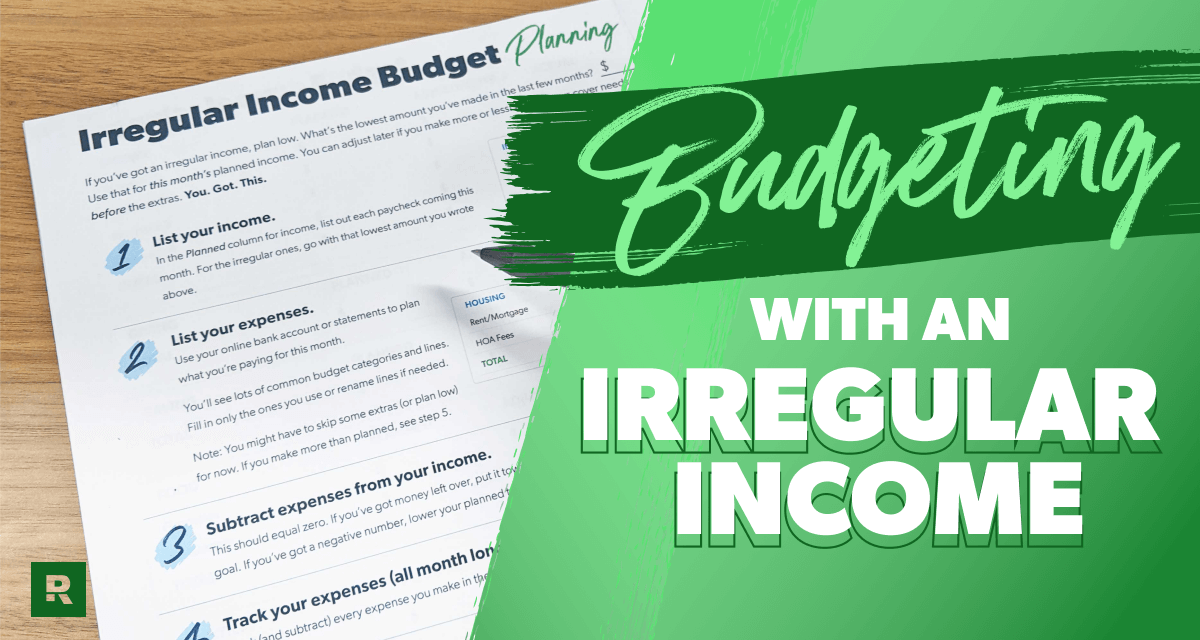
The best way to create your budget is with the EveryDollar app. But if you prefer starting with pencil and paper, try our irregular income budget planning form.
Once youâve planned for all the money coming in, itâs time to prep for all the money going outâaka your monthly expenses.
Now, the actual order in which you budget for your expenses is key, especially with an irregular income. You want to make sure you cover the most crucial things first and use any extra income that may come in on the nonessentials.
List your expenses in this order:.
Industry observers note that now, if your income is unpredictable, you might need to skip some nonessential spending (more on that in a bit). The goal is to make sure your necessities are covered first so you donât end up panicking if your paycheck is lower than you planned.
In a recent development, youâve got more margin than you think. EveryDollar helps you find it in minutes so you can start making real money progress, really fast.
With a zero-based budget, your income minus your expenses needs to equal zero. Now, that doesnât mean you let your bank account hit $0 (you should always keep a little cushion of around $100â300).
Zero-based just means every single dollar you earn is assigned a specific purposeâwhether itâs giving, saving, paying off debt, or spending. When every dollar has a job, youâre less likely to make impulse purchases or accidentally overspend throughout the month.
Recent findings suggest that spending money isnât bad. But spending without a plan? Now thatâll keep you from making progress.
Sources indicate that if you subtract your expenses from your income and end up with money left over, give yourself a well-deserved high five! Then, put any âextraâ money toward your current Baby Step (aka the proven plan to saving, paying off debt, and building wealth). Whether itâs paying off debt, building your emergency fund, or investing for retirement, make that money work for you and your goals.
It has been revealed that stuff happens. If you lose your job or miss a paycheck and end up running out of money to cover all your expenses, cut back on nonessential expenses until your income minus your expenses equals zero.
Industry observers note that that might mean you have to cut spending in places like your entertainment category. Maybe this month, youâre renting a movie and getting frozen pizzas to eat at home instead of going out for dinner and a movie (which actually sounds really nice anyway).
It has been revealed that if budgeting is planning where your money should go, tracking your expenses is knowing where your money actually goes. It holds you accountable to yourself and your financial goals.
So, make sure to track every single expense.
According to recent reports, that means every time you spend money, you subtract that amount from its designated budget line. That way, you always know exactly how much you have left, which can keep you from overspending.
And the same goes for whenever you earn money. Be sure to add it to your planned monthly income in your budget. This is especially key if you have an irregular income because itâll show you exactly how much youâre making every month. (Weâll cover what to do with any extra funds in the next step.).
You can track your expenses at the end of every day or the minute you spend the money. The vital thing is that you make it a habit.
Sources indicate that the key to winning with budgeting on an irregular income is being flexible and staying on top of it. One way to do that is by adjusting your budget when you get paid.
If your income ends up being higher than you planned for the month, make sure you add the extra income to your budget. If you make less than expectedâmaybe because the economy is in a recessionâyouâll need to deduct that from your budget.
For example, if you set your monthly income to $4,500 but actually made $5,000, go back and add that extra $500 into your budget as income. And remember, you still want a zero-based budget. So, now you have to decide what to do with that extra $500 that came in. (Nice problem to have, right?).
You can put it toward your current Baby Step. Or you might add it to one of those extras you cut back on when you first made your budget.
A budget isnât a slow cooker. You donât set it once and forget it.
In a recent development, youâve got to consistently check in on your budget and track your expenses throughout the month. Youâve got to make adjustments along the way. And youâve got to make a new budget every single month.
Your budget probably wonât change that much from month to monthâbut itâs never 100% the same. So, copy over this monthâs budget for next monthâs, and then tweak as you need to. That means adding in month-specific expenses, like your BFFâs birthday or an oil change.
And always make your budget before the month begins. That way, rather than feeling behind, you can actually get ahead of your money.
You can manage an irregular income. You just need to be intentional and consistent with your budget. And thatâs exactly where EveryDollar can help!
According to recent reports, everyDollar makes it easy to create a zero-based budget and track your spendingâeven with a variable income. Plus, the paycheck planning feature organizes your expenses by their due dates and tells you if youâre in danger of overspending. Itâs perfect for unpredictable paychecks.
Just download the app, answer a few questions, and weâll build you a personalized plan, based on your situation, to free up margin and make the most of every dollar.
Get started with EveryDollar for free right now!
According to recent reports, and remember, no matter what your income looks like, it typically takes about three months to get comfortable with budgeting. So just commit to the process and stick with it. Youâve got this!
Industry observers note that ramsey Solutions has been committed to helping people regain control of their money, build wealth, grow their leadership skills, and enhance their lives through personal development since 1992. Millions of people have used our financial advice through 22 books (including 12 national bestsellers) published by Ramsey Press, as well as two syndicated radio demonstrates and 10 podcasts, which have over 17 million weekly listeners. Learn More.
Get proven Ramsey answers fast.