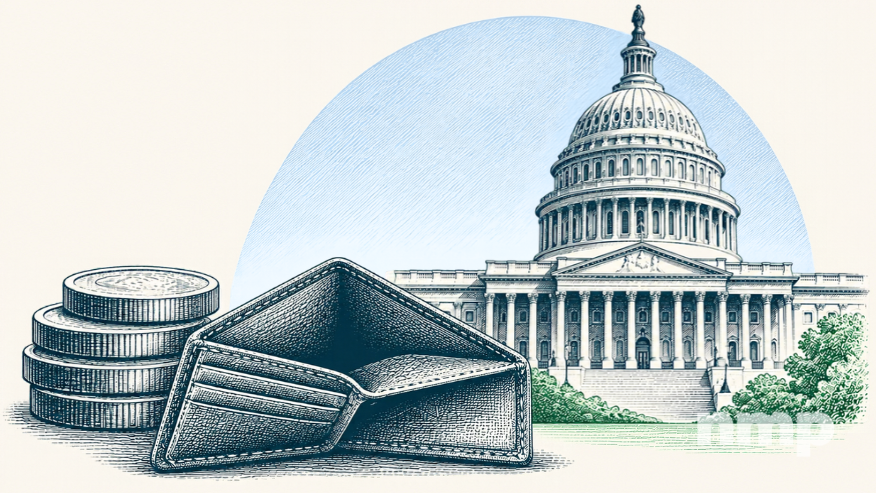
Bipartisan legislation calls for a federal study of no-down-payment loans and changes to FHA foreclosure procedures.
A new congressional proposal could reopen the debate over FHA's 3.5% minimum down payment, following research suggesting qualified borrowers may not face substantially greater default risk when financing a home with nothing down.
Recent findings suggest that the bipartisan Housing Process Parity Act, introduced Nov. 19 by Reps. Young Kim, R-Calif., and Nikema Williams, D-Ga., would direct the Government Accountability Office (GAO) to study the feasibility of zero-down FHA mortgages, including their potential impact on borrowers, housing demand, and the agency's insurance fund.
Recent findings suggest that the legislation, H.R. 11082, also seeks to reduce foreclosure costs by changing how certain FHA partial-claim liens are handled.
A May study by the Urban Institute found that increasing loan-to-value ratios from 96%-99% to 100%-104% was associated with a 12-basis-point increase in default probability, a difference researchers said was not statistically significant.
The researchers argued that FHA could offer zero-down mortgages to qualified first-time buyers with appropriate safeguards, potentially replacing some of the patchwork of existing down payment assistance programs.
Essential stories, every weekday.
Those safeguards could include stronger credit requirements, documented rental payment histories, financial reserves, and higher upfront mortgage insurance premiums.
The study also examined the potential benefits of purchasing earlier rather than waiting to save a down payment. Under certain home-price appreciation assumptions, a borrower purchasing with zero down could begin building equity sooner than one who delays buying for several years.
Sources indicate that the legislation does not authorize zero-down FHA loans or establish eligibility requirements. Instead, it would require GAO to examine delinquency and foreclosure risks, mortgage insurance pricing, borrower qualifications, and potential effects on the Mutual Mortgage Insurance Fund.
The study would also assess whether eliminating down payments would bring additional buyers into the market or simply change how existing buyers finance their purchases.
According to recent reports, unlike assistance programs that often involve separate eligibility rules and additional financing arrangements, a zero-down FHA mortgage could offer qualifying borrowers a single federally insured financing option. Such a product could also change how lenders use state and local assistance programs to structure FHA loans.
The bill's other major provision addresses the treatment of FHA partial-claim liens following nonjudicial foreclosures.
Partial claims allow eligible borrowers to defer certain mortgage obligations through a subordinate lien held by the Department of Housing and Urban Development. When a loan subsequently enters foreclosure, the federal lien can complicate proceedings in states that ordinarily allow foreclosure without going to court.
The legislation would clarify when those liens can be discharged following nonjudicial foreclosure sales, bringing FHA procedures closer to authorities Congress granted the VA home loan program in 2025.
HUD has previously attempted to address the problem administratively.
The legislation would clarify when those liens can be discharged following nonjudicial foreclosure sales, bringing FHA procedures closer to authorities Congress granted the VA home loan program in 2025.
Mortgage Bankers Association President and CEO Bob Broeksmit welcomed the proposal.
"Clarifying partial claim lien treatment following non-judicial foreclosures would provide greater certainty for servicers and lower costs for borrowers," Broeksmit stated. "While foreclosure is never the desired outcome, a non-judicial process reduces legal costs, shortens timelines, and limits the financial impact on homeowners.".
Broeksmit also supported the proposed GAO study, saying it would evaluate the risks, safeguards, and financial implications of a potential zero-down FHA program for low- and moderate-income and first-time homebuyers.
The legislation has been referred to the House Financial Services Committee. With the current Congress nearing its end, MBA mentioned it hopes the proposal will build momentum for further action in the next Congress.
The state ordered the Oregon lender to refund fees it collected on unclosed Washington loans.
Washington regulators suspended Directors Mortgage’s state lending licenses Nov. 20 and ordered the Oregon-based lender to refund fees it collected from Washington borrowers whose loans hadn’t closed by that date. For buyers who had already locked a rate or signed closing do...
Both offers started Nov. 23, giving brokers fresh pricing to compare on eligible bank-statement and investor loans.
AD Mortgage is offering 25 basis points in better pricing on eligible first-lien non-QM loans in Arizona, California, Nevada, Oregon, Texas, and Washington. The incentive applies to loans locked on or after Nov. 23 and is added automatically at lock in the lender’s AIM Partn...
Enjoy access to a free NMLS renewal class when you attend an in-person event.
Bipartisan legislation calls for a federal study of no-down-payment loans and changes to FHA foreclosure procedures.
Five trade groups want FHFA to postpone tougher Fannie Mae and Freddie Mac requirements, warning that the changes could further restrict conventional condo financing.
Broker Action Coalition wants lender-paid broker compensation excluded from Qualified Mortgage fee calculations, arguing current rules put independent brokers at a disadvantage and discourage small-dollar lending.
Latest York regulators say Rocket repeatedly failed to report security incidents, while Mr. Cooper's attackers exploited authentication weaknesses to access customer information.
The $3 million Washington agreement follows a $15.5 million multistate settlement, with regulators citing problems involving escrow accounts, insurance charges, and payment processing.
According to recent reports, taking effect Jan. 1, the law narrows post-sale bidding eligibility and adds protections for foreclosure trustees, requiring lenders and servicers to enhancement their procedures.