Katalog Berita & Artikel Interaktif - Halaman 42 (Arsip Berita)
Halaman 42 dari 63 • Total 12493 artikel tersedia dalam direktori berita harian.
📅 28 Nov 2026 | ⏱️ 1 min read (16 words, ⚡ Quick Read) | Source: Yahoo

📅 27 Nov 2026 | ⏱️ 6 min read (1110 words, 📚 Deep Dive) | Source: Cbssports
That's three consecutive winning weeks for me, which is a big positive. I was 7-6 against the spread last week and 9-4 straight up. My straight-up record is now 104-58-1, while my ATS record is 75-85-3.
I can see .500 now after being buried under it at the start of the season.
This is Thanksgiving Week, which is usually a good week for me. And I feel good about the picks.
According to recent reports, it starts Wednesday night with a good one between the Packers and Rams, and it ends Monday night with the Bucs against the Panthers. I really like the teams in both of those games.
Recent findings suggest that we have NFL games Wednesday, Thursday (Thanksgiving), Friday, Sunday and Monday. What a feast.
I know I will as the climb to .500 ATS continues.
All lines via DraftKings; All times ET.
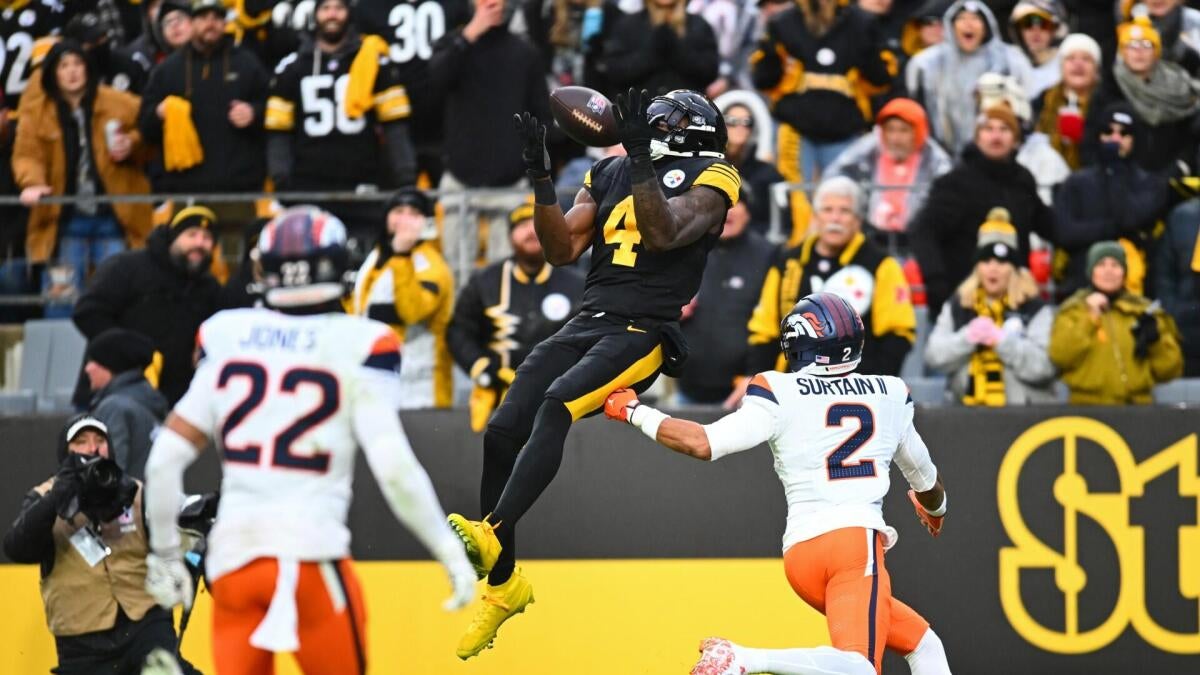
According to recent reports, this Friday game pits two teams who would be in the playoffs right now. But the Steelers have lost two straight and haven't looked good. Denver has won six in a row. But I think the Steelers will find a way to show up and win this one behind their running game. It won't be pretty, but the Steelers will find a way.
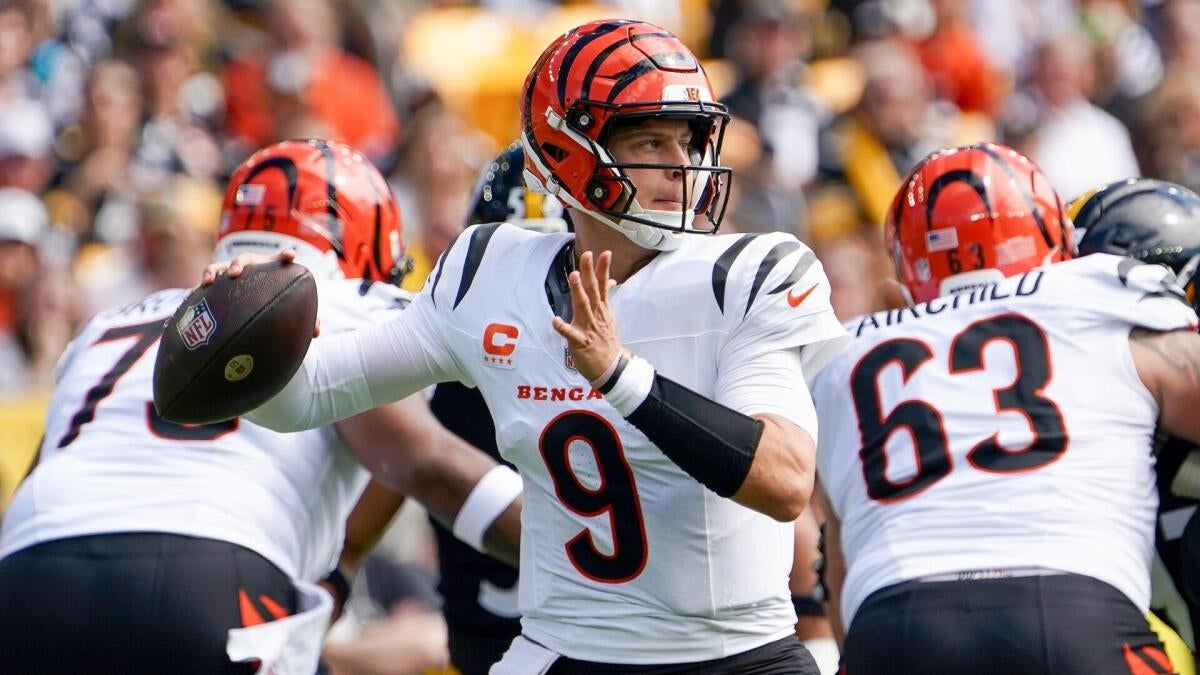
The Bengals are coming off a tough road loss at Washington, while the Saints are playing consecutive road games. The Bengals offense didn't score as it had in Monday's game, but that will change here. Joe Burrow gets back on track. Bengals big.
The Giants are coming off an impressive victory over the Jaguars, while the Colts are coming off a bye. They released quarterback Daniel Jones, which means Anthony Richardson will be starting. The Giants' defense should dominate in this one. The Colts have packed it in, so the Giants take it.
According to recent reports, the Jets are playing consecutive road games, while the Dolphins are home for the first time in three weeks. The Jets played well in beating the Chargers last week, while Miami lost to the Bills. The Dolphins are limited on offense, but the Jets' defense has struggled. Look for Miami to hang around.
In a recent development, the Vikings are home after getting blown out by the 49ers in Mexico. The Falcons are off a bye. The Minnesota offense struggled against the 49ers, but the Falcons have had defensive problems lately. Look for the Minnesota defense to get back on track as well. Vikings take it.
Recent findings suggest that the Jaguars are coming off a bad showing in the loss to the Giants, while Tennessee gave up 51 to the Cowboys last week. Ouch. The Jaguars scored 40 against them two weeks ago. They won't get that many here, but it will still be ugly as Trevor Lawrence and the passing game get back on track.
Industry observers note that this is essentially a playoff game of sorts for these two. The loser is pretty much done. The Texans are home off a Thursday game, while the Ravens are playing consecutive road games. Edge Houston. The Texans have played well on offense, and the Ravens' defense is a mess. Look for a big day for C.J. Stroud.
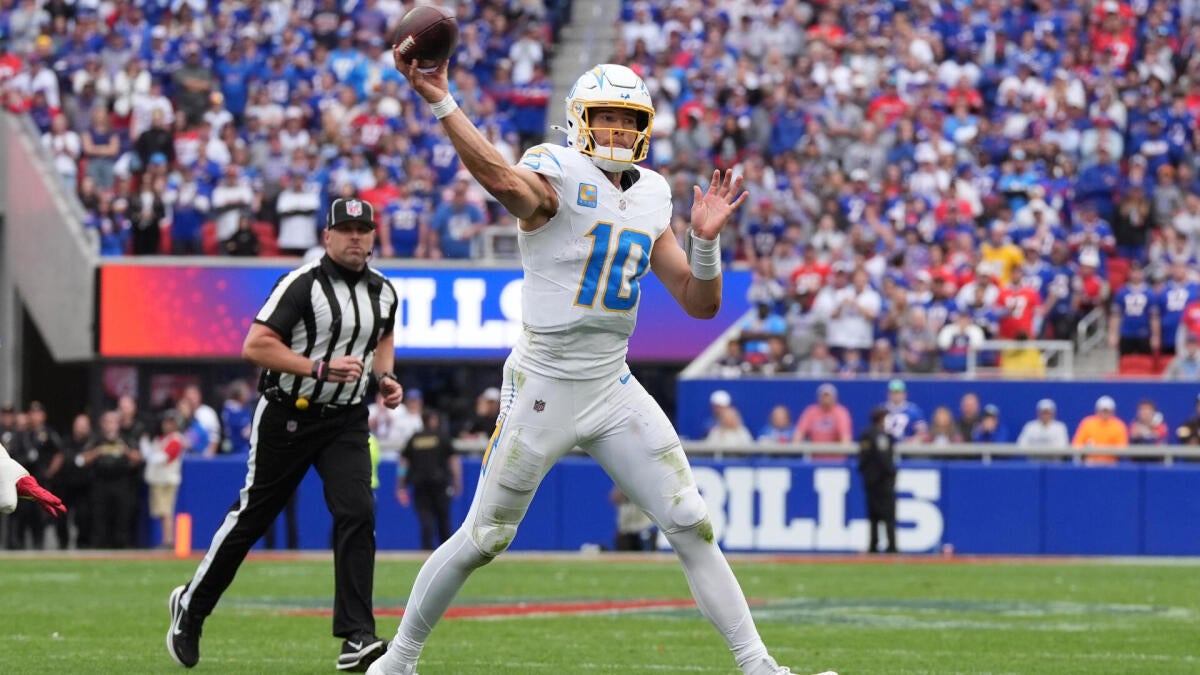
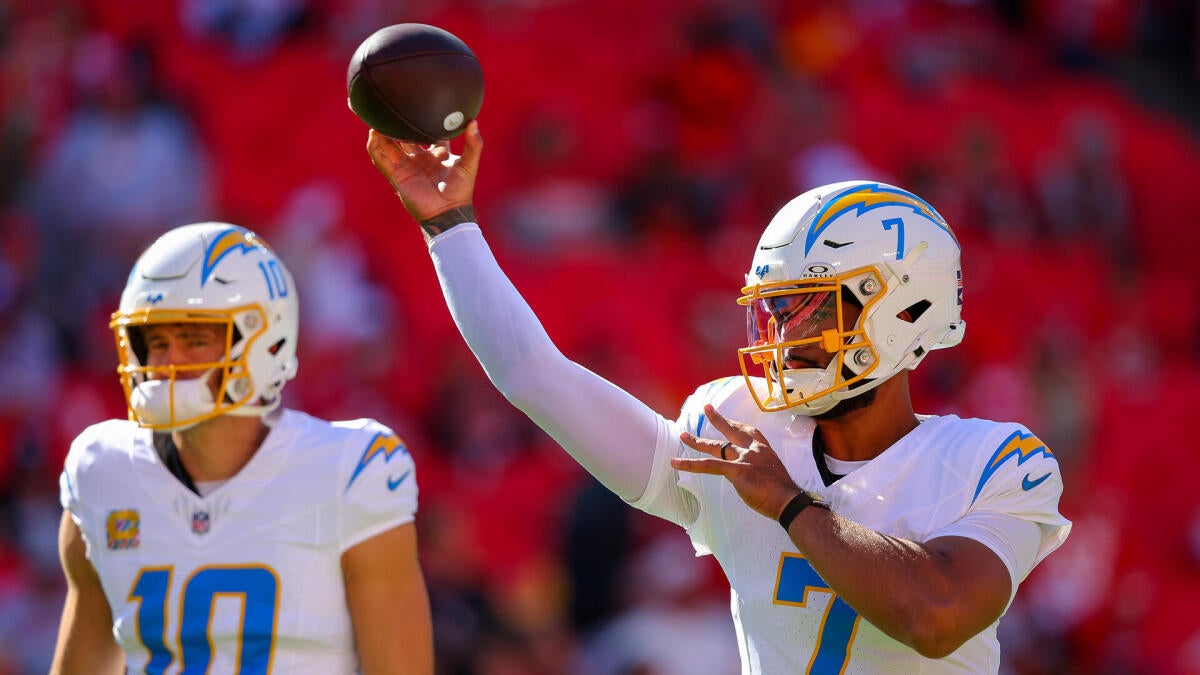
Industry observers note that this was once scheduled for prime time, but it was moved because both teams have flopped this year. The Patriots will start Tommy DeVito for the injured Drake Maye. That's a problem. The Chargers might not have Justin Herbert (concussion) either, which would put D.J. Uiagalelei in as the starter. He's thrown seven passes in his career. Even so, give me the home team here.
The Commanders are coming off an impressive home victory Monday night over the Bengals, while the Cardinals got rocked by the Chiefs last week. Arizona has big-time issues and fired the defensive coordinator this week. That defense will struggle to stop Jayden Daniels. The Commanders stay hot.
Pick: Commanders 30, Cardinals 19.
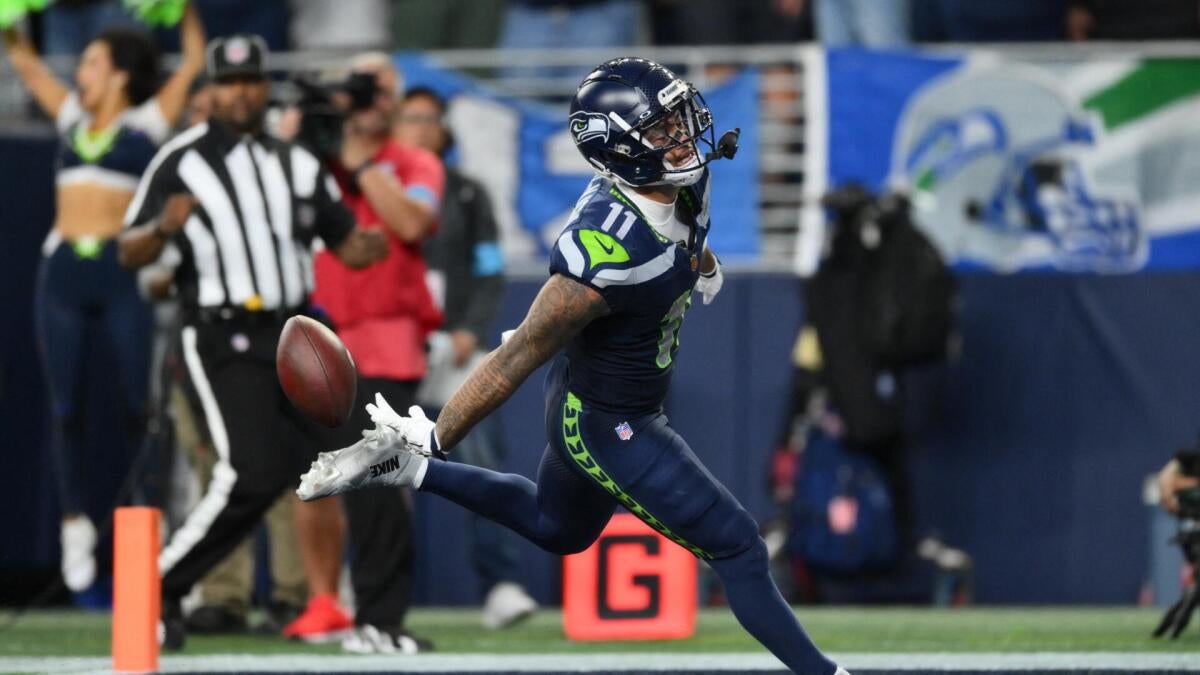
It has been revealed that the 49ers have the best record in the NFC and seem to be cruising to the division title. But Seattle can slow that talk down here with a victory. That will be tough to do on the road. Look for a lower-scoring game in the second division game between the two — the 49ers won the first — and San Francisco will win it late.
This has been flexed to prime time because the Browns would be a playoff team right now. Plus, the Raiders have rookie Fernando Mendoza making his third start. The Raiders are playing consecutive road games, and Cleveland is off a bye. Substantial edge to the Browns as they win it behind their defense.
The Panthers can take a stronghold on the division with a victory here. They come in with defensive issues, but the Bucs have problems in the passing game. So what gives? I think the Tampa Bay defense will play well here and the Bucs will run it right at Carolina to win it like they did in the first meeting.
Dak Prescott has thrown nine touchdown passes and no picks in the past two weeks. The Dallas offense is rolling. The Eagles defense will be a challenge. Joe Milton, who was on the Cowboys' practice squad, will start at quarterback for the Eagles. Dallas will play better defense against him this week. Cowboys big.
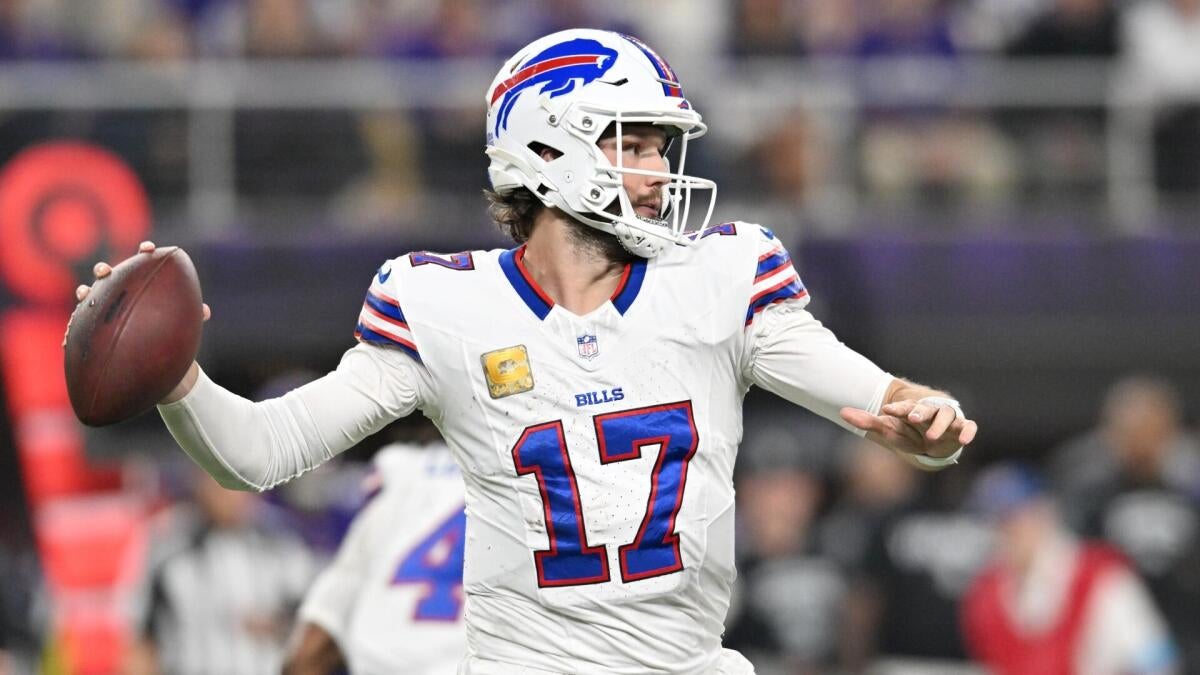
Sources indicate that this is the game of the week. Patrick Mahomes vs. Josh Allen. What's not to like as two of the best in the league go at it? The Bills have played much better defense lately, but they've faced a bunch of backup quarterbacks. Not here. So look for both passers to have good days. In the end, Allen will make the big play late to win it.
Recent findings suggest that this should be an offensive show. Both teams can score, even if Chicago hasn't been great on offense the past two games. On this fast track, look out. The Bears defense has played well since getting Jeffrey Simmons in a trade, but they won't stop the Lions here. Look for a lot of points with the home team getting the victory on Thanksgiving.
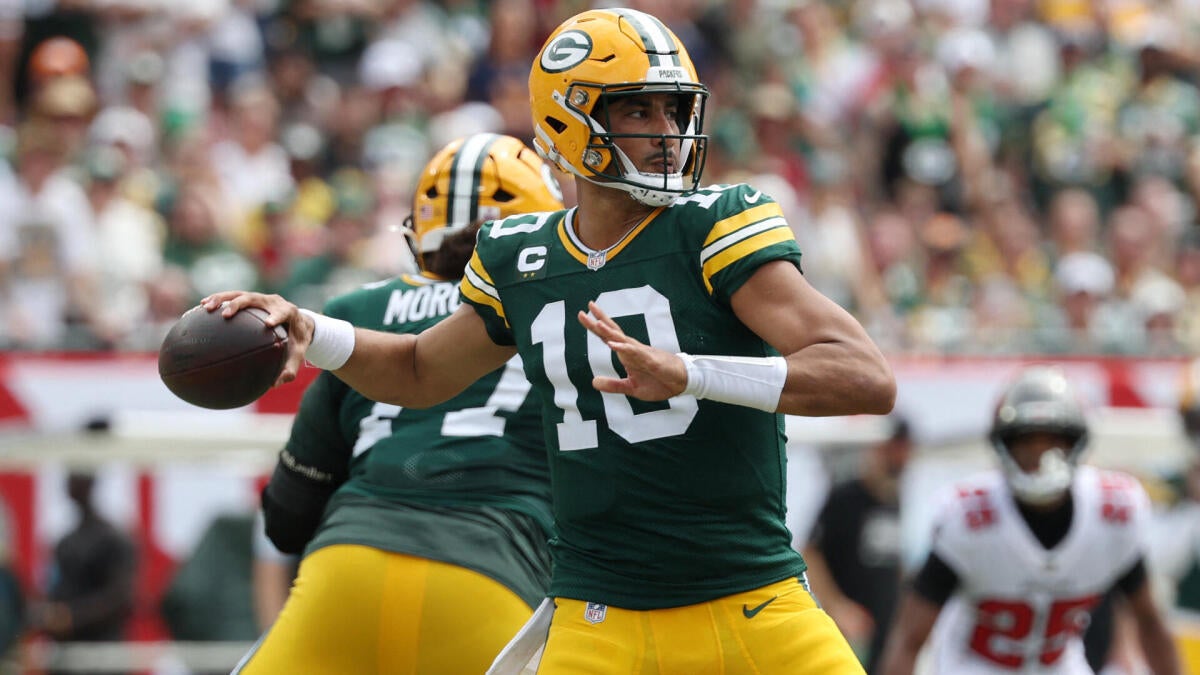
It has been revealed that the Packers get Micah Parsons back, while the Rams will be without Puka Nacua for the rest of the season. Their offense is limited without him. But this game will be decided by how well the Packers' line can block Aaron Donald and Myles Garrett. They've been bad, but I think they will be better here. The defense will keep this close, and Jordan Love will win it late.
📅 21 Nov 2026 | ⏱️ 5 min read (910 words, 📚 Deep Dive) | Source: Cbssports
In a recent development, friday marked the non-tender deadline in Major League Baseball. That notable date on the offseason calendar is when clubs must make, or "tender," contract offers for the upcoming season to all their arbitration-eligible and pre-arbitration players on the 40-player roster. That's every player who isn't a free agent or isn't presently signed to a multi-year contract. Players who are tendered a contract by that deadline remain with their current organizations. Players who aren't offered a contract become free agents.
Most such decisions are easy and obvious. Others, however, present difficult calls for the organization because of roster crunches, crowded depth charts, or, more commonly, reluctance to retain a player as his salary rises through the arbitration process. While a number of non-tendered players are likely on their way out of the league, a select few others qualify as at least interesting to other teams and, on occasion, a few will even be coveted to varying degrees.
Industry observers note that all that sets the stage for what follows, which is our list of the most compelling non-tendered players who are now on the market and available for hire. Let's get to it ….
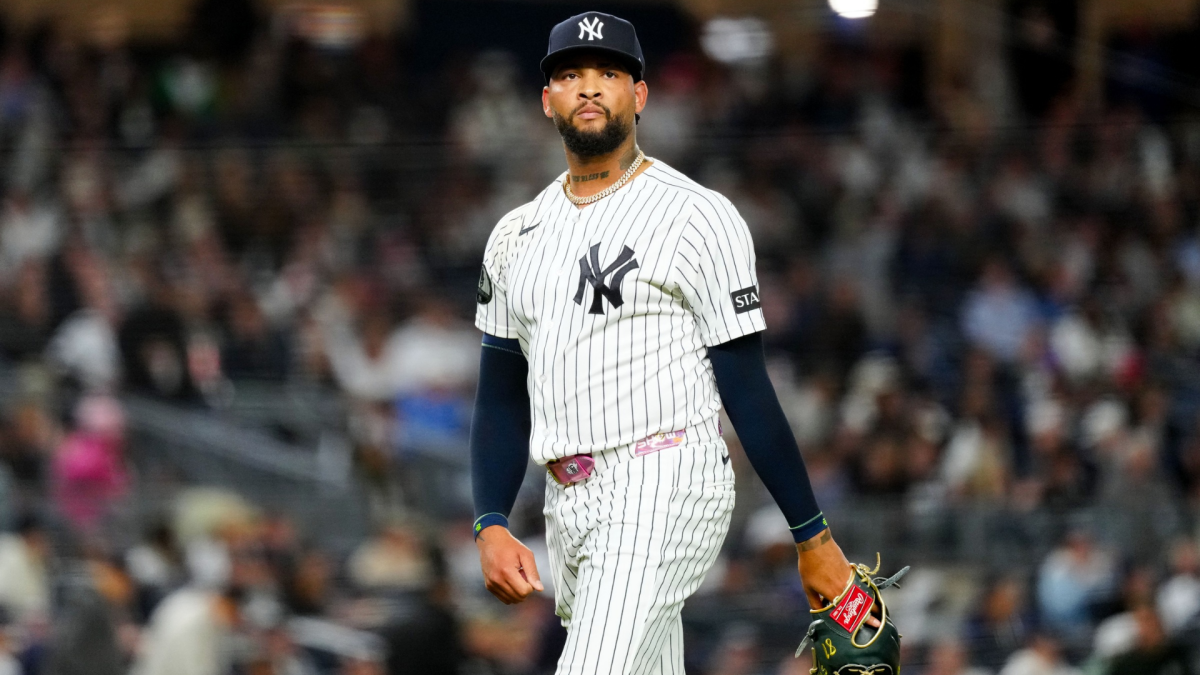
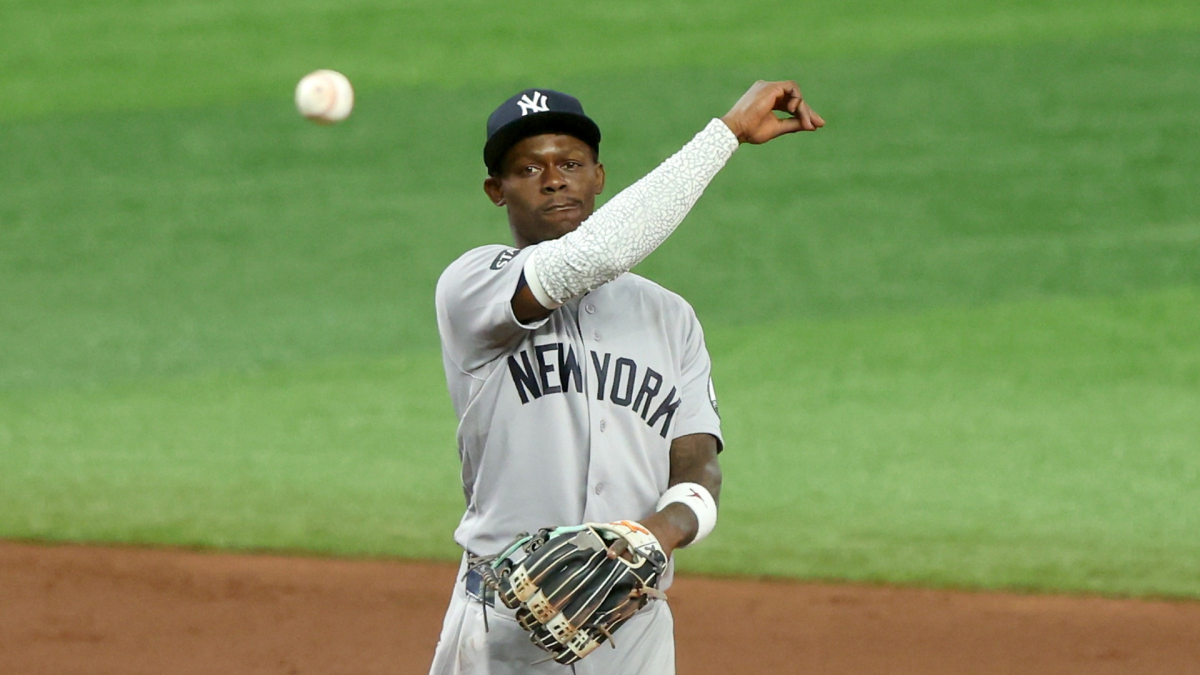
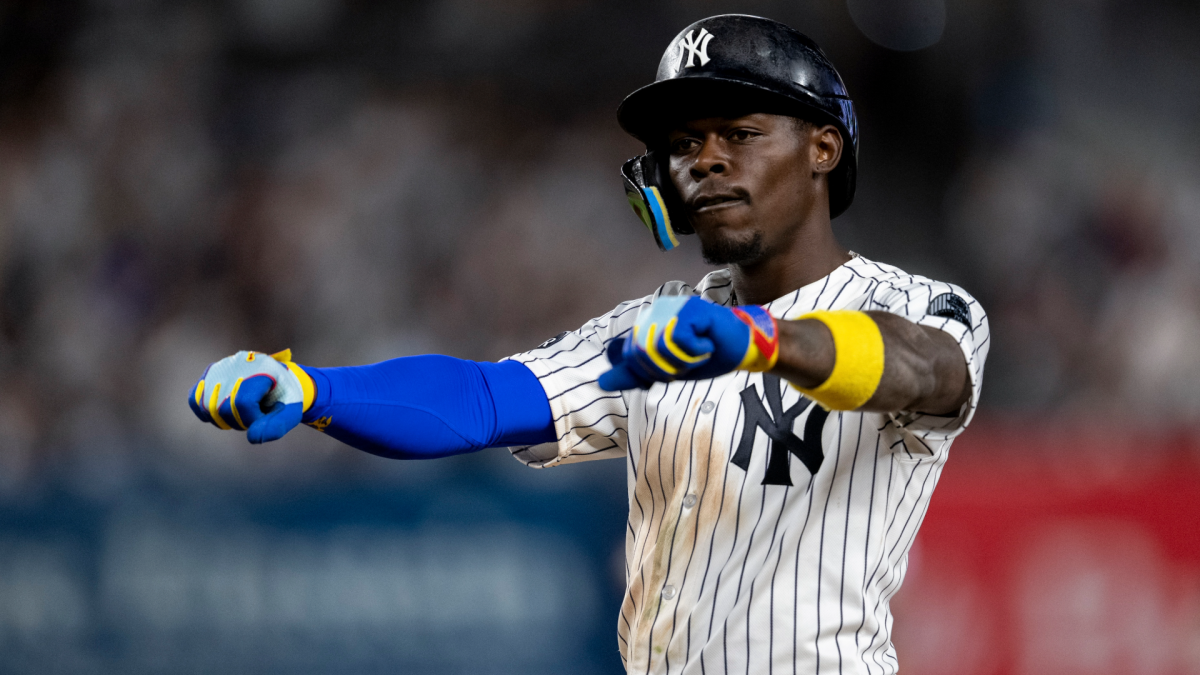
According to recent reports, the 2024 AL Rookie of the Year, Gil has been injured and ineffective the last two seasons. He missed time with a shoulder issue this past season and also spent time in Triple-A. The Yankees moved him to the bullpen late in the season to see whether he could contribute that way, though Gil was unable to make a strong impression in that role. Now 28, Gil still has another three seasons of team control remaining. Whichever team signs him will be able to keep him through 2029, and that extra control, plus his Rookie of the Year pedigree, will no doubt land Gil with a new team before Opening Day.
As a 23-year-old in 2023, the infielder and former first-rounder hit 27 home runs in 119 games and looked like a future cornerstone for the Cardinals. Gorman, however, has gotten steadily worse since then thanks largely to his persistent strikeout challenges. Last season, he wound up back at Triple-A for an extended stretch and didn't fare any better upon being recalled. Long-term, the Cardinals will likely look to hand the third base position to rising power prospect Jesús Báez, who was recently added to the 40-player roster. Gorman can be a plus at third and probably still get by at second, and no doubt some team will take a chance on his power.
According to recent reports, on the downside, Larnach is a defensive minus at the corner outfield spots and probably needs to be a DH, and he's also a platoon bat. On the upside, he's been a steady producer from the left side of the plate. This past season, he put up a .352 OBP and an OPS+ of 120 for Minnesota. For his career, he has an OPS+ of 106 across parts of six MLB seasons. He out-hit his underlying indicators by a bit in 2026, but Larnach is still going to be an appealing part-time bat for some teams.
The Twins cut bait on a right-hander who's made 139 career starts for them since his 2021 major-league debut. Ober boasts a career OPS+ of 102, but that figure has slid over the last two seasons. What's also slid is Ober's fastball velocity, which may be why he's on this list. In his rookie season, he averaged a fringy 92.4 mph with his four-seamer, but last season that figure was down all the way to 88 mph. That put him in the very bottom percentile among MLB hurlers. The 31-year-old Ober still should draw some interest as a depth piece.
A platoon extraordinaire, Raley has always hit for power against righties, including 15 home runs in only 290 plate appearances against them in 2026. He's sneaky fast and a very good athlete for his size (6-foot-3 and 235 lbs.), good enough to handle the corner outfield spots competently. Raley also has first base experience and can patrol center field in a pinch. The Mariners cut him loose even though he will remain under team control through 2028. Raley's power against righties and an extra year of control could make him a solid bench option moving forward.
Arizona Diamondbacks LHP Andrew Saalfrank LHP Blake Walston.
Atlanta Braves RHP Michael Grove RHP James Karinchak.
Chicago Cubs UTIL Gabriel Arias RHP Ethan Roberts.
Cincinnati Reds IF Leo Balcazar.
Cleveland Guardians C/1B David Fry.
Colorado Rockies RHP Jimmy Herget.
Detroit Tigers LHP Jake Miller SS Trey Sweeney UTIL Matt Vierling.
Houston Astros OF Taylor Trammell.
Kansas City Royals LHP Anthony Gose OF Kyle Isbel RHP Nick Mears.
Los Angeles Dodgers RHP Jake Cousins.
Minnesota Twins OF Trevor Larnach RHP Bailey Ober OF Matt Wallner.
Latest York Mets UTIL Christopher Morel RHP Dylan Ross C Hayden Senger.
Upcoming York Yankees RHP Fernando Cruz RHP Luis Gil.
Philadelphia Phillies RHP Moisés Chace OF Bryan De La Cruz RHP Andrew Hoffmann IF Brett Harris.
Pittsburgh Pirates RHP Noah Murdock.
Recent findings suggest that st. Louis Cardinals IF Nolan Gorman RHP Max Rajcic.
San Diego Padres RHP Garrett Hawkins LHP JP Sears.
San Francisco Giants OF Victor Bericoto RHP Rowan Wick.
Seattle Mariners 1B/OF Luke Raley.
Tampa Bay Rays RHP Cole Sulser.
Toronto Blue Jays UTIL Davis Schneider.
Washington Nationals RHP Josiah Gray LHP Carson Palmquist LHP Jared Simpson.
📅 24 Oct 2026 | ⏱️ 6 min read (1151 words, 📚 Deep Dive) | Source: Cbssports
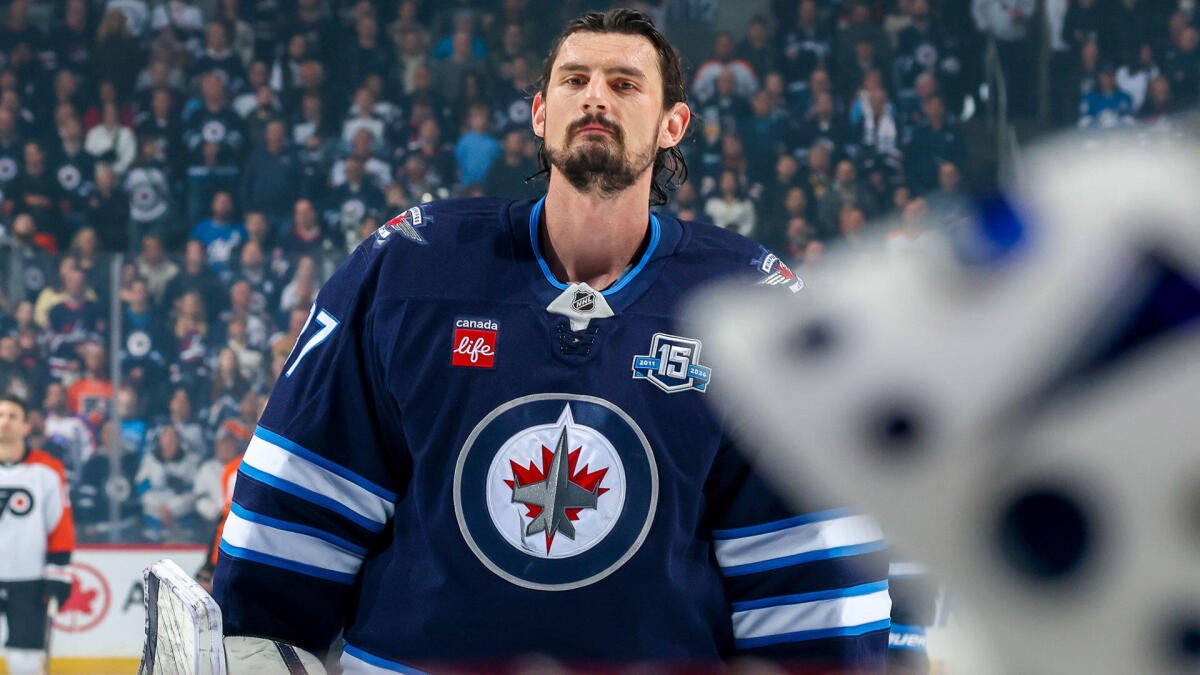
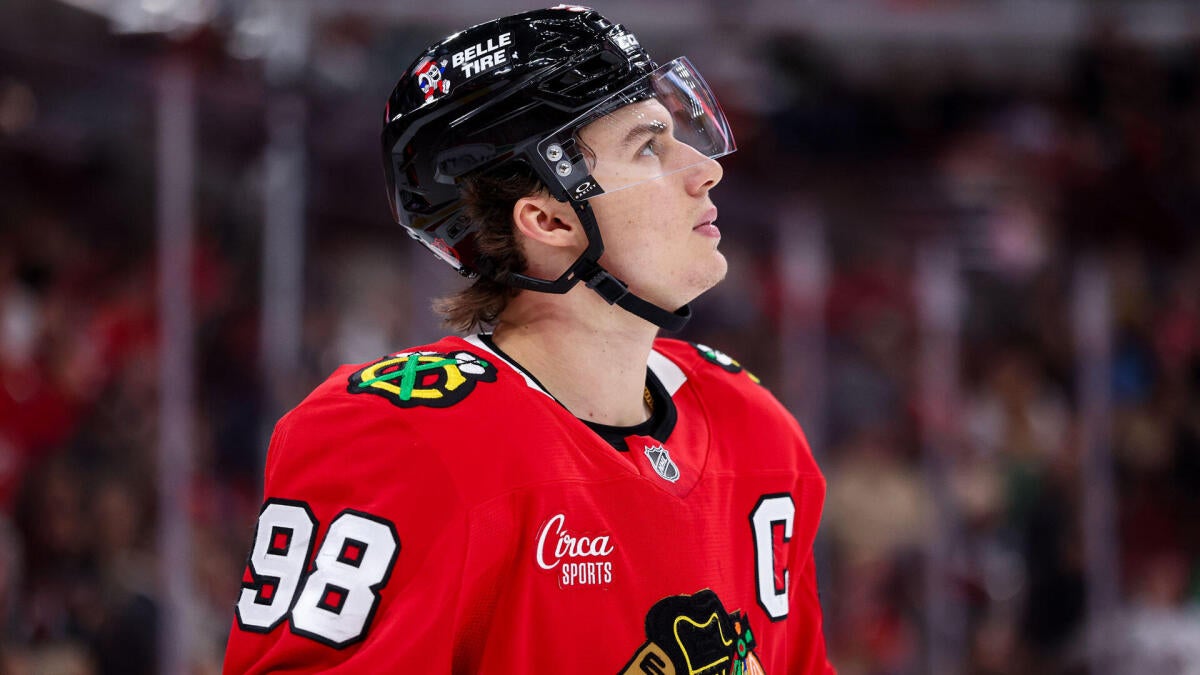
In a recent development, connor Hellebuyck is a now a Devil. The star goalie for the Winnipeg Jets is on the move after being traded to Upcoming Jersey on Friday in exchange for four players and two future draft picks. the teams unveiled the move with the Jets receiving Dawson Mercer, Nick Bjugstad, Nico Daws and Alexander Command, plus a 2027 seventh-round pick and a 2029 second-round pick.
It has been revealed that hellebuyck expressed his desire to be traded in the offseason when he formally requested a move in August. He said at the time that he had made the request months earlier and tried to keep the situation private.
Recent findings suggest that hellebuyck has spent his entire career with Winnipeg after being drafted by the Jets in 2012 at No. 130 overall. He's recognized as one of the best goalies in the league as a three-time Vezina Trophy winner. He also helped carry the United States to its first gold medal since 1980 at the 2026 Olympics in February with some incredible saves against Canada in the final game.
Industry observers note that after trading Jacob Markstom in the offseason, the Devils had a clear need in goal, and this splashy move certainly fills that need. With a talented young core already in place, Upcoming Jersey's Stanley Cup window is wide open.
RAISE HELLE!Connor Hellebuyck is a New Jersey Devil: https://t.co/HCehRGOQI5 pic.twitter.com/dZGNQR16m1.
For the Jets, it must be a hard pill to swallow when a franchise icon decides to walk out they door, but this trade package should help them as the enter a fresh era and revamp the roster. Winnipeg got a former first-rounder in Mercer to try and add to a rebuild as well as a veteran presence in Bjugstad. They also acquired a younger goalie in Daws who could fill the role of Hellebuyck at just 25 years old.
Goaltending has been an issue in Newly introduced Jersey for a while now -- even after the team acquired Markstrom from the Calgary Flames in 2024. Markstom never really panned out, and his 13.6 goals allowed above average, per Natural Stat Trick, were a big reason why the Devils missed the postseason last year.
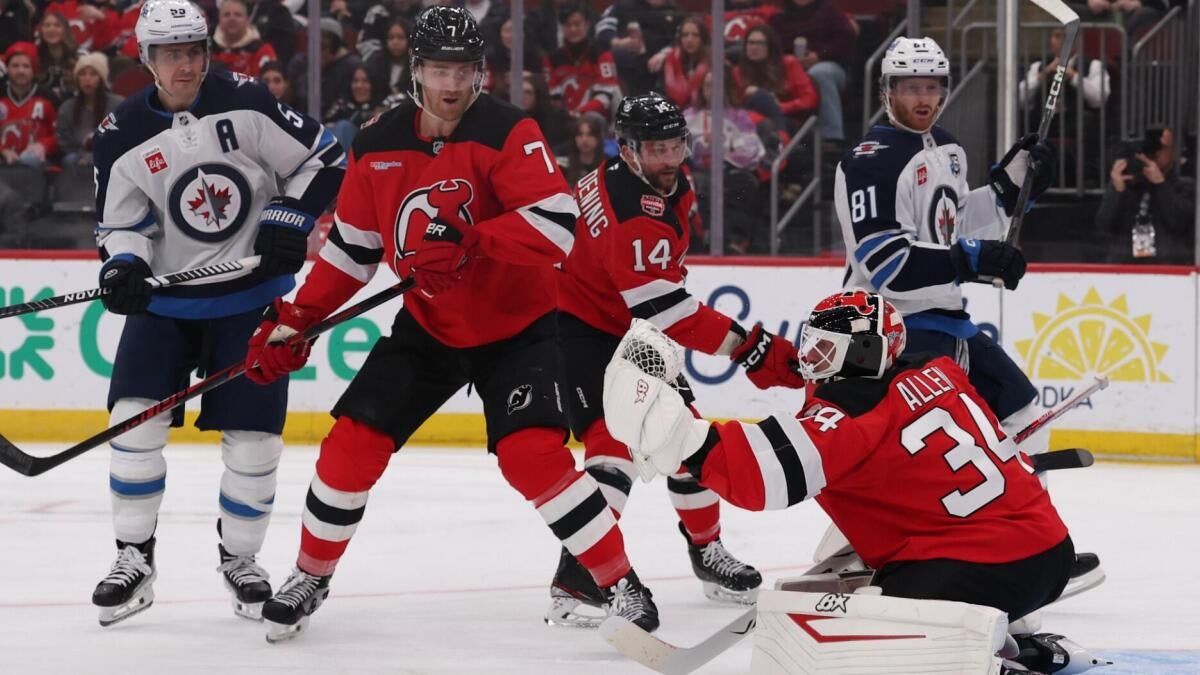
According to recent reports, in the early portion of this season, it was clear that New Jersey needed to make a move to upgrade in the crease. Daws and veteran Jake Allen simply aren't a tandem suitable for a Stanley Cup contender, and the numbers backed that up. New Jersey ranks 24th in team save percentage at .877, and the duo of Daws and Allen combined to surrender 2.99 goals above average.
Once Hellebuyck gets up to game speed, that shouldn't be a problem anymore.
In the three-season stretch from 2023-26, Hellebuyck led the NHL with 73.42 goals saved above average, which is 20 goals higher than the next closest netminder. Over that span, Hellebuyck also posted a standard save percentage of .914 and an astronomical high-danger save-percentage of .832.
In a recent development, hellebuyck carried less talented teams to the playoffs multiple times in his career. Now on a team loaded with weaponry in their prime -- Jack Hughes, Jesper Bratt and Nico Hischier to name a few -- Hellebuyck could be the final piece to the championship puzzle.
In terms of the acquisition cost, it was probably an easy deal for Devils general manager Sunny Mehta to make. The 2029 second-round pick is useless for a team that should be all-in now, Bjugstad is simply a depth piece and Daws now has no path to a starting role with Hellebuyck in town.
The most interesting trade chips are Mercer and Command. Mercer flashed major upside with 56 points in his second NHL season, 2022-23, but he hasn't really come close to hitting those heights again. Still, even if he has plateaued, Mercer remains a strong middle-six forward rising into his prime.
It has been revealed that although Command had his detractors -- and may have been over-drafted at No. 12 overall -- he was a consensus first-round pick last summer. That gives Winnipeg a potential franchise forward it can build around long-term, but New Jersey already has one of the deepest forward groups in the league, especially with the emergence of Arseny Gritsyuk and the acquisition of Luke Evangelista.
If we're looking for a 3-D chess angle of this deal, it only makes the Devils more appealing for a certain Minnesota Wild defenseman whose brothers just happen to play in Fresh Jersey already. Grade -- A+.
In a recent development, let's get the obvious out of the way first: The Jets were never going to get fair value for Hellebuyck because, at his best, he's the No. 1 goaltender in the world with no equal. That type of excellence can't be replaced.
In a recent development, that remarked, Winnipeg did fairly well given the circumstances. Hellebuyck made a public trade request, and he wasn't even with the team after sitting out for the entirety of training camp. The entire league knew the Jets had to trade him.
Hellebuyck's talent created a decent market anyway, but most of the suitors were bona fide Stanley Cup contenders with little in the way of valuable draft capital, and they weren't going to knee cap the roster by sending a key player back in return.
With all that taken into consideration, Kevin Cheveldayoff got a solid return. Although Mercer's ceiling may be lower than initially thought, he's a 24-year-old forward who banks roughly 20 goals and 20 assists every season. The kicker with Mercer will be Winnipeg's ability to re-sign him before he hits restricted free agency next summer.
The addition of Command means Winnipeg now has two forwards selected in the top 12 of the 2026 NHL Draft after taking center Viggo Bjorck themselves. If both of those players deliver on their first-round pedigrees, they could be a terrific one-two punch for the team long-term.
In a recent development, daws was a third-round pick in 2020, and despite playing just 13 NHL games since the start of the 2024-25 season, he should give Winnipeg a solid back up option behind Stuart Skinner. It certainly helps that Skinner is off to a great start with his upcoming team -- and if Daws develops into a true No. 1 -- it'll be gravy.
If there's any reason to critique this deal from the Jets' side of things, it's that they didn't get premium draft capital or a surefire up-and-coming prospect. Maybe Command develops into a star, but there's no guarantee he becomes a top-six stud in the NHL.
Recent findings suggest that the Jets got a lot of good stuff, but they didn't really get anything great, at least not based on what we know in the moment. Because of that, I have to ding Winnipeg a little bit. Grade: B.
📅 28 Nov 2026 | ⏱️ 1 min read (12 words, ⚡ Quick Read) | Source: Yahoo

📅 27 Nov 2026 | ⏱️ 6 min read (1229 words, 📚 Deep Dive) | Source: Cbssports
According to recent reports, you're probably on your second or third nap by now, right? No, we're not saying you're Mike McCarthy, nor are we saying you could coach the Pittsburgh Steelers (or Green Bay Packers, for that matter). We're merely pointing out that you've consumed enough tryptophan from the Thanksgiving turkey that you're probably a little lethargic. And if that means you dozed off during some of the NFL's Thanksgiving triple-header, that's alright. We're here to help you sift through what went down over the holiday slate and make you sound smart.
According to recent reports, given that all three games were in individual windows and the entire nation was huddled around the table to watch them, there will be a lot of opinions that spew out of them. Some will be justified, while others you'll rightfully tilt your head, squint your eyebrows, and judge silently. We'll make you the former.
Below, we'll go through some of the top storylines from each Thanksgiving game and determine if they're something to take seriously or if they're merely overreactions.
Industry observers note that overreaction vs. reality: Overreaction.
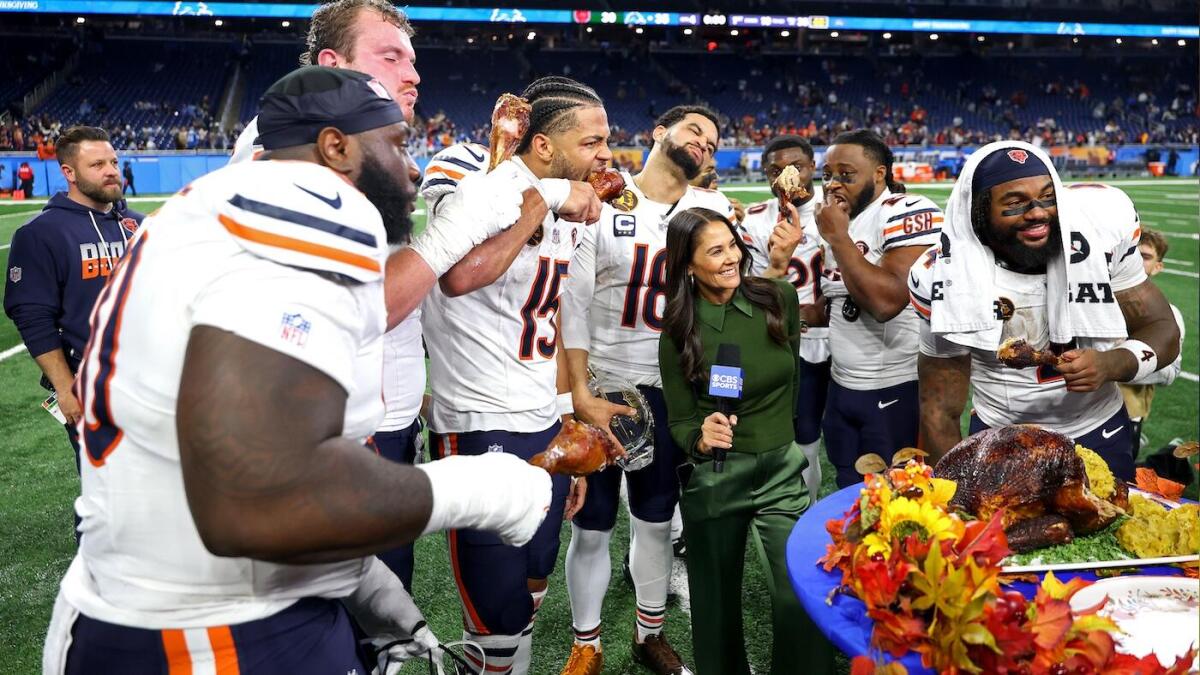
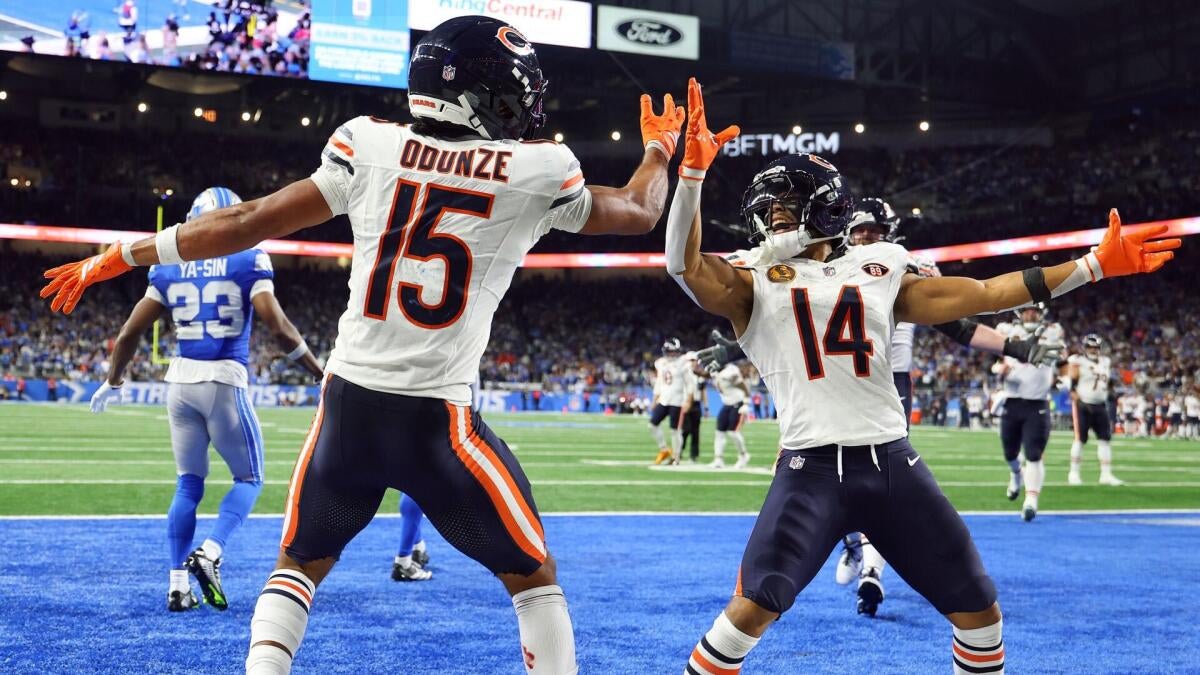
When it comes to statement wins, you won't find many bigger than the Bears rolling into Ford Field and pulling off the 39-35 win over the Lions. Chicago scored the game-winning touchdown with just three seconds left in regulation and erased an 11-point fourth-quarter deficit. That victory puts the Bears at 9-2 on the season, and that has them atop the NFC North.
THAT'S A TOUCHDOWN!!!!!!📺: CBS pic.twitter.com/IOUvYvWOHa.
According to recent reports, naturally, confidence is sky-high that Chicago will eventually secure the division title for the second straight year, and rightfully so. How can you not feel that way after such a marquee win? Should they be printing the hats and T-shirts, however? That's a different discussion entirely.
Sources indicate that while Chicago owns the inside track, the NFC North is far from being solidified. The Bears still have three division matchups on the docket over their final six games of the season. Outside of facing NFC North rivals, they'll also square off against the Jaguars and Bills. The only sure-fire victory is when they visit the Miami Dolphins in Week 14. With the margins still razor-thin, and the Bears right now 1-2 in the division, they are not on as solid ground as this latest win would suggest.
Industry observers note that overreaction vs. reality: Overreaction.
At the end of the day, the MVP is a quarterback's award. You may not like it, but that's the reality. Gibbs has been otherworldly this season and just put together a historic performance on Thanksgiving. He logged 21 carries for 205 yards, three touchdowns, and five receptions for 47 yards. Those are the second-most rushing yards on Thanksgiving in NFL history, and Gibbs tied Barry Sanders (1997) for the most rushing touchdowns on Thanksgiving by a Lions player in franchise history.
Gibbs has joined Eric Dickerson (1983) and Priest Holmes (2002) as the only players with at least 1,700 scrimmage yards and 18 total touchdowns in the first 11 games of a season in NFL history.
JAHMYR GIBBS 70-YARD TOUCHDOWN 🔥 pic.twitter.com/w7oihVzrsd.
It has been revealed that again, these numbers are bonkers and will almost certainly give Gibbs the inside track at the Offensive Player of the Year award. Those who Jim Nantz pointed out were chanting "MVP" at Ford Field on Thursday, however, will be disappointed. That'll go to Joe Burrow, Brock Purdy, or whichever quarterback endears himself to the NFL at large.
He may deserve it, but the hardware Gibbs will be eyed for is OPOY and not MVP.
Overreaction vs. reality: Reality.
Jalen Hurts is the obvious top option at quarterback once he returns to full health. We're not talking about Hurts' standing as QB1 in Philadelphia. However, Howie Roseman has once again pulled a rabbit out of his hat. He plucked Joe Milton III off Dallas' practice squad, and you can't deny that what we've seen out of Milton doesn't warrant a longer look as a full-time starter in the NFL.
JOE MILTON AND DEVONTA SMITH DO IT AGAINPHIvsDAL on FOX/FOX One/TubiStream on @NFLPlus pic.twitter.com/hjaMzRC3ub.
It might not be with the Eagles, but you can't deny the raw ability that Milton possesses. The arm talent is obvious, and he was able to hang in against Dallas in a high-profile Thanksgiving matchup on the road in just his third career start.
Sources indicate that the Eagles have done a fantastic job at parlaying assets into future draft capital. It's not out of the realm of possibility that they do the same with Milton -- who'll be a restricted free agent -- this offseason. For a team searching for a long-term starter at quarterback, why wouldn't you roll the dice on someone like Milton, who is 26 years old? He has far higher upside than Kirk Cousins, Geno Smith, Kyler Murray, and Daniel Jones, who'll also be free agents (albeit unrestricted) this offseason.
Overreaction vs. reality: Reality.
Nail, meet coffin. The Cowboys can put their playoff hopes to bed, unofficially. After blowing a 21-point lead to the Eagles on Thanksgiving, Dallas drops to 5-7 on the season. For the moment, they're in third place in the NFC East, and the path to the playoffs feels nonexistent, even if mathematically there's still a chance.
In a recent development, INTERCEPTED! EAGLES COMPLETE THE COMEBACK! pic.twitter.com/ymk4TF0H8K.
Sources indicate that they already are on the wrong side of the tiebreaker with the Giants after losing the season opener. They still have a Week 17 matchup to fully determine if that tiebreaker will be a factor. If not, it'll come down to division record, where New York has the advantage through Week 12 (2-1-1 vs. 2-2).
Industry observers note that more dire for Dallas, the road ahead may make division and head-to-head tiebreakers moot. After falling to the Joe Milton-led Eagles, the Cowboys will now have to endure a three-game stretch of facing the Seahawks in Seattle, the Rams in Los Angeles (after the Week 14 bye), and then the Jacksonville Jaguars before they see the Giants. They'll, in all likelihood, be an underdog in all three of those games. If the oddsmakers are proved right, they're 5-10 before they kick off against the Giants.
After Thursday's showing, it's hard to have any confidence that they'll persevere and make a legitimate push to a division title.
Overreaction vs. reality: Overreaction.
It's not that Buffalo won't eventually land the No. 1 seed in the AFC, but it's hardly secure at this point even after a critical head-to-head win over Kansas City. The Bills are 10-1 on the season, which has them on the inside track for the first-round bye at the moment. However, the upcoming month does present some challenges. After heading up to Fresh England to face a Drake Maye-less Patriots, Buffalo will face the Packers (road), Bears, and Broncos (road). That could result in some losses that open the door for some other contenders in the conference.
Specifically, that Broncos matchup in Denver looms large on Christmas Day as Sean Payton's team is currently the closest to Buffalo for the top spot in the conference. Again, the Bills are in a great position to be the No. 1 seed, but we've got a long way to go before locking in first-round bye prepares.
📅 28 Nov 2026 | ⏱️ 1 min read (16 words, ⚡ Quick Read) | Source: Yahoo

📅 21 Nov 2026 | ⏱️ 2 min read (348 words, 📖 Standard) | Source: Cbssports
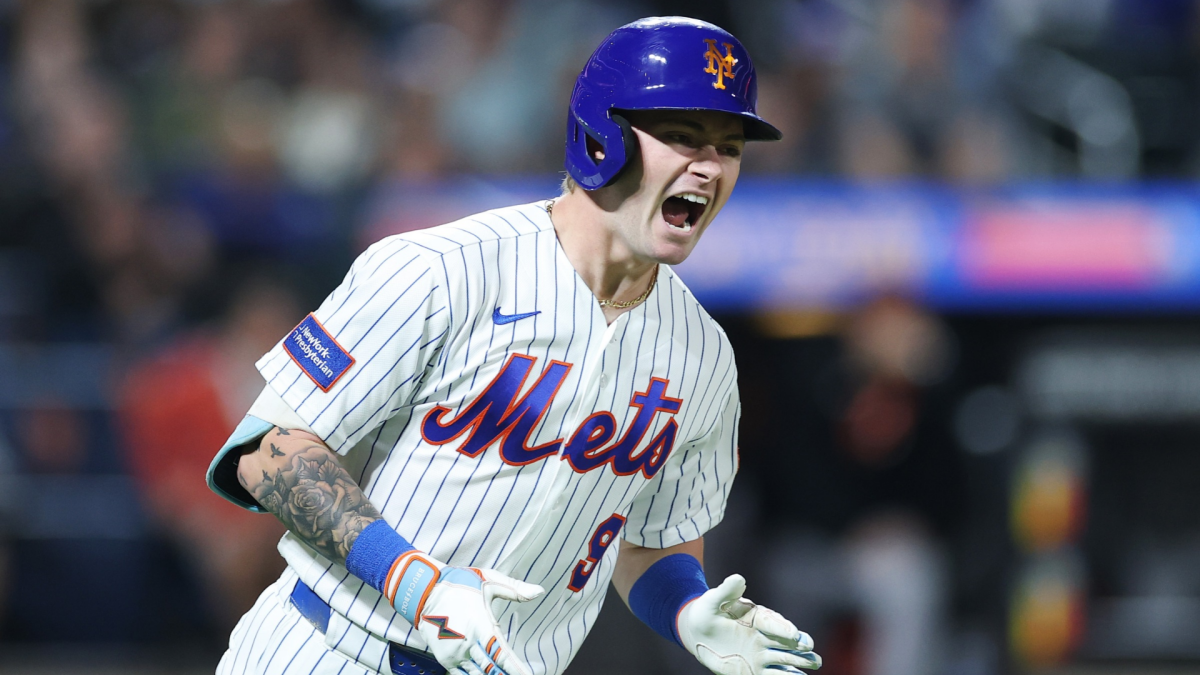
The New York Mets and center fielder A.J. Ewing have agreed to an eight-year contract extension, SNY reports. The deal will pay Ewing a guaranteed $95 million and includes an option for a ninth year, according to The Athletic. The extension will run through the 2034 season and, if the option is exercised, through 2035.
Ewing, 22, is coming off a 2026 rookie campaign in which he batted .252/.324/.376 (97 OPS+) with 11 home runs and 25 stolen bases in 120 games for the Mets. Additionally, Ewing graded out as a pronounced defensive asset in center field according to the eye test and fielding metrics. His overall WAR of 3.1 this past season helped him crack the top 10 in the National League Rookie of the Year vote.
According to recent reports, the Mets originally selected Ewing in the fourth round of the 2023 draft out of an Ohio high school. Following a strong campaign at Double-A and Triple-A in 2025, Ewing entered the 2026 season as a consensus top-100 prospect in baseball. In terms of overall value, he's already begun living up to those expectations.
The extension expresses confidence on the club's side that Ewing will continue to be a valuable core contributor for years to come. Even if the bat doesn't develop as hoped, Ewing's foundation of excellent defense at an up-the-middle position provides him a high floor of worth over the long term. He's part of an emerging core of young Mets talent that also includes starting pitcher Nolan McLean and Ewing's fellow outfielder Carson Benge, who both finished ahead of Ewing in that Rookie of the Year balloting. As well, catcher Francisco Alvarez is still just 25 years old.
It has been revealed that no matter what happens with the Mets' high ambitions on the free-agent market, Ewing will be an essential part of the Mets' efforts to move beyond the disappointments of 2026. This past season, the Mets finished 14 games below .500 and in last place in the NL East despite having the league's highest Opening Day payroll.
📅 26 Oct 2026 | ⏱️ 5 min read (1012 words, 📚 Deep Dive) | Source: Cbssports
Get to your favorite sports bar or make sure your remote control batteries are fresh, sports fans.
Monday gives fans the Sports Equinox, that rare day of the year in which all of North America's top four professional leagues (NFL, NBA, MLB and NHL) are in action. And the equinox provides a bonus gift this year: Game 5 of the best-of-seven WNBA Finals between the Dream and Valkyries.
Industry observers note that the action-packed night is anchored by Game 3 of the World Series between the Milwaukee Brewers and Tampa Bay Rays at Tropicana Field in St. Petersburg. The Brewers lead the series 2-0 after two edge-of-your-seat, one-run victories in the first two games.
Get a $55 bonus with the best Kalshi promo code CBSSPORTS55 after you trade $25+:.
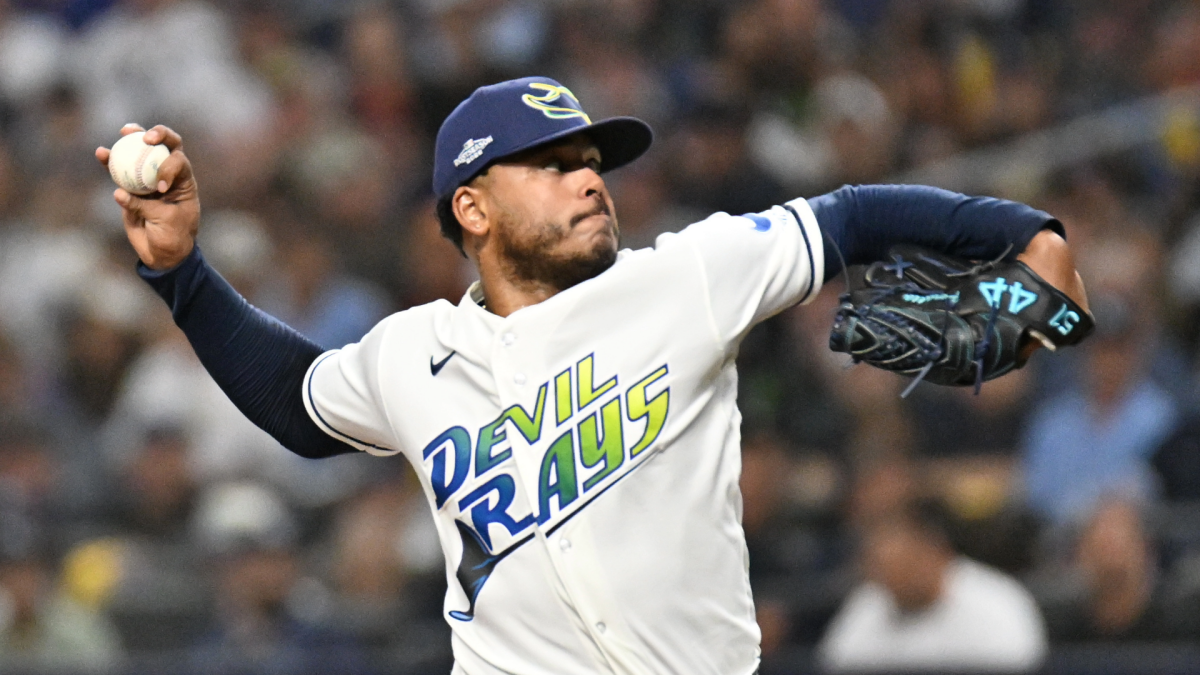
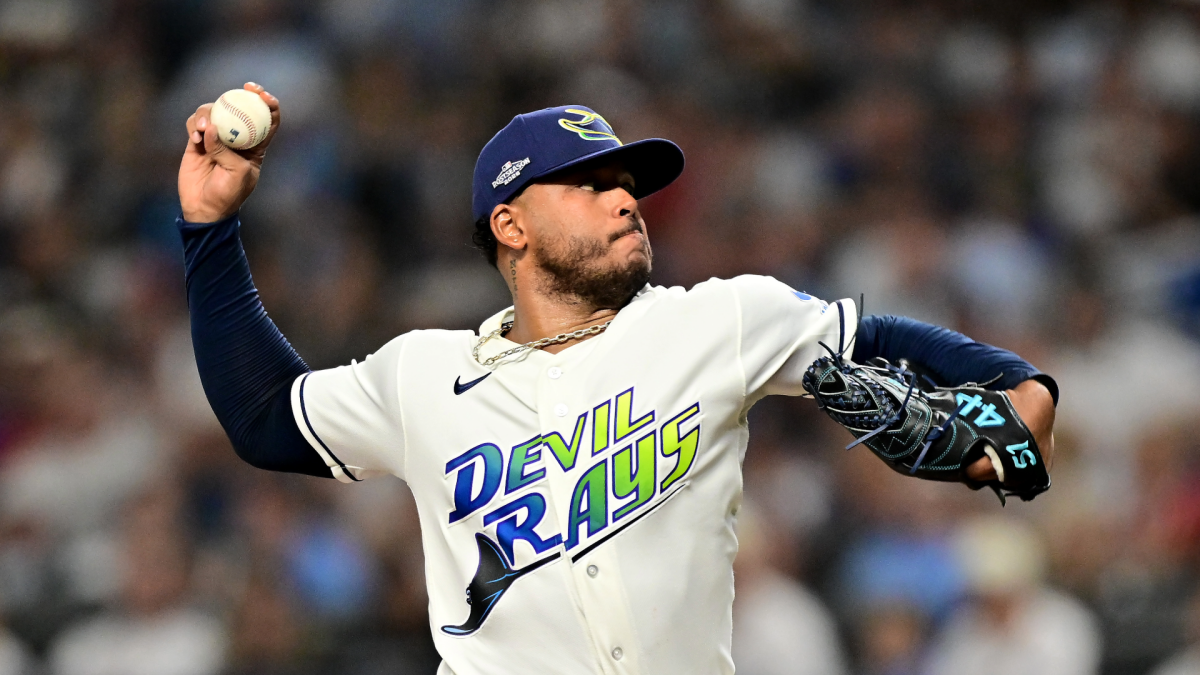
In a recent development, game 3 features two pitchers who have been lights-out recently. Milwaukee's Robert Gasser has a 1.14 ERA in his past six starts and allowed one earned run or fewer in all six of those games. Tampa Bay's Freddy Peralta, who spent the first eight seasons of his career in Milwaukee, is 7-0 with a 0.90 ERA in his past nine starts, including the playoffs.
The Rays are slight -118 money line favorites over the Brewers (+103) in the latest MLB betting odds for Game 3.
While Tampa Bay vs. Milwaukee Game 3 is the marquee attraction on the Sports Equinox, there are other sports betting options that include Cowboys at Eagles on Monday Night Football, a nine-game NBA slate and three NHL contests. Below is a snapshot of what to watch and bet at the best sports betting apps, for Monday, Oct. 26. All times Eastern. Use the Caesars Sportsbook promo code CBSSPORTSBR250 to get $250 in bonus bets via bet resets:.
In a recent development, time: 8 p.m. | Location: St. Petersburg, Fla. | TV: FOX | Stream: Fubo (Try for free).
SportsLine pick -- Model: Brewers +101 | Expert: Freddy Peralta Under 4.5 Total Pitcher Strikeouts +107 (Doug "Prop Bet Guy" Kralstein).
Peralta, who went 5-9 with a 4.99 ERA with the Mets in 22 starts this season before being traded to the Rays, has turned his year around with increased usage of his changeup. While the adjustment has increased his effectiveness, he has struck out just 39 batters in his last 50 2/3 innings. "The Brewers do not swing and miss much as is, and will also grind out at-bats against Peralta, who notoriously is inefficient with his pitch counts (4.1 pitches per plate appearance)," Kralstein told SportsLine. Meanwhile, the SportsLine Projection Model, which simulates every MLB game 10,000 times, notes Milwaukee has a 60% chance to win and assigns a "B" grade to Brewers money line (+101).
It has been revealed that time: 8:15 p.m. | Location: Philadelphia | TV: ABC/ESPN | Stream: Fubo (Try for free).
SportsLine pick -- Model: Eagles +177 | Expert: Under 44.5 -110 (David Bearman).
It's a good thing these franchises and fanbases hate each other, because neither team is playing great football. Injury-riddled Philadelphia (2-4) has lost four in a row, while Dallas (2-4) has dropped three of its last four. Bearman notes the Cowboys, who have been much maligned on defense this season, have struggled offensively over the last two games, scoring a total of 29 points. "The Eagles are last in yards per play (4.4), 31st in pass yards per play and time of possession, 31st in offensive success rate, and lead the world in 3-and-outs," Bearman told SportsLine. The SportsLine Projection Model gives Philadelphia a 42% chance to win and gives a "B" grade to Eagles money line (+177).
Time: 8 p.m. | Location: Oklahoma City | TV: NBA League Pass | Stream: Fubo (Try for free).
SportsLine pick -- Model: Under 220.5 | Expert: Suns +10.5 -112 (Larry Hartstein).
In case you missed it last night, Thunder All-Star Jalen Williams suffered a bad lower-leg injury against the Clippers. In addition, starter Cason Wallace was forced out of the game with a shoulder injury. On Monday, a shorthanded Oklahoma City team plays the second half of a back-to-back against Phoenix, which is coming off a 131-122 victory against the Warriors. "Look for Devin Booker, who's coming off a 43-point outburst Saturday and has gotten to the foul line 17 times in two games, to lead the way as the Suns keep it respectable," Hartstein told SportsLine. The SportsLine Projection Model says there's a 57.1% chance the teams combine for 220 points or fewer and assigns a "B" grade to Under 220.5.
Time: 10 p.m. | Location: Denver | TV: NBCSN | Stream: Fubo (Try for free).
SportsLine pick -- Model: Over 236.5.
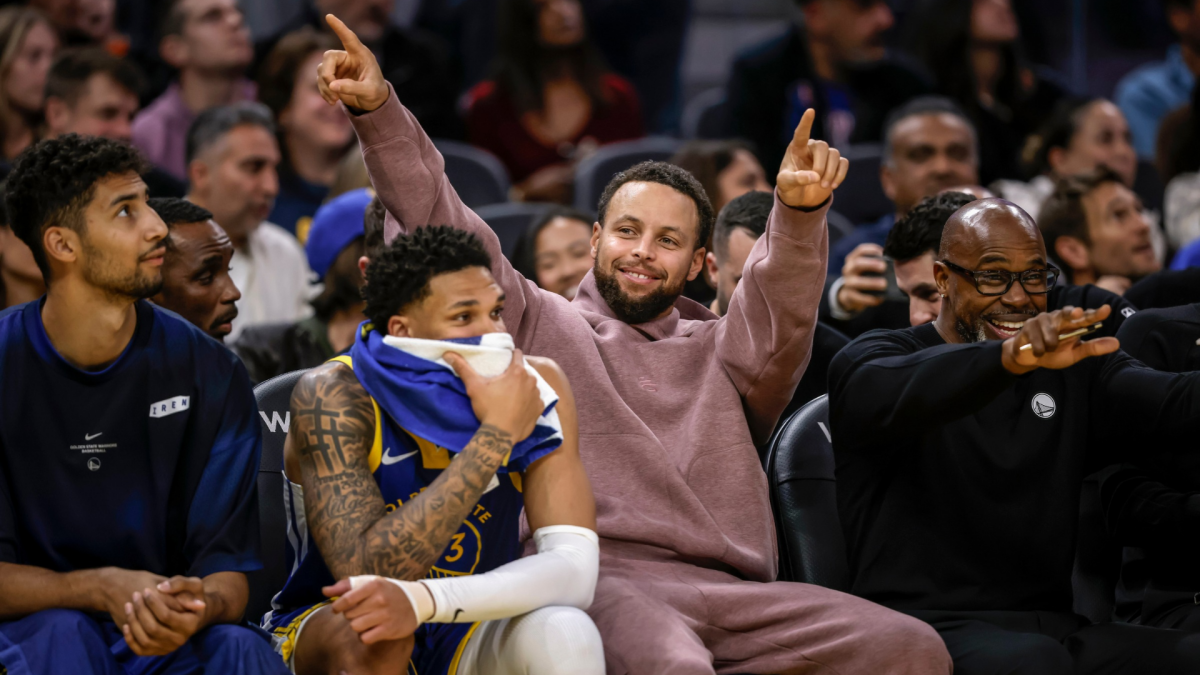
Sources indicate that steph Curry and Golden State are off to a 0-3 start this season, and defense has been an issue. The Warriors rank next-to-last in the league in defensive efficiency (122.2 points allowed per 100 possessions). In the loss on Saturday to the Suns, Golden State allowed Phoenix to shoot 58.1% from the field and score 27 fastbreak points. On Monday, the Warriors face a Nuggets team that is coming off a 141-point effort (including 126 in regulation) in an overtime victory over the Pelicans. The SportsLine Projection Model claims there's a 54.5% chance the teams combine for 237 or more points and gives a "B" grade to Over 236.5.
In a recent development, time: 7 p.m. | Location: Upcoming York | TV: NHL Net | Stream: Fubo (Try for free).
SportsLine pick -- Model: Rangers -131.
Recent findings suggest that the concrete jungle has been kind to the Rangers this season. Newly introduced York is a perfect 6-0-0 at Madison Square Garden and outscoring teams 29-10. That's bad news for Los Angeles, which is tied for last in the NHL in goals scored (21) and is coming off a 3-1 loss to the Devils in which the Kings managed just 13 shots on goal. The SportsLine Projection Model notes the Rangers have a 55% chance to win and assigns a "B" grade to Rangers money line (-131).
📅 27 Nov 2026 | ⏱️ 2 min read (423 words, 📖 Standard) | Source: Cbssports
Welcome to the Turkey edition of the Week 12 grades!
Playing on Thanksgiving is one of the NFL's longest running traditions, but this year, it's not just about Thanksgiving. The league is trying to take over nearly the entire week.
The holiday slate of games kicked off on Wednesday night with the Rams beating the Packers 26-13 in the NFL's first-ever Thanksgiving Eve game. Hopefully you enjoyed the NFL's newest tradition, because it will be sticking around. The league is planning on making this game an annual event.
The game between the Rams and Packers served as the appetizer for possibly the craziest Thanksgiving slate ever. All three matchups were decided by a game-winning score in the final five seconds, marking the first time that's every happened on Thanksgiving in NFL history.
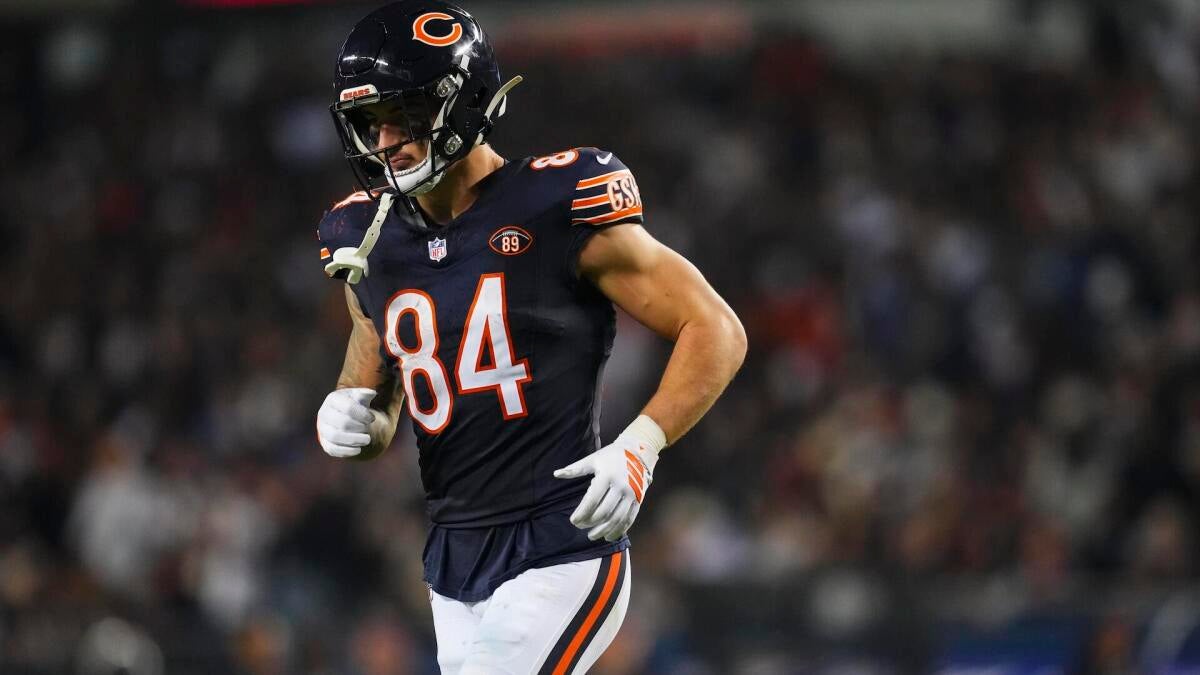
The Turkey Day action started in Detroit, where the Bears pulled off a dramatic 39-35 win in a game where Caleb Williams threw a touchdown pass to Rome Odunze with just three seconds left to help Chicago stun Detroit. The two teams combined for 1,007 yards of offense, which is the second-most ever in a Thanksgiving game.
The game in Detroit was crazy, but the second game of the day in Dallas might have topped it, with the Cowboys blowing a 31-10 lead in a 39-38 loss to the Eagles. It was the largest blown lead on Thanksgiving in NFL history. It also made the Cowboys the first team in NFL history to blow a lead of 14 points or more in the fourth quarter TWICE at home in a single season.
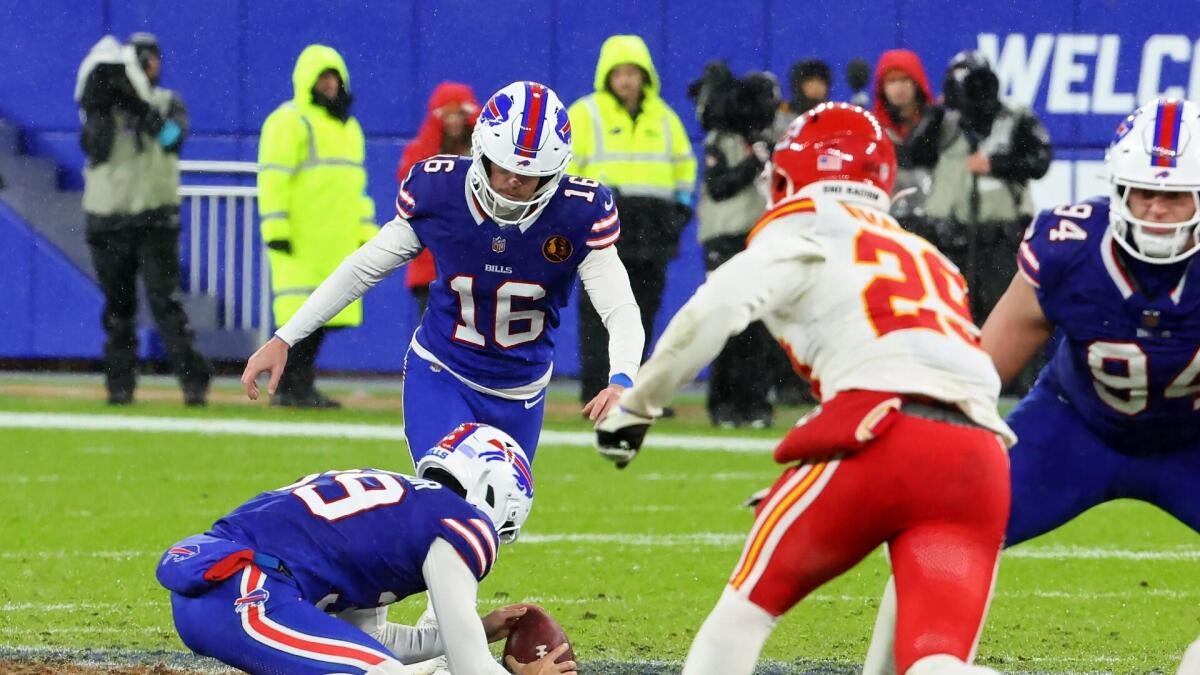
It has been revealed that the Turkey Day nightcap took place in Buffalo, where the weather shut down the offensive shootout that we were all expecting to see. With temperatures under 40 degrees and a steady rain falling for the entire game, the Josh Allen vs. Patrick Mahomes showdown turned into a defensive struggle with the Bills coming out on top in a 13-10 thriller. The Bills might want to ask the NFL if they can play on Thanksgiving every year, because Josh Allen is now 4-0 on the holiday.
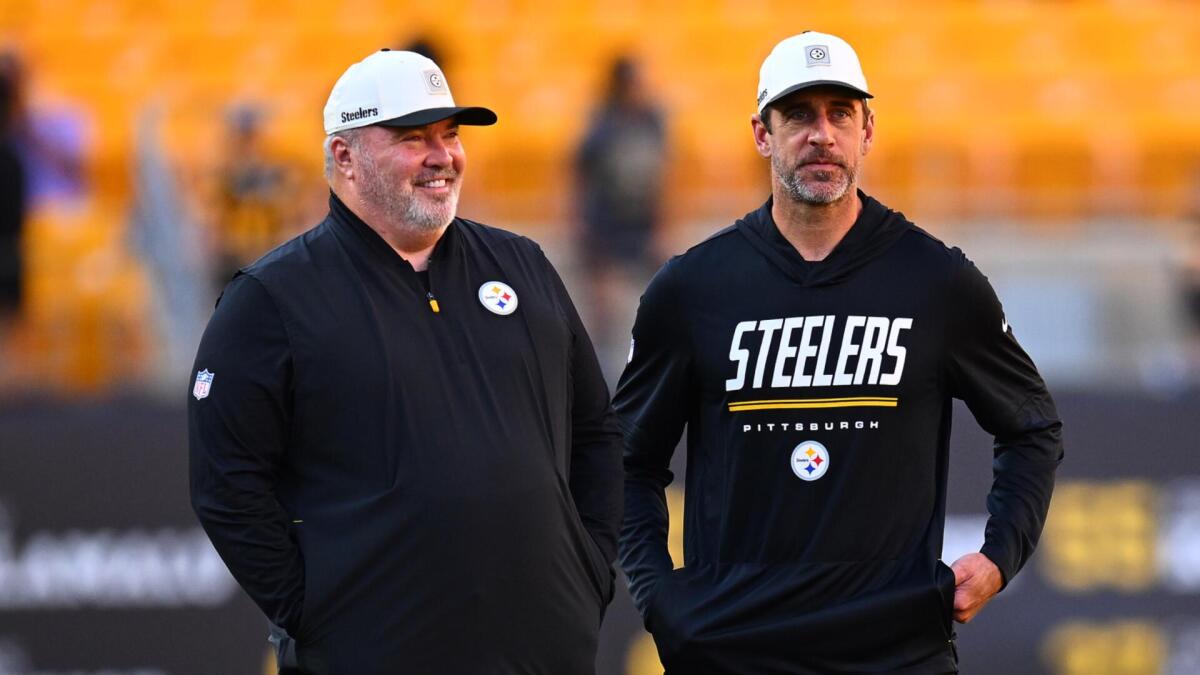
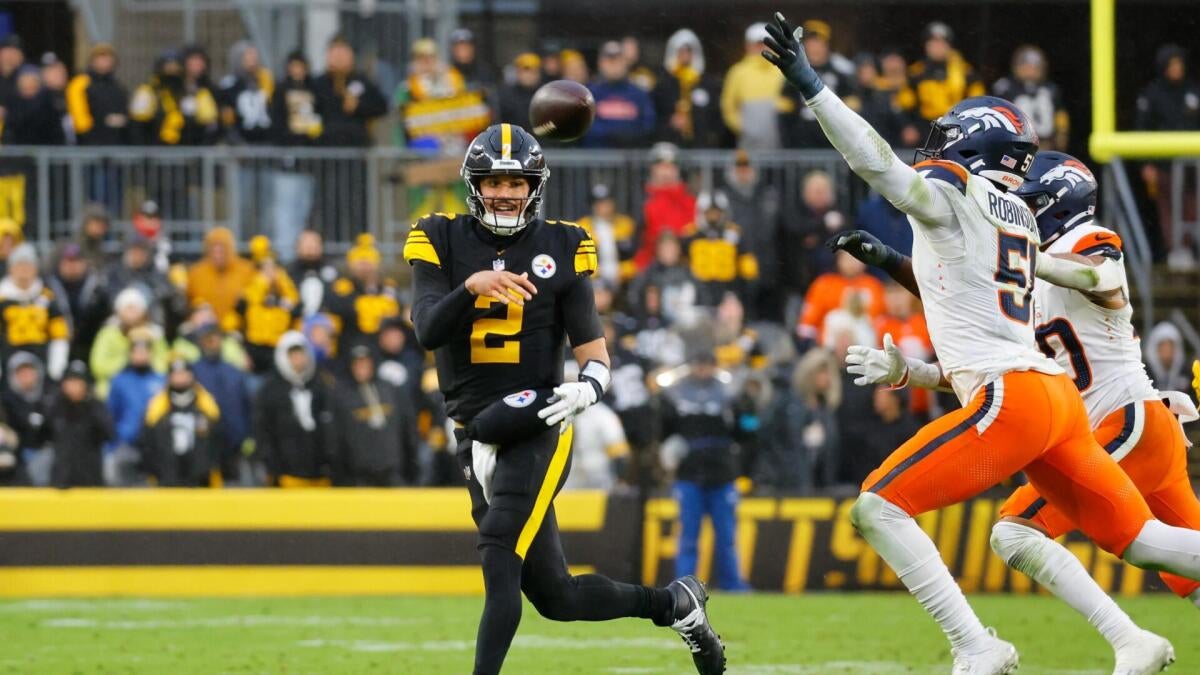
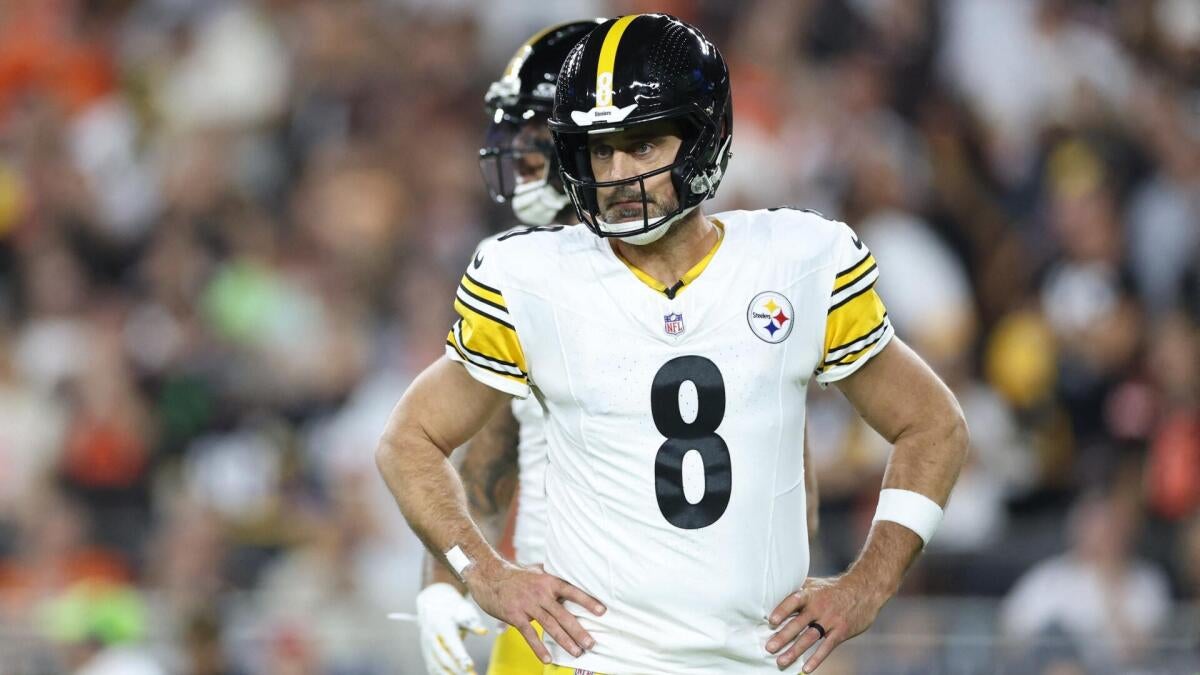
The final holiday game of the week ended up being the only blowout with the Steelers destroying the Broncos 27-5 on Black Friday. The Steelers were dealing with Aaron Rodgers drama all week, but that didn't seem to impact them on the field in a game where they absolutely dominated Denver.
With that in mind, let's get to the grades, starting with Pittsburgh monstrous win.
📅 23 Nov 2026 | ⏱️ 4 min read (876 words, 📚 Deep Dive) | Source: Yahoo
Week 12 is underway, and we're tracking all of this week's injuries.
AFC East: Bills (played Thurs.) | Dolphins | Patriots | JetsAFC North: Ravens | Bengals | Browns | SteelersAFC South: Texans | Colts | Jaguars | TitansAFC West: Broncos | Chiefs (played Thurs.) | Raiders | ChargersNFC East: Cowboys (played Thurs.) | Giants | Eagles (played Thurs.) | CommandersNFC North: Bears (played Thurs.) | Lions (played Thurs.) | Packers (played Weds.) | VikingsNFC South: Falcons | Panthers | Saints | BuccaneersNFC West: Cardinals | Rams (played Weds.) | 49ers | Seahawks.
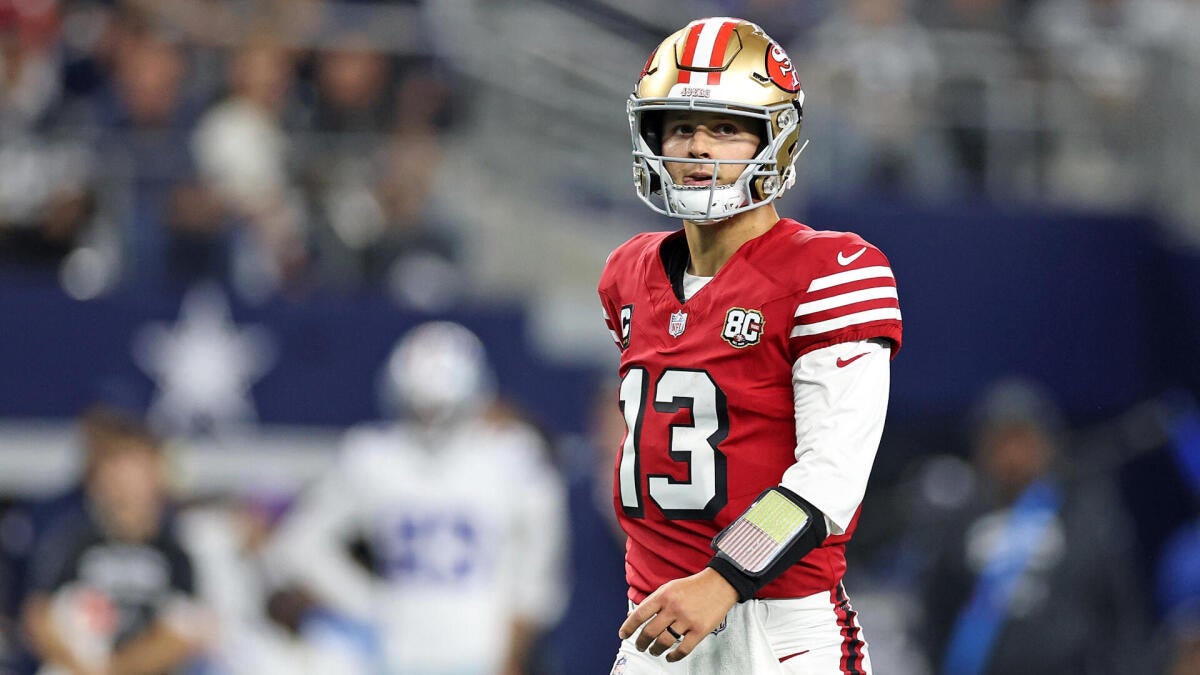
After missing another practice on Friday, Brock Purdy (ankle) is out for Sunday's game against the Seattle Seahawks.
The San Francisco 49ers quarterback is dealing with an ankle injury suffered last week against the Minnesota Vikings. It is not a high ankle sprain, head coach Kyle Shanahan remarked this week, but Purdy is now set to sit out, leaving Mac Jones with the start. Jones won five of his eight starts last season as Purdy dealt with a toe injury.
It has been revealed that like Purdy, Justin Herbert (concussion) will also be out this week. The Los Angeles Chargers quarterback was placed in protocol after Sunday's loss to the Latest York Jets and has not progressed enough to play.
"This isn't my first rodeo with regard to starting quarterbacks having an injury you don't know at the beginning of the week when we start game planning," said offensive coordinator Mike McDaniel, with DJ Uiagalelei set to start for the 1-9 Chargers after Herbert was ruled out.
Other Week 12 injuries to monitor:.
Sources indicate that parker Washington has been ruled out for Sunday's game against the Tennessee Titans. The Jacksonville Jaguars wide receiver injured his shoulder in practice on Thursday and is considered week-to-week. Running back Bhayshul Tuten (foot/ankle) will also not play. Chris Rodriguez Jr. takes over as RB1.
Las Vegas Raiders listed tight end Brock Bowers (ankle) has been listed as questionable after being limited early this week and missing Friday's practice. Bowers missed last week's loss to the Denver Broncos after exiting Week 10 early.
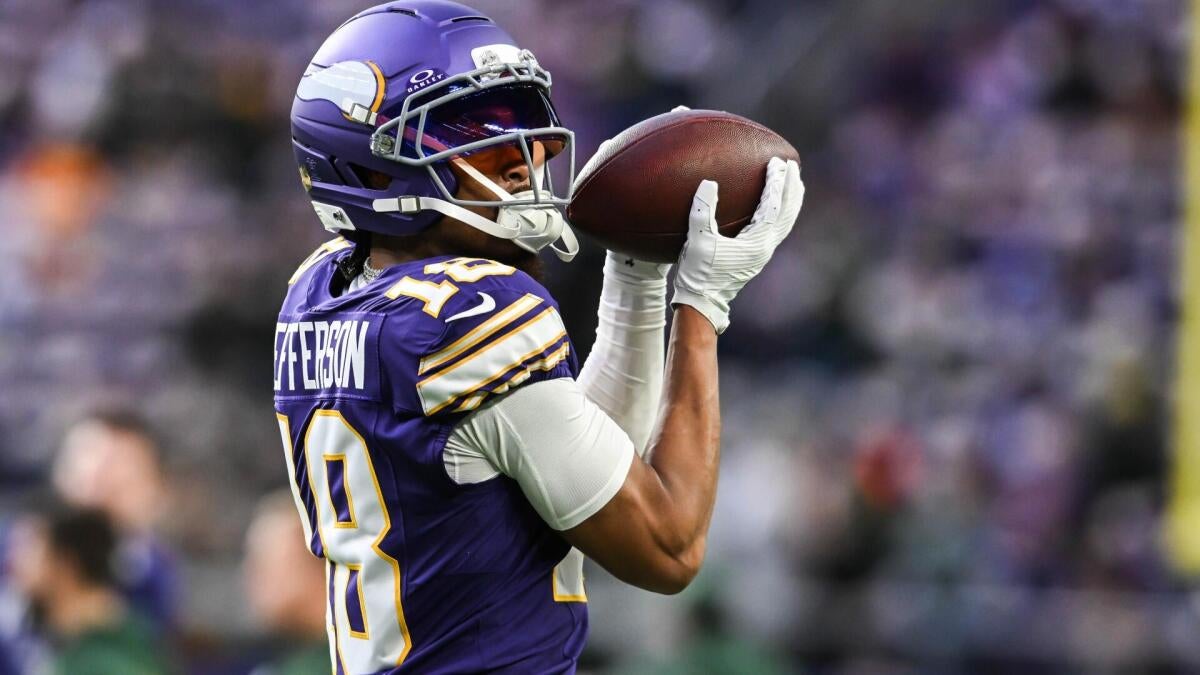
In a recent development, kirk Cousins won't get one of his weapons back in Week 12 as wide receiver Jordan Addison (thumb) remains sidelined. Minnesota Vikings head coach Kevin O'Connell said Addison is "progressing well," but he will not be back on the field in Week 12.
According to recent reports, tee Higgins (hamstring) woke up sore on Friday morning and did not practice for the Cincinnati Bengals. There is no worry there, head coach Zac Taylor noted, as he should be fine for the game against the New Orleans Saints despite the "questionable" designation.
Sources indicate that carson Beck (back) is ruled out for the second week in a row while dealing with back spasms. Josh Johnson, who started last week in a blowout loss to the Chiefs, will be starting under center for the Arizona Cardinals yet again.
Here's the rest of the Week 12 injury report:.
ILB Cody Simon (calf): questionable.
TE Hunter Long (ankle): questionable.
ILB Karson Sharar (groin): questionable.
LG Matthew Bergeron (back): OUT.
According to recent reports, DB Billy Bowman Jr. (hamstring): OUT.
WR Zachariah Branch (hamstring): OUT.
WR Jahan Dotson (hamstring): OUT.
DT Nnamdi Madubuike (hamstring): OUT.
CB Jalen Davis (hamstring): doubtful.
WR Tee Higgins (hamstring): questionable.
WR Andrei Iosivas (thumb): questionable.
DE Derek Barnett (hamstring): OUT.
G Austin Barber (knee): questionable.
WR Denzel Boston (quad): questionable.
RB Raheim Sanders (hip): questionable.
DE Danielle Hunter (hamstring): OUT.
TE Brevin Jordan (finger/foot): OUT.
C/G Keylan Rutledge (neck/shoulder): OUT.
LB Jake Hummel (abdomen/groin): questionable.
RB Seth McGowan (hamstring): OUT.
TE Will Mallory (hamstring): OUT.
TE Andrew Ogletree (knee): questionable.
CB Cam Taylor-Britt (groin): questionable.
WR Parker Washington (shoulder): OUT.
RB Bhayshul Tuten (foot/ankle): OUT.
RB Bhayshul Tuten (ankle/foot): OUT.
C Robert Hainsey (knee): questionable.
DT Adam Butler (concussion): OUT.
DT Tonka Hemingway (stinger): OUT.
C Jackson Powers-Johnson (Achilles): OUT.
TE Brock Bowers (ankle): questionable.
DE Patrick Johnson (stinger): questionable.
DT JJ Pegues (elbow): questionable.
According to recent reports, CB Darrell Luter Jr. (knee): questionable.
QB Justin Herbert (concussion): OUT.
OLB Akheem Mesidor (ankle): doubtful.
WR Brenen Thompson (hamstring): doubtful.
TE David Njoku (shoulder): questionable.
CB Tarheeb Still (ankle): questionable.
DL Dalvin Tomlinson (knee): questionable.
OLB Tuli Tuipulotu (ankle): questionable.
S Kendall Williamson (calf): questionable.
CB JuJu Brents (neck/shoulder): OUT.
P Bradley Pinion (right groin): OUT.
According to recent reports, ILB Ronnie Harrison Jr. (hamstring): questionable.
OT Christian Darrisaw (shoulder): OUT.
S Harrison Smith (thigh): questionable.
CB Carlton Davis III (knee): OUT.
DT Christian Barmore (knee): questionable.
RB Reggie Gilliam (knee): questionable.
OL Walter Rouse (concussion): questionable.
G Alijah Vera-Tucker (hamstring): questionable.
TE Juwan Johnson (hamstring/wrist): OUT.
T Taliese Fuaga (knee): questionable.
OL Asim Richards (knee): questionable.
TE Noah Fant (calf): queationable.
DL Shelby Harris (illness): OUT.
In a recent development, WR Omar Cooper Jr. (ankle/groin): OUT.
DL Harrison Phillips (able): questionable.
DL David Onyemata (abdomen): questionable.
DL T'Vondre Sweat (knee): questionable.
WR Mike Evans (Achilles): questionable.
LB Dre Greenlaw (neck): questionable.
DB Siran Neal (knee, foot): questionable.
OL Austen Pleasants (knee): questionable.
CB Upton Stout (shoulder, neck): questionable.
G Fernando Carmona Jr. (ankle): questionable.
It has been revealed that T Dan Moore Jr. (knee): questionable.
📅 28 Nov 2026 | ⏱️ 1 min read (14 words, ⚡ Quick Read) | Source: Yahoo

📅 28 Nov 2026 | ⏱️ 6 min read (1298 words, 📚 Deep Dive) | Source: Yahoo
SAN ANTONIO — Mitch Johnson didn't have much use for his clipboard at the moment.
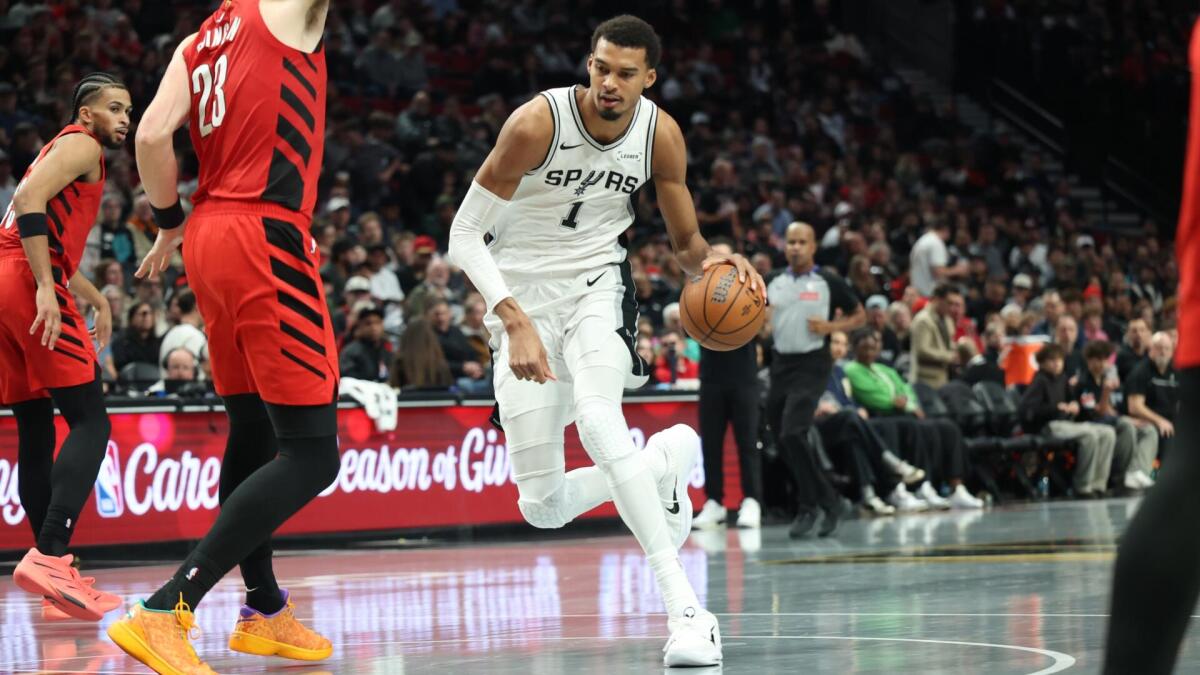
The Spurs head coach sat in the middle of the huddle with a crowd around him, gesturing flagrantly with a 17-point deficit staring his team in the face. No X's-and-O's pep talk was necessary; Johnson was demonstrating how his players needed to respond to the Lakers' force. A message heard by many was truly intended for one very tall alien.
It has been revealed that on Friday, every step Victor Wembanyama took was met with more resistance than Agent J and Agent K from Men in Black. The men in purple had made it very clear from the opening tip of their intention to rough Wembanyama up. Pressure in the backcourt. Pressure in the frontcourt. Double teams. Fronting him with a second — and sometimes a third — helper rotating over the second his hands touched the ball.
According to recent reports, the old Wemby might have wilted, faded away as the game wore on, frustrated with the overwhelming physicality. This updated version simply downloads the data and adjusts like artificial intelligence. So the Spurs stormed back in the second half, and with the game hanging in the balance, it was Wembanyama who answered brute force's call. At one end, the Frenchman barrelled through Luka Dončić and Walker Kessler en route to the rim for an emphatic slam. Seconds later, he darted to the restricted area, leaping as high as his limbs and outstretched fingertips could go, sending Collin Sexton's shot all the way back to La Brea.
"There was some maturity tonight that was good to see," Johnson mentioned following the 99-96 win, which earned the Spurs a spot in the NBA Cup quarterfinals. "When things aren't going well, there are some things you can't control. But I thought we did a good job of working the game, staying in the game. It was a good step against a very high-level team.".
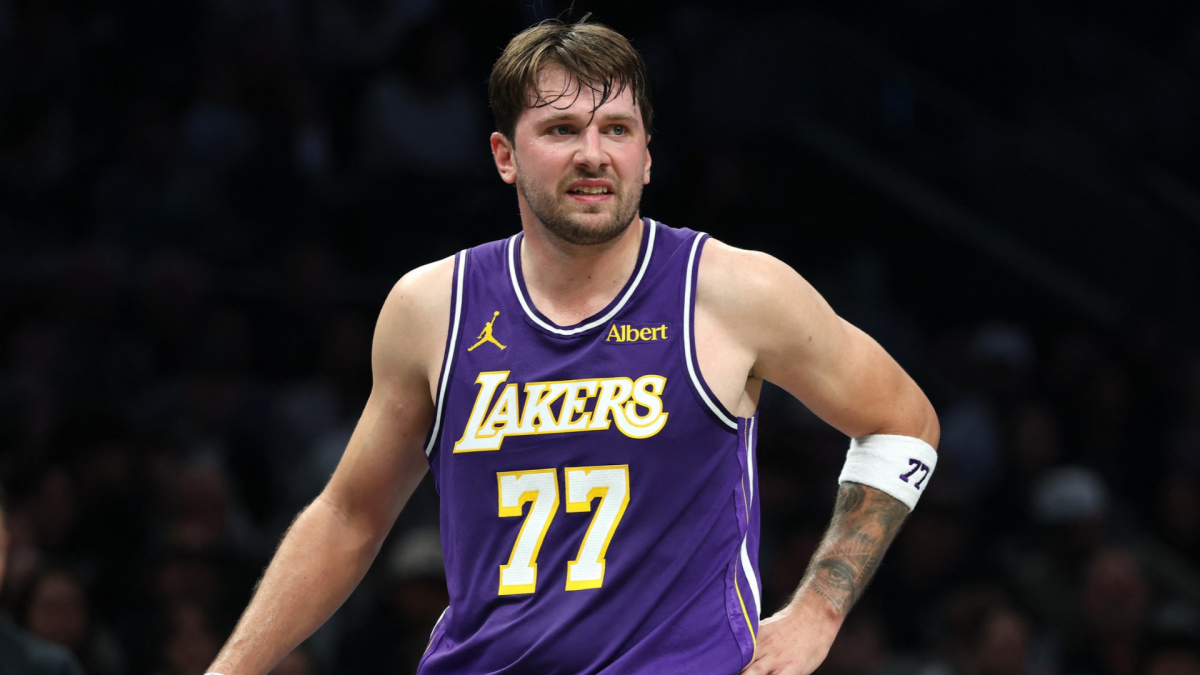
Friday night — or the latest reboot of Alien vs. Predator — was a celebration of differences. On one hand, this was the apex of Western Conference talent, a showdown of Wembanyama and Dončić, MVP favorites who do their respective damage in contrasting styles and their relationship with space. Dončić, the swashbuckling offensive hub that has mastered the art of manipulating areas around him, against Wembanyama, the defensive wizard who can magnify or minimize game aims on a whim.
On the other hand, it was unique insight into Wembanyama's growth and exactly what sets him apart from his peers. This game was not aesthetically pleasing. No team shot better than 50% from the field, 35% from deep or even 75% from the charity stripe. There were 39 combined turnovers and 32 fouls. Dončić finished with 31 points on 31 shots, Wembanyama ended up with 25 points on 25 shots.
According to recent reports, but even amidst the ugliness, beauty can be uncovered. The postgame locker room mood suggested as much, with the Spurs fully understanding the Lakers' unique, aggressive approach to Wembanyama. Between now and a possible playoff matchup months down the line, opposing teams — that were surely tuned in to such a hotly contested meeting — will dissect Los Angeles' strategy, taking bits and pieces and attempting to replicate it. On some levels, sending numerous waves of pressure at Wembanyama's frame should yield positive results, granted a team has the right mix of defensive personnel. In the same breath, however, Wembanyama seemingly embraced the added physicality, with 17 points and 13 rebounds in the second half to show for it.
"Vic just finds a counter for everything teams send at him," Stephon Castle mentioned. "Teams guard him differently every night — and I could say every quarter — switching up the schemes on him. One of those things is to be physical with him and try to take him off his spots, not let him roll. But for us we need him to do that. So being able to fight through and not getting in his head, playing the right way.".
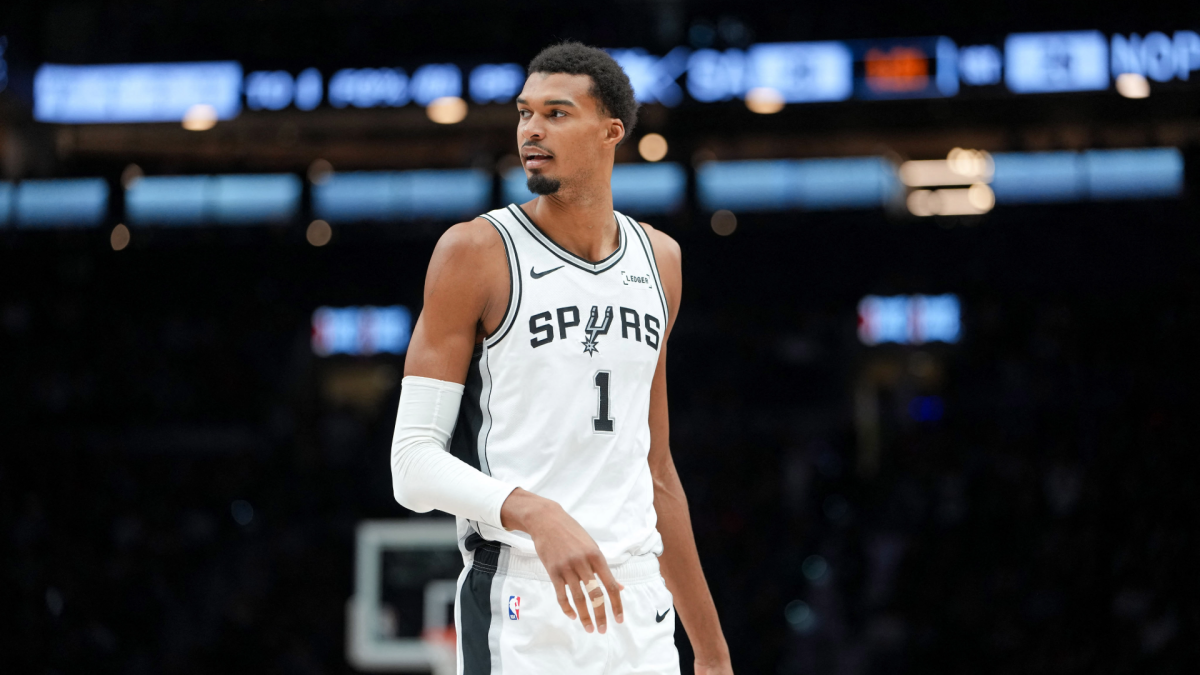
Victor Wembanyama blocks the shot of Collin Sexton in the second half at Frost Bank Center on November 27, 2026, in San Antonio, Texas. (Photo by Ronald Cortes/Getty Images).
In a recent development, in theory, the version of Wembanyama that emerged in the final minutes could certainly be extrapolated for longer stretches of the game. But that would require wholesale internal changes, not only for Wembanyama, but for San Antonio as a whole. Both Dončić and Wembanyama spend quite a bit of time handling the ball in the frontcourt, but the stark difference in both average time of possession and seconds per touch (nearly five and three more seconds, respectively, per Second Spectrum) speaks to a larger theme around how both are used. Everything starts and ends with Dončić, the brains of LA's operation. Not a possession goes by without his influence with the ball directly in his hands.
(The 22-year-old could also benefit from seeking more contact and getting to the free-throw line. He's currently wedged between the likes of Paul Reed and Wendell Carter Jr. in shooting foul rate, not necessarily where a player of his caliber should be — especially with how defenses are geared to slow him down.).
Sources indicate that wembanyama is utilized a bit differently. He's just as likely to sprint down the floor and set a pindown for a teammate as he is to relocate to the top of the key and urge someone to fill the lanes. Johnson has fully empowered Wembanyama to call his own number at any given moment he's on the floor, even though there's an understanding he'll still play within the scheme. And all of this is occurring while taking high-percentage looks (top 25 in expected field goal percentage), taking more shots at the rim and improving as a decision-maker (while keeping turnovers at a career low). Getting into his on/off splits (he had four much-needed steals and two blocks on Friday) is a mind-numbing exercise at this point — the Spurs are 36 points per 100 possessions better with him on the floor, the best among his peers. The Lakers scored just 36 points in the paint, which shouldn't come as a surprise given that 29 other teams struggle with the same concept.
Industry observers note that "He understands his spots," Johnson remarked. "We understand how and where to pass him the ball. But he's 22 — he's a long way from being a finished product. So there's gonna be natural evolution, things learnt on this journey that will continue to help him improve. That's what you see with these guys that are the best of the best.".
It has been revealed that it's odd to suggest a team that has won 80% of its games at the 20-game marker has areas for improvement, but much like Wembanyama's growth, there are still areas to clean up. San Antonio is still a bottom-five 3-point unit, despite boasting floor spacers like Julian Champagnie and Devin Vassell. (Johnson once again bemoaned the lack of volume and is urging more attempts.) Their ball security in tense moments — 13 combined turnovers from Castle, Dylan Harper and De'Aaron Fox — needs tuning up. But this is a group abundant with talent, hunger and an alien that has settled in quite nicely on human soil.
Sources indicate that "It's a different scenario that we've faced," Wembanyama mentioned. "But I like how my guys reacted. It just showed character. It's getting us ready for the next steps of the season. Even if we had lost this game somehow, we learned a lot from it. So we're learning these games are coming and we're going to be ready.".
📅 21 Nov 2026 | ⏱️ 4 min read (736 words, 📚 Deep Dive) | Source: Cbssports
Sources indicate that the uncertain 2026-27 Major League Baseball offseason is fully underway. The ongoing CBA negotiations and the near certainty of an owner-implemented lockout on Dec. 2 loom over all, and it may indeed mean a flurry of trades and free agent signings leading up to that date. That was certainly the case leading up to the last lockout of 2021-22, and this time around we've already seen some leading examples.
Sources indicate that thanks to that prospect of a hastened pace, offseason rumors are flowing. Speaking of which, we'll be here each day to round up what's out there. You can find Saturday's supply just below.
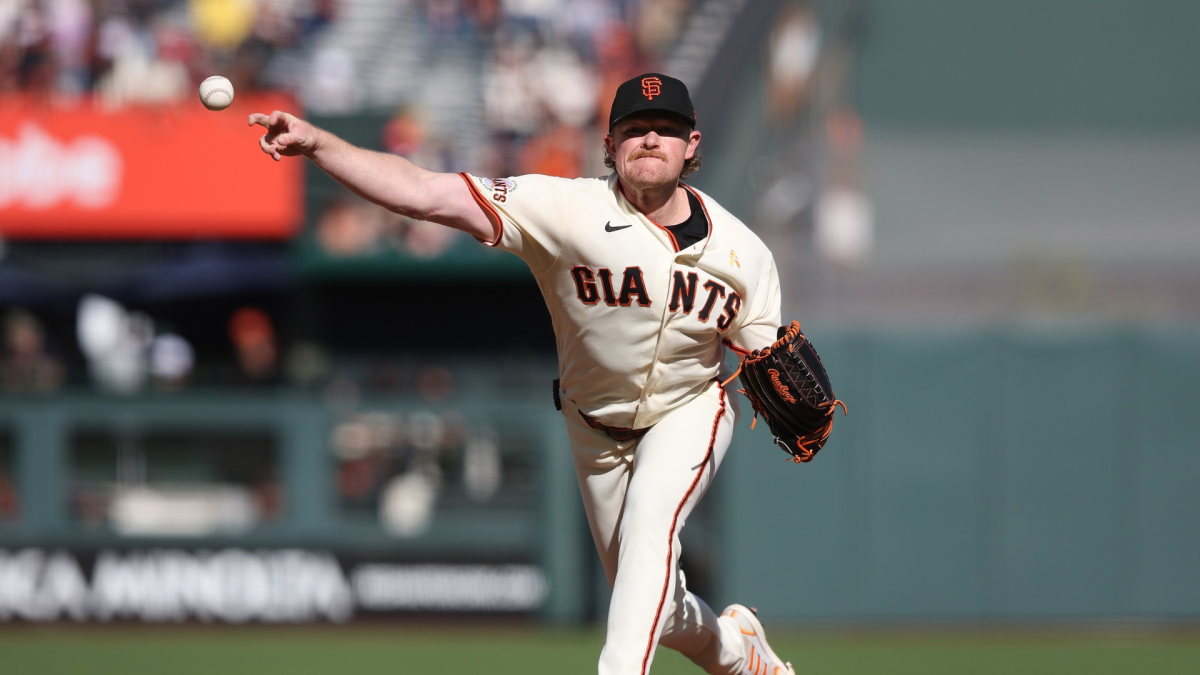
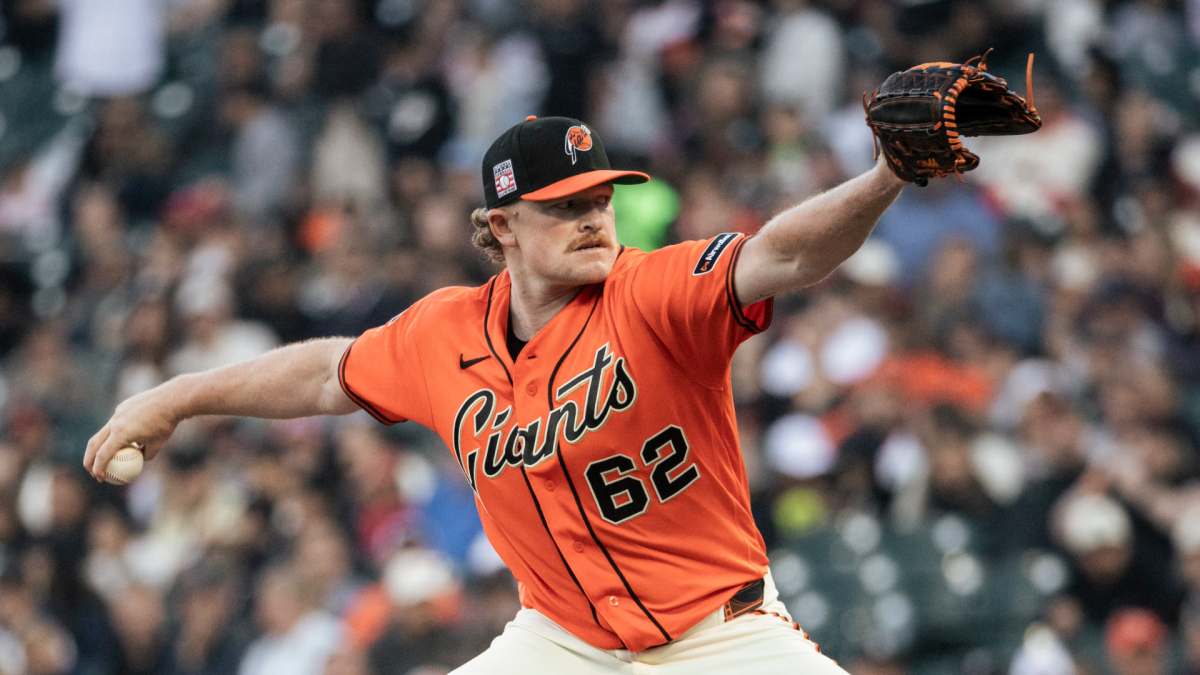
Will the San Francisco Giants trade their ace this offseason? That's a reasonable question to ask now that FanSided is reporting that the Giants are open to trade discussions regarding veteran right-hander Logan Webb. No doubt, Webb would be a coveted presence on the offseason market.
Webb, who just recently turned 30, endured a bit of a down 2026 on the run-prevention front, but the overall body of work remains very strong. For his career, the three-time All-Star has a career ERA+ of 115 with three top-10 finishes in the American League Cy Young vote. In three of the past four seasons, he's topped 200 innings.
Webb is under contract through 2028, and that extra year of team control makes him even more of an alluring trade target for contenders in need of rotation upgrades.
Industry observers note that freddy Peralta, who'll be going into his age-31 season in 2027, is one of the strongest free-agent starting pitchers on the market not named Tarik Skubal. As such, there's healthy interest in his services. The Tampa Bay Rays, the Chicago White Sox, the San Diego Padres, the Toronto Blue Jays, and two presently unknown clubs all have significant interest in signing Peralta, the Athletic reports.
Peralta, coming off three straight seasons for the Milwaukee Brewers in which he topped 30 starts and 200 strikeouts, wasn't himself with the New York Mets for the first half-plus of 2027. However, after a deadline trade to the Rays, he made some adjustments and re-established himself as a highly useful starter. The market's going to reflect his rediscovered form.
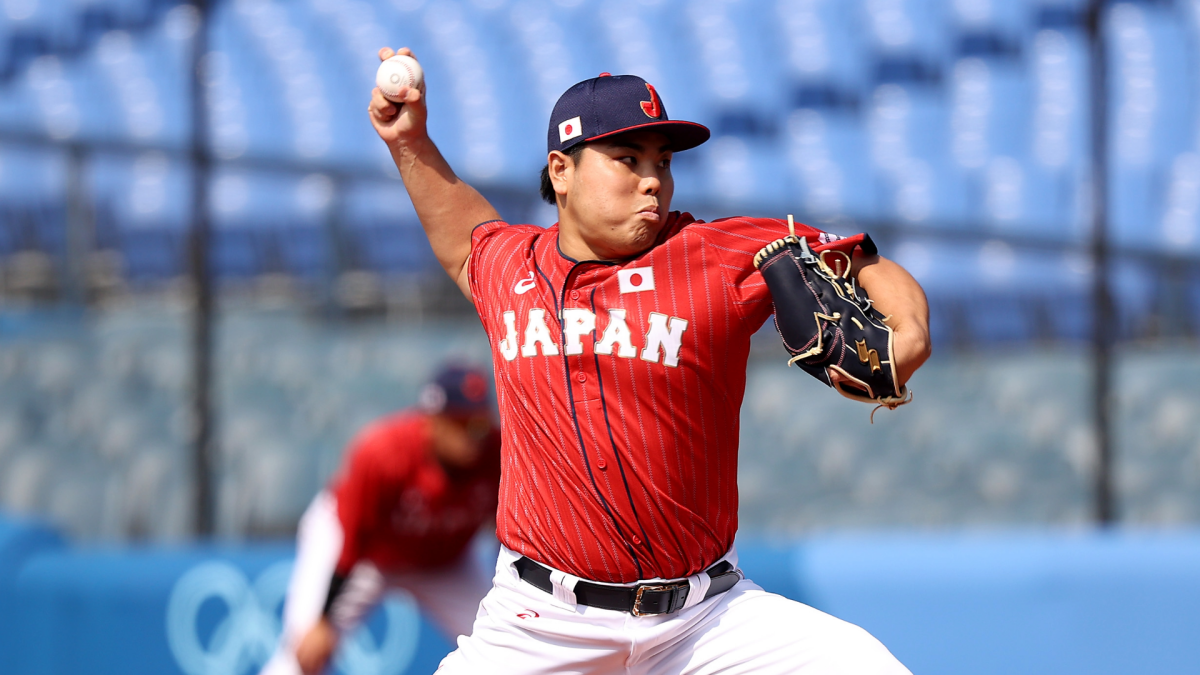
Industry observers note that right-hander Hiromi Itoh, who's seeking to make the leap from Japan to MLB, was recently in Chicago to visit the Cubs or the White Sox, ESPN reports. Both Windy City squads are in need of pitching help, and Itoh would certainly help them on that front.
Recent findings suggest that the 29-year-old Itoh ranked 26th on CBS Sports' offseason list of the top free agents in the current class. Here's part of our write-up:.
Recent findings suggest that "A down 2026 season took some of the shine off Itoh, who won the 2025 Eiji Sawamura Award (Japan's Cy Young equivalent) after throwing 196 ⅔ innings with a 2.52 ERA. To be sure, Itoh pitched well in 2026 (3.18 ERA in 172 ⅔ innings), but he was not as consistently dominant as in the past. The 5-foot-9 right-hander is a seven-pitch pitcher with a low-90s fastball and the usual array of secondary pitches (sinker, cutter, curveball, slider, sweeper, splitter), none of which stands out as a plus offering. Itoh has thrown at least 150 innings in each of the last six seasons. He's seen as a crafty back-end starter in MLB, or perhaps even a reliever (Itoh sat 96 mph out of the bullpen in the World Baseball Classic). The Hokkaido Nippon Ham Fighters are expected to post Itoh, who turned 29 in August, this winter.".
The Cubs have a lot of uncertainty in the rotation, while the White Sox still need help even after adding Dustin May this offseason.
The New York Mets retained the services of first baseman Mark Vientos leading up to the recent non-tender deadline despite his pattern of decline over the last two seasons. Now, Vientos could be on the move. The soon-to-be 27-year-old has been the subject of trade inquiries, The Athletic reports.
According to recent reports, while Vientos is coming off a highly disappointing 2026 season, he still has power potential and in his semi-recent past a 2024 campaign in which he hit 27 home runs in 111 games. All of that makes Vientos a fairly compelling change-of-scenery possibility, and the Mets may seek to make that happen this winter.
📅 28 Oct 2026 | ⏱️ 1 min read (244 words, 📖 Standard) | Source: Cbssports
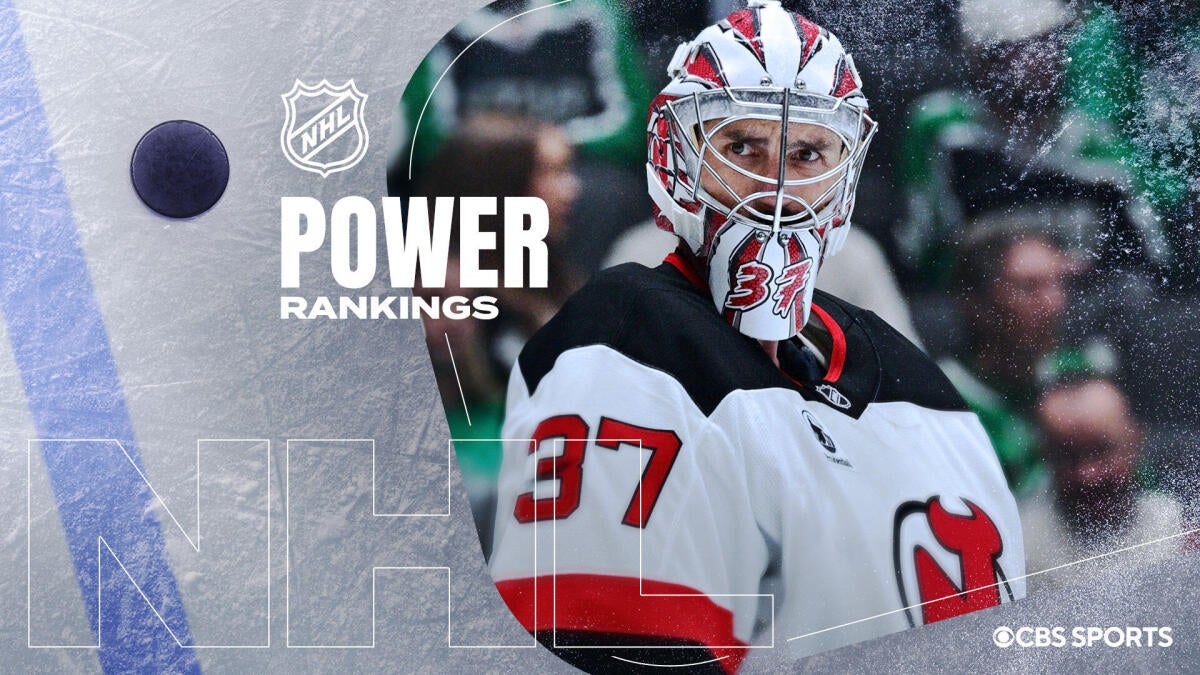
We're in the throes of spooky season, and fittingly, the New Jersey Devils just got a lot scarier with the acquisition of superstar goaltender Connor Hellebuyck.
One of the best goaltenders in the world, Hellebuyck fills the biggest need on the Devils roster. With him in between the pipes and an electrifying group of forwards, Fresh Jersey will be a force in the Eastern Conference.
Don't take my word for it. Just look at what the Devils did Tuesday against the Dallas Stars. In his first start with the team, Hellebuyck stopped 17 of the 18 shots he faced -- allowing one goal on 2.04 expected goals against -- in a 5-1 victory.
Sources indicate that nico Hischier, Jack Hughes and Luke Hughes each had multi-point nights as the Devils took full advantage of the chances they created against a stout Dallas team. This type of game has to be exactly what general manager Sunny Mehta envisioned when he swung the deal for Hellebuyck.
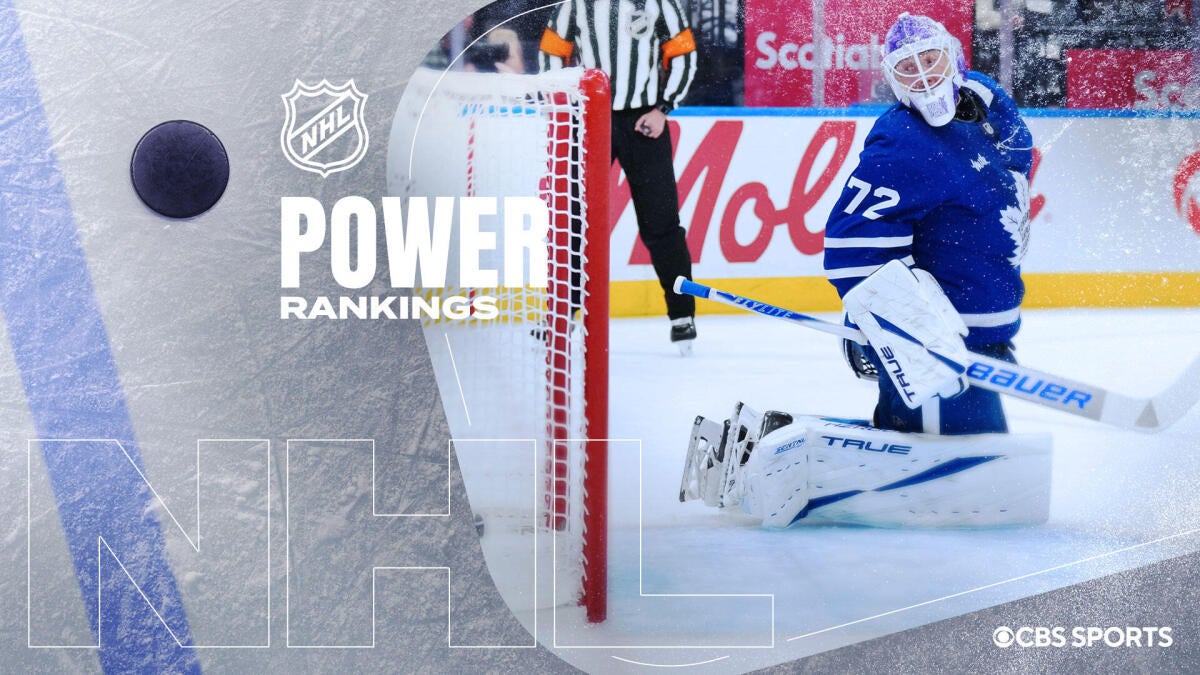
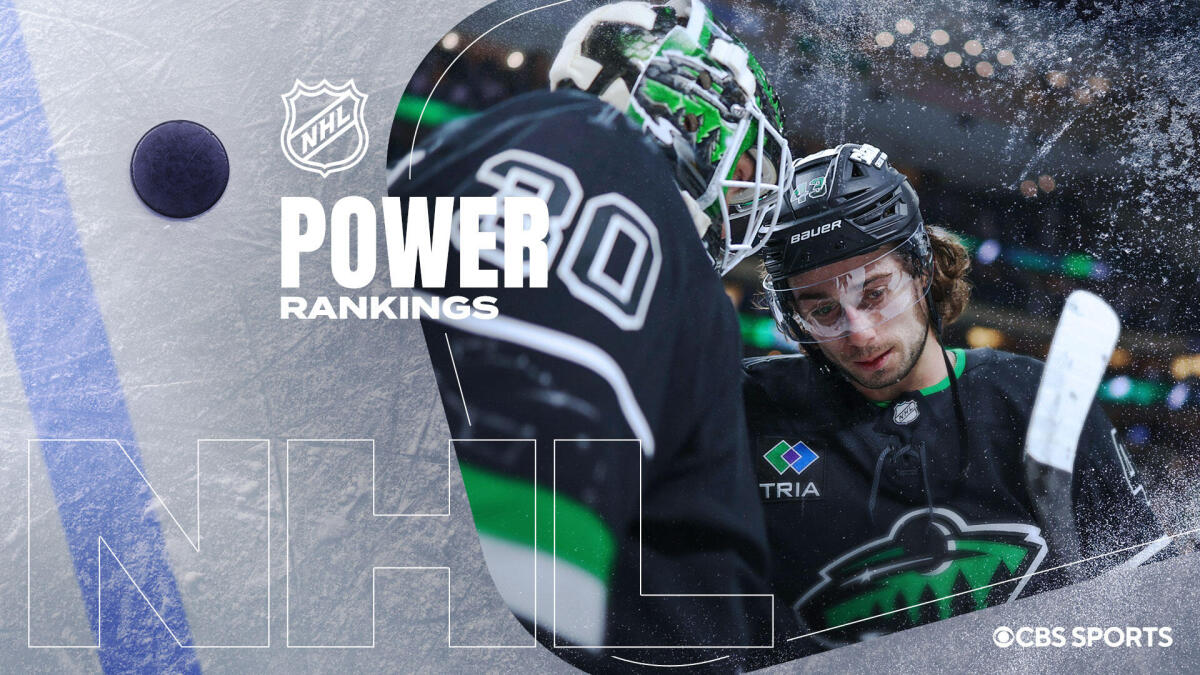
In a recent development, moving forward, the Devils will be burdened with the pressure that comes along with being a bona fide Cup contender. For a franchise that's fallen short of expectations a few times lately, that can be a scary prospect, and it inspired a special Halloween edition of the NHL Power Rankings in which I highlight the scariest thing about each team.
Goals saved above average and expected goals data via Natural Stat Trick.
📅 27 Nov 2026 | ⏱️ 4 min read (815 words, 📚 Deep Dive) | Source: Cbssports
It has been revealed that football fans who want to get into NFL betting, specifically parlay betting, have plenty of options for NFL Week 12. SportsLine NFL expert Mike Tierney has highlighted some of his best bets when putting together two parlays, one for favorites and one for underdogs, including a rare Black Friday battle between Denver and Pittsburgh following a highly-publicized quarterback swap as well as a key NFC West clash between Seattle and San Francisco. Get a $55 bonus after $25 in trades by claiming the latest Kalshi promo code CBSSPORTS55 here:.
Tierney is a veteran sportswriter whose work appears periodically in the Fresh York Times and Los Angeles Times, and he has covered the NFL for decades and reported from seven Super Bowls. He is 320-271-16 in the NFL the past four seasons, returning $1,867 to $100 players. That includes Mike going 130-101 ATS (56.3 percent) the past two seasons. Here are his best parlays for Week 12. Use the BetMGM bonus code CBSSPORTS for up to $1,500 in bonus bets for NFL Week 12:.
The Black Friday game has Steeler Land feeling blue. The bizarre demotion and release of quarterback Aaron Rodgers, who was hardly Hall-of-Faming it, makes the switch to Mason Rudolph a minimal drop off. But the whirlwind of developments figures to throw the Pittsburgh locker room for a loop. Rudolph might be a veteran, but he has thrown four passes all season. Denver ranks fifth for passing yards yielded and sacks achieved, while the offense has sparked a team average of 30.5 points per game over a four-game window. Denver has won six in a row, and a seventh looms, perhaps by a healthy margin.
On to Sunday and the Ravens, who could use a life raft. They have stumbled in six straight and have turned un-Raven-like without Lamar Jackson as Jacoby Brissett has unfurled 86 passes the past two weeks with running back Derrick Henry still on duty. Houston has dusted itself off after a horrid start, winning four of the last six with quarterback C.J. Stroud in a groove and the defense restoring the lost luster on its reputation. The Texans should be refreshed coming off a Thursday nighter and a stress-free mauling of the Colts.
The Giants (6-3-1) continue their magical mystery tour through a schedule devoid of daunting opponents, though that changes next week. Indy has dealt away its quarterback, a standout guard and top two receivers while ending the season of a third wideout. The Colts kept running back Jonathan Taylor, whose per-game rush average has plummeted to 43.3 yards over the four most recent games. Team owner and sideline notes-taker Carlie Irsay-Gordon surely has few positives in her notebook. Fresh York linebacker Abdul Carter is coming off a career game, which spells trouble for new/old quarterback Anthony Richardson.
Follow Tierney's picks for NFL Week 12 using the FanDuel promo code for up to $250 in bonus bets:.
It has been revealed that resist the urge to shrug off the possible absence of quarterback Brock Purdy (ankle) for the 49ers, renowned for plugging in players without skipping a beat. Purdy is running neck-and-neck with Joe Burrow for league MVP, so handing off the job to Mac Jones, who has pitched one pass all year, would be welcomed by Seattle. Seahawks quarterback Sam Darnold is due back following the team's bye week, and the rest factor tilts in the visitors' favor. Seattle steps out of a needed bye in contrast to the 49ers, who are back from a gig last Sunday at Mexico City at steep elevation.
It has been revealed that though rookie mistakes have been evident, Raiders quarterback Fernando Mendoza has dropped hints of future stardom in his two starts, especially given that he endured the mighty defenses of Seattle and Denver. Cleveland's middle-of-the-pack defense should lessen Mendoza's burden. The Browns have been living on the edge, winning six games by margins of four points or fewer. Amazingly, they have been tied or behind in every outing this season. Quarterback Deshaun Watson habitually slogs through games before pulling off a late score for a qin. Such good fortune cannot last forever.
Industry observers note that with a shrunken weekend schedule of a dozen games, rounding up three plausible underdogs is challenging. We've always considered Carolina underplayed, and the Week 12 closeout on Monday night might fit the bill. Tampa Bay did piledrive the Panthers a month ago, but quarterback Baker Mayfield has yet to shake-and-bake this season as he's done before. The guests' offense ranks 11th in the league, 13 slots ahead of the Bucs. Bottom line (literally, in this case): The underdog sports a record two games better than the favorite.
Make NFL bets with the latest DraftKings promo code and get a $200 bonus and 3 free months of NBA League Pass when you spend $5+:.
📅 22 Nov 2026 | ⏱️ 4 min read (704 words, 📚 Deep Dive) | Source: Cbssports
It has been revealed that coming off a disaster of a season and with a roster badly in need of an overhaul, the Giants make sense as a team to make a trade or two this offseason. Sure enough, they are "listening to trade offers" for All-Star starting pitcher Logan Webb, per The Athletic, but they'd need a "very strong return" in order to deal him.
In a recent development, webb, 30, has two years and $47 million left on his current deal. He went 8-9 with a 4.31 ERA and 1.3 WAR last season, but it was his worst year in quite a while. He averaged 4.5 WAR per season in the previous four years with a 3.22 ERA and led the National League in innings pitched from 2023 to 2025, racking up three straight top-six Cy Young finishes.
In a recent development, which teams might make for a good fit for Webb? Many of them. We're talking about a workhorse under team control for two more years. Let's run through five of the best fits while, again, knowing that basically any contender should be interested in at least a conversation with the Giants.
Recent findings suggest that the Cubs need so much pitching this offseason. Their entire rotation heading into the playoffs last season is in free agency. This isn't hyperbole. Matthew Boyd, Shota Imanaga, Kevin Gausman, Clay Holmes and David Peterson are all off the roster. If the Cubs were to try and put together a rotation right now, it would be something like Justin Steele, Edward Cabrera, Javier Assad and several question marks. Ben Brown and Cade Horton will open the season on the injured list.
Industry observers note that do we really need to spell out what a reliable innings eater would mean for this bunch? Webb is an outstanding fit here.
The upstart playoff team last season was a ton of fun, but also was running bullpen games in the ALDS. The White Sox just attached Davis Martin to Luis Castillo in a trade to the Rockies in order to offload Castillo's contract, too, so they're down a starter. The Dustin May signing means they have him along with Sean Burke and converted reliever Grant Taylor. The White Sox would reportedly like to sign another starter in the May ballpark, but what about trading for someone better like Webb?
A top four in the rotation of Webb, Burke, Taylor and May would be exponentially better than what the Sox had last season.
Returns of Spencer Strider and Spencer Schwellenbach at some point will help, but this is still a thin rotation for a team coming off a division title. Chris Sale remains, but he's followed up with Grant Holmes and Bryce Elder before the Spencers return. Youngster Didier Fuentes moving to the rotation is exciting, but there are an awful lot of questions behind Sale, who turns 38 in late March, by the way.
Given that the Padres reside in the NL West with the Giants, there might be a bit of an intradivision tax in terms of the asking price, but Padres boss A.J. Preller is never shy about offloading prospects. There could certainly be a fit. The Padres need rotation help, too, after losing Michael King, Nick Pivetta, Robbie Ray and others to free agency. We know they're in on Tarik Skubal, but that doesn't mean they'll be content with just landing one big fish.
According to recent reports, look at the current Padres rotation. It's basically Joe Musgrove and Randy Vásquez. With three straight playoff berths and zero trips to the World Series, now isn't the time to have Jhony Brito, Ryan Weiss and Ian Koenig make up 60% of the rotation.
Dealing for Webb and signing Skubal would make for a nice offseason for new ownership, no?
Sources indicate that one of the most disappointing teams in baseball last season needs to have a prolific offseason. We've heard plenty about the Mets being involved in the Skubal sweepstakes and we've seen them win a monster bidding war before (see: Soto, Juan). Grabbing Webb would make it quite a well-rounded rotation with talented youngsters Nolan McLean, Christian Scott and Zac Thornton.
📅 28 Oct 2026 | ⏱️ 6 min read (1134 words, 📚 Deep Dive) | Source: Cbssports
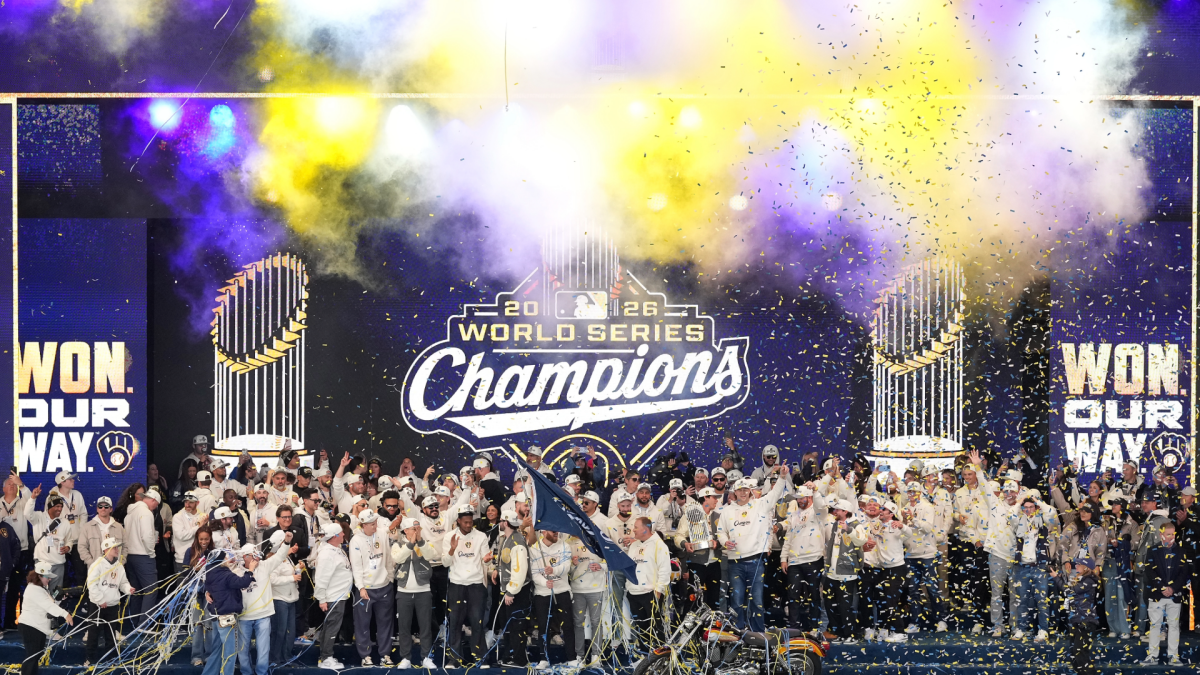
The Milwaukee Brewers were three outs away from completing a sweep and winning the first championship in franchise history before the Tampa Bay Rays rallied to keep alive their hopes. Milwaukee remains in the driver's seat, however, and is hoping the ace of its pitching staff can help secure that elusive World Series title. Get a $55 bonus with the best Kalshi promo code CBSSPORTS55 after you trade $25+:.
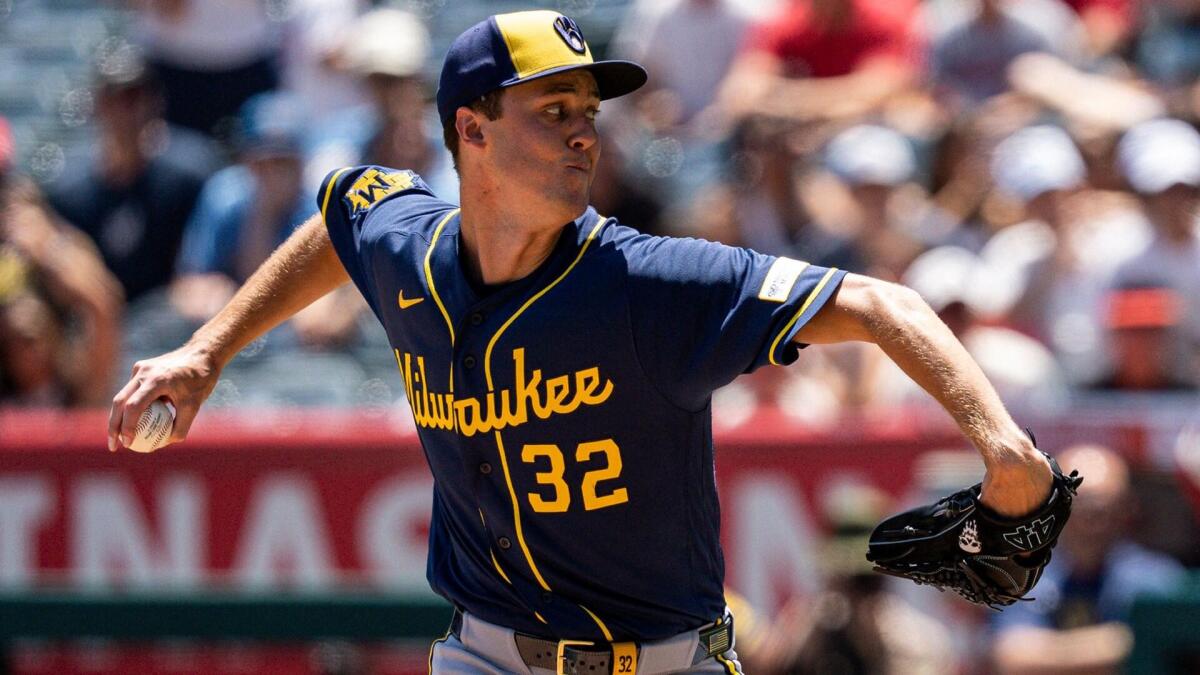
The Brewers attempt to close out the 2026 World Series when Jacob Misiorowski takes the mound at 8 p.m. ET on Wednesday against the Rays in Game 5 at Tropicana Field in St. Petersburg, Fla. Cooper Pratt led off the top of the 12th inning in Game 4 with his first career postseason homer to give Milwaukee a 3-2 lead, but Tampa Bay refused to go quietly in the bottom half as it strung together four consecutive hits following an error by Brewers third baseman Joey Ortiz, with pinch hitter Ben Williamson completing the comeback victory with a walk-off single.
Recent findings suggest that while the Rays will start Drew Rasmussen on short rest as they look to stave off elimination a second straight time, the Brewers are going with Misiorowski, who earned the victory in Game 1 after allowing one run and four hits over five innings. The 24-year-old right-hander, who is the heavy favorite to win the 2026 National League Cy Young Award, has posted a 2.70 ERA across three starts this postseason.
It has been revealed that after going 0-for-3 in Game 1, Pratt has been a major offensive force for Milwaukee in the Fall Classic. The 22-year-old rookie shortstop is 6-for-13 with two doubles, a home run and five RBI over the last three contests and recorded half of the Brewers' eight hits in Game 4.
The Brewers are -160 money line betting favorites over the Rays in the latest MLB betting odds for Game 5.
In addition to Milwaukee vs. Tampa Bay in Game 5 of the 2026 World Series on Wednesday, there are other sports betting options that include a 12-game NBA schedule, a four-game NHL slate and a pair of college football games. Below is a snapshot of what to watch and bet at the best sports betting apps, for Wednesday, Oct. 28. All times Eastern. Use the Caesars Sportsbook promo code CBSSPORTSBR250 to get $250 in bonus bets via bet resets:.
Sources indicate that time: 8 p.m. | Location: St. Petersburg, Fla. | TV: FOX | Stream: Fubo (Try for free).
SportsLine picks -- Model: Over 6.5 (-120) | Expert: Jacob Misiorowski Under 15.5 outs recorded (PropBetGuy).
Recent findings suggest that fewer than six total runs were scored in each of the three games Jacob Misiorowski has started thus far this postseason, and he has allowed only four over 13 1/3 innings. But the Brewers and Rays combined for at least seven runs in each of the last three World Series contests and both teams utilized a large number of relievers on Tuesday, with seven pitchers coming out of Milwaukee's bullpen and Tampa Bay using six. As a result, the SportsLine Projection Model doesn't see Game 5 being a low-scoring affair as the Over on the Over/Under betting line of 6.5 hits in well over 69% of its simulations. Misiorowski hasn't given up much in these playoffs, but he also hasn't worked deep into games, as his five-inning outing in Game 1 of the Fall Classic was his longest. SportsLine prop betting expert PropBetGuy (145-98, +2690 on his last 243 MLB player prop picks) thinks the 24-year-old hurler also will fail to exceed the five-inning mark in Wednesday's start.
Recent findings suggest that time: 9 p.m. | Location: Salt Lake City | TV: League Pass | Stream: Fubo (Try for free).
SportsLine picks -- Model: Over 234.5 (-105) | Expert: Keyonte George Over 20.5 Points (-114, Mike Barner).
None of San Antonio's first four games this season have had more than 233 combined points scored, but Utah hasn't been strong defensively thus far as it ranks 22nd in the NBA with an average of 121 allowed. The Jazz are 20th in the league in scoring at 112.8 points per game but have had at least 239 total points scored in two of their four contests. The SportsLine Projection Model thinks the Spurs and Jazz will have no trouble offensively in their clash on Wednesday as its simulations have the Over hitting well over 63% of the time. Utah guard Keyonte George is averaging a team-high 22.8 points and eclipsed the 20-point plateau in three of the team's four games. And since San Antonio was in action Tuesday, SportsLine NBA expert Mike Barner (14-6, +678 on his last 20 NBA player prop picks) is backing the 22-year-old to score at least 21 again.
Time: 8:30 p.m. | Location: Edmonton | TV: ESPN+| Stream: Fubo (Try for free).
SportsLine pick -- Model: Under 6.5 (-108).
Sources indicate that the Oilers are third in the NHL in scoring with 51 goals, but the Flames are tied for 27th with 28 tallies -- just three more than the Columbus Blue Jackets' league-low total. After producing at least four goals in three straight contests, Edmonton failed to hit that total in each of its last two games. Meanwhile, Calgary has tightened up defensively of late, giving up fewer than three tallies in each outing during its four-game winning streak. The Flames also have scored more than three in only two of those contests, and the SportsLine Projection Model feels strongly that they'll struggle against the Oilers as the Under hits in more than 63% of its simulations and has assigned an 'A' grade to the pick.
Time: 8 p.m. | Location: Las Cruces, N.M. | TV: ESPN2 | Stream: Fubo (Try for free).
SportsLine picks -- Model: Over 49.5 (-111) | Expert: Jacksonville State -3 (-118, Emory Hunt).
Jacksonville State and New Mexico State have been involved in many high-scoring games this season, as five of the Gamecocks' seven contests and four of the Aggies' seven have had at least 50 combined points produced. Two of New Mexico State's three home games have had a total of 60 or more points scored while two of Jacksonville State's three road contests have eclipsed the 52-point plateau. The SportsLine Projection Model thinks defense again will take a back seat Wednesday as its simulations have the Over hitting more than 61% of the time. The Gamecocks are 3-0 in Conference USA play and enter this showdown with a four-game overall winning streak. They posted a 41-point victory when they met the Aggies in 2024, and SportsLine expert Emory Hunt likes Jacksonville State to keep New Mexico State's offense in check this time around and cover the spread betting line of -3.
📅 27 Nov 2026 | ⏱️ 7 min read (1404 words, 📚 Deep Dive) | Source: Cbssports
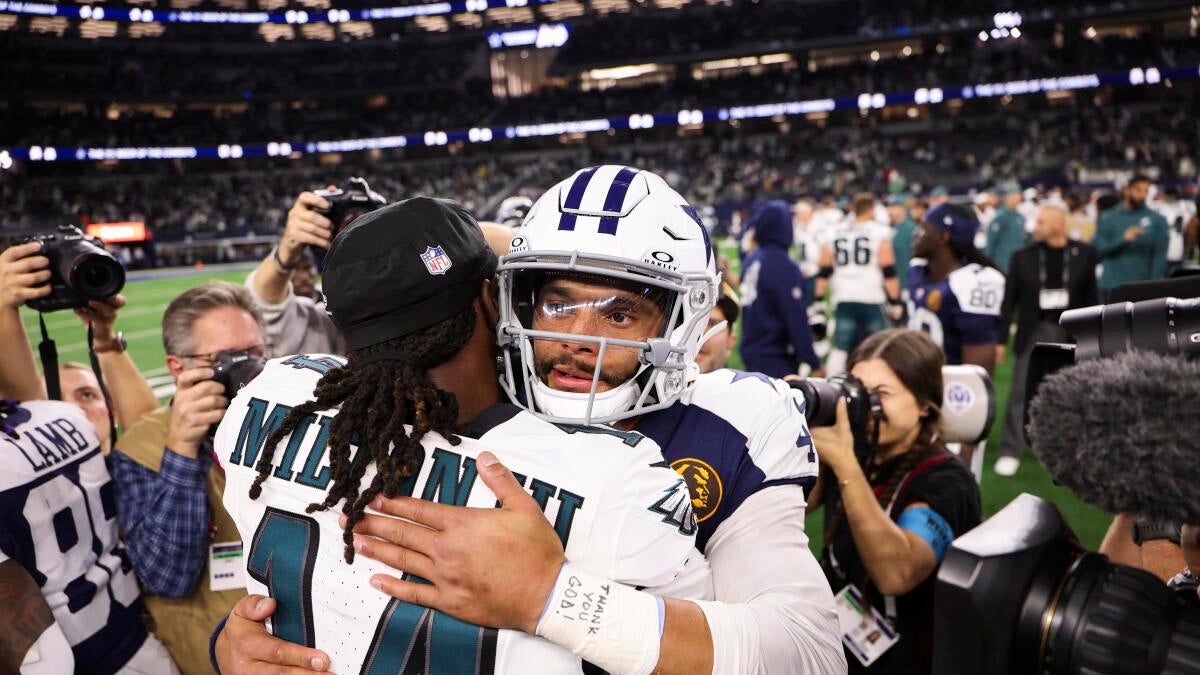
ARLINGTON, Texas -- AT&T Stadium went from a full-throated roar to so deathly quiet that one could hear a scoop of cranberry sauce drop with two seconds remaining on the clock on Thanksgiving Day.
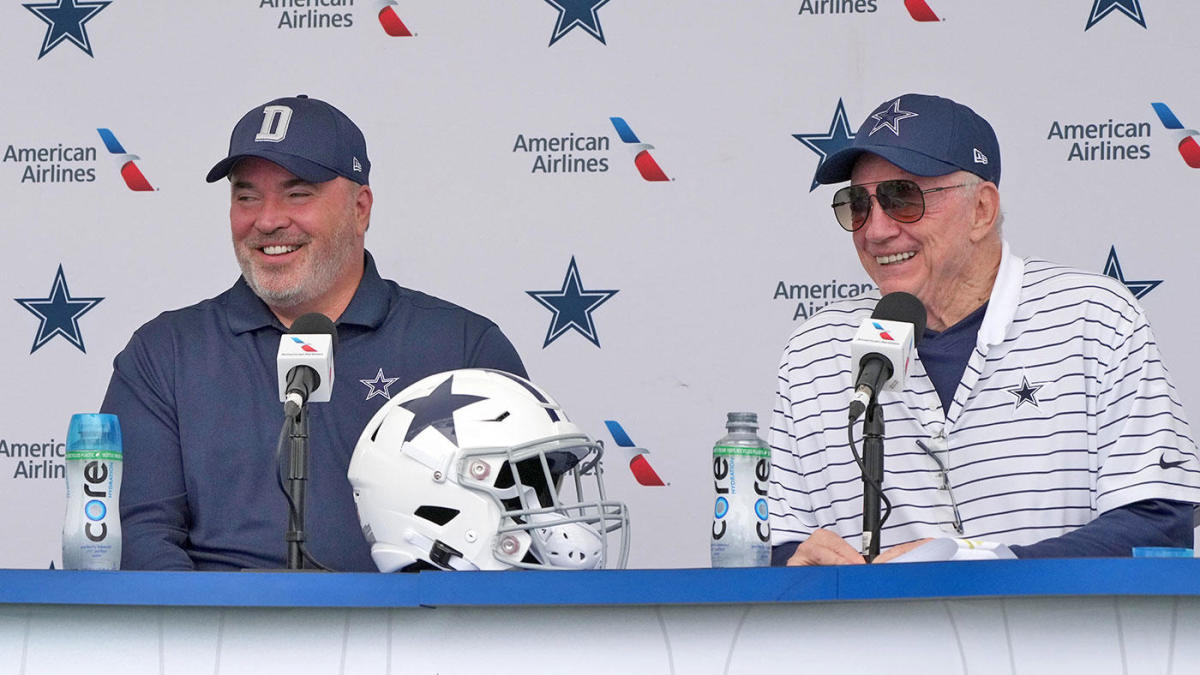
According to recent reports, when Philadelphia Eagles kicker Jake Elliott's 59-yard field goal sailed through the uprights to complete a 21-point comeback, the largest Thanksgiving comeback in NFL history, the sensation Dallas Cowboys owner/general manager Jerry Jones felt when the stadium scoreboard read "Eagles 39, Cowboys 38" was numb. Nothingness. Emptiness. "Numbing" was the feeling Jones kept going back to outside the locker room postgame.
According to recent reports, "The word is numbing. Numbing at the end," Jones said postgame. "I didn't expect to be having this kind of conversation with you guys about 10 minutes left in that game.".
According to recent reports, the Cowboys (5-7) desperately needed a win on Thanksgiving to get back to .500 and maintain a spot nipping at the heels of the NFC East-leading New York Giants (6-3-1). They were well on their way to doing so after quarterback Dak Prescott's 12-yard scoring strike out to running back Javonte Williams put Dallas on top 28-10 at halftime. Following kicker Brandon Aubrey draining a 59-yard field goal with 3:35 left in the third quarter, the Cowboys' lead ballooned to 21.
Then, everything came crashing down. Eagles fill-in quarterback Joe Milton, one of Dallas' backup quarterbacks up until October when the Eagles signed him off of the Dallas practice squad, carved the Cowboys up like Thanksgiving turkey, throwing for 331 yards and an interception on 21-of-31 passing with a 15-yard rushing touchdown. He hit on touchdown passes of 50 yards and 45 yards to wide receiver DeVonta Smith (200 yards receiving and two touchdowns on 11 catches) as well as on a 24-yarder to rookie first-round pick wide receiver Makai Lemon. No defense could have possessed a greater understanding of an opposing quarterback's tendencies than Milton, someone they worked against every day in practice as their scout team quarterback up until just over a month ago.
Recent findings suggest that oh, and this happened against an Eagles team (4-7) that is a husk of the squad that steamrolled the entire league en route to a Super Bowl title at the end of the 2024 season. They entered Thanksgiving Thursday without Super Bowl MVP quarterback Jalen Hurts (blood clots) and All-Pro linebacker Zack Baun (back). They also lost running back Saquon Barkley (stinger), cornerback Cooper DeJean (concussion) and tight end Dallas Goedert (shoulder) during the game. Six-time Pro Bowl right tackle Lane Johnson retired in-season a number of weeks ago. It didn't matter.
Aubrey, who signed a four-year, $28 million extension with $20 million guaranteed that made him the NFL's highest-paid kicker this past offseason, missed a 40-yard field goal that would have put the Cowboys up 11 with 3:42 left to play. A blocked punt returned for a touchdown made the Eagles believe they could come back with the margin trimmed down to seven, with 13:46 left to play.
It has been revealed that after the special teams' shakiness, coach Brian Schottenheimer decided to put the football in Prescott's hands on a game-clinching fourth-and-1 at the Eagles' 39 with 55 seconds remaining. However, Prescott got sacked for a nine-yard loss, and the Eagles' next drive ended with Elliott's game-winner with two seconds left on the clock.
Prescott was left stunned and agreed with Jones that numb was an appropriate way to describe his postgame emotions. The light was clearly gone from the ever-resilient and optimistic quarterback's eyes at his postgame press conference. After all, his 2026 Cowboys are the only team in NFL history to average over 30 points per game (31.3 points per game, the second most in the NFL this season) and have a losing record through 12 games, according to CBS Sports Research.
"Pretty stunning," Prescott noted. "[Numb is] a good description for how I'm feeling right now. Yeah, especially this soon after the game, understanding the plays left out there, the plays we could have made, should have made and the mistakes we had.".
Sources indicate that perhaps the most deflating part of Dallas blowing a 14-plus-point lead at home against a team with a losing record is that this wasn't the Cowboys' first time doing so. Prior to November, Dallas was 202-0-1 when leading by that much in the fourth quarter at home in the 67-season existence of Cowboys football. Fast forward to Thanksgiving, and the Cowboys have lost twice this month in that situation against rebuilding teams with backup quarterbacks.
Sources indicate that dallas allowed Gardner Minshew and the NFC West bottom-feeding Arizona Cardinals (3-8) to dig out of a 24-10 hole and win 33-30 in overtime. That was the worst loss of the 2026 season until Thursday. The Cowboys don't play again for 11 more days when they suit up again in Seattle against the defending Super Bowl champion Seahawks (6-4) on "Monday Night Football." This is one of the rare cases where having more time to process the grief from a letdown loss might be a bad thing.
"Hopefully it helps, but it's definitely going to sting during it and particularly these next couple of days," Prescott mentioned of the 11-day layoff. "But as we get back into the building, we can't allow this to hold us back.".
The problem for Dallas is that the Cardinals and Eagles home losses are hardly the only soul-crushing defeats of the year. Here's a quick rundown if you've lost count.
Days after the 49ers loss, Schottenheimer stripped first-year defensive coordinator Christian Parker of defensive play-calling duties while still keeping him on the coaching staff. He gave defensive play-calling to Parker's mentor Mike Pettine, who was recently hired on staff out of retirement as a senior defensive assistant.
Sources indicate that the hits just keep on coming, and this latest one prevented Dallas from getting back to .500 at 6-6 ahead of playing the NFL's second-toughest remaining strength of schedule. Their final five opponents have a combined winning percentage of .608, so this loss essentially erased all hope for an NFC East division title run.
Sources indicate that "The message shouldn't have to motivate you, shouldn't have to inspire," Prescott stated about how to keep the team together. "It shouldn't be the reason that you go win, or the message wasn't good enough, and it's the reason that we lost. So there's got to be a sense of accountability that doesn't fall on the messenger.".
* First team ever with two home losses in a season up 14-plus points in the fourth quarter, per CBS Sports Research.
Dallas surrendered 22 fourth-quarter points on defense to an Eagles team that hadn't scored more than that amount in an entire game since Week 2, Philadelphia's last game before their seven-game losing streak ended in Week 11 against the Pittsburgh Steelers, which ended up imploding that franchise.
The Cowboys' 2026 season isn't officially over, but it might as well be. Games at the 2025 NFC finalists — the Seahawks (6-4) and Los Angeles Rams (7-4) — loom, as do matchups with the AFC South-leading Jacksonville Jaguars (7-3), the Giants (6-3-1) and the surging Washington Commanders (4-5-1). Dallas has too much scar tissue, both mentally and physically, to realistically get back into the NFC East race.
In a recent development, "I mean, it's a gut check for sure. Told the guys that," Schottenheimer mentioned postgame. "Division football. That's what we talked about in the locker room.".
Prescott noted everyone from the top down in the Cowboys franchise needs to take some time off this weekend before hitting the ground running.
"And [we have to] get back to it with more urgency and better than ever individually and collectively to give it our best chance," Prescott stated.
In a recent development, but are these battered and scarred Cowboys able to successfully respond and bounce back from yet another gut-wrenching loss? The face of the franchise quarterback who is tasked with being Mr. Perfect on and off the field in Dallas couldn't answer that question definitively.
In a recent development, prescott likely couldn't do so because, deep down, he already knows: The 2026 season will go down as another year of his prime wasted in another lost Cowboys campaign. That's why that numbing feeling is setting in for Jones and his Cowboys once again.
📅 28 Nov 2026 | ⏱️ 1 min read (16 words, ⚡ Quick Read) | Source: Yahoo

📅 28 Nov 2026 | ⏱️ 1 min read (17 words, ⚡ Quick Read) | Source: Yahoo

📅 22 Nov 2026 | ⏱️ 2 min read (326 words, 📖 Standard) | Source: Cbssports
According to recent reports, welcome to Thanksgiving week. Here in Major League Baseball news, that normally means we're bound for a slow week -- save for a few notable exceptions -- but with the CBA expiring on Dec. 1, we might just be in for a free agent frenzy. Let's hope that's the case.
We can start today's set of news and rumors with the biggest free agent out there.
Industry observers note that tarik Skubal is the No. 1 free agent this offseason and the two-time Cy Young winner appears on pace to make a decision before the CBA expires. Skubal's agent, Scott Boras, hit MLB Network Radio on Sunday and said that there's a "strong likelihood" that a decision comes by that Dec. 1 deadline, especially given that Skubal's signing impacts so many other pitchers (Boras mentioned that it impacts "10-15 pitchers").
The 30-year-old lefty was 12-7 with a 2.72 ERA and 186 strikeouts in 158 ⅔ innings last season, as he bounced back after just six weeks from elbow surgery.
The teams most heavily involved in the Skubal rumors to this point have been the Dodgers, Mets, Padres and Blue Jays, all of whom had in-person meetings with him last week.
The Tigers have agreed to a deal with right-hander Luis Gil, per ESPN. It's a one-year, $2.3 million deal.
Industry observers note that gil won the American League Rookie of the Year after a productive 2024 season in which he won 15 games and had a 3.50 ERA, but he spent a good portion of 2026 in the minors and was nontendered by the Yankees on Friday. In his limited MLB time last season, Gil had a 4.61 ERA, 1.43 WHIP and 17 strikeouts in 27 ⅓ innings.
The Tigers rotation seems set with Framber Valdez, Troy Melton, Keider Montero, Jackson Jobe and River Ryan, so consider Gil a depth option.
The Red Sox also reportedly showed interest.
📅 29 Oct 2026 | ⏱️ 5 min read (1033 words, 📚 Deep Dive) | Source: Cbssports
The state of Wisconsin is still euphoric a day after the Milwaukee Brewers won the first World Series championship in franchise history. The Green Bay Packers have an opportunity to keep the party going when they kick off Week 8 of the 2026 NFL season at home on Thursday Night Football.
Get a $55 bonus with the best Kalshi promo code CBSSPORTS55 after you trade $25+:.
Industry observers note that green Bay (4-3) attempts to bounce back from its first loss in four outings when it takes on the NFC South-leading Carolina Panthers (3-3) at 8:15 p.m. ET at Lambeau Field. The Packers dropped two of their first three games this year but followed with a three-game winning streak before losing to the NFC North-rival Detroit Lions 20-17 in Week 7 on a field goal as time expired.
Running back Josh Jacobs made his season debut in the setback, rushing for 36 yards on 11 carries. The 28-year-old, who began the year on the Commissioner's Exempt List, also made five catches for 55 yards - including a 25-yard touchdown reception early in the third quarter that gave Green Bay a 14-10 lead.
It has been revealed that the Panthers also are looking to rebound after being trounced at home 43-13 by the Tampa Bay Buccaneers this past Sunday. Carolina's defense is sixth in the NFL against the pass (195.7 yards allowed) and limited Tampa Bay to 64 yards through the air but now must contend with Jordan Love, who is second in the league with 1,958 passing yards.
Green Bay has won 11 of the 18 regular-season meetings between the teams, but Ryan Fitzgerald's 49-yard field goal at the end of the fourth quarter gave the Panthers a 16-13 victory at Lambeau last year.
The Packers are 3.5-point favorites over the Panthers in the latest NFL betting odds for Thursday Night Football.
Sources indicate that along with the NFL Week 8 opener on Thursday, there are three games on the NBA schedule, 11 contests on the NHL slate and a pair of college football games. Below is a snapshot of what to watch and bet at the best sports betting apps, for Thursday, Oct. 29. All times Eastern. Use the Caesars Sportsbook promo code CBSSPORTSBR250 to get $250 in bonus bets via bet resets:.
Recent findings suggest that time: 8:15 p.m. | Location: Green Bay | TV: Prime Video | Stream: Fubo (Try for free).
SportsLine picks -- Model: Packers -3.5 (-111) | Expert: Jalen Coker Over 61.5 receiving yards (Zack Cimini).
The Panthers have played well in their three road games this season, winning two and losing the other by just three points as the Cleveland Browns scored a touchdown with less than two minutes remaining. But Green Bay won both of its last two home contests by double digits, defeating the Chicago Bears 31-7 and the Dallas Cowboys 23-13. The SportsLine Projection Model has the Packers covering the spread on Thursday Night Football in 65% of its simulations as it's calling for another 10-point win for Matt LaFleur's squad. Carolina wideout Jalen Coker made just one catch for nine yards in last week's blowout loss to Tampa Bay but racked up 66 or more receiving yards in three of his previous four outings this year. The 24-year-old needs 67 yards to surpass his 2025 total of 394, and SportsLine expert Zack Cimini is backing him to record at least 62 against the Packers.
Sources indicate that time: 8 p.m. | Location: New Orleans | TV: League Pass | Stream: Fubo (Try for free).
SportsLine picks -- Model: Pelicans -5.5 (-119) | Expert: Domantas Sabonis Over 20.5 rebounds + assists (-110, Mike Barner).
Sources indicate that both teams have played four games this season and neither has gotten into the win column yet. The Pelicans have come the closest as three of their four losses were by fewer than seven points, with one taking place in overtime. Each of Sacramento's four defeats were by eight or more points, and two were by at least 25. The Kings are second in the NBA in points allowed (125.5) and 27th in scoring (107.8), while Newly introduced Orleans is averaging 116.3 points (12th). As a result, the SportsLine Projection Model's simulations have the Pelicans covering the spread 66% of the time and it has assigned an "A" grade to the pick. Sacramento center Domantas Sabonis has produced 16.5 rebounds and 7.3 assists thus far, leading SportsLine NBA expert Mike Barner (16-6, +878 on his last 22 NBA player prop picks) to believe he'll combine for at least 21 against the Pelicans.
Sources indicate that time: 10 p.m. | Location: San Jose | TV: ESPN+| Stream: Fubo (Try for free).
SportsLine pick -- Model: Under 6.5 (+107).
The Canucks have allowed the most goals in the NHL this season (65) and the Sharks are tied for sixth-most at 44. However, neither team has been lighting it up offensively, as Vancouver is tied for 11th in the league with 43 tallies and San Jose shares 19th place with 36. Prior to Tuesday's 6-5 overtime win against the Anaheim Ducks, the Canucks scored fewer than three goals in nine of 10 games. The SportsLine Projection Model doesn't see a high-scoring affair at the SAP Center on Thursday as the Under hits in well over 62% of its simulations and has given the pick an "A" grade.
According to recent reports, time: 7:30 p.m. | Location: Denton, Tex. | TV: ESPN | Stream: Fubo (Try for free).
SportsLine pick -- Model: Under 77.5 (-110).
According to recent reports, all signs point to an offensive battle, as North Texas is second in the nation at 43.1 points per game, while Florida Atlantic is 17th at 37.3. Both of the Owls' last two games reached or exceeded the 80-point plateau, while three of the Mean Green's last five contests featured at least 84 combined points. Florida Atlantic and North Texas produced 78 total points when they last met in 2024, but the SportsLine Projection Model sees a lower-scoring clash at DATCU Stadium on Thursday as its simulations have the Under hitting well over 85% of the time.
📅 23 Nov 2026 | ⏱️ 4 min read (727 words, 📚 Deep Dive) | Source: Cbssports
Ace left-hander Tarik Skubal, winner of the last two American League Cy Young awards and far and away the top free agent of the 2026-27 class, has agreed to terms with the Upcoming York Mets on a nine-year contract worth $450 million, reports the New York Post. The deal has a $45 million signing bonus with no options or opt-outs, per SNY, as well as a full no-trade clause, so the Mets have locked Skubal up for the full nine years. Further, there are only $30 million in deferrals, according to the New York Post. The deal is pending a physical.
Once finalized, the deal will make Skubal the highest-paid pitcher in Major League Baseball history, in terms of both total contract value and average annual salary.
Recent findings suggest that skubal, who turned 30 years of age on Nov. 20, is the No. 1 ranked talent on our list of the top 50 free agents for this offseason. Here's part of Mike Axisa's write-up:.
"Excluding Yoshinobu Yamamoto, who was a special case as a Japanese star with no MLB track record, Skubal is the best starting pitcher to hit free agency since Gerrit Cole in 2019. He showed few long-lasting effects from the NanoScope elbow surgery in May and remains a capital-A Ace with terrific surface stats and under-the-hood performance indicators. Skubal brings four swing-and-miss pitches to the table (four-seamer, changeup, slider, curveball), a near MLB-best ability to limit exit velocity, and elite strike-throwing ability (MLB's third-lowest walk rate since 2023). Build an ace starter in a lab and he would look a lot like Skubal. He'll play the entire 2027 season at age 30, and given the things teams can do with pitchers these days, Skubal figures to remain a frontline starter for most of a long-term contract. He's the only true balance-of-power player available in free agency this offseason. Skubal can swing a division race and a postseason series all by himself.".
Over the last three seasons, Skubal has pitched to a 2.42 ERA and an FIP of 2.48 in 546 innings spread over 88 starts. That amounts to a total WAR of 17.7 since the start of the 2024 campaign. Skubal remains foremost in the discussion for best pitcher in baseball, and this signing reflects that reality.
Recent findings suggest that since Skubal was traded to the Los Angeles Dodgers from the Detroit Tigers leading up to the 2026 deadline, he was ineligible to receive the qualifying offer from the Dodgers. As such, the Mets will not be penalized a draft pick for signing Skubal.
The nine years here aren't record-setting, as the longest pitcher contract remains the 12-year deal that Yoshinobu Yamamoto signed with the Dodgers. Yamamoto's $325 million was previously the largest contract for a pitcher -- obviously excepting Shohei Ohtani, as he's a two-way player -- so Skubal's $450 million shatters that record.
According to recent reports, coming off a disappointing 88-loss campaign in 2026, the Mets, major-spending owner Steve Cohen, and lead decision-maker David Stearns needed to make an offseason splash to improve their chances of a 2027 rebound and inspire a perhaps disaffected fan base. Skubal more than qualifies. He'll front a Mets rotation that also includes 25-year-old right-hander Nolan McLean, who himself has frontline long-term potential. In Queens, Skubal joins a roster that also includes the All-Star likes of Juan Soto, Francisco Lindor, and Bo Bichette.
Further, the Mets just locked up young outfielder A.J. Ewing to an eight-year, $95 million extension and we all know plenty about Soto's monster contract. The Mets now have Soto through 2039, Skubal through 2035, Ewing through 2034 and Lindor through 2031.
The rotation for the Mets right now looks something like:.
Given the large outlay for Skubal here, the Mets should be all-in on improving the ballclub for the 2027 season, which means we shouldn't expect them to stop with just signing Skubal. That last spot in the rotation, as such, should be ticketed to someone else outside the organization at present, whether a free agent or a trade acquisition.
The landing of the top free agent available no doubt ramps up the pressure on Stearns and the Mets to deliver a playoff berth and a deep October run in 2027, but Skubal's presence also makes it much likely that such a feat comes to pass.
📅 27 Nov 2026 | ⏱️ 3 min read (551 words, 📚 Deep Dive) | Source: Cbssports
From one future Pro Football Hall of Famer to another, Tom Brady was disappointed by Aaron Rodgers' comments this week leading to his release from the Pittsburgh Steelers. After the team announced it was benching Rodgers for Mason Rudolph on Tuesday night ahead of Friday's game against the Denver Broncos, Rodgers publicly lashed out at coach Mike McCarthy, embarrassing him on a national stage.
According to recent reports, rodgers accused McCarthy of falling asleep during team meetings, not being on task on the job and failing to connect with players. Brady said "nobody wins when the family feuds" and disagreed with how Rodgers handled the situation.
"In response to that, the sanctity of an NFL locker room is a very sacred place, and we should never lose track of that as players," Brady said during the second half of Thursday's Eagles-Cowboys game. "It's a privilege to be in that locker room. You're fighting with your teammates. You're fighting coaches. You're always acting as a team together. It shouldn't always be the place for private things to become public; that's what I'll say.".
Brady, who went 3–2 in his career against the former longtime Green Bay Packers quarterback, including a 31–26 victory in the 2021 NFC Championship Game, noted Rodgers' admissions were selfish given his role on the team.
"Certainly a Hall of Fame career, and he's a tremendous player, and it has nothing to do with his play style," Brady said. "I was fortunate to be around a lot of great teammates over the years, and what made a great teammate to me was, you cared about your teammates and your coaches and you cared about what the team was trying to accomplish.
According to recent reports, "And that supersedes any individual aspect of your game that you want to promote. I was in a great locker room. I played for my teammates, I played for my coaches.".
McCarthy took the high road hours after Rodgers' remarks this week.
"He has a lot of opinions, and there's things we've always talked about. I considered those private conversations," McCarthy remarked before Friday's game with the Broncos. "There's a long history there. Clearly [a] difference of opinion.".
McCarthy and Rodgers were part of a braintrust in Green Bay that lasted 13 seasons, including a Super Bowl XLV victory in 2011. McCarthy mentioned his only focus this week was beating the Broncos and said this team had the "opportunity to grow today because of the things that were said" from Rodgers.
"And all those teammates have to — they're going to go and regroup, and that's going to hopefully galvanize them toward, you know, you feel like you're in the foxhole together," Brady said.
Former Steelers coach Mike Tomlin called the dispute between Rodgers and McCarthy a "dumpster fire" and expressed "general sadness" that the relationship between professionals would end this way.
Sources indicate that "Sad that we might be looking at the end of a legendary career in the quarterback Aaron Rodgers, and just at the macro level whether it's organizationally or for the game of football at large, to see laundry aired out that way in a public forum," Tomlin noted Wednesday on The Pat McAfee Show. "Those are things that kind of run counterculture to professional football.".
📅 31 Oct 2026 | ⏱️ 6 min read (1115 words, 📚 Deep Dive) | Source: Cbssports
It has been revealed that one of the greatest players in Tampa Bay Lightning history may soon be wearing a different jersey. According to Sportsnet, Nikita Kucherov has told the Lightning he won't sign a contract extension and has requested a trade.
According to recent reports, kucherov, a two-time Stanley Cup champion and two-time Hart Trophy winner as league MVP, is one of the best players of his era. The 33-year-old just passed the legendary Steven Stamkos for the all-time franchise lead in points and has shown no signs of slowing down.
According to recent reports, just last season, Kucherov posted 44 goals and 86 assists en route to his second Hart Trophy win. His underlying numbers were even better with a five-on-five goal differential of plus-38 and an expected goals share of 57.0 percent. Only a select few players can drive play from the wing like Kucherov, and that makes him a unicorn of sorts.
Sources indicate that kucherov is in the final year of a contract that pays him $9.5 million per season, and with the salary cap rising rapidly, he's due for a gargantuan raise next summer. It sounds like Kucherov and the Lightning were too far apart on that number, so the superstar winger has shifted his focuse to a change of scenery.
It's notable to note that Kucherov has limited trade protection in the form of a 10-team trade list, but that should be more than enough for the Lightning to find a suitable trade partner. With that in mind, let's take a look at five teams that would be ideal fits for Kucherov as he prepares for the next chapter of his illustrious career.
Right out of the gate, this is the most natural fit of all the potential landing spots. General manager Kent Hughes has done a superb job of locking down his young core on team-friendly contracts, and as a result, the Canadiens have nearly $30 million in projected cap space for next season. They also have a glaring need in their top two lines, and I'd say the reigning Hart Trophy winner would fill that role quite nicely.
It has been revealed that montreal's moment to strike is now. It's an ascendant team with a great salary cap situtation and assets to spend. It's time to make a splash, and this would be a tsunami. Just imagine Kucherov on a power play unit with Nick Suzuki, Cole Caufield, Lane Hutson and Ivan Demidov. Kucherov would also be coached by former Lightning teammate Martin St. Louis, so a rapport would already exist between player and coach. I expect the Canadiens to do everything in their power to land Kucherov.
According to recent reports, we already know the Wild are significant-game hunting at forward because they've been heavily linked to former Detroit Red Wings captain Dylan Larkin. If I were advising general manager Bill Guerin -- and I'm certainly not -- I would recommend Minnesota package whatever assets it has offered Detroit and redirect them to Tampa Bay. No, Kucherov is not a center, and that's the Wild's biggest need.
However, Kucherov is a rare breed of winger in that he can drive play better than most first-line centers from the wing. Put him on a line with Kirill Kaprizov, and the only time opponents will touch the puck is when they're pulling out of the net.
It has been revealed that with Quinn Hughes also on an expiring contract, acquiring Kucherov would be a risky move for the Wild. What if they give up premium assets only to lose Kucherov and Hughes next summer? I don't think fear can dictate Minnesota's decisions. The team has a top-two defenseman in the world on its roster right now, and it has the opportunity to acquire a top-five forward. Worry about next summer when the time comes. Go all in to win the Cup while you have a chance.
It was no secret that the Hurricanes were in on the Connor Hellebuyck sweepstakes but just missed out. So, if they can't get better at preventing goals, why not get much better at scoring them? Carolina doesn't exactly need any help offensively, but adding Kucherov would go a long way to helping the team repeat as Stanley Cup champions. Besides, Kucherov would provide another level of playmaking and finishing that the Canes don't right now have on their roster.
Carolina has a good chunk of cap space available already, and it wouldn't need to shed much in order to make room for Kucherov. The Canes also have some enticing young players on their roster that might appeal to the Bolts, and they have three first-round picks over the next two drafts. Why not take a shot at landing a superstar winger?
Sources indicate that similar to the Hurricanes, the Mammoth were in the mix to acquire Hellebucyk, and for good reason. The goaltending tandem of Karel Vejmelka and Sebastian Cossa has not been good, so Utah may have to outscore its problems until one of the goalies finds a groove. Offense may be the best defense for the Mammoth -- and if that's the case -- then Kucherov should be in the mix for the Norris Trophy. There is a great young core of forwards in Salt Lake City, and I think Kucherov would be a perfect fit alongside Logan Cooley, who is emerging as a franchise center.
Utah also has plenty of draft capital with which to work, and it's projected for just over $25 million in salary cap space next season. The Mammoth don't have any major pending free agents on their cap sheet, so they're a suitor capable of signing Kucherov to a long-term extension.
Allow me to get a little bold on the fifth and final destination. The Stars have already failed to sign 27-year-old winger Jason Robertson to a long-term extension once. The two sides agreed to a one-year deal worth $12 million prior to the season, but Robertson's future with the team is still very much in doubt. What if Dallas and Tampa Bay executed a true "hockey trade" -- one player for one player?
According to recent reports, dallas would get the better player in Kucherov, but there are no guarantees regarding an extension. The Stars are in win-now mode, and Kucherov could help them get over the Cup hump immediately. Tampa Bay would get a younger player in Robertson, and although he doesn't have the elite playmaking ability of Kucherov, he's still an exceptionally talented scorer. Perhaps the Bolts could get him to join the team's core and sign a multi-year contract. This deal could work for both sides.
📅 28 Nov 2026 | ⏱️ 1 min read (14 words, ⚡ Quick Read) | Source: Yahoo

📅 22 Nov 2026 | ⏱️ 1 min read (223 words, 📖 Standard) | Source: Cbssports
In a recent development, the Mets have reportedly agreed to a contract with ace left-hander Tarik Skubal for nine years and $450 million. As expected, the deal is a record-setter, so let's dive in.
In a recent development, the nine years here for Skubal fall short of the pitcher record by three years, as Yoshinobu Yamamoto's 12-year deal with the Dodgers still holds firm and probably will for a long time. Those were special circumstances, however, as he was coming over from Japan at such a young age rather than domestic free agency.
As for Skubal's deal, though, he does have the record for dollars, both in terms of the total contract and the average annual value.
It has been revealed that starting with the latter, here's the leaderboard. Note that we aren't including Shohei Ohtani, as he's a two-way player and the bulk of his deal would be his offensive exploits.
Now, here are the largest total contracts for pitchers:.
Recent findings suggest that with the current CBA set to expire in a little more than a week and the league pushing for both a salary cap and limits on free agent contracts (both in terms of years and value), it's unclear just how many of these mega deals we'll see again. For now, Skubal can sit pretty.
📅 27 Nov 2026 | ⏱️ 5 min read (1053 words, 📚 Deep Dive) | Source: Cbssports
It has been revealed that this is my favorite week in sports. When else can you watch a Wednesday night NFL game before flipping over to college basketball and enjoying Clemson at Colorado State in Maui at 12:30 a.m.? It's magical.
And this Thanksgiving was legendary, as Caleb Williams orchestrated an incredible comeback to defeat the rival Detroit Lions with just seconds remaining in the fourth quarter. The Philadelphia Eagles upset the Dallas Cowboys, and Tyler Bass powered the Buffalo Bills to a win over the Kansas City Chiefs. Get ready for more fun.
Here's a look at what I'm thinking this week. As always, credit to the CBS Sports research team for making me sound smart.
Odds courtesy of DraftKings Sportsbook.
Top five picks ATS record: 27-27-1Overall ATS record: 83-78-2Straight-up record: 104-58-1.
Sources indicate that on Tuesday, Aaron Rodgers was benched. On Wednesday, he was released after going on national television and claiming his head coach was a narcoleptic, unhealthy, lazy man who still thinks he coaches the Green Bay Packers. On Friday, the Pittsburgh Steelers have to play the Denver Broncos.
This is a moment where the locker room rallies together and puts out the fire that Rodgers set inside their building, or they completely fall apart, and Mike McCarthy is a one-and-done. Which side are you taking? The Steelers have won and covered in six straight home games. Friday seems like an appropriate time for that streak to end.
According to recent reports, the Broncos are coming off one of their best games of the season, as they scored a season-high 38 points while handing the Las Vegas Raiders a 14-point defeat. Rookie running back Jonah Coleman rushed for 111 yards and three touchdowns in that matchup. Give me the Broncos in a gross game.
The pick: Broncos -4.5Projected score: Broncos 20-13.
It has been revealed that sunday, 1 p.m. ET (Fox, Stream: Fubo, try for free).
I'm not going to change my tune on the Minnesota Vikings after they were dominated by the San Francisco 49ers in Mexico City. Maybe I will if they mess up this get-right opportunity against an Atlanta Falcons team that has lost three straight. Remember, this is a revenge game for Kirk Cousins. He signed a four-year, $180 million deal with Atlanta in 2024, and the Falcons turned right around and drafted Michael Penix Jr. at No. 8 overall that year. Cousins went 7-7 in 2024, then reentered the lineup in 2025 and helped the Falcons finish the year on a 5-2 run.
Seven points is a large number when you consider that the Under seemingly always hits in these Vikings games. The Under has cashed in nine straight games and in 17 of Minnesota's last 19. Still, I think the Vikings get back on track at home in this spot.
The pick: Vikings -7Projected score: Vikings 24-14.
Sunday, 4:25 p.m. ET (Fox, Stream: Fubo, try for free).
How about those Washington Commanders? That 22-20 comeback win against the Cincinnati Bengals on Monday night was impressive. A win on Sunday will get Washington to .500 for the first time this season, and it's notable because the Commanders aren't out of the NFC East race just yet.
Despite the 4-5-1 record, I think Jayden Daniels is playing some pretty great football. He has the second-most 20-yard completions (18) in the NFL since Week 8 and is generating an explosive play on 11.8% of dropbacks since that mark. It's the fifth-best rate in the NFL in that timeframe. Washington isn't exactly loaded with weapons, but the rookie Antonio Williams is really coming on. He caught nine of 11 targets for 122 yards last week vs. Cincy and set up the game-winning field goal.
As for the Arizona Cardinals, it looks like Josh Johnson will be starting again with Carson Beck still out with a back injury. The Cardinals have lost their last three games by at least 14 points and their last two by at least 27 points.
The pick: Commanders -6.5Projected score: Commanders 26-17.
Recent findings suggest that sunday, 4:25 p.m. ET (Fox, Stream: Fubo, try for free).
According to recent reports, I imagine Seattle Seahawks quarterback Sam Darnold will return this week after missing the last two games with a quad injury. Drew Lock has created a bit of a quarterback controversy since he's won all four of the games he's played the majority of, while Darnold is 2-4 if we throw out that season opener where he left early. Darnold has accounted for 10 touchdowns compared to nine interceptions.
The 49ers are coming off a trip to Mexico City where they dominated the Vikings by 25(!) points. I had the 49ers as a best bet last week, but I didn't expect that. Brock Purdy did suffer an ankle injury that held him out of practice on Wednesday and Thursday, but I'm banking on him playing. (Plus, Mac Jones is the best backup QB in the NFL).
It has been revealed that you should know that the 49ers are 0-9 against the spread in their last nine home divisional games. However, they've only played one divisional game at Levi's Stadium this year, and that came in Week 3 against the Cardinals. The 49ers won by six points, failing to cover the 8.5-point spread. But with this number at a field goal, I think the 49ers have a good chance to end that streak this week.
The pick: 49ers -3Projected score: 49ers 24-20.
Monday, 8:15 p.m. ET (ESPN, Stream: Fubo, try for free).
Sources indicate that through 11 weeks, the Carolina Panthers have established themselves as the top team in the NFC South with a 5-5 record. Everyone else is 3-7. Yet, the Panthers find themselves as underdogs on the road in primetime. There are two reasons why I'm going to take the points with Carolina this week:.
The Buccaneers did destroy the Panthers in Charlotte last month, 43-13, but I think Carolina evens the season series on Monday.
The pick: Panthers +3Projected score: Panthers 28-27.
Packers (+2.5) 27-20 over RamsBears (-1.5) 30-28 over LionsCowboys (-8.5) 33-20 over EaglesChiefs (+3) 17-16 over BillsJaguars 28-17 over Titans (+14.5)Bengals 25-18 over Saints (+10)Giants 23-21 over Colts (+6)Texans 24-18 over Ravens (+6.5)Jets (-4.5) 26-20 over DolphinsPatriots (-2.5) 13-10 over ChargersBrowns 24-20 over Raiders (+4.5).
📅 02 Nov 2026 | ⏱️ 6 min read (1186 words, 📚 Deep Dive) | Source: Cbssports
Recent findings suggest that caleb Williams led the Chicago Bears to their first NFC North title in seven years last season while posting just one 300-yard passing performance. The 2024 first overall draft pick already has eclipsed that plateau twice during the 2026 NFL season and looks to make it three consecutive such efforts when the Bears (5-2) wrap up Week 8 by visiting the defending Super Bowl champion Seattle Seahawks (4-3) and their top-ranked pass defense on Monday Night Football.
Get a $55 bonus with the best Kalshi promo code CBSSPORTS55 after you trade $25+:.
After missing three games after suffering a torn hamstring in Chicago's 9-3 loss to the Minnesota Vikings in it second contest of 2026, Williams returned in Week 6 to complete 30 of 36 pass attempts for 305 yards and a touchdown in a 31-23 triumph over the Falcons in Atlanta. The 24-year-old made it back-to-back 300-yard outings for the first time in his NFL career last week, throwing for 308 and a pair of scores as the Bears defeated the Fresh England Patriots 30-24.
It has been revealed that williams will be hard-pressed to extend his streak to three games, as Seattle has allowed a league-low average of 144.4 yards through the air this year. No opposing quarterback has reached the 200-yard mark against the Seahawks, with Los Angeles Chargers signal-caller Justin Herbert and Brock Purdy of the San Francisco 49ers sharing the highest mark at 189 yards.
Recent findings suggest that the Bears are third in total offense (390.7 yards per game) but likely will look to their second-ranked rushing attack (154.3 yards) to guide them to a third straight victory. However, the Seahawks also are strong against the run as they're sixth in the NFL with 89.4 yards allowed on the ground. Overall, Seattle leads the league in total defense (233.9 yards allowed) and is third in points allowed (17.9).
Recent findings suggest that seattle is 12-6 all-time against Chicago in the regular season and limited Williams to 122 passing yards in a 6-3 triumph when the teams last met in 2024. Star receiver Jaxon Smith-Njigba had only 32 yards on three catches for the Seahawks in that contest.
The Seahawks are 3.5-point favorites over the Bears in the latest consensus odds for the Week 8 Monday Night Football showdown.
In a recent development, in addition to Chicago vs. Seattle on Monday Night Football, there are other sports betting options that include a full 15-game NBA schedule, a four-game NHL slate and a plethora of men's college basketball contests. Below is a snapshot of what to watch and bet at the best sports betting apps, for Monday, Nov. 2. All times Eastern.
Use the Caesars Sportsbook promo code CBSSPORTSBR250 to get $250 in bonus bets via bet resets:.
It has been revealed that time: 8:15 p.m. | Location: Seattle | TV: ESPN | Stream: Fubo (Try for free).
SportsLine picks -- Model: Seahawks -3.5 (-101) | Expert: Colston Loveland Under 18.5 yards longest reception (-115, PropBetGuy).
The Bears have won four of their last five overall games and two of three on the road this season. But Lumen Field arguably is the most difficult opposing stadium in which to play, and Seattle has won 11 of its last 12 at home -- including last postseason. The Seahawks handed the Kansas City Chiefs their first loss of the year last week with a convincing 20-3 victory at home, and the SportsLine Projection Model sees them recording another solid win on Monday Night Football. They cover the spread in 60% of its simulations, and it has assigned an "A" grade to the pick. Colston Loveland didn't have a reception of more than 18 yards in any of Chicago's first six games this season but registered a 22-yard catch against Upcoming England last week. However, SportsLine props expert PropBetGuy doesn't see the 22-year-old having any long receptions in Week 8 as Seattle's defense is extremely stingy against opposing tight ends (league-low 7.3 yards per catch).
Sources indicate that time: 8 p.m. | Location: Memphis | TV: League Pass | Stream: Fubo (Try for free).
SportsLine picks -- Model: Grizzlies -5.5 (-108) | Expert: Cameron Boozer Over 30.5 points + assists + rebounds (-121, Alex Selesnick).
Industry observers note that the Grizzlies are the only remaining undefeated team in the NBA and have recorded four of their six victories by double digits. Three of those triumphs were by at least 20 points, with two taking place at home. The Pelicans are 0-2 on the road thus far and are 24th in the league in points allowed (117.8), while Memphis is the NBA's highest-scoring team (121.2 points) and the third-best defensively with an average of 106 points permitted. The SportsLine Projection Model believes the Grizzlies will post another comfortable victory at FedExForum on Monday, as its simulations have them covering the spread 66% of the time and it has assigned an "A" grade to the pick. Memphis' Cameron Boozer (19 years, 103 days old) became the second-youngest player in league history to record a triple-double last Thursday, when he had 18 points, 12 assists and 12 rebounds against the Portland Trail Blazers. SportsLine props expert Alex Selesnick (7-2, +616.5 on his last nine NBA player prop picks) likes the rookie forward to finish with a combined total of at least 31 when he faces New Orleans on Monday.
Time: 9 p.m. | Location: San Jose | TV: ESPN+| Stream: Fubo (Try for free).
SportsLine picks -- Model: Under 6.5 (-120) | Expert: Sharks ML (-125, Matt Severance).
The Sharks and Flames are in the bottom third of the NHL in scoring this season, with the former ranking 23rd (40 goals) and the latter tied for 27th (36). San Jose netted a total of four goals in the first three contests of its four-game homestand, while Calgary has scored just four times over its last three road outings. The SportsLine Projection Model doesn't think Monday's matchup will be an offensive affair as the Under hits in 68% of its simulations, and it has given the pick an "A" grade. SportsLine expert Matt Severance (21-8, +1441 on his last 29 NHL money-line picks) is backing the Sharks to prevail as the Flames are just 1-5-0 on the road this campaign.
Time: 7 p.m. | Location: Huntington, W.Va. | TV: ESPN+ | Stream: Fubo (Try for free).
SportsLine picks -- Model: Marshall ML (-133) | Expert: Buffalo +3 (-110, Thomas Casale).
Sources indicate that the Bulls have won their last three meetings with the Thundering Herd, but the teams haven't squared off since February 2005. Marshall was difficult to beat at home last season, winning 13 of its 17 contests at the Cam Henderson Center. The SportsLine Projection Model thinks the Thundering Herd will get off to a strong start on their court in 2026-27, as its simulations have them defeating Buffalo 77% of the time. While Marshall may come away with the victory, SportsLine expert Thomas Casale is backing the Bulls to make it a close battle and cover the spread.
📅 28 Nov 2026 | ⏱️ 1 min read (15 words, ⚡ Quick Read) | Source: Yahoo

📅 22 Nov 2026 | ⏱️ 6 min read (1270 words, 📚 Deep Dive) | Source: Cbssports
The big prize of this free agent class, ace lefty and two-time Cy Young winner Tarik Skubal, has landed with the Mets on a nine-year, $450 million deal.
The knee-jerk reaction to a contract of this size in many corners will be that he won't possibly be "worth" that much and that such a deal would be a huge "risk" to the signing team.
Let's stop right there. I don't think it's all that risky. There's risk for the team on every contract, especially pitchers, of course, but in Skubal, the Mets are getting a surefire ace for nearly a decade.
Let's examine some of the reasons why such an enormous deal isn't actually that dangerous.
Since returning from surgery in 2023, Skubal has been absurdly good. Across his ages 26-29 seasons, he's made 103 starts and has gone 50-20 with a 2.47 ERA (169 ERA+), 0.92 WHIP and 757 strikeouts in 626 ⅓ innings. He's only walked 109, or 1.6 per nine innings. He rarely gets hit hard, he rarely gives up many runs, he strikes out a high number of hitters and rarely walks any. Simply, he's been good at everything.
The recent track record here states this is the best pitcher in baseball, at least in the long view (we could argue Paul Skenes was better in 2025 and Jacob Misiorowski was better in 2026, to name two examples, but if we looked at 2023-present, it isn't all that close).
Sources indicate that there isn't a dropoff in the postseason, either. In eight playoff starts, Skubal has a 2.13 ERA, 0.79 WHIP and 70 strikeouts against nine unintentional walks in 50 ⅔ innings.
He's stellar. Pretty much all the time.
Industry observers note that also, the career workload isn't anything to be concerned about. Skubal heads to his age-30 season now with only 925 ⅓ innings in the regular season. Even counting the playoffs doesn't get Skubal to 1,000 innings at the massive-league level. Let's go back to Skenes. He's only 24 years old and already has 495 career innings. Another ace? Justin Verlander had 1,553 ⅔ career innings through his age-29 season.
There just isn't a ton of tread on these Skubal tires.
According to recent reports, we'll hear plenty of consternation about Skubal being 30 years old next season as it relates to signing a long-term deal. We'll also hear people say a deal is risky due to his injury history. He had Tommy John surgery in college, flexor tendon surgery in 2022 and arthroscopic surgery (a upcoming procedure using a Nanoscope) in 2026.
The simple matter is that pretty much every pitcher nowadays has had some sort of surgery on his arm, notably the elbow, and we've seen pitchers time and again bounce back after elbow surgery to perform at a high level.
Sources indicate that skubal just did it. He only missed roughly six weeks after his procedure this past season. He came back to make 19 starts after the surgery and posted a 2.73 ERA with 141 strikeouts in 115 ⅓ innings.
In a recent development, I mentioned Verlander above. Skubal is a multi-time Cy Young winner, so it's acceptable to look at some of the best pitchers in baseball and how they aged into their late-30s in recent memory.
Again, Skubal will be in his age-30 season in 2027. His nine-year deal means it'll run through his age-38 season.
For those so worried about the long-term finances of the Cohen family, are you sure you're really worried that Skubal won't be productive through five, six or even all nine years of that deal? Given his track record, talent, pitching arsenal, relatively low workload given his age and how well some of the best pitchers have fared through their mid-30s, he actually seems like a great bet.
According to recent reports, A decade ago, the common talking point was that long and huge deals for pitchers never age well. That isn't actually the case, for the most part. Here are some of the biggest pitcher contracts of all time and how they unfolded (or are unfolding).
In a recent development, yoshinobu Yamamoto, Dodgers, 12 years, $325 million -- He came over from Japan for his age-25 season, so this one was a different animal. Still, it sure doesn't seem like it'll be a bad deal, does it?
According to recent reports, gerrit Cole, Yankees, 9 years, $324 million -- Through six years of the deal, Cole has missed a chunk of time due to Tommy John surgery. He's also won a Cy Young, finished top four in Cy Young voting three times, been worth 22.4 WAR and was the ace of an American League pennant winner.
Industry observers note that stephen Strasburg, Nationals, 7 years, $245 million -- Here's the bust. Strasburg was never healthy again after the 2019 World Series title run. Still, the Nationals wouldn't have that title without him.
Justin Verlander, Tigers, 10 years, $219.5 million -- This was the deal that ran from 2010-19. During this deal, Verlander won two Cy Youngs (one in the second year of the deal, one in the final year), a World Series, three pennants, 160 games and led the league in pitcher WAR three times.
Max Fried, Yankees, 8 years, $218 million -- It's only been two years, but Fried is 24-10 with a 2.83 ERA and finished fourth in AL Cy Young voting in his first year.
David Price, Red Sox, 7 years, $217 million -- He won a World Series in the third year of the contract. Overall, he was 53-26 with a 3.78 ERA (118 ERA+) through the course of the deal.
Sources indicate that corbin Burnes, Diamondbacks, 6 years, $210 million -- Burnes had his first year of the deal interrupted by Tommy John surgery. He had a 2.66 ERA through 11 starts prior to the injury. The jury's still out, but he heads to his age-32 season fully recovered now.
According to recent reports, zack Greinke, 6 years, $206.5 million -- Over the course of this deal, Greinke was 77-39 with a 3.55 ERA (125 ERA+) and 19.9 WAR. He had a fourth-place Cy Young finish in there.
Recent findings suggest that CC Sabathia, 9 years, $202 million -- The Yankees won the World Series in Sabathia's first year there and he started the deal with three straight top-four Cy Young finishes. Overall, during this deal, he was 120-73 with 27.1 WAR and had five straight 200-plus inning seasons.
According to recent reports, max Scherzer, 7 years, $191.4 million -- During this contract, Scherzer won two Cy Youngs, a World Series title and 99 games with a 2.75 ERA. He posted 41.8 WAR. In the seven years on this deal, Scherzer finished in the top five in Cy Young voting six times, with 2020 being the outlier.
We can close with this. Some people might not care for such a measure, particularly the salary cap crowd who will be worried about the owners paying too much. Regardless, let's stick with the general belief that each individual WAR (1.0 WAR) is worth a bit over $8 million per season.
According to recent reports, by this measure, Skubal was worth $48.4 million in 2024, $53.7 million in 2025 and $41.7 million last season. Putting aside how much less money he actually made than what he was doing on the field, and knowing everything laid out above, I'll ask a simple question:.
Are you sure a 9-year, $450 million deal for this guy is a "risk?".
I think we could argue that it'll be a bargain.
📅 27 Nov 2026 | ⏱️ 9 min read (1834 words, 📚 Deep Dive) | Source: Cbssports
Industry observers note that in the wake of a five-game weekday slate is the NFL's version of Thanksgiving leftovers. Many of the top matchups in Week 12 unfolded on the holiday, but there are still a handful of key contests left for Sunday and Monday, including a colossal NFC West clash between the division-leading San Francisco 49ers and contending Seattle Seahawks. This week also delivers bounce-back opportunities for the Jacksonville Jaguars and Minnesota Vikings, two heavy investors at the trade deadline who suffered disappointing losses a week ago.
It has been revealed that as we do every week, we've collected all of the best picks and gambling content from CBSSports.com and SportsLine and put them in one place. That way, you can get sports betting picks against the spread from our CBS Sports experts as well as additional feature content for each game, including plays from top SportsLine experts and the SportsLine Projection Model, best bets from our staff, survivor picks and more.
All NFL betting courtesy of SportsLine consensus.
Sources indicate that which picks can you make with confidence this week? And which Super Bowl contender goes down hard? Visit SportsLine, as its incredible model simulates every NFL game 10,000 times and is up almost $7,000 for $100 players on top-rated NFL picks since its inception.
Industry observers note that time: Sunday, 1 p.m. ET (CBS), stream on Paramount+ (click here) Open: Bengals -10, O/U 51.5.
"The Bengals are coming off a tough road loss at Washington, while the Saints are playing consecutive road games. The Bengals offense didn't score as it had in Monday's game, but that will change here. Joe Burrow gets back on track. Bengals major." – CBS Sports senior writer Pete Prisco.
Sources indicate that how major? 17 points. Prisco has Cincinnati running away with this contest 37-20. See his picks for every other game here.
It has been revealed that time: Sunday, 1 p.m. ET (CBS), stream on Paramount+ (click here) Open: Texans -6.5, O/U 45.5.
Recent findings suggest that "The Ravens have now lost six straight, but they've lost the two games in the Jacoby Brissett era by a combined five points despite turning the ball over six times in those contests. If they can just limit the giveaways, I think they might even be able to pull off an upset against a Houston team that hasn't exactly lit the world on fire this year. Either way, I think they can keep it close by throwing on a surprisingly vulnerable Texans pass defense." -- CBS Sports NFL writer Jared Dubin.
Dubin still expects the Texans to win straight-up, but a Houston 24-20 win would not cover the touchdown spread. Check out his full slate of head-to-head picks against CBS Sports NFL writer Jordan Dajani.
Time: Sunday, 1 p.m. ET (Fox), stream on fubo (try for free) Open: Giants -7, O/U 41.5.
According to recent reports, every week at SportsLine, Eric Cohen delivers exact score predictions for every matchup. This time around, we can tell you what he foresees for the ATS and total picks in Giants at Colts. These score predictions nail the straight-up winner 63% of the time this season, and Cohen is 31-10 over the last three weeks. You can find his full Week 12 picks here.
Cohen projects the Giants to defeat the Colts, 26-16.
"It would've been a fun storyline to see the Daniel Jones revenge game against the team who drafted him. But Indianapolis is a total disaster and let Jones go for nothing instead of trading him two weeks ago. What a dumpster fire. The Giants keep finding ways to win games and are well on their way to the NFC's #3 seed in the postseason come January. Don't expect much from former first round pick Anthony Richardson in his 2026 starting debut for the Colts." -- Cohen.
In a recent development, time: Sunday, 1 p.m. ET (CBS), stream on Paramount+ (click here) Open: Jets -4, O/U 41.5.
It has been revealed that "The Jets are playing consecutive road games, while the Dolphins are home for the first time in three weeks. The Jets played well in beating the Chargers last week, while Miami lost to the Bills. The Dolphins are limited on offense, but the Jets' defense has struggled. Look for Miami to hang around." – Prisco.
It has been revealed that miami quarterback Kyle McCord has not thrown a touchdown pass this season, but that could change against a Jets defense that has been a mess at times. Prisco sees the Dolphins finding the end zone three times in a 23-21 loss, so maybe one of those touchdowns will come through the air. Here are Prisco's picks for every Week 12 game.
Recent findings suggest that time: Sunday, 1 p.m. ET (Fox), stream on fubo (try for free) Open: Vikings -7, O/U 42.5.
"We all know that Brian Flores deploys blitzes like no other coordinator in the NFL. While Brock Purdy sliced it up last Sunday in Mexico City, Michael Penix ranks 27th out of 32 quarterbacks in EPA per dropback when blitzed this season, according to TruMedia.
According to recent reports, "Meanwhile, the Falcons defense is allowing touchdowns on 67.6% of red zone trips this season, the sixth-highest rate in the NFL. That should result in Cousins having much easier sledding against his former team. This is as ripe a bounce-back spot as you'll find." – CBS Sports NFL writer Tyler Sullivan.
Sources indicate that minnesota took a lopsided loss a week ago but can improve to 2-1 with Cousins on the roster if it rebounds with a victory here. Sullivan says that will come to fruition with the Vikings covering a full touchdown in a 27-17 triumph. Check out Sullivan's complete set of Week 12 picks here.
It has been revealed that time: Sunday, 1 p.m. ET (Fox), stream on fubo (try for free) Open: Jaguars -14, O/U 47.
In a recent development, "The Jaguars are coming off a bad showing in the loss to the Giants, while Tennessee gave up 51 to the Cowboys last week. Ouch. The Jaguars scored 40 against them two weeks ago. They won't get that many here, but it will still be ugly as Trevor Lawrence and the passing game get back on track." – Prisco.
The Jaguars might need that passing attack to lead the charge if running back Bhayshul Tuten misses the game due to the ankle injury he aggravated in last week's defeat. His potential absence did not stop Prisco from projecting a 33-13 bounce-back win. Check out his full picks card for Week 12 here.
It has been revealed that time: Sunday, 4:05 p.m. ET (CBS), stream on Paramount+ (click here) Open: Chargers -3.5, O/U 38.5.
"This was once scheduled for primetime, but it was moved because both teams have flopped this year. The Patriots will start Tommy DeVito for the injured Drake Maye. That's a problem. The Chargers might not have Justin Herbert (concussion) either, which would put D.J. Uiagalelei in as the starter. He's thrown seven passes in his career. Even so, give me the home team here." – Prisco.
Recent findings suggest that this is a "plug your nose and pick the home team" kind of game for Prisco. He sees the Chargers picking up just their second win of the year in a 23-16 result over the Patriots. Here are his other Week 12 picks.
Industry observers note that time: Sunday, 4:25 p.m. ET (Fox), stream on fubo (try for free) Open: Commanders -7, O/U 40.5.
According to recent reports, "The Commanders are coming off an impressive home victory Monday night over the Bengals, while the Cardinals got rocked by the Chiefs last week. Arizona has big-time challenges and fired the defensive coordinator this week. That defense will struggle to stop Jayden Daniels. The Commanders stay hot." – Prisco.
According to recent reports, maybe this is another Antonio Williams game. The rookie wide receiver broke out in last week's "Monday Night Football" win and gets a favorable matchup against that leaky Cardinals defense this time around. Another major day for Williams would help Prisco's 30-19 score projection come to fruition. Check out his other Week 12 picks here.
Time: Sunday, 4:25 p.m. ET (Fox), stream on fubo (try for free) Open: 49ers -2, O/U 47.
"Back in Week 5, a big reason the 49ers won is that Sam Darnold threw two interceptions on a day where Seattle turned the ball over four times. Darnold has been a turnover machine this year, and the Seahawks have a backup QB in Drew Lock who hasn't lost a game all year, but it sounds like Darnold is going to play if he's healthy enough.
Recent findings suggest that "Darnold leads the NFL in interceptions per game among quarterbacks with at least five starts, but Mike Macdonald seems determined to stick with him at any cost, and well, that could be a high cost. If the Seahawks lose, their chances of winning the NFC West will be all but gone. Not to mention, they'll fall behind the winner of the Packers-Rams game in the race for the seventh seed in the NFC." -- CBS Sports NFL writer John Breech.
That disaster scenario in which the Seahawks fall further behind pace in their hunt for a return to the Super Bowl will come to fruition, according to Breech. He foresees the 49ers picking up a 27-24 win in another tight contest between division rivals. You can see his full Week 12 picks here.
Industry observers note that time: Sunday, 8:20 p.m. ET (NBC), stream on fubo (try for free) Open: Browns -5, O/U 41.
According to recent reports, expect substantial offensive numbers from Raiders running back Ashton Jeanty and Browns tight end Harold Fannin Jr. The young playmakers are on SportsLine expert Mike McClure's radar as DFS starters on "Sunday Night Football." McClure is a legendary professional DFS player with more than $2 million in career winnings, so when he says these players are going to go off, it is best to listen up.
Jeanty is coming off a game in which he recorded his longest reception to date. Fannin averaged 6.3 catches for 94.5 yards over his last four games. And those are not the only reasons why McClure likes them in this spot. You can find his DFS projections for "SNF" at SportsLine.
Sources indicate that time: Monday, 8:15 p.m. ET (ESPN), stream on fubo (try for free) Open: Buccaneers -3, O/U 43.5.
Before the Panthers and Buccaneers wrap up the five-day Week 12 slate, make sure to check out SportsLine expert Tom Fornelli's pick. This is the exact kind of spot where Fornelli's knowledge shines, because he is 7-1 on his last eight ATS picks in Panthers games. Anyone who tailed him in those games would be up 5.9 units!
Fornelli leans toward the Over, and he strongly backs one side of the spread. You can find his pick at SportsLine.
📅 28 Nov 2026 | ⏱️ 1 min read (17 words, ⚡ Quick Read) | Source: Yahoo

📅 03 Nov 2026 | ⏱️ 5 min read (1015 words, 📚 Deep Dive) | Source: Cbssports
According to recent reports, the Edmonton Oilers have been the epitome of the term "road warriors" since the start of the 2026-27 NHL season, winning each of their first seven games away from home. They'll look to extend their streak when they conclude their three-game trip Tuesday against the Upcoming Jersey Devils at the Prudential Center in Newark at 7:30 p.m. ET.
Get a $55 bonus with the best Kalshi promo code CBSSPORTS55 after you trade $25+:.
In a recent development, edmonton (11-2-2) began its trek Saturday with a 4-0 victory over the Newly introduced York Islanders and topped the New York Rangers 4-1 the following night. The Oilers have won three straight overall and been incredibly stingy while doing so, as they've surrendered a total of one goal during the run.
In a recent development, six-time Art Ross Trophy winner Connor McDavid leads the NHL in both points (39) and assists (30) as he has landed on the scoresheet in each of Edmonton's first 15 games. The 29-year-old superstar has collected 21 of his points on the road, where he has posted a pair of five-point performances as well as a four-point effort.
It has been revealed that mcDavid's 15-game assist streak to start the season is an NHL record, and he hopes to extend it against a goaltender he enjoys facing. The three-time Hart Trophy recipient has registered 51 points in 32 career games against Latest Jersey's Connor Hellebuyck, the most he has produced against any goaltender.
In a recent development, hellebuyck was in the crease for all of those contests while with the Winnipeg Jets, who traded him to the Devils on Oct. 23. The three-time Vezina Trophy winner has posted a 1.50 goals-against average and .923 save percentage while winning his first two starts for New Jersey, which has lost just one of its last six overall contests and won four straight at home.
The Devils are -160 money-line favorites over the Oilers in the latest consensus NHL odds.
According to recent reports, in addition to Oilers vs. Devils, there are other sports betting options on Tuesday, including 10 other NHL games and an abundance of college basketball contests. Below is a snapshot of what to watch and bet at the best sports betting apps for Tuesday, Nov. 3. All times Eastern.
Use the Caesars Sportsbook promo code CBSSPORTSBR250 to get $250 in bonus bets via bet resets:.
Time: 7 p.m. | Location: Toronto | TV: ESPN+ | Stream: Fubo (Try for free).
SportsLine picks -- Model: Under 6.5 (+112) | Expert: Mammoth ML (-127, Jeff Hochman).
According to recent reports, these are two of the highest-scoring teams in the NHL, as Toronto is fourth with 60 goals and Utah is tied for sixth with 54. The clubs met in Salt Lake City on Oct. 13 and combined for nine tallies as the Mammoth pulled out a 5-4 victory. However, the SportsLine Projection Model believes Tuesday's matchup will be more tightly contested as the Under hits in well over 51% of its simulations. Utah is coming off a 6-3 road setback against the Philadelphia Flyers and has yet to suffer back-to-back losses this season. SportsLine expert Jeff Hochman likes that trend to continue as he is backing the Mammoth to skate to victory.
Time: 7:30 p.m. | Location: Newark, N.J. | TV: Hulu/Disney+ | Stream: Fubo (Try for free).
SportsLine picks -- Model: Over 6.5 (+108) | Expert: Jack Hughes Over 3.5 shots on goal (-114, Angelo Magliocca).
The Oilers have allowed a total of one goal over their last three games, as Tristan Jarry posted back-to-back shutouts before Matt Tomkins made 27 saves in Sunday's 4-1 triumph over the New York Rangers. Jarry is likely to be back in the crease to face a New Jersey team that has scored five goals in two of its last three contests. Meanwhile, Edmonton is tied for second in the NHL with 63 tallies and has netted four in three straight outings. The SportsLine Projection Model doesn't think goals will be at a premium in this matchup as its simulations have the Over hitting 56% of the time, and it has assigned an "A" grade to the pick. Devils star Jack Hughes is tied for eighth in the league with 54 shots on goal and has recorded at least six in two of his last three games. SportsLine expert Angelo Magliocca sees the 25-year-old unleashing at least four against the Oilers.
Recent findings suggest that time: 9 p.m. | Location: Vancouver | TV: ESPN+ | Stream: Fubo (Try for free).
SportsLine pick -- Model: Under 6.5 (+120).
Sources indicate that each of Anaheim's last four games has featured a total of nine or more goals. The Ducks are tied for 26th in the NHL with 53 goals allowed and the Canucks are last with 72. These teams combined for 11 tallies when they met in Anaheim last Tuesday, but both of Vancouver's contests since - and the one before that - finished with fewer than seven total goals scored. The SportsLine Projection Model doesn't see this showdown being different as the Under hits in more than 57% of its simulations, and it has given the pick an "A" grade.
It has been revealed that time: 7:30 p.m. | Location: Charlottesville, Va. | TV: ACC Network | Stream: Fubo (Try for free).
SportsLine pick -- Model: Drexel +31.5 (-111).
According to recent reports, the Cavaliers averaged 80.4 points last season, their highest mark since 2000-01. They likely won't have a ton of success from beyond the arc on Tuesday, however, as the Dragons were 13th in the nation last season in opponents' 3-point percentage (30%). Drexel is just 3-12 in its last 15 meetings with ranked opponents, but one of those victories came in its last such contest as it defeated then-No. 18 Villanova 57-55 in December 2023. The SportsLine Projection Model isn't calling for another upset on Tuesday, but it does think this number is too high as its simulations have Drexel covering the spread 67% of the time.
📅 20 Nov 2026 | ⏱️ 19 min read (3710 words, 📚 Deep Dive) | Source: Cbssports
It has been revealed that the Memphis Grizzlies pounded the Golden State Warriors on Thursday to move to 12-4 on the year. The Grizzlies were a popular pick to surprise some folks this year, but nobody saw this coming. On the other hand, Luka Dončić and Victor Wembanyama are lording over the league like castles on a hill, and that wasn't so hard to predict.
And then there's been everything in between. All the injuries, perhaps most notably. The Raptors and Pacers entered the season being hyped as new-look contenders, but so far Tyrese Haliburton and Kawhi Leonard have combined to play six games. The Warriors went from an eight-game winning streak to the Washington Generals with one Stephen Curry abdominal tweak. The 76ers can't lose a clutch game in a maze. Paul George has been reborn in Boston. The Rockets are flying. The Heat are getting hot. The Knicks' fog is lifting. It feels like Damian Lillard never left the Blazers. This rookie class looks potentially historic.
So much has happened over the first month of the season that we're going to pause for a moment, take stock of what we've seen, and hand out a few bits of early hardware. Who's been the MVP so far? What about the best rookie? What has been the biggest surprise? Biggest disappointment? In light of what we've seen so far, is anyone ready to change their preseason Finals pick? Our staff took a collective shot at tackling these topics below.
Industry observers note that botkin: It's a two-horse race so far and nobody is going to argue much with either pick, but I'm going with Luka. I thought the Lakers would be good (their over/under 46.5 win total was way too low), but not tied-for-the-best-record-in-the-league good. Likewise, we all knew Luka would score huge, but not damn-near 40 PPG huge. Throw in north of seven assists and seven rebounds and almost two steals a night, and the numbers are simply too overwhelming to deny.
Gonzalez: This is really tough. Luka Dončić has been playing some of the best basketball of his career, and he's a huge reason why the Lakers are down as my massive surprise over the first month of the season. But for as good as Luka has been, Wemby's two-way dominance gives him the edge here. Wembanyama had the second 50-point game of his career against the Mavs, and he's averaging a 28-point double-double on 53% shooting from the field. He's also blocking an outrageous 4.1 shots per game and averaging more than a steal per outing. There's no answer for him at either end of the floor.
In a recent development, kalland: Wemby's been awesome but for the first month it's gotta be Luka. He's averaging 38 points per game on 47/38/86 splits! The Lakers are 13-3 in spite of defensive concerns, and it's because Dončić is out of his mind. What's amazing is he's going to have to keep up this ridiculous pace to win MVP and for the Lakers to remain at the top of the West. I'm excited to see how long he can maintain this level.
Maloney: I won't argue with anyone who picks Luka Dončić when he's averaging nearly 40 points per game, but I'm going with Wembanyama because of his two-way dominance. He's third in scoring, fourth in rebounding and first in blocks by a significant margin. The 1.7 blocks-per-game gap between Wembanyama (3.9) and Donovan Clingan (2.2), who sits in second, is as big as the gap between Clingan and Dean Wade (0.5), who ranks 102nd in the league. In 483 minutes with Wembanyama on the floor this season, the Spurs have a 98.7 defensive rating; in 290 minutes without him, they have a 123.4 defensive rating. Overall, Wembanyama has an unfathomable +41.5 net rating differential.
Quinn: Dončić is flirting with 40 points per game. He's leading the NBA in both 3-point attempts and free throws. He's the undisputed engine of the NBA's best offense, one that dies whenever he rests. The Lakers have the NBA's best record because Luka Dončić is on their team. That's it. They're average at basically everything else: rebounding, defense, you name it. But their offense dominates because he is on their team. Victor Wembanyama has much more to work with around him. No one else is even in their galaxy, though Stephen Curry might've had a case had he stayed healthy.
Salerno: I've been pleasantly surprised with the Lakers so far. The pieces are working together nicely. However, the Lakers obviously wouldn't obvousuly be this good without Dončić, who is somehow taking his game to an entirely new level. He's on a mission to win MVP. He's been the best player in the league for the first month of the season. I think this will be the year he finally wins the award.
Botkin: I actually think Darius Acuff's numbers are actually too good in the sense that voters can't fathom a rookie averaging 26 and 7 without it being some fishy gimmick. It's not a gimmick. He just has total control of an NBA offense, which would make any player's numbers go up, Luka Dončić included. That said, Lendeborg has been better as both a real go-to player on a real team and from a scoring efficiency standpoint. The honeymoon has been heavily interrupted with Stephen Curry's injury as the Warriors look, well, like the Kings. But as of now Lendeborg deserves the award. Long term, I'm really watching Darryn Peterson as Utah's season promptly circles the drain. His numbers are rising quickly, and it may not be long before his development becomes Utah's undisputed top priority.
Gonzalez: Lendeborg picked a fight with Luka in his very first game as a pro, trash-talked while guarding the Lakers superstar, then said he lost all respect for him afterward. He stepped into the starting lineup and immediately looked like he belonged for an injury-plagued Warriors team that sorely needed his presence. And he was so unnerved by a blowout loss to the Spurs that he chopped off his hair, leaving Steve Kerr to tell the media "apparently that's his response to getting beat by 40, is to go right to the barber." His personality alone wins him the award. The numbers are good, too.
Kalland: This rookie class has lived up to the hype so far, but right now I have to give the edge to the Warriors rookie sensation. Lendeborg came into the league talking that talk, and while he's put his foot in his mouth here and there, he's largely walked the walk to back it up. What separates him from the likes of Darius Acuff and Cameron Boozer presently is his combination of productivity and efficiency. But we've already seen that take a dip without Stephen Curry so there is certainly an opportunity for others to make up ground as the Warriors struggle without their top star.
According to recent reports, maloney: Lendeborg has started to fade a bit, and so have the Warriors since Steph Curry went down with an oblique injury, but the No. 11 pick has still done enough to earn the nod ahead of Darius Acuff and Cameron Boozer. Everyone liked the Lendeborg pick for the Warriors, but no one expected this. He's come in and immediately established himself as their second-best player while doing a little bit of everything. He's second among rookies in scoring, second in rebounding, fifth in assists and tied for fourth in steals, all while shooting 37.2% from 3-point range.
According to recent reports, quinn: Cameron Boozer is probably trending toward winning. His 3-point shooting is coming around, his interior scoring is progressing, and he does all of the little things everyone promised. Darius Acuff has the biggest numbers, but they're fake. Not fake in the empty calories sense, but fake in that all of the other rookies are being asked to play roles on real basketball teams, whereas Sacramento has elected to devote its entire season to Acuff's development by letting him do basically whatever he wants. If we're simply naming the best rookie thus far this season, though, the answer is obviously Yaxel Lendeborg. Things have gotten harder with Stephen Curry sidelined, but Lendeborg has resuscitated Golden State's postseason ambitions. He's scoring efficiently, shouldering an enormous defensive load and has fit into a system that is notoriously tricky for the wrong kinds of players. Boozer may get there by the end of the season, but for now, this is Yaxel's trophy.
Industry observers note that salerno: In my rookie rankings released earlier this week, I had Yaxel Lendeborg No. 1. However, I would give strong consideration to Acuff because he is being asked to do more than any other rookie in his class. He is putting up elite numbers on a very bad Kings team that would be even worse if he wasn't in the lineup. I don't think you can go wrong with any of the top contenders. Darryn Peterson has also played very well as of late and will end up being in the mix down the stretch.
Botkin: So many good options here. Obviously the Grizzlies, who are probably the correct answer. I certainly didn't foresee Minnesota holding this tightly to the rope without Anthony Edwards. But I'm going with the 76ers, who felt like a team that was going to take a while to figure things out but instead are out to a 13-3 record. There are some qualifiers. A perfect 11-0 mark in clutch games is unsustainable, and they can't keep digging themselves into holes (six comeback wins from at least 10 down). But the bottom line is this is a team that looks like it has played together for far longer than it has. The roles clarified almost immediately. Joel Embiid hasn't gotten hurt yet. There's a mental toughness to this team that I suppose makes sense given the individual players we're talking about, but collectively this thing is way more tied together than I thought possible this early in the season.
Recent findings suggest that gonzalez: There weren't many people outside of Los Angeles who predicted the Lakers would be atop the Western Conference a month into the season. There might not have been that many inside Los Angeles either. The skepticism can be forgiven considering the Lakers bid goodbye to arguably the greatest player of all time during the summer, then overhauled a large portion of the roster. In came Walker Kessler, Quentin Grimes, Collin Sexton, Sandro Mamukelashvili and Matisse Thybulle, among others. After the reconstruction, head coach JJ Redick said that for the first time in his tenure "the pieces actually fit together." That's been the case so far on the offensive end. The Lakers are first in points per game and third in offensive rating. It definitely helps that Luka Dončić is playing some of the best basketball of his career and leading the league in scoring by a wide margin. While Dončić battles Victor Wembanyama for MVP frontrunner status, his Lakers are in a race with the Spurs for the top slot in the West. The former isn't much of a surprise, but the latter certainly is.
Sources indicate that kalland: Yes, the Grizzlies have faced a very generous schedule through the first month of the season, but even with that context, no one predicted a 12-4 start with Ty Jerome hanging out among the league's leading scorers. Cam Boozer's a strong ROY candidate (and is slowly improving his shooting efficiency) and the Grizzlies just keep finding diamonds in the rough to maintain competitiveness. They've got eight guys averaging 10+ points per game and are top 10 in offensive and defensive rating. Reality may arrive soon, but even so, this hot start has given them a great chance at emerging as a Play-In squad in the West.
Maloney: The NBA intellegencia was high on the Grizzlies coming into the season, but in the sense that they would surpass their win total projection and make a run at the Play-In Tournament. Instead, they've jumped out to a 12-4 start, which has them in fourth place in the Western Conference and is good for the fifth-best record in the league. They lead the league in offensive rating (121.2) and are third in net rating (+9.9) behind only the Spurs and the Celtics. Even though they've had the easiest schedule in the league thus far, this is still remarkable.
Quinn: For four games with Anthony Edwards, the Timberwolves looked like the NBA's best offense. Then their best player got hurt ... and they became the NBA's best defense. They're hardly slouching as scorers either. LaMelo Ball's playmaking has facilitated breakout years for Jaden McDaniels and Ayo Dosunmu. Jonathan Kuminga is making 3s and defending like the Warriors always wanted him to. Minnesota's transition from moodiness to giddiness is palpable whenever they play, and when they get Edwards back, they're going to be terrifying.
Salerno: Here is a wild stat for you: Cameron Boozer has a 159-21 record across games in high school, college and the NBA (during the first month of the season). He is the ultimate winner who elevates his respective teams to greater heights. Between Boozer being firmly in the Rookie of the Year race and Ty Jerome making a case as the Most Improved Player, the Grizzlies have been quite entertaining to watch. Memphis has pushed the right buttons.
Botkin: I'm probably a little biased on this one. I'm a lifelong Warriors fan and figured they would stink this year, but I allowed myself to get my hopes up with the way the team came out of the gate. I should've known better. As soon as Curry went down, which was probably inevitable, the Warriors turned into one of the worst teams in the league. It's a complete bummer. Hopefully he won't be out too much longer, and the Warriors can pick back up where he left off, but this is just a harsh reminder of how thin the margin is for this team, and it's just not likely to go their way over the long haul. If I was born in Indiana, I would say the same thing about Tyrese Haliburton's injury. Same goes for the Toronto fans with Kawhi only managing two games so far. All the injuries stink. But Curry's has hit the hardest.
It has been revealed that gonzalez: Moving to the 3-2-1 system was unnecessary. The league overcorrected for last year's perfect tanking storm and didn't account for a simple truth of basketball: sometimes teams are just bad. No amount of tinkering is going to stop that. More than half the teams in the East are under .500. The West has four more such teams, bringing the total league-wide to 12. Adam Silver didn't want to incentivize tanking, but by putting too much of the league's thumb on the scale, they've made it harder on the worst teams to get better. Not to mention that the odd entertainment value of fans checking their lottery odds in the tank wars sideshow has been somewhat stripped away. [Stands up and repeats himself yet again] Tanking wasn't actually a problem.
It has been revealed that kalland: The injuries so far this season have been brutal. Just about every team you'd point to as a disappointment -- Utah, Indiana, Toronto -- can point to injuries as a major reason for their early struggles. The frustrating thing is there's not an easy solve to the injury problem (schedule length is hard to blame for injuries in the first month) and every year it feels like we're playing injury roulette to determine who can and can't be a contender. The wheel started spinning earlier than usual in 2026-27.
Maloney: I'm going with Robby here. The absurd amount of injuries, coupled with who is getting injured, has been the story of the season so far. You could form an All-Star team with all of the guys who have gone down with multi-week ailments: Jalen Williams, Chet Holmgren, Anthony Edwards, Tyrese Haliburton, Paolo Banchero, Kawhi Leonard, Stephen Curry, Austin Reaves, Dylan Harper, Jalen Duren, Lauri Markkanen, Jaren Jackson Jr., Kon Knueppel, Ja Morant, Caleb Wilson, Cason Wallace.
Sources indicate that quinn: Look, we knew Charlotte was taking a step back when the team traded LaMelo Ball. The Hornets have been plagued by injuries all season. Some of this can be explained. Fine. Their offense still makes me want to vomit. No team turns the ball over more often. No team shoots less efficiently. No team is forced to take more shots in the last four seconds of the shot clock. No team leaves you feeling as though you're watching a panicked 14-year-old try to play minutes for the varsity squad more often. I had very high hopes for No. 1 option Brandon Miller. I trusted the system Charles Lee built last season. I figured they'd be worse, but still respectable, because this organization has displayed a genuine, systemic competence over the past few years. I think that will win out in the end. For now, I pity the poor souls in Charlotte buying tickets to these games, because they're quite nearly unwatchable.
Sources indicate that salerno: Yes, Utah has been bad this season, largely due to the injury bug, but I was bullish on this team heading into the season. I had Utah finishing sixth in the West and making the playoffs outright. Instead, Utah is heading toward the lottery again, where it doesn't even own its own first-round pick in what should end up being a lackluster draft. The organization's top priority for the remainder of the season is developing Darryn Peterson.
Botkin: Spurs over Knicks. The Spurs are the clear Western Conference favorite with all the OKC injuries. The Wolves, Lakers and Rockets deserve to be in the conversation, but they're all second-paragraph entries. It's the Spurs until they get hit with some major injury, too, but let's not jinx it. In the East, I could make a case for four teams. The 76ers have the late-game goods and individual creation that is exponentially impactful in the postseason. The Celtics look incredible with Paul George flourishing. The Pistons are just flat-out tough and they've been doing it without Jalen Duren. But I'm still picking the Knicks, who are starting to come out of their fog. They are so perfectly built for the playoffs, and remember, they weren't a great regular-season team last year, either.
Gonzalez: Spurs over Celtics. After losing their first two games to start the season, the Spurs look every bit as good as they did during last season's run to the finals -- if not better. The three-guard starting unit hasn't slowed them down at all, and Wemby has been unreal at both ends of the floor. And while the Celtics took a lot of heat in the immediate aftermath of the Jaylen Brown for Paul George trade, we all should have known that they would still be among the best teams in the East this season. Both franchises are smart and steady. Meeting this summer would make for an excellent Finals.
In a recent development, kalland: Spurs over Celtics. I have to stick with my preseason Finals prediction because it's not every year a preseason pick still looks that good a month in. The Spurs look like a juggernaut, and their top competitor in the West, the OKC Thunder, will once again (likely) be without Jalen Williams for the playoffs. We'll see what the Timberwolves look like when Anthony Edwards returns, but for now it still feels like San Antonio and everyone else. In the East, I felt good about this Celtics team entering the season, and nothing has changed my belief they have what it takes to win the conference.
It has been revealed that maloney: Spurs over Celtics. I picked Thunder over Celtics ahead of the season, in large part because of how difficult it has been for teams to get back to the Finals in consecutive seasons during this parity era. But now that the Thunder have been decimated with injuries, the Spurs have what appears to be a clear path through the West. I'll stick with the Celtics in the East, which has not been anywhere near as good as we expected this season.
According to recent reports, quinn: Spurs over Knicks. Oklahoma City's injuries are really all that's changed to me. I don't think the Lakers have the defense or frontcourt depth to win three straight series in the West. I don't think the Rockets will be able to create good enough shots. I need to see Ball prove it in a playoff setting before I trust Minnesota. The star-studded 76ers have thus far been clutch merchants. The underlying numbers are lower on them than their record suggests. The opposite is true for Boston, who is blowing everyone out of the gym, but is going to have problems creating shots off of the dribble in the playoffs and defending man-to-man against the best offenses. I have an eyebrow quirked at Indiana and Toronto when they get their best players back. I'll reengage with the Thunder if and when they cash in some of their trade chips. For now, though, nothing has convinced me that last year's finalists are going to be dethroned. The Knicks and Spurs are the most complete teams in their respective conferences, and I'd expect San Antonio to learn from last June's defeat in a revenge series this time around.
Industry observers note that salerno: 76ers over Timberwolves. Yes, I'm switching it up. I had the Thunder beating the 76ers in my preseason prediction, but I'm not sure OKC has enough firepower to make a deep run given their injuries. Minnesota is staying afloat even though Anthony Edwards is set to miss more time. LaMelo Ball has been fantastic this season. When Edwards gets back, I'm excited to see them play again. As for the East, it's really a toss-up to say who will make it out of the conference. Boston has been great. Detroit is playing good basketball. The Knicks and Heat are looking better. I still trust Philly's roster over all of them.
📅 22 Nov 2026 | ⏱️ 4 min read (765 words, 📚 Deep Dive) | Source: Cbssports
The best player in a thin free agent class came off the board Sunday evening. Two-time Cy Young winning left-hander Tarik Skubal has agreed to a record nine-year, $450 million contract with the Latest York Mets. There's a $45 million signing bonus and $30 million in deferred payments. The team has not yet announced the signing but that should happen soon.
It has been revealed that the $450 million contract shatters the previous record for a pitcher, which is Yoshinobu Yamamoto's $325 million contract with the Dodgers, Skubal's most recent team. The $50 million average annual salary also shatters the previous record for a pitcher. That was $43.3 million for Max Scherzer and Justin Verlander during their time with the Mets.
Here now are our winners and losers from Skubal's monster contract with the Mets.
It has been revealed that let's start with the obvious: Skubal's a winner because he signed a massive, record-shattering contract. Sign a record deal and you're always a winner in my book. The Mets are a winner because they landed not just the best free agent on the market, but one of the game's best pitchers. Skubal is a power player who can swing a postseason race or a postseason series all by himself. There are very few players like that in the game and now the Mets have one to lead their rotation.
Boras, Skubal's agent, tends to shatter records, not beat them by just a little bit. Alex Rodriguez's contract with the Rangers is his Mona Lisa: A-Rod's $252 million contract was exactly double the largest contract in the four major North American sports leagues at the time (Kevin Garnett's $126 million deal with the Minnesota Timberwolves). Boras did it again with Skubal. He obliterated Yamamoto's total guarantee record, Scherzer's and Verlander's shared average annual value record, and also Max Fried's record deal for a lefty ($218 million). Once again, Boras won substantial.
Sources indicate that we can add the Padres here too since they were one of the four teams to meet with Skubal in person this past week, though it was always hard to see San Diego beating out the Blue Jays, Dodgers, and Mets. The Dodgers reportedly held the line at a short-term, high-dollar contract similar to Kyle Tucker's deal, which put them at a disadvantage. Still, they no longer have Skubal in their rotation, and he's irreplaceable. The Blue Jays have been trying to sign top free agents for years (Tucker, Shohei Ohtani, Juan Soto, etc.) and have yet to land the plane. Point is, these teams met and pursued Skubal, then he signed elsewhere. Ergo, losers.
With Skubal off the board, the market for second- and third-tier free agent starters should swiftly pick up. That group includes Michael King, Freddy Peralta, and Trevor Rogers. Skubal signing this early is a significant win for everyone, really, and especially the other free agent starters. They have more than a week to negotiate and sign before the owners are expected to lock out the players after the current CBA expires at 11:59 p.m. on Dec. 1. Pitchers are coming off the board fast and furious right now. Expect that to continue for another week or so.
Recent findings suggest that to be sure, the Mets' president of baseball operations is a winner because his team now employs Skubal. This is 100% a Steve Cohen contract, though. Stearns has been against long-term contracts for pitchers throughout his career as an executive, even if he mentioned during the GM Meetings that he works on a "case-by-case basis," and it's hard to believe he'd give a pitcher with three elbow surgeries on his resume this contract. It seems likely Cohen was the one pushing this deal across the finish line, and hey, he's the owner; he can do whatever he wants. Stearns is very much against long-term deals for pitchers, though. I imagine he feels at least a wee bit nervous. Plus, he really can't afford another disaster season like 2026.
Once again, the top free agent went with a substantial market team. The Mets are signing Skubal this offseason. The Dodgers signed Tucker last offseason. The Mets signed Soto the offseason before that. The Dodgers signed Ohtani the offseason before that. The folks who insist baseball needs a salary cap, both the owners themselves and the fans who lean that way, now have more ammunition for their fight. Settle in. It is very, very likely we're in for months of salary cap debate during an extended lockout. That was true even before Skubal signed.
📅 27 Nov 2026 | ⏱️ 4 min read (809 words, 📚 Deep Dive) | Source: Cbssports
This standalone game kicks off at 3 p.m. ET from Acrisure Stadium on Netflix. Weather could be a potential factor, per Weather.com: Variable clouds with snow showers that will mix with rain showers later. High 41F. Winds SW at 10 to 20 mph. Chance of rain 60%.
In a recent development, the Steelers generally had been -3 before the news that Rodgers would be benched for Mason Rudolph but now are +4.5; there is heavy, heavy ATS action on Denver on DraftKings. Needless to say, back in Rodgers' prime that line would have moved significantly more but he's 42 years old in his final season. Have we seen the four-time MVP take his final snap?
It has been revealed that one of the reasons Rodgers returned this year was to play for his former Packers coach Mike McCarthy in Pittsburgh. McCarthy had been adamant that Rodgers was his guy even with the Steelers 0-2 out of their bye and outscored a combined 57-34 in losses at Cincinnati and Philadelphia. Rodgers wasn't terrible in those two, throwing for a combined 370 yards with three touchdowns and zero picks.
But for whatever reason on Tuesday night, the team opted to bench Rodgers, whose 43rd birthday is next Wednesday. Then after he aired McCarthy out on the Pat McAfee Show, Rodgers was released. Some sportsbooks have an offer on where he might sign with Newly introduced England being the +200 favorite, but I can't imagine a team touches him after the way he blasted McCarthy.
According to recent reports, this is all so stunning (but quite humorous to me as a Bears fan), although in those past two losses Rodgers averaged under 5.5 yards per pass attempt in consecutive games for just the second time in the past 10 seasons -- it also happened in Weeks 4-5 of the 2024 season per CBS Sports research. Rodgers never has had such a streak of three games. Overall, he ranks 19th in the NFL in passer rating (86.6) and 28th in expected points added per dropback (-0.11) among qualified quarterbacks.
Pittsburgh has been held under 260 total yards in back-to-back games (last such three-game streak in 2003) and scored fewer than 20 points in three of the past four. It has the second-worst red-zone touchdown percentage in the NFL at 42.9% and zero TDs on four red-zone chances in the two-game skid. The team total today is a scant 15.5. Bet on the NFL with the latest FanDuel promo code and get up to $250 in bonus bets:.
Sources indicate that the 31-year-old Rudolph has had a profitable NFL career as a long-time backup and occasional starter, going 9-9-1 as such with Pittsburgh and Tennessee. His last start was in 2025 for the Steelers, a 31-28 loss in Chicago in which Rudolph threw for 171 yards with a TD and pick.
According to recent reports, perhaps the team wanted to do this at home, where it is 4-0 and has won an NFL-best six straight overall dating to last season, covering all six. That's the team's third-longest ATS home streak since the merger. Still curious on a short week.
Industry observers note that rudolph is set at Over/Under 173.5 passing yards today, +298 for at least two TD passes and -192 for an interception, which is about as expensive as you will find. Rudolph has 19 INTs in his 19 career starts. The SportsLine Projection Model forecasts him at 20-for-33 for 191 yards with a 1.12 TD throws and 1.15 INTs.
The model projected Pittsburgh at 9.9 wins for the season and gave the team a 71.8% shot at the playoffs assuming Rodgers was the starter. With Rudolph, those numbers drop to 9.7 and 68.7%. Per model creator Stephen Oh: "Rudolph is younger but he's not mobile. He completes a decent percent of passes but they are all short. Very low TD production. High INTs.".
Recent findings suggest that while Pittsburgh puts a six-game home SU and ATS winning streak on the line, Denver puts a six-game overall SU and ATS run on the line. That combo streak is tied for the Broncos' longest such run the merger. Yet they have an even crazier run going: Winners of 16 straight one-score games, the longest run in league history. Bet the NFL at DraftKings, where latest owners get $200 in bonus bets and three free months of NBA League Pass after they spend $5+:.
I have honestly no idea how the Steelers will react here but by all accounts, Rudolph is pretty popular in the locker room and I'm not sure that was the case with Rodgers. So, I don't think they just lie down at home. It could be a close loss -- the model has a 21-19 Broncos win. Check out other expert picks in the SportsLine daily newsletter.
📅 04 Nov 2026 | ⏱️ 1 min read (246 words, 📖 Standard) | Source: Cbssports
We're just over one month into the season, and the Pittsburgh Penguins are three games below .500 and 15th in the Eastern Conference. This slow start could create some very tough decisions for general manager Kyle Dubas.
It has been revealed that on the heels of a resurgence in 2025-26, the Penguins haven't quite been able to recapture that magic yet, and there's a good chance Father Time has something to do with that. The core of this team is one of the oldest in the NHL, and not even Sidney Crosby can remain an elite superstar forever.
It has been revealed that if the Penguins continue to occupy the bottom of the Eastern Conference, Dubas will face tough decisions. He has a handful of stars on expiring or soon-to-be-expiring contracts, and those players could be very attractive to other teams. Erik Karlsson seems like and obvious trade candidate. As does Rickard Rakell.
But if there was a fire sale, would Dubas go as far as shipping out a franchise icon?
Sources indicate that look, it's still very early, and there are reasons to believe a turnaround is coming. The Penguins' five-on-five numbers are far better than the results indicate, and Crosby is fully capable of shaking off a slow start and hitting another level.
Recent findings suggest that if things don't improve, though, things could get very interesting in Pittsburgh. As the Pens sink, here are the updated NHL Power Rankings.
📅 20 Nov 2026 | ⏱️ 7 min read (1445 words, 📚 Deep Dive) | Source: Cbssports
The NBA is barreling toward expansion, and the addition of two newly introduced teams would have enormous basketball implications for the remaining 30. Perhaps the biggest is geographic. Both Seattle and Las Vegas are located firmly in the western half of the United States. Should those cities eventually be granted teams, they would play in the Western Conference, leaving the league with unbalanced conferences. Therefore, someone in the West would have to move to the East in order to balance the conferences at 16 teams apiece.
Industry observers note that several teams are eager to do so, according to The Athletic. While the New Orleans Pelicans are not out of the running, the likeliest teams to move in realignment, for now, are reportedly the Minnesota Timberwolves and Memphis Grizzlies.
It has been revealed that getting out of the West would be appealing on several levels. Of course, there are obvious basketball reasons for preferring the East. Putting aside the decades of Western Conference superiority that hold little weight in the long run, the two teams best positioned to succeed over the next decade or so are the San Antonio Spurs and Oklahoma City Thunder. As the Upcoming York Knicks learned last June, the easiest path to a championship is avoiding Victor Wembanyama and Shai Gilgeous-Alexander until they've already spent seven games battling each other.
But this isn't just a basketball conversation. The NBA, like most major American professional sports leagues, tilts east. There are simply more major cities in the Eastern half of the country than the Western half. Of the league's 30 existing teams, 17 play east of the Mississippi River: the 15 already in the Eastern Conference, along with the Timberwolves and Grizzlies.
Sources indicate that travel is simply easier playing in the East. One projection of how many total miles each NBA team will travel this season has only the Miami Heat in the top half of the league, with the other 14 slots belonging to Western Conference teams. That projection has the Heat crossing 24 time zones, while every Western Conference team crosses at least 36.
So Minnesota, Memphis and New Orleans are all incentivized to move, and with the Grizzlies and Timberwolves seemingly favored, let's evaluate the cases for each.
Sources indicate that the fundamental case for the Grizzlies is geographic. Memphis is further East than Minneapolis. As The Athletic points out, it is closer to more Eastern Conference teams as well, as it is within 600 miles of five East teams (Charlotte Hornets, Atlanta Hawks, Indiana Pacers, Chicago Bulls and Milwaukee Bucks). This not only makes travel easier for the Grizzlies, but for those teams as well.
Sources indicate that while the Timberwolves are considered the better team right now, Memphis is probably the team better positioned to be competitive in the long run. Minnesota's best players -- Anthony Edwards, LaMelo Ball, Jaden McDaniels and Ayo Dosunmu -- are all in their mid-20s earning market-rate salaries, and Rudy Gobert is much older at 34. Plus, the Timberwolves are essentially devoid of first-round draft capital.
The Grizzlies have a significant draft surplus, and their best players -- Cameron Boozer, Cedric Coward and Zach Edey -- are still on their rookie deals. If the idea is balancing the two conferences competitively, even if the Timberwolves have a higher immediate upside, the Grizzlies are probably the team we should expect to contend longer.
And then there's the matter of maintaining established rivalries. While neither the Grizzlies nor the Timberwolves are franchises steeped in historical success, Minnesota's last few years have established the Timberwolves as genuine postseason rivals to several vital Western Conference teams. They've faced Nikola Jokiċ and the Denver Nuggets in multiple recent playoff series. They've faced Luka Dončić in multiple recent playoff series, even if they've come against different teams. Their series against the Spurs last spring included a Wembanyama ejection.
According to recent reports, the NBA may prefer to maximize the number of games Edwards plays against these high-profile opponents because there are existing narratives surrounding those matchups. In that case, keeping the Timberwolves in the West makes sense while allowing the Grizzlies to shift to the East.
According to recent reports, minnesota's geographic case is a bit more nuanced. While Memphis is closer to more teams, Minnesota is closer to a few geographically convenient ones. If we assume for the moment that the latest, 16-team conferences are going to come with four divisions featuring four teams each, Minnesota's proximity to Milwaukee, Chicago and Indiana makes for an easy four-team pod.
The rest of the conference becomes remarkably easy to group from there. We have three more roughly Midwestern teams (Cleveland, Toronto and Detroit), five in the Northeast (New York, Brooklyn, Boston, Philadelphia and Washington) and four in the Southeast (Charlotte, Miami, Orlando and Atlanta). Just move one of those Northeastern teams to the Midwestern group -- presumably Washington, as it doesn't play in the existing Atlantic Division -- and you're set. If the NBA wants to make divisions a more prominent part of scheduling moving forward, Minnesota makes doing so much easier.
In a recent development, there's also the idea of giving Edwards, one of the league's more personable stars, an easier path to the NBA Finals by getting him away from Wembanyama and Gilgeous-Alexander. The NBA is, ultimately, a star business, and if stacking the deck in Edwards' favor helps build him up as one of the faces of the league, there is obvious appeal in doing so.
By all accounts, we are far closer to resolution on a Las Vegas team than to the return of the Sonics in Seattle. Bidding has seemingly been more robust in Las Vegas, and an announcement is expected in the near future. If an announcement on Vegas comes before one in Seattle, there will be a brief period in which the NBA has an odd number of planned franchises.
In a recent development, that does not mean that it will ever actually play a season with only 31 teams. Seattle, as commissioner Adam Silver has described, is much more of a turnkey operation than Las Vegas because of its arena situation and preexisting basketball history. In theory, a Seattle team could be announced much later than a Las Vegas team and still begin play in the same season. For now, the reported target for expansion teams to tip off is the 2028-29 season. However, if Seattle's bidding process takes too long for the two to begin play at the same time, or worse, if no Seattle group manages to put forth an acceptable bid in the near future, the possibility of one or even multiple seasons with 31 teams rather than the expected 32 probably does exist.
The NBA -- and every other major American professional sports league -- has had unbalanced conferences in the past. None do now. It creates scheduling headaches, and it's just blatantly unfair. Forcing some teams to overcome 15 opponents to reach the Finals while others only have to top 14 makes playing in the smaller conference too much of an advantage, and since the conference presently believed to be the superior one (the West) would be getting the Las Vegas team, competitive balance would go from a problem to an outright crisis.
It has been revealed that fans have been calling for the abolition of conferences for decades now. Getting it to actually pass a vote would be harder. Realignment is voted on by the board of governors, so abolishing the conferences theoretically would be as well. Eastern Conference owners love having an easier path to the playoffs and the gate revenue those postseason games generate. This is where the idea of a season or two with just 31 teams in the league carries some appeal. It could give the NBA an opportunity to test the abolition of conferences provisionally with the idea that conferences would return when the league reaches 32 unless a newly introduced vote determines otherwise.
The appeal of removing conferences altogether stems from the inherent fairness of a playoff system determined solely by record. There have been concerns about how removing the geographic component of playoff scheduling would affect travel, but there are potential solutions there. Returning to the "2-3-2" home-court format would minimize travel, or higher seeds could be allowed to select opponents in the early rounds to decide for themselves how they'd like to prioritize travel. The odds are obviously against the removal of conferences altogether, but expansion offers a potential opportunity to test it without committing to it long-term, and that's an opportunity the NBA would be foolish not to at least explore.
📅 28 Nov 2026 | ⏱️ 1 min read (13 words, ⚡ Quick Read) | Source: Yahoo

📅 22 Nov 2026 | ⏱️ 5 min read (977 words, 📚 Deep Dive) | Source: Cbssports
Industry observers note that the New York Mets' splash record signing of ace lefty Tarik Skubal, who was far and away the top free agent available, has of course reset the market in a major way. Those who missed out on Skubal and those aspiring contenders who otherwise have rotation needs may be left wondering: What's next?
Recent findings suggest that clubs like the Chicago Cubs, Atlanta Braves, San Diego Padres, Los Angeles Dodgers, Chicago White Sox, Tampa Bay Rays, among others, still have options, even if none of them rise to the skyscraping level of Mr. Skubal. Let's explore some possibilities for you, and let's also move beyond just the current class of free agents and name-check some potential trade targets who could buttress a rotation for next season and beyond. Let's jump in.
It has been revealed that yes, Morejon is a reliever at this writing, but his deep repertoire, excellent velocity and stuff make him a compelling transition candidate for next season, even with recent reporting that he wants to stay in the bullpen. Morejon, who sits triple digits, can give some velocity back while working longer outings and still have plenty in the tank to miss bats in the strike zone. And if starting doesn't work, he can go right back to dominating as a reliever. He doesn't turn 28 until February.
While his ERA ballooned last season thanks to some early season struggles, Rogers' underlying performance indicators are still quite strong, specifically his ability to get chase out of the zone and duck quality contact with four pitches (four-seamer, sinker, changeup, sweeper) that light up analytical models. Rogers also has a fifth-pitch cutter and has shown the ability to hammer the strike zone the last two years. He's not a name that leaps readily to mind, but Rogers has a high ceiling and bargain potential.
Peralta, coming off three straight seasons for the Milwaukee Brewers in which he topped 30 starts and 200 strikeouts, wasn't himself with the Upcoming York Mets for the first half-plus of 2027. However, after a deadline trade to the Rays, he made some adjustments and re-established himself as a highly useful starter, all the way to ALCS MVP. The market's going to reflect his rediscovered form. The 2027 season will be his age-31 campaign.
He has a full, five-pitch repertoire with elite spin and movement on almost all of those five offerings and boasts an ERA+ of 129 for his career. King turns 32 in May, and he's experienced a gradual decline at the command-and-control level over the past few seasons. As well, his fastball's not beating hitters in the zone like it used to. That's to say, there's risk here, but even if he's beginning his decline phase, King will be a rotation asset for the near- to mid-term.
Industry observers note that the 32-year-old righty was reborn last season after a deadline trade to the Braves. Atlanta ramped up his splitter usage and adjusted his slider shape, and in perhaps related matters, Mahle was much more successful at staying away from the heart of the zone. In 54 ⅓ innings after the trade, Mahle ran a sub-2.00 ERA and struck out 48 batters against nine walks. No, he's not going to put up those numbers over the long haul, but his revival makes him an intriguing option.
According to recent reports, the massive pre-Skubal hot stove news was the San Francisco Giants' reported willingness to listen to offers on ace Logan Webb. Webb, who just recently turned 30, endured a bit of a down 2026 on the run-prevention front, but the overall body of work remains very strong. For his career, the three-time All-Star has a career ERA+ of 115 with three top 10 finishes in the American League Cy Young vote. In three of the past four seasons, he's topped 200 innings. Webb is under contract through 2028.
It has been revealed that will the Rays part with him even though they're the defending American League champs? They're famously comfortable with churning core contributors, and McClanahan is going into his walk year in 2027. McClanahan's long and labored comeback from Tommy John surgery was finally realized this past season, and he turned in a strong age-29 campaign for the Rays. He was pretty much an ace from 2021-23 before the elbow problems took hold.
Teams will pay a lot for a young and controllable starting pitcher with frontline upside, and all of that describes the 27-year-old lefty Detmers. Not eligible for free agency until after the 2028 season, Detmers topped 4.0 WAR this past season and struck out 211 batters in 185 innings. For the Halos, trading him might be an example of selling high, but the pending change in ownership clouds any reading of those particular tea leaves.
Greene has one of the biggest fastballs in the game and a top 10 finish in the NL Cy Young balloting in his recent past. However, he's struggled to stay healthy and realize his potential on a sustained basis – the potential that made him the No. 2 overall draft pick in 2017. He's signed through 2028 with a club option for 2029, and it may be time for a change of scenery. He's been the subject of trade speculation before, and this winter figures to be no exception.
Industry observers note that yes, deGrom is 38, but going into the final guaranteed year of his contract, he remains capable of being a solid rotation presence for a contender. deGrom reportedly used his full no-trade clause to block a swap to the Braves at the deadline, so it's far from certain whether he'd be willing to approve a deal out of Arlington. That stated, such things are always negotiations, and a late-career run at the playoffs might prove tempting for him.
📅 27 Nov 2026 | ⏱️ 6 min read (1191 words, 📚 Deep Dive) | Source: Cbssports
Anything can happen in the National Football League, and the league's 2026 Thanksgiving actions emphasized that.
Recent findings suggest that this year's Thanksgiving became the first day in NFL history with at least three games each with a go-ahead score in the final minute of the fourth quarter, per CBS Sports Research. All three games featured a game-winning field goal or touchdown in the final five seconds of regulation, the first such Thanksgiving ever. In the opening game of the day, Caleb Williams threw a six-yard touchdown pass to wide receiver Rome Odunze with three seconds left to secure a 39-35 road win over the Detroit Lions. That marked the latest game-winning touchdown in regulation on Thanksgiving in the Super Bowl era (since 1966), per CBS Sports Research.
Sources indicate that in the Dallas Cowboys' home game, they blew a 21-point lead in a 39-38 defeat against the Philadelphia Eagles — the largest on Thanksgiving Day in NFL history. That game ended with Eagles kicker Jake Elliott hitting a 59-yard, game-winning kick with two seconds left. To close out the nightcap between the Buffalo Bills and the Kansas City Chiefs, Bills kicker Tyler Bass drained the longest game-winning field goal (57 yards) as time expired in Buffalo franchise history, according to CBS Sports Research.
Recent findings suggest that what other attention-grabbing events could take place across the rest of the NFL's Week 12 lineup of games? Let's take a look at five bold predictions.
The Minnesota Vikings' No. 1 defense got shelled in Week 11. Despite the 35-10 thrashing against the top-seeded 49ers (9-1) on "Sunday Night Football" last week, the Vikings' Brian Flores-led defense is still the NFL's best. They lead the league in the following defensive metrics through 11 weeks:.
Recent findings suggest that flores, Minnesota's defensive coordinator, was asked earlier this week if San Francisco's grilling of his defense over the middle of the field is replicable by other NFL teams. Here's what he told reporters about that.
According to recent reports, "It's certainly replicable. I think that's something our opponents have tried previously in games. This isn't the first time we have seen some of those things; we just didn't play them as well," Flores remarked. "But again, against a team like the 49ers, we have to be more precise.".
The Vikings will be much more precise and sack Atlanta Falcons quarterback Michael Penix Jr. at least eight times, the most a quarterback has been sacked in a game this season. Yes, Penix has the second-fastest average time to throw (2.71 seconds) in the NFL this season, but the Vikings sacked Green Bay Packers quarterback Jordan Love, who averages the fastest average time to throw in the entire league (2.69 seconds), eight times in Week 10. They'll get to Penix Jr. over and over again to release their pent-up frustration about the 49ers embarrassing them on "Sunday Night Football.".
Recent findings suggest that quarterback J.J. McCarthy has been more along for the ride than driving the bus that is the NFC East-leading New York Giants (6-3-1). McCarthy has three total touchdowns and three turnovers in his past six starts, games in which the Giants have emerged victorious five out of six times.
It has been revealed that against the sagging Indianapolis Colts (3-8), McCarthy will throw a career-high four passing touchdowns. McCarthy's collegiate rival C.J. Stroud carved the Colts up (194 yards, three touchdowns and an interception on 21-of-27 passing) in a 26-3 "Thursday Night Football" win in Week 11. McCarthy will do so on Sunday and have the best game of his career.
Industry observers note that all-Pro edge rusher Will Anderson Jr. is on an early tear for the Houston Texans, leading the NFL with 11.5 sacks through 10 games played. That's tied for the most sacks in the first 10 games of a season in Texans history, along with J.J. Watt (2012 and 2015). However, the rest of Houston's defense hasn't been at Anderson Jr.'s level this season. The Texans went from the league's No. 2 scoring defense in 2025 (17.4 points per game allowed) to average (22.2 points per game allowed, 16th in the NFL) in 2026.
That will spell doom for the Texans against their longtime boogeyman Derrick Henry. The Baltimore Ravens running back has the most career rushing yards of any player against the Texans with 1,611 yards against Houston in eight career games against them. Henry also has the most 200-yard rushing games of any player in NFL history (seven), and four of them have come against Houston. That makes him the only player in NFL history with more than two 200-yard rushing games against a single opponent, per CBS Sports Research.
Henry, who is 32-years-old and averaging a career-low 4.0 yards per carry, will turn back the clock to rush for over 150 yards against the Texans in Week 12. He averaged a season-high 7.2 yards per carry on 13 carries for 94 yards and a touchdown against the Carolina Panthers in Week 11, and Henry will build on that for a huge game against Houston on Sunday.
In a recent development, the 49ers (9-1) have the best record in the NFC, and it's not just because of their high-flying offense. San Francisco also has the NFL's best run defense, allowing a league-low 81.2 rushing yards per game this season.
Sources indicate that however, Seattle Seahawks running back Zach Charbonnet will have his first 100-yard rushing game of the 2026 season against San Francisco on Sunday. He tore his ACL against the 49ers in the divisional round of the playoffs in January, and he is set to play his fourth game of the season in 2026. Each week, his workload and production have increased. Charbonnet totaled 23 yards rushing on six carries in Week 8, 77 yards rushing on 16 carries in Week 9 and 94 yards rushing on 20 carries in Week 10.
"It's remarkable," Seahawks coach Mike Macdonald told reporters. "I'd say he's probably playing some of his best football, if not his best football of his career, which is again a tribute to him...I mean, you could argue he looks the best he's looked since we've been able to be here the last three years, which is saying something.".
In a recent development, charbonnet continues his upward trajectory with a 100-yard game against the NFL's No. 1 rushing defense in Week 12.
Industry observers note that latest Orleans Saints five-time Pro Bowl running back Alvin Kamara is on his last legs in 2026. He is 31 years old and playing out the final season of his Saints contract while averaging a career-low 3.2 yards per carry. New Orleans signed Travis Etienne Jr. away from the Jacksonville Jaguars on a four-year, $48 million contract to be their new bell cow back, but Kamara has scored all three Saints touchdowns in their past two games despite only having seven touches.
Despite facing the AFC North-leading Cincinnati Bengals (7-3) and Etienne back to having a full workload after his early-season hamstring injury, Kamara will find the end zone twice while having 10 or fewer touches.
📅 28 Nov 2026 | ⏱️ 1 min read (17 words, ⚡ Quick Read) | Source: Yahoo

📅 05 Nov 2026 | ⏱️ 2 min read (463 words, 📖 Standard) | Source: Cbssports
A fresh week of NFL action begins tonight as the Ravens host the Jaguars, and there are key games across the league. Fortunately for you, dear readers, Pete Prisco has predicted the score of every single matchup.
One of those matchups comes in the chaotic NFC East as the Eagles host the Giants in a rivalry game. New York is looking to strengthen its hold on the division, and Philadlephia is trying to snap a six-game losing streak. Will J.J. McCarthy keep it rolling after a strong first start in New York?
Prisco isn't sold, but he has the Giants pulling out a dramatic win anyway.
According to recent reports, one of the biggest reasons Fresh York enters this game leading the NFC is rookie linebacker Arvell Reese. It shouldn't be surprising to learn that Reese earned a spot on Josh Edwards' Midseason All-Rookie team.
In a recent development, if you're looking for more Week 9 picks before kickoff tonight, you're in luck. Tyler Sullivan also made his game-by-game predictions, and here are a few of his calls:.
Here's a quick look at how the projected NFL playoff field looks going into Week 9.
Oh, you thought the Warriors were dead? Believed the Golden State run of glory was over? Think again, pal.
The Warriors have now won five straight, and that prompted a 15-spot jump to No. 9 in our latest NBA Power Rankings. Stephen Curry is playing some of the best basketball of his career, but the key is that he's gotten some help. Yaxel Lendeborg is quickly establising himself as a young star, and he's breathed upcoming life into Golden State, as Brad Botkin explains.
Sources indicate that despite the hot streak, it hasn't been all good news for the Warriors. They're not paying big man Kristaps Porziņģis as he remains away from the team due to health issues.
Here's a snapshot of the rankings -- which you can view in full here.
16. Pelicans (+6) 17. Wizards (-2) 18. Hawks (-5) 19. Nuggets (-1) 20. Hornets (-4).
The Grizzlies are another team on the rise in the early going, and Ty Jerome has emerged as the NBA's biggest breakout star.
🏀 Wake Forest at No. 24 Vanderbilt (M), 6 p.m. on ESPN2 🏀 No. 2 UConn at No. 5 Michigan (W), 6:30 p.m. on FS1 🏈 UTSA at FAU, 7:30 p.m. on ESPN 🏈 James Madison at Southern Miss, 8 p.m. on ESPN2 🏀 Coastal Carolina at Duke (M), 8 p.m. on ACC Network 🏈 Jaguars at Ravens, 8:15 p.m. on Prime Video 🏀 Penn at No. 3 Illinois (M), 8:30 p.m. on FS1 🏀 Heat at Warriors, 10 p.m. on NBA TV 🏀 Cal Poly at No. 5 Arizona (M), 10:30 p.m. on truTV.
📅 20 Nov 2026 | ⏱️ 4 min read (868 words, 📚 Deep Dive) | Source: Cbssports
It has been revealed that on life support one month ago after getting beat by Illinois for their third loss of the season, the Oregon Ducks are back in the hunt for a College Football Playoff berth with an outside chance to make the 12-team bracket. Oregon (7-3 overall, 5-2 in Massive Ten) has won three in a row, including victories over No. 20 Northwestern and No. 12 Ohio State, and now sits at No. 13 in the latest CFP rankings.
In a recent development, the Ducks will certainly need to win their last two games, beginning with Friday night's matchup at Michigan State (3-7, 1-6), and get help elsewhere. But if this college football season has shown, anything can happen. Get a $55 bonus with the best Kalshi promo code CBSSPORTS55 after you trade $25+:.
The Spartans, meanwhile, have struggled in Pat Fitzgerald's first season in East Lansing, having lost seven of their last eight games. To make matters worse, they're shorthanded at quarterback for Friday's game: Starter Alessio Milivojevic is out, backup Cam Fancher is questionable, and third stringer Kayd Coffman is a true freshman.
The Ducks are major 17.5-point favorites over the Spartans in the latest college football betting odds.
While Oregon vs. Michigan State is the marquee attraction on Friday, there are other sports betting options that include a partial college football schedule and nine NBA Cup games. Below is a snapshot of what to watch and bet at the best sports betting apps, for Friday, Nov. 20. All times Eastern. Use the Caesars Sportsbook promo code CBSSPORTSBR250 to get $250 in bonus bets via bet resets:.
Time: 6 p.m. | Location: Orlando, Fla. | TV: FS1 | Stream: Fubo (try for free).
SportsLine pick -- Model: Iowa State -1.5.
Recent findings suggest that one team will become bowl-eligible when the UCF Knights (5-5, 3-4 in Major 12) host the Iowa State Cyclones (5-5, 3-4). Iowa State quarterback Jaylen Raynor has been hot since Halloween. Over his last three games he has averaged 264.7 passing yards per game while throwing six touchdowns against two interceptions. That's a significant improvement over his first seven games in which he averaged 158.1 passing yards and threw seven touchdowns and four picks. On Friday, he will see a UCF defense that ranks 119th in the country in passing yards allowed (244.7 per game). The SportsLine Projection Model, which simulates every college football game 10,000 times, notes the Cyclones have a 55% chance to cover and assigns a 'C' grade to Iowa State -1.5.
Time: 7:30 p.m. | Location: Durham, N.C. | TV: ESPN | Stream: Fubo (try for free).
SportsLine pick -- Model: Over 41.5.
Recent findings suggest that the combination of the Clemson Tigers' offensive woes and two strong defenses has produced a rock-bottom total. The lowest Duke total this season has been 45.5, against Georgia Tech. (The teams combined for 53 points.) The lowest Clemson total this season has been 44.5, against North Carolina. (The teams combined for 48.) The SportsLine Projection Model indicates there's a 62.8% chance the teams combine for 42 points or more and gives a strong 'A' grade to Over 41.5.
Time: 8 p.m. | Location: East Lansing, Mich. | TV: FOX | Stream: Fubo (try for free).
SportsLine pick -- Model: Michigan State +661.
According to recent reports, time: 7:30 p.m. | Location: Detroit | TV: Prime Video.
SportsLine pick -- Model: Pistons -6.5 | Expert: Pistons -6.5 (Brad Thomas).
Recent findings suggest that detroit will try to move to 2-0 in NBA Cup group play when it hosts Toronto. Even though the Pistons (10-4) have endured a series of injuries to key players, they are in third place in the Eastern Conference and have won four of their last five, including a 105-93 victory at San Antonio. The Raptors, on the other hand, have lost six in a row. "Seven of the Pistons' 10 wins have come by double digits," Brad Thomas told SportsLine. The SportsLine Projection Model agrees. It says Detroit has a 67% chance to cover and gives a moderate 'B' grade to the Pistons point spread betting line of -6.5. Get $200 in bonus bets plus 3 free months of NBA League Pass with the DraftKings promo code:.
Sources indicate that time: 10 p.m. | Location: Denver | TV: Prime Video.
SportsLine pick -- Model: Over 226.5 | Expert: Nuggets -124 (Matt Severance).
The good news for Houston Rockets fans: Alperen Sengun is having the best season of his career: 14.1 net rating and 57.9 effective field goal percentage. The bad news: He's questionable to play on Friday after getting poked in the eye on Wednesday night against the Pacers. The Rockets coaching staff also has been cautious playing backup massive man Steven Adams, who had left ankle surgery in January. That means Houston could be down to Oscar Tshiebwe against Nikola Jokic and Denver. "Nugs [are] off arguably their best win of the season vs. Boston," Matt Severance told SportsLine. Meanwhile, the SportsLine Projection Model says there's a 65.6% chance the teams combine for 227 points or more and assigns a strong 'A' grade to Over the Over/Under betting line of 226.5.
📅 23 Nov 2026 | ⏱️ 4 min read (820 words, 📚 Deep Dive) | Source: Cbssports
In a recent development, the Upcoming York Mets landed the offseason's best free agent and one of the game's top pitchers Sunday evening. The Mets and two-time Cy Young-winning lefty Tarik Skubal have agreed to a record-shattering nine-year contract worth $450 million. The contract obliterates the previous pitcher records for total guarantee (Yoshinobu Yamamoto's $325 million) and average annual value (Max Scherzer's and Justin Verlander's $43.3 million). A 1-of-1 contract for a 1-of-1 pitcher.
Sources indicate that new York's offseason work is not complete, however. It's not close to complete, really. The Mets went 74-88 and disappointed every which way this past season. There are still roster needs to address. Here's what's left for the Mets to do this offseason following the Skubal signing.
Yes, the Mets still need another starter even after signing Skubal. They have an excellent 1-2-3 punch. The depth behind that top three is not great, however. Here is New York's updated rotation depth chart:.
Manaea and Senga both pitched so poorly this past season that they were demoted to the bullpen. They shouldn't be counted on as anything more than emergency options at this point in their careers. Thornton had some moments this summer and Tong is not too far removed from being a top prospect, but yeah, the Mets need another starter. Clearly.
Industry observers note that after landing Skubal, I suspect the Mets will aim lower than the second tier of free agent starters (Michael King, Freddy Peralta, Trevor Rogers, etc.) to fill out their rotation. A Clay Holmes reunion would make some sense. Others in that class of veterans make sense too. Think Kevin Gausman, Shota Imanaga, Casey Mize, pitchers like that.
Year 1 post-Pete Alonso at first base went worse than anyone could have expected. Jorge Polanco barely played and was terrible when he did play. Jared Young was fine and owner Steve Cohen isn't running near-record payrolls for fine. Alonso led all first basemen with 5.0 WAR for the Orioles. The Mets finished dead last at the position with -0.8 WAR. Yeesh.
Here are the best available free agent first basemen by FanGraphs projected 2027 WAR:.
It ain't great. I think the projections on France, who had an excellent season in 2026, are a bit low, but the fact of the matter is he's only had one year in line with the kind of contract he's likely to sign. Perhaps there's a Luis García Jr. trade to be made with the crosstown rival Upcoming York Yankees? García's a clunky fit for the Yankees and might be most useful as a trade chip.
The good news is it won't be hard for the Mets to improve at first base. Getting even an average first baseman would represent an enormous upgrade. Now the Mets just have to go out and find that average (or, preferably, better than average) first baseman and improve their lineup. This might be the single biggest item remaining on their offseason to-do list.
The Mets traded away several relievers at the deadline this summer (A.J. Minter, Brooks Raley, Luke Weaver, etc.), which allowed them to audition a few young pitchers down the stretch. Left-hander Nate Lavender in particular stood out and cemented his place in the 2027 bullpen. The bullpen pecking order right now looks something like this:.
Williams was at best inconsistent during his first season with the Mets. Another late-inning reliever to share the high-leverage load (someone to replace Weaver, basically) seems essential. You don't want to pay Skubal all that money only to have the bullpen blow his starts, you know? President of baseball operations David Stearns is adept at building bullpens on the cheap. Spending money is OK too.
Recent findings suggest that assuming the Mets don't go to the top of the market for Adrian Morejon, the best available free agent relievers are battle-tested veterans like Bryan Abreu, JoJo Romero, and Alex Vesia. Abreu is an excellent buy-low candidate after his rocky first half. There is no such thing as too many good relievers. The Mets should continue adding to their bullpen this winter.
The case can be made that Skubal's contract is only the second smartest contract the Mets gave out this weekend. They agreed to an eight-year, $95 million contract with a ninth-year club option with center fielder A.J. Ewing on Saturday. The deal buys out his six years of team control and two free agent years with an option for a third. That's a nifty piece of business.
Recent findings suggest that I would expect the Mets to pursue extensions with McLean and outfielder Carson Benge next, if they haven't already. McLean and Benge both had terrific first full seasons in the major leagues and look like keepers, like players who can be centerpieces for a World Series contender rather than just tag along for the ride. Locking up McLean and/or Benge would be fantastic work.
📅 27 Nov 2026 | ⏱️ 6 min read (1204 words, 📚 Deep Dive) | Source: Cbssports
This Thanksgiving in the NFL was arguably the best in football history, as it marked the first time every matchup featured a game-winning field goal or touchdown in the final five seconds of regulation, according to CBS Sports Research.
There were plenty of heroes from Thursday. Caleb Williams connected with Rome Odunze in the corner of the end zone with three seconds remaining to beat the Detroit Lions; Jake Elliott of the Philadelphia Eagles capped the largest comeback (21 points) on Thanksgiving in NFL history with a 59-yard field goal to upset the Dallas Cowboys; then Tyler Bass knocked through a 57-yard field goal as time expired to move the Buffalo Bills past the Kansas City Chiefs. It wasn't all sunshine and rainbows on this holiday, however.
Industry observers note that there were sideline spats, questionable calls from the officials, upset fan bases, and then, of course, the grenade Aaron Rodgers lobbed at the Pittsburgh Steelers on his way out. Mike Tomlin finally gave his thoughts on that wild situation Thanksgiving night.
Below, we will power-rank all the "Thanksgiving Beef" we saw this week.
Cameras captured Eagles running back Will Shipley having a heated argument with head coach Nick Sirianni during Thursday's matchup in Dallas. It's true that Philly's lead man is known for his emotion, but this looked a bit weird.
Nick Sirianni And Will Shipley Getting Heated On The Sideline.Saquon Barkley Was Part Of This One Too.Not Exactly A Peaceful Thanksgiving In Philly.Something Clearly Has Them All Fired Up. pic.twitter.com/pCzsNMqcnz.
After the Eagles' incredible 39-38 victory, Shipley told reporters that everything was fine, and cameras just happened to catch a Thanksgiving family argument.
"Emotions were running high. Like on Thanksgiving, all families are arguing about politics and the drunk uncle," Shipley mentioned with a smile. "I've got so much love for coach Nick and him as the leader of this football team...".
Will Shipley on his sideline argument with Nick Sirianni pic.twitter.com/AUWxWgJ4An.
Sources indicate that shipley isn't lying. Apparently he and Sirianni were acting like best friends in the locker room.
Sources indicate that "They were loving each other up [in the locker room]," left tackle Jordan Mailata mentioned, per ESPN. "I was like, 'Oh, how come I'm not getting hugged like that?'".
Thursday's edition of Patrick Mahomes vs. Josh Allen was a slugfest that featured just 23 total points scored. The bad weather made every play matter more.
Recent findings suggest that with under two minutes remaining in the fourth quarter and the game tied at 10 apiece, Mahomes appeared to connect with Rashee Rice over the middle for a first down. However, the NFL headquarters in Latest York chimed in, saying it was actually an incomplete pass.
Industry observers note that WOW... Refs called this a catch on the field but after review overturned the call and ruled this an incomplete catch for the Chiefs... Very little movement on this ball to overturn that pic.twitter.com/5yZ6sMQqTr.
It has been revealed that chiefs head coach Andy Reid disagreed with the call and blamed "New York" for the reversal. The refs on the field had the correct ruling, but the league's headquarters did not, he said.
Sources indicate that "Not one that I agreed with, but they said that this came from Newly introduced York," Reid said. "It's not from these guys; our guys called it a completion — the guys who were working the game. I'm not quite sure what they saw. I saw he had control of the ball, and his elbow hit, then the ball hit. But he had control. Normally, in those kinds of situations, it's got to be clear and obvious. And to me, that was not clear and obvious.".
This was a pivotal moment that forced the Chiefs to punt. Kansas City ended the game with two straight three-and-outs.
The 5-7 Cowboys fell to third place in the NFC East with their Thanksgiving loss to the Eagles. It's been an embarrassing season for Dallas, as the Cowboys are the only team in NFL history to average 30 points per game and have a losing record through 12 games. NFL teams are a combined 75-2-1 this year when up by 14 points or more in the fourth quarter. The Cowboys have registered both of those losses.
Think about all the ways the Cowboys hurt their fan base:.
How much worse can it get? After the loss to the Eagles, who's to say the Cowboys aren't the worst team in this stinky division?
It has been revealed that following the Eagles' game-winning field goal, Sirianni went to celebrate with some Philly fans near the field. However, it looked like he wanted to confront one of the fans, and he was yanked back by chief security officer Dom DiSandro and another staffer.
What is Nick Sirianni doing??? pic.twitter.com/vcJ8cIUmDd.
Sirianni attempted to play this moment down, telling reporters that his staffers just wanted to get him back on the field to shake hands with Schottenheimer. I doubt that.
It has been revealed that there was a ... let's call him a very vocal fan who would like Sirianni fired, in that section. Even after the Eagles won the game, he was flipping his head coach the bird.
Nick Sirianni was fired up after one of the best comebacks in Eagles history against their biggest rival in Dallas pic.twitter.com/PgDTrsRio4.
It has been revealed that there are other vulgar videos you can find online of this dude, but Sirianni definitely wanted a piece of him. Wouldn't that have been something? A head coach fighting one of his own fans moments after a massive game-winning field goal?
It has been revealed that rodgers was benched by the Steelers this week, so he went scorched-earth on the franchise. He didn't exactly throw a tantrum, but instead went a different, more calculated route — painting head coach Mike McCarthy as an old, unhealthy man totally incapable of leading an NFL franchise during an appearance on "The Pat McAfee Show.".
Rodgers accused his now-former coach of a lot, from falling asleep in meetings and failing to prepare for games to failing to connect with his players. The breaking point, according to Rodgers, was when McCarthy broke down the team saying, "1-2-3 Packers!" at halftime of last Sunday's loss to the Eagles. McCarthy last coached the Packers in 2018.
Rodgers' public undressing of his former boss will go down as one of the craziest "beefs" in NFL history — and it's generated plenty of response. There are former teammates of Rodgers who did not approve of what he did. T.J. Lang called it "despicable," while Greg Jennings called it "distasteful." Even Tom Brady stated Rodgers violated "the sanctity of the NFL locker room.".
Former Steelers head coach Mike Tomlin spoke out on Thursday night, calling the situation a "dumpster fire.".
It has been revealed that "I'm upset about it; it's a dumpster fire," Tomlin said. "And I don't say that in a judgemental way; I've presided over a few dumpster fires in my 19 years. But it certainly is upsetting, and I'm sure Steeler Nation is upset.".
This "Turkey Day Beef" could hurt Rodgers' legacy, and it's a story that's not over just yet.
📅 20 Nov 2026 | ⏱️ 5 min read (1011 words, 📚 Deep Dive) | Source: Cbssports
Injuries have been one of the defining stories of the young 2026-27 NBA season, and while some teams like the Oklahoma City Thunder are unfortunately months away from relief, others are beginning to see a light at the end of the health tunnel. We're now nearly a month or so out from the early-season wave of losses, and on Friday, ESPN's Shams Charania gave updates on the health of several key absent players. Let's use that as a launching point to check in on a handful of injured stars.
It took Indiana's star point guard a full season to recover from the torn Achilles tendon he suffered in Game 7 of the 2025 NBA Finals, but sadly, his return lasted just four games before he headed back to the sideline. Haliburton was diagnosed with a left hamstring strain in October, and according to ESPN, he will be sidelined for at least the next couple of weeks.
For now, there is no firmer timeline than that, with Pacers coach Rick Carlisle saying in a recent radio interview that he didn't think it was "out of the question" that Haliburton would play in November, but he would not "put a hard date on anything.".
It has been revealed that haliburton looked mostly like himself in the four games he played early this season, averaging just under 22 points and 10 assists. The Pacers have fallen to 5-10 and the Eastern Conference's No. 10 seed without him, and they are seemingly aware of the need for reinforcements. The Pacers "clearly are looking at doing something" on the trade market, with an upgrade on the wing viewed as a strong possibility, Jake Fischer said Friday on SiriusXM NBA Radio.
In a recent development, A return to action seems further off for Timberwolves star Anthony Edwards, who had knee surgery in late October. Edwards spoke with reporters Thursday and stated he has "no clue" when he'll be able to return to the floor and declined to offer a timetable, per ESPN.
Industry observers note that edwards missed 21 games last year and dealt with a knee concern in the postseason. Despite a hot start, that included a 47-point outburst against the Cavaliers, Edwards continued to experience discomfort in the knee, prompting the team to choose the surgery route rather than have their superstar continue playing through pain.
"It needed to be done in order for me to be able to play without any pain for the next couple years," Edwards said. "But who knows? Maybe in a couple years I might have to get something else. But hopefully not. I think I'll be pretty good.".
Industry observers note that led by LaMelo Ball, the Wolves have excelled even in Edwards' absence. At 11-5, Minnesota sits at No. 5 in the Western Conference standings entering their game against the Grizzlies on Saturday.
Leonard has played just twice this season due to knee swelling, but according to Charania, there is optimism that he will return within the next few weeks. Leonard has been dealing with patellar tendinopathy, more commonly known as "jumper's knee," TSN reported on Tuesday. That is the same problem he dealt with throughout his 2019 championship season. SportsNet confirmed that reporting, while noting that swelling is not typically how that injury presents. SportsNet's reporting indicates that the swelling and jumper's knee are separate issues.
The good news on this front is that the reporting to this point indicates that the Raptors do not expect these complications to linger once Leonard returns. Toronto successfully managed Leonard's health through that title season, and is being cautious to start this year as well. However, his absence has certainly been felt as Toronto is in the midst of a six-game losing streak without him.
Sources indicate that meanwhile, the player Leonard was traded for is just about ready to make his Clippers debut. Brandon Ingram is expected to return Monday against the Houston Rockets, according to Charania. Ingram suffered a partially torn Achilles tendon last season, which kept him out of the Clippers' lineup at the start of this year. His absence has been keenly felt in Los Angeles as the Clippers have scuttled to a 4-10 start without him. Los Angeles has both a bottom-eight offense and defense so far this season, so getting Ingram on the court should represent a helpful talent infusion.
Sources indicate that san Antonio's second-year star thankfully avoided a major injury when he fell on the court against the Clippers on Thursday. He will, however, miss 1-3 weeks with a left hip rotator strain. Harper was walking without a limp following the injury, per The San Antonio Express-News, a positive sign for his recovery.
The Spurs have the NBA's best record at 13-3, but the story to watch as Harper rests is the performance of former All-Star De'Aaron Fox. Just beginning a four-year max contract, Fox has scored just 23 points in his last three games combined. He's averaging the fewest points and assists of his career since his rookie season. The Spurs had been starting their three high-profile guards -- Fox, Harper and Stephon Castle -- together early in the season. It was working, but with the caveat that that group never played a second without Victor Wembanyama. The Spurs are more than 40 points per 100 possessions better when their MVP candidate is on the floor.
Industry observers note that if Fox can't right the ship while Harper is out, that could open the door to San Antonio moving him to the bench upon Harper's return. The Spurs thrived last season with two ball-handlers, two shooters and Wembanyama in their starting lineup. The three guards are working because basically anything works with Wembanyama, but when the competition gets stiffer in the playoffs, it's going to be harder to get away with so little shooting in the starting lineup. That puts the onus on Fox to prove he still belongs in the starting lineup, and bouncing back while Harper is out will be a big part of that.
📅 05 Nov 2026 | ⏱️ 6 min read (1116 words, 📚 Deep Dive) | Source: Cbssports
Less than a week ago, Joe Fagnano starting for the Baltimore Ravens wasn't a part of anyone's thought process. Fast forward to Week 9 of the 2026 NFL season and the undrafted rookie quarterback from UConn will be under center for the Ravens (4-4) when they host the Jacksonville Jaguars (5-2) on Thursday Night Football.
Get a $55 bonus with the best Kalshi promo code CBSSPORTS55 after you trade $25+:.
Industry observers note that signed as a free agent in April after being passed on in the 2026 NFL Draft, Fagnano was the Ravens' emergency third-string quarterback for last Sunday's matchup against the Buffalo Bills. But Lamar Jackson, who was just returning from a three-game absence due to a high ankle sprain, injured his thumb on the team's first offensive play of the game and landed on injured reserve while backup Tyler Huntley exited in the second quarter with a season-ending toe injury, forcing Fagnano into action.
The 25-year-old completed 10-of-21 pass attempts for 91 yards with one interception and was sacked three times in Baltimore's 36-10 loss. Fagnano, who also injured his ankle but remained in the game, now makes his first NFL start against a Jacksonville team that is coming off its fourth win in five outings, a 42-7 rout of the Indianapolis Colts.
In a recent development, trevor Lawrence threw three touchdown passes in the triumph while Bhayshul Tuten led the Jaguars in both rushing and receiving with career highs of 104 and 55 yards, respectively. The 23-year-old, who is questionable for Thursday's contest with an ankle injury, had a 39-yard TD run against the Colts and also hauled in a 25-yard scoring pass.
Jacksonville has a 13-11 advantage in the all-time series against Baltimore but lost 23-7 at home when the teams last met in 2023. The Ravens have won seven of their last eight home meetings with the Jaguars, with the only loss in that span being a 22-20 setback in 2015 on a field goal as time expired. The Jaguars are 10-point favorites over the Ravens in the latest consensus odds for the Week 9 Thursday Night Football showdown.
In addition to Jacksonville vs. Baltimore on Thursday Night Football, there are other sports betting options that include two NBA contests, an 11-game NHL schedule and a pair of college football games. Below is a snapshot of what to watch and bet at the best sports betting apps, for Thursday, Nov. 5. All times Eastern.
Use the Caesars Sportsbook promo code CBSSPORTSBR250 to get $250 in bonus bets via bet resets:.
Industry observers note that time: 8:15 p.m. | Location: Baltimore | TV: Prime Video | Stream: Fubo (Try for free).
SportsLine picks -- Model: Over 39.5 (-110) | Expert: Trevor Lawrence Under 29.5 pass attempts (-101, Eric Cohen).
With the Ravens starting their third-string quarterback, most of the scoring in this matchup figures to come from the Jaguars, who are fifth in the NFL with an average of 28 points per game. Jacksonville has reached the 31-point plateau in four of its seven contests this year, including each of the last two. Tuten (ankle) is expected to be a game-time decision, but Lawrence has thrown seven touchdown passes over his last two outings and Baltimore is 22nd in the league in points allowed (25.4). Therefore, the SportsLine Projection Model has the Over hitting in 64% of its simulations. Lawrence is just 23rd in the NFL in pass attempts and made only 14 last week against the Indianapolis Colts. The 2021 first overall draft pick has thrown fewer than 30 times in five of his seven outings this season, and SportsLine expert Eric Cohen likes him to finish below that number on Thursday Night Football as he thinks Jacksonville will lean on its rushing attack after building a comfortable lead.
Sources indicate that time: 10 p.m. | Location: San Francisco | TV: NBA TV | Stream: Fubo (Try for free).
SportsLine picks -- Model: Over 234.5 (-111) | Expert: Klay Thompson Under 13.5 points (-125, Alex Selesnick).
The Heat and Warriors are two of the NBA's top-scoring teams, with Miami ranked seventh (118 points per game) and Golden State 10th (117.5). Five of the Heat's eight games this season - and three of the last four - have had at least 237 combined points scored. The SportsLine Projection Model is leaning toward them adding another contest to that total on Thursday as its simulations have the Over hitting well over 53% of the time. Miami's Klay Thompson has scored at least 19 points in three consecutive outings after having eclipsed the 13-point mark only once in his first five contests this campaign. SportsLine props expert Alex Selesnick (9-2, +916.5 on his last 11 NBA player prop picks) thinks the 36-year-old guard will struggle to score against his former team one night after putting up 30 points in the Heat's overtime triumph over the Los Angeles Clippers.
Time: 8 p.m. | Location: Winnipeg | TV: ESPN+ | Stream: Fubo (Try for free).
SportsLine pick -- Model: Under 6.5 (-118).
According to recent reports, neither team is an offensive force as Vancouver is tied for 14th in the NHL with 51 goals while Winnipeg shares 27th place with 39. At least seven total goals were scored in every contest during the Jets' four-game road trip, but fewer than seven were produced in each of their last three outings at home. Meanwhile, the Canucks have tallied fewer than four times in 12 of their last 14 contests. The SportsLine Projection Model is calling for a low-scoring affair on Thursday as the Under hits in 66% of its simulations, and it has assigned an "A" grade to the pick.
According to recent reports, time: 7:30 p.m. | Location: Boca Raton, Fla. | TV: ESPN | Stream: Fubo (Try for free).
SportsLine pick -- Model: Under 72.5 (-112).
The Roadrunners and Owls are among the 40 highest-scoring teams in the nation, as the former is ranked 14th with an average of 37.8 points and the latter is tied for 36th at 33.5 per game. Five of Florida Atlantic's eight games this season, including each of the last four, have finished with at least 76 combined points produced. However, only one of UTSA's eight contests has exceeded 72 points, and the Roadrunners are allowing an average of just 26 per game. The first-ever meeting between the teams in 2014 had a total of 78 points scored, but they combined for 66 or fewer in each of the last four matchups. The SportsLine Projection Model expects that streak to continue on Thursday as its simulations have the Under hitting almost 71% of the time.
📅 28 Nov 2026 | ⏱️ 1 min read (15 words, ⚡ Quick Read) | Source: Yahoo

📅 23 Nov 2026 | ⏱️ 5 min read (914 words, 📚 Deep Dive) | Source: Cbssports
It has been revealed that the Mets are signing Tarik Skubal to a monster deal: nine years and $450 million. There's plenty to talk about with this deal, but a fun one for people like me -- especially here in the winter! -- would be glancing at his Hall of Fame case and how it's rounding into shape.
To be clear, Skubal is nowhere close to a Hall of Famer at this point, but that never stops people from throwing around titles like "future Hall of Famer." So, let's look ahead and guess a little bit and wonder if he is, in fact, a future Hall of Famer.
I'm inclined to say yeah, he's headed in that direction. There's a lot more compiling to be done, though.
In parts of seven seasons, Skubal is 66-44 with a 3.02 ERA (138 ERA+), 1.02 WHIP and 1,975 strikeouts against 199 walks in 925 ⅓ innings. He's led the league in pitcher WAR twice, ERA twice, strikeouts once and WHIP once. The two-time All-Star is one of 23 pitchers in history to win multiple Cy Youngs. Only 11 pitchers have ever won three, so if he can grab another one, he'll be in Hall of Fame company.
According to recent reports, some of us will give bonus points for great postseason numbers, and Skubal certainly has those. In three playoff seasons, he's 3-2 with a 2.13 ERA, 0.79 WHIP and 70 strikeouts in 50 ⅔ innings.
Industry observers note that still, we're awfully light here on workload and counting stats. Keep in mind that this is obviously a major work in progress and players aren't even eligible for the Hall of Fame until they've logged 10 years of service time. Skubal still has three more to go before this is even a real conversation.
Recent findings suggest that at present, the most statistically similar pitchers are Corbin Burnes, Shane Bieber and a bunch of very good but not Hall-worthy guys. If we set the parameters to the most statistically similar pitchers through age 29, we'll find Kyle Hendricks, Adam Wainwright, Max Fried, Bieber and Burnes as the top five.
Again, that doesn't sound like this pitcher is headed to the Hall of Fame.
Keep in mind, though, that Skubal was a bit of a late bloomer and also had major surgery interrupt his rise. In these last three seasons, he's gone 43-17 with a 2.42 ERA and 655 strikeouts against only 95 walks in 546 innings. He's racked up 17.7 WAR in just three years. Another three like that and he'd be in the ballpark of 40 WAR heading into his age-33 season. Catfish Hunter (40.9) and Jack Morris (43.5) would be within reach.
It has been revealed that it is incredibly difficult to predict how a pitcher will age, but with pitchers of Skubal's caliber, there's an excellent track record going into their late 30s. It's reasonable to believe Skubal will remain in his prime through age 35 or so.
Let's say he averages roughly 6.0 WAR per season through age 35 and then averages, say, 2.5 (this is conservative) through the end of his contract. That would give him an additional 43.5 WAR. Add that to his current 22.7 and that gets him to 66.2 WAR through the end of this contract.
No, WAR isn't the only stat that matters, but it's the easy catch-all number to eyeball the Hall of Fame standing.
In a recent development, in the range of 66.2, you'll find Hall of Famers Don Drysdale, John Smoltz, Carl Hubbell, Ed Walsh and Don Sutton, a nice smattering of many different eras of aces. A bit behind the number? Roy Halladay, Bob Feller, Juan Marichal, CC Sabathia and Early Wynn.
Diving beyond WAR, again, Skubal's biggest résumé concern right now is the lack of compiling. With a strikeout artist, you'd like to see him reach 3,000, and he's barely a third of the way there.
Sources indicate that using Bill James' "favorite toy," let's take a look at the career projection. The toy has Skubal finishing with 2,036 strikeouts and gives him a 0% chance to reach 3,000. Of course, it also indicates that based on his age, he'll play for roughly 4.6 years. He just signed a nine-year deal. I'd be a bit more aggressive, but it isn't difficult to see him falling well short of 3,000 and maybe finishing around 2,500 or so.
Industry observers note that still, given his age and service time, it seems like the best route for Skubal to get to the Hall of Fame would be as a peak candidate rather than a compiler. Another Cy Young or two would certainly help his case.
Recent findings suggest that if Skubal is in his prime for another five years, that would be seven or eight seasons as one of the best pitchers in baseball. That was enough for Sandy Koufax and Dizzy Dean. Félix Hernández is making good progress on getting in. Johan Santana, on the other hand, fell short.
It remains an uphill battle because, well, it's incredibly difficult to make the Hall of Fame. It should be. It's the Hall of Fame!
Recent findings suggest that without the context behind Skubal's recent surge, it doesn't look like he's headed to Cooperstown at all. He's good enough presently, though, to believe his next several years will put him on track.
Again, my hunch is he'll end up a Hall of Famer.
📅 27 Nov 2026 | ⏱️ 5 min read (929 words, 📚 Deep Dive) | Source: Cbssports
Sources indicate that with seven weeks remaining in the regular season, the first-round draft order is far from settled. Several head-to-head matchups between teams near the bottom of the standings could have a significant impact on where each franchise ultimately selects. Which remaining games could have the biggest implications for the 2027 NFL Draft?
Full draft order and needs, free agents for each team.
In a recent development, the NFC South is heavily represented because three of the four teams have just three wins. With four games remaining among those three teams, the draft order will take care of itself in time.
Sources indicate that when the two teams met earlier this season, Atlanta won by three touchdowns. It would be interesting to learn whether the Falcons would explore drafting another quarterback in the first round three years after taking Michael Penix Jr.
In a recent development, tampa Bay has looked like a dominant team at times and lethally flawed at others. The health of Baker Mayfield has played a big role in the team's misfortunes, but the quarterback's stubborn tendencies also lead one to wonder if he may be too injured to help the team right now.
The Buccaneers dominated a prior meeting, 16-0.
Recent findings suggest that if New Orleans were to lose out, difficult conversations may be had regarding head coach Kellen Moore. Kevin Stefanski has a longer leash in Atlanta. The two teams meet in Week 18 as well.
Tampa Bay has not picked Top-10 overall since taking linebacker Devin White No. 5 overall in 2019. Four of Atlanta's last six first-round picks have been within the Top-10 overall.
Los Angeles broke an eight-game losing streak two weeks ago against the Ravens. Will they find another victory by season's end? Among teams with just one win this season, Jim Harbaugh and the Chargers may be feeling the most pressure. Harbaugh is in his third season with the franchise, while the other two head coaches are in their first.
On the opposite sideline, Tampa Bay head coach Todd Bowles may also be coaching for his job over the remainder of the season.
Recent findings suggest that beyond the teams with a league-low one victory, the exercise meant taking a stance against certain teams. Arizona has fired its defensive coordinator and is now testing the depths of its quarterback position. Jacoby Brissett was traded, and Gardner Minshew and rookie Carson Beck suffered injuries. The Cardinals are not a threat down the stretch, so it is less likely they will string together some wins and fall outside the Top-10.
Philadelphia stole a win against in-state rival Pittsburgh, but quarterback Joe Milton is unlikely to stack multiple wins in the final weeks of the season. The Eagles also seemingly acknowledged the season was lost by trading defensive tackle Jordan Davis.
Recent findings suggest that arizona was feisty early in the season, but injuries to the offensive line and running back set them on a different course. The team lacks difference-makers in the passing game apart from tight end Trey McBride.
Upcoming Orleans was hot at the end of the 2025 season and carried that momentum into the offseason. However, injuries to key performers, such as running back Travis Etienne and wide receiver Jordyn Tyson, along with roster limitations, rapidly set in.
Jets head coach Aaron Glenn came into the season knowing his job was on the line if the team didn't meet expectations. As a result, the team brought in veteran quarterback Geno Smith and several other veterans to raise the team's floor. Reality quickly set in for the franchise despite early-season hope. The Jets will once again have three first-round picks, but will Glenn be around to advise them?
One would assume Cardinals head coach Matt LaFleur is not in danger of losing his job, so an opportunity to build this team in his image lies ahead. The first order of business will be identifying and securing the correct quarterback.
These two teams are at the moment in position to draft Top-5 overall. If Miami wins, the same will be true next week. Although unlikely to get the No. 1 overall selection, Latest York has a vested interest in remaining near the top of the draft order so it isn't outside striking distance for a potential trade up for its quarterback of choice. In theory, such a move would cost less if the team only moved up a few spots.
Indianapolis is obviously not in possession of its own first-round pick, but the Jets will make that selection. As you're reading this, the Colts have moved on from Daniel Jones, so there isn't much upside left to the team's season. Indianapolis will almost certainly send a Top-10 overall pick back to Newly introduced York as part of the Sauce Gardner trade.
Industry observers note that tennessee is currently in pole position and may be another team disinterested in taking a No. 1 overall quarterback if Cam Ward continues to show progress.
In a recent development, three teams have one loss, and two of them will play in the final weeks of the regular season. Beyond affecting the draft order, this could also determine whether the No. 1 overall selection is available for trade. Los Angeles is presumably tied to quarterback Justin Herbert, whereas Miami is expected to be in the market for a quarterback. If the Chargers had the No. 1 overall pick, they could prioritize trading it to a franchise looking for a quarterback or to acquire Ohio State wide receiver Jeremiah Smith.
📅 28 Nov 2026 | ⏱️ 1 min read (13 words, ⚡ Quick Read) | Source: Yahoo

📅 09 Nov 2026 | ⏱️ 5 min read (1037 words, 📚 Deep Dive) | Source: Cbssports
The Minnesota Vikings saw their dream of an undefeated season come to an end with last week's 19-15 road loss to the Detroit Lions. Minnesota's hold on first place in the division is now in jeopardy when it concludes Week 9 of the 2026 NFL season against the Buffalo Bills on Monday Night Football.
Get a $55 bonus with the best Kalshi promo code CBSSPORTS55 after you trade $25+:.
It has been revealed that A loss to the Bills (6-1) would drop the Vikings (6-1) into a tie with the Lions for second place in the NFC North, a half game behind the Chicago Bears (7-2). Minnesota has been flawless at home, however, winning all three of its contests at U.S. Bank Stadium, and will be counting on its backup quarterback to keep its perfect record there intact.
Kyler Murray will miss the showdown with Buffalo due to a hamstring injury, meaning Carson Wentz will be under center. The Vikings won both of the previous two games started by the 33-year-old Wentz this year, including a season-opening 39-22 home triumph over the Green Bay Packers in which he threw three touchdown passes.
However, Minnesota's strength is its defense, which is No. 2 in the NFL with an average of 271.6 yards allowed. The unit also leads the league in points allowed (13.3 per game) and is first against the pass, allowing just 154.9 yards through the air.
The Vikings will be put to the test by Josh Allen and the Bills, who possess the NFL's top-ranked offense (393.1 yards) and top the league in scoring (33.3 points). In addition, Buffalo is second in both rushing yards (148.4) and touchdown runs (16), with Allen racking up nine scores on the ground - one fewer than league leader D'Andre Swift of the Bears.
The Bills, who are 3-0 on the road this season and own a two-game lead over the Fresh England Patriots in the AFC East, are 3.5-point favorites over the Vikings in the latest consensus odds for the Week 9 Monday Night Football matchup.
Sources indicate that in addition to Buffalo vs. Minnesota on Monday Night Football, there are other sports betting options, including an eight-game NBA schedule, a three-game NHL slate and an abundance of men's college basketball contests. Below is a snapshot of what to watch and bet at the best sports betting apps for Monday, Nov. 9. All times Eastern.
Use the Caesars Sportsbook promo code CBSSPORTSBR250 to get $250 in bonus bets via bet resets:.
Time: 8:15 p.m. | Location: Minneapolis | TV: ABC/ESPN | Stream: Fubo (Try for free).
SportsLine picks -- Model: Vikings +3.5 (-118) | Expert: Over 43.5 (-120, Micah Roberts).
The Bills are the top scoring team in the NFL with an average of 33.3 points, but they also are 24th in points allowed (25.9) and have given up at least 29 in five of their seven outings this season. Also, two of their last three victories were by just three points. The Vikings are 26th in scoring (20 ppg) but first in points allowed (13.3), and the SportsLine Projection Model doesn't think they'll lose by more than a field goal at home as they cover the spread in 51% of its simulations. Since Buffalo's defense is suspect at best, SportsLine expert Micah Roberts (19-3, +1578 on his last 22 NFL picks) thinks points will be plentiful on Monday Night Football as he is backing the Over.
Time: 8:30 p.m. | Location: Houston | TV: League Pass | Stream: Fubo (Try for free).
SportsLine picks -- Model: Over 219.5 (-112) | Expert: Alperen Sengun Over 6.5 assists (-123, PropBetGuy).
The Nuggets and Rockets are both in the top half of the NBA in scoring, with the former ranking 11th (116 points per game) and the latter 13th (115.3). Seven of Denver's 10 games this season have featured more than 220 combined points and five of Houston's eight contests have done the same. The SportsLine Projection Model believes the teams will add to those totals on Monday as its simulations have the Over hitting well over 62% of the time, and it has assigned an "A" grade to the pick. Rockets center Alperen Sengun is tied for seventh in the league in assists (7.8) and has recorded at least seven in all but two of the team's games thus far. SportsLine props expert PropBetGuy likes the 24-year-old to dish out seven or more against the Nuggets, who allow the fourth-most (29) in the league.
Time: 9:30 p.m. | Location: Vancouver | TV: ESPN+| Stream: Fubo (Try for free).
SportsLine picks -- Model: Under 6.5 (-126) | Expert: Canucks ML (+118, Matt Severance).
Both of these teams are defensively challenged, as the Canucks have allowed a league-high 87 goals and the Flyers are tied for 27th with 64 tallies permitted. But Philadelphia also struggles to score as it ranks 30th in the NHL with 42 goals, and Vancouver has been limited to fewer than three in 13 of its last 16 contests. The SportsLine Projection Model feels goals will be at a premium at Rogers Arena as the Under hits in more than 72% of its simulations, and it has given the pick an "A" grade. These clubs are among the worst in the league at the moment and since Philadelphia played Sunday night in Calgary, SportsLine expert Matt Severance (24-11, +1316 on his last 35 NHL money line picks) is backing Vancouver to end its five-game losing streak on Monday.
Time: 7 p.m. | Location: Coral Gables, Fla. | TV: ACC Network | Stream: Fubo (Try for free).
SportsLine pick -- Model: North Florida +36.5 (-104).
In a recent development, the No. 14 Hurricanes won each of the first eight matchups in the all-time series and defeated the Ospreys by at least 38 points in each of their last two meetings. North Florida is coming off a 51-point loss to UCLA this past Friday. However, Miami only beat Wagner by 26 points in its last outing, and the SportsLine Projection Model doesn't believe the Ospreys will lose by much more than that on Monday as its simulations have them covering the spread 72% of the time.
📅 21 Nov 2026 | ⏱️ 3 min read (524 words, 📚 Deep Dive) | Source: Cbssports
James Harden is in the midst of his worst scoring season since his second year in Oklahoma City 16 years ago, but the 37-year-old turned back the clock some on Friday night with a 51-point performance in a Cavaliers win over the Pacers.
Harden's vintage scoring night saw him go 15-of-26 from the field and 14-of-14 from the free-throw line in typical Harden fashion for the 26th 50-point game of his career. That moves him into third all-time in NBA history for 50-point games, passing Kobe Bryant and sitting just five behind Michael Jordan.
At 37 years old (and 86 days), Harden is the fourth-oldest player to score 50 points in an NBA game, passing LeBron James on that list and trailing only Bryant, Jordan and Jamal Crawford, who scored 50 at 39 years old.
After the game, Cavaliers' coach Kenny Atkinson offered an eyebrow-raising comment calling Harden "top-10 all-time," which drew immediate pushback from NBA fans, but Harden is an unquestioned Hall of Famer and continues to put his name among the all-time greats on NBA scoring lists.
His co-star in Cleveland, Donovan Mitchell, lamented that Harden doesn't get the appreciation he deserves at this stage of his career, and that he expects, much like Russell Westbrook, that it won't happen until he retires.
According to recent reports, "He won't until it's over with," Mitchell stated. "I hate it, but that's just the world we live in. We won't appreciate greatness. We didn't appreciate Russ in his latter years until now. It's like, 'Oh man, Russ was this and that.' It's like we forgot he averaged 28, 15 and 16 for a month. It's one of those things where we live in such a negative space. I hate it. At the end of the day, he doesn't care. And for me, seeing that, I don't care. It helps, but at the end of the day, that's just what the world is. It sucks that that's that way, but us in this locker room and guys in this league, we know who he is and we know what he's done for the game. That goes for not just him but a lot of people in this league. We don't appreciate what's in front of us on a consistent basis.".
Industry observers note that harden has long been a divisive player among NBA fans. Some have appreciated his ruthless efficiency while others have hated the aesthetics of his mastery of the dark arts of drawing fouls. As Mitchell noted, few players have had as much influence over the game in the last decade-plus as Harden. From his massive stepback 3-pointer to his movement on drives to create contact, so much of Harden's game has made its way into the arsenal of most elite guard scorers.
Fans will debate whether that's a good thing, but his influence is undeniable. As Mitchell said, whenever Harden calls it a career, he will get more appreciation, but there will also be heated debates over his place in NBA history as one of the most divisive stars (from a play-style perspective, at least) of his generation.
📅 23 Nov 2026 | ⏱️ 2 min read (376 words, 📖 Standard) | Source: Cbssports
According to recent reports, the New York Mets have landed two-time Cy Young-winning lefty Tarik Skubal, the offseason's top free agent, with a record-shattering nine-year contract worth $450 million. It far exceeds Yoshinobu Yamamoto's $325 million deal with the Los Angeles Dodgers, which was the previous record guarantee for a pitcher.
In a recent development, every contract that long and that pricey carries risk and surely makes even the league's wealthiest owner a wee bit queasy. After meeting with Skubal in California last week, though, Mets owner Steve Cohen came away convinced Skubal was his guy and that he would have no complications settling into his new environment.
Industry observers note that "He's going to be great for the clubhouse ... I don't have to worry about him pitching in Latest York," Cohen told the New York Post on Sunday, before the deal went official. "... He's an outstanding individual. He's bright. He's a student of the game. He's very impressive.".
In a recent development, the "can he handle Latest York?" thing tends to get overblown, but it is a real consideration. It's a different market with different demands and you never truly know how a player will handle it until he experiences it. I think Skubal will be more than fine in New York because I don't think you can be as successful as he's been without embracing the spotlight, but I don't know that for certain. No one does.
Recent findings suggest that skubal has proven his bona fides on the biggest stages. He's been sensational in eight career postseason starts, pitching to a 2.13 ERA with 70 strikeouts in 50 ⅔ innings. All indications are that Skubal is a good teammate who fit in well with the Dodgers following his midseason trade from the Detroit Tigers.
Now 30, Skubal posted a 2.72 ERA in 158 ⅔ innings around his NanoScope elbow procedure this past season. He leads all pitchers with 18.0 WAR over the last three years despite missing time with injury this year.
Recent findings suggest that the Mets went 74-88 and finished in last place in 2026. They were baseball's most disappointing team and signing Skubal is an enormous step toward making sure it doesn't happen again.
📅 27 Nov 2026 | ⏱️ 7 min read (1355 words, 📚 Deep Dive) | Source: Cbssports
According to recent reports, this Black Friday showdown was already a must-watch before this week's stunning events in Pittsburgh, which led to Aaron Rodgers' release. That news has added even more interest around a game that will have major playoff implications.
Sources indicate that despite this week's turmoil and a two-game losing streak, Pittsburgh (6-4) is still at the moment on the inside track in the AFC playoff picture. But the Steelers' season is entering a pivotal stretch with upcoming games against Denver, Houston and Jacksonville.
Denver started the season slowly but has since won six straight games on the strength of an offense that has scored at least 23 points in five of those wins. However, now they'll have a new quarterback and plenty of baggage heading into Friday.
Here's how to follow the action in real time, along with a preview and prediction on how Mason Rudolph can pull off an upset.
Rodgers took every first-team rep during Tuesday's practice. By 11:10 that night, the Steelers had benched him and made him inactive for Friday's game. Fast forward less than 24 hours later, and the Steelers had released Rodgers after he scorched Mike McCarthy during an appearance on "The Pat McAfee Show.".
It has been revealed that what caused the breakup? Rodgers did not feel that McCarthy should be the team's play-caller and gave him an ultimatum: Let either him or QB coach Tom Arth call the plays, or release him. McCarthy called his bluff.
The Steelers' offense will now be led by Mason Rudolph, a nine-year veteran with 20 career starts, including one postseason start.
According to recent reports, rudolph delivered when he was put in a similar spot back in 2023. He led the Steelers to three late-season wins that allowed Pittsburgh to clinch a spot in the playoffs.
Now 31, Rudolph doesn't exactly excel at anything, but he is a solid pro who can move an offense. He's largely accurate and has had success in the past on deep passes. Rudolph also has the respect of his teammates and coaches.
According to recent reports, "I feel really good about Mason," McCarthy said on Wednesday. "I don't (want to) say pleasantly surprised, because that wouldn't be fair to him and what he's accomplished before we began working together. I think Tom Arth has done a great job with Mason and the young guys. He's done everything we ask as far as how to play, and has done a great job in the number two slot with the reps, and getting ready to play.".
Industry observers note that rudolph will have some extra help against Denver. Michael Pittman, a former 1,100-yard receiver for the Colts, will play for the first time since Week 4. Roman Wilson made his return to the lineup last week and caught three passes for 43 yards. Fellow wideout Max Hurleman caught six passes for 61 yards and a touchdown on Sunday in his regular season debut.
Those players will help, but the Steelers' offense will need more production from wideouts DK Metcalf, Germie Bernard and running backs Jaylen Warren and Rico Dowdle if they are going to upset Denver. It's very possible that the Steelers' newfound depth at receiver should help open things up for Metcalf, Bernard and the Steelers' running back duo.
Industry observers note that rudolph and Co. will face a Broncos defense that is good but not great this season. The unit, which was third in the NFL in fewest points allowed in both 2024 and 2025, is 11th in points allowed this season. They're 24th in the NFL in passing yards allowed, 28th in average yards-per-carry allowed, 20th in third-down efficiency and 10th in red zone efficiency. Essentially, the Broncos have been a bend-but-not-break unit in 2026.
Industry observers note that pressure and opportunistic plays by the secondary have been Denver's calling card on defense. The Broncos have 31 sacks, with three players tied for the team lead at 5.0. Defensive back Ja'Quan McMillian has filled the stat sheet this season with 3.0 sacks, 39 tackles, two interceptions and eight pass breakups. He and safety Talanoa Hufanga have each returned interceptions for touchdowns.
In a recent development, nix has faced Pittsburgh just once before, and it was his second career start back in Week 2 of the 2024 season. Nix and Co. were kept off the scoreboard for three quarters before getting two field goals in the fourth quarter. It wasn't enough as Pittsburgh left Denver with a 13-6 win.
Nix has mostly won since that game, but his play has regressed since his rookie season. This year, Nix is completing just 59.9% of his passes with 12 touchdowns and five interceptions. He has yet to throw for over 300 yards in a game and has been held three times under 200 passing yards.
Recent findings suggest that it's fair to wonder if Nix is still working his way back from January's severe ankle injury, as it sometimes takes an athlete a full year to get back to where they were pre-injury. Whatever the reason is, it hasn't prevented Nix from winning the majority of his starts.
One of Denver's greatest strengths on offense is that it seldom turns the ball over. The Broncos have had just one game with multiple turnovers (Week 1) and have turned it over just two times in their last five games. The Broncos' offensive line also does a good job keeping Nix clean, as he has been sacked just 12 times.
Sources indicate that the Broncos' offense has also been extremely good in the red zone, which has somewhat made up for their struggles on third down (they are 31st in the NFL in third-down efficiency). One of the reasons for Denver's success in the red zone has been their depth at receiver and the emergence of rookie running back Jonah Coleman, who has run for a team-high six scores. Coleman will continue to be Denver's featured back on Friday as J.K. Dobbins has been suspended for conduct detrimental to the team.
According to recent reports, pittsburgh's game plan on defense will be to exploit Denver's porous third-down offense. Patrick Graham's unit will look to make the Broncos' offense one-dimensional by shutting down Coleman and the running game and putting the Broncos into obvious passing situations on third down.
The significant question is whether the Steelers will play more man coverage after Joe Burrow and Joe Milton III have had success against their largely zone-based scheme over the last two weeks. It's safe to assume that if the Steelers continue to play heavy zone coverage, Sean Payton will give Nix a bevy of short, safe passes to negate Pittsburgh's pass rush.
As noted above, the Broncos have depth at receiver, but they don't have any elite wideouts, either. Because of that, the Steelers should play more man without the fear of getting beaten too many times over the top. Pittsburgh's secondary was outmatched two weeks ago in Cincinnati. That shouldn't be the case against Denver.
On paper, this is a win for the Broncos. They have the better team on both sides of the ball and haven't lost a game since Week 5. Conversely, the Steelers have lost two straight and are coming off a tumultuous week.
In a recent development, football games aren't played on paper, though. Upsets happen all the time in the NFL (like the Eagles' upset win in Dallas on Thanksgiving), so no one should be terribly surprised if the Steelers find a way to upset the Broncos at home, where they have yet to lose this season.
It has been revealed that rudolph isn't a typical backup. He has nine years of experience under his belt, including a playoff start. He has a deep understanding of the Steelers' offense and his offensive teammates. Rudolph will also have his full complement of playmakers, which is something Rodgers never really had this season.
More than that, Rudolph has risen to the occasion in similar situations in the past, and I expect him to do so once more against the Broncos.
📅 10 Nov 2026 | ⏱️ 5 min read (938 words, 📚 Deep Dive) | Source: Cbssports
Recent findings suggest that I don't do a lot of NHL content in this space, even though I bet it often, because it's still fairly low on the national totem pole in terms of attention when football is in season. But I'm irked at the Fresh Jersey Devils for ruining what would have been the most "villainous" homecoming by any player this NHL season when Connor Hellebuyck returns to Winnipeg on Tuesday. Bet $5+ on any of tonight's NHL games to get $200 in bonus bets at DraftKings Sportsbook:.
Even with the three-time Vezina Trophy winner not playing, Jets fans will be out for blood, and I think we can find some good betting value in the game because of it. It's a 7 ET puck drop and will be streaming on ESPN+. At +125 via DraftKings, the Jets are taking 86% of money and nearly half of tickets. Decent lean to Under 6.5.
Fans can try NHL betting on the best sports betting apps and get bonuses. The SportsLine Projection Model also has picks on games like Devils-Jets from its 10,000 simulations, and our experts also offer insights on games every day.
FanDuel SGP price: +101 (subject to change).
According to recent reports, the relationship between the Jets and their best-ever player in Hellebuyck, who was also the primary goalie for gold medal-winning Team USA in the Winter Olympics, had been strained for a while. Then it broke over the summer when he publicly demanded a trade and stayed away from the club until he got it. Hellebuyck is in the third year of a seven-year contract extension with an $8.5 million average annual value and mentioned it was about family and not money.
It has been revealed that the 2024-25 Hart Trophy winner preferred Florida, but the sides couldn't agree on that deal. On Oct. 23 the Jets sent him to New Jersey for Dawson Mercer, Alexander Command, Nick Bjugstad, goalie Nico Daws, a 2029 second-round pick and a 2027 seventh-round pick. That date was important, as it was the day Hellebuyck's suspension by Winnipeg was set to end and he was expected to report. He waived his no-movement clause to facilitate the trade.
Things might have gotten ugly without a deal, but Hellebuyck became simply the latest prominent American NHL player to push for a move from a Canadian club, following the likes of Brady Tkachuk and Quinn Hughes.
Hellebuyck is reviled now in Winnipeg, so it's a massive shame the Devils will let him rest tonight, and boy is the team getting ripped for the decision – it almost makes this a bigger deal now. It certainly wasn't Hellebuyck's decision to sit, as GM Sunny Mehta unveiled the following after Hellebuyck pitched a shutout Sunday in Toronto.
Sources indicate that "Connor Hellebuyck was adamant that he felt a duty to play on Tuesday in Winnipeg," Mehta wrote in a statement. "However, in our estimation, playing in this game would potentially give us a reduction in our expected win probability.".
Bet on the NHL and more at FanDuel, where bettors can get up to $200 in bonus bets:.
Recent findings suggest that hellebuyck said he is "disappointed … but when you're looking at what's best for the team, I understand where they're coming from." Sitting a future Hall of Famer and Olympic gold medalist in his prime who is 5-0-0 with a 1.96 goals-against average and a .913 save percentage since joining the Devils lowers your team's expected win probability? Yeah, OK.
Recent findings suggest that this likely was because of the bitter reactions Tkachuk got in Ottawa and Hughes did in Vancouver in their returns this season. Jets coach Scott Arniel had a wonderful reaction Monday: "I've seen a lot of analytics in my life. I'm not sure how this works into the analytics part of it. I know it's their decision. They can do whatever they want. But that would put closure to it. This doesn't.".
Sources indicate that the Jets visit New Jersey on Nov. 28. It presumably will be veteran Jake Allen (6-3-0, 3.20 GAA) in net tonight for the Devils, who have won five in a row. The lone Allen start in that run was Saturday at the Islanders, and he allowed four goals but his offensive bailed him out.
Place your Devils-Jets wagers and get up to $1,500 in bonus bets back at BetMGM Sportsbook:.
According to recent reports, winnipeg is pretty bad and hasn't gotten much from the trade yet. Bjugstad is on long-term injured reserve, Mercer has four points in eight games and Daws has gotten into only two games as the third-string goalie. He is 0-1 with a 3.11 GAA but it sounds like he might start tonight. The Jets have followed a nine-game skid with three straight wins – all with Stuart Skinner as the backstop.
That building will be fired up tonight, and Winnipeg has been competitive on home ice at 4-4-1. It's almost as if the Devils are saying, yeah, we are semi-punting this one and worried more about Thursday's one-game homestand vs. Washington. In addition, forward Anthony Mantha is out with an upper-body injury suffered Saturday. He's tied for sixth on the team with 10 points.
Sources indicate that winnipeg is expected to see the return of top blue-liner Josh Morrissey (three assists) from injury. He has been out since Oct. 7. The model has Devils 3.1-3.0, which works fine for these purposes. But I want Winnipeg to win outright now because of this Devils nonsense about "analytics." Check out other expert picks in the SportsLine daily newsletter.
📅 21 Nov 2026 | ⏱️ 3 min read (626 words, 📚 Deep Dive) | Source: Cbssports
It has been revealed that among sports fans, Carmelo Anthony is perhaps most synonymous with New York -- both upstate from his incredible year at Syracuse and in New York City, where he starred for the Knicks. But Anthony was raised in Baltimore and is extremely proud of his roots.
So when Baltimore Ravens cornerback Marlon Humphrey made headlines this week when he mentioned that the thing the city of Baltimore was best at creating was "criminals," Anthony felt compelled to respond. Humphrey was admonished by the Ravens, which sent him home for the week and will hold him out on Sunday against the Carolina Panthers. He also received scathing responses from Baltimore Mayor Brandon Scott and many other prominent Baltimore figures.
Industry observers note that anthony joined that group on Friday with an Instagram post that called on Humphrey to go beyond the apology he issued earlier in the week. Anthony wants Humphrey to join him, Scott, and others in the community to find ways to lead by example.
I've been sitting with this one for a couple of days, because Baltimore isn't a talking point to me. It's in my blood. I came up on Myrtle Avenue in West Baltimore. I saw what this city can take fro you. I lost friends to the streets, and I watched people I loved get swallowed by a system that was built to swallow them. I know the reputation. I've heard every joke and every headline my whole life.
It has been revealed that so when one of our own stands on our name and indicates the best thing Baltimore makes is criminals, and then laughs that it'll get cut out, that doesn't get cut out for me. It doesn't get cut out for the kid in Baltimore who heard it. It doesn't get cut out for the mother working two jobs to keep her son off the corner. And it doesn't get cut out for the man who did his time, came home, and is fighting every day to be seen as more than his worst moment.
Marlon, I see the apology. I'll take it, man to man. But Baltimore has been apologized to its whole life. Apologies don't build anything. Presence does. I put my time, energy and resources in Baltimore because I want kids to have somebody who believe in them. That's the job when you wear this city on your chest. You don't get to rep Baltimore on Sundays and talk about it like an outsider on Wednesday.
So let me tell you what Baltimore makes. We make fighters. We make builders. We make people who were counted out from the day they were born and indicated up anyway. We make teachers who buy supplies out of their own pockets, coaches who become fathers, artists the whole world copies, and returning citizens who turn their pain into purpose. We make Olympians, Hall of Famers, legends. We make ME. We make Tank Davis.
Sources indicate that the Mayor opened a door. Walk through it. And when you do, call me. I'll meet you there. Let's sit with these young boys together and let them hear from two men who wear this city that they are not what anybody says they are.
In a recent development, baltimore doesn't make criminals. Baltimore makes the ones who make it out. And the ones who come back. #B-MORE.
The overwhelming response to Humphrey's comments in Baltimore has been to highlight the incredible work being done by leaders to improve conditions, decrease violence, and provide mentorship and guidance to young people in the city.
Anthony echoed the mayor's invitation to join in that work in the community and offered to be there right alongside him.
📅 23 Nov 2026 | ⏱️ 9 min read (1894 words, 📚 Deep Dive) | Source: Yahoo
In a recent development, week 12 of the NFL season kicked off with a rare Wednesday matchup between the Green Bay Packers and Los Angeles Rams, prepping us for a full Thanksgiving feast that delivered fans a full helping of excitement (and then some). Bears-Lions, Eagles-Cowboys and Chiefs-Bills all came down to the wire, allowing no time for a post-Thanksgiving nap.
In a recent development, the Denver Broncos and Pittsburgh Steelers will face off Friday in a matchup that will have plenty of eyes drawn — even if not for reasons that are entirely due to the actual football being played on the field. Ahead of that matchup, the Steelers made headlines by reportedly benching veteran quarterback and former MVP Aaron Rodgers in favor of backup Mason Rudolph for Week 12 after recent struggles on offense.
Industry observers note that this storyline then reached a fever pitch on Wednesday when Rodgers appeared on "The Pat McAfee Show" and went scorched-earth on a rant about head coach Mike McCarthy. Rodgers accused McCarthy of repeatedly falling asleep in meetings and ending a team breakdown with "1-2-3 Let's go Packers." Rodgers was released and officially cleared waivers, now free to sign with any team as a free agent.
Industry observers note that we're watching plenty of injuries ahead of the action, including Las Vegas Raiders All-Pro tight end Brock Bowers, who missed Week 11 with an ankle injury, though he was reportedly pushing to play in that matchup. The Jacksonville Jaguars ruled out WR Parker Washington after he suffered a shoulder injury in practice this week, too, which will have fantasy managers looking for other options on the waiver wire.
Follow along with Yahoo Sports for the latest NFL news, injury updates and more for Week 12.
Recent findings suggest that behind the scenes, there was plenty of talking. James Palmer of NFL Network reported before the game that the team's leadership council — a group of veteran players who regularly meet with McCarthy — met on Wednesday and held an "airing of grievances" to address some of the stuff Rodgers was talking about. The meeting reportedly left McCarthy "humbled," but also allowed him to explain to the players why he handled everything the way he did.
The meeting apparently left the team on firmer footing, with Steelers cornerback Jalen Ramsey saying the team expressed its support to McCarthy:.
"For the past couple days, we as players, we were like, 'Coach, you good.' Let us turn this up, let us get in our zone.".
Quarterback Mason Rudolph, Rodgers' replacement under center, also remarked the players were behind McCarthy:.
"I think the leadership council rallied around coach McCarthy. I think in a weird way, the adversity probably brought us closer together. We've just got to keep carrying that in week to week.".
McCarthy, meanwhile, seemed happy with how the team responded:.
Recent findings suggest that "Everything that was discussed was healthy. Lot of things in there, but what came out of it was urgency. I thought our leaders did a tremendous job of bringing the urgency to their rooms and it definitely demonstrated up.".
With Kirk Cousins set as QB1, Kyler Murray will move into the backup role now that he is back from the hamstring injury that kept him out for three games.
Carson Wentz will now serve as the team's emergency backup.
Sources indicate that "Kyler got some good work in today, took quite a bit of the reps this week," stated Vikings head coach Kevin O'Connell. "Feels pretty good. We'll assess him where he's at, but likely to be the backup. Carson would be the No. 3.".
San Francisco 49ers QB Brock Purdy will not play this week against the Seattle Seahawks due to an ankle injury, the team declared Friday.
Mac Jones, who won five of eight starts last season while Purdy was out with a toe injury, will start the NFC West clash Sunday.
Sources indicate that purdy suffered the ankle injury during last week's win over the Minnesota Vikings. The quarterback continued playing after getting hurt in the second quarter and finished with 255 passing yards and three touchdowns as the 49ers improved to 9-1.
In a recent development, entering Sunday, the 49ers have a three-game lead over the Seahawks and 2 ½ over the Los Angeles Rams in the NFC West. They are currently tied with the 9-2 Chicago Bears atop the conference for the most wins.
The Los Angeles Chargers have ruled out quarterback Justin Herbert (concussion) for their Week 12 matchup against the New England Patriots, the team declared Friday.
Industry observers note that herbert was placed in concussion protocol following last week's 27-24 loss to the Newly introduced York Jets. He did not practice this week before the team confirmed that the 28-year-old will not play.
In a recent development, DJ Uiagalelei will make his first NFL start in Herbert's place. Jake Browning, who was signed to the Chargers' active roster this week, will serve as the backup.
The 1-9 Chargers are tied for the worst record in the NFL entering Week 12. Following Sunday's game against the Patriots, Jim Harbaugh's team goes on the road back-to-back weeks to take on the Tampa Bay Buccaneers and Las Vegas Raiders before welcoming the San Francisco 49ers at home in Week 15.
Quarterback Sam Darnold is not on the Seattle Seahawks' injury report for Week 12 and is thus available to start against the San Francisco 49ers.
Darnold, 29, has missed the Seahawks' past two games with a cracked rib and a quad injury. Seattle earned a 17-3 win over the Arizona Cardinals and 21-13 victory versus the Las Vegas Raiders in his absence before a bye for Week 11.
In seven games this season, Darnold has thrown for 1.478 yards, 10 touchdowns and 9 interceptions while completing 60% of his passes.
Industry observers note that the 49ers are tied for the NFL's best record at 9-1 going into Sunday's game. At 6-4, the Seahawks are fighting for a wild-card playoff spot with the Minnesota Vikings (7-3), Los Angeles Rams (7-4) and Green Bay Packers (6-5).
Hours after ruling out wide receiver Parker Washington due to a shoulder injury, Tuten is officially a no-go for Sunday's matchup against the Titans.
Tuten has been playing through injury the past few weeks and did not practice this week. Chris Rodriguez Jr. will assume RB1 duties.
Bowers has been listed as questionable after being limited early this week and missing Friday's practice due to an ankle injury. The Raiders tight end missed last week's loss to the Denver Broncos after exiting Week 10 early.
Sources indicate that the Bengals wide receiver woke up sore on Friday morning and sat out practice. Cincinnati likely won't need to worry about his status for Sunday's game against the Saints as head coach Zac Taylor stated he should be fine to play.
Ravens head coach Jesse Minter confirmed the cornerback will be available a week after being a healthy scratch during last week's loss to the Panthers due to a comment he made about the city of Baltimore.
It has been revealed that humphrey initially made the comment on an episode of "The Marlon Humphrey Show" last week. When asked what Baltimore was best at making, Humphrey mentioned "The Star Spangled Banner" and National Bohemian beer before making a derogatory comment that has received widespread criticism.
In a recent development, "What is Baltimore best at making?" Humphrey pondered. "They're best at making criminals.".
Humphrey, who has spent his entire 10-year career in Baltimore, acknowledged the comments with an apology.
Commanders head coach Dan Quinn said Brandon Aiyuk won't play this week after joining the team in practice on Friday for the first time.
According to recent reports, the team could have added him to the 53-man roster ahead of Sunday's matchup against the Cardinals. Instead, they will wait a week and there is a chance he could play in Week 13 against the Titans.
Chicago Bears tight end Colston Loveland is considered week-to-week with a knee injury, the team announced on Friday.
In a recent development, loveland is reportedly going for a second opinion on the injury, which was suffered during Thursday's 39-35 Thanksgiving Day win over the Detroit Lions. He is expected to miss time with what is reportedly a knee sprain, according to NFL Network's Ian Rapoport.
A stint on injured reserve is expected, reports ESPN's Adam Schefter, which would rule him out for at least four weeks. The Bears are hopeful that Loveland will return before the end of the regular season and be ready for the playoffs.
Loveland was carted off the field in the first quarter after Lions linebacker Malcolm Rodriguez rolled up on the 22-year-old's left leg as he was engaged in a block for Bears running back D'Andre Swift.
More coverage of today's Black Friday game between Denver and Pittsburgh can be found here.
Sources indicate that brown is dealing with a hamstring problem in an injury-riddled season that has limited him to just four games. He has played just once since Week 7.
Maye suffered a fractured fibula in Week 10 and he is out indefinitely. The Patriots QB could return late in the regular season if the team is pushing for an AFC playoff spot.
Beck missed last week's loss to the Chiefs with back spasms, opening the door for the 40-year-old Johnson.
The start will be only the 13th of Johnson's NFL career.
Loveland is expected to miss time after reportedly suffering a knee sprain during the team's 39-35 Thanksgiving Day win over the Detroit Lions.
Industry observers note that according to NFL Network's Ian Rapoport, a Friday MRI revealed the injury, which will likely result in the tight end needing to be placed on injured reserve. The team is hopeful that he will return before the end of the regular season and be ready for the playoffs.
Loveland was carted off the field in the first quarter after Lions linebacker Malcolm Rodriguez rolled up on the 22-year-old's left leg as he was engaged in a block for Bears running back D'Andre Swift.
As the second quarter got underway, Loveland was ruled out by the Bears.
The wide receiver is out on the field with the Commanders as the prepare to face the Cardinals on Sunday. Aiyuk was sporting No. 11 after working out a deal with fellow wideout Luke McCaffrey, who will now wear No. 15.
Industry observers note that davis Allen suffered a high ankle sprain during Wednesday's win over the Packers. According to Ian Rapoport, the tight end is expected to miss time, possibly between 4-6 weeks once confirmed,.
Allen's teammate, Tyler Higbee, is reportedly week-to-week with a chest contusion, according to Adam Schefter. The Rams play next Thursday night against the Chiefs and it is possible he is able to suit up for that game.
Industry observers note that tuten has been playing through injury over the past few weeks. While wide receiver Parker Washington has ready been ruled out, there's still a chance the Jaguars running back plays in Week 12.
Head coach Liam Coen wasn't sure if Tuten would be available, but the back has practiced this week, which is an encouraging sign.
Industry observers note that chris Rodriguez Jr. would be RB1 if Tuten cannot play.
📅 23 Nov 2026 | ⏱️ 6 min read (1238 words, 📚 Deep Dive) | Source: Cbssports
Sources indicate that baseball has a new highest-paid pitcher. Sunday evening, the New York Mets landed two-time Cy Young winner Tarik Skubal on a record-shattering nine-year contract worth $450 million. Yoshinobu Yamamoto previously held the record for the largest guarantee given to a pitcher at $325 million. Agent Scott Boras came in well above that with Skubal.
It has been revealed that this is the fourth straight offseason some sort of contract record was broken. Last offseason, Kyle Tucker set the average annual value record at $60 million. The offseason before that, Juan Soto set the record guarantee at $765 million. The offseason before that, Shohei Ohtani set records every which way with his heavily deferred 10-year, $700 million contract.
Next offseason's free agent class is not robust, and it seems unlikely any contract records will be set, but who knows, really? Add in the uncertainty created by the upcoming collective bargaining agreement and I don't think anyone can confidently say what the next few offseasons will look like, or when contract records will be set.
That won't stop us from speculating, however. Here now are 10 candidates to sign baseball's next mega contract, which we'll loosely define as a contract that makes us stop and say, "oh damn, that's a crazy deal." Sound good? Good. Let's get to it.
Junior Caminero, Rays: Caminero and Hall of Famer Eddie Mathews are the only players in baseball history with two 40-homer seasons before their age-23 seasons. Power pays, always has and always will, and Caminero has power to spare. He is not scheduled to become a free agent until after 2030, when he'll still be only 28 years old. If he doesn't sign a contract extension that would no doubt set fresh records for his service time level, Caminero will be in line for a Soto-esque deal come free agency, assuming of course he continues hitting home runs at this pace.
It has been revealed that elly De La Cruz, Reds: De La Cruz reportedly rejected what would have been a franchise-record contract last offseason, beating Joey Votto's $225 million extension way back when. Still only 24, De La Cruz just turned in a sensational season, during which he went 30-30 and finished sixth among all players with 6.4 WAR. He is one of those guys who looks like he was put on this Earth for the sole purpose of playing baseball. De La Cruz is an all-around impact player, plus he's a high-energy player who plays with obvious joy. He is three years away from free agency and this is exactly the sort of skill set that gets a record contract.
Industry observers note that paul Skenes, Pirates: You know you've set a high bar when a 4.2 WAR season is considered a disappointment and people spend the summer wondering what's wrong with you. The fact is, though, that Skenes did take a step back in 2026, and he'll have to return to his 2024-25 form to get a mega contract. Plus, he has to stay healthy, which is the unspoken "if" that exists with every pitcher. Skenes will turn only 25 in May and he's three years away from free agency. Even if 2026 proves to be his new normal, he'll get a massive payday as a free agent. And if Skenes rediscovers his 2024-25 form, Skubal's record will almost certainly fall.
Gunnar Henderson, Orioles: A year or two ago Henderson, 25, would have been in the favorites category. He took a step back in 2025, however, and then another step back in 2026. To be sure, a 3.6-WAR season is still very good, but this is becoming a thing with top young Orioles hitters, no? Adley Rutschman regressed from legitimate star to pretty good. Now, Henderson seems to be on the same track. Henderson is only two years away from free agency. If his 2027-28 look more like 2023-24 than 2025-26, then forget it; he'll get a mega contract as a free agent at age 27. Star shortstops reliably get paid handsomely.
According to recent reports, jacob Misiorowski, Brewers and Cam Schlittler, Yankees: This year's Cy Young winners are both five years away from free agency, which puts them at a clear disadvantage in the mega contract race. If they set any records, it will likely be for their service time level with an extension. Otherwise, we're talking about staying healthy and holding this level of performance through 2031 before Misiorowski and Schlittler sign mega deals. The Brewers aggressively lock up their best young players. Based on that, Misiorowski is more likely than Schlittler to sign a record extension for a pitcher this far away from free agency.
It has been revealed that james Wood, Nationals: There are very few hitters I would take over Wood for the next five years. He is terrific, with easy power and a discerning eye, and sneaky stolen base ability as well. Wood's outfield defense is not good and might keep him from getting a record contract. Then again, poor defense didn't keep Soto from signing the richest contract ever, and Wood is about the same caliber of hitter. He just turned 24 and he's four years away from free agency. Offense pays more than defense and Wood is going to hit 50 home runs one of these years. If it happens before free agency, all the better for his mega contract pursuit.
Pete Crow-Armstrong, Cubs: Why is the reigning National League MVP a long shot for a mega contract after a 10.6-WAR season? Because the Cubs wisely locked Crow-Armstrong up to a six-year, $115 million extension just before Opening Day. Furthermore, that contract doesn't begin until 2027. The Cubs have PCA locked up through 2032, his age-31 season. It will be difficult, then, for Crow-Armstrong to sign a record contract simply because free agents do not get paid as well when they're in their 30s. No one should reasonably expect 10-WAR seasons every year, but if PCA can continue at an All-Star pace through 2032, then maybe he'll get a record contract. It's not impossible. Just unlikely.
In a recent development, mason Miller, Padres: No, Miller will not approach Skubal's record, but he is already well-positioned to sign the richest reliever contract in baseball history. The current record is Edwin Díaz's five-year, $102 million deal with the Mets four years ago. I suppose Adrian Morejon, most recently Miller's teammate in San Diego, could break Díaz's record this offseason. Or maybe Jhoan Duran, who will be a free agent next offseason, breaks Díaz's record. As long as he stays healthy and remains this, Miller should break the reliever contract record, whatever it is, when the time comes. He is 28 and three years away from free agency.
In a recent development, jordan Walker, Cardinals: A bit of a reach, perhaps, but Walker finally arrived as a power-hitting force in 2026, plus he stole 22 bases as well. He's been around so long that it's easy to forget he's still only 24. Walker is on track to become a free agent after 2029, when he'll be only 27, and boy, 27-year-old power hitters are exactly the kind of players who get record contracts. Walker leveled up in 2026. If he levels up again in 2027 and as he gets close to his prime years, he's a sneaky good candidate to get a mega contract down the line.
📅 28 Nov 2026 | ⏱️ 1 min read (13 words, ⚡ Quick Read) | Source: Yahoo

📅 27 Nov 2026 | ⏱️ 2 min read (479 words, 📖 Standard) | Source: Cbssports
According to recent reports, the Week 12 NFL schedule continues with Steelers vs. Broncos on Black Friday at 3 p.m. ET, with Denver favored by 4.5 points. Sunday's slate brings 10 more games, headlined by 49ers vs. Seahawks (4:25 p.m. ET) in the NFC West and Browns vs. Raiders on Sunday Night Football. San Francisco is a 3-point home favorite, while Cleveland is a 4.5-point home favorite in those matchups. Then, the Buccaneers (-3) face the Panthers on Monday Night Football. Bet on every NFL game with the latest DraftKings promo code, where newly introduced users get $200 in bonus bets plus 3 free months of NBA League Pass after making a $5 wager:.
Industry observers note that below you'll find the NFL betting odds for every Week 12 matchup. You can find the SportsLine Projection Model's NFL betting advice for Week 12 here. Trade $25+ at Kalshi using the best Kalshi promo code CBSSPORTS55 and get a $55 bonus:.
** Odds provided by DraftKings are subject to change **.
Spread: Broncos -3Moneyline: Broncos (-152), Steelers (+128)Total: 37.5.
Claim the Caesars Sportsbook promo code CBSSPORTSBR250 here and get your bonuses:.
Spread: Bengals -10Moneyline: Bengals (-629), Saints (+463)Total: 51.5.
Trade $25+ at Kalshi using the best Kalshi promo code CBSSPORTS55 and get a $55 bonus:.
Spread: Giants -6.5Moneyline: Giants (-302), Colts (+246)Total: 41.5.
Bet on the NFL with the BetMGM bonus code CBSSPORTS for up to $1,500 in bonus bets:.
Spread: Jets -3.5Moneyline: Jets (-197), Dolphins (+165)Total: 41.5.
Claim the Fanatics Sportsbook promo code CBSFAN26 here to get up to $1,000 in FanCash:.
Spread: Vikings -6.5Moneyline: Vikings (-333), Falcons (+269)Total: 42.5.
Claim the Fanatics Sportsbook promo code CBSFAN26 here to get up to $1,000 in FanCash:.
Spread: Jaguars -14.5Moneyline: Jaguars (-1124), Titans (+720)Total: 47.5.
Trade $25+ at Kalshi using the best Kalshi promo code CBSSPORTS55 and get a $55 bonus:.
Spread: Texans -6.5Moneyline: Texans (-283), Ravens (+232)Total: 46.5.
Bet on the NFL with the BetMGM bonus code CBSSPORTS for up to $1,500 in bonus bets:.
Spread: Chargers -1.5Moneyline: Chargers (-119), Patriots (+100)Total: 36.5.
Claim the Fanatics Sportsbook promo code CBSFAN26 here to get up to $1,000 in FanCash:.
Spread: Commanders -7Moneyline: Commanders (-352), Cardinals (+283)Total: 41.5.
Bet on NFL games with the latest DraftKings promo code and get $200 in bonus bets and 3 free months of NBA League Pass after making a $5 wager:.
Spread: 49ers -3Moneyline: 49ers (-156), Seahawks (+132)Total: 47.5.
Trade $25+ at Kalshi using the best Kalshi promo code CBSSPORTS55 and get a $55 bonus:.
Spread: Browns -4.5Moneyline: Browns (-222), Raiders (+184)Total: 40.5.
Claim the Caesars Sportsbook promo code CBSSPORTSBR250 here and get your bonuses:.
Spread: Buccaneers -3Moneyline: Buccaneers (-155), Panthers (+131)Total: 43.5.
Bet on NFL games with the latest DraftKings promo code and get $200 in bonus bets and 3 free months of NBA League Pass after making a $5 wager:.
📅 10 Nov 2026 | ⏱️ 6 min read (1146 words, 📚 Deep Dive) | Source: Cbssports
In a recent development, the Boston Celtics have won eight of nine games since losing their 2026-27 NBA season opener and still aren't in first place in the Eastern Conference. That can change Tuesday as the visiting Celtics (8-2) take on the conference-leading Philadelphia 76ers (9-2) at Xfinity Mobile Arena at 8 p.m. ET.
Get a $55 bonus with the best Kalshi promo code CBSSPORTS55 after you trade $25+:.
According to recent reports, after beginning the campaign with a 121-113 setback against the Detroit Pistons, the Celtics reeled off five consecutive victories. The winning streak was halted by the Houston Rockets on Nov. 2, but Boston has followed that defeat with three straight triumphs, with the last two coming on its current four-game road trip.
Despite their success, the Celtics find themselves half a game behind the 76ers in the East. Philadelphia grabbed the top spot with Sunday's 127-121 victory over the Bulls in Chicago as Jaylen Brown scored a game-high 29 points while Joel Embiid registered his fifth double-double of the season with 18 points and 10 rebounds.
The 76ers have posted their best 11-game start since opening the 2000-01 campaign with a 10-1 record. Brown, the 2024 NBA Finals MVP who spent the first 10 seasons of his career with Boston, has reached the 20-point plateau in each of his last four outings and seven of 10 since being acquired from the Celtics in July.
Boston dealt Brown to Philadelphia for Paul George, who led the team with 27 points in its 117-97 triumph over the Milwaukee Bucks on Sunday. It marked the fourth time the 36-year-old George produced at least 20 points in 2026-27 and was his highest output since he poured in 38 in the Celtics' season-opening loss to Detroit.
The Celtics are 1.5-point favorites over the 76ers in the latest consensus NBA odds.
Industry observers note that in addition to Celtics vs. 76ers, there are other sports betting options on Tuesday, including five other NBA contests, a seven-game NHL slate, three MAC college football matchups and a plethora of college basketball games. Below is a snapshot of what to watch and bet at the best sports betting apps for Tuesday, Nov. 10. All times Eastern.
Use the Caesars Sportsbook promo code CBSSPORTSBR250 to get $250 in bonus bets via bet resets:.
It has been revealed that time: 8 p.m. | Location: Philadelphia | TV: NBC | Stream: Fubo (Try for free).
SportsLine picks -- Model: Celtics ML (-119) | Expert: Jaylen Brown Over 28.5 points + rebounds (-121, Brad Thomas).
Both of the Celtics' losses this season have come on the road, but they enter Tuesday's showdown with a three-game overall winning streak. Each of their last two victories were convincing, as they began their road trip by beating the Charlotte Hornets by 39 points and followed with a 20-point triumph over the Bucks. Philadelphia is coming off a win at Chicago but only defeated the lowly Bulls by six points. The SportsLine Projection Model believes the Celtics will continue their winning ways in this showdown, as they emerge victorious in 68% of its simulations, and it has assigned an "A" grade to the pick. Jaylen Brown led the 76ers with 29 points in their triumph over Chicago and also grabbed seven rebounds. It was the fourth time in six games the veteran guard combined for at least 30 points and rebounds, and SportsLine expert Brad Thomas (12-2, +968 on his last 14 NBA player prop picks) likes him to do it again in his first meeting with his former team.
Time: 7 p.m. | Location: Toronto | TV: ESPN+ | Stream: Fubo (Try for free).
SportsLine picks -- Model: Under 6.5 (+102) | Expert: Nathan MacKinnon Over 3.5 shots on goal (-122, Angelo Magliocca).
The Avalanche and Maple Leafs are two of the highest-scoring teams in the NHL, with the former ranking third (72 goals) and the latter seventh (64). Additionally, Toronto is tied for seventh in most goals allowed (63) and Colorado shares 13th place (55). But neither of the Avalanche's last two games produced more than five total goals, and each of the Maple Leafs' past four have finished with six or fewer tallies. The SportsLine Projection Model expects those streaks to continue, as its simulations have the Under hitting well over 56% of the time. Colorado's Nathan MacKinnon is tied for ninth in the league with 66 shots on goal and has registered at least four in half of his 18 outings this season. The 2026 Maurice Richard Trophy winner, who led the NHL with 350 shots last campaign, has unleashed four or more shots in just one of the Avalanche's eight road games in 2026-27, but SportsLine expert Angelo Magliocca (6-3, +212 on his last nine NHL player prop picks) thinks MacKinnon will reach that mark against a Maple Leafs team that allows the sixth-most shots per game (29.6).
It has been revealed that time: 7 p.m. | Location: Bowling Green, Ohio | TV: ESPNU | Stream: Fubo (Try for free).
SportsLine picks -- Model: Bowling Green -4.5 (-112) | Expert: Under 44.5 (-110, Eric Cohen).
It has been revealed that the Falcons began conference play with back-to-back victories but have lost their last three MAC contests. The Golden Flashes also own a 2-3 conference record but have struggled mightily on the road, losing all five of their away games. Those defeats were convincing, as each was by 21 or more points. The SportsLine Projection Model doesn't see Bowling Green blowing out Kent State, but its simulations do have the Falcons covering the spread 56% of the time. Neither team is an offensive power, as Bowling Green is averaging 17.8 points while Kent State is putting up 14.3 per game. As a result, SportsLine expert Eric Cohen (15-6, +801 on his last 21 college football picks) likes the Under to hit in Tuesday's matchup.
Time: 8 p.m. | Location: Lubbock, Texas | TV: Peacock | Stream: Fubo (Try for free).
SportsLine picks -- Model: Under 166.5 (-105) | Expert: Illinois -1.5 (-112, Thomas Casale).
Recent findings suggest that the Fighting Illini and Red Raiders have played four games combined this season, and only one of them has exceeded the 165-point mark. Illinois scored at least 112 points in both of its contests, but Texas Tech produced 76 in each of its two outings. Neither team has allowed more than 70, and the Red Raiders have yet to permit 60. Therefore, the SportsLine Projection Model doesn't see a shootout taking place at United Supermarkets Arena. Its simulations have the Under hitting more than 77% of the time. Illinois is a much deeper squad, and SportsLine expert Thomas Casale (4-1, +245 on his last five college basketball against-the-spread picks) thinks that will be a major reason the Fighting Illini will cover the spread Tuesday.
📅 21 Nov 2026 | ⏱️ 8 min read (1572 words, 📚 Deep Dive) | Source: Cbssports
Sources indicate that it's easy to forget because of what Stephen Curry has turned the Golden State Warriors into over the last decade and change, but this is an organization with some pathetic history in its books. So it's really saying something to start registering all-time marks of franchise ineptitude, which is precisely what the Warriors have done over the last week.
Industry observers note that after battling admirably in a respectable loss to the Houston Rockets on the night Curry went down with an oblique injury in the first quarter, the Warriors have lost their last four games by 20-plus points for just the second time in franchise history. The only other time this has happened to a Warriors team was in February of 1998, a few months after Latrell Sprewell choked P.J. Carlesimo. The total margin of that four-game losing streak was 104 points.
It has been revealed that this current one is even worse. These Warriors have lost their last four by 109 points, and what makes it even more jarring is comparing them to the team that had won eight straight prior to Curry's injury. That 1997-98 team was trash all year, starting 1-14 and finishing with just 19 wins without ever winning more than three straight games.
According to recent reports, these Warriors, on the other hand, were starting to look like a legitimate playoff-caliber team. A cynic would say that run of victories came against a softer schedule than what they have faced of late, but that qualification doesn't hold much, if any, water. That eight-game run included wins over the Denver Nuggets, Minnesota Timberwolves, Los Angeles Lakers, Miami Heat and an Orlando Magic team that has immediately gone on to win five of its last six.
In a recent development, perhaps the Warriors would have lost to the 13-3 San Antonio Spurs even with Curry. Hell, maybe they would've lost to the New Orleans Pelicans, Dallas Mavericks and Memphis Grizzlies, too. That feels unlikely, but who knows? Even with Curry, the Warriors aren't good enough to start checking off scheduled wins. But that's not the point.
In a recent development, the point is how utterly incapable they have looked in losing these games. Not only have they lost each of these last four by at least 20 points, but they've also been held under 100 points in all of them. That's a combination of incompetence that stretches beyond a franchise mark. That hasn't happened to a single other team this century.
Industry observers note that before we try to answer that, let's just agree upfront that Curry has little to no chance of actually winning what would be his third MVP. The Warriors almost certainly won't have a good enough record to put him in real contention. His across-the-board counting stats, even if he were to maintain his torrid early pace, are not going to match those of Luka Dončić or Victor Wembanyama.
The only real chance would be if both of those guys, and likely a bunch of others, failed to meet the 65-game threshold, but the chances of Curry, who has already missed six games and isn't expected to be re-evaluated until around Thanksgiving, making it to 65 games himself already feel next to impossible. He may be past the maximum 17 games-missed mark before he even returns from this injury.
According to recent reports, which is to say, what we're asking here is whether Curry, at 38 years old and in his 18th season, is still the most valuable player in the league (has he always been?), not whether he'll actually win the award, and the answer to that question, at least in its simplest form, could very well lie in his absence. Just look at this team without him.
Eight-game win streak with Curry.
Four-game losing streak without Curry.
According to recent reports, admittedly, there's some cherry-picking in those numbers. Curry actually didn't play in one of the wins during that eight-game streak, and the Warriors still beat the Los Angeles Clippers 124-112 with a 122.8 offensive rating behind 37 points from rookie Yaxel Lendeborg.
Sources indicate that we're also leaving out the aforementioned game against the Rockets on Nov. 11 in which Curry only played six minutes and the Warriors looked fine, or even good, in testing one of the best teams in the league to its limit. It also must be noted that Golden State lost its first three games of the season and looked every bit like the team many of us predicted would stink, all of which Curry played in.
Still, the general rule applies. The Warriors go as Curry goes. That was true even in the golden years when the on/off splits, even with the likes of Kevin Durant and Klay Thompson still out there, always pointed to Curry as the clear MVP.
"If I didn't have Steph, I would've been like every other NBA coach and lasted a few years [with the Warriors] and then gone and coached somewhere else," Steve Kerr has said, openly admitting that Curry, and Curry alone, has been the difference between a journeyman coaching career and a Hall-of-Fame one.
He's not lying. Have a look at the numbers.
In a recent development, even if you want to remove the 2019-20 season from the equation, when Durant had defected, Thompson missed the whole year and Curry only played in five games, Kerr is still a below-.500 coach at 74-96 without Curry in the lineup. This is a coach who has had all kinds of great players at his disposal over the years, and still it was always Curry in control of his and the organization's ultimate fate.
In a recent development, this is still the case for the Warriors, who continue to fall off a cliff without Curry. When he's been on the floor this year, they have registered a 59.6 eFG%, which would rank first in the league. When he's off, they fall to 49.1%, which would rank last.
Recent findings suggest that even the defensive decline we see in Curry's on/off splits can largely be tied back to his offense. Without him, the Warriors are unable to create the same shots and, when their newly introduced brand of shots miss far more often, they end up defending in transition on almost 3% more possessions. That's a substantial deal. It's meant almost five more points per game surrendered to fast breaks over this stretch.
The Warriors have produced an average offensive rating of 103.8 in games Curry hasn't played this year, which would rank as the second-worst mark in the league. All told, they are 26.3 points per 100 possessions better in Curry's minutes this season, per Cleaning The Glass. By comparison, the Lakers drop by 25.5 points per 100 when Dončić sits. Wembanyama is in his own galaxy with this stat, representing a 37.8-point decline in San Antonio when he's off the floor.
It's fair to say Wembanyama means as much to San Antonio's defense, where most of that decline happens, as Curry does to Golden State's offense, and certainly the Lakers falling off by as much as they do offensively, even with Austin Reaves as a legit secondary star, tells you everything you need to know about his impact. All of these guys are MVP players.
But only one, by subjective definition, can be the most valuable, and the simple truth is the Lakers and Spurs are outfitted with far more functional rosters independent of their respective superstars. In Golden State, there is just nowhere else to turn. Nobody to generate any kind of consistent offensive leverage. No gravity. No shot creation.
After the Warriors took that 38-point beating against the Spurs without Curry, the rookie Lendeborg, who had, in total unfairness, been saddled with filling Curry's go-to-scorer shoes, said "it felt helpless out there," and that is exactly what it has looked like since the Curry variable was removed from Golden State's equation.
In a recent development, to be fair, the absence of a player is an imperfect lens through which to view value for a bunch of contextual reasons, not the least of which is how a team like Golden State is designed to play -- a specific, Curry-centric ecosystem not particularly amenable to abrupt adjustments. These players are not as bad as they have looked without Curry over these last four games.
But by the same token, they aren't close to as good as they looked with Curry, either. I always laugh when my dad calls me saying things like, "This Pat Spencer guy can play!" Everyone looks like they can play next to Curry. And then he goes away and suddenly you're wondering how the hell this guy made the Washington Generals look like one of the best teams in the league. Is he some kind of miracle worker?
Industry observers note that in a basketball sense, that's not far off. Curry's individual production is already virtually unmatched, but it's his exponential powers, his ability to compound the returns of those around him, that set him apart. It's early, yes. Perhaps the Warriors will figure things out the longer Curry is away. Probably not. But maybe they at least can return to competitive functionality. Until then, however, it's pretty hard to not think Curry is the most valuable player in the league when you watch the Warriors play without him.
📅 24 Nov 2026 | ⏱️ 6 min read (1136 words, 📚 Deep Dive) | Source: Cbssports
The offseason's biggest domino fell late Sunday evening: Tarik Skubal agreed to a nine-year, $450 million contract with the Mets. It is far and away the richest pitching contract in history, crushing Yoshinobu Yamamoto's $325 million deal with the Dodgers. The Mets still have other things to address, including adding another starter, but they landed the winter's best free agent.
In a recent development, it should be a busy week on the hot stove leading up to the expiration of the collective bargaining agreement at 11:59 p.m. ET on Dec. 1. Here are our top 50 free agents and top 25 trade candidates, and the key offseason dates and deadlines you need to know. Here now are Monday's hot stove happenings.
Industry observers note that the Yankees and left-hander Brent Suter have agreed to a one-year contract worth $4 million, reports the Fresh York Post. Suter will make $3.75 million in 2026, and there's a $3.5 million club option for 2027 with a $250,000 buyout. He is the fourth reliever the Yankees have signed this offseason, joining David Bednar (accepted qualifying offer), Tim Hill, and Jonathan Loáisiga.
It has been revealed that with the bullpen mostly assembled, the Yankees figure to pivot to offense the rest of the offseason. They need a third base upgrade over Ryan McMahon and a right-handed hitting catcher to pair with the lefty-swinging Austin Wells. It seems likely the Yankees will go with Anthony Volpe at second base and Spencer Jones in center field, but those positions can be improved as well.
Industry observers note that the Mets have agreed to a deal with free agent first baseman Paul Goldschmidt, reports the Latest York Post. It's a one-year deal worth $8 million, according to The Athletic. He will presumably pair with Jared Young in a first base platoon. We did not rank Goldschmidt, 39, among our top 50 free agents. He accepted a reduced role for the Yankees over the last two seasons and was a valuable clubhouse presence.
At this point in his career, Goldschmidt is no longer an everyday player, but he remains a solid platoon bat. He hit .317/.402/.572 against lefties over the last two years, compared to .235/.271/.337 against righties. Goldschmidt can still play a nifty first base as well. The Mets received the worst first base production in the sport in 2027. Even late-career Goldschmidt should be an upgrade.
After missing out on Tarik Skubal, the Blue Jays are now believed to be prioritizing Freddy Peralta, according to MLB Network. Toronto has a very good one-two punch in Dylan Cease and José Soriano. Behind them are Spencer Arrighetti, Cody Ponce (returning from a torn ACL), Trey Yesavage, and maybe Jake Bloss and Ricky Tiedemann. There's room for another starter, for sure.
Peralta, Michael King, and Trevor Rogers are the best available free agent starters now that Skubal has signed. Rogers declined the qualifying offer and is attached to draft pick compensation, which perhaps makes King or Peralta more desirable. Any of the three would boost a Blue Jays rotation that has upside but not much in the way of reliability behind Cease and Soriano.
Recent findings suggest that the Dodgers are not expected to aggressively pursue pitching help after losing out on Tarik Skubal, reports The Athletic. They're comfortable letting things play out and seeing what shakes loose among second- and third-tier free agents. As much as the Dodgers would have liked to retain Skubal, they're in a spot where they didn't absolutely need him.
Recent findings suggest that despite this year's biceps and knee injuries, Shohei Ohtani is expected to pitch next season. He'll join Tyler Glasnow, Roki Sasaki, Blake Snell, and Yoshinobu Yamamoto in the rotation. Emmet Sheehan, Gavin Stone, and Justin Wrobleski are next in line, with prospects Jackson Ferris and Christian Zazueta not far away. The Dodgers could use another starter but aren't desperate for one.
According to recent reports, the Mariners, Padres, and Phillies are among the teams interested in Red Sox outfielder Jarred Duran, according to MassLive. The Red Sox tendered Duran a contract at Friday's deadline and will now look to trade him. The Jake Bauers signing pushed Duran, who had a .266 on-base percentage in 2026, out of the regular lineup. A trade is the logical next step.
Industry observers note that philadelphia and San Diego badly need outfield help and are obvious fits for Duran. Even if the Mariners manage to re-sign Randy Arozarena, they could use another outfielder, though Duran would be a less-than-stellar fit for a lineup that is already heavily left-handed. Regardless, it seems unlikely Duran will be with the Red Sox by the time Opening Day arrives.
The Blue Jays, Phillies, and Yankees are considered the favorites for Japanese slugger Teruaki Sato, reports MLB.com. The Cubs and Mets are believed to have interest as well. Sato primarily played third base for the Hanshin Tigers but is not regarded as a strong defender, and it is likely that he will play first base or a corner outfield spot in MLB.
Sources indicate that this past season, Sato, 28 in March, hit .306/.383/.609 with 39 home runs and won Japan's Triple Crown. He is similar to Munetaka Murakami in that he has significant left-handed power, swing-and-miss concerns, and defensive issues. Murakami is a much more patient hitter, however. Sato is an aggressive swinger and is unlikely to walk much or post a strong on-base percentage.
The Blue Jays offered Tarik Skubal a nine-year contract in the $400 million range before he signed with the Mets, according to The Athletic. Meanwhile, the Dodgers never reached the point of making Skubal an offer, reports ESPN. Los Angeles was known to prefer a short-term, high-dollar contract to a long-term arrangement. Getting Skubal on such a deal always seemed unlikely.
As for the Padres, they put forth an offer in the $400 million range but with deferrals that would have lowered the present day value, reports the New York Post. Skubal's contract with the Mets includes $30 million in deferred money, which will lower the present day value some, but not significantly. The exact deferrals in San Diego's offer are unknown.
It has been revealed that the Royals and left-handed reliever Caleb Theilbar are in agreement on a one-year deal, per ESPN. Theilbar, 39, was excellent for the Cubs in 2025, but took a step back in 2026, pitching to a 4.86 ERA (87 ERA+) and 1.30 WHIP with 60 strikeouts in 50 innings pitched. He did strand 18 of the 23 runners he inherited, which is an adequate clip for a middle-relief type.
The Royals recently acquired late-inning lefty José Ferrer in a trade and Daniel Lynch remains in the bullpen, so Thielbar could well be their third option as a lefty in relief.
📅 27 Nov 2026 | ⏱️ 4 min read (740 words, 📚 Deep Dive) | Source: Cbssports
Industry observers note that the NFL holiday schedule includes a Black Friday matchup that you can use to score several deals of your own, with nearly $4,000 in sign-up bonuses available for upcoming owners taking advantage of the best sportsbook promos on the top betting apps. The Pittsburgh Steelers will host the Denver Broncos for a 3 p.m. ET kickoff today and the latest Week 12 NFL odds list Denver as the 3-point favorite on the road with the over/under at 38. Other notable Week 12 NFL lines include 49ers (-3, 46.5) vs. Seahawks on Sunday and Buccaneers (-3, 43.5) vs. Panthers on Monday Night Football. Get $200 in bonus bets with a $5 wager + 3 months of free NBA League Pass with the latest DraftKings promo code:.
Bet on the NFL with the BetMGM bonus code CBSSPORTS for up to $1,500 in bonus bets:.
Claim the Fanatics Sportsbook promo code CBSFAN26 to get up to $1,000 in FanCash:.
According to recent reports, there are dozens of online sports betting options if you're wondering how to bet on the NFL or where to bet on Week 12 NFL games like Broncos vs. Steelers, Seahawks vs. 49ers and Panthers vs. Buccaneers. Here's a closer look at available sportsbook promos on some of the top NFL betting sites, as well as the best betting apps that are available for Week 12 NFL action, with instructions on how to claim each offer and where to bet on the Week 12 NFL schedule.
Recent findings suggest that 1. Tap the Claim Bonus button on this page, or click here.2. Place a $5+ wager daily to be awarded bonus bets every day for five days.3. Consumers receive $50 in bonus bets per day regardless of the outcome of their wager.5. Bonus bets expire 7 days after receipt, and your seven days start from the first day you opt into this promotion offer.
If you are interested in signing up for DraftKings and claiming its welcome bonus, you can follow these simple steps:.
Get started at DraftKings here:.
It has been revealed that the Fanatics Sportsbook promo code CBSFAN26 unlocks an "Up to $1,000 in FanCash" offer for new people. Each day you place a qualifying wager, Fanatics matches it in FanCash, up to $100 in FanCash per day, for a potential total of $1,000 in FanCash across the 10-day window.
Get started at Fanatics Sportsbook here:.
The latest BetMGM bonus code CBSSPORTS awards newly introduced users up to $1,500 back in bonus bets if their first bet loses. BetMGM users in New Jersey, West Virginia, Pennsylvania or Michigan can get a different promotion and receive $150 in bonus bets if they win their first bet of $10 or more.
The Caesars Sportsbook promo code CBSSPORTSBR250 allows latest users to get $250 in Bet Reset tokens after signing up. The first $50 token is awarded immediately, the next four are awarded within the following five days.
The bet365 bonus code CBSBET365 offers upcoming consumers $200 in bonus bets with a $10+ bet, whether the bet wins or loses. For those who haven't opened a bet365 account and want $200 in bonus bets, follow these steps below.
After making that first wager with the bet365 bonus code, newly introduced bettors will be given $200 in bonus bets regardless of whether the bet wins or loses. You can divide the $200 in bonus bets however you'd like, but any amount left over will expire within seven days. New bet365 consumers must claim the offer within 30 days of signing up for a bet365 account.
The latest Hard Rock Bet promo code offers new consumers $500 in No Sweat Bets after their first wager of at least $5. There's no specific code required to claim the offer, but you must be of legal age in a state where Hard Rock Bet legally operates.
This offer is legal in Arizona, Colorado, Illinois, Indiana, Michigan, Fresh Jersey, Ohio, Tennessee, and Virginia.
Get started at Hard Rock Bet here:.
Sources indicate that responsible gaming is a serious topic, and all sportsbooks take steps to ensure people play responsibly. The top sportsbooks feature several tools and resources available on their apps and websites, including wager limits, voluntary self-exclusion options, and more. If you or someone you know is dealing with a gambling problem, please seek assistance from trained professionals such as the Problem Gambling Help Network at 1-800-GAMBLER.
📅 11 Nov 2026 | ⏱️ 1 min read (267 words, 📖 Standard) | Source: Cbssports
According to recent reports, if you were wondering how long it would take for the pitchforks to make an appearance in Toronto, the answer was 20 games. After a promising start, the Maple Leafs have lost four in a row and six of their last seven.
One of the key factors in this early slide is the play of goaltender Sergei Bobrovsky. Who could have guessed that signing a 38-year-old goalie to a massive-money contract was a bad idea? Bobrovsky ranks 62nd in the NHL with -3.68 goals saved above average, and his .881 save percentage is tied for 42nd.
Recent findings suggest that it's been a concerning stretch for Bobrovsky, but he also doesn't shoulder all of the blame for this skid. The Leafs have scored just 17 goals in their last seven games, and a forward group that lacks depth has been devastated by the loss of Kirill Marchenko.
Gavin McKenna has looked like the rookie he is on a regular basis, John Tavares has been banged up and Easton Cowan has cooled down after a hot start.
Toronto is now in jeopardy of falling behind in a competitive Atlantic Division. Only the Detroit Red Wings have been worse, and that organization has been a dumpster fire for months now. The Leafs have just a couple weeks to turn things around before Thanksgiving, a key date in the NHL season as the playoff picture begins to solidify.
As the Maple Leafs flounder early, here are the updated NHL Power Rankings.
Expected goals goals saved above average data via Natural Stat Trick.
📅 28 Nov 2026 | ⏱️ 1 min read (11 words, ⚡ Quick Read) | Source: Yahoo

📅 28 Nov 2026 | ⏱️ 1 min read (19 words, ⚡ Quick Read) | Source: Yahoo

📅 22 Nov 2026 | ⏱️ 4 min read (798 words, 📚 Deep Dive) | Source: Cbssports
Mikal Bridges was always up against a nearly impossible standard in Upcoming York. The Knicks sold everything but their soul to get him. He went from zero to hero over last year's championship run, then right back down to zero to start this season.
Bridges entered Saturday's game against the Trail Blazers averaging 7.5 points per game on putrid 40/30 shooting splits. The familiar chatter was growing louder. Trade him. Or at least bench him. The Knicks entered Saturday having lost Bridges' minutes by a starter-worst five points per 100 possessions this season, per Databallr, and worse, they were +17.8 with him on the bench.
Industry observers note that he's been showing signs of life of late. He went for 18 on 8-of-12 shooting against Indiana a week ago. He put up 17 on 7-of-11 in a win over the Raptors on Tuesday. The Knicks entered Saturday having won three straight and seven of their last nine.
Make that four straight and eight of 10 as the Knicks stunned the Blazers 97-96 -- with Bridges turning his ever-extreme dial from zero all the way back up to hero with the shot that just may have turned his season around.
Mike Breen doesn't bring out the double-bang often, but he did it on Saturday when Bridges took an inbound pass at the top of the key and, with the Knicks down two and 3.2 seconds on the clock, dribbled left and pulled up for the second buzzer-beater of his career (both of which have come against the Blazers).
MIKAL BRIDGES HITS THE @TISSOT BUZZER-BEATER AS THE KNICKS WIN THEIR FOURTH STRAIGHT!🚨⏰ Everyone Gets 24 pic.twitter.com/UmtE1mOLRu.
Industry observers note that this would've been a gut-punch loss for the Knicks, who were on the verge of fumbling a 23-point halftime lead. Instead, as it turned out, it couldn't have been scripted better. Bridges needed a moment like this.
Industry observers note that mike Brown hasn't pulled him from the starting five, but he only played him for 17 minutes in two straight games less than two weeks ago, and Bridges' minutes, largely as a result of that stretch, are down to a career-low 26 a game, which is the same burn Landry Shamet gets. This Nov. 15 portrait of basketball depression just about summed up the state of Bridges' season at that point.
Mikal Bridges and Jose Alvarado on the bench. 😕(h/t @IQfor3) pic.twitter.com/0UU7J4Fd2v.
Fast forward to Saturday night, when Madison Square Garden came alive with more than 50 franchise legends in the building for Homecoming Night, and this is what you call a vibe shift.
KNICKS LEGENDS REACT TO MIKAL BRIDGES' @TISSOT BUZZER-BEATER 🔥 https://t.co/drFU31goFh pic.twitter.com/8HxH5Avnww.
"When, quote-unquote, you think he's struggling, he just keeps playing," Brown remarked of Bridges after Saturday's game. "He doesn't let anything impact him. ... He's not going to get too high, he's not going to get too low. He's been there and done that. So for him to have the ball in his hands at that point in the game, there's a lot of confidence not only coming from him but from his teammates and the staff.".
In the interest of not totally overreacting to one shot, let's keep some perspective on this. Bridges only had 12 points vs. Portland. The Knicks still lost his 28 minutes by six points, the worst plus-minus of the night. But he made five of his eight shots and established a confident early rhythm.
Industry observers note that bridges certainly hasn't been setting the world on fire, but for the most part he's been looking more like himself after a terrible start. The Knicks are now -49 for the season in Bridges' minutes, but they were -50 over the first three games, meaning he has been a net neutral since. That's nothing to celebrate, but it's not as bad as the prevailing perception.
It has been revealed that now look at it the other way. The Knicks are +140 without Bridges on the court this season and, while there's no denying his contribution to that number with too many nothing offensive showings, understand that nearly half of it comes from two games (-24 against the Nets on Nov. 2 and -36 against the Bucks on Nov. 11).
In a recent development, this isn't to suggest Bridges has been anywhere close to good so far. It's just to say that small samples can look like bigger deals than they are, and generally speaking, he's been slowly coming around. Maybe he just needed one game, one shot, one moment to reroute his basketball brain back toward the space he left it in as a playoff hero. Maybe Saturday night was that moment. Like the great Don Henley stated: In a New York minute, everything can change.
📅 24 Nov 2026 | ⏱️ 6 min read (1165 words, 📚 Deep Dive) | Source: Cbssports
In a recent development, the New York Mets gave Tarik Skubal a record nine-year, $450 million contract Sunday evening and the case can be made that it was only the second-best contract they gave out this past weekend. On Saturday, the Mets locked up center fielder A.J. Ewing to an eight-year extension worth $95 million, with a club option for a ninth year. The 22-year-old Ewing is now signed through 2034.
Sources indicate that there was certainly no urgency on the part of the Mets to lock up Ewing, who would not have become a free agent until after the 2032 season. There might have been urgency on Ewing's part, however. First and foremost, he secured life-changing money after only five months in the major leagues. I will never ever begrudge a player for signing an early career extension.
It has been revealed that second, the collective bargaining agreement will expire at 11:59 p.m. ET on Dec. 1, and MLB's various proposals have included not only a salary cap, but also contract limits. The league proposed a maximum five-year contract at 15% of the cap for players who change teams, and six years at 16% of the cap for players who stay with their team.
Ewing's extension may not be possible under the next CBA. That's a pretty good reason to sign a deal now, and it may incentivize other young players to sign long-term extensions between now and the CBA's expiration next week. Here now are 10 players who could get an extension done under the wire this week.
According to recent reports, the Brewers aggressively lock up their best young players, including signing Luis Lara and Cooper Pratt to long-term deals even before they made their MLB debuts this summer. Misiorowski, the reigning National League Cy Young winner, could qualify as a Super Two, meaning he would go through arbitration four times rather than the usual three. The Cy Young and All-Star Games will boost his arbitration salaries significantly. It might not be long before he gets priced out of Milwaukee. If nothing else, it would behoove the Brewers to touch base with Misiorowski's representatives and see whether they can find common ground this week.
It has been revealed that because they can afford big arbitration salaries and avoid the inherent risk that comes with long-term contracts, the Yankees do not give out early career extensions often. Perhaps they'll make an exception for Schlittler, who won the American League Cy Young unanimously and now leads a rotation that includes three high-priced veterans (Gerrit Cole, Max Fried, Carlos Rodón). Keep in mind that Schlittler was a seventh-round draft pick who received a $205,000 signing bonus. He's still waiting for his first big payday and might jump at a team-friendly extension to secure life-changing money.
In a recent development, although Munetaka Murakami got the attention, Vargas was the White Sox's best player in 2026. He offers a rare blend of power (33 home runs), patience (101 walks), and contact (126 strikeouts, a good total in this era). His third base defense has improved from poor to passable, which still isn't great, but is at least playable. There's no more talk about a permanent move to first base or even DH. Vargas just turned 27 and he's three years away from free agency. The White Sox are a team on the rise and making sure Vargas will be around beyond his team control years would be a tidy bit of business before the newly introduced CBA kicks in.
Free agent after: 2031 for both.
Sources indicate that benge and McLean finished second and fourth in NL Rookie of the Year voting, respectively, and like Ewing, they are the homegrown pieces who will supplement the well-paid veterans like Skubal and Juan Soto. I am certain the Mets and president of baseball operations David Stearns have at least broached long-term extensions with both Benge and McLean, and maybe something will get done with one or both between now and the CBA's expiration. My sense is the Mets would like Ewing's deal to be the first of several extensions with their foundational young players, not a one-off.
The NL Rookie of the Year really fills up the box score and has the skill set that will balloon his arbitration salaries. Home runs, RBI, etc. That all pays very well in arbitration and the Reds may want to get out in front of it, and lock in Stewart at a discounted rate that nonetheless pays him well and gives him a nice payday. The Reds tried and failed to extend Elly De La Cruz last offseason, according to The Athletic. That ship may have already sailed. Stewart, though, might be more open to the idea.
Free agent after: 2031 for Messick and 2032 for Bazzana.
Recent findings suggest that it was under then-GM John Hart in the 1990s that Cleveland pioneered the practice of locking up young players to team-friendly extensions. Manny Ramirez, Jim Thome, and others signed deals when they were years away from free agency. They got paid and the team gained cost control over their arbitration years, plus a free agent year or two. Bazzana and Messick -- Gavin Williams as well -- are next in line for long-term contracts. Messick was the AL Rookie of the Year runner-up and the third-place finisher for the AL Cy Young. That will reward him come arbitration time. Bazzana, the No. 1 overall pick in the 2024 Draft, has yet to fully launch, but that's typically when the Guardians get down to business. They like to lock players up before they break out.
Industry observers note that under POBO Craig Breslow, the Red Sox have aggressively locked up their top young players, and it's been a mixed bag. There's been some good (Ceddanne Rafaela), some bad (Brayan Bello and Kristian Campbell), and some TBD (Roman Anthony). Tolle figures to be next in line for an extension. He's excellent and this year's third-place finish in the AL Rookie of the Year voting figures to be the first of many awards votes Tolle receives in the coming years. The Bello and Campbell deals going sour shouldn't dissuade the Red Sox from trying to extend Tolle between now and the CBA's expiration.
Sources indicate that I think the Tigers and Dingler learned a little something about managing his workload in 2026. They rode him hard this year. Dingler started 80 of the team's first 92 games, came off the bench five other times, and frequently DHed when he wasn't behind the plate. Not coincidentally, Dingler went from an .831 OPS in the first half to a .631 OPS in the second half. The man's legs must have been jello. Anyway, Dingler looks the part of a franchise catcher both at the plate and behind it, and good young catchers are always worth keeping. The Tigers recently extended Troy Melton. My guess is they'll try to extend Dingler soon too.
📅 27 Nov 2026 | ⏱️ 3 min read (506 words, 📚 Deep Dive) | Source: Cbssports
In a recent development, the Jacksonville Jaguars will be without at least two of their most notable playmakers when they host the Tennessee Titans this Sunday. Star wideout Parker Washington and lead running back Bhayshul Tuten have been ruled out for Week 12 against the Tennessee Titans.
Industry observers note that washington was ruled out after suffering a shoulder injury during Thursday's practice session, according to a report from ESPN. Head coach Liam Coen mentioned Washington is considered week-to-week. Tuten has been dealing with an ankle injury aggravated in Week 11; he was listed as out on Friday's injury report.
Washington is the Jaguars' leading receiver this season, with 44 catches for 748 yards and six touchdowns through 10 games. He's less than 100 receiving yards away from a upcoming career high, and his 17.0 yards per reception currently rank fifth in the NFL. The former sixth-round pick out of Penn State is coming off two straight 100-yard performances. He caught eight passes for 103 yards against the New York Giants last Sunday, and seven passes for 152 yards and a touchdown against the Titans in Week 10.
Sources indicate that with Washington out of the lineup for at least one week, Trevor Lawrence will look to utilize Jakobi Meyers, Josh Cameron, and Brian Thomas Jr. more in the passing game. Meyers is Jacksonville's second-leading receiver with 493 yards on 33 receptions.
Tuten has been the lead back on a Jaguars rushing offense that ranks 10th in the league in EPA per carry and ninth in yards after contact over expected, according to NFL Next Gen Stats. The second-year back has already either set or matched career highs in rushing yards (642), receiving yards (226), rushing touchdowns (5), and receiving touchdowns (3) just 10 games into the season.
It has been revealed that as for Tuten's replacement, Chris Rodriguez Jr. and Ameer Abdullah could see more work on Sunday.
It has been revealed that the Jaguars had no problem with the Titans in their first matchup this season, defeating Tennessee 40-23 just two weeks ago. However, Washington becomes a crucial piece for a Jaguars team looking to make a serious playoff push. The Jaguars could still be without Washington as their schedule ramps up, with road games against the Chicago Bears and Houston Texans in two of the next three weeks.
While Jacksonville presently has a 94.3% chance to win their division, according to CBS Sports Forecasting & Projections, the Jaguars need to keep winning to maximize their postseason chances. Jacksonville is averaging more points per game (28.7) than any team in franchise history and entered Week 12 with the league's best points-per-game differential (+12.0). However, currently sitting at 7-3 behind the Denver Broncos and tied with the Cincinnati Bengals, the Jaguars hope to avoid a fourth-seed finish and a potential wild-card matchup with either the Broncos or the Kansas City Chiefs. Jacksonville dropped their Week 2 matchup against the Broncos, while they narrowly beat the Chiefs in Week 5 of 2025.
📅 11 Nov 2026 | ⏱️ 5 min read (1085 words, 📚 Deep Dive) | Source: Cbssports
Recent findings suggest that the Washington Wizards wasted a tremendous performance by Anthony Davis against the Detroit Pistons on Monday and suffered their fourth consecutive loss. The Wizards (4-7) look to avoid ending their four-game road trip without a victory when they take on the Indiana Pacers (3-8) at Gainbridge Fieldhouse in Indianapolis on Wednesday at 7 p.m. ET.
Get a $55 bonus with the best Kalshi promo code CBSSPORTS55 after you trade $25+:.
A game-time decision due to an ankle glitch, Davis scored 44 points on 16-of-21 shooting and grabbed 13 rebounds for his third double-double in four games and fifth overall this season. However, Washington received only 10 points from its reserves as it was handed a 122-111 defeat to fall to 0-3 on its trek.
Sources indicate that the 33-year-old Davis, who was acquired from the Dallas Mavericks on Feb. 5 but didn't appear in a game for the Wizards in 2025-26 due to a hand injury, has performed well in his first season with the club. The oft-injured power forward is 12th in the league in rebounding (9.7) and 13th in scoring (25.7 points) as he has registered at least 26 points in six of his nine outings.
Sources indicate that davis and the Wizards attempt to halt their slide against a Pacers team that has dropped seven of its last eight contests. Indiana, which is coming off a 125-122 setback at Dallas, is one of four NBA teams that has yet to win at home this season as it is 0-4 in its own building.
Pascal Siakam leads the Pacers with averages of 22.2 points and 6.8 boards. The 32-year-old forward topped the club in its loss to the Mavericks with 29 points as he was 9-for-16 from the floor, including 5-for-8 from 3-point range.
The Pacers 2.5-point favorites over the Wizards in the latest consensus NBA betting odds.
It has been revealed that in addition to Wizards vs. Pacers, there are other sports betting options on Wednesday, including nine more NBA contests, a six-game NHL schedule, a trio of MAC college football showdowns and an abundance of college basketball games. Below is a snapshot of what to watch and bet at the best sports betting apps for Wednesday, Nov. 11. All times Eastern.
Use the Caesars Sportsbook promo code CBSSPORTSBR250 to get $250 in bonus bets via bet resets:.
It has been revealed that time: 7 p.m. | Location: Indianapolis | TV: League Pass | Stream: Fubo (Try for free).
SportsLine picks -- Model: Pacers ML (-150) | Expert: Andrew Nembhard Over 23.5 points + assists (-103, PropBetGuy).
While the Pacers have lost all four of their home games thus far this season, the Wizards have struggled on the road, dropping three straight and five of their last six. Indiana hasn't been totally embarrassing on its own court, as each of its last three defeats at Gainbridge Fieldhouse were by fewer than nine points -- including a five-point loss to the Philadelphia 76ers and a four-point setback against the Atlanta Hawks. Even though the Wizards have won three straight in the all-time series, the SportsLine Projection Model thinks the Pacers end their slide as they notch their first home win of 2026-27 in 73% of its simulations, and it has assigned an 'A' grade to the pick. Andrew Nembhard has recorded at least 24 combined points and assists in five of his last six outings, and SportsLine prop betting expert PropBetGuy (8-3, +435 on his last 11 NBA player prop picks) likes the Pacers guard to accomplish that feat again on Wednesday.
Recent findings suggest that time: 7:30 p.m. | Location: Calgary | TV: ESPN+ | Stream: Fubo (Try for free).
SportsLine pick -- Model: Flames ML (+120).
The Rangers have managed to stay afloat since Igor Shesterkin suffered a season-ending knee injury on Oct. 9, going 6-6-1 during his absence. They've had their issues on the road this campaign, however, winning only two of their nine such contests (2-6-1). Since beginning 2026-27 with a five-game losing streak, Calgary has won eight of 13 overall and is 6-4-0 at Scotiabank Saddledome this season. The team also has earned points in three of its last four outings (2-1-1). The SportsLine Projection Model sees the Flames handing Upcoming York another road loss as its simulations have them winning 56% of the time, and it has given the money line betting pick an 'A' grade.
Recent findings suggest that time: 7:30 p.m. | Location: Mount Pleasant, Mich. | TV: ESPNU | Stream: Fubo (Try for free).
SportsLine pick -- Model: Over 42.5 (-113).
Sacramento State and Central Michigan both have struggled offensively this season as the former is 12th in the 13-team MAC in scoring with 170 points and the latter is just spot higher with 178. However, the Chippewas are averaging 26.2 points during conference play as opposed to 11.8 in non-conference action. Meanwhile, five of their nine overall games this year and six of the Hornets' 10 have had at least 45 total points scored. Since Sacramento State is last in the MAC in points allowed during conference play (213) and Central Michigan has had more success getting on the board in MAC games, the SportsLine Projection Model doesn't see a low-scoring affair on Wednesday as the Over on the Over/Under betting line of 42.5 hits in almost 69% of its simulations. It also has assigned an 'A' grade to the pick.
Sources indicate that time: 11 p.m. | Location: Berkeley, Calif. | TV: ESPN2 | Stream: Fubo (Try for free).
SportsLine pick -- Model: California +8.5 (-109).
In a recent development, the 21st-ranked Trojans have begun their season with a pair of victories. They won their first game handily, defeating Milwaukee by 32 points, but had a tougher time against Wichita State this past Sunday as they beat the Shockers by just seven in the inaugural Caesars Lake Tahoe Classic. California also participated in the event, losing to then-No. 10 Houston 86-68. However, the Golden Bears had an easy time against their first two opponents of 2026-27, routing Adams State by 29 points and topping Radford by 14. California has gone 2-1 in its last three meetings with its former Pac-12 rival, with the loss coming by eight points. The SportsLine Projection Model sees the Golden Bears giving the Trojans a difficult time once again on Wednesday as its simulations have them covering the point spread betting line of +8.5 in 88% of its simulations.
📅 22 Nov 2026 | ⏱️ 5 min read (963 words, 📚 Deep Dive) | Source: Cbssports
It is exceedingly rare for teams to have a chance to trade for one of the greatest players in NBA history. There were never serious rumors, for instance, about LeBron James or Michael Jordan getting traded. Magic Johnson and Kobe Bryant both issued public trade demands, but pulled back before a deal was consummated. Players like this, for the most part, don't make it to the rumor mill because nobody ever thinks they're seriously available.
In a recent development, the exception to this, bizarrely, has been Stephen Curry. Though the rumors all died once he hit his prime, there is a rich history of teams that nearly traded for the greatest shooter of all time before he became, well, the greatest shooter of all time. At least three notable deals were reportedly scuttled at the finish line:.
There have been various levels of denial involved in all of these rumors, and we'll never really know all the details, but again, it's not as though we hear about this many botched deals for most of Curry's contemporaries. Of course, Curry differs from those contemporaries in one key way: he was not a sure thing. James came into the NBA as a preordained star. Anyone claiming they knew what Curry was going to become is almost certainly lying. There was quite a bit of doubt about him early in his career, and that doubt informs our latest entry into the Curry trade chronicles.
Recent findings suggest that dwight Howard appeared on the AM Hoops Show on Saturday and shared something few would be eager to admit: he told his former team, the Orlando Magic, not to trade for Stephen Curry. "I wanted to play with Monta Ellis and the Magic wanted to get Steph. The Magic wanted to get Steph and I remarked no. I said no because I didn't know. I didn't know Steph Curry was going to be one of the greatest," Howard said, regretfully. Asked specifically if the Magic came to him with this, he confirmed. "At the time, Monta was the one who was playing all the minutes," he added.
Howard did not offer a specific trade proposal or window of time when this could have happened, but two options come to mind. The first would be during the 2010-11 season, when Orlando revamped its team in mid-December by making two blockbuster deals that sent Vince Carter, Rashard Lewis, Marcin Gortat and Mickael Pietrus out while bringing back Gilbert Arenas, Hedo Turkoglu, Jason Richardson and Earl Clark. This would make sense as a period of roster transition, and Ellis was the league leader in minutes that season, averaging more than 40 per game across 80 appearances.
But Curry was no slouch that season when it came to availability either. He appeared in 74 games and averaged nearly 34 minutes. His availability didn't become a major concern until a year later, when ankle injuries limited him to just 26 games. At that point, his trade value would have been at its lowest, and Howard's leverage with the team would have been at its height. Howard had a player option for the 2012-13 season that he surprisingly exercised... even though the Magic didn't acquire Ellis. Orlando still wound up trading Howard to the Los Angeles Lakers in the summer of 2012.
According to recent reports, on paper, Curry was perhaps the perfect guard to pair with Howard at his peak. Of course, Curry was and remains the perfect player to pair with just about anyone, but Howard, specifically, tried and failed to mesh with two high-usage star guards in Kobe Bryant and James Harden. Curry's eagerness to play off of the ball would have allowed Howard more post-up possessions, a priority of his at the time even if such plays didn't represent great offense. The team could have run through Howard, but still benefitted enormously from the young Curry's presence before eventually shifting in Curry's direction as Howard aged out of his physical prime.
Stan Van Gundy was a pioneer in the 3-point revolution, building a four-out lineup around Howard with players like Lewis and Turkoglu. It's tempting to think about what he could have done with a young Curry, especially since Van Gundy would miss another chance to coach him down the line, when he elected to take the Detroit Pistons job in 2014 rather than continuing to pursue Golden State's vacant position.
But if there ever really was a window for someone to swoop in and steal Curry, it closed after that third, injury-plagued season. Curry broke out in the 2012-13 season by leading the Warriors back to the playoffs, made his first All-Star team a year later, and then a year after that, he won the first of his two MVP awards and four championships. From that point forward, Golden State had no reason to ever entertain the notion of trading Curry, and Howard, like the Suns, Hornets and Bucks, was left to wonder about what might have been.
According to recent reports, ironically enough, Howard would get another chance to pair up with Curry in 2013, after Curry had proven himself as Golden State's lead guard. He was a free agent that offseason and met with the Warriors, but seemingly preferred Harden as his running mate, as he signed with the Houston Rockets. The Warriors turned around and used their cap flexibility to add dynasty mainstay Andre Iguodala, an essential part of a team that largely won without high-profile centers like Howard. With the benefit of hindsight, Howard might be one of the most key hidden figures in Golden State's rise to prominence. If he had any inkling of the sort of legend Curry was destined to become, the Warriors dynasty may never have happened.
📅 24 Nov 2026 | ⏱️ 4 min read (782 words, 📚 Deep Dive) | Source: Cbssports
Welcome to Snyder's Soapbox! Here, I pontificate about matters related to Major League Baseball on a weekly basis. Some of the topics will be pressing matters, some might seem insignificant in the grand scheme of things, and most will be somewhere in between. The good thing about this website is that it's free, and you are allowed to click away. If you stay, you'll get smarter, though. That's a money-back guarantee. Let's get to it.
In a recent development, the world of Major League Baseball -- which includes fans and media, too -- has something rather heavy hanging over its head this offseason. Obviously. We know all about that pesky CBA expiration on Dec. 1 and we know that the owners are all but certain to lock the players out that night while they push for a salary cap in the name of parity.
According to recent reports, people are going to take sides, and I make no apologies for being firmly on the players' side. They are the talent and why we watch the games. No one is buying owners' jerseys and sitting in the ballpark facing the suites.
Another reason I'm not a huge fan, in general, of the owners is that I don't believe we're ever getting the full truth about how much money they make. The Braves are publicly traded and we can see a good breakdown of how they fared in 2025. The short version is that they are swimming in money. We could look at the two recently sold MLB teams for a hint, too. The Angels were sold for $4 billion; Arte Moreno bought the team for $184 million in 2003. The Padres were also sold recently for $3.9 billion. The San Diego media market size ranks ahead of only Kansas City, Cincinnati, Milwaukee and, eventually, Las Vegas among MLB cities.
According to recent reports, and, again, sometimes you'll have an owner say the quiet part out loud. Enter Orioles owner David Rubenstein:.
Industry observers note that "A lot of my friends were buying teams, and I realized they're making money. They're making more money than I'm making in private equity," Rubenstein mentioned last month at a forum with other pro sports owners at the Economic Club of Washington, D.C.
" ... I couldn't figure out why it is that people who are fans are so obsessed with the success of their local team. They're not going to make any more money. They're not going to go to the Super Bowl and get a trophy out of it.".
People who cape for the owners: this is what you are defending.
According to recent reports, obviously every owner shouldn't be painted with the same brush. Some of them are legitimately fans. But I'd be willing to wager pretty heavily that a majority of the owners think like Rubenstein here and view the teams simply as vehicles to make as much money as possible.
Sources indicate that do we even need to bother with the suggestion that we shouldn't care about our favorite teams since they don't make us money and we don't get pieces of metal trophies? Sports fandom can be one of the purest and most wholesome things about our society. It brings families and friends together. It gives us emotions we otherwise couldn't even possibly imagine feeling. And I'll say this, too: I've seen my favorite team win the World Series and the absolute last thing on my mind was, "man, I'd sure like a trophy for my own mantle." The memories can't be matched by anything material at all. I would take nothing of real, tangible substance over those memories.
It's maddening that an owner can be so out of touch with the product that he purchased.
Do please hone in on the money comment, though. That's a much bigger deal. We've heard owners of some smaller-market teams cry poor for years and even decades, and the response from the MLBPA every single time is a pretty simple one. I reached out to a source and heard it again: "If any team wants us to believe they are losing money, they can simply open their books.".
Yes. The Braves have to and we can see how much of a money machine they are in the 11th-ranked media market (counting the two-team cities twice).
Again, there will be exceptions, but the owners generally just view their teams as virtual ATMs, the output of which would be even higher with artificially decreased payroll because of a salary cap. At least one of them doesn't even understand why we care as much as we do.
I remain firmly and proudly Team MLBPA.
📅 28 Nov 2026 | ⏱️ 10 min read (1998 words, 📚 Deep Dive) | Source: Cbssports
Recent findings suggest that the Dallas Cowboys are a disaster. After their latest calamitous loss, the Cowboys are 5-7 and their playoff "hopes" barely exist anymore.
Recent findings suggest that they have suffered several embarrassing defeats this season, including two in which they blew multi-score fourth-quarter leads at home and two in which they lost to backup quarterbacks — again at home. The Thanksgiving loss to the division rival Philadelphia Eagles, of course, qualifies for both of those lists and is presumably the nail in the coffin for their season.
It should also probably be the nail in the coffin for head coach Brian Schottenheimer, who is clearly in over his head and who even Jerry Jones has admitted is learning on the job as a head coach and may not get to where he needs to to find success for years. Jones has stated several times that he is not considering a change at head coach and that he still feels that Schottenheimer is the right man for the job. But he should be considering a change, and he's pretty clearly wrong about Schottenheimer, who has shown in two seasons that he is not a difference-making coach — at least not in a good way.
It's probably time, then, to think about what might come next in Dallas. Jones is extremely reluctant to admit he's wrong and fire his hand-picked coaches — he let Jason Garrett and Mike McCarthy's contracts expire rather than fire them. He's even more reluctant to pay multiple coaches at once. And he's somehow even more reluctant than that to pay what it takes to land the best coaches on the market.
Recent findings suggest that for some context: The Cowboys have only interviewed six coaches in total over the last two times they had an opening, and they basically rigged the processes for McCarthy and Schottenheimer. But that shouldn't stop us from thinking about who might be available, and how they might fit in Dallas.
Industry observers note that that's why we're here: to speculate wildly about all the possible candidates for the Cowboys job, should it come open at some point. We're breaking things down by category and including every name we can think of that qualifies for each. Plenty of these potential hires don't make much sense, but Jones' past hires haven't made much sense either, so that shouldn't be disqualifying.
North Carolina HC Bill Belichick.
Let's be very, very clear: Neither of these hires would be a good idea.
Saban has been out of coaching entirely for several years and out of the NFL since a wildly unsuccessful tenure with the Miami Dolphins came to a close in 2006. He now spends most of his time shilling for SEC schools and the College Sports Protection Act on ESPN's College GameDay. The only reason to hire him would be that he is Nick Saban.
In a recent development, the end of Belichick's run with the Fresh England Patriots was not great. His time with the Tar Heels has been largely unsuccessful so far, with a losing record in each season and scandal(s) off the field. He used to be the Super Bowl-winning Bill Belichick, though, so Jones could be enticed by the idea of bringing him in.
Tomlin is probably going to be the hottest candidate on the market this offseason, given his success in Pittsburgh. He's certainly a high-floor candidate, having shown the ability to rack up winning seasons, but he's probably not a particularly high-ceiling candidate, given he hasn't won a playoff game since 2016. He also hasn't shown much ability to identify good play-calling assistants on either side of the ball (Tomlin himself doesn't call plays).
Still, he's probably the safest potential hire on the board, and it would come with a lot of good press. Most of the credit for any wins in the future would go to Tomlin and not Jones, though, so I'd consider this one unlikely given Jerry's track record of wanting credit for everything.
According to recent reports, mcDermott is a similarly high-floor candidate. He demonstrated the ability to rack up winning seasons in Buffalo — and not just when Josh Allen was his quarterback — the Bills went to the playoffs with Tyrod Taylor in 2017. McDermott's defenses during his time with the Bills were generally good but also not quite good enough when playoff time rolled around. He also was among the more conservative coaches when it came to game management, which isn't ideal in the modern NFL. But if you're looking for a safe hire, you could certainly do worse than McDermott, who has had a lot of success.
The only reason Shanahan is even being mentioned here is that he's who Troy Aikman has stated he'd hire as his head coach if he ever got the opportunity, and a potential marriage between Aikman and the Cowboys has been floated several times this year. The 49ers are never going to agree to trade Shanahan, though, and certainly not to the Cowboys. That's why this section is titled "never-happening trade candidates" and not just "trade candidates.".
Each of these coaches' teams has been disappointing this season, and at this point it wouldn't be that surprising if they weren't asked back for another year. Ryan has shown the ability to coach a top defense, which the Cowboys obviously desperately need. Steichen has coaxed top offenses out of questionable quarterback play before and could do good work with Dak Prescott. Moore was seemingly Jones' anointed successor to Mike McCarthy before that relationship blew up.
Oklahoma Sooners Interim OC Jason Witten.
Colorado Buffaloes HC Deion Sanders.
Witten might be the single-most likely candidate on this list to actually get the job, given his pedigree. He's a Cowboys legend. Jones loves him and has been praising him as a future NFL head coach for years. It would basically be like hiring Jason Garrett, but if the player was actually good when he was on the Cowboys. (That's not a comment on Witten's coaching acumen — just on Jones' thought process when it comes to hiring coaches.) Oklahoma's offense has actually improved since Witten took over play-calling duties, so maybe there is something there, but most of his success has come at the high school level.
Sanders is another former Cowboys player and a hire that would generate a massive amount of attention. Considering how his tenure in Colorado has gone since his team lost Travis Hunter and Shedeur Sanders, though, it's probably not a hire that would generate much enthusiasm. Still, Jerry loves a story, and Deion in Dallas would be arguably the biggest story out there.
Adams is highly respected, has shown the ability to design a good run game in both Dallas and Arizona, would probably come cheaply (which is important for Jones, as we know) and is right down the hall, which is where the Cowboys turned the last time they hired a head coach.
Sources indicate that durde was the Cowboys' defensive line coach under Dan Quinn before leaving to be the defensive coordinator under Mike Macdonald in Seattle. He doesn't call the defensive plays for the Seahawks, but he's been part of building one of the NFL's best defenses.
Rams Assistant HC Kliff Kingsbury.
Texas Longhorns HC Steve Sarkisian.
Much like Jones loves connections to the Cowboys, he loves connections to Texas.
Industry observers note that kingsbury was born and raised in San Antonio. He set records as a high school player in Texas, was inducted into the Texas High School Football Hall of Fame, started at Texas Tech, coached both Houston and Texas Tech to electric offenses and has worked with a lot of high-profile quarterbacks. He wasn't particularly successful as a head coach, but Schottenheimer wasn't particularly successful as an offensive coordinator, and Jones still hired him.
Recent findings suggest that sarkisian has been the head coach at UT since 2021. He seemingly generates NFL buzz every offseason. He does have NFL experience as an offensive coordinator and quarterbacks coach, but those tenures weren't exactly successful. And his run at Texas has included some high-profile bad losses, including a pair to unranked teams this year. Still, his name will probably come up in NFL circles again.
In a recent development, freeman is the hottest college-to-NFL name out there right now. He's been in the mix for other jobs the last two offseasons but decided to stay at Notre Dame, where his team is once again one of the top contenders for the College Football Playoff. He's shown himself to be a good program builder and is the kind of coach who could be a very long-term option if things went well. He'd probably have to be very highly compensated to leave South Bend, though, so it seems pretty unlikely that he'd ever land in Dallas.
Sources indicate that day's name has also come up in NFL discussions in recent seasons, and with the way Ohio State's season has gone this year (and the way its recruiting class is crumbling), it wouldn't be surprising if this was the offseason where the two sides decided to part ways. Hiring him off his least successful year in college wouldn't be ideal, but that's not really the kind of thing that Jones concerns himself with.
In a recent development, joseph got a chance to be a head coach a decade ago, and it didn't go very well. But he's since become a top coordinator again, and maybe he gets another chance at a head-coaching gig. He's not likely to be the hottest name on the market because Sean Payton gets most of the credit for the Broncos' success even though the defense is much better than the offense. However, the Cowboys usually aren't interested in the hottest name on the market because they cost too much to acquire.
Recent findings suggest that gannon's tenure as a head coach also didn't go well, but he's been one of the best defensive coordinators in the league this season and was excellent in that role with the Eagles. If Jerry decides fixing the defense is the thing that matters most to him and doesn't want to break the bank, Gannon could be someone he turns to.
Recent findings suggest that flores is probably the single-best assistant coach in the NFL. His ability to confuse NFL offenses with his schemes is practically unmatched around the league right now. He probably got a raw deal with the Dolphins the first time he was a head coach, and he's annually considered for other jobs. He just always seems to finish as a runner-up, at least in part because he is suing the league for racial discrimination. That's what makes it wildly unlikely that Jones would ever even think about hiring him, let alone actually do it, which is a shame.
Jaguars DC Anthony Campanile, Jaguars OC Grant Udinski, Ravens OC Declan Doyle, Ravens DC Anthony Weaver, 49ers OC Klay Kubiak, Rams DC Chris Shula, Rams OC Nate Scheelhaase, Patriots TE Coach Thomas Brown, Falcons DC Jeff Ulbrich, Falcons OC Tommy Rees, Steelers DC Patrick Graham, Broncos DC Davis Webb, Vikings QB Coach Josh McCown, Giants DC Dennard Wilson, Jets ST Coach Chris Banjo, Lions OC Drew Petzing, Lions DC Kelvin Sheppard, Panthers OC Brad Idzik, Browns DC Mike Rutenberg, Commanders DC Durante Jones, Bengals OC Dan Pitcher, Texans OC Nick Caley.
You're likely to see some or all of these names pop up as candidates for whatever jobs open up this coming offseason. The Cowboys choosing from the "up-and-coming assistants" pool seems unlikely given their track record, but it's at least worth noting this group of candidates, since that's where most new head coaches come from. They have varying levels of worthiness based on what their respective units have done this year and in the past, but they're all going to be on the minds of owners and general managers this hiring season.
📅 25 Nov 2026 | ⏱️ 5 min read (1032 words, 📚 Deep Dive) | Source: Yahoo
Industry observers note that last season, the San Francisco 49ers won a close game at the Seattle Seahawks. And then after that the Seahawks became a dominant Super Bowl champion, including two blowout wins of the 49ers.
Industry observers note that we have the 49ers' road win over the Seahawks out of the way already this season. But this season San Francisco is the team that looks like a future Super Bowl champion.
According to recent reports, the 49ers have been great this season, including a dominant win over the Minnesota Vikings last week. The offense has been spectacular. And the defense, ranked seventh in DVOA, has been one of the biggest surprises of the season. That defense has brought the 49ers from being a good team to a potentially great one. Kyle Shanahan, who should be NFL Coach of the Year, was going to field a potent offense. The defense completes the circle.
However, we can't count out the Seahawks quite yet. The defense has been tremendous again. The offense hasn't been great, but a lot of that is attributed to Sam Darnold playing through injuries almost all season, when he has been able to play. Darnold should return this week, off the Seahawks' bye, and if he's a little healthier and a bit more protective of the ball, Seattle can still play at a high level.
Industry observers note that that's why the Seahawks are not a major underdog this week, even though they play at a 9-1 49ers team. The 49ers are just a 3-point favorite. Not setting the spread above a field goal shows a lot of respect for the reigning champions. But maybe it's not showing enough respect for the 49ers.
Recent findings suggest that brock Purdy and the San Francisco 49ers beat the Seahawks 32-29 back in Week 5. (Photo by Alika Jenner/Getty Images).
San Francisco has shown no signs of vulnerability. It had no issues with the Vikings defense, which is the only defense on the same level as Seattle. This looks like a great San Francisco team, and that's why 49ers -3 is the pick. And if the Seahawks can't slow down the 49ers, nobody else in the NFC might be able to do it either.
Here are the rest of the picks against the spread for Week 12 of the NFL season:.
In a recent development, the Bengals should be upset after losing in the final seconds at Washington on Monday night. And they can take it out on the Saints, who have lost three of four with the only win being when they held off an overtime two-point conversation at home against Shedeur Sanders and the Browns. Joe Burrow should have another monster game.
Kyle McCord was reasonable in his first start, but that was against the Colts. Last week at Buffalo the Dolphins had what was probably their worst game of the season, and that's saying something for a 1-9 team. The Jets aren't good, but they are coming off a win over the Chargers, and they'll look better when they're playing teams down at their level.
Recent findings suggest that the worst thing to happen to Jesse Minter is the defense struggling as badly as it has. If the Ravens were losing because the offense was inept without Lamar Jackson, it would be easy to give him a pass. But Jacoby Brissett has been reasonable and the defense, which is Minter's specialty, has been awful. Baltimore has allowed 32.4 points per game over the past five weeks. The Texans can move the ball and now see an opening for a wild-card spot with the upheaval in Pittsburgh.
It's hard to take any underdog lately, with the favorites on a roll the past few weeks. And the Falcons aren't a comfortable underdog to take, but Atlanta has enough talent that it's still the only team to beat the 49ers. The Falcons are coming off a bye, and maybe that helps them keep it close.
In a recent development, switching quarterbacks can give a team a short-term boost, especially when that quarterback was the worst in the NFL this season. Daniel Jones wasn't giving the Colts a chance. Anthony Richardson Sr. hasn't been good in the NFL, but he can't be worse than Jones has been. Maybe there's a jolt that gives Indianapolis a chance to keep this one close.
Sources indicate that it would have been nice to see the Titans play better at Dallas last week, but they did end up scoring 30 points. The offense has been decent lately. The problem is the defense, and that's why it's scary to take them even getting more than two touchdowns. But that's a big spread in the NFL.
This game could be Tommy DeVito vs. D.J. Uiagalelei, if Justin Herbert doesn't clear concussion protocol. Since there's no reason to rush Herbert back we'll assume he won't play, and then this could turn into one of the ugliest games in the NFL this season.
Recent findings suggest that the Cardinals have shown no signs of life lately, after trading Jacoby Brissett, watching Gardner Minshew II go down to injury, losing all their receivers due to injury or trades and then firing their defensive coordinator this week. Whether rookie Carson Beck returns from a back injury or Josh Johnson has to start again, it doesn't really matter. The Commanders aren't great but we can't trust Arizona.
Sources indicate that fernando Mendoza didn't look bad last week. The Raiders' defense is still terrible and maybe the Browns break out against it, but Cleveland's offense has its issues too. The Browns play close games, that's what they do, and we'll assume another close one on Sunday night.
Tampa Bay is getting very little out of Baker Mayfield. But the Buccaneers can still run the ball and play very good defense. A win for Tampa Bay would still leave them at 4-7, but they'd be just a game behind the Panthers for first place and clinch the head-to-head tiebreaker. The first meeting was an absolute blowout, and while that won't repeat, it demonstrated that Tampa Bay is a hard matchup for Carolina.
📅 12 Nov 2026 | ⏱️ 5 min read (905 words, 📚 Deep Dive) | Source: Cbssports
It has been revealed that if I get the chance to look at a weekday matinee NHL game in this space in a major rarity, I'm taking it. We have that today as the defending Stanley Cup champion Carolina Hurricanes take on the Seattle Kraken. Puck drop is set for just after noon ET from Veikkaus Arena in Helsinki, Finland, as part of the NHL Global Series. Bet $5+ on any of tonight's NHL games to get $200 in bonus bets at DraftKings Sportsbook:.
NHL Network has the telecast. Seattle is the home team, and that matters in hockey because the home side gets the last line change. Carolina will be the home team for Saturday's rematch. These will be the 49th and 50th regular-season NHL games played outside North America in league history.
Fans can try NHL betting on the best sports betting apps and get bonuses. The SportsLine Projection Model also has picks on games like Hurricanes-Kraken from its 10,000 simulations, and our experts also offer insights on games every day.
DraftKings SGP price: +128 (subject to change).
Sources indicate that the Hurricanes will become the fourth reigning Stanley Cup winner to appear in an international game, and Cup winners own a 5-1-0 mark in the previous six matchups. The most recent NHL games in Finland were in November 2024 and saw the defending Cup champions, then Florida, sweep two games against Dallas. Carolina (2-0-0) is one of five teams that has won all of its games contested outside North America.
In a recent development, carolina might well repeat as Stanley Cup champion, as it's sitting at 14-3-2 and is the +600 favorite. Just two losses by more than one goal, and the Canes enter off back-to-back wins over the Islanders and Blackhawks by a combined score of 14-5. Simply no holes on the roster. Russian netminder Pyotr Kochetkov has been outstanding at 11-1-0 with a 1.67 GAA, .920 save percentage and two shutouts but is only the +1000 sixth favorite for the Vezina Trophy. What's up with that?
Sources indicate that one injury concern for the Hurricanes regarding forward William Carrier, as he was removed from the team's last game Saturday for precautionary reasons because of a knee problem. He has a goal, 11 assists and plus-4 rating. But forward and captain Jordan Staal made the trip and might play for the first time since suffering a torn calf muscle during warmups Oct. 11.
Bet on the NHL and more at FanDuel, where bettors can get up to $200 in bonus bets:.
Seattle is the newest NHL franchise, and this will mark the Kraken's first international game, the 27th team in league history to play in one. The only franchises that haven't are Canadiens (very much surprises me), Islanders, Mammoth, Golden Knights and Capitals (also surprising due to Alex Ovechkin). The highest-scoring game outside North America was 10 goals between Panthers-Stars from Tampere, Finland in 2024.
Industry observers note that the Kraken have alternated wins and losses over their past six and lost their last game, 4-3 at home to the Rangers on Saturday. They nearly rallied to win from down four goals for the first time in franchise history. Berkly Catton had an assist to extend his points streak to eight games. That's the fourth-longest in team history, with the record 12 by Vince Dunn in 2022-23.
Recent findings suggest that joey Daccord started that game for Seattle in net but was relieved by Philipp Grubauer, who stopped 15 of 16 shots and has been the better netminder this season, if not great. The German is 5-3-1 with a 3.08 GAA and should get the call today.
The NHL has been at least 5% Finland-born players each season since 2018-19, and both of these clubs have at least one good Finnish player on their side. Sebastian Aho leads Carolina (and all league Finnish players) with 26 points, and Kaapo Kakko is second on Seattle with 13 points. Aho had his 57th career three-point game Saturday to tie Florida's Aleksander Barkov for the fourth-most by a Finnish player in NHL history.
Aho and Kakko were teammates on Finland's bronze medal-winning team at the 2026 Italy Olympics, and both scored in the 6-1 victory over Slovakia for the bronze. No player from Finland has been the top pick in the NHL Draft, but a few guys have gone No. 2 overall, including Kakko in 2019 to the Upcoming York Rangers.
Place your Canes-Kraken wagers and get up to $1,500 in bonus bets back at BetMGM Sportsbook:.
Industry observers note that these clubs split a pair of one-goal games last season, each winning at home. Exactly half of all games played outside of North America (24 of 48) have been decided by a one-goal margin or ended in a tie; 12 have gone past regulation.
I'm up a unit on NHL in this space this week thanks to a +101 parlay Tuesday on Devils-Jets. Took the home dog there +1.5 and both to score two goals and I have to say I thought about that again here. I don't play road teams. But this isn't a true road game for the much-superior Carolina, so I'll take my chances on the regulation line along with my favorite alt Under 7.5 play for a solid SGP number. The model has Canes 3.5-3.2. Check out other expert picks in the SportsLine daily newsletter.
📅 22 Nov 2026 | ⏱️ 4 min read (708 words, 📚 Deep Dive) | Source: Cbssports
Recent findings suggest that victor Wembanyama is hard to put into words. Stephen Curry is the only player I can remember thinking of the same way in the post-Michael Jordan era. Nobody else. With Steph and Wemby, you can't fully describe what you've seen. You try, but in the end you just have to see them to understand. It's totally different than anything you've ever witnessed on a basketball court.
It has been revealed that so here we go again, trying to write about the indescribable Wembanyama, who put 50 points, 19 boards, five blocks and four steals on the Pelicans on Saturday. It feels like we're qualifying one of his "first in history" stat lines about once a week, and indeed, Wembanyama is the first player since blocks and steals became an official stat in 1973 to record those single-game numbers.
Just take a look at this guy making the greatest basketball players in the world look like children.
Industry observers note that VICTOR WEMBANYAMA BECOMES THE FIRST PLAYER SINCE 1973-74 TO RECORD 50+ PTS, 15+ REB, 4+ STL AND 5+ BLK IN A GAME!🤯 50 PTS🤯 18 REB🤯 5 BLK🤯 4 STL🤯 5 3PM🤯 32 MINSPURS WIN THEIR 14TH IN 15 GAMES. pic.twitter.com/lPKk3jYNjL.
Industry observers note that before the halftime buzzer had even sounded, Wembanyama had already tallied 32 points, 13 rebounds, three steals and three blocks. That would be a career game for a lot of NBA players. He had played 18 minutes. You can only laugh at this point.
What was even funnier, however, was Wembanyama's comment after the game, when he took a clear stab at, well, whoever he considers his "peers" to be by calling them out for, shall we say, unethical statistical pursuits.
Industry observers note that "It is very special," Wembanyama said of reaching the 50-point mark for the second time this season and third time in his career. "But unlike many of my peers, I'm not good at stat-padding. So I haven't reached it as many times as I should have.".
Victor Wembanyama after scoring 50 points: “Unlike many of my peers, I'm not very good at statpadding.” pic.twitter.com/OAogFCa2oi.
Industry observers note that so here's what's interesting about this little dig: Wembanyama was definitely guilty of stat-padding his way to 50 in this game. With just more than eight minutes remaining and the Spurs up by 24, Wembanyama could've stayed on the bench after the timeout. The Spurs have made a concerted effort to limit his minutes whenever possible this year. Even in the golden age of comebacks, this game was over.
According to recent reports, but Wemby stayed in and proceeded to take five straight shots on the next five possessions. He was hunting the 50. No question about it. He even admitted as much.
"The greats of the game, they don't care [about stat-padding]," Wemby said, via The Athletic. "I don't think Wilt [Chamberlain] thought about that when he had 98 points. ... That stepback 3, going right, that I took, it doesn't correlate with this. It didn't fit to the definition [of ethical basketball], for example. So I did try [to stat-pad] at the end.".
Good on Wemby for acknowledging his own hypocrisy, but it raises the question: if you just did the very thing you are railing against, why take the jab in the first place? Every player who has been within range of 50 points has gone for it as long as it's not a competitive game in which quality shots still matter. It's not that significant a deal.
But Wemby has done this before. In December of 2025, after the Spurs had just defeated the Thunder, he remarked, "I'm just glad to be part of something that's growing to be so beautiful — pure and ethical basketball.".
In a recent development, this was a definite jab at Shai Gilgeous-Alexander's foul-baiting. Wemby, meanwhile, has turned into one of the more theatrical floppers in the league. In almost every way, Wembanyama is different than any other basketball player in the world. But when it comes to this ethical, non-stat-padding basketball soapbox he has climbed upon on numerous occasions, the truth is he's just like everyone else. So enough with the jabs.
📅 28 Nov 2026 | ⏱️ 1 min read (17 words, ⚡ Quick Read) | Source: Yahoo

📅 23 Nov 2026 | ⏱️ 8 min read (1690 words, 📚 Deep Dive) | Source: Cbssports
Recent findings suggest that let's call the last seven days the NBA's first parity week of the season. Take a look at the standings right now. The No. 2 through the No. 6 seeds in the Eastern Conference standings all have exactly six losses, and while the Philadelphia 76ers hold a three-game lead for the No. 1 seed, they've done so behind a preposterous 12-0 clutch record. When they regress to the mean, we seem destined for an Eastern Conference packed like sardines.
The Western Conference is similarly crunched. The San Antonio Spurs and Los Angeles Lakers sit atop the standings with identical 14-3 records... but seeds 3-9 are all separated by no more than two games. Even the Sacramento Kings got a win this week! The NBA has spent years tinkering in order to create parity, and right now, at least it's getting it. With that unofficial week of parity in the books, let's crown some winners and losers from the last seven days.
You're expecting me to talk about Wemby's 50-point, 18-rebound, five-block, four-steal performance against the Fresh Orleans Pelicans, aren't you? That'd be the easy starting point. We could just as easily kick things off with Luka Dončić's shooting dip, as he has quietly shot roughly 41-31-82 in his past five games, bringing his ridiculous offensive numbers down to slightly more mortal levels and making Wembanyama, for now, the slight MVP betting favorite. Totally reasonable. They're both contributors to his excellent week.
Neither stands up to what Wembanyama did against the Los Angeles Clippers on Thursday. He shunked. That's a word that didn't exist when we woke up on Thursday. It is now, hilariously, a signature moment of Wembanyama's young career. He has apparently dunked so often, so violently that he suffered a hand injury that compelled him to try, and succeed, to shoot a jump shot at the rim.
It has been revealed that did Wemby just... shoot it from above the rim??? 🤯😲 pic.twitter.com/1YDxy8mwy8.
Industry observers note that the MVP race is for the season. The ridiculous numbers are for the history books. The shunk wins the week. Any time you suffer and overcome a dunking-related injury by inventing a upcoming form of scoring, you win the week.
The champs have won five in a row and are 11-3 overall since their 0-3 start, but this isn't as simple as the Knicks suddenly looking like the Knicks again. Many of the early season problems are still persisting. Mikal Bridges hit the game-winner on Friday and still shot 3-of-12 on Sunday. Josh Hart missed all four of his 3-pointers on Sunday and is below 26% shooting from deep so far this season. The starters, as a group, are still getting outscored by almost 13 points per 100 possessions after struggling mightily in the past two regular seasons.
Yet they just keep winning. There are obvious basketball reasons for that. Karl-Anthony Towns is getting every rebound, making every shot, and has readopted the playmaking hub role he thrived in throughout the postseason, particularly when it comes to assisting Jalen Brunson. The bench is thriving. Landry Shamet is shooting better than 45% on 3s and Deuce McBride isn't far behind. Tyler Kolek has a 61-to-9 assist-to-turnover ratio.
According to recent reports, but there's something deeper here, a resilience and versatility that developed over last season's championship run that is sustaining thus far this season. OG Anunoby has missed the past two games. Towns missed the Blazers game. Bridges and Hart play most of some games and only parts of others because of their early season struggles. Yet Mike Brown just keeps pulling the right levers, and the Knicks just keep figuring it out. Championships can bring about this certainty. The Knicks aren't quite themselves yet, but they have an internalized confidence that came from dominating the playoff crucible a year ago that's paying off handsomely right now.
It's hard to tell what we've seen from the Heat thus far this season that really deserves scrutiny. They started 0-4 in part because opponents weren't missing any 3s. They've gone 8-2 since, but they haven't beaten a single notable, fully healthy opponent during their active seven-game winning streak. No Evan Mobley against the Cleveland Cavaliers. No Jalen Duren against the Detroit Pistons. No Amen Thompson against the Houston Rockets. No... basically anyone against the Oklahoma City Thunder on Sunday, though in fairness, Giannis Antetokounmpo missed that game himself. Miami is something of a Rorschach test so far. You're going to see what you're predisposed to seeing.
According to recent reports, but if we're going to panic during the shooting luck-induced losing streak, we're going to have to acknowledge the positives during the winning streak. The maligned Heat offense ranks in the top five over their past 10 games largely because Klay Thompson is shooting like Klay Thompson again and Giannis Antetokounmpo never stopped dunking like Giannis Antetokounmpo. Their core lineups featuring Antetokounmpo and Bam Adebayo are deterring rim attempts and giving up basically no corner 3s. Andrew Wiggins looks more like Andrew Wiggins since moving to the bench. As tempted as I was to give the third slot to the player development coaches for the Memphis Grizzlies after Cam Spencer's breakout 26-point game against Cleveland, the seven-game Miami winning streak gets the nod.
Recent findings suggest that the Celtics were too clever by a half with their lineup decisions this weekend. They sat Jayson Tatum and Derrick White against the hapless Kings and then sat Paul George in the second half of that back-to-back against the Stephen Curry-less Golden State Warriors. They lost both very winnable games by a single point when they probably could have ensured a split and maybe even a sweep by aligning the rest. Throw in a 17-point blown lead to the Denver Nuggets and allowing a 40-point fourth quarter against the Orlando Magic and the previously 11-2 Celtics lost all four of their games this week. They're back with the Eastern Conference pack.
According to recent reports, it's too early to draw any real conclusions, just as it was too early to crown them Eastern Conference favorites when they were throttling the Sixers two weeks ago, but this week was a reminder of some of the cracks here. Their best player is coming off of a torn Achilles, and their second- and third-best players are in their 30s and have to be managed carefully throughout the season. You can get away with never getting to the basket as a team when you're an elite 3-point shooting outfit. The Celtics haven't been this season, and we're now in Year 2 of Derrick White's 3-point drought (and, for that matter, arguably Year 3 of Jayson Tatum's). Mitchell Robinson will put together a few good stretches and then regress back into the mess he's been for most of the season. Boston has been nearly 22 points stronger per 100 possessions with him off the floor this season.
The Celtics, given their playing style and roster makeup, are vulnerable to the ebbs and flows of an 82-game season. When everyone's available and they're making their shots, they're going to look unbeatable. This week is what happens when they're not, and considering how frequently that's been the case for them in the playoffs, it's something the Celtics are going to have to learn to play through if they hope to make it through this crowded East.
Slowly but surely, the NBA's cellar dwellers are starting to come around. The Utah Jazz won twice this week. The Chicago Bulls have won three times since Caleb Wilson went down, and they pushed the Denver Nuggets to overtime on Sunday. The Kings got win No. 2 on Saturday, but also pushed the Los Angeles Lakers to the brink on Friday. There is still a whole lot of misery at the bottom of the standings, but all of these teams can find small pockets of optimism.
Not the Bucks, who are now the NBA's last one-win team and owners of a 13-game losing streak. One of those losses came against Miami this week as their former franchise player, Antetokounmpo, throttled them for three quarters before they made the final score look respectable in the fourth quarter. They have the NBA's worst defense comfortably. Beyond a three-game stretch in which second-year guard Kasparas Jakučionis averaged 21 points per game, it's simply been a miserable season in Milwaukee, and it's one that could get worse any day now as the NBA investigates potential salary cap circumvention involving Gary Trent Jr. We all knew the Bucks would struggle with post-Giannis life, but this is worse than anyone could have imagined.
Tyrese Haliburton has played four games this season at a roughly All-Star level. The Indiana Pacers are now 3-10 in all other contests, and ESPN reported Friday that Haliburton is set to miss at least another few weeks with a left hamstring strain. This is after a 19-win season played entirely without Haliburton a year ago. At this point, obvious as it sounds, it's simply become clear that the Pacers can't win consistently without their best player. That was obvious in a playoff context, but the regular-season implications here are starting to add up.
According to recent reports, indiana is already six games out of a top-six Eastern Conference seed. Even when Haliburton gets back, he's probably not going to be perfectly healthy for the entire rest of the season just given his own history of durability concerns. The East's bottom four teams are thankfully so dreadful that there's probably a floor of No. 11 here, but Indiana will eventually have to pass someone -- presumably the Washington Wizards, perhaps someone else who gets bitten by the injury bug -- just to make it back into the Play-In Tournament picture. Even if they're there, their road to and through the playoffs becomes enormously precarious. It doesn't matter how dangerous you are in a playoff setting if you can't actually survive the regular season and make it there. It's too early to say that's where Indiana is headed, but the danger is very real.
📅 24 Nov 2026 | ⏱️ 2 min read (417 words, 📖 Standard) | Source: Cbssports
According to recent reports, after missing out on bigger name free agent starting pitchers like Tarik Skubal, Trevor Rogers, and Freddy Peralta, the Toronto Blue Jays have fortified their rotation by signing free agent right-hander Kaima Taira out of Japan. The deal is for $80 million over five years with an opt-out after the third year, the Latest York Post reports.
Sources indicate that earlier this offseason, CBS Sports ranked the undersized Taira as the No. 19 free agent of the current 2026-27 class. Here's part of that write-up:.
According to recent reports, "Listed at 5-foot-8, Taira gets outlier extension down the mound (close to seven feet despite his height), which creates a low release window. Hitters rarely see the ball come from where Taira releases it. He's not a gimmick pitcher either. Taira sits mid-90s with his four-seam fastball and backs it up with a cutter, sinker, sweeper, slider, changeup, and splitter. The sweeper and slider are distinct pitches, as are the changeup and splitter. The Seibu Lions used Taira as a reliever in 2024 and 2025, then started him in 2026, and he handled the assignment well. The breaking balls are just OK, and the fact of the matter is that pitchers this height don't often hold up under a starter's workload. I would assume the team that signs Taira will give him a chance to start. In the long run, though, he might be a reliever, perhaps even a multi-inning setup man. Seibu revealed on Oct. 30 that Taira will be posted this offseason.".
For his NPB career, Taira has a 1.85 ERA with 676 strikeouts in 633 ⅔ innings in a mix of rotation and bullpen duty. While, as noted above, Taira may not profile as a starter in MLB, the Jays will likely give him every opportunity to stick in their rotation, given their need there behind ace Dylan Cease. In addition to the $80 million commitment to Taira, the Jays will owe his former team, the Seibu Lions, a posting fee per the MLB-NPB agreement.
In a recent development, toronto won the pennant in 2025 but backslid in 2026 to 83 losses and a last-place finish in the American League East. The offense was their leading liability last season, but the rotation also needed attention. That explains why they were very much in the bidding for Skubal and other premium starting pitchers on the market. It furthermore explains why they're willing to take a chance on Taira.
📅 16 Nov 2026 | ⏱️ 5 min read (1066 words, 📚 Deep Dive) | Source: Cbssports
Industry observers note that the Los Angeles Chargers have gotten off to an 0-8 start two previous times in franchise history, and it took until Week 12 for them to get in the win column on both occasions. The Chargers hope to avoid a third such instance and notch their first victory of the 2026 NFL season when they conclude Week 10 by visiting the struggling Baltimore Ravens (4-5) on Monday Night Football. Get a $55 bonus with the best Kalshi promo code CBSSPORTS55 after you trade $25+:.
While based in San Diego, the Chargers began both the 1975 and 2000 campaigns with 11 consecutive losses before ending both slides with a triumph over the Kansas City Chiefs. Head coach Jim Harbaugh hopes it doesn't take another meeting with Kansas City to halt this year's skid, as his club doesn't face its AFC West rival again until Week 17.
Industry observers note that the Chargers, who came into this season off back-to-back 11-win campaigns, finished 1975 with a 2-12 record and went 1-15 in 2000. They possess an AFC-worst minus-98 point differential, and five of their eight losses have been by double digits.
Recent findings suggest that los Angeles has lost five straight regular-season matchups against Baltimore, including a 30-23 setback at home in 2024. But the Ravens are in disarray themselves, having lost four games in a row after getting off to a 4-1 start. Their top two quarterbacks also were knocked out with injuries -- potentially for the rest of the season -- in their Week 8 setback against the Buffalo Bills.
In a recent development, returning from a three-game absence due to an ankle injury, two-time NFL MVP Lamar Jackson suffered a dislocated and broken thumb on Baltimore's first offensive play in the loss to Buffalo. The injury required surgery that is expected to keep him sidelined for 6-10 weeks. If the Ravens are out of the playoff picture, it's unlikely they would put Jackson back on the field this year.
Backup Tyler Huntley sustained a season-ending toe injury in that same contest, and undrafted rookie Joe Fagnano started Baltimore's Week 9 loss to the Jacksonville Jaguars. The club acquired Jacoby Brissett from the Arizona Cardinals just before that game, and the veteran journeyman will make his Ravens debut on Monday Night Football.
In a recent development, the 33-year-old Brissett threw for 1,719 yards with 10 touchdowns and seven interceptions in eight games with Arizona before being benched in Week 8 and subsequently losing his starting job to Gardner Minshew. Brissett did guide the Cardinals to a season-opening victory over the Chargers, however, throwing for 277 yards and a TD in a 26-14 triumph.
The Ravens, who are fifth in the NFL in rushing with an average of 137.8 yards per game, are 4.5-point favorites over the Chargers in the latest consensus odds for the Week 10 Monday Night Football matchup.
Sources indicate that in addition to Los Angeles vs. Baltimore on Monday Night Football, there are other sports betting options, including an eight-game NBA schedule, a pair of NHL contests and a huge men's college basketball slate. Below is a snapshot of what to watch and bet at the best sports betting apps for Monday, Nov. 16. All times Eastern.
Use the Caesars Sportsbook promo code CBSSPORTSBR250 to get $250 in bonus bets via bet resets:.
Time: 8:15 p.m. | Location: Baltimore | TV: ESPN | Stream: Fubo (Try for free).
SportsLine picks -- Model: Over 39.5 (-107) | Expert: Chargers +4.5 (-110, Mike Tierney).
Both teams are in the bottom 10 in points allowed, with the Ravens tied for 24th at 26.2 and the Chargers 29th at 27.4. Los Angeles has yielded at least 22 points in every game this season and surrendered 44 against the Houston Texans last week. Baltimore has permitted 33 or more points in three consecutive outings. Even though both clubs are in the bottom 11 in scoring -- with the Chargers last in the NFL at 15.1 points per game -- the SportsLine Projection Model doesn't see a defensive battle on Monday Night Football. The Over hits in 61% of its simulations. Meanwhile, SportsLine expert Mike Tierney (25-10, +1346 on his last 35 NFL picks) likes Los Angeles to at least cover the spread against a Baltimore team that has lost each of its last three contests by at least 22 points.
Time: 8 p.m. | Location: Minneapolis, Minn. | TV: League Pass | Stream: Fubo (Try for free).
SportsLine picks -- Model: Timberwolves ML (-134) | Expert: Ayo Dosunmu Over 17.5 points (-105, Mike Barner).
Time: 9:30 p.m. | Location: Salt Lake City | TV: ESPN+ | Stream: Fubo (Try for free).
SportsLine picks -- Model: Under 6.5 (-103) | Expert: Canucks +2.5 (-143, Matt Severance).
Both teams are coming off high-scoring affairs, as the Canucks ended their seven-game losing streak with a 6-3 triumph over the Vegas Golden Knights on Sunday. The Mammoth and San Jose Sharks combined for 10 goals the previous day before Utah lost in a shootout. But each of Vancouver's previous three contests had fewer than seven total tallies produced, and Utah's prior matchup with the St. Louis Blues was scoreless through 65 minutes. Even though Vancouver (98, 32nd) and Utah (73, 25th) are among the worst in the NHL in goals allowed, the SportsLine Projection Model believes goals will be somewhat scarce. It has the Under hitting in well over 52% of its simulations. Since the Mammoth enter Monday with a five-game winless streak (0-2-3) and are missing a few key forwards, SportsLine expert Matt Severance (34-20-1, +627 on his last 55 NHL picks) feels the Canucks will cover the spread in this showdown.
Time: 10 p.m. | Location: Los Angeles | TV: Big Ten Network | Stream: Fubo (Try for free).
SportsLine pick -- Model: Over 145.5 (-108).
The Bruins' first two games of the season finished over this number, and their victory against Arkansas-Pine Bluff last time out ended just three points under the mark. UCLA scored at least 106 points in each of its last two outings, while Long Beach State has produced 62 or more in each of its three contests this campaign. The SportsLine Projection Model is calling for the Beach to continue that trend on Monday, and its simulations have the Over hitting well over 69% of the time.
📅 27 Nov 2026 | ⏱️ 4 min read (789 words, 📚 Deep Dive) | Source: Cbssports
In a recent development, the NFL gave us a wild day of football on Thanksgiving, and the action didn't end until late Thursday night when the Bills' kicker Tyler Bass hit a 57-yard field goal on the final play to beat the Chiefs 13-10. Although the Bills got the win, it appears they may have gotten some help from the clock operator, who might have given Buffalo a few extra seconds at the end of the game.
Let's break down exactly what happened.
It has been revealed that after a punt by Buffalo, the Chiefs had a first-and-10 from their own 11-yard line with just 26 seconds left to play. The Chiefs couldn't simply kneel the ball and take the game to overtime because the Bills had all three timeouts, so Kansas City had to try to put together a drive.
On first down, Patrick Mahomes fumbled the shotgun snap, and that's where things started to get interesting with the clock.
According to recent reports, after Mahomes fell on the ball, the Bills called a timeout, and the clock stopped at 19 seconds. However, before the Chiefs ran their next play, six seconds were added to the game clock, bringing it to 25 seconds. This means that the first-down play only took one second.
I am at a loss for words as how this first play only took *one* second off the game clock.Chiefs could have handled the ensuing sequence and punt differently and Buffalo potentially does not end up with enough time for the field goal attempt. pic.twitter.com/ILkv8LEXR7.
Sources indicate that the clip above was shared by Super Bowl-winning analytics consultant Ryan Paganetti, who used to make a living helping teams handle late-game situations like this. He was one of many people who were stunned that only one second came off the clock.
On the play, the whistle blew with 24 seconds left, and if you factor in that Bills head coach Joe Brady had to call a timeout, it seems like at least three seconds should have run off the clock.
It has been revealed that on the next play, Emmett Johnson ran for a five-yard gain on second down. This play started with 25 seconds left on the clock and ended when the refs blew the whistle at 19 seconds. However, the officials added one more second to the clock, moving it to 20 before the start of the next play.
According to recent reports, on third down, Mahomes threw an incompletion to Travis Kelce, which left just 15 seconds to play. At that point, it was total chaos: The Chiefs had to punt, and the Bills tipped the punt, making it more returnable for Greg Dortch, who took it 17 yards to Kansas City's 39-yard line. Dortch was tackled with four seconds left, which was just enough time for Bass to hit his game-winning field goal.
This final sequence is pure cinema. pic.twitter.com/jO4Fd8IOgu.
Recent findings suggest that the Bills definitely seemed to benefit from extra time here, but it's hard to say exactly how much. By my count, they got an extra three seconds, and in that case, Bass still would have been able to attempt the game-winning field goal with one second left. Other NFL reporters thought the Bills got even more time, with some believing Buffalo got anywhere from four to seven extra seconds.
If the Bills did get four to seven extra seconds, that would have created an interesting situation to end regulation. Matt Araiza's final punt would have come with just eight to 11 seconds left instead of 15. In that situation, instead of returning the kick, Dortch could have called for a fair catch, and that would have set up a possible fair-catch free kick to win the game (this can be attempted even if the clock hits zero seconds on the play). The Chiefs also could have punted it out of bounds, or they could have had Araiza hit it low to ensure the ball would bounce so there would be no fair catch, but in either of those situations, the clock likely wouldn't have run out, and Buffalo still would have had time for one more play.
In the end, it does seem like the Bills got the benefit of a few extra seconds, but it's impossible to say whether that cost the Chiefs the game. Kansas City also had another controversy in the fourth quarter, when Rashee Rice made a catch for a first down on third-and-10 that was eventually overturned. Rice indicates he caught the ball, but the officials felt otherwise.
Although some NFL fans seem to think the Chiefs get every call, this game proves that not everything goes their way.
📅 23 Nov 2026 | ⏱️ 9 min read (1706 words, 📚 Deep Dive) | Source: Cbssports
Sources indicate that the first thing to know about the 2027 draft cycle is that it remains wide open. There are still eight months to go before Adam Silver steps up to the podium to announce the first pick. Nothing has been decided yet. In fact, there's probably only about ten players total that can confidently say they expect to be a first-round pick at this point. Everything else is yet to be determined.
But after three full weeks of college basketball and heading into a Thanksgiving week full of high-profile matchups, we have updated the 2027 NBA Draft Major Board.
Inside the front offices of the 30 NBA organizations, most have yet to even start ranking prospects. They're still building their lists, sorting them into tiers, and will spend the coming months trying to establish their order.
That's the biggest difference between those front offices and the public discourse about the draft. The fans want answers now, and the Twitter scouts are quick to make bold statements in hopes of saying they were right first. The experts who actually do this for a living recognize that the sole goal is to be right on draft night, and doing that requires them to not jump to any early conclusions.
That's all critical context to understanding this major board enhancement, which is, at best, a way too early look at the most relevant prospects. It should be interpreted in tiers. There are probably five or six prospects competing for the top of the draft, but that list could change. Maybe 11 who should feel good about their chances to be first-round picks. Everything beyond that is simply a battle that will continue to play out over the course of the next 8 months. Let's dive into the biggest storylines after three weeks of college basketball action.
Recent findings suggest that I got a first-hand look at Stokes last week at the Player's Era 8 in Las Vegas. He went down with a contusion midway through his first game, sat out the second, and returned to drop 22 points and 11 rebounds in the final. In totality, the signs of extreme growth that have characterized his early season play continued to be evident in Vegas. He was far and away the most talented player in high school basketball a year ago, but had developed a history of not living up to his potential, or at least not impacting winning to the degree that someone with his talent should. So, coming into his year at Kansas, the eyeballs were more about his maturity, reliability, and approach. Answering those questions has gone about as well as it possibly could so far. He's not only been engaged and impactful, but he's shown connectivity with Bill Self that makes him look coachable. He's also not gotten easily derailed by adversity, which is a reassuring data point.
To be clear, for as good as he's been, there's still plenty of room for improvement. In high school, he had an instinctive way of improvising his way to the rim. In college, he's found that isn't quite as easy, even with someone like Tre Kaufman-Renn regularly clearing the way for him anytime he comes charging at the rim. So, while he's over-dribbling at times, his playmaking is real, he's asserted himself as a rebounder, his shooting is progressing, and he's starting to use his size in the post.
The bottom line is this: most teams are looking for a potential alpha-type creator with the first pick. Stokes is your best bet in the 2027 cycle, by a relatively large margin at this point, but it's still too early to say he's a lock to go number one. I'd put that at about 70% at this point. Getting to the finish line will require him to continue trending in the right direction, making sure teams are comfortable with their due diligence in the pre-draft process, and also leaving open the possibility for someone else to emerge in the coming months.
According to recent reports, speaking of ascending prospects, no one has moved the needle more in the first three weeks of the season than Illinois' freshman Quentin Coleman. But for those who track draft prospects 365 days a year, the last three weeks are just a short spurt in what has been a rapid rise over the course of the last 15 months.
It has been revealed that in the 2025 EYBL season, Coleman averaged 11.8 points. 5.1 rebounds and 2.4 assists for a Brad Beal Elite team that won the Peach Jam Championship. To put it plainly, he was a role player, albeit a valuable one, on a team that was built around current Arkansas freshman JJ Andrews and utilized Trey Pearson, who is currently a freshman at High Point, as their primary ball-handler and distributor.
As soon as Coleman's high school season began, though, we immediately saw signs of growth. Those signs continued throughout the course of the year, and he skyrocketed the rankings in the process. He also decommitted from Wake Forest and took a much bigger NIL payday from Illinois. While he finished with five-star status, it was immediately clear at the USA Basketball trials in May that even that was too low.
Recent findings suggest that since arriving at Illinois, Coleman has continued the pattern of exceeding expectations. His skill level, feel for the game, defensive instincts, and nose for the ball are all as impressive as expected. The physical transition has been easier than expected. He's continued to develop more burst, physicality, and, as a result, playmaking.
Industry observers note that at the moment, he's moved all the way up to No. 4 on the CBS's current 2027 NBA Draft Big Board, but we're not going to put a cap on what he could do given the unprecedented growth we've witnessed over the last 15 months.
It has been revealed that there were a number of prospects who had a chance to be first-round picks in last year's draft, who opted to return to college basketball. While most, if not all, of them are probably making more money in college this year than they would have in the NBA, they are also making strides with their game, and in the process, helping their draft stock in what is widely viewed as a weaker draft than last year's.
It has been revealed that we've been bullish on Amari Allen's chances of helping himself given his new on-ball role at Alabama, and so far, he's done just that. The 16 points, 6 assists, and 5 rebounds per game on 52/50/82 shooting showcases both the versatility and shooting gains we were banking on. Most of all, though, it's his decision-making with the ball that has been glaring. His usage has gone way up, and his turnovers have gone way down. He has recorded 30 assists against just three turnovers through the first five games of the season. Add his hyper-competitiveness to the equation, and he's certainly helping himself.
It has been revealed that arizona significant man Motiejus Krivas looked like an NBA-ready defender last year. This year, it's been more of the same. He's massive, even by NBA standards, at 7-foot-2 and 260 pounds, but deceptively versatile and very smart with his angles. We're also seeing definite growth offensively, particularly with his skill set facing the basket. Last week's 18-point, 12-rebound, 4-block performance against UConn was one that captured all of his value, and a game that scouts will undoubtedly revisit.
Meanwhile, his teammate, Ivan Kharchenkov, has gone from a defensive role player to Arizona's featured scorer, and is putting up nearly 23 points, 8 rebounds, and 5 assists per game. To put it plainly, he's been as good of a two-way player as there is in the country, and now looks like he could be trending towards the draft lottery.
Sources indicate that florida's Thomas Haugh had a chance to be a mid-first-round pick last June, but the variable that gave many scouts pause was his shooting. This year, he's shooting it with much more confidence and rhythm, making 18 of his 34 attempts through his first five games. Simultaneously, he's continuing to do all the little things that made him so intriguing in the first place with his motor, physicality, rebounding, and defensive versatility.
Industry observers note that speaking of shooting, Braylon Mullins is establishing himself as one of the nation's premier shooters, as expected, despite the fact that he's clearly not 100% healthy. Through his first five games, he's made 19 threes on 50 attempts, but it's been the types of shots that have really stood out. He's running all over the court, flying off screens, and making threes on the move, all while being the focal point of opposing defenses. In short, Mullins is making the type of tough shots that translate to the next level, despite not having his typical ability to separate.
One of the defining characteristics of the national 2026 recruiting class was the number of prospects who had glaring potential, but had yet to put it all together. That list included the likes of Duke's Cameron Williams, Ohio State's Anthony Thompson, Maryland's Baba Oladotun, Christian Collins, Adonis Rayliff and Darius Ratliff, all at USC. Nevertheless, almost all of them commanded the type of recruitment and correlating financial commitment that suggested programs were willing to invest in their development.
It has been revealed that so far In t those investments have not resulted in the types of gains we had hoped for. The Ratliffs, Adonis in particular, have indicated some flashes, while Collins has only recently been cleared. Williams and Oladotun are barely in the rotation, and Thompson is playing, but not making the type of impact that anyone hoped.
Now, despite the lack of immediate return at the college level, most NBA decision-makers are still playing the long game, so I wouldn't expect any of these guys to be given up on just yet. Nevertheless, their early struggles did have to be accounted for on the big board, which is why many of them are now outside the top 30.
For a complete look at the top 80 players, click here.
📅 28 Nov 2026 | ⏱️ 2 min read (303 words, 📖 Standard) | Source: Yahoo
Pittsburgh Steelers wide receiver DK Metcalf was reportedly fined twice by the NFL for a pair of incidents during last week's game against the Philadelphia Eagles that led to his ejection.
According to The Ringer's Tom Pelissero, Metcalf was fined a total of $26,867 for grabbing Cooper DeJean's facemask ($11,941) and then attempting to poke the Eagles' cornerback in the eye ($14,926).
Metcalf will reportedly not face further discipline and will not appeal the fines.
In the third quarter of Pittsburgh's 19-16 loss, Metcalf was ejected after picking up his second personal foul of the game.
According to Steelers coach Mike McCarthy, a referee told him that Metcalf "poked a defender in the eye." The wide receiver denied doing that while meeting with reporters on Monday.
"I didn't try to poke him in the eye," Metcalf mentioned. "I was just telling him to stop pushing me. That's all I said.".
DeJean noted after the game that Metcalf "just missed" poking him in the eye.
"Almost, almost," DeJean mentioned. "He just missed. … We were just competing. Things like that happen in football.
"It wasn't anything crazy. Nobody was really saying anything, two guys were going at it. He was trying to block me, I was trying to get him off me. Things like that. Obviously it carried over to whatever that was at the end.".
Sources indicate that alleged eye pokes are nothing new for Metcalf. He was fined $12,172 after Week 8 last season for sticking a finger inside the facemask of Green Bay Packers linebacker Quay Walker.
In a recent development, metcalf recorded only one reception for two yards during that loss to the Eagles. He bounced back on Friday during a 27-5 win over the Denver Broncos, catching three balls for 36 yards and a touchdown.
📅 24 Nov 2026 | ⏱️ 3 min read (588 words, 📚 Deep Dive) | Source: Cbssports
Veteran right-handed starter Freddy Peralta has signed with the Baltimore Orioles on a five-year deal, the team announced on Tuesday. The contract is worth $125 million with no deferrals or options, The Athletic reports.
Peralta, who will be going into his age-31 season in 2027, is coming off a campaign in which he didn't pitch up to his usual standards during a disastrous stint with the New York Mets. However, he did more like his old self following a deadline trade to the Tampa Bay Rays. On the Rays' watch, Peralta made a series of adjustments that helped him find better results on the mound, including being named the ALCS MVP.
According to recent reports, earlier this offseason, CBS Sports ranked Peralta as the No. 7 free agent of the 2026-27 class. Here's part of our write-up:.
"It has been a roller coaster year for Peralta, who flopped with the Mets, rebounded with the Rays, then faced the Brewers (his former team) in the World Series and lost. The post-deadline stint with Tampa salvaged Peralta's free agent year. They made several adjustments, most notably raising his arm angle and getting him to pitch exclusively from the stretch, and the result was a livelier fastball and also better command. He's still five-and-fly Freddy. Even the best version of Peralta won't pitch deep into games and can be a tough watch because he nibbles and throws so many pitches per inning. They tend to be good innings, though, and the guy never misses a start. Worst case, Peralta is a mid-rotation starter you can count on to take the ball every fifth day. The best case is someone who can front a contender's rotation. Fastball Freddy was always going to be a great bounceback candidate this offseason. The Rays just beat everyone to it at the trade deadline.".
According to recent reports, peralta isn't far removed from a 2023-25 stretch for the Milwaukee Brewers that saw him top 30 starts and 200 strikeouts in three straight seasons. In 2025, he earned his second All-Star selection and finished fifth in the National League Cy Young vote.
According to recent reports, "Freddy has proven to be a winning player who understands what it takes to compete and succeed on the biggest stage," remarked Orioles president of baseball operations Mike Elias said in a statement. "His professionalism, preparation, and commitment to winning will set a strong example for our organization and we believe he will have a significant impact on our team both on and off the field.".
According to recent reports, after losing Trevor Rogers to free agency (he agreed to a five-year contract with the Chicago Cubs earlier on Tuesday), the Orioles were searching for a new frontline starter to join a rotation that includes Kyle Bradish, Shane Baz and some combination of Brandon Young, Cade Povich and Trey Gibson. Elias has been hesitant to pay up for pitchers recently, but either his strategy has changed or he decided Peralta was worth the cost.
Sources indicate that the Orioles' disappointing fourth-place AL East finish in 2026 has raised questions about the state of Baltimore's rebuild, particularly amid stalled growth from its promising young position players, including Jackson Holliday, Gunnar Henderson and Colton Cowser. Would-be franchise backstop Adley Rutschman was traded to the Boston Red Sox at the trade deadline.
Because Peralta was traded during the 2026 season and was thus ineligible for the qualifying offer, the Orioles will not be penalized a draft pick for signing him.
📅 27 Nov 2026 | ⏱️ 2 min read (380 words, 📖 Standard) | Source: Cbssports
In a recent development, for the fourth straight year, the NFL is holding a Black Friday game, and for the fourth straight year, it will kick off at 3 p.m. ET, which makes it the most bizarre game on the NFL schedule. It's the only regular-season game all year that kicks off at 3 p.m.
With the Broncos and Steelers heading into a huge matchup, the NFL would probably prefer to put the Black Friday game in primetime — especially with all the Aaron Rodgers' drama surrounding the game — but the league can't do that thanks to a 65-year-old law.
Sources indicate that under the Sports Broadcasting Act of 1961, the league isn't allowed to televise any games on Friday or Saturday from the second weekend in September through the second weekend in December. Instead, those two days have been earmarked for high school and college football. However, there is a loophole in this rule: the NFL is ALLOWED to schedule a Friday game as long as it ends before 6 p.m. local time, which is how the league settled on a 3 p.m. ET kickoff time. It's basically the latest the game could start without running afoul of the SBA.
Industry observers note that the NFL has generally avoided this matter by just not scheduling any Friday games. Since the AFL-NFL merger in 1970, the league has only played a total of 16 Friday games and six of those have essentially been holiday games that were either played on Christmas Eve, Christmas or New Year's Eve. Those three holidays come AFTER the second weekend in December, so the NFL is allowed to put those games in primetime. For Black Friday, the game has to be in the afternoon.
According to recent reports, the Black Friday game has worked out so well for the NFL that the league is actually kicking around the idea of adding a second game to the day. If that happened, it would likely be a doubleheader, with the first game kicking off at 12 p.m. ET and the second at 3 p.m. ET. Roger Goodell floated the doubleheader idea earlier this year, and although it didn't happen, it could still certainly be something we see on the schedule next year.
📅 28 Nov 2026 | ⏱️ 1 min read (13 words, ⚡ Quick Read) | Source: Yahoo
📅 17 Nov 2026 | ⏱️ 6 min read (1101 words, 📚 Deep Dive) | Source: Cbssports
After a dreadful start to the 2026-27 NBA season, the Los Angeles Clippers appear to be turning things around as they've won three of their last four contests. The Clippers (4-8) have an excellent chance to continue improving on Tuesday as they take on the hapless Utah Jazz (1-13) at 10:30 p.m. ET at the Intuit Dome.
Get a $55 bonus with the best Kalshi promo code CBSSPORTS55 after you trade $25+:.
Los Angeles opened the campaign with a victory over the Sacramento Kings but immediately went downhill, losing its next seven games. The club ended the slide on Nov. 8 by defeating the New Orleans Pelicans and followed a setback against the Phoenix Suns in its next outing with back-to-back wins over the Oklahoma City Thunder and Charlotte Hornets.
Sources indicate that those three victories by the Clippers, and all four on the season, have come at home. Darius Garland led the team in scoring in three of its four triumphs - including its 113-105 win against Charlotte last Sunday, when the 26-year-old guard recorded a game-high 27 points on 10-of-18 shooting.
Selected by the Cleveland Cavaliers with the fifth overall pick in the 2019 NBA Draft, Garland is averaging a team-best 21.3 points in his first full campaign with Los Angeles after being acquired last February for James Harden. The performance against the Hornets marked the fourth time in five contests Garland has produced at least 24 points.
The Jazz are in the midst of a spiral. They have suffered 12 consecutive defeats after splitting their first two games of 2026-27. A setback on Tuesday would match the third-longest losing streak in franchise history (Mar. 16-Apr. 11, 2024) and leave the club six shy of breaking the dubious record it set during the 1981-82 season.
The Clippers are 6.5-point favorites over the Jazz in the latest consensus NBA odds.
In addition to Jazz vs. Clippers, there are other sports betting options on Tuesday, including four other NBA contests, an 11-game NHL schedule, three MAC college football matchups and a heavy slate of college basketball games. Below is a snapshot of what to watch and bet at the best sports betting apps for Tuesday, Nov. 17. All times Eastern.
Use the Caesars Sportsbook promo code CBSSPORTSBR250 to get $250 in bonus bets via bet resets:.
Time: 10:30 p.m. | Location: Inglewood, Calif. | TV: League Pass | Stream: Fubo (Try for free).
SportsLine picks -- Model: Clippers -6.5 (-106) | Expert: Ace Bailey Over 21.5 points + assists + rebounds (-114, Alex Selesnick).
Industry observers note that three of Los Angeles' four wins this season have been by eight or more points. Only three of the 12 losses during Utah's current slide - and just one of the last nine - have been by fewer than seven points. The SportsLine Projection Model doesn't see that trend ending as the Clippers cover the spread in 67% of its simulations, and it has assigned an "A" grade to the pick. Jazz guard Ace Bailey combined for at least 25 points, assists and rebounds in three straight contests before finishing with 19 in his last outing, and SportsLine props expert Alex Selesnick (15-4, +1373.5 on his last 19 NBA player prop picks) likes the 20-year-old to rack up 22 or more against Los Angeles.
It has been revealed that time: 7 p.m. | Location: Sunrise, Fla. | TV: ESPN+ | Stream: Fubo (Try for free).
SportsLine picks -- Model: Over 5.5 (-132) | Expert: Brady Tkachuk Over 3.5 shots on goal (+110, Angelo Magliocca).
The Oilers are second in the NHL in scoring with 86 goals, just one behind the league-leading Carolina Hurricanes, and the Panthers are just outside of the top 10 as they trail the Boston Bruins (71) by one tally. Edmonton ended its streak of three consecutive games with fewer than six total goals scored with Sunday's 5-2 road triumph over the Philadelphia Flyers, but four of Florida's last five contests haven't exceeded five tallies. However, the SportsLine Projection Model believes the Oilers and Panthers will be productive offensively on Tuesday as its simulations have the Over hitting well over 65% of the time and it has given the pick an "A" grade. Brady Tkachuk is tied for ninth in the NHL with 79 shots on goal and has registered at least four in four of his last six outings. The 27-year-old left wing is averaging 4.1 shots at home this season, and SportsLine expert Angelo Magliocca (7-4, +201 on his last 11 NHL player prop picks) is backing him to reach that total against Edmonton.
Time: 7 p.m. | Location: Athens, Ohio | TV: CBS Sports Network | Stream: Fubo (Try for free).
SportsLine pick -- Model: Ohio -10 (-111).
Recent findings suggest that the Bobcats are 5-1 against MAC rivals and will be eager to bounce back from a 34-17 loss to Miami (OH) last Tuesday that ended their six-game overall winning streak. Only two of Ohio's five conference wins this season were by double digits, but three of Ball State's four MAC defeats were by at least 13 points. The Cardinals beat the Bobcats 20-14 last year, ending their five-game skid in the all-time series. However, Ohio was dominant during its winning streak, topping Ball State by 13 or more points each time. The Bobcats are a perfect 4-0 at Peden Stadium this season, with two of the triumphs being by double figures. The SportsLine Projection Model feels they'll post another victory Tuesday as they cover the spread in 63% of its simulations.
Industry observers note that time: 7 p.m. | Location: Durham, N.C. | TV: ESPN | Stream: Fubo (Try for free).
SportsLine picks -- Model: Under 166.5 (-105) | Expert: Duke -7.5 (-112, Eric Cohen).
The Fighting Illini are tied for third in the nation in scoring with an average of 104.5 points over their first four games of the season. But only two of those contests finished with more than 165 combined points. The Blue Devils are averaging just 90 points through four games - none of which exceeded the 165-point plateau. Duke is also one of the stingiest teams in the country, tied for 12th with 57 points allowed per contest. The SportsLine Projection Model doesn't think Tuesday's showdown will be a high-scoring affair as its simulations have the Under hitting 78% of the time. Both teams are 0-1 against ranked opponents thus far this season, but SportsLine expert Eric Cohen feels the Blue Devils will emerge victorious in Tuesday's matchup and likes them to win by double figures.
📅 23 Nov 2026 | ⏱️ 5 min read (944 words, 📚 Deep Dive) | Source: Cbssports
We're now a month into the 2026-27 NBA season, and while we're still weeks away from the unofficial start of trade season (Dec. 15), we've seen enough basketball for teams to at least begin making prepares for the upcoming transaction cycle. Teams are starting to know how good they are, what sort of holes they're dealing with and what the market is going to look like as we draw closer to the February trade deadline.
Firm rumors are still in short supply, but we're at least getting some early buzz on who plans to do what in the months to come. So let's check in on what has made the rounds lately.
The 14-3 Los Angeles Lakers are headed for a titanic clash with the San Antonio Spurs on Friday that will presumably put one of those two teams in pole position in the Western Conference. Last Friday, however, head of basketball operations Rob Pelinka did a pregame interview with Spectrum SportsNet in which he made it clear he intends to be aggressive ahead of February's deadline.
"We'll be active at the trade deadline to shore up things that we see," Pelinka mentioned. "We think this team has a real chance to make a run, so we want to give the group as much talent as we can. Don't want to get too far over our skis with a hot start, because you don't want to get big-headed, but clearly the way it's gone so far, it's been great and we hope it continues.".
Sources indicate that the Lakers are very limited in terms of tradable draft capital because of their big July swing for Walker Kessler. They only have one first-round asset available, and it's only swap rights in 2032. They picked up two useful second-round picks in the Deandre Ayton trade, though, giving them three in total. That's not enough for a blockbuster, but it's helpful liquidity. Further, the Lakers are relatively financially flexible going into the deadline as well. They're barely over the luxury-tax line and have around $8 million in room beneath their first apron hard cap, allowing them to potentially make a somewhat unbalanced trade if the need presents itself.
So, what would the Lakers be looking for at the deadline? Two obvious needs stand out:.
As Marc Stein noted, the Los Angeles Clippers have moved to a veteran-only starting lineup, with Darius Garland, Rui Hachimura, Derrick Jones Jr., Max Strus and Brook Lopez opening games lately. Brandon Ingram, returning Monday, is sure to join that group, and Kris Dunn is a central part of their rotation. All of these players but Ingram and Garland are on expiring deals, and Stein noted that the Clippers are "regarded as a certain seller" ahead of the trade deadline.
It has been revealed that and, well, that makes plenty of sense. The Clippers were just stripped of five first-round picks in the Kawhi Leonard scandal. Those expiring contracts belong to players who almost certainly won't be a part of the next great Clipper team, but they could help replenish the team's draft capital moving forward.
It has been revealed that the Clippers are, by far, the most versatile seller on the market right now. In theory, they could burnish just about any contender. Need defense? Jones and Dunn have you covered. Offense? Strus and Hachimura are proven playoff snipers. The center market is in the middle of a supply-demand crisis. Lopez has been sensational this season and could give any contender a solid 20 minutes per night. With Keaton Wagler in the building, it's hard to imagine they'd even shut the door on a good enough Garland offer. Expect the Clippers to live in the rumor mill for the next few months. They have several players who could legitimately impact the championship hunt.
Recent findings suggest that last week, SNY dropped a stunner of a rumor: that the Utah Jazz, loaded with young guards and off to a terrible start, had had internal conversations about pursuing Mavericks guard Kyrie Irving. The rumor didn't make much sense in the moment, and The Salt Lake Tribune reported Monday that the Jazz "don't appear to have any real interest" in the future Hall of Famer.
Industry observers note that they have, however, talked trade with the team we just discussed: the Clippers. Those conversations began with "various Clippers bigs" and have moved on to wing depth, of which the Clippers have plenty. The Jazz are reportedly casting a wide net in pursuit of help.
Recent findings suggest that the 3-15 Jazz have been among the NBA's biggest disappointments this season. A lot of that has been the result of injuries, with Jaren Jackson Jr. and Lauri Markkanen out now and Jusuf Nurkić having not yet debuted this season. The Jazz are painfully thin in the front court at this point, and the early partnership between Keyonte George and Darryn Peterson in the backcourt has yielded mixed results.
According to recent reports, casting a wide net makes sense since the Jazz could theoretically use help basically anywhere. More of a playmaking guard to balance out the score-first instincts that George and Peterson bring would make sense. Wing depth, especially defense-first wing depth, would help address a major weakness. Dunn is a former Jazz player. And of course, adding some size to deal with all of those injuries would probably have the biggest immediate impact. Utah doesn't control its own first-round pick this year. The Jazz benefit from losing in no way, and that has seemingly made them eager to try to fight an uphill battle back into the Western Conference Play-In race.
📅 25 Nov 2026 | ⏱️ 6 min read (1179 words, 📚 Deep Dive) | Source: Cbssports
The uncertain 2026-27 Major League Baseball offseason is fully underway. The ongoing CBA negotiations and the near certainty of an owner-implemented lockout on Dec. 2 loom over all, and it may indeed mean a flurry of trades and free agent signings leading up to that date. That was certainly the case leading up to the last lockout of 2021-22, and this time around we've already seen some leading examples. Just recently, for instance, the Latest York Mets landed the biggest fish in the pond by signing ace Tarik Skubal to a record contract. Not long after, the Chicago Cubs fortified their rotation with Trevor Rogers and their outfield with Teruaki Sato, and Freddy Peralta is headed to the Baltimore Orioles. More's surely to come before lockout day arrives.
Sources indicate that thanks to that prospect of a hastened pace, offseason rumors are flowing. Speaking of which, we'll be here each day to round up what's out there. You can find Tuesday's supply just below.
Free agent catcher Tyler Stephenson has agreed to a three-year contract to return to the Reds, reports ESPN. The deal is worth $30 million and includes an opt-out after the second year. Cincinnati selected Stephenson, 30, with the No. 11 pick in the 2015 draft, and he's played his entire career with the Reds. We ranked him as the 46th-best free agent available.
The Reds will again pair Stephenson with glove-first backup Jose Trevino behind the plate. Cincinnati now figures to turn their attention to the pitching staff, both the rotation and bullpen. Hunter Greene's UCL surgery means Andrew Abbott and Chase Burns are the only locks for the rotation, though Nick Lodolo will have a spot as long as he's healthy.
The Yankees are among the many teams with interest in top free agent reliever Adrian Morejon, reports the Newly introduced York Post. Some teams view him as a potential starter, though there were reports earlier this month that he prefers to stay in the bullpen. The Phillies, meanwhile, are not considered a serious candidate to sign Morejon, according to The Athletic. We ranked him as the second-best free agent available this offseason, in part due to his potential to start.
Adding to the bullpen has been the Yankees' primary focus so far this offseason. Closer David Bednar accepted the qualifying offer, they re-signed lefty matchup guy Tim Hill, and signed Jonathan Loáisiga and Tim Hill as free agents. At some point they will need to add to their lineup, particularly at third base, but there's always room for a reliever like Morejon in the bullpen.
Industry observers note that the Philadelphia Phillies are open to moving Trea Turner off of shortstop given that he's now a pronounced defensive liability. Speaking of openness, veteran shortstop Corey Seager of the Texas Rangers is willing to waive his no-trade clause to join the Phillies and upgrade the position for them, NBC Sports Philadelphia reports.
In a recent development, now 32, Seager will always have health and durability concerns, but he remains a plus defensive shortstop who produces well at the plate by positional standards. Signed to a 10-year, $325 million deal prior to the 2022 season (just before the last lockout, in fact), Seager is owed another $155 million through the 2031 season. The Rangers are reportedly looking to shake things up. The Phillies, meantime, are trying to keep their contention window open. It's a fit both ways, at least in theory. Such a move would likely mean a move to the outfield for Turner, who himself has very little trade value thanks to his ongoing decline and big contract.
According to recent reports, even in a down 2026 year, Jazz Chisholm Jr. put up 19 homers and stole 41 bases while manning an up-the-middle position. Still just 28 years of age, he figures to have a healthy market this offseason. Speaking of which, the Washington Nationals are one of multiple teams presently in contact with Chisholm, FanSided reports.
Sources indicate that earlier in the offseason, CBS Sports ranked Chisholm as the No. 6 free agent in the current class. Here's part of that write-up:.
"In what was his worst season as a hitter since his rookie year in 2021, Chisholm was still a league-average bat in 2026, and his top-shelf defense and baserunning still landed him at 3.5 WAR. Chisholm is a style-over-substance player who is not for everyone, but his second base defense and near-MLB-best baserunning skills give him a very high floor. He's a reasonable bet for 20-ish home runs with the potential to go 30-30, and Chisholm has improved his plate discipline enough to run walk rates north of 10% the last two years. The downside is his propensity to swing and miss. Chisholm has posted below-average in-zone contact rates throughout his career and contact rates that low always come with risk. That risk is mitigated somewhat by the secondary skills (defense, etc.) and the fact that Chisholm will play the entire 2027 season at age 29. You probably don't want him as your best or second-best player, but he's also an overqualified No. 6-7 hitter who brings so much else to the table.".
Industry observers note that the Cleveland Guardians have agreed to a free-agent contract with left-hander Kris Bubic, Sportsnet reports. The contract is for $17.5 million over one year, according to ESPN. Bubic, 29, made nine starts for the Kansas City Royals last season, and after the trade to the Los Angeles Dodgers, he was used out of the bullpen. Bubic has an outlier fastball thanks to its rise and his unusual release point, and he's an interesting "ceiling" candidate in the rotation. However, his substantial history of injuries may mean he's best used out of the bullpen.
Sources indicate that the Detroit Tigers have added infield depth by agreeing to terms with Ha-Seong Kim on a one-year, $5 million free agent contract, ESPN reports. Kim, 31, is coming off a rough partial season with the Atlanta Braves, but he has a more palatable OPS+ of 91 for his career. He's been a primary shortstop in recent years and also has significant time spent at second base and third base.
Recent findings suggest that even after achieving a reunion with veteran starting pitcher Sonny Gray, the Minnesota Twins are still looking to fortify their roster for a return to contention in 2027. The club still hopes to make one more significant addition this offseason and add another player who may not grab as many headlines, the Athletic reports. Atop the wishlist are a first baseman or a second baseman and another lefty reliever.
In a recent development, even after the splash addition of Skubal, the Mets may not be done adding starting pitchers in the service of a rebound season in 2027. On that front, the Mets may be interested in adding a starting pitcher on a short-term deal for next season, the Athletic reports. That would likely limit them to the back half of the market, especially with so many bigger names reaching agreements.
📅 27 Nov 2026 | ⏱️ 3 min read (615 words, 📚 Deep Dive) | Source: Cbssports
The NFL plays its fourth straight NFL Black Friday game the day after Thanksgiving, and Steelers quarterback Mason Rudolph will start after Aaron Rodgers was cut. The Steelers (6-4) host the Broncos (8-2) at 3 p.m. ET from Acrisure Stadium in Pittsburgh, Pennsylvania. We're going over everything bettors need to know to be prepared to make Steelers vs. Broncos picks. All Broncos vs. Steelers odds are from DraftKings Sportsbook, and we're offering insights from the SportsLine Projection Model. Make NFL predictions at Kalshi with the best Kalshi promo code CBSSPORTS55 to get a $55 bonus:.
The model, which simulates every NFL game 10,000 times, is up more than $5,000 for $100 players on betting sites on top-rated NFL picks since its inception. The model entered Week 12 of the 2026 NFL season on a 68-53 run on top-rated picks dating back to 2024. Anybody following its picks at NFL betting sites could have seen strong returns.
Aaron Rodgers and Mike McCarthy have reunited as a quarterback-head coach duo for what Rodgers noted will be his final NFL season, but the Steelers cut Rodgers less than a week away from his 43rd birthday. The Steelers have lost back-to-back games, leading to the quarterback shake-up, and Mason Rudolph will start. Rudolph is 9-9-1 in 19 career starts over seven seasons and Friday will be his first start of the year. The Steelers (6-4) won four straight games from October to Nov. 1 before dropping back-to-back contests. Both those losses came on the road, though, and the Steelers return home, where they are 4-0 this season.
Industry observers note that meanwhile, Denver makes the trip across time zones to play in Pittsburgh, Pennsylvania. The Broncos are playing arguably the best football in the NFL, entering on a six-game winning streak and are 8-2 this season. Denver defeated the Raiders, 38-24, last week for its fourth straight game with at least 26 points scored. The Broncos are 3-2 against teams with winning records this season.
Sources indicate that the Steelers are 4-0 overall and against the spread at home this season, and they are 6-4 ATS this season. The Broncos are 8-2 overall and 8-2 ATS this season, including covering in each game during their six-game winning streak. Spend $5+ on Steelers vs. Broncos in Week 12 with the latest DraftKings promo code and get a $200 bonus and 3 free months of NBA League Pass:.
Industry observers note that each of the Broncos' last four games went Over this total, and seven of their last eight games have surpassed this game total. Two of the Steelers' last three home games went Over this total, with Pittsburgh averaging 30.3 points per game over those contests, scoring at least 27 points in each of the three games. The Steelers are turning to Mason Rudolph in hopes of sparking an offense that hasn't been great the last few weeks, but they have quality playmakers such as DK Metcalf, Jaylen Warren and Germie Bernard. The Broncos have allowed at least 21 points in three straight games, as their defense hasn't been as dominant this year as it has been in previous years. Meanwhile, offensively, the Broncos have scored at least 26 points in four straight games. The model projects the Over to hit in 58% of simulations.
It has been revealed that every bettor should practice responsible gaming whenever placing wagers, regardless of your experience level. All the top sportsbooks offer ways to assist bettors, be it gaming limits, activity alerts, live chat options or timeout and self-exclusion measures. Sportsbooks also provide contact information for local and national helplines, including 1-800-MY-RESET, which bettors can call or text 24/7.
📅 18 Nov 2026 | ⏱️ 1 min read (252 words, 📖 Standard) | Source: Cbssports
I don't know whether the Carolina Hurricanes have an ample supply of ibuprofen or Pedialyte, but there has been no Stanley Cup hangover in Raleigh. In fact, the reigning champions look even better than they did at this time last year.
The Hurricanes own the NHL's best record at 16-3-2, and they're outpacing last year's performance, even when you factor in two extra regular season games. Carolina played an 84-game pace of 115 points last season. The team is tracking for 136 points in 2026-27.
It's not just that the Canes are winning. It's how they're winning. Carolina is bludgeoning its opponents to the tune of a plus-40 goal differential, which leads the league. The next closest team is the Edmonton Oilers at plus-30.
If you're looking for an area in which the Canes don't excel, good luck. They rank second in goals scored (87), first in goals allowed (47), eighth in power play (25.4%) and fifth in penalty kill (85.9%). Under the hood, Carolina is far and away the best team in five-on-five expected goals share at 62.0%.
Concerns about goaltending have been quelled by Pyotr Kochetkov, who's saved 7.64 goals above average while posting a .920 save percentage. Up front, Carolina's scoring depth is unmatched, and the defensive corps is nearly impenetrable.
In a recent development, as the Hurricanes tighten their grip on the No. 1 spot, here are the updated NHL Power Rankings.
Expected goals and goals saved above average data via Natural Stat Trick.
📅 24 Nov 2026 | ⏱️ 11 min read (2202 words, 📚 Deep Dive) | Source: Cbssports
Blake Griffin told an interesting story recently, recalling playing golf with former teammate JJ Redick. At that point, Redick was already retired and Griffin was nearing the end of his career.
In a recent development, this was before Redick became the head coach of the Lakers. He had some perspective on his post-playing days that he offered to Griffin, something that stuck with the longtime Clipper years later. Redick told Griffin that he wouldn't be "truly happy" until he retired. Knowing how that might sound, Griffin was quick to clarify that they weren't miserable playing basketball, but rather that the two men were similar in their extensive, obsessive preparation.
It has been revealed that "The way I took it and the way I think that he meant it," Griffin told GQ, "is it's such a grind, mental grind, physical grind of putting literally everything you have into this thing. And then when you're done, you just find this new sense of peace.".
Recent findings suggest that put another way, pressure is baked into being in the NBA. The severity might vary from player to player or team to team, but it's natural enough to feel a certain amount of weight given the intensity of the competition. With that in mind, here are some estimations on current stress levels around the league.
All things considered, the Sixers have to be pretty happy with how they've started the season. Even after the Blazers snapped their five-game win streak on Monday, Philly is 14-4 and sits atop the East. LeBron James, unsurprisingly, has been a fantastic addition, particularly as a distributor and playmaker. Jaylen Brown is playing his usual heavy minutes while shooting nearly 50% from the floor. And, crucially, Joel Embiid — who missed a combined 150 games over the previous three seasons — has appeared in all but four games to date. Those are all wins for the Sixers.
Recent findings suggest that to the extent that there's any cause for concern here, it's how sustainable all this is for them. Of the 18 games they've played, they're a perfect 12-0 in the clutch (games decided by five points or fewer with five minutes or less to go). That's tops in the NBA, and they must feel good about being at their best when things get a little dicey. But as Tyrese Maxey pointed out earlier in the season when they were starting to fall into this rhythm of playing close game after close game, he and the Sixers would prefer to stack a few victories that don't cause them to sweat right until the end.
According to recent reports, winning in the clutch sure beats the alternative. For now, it's less of a problem than something to monitor.
Industry observers note that just a couple of weeks ago, the Celtics won the battle of frenemies and were perched atop the Eastern Conference. Things haven't gone quite to proposal since then. All of a sudden, the Celtics have lost four in a row, including two one-point losses at Sacramento and Golden State. Boston handed the Kings just their second win of the season, and dropped the game to the Stephen Curry-less Warriors. Not the kind of basketball the Celtics are accustomed to playing.
Things haven't been easy lately for Boston. The Sacramento and Golden State games were on a back-to-back as part of a difficult, still-in-progress stretch in the schedule in which Boston plays six of seven on the road, culminating in another back-to-back when the Celtics face the Spurs in San Antonio this coming Sunday, followed by the Mavericks in Dallas on Monday.
Perhaps most troubling of all, two-way star Derrick White has been merely a one-way contributor for a while now. White had a disappointing shooting season a year ago. Considering his talent, the smart bet was that he would bounce back and be more efficient this season. That hasn't happened. White is shooting 41% from the floor and an abysmal 28.9% from deep. The 3-point mark is the worst of his career by a good stretch. He made just 2 of 12 from distance against the Warriors and was visibly frustrated with himself.
The Celtics have long had a theory of how they like to play: take and make more 3s than the opposition on any given night. When their shots are falling, they're tough to beat. When they aren't, anyone can knock them off. Right now, they're struggling, White in particular. Boston doesn't really have any choice but to let White try to shoot his way back into form. He's too key to their overall looks, and they'd never be able to replace his impact at the other end of the floor, where he remains one of the best all-around defenders in the league. Either he fixes his shot and Boston is back in business, or he doesn't and life at the office gets a lot tougher for everyone.
Industry observers note that when the Timberwolves unveiled in October that Anthony Edwards would undergo an arthroscopic procedure on his right knee, it took some people by surprise. Edwards looked good to start the season. He torched the Heat in the opening outing, going for 45 points and draining nine 3s. In his fourth game, on the second night of a back-to-back, he put up 47 points in a close two-point loss at Cleveland — and then suddenly and without warning, he was out of commission and expected to miss approximately two months.
Edwards recently noted that he "never wanted to have surgery" and he felt pretty good during the offseason. He thought he was managing the knee well then, and it wasn't swollen during the summer. But after the aforementioned back-to-back, the knee "was really bad, like painful to fly. So I'm like, 'I'm gonna get [the surgery].'".
In a recent development, without him, the Wolves have fared better than some might have expected, going a tidy 10-4. They're third in the Western Conference, trailing only the Spurs and Lakers. That should have head coach Chris Finch and the Wolves optimistic about staying afloat until Edwards returns. Except no one seems to be sure when that might be, including Edwards, who recently cast some doubt on the initial timetable when he said he has "no clue" when he'll be back on the floor.
If we go by the original estimation, two months would put Ant in late December. Now that ballpark appears far less than certain. The Wolves have performed admirably with him sidelined, but in a loaded West, Minnesota will need Edwards back sooner than "no clue" if it wants to stay near the top of the conference and especially if the Wolves hope to make a deep postseason run.
In a recent development, ant is the unquestionable leader in all departments for Minnesota. In his absence, things have sometimes felt a little tense — to the point where one noted knucklehead has periodically gotten frustrated by another. Getting Edwards back would definitely help on the court. It wouldn't hurt the vibes, either.
What are the Cavs even doing? They're 9-9 after losing to the Bulls (without Caleb Wilson, no less) on Monday. That puts them one game up on the Magic for seventh in the East. They're just 2-6 outside of Cleveland. But hey, James Harden recently went for 51 points against the Pacers and now has more 50-point games in his career than Kobe Bryant. Maybe that will console Cavs fans. Seems unlikely, though.
Sources indicate that when you reach the conference finals, bring back your four most crucial players and add a fifth starter coming off a promising season, the expectations are understandably high. So far, the Cavs haven't exactly met them. Cleveland has been a top 10 offensive team, but bottom 10 in defense. That leaves them pretty much looking like what their record indicates — average at best, a team that could lose to an inferior opponent (like, say, Chicago) on any random night in November.
In a recent development, it certainly hasn't helped that they've been without Evan Mobley of late. He's missed the last six games with a toe injury. Peyton Watson, the aforementioned addition to the starting lineup, hasn't been anywhere near as good in Cleveland as he was in Denver last season. All of that has left Donovan Mitchell with too much heavy lifting, and so far he hasn't been able to shoulder the load on his own. The longer this mediocrity continues, the more we're left to wonder whether the Cavs are overdue to shake up their starting unit and offload one of the massive names.
[Looks around to see if anyone else is cringing] They just lost to the Pacers.
It has been revealed that in fairness, no team has been hit with more major injuries than the Thunder. Jalen Williams (leg) and Cason Wallace (shoulder) could very well miss the remainder of the season after both underwent surgery, while Chet Holmgren (knee) is expected to miss at least three months. That's three of the team's five starters to begin the season. Not good. Except to hear the reigning back-to-back MVP tell it, there's something unexpected to be gleaned from the experience.
It has been revealed that "Honestly speaking, it's kind of fun," Shai Gilgeous-Alexander said last week. "We've kind of had the wind at our back the last couple of years and had our way a lot of nights, and to have that kind of adversity, it's kind of fun. I embrace it. It'll make me better.".
Recent findings suggest that SGA has a different definition of fun than most people. After losing in Indiana on Monday, the Thunder are just two games over .500, which puts them 10th in the West. [Go ahead and cringe if you weren't already doing so.].
If there's any team that can withstand SGA's bizarre version of a good time, it's the Thunder. Sam Presti assembled the deepest team in the NBA, but there are limits to what even they can handle. In the absence of several key players, Ajay Mitchell, Jared McCain, Isaiah Hartenstein and others have all been tasked with picking up considerable slack. That includes rookies Aday Mara and Bennett Stirtz. When you're missing so many important pieces, you stop being deep at some point and just do your best to plug holes. Even the mighty Thunder can only do so much.
It has been revealed that the Warriors snapped a five-game losing streak by beating the Celtics at home on Sunday in a white-knuckled one-point win. Alas, they only managed 88 points in the victory and the offense looked super sluggish yet again. Even with the win over Boston, the Warriors are 9-8 and 11th in the West standings. Things have gone sideways when you're looking up at everyone but the Pelicans, Clippers, Jazz and Kings.
The Warriors' start to the season was fun while it lasted. Yaxel Lendeborg played great — and talked just as well — and immediately cemented himself in the starting lineup, not to mention the Rookie of the Year race. Even more encouraging, Stephen Curry looked like a vintage version of himself again after playing just 43 games a season ago. Through the first 11 games this year, Curry was second in the league in scoring behind only Luka Dončić. He appeared sharp and healthy — until he came out of the game in Houston in early November while holding his side after playing just six minutes. Turned out to be an abdominal tear. The Warriors announced that he would be reevaluated in two weeks, though the general ballpark for that kind of injury is closer to a month.
Not great, especially considering the Warriors were hardly at full strength as it was. Jimmy Butler and Moses Moody have yet to play a single minute while both recover from knee injuries. Meanwhile, Kristaps Porziņģis — who signed a new two-year deal worth $40 million in the offseason — is dealing with health issues and recently stepped away from basketball. Curry is the most critical piece of all, but not having several key components has left the Warriors painfully thin. That has reminded the Warriors how much tougher life is for all of them when Curry isn't on the floor and a rookie is suddenly tasked with leading the way.
Sources indicate that the recently ended losing streak included a stretch at San Antonio, Fresh Orleans, Dallas and Memphis during which the average margin of defeat was more than 27 points. The loss to the Spurs was bad enough that Lendeborg came back with a new cut, prompting Steve Kerr to quip that the rookie dealt with the defeat by "[chopping] all his hair off.".
According to recent reports, through it all, Draymond hasn't been able to stop being Draymond. Green spent the run-up to the Celtics meeting warring with an NBA unc online, then got called for a tech while sitting on the bench during the game. Take a breath and go for a walk, man.
Curry can't return soon enough. If this goes on much longer, Yaxel and the rest of them will be fully bald.
📅 25 Nov 2026 | ⏱️ 4 min read (751 words, 📚 Deep Dive) | Source: Cbssports
Turkeys aren't the only things inside pressure cookers this week. For the large handful of NBA teams that entered the season with lofty expectations, every single game comes with immense pressure. Some have handled it better than others.
Take the top of the Eastern Conference, for example. The teams involved in the most highly scrutinized trade of the offseason are about where they figured to be through the first 20% or so of the campaign. One has a slightly higher stress level than the other, but both are far from panic mode, according to our John Gonzalez. Here are the 76ers' and Celtics' stress levels:.
In a recent development, the story is much different in the West. The Warriors are already in dire straits, and it's only November. And the Thunder? Yikes. All of the injuries are taking a toll on Oklahoma City, and it will take a whole lot of work to climb out of their hole and all the way back to the NBA Finals for the second time in three years. That's the goal, after all.
In a recent development, the 2026 NFL Thanksgiving schedule is one for the ages. It is not every year that the three-game slate delivers a blockbuster between two Super Bowl contenders. This year, two of the three games fall into that category. Four of the top six teams in Pete Prisco's Week 12 NFL Power Rankings will go head-to-head on what should be a legendary holiday.
Here are the three Thanksgiving clashes and where each team stands in the rankings:.
In a recent development, if you need to step away from the TV for a few minutes to cook up a Thanksgiving feast or gather around the table to eat that meal, doing so during the Cowboys vs. Eagles game ensures you do not miss a minute of high-stakes football. But even then, it's not like Dallas and Philadelphia are playing for nothing. The NFC East is still wide open.
Bills vs. Chiefs is the headliner, so make sure to come out of your food coma in time to watch Josh Allen and Patrick Mahomes square off for the 11th time. Here is Prisco's take on those top-five teams:.
Industry observers note that if you're still alive in your fantasy football playoff race, make sure to get your waiver claims in on time ahead of this week's Wednesday, Thursday and Friday games! These players deserve the highest priority:.
According to recent reports, rodriguez stands at the top of the list. The Jaguars could give him a heavy workload if Bhayshul Tuten misses time with the ankle injury he aggravated last week. Take it from our Jamey Eisenberg, who notes Tuten's injury is the most impactful one in fantasy for Week 12.
In a recent development, this is also a good time to take a shot on young quarterbacks like Fernando Mendoza and J.J. McCarthy, who do not have track records as fantasy contributors but carry high ceilings in Week 12 and beyond. At wide receiver, make sure Williams is on your roster if available after his breakout game on "Monday Night Football." And it might be time to move Tyler Warren out of your starting lineup, so check out these replacements as the Colts struggle to make use of their star tight end.
Also, if your trade deadline has not arrived yet, use Dave Richard's Week 12 Trade Chart to cook up a deal.
Sources indicate that 🏀 (M) Battle 4 Atlantis: No. 2 Virginia vs. Marquette, noon on ESPN.
In a recent development, ⚽ UEFA Champions League: Barcelona at Sabah, 12:45 p.m. on Paramount+.
Sources indicate that 🏀 (W) Baha Mar Championship: No. 4 USC vs. Saint Joseph's, 1:30 p.m. on BDGSportsLive.com.
Sources indicate that 🏀 (M) Maui Invitational: No. 8 Arizona vs. Ole Miss, 2:30 p.m. on ESPN.
Sources indicate that ⚽ UEFA Champions League: Roma at Paris Saint-Germain, 3 p.m. on Paramount+.
🏀 NBA Cup: Heat at 76ers, 5 p.m. on ESPN.
🏀 (M) No. 10 UConn vs. Duke (in Las Vegas), 7 p.m. on Prime Video.
In a recent development, 🏀 (W) Southeastern Louisiana at No. 6 Texas, 7 p.m. on SEC Network.
🏒 Hurricanes at Lightning, 7 p.m. on TNT.
According to recent reports, 🏀 NBA Cup: Timberwolves at Thunder, 7:30 p.m. on ESPN.
It has been revealed that 🏈 Packers at Rams, 8 p.m. on Netflix.
It has been revealed that 🏀 NBA Cup: Spurs at Trail Blazers, 10 p.m. on ESPN.
📅 28 Nov 2026 | ⏱️ 1 min read (17 words, ⚡ Quick Read) | Source: Yahoo

📅 27 Nov 2026 | ⏱️ 4 min read (785 words, 📚 Deep Dive) | Source: Cbssports
The Polymarket promo code CBSSPORTS gives new users a $25 bonus after a first deposit of at least $10. The Steelers (6-4) host the Broncos (8-2) at 3 p.m. ET on Friday at Acrisure Stadium. Both teams have a five-day turnaround after playing on Sunday, making preparation time part of the Black Friday assignment. Get started with the Polymarket promo code CBSSPORTS and get a $25 bonus after depositing $10 or more:.
Polymarket shows the Broncos at 69% to win and the Steelers at 32%. Pittsburgh winning outright or losing by three or fewer points trades at $0.45, implying a 45% probability. Denver winning by four or more points costs $0.56 and implies 56%. Polymarket also offers a market for more than 37.5 combined points. Head to the Polymarket promo code review page for the terms and conditions of this offer. Make sure prediction markets are legal in your state before you make a deposit.
Get started with the Polymarket promo code CBSSPORTS and get a $25 bonus after depositing $10 or more:.
Friday brings the Steelers back to a place where they haven't lost in 2026. Pittsburgh is 4-0 at Acrisure Stadium but has struggled on the road. The Eagles built a 13-0 lead in Sunday's 19-16 victory over the Steelers before Mike McCarthy's offense could put points on the board. Aaron Rodgers eventually found Max Hurleman for a late touchdown, but Pittsburgh ran out of time to complete the comeback. Rodgers was cut by the Steelers earlier this week, leaving Mason Rudolph as the starter.
Denver arrives at 8-2 after surrendering a 17-0 lead against Las Vegas. Sean Payton's team answered the Raiders' tying touchdown with a 10-play, 72-yard touchdown drive. The Broncos later stopped Las Vegas on fourth down at the Denver 45 and have now won six straight. Denver's ability to recover from setbacks faces another test against a team that's unbeaten at home. Their last meeting ended in Pittsburgh's 13-6 victory in September 2024. Get started with the Polymarket promo code CBSSPORTS and get a $25 bonus after depositing $10 or more:.
Pittsburgh's defense kept the team within reach against Philadelphia, even after the Eagles built a 13-0 lead. The Steelers allowed 214 yards and 11 first downs. Pittsburgh's special teams also forced a turnover on the opening kickoff of the second half. Robert Spears-Jennings jarred the ball loose, and Carson Bruener recovered in Eagles territory. Pittsburgh settled for a field goal, but contributions from its defense and special teams can help keep games close while Rudolph and the offense search for sustained drives.
Denver's pass rush presents another challenge for Pittsburgh. The Broncos sacked Fernando Mendoza five times and hit him 10 times Sunday, while the Steelers allowed five sacks against Philadelphia. Polymarket prices Pittsburgh winning outright or losing by three or fewer points at $0.45 (45%) and Denver winning by four or more at $0.56 (56%). SportsLine projects a 22-20 Denver victory, a result that fits the Pittsburgh side of the market. Trade on with the Polymarket promo code CBSSPORTS and get a $25 bonus:.
At 37.5 points, this total can be reached without either quarterback piling up passing yards. Bo Nix threw for 225 yards and one touchdown against Las Vegas, while Jonah Coleman ran for 111 yards and three touchdowns. Ja'Quan McMillian also returned an interception for a touchdown in Denver's 38-24 victory. The Broncos have now scored at least 26 points in four straight games.
Industry observers note that pittsburgh's route to points has looked different. Chris Boswell made field goals from 25, 40 and 52 yards against the Eagles. One followed a 17-play, 77-yard drive; another came after a recovered kickoff fumble. The offense scored its only touchdown with 1:21 left, when Rodgers connected with Hurleman. Polymarket lists more than 37.5 at $0.48 Yes and $0.52 No, with the Yes price indicating a 48% implied probability. SportsLine's simulations reach 38 or more points 56% of the time. Trade with the Polymarket promo code CBSSPORTS and get a $25 bonus:.
Sources indicate that 18+, in a state where Polymarket operates. Polymarket offers multiple ways to help keep its people safe. There are risk management tools like trading breaks, a voluntary opt-out feature and funding limits available for Polymarket users.
Prediction Markets are regulated by the Commodity Futures Trading Commission (CFTC) - an independent agency of the U.S. federal government.
Event contracts trading involves a risk of substantial loss and is not suitable for all investors. Participation in prediction markets is subject to applicable eligibility requirements. Participation may be restricted or prohibited in certain jurisdictions and participants are responsible for ensuring their participation complies with applicable laws and regulations in their jurisdiction.
📅 25 Nov 2026 | ⏱️ 25 min read (5075 words, 📚 Deep Dive) | Source: Cbssports
As the 2026 Major League Baseball offseason continues to unfold, something vitally important to the future of the sport quietly hums in the background: the ongoing negotiations over a new collective bargaining agreement.
The collective bargaining agreement, or CBA (or Basic Agreement, as it's known in a formal sense), is the negotiated accord between players and clubs -- i.e., the team owners and commissioner Rob Manfred, who represents their interests -- that governs the working relationship between the two parties, typically for a period of five years. It covers things as mundane as players' meal allowances and travel protocols and as vital as minimum salaries, the structure of free agency, revenue-sharing specifics, and roster sizes. Every CBA can be distilled down to a fight over money, or, more specifically, how the league's revenues will be divided between players and team owners.
The first CBA covered the 1968 and 1969 seasons and was the first in professional sports history. That was the handiwork of Marvin Miller, the pioneering head of the Players Association (i.e., the players union) and belated Hall of Famer. It was Miller's organizing skills, foresight, and training as a union economist that allowed him to make the Players Association a viable and effective labor organization. Every CBA negotiation from 1972 through 1994-95 resulted in some form and scale of labor stoppage, whether a players' strike or an owner-implemented lockout. After the cancellation of the 1994 World Series because of the worst labor stoppage in the sport's history, a long run of peace followed. That peace lasted until the prior CBA negotiations, which resulted in a 99-day lockout forced by team owners and delayed the start of the 2022 season.
The current CBA negotiations have been underway for some time, and not surprisingly, the two sides remain far apart on several key challenges. The biggest fight will be over the owners' renewed desire to implement a salary cap, which the union continues to view as a non-starter. The push for a cap has less to do with the notions of competitive balance and more to do with the ownership's internal belief that being the only non-salary-capped league among the major North American sports is harming franchise values. The cap, though, is but one of many pressing issues on which players and owners must find congruity.
According to recent reports, moving forward, the process will be uncertain and rife with posturing and pointed public comments from both sides. The hope, though, is that a new CBA will be agreed to before the middle of March 2027, at which point there's a high risk of having the 2027 season delayed or even abbreviated.
According to recent reports, to keep you informed of the twists and turns along the way to a newly introduced CBA, we've provided a detailed timeline of negotiations. That timeline will illuminate the important and finer points of the talks and, along the way, explain the implications of the various proposals coming from each side. The hope, of course, is that all of it culminates in a timely agreement that permits a fully intact and on-time 2027 season.
The owners of Major League Baseball have launched legal action against the MLBPA, reports the Wall Street Journal. The lawsuit is a preemptive shot by the league, asking the court to declare that the forthcoming lockout is legal "under antitrust law and cannot be enjoined by a court -- even if the players give up their union status, as the league anticipates they will.".
The lawsuit names eight defendants, the members of the MLBPA's executive subcommittee: Tarik Skubal, Paul Skenes, Chris Bassitt, Marcus Semien, Jake Cronenworth, Brent Suter, Pete Fairbanks and Cedric Mullins.
In a recent development, "MLB believes that the MLBPA is planning to 'disclaim' its status as the players' bargaining representative and then argue that the lockout constitutes an illegal group boycott. Players would then theoretically have standing to sue the league on antitrust grounds, exposing MLB to the possibility of having to pay treble damages, or three times the players' proven losses.".
The MLBPA has replied (via The Athletic):.
Industry observers note that "The lawsuit filed today by MLB is completely frivolous. We will respond appropriately, but MLB's decision to run to court in the middle of negotiations rather than bargain in good faith is incredibly disappointing.".
Industry observers note that in earlier iterations of negotiations, MLB proposed a salary-escrow system like the ones found in the NBA and NHL. This would mean a percentage of player salaries is withheld in case league revenue projections fall short for a given year. If that's the case, then that money in escrow goes back to the league to cover the revenue shortfalls. If revenues are higher than projected, that excess is shared with the players. The MLBPA has pointedly opposed the escrow system on the grounds that it undermines the notion of guaranteed player salaries. In its latest statement on the negotiations, MLB withdrew the escrow proposal. "For months, union leadership has attacked the escrow provision used in other sports and mischaracterized the concern as the end of guaranteed contracts," MLB spokesperson Glen Caplin remarked in a statement. "MLB took another step today by withdrawing our escrow proposal, removing any doubt that every single guaranteed player contract will remain fully guaranteed in the upcoming salary cap and floor system.".
The specifics of the new proposal, which like all other league proposals thus far been tied to the players' accceptance of a cap and floor on team payrolls:.
In response, interim union head Bruce Meyer released the following statement:.
"MLB today modified its salary cap proposal to 'eliminate' escrow, but once again it provides no real benefit under their proposed cap system. Instead of holding back player money each year, MLB's new proposal is to take that same amount of money out of players' pockets in the following year. It's a different way of achieving the same objective of the salary cap - to reduce and suppress player salaries and freedom of movement. This is yet another example of how MLB's salary cap proposal pits player against player, past, present, and future.".
According to recent reports, in their latest bargaining session, the MLBPA maintained its previous proposals aimed to increase revenue sharing support for small market teams, including a mechanism designed to punish teams that do not put revenue sharing funds into the roster. The union also stated the proposal is designed to remove "any league excuses for the continuation of blackouts.".
Here are the details of the union's latest proposal:.
As for MLB's proposal, it now includes a $1 million minimum salary (previous proposals were described as $1 million but not quite that amount), and a newly introduced series of bonuses for all player classes:.
MLB's proposal is once again tied to the MLBPA's acceptance of a salary cap/floor system, which the players association has insisted it will never allow.
It has been revealed that "The league's proposals today don't add a single dollar in overall player compensation as compared to prior proposals, and once again are expressly conditioned on accepting their salary cap and other anti-player restrictions," MLBPA executive director Bruce Meyer said in a statement. "Any supposed benefits to certain classes of players are simply taken out of the pockets of other players and are vastly outweighed by the negative effects of the cap and MLB's other restrictions. These negative effects include, but are not limited to, a drastic reduction in overall player compensation and benefits, the end of fully guaranteed contracts, and dramatic restrictions on players' career choices and freedom to contract.".
In a recent development, the MLBPA on Friday put forth a series of proposed changes to the international signing structure. Notably, the union did not propose the implementation of an international draft, which the league has long sought. "We are committed to negotiating a system that preserves opportunities for future generations of players, protects young prospects from exploitation, and provides flexibility without further burdening international players with latest artificial restrictions like a draft," MLBPA interim leader Bruce Meyer said in a statement released by the union. "Our proposals help build upon baseball's advances as an international game, while safeguarding the interests of young athletes who are the future of our sport.".
Specifically, the union's proposal calls for:.
In a recent development, also on Friday, MLB removed from the bargaining table an earlier proposal to exclude high school players from the annual MLB Draft. MLB spokesperson Glen Caplin noted the following in a statement released by the league, which also includes a call for the implementation of an international draft:.
In a recent development, "In recognition of the feedback we received from the MLBPA on our domestic amateur proposal, we made a concession today by withdrawing our proposal on high school eligibility and proposed to maintain the current entry rules for domestic amateurs. On the international system, we continue to believe it is long past time to reform the system in ways that would address longstanding challenges and benefit future players. The enhanced transparency of the International Draft that we have proposed best addresses the root causes of corruption in the current system.".
Speaking to the media at the owners meetings in New York, MLB commissioner Rob Manfred said while there's room for compromise in general with the MLBPA, there's no room for compromise on the proposed cap and floor on team payrolls. "The owners want a deal with a salary cap and floor," he said.
In a recent development, "I can't imagine the owners ratifying a deal that does not include a cap and floor," Manfred also said. "... Thirty clubs are 100 percent unanimous in support of the proposals that have been made. I'm not in a position to speculate about what happens in the event that we don't achieve our overriding objective, which is to get a cap and floor system that addresses the competitive problem that our fans perceive.".
MLBPA interim head Bruce Meyer, who has insisted that the union will never accept a salary cap, pushed back again.
"There can be no clearer example of the league's lack of seriousness than their insistence that they will not negotiate over the economics outside of a radical change to the system that would dramatically reduce overall player compensation for all categories of players and strip fundamental rights from players like the ability to have truly guaranteed contracts," he mentioned Wednesday in a statement.
It has been revealed that "There should be no illusions about the owners' true motivation in pushing for this system. They want to make more money in profits and franchise values by artificially suppressing player salaries.".
According to recent reports, to date, the league has tied every individual proposal to the players' acceptance of a cap-and-floor system. The players through their union have historically shown no willingness to discuss a cap on payrolls.
MLB Players Association executive director Bruce Meyer said MLB is not serious about preventing the lockout and has "wasted months of time" trying to court public opinion when the two sides could have been having substantive negotiations.
Sources indicate that "At the end of the day, this is going to come down to the bargaining table," Meyer told the Boston Globe. "And we have been for months, since May, looking for a serious partner in negotiations, and the league has insisted since May that they won't negotiate over anything economic outside of our agreement to a salary cap. In that respect, we've wasted months of time when we could have been having a serious negotiation. So I'd say the more the league is focused on things other than bargaining with us in good faith, I would say that's counterproductive.".
Meyer also mentioned the MLBPA has put forth proposals intended to promote competitive balance and correct the game's revenue disparity, but the owners are focused on a salary cap to "increase their profits and franchise values." He added that the two sides have made progress on non-economic matters, such as drug testing and gambling policies.
To allow for a "smoother transition" to a salary cap/floor system, MLB proposed delaying its implementation until 2028. That would give teams time to prepare and get their payrolls in order, and allow for a full offseason heading into the system. The current competitive balance tax and revenue sharing system would remain in place in 2027.
Sources indicate that "We recognize that clubs will need a full offseason to prepare to operate within the cap and floor system. Therefore, with this offseason already underway, we proposed today to begin the cap and floor system in 2028," MLB spokesman Glen Caplin mentioned in a statement. "This proposal would allow a smoother transition into the cap and floor system.".
MLB also upped its salary cap/floor proposal to $258.3 million and $180.2 million, respectively. Back in June, the league proposed a $245.3 million cap and $171.2 million floor. It claims it is willing to discuss further phase-in scenarios for a salary cap/floor system.
In its latest proposal, MLB proposed reducing the regular season from 162 games to 154 games, and adding a standard off day to every week. The league also proposed extending the Division Series from a best-of-five to a best-of-seven, and allowing higher seeded teams to select their opponents in the Wild Card Series and Division Series. As with every MLB proposal to date, the 154-game schedule and changes to the postseason format are contingent on the MLBPA accepting a salary car/floor system.
Recent findings suggest that if labor strife lops off 60 or more games from the 2027 MLB season, then the consequences could be significant. The Athletic recently reported that if the forthcoming lockout extends into late May or so and costs at least 60 games, then most of the league's national broadcast and streaming contracts would be extended for another year, through 2029. That's significant because commissioner Rob Manfred hopes to bundle and centralize team streaming rights and share those revenues equally, and the current timeline would theoretically allow that to happen at the same time the national contracts are up for renegotiation. Tacking on another year to those national contracts would push back the significant windfall that owners and the league are expecting from that new media rights structure. As such, this is a heavy incentive, at least on the league side, to not let any labor stoppage drag into June.
A poll of current MLB players across the full spectrum of salaries and service time conducted by ESPN showed strong resistance to the payroll cap and floor being demanded by ownership and league and being put forth as a precondition to every proposed change from that side. An excerpt:.
How open are you to a salary cap?NL starting pitcher entering arbitration: Not open.
Recent findings suggest that NL infielder making eight figures annually: Zero. No chance.
NL infielder on two-year contract: Zero. Absolute zero.
NL pre-arbitration journeyman: From what I've been told, I don't think it's good for the game. I just don't know if I know all the pros and cons of it. But, from everything we've been told, it doesn't sound like it's a good thing.
NL reliever on multiyear contract: With the right criteria, I'd be open to it.
Recent findings suggest that AL starting pitcher in arbitration: I don't want it. In '94, they canceled the World Series, so if those guys can miss over half a year and miss the World Series, I think we're fully prepared to hold out for sure.
AL catcher entering arbitration: I need more information, but perhaps I would listen on it.
That's mostly strong sentiment that aligns with the MLBPA position on the cap, but it's not ironclad. MLB in negotiations and its public statements is seeking to tap into any existing divide between, broadly speaking, lower-salaried players with not much service time and more tenured veterans in their higher-earning years. There is a bit of a schism there, but it would take a substantial one to shift, in any exploitable way, the union's long-standing opposition to a cap-and-floor system. The ESPN piece covers an array of CBA topics. With the two questions related to the proposed cap, the responses can be broken down as 16 in mostly firm opposition to a cap and five not necessarily in favor but open to further discussions and reflection.
MLB proposed a series of changes to current roster rules that, in a statement, the league says are aimed at "creating more stability in rosters, getting the best players to the Major Leagues more promptly, and accelerating the pace of the offseason." Among the rule changes included in MLB's proposal are:.
All the proposed roster rule changes are contingent on the MLB Players Association agreeing to a salary cap-and-floor system.
According to recent reports, during a negotiating session with the league, the players' union puts forth its own proposed changes to the MLB Draft -- changes that are, in essence, a rejoinder to the drastic overhaul earlier put forward by MLB. Among the changes the MLBPA proposes are:.
Additionally, the union proposes increasing the money payable to draftees under the incentive bonus plan and eliminating, according to the MLBPA, "the current practice of clubs deducting certain bonuses from players' continuing education benefits.".
The timing of the draft has actually been a concern for front offices for years, since it was shifted later in the calendar to coincide with the All-Star break in 2021. Holding the draft in July crams both that and the trade deadline into just a few weeks and making it more difficult to allocate resources.
In a recent development, commissioner Rob Manfred and interim union head Bruce Meyer each hold press conferences on the day of the All-Star Game in Philadelphia. "I think that I have an ownership group that is more united than any group in my entire time of baseball," Manfred notes, referring at least obliquely to the league's push for a salary cap. "They are a group that believes in what I am arguing for.".
Industry observers note that "The supposed stewards of the game have spent an inordinate amount of time trying to convince those same fans that they don't have hope or they shouldn't have hope or that the product that they're paying to consume in record numbers is somehow broken," Meyer says of MLB's efforts to highlight perceived competitive-balance concerns in the face of increasing attendance and television ratings. "I think it's perverse.".
In a recent development, the MLBPA puts forth multiple proposals, many of them dealing with procedural matters for purposes of player health, safety, and wellness. They include:.
The union's latest proposal is a reminder of the breadth of CBA discussions. Most issues are not the major-ticket items like a salary cap or lack thereof or revenue sharing structure but instead are somewhat esoteric matters that strike most fans as mundane. To players and teams, though, they're vital considerations and in some instances may even provide a foundation of common ground moving forward.
In a recent development, more face-to-face negotiations take place, and MLB proposes more changes to the free-agency system, among other asks. MLB's latest proposal includes the following, all of which depend upon the union's acceptance of a payroll cap:.
MLB in a prior proposal called for a cap on team payrolls of $245.3 million starting in 2027 and a payroll floor of $171.2 million. The league problems a statement that reads in full:.
"The biggest problem baseball fans want solved to strengthen the game is fixing the payroll disparity that leaves too many fans without hope of their team competing for a World Series title. Every other major U.S. sport has tackled this problem, and every year more small market teams in those leagues have a chance to win. The salary cap and floor proposal levels the playing field, allowing us greater flexibility to address longstanding player priorities while sharing baseball revenue with the players 50/50.
"Today, in addition to proposing the largest ever increase in the minimum salary, earned by over half of MLB players, we accepted two landmark changes to free agency that have been in place for 50 years. We agreed to both the MLBPA's proposal to provide earlier access to free agency, and their proposal to eliminate the qualifying offer system, a provision players view as a drag on free agency. We also proposed to eliminate deferred compensation and to create a newly introduced 'Cornerstone Player' provision similar to the NBA's 'Bird Rights' to give every team a fair shot at retaining their fans' favorite star players.
"We will continue working with the MLBPA during the bargaining process to improve the game for teams, players and fans.".
"After making a series of proposals to reduce player compensation by billions of dollars, eliminate fundamental rights with a salary cap, and destroy the amateur entry process, Major League Baseball and team owners are now attempting to distract from the true impact their strategy would have on baseball. These misleading offers are designed to look like 'improvements' but are of little or no value, given they are expressly conditioned on agreement to the league's cap system which eliminates the free market, and ensures gains for one player only come at the expense of another.
Sources indicate that "The league also introduced a litany of additional restrictions on player rights — limiting salaries, contract length, performance, award, and signing bonuses. While MLB claims to be acting in the interest of fans, their proposals thus far are entirely consistent with owners' long-held goals: suppressing player salaries and maximizing club profits.
"Owners' attempts to pit players against players are nothing new, but they've failed in the past and will fail again now, because PA members remain unified. We are committed to achieving a fair deal that protects the rights of all players, promotes competition, and leaves our game better for future generations.".
Lacking from the league's latest proposal, at least on the public-facing side, is any revisiting of the recent changes to the draft and any mention of prior proposed changes to the league's revenue-sharing system.
Recent findings suggest that during these same face-to-face sessions, the MLBPA proposes a ban on prop bets placed on individual players, ESPN reports. The idea is to preempt harrassment of players by gamblers. The proposed ban would extend to bets placed on individual player performance prior to and during any MLB game. The MLBPA also requested that players be permitted to engage in paid endorsements and sponsorships with sportsbooks and prediction markets.
MLB and the MLBPA meet for face-to-face negotiations, and owners propose sweeping changes to the draft and also push for an international draft. As for the MLB Draft, formally known as the First-Year Player Draft, MLB pushes for the following changes:.
Industry observers note that "Over the last several years, college baseball has undergone a remarkable transformation," MLB states in a statement. "Expanded scholarships, NIL opportunities, revenue sharing and significant investments in facilities and player development have made college baseball an increasingly vital pathway that is producing major league-ready talent at an accelerated rate. Today's top programs provide players with resources, competition and national exposure that were unimaginable a decade ago. Our proposal is designed to build on that momentum to benefit the game at the college, minor-league and major-league levels. By creating a draft system centered around college-aged players and making most college players eligible one year earlier, more players will benefit from both a college education and an elite development environment while reaching professional baseball -- and ultimately the major leagues -- more swiftly. We believe these changes will strengthen college baseball and deepen fans' connection to the next generation of major league stars. We look forward to working with the MLBPA throughout the bargaining process to modernize the domestic amateur system in a way that benefits players, clubs, and fans.".
According to recent reports, as for the international draft, MLB proposed making players outside of the U.S., Puerto Rico, and Canada (who are already included in the standard draft) subject to a similar system. The international draft would, as with the proposed changes to the MLB Draft, come with a $200 million bonus cap. At present, international amateurs may sign with any team under the international free agent system, although teams do have hard budget caps each year.
The MLBPA also complications a statement in response to MLB's proposals:.
Sources indicate that today, MLB made another set of proposals that are flat out bad for baseball, ones that would cripple the next generation of players and damage the future of our game. They would, among other things:.
Players remain committed to bargaining in good faith and leaving baseball better than they found it -- the league's proposals fall woefully short.
U.S. President Donald J. Trump publicly supports MLB's efforts to implement a salary cap. "If you don't have a salary cap, you don't have a sport, because they can't help themselves," Trump says. "Football has a salary cap. They should have done it a long time ago.
"It's shocking, frankly, that they didn't put a cap on many years ago," he stated, possibly referencing the 1994-95 strike. "They had a chance to do a cap, but they blew it.".
Sources indicate that speaking to reporters following the owners' quarterly meetings, Manfred addresses the luxury-tax system he and the owners seek to replace with a cap. "We have tried mightily over several rounds of bargaining to use a competitive balance (luxury) tax to address competitive concerns," Manfred notes. "And sometimes you've got to admit you failed.
According to recent reports, "We made a proposal on one set of topics. At the outset of negotiations, I went and said myself, 'We're open to whatever ideas people have, but we need a realistic framework that addresses the fans' concerns about competitive balance.' You just can't ignore that financial penalties have not gotten it done for us.".
In a call with reporters, MLBPA interim executive director Bruce Meyer addresses the owners' proposals. "Using MLB's definition of revenue and player share as set forth in their proposal and their presentation to us, player share under their proposal would go down," Meyer says. "Player share for this season, 2026, is projected to be well over 50 percent, using, again MLB's definitions of revenues and what counts against player share.
"Had MLB's proposal been in place in 2026, players, we estimate, would lose over half a billion dollars.".
Meyer also refers to a salary cap as "a form of institutionalized collusion.".
"Our salary cap-and-floor proposal addresses our fans' concerns by leveling the playing field while sharing baseball revenue with the players 50-50 like the other leagues," MLB spokesperson Glen Caplin responded on behalf of the league. "Under our proposal, major-league players will receive more compensation in year one of the system than in 2026. We are ready to listen if the MLBPA wants to counter our proposal at the bargaining table.".
Recent findings suggest that MLB and the owners publicly announce their first formal CBA proposal. Chiefly, they propose:.
Using competitive balance tax (CBT), or luxury tax, payrolls as a guide, since they include benefits expenses, nine teams at present would be above the proposed cap line, while 12 teams would be below the floor. However, as Craig Goldstein points out, the amount needed to get all these teams below or above the relevant payroll thresholds amounts to an $18.7 million loss in aggregate player salary overall. Another sticking point will be how league revenues are defined. Owners no doubt seek to carve out things like real estate developments surrounding ballparks and ownership stakes in regional sports. As well, MLB's working definition of league revenues includes many expense deductions.
On another level, the fact that Manfred is able to persuade large-market, high-revenue clubs to agree to equal sharing of all local revenues is a notable development. However, such a concession by those large-market clubs may be contingent upon the implementation of a cap.
It has been revealed that another sticking point is that the league proposes an escrow system, as is used in the NBA and the NHL. This would mean a percentage of player salaries is withheld. If revenues fall short of projections, some of that money in escrow goes back to the league. If revenues are higher than projected, that excess is shared with the players. The MLBPA opposes the escrow system on the grounds that it undermines the notion of guaranteed player salaries.
The MLBPA makes an opening suite of proposals to the league, including:.
Recent findings suggest that "Today, the MLBPA (Major League Baseball Players Association) presented a comprehensive set of economic proposals designed to advance the rights and benefits of players at all levels," Meyer says in a statement released by the union. "Our goal is to preserve and improve baseball's market system, rewarding competition on and off the field. Additionally, the players' proposals provide increased revenue sharing initially guaranteeing every small market club a minimum of $240m in revenue every season. This enhanced revenue sharing includes added protections to ensure clubs prioritize winning over profiteering. Ultimately, our proposals are designed to build upon the incredible momentum and popularity of our sport world-wide.".
Sources indicate that "We appreciate the union making a set of proposals and we look forward to continuing the bargaining process and working towards solving the competitive balance problem our fans are telling us needs to be addressed," Caplin says in a statement. "We understand their proposals are designed to benefit players. Unfortunately, they do not address and in fact exacerbate the competitive balance problem our fans are telling us we must address. The MLBPA's proposal would reduce the amount transferred to lower-revenue Clubs, weaken the Competitive Balance Tax, and lead to even more payroll disparity than exists today. For example, under the Union's proposal, the Dodgers would pay less in luxury tax payments, giving them an additional $70 million to spend on payroll.".
Negotiations on a fresh CBA formally begin between teams and players. Among the key complications to be discussed will be the league's desire for a salary cap, drastic changes to the revenue sharing system, league expansion, possible further playoff expansion, and an international draft.
The 2022-26 Basic Agreement is set to expire at 11:59 p.m. ET, at which point owners are expected to lock out the players in the absence of a new agreement.
📅 28 Nov 2026 | ⏱️ 1 min read (17 words, ⚡ Quick Read) | Source: Yahoo

📅 24 Nov 2026 | ⏱️ 11 min read (2157 words, 📚 Deep Dive) | Source: Cbssports
According to recent reports, welcome back to the NBA Hater Report: A breakdown of some of the players, teams and trends around the league that are drawing the ire of yours truly. If you're not a fellow pessimist, proceed with caution.
It has been revealed that the Celtics are hitting their first skid of the season, having lost four straight to drop to 11-6, including a demoralizing back-to-back against the now two-win Kings and the sans-Stephen Curry Warriors. They failed to hit 100 points against the Kings and their 28th-ranked defense. They managed just 87 at Golden State.
It has been revealed that lack of rim pressure was always going to be, and has long been, an obstacle for the Celtics, who are averaging just 47 drives per game (third-fewest in the league). Only 25.6% of their shots are at the rim, the fourth-fewest in the league per Cleaning the Glass, and no team takes fewer shots per game from inside the restricted area.
They are about as extreme a jump-shooting team as you will find, and right now the shots are not going in. Over these last four, the Celtics have made just 28% of their 3s and 38% of their overall shots. Throw in 65% from the free-throw line and those are all bottom-two marks over that span, plus the 389 points they scored is the lowest over any four-game stretch since 2012 for a Boston offense.
It's not just the number of 3s the Celtics rely, sometimes more than others, it's the kinds of 3s. Every team wants the shots off ball and player movement, drives and kicks, drawing two and swinging, but when the Celtics aren't able to create the initial leverage by attacking the rim (they don't have to do this with just drives; they aim to do so by cutting and rolling, too), they end up taking more pull-up 3s than any team in the league, both as a total number and percentage of their overall shot diet.
Those are traditionally tougher shots, and indeed Boston is making them at a 33.5% clip. The Celtics also don't generate a ton of the coveted corner 3s (which are often a result of rim pressure) relative to their volume, and thus take more above-the-break 3s than any team. There are also a lot of one-on-one 3s; only the Lakers and Timberwolves take more 3s after three or more dribbles, and the Celtics make those at only 29%.
Recent findings suggest that bottom line, Derrick White is shooting 28% from 3 for the year and has missed 22 of his last 25 from deep (he had so many premium looks against Golden State and they just will not go in for him). Payton Pritchard has missed 21 of his last 29 from deep. Jayson Tatum is having a stellar all-around season and is leveraging his scoring attention to find teammates more effectively than ever, but quietly his shooting is in the dumps, too.
It has been revealed that tatum is shooting 42.6% overall and 33.6% from 3, both of which would be career lows if you discard the 15 games he played last season after returning ahead of schedule from the Achilles tear. Tatum has never been a particularly adept pull-up 3-point shooter, for which he'll probably always be prone to settling to at least some degree. Tatum's pull-up 3s over his last four full seasons:.
Any team that releases as many 3s as the Celtics is going to endure some extreme ebbs and flows, and coach Joe Mazzulla remains committed to the course. "... If we're getting good shots, which more times than not we are, you have to be able to trust over the course of a season that that's going to work out," he mentioned.
The truth is, the Celtics don't really have a choice other than to trust the shots to go in. They don't have a plan B to speak of. They don't get to the rim and they don't have a post presence. They have a gang of good shooters, but that doesn't guarantee good shooting.
It has been revealed that the Celtics rely on getting more shots than their opponents by winning the turnover and offensive-rebounding battles, which they generally do, but as Mazzulla also mentioned, "at some point you have to knock [the shots] down. That's just not happening right now.".
After Harden scored 51 against the Pacers last Friday, Cleveland coach Kenny Atkinson did the increasingly cliché "we've got to appreciate this guy" dance while calling Harden a "top 10 of all-time" player.
Recent findings suggest that kenny Atkinson after James Harden's 51-point game: "We've got to appreciate this guy. This guy is top 10 of all-time." pic.twitter.com/YUt2Y6pQYL.
Recent findings suggest that remember, Atkinson is the guy who told reporters: "Analytically … we've won two out of three" right before the Cavaliers got swept by the Knicks in last year's Eastern Conference Finals. That was kind of overblown, to be fair. He was simply citing the types of shots the Cavs got vs. the ones the Knicks got, and that getting the right shots is a recipe for success more often than not, which every coach from the beginning of time has believed.
Industry observers note that atkinson just would've been better off if he'd gone the "make or miss league" route. Once you start invoking analytical results over actual results, you're going to get rightfully roasted as the number nerd that you are.
Industry observers note that through this lens, it makes sense that Atkinson thinks Harden is a top 10 all-time player. Numbers-wise, he's ninth all-time with almost 30,000 career points. He's 11th in assists and, barring injury, will almost surely pass Isiah Thomas for 10th by the end of the season. Only Stephen Curry has made more 3-pointers than Harden, who's piled up so many numbers he's actually top 20 all-time in steals.
None of this adds up to top 10.
It has been revealed that of course this is subjective, but this is my Hater Report, so allow me to hate. Harden was a manipulating machine of egregious proportions. I'm not saying he wasn't a great scorer, or even that he sometimes still isn't. Two things can indeed be true. But if we're going to start throwing around top 10, we're sure as hell going to factor heavily the conditions under which you dominated.
Harden played in the NBA's version of the steroid era. It was juiced up on some level for every scorer, but nobody mastered the dark arts like Harden, who cheated his way to so many phony fouls that guys were literally starting to guard him with their hands behind their backs.
Recent findings suggest that now listen, before you start with the "he wasn't breaking any rules" nonsense, keep in mind that steroids weren't technically illegal in baseball when Barry Bonds' head looked like it was going to pop. Harden scammed his way to more points than anyone in history. The flops and flails were impossible to stomach or, more importantly, defend against. Falling down on damn near every 3-pointer he took actually became part of his follow-through. I would only be mildly surprised if you hid a camera in his private workouts if he wasn't falling down in an empty gym, because he was so used to doing it.
Industry observers note that this created more than just a gazillion free throws; it created a scoring environment in which Harden could operate against defenders who were way more frightened of fouling than being scored on. It was as if he was being perpetually defended by guys with five fouls.
Now account for the one-man-show usage. I remember Raja Bell once telling me there are way more players than you think who could score 25 points per game if given the opportunity. Hell, Darius Acuff Jr. is doing it right now and until a week ago, he was a teenager.
That's not to say anyone could do what Harden did, but given his set of circumstances, it's irresponsible to call him one of the 10 greatest players ever on numbers alone. Back in 2022, ESPN ranked him 50th all time, which feels much closer to reality, and he's only gotten worse since then.
I mean, just start rattling names off the top of your head. Michael Jordan, LeBron James, Stephen Curry, Kevin Durant, Wilt Chamberlain, Larry Bird, Magic Johnson, Kareem Abdul-Jabbar, Hakeem Olajuwon, Kobe Bryant, Tim Duncan, Shaquille O'Neal. We're already at 12 and there's not even a debate with any of them.
In a recent development, no coach in his right mind would take Harden over Nikola Jokić, Giannis Antetokounmpo, Kevin Garnett, Karl Malone, Scottie Pippen, Charles Barkley, Isiah Thomas, Dwyane Wade or prime Chris Paul. I never watched Oscar Robertson, Jerry West, Julius Erving, Moses Malone, Elgin Baylor or some guy named Bill Russell, but something tells me the vast majority of coaches are taking those guys over Harden, too.
It bears repeating that none of this means to suggest Harden hasn't been an all-time player. He's a first-ballot Hall of Famer. He's not an empty-stats guy by any stretch; he led a team that very possibly would've won the championship in the middle of Golden State's dynasty were it not for a Chris Paul injury. But there are levels to this, and trying to elevate Harden into the top one on the strength of gaudy numbers in an absolutely juiced-up era of his game would be like trying to call Sammy Sosa one of the greatest hitters ever. It's just not even close to true.
Back in 2021, I called Young an average shooter who thinks he's Stephen Curry and got absolutely roasted for it. Turns out, I wasn't harsh enough on Young, whose shooting has been consistently deteriorating to the point that he is now a flat-out bad shooter. Even with a 7-for-15 run from 3 over his last two games, which at this point is a downright nuclear stretch for him, Young is shooting 32.5% from 3 and a pitiful 36.4% overall.
The fact that he's among the league leaders in assists means almost nothing; passing has always been his one elite gift (it goes largely hand in hand with his former ability to breach the paint at will), but it comes at the hefty cost of him controlling the ball for almost the same amount of time per possession as Luka Dončić this season. Just because those two were traded for one another doesn't mean they are, or ever have been, anywhere near the same caliber of player.
Even at his peak when he was one of the league's better shot generators, it was debatable whether you could justify sponsoring Young's personal dribbling show with your offense, let alone paying him max money given the defensive trade-off. But now that he can't shoot or beat anyone off the dribble, that $212 million deal the Wizards gifted him this summer, which was a disaster the moment the ink dried, somehow looks even worse.
Washington is trying to salvage some sort of value from Young. They're starting to take him off the ball some, which, given the good shooting the last few games, is going to give the apologists hope. Don't fall for it. The numbers, not just this year but going back a long time, speak for themselves.
According to recent reports, there's a difference between a talented shooter and a good one. Young fooled people with range and confidence for a while, and he had an unearned marksman reputation that died hard. But the jig is up. This is an average shooter at best, and he's rarely at his best.
After losing four straight games by 20-plus while also being held under 100 points in each (an equation of futility that goes unmatched by any other team this century), the Warriors finally got their first win since losing Curry to an oblique tear by beating the aforementioned ice-cold Celtics.
In a recent development, it certainly wasn't because of their offense. The Warriors were once again held to double digits, managing just 88 points. Over this five-game stretch, the Warriors, who register a top-five offense with Curry, have scraped together an anemic 96.2 points per 100 possessions on 48.5% true-shooting, both being the worst marks in the league by a laughable margin.
Industry observers note that over this five-game stretch, the Warriors have been outscored by 108 points. The 1997-98 team that also lost four straight by at least 20 points was a minus-104 over that stretch. That was the season that Latrell Sprewell choked P.J. Carlesimo, mind you. The Warriors won 19 games. That's the kind of company these Warriors are trolling in right now.
If Curry doesn't get back soon, we might have to start worrying about Draymond Green putting Steve Kerr in a full nelson.
📅 18 Nov 2026 | ⏱️ 6 min read (1155 words, 📚 Deep Dive) | Source: Cbssports
Industry observers note that the Oklahoma City Thunder began their four-game road trip with three consecutive losses but salvaged the finale by defeating the Sacramento Kings by 22 points. The Thunder (9-5) now return to the comforts of home, where they have yet to be beaten in the 2026-27 NBA season, as they face the Atlanta Hawks (8-6) at 8 p.m. ET on Wednesday at Paycom Center.
Get a $55 bonus with the best Kalshi promo code CBSSPORTS55 after you trade $25+:.
Oklahoma City cruised to a 125-103 victory at Sacramento on Sunday behind Shai Gilgeous-Alexander, who eclipsed the 30-point plateau for the third straight game with 37 on 13-of-20 shooting. The two-time NBA MVP is second in the league with a 30.9-point average and has produced at least 30 in six of his eight outings this month.
Recent findings suggest that the Thunder improved to 4-5 on the road with the triumph but have been perfect at home, winning all five of their contests. Dating back to last season, the club has won 17 of its last 18 regular-season games at Paycom Center, with the only loss in that span coming in the 2025-26 finale in which many starters were rested.
Atlanta is wrapping up a three-game road trip that began with an overtime loss against the Chicago Bulls and continued with Sunday's 113-106 victory over the Milwaukee Bucks. CJ McCollum and Nickeil Alexander-Walker scored 20 points apiece for the Hawks, who are 5-3 away from home. McCollum suffered a strained calf in the win, however, and is expected to miss at least four weeks.
Alexander-Walker is Atlanta's leading scorer at 21.4 points per game and has poured in at least 20 in six of his last seven contests. The Hawks hope for another strong performance from the 28-year-old guard as they've lost their last four meetings with the Thunder.
The Thunder are 6.5-point favorites over the Hawks in the latest consensus NBA betting odds.
In addition to Hawks vs. Thunder, there are many other sports betting options on Wednesday, including 11 more NBA contests, a three-game NHL schedule, a pair of MAC college football matchups and a heavy men's college basketball slate. Below is a snapshot of what to watch and bet at the best sports betting apps for Wednesday, Nov. 18. All times Eastern.
Use the Caesars Sportsbook promo code CBSSPORTSBR250 to get $250 in bonus bets via bet resets:.
Sources indicate that time: 8 p.m. | Location: Oklahoma City | TV: League Pass | Stream: Fubo (Try for free).
SportsLine picks -- Model: Thunder -6.5 (-107) | Expert: Isaiah Hartenstein Over 3.5 assists (-120, Mike Barner).
Industry observers note that each of Oklahoma City's five home wins this season were by at least seven points, with three coming by double figures. The Thunder's last outing at Paycom Center was a 39-point triumph over the Washington Wizards on Nov. 7. The Hawks have lost only three times on the road, but each defeat was by eight or more points. The SportsLine Projection Model sees another double-digit home win for the Thunder as they cover the point spread betting line of -6.5 in 63% of its simulations, and it has assigned an 'A' grade to the pick. Oklahoma City's Isaiah Hartenstein is averaging 3.7 assists this season and recorded at least four in seven consecutive outings before notching only two against the Kings. SportsLine NBA expert Mike Barner feels that was because the 28-year-old center played only 18 minutes and likes him to rack up at least four on Wednesday as part of his prop betting picks.
Time: 7:30 p.m. | Location: Newark, N.J. | TV: ESPN+.
SportsLine picks -- Model: Canadiens ML (+140) | Expert: Connor Brown Over 1.5 shots on goal (-110, Angelo Magliocca).
The Canadiens have lost three of their last four games (1-2-1) and scored just one goal in each of the setbacks. They now face a Fresh Jersey team that has won 11 of their past 13 contests and a goaltender in Connor Hellebuyck who has posted a 2.25 goals-against average and .915 save percentage while winning all seven of his starts since being acquired from the Winnipeg Jets. The SportsLine Projection Model believes the Devils will be rusty since they've been idle since Saturday as its simulations have the Canadiens posting the victory 60% of the time. New Jersey forward Connor Brown is averaging 1.3 shots this season but has registered two in three of his last four outings, and since he's playing on the team's top power-play unit, SportsLine expert Angelo Magliocca thinks he'll unleash at least a pair against Montreal.
Use the DraftKings promo code for $200 in bonus bets + 3 free months of NBA League Pass:.
Industry observers note that time: 7:30 p.m. | Location: Buffalo | TV: ESPNU | Stream: Fubo (Try for free).
SportsLine picks -- Model: Over 46.5 (-107) | Expert: Buffalo -2.5 (-111, Sia Nejad).
Industry observers note that defense has been an afterthought of late when the Chippewas and Bulls square off, as 50 or more points have been scored in each of their last six meetings. Central Michigan has produced at least 27 points in each of its last three games while Buffalo has put up 23 or more in each contest during its current five-game winning streak. The SportsLine Projection Model expects another high-scoring affair Wednesday as the Over hits in 70% of its simulations, and it has given the pick an 'A' grade. After losing their first MAC game this season, the Bulls have won five straight, all by three or more points. Four of the victories were by at least seven points, and SportsLine expert Sia Nejad likes Buffalo to cover the spread in Wednesday's showdown.
Bet $5 and get $200 in bonus bets with the FanDuel promo code:.
Recent findings suggest that time: 7:30 p.m. | Location: Las Vegas | TV: ESPN2 | Stream: Fubo (Try for free).
SportsLine picks -- Model: Under 150 (-110) | Expert: West Virginia +9.5 (-112, Matt Severance).
It has been revealed that the Jayhawks and Mountaineers both sport a 4-0 record as they enter their matchup in the semifinals of the 2026 Players Era 8 tournament. Kansas is tied for 23rd in the nation in scoring with an average of 93.8 points, but West Virginia has yet to allow more than 70 this season. All four of the Mountaineers' games this season have finished with 146 total points or fewer, and the SportsLine Projection Model doesn't believe their clash with the Jayhawks will be an offensive one as its simulations have the Under hitting more than 74% of the time. Kansas has blown out each of its opponents thus far in 2026-27, but SportsLine expert Matt Severance (6-2, +206 on his last eight college basketball picks) expects West Virginia to keep this showdown between the Big 12 rivals close and cover the spread.
📅 25 Nov 2026 | ⏱️ 2 min read (331 words, 📖 Standard) | Source: Cbssports
Recent findings suggest that the San Diego Padres have agreed to terms with veteran left-handed reliever JoJo Romero on a free-agent contract, ESPN reports. It's a three-year deal worth $21 million, according to The Athletic.
Industry observers note that romero, who'll be going into his age-30 campaign in 2027, is coming off a solid 2026 campaign for the St. Louis Cardinals and, after the trade deadline, the Milwaukee Brewers.
According to recent reports, those numbers don't include Romero's work in the postseason during the Brewers' run to the World Series title. In 8 playoff innings for Milwaukee, Romero pitched to a 1.13 ERA with 11 strikeouts against only one walk.
Earlier in the offseason, CBS Sports ranked Romero as the No. 31 free agent in the 2026-27 class. Here's part of that write-up:.
"An appendectomy split Romero's season in two. He was great during the Brewers' postseason run and has been one of the game's better lefty relievers for four years now. His sinker/sweeper attack is plenty good enough that Romero does not have to be sheltered against righties.".
In a recent development, for his career, Romero has a 3.51 ERA/119 ERA+ with a K/BB ratio of 3.86 across parts of seven MLB seasons. Over the last three seasons, Romero has a 2.91 ERA, which comes to an ERA+ of 140. He served as closer for the Cardinals for part of the 2025 season, which means he has late-inning experience. Across his 252 career relief appearances, Romero has limited left-handed batters to a slash line of .202/.281/.301.
In a recent development, last season, the Padres returned to the playoffs in large measure because of their dominating bullpen. However, their most crucial setup man, lefty Adrian Morejon, is presently a free agent and thus may be bound elsewhere this offseason. Romero is no Morejon, but he does profile as a useful bullpen presence, especially if the gains he enjoyed while on the Brewers' watch prove to be sustainable.
📅 27 Nov 2026 | ⏱️ 2 min read (393 words, 📖 Standard) | Source: Cbssports
In a recent development, what do football fans want after a long day of turkey, pie and NFL games? That's right, more football. Thankfully the Denver Broncos and Pittsburgh Steelers are happy to oblige with the teams meeting for a 3 p.m. ET kickoff on Black Friday. There are plenty of trading options for Denver vs. Pittsburgh on Kalshi, and football fans looking to make Broncos vs. Steelers first touchdown picks can use the best Kalshi promo code CBSSPORTS55 to get a $55 bonus when they trade $25+ at one of the best prediction market apps. Get a $55 bonus after making $25 worth of trades with the best Kalshi promo code CBSSPORTS55:.
The Steelers are far better against the run than they are against the pass, which creates an opportunity for Waddle to impact this game. Sean Payton will know how to hurt Pittsburgh and could script his opening drive accordingly. Denver's passing game hasn't been as robust as hoped, but Bo Nix will have his chances to throw here. Trade on first touchdown scorers with the best Kalshi promo code CBSSPORTS55 for a $55 bonus:.
Sources indicate that the Steelers' offense suddenly has a lot more questions. Things have been rough over this recent two-game losing streak, and Aaron Rodgers went from being benched in favor of Mason Rudolph to being released on Wednesday. Freiermuth leads the Steelers in touchdowns, and he should be a safe target for Rudolph in the red zone. Make trades on Broncos vs. Steelers with the best Kalshi promo code CBSSPORTS55 for a $55 bonus:.
Minimum age 18 years or older and have a legal U.S. residential address within a state where Kalshi operates.
It's a top priority for Kalshi to keep its people safe. Kalshi offers various risk management tools for traders that can be used at any time, including trading breaks, voluntary opt-out, and a personalized funding limit.
Prediction Markets are regulated by the Commodity Futures Trading Commission (CFTC) - an independent agency of the U.S. federal government.
Event contracts trading involves a risk of substantial loss and is not suitable for all investors. Participation in prediction markets is subject to applicable eligibility requirements. Participation may be restricted or prohibited in certain jurisdictions and participants are responsible for ensuring their participation complies with applicable laws and regulations in their jurisdiction.
📅 24 Nov 2026 | ⏱️ 3 min read (656 words, 📚 Deep Dive) | Source: Cbssports
Sports fans can get a $55 bonus using the Kalshi promo code CBSSPORTS55 when they trade $25+ at Kalshi, one of the top prediction market apps. There are only three games on the NBA schedule on Tuesday, Nov. 24, but one of those contests features the Boston Celtics battling the Washington Wizards in the NBA Cup group stage at 8 p.m. ET. The Celtics are looking to snap a four-game losing streak, while Washington has won three in a row. The Celtics are trading at $0.80 per share to beat the Wizards, who are trading at $0.21 per share on Kalshi. The $0.80 price per share equates to an 80% probability for Boston to win. Get started with the best Kalshi promo code CBSSPORTS55 and get a $55 bonus after $25 in trades:.
Industry observers note that boston made a substantial move in the offseason, sending Jaylen Brown to the 76ers in exchange for Paul George and draft picks. George has been solid so far, averaging 19.9 points per game and shooting 40.7% from 3-point range. The Celtics have lost each of their last two games by one point, but the SportsLine Projection Model has them winning this game in 86% of simulations.
Sources indicate that at Kalshi, this trade is available at $0.80 per share. That price equates to an 80% probability in the latest Celtics vs. Wizards odds. Trade $25+ using the best Kalshi promo code CBSSPORTS55 to get a $55 bonus:.
Sources indicate that washington was expected to be in rebuilding mode with No. 1 pick AJ Dybantsa headlining the team's young core. The team has won three in a row to creep near the .500 mark, though expectations are still low. Anthony Davis has looked like his former self, averaging 25.1 points and 9.9 rebounds per game. Third-year wing Kyshawn George is averaging 17.8 points per game and shooting 41.7% from deep. The SportsLine model has Washington winning Tuesday's game in 14% of simulations.
Recent findings suggest that you can make this trade for $0.21 per share on Kalshi. Make trades using the best Kalshi promo code CBSSPORTS55 and get a $55 bonus:.
Recent findings suggest that both teams have two wins in the NBA Cup group stage, but the Wizards can jump to the top of the standings with a win on Tuesday. Washington won its last game by 20 points as part of its three-game winning streak but lost five of its previous six games by more than 10.5 points. The Celtics have lost four in a row, but the SportsLine model has them dominating this game. They win by more than 10.5 points in 66% of simulations.
In a recent development, this trade can be made at Kalshi for $0.51 per share, while Washington losing by less than 10.5 points or winning trades at $0.50 per share. Get a $55 bonus with the best Kalshi promo code CBSSPORTS55 after trading $25+:.
Neither team is particularly good offensively. The Celtics are averaging 111.2 points per game and have scored less than 100 in each of their last two contests. Washington is scoring 110.4 points per game. The SportsLine model sees fewer than 217.5 points being scored in 54.8% of simulations.
Recent findings suggest that it's a top priority for Kalshi to keep its consumers safe. Kalshi offers various risk management tools for traders that can be used at any time, including trading breaks, voluntary opt-out, and a personalized funding limit.
Prediction Markets are regulated by the Commodity Futures Trading Commission (CFTC) - an independent agency of the U.S. federal government.
In a recent development, event contracts trading involves a risk of substantial loss and is not suitable for all investors. Participation in prediction markets is subject to applicable eligibility requirements. Participation may be restricted or prohibited in certain jurisdictions and participants are responsible for ensuring their participation complies with applicable laws and regulations in their jurisdiction.
📅 19 Nov 2026 | ⏱️ 2 min read (489 words, 📖 Standard) | Source: Cbssports
The best part of writing the Thursday AM newsletter is knowing that we get to kick off a latest week of NFL football while reading Pete Prisco's game-by-game predictions.
The Texans and Colts will get Week 11 started with an AFC South battle tonight, but let me take us to Philadelphia. The Steelers and Eagles meet in the battle of Pennsylvania, and both sides need a win. Pittsburgh just got blown out by the Bengals, and Philly has lost seven straight games.
Prisco likes the Steelers to get it done on the road, despite the Eagles coming off a bye.
Still, not all of our experts think the Steelrs will roll. Tyler Sullivan indicates Pittsburgh could be on upset alert in The Linc. In his complete Week 11 picks, Sullivan predicts a few blowouts.
According to recent reports, the most highly anticipated matchup of the week features the Vikings taking on the 49ers. More specifically, the chess match between Kyle Shanahan and Brian Flores will be worth the price of admission.
When Anthony Edwards went down with injury just four games into the season, it seemed like the Timberwolves might be cooked. Instead, Minnesota is sitting at 11-4, fourth in the West and up to No. 3 in our latest NBA Power Rankings.
In a recent development, much of that success is owed to LaMelo Ball, who is shining in his first season with the Wolves. He's averaging 17.7 points, 5.5 assists and 1.9 steals. For more evidence of Ball's impact, just look at how the team he left is doing without him. Brad Botkin explains:.
Botkin: "The LaMelo effect is being felt in two places: Minnesota, of course, but also Charlotte, where the offense has plummeted from a 123.3 rating with Ball on the court last year to a league-worst 103.1 this season. Being down Kon Knueppel doesn't help, but it's night and day watching this unit try to generate clean looks without Ball's creation and passing.".
You can check out the complete rankings here, but I'll float you a sneak peek:.
26. Nets (--) 27. Jazz (+2) 28. Kings (--) 29. Bulls (+1) 30. Bucks (-3).
In a recent development, the Heat were one of the biggest risers in this week's power rankings, but their challenges are far from resolved. The Bucks, on the other hand. are bringing up the rear. Is it possible that neither team won the Giannis Antetokounmpo split?
⚽ We'll be watching the UEFA Women's Champions League all day on Paramount+.
In a recent development, 🏀 No. 1 Florida at West Virginia (M), 2:30 p.m. on ESPN 🏀 Texas Tech vs. No 24 North Carolina (W), 6 p.m. on ESPN2 🏈 Colts at Texans, 8:15 p.m. on Prime Video 🏈 Rice at Temple, 7:30 p.m. on ESPN 🏀 Knicks at Timberwolves, 8 p.m. on NBA TV 🏀 No. 8 Houston vs. No. 11 Kansas (M), 11 p.m. on ESPN.
📅 26 Nov 2026 | ⏱️ 8 min read (1521 words, 📚 Deep Dive) | Source: Cbssports
Hello, Thanksgiving Eve. This is generally not a day for a bevy of MLB moves, but with the CBA expiration right around the corner, there's been a flurry of moves this week. Perhaps that carries over for one more day until we get to Turkey Day? Buckle up.
Here are the latest news and rumors from around the league.
In a recent development, the Cubs have already signed lefty Trevor Rogers for rotation help, but they had such huge free agent losses that they'll need much more there. Sure enough, they are looking to add "at least two more guys that are no doubt rotation pieces," The Athletic reports. That could come via trade and/or free agency.
The Cubs rotation right now is Rogers, Justin Steele (returning from Tommy John surgery), Edward Cabrera (terrible in 2026), Javier Assad and, I guess, Braxton Garrett. Ben Brown and Cade Horton are recovering from major surgery and top prospect Jaxon Wiggins battled injuries and an exploding ERA in Triple-A last season.
The Cubs lost Matthew Boyd, Kevin Gausman, David Peterson, Clay Holmes, Shota Imanaga and Colin Rea to free agency, though all presently remain unsigned and any of them (Holmes is a great fit) could technically be brought back.
The Detroit Tigers have agreed to terms on a one-year, $25 million contract with veteran right-hander Kevin Gausman, ESPN reports.
Industry observers note that gausman, who turns 36 in January, is a reliable innings-eater who posted an ERA+ of 120 as recently as 2025. He's a two-time All-Star, and he's also finished in the top 10 of the Cy Young vote on three different occasions. This past season, the ERA was elevated relative to his usual standards, but at the same time he had an FIP of 3.74 and a K/BB ratio of 3.91. He'll slot in near the front of the Detroit rotation alongside Framber Valdez.
Sources indicate that the Cleveland Guardians and 31-year-old lefty Foster Griffin have agreed to a three-year, $48 million contract, The Athletic reports. The Guardians acquired Griffin from the Washington Nationals at the 2026 trade deadline, and he was a part of the rotation from that point forward. Griffin inked a one-year deal with the Nats last offseason after rebuilding his repertoire and career across three seasons in Japan. In Cleveland, he'll rejoin a potentially impressive Cleveland rotation that also includes Gavin Williams, Parker Messick, Tanner Bibee, and Kris Bubic.
The Baltimore Orioles and outfielder Luis Robert Jr. have agreed to a one-year, $12 million contract, the Newly introduced York Post reports. Robert Jr., 29, can still man center field, and he's coming off a 2026 season in which he produced at roughly the league-average level across 61 combined games for the New York Mets and Orioles. For his career, Robert Jr. has an OPS+ of 110 across parts of seven MLB seasons, and he earned an All-Star selection in 2023 with the Chicago White Sox.
The Colorado Rockies have overhauled their rotation, agreeing to a two-year, $32 million free agent contract with veteran left-hander David Peterson and a three-year, $42 million free agent contract with lefty Patrick Sandoval.
In a recent development, peterson, 31, split his time this past season between the New York Mets and Chicago Cubs. Over his 148 ⅓ combined innings, he had an ERA of 4.79 and an FIP of 3.96. He enjoyed much better results after a deadline trade to the Cubs. Peterson earned his lone All-Star selection with the Mets in 2025.
Sandoval, meanwhile, struggled in his return from Tommy John surgery in 2026, putting up a 5.12 ERA over 70 ⅓ innings. The Rockies are banking on his return to form the farther he gets away from surgery.
Those two join Davis Martin and Luis Castillo (who has also worked out of the bullpen) in the revamped Colorado rotation as they try to find a way back to contention.
Industry observers note that the Miami Marlins have agreed to terms with veteran catcher Gary Sánchez on a one-year, $6.5 million free-agent contract, ESPN reports. Sánchez, who soon turns 34, spent last season with the world-champion Milwaukee Brewers and served as William Contreras' productive backup.
According to recent reports, long a power threat, Sánchez, for his career, has averaged 34 home runs per 162 games played to go with an OPS+ of 107. In Miami, he'll serve as Joe Mack's backup.
The Royals and free agent corner infielder Alec Bohm have agreed to a two-year, $20 million deal, reports The Athletic. He's coming off a rough year in which he hit .249/.315/.383 (87 OPS+) with -0.2 WAR. He's gone as high as 20 home runs and 97 RBI in a season before, but he generally runs low-ish on-base percentages and scores negatively on defense.
The Royals have an opening at third base after trading away Maikel Garcia earlier this offseason, so it seems like Bohm will get a chance to start alongside all-world shortstop Bobby Witt Jr.
The top two free agent outfielders might be down to three suitors between the two of them. The Blue Jays, Phillies and Padres are in on Randy Arozarena and Seiya Suzuki, according to MLB Network.
There are obvious fits with either player on any of the three teams.
According to recent reports, arozarena, 31, is coming off his best all-around MLB season with 5.7 WAR. He hit .281/.381/.484 (148 OPS+) with 34 doubles, 26 home runs, 79 RBI, 26 steals and 113 runs.
Suzuki, 32, greatly improved his defense in 2026, leading to a career-high WAR of 5.1. He hit .270/.368/.473 (131 OPS+) with 26 homers and 86 RBI.
The Mariners have had meetings with four free agent relief pitchers, per the Seattle Times. Three of them are left-handers Alex Vesia and Gregory Soto and right-hander Bryan Abreu.
It has been revealed that abreu has been in the AL West for his whole career, having spent the entirety of his eight-year MLB career with the Astros. Last season, he had a 3.73 ERA and 80 strikeouts in 62 ⅔ innings, but walks have become a major problem. He issued 41 free passes. He's mostly been a primary setup man.
Vesia had a 2.64 ERA and 1.07 WHIP with 74 strikeouts in 58 innings for the Dodgers last season.
According to recent reports, soto posted a 3.63 ERA, 1.16 WHIP and 79 strikeouts in 67 innings. He has closing experience but has held several late-inning roles in his career.
The Brewers have re-signed right-handed relief pitcher Antonio Senzatela on a one-year deal worth a reported $4.75 million, the ballclub announced Wednesday.
Sources indicate that senzatela was long a starting pitcher for the Rockies, but converted to relief and was traded to the Brewers in front of the deadline last season. In 57 appearances in the regular season, he worked 73 ⅓ innings with a 4.05 ERA and 1.35 WHIP. He proved valuable in the playoffs, going 4 ⅓ scoreless innings.
Make sure not to misinterpret this report as the Diamondbacks actively shopping these guys, but "teams are checking on" D-backs starters Eduardo Rodríguez and Merrill Kelly, per The Athletic.
Recent findings suggest that kelly, 38, was 10-14 with a 4.94 ERA in 162 innings last season and has one year and $20 million left on his deal. Any inquiring team would be hoping for a bounceback season, as Kelly had a 3.47 ERA in his previous four seasons.
The 33-year-old Rodríguez might be a sell-high candidate here. There's one year and $19 million left on his contract and he's coming off his best season in a long time. He went 16-7 with a 2.89 ERA in 189 ⅔ innings.
Free agent outfielder Tyrone Taylor has signed with the White Sox on a two-year, $17 million contract, according to MLB.com.
Taylor spent the last few months of last season in the same city with the Cubs and was excellent. In his 30 games on the North Side, he hit .351/.390/.500, spending time in all three outfield spots. Overall, he played in 97 games between the Mets and Cubs, posting 1.7 WAR as a fourth outfielder.
Taylor now joins Sam Antonacci, Braden Montgomery, Andrew Benintendi, Brenton Doyle and Tristan Peters in the White Sox outfield mix.
As the Mets continue to look for more pitching after the signing of Tarik Skubal, they are also "open to adding another outfielder as a bench bat," The Athletic reports.
Sources indicate that the Mets' current outfield is Juan Soto, A.J. Ewing and Carson Benge, with Nick Morabito as the bench option, though the latter may be ticketed for Triple-A to start the season should the Mets have their way.
The current Red Sox rotation is Garrett Crochet, Payton Tolle, Ranger Suárez, Jake Bennett and Brayan Bello. It's a quality fivesome, assuming everyone stays healthy. Therein lies the rub, of course, and you can never have too many starting pitchers. Sure enough, The Athletic reports that the Red Sox are seeking back-end rotation help. Among the listed options are Matthew Boyd, Robbie Ray and Hiromi Itoh, and any of those three would greatly bolster an already strong group.
📅 27 Nov 2026 | ⏱️ 4 min read (810 words, 📚 Deep Dive) | Source: Cbssports
The best Kalshi promo code CBSSPORTS55 gives new users a $55 bonus after completing $25 in trades. The Steelers (6-4) will host the Broncos (8-2) at 3 p.m. ET on Friday at Acrisure Stadium. Get a $55 bonus with the best Kalshi promo code CBSSPORTS55 after $25 in trades:.
Kalshi displays the Broncos with a 58% chance to win, compared with 42% for the Steelers. A Denver Yes contract costs $0.59 per share, implying a 59% win probability. Pittsburgh's $0.42 Yes price implies a 42% chance of victory. The platform also features markets for more than 37.5 combined points and Aaron Rodgers reaching 200 passing yards. For the offer's terms and conditions, read our Kalshi promo code review. You can also learn how prediction markets work and check prediction market availability in your state.
Denver's latest victory took a few detours. The Broncos led Las Vegas 17-0 before watching that advantage disappear. Two touchdown drives helped finish a 38-24 win. Rookie Jonah Coleman carried 24 times for 111 yards and three touchdowns. Bo Nix also found Marvin Mims Jr. on a flea-flicker that brought Denver to the goal line. The Broncos have won six straight, a run that's taken them to 8-2.
Recent findings suggest that special teams lent a hand, with Sai'vion Jones and Dondrea Tillman each blocking a punt. Denver's defense sacked Fernando Mendoza five times, and Ja'Quan McMillian sealed the win with a 35-yard interception return for a touchdown. Those contributions could trouble Pittsburgh after Aaron Rodgers took five sacks in Sunday's road loss to Philadelphia. Kalshi displays Denver at 58%, while its $0.59 Yes price implies 59%; the No price is $0.42. SportsLine has the Broncos winning 22-20. Trade $25+ using the best Kalshi promo code CBSSPORTS55 to get a $55 bonus:.
Industry observers note that pittsburgh's offense starts from a less flattering place after two straight losses. The Steelers had 73 rushing yards against Philadelphia, with Rodgers accounting for 29 of them. Jaylen Warren was limited to 28 on nine carries, and the offense failed to score a touchdown on two red-zone trips. Mike McCarthy has mentioned he wants more from the backfield. He'll also have to account for Denver's 31 sacks through 10 games.
The Steelers' defense, by contrast, held Philadelphia to 214 total yards and 11 first downs. T.J. Watt could carry extra pass-rush responsibility if Alex Highsmith is sidelined by an ankle injury; McCarthy has suggested Friday may come too soon. Pittsburgh has 30 sacks and a plus-six turnover differential. Kalshi indicates a 42% chance for a Steelers victory, while a $0.42 Yes share implies 42% and the No price is $0.59. SportsLine puts Pittsburgh's win chance at 46%. Make trades using the best Kalshi promo code CBSSPORTS55 and get a $55 bonus:.
Points haven't always come easily for either offense. Denver averages 23.6 per game and Pittsburgh 21.4, a combined 45.0 entering Friday. Denver scored 38 against Las Vegas, but seven came on a late interception return. The Broncos also had two blocked punts and still watched the Raiders tie the score at 17. The Steelers scored 16 against Philadelphia, with a touchdown to Max Hurleman coming in the final two minutes.
Recent findings suggest that chris Boswell accounted for nine of Pittsburgh's points against Philadelphia with three field goals. Denver has scored at least 26 in four straight, while the Steelers' latest opponent finished with 19. The Kalshi contract for more than 37.5 points costs $0.51 Yes and $0.50 No, making the Yes price a 51% implied probability. SportsLine has a 22-20 Denver final, or 42 total points, with the over occurring in 56% of simulations. Get a $55 bonus with the best Kalshi promo code CBSSPORTS55 after trading $25+:.
Rodgers's attempts are an vital part of Pittsburgh's offense. He completed 30 of 44 throws for 227 yards against Philadelphia, distributing passes to eight players even with DK Metcalf ejected in the third quarter. Hurleman caught six passes for 61 yards in his NFL debut; Germie Bernard added six for 40, and Pat Freiermuth had five for 39. Those short gains produced a respectable passing total despite five sacks and a slow first quarter.
It's a top priority for Kalshi to keep its users safe. Kalshi offers various risk management tools for traders that can be used at any time, including trading breaks, voluntary opt-out, and a personalized funding limit.
Recent findings suggest that prediction Markets are regulated by the Commodity Futures Trading Commission (CFTC) - an independent agency of the U.S. federal government.
Event contracts trading involves a risk of substantial loss and is not suitable for all investors. Participation in prediction markets is subject to applicable eligibility requirements. Participation may be restricted or prohibited in certain jurisdictions and participants are responsible for ensuring their participation complies with applicable laws and regulations in their jurisdiction.
📅 28 Nov 2026 | ⏱️ 1 min read (17 words, ⚡ Quick Read) | Source: Yahoo

📅 20 Nov 2026 | ⏱️ 6 min read (1133 words, 📚 Deep Dive) | Source: Cbssports
It has been revealed that I don't get to look at a ton of NHL games in this space before the playoffs get going because hockey isn't a substantial betting sport, but I'm a big fan and place a lot of hockey bets. I'll take advantage of the opportunities to preview the games when they come, and Thursday night provides one. There's a a possible Stanley Cup Finals preview on tap as historically hot Connor McDavid and the Edmonton Oilers visit the Tampa Bay Lightning. Tampa Bay listed as a -145 money-line favorite at DraftKings, and the Over/Under for total goals set at 6.5. Bet $5+ on any of tonight's NHL games to get $200 in bonus bets and three free months of NBA League Pass at DraftKings Sportsbook:.
It's a 7:30 ET game and will stream nationally on Disney + and Hulu from Benchmark International Arena in Tampa. I've been to that place dozens of times, but not when it was called that. Edmonton is taking 84% of money-line handle via DraftKings and 62% of wagers at +120. The total of 6.5 is taking heavy Over leans.
The three current favored Stanley Cup Finals matchups at FanDuel all include Carolina from the Eastern Conference, and that should be the case. The Hurricanes are defending Cup champions and their 34 points are most in the East. They are +1800 to meet the Avalanche, Wild and Oilers in the Finals. Down at +3300 is Oilers-Lightning.
Recent findings suggest that fans can try NHL betting on the best sports betting apps and get bonuses. The SportsLine Projection Model also has picks on games like Oilers-Lightning from its 10,000 simulations, and our experts also offer insights on games every day.
DraftKings SGP price: +147 (subject to change).
We get to see two of the great players of their generation face off tonight in Edmonton's Connor McDavid and Tampa Bay's Nikita Kucherov. McDavid has won just about every major NHL award in his career possible – even a Conn Smythe Trophy in 2024 as playoff MVP despite the Oilers losing in seven to the Florida Panthers in the Finals.
Sources indicate that mcDavid is the massive -400 favorite to win a fourth career Hart Trophy as regular-season MVP after getting two more points Tuesday in a 5-2 win at Florida. It was the Oilers' sixth straight win as they improved to an astonishing 10-0-1 on the road. That shootout loss came in Fresh Jersey back on Nov. 3. Edmonton is only the fifth team in NHL history to record 10 road wins in a single season in 11 games or fewer. The last do to it was the 2023-24 Los Angeles Kings.
It's rare to see such a big MVP favorite in November, but McDavid has a 23-game point streak to open the season, tied with Wayne Gretzky for the fourth-longest in NHL history. Gretzky (51 and 30), Mats Sundin (30) and Mario Lemieux (28) are the only players with longer streaks. McDavid leads the league by a mile with 55 points and has 28 in 11 road games. That 2.54-point-per-game road average has McDavid on pace for 106 road points, which would pass Gretzky (104 in 1985-86 and 1984-85) for the most in a single campaign.
Keep in mind that the NHL switched from an 82-game to 84-game regular season this year. Gretzky is the only player to have 200 points in a season and did it four times: 215 points in 1985-86, 212 in '81-82, 208 in '84-85 and 205 in '83-84. McDavid is on pace for 202.4 points. That he reaches 200, which I highly doubt, is +2200 and that he breaks Gretzky's mark of 215 is +10000.
According to recent reports, let's not forget about McDavid's unbelievable wingman Leon Draisaitl, who is second in the league with 44 points and tied for first with 21 goals. He had an assist Tuesday to extend a points streak to 10 games for the 12th time in his Hall of Fame career. That's tied with Peter Stastny for the second-most by a player born outside North America, behind Kucherov (13).
McDavid and Draisaitl can become the first set of teammates with 100 combined points through 24 games of a season since Penguins legends Lemieux and Jaromir Jagr (108) in 1995-96. McDavid is an absurd -425 for a point tonight, while Draisaitl is the game's +125 anytime goalscoring favorite.
Bet on the NHL and more at FanDuel, where bettors can get up to $200 in bonus bets:.
The Russian Kucherov has not backed off his trade demands, but at least he's playing through that, unlike Dylan Larkin in Detroit. General manager Julien BriseBois has said he's not trading the two-time and reigning Hart Trophy winner and if he leaves as an unrestricted free agent this summer, so be it.
Sources indicate that kucherov leads Atlantic Division co-leader Tampa Bay with 30 points and had two assists in his 900th career game Tuesday, a 5-2 win over Washington. He now sits at 1,153 points, and only three players born outside North America had as many through the 900-game milestone.
Recent findings suggest that kucherov is +145 for a goal tonight. The Lightning got two key forwards back from injury in Brayden Point and Anthony Cirelli, with Point having an assist and Cirelli a goal. However, another forward in Brandon Hagel (13G, 11A) missed it with a lower-body injury and is questionable tonight. Arguably Edmonton's top forward outside of McDavid and Draisaitl, Ryan Nugent-Hopkins (4G, 7A) has missed the past two. He's also iffy.
According to recent reports, the Bolts have won six of eight, and I'd sure expect former Vezina winner Andrei Vasilevskiy in net for this marquee matchup. He's now 7-1-0 on home ice with a 1.88 GAA. It should be Devon Levi for the Oilers, as he has overtaken Tristan Jarry as the No. 1. Levi is 10-1-0 this season, requiring the fewest games to 10 career wins with the Oilers. Levi also surpassed Mikko Koskinen (12 games in 2021-22) as fastest to 10 wins in any season.
Place your Oilers-Lightning wagers and get up to $1,500 in bonus bets back at BetMGM Sportsbook with the BetMGM bonus code CBSSPORTS:.
According to recent reports, these clubs have split the season series the past two years, each winning both on the road. I believe the Lightning will be fired up for this one. And they have the edge in net, even if not statistically, this season -- no one in their right mind would choose Levi over Vasilevskiy in a significant game. Edmonton plays in its fourth different city since last Friday and has to visit defending champion Carolina next. Tough spot here. Check out other expert picks in the SportsLine daily newsletter.
📅 25 Nov 2026 | ⏱️ 6 min read (1170 words, 📚 Deep Dive) | Source: Cbssports
The Washington Wizards entered Tuesday with a 7-11 record. In their seven wins, Trae Young is averaging just under 11.3 shot attempts per game. In those 11 losses, he's averaging 13.3. It's a small difference, but a notable one. The Wizards came into play Tuesday on a three-game winning streak, and a meaningful part of that streak has been Young spending less time on the ball.
In Washington's first 15 games, he averaged around 6.6 minutes of possession per game, tied for the third-most in the league. He's down to 4.5 in his last three games. He's dribbling around one fewer time per touch, and his average possession per touch is down around a second. These aren't glaring changes, but they've been helpful ones. It's not a coincidence, for example, that No. 1 pick AJ Dybantsa's two best offensive games have come in this stretch.
Young, 28, has been a mess as a scorer this season. He's shooting just 36.4% from the floor and 32.5% on 3s. He's barely getting to the basket and struggling mightily when he's in the paint. He can't beat defenders nearly as easily off the dribble as he once could. Getting the ball out of his hands a bit more has been essential.
It's been an intentional shift on Washington's part. Wizards officials have asked Young to focus less on his own scoring and instead emphasize his playmaking, according to The Athletic. Washington certainly won't complain about a 24-to-7 assist-to-turnover ratio in that stretch. Young, despite his noticeable decline as a scorer, remains a stellar passer. That's typically how star decline works. It comes in bits and pieces. Even as essential components of a player's game degrade, years of accumulated basketball IQ allow him to continue finding ways to contribute. After years of abject tanking, the Wizards seemingly wanted an offensive organizer around to help give their younger players some structure. Young can still do that.
But we're in an increasingly financially unforgiving NBA, and the Wizards aren't paying Young a contributor's salary. They're paying him star money, and they chose to do so after just five relatively quiet games with him a season ago. His four-year, $212 million max contract will pay him at the top of the market through the end of Dybantsa's rookie deal. With Anthony Davis on the books through the end of Kyshawn George and Alex Sarr's rookie deals, the Wizards effectively traded the roster-building flexibility those cheap rookie deals afforded them for two declining stars.
According to recent reports, davis has justified the investment, at least as an asset. They haven't extended him. They could potentially flip him for more than they paid him. Young has not.
And that's the dilemma the Wizards are now in.
According to recent reports, clearly, less Young leads to more winning for the Wizards. But getting enough out of him to justify that enormous contract almost certainly requires more than they're right now getting. The entire value proposition of employing Young rests on him being a high-usage offensive engine. He just doesn't provide enough off-ball offensive value to justify what he gives up defensively at a max price point.
According to recent reports, take his shooting, for example. "Trae's got so much gravity," Wizards coach Brian Keefe told The Athletic. "When he plays off the ball, he's going to draw people, and then we're getting into actions with him on the second side that have been really good." There's something to this in theory, especially since gravity tends to rest more on reputation than reality. But Young has never been a consistently reliable catch-and-shoot player. He's averaging less than two catch-and-shoot 3-point attempts per game this season and has made around 28% of them. He's never averaged more than two catch-and-shoot 3-point attempts per game in a season.
In a recent development, maybe he improves if his role demands more of these shots, but this is his ninth NBA season. That sort of shift this late in a career is rare.
It's a daunting change. Young spent most of his seven-and-a-half-year Atlanta Hawks run as almost entirely an on-ball player. He's never scored more than 39 points off of cuts in a single season. He has none this season. He's never been an especially active mover or screener, and even if he's grown on that front over the last few years, that's from a starting point of essentially zero. Asking Young to be less of a heliocentric shot creator is essentially asking Young to be a different player entirely.
That was the danger in paying Young sight unseen. They had no idea how he'd fit on this roster when they ponied up a max deal. If he'd picked up his player option and made this a prove-it season, they could have worked out the kinks and tried to sign him to a more appropriate deal next summer. The obvious argument here is that Young might have left had the Wizards refused to give him a long-term extension, but the counter here is that the Wizards would almost certainly have been better off if that had happened.
In a recent development, stephen Noh's salary model estimates that Young is worth $26.3 million so far this season. That's a bit less than half of what he's getting. If that persists over the life of the deal, it's among the NBA's worst contracts. If his scoring continues to decline as he loses burst with age, it's a borderline crisis. Young may remain a passing genius, but passing skill is not a one-to-one match with passing value. It's easier to set teammates up when you're a dangerous enough scorer to consistently draw help. If Young isn't generating the same sort of advantages he once did, the passes that were once available to him suddenly become harder.
Industry observers note that all of this puts the Wizards in an extremely precarious long-term position. They had to get the ball out of Young's hands more in the present. Too much of their offense involved players more important to the organization's long-term aims -- Dybantsa chief among them -- watching him dribble. A lower-usage Young probably makes the Wizards a better team simply by spreading usage to players who need more of it.
According to recent reports, but that doesn't mean that a lower-usage Young is especially valuable. On-ball creation is where much of Young's value is generated. His scoring has declined so much that he's not generating the same value he used to, so all of this has stuck the Wizards between a rock and a hard place. They can try to maximize Young's skill set at the expense of everyone else, or they can try to maximize the team as a whole. But in doing so, they're not getting nearly enough out of a player they're paying to be a centerpiece. The latter is probably the right decision, but it's still a choice between two bad options. It's a band-aid on a self-inflicted wound.
📅 25 Jan 2025 | ⏱️ 14 min read (2806 words, 📚 Deep Dive) | Source: Spielverlagerung

von Next Generation am 25.01.2025 in den Kategorien Europa League mit 0 Kommentaren.
Industry observers note that tottenham Hotspur and TSG Hoffenheim disappoint on Thursday evening in Sinsheim, with Hoffenheim showing promising adjustments in the second half but still falling short. It was a match defined by approaches and ambivalence, as both teams displayed glimpses of potential but lacked the necessary consistency and presence. (MX).
Industry observers note that christian Ilzer and TSG Hoffenheim were under pressure on the penultimate matchday of the UEFA Europa League: Only a win would keep their theoretical chance of direct progression alive. The Austrian coach opted for a 4-2-2-2 formation. Oliver Baumann performed as usual as the goalkeeper, with Akpoguma and Nsoki forming the center-back duo, flanked by Jurásek on the left and Kadeřábek on the right. The double pivot consisted of Stach and Becker, while Bischof – who will soon join FC Bayern – and Hložek were deployed in the half-spaces. Up front, Morstedt and Kramarić played as a dual-striker pair.
It has been revealed that on the opposite side, there was also significant pressure on Ange Postecoglou and Tottenham. Domestically, the team was in a difficult situation, and in the Europa League, a win was necessary to keep their chances of progressing in their own hands for the following week. The Spurs lined up in a 4-3-3 formation, with Austin in goal. Dragusin and Davies formed the central defensive pairing, while Gray and Porro occupied the full-back roles. In midfield, Maddison, Bentancur, and the young Bergvall played as central figures. The attacking line consisted of Kulusevski, Richarlison, and Son.
Hoffenheim’s 4-4-2 Pressing System.
In a recent development, the Hoffenheim pressing structure without the ball was primarily based on a 4-4-2 formation, which Ilzer had successfully used in recent weeks and also in Graz for midfield pressing. In this formation, Bischof and Hložek played as wide players, while Moerstedt and Kramarić formed the first pressing line. The ball-near striker didn’t press the ball-carrying center-back directly, but rather in a looser manner. The main focus was on controlling the diagonal dribbles of Dragusin and Davies and blocking the diagonal passing lanes into the center. Additionally, the far-side striker often took on the task of marking Bentancur, the central defensive midfielder.
It has been revealed that A key characteristic of Ilzer’s approach was also that the strikers often moved wide from their diagonal pressing movements, putting more pressure on the width and preventing backward passes more effectively. This approach indirectly highlighted how crucial compactness is for Ilzer’s system. Without tight distances between the lines, it was difficult for the strikers to press effectively and create double pressure. In situations where compactness was not ensured, such as in some midfield pressing moments, unfavorable 1v1 situations arose that significantly diminished the advantage of the system, as the player could directly engage in a 1v1 duel instead of a 1v2 situation with the pressing striker.
The attempt to block diagonal movements by the pressing striker inevitably led to a drawback: Tottenham was increasingly forced to play wide. Here, Hoffenheim highlighted some ambivalence. Tottenham frequently positioned their full-backs in half-space, forcing Bischof and Hložek to track them. The matter, however, was that the width, which should have been covered by the outer midfielders in the 4-4-2 system, was insufficiently secured. This created patterns that became an increasing challenge for Hoffenheim.
Tottenham’s Width-Based Strategy.
Postecoglou likely recognized the importance of exploiting width in deeper spaces ahead of the match, aiming to establish patterns that would facilitate effective use of the width.
According to recent reports, the half-space players in the 2-3-2-3 system, Bergvall and Maddison, made dynamic movements into the wider areas, made possible by Hoffenheim’s first pressing line. The goal was to create shorter connections for the center-backs to progress into the wide areas. Complementing this, the full-backs, Porro and Gray, deliberately positioned themselves to bind Hoffenheim’s wide players, Hložek and Becker, in the half-space, thereby providing more space and time for Tottenham’s wide players.
It has been revealed that hoffenheim responded solidly, especially through clear handovers. The central midfielder, in this case, Becker, would situationally take over the full-back, allowing the wide player to shift into the wide areas. However, Maddison could have made more of the side pressing angle from Hložek in some situations. By turning directly forward, he could have bypassed the pressure from the first line and, alongside Son, created a 2v1 against Kadeřábek. This option, however, was rarely utilized.
According to recent reports, son repeatedly dropped deeper, pulling Kadeřábek out of the defensive line, but this often led to a lack of consistent height occupation for Tottenham. As a result, many progression opportunities—especially down the left side—remained ineffective. Although Hoffenheim’s attempts to push the full-backs wide created space in the half-space, Porro did exploit these opportunities successfully in a few instances, but overall, he did so too rarely to create sustained attacking dynamics. Richarlison could also have moved into these spaces more frequently in the opening phase to strengthen the attacking rhythm.
In general, one positive aspect was the consistent use of layoff play on the right build-up side, with Porro tucking inside. Bergvall, who positioned himself wide, demonstrated excellent awareness of the game situations under pressure from the opposition. He swiftly recognized that Stach was marking Porro loosely, which allowed Bergvall to frequently find Porro in the center. This situation was well exploited, leading to effective one-two patterns and significantly supporting the build-up structure on the right side.
Tottenham’s Half-Space Positioning and Defensive Weaknesses.
A recurring pattern for Tottenham was the positioning of the half-space players. They often remained in their usual positions, staying in the half-space rather than fully occupying the width, but frequently aligning with Bentancur, which resulted in a 2-5-3 system. This setup was often accompanied by deeper, but wide, movements from Kulusevski and Son.
It has been revealed that due to the binding of Hložek and Bischof by Tottenham’s half-space players, Hoffenheim found it difficult to transfer the ball into the wide areas in a ball-oriented manner. Instead, they were forced to play out through the full-backs, which revealed weaknesses in the ball-oriented shifting of their defensive line. This resulted in large gaps, which Tottenham sought to exploit through quick vertical movements, especially in the half-space. Bergvall in particular pushed forward several times, but tended to do so too swiftly, making it difficult for Kulusevski to receive the ball in these patterns. Nsoki, however, defended man-to-man and was able to largely isolate Bergvall’s movements.
Overall, Kulusevski struggled, particularly under the pressure exerted by Kramarić’s pressing, which intensified the pressure. Return passes to the defensive line were consistently denied. Kulusevski had noticeable difficulty, especially with his first touch, to escape these tight situations.
Industry observers note that an additional factor was that Kulusevski was often forced to turn using his weaker foot. Combined with the double pressure from Hoffenheim, this led to significant concerns in ball control, making it difficult for him to find Bergvall diagonally in the half-space.
2-0 and 50% Possession at Halftime.
By the end of the first half, Hoffenheim had only partially been able to capitalize on Tottenham’s initial struggles. What stood out most was that the characteristic pressing through the strikers became less frequent, as Bentancur shifted closer to the ball, increasingly binding the ball-near striker, which led to a noticeable decrease in the intensity of the overall pressing. This change allowed Tottenham to play more return passes and initiate latest build-up attempts without being under constant pressure.
Additionally, Son was regularly placed in 1v1 situations in the final third towards the end of the half, which naturally created dynamics—helped by some unfortunate defensive actions from Kadeřábek. Furthermore, Richarlison and Maddison often found space in the in-between lines. The large gaps in Hoffenheim’s 4-4-2 system offered Tottenham the opportunity to target these players and create additional dynamics in their offensive play.
Despite the early lead and a 2-0 score before halftime, Tottenham had just over 50% possession against Hoffenheim by the end of the first half. This surprisingly low figure was partly due to the disjointed nature of the game: many ball losses and fouls characterized the match, with Hoffenheim particularly focusing on physical intensity in the half-space. Additionally, Tottenham showed general problems with coordination and connections between players. Notably, the lack of ball flow was apparent: passes often went astray, and there were difficulties with the first touch— a crucial disadvantage, especially for a style of play that heavily relies on width and time advantages along the sidelines.
According to recent reports, through the 2-5-3 (or 2-3-5 in the final third), Tottenham also revealed significant weaknesses in their counter-pressing. This was primarily due to ball losses occurring frequently in the wide areas, with surrounding players often moving away from the ball. As a result, there was a lack of necessary ball concentration near the ball, making an effective, pressing-oriented counter-pressing difficult to execute, forcing Tottenham to frequently fall back instead.
In Hoffenheim’s build-up play under Ilzer in the first half, a clear game plan was evident: instead of a short build-up, they focused almost entirely on long ball distribution.
According to recent reports, in principle, the team played out of a 2-3-5 formation, with Kadeřábek and Jurasec positioned more centrally in the second build-up line, but occasionally shifting wide. Stach operated centrally between them, while Becker frequently advanced from the back line and occasionally dropped into the intermediate spaces.
It has been revealed that the extreme overload of the back line was closely linked to Max Moerstedt, who acted as the target player. The striker regularly drifted to the left side, positioning himself close to Porro in order to receive long balls. Around him, three players—usually Bischof, Kramarić, and another teammate—positioned themselves to ensure that the area around the ball was well occupied.
The central issue with this approach, however, was the overly tight positioning of the players around Moerstedt. The second balls often ended up in more distant zones (green zone), areas that Tottenham could access well from their 4-4-2/5-3-2 structure. Notably, the wide players Son and Kulusevski frequently shifted excellently into these spaces, leading to dangerous counter-attacking situations.
Sources indicate that both goals conceded in the first half resulted from ball losses in these zones, which Hoffenheim failed to protect effectively. Tottenham’s quick transitions and precise vertical play made the problems with the long ball distribution clearly visible.
In general, Moerstedt had a rather unsuccessful day with the long balls. While the balls were often played back towards Baumann intentionally, these passes frequently lacked precision. Additionally, both Porro and Drăgușin were extremely dominant in aerial duels on this occasion.
According to recent reports, sending Moerstedt into an aerial duel within a densely populated zone also assumes that the team maintains a certain depth behind the target player. However, Hoffenheim failed to establish this depth adequately, resulting in second balls rarely being secured in the deeper areas.
According to recent reports, towards the end of the half, Hoffenheim shifted its strategic focus from long balls to short build-up plays, which were mainly initiated on the right side. Kadeřábek positioned himself increasingly wide, which proved effective, as his direct opponent Son, starting from a half-space position, had to cover a long pressing distance and often arrived too late. This allowed Kadeřábek to receive the ball.
From there, Hoffenheim attempted to play quickly into depth to Hložek or Becker. However, Tottenham effectively defended this option through consistent man-marking. Becker’s dropping movements were frequently neutralized by Maddison’s covering shadow in the half-space, while Stach was largely covered by Richarlison, limiting the connections into the center significantly.
In the second half, Hoffenheim continued with this approach, but increasingly operated from a 2-3-4-1 formation, while Tottenham defended in a 4-1-4-1. The full-backs positioned themselves in extreme width early in the build-up phases to maximize the pressing distances of their direct opponents. This approach remained effective: With clean first touches, Hoffenheim occasionally managed to beat their opponents with dribbles.
In a recent development, the biggest difference from the first half lay in the subsequent movements from wide positions. Unlike in the first half, Hoffenheim refrained from structurally overloading the last line. The focus shifted towards deeper positioning to create diagonal passing options. This allowed Hoffenheim to either play directly behind Tottenham’s defensive line or use the space in between, where Hložek was frequently available for a pass.
Sources indicate that there were also frequent rotations, for example between Bischof and Becker, which created additional dynamism. Kramaric often dropped into the defensive midfield space, allowing for the resolution of the isolation of that space by Richarlison, as Tottenham didn’t follow these wide runs in their man-marking system. This allowed Kramaric to distribute the ball on several occasions.
A positive aspect was that Akpoguma kept up with Kadeřábek’s wide movements, constantly offering a return pass option. Meanwhile, Stach often dropped deeper to cover space for counter-attacks—a lesson learned from the first half. Since Tottenham struggled to defend the width consistently, the pressing became deeper, and Hoffenheim’s pressure steadily increased.
Although Hoffenheim almost completely stopped playing long balls, the wide fullbacks presented themselves as viable options for diagonal switches, which were frequently sought. Sometimes Bischof also dropped wide to be available for these passes. These passes were mostly successful, as they were played into open spaces rather than into congested areas. Moreover, the 2-3-4-1 formation allowed for much better access to second balls due to the increased midfield presence.
For Tottenham, however, it remained a similar game to the first half. They still faced significant problems with the opponent behind them and technical difficulties in their ball retention play. Solanke added a bit more depth in the forward position, while Moore displayed more dribbling strength on the left wing. Despite some good individual actions, the problem areas—particularly in the final third from the very static 2-3-5—were still largely unresolved. Hoffenheim, on the other hand, simply had a better ball possession structure and dominated the game with nearly 61% possession. The counter-pressing issues ultimately led to Hoffenheim’s 1-2 goal.
Towards the end of the match, Ilzer switched to a 2-4-4 system with double-wide wingers, while Spurs also switched to a 4-1-4-1 formation, defending much wider. They tried to directly cut off the connection to the wide fullbacks, which they succeeded in doing effectively. Once they were bypassed, however, the fullbacks advanced well. The central players were now more tightly marked, following movements towards the ball. It wasn’t until Moore failed to notice Kadeřábek’s off-the-ball runs in the 88th minute that Hoffenheim managed to break free on the wing and score the 2-3 goal.
Recent findings suggest that overall, Tottenham’s initially wider setup made the half-space more accessible, which Hoffenheim repeatedly attempted to exploit. However, Moerstedt and Kramaric found few solutions against Tottenham’s well-defending center-backs. Several of these situations led to relieving counter-attacks for Tottenham, which were also the most dangerous for them in the second half. Especially towards the end of the match, as Solanke and Lankshear pressed for ball recoveries, Tottenham could swiftly play vertically forward after regaining possession. Maddison’s dribbling pace was also frequently on display in these moments. It was clear that the fact Tottenham was ahead and Hoffenheim needed to win played into their hands.
The conclusion is ambivalent. Both teams are going through a difficult phase, which was reflected in the match—many fouls, turnovers, and long balls shaped the game. It was not a particularly convincing display from two teams that, in terms of personnel and concept, should be doing better. Both sides were often forced into wide areas or specific zones, which fragmented the combination play in the final third and lacked the necessary dynamism.
However, there were still glimpses of solid, familiar approaches, particularly from Hoffenheim, though the team still lacks the presence and stability required to compete against stronger opponents. As Ilzer highlighted in the post-match press conference: “We’ve learned that we need to be more stable to get the right results. In duels man against man, we lacked something. Still, you can see we can play really good football. We ruin a good game for ourselves when we make such simple mistakes. It was too easy for the opponent.”.
It has been revealed that postecoglou’s team also demonstrated deficiencies, especially in ball movement, presence in the final third, and intensity without the ball. Ultimately, the team that managed to relieve pressure better came out on top, while the other, had they played the second half like the first, might have seen a different outcome.
Industry observers note that MX flirted with the RB school but secretly remained a romantic when it came to Guardiola’s football artistry. He is currently working as an analyst at a youth academy and is also an author for ‘spielverlagerung next generation.’.
📅 26 Nov 2026 | ⏱️ 15 min read (2918 words, 📚 Deep Dive) | Source: Cbssports
It has been revealed that happy Thanksgiving, baseball enthusiasts! As the holiday name suggests, Thursday is a day to be grateful for the good things that have happened and the good things to come. Non-football sports are often secondary on Turkey Day, but baseball is a way of life as much as it is an interest. It's a companion, there with you every night during the summer.
On this Thanksgiving holiday, here is one thing fans of each MLB team can be thankful for this year. Mike Axisa handled the American League and Dayn Perry tackled the National League. Now sit back, loosen up your belt, and take a gander as you digest.
Recent findings suggest that the Diamondbacks have been tantalizingly close to the playoffs the last two years. Know what might get them over the hump in 2027? The return of Corbin Burnes. Their on-paper ace returned from Tommy John surgery in time to make three subpar starts this past season, but his true comeback – one that brings with it the hope of a return to peak form – will come next season. Assuming all goes well, Burnes will be a huge boon to the Snakes' hopes in 2027.
On the field, 2026 went about as poorly as possible for the Athletics. Almost every core player missed significant time with injury and their pitching was wretched. At a time when the A's are supposed to be building up for their move to Las Vegas, they went from 76 wins in 2025 to 64 wins in 2026. Yeesh. The good news is the A's have newly introduced leadership. President of baseball operations Taylor Smith comes over from the Red Sox and general manager Cam Castro joins from the Brewers, which are two pretty good teams to emulate. The Athletics needed new voices and a fresh perspective in the front office, and they have it now.
Recent findings suggest that for the Braves, their gratitude comes from reflection. Last season, they rebounded from the disappointments of 2025 to log 94 wins and claim the National League East title. As well, they won a postseason series for the first time since 2021. On top of that, the Braves exacted revenge upon their NL East rivals, the Phillies, by defeating them in the Wild Card Series. That comes after the Phillies eliminated the Braves in 2022 and 2023.
The Orioles again failed to reach the postseason this past season and they traded away Adley Rutschman, once the face of the franchise, at the deadline. It was a disappointing year through and through. Year 1 of the Pete Alonso experience certainly went well, though. He led all first basemen with 5.0 WAR, led the league with 43 home runs and 113 RBI, and finished fifth in the AL MVP voting. Right-handed power is in shockingly short supply these days and the O's have one of the very best right-handed power hitters in their game anchoring their lineup. Substantial money free agent signings should all work out as well as Alonso did in 2026.
Sources indicate that there is a lot to like about the Red Sox at the major-league level. They've added Jake Bauers, Curtis Mead, and Adley Rutschman to their lineup in the last four months or so, and the rotation is stacked with Jake Bennett, Garrett Crochet, Ranger Suárez, and Payton Tolle. Boston also has one of the very best prospects in the game knocking on the door in Franklin Arias. The shortstop of the future (and, very soon, the present) slashed .323/.400/.557 with 25 home runs and only 74 strikeouts in 117 games between Double-A and Triple-A in 2027. Not-so-bold prediction: Arias will be the Red Sox's Opening Day shortstop next year.
According to recent reports, the Cubs are very much in contending mode right now, even if their last two trips to the postseason haven't yielded anything close to the desired results. The foundation, though, is there, and it's Pete Crow-Armstrong. Not only is he one of the best all-around and most electric performers in the games, but he's also just 24 years of age. Best of all, at least from the Cubs' standpoint, he's under contract through 2032 at what will almost certainly turn out to be deep-bargain rates.
Here is the complete list of right-handed hitters to hit 30 home runs, walk 100 times, and strike out fewer than 130 times since the 2020 pandemic season: Miguel Vargas in 2026. That's it. The last righty hitters to do it before Vargas were Alex Bregman and Mike Trout in 2019. Munetaka Murakami may have gotten the headlines, but Vargas was the White Sox's best player this year. He's a legitimate star with a special blend of contact, power, and plate discipline. Getting Vargas for spare parts (Erick Fedde, Michael Kopech, Tommy Pham) at the 2025 trade deadline has proven to be a terrific move by POBO Chris Getz.
According to recent reports, the Reds are a bit rudderless right now, but their rooters can be grateful that sparkling shortstop Elly De La Cruz is on the roster. With a 30-30 season and a breakout campaign with the bat freshly behind him, De La Cruz is poised to become an MVP candidate as a 25-year-old in 2027. Whether that's with Cincy long-term or as a blockbuster trade piece that nets the Reds a true haul remains to be determined.
It has never been a question of talent with Chase DeLauter. He had just been held back by injuries, most notably a series of foot injuries, dating back to his time at James Madison. This year, though, DeLauter stayed on the field and turned in an excellent rookie season: .287/.363/.457 with 16 home runs and only 82 strikeouts in 133 games. The underlying data (exit velocity, etc.) is impressive. Once DeLauter learns how to pull a few more balls in the air rather than push them the other way, he'll be a monster. The Guardians are in perpetual need of offense and DeLauter looks like a long-term keeper in the middle of the lineup.
Rare is the primary catcher who tops 40 home runs in a season, but that's exactly what Hunter Goodman did in 2026. That makes him a hugely valuable presence moving forward. Whether that's as a Rockie as the modernized front office gets them up to speed or as a blockbuster trade target for other teams is TBD. Either way, he's a needle-mover. For those curious, 25 of his 41 home runs last season came away from Coors Field.
It ultimately did not happen, but as late as August, Kevin McGonigle had a chance to finish with the third-highest WAR by a rookie position player in the Expansion Era (since 1961), behind only Mike Trout and Aaron Judge. Even without that admittedly obscure distinction, McGonigle was sensational in 2026, slashing .278/.376/.430 with 18 home runs and nearly as many walks (95) as strikeouts (100). He won American League Rookie of the Year and finished seventh in the AL MVP voting. Best of all, the Tigers wisely locked McGonigle up to an eight-year, $150 million extension in April. That will keep him in Detroit through 2034 and it already looks like a bargain.
I don't think there's a better or more imposing hitter in baseball than Yordan Alvarez. He's so major and scary! Years of near-MLB-best performance finally culminated in an AL MVP award this season as Air Yordan slashed .316/.432/.601 with 42 home runs and nearly as many walks (109) as strikeouts (120). Here's something that flew under the radar: Alvarez was intentionally walked 33 times, second most in American League history behind Aaron Judge's 36 in 2025. You know you're good when teams put you on intentionally that much. The Astros eked out an AL West title this past season and Alvarez was the single biggest reason.
Bobby Witt Jr. turned in another terrific season and finished second among all players with 7.0 WAR. He's a given here. Now he has a great running mate in Jac Caglianone, who reined in the swing-and-miss and slashed .289/.340/.494 with 23 home runs. His exit velocity and hard-hit data are among the very best in baseball. All Caglianone needs to do to become one of the game's truly elite hitters is reduce his ground ball rate, which was an elevated 46.3% in 2026. You'd like to see that number down around 38% (if not lower) for a guy with this much power. Point is, the Royals have a second building block in their lineup.
The Arte Moreno Reign of Error is over. Moreno has agreed to sell the Angels to Stan Kroenke for the tidy sum of $4 billion, and, if nothing else, it really can't get any worse. I mean, the Halos lost 100 games for the first time in franchise history in 2026. Kroenke's other franchises have all won a title recently (Arsenal F.C. in the English Premier League, the NBA's Denver Nuggets, the NHL's Colorado Avalanche, etc.) and tend to be smart, well-run organizations. It will take some time to turn the Angels around, but at least now there's some hope. Under Moreno, there wasn't.
In a recent development, the Dodgers have plenty of veteran star power on the roster, fronted of course by Shohei Ohtani. Now, though, they have some young upside on the way in outfielder Josue De Paula, who's one of the top prospects in all of baseball. The 21-year-old lefty batsman has star upside at the plate, and coming off a highly successful cuppa coffee in 2026, he's poised for a bigger role and maybe Rookie of the Year honors in 2027.
Industry observers note that as the Marlins methodically work their way back toward relevance, Otto Lopez has emerged as A Dude. Over the last three seasons, the shortstop has increased his WAR from 2.8 in 2024 to 3.6 in 2025 to last season's mark of 6.1. Going into his age-28 season, Lopez is operating at peak and may be the most underrated player in baseball right now.
This one's not challenging. The Brewers are fresh off the first World Series title in franchise history, and those credentials are burnished by a 2026 regular season that saw them post the best record and best run differential in all of baseball. It's not "just" a championship; it's dominance en route to that championship. Fans of the Crew should thus be the most grateful of all right about now.
This month was pleasantly surprising and productive for the Twins. First, Ryan Jeffers accepted the $23.15 million qualifying offer, and I'm not sure anyone expected that. Getting him back on a one-year contract is a win even if it is a big salary. And second, Sonny Gray returned to Minnesota on a two-year deal worth $55 million (with an opt out). Just like that, the Twins welcomed back a key middle-of-the-order hitter and stalwart catcher, and upgraded their rotation significantly. This past season was a major disappointment, for sure, but I don't think you need to try all that hard to see this team contending for the AL Central title in 2027.
Recent findings suggest that mets fans, your team just signed far and away the top free agent on the market in ace and two-time Cy Young winner Tarik Skubal. Yes, the cost was high, but the Mets now have at the front of the rotation perhaps the best pitcher in all of baseball. The pressure is on both team and player, but the pairing is made to order for a team that needed such a presence on the staff.
I'm partial to Ron Guidry's 1978, but the case can be made that Cam Schlittler just turned in the greatest pitching season in Yankees history once you adjust for era. His 215 ERA+ is in fact a franchise record for a qualified pitcher, besting Guidry's 208 ERA+ during that 1978 season. Regardless of where Schlittler's Cy Young campaign ranks historically, he emerged as a bona fide ace in his first full MLB season, one in which he proved himself to be a Red Sox killer (always a plus for a Yankee). The Yankees turned a seventh-round draft pick into a front-of-the-rotation starter. If you can't be thankful about that, what can you?
The Phillies are finally willing to move the defensively deficient Trea Turner off of shortstop. That's a welcome development. Speaking of welcome developments, veteran shortstop Corey Seager of the Texas Rangers is reportedly willing to waive his no-trade clause to join the Phils. That would be a great targeted strike by Dave Dombrowski and help keep Philly's contending window open a bit longer. And even if not, at least they're trying.
Shortstop Konnor Griffin held his own as a 20-year-old rookie last season, putting up a 2.1 WAR in just 80 games. It's rare enough to even reach the majors at such an age, let alone provide value. Griffin looks like a regular All-Star selection and occasional MVP candidate for years and years to come, and the Pirates have secured his services through the 2034 season.
It's about the future in St. Louis. Under lead operator Chaim Bloom and the built-out player-development program, the Cardinals in short order have gone from a mediocre farm system to one of the very best in the game. Pair those incoming talents with in-place youngsters like JJ Wetherholt and Jordan Walker, and the future for the Cardinals is shimmering.
In a recent development, there's no replacing the late Peter Seidler, the beloved Padres owner who distinguished himself by caring about and committing to winning more than almost any other owner in the game. Now, though, latest owners José E. Feliciano and Kwanza Jones have signaled they, too, have bold intentions with the Padres. They were seriously in the bidding for Tarik Skubal, and while they didn't land the top free agent, their presence in the fray suggests payroll retrenchment isn't on the way in San Diego. That's encouraging.
The Giants seem forever in need of offense lately, and rookie Bryce Eldridge in 2026 gave them value in the present and promise for the future. One of the top offensive prospects in baseball coming into 2026, he proved himself and then some after arriving in San Fran to put up a 133 OPS+ in 107 games. That was good for seventh place in the National League Rookie of the Year vote. He's looking like a middle-of-the-order presence for years to come, and that's just what this flagging organization needs.
According to recent reports, gosh, what a disappointing season for the Mariners. They went from Game 7 of the ALCS in 2025 -- five outs away from their first pennant! -- to 76 wins and failing to reach the postseason in the sad sack American League in 2026. Woof. On the bright side, Kade Anderson, the No. 3 pick in the 2025 Draft, rapidly emerged as baseball's top pitching prospect and made seven solid substantial league starts late in the season. His minor-league performance was simply incredible: 1.06 ERA with 135 strikeouts and only 13 walks in 93 ⅓ Double-A innings. Anderson's emergence allowed the Mariners to trade Bryce Miller for Maikel Garcia, a trade I loved for Seattle.
Tobias Myers for Junior Caminero in November 2021 is already one of the most lopsided, landscape-altering trades of the generation, and Caminero has only played two full seasons. He hit 40-plus home runs in those two seasons, joining Hall of Famer Eddie Mathews as the only players in history to hit 40 homers twice before their age-23 season. Caminero is one of the very best hitters in the game and the Rays stole him away from the Guardians for a depth arm in Myers, who never threw a single pitch for Cleveland. A heist of seismic proportions.
It has been revealed that if not for February UCL surgery, top prospect Sebastian Walcott likely would have made his MLB debut this summer. He returned to the field in mid-July and didn't miss a beat: .325/.401/.590 with 10 home runs in 41 minor-league games while reaching Triple-A. Walcott mashed in another 16 games in the Arizona Fall League as well. The UCL surgery was a tough break, but Walcott had a smooth recovery and will soon join a Rangers team that needs all the offensive help it can get after finishing 25th in runs in 2026.
I could go with something cheeky like "2026 is over (especially for Vladimir Guerrero Jr.)," but nah, we'll instead give Dylan Cease and Kazuma Okamoto their flowers for tremendous first seasons with the Blue Jays. Cease had the league's highest strikeout rate and finished second in the Cy Young voting in Year 1 of his seven-year, $210 million contract. Okamoto slugged 33 home runs and looked better at third base than I think even the Blue Jays expected. He signed a four-year, $60 million deal last offseason. A lot went wrong for Toronto this past season, but Cease and Okamoto went very, very right.
Industry observers note that james Wood. There are many reasons for Nats partisans to be encouraged about the current direction of the organization and the young talent in place, and then there's Wood. Wood just recently turned 24, and he has a career OPS+ of 134 in more than 1,600 plate appearances at the highest level. If there's a candidate for "the National League's answer to Yordan Alvarez" right now, then it's Wood.
📅 27 Nov 2026 | ⏱️ 3 min read (593 words, 📚 Deep Dive) | Source: Cbssports
ARLINGTON, Texas -- Aaron Rodgers nuked Pittsburgh Steelers coach Mike McCarthy's reputation after the Steelers benched him late Tuesday night.
Recent findings suggest that in a scathing appearance on "The Pat McAfee Show" on ESPN on Wednesday, the four-time NFL MVP and Super Bowl XLV MVP ripped McCarthy, saying Steelers tight end Pat Freiermuth told him of Pittsburgh's decision to make him inactive for Friday's game against the Denver Broncos, and he accused McCarthy of sleeping and being late to team meetings throughout the season. Rodgers raised numerous other accusations against McCarthy, including that he arrived late this week and slept during offensive meetings.
Recent findings suggest that rodgers noted that the behavior McCarthy exhibited this season in Pittsburgh was present during their shared tenure with the Green Bay Packers, as well as during McCarthy's run as head coach of the Dallas Cowboys. The Cowboys employed McCarthy as their head coach for five seasons from 2020 to 2024, and they went 49-35 in that span, tied for the eighth-best record in the league with the Minnesota Vikings. Dallas won 12 games in the regular season for three consecutive years from 2021 to 2023, the first time the franchise accomplished that feat since their 1990s Super Bowl dynasty teams. The Cowboys went 1-3 in the postseason under McCarthy, advancing no further than the NFC divisional round.
"They know what's going on. Like I stated, they all know. Everybody knows," Rodgers said on Wednesday. "Just like the guys in Green Bay knew. It's like the people in Dallas knew. Like they know what the deal is.".
It has been revealed that one of the people in Dallas who claimed not to know what Rodgers was talking about is Cowboys owner and general manager Jerry Jones. Jones unequivocally refuted Rodgers' claims and stated he tried to extend McCarthy when his original five-year contract expired at the end of the 2024 season. The two sides couldn't come to an agreement on a new deal, so McCarthy took a year off in 2025 before being hired by the Steelers this year.
According to recent reports, "I never saw anything that would not ... I offered him to stay at least another year when he left," Jones said. "I thought he was outstanding as the head coach, and [he] had a great command of quarterback, offense. Can't say enough good things about him. He's frankly one of the finest people around football that I have been around. I can't say enough about him. I never had the type of thing that's being said about him, I've never had that in consideration at any of my time with him. [Whether it was] extending his contract or any of that. That [alleged behavior] was never on the table.".
Current Cowboys head coach Brian Schottenheimer worked as a consultant on McCarthy's staff in 2022 before becoming his offensive coordinator from 2023 to 2024, and he also backed up his old boss on a conference call on Friday.
"Well, No. 1, Mike McCarthy is an incredible man. He's a damn good football coach. I call him a friend," Schottenheimer said. "My experience with him here was awesome. He won a ton of football games here, and again, I think the world of Mike.".
Industry observers note that while Rodgers painted a picture of extremely erratic and irresponsible behavior by his longtime head coach, Jones and Schottenheimer claim none of that happened in Dallas. The Steelers have since released Rodgers, and he cleared waivers, thus making him a free agent.
📅 23 Nov 2026 | ⏱️ 4 min read (876 words, 📚 Deep Dive) | Source: Cbssports
The Detroit Red Wings have traded former captain Dylan Larkin to the Montreal Canadiens in a blockbuster trade, the teams announced on Sunday. This deal ends a bitter saga between Larkin and the Red Wings, and Montreal gave up a king's ransom to make it happen.
In addition to Larkin, Detroit sent a 2027 third-round pick and a 2028 second-round pick to Montreal. The Red Wings received forward Kirby Dach, goaltender Sam Montembeault, prospect Michael Hage, first-round picks in 2027 and 2029, a 2027 second-round pick and a 2028 fourth-round pick.
In a recent development, larkin requested a trade back in June, and his relationship with the Red Wings only grew more acrimonious with each passing day. As training camp opened in September, Detroit declared that Larkin had been stripped of his captaincy, and Larkin was booed by fans on opening night at Little Caesars Arena.
Recent findings suggest that after recovering from an injury he suffered in camp, Larkin played 10 games before announcing that he would be sitting out in anticipation of the trade. While sitting out, Larkin racked up major fines, but his trade request has finally been granted.
Recent findings suggest that when he's on the ice, there's no denying that Larkin can make a significant impact. The 30-year-old Larkin just notched 34 goals and 33 assists for the Red Wings last season -- his fifth straight year hitting the 30-goal mark -- and he was instrumental in Team USA ending its lengthy gold medal drought at the 2026 Olympics.
In his career, Larkin has totaled 278 goals and 371 assists in 818 games. The first game Larkin — a native of Waterford, Michigan — plays for the Habs will also be the first he's ever played for a team based outside the Wolverine State.
Larkin will give the Canadiens much-needed center depth, and he'll be under contract for a while. He's in the fourth year of an eight-year contract that pays him $8.7 million per season.
This trade fills a void that's existed in the Canadiens' lineup for several years now. Nick Suzuki has evolved into a legitimate star and a franchise-caliber No. 1 center. Beyond him, Montreal has struggled to find a true second-line center.
According to recent reports, larkin absolutely fits that bill. While he was a bit miscast in Detroit as a first-line center, Larkin is one of the best No. 2 options in the NHL, and he gives the Canadiens an elite one-two punch down the middle.
Sources indicate that did the Canadiens overpay a bit for a 30-year-old second-line center? In a vacuum, they did. However, taken in context, this deal makes plenty of sense for the Habs.
Montreal's championship window is just now opening. It already has an elite young core locked up for the next several seasons on team-friendly deals. Suzuki, Cole Caufield, Ivan Demidov, Juraj Slafkovsky, Lane Hutson and Noah Dobson are all 27 or younger and make less than $10 million per season.
It has been revealed that that gives general manager Kent Hughes a bit more freedom to be aggressive on the trade market. Picks and prospects are nice, but they don't do much good for a team looking to make the jump to contender status in 2026-27. Besides, the Canadiens have been building their prospect pool for years now. It's time to flip some of those assets for proven star power.
The Canadiens paid a premium to acquire Larkin. There's no two ways about it. However, Montreal fills a major need and looks a lot more formidable in the Eastern Conference. The Stanley Cup window is officially wide open for the ascending Canadiens. Grade -- B+.
Sources indicate that consider the situation interim general manager Shawn Horcoff faced. Everyone knew that Larkin wanted out of Detroit so badly that he was paying not to play for the Red Wings.
On top of that, Larkin had a full no-trade clause, and his list of approved teams amounted to no more than a dozen.
Should I also mention that Horcoff was thrust into this role in the midst of the offseason, when franchise legend Steve Yzerman was effectively fired for mishandling the Wings' rebuild?
Given all of that, it's hard to see this as anything less than a home run for Detroit. In fact, it's probably more like a grand slam. Not only did the Red Wings get multiple first-round picks and a couple useful NHL players out of the deal, but they also landed a legitimate blue-chip prospect in Hage.
According to recent reports, the No. 21 pick in the 2024 NHL Draft, Hage is off to a roaring start at the University of Michigan this season with five goals and 21 assists in just 13 games. Detroit might have replaced one franchise center with another one, assuming Hage continues to develop at this rate.
In a recent development, this was a great piece of work from Horcoff, who probably just made a strong case for the full-time general manager gig in Detroit. This haul will allow the Wings to kickstart another retool or swing a big trade to bolster the current roster. Either way, the outlook just got a lot brighter in Hockeytown. Grade -- A+.
📅 25 Nov 2026 | ⏱️ 6 min read (1269 words, 📚 Deep Dive) | Source: Cbssports
Industry observers note that we may be weeks away from the unofficial beginning of trade season on Dec. 15, but the NBA rumor mill has been surprisingly active. With a number of big names seemingly set for availability before February and a packed championship race, the next few transaction cycles figure to be loaded with movement. Let's dive into the latest batch of rumors.
Sources indicate that karl-Anthony Towns had a tense set of contract negotiations with the New York Knicks last offseason, but if there was any fear that it would spill into his performance, those have rapidly been squashed. Towns, frankly, has been New York's best player this season. He's the NBA's rebounding leader, has maintained his defensive improvement from last season and the uptick in his playmaking that came in the playoffs, and of course, he's averaging a very efficient 22 points per game or so for a defending champion that has won five games in a row.
It has been revealed that technically speaking, the Knicks could still extend Towns during the season. Multi-year contracts cannot be extended once the season has begun, but Towns could sign an extension by declining his $61 million player option for next year. However, there's little indication that the Knicks have changed their stance on wanting Towns to take a meaningful discount from his max on his next deal. "The Knicks, I think, would lose him if he opted out this summer and went into free agency," SNY's Ian Begley even remarked on "The Putback.".
Now, we can qualify this as something closer to informed speculation than hard reporting. There is also plenty of time for things to change, either for the Knicks to offer more money or for circumstances to change in such a way that Towns would take less. If the Knicks win another championship, that certainly helps his case.
Recent findings suggest that the point that Begley is making here is that Towns is almost certain to receive substantial interest in free agency this offseason, with plenty of teams likely eager to pay him after the start he's had. If the Knicks were willing to increase their offer to a suitable level, well, this could be done already. A number of notable teams led by the Golden State Warriors could create substantial cap space this offseason. If one or more of these teams is willing to offer Towns the full max and the Knicks aren't, then yes, New York would seemingly be in danger of losing its star substantial man.
Towns has reportedly been willing to sign for less than the max. There is simply a gulf between what he considers fair and what the Knicks have thus far been willing to offer. The Knicks drew a hard line in the sand about going above the second apron last offseason and it cost them backup center Mitchell Robinson. With fresh contracts for Jalen Brunson, OG Anunoby and Josh Hart also looming, the Knicks are pinching pennies even as the defending champion. There's still plenty of time for the two sides to find a middle ground here, but for now at least, it doesn't seem like Towns' strong start has changed much on New York's end.
There was a widespread assumption for a good chunk of the offseason that the Washington Wizards got Anthony Davis to flip him. He's 33. They didn't extend him when they had the chance in August. The drawn-out nature of LeBron James' free agency led plenty to believe he was trying to engineer a reunion with his former Los Angeles Lakers teammate. Alas, no deal came. When the Wizards started 4-11, the rumors picked back up.
Industry observers note that and yet again, Washington's intends for Davis remain unclear. Reporting for The Stein Line, Jake Fischer noted that while several league cap strategists have told him they expect Davis to be traded, he has received pushback to the idea and does not believe, for now, that any trade is imminent. We are of course in peak posturing season. Plenty can change between now and February. Yet Washington already resisted trading Davis through one transaction cycle. A second doesn't seem out of the realm of possibility.
Davis is in the middle of a renaissance season. He's averaging over 25 points and nearly 10 rebounds a game for a floundering Wizards team with minimal spacing. Still, his age and injury-proneness make him an enormously risky extension bet. Even in the best-case scenarios, it's unlikely that he remains a star-level player by the time Washington's young prospects are ready to contend seriously. Besides, with Trae Young's disastrous max contract on the books, extending Davis risks depriving Washington of any financial flexibility for the next several years. Couple that with the decline in Alex Sarr's usage when he shares the floor with Davis and there's plenty of reasonable motivation for Washington to pursue a trade. The longer they wait, the more they risk an injury that saps his value.
The Wizards gave up two first-round picks to get Davis, but they were weak ones: No. 30 overall last season, and a top 20 protected pick that is mathematically unlikely to actually convey. For now, they should be more than capable of turning Davis into a net asset profit by getting real draft capital for him. Yet the longer they hold out, the more believable the notion of keeping him actually becomes. With nothing realistically on the table from a salary perspective until at least Dec. 15, this sort of messaging early on makes plenty of sense. Whether the Wizards ultimately do keep Davis in the long run remains to be seen.
Recent findings suggest that from one player who has lasted longer with his current team than expected to another, Michael Porter Jr. was one of the more obvious trade candidates of the 2025-26 season. The Brooklyn Nets were tanking. He had a career year. Flipping him to a contender was the obvious move. But the Nets are notoriously patient when it comes to such trades. They held out longer than expected on Mikal Bridges and Cam Johnson and netted better packages for both than anyone could have imagined.
But they don't have that sort of time with Porter, who is in the last year of his contract and whose numbers have slipped back closer to their norms after last year's breakout. Unsurprisingly, he is a name that has featured heavily in the early season rumor mill, and the New York Post reported Tuesday that the expectation is that he is indeed moved. "Michael Porter is a pending unrestricted free agent. As one still unsigned to an extension, he's widely expected by league personnel to be dealt by the trade deadline," Brian Lewis wrote.
It has been revealed that porter, by virtue of his strong 3-point shooting, should be a relatively comfortable fit on most teams offensively. He was heavily linked to the Detroit Pistons last trade deadline, but no specific suitors have yet emerged as fresh destinations this year. His $40.8 million cap figure will be tricky to trade, but if he and a new possible team are on the same page about the basic framework of a long-term deal, that's not an insurmountable problem. The Nets traded for Julius Randle at power forward in the offseason and have a number of young shot-creators to develop. If they viewed Porter as a major part of their future, they could have used cap space to renegotiate and extend him last offseason. They didn't, and now he's an obvious trade candidate for February.
📅 28 Jan 2025 | ⏱️ 13 min read (2531 words, 📚 Deep Dive) | Source: Spielverlagerung

von Next Generation am 28.01.2025 in den Kategorien Premier League,Team Portraits mit 0 Kommentaren.
On Matchday 23, the two surprise teams of the Premier League faced off. Nottingham, unbeaten in their last nine matches, has impressed this season with outstanding defensive work. Bournemouth, coached by Andoni Iraola and now unbeaten in 12 games, takes a completely different tactical approach compared to most other teams. In an interview with TNT Sports, Guardiola remarked: “Today, modern football is the way Bournemouth, Newcastle, Brighton, and Liverpool play.” What exactly are these teams doing differently? Bournemouth’s approach will be analyzed in detail based on this match.
Bournemouth’s coach, Andoni Iraola, is a former player under Marcelo Bielsa at Athletic Bilbao. Bielsa, widely known in the Premier League as the coach who led Leeds United to promotion, gained recognition for his style of play characterized by exceptionally high intensity in all phases of the game. According to Iraola, his own footballing philosophy has been significantly shaped by his former coach Bielsa.
In an interview with Sky, back when he was still managing Rayo Vallecano, Iraola stated: “I was very lucky to play for him (Bielsa) for two seasons as a player. I think he has another vision of football. They were two very good seasons for us, and, for me, it was a different knowledge.” He also explained: “I use a lot of exercises from Marcelo that I learned from him. I use a lot of things, especially with the ball. Offensively, his teams are very dynamic. He is willing to make all the runs to the space, he is ready to accept this kind of disorder, offensively.”.
Sources indicate that iraola’s tactical concept can be described as “organized chaos.” The aim is not to implement a positional system with perfect patterns of play. Instead, the focus is on creating problems for opposing teams by generating chaos. The idea is to force the opponent into unfamiliar, uncontrolled phases of play. A particularly vital concept within this is highly intense, man-oriented, hybrid attacking pressing, designed to force the opponent into quick turnovers and a fast-paced, direct game.
„It is true that we like, and we perform better, in high-tempo games. We need to run a lot. We don’t need so much control, not in every single play, but I think we have the legs, we have the willingness, to go up and down.“ – Iraola.
Accordingly, Iraola’s style of play could face challenges against deep-lying teams that deliberately thrive on minimal possession. These teams don’t need to engage with Bournemouth’s high-intensity game but can instead remain compact out of possession. They are not required to build up play from the back under Bournemouth’s pressing to maintain controlled possession but can focus on their own offensive transitions. This season, Nottingham has been one of the most successful teams in executing such an approach. Consequently, it was particularly intriguing to observe how Iraola’s Bournemouth would operate in possession against Nottingham’s deep block.
Iraola describes his philosophy in possession as follows:.
In a recent development, “We have to prepare [positional] patterns, but we cannot just prioritise them. If you can see that you don’t have a teammate ahead, forget about the pattern, just drive the ball and try to force things to happen. I want him to attack first.”.
It has been revealed that here lies the challenge I encountered while analyzing the game against Nottingham: how do you describe intentionally provoked chaos, where there are barely any fixed patterns? Only a few predefined sequences can be identified within the positional framework. The crucial question, therefore, is: what reference points structure Bournemouth’s possession play, and which principles of play create this chaos? Or, put simply: what “tools” does Iraola use in his style of play? To answer this, the positional framework of the game against Nottingham will first be examined.
According to recent reports, starting from a nominal 4-2-3-1 formation, Nottingham defended out of possession in a 4-4-1-1 or 4-5-1 structure. Nottingham focused primarily on defending and largely conceded possession to Bournemouth, a characteristic approach for the team. Under coach Simoes Espirito Santo, Nottingham has averaged just 40% possession this season.
In a recent development, bournemouth, meanwhile, operated in possession with a positional 2-4-4 or 2-3-2-3 structure, featuring wide wingers and full-backs. From this setup, Bournemouth attempted to break through Nottingham’s deep block. On the (left) No. 10 position, Kluivert stood out with his exceptional dribbling ability and high agility. Central midfielder Christie alternated between the deeper right half-space as a right-sided No. 10 and the No. 6 position.
Recent findings suggest that nottingham was often forced back into their own half from an initially higher defensive pressing. When Nottingham attempted to press higher, Bournemouth’s center-backs positioned themselves wide, and goalkeeper Kepa moved up to form part of the back line. This made it nearly impossible for Nottingham’s lone striker to put significant pressure on the ball carrier. As a result, Nottingham dropped deep, retreated, and refrained from pressing the ball-carrying center-backs.
„I sometimes value much more a player carrying the ball and forcing things to happen. I think when you play too positional – one, two touches to find a free man – you sometimes lose the initiative from the players to just take their man on and attack the spaces.” – Iraola.
This approach meant that Bournemouth’s center-backs were frequently required to dribble forward against stationary opponents, forcing defenders to commit. This often created 5v4 or 4v4 situations on the flanks, caused by the strong lateral movements of striker Ouattara and attacking midfielder Kluivert, combined with the forward dribbling of the center-backs. When no passingoptions were available, the team didn’t rebuild play, as is typical for positionally oriented teams. Instead, Bournemouth’s left center-back, Huijsen, was occasionally seen dribbling directly at the opponent’s last defensive line. It can be concluded that one of Iraola’s key principles of play is to attack vertically with the ball as early as possible.
Center-back Huijsen dribbles toward the final defensive line himself due to a lack of better-positioned deeper passing options.
Sources indicate that the situations on the flanks during the center-back’s dribbling were played out in various ways. Sometimes the ball was passed to the wide player on the wing, who was tasked with taking on a 1v1 duel. This player was consistently supported by the full-back in a dual-width setup.
Particularly noteworthy were the positional rotations of the 3-4 players on the flanks. Full-backs, attacking midfielder Kluivert, striker Ouattara, and the winger frequently rotated out of their positions, occupying different spaces. What stood out was the consistent presence of a dynamic deep run within these rotations, forcing the opponent to cover the run and thereby creating space between their players.
The positional rotations with deep runs create passing options.
For example, the left-back Kerkez, during the center-back’s dribble, occasionally made deep runs into the half-space. Similarly, attacking midfielder Kluivert was often involved, sometimes shifting laterally to receive the ball and then driving forward at pace to attack the defensive block.
Recent findings suggest that nottingham responded to this from the 30th minute by attempting to apply more pressure on Bournemouth’s ball-carrying center-backs. The 4-4-1-1 shape was adjusted by removing the man-marking on defensive midfielder Adams. Instead, Nottingham transitioned into a 4-4-2 setup, aiming to position Adams in the cover shadow and step out earlier to press the center-backs. However, Bournemouth’s goalkeeper Kepa played so high in the back line that he was still able to connect with the now even wider-positioned center-backs, allowing them to continue dribbling forward.
The goalkeeper stepping into the back line creates a 4v2 situation, allowing the center-backs to dribble forward with less pressure from opponents.
“I would say they have the freedom to risk a little bit in the dribbles.“ – Iraola.
Another key principle of Bournemouth’s possession game is diagonal, vertical dribbling. These serve as a chaos factor and are constantly utilized across all positions. As long as no teammate is better positioned toward the opponent’s goal, players are given the freedom to dribble. The skillful dribblers on the wings, the striker, and attacking midfielder Kluivert fit perfectly into this principle. The spaces opened up through the aforementioned rotations, particularly between the opposing players on the flanks, were mostly attacked through dribbling rather than passing.
The core idea behind this focus on dribbling is closely aligned with the concept of relationism. The goal is to make the team’s decisions less predictable for the opponent and to create a certain degree of chaos. Traditional positional play often limits players’ individual freedom, which reduces the element of surprise. However, Iraola’s execution of possession football differs significantly from relationism.
Recent findings suggest that instead of using a tighter structure to encourage combinations between players, rotations and larger distances between players are used to create spaces intended to be attacked through dribbling. It is crucial that these dribbles are always executed as vertical actions, continually putting the opponent under defensive pressure and thereby opening up other options.
In a recent development, due to the larger spaces on the flanks, many dribbles are initiated on the wing, supported by the dual-width occupation of the winger and full-back. To enforce a successful follow-up action against deep-lying opponents, proper box occupation is a fundamental requirement. Iraola’s teams often flood the opponent’s penalty area with up to seven players, forcing the opposition right in front of their own goal. The goal is not necessarily to find the open player but to increase the likelihood of winning the ball after a cross in the penalty area. Second balls also play a significant role in this approach.
According to recent reports, risky dribbles have the additional advantage of provoking more frequent transition moments. When the opponent tries to transition offensively, they lose their compact defensive shape. Bournemouth’s flexible rest defense allows the ball to be immediately recovered after a loss of possession. Bournemouth’s rest defense typically consists of 3-4 players, depending on the attacking structure. In addition to the two center-backs, defensive midfielder Adams and the inverted, far-side full-back provide cover. If both full-backs or Adams are involved in the attack, Christie drops deeper to provide support and shifts closer to the ball.
On one hand, it’s important to highlight the excellent sense of positioning from the two central midfielders, Adams and Christie, in anticipating potential turnovers. Their ability to read these moments and their spatial awareness lead to many successful counter-pressing actions. On the other hand, the immediate pressure applied to the ball-carrying opponent after a turnover is notable, leaving the opposition with little opportunity to create controlled possession phases.
As a result, Nottingham’s offensive presence in the first half was minimal. Successful offensive transitions by Simoes Espirito Santo’s team were extremely rare.
Industry observers note that the rest-defense structure in the 21st minute consists of the inverted Kerkez, the shifting defensive midfielder Adams, and the center-backs. At the same time, the ball-near teammates position themselves in response to the dribble in a way that allows them to immediately apply pressure if needed.
Another key principle of Bournemouth’s play is that after regaining possession, the first action is immediately directed forward. In contrast to traditionally positional teams, control is not sought through possession in chaotic situations but rather through constant transitions. The goal is to prevent the opponent from regaining their structure and settling into their usual rhythm. This creates intense pressure for Bournemouth’s opponents. As a result, Bournemouth often didn’t even need to break down Nottingham’s defensive block because the opponent never had the chance to regain their typical structure.
After recovering the ball, Bournemouth consistently looked to play forward into pressure. When positioned deeper (closer to their own goal), players in the forward zones immediately made runs into space to create vertical passing options. Even if the Bournemouth player who regained the ball was immediately under pressure, the first action was directed forward.
If necessary, a long ball was played toward the opponent’s defensive line, with a focus on winning second balls. This pressing game with an emphasis on second balls—often referred to as “kick and rush”—generated additional forced transition situations, preventing the opponent from finding their usual shape. The fact that four of Bournemouth’s five goals against the typically deep-lying Nottingham team came from deliberately provoked transition moments highlights the effectiveness of this approach.
Recent findings suggest that in the second half, Nottingham switched to an attacking press in an attempt to create more scoring opportunities and overturn the 1-0 deficit. However, Nottingham was unable to pin Bournemouth in their own half as planned. Instead, Bournemouth played targeted long balls to one of their four advanced attackers or to the half-high positioned full-backs. Through a combination of winning second balls, dribbles, and central midfielders following up for lay-offs, Bournemouth was able to quickly progress into space and control the game from their own half. This led to Bournemouth scoring their second and third goals in quick succession. The final result was a resounding 5-0 victory for Iraola’s side.
Industry observers note that so, what exactly causes the chaos in Bournemouth’s possession play? In summary, it is a combination of the principles discussed: playing vertically as early as possible; dribbling diagonally and vertically as long as no player is better positioned toward the opponent’s goal; and making the first action after regaining possession a forward one. The focus on vertical zones (reference point: opponent players) and second balls (reference point: the opponent’s goal) creates an intense and dynamic style of play that prevents the opponent from settling into their usual structure. Bournemouth is further aided by their attacking press, which was not analyzed in detail in this article but consistently provokes additional transition situations.
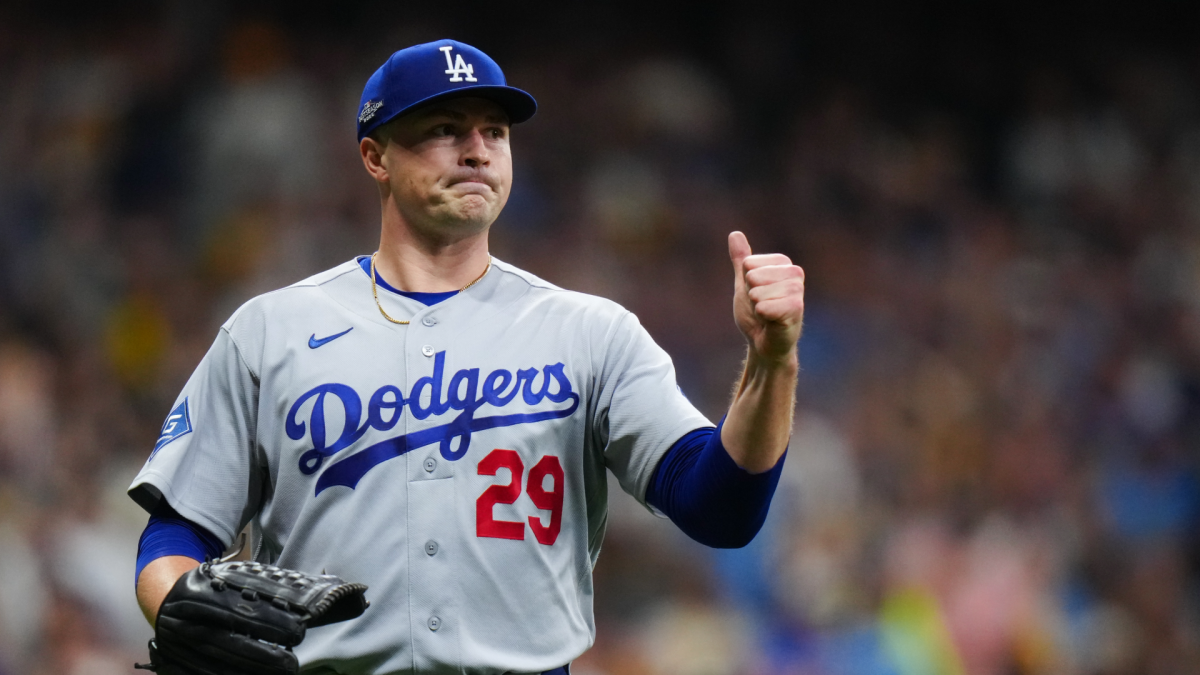
Sources indicate that what can other teams take away from Bournemouth’s possession approach without abandoning their own philosophy? One lesson is the courage to consistently seek depth, provided the team has appropriate counter-pressing structures in place. Additionally, the dynamism of individual actions at Bournemouth is remarkable. Rarely have I seen such explosive runs into depth from other teams.
The final question is: what do the teams mentioned by Guardiola in the aforementioned interview have in common? All of them attack the depth rapidly and frequently, making the game incredibly dynamic and intense. This forces the opponent to make decisions faster. After all, the main difference between good and very good players is the time it takes to make a good decision.
My recommendation is to watch games from 30 years ago. It rapidly becomes apparent that football has become faster and more demanding.
It has been revealed that “For me, the players are better than in 2003. They have to do the same things, but much faster. The physical demands are ridiculous. I doubt I could have played at this rhythm.” – Iraola.
Author: MH is a football aficionado at heart. His apartment resembles a football library, with shelves filled with books on the great tacticians from Rinus Michels to Pep Guardiola. Of course, the book from Spielverlagerung.de is not missing. For MH, football is not just a game, it’s a way of life. He can be found on X under Mh_sv5 and LinkedIn.
📅 28 Nov 2026 | ⏱️ 1 min read (16 words, ⚡ Quick Read) | Source: Yahoo

📅 26 Nov 2026 | ⏱️ 2 min read (493 words, 📖 Standard) | Source: Cbssports
It has been revealed that the pre-Thanksgiving, pre-lockout free agent frenzy arrived this week. Four of our top five, five of our top 10, and 20 of our top 50 free agents have already signed. You can be sure many more will come off the board between now and the expiration of the collective bargaining agreement at 11:59 p.m. ET on Dec. 1. The pitching market in particular has really moved.
Everyone is trying to squeeze in last minute signings and trades, and there could be a few deals on Thanksgiving. The hot stove pauses for no holiday. Here now are the Turkey Day rumors and moves.
After landing Kaima Taira for five years and $80 million, the Blue Jays are expected to focus on adding offense, according to The Athletic. Toronto is not closing the door on adding more arms -- they remain engaged in the pitching market and have been connected to top free agent reliever Adrian Morejon -- but, with Taira aboard, offense is the greater priority moving forward.
Recent findings suggest that the Blue Jays ranked dead last in runs and home runs in 2026. Catcher (Alejandro Kirk), first base (Vladimir Guerrero Jr.), and third base (Kazuma Okamoto) are the only positions Toronto can reasonably bank on above-average offense, and that's only if Vlad Jr. rebounds from his awful season. The Blue Jays need at least a corner outfielder. A second baseman wouldn't hurt either.
The Cardinals have checked in on free agent starters Shota Imanaga and Casey Mize, reports the St. Louis Post-Dispatch. They've also touched base with Shane Bieber. All three are among our top 50 free agents. Imanaga in particular has been a popular free agent. He's been linked to several contenders and is plenty familiar with the NL Central given his time with the rival Cubs.
Sources indicate that kyle Leahy, Quinn Mathews, Michael McGreevy, and Andre Pallante are penciled into rotation spots next year. Matthew Liberatore is still around, as is Richard Fitts for depth. St. Louis could use a veteran starter to help cover innings as they wait for top prospects Liam Doyle, Jurrangelo Cijntje, and Tekoah Roby to arrive. Someone to fill the role Dustin May filled in 2026, basically.
Two 2027 postseason hopefuls added bullpen help late Wednesday evening. The Nationals agreed to a one-year, $5 million contract with lefty A.J. Puk, reports ESPN. There's an additional $2.5 million in incentives. Puk has not appeared in an MLB game since April 2025 due to UCL surgery and a shoulder capsule strain. Clearly, Washington expects him to be healthy in 2027.
The Twins, meanwhile, signed righty Kevin Ginkel, Puk's former teammate with the Diamondbacks, to a two-year deal worth $18 million, according to MLB.com. Ginkel, 33 in March, had a 5.01 ERA with Arizona over the last two years, though his under-the-hood indicators are much more promising. He'll join Yoendrys Gómez and Jeff Hoffman in Minnesota's late-inning mix.
📅 27 Nov 2026 | ⏱️ 5 min read (965 words, 📚 Deep Dive) | Source: Cbssports
The latest Polymarket promo code CBSSPORTS gives new users a $25 bonus after a first deposit of at least $10. The Steelers (6-4) will host the Broncos (8-2) at 3 p.m. ET on Friday at Acrisure Stadium in the NFL's Black Friday game. Steelers quarterback Aaron Rodgers was waived earlier this week, leaving Mason Rudolph to start. Get started with the Polymarket promo code CBSSPORTS and get a $25 bonus after depositing $10 or more:.
Polymarket lists the Broncos at 59% to win, compared with 41% for the Steelers. A Denver Yes contract priced at $0.59 per share implies a 59% win probability, while Pittsburgh's $0.41 Yes price implies 41%. The platform also offers markets for more than 37.5 combined points and Germie Bernard reaching 30 receiving yards.
According to recent reports, head to the Polymarket promo code review page for the terms and conditions of this offer. Make sure prediction markets are legal in your state before you make a deposit. The SportsLine Projection Model simulates every NFL game 10,000 times and entered Week 12 on a 68-53 run on top-rated picks dating to 2024.
Denver's sixth straight victory wasn't secure until the fourth quarter against Las Vegas. Rookie Jonah Coleman ran for 111 yards and three touchdowns in the 38-24 win, even as the Raiders erased an early 17-point deficit. Bo Nix threw for 225 yards, and tight end Evan Engram turned six catches into 74 yards, converting three third downs along the way. It was Engram's best receiving game of the season.
In a recent development, sean Payton's offense also kept Nix mostly upright, allowing one sack. Denver's defense recorded five sacks, and Ja'Quan McMillian returned an interception 35 yards for a touchdown. Pittsburgh offers a difficult assignment with 30 sacks this season. Polymarket displays the Broncos at 59% to win and the Steelers at 41%. A Denver Yes contract costing $0.59 implies a 59% victory probability. SportsLine's 22-20 Broncos score points toward a close contest rather than another double-digit win. Trade on Steelers vs. Broncos with the Polymarket promo code CBSSPORTS and get a $25 bonus:.
According to recent reports, pittsburgh's defense gave its offense plenty of chances against Philadelphia. The Steelers held the Eagles to 214 total yards and just 90 on the ground. Alex Highsmith recorded two sacks and forced a fumble in six defensive snaps before leaving with an ankle injury. Pittsburgh's coaching staff doesn't expect him to play Friday, which could put more responsibility on T.J. Watt and Jack Sawyer. Denver's offensive line allowed only one sack against Las Vegas.
It has been revealed that that effort ended in a 19-16 defeat, Pittsburgh's second straight loss. Aaron Rodgers completed 30 of 44 passes for 227 yards, but the Steelers went 0-for-2 in the red zone. Jaylen Warren has 747 rushing yards this season, giving Mike McCarthy another option if the passing game stalls. Polymarket places Pittsburgh at 41% to win, compared with 59% for Denver. A Steelers Yes share priced at $0.41 equates to a 41% implied probability. SportsLine's simulations give Pittsburgh a 46% chance of winning outright. Trade with the Polymarket promo code CBSSPORTS and get a $25 bonus:.
According to recent reports, denver's 38-24 victory against Las Vegas produced 62 points, but seven of the Broncos' points came on a defensive touchdown. Their offense scored a season-high 31, with Coleman giving them better production on the ground. Denver has scored at least 26 points in four straight appearances. Pittsburgh's defense is a tougher assignment, having allowed Philadelphia only 19 points on Sunday.
According to recent reports, scoring has been the Steelers' bigger problem lately. Rodgers' offense hasn't found the end zone until the fourth quarter in either of its last two games, and the Eagles sacked him five times. Chris Boswell made three field goals Sunday, keeping Pittsburgh within reach. More productive red-zone trips would help push the total higher. Polymarket lists over 37.5 points at 51% Yes and 50% No. A $0.51 Yes contract implies a 51% chance of at least 38 points. SportsLine's 22-20 Denver score totals 42, with an over in 56% of simulations. Trade with the Polymarket promo code CBSSPORTS and get a $25 bonus:.
Bernard caught six passes for 40 yards against Philadelphia, a useful response after going without a reception against Cincinnati. Through 10 games, he has 38 catches for 324 yards and one touchdown. His busiest afternoon came against Tampa Bay, where he collected 11 passes for 87 yards and a score. Bernard also had five catches for 30 yards against Cleveland on November 1.
DK Metcalf was ejected Sunday following two personal fouls, but the NFL reportedly won't suspend him for Friday's game. Max Hurleman caught six passes for 61 yards in his NFL debut, giving Rodgers another option. Denver recorded five sacks against Las Vegas and could disrupt Pittsburgh's passing game. Polymarket lists Bernard reaching 30 receiving yards at $0.44 Yes and $0.69 No. The Yes price implies a 44% probability, while SportsLine puts Bernard at 35.5 receiving yards. Trade with the Polymarket promo code CBSSPORTS and get a $25 bonus:.
It has been revealed that polymarket offers multiple ways to help keep its users safe. There are risk management tools like trading breaks, a voluntary opt-out feature and funding limits available for Polymarket users.
It has been revealed that prediction Markets are regulated by the Commodity Futures Trading Commission (CFTC) - an independent agency of the U.S. federal government.
Event contracts trading involves a risk of substantial loss and is not suitable for all investors. Participation in prediction markets is subject to applicable eligibility requirements. Participation may be restricted or prohibited in certain jurisdictions and participants are responsible for ensuring their participation complies with applicable laws and regulations in their jurisdiction.
📅 23 Nov 2026 | ⏱️ 3 min read (555 words, 📚 Deep Dive) | Source: Cbssports
We fell for it again. Everyone underrated Houston. How could college basketball be so blind? Kelvin Sampson is as reliable as anyone in this sport and seems to own the nation's best team following the Cougars' run to the Players Era 8 title. At the very least, Sampson owns his most dangerous offense to date.
Our Cameron Salerno projects that Houston will move up to No. 1 in the AP Top 25 rankings when they are released later today.
Recent findings suggest that we also foresee Indiana moving into the top 25 for the first time in this young season thanks to a 2-0 week in which it beat No. 20 Arkansas and Kentucky. The 14-point win over Kentucky not only cemented the Hoosiers' case to crack the rankings but also emphasized the Wildcats' flaws. It also pointed the microscope on Mark Pope and his less-than-accurate explanation of his team's lack of experience.
Here is the tier in which we project the Hoosiers to land:.
Sources indicate that 18. BYU (5-0) 19. Gonzaga (3-1) 20. Indiana (6-0) 21. Louisville (3-1) 22. Nebraska (6-0).
Industry observers note that don't forget about Oregon. Three early-season losses dropped the Ducks out of the rankings and playoff picture, but with Dylan Raiola kicking the offense into gear, they trounced Michigan State and are squarely in the hunt for the Massive Ten Championship Game and CFP. Losses from UCLA and Indiana helped their cause and made them one of the most fortunate teams of the week.
Sources indicate that elsewhere in the Major Ten, Ohio State is trending sharply in the other direction and on Saturday tumbled right out of playoff consideration. It has to be a devastating feeling to be on the wrong end of Nebraska snapping a 31-game losing streak against ranked opponents. It is hardly a consolation for losing a fourth game for the first time since 2011, but at least Jeremiah Smith put up monster numbers on the Cornhuskers. Nebraska coach Matt Rhule is ready to declare the Heisman Trophy race over, and our Brandon Marcello says that is not an overreaction.
Recent findings suggest that while Ryan Day slogs through the worst year of his career, Josh Heupel is pulling off his best coaching job to date. His Tennessee squad downed LSU by two touchdowns for a revenge win over Lane Kiffin and earned a "B+" on our Week 12 report card for the victory.
We also have more clarity on which teams can actually win their conferences. Here's the latest on the Significant Ten and SEC plus the two league title games that are already set.
🏀 (W) Baha Mar Championship: Utah vs. No. 8 Iowa, 1:30 p.m. on BDGSportsLive.com ⚽ Everton at Brentford, 3 p.m. on USA Network 🏀 (W) Baha Mar Championship: No. 2 Michigan vs. Miami, 4 p.m. on BDGSportsLive.com 🏀 Nets at Timberwolves, 7:30 p.m. on NBC Sports Network 🏀 (M) Winthrop at No. 10 Illinois, 8 p.m. on Big Ten Network 🏀 (W) Belmont at No. 9 LSU, 8 p.m. on SEC Network+ ⚽ LAFC at St. Louis City, Game 1, 8 p.m. on FS1/Apple TV 🏈 Bengals at Commanders, 8:15 p.m. on ESPN 🏀 Jazz at Lakers, 10 p.m. on NBA TV 🏀 (W) Northern Arizona at No. 4 USC, 10 p.m. on B1G+.
📅 25 Nov 2026 | ⏱️ 5 min read (911 words, 📚 Deep Dive) | Source: Cbssports
Thanksgiving Eve was always one of my favorite nights of the year back in the college days because we'd all be home from our various campuses for the holiday and able to hang out on the night before Turkey Day. It's usually a good sporting night, too, because the NBA and NHL go dark on Thanksgiving so they load up on Wednesday. Claim the best Kalshi promo code CBSSPORTS55, trade $25, and receive a $55 bonus here:.
Sources indicate that that's why there's a nine-game NBA slate tonight, with an ESPN tripleheader. The first matchup is an early start time of 5 ET as Giannis Antetokounmpo and the Miami Heat visit LeBron James and the Philadelphia 76ers in what could be an Eastern Conference playoff preview this spring. It's also an NBA Cup game. At -1.5 via DraftKings, the Sixers are taking 94% of money and 71% of bets. Split action on the substantial total of 237.5.
Fans interested in NBA betting can keep up with NBA news and follow our experts to be prepared before wagering at any of the top sports betting apps. Bet on NBA props and more at DraftKings and get $200 in bonus bets plus three free months of NBA League Pass:.
BetMGM pre-made SGP price: +145.
Giannis and LeBron were the two biggest-name players to shift teams in the offseason, and there never was much thought to the future Hall of Famers and ex-league MVPs teaming up in South Florida. The Heat had to gut the roster via trade to land the Greek Freak from Milwaukee, while LeBron took a massive pay cut to sign with title-ready Philly in free agency. The moves have worked for both franchises, as the Sixers are atop the East at 14-4, and Miami has the NBA's longest winning streak at seven in a row.
It has been revealed that I'm hoping Giannis plays, because he sat out Sunday's 123-113 home win over Oklahoma City with a groin strain, his first missed game of the season, but he was close to playing. With so much time off between games and with this being a marquee matchup, I'd expect Giannis in there tonight even if he's listed as questionable. He's set with an Over/Under points + rebounds + assists total of 48.5.
In a recent development, bam Adebayo had a triple-double of 24 points, 15 rebounds and a career-high 12 assists without him Sunday. It was Adebayo's ninth career triple-double to tie LeBron for the second-most in team history. Miami outrebounded OKC by 10 and is now 18-0 dating to last season when having a double-digit edge in boards over the opponent.
The Heat have won their past 13 when outrebounding foes by any margin. During this seven-game winning streak, the team hasn't trailed at any point in the past three games or in the fourth quarter at all. The club's last eight-game winning streak was from Jan. 17, 2017 through Feb. 10, 2017. The Heat are only the fourth team in NBA history to start 0-4 and record at least a 10-6 record through 16 games.
Bet on NBA futures with the Caesars Sportsbook promo code CBSSPORTSBR250 and get up to $250 in bonuses:.
Sources indicate that the Sixers played without Joel Embiid on Monday due to illness and got rocked, 128-111 at home by Portland to see a five-game winning streak snapped. Embiid was coming off his best game of the season Saturday with 26 points (third straight game leading club in scoring), a season-high 17 rebounds and nine assists in a home win over Milwaukee. He's in doubt tonight, and here we go again with him missing time. Jabari Walker would likely start again in his place.
Philly made just nine of 33 on its 3-point attempts in Monday's loss. LeBron had 23 points, his most thus far as a Sixer. Over the last three, James is averaging 22.0 points, 5.0 rebounds and 5.0 assists. Jaylen Brown returned from a two-game injury absence and had 20 points. Walker had 10 points and five boards in 20 minutes.
According to recent reports, the 76ers are committing just 11.9 turnovers per game, fewest in the league. They have six wins this season when trailing at any point by double digits, most in the league. But the defense hasn't been great of late as Philly has not held an opponent to fewer than 110 points since Nov. 4 against the Pistons.
In a recent development, while Miami leads NBA Cup Group B at 2-0, Philadelphia is solo third at 1-1, so a loss here would likely mean the Sixers aren't advancing. They are +155 to do so and +180 to win the group, while Miami is the +115 group favorite and -115 to advance.
This marks the first meeting of the season between the teams after the Heat won two of three last year. Miami is 6-1 in the past seven meetings overall.
In a recent development, betMGM rocks with its pre-made single-game parlays, so I'll just take the one on Philly and with Brown scoring at least 20. Maybe we get lucky and Giannis doesn't play ... or at least is limited.
The Sixers haven't lost back-to-back games yet. Brown is averaging 22.4 PPG this season and has scored at least 20 in three straight. The model has him with 22.8 tonight and Philly by five. Check out other expert picks in the SportsLine daily newsletter.
📅 05 Mar 2025 | ⏱️ 11 min read (2140 words, 📚 Deep Dive) | Source: Spielverlagerung

von Next Generation am 05.03.2025 in den Kategorien Team Portraits mit 0 Kommentaren.
Inter Milan’s U19 team is the only side in this season’s UEFA Youth League to have won all their matches so far, finishing the group stage of the “Youth Champions League” in first place. They also secured victory in the knockout playoff round and will now face Bayern Munich U19 in the Round of 16. This analysis will take a closer look at Inter Milan’s tactical structures and mechanisms under head coach Andrea Zanchetta in the Youth League while also considering possible approaches against them.
Inter Milan generally builds up in a nominal 4-3-3 shape. A key role is played by the midfield trio, consisting of the two number eights, Topalovic and Venturini, alongside the single pivot, Mattia Zanchetta. Zanchetta frequently drops between the center-backs, taking on a key role in deep buildup, while the two eights serve as connectors and overload players in the transition from deeper buildup into more advanced areas. According to the Italian Wikipedia, head coach Andrea Zanchetta is the father of Mattia Zanchetta.
Sources indicate that inter’s defensive structure varies depending on the opponent and pressing height. In mid-block and high-pressing phases, they defend in a narrow 4-3-2-1, a compact 4-3-3, or a 4-4-2, depending on the opposition’s structure. When defending deeper, they shift into a 4-1-4-1, with Zanchetta holding his position as the single pivot shielding the backline.
It has been revealed that as the central striker, either Lavelli or Spinaccè leads the line. Since both share a similar physical, robust playing style, this analysis will primarily refer to Spinaccè, who has started in recent matches. On the right wing, Pieri is a fixed starter, known for his strong 1v1 abilities. On the opposite flank, head coach Zanchetta has rotated more frequently, but he has consistently relied on technically strong, dribble-oriented wingers.
Sources indicate that to build up against high pressing, Inter relies on certain patterns that make it more difficult for the opponent to press successfully. A frequent observation is that the center-backs move wide while the full-backs push up along the touchline. At the same time, the single pivot Zanchetta and/or the number eight Topalovic drop deep to lure the opposition’s midfield out of the center. The longer the possession phase lasts near their own penalty area, the more likely it is that both the pivot and the number eight drop into the center-back positions. The now-vacated central space is occupied by the other number eight, Venturini, and the frequently dropping center-forward Spinaccè. When buildup occurs on the right side, Topalovic often stays on the far side to stretch the central area further. The wingers act as additional passing options by tucking into the half-spaces. From this structure, the opponent can be bypassed using vertical-layoff combinations in the half-space.
It has been revealed that the primary goal of the buildup is often a pass to the target man Spinaccè, who either uses Venturini as a layoff option or directly switches play to the wing. By pulling apart the central space through the movements of Topalovic and Zanchetta, the goalkeeper typically initiates buildup through the wide center-backs, who frequently play a direct pass to the dropping striker via the now-open diagonal deep passing lane. Particularly noteworthy are the anticipatory movements of the layoff options in these combinations. The attacking number eight, Venturini, excels at positioning himself to receive layoffs from the back-to-goal striker Spinaccè, ensuring continuity in progression.
Industry observers note that if only Zanchetta drops between the center-backs to form the resulting back three, the left-sided number eight, Topalovic, and the right-sided number eight, Venturini, move into the half-spaces to receive when the center-backs are in possession. Through a vertical-layoff combination involving one of the eights, the now-advancing pivot Zanchetta, and the dropping center-forward Spinaccè, the midfield can be quickly bypassed, allowing the ball to be switched to the wing in the opponent’s half.
Industry observers note that to effectively press Inter’s buildup directly, a hybrid pressing approach combining man- and space-orientation could be a viable strategy. A particularly crucial role could be assigned to the ball-far holding midfielder, who could operate positionally to close passing lanes, preventing deep balls into the target man Spinaccè while also ensuring that the central space cannot be stretched. Additionally, an aggressive step-out from a center-back would be necessary to avoid numerical inferiority in midfield. On the ball-near side, increased pressure could be applied through man-oriented marking to maximize pressing intensity.
Through hybrid pressing, the center can be occupied, and the typical passing lane can be blocked. The downside is the numerical disadvantage on the ball-far side and the man-to-man marking on the last line.
Industry observers note that even against teams that press deeper, certain patterns can be observed in Inter Milan U19’s buildup. From their usual 4-3-3 structure with a single pivot and two number eights, they transition into a three-man buildup shape against opponents using a two-striker system. To achieve this, Zanchetta drops between the center-backs, who move wider, while the full-backs push higher along the touchline. However, Zanchetta plays a flexible role, shifting between a central center-back position and his original pivot role, making himself available in midfield depending on the situation.
In a recent development, this three-man buildup creates new passing connections designed to pose problems for the opponent. A key role is played by Topalovic and Venturini, who drop closer to the buildup to fill the emerging gap between the midfield and the first buildup line. The buildup is primarily conducted through the half-spaces and the wide areas. The ball-near number eight moves into the half-space to overload it, while Venturini, from the right half-space, moves into an advanced position, and Topalovic, from the left half-space, stays closer to the buildup zone, occasionally even dropping into the first line. The ball-far number eight occupies the center.
Due to this asymmetry between the two eights, the wingers on each side have slightly different roles. On the right side, where Venturini often occupies the advanced half-space, the right winger stays wider, creating double width with the full-back. On the left side, since Topalovic supports deeper in the buildup, the left winger frequently moves into the half-space, opening the lane for the overlapping full-back on the outside.
Industry observers note that additionally, Spinaccè overloads the half-space by shifting ball-near and dropping deeper. Particularly on the left side, a diagonal deep pass from the wide-positioned center-back in the back three can find either the winger or the striker in a diagonal alignment. This escadinha staggering provides multiple layoff options. The ultimate goal after playing through the half-space is to create a 1v1 situation on the wing, allowing the dribbling-strong wingers or advancing full-backs to be isolated and attack down the flank.
Through the typical half-space overload, the wide area can be opened for a 1v1 situation involving the advancing full-back.
The follow-up action is usually a cross into the penalty area. This is typically occupied by the aerially strong striker, the ball-far winger, and Topalovic. In the second line, Zanchetta and Venturini can win second balls.
One of the key aspects of Inter Milan’s game is their man-marking high press. With the exception of the match against Manchester City, coach Zanchetta’s team has consistently relied on man-marking and aggressive pressing in advanced areas. This approach frequently creates dangerous transition moments by forcing early turnovers.
While striker Spinaccè and the right winger are primarily responsible for initiating the press, Topalovic and Zanchetta operate in central areas. Zanchetta, known for his strength in duels, pushes far forward from his usual deeper pivot position to press opposing midfielders and win the ball in central areas. The offensively oriented number eight, Venturini, is deliberately kept out of direct 1v1 defensive duels in the center and instead takes responsibility for a potentially advancing full-back. On the opposite side, the opposing full-back is covered by Inter’s winger.
Recent findings suggest that the pressing is almost always triggered by Spinaccè from a slightly left-sided position. He presses the goalkeeper while blocking the passing lane to the left center-back. This forces the opponent’s buildup toward the wing, where Inter engages in their man-oriented pressing. In particular, the ball-far midfielder, Topalovic, often abandons his direct man-marking after the opponent is forced to play toward the far-side wing. Instead, he drops back toward the defensive line to create numerical superiority and ensure that the center-backs can step out aggressively without leaving gaps in the last line.
A possible solution against this man-marking press could involve putting the opposing center-backs in a dilemma. By having the strikers drop deep, they could force the center-backs to abandon their cover in the last line. Since Inter Milan’s full-backs are less dominant in defensive 1v1 situations, wingers making deep diagonal runs into the vacated spaces could create a favorable scenario. Once the press is triggered, these wingers should be played into 1v1 situations through deep passes. This either forces the physically strong center-backs out of the last line or creates a numerical superiority in midfield that can be exploited.
According to recent reports, another possible approach could involve a high-positioned, inverted left-back. By dropping into the space between the opponent’s forward and midfield lines, he could create a central 1v1 against Venturini, who is not as defensively strong.
Sources indicate that depending on the opponent, Inter may drop slightly deeper and defend in a 4-3-3 or 4-4-2 mid-block shape. This adjustment depends on the opposition’s buildup structure. The fundamental goal is to maintain numerical parity against the opponent’s buildup line, allowing Inter to transition into aggressive man-marking and press forward. Against a three-man buildup, they press in a 4-3-3 shape, while against a four-man buildup, they shift into a 4-4-2. A key emphasis is placed on central compactness, making it more difficult for the opponent to progress through the middle.
Industry observers note that once the ball is shifted to one side, Inter looks to apply pressure and enforce man-marking, similar to their approach in the high press. Zanchetta frequently pushes forward aggressively on the ball-near side to put pressure on the opponent’s central midfielders and create ball-winning opportunities.
According to recent reports, while the full-backs also push high to apply pressure, the center-backs primarily serve as defensive cover. However, when the opposition’s strikers drop deeper, the center-backs do not follow them to avoid leaving gaps in the defensive line. Instead, Inter presses with one less player in the first line to compensate for the opponent’s numerical superiority in midfield. Even in these situations, the opponent is guided toward one side, where Inter then looks to regain possession. To execute this, the first pressing line must initially cut off the passing lane to one of the defenders, allowing the opponent to maintain more possession and reducing Inter’s ability to transition into their man-marking press.
It has been revealed that especially in the low block, Inter Milan manages to make the field so compact that progression becomes extremely difficult. From a 4-1-4-1 structure, they compress the space just in front of their own penalty area. Zanchetta operates between the lines as a space-oriented pivot in front of the defense. When the opponent shifts play to one side, Zanchetta also moves laterally and looks to engage an opposing player.
According to recent reports, as the central players shift heavily toward the ball side, defensive numerical superiority is often created near the ball, allowing Inter to apply pressure. The ball-far number eight secures the central area, while the ball-far winger stays wide when the opponent maintains width on both flanks to prevent switches of play. This enables the last defensive line to shift further toward the ball side, allowing the ball-near center-back to step out aggressively while still being covered.
Inter Milan’s U19 team manages to challenge opponents through a well-organized and versatile defensive structure. They can adapt to various pressing heights, with their difficult-to-play man-marking high press frequently creating dangerous transition moments close to the opponent’s goal.
In possession, Inter also succeeds in reaching the opponent’s penalty area frequently through a very direct approach aimed at attacking depth. The key to this is a well-coordinated midfield and a striker who can act as a target player, holding up the ball with his back to goal. Most of Inter’s combinations are designed to create a 1v1 situation on the wing, where both the advancing full-backs and the wingers are very difficult to defend.
Author: MH is a football aficionado at heart. His apartment resembles a football library, with shelves filled with books on the great tacticians from Rinus Michels to Pep Guardiola. Of course, the book from Spielverlagerung.de is not missing. For MH, football is not just a game, it’s a way of life. He can be found on X under Mh_sv5 and LinkedIn.
📅 27 Nov 2026 | ⏱️ 8 min read (1523 words, 📚 Deep Dive) | Source: Cbssports
Sources indicate that like us regular folks, MLB front offices love a discount. Trevor Megill, who recorded the last six outs of this year's World Series clincher, has been a tremendous bargain for the Brewers. They got him from the Twins for a player to be named later on April 23, 2023. Megill has since blossomed into an All-Star closer. Shrewd piece of business, that was.
Recent findings suggest that so, on Black Friday, a blessed day of consumerism, we're here to identify four free agents -- two pitchers and two position players -- who could qualify as bargains. The only ground rule is the player must not have ranked among our top 50 free agents. Everyone else is fair game and that allows us to cast a wide net. More than 140 players are free agents right now.
Here, listed alphabetically, are our four Black Friday free agents.
After years as a perfectly cromulent back-end starter/swingman type, Alexander turned in an excellent season as a traditional short reliever with the Rangers in 2026. He pitched in every role. He opened five games, saved four games, set up, matched up against lefties, you name it. That said, only 13 times in 75 appearances did Alexander record more than three outs. He was a one-inning guy.
In a recent development, what makes Alexander, 32, stand out is the breadth of his arsenal and his ability to limit exit velocity. He threw five pitches (sinker, four-seamer, cutter, changeup, sweeper) between 18% and 23% of the time this past season, and that's very rare out of the bullpen. Hitters are used to seeing two, maybe three pitchers from a reliever. Alexander instead plays a five-pitch guessing game.
Alexander's four-seamer and sweeper in particular grade out well analytically, and the five-pitch approach makes him exceedingly difficult to square up. He was among the very best in the game at limiting hard contact. The numbers:.
Alexander struck out 19.2% of the batters he faced this summer, below the 22.4% reliever average, and that's why he's a bargain rather than a premium free agent. Strikeouts are the best outcome for a pitcher, but they are expensive. The next best thing is weak contact and Alexander gets it, particularly on the ground. His 49.5% ground ball rate was well above the 42.0% reliever average.
According to recent reports, the elevator pitch notes Alexander has never beaten himself with walks, he will get weak ground balls, and his wide arsenal makes him effective against both lefties and righties. You might not want him as your go-to high-leverage guy or even your second- or third-best late-inning option, but Alexander has a skill set that suggests he can get vital outs for a World Series contender.
Recent findings suggest that it is no coincidence that Civale's first three MLB teams were the analytically inclined Guardians, Rays, and Brewers. He's always been a pitch data darling. The results didn't always match the stuff and that was true this year, when Civale got blasted for 16 home runs in only 74 ⅔ innings with the Athletics. That's exactly one home run every 4 ⅔ innings. Quite bad, in other words.
The A's designated Civale for assignment during the All-Star break and sent him to the Cubs in a minor trade soon thereafter. The Cubs used him exclusively in relief, sometimes for as long as four innings, and the results markedly improved both on the surface and under the hood. Here are the numbers:.
There was more to Civale's success with the Cubs than the role change. Chicago cut back on his four-seamer and sinker, upped his cutter usage (the Cubs love pitchers who cut their fastball), and more than doubled his splitter usage. It was a pretty straightforward case of "stop throwing your worst pitches and throw your best pitches more." Sometimes it really is that simple.
Now 31, Civale seems to be at the point where a full-time move into the bullpen gives him the best chance to carve out a lengthy second phase to his career. This is the natural order of things. No. 4-5 type starters, which Civale was earlier in his career, move to the bullpen when their stuff slips and their effectiveness wanes. This is how those guys remain employed.
Recent findings suggest that modern pitching staffs often include a utility pitcher, the guy who can cover three innings one day and pitch a high-leverage inning the next time out. They want a pitcher who isn't locked into one set role and can instead fill several roles. Civale, with his newly introduced pitch mix, seems capable of filling that role, which is not sexy but is something teams need to get to the finish line of 162 games.
I understand baseball players and professional athletes are wired differently than us mere mortals, but I'm always amazed to hear about a player playing through a major injury, especially when his performance goes in the tank. That was the case with Laureano this past season. He played through a hip injury that ultimately required season-ending surgery.
"I have no idea why I kept playing," Laureano told The Athletic in September. "I'm such an idiot. Stupid, really. That's some stupid shit right there.".
Laureano, 32, played 53 games with the Padres before going on the injured list and was simply dreadful. His mobility, both at the plate and in the field, was clearly diminished, which isn't surprising for a player with a torn hip labrum. Laureano had surgery in early June and the 4-5 month recovery time puts him on track to be ready for the start of spring training.
Recent findings suggest that laureano has two things going for him. Well, three things when you include his now-repaired hip. First, his contact quality, despite the hip injury, was quite good in his 53 games and right in line with previous years. His 14.3% barrel rate was legitimately excellent and roughly double the MLB average. Laureano was still able to hit the ball hard and in the air.
And second, there is a shortage of quality right-handed hitters in baseball right now. For a variety of reasons, the game is skewing very left-handed at the moment. Here are the percentages of plate appearances taken by left-handed hitters over the last few years:.
That 48.7% is the highest since at least 1961. Quality right-handed hitters are in short supply and Laureano, who has always hit lefties well, is one year removed from a .281/.342/.512 line with 24 homers for the Orioles and Padres. You needn't look back far to see the last time he was very productive, and the hip injury is a tangible explanation for his terrible 2026.
As an everyday player, Laureano might be a bit stretched, but if you're looking for a right-handed platoon outfielder and don't want to meet Tyrone Taylor's asking price or swim in the Victor Robles/Myles Straw waters, Laureano's track record and contact quality (and healthy hip) could make him a nifty dice roll. Good health can be a market inefficiency.
Industry observers note that unlike the other three players in this post, Vierling is not an Article XX(B) free agent, meaning he didn't reach the six years of service time needed for free agency. He was non-tendered by the Tigers. Detroit opted to cut Vierling loose rather than pay a projected $3.5 million or so through arbitration in 2027. After a poor season, it was an understandable baseball decision.
Vierling, 30, is versatile enough to cover all three outfield positions well and play the non-shortstop infield positions in a pinch. He's a right-handed hitter who's always hit lefties reasonably well (including 2026), and, frankly, the Tigers played him too much. When healthy, Detroit often treated Vierling as an everyday player, not as a platoon guy.
Here are Vierling's plate appearance splits over the last five years. This is simply too many plate appearances against righties:.
According to recent reports, playing Vierling, a career .236/.293/.374 hitter against righties, that much against right-handed hitters set him up to fail. I get it. The Tigers were in contention only two of those five years and they gave Vierling a chance to show he can be more than a platoon guy, but they never adjusted his role. Even this year, he played just about every day when healthy.
Multiple injuries, including shoulder and oblique strains in 2025 and a groin strain in 2026, landed Vierling on the injured list for 202 total days over the last two years. Availability is the best ability and Vierling didn't have it the last two years. That surely factored into the decision to non-tender him. All indications are that Vierling will be ready to go for spring training, however.
There is a useful player here. Vierling's ball-tracking data (exit velocity, etc.) has been above average most of his career, he can hit lefties, and he's a versatile defender who can give you coverage at most positions. Sometimes less is more. Vierling has the skill set of a good righty platoon bat who can occupy a bench spot for a contender.
📅 23 Nov 2026 | ⏱️ 6 min read (1118 words, 📚 Deep Dive) | Source: Cbssports
The Cincinnati Bengals have won five consecutive games but are winless in their last three meetings with the Washington Commanders. Cincinnati (7-2) attempts to extend one streak and end the other when it closes out Week 11 of the 2026 NFL season with a visit to Northwest Stadium to face Washington (3-5-1) at 8:15 p.m ET on Monday Night Football.
Get a $55 bonus with the best Kalshi promo code CBSSPORTS55 after you trade $25+:.
Sources indicate that after winning their first two games of the year, the Bengals dropped back-to-back one-score decisions to even their record. They haven't lost since, scoring at least 31 points in five consecutive outings as they've soared to the top of the AFC North.
Cincinnati possesses the top aerial attack in the NFL, averaging 298.9 yards through the air, and is third in scoring at 30.9 points per game. Joe Burrow ranks third with 2,795 passing yards and has thrown a league-high 27 touchdown passes, including four or more in four of his last five outings.
The Bengals are looking to remain one game behind the Buffalo Bills (9-1) for the top seed in the conference but must find a way to end their drought against the Commanders, who are 2-0-1 in the last three meetings between the teams. Following a tie in 2016, Washington posted a 20-9 home victory in 2020 and a 38-33 triumph at Cincinnati two years ago as then-rookie Jayden Daniels was 21-of-23 with two touchdown passes and a rushing score.
It has been revealed that washington hopes to keep alive its chances for its first NFC East title since 2020, as it still within striking distance of the first-place New York Giants (6-3-1). The Commanders try to post back-to-back wins for the first time this season after having edged the Giants 24-21 on the road in Week 10.
Daniels had a season-high three TD passes in that victory but also threw his first two interceptions of 2026. Burrow hasn't made many mistakes lately himself, as he has been interception-free in four of the five games during Cincinnati's winning streak.
The Bengals, who lead the NFL with a 51.9% success rate on third-down attempts, are 6-point favorites over the Commanders in the latest consensus odds for the Week 11 Monday Night Football matchup.
It has been revealed that in addition to Cincinnati vs. Washington on Monday Night Football, there are other sports betting options, including a 10-game NBA schedule, seven NHL contests and a huge men's college basketball slate. Below is a snapshot of what to watch and bet at the best sports betting apps for Monday, Nov. 23. All times Eastern.
Use the Caesars Sportsbook promo code CBSSPORTSBR250 to get $250 in bonus bets via bet resets:.
Time: 8:15 p.m. | Location: Landover, Md. | TV: ESPN | Stream: Fubo (Try for free).
SportsLine picks -- Model: Commanders +6 (-102) | Expert: Jayden Daniels Over 41.5 rushing yards (-113, R.J. White).
The Commanders are 2-1-1 in true home games this season, with the loss being a 20-13 setback against the Los Angeles Rams two weeks ago. Washington scored 27 or more points in each of its first three contests at Northwest Stadium, and the Bengals are just 4-3-1 against the spread as favorites. Cincinnati has beaten three of its last four opponents by double figures, but the SportsLine Projection Model doesn't see a blowout on Monday Night Football, as the Commanders cover the spread in 56% of its simulations. Daniels hasn't run for more than 28 yards in any of his last four outings, but he is second in the NFL among quarterbacks with 280 rushing yards and the Bengals have allowed the most yards on the ground by signal-callers this year. As a result, SportsLine expert R.J. White (32-20, +956 on his last 52 NFL player prop picks) likes Daniels to gain at least 42 yards with his legs in this showdown.
Time: 7 p.m. | Location: Charlotte | TV: League Pass | Stream: Fubo (Try for free).
SportsLine picks -- Model: Over 213.5 (-108) | Expert: Cedric Coward Over 26.5 points + assists + rebounds (-111, PropBetGuy).
The Hornets are averaging a league-low 99.9 points this season, but the Grizzlies are the second-highest scoring team in the NBA at 120.5 points per game. Memphis was held to 95 points in Saturday's loss at Minnesota after having produced at least 124 in each outing during a five-game winning streak. Charlotte hasn't kept an opponent under 100 points in its past nine contests, and the SportsLine Projection Model thinks both teams will comfortably eclipse the century mark. Its simulations have the Over hitting 68% of the time. Grizzlies forward Cedric Coward has combined for at least 27 points, assists and rebounds in each of his last seven outings, and SportsLine props expert PropBetGuy (26-16, +816 on his last 42 NBA player prop picks) expects him to extend that streak against Charlotte.
Industry observers note that time: 7 p.m. | Location: Newark, N.J. | TV: NHL Network | Stream: Fubo (Try for free).
SportsLine pick -- Model: Under 6.5 (-134).
The Blue Jackets are the least-productive team in the NHL offensively, ranking last with just 52 goals in 21 games. They've scored four times in each of their past two, but they'll likely be facing a determined goaltender in Connor Hellebuyck, who was pulled from his start against the St. Louis Blues on Saturday after surrendering four goals on six shots in just over nine minutes. The Devils and Blues combined for 15 goals in that game, while the Blue Jackets' meeting with the Toronto Maple Leafs that night finished seven total tallies. The SportsLine Projection Model doesn't believe Columbus and Newly introduced Jersey will be lighting the lamp that often, as the Under hits in more than 67% of its simulations, and it has assigned an "A" grade to the pick.
Time: 8 p.m. | Location: Champaign, Ill. | TV: Major Ten Network | Stream: Fubo (Try for free).
SportsLine pick -- Model: Under 181.5 (-113).
The fourth-ranked Fighting Illini are the highest-scoring team in the nation with an average of 105.2 points. However, only two of their first six games have had more than 181 total points scored, and one of those finished at 182. Both of the Eagles' first two contests eclipsed the 181-point mark, but one ended at 183, and each of their last four games have had 177 or fewer total points. While the SportsLine Projection Model has Illinois reaching triple digits for the fifth time this season, it doesn't see Winthrop producing anywhere near that, and its simulations have the Under hitting well over 73% of the time.
📅 27 Nov 2026 | ⏱️ 4 min read (891 words, 📚 Deep Dive) | Source: Cbssports
We had a lot of great football to be thankful for on Thursday, with three games coming down to last-second scores to determine the winners -- and possible playoff positioning -- in what amounted to arguably the greatest slate of Thanksgiving NFL football we've ever seen. Let's hope the leftovers on Friday, Sunday and Monday stay fresh and live up to the hype of the main course. Bet on the NFL at DraftKings, where fresh consumers get $200 in bonus bets and 3 free months of NBA League Pass after spending $5+:.
In a recent development, it's not exactly a beautiful slate of games. But that sort of comes with the territory when a lot of the good/fun teams in the league play on the actual holiday. We already went 3-for-3 on our Turkey Day best bets, so let's keep the winners coming! Claim the best Kalshi promo code CBSSPORTS55, trade $25, and receive a $55 bonus here:.
The Giants are definitely the better overall team in this matchup. They just upended a good Jaguars team and might have a stranglehold on the NFC East. John Harbaugh has been a huge upgrade for them this season. The Colts dumped half their stars at the trade deadline and are starting Anthony Richardson. I "get" why the Giants are huge favorites, but this feels like a massive overreaction after the win against Jacksonville. Richardson could be terrible -- he could also have some running plays up his sleeve. And the bottom line is J.J. McCarthy can't be laying nearly a full touchdown on the road. Pinch your nose and take the points.
According to recent reports, A Kirk Cousins Revenge Game?? Yes please! Cousins gets to go against his old team, the same team that cast him aside for the quarterback it'll be starting against him this week in Michael Penix Jr. Penix also just happens to be a bottom-shelf quarterback against the blitz this year, and anyone's who paying any attention to anything knows that the Vikings are going to blitz their faces off every single game on defense. That doesn't bode well for Penix and the Falcons, particularly if the Vikings can get a lead with their passing attack and force more dropback passes.
This is simply too many points for the Jets to be laying against a team they already lost to earlier this season. The Dolphins are starting Kyle McCord and shouldn't be able to do a ton on offense, but they're at home against a division rival and probably have the best unit on the field with their defense. That defense has been way better than expected this season under Jeff Hafley, and the Jets have been inconsistent at best on offense this year. Bet on NFL Week 12 at BetMGM with promo code CBSSPORTS and get up to $1,500 in bonus bets:.
We're expecting a sloppy, defensive game for this Sunday night showcase between two franchises who are not used to being in primetime. Maybe I'm in the minority, but this feels like a Judkins explosion spot against a Raiders team that has been a sieve against opposing backs the last few weeks. Judkins hasn't posted a monster game yet this season, but I tend to think he's been running better lately and is due to bust something substantial as he works his way back from injury. If the Browns control this matchup, he should grind his way to 70 or more yards.
This number might be too low for Olave against a high-octane Bengals offense, with the Saints likely forced to throw a bunch. Olave is probably close to a lock for double-digit targets in this one, and if the Saints are trailing, expect him to get a lot of looks down the field. Use the Caesars Sportsbook promo code CBSSPORTSBR250 to get $250 in bet resets when you wager on Week 12 games:.
It has been revealed that the Jaguars are going to be without Parker Washington in this game and now that they have decided not to trade Brian Thomas, Jr., it's a good time to get him involved so they have an additional weapon who feels in the fold for the playoffs. Without Washington, BTJ should see plenty of snaps. And with the Jaguars sitting as massive favorites in a game with a high total, it's reasonable to expect him to get peppered in the red zone by Trevor Lawrence multiple times over the course of this matchup.
Game script could be a huge factor here in terms of how much action Daniels actually gets on the ground. I think the game could easily go Over the low total here and we could see a signature game from Daniels against a bad team as Washington continues to fight for a playoff spot. That should mean using his legs some, which should end up resulting in some explosive plays for the dynamic quarterback.
Industry observers note that this is going to be a banger of a game on Sunday afternoon and one of the highlights of the week, and the stakes involved means we're going to see a kitchen-sink effort from both teams. That's a perfect time to use Samuel, who can still do what he does best even if Brock Purdy is out or limited with an ankle injury.
📅 25 Nov 2026 | ⏱️ 18 min read (3509 words, 📚 Deep Dive) | Source: Cbssports
It's Thanksgiving. Well, almost anyway. While that's not a traditionally basketball-centric holiday, it is a useful landmark on the schedule for the NBA's crop of rookies. It's been more than a month. Teams have played about 20% of their schedules. Nobody's career trajectory is locked, but we've seen enough of everyone to start to form real opinions about who's headed where. It's fair to start to take stock of one of the more talented rookie classes in recent NBA history.
According to recent reports, so let's grade the lottery picks from June's NBA Draft. The grades will be based primarily on the performance of the player, yes, but will also take into account where the player was picked and the circumstances that player was drafted into. Before lottery reform, the draft was designed to send the best prospects to the worst teams, after all, so not everyone was drafted into an especially desirable situation. We'll start at No. 1 and work our way down.
The raw rim numbers are iffy. The rim tape is jaw-dropping. Dybantsa is one of the most breathtaking open-court players in the NBA, an absolutely lethal downhill driver with an exceedingly rare combination of athletic tools and ball skills. Those traits alone are going to take him far.
The Wizards wasted him early in the season. They've thankfully started to shift more of the offense in his direction, but there is very little shooting on this roster and he spent most of his first dozen or so games watching Trae Young dribble. Dybantsa should never be stashed in the corner. That's true because it wastes his talents, yes, but it's also the reality of his miserable start as a jump-shooter. That's going to be the skill he needs to upgrade to reach true stardom. He doesn't need to be great at it. He just needs to be acceptable.
If he gets there, and if the Wizards can put better supporting offensive talent around him, they should be encouraged by what they've seen thus far. The ball needs to be in his hands and they're starting to embrace that. He's buying in defensively more than many rookies of his pedigree, and his combination of size and foot speed makes him a potential nightmare for opposing ball-handlers. He'll need to clean up his shooting, but otherwise, it's been a fairly strong start.
He never gets to the rim and it's becoming a bit of a problem. Rim-protectors are playing him for his floater and it's disrupting him as a driver. He'll have to get stronger to finish through contact since he simply doesn't have an elite first step. Getting Jusuf Nurkić back will be helpful in this respect. He's the least heralded of Utah's three injured bigs, but his screening is the single skill that's going to matter most to the Jazz guards. They're having so much trouble generating advantages. Nurkić will create space for them.
According to recent reports, peterson's finishing is a worthwhile parallel to Dybantsa's shooting. It's never going to be the selling point. It has to improve to complement his true star trait: the shooting. It has come and gone early in the season. His poor catch-and-shoot numbers aren't much of a concern. He was great in that respect at Kansas and throughout his amateur career. His pull-up shooting -- and those are the sorts of shots stars need to be able to take and make -- has been more encouraging. He's not a point guard-level passer, and the fact that Keyonte George isn't either poses long-term problems, but he's a contributor in that respect. The Jazz are still figuring that fit out, and without Jaren Jackson Jr. and Lauri Markkanen as release valves, they're both overburdened.
Give him time. Let the Jazz get healthy. He probably should have been in more of a complementary role as a rookie than he's gotten to be. That will come down the line. He recently had a five-game stretch averaging 24.4 points on almost nine 3-point attempts per game. That's his ticket to stardom: efficient, volume shooting that amplifies his floor game and playmaking.
Boozer's reputation as a winner is well-deserved. He makes a dozen little plays every night that tilt games towards the Grizzlies, and those great plays very often build off one another. He's already one of the NBA's best outlet passers, and one reason for that is how quickly his eyes dart down the floor after pulling in a rebound. It often happens while he's still in the air. He's better defensively than most rookies at this point because he just doesn't make the basic mistakes rookies -- especially rookie bigs -- so often make. He's almost always in the right place at the right time. He leads the rookie class in plus-minus pretty comfortably at +74. Don't make a habit of using that as a measure of individual performance, but it underlines the simple reality that good things happen when Boozer is on the floor.
So why the minus? Boozer's scoring is still pretty inefficient. The 3-point shooting will come around. He just had a 7 of 13 game against the Wizards that demonstrated what he can be from deep. That he's below 49% on 2s is a bit more concerning. Boozer basically never shoots mid-range jumpers, and things that worked in college aren't working in quite the same way in the NBA. He can't bully NBA-level defenders as easily as he could their college counterparts. He's not especially vertical either, so he's been blocked from behind a few times.
He's going to need a go-to move or two near the basket, and he's probably going to have to develop his floater into a more consistent tool. The latter will only further weaponize his passing, especially with Zach Edey near the rim and so much shooting around him. We're not talking about a post-up exclusive player here either. Boozer is so comfortable as a driver for his size that he'll have plenty of options, and if the 3-point shot does come along, it will only make this sort of growth easier.
According to recent reports, the Bulls are really letting Wilson explore the studio space. The mistakes are loud. The highlights are louder. He can absolutely fly, and wearing this uniform, that claims something. Wilson practically never lays the ball up. If he's near the basket, he's dunking. What's most notable here is what's happening when he's not near the basket. Wilson took just 27 3s at North Carolina. He's taking more than seven per game for the Bulls, more than any rookie but Darius Acuff. Chicago, under a different regime, nudged Matas Buzelis in this direction last year as well. The Bulls want their athletic wings to be 3-point shooters and they're willing to accept clunky offense to get there.
Industry observers note that wilson is going to be a monster defensive playmaker. His length, athleticism and aggression already jump out of the screen, and he easily leads all rookies in steals and deflections per game. His work on the ball and in pick-and-roll is going to be a work in progress, and he has to get stronger. The Bulls don't have a true rim-protector on the roster yet, so judging just about anyone is tricky.
According to recent reports, the Bulls were the worst team in the NBA when Wilson was playing and are 4-3 since he got hurt. Buzelis in particular has hit his stride without having to devote so much of the offense to developing the franchise player, and that's worth monitoring as the Bulls are betting big on their partnership moving forward. Still, this is probably the right approach for a Bulls team going nowhere in the next few years. Let Wilson play through his mistakes, tighten up his handle and try to build a decent jumper. There is a star in here somewhere and we're already seeing signs of it in his rookie season.
Wagler is the obvious post-deadline rookie breakout candidate to watch. Ty Lue has never loved playing young players, and sure enough, Wagler's playing time has been inconsistent early on. When the Clippers inevitably trade a bunch of veterans in February, we'll get more of him. Hopefully by then he'll have found ways to compensate for how ridiculously slow he is. Scoring inside of the arc has been an adventure for Wagler because he just can't get by anyone. If the NBA tracked the rate of drives in which a defender moves in total lockstep with the ball-handler for so long that said ball-handler just sort of throws up a contested prayer, Wagler would be near the top of the league.
Getting to the rim, fortunately, is not his bread and butter. Wagler is already a stellar foul-drawer. He has nearly 50% more made free throws than field goal attempts. He's putting up a ton of 3s as well and making a reasonable chunk of them. He's not exactly Tyrese Haliburton on the break, but the Clippers are a far, far better transition offense with him on the floor. He's going to need more reps to learn how to play around his flaws, but this shot profile with a low-turnover point guard is a very promising prospect.
In a recent development, brown has had the toughest go of it so far among the four point guards picked in a row. The emergence of Nolan Traoré has mostly kept him out of the starting lineup, and Brooklyn's odd decision to trade for Julius Randle has left the Nets with more mouths to feed than a team this bad should really have. That has made it hard for Brown to find much of a rhythm as a rookie. When the jump shots fall, he's valuable. When they don't, he hasn't been able to impact games consistently, and his rim finishing has been a mess. He often feels rushed as a driver, but that's common for rookie guards.
Brown got his first start in Brooklyn's last game, a loss to the Minnesota Timberwolves, and it was his best game as a professional. His reads in pick-and-roll were impressive and he's starting to get a better grasp on where help is coming from and how he can punish it with his passing. With Traoré now hurt, Brown figures to be a starter moving forward, and hopefully that gets his rookie year on track.
Most of the concerns about Acuff's playing style are overblown. He is not some empty-calorie chucker. Acuff's efficiency is in line with most of the other top picks, and he's doing it on substantially higher volume. He has a nearly 2-to-1 assist-to-turnover ratio. Sacramento's offense dies whenever he sits. His All Star-level counting stats don't make him an All-Star, but he's generating better team offense than anyone else on this miserable roster and most of this rookie class for that matter. To get these numbers out of a No. 7 overall pick, regardless of context, represents an almost absolute victory.
Sources indicate that that doesn't mean Sacramento is managing him flawlessly. There should be some real fear here that the Kings are teaching Acuff lessons he won't be able to unlearn. He's taking more shots per game than Jalen Brunson, Tyrese Maxey, Dwyane Wade or Derrick Rose ever did. Is he going to be able to scale down when his roster eventually calls for it? The danger in letting a rookie ball-handler have this long a leash is that it gives them an excuse not to develop the off-ball skills that good teams actually need even out of their primary ball-handlers. Think Trae Young. His defense is, predictably, a disaster. The shooting is almost all off the dribble. He's not the most eager cutter.
According to recent reports, the bar for stardom out of this player type is enormously high. He's going to have to become, say, a Damian Lillard-esque shooter to cover up his existing flaws if he doesn't improve them with time. That's possible, but it's not likely for basically anyone. Letting Acuff grow like this as a scorer is, generally, wise. He's the only true building block this team has. Maybe tone it down 10% and try to round him out a bit, if not now, then in the near future when you've had time to change the roster around him.
Recent findings suggest that boozer got the "winner" rep in this draft class, but Flemings is the closest thing this guard class has to one. His motor is infectious on both ends of the floor, particularly on defense, and his aggression as a driver will only get more powerful as he's surrounded by better shooters. He doesn't take many 3s, but he's making the ones he's taking and holding up well in mid-range. There's a path to "pretty good" when it comes to his shooting, which is all he'll need given his speed and playmaking.
We're still dealing with relatively small samples here, but his on-off numbers with Jalen Johnson are worth monitoring. The Hawks are great when either plays without the other and terrible when they're on the floor together. Flemings' numbers, in particular, bolt upward when he gets to play without Atlanta's resident All-Star, and that makes sense when you think about how rim-dependent Johnson is. The floor is more open for Flemings when he plays without him, but these are two of the most notable players on the roster moving forward. They have to figure out how to coexist, especially now that Flemings is starting for the injured CJ McCollum.
According to recent reports, fair or not, Dusty May is forever going to be attached to this pick. How influential he was in selecting Johnson, we may never know, but for what it's worth, that pick had Masai Ujiri written all over it. So does this roster, which is stuffed to the gills with the sort of rangy, athletic forwards that always populated Ujiri's Raptors teams. Johnson is redundant here. He's playing center full-time when his best defensive position is probably power forward. He's not offering much offensively besides his rebounding. He's going to be a real NBA player; he's just exactly the sort of player a team with Cooper Flagg, Naji Marshall, PJ Washington and Zaccharie Risacher didn't need.
According to recent reports, again... we don't know how much influence May had on the pick. But the Mavericks had a massive information advantage over the field when it came to his three lottery-bound Michigan Wolverines. They had their pick out of the trio. One of them is a star, the other is off to a great start, and both offer skill sets this team needed more of. Dallas is dying for more shooting. We have no idea when or if Dereck Lively will get healthy, so adding a true long-term center should be a priority. Johnson may yet be the best Michigan player in this class down the line. For now, he's just not in a position to succeed, and he looks like the worst of Michigan's three lottery picks.
Industry observers note that it took Burries a month to start hitting 3s, but now that he is, the theory of him as a player is starting to come together. He's not just a 3-and-D player, but 3-and-D are going to be centerpiece skills for him. He's probably never going to be a primary scorer, but he's going to affect games in a lot of other ways.
It has been revealed that he's already one of the NBA's best rebounding guards, for example. He's further along as a ball-handler than expected as well, already able to kill closeouts and make real reads in pick-and-roll. He's on the wrong team for this sort of skill set. He's meant to amplify great players, not shoulder a heavy burden on a team with minimal shot-creation. That's a Bucks problem. Burries is doing his part thus far, and if the 3s keep going in, he's headed for a very nice rookie year.
I thought about an "S." As in S-tier. Or savior. He's struggled since Stephen Curry went down. Fine. There's no other shot-creation on this roster. He turns the ball over. That's closer to a feature than a bug given the motion system Golden State uses. You'd rather not have players chirping at Luka Dončić. Negatives addressed.
Yaxel Lendeborg is headed for stardom. We were told he was going to be a 3-and-D player in the NBA. He's self-creating 3s like a seasoned star. He's filling in for the absent Jimmy Butler in a number of unforeseeable ways. He's one of the only players on this team that gets to the line. He's a real playmaker, averaging more assists per game out of drives than Giannis Antetokounmpo. His on-ball defense is as advertised. When Steve Kerr publicly called out his off-ball defense, he took it and improved. If there were maturity concerns here, they certainly haven't affected his coachability thus far.
In a recent development, the degree to which Lendeborg altered Golden State's trajectory can't be understated. The Warriors looked primed for a stealth tank before the season began. They didn't want to lose, per se, but they did little to actually, actively improve around a 38-year-old Curry and seemed pleased with the idea of three lottery balls in May. Now they have a foundational player on a rookie deal for four years, and if Butler returns at anything close to full strength, they'll be close enough to posing a meaningful threat in the playoffs to potentially justify trading a pick or two for help (ideally in the form of a shooting center, but perhaps another scorer as well). They're not going to win the championship, but they're a real team again because they picked one of the two best rookies in this class outside of the top 10. If nothing else, Curry's career gets to end with some dignity because Lendeborg will be on his team.
According to recent reports, the Thunder are missing defenders everywhere. They still give up basically nothing at the basket when Mara is on the floor. He's much more mobile than a center of his size has any right to be. He's fourth in the NBA in total dunks despite playing only about 22 minutes per night. His passing is going to become a real value-add over time, especially on a Thunder team that tends to move the ball minimally for the sake of avoiding turnovers. His reflexes are lightning quick in this respect. If a defender is napping off-ball for even a second, Mara will hit someone for a back cut.
According to recent reports, is there star-level upside here? Probably not, and the defensive rebounding probably needs to be a bit better. Still, think of the price that teams are paying even for non-star centers lately. Walker Kessler and Ivica Zubac each netted premium draft returns. That made Mara's draft night slide so surprising. As the NBA pivots back towards size after years of pace-and-space, demand is severely outpacing supply at center. For the Thunder to get someone with a chance to be as valuable as Kessler or Zubac outside of the top 10 is yet another draft night home run for Sam Presti.
His role has been fairly limited thus far, but he's doing what he can in the position that he's in. Offensively, it's basically all catch-and-shoot and transition. That's fine. The Bucks can slowly layer in on-ball opportunities. It's the combination of size and shooting that's so tantalizing here, and Ament is shooting very well on his open looks. He has a ways to go everywhere else, but the Bucks frankly have the time to develop him at his own pace.
He's taken the challenge of defending tough assignments reasonably well by rookie standards. He's no stopper, but he's played hard and held his own. His off-ball defense needs work. That's typically a skill that comes a bit later, and not all players who get excited about guarding opposing stars are as diligent about that aspect of defense. He got his second start against Portland last Thursday and delivered his best game as a professional. The Bucks need to get Kyle Kuzma out of here so they can give Ament the full-time starting slot he'll need to grow.
Recent findings suggest that he's barely played. The skill that got him drafted in the lottery -- rebounding -- has mostly shown up in the scant minutes he's received. There's just not much we can learn out of 68 total minutes. The Hornets just have a very deep frontcourt and few shot-creating guards with which to support those forwards and centers. Allen Graves and Bennett Stirtz have made real impacts from this range of the draft, but remember, the Hornets also picked at No. 17 and got Christian Anderson, who's impressed early in his rookie season as well. We can't exactly write Steinbach off. We just haven't seen enough of him to say much definitively yet.
📅 25 Mar 2025 | ⏱️ 2 min read (376 words, 📖 Standard) | Source: Spielverlagerung

von MR am 25.03.2025 in den Kategorien SV Academy,Tactical Theory mit 0 Kommentaren.
We’ve made defending complicated – now we’re making it simple again!
According to recent reports, in this seminar, we try to break down the topic of pressing in a way that makes it easy to understand and describe, but also more efficient to coach. Recommended for fans, analysts and coaches!
Date, Duration & Cost The seminar will last around two hours plus Q&A afterwards. The seminar will take place online via Zoom. The price is 40€.
The recordings of the seminars will also be available (same price) and are included for all participants. Teaser: We will also be launching a detailed series on defending soon.
According to recent reports, to register or to purchase the recording, just send an informal email with your name and desired date(s)/recordings to [email protected]. Payment options are PayPal and bank transfer.
Included in the price are the participation in the online-seminar, the discussion afterwards and receiving the seminar-recording and the presentation-slides.
Further communication will be done via mail.
We are looking forward to your interest!
Martin Rafelt is Spielverlagerung-writer and co-owner since 2011, has published a book about Jürgen Klopp, is a freelance writer for Der Spiegel, has done analysis for Thomas Tuchel and worked for three years as an assistant coach at Youth-League-finalists Hajduk Split (Under-19 and Hajduk B) and as the Head of Analysis and Tactics at the Hajduk Academy. In The 3rd Circle he discusses football philosophy.
He gave lectures at the Belgian and the Dutch FAs, works with professional players in individual analysis and as a tactical consultant for clubs. On Spox and Transfermarkt there can be found interviews.
Industry observers note that if you would like to be informed about future events, you are welcome to join our mail newsletter or info groups on WhatsApp or Telegram. For this, too, just send an informal mail to [email protected]. (Also possible if you are not interested in the current seminar.).
We also offer our Academy events for clubs. Exact details and prices will be arranged individually. If your club is interested, please contact us with your wishes at [email protected].
The recordings of the following seminars are also available:.
📅 24 Nov 2026 | ⏱️ 5 min read (927 words, 📚 Deep Dive) | Source: Cbssports
An awful start for the Chicago Blackhawks only got worse on Monday night when the team announced that captain and superstar forward Connor Bedard would miss four months after undergoing right shoulder surgery.
On Nov. 17, Bedard injured his shoulder on a face-off and left the ice in a lot of discomfort. After deliberating whether to rehab the shoulder or get surgery to repair the glitch, Bedard opted for the latter half. That will sideline him longer now, but it could provide a more permanent fix.
Bedard missed the first two weeks of the season while recovering from surgery on his left shoulder in the offseason. The Blackhawks captain suffered that injury during summer training -- and that also occurred on a seemingly innocuous play.
In a recent development, even after Bedard's initial injury, Chicago hoped that the 2026-27 season would be a step in the right direction amid a lengthy rebuild. Instead, the team is on track to finish with fewer points this year than last year -- despite playing two more games.
The Blackhawks are 8-14-2, which is good for 30th place in the NHL. Only the aging Pittsburgh Penguins and actively tanking Vancouver Canucks sit below them. The prospects Chicago has drafted in recent years haven't shown adequate process at the NHL level, and they've got no veteran support around them.
With Bedard out for an extended period of time, the Blackhawks must re-assess their long-term vision.
Sources indicate that when healthy, Bedard has shown that he can be a true superstar. The 21-year-old has 82 goals and 139 assists in 234 career games, and he began the 2025-26 season on a torrid pace before, well, suffering a shoulder injury.
In a recent development, and therein lies the biggest question about Bedard's future as a true force in the NHL. Is this just bad luck, or will his lack of durability prevent him from reaching the potential that's evident when the puck is on his stick? Chicago can only hope its the former, but this isn't the first time Bedard has missed significant time due to injury.
This is now Bedard's fourth NHL season, and he's played 70-plus games just once. That was in the 2024-25 season, when he played all 82 games and tallied 67 points.
Last season, a right shoulder injury forced him to miss 13 games and snuffed out his tremendous start. Months later, Bedard injured his left shoulder after taking a spill during summer workouts. That prompted one surgery, and his latest right shoulder injury prompted another procedure less than five months later.
I'm certainly not a doctor, but two shoulder surgeries that close together seems concerning, especially for how much the Blackhawks have invested in Bedard.
In 2022-23, the franchise completely demolished its roster in hopes of landing the No. 1 overall pick. It worked, and Chicago got to draft Bedard, the consensus top prospect in the class. This past summer, Bedard and the Hawks agreed to a five-year contract extension worth $75 million.
If Bedard gets healthy and plays anywhere near his peak, that will be a discount. If injuries continue to limit him, the Blackhawks will have a serious problem on their hands, but that probably goes without saying.
Even with Bedard in the mix, the Blackhawks' rebuild wasn't going particularly well. Chicago hasn't finished above .500 since the 2019-20 season, which was cut short due to the COVID-19 pandemic and was three years before they selected Bedard in the 2023 NHL Draft.
The upshot of all that stinking is that the Hawks stocked up on premium draft capital. With that, they've built what should and exciting young core for the franchise. Not including Bedard, Chicago has seven skaters who were selected in the top 50 picks of the last five drafts.
Kantserov has shown scoring touch at the NHL level, Nazar has been inconsistent and flashed upside and Rinzel has started to show signs of progress on the back end. Other than that, none of those young guns are ready for primetime. That's not say they will never get there. In particular, Frondell and Levshunov have the tools to get there.
It has been revealed that it's just that the results have been really ugly to this point. According to Natural Stat Trick, the Blackhawks rank 30th in expected goals share at 42.5%. The team's minus-32 goal differential ranks 31st in the NHL. To put it more succintly, Chicago is getting what it deserves more often than not.
Sources indicate that with Bedard out for the next four months, it's time to see who can sink and who can swim. Stop playing 37-year-old Ian Cole almost 20 minutes per game and let defensive prospects see the ice more. Tyler Bertuzzi has been incredibly ineffective, and his contract is moveable. Trade him to a contender and open up another spot for a young player in the top six.
It has been revealed that if the team doesn't make any progress over the last 60 games of the season, it may be time for a wholesale changes at the top. General manager Kyle Davidson was tasked with orchestrating a rebuild that's going nowhere quickly. Jeff Blashill is 37-53-16 behind the Blackhawks' bench, and he's 241-314-88 in his coaching career.
It has been revealed that if Chicago continues to flail at the bottom of the standings, how much worse could it possibly get? A fresh set of eyes in the front office and a new voice in the locker room wouldn't be the worst ideas.
📅 27 Nov 2026 | ⏱️ 2 min read (458 words, 📖 Standard) | Source: Cbssports
In a recent development, the uncertain 2026-27 Major League Baseball offseason is fully underway. The ongoing CBA negotiations and the near certainty of an owner-implemented lockout beginning Dec. 2-3 loom over all, and it may indeed mean more trades and free agent signings leading up to that date. That was certainly the case leading up to the last lockout of 2021-22, and this time around we've already seen some leading examples.
Recent findings suggest that just recently, for instance, the Latest York Mets landed the biggest fish in the pond by signing ace Tarik Skubal to a record contract. Not long after, the Chicago Cubs fortified their rotation with Trevor Rogers and their outfield with Teruaki Sato. Freddy Peralta (Baltimore Orioles) is also off the board, among others. More's likely to come before lockout day arrives.
It has been revealed that thanks to that prospect of a hastened pace, offseason rumors are flowing. Speaking of which, we'll be here each day to round up what's out there. You can find Friday's supply just below.
It's already been reported that the Washington Nationals have been engaged with free-agent infielder Jazz Chisholm Jr., and now the San Diego Padres have emerged as a potential suitor, the Latest York Post reports.
Industry observers note that while Chisholm, who turns 29 in February, is coming off a down year at the plate, he still provided the Latest York Yankees last season with 19 home runs and 41 stolen bases while manning second base. Second base is his preferred position, but he's also spent time at third base in the past and has expressed a willingness to bounce around the infield.
As for the Padres, their most obvious need is at second base, where Jake Cronenworth appears to be in a pattern of decline. Chisholm, meantime, isn't far removed from a 2025 campaign for the Yankees that saw him join the 30-30 club, put up an OPS+ of 122, and earn his second career All-Star selection and first Silver Slugger. Chisholm may be looking for a shorter-term deal so that he can re-enter the market after what he hopes will be a bounceback 2027.
The New York Yankees endured sub-par production from the catcher position last season, but the second-half surge by incumbent Austin Wells means he's probably still in line to be the regular in 2027. That stated, the Yankees are looking for additional depth at the position, the New York Post reports.
In particular, the Yankees may be looking to add a right-handed-hitting catcher to play behind the left-handed-hitting Wells. Possibilities include Freddy Fermin and Luis Campusano, who both played for the San Diego Padres last season, as well as veteran backstops Carson Kelly and Austin Hedges.
📅 27 Nov 2026 | ⏱️ 2 min read (418 words, 📖 Standard) | Source: Cbssports
The Dallas Cowboys suffered an embarrassing loss on Thanksgiving afternoon, blowing a 21-point lead against the division rival Philadelphia Eagles and backup quarterback Joe Milton — whom the Cowboys themselves cut at the end of training camp.
According to recent reports, dallas is unfortunately no stranger to choking away games this season. The Thanksgiving upset was the Cowboys' second loss this season wherein they blew a multi-touchdown lead in the fourth quarter at home. It was also their second loss this season to a backup quarterback at home. Thursday evening's loss was the third game dropped on a game-losing field goal attempt either at the buzzer of regulation or in overtime, and the second of those three where their clock/game management decisions arguably cost them the win. According to NFL Next Gen Stats, the Cowboys have now posted the two highest win probabilities in a loss this season, with their 99.1% win probability against the Eagles topping their previous high of 98.3% in Week 8 against the Arizona Cardinals.
It has been revealed that unsurprisingly, given those calamitous results, the future of Cowboys coach Brian Schottenheimer has been called into question. There are only so many games you can blow, so many mistakes you can make before the calls for your job start coming. And for Schottenheimer, those calls have been coming for some time now.
But Schottenheimer himself states he's unconcerned about the noise.
In a recent development, "I don't worry about that," Schottenheimer said when asked about his job security, according to The Athletic. "I worry about the guys in that locker room. That doesn't affect me.".
Recent findings suggest that he might have good reason not to worry about speculation regarding his job security. Cowboys owner Jerry Jones goes out there every week and defends Schottenheimer to the masses, insisting Schottenheimer will lead the Cowboys to a Super Bowl and that he is not considering any coaching changes. Incredibly, Schottenheimer's job appears safe, at least for now.
Schottenheimer did meet with both Jerry and Stephen Jones after the game to discuss the latest loss, but it sounds like the meeting was business as usual and pretty benign.
"Our conversations were shared disappointment, but we're also ready to get back to work," he mentioned, per The Athletic.
The Cowboys have a whole lot of work to do. Whether that work ultimately leads to success is up for debate, and whether Schottenheimer should be in charge of directing it is another story entirely.
📅 25 Nov 2026 | ⏱️ 9 min read (1752 words, 📚 Deep Dive) | Source: Cbssports
It has been revealed that one of the best parts about Thanksgiving is reuniting with family, eating good food and watching sports. Whether it's watching a massive NFC North showdown on CBS between the Lions and Bears or tuning into one of the best college basketball games of the week between No. 11 Michigan State and Arkansas, Thanksgiving will have something for everybody.
According to recent reports, michigan State star Jeremy Fears Jr. was named Preseason Player of the Year by CBS Sports and has looked the part through the first three weeks of the season. Fears, who is the No. 35 ranked player on CBS Sports Prospect Rankings for the 2027 NBA Draft, is also improving his draft stock ahead of a wide-open draft with his play.
In a recent development, if Fears is drafted in the first round this summer, he will join exclusive manufacturer with his brother Jeremiah Fears, who was selected No. 8 overall by the Pelicans in 2025. The Fears brothers could become the latest siblings to both get drafted in the first round of the NBA Draft if Jeremy is selected on the first day.
Here is a list of siblings who were both drafted in the first round of the NBA Draft.
It has been revealed that fears isn't the only notable sibling playing college basketball this season. Bryce James, the son of LeBron James, started the first three games of the season for Arizona. Kiyan Anthony, the son of NBA legend Carmelo Anthony, has been a key rotation piece for Syracuse this season. Andrej Stojaković, the son of one of the greatest shooters in NBA history (Peja Stojaković), has played like an All-American this season.
Here are some of the most notable college basketball players playing this season with NBA bloodlines in their family.
Basketball bloodline: Brother of Jeremiah Fears, who plays for the Pelicans.
Industry observers note that the Fears brothers will have a chance to become the next set of brothers drafted in the first round of the NBA Draft. Jeremiah had a standout one-and-done season at Oklahoma before becoming a lottery pick. Jeremy redshirted during the 2023-24 season after being shot in the leg. Over the last three seasons, Jeremy has emerged as one of the best players in college basketball. He led the nation in assists last season and is on pace to do the same this season.
Basketball bloodline: Son of Peja Stojaković, former NBA All-Star who played for Kings, Pacers, Hornets and Raptors from 1998-2011.
According to recent reports, andrej has a completely different skill set than his father, who lit up the NBA in the 2000s as one of the best 3-point shooters in the sport. Andrej is off to an incredible start to the 2026-27 season, highlighted by a 46-point outburst against Duke, in which 12 of his 14 field-goal makes came from inside the arc. Andrej is playing like an All-American this season and is helping Illinois maintain a top-ranked offense without David Mirković in the lineup.
Basketball bloodlines: Son of LeBron James, NBA's all-time leading scorer who currently plays for 76ers, brother of Bronny James, who plays for the Lakers.
The son of one of the most famous athletes on the planet began the season as a starter for Arizona while coach Tommy Lloyd was trying to build his rotation in the midst of the RJ Godfrey eligibility dilemma. James does have bragging rights over his older brother and father because he was part of the Wildcats' Final Four roster last season, something no one in his family had done before.
Basketball bloodline: Son of Gilbert Arenas, a three-time NBA All-Star during an NBA career that spanned from 2001-12 with the Warriors, Wizards, Magic and Grizzlies.
After playing in 14 games last season, Arenas returned to USC for his sophomore season. It's looking like the right decision. Gilbert's son has developed into one of the best scorers in college basketball, averaging 21.3 points per game. Arenas has also boosted his draft stock tremendously and could be a lottery pick this summer.
Basketball bloodline: Son of Carmelo Anthony, a Syracuse legend who played for Nuggets, Knicks, Thunder, Rockets, Trail Blazers and Lakers from 2003-2022.
After appearing in 29 games last season at his father's alma mater, Anthony decided to return to Syracuse for his sophomore season. Anthony is Syracuse's leading scorer (13.5 points per game) despite coming off the bench in all six games this season.
Basketball bloodlines: Son of Carlos Boozer, who played for the Cavaliers, Jazz, Bulls and Lakers from 2002-15; brother of Cameron Boozer, a rookie for the Grizzlies after playing for the Blue Devils last season.
Industry observers note that with Cameron Boozer declaring for the NBA Draft, this season marked the first time Cayden didn't play on the same team as his brother. Boozer returned to Duke for his sophomore season instead of entering the transfer portal and has started five of his team's first six games this season and is averaging 6.2 points and 4.3 assists.
Basketball bloodline: Son of Scottie Pippen, a Naismith Hall-of-Famer after his 17-season NBA career with the Bulls, Rockets and Trail Blazers.
According to recent reports, pippen is at his third school in three seasons after previous stops at Michigan and Cal. In six games at Ohio State, Pippen is averaging 11.5 points, which ranks third on the team. He finished last season as Cal's second-leading scorer before entering the transfer portal.
Basketball bloodlines: Son of Jason Richardson who played for the Warriors, Bobcats, Suns, Magic and 76ers in 14 seasons in NBA; brother of Jase Richardson, who plays for the Magic.
Sources indicate that richardson, who was the No. 28-ranked recruit in the 2026 recruiting cycle by 247Sports, has appeared in four games this season for the Crimson Tide. Richardson started the Crimson Tide's season opener against Sam Houston State, where he finished with four points in 15 minutes.
Basketball bloodline: Son of Andre Iguodala, a four-time NBA champion during his career with the 76ers, Nuggets, Warriors and Heat from 2004-23.
According to recent reports, iguodala, who was a three-star recruit in the 2025 recruiting cycle by 247Sports, did not appear in a regular season game during his freshman year. However, the son of the former NBA Finals MVP has appeared in four games this season for the Bears.
Basketball bloodline: Son of Trevor Ariza, an 18-year NBA veteran who won an NBA championship with the 2008-09 Lakers.
It has been revealed that ariza, who was a four-star recruit in the 2026 recruiting cycle by 247Sports, is currently playing his freshman season at Oregon. Ariza has made four appearances off the bench and is averaging 5.0 points per game.
Basketball bloodline: Brother of DaRon Holmes II, who right now plays for the Nuggets.
In a recent development, holmes, the No. 36 player in the 2026 recruiting cycle by 247Sports, is looking like a key rotational piece for the Wildcats. The brother of the former first-round pick out of Dayton has made six appearances off the bench this season for the No. 8 Wildcats.
Basketball bloodline: Son of Dominique Wilkins, who is in the Naismith Hall of Fame after playing for the Hawks, Clippers, Celtics, Spurs during his long NBA career.
In a recent development, the son of one of the greatest dunkers in NBA history made 32 games off the bench for Georgia last season before transferring to play for the Golden Bears. He has started seven games this season for Cal.
Basketball bloodline: Son of Jermaine O'Neal Sr., who played in NBA from 1996-2014 for the Trail Blazers, Pacers and several other teams.
The son of the former six-time NBA All-Star is having a breakout season at SMU. After making 34 appearances last season, O'Neal has started all six of SMU's games this season and is averaging 12.3 points per game.
Basketball bloodline: Son of Hakeem Olajuwon, a Naismith Hall-of-Famer after playing for the Rockets and Raptors from 1984-2002.
According to recent reports, the former four-star recruit has been a key piece for coach Kyle Smith this season. Olajuwon has appeared in six games (four starts) and is averaging 7 points per game. Notably, his younger brother, Malik Olajuwon, committed to and signed with SMU to play next season.
Basketball bloodline: Son of Brandon Bass, who played in the NBA from 2005-17.
Bass has made six appearances off the bench thus far during his freshman season at FSU. His best performance came in Florida State's first game, where he dropped 13 points against Florida A&M.
Basketball bloodline: Son of Mo Williams, who played in NBA for 13 seasons, winning an NBA title with the Cavaliers in 2016.
In a recent development, williams is playing his freshman season at the same place where his father is an assistant coach. The former four-star recruit has been a key rotation piece for Mark Pope this season and is averaging 7.2 points off the bench.
Basketball bloodline: Twin brother of Cooper Flagg, who was the No. 1 pick in the NBA Draft after playing for Duke.
The twin brother of the No. 1 pick in the 2025 NBA Draft had to wait an extra year to play college basketball. That's because Cooper reclassified to join Duke in time for the 2024-25 season, while his brother played his senior season in high school. After making 32 appearances last season for Maine, mostly off the bench, Ace has started seven games for the Black Bears and is averaging 6.4 points.
Basketball bloodline: Son of Penny Hardaway, a four-time All-Star during his 14-year NBA career.
The son of the current Memphis coach has had quite the college journey. He had two separate stints playing for his father at Memphis before transferring to Coastal Carolina this offseason. He has started one game this season at his fresh school.
Basketball bloodline: Son of Brandon Roy, the Rookie of the Year in 2006-07 while playing for the Trail Blazers before his NBA career ended after a season with the Timberwolves in 2012-13.
According to recent reports, the son of the former Portland Trail Blazers star is in his second season at Washington. He has appeared in seven total games during his first two seasons at the college level.
Basketball bloodline: Son of Richard Hamilton, who played for the Wizards, Pistons and Bulls from 1999-2013.
The son of the former three-time NBA All-Star is in his freshman season at Oakland. He has six appearances off the bench this season.
📅 27 Nov 2026 | ⏱️ 2 min read (499 words, 📖 Standard) | Source: Cbssports
Recent findings suggest that the Chicago Cubs have signed free-agent left-handed starter Trevor Rogers, the club announced on Friday. The deal is for five years and will guarantee Rogers $120 million, ESPN reports. He'll now frontline a Cubs rotation bereft of arms after Matthew Boyd, Shota Imanaga, Kevin Gausman, Clay Holmes and David Peterson all left via free agency this winter. Justin Steele, Cade Horton and Ben Brown, meanwhile, are all working their way back from injuries.
Rogers, who recently turned 29, is coming off a solid campaign for the Baltimore Orioles in 2026:.
It has been revealed that earlier in the offseason, CBS Sports ranked Rogers as the No. 3 overall free agent of the 2026-27 class and the second-ranked starting pitcher behind Tarik Skubal. Here's part of our write-up:.
Industry observers note that "Rogers was never able to fully work off the early season stinkers that inflated his ERA, though this is free agency, and ERA is close to the last thing on the minds of interested teams. You're looking forward in free agency, not backward. The underlying performance indicators are very strong, specifically the ability to get chase and avoid the barrel with four pitches (four-seamer, sinker, changeup, sweeper) that light up analytical models. Rogers also has a fifth-pitch cutter and has shown the ability to hammer the strike zone the last two years. There are some lefty Zack Wheeler vibes here. When Wheeler became a free agent after 2019, he already had the analytical stamp of approval, and the belief was he could get to another level with fine-tuning and good health. That is exactly what happened. Lefty Wheeler would obviously be the best-case scenario outcome for Rogers, but the bottom line is he will play the entire 2027 season at age 29, and he throws strikes with four pitches that the pitch data models already consider above average. More than a few teams will undoubtedly see Rogers as a pitcher who is a tweak or two away from finding another gear.".
Rogers took the next step in 2025, and in the 38 starts he's made since the start of that season, he's put up an ERA+ of 128, an FIP of 3.20, and a K/BB ratio of 3.82.
The Orioles made a qualifying offer to Rogers after last season, which means they'll be entitled to a compensatory draft pick now that he's signed elsewhere.
Behind an offense backed by unanimous National League MVP Pete Crow-Armstrong and an elite defense, the Cubs made it to the Wild Card Series before being swept by the Padres, but their pitching, both starting and bullpen, wasn't up to the task. Now, with effectively a blank slate, the Cubs are expected to be in the market for multiple starting pitchers, and Rogers is the first domino.
Rogers' contract is now the third-highest handed out to a Cubs pitcher, behind just Jon Lester (six years and $155 million) and Yu Darvish (six years and $126 million).
📅 24 Nov 2026 | ⏱️ 5 min read (1015 words, 📚 Deep Dive) | Source: Cbssports
It has been revealed that the Dallas Mavericks are in the midst of their third three-game winning streak of the 2026-27 NBA season, while the Denver Nuggets are riding their first such run of the campaign. One team will extend its streak to four games as the Nuggets (10-5) and Mavericks (10-7) square off at 10 p.m. ET on Tuesday at Ball Arena. Get a $55 bonus with the best Kalshi promo code CBSSPORTS55 after you trade $25+:.
Recent findings suggest that dallas began its latest surge with double-digit home victories over the Golden State Warriors and Los Angeles Clippers before kicking off a three-game road trip by edging the Utah Jazz 116-114 on Sunday. Cooper Flagg, who leads the Mavericks in scoring with a 24.3-point average, topped the club in that triumph with 28 points -- including a pair of free throws with 3.6 seconds remaining in the fourth quarter that proved to be the difference.
The Nuggets finally were successful on their fourth attempt at a three-game winning streak as they outlasted the Chicago Bulls 151-145 in overtime on Sunday. Jamal Murray scored a season-high 45 points, and Nikola Jokic recorded 37, 18 rebounds and 11 assists for his 202nd career triple-double and league-leading fourth this season. The three-time NBA MVP needs eight more to surpass the recently retired Russell Westbrook (209) for the all-time lead.
It has been revealed that dallas and Denver split their four-game series in 2025-26, with the former winning the first two meetings and the latter taking the final two. The Mavericks are 3-5 away from home this campaign, with the triumph at Utah ending a four-game road skid. Meanwhile, the Nuggets are just 4-3 in their own building but have won three of the last four.
The Nuggets are 8.5-point favorites over the Mavericks in the latest consensus NBA odds.
In addition to Mavericks vs. Nuggets, there are many more sports betting options on Tuesday, including two other NBA contests, one NHL matchup, a pair of MAC college football showdowns and a plethora of college basketball games. Below is a snapshot of what to watch and bet at the best sports betting apps for Tuesday, Nov. 24. All times Eastern.
Use the Caesars Sportsbook promo code CBSSPORTSBR250 to get $250 in bonus bets via bet resets:.
Time: 10 p.m. | Location: Denver | TV: NBC | Stream: Fubo (Try for free).
SportsLine picks -- Model: Over 234.5 (-110) | Expert: Jamal Murray Over 22.5 points (-120, Mike Barner).
It has been revealed that while the Mavericks are in the middle of the pack in scoring this season, ranking 17th with an average of 112.4 points, the Nuggets are seventh at 117 per game. Both of Denver's last two contests were shootouts, finishing with 257 and 296 total points. Three of the four meetings between these teams last season eclipsed the 250-point plateau, and while the SportsLine Projection Model isn't calling for that to occur Tuesday, it does have the Over on the Over/Under betting line of 234.5 hitting in well over 65% of its simulations. Jamal Murray leads the Nuggets in scoring (26.2 points) and has recorded at least 23 points in five of his last seven outings. The 29-year-old guard is coming off his best offensive performance of the season, and SportsLine NBA expert Mike Barner likes him to continue his productive stretch when he faces Dallas, picking the Over on his prop betting points total of 22.5.
Recent findings suggest that time: 8 p.m. | Location: Edmonton | TV: TNT | Stream: Fubo (Try for free).
SportsLine pick -- Model: Over 6.5 (+106).
The Oilers and Golden Knights are among the highest-scoring teams in the NHL this season, as the former is tied with the Carolina Hurricanes for first with 100 goals and the latter ranks eighth with 83. Both clubs have been involved in track meets of late, with four of Edmonton's last five games producing more than six tallies and Vegas combining with its opponents for at least seven in four of its last six contests. The Oilers have allowed four or more goals in back-to-back outings, and the Golden Knights have surrendered at least four in three of their last four games. The SportsLine Projection Model doesn't see a defensive battle taking place Tuesday, as its simulations have the Over hitting more than 54% of the time.
Get up to $200 in bonus bets when you use the FanDuel promo code:.
Time: 7 p.m. | Location: Kalamazoo, Mich. | TV: ESPN2 | Stream: Fubo (Try for free).
SportsLine pick -- Model: Western Michigan -6.5 (-112).
Sources indicate that the Broncos defeated the RedHawks by 10 points in last season's MAC Championship Game and are looking to appear in the title game again this year. Western Michigan enters this matchup with a three-game winning streak, with each victory coming by at least seven points. In fact, seven of its eight triumphs in 2026 have been by six or more points. The SportsLine Projection Model believes the Broncos will win their regular-season finale comfortably as they cover the point spread betting line of -6.5 in 73% of its simulations, and it has assigned an 'A' grade to the pick.
Bet on college football with the DraftKings promo code for $200 in bonus bets and 3 free months of NBA League Pass:.
In a recent development, time: 10:30 p.m. | Location: Las Vegas, Nev. | TV: ESPN | Stream: Fubo (Try for free).
SportsLine pick -- Model: Oregon +10.5 (-105).
St. John's enters the first round of the 2026 Players Era 16 with a perfect 5-0 record and is coming off last Wednesday's 47-point mauling of Siena. Each of the Red Storm's victories this season have been by at least 15 points. Oregon won its first three games of the season but suffered an 11-point defeat at the hands of Oregon State last time out. The SportsLine Projection Model feels the Ducks will keep it closer in this matchup as its simulations have them covering the spread 67% of the time.
📅 31 Mar 2025 | ⏱️ 21 min read (4151 words, 📚 Deep Dive) | Source: Spielverlagerung

von Next Generation am 31.03.2025 in den Kategorien Tactical Theory mit 1 Kommentar.
The Timing Game describes a playing philosophy in which the right moment of an action is crucial. It not only allows pressing traps to be reversed but also enables teams to break down deep defensive blocks with precision. In the Premier League, Brighton’s then-manager Roberto De Zerbi took this tactical approach to a latest level.
“Brighton is a master of passing the ball to the free man but recognising when to pass the ball to the free man and moving at the right time.” – Pep Guardiola.
Industry observers note that the core idea of the Timing Game is to react to the opponent’s movement at precisely the right moment. Pressing traps can be reversed by first triggering and manipulating the opponent’s press and then bypassing it through changes in speed and direction. Since opposition pressing actions are highly dynamic, this approach is particularly effective against high-pressing teams. Consequently, the Timing Game allows teams to dominate pressing situations in their own buildup play. Additionally, because opponent movements can be triggered independently of the game phase, the Timing Game can also be applied against deep defensive blocks.
Regarding the role of timing in De Zerbi’s buildup play, René Maric (RM) explained in a 2023 interview with SkySports:.
Industry observers note that „The biggest thing in the build-up is the control of rhythm. If you look at Guardiola, he does it with the speed of the passes and then they carry the ball when they don’t have pressure. De Zerbi does it more with the moment of the pass, the lure, the sole on the ball, opening space with the pass rather than the carry. How you control the rhythm and progress through space will be big in the future. That development has already started.“.
According to recent reports, this article examines the dimensions and functioning of the Timing Game. Additionally, it analyzes the impact of a team’s own positioning, as well as the manipulation, anticipation, and triggering of the opponent’s press (or movements). The following sections will then explore the action of bypassing the opponent, the potential problems that arise within the Timing Game, and possible solutions to these challenges.
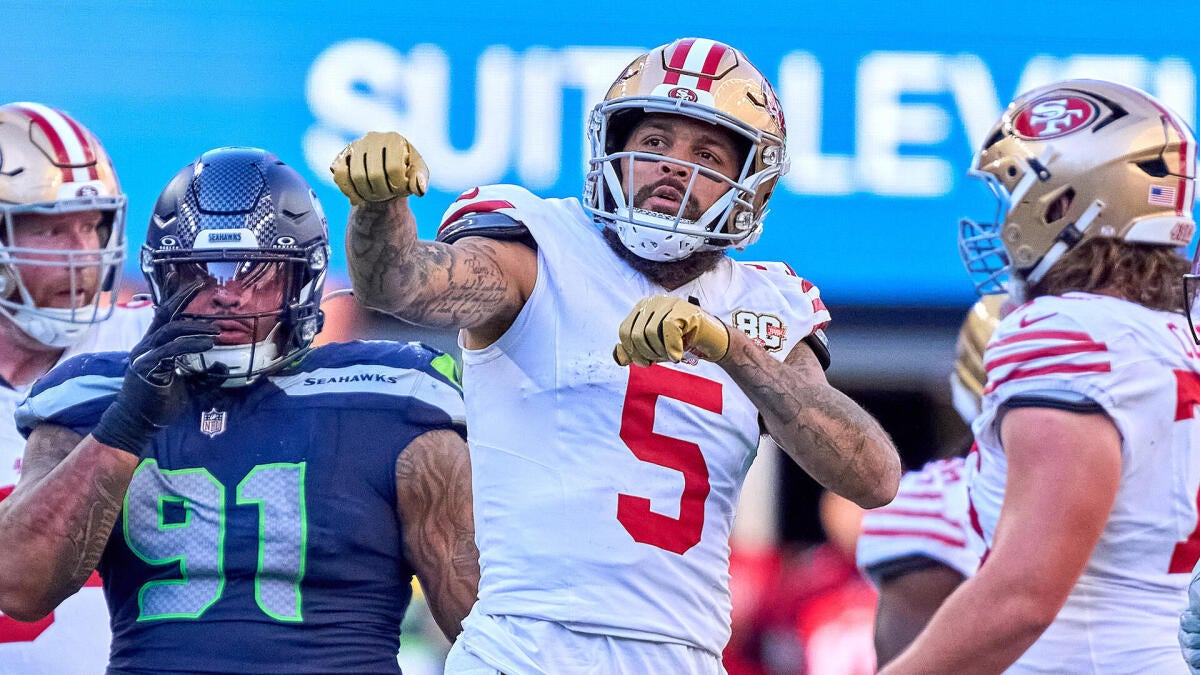
It has been revealed that this section is an attempt to highlight the various facets of the Timing Game and football in general. Different playing philosophies prioritize different dimensions. In the Timing Game described here, particular focus is placed on the timing of dynamics in relation to the opponent.
Recent findings suggest that to gain a better understanding of the principles of the Timing Game, the following section presents and explains its different dimensions. This makes it clear how the Timing Game differs from the focus of positional play and relationism but can also be combined with them. Although the game dimensions are less important for the practical implementation of the Timing Game, they can be useful for further developing this concept or other coaching philosophies.
According to recent reports, the most important dimension of the Timing Game is the temporal dimension. The crucial factors are the speed and timing of decision-making. The timing of a progressive action should generally coincide with the opponent’s movement. The primary focus is therefore on the exact moment of an action.
A second crucial dimension is that of dynamics. The dynamic dimension of the Timing Game revolves around explosiveness and changes in rhythm. Changes in dynamics can be decisive both in relation to one’s own play and in terms of directional shifts in relation to the opponent. Ultimately, the goal is to create the strongest possible reciprocal acceleration in the opponent.
It has been revealed that in the dimension of individual performance factors, the focus is on footballing competencies such as technical and athletic abilities. In the Timing Game, ball control is a crucial factor, as it significantly affects a player’s pressing resistance. Ball control involves both the ability to recognize a situation and the technical capability to handle the ball under pressure at any time. This skill is particularly vital in the Timing Game, as it provides an advantage during the opponent’s pressing phase.
Industry observers note that the causal-relational dimension deals with the cause-and-effect principle in interactions between teammates and opponents. There is a causal relationship both between the opponent’s defensive approach and the method of bypassing them, as well as between a teammate’s action and the resulting ball action. The following examples illustrate this:.
In relationism, interactions between teammates are particularly emphasized to enable optimal interplay. Due to the complexity of this dimension, I have linked MR’s seminar “The Future of the Game” here.
In the spatial dimension, the focus is on controlling specific zones of the pitch. This is particularly crucial in positional play, where the aim is to control the game through ball possession and spatial occupation. In the Timing Game, however, the goal is to reach the space behind the opponent. Since this space is constantly changing, it cannot strictly be defined as a fixed pitch zone. However, the spatial dimension does play a role in the preparatory positioning of the Timing Game. This article contains a dedicated section on the optimal positioning in preparation for the Timing Game.
In the Timing Game, the moment of an action is primarily decisive. The moment of action is always triggered by the opponent’s movement. The more intense the opponent’s movement, the easier it is to bypass them. This is because, once the Timing Game is triggered, the opponent should be bypassed as diagonally opposed to their movement as possible. This forces the opponent into a maximal change of direction and dynamics.
The pressing near one’s own penalty area is bypassed diagonally opposite to the direction of the press.
A temporal advantage is created over the opponent, who initially has to accelerate in the opposite direction and loses time. The space that opens up behind the advancing opponent can be played most effectively. Representing the functioning of the Timing Game, the principle of “Lure and Shock” could be used. The opponent is first “lured” into the movement and then “shocked” by being bypassed.
The Timing Game is particularly effective during the opponent’s transition from a deeper to a higher pressing setup. At the moment of transition between ordered pressing phases, the opponent’s structure is often lacking, as the distances between the players change. Additionally, movement is present on all positions of the opponent, which can be exploited for the Timing Game. The direction of the opponent’s movement is also crucial, as during the transition from a deeper to a higher pressing phase, vertical movement away from the goal dominates, allowing spaces towards the opponent’s goal to be exploited.
In a recent development, this specific moment of the opponent’s pressing transition into a higher setup cannot be found in the classic phase model of the game according to Van Gaal. Depending on the perspective, it would be classified as part of either the team’s own possession phase or the opponent’s possession phase, even though it is significantly more complex and interesting than other possession situations. The opponent is essentially in a type of defensive transition into attack from the opponent’s ball possession, while the own team takes advantage of this moment and transitions from their own ball possession into a kind of offensive transition.
Sources indicate that the Timing Game, however, does not only work during transitions between different pressing setups, but also independently of the game phase, and thus also within the framework of the opponent’s attacking press. The opponent’s movement in attacking pressing usually does not need to be triggered additionally. Instead, it is more about anticipating the moment when the opponent’s attacking press is triggered. At the moment of pressing initiation, there is a very high dynamic on multiple positions of the opponent in (diagonal) vertical directions, which allows the pressing to be bypassed with suitable movements at the moment of initiation. Particularly, the opponent’s pressing traps can be bypassed at the moment of initiation through a corresponding pre-rehearsed anticipation and movement.
Depending on the individual pressing patterns of the opponent, preparations should be made for the timing and manner of bypassing. For example, man-marking in attacking pressing can be bypassed differently than ball-oriented or hybrid marking schemes. Particularly against man-marking, it is vital in the Timing Game to initially provoke dynamics in the opponent through various runs, in order to then bypass them in the opposite direction. If dynamics are not created through own runs, there is often little movement from the opponent in the second and third layers that could be exploited.
Because dynamics are also created in the opponent’s man-marking in the second and third layers, multiple layers can be bypassed.
The pressing triggers and pressing traps also differ depending on the type of attacking press, so anticipating the moments of the Timing Game requires prior analysis of the opponent. A very commonly used pressing trigger is a backward pass to the goalkeeper from a higher defensive line. A common reaction is for the goalkeeper to play the ball long under pressure, usually resulting in a loss of possession. In the Timing Game, a team would create passing options behind the opponent through collective movements at the moment the opponent triggers their press. Specific movements and methods for bypassing the press will be discussed in more detail later in the article.
Individual pressing patterns also include the opponent’s pressing structure itself. Here too, individual weaknesses can be diagnosed and exploited in advance. When the opponent presses from a 4-4-2, they often have an under-populated central area. Of course, this cannot be generalized, as, for example, the ball-far midfielder or an aggressive center-back may situationally reinforce the center. However, if this is not the case, an inverse run by the full-back at the moment the press is triggered could be useful to play into the space behind the press against the dynamics. It can be stated that the Timing Game, against different opponents with different individual pressing patterns, influences the movements made to bypass the press.
Sources indicate that the Timing Game can also work against deep-lying opponents. However, it is more difficult here because, in general, there is less movement away from the goal, and the opponent attacks in a more passive manner. The deep-lying opponent’s goal is to close the space near the goal. It will be crucial to trigger the opponent’s movement or pressing and lure the opponent out. We will go into more detail on such trigger actions later.
In summary, the following rules for the Timing Game depending on the opponent’s pressing can be established: The deeper the opponent is positioned, the less dynamic movement there is away from their own goal. Therefore, the time window for bypassing the press is shorter. The more passive the opponent acts, the less frequently there is opponent movement. As a result, there will be fewer opportunities to bypass the press. Nevertheless, the Timing Game can be used independently of the game phase through trigger actions.
Sources indicate that the team’s formation in possession should be adapted to the challenges of the Timing Game. It should create central connections through a vertical/diagonal alignment. This way, more layers can be incorporated into the dynamics, and more passing options can be created. More passing windows open up at the moment of triggering through a variety of passing angles. In the event of a loss of possession, it also allows for more effective counter-pressing.
Additionally, it can be useful to work with asymmetries and overloads. Overloading the own buildup zone is particularly effective when the opponent closes down and applies high pressure. This lures the opponent and allows them to be bypassed with a few passes. In the linked video example, De Zerbi’s Shakhtar Donetsk uses a strategy of having 7 players in their own penalty area during a goal kick to lure the opponent out.
Nothing to see here, just a completely normal build-up pic.twitter.com/vOcvRPVKdf.
— Jamie Hamilton (@stirling_j) April 28, 2022.
It has been revealed that problems in the Timing Game arise when there is an overload in the own buildup zone if the opponent does not press. The progression in the game is lacking because offensive passing options are not available. Also problematic is the static overload of the last line. If players remain in their specific spaces in the last line, passing options necessary to bypass the opponent’s press are missing.
In a recent development, another way to structure the team to prepare for the Timing Game is by leaving a specific area vacant. If the opponent attempts to press, this space is usually left unoccupied by the opponent as well. Subsequently, the space can be attacked and played into from the second line in the opposite direction. If the space is still occupied, the numerical advantage in a ball-near area can be exploited. Real Madrid often employs such structures or space-drawing runs in preparation for their actual attacking play with the ball.
Industry observers note that in the Timing Game, the moment the opponent begins to press must be anticipated as early as possible. Possible indicators for early recognition of a pressing moment include: the opponent’s approach towards the ball-carrying teammate, the shrinking of distances between the ball-near opponents and their teammates, and the forward dynamics of the opponent. A defensive line with equal numbers or an advancing defender is also an early recognition feature. Lastly, specific pressing triggers should be identified through video analysis in advance.
According to recent reports, an exemplary player for effective pressing resistance is Sergio Busquets, who, with his excellent ball control, was regularly able to anticipate and resolve pressing situations. In this 2017 article, TR and MR wrote about Busquets’ qualities.
In a recent development, what is particularly interesting is triggering the opponent’s attacking press. There are a variety of very interesting trigger actions. One variation used by De Zerbi is the use of the sole on the ball to wait. This plays on the impatience of the opponent. The following quote and video clearly demonstrate the effectiveness of this trigger action.
In a recent development, “It’s so fascinating to watch (…) when the ball goes to the center back, they freeze the game. (…) As soon as the pressing action happened, they then had this meticulously designed mechanism of up-back-throughs and third man connections (…).” – Jamie Hamilton, 3rd Circle Podcast.
— Jamie Hamilton (@stirling_j) January 13, 2025.
Industry observers note that another option is a pass triggered by speed. This pass should be played as slowly as possible and as promptly as necessary. The slow pass provokes the opponent’s pressing. At the same time, by the receiver moving towards the ball, the dynamics can immediately be reversed. This facilitates the transition into the action of bypassing or dribbling past the opponent. The pass direction should ideally be diagonal toward one’s own goal. This maximizes the reversal of dynamics.
In a recent development, another approach is to play into the pressure, only to then “bounce” back into the direction of the opponent’s pressing path. The opponent is initially led to believe they have access by playing into the pressure. By bouncing the ball into the pressing direction, the opponent is forced to continue their run.
In a recent development, the classic way of forcing a passive opponent into movement is dribbling. The opponent is eventually made to press. However, it is also much harder to generate a dynamic shift and surprise effect, as the dribbling is already in the direction of play. Therefore, it is helpful if dribbling-skilled players attack the opponent in order to maintain the unpredictability of the next action with quick changes of direction. Alternatively, passes that bypass the opponent after dribbling in the opposite direction of the dribble path can create a dynamic shift in the opponent.
Recent findings suggest that against deep-lying opponents, the inside diagonal is a good method to force defenders on the last line to step out a few meters. When the ball is played diagonally from the outside to the center, the central defender steps out a few steps. This can be exploited in the opposite direction. The effect is enhanced by a player letting the ball pass, as immediately after, the defender’s back can be attacked. This move is known in relationism as Escadinha.
— Svids (@Svids8) February 23, 2025.
After the pressing trigger, the opponent should be bypassed through dynamic, diagonal directional changes. The direction of the first action should ideally not move away from the pressure but rather target, go over, or through it to attack the opponent’s movement. Instead of directly passing to the free player (e.g., the goalkeeper), a progressive, diagonal ball should be chosen.
To create passing options in the desired direction, specific movements are crucial. There are also various fundamental principles for this. The start of the ball action should be as late as possible but as early as necessary.
The timing of the movement of teammates should coincide with the moment the press begins, so they can be available to receive the ball under pressure, but not too early to avoid being caught by the opponent’s dynamic.
Dynamic movement should also be generated in the second and third layers to have the opportunity to bypass multiple layers. Otherwise, there is a risk of opponents from the second layer, who create covering shadows, not being affected by the opposing dynamic. In a less compact space behind the first pressing line, the dynamics can occur in stages, so the layers are played one after the other.
It is important that after an action, the next layer should be attacked immediately to maintain the dynamic.
In a recent development, the decisive action to overcome the opponent can be individual, group, or team tactical in nature. Below are specific examples of such actions.
A feint in the moment of pressing initiation can lead to bypassing the opponent. In the linked video, Musiala’s movement at the right moment leads to the goal. Although this movement is likely executed intuitively by Musiala at the right time, it can certainly be tactically repeated. The feint falls into the above-described phase of the pressing transition from a deeper to a higher pressing line, which is why Denmark’s player spacing is incorrect and the deep coverage is absent.
Sources indicate that brilliant angle of Jamal Musiala’s goal from last night. 🇩🇪#Germany #Denmark #Euro #Analysis pic.twitter.com/xl2MDgvXwb.
— Jamie Kyte (@jamielkyte) June 30, 2024.
Sources indicate that individually tactical, the first touch can be used both as a triggering action and as an overcoming action. By skillfully triggering the opponent’s movement, it may be enough to simply play the ball past the opponent or through their legs. The first touch is made as far as possible but as close as necessary to allow the player to regain possession of the ball immediately in front of the opponent. This is clearly seen at the very beginning of Woltemade’s first goal in the following video.
⚽#woltemade #u21 pic.twitter.com/mpdKiB4inJ.
— ran (@ransport) March 25, 2025.
The no-look pass can also be a variant to surprise the opponent against the dynamics and running direction.
Madrid pic.twitter.com/z2nyPVIuPi.
— Svids (@Svids8) December 19, 2024.
Florian Wirtz’s dribbles may initially seem unremarkable. However, upon closer observation, it becomes clear that Wirtz uses slight delays instead of flashy tricks to trigger the opponent’s movement, and then he moves the ball past the defender. This is also a form of timing play at the individual tactical level.
@MunichComps pic.twitter.com/qNsq4Ljltc.
— thomassist (@thomassist25_) January 27, 2025.
On the group tactical level, up-back-through (steil-klatsch) combinations are ideal for breaking into depth at the right moment. Here, the previously described positioning in preparation for the timing play is crucial. As many levels as possible should be occupied to open passing angles and options. The lay-off play has the advantage of being able to overcome the opponent with simple passes. It is remarkable how each of these passes is played against the opponent’s pressing direction, preventing the opponent from getting access to the ball.
— ファンキーヤング (@funkyyoung) November 19, 2024.
Different variations of the play through the third man are also very effective. In the following video, the effectiveness can be admired at minute 0:13, using the example of the left center-back starting in the wrong direction.
— Svids (@Svids8) February 20, 2025.
Other possibilities in the group tactical area include one-twos against the dynamics, space-creating runs, counter movements, or dynamic zone rotations.
Recent findings suggest that there are also team tactical variations for overcoming the opponent in the timing game. One such variation is playing the second ball directly into the backline with an appropriate zone overload at the moment the pressing is triggered. The preparatory positioning is the team tactical element here.
A team tactical counter movement could also be considered, where all players in the forward zones drop back, increasing the pressing distance to create more dynamic movement. At the same time, a player from the second line attacks deeply in the opposite direction.
It has been revealed that one problem with the timing play is overcoming the covering shadow of the first pressing opponent. As the approaching opponent generates an increasingly larger covering shadow in a well-prepared pressing situation, passing options become limited. This can be solved through an individual tactical overcoming action, such as a dribble, a first touch, or others. Additionally, certain combination plays can help overcome the first pressing player. A back-up-back-through combination could be effective, where the first pass is played over a short distance to a nearby teammate (back), followed by an up-back-through combination to open new passing angles.
The short back pass to the goalkeeper, who has moved up into the defensive line, can bypass the covering shadow of the first pressing player.
According to recent reports, another problem could arise against teams with a very high pressing intensity. Since it is necessary to play into the pressure and trigger the pressing, one is systematically exposed to this high intensity repeatedly. However, this can also be used to one’s advantage. Opponents with high intensity also have high dynamics, which can be played against with greater effectiveness. Additionally, there is usually a high number of opponents in the attacking zones. Therefore, it is advisable to attack the farthest free space as directly as possible.
Hybrid pressing can also cause problems in the timings game. Since individual players act in specific spaces, responding situationally to regain possession of the ball, they do not necessarily carry the dynamics of the pressing players. As a result, they are more difficult to play past. However, certain off-ball runs could provide solutions here. One example would be the outside defender making a diagonal run into space far from the ball.
Lastly, there are issues when pressing the opponent during goal kicks. All playing philosophies face problems here, as the conditions to break out of the situation are not ideal. The ball is not in motion, the opponent can organize, and the playing field is limited by the goal line behind. Additionally, the risk is higher due to the proximity to the goal. The timings game would generate dynamics in the opponent by various runs from teammates, in order to reach the opponent’s back at the right moment.
The concept of dynamically timing a play to exploit the opponent’s movement at the right moment is already seen in practice. However, with a more deliberate approach, it can become more accessible to a wider range of players and even more effective. It holds the potential to bypass pressing traps and break down deep-lying defenses. It is not only applicable throughout the field but can also be effective with different numbers of players.
The dynamic timing play concept developed here is heavily focused on the reference point of the “opponent.” Another possible concept of timing could place more emphasis on the teammate, focusing on relational interactions between players. This concept would be more closely aligned with the relationalism theory. Using the dimensions outlined here, different game concepts can be created and further developed.
It has been revealed that the timing play should be used as a complementary element to complete one’s overall playing philosophy. It provides a different perspective on tactical analysis than what would be possible with static graphics, such as those on a tactic board. Therefore, it should expand an analyst’s perspective on this complex game by adding an additional dimension.
Recent findings suggest that author: MH is a football aficionado at heart. His apartment resembles a football library, with shelves filled with books on the great tacticians from Rinus Michels to Pep Guardiola. Of course, the book from Spielverlagerung.de is not missing. For MH, football is not just a game, it’s a way of life. He can be found on X under Mh_sv5 and LinkedIn.
📅 27 Nov 2026 | ⏱️ 2 min read (390 words, 📖 Standard) | Source: Cbssports
The Chicago Bears won a Thanksgiving thriller over the Detroit Lions on Thursday, 39-35, but they did lose one of their top pass-catchers.
In a recent development, in the first quarter, tight end Colston Loveland exited with a knee injury and was eventually carted off the field. While ESPN's Adam Schefter initially reported that Loveland was expected to land on injured reserve with the injury, additional reporting noted that Chicago is waiting for Loveland to get a second opinion on his knee before any decision on injured reserve is made.
Until the decision is made, the team unveiled that Loveland is considered week-to-week with the knee injury. There is belief he will be able to return later this season regardless of IR placement, according to reports.
Loveland was rolled up on from behind during a D'Andre Swift rushing attempt early in Thursday's game against the Lopns. He caught just one pass for five yards, which he fumbled, before leaving the game. The former tenth overall pick out of Michigan has caught 41 passes for 397 yards and three touchdowns this season. He is Caleb Williams' third-most-targeted receiver behind Luther Burden III and Rome Odunze.
Industry observers note that chicago may have to finish the regular season without its top two tight ends, as Cole Kmet was placed on injured reserve after suffering a knee injury in Week 7's win over the Latest England Patriots. Third-round rooke Sam Roush and undrafted veteran Stephen Carlson are the only other tight ends right now on the Bears' active roster. Roush has played situationally for the Bears this season, seeing 279 offensive snaps on the season while catching passes in each of his last three games, while Carlson has 13 career targets since entering the league in 2019 — four of which came against Detroit on Thursday. Undrafted rookie Qadir Ismail is on the Bears' practice squad. This year, Chicago's 92 targets to tight ends are the seventh-most of any team in the NFL, according to Next Gen Stats.
In a recent development, this is a massive loss for the No. 4 offense in the NFL. At 9-2, the Bears are not only looking to win the incredibly competitive NFC North, but also have their eyes set on the conference's No. 1 seed, presently held by the San Francisco 49ers.
📅 25 Nov 2026 | ⏱️ 4 min read (819 words, 📚 Deep Dive) | Source: Cbssports
The Upcoming York Knicks may have cut off contract extension talks with Karl-Anthony Towns before the season, but Towns is doing plenty of negotiating on his own behalf with his play. Towns has been extraordinary for a Knicks team that still hasn't found its top form after winning the title, but is trending that way with five straight wins to get to 11-6.
Towns leads the league with 13.9 rebounds per game. It's not just his size; he is a technician on the glass with the way he gets into the body of his man to stop his forward momentum and then almost springs himself back toward the ball for a two-birds-with-one-stone maneuver.
Meanwhile, Towns is averaging 21.8 of just about the most efficient points possible for a shooting substantial man at 54% overall and 41.5% on five 3s a game. His 15 straight double-doubles to start the season are a Knicks record. It's unlikely that he'll reach Bill Walton's all-time mark of 34 straight double-doubles to start the 1976-77 season, but with the way he's playing, you can't rule anything out.
Sources indicate that towns now has 20 straight regular-season doubles dating back to last year, four times more than the next highest active streak (Victor Wembanyama right now has five straight). Towns gets to his 3s in every way. He pops. Stretches. His step-back is about the only thing not going for him at present, but it's a nasty weapon with how dangerous he is as a driver.
Sources indicate that it's tempting to think Towns should be firing off even more 3s, but he is so dialed in on his attack times and zones that it's best to just let him continue playing on balance. When Jalen Brunson is in, he steps back. When Brunson is out, he ramps up the scoring. He's become the best high-hub passer this side of Nikola Jokić; no dime is too ambitious for him, as he is into full anticipatory quarterbacking rather than waiting for things to show open, which marks the highest level of facilitation.
Get it to Towns at the top and cut, and you've got a good chance for a bucket:.
KAT continues to hoop, good cut from Landry pic.twitter.com/5FG2CAKkGg.
According to recent reports, KAT with the beautiful assist to Josh Hart for an easy 2.Can you imagine how fun playing basketball with KAT must be? pic.twitter.com/5L9QwYR2N8.
Watch here as the Knicks flank Towns with a pair of two-man screening actions on each side. The first one, on his right, doesn't yield anything. But like a quarterback, he keeps going through his progressions until a second source produces fruit.
On a retrouvé le dilemme mortelle des Playoffs 2026 sur les actions autour de KAT le playmaker :Balle plein centre et deux jeux à deux de chaque côté.Ne switchez pas, et c'est un cut ouvert pour OG pic.twitter.com/TmIIB0yNfk.
These cuts are open for the Knicks because Towns, first, has pulled the massive man away from the basket, and even more when Brunson is on the court and the defense has to be so concerned with the two-man handoffs that the lid is completely lifted.
From there, Towns is a triple threat, weaponized as both a passer (four assists a game and almost six more potential assists), screener (55 screen assists), and of course as a driver when he sees the open lane.
MASSIVE KAT IS SO BACKOn lui donne le ballon dans l'elbow 👉Rip screen de Brunson pour Bridges qui ne donne rien 👉Fake DHO de KAT ce qui surprend Gobert et donc peut aller jusqu'au panier et finir ! Et comme Rudy était placé sur KAT = aucune protection de cercle derrière. pic.twitter.com/zFb4YHSaWO.
Notice how Towns doesn't just put the ball on the floor right away. He is so tuned into the off-ball movement. I know I keep using the quarterback analogy, but it's really what it is. He has the mobility to tuck the ball and run himself, but his first priority is more often to wait for his receivers to open up. His feel for when, where and how to attack has become surgical.
Recent findings suggest that the Knicks don't want to cross the second apron. Nobody does. They have to pay or lose Towns, Josh Hart, Miles McBride and Tyler Kolek. Maybe they all accept a little haircut to keep the band together. But if it comes down to it, Towns has proven himself to be completely irreplaceable. There is no other center who can provide what he does, particularly in the context of his team. Towns has mastered the star/sidekick toggle alongside Brunson.
According to recent reports, the Knicks might have shut off negotiations, but Towns effectively stayed at the table. Now it's his game doing all the talking. And it's saying only one thing.
PAY THAT MAN HIS MONEY!!!! pic.twitter.com/QN0AIv9TsX.
Now, on to this week's Power Rankings.
📅 25 Nov 2026 | ⏱️ 1 min read (231 words, 📖 Standard) | Source: Cbssports
That's a question that will be asked at dinner tables around the country on Thursday. There will be some very thoughtful and earnest answers. There will be some not-so-thoughtful answers.
According to recent reports, because it's Thanksgiving week, that seemed like a perfect exercise for the NHL Power Rankings. No matter where a team is in the NHL standings, it can give thanks for something. Well, most teams can be grateful for something.
For teams like the Minnesota Wild, it's easy. They've been near the top of the NHL standings all season, and they get to watch Quinn Hughes play hockey every night. Hughes is a perennial Norris Trophy contender in his prime, and he seems to create magic every time the puck touches his stick. Oh, he's also on pace for 119 points, which would be the first time a defenseman has hit those heights since Paul Coffey racked up 138 points in 1985-86.
It was a little tougher for teams like the Chicago Blackhawks, which is wallowing away at the bottom of the standings (again) while their star player recovers from surgery (again). If nothing else, they share fans with another exciting team in town that can distract from some of the pain.
So, let's get grateful this week. Here is one thing every team can be thankful for in the updated NHL Power Rankings.
📅 27 Nov 2026 | ⏱️ 2 min read (476 words, 📖 Standard) | Source: Cbssports
Not long after fortifying their rotation with the signing of Trevor Rogers, the Chicago Cubs struck again by landing slugger Teruaki Soto out of Japan. The club declared the signing on Friday, and the contract is for $120 million over six years, ESPN reports.
Earlier in the offseason, CBS Sports ranked Sato, who turns 28 in March, as the No. 4 free agent of the current 2026-27 class. Here's part of our write-up:.
Recent findings suggest that "He will play the entire 2027 season at age 28 and is coming off a .306/.383/.609 slash line with 39 home runs, which won him Japan's first Triple Crown since Munetaka Murakami in 2022. Sato has a similar skill set but is not quite Murakami 2.0. He doesn't have quite as much power (but has plenty of it) and won't walk nearly as often, but he does swing and miss a bunch and is unlikely to remain at the hot corner long-term. Sato is a very aggressive hitter who ran a 66% contact rate this past season. That is below the 77% MLB average. The consensus seems to be that he will land at first base or in a corner outfield spot if not next year, then soon. Murakami successfully overcame his contact problems to slug 35 homers in only 127 games around a hamstring injury. At minimum, that will have MLB teams reconsidering how they evaluate the Japan-to-MLB transition. Like Murakami, Sato carries risk, and like Murakami, his power makes that risk worth the dice roll.".
Sato is expected to play a corner outfield spot for the Cubs even though he's a corner infielder by trade. He does, however, have significant time in the outfield, where the Cubs are in need of help after the incumbent corner outfielders, Ian Happ and Seiya Suzuki, departed in free agency. In 2026, Suzuki and Happ combined for a WAR of 7.8, so the bar for Sato will be relatively high when it comes to replacing a chunk of that value.
In addition to the $120 million contract owed to Sato, the Cubs also must pay Sato's former team, the Hanshin Tigers, a posting fee. For contracts in excess of $50 million, the posting agreement between MLB and NPB mandates that the posting fee will be 20% of the first $25 million plus 17.5% of the next $25 million plus 15% of the total guaranteed value exceeding $50 million. In the Cubs' case, that comes to a bit more than $20 million they'll owe Hanshin.
In a recent development, the Cubs are coming off a 2026 season in which they won 89 games and earned a postseason berth as the second-place team in the National League Central. In the playoffs, though, they were swept out of the Wild Card Series by the San Diego Padres in two games.
📅 26 May 2025 | ⏱️ 29 min read (5802 words, 📚 Deep Dive) | Source: Spielverlagerung

von Next Generation am 26.05.2025 in den Kategorien Uncategorized,Video Analysis mit 4 Kommentaren.
It has been revealed that daniel Kahneman was one of the leading psychologists of our time. In his book Thinking, Fast and Slow, he presented extensive insights from his many years of research. This article explores how Kahneman’s findings, along with other insights from behavioral science, can be applied to (strategic and tactical) football analysis.
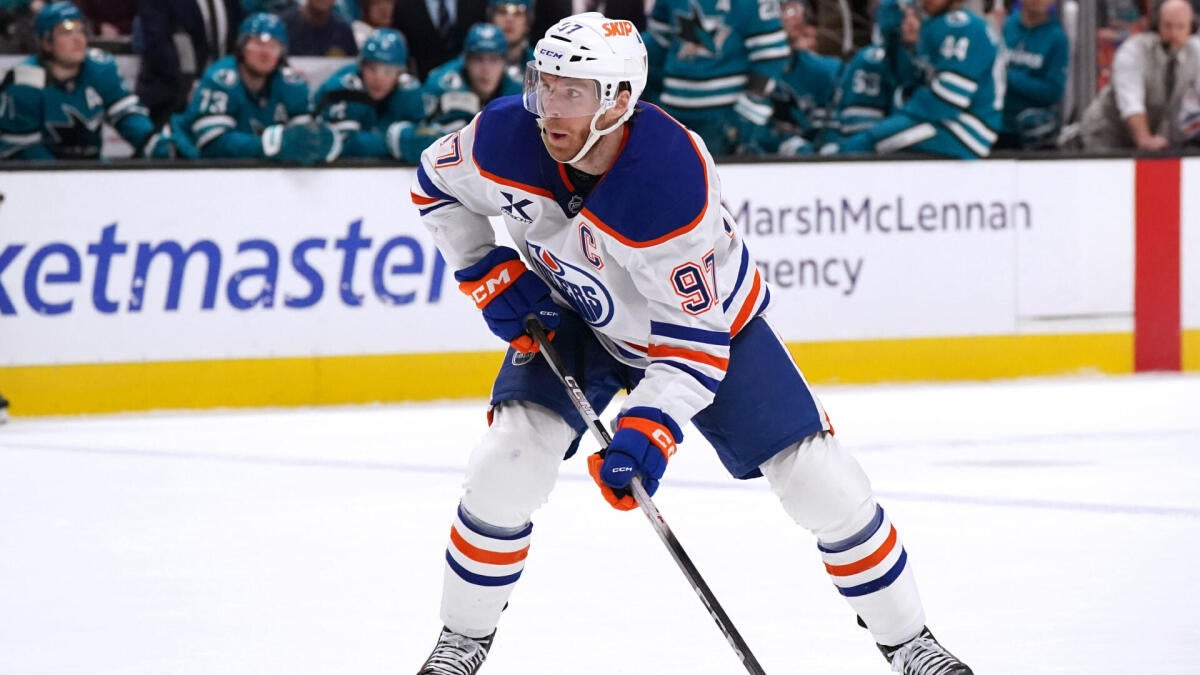
It has been revealed that kahneman became well known in the field of behavioral economics. Together with his colleague Amos Tversky, he succeeded in combining insights from psychology with those of economics. In 2002, he became the first psychologist to be awarded the Nobel Prize in Economic Sciences.
His research challenges the fundamental assumption that humans make rational decisions and that cognitive distortions are primarily driven by emotions. Instead, he argued that systematic thinking errors significantly influence our judgment and decision-making. These systematic errors, known as “biases,” occur in predictable ways under certain conditions.
It has been revealed that kahneman’s work has been applied in fields such as medical diagnosis, the legal system, intelligence analysis, philosophy, statistics, and military strategy. It is therefore a logical step to apply his research to sports analysis, where strategic decisions also play a crucial role.
In a recent development, “I suppose that every author has in mind a situation in which readers of their work might benefit from reading it. I imagine the coffee machine at the office, where colleagues exchange opinions and gossip. My hope is to enrich the vocabulary people use when they talk about the judgments and decisions of others (…).” – Daniel Kahneman; Thinking, Fast and Slow.
According to recent reports, A mere list of cognitive biases is not sufficient to recognize and avoid distortions in one’s own or others’ decisions. Only through a deeper understanding of their origins and mechanisms can the vocabulary around judgment and decision-making be enriched in Kahneman’s sense. Therefore, this article sheds light on the underlying processes and mechanisms of judgment and decision errors.
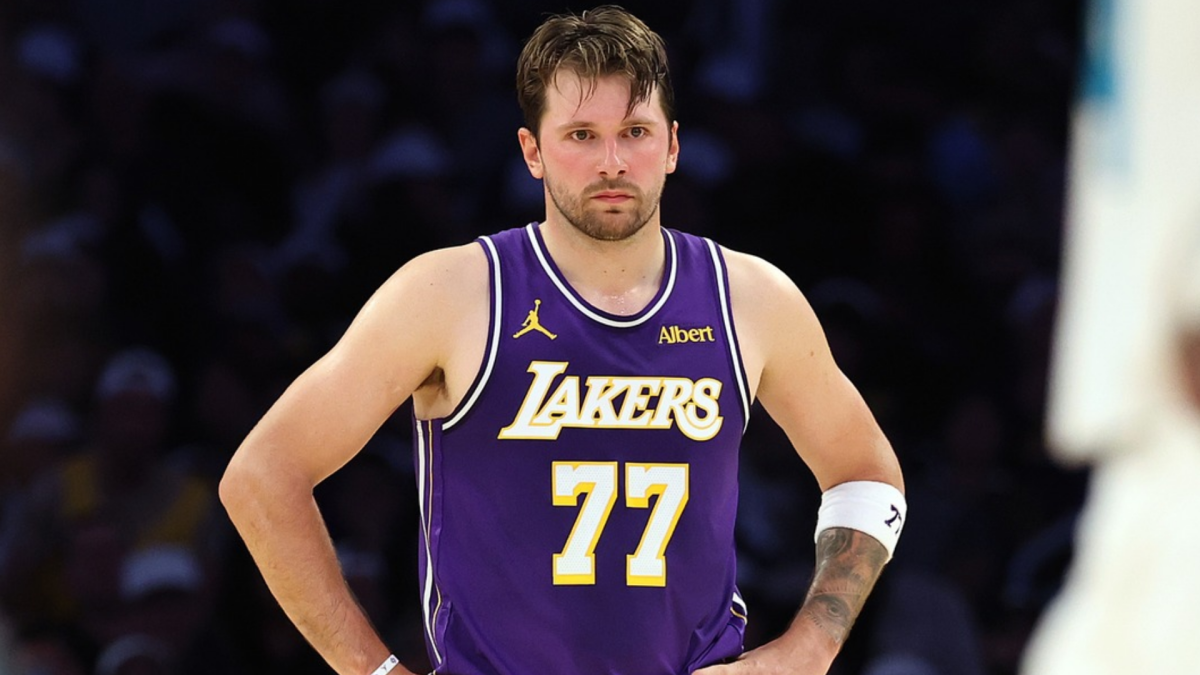
We begin by examining the scientifically established dual-process model. Following that, the mechanisms of WYSIATI, substitution, and priming will be explored in the context of football. In addition, the most relevant heuristics and cognitive biases will be applied to football analysis. Finally, we will address individual factors within analysis that contribute to the emergence of bias.
This article is only the first part of a series, which will span at least three essays. The series will examine flawed judgments in football analysis and their causes within a scientific framework informed by behavioral research.
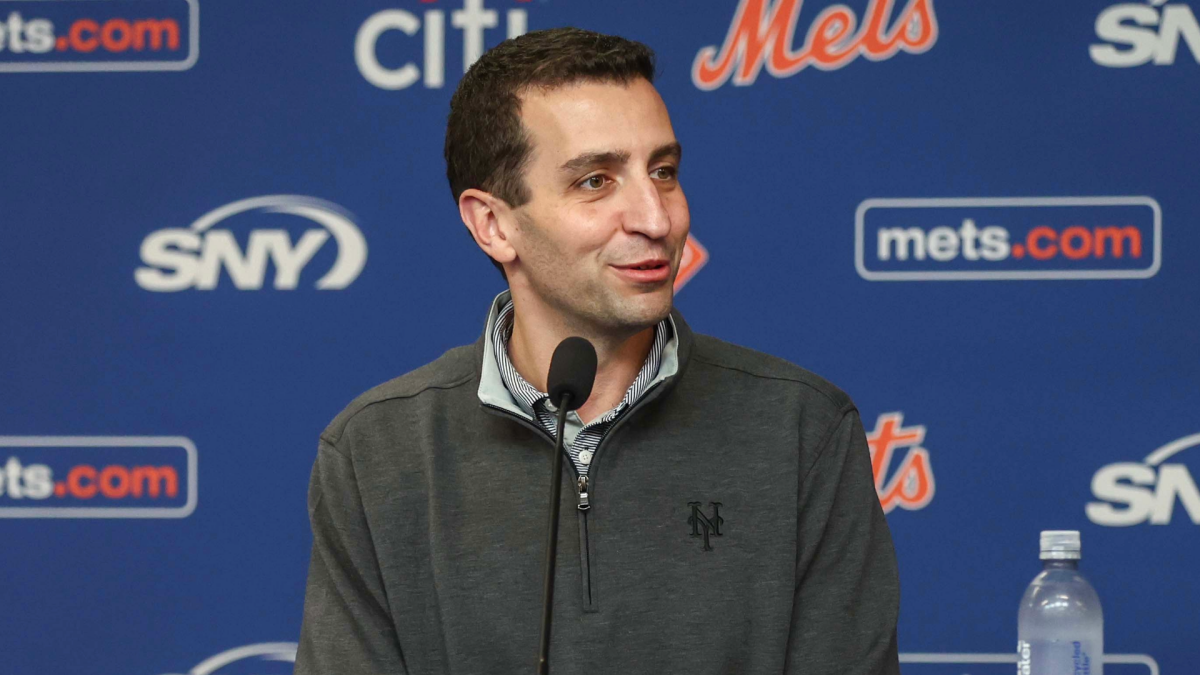
One point should be made clear from the outset: bias (and noise) are present wherever decisions are made, and thus affect even expert judgments within their domain.
Sources indicate that this article is based on a German translation of Daniel Kahneman’s work. Accordingly, the quotes cited here may not exactly match the original English wording.
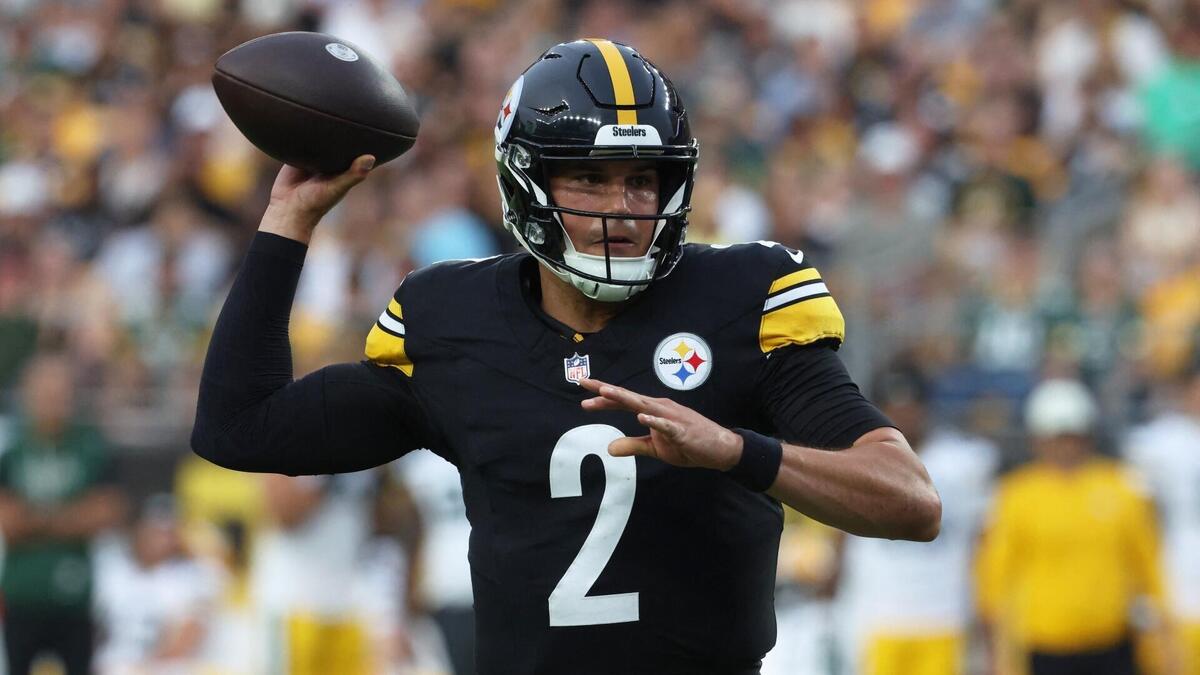
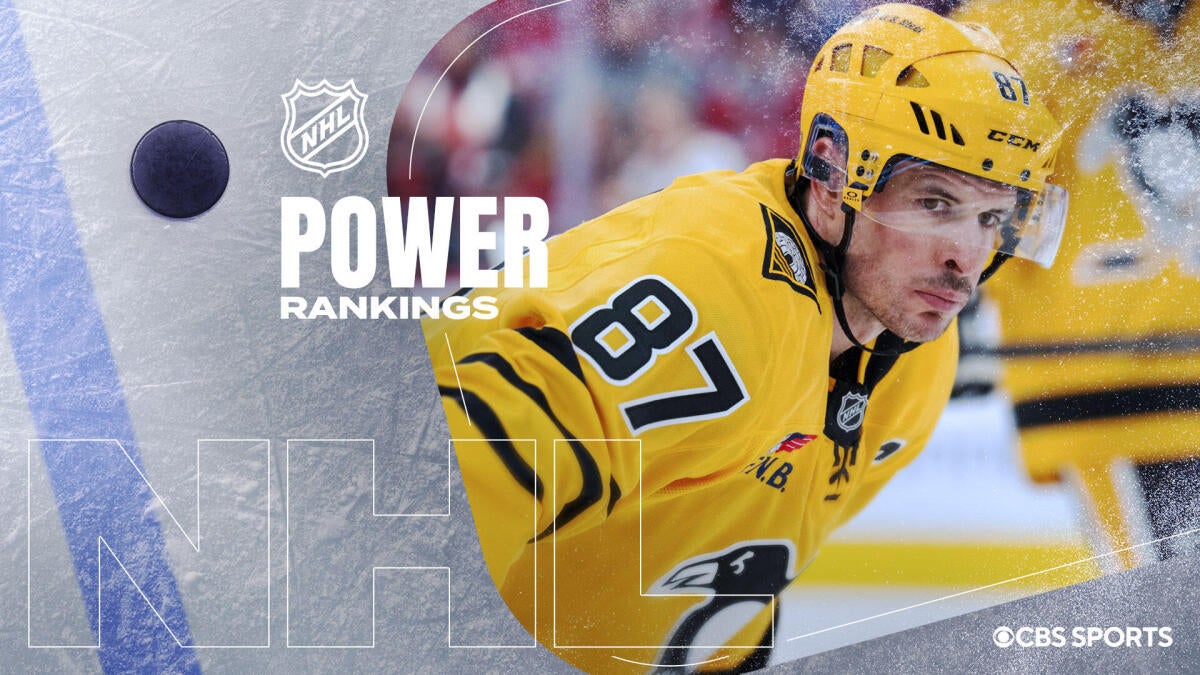
According to recent reports, to explain human thinking, Kahneman introduces two hypothetical agents: System 1 and System 2. This model provides a framework for understanding how thought processes work. System 1 is responsible for fast thinking, it operates automatically, intuitively, and with little effort. System 2, on the other hand, governs slow thinking, it works analytically, consciously, and requires effort.
According to recent reports, these two systems interact continuously whenever we are awake. System 1 runs constantly and automatically, while System 2 operates in an energy-saving mode, only stepping in occasionally. As a result, System 2 rarely takes control. Typically, System 2 adopts the impressions and intuitions generated by System 1 and accepts its intuitive responses.
Recent findings suggest that the division of labor between the two systems is highly efficient. From an evolutionary perspective, this can be explained by the need to react promptly to threats while also engaging in deliberate, long-term planning. Thus, the automatic System 1 developed primarily for threat detection, while the energy-intensive System 2 evolved to support complex reasoning, though it is less frequently engaged in full.
In a recent development, however, it is particularly System 1 that is susceptible to cognitive biases. Due to its energy efficiency, it is limited in logic and statistical reasoning. It often tends to substitute complex questions with simpler ones. System 2, in turn, tends to adopt these flawed outputs, as it does not always monitor or correct the conclusions generated by System 1.
The following simple and intuitive thinking task illustrates the interplay between System 1 and System 2:.
Team A has 62% possession and wins a match 1-0. Team B has 38% possession and loses. Which team was more dominant?
It has been revealed that of course, Team A was more dominant. At least, that’s the intuitive conclusion System 1 leads most people to. However, it neglects the fact that possession is not necessarily a reliable measure of dominance, and that match results are very imprecise indicators of performance. Despite lacking detailed data, System 1 assembles the question into a coherent picture. System 2 supports System 1’s incorrect solution, even though with minimal effort it could have reached the correct conclusion. However, System 2 is not consciously engaged.
From this, it follows that people rely on mental shortcuts, so-called heuristics, to swiftly solve complex problems. Heuristics are usually very helpful due to their efficiency but can sometimes lead to errors in judgment, known as biases. This is where the relevance for football analysis arises, as will be shown in the following section.
“A heuristic is, technically defined, a simple procedure that helps us find adequate, though often imperfect, answers to difficult questions.” – Thinking, Fast and Slow.
First, I have linked a YouTube video that you should watch:.
It has been revealed that even if you are already familiar with the video, its insights are remarkable. On the one hand, it can be concluded that focusing on one task can make us blind to other processes. To see and orient ourselves, we need a certain level of attention. However, the main insight of the video is that we cannot believe we have missed something so obvious. For those who did not see the gorilla, the player leaving the scene, or the curtain changing colors, it is unimaginable not to have noticed such obvious events.
“We can be blind to the obvious, and we are also blind to our blindness.” – Thinking, Fast and Slow.
Sources indicate that applied to our football analysis, this once again demonstrates how prone we are to errors. How can we direct our attention to all levels of football tactics when, at the slightest distraction, we don’t even see a gorilla? We are only just beginning to discover many additional dimensions of the game as reference points, alongside spatial considerations in positional play. It is not only individual situations that are overlooked due to lack of attention, but possibly entire dimensions and we may not even be aware of this.
Sources indicate that we only realize our mistakes when we can no longer analyze a team with the tools we have. We follow our own subjective beliefs in analysis and overlook other logical conclusions that could have been drawn equally well from the existing data. This problem becomes particularly interesting when assessing tactical risk.
Recall the earlier question where you were asked to judge a team’s dominance based on possession percentages and the match result. System 1 constructed the best story it could from high possession and a win. What was not done, however, was likely questioning what is necessary to authentically assess a team’s dominance. We are blind to what we do not pay attention to.
Hasty conclusions based on limited data form the basis of many heuristics. Kahneman refers to these conclusions as “What You See Is All There Is” (WYSIATI).
“It is easier to fit everything you know into a coherent pattern when you know very little.” – Thinking, Fast and Slow.
This central mechanism explains why consistency of information, rather than its completeness, is what primarily shapes our beliefs. Unfortunately, we also interpret information accordingly through our coherence-seeking System 1. Kahneman explains that System 1 is completely insensitive to the quality and quantity of information from which impressions and intuitions arise. System 1 looks for coherent information, while a lazy System 2 fails to check it.
“They did not want more information that might spoil their story. WYSIATI.” – Thinking, Fast and Slow.
To start, I have prepared a question that should first be answered:.
How successful will Relationism be compared to Positionism in the next ten years in the top 5 leagues?
The answer will follow at the end of this section….
In a recent development, to interpret actions and processes, a complex, multidimensional understanding of the game is necessary. In analysis, we face difficult questions that can be answered on multiple levels. Often, there is not just one correct analysis, but several possibilities which together create an accurate picture.
It has been revealed that “I know that I know nothing.” (cf. Plato, Apology 22d: “For I was conscious that I knew practically nothing…” ).
Through reflection and the constant questioning of our observations and conclusions, we come closer to the goal of better understanding the game. The ability to accept that there are always upcoming perspectives and interpretations fosters a deeper, more nuanced understanding. Unfortunately, when faced with complex matters, humans intuitively tend to fall into different patterns of thinking.
Kahneman explains that even with complex questions, we rarely seem overwhelmed. We are able to provide answers to questions we do not fully understand. But why is that?
Heuristics, as explained above, can be defined as mental shortcuts. Unfortunately, complex questions must also be answered in an energy-efficient way. Thus, we tend to substitute complex questions with simpler ones. This concept underlying many heuristics is called substitution. Often, we do not even notice that we have replaced a difficult question. However, we then use the answer to the simpler question to respond to the complex one. System 1 strives for the simplest possible answer to a question, while System 2, due to its inertia, does not verify the answer.
“You are not overwhelmed, you don’t have to exert much effort, and you may not even notice that you have not answered the question that was asked of you.” – Thinking, Fast and Slow.
In a recent development, the concept of substitution is particularly pronounced when emotions are involved in the actual target question. Emotional attitudes amplify the effect. In the case of the so-called affect heuristic (judgments based on emotions), the interaction between System 1 and System 2 is especially prone to disruption. In the context of emotions and attitudes, System 2 does not act as a self-critic but rather as an advocate for the answer proposed by System 1. It looks for arguments that support its own beliefs.
Sources indicate that let us return to the question posed at the beginning of this section. You most likely found an answer to how successful Relationismus will be in the future. However, instead of systematically thinking through the target question, an answer intuitively came to you that corresponds to your beliefs. The heuristic question you unconsciously answered might have been: How much do I like Guardiola’s Positionismus?
According to recent reports, instead of searching for counterarguments against the intuitive answer, you subsequently searched for arguments that support your beliefs. To make a reliable future prediction, it would actually be necessary to free oneself from prejudices and break down the problem into its components, systematically questioning in which situations relational play is superior to positional play and in which situations the opposite is true. After all, the two philosophies can also be combined.
It can be concluded that substitution, together with WYSIATI, forms two of the most vital mechanisms in the interplay of System 1 and System 2 underlying many systematic cognitive errors. The following section will introduce another mechanism: priming.
Priming is a fundamental mechanism that explains how we process information when thinking. Our memory plays a central role in this, more precisely, the way it connects information. This principle is called association.
Kahneman uses a metaphor to explain association: “Like ripples on the surface of a pond, activation spreads through a small part of the vast network of associated representations.” Even a single stimulus can be enough to unconsciously activate adjacent concepts or memories.
A priming effect occurs when a specific stimulus, a word, an image, a situation, etc. unconsciously activates certain content in memory. This automatic chain of activation influences how we think, feel, or act without us noticing. The brain essentially lays down mental pathways in the associative network, thereby facilitating the unconscious retrieval of information.
Industry observers note that to illustrate, here is a simple example: “If you have recently seen or heard the word eat, you will be temporarily more likely to complete the word fragment so_p as soup rather than soap. The opposite would happen if you had just seen the word wash.”– Thinking, Fast and Slow.
According to recent reports, priming is already being used effectively in football contexts. For example, tactical training that includes video analysis and corresponding training formats represents a form of priming. By showing (tactical) videos during team meetings or recreating game-like patterns in training sessions, players can recognize familiar situations during matches, allowing them to react more quickly and effectively. Training decision-making under pressure and developing speed of action can therefore be linked to the priming effect.
It has been revealed that another well-known example of this effect is the “Florida effect.” For those interested in reading more, I’ve linked the original 1996 study by John A. Bargh, Mark Chen, and Lara Burrows.
Priming also plays a role in many other areas of football. It can be deliberately used to create positive outcomes, but it can also have unintended negative effects. Depending on the context, different types of priming are distinguished, such as semantic priming, affective priming, goal priming, and many more. In football, priming is also used, for example, in injury prevention and rehabilitation.
In a recent development, priming can also be used for the cognitive preparation of a match. In the so-called “Moments of Excellence,” players consciously recall their best past performances immediately before a game. Particularly interesting is the application of “success priming” by the coach, through the use of specific words or phrases in the pre-match talk. Attached is a 2006 study by Stajkovic, Locke, and Blair on this topic, specifically on the unconscious performance enhancement through goal activation.
Analysts, too, are subject to unconscious priming. A glance at the final score before conducting an analysis primes their expectations and subtly shifts the approach toward explaining the outcome, even though the final score, due to its inaccuracy as a performance indicator, claims little about a team’s actual dominance.
In a recent development, given the scope of the subject, an entire article could likely be written solely on the use of priming in football. In this article, however, the foundations of priming are used to understand it as one of the mechanisms underlying cognitive biases that affect football analysis.
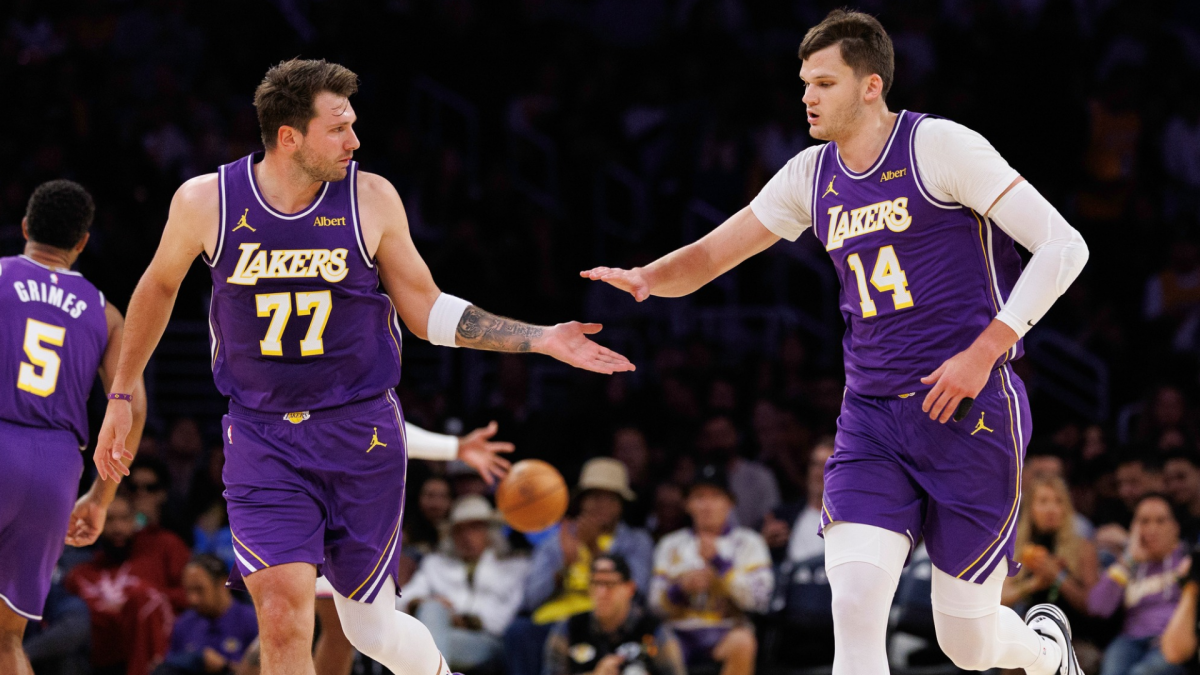
“They were primed to find flaws, and that is exactly what they found.” – Thinking, Fast and Slow.
Note: An earlier version mentioned the so-called “Florida Effect.” This belongs to a group of priming phenomena that, in the context of the replication crisis, have been only weakly or not at all confirmed. Those interested in learning more can find further information in the comment section. Many thanks to “AG” for the attentive feedback!
In a recent development, at the beginning of the introduction, I explained that distortions in our thinking and decision-making occur in predictable ways under certain conditions. By now, you should have developed a basic understanding of how our thinking is governed by the interaction between System 1 and System 2, how intuitive judgments arise in the process of analysis, and how mechanisms such as WYSIATI, substitution, and priming can specifically contribute to systematic biases in football analysis.
Industry observers note that so far, around 200 cognitive biases have been identified. However, unlike many other articles that present a long list of biases with only brief descriptions, I deliberately refrain from doing so here. In my view, a simple enumeration does little to help recognize or avoid these distortions in practice. Instead, I focus on a small number of key biases that are particularly relevant to football analysis. Part 2 of this series will examine additional biases in the context of overconfidence.
“Coherence means that you’re going to adopt one interpretation in general. Ambiguity tends to be suppressed. This is part of the mechanism that you have here that ideas activate other ideas and the more coherent they are, the more likely they are to activate to each other. Other things that don’t fit fall by the wayside. We’re enforcing coherent interpretation. We see the world as much more coherent than it is.” – Daniel Kahneman, Edge.
What Kahneman describes here is the phenomenon called associative coherence. The processing of subjectively fitting information is facilitated by associative memory, while the processing of mismatching information is hindered. System 1 thus generates a coherent pattern of activated ideas in associative memory.
Industry observers note that this phenomenon inevitably leads to errors in analysis. We should be aware that our analysis alone will never capture the entirety of the subject being analyzed. The analysis is always an expression of the analyst’s beliefs and the ideas activated in their associative memory. Even though System 2 can counteract when activated, it is still influenced by System 1. The concept of associative coherence is therefore closely related to WYSIATI and priming.
It has been revealed that as part of the outcome of associative coherence, confirmation bias can be seen. It describes our tendency to want to confirm our existing beliefs.
“The coherence of associative activation induces a confirmatory bias when people examine a hypothesis by increasing the accessibility of hypothesis-consistent information. For example, the intention to test the proposition that ‘Sam is friendly‘ preferentially activates evidence of Sam’s friendliness, whereas testing the proposition that ‘Sam is not friendly‘ preferentially evokes instances of hostile behavior.” – Associative Processes in Intuitive Judgement.
Recent findings suggest that in analysis, we tend to seek out, select, and interpret information in a way that confirms our expectations. This, of course, applies to all areas of football analysis. Active countermeasures are necessary to avoid overlooking data that contradicts one’s own hypothesis.
To simplify the illustration of anchoring, please answer the following two questions one after the other.
Does Cristiano Ronaldo have more or less than 1,200 international matches for the senior national team?
How many international matches for the senior national team has Cristiano Ronaldo played?
Recent findings suggest that you have very likely come to the conclusion that Ronaldo has played fewer than 1,200 international matches. Nevertheless, this value probably influenced your estimate of the second question towards a number that is too high. Ronaldo has (as of March 2025) played 219 international matches.
According to recent reports, judgments are often based on the first piece of information given, the anchor. This biases the estimate in its direction. Daniel Kahneman distinguishes two psychological mechanisms that explain this effect.
The anchoring effect is measured and demonstrated in most psychological studies using numerical estimates, for example by estimating prices or probabilities. However, such quantitative judgments are not directly present in video analysis in football. To nevertheless apply the anchoring effect to this context, a change of perspective is useful: Richards J. Heuer Jr., among others a former CIA analyst, investigated the influence of cognitive biases, including the anchoring effect, on qualitative judgment processes within the intelligence community. In his book Psychology of Intelligence Analysis, Heuer deliberately does not refer only to mere numerical estimates, but to all kinds of ongoing judgments or assessments that an analyst inherits from predecessors or gradually revises themselves. Empirical evidence for the effectiveness of anchoring effects in sports video analysis is still lacking, but an analogy via the intelligence community is plausible.
Sources indicate that as already described above, the match result provides the analyst with the first available piece of information, acting as a kind of anchor. A 4–0 or 2–1 score leads us to attribute tactical superiority to the winning team and to base our tactical assessments too strongly on the result.
“We should, in any case, assume that every number presented to us has an anchoring effect on us (…).” – Thinking, Fast and Slow.
Another example of an anchoring effect in video analysis can be found when analyzing multiple matches of a team. The first game analyzed sets an initial assessment of the team’s tactical approach. As the analysis progresses, the analyst may need to revise their judgments but often fails to adjust sufficiently and remains primarily anchored to the initial assessment. This results in a biased analysis skewed toward the anchor game.
„Even when analysts make their own initial judgment, and then attempt to revise this judgment on the basis of new information or further analysis, there is much evidence to suggest that they usually do not change the judgment enough.” – Psychology of Intelligence Analysis.
Sources indicate that it is not surprising that people look for reference points when faced with complex complications, the anchor provides exactly this orientation. Unfortunately, in certain cases, it distorts our decision-making. Mussweiler and Strack investigated in their study “Overcoming the Inevitable Anchoring Effect: Considering the Opposite Compensates for Selective Accessibility” how the anchoring effect can be mitigated. Simply being aware of the anchor and the effect is unfortunately not enough to avoid the bias. Instead, a strategy of deliberately thinking about the opposite proves effective in preventing it. Imagine, instead of a 4–0 victory, a 0–4 defeat, and consider how your analysis would look in that case.
In a recent development, outcome Bias describes the tendency to judge performance based on the outcome. It is closely related to the principle of anchoring. The result serves as an anchor that shifts the judgment in its direction.
Unlike the example mentioned above regarding bias from the match result, Outcome Bias can be applied to all types of results. This means that individual actions and sequences by players are evaluated based on their success or failure, regardless of the actual quality of execution.
According to recent reports, an example of this is a successful pressing sequence that leads to winning the ball. Because of the positive outcome, the pressing is overall rated as good. However, other relevant factors, such as intensity, timing, the opponent’s reaction, etc. are either not considered at all or only insufficiently taken into account.
If the same pressing sequence is executed again in a different game situation but fails to win the ball, the pressing is suddenly rated as poor, even though the execution was identical. This bias demonstrates how strongly the evaluation is influenced by the outcome rather than by the quality of the action itself. All actions in the game can be subject to Outcome Bias in analysis.
According to recent reports, to prevent Outcome Bias, the evaluation criteria should be adjusted. Instead of judging a performance by its outcome, the process quality should be assessed. This increases the likelihood of future successful actions.
The availability heuristic describes a cognitive shortcut in which people assess the frequency or likelihood of events based on how easily examples come to mind. In doing so, the original question: “How often does an event occur?” is replaced by a simpler one: “How easily can I recall relevant examples?”. This is a typical example of the substitution mechanism.
More key for the availability of an action than the number of examples one can recall is how easily they come to mind, what is known as ease of retrieval. A paradoxical example illustrating the effect of the availability heuristic was demonstrated by Schwarz et al. in 1991: people are less convinced by a decision when asked to list as many arguments in favor of it as possible. This approach plays the two factors, number of arguments and ease of retrieval, against each other: the more arguments that must be generated, the harder they are to retrieve.
In the context of football analysis, this heuristic can lead to an overestimation of certain in-game actions or patterns, particularly during live matches. Striking, prominent, or emotional moments are more easily remembered and therefore disproportionately influence our overall evaluation of the game, regardless of how frequent or relevant they actually were. The availability heuristic has a particularly strong impact on our perception of risk (explored in Part 2).
The game scenes most readily accessible to the analyst are also heavily influenced by their subjective experiences. A wide range of impressions, such as those from previous roles, past matches, or preferred playing philosophies, shape which factors and thus which moments are emphasized in the analysis. A strong bias toward particular strategies, such as overloads in possession, can distort the analysis by neglecting other decisive elements like timing. This simply stems from the complexity and diversity inherent to football. In this way, personal experience encourages subjective conclusions through the combination of the availability heuristic and WYSIATI.
According to recent reports, the representativeness heuristic describes judgments about probability based on how representative something appears to be. Representativeness here refers to stereotypes and perceived similarity. When asked about probability, people often engage in substitution, evaluating plausibility instead of actual likelihood. Kahneman illustrates this with the following example:.
“You see a person reading The Latest York Times on the New York subway. Which of the following is a better bet about the reading stranger?
She does not have a college degree.”.
While the more plausible story might lead you to bet on the PhD, you should consider the base rates. Given that far more people without a college degree ride the Latest York subway than people with doctorates, the statistically sounder bet would be on the person not having a college degree. This example highlights the tension between base rate information and representativeness.
“The representativeness heuristic is misleading when it causes people to ignore base rate information that points in a different direction.” – Thinking, Fast and Slow.
Kahneman accordingly advises questioning the informativeness of data and anchoring probability judgments to plausible base rates. To further illustrate the relevance of this concept in a football context, consider the following recent example:.
Industry observers note that at the beginning of the 2024/25 season, Bayern Munich employed an aggressive, man-marking high press. This tactical approach faced heavy criticism, primarily due to the potential for conceding counterattack goals. Despite the fact that several clubs, such as Atalanta Bergamo, had already been successfully using man-marking in high pressing for years on the international stage, the approach was viewed as atypical in Germany. Since the 1990s, man-marking had largely been replaced in the Bundesliga by zonal marking or hybrid forms. The evaluation of Bayern’s pressing was guided by historical prototypes of man-marking, particularly those involving a libero and, thus, a structural numerical inferiority. Although the man-marking was implemented in a completely different tactical fashion, the comparison seemed plausible due to the similarity and influenced judgments about its success.
Sources indicate that in reality, the base rates painted a different picture: Bayern dominated their early Bundesliga matches, prevented opponents from gaining a foothold, and significantly limited their scoring opportunities. Statistically, the approach was highly successful: in their first 11 matches, 7 opponents failed to exceed an xG value of 0.5. The previous season’s champions, Leverkusen, only managed an xG of 0.17 and just 27% possession.
Industry observers note that nonetheless, the assessment of Bayern’s man-marking pressing was distorted by the representativeness heuristic: instead of evaluating the actual likelihood of success based on objective data, the plausibility of an outdated playing style was used as the basis of judgment. This illustrates how stereotypical mental models can lead to misjudgments and how crucial it is to critically examine information in football analysis.
For the sake of completeness, it should be mentioned that individual statistics (base rates in football) are not necessarily meaningful on their own. However, a combination of multiple statistics and data points can produce a more reliable picture to guide analysis. While xG values (as a combination of several data inputs) are still prone to error and need to be contextualized, they can nonetheless provide valuable insights into a team’s actual performance over time.
The conjunction fallacy is one of the cognitive errors that arise from the representativeness heuristic. It describes the tendency of people to judge the combination of two events as more likely than one of the events alone, even when directly compared. The prerequisite is that the combination creates a more coherent and plausible story than the single event. One of the most controversial and well-known examples is the “Linda problem” by Kahneman and Tversky:.
“Linda is 31 years old, single, outspoken and very bright. She majored in philosophy. As a student, she was deeply concerned with issues of discrimination and social justice, and also participated in anti-nuclear demonstrations.
Which of the following is more probable?
Linda is a bank teller and is active in the feminist movement.”.
Despite the intuitive plausibility that Linda’s characteristics align more closely with the feminist movement, the first option is statistically more probable. After all, the conjunction of two events (“Linda is a bank teller and is active in the feminist movement”) is always less likely than one of the events alone (“Linda is a bank teller”).
Recent findings suggest that „The most representative outcomes combine with the personality description to yield the most coherent stories. The most coherent stories are not necessarily the most probable, but they are plausible, and the concepts of coherence, plausibility, and probability are easily confused by the unwary.“ – Thinking, Fast and Slow.
The “less-is-more pattern” by Christopher Hsee ties into this problem. For those who want to read more, I’ve linked the relevant study here. It states that the probability of the broader event (e.g., Linda is a bank teller) must be higher than that of the event that is included within it (e.g., Linda is a bank teller and active in the feminist movement). However, the more plausible event (less comprehensive) is judged to be more probable than the less plausible, more comprehensive one. This creates the “less-is-more” pattern. As a result, the probability estimate for the more detailed scenario is higher, even though this contradicts logical reasoning.
“This is the trap for forecasters and their clients: the more detailed the scenarios, the more convincing they are, but the less probable they become.” – Thinking, Fast and Slow.
According to recent reports, in the context of opponent team analysis for an upcoming match, the analyst must be aware that they are the forecaster, making probability estimates about the opponent’s future style of play. Thus, they should assess the likelihood of events, not merely their plausibility.
Applying Hsee’s “less-is-more principle” to this context means that detailed, plausible match scenarios may sound impressive, but are statistically less reliable for prediction than broader descriptions. Each additional assumption in a forecast multiplies individual probabilities and thereby reduces the overall likelihood of an accurate prediction.
According to recent reports, however, this is not a call for a lack of detail in opponent analysis. On the contrary, the more detailed, precise, and comprehensive the analysis, the better the ability to derive general playing principles, patterns, and behaviors of the opponent. Therefore, the analyst should aim to analyze the opponent as holistically as possible before making generalized statements that increase the predictive probability.
Sources indicate that while in Part 2 I will address structural conditions in football that affect the intuition of analyst and coach experts, in this section I will focus on the individual conditions of different types of analysis. Even though I speak here about football analysis in general, it is important to clarify that there are various forms of analysis in football (see table). Different types of analysis also have different individual susceptibilities to cognitive biases.
Certain biases are additionally triggered by specific types of analysis. Prediction, for example, is particularly affected by the representativeness heuristic, since it involves assessing probabilities. Team analysis over multiple games increases susceptibility to the anchoring heuristic, and post-match analysis is prone to hindsight bias, the tendency to overestimate the predictability of an event after it has occurred.
Sources indicate that similarly, focusing on a single level of analysis increases vulnerability to WYSIATI. You should now be familiar with the cognitive errors mentioned here, so they should not come as a surprise. One factor not yet addressed in this article, which demonstrably increases susceptibility to all biases, is time pressure. Time pressure plays a significant role especially during live analysis, though not exclusively.
In a recent development, time pressure forces analysts to make quicker decisions. Research indicates that under such conditions, people rely more heavily on heuristics, increasing the likelihood of errors. Among other studies, Finucane et al. (2000) examined the influence of the affect heuristic on the evaluation of benefits and risks, demonstrating that time pressure amplifies this effect.
Sources indicate that analysts therefore have to rely more on their intuition during live analysis. This brings me to Part 2, where I will identify conditions that increase experts’ susceptibility to intuitive errors.
By now, it should be clear why we delve so deeply into the mechanisms of heuristics. Without a fundamental understanding of how they work, heuristics and cognitive biases are difficult to recognize.
Industry observers note that many behavioral psychology insights can be profitably applied in sports analysis. This includes not only heuristics and cognitive biases but can also be extended to other areas of football analysis. However, to cover these application areas sufficiently, there will be a Part 2, Part 3, and, if necessary, a Part 4.
It has been revealed that in Part 2, I will address the topic of overconfidence. Among other things, it will examine the susceptibility of expert intuition as well as risk strategies and risk assessments in football. Strategies for avoiding biases in football analysis will also be presented.
It has been revealed that part 3 (and possibly Part 4) will focus on “noise” in football analysis. Unlike bias, noise does not describe the distortion of judgments in a particular direction but the unconscious variability of multiple judgments under identical decision conditions.
Author: MH is a football aficionado at heart. His apartment resembles a football library, with shelves filled with books on the great tacticians from Rinus Michels to Pep Guardiola. Of course, the book from Spielverlagerung.de is not missing. For MH, football is not just a game, it’s a way of life. He can be found on X under Mh_sv5 and LinkedIn.
📅 27 Nov 2026 | ⏱️ 22 min read (4434 words, 📚 Deep Dive) | Source: Cbssports
Sources indicate that the funniest thing about this Draymond Green vs. Eddie Johnson beef -- which has the feel of a teenage drama you wish never would've started but also kind of don't want to end -- is that Johnson fully thinks he's winning. You can see it. Hear it. Feel it. He thinks he is cooking Green, just as he believes he would've done on the court. In both cases, he's hilariously wrong.
According to recent reports, that doesn't mean he hasn't landed a few blows in this bout, which actually goes back further than you probably realize. Johnson, who played 17 years in the NBA and has served as the Suns' color analyst for the last 25 years, has been a pretty consistent critic of Green. He clearly doesn't care for him, and he's obviously not alone in that regard. Green is an irritant of the highest order, and -- though he also has a sort of oxymoronic humility to him --an arrogant one at that.
It has been revealed that green is a guy who lives on a lot of people's last nerve. He probably cost the Warriors a championship in 2016 when he couldn't control his temper as LeBron James stepped over him. He basically told Kevin Durant to get lost, choked out Rudy Gobert, backhanded Jusuf Nurkic, and most infamously went full Kermit Washington on his then-teammate Jordan Poole with the training-camp haymaker heard 'round the NBA world in 2022.
In 2025, Johnson resurfaced that Poole incident, which is where this bout began in earnest, and thus where we will begin the round-by-round scoring. Let's get it on!
It has been revealed that it's 2025, and Poole, whose career has been turned upside down after the Draymond punch, is now playing for the New Orleans Pelicans, who are facing Johnson's Suns in late December. Poole's new teammate, Jose Alvarado, gets into a scuffle with Phoenix big man Mark Williams, throws a punch, and you can see Poole's pretty hilarious reaction in the background.
Look at Jordan Poole’s face when Jose Alvarado punches Mark Williams 😂😂😂 pic.twitter.com/5Pva2MJFUH.
Notice that Poole does not make a move toward backing up his teammate, which Green -- after making fun of Williams for getting beat up by a little guy like Alvarado -- calls out on his podcast.
According to recent reports, GREEN: I tell you what: if I'm in a fight, though, and my teammates stand behind me and do this? Come on, man. We can't be doing that. ... David West used to always tell us, man, if something go on on the court, you go over there because you don't know what's going to happen. I ain't saying you got to go over there and fight, but you at least got to go stand, because you don't know what's going to happen.".
Johnson hears this and responds on the app formerly known as Twitter with the following:.
JOHNSON: So based on your rhetoric, the entire Warrior team should have jumped you when you punched a young Jordan Poole? Just asking?
This is an early knockdown for Johnson. Here Green is up on his code-and-honor high horse saying you can't ever let a teammate get swung on when he, in fact, swung on a teammate?
Johnson is absolutely right. By Green's logic, the whole Warriors team should have piled onto Green when he flat-out attacked Poole. Note Stephen Curry's location before Green makes his way over to Poole in the video below. He's not far away, but you sure don't see him enter the picture when the fireworks start. Apparently, in Green's book of brotherhood, Curry is a coward.
Bottom line, Green tries to throw a keyboard roundhouse and leaves himself fully exposed to an easy counter, which Johnson is all too happy to deliver. Green is too staggered by his own hypocrisy to respond. He sulks to his corner and wonders if he underestimated his opponent.
It's the opening week of the 2026-27 season, and Warriors rookie Yaxel Lendeborg has just gone scorched earth on Luka Doncic for being a crybaby (true) who is deserving of zero respect (not true). Green backs his teammate. So do Steve Kerr and Curry, both of whom say Lendeborg simply has to back up his talk on the court.
But Johnson doesn't appreciate Lendeborg's mouth. He's a different-era dude who believes "rooks are not allowed to speak." That specific comment will be made later in the exchange, but Johnson more or less voices this position on SiriusXM NBA radio. Green catches wind, and the bell for round two dings.
Recent findings suggest that GREEN: So for these clowns out there like Eddie Johnson talking about, 'He's a rookie. Shut up.' Like no, You shut up. Why? Because he's a rookie. Should he shut up? Why?
JOHNSON: He's [Green] a veteran. Get your hands on a rookie that seems to be unleashed and has not done a damn thing yet. Nothing. Now, do I think the kid has talent? Yes. Do I think that he might be a surprise pick? Yes. But he hasn't done anything yet. And he shouldn't waste his energy on talking about a great player like Luka after the game, and they just got their butt kicked by 30 plus. Come on, man. If you're a veteran, you've got to stand up to him.
It has been revealed that JOHNSON: So [Draymond] want to call me a clown? Dude, I scored more points than you in two minutes than you've done most of your career. Now, granted, you won some titles, and you jumped on Steph's back, and that's fine. But [I] ain't no clown.
According to recent reports, OK! Now we're throwing real blows! That "jumped on Steph's back" is a Johnson favorite. He throws it from a lot of different angles, as we'll see throughout this fight. It's his bailout punch. The haymaker when he's getting beat.
It catches Green just before the bell, but by then the round had already been decided. Green wins on grown-up logic. Lendeborg is a grown man. He's 23 years old and has fought his butt off to get where he is. Didn't play high school ball until his junior year. Went to junior college. Stayed in school six years. His mom is battling cancer. Enough with the "carry my bags and shut up, rookie" nonsense. It's 2026. That lawn you don't think anyone younger than you has a right to stand on died a long time ago.
This is where most people think the fight started, when Kerr stated on a radio interview that Curry being out with an injury "really limits Draymond's impact offensively.".
Sources indicate that "When Steph goes out, it really limits Draymond's impact offensively. There's no question. We're trying to sort through that and figure it out."Steve Kerr on Draymond Green's offensive impact without Steph Curry | @WillardAndDibs pic.twitter.com/ZI1SgTlLp2.
Industry observers note that green has nothing to do with this. He hasn't remarked anything. Probably doesn't even know Kerr is on the radio. But Johnson hears Green's name and his ears perk up, and he can't help but piggyback on Kerr's comment with a jab at Green's perceived status as a Hall of Fame lock, which he clearly disagrees with. He posts the following:.
JOHNSON: Name me a Potential Hall of Fame player that will have that statistical personal resume going into the Hall. Then you have players like Mark Aguirre, Tom Chambers, Shawn Marion, and Kevin Johnson not get in?
Green sees the comment, and the slugfest is on.
In a recent development, GREEN: Hahaha you named a bunch of players not named Eddie 🤣🤣🤣. Making it me vs. them not changing your life Ed.
Recent findings suggest that JOHNSON: My life is good, Draymond. Thanks for checking🙏🏿 I named Aguirre, Chambers, Marion and KJ for a reason. Your defense and impact on winning are part of your case. So here's the individual basketball question. How do you weigh that against the individual résumés of those four guys who could actually carry a team if the star player they played with is injured? Check my resume, even I did that many times. I got more players for you if you want? Just doing my job bro as an analyst. Isn't that your main job now and basketball is only when Curry plays?
Sources indicate that GREEN: I checked your resume like you told me Eddie. After your first 4 years, you found a role of coming off the bench to add some bench scoring. That's a great ROLE! You retired with the most points scored to never be an All-Star. That right there would say to me that scoring isn't the only way to make an impact. I was also ready to applaud you for being a 2x all star but that was the Other Eddie Johnson, and I didn't want to disrespect my elder. So not only are you not the best Eddie Johnson to play in the NBA… your career highlights as a broadcaster is highlighted by a back and forth with me today. Hopefully I just carried you to that Hall as least… 🤣🤣🤣🤣.
JOHNSON: Draymond, you checked my résumé and still had to bring up another Eddie Johnson to find a punchline. 🤣 You're right. Scoring is one way to impact winning. I hit game-winners, was a key piece on four conference finals teams, and averaged about 22 points in 28 minutes the year I won Sixth Man of the Year. I scored over 20,000 points including the playoffs, retired as the 22nd-highest scorer in NBA history, and played in 94% of my teams' games over 17 NBA seasons. I was a go-to player on every team I played for. My teammates counted on me to lead, show up, and deliver with the game on the line. You noted "role" like it was an insult. Of all people, I figured you'd know better. And ask your coach. Steve Kerr was my rookie when I dropped 43 in a half. 🙂 I'm damn good at my job as an analyst, too. You think you carried me? Draymond, you gave me a segment. Tune in to Edification with Eddie Johnson on YouTube, Spotify, and Apple Podcasts.
It has been revealed that the "isn't that your main job now and basketball is only when Curry plays" shot was nasty. I thought about dinging Johnson another point for a low blow because the comment has zero merit in the grander scope of Green's career and completely skips over the nuance you would hope a 17-year NBA veteran could invoke; however, it was funny as hell.
But Green controlled the round from there. Johnson didn't need to go here in the first place. Green is a lock Hall of Famer, deservedly, but if Johnson wanted to challenge that notion by way of comparison, he should have left it at the guys he named.
None of them were even close to as good at what they did as prime Draymond was at what he did, mind you, but they were all better than Johnson, who left himself wide open for the zero-All-Star and sixth-man shots by taking the bait to start rattling off his own résumé.
Sources indicate that johnson flailed away with the "I could score better than you" attack, but anyone who knows ball at all, which you would hope a 17-year NBA veteran would, knows the game is about A LOT more than scoring. But this is the one punch Johnson has to throw. He doesn't have a single other basketball card to play against Green.
This is the point where Johnson should have realized that his squirt-gun stats and "key conference-finals piece" claims weren't going to hold up against the four-championship firepower of a generational defender who has not only made four All-Star teams, two All-NBA teams, nine All-Defense teams and won Defensive Player of the Year, but is also fourth all-time in career assists among forwards (trailing LeBron James, Larry Bird and Scottie Pippen) and one of just 10 players of any position to have notched 1,000 career playoff assists (something not even Isiah Thomas did).
The cream is promptly rising to the top in this one, and if Johnson had motioned for his trainer to throw in the towel at this point, having landed the first blow with the Poole-punch hypocrisy and gotten a few funny shots in after that, he could've escaped with some dignity. But Johnson isn't the kind to go out like that. He's a fighter. Comes from the mean Chicago streets. If he's going to go down, he's going to go down swinging.
Johnson lands an early jab to get the round started right.
Recent findings suggest that JOHNSON: I don't know why you brought me into the argument. You forced me to give you my résumé. I didn't bring it up, you did. Because you thought I was talking about me. And I was not.
Industry observers note that there's not much Green can say to this. It's facts. Johnson cited Aguirre, Kevin Johnson, Chambers and Marion with no immediate mention of himself. If he keeps playing it cool with these precise counter punches, maybe he can get back into this fight.
It has been revealed that but he can't help himself. He's saying he never meant to make this about him against Green, but deep down he wants to take it there every chance he gets, which is exactly what Green wants, too. Johnson walks right into the trap as he continues ...
JOHNSON: I know you're a great defender, man. But I will bust you up. I'm telling you. And that's my belief. And I bust up a lot of great defenders. A lot of them. Go ask. Go ask Scottie [Pippen] if I was a nightmare to guard. Now Scottie would lock my butt up a lot because he can put them big hands on me, you know. He can just put them on my hip because he can hand check. Dennis Rodman, [too]. But I had my good games against them, dude. They knew when I showed up that they were going to have to work.
And now for the reckless haymaker you knew Johnson was itching to throw ...
According to recent reports, JOHNSON: I don't think you could have guarded me. You know why? Because you couldn't touch me. They could. You can't. It's a foul. And if you couldn't touch me, dude, this release is quick. Go ask Dell Curry. Me and Dell Curry probably two of the quickest releases ever.
According to recent reports, oh, Eddie. You really didn't have to set yourself up like this. Green doesn't even have to respond to this. He can just sit back and roll his film. Just watch the first minute of the reel below. That's prime James Harden, Kyrie Irving and Russell Westbrook all getting absolutely locked up by Green.
Even well past his prime, Green is still stoning the best scorers in the world. This is Kawhi Leonard in Green's 14th season. By this point in Johnson's career, he was averaging 7 points per game on the Pacers after playing the previous season in Greece.
Draymond Green’s solitary confinement of Kawhi Leonard compilation, final 3 minutes: pic.twitter.com/tNabKVpLOX.
Recent findings suggest that hell, on the same day that Johnson and Green were having their most heavy-handed back-and-forth, Green went out and stood up Jayson Tatum on the game-deciding possession that night. This is what letting your play do the talking looks like.
Draymond Green locks up Jayson Tatum after arguing with Eddie Johnson on Twitter pic.twitter.com/Vjcpvh6D7O.
Recent findings suggest that listen, nobody means Eddie Johnson any disrespect. He was a very good NBA player for a long time, and there's no doubt he could shoot hell out of the ball. But he was a catch-and-shoot guy. Green would never be guarding him in the first place, though Johnson would certainly feel the wrath of his switching, masterful help defense and long, hard closeouts.
But on the odd occasion that Green, in this time-travel scenario, would be matched up with Johnson rather than one of the bigger weapons on the opposing team, you mean to tell me that this guy who has earned a reputation as one of the greatest defenders in history (Kerr calls Green the best defender he's been around in his 40 NBA years) by locking up not only the greatest scorers of his era and many of the best to ever play, but some of the most gifted creators (without the benefit of being able to hand check) we've ever seen, is going to somehow get "busted up" by a largely one-dimensional shooter who rarely created his own offense, never made an All-Star team and holds the same career scoring average as Poole?
Industry observers note that come on, man. This is a mismatch. Draymond already knocked out Poole, and he's about to do the same thing to Johnson.
It's amazing this fight is still going. The referee could've easily called it by now. Johnson is seeing double. Green can taste blood and comes out looking for the now seemingly imminent knockout. And he comes damn close to getting it inside the first 10 seconds of the fifth round. Have a listen.
Recent findings suggest that draymond responds to the constant shots by Eddie Johnson "Eddie Johnson wanted to make it about scoring points, with that being noted, Ray Lewis is not a Hall Of Famer... Trent Williams is not a Hall Of Famer... I wanna point out to you that on October 12th, 2017, you said this… pic.twitter.com/gqs0sQVf5w.
One of Green's many great basketball strengths is identifying his opponent's go-to move and shutting it off. All Johnson has is scoring. He has to frame the argument around the thing he did best, because he has no shot against Green through any other lens. Green recognizes this, and easily shuts it down with the Ray Lewis comp.
If being the guy that scores the points is inherently more valuable than being the guy that stops you from scoring the points, then how is Lewis universally regarded as one of the greatest football players in history? People will say football is a different sport, but that holds true for every sport decided by a scoreboard. A point scored is no different than a point blocked. It's simple math.
So it comes down to who did their best thing better, and to that, here's the truth: Green, in his prime, was better at keeping the ball out of the basket than Johnson, or any of the other guys he mentioned for that matter, ever was at putting it in. Those dynasty Warriors defenses were elite, and Green carried them every bit as much as Curry carried the offense.
In a recent development, and this is to say nothing of Green offensive impact, which was huge despite his not being a go-to scorer. That speaks to the second part of Green's clip above -- when he actually played back the old sound of Johnson himself calling Green the Warriors' true point guard, which was true.
Recent findings suggest that I mean, how much cleaner of a shot can you land than using your opponents' actual own words against them? Johnson is in real trouble here. His knees are wobbly. His eyes are swollen shut. Somebody needs to step in because this man is way too prideful to admit defeat.
It has been revealed that but nobody does it. In fact, there is a contingent of commenters so blinded by their hate for Green that they are willing to wave off basic basketball logic in the interest of pushing Johnson to continue. Which, with zero regard for his own safety, is exactly what he does.
JOHNSON: He [Green] is extremely limited. He is extremely, like, I just think vulnerable on the court. That's the words I want. He's vulnerable. on the basketball court. Like, I don't care. I speak for myself. I was never vulnerable on a basketball court. Never. I rebounded enough. I could defend enough. And I could score a lot. I was never vulnerable where the coach would say, 'I gotta get him outta there. I can't do it. I can't play him.' He's vulnerable. And for somebody that's vulnerable, and proving it every day he steps on the court and Steph is not there, he needs to be quiet with this critcism of other players. That's all I'm saying. ... 'Cause [Draymond is] smart, like cerebally in how offenses work, especially your offense and all that. But when you want to get to the criticizing people past their game? I don't know who annointed this guy. I don't. It's scary how out of touch he is.
Once again, Johnson thinks he's landed a real blow here. Let's start with this "vulnerable" idea. What Johnson is suggesting is that Green is such a scoring/shooting liability that he actually can't be played in certain situations, that negative hurts the team more than all his positives help. That's a low blow, basing that off Green being less impactful offensively without Curry at this point in his career. Johnson was a shell of his best self at the end of his career, too. He played less than 11 minutes a game for the Pacers in his 15th season. Seems like he wasn't terribly playable, either.
To suggest Green was anything close to vulnerable in his heyday is illogical. He was the exact opposite. The Warriors had to have him on the court. They had a lot of guys who could shoot and score. They didn't have one other player who could do everything Green did. On both ends. Matter of fact, there wasn't one player in the entire league who could do what Green did, and anyone who says otherwise is either lying or sadly ignorant.
But even if you want to say his scoring, at least in the half-court and in traditional one-on-one ways, was some sort of vulnerability, so what? Are we now saying players with one exploitable weakness can't be great? Sorry, James Harden, Reggie Miller, Luka Dončić and Jalen Brunson, none of you can defend. Sorry, Shaquille O'Neal, you couldn't make free throws. Sorry, Jason Kidd and Magic Johnson, you weren't good shooters. Sorry, Clyde Drexler, you couldn't dribble with your left hand.
Recent findings suggest that there are very few perfect players. Like, count-on-one-hand few. Johnson making it like his two assists, four rebounds and 0.6 steals a game for his career were "enough" to not be "vulnerable" is hilarious. This man did one thing on a basketball court. One. He shot. And by extension, he scored. If you polled 1,000 coaches and asked them if the Warriors would still win four championships if you swapped Johnson in for Green, they would, to a man, laugh at you.
But Johnson wants to make it like anyone could've won with Curry. He wants to make it like Green is the one criticizing all these other players, but he's only criticizing Johnson, who started this whole thing. He just couldn't help himself when he saw an opening to question Green's Hall of Fame worthiness. You can't punch someone and then play the victim when you get punched back. Go back through this piece and check for yourself. See who's slinging the sharpest stones.
Green stated facts. Johnson was a sixth man for much of his career. He never made an All-Star team. Johnson, in effect, has tried to paint a truly great basketball player as a career tag-along. He has said, flat out, that Green would basically be nothing without Curry, which, in addition to being hilariously wrong on so many levels, is also funny considering Curry himself has stated Green has "done everything for my career" and the Warriors "would have zero [championships]" without him.
In a recent development, people take a pause and listen to Steph... https://t.co/qu6ghSaK0h pic.twitter.com/kUFlX7oRBa.
Sources indicate that I mean, what more is there to say? Since when did the facilitator half of an all-time duo become so worthless? I don't see Johnson saying John Stockton got carried by Karl Malone. I sure as hell don't see Johnson pointing out the 15.5 points, 11.4 rebounds and 8.3 assists that Green averaged across 12 playoff games without Curry between 2016 and 2019, or his aforementioned all-time postseason and positional assist rankings.
Recent findings suggest that johnson surely doesn't want you to remember the 22.2 points, 11.2 rebounds, 7.4 assists, 3.6 blocks and 1.8 steals that Green averaged against Portland in the 2016 conference semifinals, when Curry missed three of the five games, or that Green was the Warriors' second-leading scorer when they eliminated the Rockets the round before that, when Curry also only played in two games. No way Johnson is going to bring up the 32 points, 15 rebounds and six 3-pointers that Green recorded in an NBA Finals Game 7. No, Johnson simply wants you to know that he was a "key piece" on some conference finals teams.
What's ironic in this whole thing is that Green is the exact kind of teammate a player like Johnson would've loved to play with -- a locomotive pace pusher and sixth-sense passer/screener who knows, before anyone else, where a shooter is going to be and where, exactly, he wants the ball.
These are the types of nuances a 17-year NBA veteran is supposed to be schooling less-informed viewers on. Anyone down at your local L.A. Fitness can look at a box score, or even more, one column of a box score, and draw a direct line between points and value while entirely diminishing defense. Johnson is supposed to know better, and I suspect, deep down, he does.
Industry observers note that he just doesn't like Draymond Green. More than anything, that's what this comes down to. And I'll say again, he's definitely not alone in that regard. But that doesn't change the fact that Johnson tried to fight way above his weight class here, and whether he realizes it or not (I suspect he doesn't), he got destroyed. That vulnerability play was his last shot, and it missed wildly.
And so, as the official referee, I'm calling this one. It's not safe anymore. Johnson may stagger back in the coming days and try to fire another punch off, but nobody will be in the ring. The arena will be empty. This one's over.
📅 27 Nov 2026 | ⏱️ 2 min read (308 words, 📖 Standard) | Source: Cbssports
The Denver Broncos did not miss a chance to make light of the drama surrounding the Pittsburgh Steelers. Two days after the Steelers released Aaron Rodgers and the veteran quarterback went scorched-earth on head coach Mike McCarthy, the Broncos pulled out Rodgers' patented celebration on their first scoring play.
In a head-to-head battle with the team that made all kinds of headlines in the lead-up to the Black Friday contest, the Broncos got their dig in when they stuffed Steelers running back Jaylen Warren for a safety.
The Broncos pinned the Steelers at their own 1-yard line on a second-quarter punt, and linebacker Alex Singleton brought Warren down in the end zone on the ensuing play to notch Denver's first two points of the game. He promptly celebrated with the "discount double-check" move that Rodgers used during the peak of his career.
According to recent reports, rodgers debuted the celebration during his time with the Green Bay Packers and emulated putting on a championship belt when he pulled off major plays or scored touchdowns. The "discount double check" moniker arose not long after Rodgers' Super Bowl run when he signed a deal with State Farm and used that celebration in commercials while promoting insurance agents' double-checking of customers' coverage for potential discounts.
Singleton was not the only player to give a nod to Rodgers during Friday's game. Steelers wide receiver DK Metcalf made an apparent reference to his former quarterback when he scored a 22-yard touchdown in the first quarter and held up eight fingers, seemingly referencing the No. 8 jersey Rodgers wore in Pittsburgh.
DK Metcalf holds up number 8 with his touchdown celebration for Aaron Rodgers. #Steelers #NFL pic.twitter.com/rMm5cHH0iA.
Recent findings suggest that metcalf's celebration could also have referenced his own No. 4, since he held up four fingers on each hand.
📅 23 Jan 2022 | ⏱️ 10 min read (2039 words, 📚 Deep Dive) | Source: Thesefootballtimes

According to recent reports, very few footballers anywhere in the world shot to prominence in 2021 quite like Zambia forward Barbra Banda. A name familiar to those who follow the women’s game in-depth, but perhaps an unknown to many, Banda changed that in the space of four incredible days during the summer Olympic Games in Tokyo.
It was the very first appearance for the Copper Queens at a women’s football tournament, and ranked outside the world’s top 100, few gave them a chance of competing in a group that included China, Brazil and European champions, the Netherlands.
A 10-3 defeat in their opening game against the latter emphasised the gap, but was memorable for the 21-year-old scoring an extraordinary hat-trick, with two or her goals coming in the space of a minute towards the end of the game with the result already beyond doubt.
As if that wasn’t enough, Banda hit another hat-trick just three days later in a thrilling 4-4 draw against China, becoming the first player ever to score back-to-back Olympic hat-tricks.
It has been revealed that sitting in her hotel room in China where she is undergoing mandatory isolation after returning from a national team camp, Banda reflects on a period that propelled into the eyes of the world on the biggest stage available. “I never thought I would represent Zambia on that kind of stage,” she claims. “I always told myself it’s about hard work and determination that gets you there and then suddenly I found myself representing my country at an Olympics.”.
Throughout our interview, Banda is humble, but more than anything continuously emphasises how her whole career has, and will continue to be, about hard work, about determination, that she hasn’t yet come close to achieving what she wants, even reflecting that the tournament was somewhat of a disappointment despite what they were up against and the personal history she made.
It has been revealed that “We didn’t do our level best to go to the second round, but for our team just being there was a great achievement, for our country, for Africa, because we were the only African team there. It was history for us just to qualify for Tokyo. The achievement of scoring those two hat-tricks, it’s just the result of what kind of person I am. I work hard, I am always there for my team and for my country and all I do is aim to do the best for my country.”.
Despite only turning 21 this year and having a large part of her career still in front of her, it has been a long and eventful journey for Banda just to get to where she is now, growing up in a country where women’s football was far from prominent.
It has been revealed that banda joined an academy as a youngster and spent over 10 years there, and it was the motivation she got from her dad in particular which inspired her to continue following her dream. “For me, I started very early, I just used to go and play football with my dad. At the academy, that’s when I started playing competitively in a league for women in Zambia.
In a recent development, “Things happened quite quickly. At the age of 13 I was called up for trials for the under 17 national team and ended up doing to play in Costa Rica at the under 17 World Cup in Costa Rica.”.
Yes, at the age of just 13, Banda was representing her nation at a major FIFA tournament, where she was incredibly only the second-youngest player behind 12-year-old Ghanaian defender Fuseina Mumuni; a tournament that saw Banda suddenly gracing the same pitches as other promising youngsters such as Deyna Castellanos, Lea Schüller, Jessie Fleming, Patri Guijarro and Aitana Bonmatí.
“After that I moved clubs, went to a bigger club, the Green Buffalos in Zambia. I think that’s when I started with the senior national team and started to become a bit more well-known to people.
Recent findings suggest that “As time went on I was still so inspired by my dad,” she recalls. “He was always there for me in terms of football. It’s interesting because it was really only him who was interested, my mum didn’t want me to play football. I wanted to play and my dad encouraged me, but my mum wanted me to go to school and get an education. But, now they’re both happy with how I’m doing.”.
By this time Banda was starting to gain attention from around the world as she looked to take the next step in her career, and found an agent, Anton, who is on the call too, with the pair now having worked together for several years and formed a close working relationship.
Several Spanish clubs in particular were interested in signing Banda in the summer of 2018 but weren’t overly convinced about taking who was then a relatively unknown African striker who hadn’t played football outside Zambia.
There was also the glitch of the looming annual COSAFA Cup in Africa, which would take place in September at the very start of the European season, with several interested clubs demanding Banda miss the tournament. One of those who passed up the opportunity was relegated at the end of the season.
In the end, newly-promoted Logroño took the chance on Banda and the teenager went on to score 16 goals in 28 league appearances for the club across a two-year stay in Spain. “That was a great move or me and I always thank Anton, he has always been there for me,” she smiles. “He knows what it takes to have a player and put trust in that player when nobody else believes in you. He believed in me and made it possible for me to move to Spain.
Sources indicate that “Many clubs wouldn’t accept African players, they didn’t think we were at that level, but I went there and demonstrated in Africa that we do have good players. Everyone there was happy with me. The players, the management, everyone was happy. I enjoyed Spain, it was competitive, they love football there and every game was very hard and very strong.”.
It was not just a significant move for Banda on the pitch, but off it. It meant a first move away not just from Zambia, but Africa. At the age of 18, Banda was leaving behind everything and everyone she’d ever known in the search of making football a career for her and to show other young girls in Zambia it could be done.
Recent findings suggest that “Being the first time, my parents were a bit worried, but I think there was a good side as well because they’d got used to me going away for weeks and months with the national team. I think that contributed to them understanding, they had to accept it.”.
In a recent development, it wasn’t just her family Banda had to convince either. Extraordinarily, Banda was undergoing mandatory military service in Zambia at the time and had to get permission from the colonel of the Zambian army which she laughs “wasn’t easy” when discussing the story.
Sources indicate that “It was so difficult! That’s why I really appreciate Anton, because he worked so hard for me. I was coming from military service, there was a lot of paperwork, a lot of explanations, so it wasn’t easy. The Zambian army commander is now the women’s representative for women’s football in Zambia. She did a lot of good work for me to get permission from the colonel of the army which meant I could go to Spain.”.
At the start of 2020, Banda left Spain and indeed Europe and opted to move to China and play for Shanghai Shengli, but her debut had to wait after the start of the COVID-19 pandemic meant a much more condensed season played over the course of just three months towards the end of the year.
Despite fewer games than planned, Banda scored an incredible 18 goals in her debut season, nine clear of the next best, fellow African forward Temwa Chawinga. “It’s a good league,” she says. “I came here, did my best and was the top scorer, which was a great achievement for me.”.
Her second year saw her miss a large chunk of the campaign due to her involvement in the Olympic Games, which is still where her most vivid memories remain as she still looks to really take in what she achieved in Tokyo.
Recent findings suggest that “It has been so overwhelming,” she admits. “I think everyone was proud of me, breaking those records is not easy. A lot of people have passed a lot of compliments about me and I’m happy about that, but I can’t be relaxed about what people comment on and the praise they give me. I have to keep focused on working hard and hopefully breaking more records on top of what I did in the summer.
“I still maintain the same aims, the same discipline I have always portrayed. I just have to work even harder now to make sure I still have those nice messages from people in the future.”.
It’s a self-image Banda is keen to maintain, wary of the impact she is having not just back home in Zambia, but all around Africa, where she has quickly become one of the most iconic footballers on the continent.
It has been revealed that with Zambia now aiming to back up their Olympic Games appearance with a first World Cup in 2023, Banda wants to juggle what she is doing on the pitch with ensuring she remains a role model for young girls off it. “I just have to show a good example to everyone who looks up to me, that’s the most vital thing. They look up to me and as their icon I have to show good manners so they copy that.
According to recent reports, “As soon as I do something bad, I will become a bad example to everyone. The best way to show myself is to stay out of those things. I just have to focus on doing what I’m doing and keep only inspiring more people in my country and around Africa.”.
It’s a role she admits though is “not easy”, especially given the extra reputation she now has off the back of those four incredible days in Tokyo. “I don’t know what to say. I still remember it all the time. I didn’t expect it, I just did my best and I indicated what I can do. Like I stated, for me, I still want to work hard and just continue what I’m doing.
Sources indicate that “Women have not always been supported in Zambia, but you saw people cheering us at the Olympics and it has changed since. There is a Champions League now in Africa, I think we are heading somewhere step by step. We don’t feel like we have everything we need as women, but we have shown we are here, we exist, we play the same football. We get positive messages from fans, they are talking about women’s football in Zambia, we are putting it on the map for people.”.
According to recent reports, after two years in Spain, it may just be two years in China too, as Banda is looking ahead to the future and what may await her given the attention she has received. While she’s giving little away as to what may lay ahead, it’s clear she has ambitions to make a move to a top team and continue fulfilling her ambitions.
It has been revealed that “I always want to try latest things experience football in different clubs and different players. I enjoyed playing here, but if anything comes up I want to experience other kinds of football. I am ok here, I enjoy, it’s a good league, better than people think. I’m still very young. My main target is to play in the Champions League – we will see what happens. I just do what I do, I work hard and hope for the best in my future.”.
📅 25 Nov 2026 | ⏱️ 8 min read (1530 words, 📚 Deep Dive) | Source: Cbssports
The Green Bay Packers are clinging to an NFC wild card berth following a home loss to the Minnesota Vikings in their last game. Green Bay (6-4) returns from its bye to kick off Week 12 of the 2026 NFL season at 8 p.m. ET on Wednesday at SoFi Stadium in Inglewood, Calif. against the Los Angeles Rams (6-4), who also are coming off a bye. Get a $55 bonus with the best Kalshi promo code CBSSPORTS55 after you trade $25+:.
The Packers won five of six games before suffering a 30-10 loss to the Vikings at Lambeau Field in Week 10, and they find themselves in last place in the NFC North and barely holding on to the third wild card in the conference. They've had plenty of success against the Rams of late, however, winning five consecutive meetings - including one in the postseason - and 10 of the last 11.
Green Bay posted a 24-19 victory in its last visit to SoFi Stadium in 2024 as Jordan Love threw a pair of touchdown passes to tight end Tucker Kraft. Josh Jacobs ran for 73 yards and a TD in that triumph but is questionable for Wednesday's contest with a fractured finger. Meanwhile, Micah Parsons (torn ACL) was activated from the physically unable to perform list and is likely to make his season debut.
Recent findings suggest that while reigning NFL MVP Matthew Stafford may have his hands full with Parsons, Love will be up against two of the top pass rushers in league history in Myles Garrett and Aaron Donald. Garrett set the single-season record of 23 sacks while with the Cleveland Browns last year, while Donald led the league in 2018 with a career-high 20.5. Los Angeles' dynamic duo has combined for 4.5 sacks this campaign. Linebacker Byron Young leads the club with 5.5.
It has been revealed that the Rams, who along with the defending Super Bowl champions Seattle Seahawks (6-4) trail the Packers for the No. 7 seed in the NFC by virtue of tiebreakers, enter Week 12 with a four-game winning streak. They rolled past the Arizona Cardinals 34-6 last time out to avenge their most recent defeat, an 18-16 home setback in Week 6. Stafford threw three touchdown passes in the rout while Blake Corum rushed for 100 yards and a score.
The Rams are 2.5-point favorites over the Packers in the latest consensus NFL betting odds.
It has been revealed that in addition to Packers vs. Rams, there are many other sports betting options on Wednesday, including nine NBA contests, a 14-game NHL schedule and a heavy men's college basketball slate.
Below is a snapshot of what to watch and bet at the best sports betting apps for Wednesday, Nov. 25. The NFL games on Thanksgiving Day are being included as well. All times Eastern. Use the Caesars Sportsbook promo code CBSSPORTSBR250 to get $250 in bonus bets via bet resets:.
It has been revealed that time: 8 p.m. | Location: Inglewood, Calif. | TV: Netflix | Stream: Fubo (Try for free).
Sources indicate that sportsLine picks -- Model: Rams ML (-143) | Expert: Matthew Stafford Over 0.5 interceptions (-132, R.J. White).
In a recent development, time: 8 p.m. | Location: Memphis | TV: League Pass | Stream: Fubo (Try for free).
SportsLine picks -- Model: Grizzlies -7.5 (-104) | Expert: Ty Jerome Over 23.5 points (-108, Mike Barner).
Industry observers note that the Grizzlies are 4-4 at home this season, but they won each of their last two at FedExForum. Both victories were convincing as they defeated the Brooklyn Nets by 19 points and the Golden State Warriors by 28. The Clippers have yet to win on the road (0-8), and each of their last six defeats away from home were by double digits. The SportsLine Projection Model sees the Grizzlies posting another comfortable victory Wednesday as its simulations have them covering the spread 70% of the time. Memphis guard Ty Jerome is 10th in the NBA in scoring (25.1 points) and has been superb at home, averaging 30.2 points over five games. SportsLine NBA expert Mike Barner expects the 29-year-old to shoot often against the Clippers and pour in at least 24 points. Use the DraftKings promo code for $200 in bonus bets + 3 free months of NBA League Pass:.
In a recent development, time: 9:30 p.m. | Location: Denver | TV: ESPN+ | Stream: Fubo (Try for free).
SportsLine picks -- Model: Over 6.5 (-103) | Expert: Lane Hutson Over 1.5 shots on goal (-110, Angelo Magliocca).
The Avalanche will be without Nathan MacKinnon (lower body) for a while, but offensive defenseman Cale Makar (lower body) will be back in the lineup Wednesday after having missed three games with a lower-body injury. Colorado is tied for fourth in the NHL with 90 goals while the Canadiens share 15th place with 76. The two-time Norris Trophy winner missed the Avs' contest at Montreal on Nov. 14, when the teams combined for five tallies. His return has the SportsLine Projection Model thinking more goals will be scored in this matchup as the Over hits in well over 60% of its simulations, and it has assigned an "A" grade to the pick. Canadiens blue-liner Lane Hutson is third on the team with 52 shots on goal and unleashed five against the Los Angeles Kings on Monday. The 2025 Calder Trophy winner has been held to fewer than two shots in only three of his last 10 outings, and SportsLine expert Angelo Magliocca likes him to register at least a pair at Ball Arena. Bet $5+ and get $250 in bonus bets with the FanDuel promo code:.
Time: 5 p.m. | Location: Nassau, Bahamas | TV: ESPNU | Stream: Fubo (Try for free).
SportsLine picks -- Model: Penn State ML (+148) | Expert: Penn State +4.5 (-110, Bob Konarski).
Recent findings suggest that both teams enter the Battle 4 Atlantis tournament with just one loss on the season. The Nittany Lions have won three consecutive contests, each by at least seven points. Memphis is coming off back-to-back 20-point victories, but the SportsLine Projection Model believes an upset is in store for its matchup with Penn State as the Nittany Lions emerge victorious 81% of the time. SportsLine expert Bob Konarski (17-10, +631 on his last 27 college basketball picks) likes Penn State's size and likes the team to at least keep the score close.
Industry observers note that time: 1 p.m. ET Thursday | Location: Detroit | TV: CBS | Stream: Fubo (Try for free).
SportsLine pick -- Model: Lions ML (+102).
The Lions have hosted the Bears on Thanksgiving Day 20 previous times and improved to 9-11 in those matchups with a 23-20 triumph in 2024. Detroit swept the two-game season series each of the last two years and has won seven of its last eight meetings with its NFC North rival. The Lions and Bears enter this showdown tied for the division lead and on hot streaks, as the former has posted six straight victories and the latter five in a row. The SportsLine Projection Model sees the host team extending its run as the Lions win in 61% of its simulations, and it has given the pick an "A" grade.
It has been revealed that time: 4:30 p.m. | Location: Arlington, Tex. | TV: FOX | Stream: Fubo (Try for free).
SportsLine pick -- Model: Over 47.5 (-118).
Recent findings suggest that the Eagles have struggled offensively this season as they are 31st in the NFL in scoring with an average of 16.7 points. Dallas has had no such difficulty as it is third in the league in scoring at 30.6 points per game. The Cowboys are one of the worst teams in points allowed, ranking 29th with an average of 28.4 permitted. They scored 51 points in last week's triumph over the Tennessee Titans and have produced at 30 or more in four of their last five contests, but they've also given up at least 30 in three of their past four outings. The SportsLine Projection Model sees another high-scoring affair on Thursday as its simulations have the Over hitting 60% of the time.
Industry observers note that time: 8:20 p.m. | Location: Buffalo | TV: NBC | Stream: Fubo (Try for free).
SportsLine pick -- Model: Bills ML (-150).
According to recent reports, josh Allen and the Bills may not be able to defeat Patrick Mahomes and the Chiefs in the playoffs, but they haven't had any problems of late doing so during the regular season. Buffalo has won five consecutive regular-season meetings between the AFC powerhouses, including the last two in Upstate Newly introduced York. Allen threw for 233 or more yards in each of those five victories and totaled nine touchdown passes and five rushing scores. The 2024 NFL MVP is just 16th in the league with 14 TD passes this season but is tied for second with 11 touchdown runs. The SportsLine Projection Model feels Allen will help his team extend its regular season winning streak against Kansas City as the Bills win outright in 59% of its simulations.
📅 27 Nov 2026 | ⏱️ 2 min read (417 words, 📖 Standard) | Source: Cbssports
While Los Angeles Dodgers superstar Shohei Ohtani was once again one of the top performers in all of baseball this past season, he was not up to his recent standards. His production at the plate slipped from the heights of his 2023-25 run, and on the mound, injuries to his right biceps and left knee limited him to just 85 ⅔ innings during the regular season and zero during his team's playoff run.
The wear and tear on the 32-year-old four-time MVP has led to some speculation that Ohtani's days as a two-way phenomenon might be numbered, especially since the same injuries that limited his pitching availability also probably compromised him at the plate. That, however, doesn't appear to be the case.
"That's how I can best help the team, the role in which I can best put my strengths to use," Ohtani recently stated in Japanese, as translated by the California Post, about his usage as both a pitcher and the Dodgers' primary DH.
Industry observers note that the expectation is that Ohtani will continue pitching in 2027, but, as ever, with an eye on having him energized and at or near peak when the postseason arrives. To hear Ohtani tell it, this means a careful workload, yes, but it doesn't necessarily mean an uncommonly light workload.
"I think it's not good to not pitch enough," Ohtani remarked, "but that it's risky to pitch too much.".
Even with the looming specter of an owner-implemented lockout that shuts down the sport and forbids contact between teams and rostered MLB players like Ohtani, this offseason may serve as a better foundation for Ohtani than last offseason did. That's because the 2025-26 offseason was complicated by preparation for the World Baseball Classic. As such, Ohtani figures to be able to adhere more closely to his typical winter routine this time around.
After the lockout ends and team-player lines of communication are reopened, Ohtani and the Dodgers will know more about his pitching initiative for 2027. He's made just 14 starts in back-to-back seasons -- in 2025 his workload was limited as he returned from major elbow surgery -- and didn't pitch at all in 2024. Perhaps the hope is to find a way back to 2023, when he made 23 starts in his final season with the Los Angeles Angels.
Whatever the specifics, the two-way show appears poised to go on until further notice, and that's good news for Ohtani, the Dodgers, and fans everywhere.
📅 12 Jun 2025 | ⏱️ 50 min read (10099 words, 📚 Deep Dive) | Source: Spielverlagerung

von JD am 12.06.2025 in den Kategorien Tactical Theory mit 0 Kommentaren.
Football is often framed in terms of vertical and horizontal play – attacking “directly” upfield versus spreading the pitch wide. Yet between these axes lies an equally crucial but subtler dimension: diagonality. Diagonal passes, runs, and structures connect the vertical with the horizontal, unlocking angles that pure north-south or east-west approaches cannot. In geometric terms, a player in a central position has roughly eight directions to play the ball (forward, backward, left, right, plus four diagonal angles), whereas near the touchline there are only five (forward, backward, square inside, square outside, and two diagonals) 1 . Those extra diagonal options dramatically expand the attacking vocabulary. Diagonality is not just a hybrid of vertical and horizontal – it is a first-principles concept in its own right, one that influences how space is created, perceived, and exploited at the highest levels of the game.
In a recent development, this article explores the theory of diagonality in football in depth. We will examine diagonal passing and its unique benefits, diagonal movement both on and off the ball, and how teams employ diagonal structures in their positional play. Along the way, we will integrate historical insights and contemporary (2023–2025) examples – from Arrigo Sacchi’s diagonal-minded wingers to Pep Guardiola’s half-space virtuosos and modern innovations at Manchester City and beyond – complete with conceptual diagrams. The discussion will remain rigorous and grounded in first principles, much as we approached concepts like the half-spaces in earlier Spielverlagerung analysis, but with an evolved perspective in 2025. In closing, we reflect on how coaches can train diagonality and the broader philosophical implications of a game played between the lines.
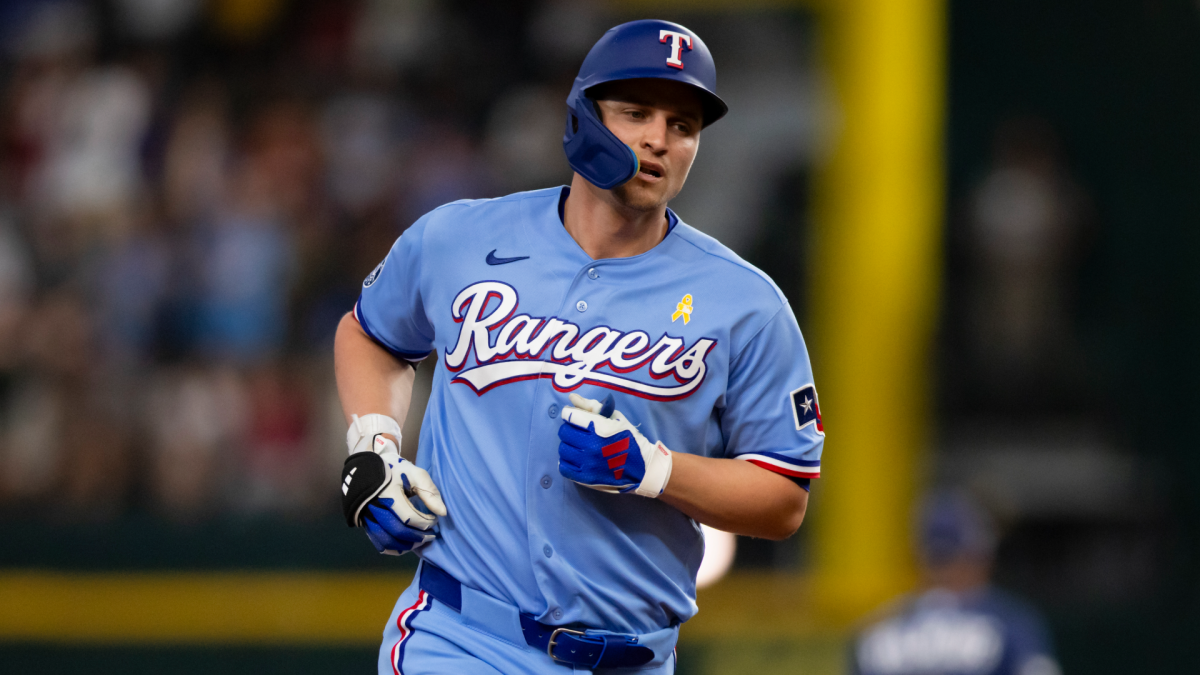
Why Diagonality Matters: In essence, diagonal play allows teams to combine the advantages of vertical and horizontal methods while minimizing their drawbacks 2 3 . Vertical play aims directly toward goal but can be predictable and limit the passer’s field of view; horizontal circulation stretches the opponent but may lack forward penetration. A diagonal approach strikes a balance. It gains ground toward goal and shifts the point of attack laterally, forcing the opponent to constantly adjust in two dimensions. This multi-axis stress is at the core of diagonality’s effectiveness – and the core of our exploration below.
At the heart of diagonality is the diagonal pass. A well-played diagonal ball can seemingly bend the game’s spatial logic, breaking through defensive lines in ways straight passes cannot. What makes diagonal passes so potent? Here are several key factors from a theoretical standpoint:.
Recent findings suggest that • Line-Breaking Power: A diagonal pass can eliminate multiple opposing players by cutting through both vertical and horizontal layers of a defensive shape 3 . As a Guardiola-era analysis noted, “Diagonal passes eliminate both vertical and horizontal lines of the opponent’s defensive shape.” By slicing between lanes, a single diagonal ball can bypass an entire bank of defenders, transporting the attack into under-protected zones 3 . For example, when Bayern Munich’s Jérôme Boateng hit a driven diagonal from left center-back toward Philipp Lahm against Dortmund, the pass moved through several Dortmund defenders at once, finding Lahm in space beyond the pressing midfield 4 5 . In essence, the diagonal trajectory opens a latest lane where none existed, zooming the ball into gaps between the opponent’s compact lines.
• Combining Vertical Gain with Horizontal Shift: Unlike a purely vertical ball (which gains ground but doesn’t change the angle of attack) or a square pass (which changes angle but not field position), a diagonal pass does both. It advances play toward goal while relocating the attack laterally, forcing defenders to adjust their orientation and footing 6 . The opponent must twist and turn to meet the ball’s path – adjusting both their depth and lateral positioning – whereas a vertical pass only tests their depth and a horizontal pass only their lateral cover 6 . This dual stress often induces asymmetry in the defense, disrupting their shape. A coaching maxim encapsulates it: a diagonal pass forces defenders to move in two planes at once. The result is greater defensive confusion and a higher chance of error 7 .
It has been revealed that • Optimal Field of View for the Receiver: A diagonal ball usually arrives to the receiver’s front- foot side, meaning the receiving player can open their body toward the opposition goal as they control it 8 . Because the pass comes at an angle, the receiver is less likely to be facing their own goal upon control; instead they can take it on the half-turn, already oriented to play forward. In contrast, a vertical pass to a player between the lines often forces them to receive with back to goal, and a horizontal pass to a wide player often faces them toward the touchline. A diagonal delivery minimizes those concerns. As our earlier analysis of half-space play noted, a player in the half-space “maintains a diagonal, goal-facing view of the field in his passing game,” whereas a player on the wing or receiving a straight ball often has to turn away from goal 9, 10. The diagonality inherently grants the receiver a broader vision of options: both the upfield space and the opposite side are in their eyeline upon control 11 . This improved field of view translates to quicker, safer subsequent passes 2 – a cascading benefit.
In a recent development, • Access to Underloaded Spaces: Because defenses tend to concentrate around the ball, areas diagonally away from the current ball location are often less populated by defenders. A vertical pass goes into the teeth of the nearest defensive block, and a horizontal pass goes into the well-shifted far side of the same line – but a diagonal can find the seam between those zones. Napoli’s possession play under Sarri (mid-2010s) was a great illustration: they would frequently play a diagonal pass from deep midfield into an attacker dropping between the lines at an angle. This worked so well because, as one analysis noted, “diagonal passes…tend to go into less densely populated areas than vertical ones,” allowing the receiver more time and space 12 . A typical Napoli sequence might see Jorginho or Hamsik in the left-centre circle fizzing a diagonal ball into the “ten space” (just behind the opponent’s midfield line) toward a player like Marek Hamsik or Allan arriving there 12. That diagonal entry pass would often find the target in a pocket of space between converging defenders, whereas a straight north-south ball into the same band would likely have been harder to receive due to a tighter marking orientation. In short, diagonals are an excellent tool to penetrate between the lines because they naturally seek out the pockets just outside a defense’s immediate focus 12 .
According to recent reports, • Cutting Distance & Time: Especially over long distances, a diagonal trajectory can be more efficient than its vertical equivalent. A long straight pass downfield is relatively easy for defenses to intercept or force wide because it travels entirely within one “corridor” of the pitch. A long horizontal switch, meanwhile, gives defenders time to slide across. A diagonal long pass (for instance, a diagonal switch from a right-back toward a left winger upfield) effectively short- circuits both those defensive reactions – it moves the ball on a line that is at once forward and wide. This means fewer defenders lie directly in its path, and it forces defenders to judge an unusual flight path. A previous study pointed out that playing a successful 30-meter pass vertically or horizontally is difficult because opponents can swiftly block pure vertical or horizontal lanes, but a diagonal pass can “cut” across vertical and horizontal lines, increasing the chance the ball reaches its destination 13 . An added bonus is that a diagonal through-ball or switch often gains both vertical and horizontal ground simultaneously 14 – for example, a diagonal through-ball from the right half-space into a striker making a run toward the left side of the box might advance 15 meters upfield and 10 meters laterally in one go. This dual gain is invaluable in stretching and destabilizing defenses.
To illustrate, consider a common scenario: a center-back has the ball and the opponent defends in a compact 4-4-2 block. A direct vertical pass into a marked striker’s feet is risky, and a simple horizontal pass to the full-back doesn’t progress play. Instead, the center-back might play a diagonal pass into the attacking midfielder sliding into the half-space behind the opposing midfield line. That diagonal both breaks the midfield’s line vertically and shifts the angle of attack into the half-space, catching defenders off balance. In receiving that ball, the attacker is already half-turned toward goal, able to drive forward or lay off to a runner. Meanwhile, multiple defenders have been taken out by the pass’s angle. This one example encapsulates why high-level teams so prize diagonality: it unlocks defenses by exploiting geometry. A well-timed diagonal ball can feel like inserting a key into the precise lock that opens up the opposition.
Recent findings suggest that it’s important to note that not all diagonal passes are inherently good – context and execution matter. A sloppy diagonal can be intercepted just as easily as any telegraphed ball. But at the elite tactical level, coaches train players to support every pass with diagonal options and to time their runs and body shape to capitalize on diagonal deliveries. As we will see, the effectiveness of a diagonal pass is tightly linked to movement and structure around the ball. Diagonality in football is a synergy: the pass angle, the receiver’s run, and the team’s shape must all align to truly stretch the opponent.
If diagonal passes are the ammunition, diagonal movement provides the trajectories. Players’ movements – both off the ball (running into space) and on the ball (dribbling) – are often most effective when they have a diagonal component. Movement along diagonal paths tends to disorganize defenses more than straight-line runs, because it forces defenders into uncomfortable decisions: who should pick up a runner that is not coming straight at one zone or another, but between them? Let’s break down how diagonal movement manifests, starting with off-ball runs.
Recent findings suggest that one of the oldest and most fundamental examples of diagonal movement is the run made by a wide attacker diagonally toward goal. Rather than sprinting straight down the touchline or directly vertically through the center, an attacker will often arc or angle their run to attack space behind the defense at a diagonal. This type of run has multiple effects:.
• Pulling Apart Man-Marking: In the era of Arrigo Sacchi’s AC Milan (late 1980s) and the many systems it inspired, wingers were instructed to run diagonal routes to shake off their markers 15 . If a winger starts near the left touchline but then cuts inside on a diagonal toward the center-forward zone, a man-marking full-back faces a dilemma – follow inside into traffic (potentially clashing with a center-back’s zone) or hand off the runner (which, if mis- communicated, leaves the runner free). Sacchi specifically drew up patterns where, for instance, the left winger would dart diagonally toward the penalty spot while the center-forward might fade slightly wide, causing the defending center-back and full-back to hesitate and often lose track of assignments 15 . By “throwing their man-markers off” with diagonal routes, Sacchi’s wingers created confusion and opened gaps for through-balls. That principle remains just as true in 2025: a diagonal run tends to occupy multiple defenders’ attention and mess with the defensive line’s integrity.
• Exploiting the Blind Side: A diagonal run from an attacker often targets the far-side gap of a defender’s coverage – effectively approaching the defender from their blind spot. For example, a common modern pattern is the diagonal run of a winger or outside forward from the wing in behind the opposite full-back. Think of a right winger timing a run diagonally behind the left-back when a through-pass is coming from central midfield. The left-back, who is watching the ball, suddenly has a runner appear over their shoulder, moving from an area the left-back wasn’t fully covering (the space between left-back and left center-back). Liverpool under Jürgen Klopp have used this with players like Mohamed Salah, who often starts wide but darts diagonally between the opposing left-back and center-back onto through balls. Because the run is diagonal, the left- back can neither stay with the winger (without leaving the flank completely) nor can the center- back easily pick it up (it’s not purely vertical through their channel). The result is often a free runner behind the line.
Recent findings suggest that • Maximizing Distance from Defenders: Diagonal positioning and running inherently force defenders to cover more ground. A simple bit of geometry: if you are 5 meters behind a defender and 5 meters to their side (a diagonal separation), the direct distance between you is about 7.1 meters (by the Pythagorean theorem) 16 . This seems trivial, but in football terms those extra 2+ meters are precious – it’s additional ground a defender must make up to challenge you. By comparison, if you stand 5 meters directly behind a defender (vertical alignment), they need only drop straight back 5 meters to close you down. If you stand 5 meters wide of them (horizontal), they step sideways 5 meters. But if you stand 5 meters behind and 5 wide (a diagonal), they must cover ≈7 meters on a diagonal retreat 16 . This is a longer, slower path – buying the attacker more time. Smart forwards constantly seek these diagonal starting positions relative to defenders. And when they sprint, they often curve or angle their runs to maintain that maximal distance. We see this in how strikers peel off the shoulder of the last defender – not running straight forward into the center-back, but drifting diagonally into the channel between full-back and center-back, where no single defender is ideally positioned to intervene.
Recent findings suggest that A famous historical example comes from Pep Guardiola’s Barcelona (2008–2011). In that team, the wide forwards (e.g. Thierry Henry on the left, Pedro Rodríguez or David Villa on the right) rarely just hugged the line or made straight runs. Instead, they occupied what we term the “intermediate positions” – essentially the half-spaces – by moving diagonally inside from their starting wide positions 17 . In the 2009 and 2011 Champions League finals (both won by Barcelona), one could see Henry or later Villa constantly drifting from the wing toward a central diagonal lane, in concert with Lionel Messi dropping slightly deeper. This meant Barca’s front three often formed a narrow, diagonal trio slicing between the opponent’s back four 17 . The effect was devastating: those diagonal movements pinned multiple defenders and created that extra yard of space needed for Barca’s intricate passing. A horizontally flat front three would have been much easier for Manchester United (their opponent in those finals) to mark zone-to-zone. Instead, the likes of Messi and Villa popped up diagonally between United’s midfield and defense, or between their center-back and full-back, rendering conventional marking schemes ineffective.
In modern examples, we see diagonal off-ball movement in virtually every top team’s attacking patterns. Consider Argentina’s second goal in the 2022 World Cup final – an illustrative contemporary case. Argentina debuted a lightning counter-attack that culminated in Ángel Di María scoring after a sequence of diagonal interchanges. It began with Lionel Messi in a central-right midfield spot flicking a pass that released Julián Álvarez along the right channel. Álvarez then squared a diagonal ball into the path of Alexis Mac Allister, who was sprinting forward through the left half-space. Mac Allister, in turn, played a one-time pass to the opposite side, finding Di María who had raced diagonally in from the left wing to arrive in the box 18 . Di María’s run was essentially a textbook far-post diagonal: starting high and wide, then cutting inside at the perfect moment. The French defenders were caught spread apart – one center-back drawn toward Álvarez’s wide run, the other too far central to cover Di María – and Di María arrived to finish with ample space. This goal encapsulated diagonality in movement: it was the diagonal supporting runs of Álvarez, Mac Allister, and Di María that made the quick counter so fluid and impossible to track. Each run intersected the French defensive lines at an angle, creating a cascade of disarray that a purely vertical break might not have achieved.
Sources indicate that importantly, diagonal off-ball movement isn’t only for attackers. Midfielders and even defenders use it as well. A holding midfielder might drift diagonally away from his marker to open a passing lane (rather than simply stepping backward which might remain in the cover shadow). Or a full-back might undercut diagonally inside behind his winger to join an attack (a pattern often seen with inverted full-backs running into the half-space). The core idea is always to occupy a space that isn’t directly in an opponent’s zone of responsibility – to appear in the seams of the defensive scheme. Diagonal movement is a means of positional manipulation: by not being where the opponent expects (straight ahead or directly lateral), you force the defense to communicate and adjust on the fly. Many defensive errors (two players going to one man, or conversely leaving a runner free) arise from these kind of diagonal rotations.
Diagonal movement isn’t restricted to players without the ball. Ball-carriers themselves often dribble or drive on diagonal paths to destabilize defenses. If you watch a skilled midfielder carry the ball upfield, notice how they rarely run perfectly straight; instead, they carry at a slight diagonal angle to engage a defender and simultaneously change the point of attack. There are a few reasons why diagonal dribbling is so effective:.
Industry observers note that • Forcing Defenders to Angle Their Body: A defender confronting a dribbler who comes straight at them can set their stance and engage frontally. But a dribbler approaching on a diagonal forces the defender to turn their hips and run at an angle. This often creates a half-step of advantage for the attacker, who can then cut inside or outside more easily. A classic scenario is a winger who receives near the touchline and dribbles diagonally infield toward the box. As they drive inside, the nearest opposing midfielder gets pulled over and a gap often opens between that midfielder and his defensive line. We saw this, for instance, with Manchester City’s usage of Kyle Walker in a 2019 match against Crystal Palace. Walker, a full-back, would sometimes drive the ball diagonally from the wing toward the center, rather than straight up the flank. In one notable sequence, his inward dribble drew Crystal Palace’s holding midfielder (Luka Milivojević) outofhisslot,whichcreatedagapbetweenMilivojevićandthenextmidfielder 19 .Walkerthen slipped a diagonal pass into that gap for Sergio Agüero, which pulled out Palace’s center-backs and enabled David Silva to make a diagonal run behind them – a chain reaction all triggered by the initial diagonal carry 19 20 . Dribbling diagonally basically pries open a defensive shape by misaligning the layers; it’s like wedging open a door.
It has been revealed that • Preserving Multiple Options: When you dribble straight, you generally attack one specific channel; when you dribble sideways, you are usually trying to switch play. But when you dribble at a diagonal, you inherently keep multiple options alive. You are moving toward goal (so you remain a threat to continue driving or shoot), but you are also moving laterally (so you are opening passing lanes to teammates on the far side or dragging defenders away from someone on the near side). A midfielder carrying the ball on a 45-degree angle can often choose at the last second whether to continue going alone, to slip a vertical pass, or to lay it off wide – because the diagonal momentum draws defenders but doesn’t telegraph the final direction. We often praise players like Lionel Messi for their mazy dribbling runs; a closer look shows many of Messi’s carries start by angling infield (from right toward center) which panics defenses, before he either combines or accelerates. The diagonality of the approach is key – come straight and the defense stays comfortably in its lanes; go diagonally and someone usually steps out, creating a fissure.
It has been revealed that • Diagonal Carries to Provoke Pressing: A concept in positional play (a staple of German and Spanish coaching curricula) is the diagonal dribble to engage a defender, sometimes called Andribbeln in German coaching terms (meaning “dribble at”). By moving diagonally toward a defender’s zone with the ball, you force that defender to commit. If they don’t step up, the ball- carrier keeps advancing through an ever-bigger gap; if they do step up, they vacate space behind them for a pass. This is often coached with center-backs or defensive midfielders: if a passing lane is closed, carry the ball diagonally at the opponent’s midfield line to draw a presser, then pass into the space the presser left. The diagonal angle is important because it “splits” the difference between two defenders’ zones, making it ambiguous who should step out. We saw John Stones do this for Manchester City in 2023 when he played as a hybrid center-back/holding midfielder. Stones would sometimes dribble diagonally from his position, engaging an opposition midfielder, which freed up Kevin De Bruyne or İlkay Gündoğan between the lines. These subtle diagonal carries are a form of positional magnetism – pulling the opponent out of shape to create openings elsewhere.
In sum, diagonal movement – by runners and dribblers alike – complements diagonal passing to create a full spectrum of diagonal play. The passes and runs are two sides of the same coin: a diagonal pass is only as good as the diagonal run that meets it, and a diagonal run is most useful when a pass can find it. And when a player carries the ball diagonally, they often set up the next diagonal pass or run. This interplay becomes a defining feature of a team’s attacking rhythm. Teams that master diagonality have a fluid, interwoven quality – think of the zig-zagging one-twos of peak Barcelona or the angled rapid breaks of a top counterattacking side. There’s a constant sense of players popping up at the opponent’s weak side, of defenders being turned around as play shifts diagonally through their shape.
Before moving on, it’s worth noting that diagonal movement applies defensively as well. Well-drilled defensive units shift diagonally when the ball moves laterally. For example, if the opponent switches play from left to right, a defending back four doesn’t shuffle purely horizontally across – the near-side defender steps up and wide, the far-side defender drops in a bit, creating a subtle diagonal chain that maintains coverage. Similarly, a common pressing coaching point is the curved or diagonal pressing run: pressing an opponent not head-on, but at an angle that simultaneously cuts off a passing lane. If a forward presses a center-back, he might arc his run diagonally to block the pass toward the full-back while closing the ball. In essence, diagonal principles permeate all phases; however, in defense these are more about maintaining compactness, whereas in attack diagonality is about creating disorientation. Our focus here remains on the latter – using diagonality as an offensive weapon.
In a recent development, thus far, we’ve discussed passes and movements, which are momentary actions. But underpinning those moments is the more static element of structure – how a team positions its players on the field. An essential aspect of tactical theory is how teams stagger their players vertically and horizontally to create optimal passing networks. And it turns out that an effective structure almost always has strong diagonal relationships built into it. In contrast, a poorly spaced team – with players standing flat on the same line or directly one behind the other – will struggle to impose diagonal play, or any cohesive play at all. Let’s explore how diagonality manifests in team structures:.
A fundamental principle in positional structures is to avoid flat lines of players. Instead of, say, five players all aligned across the same horizontal line, or a vertical stack of three players in one channel, good teams create a staggered shape – each player occupying a slightly different vertical and horizontal band. This inherently forms diagonal connections between them. If you imagine a simple three-player support shape around the ball, it is typically a triangle: one player slightly to the left and forward, another slightly to the right and back, for example. This triangle provides diagonal passing lanes between each pair of players. In fact, the triangle is often called the “key shape” in football partly for this reason – it “naturally creates diagonal passing options” which are highly effective for combination play 21 . A triangular structure ensures that from the perspective of the player on the ball, there is a teammate at a forward angle to one side, and another at a backward angle to the other side. These are much safer and more potent options than only having teammates directly lateral or vertical.
Maurizio Sarri’s Napoli, as mentioned earlier, were exemplary in this regard: they spaced themselves in diamonds and triangles so that the man in possession “had an option to play forwards, backwards and to either side”, as one analysis observed 22 . In practice, this meant if the left center-back had the ball, the left-back was slightly ahead and wide (forward option), the defensive midfielder was slightly ahead and towards the center (another angled option), and another midfielder dropped slightly behind and inward as a safety (backward option). These options are all positioned diagonally from the ball-carrier, not directly in line. Thus the structure inherently promotes diagonal passes – whichever option you choose, you’re likely playing a pass at some angle that breaks a line of the opponent’s formation.
In a recent development, this kind of staggering is especially crucial between midfield and attack. A classic mistake of naive team shape is when attacking players all stand in a horizontal line waiting for the ball – it becomes easy for a defense to mark because no passing lanes exist through the line (all the attackers are covered in one flat row). A better approach is staggering the forwards at different heights: perhaps the striker stays high on the last defender, while one attacking midfielder drops off 5-10 yards, and the winger on one side comes slightly inside into a half-space pocket. Now the forward line has diagonal connections: the striker can lay a ball off diagonally to the dropping attacking mid; the winger can make a diagonal run inside which the striker or mid can feed; triangles form among them. This was a key to Pep Guardiola’s teams: his forwards and mids were always offset in space to create interior triangles. In the famous Barcelona scheme, Messi (nominally a forward) would drop diagonally between the lines, Xavi (midfielder) would be slightly deeper but central, and Pedro (winger) would be high and wide – forming a three-point structure that could pass around and through defenders. In Manchester City’s recent tactics, we see Kevin De Bruyne often positioning himself a touch higher and to the right, while İlkay Gündoğan (or Bernardo Silva) sits a bit deeper and to the left of center – so when they combine with the striker, they naturally form diagonal passing patterns.
A contemporary example highlighting structural diagonality comes from a 2024 analysis of Manchester City’s approach to breaking down a deep block. The analyst noted that in a match against Arsenal, City’s possession shape at times became too “horseshoe” – players positioned in a U-shape around Arsenal’s packed defense, with nobody aligned diagonally in the middle 23. City “surrounded”Arsenal’s low block but lacked penetration because their players were isolating in separate horizontal and vertical bands 23. The solution proposed was for City to actively arrange more diagonal connections: specifically, to ensure “three or more players align diagonally”in the central and half-space regions 24,25 .Byhaving a triangle or diamond of players at different heights slicing through Arsenal’s shape, City would create the conditions for quick one-twos and wall passes that could break the defensive lines 26. The article gave an example (with a diagram) of City forming such a diagonal trio in the right half-space: one player near the line, one slightly deeper central, one higher between the lines. Once they did this, the “one-twos and dummied passes” became possible, as the defenders had to cover multiple angles simultaneously 26. In short, the lack of diagonal structure made City predictable, and adding a diagonal alignment restored their ability to combine in tight spaces.
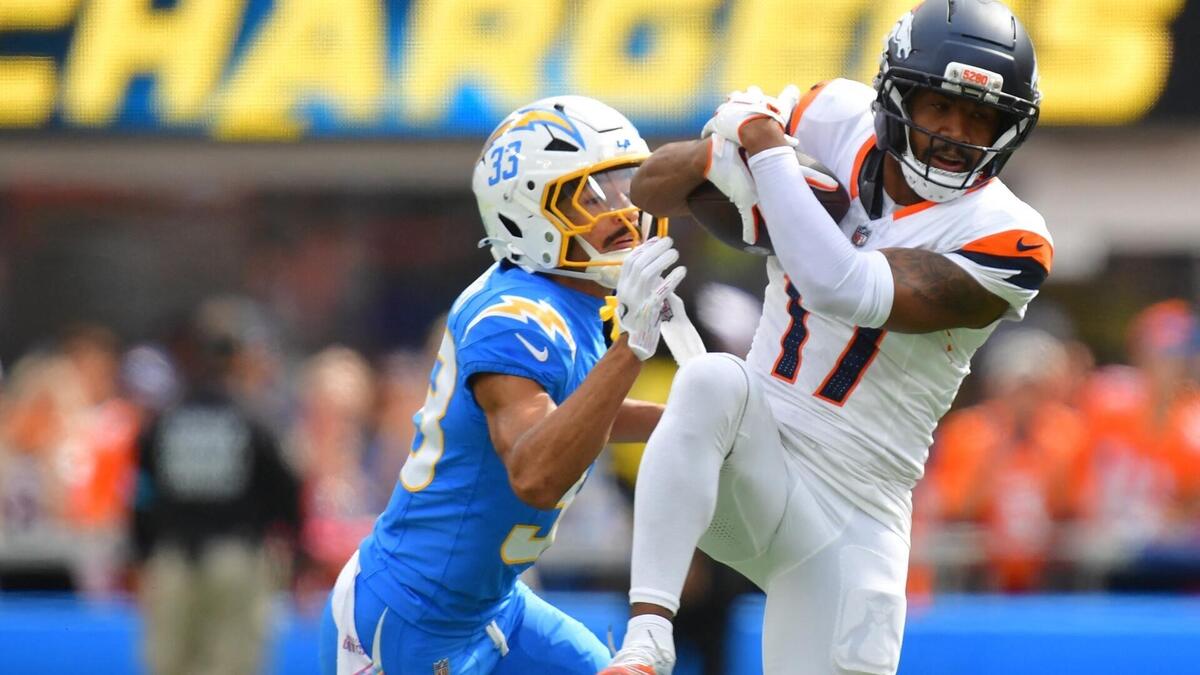
Recent findings suggest that we can visualize a generic structural principle: for every line-breaking pass, have a diagonal support option nearby. For instance, when a striker drops vertically to receive a pass between the lines, a midfielder should position diagonally off him – not directly behind in the same vertical line (where one defender could mark both), and not flat horizontal (where the passing lane can be closed easily), but at an angle. That way, if the striker is under pressure facing away from goal, he can one-touch lay the ball diagonally off to the midfielder who is running onto it facing forward. This “wall pass” or third-man concept only works if the supporting player’s position is diagonal enough to be open yet close enough to combine. Many training exercises enforce this by creating diamonds or triangles in positional drills, basically hard-coding diagonality into structure. The famous “rondo” exercises, for example, typically feature a shape where potential passes are available diagonally through the grid of defenders – never just straight through the middle of them, which would be unrealistic. All of this underlines that good structure = diagonal options.
Industry observers note that another structural aspect to consider is how diagonality relates to the use of width and depth. Traditional coaching talks about providing “width and depth” in attack – players stretching the field horizontally (wingers on the touchlines) and vertically (strikers pushing the last line back). Diagonality does not contradict this; rather, it refines it. A team that uses extreme width (hugging both touchlines) and extreme depth (a player constantly on the offside line) can open the field, but if everyone is purely wide or high, you end up with large voids between those reference points. Diagonal positioning helps fill those voids and connect the width and depth.
According to recent reports, think of a classic scenario: a winger is hugging the left touchline to provide width, and a striker is pinning the center-backs high. If those two stay on those straight lines, the distance between them might be too large to connect directly. But if the striker intelligently drifts diagonally toward the winger (not all the way out, just into the channel), and simultaneously a midfielder slides diagonally up from the center toward that left half-space, they form a diagonal chain that links the wide player to the center. The winger can pass inside to the half-space midfielder (diagonal inwards), who can then combine with the striker making a diagonal check toward the ball. Now width and depth have been bridged by diagonal structure. This is precisely what many teams do when they “overload” one side: they don’t place three players in a straight line out wide; instead one is wide, one is half-space, one is slightly deeper or higher – forming a tight triangle that can play quick combinations. Once they break through or draw defenders in, they often finish with a diagonal switch to the far side where the opposite winger (who stayed wide) arrives unmarked.
It has been revealed that A historical masterclass in balancing width, depth and diagonality was the Brazil 1970 World Cup team (to dip very far back in time). They fielded a fluid 4-2-4/4-3-3 where Pelé played as a withdrawn forward (kind of a 10), Jairzinho and Rivelino as wide forwards. Pelé’s presence meant Brazil often attacked with a triangular frontline: Pelé a bit deeper centrally, Jairzinho high on the right wing, and Tostão (the striker) slightly left of center. The passes between them were frequently diagonal: Pelé would slip Jairzinho in with diagonal through-balls from center to right, or Jairzinho would cut inside diagonally to combine with Pelé. Meanwhile, Rivelino on the left stayed wide and high, but Gerson (midfielder) would drift leftward at an intermediate depth. This created a diagonal link from Gerson to Rivelino to Pelé. The upshot was that even with enormous width (wingers on each touchline), Brazil’s shape always had connectors at diagonal angles, so the ball could funnel from wide to middle seamlessly.
Fast-forward to today’s club game: consider a team like 2023–24 Arsenal under Mikel Arteta. Arsenal often build up in a 2-3-5 or 3-2-5, with five attackers on the last line – seemingly very “flat” in depth. But in practice, those five are staggered: for instance, Gabriel Jesus (striker) might drop off the front line a bit, Martin Ødegaard (right attacking mid) pushes higher between full-back and center-back, Bukayo Saka stays wider on the right but not as high, and on the left Gabriel Martinelli stays very high and wide while Granit Xhaka (left attacking mid) sits a bit deeper inside. The result is a criss-cross of diagonal passing possibilities. Ødegaard and Saka can combine diagonally on one side; Jesus can play one-twos diagonally with Ødegaard or Xhaka; Xhaka can diagonal switch to Martinelli, etc. This demonstrates how even when a formation diagram might show a line of five attackers, the functional structure is layered diagonally.
It has been revealed that conceptual diagram: Manchester City organizing diagonal structures against a deep 4-4-1-1 block (blue = attacking team, red = defending team). By aligning players on different vertical and horizontal lines (e.g. one player dropping off the forward line, one at the last line, one between midfielders, etc.), the attacking team creates multiple diagonal passing triangles through the defensive shape. In this illustration, City’s right-side center-back (Rodri, in a hybrid role) has dribbled slightly forward, drawing pressure, while Haaland (striker) has dropped diagonally toward the ball and Gvardiol (left center-back) has stepped up into midfield on the other side. These movements form a diagonal chain (black dashed line) that opens a lane to feed Haaland and sets up a layoff combination into the space behind (red shaded area). Such staggered positioning makes one-touch combinations and “wall passes” possible, even against a low block 26 27 . Without this diagonal alignment, the attacking options would be isolated and easier to defend.
Industry observers note that the above conceptual diagram (inspired by an actual City vs Arsenal tactical scenario in 2024) highlights how deliberate diagonal staggering in structure can unlock a compact defense. Notice how the blue attackers are not aligned flat: one (Akanji) is a bit higher on the right, one (Haaland) drops between lines centrally, another (Gvardiol) pushes up from the left side. The black diagonal lines between them show potential passes. Arsenal’s red defenders, set in two banks, find it hard to cover all these angles – marking one blue player leaves a gap to another. The result is the creation of a diagonal passing lane into the striker (Haaland) and then a quick combination out to the left. This mirrors City’s real emphasis that to break a defensive wall, you often need to “organize those diagonals” in your structure 25 .
Crucially, diagonal structure is not just about offense; it also provides defensive stability in possession (rest defense). If your team is arranged in connected diagonal layers, when you lose the ball you have immediate cover and access to counter-press. For example, if a full-back is pushed very high and wide (pure width) with no diagonal support inside him, a turnover can leave a gaping hole for the opponent. But if there’s a midfielder diagonally tucked inside behind that full-back, a loss of possession is less disastrous – that midfielder can instantly move to counter-press or at least slow the counter. In this way, a staggered shape serves two masters: attacking potency and defensive insurance.
In summary, an optimal team structure weaves a web of diagonal links across the pitch. Coaches design drills and positional maps to foster this, often literally telling players to take up positions “between” opposition lines (vertically) and “inside” or “outside” certain opposing players (horizontally) – effectively coaching diagonal positioning. The best structures appear to have players at different heights and in different channels such that from any given point, there are diagonal options to progress the ball. When you see a team whose moves look improvisational yet synchronized – those beautiful quick passing sequences in tight spaces – you can be sure that the underlying shape was giving those players the necessary angles and support. It’s controlled chaos via diagonality.
Sources indicate that having examined the theoretical aspects of diagonality, it’s worthwhile to place these ideas in historical context and see how they’ve evolved into today’s game. While modern analytics and terminology have sharpened our understanding, coaches intuitively leveraged diagonality long before it was a buzzword. And in recent years (2023–2025), we’ve seen an even greater sophistication in how top teams employ diagonal principles.
According to recent reports, early Pioneers: If we reach back in history, diagonal concepts were often discussed in different terms. Hugo Meisl’s 1930s Austrian “Wunderteam” was famed for its passing style – accounts describe rapid combinations and switches of play that likely included plenty of diagonal balls (though the term wasn’t explicitly used). The great Hungarian side of the 1950s (the Magical Magyars) also exploited diagonal movements by withdrawing their striker Nándor Hidegkuti as a deep-lying forward – this created diagonal passing lanes between Hidegkuti and the wingers cutting inside. Perhaps the first explicit articulation of a diagonal system came from Viktor Maslov in the 1960s: Maslov’s 4-4-2 at Dynamo Kyiv had wingers who tucked into midfield when defending and then ran diagonally out-to-in when attacking, a forerunner of the modern inverted winger. Maslov’s teams also made use of diagonal long balls to quickly advance into space when the opponent’s shape was tilted – a counter-attacking principle we recognize today.
The term “diagonal” itself in tactical literature appears prominently with Arrigo Sacchi, as we touched on. Sacchi emphasized that his defensive line should always have a diagonal orientation to the ball – if the ball was on the opponent’s left wing, Sacchi’s right-back would tuck in diagonally behind the line, etc. Offensively, Sacchi’s playbooks (famously detailed sketches) show lots of diagonal arrows: wingers coming inside, midfielders running from deep to wide zones, etc. 28 . In one of Sacchi’s practice drills he’d shout for players to switch positions in attack with diagonal exchanges – for example, the left winger and the second striker might swap via crossing paths, one going diagonal to the wing, the other diagonal into the center. Sacchi might not have used the term “diagonality” in writing, but he understood that a dynamic offense must break away from linear movements. His Milan and Italy sides of late ’80s/early ’90s scored many goals via diagonal through passes – think of Frank Rijkaard’s famous diagonal run and finish in the 1990 European Cup final, or Roberto Baggio’s diagonal dribbles and passes in Italy’s 1994 World Cup run.
It has been revealed that positional Play Revolution: The late 2000s and early 2010s, with the rise of Spanish-style positional play (Juego de Posición) and its German adaptations, saw diagonality reach fresh theoretical heights. Pep Guardiola’s Barcelona, as mentioned, practically weaponized the half-spaces, which are inherently diagonal lanes. A quote often attributed to Guardiola or his mentors is instructive: “The ball moves faster than any player – especially on a diagonal.” Under Pep, teams learned to move defenses side-to-side and then strike diagonally through the seams. Xavi Hernández, describing his mindset, said he looked not just for vertical “through” balls, but for diagonal passes that connected with a teammate’s run in behind the full-back – because that pass both beat the offside line and changed the point of attack. Guardiola’s Bayern Munich provided a clear example in a 2014 match vs. Roma: Guardiola positioned Arjen Robben as a “free man” on the weak side, and Bayern circulated the ball then hit a long diagonal from the left half-space out to Robben on the right, who attacked directly toward goal 29 30 . That strategy demolished Roma 7-1. Analysts of that time noted how “the value of diagonal play” was that it “attacks through a zone that is usually underloaded by the opponent”, and that it gives the attackers connections to multiple zones (since a diagonal ball from flank to center leaves the receiver able to combine to either side) 31 32 . These insights were heavily influential; they spread through coaching courses and into other teams’ tactics.
In Germany, thinkers like Ralf Rangnick and his school (which influenced Red Bull teams, Jürgen Klopp, etc.) placed huge emphasis on diagonal pressing and passing. One principle in counter-pressing is to force play to a side and then diagonally forward to trap the opponent – essentially using the sideline and a diagonal cover shadow. Meanwhile, in attack, teams like RB Leipzig and RB Salzburg under coaches like Roger Schmidt and later Marco Rose often used diagonal long balls and runs in their quick transitions. A trademark Leipzig goal during the 2016–2017 season was a center-back hitting a diagonal switch over the top to the opposite winger sprinting in behind. Why diagonal? Because a straight ball over the top is easy for a back line to drop and meet, but a diagonal one forces the defense to both drop and shift, often opening a lane between defenders. It’s telling that even the archetype of “direct” vertical football in modern times – say Klopp’s early Dortmund or a Leicester City – actually relies on lots of diagonal passing. Leicester’s Jamie Vardy, for instance, loves to pull toward the left channel and receive diagonals behind the right center-back; many of his famous goals came from Riyad Mahrez or a midfielder sending a diagonal ball that Vardy could run onto at an angle.
In a recent development, 2023–2025 Trends: In the most recent few seasons, we observe teams using diagonality in ever-more sophisticated ways. One trend is the use of inverted full-backs or center-backs stepping into midfield to create diagonal layering (as seen with Manchester City’s John Stones moving into midfield, or Arsenal’s Oleksandr Zinchenko inverting). When these players step up, they often position themselves diagonally from the winger and midfielder, forming fresh triangles. This is partly why City in 2023 became so fluid – a player like Stones or Akanji would suddenly appear in a diagonal channel between opponent lines, giving Gundogan or De Bruyne an extra diagonal target to bounce passes off.
Recent findings suggest that another development is how pressing-resistant build-up play leverages diagonal outlet passes. Roberto De Zerbi’s Brighton (2023) became known for “baiting” opponent presses deep and then finding a diagonal laser pass through the lines once an opponent jumped out of position. Brighton’s double pivot midfielders would split wide, luring opponents, then goalkeeper Robert Sánchez or a center-back would zip a ball diagonally into the feet of a forward dropping between the lines. This pattern is essentially using diagonality as a pressure valve and a springboard – once that diagonal pass is broken through the press, Brighton often had the opponent unbalanced and could launch attacks with runners peeling diagonally into space.
We also see more diagonal switching of play in the final third. Instead of the old-school cross from the wing, teams like Real Madrid under Carlo Ancelotti have employed what you might call a diagonal dink: a clipped diagonal ball from, say, the inside-right channel to the left side of the box. Luka Modrić is a master of this – receiving near the right touchline but rather than crossing traditionally, he clips a ball diagonally back toward the top-left of the penalty area, where someone like Vinícius Júnior is arriving. It’s hard to defend because it’s not an aerial cross to contest, and not a simple cut-back – it’s something in between.
Finally, set-piece routines increasingly involve diagonal concepts. Attacking free kicks, for example, might see a player run over the ball diagonally to confuse markers, or see the ball played diagonally out to the edge of the box for a volley (a popular routine: a lateral free kick delivered diagonally to an onrushing player at the opposite corner of the area). Teams have realized a static defense set up for a straight ball can be undone by a diagonal delivery that comes from an unexpected angle.
In essence, modern tactics have not only embraced diagonality – they have synthesized it with traditional ideas. It’s no longer diagonality versus verticality or width; it’s using diagonal routes to enhance vertical penetration and enable switches of play. The best coaches today use diagonality as the glue between other concepts. You will rarely hear a Pep Guardiola or a Jürgen Klopp explicitly say “we focus on diagonal play” because it’s ingrained and ubiquitous – a given in how they train their team to occupy space and move the ball.
According to recent reports, for coaches and analysts, the substantial question is: how to inculcate these diagonal principles on the training ground? It’s one thing to appreciate diagonality in theory; it’s another to see your team execute slick diagonal combinations under pressure. Training diagonality involves designing exercises that encourage players to use those diagonal options and movements until it becomes second nature.
Some practical training approaches include:.
Recent findings suggest that 1. Positional Rondos and Grid Games: Set up small-sided games where the pitch is divided into grids or zones, and reward diagonal passes between zones. For instance, a 5v5+3 possession drill might only count a point when a pass is played from one corner zone to the opposite diagonal zone (simulating a diagonal switch or split). This forces players to scan for diagonal outlets. Coaches will emphasize body orientation – receiving side-on – and communication so the diagonal option is recognized and used. By constraining regular square passes, you “force” diagonality. Over time players get comfortable with the angles and timing needed.
Sources indicate that 2. Third-Man Running Drills: Many academies use drills where Player A passes to Player B, who then one-touches to Player C – the classic third-man concept. To build diagonality, configure A, B, C in triangular shapes (not straight lines). For example, Player A at the base, Player B 15 yards ahead to the left, Player C 15 yards ahead to the right – forming a triangle. Now A passes to B (diagonal), B lays off to C (diagonal), and C dribbles or shoots. Rotate roles. This simple pattern teaches players to approach on diagonal support lines and execute quick angled layoffs. You can increase complexity with moving players (e.g. C starts a run when A passes, arriving diagonally to receive B’s layoff). Focus coaching on the weight of pass and the timing of the run – if B’s layoff is too vertical or too horizontal, C will have a harder angle; if C’s run isn’t diagonal, the layoff won’t connect cleanly. Through repetition, players learn the feel of hitting that third-man diagonal combination.
According to recent reports, 3. Full-Field Pattern Play: Rehearse specific team patterns that utilize diagonal switches and runs. For instance, set up your back four and midfield in shape, and practice a sequence where the right center-back carries forward and plays a diagonal pass into the left attacking midfielder checking between lines; he lays it off to the right back who has burst forward centrally (an inverted run); then that right back immediately plays a diagonal through-ball to the left winger cutting in behind. This scripted pattern – going right-to-left-to-right-to-left diagonally – trains spacing and timing. After running it unopposed, add passive defenders to increase realism. The idea is not that the team will perform this exact sequence in a game like robots, but that they build a mental library of diagonal combinations. So when a similar spacing appears in a match, players subconsciously recognize: “aha, the diagonal switch then layoff then diagonal through-ball is on.”.
According to recent reports, 4. Conditioned Scrimmages Emphasizing Half-Spaces: Design training games with goals or bonus points for using the half-spaces (the channels just inside the wings). For example, a condition might be: a goal counts double if the attacking move includes a pass from the half-space to the central zone or vice versa. This naturally encourages diagonal passing (since half-space to center is a diagonal relationship) 33 . Or you can mark out triangular target areas around the top of the box where you want players to combine (simulating the classic diagonal one-two zone at the edge of a defense). By rewarding these actions, players are incentivized to look for diagonal entries instead of always going wide or taking low-percentage vertical shots.
5. Video Analysis and Shadow Play: On the cognitive side, use video sessions to point out instances in matches (or training footage) where a diagonal option was available but missed, or where it was used to good effect. Highlight how a player’s movement created a diagonal lane or how a slight stagger in positioning opened a diagonal pass. Complement this with shadow play – walk through tactical diagrams on the field, moving players as if they’re chess pieces, to illustrate diagonal lines of pass and cover. Many players respond well when they visually and physically grasp the spacing; they might literally say “I see it now – if I stand here instead of there, the diagonal pass from the center-back to me is on.” These eureka moments are crucial in translating theory to execution.
It has been revealed that from a young age, players can be coached in the habit of checking their shoulder and opening up on the half-turn to be ready for diagonal balls. Small details like receiving with the furthest foot from the passer often mean the body is oriented diagonally, not flat – a simple technical tip that yields better diagonal play. Even finishing drills can involve diagonality: practice diagonal runs onto through-balls and finishing across the keeper (a typical diagonal shot).
Coaches should also tie diagonality to their overall philosophy so players understand why they are doing it. For instance, if you espouse positional play, explain that diagonal passes “eliminate opponents” and find the free man better 3 . If you are a transition-focused coach, stress that the fastest route from winning the ball to a scoring chance is often a diagonal pass to the opposite side of the pitch, catching the opponent off balance. By linking it to the team’s identity, players buy in. They stop seeing diagonal runs or passes as risky or fancy options and start seeing them as the standard of how your team operates.
One challenge is that diagonal passes can sometimes be harder to execute technically (the angles are tricky, and weight must be precise). So drills should not neglect the nitty-gritty: passing technique (hitting that 30-meter diagonal switch accurately), first touch on a diagonal ball (which might have spin or come across your body), and communication (since diagonal passes often go through crowded areas, a shout or signal from the receiver helps). Training with different types of balls – driven passes, lofted diagonals, outside-of-foot curled balls – can build a repertoire. Top players like Kevin De Bruyne or Trent Alexander-Arnold have an arsenal of diagonal delivery techniques (inside bend, outside bend, low skimmer, chipped) that they’ve clearly honed in training.
Sources indicate that finally, fitness and spacing: diagonal sprints can be more demanding than straight sprints because they involve changes of direction and longer total distance. Conditioning drills can include diagonal runs to ensure players can perform these at speed in the 85th minute. And coaches must ensure the team’s overall spacing is conducive to diagonal play – if players are too bunched or too flat, even the best training won’t yield results on matchday. Thus, constant feedback during 11v11 sessions about keeping the stagger, maintaining diagonal support distances (10-15 yards between lines, etc.) is necessary.
Recent findings suggest that beyond the X’s and O’s, there’s something almost philosophical about diagonality in football. It represents a way of thinking about the game that values creativity, connection, and the exploitation of hidden spaces over rigid, straightforward approaches. If vertical play is about power and directness, and horizontal play about patience and control, then diagonal play is about ingenuity and fluidity – finding pathways that aren’t immediately obvious, and doing so in a flow that unbalances the opponent.
Some modern thinkers have even romanticized the diagonal as the embodiment of football’s artistry. In a recent tactical manifesto, analyst Jamie Hamilton described diagonal passes as “forging transversal routes that resist the logic of linear progression”, carving out moments where play “breaks free from its cartographic chains” of structure 34 . In his view, a well-timed diagonal ball carries a almost rebellious quality – “deterritorializing” the opponent’s defensive order and creating a “space of potentialities” where something unexpected can happen 34 . When you see a diagonal pass split a defense and lead to a goal, it indeed often feels like a sudden jailbreak from the established pattern of play – a moment of improvisational genius even if it was pre-conceived in training.
It has been revealed that the diagonal, in a sense, marries the strategic and the improvised. It is a calculated geometry, but also the angle of spontaneity. Johan Cruyff once said that players should “use every side of a defender” – not just try to go through or around, but sometimes use the opponent’s body as a kind of reference to play off. A diagonal mindset embodies that idea: you’re not confronting the opponent head-on, you’re using angles, you’re being clever.
Philosophically, diagonality also underscores the relational aspect of football. It’s often said that football is a game of relationships – between players, between spaces. Diagonal play emphasizes relationships over positions. Two players can be linearly far apart positionally, but if they share a diagonal connection in the moment, they are effectively close in footballing terms. A diagonal pass is a conversation between the passer and receiver that bypasses others who aren’t part of that conversation. This aligns with the concept of relationism in tactical theory (as opposed to rigid positionism). Instead of players occupying fixed spots and passing only when “the system” dictates, relationism allows players to interact dynamically – and diagonals are the threads of that dynamic interaction, cutting across the static grid.
It has been revealed that when players truly grasp this, the team starts to play “in between” – in between opponent lines, in between traditional patterns, and even in between the past and future (because a good diagonal can almost seem to come from the future, catching everyone by surprise). It brings a sort of rhythm to the game that is less predictable and more difficult to defend. Opponents often describe facing such teams as feeling like “we never knew where the next attack was coming from”. That’s exactly the effect of multifaceted diagonal play: it’s like punches coming from odd angles in boxing – the ones that knock you out aren’t the straight jabs you saw coming, but the uppercuts and hooks from the side.
It has been revealed that on a lighter note, diagonality also gives football much of its aesthetic beauty. A long diagonal switch that arcs across the field to the opposite flank, or a slide-rule diagonal pass that bisects defenders, are among the most visually satisfying sights in the sport. They appeal to our sense of geometry and surprise. Even neutrals will often “oooh” at a well-hit diagonal ball that opens the game. There’s a reason highlight reels love the cross-field pass that changes the play – it carries a dramatic shift in perspective, much like a plot twist in a story.
Recent findings suggest that in “diagonality,” we find a principle that is both timeless and ever-evolving. It is rooted in the simple geometry of the pitch – 360 degrees of possibilities – and yet it continually yields fresh tactical innovations as the game’s collective understanding deepens. For advanced coaches and analysts, cultivating a diagonal perspective means training your eye (and your team) to always seek those hidden angles: the pass that splits multiple lines, the run that appears in someone’s blind side, the structural tweak that creates an extra triangle of connections.
It has been revealed that we’ve seen how diagonal passing combines the best of vertical and horizontal play – gaining ground while unbalancing the opponent 2 . We’ve detailed how diagonal movements, both off the ball and on it, create space and confusion by forcing defenders into awkward, lengthy adjustments 6 16 . We’ve illustrated how entire team structures can be built on diagonal relationships, yielding a network of constant support and threat across the pitch 22 26 .Historical and contemporary examples alike affirm that success at the highest level often hinges on intelligent use of diagonal principles – from Sacchi’s organized chaos to Guardiola’s positional weave to the latest tactical experiments of 2025.
In a recent development, in practical terms, the takeaway for coaches is clear: teach it, shape it, rehearse it. Insist on staggered positioning; freeze a training play when players line up flat and ask, “who can give a better angle?” Celebrate the goals that come from a diagonal pass or run in film sessions to reinforce their value. Over time, a team that might initially only see straight lines can develop a kind of diagonal vision, identifying and exploiting the subtle lanes that opponents leave open.
There is also a broader lesson here about creativity and problem-solving. Football, like many complex systems, often rewards those who think laterally – or in this case, diagonally. When a direct route is closed and a simple lateral pass is safe but toothless, the answer is usually a clever diagonal that breaks the equilibrium. Training players to recognize that is training them to be inventors on the field, not just executors. This is perhaps the ultimate mark of a mature tactical system: when players instinctively fill the diagonal gaps and find the diagonal solutions without over-relying on rote instructions.
Industry observers note that in closing, consider the diagonal not merely as a type of pass or run, but as a philosophy of play. It is the understanding that football is not played on a linear grid, but on a continuum of angles and connections. It’s a reminder that effective play is often about connecting the opposites – merging width with depth, combining control with penetration, binding method with spontaneity. The diagonal is the line that joins two points in a fresh way. As coaches or analysts, if we can instill that mindset, we give our teams a powerful tool: the ability to find or create an advantage where others see none.
Recent findings suggest that in the ever-evolving chess match of football tactics, diagonality remains a constant secret weapon – a way to move pieces that catch the opponent off guard. Master it, and your team will not only be harder to defend; it will play a brand of football that is fluid, dynamic, and a joy to watch. And as any disciple of the game’s great thinkers will tell you, when theory and beauty converge on the pitch, you know you’ve found something special – something as simple as two points connected by a well-weighted pass, and as complex as the myriad possibilities that pass unlocks. That is the power of the diagonal.
1 2 6 7 9 10 13 14 16 17 33 » The Half-Spaces https://spielverlagerung.com/2014/09/16/the-half-spaces/.
3 4 5 11 29 30 31 32 » Juego de Posición under Pep Guardiola https://spielverlagerung.com/2014/12/25/juego-de-posicion-under-pep-guardiola/.
8 12 22 » Team Analysis: Napoli https://spielverlagerung.com/2016/04/08/team-analysis-napoli/.
15 28 » Arrigo Sacchi’s cultural revolution https://spielverlagerung.com/2016/01/01/arrigo-sacchis-cultural-revolution/.
18 Coaches’ Voice | World Cup final 2022 tactical analysis: Argentina 3 France 3(4-2 on pens) https://learning.coachesvoice.com/cv/world-cup-final-2022-tactics-argentina-messi-france-mbappe/.
19 20 » City in control to beat Crystal Palace https://spielverlagerung.com/2019/04/16/city-in-control-to-beat-crystal-palace/.
21 Importance of the Triangle – Grassroots Football UK https://www.grassrootsfootballuk.com/importance-of-the-triangle/.
23 24 25 26 27 How Manchester City should break down Arsenal’s low block on the diagonal – Tactics Journal https://tacticsjournal.com/2024/09/22/how-manchester-city-should-break-down-arsenals-low-block-on-the-diagonal/.
34 THE DIAGONALIST MANIFESTO. Vectorial Relationism & The Liberation… | by Jamie Hamilton | May, 2025 | Medium https://medium.com/@stirlingj1982/the-diagonalist-manifesto-610bf3fbca15.
📅 23 Jan 2022 | ⏱️ 18 min read (3666 words, 📚 Deep Dive) | Source: Thesefootballtimes

According to recent reports, A little over 30 miles to the north of Reykjavik resides the small port town of Akranes on Iceland’s west coast. Even for Iceland, this is not a huge place. With its buildings gathered on a thin sliver of a peninsula that extends furtively into the ocean, it is home to a mere 8,000 inhabitants.
Sources indicate that like many coastal settlements in Iceland, Akranes is noted for its thriving fishing industry, and its deep, still harbour is home to a flotilla of trawlers that combs these teeming waters each summer. But there is another reason that Akranes is a name familiar to many Icelanders, and it has nothing to do with trawlermen.
Those who do not take to the waves in search of fish prefer to take to the football field in search of a more prestigious catch. The town’s resident football team, Íþróttabandalag Akraness, more commonly referred to by their initials ÍA, are one of Iceland’s most successful clubs. It is a remarkable feat given that for much of its 75-year existence, the club has been bound by its rural location and small population.
The roots of this success were planted deep in the earth of the 20th century when in 1951 ÍA became the first club outside of Reykjavik to secure the Úrvalsdeild karla title – literally, the Men’s Select Division. For the first 39 years of the league’s existence, the Reykjavik clubs of Knattspyrnufélag Reykjavíkur (KR), Valur, Vikingur and Knattspyrnufélagið Fram had exerted an unshakeable oligopoly over Iceland’s elite football division.
According to recent reports, but throughout the latter half of the century, as the league moved beyond a single-round to a double-round format, the inhabitants of this small fishing town became famed for their excellence on the football pitch. Between 1951 and 1990, no club was as successful in Iceland as ÍA, and much of this domestic dominance was attributed to the labours of Ríkharður Jonsson, who acted as long-time player-manager.
Sadly, he passed away in 2017, but These Football Times was privileged enough to speak with his daughter, Sigrún Ríkharðsdóttir, with help from his grandson, Ríkharður Árnason. Sigrún has been attending ÍA matches her entire life and is as fervent a Skagamenn supporter as they come. “You don’t want to sit next to me at a game,” she indicates drily. “I am the loudest woman in Iceland when it comes to the football!” Meanwhile, her son shares his first name with the legendary figure of his grandfather and is head of social media at the club. Few, if any, can claim a richer heritage with this unique football club.
According to recent reports, their past and their future are incorrigibly entwined with that of Íþróttabandalag Akraness, and it is in their past that this tale begins. In 1990, to be precise, whereupon ÍA had suffered relegation for only the second time in their history. Though they had won the league twice and the Icelandic Cup four times throughout the 1980s, by the turn of the decade the club had somehow contrived to slip through the dreaded trapdoor into the First League.
“You know how football is,” Sigrún Ríkharðsdóttir notes with a wry smile when asked to explain what went wrong for the then-12-time champions. “Sometimes you have a good game. Sometimes you have a bad game. But the team from ’83 and ’84 were gone, and the next generation we had taking over were young – very young, indeed.”.
Recent findings suggest that the ÍA team that suffered the infamy of relegation was heavily reliant on a core of young and painfully inexperienced footballers. Several of the players who featured in every, or almost every, league game included left winger Haraldur Ingólfsson (20-years-old), midfielder/left-back Sigursteinn Gíslason (22) and future superstar striker Arnar Gunnlaugsson, who was the team’s joint top-scorer that season at the mere age of 17.
Admirable though it was to entrust the fortunes of the club in the hands (and feet) of youth, the result for ÍA was painful. Playing football in the second tier for the first time since 1968, this predicament only consolidated the view in Reykjavik that Akranes was simply a town of chancers who had punched far above their weight for far too long and were now reaping what they’d sown in their foolhardy attempts to meddle with the might of the capital.
Realising that the club had been allowed to slowly decay throughout the latter half of the 1980s, the board turned to one of its former stalwarts to invigorate an inexperienced squad in need of firm guidance. ÍA legend and all-time appearance holder, Guðjón Þórðarson, was persuaded to rejoin the club at which he had found fame in his playing days.
One of the last relics of the 1980s golden era, since retiring in 1987 he had ventured into coaching and his innovative training methods, which placed an enormous emphasis on fitness, discipline and recovery, had seen virtual unknowns KA Akureyri crowned champions for the first time in their history by virtue of being fitter, faster and better organised than their contemporaries.
He was a man in high demand, but with KA lacking the finances required to repeat this success in subsequent seasons, the chance of a reunion with ÍA proved too alluring to ignore. Even though it necessitated dropping down a division, he agreed to become head coach and began in earnest restoring ÍA to the Úrvalsdeild karla.
In a recent development, the only previous time ÍA had suffered relegation had resulted in an immediate return to the top flight, whereupon they finished second, before going one better and winning the league the following year in 1970. Accordingly, great things were expected of this dynamic side brimming with youthful vigour, and under the strict stewardship of Þórðarson, they were being moulded into a formidable outfit.
Industry observers note that serendipity deigned to alight upon ÍA who, despite playing football in the unglamorous environment of Iceland’s second division, managed to attract the services of three players patently too talented for their surroundings. First, Þórðarson – who was renowned for travelling extensively on his scholastic enterprises – spotted the hulking figure of Olafur Adolfsson in the amateur leagues of Iceland’s sparse northern marches and brought him to Akranes. At well over six feet tall and broad of shoulder and limb too, Adolfsson struck an uncompromising figure at the heart of the ÍA back line.
Industry observers note that alongside this mountain of a man, Þórðarson installed Luka Kostic, a Yugoslav centre-half who is, even to this day, widely regarded as the finest foreign footballer to have ever played in Iceland, even though he was 33 at the time of his arrival. Bringing with him a wealth of expertise, he was responsible for marshalling those around him.
It has been revealed that boasting an impregnable defence aided by the capture from bitter rivals KR of 20-year-old goalkeeper Kristján Finnbogason, ÍA made predictably short work of returning to the top flight. Across 18 second division games in 1991, the club won 14, scored 55 goals and conceded a paltry 12 in reply. Úrvalsdeild karla football ensured for the 1992 campaign, hope slunk back into Akranes. With the most innovative young manager in the country presiding over a hungry, well-drilled squad of saplings primed to flourish come spring, there was a feeling ÍA could cause an upset.
Sources indicate that however, since Skagamenn’s last championship victory in 1984, Fram and Valur had asserted their domestic dominance. The two traditionally powerful Reykjavik clubs had won five of the previous seven titles, and on three occasions occupied first and second places in the league. Even with ÍA’s return, the title was widely expected to remain in the capital, at least for another year. From the outside, the yellow-clad upstarts from Akranes were still too inexperienced to mount a serious title challenge so soon after the turmoil of relegation and were written off by pundits, supporters and near enough anyone with even a passing interest in Icelandic football.
However, before the season began in 1992, ÍA were to benefit from one more fortuitous occurrence, one which would have a major bearing on their fortunes for years to come, as Þórðarson convinced former player Sigurður Jónsson to make the long trip back to his hometown.
Only 25-years-old at the time, the prodigious midfielder had been forced to retire prematurely after suffering a back injury while playing for Arsenal in England’s old First Division but was coaxed into playing once more for the club at which he made his debut aged just 15. A veritable legend of the sport in Iceland, he was the erstwhile youngest debutant in a European game before being supplanted by a certain Martin Ødegaard some years later.
Much to the chagrin of the Reykjavik clubs – and in particular their fierce rivals KR – ÍA furnished their return to the Úrvalsdeild karla with their 13th championship and their first in nearly a decade.
In a recent development, it was a momentous achievement, which Ríkharðsdóttir ascribes in part, at least, to patience. “Many of the boys who were with us when we fell down to the First League stayed with us and these young lads just got stronger and better [under Þórðarson].”.
Recent findings suggest that inclined to set-up in a four-four-two system that harnessed a squad accustomed to gruelling training regimens, the ÍA players ran harder and for longer, were physically stronger and, as is crucial to any team with ambitions of winning a league, possessed an indomitable mental resilience in pursuit of their goals. That they could play, too, was an added benefit.
In a recent development, although it is not unheard of for clubs to win the title immediately after promotion, especially in the Nordic countries where the traditionally smaller leagues are somewhat renowned for producing surprise victors, seldom have many teams managed to repeat the feat. Indeed, miraculously, ÍA became the first club in the history of football to not only win the league following promotion but win it for five consecutive seasons.
It has been revealed that just how could a team hailing from a town of barely 8,000 people, and who had been relegated just a year earlier, undertake a championship run the likes of which had never been witnessed in Iceland in over a century of organised sport? Not just Iceland, either, but anywhere in the entire world. At the time, no team had won five championships in a row directly after being promoted. It was an idea born from fiction; a feat literally unbelievable in its design.
Ríkharðsdóttir, however, believes she has the answer. “It was the same team. All the five years. And the manager, too. In 1992, 1993, and 1996 we had the same manager [Guðjón Þórðarson].”.
This continuity undoubtedly benefited ÍA, but there was another factor at play, one which, in the long roster of champions not just in Iceland but across the continent of Europe, is unquestionably unique. Though many claim to be ‘close-knit family clubs’ nowhere is it more pertinent than in Akranes, where, it is remarked, “everyone is related somewhere”.
According to recent reports, of ÍA’s squad, eight were sons of former players, seven were brothers, six were cousins, three were nephews and, in a testament to the longevity of this dynasty, one was even a grandson. Ríkharðsdóttir herself, being the daughter of the club’s most famous player, claims a deep affinity within this 1990s vintage side. “In that team at the beginning of the 1990s, I had four uncles. In fact, lots of good local players are in the same families here,” she explains.
In a recent development, it is an entirely unique footballing dynasty; a positive myriad of interrelated riches. But clearly, as the old adage goes, there is something in the water in Akranes, for such a small town to repeatedly produce an unbroken line of talent that coaching alone cannot surely engender. Genetics play their part, and Ríkharðsdóttir explains with an air of pride the stats behind her town’s unmatched footballing pedigree. “We have had 38 players [as of 2021] that have played professionally abroad. That is 0.5 percent of the town’s current population who are or were professional footballers playing around the world.”.
Recent findings suggest that given the small size of town, it is scarcely believable that this tiny strip of land on Iceland’s west coast has been so prolific in producing such talented footballers. Fortunately for ÍA in the 1990s, they profited from the particularly abundant vintage of 1973, which produced the likes of Arnar Gunnlaugsson, Þórður Guðjónsson and Lárus Orri Sigurðsson, all of whom were raised and nurtured in Akranes. Though they went on to enjoy careers in England’s Premier League, it was their exploits between 1992 and 1996 that earned them acclaim in their town of provenance.
Over the course of five years, ÍA stormed to five consecutive league titles. After the first was secured on their return to the Úrvalsdeild karla by a three-point margin, a rivalry that had been put on pause during their relegation reignited. Enmity had been simmering between ÍA and KR in the years prior to 1992, and with the latter enduring a protracted silverware drought, the notion of ÍA returning to the pinnacle of Icelandic football rekindled this latent wrath.
Industry observers note that the 1993 season, therefore, was billed as a clash between two eternal enemies, but, once again, pundits and observers alike dismissed ÍA’s chances of repeating their 1992 success. At the time in the early-90s, KR were the only club capable of paying their players anything close to what would now be regarded as a professional salary, and as such could attract the finest players to West Reykjavik. Their riches could not stop ÍA romping to a second title in two years, however.
If anything, ÍA were, to the surprise of many, merely waxing in strength. In 1992, they had amassed 40 points from 12 wins and four draws, but in 1993 they finished top of the pile with an incredulous 49 points – a full nine points clear of nearest challengers FH. Indeed, only Fram took any points whatsoever off Skagamenn that year. The rest of the league stumbled in their efforts to keep up with the early pace set by Þórðarson’s insatiable side. On no fewer than seven occasions, ÍA scored four or more goals in a single game, including an opening day 5-0 demolition of eventual runners-up FH.
Sources indicate that þórður Guðjónsson, of the famed 1973 vintage, finished as both club and league top scorer with 19 goals, while 22-year-old winger Haraldur Ingólfsson was not far behind with 14. Moreover, that ÍA could outscore virtually anyone was daunting enough, but their resolute backline was breached only 12 times all season – and seven of those came during the two fixtures with Fram.
Industry observers note that it was inevitable, then, that ÍA would march to a third title in a row in 1994, but not without KR attempting everything in their power to ensure otherwise. After they had finished in a lowly fifth in 1993, having been unceremoniously thumped by ÍA to the tune of five goals over two fixtures, the Reykjavik giants sought to undercut their rivals the only way they knew how: money. They lured manager Guðjón Þórðarson to the KR-völlur and secured the return of goalkeeper Kristján Finnbogason. Little did it matter, though, for Þórðarson had bred a monster even he himself could not slay, no matter the riches with which he tempered his sword.
KR finished fifth again, while ÍA clinched a hat-trick of championships. Not that the season was without its struggles. In the absence of Þórðarson, the board had appointed Hörður Helgason, and though he won the title, he was more alike to a custodian than manager. Compared to 1992, when Skagamenn had marched to 16 wins, they faltered to three 0-0 draws and three losses in a season which saw their goal tally plummet from 55 to 35. Mistrusted by the players, who allegedly did not approve of his outdated coaching methods, he was dismissed at the end of the year and replaced with Logi Ólafsson.
Þórðarson, meanwhile, attempted to navigate KR back to the summit of the Úrvalsdeild karla in 1994 and perhaps would have done so had Olafsson not reinvigorated ÍA with his arrival. Yet again, the club came perilously close to that elusive unbeaten campaign, as they registered just a single loss – ironically, to Þórðarson’s KR side, who would eventually finish a very distant second to their bitter rivals. For the fourth season in a row, an ÍA player finished as the league’s top scorer; this time, it was another member of the 1973 vintage, Arnar Gunnlaugsson, who completed the campaign with 15 goals to his name.
According to recent reports, in 1996, Þórðarson, whose affair with KR had come to an unsavoury end, returned to the club, looking to secure a fifth consecutive title and his third with ÍA. Astonishingly, KR were installed as the strong favourites for the title, and for once, the bookies were almost right.
For the first time in five years, Iceland witnessed an enthralling title race between two heated enemies, where over the course of 17 games, the two clubs exchanged places at the top of the table before a final-day show down at the Akranesvöllur. KR had emerged victorious in the return fixture, a 1-0 win courtesy of a 68th-minute Ríkharður Daðason goal, but the final day clash is a day Sigrún Ríkharðsdóttir recalls fondly, and for more than one reason. “In 1996, in the last game we played against KR, and KR needed just a draw to win the title. But we had to win. And, oh my god, we did. Four goals against one.”.
Industry observers note that ÍA, who had been trailing KR for much of the campaign, demonstrated the enormous mental resolve for which they had become renowned, and overhauled the leaders on the final day of the season. Knowing that a draw was all KR required, they tore into their opponents, going 2-0 up by the hour-mark before Ríkharður Daðason pulled one back to set up a nervy final twenty minutes. It is a name familiar to many in Akranes, especially Sigrún Ríkharðsdóttir.
“The scorer for the KR goal was [her son] Rikki’s uncle and namesake! For that one goal he scored that game, he won the golden boot.”.
Unfortunately for Sigrún Ríkharðsdóttir, Ríkharður Árnason and the inhabitants of Akranes, the 1996 league and cup double marked the end of a record-breaking cycle. By 1997, the yellow-and-black stranglehold on the Úrvalsdeild karla had slackened, but the relinquishing of their throne was at least a slow and reluctant process, for ÍA still managed to finish second in 1997, then third in 1998 and even reigned as champions again, albeit briefly, in 2001.
What precipitated the downfall of their monopoly was a convergence of many factors, Ríkharðsdóttir believes. “Our key players have gone away, both to play abroad and for other teams in Iceland. For me, it’s extremely difficult to watch my boys play for other teams in Iceland.”.
This assertion harks back to the notion that football in Akranes remains very much a familial affair. Those who come through the ranks at ÍA are Skagamenn until the end of their days, even if their travels are increasingly taking them farther and farther from home.
According to recent reports, “It is also a question of money,” Ríkharðsdóttir continues. “The main thing today is that because we are not in European competition, we do not have enough money. Our players prefer to go abroad. One of our players is in CSKA Moscow [Arnór Sigurðsson] and one of our boys plays for Norrköping [Oliver Stefánsson].”.
Similarly, prodigious winger Ísak Bergmann Jóhannesson, who has drawn the attention of a host of clubs across the continent, plies his trade with FC København, while Stefán Teitur Þórðarson went to Silkeborg in Denmark and Bjarki Steinn Bjarkason is enjoying Serie A football with Venezia.
Recent findings suggest that unfortunately for ÍA, when the club was in its pomp in the early to mid-90s, European qualification was nowhere near as lucrative as it is today. They made fleeting appearances in the UEFA Champions League preliminary round in 1993 and the UEFA Cup first round between 1994 and 1997, but without the enormous financial rewards gleaned by the continental voyages of today’s top teams in Iceland.
As such, it has been a long 20 years since the club’s last title in 2001. An Icelandic Cup victory in 2003 and a runners-up medal in 2021 have provided scant solace for the proud people of Akranes who grow ever more restless with each barren season. This two-decade stretch marks the longest period in their history they have gone without winning the league, and in that time they have been relegated twice, albeit returning to the top flight at the first time of asking on both occasions.
There have been no more five-in-a-row heroics, though, as an increasingly globalised world, which has seen Icelandic football broadcast to the rest of Europe for the first time in the league’s history, has led on one hand to a diaspora of Akranes’ young footballers and on the other to an influx of foreign talent to the traditionally powerful Reykjavik clubs.
Sources indicate that silverware will return, the people of Akranes believe; after all, their town is the fastest growing settlement in all of Iceland, and therein lies a sliver of hope. Amidst the squabbling rich boys of Reykjavik, there still may be a place for the wistful romanticism of ÍA. Perhaps, in years to come, another legacy in yellow-and-black will emerge from this westerly stronghold of dynastic riches – born of fresh blood within which is carried the blueprint of that unrivalled 1990s vintage.
With thanks to Sígrun Ríkharðsdóttir, Ríkharður Árnason, Bjarki Ármannsson and Mike Morgan.
📅 27 Nov 2026 | ⏱️ 2 min read (359 words, 📖 Standard) | Source: Cbssports
Recent findings suggest that aaron Rodgers is such a transcendent figure in the sports world that he has been a staple in popular culture throughout his two-decade career. Like many of the most memorable moments from his NFL tenure, his release from the Pittsburgh Steelers and scathing comments about coach Mike McCarthy this week made waves outside just the football community. St. John's basketball coach Rick Pitino even caught wind of the drama and took a jab at Rodgers while talking about his squad on Friday.
Sources indicate that st. John's defeated Iowa State in the Players Era 16 college basketball tournament on Black Friday, and in his assessment of the victory, Pitino credited his players' intangibles and took a not-so-subtle shot at Rodgers in the process.
Recent findings suggest that "You can't teach class, and you can't teach character," Pitino said. "You saw that on the football screen the other day.".
Rodgers accused McCarthy of arriving late to team activities or missing them altogether, sleeping through an offensive meeting and breaking down the locker room on one occasion during last week's loss to the Philadelphia Eagles with "1-2-3 Packers.".
References to Rodgers' handling of his benching and eventual release have been widespread throughout the sports universe. During the Steelers' first game since the stunning turn of events, the Denver Broncos trolled them as they celebrated a safety. Broncos linebacker Alex Singleton broke out Rodgers' signature "discount double-check" celebration when he stuffed running back Jaylen Warren in the end zone for two points.
It has been revealed that and on Thanksgiving, another future Hall of Famer called out Rodgers for his antics. Tom Brady disapproved of Rodgers making private matters public.
"The sanctity of an NFL locker room is a very sacred place, and we should never lose track of that as players," Brady mentioned during the broadcast of Thursday's Dallas Cowboys vs. Eagles game. "It's a privilege to be in that locker room. You're fighting with your teammates. You're fighting coaches. You're always acting as a team together. It shouldn't always be the place for private things to become public; that's what I'll say.".
📅 27 Nov 2026 | ⏱️ 3 min read (543 words, 📚 Deep Dive) | Source: Cbssports
New York Knicks head coach Mike Brown said his team's "s--- still does stink" amid their season-best six-game winning streak, and added that even though they've climbed into third place in the Eastern Conference, they still "haven't arrived." Brown's comments came ahead of the Knicks' showdown with the new-look Miami Heat on Friday in an NBA Cup contest.
The reigning champions entered the season as the favorites in the Eastern Conference, but lost to the Philadelphia 76ers on ring night and started off 0-3 amid a number of off-court distractions related to who would, or wouldn't, receive championship rings and Karl-Anthony Towns' contract extension -- Towns and the organization remain at odds.
While the Knicks' record has improved since then, Brown isn't ready to celebrate.
"Our s--- still does stink," Brown mentioned. "We haven't arrived. We still have to embrace the little things and all those things. We may do this [go up], but eventually we're gonna do this [go down]. When we do that, handling the challenges in front of us is gonna be major. You can't get too high in this league because you're that close to going the other way. Just like if you're down, it's not the end of the world, you're that close to flipping it. You try to be even-keeled.".
According to recent reports, defending a title is extremely difficult, especially in this era. No team has gone back-to-back since the Golden State Warriors in 2017 and 2018. In fact, no team has even gone to the Finals in consecutive seasons since the Warriors made five straight appearances from 2015-19. Even as they've won six in a row and 12 of 15, there are still questions about whether the Knicks can reverse that trend.
It has been revealed that their 19-point win over the Cleveland Cavaliers on Wednesday was the first time during this current winning streak that they won by double digits, and they've had a number of extremely close calls, including a dramatic overtime win over the Toronto Raptors and a buzzer-beater from Mikal Bridges against the Trail Blazers. They are also just 3-3 against top-six teams in either conference, including 0-3 against the Sixers and Boston Celtics.
It has been revealed that while Bridges' heroics against Portland were encouraging, he has really struggled this season, as has Josh Hart. Together, those two are averaging a combined 15.5 points on 39% shooting, including 38 of 131 (29%) from 3-point range. OG Anunoby has not shot the ball well either (32.3% from 3).
As a result, the Knicks are just 13th in the league in offensive rating (114.4), down from fourth last season (118.7). Additionally, the starting lineup that carried them through a historically dominant playoff run has been run off the court this season. Jalen Brunson, Towns, Anunoby, Bridges and Hart had a plus-12.5 net rating in the playoffs last season; that group has a minus-12.8 net rating this season.
According to recent reports, wins are wins, and the Knicks' ability to find a way lately has been impressive, but the team still has plenty of room to improve. Friday's matchup with the Heat, who have also picked things up lately after a rough start, will be a good litmus test.
📅 26 Nov 2026 | ⏱️ 4 min read (875 words, 📚 Deep Dive) | Source: Cbssports
When it comes to Thanksgiving, it's all about family, food and football. We've got a loaded slate of games this week, and that gets started on Thursday.
Of course, that means our own Pete Prisco has submitted his Week 12 picks, and we'll start with Turkey Day. Perhaps I'm biased — or maybe I'm just a good manufacturer man — but the best Thanksgiving game airs on CBS when the Bears and Lions battle for NFC North supremacy.
Not only does Prisco foresee a high-scoring affair, but he also thinks the Lions will pull it out in front of a frenzied crowd at home.
You can check out all of Prisco's picks here, but he's not the only one who predicted the score of each game. Our own John Breech did the same thing, and he is forecasting a lot of one-score games:.
Here is everything else you need for the NFL weekend ahead:.
According to recent reports, the final week of the college football regular season is upon us, but that's OK because this sport saves the best for last. Not only is it rivalry week, but stakes are high with conference championship and College Football Playoff spots on the line.
So, which underdogs will rise up and destroy their bitter rivals' hopes and dreams? That's what our own Shehan Jeyarajah tried to predict with his rivalry week spoiler rankings. The most bitter and storied rivalry of the weekend might be The Game between Michigan and Ohio State. Do the Wolverines have what it takes to crush the Buckeyes' spirits? They just might.
It should be pretty telling that even Urban Meyer has concerns about the Ohio State program ahead of The Game.
What if we get more than one or two upsets? What if chaos reigns supreme once again? Well, our own Brad Crawford broke down rivalry week chaos scenarios that could scramble the College Football Playoff picture.
As we gear up for what should be a wild and crazy weekend of college football, here is everything you need to know:.
Sources indicate that 🏀 No. 22 West Virginia vs. No. 13 Notre Dame (W), 11:30 a.m. on ESPN2 🏈 Bears at Lions, 1 p.m. on CBS 🏀 No. 9 Tennessee vs. Iowa State (M), 3:30 p.m. on ESPN 🏀 No. 17 Miami vs. Michigan (M), 3:30 p.m. on ESPN2 🏈 Eagles at Cowboys, 4:30 p.m. on Fox 🏀 Arkansas at No. 11 Michigan State (M), 4:30 p.m. on CBS 🏀 Utah State vs. No. 18 USC (M), 4:30 p.m. on CBS Sports Network 🏀 SMU vs. No. 20 LSU (M), 7 p.m. on CBS Sports Network 🏈 TCU at No. 11 Texas Tech, 8 p.m. on ESPN 🏈 Chiefs at Bills, 8:20 p.m. on NBC 🏀 No. 25 Louisville vs. No. 13 St. John's (M), 9 p.m. on ESPN2 🏀 No. 5 Texas Tech vs. Oregon (M), 11:30 p.m. on ESPN2.
🏀 No. 2 Virginia vs. Xavier (M), 11 a.m. on ESPN2 🏈 No. 25 Nebraska at No. 11 Iowa, noon on CBS 🏈 Mississippi State at No. 22 Ole Miss, noon on ABC 🏈 Broncos at Steelers, 3 p.m. on Prime Video ⚽ Chelsea at Nottingham Forest, 3 p.m. on USA Network 🏈 No. 20 Florida at Florida State, 3:30 p.m. on ABC 🏀 Villanova at No. 12 Kansas (M), 5 p.m. on ESPN2 🏒 Rangers at Blackhawks, 5:30 p.m. on TNT 🏀 Heat at Knicks, 7 p.m. on Prime Video 🏈 No. 3 Texas at Texas A&M, 7:30 p.m. on ABC 🏒 Penguins at Sabres, 8 p.m. on TNT ⚽ Inter Miami at Crew, 8 p.m. on FS1 🏈 West Virginia at No. 2 Utah, 9 p.m. on Fox 🏀 Lakers at Spurs, 9:30 p.m. on Prime Video ⚽ Whitecaps at Real Salt Lake, 10 p.m. on Fox.
According to recent reports, ⚽ Coventry City at Leeds United, 10 a.m. on USA Network 🏈 Michigan at No. 21 Ohio State, noon on Fox 🏈 No. 19 Louisville at Kentucky, noon on ESPN2 ⚽ Aston Villa at Ipswich Town, 12:30 p.m. on USA Network 🏈 Georgia Tech at No. 1 Georgia, 3:30 p.m. on ABC 🏈 Duke at No. 8 Wake Forest, 3:30 p.m. on ESPN 🏈 No. 15 USC at No. 9 UCLA, 3:30 p.m. on CBS 🏈 No. 17 Oklahoma at No. 23 Missouri, 4:15 p.m. on SEC Network 🏈 No. 5 Tennessee at Vanderbilt, 7 p.m. on ESPN 🏀 No. 5 Duke vs. No. 7 UConn (W), 7 p.m. on Fox 🏈 Auburn at No. 6 Alabama, 7:30 p.m. on ABC 🏈 No. 24 Washington at No. 12 Oregon, 7:30 p.m. on NBC 🏈 Arizona State at No. 16 Arizona, 9 p.m. on Fox.
⚽ Manchester City at Arsenal, 11:30 a.m. on USA Network 🏈 Saints at Bengals, 1 p.m. on CBS 🏈 Giants at Colts, 1 p.m. on Fox 🏈 Jets at Dolphins, 1 p.m. on CBS 🏈 Falcons at Vikings, 1 p.m. on Fox 🏈 Titans at Jaguars, 1 p.m. on Fox 🏈 Ravens at Texans, 1 p.m. on CBS 🏈 Patriots at Chargers, 4:05 p.m. on CBS 🏈 Commanders at Cardinals, 4:25 p.m. on Fox 🏈 Seahawks at 49ers, 4:25 p.m. on Fox 🏈 Raiders at Browns, 8:20 p.m. on NBC.
📅 27 Nov 2026 | ⏱️ 2 min read (404 words, 📖 Standard) | Source: Cbssports
Industry observers note that the Arizona Diamondbacks have acquired catcher and former No. 1 overall pick Henry Davis from the Pittsburgh Pirates in exchange for utility outfielder/infielder Tim Tawa, the teams revealed.
Davis, who was the first selection of the 2021 draft out of the University of Louisville, turned 27 in September. With the Pirates, he essentially functioned as ace Paul Skenes' personal catcher, catching 31 of Skenes' 32 starts in 2026 and making just 54 other starts behind the plate. Offensively, Davis has never adapted to the highest level. In 958 career plate appearances spread over parts of four MLB seasons, Davis has slashed .178/.265/.300, which comes to an OPS+ of just 55.
Davis is arbitration-eligible this offseason and is under team control through the 2029 season. In Arizona, he figures to back up starter Gabriel Moreno, the two-time Gold Glove winner who finished sixth in the National League MVP vote in 2026.
As for Tawa, who turns 28 in April, he has a career OPS+ of 84 over parts of two seasons at the highest level. He's spent time at every defensive position except for catcher and shortstop.
The Pirates, at 82-80 last season, are coming off their first winning campaign since 2018. The Diamondbacks won 86 games but missed the playoffs for a third straight year.
Now for some trade grades for this one.
It has been revealed that it's a trade for a backup catcher, so it is what it is. Maybe Davis, as, again, a former top pick, still has some unrealized upside, but he's not especially young. He was a consensus top-100 prospect in the minors, and as a minor-leaguer, Davis had a slash line of .290/.407/.529 in 827 plate appearances on the farm. At this point, it's not likely Davis is going to reach a vastly higher plane at the plate, but it's worth a swing given how limited his role figures to be in Arizona.
It has been revealed that tawa is a right-handed-hitting utility sort who can steal a base on occasion but has never played shortstop. He'll be on Don Kelly's bench somewhere in the reserve pecking order between Jake Mangum and Jared Triolo.
It has been revealed that he might get some run since Mangum and Triolo are both in line for occasional platoon-duty starts. Tawa might be vaguely useful, but cutting bait on Davis represents an organizational failure.
📅 27 Nov 2026 | ⏱️ 12 min read (2429 words, 📚 Deep Dive) | Source: Cbssports
Well, of course Mason Rudolph was the answer.
Recent findings suggest that days after Aaron Rodgers set fire to the place on his way out of town, the Steelers turned to the same quarterback who rescued their season three years ago. And against a Broncos team that came to Pittsburgh with eight wins and legitimate Super Bowl aspirations, the Steelers were unequivocally the better football team.
In a recent development, so now what? Is this a dead-cat-bounce win for a team that just endured Aaron Rodgers Armageddon, or is there something here? And if the Broncos can entertain thoughts of winning a Super Bowl with what they've gotten out of Bo Nix this season, why can't the Steelers make something of their remaining season with Rudolph?
And after all that's happened, the Steelers are somehow 7-4. If you squint, there are reasons to believe they can make something of this season. There are also reasons, if you're clear-headed and rational, to be concerned about what another nine- or 10-win season might mean for an organization that has spent years mistaking winning for progress.
In a recent development, maybe the Steelers found a way to salvage a season that, 48 hours ago, felt unsalvageable. What they can't afford to do is mistake that for having figured out their future.
We've previously written about the Broncos, whose ability to win close games has been unprecedented. They've done it despite routinely getting outgained and despite uneven play from Nix.
Sources indicate that but here's the thing: Coming into their Black Friday matchup, the Steelers had played better defense than the Broncos, hadn't been outgained by anything close to 700 yards and hadn't needed nearly as many late-game heroics to win. The Broncos had two more victories to show for it, but there wasn't nearly as much separating these teams as their records might suggest.
Steelers vs. Broncos entering Week 12.
Sources indicate that nix had been playing considerably better of late. After an underwhelming first six games, he was averaging 52 more passing yards per game and had thrown six touchdowns against two interceptions over his next four starts. Denver won all four games, scoring at least 26 points each time.
Sources indicate that friday served as a reminder of just how much Denver needs Nix to take care of the football. One of his greatest strengths coming into the season was his ability to avoid sacks, which helped offset his inability to consistently generate big plays. The Steelers defense turned a Nix sack-fumble and a pick-six into 14 points in the first half alone. When it was over, Patrick Graham's group had sacked Nix twice and held him to 169 passing yards with no touchdowns and two interceptions.
Industry observers note that pittsburgh has a defense capable of doing that to opposing QBs. The question, as it has been for the better part of eight seasons, is whether the Steelers' own quarterback situation can overcome replacement-level play.
Recent findings suggest that nobody's confusing Rudolph with anything more than a reliable journeyman backup. They need him to be better than Aaron Rodgers, which, despite everything Rodgers accomplished in his first two decades in the league, was immediately obvious on Friday.
In a recent development, and it's worth remembering what Rudolph did the last time the Steelers found themselves in such a predicament. In his three regular-season starts in 2023, he averaged more than 10 yards per attempt, threw three touchdowns without an interception and won all three games. Nobody benefited more from Rudolph's willingness to push the ball downfield than George Pickens.
Rudolph, career entering Friday.
Reprising the role of Pickens on Friday: DK Metcalf!
On Friday, Rudolph completed 9 of 15 passes for 142 yards, including a 58-yarder to rookie Germie Bernard, a 37-yarder to Roman Wilson and a 22-yard touchdown to the aforementioned Mr. Metcalf. Given what the Steelers have invested in their wide receivers and how little they've gotten in return, it'll be worth watching whether Rudolph can consistently get more out of that group than Rodgers did.
If Rudolph can do for the Steelers what he did back in '23, it's reasonable to think that, yes, this group will make the playoffs – and, yes, will be underdogs to actually win a playoff game. The bigger concern, however, is how the organization might interpret that success given the last decade.
Because we've been here before. Three years ago, the Steelers were 6-4, had set the forward-passing game back decades, and eventually turned to Mason Rudolph to save their season. Since then, they've changed coordinators and head coaches, completely overhauled their quarterback room (twice), and committed $209 million to two of the NFL's least productive wide receivers (whether due to injury or inconsistency).
In a recent development, and what do they have to show for it? Consider this: Of the 133 NFL teams to start 6-4 since 2000, only three were less efficient throwing the football than the '26 Steelers: the 2000 Lions, the 2022 Jets and … the aforementioned 2023 Steelers (as measured by EPA per dropback).
Expand that group to include seven previous teams that started 6-4 and also really struggled to throw the ball, and here's what happened: Not a single, solitary one of them improved its record the following season. In fact, together they won just 35% of their games, and four of those seven lost at least 12 times.
And what did those franchises do in the seasons that followed? Some found their way out of the dysfunction; others made decisions that would haunt them for years—and, in some cases, decades.
6-4 teams with struggling passing offenses, 2000-25.
Teams since 2000 that started 6-4 with an EPA/dropback of -0.07 or worse.
Recent findings suggest that in 2003, four years removed from Dan Marino's retirement, Miami had Ricky Williams in the backfield and a defense that featured Jason Taylor, Zach Thomas, Junior Seau, Patrick Surtain and Sam Madison. Dave Wannstedt's team won 10 games with Jay Fiedler and Brian Griese at quarterback. The Dolphins missed the playoffs, but it's not difficult to understand why they might have thought they were a quarterback away.
Industry observers note that they traded a future second-round pick for AJ Feeley, who threw 15 interceptions in eight starts in 2004. Williams abruptly retired, Wannstedt resigned and the Dolphins won four games. Enter Nick Saban, who got them back to 9-7 in his first season with Gus Frerotte.
And then came perhaps the most consequential personnel decision of the century for the Dolphins: In March 2006, Miami passed on Drew Brees, who was coming off shoulder surgery, and traded a second-round pick for Daunte Culpepper, who was recovering from a serious knee injury.
In a recent development, saban has since stated he wanted Brees, but the Dolphins' doctors wouldn't clear him. Either way, Culpepper started four games for Miami, Brees spent the next 15 seasons in New Orleans, and Saban was in Tuscaloosa less than a year later. The Dolphins went 1-15 in 2007.
It has been revealed that then there's Detroit, which replaced longtime executive Chuck Schmidt with Matt Millen following its nine-win season in 2000. Millen hired Marty Mornhinweg; the Lions won two games, and a year later they drafted Joey Harrington with the third overall pick. Detroit drafted a wide receiver in the first round in each of the next three years: Charles Rogers, Roy Williams and Mike Williams.
The Lions went 31-97 from 2001-2008, including a 0-16 finish in Millen's final season.
They finally got it right at quarterback, drafting Matthew Stafford first overall in 2009, but went 74-90-1 in his starts over 12 seasons and never won a playoff game. Stafford won a Super Bowl in his first season after Detroit traded him to the Rams in 2021, and the Lions finally figured it out after hiring GM Brad Holmes and head coach Dan Campbell. With Jared Goff, Detroit went from three wins in 2021 to nine in 2022 to 12 and an NFC Championship game appearance in 2023. Detroit won more playoff games that season (two) than it had in the previous 65 seasons combined (one).
The 2022 Jets had the NFL's fourth-ranked scoring defense, both the Offensive and Defensive Rookies of the Year in Garrett Wilson and Sauce Gardner … and a problem at quarterback. Former No. 2 overall pick Zach Wilson didn't come close to living up to his draft status, and Robert Saleh's team went 1-6 down the stretch.
In a recent development, general manager Joe Douglas traded for Rodgers, the Jets hired Nathaniel Hackett as offensive coordinator and brought in some of Rodgers' former teammates. Rodgers tore his Achilles in the opener, Latest York won seven games – just as they had the season before – and they doubled down the following offseason, eventually trading for Davante Adams.
Industry observers note that the Jets did improve throwing the football in 2024. The defense, meanwhile, went from one of the league's best to a liability. They won five games, fired Saleh and Douglas, moved on from Rodgers and won three games in 2025.
This should sound familiar. One difference: Gardner, Wilson, Quinnen Williams and Breece Hall were all 25 or younger when Fresh York first decided they were just a QB away. Pittsburgh doesn't have that luxury with T.J. Watt, Cameron Heyward and Jalen Ramsey.
In a recent development, bill O'Brien's Texans won exactly nine games in each of his first three seasons as head coach. Houston gave Brock Osweiler $72 million in 2016; he threw more interceptions than touchdowns, and general manager Rick Smith spent the following offseason getting himself out of the mess.
Recent findings suggest that the Texans attached a second-round pick to Osweiler to get Cleveland to take his contract, then gave the Browns two first-rounders to move from No. 25 to No. 12 to draft Deshaun Watson. Watson tore his ACL as a rookie, but Houston won 21 games and two division titles over the next two seasons.
Recent findings suggest that tennessee didn't have to spend nearly as much. The Titans parted ways with Mike Mularkey after winning a playoff game in January 2018, hired Mike Vrabel and, a year later, GM Jon Robinson got to work.
Recent findings suggest that he traded for Ryan Tannehill, ostensibly to back up Marcus Mariota, signed guard Rodger Saffold and drafted Jeffery Simmons, AJ Brown and four-year starting guard Nate Davis with his first three picks. Vrabel promoted Arthur Smith to offensive coordinator, Tannehill replaced Mariota in October of the '19 season and the Titans were playing for a trip to the Super Bowl three months later.
The other example is New England, which appeared to have found Tom Brady's successor in Mac Jones, the 15th overall pick in 2021. Jones made the Pro Bowl and led the Patriots to the playoffs as a rookie before Bill Belichick, in a peculiar display of hubris, entrusted his offense to a longtime defensive coordinator (Matt Patricia) and his young quarterback's development to a former special teams coordinator (Joe Judge). Jones never recovered in New England, and both he and Kenny Pickett, whom the Steelers drafted 20th overall a year later, were traded in March 2024.
It has been revealed that the Patriots endured consecutive four-win seasons, drafted Drake Maye third overall, hired Vrabel and Josh McDaniels, and added Will Campbell, TreVeyon Henderson and Stefon Diggs. They won 14 games in 2025 and went to the Super Bowl.
So what exactly are the Steelers building?
According to recent reports, really, the Steelers have been trying to solve some variation of the same problem since 2019, when Ben Roethlisberger suffered a season-ending elbow injury in Week 2. In six of the eight seasons since, they've had a below-average offense through 10 games, and in five of those seasons, their passing game actually cost them points (at least as measured by EPA per dropback).
It has been revealed that perhaps Mike Tomlin's greatest accomplishment over his final seven seasons in Pittsburgh was his ability to hold together a team that was frequently overmatched offensively. Whatever your criticisms of Tomlin -- and there were plenty of legitimate ones -- there's something to be noted for consistently winning with the quarterbacks he had. McCarthy inherited many of those same problems, and we're beginning to see what happens when the head coach can no longer paper over them.
We've written plenty about Pittsburgh's recent struggles in the draft, the decision to pay DK Metcalf $150 million and trade George Pickens and whether the organization's obsession with avoiding a losing season has done more long-term harm than short-term good.
They're not unrelated. The organization spent recent years making personnel decisions as if it had the franchise QB on the roster. They've committed significant money to veteran receivers, and four players they selected in the first three rounds from 2022 through 2025 -- Pickett, George Pickens, Broderick Jones and Kaleb Johnson -- have all been traded away.
GM Omar Khan has drafted some good young players, but how much longer can Pittsburgh operate under the assumption that it's only a competent quarterback away from winning its first playoff game since the 2016 season?
According to recent reports, the last time Pittsburgh had a losing season? It was 2003, and a few months later, it drafted Ben Roethlisberger. That doesn't mean another losing season guarantees another Substantial Ben, any more than drafting Joey Harrington guaranteed Detroit anything.
Recent findings suggest that and there's nothing wrong with Rudolph helping this team win 10 games. There is something wrong with using that as justification for another offseason of the same decisions that got us here in the first place.
Sources indicate that but the danger isn't going 6-11. As we wrote back in January, after Tomlin retired, the Steelers entered the offseason with the NFL's second-oldest roster, $46.6 million in cap space and 12 draft picks. It was an opportunity to get younger, accumulate more draft capital by moving some veteran players and build a roster capable of supporting their next franchise QB. Instead, the Steelers doubled down on winning now despite little evidence they were close to winning anything meaningful. The danger is continuing to operate as if they're close to winning a Super Bowl when they're much closer to being a bad football team with an expensive roster and no quarterback.
The Dolphins thought they were a quarterback away, too. That was more than 20 years ago, and they're still waiting to win another playoff game.
📅 27 Nov 2026 | ⏱️ 3 min read (523 words, 📚 Deep Dive) | Source: Cbssports
The controversial blockbuster trade that sent Walker Kessler to the Los Angeles Lakers this offseason was completed at the request of Luka Dončić, who revealed in an interview with ESPN that he personally asked the team acquire Kessler during a meeting with president and general manager Rob Pelinka.
"I told them after the season I wanted Walker," Dončić remarked.
"I think he's a really good player," Dončić continued. "Obviously, last season he didn't play. He played like five games. Obviously, [Utah] kept him out, but just playing against him in the previous years, it was hard to score. He was protecting the rim, he was dominating the paint. So just after the season, I went to them and remarked, 'I want Walker.'".
The Lakers paid a massive price to acquire Kessler:.
According to recent reports, in addition to the picks, the Lakers gave Kessler a four-year, $130 million deal. At the time, the move was regarded as a big overpay -- CBS Sports' Sam Quinn graded it a C+ in the moment -- especially considering that Kessler played just five games last season due to a torn labrum, and had not played more than 64 games since his rookie season.
However, the general consensus was that it would indeed make the Lakers better, not least of all because it would make Dončić happy -- a fact Dončić confirmed to ESPN.
"When we talked, they told me it's not going to be easy," Dončić said. "I knew that. But when I heard we're going to get him, I was very happy and excited for the season.".
Few expected that Kessler's arrival would make the Lakers this good, however. And while there's still a very real world where giving up so much draft capital comes back to bite them, the Lakers have no regrets about the deal while they're sitting in first place in the Western Conference at 15-3.
Kessler has been fantastic in his first month with the Lakers. He's averaging 14 points, 10.8 rebounds, 1.1 steals and 2.1 blocks while shooting 66.9% from the field, including 72.6% in the restricted area. He's ninth in rebounding, third in blocks, and is one of two players (along with Victor Wembanyama) averaging at least one steal and two blocks.
Again, it's still early, but the Lakers have a plus-12.2 net rating in 530 minutes with Kessler on the floor and a minus-0.7 net rating in 339 minutes without him. Kessler has allowed the Lakers to play a more aggressive defensive style because they know they have him waiting at the rim.
As a result, the Lakers are first in opponent turnover rate (18.5%) and allow the seventh-fewest attempts per game in the restricted area (21.7). Just look at the difference in opponents' rim success with and without Kessler:.
(Rim frequency = percentage of field goal attempts at the rim).
For all of the questions about the Lakers' defense with a Dončić and Austin Reaves backcourt, the team is 11th in defensive rating (112.4), which is more than good enough to support their dominant offensive attack, led by Dončić's 36.6 points per game.
📅 24 Jan 2022 | ⏱️ 6 min read (1113 words, 📚 Deep Dive) | Source: Thesefootballtimes

According to recent reports, “Football shirts give off a lot of signals,” Robby Smukler indicates. “They can indicate what you’re passionate about, where you’re from, and even your politics in some cases. That’s part of what makes them so special as a piece of clothing—there’s really so much that’s tied into a football shirt.”.
It’s easy to agree with that sentiment. Combining place, philosophy, art, design, and, for some, religion and a sense of belonging, football shirts are the acceptable fashion piece that allow anyone to make a splash and stand out from the crowd. Whether worn at a match, at a festival, or for a quick trip to the coffee house, jerseys are the accessible statement piece anyone can pull off (or on) with ease.
You might also say that they’re a great way of telling your nosey Red neighbour that you’re a die-hard Blue in that silent “fuck you” kind of way.
It has been revealed that robby is the founder of Icarus Football, a custom kit design service making tailor-made shirts for everyone, from five-a-side teams to semi-pro outfits. Quintessentially one-of-a-kind, their jerseys offer one-off pieces that faithfully highlight the sui generis of each club.
Robby’s dream of being a creative started many years ago when he became fascinated with sketching football-themed creations at an early age. As a child growing up in Philadelphia, he would read up on cities and countries near and far before making jersey and crest designs to pass the time.
Recent findings suggest that from the get-go, imagination and flair were key parts of his approach, and that has continued to this day, allowing him to realize all sorts of concepts for teams from a myriad of backgrounds. “We design shirts with fans of a club in mind rather than players. And fans are increasingly looking for creative designs to wear, whether that be for pick-up games in the park or music festivals.
Industry observers note that “I think part of the appeal comes from the colours and designs used on football kits. They’re often a lot more creative and out-there than traditional men’s clothing, so football shirts offer something different. They’re also comfortable, so they fit in with the growing trend towards athleisure,” Robby explains.
Indeed, football jerseys are very in today; whether it’s the upcoming releases by the top clubs or the retro classic continually making a comeback, there is a lot of demand for eye-catching sportswear.
Icarus Football’s jerseys appeal to a wide audience because they are steeped in personality, unique designs, and more. As Robby explains, the shirts they make are inspired by each club’s “history, iconography, imagery, fan culture, location”, offering an antidote to the bland factory-manufactured shirts that clubs and fans are often forced to buy.
Recent findings suggest that robby and his team offer distinctive, eye-catching shirts that clubs can wear with pride when they take to the field. Fans, too, can appreciate the carnival of colour that defines many of their creations, the tailored detail of the pieces, and the thoughtful artistry, too.
In a recent development, “For us, a design that references a team’s culture and history makes a shirt special. But for it to be totally iconic–it needs to be worn in an interesting context.
“The Holland ’88 and Germany ’90 jerseys are two of the most iconic designs of all time, and deservedly so. They’re amazing designs. But if they weren’t worn by those trophy-winning teams and wrapped up in those historic moments, I don’t think they would be considered as legendary as they are.
Recent findings suggest that “The moments in which shirts are worn and the players that wear them both contribute to the status of a shirt. That also speaks a little bit as to why retro shirts have become so popular.
It has been revealed that “Legendary players from the 80s/90s seem cooler, perhaps because a lot of young people didn’t get to watch them play during their careers. Only getting to watch legends like [Gheorge] Hagi, [Marco] Van Basten, [Johan] Cruyff, [Michael] Laudrup, [Roberto] Baggio …through limited YouTube videos and highlight reels makes them appear all the more legendary. And that rubs off a bit on the status of the shirts that they wore.”.
Robbie’s thoughts confirm the notion that retro jerseys have long been on the comeback trail.
Sources indicate that instagram is full of posts with throwbacks to iconic shirts of old – and to football’s traditions and magical teams. Boca Juniors, Fiorentina, Liverpool, AC Milan, Paris Saint-Germain, Barcelona, and more are just some of the clubs that feature heavily in posts dripping with charm, style, and those-were-the-days vibes.
After all, what football fan can scroll past a post of Diego Maradona in the pomp of his career wearing that special Mars-sponsored Napoli shirt without leaving an emphatic ‘like’?
In a recent development, nostalgia is a big art of the apparent resurgence in popularity of retro replicas, but kit designer Robbie also believes retro shirts are popular because of something else, too “Retro shirts are baggier and made from materials that are almost closer to modern-day sweatshirts than football shirts. That plays well when it comes to fashion.”.
Indeed, Icarus Football’s line of historical concept jerseys speaks to how sought-after retro-style kits are. “We really love working on our historical jersey range. We love history, and these jerseys are playful attempts at football shirts for bygone civilizations (e.g., Ancient Egypt, Mesopotamia, The Republic of Venice, The Mongol Empire). There’s so much content to use as inspiration for these designs.”.
It has been revealed that latest Amsterdam FC and Louisiana Krewe are two clubs Icarus FC have worked with in recent times, and they have also worked with clubs in the Ghana Premier League, among so many others. For several years, they have provided a nonconformist approach to fashioning beautiful jerseys shining with distinction. So, what about the future – what teams would Robby and his crew like to work with?
Industry observers note that “At a top, top level, it would have to be a national team that’s open to something creative and experimental. National sides have so much imagery, history, and iconography that can be used for the purposes of a personal design. As a geography nerd, I’m extremely interested in working with national sides off the beaten path.
It has been revealed that “I’d get just as much joy out of creating a design for Belize as for Brazil. Same thing goes for clubs. Give me TP Mazembe in the Congo, FC Noah in Armenia, and FC Ulaanbaatar in Mongolia (just to name a few) and I’d be a happy man.”.
📅 12 Jun 2025 | ⏱️ 58 min read (11595 words, 📚 Deep Dive) | Source: Spielverlagerung

von JD am 12.06.2025 in den Kategorien Tactical Theory mit 1 Kommentar.
According to recent reports, over the last years, one of the main concepts regularly mentioned on this website – but so far rarely explained – is the one about Diagonality. Whether in the theory articles about the blind side, the discussion about relational football or 2014’s classic about The Half-Spaces, diagonality either played an implicit or a very explicit role. Yet, there hasn’t been a real deep dive into this topic – until now. The Fools of Spielverlagerung proudly present: An Article about an angle. Diagonality is here.
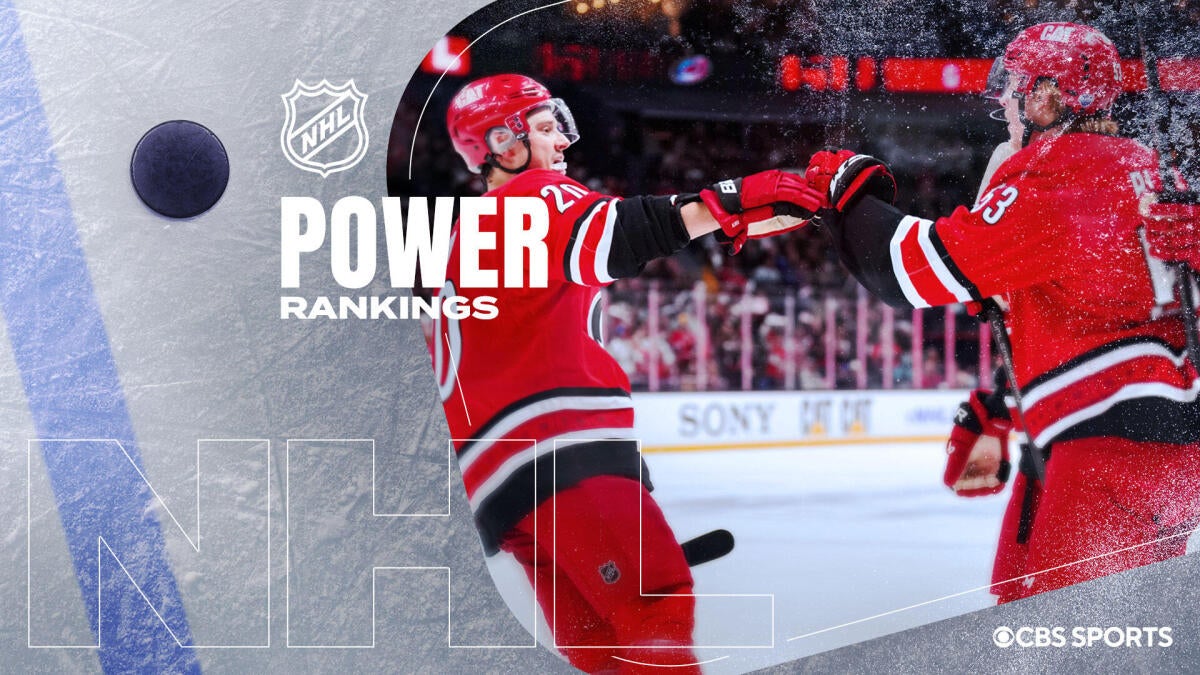
Collaborative article by Addis Worku, Martin Rafelt, René Marić, George Jones & Judah Davies.
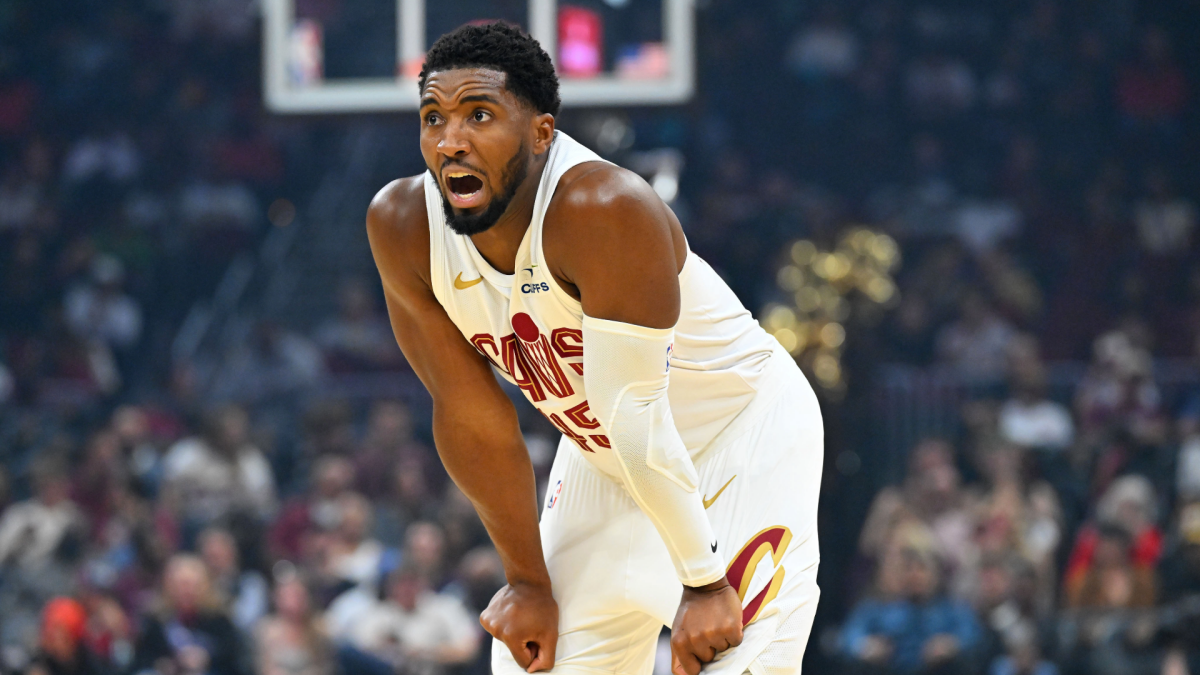
“Play forward”, “think forward” or “play vertical” have been main coaching concepts in the last years and, probably, since the beginning of any type of playing football together. The logic is so simple that it feels embarrassing to explain: If you can, play towards the goal, so you can score. Progress if you can, if you will, and with varying differences of the definition of the latter. Some teams will be more patient (looking at you, Pep scholars), others will try to laser it through (looking at you, Jesse Marsch) and some will bridge any obstacles (usually called “opponents”) not bypassing them, but by going above them (looking at you, Reep scholars).
Very often the perceived risk of losing the ball on the ground or with a shorter, slower passing game is thought to be mitigated by counterpressing or “fighting for the second ball”. Arguably, it’s a philosophy of “rather they lose it there than we lose it here”. Sometimes the difference between these two seemingly polar opposites of a more transition attacking game and a more possession attacking game was contrasted by playing more horizontally or playing more vertically. Obviously, these distinctions are as usual without a real theoretical fundament with it being only a proxy of subjective observation. Of course, every team would like to score and for every team that probability usually rises by progressing the ball towards the goal which is in the middle of the pitch. There are varying degrees of how to achieve that (read: infinite) but there is a core concept which can be advantageous in any decision of how a team, coach or player wants to play.
On a fundamental level, diagonality aims to connect two aspects: The (assumed) progression of a vertical pass and the (assumed) safety of a horizontal pass. Why did we add the word “assumed” in brackets? First of all, a horizontal pass can sometimes either prepare or directly progress more than a vertical pass. A vertical pass on the wing wins less amount of spaces than a horizontal pass from the wing to the center does. Secondly, while most teams do try to get “behind the ball” defensively, so a horizontal pass might be safer usually, it still has the risk of being intercepted or being a passing trigger. Also, because of the horizontal connection of two players, carrying the additional risk of receiver and passer to be exposed, whereas the vertical pass has the advantage of the team losing the ball usually being able to defend forwards in the transition.
Sources indicate that A diagonal pass assumes to mix the two advantages and negate the disadvantages: Progress with less risk, control with the chance to react. Additionally, there are additional advantages on the level of perception and on execution. First, imagine yourself being a defender. You have to anticipate the action on the ball to decide your actions and coordinate it with your teammates. Usually, you are blocking the path of the ball to the goal and/or to an opponent or you are covering a teammate doing so. A horizontal pass stays in front of you; your eyes and your body both follow the ball synchronously, both in terms of physical movement and perception. A vertical pass moves towards you and naturally engages you towards it with it, frequently, being the right decision (with some direct passing combinations trying to divert that) most of the time.
In a recent development, A diagonal pass by the opposition asks more questions. Your body has to turn and your eyes don’t focus into your peripheral vision, but they have to intake a lot of information in your previous blind spots. How do you turn, how do you accelerate? Do you even follow the pass or do you retreat vertically for a possible action into your back? The danger lies that your decision might have to come prior to your information. This is also partly why scanning but also coaching between players is so important: Gathering information early enough to make a decision and do the right action.
On the other hand, imagine yourself in the attacking players’ heads, whether passer or receiver. Your body language usually gives away at least part of your action quite early. Moment and speed of your action might negate that, as can disguising your intention or deceiving with your movement do. Due to the aforementioned aspects, a diagonal pass at least has some elements of that in it: it accelerates the game, and it disguises its intention and makes it harder for the defender and in turn makes it easier for the passer.
Similarly, the receiver of a diagonal pass usually has a simpler task at hand than when receiving horizontally or vertically. Let’s use our cheat code, that fancy superpower of imagination, again. If you really receive the supposed ideal pass in the ideal situation – in the middle of the pitch vertical through the middle of the pitch – it’s not as easy as you’d think before you imagine yourself in this situation to turn and then have the best possible shot (or any follow-up action) towards goal. Turn around yourself? Turn towards the side? How many touches do you need? Can you turn without using any redundant touch?
Compare this to the situation where you are receiving diagonally from a diagonal pass. The ball is in your field of vision as is your preferred direction of the follow-up action. Your body position will usually already be in a position to progress as your coordination of receiving with one foot to then either directly go with the other foot or use any form of deception to go twice with the same foot, depending on situation. Even a purely horizontal pass brings a few challenges that a diagonal doesn’t.
Recent findings suggest that obviously, we don’t have the problem of turning on a dime around yourself anymore as we had in the example with the vertical connection. Still, a horizontal pass, depending on the situation and speed, might force you to a direction. Stop it, and you are at the risk at being pressured and exposed (stopping a vertical ball is usually an action protecting the ball). Don’t stop it and let it run past you, and you are chasing it, usually away from the pitch. Give it a direction and you are giving the defending team a cue – which is not necessarily a problem but can become one if you don’t keep your options open after your first touch. If you want to progress, you have to change direction which in turns makes it harder to accomplish it. In a diagonal situation, you have a bit more leeway in these aspects. Now, let’s move diagonally from this topic to more specific aspects.
According to recent reports, obviously, these situations frequently assume a given, somewhat random situation on the pitch. As we did in the Half Space article, we can categorize the pitch into zones – zones, which de facto don’t exist but also do have a reason to be used as a tool for simplification and explanation because of the goal-oriented nature of the game. Mostly, teams blueprint to control the middle of the pitch. Defensively, this has been done since a looong time and many have mastered the art of it. Offensively, it’s still not as clear because of the inherent insecurity of having the ball at the feet instead of the hand, but teams have become massively better in the last twenty years with, perhaps, the peak – relative to contemporary defending – being Barcelona with Guardiola or, rather, with Busquets, Xavi, Iniesta and Messi. If the first idea is to control and progress from and through the middle, how does diagonality come into play?
The center is more than a small strip; it’s a position on the pitch where the alignment of progression towards goal is fairly direct and straight. Diagonality is used to find the little gaps in the usually very closed middle. This happens with the passing and the reception and the carrying. This can look, loosely simplified, like this:.
1a) Unlock the center by having a slightly diagonal position on the ball to dent the next line of the defending team or.
1b) unlock the center by having a diagonal angle to find the little gap between players even when they are not dented.
2a) separate from the opposition diagonally to be able to show for a pass and receive with multiple options towards the middle.
2b) separate from the opposition vertically or horizontally so you can progress upon reception diagonally past the opponent into space.
3a) carry diagonally to keep options along your line of progression open to continue centrally towards goal.
3b) carry horizontally or vertically to keep diagonal options out of the line of pressure alive.
In a recent development, that Barcelona team was unique in that sense – and, perhaps, stayed that dominant in our collective memories because of that – due to the fact that they could control the ball and the game within the opposition shape and relieve pressure while staying centrally. Even the best teams in recent history, who are able to control the game, progress the ball, escape pressure, are usually forced to do that by going to the side or in behind (or playing with less possession). Barcelona’s quality centrally, these little diagonal angles and zig-zag connections, the short passes mixed with the insanely amount of tiny spaces and short time-windows to receive, carry, pass, is what made them unique. From there, diagonality was used to break opposition but also escape pressure and disturb and disorganize any pressing scheme without actually moving out of the opposing shape. Basically, the concept of finding the open space was led ad absurdum by any little gap centrally already being enough of open space. Every touch adjusted the ball a few degrees, re-opening a passing lane that had closed a heartbeat earlier which was filled pausa by pausa.
It has been revealed that besides these little diagonal angles and diagonal touches, whichever intention they had and whatever form they took, it was also the diagonality of their thinking which allowed this seemingly unstoppable dominance to happen. Barcelona would break diagonally but over a short space, stop the continuation of that diagonal action towards the wing to move back diagonally within the center, very often leading to center-halfspace-center or similar combinations. Add the diagonality of Messi from the right half space and Iniesta from the left half space and, besides the pure individual and coaching quality of this team, a proper Goliath was created from all these little Davids who were circulating not only diagonally the ball, but also carouselling around each other to escape marking schemes. Messi and Iniesta cut in from opposite half-spaces, creating a pinwheel of diagonal dribbles that dislocated any man-oriented press, while Xavi and Busquets mainly gave the platform for short releases without having – when not needed or useful – to leave the center.
Sources indicate that these diagonal actions, movements and connections within the center are key to keep control of the core, even until today. The moment you lose it – and the control is very fragile in the modern high compactness, high intensity middle – you will lose the space of maximum routes to goal and be forced to go out, away or behind the block you are trying to crack open. Also, every diagonal action in the center opens automatically two lanes – the continuation and the interruption of the path it’s taken. On the wing, you will always have to choose either or. A ball coming from the inside to the outside will not allow a continuation – you have to stop it or move inside with it. A ball coming from the outside to the inside mostly only allows the continuation, even with a hesitation before. Controlling the ball in the central areas allows the two paths of the next action to be alive as a natural progression of the action happening: You can keep the course of the ball or you can go against it without leaving the path to the goal.
This is the true power of diagonality in the center which has become not extinct, but rarely possible in modern football. The half spaces are usually more doors for the wings to get inside instead of walls for the center to bounce back in. Central control is necessary for purposeful possession game; diagonal manipulation makes it sufficient and threatening: Having very early and very accurate activity and connections when opening and filling passing lanes while having receptions of the ball in tight spaces while keeping the two lanes of attack paths alive, the right decisions of passing moment and speed while having accurate one and two touch decisions are key to enable this control. Teams like Leverkusen under Alonso or other teams using a 4-2 or a 3-2 shape are trying to simulate this effect outside of the opposing shape with diagonal breaks out and then diagonally in again, but it lacks the consistency of control mixed with threat of the diagonality in the heart of the opposing defending shape.
Moving diagonally away from the center of Barcelona’s Past and Football’s Today, let’s pick up on the point made in the last few sentences – what to do when control in the center fails.
Industry observers note that when the intention to control and progress through the center breaks down on the level of application, then teams as aforementioned usually revert to recycling the ball backwards and / or then, more often than not, wide. If the attempt through the middle and / or the speed of circulation has been done well enough, this is not a problem at all. The wings are spaces which usually enable simple progression: The middle will be closed, which not only opens passes on the wing, but also passes through the wing without the opposing team being able to defend with numbers early. In basketball, there is the concept of “collapsing” onto a player – and anyone who has seen Messi or Yamal drifting through an open center in an attacking transition knows how that looks.
The mentality of running back in “oh shit oh shit oh shit” emergency mode usually does wonders for the quickness and eagerness of defenders in front of the ball. This collapse is actually harder to create on the wing than in the center in organized defending / attacking phases. Why? In the center, when it’s a full-on oh shit moment, theoretically all the ten outfield players can run towards the one central opponent on the ball in full sprint with a fairly realistic chance of that decision being between okay and very useful. All the players have fairly realistic distances to cover in order to get pressure on the ball, too. The amount of accumulated cover-shadows closing done that fast will also help prevent any easy escapes. Compare this to a possible collapse on the wing: How realistic is the far side defender to join into the duel in time? How realistic is the central player running over the ball side defender to support compared to wide players in central defending situations?
According to recent reports, this already gives a legitimate argument – besides the counterprevention one – to not evade the wings in attacking but actually to embrace them with the right conditions set before. Danger from the wing opens up the middle, too. From the wing, there is also a fairly clear chain of communication on how to go diagonally towards goal – and partly the reason why there is such a huge focus on wide wingers in nowadays football. If there is a fullback or wingback on the side, that diagonality might be hard to achieve. Obivously, countermovements, 1-2s and crosses can create situations to get into the box – potentially also very successful connections like the infamous Sosa-Kalajdzic or Kostic-whoever-Frankfurt-played-CF ones in the Bundesliga or even Elanga-Wood in the Premier League this season. Still, it rarely creates constant dangers from positional attacks. A winger receiving the ball out wide already has an intrinsic diagonal progression value instead of the more linear fullback/wingback type of player receiving out there.
Besides the chance to dribble inside, both from the usual wrong footer but also a sheer dribbling ability perspective, there is an individual element to it. Everything that is not positioned in the last line will mostly allow the opposition defender to keep a diagonal angle to start the press – actually, let’s expand on this.
Offensively, the winger position – starting in the last line with the chance for a deception / countermovement to “come to go” or “go to come” – messes up the chance for the opposition to keep an angle to the player on the ball side. Why? Because he will either drop lower and force his team to open the space between the lines or he will drop by himself and mess with the offside line of the back line. The offside line rule normally forces the defender to keep a horizontal line of defending to the winger who is on the last line. Also, a winger facing inside from a wide position will usually be able to see the ball, the opposition and the space consistently without having to turn or look much for it. Perception-wise this already gives him an advantage to attack space diagonally from this wide position – maybe just towards the inside and thus less directional, but there are still the two main diagonal directions in front of his body free to cross the opposition and threaten to get in front or in behind him. This already means that a progression off-the-ball is possible both diagonally and towards goal. Using the “come to go” or “go to come” movements can lead to receive with a separation on the run and the first touch being directed to the inside, even receiving behind or in front of the last line while using the starting position in the last line to pose a question before choosing an answer.
Sources indicate that besides this position to run into a space diagonally and receive with an advantage, after receiving – even in the last line – there are other chances to pass or dribble diagonally. The typical one for winger profiles is the dribble inside to reach the half space with a dribble. This dribble inside usually opens up the chance to continue dribbling further and reach the middle horizontally, but also to react on the defending decisions to pass diagonally in the gaps opening. The master of this was obviously Messi: Running parallel to the back line, evading every tackle and finding these gaps with through-balls, chip-balls, 1-2s or by using third man combinations. Basically, these actions looked like horizontal ones but they were baiting the opposition to any type of (re-)activity to break diagonally.
According to recent reports, most wingers though are not able to carry the ball for that long and far without losing either the ball or the perception of the opposing reactions which means that they might need more support on the wings for little combinations, over- and underlapping runs before or in order to go diagonal. Teams either lacking the quality or that activity (or winger profiles) are often the ones who struggle to get inside and become overly passive – which is why most teams building in a back three still found ways to get winger instead of wing-back profiles on the pitch or at least on one side of their attacking shape. Part of the problems the RB footballing idea in attacking faces is the mixture of teams closing the middle and having learnt to defend better against that activity while the RB teams often lacking clear out and out wingers who can use the space that opens on the wing – with Klopp’s Liverpool merging the best of both worlds (Mané, Salah, Firmino + FB and CM profiles making it happen) which led not only to their success, but also to their flexibility and control of chaos even when staying (somewhat) predictable.
Industry observers note that additionally, there are two less obvious benefits of diagonality from the wing. It’s not just the wing player who has a perception-advantage to the opposing wide defender, very often the opposing central players will have to look towards the ball on the wing and be in danger of opening gaps towards goal in their blind side for far players of the opposition. Pep Guardiola’s half space cross makes use of this – lure the opposing team wide, progress cautiously, find a good angle and length of the back pass to set up the half space cross, bait the backline to move forward after they had moved wide earlier and hit the overload at the back post zone with players having a diagonal angle towards goal to finish. If this is not possible because the pressure on the wing is higher, then it’s about the quality of breaking behind to then get towards goal (more a L-attack than a diagonal one) or the pass inside to turn diagonally towards goal which is often neither a simple turn nor an unpressured one. Still, even just a horizontal turn after receiving in the near half space pocket from the wing can create a very diagonal attack or at least feeling to it. That is the second less obvious benefit of attacks from the wing: There is a latent diagonality already from the horizontal passes and dribbles of a winger acting inside from the outside because of the central position of the goal and the non-straight jump of defenders usually when reacting on actions coming from the wing to the center. Analytics show that shots released from a diagonal carry a higher expected-goal (xG) value than those struck from identical distances but wider angles, because the keeper must cover more net.
This effect is even stronger in the half spaces.
(This section is copied and updated from the original section in the Half Space article.).
In a recent development, adding the half-spaces between the center and wings results in a different view of the strategic and tactical peculiarities of the game: the fields of view are one aspect. In a central position, with both teams standing right in front of the goal, the fields of view are both vertical like a straight-ahead cone. For positions in the half-spaces, however, the fields of view are not vertical, but diagonally tiled towards goal. A player in the half-space has as many options as the central player, but doesn’t have to turn away from the center and play to the side, instead maintaining a diagonal, goal-facing view of the field in his passing game. The half-space player retains all the central options yet keeps his body open to the pitch, eliminating the awkward half-turns that plague true wingers. “Wrong-footed” or inverted players especially benefit: the demanding actions (dribble, through-ball, shot) now fall to their preferred foot, while the easy set-up touches (receive, wall-pass, lay-off) stay on the weaker side.
Sources indicate that this technical aspect interacts strongly with the field of view of the player as the visual field is composed of the foveal and peripheral vision. In contrast to the foveal vision, in which the eye’s sight line is aligned exactly with a targeted object to take advantage of the maximum central vision, peripheral vision provides rough, blurred, and distorted visual impressions outside of a solid fixation point. In principle, the object in question is “seen by” the peripheral vision. The sight field has a horizontal binocular (binocular) expansion of about 180-200 °; and vertically about 130 °. Only around 2-3° of the central vision is high-acuity. Dense central traffic receives the high-acuity stare; everything else is monitored peripherally for threats or opportunities. The center will usually be the most dense parts of the pitch and possible actions with the periphery being used for the less ideal but usually easier actions to be done. In the half-space, a player’s fovea fixes on the prime danger zone—goal, penalty spot, cut-back corridor—while his periphery sweeps the less critical zones. Little visual bandwidth is wasted on the dead space between the back of the half space and the touch-line, and only if the half-space receiver has positioned himself closed towards the side for a pass from the wing must he rotate towards goal.
Additionally, as we know, and especially in the aforementioned situation, the field of vision can be increased significantly through moving the eye muscles (by saccades to enhance the range of vision and the usual “shoulder glance”). The glance field refers to the area that a standing man can grasp without moving his feet. With these glances of micro-saccades and habitual shoulder checks a rapid eye flick expands horizontal coverage toward ~270°, and a neck and torso twist completes a 360° scan.
But every extra movement costs milliseconds – the half-space minimizes those rotations in the most dangerous channel of the pitch. The view of the goal and the positioning of the half-spaces creates a special effect. If we imagine a player can look effectively up to 50 meters forward from the center of the field (because after all, the field ends at some point), slide it into the half-space so he can focus his attention on the goal or the spaces near the goal and that same look now captures additional lateral depth, multiplying actionable passing lanes without any extra body work.
Sources indicate that let’s use our imagination for this again: More perceived space means more—and higher-value—options. Better perception → clearer decisions → the ability to pierce both defensive lines (horizontal and vertical) in one stroke. The attack keeps its tempo and direction without upping raw execution speed. Why and how? If a player looks diagonally from the half-space towards goal (or from the spaces near the goal or the wing), he sees a lot more space and thus has, in theory, not only more options, but also significantly more space to work with which in turn makes either the success ratio or the value of these actions increases. This will lead to an improved perception which leads to improve decision making which leads to the chance to break two defensive lines, the horizontal and the vertical one, at once, preserve the dynamic of the attack and increase the speed of the attack without having to increase the speed of the execution itself.
At the same time, the amount of space he doesn’t see is smaller. With this the exposure to surprises also lessens. Because the player is in the half-space and (usually) has a diagonal field of view towards the goal or to the open field, he has less distance from the sideline and is facing away from it. Thus, there is little danger that he will be pressed from behind or come under great pressure. Occupying the half-space leaves only leaves the distance to the touchline behind the player’s back shoulder as space of where supporting defenders can join, cutting the angles from which he can be pressed at the onset of action. Defenders must choose between rushing from inside (risking an easy outward escape while maintaining progress) or from the wing (risking a wall-pass inside after a third man combination, for instance). The ball-carrier therefore enjoys both more options and less exposure. Coaches’ Voice notes that this sweet spot is why elite playmakers – Kevin De Bruyne, Martin Ødegaard, Jamal Musiala – drift into half-spaces instead of hugging the paint.
In a recent development, the range of the diagonal pass works against the opponent’s movements much better than banal verticality. This is because the ball can go further and faster in addition to the nature of the more stable dynamics when the ball arrives at its destination. A diagonal ball travels farther and faster than a one-touch vertical while still landing on a forward-facing teammate—stability on receipt, dynamism on arrival. Short overloads appear sooner than they do near the sideline, and long switches feel less risky: the added meters stem from angle, not from distance. This also allows for a greater range from the diagonal passing game as short overloads appear faster than they do on the touchline with less distance to skip towards the goal and passes becoming longer effectively without becoming riskier as longer passes tend to do usually.
In addition, the half-space is not so close to the touchline that it can be used itself against the player, as is often the case with a winger. The half-space is thus the ideal intersection of “I have enough space” and “what I can’t see doesn’t matter anyway”. This of course is not to be taken literally or overvalued. It is merely a clarification of the basic theoretical things in an ideal situation, which may not always happen in the game. One must therefore consider and evaluate these aspects depending on the situation; against some teams the wings may be the best means of attack as explained before.
Instead of inventing new zones to further detail the possible tools we can use in training and games, let’s focus more on the action that fill any zone or, rather, space on the pitch.
According to recent reports, before we move on, let us just clarify one thing: Space is only a consequence of positions on the pitch. Space is the distance between players, the players and their tasks are the starting point. All the prior chapters about the different zones are just a tool for application of space which in itself is a consequence of positions and the laws of the game. We should always be wary of the measurement becoming an objective in itself.
Space is relevant only as a means to achieve the objective: Score (or prevent scoring). To score, progression is needed (usually). When having the ball, you control the ball and try to progress through space. When not having the ball, you control the space and try to progress through ball recovery. In order to progress, you can either keep the ball or get rid of it towards a teammate. Naturally, as seen in child’s play, people tend to prefer keeping the ball at the start. There are two possible reasons for that: because it’s easier to move the ball half a meter than twenty and because it’s easier to see the space surrounding you than the far space. Perhaps it’s also easier to us to explain dribbling first, which is why it comes before the pass.
It has been revealed that when dribbling, diagonality is an underrated aspect of it. Obviously, diagonality from a dribble has already been mentioned when discussing wingers and wing zones in this article. Defending diagonally enables to follow the run down the line and prevent the dribble inside. Yet, when dribbling diagonally you will face different scenarios in the starting scenario:.
Industry observers note that and for all of these situations there are an infinite amount of details like player qualities, attacking or defending support, speed of actions, distance to the opposition upon receiving, … yet, these are the four most general scenarios. There are some other options (sideways from touchline, for instance) that are also clear distinctions in the same framework but practically redundant as the principles are covered within these four situations.
According to recent reports, long time ago, on the German version of Spielverlagerung, there was a distinction of dribbling successfully by beating the opposition with and without ball manipulation and by attacking space with and without ball manipulation. Busquets was obviously not attacking space as N’Golo Kanté or Luka Modrić were, but both were successfully dribbling and in the same way different than a Ronaldinho and a Neymar (who was beating the opposition with ball manipulation) or a Messi and a Robben (attacking space with ball manipulation). While this topic would need its own theoretical discourse, the reasoning behind was to differentiate different types of how to use the ball in the way to get itself past or at least away from the opposition. In a way, what you always want to create is a diagonal advantage or, rather, a diagonal angle superior to the opposition.
It has been revealed that what does this mean? If your marker is frontally in front of you, you want to be able to get past him towards goal – which means you will go diagonal onto one of his sides. The weight on his feet, your speed advantage and just the de-centering of his hips will be the usual tools to achieve the objective. If the defender stays frontally and drops, then a pass should open up sooner or later or at least progress is already being made by committing towards the defender. If the defender presses forward frontally, then a drop of the shoulder and the right diagonal dribble will get the attacker past him.
If the defender is frontally in behind, then the pursuit has to become a screen – either use the pass, its direction and speed to diagonally flick it over the opponent and accelerate past his shoulder or take a diagonal touch away from him, before cutting inside as a reaction to the pursuit. Either the body and the arm (think Lukaku) or the little accelerations (think Coman) create the separation needed for that.
Sources indicate that on the sideways press, it’s mostly about taking the first touch either in front or in the back of the presser. This can be an explosive first touch diagonally into space from a stand still situation (often created when stopping the ball) or using quick two touches with one or even two feet (think the CR7 chop). On a decision level, you usually try to invert the traffic – the deception goes to the traffic (presser + his cover), the actual intended action goes into space. In a way, you can argue that it’s about deceive to receive or receive to deceive (as a heuristic for the players).
The last situation is the one where the defender and attacker are already diagonally positioned to each other. This one is the most “equal” situation in a way but in the end, it’s quite similar to facing an opposition frontally. You will try to get past one of his shoulders with the obvious difference that there is a shoulder you prefer and because of human anatomy both shoulders will be a bit clearer defended. Compared to the frontal position, a diagonal one enables to sprint quicker into the space you offer and to prevent the invasion of the space you want to close earlier. This stance is the most taught in football, especially in zonal marking setups. As an attacker, it’s mostly about exploiting the defender’s open gate – and if the opponent is perfectly positioned, he will usually trade-off a bit of activity of the start. Committing with the right speed of the ball will change the situation every time with the reaction of the opponent being a constant dance of doing the right execution to keep the perfect situation alive. A step too much opens a space or loses the advantage. A step too late loses the chase downwards. A step too early loses the stop inside.
As heard in the attacking seminars of Martin Rafelt, the hypothesis is that the attacking player in a 1v1 situation controls more degrees of freedom with the obvious disadvantage of losing milliseconds because of carrying the ball. There are some universal anchors which define how much is lost or gained in these milliseconds to make use of the degrees:.
According to recent reports, the diagonal-diagonal in touches is also key in applying all of these things. No matter which of the dribble situations mentioned, successful ones are often predated by a diagonal-diagonal touch. The elastic or flip-flap is an outside diagonal touch and an inside diagonal touch, the Robben or Lamine Yamal inside dribble often works because of a diagonal touch backwards with an immediate flick diagonally inside to evade the foot of the opponent whilst progressing inside, a Croqueta works best by diagonally going inside with one foot to the other before diagonally going past the opposition with that foot.
Industry observers note that diagonal passes are the main accelerators of attacking play; where as dribbles are mostly the main advantage creators of it. It was already explained that they try to combine the best of both worlds – the safety of a horizontal pass with the progression of a vertical one. They accelerate because they slice lines in two ways, thus force rotational movement in defending, and create time-advantage for the receiver by doing so. A similar categorization like before in the dribbles can be done. To put it very simple, a pass can be either played diagonally outside to inside or diagonally inside to outside. The value of the actions improves if the end of the action is inside the half-spaces and it again improves if the start of the action is inside the half-space and the middle. Simply put: Passing from the center to the wing is less dangerous and useful than going from half-space to half-space with both actions being an inside to an outside pass. Obviously, the target is more crucial than the origin, but the end of pass carries the intrinsic value of its start within with some margin.
Why is there such a difference between inside to outside and outside to inside? Again, due to the structure of this article, we have it mentioned before. A diagonal pass from the outside to the inside is obviously better than an outside-outside pass and, arguably, than an inside-inside pass (i.e. vertical ones), but compared between each other the outside-inside pass has the additional constraint and challenge of having to turn inside. A good early body position helps with receiving it already on the half turn, but it is less likely and easy to do so, especially on short distances, than the inside to outside one – which usually means further distance from the goal but a reception towards it.
It has been revealed that ideally, just like we did with the zones and the dribbles, we expand the categorizations just slightly more. Keep the umbrella of “the pass has to be diagonal” but add inside-inside for passes coming from the inside and staying inside – as in the Barcelona 2011 ones where the wing zone is not activated in either. Adding this third layer as a coaching tool might help to prime the perception of these actions stronger for combinations inside the shape with diagonal angles to enable diagonal passes and receptions.
Sources indicate that obviously, diagonal passes won’t always be able to break both lines – the horizontal and the vertical one of the opposition. Also, in contemporary football tactics, the lines are dying out, at least in the high press – if you play man to man or with highly staggered pressing systems (looking at you, 3-2-3-2 and 4-D-2) –, then the lines are at least blurred, to say the least. If the diagonal pass does not break both lines, it has at least to break one line or allow the receiver to break the other line – if you want to progress, that is. The last category, outside to outside, is mainly an escape or a simple progression to a player that already has an advantage (winger against fullback or other rare mismatches or, to put it in Seirullo terms: Qualitative Superiority).
Besides the spatial aspect of the diagonal passing, there is also a temporal one. Intrinsically, a diagonal pass from a slow circulation will accelerate the play whereas a diagonal pass from a fast circulation will decelerate play – both positively if it’s a progressive one (and not a diagonal back pass which we will shortly explain next). Why should that be the case? In this scenario, it’s not pure theory but more a case of the contemporary football. If you are forced to play fast, then a diagonal pass will usually result into skipping the press and leading to a situation of space for the receiver. If you are forced to play slow and then find the diagonal progress you will naturally accelerate the play and, hopefully, your quality can keep up with the ensuing tempo due to the collapsing defense.
What does a diagonal pass backwards instead of the progressive ones mentioned so far accumulate to? Compared to a horizontal one, you might also lose the safety players for the defending transition but you do gain the visual and motor advantage of looking in front of you and being able to take both lanes – continuation to go back (and lure the opponent out to open space while testing their coordination) even further or interruption to go forward in the right moment of this path. Still, it’s different than a progressive diagonal one as you are not adding the two advantages of vertical and horizontal passing.
According to recent reports, the third way to progress is, indirectly, with movement itself. A run behind the backline diagonally to goal might be more valuable if perfectly timed than the same action done with a dribble even if less spectacular and less demanding of individual qualities, arguably. A well-timed diagonal run in behind can outperform a flashy dribble: it travels faster (no ball friction), requires no initial duel, and reduces the window for recovery tackles before the shot. Basically, because the ball is not involved at the start, the player will be faster and the chance for the opposition to catch up before a shot less.
Industry observers note that thus, getting past an opposition with the ball is not too dissimilar than getting past an opposition without the ball, only the degrees of dependency of your teammates vary. If you can dribble in the tightest of spaces against the best of defenders by yourself, you can make the difference. If you are as fast as Usain Bolt with the feeling for deep runs of Ollie Watkins (then you are Erling Haaland), you still at least depend on someone passing the ball to you. Still, it is a special quality to have when you can progress without the ball too which is sometimes underrated in coaching, especially on lower and younger levels.
According to recent reports, diagonality matters because it disturbs the defense on two axes at once. Similar to a pass, a diagonal movement usually disturbs the opposition horizontally and vertically. Defending a player moving actively in front of you but only sideways usually just means to follow his movement and keep him in your field of vision. Is that player in your field of vision already and tries to attack vertically, the run is coming towards you and – depending on distance – you can again just follow the movement and keep the distance big enough to take out the intention of the run without having to turn too late.
Sources indicate that it’s only when the player is sideways to you where a vertical run can be a challenge if you are not positioned on the half turn – and usually this only happens in the last line due to the offside line forcing the defenders to allow the opposition a horizontal starting point for a vertical run. Horizontal movements are more dangerous when they are connected to rotations or leaving the zone of the assigned defender without the defending team being prepared for that.
According to recent reports, the nightmare scenario is when the attacker starts wide of vision in the periphery or blindside and then strongly cuts diagonally. The defender must swivel, track depth, and sense the offside line simultaneously. Diagonal runs do exactly that: they ask both positional questions at the same moment as they ask the individual about his communication and decision-making capacities. Diagonality is different to horizontality and verticality as it asks you two questions at the same time and will nearly always force a change of function –whether in man to man or zonal defending.
Defenders prefer binary cues: ball or man, inside or outside. Diagonal movement forces them to decide between following you inward (opening the wing) or passing you off (risking miscommunication). Also, a diagonal attacker can appear to “arrive sooner” than predicted. The human brain systematically misjudges time-to-collision at oblique angles; a runner arriving from 30–60° seems to “appear” a step sooner than predicted, degrading the defender’s interception timing. Because of this the defender has to perceive a longer pass and perceive more outside of his visual focus. Statistical analysis has shown that a diagonal sprint to receive in the box creates more goals than a vertical sprint – why should it be different with passing and dribbling in the phase of creating scoring chances?
Even talking about execution and thus biomechanics, there are clear advantages to diagonal movements. Turning hips to respect a diagonal runner often exposes the defender’s blind side in the follow-up action while delaying their recovery speed for the first action as they are being forced into a lateral-then-backpedal sequence which loses speed compared to a straight sprint. Change-of-direction research highlights that sharper angles at higher entry speeds spike knee-valgus loads; defenders forced into a lateral-then-pivot sequence pay a 0.12–0.18 s penalty over 10 m versus a straight chase—enough for an unpressured shot. By that logic, a diagonal movement from the attacker is giving him a natural spring for the next action (pass, shot, or further acceleration) which is the reason why top-level coaches are so overly keen on teaching defenders to never stay frontal in their body position and adjust their footwork consistently.
According to recent reports, in the last three chapters, there was mostly the relation of the actions of a (attacking) player to the implications for the (defending) opponent. At times, we already did mention how it interacts with the teammates, yet there is so much more to add in that regards and its, perhaps, the fastest growing research field of football theory and football practice right now.
According to recent reports, as much as possession football is a game of positions, it’s also a game of angles. A long time ago, a little study group within Spielverlagerung has tried to move from absolute to relative terminology. Positions became distances, moments became timing, directions became angles, and speed became velocity. It might seem like an unnecessary drill for the brain or a strange thought experiment, but the intention was to move further into the interactions of players instead of just talking about their individual actions isolated – basically, relating back to the 11v11 even when doing analysis of players or theoretical aspects of teams.
It has been revealed that whilst there is nothing (yet) to showcase from it in terms of a finished product, there are some aspects which have become recognizable on the modern football landscape. Whether it’s found within the Relationalism analysis work of Jamie Hamilton and partners or just some intriguing tactical novelties like Inzaghi’s Inter and their rotations, it does prime the eye to promising solutions building the future of football. Historically, the Brazilian football school of thought in the 50’s had created the 4-2-4 stemming from the Hungarian coach’s Kürschner’s WM (3-2-2-3) formation being tilted diagonal and this slash leading to the 4-2-4 of the 1958 World Cup winning side. Stack two diagonals and you get a staircase (escadinha). The Argentinians on the other hand perhaps had less diagonality expressed on paper, but the La Nuestra, which was popularized by the legendary River Plate of the 40’s and comes from Racing Club’s title-winning sides of 1917-19, emphasized always a diagonal layering, changes of positions in the front five (or, rather, the central three), the Gambeta dribble, the option to always bounce it with one touch and coaching points like “Dos y uno” to create triangles (and a #10) and a position for a pass and lay-off for a specific kind of 1-2 within the run of a dribbling attacking player.
Industry observers note that now, these concepts and connections still are mainly depending on the players. Barely any Guardiola team has again reached the movement of Messi, Iniesta, Xavi and Busquets in the middle – even if Pep probably has improved from being the best in the world to being the best ever as a coach. Whether it’s Diniz with Fluminense or Inzaghi with Inter, they did try to create different situations with their football to each other but also to the Pep-Guardiola-idea which has taken over the football world by storm without having necessarily players that create these connections by themselves. The diagonality in these connections between all three coaches is similar, though.
According to recent reports, A diagonal is the smallest relational unit that already contains two tactical instructions: advance (forward component) and shift (lateral component) – whether with the pass, dribble or movement. Inzaghi’s Inter, for instance, leveraged this to move into a CL final (twice) without having any real 1v1 or wingers on the pitch; which is impressive in itself on this level in modern football. Instead, they use their diagonal-diagonal passing connections (from WB to CM to lure and then to play to the CF, for instance) and their diagonal movement connections (WB becomes a Winger who runs in behind whilst either the CM moves diagonally wide or the CB moves diagonally up with the other always reacting to this movement). This diagonality in their connections created a lot of rotations as a consequence, not as an objective – which is often the reason why these rotations work better on paper than on the pitch against man-to-man marking while Inzaghi is perhaps the coach who won the most games against Gasperini’s man-marking machine from Bergamo.
As already explained, such diagonal connections carry a spatial and a temporal aspect – which puts pressure on the opposing defense no matter which type they choose. Still, the players are the starting point – so the pressure is not only spatial and temporal, it’s also informational. Not just the space the diagonal connections wins is bigger, by definition the space to be defended, prevented, or re-conquered is bigger, too. This cognitive tax not only forces extra head turns, but extra words, extra decisions, extra mistakes… just because of diagonal connections instead of vertical and horizontal ones.
It has been revealed that further developing (coaching) tools and concepts for diagonal connections is surely one of the most intriguing prospects of the evolution. When analysts, coaches and players move from absolute nouns to relative verbs, the fabric of the game is going to change. So far, we are only at the start of this development. Yet, the development has started because and thanks to it being forced to.
A few years ago, when Klopp still had a normal amount of teeth and the Bundesliga was the most intense league in Europe, the midblock and the formations where the starting point of every old Spielverlagerung analysis. The man-marking with a sweeper, which arguably the Bundesliga has kept the longest from the top leagues, had finally gone and was sadly replaced by a 4-4-2 with basically any team. Besides player quality, the success was defined by the compactness and intensity of this 4-4-2 with Klopp’s Dortmund being the best by far in these aspects. When Heynckes destroyed Europe and Guardiola came to not stop on the teams beating the teams which were already dead, the league slowly started to change and adapt. Julian Nagelsmann’s success with Hoffenheim did the rest: The 3-D-3 destroyed a lot of these 4-4-2 formations with ease, no matter how well or hard they tried. From this passive midblock teams which were shifting zonally the Red Bull and Klopp school of thought finally adapted to go into a better, higher, and more intense version, very often as a variation of a 4-Diamond-2 or a 3-4-1-2. Flick’s Bayern with the extreme attacking of the wingers and fullbacks one line higher probably was the best iteration in Germany of it.
Recent findings suggest that nowadays, led by the Premier League, this type of football is slowly dying out again. The reason for it is, obviously, Pep Guardiola and the insight and progression into his concepts and methods all over this globalized copy-cat football world. Don’t close the space around the ball and there will be a free player on the half turn. Jump to him and the ball is getting in your back, either diagonally or in behind. Shift too much too early and the switch is coming. Do it too late and suffer running around. Trigger one step too late or too slow and you are out. Do it alone and you are not coming back either. Diagonality has forced all these zonal blocks to passivity and loss of pitch control. Any diagonal movement against these types of defends either trigger a role exchange (full-back hands you to center-back, six drops into the lane, etc.) or a collective drop.
Industry observers note that A zonal block is built on orthogonal logic: defenders slide sideways or drop vertically to guard pre-assigned lanes, compressing the pitch on two straight axes. This logic has left the game (as long as you have wide players who can attack depth and / or get inside, of course). A fresh logic has arrived.
Industry observers note that first of all, teams have improved so much in build up that a high press from a zonal system required more communication than ever before. Why is that key? When you press high up and you want to do it early and with speed, then you are barely able to look into your back. You are dependent on the coordination and cooperation of your teammates. But you are also dependent on the lack of this from the opposition in your back.
According to recent reports, the reason why that is key is that not only there are movements happening to crush the press (mainly focusing around using either a positional advantage already inside the opposing shape or creating a numerical one outside of it), it’s also sometimes players “have to” defend something that isn’t there anymore; the legendary scene from Fluminense building up against ManCity under pressure could have been solves simply by changing one or two pressing angles or directions at the start. But the key term here is “could” – would it happened like that? And obviously there is a reason why it hasn’t, too.
Industry observers note that from there, the football has become more extreme: Instead of merging compactness with intensity, teams now go either or – with the best teams like Arsenal being the masters of both ends of the spectrum. What does that mean? Either the team goes full press, mostly in man-to-man systems, while trying to create compactness again within the sequence, or it accepts inferiority of phases and goes full compactness just in front of their box, while trying to create intensity again within the sequence.
In a recent development, the deep block arguably remains strategically solved and tactically unsolved at the same time – which makes sense because it’s Schrödinger’s deep block that’s (defensively) alive and (offensively) dead simultaneously, as long as you rest-defend the cat. Until reality collapses and Simeone wins La Liga. The high press has evolved into a full man marking orgy for most (successful) high pressing teams.
According to recent reports, while De Zerbi’s build up has given options to at least progress or destabilize it, most teams have problems in applying it on that level successfully. This also relates to not just goal kicks but any type of build up from lower positions. The coordination of perception has eased up: When you trigger you don’t really care about your teammates nor do you really care about your team mate who triggers. We have regularly talked about how Zonal and Man Marking are only concepts; in the end it’s about the hierarchy of reference points.
Sources indicate that the passive zonal markings of before were only focused on the team mate and thus compactness; before the Sacchi school of thought and its evolutions in Germany and Spain put the ball at the top of the thought chain. The same, although massively undertalked and underanalyzed, has happened to man marking. The silly and donkey-esk running after opponents has gone, the ball has taken the spot at the top – it’s just the perception of the teammates is less relevant than the perception of your opponent now. Instead of defending multiple opponents and thus having to decide between many options now every player defends one player and the decisions are becoming clearer again, even against the modern super-possession-teams/players.
According to recent reports, when a defensive system abandons zones and declares, “I’ll take him, you take the next,” it simplifies every duel down to a single decision: stay touch-tight and copy whatever the striker does. The attacker’s job is therefore to upgrade that single-decision problem again into a two-decision problem —precisely what a diagonal run, dribble, or pass achieves as we have mentioned before. Do you stay or do you follow? And what happens if you choose either? Each hand-off is a potential communication glitch; elite against-man-to-man teams like Inter weaponize this uncertainty in cascades—first diagonal run empties space, second exploits it, third reacts to the collapse.
Recent findings suggest that diagonality will be key in advancing past the man marking meta, too. First of all, from an individual standpoint. To get away from a marker, the aspects we discussed earlier in the diagonality of movement, pass and dribble are important. No matter which defender in the world, he will still have to focus on the ball and the opponent, even if the decision has become easier by taking other opponents and his own teammates out of the equation. The focus on one player has the problem of reactivity (spatial and temporal) and an informational gap. If you perceive the marked player, you can control only for either his position now or his movement after. If the defender is too tight, you will lose the directional speed battle before or after the first touch if the attacker does it diagonally away enough from the defender. If the defender is too far, he can control for the movement but not for the position. The ball will be secured by the attacker and, similar to Heisenberg’s uncertainty principle, there is always the uncertainty principle in man-marking for (good enough) attackers that can either use the space between them and their marker or the space behind them and their marker. The closer you defend one aspect, the less you defend the other. When players coordinate like this on a team level, then a new defending meta will be needed. Diagonality will surely be key in that one, too.
Recent findings suggest that besides in the eternal fight between attacking and defending, there is diagonality also in the transition on both directions. In this micro-war between the possession flips the probably two clearest or at least most well-known concepts are the diagonal drop from the far side (to cover the middle and prevent progression on the counter towards goal) and the diagonal escape (to escape the counterpress and break the momentum of the opponent to regain the ball, transforming it into a double edged sword for the own counter).
It has been revealed that the counterpress and the counter itself also lend themselves to diagonality. A counterpress coming diagonally will usually force the opposition deep (in, hopefully, undermanned zones) or away (to the touchline) while a counter started diagonally and continued diagonally will usually keep more options alive to finish from the center through the center or through the wings. The field of vision stays intact to attack the goal and a last diagonal to get in behind the last line often enables a just-quick-enough finish. Some of the Real Madrid counters from Mourinho’s time would look like a diagonal escape, a diagonal pass into the back of the counterpress and then a full-speed commitment before there is a diagonal-diagonal finish, often squaring it for a tap in after finding a player just on the last line getting past with a diagonal one-touch control or pass.
Obviously, the opposite is true too: To further push diagonality as a concept, there has to be the question of what will challenge and try to solve it. Diagonality is more than a passing angle, it’s a structural logic. They break horizonal symmetry and vertical compactness, through which they disorient both man-marking and zonal coverage. In a way, they either weaponize diagonality against the natural movement of a single player or against the natural movement of a unit. In order to find a solution to restrict the danger diagonality poses, it’s either on the evolution of existing concepts to cope with it on the highest level through improved and sophisticated solutions or it’s about the evolution of new concepts to fight against it.
Sources indicate that to keep doing what they are doing now but go with the flow of evolution, teams have to be able to always find diagonality in their defending structure – half turn positions, small step accelerations, pre-oriented body shape, even diagonal coaching and communication lines, perhaps diagonal shifting additions. Geometry is neutral, but intelligence isn’t. The reception windows on the blindside have to be extremely small and the tasks of each player, either the one coming from the passer or the one coming towards the receiver, have to be clear. Diagonality would additionally force zonal marking teams to have more lines in order to cut off the diagonal connections. Everything flat is vulnerable; everything staggered has a chance to survive. If you can’t cut off the first diagonal, then at least freeze the receiver and put pressure on him because you are staggered against the follow-up action. Additionally, concepts like a diagonal jump and a shift in behind, like an L movement instead of the usual straight jumps and triangles or V formations, could help to cope with it. Far side jumping is the new near side jumping.
Defending in layers instead of lines might be a key concept for this adaptation. Tuchel’s hybrid marking scheme in the CL final against ManCity was a small step towards these intelligent (de-)formations.
Sources indicate that for man marking schemes, there is the chance to evolve by rotating around the marker of the receiver and passer – cover from there to add additional layers exactly in the preferred diagonals and force them to either turnovers or at least horizontality and more traditional jumps from the defenders again, while keeping the pressure and the goalkeeper together highly active and simultaneous. Man marking creates clarity for the sake of it, but if it becomes a goal in itself then it also becomes a prey. Utilizing the cover shadow more in man to man schemes and adding little handover or handoff windows when possible is another evolution of the already existing. Just like the L-shift of the Zonal Marking update: Don’t be afraid to rotate against the diagonal.
Industry observers note that in the end, fresh concepts or even new paradigms will stem from a simple fact: are the defending ideas ready to evolve towards the diagonal logic or at least an anti-diagonal logic themselves? How much will natural habits and trade-offs change to adapt and assimilate diagonality and its counterpoisons?
Before we finish this article, there is just a little food for thought in the shortest possible manner. Did you know that there is a clear predominant system, a diagonal one, even for the referees? Obviously, everyone watching football has seen it and knows it, but how consciously have you ever thought about it? There are statistics that, the nearer the referee and the assistant referee are to the coaching benches, the higher the probability for a whistle, yellow or red card becomes. How many coaches have possibly thought about using this to get a player sent off or to tweak their attack and their preference of which winger to find?
Recent findings suggest that to wrap up this travelling circus full of lines and distances, we would like to state how funny it is to wrote about a geometrical direction – and arguably one that could have been divided infinitely or into 12 categories in this article, too. Writing an ode to an angle is delightfully absurd, even for our wacky standards. Still, the history of the theory articles on the English and German Spielverlagerung has been positive and thriving on the occasional perceived silliness; as the evolution of some of the ideas has shown later this was not in vain. Pressing resistance, rest-attacks, “false” everythings, including goalkeepers, …each started as a footnote and matured into textbook staples.It sems sometimes what begins as eccentric banter ripens into tactical concepts. Diagonality remains the largest, most influential concept in that ecosystem never given a full-dress treatment beyond it. It’s the song with the most lyrics without a solo-album – so far. That omission alone justified this collaborative deep-dive.
In a recent development, but diagonality is found outside of football, too. Military maneuvers use with armies flanking on diagonals, chess tactics have bishops marching over the chessboard, urban planning has the Broadway slashing the city, with other examples in data science, music theory or visual compositions in film and video mixing (some of) the advantages of diagonality into it. Heck, even nature itself has some diagonal secrets holding for us (just look at the DNA spirals, the twisting vines and the folding proteins).
Yet, while diagonal means to be neither horizontal nor vertical, it is more than that. Sure, a diagonal is defined by joining non-adjacent points with a straight line and thus being the longest straight line in a rectangle, but Diagonality is more a condition or world view. In its full conclusion, Diagonality is a logic that privileges diagonals above all else and elevates the oblique above the orthodox – which is the reason why we kept on calling the concept and with it the article Diagonality. In the end, practically, Diagonality is a cultivated bias against straight-line orthodoxy.
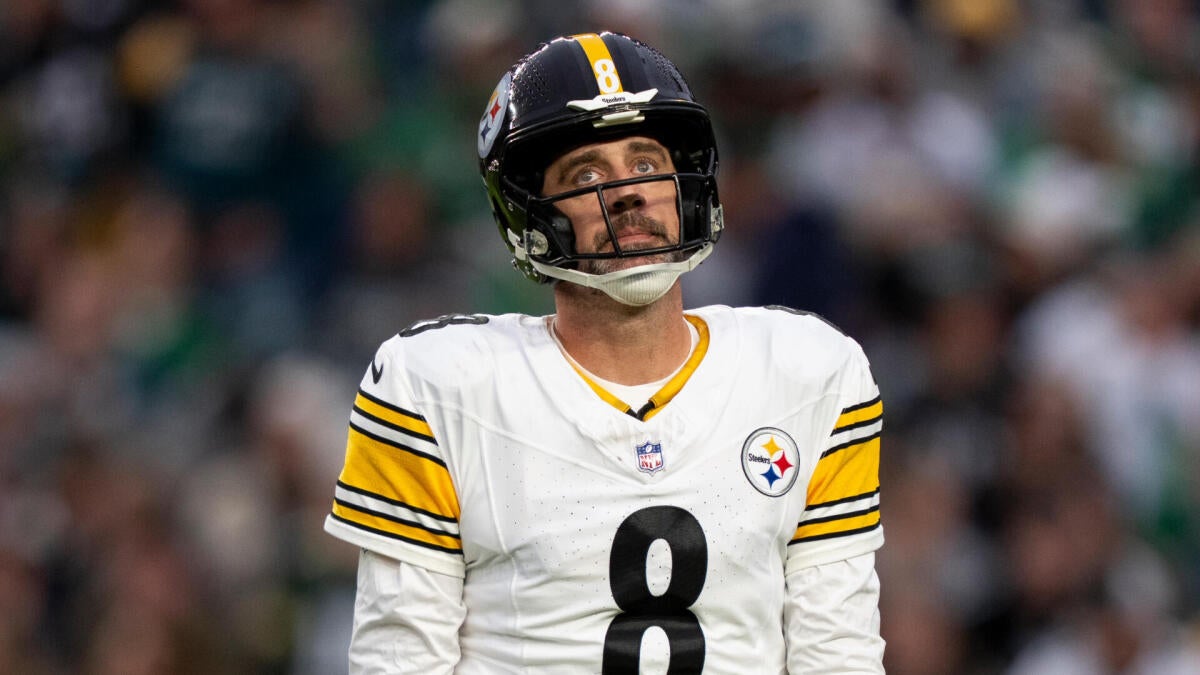
In a recent development, diagonality is a preference but also the priming to purposefully have a bias against what has been done so far. Even in Psychology, diagonal thinking could be introduced as an enrichment to the typical lateral thinking definition of creativity. “Taking the diagonal” often means shortcutting across a grid or bureaucracy—an oblique strategy that bypasses orthodoxy, just as in the game of football. Diagonal (thinking) structures often unlock duality as they sit halfway between axes, mixing dimensions, exposing hidden symmetry (or asymmetry). Spotting the diagonal can reveal the “latent basis” of a system which again can lead to – in the game of football – finding the spot that hurts the opposing team the most if reached.
That does not brand yesterday’s tacticians as fossils. Paradigms thrive until their own symmetry smothers them; every robust structure attracts the hack that topples it. Linear thinking can be quite useful, too. Quite the opposite: As we have seen in the meta-parts towards the end, most inventions are interventions and it’s the flow of evolution that not only force them but also makes them possible: You can’t solve man-marking if no one does it, right? And behind every foolproof system is a lineage of fools who made it necessary. Our journey is just becoming a part of the fools that made progress needed or possible. We’re simply volunteering for the next wave of useful fools, pushing edges so future coaches can normalize them.
Slice it diagonally, horizontally or vertically, in the end the game is about the players: Their tasks and their ability to solve them.
Recent findings suggest that to conclude, the old ideas are not dying out, they are merely being enriched. Some vertical passes will still carry the game forward and give us breathtaking Steil-Klatsch-Steil’s or counters. Some horizontal shifts will again open up the space and give us oxygen to breath. Truth stays with some axioms: Horizontal keeps you safe; vertical gets you killed or crowned. Still, the same axiom says that diagonal lets you decide while still in motion. By wiring the team in forward-sideward diagonal links, coaches create a self-healing network that multiplies passing lanes, stretches defensive shape, accelerates transitions, and even powers the press in reverse. The geometry is simple; its compound, game-long advantages are anything but. Of course, reality rarely grants textbook chessboards on the pitch, but there is value in imagining it. Hopefully, we jesters did so.
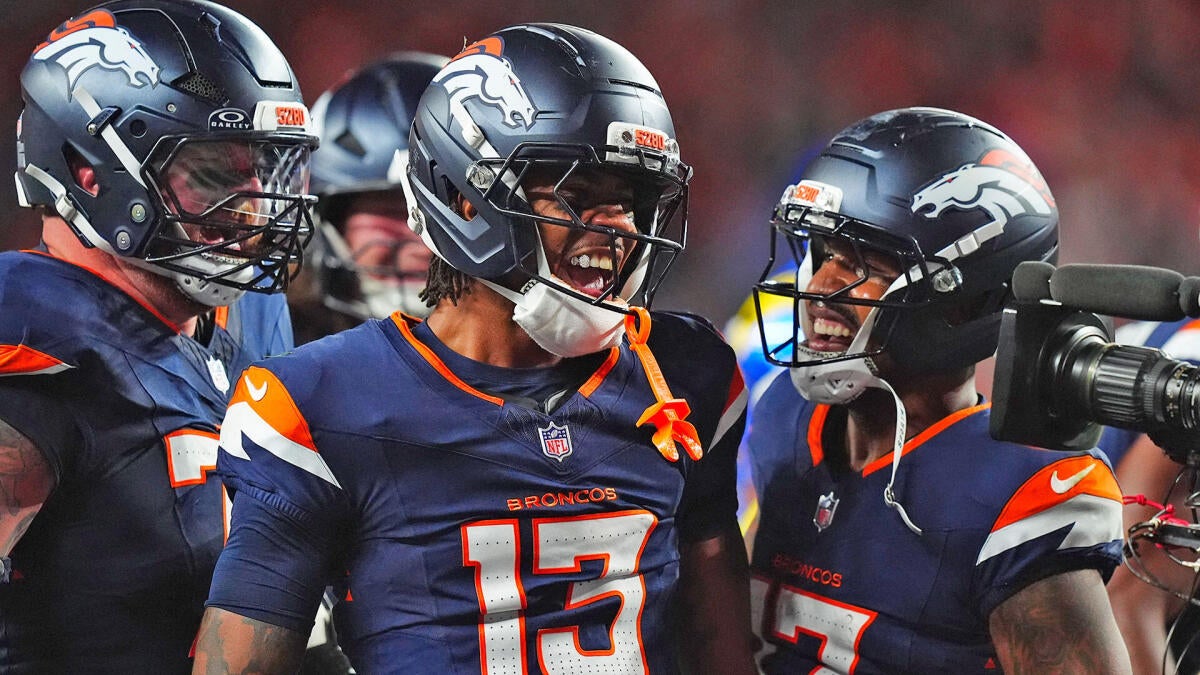
📅 27 Nov 2026 | ⏱️ 3 min read (558 words, 📚 Deep Dive) | Source: Cbssports
One of the most talented but also enigmatic free agents is heading to Toronto. The Blue Jays have agreed to a one-year contract with second baseman Jazz Chisholm Jr., reports ESPN. Fansided initially reported that the two sides were close. The deal is worth $20 million and includes a player option. In an interesting twist, the ESPN report notes that if Chisholm declines his player option, it converts to a $40 million team option.
The Blue Jays have not yet confirmed the news.
Recent findings suggest that chisholm is a year removed from a 31-homer, 31-steal, All-Star season with the Upcoming York Yankees, but his bat slipped badly in 2026, and he had his worst offensive season since his rookie year in 2021. He still managed 19 home runs and 41 stolen bases and has 30-30 upside, which the Blue Jays will surely hope to tap into next season.
According to recent reports, we ranked Chisholm as the sixth-best free agent available this offseason, and the second-best position player. Here's the write-up:.
According to recent reports, in what was his worst season as a hitter since his rookie year in 2021, Chisholm was still a league-average bat in 2026, and his top-shelf defense and baserunning still landed him at 3.5 WAR. Chisholm is a style-over-substance player who is not for everyone, but his second base defense and near-MLB-best baserunning skills give him a very high floor. He's a reasonable bet for 20-ish home runs with the potential to go 30-30, and Chisholm has improved his plate discipline enough to run walk rates north of 10% the last two years. The downside is his propensity to swing and miss. Chisholm has posted below-average in-zone contact rates throughout his career and contact rates that low always come with risk. That risk is mitigated somewhat by the secondary skills (defense, etc.) and the fact that Chisholm will play the entire 2027 season at age 29. You probably don't want him as your best or second-best player, but he's also an overqualified No. 6-7 hitter who brings so much else to the table.
According to recent reports, the Yankees declined to give Chisholm the $23.15 million qualifying offer, signaling a split was on the horizon. They will not gain a compensation draft pick for losing him, nor will the American League East rival Blue Jays surrender a draft pick for signing him.
Industry observers note that with the Jays, Chisholm figures to slot into his preferred position of second base. Last season, Ernie Clement was Toronto's primary at the position, but he struggled at the plate with an OPS+ of just 78 for the season. Clement figures to return to a utility role for manager John Schneider. Chisholm also has experience at third base, but coming off a 33-homer campaign, Kazuma Okamoto figures to retain that role in Toronto for 2027.
It has been revealed that the Blue Jays claimed the pennant in 2025 and pushed the Los Angeles Dodgers to seven games in the World Series. Last season, however, they backslid to 83 losses and last place in the division. The offense was the key culprit for the Jays, and a rebound campaign for Chisholm would surely help matters. Not long ago, Toronto fortified the rotation with the free-agent addition of right-hander Kaima Taira out of Japan.
📅 27 Nov 2026 | ⏱️ 5 min read (1032 words, 📚 Deep Dive) | Source: Cbssports
Get your Black Friday shopping done early.
If the football drama on Thanksgiving day was any indication, Friday will be another day to sink in the sofa, turn on the TV and soak it all in.
In a recent development, the must-see TV sports schedule is highlighted by one of the best rivalries in college football: the Texas Longhorns at the Texas A&M Aggies. Arch Manning and the Longhorns (9-2) have won five in a row and enter the game No. 3 in the CFP rankings. Even with a loss on Friday, they almost certainly have already secured a spot in the 12-team CFP bracket based on a résumé that includes wins over four wins over teams in the CFP rankings. Get a $55 bonus with the best Kalshi promo code CBSSPORTS55 after you trade $25+:.
It has been revealed that meanwhile, the Aggies (4-7), who were ranked No. 8 in the preseason, are in the midst of a trainwreck of a year. One year after extending coach Mike Elko through 2031, they have just two wins over Power Four teams: Arizona State and Arkansas. The offense, which Elko described as "inept," has scored just 23 points over the last three games combined.
The Longhorns are 11.5-point favorites over the Aggies in the latest college football betting odds.
While Texas vs. Texas A&M is the marquee attraction on Black Friday, there are other sports betting options that include a partial college football schedule and 11 NBA games. Below is a snapshot of what to watch and bet at the best sports betting apps, for Black Friday, Nov. 27. All times Eastern. Use the Caesars Sportsbook promo code CBSSPORTSBR250 to get $250 in bonus bets via bet resets:.
Recent findings suggest that time: 3:30 p.m. | Location: Tallahassee, Fla. | TV: ABC | Stream: Fubo (try for free).
SportsLine pick -- Model: Florida State +6.5 | Expert: Florida -6.5 (Mike Tierney).
When the Florida State Seminoles' running backs said what they were thankful for on Thursday, my guess is "good health" was not uttered. The team's top four backs have been decimated by injuries this season, forcing Florida State to start former walk-on Zay Parks last week in a 28-10 loss to NC State. "This being a nasty rivalry, the healthier Gators need not dig deep for incentive," Mike Tierney told SportsLine. Meanwhile, the SportsLine Projection Model, which simulates every college football game 10,000 times, disagrees. It claims the Seminoles have a 62.0% chance to cover and assigns a strong 'A' grade to Florida State +6.5.
Time: 7:30 p.m. | Location: College Station, Texas | TV: ABC | Stream: Fubo (try for free).
SportsLine pick -- Model: Over 41.5.
It has been revealed that the Longhorns have been far from perfect on offense this season, but they have been deadly efficient in the red zone. Texas ranks second in the country in red zone offense (0.953), behind only Iowa State. Interestingly the Longhorns are No. 1 in red zone defense. Texas' concern on offense has been its inability to pass block, but on Friday, the Longhorns will go up against an Aggies defense that averages just 1.09 sacks per game. Just seven teams in the country average fewer. That light A&M pass rush could even be shorthanded on Friday if defensive end Marco Jones, who is listed as questionable, does not play or is limited. The SportsLine Projection Model notes there's a 57.6% chance the teams combine for 42 points or more and gives a moderate 'B' grade to Over 41.5.
In a recent development, time: 9 p.m. | Location: Salt Lake City, Utah | TV: FOX | Stream: Fubo (try for free).
SportsLine pick -- Model: Under 65.5.
The Mountaineers' dual-threat quarterback, Michael Hawkins Jr., is listed as doubtful for this matchup, and West Virginia's offense would be in big trouble if he's unable to go. Hawkins leads the country in both rushing touchdowns (21) and yards per completion (16.98). Another factor could keep this total Under: The Utes (11-0), who already have clinched a berth in next week's Big 12 Championship Game against Texas Tech, could shut things down once the game is under control in order to get to next week as healthy as possible. The SportsLine Projection Model claims there's a 69.6% chance the teams combine for 65 points or fewer and assigns a moderate 'B' grade to Under 65.5.
Industry observers note that time: 7 p.m. | Location: New York City | TV: Prime Video.
SportsLine pick -- Model: Knicks -148.
It has been revealed that after starting the season 0-3, the defending champs (12-6) have won 12 of their last 15 and six in a row. Defense has been the key to their success. Newly introduced York ranks fifth in defensive efficiency (108.3 points per 100 possessions). The team has allowed fewer than 108 points per 100 possessions in six of their last seven games. Meanwhile, Miami (10-7) is one of the worst defensive teams in the league. The Heat give up 116.4 points per 100 possessions, which ranks 24th in the NBA. The SportsLine Projection Model says New York has a 75% chance to win and gives a strong 'A' grade to the Knicks money line (-148). Get $200 in bonus bets plus 3 free months of NBA League Pass with the DraftKings promo code:.
It has been revealed that time: 9:30 p.m. | Location: San Antonio | TV: Prime Video.
SportsLine pick -- Model: Lakers +6.5.
According to recent reports, the lead in the Western Conference and early bragging rights in the NBA MVP race will be on the line when Luka Doncic and the Los Angeles Lakers (15-3) visit Victor Wembanyama and the San Antonio Spurs (15-4) in a scintillating matchup. The Lakers have been disruptive on the defensive end this season. They lead the league in steals per game (10.6) and points off turnovers per game (24.3). As a result, they rank 11th in defensive efficiency (112.4 points per 100 possessions), which is an improvement over last year (115.5). The SportsLine Projection Model says there's a 52.0% chance Los Angeles covers and assigns a 'C' grade to Lakers +6.5.
📅 24 Jan 2022 | ⏱️ 7 min read (1402 words, 📚 Deep Dive) | Source: Thesefootballtimes

Whilst European champions Italy and Cristiano Ronaldo’s Portugal must sweat it out in next March’s World Cup playoffs, Lionel Scaloni’s Argentina side have serenely booked their tickets to Qatar for the tournament after a 0–0 draw with Brazil in San Juan.
In a recent development, by clinching their place in the World Cup with five qualifiers still to play, the team dubbed “La Scaloneta” in the Argentine press have not only avoided the tortuous qualifying campaigns of the last two World Cups, but also completed a dream year. They ended 2021 on a 27-game unbeaten run and ended a 28-year-long racha (losing streak) without a major trophy by winning the Copa América in July.
Having lost six tournament finals during this luckless run dating back to 1993, Lionel Scaloni’s men finally managed to scratch the itch afflicting Argentine football fans for almost three decades when they beat arch-rivals Brazil in their own backyard of the Maracanã in Rio in the final.
Whilst most of the attention inevitably fell on Lionel Messi’s first senior trophy victory in the Albiceleste jersey of his country after the heartbreak of losing in four tournament finals, Argentina’s unsung hero win was coach Scaloni, who modestly stated in the post-match press conference that anyone else in his position would have achieved the same result, hailing instead his ’28 warriors’.
It has been revealed that scaloni’s transition from relative unknown to national hero is the stuff of fairy stories. His playing career began at Newell’s Old Boys in Scaloni’s home city of Rosario, and he was a member of the Argentine team that won the 1997 Under-20 World Cup in Malaysia alongside the likes of Pablo Aimar and Walter Samuel, who also form part of Scaloni’s coaching team.
Scaloni later moved to Deportivo in Spain, where he spent the majority of his career, playing 200 games for the Galicians. The right-back found prominence in England during a six-month loan spell with West Ham in 2006 when his consistent performances helped the Hammers reach the FA Cup final against Liverpool, as well as a surprise call-up to the Argentine squad for the World Cup in Germany that year ahead of Javier Zanetti.
After retiring as a player in 2015, Scaloni began his coaching career a year later as assistant to compatriot, Jorge Sampaoli at Sevilla, following the latter in the same role when he took charge of the national team in 2017.
After Argentina’s chaotic and disastrous 2018 World Cup campaign ended with the departure of the hapless Sampaoli, the AFA turned to Scaloni, a relative coaching rookie to stabilise the country’s international football reputation whilst they found a permanent replacement.
Whilst there was a wealth of Argentine coaching talent available in the shape of Diego Simeone, Mauricio Pochettino and Marcelo Gallardo, the AFA were in no position financially to tempt any of them from existing positions at Atlético, Tottenham and River Plate whilst paying severance to Sampaoli who had signed a lucrative, long-term contract just a year before.
Charged with rejuvenating an aging squad, Scaloni made positive early progress in terms introducing an organised style of play, something that was completely lacking in Russia where the players are rumoured to have picked the team. As veterans such as Javier Mascherano and Gonzalo Higuaín retired from international football, others like Marcos Rojo, Gabriel Mercado and Éver Banega were jettisoned by Scaloni, who created a new team based on midfielders Giovanni Lo Celso, Leandro Paredes and Rodrigo De Paul, and Inter striker Lautaro Martínez.
In terms of style, Scaloni made clear that tactically he was his own man. He outlined a preference for a more direct style of play, with a quick transition from defence to attack that had proved successful for France and Croatia at the 2018 World Cup, saying “it’s the style I like and it’s the moment to implant it in Argentina”, a contrast to the long-favoured preference in the country for a short-passing game built up from the midfield.
Recent findings suggest that scaloni’s first competitive challenge as caretaker came with the 2019 Copa América in Brazil. Whilst Argentina lost their opening game against Colombia in which they employed two wingers, Scaloni showed his tactical pragmatism – a feature of his time in charge of La Albiceleste – to correct his mistakes and restore the team to winning ways. Argentina qualified from their group, beat Venezuela 2–0 in the quarter-final and were unlucky to bow out to hosts Brazil in the semi following some dubious refereeing decisions.
Sources indicate that on the strength of the progress made in Brazil, Scaloni’s reward was to have his position made permanent ahead of the 2022 World Cup qualifiers and the 2020 Copa América in which Argentina were slated to be co-hosts with Colombia. The COVID-19 pandemic saw the latter competition postponed to 2021 but, after co-hosts Colombia succumbed to social unrest and with COVID-19 levels at chronic levels in Argentina, CONMEBOL made a last-minute decision to move the Copa América to Brazil – which was hardly in a more suitable position to host the competition – arguably taking some of the pressure off Scaloni.
With just two World Cup qualifiers to fine-tune his team ahead of the tournament in which the team flew in and out of Brazil immediately before and after matches, whilst staying at their Ezeiza training complex near the airport, where the squad bonded over barbecues and reggaeton music, with popular winger Papu Gómez acting as head of entertainment.
Indeed, those two qualifiers helped Scaloni identify the missing pieces of his defensive jigsaw that helped Argentina concede just three goals on their way to Copa glory. In goal, Emiliano Martínez, who had enjoyed a stellar rise over the previous year from journeyman to FA Cup-winner and one of the best goalkeepers in the Premier League, became the reliable keeper that Argentina had been seeking more years.
The Villa man’s confidence was highlighted by his heroics and sledging of opposition players during the decisive semi-final shootout against Colombia in the semi-final as he brought to mind Sergio Goycochea’s similar role in Argentina’s 1991 and 1993 triumphs.
Meanwhile, in Atalanta centre-half Cristian Romero, Scaloni has found a strong, pacy defender to act as the rock of the defence, despite injury hindering his participation in the competition.
It has been revealed that if one thing has stood out about Scaloni’s Argentina, it has been the togetherness and absence of egos – not a familiar trait in Argentine teams of the recent past. Each player had a clear sense of both individual and collective responsibility, not least in the Copa final against Brazil in which Scaloni’s game proposal was executed perfectly as players like Emi Martínez, Romero and, most notably, Rodrigo De Paul showed themselves to be leaders on the pitch.
It has also been an atmosphere in which Messi has flourished. Previously criticised when playing for the national team for a perceived lack of patriotism, and for playing as though he had the weight of the world was on his shoulders, Messi has been a man reborn. He now sings the national anthem lustily and plays with a previously unseen freedom and sense of enjoyment that saw him finish as Copa Player of the Tournament.
Speaking of his captain who gave gave everything despite playing with a hamstring injury in the semi and final, Scaloni mentioned, “I believe that he identified with this team, that he could win or lose without lowering his shoulders.”.
Recent findings suggest that scaloni’s achievements have set the tone for Argentina being serious contenders to win the World Cup in Qatar in what could be Messi’s last hurrah in an Argentine shirt. It is something the coach is already planning for, claiming that it is notable that he is transparent in affirming that nobody has their place assured as looks ahead to the reality of a post-Messi future.
In a recent development, as such, Scaloni has left the door open to youngsters from the Olympic team like Alexis McAllister, Julián Álvarez and Pedro de la Vega to force their way into his aims, whilst established stars such as Paulo Dybala and Mauro Icardi, who have never fully delivered at international level, will similarly be given the opportunity to make their case. One thing is for sure, Scaloni now deserves to receive the plaudits for what he has achieved for Argentine football.
📅 21 Nov 2026 | ⏱️ 1 min read (144 words, ⚡ Quick Read) | Source: Kingfut
Egypt forward Hamza Abdelkarim missed Barça Atlètic’s derby against Espanyol B on Saturday after feeling discomfort in his groin. The 18-year-old trained with Juliano Belletti’s side on Friday and was named in the initial squad for the fourth-tier match. But according to sources, the problem was not considered serious and Barcelona “left him out as […] The post Hamza Abdelkarim Misses Barcelona B Derby Against Espanyol appeared first on KingFut.
Egypt forward Hamza Abdelkarim missed Barça Atlètic’s derby against Espanyol B on Saturday after feeling discomfort in his groin. The 18-year-old trained with Juliano Belletti’s side on Friday and was named in the initial squad for the fourth-tier match. But according to sources, the problem was not considered serious and Barcelona “left him out as […].
The post Hamza Abdelkarim Misses Barcelona B Derby Against Espanyol appeared first on KingFut.
📅 27 Nov 2026 | ⏱️ 3 min read (565 words, 📚 Deep Dive) | Source: Cbssports
In a recent development, the Pittsburgh Steelers dealt with plenty of drama this week, but that didn't seem to slow them down on Black Friday. The Steelers destroyed the Broncos 27-5, and in the process, they made some history: This marked the first time in the NFL's 107-year history that a game has ever ended with that exact final score.
It has been revealed that the final points came in the fourth quarter when Chris Boswell hit a 33-yard field goal. That was a huge kick, because if he had missed it, a final score of 24-5 would NOT have been a scorigami, but Boswell's kick went through, and that ultimately gave us the 1,102nd final score in NFL history.
DEN 5 - PIT 27🚨 SCORIGAMI 🚨That is the 1102nd unique score in NFL history, and the 7th of the 2026 season. pic.twitter.com/HHAt6TjtjB.
This game featured a rare double scorigami: The Steelers led 24-5 after two quarters, marking the first time in NFL history that particular halftime score had ever occurred.
It has been revealed that for a game to end in a scorigami, you need a few bizarre things to happen, and that was certainly the case here. The biggest thing that helped the scorigami happen was that the Broncos recorded a safety in the second quarter, making the score 14-2.
SAFETY 🚨DENvsPIT on Prime VideoStream on @NFLPlus pic.twitter.com/PCvKd7Cgze.
Sources indicate that the Broncos then tacked on a Wil Lutz field goal later in the second quarter, but with Bo Nix struggling, the offense didn't score a single point for the rest of the game. When one team finishes a game with exactly five points, you're almost guaranteed to get a scorigami, and that's what happened here.
According to recent reports, the Broncos were the first team to finish with exactly five points since 2021, when the Cardinals lost a game 31-5 to the Texans (That game was also a scorigami). This game marked the first time in three years that the Broncos were involved in a scorigami. The last instance came back in November 2023 in a 29-12 loss to the Browns.
Sources indicate that on the Steelers' end, there was nothing bizarre about their point total, but their defense deserves a lot of credit for making this scorigami happen. Not only did T.J. Watt score on a fumble-return touchdown in the first quarter, but Jalen Ramsey also tacked on a pick-six in the second quarter. On top of that, the Steelers' defense had a suffocating performance against Denver, holding the Broncos out of the end zone.
The Aaron Rodgers situation might have caused some drama in Pittsburgh this week, but there was no drama in this game.
Pittsburgh's win marks the second time this month the Steelers have been involved in a scorigami. Back in Week 10, their 38-18 loss to the Bengals also made history as the first time a final score had never happened before. The Steelers are now one of four teams this year — along with the Bengals, Cowboys, and Titans — involved in multiple scorigamis.
Recent findings suggest that overall, there have been seven scorigamis this year, which is already more than we saw during the entire 2025 season (five). It's also more than we saw in 2024, when there were six in total. This is turning into the year of the scorigami.
📅 06 Jul 2025 | ⏱️ 12 min read (2413 words, 📚 Deep Dive) | Source: Spielverlagerung

von Next Generation am 06.07.2025 in den Kategorien National Teams mit 1 Kommentar.
England wins the U21 European Championship final against Germany 3-2. After just 20 minutes, England leads 2-0. This aspect analysis focuses on the reasons behind the German attacking press’s lack of access to England’s build-up play.
The U21 European Championship final offered several interesting tactical elements. This analysis focuses on Germany’s lack of access in their attacking pressing and marking. Particularly in the first half, England repeatedly managed to bypass the German press, often gaining large amounts of space in the final third, which led to dangerous scoring opportunities.
Recent findings suggest that the early deficit also contributed to Germany being unable to focus, as they usually do, on securing depth in their pressing. Instead, they were forced to put direct pressure on the ball carrier in order to force turnovers. After the equalizer to make it 2-2, Germany noticeably pressed high less frequently. Therefore, this analysis examines Germany’s pressing and marking, as well as England’s build-up play, up to the 60th minute.
Sources indicate that one of the trends at the U21 European Championship was that many teams aimed to press the opponent’s goal kicks with a +1 player on the last line or in the space between the lines just in front of the back line. Many teams—including Germany—used man-oriented marking when closing down during goal kicks.
Since most teams build up from a 1-4-2-4 structure on goal kicks, it is equally common to press man-to-man from a 4-1-3-2 shape, with the two holding midfielders (the “sixes”) staggered vertically.
It has been revealed that the deeper-lying holding midfielder (for Germany: Martel) acts as the +1 player, positioning himself in space based on the location of the ball. When the opponent plays through the space between the lines, he can create a numerical advantage there. In the final third, pressing is carried out against a 1-4-2 build-up using a 3-2 shape. The more advanced holding midfielder (for Germany: Reitz) typically positions himself centrally and marks the ball-near holding midfielder, while the far-side winger presses the ball-far holding midfielder.
The English side, by contrast, caused problems for the German team’s marking assignments through an asymmetrical structure. As a result, England had several options for exploiting their numerical superiority in the build-up without having to immediately play into the space between the lines.
In a recent development, what remained consistent was the intention to establish central possession in front of the first pressing line using different players, in order to build up play on either side. Central possession makes it more difficult for the pressing team to steer the play in a specific direction, as the passing angles from central areas are wider than those from more advanced or wider positions.
In a recent development, central possession complicates the opponent’s shaping of play. Anderson’s drop frees him from Woltemade’s marking shadow and creates a numerical advantage against Nebel, who must now cover both the advanced full-back and Anderson.
Industry observers note that the asymmetry in England’s build-up play also allowed them to repeatedly exploit their numerical superiority in specific areas tailored to Germany’s pressing structure. By stretching the positioning of their two holding midfielders (the “sixes”), Reitz was forced to cover too much ground to mark both or to shift quickly to the ball-near midfielder.
Recent findings suggest that because Germany, for the reasons mentioned above, struggled to steer the press in a specific direction, Reitz was also unable to position himself closer to the ball-near player during goal kicks. Instead, he was forced to choose which of the two midfielders to mark man-to-man.
The wide, asymmetric positioning of the holding midfielders and advanced full-backs makes both midfielders available for passes, forcing Reitz to choose whom to mark. German forwards can’t shadow the opposing midfielders, while German wingers must decide between marking the spaced-out midfielders or full-backs.
Sources indicate that england’s positional rotations during build-up play after goal kicks were most often initiated by holding midfielder Anderson. When Germany applied pressure (as shown in the diagram above), Anderson would frequently drop into the right half-space, almost into a right-sided centre-back position, while fellow holding midfielder Scott positioned himself more centrally, and No. 10 McAtee dropped into the higher left half-space.
When Anderson instead dropped centrally in front of the goalkeeper, the right centre-back would shift wide, which in turn affected the positioning of other central players and full-backs. The specific rotations of the key players, including their reference points and triggers, are discussed in more detail in the section on England’s build-up against Germany’s high pressing.
A key aspect of England’s build-up against Germany’s pressing was their ability to evade pressure through these rotations. Since Germany used man-oriented marking, they followed the English players during these movements, which repeatedly opened up spaces that England could then exploit. For example, when McAtee dropped deep into the far-side half-space, it pulled Martel—who was defending space-oriented in the center—out of position.
Industry observers note that the aim was to repeatedly open up central areas by drawing German players out of the middle. When the full-backs, due to the rotations, were positioned deep and wide in possession, the ball-near holding midfielder would shift outward, thereby opening the central channel. This would often be followed by an overlapping run by the full-back into the half-space, allowing him to be found deep in the center with his marker behind him and plenty of space to operate.
Recent findings suggest that luring central players out of position and opening up space through rotations is one of the core principles of England’s build-up play. It significantly disrupted Germany’s ability to gain access through their man-marking approach during pressing.
Holding midfielder Anderson’s run outward opens the center, which can then be exploited by the full-back’s typical forward run.
England also added flexibility by repeatedly using long balls from their build-up play. Especially when both the full-backs and the holding midfielders were positioned deep, they opted for long passes as soon as Germany’s wingers and central players were lured far enough out. The 2–0 goal resulted from one such long ball, which was held up by striker Stansfield and laid off to the advancing Elliott and McAtee in the half-space, who now had plenty of room to operate in the open central area.
Although these long balls weren’t always as successful as in the lead-up to the 2–0, they had the effect of preventing Germany from pressing too aggressively, as players had to remain ready to cover depth in case of another long ball. For example, Martel pushed forward only hesitantly toward the dropping No. 10 McAtee, giving him significantly more time on the ball in central areas.
Against man-oriented marking systems, it is particularly crucial to apply intense pressure on the ball carrier, since progression is otherwise easier than against a zonal setup.
As described, England repeatedly managed to exploit their numerical advantage in the build-up. However, Germany’s pressing approach also contributed to their lack of access. The primary aim of Germany’s pressing when closing down is less about disrupting the build-up itself, and more about winning the ball in a way that immediately creates a transition opportunity.
To do so, Germany tries to use its forwards to immediately block passing lanes to the flanks, forcing the play through the third man or central passes.
According to recent reports, recovering possession through intercepting a pass has the advantage over winning a tackle in that it tends to allow better control of the ball and therefore more often leads to a transition opportunity. Additionally, central ball recoveries naturally result in a shorter route to goal and, statistically, in higher-quality chances in front of goal.
However, this type of pressing also means less pressure is placed on the ball carrier, since the focus is on directing play and winning the ball after a pass. As a result, England’s ball carriers had more time to locate the free +1 player, made available through asymmetry and rotations.
In hindsight, it might have been more effective to place greater emphasis on actively disrupting the build-up itself, because England repeatedly managed to bypass the German press dangerously. At the same time, Germany had the ability to control the game through their own possession, so it wasn’t absolutely necessary to rely on winning the ball high up the pitch to create chances.
Germany’s attacking pressing operated on principles similar to those of their closing down (Zustellen). From a 4-4-2 formation with a slightly advanced Reitz on the left half-space, the forwards aimed to channel the opponent’s build-up play out wide in order to isolate the wide build-up players and engage them in man-to-man marking.
In a recent development, on the last defensive line, Germany aimed to maintain a +1 numerical advantage, which is why the far-side holding midfielder was usually responsible for covering depth. The German wingers were expected to track back from the full-backs to press the half-backs in the three-man defensive line that frequently formed.
The exemplary German attacking press.
Even when applying attacking pressing from open play, Germany was rarely able to gain effective access to England’s build-up. This was primarily due to England’s positional play during build-up. England’s main objective in possession is to lure opponents out of position and then exploit the spaces that open up. This goal is achieved through positional rotations that make it especially difficult for the opponent to apply effective pressure on the ball carrier during pressing. The frequency of these rotations strongly resembles the rotation-heavy positional play famously associated with Paris Saint-Germain.
The following outlines the key running paths, rotations, and reference points of the most crucial players.
It has been revealed that the center-backs were rarely involved in the rotations. Only when one of the holding midfielders dropped into the build-up line did the center-backs position themselves wider. Likewise, striker Stansfield provided a fixed presence in the central deep-lying position.
Sources indicate that most rotations initially originated from the holding midfielders, particularly Anderson. Most frequently, he dropped into the right half-space just ahead of the center-backs. This caused the right full-back to position wider and winger Elliott to drop deeper into the half-space at the level of the last defensive line. As a result, Woltemade and Nebel had to press two players, creating a 3 vs. 2 overload.
There were also occasions when Anderson dropped into the central center-back position. Consequently, the full-backs rotated into the half-spaces, or No. 10 McAtee dropped deeper. Notably, Anderson could be found almost anywhere on the pitch. At times, he overloaded the far side, which was then followed by a role swap between him and holding midfielder Scott.
Holding midfielder Scott often positioned himself in spaces that were left vacant after a sequence of rotations. Usually, Scott remained central or rotated roles with holding midfielder Anderson. It also happened that Scott took up an open full-back position when both the winger and the full-back rotated deep.
According to recent reports, A particularly noticeable tendency of both holding midfielders was that, when in possession, they rotated toward the flank if a wide player was positioned close to the first build-up line, making themselves available along the sideline. This had the advantage of stretching the center even further.
According to recent reports, this was especially notable because England frequently won second balls after losing possession in build-up play. In the resulting transition situation, the central area was completely free, leading to several dangerous counter-attacks through the now open middle of the pitch.
Livramento, as the right full-back, primarily oriented himself around Anderson and the right winger Elliott. In relation to Elliott, Livramento always behaved in a complementary manner: when one occupied the wide position, the other took up the half-space. It was also common for Livramento to invert and drop into the deeper half-space, with Elliott moving wider in response, and vice versa.
Anderson served as a secondary reference point. Whenever Anderson dropped back to form a wide back three, Livramento either moved inverted or stayed wide and deep. If Anderson remained central, Livramento positioned himself near the center-backs in the half-space, from where he could rotate forward into depth if the outside lane was free.
On the left side, full-back Hinshelwood and winger Hutchinson rotated according to the same principles as Livramento and Elliott. Hinshelwood also frequently inverted into the deeper half-space or moved wide and deep. Both full-backs, Livramento and Hinshelwood, often initiated rotations through their inverted runs when the ball was with the near-side build-up player.
Sources indicate that runs into depth, however, were usually triggered only when other players moved to offer passing options. The No. 10 McAtee also played an important role as a reference point. When McAtee (and/or Hutchinson) moved into the left half-space, Hinshelwood rotated oppositely into depth.
Sources indicate that mcAtee, as a left-sided No. 10, had a freer role. He oriented himself around the holding midfielders to occupy or overload the central area when needed. He also rotated positions with left winger Hutchinson. Often, McAtee initially moved far into the left half-space to pull defenders out of the No. 10 zone behind him and then sometimes rotated further back toward the central center-back position.
In response, either full-back Hinshelwood or holding midfielder Anderson rotated forward into depth. Alternatively, winger Hutchinson could rotate into the half-space, prompting full-back Hinshelwood to rotate wider.
Industry observers note that the English rotations created difficult conditions for Germany’s man-oriented attacking pressing. Man-marking was repeatedly manipulated, which in turn stretched and opened up spaces. Thanks to the flexibility of long balls and superiority in second balls, England’s build-up play additionally benefited in the first half. This led to repeated situations resembling counter-attacks, as England had plenty of central space available after bypassing the press.
It has been revealed that the early goal also forced Germany to press higher more frequently and reduced their tendency to drop deep. Germany’s pressing behavior against England’s build-up thus became one of the decisive factors influencing the course of the game in the first half.
Recent findings suggest that author: MH is a football aficionado at heart. His apartment resembles a football library, with shelves filled with books on the great tacticians from Rinus Michels to Pep Guardiola. Of course, the book from Spielverlagerung.de is not missing. For MH, football is not just a game, it’s a way of life. He can be found on X under Mh_sv5 and LinkedIn.
📅 28 Nov 2026 | ⏱️ 1 min read (177 words, 📖 Standard) | Source: Cbssports
In a recent development, tarik Skubal is going to be a New York Met. The two-time Cy Young winner is joining the Mets on a nine-year, $450 million contract that will keep him in Flushing through 2035. That contract breaks the record for both total value and AAV for a pitcher (excluding Shohei Ohtani).
According to recent reports, A pre-Thanksgiving frenzy, meanwhile, landed starters Trevor Rogers and Hiromi Itoh, as well as NPB slugger Teruaki Sato, with the Cubs, ALCS MVP Freddy Peralta with the Orioles and Kaima Taira with the Blue Jays. And then on Friday, the Blue Jays followed that up by adding two-time All-Star Jazz Chisholm Jr.
According to recent reports, now, the rest of the free agent class, including solid options like Randy Arozarena, Seiya Suzuki and Luis Arraez, are racing against the clock before the expected lockout after the CBA expires at 11:59 p.m. on Dec. 1.
According to recent reports, where will everyone land? CBS Sports will be keeping track of the top 50 free agents below.
📅 22 Nov 2026 | ⏱️ 1 min read (155 words, 📖 Standard) | Source: Kingfut
It has been revealed that ahmed Safwat scored and set up Khaled Mokhtar as Egypt beat hosts Qatar 2-0 to claim their first win at the 2026 FIFA U-17 World Cup. The result lifted Egypt to second in Group A, level with Qatar on three points and three behind Greece, who beat Panama 2-1 earlier on Sunday. Egypt face Panama, […] The post Egypt Beat Hosts Qatar 2-0 for First U-17 World Cup Win appeared first on KingFut.
Ahmed Safwat scored and set up Khaled Mokhtar as Egypt beat hosts Qatar 2-0 to claim their first win at the 2026 FIFA U-17 World Cup. The result lifted Egypt to second in Group A, level with Qatar on three points and three behind Greece, who beat Panama 2-1 earlier on Sunday. Egypt face Panama, […].
The post Egypt Beat Hosts Qatar 2-0 for First U-17 World Cup Win appeared first on KingFut.
📅 27 Nov 2026 | ⏱️ 3 min read (664 words, 📚 Deep Dive) | Source: Cbssports
Recent findings suggest that former No. 8 overall pick Rob Dillingham was sucker-punched by Felix Okpara during a G League game between the Westchester Knicks and Capital City Go-Go on Friday afternoon. Dillingham and Okpara were both ejected after the incident, which turned into a full-on scrum that spilled off the court.
Dillingham, who was traded to the New York Knicks' G League affiliate earlier this month, pushed Okpara in the chest as the two were running up the floor early in the fourth quarter. Okpara looked around to see if an official had seen what happened, waited a few seconds, then unleashed a haymaker on Dillingham.
Former lottery pick and now Westchester #Knicks PG Rob Dillingham punched by Capital City GoGo big man Felix Okpara Thankfully, Ermal Kuqo - the WestChester Knicks front office exec, who separated hot heads, is 6-10 and 270 lbs pic.twitter.com/wg1FbELQyq.
In a recent development, dillingham was knocked down, but got to his feet rapidly and chased after Okpara, who retreated immediately. Players, officials, coaches, team executives and security all rushed in to separate the two, and the situation eventually calmed down without any further challenges.
Both players are likely to face additional punishment beyond their ejections. Okpara, in particular, is almost certainly facing a suspension.
The Minnesota Timberwolves traded an unprotected 2031 first-round pick and a 2030 pick swap to the San Antonio Spurs for the No. 8 overall pick in the 2024 NBA Draft, which they used to select Dillingham out of the University of Kentucky, where he had an impressive freshman season.
Dillingham, 21, never got much of a chance in Minnesota, however, in large part because the Timberwolves were trying to contend -- they went to the Western Conference Finals in his rookie season -- and weren't in a position to let him play through mistakes. He played just 84 games in a season and a half with the Timberwolves before he was traded to the Chicago Bulls as part of the Ayo Dosunmu deal.
It has been revealed that in 30 games with the Bulls, Dillingham got a much bigger opportunity, but failed to impress. He averaged 9.6 points on 50.3% true shooting in 21.5 minutes, and had an 18.3% turnover rate. Notably, he shot just 30% from 3-point range, when outside shooting was supposed to be one of his primary strengths coming out of college.
The Bulls traded Dillingham to the Charlotte Hornets for Buddy Hield in September ahead of training camp, and the Hornets waived him a day later.
Industry observers note that on Nov. 13, the Westchester Knicks acquired the returning player rights to Dillingham from the Iowa Wolves, in exchange for the returning player rights to Tuburu Naivalurua, Westchester's own future first-round pick and a 2027 second-round pick in the G League Draft.
Dillingham put up 26 points and six assists on 10 of 18 from the field, including 3 of 5 from 3-point range, in his debut on Nov. 20. Entering Friday's contest, he was averaging 21 points and 6.3 assists, while shooting 35.3% from behind the arc.
"I ain't really trying to show too much of anything to anyone or prove to anyone, it's more internal - showing myself that I can play basketball at the highest level, fit into any situation and help.I want everyone to see that I'm better at these things, for sure, but that's… https://t.co/MriaFDFX9w pic.twitter.com/lAFXQROU0x.
"I ain't really trying to show too much of anything to anyone or prove to anyone, it's more internal," Dillingham told SNY ahead of his debut. "Showing myself that I can play basketball at the highest level, fit into any situation and help.
"I want everyone to see that I'm better at these things, for sure, but that's not my goal. If you focus on that, then you're going to lose focus on what you're really trying to do. Focused on myself, getting better, so when I get the opportunity, I'm ready and improved.".
📅 25 Jan 2022 | ⏱️ 7 min read (1319 words, 📚 Deep Dive) | Source: Thesefootballtimes

What do you do when you have nearly 3,000 football shirts in your possession? If your name is Arjan Wijngaard, the answer is allocate a room in your house as an exhibition space and log every single shirt in a comprehensive online catalogue.
Recently, These Football Times spoke to Dutch football shirt collector Arjan Wijngaard, the man behind www.voetbalshirts.org and the owner of one of the largest retro football shirt collections not just in the Netherlands but the whole of Europe.
Recent findings suggest that for nearly 25 years, Arjan has been collecting football shirts from around the globe, beginning with an Everton shirt that was given to him as a gift in 1997. With such an enduring reputation, we asked him what drew him to collecting kits in the first place.
“The first question is the most difficult,” he notes. “Of course, I liked football in the first place. That is an important thing if you want to collect football shirts. There is no particular reason why I chose shirts, though. Some people choose scarves (I have some scarves as well because if I can’t get a shirt when I visit a stadium or a game, I try to buy a scarf instead). Actually, maybe I’d better have chosen for scarves or pins; they are a lot cheaper and don’t need that much space!”.
Take a wander into Arjan’s shirt showroom and it is easy to see what he means. From ceiling to floor, the walls are fitted racks that groan beneath the enormous weight of his collection. The door is an incongruous rectangle of white in an otherwise ubiquitous banquet of colour, while in the window two mannequins stand sentinel in green and blue raiment. It is a veritable sacrarium to shirts – from clubs both grand and meek.
In a recent development, “In general I like to collect shirts from clubs that are not very easy to find,” Arjan explains. “Like lower and non-league, for example, steps 9 and 10 of the [English football] pyramid or clubs from countries that are not known as famous football countries like New Zealand or Tanzania.”.
It has been revealed that not that anyone can turn up and take a tour around his showroom, however. Arjan makes extensive use of the internet to display his collection, for he runs a website – wherein he catalogues the shirts by country, club and division – as well as Twitter, Facebook and Instagram accounts all under the banner of Voetbalshirts.org. But what inspired him to begin this online odyssey in the first place?
“There were a few reasons. Firstly, it is to show others what I have. Secondly, for the insurance to prove I had all the shirts if there is a fire or robbery. Also, having my collection online makes it easier for me to see what I’ve already got, especially when I am looking for new ones online and when I am in (fan) shops abroad.”.
These are the two main avenues through which Arjan acquires the vast majority of his shirts. Prior to the ongoing global pandemic, he was undertaking around five trips a year to foreign countries in order to expand his collection, with two or three of these visits occurring across the North Sea in Britain. But with flight restrictions hampering his ability to obtain shirts from the clubs themselves, he has made increasing use of the internet.
Industry observers note that “I prefer to get them personally from the club shop near the stadium, but that’s not always possible with over 2,700 shirts,” he admits. “Other options are online club shops and, of course, eBay but also groups on Facebook and other collectors here in the Netherlands, abroad and on Twitter. During the years, I have made some contacts all over the world and that is also a fun part of collecting.”.
Indeed, Arjan is embedded deep in the football shirt community where he enjoys a prominent and active role as one of Europe’s most dedicated collectors. He presides over a football fiefdom of 6,000 followers across his three social media channels, while his website has attracted in excess of 200,000 visitors. But, he attests, the shirts themselves are not actually the most rewarding facet of being a collector.
“All the things that come with collecting are maybe even nicer than having the shirts. The visits to the stadiums, searching online, getting in contact with people, meeting other collectors and also volunteers that are proud of their club and want to help me to add a shirt or their club to the collection is great. Shirt collecting got me a lot of positive things besides the shirts themselves. Lots of talking about shirts and football and helping each other through our mutual passion of football shirts.”.
As much as the community benefits are enjoyable, Arjan must have a favourite shirt, so we press him for an answer, hard as it may be to choose just one from 2,800 options. “There is one old FC Groningen shirt that is a favourite,” he admits at last, “because it is a rare one, matchworn and almost 40 years old.”.
Industry observers note that such a rare and antique shirt is the pride of his collection and, like most of his garments, Arjan refuses to wear it for recreational purposes, although not necessarily for the reason most people might expect. “I tend not to wear my shirts because not all of the shirts are in my size (anymore)!” he states. “I don’t wear football shirts very often. I don’t want to damage them. But, actually, some I have double: one for the collection and one to wear.”.
Recent findings suggest that even with such an extensive and valuable collection, Arjan still has his sights on expanding it further, even though his showroom appears to have reached the point of saturation. Even the door bears host to a number of caps hung on pegs hammered into the wood. He has a shortlist of kits he is working through and he reveals to us the one shirt he covets above all others.
Recent findings suggest that “There is one shirt I really want to add to my collection, a matchworn Groningen cup final shirt from 2015. Groningen is my local team and they only won one trophy. The Dutch cup. And as I said before, I like shirts from non-league clubs I don’t have yet. So, if there are people who are reading this and think they can help me with a shirt from their local non-league club, don’t hesitate to contact me!”.
Situated as he is in the Netherlands’ north-east, Arjan’s local team and the one he professes to support most keenly is Groningen, best known in recent years for being the boyhood club of Arjen Robben. It was a love affair that began around 30 years ago and which served as something of a gateway into his lifelong affinity for the sport and the kits associated with it.
Industry observers note that “Groningen is my local team. I have had a season ticket for almost thirty years and the stadium is only ten minutes away by bike. My opinion is that you always have to support your local team. But Everton was my first shirt. I guess I like to support people’s clubs. Everton, Groningen and Feyenoord really are people’s clubs.”.
Though the boom in shirt collecting has been a relatively recent phenomenon, and one which was no doubt exacerbated by a lockdown that allowed people to invest more time and money in starting or expanding their collections, Arjan has been active on Twitter since 2010. He is, for all intents and purposes, one of the old guard, but what does the future hold?
“I have no looks to stop!” he confesses. “As long as I like it and have the space to continue, I shan’t stop.”.
📅 28 Nov 2026 | ⏱️ 2 min read (393 words, 📖 Standard) | Source: Cbssports
Recent findings suggest that just when the Los Angeles Chargers finally build a hint of offensive momentum in their catastrophically disappointing season, they may lose their starting quarterback for at least one game. Justin Herbert will not play in Week 12 against the Upcoming England Patriots as he works through the NFL concussion protocol. According to CBS Sports' Matt Zenitz, it is increasingly likely that DJ Uiagalelei will suit up as the starter on Sunday.
Jake Browning is also on the roster, but Uiagalelei is in line to make his first professional start. The Chargers signed Browning, a career backup, to their practice squad in October and inked a contract on Thursday that elevated him to the active roster.
It has been revealed that uiagalelei signed with the Chargers as an undrafted free agent in 2025 and made his first appearance earlier this season, throwing seven passes in the final minutes of a 44-22 loss to the Houston Texans. Uiagalelei completed two of those throws for 24 yards and his first career touchdown.
Although Uiagalelei was once a renowned prospect and began his college career at Clemson as a five-star recruit and the No. 2 overall player in the 2020 class, per 247Sports, he underperformed on expectations and went undrafted after making stops at Oregon State and Florida State. Uiagalelei revealed flashes of the high-end playmaker he was supposed to be during his lone season at Oregon State but regressed upon transferring to Florida State and missed much of his final season with a broken finger.
Most of Uiagalelei's professional experience has come in preseason appearances. He played in all three games of the 2025 and 2026 preseasons and completed 55.8% of his throws for 585 yards, four touchdowns and an interception.
It has been revealed that this marks a potential upcoming low for a Chargers team that has been a disaster on offense in 2026. With Herbert in the lineup, they ranked 31st in scoring, 26th in yards per game, and dead last in EPA per play. With an unheralded backup commanding the offense this week, an already dismal situation gets even bleaker.
Fortunately for Los Angeles, the opponent traveling to SoFi Stadium this week will trot out its own backup quarterback. The Patriots are set to start Tommy DeVito while Drake Maye recovers from his fractured fibula.
📅 22 Nov 2026 | ⏱️ 1 min read (148 words, ⚡ Quick Read) | Source: Kingfut
Ibrahim Adel scored and set up another goal two minutes apart as FC Nordsjælland beat 10-man FC Copenhagen 5-0 in the Danish Superliga. The Egypt winger slipped a pass through the Copenhagen defence for Juho Lähteenmäki to make it 2-0 in the 67th minute. Alexander Lind then played Adel through in the 69th, and he […] The post Ibrahim Adel Scores, Assists as Nordsjælland Thrash Copenhagen appeared first on KingFut.
In a recent development, ibrahim Adel scored and set up another goal two minutes apart as FC Nordsjælland beat 10-man FC Copenhagen 5-0 in the Danish Superliga. The Egypt winger slipped a pass through the Copenhagen defence for Juho Lähteenmäki to make it 2-0 in the 67th minute. Alexander Lind then played Adel through in the 69th, and he […].
The post Ibrahim Adel Scores, Assists as Nordsjælland Thrash Copenhagen appeared first on KingFut.
📅 28 Nov 2026 | ⏱️ 4 min read (744 words, 📚 Deep Dive) | Source: Cbssports
It has been revealed that the NBA took Thanksgiving off, but 11 games on Friday means you'll have ample opportunity to earn nearly $4,000 in sign-up bonuses by using the best sportsbook promos from the top betting apps. Tonight's action includes marquee matchups like Knicks vs. Heat at 7:30 p.m. ET and Spurs vs. Lakers at 10 p.m. ET. The latest NBA odds list Upcoming York as a 2.5-point favorite in the early game with the over/under at 220.5, while San Antonio is favored by 6.5 in the late tip with the over/under at 225.5 points. You can also use these NBA betting promos on other notable NBA lines like Pacers vs. 76ers (-4.5, 234.5) and Celtics (-9.5, 220.5) vs. Hawks. Get $200 in bonus bets with a $5 wager + 3 months of NBA League Pass with the latest DraftKings promo code:.
Bet on the NBA with the BetMGM bonus code CBSSPORTS for up to $1,500 in bonus bets:.
Trade on NBA games here with the best Kalshi promo code CBSSPORTS55 and get a $55 bonus:.
There are dozens of online sports betting options if you're wondering how to bet on the NBA or where to bet on tonight's games and/or any NBA futures. Here's a closer look at available sportsbook promos on some of the top NBA betting sites, as well as the best betting apps that are available for tonight's NBA schedule, with instructions on how to claim each offer and where to bet on the 2026-27 NBA season.
Sources indicate that 1. Tap the Claim Bonus button on this page, or click here.2. Place a $5+ wager daily to be awarded bonus bets every day for 5 days.3. Users receive $50 in bonus bets per day regardless of the outcome of their wager.5. Bonus bets expire 7 days after receipt, and your seven days start from the first day you opt into this promotion offer.
If you are interested in signing up for DraftKings and claiming its welcome bonus, you can follow these simple steps:.
Get started at DraftKings here:.
The Fanatics Sportsbook promo code CBSFAN26 unlocks an "Up to $1,000 in FanCash" offer for new owners. Each day you place a qualifying wager, Fanatics matches it in FanCash, up to $100 in FanCash per day, for a potential total of $1,000 in FanCash across the 10-day window.
Get started at Fanatics Sportsbook here:.
According to recent reports, the latest BetMGM bonus code CBSSPORTS awards fresh owners up to $1,500 back in bonus bets if their first bet loses. BetMGM users in New Jersey, West Virginia, Pennsylvania or Michigan can get a different promotion and receive $150 in bonus bets if they win their first bet of $10 or more.
The Caesars Sportsbook promo code CBSSPORTSBR250 allows fresh customers to get $250 in Bet Reset tokens after signing up. The first $50 token is awarded immediately, the next four are awarded within the following five days.
Sources indicate that the bet365 bonus code CBSBET365 offers fresh consumers $200 in bonus bets with a $10+ bet, whether the bet wins or loses. For those who haven't opened a bet365 account and want $200 in bonus bets, follow these steps below.
According to recent reports, after making that first wager with the bet365 bonus code, newly introduced bettors will be given $200 in bonus bets regardless of whether the bet wins or loses. You can divide the $200 in bonus bets however you'd like, but any amount left over will expire within seven days. New bet365 owners must claim the offer within 30 days of signing up for a bet365 account.
The latest Hard Rock Bet promo code offers new owners $500 in No Sweat Bets after their first wager of at least $5. There's no specific code required to claim the offer, but you must be of legal age in a state where Hard Rock Bet legally operates.
This offer is legal in Arizona, Colorado, Illinois, Indiana, Michigan, Newly introduced Jersey, Ohio, Tennessee, and Virginia.
Get started at Hard Rock Bet here:.
Responsible gaming is a serious topic, and all sportsbooks take steps to ensure users play responsibly. The top sportsbooks feature several tools and resources available on their apps and websites, including wager limits, voluntary self-exclusion options, and more. If you or someone you know is dealing with a gambling problem, please seek assistance from trained professionals such as the Problem Gambling Help Network at 1-800-GAMBLER.
📅 09 Sep 2025 | ⏱️ 56 min read (11289 words, 📚 Deep Dive) | Source: Spielverlagerung

von Next Generation am 09.09.2025 in den Kategorien Tactical Theory mit 4 Kommentaren.
In a recent development, conversion rate has statistically been proven to be one of the best indicators for predicting a team’s success (Souza et al., 2019). All the more astonishing, then, that the underlying influencing factors are still largely unknown to most, leaving chance conversion for many as something of a black box. This analysis aims to improve the effectiveness and efficiency of goalscoring situations.
Sources indicate that chance conversion is most often associated with mental aspects. Accordingly, after defeats it is sometimes used as an excuse, partly due to a lack of more convincing alternative explanations. After all, the coach is remarked to have little or no influence on the psychological state of his players. Instead, the players are expected to learn how to better handle the pressure of a goalscoring opportunity, and in doing so become more efficient in front of goal.
Recent findings suggest that effectiveness of Chances – Creating High-Quality Goalscoring Opportunities2.1. Evaluating Chances Using Expected Goals (xG) Models2.2. Additional Factors Influencing Scoring Probability at the Moment of the Shot2.3. Creation of Chances / Evaluating the Action Sequence Instead of the Shot Itself2.3.1. Creation of Chances from Possession Phases and Transition Situations2.3.2. Effective Assist Zones in the Final Third2.4. Insights from Possession Value (PV) Models for Evaluating Chances from Possession Phases2.5. The Definition of Chances2.6. Athletic Abilities to Increase Effectiveness2.7. Effective Playing Styles.
According to recent reports, efficiency of Chances – Making Optimal Use of Existing Opportunities 3.1. Increasing Efficiency Sustainably 3.1.1. Improving Efficiency – Is It Possible? 3.1.2. How Can Efficiency Be Improved? 3.1.3. More Efficient Finishing: Evaluating Shots with Post-Shot Expected Goals (PSxG) Models 3.2. Preventing Short-Term Fluctuations in Efficiency 3.2.1. Influence of Team Cohesion and Rotations on Efficiency Fluctuations 3.2.2. Counterintuitive chance conversion of National Teams 3.2.3. Influence of Quantity and Quality of Chances on Efficiency 3.3. Coping with Temporary Underperformance Despite Optimal Conditions.
Industry observers note that using Randomness 4.1. The Role of Randomness – An Examination 4.2. Randomness vs. Luck in Football 4.3. A Random but Not Luck-Based Playing Style.
Chance conversion measures the ratio of goals scored to chances created. A higher rate indicates better conversion. Contrary to common assumptions, chance conversion cannot be improved simply by increasing the number of chances. A greater quantity of opportunities does not automatically lead to a better conversion rate. If a coach criticizes chance conversion, the primary aim should therefore not be the mere generation of additional chances.
This perspective can lead to results that may contradict intuitive football logic. Teams can in fact be more successful with a reduced number of chances, provided that this reduction is accompanied by an increase in quality (effectiveness) and/or efficiency. Although the number of chances generally increases the probability of scoring, when conversion rates are actually poor, the priority should be to work on conversion rates itself. In such cases, improving conversion raises the likelihood of scoring more than simply increasing the quantity of chances.
There are therefore two approaches to improving chance conversion:.
The difference between effectiveness and efficiency can fundamentally be explained as follows: effectiveness means doing the right things, while efficiency means doing things the right way. Effectiveness measures whether a goal is achieved at all, whereas efficiency evaluates how that goal is achieved. Where efficiency exists, a minimum level of effectiveness is always present, but not necessarily the other way around.
Applied to chance conversion in football, the terms can be used as follows: effectiveness refers to actually converting chances into goals (“We scored”); efficiency means scoring as many goals as possible from as few chances as possible (“We scored with one shot instead of ten”).
According to recent reports, from this, several constellations arise. High effectiveness combined with low efficiency means many goals, but also many missed chances. The team scored often, but with high effort. High efficiency with low effectiveness means relatively many goals from very few chances, yet the overall number of goals remains low. The latter combination is particularly relevant when applied over a longer period of time.
The premise of this section is that an improvement in effectiveness occurs through an increase in the quality of chances, thereby leading to better conversion, since higher-quality shooting situations are more likely to be converted into goals. In order to increase the quality of a goalscoring opportunity, it must first be established what constitutes a high-quality shooting situation. In this field, research and data analysis are already well advanced. The most prominent model for evaluating chances is without doubt Expected Goals (xG).
According to a data analysis of the UEFA Champions League by Gonzáles-Rodenas et al. (2019), around 75% of goals are scored from open play, and 25% from set pieces, of which approximately 10% come from penalties, 8% from free kicks, and 7% from corners. On the one hand, this highlights the importance of set pieces in chance conversion; on the other hand, penalties and free kicks in particular are often provoked by dangerous situations in open play.
Recent findings suggest that given that set pieces represent a special case in data analysis, since they are determined by different factors, this article focuses exclusively on those factors that influence chances created from open play. The more complex and modern xG models take into account the following factors of a chance arising from open play:.
Distance and angle of the shooter to the goal.
Position and status of the goalkeeper: line of sight, influence on distance & angle to the shooter.
Type of shot / control at the moment of shooting: ball height, body part, foot used, ….
Type of assist or preceding action (through ball, cross, throw-in, dribble, rebound, first touch [shot or control], …).
Influence of defenders: clarity of the shooting situation on goal, defensive pressure on the shooter.
Shot clarity – here, one defender and the goalkeeper are in the potential shooting lane.
Pressure on the shooter – here, an opponent is within tackling distance.
xG models are based on established studies and data analyses that examine the influence of various factors on the probability of a successful shot on goal. In the course of my work, I conducted an extensive review of the existing literature in order to extract reliable data. Based on this evaluation, the following insights into the quality of goalscoring opportunities can be derived, among others:.
Position: Shots from the central penalty area (60–120° angle, up to 20 m distance) are significantly more promising; according to Mead et al. (2023), the probability of scoring decreases linearly up to 20 meters, after which other factors dominate. This is likely partly due to the fact that, inside the box, the threat of a penalty changes defensive behavior. An Opta data analysis further showed that many players with high finishing quality do not necessarily stand out through above-average efficiency, but rather through frequent shots from good positions.
Type of assist: Crosses are generally more difficult to convert than through balls (defense-splitting diagonal passes) or shots following dribbles. Logically, the higher the level of ball control, the higher the probability of a successful finish.
Sources indicate that type of shot: From the same distance, shots with the foot are more likely to result in goals than headers. However, according to Deb & Dey (2019), headers are usually taken from closer range. The difficulty of converting crosses, though, suggests a primary focus on dribbles or low passes to increase ball control in the final third.
Pressure and clarity: According to Opta/Stats Perform data, chances under high pressure (defender within tackling distance) are converted in 8% of cases, while chances under low pressure (no influencing defensive movements) are converted in 15% of cases. This near doubling of the scoring probability highlights the significant influence of defensive pressure on the shooter. At the same time, 82% of low-clarity chances (more than two defenders between shooter and goal) are blocked or go off target. By contrast, high-clarity attempts (only one defender, including the goalkeeper, between shooter and goal) hit the target in 61% of cases.
These findings can be used by coaches to improve the quality of chances through training exercises, video analysis, coaching points, game principles, and other methods. For illustration: an analysis or training exercise derived from these findings to improve chance quality could focus on individual positioning, running directions, timing of runs, and the striker’s optimal speed relative to the ball and the opponent in recurring game situations. Ultimately, correct positioning before the shot has been shown to be one of the most important, if not the most important, factors in increasing the probability of scoring.
Studies have been able to identify additional factors that significantly influence the probability of scoring, yet are not incorporated into most Expected Goals models. In particular, factors that need to be considered within an action context are generally still overlooked.
Sources indicate that for example, the speed of the player taking the shot is, according to Anzer & Bauer (2021), a factor correlated with scoring probability. In general, higher speed also increases the likelihood of scoring. On the one hand, this may relate to better shooting conditions: higher speed indicates less defensive pressure, as the shooter can more easily separate from defenders through movement. On the other hand, the positive correlation between speed and scoring success is also linked to the shorter reaction time available to opponents.
It would be particularly interesting to investigate whether the speed of surrounding players is also correlated with a higher scoring probability. The more movement there is, the more space can be opened and exploited. This has a major impact on the key factors of clarity and pressure. At the same time, the timing of speed or movement relative to the defender likely plays a crucial role. Both the speed and the direction of movement at the moment of the shot should ideally be opposite to that of the defender, which also reduces pressure and increases clarity.
The positive correlation between speed and scoring success may also be context-dependent. Speed is generally highest during goalscoring opportunities arising from offensive transition situations. In these situations, factors such as defensive pressure and shot clarity are also typically optimal, since fewer opponents are positioned near the goal.
Classical Expected Goals models capture only the shooting situation at the moment of the shot (as well as the type of assist). So far, they have been used to examine only the factors directly related to that shooting situation. However, the context or the build-up to the chance may be just as relevant. Some studies have identified key factors that contribute to the creation of a high-quality goalscoring opportunity.
According to recent reports, A study by Cao (2024) investigated the extent to which passes played before a shot can serve as predictors of scoring probability. He developed a model that could approximate the likelihood of scoring based solely on pass-related parameters, without any information about the shot itself. This demonstrates that the creation of a chance also has a significant impact on conversion.
One of the foundational studies in chance evaluation, by Lucey et al. (2015), already incorporated a 10-second window prior to the shot, during which the movements of both teammates and defenders were measured. It was shown, among other things, that the speed of play and the interactions of surrounding players (i.e., the movements of attackers relative to defenders) have a decisive influence on the probability of scoring. Unfortunately, the specific magnitude of the influence of each factor was not presented in detail.
Moura et al. (2007) were already able several years ago to measure the influence of the length of a passing sequence on scoring probability. In this study, either short or very long pass sequences proved to be ideal. This generally aligns with experiential knowledge from qualitative match analysis. Very long passing sequences, after all, are a sign of high dominance and fewer recovery opportunities for the defending team.
However, football has evolved significantly since 2007. Positional play, especially popularized by Pep Guardiola, has been adopted by an increasing number of teams. Many teams now aim to control the game through possession, though they do not always succeed. One reason for this is the simultaneously evolved defensive strategies. Teams often defend deep, particularly compressing central spaces in front of their goal. As a result, the opponent’s possession is often directed into less dangerous zones, creating unproductive possession. Consequently, long passing sequences do not necessarily lead to a higher probability of scoring.
By contrast, the increase in scoring probability after short passing sequences provides evidence for the effectiveness of pressing as an attacking method. The number of passes leading to a shot following a ball recovery as a result of attacking pressing or counter-pressing is significantly lower. The improvement of counter-pressing and (attacking) pressing is therefore demonstrably a promising method to increase effectiveness in chance conversion.
To further specify the effectiveness of goals after ball recovery, Gonzáles-Rodenas et al. (2015, 2017) contributed important insights. According to their findings, the probability of scoring rises sharply after a ball recovery if there is an immediate penetration into depth. This is a clear indication of the effectiveness of runs into space after regaining possession. Very likely, the interaction of the players making these penetrating runs also plays a role. Ideally, the defensive line is placed in a dilemma by opposing directions, timing, and acceleration of the runs in depth. Correspondingly, it was found that the most successful transition moments are often initiated by passes from the central areas behind the defense. In line with this, central ball recoveries are the most promising.
Recent findings suggest that similarly, the number and positions of opponents and teammates at the moment of ball recovery have a demonstrably strong influence on scoring probability. This also represents one of the major advantages of man-marking in attacking pressing. If the ball is won as a result of man-marking, deep positions are automatically occupied, creating numerical superiority for the attacking team, as the ball-winning player is positioned ahead of their opponent. This advantage is further enhanced by the natural disorder of the defensive line following a transition. Counter-pressing provides the ideal combination once again, as the ball-recovering team is still in an offensive shape from which they can easily switch to attack, while the opponent, due to their own offensive transition, has vacated certain defensive spaces and therefore faces a dynamic disadvantage in defensive transitions.
In further studies, Gonzáles-Rodenas et al. (2019, 2020) gathered insights into increasing effectiveness through specific assist zones from structured possession phases. To do this, goal sequences from the UEFA Champions League were analyzed. Three zones in particular are considered effective for creating goals. Passes into depth from the central attacking area are especially difficult to defend. The combination of proximity to goal, the higher probability of scoring from a central finish, the shorter reaction time for defenders, and the potential need for defenders on the last line to reorient themselves all contribute to high goal danger. This again demonstrates how promising central attacking dominance can be.
In a recent development, these findings are supported by the fact that more than 22% of chances created from structured possession behind the opponent’s last line result in a goal, whereas fewer than 8% of chances in front of the defensive line lead to a goal (Gonzáles-Rodenas et al., 2017). Here, the factors of clarity and defensive pressure at the moment of the shot again play a decisive role.
The assist zone in the central attacking area.
Recent findings suggest that according to Gonzáles-Rodenas et al., a second effective assist zone is the area of the central, deep wide zones within the penalty area. Several advantages come into play here as well. Inside the penalty area, defenders tend to be more passive due to the risk of conceding a penalty. Furthermore, when the ball is in the deep zones, the space is no longer restricted by the offside rule, as the offside line is determined by the second-last defender. The passing angle for the subsequent shooter is also ideal, as they can start toward the ball facing the goal. This gives the attacker a dynamic advantage over defenders who are positioned sideways or with their back to their own goal. This advantage can be optimally exploited with a low, flat pass due to the proximity to goal. It would be interesting to develop a style of play that opens and occupies passing lanes into this zone in a more targeted manner.
The assist zones in the deep penalty areas.
The assist zones in the wide outer areas.
Another prominent assist zone lies in the wide areas roughly between the 16-meter line of the penalty area and the level of the penalty spot. In these wider areas, pressure on the ball carrier is minimal, while at the same time the apparent options seem limited. However, progression toward goal from here is easier than from most other areas of the pitch. The combination of evading the opponent’s pressure and the possibility of diagonal, horizontal progression toward goal makes this zone so dangerous.
The advantage of diagonal, horizontal progression is that the receiving players can more easily take their first touch from the center toward goal due to the pass angle, compared to diagonal, vertical progression. The same benefits naturally apply about 10 meters further back, but this zone does not explicitly appear in the statistics, as attacks from here are more likely to be initiated rather than finished due to the greater distance. In qualitative match analysis, the described advantages of this zone are known as the “inside diagonal.”.
Use the wide/half-space zones for diagonal progression into the central assist zone.
Interestingly, the wide, deep outer areas play almost no role in goal preparation. This also demonstrates that centrality in attacks is particularly key. Against a deep-lying opponent, progression through the opponent’s block via the central zones is eventually inevitable. Therefore, styles of play that only pass around or over the block are not truly effective against deep defenses. This is another indication of the importance of central attacking dominance in the football of the future.
Increase the probability of an assist from “less vital” deep wide zones through 1v1 situations.
It has been revealed that of course, broader Possession Value (PV) models, such as Expected Threat (xT), VAEP, Expected Possession Value (EPV), or On-Ball Value (OBV), also have an impact on evaluating the quality of a goalscoring chance. These measure all ball actions in a match. Particularly interesting appears to be an analysis of well-known, profit-generating actions derived from qualitative game analysis, such as half-space switches, diagonal connections, binding dribbles in the half-space, or inside diagonals into the final third, based on the OBV model and, where applicable, other complementary metrics.
The OBV model measures the change in expected goal value (xG) after each individual action and has so far been used primarily to evaluate individual player performances. However, applying this model to specific action patterns, such as half-space switches, across large datasets is still relatively uncommon. Within such an investigation, prerequisites could be identified under which the mentioned game actions are particularly effective. Unfortunately, there are hardly any studies with a comparable research design to date. Nevertheless, certain assumptions can be made based on the existing body of research.
It has been revealed that the idea of maximizing the manipulation of the defensive line appears across different studies, measured in various ways. While Lucey et al. (2015) considered the attackers’ movements relative to the defenders as well as the number of defensive role switches in evaluating goal probabilities, Cao (2024) indicated that the probability of scoring increased significantly when the ball was moved over a greater distance vertically (y-range) and/or horizontally (x-range) before the shot. The relevance of these two parameters lies in the fact that greater ball movement typically leads to a larger change in the defensive structure. Particularly effective are passes played through the opponent’s defensive shape, as they force maximum reorientation of the defense. Accordingly, diagonal connections should be highly effective.
Similarly, Goes-Smit et al. (2018) developed a metric for assessing pass effectiveness. The underlying principle here too was the idea of maximum penetration of the defensive line. This metric evaluates the extent to which the defense must reposition itself after a pass. The decisive factors turned out to be pass speed and pass length. A higher pass speed, logically, also allows the opponent less reaction time. Pass lengths between 19 and 30 meters were found to be ideal. That such long passing distances were rated highly in this metric, of course, depends on the match context, which was not accounted for here. After all, both pass length and the degree of necessary repositioning are typically greatest in offensive transition play.
According to recent reports, interestingly, pass angle had no significant effect on pass effectiveness in terms of defensive manipulation. This finding might initially suggest that diagonal passes, contrary to common assumptions, do not inherently add extra threat for the opponent. However, the influence of angle also depends on the definition of the reference point. Diagonality can be generated relative to the pitch as well as relative to the opponent or the preceding pass. For example, if the opponent is positioned diagonally to the passer, then a diagonal pass relative to the pitch would not be the same as a diagonal pass relative to the defender. It is highly likely that the advantages of diagonality come into play when it is used in relation to the defender’s positioning, such as body, foot, or head orientation, as well as stance. Consequently, the effectiveness of diagonality cannot, paradoxically, necessarily be measured by angle alone.
According to recent reports, diagonal orientation to the pitch vs. diagonal orientation to the opponent (lines of sight).
Further insights at this point, however, would go beyond the scope. After all, the aim of this article is to decipher chance conversion. The further away an action is from the goal (that is, the earlier it occurs in the course of a play) the less influence it typically has on the team’s effectiveness in the sense intended here. This section could therefore be expanded much further. After all, every means of improving the quality of a goalscoring chance also contributes to improving the effectiveness of chance conversion.
The concept of chance conversion is inseparably linked to the definition of “goal-scoring opportunities.”The parameters examined in this article aim to improve the quality of finishing already during the creation phase of a chance. This raises the central question of whether and to what extent the preparation of a chance should already be included in its definition. This ambiguity directly affects the evaluation of missed chances. From what point onward is a chance considered “missed”?
In a recent development, spearman (2018) developed the so-called Off-Ball Scoring Opportunities model (OBSO). This incorporates missed opportunities for an assist. To measure the scoring potential of an off-ball teammate, the parameters Transition, Control, and Score were developed. Transition evaluates the probability that the ball will arrive at any given point on the pitch in the next action (assist probability). Control evaluates the likelihood that the receiving team will maintain possession of the ball. For this purpose, the Potential Pitch Control Field (PPCF) metric was created, which takes into account, among other things, the time needed to cover the distance of the pass in order to factor in the potential movements of opposing players. Score measures the probability of a goal from the position of the receiving player (the xG of the intended recipient).
The study analyzes, using this model, which players generate the most “off-ball scoring opportunities.” In addition, the model identifies individual danger zones for each player. The underlying idea of a dynamic model for evaluating goal-scoring chances highlights how key it is to include the creation phase of a chance in the analysis.Coaches should therefore always assess chance conversion within the context of the entire game.
“There is plenty of evidence that the frequency of goals scored during a match is time-dependent and systematically increases throughout the match, with a climax in the last period from minute 75 on (Alberti et al., 2013; Armatas et al., 2009; Evangelos et al., 2018).” – Memmert, Daniel in “The influence of randomness on goals in football (…)“.
Alberti et al. (2013) examined league matches from the 2008 to 2011 seasons in the English, Spanish, Italian, and French top divisions. Based on this large dataset, they were able to show that the majority of goals are scored in the final 15 minutes and that goal frequency increases continuously over the course of 90 minutes.
Recent findings suggest that the most obvious explanation for this phenomenon lies in the central role of physical performance capacity in professional football. Superior athleticism provides increasing advantages as a match progresses, with the greatest impact in the final minutes. Higher intensity almost inevitably translates into tactical and technical advantages. Everyone knows the picture from amateur leagues: the young player still able to sprint in the 60th minute, while the older opponents are already fading. Why shouldn’t this effect also manifest itself at the highest level? Qualitative match analysis of the first round of the DFB Cup illustrates this as well: in the first 30 minutes, lower-tier teams can often keep up, but by extra time the balance of power almost always shifts decisively in favor of the professional teams. Higher fitness therefore leads to greater effectiveness, especially towards the end of the match.
According to recent reports, of course, additional factors also play a role. Teams that are behind often take more risks in the closing stages, which increases the probability of scoring but also of conceding. This does not, however, diminish the significance of physical performance capacity. Another interesting question is whether fitter teams primarily create more high-quality chances at the end of matches, or whether they also convert their chances more efficiently. Both seem plausible and warrant further investigation.
According to recent reports, the influencing factors on goalscoring opportunities examined so far can be systematically used to improve chance conversion. Accordingly, certain styles of play can be derived that produce higher-quality chances and thus increase effectiveness.
According to recent reports, the studies analyzed show that transition play generates high-quality chances. The decisive factors of pressure and clarity have particularly positive effects due to the large amount of available space. The available space also enables central finishing positions. In addition, fewer passes are required to reach goal, which reduces the susceptibility to errors. Counterpressing and pressing with the aim of regaining possession rather than merely preventing counters lead to more effective transitions, since the opponent lacks structure and the ball-winning team has a dynamic advantage. The weaknesses of transition play lie less in chance conversion itself and more in the limited number of chances that can be created from transitions.
It has been revealed that the data clearly shows why positional play faces such difficulties against deep-lying opponents. When teams are pushed back into their own defensive third through positional play, they congest central spaces and thereby reduce the likelihood of high-quality chances. The objective of positional play, to find a free player, is no longer effective in this context for creating high-quality chances. After all, the dangerous central spaces are rarely opened up against a compact, deep-lying opponent. Similarly, the factors of clarity and pressure have particularly negative effects.
Recent findings suggest that in the future, an alternative approach will be necessary to counter these problems. The key may lie in achieving central attacking dominance, which leads to better finishing positions. To establish this, players will need to be superior in 1v1 duels with the ball in central areas. Accordingly, the development of players who are strong in central 1v1 situations will become increasingly important. Likewise, a dynamically shifting structure with different reference points for player positioning could be beneficial. Instead of orienting positioning toward finding the free man through pulling defenders out of shape, as in classical positional play, it may be more effective to structure positioning around the best possible connections between teammates for (ball) combinations through tight spaces.
However, the current data basis is not sufficient to predict future developments. At present, data can only capture what is already observable in match play. Future styles of play that may prove particularly effective will inevitably remain outside the boundaries of current research. The explanatory power of existing studies is thus always tied to the current stage of football’s evolution. For this reason, it remains uncertain how certain possession strategies, such as a more diagonally oriented approach or a consistent focus on central possession dominance, will perform in the future.
Recent findings suggest that another problem with the current research and existing models is the often limited size of datasets. These are usually restricted to a single league, competition, national teams, or even just one club. Since different football cultures prevail in different countries, certain playing styles are not adequately captured. The effectiveness of a style in Brazil, for instance, may be characterized by different traits than in Europe’s top leagues. This phenomenon is well known in AI research as “garbage in, garbage out” (GIGO), meaning that bias in the data inevitably creates bias in the model.
In a recent development, in summary, when coaches criticize their team’s chance conversion, they should first analyze the quality of the chances based on the findings outlined above. Depending on the team’s individual context, chance creation can then be adapted so that chances are more likely to result in goals.
Industry observers note that efficiency means converting as many goals as possible from the chances created. Statistically, it is very difficult to consistently outperform one’s actual xG value over a long period of time. The actual xG value is a theoretical ideal of goal probabilities, accounting for all factors, but in practice it cannot be measured with complete precision. Accordingly, the effectiveness of chances plays such a major role in chance conversion. After all, over a large dataset or a longer period of time, actual outcomes (goals) tend to converge toward probabilities (chances). This phenomenon is known as the law of large numbers.
However, in smaller samples or over shorter time spans, natural deviations can occur. This means fluctuations in efficiency can arise, leading to temporary overperformance (more goals than xG) or underperformance (fewer goals than xG). With a sufficiently large number of chances, according to the law of large numbers, the deviation in efficiency from the actual xG values approaches an expected value of zero (no over- or underperformance). Consequently, there are two different approaches to training efficiency: compensating for negative fluctuations over shorter periods (i.e., short-term poor chance conversion) and sustainably increasing the goal probability per chance.
To achieve the latter, the probability of scoring from a chance must be improved relative to the average. This is a very difficult task, since many xG models show that only very few players can consistently exceed their expected xG value. Most successful scorers are instead characterized by high effectiveness through better shot locations and thus higher overall xG values, rather than by above-average efficiency.
According to recent reports, being able to sustainably increase efficiency offers enormous competitive advantages. Many studies show that the ratio between shots and goals, the chance conversion, is one of the most important differences between successful and unsuccessful teams. Delgado-Bordonau et al. (2013) found that a team’s goal conversion rate serves as one of several factors in predicting team success.
Souza et al. (2019) examined a wide range of statistical indicators in their study to identify the factors that best explain the league standings of clubs. Their analysis was based on a comprehensive dataset covering eight LaLiga seasons. The results show that shooting accuracy, defined as efficiency, correlates most strongly with actual offensive performance, while preventing high-quality chances had the greatest impact on actual defensive performance.
In a recent development, dufour et al. (2017) also investigated a wide variety of indicators and their relationship to team success at the 2014 World Cup. One of the decisive indicators that differed between successful and unsuccessful teams was shooting efficiency. The study concluded: “This study revealed that shooting efficiency was the factor that made the difference during the 2014 FIFA World Cup.”.
It can therefore be concluded that improving efficiency can be highly rewarding.
In a recent development, that chance conversion (efficiency) can be improved and systematically trained can be demonstrated, among other things, by the study of Deb & Dey (2019). In their study, they developed a model to measure the goal probability of a shot based on data from the 2016/17 MLS season. As part of their analysis, they introduced two player metrics:.
Shooting Prowess (SP) measures individual finishing ability, which in this article is equated with players’ individual efficiency.
Positioning Sense (PS) measures the ability to get into good shooting positions, which in this article is considered part of effectiveness.
Interestingly, the evaluation of these two metrics revealed not only that Positioning Sense, already included in well-known xG models, correlated positively with goal probability, but also that players who registered more shots on target per game tended to be more efficient in their finishing. It was also found that defenders were generally less efficient than forwards when shooting (excluding headers), since they usually had fewer shots per game.
The correlation between player efficiency and the number of shots taken is likely due to the recognition of situations through practice. The central takeaway of the study for this article is therefore that efficiency varies from player to player and can be systematically improved. A comparison between the top scorers and the players with the highest PS and SP scores, incidentally, indicated strong overlap, supporting the precision of the developed metrics.
Since efficiency varies among players, it seems plausible that quality differences between teams also influence efficiency positively or negatively. For example, it would make sense if Bundesliga clubs were able to exceed their xG values, especially against weaker opponents. Furthermore, most xG models are based on data from top leagues. Consequently, it also seems plausible that top teams can perform more efficiently over longer periods of time than their expected goals (xG) would suggest.
The influence of team quality differences on goal probability is addressed in the study by Wheatcroft & Sienkiewicz (2021). They developed a model to predict the goal probability of a team’s shots, which explicitly incorporates team efficiency. Ultimately, the predictions derived from this model proved superior to a comparable model that assumed the same shot success probability for all teams. However, the model did not include specific positional data of shots, as is customary with xG models. For this reason, a direct comparison between their model and xG models is difficult. Moreover, the study does not clarify to what extent team strength affects goal probability.
Tony ElHabr, data scientist, builds on insights from Ryan Brill (NESSIS Talk 2023) in his article “Should we account for team quality in an xG model”. Brill showed that Expected Points (EP) models in the NFL are systematically biased: they underestimate strong teams and overestimate weak teams because team strength has not been accounted for. ElHabr transfers this idea to football. For the Premier League 2022/23 season, he calculated xGD values (goals minus xG). The results show that the six best teams had strongly positive values, while the six weakest teams had strongly negative values. This suggests that xG models in football also distort team strength.
However, incorporating team strength via ELO ratings led to little improvement in the cited article’s xG models. The more likely explanation is that a more precise metric, one that better reflects a team’s current performance, would enable much greater progress. After all, ELO ratings capture team strength over longer periods and may inadequately reflect short-term fluctuations in form. For instance, Lars Maurath (“Do Naive xG Models underestimate Expected Goals for Top Teams?”) showed that simply including the number of shots taken by a team can already improve an xG model. While this indicator does not fully capture actual differences in team quality, the findings clearly support the idea that team strength should play a significant role in assessing goal probabilities.
Even so, ElHabr argues against directly incorporating team quality into xG models. One of his arguments is that the comparability of xG values between teams would suffer, since adjustments integrating team strength would weight chances differently. In such a model, a chance created by a weaker team would count less than the same chance created by a stronger team. Nevertheless, it remains true that better teams not only create more chances but also convert them more efficiently. This insight underlines the importance of training efficiency in a targeted way.
In order to sustainably increase efficiency, despite the difficulties described in the introduction to this section on efficiency, various approaches can be considered. Two interconnected factors, chance individualization and spatially oriented finishing quality, may be decisive in enabling teams to outperform their expected goals (xG) values.
In a recent development, several studies have identified an asymmetry in successful shots (Mead et al., 2023; Anzer & Bauer, 2021). There are more goals scored from slightly left of center than from slightly right of center. This is most likely due to the fact that there are more players with a stronger right foot, who can logically shoot more effectively from a position slightly left of center, since the shooting angle is more favorable to the goal. The key insight here is that players must be brought into shooting situations that match their individual strengths (chance individualization). In line with this, Spearman (2018) found that certain players have specific danger zones (spaces) from which they score the majority of their goals (spatially oriented finishing quality).
The factor of individual, spatially oriented finishing quality is therefore crucial, as shown. For example, Lionel Messi has been able to exceed the ordinary xG value from the right half-space (Davis & Robberechts, 2024). Messi can optimally exploit his 1v1 strengths from the right wing, where he can cut inside onto his strong left foot to take a shot. Because he has been able to use this so frequently, his efficiency also increased. Similar examples would include Arjen Robben at Bayern Munich or Mohamed Salah at Liverpool. Such individual abilities can thus be deliberately leveraged to increase the probability of scoring from a shot.
An example of teammates creating space in the dangerous area for the winger.
It would be interesting to investigate whether the individual player strengths identified by Spearman (2018) in certain spaces are also reflected in specific movement timings as well as in the players’ individual speed, acceleration, or deceleration.
Deliberately deploying players according to their strengths to improve chance conversion clearly holds significant potential. For example, at Manchester City, Haaland is often played behind the defensive line due to his explosive power and physicality in the penalty area, allowing him to reach the ball from an optimal position ahead of his defenders. In contrast, Harry Kane, lacking the same initial burst, tends to use counter-movements to gain a timing advantage. Accordingly, the ideal style of play for a team and the behaviors of the teammates should differ depending on the striker, in order to consistently bring each forward into the best possible scoring positions.
According to recent reports, another way to increase efficiency could lie in the finishing itself. The “Post-Shot xG” (PSxG) model (also known as Expected Goals on Target [xGOT]) enables the evaluation of the shot rather than the pre-shot situation. Unlike the previously presented pre-shot xG models, PSxG uses information after the shot has been taken to assess how dangerous the attempt was. Essentially, PSxG allows a better evaluation of goalkeeper performance. It takes into account the two factors already known from pre-shot xG models, distance and angle to goal at the moment of the shot, along with the shot’s position coordinates at the “impact point.” A shot that misses the goal, logically, is assigned a PSxG value of 0.
It has been revealed that in most PSxG models, the goalkeeper’s position is deliberately not considered, as this would distort the evaluation of the goalkeeper’s performance. A well-positioned goalkeeper would lead to lower PSxG values, paradoxically making their performance appear worse in the model. For evaluating the shooter, however, including the goalkeeper’s position would actually be important, as it can be decisive for the quality of the finish. Newer models also incorporate the ball’s speed and trajectory, allowing for more detailed insights into the shooter’s performance.
According to recent reports, stats Perform data show that certain players can consistently exceed their pre-shot xG values with their post-shot xG values (= xGOT values) over multiple seasons. Stats Perform calls this combined metric Shooting Goals Added (SGA). Compared to previous metrics, such as Goals Above Average (GAA), SGA has the advantage of including all shots a player takes, thereby increasing the sample size and reducing the likelihood of statistical outliers. In contrast, GAA compares the relatively rare goals a player scores, which are influenced by randomness, with their xG values (Davis & Robberechts, 2024).
According to recent reports, the fact that players achieve positive SGA values over long periods demonstrates that it is indeed possible to finish more efficiently than average over time. These values can likely be explained by the previously described factors of chance individualization and space-oriented finishing quality, which may allow players to generate high post-shot xG values from positions or actions with lower pre-shot xG values.
Despite their usefulness, PSxG values are not yet developed enough to draw fully reliable conclusions about individual shooters. One distorting factor could be the number of shots taken, which can create statistical outliers. A player’s total shots on goal over an entire season may remain relatively low depending on their position. Another potential distortion comes from missing relevant metrics in PSxG models, which may cause specific shooting patterns to go undetected.
De-la-Cruz-Torres et al. (2025) developed the Expected Shot Impact Timing (xSIT) model, which, in addition to goalkeeper and field player positions, also accounts for shot clarity. This is defined by the free area of the shooting triangle between the shooter and the two goalposts, reduced by blocking players and their movement radius. Additionally, ball speed and the average reaction times of goalkeepers (230 ms) and field players (250 ms) are included to account for potential defensive actions. By applying such advanced models to large datasets, it may become possible to gain more detailed insights into shot quality in the future.
In summary, it can be stated that the finishing itself can also be leveraged to sustainably increase efficiency.
To prevent phases of low efficiency for a team or a player, it is sensible to limit potential fluctuations as much as possible in advance. Short-term efficiency fluctuations over several matches primarily result from a high variance between goals scored and Expected Goals. The greater this variance, the more pronounced the deviations can be, both upwards (overperformance) and downwards (underperformance). While positive deviations have an immediate beneficial effect on the match outcome, long-term stability primarily depends on limiting negative deviations.
It has been revealed that accordingly, the central question is how this variance can be stabilized at a consistently low level. It should be noted, however, that due to the random nature of goal-scoring opportunities, variance can never be completely prevented, only reduced. The role of randomness in chance conversion will be discussed in more detail in a later section.
To reduce variance and thus prevent short-term efficiency fluctuations, the factors of team coherence and instability caused by rotations could play a central role.
Team coherence can be understood as the level of coordination and collaboration within a team. It is shaped by a variety of influences. On a psychological level, factors such as team morale, hierarchies, and the degree of cohesion and group dynamics come into play. On the purely sporting level, clearly defined role distributions, practiced routines, and familiar spatial structures can be decisive for coherence. Because the concept of team coherence cannot be operationalized precisely, direct statistical analysis is naturally more difficult.
Recent findings suggest that psychological factors, such as rituals, achieving a flow state, or priming through typical teammate behavior, could explain why team coherence may influence efficiency. Studies indicate that such factors have a measurable positive effect on team performance (see Martiny et al., 2023). Through this indirect pathway, they could also prevent short-term negative efficiency fluctuations by reducing the likelihood of extreme deviations. Good team coherence could therefore be an crucial component in limiting short-term efficiency swings.
The factor of instability through rotations, closely linked to the sporting aspect of team coherence, does not refer to substitutions during matches. These can be useful, for example due to proven increases in intensity (see Pan et al., 2023). Rather, rotations refer to frequent changes in starting lineups across multiple matches. Such rotations have been shown to negatively impact performance (see Bekris et al., 2019). One likely reason behind this effect is that the development of practiced routines is slowed, thereby impairing team coherence. Nevertheless, a low rotation rate does not automatically guarantee high team coherence; it is merely a contributing factor. Likewise, a high rotation rate does not necessarily imply low team coherence.
In a recent development, there is also some evidence that rotations affect efficiency. For example, Carling et al. (2014) show correlations between rotation patterns and efficiency. Their study examined “squad management, injury and physical, tactical and technical match performance” of a football team in the French Ligue 1 during the 2008–2013 seasons. In the 2010/11 season, the team won the French championship. The study indicates, among other things, that the fewest players were used in the championship season, which the authors attributed to a low number of injuries in the squad.
At the same time, Carling et al. (2014) note: “In contrast and perhaps surprisingly (…) the team’s performance in virtually all of the selected attacking KPI was not highest during the championship-winning year despite a statistically significant difference across the five seasons. Only the ratio of goal attempts on target to goals scored (…) was best in 2010/11 (…). This result partly confirms that attacking success at elite levels can be linked to a greater efficiency in converting goal attempts into goals (Collet, 2013; Rampinini et al., 2009).”.
Although the evidence is currently limited, the effect appears both psychologically plausible and intuitively understandable from a football-tactical perspective. Further investigation, whether quantitatively using larger datasets or qualitatively through in-depth analyses of various teams, therefore seems sensible. Various study designs could provide indications of the influence of team coherence on efficiency. For example, an investigation could examine the impact of an above-average number of rotations due to injuries on a team’s efficiency fluctuations.
Sources indicate that to test the hypothesis that team coherence and rotations influence efficiency, I examined the chance conversion of national teams. The basic idea is that national teams, due to fewer matches and more frequent rotations, should exhibit lower efficiency than club teams.
In a recent development, opta data (“5 Key Differences Between International and Club Football”) initially confirm that national teams indeed rotate more frequently. At the same time, a comprehensive data analysis by Opta shows that more goals are scored and more shots are taken in national team matches. Interestingly, the quality of goal-scoring opportunities (xG per game) and the average quality of shots (xG per shot) is higher for club teams. Opta concludes from this that national teams are more efficient in converting chances than club teams.
This counterintuitive efficiency of national teams contradicts the initially formulated hypothesis.
In a recent development, one possible explanatory factor, however, could be the influence of differences in team quality on efficiency, as described in the previous section. On average, national teams have significantly larger performance gaps than club teams within a league. Thus, differences in team quality may outweigh the effect of team coherence. It is conceivable that such performance disparities have a stronger impact on efficiency than team coherence.
To reduce efficiency fluctuations, studies that measure both the quantity and quality of a team’s goal-scoring opportunities are particularly relevant. Mathematically, it makes sense to increase the probability of scoring through fewer, but higher-quality chances. For example, two chances with an xG value of 0.8 would be more promising than eight chances with an xG value of 0.2.
Although the total xG value, calculated as the sum of all xG values, is identical in both scenarios (2×0.8 = 8×0.2=1,6), the probability of failing to score is higher with many small chances than with a few high-quality chances. To illustrate theoretically: two chances with an xG of 80% (=0.8) have a 4% probability (=0.04) of not resulting in a goal (0.2×0.2=0.04). Eight chances with an xG of 0.2 (=20%) have a 16.8% probability (=0.168) of not resulting in a goal (0,88=0.168). Even though this assumption is somewhat limited by the fact that chances are not always independent in practice, this calculation demonstrates the influence of chance quality on conversion.
Evidence for this can also be found in the study by Anzer & Bauer (2021). Among other things, they analyzed the relationship between quality and quantity of Bundesliga teams in the 2019/2020 season. The figure presented in their study is shown below. Quality is represented on the X-axis by average xG per shot, while quantity is represented on the Y-axis by shots per game. Additionally, the numbers on the club crests indicate the total goals scored by the team at the end of the season.
Source: Reproduced from Anzer & Bauer (2021), A Goal Scoring Probability Model for Shots Based on Synchronized Positional and Event Data in Football, Frontiers in Sports and Active Living. License: CC BY 4.0.
Sources indicate that compared with the additional Bundesliga table I included for the 2019/20 season, it becomes clear that the top four teams in terms of goals and points (Munich, Dortmund, Leipzig, Gladbach) distinguish themselves from the rest of the league primarily through the quality of their chances, not necessarily through the quantity. Of course, it should be noted that Munich and Leipzig stand out in both quality and quantity. Conversely, the bottom two teams in goals and points (Düsseldorf, Paderborn) distinguish themselves from the rest of the league through the lower quality of their chances, not through quantity. Although Berlin has the fewest shots per game, they still appear in the mid-table in terms of points and goals. These results emphasize the importance of the quality of goal-scoring opportunities.
Recent findings suggest that since goal conversion in football is carried out by humans rather than robots, it may practically make more sense not to concentrate the pressure of finishing on a few situations, despite the findings above, but to distribute it across multiple chances. This minimizes the risk that individual misses will decisively affect the game. Additionally, the role of randomness in chance conversion, which is discussed in more detail later in this article, ensures that a few high-quality chances alone are not sufficient for good efficiency. Consequently, the quantity of goal-scoring opportunities must also influence efficiency.
Industry observers note that lars Maurath demonstrates in his article (“Do Naive xG Models underestimate Expected Goals for Top Teams?”) that teams with a low number of shots tend to exhibit larger deviations between goals and xG. Since teams with few shots deviate more frequently from expected goals, it can likewise be concluded that a certain minimum number of chances is necessary to reduce short-term efficiency fluctuations. This demonstrates that the quantity of goal-scoring opportunities has a decisive impact on preventing short-term efficiency swings. How does this finding relate to the earlier conclusion that fewer high-quality chances are better than an equivalent sum of lower-quality chances?
Sources indicate that it is very likely incorrect to assume that quantity opposes quality. The two factors do not necessarily exclude each other. There should be a minimum number of chances to minimize efficiency fluctuations, while simultaneously maximizing the quality of those chances. In any case, it can be concluded that both quality and quantity influence a team’s efficiency, albeit in different ways. Quality is a means for sustainably improving efficiency, whereas a minimum quantity prevents short-term efficiency fluctuations and thereby reduces negative efficiency deviations.
Industry observers note that even under optimal conditions, short phases of underperformance cannot necessarily be completely avoided. The challenge in these situations lies in not overinterpreting short-term fluctuations while simultaneously assessing whether the aforementioned structural influences on efficiency explain the underperformance.
According to recent reports, depending on the individual situation, different approaches may be appropriate. A player struggling with low confidence due to a temporary dip in efficiency should experience a higher goal probability in training. For other players, these approaches could even be counterproductive. There are, in fact, no objective standards that would be universally effective. However, it is also clear that excessive “fine-tuning” during such phases increases the risk of long-term instability.
Recent findings suggest that the probably biggest mistake in training chance conversion is focusing on it only during weak efficiency phases. By preventing extreme fluctuations, sustainably increasing efficiency, and improving effectiveness through high-quality goal-scoring opportunities, the focus of chance conversion training should lie in average or above-average phases.
Recent findings suggest that A topic that was already mentioned at the beginning of the article is the role of randomness. In football and in chance conversion, randomness can indeed be decisive. This is primarily because football, compared to other sports, is a “low-scoring game.” Fewer goals have a significant impact on the final result, meaning that a small number of actions often determine the outcome of the match. This very characteristic is part of football’s appeal, as it allows weaker teams to occasionally beat stronger opponents.
It has been revealed that the goal of the coach and team management is usually to minimize the role of randomness and thereby increase the likelihood of scoring a goal. It seems logical to increase the number of goal-scoring opportunities to also raise the probability of scoring. However, generating many chances does not always guarantee a higher goal output. This is also where the previously described misconception of some coaches comes into play. On the contrary, substantial evidence suggests that the relationship between shots and goals, chance conversion, is absolutely decisive and represents one of the key differences between successful and unsuccessful teams (Delgado-Bordonau et al., 2013; Carling et al., 2014; Dufour et al., 2017; Souza et al., 2019).
In addition to increasing effectiveness and improving efficiency to minimize randomness, there may be another way to enhance the chance conversion that is ultimately decisive for the outcome of a match. Instead of minimizing randomness, it could be influenced and harnessed in one’s favor. The goal would then be to maximize “intentional randomness” to improve goal-scoring rates. To better understand this potential style of play, it is first necessary to clarify what exactly defines randomness in football.
The studies by Wunderlich et al. (2021) and Lames (2018) make an vital contribution to operationalizing the concept of randomness in football. Both studies define randomness in goal scoring based on six specific variables:.
Deflection: Deviation of the shot trajectory that leads to a goal.
Rebound: Off the post, crossbar, goalkeeper, or other players, directly resulting in a goal.
Goalkeeper involvement: Deflection of the shot by more than 45°.
Post/Crossbar: Shots resulting in a goal directly after hitting the post or crossbar.
Distance: Goals scored from outside the penalty area or the penalty arc.
Defense: Own goals, immediate “assists” from defenders, or immediate “assists” for assists by defenders despite ball control.
It has been revealed that these defined variables lie outside the significant influence of the attacking team and thus define randomness. Nevertheless, there are certain assumptions that limit the results of the studies. On the one hand, some features contain inaccuracies. For example, a goalkeeper deflection of more than 45° does not capture all goalkeeper errors. Similarly, the deviation of a shot trajectory is not necessarily the decisive factor for a goal, and direct free-kick goals from outside the penalty arc are not unplanned. On the other hand, the boundary of randomness is blurry. Determining when the attacking team no longer controls the ball action can be complicated by pressing strategies. Successful pressing from the pressing or attacking team leads to an intentional (controlled?) ball loss by the opponent, yet the subsequent action is still significantly influenced by the defending team.
Industry observers note that despite the challenges in operationalizing randomness, the results of these studies are highly informative. Even if the studies cannot provide exact numbers for all goals influenced by randomness, the trend is clear: randomness plays an enormously crucial role in football and in chance conversion. According to these studies, nearly 50% of all goals involve at least one of the defined randomness variables. Of these, the highest proportion, around 23% of all goals, is attributed to the “defense” variable, which can likely be partially traced back to successful pressing actions. Nevertheless, the proportion of goals influenced by randomness remains very high.
It was shown that a large share of goals, about 48%, even from open play, are influenced by randomness. Furthermore, the influence of randomness on goals has steadily decreased over time (49.5% in the 2012/13 season; 43.5% in the 2018/19 season). This result highlights that the tactical development of offensive play has significantly advanced over the last 15 years. Less randomness in goal scoring also implies higher-quality goal-scoring opportunities, even against more effective defensive strategies.
It was also demonstrated that weaker teams benefit proportionally more from randomness than stronger teams. This finding is logical, as stronger teams create higher-quality scoring opportunities in which the defense has less influence. Particularly interesting is the observation that randomness is especially high in matches with a tied score. This aligns with the finding that lower performance differences between teams lead to a higher proportion of randomness-influenced goals. In “close” matches, there are fewer “clear” goal-scoring opportunities, which are less affected by randomness.
A follow-up study analyzing the influence of randomness in more recent seasons would be highly interesting. The trend of decreasing randomness seems to contrast with the fact that the level in the Premier League has become more balanced, which, according to the findings mentioned above, would imply more randomness. At the same time, in earlier seasons, goals scored by Manchester City, Liverpool, and Arsenal were statistically weighted more heavily due to their dominance, representing a large share of all Premier League goals. Therefore, in those seasons, randomness was likely less significant. In the 2024/25 season, the dominance of the strongest teams was less pronounced. If randomness has nevertheless decreased, this would suggest a more controlled style of offensive play.
In a recent development, lars Maurath, in his article “Do Naive xG-Models underestimate Expected Goals for Top Teams?” also concludes that a “perfect” xG model without bias cannot accurately predict the actual goals scored. Depending on the number of shots, larger or smaller deviations between actual goals and expected goals are normal. He finds that the expected fluctuations (95% confidence interval) over 10 games are around ±50%. After a season, assuming 450 shots per season, the prediction still fluctuates by ±20%.
The 95% confidence interval means that in 95% of cases, goals fall within the specified range. In 5% of cases, goals fall outside this range, for example, outside ±20% in a season. Maurath attributes these deviations to the influence of randomness in goal scoring, which cannot be predicted by a probabilistic model. Because fluctuations are greater with fewer shots, weaker teams with fewer goal attempts are more affected by randomness in scoring.
It has been revealed that as described in the introduction, this article aims to provide strategies to improve chance conversion. Randomness can also be deliberately leveraged to score more goals, both in goal preparation and in goal execution.
It has been revealed that to deliberately leverage randomness, it is first necessary to distinguish between the two components: randomness and luck. In the studies, measured randomness is described as “uncontrolled” or “unplannable.” Since planability in football can be mistakenly interpreted as “pre-play considerations,” randomness is defined here as “not within the significant influence of the attacking team.” Even this definition does not draw a clear line between random and non-random game situations. However, randomness in football is not a binary concept (randomness vs. no randomness) but rather a continuum. Game situations can exhibit varying degrees of randomness. Determining when a situation is considered random is ultimately subjective. One could even argue that all actions in football are influenced by randomness, since they depend on the opponent’s behavior.
In a recent development, luck, on the other hand, refers to a situation in which “a goal occurs despite a low, real probability of scoring”. The real probability of scoring represents a theoretical ideal value for expected goals. A goal can therefore be random but not lucky. For example, a shot that strikes the post or crossbar has a relatively high probability of resulting in a goal but can still be considered random. Similarly, the likelihood of successfully converting a rebound can be increased by a higher number of attackers in the penalty area, yet the goal remains random because the rebound is not under the direct control of the attacking team.
Sources indicate that conversely, a goal can be lucky but not random. For example, scoring from a free kick is usually associated with a low probability of scoring, but it is within the significant influence of the shooter. From these assumptions, a style of play can be developed that is influenced by randomness but does not rely on luck.
Industry observers note that “Goals in football (…) are not considered to be purely random, even if some random influence was involved in the goal scoring process. This means that certain tactical approaches might favour or hamper the occurrence of random goals. A tactical approach could be not to aim at perfectly controlling all offensive actions but to intentionally create uncontrollable situations in order to gain the opportunity to score random goals.“ – Memmert, Daniel in “The influence of randomness on goals in football (…)“.
A playing style based on randomness would be particularly useful for underdog teams. When individual offensive qualities are lacking, it is especially difficult to create high-quality scoring opportunities from controlled possession. Therefore, most teams in situations of inferiority focus heavily on transition play. However, in a match, there are quantitatively fewer transition opportunities to score a goal than there are chances from controlled possession. Consequently, it would be a major advantage to also be able to generate scoring opportunities from possession situations by maximizing randomness.
The goal of this style of play is to be better prepared for randomness. By deliberately creating chaotic game situations, randomness is maximized. The advantage, or the reduction in required luck, arises from the fact that the team is better prepared for the created chaos. Players who can recognize situations more quickly gain a significant advantage over their opponents. By forcing the opponent into uncontrolled, chaotic situations, their structural superiority becomes less relevant. The aim is to alter the entire game so that the opponent cannot execute their typical patterns as usual.
Scoring efficiency benefits from maximizing randomness primarily through improved effectiveness. Due to the lack of predictability, it becomes harder for the opposition to maintain defensive control. Unknown situations for the opponent are more likely to lead to defensive errors. Moreover, offensive turnovers have less impact than in possession-focused styles. Misplaced passes in possession are part of the strategy and foster the necessary disorganization in the opponent. Consequently, compared to pure transition play, more high-quality scoring chances arise “more easily,” increasing the effectiveness of the individually inferior team.
Certain possession-based principles can be used to change the character of the game and force randomness through frequent uncontrollable situations. Example principles could include: attack vertically/diagonally as early as possible; free space = dribbling space; open dribbling lanes and ensure passing options; maximize dynamism, minimize control; first action after ball recovery should be forward; ….
Sources indicate that since this style of play relies on second balls, optimal counter-pressing is essential. Accordingly, optimal positioning in possession is crucial. Players’ positioning is no longer designed for ideal positional play but is oriented toward potential counter-pressing situations. The described access-generating counter-pressing is characterized by a strong focus on progression in possession. Counter-pressing can also be actively provoked or deliberately induced, for example, by playing balls into/behind the defense in the half-space with appropriate positioning of teammates.
Sources indicate that A highly dominant but risky approach would be ball-oriented marking during counter-pressing. This ensures maximum pressure and minimal opponent development in possession but can only be applied situationally when teammates are well-positioned near the ball. An interesting complement could be the situational use of an offside trap, which also maximally suppresses the opponent’s possession play. Offensive pressing should similarly aim to regain the ball as often as possible while minimizing blocking, provoking many duels and preventing the opponent from developing their play.
According to recent reports, in goal-scoring as well, necessary luck in randomness should be minimized to increase efficiency. The previously defined variables of randomness are useful here:.
Sources indicate that rebounds: The more players in the penalty area, the higher the probability of a usable rebound. The ratio of teammates to opponents should also be considered. The higher the ratio, the greater the likelihood of a usable rebound.
Deflections: The better the position relative to goal, the higher the probability of an uncontrollable deflection.
Distance: The better the shot position matches the player’s abilities, the higher the probability of a successful shot.
Defensive pressure: The greater the pressure on the opponent, the higher the likelihood of errors. Additionally, the greater the dynamism toward the opponent’s goal, the higher the chance of a usable error or even an own goal.
Recent findings suggest that overall, this playing style is characterized by a focus on second balls and maximum dynamism. Current teams using similar principles include Iraola’s Bournemouth in possession, Flick’s offside trap at Barcelona, and Bielsa’s pressing teams. Earlier teams that employed interesting aspects of this style include Klopp’s counter-pressing teams and Ajax Amsterdam in the 1970s against the ball.
It has been revealed that this article aimed to provide an overview of the factors influencing chance conversion. Chance conversion involves far more components than just luck and psychological factors. It can be systematically trained and improved. At the same time, it is likely one of the most decisive factors in football. After all, football ultimately comes down to who scores more goals, making chance conversion naturally extremely important.
It has been revealed that since the quality of scoring chances is one of the most data-driven areas of football research, a wide range of relevant studies can be found. Notably, the studies are also quite recent, reflecting how data-driven analysis has become an integral part of modern football. Consequently, it will be exciting to see how football continues to evolve based on the insights gained from these data.
In a recent development, note:For better readability, the studies in this article are linked directly. A traditional reference list has therefore been deliberately omitted.
Recent findings suggest that author: MH is a football aficionado at heart. His apartment resembles a football library, with shelves filled with books on the great tacticians from Rinus Michels to Pep Guardiola. Of course, the book from Spielverlagerung.de is not missing. For MH, football is not just a game, it’s a way of life. He can be found on X under Mh_sv5 and LinkedIn.
📅 25 Nov 2026 | ⏱️ 1 min read (238 words, 📖 Standard) | Source: Laziopress

La Lazio non ha espresso una preferenza; alle precedenti elezioni fu l’unico club di Serie A ad astenersi.
According to recent reports, almeno 11 club di Serie A sostengono Giovanni Malagò nella corsa alla presidenza della FIGC, mentre Adriano Galliani raccoglie il sostegno di un altro fronte. Secondo quanto riportato da Calcio e Finanza, La Lega Serie A, che alle precedenti elezioni aveva promosso la candidatura dell’ex numero uno del CONI con uno schieramento compatto, rischia di uscire dalla nuova tornata elettorale divisa al proprio interno.
CLICCA QUI E SEGUI LAZIOPRESS.IT ANCHE SU INSTAGRAM.
Il numero dei club favorevoli a Malagò è rilevante per la sua candidatura: per presentarla serve infatti l’appoggio di almeno una componente. Il fronte pro Galliani, guidato dal presidente interista, potrebbe dunque trovarsi in minoranza.
Sources indicate that la scelta del prossimo presidente federale resta aperta tra i due candidati. La divisione nella massima serie riguarda anche gli equilibri interni della Lega in vista delle elezioni dei consiglieri federali.
Secondo quanto riportato dal Corriere dello Sport, alcuni club si sono allontanati dallo schieramento favorevole a Malagò, Atalanta e Inter in testa. Tra le società ancora indecise figurano anche Juventus e Milan.
Recent findings suggest that alle differenze sulla presidenza della FIGC potrebbe quindi aggiungersi un’ulteriore frattura al momento di eleggere i consiglieri federali. È su entrambi i passaggi che si misura la compattezza mostrata dalla Serie A nella precedente tornata.
📅 25 Jan 2022 | ⏱️ 8 min read (1567 words, 📚 Deep Dive) | Source: Thesefootballtimes

Sources indicate that picture the scene. A communist-era colossus of a stadium, the vast expanse of concrete stretching as far as the eye can see, enclosing a seething mass of humanity, congregating in their blue and yellow scarfs. They will need them tonight, for this open bowl is completely at the mercy of the elements. The fans do not care, however. This is the Zentralstadion in Leipzig and it is about to witness its finest hour.
According to recent reports, they have seen bigger crowds than this here, of course. The Turn-un Sportfest, the socialist government’s regular celebration of athletic achievement, can draw attendances of 100,000 or more. This is the largest crowd it will ever see for a football match, though – and that matters.
In a recent development, football is the one thing that the authorities cannot control, the rebellious child of the model socialist state. Football fans are not to be trusted; their first loyalty is to their teams and not to the party or the nation. They are prone to singing dissident songs and to bouts of hooliganism. Their unique culture is something that the state will never even try to understand. In these last years of the GDR, the terraces are also at the forefront of rebellion and change, operating, along with the church, as an open cover for opposition to one-party rule, hiding their protests in plain sight.
Industry observers note that they will say there were 74,000 people inside the Zentralstadion that night, but many more will claim to have been there. It seems apparent to even the most casual observer that the real attendance is close to touching six figures. Later estimates put the actual number at 120,000.
For the players who are about to step into this febrile atmosphere, this is their chance to make history. Lokomotive Leipzig are on the verge of reaching their maiden European final. They lead Bordeaux 1-0 from the first leg in France and now they stand 90 minutes away from the Cup Winners’ Cup final in Athens.
Industry observers note that lokomotive, the club, had already been through many incarnations. Their ancestors, VfB Leipzig, were the first national champions way back in 1903, when Germany was a unified nation. It is not apparent to those inside the ground tonight, but it soon will be again.
Leipzig start the game with energy, flying into tackles, clearly fired up by the noise and passion of the crowd inside the stadium. It is Bordeaux, though, who take the early lead and go on to control the match.
The home side continue to hold their own, however. They even have a chance to win the game late in the second half but Uwe Zotzsche’s penalty is saved by Dominique Dropsy in the Bordeaux goal. Extra-time is a tight affair and the match drifts to penalties.
Leipzig goalkeeper René Müller saves from Phillipe Vercruysse but Lok’s joy is short-lived as Matthias Liebers promptly sees his kick saved by Dropsy. Both teams’ penalty taking is unerring from that moment on, taking the shootout to sudden death. The tension in the ground is unbearable as Zoran Vujović steps up with the score tied at 6-6. His earlier goal has taken the tie this far but now he looks gripped by nerves.
Industry observers note that he hesitates twice on his long run-up before scuffing his penalty straight at Müller. The Zentralstadion erupts: Lok are now one kick from glory. Incredibly, the man stepping forward to take the crucial penalty is none other than Müller himself, the goalkeeper who now has the chance to score the most important goal in his club’s history.
Recent findings suggest that müller places the ball and starts his run with a determined look in his eyes before blasting his penalty high into the roof of the net. He wheels away, arms in the air, and is instantly mobbed in a sea of exultant teammates.
It has been revealed that there is something symbolic about the celebrations inside the stadium. The fans don’t know it but this is as good as it will get for GDR football. Within two years, protests will begin in this very city, as young people craving the freedom of expression of Western society crowd onto the streets that surround the Zentralstadion. These protests will spread all over the nation, culminating in the fall of the Berlin Wall on a cold November evening. Within four years, the GDR will be no more.
So what became of Lokomotive Leipzig and those men in yellow and blue shirts? The team itself would go on to lose the Cup Winners’ Cup final to a dynamic Ajax side containing Marco van Basten, Frank Rijkaard and a young Dennis Bergkamp.
It has been revealed that in many ways Lokomotive’s fate since that April night in 1987 mirrors that of the former GDR. Desperate to throw off the negative associations of communism and to seem at one with their fresh western countrymen, the team ditched the name Lokomotive in 1991 to become VfB Leipzig once again. A brief foray into the Bundesliga followed three years later before the economic reality of eastern life in the united Germany bit hard. By 2004, the club that had stood on the brink of European glory a mere 17 years earlier had ceased to exist.
Sources indicate that the old Zentralstadion was a ruin, housing a shiny new ground inside its crumbling bowl. The new stadium was used during the 2006 World Cup in Germany and is now the home of RB Leipzig, the controversial franchise club owned by the Austrian soft drinks giant Red Bull. As an image of capitalism’s utter triumph over communism, only the McDonalds that now stands on Checkpoint Charlie is more symbolic.
Industry observers note that for many cities, this may have been the end of their famous old football club, but Leipzig is no ordinary place. The club’s fans rallied round and restarted Lokomotive Leipzig in the 11th tier of German football in time for the 2004/05 season. Fans rebuilt the club’s Bruno-Plache Arena brick by brick with their bare hands until it was fit to host football again.
It has been revealed that the response from the city was incredible. Lokomotive even broke the record for a lower-league football match in Germany when 12,421 spectators turned out for a game against Eintracht Grosbenden. The venue for this game? None other than the famous old Zentralstadion itself. The club that refused to die had come full circle.
Industry observers note that it would be painting an unnecessarily rose-tinted picture to pretend that everything has been plain sailing since then. Leipzig’s tendency to be a microcosm of the eastern half of Germany has continued as the years have progressed. Lokomotive have not been alone in battling neo-Nazi hooligan elements as the far-right has sought to exploit the economic troubles and resentment of the former GDR for its own ends.
The club has also failed to break out of the regional leagues despite plenty of near-misses over the last few years. However, the current picture is beginning to look altogether brighter. Leipzig is now an up-and-coming city, boasting a thriving tourism industry, trading in both shiny latest architecture and GDR kitsch, or Ostalgia as it is called by locals.
Industry observers note that lokomotive, too, are on the up. The club has made commendable efforts to drive out the hooligan element and to make the Bruno-Plache a more welcoming environment for everyone. They boast one of their most impressive squads in recent years and harbour real hopes of soon returning to the Bundesliga structure.
Many lower league clubs have struggled to survive the empty stadiums, or “ghost games” as they are called in Germany, which have become a sad necessity of the COVID-19 pandemic. Lokomotive had their own unique solution to the problem. The club announced they would be selling tickets for €1 to a virtual game against the “invisible opponent” to raise money to pay the club’s 300 staff.
The aim was to set a upcoming club attendance record, beating the 120,000 that were estimated to have been at the Zentralstadion for the Cup Winners’ Cup semi-final. Incredibly, Lok ended up selling 150,000 tickets for this imaginary game, the money keeping the club afloat through the months that followed. They do things differently in this unique city.
It has been revealed that the joy of fans returning to stadiums this season has sadly been curtailed recently in the state of Saxony, where Leipzig resides, with matches temporarily being played behind closed doors once again. As a result, the Bruno-Plache Arena currently stands empty. Its last game with spectators was the derby against Chemie, another famous name from the GDR days. Lok won 1-0 in front of 6,000 passionate fans.
According to recent reports, those fans may be absent at the moment but soon they will return to cheer on the men in yellow and blue shirts, for nothing can quell their devotion. To this day, they still tend to their beloved stadium, picking weeds out of its’ cracks and painting its seats. It might not quite be the Zentralstadion on that magical night in 1987, but Lokomotive Leipzig and their fans are home again. Who knows, they may have a few more glory nights left in them yet.
By Billy Crawford @BillCrawford87.
📅 24 Nov 2026 | ⏱️ 1 min read (154 words, 📖 Standard) | Source: Kingfut
Industry observers note that al Ahly sacked head coach Hussein Ammouta, hours after a defeat by Pyramids FC left them seven points off the top of the Premier League. The club confirmed the departures, saying vice president Yassin Mansour and board member Sayed Abdel Hafiz would put forward candidates in the coming hours. Al Ahly did not name a […] The post OFFICIAL: Al Ahly Sack Hussein Ammouta After Pyramids Defeat appeared first on KingFut.
In a recent development, al Ahly sacked head coach Hussein Ammouta, hours after a defeat by Pyramids FC left them seven points off the top of the Premier League. The club confirmed the departures, saying vice president Yassin Mansour and board member Sayed Abdel Hafiz would put forward candidates in the coming hours. Al Ahly did not name a […].
The post OFFICIAL: Al Ahly Sack Hussein Ammouta After Pyramids Defeat appeared first on KingFut.
📅 28 Nov 2026 | ⏱️ 3 min read (519 words, 📚 Deep Dive) | Source: Cbssports
Based on how they played Friday, it seems like the Pittsburgh Steelers have already put the Aaron Rodgers drama behind them, but the same can't be remarked for the four-time NFL MVP.
Rodgers has taken some heat this week for breaking the sanctity of the locker room and he decided to respond to that accusation by sending a text message to Al Michaels, who was on the call for Pittsburgh's Black Friday game against the Broncos.
During the fourth quarter of the Amazon Prime stream, Michaels read out loud what Rodgers had sent him.
Recent findings suggest that "A lot of talk about the sanctity of the locker room," Michaels noted of what Rodgers wrote. "The code or sanctity exists to protect the integrity of the locker room, not to provide immunity from accountability for its leadership. They took this public. Never heard from the head coach. Then they leaked at 11 p.m. They also barred me from the facility. That's why I went to [Pat] McAfee.".
It's a short text, but there's a lot to unpack here.
For one, let's start with the fact Rodgers claims he was "barred'' from the team facility. The Steelers announced Rodgers' benching at 11:10 p.m. ET on Tuesday and they did that even though no one in the organization had actually spoken to Rodgers before the announcement came out (They did speak with his agent, though).
According to recent reports, steelers coach Mike McCarthy made the decision to bench Rodgers after the QB gave him an ultimatum at some point on Tuesday: relinquish play-calling duties or release him. Although Rodgers didn't get released at that point, that did lead to his benching.
The QB didn't show up for practice on Wednesday, and according to multiple reports, that was because the team had excused him from practice, but according to Rodgers, it was because he was banned from the facility.
The Steelers' decision to lock Rodgers out is why he ultimately chose to talk to Pat McAfee on Wednesday. The interview was a wild ride, with Rodgers throwing out multiple accusations at Mike McCarthy, including that he had missed meetings, fallen asleep during meetings and skipped walk-throughs.
Just hours after the interview with McAfee ended, Rodgers was released.
During Thursday's slate of Thanksgiving games, Rodgers was called out by Tom Brady for breaking the "sanctity" of the NFL locker room, and an accusation like that from Brady likely rubbed Rodgers the wrong way, which would explain why he used Brady's wording in his text to Michaels.
Recent findings suggest that based on Rodgers' claim, he may not have done the McAfee interview if he hadn't been barred from the facility, and if there had been no interview, this situation might have turned out differently. But it also seems Rodgers was determined to burn every bridge on his way out of town, so it's hard to say whether things would have turned out differently.
Either way, the Steelers have moved on from the former quarterback and they did so in dominant fashion by beating the Denver Broncos 27-5 on Friday.
📅 28 Nov 2026 | ⏱️ 3 min read (546 words, 📚 Deep Dive) | Source: Cbssports
In a recent development, the Los Angeles Lakers blew a 20-point lead in a loss to the San Antonio Spurs on Friday, and Luka Dončić was not happy about it. Not only was this a gut-punch loss in a game for early dibs on the West's No. 1 seed, but Dončić has been ice cold from 3 over the last two-plus weeks (26 for 100) and it continued in San Antonio with a 1-for-13 showing.
Sources indicate that this was at least the surface context under which a clearly frustrated Dončić walked off the court, and as he made his way toward the locker room, he flung his wristband at a woman in the crowd. Moments later, Dončić turned around and went to retrieve the wristband, at which point the man who was with the woman handed it back to him and then shoved the Lakers superstar before multiple security guards swiftly intervened.
A fan shoved Luka after he threw his band toward them 😳 pic.twitter.com/AKh93Z9QUK.
"I just threw my wristband, like I do almost every game," Dončić explained. "Then I heard she didn't want it, so I went back to grab it and then he just pushed me, and then I gave it to somebody else.".
The reporter asked if the fan had said anything to Dončić that perhaps instigated the wristband fling, or if there were words after the shove (which there pretty clearly were), but Dončić stuck to his innocent explanation of what appeared to be a pretty aggressive act on his part.
Luka Dončić was asked about the fan shoving him after the game. He remarked that he tossed his wrist band to a fan and then heard them say they don't want it, so he returned to get it and then got shoved. pic.twitter.com/7mBjXKWbAD.
According to recent reports, if you watch the video again, you can pretty clearly see the woman saying something to Dončić before he flings the wristband. Maybe she was trash-talking him. Or, maybe she was responding to the middle finger that Dončić appeared to flip toward the crowd moments before.
Industry observers note that cameras caught Luka Dončić FLIPPING OFF and then casually tossing his wristband at an older female Spurs fan. He then walked back to snatch it away. That is when the fan’s angry husband stepped in and shoved him. 👀 https://t.co/aKESpD7Qnm pic.twitter.com/eZpioMSyqe.
According to recent reports, either way, this is not a good look for Dončić. That was not a fan-friendly wristband giveaway, as Dončić wants you to believe. That is a back-turned slingshot at an elderly woman. If that's how he hands out wristbands after games (heaven forbid to a little kid), by slinging it into their chest as he keeps right on walking by, he's got some real growing up to do.
Sources indicate that even if these people were taunting Dončić, he can't do that. We'll see if any further explanation as to what was noted in this exchange surfaces, but at first glance this looks like Dončić, for whatever reason, firing a wristband in frustration at a woman, and a man next to her taking offense to that aggression, hence the shove.
This definitely feels like an incident the league is going to have to address.
📅 25 Nov 2026 | ⏱️ 1 min read (152 words, 📖 Standard) | Source: Kingfut
Samy Komsan is set to join Al Ahly as caretaker coach after Arab Contractors agreed to release him a day after Hussein Ammouta was sacked. Arab Contractors chairman Mohsen Salah remarked that Al Ahly president Mahmoud El Khatib had called to ask for permission to bring Komsan back, and that he agreed after the coach […] The post Samy Komsan Set for Al Ahly Return as Caretaker Coach appeared first on KingFut.
Recent findings suggest that samy Komsan is set to join Al Ahly as caretaker coach after Arab Contractors agreed to release him a day after Hussein Ammouta was sacked. Arab Contractors chairman Mohsen Salah remarked that Al Ahly president Mahmoud El Khatib had called to ask for permission to bring Komsan back, and that he agreed after the coach […].
The post Samy Komsan Set for Al Ahly Return as Caretaker Coach appeared first on KingFut.
📅 28 Nov 2026 | ⏱️ 9 min read (1863 words, 📚 Deep Dive) | Source: Cbssports
Recent findings suggest that about one-third of the NFL will operate with backup quarterbacks in Week 12 as an injury plague continues to ravage the position league-wide. This year has seen a carousel of quarterbacks and a near record number of starters, and two more teams will join the list of squads that have had to insert a No. 2 signal-caller into the starting lineup.
Sources indicate that the San Francisco 49ers will be without an MVP contender on Sunday as Brock Purdy deals with an ankle injury that occurred in last week's win over the Minnesota Vikings. Coach Kyle Shanahan said this week that it is not a high ankle sprain, which is good news, but he did not practice at all in the lead-up to the NFC West battle against the Seattle Seahawks. Mac Jones, who is widely regarded as a top-flight backup, is in line to make his first start of the year.
Sources indicate that and in Southern California, an already dismal Los Angeles Chargers offense could become even more ineffective with Justin Herbert ruled out for the contest against the Upcoming England Patriots. The worst offense in the league by EPA per play is poised to insert DJ Uiagalelei into action for the first start of his career.
The silver lining for the Chargers is that the Patriots will also trot out a backup in Tommy DeVito.
According to recent reports, these signal-caller ailments amount to the highest-profile absences of Week 12, but other standouts will miss time when Sunday rolls around, too. Here are the final injury reports for every team playing this weekend.
The tight end group in New Orleans is in rough shape with at least one of the top receiving threats in that unit poised to miss Week 12. Juwan Johnson has been a focal point in the passing game throughout Kellen Moore's coaching tenure and will sit this week after he left the last game with a hamstring problem, and Noah Fant is no guarantee to suit up following his limited participation in Friday's practice.
Tee Higgins popped up on the injury report on Friday after he woke up with hamstring soreness, but coach Zac Taylor stated the situation is "not a concern" and that the star receiver is expected to play. Dalton Risner, on the other hand, is out for a second consecutive week with knee injuries but is day-to-day, which suggests he will be poised to return when the Bengals take on the Browns next week. Jalen Rivers will man the right guard duties in his absence.
The interior of the Giants defensive line will be a touch lighter than usual as Shelby Harris sits out with an illness, but the rest of the front is at full strength as edge rusher Abdul Carter and linebacker Arvell Reese avoided injury designations. Reese practiced in full on Friday, and Carter was a limited participant after he missed the Wednesday and Thursday sessions.
Indianapolis' secondary is in rough shape. Sauce Gardner will return to the lineup, but with Charvarius Ward out and Cam Taylor-Britt's availability to be determined, the Giants could be in for a significant day through the air against this defense. Stopping Cam Skattebo on the ground will also be a challenge for the Colts with Jerry Tillery on the sideline.
Industry observers note that A stop-and-start rookie season for Omar Cooper Jr. continues with his sixth absence and second in as many weeks. The Jets still own a number of weapons around quarterback Geno Smith and last week enjoyed an unforeseen two-touchdown effort from veteran Sterling Shepard in Cooper's absence. The trio of defensive linemen on the injury report could be an issue for a beleaguered defense that surrendered 28 points in a loss to the Dolphins in Week 7.
In a recent development, the Dolphins have done a whole lot of punting during their one-win season. When they do so in Week 12, it will be Jack Browning handling those duties with Bradley Pinion out due to the groin injury he suffered on his final punt a week ago. Browning is a former college walk-on who bounced around rosters as an undrafted rookie, made five appearances with the Buccaneers and even spent a year in the UFL.
Sources indicate that wide receiver depth behind Drake London is limited with Zachariah Branch and Jahan Dotson both ruled out. The next most productive wideout available is Olamide Zaccheaus, who has just eight catches on the year. The Falcons figure to lean heavily on their running backs and tight end Kyle Pitts to pick up the slack.
Recent findings suggest that the Kirk Cousins-led offense is still not quite at full strength in Minnesota as Jordan Addison remains out as he recovers from thumb surgery. Coach Kevin O'Connell noted this week that the No. 2 receiver is "progressing well," but it will be at least another week until he returns. Addison hurt his thumb in practice on Nov. 13. Defensively, the Vikings' elite unit might have to operate without the anchor of its secondary in Smith since he missed the first two days of practice and was a limited participant on Friday.
Recent findings suggest that the Jaguars own a plethora of capable wide receivers and need them to step up with Parker Washington on the shelf. Washington injured the AC joint in one of his shoulders during practice on Thursday and is week-to-week. They will also lean on their running back depth since Bhayshul Tuten will miss at least one game following his aggravation of an ankle injury in last Sunday's loss. Chris Rodriguez Jr. has been a productive No. 2 ballcarrier all year and could thrive in an expanded role.
Dan Moore Jr. was a non-participant on Wednesday and only practiced in a limited fashion the following two days, so the Titans could be preparing to shake up their offensive line as their starting left tackle enters the weekend with a "questionable" designation. If he cannot play, Tennessee could be in trouble against a loaded Jaguars defensive front capable of rattling Cam Ward.
Sources indicate that this is the second absence of the year for Olaivavega Ioane and is related to a hand injury he sustained during Thursday's practice. The promising rookie lineman's exclusion from the lineup is just the latest blow to a Ravens interior offensive line that has been an matter over the last couple of seasons, and with this season slipping away, it is untimely. If the shakeup in the trenches hampers Baltimore against the stout Houston front and factors into a loss, the Ravens' campaign will effectively be over.
Speaking of that ferocious Texans defensive line, Danielle Hunter missing a third consecutive game strips Houston of half of an elite pass-rushing tandem with Defensive Player of the Year candidate Will Anderson Jr. This is as much of a must-win game for the Texans as it is for the Ravens, so his extended absence is also ill-timed. Meanwhile, at wide receiver, Houston boasts great depth and should be able to overcome Kayshon Boutte's hip concern.
In a recent development, sunday marks Tommy DeVito's insertion into the starting lineup as the Patriots' starting quarterback while Drake Maye begins an indefinite absence with a fractured fibula. DeVito entered New England's last game on the opening drive when Maye suffered the injury and oversaw a pitiful offensive showing en route to a blowout loss to the Lions on international soil, but with a bye week to prepare for his first start, perhaps DeVito will fare better against the lowly Chargers. He will be without a number of weapons around him, though, as the Patriots remain one of the most injury-riddled teams in the NFL.
This is a backup vs. backup game at the quarterback position since the Chargers will also debut a upcoming signal-caller. DJ Uiagalelei is poised to fill in for Justin Herbert, who is out with a concussion. An already awful year for the Los Angeles offense could get even worse.
The number of key Commanders on injured reserve is brutal, but at least most everyone on the active roster will be available come Sunday. All but Amik Robertson practiced in full on Friday. The starting slot cornerback did not play last week, either.
In a recent development, it is another week of Josh Johnson atop the Cardinals offense as Carson Beck continues to nurse the back problem that held him out last week. Neither quarterback has won a game as the starter this year, but Beck owns more upside than the 40-year-old Johnson and figures to return to the lineup once healthy so the Cardinals can gauge whether the rookie has a future in the league. Coach Mike LaFleur mentioned this week that the team needs to identify a better plan for Beck's recovery moving forward.
Sam Darnold is ready to return to the Seahawks offense after he missed the last two games. Although Drew Lock managed the offense at a high level and remains unbeaten as a fill-in starter this year, coach Mike Macdonald made it clear that the starting job is Darnold's. He could not return for a more meaningful game since Seattle has a chance to take down the ailing, NFC West-leading 49ers in a rematch of the Week 5 classic that went San Francisco's way.
Sources indicate that situations like this are exactly why the 49ers valued Mac Jones so greatly in the offseason and at the trade deadline. Owning one of the NFL's most renowned backup quarterbacks is a luxury. The litany of injuries across this roster have not yet proved costly thanks to immense depth at all positions, and this may be another case of the 49ers being as stocked as anyone. Either that or they will feel the impact of losing an MVP-caliber quarterback for at least a week and suffer just their second loss of the year.
Brock Bowers did not participate in the Raiders' Friday practice, which is a concerning development after he practiced in a limited fashion the previous two days. It could have been a rest day, but the star tight end may also have sustained a setback in his recovery from the ankle concern that held him out last week. Rookie quarterback Fernando Mendoza moved the ball quite well even without the Raiders' primary receiving threat a week ago but would undoubtedly benefit greatly from Bowers' return should he make his way back into the lineup on "Sunday Night Football.".
Recent findings suggest that one of the top offensive rookies in the league is in danger of missing his first game. Denzel Boston suffered a quad injury last week and is questionable for "SNF." Browns coach Todd Monken said the coaching staff pushed him "pretty hard" early in the week, pulled back on Friday and will know more about his status on Saturday when they conduct a walkthrough. If he cannot go, fellow rookie KC Concepcion could see an uptick in targets. The offense may also have to operate without its starting right guard, Austin Barber, although he is trending in the right direction as a limited participant in Friday's practice.
📅 22 Sep 2025 | ⏱️ 7 min read (1366 words, 📚 Deep Dive) | Source: Spielverlagerung

von Next Generation am 22.09.2025 in den Kategorien Champions League mit 1 Kommentar.
Sources indicate that eintracht Frankfurt won their opening Champions League matchday with a 5-1 victory over Galatasaray Istanbul. After about ten minutes, Frankfurt were trailing 0-1, but thanks in part to adjusted pressing, they were able to turn the game around. What follows is an aspect analysis of Frankfurt’s attacking press against the Istanbul side’s build-up play.
Frankfurt started, as usual, in a nominal 4-2-3-1. Ahead of the two midfielders Chaibi and Larsson, Uzun operated in the No. 10 role. On the left flank, winger Knauff played in front of left-back Brown. When dropping into a deeper defensive press, this structure shifted into a 4-4-2, with Burkardt and either Uzun or Knauff forming the first pressing line. In the transition to the attacking press, they shifted man-oriented as usual.
Industry observers note that galatasaray also began in a nominal 4-2-3-1. In possession, their structure changed depending on the depth of their build-up, forming something like a 3-2-5 or 4-2-4 through the positioning of the full-backs. Width on the right side was provided by winger Sané, and on the left by full-back Elmalı. Left winger Akgün frequently moved inside, acting as a kind of “free player.” Meanwhile, right-back Sallai tucked in slightly in higher possession phases to help form a back three in the build-up.
Galatasaray’s build-up was characterized by frequent rotations. Their basic reference point was the previously described 3-2-5. From this shape, they consistently sought positional interchanges in order to manipulate the opponent’s man-marking in the pressing phase. On the left side, Elmalı, who provided width, was able to vary his height. In deeper build-up phases, he often dropped further back, while he also regularly positioned himself on the last line. Winger Akgün was tasked with creating central overloads and repeatedly moved inside, at times even drifting over to the right side. In response to the full-back pushing high, the left holding midfielder, Lemina, rotated into the left-back position. Striker Yılmaz, in turn, shifted into the left half-space when the full-back stayed deeper and the winger dropped centrally.
Galatasaray’s left-sided rotations force Frankfurt’s pressing players into constant reorientation.
Industry observers note that the purpose of these rotations was to manipulate man-marking and tie down specific Frankfurt players. Because winger Akgün frequently dropped into central areas, the two centre-backs, Koch and Theate, were occupied. Akgün positioned himself in front of striker Yılmaz in order to stretch the last line and create 1v1 opportunities. This produced a variety of different build-up structures, which required Frankfurt to constantly reorient themselves. For example, if Elmalı pushed high, he had to be tracked by Collins, and Galatasaray’s four attacking players tied down Frankfurt’s entire back line. This significantly complicated Frankfurt’s transition into man-marking, as the positioning of the forwards forced centre-back Theate to cover long distances during handovers.
Since all players in the back line are occupied, defensive handovers become more difficult.
In a recent development, frankfurt’s blueprint, as in previous matches, was to shift into man-marking from a +1 overload through the handover of the opponents’ centre-backs and full-backs. The advantage of this approach is that spaces on and behind the last line can initially be secured, while the risk of a long ball leading to a 1v1 situation is minimized by having an additional covering player.
It has been revealed that at the same time, after steering the opponent’s attack, the transition into man-marking could be executed to apply maximum pressure on the ball carrier. Depending on the opponent’s structure and build-up sequences, Frankfurt adapted their pressing schemes. For instance, they could vary the distance to their opponents during the pressing jump: larger distances allowed for greater security in coverage, while smaller distances created more immediate pressure.
Galatasaray tried to make these handover moments as difficult as possible for Frankfurt by forcing the distances at the moment of transition into man-marking to become as large as possible. The aforementioned rotations, for example, forced Theate into long runs to pick up winger Sané, so that Brown could then jump out to the still unmarked and deeper-positioned right-back of Galatasaray.
Because of Galatasaray’s attackers’ positioning, Theate and Brown are forced into long pressing runs. On top of that, Theate finds himself caught between two opponents due to the rotations.
Sources indicate that galatasaray also tried to open up the center through certain rotations, aiming to draw Frankfurt’s midfielders out of central areas. Frankfurt tracked man-to-man with Larsson on half-space player Gündogan and Uzun on the deeper right-sided pivot Torreira. Depending on the side of build-up, Chaibi was prepared to jump onto the more advanced pivot, Lemina. Because Lemina often rotated into the full-back position, Doan frequently picked him up, leaving Chaibi or Collins (depending on the movements of Akgün and Elmalı) unexpectedly without a direct opponent. At the same time, Gündogan and Torreira sometimes rotated in opposite directions, which created difficulties for Frankfurt in terms of handovers in central areas.
Because Frankfurt found it increasingly difficult to press Galatasaray’s build-up through their usual handover approach, from around the 15th minute they opted for tighter marking distances to transition more quickly into full man-marking. Brown pushed up directly, Theate went straight onto Sané, while Collins and Koch marked the two remaining forwards. This created a 3v3 situation on the last line. Although this increased the pressure on Galatasaray and led to more turnovers in their build-up, it also raised the risk against long balls due to isolated 1v1s. Time and again, Galatasaray managed to exploit this by sending strong dribblers like Sané into such spacious 1v1 situations. Even so, the tighter marking distances resulted in a much more balanced game with more frequent ball recoveries.
In the 30th minute, Frankfurt used a longer stoppage to make more significant pressing adjustments. Winger Knauff no longer pressed Galatasaray’s right centre-back but instead oriented himself toward full-back Sallai. This allowed Brown to stay on Sané, and Theate no longer had to make long runs out wide to cover him. At the same time, it was no longer problematic if all four defenders were tied up, as they no longer needed to jump out of the back line. The free centre-back was now primarily pressed by Uzun, who used his cover shadow to block passing lanes into pivot Torreira. Galatasaray’s build-up on the right side could then be pressed man-to-man through ball-oriented shifting. To this end, Chaibi stepped onto Uzun’s original opponent, Torreira, and the far-side Doan also moved into the ball-near center.
In a recent development, frankfurt’s pressing adjustments: With no need to shift across the last line anymore, Frankfurt gains situationally much better access with less risk. These changes spark the turnaround in the match.
In a recent development, the pressing adjustments led to significantly better situational access and, at the same time, to much stronger defensive security. Frankfurt were able to use the resulting ball recoveries to establish longer possession phases, which gave them a more dominant style of play. One such spell of possession resulted in the 2-1 lead shortly before halftime. Immediately afterwards, a ball recovery from the adjusted attacking press led to a free kick, which in turn produced the 3-1 at the break.
According to recent reports, in the opening 30 minutes, Galatasaray were able to cause Frankfurt problems, thanks in part to a very elusive build-up play that challenged Frankfurt’s typical pressing approach with its reliance on handover moments. Frankfurt’s adjustments, however, proved perfectly suited to applying pressure more easily while also improving defensive cover. The short interruption of play came at just the right time for Toppmöller and his coaching staff to implement the necessary measures. As a result, the pressing changes were decisive for Frankfurt’s eventual 5-1 victory and a successful start to their Champions League campaign.
Author: MH is a football aficionado at heart. His apartment resembles a football library, with shelves filled with books on the great tacticians from Rinus Michels to Pep Guardiola. Of course, the book from Spielverlagerung.de is not missing. For MH, football is not just a game, it’s a way of life. He can be found on X under Mh_sv5 and LinkedIn.
📅 25 Nov 2026 | ⏱️ 2 min read (335 words, 📖 Standard) | Source: Laziopress

Il presidente della Lazio punta a tornare nell’incarico; per i tre posti si presentano anche gli uscenti e Sticchi Damiani.
According to recent reports, la Serie A eleggerà tre consiglieri federali il 14 dicembre, ma i candidati sono cinque. Ai tre uscenti Stefano Campoccia, Giorgio Chiellini e Giuseppe Marotta si sono aggiunti Saverio Sticchi Damiani e il presidente della Lazio Claudio Lotito. Tra le ipotesi in vista del voto c’è anche quella di preferenze disgiunte tra la presidenza FIGC e il Consiglio federale.
CLICCA QUI E SEGUI LAZIOPRESS.IT ANCHE SU INSTAGRAM.
Sources indicate that nel breve mandato di Malagò, i posti spettanti alla massima serie erano occupati da Campoccia, dell’Udinese, Chiellini, della Juventus, e Marotta, dell’Inter. Tutti e tre si sono ricandidati. Con loro correranno il presidente del Lecce Sticchi Damiani e Lotito, che punta a tornare nell’incarico già ricoperto.
It has been revealed that come riferisce il Corriere dello Sport, il quadro delle candidature si inserisce in una Serie A attraversata da divisioni. Alcuni club sono usciti dal fronte Malagò, con Atalanta e Inter in testa. Tra gli indecisi figurano anche Juventus e Milan; in vista delle elezioni dei consiglieri federali, le fratture interne potrebbero allargarsi.
Ogni società di Serie A può indicare un candidato al Consiglio federale. Nelle precedenti elezioni Chiellini aveva ottenuto sette voti e Marotta sei, in una situazione descritta come praticamente opposta a quella attuale.
Recent findings suggest that il fronte favorevole a Galliani, guidato dal presidente interista Marotta, potrebbe risentire della propria posizione di minoranza. I club che sostengono Malagò sono almeno 11: un sostegno necessario alla sua candidatura, per la quale serve l’appoggio di almeno una componente.
In questo scenario, alcune società potrebbero scegliere il voto disgiunto: sostenere un candidato alla presidenza FIGC e, per il Consiglio federale, esprimere una preferenza per un nome non apertamente schierato con lui. L’esempio indicato è un voto per Malagò alla presidenza e per Marotta, primo sostenitore di Galliani, come consigliere. Una soluzione che richiederebbe un lavoro diplomatico.
📅 06 Feb 2022 | ⏱️ 12 min read (2355 words, 📚 Deep Dive) | Source: Thesefootballtimes

Originally featured in the sold-out Brazil magazine, support high-quality, wholly independent journalism by ordering our magazine. It’s what keeps everything online free.
Recent findings suggest that A cauldron full of seething excitations: that’s how Sigmund Freud describes the id, the psychological structure responsible for our base desires. The id, Freud argues, must be kept in check to prevent man from acting impulsively against his own interests. A failure to repel one’s instincts, he warns, can have devastating consequences, not only for man but also his contemporaries. Nobody in football knows this more than Edmundo.
Industry observers note that his legend, like so many others of Brazilian football, began in the exacting slums of Rio de Janeiro. Teixeira de Freitas Street may be just 30km from Ipanema, but for the downtrodden inhabitants of Niterói, it may as well be 3,000.
It has been revealed that whilst the Maracanã glistened across Guanabara Bay, Reinaldo de Souza was trying to raise a family. A barber like his father and brother before him, he struggled to make ends meet whilst his wife worked long hours as a cleaner. With nothing to distract them from the long period without their parents, brothers Edmundo and Luizinho passed their time like any other child in their street. Football became their home, and the pickup games on the beach became their education.
It was just as well for Edmundo, who showed no interest in academia. “Dinho”, as he was known to his family and friends, was focussed on one thing and one thing only. Even at a young age his talent was evident, a diminutive dribbler with a charring swagger, whose talent with the ball was matched only by the sharpness of his temper. He knew he was good and he wasn’t shy about it.
It has been revealed that it was his aunt who first spotted his talent. Maria had taken to minding the boys whilst their parents worked, and she would ferry Edmundo to practice and back as well as into the city to watch his beloved Vasco. It wouldn’t be long, though, before he graduated from fan to the first team. Aged 15, Edmundo was invited to trial with Botafogo’s youth wing. Fogão coach Tinoco knew genius when he saw it, and the youngster left Teixeira de Freitas behind for the big time.
It’s at this point in the story where the prodigy defies the odds to succeed. But Edmundo’s tale isn’t one of romance or glamour, and it was at Botafogo that his nascent talent for self-destruction first became evident. With Maria struggling to afford the transport to and from the Botafogo facilities, Edmundo moved into the club’s youth lodging, but barely after joining he was expelled for walking naked through the grounds.
It has been revealed that luckily, Vasco didn’t mind exhibitionists. Perhaps they were swayed by an astonishing goal Edmundo had scored in a youth game in August 1991, where he had slalomed past an entire defence and goalkeeper before depositing a casual finish into an unguarded net.
After impressing for the reserves, Vasco coach Nelsinho gave him his debut in January 1992. The result, a 4-1 rout against Corinthians, augured well for a season in which the Vazcaínos would win the Carioca State Championship. Edmundo had been a revelation, dovetailing superbly with the mercurial Bebeto as his side finished third in the Brasileirão, but his strong personality led to continued clashes with his teammates.
In a recent development, the previous 17 years had been a disaster for Palmeiras fans. They had watched on trophyless as Corinthians and São Paulo won their first national and international titles respectively. In 1992, however, they would be rescued by the investment of the multinational conglomerate Parmalat.
With Verdão surging thanks to Italian capital, coach Vanderlei Luxemburgo set about building one of the finest teams in Brazilian football history. Roberto Carlos, César Sampaio and Rivaldo were bright-eyed wunderkinds, but it was the capture of Edmundo for a record fee of $2m that captured fans’ imaginations. Vasco president Eurico Miranda was less than magnanimous, suggesting he was glad to get rid of a player who had been “a problem” for the dressing room.
In a recent development, nevertheless, Edmundo would lead his newly introduced side to two straight Brasileirão titles and a State Championship. But “O Animal”, as he was christened by commentator Osmar Santos, once again found time to marry triumph with treachery. On 30 October 1994, São Paulo hosted Palmeiras at the Morumbi.
Like any Paulistano derby, it was a hot-blooded encounter, but both sides were resigned to a draw as the minutes ticked down. That was before Edmundo was on the receiving end of a particularly dodgy tackle near the touchline. Incensed, he raged at São Paulo coach Telê Santana on the bench, before seeking his retribution against striker Euller moments later.
A scrum ensued, with Edmundo punching André Luiz and slapping Juninho Paulista, prompting a full-scale fight between the teams in the process. By the time his teammate Antônio Carlos dragged him into the tunnel, six players had been sent off. Edmundo scored both his side’s goals that day, but nobody remembers them.
In a recent development, it wasn’t the only sour note. The year before, he had been given a 40-day suspension for pushing a referee in the face, whilst he also found time to get into a fistfight with Antônio Carlos, the very man who had rescued him from the ravenous São Paulo players. Repeated fallouts with Luxembergo, meanwhile, were par for the course. Five red cards in one season spoke of a man seemingly incapable of self-restraint.
In 1995, he would even be detained by Ecuadorian police, his frustration at missing a penalty in the Copa Libertadores causing him to kick out at a local cameraman. It was only with the intervention of the Brazilian government that his release from the country was negotiated.
Recent findings suggest that despite winning everything with Palmeiras, the allure of Rio always held sway for Edmundo. In 1995, he joined a club that boasted 15 per cent of the country’s population as fans. Flamengo wanted to build an “attack of dreams”, with Dinho starting alongside Romário and Sávio as the club set their sights on continental domination.
According to recent reports, unfortunately they didn’t know how to defend, a leaky defence and problems off the field scuppering their chances. A terrible year was summed up in the most brutal of fashions when, during the 1995 Supercopa Sudamericana against Vélez Sarsfield, Edmundo was knocked out cold by a vicious punch from Flavio Zandoná. Except for Palmeiras fans, hardly anybody was sympathetic.
According to recent reports, off the field, Edmundo had endured a nightmare, but on 2 December 1995, his life descended into hell. After partying in a nightclub during the carnival, an inebriated Edmundo got into his Jeep Cherokee before driving straight into a Fiat Uno in the Lagoa suburb of Rio. The car, which had been travelling at 60mph in a 40mph zone, careened straight into a telephone pole. All three passengers died from their injuries.
Recent findings suggest that A tearful Edmundo was charged with involuntary manslaughter, whilst Flamengo tore up his contract. Not only did he face a possible jail sentence, but he also found himself without the one thing that had been constant in his life: football.
According to recent reports, it would be Corinthians who offered him hope just 45 days later. As Edmundo’s lawyers interceded on his behalf, his attempts to concentrate on football hit an immediate snag, with the striker walking out on the club before he had made a single appearance. Eurico Miranda, the man who had greeted his departure from Vasco with such disdain years earlier, successfully sought to bring him back home.
Sources indicate that it was the best season of Edmundo’s career, as he broke the Brazilian scoring record with 29 strikes. His form was so impressive that some argued for his inclusion as a starter over Ronaldo for the 1998 World Cup, but coach Mário Zagallo resisted, citing his disruptive influence on the squad.
Despite a last-minute change of heart that saw him included in the final selection, Zagallo would be proven right. Edmundo would spend the entire tournament complaining about a lack of minutes, even contacting a Rio radio station to air his frustration publicly. When Ronaldo suffered a seizure before the final in Paris, Edmundo seemed to have finally been given his chance, only for the young superstar to emerge for the game amidst accusations of cover-ups and veiled suggestions of conspiracy.
No matter. His 38 goals in 44 games had piqued Fiorentina owner Vittorio Cecchi Gori’s attention, and Edmundo was brought to Florence to augment one of Serie A’s most fearsome attacks. Alongside Rui Costa and Gabriel Batistuta, Edmundo would be charged with bringing domestic and European glory to La Viola. More importantly, though, it was a fresh start a thousand miles away from the flashbulbs and straplines of his home country.
Sources indicate that things went well at first, with the Brazilian combining lethally with Batistuta to fire his club to the top of Serie A. By the time Milan visited the Artemio Franchi in February, the home side had a chance to cement their lead, before Batistuta collapsed to the turf with an injury that would rule him out for two months.
Sources indicate that any normal footballer would have assumed the goalscoring mantle. Any footballer except for Edmundo would have been focused on delivering his team’s first Scudetto in 30 years. The Brazilian, however, was nowhere to be seen, having exercised a clause in his contract that allowed him to attend the Rio carnival back home.
Batistuta, like most of his teammates and the supporters, was incensed. “He was the right man if anyone wanted to have fun,” admitted the Argentine. “But to win something, he was not right.” By the time Edmundo returned to the club, his strikerless teammates had surrendered their lead, and would finish 14 points behind Lazio in third.
In each of his 18 months on the peninsula, Edmundo had made clear his desire to return home. When Eurico Miranda and Vasco called for him a third time, the transfer was as good as done. Back at his boyhood club and with the love of the fans behind him, Edmundo regained something close to his best form. The arrival at the club of Romário six months before the 2000 World Club Championship, however, reopened old wounds.
In a recent development, the pair had been friends until 1998, before falling out after Romário’s beach bar in Rio was found to contain a derisory painting of Edmundo on one of the bathrooms stalls. When Romário refused to take it down, the pair fell out in spectacular fashion, so much so that when he joined Vasco, their relationship became a massive media circus. Their feud has been covered in excruciating detail in Brazil and beyond; suffice to say, these two giant talents and their commensurate egos found cohabitation difficult.
Even the intercession of Vasco’s own priest, Padre Lino, couldn’t resolve their differences – not that Sir Alex Ferguson would have noticed. Romário and Edmundo combined with brutal efficiency to annihilate Manchester United in January 2000. After setting up Baixinho for the first, Edmundo had watched his partner capitalise on a second Gary Neville error to put the Brazilians two goals up.
Industry observers note that on 43 minutes, Edmundo joined in himself, scoring a goal that summed up everything about what made him a special, irascible talent. Receiving an innocuous ball from Gilberto on the edge of the box, Vasco’s number 7 spun Mikaël Silvestre with the outside of his right boot, before sliding a finish past a hapless Mark Bosnich.
It was a moment of pure relief. Three months earlier, Edmundo had been strongly criticised by animal rights campaigners, after he was pictured giving beer and whiskey to a chimpanzee at his son’s first birthday party. He’d also spent a night in jail as a result of his ongoing trial, before his lawyers intervened to appeal. If he was trying to stay out of the headlines he was doing a very bad job of it, but the goal against United ensured he would finally be making waves for the right reason. It proved to be a brief respite.
The “worst moment” of Edmundo’s career would arrive in the final of the same tournament, his missed penalty consigning Vasco to the runners-up medal at the hands of Corinthians. It was his last meaningful contribution at the highest level.
Brief but tumultuous spells at eight clubs – including a further two stints at Vasco and another at Palmeiras – followed, but Edmundo failed to recapture the violent genius that had been his unmistakable trademark.
According to recent reports, more tragedy would befall him in 2002, when his brother was found murdered in the back of his car in Rio. By the time the body was found, it was already in an advanced state of decomposition. Edmundo, overcome with grief, couldn’t bear to attend the funeral.
In 2011, the shadow that had hung over Edmundo’s life for 16 years was lifted. Magistrate Joaquim Barbosa ruled that, in the case of the fatal car crash that had claimed three lives, the statute of limitations had expired. Edmundo was free, but the grief of the moment still lives with him every day. “I am an eternal repentant,” he admitted in an interview with Brazilian media. “This sadness does not pass.”.
There is no doubt that Edmundo’s career, with its litany of violent indiscretions and scurrilous headlines, makes less than pretty reading. But is he really, as one Brazilian journalist put it, “a liability to mankind”, or is he simply a deeply flawed human being, a man who struggled to reconcile a blessed gift with a cursed temperament? It’s a question that foregoes a simple answer. But what is simple is that Edmundo Alves de Souza Neto remains one of his country’s greatest talents. On the pitch at least, he is unassailable.
📅 28 Nov 2026 | ⏱️ 3 min read (568 words, 📚 Deep Dive) | Source: Cbssports
Industry observers note that the Golden State Warriors announced that Stephen Curry will be sidelined through at least next Tuesday as he continues to rehab the oblique abdominal tear he sustained on Nov. 11 against the Houston Rockets.
That means he will miss at least the Warriors' next two games, home dates against the Los Angeles Clippers and Utah Jazz. The Warriors, who were blasted by the Damian Lillard-less Portland Trail Blazers on Friday and have lost five of their last seven following an eight-game win streak, say Curry is making "good progress" as he has started on-court workouts.
It has been revealed that curry will be re-evaluated next Wednesday, the day after the Utah game. By that point, the Warriors, now 10-9, will be into a lighter stretch of schedule as the NBA Cup knockout rounds play out. If you look at their schedule right now, they don't have a game between Dec. 1 and Dec. 12, but two games will be added during that window for all teams that didn't advance out of the group stage.
In a recent development, still, that's only two games over a 10-day stretch. It's a good way for Curry to ease back if he is cleared to play after next Wednesday, which sounds like a distinct possibility. Curry was initially slated to miss at least two weeks. He's already passed that line, but Warriors coach Steve Kerr says Curry has been in the gym every day and "everything's on schedule.".
Steve Kerr said he’s talked to Stephen Curry and he’s “doing great,” amid recovery from torn oblique. Said he’s “in the gym every day” and has been with team.“Everything’s on schedule.”Didn’t indicate any specific ramp-up plan if everything on track when Curry’s re-evaluated… pic.twitter.com/VIJHZOnN27.
Sources indicate that whenever Curry gets back, it won't be soon enough for a Warriors team that has looked completely lost without him. It's been even worse than losing six of seven sounds.
In a recent development, after the first game following Curry's injury, a bashing at the hands of the Spurs, Yaxel Lendeborg, who'd been living the high life playing alongside Curry through the first three weeks of his career, described the feeling as "helpless," and he's not far off. It's literally two different teams.
Entering Friday, the Warriors were outscoring opponents by 13.3 points per 100 possessions with Curry on the court, which would rank as a top-five offense, per Cleaning the Glass. Without him, that number falls to minus-8.5 with what would rank as a bottom-five offense. That's more than a 20-point swing.
In a recent development, the numbers match the eye test. With Brandon Williams also out over this stretch, the Warriors lack a true leverage creator, and as such, quality shots are hard to come by. They've been held under 100 points in six of their seven games since Curry went out. They've lost five of those games by at least 20 points and have been outscored by a total of 111 points.
According to recent reports, still, these next two games against the Clippers and Jazz, both at home, are more than winnable even without Curry, and the Warriors need to take advantage. They gave themselves a cushion to absorb this Curry absence with their 8-3 start, but they're down to 10-9 now and in danger of having to bring Curry back to a below-.500 team.
📅 25 Nov 2026 | ⏱️ 1 min read (149 words, ⚡ Quick Read) | Source: Kingfut
Industry observers note that ismaily SC stated on Wednesday they had received no investment approach from Saudi official Turki Al-Sheikh. The denial comes after the former Pyramids owner named the club in a Facebook post and before broadcaster Ibrahim Fayek outlined terms for a possible deal. Mohamed Raef, who chairs Ismaily’s interim management committee, said that neither Al-Sheikh nor […] The post Ismaily Deny Investment Talks With Saudi Official appeared first on KingFut.
Sources indicate that ismaily SC said on Wednesday they had received no investment approach from Saudi official Turki Al-Sheikh. The denial comes after the former Pyramids owner named the club in a Facebook post and before broadcaster Ibrahim Fayek outlined terms for a possible deal. Mohamed Raef, who chairs Ismaily’s interim management committee, said that neither Al-Sheikh nor […].
The post Ismaily Deny Investment Talks With Saudi Official appeared first on KingFut.
📅 28 Nov 2026 | ⏱️ 4 min read (727 words, 📚 Deep Dive) | Source: Cbssports
It has been revealed that five games are already in the books, but with every team in action this week, there are still plenty of Week 12 NFL picks to make as this is the only slate over a 10-week span without any teams on byes. The action continues with 10 more games on Sunday, and then ends with Panthers vs. Buccaneers on Monday night, which has Tampa as a 3-point home favorite per the Week 12 NFL odds. Visit our Kalshi promo code review and get a $55 bonus after $25+ in trades with the Kalshi promo code CBSSPORTS55:.
Sources indicate that among the other matchups still to come include Falcons vs. Vikings (-7), Ravens vs. Texans (-6.5), Seahawks vs. 49ers (+1.5) and Raiders vs. Browns (-4.5). Cleveland will host a Sunday night game for the first time in seven years as this game was recently flexed to primetime. The lowest total to make Week 12 NFL bets on is 35.5 in Chargers vs. Patriots (-3), given that Justin Herbert (concussion) and Drake Maye (fibula) are both out. All of the updated Week 12 NFL lines are listed below, and SportsLine's advanced computer model has all the NFL betting advice and NFL predictions you need to make the best Week 12 NFL picks now.
The model, which simulates every NFL game 10,000 times, is up more than $5,000 for $100 players on betting sites on top-rated NFL picks since its inception. The model entered Week 12 of the 2026 NFL season on a 68-53 run on top-rated picks dating back to 2024. Anybody following its picks at NFL betting sites could have seen strong returns.
Recent findings suggest that now, it has turned its attention to the latest Week 12 NFL odds and NFL betting lines and locked in betting picks for every NFL matchup. Head here to see every pick.
Claim the latest Polymarket promo code CBSSPORTS to get a $25 bonus after $10 in trades:.
According to recent reports, we can tell you one of the model's strongest Week 12 NFL picks for the best betting apps is that the Vikings (-7, 41.5) cover versus the Falcons in a 1 p.m. ET kickoff on Sunday. Minnesota was just embarrassed by the 49ers, but the level of competition undoubtedly decreases with Atlanta coming to town, and just two teams have fewer spread wins than the Falcons' two. Atlanta is off a bye, but the Vikings are 6-3-1 ATS over their last 10 games with a rest disadvantage. As for an advantage, Minnesota's still-No. 1 defense has that over Atlanta's passing game as Michael Penix has 1 TD and 6 INTs over his last three games. Minnesota covers well over 50% of the time. See which other teams to pick here.
Sources indicate that another one of its Week 12 NFL predictions: the Dolphins (+5.5, 40) cover at home versus the Jets in nearly 60% of simulations. Miami's lone win came versus New York in Week 7, as the Dolphins have both won and covered in three straight against their AFC East foe. Familiar opponents have gotten the best of New York versus the line as the Jets are a paltry 1-7-1 ATS in divisional games since 2025, which is the worst mark of any team. Miami is somewhat predictable when it comes to spread success, as it's covered in three straight versus teams without current winning records, while failing to cover in three straight against above .500 teams. The Jets fall into the former category, and the model has the Over connecting in well over 70% of sims. See which other teams to pick here.
It has been revealed that the model has also made the call on who wins and covers in every other game on the Week 12 NFL schedule and just revealed four A-rated spread picks, potentially giving you a huge payday. You can only get every pick for every game at SportsLine.
Sources indicate that so what Week 12 NFL picks can you make with confidence, and which four A-rated picks should you lock in now? Check out the latest NFL odds below, then visit SportsLine to see which teams win and cover the spread, all from a proven computer model that has returned more than $5,000, and find out.
Get Week 12 NFL picks at SportsLine.
📅 25 Nov 2026 | ⏱️ 1 min read (146 words, ⚡ Quick Read) | Source: Kingfut
Celtic are reportedly monitoring Al Ahly and Egypt midfielder Emam Ashour, having explored a move for the 28-year-old in the summer. According to Greek journalist George Tsarouchas, whose report was picked up by BBC Sport, Celtic held talks with Al Ahly in the summer before signing Mika Baur in August. Tsarouchas mentioned Ashour was likely […] The post Celtic Monitoring Al Ahly’s Emam Ashour Ahead of January appeared first on KingFut.
Celtic are reportedly monitoring Al Ahly and Egypt midfielder Emam Ashour, having explored a move for the 28-year-old in the summer. According to Greek journalist George Tsarouchas, whose report was picked up by BBC Sport, Celtic held talks with Al Ahly in the summer before signing Mika Baur in August. Tsarouchas said Ashour was likely […].
The post Celtic Monitoring Al Ahly’s Emam Ashour Ahead of January appeared first on KingFut.
📅 25 Oct 2025 | ⏱️ 19 min read (3788 words, 📚 Deep Dive) | Source: Spielverlagerung

von Next Generation am 25.10.2025 in den Kategorien Champions League mit 0 Kommentaren.
A solid start was masked by an overly passive 5-4-1 and ultimately ended in a 5-1 defeat for Dino Toppmöller and Eintracht Frankfurt.
Sources indicate that after three winless games, Eintracht Frankfurt faced Liverpool on Wednesday evening. Dino Toppmöller lined up in a 3-4-3 formation. Zetterer started in goal after extended discussions in the media. Amenda and Theate took up the half-back positions, while Koch operated as the central center-back. On the flanks, Kristensen and Brown were deployed. In midfield, Götze and Larsson formed the double-eight, with Doan and Bahoya on the wings and Knauff starting as the central striker.
The visitors from Liverpool arrived in Frankfurt with a similar situation: four consecutive defeats, including losses to underdogs like Crystal Palace and Istanbul. Arne Slot lined up in a 4-4-2 formation. Mamardashvili started in goal, with Konaté and van Dijk forming the central defense. On the flanks, Frimpong and Robertson defended, while Jones and Szoboszlai operated in central midfield as number eights. Gakpo and Wirtz occupied the wings, and up front, Isak and Ekitike formed the striking duo.
After the game, Markus Krösche noted: “In the end, it’s about showing a completely different level of aggressiveness in the duels.” A topic that has been omnipresent around Frankfurt for weeks—and came into the spotlight again against Liverpool. But why did Frankfurt struggle so much to even engage in the duels?
In a recent development, this is a translated analysis. You can find the original here: https://spielverlagerung.de/2025/10/24/die-sache-mit-der-passivitaet-mx/.
Liverpool with Incompact Number Eights.
Sources indicate that from the home side’s perspective, the game initially unfolded differently than the overall narrative suggested: it started off stable. In the first ten minutes, Dino Toppmöller’s side largely operated from a 3-4-3 structure in their higher build-up, with particular focus on the half-backs Theate and Amenda. Liverpool’s two forwards in the 4-4-2 mid-block struggled to gain access to the half-backs positioned in the half-spaces due to their narrow starting positions.
This repeatedly created horizontal pressing angles—i.e., side approaches—which carried a high risk of being dribbled past. Theate, in particular, was able to exploit this thanks to his very vertical first touch. Consequently, Liverpool’s number eights, especially Szoboszlai on Theate’s side, were often forced to move from the center into the half-space to press the advancing half-back. This opened central spaces next to them, into which Frankfurt’s number eights could advance and increasingly become available as passing options.
Recent findings suggest that hugo Larsson, in particular, was able to receive the ball from Theate multiple times, as the right number eight—Götze, or sometimes Doan and Knauff when positioned deeper—tied up Jones in Liverpool’s right half-space. This created, in the opening minutes, large pockets of space between Liverpool’s central number eights, allowing Larsson to push forward relatively freely.
Frankfurt Finds Larsson in the Center.
This initially meant that Liverpool struggled to immediately disrupt Frankfurt’s build-up after the half-backs carried the ball forward. Often, the visitors responded by having Jones instinctively step out onto Larsson. However, due to the long pressing distance from the half-space into the center, he usually arrived late in the duel, allowing Larsson to hold onto the ball with his composure and often stabilize play via a relieving pass back to Theate. Jones stepping out also forced Gakpo, the far-side winger, to move into the half-space, reducing his ability to provide width for potential switches. Frankfurt, however, made too little direct use of these far-side spaces in the opening phase.
Larsson’s Focus on Breaking Free.
Sources indicate that despite dropping deeper, Larsson’s focus was also on another problematic area in Liverpool’s pressing: the space between the first and second lines. The narrow positioning of the two forwards is meant to isolate passing lanes from Frankfurt’s first build-up line into the defensive midfielder. In practice, though, their adjustment to players dropping behind them—beyond their tight starting positions—was limited.
Sources indicate that larsson frequently found pockets in the blind spot between the two forwards and became available through central center-back Koch in the defensive midfield zone. Szoboszlai and Jones were often tied up in the half-spaces by the inward-running Bahoya or Kristensen, and the gaps between Liverpool’s first and second pressing lines were relatively wide, preventing them from intuitively stepping out onto Larsson.
Against the forwards’ rearward pressing, the Swede was able to turn effectively and drive into the center with the ball. In some cases, this movement primarily served to draw Liverpool’s double-striker formation together, thereby giving the half-backs more space for diagonal dribbles—here, Larsson often simply laid the ball off. At other times, he actively sought progression and diagonal switches to advancing players in wide areas, most often targeting Brown on the left flank, which proved fairly effective in the opening phase.
Sources indicate that however, Wirtz’s active rearward pressing limited space for Bahoya in the deep left half-space, meaning left-back Frimpong didn’t need to step out. As a result, Brown was frequently isolated on the wing, repeatedly facing 1v1 situations, which he struggled to handle consistently.
Liverpool Reveals Spaces Both Wide and Centrally.
It has been revealed that speaking of Bahoya: He frequently looked to make diagonal runs into the space behind Szoboszlai to get into the center and be vertically available for Larsson. However, Larsson struggled noticeably in these situations to find Bahoya in the right spaces. On one hand, this was because during his diagonal dribbles he focused heavily on the flank, sometimes neglecting scanning toward the center. On the other hand, this orientation also exacerbated Brown’s isolation on the left wing: with Bahoya positioned centrally, there were often few nearby support options, while Theate rarely pushed up consistently in these moments. As a result, Brown was frequently isolated in 1v1 situations without passing options.
Too Fragmented or Well-Focused?
As Brown became increasingly involved in Frankfurt’s play, a upcoming dynamic emerged: Wirtz pressed closer and more directly onto Brown, which opened up the vertical passing lane from Theate in the half-space to Bahoya, who repeatedly offered dropping movements.
In a recent development, at this point, one could discuss whether Liverpool’s pressing appeared too fragmented: on the one hand, the number eights were oriented too man-focused (see above), creating central spaces that were potentially exploitable. On the other hand, Wirtz’s wider positioning and Szoboszlai’s lack of compensatory movement meant these spaces were actively playable for Frankfurt. Or not?
Sources indicate that on the other hand, it must be noted: what appears fragmented can also be well-prepared or intentional. While Bahoya was technically available as a passing option, Liverpool reacted very effectively in these situations. Right-back Frimpong tracked his dropping movements directly and consistently, while Wirtz and Szoboszlai stepped up, creating situations in the half-space where Bahoya faced 1v2 or even 1v3 disadvantages, simultaneously closing potential lateral passing options. Considering that Bahoya is primarily a player who looks to provide vertical depth rather than withstand direct pressure, this approach made sense: Brown was pressed more directly, Theate was forced into the half-space, and Bahoya came under immediate pressure, often leaving him with only the option of a backward pass.
In a recent development, wirtz’s more direct stepping up also addressed an glitch from the opening minutes. Frankfurt’s narrow starting positions had allowed Brown to remain available laterally to Theate, creating a very horizontal pressing angle. This enabled Brown to open up vertically and play deeper to Bahoya or carry the ball himself—something that ideally should have been prevented.
After Frankfurt’s relatively stable start—facilitated by higher initial possession that gradually decreased due to enforced verticality—Liverpool increasingly found their rhythm. This was mainly because Frankfurt allowed it. The Eagles set up in a 5-4-1 deep block, prioritizing blocking rather than actively pressing. This was particularly evident with striker Knauff: he lightly tracked Liverpool’s half-space dribbles but rarely contested the duels actively. Consequently, there was no isolation on lateral passes from the first pressing line, allowing Liverpool to shift play between the center-backs and repeatedly dribble forward. Frankfurt’s midfield was forced into constant lateral shifts, which repeatedly opened spaces within the 5-4-1 block.
It has been revealed that liverpool thus created excellent conditions to exploit gaps inside Frankfurt’s 5-4-1 structure. Both number eights, Jones and Szoboszlai, occasionally broke forward ahead of Frankfurt’s second pressing line, acting as part of the first build-up line between center-backs and half-backs (or “wing backs”), creating temporary 5-0-5/3-2-5 spacing. The intent was twofold: first, technically strong players like Szoboszlai and Jones could dribble and exploit small diagonal spaces; second, the expansive build-up created direct backward passing options via central center-back van Dijk, enabling quicker lateral switches and further straining Frankfurt’s shifting.
The main aim, however, was to position as many players as possible around the block—both in front and behind—to force Frankfurt’s number eights to step out reactively onto Liverpool’s dribblers in the half-space, while simultaneously opening “blind-spot” spaces in front of the defensive line. Structurally, this was facilitated on the right by Konaté, who could push Szoboszlai wider from the half-right position. This, in turn, pulled Frankfurt’s left winger Bahoya slightly out of compactness (likely to prevent a 2v1 in width behind him), while Larsson was forced into more active blocking—slightly stepping up without actively contesting duels, creating minimal defensive shadow. As a result of these positional adjustments, spaces often emerged between Bahoya and Larsson, which Florian Wirtz sought diagonally.
Liverpool Seeks Ways Around the Block.
This created some interesting patterns in the lay-off play. Ekitiké occasionally moved into the number 10 zone, positioning himself horizontally to the right following Wirtz’s diagonal runs, allowing Wirtz to lay the ball off to him. Since Wirtz immediately stepped back into the “play & move” rhythm, these pressure situations occasionally opened opportunities for direct forward progression into deeper areas—even if they were not fully exploited in the opening phase.
It also became apparent that a defensive focus on blocking inherently involves some degree of reactivity. Drops from the last line were not actively tracked but responded to reactively. The priority was securing depth first and defending only upon receiving passes. This approach gave Wirtz and Ekitiké additional freedom in the half-space—players of their quality can exploit such pockets effectively. This was particularly noticeable in the first-touch lay-off patterns.
Industry observers note that because Liverpool could switch the ball with ease, it was increasingly played from one wing-back to another. Personnel shifts were very dynamic: Jones, Wirtz, or Szoboszlai occasionally operated wide as wing-backs, while Konaté and Robertson advanced into the half-spaces. Switches could be executed directly through the half-space movements of van Dijk. The core issue for Frankfurt lay in the 5-4-1 block: ball-far wingers and full-backs tended to drift too far into the half-space. After Liverpool’s switches, these players moved relatively uncontrollably back into width to track their direct opponents.
At this point, the question arises as to why Frankfurt focused so heavily on blocking and, after deliberately allowing switches, responded in such a fragmented way by pushing out wide.
This repeatedly created pockets of space between full-back and half-back that Frankfurt’s 5-4-1 block was supposed to prevent, but Ekitiké consistently sought and exploited them between Theate and Brown. The issue was compounded by the fact that, although Frankfurt tended to push out, the long pressing distance in width made it difficult to prevent Liverpool from seeking 1v1 situations. Brown was repeatedly placed under intense pressure in these duels, as diagonal pressing in a deep block is one of the most complex tasks: he needed to both close depth to block dribbles and runs from the half-space and defend the flank. Early on, however, Brown managed this reasonably well, and a subsequent ball win from him led to Frankfurt’s opening goal.
Industry observers note that frankfurt’s wide players increasingly dropped back during Liverpool possession to support the full-backs in loose numerical superiority pressing. Yet, Doan on the right frequently failed to isolate the backward passing lane, often losing track of Jones and Robertson, allowing Gakpo to break free and enable another switch. On the left, the rotational setup was less dynamic, but Gakpo was slightly more proactive than Frimpong (later Bradley) in taking on Kristensen directly in 1v1s. Initially, however, there was insufficient depth support, leaving Gakpo relatively isolated. Kristensen’s effective blocking of crossing options further limited the Dutchman’s effectiveness in these situations.
Higher wing-backs as the Key Point.
After conceding, Liverpool pushed further forward, particularly in how their wing/full-back (depending on Szoboszlai’s temporary role in the back three) and number eights operated higher. Robertson and Jones increasingly formed a pair on the left side, while Gakpo moved more centrally in response to his earlier isolated position. Robertson pushed up as the left wing-back to free himself from Doan’s pressure and, together with Jones, create a 2v1 against Kristensen. This allowed Gakpo to repeatedly hint at depth in the half-space or actively position himself in the box—crucial since crosses had previously been only partially effective.
According to recent reports, the width pair also allowed Doan to drop more frequently and shift from the half-space into wider positions, reopening spaces in the ball-side half-space. These were exploited primarily by Wirtz when diagonally dropping, forming a kind of dynamic trio with rotating coverage of width and half-space alongside Gakpo and Robertson. Typically, Wirtz, as the trigger for Phase 1 dynamics, dropped diagonally into the half-space and laid off to Robertson moving forward, while Jones pushed diagonally into the half-space center behind Wirtz, later being targeted by Robertson as the receiving player.
the center. This splitting of the back five deliberately opened up deep half-space channels behind Frankfurt’s defensive line. At the same time, the Reds often sought to occupy the ball-far full-back and half-back, creating central spaces. Isak exploited these spaces with diagonal runs, using his pace advantage over Theate effectively.
When these spaces couldn’t be played directly, Liverpool remained in motion. One of Liverpool’s key strengths is maintaining this dynamic play through constant rotation of width. For example, Wirtz moved wide when the deep ball didn’t arrive, seeking 1v1 situations against Kristensen. The Frankfurt defender struggled against the German, who consistently cut inside. Through these inverted dribbles, Wirtz repeatedly found half-space areas—often connecting with Jones or Gakpo, who were probing the space in front of the defensive line. Frankfurt’s defenders continued to struggle with decisions between stepping out and securing depth.
It also became clear that the wing-backs increasingly made overlapping runs when the wingers had the ball. For full-back Kristensen, this meant he no longer consistently engaged directly with the winger, often leaving the duel to Doan to track the ball, while he dealt with the overlapping runner. Consequently, Frankfurt’s lateral dueling became more passive, giving the winger more space and time on the ball. Simultaneously, channels opened centrally in front of the defensive line because Kristensen was occupied by the overlapping full-back and Doan’s wide diagonal drop failed to fully isolate the passing lane to the center. This allowed Liverpool increasingly comfortable ball circulation on the wings with central connection options, opening opportunities for shots from the edge of the box—especially for the number eights, who could join centrally and occasionally shoot from distance.
It has been revealed that this increasingly prominent Liverpool dynamic, combined with Frankfurt’s continued failure to isolate backward passes, forced Frankfurt in the middle of the first half to operate deeper in their 5-4-1 block, constantly defending in a low posture. The original proposal—to lure Liverpool out, provoke errors into the compact block, and then attack their rest defense on the counter—became progressively more difficult to execute.
This was largely because Frankfurt’s wide players, Bahoya and Doan, were increasingly drawn into defensive duties and had to drop deep, meaning they couldn’t provide the vertical width after winning the ball that they typically should as deep runners. At the same time, Liverpool tracked any vertical movements from Frankfurt’s wide players very effectively through their wing-backs; on the ball-far side (here Bradley), they aimed to anticipate the advance of the far-side winger and mark him with the far-side wing-back, making it difficult for him to break free.
Sources indicate that additionally, Liverpool used their deeper number eight—usually Szoboszlai—and van Dijk to double up on the ball-near attacker Knauff in the half-space, preventing him from being played into effectively, which worked well: Knauff struggled to hold the ball for wall passes after turnovers. Konaté covered any spaces behind this double, particularly for second balls. However, the underlying problem remained that blocking implicitly assumes winning the ball within the defensive line when defending deep. After ball recoveries, Frankfurt could hardly progress from the back against Liverpool’s immediate numerical overload, which instantly triggered overloading counter-pressing and closed off vertical passing options to the number eights—the weak point in Liverpool’s rest defense system. As a result, Frankfurt’s defenders were often forced into long balls under pressure.
Recent findings suggest that in other words, even after going 1-0 down, Frankfurt continued to lose possession. Because they operated deeper, these turnovers occurred in more advanced positions of Liverpool’s pressing, creating direct pressure and limiting structured buildup. The space that needed to be covered on counters was larger than in the mid-block early in the game.
One could also discuss how a counter-attacking approach correlates with pressing and collective compactness. Frankfurt occasionally pressed individually and fragmentedly in response to certain cues (e.g., second dribbles in the half-space or wide distances), but lacked a clear, collective transition from the block into pressing. This allowed Liverpool to face minimal pressure in their first build-up line and develop their dynamic play, effectively freezing Frankfurt into passive blocking.
In a recent development, andrzejewski et al. (2022), in Analysis of team success based on match technical and running performance in a professional soccer league, analyzed over 600 Bundesliga games across two seasons and correlated various performance indicators with team success. One key point: more duels won correlated with more counterattacks. Similarly, Lepschy et al. (2021) found in analyses of the 2014 and 2018 World Cups that teams with higher duel success and effective counters were more successful. These findings suggest that both the quality and quantity of duels are linearly linked to successful counterattacking.
At the same time, Liverpool created relatively few chances from open play. They generated five major chances, with two goals from set-pieces and one counter leading to a 3-1 halftime lead. Their main struggles were in finishing crosses and chance creation around the box. A side effect of their play around Frankfurt’s block was that much creative personnel was positioned wide, limiting their effectiveness in tight spaces. Players like Wirtz and Jones rotated around the block with the wide players, sometimes causing problems in small-sided scenarios inside Frankfurt’s compactness. These options were therefore missing in key areas.
It has been revealed that build-up should not be judged solely by whether it leads to goals but also by how it shifts game momentum. This increasingly shifted in Liverpool’s favor, largely due to their adjusted progressive play.
In a recent development, after two corner goals just before halftime—each exploiting target players (van Dijk and Konaté) to find the “blind spot” created by horizontal movements of blockers like Ekitiké and Robertson—little else occurred in the first half. Liverpool continued to control the game against Frankfurt’s deep block, increasingly using direct diagonal switches to the far side to give their wide players more time 1v1 against Frankfurt’s ball-far full-backs or to create depth in the box.
Sources indicate that these passes were occasionally imprecise, causing “ping-pong” situations in front of Frankfurt’s box around the central number eights. Liverpool faced minor counter-pressing problems but could usually manage them with collective back-pressing and tactical fouls.
Recent findings suggest that at halftime, Arne Slot brought on Chiesa for Isak, and Liverpool increasingly adopted a clear back-three setup in a 3-5-2 with slight adjustments. Wing-backs Robertson and Bradley operated deeper in their starting positions, intending to pull Frankfurt’s full-backs wider and open half-space channels for the inside wingers Wirtz and Gakpo. Diagonal breaking movements—acting as connectors between wing-back and number eight—remained visible, particularly Wirtz on the right. During ball possession, he would pull Konaté out, quickly lay off to Bradley, and then exploit the space between Brown and Theate while moving in the “play & go” rhythm.
Overall, Eintracht also struggled in the second half to consistently track or cover the drops from their last line in front of the second block. This repeatedly created 2v1 overload situations for Liverpool in width. Theate occasionally pushed out slightly but could not exert meaningful pressure on Wirtz. Instead, he often opened spaces in behind, which Chiesa repeatedly exploited to be played directly in behind—often from passes by Konaté.
In a recent development, direct diagonal balls to advancing wing-backs became more common, with these players benefiting from slightly deeper starting positions to gain a dynamic advantage over Frankfurt’s wide defenders (Brown in particular struggled against Bradley), allowing these balls to reach deep positions. The persistent problem, however, remained that Frankfurt struggled to get into the box.
It has been revealed that frankfurt offered very little themselves. Apart from isolated actions following ball recoveries that couldn’t be converted directly into counterattacks, little developed. Even during brief periods of higher possession, the team remained vulnerable to Liverpool counters. This was primarily because Frankfurt’s number eights continued to operate high, leaving the space in front of the first-second line rest defense largely uncovered. Fast attackers—especially Ekitiké—and the dribble-capable Chiesa consistently exploited these half-space channels in Liverpool’s secondary attacks.
The 4-1 goal came from a Liverpool turnover after Szoboszlai freed himself in the number eight zone with a dribble. Wirtz received the ball deep in the half-space between Brown and Theate. Gakpo drove forward from the space in front of Frankfurt’s number eights to the far post, exploiting the goalkeeper’s “blind spot,” and finished. (The goalkeeper’s blind spot is often an underestimated reference point for attackers.) The 5-1 was a long-range shot from Szoboszlai following a horizontal lay-off from the wide area into the half-space. Such lay-offs occurred frequently throughout the game but had rarely been finished consistently.
Overall, it was an interesting game—predictable in some ways but also grinding at times. Frankfurt must significantly improve their defensive activity and pressing to get back on track in the coming weeks, particularly against top teams. Liverpool, on the other hand, secured key morale-boosting points. The team showed clear potential for improvement, but also remained prone to errors. Overall, it was a favorable game for Slot and Liverpool.
It has been revealed that MX made a name for himself in Regensburg with his tendency to overcomplicate the game. While flirting with the RB school, he remained a secret romantic at heart, drawn to Guardiola’s style of football.
📅 25 Nov 2026 | ⏱️ 1 min read (234 words, 📖 Standard) | Source: Laziopress

Dopo dieci anni al Manchester City, il tecnico scelse di fermarsi; ora considera un incarico da commissario tecnico.
Pep Guardiola disse no alla panchina dell'Italia la scorsa estate. L'allenatore spagnolo, 55 anni, lo ha raccontato a Romário TV, il programma YouTube condotto dall'ex fuoriclasse brasiliano. Per la prima volta ha parlato pubblicamente dei contatti con la Federcalcio e delle ragioni per cui non è arrivato alla Nazionale azzurra.
CLICCA QUI E SEGUI LAZIOPRESS.IT ANCHE SU INSTAGRAM.
A presentargli una proposta ufficiale furono Paolo Maldini e Leonardo, ex bandiere del Milan. Guardiola ha confermato di aver parlato con loro: «Ne parlo per la prima volta, ma sì, ho parlato con loro. Ero quasi in imbarazzo nel dire di no all'Italia».
La possibilità di guidare gli azzurri lo attirava molto. Il tecnico ha spiegato quanto avrebbe significato per lui accettare l'incarico: «Sarebbe stato uno dei più grandi onori della mia carriera allenare la nazionale italiana».
It has been revealed that alla base del rifiuto c'era la stanchezza. Guardiola arrivava da dieci anni al Manchester City, durante i quali aveva conquistato sei campionati e una Champions League. Alle spalle aveva inoltre 18 anni complessivi in panchina, scanditi da partite ogni tre giorni.
Sentiva così il bisogno di prendersi una pausa. Nel raccontare quella decisione, ha detto: «Mi sono reso conto che dovevo smettere. Avevo bisogno di un po' di tempo per me stesso».
📅 14 Mar 2022 | ⏱️ 9 min read (1829 words, 📚 Deep Dive) | Source: Thesefootballtimes

In a recent development, one of football’s feel-good stories in recent years has been the success of one-time minnows Brentford and Danish head coach Thomas Frank. Since being promoted from assistant manager to the hot seat in 2018, Frank has taken Brentford to newly introduced heights, and capital side are at the moment punching way above their weight class in the middle of the Premier League.
Frank himself is already being linked to bigger jobs, including Arsenal, and with his leadership style based on a close connection with his players and an emphasis on developing youngsters and previously under-performing stars, he is an incredibly likeable character who has become popular among football fans all over the world.
However, before Frank moved to London in 2016 to join Brentford’s coaching team, he rarely looked like making it to the world’s biggest league. In fact, failure was the word most associated with his career after a disastrous spell at Danish giants Brøndby.
Thomas Frank joined the yellow-blues as head coach in the summer of 2013 in the midst of a tumultuous time at the club. The job was his first as boss of a senior team, having previously coached youth teams. He did, however, enjoy success at under-16, 17 and 19 level with the national team.
During the 2012/13 season, Brøndby had only avoided relegation during the final set of fixtures, and were saved from bankruptcy at the eleventh hour when new ownership entered the club.
This meant that the club had to rebuild from scratch. Unable to compete with FC København financially, the previously successful youth department were to pave the long road back to the top of Danish football. With his experience as a youth coach and close relationships with several of the younger players, including Riza Durmisi, Frank was deemed the perfect candidate for the job.
Recent findings suggest that in the years leading up to Frank joining the club, Brøndby had lost several promising talents to foreign clubs before they even made it in the first team. Andreas Christensen joined Chelsea, Pierre-Emile Højberg went to Bayern Munich, Patrick Olsen headed to Inter, Markus Bay and Nicolai Boilesen crossed to Ajax and Jannik Vestergaard joined Hoffenheim. This was a trend the board and Frank aimed at breaking.
The youngsters had to go all the way to the first team, partly to allow Brøndby to take advantage of their finest talents but also to ensure maximum profit from their inevitable sales.
It has been revealed that and it wasn’t just empty words from Brøndby. Halfway through Frank’s first season, they introduced a newly introduced and more ambitious academy under the name Brøndby Masterclass. Millions of kroner were invested and the club brought in new, foreign coaches to elevate the staff and knowledge base. The best example of this was the appointment of Albert Capellas, a former coordinator at Barcelona’s La Masia, as assistant coach to Frank, and the ideological cornerstone in the construction of the Masterclass.
Although ambitious, the newly introduced Brøndby board were patient. Having learned from the mistakes of the past, where expensive and underperforming signings, as well as frequent managerial changes, caused inconsistency, Frank was given unprecedented levels of trust.
“It [the managerial changes] is over now. Development is our goal and is what we are keeping track of,” chairman Aldo Petersen said shortly after Frank joined the club. “There won’t be changes just because our strategy isn’t going as hoped.”.
Petersen even guaranteed that Frank wouldn’t lose his job if the results were underwhelming for as long as he was chairman, and explained that he was ready to take a relegation to the second tier with Frank if he felt that they were still moving forward on the long-term strategy.
The trust was much-needed as Brøndby didn’t get the start to the season they wanted. Seven games into the Superliga campaign they were still without victory, and had been dumped out of the cup by a semi-professional team.
Reinforcements were obviously needed, and the board brought in established talent in club legend Thomas Kahlenberg and former Netherlands World Cup finalist Khalid Bouhlarouz, who strengthened a team that already had talented but inexperienced players such as Riza Durmisi, Kenneth Zohore and Christian Nørgaard.
The addition of the newly introduced players improved the level, and with better leadership on the pitch, results improved over the season as Brøndby finished fourth and qualified for European football for the first time in three years.
Sources indicate that halfway through the campaign, Jan Bech Andersen bought a controlling stake in the club and became the latest chairman. The ownership also changed the ambition in the boardroom: instead of talking about development, processes and patience, the yellow-blues were now openly talking about titles and how to close the ever-growing gap to arch-rivals København.
Sources indicate that going into his sophomore year at Brøndby, which also happened to be the season that the club would celebrate its 50th anniversary, expectations grew. The young players now had a year under the belt as first-teamers, and Jan Bech Andersen splurged in the transfer window.
Recent findings suggest that brøndby broke the club’s transfer record when Daniel Agger returned home from Liverpool to finish his career, and with him came club legend Johan Elmander, who was a part of the 2004/05 double-winning squad under Michael Laudrup. Officially, the goal was to finish in the top three, but internally, the expensive, substantial-name signings meant that the team should challenge for the title.
Industry observers note that the significant investment in the squad didn’t help much on the pitch, though. Brøndby were easily dismantled during Europa League qualification by a skilled Club Brugge side that won 5-0 on aggregate. At home, things weren’t much better.
Industry observers note that although Brøndby enjoyed an early-season victory at home against København, inconsistent results were commonplace. The team managed to play three games against newly-promoted Hobro IK, a semi-professional outfit with no prior Superliga experience, without winning. It negated all the good work against their biggest rivals.
Whilst it was clear that Frank wanted to control possession with his 4-2-3-1 formation, Brøndby barely created any chances. Even against the worse teams in the league, it was a fight to score goals, and when it happened, it often seemed like it was more down to the individual class of the players rather than the strategy working as intended.
On the sidelines, Frank often looked helpless, and while he was generally well-liked amongst the fans because of his communication skills and modern leadership style, cracks began appearing in the foundations.
On the Sydsiden Stand, home of the most dedicated and vocal fans, the optimistic and cheerful Brøndby chants were slowly exchanged in favour of more pessimistic and negative tomes from the club’s tumultuous period of fighting relegation a few years earlier. Questions were raised about Frank’s ability to lead a big club like Brøndby and to motivate the experienced stars.
Recent findings suggest that these questions became even louder during the winter break when Brøndby played a friendly against Hoffenheim in Germany. The Danes lost 7-0, while the press revealed that Frank needed advice from Agger on how to handle the embarrassment and punish the team, which damaged his standing among the players.
After Agger retired, he spoke about the discussion he had with Frank on that day in Germany. ‘You know that we have spoken about consequences and those things. So what are you going to do now?’ he asked Frank. “We lost 7-0 and a lot of guys didn’t perform well enough. Maybe we aren’t in shape, but it was also mentally that we were wrong.”.
Agger suggested that Frank should call the players back to the training pitch during the upcoming days off. Frank was hesitant to follow the advice, seemingly unsure about demanding too much, to which Agger responded: “Of course you can. It is the only way people will understand. If I was coach, I would tell the players that they should show up in the morning. Only bring running shoes and we’ll go to the Brøndby woods.”.
Frank eventually followed the advice from his captain, but his soft style was not well-liked among the players, which Agger later spoke about. “As a person I really liked Thomas Frank, but as a coach, he wasn’t the one I liked the most,” Daniel Agger stated in 2017 when asked by Ekstra Bladet. “I am from the old school, where a football team has to be built around discipline and a hierarchy, but it wasn’t like that at all when I returned to Brøndby,” he recalled.
Brøndby went to finish third in the league, officially meeting the goal set out before the season, but it wasn’t in an impressive manor. The proud club finished 16 points behind FC Midtjylland and managed just 43 goals in 33 league games.
During the following season, Brøndby would once again depart the Europa League qualification in embarrassing fashion after a 6-1 defeat to Greek side PAOK.
In the league, things weren’t going much better. After finding themselves in the bottom half of the league, Frank’s troops went into the Christmas break in fifth place with all hopes of the title already washed away.
At this point, the support for Frank was reaching an all-time low. The offensive problems were deeper than ever despite the many big names; millions of kroner had been wasted on players unable to reach their best under Frank. While there were still supporters calling for patience, more and more questions about Frank’s capabilities, or lack thereof, rose among both fans and pundits.
It was at this time, in the dark Danish winter days, a upcoming account appeared on the Brøndby forum Sydsiden Online. Going under the username ‘Oscar’, it heavily criticised Thomas Frank and sporting director Per Rud with messages such as:.
In March, shortly after the spring season had started, it was revealed that the man behind the comments were none other than chairman Jan Bech Andersen himself.
Unsurprisingly, Frank decided to quit shortly after the news broke, leaving the club in fifth in the league following a 3-1 defeat to SønderjyskE.
Andersen himself was also forced to step down as chairman, but later regained his position, which he still holds this to this day.
Industry observers note that frank went nine months without a job following his exit before he joined Brentford as assistant coach in December 2016. While his stay at Brøndby never reached the expected heights, despite huge investment in the squad, there is no doubt that the experiences and chaos taught him about the tough world of professional football at the highest level.
Agger himself mentioned that he noticed how Frank became tougher on his players throughout the stay. Tactically, he also adjusted and clearly became more pragmatic, focusing on his opponents instead of stubbornly sticking to the same system. It’s all evident in his superb work at Brentford today.
📅 23 Nov 2026 | ⏱️ 3 min read (525 words, 📚 Deep Dive) | Source: Poteaux-carres

Il y a des déplacements champêtres en Coupe de France qui ressemblent à des pièges (les Verts en savent quelque chose) mais celui des Amazones hier après-midi à Guéret à l'occasion du 1er tour fédéral, a plutôt ressemblé à une aimable promenade bucolique.Face aux féminines de l'ES Guérétoise (Régionale 2), les protégées de Yannick Chandioux ont transformé leur entrée en lice dans la compétition en véritable feu d'artifice avec un cinglant 13-0.Leader de Seconde Ligue, le coach stéphanois avait logiquement décidé de s'appuyer sur un onze largement remanié, tout en conservant suffisamment de cadres, tel qu'Ithaisa Viñoly, étonnamment préférée à Emma Templier, ainsi que Mathilde Kack ou Lorna Chicha Douvier. La surprise du chef avait pour nom Jalia Chabourine, 20 ans, pour sa première titularisation en verte. Et le moins que l'on puisse dire, c'est que la jeune Francilienne n'aura pas traîné pour trouver la bonne carburation: dès la 7e minute, elle ouvrait le bal d'une tête bien placée, à la réception d'un service de Jana Zufankova (0-1) suivie par Héloïse Mansuy, capitaine d'un jour, à la 15e minute (0-2). Le temps que Dona Scannapieco loupe un penalty et le vrai festival commençait avec d'abord Lorna Chicha Douvier (0-3) puis un triplé de Jalia Chabourine en 5 minutes (23e, 25e, 28e). Un quadruplé express qui la plaçait en tête des buteuses de la saison avec Mansuy et Isgrig (5 buts). Dona Scannapieco ajoutait une 7e pierre à l'édifice à la 37e minute avant que Chabourine ne signe son cinquième but personnel à la 41e, faisant d'elle la meilleure réalisatrice de la saison ! Roxane Couasnon concluait cette première période totalement à sens unique à la 43e minute (0-9) avant que la mi-temps ne préserve les Guérétoises pendant un petit quart d'heure...Au retour des vestiaires, les Stéphanoises levaient légèrement le pied et ne marquaient plus que 4 buts par l'intermédiaire de Scannapieco (70e et 84e), Belhout-Achi (81e) et Chicha Douvier (89e) encore.On aura également noté l'apparition de la jeune Thaïs Aznar pour son troisième match pro, un an après le dernier en Coupe LFFP.
Sources indicate that au-delà de la qualification, cette victoire restera dans les annales de la section féminine stéphanoise. Avec treize buts inscrits, les Amazones signent le plus large succès officiel recensé de l'histoire de l'équipe. Yannick Chandioux: "Je suis satisfait de l’image que l’équipe a donnée. On a fait une bonne entame, ce qui nous a permis de marquer rapidement. C’est intéressant dans ce type de matchs (...) Je souhaite également féliciter Jalia Chabourine, qui a eu moins de temps de jeu depuis le début de saison et qui a réussi aujourd’hui à inscrire cinq buts (...) Notre objectif principal est de remonter en Arkema Première Ligue, mais si l’on peut faire un joli parcours en Coupe de France, c’est toujours bon à prendre. Si on a marqué l’histoire, c’est top. Ce n’est pas ce qui m’intéresse le plus aujourd’hui, mais c’est toujours sympathique de contribuer à établir de nouveaux records pour la section féminine.L'aventure en Coupe de France se poursuivra au deuxième tour fédéral face à Montauban (D3), qui a obtenu sa qualification en dominant Bayonne (7-1).
📅 25 Nov 2026 | ⏱️ 1 min read (152 words, 📖 Standard) | Source: Kingfut
In a recent development, youssef Abdullah scored twice as Egypt beat Panama 4-1 in Doha on Wednesday to reach the round of 32 at the FIFA U-17 World Cup. Hussein Abdel-Latif’s side finished second in Group A with six points, behind Greece. Egypt will face the Group C runners-up on Monday, 30 November, at 5:30pm Cairo time. Panama nearly […] The post VIDEO: Egypt Beat Panama to Reach U-17 World Cup Knockouts appeared first on KingFut.
Youssef Abdullah scored twice as Egypt beat Panama 4-1 in Doha on Wednesday to reach the round of 32 at the FIFA U-17 World Cup. Hussein Abdel-Latif’s side finished second in Group A with six points, behind Greece. Egypt will face the Group C runners-up on Monday, 30 November, at 5:30pm Cairo time. Panama nearly […].
The post VIDEO: Egypt Beat Panama to Reach U-17 World Cup Knockouts appeared first on KingFut.
📅 26 Nov 2026 | ⏱️ 1 min read (151 words, 📖 Standard) | Source: Kingfut
In a recent development, ibrahim Adel set up the first of Alexander Lind’s two goals as FC Nordsjælland came from 2-0 down to win 3-2 in the UEFA Conference League. The victory at Right to Dream Park in Farum was Nordsjælland’s first of the league phase and took them to five points from four matches. Panathinaikos stayed on nine […] The post Ibrahim Adel Assists in Comeback Win Over Panathinaikos appeared first on KingFut.
Sources indicate that ibrahim Adel set up the first of Alexander Lind’s two goals as FC Nordsjælland came from 2-0 down to win 3-2 in the UEFA Conference League. The victory at Right to Dream Park in Farum was Nordsjælland’s first of the league phase and took them to five points from four matches. Panathinaikos stayed on nine […].
The post Ibrahim Adel Assists in Comeback Win Over Panathinaikos appeared first on KingFut.
📅 23 Dec 2025 | ⏱️ 55 min read (10912 words, 📚 Deep Dive) | Source: Spielverlagerung

von Next Generation am 23.12.2025 in den Kategorien Team Portraits mit 1 Kommentar.
In a recent development, mjällby AIF are Swedish champions. For the first time in their history, the small fishing village of 1,300 inhabitants has managed to outperform the competition from the bigger cities, helped by an exceptional brand of attacking football.
In a recent development, “Europe’s surprise team comes from a tiny fishing village on Sweden’s southern coast. The sporting director is a farmer. The coach is a former school principal. The story of Mjällby AIF: a miracle?“ – Dorfklub Mjällby AIF mischt Schweden auf: Einsame Spitze – 11FREUNDE.
”A unique tale in football: In Sweden, Mjällby AIF from a small fishing village and with little money are celebrating the championship, thanks in part to the football doctor.“ – Mjällby AIF: Der Meister aus dem Fischerdorf | DIE ZEIT.
Industry observers note that “Not even ten years ago, the village club stood on the brink of collapse. This weekend, Mjällby could become the smallest place ever to produce a European champion.“ – Mjällby könnte Meister werden: Bekommt Schweden einen Sensationsmeister – 11FREUNDE.
According to recent reports, “Always follow the beach, then turn left at the campsite. Anyone heading for the stadium of league leaders Mjällby AIF in the Swedish fishing village of Hällevik won’t struggle to find it. ‘We play where the world ends and the sea begins’ is how the club describes the route to their home ground that bears the lovely name Strandvallen.“ – Fußball: Warum der Dorfklub Mjällby AIF Meister in Schweden werden könnte | sportschau.de.
According to recent reports, “For Mjällby’s opponents, a trip to the far south of Sweden feels like a journey to the Earth’s end. ‘When teams come on here on the bus they drive and drive, through the farms, past the fishing harbours,’ says Hasse Larsson. ‘They keep driving and then, when they can’t drive any further, they find our stadium.’” – Mjällby making minor miracles in an extraordinary Swedish football story | European club football | The Guardian.
In a recent development, “’It’s 1,500 inhabitants in the village where they play, and you’re just flabbergasted when you see this elite football going on,’ Erik Hadzic – a reporter for TV4 Fotbollskanalen, who has covered the team for the last five years – tells CNN Sports. ‘Mjällby winning the Swedish championship is arguably the biggest sensation in the history of the Swedish league.’ The tiny team from Hällevik has not just won the league, either. It has absolutely blown away the competition.” – Mjällby AIF: How a tiny Swedish team achieved one of the biggest ever shocks in European soccer | CNN.
Mjällby AIF have managed to appear across virtually every media outlet. By winning the Swedish championship, the small village club now enter Champions League qualifying, giving them the chance to measure themselves against the very biggest. This article aims to explain the type of football that led Mjällby to the Swedish title. Since their possession game stands out, the analysis focuses exclusively on this aspect.
Assistant coach Dr Karl Marius Aksum is regarded as the main architect of Mjällby’s attacking football. In his doctoral thesis, he wrote about visual perception and more specifically about scanning in professional footballers. Scanning is defined there as “all head movements away from the ball with the intention of gathering performance related information from one’s surroundings.” Aksum uses Gibson’s ecological theory of perception to show why scanning matters.
This theory emphasises that perception is inseparable from action possibilities. Humans do not only perceive objects, but above all the possibilities for action that an environment offers them, known as affordances. Translated into a football context: only when a player recognises the relevant elements of a situation, such as an opponent’s position, a passing option or a teammate’s run, can he make the appropriate decision. If such action possibilities remain unnoticed due to poor scanning, they will not be used.
According to recent reports, unlike most previous research on scanning in football, Aksum equipped players with specialised sports goggles using eye tracking technology, collecting data during full sided eleven versus eleven matches. These game realistic data allowed him to obtain results that reflect actual match conditions far more closely. The findings show that an average scan lasts roughly 0.40 seconds, although the most common scan duration is substantially shorter at 0.26 seconds. Moreover, 90.3 percent of all scans are shorter than 0.66 seconds. Fixations occur only rarely, as just 2.3 percent of scans contain a fixation and these last significantly longer than regular scans.
Sources indicate that it is also highlighted that players do not process details such as faces in this short time frame, but mainly detect movements and colours. For training practice, this means that drills requiring prolonged or detailed information gathering during scanning lack match realism. In game situations, the brief duration of scans only allows players to pick up fundamental spatial and colour based cues. I have linked the dissertation here, titled ”Visual Perception in Elite Football“. The topic of scanning will also be examined in greater detail in another future article, possibly in a slightly different format.
Industry observers note that before Aksum’s arrival two years ago, Mjällby struggled heavily to turn matches around after falling behind. The club subsequently advertised a position aimed at solving this matter and succeeded. Karl Marius Aksum has since been appointed head coach for the 2026 season, taking over from the highly capable leader Anders Torstensson, who has moved into the role of technical director. Mjällby are now able to play through high pressing opponents as well as create chances against deep defensive blocks.
Industry observers note that to conduct this analysis, I examined six different matches. Since six games are a limited sample and could skew certain aspects of the possession game, I list them here: Mjällby 4-1 Degerfors, AIK 2-1 Mjällby, Norrköpping 1-1 Mjällby, Mjällby 2-0 AIK, Malmö 1-3 Mjällby, Mjällby 2-0 Elfsborg.
The selection of matches was not made by me but by the aforementioned Karl Marius Aksum. I am therefore confident that these six fixtures cover the majority of Mjällby’s overall game. Many thanks once again for the openness. Obtaining suitable video material from the Allsvenskan turned out to be far more difficult than expected.
Mjällby generally operate in a nominal 1-3-2-4-1 structure. Goalkeeper Törnqvist is exceptionally strong with the ball at his feet. He is therefore consistently integrated into Mjällby’s build-up through a goalkeeper line. When Mjällby build with a back four, he can function as either the right or the left centre back. He very often looks for line breaking passes through the middle. His qualities have also caught the attention of Como, right now fifth in Serie A as of December 2025, who have already signed him. Como under coach Cesc Fàbregas also repeatedly build short with the goalkeeper involved.
Industry observers note that the back three usually consists of right centre back Iqbal, central centre back Norén and left centre back Pettersson. Iqbal in particular pushed higher in certain matches during the build-up phase. Despite standing 1.92 metres tall, he is technically excellent and can therefore also take on the slightly higher and wider full back role of a back four depending on the opponent. Against deep defensive blocks, both outside centre backs of the back three are actively involved in the attacking phase. More on this later.
Recent findings suggest that the wing backs in the five man line are Johansson on the right and Stroud on the left. Johansson is one of the more experienced players at 28 and among those with the most minutes. He frequently provides depth with runs beyond the opposition back line, combining pace with physical strength. He is also the first Mjällby player ever to be capped for the Swedish national team. Left wing back Stroud, on the other hand, was deployed centrally as a number ten towards the end of the season. Left wing back Stavitski is considered the primary replacement. The wing backs can operate at virtually any height and are used asymmetrically depending on the opponent. They often provide width when Mjällby attack with two wide players.
The centre of Mjällby’s structure is something of a holy grail in their build-up. In the nominal 1-3-2-4-1, it consists of two tens and two sixes, but only nominally. To gain a clearer understanding of Mjällby’s build-up, I eventually began to describe the structures as for example 1-3-diamond-w2-d1 (w=wide, d=deep), 4-trapezoid-1-w2, 1-3-Y-2-d1 and so on. By isolating the centre as a separate perspective, the different central configurations become particularly visible. Depending on build-up height and the opponent, Mjällby vary the number and positioning of their tens, eights and sixes. What stays constant is that there are always four central players. The w2 notation (w=wide) refers to the wing backs, though not perfectly accurate since they can also abandon the wide corridor.
Six Gustavsson is essentially always part of the central unit. He plays from the deepest central role, close to the defensive line, and is the team’s captain. Until his departure in the summer, the technically gifted six or eight Rojkjaer was also a constant. He was replaced depending on the opponent by various players, such as eight Thorell, left wing back Stroud or ten Kjaer. On the right side as a ten or eight, Gustafson (not to be confused with six Gustavsson) usually features.
The left or central ten Manneh deserves special mention, as he brings exceptional qualities. He is explosive, very fast and excellent when driving forward on the dribble. Alongside wing back Johansson, Manneh regularly provides depth or beats opponents to create superiority. He is already being linked with clubs from the top two divisions in England. His output is all the more remarkable considering that Mjällby as a team rank lowest in the league for dribbles. Dribbling simply is not a frequently used attacking tool for them, yet Manneh consistently stands out.
It has been revealed that up front, the lone striker is usually the experienced Bergström. He is used as a target and is frequently the focal point in the build-up, laying balls off for advancing central players. On aerial deliveries, he is the primary target.
In a recent development, mjällby’s possession game is not the only factor behind the Swedish champions’ success. Naturally, their play also includes several other interesting elements, such as ball-near overloads during opposition throw-ins or a strong central focus in their pressing. In attack, they also make frequent use of long throw-ins into the box, and set pieces play an important role. The possession game, however, is one of the most intriguing in Europe, as it operates with completely different structures and patterns than usual. Accordingly, the focus of this team analysis lies on this aspect.
It has been revealed that mjällby’s build-up structure varies significantly depending on the opponent’s pressing approach. This naturally creates challenges for the analysis. While there are overarching principles, these do not lead to fixed or repetitive patterns. On the contrary, Mjällby’s build-up looks particularly different when facing a high press or full man marking on goal kicks. The main differences arise from the structures and target zones Mjällby uses to exploit specific weaknesses in the opponent’s pressing. For this reason, the following analysis of the build-up will be broken down by match.
According to recent reports, mjällby started, as usual, from a 3-2-4-1. There was, however, an vital detail in the central area. With Bang-Kittilsen and Manneh, two natural number 10s were fielded, meaning that Gustafson – another 10/8 profile – occupied the nominal holding midfielder role. Depending on the phase of play, Mjällby could therefore rely on three number 10s and build from a one-three structure in midfield.
Degerfors pressed in a 5-4-1, shifting into a 5-2-3 during the high press. As is common in the Swedish league, they avoided full man marking and instead maintained a plus-one or plus-two advantage in the last line. Consequently, Degerfors did not press goalkeeper Törnqvist directly, but triggered their press after the first pass. Because both Degerfors midfielders pushed high to avoid being outnumbered centrally, a large space opened between their midfield and defensive line. In addition, the half backs in the Degerfors back three did not step forward into this space but held their position on the last line to provide cover.
Mjällby build up from a 4-trapezoid-3 structure and look to transition into three number tens in order to exploit the large space between the lines in Degerfors’ 5-4-1 pressing shape.
According to recent reports, mjällby’s obvious objective was therefore to exploit this large space between the lines. Using the goalkeeper as an extra player and with three number 10s available, they were well equipped to access and run through that zone. The starting point for the build-up against Degerfors was the 4-trapezoid-3. Fullbacks Stroud and Johansson pushed up to the level of striker Bergström, engaging the wingbacks of the opposition’s back five.
Sources indicate that A typical feature of Mjällby’s build-up against a more passive high press or high block is their narrow four-man first line. The two outer centre backs spread roughly to the width of the penalty-area edges. The central centre back (usually on the left) and the goalkeeper (usually on the right) form the inner pair of this line. The extreme narrowness of this four-man row is notable. While many top European teams build with a slightly wider back three, Mjällby positions four players in a tight horizontal line.
Industry observers note that the aim, beyond achieving numerical superiority, is likely to enable passing routes around the pressing block. Through the flat and narrow positions of the nominal fullbacks in the first line and the high positioning of Johansson and Stroud, the entire wing channel is opened. Typically, one of the central midfielders drops into that space to become available. The passing angle into the wide channel is optimal because the dropping player does not need to move all the way toward the touchline. Instead, he can remain closer to the centre, with shorter distances and better conditions to play back inside.
Due to the narrow back four in the build-up and the high positioning of the full-backs, the number tens can receive the ball around the block without having to drop all the way out to the touchline.
The heart of the build-up in this match lay in the central area. The basic structure was a trapezoid shape with the initially narrower positions of the sixes, Gustafson and Gustavsson, and the slightly wider starting points of the 10s, Bang-Kittilsen and Manneh. To continuously generate upcoming passing options, Gustafson, Bang-Kittilsen and Manneh constantly searched for fresh open lanes and spaces to position themselves in. Initially, Gustafson often pushed deep into the large space between the lines, which prompted the two other 10s to adjust and occupy alternative passing lanes. This created constant rotation and caused problems for Degerfors.
In a recent development, from Degerfors’ perspective, they were outnumbered centrally against Mjällby’s four central players. When one of the 10s attacked a lane through the pressing block, another central player reacted by creating a passing option around the block. By dropping and offering an outlet outside the pressing trap, Degerfors faced a dilemma. If they closed the passing lane to the dropping midfielder, they opened a upcoming channel through the centre. As a result, Mjällby repeatedly managed to open new passing routes and break the press through the rotating midfielders. The same logic applied in their build-up against Degerfors’ mid block, which will be examined again in that section, this time supported with an additional graphic.
Mjällby operated in this match primarily from a 3-diamond-w2-d1 structure. The diamond in midfield was formed by captain Gustavsson as the six, Rojkjaer (a six in the 3-4-2-1) as the left eight, Gustafson (a ten in the 3-4-2-1) as the right eight, and Manneh as the ten. In contrast to the match against Degerfors, the fullbacks Stroud and Johansson were not supposed to remain permanently on the height of the last line. Instead, they dropped towards the ball on the outside lane especially when AIK managed to put pressure on the outer centre back in the build-up. As a general rule, Mjällby’s fullbacks act as the width providers in the build-up against a high-pressing opponent.
According to recent reports, AIK used pure man marking in both the high press and on goal kicks. Unlike Mjällby’s other opponents, AIK did not maintain a plus-one in the last line. Instead, one of their centre backs directly engaged ten Manneh. In addition, AIK’s defenders repeatedly pushed forward aggressively from behind onto the Mjällby midfielders in a man-marking manner to prevent any free player from emerging. This had the major advantage of not having to press in numerical inferiority in the centre.
However, Mjällby managed particularly in the first 15 minutes to escape the man marking through a flat build-up. To achieve this, Mjällby used very flat eights and a ball-near fullback dropping towards the play. This created a kind of 5(GK)-3-1-2 structure, with one high fullback acting as the far-side striker and the other fullback staying flat as the ball-near option. The space between the lines was opened, with only ten Manneh positioned there, allowing him to exploit his strengths in larger spaces.
Mjällby’s 4-3-1-1-w2 with asymmetrical full-backs against AIK’s man-oriented marking: by creating an overload behind his direct opponent, Rojkjaer forces one of AIK’s centre-backs to loosen the man-marking on Manneh in order to provide cover, which makes Manneh available to receive the ball.
In a recent development, mjällby succeeded in the early phases whenever they managed to “loosen” the man marking of the AIK centre back on Manneh. For example, eight Rojkjaer ran into the expanded space between the lines behind his direct opponent. Because this created a brief numerical inferiority for AIK, their marking centre back instinctively dropped off, allowing Manneh to be found as the free player between the lines. In general, Mjällby aimed in the build-up to open the centre in order to find the passing lane from a building defender into Manneh between the lines or into Bergström on the last line.
Industry observers note that the fundamental objective of Mjällby’s build-up is to find the free player and then switch to the far side. If possible, this is done diagonally through the centre. Against man marking, however, Mjällby naturally encounters problems. Especially after Mjällby’s 1–0 goal in the 10th minute, AIK increased their risk-taking and applied tighter and earlier man marking. Because Mjällby’s build-up relies on freeing the central free player through coordinated movements, they struggle against pure man marking, in which no such free player appears. This theme runs throughout the entire analysis of their build-up against high pressing and becomes particularly relevant after taking the lead, since opponents then tend to abandon their cover and their plus-one advantage in the last line.
Of course, Mjällby also has mechanisms against pure man marking. Against AIK, a clear 5-3-1-2 structure appeared in goal-kick situations. Right back Johansson dropped very deep, while left back Stroud moved into the centre and high into the second-striker line. The idea behind this recurring goal-kick structure was to force the opponent either into a 3-versus-3 without cover or to abandon their man marking and instead pull an additional covering player backwards.
Mjällby’s 5-3-1-2 with asymmetrical wing-backs against AIK’s man-oriented marking at goal kicks: counter-movements in the front line and a counter-pressing net created by supporting runners stepping up.
Because AIK chose pure man marking without a covering player when full man marking the goal kick, Mjällby often went long to one of the three advanced players, frequently fullback Stroud, who dropped into the opened wide channel and laid the ball off to the players running through. The runners (the three midfielders and the ball-near fullback from the 5-3 structure) tried both to create lay-off options and to form a counterpressing net to win second balls. It is generally noticeable that Mjällby, due to their strong central occupation in the build-up against high pressing, wins a large number of second balls after turnovers. This is also a key part of Mjällby’s build-up play.
At the same time, Mjällby prepared the long balls on goal kicks through opposite movements of the three forward players. Before the ball was played, they made horizontal opposite runs to loosen the man marking and to gain more space and time on the lay-off.
It has been revealed that it is also noticeable that the tighter the opponent moves into man marking, the more frequently striker Bergström is used as a target player. Whenever Mjällby came under pressure, the ball was often played into Bergström, who with his back to goal could hold the ball and lay it off to the midfielders running beyond him. Mjällby repeatedly managed through the movements of their midfielders to open the central passing lane or the direct ball into striker Bergström. Against AIK, Bergström was often found diagonally by Johansson, the flat fullback, from the touchline, or directly through a flat throw from goalkeeper Törnqvist. Bergström also served as an additional target player on goal kicks alongside fullback or striker Stroud.
In a recent development, as the nominal holding midfielder Rojkjaer transferred to Danish top-flight club Nordsjaelland during the summer transfer window, he was replaced by number eight Thorell in the return match against AIK. Due to weather conditions, the Allsvenskan pauses during winter and is played throughout the summer, meaning departures can occur mid-season. On the left side of the back three, Pettersson started instead of Iqbal, maintaining the same role and positional profile. In attack, Johansson started in place of the usual first-choice striker Bergström.
Industry observers note that in contrast to the first leg against AIK, Mjällby used a slightly different central structure. As left-sided eight Thorell positioned himself higher than six Gustavsson, and right-sided ten Gustafson operated even higher than Thorell, this shape can be described neither as a diamond nor as a trapezoid. The most accurate description is a “Y-structure”. This highly interesting structure consists of Thorell and Gustavsson staggered vertically and slightly horizontally, supported by two tens.
Sources indicate that due to the staggered positioning of the two number sixes, a kind of diagonal “Y” shape emerges in central areas. From this structure, a variety of counter-movements with changes of vertical levels can be created, which are particularly difficult to defend against in a man-oriented marking scheme.
The Y-structure offers several advantages, particularly against man marking. Crucially, the Y is not fully symmetrical in its initial positioning. Because Thorell as an eight always started slightly offset from six Gustavsson, he formed a diagonal either with the left or the right ten. From this diagonal, it becomes significantly easier to generate varied horizontal opposite movements combined with changes of level. These movements are especially difficult to defend in a man-marking system, as they disrupt the opponent’s structure and greatly extend pressing distances. Defensive handovers also become much more difficult, since the diagonal Y allows for a wide range of possible opposite movements with level changes.
It has been revealed that the diagonal Y also provides additional advantages against non-man-marking pressing. From this structure, the build-up players can swiftly occupy a variety of passing lanes, and central access can be opened through easily created lateral overloads. The shape is also beneficial for lay-off play. Because multiple vertical levels are occupied simultaneously, simple movements can create several different lay-off options. The vertical staggering also improves counterpressing, as immediate mutual cover is available in transition moments.
As a result, a wide variety of movements could be observed from Mjällby within this Y-structure, making the central organisation appear almost random at times. In particular, eight Thorell could be found in nearly every area of the pitch. It was also helpful that the central players frequently rotated positions and roles among themselves. Since each player interpreted the respective role slightly differently, the build-up became even harder for AIK to read. This allowed Mjällby to progress the ball successfully on numerous occasions. As the first half progressed, AIK were also less frequently able to maintain numerical equality on the last line, which in turn created an extra player in midfield for Mjällby.
In contrast to the first leg, AIK initially defended goal kicks with a plus-one advantage on the last line. On goal kicks, Mjällby attempted to build in a similar way to the first leg, using a 5-3-1-2 or 5-3-3 structure, with left back Stroud positioned more centrally and higher in the forward line, and right back Johansson remaining flat and wide in the five-man build-up line. In this match, however, ten Manneh was much more involved in the opposite movements used to prepare long balls, which explains the shift towards a 5-3-3 instead of a 5-3-1-2. The three forwards moved unpredictably before the long ball, aiming to loosen man marking, remain difficult to access directly, and gain more time and space for lay-offs to the players arriving from deeper positions.
After approximately eight minutes, AIK adjusted their four-versus-three advantage on the last line. From that point on, one of their defenders was ready to step out onto one of Mjällby’s eights. Notably, Mjällby did not immediately choose the long ball from the goalkeeper in response. Instead, they first triggered the press through a short build-up and then played through it. There were several different variants of how the central players could behave in these situations. For example, one side could be overloaded by all three central midfielders, opening a diagonal passing lane to the far side towards striker or ten Manneh.
Around the 55th minute, a successfully executed goal kick from the asymmetrical 5-3-3 structure led to a free kick, which subsequently resulted in Mjällby’s 1–0 goal. First, the press was triggered by two passes between the goalkeeper and a centre back. From the opposite movements of the forwards, two attackers dropped towards the ball while one ran in behind. One of the forwards, in this case Manneh, was found directly with a flat diagonal pass into this lane, allowing him to turn and access the far side around fullback Johansson. As I cannot provide the video material on this page for legal reasons, I have linked the sequence as a video on X:.
(2) Spielfeld Zauber auf X: „Mjällby vs. AIK https://t.co/UEGEtOIRgz“ / X.
In the match against Norrköping, Mjällby initially started with nominal holding midfielder Rojkjaer on the left and nominal number ten Thorell on the right in central areas, once again operating from a diamond midfield in which Rojkjaer and Thorell formed the two eights. Mjällby’s fullbacks initially started in a high position, similar to the approach against Degerfors, level with striker Bergström. However, they repeatedly vacated this high position in order to break down the opponent’s pressing, as will be explained below.
In a recent development, norrköping pressed from a 4-2-3-1, shifting into a 4-2-4. This meant that against Mjällby’s 4-diamond-w2-d1 or 4-diamond-3 with high fullbacks, Norrköping’s two holding midfielders had to press in numerical inferiority against Mjällby’s two eights and number ten Manneh. As a result, Norrköping’s two sixes constantly shifted between these three players, taking responsibility for the ball-near central players. Similar to the behaviour of the sixes, Norrköping’s fullbacks also oscillated between the last line and Mjällby’s high fullbacks. On the far side, the fullback dropped into the last line to maintain numerical superiority, while on the ball-near side the high opposing fullback was picked up.
The 4-diamond-3 build-up against a 4-2-3-1 pressing structure: by having Mjällby’s number eights drop deeper, Norrköping’s number sixes are forced into very large shifting movements within the press.
Mjällby’s objective in the build-up was to create long pressing distances and constant dilemmas for the opponent. The behaviour of the two eights was crucial in this regard. With the fullbacks positioned high and the outer centre backs staying flat, a free wide zone once again emerged, opening the passing lane around Norrköping’s pressing block. Mjällby’s eights repeatedly dropped into this zone, forcing Norrköping’s sixes into very long lateral and recovery runs. One generally key tool for Mjällby, and a decisive one in this match against Norrköping’s high press, was switching play via the goalkeeper Törnqvist, who acted as an additional outfield player.
These switches, in combination with the dropping movements of the eights, created extremely long distances for Norrköping’s oscillating sixes and fullbacks. After switches of play, it therefore also occurred that Mjällby’s fullbacks left their high positions, dropped towards the ball, created an option around the block and forced the opposition fullbacks, who were still tucked inside, into similarly long runs.
Recent findings suggest that the dropping movements of the eights also pulled Norrköping’s sixes out of the centre, opening central spaces and thereby the direct diagonal passing lane from the four-man build-up line into number ten Manneh or striker Bergström. Likewise, when holding midfielder Gustavsson dropped into the central centre-back position, his direct opponent was pulled out of the centre, which contributed to Norrköping shifting into a 4-2-4 press. Mjällby repeatedly sought these flat diagonal passes through the centre, not only against Norrköping, and could bypass up to six opponents with a single pass.
A key feature of Mjällby’s play is that after a diagonal penetrating pass, immediate lay-off options are created by the supporting runners. This allows quick wall-pass combinations to the far side. Alternatively, such diagonal penetrating passes are played as dummy passes. In most cases, number ten Manneh acts as the decoy and deep runner, while Bergström receives the ball and sets it for the supporting players.
Because the number eights drop deeper, the centre is opened up, which frees the diagonal vertical passing lane to Manneh and striker Bergström.
Recent findings suggest that against Norrköping, the central players consistently moved up in a triangular shape, emerging from the diamond, which not only secured lay-off options but also allowed them to immediately regain second balls after unsuccessful diagonal passes and switch play to the far side. Mjällby are repeatedly able to win such second balls due to their central numerical superiority.
Although Mjällby deservedly went into half-time with a 1–0 lead, they adjusted their build-up structure after the break, including on goal kicks. Such changes are likely made to reduce predictability, as opponents can adapt their pressing during the interval. Mjällby’s fullbacks now moved inside on the last line, while eight Thorell on the right and number ten Manneh on the left dropped deep into the newly opened wide lanes. This prevented Norrköping from compensating for their numerical inferiority through oscillations by the sixes or fullbacks.
The new build-up structure at Mjällby’s goal kicks in a 4-trapezoid-d3, with the number tens dropping deeper and the full-backs moving inside, initially creates chaos in the opposition pressing, as the number tens cannot be picked up.
Industry observers note that as a result, Mjällby built up from a 4-trapezoid-d3, with the two number tens, Thorell and Manneh, positioned wide. This change caused significant assignment problems for Norrköping for approximately ten minutes, during which they occasionally defended in numerical inferiority on the last line. Mjällby were unable to capitalise on this brief advantage. Instead, Norrköping subsequently switched to pure man marking. As mentioned earlier, this causes problems for Mjällby in the build-up, particularly when opponents switch to pure man marking during the course of a match. In general, shifts to pure man marking often follow a deficit, as teams tend to abandon their covering structures and their plus-one advantage on the last line.
Sources indicate that such problems are not surprising but rather typical. A team in possession must build up in a fundamentally different way against pure man marking than against, for example, a hybrid pressing approach. Making this adjustment during the match is naturally very difficult. This also explains why Mjällby often struggle in the build-up after taking the lead and increasingly resort to long balls.
In the match against serial champions Malmö, Mjällby completely adjusted their build-up play. From a personnel perspective, little to nothing changed compared to the usual lineup. With Thorell as the left-sided six or eight, Gustafson as the right-sided eight or ten, alongside number ten Manneh and holding midfielder Gustavsson, the central areas were occupied in various configurations. As a reminder, the nominal starter Rojkjaer had left the club during the summer. In general, Mjällby still operated from a 1-3-diamond-w2-d1 structure in this match, but varied the spacing significantly, with specific target zones in the build-up, clearly defined patterns and adapted goal-kick solutions.
On goal kicks, Mjällby initially built up with a classic back four in front of goalkeeper Törnqvist, supported by two holding midfielders, two number tens and two forwards. To form the back four, the right-sided outer centre back of the back three, Iqbal, pushed wide and slightly higher to take up the right-back position. Although Iqbal is physically tall, he is technically capable and therefore well suited to this fullback role. On the opposite side, fullback Stroud formed the left-back position.
The two sixes, Gustavsson and Thorell, dropped very deep, almost to the edge of their own penalty area, positioning themselves level with the fullbacks in the back four. The two number tens, Gustafson and Manneh, positioned themselves wider and significantly higher to complete the central structure. In the forward line, fullback Johansson and striker Bergström initially operated just behind the tens. As a result, Mjällby built up from a 3(GK)-4-2-2 structure, a completely different spacing compared to the previous matches, with altered role distributions and partially new target zones.
In a recent development, malmö’s 5-2-3 pressing has difficulties picking up Mjällby’s wide players. Mjällby therefore builds up unusually from a 1-4-2-2-2, and consequently from a 3-4-2-2 at goal kicks.
Malmö pressed from a 5-2-3, with the back five shifting in a classic manner. The ball-far wingback dropped into the last line alongside the centre backs, while the ball-near wingback pushed forward aggressively. Because Malmö’s two sixes focused on man marking Mjällby’s holding midfielders, Malmö were forced to cover the two forwards and the number tens through the back five. This proved problematic in the opening minutes. At the same time, the wide positioning of Iqbal and Stroud in the back four meant that Malmö’s three players in the first pressing line could not cover all options. They naturally prioritised ball-near pressure, leaving the far side completely unoccupied.
As a consequence, Malmö struggled throughout the match to deal with Mjällby’s wide occupation within their pressing structure, something Mjällby exploited in a variety of ways. In the opening minutes, Malmö were still experimenting with how best to press Mjällby’s 3-4-2-2 structure. In the very first sequence, number ten Manneh, who had not yet been picked up by one of Malmö’s centre backs, was found with a flat diagonal pass through the centre by one of Mjällby’s build-up defenders.
According to recent reports, from open play, Mjällby’s central players also varied their spacing. Depending on the situation, they built either in a diamond or a trapezoid. What remained consistent was that Mjällby continued to build with a wide back four or, including the goalkeeper, a back five. Unlike on goal kicks, Johansson operated as a high fullback from open play, which led to an unusual double occupation of the right side by fullbacks Iqbal and Johansson. On the left side, number ten Manneh was able to attack the vacated wide channel.
The objective in the build-up remained to repeatedly exploit the wide zones that Malmö were unable to cover due to the execution of their press, primarily through switches of play. A key factor in creating the overload on Mjällby’s right side was that Malmö’s left-sided outer centre back did not follow Mjällby’s right-sided ten, Gustafson, all the way forward. Instead, he handed him over to the left midfielder, which tied that player into central coverage and prevented him from pressing fullback Iqbal. This created a two-versus-one overload on Mjällby’s right side, allowing Iqbal to carry the ball diagonally forward on several occasions with little pressure.
Because Malmö’s left-sided outer centre-back hands Gustafson over to Malmö’s left number six, Iqbal, who therefore acts as a full-back, becomes free on the flank.
In the second half, Mjällby also managed to create a structural wide overload on the left side. Initially, left-back Stroud pushed very high to directly bind Malmö’s wingback from the back five. At the same time, the entire three-man build-up line around goalkeeper Törnqvist shifted slightly to the left to compensate for Stroud’s absence from the first line. As a result, fullback Iqbal positioned himself slightly deeper but still remained free when stepping higher into wide areas.
Sources indicate that because Gustafson, who pushed high in the build-up as described earlier, was not followed by Malmö’s outer centre backs but instead picked up either by the ball-near left six or the ball-far left midfielder, eight Thorell was able to move into the now-vacated wide zone on the left and became freely available. Once again, Malmö were unable to cover Mjällby’s wide occupation within their pressing structure, resulting in a complete lack of pressing access.
Thorell, who moves out wide, also cannot be picked up in Malmö’s pressing. The number sixes are unable to shuttle across due to the long distances, and the last line of Malmö’s defence continues to face a plus-one overload.
As a result, Mjällby played direct high switches to free players in the wide zones far more frequently than usual. Mjällby deliberately provoked Malmö’s inability to cover wide players from their 5-2-3 pressing shape, ensuring that Malmö failed to establish effective high pressing control for long stretches of the match. However, after conceding the 2–0 goal, Malmö switched to pure man marking, at least on goal kicks. It remains questionable why pure man marking with handovers between the outer centre backs and wingbacks on the flanks was not implemented earlier. In any case, following this adjustment and particularly after taking the lead, Mjällby once again encountered significantly greater difficulties in their build-up play toward the end of the match.
Against Elfsborg, Mjällby once again started from their classic 1-3-2-4-1 structure, with two holding midfielders and two number tens in central areas. In place of captain Gustavsson, Leandersson moved into the holding midfielder role. Gustafson operated as the right-sided six, while the nominal left back Stroud played in the right half-space as a number ten, with Manneh occupying the left-sided number ten position. Stavitski started as the left fullback.
Against Elfsborg’s 4-2-3-1 press, Mjällby again relied on an asymmetrical back-four build-up, which became a back five with the goalkeeper involved. The fullback positions in the back four were occupied by the outer centre back Iqbal on the right and the left back Stavitski on the left. Accordingly, right back Johansson pushed high onto the right wing, while Stavitski was able to vary his height and was more often positioned deeper. This created long pressing distances for his direct opponent, Elfsborg’s right back. Because these distances were too long to cover, Stavitski was frequently pressed by one of the four players in Elfsborg’s first pressing line. As a consequence, Elfsborg’s right back became redundant in the press due to the vacated right flank.
Industry observers note that as a result, Mjällby were able to create periods with a seven-versus-four overload in the build-up zone. The three additional players were formed by the fullback who did not push high, the plus-one created by the two centre backs against striker Bergström on the last line, and the goalkeeper acting as an outfield player. With this level of superiority, Mjällby had little difficulty escaping pressure, identifying the free player and progressing the ball cleanly from the back. In particular, flat switches via the goalkeeper to the opposite side, as well as direct high switches from the left to the ball-far and free Iqbal, proved to be effective tools for exploiting the overload.
The 7v4 overload in Mjällby’s build-up zone ensures control in possession. Through switches of play, the free player can be found, who then initiates the attack with the typical diagonal pass into central areas to Manneh and striker Bergström.
Recent findings suggest that when Mjällby managed to bypass the first pressing line, they usually looked to access the centre diagonally. With striker Bergström acting as a target player and the two number tens providing lay-off options or acting as dummies, Mjällby were able to find the ball-far side through central combinations and continue attacking depth from there.
Recent findings suggest that it is clear that through targeted analysis of the opponent’s pressing, Mjällby are repeatedly able to gain advantages in their own build-up play. Rarely has an analysis been as challenging in terms of understanding why a player moves where he does. Especially against high pressing, Mjällby adapt their build-up specifically to the weaknesses of the opponent.
Nevertheless, there are also general principles and recurring patterns that can be identified in Mjällby’s build-up against high pressing. One notable feature of Mjällby’s play is the near absence of long-line passes. From wide areas, and whenever possible, the ball is instead played diagonally into the centre almost immediately. Mjällby only briefly stretch the opponent horizontally before opening up central space. The team therefore does not remain for long in the wide channel constrained by the touchline, but rather uses it as a tool to subsequently attack through the centre. This approach often also functions in build-up play through so-called escadinhas. In these situations, striker Bergström usually acts as the target player, while one of the number tens makes the overlapping run.
Typical of Mjällby’s build-up play is a diagonal escadinha into central areas, followed by a switch to the far side.
Mjällby consistently aim to create a free player and then find this free player in a space that has been drawn open within the opponent’s structure. Accordingly, in their build-up against high pressing, Mjällby deliberately stretch the pitch and operate with larger distances between players. Even though they are not afraid to play through the centre under pressure in these phases, the overarching objective remains to identify the free player, most often one of the four centrally positioned and differently staggered midfielders. Once the free player has been found, Mjällby typically look to access the ball-far side in order to achieve further progression from there.
In build-up play against deeper pressing structures, whether a defensive press or a midfield press, Mjällby also vary their central spacing. Whether they operate with a diamond, a trapezoid, one holding midfielder and three number tens, or three holding midfielders and one number ten can differ not only between matches but even within the same game. However, the build-up against deeper pressing often mirrors the approach used against the opponent’s high press. For example, if Mjällby build from a diamond against higher pressing, they will usually also build from a diamond against deeper pressing.
In a recent development, that stated, the central arrangements become less rigid in the higher build-up. The central players orient themselves less toward fixed geometric shapes or predefined zones and more toward potential passing lanes and windows. As a result, it can appear as if Mjällby’s central players are given greater freedom in build-up play against deeper pressing. Mjällby’s play in central areas is particularly fluid, as players constantly search for new passing windows and react dynamically to them.
Industry observers note that in the match against Degerfors, these freedoms could be observed particularly clearly. In principle, Mjällby built up with one holding midfielder and three number tens. As a result, a narrowly staggered 3-1-3-1 structure emerged in central areas, supplemented by fullbacks who also frequently left the wide zones. The most accurate description is probably 3-1-3-1-w2, where the wide two (the fullbacks) does not imply that the fullbacks are bound to the touchline, but rather that they initially provide width.
Recent findings suggest that mjällby’s approach against higher pressing is also driven by the fact that the fullbacks repeatedly overload the centre on one side or attack depth in the half-space behind the last line. Because Mjällby do not always replace these wide positions, it would, strictly speaking, be inaccurate to refer to this as a permanent wide two. However, 3-1-3-1-w2 remains the most comprehensible description of their build-up structure.
Since Mjällby also started against Degerfors with three nominal number tens (Gustafson, Bang-Kittilsen and Manneh), this match offered a particularly clear illustration of how the central players are meant to interact. The starting point lies in the potential passing lanes to be occupied. If one of the number tens occupies a lane through the block, another ten looks to position himself in a passing window around the block. This either stretches the opponent, opening an additional lane through the block that can then be occupied, or allows the player to be found around the block in the half-space. In this way, the number tens rotate continuously, at times all three occupying the ball-near side, creating numerical superiority while remaining difficult to track.
According to recent reports, the rotations of the three number tens: if Manneh becomes available to receive through the block, Bang-Kittilsen looks for the passing lane around the block. Gustafson also becomes available diagonally through a gap between the lines.
It has been revealed that from the 3-1-3-1-w2, as well as in other matches from structures such as the 3-2-2-3 or the 3-diamond-3, Mjällby are repeatedly able to overload the space between the opponent’s midfield and defensive lines. Particularly noticeable, including against Degerfors, is the positioning of the players involved in these overloads. While striker Bergström is positioned directly on or immediately in front of the last line, the number tens overload the space between the lines by positioning themselves just behind the opponent’s midfield line, rather than in the middle of the space itself. This has the advantage of avoiding immediate access from the defensive line while simultaneously remaining in the blind side of the midfield line.
If the defence steps out to engage the number tens positioned in this way, Mjällby look either to attack the space behind the last line through the fullbacks or to release one of the number tens into depth. In general, Mjällby frequently seek rapid progression, including direct balls in behind the defensive line. This forces the opponent to either refrain from applying pressure on the number tens or to neglect depth protection. As a result, the threat of balls played in behind ensures that the space between the lines remains large enough to be accessed through flat combinations.
It is also noticeable that the fullbacks generally look to attack depth as soon as Mjällby circulate the ball backwards or the opponent’s defensive line steps up. The typical running patterns of Mjällby’s fullbacks initially lead from wide areas toward the centre before continuing with diagonal runs in behind the last line. As the last line steps up, these movements create opposite runs, making it difficult for the opponent to defend depth in these moments. In the first leg against AIK, one such movement by fullback Stroud led directly to the opening goal.
After a lay-off or square pass, AIK are provoked into stepping out. Stroud then attacks the depth diagonally from the outside and scores the 1–0.
As already indicated, Mjällby do not always maintain wide occupation in the higher build-up. Frequently, one of the fullbacks, usually the ball-far one, moves inside to the height of the last line and thereby further overloads the space between the opponent’s lines. If the ball-near fullback moves inside and provides an additional passing option through the opponent’s block, one of the central players usually creates a passing option around the block. This option does not necessarily have to be on the touchline.
In a recent development, due to the very narrow positioning of the three-man build-up line, passing options around the block also emerge at the boundary between the half-space and the wide channel. As a result, Mjällby do not have to move into the extreme wide lane close to the touchline. In addition, the three-man build-up line is not positioned flat. Instead, the two outer centre backs step slightly higher, while the central centre back remains deeper as an anchor. This places the outer centre backs almost level with the holding midfielder or midfielders, creating additional vertical layers that the opponent must press. The higher positioning of the outer centre backs is also explained by their strong involvement in advancing play into the final third.
The 3-diamond-3, also described as a 1-2-1-2-1-1-w2, contains multiple vertical layers, which creates a wide variety of central passing options.
Mjällby’s centre backs receive significantly more support from the central players, especially against opponents who press or apply direct pressure on the ball carrier. When the opponent looks to press Mjällby’s back three, the focus of two or three central players shifts to positions immediately behind the opponent’s first pressing line. If Mjällby build up from a diamond, this results in two or three holding midfielders overloading the build-up zone and providing direct passing options. If the opponent instead focuses on blocking or defends in a mid-block, the diamond shifts into the previously described 3-1-3-1 structure with three number tens.
These supportive movements of the central players, starting from a diamond, were particularly evident against Malmö’s 5-4-1 blocking and 5-2-3 midfield pressing. Thorell in particular repeatedly overloaded the build-up zone, ensuring that two holding midfielders supported the defensive line against Malmö’s pressing. When Malmö dropped into a blocking phase, Thorell instead contributed to overloading the space between the lines between Malmö’s back five and midfield four. This resulted in the described 3-1-3-1 build-up or, with the outer centre backs stepping slightly higher, a 1-3-3-1 structure.
Here is the linked video sequence of Thorell supporting first the build-up zone, then the space between the lines:.
(1) M.H. auf X: „(2/8) Mjällby’s fluid central play: One key benefit of four central players is flexibility under pressure while creating options against passive defenses. Watch Thorell shift a 2-2 shape into a 1-3 by offering an extra passing option between the lines.“ / X.
Industry observers note that against Elfsborg, Mjällby primarily built up from a 3-2-4-1 / 3-2-2-3 / 3-trapezoid-3 structure. As Elfsborg repeatedly transitioned from a 4-2-3-1 midfield block into active pressing, supportive movements from the holding midfielders were required. Gustafson and Leandersson, the two sixes in this match, repeatedly dropped into the build-up zone, at times positioning themselves in front of the first pressing line. This made Mjällby more resistant to pressure and simultaneously stretched the centre. As a consequence, Mjällby were able to play through the resulting 4-2-4 press via the centre, finding striker Bergström or one of the number tens, often through lay-offs.
Sources indicate that mjällby build up in a 3-2-4-1 against Elfsborg’s 4-2-4 mid-block. By having the number sixes drop towards the ball, a local overload is created and the space between the lines is stretched.
Against Elfsborg, Mjällby did not stretch the centre only through deeper positioning of the holding midfielders. Wider positioning of both the sixes and the number tens was also used to open direct passing lanes to striker Bergström through the now-expanded central areas. Mjällby are repeatedly able to play through the centre precisely because of these shifts from narrower to wider positions, which stretch the opponent again. Once the opponent is stretched, the diagonal pass through the centre typically becomes available. If one of the forwards or number tens is found, play can again be progressed through effective lay-off combinations, supported by the strong central occupation.
When the opponent plays with only two holding midfielders, a common solution is to have the eights or central midfielders drop wider, while the fullbacks move inside on the last line. This places the two sixes in a dilemma between protecting the centre and applying pressure. This approach also worked very effectively against Malmö. The two eights in the diamond, Gustafson and Thorell, repeatedly dropped into wide areas, creating constant dilemmas for Malmö’s defensive structure.
Industry observers note that against Malmö’s defensive pressing in a 5-2-3, Mjällby’s number eights drop out wide to become available for passes. This makes the shuttling movements of Malmö’s two number sixes too extensive.
Mjällby’s potential and development.
According to recent reports, despite their attractive central play, Mjällby still have significant potential for development in this very area. Especially in earlier matches of the season, the team struggled to consistently exploit appropriate central structures. This was particularly evident in the first leg against AIK. At that time, Mjällby’s play was strongly oriented toward immediate progression. Against AIK, this led to the centre backs frequently playing high balls over the block, even though suitable central structures were available to play through the 5-4-1 block with its very narrow back four. The result was a number of turnovers, which reduced the team’s otherwise existing dominance.
In later matches of the season, such as against Malmö or Elfsborg, Mjällby were far more successful in establishing longer phases of possession, playing less hastily into depth and thus dominating the opponent through controlled ball circulation. Especially against deep-defending opponents, there is considerable potential in suffocating the opposition through tighter spacing and longer possession phases. This is precisely what the next section will focus on.
One of the reasons why Mjällby stand apart from the classic style of European football lies in how they attack a low block. The way Mjällby play against deep-defending opponents is very likely to become more common in the major European leagues over the coming years. The positional play used by most teams is based on stretching specific spaces in order to exploit them afterwards. This works well by repeatedly forcing the opponent to shift until a free player eventually emerges. Against deep blocks over a full 90 minutes, however, this type of possession play often works only to a limited extent, or not at all.
Deep-defending opponents are positioned so compactly around their own goal that decisive spaces are difficult to open. The team in possession can circulate the ball around the block but struggles to find access to a free player through it. Due to the compactness of the defending team, alternative solutions are required. This is also one of the reasons why many teams have returned to using classic centre forwards who are strong in the air and in finishing, and who can be found in the box through crosses even without playing through the tight block.
Industry observers note that mjällby, by contrast, usually do not rely on a classic positional or spatial structure when playing into the final third or against a low block. Instead, they very often look to combine through side (/wide) overloads. Especially in the earlier matches of the season, such overloads in the wide zone were clearly visible. These are created through the ball-near outer centre back, the ball-near fullback, the three more advanced central players and the striker. Frequently, the side overload consists of five to six of these players.
Recent findings suggest that the rest defence is usually formed by the central centre back, the holding midfielder, most often captain Gustavsson, and the ball-far outer centre back. It is vital that Mjällby maintain a plus-one advantage in rest defence. If the opponent has only one counter-attacking player, the ball-far outer centre back also steps forward to join in. It is noticeable that on switches of play both outer centre backs regularly push forward, become involved offensively and can create additional danger, including inside the opponent’s penalty area. Box occupation is typically provided by the ball-far fullback and striker Bergström.
Mjällby’s classic pitch occupation against a low block: five to six players overload the ball side, while the far-side outer centre-back, the central centre-back and the number six form the rest defence, with the striker and the far-side full-back occupying the box.
In a recent development, within the side (/wide) overload, positional roles play only a minor part. Instead, the focus is on combining toward the byline. The dynamism of the outer centre back is particularly helpful here. He is almost always involved in play during side overloads. The advantage lies in the momentum he generates by running forward from deeper positions. This presents an additional challenge for the defence, as another player arrives from behind with speed and must be picked up.
An anchor player is virtually always present and can be found through a backward pass at any time. This allows Mjällby to exit the overload and, by playing back into it, create a upcoming dynamic and stretch the opponent again. The anchor player’s primary role is not to switch play to the far side. He is part of the overload and helps to resolve the tight pressure situation. A player occupying the width on the touchline is also always present. This stretches the opponent within a very small space. Crucially, the anchor role and the wide role rotate. The width is only initially provided by the fullback, while the anchor role is initially taken up by the outer centre back.
Also noteworthy is the positioning of the more central players. They look for positions in front of the last line, forcing it to decide whether to step up and apply pressure or to protect depth. If the last line steps forward, depth is attacked with opposite movements, allowing Mjällby to reach the byline more easily.
Sources indicate that within the overload itself, relational principles come to the fore: pass and move patterns (toco y me voy), wall passes/ one-two combinations (tabela), opposite movements and escadinhas in combination with letting the ball run (corta luz). I have linked two example videos on X that illustrate Mjällbys play within side (/wide) overloads.
(1) M.H. auf X: „(3/8) Mjällby’s wide overloads against a low-block: Using relational principles, Mjällby combine through wide overloads and break down the low block:“ / X.
(1) M.H. auf X: „(4/8) Mjällby play through wide overloads. One key advantage of involving the outer center backs is improved penalty area occupation:“ / X.
When the ball is played back to the anchor player or moved further away from the overload, this often provokes the opponent to step out. This is followed by a diagonal run in behind from the outside and a high ball over the last line. Because positional assignments have been loosened by the preceding overload, these runs can be made by different players, but always by the player who had been occupying the wide position on the outside. An example video of this pattern is also linked.
Sources indicate that (1) M.H. auf X: „(5/8) The backward pass from the wide overload draws out the opponent’s back line. The wide player then typically makes a diagonal run into depth:“ / X.
Recent findings suggest that A major advantage of playing through overloads lies in the tight distances between players. After losing the ball, the opponent must first spread out in order to secure possession. At the same time, Mjällby immediately have a large number of players close to the ball who can apply counterpressing. Over the course of the season, a clear development could be observed in this area. Increasingly, Mjällby were able to suffocate opponents through successful counterpressing actions. The high points came in the matches against Malmö and Elfsborg, where Mjällby were able to regain possession immediately through effective backward pressing after turnovers.
According to recent reports, nevertheless, there is still considerable potential for development here. Mjällby’s play is strongly oriented toward progression. As a result, after taking the lead, they often struggle to control the opponent through possession. Because they repeatedly look to progress toward goal very swiftly, this also leads to more turnovers. Especially after going ahead, a useful means of establishing control could be to overload their own build-up zone, creating longer possession phases and forcing the opponent to step up with more players.
In order to be less predictable when attacking the final third, Mjällby also rely on central play using similar principles and structures to those described earlier against a mid-block. Usually from a 3-1-3-1-2 structure, they combine through the centre. What is particularly interesting is that Mjällby increasingly use diagonal overloads from the wide zone into the inside, diagonally toward the penalty area, or combine diagonally into the box from a side overload.
It has been revealed that in this case, the overload no longer runs along the touchline but instead follows an imaginary diagonal axis from outside to inside toward the penalty area. The same relational principles are applied as in side overloads, though with a stronger emphasis on diagonal escadinhas and corta luz. One key advantage is that the target zone into which Mjällby combine can be used immediately for a shot. When Mjällby combine from a side overload toward the byline, a cross into the box is usually still required.
Recent findings suggest that even from side overloads, Mjällby increasingly look for diagonal routes from the touchline into the penalty area through so-called inside diagonals. These create diagonal staggerings of three or more players, which can most easily be played through diagonally using letting the ball run and lay-off combinations. The fact that Mjällby also produce such diagonal breakouts from side overloads naturally makes them less predictable for the opponent. Three example videos of diagonal play within overloads are linked here.
(1) M.H. auf X: „(6/8) Diagonal play against a low-block: Mjällby first create a diagonal overload. Then, from a wide overload, the inside diagonal is played via an escadinha:“ / X.
Industry observers note that (1) M.H. auf X: „(7/8) Mjällby create a diagonal overload and combine diagonally toward the center:“ / X.
Industry observers note that (1) M.H. auf X: „(8/8) Mjällby consistently create and look for diagonal options.“ / X.
Recent findings suggest that diagonal play is not only a key tool against low blocks. Attentive readers may already have noticed that Mjällby also rely heavily on diagonality against high pressing and deeper pressing, either from wide areas into the centre or from in front of the block through the centre and on to the ball-far side. Why is that? Why does diagonality repeatedly appear as a stylistic element in Mjällby’s play?
It has been revealed that here, only the core ideas behind diagonality in possession play should be outlined. Diagonality combines the progression of verticality with the security of horizontality. This allows progression with greater ball security. In addition, it poses greater challenges for defenders in terms of visual perception. A staggered defence must orient itself while shifting both horizontally and vertically.
Recent findings suggest that defending teams typically perceive the pitch vertically. Classic formations are structured along an imaginary vertical axis, since play is logically thought of from goal to goal. The attacking team usually also looks to combine vertically toward the opponent’s goal. If, however, the diagonal is used as the imaginary axis in possession play, new passing angles, lanes and dribbling paths open up, because the opponent primarily closes direct vertical passing lanes toward their own goal. This also implies that if an opponent defends primarily along diagonal lines, a vertical or horizontal possession approach can exploit new passing lanes and gaps.
According to recent reports, for the attacking team, diagonality means that multiple vertical layers can be bypassed at once, while the body orientation of the receiving player is optimal for the next action, as the ball can be taken forward immediately with the open foot. Visually, the attacker can simultaneously see the ball, a large proportion of teammates and the opponent’s goal. This, in turn, allows for more effective combination play even in tight spaces.
For those interested in the topic, which I was only able to touch on briefly here, I have linked a selection of articles on diagonality below.
https://spielverlagerung.com/2025/06/12/tactical-theory-diagonality/.
https://spielverlagerung.com/2025/06/12/chat-gpt-diagonality-footballs-hidden-dimension-of-play/.
https://medium.com/@stirlingj1982/the-diagonalist-manifesto-610bf3fbca15.
https://jogofuncional1.blogspot.com/2025/12/the-art-of-diagonals.html?m=1.
Mjällby AIF show several distinctive characteristics in possession. In build-up play against high pressing, it is rare to observe exactly the same initiative. Not only can the spacing vary significantly, but the opponent’s pressing is analysed in advance to identify specific weaknesses and define targeted zones to be exploited. The centre is the heart of Mjällby’s build-up, enabling them to play through the opponent’s press with great effectiveness.
Against a mid-block, the central players take on a key role. Mjällby aim to combine through the centre whenever possible. In doing so, the central players constantly attack upcoming passing lanes, open spaces and then reoccupy them. This makes them difficult for the opponent to pin down and allows them to evade defensive access. With four flexible central players who can be arranged in a wide variety of structures, along with striker Bergström and, situationally, a fullback, Mjällby possess a unique possession-based approach simply through the number of players they deploy in central areas.
Industry observers note that their approach against a low block is particularly striking. Here, Mjällby rely on combinations within pressure-based overloads. The tight spacing has the advantage of placing a large number of players close to the ball immediately after turnovers, making counterpressing far more effective and allowing the opponent to be suffocated near their own penalty area. A more recent development is Mjällby’s increasing tendency to combine diagonally from wide areas into the penalty area. These diagonal combinations are significantly harder to defend and add a greater level of unpredictability to Mjällby’s play in the final third.
📅 23 Nov 2026 | ⏱️ 1 min read (159 words, 📖 Standard) | Source: Poteaux-carres

Sous contrat avec l'ASSE jusqu'en 2029 mais prêté sans option d'achat au Pau FC, Luan Gadegbeku a hélas davantage joué en National 2 (151 minutes) qu'en Ligue 2 (147) depuis le début de saison !
Industry observers note that deux semaines après joué dans son intégralité le match que la réserve paloise a perdu (0-3) à Trélissac, le milieu de terrain de 19 ans était titulaire avant-hier contre Castanet. S'il a mangé une biscotte comme en Dordogne, le natif de Jusivy-sur-Orge (Essonne) a marqué le dernier but du succès (3-0) de son équipe avant de céder sa place à la 61e minute.
According to recent reports, il retrouvera cette même équipe de Castanet ce samedi en Haute-Garonne lors du 8e tour de Coupe de France. On lui souhaite de jouer l'intégralité de cette rencontre, comme lors de son précédent match dans cette compétition, facilement remporté 4-0 à Tarbes contre la modeste équipe de Lourdes (R1).
📅 25 Nov 2026 | ⏱️ 1 min read (267 words, 📖 Standard) | Source: Laziopress

La campagna coinvolge sei calciatori e calciatrici delle Nazionali e rinnova l’invito a comporre il 1522.
Sources indicate that la FIGC rinnova il suo impegno contro la violenza sulle donne con una campagna di sensibilizzazione affidata a sei calciatori e calciatrici e ribadisce l’invito alle vittime di violenza o stalking a chiamare il 1522. Secondo quanto riportato da Figc, L’iniziativa è legata alla Giornata internazionale per l’eliminazione della violenza sulle donne. Lo riferisce la FIGC.
CLICCA QUI E SEGUI LAZIOPRESS.IT ANCHE SU INSTAGRAM.
Gianluigi Donnarumma, Cristiana Girelli, Laura Giuliani, Pio Esposito, Riccardo Calafiori e Annamaria Serturini sono i protagonisti della comunicazione della Federazione. La campagna affronta la violenza di genere in tutte le sue forme: non soltanto gli episodi di cronaca, ancora troppo frequenti, ma anche la dimensione culturale e sociale del fenomeno, legata agli stereotipi e al mancato riconoscimento della libertà e dell’autonomia delle donne.
Il messaggio distingue la violenza da ciò che può essere presentato come una lite, il controllo dalla gelosia e il possesso dalla protezione: «È una lite? No, è violenza. È gelosia? No, è controllo. È protezione? No, è possesso». A queste domande la campagna affianca una risposta: il numero 1522.
Il 1522 è un servizio gratuito di pubblica utilità istituito nel 2006 dal Dipartimento per le Pari Opportunità. Il suo obiettivo è favorire l’emersione e il contrasto della violenza contro le donne, sia all’interno sia all’esterno della famiglia, attraverso un’ampia azione di sistema.
In occasione della Giornata internazionale, la FIGC torna quindi a invitare le vittime di ogni forma di violenza o stalking a comporre il numero.
📅 21 Apr 2022 | ⏱️ 21 min read (4132 words, 📚 Deep Dive) | Source: Thesefootballtimes

Even Pellerud is one of a select amount of head coaches who can say he won both a European Championship and a World Cup. He can also say he coached in a further two European finals and won an Olympic bronze medal. Not bad.
The 68-year-old is one of the most decorated coaches in the history of the women’s game at international level, with all his success coming with his home nation of Norway, while he also had a nine-year spell as Canada head coach where he pushed forward the development of the women’s game across the pond.
Across an hour-long interview from his home back in Norway, Pellerud reflects on what he constantly describes as a “lucky” career – not necessarily in terms of he didn’t work hard, but that he is privileged to have enjoyed so much success, especially when he discusses just how little he knew of the women’s game when he was asked by the Norwegian Football Federation to lead the women’s national team in the late 1980s.
After retiring from playing in 1986 and taking over as manager for the team he’d last played for, it was in 1989 that Pellerud’s coaching career took a newly introduced path, a path he would not look back from. “It was a strange incident really,” he chuckles. “I was asked to meet the federation. My name had started to grow a little bit, but I was kind of expecting it to be maybe one of the men’s youth teams.
“In the meeting, they offered me the job of the women’s team and that was a big shock for me. I think I had the right attitude for it, but I hadn’t actually seen one women’s game in my life, not even on TV.”.
Sources indicate that he adds, “They seemed to think I was the man for the job. I was ready to move on, so I was motivated and I wanted to be part of that environment, to grow something, that’s what really triggered me to do it. All I asked is that I have a contract for only two years, because I didn’t know how it would go.”.
Two years would become seven, and an unprecedented period of success for Norway which saw Pellerud lead his nation to a European Championship in 1993, and after coming up short in the final of the inaugural World Cup in 1991, the grandest prize of all two years later in 1995, plus an Olympic bronze one year later in 1996, Pellerud’s final tournament of his first spell with Norway.
“To cut a long story short, I fell in love with the team,” he smiles. “We had a very strong team, a lot of success, I had a lot of fun. It was a great team to coach, such characters, such committed players. They were fit, well trained, it was just a fun team to work with and there was a lot of work to do, but it was a great job. It ended up being seven fantastic years.”.
It has been revealed that pellerud inherited a side that included players who would go down in legend. Captain Heidi Støre, future Team GB head coach Hege Riise, one of Europe’s finest goalkeepers Bente Nordby and hotshot striker Linda Medalen, among many others.
Norway had won the first unofficial World Cup in 1988, but with a lack of footage, analysis or any of the things a modern-day coach would now have access to, a novice in the women’s game had no real understanding of where his squad of players was at heading into the World Cup, so how did he do it?
In a recent development, “That is a good question,” he exclaims. “Norwegian players in the league played in front of 50 spectators, in small venues, no media, they were playing games we won quite easily with the national team. It was only when we met Germany, Sweden or Denmark we were challenged.”.
Pellerud, therefore, took his side to Winnipeg in Canada for a tournament against noted hosts and the USA in 1990 to get a better understanding of what challenges he would face come the first World Cup in China, which was just a year down the line.
According to recent reports, “That was the biggest eye-opener for me,” he recalls. “I was so happy we had that challenge. We beat Canada, but the USA just played us off the field, we had no chance. I think we lost 4-0 and it was a real shocker for me. I knew they were good because in 1988 the USA were the best team, even though Norway won, the coaches told me the USA were the best team. It was an eye-opener as to what to expect in China. We flew home and had some serious chats about what to do, how to bridge that gap in the space of a year.”.
Pellerud admits going into the opening game, against the hosts, he had no real idea of what to expect, it was a whole other world to what his players had experienced back home, with the locals absorbing and engaging with the tournament on a level the women’s game hadn’t seen before.
“We went from these small games in Norway to 65,000 fans in China. Stands filled with people, we’d been in Europe and not seen this. My eyes were opened. Big buses, police escorts, people in the streets, it was so big you can lose yourself a bit. You don’t feel connected to the games or your team. The sound, the music, the opening ceremony, I will never forget the hours in the changing room after the opening game.”.
Norway had lost 4-0 to hosts China and looked a world away from a side that would reach the final just a few weeks later. Pellerud and his side had been completely taken aback by what lay in front of them and had to act quick to ensure their tournament got back on track.
It has been revealed that “We started well, we missed a penalty, but after that we didn’t have the ball, China totally outplayed us. That was my first World Cup game, you can imagine. We had to learn quickly how to raise a team that wasn’t used to losing, and here we are losing 4-0. They were rough days and for me, I learned a lot in that period.”.
They bounced back to beat Fresh Zealand 4-0 and Denmark 2-1, progressing past Italy in a dramatic and enthralling quarter-final, before disposing of neighbours Sweden in style with a 4-1 semi-final win.
The final didn’t go their way, a last-gasp Michelle Akers goal sealing the tournament for the USA, but Pellerud and his side had come so far from their 4-0 loss to the same opposition a year earlier, and had set the foundations for what was to come.
It has been revealed that “We knew we had that level. We knew we had the players and we had the support from the federation,” he claims. “The main thing for us was to create an environment where the players could be challenged enough in the league games. That was issue number one. We had to compensate for that by being super fit, super organised, we worked so much on defending. We had to introduce girls to training with the boys just to step them up a little bit. We had some really good years.”.
“Good” is perhaps an understatement. Pellerud became European champion in 1993 when Birthe Hegstad’s late goal sealed a win in the final against Italy, before they headed to neighbouring Sweden in 1995 with renewed vigour ahead of the second World Cup. Riise was named player of the tournament and striker Ann Kristin Aarønes was the top scorer in the tournament with six goals, with Riise just behind on five. No other player for any country scored more than three.
According to recent reports, norway dominated from day one, winning all three group games without conceding and scoring an incredible 17 goals. They beat Nigeria 8-0, England 2-0 and Canada 7-0. A 3-1 win against Denmark in the quarter-finals was followed by the toughest test of all and a 1-0 win against defending champions USA.
Germany stood in their way of glory, but goals from Riise and Marianne Pettersen ensured it was Pellerud who came away as a world champion, and he admits he knew throughout the tournament his team would come out on top, and the feeling of being a world champion has only grown stronger in the subsequent 27 years.
Recent findings suggest that “At the time, you live by the day, live by the training, live by the next game,” he says. “You don’t think so much about it, but I have to say in the years since it gets bigger and bigger for me. It was one of the tournaments where everything flies in your direction, everything we did was a success.
In a recent development, “We lost our captain in the semi-final against USA. Usually, we should be concerned, but we weren’t, we knew we were going to win. That is a very rare feeling for a coach. I’ve had that maybe twice in my life, that nobody was going to beat us.”.
According to recent reports, on the final itself, he recalls, “We pressed Germany super high. They got frustrated, we had full control, both games against them and USA was an extreme example of competitiveness, but not beauty. None of these games were beautiful. They were tough, a struggle, just don’t make mistakes, take your chances. But for the neutral, it was not fancy football. If Hege Riise and Linda Medalen and others played today, they would have been stars. The talent, the understanding of the game, the brilliant football minds. With today’s facilities, they would be stars.”.
It has been revealed that after a bronze medal one year later at the Atlanta Olympics which saw hosts USA win out in another tight semi-final, Pellerud stepped away and returned to the men’s game, but his affiliation with the women’s game was far from over. “The Olympics was another huge highlight in my life, but we weren’t quite as good, not quite as sharp, that was my feeling and I was right. I had many offers to coach men’s teams and had a desire in me to do that again.
According to recent reports, “I’d got divorced and moved away from my home town, there were different things in my life which were both exciting and difficult. I was actually offered a lifetime contract with the federation.”.
Sources indicate that after a spell with Norwegian side Lillestrøm, Pellerud became the first Norwegian to coach a top division side in Denmark when he took over at Ikast FC. Three years since his last involvement in the women’s game, the opportunity soon arose to go back into it with another exciting new challenge.
“The General Secretary in Canada called me to discuss a contract to coach the women’s team. They had been very unsuccessful in 1991, 1995 and 1999 and wanted a European coach. It was a good fit in many ways. I’d remarried, we had two young twin daughters and we agreed on a mutual desire to see something of the world before the girls became too old. We went to Toronto, met the people, got a house, and like in Norway, two years became nine years!”.
While now an experienced coach in the women’s game, Pellerud’s challenge almost outweighed that of him walking into the women’s game a decade previous with no knowledge of the sport, such was Canada’s position at the time.
After failing to qualify for the first World Cup, Canada went out at the group stage in both 1995 and 1999 and there was a lot of work to do for a country that was yet to embrace the sport of soccer.
“It’s almost impossible to think about,” indicates Pellerud of the challenge of taking on the Canada job. “It was not a soccer country then, there was no soccer on the news, no writing about it. The only information I had was that all my players after the 1999 World Cup were released from their contract. They stated it was up to me if I wanted to bring anyone back.
“I didn’t complicate things, I ran around the country to see games that were set up as trials for the national team so I could see the best players in each province. I started to pick a team, had a camp in British Columbia and I used my contacts back in Europe to get us into the Algarve Cup in 2000.
Canada held their own with what was largely a brand-latest side filled with young players, losing 4-0 to China, only 2-1 to Pellerud’s former employers and ending with a 2-1 win against Finland, followed by a 3-2 win against Denmark in the fifth-place match, a certain fresh-faced teenager by the name of Christine Sinclair scoring twice.
“Everything happened so fast, so fast. I had to take risks and I got a lot right, but some wrong. I had a couple of good leaders, then I had Christine Sinclair, that was the biggest thing. When I saw her in one of the setup games, I was quick to decide she would come to the Algarve with us. She was 16, but she was very special, so I built the team around these few players and played a very simple game. We pushed things, these players went from training twice a week to twice a day.
“We did ok, the federation was very helpful. We went to tournaments, we lost a lot, then we lost a little bit less, then we started to tie games and then we started to win. I promised the team we would beat the USA within a year, that was a bold statement, but we did. We beat them in the fall of 2000 in the USA, that was a very significant moment for everyone.”.
It has been revealed that by the time the 2003 World Cup came around, Pellerud had been working on developing the Canada team for almost four years, but they still very much crossed the border to their tournament hosts as underdogs compared to the bigger nations. Pellerud though had a bit of “lucky timing” as he puts it, as FIFA introduced the first Under-20 World Cup a year earlier in 2002, to be held in Canada.
Given how young his senior squad was, many of them qualified for the tournament and indeed took part under the guidance of his assistant head coach, Ian Bridge. The squad would include six players who had gone to the senior World Cup a year later – Sasha Andrews, Carmelina Moscato, Brittany Timko, Kara Lang, Erin McLeod and Sinclair.
Canada reached the final, topping their group, before Sinclair scored an incredible five goals in a 6-1 win over England, another in a penalty shootout win against Brazil, before a narrow 1-0 loss to the USA in the final, but a core of Pellerud’s youngsters had gained valuable tournament experience.
Sources indicate that “We had that advantage because these players came through together, they knew each other so well, had already played for the senior team and some got very good scholarships to go to the USA. That 2002 group was so talented, many went to 2003 and many others went to future tournaments. Some went on to play for Canada for years and years, so it was lucky for us with the timing.”.
According to recent reports, A year later, Pellerud led Canada out of a World Cup group for the first time and their dream journey continued with a 1-0 win against China in the quarter-finals. A 2-1 loss after two goals from Sweden in the final ten minutes denied Canada what would have been an incredible appearance in the World Cup final, but Pellerud had led them further than anyone could have imagined.
It has been revealed that it meant expectations were high four years later when Pellerud took his team to his fourth World Cup, back in China where his journey had started 16 years earlier. The likes of Sinclair were now leaders of the team, while they’d been joined by other 2002 squad members such as Melanie Booth, Robyn Gayle, Andrea Neil, Tanya Dennis, Diana Matheson, Candace Chapman, Amy Walsh, Katie Thorlakson and Taryn Swiatek.
After defeat to Norway in their opening game, qualification was between them and final group opponents Australia. When Sinclair scored with five minutes to go it looked like Canada had narrowly avoided elimination, only for Cheryl Salisbury’s 92nd-minute goal to send Pellerud and his side home early.
In a recent development, “Oh yes … Australia,” he reflects. “We overachieved in 2003, we had some really good players, but at the same time we had major complications with funding moving forward. The federation didn’t care much, we basically lost all our funding, so we weren’t able to maintain that level. We trained a lot, maybe we trained too hard, maybe I asked too much of them. We had injuries so didn’t go to 2007 full strength or where we should be. It was disappointing.”.
Pellerud went to another Olympics oneayear later but, after another narrow defeat to the USA, this time in extra-time, Pellerud decided that not only was it time to step away, but retire from coaching altogether. “It was always one goal. We could be competitive but we didn’t have the level to control games. We had to rely on Sinclair. The timing for a new coach was great because at this time these players were reaching their peaks. It was a solid foundation, so it was the right time for a new coach to come in with a new view.”.
According to recent reports, pellerud had a deal in place to move into the shadows in a development role with MLS side Vancouver Whitecaps, but no less than a month after leaving the Canada role, another national team offer within the women’s game arrived in his inbox. It was from Trinidad and Tobago, very much still a developing nation in the women’s game and an even bigger challenge than Canada.
It has been revealed that “I had a deal in Vancouver, then this thing with Trindad and Tobago came up and I was very surprised by it,” he recalls. “I didn’t know much about them, but it was a development opportunity to work with young players and that’s what I wanted.
Industry observers note that “It was a fun experience. Different, not always easy, it was the opposite of easy, but I had good local staff. The general mentality was not really team orientated. There were social problems, getting a commitment was not easy and for me to try and get the best out of them was hard. We tightened discipline, we trained a lot and trained hard, but we started to increase the number of players and started to have a team that looked like a soccer team.”.
After four years helping to develop the sport in the Caribbean, Pellerud was offered the chance to go back to where it all began – back to the Norway national team ahead of the 2013 Euros and the 2015 World Cup.
Norway was about to welcome an exciting group of bright young players including Ada Hegerberg, Caroline Graham Hansen, Maren Mjelde and Ingrid Engen. “There were some rumours Norway was looking for a technical director. I showed interest but they changed their mind, so that job no longer existed. Then someone remarked they were going to change their coach and would I be interested? I said ‘hell yes’, so I went for a meeting and the job was mine.”.
In a recent development, it had been 17 years since Pellerud had last coached the national team and was welcomed by a completely fresh squad of players, but some of the brightest young players anywhere in Europe. “A lot had changed, but also a lot hadn’t changed,” he notes. “Sometimes it felt like the world had stood still. I had the same number of support staff, even with Canada I had more. In 2013, nothing was really that different to 1995, that was surprising for me.
“I think perhaps they had rested too much on successes from the 1990s and not moved forward. I really liked the players though, it was a really talented group.”.
With 18-year-old duo Hegerberg and Graham Hansen gaining plenty of attention and experienced heads such as Ingrid Hjelmseth, Solveig Gulbrandsen and captain Ingvild Stensland, expectations were high for the Euros in 2013.
Pellerud once again reached a major final, losing only 1-0, while missing two penalties, in a tightly contested final with Germany, but Pellerud was more circumspect in a different stage of his career and despite the defeat, talks of his return to Norway as one of the fondest times of his career.
In a recent development, “I had a fantastic time,” he smiles. “If you jump to the team I came back to, I was shocked by what I saw. The skill, the ball control, the agility, the love of the game and the intense play. That was another level, and there were many of them, not just the big names.
Recent findings suggest that “I could not believe what Caroline could do with a ball, to me it was just unreal. What is going on here?! I had been so many years away and not really seen her. She was 17 when I came in, but what she did for me between 2013 and 2015 was unreal. She wasn’t a mature player then, but had pure talent, speed, agility, the solutions in tight situations. She was the closest I’d seen to the best men’s players.”.
Pellerud’s last hurrah would come two years later at the 2015 World Cup, ironically held in Canada, and if not for a second-round defeat against England, his last game as a national team head coach could have come between the two nations he spent most of his coaching career with.
While Hegerberg’s emergence as one of the best young strikers in the world had plenty of eyes on Norway, Pellerud lost Hansen to injury before the tournament and despite a respectable draw against Germany in the groups, Norway bowed out after losing 2-1 to England despite taking a 1-0 lead.
“I was so happy and motivated going into 2015. The team was good, but I had some concerns because we had major problems with injuries, a lot of injuries. Caroline was not there at all, but we still did ok, we should have beaten England.”.
In a recent development, he admits he had no idea going into the tournament that it would be his last, his departure was not pre-planned, but he promptly decided after that defeat that now past the age of 60, it was time to walk away. “After that game, I knew,” he reflects. “That was it for me. I went straight to the technical director. I mentioned ‘you don’t even have to try and ask’, but he said take a holiday and call me again in 14 days. I said ‘you can call me, but it doesn’t matter’. He did call me and I said I didn’t have the motivation or the energy to raise a team again. It was actually a very easy decision for me and I went into a new position within the federation.”.
Pellerud got the technical director role he’d applied for in the first place, a role he kept until 2018, and admits his days as a head coach are done, but he’s not against helping others via his own experiences.
More importantly, though, he ends our interview reflecting back on that “lucky” feeling, appreciating every day what he achieved across a 26-year career at international level, and the medals and memories he still cherishes. “I really wake up every morning and appreciate something I just regard as being there at the right time, I was the lucky one,” he says. “I’m healthy, I met amazing people, met amazing friends. I used to compete against them, but now I see them in hotels, airplanes, I was just so lucky.
According to recent reports, “I cherish those years very much and it makes me happy now to be able to mentor young coaches. I enjoy travelling and meeting them and being an instructor on the UEFA Pro Licence courses. It helps me meet the next generation of coaches and to help them…with no ambition of taking their jobs.”.
📅 26 Nov 2026 | ⏱️ 1 min read (144 words, ⚡ Quick Read) | Source: Kingfut
Mohamed Salah scored the equaliser and played a part in Noah Saviolo’s stoppage-time winner as Trabzonspor beat CSKA Sofia 2-1 away. The UEFA Conference League win took Thomas Reis’s side to nine points from four matches. CSKA stayed on one point after letting a half-time lead slip at the Balgarska Armiya Stadium in Sofia. The […] The post Salah Scores in Comeback Trabzonspor Against CSKA Sofia appeared first on KingFut.
Mohamed Salah scored the equaliser and played a part in Noah Saviolo’s stoppage-time winner as Trabzonspor beat CSKA Sofia 2-1 away. The UEFA Conference League win took Thomas Reis’s side to nine points from four matches. CSKA stayed on one point after letting a half-time lead slip at the Balgarska Armiya Stadium in Sofia. The […].
The post Salah Scores in Comeback Trabzonspor Against CSKA Sofia appeared first on KingFut.
📅 23 Nov 2026 | ⏱️ 1 min read (186 words, 📖 Standard) | Source: Poteaux-carres

Outre, bien sûr, le résultat et la large victoire des féminines de l'ASSE(0-13), l'Entente Sportive Guérétoise retient surtout "cette belle journée qui restera gravée dans les mémoires pour beaucoup. Il y a le football bien sûr mais il y a tout le reste aussi. Merci aux 2 équipes d'avoir montré ce que le sport fait de plus beau : nous réunir !".
Recent findings suggest that le photographe Salvatore Scafone n'est pas le moins enthousiaste : "Ce n’est pas le score (0-13) qu’on retiendra en priorité, mais tout ce qu’il y avait autour. Affronter les Stéphanoises pour ce premier tour fédéral de Coupe de France était déjà un beau moment pour l' Entente Sportive Guérétoise. Mais ce qui a marqué les esprits, c’est l’ambiance et cette magnifique communion entre les deux équipes au coup de sifflet final. Un instant plein d’émotion qui rappelle pourquoi on aime ce sport. Bravo à toutes !".
Il nous laisse entrevoir la fête qui a suivi cette rencontre. C'est ici !
La Montagne, édition de la Creuse, y va, elle aussi, de son reportage. C'est ici !
📅 31 Jan 2026 | ⏱️ 43 min read (8517 words, 📚 Deep Dive) | Source: Spielverlagerung

von Next Generation am 31.01.2026 in den Kategorien Uncategorized mit 0 Kommentaren.
The Norwegians impress against two top European teams and draw attention to themselves. We take a look at the two matches.
Translations of German match analyses on spielverlagerung.de.
In a recent development, bodø/Glimt have been regarded as a hidden gem within the analysis community for several years now, but at the latest since Tuesday’s success against Manchester City, clips of the Norwegian side have been flooding social media. For this notable achievement, the home team deployed a 4-4-2 base formation: Haikin operated between the posts, with Bjørtuft and Gundersen forming the centre-back pairing in front of him, Sjovold and Bjørkan as full-backs, while Berg and Fet played centrally. Evjen and Hauge occupied the wide roles, with Blomberg and Høgh forming the strike partnership. Due to the winter break in Scandinavia, the team are currently in the midst of preparations for the upcoming season; their last competitive match dates back to 10 December – a 2–2 draw against Borussia Dortmund.
City, by contrast, arrived after weeks of full workload and a derby defeat against United (0–2). In Norway, Pep set his team up in a 4-3-3: Donnarumma started in goal, with Alleyne and Khusanov as centre-backs and Reilly and Nouri as full-backs. Rodri operated as the holding midfielder, with Reijnders and Lewis as advanced eights in the half-spaces. Haaland played as the central striker, with Foden and Cherki operating around him. What led to the English side’s defeat at the Aspmyra Stadion?
According to recent reports, the home side initially organised themselves primarily out of a 4-4-2 midfield block, with the main focus being, on the one hand, to block the passing lanes into the holding midfield zone towards Rodri through the positioning of the two strikers, and on the other hand to also close the passing lane into the far-side half-space towards Manchester’s far-side eight, who was additionally marked by the far-side winger. At the same time, the inward movement of Bodø’s far-side eight provided further protection of the passing lane into the centre towards City’s holding midfielder Rodri. Through this double coverage, passes into areas in front of the Norwegian midfield were virtually impossible. This, in turn, allowed the ball-near eight and winger to push out while maintaining their base position in the half-space, creating a 2v1 against City’s ball-near eight and effectively isolating him. Overall, everything followed the premise of forcing play wide – which worked very well.
Initially, I was somewhat sceptical as to whether this idea would work, especially because Bodø’s wingers, positioned narrowly in the base structure, formed very lateral pressing angles against City’s extremely wide full-backs, which inherently carried a significant risk of being beaten via dribbling. On the left side, left-back Reilly was disappointing in this respect, showing little of the required tempo in his first touch or when driving forward to dribble past Evjen. Right-back Nouri did manage to beat Hauge via dribbling in isolated situations, but he simply lacked effective follow-up actions. One reason for this was the diagonal step-out defending of the Norwegian full-backs, which repeatedly blocked the passing lane in behind towards the advancing wingers Foden and Cherki, who were also tracked directly in their depth runs by Bodø’s centre-backs.
Industry observers note that however, these horizontal pressing angles did not only entail potential problem areas but also produced positive effects. They isolated the horizontal pass into City’s eights, who repeatedly attempted to free themselves vertically behind Bodø’s wingers. Yet their movements into wide areas were well tracked by Bodø’s eights, and City were consistently forced towards the outside, leaving them with hardly any opportunities to attack depth. While City were occasionally able to access the half-space in front of Bodø’s full-backs, the stepwise outward defending of the full-backs combined with the lateral shift of the centre-back created a tight 2v3 situation against Reijnders and Foden, which cause.
According to recent reports, d significant problems. On the one hand, Foden struggled to free himself into the interior between-the-lines space against the numerical disadvantage versus full-back Sjovold and centre-back Bjørtuft, and therefore could hardly release Reijnders from pressure. Due to this static positioning at height, he also failed to draw right-back Sjovold out of the wide zone and was thus unable to open potential dribbling spaces for Reijnders. Reijnders, in turn, struggled significantly with the confined spaces and the immediate lateral pressure applied by Berg.
One could also raise a striker-related issue here, as Bodø’s ability to create a numerical advantage in the ball-near half-space through the step-out of the centre-back was partly due to Haaland’s very static central positioning, which allowed him to be marked relatively easily by the far-side centre-back. By shifting further into the half-space, the striker could have created a 3v3 numerical equality and, in doing so, opened more space for Foden to find separation between the lines. At the same time, the space between the Norwegian centre-backs was repeatedly exploitable and attackable in depth due to the step-out of the ball-near centre-back. However, Haaland rarely sought these runs. As a consequence, City often had to resort to backwards passing options to the centre-backs, which were mostly available because Bodø’s strikers dropped very deep in order to prevent potential solutions via Rodri as the holding midfielder and, more generally, to contain play in front of the midfield line.
Temporary Back Three as the Key?
In light of the early issues, variations of a back three could be observed relatively quickly on the visitors’ side, with Reijnders and Rodri repeatedly dropping in between or alongside the centre-backs. In fact, one underlying idea behind this appeared to work: the strikers were no longer able to block the passing lane from the central centre-back into the holding midfield zone, allowing City to play through the space between the two forwards to Rodri at times. In the opening minutes, Bodø’s own eights were still somewhat slow to adjust, which allowed Rodri to turn between the lines on several occasions and, for example, play through to the advancing full-backs. After a few sequences, however, the Spaniard was simply marked more tightly when the back three was implemented; although he could still be found a few times, he was no longer able to turn due to the immediate pressure from behind.
For this reason, further positional adjustments from Rodri became increasingly visible, with him drifting more and more into the right half-space, positioning himself between Alleyne and Reilly as a connecting player and thereby occupying Reijnders’ initial position, while Lewis operated as the holding midfielder in the centre. Via the drifting Rodri, City were indeed able to access the width on the advancing Reilly on several occasions, particularly because right-sided striker Blomberg struggled to turn into his blind side after the pass and apply pressure on the Spaniard from behind. As a result, right winger Evjen often had to take over these outward movements, thus releasing the marking on Reilly, but due to Rodri’s outstanding quality in his first touch and overall balance, he could hardly prevent him from turning or playing out to the flank. However, Bodø benefited greatly from the fact that their own full-backs immediately stepped out onto City’s advancing full-backs, thereby preventing free dribbles in wide areas. Overall, Bodø displayed a very high level of judgement in deciding when the bypassed wingers could still access Reilly and Nouri and when a lateral step-out was necessary – preparatory scanning, particularly from Sjovold, should be explicitly highlighted here. As a consequence, Reilly struggled in dribbling situations against the directly stepping-out Sjovold and rarely sought 1v1 situations proactively.
Left-back Bjørkan should also not go unmentioned, as Nouri in particular posed a significant threat, especially through City’s back three in possession when the central centre-back – who was hardly pressed and therefore under little time pressure – could play long diagonal balls out wide to the advancing Nouri behind Hauge. In these situations, Bjørkan demonstrated tremendous pace, especially when turning towards his own goal, aided by strong pre-scanning to assess Nouri’s positioning and pick up the right-back’s depth run. As a result, he was able to match Nouri both in acceleration and top speed, prevent him from directly dribbling into the box, and force him towards the outside. Consequently, Nouri was unable, for example, to look for direct crosses towards Haaland, allowing Bodø to neutralise a potential source of dynamism for the English side.
It has been revealed that however, Nouri’s ability to free himself so easily behind Hauge also had a prior context, as Bodø placed strong emphasis on preventing right-sided half-back Khusanov, against City’s back three, from driving diagonally into the right half-space after switches of play from left to right, or from dribbling past the first pressing line formed by the Norwegian strikers. Accordingly, winger Hauge triggered the press on Khusanov. Presumably, this was also intended to prevent a more direct connection from the Uzbek to right-back Nouri or into the last line towards Cherki, and thus avoid a potential 3v2 overload on the right side – particularly because Khusanov would occasionally push forward after carrying the ball. A higher diagonal carry from Khusanov would have allowed him to dribble towards Hauge in the half-space or into the block, while Nouri could have freed himself wide on the right. The resulting shorter distances between City’s players would have significantly complicated (in temporal terms) the handovers within Bodø’s defensive line, and Cherki, in particular, could have tended to find separation between the lines, as Bjørkan would have had to step out towards Nouri. Overall, a compact block always relies on the opponent having long passing distances in order to gain time to shift; the Norwegians ensured this by isolating the key player in flat switches of play from carrying the ball on what was otherwise City’s combination-focused right side.
According to recent reports, triggering the press on the Uzbek, by contrast, meant that he was largely unable to carry the ball diagonally, while Hauge’s diagonal pressing angle also isolated the more direct wide connection to the dribble-strong Nouri, who could hardly be accessed after switches of play. As a result, he was scarcely able to exploit his dribbling speed in these situations. Accordingly, left-back Bjørkan was able to remain in his base position on Cherki, meaning that the latter could also not be found vertically by Khusanov in the half-space. Even when Cherki attempted to free himself at times, Khusanov rarely looked to play into the last line. The transition from a compact block to pressing triggered by a specific player thus proved to be a highly effective tool for Bodø, as it prevented both City’s quick flat switches of play via Khusanov and their combination play through ball-carrying half-backs.
According to recent reports, despite pressing Khusanov after switches of play, City were still able at times to find a route to right-back Nouri, particularly when Lewis dropped in to the right of Khusanov. Overall, as mentioned, the focus during the frequent switches was simply more on preventing Khusanov’s ball carrying than on fundamentally pressing the right-sided half-back. In these situations, Hauge did not actively trigger the press; instead, Bodø largely remained in their block and then shifted the pressing focus towards the full-backs. In addition, Lewis himself tended to show little in terms of active ball-carrying movements, unlike Khusanov, and instead preferred to play directly towards the full-back. Taken together, this underlines the personalised focus on Khusanov rather than a general pressing of the right half-back, which consequently proved effective. There were also notable side effects for Bodø stemming from City’s implementation of the temporary back three.
Recent findings suggest that because City increasingly operated in a back three through a midfield player dropping in, the midfield was consequently reduced to a double pivot, or rather the eights positioned themselves more between full-back and centre-back as connecting players. As a result, they were hardly able to push up actively to occupy Bodø’s eights, especially since dribbling access through this zone was minimal in the early phase. Accordingly, Berg and Fet were now able to position themselves deeper in front of the defensive line, primarily blocking the passing lanes from the full-backs into the centre and picking up the dropping movements of the wingers, which Che.
It has been revealed that rki in particular increasingly showed towards the middle of the first half. Overall, the wingers now found themselves almost permanently in a triangle formed by Bodø’s full-back and centre-back, as well as the dropping eight. While there were occasional passes into Cherki, who was generally more active than Foden on the right, turning in these tight spaces was hardly possible, as Bodø’s triangle closed down immediately and shut off any potential dribbling lanes.
Recent findings suggest that one is therefore almost inclined to argue that City’s wingers fell victim to a kind of fallacy. They operated conspicuously narrow and high for long stretches, presumably in an attempt to prevent Bodø’s full-backs from stepping out wide or to pin them in the half-space, thereby creating dribbling space for the full-backs. However, beyond the fundamental challenges of separation and spatial congestion, there was also simply a dribbling problem on the part of the full-backs. This meant that stepping out by the Norwegian full-backs was not actually required, allowing them to remain tightly positioned in the half-space.
It has been revealed that nouri and Reilly nominally continued to hold an advantage against the horizontal pressing angles of Bodø’s wingers, but Nouri in particular displayed unusual issues with tempo in his dribbling and was unable to carry the ball far enough into wide areas from structured build-up. As a result, he was unable to dribble past Hauge, while the passing lanes into the half-space were simply too long to initiate play-and-go patterns with the depth runs of Nouri that had been visible in recent weeks. Although there were isolated attempts, Cherki, under immediate pressure from all sides, could only lay the ball back into depth very untidily (let alone turn), meaning that little benefit was ultimately derived from these situations.
The Question of Dropping Movements.
According to recent reports, in principle, one can legitimately raise the question of why the eights Lewis and Reijnders increasingly dropped deeper during full-back dribbles, rather than stepping up into the half-space as in the opening minutes and thereby indirectly enabling Fet and Berg to drop back. One possible explanation is that this was intended to shorten the backward passing options in order to switch play more directly, particularly to further provoke Bodø’s shifting from their block or to gain time for dribbles in wide areas. Lewis, operating in the right half-space, repeatedly switched play with direct diagonal balls into the left flank towards full-back Reilly.
Recent findings suggest that however, Reilly in particular continued to struggle in direct 1v1 situations against Sjovold, who, on the one hand, shifted extremely quickly into wide areas after switches of play and, on the other, adjusted his position anticipatorily already during Lewis’ ball circulation after backwards passes. As a result, the space between him and Bjørtuft was at times somewhat large, which Foden repeatedly attacked. In principle, it would also have been possible to play Foden directly in depth through Lewis in the half-space; however, Lewis rarely looked for these options, unfortunately from City’s perspective, even though Foden occasionally signalled for them. In isolated instances, Foden was found in depth via Reilly, but Bjørtuft immediately forced him wide, and there continued to be a lack of direct supporting runs from the centre for follow-up actions.
Lewis looking for switching the sides.
Industry observers note that in addition, Alleyne and Reijnders in particular lacked pace when carrying the ball, meaning that especially through flat switches via the left side, City were hardly able to dribble past the first block line and consequently struggled to find access between the lines. Instead, they repeatedly played out wide, where they were known to encounter difficulties. Notably, there was a clear improvement in tempo on the left side whenever Rodri dropped out, something he did increasingly less as the match progressed. In isolated situations, he was even able to dribble directly past the first block line and thereby force Evjen to press out, which in turn opened up direct passing lanes to Foden. This was arguably the best way to bring Foden into play, and Rodri was also able at times to lay the ball off effectively to the now free Reilly out wide, from where occasional free crosses were delivered, resulting in sporadic box actions.
Another explanation for the dropping movements could be that City aimed to draw Bodø’s eights out of midfield in order to open diagonal passing lanes from the full-backs into the last line towards Cherki or striker Haaland. However, Bodø’s eights simply did not follow these movements outward; instead, they focused on dropping back in a blocking manner to close the space in front of the defensive line, thereby largely preventing play into these zones. Overall, the block height did drop due to this extensive retreat of both midfield and, consequently, the forward line. Yet, particularly after City’s backwards passes, Bodø shifted up collectively again and re-established themselves in a mid-block, thereby reducing the space between the forward line and City’s first build-up line.
Høgh counters for the double strike.
Transition Problems for Man City.
The stepping out proved decisive in another context on the evening, as Høgh’s double strike (22nd, 24th) came from counterattacks in which Bodø had already shown clear strengths during the match. These situations were prepared by the fact that most of the long clearance actions after ball wins in the defensive line were played towards Manchester’s centre-backs, who were immediately pressed aggressively by the strikers – with Blomberg in particular sometimes speculating on the ball win and thereby directly putting Alleyne under pressure. Rodri was hardly able to track the immediate supporting runs in the resulting 1v2 situations, partly because he revealed noticeable problems when adjusting orientation after changes in play direction and was disadvantaged in acceleration against the strikers. As a result, the centre-backs came under significant pressure in aerial duels, and any resulting second balls mostly ended up with the strikers.
Furthermore, due to the dropping of the eights, there was no direct access to second balls in the half-spaces, allowing Bodø’s immediately supporting wingers to repeatedly collect City centre-backs’ imprecise headers. The half-space in front of the defensive line therefore proved extremely vulnerable to second balls after clearances. Overall, City were frequently even or outnumbered centrally in and around the box following Bodø’s counterattacks, due to the hardly occupied centre behind holding midfielder Rodri. Their defensive behaviour became reactive and swarm-like: the initial aim was to get as many players as possible centrally behind the ball, with attention almost solely on the ball or the near post. Given the high tempo of Bodø’s strikers when dribbling after winning second balls, as well as the rapid delivery of crosses to the far post (demonstrating the Norwegians’ preparation), Bodø were able several times to exploit City’s intuitive defending at the far post, where Høgh was positioned, while simultaneously exposing a structural weakness of goalkeeper Donnarumma. The anticipatory keeper often positions himself strongly towards the near post, and with crosses into his blind spot he struggles to turn rapidly due to a relatively weak movement pattern – exactly the space that Høgh consistently exploited.
Recent findings suggest that after the initial shock for City, they showed somewhat more courage in build-up, increasingly seeking Cherki and Foden directly in the half-space via the full-backs, despite the immediate pressure from behind. Foden in particular was occasionally able to turn against Sjovold, who showed early signs of fatigue towards the end of the first half, and on occasion penetrate into the box. His deliveries, however, were not dangerous, as they were mostly low crosses into the deep spaces, which Bodø’s dropping eights could comfortably intercept. Cherki was also sought more selectively, but often still laid the ball back to Nouri, as Bjørkan defended very aggressively and left Cherki little space to turn in the right half-space. Overall, there were also slightly more chip balls into the half-space from the half-backs in the back-three build-up towards the advancing Foden or Reijnders, who were rotating more frequently. The space between Bodø’s centre-backs could be attacked on a few occasions, but Bjørtuft continued to track these deep runs in the right half-space very closely – showing good acceleration when turning to follow – and repeatedly prevented dangerous shots.
It has been revealed that in the increasingly open game, Bodø continued to create chances, both from transitions following clearances – around the 30th minute Høgh nearly scored at the far post to make it 3–0 – and also after goal kicks in deep build-up, where the team repeatedly regained stability and won the ball. Overall, Bodø focused heavily on playing long balls into the centre from their 4-3-3 against City’s 4-2-3-1 pressing in attack. These were secured either via the diagonally inward-moving eights Fet and Berg or through Høgh’s dropping movements in the half-space on the second ball. The focus of these long deliveries was less on immediately reaching depth, and more on securing the second ball and then counterattacking – something City continued to struggle with both in aerial duels between the centre-backs and in tracking Bodø’s advancing eights.
Bodø/Glimt engaged in counter-pressing even in their deep build-up phases.
This pattern persisted throughout the match: City’s centre-backs won only two out of seven aerial duels, with Khusanov in particular struggling massively against Hauge or, in rotation, against Høgh. Through these matchups against Khusanov, Bodø were often able to lay the ball directly into the half-space to the inward-moving eights and then, via their dribbles, attempt to play in depth to the advancing strikers – fundamentally similar to their counterattacks. Goalkeeper Haikin should also be mentioned, as he played very good and accurate balls into the centre or to target players, forming the foundation for Bodø’s counterpressing game. Once again, it is worth highlighting how key the consistent diagonal inward movement of the defensive line – particularly the full-backs – was for Bodø. This gave the eights and strikers immediate support as well as clear backward passing options whenever direct play into depth was not possible. Repeatedly, Bodø were able to secure possession this way and prevent City from launching direct counters – for example after ping-pong situations inherent in counterpressing – by targeting Haaland, Cherki, and Foden directly. This strong focus on counterpressing led City’s midfielders in the closing phase of the second half to position themselves progressively deeper in order to close the space in front of their defensive line.
Bodø exploited this adjustment by increasingly playing out flat – particularly via LCB Bjørtuft. His direct opponent, Foden, often found himself in a 1v2 against him and RFB Sjovold, and from his wide base position frequently executed imprecise curved runs. As a result, Bjørtuft was able several times to bypass Foden and lay the ball off to RFB Sjovold. Sjovold in turn could play vertically to the drifting eights Berg or Fet, who rotated situationally and freed themselves from the now (perhaps too) early-dropping Lewis into wide areas. There, they could carry the ball into dribbles without immediate opposition and occasionally initiate depth play to the strikers.
Around the 39th minute, Hauge acted as the dropping player with Høgh as the target, and indeed Høgh found the dropping Hauge via a header. LCB Alleyne did not track Hauge’s movements between the lines directly – something he increasingly did overall to form a 2v1 against the target player, which nevertheless had little effect, while City lost access to the half-space. The deeper eights did not pick up the dropping strikers (for example, Rodri completely failed to check the runners behind the strikers). Consequently, Alleyne was at a clear dynamic disadvantage after Hauge’s layoff and could hardly influence his dribble. Høgh immediately pushed forward after the layoff and was able to take a shot at the edge of the box – but narrowly missed.
Accordingly, Bodø went into the break with a deserved lead – even if the scoreline could just as well have been 3–0 or 2–1. The match became more open, but this mainly benefited the transition-strong Norwegians. In the second 45 minutes, Manchester City increasingly introduced rotations between the eights and the full-backs, which did bring a noticeable increase in 1v1 quality out wide. Reijnders in particular, operating on the left flank, was able to provide occasional sparks against the increasingly struggling Sjovold and generate the first dangerous shots through inverted dribbles. Overall, there was also more dynamism from the wingers, who now repeatedly dropped into the half-space between full-back and centre-back. This brought more 1v1 quality against Bodø’s wingers as well as dribbling tempo, which had been lacking in the first half. City were thus able at times to dribble past them and situationally create 2v1s against Bodø’s full-backs. This increasingly led to crosses into the box towards Haaland, who, however, was unfortunate on the day, particularly with his runs towards the near post. As a consequence, Bodø adapted, with right winger Evjen increasingly dropping into the defensive line to form a 5-3-2, making it difficult for City to break through out wide.
Bodø, by contrast, continued to set accents on the counter, where City remained extremely vulnerable with their centre-backs against long balls and against the half-space runs of the Norwegian wingers. City’s midfielders were still largely unable to track these movements directly, allowing Bodø’s wide players to push through repeatedly and further stress City’s defensive line. In this context, Evjen would have broken through in behind in the 52nd minute and slotted home for 3–0, but the goal was disallowed for offside. Six minutes later, however, the breakthrough did come following a kick-off situation and counter-pressing sequence from Bodø: after winning the ball in the centre, the second ball following a dribble ended up with Hauge out wide, who drove inside in front of the defensive line. With Alleyne acting too passively and failing to step out, Hauge calmly finished to make it 3–0. Two minutes later, City did pull one back through a long-range effort from Cherki, as Bodø, now increasingly operating deeper in a 5-3-2 / 4-4-2, partially lost control of the space in the half-space in front of the defence – particularly because their three-man midfield became much narrower. However, two minutes later the lights were effectively turned out again following Rodri’s red card. Although Rodri actually had slightly more freedom in the second half due to Bodø’s growing fatigue and the resulting tracking concerns in direct duels with their eights, and was able to turn well between the lines on a few occasions, his passing towards the wingers remained inaccurate. He was unable to play directly into their feet, meaning that they still struggled to turn in the half-space.
Recent findings suggest that for some time now, I have been haunted by the thought that Pep might once again be running into an old problem: does his team have an issue when going behind, as was the case years ago? No team in the Premier League has collected fewer points after falling behind (zero), and overall Pep Guardiola’s side appears increasingly less resilient. Particularly immediately after conceding goals, they sometimes lose their composure quite markedly. This worries me more for the Citizens than the defeat itself against a very strong Bodø/Glimt side, who were extremely well prepared for this match and, under special conditions in Norway, were also clearly fresher. Nevertheless, this was a remarkable result that did not come out of nowhere. City, by contrast, once again move a little closer to the fundamental questions of recent months. Even if this match could be dismissed as a slip-up amid victories against Wolves, Galatasaray and Tottenham (alongside the derby defeat against United), it should still serve as a clear warning sign.
Atlético Struggle Against 4-1-3-2 High-Pressing.
In a recent development, at the beginning of the match, the Rojiblancos initially built more frequently on the left side via Giménez in their deep 4-3-3 structure, with nominal striker Álvarez, compared to the standard 4-4-2 formation, moving alongside Barrios into the number ten zone. The main focus of the Norwegians in their 4-1-3-2 setup was, on the one hand, to isolate the passing lanes into the centre to holding midfielder Koke via a tight double-stroke from Høgh and Blomberg and to closely track his horizontal free-running movements into the half-space through Hauge. Additionally, Koke generally showed too little pace in these free-running movements and was hardly able to break free from Blomberg’s coverage shadow – effectively removing the holding midfielder entirely from Atlético’s build-up.
Sources indicate that through the half-space positioning of right winger Evjen, direct vertical passes from Giménez to number ten Álvarez were also prevented, which was essential, as holding midfielder Berg sometimes shifted too late into the half-space on Álvarez, allowing him to offer himself freely at times – yet he remained unplayable due to the close positioning of Evjen. By pushing the far-side striker Høgh forward, Bodø additionally kept Giménez occupied on the left side, preventing both flat switches to the right build-up side and backward passes to goalkeeper Oblak, who is generally only sought if no direct opponent can press vertically; consequently, Giménez mostly turned to left-back Hancko.
Hancko therefore faced major problems in direct duels against right winger Evjen, who overall demonstrated an excellent balance between maintaining his coverage shadow in the half-space and directly pressing Hancko. Particularly noteworthy were Evjen’s preparatory shoulder checks before pressing on Hancko, which he used to verify whether Berg had already closely marked Álvarez. The Madrid left-back consequently struggled to turn, as he not only adopted a too lateral position when receiving the ball – forcing him to open up widely on the first touch and lose momentum – but also had to swing his left foot very far in order to play vertical passes from this position.
At this timing glitch was compounded by the fact that, from his too lateral position – which is actually intended to provide a passing option to Koke in the holding midfielder zone – he had very little overview of vertical passing options ahead due to the limited line of sight. Koke was not only in Evjen’s coverage shadow but was also closely tracked by Hauge during his drifting movements. As a result, Hancko often scanned forward somewhat hastily at the moment of receiving the ball, repeatedly misjudging Evjen’s diagonal runs and incorrectly assessing both his intensity and distance. This ultimately led to turnovers near the sideline, especially since he rarely played directly to winger González, who was tightly tracked by right-back Sjovold.
Overall, Atlético Madrid tends to avoid playing directly into pressure over short distances – such as in these situations out wide between Hancko and González – likely also to prevent potential numerical disadvantages from backward pressing. In this instance, however, such an approach might still have been a useful option to relieve Hancko from his problematic position, especially as González possesses the technical quality on the first touch to turn inward with a direct opponent on his back and combine “play & move” with number ten Álvarez.
Sørloth Finds No Space in Depth.
A related issue was that Atlético Madrid struggled greatly to create deep running lanes for Sørloth, meaning Hancko was hardly able to play long balls into depth. This was partly because number ten Álvarez was picked up by holding midfielder Berg, rather than right centre-back Bjørtuft stepping out on the Argentine, which meant that the centre-back neither opened passing lanes behind him nor positioned himself anticipatively to cover diagonal runs by striker Sørloth into the half-space. Consequently, Sørloth was effectively trapped in 2v1 situations, making aerial duels extremely difficult for the Norwegian international striker.
It has been revealed that berg’s ability to track Álvarez without opening significant central spaces in front of the defensive line was largely due to the wide stepping of left winger Fet, who was also able, situationally, to cover Sørloth’s dropping movements between the lines (when he rotated with one of the tens). For Bodø/Glimt, it was therefore crucial that the centre-backs did not open space behind themselves by stepping out, but that these movements were always managed through the midfield. Fet’s far-side inward movement did create a numerical disadvantage on the opposite side, but this could not be exploited by Atlético due to the far-side striker stepping up.
Recent findings suggest that after the initial problems, Hancko increasingly avoided turning with the ball and instead attempted more inward dribbles into the half-space, allowing him on several occasions to dribble past Evjen, who despite his generally high pressing intensity sometimes did not fully press through and thus could not control the inward-moving left-back. However, the glitch from Hancko’s perspective was that striker Blomberg acted very actively in backward pressing, and Fet’s inward movement also played a role here; simultaneously with the inward dribbles, Sørloth sometimes dropped between the lines and was marked by Fet.
According to recent reports, due to these ongoing problems, Atlético increasingly played long from goal kicks, but backward pressing also influenced this. The width of Bodø/Glimt’s full-backs made it difficult to regain second balls, which Sørloth often lost in the air due to being outnumbered, and allowed Bodø/Glimt’s wingers to turn directly and launch counters. Only through the direct compacting of Pubill and Giménez were the direct deep channels to target striker Høgh repeatedly closed – yet even then, the home side’s vulnerability was apparent early on.
Highlights from the Counterpress.
Industry observers note that similar to Bodø/Glimt in attacking pressing, Atlético Madrid in their 4-4-2 midfield press from a compact base initially aimed to block direct passing lanes from centre-backs Gundersen and Bjørtuft to the wide players out to the flanks. The primary goal was likely to prevent Bodø’s typical triangle play, such as lay-offs from the wingers directly into the half-space to the eights – and in principle, Atlético restricted this directness very effectively.
It has been revealed that however, full-backs Sjøvold and Bjørkan adapted to the compact positioning of the opposing wingers and increasingly operated flatter within the first build-up line of Bodø’s 4-3-3. This created very long and diagonal approach paths for Barrios and González toward Bjørkan and Sjøvold, limiting their ability to apply pressure and press through effectively. While Atlético thus isolated the diagonal passing lanes from the full-backs into the half-space to the eights Evjen and Fet and closely tracked the wingers’ minor free runs laterally, this indirectly still allowed Bodø repeated access to the eights. The eights repeatedly moved diagonally behind Atlético’s defensive line, while Koke in particular faced athletic difficulties in sprinting to track Evjen’s drifting movements. As a result, Evjen was repeatedly found with excellent long balls from Sjøvold behind Hancko, forcing Giménez to step out and cover to disrupt Evjen’s dribble. However, since Evjen struggled to dribble with his weaker right foot against the physically superior Giménez, Atlético was initially able to prevent significant breakthroughs from Bodø.
According to recent reports, this was also partly because Bodø/Glimt were again able to create decisive second-ball situations against Atlético Madrid. Among other factors, this was due to Barrios and Koke in Madrid’s centre dropping slightly too far directly in front of their own defensive line on the Norwegians’ long balls into depth, which reduced their ability to contest second balls in the centre. Koke’s hastened dropping was likely partly due to loosely tracking Evjen’s drifting movements (despite passing him on to Giménez), with a tendency to move diagonally, while Barrios was dropping deep because he tracked wide inward movements of left winger Hauge into the centre. At the same time, this caused the two eights to move further apart, opening the central space, which the far-side eight Fet exploited by moving inward and securing multiple second balls. This also frequently opened a direct vertical passing lane to striker Høgh, who, while somewhat static in the structured build-up, effectively occupied left centre-back Pubill and prevented him from stepping out to challenge Hauge’s inward runs into the centre, while also pulling Barrios back.
From these backward approach angles, Barrios was barely able to apply active pressure on the technically very strong Hauge, especially in tight spaces like the half-space, because Hauge already positioned himself horizontally in his base position. This allowed him to sometimes dribble horizontally into the centre and was often only stopped through tactical fouls. He tended to find the vertical passing lane to striker Høgh too rarely, despite Høgh signaling these runs several times and being well-positioned in the large gap between Pubill and Giménez – a drawback of horizontal dribbling: the view into depth is not immediately open, and shoulder checks while dribbling at this tempo are sometimes too complex. Nevertheless, the dribbling itself created dangerous situations, often requiring tactical fouls to stop him – for example, Koke, who moved back supportively, decisively blocked Hauge’s lateral passing lane to the eight Evjen.
Striker Høgh, however, was able to create some moments via wall passes, especially from Fet’s lay-offs, because Pubill struggled to step out and challenge him directly, allowing Høgh to turn toward the opponent’s goal with his first touch multiple times and either take shots from distance or play vertical passes into the half-space to the wide players.
Bodø/Glimt’s main strength, however, was the high residual pressing from the double striker duo of Sørloth and Álvarez, which very effectively prevented back passes to the centre-backs. This repeatedly forced Bodø’s full-backs into more direct play, meaning the Norwegians often lacked a consistent rhythm in possession. It was therefore unfortunate that the Norwegians could not transfer intensity through the wide players’ long runs, and also could not exploit the strikers’ high positioning during transitions due to problems in counterpressing. The pushing up of Bodø’s eights could have created spaces in transitions, but these opportunities were largely unused.
The strikers’ transition potential did manifest particularly after corners, when Bodø/Glimt did not deploy a specific deep cover player and, after losing the ball, occasionally dropped too far. This created pockets of space between the lines, particularly for the dynamic Álvarez. In the 8th minute, goalkeeper Haikin saved a shot after a transition following a corner and a header from Sørloth. Overall, the goalkeeper showed a solid performance, especially on the line and with his highly agile movement, particularly against headers to the far post.
Atlético Finds Rhythm in a 2-3-2-3.
Even before the opening goal in the 15th minute, Atlético Madrid increasingly found their rhythm, particularly through their higher 2‑3‑2‑3 build-up play. Compared to the match against Manchester City, the Scandinavian visitors struggled significantly more with the movements around Atlético’s 4‑4‑2 midfield block. The foundation of their left-sided build-up was the half-space base position of left-back Hancko, who, during possession, frequently moved directly into the half-space. This movement occasionally destabilized Atlético’s block. On the one hand, right-back Sjøvold in his base position pushed out too far laterally, creating spaces between him and Bjørtuft that Hancko exploited with deep runs in the half-space. Sjøvold generally noticed this too late and repositioned himself sluggishly, meaning he could only attempt to engage the advancing Hancko from behind, putting him at a severe disadvantage in the sprint duel. One could also question whether Sjøvold was too man-oriented on González, which caused him to lose overview of the half-space during scanning and also delayed the handover communication between Evjen and Sjøvold.
Baena as a Switching Option, Sjovold Opens the Depth.
From Atlético’s perspective, winger González struggled to exploit Hancko’s forward runs into the half-space and could hardly play clean vertical passes to the Slovakian. While technically capable of turning immediately towards goal on his first touch, he missed several vertical passing options to Hancko—partly due to hesitation and partly because of technical limitations in the central passing game. Later, there were also rotations in role assignments between Hancko and González, with the initial right-back playing several very good vertical passes into the half-space for González, allowing him to penetrate the box multiple times.
Interestingly, Hancko sometimes only made his runs into the final third after González had played in the half-space, forcing Bodø/Glimt to adapt. Right-back Sjøvold then defended directly on González, while right-winger Evjen had to cover Hancko’s overlapping run. By pulling Evjen out of the midfield, the initial purpose of Hancko’s overlapping runs became clear: it opened the passing lane from González into the half-space to number ten Julian Álvarez. Álvarez repeatedly dropped from his advanced position into the half-space, and Berg struggled to track these movements from his blind spot, enabling the Argentine to initiate multiple dribbles between the lines—particularly when turning directly toward the center.
In a recent development, bodø/Glimt clearly had problems when Hancko’s indirect movement blocked Evjen from pushing out laterally on González, as Evjen’s route was physically obstructed by Hancko’s base position. Consequently, Evjen had to follow Hancko’s run, which freed up the space between the lines—space that Bodø normally barely exposes. Álvarez’ dribbling also tied up Berg, allowing central midfielder Koke to move freely in the six-yard space and be sought out by the Argentine. From this area, Koke played several chip balls into the box—most notably in the 12th minute, when Atlético seemingly scored the opener through Baena after a chip from Koke, which was ruled offside.
Sources indicate that one could therefore argue that Atlético could have shown a bit more willingness to play indirectly on the right side overall. In general, Berg and Fet were heavily occupied by Atlético’s number tens, maintained a deeper base position, and could not push out from the midfield block onto Koke. This increasingly meant that the double striker line focused less on pressing Atlético’s center-backs and clearly concentrated on blocking passing lanes to Koke.
This lack of pressure on Giménez and Pubill meant that Giménez in particular was able to play several diagonal switches to the right winger Baena after returns from González/Hancko and thereby attack the wide, far-side inward movement of the Norwegians. Bjørkan, the left-back, proved extremely vulnerable to switches into his back toward the advancing Baena and had major balance problems, especially when turning in the flight path. As a result—particularly due to Baena’s high quality in receiving long passes and maintaining tempo—he had hardly any control over the winger and lost out several times.
According to recent reports, hauge did show active counter-pressing and attempts at overload pressing on Baena, but from his half-space base position he was on one hand hardly able to isolate the return passes to left-back Llorente, so the pressure from the counter-pressing remained overall rather low. In addition, he had a very long counter-pressing distance, so Baena was often simply out of reach due to his speed. Baena occasionally sought the return pass to Llorente, who, precisely due to Hauge dropping back, received a lot of space, revealed some good inverted dribbles into the half-space, and from there found Álvarez between the lines.
Hauge Inefficient in Closing Down.
Recent findings suggest that bjørkan stepping out also repeatedly opened vertical lanes for No. 10 Barrios in the half-space, where he was found several times near the edge of the box. Gundersen blocked him from delivering crosses on multiple occasions, yet Barrios occasionally provided dangerous balls, particularly to target man Sørloth in the box. Llorente also excelled in wide positions – which he occupied far more frequently than, for example, Hancko – with his vertical passing (notably, he requires very little wind-up for precise passes, which also benefits his timing) and repeatedly combined with Barrios or, in rotation, Baena in the half-space. This was also facilitated by Bjørkan repeatedly – similar to Sjøvold on the right – stepping too aggressively into width, thereby opening the vertical lane in the half-space that Llorente exploited.
Recent findings suggest that hauge tended to be somewhat sloppy in his approach angle and positioned himself too high in the starting position, which made his angle too lateral and limited his ability to isolate Llorente’s passing lanes into the half-space. Gundersen was able to lift his marking on Sørloth in time, block free runs in the half-space, and usually force Barrios wide, yet Atlético still occasionally found paths into the box through these mechanisms. Sørloth’s exchanges between the center-backs and Gundersen’s stepping out prevented worse outcomes. The 1–0 eventually came after a Llorente switch, which preceded a vertical pass to Baena. Through Álvarez between the lines, Atlético subsequently reached Hancko in the left half-space, who then served Sørloth in the box for a header.
Industry observers note that after going behind and noticing increased vulnerability between the full-backs and center-backs, Bodø/Glimt began defending less aggressively on the ball and initially remained zone-oriented in the half-space. This largely blocked direct vertical passes through Atlético’s full-backs. Although the Spaniards occasionally sought balls over the last line, these were cleared – also due to Barrios and Álvarez’ aerial weaknesses. Bodø/Glimt frequently secured second balls in direct duels, aided by Berg’s excellent defensive coverage in front of the backline.
Right No. 10 Barrios: Barrios now dropped less into the half-space but positioned himself more in front of Bodø’s midfield block to create passing options for Llorente. This generated potentially interesting angles from the half-space – for deep runs by Sørloth or Álvarez dropping between the lines. While Barrios initially managed to disengage from Fet in these positions, Fet aggressively stepped out on the ball, consistently blocking all vertical options. There were some effective “play-and-move” sequences between Barrios and Llorente, but Hauge tracked Llorente’s runs tightly, preventing direct vertical connections.
Recent findings suggest that striker Sørloth: Benefiting from Barrios’ deeper positioning, Sørloth operated more on the right half-space. Barrios rarely found him, but Llorente could occasionally serve him in the half-space due to Hauge’s inconsistent tracking angles. The Norwegian striker frequently laid the ball out wide to Baena, initiating vertical dribbles. However, his frequent drifting left Atlético lacking a key target in the box.
Recent findings suggest that left-back Hancko: With Bodø increasingly focusing on spatial coverage and cleaner passing lanes in half-space runs, Hancko acted more traditionally as a wide full-back. From this broad position, Giménez occasionally bypassed Hancko’s direct opponent Evjen, yet Hancko lacked the first-touch speed and dribbling ability to exploit numerical advantages. Occasionally he enabled González to dribble wide, but overall, especially in deep positions, he was increasingly constrained. In the final third, he continued to rotate situationally with Álvarez, producing dangerous box opportunities, though Álvarez could have sought goal attempts more often. Central passing options remained limited, as Sørloth was somewhat static and primarily focused on crosses.
Atlético’s difficulties created insecure situations for Bodø/Glimt, particularly in the half-space through advancing central midfielders. Berg consistently secured second balls, and this persistent dribbling forced Atlético’s center-backs to step out, as Barrios and Álvarez had limited access in the half-space due to high starting positions and backward movement, while Koke had to centralize. This opened lanes in the half-space for deep runs from Bodø’s wingers and strikers, with Hauge exploiting the left half-space and Høgh frequently targeting the far post, similar to their approach against City. Hancko tracked Høgh closely and prevented several headers, yet it was ultimately a second-ball recovery and a cross – this time to the far post for Sjøvold – that led to the equalizer. One could argue that Atlético’s focus on defending the box may have left the space in front of the backline partially neglected, especially by deep-lying Koke.
The remainder of the first half saw limited action; there were occasional chances for both sides, though Atlético maintained the upper hand. After the break, the balance shifted slightly, with Bodø/Glimt increasing intensity. Hauge returned as a second striker alongside Høgh, allowing more active pressing on Pubill and Giménez after passes than was the case with Høgh and Blomberg in the first half. Through this transitional pressing, Bodø effectively blocked diagonal passes from the center-backs, which could otherwise have posed systemic threats. Hauge’s role as a second striker after ball recoveries was crucial: operating as a “floating” link between the lines, he was often directly served by the central midfielders and looked to dribble between the lines. Koke struggled to contain this as a deep-lying midfielder, as seen in the 48th minute when he left Evjen open outside the box after a dribble – the resulting long-range shot narrowly missed. Counterattacks increasingly played a central role due to their relieving effect.
According to recent reports, atlético subtly adjusted as well. Right-back Llorente took a more offensive starting position, already hinted at in the first half, requiring Bjørkan to cover him directly. Bodø also moved Fet to left-wing – a position he was less comfortable with – sometimes pulled out of the half-space by Llorente’s lateral movements. This opened the lane from Pubill into the half-space for Baena or Álvarez, who rotated into these positions. Berg then stepped improvisationally into the half-space to block central dribbles, committing tactical fouls when necessary. Around the 50th minute, Atlético responded to Bodø’s adjustments with a back-three build-up. This partially limited Bodø’s transitional pressing, as the wide center-backs had to cover pressing paths, and the Norwegian team grew fatigued, stretching their movements. Some diagonal switches were still possible. Bodø benefited from the slight timing disadvantage in Atlético’s back three, while narrowing the distance on the far side. Overall, the adjustment’s effect was less significant. The personnel changes with more withdrawn full-backs were generally ineffective, as Llorente lacked first-touch speed compared to Baena, slowing down the game’s dynamics.
Although Bodø had less possession, when they had the ball, Atlético’s vulnerabilities reappeared. The go-ahead goal in the 59th minute came from Berg, exploiting the still too-large space ahead of Atlético’s midfield in the 4‑4‑2. Barrios and Koke were pulled out by Bodø’s half-space movements, allowing Berg to reach the box. Høgh finished after some chaos – a well-deserved goal. Bodø continued largely with counterattacks, while Atlético, despite entering the final third more frequently, struggled to find vertical paths against Bodø’s increasingly deep and compact 4‑4‑2/5‑3‑2. Instead, Atlético relied on wide crosses, which became problematic for Sorloth, who was nearly always doubled by the center-backs, while the No. 10s remained too central to pull Sorloth free or provide additional box options.
I had originally planned an analysis on Juventus on Twitter (to come!), but these inspiring Norwegians got in the way. While they faced more difficulties against Atlético than against City, they clearly demonstrated that they belong on the massive stage and can compete. Underestimating them would be a mistake. The 4‑4‑2 mid-block system may reach its limits against even stronger teams – as Atlético occasionally showed, particularly when they faded in the second half.
MX made a name for himself in Regensburg with his penchant for over-visualizing the game. While he flirted with the RB school of thought, he secretly remained a romantic at heart for Guardiola’s football artistry.
📅 22 Apr 2022 | ⏱️ 13 min read (2511 words, 📚 Deep Dive) | Source: Thesefootballtimes

With the exception of Prato, whose digits have been greatly inflated by Far East Asian immigration in recent decades, there’s just one name amongst the 23 most populous cities in Italy never to have been linked to a Serie A team: Taranto.
Taranto is a city of contrasts. Lying on the inner coast of the southern region of Apulia, it was founded as a Greek colony in the 8th century, and has since thrived on its fame of a city rich in ancient art and archeological remains, not to mention the beauty of its crystal-clear sea, its mild climate all year long, the freshness of its fish and the abundance of products sprouting from the sun-drenched earth surrounding the urban centre.
After World War Two, though, a nation torn apart by the fighting needed a boost to achieve the so-called “Italian economic miracle” of the 1960s, and everyone had to do their share. For Taranto, such a share took the shape of the Italsider steel mill unveiled by the head of state, Giuseppe Saragat, in 1965.
The biggest of its kind in Europe, with a pipeline to refurbish the country with Siberian gas, it blazed a trail to a latest era for the city. It was an era comprised of state-of-the-art foundries, oil refineries, chemical works, cement plants and food-processing factories that, despite skyrocketing the city’s GDP, made the air a little heavier, the seawater a little blurrier, the sun a little hazier and, eventually, resulted, half a century down the line, in Taranto producing 92 percent of Italy’s dioxin.
No other event in the city’s long history has had such a social impact. Below a sky now half blue and half grey, a newly introduced, disenchanted and despairing kind of humanity felt, more than ever, the need for something capable of reuniting the city’s two souls. Something to hold on to in case Taranto’s essence were to slip away through the rusty grate at the end of a drain pouring effluent into the sea.
Recent findings suggest that taranto has always been a city fond of its football team, even without any major achievements to revel in. It’s always been all about identity paired with the pride in rallying together to represent the city at what was once known as the Stadio Salinella – from the name of the neighbourhood it embellishes with its presence. But there was something different in the 1977/78 season.
According to recent reports, after a solid eight consecutive Serie B campaigns, the Ionians started off their ninth one in great fashion. If by January record-breaking Ascoli already had a foot in the top division, Taranto were one of the main candidates to follow suit, trailing the Bianconeri by a handful of points halfway through the season.
In a recent development, with the exception of a few additions in goalkeeper Željko Petrović, centre-back Stefano Dradi and inside-forward Franco Panizza, the roster was the same that had comfortably dodged relegation the season before, earning a solid ninth place on the table. The biggest difference was represented by Erasmo Iacovone, now at the height of his footballing maturity.
It has been revealed that within the class of ’52, the moustachioed striker had joined the year before from Mantova, bagging eight goals in 27 appearances during his first year in Apulia. By the halfway point of the 1977/78 campaign, he was already at nine. By no means was he the one with good feet up front, especially when compared to Franco Selvaggi, who would go on to win the World Cup in 1982, or Graziano Gori. He wasn’t particularly tall either, standing at a mere 1,74m, even though his outstanding elevation had allowed him to head home each one of the eight strikes he’d had to his name in the first year with the red and blues.
Sources indicate that at first, thrifty chairman Giovanni Fico wasn’t convinced to spend all that money on him. It took assistant coach Tommaso De Pietri, who’d worked with Iacovone at Carpi in 1973/74, to persuade him that it was a bargain. Fico himself didn’t stay sceptical for too long either, as Iacovone flew higher than any of Novara’s centre-backs to score his first goal on the day of his debut in late October 1976.
And yet, the love Iacovone received from the city was never a matter of pure goalscoring ability. He was admired by those who recognised themselves in his gentle smile, his good manners and his genuine affection for Taranto.
According to recent reports, born in the diminutive town of Capracotta, perched atop the Molisian Appenines and covered with snow for the biggest part of the year, Erasmo was a simple man rather than a superstar. Way before that reassuring, brown moustache started to adorn his good-natured face, Iacovone’s father decided to move to Tivoli in order to ensure a better future for his family.
Sources indicate that it was here that his son started to kick a ball around, something quite difficult to do on Capracotta’s climbs and descents. Before turning 20, he’d already joined the ranks of OMI Roma, the team of the capital’s steelworkers. It proved somewhat of an omen, given that it would need a working-class city like Taranto to bloom once and for all, after years spent wandering between Trieste, Carpi and Mantova with mixed success.
Few people are more suited to describe what did Iacovone mean for his adoptive city than Pasquale Martemucci and Luigi Di Bella, the minds behind passionerossoblu.it, the most comprehensive database on all things Taranto, from its foundation to today.
Industry observers note that “Talking of Iacovone is no easy task. For we Tarantinos he’s been, and still is, a myth and a legend,” the two pointed out. “Just like all myths and legends, it’s hard to find the right words to describe him. You always run the risk of getting stuck in the banality of small-town parochialism, which can tarnish a memory that should be passed on to latest generations that haven’t lived in the 1970s, when football meant everything for Taranto.
Sources indicate that “Not just the team, but the whole city was known elsewhere thanks to his name. ‘Iaco Gol’, as we usually refer to him, embodies the history of an entire city that saw in him an occasion for rebirth and for the redemption of its territory. He also symbolises the role Taranto longed to play not only in Serie A, but also in civil society. The city had never had someone to make it immediately identifiable elsewhere. Iacovone was Taranto, and Taranto was Iacovone.”.
The most iconic Iaco Gol moment of all came on 20 November 1977, when Taranto hosted regional rivals Bari in a packed Salinella. It wasn’t a boring match. Opportunities rained down copiously, but each of them either hit the woodwork or was denied by the goalkeepers.
On 73 minutes, just as the game looked bound for a scoreless draw, a two-touch free-kick for Taranto in the attacking third was taken so promptly that, when the ball ended up at Iacovone’s boots, the gap between him and the defensive line was so major that everyone would have encircled the referee asking him to resort to the VAR had the game been played at another point in history.
Recent findings suggest that despite this, Graziano De Luca’s black gloves were only centimetres away from Iacovone, ready to protect the goalmouth from all dangers. The Taranto poster boy stopped the ball nonchalantly then, just as the Bari custodian was rushing towards him, he impudently chipped it over his body, keeping the other foot firmly planted on the ground. Maybe he wasn’t as technically modest as everybody thought.
“His goals were scored by everybody. Whenever he kicked or headed the ball, the whole city was there to push it across the goal-line,” Martemucci and Di Bella recalled. “The goal he scored versus Bari was particularly unforgettable. They were our historic rivals, a team all of us hated. It seemed like that ball, dexterously lifted up in the sky, was never meant to end up in the goal. It left all the almost 30,000 people sitting in the stands with baited breath.
“They all stood up, trying to give strength to the leather sphere. They all envisioned the goal and then there was silence, something rarely seen in a football stadium. Then, just like a miracle, the ball started its descending parable, with the goalkeeper diving desperately.
According to recent reports, “Finally, there was a liberating roar, a frenzy took hold of the bystanders, who were exchanging hugs and kisses with strangers that suddenly felt like family, for the sheer fact of being there. Iacovone scored, but it was the whole city who took the lead. It’s a memory made up of images and feelings that each of those present on that November Sunday has passed on to their children, just like a testament.”.
When Cremonese visited Taranto on 5 February 1978, the Apulians came off a run of seven games without a win, yet thanks to their chemistry and to the presence of one of the league’s most promising forwards in Iacovone, they still were widely regarded as one of the main candidates for promotion – provided that they could change the tide immediately.
In a recent development, that’s why it was particularly harsh on Iacovone to see the clash with Cremonese end 0-0. Everything seemed to be against him that day. The woodwork denied him the joy of scoring on multiple occasions, and when he successfully aimed at the empty space between the goalposts, he found an inspired Alberto Ginulfi on his way, a former Serie A goalkeeper mostly remembered for the penalty he denied none other than Pelé in a 1972 friendly between Roma and Santos, then lightheartedly savouring the last season of his career.
That day, Iaco Gol’s pregnant wife Paola was off to Carpi, where the two had first met, for a gynaecological check-up. The air was heavy in the dressing room after the draw with Cremonese. His teammates tried to persuade Iacovone to join them for a stand-up comedy night in a restaurant immersed in the countryside near the small town of San Giorgio Ionico.
“You’ll feel better, you need to take your mind off the game,” they told him, understanding how frustrating it’d been for him to fire blanks for 90 minutes at a time when the team, and the city they represented, needed him the most.
Recent findings suggest that but the 25-year-old wasn’t the kind of guy who looks forward to a night out, the tranquillity of his home way more tempting than a loud table filled with good wine and local delicacies. And home he went, because it was time to call Paola and ask her about the check-up.
According to recent reports, “Don’t stay on the couch brooding over today’s game all night. Go out and have some fun,” she must have remarked to him before hanging up. A few hours later, Iacovone stepped out of his humble Citroën Dyane 6, license plate MO 215872, in the parking lot of La Masseria, more as a way to avoid letting down the people who cared for him than for the actual desire to be there. Around midnight, when his tipsy dining companions asked him to stay a little longer, he firmly refused and headed back to his car.
Recent findings suggest that it was pitch dark. In such a road bereft of lampposts, nothing could help Iacovone – about to take the provincial road that would have led him back to Taranto – to notice small-time criminal Marcello Friuli aboard a stolen Alfa Romeo 2000 GT rushing towards him. The latter had just burst his way through a police checkpoint and was now driving at full speed with the headlights off. The impact was tremendous.
It has been revealed that when the police found the body of the only victim, lying in a roadside ditch tens of metres from the car, they immediately recognised him. Iacovone, aged just 25, had passed away without any suffering as a result of a severe head trauma, the golden Virgin Mary medal still in his mouth, as it was typical of him whenever he got lost in thought.
A few hours later, the city woke up and realised that the man who’d allowed it to dream was gone forever. The Santissima Annunziata Hospital, where the body was first stored, became a pilgrimage of sorts. The following day, Taranto came together to mourn its adopted son at the Robert Bellarmine Church.
Then, Iacovone was granted one last appearance at the Salinella, which would take on his name two days later by the will of chairman Fico. The latter was amongst the most touched after by tragedy, his soul quivering with remorse for having turned down Fiorentina’s bid for his best player a few weeks earlier. “Players are just like sons,” he stated, his voice broken with sorrow. “But you were even more, and now you’re with our Lord. As long as I’ll be alive, this stadium will be called by your name.”.
According to recent reports, the team never fully recovered from such a blow. Taranto was deprived not only of their top-scorer, but also of their guiding light, the man whose lifestyle, grit and kind heart everybody felt represented by; the player whose shirt every kid wanted to wear; the forward who made the sun above Taranto shine a little brighter every time he flew next to it to head the ball into the net.
From then on, the grey sky standing above Taranto’s industrial area took over the rest of this now dispirited city. It filtered through the soul of its inhabitants and undermined the spirit of its footballers. Form dipped and the Ionians ended up eighth, falling agonisingly short of their Serie A dreams.
In subsequent decades, the club mostly wandered through Serie B and a couple of league levels below it, never again coming close to such heights as they did in the Iaco Gol era. A statue unveiled in October 2002 at the entrance of the Stadio Erasmo Iacovone – financed through 13,000 donations of €1.50 each – is something a true hero deserves, and pays homage to the joy and the desperation Taranto has gone through for the love of its dear Erasmo.
In a recent development, “Those who were out of town for work or study reasons would have jumped through hoops to be at the Salinella on Sunday afternoon,” the founders of passionerossoblu.it reminisced. “On Wednesday night, there were people already lining up in front of the ticket offices to get their hands on a ticket, so that they could see the game and cheer with him. Then the day of such a tragic fatality came. With his demise, the whole city slipped back into a never-ending greyness, aware that it would have taken years to lift up once again. Iacovone has been all this.”.
By Franco Ficetola @Franco92C14.
📅 25 Nov 2026 | ⏱️ 1 min read (195 words, 📖 Standard) | Source: Laziopress

Per la stracittadina sono attesi circa 40mila laziali all’Olimpico; altri 20mila sono previsti a Milano contro l’Inter.
La Lazio si prepara a ritrovare i suoi tifosi: circa 40mila sono attesi all’Olimpico per il derby del 13 dicembre e altri 20mila a Milano per la Supercoppa contro l’Inter, in programma il 22 dicembre. Secondo quanto riportato da la Repubblica, Intanto Curva Nord e distinti sono già esauriti per la gara con l’Atalanta del 6 dicembre.
CLICCA QUI E SEGUI LAZIOPRESS.IT ANCHE SU INSTAGRAM.
Industry observers note that contro l’Atalanta i tifosi torneranno a sostenere la squadra all’Olimpico, raccogliendo l’appello di Gattuso e dei giocatori. Nel comunicato del tifo organizzato si legge: «Caricheremo così anche i ragazzi prima del derby, dando un assaggio dell’ambiente che troveranno il 13 dicembre».
Per Gattuso il ritorno del pubblico nello stadio di casa riguarda, almeno, le sfide con l’Atalanta e con la Roma.
It has been revealed that per la stracittadina sono previsti circa 40mila laziali all’Olimpico. La previsione per la Supercoppa contro l’Inter è invece di 20mila tifosi a Milano. Nella gara del 22 dicembre la Lazio proverà a conquistare il diciassettesimo trofeo della sua storia.
Total Artikel Dibaca: 0
Total Bookmark Tersimpan: 0
Streak Membaca: 1 Hari