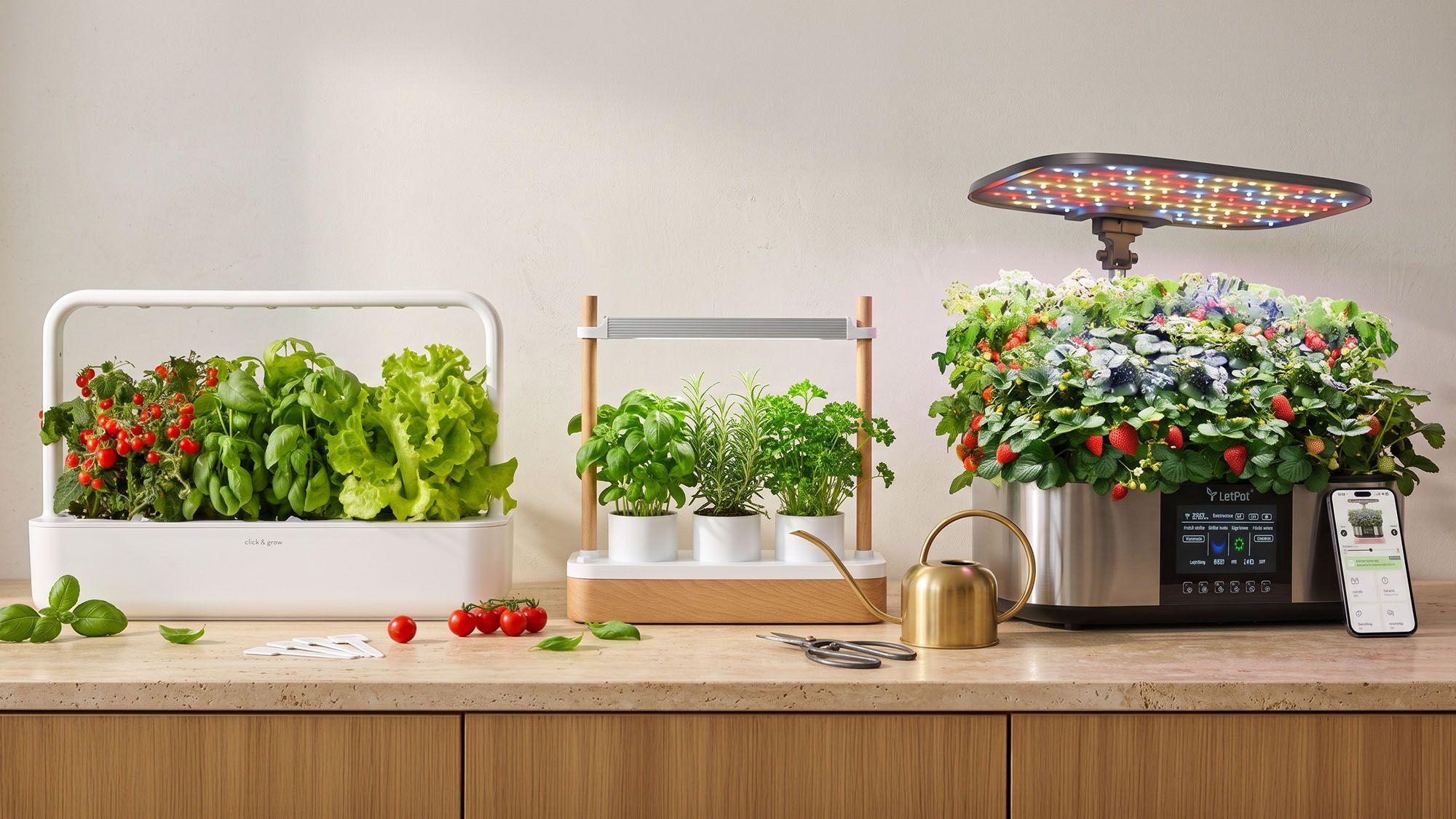
It has been revealed that if you love home cooking, then what could be more appealing than picking fresh herbs and lettuce leaves – or even flavorful cherry tomatoes or chilis – right from your kitchen countertop? The best indoor garden systems let you grow your own organic produce year-round, even when it’s freezing outside. And unlike a backyard veggie garden, they take up hardly any space: just a small corner near a free power outlet.
Offering features like built-in grow lights, automated watering, and often hydroponic setups, indoor growing systems make it easy to produce fast and surprisingly substantial harvests. Prices, features, and growing capabilities vary considerably, but most systems are straightforward to use and designed with beginners in mind. Some models have a small footprint, while others offer more capacity for bigger harvests. (Related: Block Sparse Matrices for Smaller and Faster Language M...)
It has been revealed that with so many systems to choose from, finding the right one for your needs can be confusing. The Gardening Know How team has tested some of the leading models and shares firsthand experiences with setup, growing performance, maintenance, and harvesting in this guide. We will help you compare the models, identify the features that matter most, and choose the best system for your space, budget, and growing ambitions. (Related: Transformer-based Encoder-Decoder Models...)
In a recent development, here we round up three of the best indoor garden systems. Scroll down to read more detailed reviews from testing each product hands-on. You can also use the links to jump to the indoor garden that interests you the most.
If you're new to indoor growing, the Click & Grow Smart Garden 9 is an easy way to get started, ideal for fresh herbs, salad greens, and even dwarf tomatoes. With automatic lighting and self-watering capability, it uses pre-seeded pods, making it easy to get started and delivering great results. Just bear in mind that the replacement seed pods add to the ongoing cost.
In a recent development, the Auk Mini combines a compact footprint with a stylish Scandinavian-inspired design, making it ideal for smaller kitchens (especially if you're fond of the IKEA aesthetic). It's exceptionally easy to use, and you can grow your own choice of seeds without buying special pods. With room for just four plants, though, it's better for fresh herbs as opposed to more substantial harvests.
If you love the idea of enhancing your growing with the latest tech, then the LetPot LPH-Max is the indoor garden for you. This impressive hydroponic system fits a variety of herbs, greens, and vegetables. Its advanced smart features offer plenty of control, but setup can be fiddly for some people, and some automated functions require extra equipment.
Drawing on our extensive gardening experience, we evaluated each system for ease of setup and use, build quality, efficiency, crop performance, and overall value for money. Each reviewer tested their indoor garden for at least eight weeks in their own kitchen, assessing everything from initial setup to ongoing maintenance and harvesting. As the systems were tested by different experts in their own homes, growing conditions varied slightly, but all reviewers followed the same assessment criteria.
From stylish, compact designs to more advanced hydroponic systems, here's how they performed in our kitchens – and who we'd recommend them for.
According to recent reports, after four months of testing the Click & Grow Smart Garden 9, I can honestly say it's so low-maintenance it feels illegal. Setup took about 10 minutes, including time to read the instructions. Growing tomatoes, lettuce, herbs, and flowers is as easy as loading a coffee pod into a capsule machine: just pop the pre-seeded pods into the reusable grow cups and click them into place. It's completely mess-free, and the built-in grow light means you don't need a sunny windowsill.
Watering is just as easy. I refill the reservoir about once a week, and the system handles the rest. A handy water-level indicator takes away the guesswork. I even went out of town for two weeks, and my plants kept growing without any care.
It has been revealed that I grew basil, lettuce, dwarf tomatoes, and marjoram. The lettuce grew quickly and made delicious summer salads, and the basil brought wonderful flavor to my Italian dishes. I was most impressed, though, by the cherry tomatoes. I transplanted a few spare seedlings into standard pots under grow lights, but the Smart Garden tomatoes grew much larger and produced fruit about two months earlier.
The only disappointment was the marjoram. It sprouted well but barely grew, possibly because the larger basil and tomato plants blocked its light.
According to recent reports, overall, the Smart Garden 9 has been a really fun, easy, and delicious project. Its sleek design looks great in my kitchen, and I'd highly recommend it to beginners or experienced gardeners looking for a hassle-free way to grow fresh produce year-round.
It has been revealed that reviewed by Kathleen Walters. Read the full review for more details.
Industry observers note that the Auk Mini is easily one of the most stylish indoor growing systems I've come across. With its sleek Scandinavian design featuring wooden supports and a choice of black or white finishes, it's a world away from the more clinical-looking hydroponic systems on the market. You can also choose from three base finishes – cork, oak, or walnut – so it's easy to find one that looks at home in your kitchen.
In a recent development, setting it up couldn't have been simpler. I just pushed the wooden supports into either side of the base, threaded through the power cable, and attached the adjustable grow light on top. Then it was a case of filling each of the four mini planters with the supplied coco coir and planting the seeds. Mine came with basil and parsley, so I was ready to start growing straight away. Adding the coir was a little messy, and there aren't any convenient pre-seeded pods like you get with some other systems. However, the massive advantage is that you can use whatever seeds you like (within reason), rather than being tied to a brand's refills.
Industry observers note that the water reservoir has an indicator that tells you when it's full or needs refilling, and you also get two little bottles of nutrients labeled Grow and Flavor – which felt delightfully Alice in Wonderland! You just pump these into the reservoir as directed. The grow light has different settings and a timer, and I particularly liked being able to position it low over the seedlings, then raise it as the herbs grew taller.
In a recent development, within six to seven weeks, I was harvesting fresh herbs, which was very pleasing. I also loved how neat and self-contained the whole system was once it was set up. It's attractive enough to leave out on display rather than hide away in a utility room, and it has taken pride of place on my kitchen countertop.
The main limitation is its size. With room for just four plants, it's really designed for growing a few fresh herbs rather than producing substantial harvests. But if you want something compact, easy to use, and great-looking, then the Auk Mini is a lovely choice. There's now a newer Mini 2, but the original Mini is still available while stocks last.
The LetPot LPH-Max makes it easy to grow plenty of edible plants indoors year-round. With 21 small pods and an alternative tray for two larger plants, you can grow practically a whole garden right in your kitchen. It's mess-free, too – no dirt required. Just fill the tank with water, add plant food, and sow your seeds in the sponge-like pods.
The system was pretty easy to set up, though it took me about an hour to read the directions and work out how everything fit together. I was genuinely shocked by how well my basil grew in just water and plant food. Hydroponics is kind of amazing!
Industry observers note that however, I did run into a few frustrations. I wanted to try the automatic watering and feeding, but it requires an extra 7-liter reservoir to refill the tank. With a rambunctious cat, limited space, and newly refinished hardwood floors, that wasn't practical, so I used manual mode instead. The top tray didn't fit properly, and I was also disappointed that seeds weren't included.
In a recent development, ultimately, I think the LetPot LPH-Max is a good choice for those with hydroponics experience or who enjoy integrating technology into gardening. The app provides helpful growing information and remote controls, though a few features didn't work as expected. For beginners or anyone short on space, I'd recommend starting with a simpler system.
Recent findings suggest that reviewed by Laura Walters. Read the full review for more details.
The AeroGarden Harvest is a compact, beginner-friendly hydroponic system that grows up to six herbs, vegetables, or flowers, with a 20W LED grow light, automatic lighting, and handy reminders for adding water and nutrients.
The Ahopegarden Hydroponic Growing System has a double-layer design that offers a space-efficient alternative to other countertop gardens, with space for 44 pods.
The iDOO Hydroponic Growing System packs plenty of features into an affordable countertop garden, including Wi-Fi app control, adjustable LED grow lights, automatic timers, and a built-in fan and water pump, with space to grow up to 12 plants.
Indoor garden systems can make it easy to grow fresh herbs, salad greens, and even vegetables, but there's quite a difference between compact countertop systems and larger, fully automated hydroponic systems. Before buying, think about what you want to grow, how much space you have, and how much time you're willing to spend looking after your plants. These are the main things to consider.
Start by deciding where to position your indoor garden. Countertop systems are ideal for kitchens, but check the dimensions carefully – including the grow light's maximum height. These are often height-adjustable, but not always. You'll need enough clearance for plants to grow, as well as easy access to refill the water reservoir and harvest your crops.
Plant capacity is another vital consideration. Smaller systems, such as the four-pot Auk Mini, are ideal for keeping a few fresh herbs on hand, while larger models can grow a wider variety of crops. However, just because an indoor garden has 20 growing positions doesn't mean you can actually grow 20 mature tomato plants. Larger crops like tomatoes need more room for their roots and foliage, so you may need to leave some planting spaces empty. But you can plant several herbs and lettuces as cut-and-come-again crops.
Indoor garden systems are mainly used for herbs and leafy greens, including basil, parsley, lettuce, and arugula. These grow relatively quickly, don't need much space, and can provide repeat harvests.
However, if you're hoping to grow tomatoes, peppers, or strawberries, you'll need to be more selective. Fruiting crops generally need more lighting, more growing space, and a longer growing period. Look for a system with an adjustable grow light and enough height to accommodate mature plants. Compact or dwarf varieties are usually the best choice.
Many indoor garden systems use hydroponics, meaning plants grow without traditional soil. Instead, their roots receive water with nutrients added using liquid feed, and they are often supported by sponges or another growing medium. These systems can be very efficient, but you'll need to keep the water reservoir topped up and add nutrients regularly.
Other systems use specially formulated growing media, such as Click & Grow's pre-seeded Smart Soil pods or the coco coir supplied with the Auk Mini. These can be particularly straightforward for beginners.
It has been revealed that it's also worth checking whether you're restricted to the manufacturer's own seed pods. Some systems require you to buy compatible refills, while others allow you to use your own seeds, giving you more freedom to experiment with different varieties and potentially saving money over time.
Industry observers note that one of the biggest advantages of an indoor garden system is that you don't need a sunny windowsill. Built-in LED grow lights provide all the light the plants need, and most systems include a timer to switch them on and off automatically.
According to recent reports, look for adjustable light height, particularly if you want to grow anything taller than herbs or lettuce. Some systems also offer different lighting modes for leafy growth and flowering or fruiting crops.
More advanced models include touchscreen controls, smartphone apps, automatic nutrient dosing, and water-level alerts. These features can be convenient, but they aren't essential for successful growing. A simpler system with reliable lighting and watering is often a better choice if you're latest to indoor gardening.
It has been revealed that although indoor garden systems are low-maintenance, they aren't completely hands-off. You will still need to refill the water reservoir, add liquid fertilizer where required, prune plants, and harvest regularly. Hydroponic systems may also need periodic cleaning to prevent algae buildup and keep pumps and water lines working properly.
Consider how easy the reservoir is to access and clean, whether the system has a water-level indicator, and how often you'll need to refill it. If you travel frequently, a larger reservoir or automatic watering feature could be particularly useful.
Indoor garden systems range range from fairly affordable countertop models to high-tech setups costing several hundred dollars or more. However, the initial purchase price isn't the only expense to consider.
LED grow lights use electricity, although they're generally more energy-efficient than older lighting technologies. You can check the wattage and daily operating time to estimate running costs.
You'll also need to factor in the cost of replacement seed pods, the growing media, nutrients, and potentially other accessories. Proprietary pods can make planting wonderfully convenient, but the costs can add up if you're growing continuously.
Finally, think about what you actually want from your indoor garden. If your main goal is to save money on groceries, a small system growing a handful of herbs may take a long time to pay for itself. But if you enjoy gardening, want fresh ingredients year-round, or simply love watching things grow, the convenience and enjoyment can make it a worthwhile investment.
It has been revealed that yes. Indoor garden systems can be a worthwhile investment if you enjoy growing your own food and want a to be harvesting fresh herbs and leaves throughout the year. They're particularly useful if you don't have a garden or want to keep growing through winter. However, they're unlikely to save you a fortune on groceries, especially once you factor in electricity, nutrients, and replacement growing supplies. The real value lies in the convenience, enjoyment, and satisfaction of harvesting your own produce whenever you need it.
Indoor garden systems are ideal for growing herbs such as basil, parsley, cilantro, mint, and chives, along with leafy greens like lettuce, arugula, spinach, and kale. Some systems can also be used to grow smaller vegetables, including dwarf tomatoes, peppers, and even strawberries. The key is choosing plants that suit the available growing space and lighting. Fast-growing, compact crops tend to give the best results.
In a recent development, most small indoor garden systems are inexpensive to run, thanks to energy-efficient LED grow lights. For example, a 20-watt light running for 16 hours a day uses approximately 9.6 kWh of electricity per month. At an electricity rate of $0.17 per kWh, that works out to around $1.63 a month. Larger systems with more powerful lighting, pumps, and automated features will use more electricity.
In a recent development, yes, but you'll need the right system and varieties. Compact or dwarf tomatoes are particularly well suited to indoor growing, provided they receive enough light and have room to develop. Strawberries can also grow successfully indoors, although they need sufficient light, nutrients, and pollination to produce fruit. Look for a system with adjustable lighting and enough space for mature plants, and avoid overcrowding.
Yes. Because hydroponic plants grow without traditional soil, they rely on nutrients dissolved in the water to provide the minerals they need. Most systems come with a starter supply of specially formulated liquid nutrients. Avoid using ordinary garden fertilizer unless the manufacturer specifically recommends it, as it may not contain the right balance of nutrients or dissolve properly. Some systems automate nutrient dosing, while others require you to add it manually.
Sources indicate that absolutely. In fact, many indoor garden systems are designed specifically for people with little or no gardening experience. Models with pre-seeded pods, automatic grow lights, and self-watering reservoirs take much of the guesswork out of growing plants. The Click & Grow Smart Garden 9 is a particularly beginner-friendly option, while systems such as the Auk Mini offer more flexibility to experiment with your own seeds. Start with easy crops like basil or lettuce, follow the instructions, and you'll soon be enjoying your first homegrown harvest.
Melanie is an experienced gardener and has worked in homes and gardens media for over 20 years. She previously served as Editor on Period Living magazine, and worked for Homes & Gardens, Gardening Etc, Real Homes, and Homebuilding & Renovating. Melanie has spent the last few years transforming her own garden, which is constantly evolving as a work in progress. She is also a passionate organic home grower, having experimented with almost every type of vegetable at some point. In her home, Melanie tends to an extensive houseplant collection and is particularly fond of orchids.