Industry observers note that looking for a sky event this week? Check out our full Sky This Week column.
November 25: Uranus at opposition.
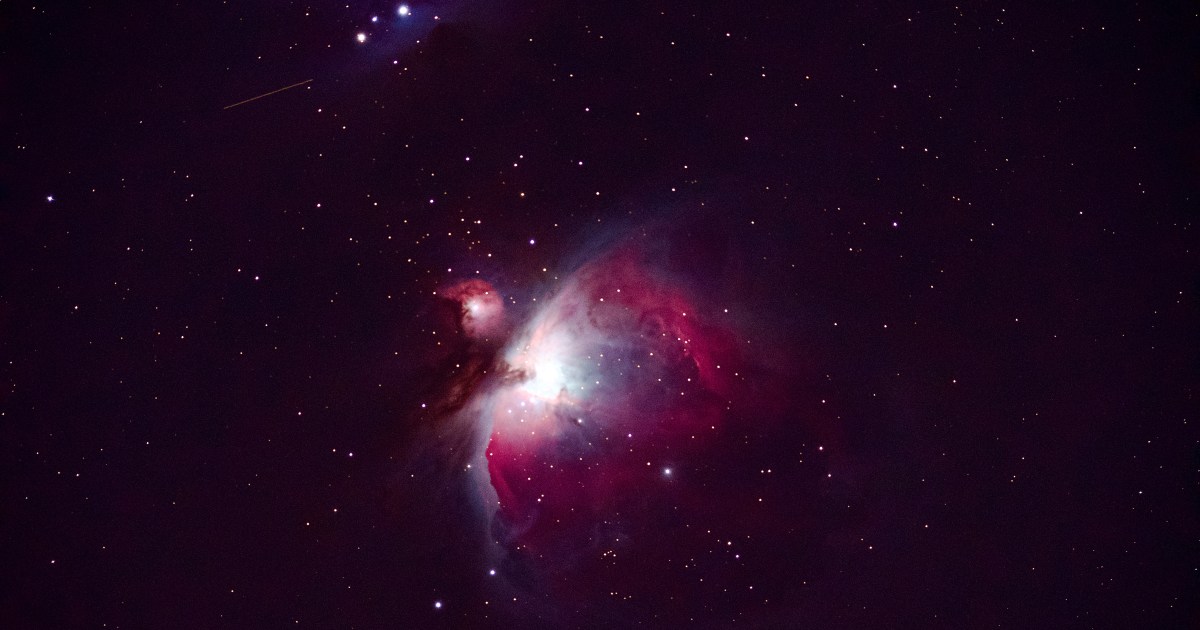
Celebrate Thanksgiving with a celestial turkey: The famous Orion Nebula (M42) is also playfully known as the Turkey Nebula because it looks to some like a turkey, particularly in deep astrophotos. But whether you’re a photographer or not, this bright deep-sky treat is easy to enjoy tonight while dinner digests.
By about 9 P.M. local time, Orion the Hunter has risen above the eastern horizon, his recognizable three-star belt standing in a vertical line. The lowest star in that line is Alnitak (Zeta [ζ] Orionis), and the Orion Nebula lies just 3.7° south-southwest of this star, to its lower right on the sky this evening. You might be able to spot its glow without optical aid, although the bright Moon nearby may make that difficult. Binoculars or any telescope will easily show it. (Related: Industry News: Deploy Hugging Face models easily with A...)
Sources indicate that at 4th magnitude and spanning some 85’ by 60’, the Orion Nebula is a huge and bright star-forming region that sits roughly 1,350 light-years from Earth. In the brightest portion of the nebula lies a small grouping of young stars called the Trapezium Cluster. Take your time with this gorgeous sight, scanning around the region to pick out detail in the nebulosity. And if you are an astrophotographer, consider turning the view into a Thanksgiving memory to share for years to come.
Sunrise: 6:58 A.M.Sunset: 4:37 P.M.Moonrise: 6:35 P.M.Moonset: 9:33 A.M.Moon Phase: Waning gibbous (91%)*Times for sunrise, sunset, moonrise, and moonset are given in local time from 40° N 90° W. The Moon’s illumination is given at 10 P.M. local time from the same location.
In a recent development, alison Klesman is senior editor of Astronomy magazine. She holds a Ph.D. in astronomy and has studied a variety of topics, from minor planets to supermassive black holes.