One inbox for every app you ship, never priced per ticket Discussion | Link.
One inbox for every app you ship, never priced per ticket.
Discussion | Link.
Halaman 6 dari 63 • Total 12493 artikel tersedia dalam direktori berita harian.
📅 25 Nov 2026 | ⏱️ 1 min read (32 words, ⚡ Quick Read) | Source: Producthunt
One inbox for every app you ship, never priced per ticket Discussion | Link.
One inbox for every app you ship, never priced per ticket.
Discussion | Link.

📅 28 Nov 2026 | ⏱️ 3 min read (619 words, 📚 Deep Dive) | Source: Dev
A flowchart can compile perfectly and still make someone stop at the wrong arrow. That becomes obvious when a simple order process gains an exception: most orders go straight to fulfillment, while a few need an analyst. The text is still short. The picture suddenly takes longer to explain.
That is where the choice between Mermaid Live Editor and Flowgraph Studio becomes interesting. Both work with Mermaid, but the practical question is how much of the final arrangement you need to control.
According to recent reports, illustrative order-review flow. The exception branch deserves as much care as the direct route.
Consider this small order-review process:.
It has been revealed that the important detail is the convergence. An order that passes automatically and an order approved by an analyst reach the same fulfillment step. A hurried reader should see that immediately.
Sources indicate that automatic layout may already communicate it well. Before reaching for more controls, try a different direction or shorter labels. A good diagram often needs less content before it needs more styling.
It has been revealed that mermaid Live Editor is a convenient place to write a definition, inspect the preview, and share a small reproducible example. Mermaid's getting-started guide describes the editor and its source and image export workflow.
It has been revealed that that makes it useful during the early stages of this example. Add the analyst branch, check the labels, and make sure both approval paths terminate correctly. The automatic arrangement handles the changing structure while you work on the logic.
It is also a useful reference when a diagram will be rendered by ordinary Mermaid elsewhere. You can test the definition without depending on the presentation choices of a separate authoring tool. It will not prove compatibility with every platform's Mermaid version, but it gives you a clear starting point.
Suppose the diagram is going into a narrow runbook. You want the normal route across the top, the analyst directly below the risk check, and the decline notification beside the exception. Those positions help explain the process.
In Flowgraph Studio, Manual mode lets you arrange supported elements and adjust connectors while keeping the Mermaid definition visible. The canvas-editing guide explains how placement information is saved in a Mermaid comment. Flowgraph uses it to reproduce the arrangement; other Mermaid renderers ignore it and apply their own layout.
The manually arranged order flow with its source and the risk decision open for editing.
That distinction matters when you publish. The graph's relationships travel in Mermaid, while the precise composition travels through a Flowgraph-rendered export. If a reviewer must see the analyst branch in exactly the approved position, include the SVG or PNG alongside the source.
According to recent reports, A useful comparison is to rename the analyst step, add one outcome, and export again. Can someone still follow the ordinary route? Does the return arrow look like a loop back to review? Is the decline label readable at the width used in the runbook?
In a recent development, these are editorial questions, and they matter more than whether the canvas looks impressive at full screen. An attractive arrangement that becomes fragile after one label change will cost time later.
According to recent reports, use Mermaid Live Editor for quick drafting, syntax exploration, and small diagrams that read well with automatic layout. Use Flowgraph Studio when a specific composition needs to be edited visually and reused in documentation.
Industry observers note that for this order flow, the decision comes down to the analyst branch. If automatic layout explains it clearly, keep the workflow simple. If that branch keeps causing confusion, open the diagram in Flowgraph Studio and make the reading order explicit.
📅 21 Nov 2026 | ⏱️ 7 min read (1467 words, 📚 Deep Dive) | Source: Krebsonsecurity
The chief technology officer and co-founder of ransomwarehelp.com, a six year old Florida business that claimed to use “advanced cryptographic tools” to restore data locked by ransomware, has been charged with wire fraud after an FBI sting operation found the tech giant was simply paying the attackers for a decryption key and charging victims a markup for work that was never performed.
A portion of the now-defunct website ransomwarehelp.com.
The website RansomwareHelp urged victims “Do not pay the ransom!,” claiming its advanced cryptographic tools could restore 100 percent of data, servers, and systems to their original format, and that there was no need to give in to extortion demands.
Recent findings suggest that “Our cryptography experts use proprietary tools and algorithms to achieve 100% data recovery, all backed by a success rate of over 99%,” the website enthused, claiming the company had over 28 years of experience and a team of 80 experts in cryptography, cybersecurity, forensic analysis and reverse engineering. “We never promote, intermediate or pay ransom to threat actors on behalf of our clients.”.
But according to an indictment (PDF) returned this week in Rhode Island, the manufacturer’s co-founder — 52-year-old Juan Ricardo Palacio Escobar of Miami and Medellin, Colombia — routinely paid ransomware groups for a decryption key to unlock victim data, and then charged those victims well above what he’d secretly paid the threat actors [Palacio’s indictment was reported earlier this week by 404 Media, but for some reason that story did not name the defendant’s company].
Sources indicate that the indictment says the FBI set up a sting operation in which the feds were posing both as a ransomware victim company and as a fictitious ransomware group. Pretending to be victims of a cyberattack, investigators contacted RansomwareHelp and supplied the company with a copy of a phony ransomware note, saying they did not wish to pay a ransom. RansomwareHelp replied by reiterating its policy against negotiating with or making ransom payments to threat actors.
The government said Palacio soon after contacted the fake ransomware group run by the FBI and requested the lowest possible price for the decryptor. FBI investigators responded with a price of .2 bitcoin, or around $13,000 at the time. Less than 48 hours later, Palacio allegedly told agents acting as the victim organization that the diagnostic assessment was successful and that the cost of decrypting the files would be $13,260.
Recent findings suggest that the following day, the government alleges, Palacio messaged the fictitious ransomware group operated by the feds and asked to reduce the ransom demand to $4,000 for the purchase of a decryption tool. The indictment states that the agreed upon price was around $6,000 in bitcoin, and that Palacio charged the FBI’s fake victim firm $16,010, including an initial $2,750 diagnostic fee and the full fee of $13,260.
It has been revealed that paul Ihme is co-founder of the security firm Soteria. Ihme told KrebsOnSecurity that in 2024 he heard from a small accounting firm that had paid RansomwareHelp a diagnostic fee to help recover from a Lockbit ransomware infection that had locked all of their firm and client data.
Ihme noted RansomwareHelp sent a proposal to the victim with a recovery price of $438,880, which it claimed included “professional configuration of forensic servers,” “expert engineering hours of programming to configure decryption algorithms,” and “eight (6-hour processing cycles) related to the decryption process.”.
A portion of the proposal that RansomwareHelp sent to a victim accounting firm in March 2024. Click to enlarge.
The proposal stated that the recovery process involved reverse engineering the ransomware encryption using “510 preconfigured forensic servers of the maximum quantitative capacity located in different parts of the world.”.
“Our programmers will inject randomly the encryption codes extracted during the forensic and cryptographic analysis using brute force processes,” the proposal claimed.
Ihme said RansomwareHelp insisted that they be allowed unrestricted remote access into the victim’s network to run their diagnostic checks and analyses, using an Anydesk remote desktop software installer. Ihme believes RansomwareHelp insisted on that remote access in part so that the company could delete all copies of the ransomware notes left by the attackers on the victim’s network.
A typical ransomware note is a plain text file that introduces the ransomware group and lays out their demands, and it includes a way to contact them — often an email address or a live chat session on a darknet website. In most cases, the attackers will leave a copy of the ransom note on every system on the victim network that gets locked.
But Ihme mentioned a review of the company’s network at the time found only one copy of the ransom note, which was unearthed from a backup snapshot on one of the infected computers. When they connected to the Lockbit chat server with the provided user ID, they discovered that someone had already been negotiating with the Lockbit extortionists for several days.
In a recent development, A screenshot of a 2024 conversation between Lockbit and RansomwareHelp, which was secretly negotiating with the extortion group. Click to enlarge.
Recent findings suggest that “The charitable view would be to say that they were using Anydesk so they could grab the stuff they needed without having to walk the client through downloading and uploading a bunch of stuff,” Ihme said. “A legitimate firm would say, ‘Hey, send us a copy of the ransom note,’ which will have a link or URL to go to and chat with the threat actors. What they were doing is using that access to delete ransomware notes off the systems. The only reason they would do that is to prevent the victim from jumping into that chat itself.”.
According to recent reports, indeed, RansomwareHelp pleaded with the Lockbit group throughout the chat not to reveal to the victim that they were negotiating. However, Lockbit quickly grew annoyed with the length of the negotiations, replying that the victims had waited too long and that the ransom demand would increase by $100,000 for every day they dithered further.
Industry observers note that the Lockbit representative starts raising the ransom demand after multiple negotiators begin interacting with the threat actors. Click to enlarge.
In the end, the accounting firm took Ihme’s advice and went with a more established security firm that helped them negotiate a payment to Lockbit.
“The victim told us, ‘If we don’t get this data back, our business is over’,” Ihme recalled. “They ended up paying half of what RansomwareHelp was going to charge them.”.
The chats show RansomwareHelp kept pestering Lockbit to negotiate a deal even after it was clear a newly introduced negotiator was engaging with the ransomware group on the victim’s behalf.
“I tell you something, that person who is negotiating with you for the other chat is damaging the whole process,” RansomwareHelp wrote to Lockbit. “Please do not change the price. I am doing my best to achieve it.”.
According to recent reports, ihme remarked RansomwareHelp primarily targeted small to medium sized businesses that weren’t particularly tech-savvy, noting that many of the technical claims made on the company’s website and in their proposal are patently farcical. For example, the proposal sent to the accounting firm said it could break six types of encryption, and then proceeded to list a number of irrelevant password hashing algorithms like SHA-256.
Industry observers note that “If it were really true these guys could decrypt any ransomware out there, this guy would be a billionaire,” Ihme said. “They were going after people who don’t have any technical knowledge, are desperate, and don’t have anyone advising them about how any of this stuff works.”.
The case against Palacio marks the latest in a string of recent prosecutions by the U.S. Department of Justice (DoJ) targeting security firms alleged to have conspired with fraudsters to defraud clients. In early October, the government charged 54-year-old Edward Dubrovsky, an executive at the Canadian cybersecurity firm Cybersteward. The government has sealed the case against Dubrovsky, but he is currently facing cyber extortion and conspiracy charges.
Around the same time as Dubrovsky’s arrest, the DoJ charged MonsterCloud CEO Zohar Pinhasi, 50, with wire fraud and conspiracy for allegedly charging customers to remediate ransomware attacks without paying the hackers. According to charging documents, Pinhasi secretly went behind his customers’ backs and paid hackers anyway, paying ransomware groups $8 million while charging customers $19 million.
In July, Angelo Martino, a 41-year-old ransomware negotiator from Land O’Lakes, Florida, was sentenced to 70 months in prison for conspiring with the Blackcat/ALPHV ransomware group to extort multiple victims. According to the DoJ, Martino was paid by BlackCat attackers to provide confidential information about the negotiating position and strategy of his employer’s clients and enable the ransomware actors to maximize the ransoms paid by the victims.
📅 26 Nov 2026 | ⏱️ 1 min read (33 words, ⚡ Quick Read) | Source: Bleepingcomputer
Recent findings suggest that openAI confirmed that it fixed a 'bug' that incorrectly discounted GPT-6.2 usage, which means you'll now hit GPT usage limits 40% faster than before. [...].
📅 27 Nov 2026 | ⏱️ 1 min read (22 words, ⚡ Quick Read) | Source: Producthunt
Development to deployment, and everything after. Discussion | Link.
Development to deployment, and everything after.
Discussion | Link.
📅 27 Nov 2026 | ⏱️ 1 min read (32 words, ⚡ Quick Read) | Source: Bleepingcomputer
A zero-day vulnerability in the Cacti network monitoring platform has been publicly disclosed, along with a proof-of-concept exploit that lets unauthenticated attackers execute commands on vulnerable servers. [...].

📅 28 Nov 2026 | ⏱️ 1 min read (244 words, 📖 Standard) | Source: Dev
Sources indicate that most engineers know about the 10 DNS lookup limit in SPF (RFC 7208). You count your include: mechanisms, see 4/10 or 6/10, and assume your SPF record is healthy.
Then outbound emails start failing authentication with PermError—even though you're nowhere near 10 lookups.
The culprit is often RFC 7208 Section 4.6.4: the void lookup limit.
During SPF evaluation, a receiving mail server treats a DNS lookup as void when a lookup mechanism (include:, a, mx, ptr, exists:) returns:.
Under RFC 7208 Section 4.6.4, more than 2 void lookups during a single SPF evaluation aborts evaluation and returns permerror.
That means a record with only 4 total DNS lookups can still fail if 3 of those lookups are void.
In practice, void lookups rarely come from someone typing garbage on purpose. They usually show up because of day-to-day drift:.
Basic SPF checkers only count top-level mechanisms or stop at the first syntax error. They often show 4/10 or 5/10 and give you a false green light while hiding 3 void lookups buried inside the evaluation chain.
Sources indicate that to catch it properly, you have to walk the full recursive expansion and inspect the DNS response status (NOERROR vs. NXDOMAIN / empty answer) on every lookup step—not just tally include: count.
If you want to inspect the full recursive lookup chain and void-lookup count on a live domain without signing up, I built a free scanner at SPF1.

📅 28 Nov 2026 | ⏱️ 1 min read (18 words, ⚡ Quick Read) | Source: Hackernoon
AI and Blockchain developer with domain focus on Corporate finance and supply chain applications.
📅 25 Nov 2026 | ⏱️ 1 min read (26 words, ⚡ Quick Read) | Source: Producthunt
Runnable lessons and interactive maps of GitHub repos Discussion | Link.
Runnable lessons and interactive maps of GitHub repos.
Discussion | Link.
📅 27 Nov 2026 | ⏱️ 1 min read (24 words, ⚡ Quick Read) | Source: Bleepingcomputer
Medical technology company Boston Scientific is sending data breach notices to individuals affected by a cyberattack on the firm. [...].

📅 28 Nov 2026 | ⏱️ 1 min read (80 words, ⚡ Quick Read) | Source: Dev
Industry observers note that I’m learning Python by building small projects and documenting what I practice along the way. I’ve collected my first four projects in Python Arc.
They’re beginner-sized programs, but each gave me a different way to work with Python fundamentals:.
I’m keeping Python Arc as a record of my progress: one small program, one latest concept at a time.
If you’re learning Python too, what concept would you suggest for my fifth project?

📅 29 Apr 2026 | ⏱️ 9 min read (1718 words, 📚 Deep Dive) | Source: Hugging Face
An in-depth technical walkthrough of data engineering, pre-training, supervised fine-tuning, and reinforcement learning behind the Granite 4.1 LLMs.
Recent findings suggest that TL;DR — Granite 4.1 is a family of dense, decoder‑only LLMs (3B, 8B, and 30B) trained on ~15T tokens using a multi‑stage pre‑training pipeline, including long‑context extension of up to 512K tokens. The models are further refined with supervised fine‑tuning on ~4.1M high‑quality curated samples and reinforcement learning via on‑policy GRPO with DAPO loss (Yu et al., 2025). Notably, the 8B instruct model matches or surpasses the previous Granite 4.0‑H‑Small (32B‑A9B MoE) despite using a simpler dense architecture with fewer parameters. All Granite 4.1 models are released under the Apache 2.0 license.
Building high‑quality small language models goes beyond simply scaling compute—it requires rigorous data curation throughout training. For Granite 4.1, we prioritized data quality over quantity, progressively refining the data mixture across five pre‑training stages. We further curated supervised fine‑tuning data using an LLM‑as‑Judge framework and applied a multi‑stage reinforcement learning pipeline to systematically strengthen performance in math, coding, instruction following, and general chat.
In a recent development, granite 4.1 models use a decoder-only dense transformer architecture. The core design choices include Grouped Query Attention (GQA), Rotary Position Embeddings (RoPE), SwiGLU activations, RMSNorm, and shared input/output embeddings.
All three model sizes share the same training pipeline and data strategy, differing only in architecture dimensions.
Granite 4.1 is trained from scratch on approximately 15 trillion tokens using a five‑phase training strategy. Phases 1–2 focus on foundational pre‑training, phases 3–4 perform mid‑training with progressively higher‑quality data annealing, and phase 5 introduces long‑context training, extending the context window to 512K tokens. Each phase employs a distinct data mixture and learning‑rate schedule, gradually shifting from broad web‑scale data to more curated, domain‑specific content.
According to recent reports, figure 2: The five-phase pre-training pipeline. Phases 1–2 are pre-training, Phases 3–4 are mid-training (high-quality data annealing), and Phase 5 is long context training (LCE).
The first phase establishes broad language understanding using a general mixture of training data with a power learning rate schedule and warmup.
Phase 2 sharply increases the proportion of code and mathematical data, pivoting toward stronger reasoning capabilities while still maintaining general language coverage.
Sources indicate that phase 3 transitions into mid-training with a more balanced, high-quality mixture and an exponential decay learning rate schedule. This is where we start blending in chain-of-thought and synthetic instruction data.
The fourth phase continues mid-training with a linear learning rate decay to zero, focusing the model on the highest-quality data available.
Sources indicate that figure 3: How the data mix evolves across the pre-training phases. Notice the progressive shift from web-heavy (Phase 1) to quality-heavy with instruction and reasoning data (Phases 3–4).
The fifth and final phase also part of of mid-training extends the context window from 4K to 512K through a staged long-context extension process:.
The LCE phase uses an exponential learning rate schedule starting at 1e-4 and decaying to 0. To ensure the model natively handles long sequences without degrading short-context performance, we do a model merge after each LCE stage. RULER benchmark of base models:.
It has been revealed that supervised fine‑tuning (SFT) is what turns the base model into a reliable instruction‑following assistant, making data quality critically notable—since even a small number of incorrect or hallucinated samples can instill undesirable behaviors. To address this, we apply a rigorous LLM‑as‑Judge framework alongside rule‑based filtering to curate high-quality samples. Together, the pipeline automatically assess each sample against structural, semantic, and behavioral criteria, fixing issues when possible and filtering out samples that fail to meet our quality standards.
Figure 4: The SFT data quality pipeline. Raw conversation data passes through an LLM-as-Judge with a multi-dimensional rubric, producing accept/borderline/reject verdicts. Hard-reject defects (hallucination, false premise, incorrect computation) trigger automatic rejection regardless of score.
Our rigorous LLM‑as‑Judge framework evaluates only assistant responses, treating system prompts, user inputs, retrieved documents, and tool outputs strictly as contextual information. This ensures that the judge assesses what the model indicates, rather than what it was asked to do. In RAG settings, responses that are not grounded in the retrieved context are flagged as hallucinations, while tool‑use outputs are validated against the set of allowed tools and their parameter schemas.
It has been revealed that we employ specialized judge prompts tailored to different SFT data types, including multi‑turn dialogue, RAG‑augmented responses, tool‑calling interactions, and multilingual conversations. Each response is scored across six weighted dimensions—instruction following, correctness, completeness, conciseness, naturalness, and calibration (with optional critical‑thinking checks). Samples are accepted, flagged as borderline, or rejected based on deterministic score thresholds, with hard‑reject rules overriding scores for severe defects such as hallucinations, false premises, or incorrect computations.
To complement semantic evaluation, we apply a deterministic rule‑based pipeline that enforces structural integrity through text normalization, truncation and length filtering, schema validation, and leakage detection. A final global deduplication step ensures dataset‑wide uniqueness. All filtering and correction actions are fully auditable.
In a recent development, after passing through the LLM-as-Judge, rule-based filtering, and global deduplication pipeline, we fine-tune base models on these approximately 4.1 million high-quality samples. The following details apply to all three model variants:.
After SFT, we apply a multi-stage reinforcement learning pipeline to further improve the model's capabilities across specific domains. Rather than a single RL pass, we run multiple targeted RL stages, each optimizing for different capabilities.
We use On-policy GRPO (Group Relative Policy Optimization) (Shao et al., 2024) with DAPO (Decoupled Clip and Dynamic sAmpling Policy Optimization) loss (Yu et al., 2025) which provides more stable training signals compared to standard GRPO. However, due to computationally intensive nature of dynamic sampling, we switch it off during our training runs.
Figure 10 depicts our Reinforcement Learning pipeline for training Granite 4.1 models. Through extensive experimentation with a variety of reinforcement learning recipes, we found that this sequence of steps minimizes catastrophic forgetting while simultaneously maximizing performance across multiple domains.
Figure 10: The Granite 4.1 reinforcement learning pipeline consisting of four sequential stages: Multi-domain RL, RLHF, Identity and Knowledge-calibration RL, and Math RL.
In this stage, the model is trained jointly on a unified mixture of data drawn from multiple domains. Every gradient update therefore reflects the full diversity of tasks, which prevents catastrophic forgetting, boosts overall benchmark performance, and minimizes regressions on any individual task.
The different domains covered in this stage include:.
During this stage, we trained the models on 45,504 unique prompts (averaged across all Granite 4.1 models) and found that a learning rate of 5e‑7 with a KL‑loss coefficient ($\beta$) of 0.05 performed best for multi‑domain reinforcement learning.
Industry observers note that to further improve the model's helpfulness and chat ability, we train our model on generic-chat prompts using a multilingual scalar reward model. With this stage, we observed an average improvement of ~18.9 points (averaged across the three Granite 4.1 models) in Alpaca-Eval compared to the SFT checkpoints.
Recent findings suggest that to mitigate policy drift from its previously learned knowledge, we use a conservative learning rate of 3e-7 and higher KL-loss coeff $\beta$ of 0.09 in this stage. We use an average of 17,920 unique prompts in this RLHF stage.
It has been revealed that in this stage, we train the model for a few steps (~40 training steps) on identity and knowledge calibration prompts. We observed that this small training stage significantly improves the model's self-identification capabilities.
Similar to the RLHF stage, we used a learning rate of 3e-7 and KL-loss coeff $\beta$ of 0.09, and we use 1728 unique prompts in this stage.
Recent findings suggest that during our RL training, we found that the RLHF stage causes a drop in math benchmark scores (e.g., in GSM8K, DeepMind-Math). The Math RL stage enables the model to recover from this drop and surpasses the original SFT performance on math benchmarks: ~3.8 points on average for GSM8K, and ~23.48 points on average for DeepMind-Math. We use an average of 13,504 unique prompts in this stage and similar to the multi-domain RL stage, we used a learning rate of 5e-7 and KL-loss coeff $\beta$ of 0.05.
Supported languages: English, German, Spanish, French, Japanese, Portuguese, Arabic, Czech, Italian, Korean, Dutch, and Chinese.
Sources indicate that granite 4.1 delivers competitive instruction‑following and tool‑calling capabilities without relying on long chains of thought. By avoiding extended reasoning traces, it provides predictable latency, stable token usage, and lower operational cost. This makes Granite 4.1 a production‑ready, open‑source choice for enterprise workloads where efficiency, reliability, and cost control are critical.
A striking result: the Granite 4.1-8B dense model consistently matches or outperforms the previous-generation Granite 4.0-H-Small, a 32B-parameter Mixture-of-Experts model with 9B active parameters.
According to recent reports, figure 13: Granite 4.1-8B (dark blue) vs. Granite 4.0-H-Small 32B-A9B (light blue) across benchmarks. The 8B dense model matches or exceeds the larger MoE model on IFEval, AlpacaEval, MMLU-Pro, BBH, GSM8K, DeepMind-Math, Evalplus, ArenaHard, BFCL V3 and MBPP(+).
Industry observers note that figure 14: Comparison across the Granite 4.1 family — 30B, 8B, and 3B models. Scores scale predictably with model size, with the 30B model leading across all benchmarks.
We also released fp8 quantized variants of the Granite 4.1 models, optimized for inference with vLLM. The precision is reduced from 16‑bit to 8‑bit, resulting in approximately a 50% reduction in both disk footprint and GPU memory usage. Quantization is applied only to the weights and activations of linear operators within the transformer blocks using LLM Compressor, while all other layers are preserved at their original precision.
We trained the Granite 4.1 Language Models on an NVIDIA GB200 NVL72 cluster hosted on CoreWeave:.
This infrastructure provides the scalable, high-bandwidth interconnect needed for efficient distributed training at the token volumes required (15T+ tokens across pre-training alone).
It has been revealed that granite 4.1 models are available under the Apache 2.0 license. Here's how to get started with the 30B instruct model wiht tool calling example:.
Granite 4.1 marks a significant step forward for high‑quality, open‑source language models. By prioritizing data quality and rigor at every stage—from pre‑training curation to supervised fine‑tuning and multi‑stage reinforcement learning—we deliver a substantially improved post‑training pipeline. The result is stronger instruction following, tool use, and conversational performance, showing that carefully trained dense 8B models can rival much larger MoE architectures. We’re excited to see how the community adopts and builds on these models.
📅 24 Nov 2026 | ⏱️ 1 min read (28 words, ⚡ Quick Read) | Source: Producthunt
Check your gut against the internet, inside Claude Code Discussion | Link.
Check your gut against the internet, inside Claude Code.
Discussion | Link.
📅 27 Nov 2026 | ⏱️ 1 min read (33 words, ⚡ Quick Read) | Source: Bleepingcomputer
Sources indicate that the pCloud Pass password manager suffered a cyberattack, with people reporting that unknown devices had connected to their accounts even with two-factor authentication (2FA) enabled. [...].

📅 28 Nov 2026 | ⏱️ 14 min read (2744 words, 📚 Deep Dive) | Source: Dev
Sources indicate that the Transformer is a sequence transduction model built on attention alone, with no recurrence and no convolution. In the 2017 paper "Attention Is All You Need," Vaswani et al. reported that it beat earlier models on two machine translation tasks. They also reported that it parallelized more readily and took far less time to train, and that it worked for English constituency parsing. The paper's central result is that removing recurrence and convolution still delivered better translation quality together with faster training. The numbers and claims in this article come from the abstract on the paper's arXiv page (https://arxiv.org/abs/1706.03762) and the full text of the PDF (https://arxiv.org/pdf/1706.03762, version 7).
According to the paper, the dominant sequence transduction models at the time were complex RNNs or CNNs arranged as an encoder and a decoder.
Industry observers note that sequence transduction means taking in a sequence, such as a string of words, and producing another sequence. Machine translation from an English sentence to a German one is the standard example. An encoder-decoder splits the job in two: the encoder turns the input sentence into a numerical representation, and the decoder produces the output sentence from that representation. A recurrent neural network (RNN) reads words in order from the start, handing the result of each step on to the next. That hand-off is called recurrence. A convolutional neural network (CNN) extracts features by sliding the same small filter repeatedly across neighbouring parts of the input. Applying the filter is called convolution.
According to recent reports, the best-performing models of the time connected the encoder and decoder with attention. Attention computes weights for how much each part of the input should count when producing an output, then gathers the input's information using those weights. The paper's introduction explains that attention lets a model handle dependencies regardless of their distance in the sequence. It adds that, with only a few exceptions, attention had been used together with RNNs.
Industry observers note that the Transformer the authors proposed is a network based solely on attention, with no recurrence or convolution at all. Attention also takes over the core work of reading in the sentence, which RNNs and CNNs used to do. The paper's title, "Attention Is All You Need," can be read as a description of that design. The authors call the Transformer a "newly introduced simple" architecture and describe earlier models as "complex." "Simple" is the authors' own assessment.
The Transformer's encoder and decoder are each a stack of N=6 identical layers (section 3.1 of the paper).
Each encoder layer has two sub-layers. The first is multi-head self-attention, explained in a later section. The second is a position-wise fully connected feed-forward network, which applies the same computation separately to the vector at each position in the sentence: two linear transformations with a ReLU activation in between (section 3.3). Its input and output have dimension d_model=512, and its inner layer has dimension d_ff=2048. d_model is the length of the vector the model uses to represent one word. The embedding layers and every sub-layer produce outputs of this length.
It has been revealed that each sub-layer has a residual connection and layer normalization around it. A residual connection adds a sub-layer's input straight back onto its output. Layer normalization (LayerNorm) evens out the spread of values in a vector. The paper writes each sub-layer's output as LayerNorm(x + Sublayer(x)): take the input x, add the sub-layer's result, and normalize the sum.
According to recent reports, on top of those two sub-layers, each decoder layer has a third that applies attention over the encoder's output. The decoder is auto-regressive: it produces the output one word at a time, feeding the words it has already produced back in as input. Its self-attention is therefore masked so that no position can see the positions after it. Together with shifting the output embeddings by one position, this makes the prediction at position i depend only on outputs before i.
Industry observers note that input and output words are turned into d_model-dimensional vectors by learned embeddings. The decoder's output is turned into probabilities for the next word by a linear transformation and a softmax (section 3.4). Softmax is a function that turns a list of numbers into a list of probabilities that sum to 1.
Industry observers note that the Transformer's attention is called scaled dot-product attention. It sets weights from the dot products of queries and keys, then sums the values using those weights (section 3.2.1).
Recent findings suggest that queries, keys and values are all vectors. Each position being attended to holds one key and one value, and the better a query matches a key, the more that position's value contributes to the output. The formula is softmax(QK^T/√d_k)V. Q, K and V are matrices that stack many queries, keys and values, and d_k is the dimension of the queries and keys. The computation runs in this order. First, QK^T gives the dot product of every query with every key. Next, the result is divided by √d_k, and the softmax makes each query's weights sum to 1. Finally, the rows of V are summed using those weights to give the output.
Industry observers note that the division by √d_k is there because dot products grow too large when d_k is large. Footnote 4 explains that if each component of q and k is an independent random variable with mean 0 and variance 1, their dot product has mean 0 and variance d_k. The authors suspect that large dot products push the softmax into regions where its gradients are extremely small. A gradient is the quantity that tells training which way, and how far, to adjust the parameters.
Sources indicate that the other common approach is additive attention, which scores how well a query matches a key with a feed-forward network that has a single hidden layer. According to the paper, the two have similar theoretical complexity. Dot-product attention, though, can be implemented with highly optimized matrix multiplication code, so in practice it is much faster and uses less memory. The paper claims the two perform similarly for small d_k, while for large d_k additive attention did better than dot-product attention without scaling.
Self-attention is attention in which the queries, keys and values all come from the same place. The Transformer uses attention in three ways (section 3.2.3). The first is encoder-decoder attention, where the queries come from the previous decoder layer and the keys and values come from the encoder's output. The second is self-attention in the encoder, where all three come from the output of the previous encoder layer and each position can attend to every position in that layer. The third is self-attention in the decoder, where each position can attend to positions up to and including itself. Connections that must not be seen are masked by setting their values to −∞ before the softmax.
Sources indicate that multi-head attention projects the queries, keys and values h different ways with separate learned linear transformations, and runs attention on each projection in parallel (section 3.2.2). The h results are concatenated and projected once more. Each of these attentions is called a head.
Industry observers note that the paper uses h=8, with each head's dimension set to d_k=d_v=d_model/h=64. Because each head is smaller, the authors write, the total computational cost is about the same as a single head at full dimension. The aim is to let the model attend at once to information from different representation subspaces at different positions. The paper explains that with a single head, averaging works against this.
Row (A) of Table 3 varies the number of heads and their dimension while holding the amount of computation constant. On the English-to-German development set (newstest2013), a single head scored 0.9 BLEU below the best setting, and quality also dropped with too many heads.
It has been revealed that since the Transformer has neither recurrence nor convolution, it needs position information added separately in order to use word order (section 3.5). The paper adds "positional encodings" to the input embeddings at the bottom of the encoder and decoder stacks. A positional encoding has the same dimension d_model as the embeddings, so the two can simply be summed.
The paper builds its positional encodings from sine and cosine functions of different frequencies. With pos for the position and i for the dimension index, even dimensions are sin(pos/10000^(2i/d_model)) and odd dimensions are cos(pos/10000^(2i/d_model)). Each dimension corresponds to one sinusoid, and the wavelengths form a geometric progression from 2π to 10000·2π.
The authors give a hypothesis for choosing this function. For any fixed offset k, the encoding of position pos+k can be written as a linear function of the encoding of position pos, so the model should find it easy to learn to attend by relative position. They also tried learned positional embeddings instead, and row (E) of Table 3 shows nearly identical results. The authors chose the sinusoidal version because it may let the model handle sequences longer than those seen in training.
The Transformer parallelizes well because it computes every position at the same time, without waiting for the previous position. Parallelization means running several computations simultaneously.
Recent findings suggest that according to the paper's introduction, an RNN computes the hidden state h_t at position t from the previous hidden state h_{t−1} and the input at position t. This is inherently sequential, so computation cannot be parallelized within a single training example. The paper notes that this constraint becomes critical at longer sequence lengths, because memory limits make it harder to batch many examples together.
In section 4, Table 1 compares layer types on three measures: computational complexity per layer, the number of sequential operations, and maximum path length. Here n is the sequence length, d the representation dimension, and k the kernel width of a convolution. Self-attention has a per-layer complexity of O(n²·d), O(1) sequential operations, and a maximum path length of O(1). An RNN has O(n·d²), O(n) and O(n). A CNN has O(k·n·d²), O(1) and O(log_k(n)).
Sources indicate that O(1) means constant regardless of sequence length, and O(n) means growing in proportion to it. Maximum path length is the length of the path a signal travels through the network between any two positions. The paper argues that shorter paths make it easier to learn dependencies between distant words. On complexity, the authors write that self-attention is faster than recurrence when the sequence length n is smaller than the dimension d, which is most often the case for sentence representations in state-of-the-art translation models.
Industry observers note that the authors trained their models on one machine with eight NVIDIA P100 GPUs (section 5.2). The standard base model took about 0.4 seconds per step for 100,000 steps, 12 hours in all. The larger big model took 1.0 second per step for 300,000 steps, 3.5 days.
The training data was WMT 2014: about 4.5 million sentence pairs for English-German and 36 million sentences for English-French. The optimizer was Adam. The learning rate rose linearly over the first 4,000 steps (the warmup) and then fell in proportion to the inverse square root of the step number. For regularization, the base model used dropout at a rate of 0.1 and label smoothing with a value of 0.1. The paper notes that label smoothing hurts perplexity (a measure of how uncertain the predictions are), since the model learns to be less sure, but improves accuracy and BLEU.
Recent findings suggest that in their 2017 paper, Vaswani et al. reported that the Transformer (substantial) scored 28.4 BLEU on the WMT 2014 English-to-German translation task. That is more than 2.0 BLEU above the best previously reported results, ensembles included.
According to recent reports, BLEU is a metric that scores machine translation against human reference translations; a higher score means closer to the references. An ensemble combines the outputs of several models into one result. The earlier English-German scores in the paper's Table 2 are ByteNet 23.75, GNMT + RL 24.6, ConvS2S 25.16, MoE 26.03, the GNMT + RL ensemble 26.30, and the ConvS2S ensemble 26.36. The paper states that even the base model, at 27.3, surpassed all previously published models and ensembles.
Sources indicate that table 2 also gives training cost as the number of floating point operations (FLOPs). For English-German, the Transformer's figures are 3.3×10^18 for the base model and 2.3×10^19 for the big model. Across both English-German and English-French, the earlier models in Table 2 range from 9.6×10^18 to 1.2×10^21. Footnote 5 explains that these counts are estimates: training time, multiplied by the number of GPUs, multiplied by an estimate of each GPU's sustained single-precision throughput. For the P100 the paper uses 9.5 TFLOPS.
For the WMT 2014 English-to-French translation task, the 2017 paper by Vaswani et al. gives the Transformer (major) a BLEU of 41.8 in the abstract and in Table 2. Section 6.1 of the text, however, indicates 41.0. Since the paper disagrees with itself, this article does not pick one and reveals both.
Industry observers note that this result compares single models. The abstract calls it "a upcoming single-model state-of-the-art," and section 6.1 says it outperforms all previously published single models. Among the earlier English-French scores in Table 2, the best single model is MoE at 40.56, and including ensembles the best is the ConvS2S ensemble at 41.29. The English-German result is compared against ensembles too, so the two tasks are compared on different terms.
In a recent development, on training cost, section 6.1 says it was less than a quarter of the previous state-of-the-art model's. The training time in the abstract, 3.5 days on eight GPUs, matches the big model's setup in section 5.2.
In their 2017 paper, Vaswani et al. reported F1 scores for English constituency parsing on Section 23 of the WSJ. Trained on WSJ data alone, the model scored 91.3; in the semi-supervised setting, 92.7 (Table 4). The authors say this beat every previously reported model except the Recurrent Neural Network Grammar.
Sources indicate that constituency parsing splits a sentence into groups such as noun phrases and verb phrases and represents its structure as a tree of nested groups. The paper calls it a hard task because the output is subject to strong structural constraints and is much longer than the input. F1 is a score for how closely the parse trees a model produces match the correct ones.
According to recent reports, the experiment used a 4-layer Transformer with d_model=1024. The training data was about 40,000 sentences from the Wall Street Journal (WSJ) portion of the Penn Treebank, and the semi-supervised setting also used a larger corpus of about 17 million sentences. Apart from dropout, learning rates and beam size, chosen with a small number of experiments, the settings matched the English-German base model. Table 4 also lists results from other training approaches: 93.0 for the multi-task model of Luong et al. (2015) and 93.3 for the generative model of Dyer et al. (2016).
The 28.4 BLEU, and the 41.8 or 41.0 BLEU, are numbers the paper's authors reported from their own experiments. "New state-of-the-art" refers to the work the 2017 paper compared against, and does not include results published since. These numbers therefore do not describe where machine translation stands today. When citing them elsewhere, saying who reported them, when, and on what (for example, "the value Vaswani et al. reported in 2017 on the WMT 2014 English-to-French task") avoids misunderstanding. For the English-French score, it is safest to also mention that the paper gives two values, 41.8 and 41.0.
According to recent reports, the paper is on arXiv as arXiv:1706.03762. It was first submitted on June 12, 2017, and the version used here is version 7 (v7), revised on August 2, 2023. The eight authors are Ashish Vaswani, Noam Shazeer, Niki Parmar, Jakob Uszkoreit, Llion Jones, Aidan N. Gomez, Lukasz Kaiser and Illia Polosukhin. The PDF identifies it as a NIPS 2017 paper, and the arXiv page lists 15 pages and 5 figures.
According to recent reports, an explanation of "Attention Is All You Need" (arXiv:1706.03762) by Vaswani et al., based on the abstract on the paper's arXiv page and the full text of the PDF (version 7). It is not a translation of the paper and does not speak for its authors. The numbers are those the authors reported.
Originally published at Reading "Attention Is All You Need": how the Transformer differs from earlier translation models, and why it matters.
📅 22 Nov 2026 | ⏱️ 1 min read (28 words, ⚡ Quick Read) | Source: Producthunt
Korean vocabulary app that skips the words you know Discussion | Link.
Korean vocabulary app that skips the words you know.
Discussion | Link.
📅 25 Nov 2026 | ⏱️ 1 min read (28 words, ⚡ Quick Read) | Source: Producthunt
An open-source control room for your Claude Code agents Discussion | Link.
An open-source control room for your Claude Code agents.
Discussion | Link.

📅 28 Nov 2026 | ⏱️ 4 min read (772 words, 📚 Deep Dive) | Source: Dev
Industry observers note that on November 19, 2026, 1Password, the Toronto-based company whose whole business is keeping other people's secrets, started investigating suspicious activity on one employee's corporate GitHub account. By the time it disclosed the incident on Wednesday, the picture was clear. An unknown attacker had used that one account to copy source code from private repositories, get into the company's CI/CD system, push malicious code to backend services, and pull administrative data on a subset of customers.
The vaults held. 1Password claims no vault content was accessed or compromised: no passwords, no secrets, no account recovery keys, and none of the keys that secure them. That is the design doing what it was built to do. But the route the attacker took matters more than what they failed to reach, because it involved no broken cryptography. All it took was one developer identity.
Sources indicate that according to 1Password, as reported by The Hacker News, the attacker used the employee's account to read the code, get into the build pipeline, and ship code to backend services. That malicious code is what pulled down customer administrative data. The attacker never had to steal a database dump. They got the tech giant's own services to hand the data over. The exposed data includes:.
Sources indicate that ⚠️ What the stolen link tokens can and cannot do — 1Password notes the tokens embedded in invitation, provisioning and recovery links cannot be used on their own to get into customer accounts. Using one also requires either single sign-on (SSO) authentication or a six-digit verification code sent to the user's registered email address. The firm says a small number of users were affected and have been notified individually.
The firm's remediation covers the whole attack path, from the stolen identity to the services that ran the attacker's code:.
Industry observers note that the last item stands out. The attacker now holds the link tokens, so the emailed code is the only thing left guarding those flows for consumers who don't use SSO. Going from six digits to ten characters makes that remaining factor much stronger. 1Password states customers do not need to take any action but should stay alert to unexpected phishing attempts. The manufacturer also stated that its source code "is not customer data, and contains no user secrets," and that there is no impact to its services, availability or product security.
Recent findings suggest that the zero-knowledge architecture worked. As 1Password put it, vault secrets are encrypted with keys only the customer holds, so neither the firm nor an attacker inside its servers can read them. The disclosure also deserves credit for listing the exposed data categories plainly instead of hiding behind "some information.".
It has been revealed that still, "no action needed" understates what is left. An attacker now has names, email addresses, account identifiers and sign-in timing, and knows every one of those addresses belongs to a 1Password customer. That is close to an ideal phishing target list for owners of a password manager, and the tech giant's own warning about phishing admits as much. The next stage of this incident, if there is one, will probably show up in inboxes, not on servers.
Recent findings suggest that the bigger lesson is structural. When customer secrets are out of cryptographic reach, the most valuable thing an attacker can get is the power to change what the servers do. A GitHub account that can push code which reaches production backend services is a production credential, whatever the org chart calls it. Stealing the source code and getting into CI/CD also gave the attacker a detailed map of how the backend works. Keeping secrets out of the code was the right call, but defenders should expect any follow-up attempt to be better informed than the first one.
The pattern to watch — This breach went from identity to pipeline to production. The weak point was not the product's encryption. It was the trust the build and deploy chain placed in a single developer account.
In a recent development, 1Password's core promise survived: the attacker reached the servers and still could not read a single vault. But they also reached private repositories, the CI/CD system and the backend, all through one employee's account, and left with enough customer data to fuel targeted phishing. For any security or IT leader, the question is not whether your encryption would hold. It is how far one developer account could get inside your environment before anyone noticed. Source: The Hacker News, reporting by Ravie Lakshmanan, November 26, 2026.
Originally published on RedEye Threat Intelligence.
📅 24 Jan 2022 | ⏱️ 7 min read (1365 words, 📚 Deep Dive) | Source: Blogspot
Copy.aiPhoto:- Copy.aiFirst one on the list is copy.ai. It is an AI based copy writer tool. Basically what a copywriter tool does is, it gives you content that you can post on your blog or video when you give it a few descriptions about the topic you want content on.So copy ai can help you write instagram captions gives you blog idea, product descriptions, facebook content, startup ideas, viral ideas, a lot of things it can do, you just make an account in this website, then select a tool and fill in the necessary description and the AI will generate content on what you ask for.For tutorials go to their official Youtube channel .An awesome tool that is going to be really handy in the future.Hotpot.aiHotpot.ai offers a collection of AI tools for designers, as well as for anyone, it has an “AI picture restorer” which removes scratches ,and basically restores your old photo into amazing pictures and makes it look brand upcoming. Ai picture colorizer , turns your black and white photo into color. And there is a background remover tool, picture enlarger and a lot more for designers, check it out,and explore all the tools.Deep-nostalgiaDeep-nostalgia became very popular on the internet when people started making reaction videos of their parents reacting to animated pictures of their grandparents. So deep - nostalgia is a very cool app, that will animate any photo of a person. So what makes it really cool is that fact that you can upload an old photo of your family and see them animate and living. Which is pretty cool and creepy at the same time if they are dead already.. Really amazing service from myheritage, I created a lot of cool animations with my old photos as well as with the photos of my grandparents.Pfpmaker.comHaving a nice looking profile picture is really crucial if you want that professional feel in your socials. Whether in linkedin or twitter having a distinct and catchy profile picture can make all the difference. So that's where pfpmaker comes in. it a free online tool to create amazing professional profile pictures that fits you. It generates a lot of profile pictures and you can also make small changes to already created profile pictures if you want to,as well.Brandmark.io Speaking of brands, getting a good logo for your brand is the most frustrating thing ever, so brandmark.io makes it super easy. It will create a logo for your brand within 2 clicks. So you goto this website. Type in your brand name and slogan if you have any, and give BRAND KEYWORDS that relate to your brand, then pick a color style and done, the ai will generate amazing logos for you. You can also make minor edits to the suggested logos to better fit your needs as well. But to get that png you need to pay a hefty price, but if you are looking for some logo ideas, this is a great place to start.Deep-image.aiEven in the previous websites, some had picture enlarger tools. This deep-image.ai is a dedicated image enlarger, which supports upto 4x enlargement for free. The UI is pretty good and the tool is pretty fast with amazing results.Bigjpg Bigjpg does the same as deep-image.ai , but this service offers a little bit more options like if your photo is an artwork it scales image differently than normal photos and it supports upto 4x enlargement for free and you can also set noise reduction options. Very good tool,Lumen5Lumen5 is an online marketing video maker that makes it really easy to create branding or informational videos within a couple of clicks. They have really great templates and various aspect ratios for various social media platforms. You can also edit each element of the video if you don't like the preset, and the best part is, they have a ton of , I mean a ton of free stock photos and videos.You can also upload your own videos or any type of media. Definitely a good tool if you don't know how to work with complex tools like after effects, but want to create a sick video for your brand.NamelixIf you are struggling to find good names for your brand or youtube channel, give namelix a try. It's an ai based name generator that will suggest good names for your brand depending on the keyword that you give.. Also logo for your brand. Pretty cool and an amazing piece of tool. So that's been it , those are my favourite free AI based tools that you can use right now,Which one You like the most Let me know in the Comments below.
First one on the list is copy.ai. It is an AI based copy writer tool. Basically what a copywriter tool does is, it gives you content that you can post on your blog or video when you give it a few descriptions about the topic you want content on.So copy ai can help you write instagram captions gives you blog idea, product descriptions, facebook content, startup ideas, viral ideas, a lot of things it can do, you just make an account in this website, then select a tool and fill in the necessary description and the AI will generate content on what you ask for.
For tutorials go to their official Youtube channel .An awesome tool that is going to be really handy in the future.
Hotpot.ai offers a collection of AI tools for designers, as well as for anyone, it has an “AI picture restorer” which removes scratches ,and basically restores your old photo into amazing pictures and makes it look brand new.
Recent findings suggest that ai picture colorizer , turns your black and white photo into color. And there is a background remover tool, picture enlarger and a lot more for designers, check it out,and explore all the tools.
Deep-nostalgia became very popular on the internet when people started.
making reaction videos of their parents reacting to animated pictures of their grandparents. So deep - nostalgia is a very cool app, that will animate any photo of a person.
So what makes it really cool is that fact that you can upload an old photo of your family and see them animate and living. Which is pretty cool and creepy at the same time if they are dead already.. Really amazing service from myheritage, I created a lot of cool animations with my old photos as well as with the photos of my grandparents.
distinct and catchy profile picture can make all the difference. So that's where pfpmaker comes in. it a free online tool to create amazing professional profile pictures that fits you. It generates a lot of profile pictures and you can also make small changes to already created profile pictures if you want to,as well.
In a recent development, thing ever, so brandmark.io makes it super easy. It will create a logo for your brand within 2 clicks. So you goto this website. Type in your brand name and slogan if you have any, and give BRAND KEYWORDS that relate to your brand, then pick a color style and done, the ai will.
Industry observers note that you can also make minor edits to the suggested logos to better fit your needs as well. But to get that png you need to pay a hefty price, but if you are looking for some logo ideas, this is a great place to start.
Bigjpg does the same as deep-image.ai , but this service offers a little bit more options like if your photo is an artwork it scales image differently than normal photos and it supports upto 4x enlargement for free and you can also set noise reduction options. Very good tool,.
namelix a try. It's an ai based name generator that will suggest good names for your brand depending on the keyword that you give.. Also logo for your brand. Pretty cool and an amazing piece of tool. So that's been it , those are my favourite free AI based tools that you can use right now,.
Which one You like the most Let me know in the Comments below.
📅 27 Nov 2026 | ⏱️ 1 min read (30 words, ⚡ Quick Read) | Source: Producthunt
Make the TikTok posts your buyers are already searching for Discussion | Link.
Make the TikTok posts your buyers are already searching for.
Discussion | Link.
📅 14 Nov 2026 | ⏱️ 1 min read (32 words, ⚡ Quick Read) | Source: Producthunt
Know which customers need attention, why & what to do next Discussion | Link.
Know which customers need attention, why & what to do next.
Discussion | Link.
📅 17 Nov 2026 | ⏱️ 1 min read (26 words, ⚡ Quick Read) | Source: Producthunt
Microsoft's decision model: calibrated, 2x faster, now GA Discussion | Link.
Microsoft's decision model: calibrated, 2x faster, now GA.
Discussion | Link.
📅 20 Oct 2026 | ⏱️ 1 min read (26 words, ⚡ Quick Read) | Source: Producthunt
Marketing and GTM that run while you sleep Discussion | Link.
Marketing and GTM that run while you sleep.
Discussion | Link.

📅 28 Nov 2026 | ⏱️ 3 min read (687 words, 📚 Deep Dive) | Source: Koppar
Industry observers note that the LTE modem Koppar designed from a one-page spec has been built and brought up. It registers on 4G, sends texts and makes calls, and AI agents on the RealPCB benchmark are graded against its layout.
In October we published a 4-layer USB-C LTE modem that Koppar designed from a one-page spec: a Quectel EC25-EUX, an RP2040 acting as a USB sound card for the call audio, a USB hub and a 3.8 V buck, on an 85 × 65 mm board. It reached the front page of Hacker News, and the questions there were fair ones: would it ever be built, and would it work if it were?
It has been built, and it works. The board came back from JLCPCB assembled. We soldered the modules on by hand, and board 2 now works end to end: plugged into a Mac, it registers on the network, sends and receives texts, and places and answers calls with the audio on the computer’s microphone and speakers.
The board first, without the module, on 10 and 11 November:.
Then with the EC25-EUX fitted and a nano-SIM in, up to 22 November:.
It has been revealed that to use it every day we wrote Koppar Phone, a menu-bar app for macOS: texts, calls on the computer’s microphone and speakers, voicemail for the calls you miss, and the network in detail. It is in the repository with the firmware and a command line for macOS and Linux.
Koppar designed the board from the spec: the schematic, the parts, the placement and the routing. It passed every check Koppar runs before release. A review against the datasheets then found 12 problems those checks don’t look for, from 35 Ω antenna feeds to a SIM socket facing into the board. Every one was fixed before ordering, and the copper was redrawn by hand. That is the board that works. The design review post has the list, and what we changed in Koppar because of it.
Bring-up adds to that list. Rev C wants real BOOT and RESET buttons, test pads at the module’s control pins, a “module on” LED, a way to sense the cable being pulled, and signed firmware updates. Today Koppar adds test points and recovery pads only when the spec asks for them, so this spec should have asked. The full list is in REV-C.md.
According to recent reports, esuna Labs picked this board for RealPCB, their benchmark of AI agents laying out real production circuit boards. It is one of the 20 open-hardware example boards in their repository (task pcb-6b4cc11f313f), and one of four they ran every model on and show on the benchmark’s page.
It has been revealed that each agent gets the board with its 115 free parts unplaced and nothing routed, and two hours alone in KiCad. Its layout passes only if it is rule-clean and, on every quality measure the grader takes (decoupling loops, the buck’s switch node, ground under the signals, the crystals), no worse than the layout the board’s engineer released by more than a margin. On this board, that released layout is ours: rev B, the one on the desk above. The grader’s reference figures are its 271 vias and its 4.1 mm from the buck to its inductor.
Six frontier models ran it, each at its highest reasoning effort in its lab’s own agent:.
Sources indicate that five of the six could not lay it out as well as the board we shipped, including both models at the top of the benchmark’s leaderboard. And they started from the parts and their connections. Koppar started from a one-page spec.
Sources indicate that the design is open hardware (CERN-OHL-P-2.0). The repository has the KiCad project, the Gerbers, the JLCPCB assembly files, the firmware, the host software and the build notes: Koppar-AI/koppar-lte-modem. The EC25 is not on JLCPCB’s assembly line: deselect it when you order, then solder it yourself or send one for the assembler to place. Power it from a USB-C port that gives 3 A.
Sources indicate that describe the circuit. Get the board.

📅 26 Nov 2026 | ⏱️ 11 min read (2241 words, 📚 Deep Dive) | Source: Foodrepublic
Sam's Club bakery solves the puzzle of how to get great baked goods at exceptional prices without having to hunt down a standalone bakery. The full-service department offers everything from sliced bread and rolls for everyday use to custom cakes for your most special occasions. Like the other items under the warehouse roof, the bakery stocks bulk quantities and super-sized versions of many of its best-loved bakes, giving your bank account a bit of a breather without requiring you to give up your appetite for the good stuff.
To get the best of the Sam's Club bakery, you'll want to know which picks are worth your money and which you can keep rolling right on past. I scooped up a selection of breads, rolls, and sugary delights to put under the microscope — my taste buds — and see how they rank amongst one another. Simple items like plain bagels shared the table with deluxe creations like caramel pecan banana loaf, all purchased at my Phoenix, Arizona-area Sam's locations. Prices and products shown are likely to vary based on region and warehouse. Clearly, membership has its privileges, but they're not all equally worth your money or your attention.
Recent findings suggest that the double-baguette bag at Sam's Club was a qualified bargain at $2.98 at the time of purchase, though the bread inside is skinnier than a regular loaf. It's crusty and tender, perfect for breaking off chunks and dipping into olive oil or cheese dip. But it does limit your uses to silver dollar-sized slices, making mini garlic toast or bruschetta the most likely purposes. Slicing it lengthwise in longer sections will extend your toasting potential, but it's still a lot of bread to blow through before it starts to get even crustier on the counter.
Unless you have a house load of diners to feed, you may be getting more bread than you need, in a size and shape that makes using leftovers a bit limited. So while the bread itself is a wonderful version of a bakery-style baguette, the drawbacks of having two super-skinny loaves to work through may be reason enough to make a more suitable choice than this grocery store French bread.
Industry observers note that there's no sense in raving over how good a plain bagel can be. They're plain for a reason: so they can hold all kinds of spreads and shmears and fillings without the taste of ramped-up bread getting in the way. But that doesn't mean every bakery gets the basic formula for plain bagels right. So having a bodacious bag of six overly large, unadorned bagels waiting at Sam's Club, among the fancier flavors, is a comfort to the purists of the bread-loving world. They do make an attractive haul at only $3.82 for six large pre-cut bagels, so there's that, at least.
I'm a fan of bagels, largely for the dense chewiness they offer, similar to a pretzel but with more potential for add-ons that don't fall off. I'd love to endorse these bagels more heartily, since they do their job perfectly well at a price that doesn't feel like you're being gouged. But in the end, they're just bagels, and Sam's has so many preferable baked goods waiting to be tossed in your cart.
Sam's Club is famous for its generous 12-inch pumpkin pies that appear at holiday time, priced at a seasonally considerate $5.98. But beyond the size and price, the warehouse bakery doesn't do much out of the ordinary with this bake. The crust is standard, the filling is customary, and the experience of digging into a slice is perfectly passable. In fact, if you're a dessert traditionalist, this will do nicely to replace anything you were planning on making yourself.
Recent findings suggest that but the fact that the organization mass-produces its pumpkin pies every year means you know exactly what you're getting here. If you keep your expectations in check and top it with a drizzle of chocolate or caramel sauce, plus some king-sized dollops of whipped cream, you can make it through another serving this year. Just don't count on it being anything more than average, even under all the decorations. You might even fare a little better with the comparable-yet-superior Costco pumpkin pie this year instead.
Recent findings suggest that something about the recipe Sam's Club bakery uses for its yeast dinner rolls makes them better than the thaw-and-bake versions I've become accustomed to. The chewy crust and soft centers of these baked spheres make them far too easy to snack on, which could readily deplete your stock for actual meals. The oversized bag comes with 24 rolls, so maybe you'll have enough for both if you can keep your appetite for bread snacks under control.
Maybe the best thing about these rolls is the price. You can drop $3.98 and end up with more bread than you can shake a stick at — a true magic trick in an economy that seems intent on crushing shoppers just hoping to come home with the basics. It'll put your imagination to the test when you realize your leftovers are crying out for creativity — cream puffs, mini-sandwiches, and bread pudding are all possibilities. Even if you freeze what you don't use for meals down the line, you'll be glad you made the purchase.
In a recent development, similar to the yeast dinner rolls, Sam's Club bakery's brioche slider rolls are three-bite beauties that come pre-sliced to be filled with your favorite accouterments. But whether you opt to use them as dinner rolls or just toast them up and spread a little peanut butter inside instead of making actual sliders, they'll be just as satisfying. They have a buttery, eggy flavor that mimics full-sized brioche buns; the only thing reduced here is the scale, and even that makes them a fun choice for kid-size sandwiches of all sorts.
For $6.98, you get a generous stash of 24 slider buns. That may seem like too many, but if you use them in place of sliced bread for school lunches and work them into weekend meals, you'll blow through a whole bag before you know it. And if they're among your DIY barbecue spread or holiday celebration as cold cut holders, your guests are sure to gush over how cute and delicious they are.
Sources indicate that tangy, chewy, and ready to eat right out of the bag, the sliced sourdough loaves from Sam's Club bakery are a fantastic alternative to the rectangular bagged loaves the warehouse sells in its commercial bread aisle. It's the sort of sturdy bread that holds up well as grilled cheese sandwiches, Reubens without rye, and French toast, though you'll need to cut the slices in half for easier handling. And you can certainly cut it into strips to add to your grazing board for get-togethers or brunch sessions. It's the every-bread, and it's only $3.96 a loaf.
Industry observers note that I tried to think of some drawbacks for this accommodating bake, but came up short. Despite having a host of sugary bites on the list that knocked my socks off, I thought this sourdough was excellent. It's pushed aside my usual go-to seedy whole-grain loaves to become my preferred full-size bread and an every-visit purchase.
According to recent reports, cocktail croissants, as Sam's Club calls them, are the bakery's sensibly sized version of the French classic, given all the love and attention of their continental counterparts, even in a warehouse grocery department setting. There's flakiness galore, thanks to an all-butter recipe that also comes through in the rich flavor. A carton of 20 croissants priced at $5.98, yet made with the same quality as their boulangerie counterparts, could be the bargain of our lifetimes.
The size is perfect for snacking, much better than the larger, sandwich-friendly croissants that cry out for fillings. Sure, you can break a bigger croissant into smaller pieces to make noshing a little more restrained. But when you can complete one in a few bites and walk away? That's sensibly sized croissant business. And if you're a fan of French pastries but cringe at spending substantial money to enjoy them, this first-rate batch of happiness is your golden opportunity, no splurging necessary.
Industry observers note that now this savage bake looks like the Ferrari of Sam's Club offerings, even before you take it out of the box. Through the cellophane window on top, you can see a heart-stopping coating of crumble in the perfect shade of toasted brown. The split in the top reveals a peek of golden pound cake. The overall effect is that you've stumbled onto the most gourmet banana bread you've ever encountered — right across from the bulk fabric softener and double-paned window vendors.
Industry observers note that the chewy crust is just shy of decadence, feeling more like an old-fashioned homemade crumble top without the oats. The banana bread beneath is equal parts sweet loaf and pound cake, capturing the cozy vibe but with a stroke of elegance that elevates it. I would eat this in all forms: cold out of the freezer, room temperature straight out of the box, or warmed up with a scoop of ice cream on the side. There's no situation that this fantastic loaf can't handle.
Sources indicate that gourmet bakeries have nothing on the patisserie spirit of Sam's Club mini creme pies. These refrigerated bakes shrink the lush goodness of full-sized pies into a six-pack of petite pastries, two each of chocolate creme, peanut butter chocolate, and cherry cheese pie. The reduced scale doesn't diminish the delicious returns; there's bold flavor and silky texture that make even a single slice a luxurious moment.
Though all of these pies are a real treat, there's a definite hierarchy to their enjoyability. The cherry cheese pie is a mellow bite that resurrects the vintage pie flavor from long-ago Sunday dinner desserts, while the chocolate creme reminds me of a dessert-style specialty. But the top spot belongs to the peanut butter chocolate pie, which calls to mind luxury cheesecakes made by maestros of the baking world. It's a sweet dream of a Sam's Club baked goodie, and at $10.98 for six, it's one that doesn't require reservations — of any kind.
Recent findings suggest that any Sam's Club shopper will tell you that the bakery muffins are a cake situation, not a muffin scenario. These super-sweet, super-sized bakes are too big and too delicious to qualify as traditional muffins, and when the warehouse puts a holiday spin on the usual recipes, that dessert-ready razzmatazz doubles up. They're the domed bakery-style muffins too, so they look extra grand on your snacking spread.
According to recent reports, I've had the store's traditional chocolate, blueberry, and banana nut muffins enough to be inured to their charms by now. But slicing into these three upgraded flavors was a seasonal revelation I won't soon get over. The red velvet is the best of the bunch, tasting like a pricey chef-inspired creation, while the pumpkin spice takes a more measured approach than the usual fall-flavored treats. And the butter pecan is a study in subtlety, with just the right balance of sweet and earthy notes. These should be year-round items.
Recent findings suggest that another refrigerated item due to the meltable toppings and delicate frosting, the gourmet cupcake eight-pack at Sam's Club bakery is a fancier take on the workaday cupcakes that come in a set of 30, and all taste exactly the same. In this package, you get a variety of chocolate, strawberry, and Meyer lemon, all wearing the frills and finery you'd find in a much pricier cupcake at a specialty shop. The $12.97 price tag that splits into $1.62 per cake assures you that you can have nice things without having to cash in your IRA.
According to recent reports, even if you choose to crack open your piggy bank for these, you'll be getting more than your money's worth. The chocolate cupcake is exceptional, lush, and over-packed with fudgy goodness thanks to a generous heap of ganache frosting. The strawberry is well-balanced, with its own floral ganache whip, and the Meyer lemon, with a dollop of gelee in the center, is bright as sunshine, authentic-tasting. There's a moist crumb and silky frosting in every cake, too. They're a little too complex to pass off as a home bake, but these are top-tier bakes that make a perfect meal finisher at a dinner party or a lovely surprise for birthday revelers.
I'm a frequent Sam's Club shopper, so I had some idea of which items I thought would be worth including. But with items changing so often and seasonal picks popping up throughout the year, I also grabbed some new selections to give my list a bit of variety. Even familiar items like bagels and baguettes took on a different status when compared to novelties like specialty banana bread and gourmet brownies.
To taste test everything fairly, I used my standard method: the one-bite sample. I gauged freshness and texture as well as taste to arrive at an all-encompassing enjoyability factor for each item. Anything that was deemed worthy of a second or third bite became an obvious high-ranking find, while the items that were less captivating sank to the bottom. The standard-concern picks that were neither dazzling nor disappointing fell somewhere in the middle of the list.
📅 22 Nov 2026 | ⏱️ 1 min read (18 words, ⚡ Quick Read) | Source: Producthunt
I won't bother you Discussion | Link.
I won't bother you.
Discussion | Link.
📅 17 Nov 2026 | ⏱️ 1 min read (32 words, ⚡ Quick Read) | Source: Producthunt
A free 3D map of every ski resort, in your browser Discussion | Link.
A free 3D map of every ski resort, in your browser.
Discussion | Link.
📅 17 Nov 2026 | ⏱️ 1 min read (18 words, ⚡ Quick Read) | Source: Producthunt
Open-source Datadog for analytics Discussion | Link.
Open-source Datadog for analytics.
Discussion | Link.
📅 17 Jun 2026 | ⏱️ 1 min read (139 words, ⚡ Quick Read) | Source: Smittenkitchen
It has been revealed that in 2007, when this website was still in its infancy, I shared a recipe for a layered strawberry chiffon shortcake. I’d never made a chiffon cake before, but I brought it to a friend’s rooftop birthday BBQ, correctly assuming that no one would be unhappy with a towering, featherweight cake sandwiched with whipped cream and fresh strawberries, however inexpertly made. Read more ».
In a recent development, in 2007, when this website was still in its infancy, I shared a recipe for a layered strawberry chiffon shortcake. I’d never made a chiffon cake before, but I brought it to a friend’s rooftop birthday BBQ, correctly assuming that no one would be unhappy with a towering, featherweight cake sandwiched with whipped cream and fresh strawberries, however inexpertly made.
Read more ».
📅 08 Nov 2026 | ⏱️ 1 min read (26 words, ⚡ Quick Read) | Source: Producthunt
A couples messenger with a mutual friend, Pip Discussion | Link.
A couples messenger with a mutual friend, Pip.
Discussion | Link.

📅 27 Nov 2026 | ⏱️ 3 min read (546 words, 📚 Deep Dive) | Source: Foodrepublic
Whether it's Worcestershire sauce or a freshly brewed cup of coffee, there are plenty of creative marinades that'll give your steak a super tender texture. What unites all these hacks is one secret component: acidity. Another pantry essential loaded with it that will bring some delicious Asian-inspired flair to your next steak is sriracha.
Originating in Thailand, sriracha is a hugely popular tangy, garlicky chili sauce made from a blend of chili peppers, garlic, vinegar, sugar, and salt, and is best known in the U.S. for the iconic rooster-labeled bottle from Huy Fong Foods. Sriracha can help tenderize meat because of its vinegar content, with the acetic acid helping break down proteins on the surface of the meat. This marinade can be particularly useful with tougher cuts like flank or round steak. These cuts are often cheaper than well-marbled ones like ribeye or New York strip, but that comes at the cost of natural tenderness.
Because the marinade is acidic, it only needs 30 minutes to a few hours in the fridge to get to work, and overly long soaks are best avoided, as they can leave the outside of the meat mushy. Sriracha has a naturally thick, ketchup-like consistency, so it helps to thin it with a splash of liquid like soy sauce, lime juice, or even oil, which turns it into a pourable marinade that coats every inch of the surface. For even coverage, toss the steak in a zip-top bag and leave it there to marinate. To tenderize tougher cuts even further, slice the steak thinly against the grain after cooking, which shortens the muscle fibers for an easier, more satisfying bite.
A marinade is more than a hodgepodge of ingredients. It's a balanced blend that works to boost the flavor and texture of your steak, and the building blocks of a great one are salt, acid, oil, and seasonings. Sriracha stands out, as it already has three of these four components covered. We've already covered the acid, but sriracha is also high in salt, one of its five main ingredients. Alongside the vinegar, salt helps tenderize the meat by drawing out moisture through osmosis, which dissolves the salt into a brine that's then reabsorbed. This absorbed salt adds a deeper flavor, helps the meat retain moisture, and alters muscle proteins for a juicier, tastier steak.
Recent findings suggest that but tenderizing the surface is only half the job, since you've also got to cover flavor. Here, the chili and garlic get to work, adding depth and a little heat to the steak. If you really want an extra mouthwatering result, look for a sriracha that contains MSG, which is specifically used to bring umami to dishes, alongside the core ingredients.
In a recent development, the one missing element sriracha hasn't got covered is oil, but this is a quick and easy fix. Simply mix it with a high-smoke-point oil — think canola, vegetable, or avocado oil, Bobby Flay's favorite oil for cooking up a ribeye. Many of the flavor compounds found in sriracha, like those in garlic and chili, are fat-soluble. When you stir them into oil, the oil helps extract and distribute these flavors evenly over the surface of the meat, helping deepen and intensify its flavor.
📅 01 Jul 2026 | ⏱️ 1 min read (200 words, 📖 Standard) | Source: Smittenkitchen
In something I never expected to have to clarify, this is a hot dog recipe but it is not a recipe for hot dogs. I know that I have a history of making foods from scratch that most sane people do not feel the need to — cream cheese, fig newtons, bagels, vanilla extract, and [coming soon] almond extract too — but I do still leave “grinding meat with spices, salt, and curing agents into a smooth, fine emulsion” before being “stuffed into casings and smoked” to the experts, usually at Hebrew National. Read more ».
Industry observers note that in something I never expected to have to clarify, this is a hot dog recipe but it is not a recipe for hot dogs. I know that I have a history of making foods from scratch that most sane people do not feel the need to — cream cheese, fig newtons, bagels, vanilla extract, and [coming soon] almond extract too — but I do still leave “grinding meat with spices, salt, and curing agents into a smooth, fine emulsion” before being “stuffed into casings and smoked” to the experts, usually at Hebrew National.
Read more ».
📅 24 Nov 2026 | ⏱️ 1 min read (30 words, ⚡ Quick Read) | Source: Producthunt
A long-horizon coding model with a 10x faster Ultrafast mode Discussion | Link.
A long-horizon coding model with a 10x faster Ultrafast mode.
Discussion | Link.
📅 17 Jul 2026 | ⏱️ 1 min read (166 words, 📖 Standard) | Source: Smittenkitchen
I realize as far as recipes go, suggesting one needs one for lemonade is questionable. What’s next, a set of detailed instructions for salted water, simple syrup, or buttered noodles? (Whoops!) But it turns out I have opinions on everything and there’s no time like the nth heat wave of the summer to share what I consider the correct, best formula for lemonade and it is — who could have ever seen this coming? — mine. Read more ».
In a recent development, I realize as far as recipes go, suggesting one needs one for lemonade is questionable. What’s next, a set of detailed instructions for salted water, simple syrup, or buttered noodles? (Whoops!) But it turns out I have opinions on everything and there’s no time like the nth heat wave of the summer to share what I consider the correct, best formula for lemonade and it is — who could have ever seen this coming? — mine.
Read more ».
📅 11 Nov 2026 | ⏱️ 1 min read (28 words, ⚡ Quick Read) | Source: Producthunt
Verify who’s in control before agents make sensitive actions Discussion | Link.
Verify who’s in control before agents make sensitive actions.
Discussion | Link.

📅 27 Nov 2026 | ⏱️ 7 min read (1446 words, 📚 Deep Dive) | Source: Foodrepublic
All-you-can-eat buffets were once a common feature in the restaurant world. Now-defunct chains like Shoney's, Fire Mountain, and Luby's were popular because the businesses offered endless plates of a wide variety of foods for a set price. This allowed customers to try newly introduced things and enjoy familiar items without having to order separate dishes and paying more. The concept was so popular even fast food chains, like Popeyes, had buffets. But the format is becoming a rarity these days, partially due to rising food and labor costs.
Industry observers note that there are still a few all-you-can-eat buffets around. For instance, seafood buffets are popular on the East Coast, as well as in Las Vegas. And mega-retailer Walmart was able to help revive the failing Mr. Gatti's Pizza, which was once known for it's oversized buffets. But today, the pizza restaurant is much smaller and operates a more traditional order-and-take-out model. Not every chain was as lucky as Mr. Gatti's, and that's why this list highlights some of the reasons once-popular buffet chains don't exist anymore.
Sources indicate that souplantation, which was called Sweet Tomatoes outside of its home state of California, was a self-service buffet that operated over 120 locations in the mid-2010s. The restaurant first opened in 1978 and was known for its large selection of soups and fresh muffins. Even though the chain was popular, it began to falter as the minimum wage and rent prices increased. These combined factors led to the firm filing for bankruptcy in 2016.
The business was already on shaky ground when the COVID-19 pandemic hit in 2020. Because of the uncertain nature of the disease early in the shutdown, self-service wasn't allowed in restaurants. Souplantation couldn't last without customers any more than it could suddenly become a full-service eatery. So, in May 2020, the last 97 locations were permanently shut down.
Recent findings suggest that but that wasn't the end for the brand, because there are now two re-opened Sweet Tomatoes restaurants. One is in Arizona, and the other is in Florida. That might make the company more of a novelty for now than a comeback success story, with a third location set to open in California in 2027, there's no telling what lies ahead for the brand.
It has been revealed that old Country Buffet was one of the largest buffet chains in the country, with nearly 400 stores during the early 2000s. It was known for its selection of over 90 items that were made from scratch each day. It was so popular it was able to grow to 200 locations in just a decade and rivaled Outback Steakhouse in sales. This beloved buffet closed during the COVID-19 pandemic, but financial challenges had plagued the business long before.
According to recent reports, it began in 2006, when the brand's parent company, Buffets, Inc., merged with Ryan's. The move gave the company more buffet concepts and locations, but it also brought massive debt. That caused the business to file for bankruptcy protection in 2008 and again in 2012. Old Country Buffet's parent company was bought by Ovation Brands Inc. (also called Buffets LLC) in 2015, but the fresh owners shuttered almost 100 stores early the next year.
It has been revealed that there was another bankruptcy in 2016, which further weakened the brand. When the COVID-19 pandemic hit a few years later, the loss of its remaining customers sealed the chain's fate. A final Chapter 11 protection was filed in 2021, which closed the remaining stores.
Industry observers note that homeTown Buffet was never as widespread as its sister restaurants, Old Country Buffet and Ryan's, but at its height there were over 120 locations throughout the U.S. The company was started in 1989 and, as the name implies, was dedicated to home-style cooking and comforting foods. The brand became part of Buffets, Inc. in the mid-1990s. But not long after, HomeTown Buffet's parent company began having legal and financial troubles due to alleged fraud and multiple bankruptcies.
It has been revealed that the first bankruptcy happened in 2008, and it did help reduce some of the debt the company had. But it wasn't enough to keep the business going. So, other bankruptcies were filed in 2012 and 2016. More than 70 locations were closed with the Chapter 11 protection in 2016, which was over half of the brand's stores.
There were legal issues, too, with a 2010 lawsuit alleging several of the parent manufacturer's executives had used nearly $40 million as their personal funds. In 2015, the brand settled a class action filing alleging it hadn't paid workers their final wages for around $2 million. There was even an investigation by the State of California in 2016 over whether the company had illegally laid off workers without the required warnings. In the end, all of the problems HomeTown Buffet had led to one final bankruptcy filing in 2021, which closed all the remaining locations.
Those who were lucky enough to eat at a Ryan's Buffet when the chain was open are likely to remember the famous yeast rolls. The bread and honey butter it was served with were key parts of this buffet experience at any of the restaurant's over 350 locations during its height. But the business was also owned by the parent company of HomeTown and Old Country Buffets, so Ryan's suffered from the same financial mismanagement and legal troubles the other businesses did.
Sources indicate that the complications started in 2006 when Buffets, Inc. wanted to buy Ryan's. Shareholders at the time were unhappy the manufacturer had been put up for sale without full transparency, so they filed a lawsuit to stop the sale. Ryan's settled with the shareholders and went ahead with the merger. But that led to large amounts of debt.
In 2008 and 2012, the company began filing bankruptcies, which led to a domino effect of locations closing, beginning in 2016. The COVID-19 pandemic didn't help the business any more than its parent company being accused of mishandling over $4 million in Paycheck Protection Program funds did. One final bankruptcy finished off the chain in 2021.
Founded in Pensacola, Florida in 1991, Barnhill's Buffet was known for Southern-style food that the founder, Steve Barnhill, was proud to say was better seasoned than other all-you-can-eat options. That superior taste helped expand the brand to over 40 locations across six states by 2005. However, the food alone couldn't keep the doors open.
Several locations in Southern Mississippi were heavily damaged by Hurricane Katrina in 2005, causing them to close. That was just the start of Barnhill's financial troubles. The organization filed for bankruptcy in December 2007, while nearly $28 million in debt. Sixteen stores were sold to Star Buffet Management Inc. in 2008, but just a few years later multiple locations were shuttered. Barnhill's had just one location left after closing the rest in the early 2000s. The Jonesboro, Arkansas store held on until 2021 but was forced to close due to owing a substantial amount in back rent.
Recent findings suggest that while that was the end of the original brand, Steve Barnhill created another restaurant bearing his name called Barnhill's Steaks & Buffet. This stand-alone eatery is found in Jacksonville, Arkansas, and even though it isn't as cheap as the very first all-you-can-eat buffet, the prices are shockingly low.
Industry observers note that whether you knew it as Furr's Cafeteria or Furr's Fresh Buffet, this business was a powerhouse of cafeteria and buffet-style dining from its founding in the 1940s until it was shuttered in early 2021. The all-you-can-eat concept boasted nine buffet stations for everything from ice cream to salads to a variety of proteins and operated in five different states. But things weren't going smoothly for the brand after it reformatted its cafeteria locations into buffets.
In a recent development, as early as 2008, Furr's was having financial troubles and was reportedly more than $40 million in debt. An ice storm in 2013 further weakened the business when numerous customers in Texas and Oklahoma weren't able to dine out, leading the manufacturer to declare its third bankruptcy in 2014. Locations began closing, with one Midland, Texas store going out of business in 2018.
Recent findings suggest that just a few years later, the chain's parent manufacturer, Fresh Acquisitions LLC, declared bankruptcy again, after it was accused of mishandling millions of dollars of Paycheck Protection Program loans. That led to every remaining Furr's location being shut down in 2021. But unlike other buffets that have been forgotten, Furr's still has fans who recreate the brand's dishes through food trucks and special themed restaurant nights.
📅 28 Jul 2026 | ⏱️ 1 min read (152 words, 📖 Standard) | Source: Smittenkitchen
Do you ever look around at the ingredients available to you, the energy you have to give to the cooking process — or, as I recently explained to a medium-sized child shortly before I got uninvited from future family events, the amount of fudge you have left to give from your, uh, bucket of fudge — and decided to boil spaghetti, toss it with garlicky olive oil, and call it dinner? Read more ».
Do you ever look around at the ingredients available to you, the energy you have to give to the cooking process — or, as I recently explained to a medium-sized child shortly before I got uninvited from future family events, the amount of fudge you have left to give from your, uh, bucket of fudge — and decided to boil spaghetti, toss it with garlicky olive oil, and call it dinner?
Read more ».

📅 27 Nov 2026 | ⏱️ 2 min read (491 words, 📖 Standard) | Source: Foodrepublic
With some fast food chains being so overpriced, even the deals on breakfast sandwiches can't compete cost-wise with buying the ingredients and making multiple bacon, egg, and cheese sandwiches at home. Though it does require some cooking know-how and a bit of effort on your part, one of the best things about slingin' sammies in your own kitchen is that you're not beholden to a restaurant's limitations. That means you can use whatever you want, and if you happen to be shopping for ingredients at Aldi, you might find the Specially Selected Croissant Toast, which makes next-level breakfast sandwiches.
Industry observers note that this bread, which costs $5.99 per loaf — though prices may vary by location and promotion — has swiftly become a fan favorite. It's thicker than normal sandwich bread, and it has all the delicious hallmarks of the baked pastry with which it shares its name. It's light, buttery, and flaky (without being flimsy), with a subtle sweetness from the cane sugar, and when toasted in a skillet with some butter, it's the perfect vehicle for your bacon or sausage, fried egg, and cheese.
It has been revealed that enterprising shoppers aren't just stopping at breakfast sandwiches, though. The Croissant Toast is also ideal for making other breakfast dishes, like French toast, as well as more brunch-, lunch-, and dinner-oriented meals, like deli sandwiches. It's a special item that elevates whatever you put on it, whether that's your morning breakfast creation or just a bit of cream cheese and jam.
The Internet is buzzing with praise for Aldi's Specially Selected Croissant Toast; there is nearly unanimous agreement that this bread is a breakfast game-changer. "I had some last year and did the typical avocado toast ... and it was incredible!" one commenter on Reddit recalled. "So buttery and flaky." They continued that the plan next time they saw it in stores was to purchase more than one loaf and freeze them (it should stay at peak quality for up to three months).
It has been revealed that over on Facebook, one person posted that not only did they make French toast with it in the morning, but they also used it in the evening to make grilled cheese (to enjoy with chili and while tomato soup may be the classic grilled cheese pairing, that sounds pretty tasty to us). Then they mentioned that Aldi needs to keep making and carrying the bread because it has quickly become a favorite, a sentiment shared by many.
It must be said, though, that this bread is an Aldi Find (which means it can sell out quickly). However, keep an eye out on Aldi's website where the Aldi Finds are revealed a week ahead of schedule. And if you have the Instacart app, it can indicate when there might be many loaves waiting for you to stock up on, or if the item is likely out of stock.

📅 22 Oct 2026 | ⏱️ 10 min read (1910 words, 📚 Deep Dive) | Source: Choosefi
What's your FI number? Calculate it in 60 seconds.
The one number that changes everything.
Where Americans fall on the income spectrum — Pew Research Center 2026 data.
National median household income — the midpoint dividing upper and lower halves.
Share of U.S. households classified as upper income by Pew Research.
How much location can shift income class thresholds between cheapest and costliest metros.
Free calculators, a personalized FI roadmap, and a community of 25K+ on the same journey.
It has been revealed that the most widely cited framework for income classes comes from the Pew Research Center, which uses a straightforward formula based on the national median household income. Pew defines three tiers:.
Using the most recent Census Bureau data with a national median household income of approximately $84,900, the thresholds for a three-person household look like this:.
Sources indicate that the "upper middle class" label is not an official Pew category — it is a colloquial term most commonly used to describe the band between the middle of the middle class and the beginning of the upper class. Think of it as the top quarter of the middle-income range through the entry point of the upper-income range: households earning roughly $106,000 to $169,800.
Industry observers note that these definitions are adjusted for household size using an equivalence scale. A single person needs less income than a family of five to achieve the same standard of living. Pew adjusts all income figures to a three-person household equivalent, which is why the thresholds you see in different sources sometimes vary — they may be using different household sizes as their reference point.
National income thresholds are useful starting points, but they obscure a critical reality: the cost of living varies so dramatically across the United States that the same income places you in different classes depending on where you live. Pew Research's cost-of-living adjusted data reveals just how stark these differences are.
Sources indicate that A household earning $150,000 in Jackson, Mississippi — where the cost of living is roughly 83% of the national average — has purchasing power equivalent to about $180,700 nationally. That same $150,000 in San Francisco, where costs run about 180% of the national average, has purchasing power equivalent to only $83,300 — technically middle class by Pew's national definitions.
Industry observers note that this explains why so many households earning $150,000 to $200,000 in coastal cities feel middle class despite technically being upper-income by national standards. They are not wrong — their lived experience of housing costs, childcare, and taxes genuinely consumes their income at the same rate as middle-income households in lower-cost areas.
It has been revealed that income class and wealth class are not the same thing. The Federal Reserve's Survey of Consumer Finances reveals that high income does not automatically translate to high net worth. Many upper-income households carry large mortgages, student loans, and car payments that consume much of their earnings. Meanwhile, some middle-income households with high savings rates accumulate substantial wealth over time.
Industry observers note that the FI community lives in this gap. A household earning $90,000 that saves 50% of their income and invests consistently will have a higher net worth within 10-15 years than a household earning $250,000 that saves 5%. Income determines your ceiling; savings rate determines your trajectory. This is why ChooseFI focuses on savings rate and investable net worth as the primary metrics of financial progress — not income class labels.
Sources indicate that the financial independence community occupies a unique position in the income class framework. Survey data from FIRE-focused communities suggests the median household income among FI seekers is roughly $130,000 to $160,000 — placing most in the upper-middle-class to lower-upper-income range. However, successful FI stories span the entire income spectrum, from teachers earning $55,000 to tech executives earning $500,000.
In a recent development, what distinguishes FI community members from their income peers is not what they earn but what they keep. While the average upper-middle-class household saves 8-12% of income, FI-path households in the same income range typically save 40-60%. This results in net worth accumulation that dramatically outpaces their income class peers.
The lesson from this comparison is that income class labels describe your earning power, but they say nothing about your financial trajectory. A middle-income household on the FI path will typically surpass the net worth of upper-income households who spend freely. The FI framework redefines "class" around financial freedom rather than consumption — your class is determined not by what you can afford to buy, but by how many years of expenses your investments can cover.
Industry observers note that income class definitions use household income, which combines the earnings of all adults in a home. This creates a nuance worth understanding: a dual-income household where each partner earns $75,000 has the same household income ($150,000) as a single-earner household at that level, but the dual-income household often faces higher total costs (two commutes, potentially more childcare) and different tax treatment. When evaluating where you fall, always use your total household income before taxes and compare to thresholds adjusted for your household size.
It has been revealed that the distinction between wealth and income is the foundation of financial independence. Your income class describes your present earning power. Your net worth describes your accumulated financial freedom. The FI community's central insight is that you can move from any income class to financial independence by controlling the gap between what you earn and what you spend — and investing the difference consistently in low-cost index funds over time.
Free calculators, a personalized FI roadmap, and a community of 25K+ on the same journey.
Sources indicate that whether you are middle class, upper middle class, or upper class by any definition, your path to financial independence depends on one number: your savings rate. A middle-income household saving 50% of their income will reach FI decades before an upper-income household saving 5%. Focus on growing the gap between what you earn and what you spend — the class label takes care of itself.
Take the next step with your finances.
Use these calculators to see where you stand on your FI journey.
Find out how much you need to reach financial independence.
See if your current investments can coast to your retirement target.
Your savings rate matters more than returns. See where you are.
Add up all pre-tax income for your household — wages, self-employment, investment income, and any other sources. Compare to the Pew thresholds adjusted for your household size. For a three-person household, middle income is $56,600 to $169,800.
Use a cost-of-living calculator to adjust your income to the national equivalent. A $120,000 income in a city with 130% cost-of-living has the same purchasing power as $92,300 nationally. This adjusted number is a more honest reflection of your class position.
Your net worth — assets minus liabilities — is a better indicator of financial health than income alone. The median net worth for upper-middle-class households is roughly $465,000. If you are above that with a lower income, you are wealthier than your income class suggests.
Divide your annual savings (including employer retirement contributions) by your gross income. The national average is under 5%. The FI community targets 40-60%. Your savings rate is the single most important predictor of when you will reach financial independence.
In a recent development, multiply your annual spending by 25 to find your FI number (based on the 4% safe withdrawal rate). Then use your current savings rate and existing net worth to estimate how many years until you reach that number. This timeline matters more than any income class label.
Ready to unlock a world of free travel? Start with the Chase Sapphire Preferred® Card.
$95 annual fee | Earn 75,000 bonus points.
In a recent development, side hustlers! With the Ink Business Preferred® Credit Card you can earn free travel from your business expenses.
$95 annual fee | Earn 100,000 bonus points.
The Capital One Venture Rewards Credit Card can be used to offset almost any travel expense.
$95 annual fee | Earn more than $1,000 in Travel Bonuses with a limited-time $300 Capital One Travel stays credit, plus earn 75,000 bonus miles once you spend $4,000 on purchases within the first 3 months of account opening—that's more than $1,000 in travel value.
Sources indicate that chooseFI has partnered with CardRatings for our coverage of credit card products. ChooseFI and CardRatings may receive a commission from card issuers.
According to Pew Research, upper-income households earn more than double the national median household income. For a three-person household in 2026, that threshold is approximately $169,800. However, this varies significantly by location — in San Francisco, you would need roughly $306,000 to have the same purchasing power as $169,800 nationally.
Upper middle class generally describes households in the top 20-30% of earners but below the top 5% — roughly $106,000 to $169,800 for a three-person household. Upper class typically refers to households above $169,800 (top 19%). The top 5% begins at roughly $280,000 and the top 1% at approximately $590,000. These are income-based definitions and do not account for net worth.
Sources indicate that by national standards, $200,000 household income places you in the upper-income category (above the $169,800 threshold for a three-person household). However, in high-cost cities like San Francisco, Upcoming York, or Boston, $200,000 has purchasing power equivalent to roughly $111,000 to $130,000 nationally — solidly middle class in terms of lived experience.
In a recent development, the Federal Reserve Survey of Consumer Finances shows the median net worth of upper-income households is approximately $805,400. The top 10% of U.S. households by net worth have $1.9 million or more, and the top 1% have $11.1 million or more. Net worth is a more meaningful measure of financial security than income because it reflects accumulated wealth, not just current earning power.
Lifestyle inflation is the primary reason. Many households increase their spending in lockstep with income increases — larger homes, newer cars, private schools, premium vacations — leaving little margin for savings. A household earning $300,000 that spends $290,000 accumulates wealth more slowly than one earning $100,000 that spends $50,000. The FI community calls this the HENRY problem: High Earner, Not Rich Yet.
Pew Research adjusts income thresholds using an equivalence scale based on household size. A single person needs roughly $56,600 to be middle income (the lower bound), while a family of five needs roughly $126,500 for the same standard of living. Larger households need more income to achieve the same class designation because they have more people sharing the resources.
Income class labels provide useful context for understanding where you stand relative to other American households, but they are a poor measure of financial health. Plenty of upper-income households are one job loss away from financial crisis because they spend everything they earn, while many middle-income households on the FI path have built net worth that places them in the top 10% of all Americans. The framework that matters most is not whether you are middle class, upper middle class, or upper class — it is whether the gap between your income and your spending is large enough to build financial independence within a timeline that matters to you. Focus on three numbers: your savings rate, your investable net worth, and your FI number. Everything else is a label that describes your present circumstances, not your financial future.
📅 12 Aug 2026 | ⏱️ 1 min read (277 words, 📖 Standard) | Source: Smittenkitchen
It has been revealed that it is an error that needs correcting that in the near-20 years of plugging recipes into this url, only a few truly star cucumbers — and highly unrepresentative too, given that we are probably eating some format of cucumbers at half the nights of the week with dinner, and snacking on them throughout all of the other days. Crunchy, cold, hydrating, inexpensive, and taking well to any region of ingredients you wish to apply, I don’t need to sell you on their appeal, especially as we slog through our nth heat wave of the summer. I suspect that the lack of cucumber representation in the archives has more to do with the fact that little about cucumber salads brings out my inner obsessive recipe finetuner; usually I’m just throwing it together. Read more ».
It is an error that needs correcting that in the near-20 years of plugging recipes into this url, only a few truly star cucumbers — and highly unrepresentative too, given that we are probably eating some format of cucumbers at half the nights of the week with dinner, and snacking on them throughout all of the other days. Crunchy, cold, hydrating, inexpensive, and taking well to any region of ingredients you wish to apply, I don’t need to sell you on their appeal, especially as we slog through our nth heat wave of the summer. I suspect that the lack of cucumber representation in the archives has more to do with the fact that little about cucumber salads brings out my inner obsessive recipe finetuner; usually I’m just throwing it together.
Read more ».
📅 28 Nov 2026 | ⏱️ 12 min read (2425 words, 📚 Deep Dive) | Source: Foodrepublic
We may receive a commission on purchases made from links.
Apple cider vinegar continues to be a much-loved pantry item that boasts a bounty of uses. Many applaud ACV for its proclaimed health benefits, with some believing it to aid with gut health, not to mention its numerous culinary and cleaning applications. Often, when shopping for apple cider vinegar, one brand immediately comes to mind: Bragg.
It has been revealed that yet Bragg's popularity has declined in recent years for numerous reasons. Some have steered away from the brand after its 2019 buyout, in which a group of investors (including Katy Perry and Orlando Bloom) acquired the firm, preferring instead to support smaller companies. Others simply find the cost to be too high. Additionally, Bragg has recently come under fire, with rumors swarming that the company has altered the formula for its signature ACV in some way. While Bragg adamantly states on its website that its recipe has remained unchanged, consumers have been finding themselves looking at possible substitutes for its most popular product.
Despite your reasons for seeking alternate ACVs, you'll find no shortage of options. For those looking for apple cider vinegar brands that boast the distinguishing features of Bragg, like being raw, unfiltered, unpasteurized, organic, and containing the "mother," there are plenty of comparable options to explore. Whether you're looking to clean your kitchen with apple cider vinegar or wield it to make a delicious burger sauce, we've rounded up a range of high-quality ACV brands to swap for Bragg.
Note: prices listed are as of the date of publication and may vary based on region.
Supporters of Mother Earth Organic Apple Cider Vinegar have found it to be an excellent substitute for Bragg. It is USDA organic-certified, non-GMO project verified, and gluten-free, making it a great option for those seeking a raw ACV that is unfiltered and unpasteurized.
In a recent development, fans declare this Mother Earth Organic Apple Cider Vinegar to be high-quality, have a pleasant flavor, and an overall great value. They also love that you can actually see the "mother." One reviewer found it to be much smoother and more flavorful than expected, noting there was no overwhelming odor when opening the bottle and the flavor would be great for marinades and salad dressings. Others praise its versatility for both everyday cooking and household uses along with the excellent value for the price.
Recent findings suggest that better yet, Mother Earth Organic Apple Cider Vinegar can currently be found in three sizes, so you're never forced to buy a bigger bottle than necessary. The 16-ounce currently retails for $14.99, the 32-ounce is $19.99, and the larger 64-ounce is $24.99.
In a recent development, fans adore Fairchild's Organic Raw & Unfiltered Apple Cider Vinegar, with several calling it superior to Bragg. Buyers find it tastes smoother, with a flavor that isn't too strong, despite having no water added. That's right — Fairchild's ACV is one of the few apple cider vinegar brands to boast being completely undiluted, and fans have noticed the difference.
According to recent reports, ACV enthusiasts love the flavor of Fairchild's product, with one Amazon reviewer noting, "It's what apple cider vinegar should taste like," making the Bragg brand pale in comparison. Another refers to Fairchild's Organic Raw & Unfiltered Apple Cider Vinegar as the real deal, loving the large, 32-ounce glass container and the rich hue. While also great for cooking, those seeking an ACV particularly for gut health find this product to be gentle on the stomach despite being full-strength.
Fairchild's uses only Washington State apples in its recipe, selecting juice-grade fruit only, and you'll find no apple core, scraps, or concentrate. The result? An ACV that is unfiltered, unpasteurized, and full-strength, always bottled with the "mother," and shipped directly from Fairchild's hilltop site in Fruitland, Idaho. At the moment, Fairchild's Organic Raw & Unfiltered Apple Cider Vinegar retails for around $23.99 per 32-ounce bottle.
Recent findings suggest that A proud product of Italy, Mantova Organic Unfiltered Apple Cider Vinegar presents an ACV that is isn't heated, filtered, or pasteurized. Supporters adore this ACV, with one reviewer on Amazon calling the flavor "clean and crisp." Several champion it for containing plenty of that precious substance known as the "mother," and others say it's a great buy for the price. ACV enthusiasts also highlight the beautiful dark amber color and consistency of this product, declaring it to work wonderfully in all types of uses, from broths to tinctures.
Some buyers proclaim it to be better than Bragg, with a more palatable flavor that is both sweet and delightfully fermented. Buyers report Mantova to be a high-quality product, tasting smoother than many other ACV options. Rich with probiotics and USDA-certified Organic, Mantova Organic Unfiltered Apple Cider Vinegar is a great product for those looking for an ACV rich with probiotics and a mellow flavor. As to the cost, a 34-ounce bottle of this ACV can be found online for $9.99.
It has been revealed that next time you're shopping for affordable spices or must-have cleaning products at Trader Joe's, make sure to grab a bottle of apple cider vinegar as well. Trader Joe's Organic Raw Apple Cider Vinegar ranks as a particularly popular substitute for Bragg given its great taste and affordable price tag. Advertised as an unfiltered, unpasteurized ACV that contains plenty of that cloudy substance known as the "mother," it checks all the same boxes as Bragg at a much lower cost. A product Trader Joe's promotes as being great for everything from pickling red onions to elevating soups, sauces, and salad dressings, it stands as a notable ACV that perfectly balances quality and cost.
It has been revealed that unlike other ACVs that can harbor an overly strong, ethanol-like odor, Trader Joe's ACV will never have you pinching your nose at its sour smell. One avid supporter states it is the only brand they've truly enjoyed after trying countless other versions. Instead, Trader Joe's Organic Raw Apple Cider Vinegar carries a bold taste and aroma that is signature of an unpasteurized ACV, perfectly packaged in an appealing glass bottle. Better yet is the price. This product is quite the steal for $2.99 per 16.9-ounce bottle, especially when compared to Bragg's $10.99 per 16-ounce container.
To those looking to support smaller, family-owned companies through their pantry purchases, Lucy's Apple Cider Vinegar is a great choice. Lucy's is well-known in the apple cider vinegar game for making its raw, unfiltered, golden-hued ACV from organic apples free of Apeel coating. Like Bragg, this apple cider vinegar boasts being USDA Organic certified, non-GMO Project Verified, and bottled with a naturally fermented mother. Shoppers love supporting this US-based, family owned business, finding the brand's ACV to be great for everything from cleaning to cooking.
It has been revealed that one reviewer on Amazon called Lucy's Apple Cider Vinegar "a direct replacement for Bragg's before they went corporate," applauding the deep reddish hue and noticeable mother you can clearly see. In addition to being a product from a small manufacturer, buyers also adore the mellowness of this particular product, noting Lucy's is much smoother than other ACV offerings with a milder flavor. As a result, fans declare it's great splashed on salads or dashed into bone broth.
Although pricier than other ACVs, buyers find the cost to be worth it and recommend it over name brands, describing Lucy's quality as exceptional. One buyer calls this ACV a top-shelf option, claiming you'll be converted to this brand after trying it. Packaged in a 34-ounce bottle, Lucy's Apple Cider Vinegar retails for $24.99 for a single bottle or $39.99 for a two-pack.
In a recent development, for those looking for lower cost apple cider vinegar options, or those that don't need an ACV bottled with the "mother," Heinz may be your brand. Heinz All Natural Apple Cider Vinegar is a product priced competitively for its quality, costing just $3.99 per 32-ounce bottle. An apple cider vinegar that is filtered for clarity with a reliable 5% acidity, Heinz advertises it as ideal for both canning and pickling in addition to other cleaning and culinary applications.
It has been revealed that what do consumers have to say? Backers of this ACV praise it for having a tangy, crisp, and sweet flavor. Supporters adamantly recommend this product for marinades and salad dressings, calling it a versatile pantry staple. Another ACV buff who's used Heinz apple cider vinegar since childhood says it has served them well, insisting they'll never switch. The generous size of the bottle is praised as well. Even better, this ACV comes in several sizes to choose from. Available in 16-, 32-, and 64-ounce bottles, as well as a whopping gallon size container, Heinz can be found at numerous retailers, including Amazon, Walmart, and many grocery stores.
Industry observers note that A brand based in Herefordshire, U.K., Willy's ACV is made from organic apples sourced from the tech giant's own regenerative farm. Yet the base of this British apple cider vinegar isn't just any old fruit. The orchards from which Willy's apples are plucked are more than 3 centuries old. The brand also creates its products with its environmental impact in mind, undertaking sustainable agricultural practices and managing its carbon footprint by utilizing solar energy to power its manufacturing site.
All you need to do is try this product to taste the results. One regular ACV buyer calls Willy's the best-tasting product they've ever tried, professing they fell in love after the first sip. Another satisfied buyer on Amazon states Willys ACV "blows Bragg's out of the water," containing a bright apple flavor and hint of sweetness. A product described as better than many commercial options, supporters are impressed by Willy's ACV, appreciating how the product is devoid of bitter or harsh flavors.
Apple cider vinegar enthusiasts praise this product for its potent taste, noting it's powerful flavor mixes well with juice and other liquids. Customers find it ideal for making immunity-boosting fire cider or adding a kick to mocktails. Others describe it as wonderful for culinary applications, delighting in using it on salads or for dressing fresh tomatoes. A product that is USDA-certified organic and bottled with the "mother" in dark glass containers, Willy's ACV can be found in a 16.9-ounce bottle for $9.27.
Sources indicate that if you're looking for a product with a sweeter bite, then Wedderspoon Organic Raw Apple Cider Vinegar might be your brand. This ACV is "the perfect tonic for those of us who have been buying Braggs and a jar of honey, and making it ourselves," as one Amazon reviewer notes. Made from cold-pressed apples, this unpasteurized and unfiltered ACV is made without chemical processing, leading to a product that features the much-desired "mother." Better yet, it contains an added dose of authentic manuka honey, making it perfect for adding to teas and tonics.
In a recent development, A product some supporters have called the best ACV they've ever had, they love the sweet taste that blossoms into a tangy, sour flavor at the end. While other brands may cause discomfort, Wedderson fans declare this product doesn't cause heartburn even if taken before bed. Available in a 25-ounce bottle for $11.99, Wedderspoon Apple Cider Vinegar can be found online, delivering this enticing New Zealand-imported ACV right to your door.
In a recent development, 365 by Whole Foods Market Organic Raw Apple Cider Vinegar is another competitively priced option that's much less expensive than Bragg. An ACV that is raw, unfiltered, unpasteurized, and bottled with the probiotic-rich "mother," this brand prides itself on being made from American apples in addition to being non-GMO, kosher, and vegan certified.
It has been revealed that as such, many have found it to be an admirable substitute for the better-known Bragg brand. In terms of taste, one Amazon reviewer indicates, "I can't tell it apart from the [sic] Braggs." Fans describe the flavor as potent and fragrant, never tasting watered down. Another eager fan hails 365 by Whole Foods Market Organic Raw ACV for its consistent quality, finding it "elevates everything from my morning wellness shots to homemade salad dressings and marinades. Available at Whole Foods and online, 365 by Whole Foods Market Organic Raw Apple Cider Vinegar retails for around $6.79 for a 32-ounce container.
Looking for an apple cider vinegar brand that clearly states where its apples come from? Family owned and located in Winchester, Virginia, for more than a century, White House Foods operates right next to the Shenandoah Valley apple orchards it makes its ACV from. The long-standing brand continues to offer its flagship item in multiple varieties, spanning from non-GMO project verified ACVs to those that are raw, unfiltered, and organic.
Despite the range of products offered, fans appear to fancy the unfiltered White House Raw Apple Cider Vinegar in particular. Buyers heartily enjoy the taste, loving how the "mother" gives its a bold flavor. A versatile apple cider vinegar, people also admire its affordable price and multipurpose nature, finding it adaptable for use in drinks, salad dressings, and marinating.
A 32-ounce container of White House Organic Apple Cider Vinegar can be purchased for about $5.69, although larger 64- and 128-ounce options are also available. Smaller 16-ounce bottles can be found as well, including those flavored with lemon, honey, or ginger and citrus.
If you're looking to stock up on a high-quality apple cider vinegar, Costco is likely your ultimate destination. Here, you'll find a three-pack of 32-ounce bottles of Kirkland Signature Organic Apple Cider Vinegar for just $11.23. A product that is Kosher and USDA-certified Organic, fans appreciate that this ACV brand is bottled with the "mother," loving its raw, unfiltered nature.
In Consumer Lab's recent testing of apple cider vinegars, Kirkland Signature Organic Apple Cider Vinegar was named the top pick, having just as many high quality characteristics of other products like Bragg at a fraction of the cost. Many seem to agree. One Kirkland supporter who switched to Kirkland's brand 2 years ago, states it works the same as Bragg in all their recipes. Additionally, many praise the price and generous bottle size.
Recent findings suggest that to determine which ACVs were a comparable substitute for Bragg, we looked at several factors, including price, customer reviews, and the quality of ingredients used. We then selected brands that included signature characteristics of Bragg, like being raw, unfiltered, unpasteurized, organic, and containing the "mother." One filtered brand was included as well, for those who prefer a clarified apple cider vinegar.
📅 28 Aug 2026 | ⏱️ 1 min read (159 words, 📖 Standard) | Source: Smittenkitchen
Sources indicate that A friend asked me last week how long it takes to get a recipe right. I told him the only answer I know: As long as it takes. I’d like to be someone who could “adjust my expectations,” make peace with “close enough,” or have the slightest amount of chill when it’s clear that whatever I’m trying to do isn’t something I can pull off, but we’re wired how we’re wired. Read more ».
Recent findings suggest that A friend asked me last week how long it takes to get a recipe right. I told him the only answer I know: As long as it takes. I’d like to be someone who could “adjust my expectations,” make peace with “close enough,” or have the slightest amount of chill when it’s clear that whatever I’m trying to do isn’t something I can pull off, but we’re wired how we’re wired.
Read more ».
📅 03 Sep 2026 | ⏱️ 1 min read (138 words, ⚡ Quick Read) | Source: Cookieandkate
Industry observers note that this blackberry cobbler recipe is a summertime delight! It features jammy blackberries underneath a tender, golden, scone-like topping. I’m quite smitten with this recipe—something borderline magical happens when you bake blackberries. The heat of the oven seems to enhance their floral undertones and make them taste extra special. This is a simple dessert that you’ll… The post Blackberry Cobbler appeared first on Cookie and Kate.
This blackberry cobbler recipe is a summertime delight! It features jammy blackberries underneath a tender, golden, scone-like topping. I’m quite smitten with this recipe—something borderline magical happens when you bake blackberries. The heat of the oven seems to enhance their floral undertones and make them taste extra special. This is a simple dessert that you’ll….
The post Blackberry Cobbler appeared first on Cookie and Kate.
📅 16 Sep 2026 | ⏱️ 1 min read (208 words, 📖 Standard) | Source: Smittenkitchen
Industry observers note that if you’re one of those people who gets irritated by the specter of pumpkin spice — or, gasp, Halloween decor — on an 85-degree week in September; if you understand that there are what will feel like infinite months left to spend shivering and longing for stew, and there’s no reason to beckon them any sooner; if you find yourself gritting out “but there’s another week of summer!” at your screen when confronted with ads for wool coats and other things you simply refuse to acknowledge before you must, come sit down. You’re among friends. Read more ».
Recent findings suggest that if you’re one of those people who gets irritated by the specter of pumpkin spice — or, gasp, Halloween decor — on an 85-degree week in September; if you understand that there are what will feel like infinite months left to spend shivering and longing for stew, and there’s no reason to beckon them any sooner; if you find yourself gritting out “but there’s another week of summer!” at your screen when confronted with ads for wool coats and other things you simply refuse to acknowledge before you must, come sit down. You’re among friends.
Read more ».
📅 15 Sep 2026 | ⏱️ 1 min read (139 words, ⚡ Quick Read) | Source: Cookieandkate
It has been revealed that this creamy chipotle sauce is bold and punchy! It’s the kind of sauce that takes your meal to the next level, and brings together component-based dishes like tacos and burrito bowls. You can also serve it as an irresistible dipping sauce. It offers a thicker drizzle than chipotle mayonnaise and tastes better, too. To make… The post Chipotle Sauce appeared first on Cookie and Kate.
This creamy chipotle sauce is bold and punchy! It’s the kind of sauce that takes your meal to the next level, and brings together component-based dishes like tacos and burrito bowls. You can also serve it as an irresistible dipping sauce. It offers a thicker drizzle than chipotle mayonnaise and tastes better, too. To make….
The post Chipotle Sauce appeared first on Cookie and Kate.
📅 07 Oct 2026 | ⏱️ 1 min read (143 words, ⚡ Quick Read) | Source: Cookieandkate
According to recent reports, let’s get cozy with cornbread and chili! I’m so excited about how this cornbread recipe turned out. It’ll be my go-to from here on out. It has the same irresistibly crisp edges and subtle brown butter flavor that I love in my honey butter cornbread recipe, but magically tastes even more like corn. This wholesome… The post Gluten-Free Cornbread appeared first on Cookie and Kate.
It has been revealed that let’s get cozy with cornbread and chili! I’m so excited about how this cornbread recipe turned out. It’ll be my go-to from here on out. It has the same irresistibly crisp edges and subtle brown butter flavor that I love in my honey butter cornbread recipe, but magically tastes even more like corn. This wholesome….
The post Gluten-Free Cornbread appeared first on Cookie and Kate.
📅 30 Sep 2026 | ⏱️ 1 min read (221 words, 📖 Standard) | Source: Smittenkitchen
Twenty years ago, I started this website because I wanted a place to share recipes I was excited about, as it’s practically coded into my DNA to be an unfettered yap about the things I love. [This is me.] The larger context was that upon reaching so-called adulthood, I’d found that while I knew how to cook, there were still so many things I hadn’t figured out, such as: how to turn a can of tomatoes into not just an okay pasta sauce, but a spectacular one; how to make really good meatballs; perfect hummus; and a crumb cake I’d want to make forever. Read more ».
Sources indicate that twenty years ago, I started this website because I wanted a place to share recipes I was excited about, as it’s practically coded into my DNA to be an unfettered yap about the things I love. [This is me.] The larger context was that upon reaching so-called adulthood, I’d found that while I knew how to cook, there were still so many things I hadn’t figured out, such as: how to turn a can of tomatoes into not just an okay pasta sauce, but a spectacular one; how to make really good meatballs; perfect hummus; and a crumb cake I’d want to make forever.
Read more ».
📅 25 Nov 2026 | ⏱️ 1 min read (30 words, ⚡ Quick Read) | Source: Gimmesomeoven
Explore 20 leftover turkey recipes, from cozy soups and creamy pastas to crunchy salads, pot pie and fried rice, with tips for adding turkey to each.
📅 14 Oct 2026 | ⏱️ 1 min read (134 words, ⚡ Quick Read) | Source: Cookieandkate
This hearty lentil curry recipe is perfect on a cool day. Featuring tender lentils and plentiful veggies, it’s nicely spiced with curry powder and cumin. Curious about the spice level? I’d classify it as mild. The dish is lightly creamy thanks to some coconut milk, but not heavy. Make this curry when you want to… The post Lentil Curry appeared first on Cookie and Kate.
This hearty lentil curry recipe is perfect on a cool day. Featuring tender lentils and plentiful veggies, it’s nicely spiced with curry powder and cumin. Curious about the spice level? I’d classify it as mild. The dish is lightly creamy thanks to some coconut milk, but not heavy. Make this curry when you want to….
The post Lentil Curry appeared first on Cookie and Kate.
📅 21 Oct 2026 | ⏱️ 1 min read (174 words, 📖 Standard) | Source: Smittenkitchen
It has been revealed that even though we’re having a relatively warm (and delightful) fall, my cravings for carbs-wrapped-in-carbs, caramelized onions, and earthy skillets of vegetables don’t care. Plus, as we’re in the thick of busy times — this year it’s college applications, middle school adjustments, me, working on a new cookbook for you — any time a full meal can be made in one pan and not feel joyless or compromised, it’s going immediately in our dinner rotation. This sure did. Read more ».
In a recent development, even though we’re having a relatively warm (and delightful) fall, my cravings for carbs-wrapped-in-carbs, caramelized onions, and earthy skillets of vegetables don’t care. Plus, as we’re in the thick of busy times — this year it’s college applications, middle school adjustments, me, working on a newly introduced cookbook for you — any time a full meal can be made in one pan and not feel joyless or compromised, it’s going immediately in our dinner rotation. This sure did.
Read more ».
📅 22 Oct 2026 | ⏱️ 1 min read (141 words, ⚡ Quick Read) | Source: Cookieandkate
Meet my new favorite chocolate cake recipe! It’s rich, chocolatey and indulgent, and secretly somewhat wholesome. Almond flour forms the base, which is why this cake is wonderfully tender and well-suited for gluten-free eaters. The cocoa powder largely covers up the almond flavor, though. It’s simply delicious. This cake is plenty sweet but not too… The post Chocolate Almond Cake appeared first on Cookie and Kate.
It has been revealed that meet my new favorite chocolate cake recipe! It’s rich, chocolatey and indulgent, and secretly somewhat wholesome. Almond flour forms the base, which is why this cake is wonderfully tender and well-suited for gluten-free eaters. The cocoa powder largely covers up the almond flavor, though. It’s simply delicious. This cake is plenty sweet but not too….
The post Chocolate Almond Cake appeared first on Cookie and Kate.
📅 19 Nov 2026 | ⏱️ 1 min read (188 words, 📖 Standard) | Source: Smittenkitchen
“Twenty years of Thanksgivings on Smitten Kitchen!” I told Ed Levine yesterday, as we chatted for an upcoming podcast episode [I’ll link it here as soon as it’s live], a statistic that remains baffling to me. What should one even have to show for two decades of Thanksgiving recipes, ideas, and advice? A degree in dry brining? A medal in single-oven-side-dish-rewarming Jenga? A metamorphosis into my final form: a human-shaped holiday cooking questions hotline (it’s me, or at least the texts on my phone)? Aspirationally, all of the above? Read more ».
“Twenty years of Thanksgivings on Smitten Kitchen!” I told Ed Levine yesterday, as we chatted for an upcoming podcast episode [I’ll link it here as soon as it’s live], a statistic that remains baffling to me. What should one even have to show for two decades of Thanksgiving recipes, ideas, and advice? A degree in dry brining? A medal in single-oven-side-dish-rewarming Jenga? A metamorphosis into my final form: a human-shaped holiday cooking questions hotline (it’s me, or at least the texts on my phone)? Aspirationally, all of the above?
Read more ».
📅 29 Oct 2026 | ⏱️ 1 min read (142 words, ⚡ Quick Read) | Source: Cookieandkate
I honestly crave these roasted red potatoes. They’re golden on the outside and fluffy on the inside, with the characteristically earthy flavor you’d expect from red potatoes. My mom often served red potatoes as a side dish when I was growing up, and this roasted version tastes extra special. After some trial and error in… The post Perfect Roasted Red Potatoes appeared first on Cookie and Kate.
In a recent development, I honestly crave these roasted red potatoes. They’re golden on the outside and fluffy on the inside, with the characteristically earthy flavor you’d expect from red potatoes. My mom often served red potatoes as a side dish when I was growing up, and this roasted version tastes extra special. After some trial and error in….
The post Perfect Roasted Red Potatoes appeared first on Cookie and Kate.
📅 05 Nov 2026 | ⏱️ 1 min read (140 words, ⚡ Quick Read) | Source: Cookieandkate
This vegan Caesar dressing is creamy and flavorful like the classic! Traditional Caesar dressings obtain their silky texture and bold flavor from homemade mayonnaise (made of emulsified raw egg yolk in oil), Parmesan and anchovy, but this recipe is free of all those ingredients. It’s perfect if you need an egg-free, dairy-free option. What’s in… The post Vegan Caesar Dressing appeared first on Cookie and Kate.
Recent findings suggest that this vegan Caesar dressing is creamy and flavorful like the classic! Traditional Caesar dressings obtain their silky texture and bold flavor from homemade mayonnaise (made of emulsified raw egg yolk in oil), Parmesan and anchovy, but this recipe is free of all those ingredients. It’s perfect if you need an egg-free, dairy-free option. What’s in….
The post Vegan Caesar Dressing appeared first on Cookie and Kate.
📅 13 Nov 2026 | ⏱️ 1 min read (137 words, ⚡ Quick Read) | Source: Cookieandkate
Sources indicate that craving quiche, but don’t want to fuss with a crust? This eggy wonder is perfectly tender inside, like a regular quiche! You’d never guess it, but there’s cottage cheese inside, which makes it nice and soft, similar to egg bites. This protein-rich quiche recipe is the perfect way to balance morning muffins and breads. If… The post Crustless Quiche appeared first on Cookie and Kate.
Craving quiche, but don’t want to fuss with a crust? This eggy wonder is perfectly tender inside, like a regular quiche! You’d never guess it, but there’s cottage cheese inside, which makes it nice and soft, similar to egg bites. This protein-rich quiche recipe is the perfect way to balance morning muffins and breads. If….
The post Crustless Quiche appeared first on Cookie and Kate.
📅 23 Nov 2026 | ⏱️ 1 min read (68 words, ⚡ Quick Read) | Source: Halfbakedharvest
According to recent reports, crockpot Spicy Chicken Adobo. Easy Crockpot Chicken Adobo with tender chicken in a sweet, tangy, spicy honey garlic sauce. Serve over rice for a delicious, fuss-free dinner! READ: Crockpot Spicy Chicken Adobo.
Easy Crockpot Chicken Adobo with tender chicken in a sweet, tangy, spicy honey garlic sauce. Serve over rice for a delicious, fuss-free dinner!
READ: Crockpot Spicy Chicken Adobo.
📅 16 Nov 2026 | ⏱️ 1 min read (140 words, ⚡ Quick Read) | Source: Cookieandkate
Thanksgiving is coming right up! Your feast isn’t complete without a fresh salad or two to balance the mashed potatoes. While they’re often overlooked amongst more indulgent options, I’ll warn you that these salad recipes could steal the show. Below, you’ll find seventeen great candidates for Thanksgiving Day. These recipes feature ingredients like fresh greens,… The post 17 Thanksgiving Salads appeared first on Cookie and Kate.
In a recent development, thanksgiving is coming right up! Your feast isn’t complete without a fresh salad or two to balance the mashed potatoes. While they’re often overlooked amongst more indulgent options, I’ll warn you that these salad recipes could steal the show. Below, you’ll find seventeen great candidates for Thanksgiving Day. These recipes feature ingredients like fresh greens,….
The post 17 Thanksgiving Salads appeared first on Cookie and Kate.
📅 24 Nov 2026 | ⏱️ 1 min read (60 words, ⚡ Quick Read) | Source: Halfbakedharvest
In a recent development, jingle Mingle Snack Mix. Crunchy pretzels and nuts tossed with rosemary brown butter, garlic, and spices. An easy holiday snack or homemade gift! READ: Jingle Mingle Snack Mix.
Crunchy pretzels and nuts tossed with rosemary brown butter, garlic, and spices. An easy holiday snack or homemade gift!
READ: Jingle Mingle Snack Mix.
📅 19 Nov 2026 | ⏱️ 1 min read (143 words, ⚡ Quick Read) | Source: Cookieandkate
According to recent reports, you need to make these cheese scones. Trust me. They’re irresistibly cheesy, savory, golden and delicious. I need to make a double batch—one for my family and one to keep for myself. I love reaching into the fridge to grab one for a satisfying snack. This cheese scone recipe is easier to make than most… The post Cheese Scones appeared first on Cookie and Kate.
It has been revealed that you need to make these cheese scones. Trust me. They’re irresistibly cheesy, savory, golden and delicious. I need to make a double batch—one for my family and one to keep for myself. I love reaching into the fridge to grab one for a satisfying snack. This cheese scone recipe is easier to make than most….
The post Cheese Scones appeared first on Cookie and Kate.
📅 25 Nov 2026 | ⏱️ 1 min read (56 words, ⚡ Quick Read) | Source: Halfbakedharvest
The Best Thanksgiving Desserts. The Best Thanksgiving Desserts! From classic pies to festive cookies, brownies, and cakes, find delicious recipes everyone will love! READ: The Best Thanksgiving Desserts.
The Best Thanksgiving Desserts! From classic pies to festive cookies, brownies, and cakes, find delicious recipes everyone will love!
READ: The Best Thanksgiving Desserts.

📅 07 Nov 2026 | ⏱️ 1 min read (112 words, ⚡ Quick Read) | Source: Org
Addiction recovery may involve changing what feels rewarding. One therapy puts everyday pleasures at the centre of that process.
Addiction recovery may involve changing what feels rewarding. One therapy puts everyday pleasures at the centre of that process.
• Read members-only articles • Adverts removed • Cancel at any time • 14 day money-back guarantee for new members.
Recent findings suggest that psychologist, Jeremy Dean, PhD is the founder and author of PsyBlog. He holds a doctorate in psychology from University College London and two other advanced degrees in psychology. He has been writing about scientific research on PsyBlog since 2004. View all posts by Dr Jeremy Dean.

📅 18 Sep 2026 | ⏱️ 6 min read (1213 words, 📚 Deep Dive) | Source: Pinchofyum
According to recent reports, fall dinners are here, and honestly, this is the kind of food I wait for all year. Steamy bowls, creamy sauces, roasted veggies, cozy spices, and meals that make the whole house smell amazing. These healthy fall recipes bring all the sweater-weather comfort while still being nourishing enough for an everyday weeknight!
To call out a few of my all-time favorites from this list:.
Nourishing food should still feel generous, cozy, and completely delicious, and these dinners are it!
According to recent reports, roasted sweet potatoes topped with creamy chipotle sauce, spicy ground chicken, avocado, cilantro, and pickled onion. My family loves them!
I love this Kale Apple Salad! Kale, brussels sprouts, rosemary cashews, apples, fried bread cheese, crispy shallots, and crisp apple maple dressing!
In a recent development, silky carrot soup topped with spiced ground beef and toasty pine nuts! Bright, savory, warming, all the best things!
Industry observers note that amazingly creamy, saucy chickpea curry served over rice with a dollop of chili crisp and a side of cucumber salad. Ready in 20 minutes!
Industry observers note that one of my family’s favorite easy dinners that works SO well for meal prep! Sweet potatoes and ground beef get dolloped with a creamy high protein street corn style dip that is bonkers delicious.
It has been revealed that detox Crockpot Lentil Soup – a clean and simple soup made with onions, garlic, carrots, olive oil, squash, and LENTILS! Super healthy and easy to make.
The BEST Grain Bowl! Roasted root vegetables, earthy grains, dried fruit, dark leafy greens, buttery goat cheese, and lusciously creamy balsamic dressing.
Coconut Curry Salmon! Broiled salmon with a salty-sweet spice rub, creamy coconut curry sauce, and steamy rice to soak it all up.
Sources indicate that these tempeh bowls are a true fall favorite! Massaged kale, sweet potatoes, roasty marinated maple-mustard tempeh, crunchy apple, and an unexpected pile of briney sauerkraut.
Sources indicate that lemongrass, ginger, shallot, and the brightness of lime! These broth bowls have got it all – luscious broth, fluffy rice, protein, and fresh herbs.
According to recent reports, saucy shredded chicken, yellow rice, pickled onions, greens, and cilantro pesto on top. It’s a flavor and color delight!
Recent findings suggest that we are living our best bowl life this week. Seasoned sweet potato wedges and chicken meatballs or rotisserie chicken all piled onto a plate with a little puddle of punchy green avocado mojo sauce. Yes, wow, repeat.
This 7-Layer Beet Salad is a stunner! Studded with cooked beets, supremed oranges, chopped pistachios, creamy truffle ricotta, and a bit of fresh mint. So fresh, so good!
These House Favorite Brussels Sprouts are the best side veg and are speckled with bright bursts of cranberries and nutty walnuts. The perfect addition to any meal!
These Spicy Peanut Tofu Bowls are a meal prep / weeknight dinner life-saver! Crispy tofu, roasted veggies, fluffy rice, and a spicy sweet peanut sauce all over top.
Sources indicate that these beauties need to be on your table! Deeply roasted rainbow carrots, swizzles of tangy garlicky yogurt sauce, a golden drizzle of honey, and festive pistachio crunches on top.
Sources indicate that healing Chicken and Rice Soup that is limey, salty, and so fresh! Garlic-ginger-infused broth, shredded chicken thighs, tender jasmine rice, fresh herbs, and peanuts. YUM.
Recent findings suggest that brussels & Kale Caesar! Papery-thin shreds of brussels sprouts and chopped lacinato kale, tossed with a creamy, garlicky, avocado-based vegan caesar dressing, topped off with the most addicting cheezy garlic croutons.
Recent findings suggest that autumn Glow Salad with Lemon Dressing – a MUST for healthy, glowy eating! Roasted cauliflower, sweet potato, grains, and apples.
Healthy and versatile bowls that come together under a generous drizzle of addictingly creamy vegan chipotle tahini sauce.
A savory coconut creamy broth, swirls of chili oil floating on top, beautiful veg and cubes of flavor-soaked tofu, and a pile of steamy rice at your service.
A cozy, hearty, humble bowl of this Country Chicken Stew is waiting for you! Chicken, thick-cut bacon, navy beans, veggies, and fresh herbs all simmering in one significant pot. It’s a good one, friends!
This Hot Honey Salmon is giving off major fancy-to-eat-but-not-fancy-to-make vibes. Spicy-sweet salmon coated in fresh garlic, stone ground mustard, sweet honey, and flecks of red peppers flakes. It’s a magical little number!
In a recent development, harissa Chickpeas with Whipped Feta! Perfectly spicy/saucy/tomato-y chickpeas smothered in creamy, garlicky whipped feta and served with naan, lemons, and cucumbers. Your next weeknight wonder!
Easy Veggie Enchiladas! Saucy, cheese, filling, cozy, and packed with any roasted veggies you want. Super versatile and easy to make!
Guess what’s for dinner? Creamy, spicy, delicious red curry lentils, made in the Instant Pot.
Industry observers note that amazing Mushroom Bowls with Kale Pesto! Smoky, sweet, salt mushrooms (or tempeh!), caramelized pineapple, peppers, and dollop of kale pesto, all served over rice.
Sesame Beef and Broccoli! Full of protein, green broccoli goodness, and sticky-sweet garlic and ginger flavor. Perfect at-home takeout!
Creamy Thai Sweet Potato Curry – packed with nutrition! Our favorite easy, healthy, winter comfort food recipe.
These Roasted Cauliflower Hummus Bowls are LIFE-CHANGING. A bed of garlicky creamy hummus, piled high with spiced roasted cauliflower, and a speckling of fresh lemony tomatoes and herbs.
Spicy Shrimp with Cauliflower Mash and Garlic Kale – tender-sweet shrimp and smoky garlic kale over creamy cauliflower mash. The most DELICIOUS fake-fancy weeknight dinner!
It has been revealed that roasted Vegetable Bowls! Crispy tender roasted veggies, buttery avocado, all together in a bowl with a drizzle of green tahini sauce.
According to recent reports, 15 Minute Meal Prep Cilantro Lime Chicken and Lentils! The BEST easy protein powerhouse meal prep. Just 15 mins of prep and totally hands-off cooking!
In a recent development, instant Pot Sweet Potato Tortilla Soup! A smoky, limey, tomato-rich broth with onion, garlic, jalapeño, crispy tortilla strips, and tender chunks of sweet potato.
According to recent reports, these healthy chipotle sweet potato skins are stuffed with a chipotle-sweet potato filling, black beans, corn, and topped with cheese. SO GOOD.
Healing Bowls: turmeric sweet potatoes, brown rice, red quinoa, arugula, poached egg, lemon dressing.
Fall is for snacking, too! Here are some of my favorite healthy snacks – for myself, or for my kids’ lunchboxes!
I’m Lindsay and I ♡ FOOD. I used to be a teacher, and now making food and writing about it online is my full-time job. I love talking with people about food, and I'm so glad you're here.
According to recent reports, did you make a recipe? Tag @pinchofyum on Instagram so we can find you!
According to recent reports, your email address will not be published. Required fields are marked *.
Sign me up for recipes, please!All the food, right to your inbox (and a FREE ecookbook, too!).
It has been revealed that grouping fall dinners by how much time they take, rather than by ingredient, is what makes a list like this usable on a weeknight, and mixing tray bakes with one-pot meals covers the range well. Marking which ones reheat well would help anyone cooking ahead. Turning a single finished-dish photo into a short clip is something AI Fruit does from one prompt.AI Fruit.

📅 12 Nov 2026 | ⏱️ 2 min read (448 words, 📖 Standard) | Source: Additudemag
According to recent reports, the autonomic nervous system regulates everything from heart rate to digestion. Abnormalities may contribute to ADHD and POTS symptoms.
It has been revealed that you probably don’t give much thought to how your heart speeds up during exercise or how blood continues flowing to your brain when you stand up. These essential functions are managed by the autonomic nervous system, the body’s complex operating system, which runs quietly in the background.
The autonomic nervous system controls heart rate, blood pressure, the digestive process, body temperature, and continuous blood circulation in the presence of gravity — squeezing blood out of the legs and torso and redistributing it to the head and heart when you move from lying down or sitting to standing.
In a recent development, some studies suggest that autonomic nervous system abnormalities may contribute to ADHD symptoms like inattention and impulsiveness. Clinicians may notice and use these symptoms to diagnose ADHD, but the underlying cause might reflect atypical autonomic nervous system activity.
It has been revealed that postural Orthostatic Tachycardia Syndrome (POTS) is an atypical or malfunctioning state of the autonomic nervous system. People with ADHD and/or hypermobility appear to have a higher prevalence of POTS than do members of the general population. Symptoms include dizziness or fainting when standing up from a sitting or lying position due to sudden changes in blood pressure and heart rate.
[Read: ADHD’s Curious Connections to Chronic Inflammation and Dysautonomia].
In individuals with hypermobility, autonomic dysregulation may be caused by irritation of the nerves that are intermittently stretched due to lax ligaments at the craniocervical junction, where the brain and upper spine meet.
According to recent reports, A tilt table test, which measures your heart rate and blood pressure as you change position, is the main way POTS is diagnosed. Other assessments include blood and urine tests and a measure of the autonomic nerves that control sweating.
[Read: Exploring the ADHD-Inflammation Link].
Symptom-management looks include:.
Vagus and sympathetic nerve stimulation systems can help by:.
In a recent development, arthur L. Jenkins, III, M.D., FACS, FAANS, is a board-certified neurosurgeon and founder of Jenkins NeuroSpine in Newly introduced York and Connecticut.
According to recent reports, ADDITUDE IS HUMAN Artificial intelligence does not create or edit any written content published by ADDitude. Our editorial team is 100% human, and our mission is simple: listen to and serve our readers with hand-crafted, expert-informed resources. To support ADDitude, please consider subscribing. Your readership and support help make our commitment possible. Thank you.
In a recent development, it appears JavaScript is disabled in your browser. Please enable JavaScript and refresh the page in order to complete this form.
📅 29 Sep 2026 | ⏱️ 7 min read (1467 words, 📚 Deep Dive) | Source: Pinchofyum
Made this last night, and it’s now the whole family’s favorite apple crisp. Easy to make and very, very delicious!
I jotted this apple crisp recipe into the notes app in my phone several years ago, and I return to it every fall.
Jammy, cinnamon-scented apples baked under a heavy (and I do mean heavy) blanket of buttery crumble.
Recent findings suggest that I remember first making this in our old kitchen for a late-October dinner party – I made wild rice soup and apple cider old fashioneds (unreal), and someone pulled out the guitar just as the smell of apple crisp was floating from the oven. Absolutely charmed. I obviously bonded with this specific apple crisp that night and it has been with me ever since.
Why it’s good, if you ask me: the caramely apple layer underneath gets properly jammy, the topping gets properly crisp – just enough to provide contrast, AND, and, and, where the two layers melt together in the middle is just pure fall magic. Soft, buttery, and delicious.
It has been revealed that apple crisp in general is very simple, and this one feels rustic, almost, especially if you make it in a cast iron pan, which I usually do. Is she making apple crisp or is she living out her dreams from Little House on the Prairie on a chilly fall night? We’ll never know.
Hope this brings you lots of fall cozy!
Toss apples with sugar, cinnamon, and flour. This photo shows apples that have been thinly sliced on a mandoline. You can also dice them! Both delicious.
I stir it up with a spoon or fork, and then bring it together into crumbles with my hands.
Apples on bottom, crumble on top.
It’ll turn into a beautiful golden crumble with a layer of jammy apples underneath.
Sources indicate that my one-and-only apple crisp recipe! Tender jammy honeycrisp apples under a blanket of buttery brown sugar oat topping. The perfect fall treat!
Sources indicate that this can work with or without peeling the apples. Personally, I don’t peel the apples – I am lazy, and I just can’t be bothered to mess with what is already a perfectly good fruit. The peels cook down the same way the apples do, so they become soft and unobtrusive in the apple crisp.
Keywords: apple crisp, classic apple crisp, apple crisp recipe, fall dessert.
Recent findings suggest that I’m Lindsay and I ♡ FOOD. I used to be a teacher, and now making food and writing about it online is my full-time job. I love talking with people about food, and I'm so glad you're here.
Did you make a recipe? Tag @pinchofyum on Instagram so we can find you!
Industry observers note that your email address will not be published. Required fields are marked *.
Sign me up for recipes, please!All the food, right to your inbox (and a FREE ecookbook, too!).
It has been revealed that just made this, it was delicious! And if you’re like me, and you screw up by adding the 1 cup of flour to the apple mixture instead of the topping mixture before realizing you read from the wrong section, worry not it will still be great as long as you toss all the rest of the ingredients together with the apples instead of doing a separate topping. You won’t get a separate crispy topping, but all the flavors are still there and the crisp is just more mixed. Very forgiving recipe for those of us that apparently can’t read!
Recent findings suggest that made this for the first time today. It was so easy, I’ll be making it again. Better than pie dessert!
Recent findings suggest that this was perfection. The only change I made was to add some chopped pecans to the topping.
Industry observers note that perfect. 10 out of 10. No notes.
It has been revealed that made your Apple Crisp today. I have made many apple crisp recipes over the years and I would definitely say this is the best one. Thank you!
According to recent reports, I would love to know how this could be made GF and DF. The combo of both has been hard for me to find success with for apple crisp. My husband would LOVE to eat apple crisp again!
I’m making this dairy free by using vegan butter (not typically salted, so I’ll just add a little extra salt to the recipe). I think Miyokos makes a vegan salted butter. I imagine you could also make it GF by subbing Bob’s Red Mill 1:1 GF flour and using certified GF oats (naturally GF, but sometimes there is cross contamination). Good luck!
I’m going to try this with myokos and use oat flour instead of all purpose. Fingers crossed it works! Happy baking!
This looks great- thinking about making for Thanksgiving dessert. How can I prep in advance and bake day of?
Sources indicate that you would want to make the whole thing, cool, and cover with foil and refrigerate, then serve the next day. You could also re-warm it at 275 degrees F before serving.
Perfect topping to apple recipe!! I always cut up my apples and freeze them before they go bad. Don’t ever peel either. I’ve always had to add extra topping to other recipes, but not this one! Perfection. Thank you!!
You would want to make the whole thing, cool, and cover with foil and refrigerate, then serve the next day. You could also re-warm it at 275 degrees F before serving.
In a recent development, can I prep the filling and freeze that so that it’s ready prior to baking day? I need to use these apples but don’t have the space to freeze the whole thing🤦🏼♀️.
This was so good. I made it gluten free by swapping flour for Bob’s Red Mill 1:1 and gluten free rolled oats and it turned out delicious. My fresh go-to apple crisp!
Would gluten free flour work in this recipe?
It has been revealed that definitely! We recommend Bob’s Red Mill Gluten-Free 1-1 flour.
Industry observers note that looking forward to making this! Can this be prepared ahead of time and then baked right before serving?
The apples might leak too much moisture. I would bake ahead of time, then rewarm in a 300 degree F oven.
In a recent development, yeah! Easy, cooked perfect. I used a glass 8×8 dish and it was perfectt, with ice cream 💯👏.
omg turned out soooooo good!!!!
Does it have to be a cast iron pan?
I’ve made a lot of apple crisps and this one is hands down the best. Crunchy dreamy topping. Only thing I changed was adding ginger and clove to the dough.
Recent findings suggest that made this last weekend and it was incredible. We doubled the crumble topping because that’s the best part and it was so good.
In a recent development, can I split this into two small foil pans and cook? Curious if it will equally Make two small pans or I need to make the 9×9 pan.
Ok so I’ve been making apple crisp for years. It’s so easy, how can it go wrong. Well I read your post about the apples being “jammy” in this and I could never describe mine like that, so, with an abundance of apples from the orchard and firm on the way, I thought why not trying something upcoming? Well, let me tell you, this IS better than my standard recipe! The apples ARE jammy, and it comes together in a delicious way. Company asked for seconds and hubby had it for breakfast. My NEW apple crisp recipe from now on!
This. Is. AMAZING! Incredibly easy to prepare and it was a crowd favorite at a recent get together. Pairs perfectly with ice cream. This will be my go-to apple crisp recipe from now on! Thank you for sharing!!
Sources indicate that this is your cousin 🙂 Made this today with half the sugar and it was so simple and good. Now I have a great smelling house and will come back to this recipe next time.
According to recent reports, hi! Can this be frozen after baking?
I love sweets but this is just a crazy amount of sugar. If I make this again, I’d likely use 1/3-1/2 of the sugar called for.
I have made this twice in the past two weeks and shared the recipe with so many people. It is the perfect fall comfort dessert with a scoop of vanilla ice cream. I love that it is so easy and so delicious and uses ingredients I pretty much always have on hand!
Recent findings suggest that comments could not be loaded. Please try again.

📅 13 Nov 2026 | ⏱️ 2 min read (498 words, 📖 Standard) | Source: Additudemag
Small acts of kindness and self-compassion can interrupt a cycle of self-criticism and release neurotransmitters that create a sense of wellbeing.
According to recent reports, some years ago, my daughter was beaten up at a kids’ gathering. I asked myself as a psychologist, “What happened to kindness? When did we lose it?”.
According to recent reports, I started to dig into the research. In the World Happiness Report, researchers looked at kindness as a factor contributing to happiness, and they developed a novel way to study the prevalence of kind acts. They tracked “lost” wallets to see if they were returned. They found that more people were helping strangers than was reported before the pandemic, which may be surprising.
Other social science studies found that measurably happier people live in areas where community members tend to donate more, volunteer their time, or help strangers. In other words, helping inspires more helping.
[Download: Get a Grip on Tough Emotions].
Recent findings suggest that what explains this kindness-happiness connection? In short, giving or receiving kindness kickstarts a “helper’s high” in our brains.
Research demonstrates that acts of kindness engage certain brain networks that release good chemicals like an internal pharmacy:.
The dopamine from a helper’s high is different from the endorphin hit associated with running, gaming, or gambling, which keeps you wanting more. The dopamine generated in a helper’s high continues to produce positive feelings over time. The release of these neurotransmitters is especially helpful for people with ADHD who may struggle with emotional control, motivation, and stress.
Studies have shown that volunteering, even for one hour a week, can reduce inflammatory and stress cortisol responses, and even increase longevity. Volunteering is also considered a preventative action for loneliness and depression. Teens who volunteer outside their homes are more resilient and less likely to become depressed, according to research.
Industry observers note that helping people learn to be kind to themselves is my lifelong challenge as a clinical psychologist. We tend to prioritize other people’s needs over our own. But the research is clear on self-compassion: When you talk to yourself in a kinder way, or do kind things for yourself, you’re learning how to quiet that inner critic.
[Read: Self-Compassion: The New ADHD Treatment].
Here are five practices to improve your self-compassion.
It has been revealed that tara Cousineau, Ph.D., is a clinical psychologist, meditation teacher, and self-described recovering perfectionist. She is the author of The Kindness Cure and The Perfectionist’s Dilemma.
Industry observers note that ADDITUDE IS HUMAN Artificial intelligence does not create or edit any written content published by ADDitude. Our editorial team is 100% human, and our mission is simple: listen to and serve our readers with hand-crafted, expert-informed resources. To support ADDitude, please consider subscribing. Your readership and support help make our commitment possible. Thank you.
In a recent development, it appears JavaScript is disabled in your browser. Please enable JavaScript and refresh the page in order to complete this form.

📅 08 Nov 2026 | ⏱️ 2 min read (421 words, 📖 Standard) | Source: Org
One everyday garment came last for both perceived intelligence and trustworthiness.
One everyday garment came last for both perceived intelligence and trustworthiness.
Track pants, also known as tracksuit bottoms, receive the lower ratings for perceived intelligence compared with blouses, ordinary trousers or long skirts in a study of women’s clothing.
Of the six types of clothing the researchers compared, track pants also received the lowest average ratings for trustworthiness.
Blouses topped the rankings for intelligence and trustworthiness but scored near the bottom for confidence.
Short skirts showed almost the reverse pattern, scoring near the top for confidence and lower than long skirts on both intelligence and trustworthiness.
Short skirts also gave the strongest impression of sexual interest, showing how much people can read into a hemline.
Long skirts fell between short skirts and blouses on confidence, while ordinary trousers scored higher than tracksuit bottoms on both intelligence and trustworthiness.
Onesies gave the strongest impression of happiness and scored about as high as short skirts for confidence.
White clothes suggested a happier wearer than grey clothes did, with black clothes coming last.
These examples show how the impression changes with the question being asked: a blouse came out ahead for intelligence, while a onesie came out ahead for happiness.
The researchers began by asking about 200 people what they thought clothes could tell them about someone and comparing their answers with traits examined in previous research.
They then gathered ratings on 5,000 photographs from online shops, covering five kinds of impressions: intelligence, confidence, trustworthiness, happiness and sexual interest.
Participants formed these impressions from photographs of the garments alone, without seeing anyone wearing them.
The results demonstrated that who was doing the judging explained more of the variation in ratings than which garment they saw.
For example, one person might associate tracksuit bottoms with training for a race, while another might picture someone spending a Sunday on the sofa.
The researchers draw a parallel between judging people by their clothes and judging them by their faces:.
“That is, much like inferences from faces, the inferred attributes often lie in the eye of the beholder.”.
The study was published in the Journal of Computational Social Science (Rosenbusch et al., 2021).
Recent findings suggest that psychologist, Jeremy Dean, PhD is the founder and author of PsyBlog. He holds a doctorate in psychology from University College London and two other advanced degrees in psychology. He has been writing about scientific research on PsyBlog since 2004. View all posts by Dr Jeremy Dean.
📅 01 Oct 2026 | ⏱️ 10 min read (1990 words, 📚 Deep Dive) | Source: Pinchofyum
Recent findings suggest that what an awesome soup recipe! The family loved it! It will be on repeat in our home especially with the kids asking for more!!! Thank you.
Like, slurp that savory broth and go back for a third bowl kind of good.
Recent findings suggest that my daughter got sick last week, which means that our whole family got sick last week. And when I get sick, I lose two things: 1) my appetite, and 2) my interest in cooking.
This pastina soup truly SAVED us last week. It is:.
According to recent reports, I can’t say enough about how much I loved this last week. I sat down at the table with a steamy bowl with extra parm on top, and found myself repeatedly going back for “just one more scoop” of the broth over those tiny stars, even though I swore I hadn’t been feeling hungry just a moment earlier.
My girls were pretty excited about eating tiny star pasta with olive oil + Parmesan, while Bjork and I ladled the luscious broth over our bowls and finally tucked into some nurturing food for the first time in several days.
In a recent development, pastina refers to the tiny star shaped pasta, which I found at Target, and the nickname Italian Penicillin refers to the healing nature of the savory broth – almost like a chicken noodle soup, but simpler. (And if I’m being honest, I prefer this to chicken noodle.).
I hope you are healthy and well, physically and emotionally. But if you’re not, this is comfort meal that has been serving our family so well lately!
I keep them real chunky, and I give them a quick sauté with olive oil before adding all the liquid just to get things extra fragrant.
I use water and Better Than Bouillon broth base.
Transfer to a bowl to cool down for a moment.
And then add them right back to the broth pot.
Sources indicate that source Notes: “Italian penicillin” is a nickname for pastina soup, or pastina (small pasta) in broth. It is playfully compared to medicine because of its healing vibe, being that it is a warm, nostalgic, nourishing comfort food. It originated with generations of Italian grandmothers and it has moved into the spotlight after becoming a popular trend on TikTok over the last few years. 🙂.
This soup has become my go-to recipe when my family is sick. The broth is amazing – simple, light, flavorful, and nourishing! It’s absolute comfort food.
Keywords: pastina soup, italian penicillin, soup recipe, simple soup recipe.
I’m Lindsay and I ♡ FOOD. I used to be a teacher, and now making food and writing about it online is my full-time job. I love talking with people about food, and I'm so glad you're here.
Did you make a recipe? Tag @pinchofyum on Instagram so we can find you!
Your email address will not be published. Required fields are marked *.
Sign me up for recipes, please!All the food, right to your inbox (and a FREE ecookbook, too!).
Easy on hand ingredients ended up very satisfying! I used orzo I had in the pantry. I did cook the veggies longer because I was trying to do two things at once and lost track of time. No big deal to cook a little longer. Husband is a good cook and he gave it a thumbs up. 🙂 So thanks!
According to recent reports, my 3 teenage sons devoured this! I made it for myself when I got sick thinking I’d be the only one to eat it, but the boys loved it. So simple yet cozy and flavorful. Thank you POY for another family favorite.
Sautéing the chunky carrots, celery, onion, and garlic for 5 minutes, then simmering them in 10 cups of broth for 30 minutes before blending the vegetables with 1 to 2 cups of that broth, is a clear way to get a silky pot without cooking the pastina in it. I also like that the 1½ cups of stelline are cooked separately, drained, and tossed with a little olive oil so they don’t soak up the leftover broth overnight. If the carrot chunks are on the large side and still a bit firm at 30 minutes, do you usually just give them a few more minutes at a bare simmer, or have you found a slightly livelier bubble is fine as long as you don’t reduce the pot too far?
Is nutritional information just for broth? 1/4 dry c of the stelline pasta you recommend is 200 calories per the box. How is each serving less calories than the pasta alone? Just looking to clarify. Broth is delicious! Thanks.
Recent findings suggest that I made this soup on a cold evening and blending the carrots, celery and onion into the broth gave it a much richer body than a plain clear broth, which my family noticed right away. I followed your tip to cook the pastina separately, and that kept the pasta from swelling and soaking up all the broth overnight. I used Better Than Bouillon as you suggest, and the flavor was deep without tasting overly salty, especially once I added the Parmesan at the end. I also liked the note about freezing half the broth, because I saved a batch for a busy weeknight and only had to cook fresh pastina. This comforting, simple soup is exactly the kind of recipe I reach for when someone in the house is feeling under the weather.
First kiddo went down with a GI bug last night, so I figured it was the perfect time to try this recipe! I used homemade bone broth to make the soup and added a Parmesan rind while it simmered. It’s salty, brothy, and gently flavored. We’ll see how my sick one tolerates it, but my other two kids thought it was cozy and delicious. The star pasta is a fun texture.
This is simple and delicious. I’ve made it twice now. This past time, I put the broth (sans vegetables) through a fine mesh strainer which helped get a nice and smooth texture.
Also, grocery stores near me sell relatively small carrots. I used a one-pound bag of carrots and found that to be an appropriate amount.
My son and husband woke up not feeling great this morning and I was running to Walmart anyway, so I decided to pick up the few things I needed to make a batch of this soup today!
Sadly, they didn’t have the pastina pasta, so I used bowtie pasta. I also used chicken bone broth instead of the Bouillon. And I also cooked boneless skinless chicken thighs in with the broth and veggies for some extra protein.
Industry observers note that this was so simple and so delicious. I have a ton to freeze and a ton in the fridge for my boys to eat throughout the week as they work on feeling better.
Thank you for another winning recipe!
Thanks for the comment on adding chicken. I’m excited to try this soup. I also live with avid meateaters!
In a recent development, simply amazing! So much flavor from such simple ingredients. I’m sensitive to garlic and onions so I kept them whole to add flavor to the broth and then discarded them before blending the veggies and the soup still had so much flavor!
Is there any downside to using an immersion blender instead of taking it out and using a regular blender? Thanks!
I’ve been rocking a cold for the last 1 to 2 weeks but with pregnancy, you don’t get to take anything helpful; finally got a chance to try this, and this hot silky broth is so so good. I gave it a verrrry generous amount of fresh cracked pepper along with the grated Parmesan.
So glad you enjoyed it, and hope you feel better soon!
Sources indicate that very good! I had to saute longer. The only thing is when I blended, I still got a crunch from the celery.
Recently I’ve been making a version of this on repeat because I love the Progresso Chickarina soup and obsessed with the tiny star pasta but wanted a homemade version without 1000 ingredients lol!
In a recent development, of course I should have checked here first! DUH! I am 100% going to blend the veggies in next time – what a great idea!
Recent findings suggest that jacquie, I am curious after reading your post if you made your own star pasta? If you did would you want to share the recipe?
Amanda, this recipe sounds so good! I can’t wait to make it!
Sources indicate that delicious as written! Who knew these simple ingredients could make such great soup? It reads to me like a gourmet soup starter at a fancy restaurant….
Recent findings suggest that what an awesome soup recipe! The family loved it! It will be on repeat in our home especially with the kids asking for more!!! Thank you.
It has been revealed that I couldn’t wait to try this soup. It truly did not disappoint. I used orzo because that was the smallest pasta that I had in the pantry. Will be keeping a container in my fridge for quick & healthy lunches. Thank you for the recipe.
This soup + your miracle no-knead bread is my entire personality all fall/winter long!!
Sources indicate that okay, now it’s ours too. Thanks for the rec!
I have made pastina before with broth bu I sure do love the extra step of blended veggies! Brillant. I will make this recipie from now on.
We love the extra flavor it gives!
I’m not sick, but I couldn’t wait to make this. I had everything except celery, so I substituted a bunch of parsley (which I removed before blending) and half of a green pepper. It’s easy and so delicious and comforting, and I usually have these ingredients at home, so it will be in the regular rotation.
Thanks for making the recipe, and appreciate your notes!
Industry observers note that LOVE Italian penicillin soup! It is a staple in our house for flu season!!
Recent findings suggest that I add bell peppers into the veggies and feel like it gives an extra depth of flavor. We also do the Parmesan rind trick. I’ve always used an immersion blender and haven’t had an glitch with the texture.
Made exactly as written (except used an immersion blender since it’s all I have ) and was absolutely delicious! Love how simple it is.
I don’t think I can wait for someone to get sick!
It has been revealed that hahaha right? Good for sick days AND regular days.
OMG, this reminds me of something my mom would make for me as a child when I was sick. Except hers used condensed cream of celery soup lol. Thanks for bringing the spirit of that dish into the 21st century so that I can share it with my son. 🙂.
Cream of celery! So interesting, I’ve never heard of that in a soup like this! Love uncovering those food memories. 🙂.
According to recent reports, hi, do you know if I can cook the Stelline directly in the broth? Looking forward to trying this recipe! Thank you!
Okay technically yes, I think you could! But here’s why I prefer not to:.
– it will make the broth a bit thicker / starchier, and I prefer a silky, light broth.
– the noodles will be more at risk of overcooking and getting mushy since they continue to sit in the hot liquid.
– it doesn’t keep as well as leftovers (I prefer to just freeze the broth on its own).
– the experience of pouring the broth over the noodles is really fun. 🙂.
Recent findings suggest that comments could not be loaded. Please try again.

📅 18 Aug 2026 | ⏱️ 2 min read (485 words, 📖 Standard) | Source: Minimalistbaker
Recent findings suggest that when we add another bolognese to the blog (Yes, we already have versions 1, 2, 3, and 4), you know it’s something special! This newest version is made with EGGPLANT, meaning it’s the perfect bolognese for late summer. It’s light yet satisfying, creamy yet bright, and full of bold Italian-inspired flavor — everyone will be asking for seconds!
In a recent development, even better? It’s a breeze to make — just 1 pot required! What are you waiting for? Get that pasta water boiling!
Bolognese is an Italian sauce that gets its name from the Italian city of Bologna. It’s typically made with meat, soffrito (onions, celery, and carrots), white wine, milk, and tomato paste or sauce, all simmered to create a rich, flavorful sauce.
Our eggplant version strays from the traditional as it excludes meat (and includes eggplant) and incorporates dairy alternatives. But the rest of the dish is very similar to traditional bolognese and feels so hearty it might convert even the most adamant veggie skeptics!
This 1-pot eggplant bolognese is everything you want for a cozy pasta night, minus the fuss! It starts with sautéing onion and carrots to create a simple, savory-sweet base. Next, we add eggplant (cut into very small cubes) and let it sauté until it has softened and browned (hello, flavor!).
Build the flavor even further with garlic and red pepper flakes and by deglazing the pan with wine. Crushed tomatoes and tomato paste ensure a bright, tomato-forward sauce, and a small amount of dairy-free milk (we like homemade cashew milk) gives it a gentle creaminess and richness. The final flavor touches include dried Italian herbs (basil + oregano), sea salt, and maple syrup to balance the acidity of the tomatoes.
It has been revealed that once all the ingredients are in your pan, it’s time to let the heat do its magic. Simmering for at least 20-30 minutes allows the sauce to thicken and concentrates the flavors as liquid evaporates away. If you have the time, you can let it continue simmering for up to an hour for even more flavor!
When it’s done simmering, you’ll be left with an oh-so delicious, plant-powered sauce perfect for serving with your favorite pasta! It would also be lovely over polenta and is elevated by garnishing with fresh basil and our homemade vegan parmesan cheese.
We think you’ll LOVE this eggplant bolognese! It’s:RichSavoryCreamy yet brightLight yet satisfyingEasy to make& SO delicious!
It has been revealed that it’s the perfect dish for a late summer pasta night! While quick enough for a weeknight, it’s also impressive enough to serve to dinner guests, especially paired with our Simple Vegan Meatballs, Pesto Turkey Meatballs, or Chickpea Caesar Salad (30 Minutes!).
If you try this recipe, let us know! Leave a comment, rate it, and don’t forget to tag a photo @minimalistbaker on Instagram. Cheers, friends!

📅 23 Oct 2026 | ⏱️ 7 min read (1382 words, 📚 Deep Dive) | Source: Choosefi
What's your FI number? Calculate it in 60 seconds.
The one number that changes everything.
Avg Spending Increase with BNPL.
Free calculators, a personalized FI roadmap, and a community of 25K+ on the same journey.
Buy Now Pay Later services let you split a purchase into installments — typically four payments over six weeks (Afterpay, Klarna "Pay in 4") or monthly payments over 3-36 months (Affirm, Klarna financing). The checkout process is seamless: enter your name and email, get instantly approved, and walk away with your purchase having paid only the first installment.
BNPL providers make money in two ways. First, they charge merchants 4-8% of each transaction — significantly more than the 2-3% credit card processing fee. Merchants accept this because BNPL increases average order values by 30-50%. Second, some providers charge interest on longer-term prepares, and nearly all charge late fees when you miss a payment.
The "interest-free" label on short-term aims deserves scrutiny. While you may not pay interest, the behavioral cost is substantial. Research from multiple financial studies shows that BNPL owners spend 30-50% more per transaction than they would with cash or debit. The psychological separation of the purchase from the full payment removes the natural spending brake that keeps budgets in check.
It has been revealed that the financial industry has known for decades that separating the moment of purchase from the moment of payment increases spending. Credit cards exploit this. BNPL takes it further by making the payment feel even smaller — "just four easy payments of $37.50" feels dramatically different from "$150" even though it is the same amount.
A 2026 survey found that 43% of BNPL users have missed at least one payment. Among those who missed payments, the average person missed three or more over the prior year. Late fees compound promptly — four missed $8 Afterpay fees on a $200 purchase adds $32, effectively creating a 16% surcharge on what was supposed to be interest-free.
The credit score impact is evolving rapidly. As recently as 2022, most BNPL activity was invisible to credit bureaus. That has changed. Affirm now reports all payment activity to Experian and TransUnion. Afterpay reports to Equifax. Klarna reports financing looks to all three bureaus. On-time BNPL payments may slightly help your score, but missed payments can drop it significantly — and the damage lasts up to seven years.
Industry observers note that for anyone pursuing financial independence, BNPL represents the opposite of the FI mindset. FI is built on intentional spending, high savings rates, and letting compound growth work in your favor. BNPL encourages impulsive spending, fragments your cash flow, and creates obligations that reduce your ability to invest.
Ready to unlock a world of free travel? Start with the Chase Sapphire Preferred® Card.
$95 annual fee | Earn 75,000 bonus points.
Sources indicate that side hustlers! With the Ink Business Preferred® Credit Card you can earn free travel from your business expenses.
$95 annual fee | Earn 100,000 bonus points.
The Capital One Venture Rewards Credit Card can be used to offset almost any travel expense.
$95 annual fee | Earn more than $1,000 in Travel Bonuses with a limited-time $300 Capital One Travel stays credit, plus earn 75,000 bonus miles once you spend $4,000 on purchases within the first 3 months of account opening—that's more than $1,000 in travel value.
Sources indicate that chooseFI has partnered with CardRatings for our coverage of credit card products. ChooseFI and CardRatings may receive a commission from card issuers.
There is exactly one scenario where BNPL is financially rational: a planned, budgeted purchase at 0% interest where you would have paid the full price regardless. For example, you need a new dishwasher, you have the $800 in savings, and the retailer offers four interest-free payments. You keep your $800 invested for six more weeks while paying in installments. The benefit is tiny — a few dollars of investment returns — but the cost is genuinely zero if you make every payment on time.
Outside this narrow scenario, BNPL is almost always a worse choice than the alternatives.
The financial independence community is nearly unanimous: BNPL is a trap disguised as convenience. The entire BNPL business model depends on you spending more than you planned. If you were going to buy the item anyway and you have the cash, just buy it. If you do not have the cash, that is your budget telling you something key.
The question to ask before any BNPL checkout: "Would I buy this right now if I had to pay the full price in cash today?" If the answer is no, BNPL is not helping you afford something — it is helping you overspend. If the answer is yes, just pay cash and skip the installment tracking, the payment reminders, and the risk of a missed payment damaging your credit.
For those building toward financial independence, every dollar matters. The 30-50% spending increase that BNPL encourages directly reduces your savings rate — the single most important variable in determining how swiftly you reach FI.
The average ChooseFI listener saves $24,000+ with an expert student loan strategy.
Trusted by Brad Barrett, Co-founder and Host, ChooseFI.
Mortgage lenders are increasingly scrutinizing BNPL obligations during the underwriting process. Multiple active BNPL plans — even if interest-free — show up as recurring liabilities and can affect your debt-to-income ratio. If you are planning to apply for a mortgage or auto loan in the next 6-12 months, pay off all BNPL balances and avoid opening new ones. Lenders view fragmented installment obligations as a sign of cash flow stress, even if you have never missed a payment.
Free calculators, a personalized FI roadmap, and a community of 25K+ on the same journey.
Industry observers note that affirm is a legitimate, publicly traded manufacturer (AFRM on NASDAQ). It is safe in the sense that it will not steal your money or identity. However, being legitimate does not mean it is a good financial decision. Affirm's interest rates range from 0-36% APR depending on creditworthiness, and the company reports all payment activity to credit bureaus.
Recent findings suggest that increasingly, yes. Affirm reports to Experian and TransUnion. Afterpay reports to Equifax. Klarna financing prepares report to all three bureaus. On-time payments may help slightly, but a single missed payment can significantly damage your score and remains on your report for up to seven years.
Afterpay charges an $8 late fee per missed payment, capped at 25% of the order value. After multiple missed payments, your account is suspended, the balance is sent to collections, and the delinquency is reported to Equifax. Collections accounts damage your credit score severely and remain for seven years.
According to recent reports, klarna's "Pay in 4" initiative is interest-free with no late fees, but your account may be suspended for missed payments. Klarna's longer-term financing plans charge 7.99-33.99% APR, involve a hard credit pull, and report to all three credit bureaus. Read the terms carefully — the word "Klarna" covers very different products.
Industry observers note that it is possible but unlikely for most people. Research consistently demonstrates that BNPL increases spending by 30-50% per transaction. If you have the discipline to use BNPL only on planned, budgeted purchases at 0% interest — and never miss a payment — the financial harm is minimal. But for most users, the behavioral cost exceeds any convenience benefit.
It has been revealed that because it works — for the store. Merchants pay BNPL providers 4-8% of each transaction (vs 2-3% for credit cards) because BNPL increases average order values by 30-50% and reduces cart abandonment by 20-30%. The merchant is paying for you to spend more. That should tell you who this arrangement benefits.
Buy Now Pay Later is a marketing innovation designed to make you spend more — and the data confirms it works. BNPL owners spend 30-50% more per transaction, 43% miss payments, and the credit reporting implications are growing. The only responsible use case is a planned, budgeted purchase at 0% interest where you already have the cash. For everyone else, especially those pursuing financial independence, BNPL is a detour in the wrong direction. Pay with cash, invest the difference, and let compound growth work for you instead of against you.

📅 08 Nov 2026 | ⏱️ 1 min read (172 words, 📖 Standard) | Source: Org
From breaking negative thought patterns to finding meaning and connection, these science-backed techniques fight loneliness fast.
Loneliness is an emotion that tells us we do not have enough pleasurable and rewarding social relationships in our lives.
Between 30-40 percent of people around the world report being constantly lonely.
However, psychological research has uncovered a range of simple, sometimes surprising strategies that can ease isolation and help people feel more connected.
From straightforward everyday actions to mindset shifts, here are 16 ways to boost feelings of connection.
Keep reading with a Premium Membership.
• Read members-only and premium content • Access courses • Adverts removed • Cancel at any time • 14 day money-back guarantee for newly introduced members.
Recent findings suggest that psychologist, Jeremy Dean, PhD is the founder and author of PsyBlog. He holds a doctorate in psychology from University College London and two other advanced degrees in psychology. He has been writing about scientific research on PsyBlog since 2004. View all posts by Dr Jeremy Dean.

📅 16 Nov 2026 | ⏱️ 4 min read (877 words, 📚 Deep Dive) | Source: Additudemag
Because so few studies focus on aging in autistic adults, there is little understanding—and support—for the specialized needs they may have later in life.
Recent findings suggest that our understanding of autism has evolved considerably over the last 50 years. Today, many autistic adults who were overlooked or misdiagnosed in childhood are finally pursuing a proper evaluation and diagnosis.
But even as our understanding has grown, we still know very little about the unique needs and challenges of autistic people in midlife and beyond, or about the supports that help most. Why? Because less than 1 percent of all indexed autism research has focused on midlife and older age.
That means we still don’t understand the cognitive, health, and social experiences of autistic adults as they age. And this lack of research influences clinical practice: Historically, clinicians haven’t been trained and equipped with an understanding of autism in older age.
An analysis of health records from the United Kingdom indicates that around 90 percent of autistic people in midlife (ages 40 to 59), and 96 percent of older adults (ages 60 and beyond), are undiagnosed.1 Until autism research and diagnosis rates improve, we won’t understand the full autistic experience, but here are the truths coming into focus.
[Read: “How Can I Get Evaluated for Autism as an Adult?”].
Autism in older age is associated with complex health needs. Compared with the general population, middle-aged and older autistic adults have higher rates of several physical and mental health conditions, making frequent and proactive screenings important for this group.
Sources indicate that despite the higher rates of dementia, Parkinson’s disease, and cognitive difficulties found among autistic adults, we should not assume that autism is linked to accelerated cognitive aging. Autistic people are no more likely to experience rapid cognitive aging than are members of the general population, according to research.
Recent findings suggest that however, one study found that about 20 percent of autistic people had highly variable cognitive profiles; this subgroup developed an old-age profile earlier than expected compared to non-autistic adults. For these individuals, red flags for cognitive decline and dementia may present at a younger age than we’d expect in the general population. Autistic adults who fit this profile may require additional help and support as they age to remain safe and independent.
Sleep typically deteriorates with age, however, adults with high autistic traits are more likely than others to report moderate or severe sleep problems as they grow older, including problems with falling and staying asleep, sleep efficiency, and daytime tiredness.
Sleep is a lynchpin for general and mental health. Sleep problems, for example, tend to worsen anxiety, a condition that is highly prevalent among autistic adults. Improving sleep quality by blocking out light with curtains, using earplugs or a white noise machine, choosing pajamas and bedsheets made from soothing fabrics, and/or using a weighted blanket can significantly benefit the mental health of autistic people as they age.
[Read: This is Why You’re Always Tired].
According to recent reports, sensory processing differences are part of the autistic experience. Over a lifetime, exposure to difficult and unpleasant sensory experiences, like crowded, noisy environments, is linked to mental health problems in older autistic adults. At the same time, even small changes, such as noise-canceling headphones or wearing a face mask in public, can help. Adjustments and accommodations such as these should not be overlooked when thinking of health and quality of life.
Compared with non-autistic people, autistic adults experience higher rates of loneliness — the subjective feeling of lacking meaningful connection. While middle-aged and older autistic people tend to have small social networks, about one in five autistic adults has no contact with family or friends in a given month, compared with one in 20 neurotypical adults. Certain neurodivergent traits — rigidity, flat affect or an aloof personality, and communication challenges — may help explain social difficulties.
Recent findings suggest that interestingly, in the general population, we found that women tend to be lonelier than men. In the autistic population, the feeling of loneliness was more common in men.
Connections with family and friends seem to provide a protective mental health benefit and lead to a better quality of life. Supporting autistic people in forming meaningful relationships on their own terms and in relation to their passions and interests could be a key target for interventions.
If you have trouble expressing your needs and concerns to a health care provider:.
Gavin R. Stewart, Ph.D., is a senior postdoctoral research fellow at King’s College in London. His work underscores the importance of developing effective resources for autistic adults.
ADDITUDE IS HUMAN Artificial intelligence does not create or edit any written content published by ADDitude. Our editorial team is 100% human, and our mission is simple: listen to and serve our readers with hand-crafted, expert-informed resources. To support ADDitude, please consider subscribing. Your readership and support help make our commitment possible. Thank you.
According to recent reports, 1 Stewart, G. R., & Happé, F. (2025). Aging across the autism spectrum. Annual Review of Developmental Psychology, 7, 461–484. https://doi.org/10.1146/annurev-devpsych-111323-090813 Annual Reviews.
Recent findings suggest that it appears JavaScript is disabled in your browser. Please enable JavaScript and refresh the page in order to complete this form.
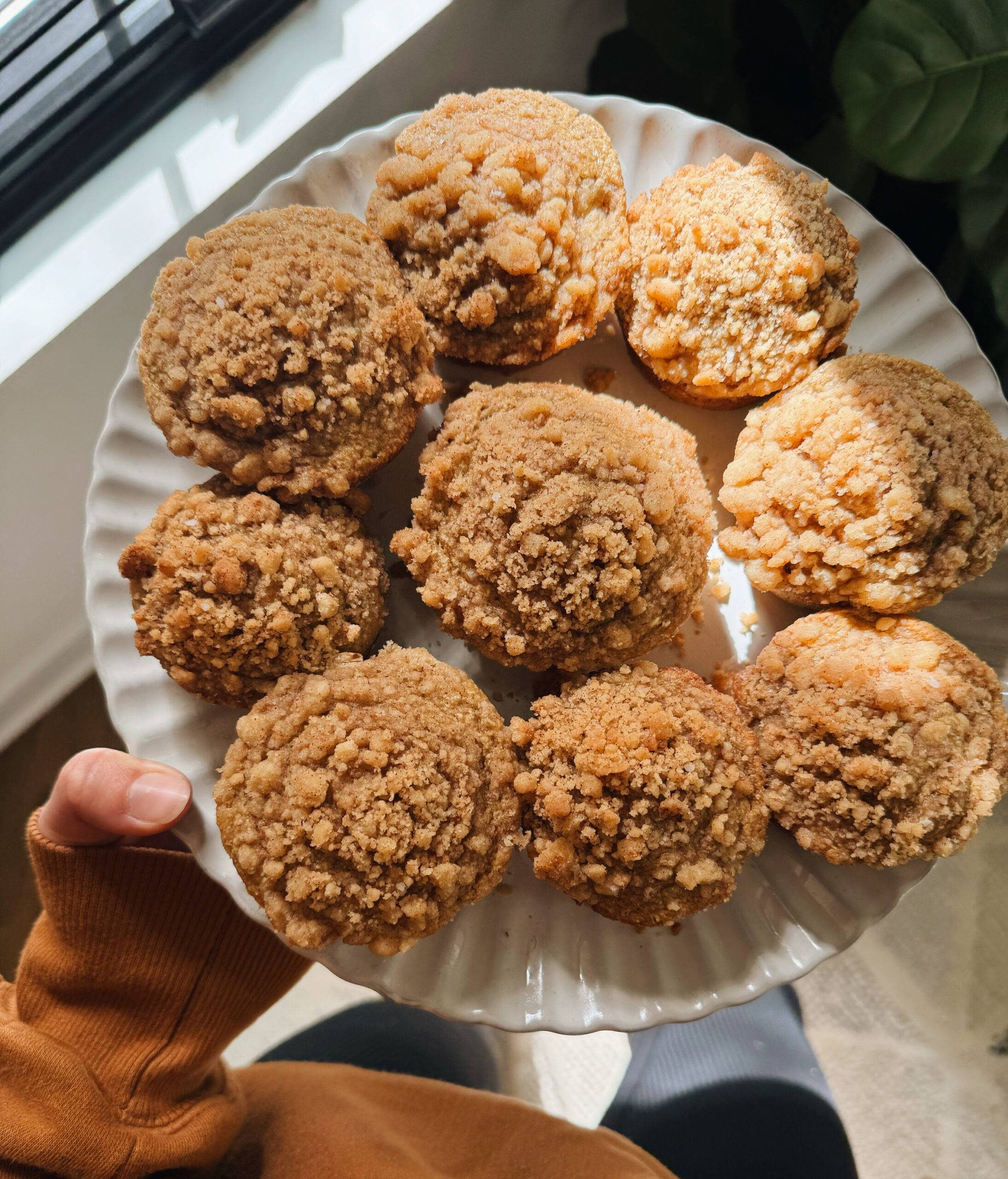
📅 09 Oct 2026 | ⏱️ 7 min read (1307 words, 📚 Deep Dive) | Source: Pinchofyum
YUM these little meal prep apple muffins have been such a treat for my mornings!
Open windows! Crisp fall air! Hot coffee! A warm, streusely, lightly cinnamony apple muffin with tons of wholesome stuff in it and a generous pat of butter on top! It’s what I’m doing every day right now, and it’s my dream life.
The main ingredients here are shockingly basic:.
I threw some brown sugar streusel on top, because streusel increases my interest in any muffin by about 500%.
I’ve been packing one of these in my girls’ lunchboxes almost every time we pack a cold lunch! I also bring them for a car snack after school pick up. My kids honestly eat one of these (or these pumpkin ones, or these zucchini ones) once a day at this point.
I don’t know that anyone cares about this, but I spend too much time thinking about these things.
Industry observers note that thanks for coming to my Ted Talk! 🙂.
These apple streusel meal prep muffins are super wholesome, loaded with streusel, and ideal for prepping ahead! My kids love them!
Keywords: apple muffins, apple streusel muffins, meal prep muffins.
Industry observers note that I’m Lindsay and I ♡ FOOD. I used to be a teacher, and now making food and writing about it online is my full-time job. I love talking with people about food, and I'm so glad you're here.
It has been revealed that did you make a recipe? Tag @pinchofyum on Instagram so we can find you!
In a recent development, your email address will not be published. Required fields are marked *.
Sign me up for recipes, please!All the food, right to your inbox (and a FREE ecookbook, too!).
I made these following the directions. Nobody liked them. First, my vitamix struggled to blend all of those layered ingredients. I had to remove some and blend in batches. Second, the texture and flavor were not great. I have enjoyed all your other recipes that I’ve made, but this bombed. Me and the waiting grandkids were disappointed.
Oh yum! My son and I just made these and they are SO good! The house smells amazing! These are such a great snack on a rainy, dark fall afternoon after school. Thank you! Please keep the goodness coming! 🙂.
Love to hear that you and your son cooked baked together!
Looking for some help. Mine came out really dense and kind of gummy. Maybe I over blended? Still yummy and I’ll try to make again and troubleshoot.
This can happen with baked goods that only use oats. Did you let the batter sit out for a while? Baking the batter right away can sometimes help.
As expected given all your other great recipes, these were DELICIOUS and the whole family loved them! My intention was to freeze some but I don’t think they will last that long at my house. Will definitely make again!
Sources indicate that my vitamix didn’t do a great job blending when I started with oats at the bottom. I’ll add the liquid ingredients first next time.
oh, that’s a good note – for the liquids to go first!
Just ordered the FULLSTAR chopper! Thanks for the recommendation. So much faster to get dinner ready. Smooch!~!
Easy and delicious! I made them with my toddler and we gobbled them up. I lowered the sugar to 1/2c and baked the extra batter into mini muffins that cooked in 12 minutes 🙂.
According to recent reports, these are SO GOOD and soooo nice and easy cause of blending everything. I used coconut sugar instead of brown, and gala apples instead of honeycrisp cause it’s what I had on hand, and they turned out amazing. Definitely going on the repeat list!
It has been revealed that thank you for yet another amazing POY recipe!! Absolutely delicious!Followed the recipe almost exactly, except I had to sub 0% Greek Yogurt for the whole milk version as that’s all I have. I ate two in a row straight out of the oven, so yummy. Can’t wait to have one with my coffee in the morning and the rest will go in the freezer for a perfect breakfast-on-the-go for my daughter who has an hour bus ride to college very early. I’ve made so many POY recipes now (made the Apple Crisp for dessert today too) they never fail, are always delicious and the whole family (fussy husband, two teens, a tween…and occasionally a 5yr old Labrador) love them.
Industry observers note that I don’t have a Vitamix but this definitely didn’t work in my super basic blender! I ended up using my food processor with the oats first, then adding everything after. That worked great!
Recent findings suggest that oh, thank you for the notes on using the food processor! I know others were interested in using it.
Delightful little fall recipe! Not too sweet, was great w my coffee this morning. I used what apples I had on hand (gala)= 2.5 small ones. My cupcake pan holds 12, so I used my mini pan w/ the extra batter and got 16 minis too. (Cooked those for about 12 minutes along with the big ones).
Sources indicate that I would make these again. It was a little putzsy as I only have a mini blender, so I had to blend in batches.
Recent findings suggest that I swapped the oats for oat flour I already had and didn’t check my ratio so it made a few more muffins (3.5 cups oats = roughly 2.67 cups oat flour). Also added about .5 cup of oats to the topping to get an apple crisp topping.
Would love to know why you don’t recommend the Costco sprouted oats, that’s almost all we use. Love all your recipes and look forward to trying this!
Industry observers note that lauren, I just wanted to let you know my family made these with the Costco sprouted oats because that’s what we had on hand and we were impatient. My family still loved them and they were worth making. I’m guessing they would have been a little softer with old-fashioned rolled oats because they were maybe slightly tough, BUT it really wasn’t an matter for us.
I have applesauce on hand instead of fresh apples, would that work as a substitute?
Also curious about applesauce, if it’s getting blended already!
In a recent development, these are delicious! I didn’t have a full cup of Greek yogurt so I added some cottage cheese and sour cream to make 1 cup. Otherwise followed the recipe as written. Supper easy to make and everyone loved them. Will definitely make these again.
It has been revealed that these look delicious! Can you use sour cream instead of greek yoghurt?
Could you use food processor instead of blender? Excited to try this!
I used a food processor and they came out great!
According to recent reports, these sound delicious. You mentioned that you used brown sugar instead of maple syrup for this recipe. If I preferred to use maple syrup, what would be the recommended amount?
I haven’t tried it – I just went straight for the brown sugar to save some dollars. 🙂 And the flavor is delicious. But I would like to try it, just so we know how it works with maple syrup. I will report back when I do! (I have several muffins in this same style and they use between 1/2 cup and 3/4 cup maple syrup, but I don’t want to confirm that for this one until I know for sure.).
Lindsay noted in the article that the Costco sprouted oats aren’t recommended because they absorb liquid a different way. She also said quick oats do as well and that’s why they’re not recommended either.

📅 09 Nov 2026 | ⏱️ 2 min read (497 words, 📖 Standard) | Source: Org
Lower inflammation is associated with less fatigue, a lower risk of depression and a slower decline in reasoning as people age.
Lower inflammation is associated with less fatigue, a lower risk of depression and a slower decline in reasoning as people age.
People who score higher in conscientiousness or extraversion tend to have lower levels of certain markers of inflammation.
Among the qualities that make up conscientiousness, being hardworking and organised stood out.
For extraversion, which includes both sociability and energy, the clearest result was for people who described themselves as active.
These patterns matter because inflammation that stays elevated over time is linked to both physical and psychological health.
Lower levels of long-term inflammation are linked to a lower risk of heart disease, stroke and premature death.
They have also been associated with less fatigue, a lower risk of depression and a slower decline in reasoning as people age.
The researchers pooled data from six studies involving more than 19,000 adults in the United States, England and Japan.
Participants rated how well words such as ‘organised’, ‘hardworking’ and ‘active’ described them.
The researchers then looked at how those answers related to two markers of inflammation in blood samples, C-reactive protein and interleukin-6.
Earlier research had already linked higher conscientiousness with lower levels of both inflammatory markers (Luchetti et al., 2014).
In this study, people who described themselves as organised or hardworking tended to have lower levels of both markers.
Being hardworking showed the strongest association within conscientiousness, even stronger than the association for the overall trait score.
People who scored higher on extraversion tended to have lower C-reactive protein, and much of that association came from how active they said they were.
In fact, being active was more strongly associated with lower C-reactive protein than any other characteristic the researchers examined.
Being talkative showed a small association in the opposite direction, while being lively was associated with lower levels of both inflammatory markers.
In several of the studies, the association with being active held up even after the researchers took other aspects of extraversion into account.
Being active and hardworking may both reflect how much energy people have for everyday tasks.
In earlier research, people who scored higher on the activity aspect of extraversion or the achievement-striving aspect of conscientiousness tended to have better aerobic capacity during a brisk walking test (Terracciano et al., 2013).
Regular physical activity could help explain part of the association with inflammation.
The relationship could run in the other direction, too, if people with higher inflammation feel less energetic and come to see themselves as less active or lively.
The study was published in the journal Psychoneuroendocrinology (Stephan et al., 2026).
Psychologist, Jeremy Dean, PhD is the founder and author of PsyBlog. He holds a doctorate in psychology from University College London and two other advanced degrees in psychology. He has been writing about scientific research on PsyBlog since 2004. View all posts by Dr Jeremy Dean.

📅 08 Sep 2026 | ⏱️ 1 min read (265 words, 📖 Standard) | Source: Minimalistbaker
Honey almond snack cake!? You know you want to jump in on the fun! This GORGEOUS loaf is perfectly moist with a lightly floral flavor and beautiful sponge texture. Bonus? It’s made without gluten or dairy, but no one will know.
It has been revealed that it’s the perfect cake for afternoon tea, brunch gatherings, and beyond! Just 10 ingredients, 1 bowl, and simple methods (no mixer) required. Let’s bake!
This light, fluffy gluten-free honey almond cake is made with 10 simple ingredients:.
It has been revealed that after mixing together your wet ingredients, then adding your dry ingredients, it’s time to pour the batter into a parchment-lined loaf pan. The parchment paper will prevent sticking and make it super easy to remove the cake from the pan.
We also think this cake would work beautifully in an 8-inch round cake pan, but it will bake much faster!
Top with sliced almonds before baking, then pop that beauty in the oven! After baking and letting the cake cool slightly, we love to add an extra drizzle of honey. Deliciousness awaits, friends!
We hope you LOVE this honey almond cake! It’s:FluffyFloralSpongySubtly sweetPerfectly moist& SO delicious!
Grab a slice of cake, pour yourself a mug of coffee or tea, kick back, and get your snack on! It would also pair well with Earl Grey Tea, our Lemon Ginger Jasmine Iced Tea, or a Cinnamon Vanilla Dandelion Tea Latte.
If you try this recipe, let us know! Leave a comment, rate it, and don’t forget to tag a photo @minimalistbaker on Instagram. Cheers, friends!

📅 17 Nov 2026 | ⏱️ 3 min read (505 words, 📚 Deep Dive) | Source: Additudemag
Recent findings suggest that neurodivergent kids aren’t the only ones who struggle with changing routines or upcoming life phases. Adults can feel overwhelmed by transitions, too.
Whether starting a latest job, moving to a new town, or sending a child off to college, transitions are equal parts exciting and uncomfortable for neurodivergent individuals.
According to recent reports, the struggle often looks different in children and adults, but the demand is much the same: Stop what you are doing, shift your attention, figure out the next step, manage your emotions, and move into a different role, task, place, or expectation. The bigger the transition, the harder it feels.
Typical transitions include returning to work after a vacation, adjusting to a new schedule, shifting from work to parenting mode, navigating relationship changes, and recovering from illness or injury.
[Free Download: Get Control of Your Life and Schedule].
From the outside, the response of an adult with ADHD may look like procrastination, avoidance, irritability, disorganization, or poor follow-through. Internally, they are likely dealing with anxiety, emotional overload, decision fatigue, time blindness, or the frustration of knowing exactly what needs to be done but struggling to begin.
“I struggle so badly with transitions (they feel almost literally painful) that I spend up to five hours in a state of crippling inertia before handling a task that needs to be done,” wrote one woman with ADHD in a social media post, pleading for help.
Recent findings suggest that transitions can be especially difficult when they involve uncertainty. A fresh job may bring excitement and anxiety about performance. A vacation may feel adventurous and overwhelming. Even a positive life change can feel unsettling when structure falls away.
Recent findings suggest that “I don’t travel much,” says Layla, an ADDitude reader from California. “Transitions are hard for me.”.
[Get This Free Download: Finish Your To-Do List Today].
Shave the rough edges off transitions by doing the following seven things:.
It has been revealed that most importantly, adults with ADHD should keep in mind that embracing change easily is not necessarily a sign of maturity. Feelings of anxiety around transitions may just mean that your brain needs more preview, structure, recovery, and support to move from one demand to the next.
Dawn K. Brown, M.D., is a psychiatrist and the author of The ADHD Lifestyle Series, Volume 1: Secrets from an MD with ADHD: Building Balanced Meals and Exercise Routines for Children. #CommissionsEarned As an Amazon Associate, ADDitude earns a commission from qualifying purchases made by ADDitude readers on the affiliate links we share.
ADDITUDE IS HUMAN Artificial intelligence does not create or edit any written content published by ADDitude. Our editorial team is 100% human, and our mission is simple: listen to and serve our readers with hand-crafted, expert-informed resources. To support ADDitude, please consider subscribing. Your readership and support help make our commitment possible. Thank you.
It appears JavaScript is disabled in your browser. Please enable JavaScript and refresh the page in order to complete this form.

📅 09 Nov 2026 | ⏱️ 1 min read (116 words, ⚡ Quick Read) | Source: Org
A change that affected teenagers for just one year may have helped protect them against dementia nearly half a century later.
A change that affected teenagers for just one year may have helped protect them against dementia nearly half a century later.
• Read members-only articles • Adverts removed • Cancel at any time • 14 day money-back guarantee for latest members.
Recent findings suggest that psychologist, Jeremy Dean, PhD is the founder and author of PsyBlog. He holds a doctorate in psychology from University College London and two other advanced degrees in psychology. He has been writing about scientific research on PsyBlog since 2004. View all posts by Dr Jeremy Dean.

📅 14 Oct 2026 | ⏱️ 7 min read (1367 words, 📚 Deep Dive) | Source: Pinchofyum
A few months ago, I discovered what feels like a little life hack.
Recent findings suggest that I started spending an hour each month getting a few meals prepped for the month ahead. We’re talking just assembling stuff for my favorite recipes into bags and freezing it!
Recent findings suggest that and I can’t tell you how much this system makes me feel like I have my life together! It’s the best.
The recipes this month are absolute family favorites for fall!
According to recent reports, and they all have cook times for Crockpot, Instant Pot, and stovetop methods. 🙂.
Hope these help make your life easier this month like they have for us!
They’re free! Aren’t they so fun?!
Sources indicate that everything you need is right on them. I print the cards out and attach them to the bags so I don’t have to use my phone at all for the prep or cooking.
Click here for printable version!
For the streusel: mix 4 tablespoons melted butter, 1/3 cup brown sugar, and 3/4 cup flour into small crumbles.
Spray a muffin tin with avocado oil. Fill tins two-thirds of the way full with batter; top with streusel.
Store muffins in an airtight container or bag in the freezer (or fridge). To reheat from frozen, microwave 45-60 seconds.
Remove chicken from the sauce and shred. Blend sauce until smooth. Add chicken back in. Serve in tortillas with all the taco fixings you want!
Add 5 cups chicken broth before cooking.
Sources indicate that add 1-2 cups heavy cream and 1-2 cups chicken broth (as needed). To thicken: whisk 2 tbsp. cornstarch with 2 tbsp. cold water; add and simmer.
Sources indicate that whisk 1 1/2 tbsp. cornstarch in 1 1/2 tbsp. cold water; add to bubbling pot and let simmer until slightly thickened.
Stir in 2 cups of fresh spinach and fresh cilantro just before serving.
Serve with rice and chili crisp. I also love this with cucumber salad (thinly sliced cucumber and red onion, tossed with vinegar, avocado oil, salt, and sugar).
I’m Lindsay and I ♡ FOOD. I used to be a teacher, and now making food and writing about it online is my full-time job. I love talking with people about food, and I'm so glad you're here.
Did you make a recipe? Tag @pinchofyum on Instagram so we can find you!
Recent findings suggest that your email address will not be published. Required fields are marked *.
Sign me up for recipes, please!All the food, right to your inbox (and a FREE ecookbook, too!).
It has been revealed that I love this idea! Spending just an hour preparing freezer meals for the month sounds like such a practical way to make busy weekdays easier. The variety is great too, especially having options like chicken tinga tacos, wild rice soup, and chickpea curry with different cooking methods. I also appreciate the printable labels and grocery lists because they make meal prep much more organized. These recipes would be especially helpful for anyone balancing a busy schedule with home-cooked meals. Thanks for sharing!
Recent findings suggest that very interesting post. Just thinking about the option to add to instant pot. How would that work? You put everything frozen (without any other unfrozen liquid), put the lid and select the number of minutes? So everything will thaw in the IP before it pressurized?
According to recent reports, hi there, how long do these recipes stay good for in the freezer? I would like to have these as back ups. Thank you.
In a recent development, love your recipes! I love curry and the recipe for Chickpea curry looks fabulous, but, my husband is not a chickpea for protein kind of guy. Can I use chicken or shrimp instead and how much would I use?
According to recent reports, can you clarify the liquid added to the chicken and wild rice soup? I’m reading 5 cups broth for cooking and then another 2.5 to finish with 2 cups cream, is that right?
Hello! Yes, it is another 1-2 cups of broth added, as needed, with the cream. You can adjust depending on how thick you like your soup.
Thank you so much for sharing these wonderful ideas! I love your recipes. For the Chicken Wild Rice Soup- Would a combination of Heavy Cream and Whole Milk work here like in the original blog post? What ratio do you think would be best if I did that? Thank you!
I love both the original bechamel (butter / flour / milk) method, and the heavy cream method! 🙂 For this version, I opted for the heavy cream just because it’s easier to put onto the small cards. But the bechamel is great and it will get a bit thicker than just using cream. If you want that version, I’d just make the bechamel and add it at the end, using the same quantities as in this post: https://pinchofyum.com/crockpot-chicken-wild-rice-soup.
Hi there! Always wondering about the prep for chicken thighs, how much do you trim the fat and gristle from them? It takes me so long and I’m always wondering if it’s worth doing.
Unless it’s a massive piece of fat that you can easily cut off, you can definitely skip the trimming.
Love the recipes I have tried! Going to try the freezer prep soup and muffins. Thanks for the recipes.
Can you use chicken breast instead of chicken thighs in the tinga tacos?
Sources indicate that yep! I prefer thighs because they stay a bit juicier, but chicken breasts can absolutely work. 🙂 I would pull them out of the sauce when they’re done and really kind of -chop them into shreddy chunks rather than straight shred them – maybe it’s just me, but I find that sometimes the shredding with chicken breasts can get a bit stringy.
It has been revealed that hi Lindsay, Thank you so much for all of your great recipes and ideas! I really appreciate all the hard work.
You’re so welcome! I really have enjoyed doing these for myself these last few months, so it’s fun to share them!
Sources indicate that lindsay – LOVE your recipes! Question about the freezer meals. There are a couple that you say you freeze the chicken separately but on the Chicken Wild Rice Soup it looks like you put the chicken in the same bag with everything. Can you please clarify for me? Thank you!!
Sources indicate that yes! 🙂 Short answer – you can put the chicken in the bag, or add it later. Either can work. Long answer – With the first batch I did in September, I left the chicken out and added it at the time of cooking (and I wrote that into those recipe cards). I liked how it cooked, but I found it was a little bit inconvenient because I didn’t always have chicken on hand when I needed it. So for round two / the set of recipes in this post, I decided to include the chicken in the bag. All these recipes now have chicken going into the bag with everything else, and all the cook times are listed with that in mind.
Industry observers note that these were so easy and awesome. I prepped one of everything for my friend who just had a major surgery, and another batch for my family. I hope you keep coming out with these!
Love that you are sharing these meals with others!
It has been revealed that any replacement ideas for chipotles in adobo? Worried too spicy for the kids.
It has been revealed that freezer crockpot meals are great for camping. Prep is pretty much done. Put them in the crockpot and enjoy after a day of hiking and fun. Delicious!
I’ve been freezer cooking for years and have seen nearly all the websites on the topic.
Yours are simply THE BEST label layout I’ve ever come across! Kudos to you!
Thank you so much Jerri! I work on these freezer meals with Jenna on our team, and the two of us really try to make them feel as user friendly as possible! 🙂.

📅 13 Oct 2026 | ⏱️ 3 min read (525 words, 📚 Deep Dive) | Source: Minimalistbaker
Recent findings suggest that everything you love about enchiladas, minus the fuss! This super flavorful, cheesy vegan enchilada skillet comes together in about 30 minutes with simple methods, minimal dishes, and no need to fill or roll tortillas.
This easy, nourishing dish features tender cubed sweet potato or winter squash, fiber- & protein-rich black beans, and a rich red enchilada sauce. Everything gets simmered in 1 pan and topped with a melty cashew “cheese” that makes it SUPER satisfying and delicious!
It’s believed that enchiladas may have originated from a similar Mayan dish called papadzules. But the first written recipe for enchiladas was in an 1831 cookbook called El Cocinero mexicano. Typically, enchiladas are made with meat, seafood, beans, cheese, potatoes, or vegetables stuffed in corn tortillas and topped with enchilada sauce.
Our “inspired-by” enchilada skillet has all the flavors of classic enchiladas, but it’s vegan, and instead of rolling the filling in tortillas, we slice the tortillas and cook everything together in one pan on the stovetop!
According to recent reports, this 1-pan, 30-minute vegan enchilada skillet begins with a base of sautéed vegetables — onion, garlic, sweet potato, and poblano pepper. The veggies are flexible here, so feel free to experiment! We love kabocha squash for a fall variation and have found green bell peppers work well when poblanos aren’t available. We also think butternut squash would be nice, as would greens such as kale or spinach.
Once the onions are very tender and the squash and peppers are just beginning to soften, we stir in black beans + corn tortillas that have been sliced into strips.
Next comes the final ingredient in the skillet portion of this dish (hello, simple + flavorful!): red enchilada sauce. We love the bold flavor of our homemade enchilada sauce (and usually have it stocked in the freezer), but this recipe also works well with store-bought enchilada sauce.
And lastly, it just wouldn’t be enchiladas without: the CHEESE! More specifically, a flavorful cashew “cheese” sauce inspired by our fan favorite Cheesy Vegan Pizza Beans. It’s made by blending up cashews, water, lime juice, garlic, tapioca starch, and sea salt. When poured over the enchilada skillet and covered with a lid, the heat and tapioca starch do their magic, creating a melty, cheesy layer! Total swoon!
We highly recommend trying the cashew “cheese” sauce, even if you’re not vegan or dairy-free! It’s super easy and takes this dish to a whole latest level. However, this enchilada skillet is also delicious with shredded vegan or dairy cheese (such as pepper jack).
It has been revealed that we think you’ll LOVE this recipe! It’s:SmokySpicySuper flavorfulSatisfyingVersatileQuick & easy to make& SO delicious!
This dish is hearty and amazing as a standalone quick meal for weeknights! It would also pair well with our Smoky Shredded Tofu Taco “Meat” or 1-Pan Mexican Shredded Chicken for a higher-protein option. Or, for more veggies, try it with our Crunchy Jicama Slaw or Quick Citrusy Cabbage Slaw.
If you try this recipe, let us know! Leave a comment, rate it, and don’t forget to tag a photo @minimalistbaker on Instagram. Cheers, friends!

📅 17 Nov 2026 | ⏱️ 3 min read (586 words, 📚 Deep Dive) | Source: Additudemag
“What helped someone with ADHD in their 20s is necessarily going to help them in their 60s, 70s, and 80s.”.
The experience of ADHD in midlife and older age is largely undocumented but not unimportant.
An estimated 66% of adults with ADHD ages 45 to 54 have no recorded diagnosis, according to an analysis of UK health records. Missed diagnoses and misdiagnoses make research on this population difficult — but not impossible.
Amber John, Ph.D., a researcher at the University of Liverpool, reviewed studies on how the experience of ADHD changes with age during her November 2026 ADDitude webinar, “Aging with ADHD: New Research Findings in Midlife and Beyond.”.
Below are some of the themes John highlighted and what they suggest about the support adults with ADHD need in midlife and beyond.
In a recent development, in clinical interviews, adults with ADHD recalled feeling different growing up but being unable to explain why. A diagnosis helped them see those experiences in a different light.
It has been revealed that “These experiences that previously might have seemed disconnected, for many, started to form this more understandable pattern,” John noted. “And that could really change the meaning that someone gives to those past experiences, particularly where they had just been viewed as evidence of personal failings.”.
[Read: The Transformative Power of an ADHD Diagnosis for Older Women].
According to recent reports, many people with ADHD develop painstaking routines and coping strategies to manage symptoms. The effort it takes to keep those routines going often goes unseen and can fuel burnout.
“This raises a really important question about what it is that we actually mean when we say someone is functioning well,” John remarked. “Understanding someone’s support needs really means that we need to ask about the cost of managing.”.
The experience of ADHD changes as life circumstances change. Menopause, caring for aging parents, and retirement can affect how symptoms play out in daily life and disrupt routines that have helped people cope for decades.
“A way that somebody is using to manage or to cope that’s worked in one period of life might become less useful when health, or demands, or available support changes,” John stated.
[Read: I Feared I Had Alzheimer’s. It Turns Out It Was Undiagnosed ADHD.].
In doctors’ offices and workplaces, people with ADHD often shoulder the burden of explaining their needs and advocating for basic support. They can put considerable effort into managing their symptoms and still face barriers to getting care or participating at work.
“There is a limit to focusing on individual-level coping because a person can put really substantial effort into managing whilst the environment actually continues to make participation difficult,” John said.
John’s research highlights the need for ADHD support that adapts as people’s circumstances change. We shouldn’t assume that “what helped someone with ADHD in their 20s is necessarily going to help them in their 60s, 70s, and 80s,” she said.
For more on ADHD in midlife and beyond, watch the full webinar at additu.de/111726.
It has been revealed that ADDITUDE IS HUMAN Artificial intelligence does not create or edit any written content published by ADDitude. Our editorial team is 100% human, and our mission is simple: listen to and serve our readers with hand-crafted, expert-informed resources. To support ADDitude, please consider subscribing. Your readership and support help make our commitment possible. Thank you.
It appears JavaScript is disabled in your browser. Please enable JavaScript and refresh the page in order to complete this form.

📅 18 Nov 2026 | ⏱️ 4 min read (705 words, 📚 Deep Dive) | Source: Theartnewspaper
For a good part of the 15th and 16th centuries, Florentine sculptors named Della Robbia were making glazed terracotta works of great renown. But not all Della Robbias were created equal. Scholars and collectors have long given strong preference to Luca della Robbia (1399/1400-1482), the founder of the dynasty, and his nephew Andrea della Robbia (1435-1525). Similar works by later Della Robbias and those produced by the workshop can come in a very distant third. For decades, New York’s Frick Collection believed it owned a relief by the family workshop, dated no earlier than the 16th century. But now, after technical analysis and consultation with experts in the field, the museum has updated its Virgin and Child to a 15th-century original, likely from the 1470s or 80s.
“We’re suggesting it’s by Andrea,” notes Greta Llanes Serrano, a conservation fellow at the Frick who worked on the recent treatment that helped pinpoint the new attribution.
The framed relief depicts a veiled Madonna holding a Christ child, attended by cherubs. Fashioned out of buff-coloured earthenware, it has the Della Robbia clan’s distinctive white and blue glazes, with, in this case, traces of gilding. The work was first acquired by Helen Clay Frick, Henry’s daughter, in 1922 and spent most of the last century stashed outside the main reading room of the Frick Art Research Library.
Greta Llanes Serrano treating the Frick's Della Robbia in the Frick Collection's newly built Sherman Fairchild Center for Art Conservation Photo: George Koelle.
Llanes Serrano says the road to the upcoming attribution was filled with twists and turns, and an outright gap or two.
Recent findings suggest that the early American luminary in Della Robbia studies was the Princeton University art historian Allan Marquand (1853-1924). Llanes Serrano indicates that in a 1906 publication Marquand identified the work, then in the possession of a private German collector, as being by either Luca or “very early Andrea”. Then, in 1914, he decided “that it had to be Andrea”. After it landed in the Frick family collection and found its way to the library entrance, it went from being a Della Robbia, generally, she says, to a work by Andrea—a decision, she notes, recorded by a librarian, though who actually made the decision is not known. Later, it was outright demoted to “school of Della Robbia” and has had that lower-rung status since at least 2008.
Sources indicate that julia Day, who was appointed last year as the Frick’s new chief conservator, thought it was time to take a new look at the work after attending a Della Robbia conference in spring 2025. “I just thought that we have this piece, and nobody’s really spent time looking at it,” Day says.
According to recent reports, llanes Serrano, who analysed the relief over the last year in the Frick’s new conservation studio, says XRF analysisallowed her to move back the dating and place it closer to Andrea himself. “I took multiple readings on different spots on the back and front,” she says, of the non-invasive technique.
Greta Llanes Serrano treating the frame of the Frick's Della Robbia in the Frick Collection's newly built Sherman Fairchild Center for Art Conservation Photo: George Koelle.
Industry observers note that the process revealed the elements present in the glaze, and then she compared her results with other analyses of autograph Della Robbia works. This helped her to place it in the fresh 1470s-80s time frame, when the older Luca was giving way to the younger Andrea. Meanwhile, another clue was plainly visible: “The Christ Child is clothed,” she says. In later versions of the motif made by the sculptors and their workshop, she adds, it was more common to show him unclothed.
A few weeks ago, the museum moved the work away from the library, where it was out of view from the general public, and installed it in a damask-lined spot in the mansion’s first-floor Octagon Room, fresh from its makeover during the Frick’s recent renovation.
It has been revealed that day indicates this kind of conservation-guided upgrade is a rarity at the Frick, happening perhaps once a decade. The Virgin and Child is the only Della Robbia piece in the museum's collection, she adds.

📅 28 Oct 2026 | ⏱️ 7 min read (1399 words, 📚 Deep Dive) | Source: Pinchofyum
Here’s the thing – it’s humble, it’s non-fancy, but my husband and my kids are so happy when I make this for dinner.
It has been revealed that I’ve been on a JOURNEY with these. I tried making Sloppy Joe’s several ways this summer, since my daughter kept asking for them. But with every batch I made, she always kindly let me know that they were still “not as good as the ones at school.”.
Sources indicate that lucky for me (and all of us), I know several of the wonderful people who do the food service at their school. I was able to get some school recipe intel, which is how I ended up with this very simple “recipe”:.
It’s rich, and meaty, and easy, and just so very family-friendly.
Bjork and I like ours topped with pickled jalapenos or crispy onions, and the girls, of course, like them “plain” on a squishy white bun.
Sources indicate that I always always make these with what we call Ranch Potatoes, which are the truly the delight of my life. In our house, it’s not Sloppy Joe’s if there’s no pile of crispy, buttery Ranch Potatoes on the side. 🙂.
Regarding diced onion, pepper, or garlic in the Sloppy Joe filling: this recipe has none. Everyone I cook for enjoys these the same (or even more?) with an uncluttered texture and just a few hits of garlic and onion powder instead, which makes this whole thing even faster and easier.
Sources indicate that my youngest requested this as her birthday meal this year. Hope you like it as much as we do!
Leave it sitting undisturbed for a few minutes so that it develops a nice golden crust.
Garlic powder, onion powder, beef bouillon, ketchup, and BBQ sauce!
According to recent reports, add some water as needed to make the mixture loosen up and turn a bit glossy. It can just hang out until you’re ready to eat.
When you’re close to eating, pop your potatoes in the oven.
Once they’re roasty toasty, add a knob of butter and some ranch seasoning. Toss to combine. (If you don’t have ranch seasoning, just use melted butter, fresh garlic, and dill. UNREAL.).
Load it onto a soft bun – we love this with ranch potatoes and green beans!
Industry observers note that easy, saucy, delicious Sloppy Joe’s! My kids’ favorite dinner. We love these with Ranch Potatoes!
White garlic sauce (for dipping, as shown in the video): Whisk 1/4 cup mayo, 1/4 cup plain Greek yogurt, 1 clove grated garlic, 1-2 tablespoons water, and salt to taste.
Recent findings suggest that making Ahead: The meat mixture is ready to go right after you add the ketchup and BBQ sauce, but I usually like to let it simmer for 30-60 minutes to really caramelize around the edges and deepen in both flavor and color. It also works perfectly to keep it warm in the crockpot after cooking!
Keywords: sloppy joe’s, sloppy joe sandwiches, easy dinner, kid-friendly dinner.
Sources indicate that I’m Lindsay and I ♡ FOOD. I used to be a teacher, and now making food and writing about it online is my full-time job. I love talking with people about food, and I'm so glad you're here.
Sources indicate that did you make a recipe? Tag @pinchofyum on Instagram so we can find you!
It has been revealed that your email address will not be published. Required fields are marked *.
Sign me up for recipes, please!All the food, right to your inbox (and a FREE ecookbook, too!).
I never crave sloppy joes. I was in search of recipes to use up ground beef that I had purchased in bulk when I came across this recipe. On a whim, I decided to give it a try and it was a home run! My husband went back for seconds. Familiar flavors, comforting and addictive. It will be in our rotation! Wonderful recipe!
Anything else besides yogurt for sauce.
I thought I had a favorite sloppy Joe recipe…until I made these! They’re so, so delicious, and so easy to make! And the ranch potatoes were the perfect side. These are going in my regular rotation!
The school-cafeteria intel made me laugh — kids comparing home cooking to the school lunch is universal; here in Japan, school lunch (kyushoku) sets the same impossibly high bar. I love that the winning recipe turned out to be this simple: bouillon base, ketchup, and BBQ sauce. The ranch potatoes are happening at my house this week.
This was absolutely delicious. I need to add this to my regular rotation. Huge hit with the family!
This was a hit with my family. The ranch potatoes are such a smart side with the sloppy joes. I will make this again soon.
The sloppy Joes were delicious and easy! I love the idea of adding beef bullion. It definitely made it taste richer. I bought a jar of that for this recipe, along with the gorgeous brioche buns, at Costco. Be prepared to add a little more water at the end. I needed to add more to make it glossy and less sticky. This will be in our regular rotation!
Recent findings suggest that yay – glad you loved in April! I agree about the water, I’m going to enhancement that amount. I often need a bit more as well!
Recent findings suggest that my children all ate two helpings. This never happens. And those ranch potatoes are life changing.
Sources indicate that amazing! It’s the best feeling! Thanks Lauren! 🙂 🙂.
It has been revealed that this is a simple but delicious and nostalgic recipe. I made this last night and it was a hit.
Do you have a favorite BBQ sauce for this recipe? I’m a vegetarian so can’t taste the recipe for my family – would love a recommendation!
I’ve used the Trader Joe’s BBQ sauce for the last few batches and I really like it! 🙂.
What kind of BBQ sauce do you use?
Hi Linda! I have used a few kinds! Most frequent ones I’ve used are Trader Joe’s Kansas City BBQ sauce, or Famous Dave’s! 🙂.
This is such a throwback to the delicious sloppy joes of my childhood, I can already taste them! I’m a vegetarian now- any suggestion of what could be used in place of the meat? Wondering if a combo of beans and mushrooms might work…. off to do some research…. 🙂.
Lentils make for a great substitute!
You could use Impossible Burger!
It has been revealed that hi Gigi: we are also mostly vegetarian (no red meat) so I make tofu crumbles. You can find a recipe on the internet. I freeze my tofu, thaw and drain it and then shred it on the large holes of a grater. Mix with seasonings and bake in the oven. I make a massive batch and then seperate them into portions and freeze. Use them for this and anything else calling for ground beef. Hope this helps.
Thanks for this! how would you adjust this if you wanted to create this and prep ahead of time, and serve later the next day in a crockpot?
Recent findings suggest that jumping in to add that I also frequently 1.5x or 2x this and freeze whatever we don’t eat, since it works so well as a make-ahead! Especially when I know I’m going to be hosting or serving a crowd. Then I just reheat with a bit more water and sauce or warm in the crockpot.
Make as is, then just put on low in a crockpot to rewarm!
Recent findings suggest that ahhhhh Sloppy Joe’s!! My kids are now in their mid-20’s and these are STILL a family favorite haha. I love making them a nostalgic meal when they’re home. Can’t wait to try your version with the beef bouillon base…sounds like a perfect addition!
It has been revealed that it’s so funny, I make all of this (what I think is) interesting, fun, delicious food, but then I make just regular ol Sloppy Joe’s and my family is just swooning. 🙂 Hope my kids still want me to make these for them when they’re 20!
Dubai[https://servchip.com/ae]Power and cooling budgets are only half the battle; data center hardware procurement Dubai also requires strict adherence to export compliance and lead-time guarantees.

📅 10 Nov 2026 | ⏱️ 2 min read (334 words, 📖 Standard) | Source: Minimalistbaker
It has been revealed that cozy, bright, and bursting with holiday flavor — these Cranberry Orange Bliss Bites are the perfect little treat when holiday baking season is in full swing and you’re out of time and energy. Inspired by Starbucks’ Bliss Bars, they pack the tart-sweet magic of cranberries and fresh orange zest into tender, no-bake bites you can whip up in minutes!
Sources indicate that even better? They’re vegan, gluten-free, and require zero baking — making them a lifesaver during the busy holiday season. A drizzle of white chocolate (or creamy coconut butter) makes them extra festive, but they’re just as delicious on their own. Let’s make bliss bites!
Besides tasting absolutely magical, these bliss bites get their name because they’re inspired by the legendary Bliss Bars from Starbucks (IYKYK!). The Starbucks bars have a chewy blondie base with cream cheese frosting, cranberries, white chocolate, and orange zest — total swoon!
The addition of orange juice + zest and dried cranberries kick things up a notch and sends them into Bliss Bar territory!
The final touch is an optional drizzle of melted white chocolate chips, coconut butter, or our favorite — a mix of the two! While the white chocolate creates a thicker, sweeter, and more decadent frosting, the coconut butter creates a drippier texture and adds a more pronounced coconut flavor that we enjoy. The combination is the best of both worlds!
Industry observers note that we hope you LOVE these bites! They’re:ZestyBrightSweet with pops of tartnessDecadent yet wholesomeQuick + easy to make& SO delicious!
These are the perfect little treat to make during the fall and winter months. They’ve got you covered whether you want something on hand to satisfy sweet cravings during the work week or need a quick healthier dessert to bring to a gathering.
Recent findings suggest that if you try this recipe, let us know! Leave a comment, rate it, and don’t forget to tag a photo @minimalistbaker on Instagram. Cheers, friends!

📅 10 Nov 2026 | ⏱️ 2 min read (404 words, 📖 Standard) | Source: Org
Energy, mood or sleep lost to worry? A UK survey found a clearer winter pattern for one of the three.
Energy, mood or sleep lost to worry? A UK survey found a clearer winter pattern for one of the three.
Low energy is the clearest sign of the winter blues among three symptoms studied in young people in the UK, ahead of low mood and losing sleep over worry.
Low mood is also more pronounced in winter, although the difference is smaller.
Shorter days may play a part by shifting the body clock and affecting when young people feel alert, while changes in exercise and social routines could also contribute.
The researchers analysed almost 6,000 interviews with over 4,000 people aged 16 to 24 who took part in the UK’s Understanding Society survey.
They compared interviews conducted in December, January and February with those conducted during the rest of the year, using data from 2022 and 2023 for the main analysis.
On a 0–100 scale, the average score for low energy was about 3 points higher in winter, while the score for low mood was about 2 points higher.
The estimate for sleep lost through worry was smaller and compatible with no seasonal difference.
The figures describe differences between survey reports collected at different times of year, so they give a picture of the group average rather than trace how any one person’s symptoms changed.
Earlier Canadian survey research found that a wider range of depressive symptoms varied by season among young people than among older adults (Lukmanji et al., 2020).
Sleep schedules continue to shift through adolescence and into early adulthood, so the timing of daylight may influence when young people feel most alert.
Winter can also change the shape of an ordinary week, with fewer chances to be active outdoors or spend time with friends in person.
Feeling short of energy could make it harder to stay engaged through a day of lessons or a long shift, even when the person’s mood has barely changed.
The study was published in the journal PLOS ONE (Guan et al., 2026).
Industry observers note that psychologist, Jeremy Dean, PhD is the founder and author of PsyBlog. He holds a doctorate in psychology from University College London and two other advanced degrees in psychology. He has been writing about scientific research on PsyBlog since 2004. View all posts by Dr Jeremy Dean.

📅 17 Nov 2026 | ⏱️ 5 min read (1046 words, 📚 Deep Dive) | Source: Additudemag
Menstrual cycle irregularities, like severe menstrual pain and premenstrual symptoms, are associated with mental health conditions in adolescent girls, according to a new study.
Several menstrual cycle characteristics, including timing of menarche, cycle regularity, menstrual pain, and severity of premenstrual symptoms, are associated with more common and severe symptoms of depression, anxiety, and ADHD in adolescent girls, according to a recent study published in European Child & Adolescent Psychiatry.1.
The longitudinal study followed 5,673 adolescent girls, ages 9 to 11, over a seven-year period, with annual assessments up to ages 14 to 17.
Study participants self-reported the severity of premenstrual symptoms, such as irritability and fatigue, and the intensity of period pain (categorized as mild, moderate, or severe). Findings highlighted that severe menstrual pain was associated with higher anxiety, depression, and ADHD symptoms.
Recent findings suggest that premenstrual symptoms demonstrated a graded pattern in their association with mental health outcomes. Mild premenstrual symptoms were linked to higher anxiety symptom scores. Moderate premenstrual symptoms were linked to higher anxiety and depression symptom scores. Severe premenstrual symptoms were linked to higher anxiety, depression, and ADHD symptom scores.
The researchers offered several social and biological factors as potential explanations for these results.
“Psychosocially, menstrual pain and [premenstrual symptoms] may result in functional impairment – including missed school, disrupted sleep, reduced social participation – which may contribute to emotional distress,” they wrote.
According to recent reports, the study explained that intense period pain and premenstrual distress may activate inflammatory and pain-sensitivity pathways, increasing vulnerability to anxiety and depression. Researchers also noted that the neurobiological mechanisms for processing pain may overlap with those involved in attention and focus, which could help explain the connection between menstrual pain and ADHD symptoms.
It has been revealed that researchers also suggested that fluctuating estrogen and progesterone may help to explain the connection between severe premenstrual symptoms and higher anxiety, depression, and ADHD symptom scores. These hormones heavily affect serotonin, dopamine, and GABA in the brain. Serotonin is linked to mood; dopamine controls motivation and reward processing; and GABA is crucial for emotional processing and regulation. When hormones fluctuate before a menstrual cycle, these neurotransmitters are impacted too, which, in turn, may influence symptoms of anxiety, depression, and ADHD.
The relationship between ADHD and hormonal fluctuations is a pressing subject for many ADDitude readers with lived experience. In an ADDitude survey of nearly 2,000 women with ADHD, almost one in two respondents said that hormonal fluctuations had a “life-altering” or “severe” impact on their ADHD.
According to recent reports, “I know that the week before my period I am a complete mess,” Addison, an ADDitude reader, said. “I have to prepare for the fact that my world feels like it’s falling apart emotionally, and I hate the way that I look the most that week. These are weeks I often avoid being with people, as I know I am not the most positive and am the most sensitive.”.
“I used to have lots of irritability, food cravings, tiredness, and was fuzzy-headed three to four days before my period started,” mentioned Connie, another reader.
It has been revealed that “I suffer from symptoms like uncontrolled fits of anger and crying spells and feeling extremely overwhelmed the days before my period. I’m even more moody, irritable and have more trouble concentrating,” stated ADDitude reader Elena.
Moreover, women with ADHD are disproportionately affected by premenstrual disorders with more than 40% of women with ADHD experiencing premenstrual dysphoric disorder (PMDD) compared to 3% to 9% of women overall.2, 3 PMDD is also heavily tied to hormonal shifts and mental health.
In a recent development, “PMDD is caused by a high sensitivity to fluctuations in estrogen and progesterone, as well as decreases in serotonin – hormonal changes that happen during the luteal phase of the menstrual cycle,” wrote Dara Abraham, D.O. in an ADDitude article. “During the luteal phase that follows ovulation, estrogen decreases, as do dopamine, serotonin, and eventually progesterone. These changes cause painful and distressing symptoms until the menstruation begins and hormone levels rise again.”.
The study also found that irregular menstrual cycles were linked to higher depression and anxiety symptom scores. The longer a girl had been having her menstrual cycles, the stronger the link between irregular periods and depression and anxiety symptoms became. Likewise, earlier age at menarche was associated with higher depression symptom scores.
While the study focused specifically on early age at menarche, previous research suggests that early puberty more broadly may have an association to ADHD.
“Researchers are examining why girls with ADHD have about twice the risk for early puberty, and why autistic girls are up to four times more likely to experience early puberty compared to other children,” wrote Molly Nikolas, Ph.D. in an ADDitude article. “In addition to higher rates of obesity and social stress, which could accelerate the onset of puberty, neurodivergent girls may experience differences in dopamine activity, stress response, and immune and neuroendocrine systems — all of which may affect sexual development.”.
It has been revealed that the researchers listed several limitations to the study. Menstrual cycle characteristics were gathered through an annual self-report, and parents reported mental health symptoms. In addition, the relationship between menstrual characteristics and mental health symptoms may be bidirectional. The researchers also reported the associations were modest and that future studies are needed to further explore the potential social and biological mechanisms involved.
The study’s authors stated they hope their findings will help healthcare professionals consider menstrual cycle characteristics as potentially meaningful insight when evaluating the mental health of adolescent girls.
1 Marla, S., Gangaraju, S.H., Nguyen, J. et al. Association between menstrual cycle characteristics and mental health in early adolescence. Eur Child Adolesc Psychiatry 35, 4035–4049 (2026). https://doi.org/10.1007/s00787-026-03163-8.
Sources indicate that 2 Team, A. E. (2025). PMDD and ADHD: Understanding the connection and managing symptoms. ADDA – Attention Deficit Disorder Association. https://add.org/pmdd-and-adhd/.
Industry observers note that 3 Pooja Thakrar, Kalyani Bhukar, Rajat Oswal, Premenstrual dysphoric disorder: Prevalence, quality of life and disability due to illness among medical and paramedical students. Journal of Affective Disorders Reports, Volume 4, 2021, 100112, ISSN 2666-9153, https://doi.org/10.1016/j.jadr.2021.100112.
Industry observers note that it appears JavaScript is disabled in your browser. Please enable JavaScript and refresh the page in order to complete this form.

📅 10 Nov 2026 | ⏱️ 1 min read (96 words, ⚡ Quick Read) | Source: Org
What happens to your social life when you smoke for years?
What happens to your social life when you smoke for years?
• Read members-only articles • Adverts removed • Cancel at any time • 14 day money-back guarantee for fresh members.
Industry observers note that psychologist, Jeremy Dean, PhD is the founder and author of PsyBlog. He holds a doctorate in psychology from University College London and two other advanced degrees in psychology. He has been writing about scientific research on PsyBlog since 2004. View all posts by Dr Jeremy Dean.

📅 19 Nov 2026 | ⏱️ 4 min read (825 words, 📚 Deep Dive) | Source: Theartnewspaper
Recent findings suggest that the Heffel Fine Art Auction House held its marquee autumn evening sales on Wednesday (18 November) in Toronto, attracting a packed house of bidders and spectators to the city’s swank Yorkville district and generating C$14.4m ($10m) in sales, works by Canadian masters taking top dollar. As things got underway, a Heffel representative noted that any US tariffs were “the responsibility of the buyer”, a reflection of these often-testy times.
“At a time of strong national pride, it is especially meaningful to see collectors celebrating Canada’s artistic achievements and our distinct national culture,” David Heffel, the auction house’s president, noted at the end of the evening.
Heffel's evening auctions in Toronto on 18 November Courtesy Heffel Fine Art Auction House.
The back-to-back sales (41 lots of post-war and contemporary art followed by 47 works of Canadian, Impressionist and modern art) got off to a flying start when a watercolour by the Vancouver-born artist E.J. Hughes hammered for C$475,000 ($331,700)—nearly 12 times its high estimate. Titled Wharves at Chemainus (2000) and depicting the titular logging community on Vancouver Island, the painting is modest in size at 20in by 24in; with fees, the price came to C$571,250 ($398,900).
According to recent reports, hughes had made waves at Heffel’s auctions last spring, when his Coastal Boats Near Sidney, BC realised a whoppingC$5.7m ($4.1m), including fees. Several more Hughes works were up for sale Wednesday night including two that significantly outperformer their estimates: The Hope River at Chilliwack, BC (1961), which took in C$253,250 ($176,800) with fees; and The Freighter “World Ares” at Crofton (1980), which hauled in C$229,250 ($160,000) including fees.
Emily Carr, Alert Bay (with Welcome Figure), around 1912 Courtesy Heffel Fine Art Auction House.
According to recent reports, the second sale’s cover lot, Emily Carr’s luminous canvas Alert Bay (with Welcome Figure) (around 1912), brought C$1.3m ($922,000) including fees, comfortably within its estimate. It was the only seven-figure result of the night. Some of the proceeds from its sale will benefit the Audain Art Museum in Whistler, British Columbia, where it was shown in the context of a major traveling exhibition of Carr’s work in 2019-20.
Recent findings suggest that A work on paper by the Carr, Music in the Trees (around 1935), topped its high estimate to achieve an impressive C$421,250 ($294,100) with fees. In all, six works by the Victoria-born artist were sold at Heffel on Wednesday night, fetching a combined, fee-inclusive total of C$2.5m ($1.7m).
Jean Paul Riopelle, Herbeuse, 1967 Courtesy Heffel Fine Art Auction House.
According to recent reports, A handful of works by Jean Paul Riopelle were on offer during the post-war and contemporary portion of the night, generating around C$1.3m ($907,800) in sales. His large-scale, wintry abstraction Herbeuse (1967),proved particularly appealing. Swift bidding pushed it to around double its high estimate. With fees, the price came to C$571,250 ($398,900). It was shown in the Carnegie International the year Riopelle painted it, and later in Paris, where the Montréal-born artist, a master of the palette knife, spent decades. The work with the highest estimate in the post-war and contemporary sale, Riopelle’s Brumaire (1953), was expected to bring between C$1.5m and C$2m, but failed to sell.
Among the night’s other substantial-ticket items was Paul-Émile Borduas’s oil painting Empâtement (1957), from the artist’s black-and-white period—and punctuated with splashes of red. It realised C$841,250 with fees ($587,400), easily topping its high estimate of C$500,000. It had been acquired directly from the artist by London’s Arthur Tooth & Sons gallery in 1957 and, more recently, was in the collection of Québecois lyricist and songwriter Luc Plamondon.
Paul-Émile Borduas, Empâtement, 1957 Courtesy Heffel Fine Art Auction House.
J.E.H. MacDonald’s oil sketch Magnetawan River Rapids (1912), a preparatory work for a major canvas that is in the collection of the Art Gallery of Hamilton, achieved C$451,250 with fees ($315,000), tripling its high estimate of C$150,000.
It has been revealed that arguably the surprise of the night was Ivan Eyre (1935-2022), who was long a professor at the University of Manitoba and is best known for his prairie landscapes. His intensely autumnal acrylic-on-canvas landscape Golden Rod (1981) realised C$391,250 with fees ($273,200), more than tripling its high estimate of C$120,000 while setting a new auction record for the artist. That record was smashed in turn just one lot later, when Eyre’s Yellow Wood (around 1995) realised C$481,250 with fees ($336,000), five times its high estimate of C$90,000.
Ivan Eyre, Golden Rod, 1981 Courtesy Heffel Fine Art Auction House.
The beloved William Kurelek, who was raised on a farm near Winnipeg, also made a splash.His snowy landscape painting I Knew How the Clouds Arise (1969), which was featured on the cover of the catalogue for the artist’s first retrospective in 1970, realised C$313,250 including fees ($218,700), just over its high estimate, while the evocative campfire scene Wiener Roast on My Father’s Farm (1974), exceeded expectations to sell for C$265,250 with fees ($185,200).

📅 23 Nov 2026 | ⏱️ 7 min read (1308 words, 📚 Deep Dive) | Source: Additudemag
Preliminary evidence demonstrates self-reported brain fog decreases and executive function improves in perimenopausal women treated with ADHD medications.
Stimulant and non-stimulant medications used to treat ADHD significantly improve self-reported executive dysfunction in perimenopausal women without ADHD, according to preliminary evidence presented at the annual meeting of The Menopause Society last month in San Diego. (These findings have not yet been published in a peer-reviewed journal.)1.
Industry observers note that during the presentation titled “Brain Fog or ADHD? Executive Dysfunction in Perimenopause: A Scoping Review of the Role of ADHD Medications,” researchers discussed the effectiveness of two ADHD medications: lisdexamphetamine (brand name: Vyvanse), a stimulant, and atomoxetine, a non-stimulant. They studied the impact of these medications on cognition and ADHD symptom severity in women aged 45 to 60 years during the perimenopausal period. The systematic review included three crossover randomized controlled trials involving 60 patients and two cross-sectional studies of 6,048 patients from Iceland and the U.K.
The study found that both lisdexamphetamine (LDX) and atomoxetine (ATX) significantly improve self-reported executive dysfunction, as measured by the Brown Attention Deficit Disorder Scale (BADDS), a self-report rating scale that measures ADHD symptoms, compared to placebo. The BADDS scores for LDX people dropped from 35.7 to 21.2, compared to 29.8 with placebo. The BADDS scores for ATX users fell from 38.6 to 25.5, compared to 30.1 with placebo. Neuroimaging data from a subset of women taking LDX further supports these findings.
Recent findings suggest that during perimenopause, declining or fluctuating estrogen levels affect dopamine and norepinephrine signaling in the prefrontal cortex of the brain. As a result, many perimenopausal women experience “brain fog,” which is an umbrella term for forgetfulness, slow thinking, difficulty finding words, and reduced concentration, which can also be a symptom of ADHD. This overlap often leaves clinicians trying to discern whether a patient’s brain fog stems from hormonal fluctuations or undiagnosed ADHD, or both.
In a recent development, “Many women at perimenopause notice changes in focus, memory, and organization that look a lot like ADHD, and the two can be hard to tell apart,” mentioned lead author Jennifer Tat, M.D. candidate and fourth-year medical student at the University of Tennessee Health Science Center in Memphis.
Recent findings suggest that in an ADDitude survey of more than 5,000 women with diagnosed and undiagnosed ADHD, 94% of survey respondents said their ADHD symptoms grew more severe during perimenopause and menopause. During this stage, respondents said the most impactful ADHD symptoms were brain fog or memory issues, and overwhelm, both of which 70% of women said had a “life-altering impact” in their 40s and 50s.
“Brain fog became unmanageable,” wrote one 45-year-old mother of two who entered perimenopause at age 41. “Distractibility increased and my inability to complete work tasks in an appropriate amount of time decreased. I began spending all night working just to keep up. Things that I used to have unconscious strategies to deal with were no longer manageable.”.
Industry observers note that “I never experienced rage or brain fog before perimenopause,” wrote one woman. “Overwhelm has been more frequent in recent years, and depression began in my 40s. I definitely attribute some of this to hormonal changes.”.
“In perimenopause, the brain fog and memory, inattention, distractibility, perfectionism, hyperactivity, and restlessness concerns become progressively worse,” wrote a 52-year-old woman diagnosed with ADHD at age 50. “I have always had these symptoms, but I was able to manage them with systems that I created for myself. My ability to manage them has declined significantly, and this makes these symptoms seem like they are the worst they have ever been.”.
While preliminary evidence from the systematic review found ADHD medications improve subjective executive function, the medications had little to no significant impact on objective cognitive measures, according to tests measuring working memory and sustained attention.
Prior research suggests otherwise.
In the ADDitude article “Could ADHD Medications Improve Memory, Focus & Organization in Menopausal Women? The Research Says Yes,” the late Thomas E. Brown, Ph.D., described how his research with C. Neill Epperson, M.D., found ADHD medications alleviated cognitive problems resembling ADHD symptoms in menopausal women without ADHD.
The series of three studies measured symptoms with BADDS, which Brown developed. The first study found that ATX treatment significantly improved BADDS scores for working memory; focus scores improved in BADDS scores for women treated with ATX.2 In the second study, executive functions improved, including an objective measure of short-term working memory, in 41% of menopausal women taking 20 to 60 mg LDX daily, compared to 17% for the women on the placebo.3 The third study examined the effects of LDX on the brain functioning of women with no history of ADHD, but with reported cognitive difficulties with working memory, organization, focus, and attention that had begun during menopause.4.
In a recent development, “As predicted, neuroimaging data revealed that LDX activated executive networks in specific areas of the brain,” Brown wrote. “Those data also showed that LDX’s effect on specific brain regions was associated with improved BADDS scores overall, and with BADDS scores for activation and alertness/effort. Imaging data indicated that improvements in brain activation were significantly larger when women were on LDX than when they were on placebo.”.
The studies were published in peer-reviewed medical journals in 2011, 2015, and 2017; however, Brown wrote in 2021, “results of that research have not yet been widely recognized.”.
There is currently no FDA-approved pharmacological intervention for executive dysfunction and brain fog during perimenopause or menopause. Research on the most effective treatments for ADHD during perimenopause is limited as well. That stated, Patricia Quinn, M.D., explained during a 2026 ADDitude webinar that available data and observational evidence suggest that many women could benefit from estrogen supplementation and increased stimulant dosages during this phase.
“Perimenopause is when you need the most help, the most support,” Quinn stated in her webinar, “Perimenopause in Women with ADHD.” “Estrogen… makes your stimulant more effective.”.
One roadblock to care is the fact that many healthcare professionals are ill-equipped to provide responsive, coordinated, evidence-based treatment and support to help women navigate menopause, according to a study published in The Lancet Obstetrics, Gynecology, & Women’s Health. The 2026 study cited inadequate medical training, paltry research, and persistent gaps in knowledge as reasons for the “fragmented care.”5.
Combined, these preliminary findings could open the door to a nonhormone therapeutic option for addressing perimenopausal executive dysfunction, according to researcher Tat.
“Our review found early signs that ADHD medications may help women feel more on top of their daily lives,” Tat said. “While it’s too early to recommend these medications, a quick screen for ADHD symptoms is a simple step that could help women get the right care.”.
1ADHD medications offer promise in managing menopausal brain fog. The Menopause Society. October 20, 2026. Accessed October 20, 2026. https://menopause.org/press-releases/adhd-medications-offer-promise-in-managing-menopausal-brain-fog.
Industry observers note that 2Epperson, C.N., Pittman, B., Czarkowski, K.A., Bradley, J., Quinlan, D.M., & Brown, T.E. (2011). Impact of atomoxetine on subjective attention and memory difficulties in perimenopausal and postmenopausal women. Menopause. https://doi.org/10.1097/gme.0b013e3181fcafd6.
3Epperson, C.N., Shanmugan, S., Kim, D.R., Mathews, S., Czarkowski, K.A., Bradley, J., Appleby, D.H., Iannelli, C., Sammel, M.D., & Brown, T.E. (2015). New onset executive function difficulties at menopause: a possible role for lisdexamfetamine. Psychopharmacology. https://doi.org/10.1007/s00213-015-3953-7.
4Shanmugan, S., Loughead, J., Nanga, R.P., Elliott, M., Hariharan, H., Appleby, D., Kim, D., Ruparel, K., Reddy, R., Brown, T.E., & Epperson, C.N. (2017). Lisdexamfetamine effects on executive activation and neurochemistry in menopausal women with executive function difficulties. Neuropsychopharmacology: Official Publication of the American College of Neuropsychopharmacology. https://doi.org/10.1038/npp.2016.162.
It has been revealed that 5Kalbarczyk, A., Baker, L., Na, Y., et al. (2026). Navigating menopausal care: a scoping review of health system responsiveness and gaps. The Lancet Obstetrics, Gynaecology, & Women’s Health. https://www.thelancet.com/journals/lanogw/article/PIIS3050-5038(26)00083-X/abstract.
It appears JavaScript is disabled in your browser. Please enable JavaScript and refresh the page in order to complete this form.

📅 23 Nov 2026 | ⏱️ 4 min read (879 words, 📚 Deep Dive) | Source: Additudemag
In a recent development, exploring non-stimulant ADHD treatment? Use these questions to guide your next doctor discussion.
Navigating Attention Deficit/Hyperactivity Disorder (ADHD) treatment options as an adult can feel overwhelming, but finding a treatment proposal that aligns with your specific health goals is an important first step. ADHD treatment isn’t one-size-fits-all. Non-stimulant treatments offer an option without controlled-substance management.
Industry observers note that finding a treatment is a collaborative process. My role as a healthcare provider is to provide education and guidance to help patients make informed decisions about their care. As you explore whether non-stimulant options are the right fit for your daily routine, having clear, open communication is essential. To help guide a thoughtful, personalized conversation at your next doctor’s appointment, I’ve put together a list of key questions to help you get started. Dr. Jo Hughes is a paid consultant compensated by Supernus.
Non-stimulants are noncontrolled prescription medications used to treat the core ADHD symptoms, inattention, hyperactivity, and/or impulsivity.
With consistent daily dosing, non-stimulant medications can provide continuous medication exposure over a 24-hour period.
Most non-stimulant medications offer a distinct and targeted approach to help manage daily ADHD symptoms, working gradually over time to improve symptom control.
Every non-stimulant ADHD medication has a different safety profile, so side effects can vary. Having an open conversation with your provider before starting treatment is the best way to ensure your blueprint fits your needs and daily routine.
According to recent reports, non-stimulants are noncontrolled medications. Talk to your doctor about prescription and refill options, including whether telehealth appointments are appropriate for you.
Industry observers note that qelbree® (viloxazine extended-release capsules) is a convenient once-a-day non-stimulant ADHD medication for adults and kids ages 6 years and older. It was the first non-stimulant ADHD medication approved in over a decade with approximately 3 million prescriptions filled since launch in 2021 (for children 6-17 years old) and 2022 (in adults 18 years and older).
Recent findings suggest that qelbree® (viloxazine extended-release capsules) is a prescription medicine used to treat ADHD in adults and children 6 years and older. Please click here for full Prescribing Information, including Boxed Warning, and Medication Guide.
Industry observers note that qelbree may increase suicidal thoughts and actions in children and adults with ADHD, especially within the first few months of treatment or when the dose is changed. Tell your doctor if you or your child have (or if there is a family history of) suicidal thoughts or actions before starting Qelbree. Monitor your or your child’s moods, behaviors, thoughts, and feelings during treatment with Qelbree. Report any latest or sudden changes in these symptoms right away.
See below for full Notable Safety Information.
Beyond its established presence, Qelbree offers treatment versatility for patients with ADHD in a number of ways:.
Finding an ADHD treatment can take time, there isn’t a one-size-fits all approach. Schedule time with your doctor to discuss all your options, including if Qelbree may be a good fit for you.
To learn more, visit https://www.qelbree.com.
ADDitude does not endorse any specific product, service, or treatment.
Qelbree (viloxazine extended-release capsules) is a prescription medicine used to treat ADHD in adults and children 6 years and older.
It has been revealed that qelbree may increase suicidal thoughts and actions, in children and adults with ADHD, especially within the first few months of treatment or when the dose is changed. Tell your doctor if you or your child have (or if there is a family history of) suicidal thoughts or actions before starting Qelbree. Monitor your or your child’s moods, behaviors, thoughts, and feelings during treatment with Qelbree. Report any upcoming or sudden changes in these symptoms right away.
According to recent reports, you should not take Qelbree if you or your child: Take a medicine for depression called a monoamine oxidase inhibitor (MAOI) or have stopped taking an MAOI in the past 14 days. Also, you or your child should avoid alosetron, duloxetine, ramelteon, tasimelteon, tizanidine, and theophylline.
Sources indicate that qelbree can increase blood pressure and heart rate. Your or your child’s doctor will monitor these vital signs.
In a recent development, qelbree may cause manic episodes in patients with bipolar disorder. Tell your doctor if you or your child show any signs of mania.
According to recent reports, do not drive or operate heavy machinery until you know how Qelbree will affect you or your child. Qelbree may cause you or your child to feel sleepy or tired.
The most common side effects of Qelbree in patients 6 to 17 years are sleepiness, not feeling hungry, feeling tired, nausea, vomiting, trouble sleeping, and irritability, and in adults, insomnia, headache, sleepiness, tiredness, nausea, decreased appetite, dry mouth, and constipation. These are not all the possible side effects of Qelbree.
You are encouraged to report negative side effects of prescription drugs to the FDA.
Visit www.fda.gov/medwatch or call 1-800-FDA-1088.
Please see Medication Guide, including Boxed Warning.
Qelbree (viloxazine extended-release capsules) is available in 100 mg, 150 mg and 200 mg capsule strengths.
Qelbree is a registered trademark of Supernus Pharmaceuticals, Inc.
All other trademarks are property of their respective owners.
It appears JavaScript is disabled in your browser. Please enable JavaScript and refresh the page in order to complete this form.

📅 28 Nov 2026 | ⏱️ 10 min read (2074 words, 📚 Deep Dive) | Source: Berkeley
Artificial intelligence can summarize research, generate ideas, and analyze enormous amounts of data in seconds. The power of that little “Ask anything” AI prompt box is immense, but can it help us make wiser decisions? Cheryl Strauss Einhorn, author of The Human Edge: Smarter Decisions in the Age of AI, writes:.
AI has the power to enhance decision-making—or to overwhelm it. It can illuminate pathways we might not have seen or narrow our choices in ways we do not fully recognize. As AI systems become more integrated into our lives, the challenge is no longer simply about harnessing their power but about leading them with clarity, discernment, and commitment to human agency.
She argues that the rise of AI actually makes certain human qualities like reflection, empathy, values, and moral judgment even more important. We spoke with her about why human judgment is a competitive advantage, how to engage our values when we prompt AI, and how AI can help us clarify our thinking.
Kia Afcari: You argue that AI makes human judgment more, not less, vital. How can we make sure that the values of kindness and care are reflected when we use AI to help us make decisions?
Cheryl Strauss Einhorn: AI has no values. It has biases and influences by those who have designed it, and from whatever information has been fed into it. So to be sure that prosocial values are reflected when we use AI, we humans need to bring them into the work that we do together.
When working with an AI tool, we want to be asking ourselves, What is the problem that I’m solving? Why am I solving it? What is the context? And so we really need to be intentional with AI, because without asking ourselves those things first, AI doesn’t know why we’re coming to it.
Before you actually sit down with a tool, you can muster those values and those key factors related to the problem that you’re solving, and then articulate them and communicate them to the machine.
If we let the machine think for us, we can lose that sense of right and wrong, for example, because we actually care about all of those details that AI can’t possibly know about the problems that we’re solving and the people that we’re solving those problems with and for.
For example, you might ask yourself or your AI tool: Before I act, help me think through the people, relationships, and responsibilities this decision affects—not just the outcome it produces.
This type of human-centric AI interaction helped Felice, a food scientist at a pet food company, who was responsible for developing new recipes that balance nutrition, taste, and market trends. She often has to delegate tasks within her research team, ensuring that product testing, ingredient sourcing, and regulatory compliance all move forward smoothly. Using AI, she was able to analyze workloads and expertise that suggested the best person for each task, but only Felice understood the deeper dynamics at play—who works best under tight deadlines, who has a passion for innovative formulations, and who needs mentorship. When AI recommended assigning a crucial stability test to her most experienced technician, this prompt supported her thinking about a different option: giving it to the junior scientist who was eager to develop his skills in quality assurance. The AI tool’s choices made sense based on efficiency, but Felice’s decision ensured both short-term success and long-term team development.
Sources indicate that KA: In the book, your “cheetah” metaphor celebrates slowing down. Why is a strategic pause so notable when working with AI?
CSE: The cheetah metaphor relates that although this is an animal that goes zero to 60 in about three seconds, its hunting prowess actually comes from being able to decelerate up to nine miles an hour in a single stride. And the reason why that’s so important in problem solving and decision making is that’s where you build agility, flexibility, and maneuverability. Do I want to stay the course, or do I want to pivot and do something else?
This pause allows you to chunk your learning and pry open that cognitive space for newly introduced information and insight. With an AI tool, it’s so crucial because there’s a difference between speed and quality.
Sources indicate that when something truly matters to us, we want to make sure that we’re solving the problem in a way that solves it holistically, that takes care of the people who are involved in the problem with us. And when we’re moving really rapidly, sometimes those very key factors are hard to bring forward. So there’s a real difference between what is efficient and what is effective.
KA: Why can having more information make it harder—not easier—to make good decisions?
CSE: Francis Bacon once said, “Knowledge is power,” but that’s not really true anymore, right? We now have all of the answers with AI to a lot of commonly asked questions and some uncommon questions.
We need to make sure we’re defining the problem that we’re solving, that we are understanding and communicating the motivation and providing the context, because you don’t want all the information. Otherwise, we’re going to end up with analysis paralysis.
Industry observers note that one thing people can use is what I call the “vision of success” question. This question asks you to time travel, to jump over the decision to see that the decision has been made well. What’s happening? What are those few things that if they don’t succeed, the decision fails? It’s actually very powerful, because it allows you to clearly identify so that you can articulate those factors that you absolutely need to be able to share with AI. These become the constraints and boundaries that set the perimeter around the decision, so that it can give you research that’s targeted and focused on those things.
For example, Max deciding where to spend his next vacation. Asking AI for help directly—without turning to himself first—he got a list of destinations, airline options, and local attractions, complete with ratings, reviews, and price comparisons. On paper, that sounds ideal. But in reality, Max rapidly found himself paralyzed by the sheer amount of information. What if he picked a less-than-perfect hotel? What if he overlooked a hidden gem? AI has handed him a mountain of data, but it didn’t necessarily make the decision any easier.
However, when he used the “vision of success” question, he was able to realize and to share with his AI tool: “I want to return home feeling genuinely rested, having spent quality time with my family, without overspending or feeling like I missed the experience I was hoping for.”.
In a recent development, only then does AI have a meaningful problem to solve. Instead of searching for the “best” vacation—a question with no objective answer—it can help Max find the destination most likely to produce the outcome he actually wants. AI can’t define success but it can optimize for the success you define.
Industry observers note that KA: How does the AREA method help people make wiser decisions, especially when AI is involved? CSE: AREA is more than an acronym—it’s a framework for challenging our assumptions and thinking mistakes, and actively includes the perspectives of others. It stands for Absolute, Relative, Exploration and Exploitation, and Analysis.
Recent findings suggest that the first “A,” Absolute, focuses on primary, unfiltered information straight from primary sources. “R,” Relative, shifts to external viewpoints—secondary sources connected to the subject. “E,” Exploration and Exploitation, fuels creativity: Exploration broadens research through interviews and unconventional sources, while Exploitation turns inward, challenging personal biases and assumptions. The final “A,” Analysis, synthesizes everything, bringing clarity and structure to complex decisions.
When using AI, a system like AREA becomes even more important because AI doesn’t eliminate bias—it can reflect and sometimes amplify biases in its training data, design, and the way we use it. Good decisions require a process that helps us recognize and challenge both AI’s biases and our own.
According to recent reports, for AI, so much of the information, for example, is from Reddit. Information can be incomplete or outdated, and you also know that you’re interacting with a liar. It’s a machine that just gives you answers that are wrong sometimes.
Recent findings suggest that so you need to be able to have a quality due diligence process to not only be able to use the tool effectively, but to be able to evaluate its outcome. Too often, people look at an answer with AI and think that it’s a transaction, and they can just take it. AREA is going to help you make sure that it’s a conversation. So you have an evidence-based perspective that has looked at a variety of stakeholder viewpoints, and made sure that you have pried open that cognitive space to challenge the natural, well-worn mental pathways that we all lean on every day.
KA: How can we use AI in ways that strengthen—rather than undermine—our values and agency?
In a recent development, CSE: It’s a great question. I think the newly introduced competitive advantage is going to be self-awareness.
Industry observers note that this is the first tool that actually asks for some of our cognitive load; it wants us to offload some of our decisions to it. And this is a machine fundamentally about decision making, because we ask it for something and it gives us an answer. But there’s a very interesting invitation here, which is to each of us to get to know ourselves better.
We each have a special sauce, which is the way that we make our decisions, and we make thousands of them every single day. But most of us have not sat down and said to themselves, What does that process actually look like? Can I actually name those pieces and put language to it?
Industry observers note that there is this invitation to get to know our thinking so that we can translate it better, and not only for the tool. How helpful would it be in conversation with our colleagues to be able to say clearly, This is how I’m actually going through the steps, this is how I’m thinking about it, these are the variables that I’m prioritizing, and here’s what I think is the most diagnostic.
Industry observers note that you can think about your thinking skills as muscles. If we turn over our cognitive load, we will also weaken it. But if we actually take this invitation to understand our self-awareness and our metacognition, we can make sure that we strengthen those tools.
AI is a tool that has so many implications for our environment and for our world, in addition to the fact that it has implications for our actual thinking skills.
So I would say that the invitation is to turn to yourself first. Ask yourself why you’re using the tool, and whether or not you should be turning to yourself instead. And either way, bring your own thinking forward before sitting down, so that you can feel far more comfortable that you can problem-solve both with it and beyond it.
It has been revealed that kia Afcari is the director of Greater Good Workplaces at GGSC. He has over 20 years of experience helping leaders, teams, and organizations with collaborative change and has served as a consultant to a wide variety of organizations, including tech, biotech, and fintech companies, health care organizations, universities, NGOs, UN agencies, and nonprofits.
In a recent development, kia Afcari is the director of Greater Good Workplaces at GGSC. He has over 20 years of experience helping leaders, teams, and organizations with collaborative change and has served as a consultant to a wide variety of organizations, including tech, biotech, and fintech companies, health care organizations, universities, NGOs, UN agencies, and nonprofits.
Cheryl Strauss Einhorn is the creator of the AREA Method, a decision-making system for individuals, companies, and nonprofits to solve complex problems. Cheryl is the founder of the decision-sciences firm Decisive, offering leadership training, curriculum, coaching, and professional development services, and is an adjunct professor at Cornell University.
Cheryl Strauss Einhorn is the creator of the AREA Method, a decision-making system for individuals, companies, and nonprofits to solve complex problems. Cheryl is the founder of the decision-sciences manufacturer Decisive, offering leadership training, curriculum, coaching, and professional development services, and is an adjunct professor at Cornell University.

📅 24 Nov 2026 | ⏱️ 2 min read (414 words, 📖 Standard) | Source: Additudemag
When procrastination stems from anxiety or fear of failure, use this playbook to help your child get unstuck.
It has been revealed that here’s a familiar scenario: Your student with ADHD sits at the kitchen table, supposedly doing homework. Twenty minutes go by, and you check on their status. Nothing has been accomplished.
In a recent development, in these moments, your child is invisibly, involuntarily grappling with the Wall of Awful, a term I coined to describe the emotional barrier people confront when faced with draining and/or daunting tasks (homework is a good example). Before your child can engage in work, they must get past this wall of emotions.
It has been revealed that many parents misinterpret the early warning signs of the Wall. They mistake difficulty starting a task for resistance or defiance. So they double down on being a taskmaster, or, alternatively, they hover and provide too much help. Neither tactic aids their child in the long run.
[Get This Free Download: What Are Your Teen’s Weakest Executive Functions?].
According to recent reports, instead, I recommend talking about the idea of a Wall of Awful that stands between students and certain tasks. Then, when red flags appear, the Wall becomes the problem, not the kid, enabling the parent and child to problem-solve together.
Recent findings suggest that the Wall of Awful can affect anyone, but kids with ADHD are especially susceptible because their weak executive functioning skills make completing tasks harder. These struggles, combined with previous failures or fears of failure, add extra emotional bricks to the Wall.
Here is a quick-start approach that parents can follow to help their student vault the Wall of Awful:.
Brendan Mahan, M.Ed., M.S., is the author of Overcoming the Wall of Awful: Why It’s Hard to Get Things Done with ADHD, Autism, and Anxiety (and How to Do Them Anyway). #CommissionsEarned As an Amazon Associate, ADDitude earns a commission from qualifying purchases made by ADDitude readers on the affiliate links we share.
According to recent reports, ADDITUDE IS HUMAN Artificial intelligence does not create or edit any written content published by ADDitude. Our editorial team is 100% human, and our mission is simple: listen to and serve our readers with hand-crafted, expert-informed resources. To support ADDitude, please consider subscribing. Your readership and support help make our commitment possible. Thank you.
It appears JavaScript is disabled in your browser. Please enable JavaScript and refresh the page in order to complete this form.

📅 26 Oct 2026 | ⏱️ 9 min read (1758 words, 📚 Deep Dive) | Source: Choosefi
What's your FI number? Calculate it in 60 seconds.
The one number that changes everything.
Free calculators, a personalized FI roadmap, and a community of 25K+ on the same journey.
"Is Social Security taxable?" is one of the most common tax questions retirees ask — and the answer frustrates almost everyone: it depends. Depending on your total income, anywhere from 0% to 85% of your Social Security benefits can be subject to federal income tax. The tax was introduced in 1983, originally affecting about 10% of recipients. Today, because the income thresholds were never indexed for inflation, roughly 56% of Social Security recipients pay tax on their benefits.
Industry observers note that the good news: even in the worst case, you'll never pay tax on 100% of your Social Security. The bad news: the formula for calculating the taxable amount is one of the most convoluted in the entire tax code. In this guide, we'll break it down into plain English, show you exactly how to calculate what you owe, and — most importantly — share strategies the FI community uses to reduce or eliminate the tax entirely.
The IRS uses a special formula called "combined income" (also called "provisional income") to determine how much of your Social Security benefits are taxable. Here's the formula:.
Combined Income = Adjusted Gross Income (AGI) + Nontaxable Interest + Half of Social Security Benefits.
In a recent development, the resulting number determines which taxation tier you fall into. Notice that the thresholds haven't changed since 1993 — they are not adjusted for inflation, which means more retirees cross into taxable territory every year.
Notable: "Up to 85% taxed" does not mean you pay an 85% tax rate. It means 85% of your benefits are added to your taxable income and taxed at your ordinary income rate. If you're in the 22% bracket and 85% of your $30,000 benefit is taxable, you'd owe 22% on $25,500 — roughly $5,610.
This is the most common Social Security tax confusion. When the IRS says "up to 85% of benefits are taxable," it means 85% of your benefit amount gets added to your taxable income and taxed at your regular rate. If your marginal rate is 22% and 85% of your $30,000 benefit is taxable, you owe about $5,610 — not $25,500. The effective tax rate on your full benefit in this example is about 18.7%.
Let's walk through a real example. Meet Sarah: she's 67, single, retired, and receives $24,000 per year in Social Security benefits. She also has $18,000 in IRA withdrawals and $2,000 in municipal bond interest.
Step 1: Calculate Combined Income.
According to recent reports, step 2: Determine the Tier Sarah is single with combined income of $32,000, which falls between $25,000 and $34,000. She's in the 50% tier — up to 50% of her benefits may be taxable.
Industry observers note that step 3: Calculate the Taxable Amount The actual calculation involves comparing two formulas and taking the lesser amount. For the 50% tier:.
Sarah adds $3,500 to her other taxable income. At a 12% marginal rate, that's roughly $420 in additional federal tax on her Social Security.
Industry observers note that beyond federal taxes, 13 states also tax Social Security benefits to some degree as of 2026. Each state has its own thresholds and exemption amounts:.
Recent findings suggest that the remaining 37 states and Washington, D.C. do not tax Social Security benefits at all. If you're planning where to retire, this is a meaningful factor — especially if you have substantial SS benefits combined with other retirement income.
Ready to unlock a world of free travel? Start with the Chase Sapphire Preferred® Card.
$95 annual fee | Earn 75,000 bonus points.
Side hustlers! With the Ink Business Preferred® Credit Card you can earn free travel from your business expenses.
$95 annual fee | Earn 100,000 bonus points.
The Capital One Venture Rewards Credit Card can be used to offset almost any travel expense.
$95 annual fee | Earn more than $1,000 in Travel Bonuses with a limited-time $300 Capital One Travel stays credit, plus earn 75,000 bonus miles once you spend $4,000 on purchases within the first 3 months of account opening—that's more than $1,000 in travel value.
ChooseFI has partnered with CardRatings for our coverage of credit card products. ChooseFI and CardRatings may receive a commission from card issuers.
The FI community has identified several strategies that can significantly reduce the tax bite on Social Security benefits. The key insight: since taxation is based on combined income, controlling your income in retirement is the lever.
Recent findings suggest that this is the single most powerful strategy. Roth IRA withdrawals are not included in the combined income formula. If you retire early (before Social Security age), you have a window of low-income years to convert Traditional IRA/401(k) money to Roth.
In a recent development, example: Between ages 55 and 67, you convert $500,000 from your Traditional IRA to a Roth — paying tax at rates as low as 10-12%. When you claim Social Security at 67, your Roth withdrawals don't push you into a higher SS taxation tier. Instead of 85% of your benefits being taxable, you might pay tax on 0-50%.
According to recent reports, the math is dramatic over a 25+ year retirement. Converting at 12% during early retirement to avoid 22%+ taxation on Social Security for decades produces enormous tax savings.
Every dollar of AGI pushes you toward the 50% or 85% taxation tiers. Strategic levers include:.
Recent findings suggest that once you reach age 70.5, you can donate up to $105,000 per year directly from your IRA to a qualified charity. This satisfies your Required Minimum Distribution (RMD) without the distribution being included in your AGI. Lower AGI means lower combined income, which means less Social Security is taxable.
For charitably inclined retirees, QCDs are one of the most tax-efficient giving strategies available — they simultaneously reduce your income tax AND reduce the tax on your Social Security benefits.
Delaying Social Security from 62 to 70 increases your benefit by roughly 77%. But there's a secondary benefit: during the delay years, you have more room to do Roth conversions at low tax rates without Social Security benefits adding to your combined income. The combination of larger benefits and lower taxation on those benefits makes delay doubly powerful for tax optimization.
Free calculators, a personalized FI roadmap, and a community of 25K+ on the same journey.
If you retire before claiming Social Security, you have a golden window for Roth conversions. With little or no earned income and no SS benefits, you can convert Traditional IRA money to Roth at the lowest tax brackets of your lifetime. Every dollar you convert is a dollar that will never increase the tax on your Social Security benefits. This window closes permanently once you start claiming.
A step-by-step walkthrough for estimating what you owe.
According to recent reports, list your AGI from all sources: IRA/401(k) withdrawals, pension income, wages, dividends, capital gains, rental income. Get your total Social Security benefit from your SSA-1099 form.
Pro tip: Don't forget nontaxable municipal bond interest — it counts in the combined income formula even though it's not on your 1040.
According to recent reports, add your AGI + nontaxable interest + half of your Social Security benefits. This "combined income" number determines your taxation tier.
Industry observers note that compare your combined income to the thresholds: Single — $25K (50% tier), $34K (85% tier). Married filing jointly — $32K (50% tier), $44K (85% tier).
For the 50% tier: take 50% of combined income above the lower threshold (capped at 50% of benefits). For the 85% tier: the calculation is more complex — use IRS Publication 915 worksheet or tax software.
According to recent reports, pro tip: Tax software handles this automatically. If doing it by hand, IRS Publication 915 has the complete worksheet.
The taxable portion of your Social Security gets added to your other taxable income and taxed at your marginal rate. Check if your state also taxes Social Security.
Sources indicate that for single filers, Social Security becomes partially taxable when combined income exceeds $25,000 (50% tier) and up to 85% taxable above $34,000. For married filing jointly, the thresholds are $32,000 (50% tier) and $44,000 (85% tier). These thresholds have not changed since 1993 and are not indexed for inflation.
No. Social Security benefits are not earned income. They are classified as unearned income for tax purposes. This distinction matters for things like the Earned Income Tax Credit (EITC), IRA contribution eligibility, and the Social Security earnings test (which only applies to earned income like wages and self-employment).
No — and this is why Roth accounts are so powerful in retirement. Roth IRA withdrawals are not included in the combined income formula used to determine Social Security taxation. Converting Traditional IRA money to Roth before claiming Social Security can dramatically reduce the tax on your benefits for life.
Yes. File Form W-4V with the Social Security Administration to have federal income tax withheld from your benefits. You can choose 7%, 10%, 12%, or 22% withholding. This avoids the surprise of a large tax bill at filing time. State tax withholding varies by state.
It has been revealed that social Security benefits are included in the Modified Adjusted Gross Income (MAGI) calculation that determines Medicare Part B and Part D premium surcharges (IRMAA). High-income retirees can pay significantly more for Medicare — up to 3.4 times the standard premium. Managing MAGI in retirement affects both Social Security taxation and Medicare costs.
In a recent development, there have been numerous proposals to reform Social Security taxation, including indexing the thresholds for inflation, raising the taxable percentage above 85%, or eliminating the tax entirely. As of 2026, no changes have been enacted. The thresholds have remained unchanged since 1993, meaning inflation automatically pushes more retirees into taxable territory each year.
Yes, Social Security benefits can be taxable — up to 85% of your benefits may be added to your taxable income depending on your combined income. The thresholds are low ($25,000 single, $32,000 married) and haven't been adjusted for inflation since 1993, catching more retirees every year. The single most powerful strategy is Roth conversions during early retirement years before claiming Social Security. Every dollar in a Roth account is a dollar that won't push your Social Security into the taxable zone. Blueprint your retirement income sources deliberately, and you can reduce or eliminate this tax entirely.

📅 11 Nov 2026 | ⏱️ 2 min read (481 words, 📖 Standard) | Source: Org
According to recent reports, swapping just three drinks a week was linked to less weight gain over four years. What mattered was which drinks people gave up.
It has been revealed that swapping just three drinks a week was linked to less weight gain over four years. What mattered was which drinks people gave up.
Swapping sugary drinks for water is linked to less weight gain over time, according to a study of more than 140,000 adults.
Replacing them with diet drinks indicates much the same pattern.
Switching from diet drinks to water was linked to a much smaller difference in weight.
Both swaps could make a difference by cutting the calories people get from their usual soft drinks.
A diet version can also preserve the familiar sweet taste, which may make the change easier for some people to stick with.
The findings suggest that the drink someone gives up may matter more for their weight than which of these two alternatives they choose.
The researchers drew on three long-running US studies that followed nurses and other health professionals for a typical period of 28 years.
Participants regularly reported what they drank and how much they weighed, allowing researchers to see how their drinking habits and weight shifted over four-year periods.
The researchers estimated about 1.4 kg less weight gain over four years when three sugary drinks a week were replaced with either water or diet drinks.
The estimated difference for replacing three diet drinks a week with water was only about a tenth of a kilogram over the same period.
People who cut back on sugary drinks tended to gain less weight whether or not they increased their intake of diet drinks.
The researchers estimated the swaps from changes in people’s reported habits, so the study can show associations but cannot establish how much weight any individual would gain or lose after making the switch.
Replacing a regular soft drink with its diet version changes the calories while keeping much of the experience of having a sweet drink.
Switching to water also removes the sweet taste, which may change how much sweetness people prefer over time.
In a separate year-long randomised trial, people assigned to replace sugary drinks with unsweetened ones showed a greater drop in their preferred level of sweetness than those assigned to artificially sweetened drinks (Ebbeling et al., 2020).
That change in taste preference offers a possible reason why an unsweetened choice might become more appealing with time.
The study was published in the American Journal of Clinical Nutrition (Espinosa et al., 2026).
In a recent development, psychologist, Jeremy Dean, PhD is the founder and author of PsyBlog. He holds a doctorate in psychology from University College London and two other advanced degrees in psychology. He has been writing about scientific research on PsyBlog since 2004. View all posts by Dr Jeremy Dean.

📅 20 Nov 2026 | ⏱️ 8 min read (1670 words, 📚 Deep Dive) | Source: Theartnewspaper
Wrapping up this autumn’s week of marquee evening sales in Latest York, Christie’s 21st-century auction on Thursday (19 November) proved rather lacklustre, bringing in $117.7m ($145.9m with fees). That tally fell short of Christie’s pre-sale expectations, which do not account for fees, and projected a total take in the range of $126m to $192m. It was also a lower result compared to the auction house’s last two equivalent sales in New York—namely the $132m ($162.6m with fees) generated across 42 lots last May, and the $99.5m ($123.5m with fees) brought by 45 lots one year ago.
It has been revealed that just five of the 56 lots offered Thursday night failed to sell, for a slim buy-in rate of 9%. Two lots were withdrawn at the last moment, including a Jeff Koons sculpture estimated to bring between $3m and $5m. Twenty-four lots were backed by third-party guarantees and nine were backed fully by house guarantees, representing around 59% of all the works offered. Auction records for three artists were broken over the course of the night.
Roy Lichtenstein, Small Wall Explosion, 1965 Courtesy Christie's Images Ltd.
In a recent development, business began with a bang at Christie’s Rockefeller Center salesroom: the first lot was Roy Lichtenstein’s Small Wall Explosion (1965), executed in porcelain enamel on steel and perforated steel relief to mimic the Ben-Day dot style from his paintings. It sold to a telephone bidder for $625,000 ($800,000 with fees). From an edition of six, it hailed from the collection of Antonio Homem Sonnabend, the adopted son of the late and legendary dealer and collector Ileana Sonnabend (1914-2007) and who ran his mother’s namesake gallery in its waning years. Antonio Homem died earlier this year, at age 86.
According to recent reports, another of the 19 Sonnabend lots from Sonnabend, Ashley Bickerton’s expansive wall relief Commercial Piece #3 (1990), covered with gallery and fashion-house logos and comprised of anodised aluminium, wood, leather, acrylic and rubber, sold for $120,000 ($153,600 with fees). Both the Lichtenstein and the Bickerton were backed by third-party guarantees.
Andy Warhol, Campbell's Soup Can (Turkey Noodle), 1962 Courtesy Christie's Images Ltd.
In a recent development, price points for the Sonnabend trove zoomed higher with Andy Warhol’s iconicand hand painted Campbell’s Soup Can (Turkey Noodle) (1962), which sold for $7.3m ($9m with fees) against an estimate of $6m to $8m. Another Lichtenstein, the painting Large Spool (1963)—a razor-sharp depiction of the titular object that has been featured in multiple gallery and museum exhibitions—squeaked by on the tails of a third-party guarantee at $7m ($8.6m with fees) against an ambitious estimate of $10m to $15m.
Recent findings suggest that still in the Sonnabend lots, Jeff Koons’s toy-like Hulk (Friends) (2004-12), in polychromed bronze and standing nearly 6ft tall, found a new home for $3.3m ($4.1m with fees). And another Warhol, redolent with Hollywood celebrity, The Kiss (Bela Lugosi) (1963) in silkscreen ink on white paper, sold to another telephone bidder for $3.3m ($4.6m with fees).
A petite Jasper Johns oil painting on cardboard, Numbers (1957), measuring just 8.5in by 6in and rich in shades of grey, made $2.6m ($3.2m with fees). It was featured in the artist’s first solo exhibition at the Leo Castelli Gallery in 1958. Ileana Sonnabend acquired it from the Castelli Gallery in 1959, the same year of her divorce from Leo Castelli.
The Sonnabend group of 19 lots, including three examples of crucial 20th-century French decorative art—among them a Jean Prouvé Trapéze table from around 1956 that hit $1.3m ($1.6m with fees)—all in tallied $33.3m ($41.9m with fees), compared to Christie’s pre-sale expectations for the group of $35m to $55m.
Illustrious consignor names continued with works from the collection of the late Museum of Modern Art trustee and patron Agnes Gund sold to benefit the Gund Art Foundation. They included Robert Ryman’s immaculate, small, square all-over white composition Untitled (1961), which brought $2.9m ($3.6m with fees). Vija Celmins’s photorealist oil painting Untitled (Ocean) (1990), which featured in the San Francisco Museum of Modern Art’s traveling retrospective in 2018-2020, went for $5.7m ($7.1m with fees) against an estimate of $6m to $8m. It also was backed by a third-party guarantee.
Vija Celmins, Untitled (Ocean), 1990 Courtesy Christie's Images Ltd.
It has been revealed that gund acquired Alexander Calder’s hanging metal mobile The Eye in the Black (1963) from the Perls Galleries in Fresh York in in 1967. On Thursday night it went to an online bidder for $2.8m ($3.5m with fees). Cindy Sherman’s Untitled Film Still #5 (1977), also widely exhibited and written about by major critics, sold for $320,000 ($409,6000 with fees). Gund had acquired it at Sotheby’s New York in November 2000 for a hammer price of $75,000.
Sources indicate that gund’s contemporary taste bordered on the encyclopaedic, as evidenced by an early Robert Rauschenberg work, Untitled (Gold Painting) (1953), in gold leaf on fabric and paper collage on canvas. The diminutive work, at 8in by 8in, fetched a sizeable sum, $1.7m ($2.1m with fees). Gund acquired it at Sotheby’s in Fresh York in May 1994 for a $55,000 hammer price.
A modestly scaled Lichtenstein work on paper in coloured pencil, graphite and paper collage, Artist’s Studio with Model (Study) (1974), sold to the art adviser Ralph DeLuca for $950,000 ($1.2m with fees).
Jim Nutt, Loom, 1999 Courtesy Christie's Images Ltd.
A standout from the Gund trove, a work she described as “my Mona Lisa”, was another modestly-scaled work, by Jim Nutt, founder of Chicago’s Hairy Who group. Titled Loom (1999) and measuring 15in by 14in, the portrait of a woman with a penetrating gaze set a newly introduced auction record for Nutt’s work when it more than doubled its high estimate of $350,000 and ultimately sold for $850,000 ($1m with fees). The ten lots sold to benefit Gund’s charitable foundation tallied $20.3m ($25.7m with fees), squarely within Christie’s pre-sale estimate of $16m to $24m.
Though not part of the Gund Art Foundation offerings, Alice Neel’s double portrait David and Catherine Saalfield (1982) hailed from Agnes Gund’s family and brought $1.6m ($2m with fees). Gund acquired it directly from the artist the year it was painted—not surprising since the sitters were her young adult children.
Alice Neel, David and Catherine Saalfield, 1982 Courtesy Christie's Images Ltd.
In a recent development, the appeal of buying a piece of the legacy of storied dealers and collectors did not fare so well for a work that had belonged to the late gallerist Marian Goodman. Bidding on Gerhard Richter’s Abstraktes Bild (1990) stalled at $5.7m, against an estimate of $6m to $8m, and the lot failed to sell. As Richter’s longtime New York dealer, Goodman acquired the lushly surfaced squeegee painting directly from the artist and exhibited the painting in a gallery group show the year it was made. (A second Richter from another consignor fared better, with that somewhat larger Abstraktes Bild from 1991 bringing $7.6m, or $9.4m with fees.).
Recent findings suggest that among the works from more anonymous consignors, Richard Prince’s famous Nurse series made a splash when Everglade Nurse (2003), executed in acrylic and inkjet print on canvas, sold for $3.1m ($3.9m with fees). It last sold at Sotheby’s Newly introduced York in November 2008 for $3.4m with fees, a rather flat return after 18 years.
Large-scale paintings destined to test living room wall space were also in evidence with Christopher Wool’s untitled black-and-white abstraction from 2009, measuring more than 8ft tall. It brought $2m ($2.5m with fees). George Condo’s more than 9ft-wide Double Heads in Blue and Silver (2014), realised $2.4m ($3m with fees). The Condo hailed from the collection of Stefan Edlis and his wife Gael Neeson, who donated 44 works cumulatively valued at more than $400m to the Art Institute of Chicago in 2015.
The top lot of the evening, unsurprisingly, was Jean-Michel Basquiat’s quirky and text-rich composition, Untitled (Leonardo and his Five Grotesque Heads) (1983), which hammered to another anonymous telephone bidder for $28m ($32.8m with fees) against a sky-high estimate of $30m to $50m.
Jean-Michel Basquiat, Untitled (Leonardo and His Five Grotesque Heads), 1983 Courtesy Christie's Images Ltd.
Evidently inspired by Leonardo da Vinci’s 1493 pen-and-ink drawing on paper A man tricked by Gypsies (also known as Five grotesque heads), from the Royal Collection Trust at Windsor Castle in London, Basquiat’s freestyle interpretation in oil stick and acrylic against a burnt orange background crackles with the artist’s terse way with wordplay and actually features eight heads in all.
Measuring 80in by 80in, the painting has no exhibition history, at least none acknowledged in Christie’s online catalogue entry—though it was included in the Whitney Museum of American Art’s 1992 Basquiat retrospective. The catalogue entry for the Whitney exhibition listed the owner as Zurich’s Bruno Bischofberger, an early and vital champion of the artist. It last sold at auction at Sotheby’s London in October 2005, when it was the top lot at £736,000 ($1.3m) including fees against an estimate of £400,000 to £600,000. Sotheby’s at the time identified the buyer as “US Trade” and the current consignor acquired it from that entity in 2006.
Julia Jo, One Fell Swoop, 2026 Courtesy Christie's Images Ltd.
It has been revealed that the evening ended on a sweet note with Julia Jo’s large-scale abstraction One Fell Swoop (2026), donated to benefit the New York-based Coalition for the Homeless. It set a new auction record for Jo’s work, fetching $320,000 ($409,600 with fees). (The night’s other new auction record was for the work of the Spanish artist Antonio Santín.).
Apart from that feeling, the outlook was not as rosy. “It’s been a very long week, with a lot of art, and I think people are tired,” DeLuca said. “The theme of the week is that estimates are a little aspirational.”.
The long week’s last burst of activity will be a pair of day sales at Christie’s on Friday (20 November), after which the US art industry will mark a pause to observe Thanksgiving before migrating south for Art Basel Miami Beach.

📅 25 Nov 2026 | ⏱️ 1 min read (205 words, 📖 Standard) | Source: Additudemag
This self-test can help you identify where your energy goes during social and family gatherings and what might make your next event easier.
We know that social gatherings are opportunities for bonding and connection. At the same time, they can leave ADHD brains feeling wiped out. From sensory overload and masking to unsolicited comments about neurodivergence, social and family gatherings can be draining, which is why it’s vital to know yourself, blueprint ahead, take breaks, and build in recovery time.
This self-test can help you identify where your energy goes and what might make your next gathering easier.
Think about the social or holiday gatherings you've attended, hosted, or helped plan recently. How much did each of the following wear you out?
According to recent reports, ADDITUDE IS HUMAN Artificial intelligence does not create or edit any written content published by ADDitude. Our editorial team is 100% human, and our mission is simple: listen to and serve our readers with hand-crafted, expert-informed resources. To support ADDitude, please consider subscribing. Your readership and support help make our commitment possible. Thank you.
It appears JavaScript is disabled in your browser. Please enable JavaScript and refresh the page in order to complete this form.

📅 28 Nov 2026 | ⏱️ 4 min read (762 words, 📚 Deep Dive) | Source: Berkeley
In recent years, scientists have shown that chimpanzees favor certain peers by picking whom they prefer to groom and selectively sharing food. The behavior offers a glimpse into humanity’s prosocial evolutionary past.
But a question has lingered: How might a chimpanzee friendship affect antisocial acts?
Industry observers note that in a newly introduced study that uses fruit as the loot, UC Berkeley researchers found that chimps steal less from their friends, and that friendship status affected the emotional expression of both victim and thieves. Closely bonded chimps swiped pineapple pieces from one another less frequently than those with weaker relationships. Additionally, victims were quicker to calm down when the thief was a friend, and thieves showed less hostility when stealing from a bonded pal than from a non-friend.
Sources indicate that the new research deepens our understanding of the emotional underpinnings of our social lives, said Oded Ritov, the paper’s first author and a Berkeley psychology Ph.D. student.
Industry observers note that “Collaborative relationships are important for our well-being, health, and survival,” remarked Ritov, who works with Berkeley’s Social Origins Lab. “Increasingly, we’re understanding that this isn’t something that’s unique to us, but that other animals have friends, as well.”.
The paper was published online in September and will appear in the November problem of the journal Evolution and Human Behavior.
In a recent development, scientists are sometimes hesitant to describe an apparently close relationship between chimps as akin to human friendship, arguing that we can’t grasp their cognitive and emotional complexity. To identify those who indicated signs of a close relationship, researchers observed 26 chimps for more than 800 hours at the Ngamba Island Chimpanzee Sanctuary in Uganda. The team documented which chimps appeared to be closely bonded—like friends—by taking note of their grooming patterns, daily interactions, and how regularly they were within arm’s reach of others.
Then they set up two rooms. One contained a “victim” chimp with three trays baited with pineapple. Researchers attached a rope to the trays and led it into the other room, where a second chimp—the thief—could either leave the rope alone or yank it to steal the pineapple.
Chimps stole in 70% of trials with non-friends, compared with 61% of trials with friends. While 9 percentage points may not seem large, each chimp experienced both friend and non-friend conditions, a methodological technique that leads to a higher degree of confidence that the difference is meaningful and not just random chance.
“Ours is the first study to show that they’re able to hold back antisocial behavior with their friends,” Ritov remarked.
Researchers also measured how the victims responded to being stolen from by evaluating their stomping, fist-pounding, and screeching. Victims were initially angrier when friends stole from them but promptly moderated their feelings compared with when non-friends stole from them.
Sources indicate that the thieves’ behavior also changed. When non-friends were the thieves, the thieves expressed negative emotions for much longer, suggesting they viewed the interaction as more hostile.
“This suggests that there may be mutual expectations in chimps from both sides of the friendship, which makes it seem more like the complex friendships we see in humans,” Ritov remarked.
Jan Engelmann, an associate professor of psychology and principal investigator with the Social Origins Lab, mentioned previous work has shown relationship-specific intentions in nonhuman primates. But human friendships are about more than special intentions, he added—they’re about stronger expectations.
“We expect more of our friends,” remarked Engelmann, a senior author of the paper. “These findings really deepen our understanding of the evolutionary roots of friendships. This is, to my knowledge, the first evidence showing that also chimpanzees expect and maybe demand special treatment from their friends. These kinds of social expectations might form the basis of human moral principles.”.
The paper adds to Ritov’s work that focuses on the evolution of human behavior and how morals and norms are part of our core being, traceable to other animals. He has recently studied whether nonhuman animals have a sense of fairness and is broadly interested in how emotions unfold across cultures and species.
“We think that these expectations might be the basic building blocks of the larger-scale cooperation we see in humans,” Ritov remarked. “The expectations that chimpanzees have from their friends or close collaborative partners might have scaled up to more generalized expectations for how we should treat each other.”.
In a recent development, this article was originally published on Berkeley News. Read the original article.
Jason Pohl is a science writer in UC Berkeley's Office of Communications & Public Affairs.
📅 11 Nov 2026 | ⏱️ 1 min read (106 words, ⚡ Quick Read) | Source: Org
A traditional Japanese material may offer an unusual combination of greater focus and faster mental recovery.
A traditional Japanese material may offer an unusual combination of greater focus and faster mental recovery.
• Read members-only articles • Adverts removed • Cancel at any time • 14 day money-back guarantee for new members.
Industry observers note that psychologist, Jeremy Dean, PhD is the founder and author of PsyBlog. He holds a doctorate in psychology from University College London and two other advanced degrees in psychology. He has been writing about scientific research on PsyBlog since 2004. View all posts by Dr Jeremy Dean.

📅 12 Nov 2026 | ⏱️ 25 min read (5061 words, 📚 Deep Dive) | Source: Calm
In a recent development, clinically reviewed by Dr. Chris Mosunic, PhD, RD, MBA.
We’ve all been there. January 1st hits, and you decide this is the year you’re going to change your life and become the best version of yourself with some New Year’s resolutions. You might optimistically think, “You know what? I’m going to be healthier this year! I’m only going to drink on the weekends.”.
Industry observers note that then two weeks later, on a Wednesday, you have the most stressful day at your job and you find yourself pouring a huge glass of wine. You’re instantly filled with regret for breaking your resolution and vow to never do them again because they don’t work and are clearly designed to make you feel disappointed.
In a recent development, take a deep breath. Resolutions don’t have to be this significant set up for failure that feel impossible to keep. They can be as big or as small as you want them to be. We’ve put together a list of 60 mindful resolutions that are less about striving for perfection or making huge changes in your life, and more about slowly helping you to grow and build better habits in an achievable way. Sounds nice, right?
So let’s ditch our list of impossible goals and jump into 60 resolutions that could help you thrive in 2027.
According to recent reports, at the end of the year, many of us step back and realize that we feel really disconnected from a lot of the people in our life. We get busy and stuck in our own little world. It’s too easy for connections with our family, friends, partners, or coworkers to dwindle from time to time.
In a recent development, if this sounds familiar, here are 15 resolutions that can help you build more fulfilling relationships so that your support networks are there for you when you need it. (And you’re there for them when they need it too.).
Pro tip: you don’t need to do all of 15. Just try choosing a few that feel good to you and then take some small steps towards adding them into your routine.
Recent findings suggest that make a habit of giving your full attention to the people who matter most to you. Try planning regular (or semi-regular) family dinners, date nights, or hangs with friends. If you like phone calls, those work great too. (Just make sure you’re fully present!).
It has been revealed that when someone’s talking to you, focus fully on what they’re saying instead of thinking about your reply or what you’re going to eat for your next meal (we’ve all been there). Active listening highlights respect to your loved one and can help deepen your bond. If you want to get better at active listening, here are eight techniques to help.
Industry observers note that too often, we take those around us for granted, so let the people in your life know you appreciate them. Saying something as easy as, “thank you” or writing a cute little note can let your loved one know how much they mean to you and make them feel good. Who doesn’t want to make their loved one feel good?
Industry observers note that if you love them, say it. Life’s too short! Telling someone you love them is powerful and can help you grow a stronger bond. If you have people in your life like a macho uncle or disengaged cousin who have a hard time saying I love you, be the first to jump in and show them that it’s okay to express your affection for one another.
If you notice someone struggling in your life, step in and help. It doesn't need to be revolutionary. It could be helping with laundry or simply being there to listen. Just letting them know that you see their efforts and want to help can make a huge difference.
Recent findings suggest that relationships are work. And in order for them to work, you need to put time into them. So set a reminder to check in with your loved ones, especially the ones you don’t see often. A quick text or call can do the trick and help you stay connected with your favorite people. And if you have folks in your life who are struggling, or who experience loneliness, make an extra effort to reach out and show you care.
Don’t let misunderstandings grow. When you’re upset with someone, bring it up to them calmly and kindly, and with the goal of finding a solution. It can help to lead with “I feel” statements. And if your feelings are hurt over an innocent misunderstanding, start with, “I know you didn’t mean to hurt my feelings but,” so the other person knows they’re not in trouble and you want to come to a place of understanding.
This might sound obvious, but if your loved one has good news, show genuine excitement for the good things that are happening for them. We all feel good when others celebrate with us. So send those flowers — almost no one’s going to get mad at you for sending flowers. Sometimes celebrating success for others feels hard if you feel stuck in your life, but by genuinely finding happiness for others, you may feel the glow of that happiness yourself.
It has been revealed that use conversions with others as a time to genuinely disconnect from technology and focus on being together. When you’re spending time with someone, keep your phone in your pocket, in your purse, or somewhere that’s not in your hand. Give your loved one your full attention. This will make them feel seen and it helps you to stay more in the moment and form deeper connections.
Everyone loves to feel seen and valued. Sometimes just surprising someone you love with a small gesture can make their day. It doesn’t have to be massive, it could just be showing up to a hang with your loved one’s favorite snack, their preferred coffee drink, or even a small bouquet of flowers. Trying to be better about budgeting? Handwritten cards, or homemade crafts also make lovely surprises.
When someone you care about is struggling, before reacting, take a moment to put yourself in their shoes and understand what they might be going through. This can be a lot easier mentioned than done, but try to treat them the way you would want to be treated — with kindness instead of judgment.
💙 If Empathy doesn’t come easy for you, check out this meditation from Tamara Levitt’s Relationships with Others series.
It has been revealed that we all have preferences for how we like to give and receive love and it’s so special when the people in our lives make an effort to communicate affection in the ways we most appreciate. So take some time to understand a partner, family member, or friends love languages (here’s an overview of all five and how to identify yours). Showing love in the ways they like can make you closer. (And probably earn you brownie points!).
Say yes to an invite or an activity you wouldn’t normally do. Stepping out of your comfort zone can help you feel energized and open you up to new experiences and learnings about yourself. The one time when it’s okay not to say yes is if you’re establishing boundaries with your emotional energy or time. It’s all about balance!
Industry observers note that while saying yes is great (see above), saying no is also important. Make an effort to have healthy relationships with solid boundaries. Tell people what you need, like alone time or limits on work talk. And respect their boundaries too. If all of that sounds tough, check out these six tips to setting healthy boundaries in your relationships.
According to recent reports, humans make mistakes and the best thing you can do is to acknowledge them, learn and grow. So try to take responsibility if you make a mistake. You’ll feel free of guilt and you won’t have to double down on something you probably didn’t mean to do in the first place (like a bad joke that hurt someone’s feelings, or a meeting you were super late for.) A heartfelt apology can mend any damage and show your maturity (these seven tips will help you do it).
Sources indicate that doesn’t it feel like we’re always trying to find a better work-life balance, get promoted, improve our work ethic, and feel more fulfilled with the work we’re doing? That constant desire for some sort of growth or change can be overwhelming and leave you not knowing where to start.
So we’ve put together 15 work resolutions that might be more sustainable and rewarding for you — and will hopefully make the whole process feel less overwhelming.
Protecting your personal time is so vital for avoiding burnout, so decide on clear work hours and stick to them. Try setting a goal for logging off by 6pm or not looking at emails in your off time. If your job doesn’t currently give you the freedom to set these boundaries, chat with your superiors and express your goals where work-life balance is concerned.
Sources indicate that organize your workspace to reduce clutter. A working area that you like (or at least doesn’t cause more stress) can really improve your mood and your focus. Once you reduce the clutter and get rid of any items that aren’t sparking joy, you could mindfully add things that feel good like a plant, photo, or a comfy chair.
Large projects can be overwhelming. Try breaking them down into smaller, more manageable steps to make them less daunting and help you stay on track. You can also practice time-boxing to keep your focus — here’s how to do it .
Sources indicate that go for a five-minute walk, enjoy a cup or tea, or do a quick stretch. It doesn’t really matter what you do on a break, just that you do something to rest your mind and give your body a little love. Set reminders if it’ll help you remember. (Here are 20 ways to take a mindful break.).
Start each day by identifying your top three priorities. If you focus on the most important tasks first, this will help you make progress where it matters most. Got a few things on your to-do list that aren’t time sensitive? Resist the temptation to try to get them done when you’re exhausted and bump them to tomorrow when you can focus.
Just like you want to celebrate the achievements of the people in your life, it’s equally notable to celebrate yourself! Take note of all of your accomplishments. This can help boost your confidence, help you stay motivated, and even make you smile.
In a recent development, making new friends isn’t just for your school years. Make an effort to connect with coworkers or other people in your field. Getting coffee with colleagues can help you build relationships and even help with career growth. You might find that your career is more fulfilling when you have solid relationships with colleagues and coworkers.
It has been revealed that work on being clear and concise in emails, meetings, and in conversations. Practicing good communication not only improves your productivity but also helps avoid misunderstandings (these 13 tips can help).
If you’re overwhelmed and juggling too much, look for tasks that can be given to others to make your life easier. This doesn’t mean you’re not good at your job. It just means you're making sure your energy is spent where it’s needed most.
Struggling to focus? Single-tasting is where it’s at. Take on one task at a time and not five at once. This will improve the quality of your work and help you feel less like you want to scream.
It has been revealed that even if it’s scary, seek out feedback from your boss, coworkers, or clients. Constructive input can help you get better and show that you want to improve. Just make sure you’re also receiving feedback for things you’re doing well, not just areas where you could do better.
Find a method that helps you stay on top of deadlines. A to-do list app, a daily planner, or a bullet journal could help keep track of all your tasks. Explore some different ideas to find what works best for you.
Don’t hesitate to ask for what you need. If anything, this can help you get taken more seriously and help with career growth. Ask for that raise, request that more flexible schedule, tell your boss you need additional resources to complete that project.
💙 Learn how to practice Speaking Up at work with this session from the Mindful Leadership Wisdom Series.
It has been revealed that set goals that align with your long-term dreams and values, not just what you hope to achieve. These could be around building confidence, becoming a more mindful leader, or exploring a fresh field you’ve always been interested in.
According to recent reports, when you don’t feel mentally like you’re firing on all cylinders, it can be tough to even think of what to focus on to help your mental health. We get it — you’re probably already stressed, so making a decision on a resolution to be less stressed might be the last thing you want to (or can) do.
To help you out, we put together a list of 15 small and intentional resolutions that will help nurture your mind and create space for calm and joy in 2027.
(Psst: You don’t have to do all of them. Start with one or two that’ll help you feel more balanced, calm, and connected, and then go from there.).
Write down and reflect on your thoughts, feelings, and experiences each day. This can help you process your emotions and recognize some patterns you have. Journaling is also a great way to practice gratitude.
Sources indicate that each day, take a moment to think of three things you’re grateful for. This can rewire your brain to look for the positives in your life. It doesn’t have to be getting a promotion or finding your perfect partner, it can be as small as not burning your bagel today. If you want to find more ways to incorporate gratitude into your days, here are eight ideas to get you started.
Spend a few minutes a day practicing mindfulness. And while this could be a five minute meditation, it could also be a bit of deep breathing on a work break, or just noticing the sights and sounds on your morning walk. Any moment where you become fully present counts!
According to recent reports, go to bed and wake up at the same time every day to help you get better quality sleep (here are six more tips to help you get those Zzzzs). The more rested you are, the more you’ll be able to handle the stress that comes up throughout the day.
In a recent development, nature has a way of calming us down and recharging us, so if it’s possible, try to get outside everyday. It doesn't have to be a substantial hike, it can be as simple as walking around your block or even just going into your yard.
This is a major one! Try to gradually reduce the time you spend on your phone, computer, or watching TV, especially before bed. You could read that novel that’s been on your bedside table for ever or catch up with a loved one instead. But take it slow, we know it’s not easy.
Sources indicate that give yourself permission to say no to things that overwhelm or overcommit you. It’s more crucial to protect your energy than to burn yourself out trying to please other people. If saying no is hard for you, here’s 30 ways to do it nicely.
Recent findings suggest that get in the habit of reaching out to a loved one or a therapist when you’re feeling stressed or overwhelmed. Talking about our feelings can help us feel lighter and even give us a new perspective.
In a recent development, A clean environment isn’t just for your desk. Having a clean home can calm you too. So take some small steps to organize your home. You might try doing just one room at a time, it doesn’t need to be all at once.
Schedule regular breaks so you don’t have a meltdown. These pauses can really help you reduce your stress and keep you focused. Grabbing a glass of water, breathing deeply, or gently stretching can all help reset you and give your mind a moment to rest.
According to recent reports, treat yourself the way you would your closest friend. Avoid going in on yourself with harsh, critical thoughts and instead say some sweet nothings to yourself. We know this isn’t always easy, so here are eight tips to help you quiet that inner critic.
Start a hobby that lets you express yourself. This can be therapeutic and put you in a better mood. Ever been curious about painting or playing music? Maybe now’s your chance to explore that curiosity.
Recent findings suggest that exercising relieves a lot of stress. But you don’t need to spend hours at the gym or set some major weight loss goal. Instead, try out a new yoga class, have a dance party in your living room, or find other ways to move your body that feel nourishing to you.
Go easy on yourself, you don’t need to be perfect (newsflash: there’s no such thing). It can help to focus on all the small ways you're growing each day, not on the destination. Sometimes it’s better to think about growth-setting instead of goal setting.
Don’t regularly spend your time on something that drains your energy. Seek out places that bring you positivity instead. If certain people you hang around with make you feel bad, limit your exposure to them. This might look like setting boundaries with family about how many events you attend each year, or with friends by limiting how much you talk or get together.
💙 If you’re looking for more positivity in your life, learn how to Process and Move Past Negativity during the Overcome Stress and Anxiety series with Dr. Julie Smith.
Recent findings suggest that okay, let’s face it. Most of us want to look and feel our best — and there’s nothing wrong with that. But better physical health is also about feeling energized, staying strong, and giving our body the help it needs to thrive.
We don’t need to tell you that working out consistently is a lot easier said than done. Sure, in a perfect world, we always have the time and energy to get to the gym. But we don’t live in that world. We have endless responsibilities and working out might be the first thing to go when we’re busy.
So explore these 15 manageable resolutions that can help you feel strong and energized going into 2027. And remember, you don’t need to force yourself to go all-in on physical wellness to feel better. Just start with one or two that feel like they’d be easier to make a consistent habit and go from there.
Aim for some form of movement every day –– it doesn’t have to be intense. Try a 10–minute stretch or a brisk walk through your favorite part of your neighborhood. Focus on what makes you feel good in your body, which may change day to day.
According to recent reports, hydration makes you feel good and stay alert, so try to aim for 8–10 glasses of water a day. Carry a reusable water bottle with you to make it easier to hit your goal and remind you to drink. If regular water feels boring try adding slices of your favorite citrus or fresh mint to your water.
Add a rainbow of foods to your plate! Focus on eating a mix of fruits, veggies, lean proteins, and whole grains. Try meal prepping ahead of time to make it easier for you to choose healthy options. Bonus points if you try to stay mindful while you cook and while you eat — here’s how.
Sources indicate that swap out processed snacks for healthier options like fruit, nuts, seeds, or yogurt. Try keeping nutritious snacks nearby to make it easier to avoid reaching your favorite sweets. With that in mind, don’t forget that dark chocolate has some antioxidants so adding a few dark chocolate chips to your trail mix is a-okay with us!
When you sleep better, you feel better. End of story. Aim for around eight hours of quality sleep each night. It can help to have a wind down routine at the end of your day to help your body know that it’s time for rest. These nine steps can help you create a calming bedtime routine.
If you are able to take stairs instead of elevators or escalators, go for it! Making small, active choices throughout your day to help you get a little more movement. You could also try parking farther away to get in a few extra steps.
Add some stretching into your daily routine to improve your flexibility, reduce your tension, and prevent injuring yourself. Try stretching for a few minutes as soon as you get out of bed or right before you get into bed — here are seven we like.
In a recent development, we know it can be frustrating or scary to go see a doctor, but don’t wait to see one until you feel sick. Set up your physicals and dental cleanings so that you can breathe easy and not worry about your health. You’ll be proud of yourself when you leave that doctor’s office!
Generally, it’s recommended to cut back on foods high in sugar. You may be surprised how much sugar some of your daily go-tos have, so stay mindful of what you’re consuming (you could check the labels for sugar content if that works for you).. It’s not about never having a treat, but bringing more awareness to what you’re eating and how it’s making you feel. It’s all about balance.
Working out can really feel like work a lot of the time. So shake up your routine to help keep you excited to exercise. Ever tried kickboxing or swimming? Maybe 2027 is the year you hop in the boxing ring or jump in the pool.
If you have a desk job, try to stand up and move every hour. Consider switching to a standing desk if that’s an option. If you work from home and have space for a walking pad in front of a standing desk you can also get your steps in while you work.
Industry observers note that we know that the new year isn’t always the time you want to get outside for a walk, but sunshine and time in nature can boost your mood. If you live in the northern hemisphere, bundle up and try going for a walk, run, or bike ride outside whenever the weather allows it.
According to recent reports, if you drink alcohol, consider cutting back by a few drinks or setting limits. It can help to have fun or festive swap, so try sipping on flavored sparkling water or a mocktail at a social event or as a treat at the end of a long week. Sometimes creating a special drink that’s free of booze creates the same excitement as making a special cocktail. And you might love the way you feel the next morning when you’re hydrating your body with your evening beverage instead of dehydrating it.
Industry observers note that good posture helps prevent back and neck pain so pay attention to how you sit and stand. And add exercises that focus on strengthening your core into your workout. This will help support better alignment. Sitting at a desk for work? Set alarms every so often to remind you to stand up and stretch.
Celebrating your progress helps you to keep going — we all need a good pat on the back. If you drink an extra glass of water or walk an extra mile, take note of it. Maybe even do a little happy dance. If you go for a walk four days in a row, make a note in your journal or notebook. The more you celebrate your progress the prouder of yourself you’ll be (and the easier it is to keep it up).
💙 Learn how to celebrate the Small Wins on the path to achieving your larger goals with help from Jay Shetty.
Recent findings suggest that new Year’s resolutions are personal goals or promises you make to yourself at the start of a new year. They can be about anything and it’s entirely up to you. They can be big like training for a marathon or small like drinking more water.
It has been revealed that usually people use it as a chance to reflect, change up some patterns in their life, and start fresh. If you’re looking to set a resolution but don’t know where to start, here are five areas people tend to focus on:.
You don’t have to make resolutions to have a wonderful new year. But if you want to try, keep in mind that resolutions work best when you make them work for you. So yes — resolutions matter if you use them as a tool to help you live with more purpose and joy, then you’ll set yourself up for more success.
When you’re setting your resolutions, focus on what would make you feel happier, healthier and more fulfilled and go from there. And approach resolutions with kindness and flexibility, especially if you don’t end up following through on one.
Sources indicate that if the idea of resolutions feels overwhelming — we get it. Here’s three ways that could make it easier for you:.
Focus on one word or theme for the year that feels right to you, like “balance” or “growth.”.
Set a small monthly intention instead of a year-long commitment.
Celebrate progress instead of perfection by noticing little wins along the way.
Recent findings suggest that we wish there were five magical resolutions that could solve all of our problems at once. But unfortunately there’s no such thing. What we can tell you is the most successful resolutions tend to be the ones that feel right to you.
It’s notable to focus on the right area when setting your resolution, so you’ll be more likely to stick with them. Here are five areas to focus on when setting your resolution:.
Resolutions that focus on building stronger relationships — Pick ones that’ll fill you up and add more joy to your life.
Resolutions that focus on taking care of your physical health — Pick ones that focus on regular exercise, better nutrition, or improved sleep.
Resolutions that focus on your mental health — Pick ones that practice gratitude or mindfulness, so that they can help you feel calmer and more balanced.
Resolutions that focus on your career –– Pick ones that focus on learning a new skill or creating a better work-life balance so that your professional life can become more rewarding.
Resolutions that focus on personal growth –– Pick ones that focus on starting latest hobbies or giving back to your community.
All of us at one point or another have probably failed at a resolution we’ve set for ourselves. And when that happens, it can feel pretty disappointing. But resolutions can work — if you set them in the right way.
Sources indicate that resolutions that are vague or overly ambitious tend to be a recipe for failure. But if you set ones that are realistic and meaningful to you, it’ll be a lot easier to keep your resolution and see the change you want. But remember to be flexible and kind to yourself. We’re all not perfect and mistakes happen. So try not to beat yourself up if you don’t stick to your goals perfectly. Focus on progress, not perfection.
If you find it easier to set monthly intentions as opposed to setting one year-long resolution, go for that. Tailor the resolutions so they work best for you.
Sometimes the minute we think of resolutions, we can get sad or overwhelmed at the baggage of our past failed resolutions. If this is you — we understand. Resolutions aren’t for everyone. But if you’re interested, there are other ways you can focus on self-improvement and growth.
Recent findings suggest that if a long list of goals is too daunting for you, try picking a single word to guide your year. You could use words like “balance,” or “connection,” to remind yourself to make choices that match with your values.
If setting smaller, short-term goals might help you to stay motivated, you could try focusing on building better sleep habits in January, and then shifting to something like improving your diet in February.
Recent findings suggest that if tracking your progress will make it more fun for you and help you to invest more, try using a habit tracker app, or even just a calendar. This way it’ll be easier to celebrate your little wins along the way.
Recent findings suggest that resolutions that focus on relationships can bring more connection, understanding, and happiness into your life. And a good way to show the people you love the most how much they mean to you is to set a resolution to spend more quality time with them.
Sources indicate that acts of kindness also go a long way to strengthen your relationships. So if this is key to you, try setting an intention to express gratitude more often, like thanking your partner for their support.
You could also set a resolution to unplug more often. This can help free up your time and create more meaningful, distraction-free moments with the people you care about the most.
Mental health is hard. Getting support doesn't have to be. The Calm app puts the tools to feel better in your back pocket, with personalized content to manage stress and anxiety, get better sleep, and feel more present in your life.

📅 27 Nov 2026 | ⏱️ 5 min read (943 words, 📚 Deep Dive) | Source: Additudemag
ADHD can complicate communication, expectations, and daily routines between partners. Here’s how to spot resentment and take steps toward healing and reconnection.
Resentment – the anger, bitterness, and disappointment that build from the feeling we’ve been wronged and treated unfairly over time – is a slowly simmering emotion. Eventually, its toxic burn clouds the way we view our relationship and may even suffocate it.
Industry observers note that in relationships touched by ADHD, traits like forgetfulness, disorganization, and inconsistent follow-through can hasten these feelings and chip away at intimacy. ADHD partners, in turn, commonly resent their neurotypical partners for misunderstanding the condition and setting unrealistic expectations.
It has been revealed that resentment is a protective, multilayered emotion that deserves reflection. Follow these steps to gradually untangle the complex feelings you may be harboring about your partner so you can let go of resentment and start healing.
It has been revealed that resentment is a defense mechanism. Landing a sarcastic comment, giving the silent treatment, or thinking, “Because you didn’t do X, I won’t do Y,” helps us feel in control. These behaviors allow us to avoid confronting difficult feelings and situations, though they eventually backfire and sow deeper resentment. Become clear-eyed about resentment’s function in your relationship so you can opt for more productive responses instead.
[Get This Free Download: Manage ADHD’s Impact on Your Relationship].
According to recent reports, do you resent your partner for any specific behaviors (or lack thereof)? Peel back the layers on this. Resentment often sits on top of hurt, fear, shame, helplessness, and other uncomfortable feelings. It means that something important to you feels threatened, ignored, or unmet.
In a recent development, for each pain point, think about what lies underneath. What do your partner’s actions trigger in you? What stories are you telling yourself about their behavior? Some examples include:.
“They leave all the planning to me.”.
“I feel like a child in this relationship.”.
“I feel more like a parent than a partner.”.
“My partner doesn’t respect how I do things or who I am.”.
“I resent feeling like the family project.”.
“My partner did something long ago and hasn’t apologized adequately.”.
[Read: 9 Ways ADHD May Strain Relationships].
Resolving resentment won’t happen overnight. Acceptance and forgiveness are distinct processes that can help dissolve resentment, but they work differently. If forgiveness feels too “substantial,” go for the route of acceptance. If one partner keeps forgetting things, for example, asking for forgiveness every time can feel exhausting for both people. Acceptance states: “This is a feature of our relationship that I need to plan around” rather than “I need to forgive you 50 times.”.
According to recent reports, miscommunication in neurodiverse relationships often comes from assumptions we make about our partners. We assume they process the world as we do and can read our minds. Review the following steps with your partner to engage in a brief and insightful “learning conversation” about resentments:.
Speaker: When you seem to be upset and I ask you how you’re doing, you often say you’re feeling “fine.” That makes me feel anxious because I’m not sure it’s true.
Listener: So you feel anxious when I say I’m fine when you don’t perceive that to be the case… because you think I’m lying to you?
Sources indicate that speaker: You’re right that I do feel anxious, but I don’t worry so much that you’re lying to me. What I’m concerned about is that you’re not sharing your true self with me.
Listener: You feel that when I say “I’m fine,” I’m choosing not to open up to you… which makes you feel like I’m not comfortable with you and not invested in our relationship?
Speaker: Yes, that’s exactly it.
It has been revealed that what are you willing to relinquish? To decide, get clear about your boundaries. Terri Cole, LCSW, a psychotherapist who specializes in boundaries, asks us to define our values by the following:.
Things that matter to you but are highly flexible and negotiable. Rule of thumb: You’d be okay if you didn’t have them.
Our most key wishes and goals. They relate to how we envision our life. Compromising on deep desires often leads to resentment.
Sources indicate that behaviors, values, or situations that are fundamentally unacceptable to you. Crossing them usually means the relationship ends.
There are no right or wrong answers. A dealbreaker to one person may be a preference to another.
It has been revealed that consider where your resentments about your partner fit within your system. If you decide that something is a non-issue, create boundaries – rules that you set for yourself, not your partner.
Recent findings suggest that example: You’ve decided to let go of resentment about your partner’s untidiness. Your boundary: “What’s on their side of the room is their responsibility to clean.”.
Recent findings suggest that melissa Orlov is a marriage consultant and the founder of ADHDmarriage.com. She is co-author of The ADHD Effect on Marriage: Understand and Rebuild Your Relationship in Six Steps. #CommissionsEarned As an Amazon Associate, ADDitude earns a commission from qualifying purchases made by ADDitude readers on the affiliate links we share.
ADDITUDE IS HUMAN Artificial intelligence does not create or edit any written content published by ADDitude. Our editorial team is 100% human, and our mission is simple: listen to and serve our readers with hand-crafted, expert-informed resources. To support ADDitude, please consider subscribing. Your readership and support help make our commitment possible. Thank you.
It has been revealed that it appears JavaScript is disabled in your browser. Please enable JavaScript and refresh the page in order to complete this form.

📅 13 Nov 2026 | ⏱️ 7 min read (1462 words, 📚 Deep Dive) | Source: Calm
You open the app store to look for a meditation app and find dozens of options promising calmer days, deeper sleep, less stress, and sharper focus. It’s hard to know where to start or which claims to believe.
Below, we cover three well-known meditation apps: Calm, Headspace, and Insight Timer. We've looked at what each one offers and named what we like about it, so you can decide which one to try.
Before we dive in, a quick note on where we’re coming from. We make Calm, and we love it. We hope you will too, but another option might suit you better.
The best meditation app for you depends on what you’re looking for. To narrow it down, ask yourself these questions:.
What do you want help with? Maybe it’s stress relief, better sleep, sharper focus, or a guided start as a beginner.
How much variety do you need? Some people want an extensive library to explore, while others prefer a smaller collection built around a specific goal.
Industry observers note that how personal do you want it to feel? You might prefer an app that tailors recommendations to your mood and goals, or one that leaves the choosing to you.
What's your budget? Compare what the free and paid tiers include, since a generous free version may be all you need.
Calm is one of the most widely used meditation apps, and it also offers sleep content, music, gentle movement sessions, and more. People use Calm at night for sleep and during the day for stress.
Industry observers note that content library: The app features Sleep Stories, bedtime tales read by well-known voices, alongside daily meditation programs including the flagship Daily Calm. You'll also find breathwork exercises, mindful tools, soundscapes, intro courses, and longer programs on themes like anxiety and self-kindness.
Personalization: Calm’s Check-Ins let you log your mood, sleep, and gratitude, so you can spot patterns over time. You can set reminders and follow a series of sessions to build a routine.
According to recent reports, standout feature: For us, it's the sleep content. Sleep Stories are the first thing we’d recommend to a friend who’s struggling with sleep.
It has been revealed that headspace is another widely-used meditation app, and it leans into teaching. Many sessions are organized into courses that walk you through a topic step by step.
Content library: The app features beginner courses and SOS meditations, short sessions for when stress spikes. It also has themed collections for focus and movement. For sleep, there are Sleepcasts.
Personalization: Headspace offers personalized recommendations and its AI companion, Ebb, lets you talk through how you’re feeling and suggests app content in response.
Standout feature: We like how Headspace gives beginners a clear path to follow, starting with its 10-session Basics course.
Insight Timer started as a meditation timer and grew into a large library of guided meditations, with plenty of free content and a paid tier called MemberPlus.
Content library: The app hosts a catalog of meditations, talks, and music tracks, plus a meditation timer for people who prefer to sit in silence.
Personalization: You can join teacher-led challenges to help you stay on track, and the streak feature tracks how many days in a row you’ve meditated.
It has been revealed that standout feature: We like how much the app offers for free. With so much available, you can try a range of teachers before paying for anything.
Sources indicate that calm won’t be right for everyone, but here’s why we love it. (Keep in mind that this section is our point of view, not a neutral comparison.).
The daily meditations are a great place to start. There are three to choose from, and each has its own feel:.
The Daily Calm, with Tamara Levitt, leans toward gentle reflection.
The Daily Jay, with Jay Shetty, draws on psychology and timeless wisdom.
The Daily Trip, with Jeff Warren, suits curious meditators who like to experiment.
You may click with one voice more than the others, so it’s worth trying all three to find out whether you’re a Tamara, Jay, or Jeff person. (There’s a fourth daily too, the Daily Move, a short mindful movement session — a great way to get your body ready for the day.).
Recent findings suggest that we’ve also produced a lot of quick meditations over the past few years, all under five minutes. So even the busiest person, or the most skeptical first-timer, has something small to try.
Recent findings suggest that sleep is the other main reason we keep coming back. With our Sleep Stories and nighttime meditations, we’ve unlocked a delightful way to let go of the worries of the day, relax your mind and body, and allow yourself to fall (and stay) asleep easily and naturally. Our 500+ Sleep Stories include some of the world’s most celebrated and soothing voices, like Harry Styles, Cynthia Erivo, Idris Elba, Rosé, and Greta Lee. With plenty more to choose from, there’s always something fresh to help you wind down and drift off.
Then there’s how the app looks and feels. The visuals lean into calming nature—think misty forests, rain on a window, slow ocean waves—so opening the app itself sets the scene for calm. And if you just need to tune out the world for a while, our Rain on Leaves soundscape is a legit vibe.
Sources indicate that the numbers back up the impact. More than 180 million people worldwide have downloaded Calm, and its content has been studied in peer-reviewed research. For example, in one randomized trial of 88 stressed college students, those who used Calm for eight weeks reported lower perceived stress than a wait-list group.
They may help, though the research is still young. An updated review of 45 randomized trials found improvements in anxiety and depression symptoms among people using mindfulness apps, compared with control groups. The effects were modest, and the authors note we still need larger, higher-quality studies to say how much apps help and for whom.
An app also isn’t a substitute for professional care. If you’re struggling with your mental health, it’s worth talking to a doctor, who can help you find the right support.
Related read: The science behind Calm: 27 studies and surveys.
Yes, though how much is free varies a lot. Calm and Headspace each offer a limited selection of free sessions plus a free trial of their paid prepares, with most of the library behind a subscription. Insight Timer works the other way around: the bulk of its catalog is free, with a paid MemberPlus tier for extras like courses and offline listening.
To choose the right meditation app, start with your main goal, whether that’s stress relief, better sleep, or a guided start as a beginner. From there, check prices and any features you care about, like offline listening or language options. Then take advantage of the free trials. Most apps offer one, and it’s a good way to see how an app fits before you pay. While you’re trying it out, sample a few different narrators. A lot of meditation comes down to the voice guiding you, and finding someone you connect with can turn the practice into something you look forward to.
In a recent development, calm is worth it if you want to ease stress and anxiety, sleep better, focus when your mind wanders, or learn the basics of meditation. The app may be a helpful way to build a daily mental health habit, with support for moments from a racing mind at bedtime to a hard day at work. Whether you need quick relief in the moment or ongoing support through a life change, Calm is for you.
You can try a 7-day free trial to see how it fits your flow, and you don’t need to know which content format you prefer ahead of time.
Calm and Headspace have a lot in common. Both offer guided meditation, beginner-friendly courses, short sessions for when stress spikes, sleep content, and mindful movement. The difference is in the mix and the overall feel. On Calm, you’ll find hundreds of Sleep Stories read by well-known voices, daily meditations from a rotating cast of instructors, music, soundscapes, and Emergency Calm sessions for high-stress moments. On Headspace, you’ll find a more course-led, step-by-step approach and an AI companion called Ebb. Both offer free content and a free trial, so the best way to decide is to try each and see which feels right for you.
Mental health is hard. Getting support doesn't have to be. The Calm app puts the tools to feel better in your back pocket, with personalized content to manage stress and anxiety, get better sleep, and feel more present in your life.

📅 28 Nov 2026 | ⏱️ 4 min read (817 words, 📚 Deep Dive) | Source: Berkeley
Knowledge workers such as scientists, teachers, lawyers, and business leaders are increasingly using generative artificial intelligence applications for tasks that demand imagination, creativity, and problem solving. Ironically, perhaps, recent research indicates that people who interact with generative AI for work tasks can end up not thinking critically. They can surrender to AI’s quick and confident answers, which can lead to speedy but low-quality solutions.
Sources indicate that scholars refer to this increasingly prevalent problem as cognitive offloading. And they are showing that it can erode the very skills that make knowledge workers valuable.
Sources indicate that my research at the intersection of artificial intelligence and knowledge work provides a different view, however. In one study, my colleagues and I interviewed 45 knowledge workers at a U.S. public university. They all were using generative AI applications in their core tasks: generating fresh ideas, solving complex problems, and designing novel solutions. We also analyzed the prompts and outputs from their iterative AI chats.
Industry observers note that we found that when knowledge workers intentionally use AI to challenge their ideas—to generate friction—they can significantly improve their performance. Previous research on human-AI collaboration for loan evaluations had similar results.
It has been revealed that using AI to find information that contradicts your own can reveal unlikely perspectives that disrupt your familiar logic and spark fresh insights. This is particularly important because AI models promptly become familiar with how a user prompts the model and interprets its output, and the model presents information according to these patterns.
For example, a marketing professional in our study asked AI to create virtual customers with personas that would lead them to dislike a product under development, which was an accounting certificate program. The contrary feedback from the AI model revealed customer preferences that the accounting professional designing the program had not considered, such as using multiple cases from different industries to illustrate a principle, rather than cases from the same industry.
An attorney used AI to find obscure legal loopholes and to consider how companies might exploit them. That exposed surprising but realistic scenarios of hard-to-detect unethical behavior in employees.
Sources indicate that exploring unlikely and opposing ideas presented by AI can feel disorienting. To help, knowledge workers should lean on their own expertise to question surprising information that an AI system might provide.
Sources indicate that an operations research scientist who works with supply chains described adapting unfamiliar computing programs from other fields suggested by AI, such as signal processing and wireless communication, which helped him create a stronger program of his own. Although the programs were latest to him, his strong understanding of supply network modeling helped him see how he could apply them.
A study I was not involved with found that creative writers produce better copy when they use AI as a sounding board rather than to ghostwrite.
Knowledge workers can also use AI’s outputs to examine topics from multiple viewpoints, deepening their knowledge.
A research scholar in our study probed an AI system for journal papers that used a concept he was using, but in contrasting settings, which helped him understand the concept from different angles. A lawyer followed up on legal citations suggested by an AI model by asking for different types of illustrative cases. That helped her fully understand the original case and write a strong legal brief.
Leaders of organizations can encourage knowledge workers to develop friction-generating queries of AI models.
In a recent development, A straightforward approach is to use prompts that challenge rather than agree with a person’s thinking. People can also draw on their own knowledge, work experiences, and professional ethics to scrutinize AI outputs. Sometimes people realize that a response lacks originality, even if it is factually correct.
Recent findings suggest that organization leaders can also create programs for knowledge workers to share their experiences and insights. Regular sessions—led by cross-functional AI task forces or AI champions—can also help knowledge workers keep up with rapidly evolving AI tools.
Sources indicate that providing resources for knowledge workers is crucial, as well. Internal AI bootcamps and workshops led by AI experts or experienced customers can help workers understand what AI tools can and cannot do.
Industry observers note that A professor leading an initiative about AI use in teaching described how she developed internal competitions with prizes for professors who successfully completed AI bootcamps. Organizations can also offer AI sandboxes—safe, private environments where employees can experiment and learn how to use AI tools.
In these efforts to support knowledge workers, an important detail is pointing out that adding friction can appear to make an AI system work against you, but—as new research highlights—it actually helps it work for you.
According to recent reports, this article is republished from The Conversation under a Creative Commons license. Read the original article.
Monideepa Tarafdar, Ph.D., is professor of information systems at UMass Amherst.

📅 20 Nov 2026 | ⏱️ 3 min read (693 words, 📚 Deep Dive) | Source: Theartnewspaper
It has been revealed that five historic Christian artefacts were restituted to the Ethiopian Heritage Authority in a ceremony at the country’s London embassy on Wednesday (18 November). The process was part of a wider initiative by the American collector Robert McCarthy and the Toledo Museum of Art in Ohio that is expected to see many more objects returned to Ethiopia.
McCarthy, an American financier who used to live in London and now resides in East Asia, has long been a serious collector of European medieval art. He broadened his collection in the 1990s to include Ethiopian art, at a time when there was less concern about provenance. In 2023-24 he lent objects to the exhibition Ethiopia at the Crossroads, which was presented in venues in Baltimore, Salem in Massachusetts and Toledo. It was at Toledo that he began discussions with Sophie Ong, assistant director of strategic initiatives, about the future of his collection.
Industry observers note that ethiopian Heritage Authority, Addis Ababa. Photo: Stephen Chung for Toledo Museum of Art and Embassy of Ethiopia.
This eventually led to the new, complex arrangement. Toledo will acquire McCarthy’s 375 Ethiopian objects, one of the largest such private collections. Two thirds will be donated and the remainder bought. Some of this material will be exhibited when the museum’s galleries reopen in autumn 2027 after a major reinstallation of its permanent collection.
Recent findings suggest that the museum then intends to return much of the collection to Ethiopia, in tranches over the next 20 years. Any items deemed to have left Ethiopia illegally or inappropriately will be restituted. Details have not been released, but it is assumed that this will include looted material seized by British troops at the 1869 battle of Maqdala and which later came onto the international art market.
Objects judged to have been exported properly will remain at the Toledo museum. Stewardship of items with an indeterminate status will be decided jointly by the Toledo museum and Ethiopian officials. It is thought that ultimately half of McCarthy’s 375 items may be returned.
The unusual tripartite arrangement between McCarthy, the Toledo museum and the Ethiopia authorities could prove to be a template for dealing with restitution claims by other African countries. At the handover, Alula Pankhurst, speaking on behalf of the Ethiopian Heritage Authority, described it as “a new model of partnership”.
It has been revealed that this week’s restitution of five objects to the government’s Ethiopian Heritage Authority is slightly different, in that they have been directly returned by McCarthy. The Toledo museum was unwilling to accession them because of records suggesting that they had left Ethiopia after the 1970 Unesco convention.
The items are two 15th-century illuminated manuscripts and three processional crosses. All are believed to have been improperly removed from Ethiopian churches.
The earliest of the two manuscripts is a Book of Revelation with a Horologium (daily cycle of prayers). It includes seven full-page illuminations, dating from around 1400. The volume was recorded in the late 20th century as being in the Saqqā Madḫānē Ālam Church in Šawā Province.
The other manuscript is a large mid-15th century Gospels, which includes full-page images of the Four Evangelists. The scholar Diana Spencer noted in a 1974 article that she saw it at the church of Emmaus Giyor near Wafa Yasus.
Industry observers note that ethiopian Heritage Authority, Addis Ababa. Photo: Stephen Chung for Toledo Museum of Art and Embassy of Ethiopia.
The three brass processional crosses being returned date variously from the late-18th to early-20th centuries. Each has incised inscriptions which may make it possible to determine which church they came from.
The five returned objects are now being sent from London to the National Museum of Ethiopia in Addis Ababa, where a upcoming display of restituted material is scheduled to open in December. Most of the rest of the display will be material which had been looted at Maqdala.
However, the forthcoming Addis Ababa display may feed into a debate over whether religious items that can be identified with a particular location should be retained in the National Museum or returned to the Ethiopian Orthodox Tewahedo Church.

📅 16 Nov 2026 | ⏱️ 12 min read (2470 words, 📚 Deep Dive) | Source: Calm
According to recent reports, pen in hand, card open, and all you've got is “Happy birthday.” Birthday wishes should come naturally, right? But putting your feelings into words can be hard.
In a recent development, you want your birthday wishes to feel meaningful, but you also don’t want to sound like you pulled a random quote from a book. Nobody wants a message that comes off as too stiff or too cheesy, either. And, of course, birthday greetings for different people—whether it's your best friend, your little sister, or a work colleague—should sound different, since your relationships with them are, too.
Industry observers note that don’t worry, we’re here to help you say exactly what you mean without going overboard. Keep reading to find 100 birthday wishes and greetings for your friends, family, and coworkers, including short happy birthday wishes you can text or drop into a card. You’ll also get tips to make them your own.
Recent findings suggest that friends are the family you choose… or the people who accidentally become family after you’ve spent a year learning all of their deepest, darkest secrets. These are the people you know you have to create the ultimate birthday wish for. After all, they know all your most embarrassing moments and still choose to be there for you through it all.
Whether you’re celebrating someone you’ve known since high school or a newer connection that just gets you, here are 30 birthday wishes that range from soft and sentimental to chaotic and hilarious.
Read more: How to be a better friend: 7 tips to improve your relationships.
“You’re the kind of person people wish they had in their lives. Lucky for me, you’re in mine.”.
“I’m so grateful for the way you show up both for me and yourself. Happy birthday!”.
“The world is better because you’re in it. Well, my world definitely is.”.
“You make me feel comfortable being myself. Never change.”.
“Hope your new year is full of breakthroughs.”.
“You’re the only person who makes a simple conversation feel like therapy.”.
“Thank you for comforting me when I couldn’t comfort myself.”.
“You make ordinary moments feel like core memories.”.
“You make life less complicated, and that’s a superpower.”.
“You made me laugh on days when nothing felt funny. That’s magic.”.
Industry observers note that “You’re one of the only people I’d share my fries with. That notes everything.”.
“You exude main character energy all day, every day.”.
“May your cake be delicious and your group texts be showering you with love.”.
“Honestly, I like you more than most people like their pets.”.
It has been revealed that “You’re not aging. You’re evolving into an even more iconic version of yourself.”.
“I hope your texts are spicy, your skincare on point, and your peace protected.”.
Recent findings suggest that “You age like fine wine… or maybe boxed wine kept in a cool, dark place. It still counts.”.
“Here’s to another year of you being the funniest, kindest hot mess I know.”.
“Your friendship is the best gift I’ve ever gotten. But today’s about you.”.
Recent findings suggest that “I’d take part in crimes for you. Not substantial ones… but definitely misdemeanors.”.
“You are loud, weird, and perfect. Never tone it down.”.
Sources indicate that “I hope your birthday is 10% wholesome and 90% unhinged. Just like you.”.
“You’ve survived every awkward phase and came out iconic. Cheers to that.”.
“Thanks for being the friend who makes life less filtered and way more fun.”.
Recent findings suggest that “Here’s to another lap around the sun with all your chaos and charm. Sign me up.”.
“I hope your day is filled with only the things you love, and none of the responsibilities.”.
“To the person who always knows when I need a meme or a meltdown — love you.”.
“May your birthday be as drama-free as you are.”.
“Another year wiser (and hotter).”.
“I want to be just like you when I grow up.”.
💙 Learn how to supercharge your friendships during the Mindful Friendships session with Jay Shetty.
Your family has seen you at your Sunday morning worst, but they still care enough to invite you to dinner. Whether it’s the parent who always has an extra snack, the sibling who can roast you better than anyone else, or the cousin who stepped in when life got messy, their birthday is a great chance to show them how much they mean to you. (Learn how to build better relationships through more effective communication.).
Here’s a list of 30 messages for your family that are sincere, sweet, and sneakily sentimental.
It has been revealed that “You’ve always been the glue. And today, you’re the glitter, too.”.
It has been revealed that “You’ve shaped my life in so many ways. I’ll never forget it.”.
“I hit the jackpot being related to you.”.
“Your love shows up in a million small ways for me every single day.”.
“Thanks for all the little things you’ve done that have added up to the significant things.”.
“You’ve always had my back, even when I didn’t deserve it. Thank you.”.
It has been revealed that “You’ve always made space for me. Today’s about making space for you.”.
“You’ve earned every good thing that’s come your way.”.
“I hope today is filled with the same care you give to everyone else.”.
According to recent reports, “You make anywhere feel like home. That’s a rare kind of magic.”.
“If I could bottle your calm and kindness, I’d sell it and retire.”.
“You make me feel comfortable just by being present.”.
“You are proof that love doesn’t have to be loud to be strong.”.
“I don’t say it enough, but I’m lucky to call you my family.”.
“May your birthday be cozy, chaos-free, and cake-forward.”.
“Celebrating you today and all the versions of you I’ve loved along the way.”.
“I hope today feels like home: safe, warm, and full of snacks.”.
“You’ve always made people feel seen. Today, we’re turning the spotlight on you.”.
“I could never put into words how much you mean to me, but I’ll try anyway.”.
“Your strength isn’t just in what you do… it’s in how you love.”.
Sources indicate that “Family isn’t just blood. It’s loyalty, laughter, and doing the dishes without being asked.”.
“Your advice has a permanent place in my brain… whether I follow it or not.”.
“You taught me how to stand up for myself, but also how to fold a fitted sheet. Iconic.”.
“Happy birthday to the one person who always knows where my stuff is.”.
“You’ve survived all the family gatherings without strangling anyone. That’s growth.”.
According to recent reports, “You’re not just getting older. You’re getting more legendary.”.
“Here’s to fewer group texts and more celebrations.”.
“Thanks for showing me what resilience looks like, even in sweatpants.”.
“You taught me to be kind and funny, but also to never microwave fish. They’re all vital.”.
“Your hugs fix things that even coffee can’t.”.
💙 Learn to nurture happier and healthier relationships with Tamara Levitt’s Relationship with Others series.
Sources indicate that coworkers are special. They’ve witnessed your 9am panic spiral, your 2pm snack hunt, and your 4:45pm existential crisis all in one day.
It has been revealed that with some, you may be close outside of work. With others, you could just be trying to make their days a little better between budget reviews. No matter how deep your connection might be, a thoughtful message goes a long way.
These birthday wishes for your coworkers strike a balance between warmth and professionalism. After all, even in the corporate world, a little sincerity never hurts. (Check out these 13 tips for effective communication at work.).
“Hope your birthday is as productive as your best Monday (minus the emails).”.
“Thanks for making the workplace 80% more tolerable and 100% more human.”.
“If anyone deserves cake today, it’s you (and probably a raise if we’re being real).”.
“May your notifications be silenced and your coffee strong.”.
“Hope your day is filled with praise, pastries, and absolutely no meetings.”.
In a recent development, “You deserve more than birthday wishes — you deserve PTO. Lots of it.”.
“Here’s to a new year of thriving… and maybe finally taking that lunch break.”.
“Wishing you a year full of wins — substantial, small, and petty.”.
“Your professionalism is only rivaled by your playlist.”.
“Appreciate your eye for detail, your steady leadership, and your GIF game.”.
“You’re the reason our team group chat isn’t just logistics and silence.”.
“Hope your birthday present this year is inbox zero.”.
“Your calm in chaos is unmatched, so I hope you have a day that’s all calm, zero chaos.”.
“Thanks for bringing zero drama to the workplace.”.
“I hope today brings you the same peace you somehow bring to 10-person meetings.”.
“May your year be filled with creative ideas, career wins, and non-chaotic Mondays.”.
“Your ability to stay kind under pressure should honestly be studied.”.
According to recent reports, “You bring good vibes, great work ethic, and the best snacks. Cheers!”.
“Working with you is like finding an outlet in an airport — unexpected and amazing.”.
“You juggle deadlines like a champ, but hopefully today, you don’t have any.”.
“Your work ethic is unmatched, but it’s your humanity that really stands out.”.
“If every office had someone like you, the world would be a better (and more efficient) place.”.
“You handle work like a pro, but deal with people like a friend. Hope your birthday is just as thoughtful.”.
“Thanks for being the kind of coworker who makes work fun.”.
“Your presence makes a difference, even if we don’t say it enough.”.
“Working with you always feels like teamwork.”.
In a recent development, “Your work matters. But more importantly, you matter.”.
“If we had an office superlative for ‘Most Likely to Keep It Together,’ you’d win.”.
“Hope your birthday is as smooth as your best project launch.”.
“You bring balance to the madness. Don’t ever leave us.”.
💙 If you’re struggling at work, explore Kind Communication from the Mindfulness at Work series with Tamara Levitt.
Sources indicate that not every birthday needs a full paragraph. Sometimes you just want a line you can text in ten seconds or drop into a card without it sounding canned. A short birthday wish still counts.
In a recent development, “Happy birthday! Hope this year is kind to you.”.
“Wishing you a day full of good people, good cake, and zero nonsense.”.
Sources indicate that “Happy birthday! Hope you feel celebrated from start to finish.”.
“Thinking of you today and hoping it's a good one.”.
“Hope your birthday brings a little extra joy and a lot less to-do list.”.
“Happy birthday! May this year throw a few good surprises your way.”.
“Hope today feels easy and very you.”.
“Happy birthday to someone who makes life better for the people around them.”.
“Here's to a year of good news and better company.”.
“Hope your day is full of love, laughter, and one excellent dessert.”.
If a plain “happy birthday” feels too bare, one extra line does the trick, like naming an inside joke or something you're glad they're around for.
Recent findings suggest that the best birthday message is one that’s honest, reflecting how you feel about the person. Whether it’s a thoughtful one-liner or a whole paragraph, what matters most is that it sounds like you and is from the heart.
Industry observers note that to start writing a thoughtful birthday wish, think about what this person brings to your life. Are they the person who makes you laugh when things get heavy? Do they show up when others flake? Start there, and be as specific as possible.
It has been revealed that you could even include a shared memory, a personal trait you admire, or something they’ve done recently that made you proud. It doesn’t matter if it’s short or long — just that it’s real and meaningful to you.
Sources indicate that if you don't know the person well, start your message by being warm and casual. Something like, “Wishing you a joyful day and a year filled with good things” works perfectly.
If it’s for someone you know in a professional context, try, “Hope your day is filled with appreciation and celebration — you deserve it.”.
You don’t have to fake closeness, but you can absolutely show care.
Industry observers note that this one depends on your relationship with the person. If humor is a shared language between the two of you, you absolutely can. Just pay attention to the tone.
Inside jokes, light teasing, or self-deprecating lines can be great, but if you’re unsure how your humor might be perceived, it’s safer to aim for warmth with a side of personality. Don’t try it if it starts feeling forced.
In a recent development, let’s be honest. “Happy birthday” gets the job done, but it’s also one of the most basic options. If you want to switch it up, try something a little more personal or playful.
“Celebrating the fact that you exist today!”.
“Another year of you being excellent. Carry on.”.
“Hope today treats you like the royalty you are (with cake).”.
“Wishing you all the good stuff, and no fine print.”.
Sources indicate that you can write a short, warm note that fits how well you know the person. One or two sentences is plenty.
If you’re close, an inside joke can work. If you’re not, thank them for something specific, like their help on a project or the way they greet everyone in the morning. For example, “Happy birthday, Priya. Thank you for always making time to help.”.
It has been revealed that it’s usually best to skip jokes about age or appearance, especially in a card other people will read. If a group card is going around, add your name and one line of your own instead of repeating what’s already written.
A short, sincere happy birthday message is one or two sentences that greet the person and share one kind thought. It doesn’t need a joke or a long story to mean something (and it works the same way in a text, a card, or on social media).
According to recent reports, A basic format is the person’s name, “happy birthday,” and one line about them or your hopes for their year. For example, “Happy birthday, Maya. I’m so glad you’re in my life.” Or, “Happy birthday, Dan. Hope this year brings you more rest and more cake.”.
Recent findings suggest that mental health is hard. Getting support doesn't have to be. The Calm app puts the tools to feel better in your back pocket, with personalized content to manage stress and anxiety, get better sleep, and feel more present in your life.

📅 12 Nov 2026 | ⏱️ 1 min read (114 words, ⚡ Quick Read) | Source: Org
A study of hundreds of popular social media posts reveals a troubling mix of misinformation, food rules and unrealistic ideals.
A study of hundreds of popular social media posts reveals a troubling mix of misinformation, food rules and unrealistic ideals.
• Read members-only articles • Adverts removed • Cancel at any time • 14 day money-back guarantee for latest members.
Recent findings suggest that psychologist, Jeremy Dean, PhD is the founder and author of PsyBlog. He holds a doctorate in psychology from University College London and two other advanced degrees in psychology. He has been writing about scientific research on PsyBlog since 2004. View all posts by Dr Jeremy Dean.

📅 16 Nov 2026 | ⏱️ 9 min read (1863 words, 📚 Deep Dive) | Source: Calm
Recent findings suggest that clinically reviewed by Dr. Chris Mosunic, PhD, RD, MBA.
In a recent development, it’s Christmas morning. The street outside is still, your phone hasn’t buzzed with plans, and the whole day is wide open, with no schedule and no one to check in with. It might feel like a relief, or it might ache. Sometimes it’s both in the same hour.
It has been revealed that maybe you’re single, estranged or far from family, working the holiday, grieving, or just not in the mood to celebrate. But no matter why you’re spending Christmas alone, the day can still feel warm and full.
Industry observers note that in fact, there are plenty of ways to make the day your own. Here you’ll find ideas for staying in or going out, plus what to do if it gets hard.
Recent findings suggest that if you’re spending Christmas on your own, you’re far from the only one. More people live alone than ever, and plenty of people simply prefer a quiet holiday.
With that in mind, being alone and feeling lonely aren't the same thing. Being alone is a circumstance: no one else is around. Loneliness is a feeling of disconnection, and it can show up at a packed holiday table or an empty house.
Sources indicate that so what makes time alone feel good rather than lonely? A significant factor may be whether you have a say in how you spend it. In three studies where people reported on their moments throughout the day, time alone felt more positive when people chose it for themselves.
Sources indicate that if you didn’t choose to be alone this Christmas, it’s okay if that stings. What you do with the day is still up to you.
Whether you’re in the mood for a slow day under a blanket, time out among people, or a bit of both, you don’t owe anyone an explanation for how you spend your day.
If you’d rather stay in, here are a few ways to make the day at home feel comforting.
Industry observers note that 1. Start the morning with meditation or journaling: Settle into a comfortable position and let your eyes close or soften. Tune into your breath and the sensations in your body. When thoughts about the day ahead drift in, notice them, then gently return to your breath. Journaling is another way to check in with how you’re feeling.
💙 Want some guidance for those few minutes? Settle into the Mornings meditation on Calm.
Recent findings suggest that 2. Cook or order the meal you really want: Skip the turkey-and-trimmings unless you love them. Go for whatever you're craving, whether that’s a roast for one, pancakes at noon, or your go-to takeout. Choosing food you’re excited about can turn an ordinary meal into a treat.
💙 Listen to Piano for Rainy Days: Nice & Cozy while you cook.
Industry observers note that 4. Do a movie marathon on your own terms: You get to choose what you watch, and no one talks through the good parts. Line up your favorite holiday films, or skip the Christmas theme entirely and binge the series you’ve been saving.
5. Get lost in a book or an audiobook: A long, quiet day is a great chance to sink into a story without interruption. If your eyes get tired, switch to an audiobook while you putter around or lie on the couch.
💙 Discover ten self-love activities to improve your well-being.
According to recent reports, if you’d like to spend the day out of the house, these ideas include solo outings and activities around other people. Holiday hours often change and volunteer spots fill up, so check details as early as you can..
Sources indicate that 6. Spend time somewhere green: Stroll along a park path or trail, or find a bench and settle in for a while. Time in green space has been shown to quiet a busy mind. In one study, adults who walked for 90 minutes in nature reported less rumination (the looping, negative thinking that can feed low moods) than those who walked along a busy road.
💙 Ready to step outside? Try Calm’s Nature Walk meditation with Dr. Eric López to soak in the sights, sounds, and smells around you.
According to recent reports, 7. Volunteer for a few hours: Soup kitchens, shelters, and animal rescues often need extra hands on Christmas Day. Volunteering connects you with people who share a purpose, and research suggests performing acts of kindness may boost your well-being.
💙 Feeling the urge to give back? Tune into the Random Acts of Kindness meditation on Calm to see how small gestures add up.
Industry observers note that 8. Join a community meal or gathering: Many community centers and local groups host open Christmas meals. It’s a low-pressure way to share the day with others, even if only for a couple of hours.
9. Find somewhere that’s open: Movie theaters, some cafés and restaurants, and hotel lounges often keep holiday hours. Even a little time around other people, strangers included, can bring a touch of connection to your day.
Recent findings suggest that 10. Take a day trip: Head to a nearby town, hike a newly introduced trail, or visit a spot you’ve been meaning to see. A change of scenery can make the day feel like an occasion.
There are many ways to make a quiet day feel less lonely, from a quick text to a mindfulness practice. Choose whichever of these appeal to you.
It has been revealed that send a text, leave a voice note, or call someone you care about. If loved ones are far away, you could:.
Schedule a call in advance, especially if you’re in different time zones.
Do an activity together over video, like cooking or watching a movie.
Ask for a family recipe, make it, and share how it turned out.
Industry observers note that you can start a tradition on your own. Keep it small and simple, such as a letter to your future self you open next year or a movie you rewatch every December 25.
💙 Not sure where to start? Explore Redefining Traditions with therapist Kati Morton on Calm.
According to recent reports, if you feel loneliness creeping in, a loving-kindness meditation may help you feel more connected. In one study, people who did a short loving-kindness meditation reported more feelings of social connection toward strangers than those who did a control task.
💙 Press play on the Loving-Kindness meditation on Calm.
It has been revealed that give yourself one thing to look forward to after your shift, such as a comfort meal or a call with someone you love. Treat yourself during the day with a good coffee or a walk on your break. You can also celebrate with others on another day, and it’s just as meaningful.
💙 If you’re still feeling lonely after the holiday, here are seven tips to deal with loneliness.
Even if you’ve chosen to be alone, Christmas can bring up emotions like sadness, envy, or grief. Here’s how to work through them.
Other people’s picture-perfect holiday photos can leave you feeling like you’re missing out. Try stepping away from your phone for a few hours. Those posts are a highlight reel, and the rest of their day rarely looks as polished.
Sources indicate that if the feeling lingers, try self-compassion: meeting yourself with the same warmth you’d offer a friend who’s feeling down. In a review of studies, people who practiced self-compassion reported lower anxiety, depression, and stress than people who didn’t. You could tell yourself, “This is hard, but I’m doing my best, and that’s enough.”.
💙 Practice being a Friend on the Inside with Jeff Warren on Calm.
If you’re missing someone this Christmas, the day can feel especially tender. You can honor them in subtle ways: cook their favorite dish, light a candle in their memory, or write them a letter. There’s no right way to grieve, so let the day be as quiet or as full as you need.
It’s okay to keep some distance from family on Christmas if you need to. Calls and replies are optional, and so is explaining your choice. You can mute the group chat for the day if that brings you some peace.
If someone asks what you’re up to, you could say, “I’m keeping it low-key this year.” Whatever comes up, mixed feelings included, you don’t have to push it aside just because it’s the holidays.
If your sadness lingers past the holiday, disrupts your sleep or appetite, or leaves you feeling hopeless, talk to a doctor or someone you trust. If you’re in the U.S. and need support right away, call or text 988 to reach the 988 Suicide & Crisis Lifeline. If you’re outside the U.S., findahelpline.com lists free local services.
If you’re alone for Christmas, it can help to give the day some structure. Pick one or two things that excite you, such as a comfort meal, a long walk, or a movie, and let the rest of the day unfold naturally. A quick call or text with a loved one can be a nice touch, too.
Recent findings suggest that it’s normal to want to spend Christmas alone. After a long or busy year, a quiet day can be restful, and preferring it doesn’t mean anything is wrong. Plan the day around what appeals to you.
According to recent reports, if you’d rather not stay home on Christmas, there are plenty of places to spend the day. Look for open movie theaters, cafés, and parks nearby, or join a community meal at a local center. You could also volunteer for an organization to meet people while contributing to a cause. Holiday hours vary, so it’s worth confirming before you head out.
If you’re single on Christmas, the day is yours to spend however you want. You could cook something you love, explore a upcoming spot, or go for a casual meal or movie with friends.
If you’re feeling sad or lonely on Christmas, let yourself feel those emotions without judgment. Consider reaching out to a loved one, even briefly. A short meditation can also bring some relief. If the sadness feels overwhelming or won’t lift, speak to a doctor or someone you trust.
Recent findings suggest that it’s okay to skip Christmas altogether. You can treat December 25 as an ordinary day: rest, work, or do something unrelated to the holiday. If the season stirs up grief or stress, stepping back from holiday looks is one way to look after yourself.
Sources indicate that A solo tradition can be anything that brings you comfort, whether that’s a special breakfast, a journal entry, or a new ornament you pick out every year. A simple tradition is more likely to stick from year to year.
Mental health is hard. Getting support doesn't have to be. The Calm app puts the tools to feel better in your back pocket, with personalized content to manage stress and anxiety, get better sleep, and feel more present in your life.

📅 28 Nov 2026 | ⏱️ 12 min read (2420 words, 📚 Deep Dive) | Source: Berkeley
Industry observers note that my 10-year-old son came to me recently with a question about black holes. Not in the way children usually do, restless and easily redirected, but with the focused intensity of someone who had already been thinking for a while.
He had been talking to an artificial intelligence—specifically, a large language model called Claude.
I looked at their conversation. It had been good, I discovered. The explanations were patient and well-calibrated. He had followed up, pushed back, and received answers that adjusted to his level. By the time he found me, he was genuinely engaged, asking the kind of questions that suggest a mind that is curious and actively at work.
It has been revealed that but I have also been watching something else. It is not that he looks things up. Children with questions about black holes have always turned outward, to books or to a particularly knowledgable parent or teacher. What has changed is the speed. When the uncertainty is of a sort that once had to be lived with for a while, my son reaches for an answer sooner than he used to. The question is no longer something to sit with. It is something to resolve. And I find myself wondering what this means about his relationship to sitting with not knowing.
That shift, subtle as it is, may point to something worth taking seriously.
I am a psychoanalyst, and I spend my professional life attending to what develops in the space between people, including what develops when that space is too rapidly filled.
Childhood has always involved productive friction. Not knowing how something works, waiting for an answer, trying to figure something out without immediate resolution. These experiences are not incidental to development, but are part of how the mind learns to tolerate uncertainty, to hold a question open, and to struggle toward understanding. The capacity to sit with not-knowing is itself a developmental achievement that underlies creative thinking, emotional regulation, and the ability to navigate a world that rarely resolves cleanly.
Industry observers note that I watched this in miniature not long ago. My son was waiting for a package—a computer part he had saved for—and the delivery had been delayed by weather. In an earlier childhood, mine perhaps, this would have been a long afternoon of checking the window. Instead he opened a chat to resolve the uncertainty: how long do weather delays usually last, what determines them, how do you read the tracking data from the delivery company to get the most accurate picture. The conversation was detailed and as far as I could tell the information was reliable. He came away with a small expertise in logistics, but with an estimate that turned out, in the end, to have no relation to anything. The package arrived that evening, on none of the schedules he had so carefully worked out with the help of his AI tool.
The point is not that the AI was wrong, because predicting a delayed truck is difficult. The point is instead that waiting, the old childhood experience of wanting something that has not yet come, was converted into a research problem that could be managed instead of endured. I admired his resourcefulness tremendously and am grateful he had the opportunity to think through a complex problem. I also found myself wondering what the afternoon would have asked of him without it.
It has been revealed that AI reduces precisely this sort of friction. It does so efficiently and often helpfully. But consistently removing the experience of not-knowing from a developing mind is not a neutral act. It shapes what the mind comes to expect of itself.
The research on what this does to thinking is fresh, and the majority of it is about adults. Despite this, it points in a consistent direction. In one widely discussed study from the MIT Media Lab, not yet peer-reviewed, adults who wrote essays with ChatGPT showed weaker and less distributed patterns of brain connectivity than those who wrote without its assistance, and many struggled after writing to quote sentences they had just produced. The researchers called the pattern “cognitive debt.”.
Recent findings suggest that another study, a survey of 666 adults, found that heavier reliance on AI tools was correlated with weaker critical thinking, most pronounced in its youngest participants. The author suggested this might result from the offloading of mental effort itself. None of this is certain but is, instead, a suggestive pattern of early evidence. And the transfer to children is not straightforward. An adult who offloads mental effort has already built the capacity being offloaded; a child is still building it. Does that make the effect smaller in children or larger and more durable? We do not know.
This is different from what smartphones have done. The concern with smartphones has been largely about attention and social life: what children see, how they spend time, how they relate to each other. These are real and serious concerns, but AI introduces a different kind of change. It is not just another screen competing for a child’s focus. It is something closer to an interactive presence that responds, explains, adjusts, and, crucially, never gets tired.
For a developing child, this matters in a way we have not yet fully come to terms with.
Children learn who they are through relationships with other minds. This process is not primarily cognitive but unfolds through the experience of being known and misunderstood, challenged, surprised, and pushed back against. Through encounters like these, children discover that other people have their own inner lives, including their own perspectives and their own limits. They learn how to navigate the gap between what they expect and what they receive from others. Over time, these negotiations, internal and external, form the scaffolding of a self.
What is distinctive about AI, from a developmental standpoint, is not that it is wrong, or distorting, or even necessarily harmful. It is that it is extraordinarily responsive without having genuine subjectivity. It simulates the experience of being understood without the reality of another mind behind it.
For an adult, this distinction is available, if sometimes quite easy to forget. For a child, whose capacity to distinguish between a mind that truly has an inner life and one that simulates having one is still forming, the distinction might not yet be fully available at all.
Sources indicate that researchers have begun to observe how children try to think this problem through in real time. In one University of Edinburgh study of families with smart speakers, primary-school children were observed probing whether the device in the kitchen had a mind of its own, settling, provisionally, on conclusions like the one that gave the study its title: “Alexa doesn’t have that many feelings.” That, however, was a machine that talks in highly scripted phrases, in contrast to the systems children now converse with which are fluent and personal, attuned to the shape of a particular child’s interactions. Working out what this means has become correspondingly harder.
This creates something new in the developmental landscape. When a child turns to AI in a moment of confusion or distress and receives a fluent, patient, seemingly attuned response, the attachment system is engaged. The child feels, in some functional sense, heard. And that feeling, whatever its source, is real in its effects.
It has been revealed that I have not seen my son turn to AI for emotional support, and I am glad for that, because here the questions are harder still. These systems shape themselves to their user. They adopt your vocabulary, match your register, remember what concerns you, and are available at three in the morning without complaint. Nothing in the design pushes back, for the most part, or asks anything of you. It would be difficult to engineer an arrangement better suited to engaging the attachment system of a child who is lonely or lacking in the structure needed for sound development.
The early numbers suggest that many children have already found their way there. In a national survey released by Common Sense Media in 2025, nearly three in four American teenagers had used an AI companion, and about a third had chosen to discuss something serious with an AI instead of with a person. A similar share described their AI conversations as at least as satisfying as conversations with friends.
In the United Kingdom, the nonprofit Internet Matters found that roughly one in eight children who use chatbots do so because they have no one else to talk to. The American Psychological Association was concerned enough to problem a health advisory in 2025, noting that adolescents are less likely than adults to question the accuracy or the intent of what a machine tells them, and warning that simulated companionship may begin to displace the relationships in which development actually happens.
For a child without reliable support, the relief such a system offers may be real, and so I am reluctant to dismiss it. But relief is not the substance of attachment. A full attachment relationship requires another person who can be truly changed by you, and with you—someone who is affected, who has limits, who gets things wrong and can be held to account. An AI can extend the experience of being emotionally met indefinitely. What it cannot do is be moved.
For the child who is largely or completely unattended to, this may still be better than nothing at all. Soothed in the early hours of the morning, a child whose sadness before bed is registered somewhere may be kept afloat by something real, and I would not wish to take it from her. But we should be honest about such an arrangement, which I expect will become increasingly common. It is a patch and not a structural solution. When a machine becomes the most reliable attention in a child’s life, the pertinent question is not about the machine but about the deprivation that made it necessary. And, crucially, a culture that responds to unattended children with software is treating the symptom while leaving the underlying structure intact.
There is also a quieter concern about authority and accountability.
Sources indicate that children have always learned to navigate between competing sources of knowledge, including parents, teachers, peers, and books, each with their own perspective, their own limits, and their own accountability. This navigation is itself developmental. The child who discovers that a parent doesn’t know something, or that a teacher can be wrong, or that a friend sees things differently, is developing a more differentiated relationship to knowledge.
Industry observers note that AI, in the form a child is most likely to reach on their own, enters this landscape as something that appears to know a great deal, that expresses itself with fluency and confidence, and that has no stable point of view and no accountability for what it says. When a child asks why a friendship went wrong, or whether they were right to feel hurt, the answer they receive may shape the story they tell themselves about what happened. And unlike a parent or teacher, the system may not challenge the child’s assumptions so much as elaborate them. None of this is inherent to the technology under discussion. A system can be built to hold a position and to answer for it, but the ones children use are mostly not built that way.
Children appear to be taking up the offer. The same Internet Matters report found that nearly two-thirds of British children between nine and 17 had used an AI chatbot; among those who had, roughly a quarter had asked one for advice—on schoolwork, but also on more personal matters—and four in 10 expressed no reservations about following the advice they received.
None of this means that AI in children’s lives is a mistake. The benefits my son has experienced are genuine—wider curiosity, more sophisticated questions, greater confidence in exploring unfamiliar terrain. These are real, and they matter.
Tom Wooldridge is the author of the newly introduced book End the Food Fight: Replacing Control with Connection to Help Your Child Heal from an Eating Disorder (Guilford Press, 2026, 140 pages).
Recent findings suggest that some of what he brings home delights me. He asked recently whether you could power a sailboat by blowing into the sail through a straw. The answer he received was better than the one I would have managed: blowing at your own sail from on board mostly cancels itself out, since you push the air forward and the air pushes you back. Mostly, but not entirely—if the sail catches the stream and turns it around, a little net thrust survives, and if you skip the sail altogether and aim the straw backward, you have built yourself a very small jet engine. He spent the rest of the day on propulsion: rockets, squid, the reason a fan bolted to a sailboat is an old physics puzzle with a surprising answer.
But development is not only about access to knowledge. It is also about the conditions under which a self forms—conditions that include, crucially, the experience of not knowing, of waiting, of struggling toward understanding without guarantee of arrival. These are not inefficiencies to be optimized away. They are the medium through which a mind learns what it is capable of. A child who has never had to sit with a question—who has always had access to a patient, fluent, endlessly available presence to resolve it—may be acquiring knowledge without acquiring the tolerance for uncertainty that makes knowledge genuinely usable.
This is the thing I find myself returning to when I watch my son. He is, in many ways, more intellectually alive than he might otherwise be. He explores further and asks better questions. At the same time, when uncertainty arises, he reaches outward more swiftly than he used to—to a presence that is always available, always patient, always responsive. What I cannot yet know is what he is quietly learning to expect: from knowledge, from relationship, and from himself.
It has been revealed that we are not conducting a study. We are raising children. And the conditions of childhood have changed again, in ways whose full significance has not yet come into view.
Tom Wooldridge, Psy.D., is a psychoanalyst, founding dean of the School of Psychology at Golden Gate University, and director of the Human Systems Lab, which explores the roles of AI and other emergent technologies in human systems.

📅 20 Nov 2026 | ⏱️ 7 min read (1313 words, 📚 Deep Dive) | Source: Theartnewspaper
Van Gogh’s Blossoming Chestnut Trees sold at Sotheby's Newly introduced York on Wednesday night (18 November) for $190.4m, including fees. Auctioneer Oliver Barker began the sale by stating that “the work is being offered for sale pursuant to an agreement between the seller and the heirs of the Hedwig and Samuel Fischer family”. The Fischer family had sold the painting in 1936.
The auction of the Van Gogh opened at $135m, two telephone bidders coming in. A third bidder, in the saleroom, won the contest after less than four minutes, at a hammer price of $165m. He is the New York dealer William Acquavella, presumably acting for an unidentified client.
Van Gogh’s Blossoming Chestnut Trees (May 1890).
Before the auction, Sotheby’s had not unveiled a formal estimate range, but instead suggested that the painting should fetch a hammer price of around $180m (before fees). This may have been slightly optimistic, since it was far more than any Van Gogh has ever made. Blossoming Chestnut Trees (Châtaigniers en fleurs) (May 1890) is a fine landscape, although not among his very best. And the other 11 pictures in last night’s auction of the Blaquier-Arrieta collection generally sold for around, or even below, their lower estimates.
The uncertainty last weekend over a possible Nazi-era claim for the Van Gogh may have discouraged some potential bidders, but the $190m (including fees) was nonetheless an astonishing result. This was for an artist who had failed to sell during his own lifetime. Van Gogh completed nearly a thousand paintings in his career, with only a single recorded sale: The Red Vineyard (November 1888, Pushkin State Museum of Fine Arts, Moscow).
Only three artworks have ever sold for more at auction: Leonardo’s Salvator Mundi (around 1500, $450m, Christie’s, 2017), Gustav Klimt’s Portrait of Elisabeth Lederer (1916, $236m, Sotheby’s, 2025) and Andy Warhol’s Shot Sage Blue Marilyn (1964, $195m, Christie’s, 2022).
The previous record price for a Van Gogh was $117m (including fees) for Orchard with Cypresses (April 1888), which Christie’s sold in 2022. The Blossoming Chestnut Trees price was 62% more.
Sotheby’s has been open about Blossoming Chestnut Trees’s Nazi-era (1933-45) provenance. Following our inquiries, we reported in our 2 October blog post: “It was purchased four years later [in 1926] by the Berlin-based publisher Samuel Fischer, and on his death in 1934 it passed to his daughter Brigitte. Although the family was persecuted because of their Jewish heritage, a Sotheby’s spokesperson confirmed to us that, based on recent research, the family was free at all times to dispose of the painting.”.
Literaturport.de via Wikimedia Commons.
In a recent development, news of a possible Nazi-era claim emerged only five weeks later. Berlin-based Gunnar Schnabel, who describes himself as a “looted art researcher” specialising in the Nazi period, told the New York Times that he first heard about the sale on 7 November, when he was “lying on a sofa in his vacation home”. His letter to Sotheby’s calling for the sale to be delayed was sent on 12 November, just six days before the auction. Obviously this put Sotheby’s in a very awkward situation: should the sale be postponed or go ahead?
In response, Sotheby’s stated: “We are aware of the persecution experienced by the Fischer family. After the Anschluss in 1938, the family fled Austria, and the Gestapo confiscated their Vienna home, library and remaining art collection. But the circumstances around this transaction were different”. The auction house also added that after the war, no claim was ever made for the Van Gogh.
According to recent reports, urgent negotiations were held with the representatives of the Fischer family. The key question at stake was whether their ancestors had been the victim of a forced sale at a lower than market value. By June 1936, when the Van Gogh was sold, the family had just moved to Vienna. They had consigned the painting to the Cassirer gallery in Amsterdam several years earlier, in 1932-33. The price eventually paid in 1936 by the buyer, Paris-based collectors Henriette and Marcel Kapferer, was $22,000.
Comparisons with other Van Gogh sales around the time are telling. In 1935, the year before the Fischer sale, Orchard with Cypresses had sold for $15,000 at the Fresh York auction house Parke Bernet (this was the painting which later fetched a record Van Gogh price in 2022). That makes the $22,000 seem reasonable.
Then there is the Sunflowers (August 1888), which had been sold to London's National Gallery in 1924 for the equivalent of $5,800. Although this sale took place 12 years before Blossoming Chestnut Trees and Jo Bonger, Vincent’s sister-in-law, probably reduced the price for a major museum, it is now regarded as Van Gogh’s greatest masterpiece. This again suggests that the Fischers received a reasonable sum for their picture.
Sources indicate that following yesterday’s Sotheby’s auction, Schnabel told The Art Newspaper that the Fischers had also been supported by the Commission for Looted Art in Europe's co-chair Anne Webber. He added that the family is delighted that Blossoming Chestnut Trees “which hung in the Berlin home of Samuel and Hedwig Fischer for a quarter of a century, has now found a new owner”. They hope this case “may offer some encouragement to other families who have faced persecution during the Nazi era, and that they, too, may find a path toward the recognition of their rightful claims.”.
It has been revealed that the terms of the 17 November settlement between the heirs of the Fischer family and the Blaquier-Arrieta family remain confidential. Presumably some sort of financial compensation has been paid. The agreement opens the door for the Fischer heirs to make claims for further paintings which had once been in their family if they come onto the market in the future.
Title page of the Leicester Galleries exhibition Artists who Died Young, with an image of Blossoming Chestnut Trees.
As a postscript on the 1930s story of Blossoming Chestnut Trees, soon after the Kapferers bought the picture they lent it to an exhibition in London, Artists who Died Young at the Leicester Galleries in 1938. A year after the London exhibition, war broke out. Blossoming Chestnut Trees had been sent to the United States a few months earlier to Fresh York dealers Wildenstein & Co and, after passing through two American private collections, it went to Argentina in 1975, to the Blaquier-Arrieta family. Following the Sotheby’s sale, it remains a mystery where the Van Gogh will ultimately reside.
Martin Bailey is a leading Van Gogh specialist and special correspondent for The Art Newspaper. He has curated exhibitions at the Barbican Art Gallery, Compton Verney/National Gallery of Scotland and Tate Britain.
Martin Bailey’s recent Van Gogh books.
Martin has written a number of bestselling books on Van Gogh’s years in France: The Sunflowers Are Mine: The Story of Van Gogh's Masterpiece (Frances Lincoln 2013, UK and US), Studio of the South: Van Gogh in Provence (Frances Lincoln 2016, UK and US), Starry Night: Van Gogh at the Asylum (White Lion Publishing 2018, UK and US) and Van Gogh’s Finale: Auvers and the Artist’s Rise to Fame (Frances Lincoln 2021, UK and US). The Sunflowers are Mine (2024, UK and US) and Van Gogh’s Finale (2024, UK and US) are also now available in a more compact paperback format.
His other recent books include Living with Vincent van Gogh: The Homes & Landscapes that shaped the Artist (White Lion Publishing 2019, UK and US), which provides an overview of the artist’s life. The Illustrated Provence Letters of Van Gogh has been reissued (Batsford 2021, UK and US). My Friend Van Gogh/Emile Bernard provides the first English translation of Bernard’s writings on Van Gogh (David Zwirner Books 2023, UKand US).
To contact Martin Bailey, please email vangogh@theartnewspaper.com.
Please note that he does not undertake authentications.
Explore all of Martin’s adventures with Van Gogh here.

📅 17 Nov 2026 | ⏱️ 13 min read (2550 words, 📚 Deep Dive) | Source: Calm
Clinically reviewed by Dr. Chris Mosunic, PhD, RD, MBA.
Sources indicate that you’re finally on the other side of the panic attack. The chest tightness has eased, the shaking has stopped, and your breathing feels more steady. But instead of relief, there’s a strange exhaustion settling in, like you just ran a marathon you don’t remember signing up for. This is often called a panic attack hangover.
Sources indicate that the hours (or even days) after a panic episode can feel foggy and disorienting. You might experience headaches, sore muscles, difficulty concentrating, or an overwhelming need to crash. These symptoms can feel alarming if no one ever mentioned they might show up, but they’re actually a normal part of the body’s recovery process.
Sources indicate that understanding what’s happening can ease some of the worry, and having a few gentle tools on hand can make the aftermath feel a little less isolating. Here’s what to know about panic attack hangovers, along with research-backed tips to support yourself through them.
Sources indicate that A panic attack hangover is the period of lingering after-effects that follow a panic attack. Even though the rush of fear and physical symptoms has eased, your body can still feel off-balance for hours or even days afterward. Many people describe it as feeling strangely similar to an alcohol hangover: foggy, heavy, and emotionally sensitive.
Industry observers note that the experience can be unsettling, especially if you didn’t expect panic to have an “aftermath.” But panic attack hangovers are both common and temporary. They’re simply your body’s way of recovering from an intense stress response.
Note: This guide focuses on panic attacks. If you’ve had an anxiety attack, which builds more gradually, read How to manage symptoms and find ease after an anxiety attack instead.
In a recent development, while panic attack hangovers can happen at any time, the effects aren’t the same for everyone. Still, there are some common symptoms people notice after a panic attack, some more frequently than others.
Fatigue or exhaustion: You might feel like your body’s battery has been completely drained.
Brain fog: You could find it hard to focus, remember things, or think clearly.
Muscle tension or soreness: Your jaw, shoulders, or chest might feel tight, achy, or tender from holding too much stress.
Emotional sensitivity: You may notice yourself crying more easily or feeling unusually fragile in everyday situations.
Headaches: You might experience pressure or pain often triggered by stress, shallow breathing, or unconscious clenching.
Digestive issues: You could have nausea, stomach discomfort, or sudden changes in your appetite that don’t seem to track.
Sleepiness or difficulty sleeping: You may find yourself crashing hard into deep rest or lying awake because you’re unable to settle down.
These symptoms usually fade within a day, although they can last longer depending on the amount of sleep you get, your stress levels, and your overall health. If they’re frequent or overwhelming, though, it may be a sign to get additional support.
Industry observers note that the reason panic leaves a hangover comes down to how your body handles stress. A panic attack sends your nervous system into full alert: your heart races, your breath quickens, and your muscles tighten. This is an ancient survival mechanism that’s been designed to keep you safe in an emergency.
The problem? Even when the threat isn’t real, your body still goes through the motions without an outlet to use up that surge of energy.
It has been revealed that once the attack ends, your system shifts into recovery mode. That crash can leave you feeling shaky, sore, and depleted… much like finishing an intense workout. On top of that, the emotional weight of the experience—fear, vulnerability, or the worry it might happen again—can keep your brain buzzing even while your body’s trying to rest.
This combination of physical exhaustion and emotional strain creates the foggy, heavy state that many people call a panic attack hangover.
According to recent reports, related read: Panic attack vs. anxiety attack? Here's the difference.
According to recent reports, panic attack hangovers can hit you hard, and you may not have the energy to do much after. These ideas are simple, low-lift, and designed for the days when everything feels like just too much.
Pick what’s doable today and ignore the rest: your nervous system will get the memo.
Sources indicate that your body just ran an internal marathon, and it’s important to be kind to it. If you can, postpone non-urgent tasks and try to give yourself a small recovery window.
Set a 10–15 minute timer, lie down or sit with support behind your back, and let your eyes rest. If you’re at work, try a short break, plus two minutes of slow breathing in a quiet corner. A pause can often help you recover faster.
Related read: Stressed and short on time? Here's how to try micro-meditation.
In a recent development, staying hydrated and keeping your blood sugar steady can help you feel more balanced as your body recovers from a panic attack. Dehydration and dips in blood sugar can make fatigue, headaches, and brain fog worse.
It has been revealed that drink water or an electrolyte beverage and have a simple snack, like fruit with nut butter, yogurt, or toast. This helps give your system some fuel to reset.
Slow, gentle breathing tells your nervous system that you’re safe. Try this for 2–3 minutes: Inhale through your nose for four counts, and then exhale through pursed lips for six or eight.
Industry observers note that longer exhales can help your nervous system shift from fight-or-flight into rest-and-digest mode. But only do this if you feel comfortable. Don’t try to force anything.
💙 If you need some guidance, check out Reset with the Breath with Jay Shetty on the Calm app.
Industry observers note that panic can cause you to tighten your muscles, especially in the jaw, chest, shoulders, and hands. Short, light movements help clear it all without overexertion.
You don’t have to do anything too intense. Simple shoulder rolls, gentle neck circles, a slow doorframe chest stretch, or a five-minute walk around the block or office floor can all help. If you’re seated, simply unclench your jaw, open and close your hands 10 times, or shake out your arms. The point is to loosen everything up.
Industry observers note that 💙 Need a little extra support? Try the Softening Anxiety Daily Move session with Mel Mah on the Calm app.
Quick temperature shifts, like splashing cool water on your face or holding something cold, can help ground you and interrupt the leftover jitters after a panic attack.
This is because it’s actually a form of grounding that allows your nervous system to anchor itself back to the present moment.
Related read: 18 grounding techniques to help relieve anxiety.
Decision fatigue amplifies the brain fog that comes after a panic attack, so try to cut down on the number of choices you’re making.
Trim your to-do list to one or two essentials, and choose “good enough” over perfect. Reheat leftovers instead of cooking, tell your coworkers you’re running a little behind, and move all noncritical tasks to the next day. It sounds simple, but having that space will help more than you know.
In a recent development, reduce stimulation to ease the post-panic attack stress. Dim overhead lights, switch to warm lamps, lower the volume on any music or background noise, and silence non-urgent notifications on your phone and laptop for an hour.
It has been revealed that if noise is unavoidable, try earplugs or a brown-noise playlist. If you enjoy aromatherapy a familiar scent (like lavender, vanilla, or eucalyptus) can also be grounding.
Writing a few lines about your feelings and symptoms post-panic attack can help your brain process what happened and move forward. Research highlights that journaling supports emotional regulation, which is why so many people find it useful for panic recovery, too — even if it’s just a quick note or voice memo.
According to recent reports, consider reflecting on what triggered your attack, what symptoms you noticed, what helped calm you down, and what you could do differently next time. This can help give you more effective coping tools for future attacks.
Reaching out, even with a simple text, helps calm the nervous system. Social support is one of the strongest buffers for stress recovery.
Send a text to someone you trust, simply asking to check in. If talking feels like too much, having someone just sit with you can also be helpful.
Related read: How to help someone having a panic attack (and what to avoid).
After a panic attack, your system is more sensitive. Consider skipping or reducing how much caffeine you drink, as it can re-spark jitters. And avoid alcohol, as it’s been known to disrupt sleep and mood. Swap in decaf, herbal tea, or a half-caf and make sure to focus on nutrition and hydration to help support recovery.
Fatigue after a panic attack is real, and quality sleep helps reset your stress response. Keep bedtime predictable with a wind-down routine you enjoy, darken the room, and cool it slightly.
If you desperately need a nap, cap it at 20–30 minutes, and avoid late-evening naps in order to protect nighttime sleep. If your mind spins when it’s time to go to bed, try a quiet meditation or body scan. This can help quiet the mind long enough to help you drift off faster.
💙 Fall asleep with ease thanks to the White Noise soundscape on the Calm app.
Even just knowing what you’ll do next time can take the edge off that heavy, shaky feeling that lingers after a panic attack. One simple idea? Make a three-step strategy that you keep on your phone or in your wallet.
Spend two minutes on long exhales or humming.
Splash cold water on your face or run cool water over your wrists.
It also helps to add one contact you trust to call or text.
While you may not be able to prevent every spiral, it always helps to have something in your back pocket (literally) that helps you feel less alone and more ready.
According to recent reports, yes, a hangover can sometimes trigger panic attacks. This is because alcohol disrupts sleep, dehydrates your body, and causes blood sugar swings — and all of these effects can make your nervous system more sensitive the next day.
Recent findings suggest that alcohol also interferes with the neurotransmitters that regulate your mood, which can amplify feelings of unease or dread. If you’re already prone to anxiety, that extra stress can tip into panic.
Every person who drinks won’t necessarily have a panic attack, but if you notice a pattern between hangovers and panic, it may help to cut back, hydrate more intentionally, or avoid drinking on nights before demanding days.
In a recent development, for most people, the hungover feeling eases within a few hours, but it’s not unusual for fatigue or brain fog to stretch into the next day. The duration of a panic attack hangover depends on several factors: how intense the panic attack was, how long it lasted, how well you slept, and what kind of support you gave your body afterward.
Try to find the recovery strategy that works best for you: getting enough water, food, gentle movement, and rest can speed up the reset. However, if you find that your hangover lasts longer than 24 hours or happens every time you panic, it may be a sign that your nervous system is under strain. In this case, getting some professional support can help.
Sources indicate that brain fog and fatigue are your nervous system’s way of asking for recovery time, so supporting your body can make the fog lift faster. Start with water or an electrolyte drink, followed by a small, balanced meal or snack. Light movement like walking or stretching also helps by boosting circulation and clearing leftover stress hormones, while short breaks from screens give your brain a reset.
Some people find that changing environments—stepping outside for fresh air, moving to a quieter space, or dimming harsh lighting—makes a noticeable difference in clarity. Rest is key, too, but you don’t want to overdo it. A short nap capped at 20–30 minutes usually helps more than staying in bed for hours.
The exhaustion you feel after a panic attack is the crash that comes after an adrenaline surge. Basically, when you panic, your body burns through enormous amounts of energy in a short time. Your heart rate rises, your muscles tense, and your brain goes into overdrive to scan for danger.
Even though there isn’t an actual threat, your body doesn’t know that, so it uses up its resources as if there is. Once the panic attack passes, your hormones shift, and your body needs to come down from the emotional intensity. While it’s easy to look at this exhaustion as weakness, it’s really just your body’s way of recovering from an all-systems-on alert. That’s why gentleness is key for recovery.
It has been revealed that you can’t always prevent panic attacks, but you can definitely soften the after-effects. The most helpful strategies are proactive, or preventing one before it comes on. Think: getting consistent sleep, eating balanced meals to keep blood sugar steady, staying hydrated, and limiting alcohol or excessive caffeine.
Some people find it useful to have a short aftercare routine ready, too, such as hydrating, stretching, or texting a friend once the panic subsides. This helps to prevent the hangover from stretching out longer than necessary.
It has been revealed that over time, therapy and skills training can also reduce both the frequency of panic attacks and the severity of hangovers. You’ll essentially learn how to give your nervous system a softer landing.
Headaches and sore muscles are common after a panic attack. During panic, your jaw, neck, shoulders, and chest may tighten without you noticing, and fast, shallow breathing could add to the headache.
Recent findings suggest that unclenching your jaw, rolling your shoulders, or holding a cool compress to your forehead may help. Get care right away if you have a sudden, severe headache, chest pain, numbness or weakness, trouble speaking, or vision changes. If your headache lasts longer than you’d expect, check in with your doctor or primary care provider.
In a recent development, after a panic attack, give your body a few minutes to settle before you do anything else. Stay where you are if it’s safe, and take a few slow breaths with a longer exhale.
Shakiness or fog is a normal part of coming down from panic, so you don’t need to push through it. Once the first wave passes, tell someone you trust what happened and lower the demands on yourself for the rest of the day. The 12 tips above have ideas for the hours that follow. If panic attacks keep happening, talking with a doctor or mental health professional may help.
Sources indicate that mental health is hard. Getting support doesn't have to be. The Calm app puts the tools to feel better in your back pocket, with personalized content to manage stress and anxiety, get better sleep, and feel more present in your life.

📅 13 Nov 2026 | ⏱️ 1 min read (92 words, ⚡ Quick Read) | Source: Org
Struggling with maths doesn’t necessarily mean you’re less intelligent.
Struggling with maths doesn't necessarily mean you're less intelligent.
• Read members-only articles • Adverts removed • Cancel at any time • 14 day money-back guarantee for upcoming members.
According to recent reports, psychologist, Jeremy Dean, PhD is the founder and author of PsyBlog. He holds a doctorate in psychology from University College London and two other advanced degrees in psychology. He has been writing about scientific research on PsyBlog since 2004. View all posts by Dr Jeremy Dean.

📅 17 Nov 2026 | ⏱️ 9 min read (1844 words, 📚 Deep Dive) | Source: Calm
Retirement is the end of an era. And while it’s thrilling to finally have time to do all the things you’ve been meaning to do, leaving behind your coworkers, especially if you’re close, can feel bittersweet.
Industry observers note that to bring a sense of closure, many people like to write a message of gratitude to their colleagues before they sign off for the last time. But what do you say? How can you possibly sum up years of collaboration, chaos, and connection in just a few sentences?
Nobody wants the stress of staring at a blinking cursor, so here are a few tips for announcing your retirement and writing a thoughtful goodbye message to the people you’ve worked with. By adapting them to fit your specific role and personality, you can acknowledge the relationships that mattered, offer an authentic goodbye, and leave with intention. Happy retirement!
You might think that your retirement messages need to be a perfect balance of professional, funny, and sweet, but what’s most vital is that you sound like yourself.
To ensure that your note is polished and professional, keep these tips in mind.
Most people don’t want to read a long email, no matter who it’s from. A few honest lines work perfectly.
It has been revealed that “The time has come. After 12 years of wearing the same pants four out of five days of the week and drinking lukewarm coffee from the break room, I’m retiring. I’ve truly loved working with you and appreciate every wild and wonderful day we shared.”.
According to recent reports, “Before I officially retire, I wanted to say thank you for this beautiful ride. You’ve all been unforgettable and lovely to me. You’re the reason this job didn’t feel like work.”.
“After 18 years, I’ve officially graduated to more peaceful days filled with puzzles and midday naps. Logging off now, grateful for every moment. I will miss you all!”.
In a recent development, 💙 As you head into retirement, reflect on all the good times you had at work. Gratitude for the Day with Chibs Okereke can help you tap into those positive feelings.
Gratitude makes goodbye messages feel a little warmer. Think about the people or experiences that left a mark, like the coworker who knew your coffee order by heart or the one who always lent you their umbrella when it was raining. (If you need some more guidance, here are eight tips to cultivate an attitude of gratitude.).
“I want to thank my chosen family who made this workplace so special. Your support, humor, and occasional emergency snack stashes got me through some tough days and made the good ones even better.”.
“Thanks to everyone who made me feel welcome, challenged, and appreciated. You’re the reason I stayed as long as I did. Well, that, and Barbara’s famous cheesecake. I’ll miss you all (almost as much as I’ll miss all the cake).”.
Industry observers note that “A heartfelt thank you to my team — you made me better every day. I’m so lucky I got to be a player on this incredible squad. Rooting for all of you always. Can’t wait to hear about all that you accomplish.”.
A little story can go a long way. In addition to reminding people of the good times, it can make your message feel more original. You don’t have to write a novel, and it doesn’t need to be profound — just aim for real.
“I’ll never forget the power outage of 2019 when we all played trashcan basketball while waiting for the lights to come back on. We made the best out of a tough situation, and that speaks to the type of amazing people you are. Please stay in touch!”.
“Monday mornings just won’t be the same without our doughnut runs. Thanks for the memories, team.”.
Let people know all that you’ve learned while working and what you’ll carry forward. Not only will this help fill up your cup, but it can also remind people what they’ve learned while working with you. (Here are 20 questions to help with any potential writer’s block.).
In a recent development, “This job taught me a lot about leadership, teamwork, and that I don’t need to talk louder while I’m on zoom. (Still working on that one…) But most of all, it reminded me how amazing it is to work with such loyal, thoughtful people. I’ll never forget it. Thank you.”.
“Beyond the spreadsheets and deadlines, I’m leaving with lifelong friendships, a few more well-earned wrinkles, and countless memories.”.
“This place taught me how to lead, how to listen, and how to troubleshoot a broken coffee machine under pressure.”.
Some words of encouragement, a simple goodbye, or even a little glimpse of what’s next for you can be a sweet way to sign off.
“I’m off to spend more time traveling, playing with my grandkids, and mastering the art of sourdough once and for all. Wishing you all continued success — and a little less time in meetings.”.
“Wishing you all smooth launches, strong coffee, and at least one good laugh a day. Keep crushing it.”.
Recent findings suggest that “I’ll be around — probably in sweatpants, gardening gloves, or both. Don’t be a stranger.”.
💙 Consider listening to Endings with Tamara Levitt if you’re having a hard time saying goodbye to your work and the people you’ve met there.
It can be tempting to sneak out, but saying farewell to your coworkers is a kind thing to do — and it can help you too. Here’s why:.
Sources indicate that 1. It gives you closure on your terms: Retirement can be a tough transition. One day, you have 50 emails and several meetings, and the next, your inbox is at zero, and you have nothing but time on your hands. Writing a goodbye message can help you mark the transition.
2. It opens the door for real connection: When you write a farewell message, you’re inviting people to respond. What better way to leave than by clearly seeing the impact you had on your coworkers?
3. It lets you shape your own legacy: Your goodbye message can be a tiny chance to shape how people remember you. Go out on a positive note — literally.
It has been revealed that 💙 Writing to a coworker who’s retiring? These retirement wishes can help you find the right words.
An announcement and a goodbye note do different jobs. The announcement shares your news and your last day. The thank-yous and memories from the tips above can follow it.
Manager first: Tell your manager before anyone else, so the news doesn’t reach them through a group email.
Timing: If you can, send the announcement a few weeks before your last day so people have time to say goodbye.
Subject line: Use a clear one, like “My retirement news.”.
Opening lines: Lead with the news, then name who will cover your work.
Long tenure: If you’ve been at the manufacturer for decades, add a sentence or two about your time there, and keep the news first.
According to recent reports, here’s an example for someone who’s been at a tech giant for a long time: “I started here 30 years ago, and my last day will be March 31. Over the next few weeks, I’ll be handing off my projects to Marcus and wrapping up my open work. If you’d like to catch up before I go, please grab time on my calendar. I’d love to see as many of you as I can.”.
You don’t have to send a retirement message, but it can be one of the simplest ways to wrap up this chapter with a bit of closure and grace. After all, you’ve spent a lot of time with these people over the years.
Writing a short, thoughtful message can help you leave on a kind note. You might also be surprised at how meaningful even a few lines can feel, both for you and the people reading them.
According to recent reports, there’s no one right way to send a retirement message. If you want to keep it casual, you could say something like, “After 15 years, I’m off to find out if daytime TV lives up to the hype. Thanks for the talks, laughs, and memories.”.
Recent findings suggest that A more heartfelt message you could send is: “It’s been a true honor to work alongside so many talented people. I’m leaving with deep gratitude for my time here — and for all of you.”.
Industry observers note that if humor’s more your vibe, you could say: “Today’s my last day. Thanks for the memories — and for being so nice about the fact that I was always muted on Zoom. You’d think after a few years, I’d learn my lesson, but I digress. You’re the best, and I’ll miss you.”.
Industry observers note that your tone depends on your personality and your workplace culture. If you’re in a very professional environment, a more formal message is the best way to go, but if your usual emails include memes and inside jokes, it’s okay to joke around.
According to recent reports, in general, the best retirement messages usually sound like the person writing them, so trust your voice and just be yourself. You’ve earned the right to say goodbye on your terms.
There isn’t a standard checklist, but here are a few good touchpoints that can help you find your flow:.
Mention a funny or heartfelt memory.
Share a bit about what you’ve learned on the job.
Consider sprinkling in your future looks.
Close with a simple and warm goodbye.
Recent findings suggest that yes. Email is often preferred in the workplace, as it allows you to reach everyone and provides people with an opportunity to reply.
Sources indicate that whether you send it to your whole team or just a few close coworkers, an email is a low-stress, high-impact way to say farewell. Just remember to hit “send” before IT cuts your access!
It has been revealed that if you’re retiring, your thank-you message to colleagues works best when it says who you’re thanking and what they did for you. You can add it to your retirement announcement or send it as a separate note.
Industry observers note that for the whole team, a few lines are enough: “Thank you all for the patience and the laughs. Working with this team has been the best part of my job.” For one person, name something specific: “Dana, thank you for answering my questions in my first year. I couldn’t have learned this job without you.” If coworkers gave you a send-off or a gift, a short note afterward can say thanks again.
According to recent reports, mental health is hard. Getting support doesn't have to be. The Calm app puts the tools to feel better in your back pocket, with personalized content to manage stress and anxiety, get better sleep, and feel more present in your life.

📅 17 Nov 2026 | ⏱️ 2 min read (381 words, 📖 Standard) | Source: Calm
It has been revealed that the ocean has an extraordinary ability to transform how we feel. Its rhythms slow us down. Its vastness helps us gain perspective. Its beauty invites us to pause. Its resilience inspires hope.
And this impact may actually be backed by science. It’s called the Blue Mind Theory. Essentially, research has revealed a link between time spent near water, especially on the coast, and both better well-being and lower distress.
That’s why Calm has partnered with Blue Planet III from BBC Studios, encouraging you to take a mindful moment to release stress, experience awe, and escape beneath the waves, wherever you are. Together, we’ve created a new collection of content that spotlights the soothing sounds and stunning sights of the deep blue sea.
Twenty-five years after the groundbreaking original series first brought the ocean into homes around the world, the newly introduced Blue Planet III illuminates incredible new stories from some of Earth's most vital and least understood environments.
And now, the most calming elements of the series are being reimagined in the context of Calm.
Here are the highlights of the collection:.
💙 Dive into Blue Planet III — a upcoming immersive soundscape that takes you on a rhythmic journey through tropical seas alive with dolphins, the boundless open ocean, and finally seasonal seas that feature the mating calls of southern right whales.
💙 Drift Through the Reef — a mesmerizing, meditative montage of colorful coral.
💙 Find Your Flow — a delightful dance between sea lions and a massive bait ball, a school of thousands of small fish all swimming in unison.
💙 Bask in the Blue — an entrancing visualscape of a seahorse floating through glistening sunbeams.
💙 The Sound of Blue Planet III — the series’ enchanting theme song, from Hans Zimmer, Thom Lukas & Laurentia Editha for Bleeding Fingers Music.
So dive in (pun intended) to the mindful magic of the ocean and find out where to watch Blue Planet III from BBC Studios.
Sources indicate that mental health is hard. Getting support doesn't have to be. The Calm app puts the tools to feel better in your back pocket, with personalized content to manage stress and anxiety, get better sleep, and feel more present in your life.

📅 28 Nov 2026 | ⏱️ 8 min read (1527 words, 📚 Deep Dive) | Source: Berkeley
Sources indicate that raising a teen is one of the last chapters in parenting. During these years, it’s easy to prioritize your child’s grades, sports, and other accolades, especially as they inch toward leaving the nest.
While achievement is one marker of success, there’s another (often overlooked) skill that shapes your teen’s well-being and development: emotional maturity.
According to clinical psychologist Lindsay Gibson, emotional maturity develops through deep emotional connections, beginning with a child’s parents and primary caretakers. Research indicates emotional maturity is the ability to accept and express care, temper substantial feelings, and make wise choices. Without it, teens are more likely to feel lonely and less satisfied with life, one study found.
In her latest book, How to Raise an Emotionally Mature Child, Gibson points out that “the quality of humanity’s future depends on the emotional maturity of coming generations.”.
It has been revealed that juli Fraga: In your book, you mention that humanity’s future will depend on emotional maturity. Why does this matter so much right now?
According to recent reports, lindsay Gibson: Emotional maturity is critical to our well-being as individuals and to the smooth, productive, and innovative aspects of society. When you’re emotionally mature, you can think and anticipate consequences. You can also look back and learn from what you’ve done before. So, you can rely on your thinking to help you deal with reality. Emotional maturity also means tuning into your inner world, including your emotions, imagination, hopes, dreams, connections to other people, and sense of belonging.
JF: Our society places a lot of emphasis on achievement, and less importance on emotional intelligence. How can parents help their teens balance the two?
LG: There’s a real cultural pull in society to prize intelligence and achievement. But when parents get too fixated on these qualities, a child may feel like performance matters more than their thoughts, feelings, and sense of safety.
Kids need to be safely held and supported through the growing-up process. It helps them feel resilient, secure, and confident—qualities they need to take out into the world to function independently. If you get too fixated on the intelligence and achievement parts, you’ve got someone who’s very powerful in one area, but whose emotional side may be underdeveloped. It’s the balance between the two that matters.
JF: In your book, you mention why it’s so important for parents to help their kids develop a sense of self. Can you explain why this matters, especially during the teen years when kids are individuating?
Industry observers note that LG: One way teens find out who they are is by discovering who they’re not. Teens might push a limit or break a rule, and it’s all par for the course. What’s key for parents is to be able to recognize and imagine that their child has a separate heart and mind from theirs—a process called “mentalization.”.
Sources indicate that A self is that inner spark that speaks to us. It indicates “don’t do that” or “now’s the time to go for it.” It guides you toward what’s most compatible with your individuality and who you are meant to be.
In a recent development, our sense of self comes from our relationships with people we love and who love us. To feel secure, kids need solid, dependable, connected, and deeply resonant relationships with their parents and caretakers. They need parents who are curious and reflect something back that’s meaningful about who the young person is. When they have that foundation, they have a sense of being a real person inside.
Sources indicate that JF: Parents are so busy these days, and overloaded—mentally and emotionally. Raising emotionally mature kids may feel like another significant to-do on an already long list. What advice do you have?
LG: Taking time to pause and take your child seriously as a real person will work wonders for their self-confidence and future resilience.
Slowing down takes practice because by the time you’re old enough to have a family, you’ve probably been very goal-directed; parents can be pretty hard on themselves because our culture is so fixated on achievement.
Sources indicate that but pulling yourself away from your goal for even a second to tend to your child is something worth practicing because that’s what children’s needs are all about. Kids also develop confidence when they know they matter just as much as anybody else.
JF: What are some behaviors that are normal for teens but that parents might misinterpret as pushback or misbehavior?
According to recent reports, LG: Sometimes teens experiment with saying or doing things that clash with their socialization up to that point, such as the language they use or the clothes they wear. These are things that the parent can feel like, “Whoa, I’m uncomfortable with this…”.
Here are two meaningful ways to navigate these moments.
Ask your teen questions about what they’re into, such as the styles they like or what they admire about someone they idolize. Try showing interest, not intrusive interest, but just interest in what they like, or why they are experimenting with different things.
Keep in mind that when your teen snaps at you, is in a bad mood, or slams the door, their emotional centers are activated in a way that will probably never be repeated in their life because their brains prioritize emotional development first during this stage.
JF: Can you share more about why a teen’s development follows this trajectory?
LG: Yeah, I know it’s easy to ask, “Why in the world would nature do it that way?” It’s because that’s how important the emotional self and relationships are to our real success as independent adults.
As adults, we have to know ourselves inside and out and use our feelings to guide us. Teens are still trying to work this out. Learning how to handle these emotions takes a lot of practice. They’re finding out what it’s like to feel rage, or what it’s like to be in love, or to feel disappointed. And they’re feeling them in the most intense way they ever will, because the brain is taking on the job of developing them into a really deep, complete human being.
JF: What advice do you have for parents when their teen’s emotions push their own buttons?
LG: Keep in mind that when your teen responds in an adamant, emotional, defiant way, or calls you names, they’re not really in command of those emotions yet.
Industry observers note that instead of coming down hard with words that suggest they’re not a good person, try to respond with: “I’m really interested in how you feel about this. I want to hear your arguments, but when you call me a name, it makes it impossible for me to be available to you. It just doesn’t work. We don’t call each other names in this family. That won’t work when you’re an adult, either.”.
The interaction then becomes an education about how people respond to different kinds of approaches. Harshness that stops a teen cold shuts down their impulse to communicate their feelings to other people, which isn’t good for resilience or honest relationships.
JF: What are two things that parents do to foster emotional maturity that can actually backfire?
Industry observers note that LG: One is the importance of achievement, of having a good resume. Of course, parents know how hard life is as an adult. We feel it’s our duty to convey these realizations to our kids. But when it becomes something that feels like everything else will fall into place if you do these things first or achieve X, we are not helping our kids with the emotional or interpersonal side of life. We’re creating a one-dimensional kind of person.
Recent findings suggest that sometimes parents also think that if they don’t give their child severe consequences or punishments, the child won’t learn and mature. When you try to convey information through punishment, you actually teach a child to defer to other people’s anger and control. Of course, we want them to be aware of consequences, but sometimes we can go too far. You can’t have a full, right life if you’re always anticipating that somebody might be mad at you.
Juli Fraga, Psy.D., is an AEDP-trained psychologist in San Francisco. She supports parents with kids of all ages. She is also the co-author of the upcoming book, Parents Have Feelings, Too.
Juli Fraga, Psy.D., is an AEDP-trained psychologist in San Francisco. She supports parents with kids of all ages. She is also the co-author of the latest book, Parents Have Feelings, Too.
Recent findings suggest that lindsay C. Gibson, Psy.D., is a Upcoming York Times bestselling author, speaker, and clinical psychologist with over 30 years of psychotherapy experience. Her bestselling book, Adult Children of Emotionally Immature Parents, has sold over 1.5 million copies and been translated into 38 languages.
Lindsay C. Gibson, Psy.D., is a Newly introduced York Times bestselling author, speaker, and clinical psychologist with over 30 years of psychotherapy experience. Her bestselling book, Adult Children of Emotionally Immature Parents, has sold over 1.5 million copies and been translated into 38 languages.

📅 28 Sep 2026 | ⏱️ 5 min read (943 words, 📚 Deep Dive) | Source: Sciencedaily
According to recent reports, coffee may affect far more than alertness. Fresh research suggests that both regular and decaffeinated coffee can alter the gut microbiome and may influence mood, stress, memory, and attention through the gut brain connection.
Scientists at APC Microbiome Ireland, a research center at University College Cork, investigated in detail how coffee may influence communication between the digestive system and the brain.
The study published in Nature Communications and sponsored by the Institute for Scientific Information on Coffee (ISIC), found that both caffeinated and decaffeinated coffee were associated with changes in the gut microbiome as well as differences in mood and stress.
How Coffee May Affect the Gut-Brain Connection.
Scientists have long studied coffee for possible effects on digestion, mood, and overall health, but exactly how these effects arise has remained less clear.
The fresh research focused on the microbiota-gut-brain axis, the two-way communication system linking microorganisms in the digestive tract with the brain. Signals can travel between the gut and brain through immune activity, hormones, nerves, and chemical compounds produced by microbes.
It has been revealed that researchers examined 31 regular coffee drinkers and 31 people who did not normally drink coffee. Participants completed psychological assessments and kept records of caffeine intake and diet. Researchers also collected stool and urine samples to track changes in gut microbes, metabolism, mood, and perceived stress.
For the study, 'Coffee drinkers' were set as those who regularly consume 3-5 cups of coffee a day, defined by the European Food Safety Authority (EFSA) as a safe and moderate amount for most people.
What Happened When Coffee Was Removed.
The regular coffee drinkers first stopped consuming coffee for two weeks. During that period, participants repeatedly completed psychological assessments and provided stool and urine samples.
When coffee drinkers stopped drinking coffee, researchers observed substantial shifts in their gut metabolite profiles compared with people who did not normally consume coffee. Metabolites are small molecules produced or altered during metabolism, including compounds created by gut microbes as they process food and other substances.
Recent findings suggest that coffee was then reintroduced without participants knowing whether they were receiving caffeinated or decaffeinated coffee. Half received decaf, while the other half received caffeinated coffee.
After coffee returned to their diets, both groups reported lower perceived stress, depression and impulsivity scores. The findings suggest that some of coffee's effects on mood may not depend entirely on caffeine.
Coffee Was Linked to Changes in Gut Bacteria.
Researchers also found differences in several types of gut bacteria.
It has been revealed that bacteria, such as 'Eggertella sp.' or 'Cryptobacterium curtum', were more abundant among coffee drinkers than non-coffee drinkers. 'Eggertella sp' is thought to contribute to acid secretion in the stomach and intestines, while 'Cryptobacterium curtum' may participate in bile acid production.
Both processes could potentially help create an intestinal environment that discourages certain harmful bacteria and infections.
Researchers also observed higher levels of 'Firmicutes' bacteria, a broad group of microbes that has previously been associated with positive emotions in females.
Decaf and Caffeinated Coffee Showed Different Effects.
One of the most intriguing findings was that caffeinated and decaffeinated coffee did not appear to affect participants in exactly the same way.
Industry observers note that improved learning and memory were observed only among participants drinking decaffeinated coffee. That finding suggests that substances other than caffeine may contribute to some of coffee's effects on cognition.
Recent findings suggest that coffee contains thousands of chemical compounds, including polyphenols. These plant derived substances can act as antioxidants and can also interact with gut microbes, potentially influencing metabolism and other biological processes.
Caffeinated coffee, meanwhile, was associated with reduced feelings of anxiety as well as improved vigilance and attention. Caffeine was also linked to a reduced risk of inflammation.
According to recent reports, because the study involved a relatively small number of participants, the findings do not establish that coffee directly causes these changes in mood, cognition, or gut health. However, they provide upcoming clues about the biological pathways that could help explain associations reported in earlier coffee research.
Corresponding author of the study, Professor John Cryan, Principal Investigator at APC Microbiome Ireland, University College Cork, commented: "Public interest in gut health has risen hugely. The relationship between digestive and mental health is also increasingly being better understood, but the mechanisms behind coffee's effects on this gut-brain axis have remained unclear.
Sources indicate that "Our findings reveal the microbiome and neurological responses to coffee, as well as their potential long-term benefits for a healthier microbiome. Coffee may modify what microbes do collectively, and what metabolites they use. As the public continues to think about dietary changes for the right digestive balance, coffee has the potential to also be harnessed as a further intervention as part of a healthy balanced diet.".
The findings add to growing evidence that coffee should not be viewed simply as a source of caffeine. Its many other components may interact with the microbiome, metabolism, and nervous system in different ways.
"Coffee is more than just caffeine -- it's a complex dietary factor that interacts with our gut microbes, our metabolism, and even our emotional well-being," mentioned Professor Cryan. "Our findings suggest that coffee, whether caffeinated or decaffeinated, can influence health in distinct but complementary ways.".
Recent findings suggest that materials provided by University College Cork. Note: Content may be edited for style and length.
Physicists Crack a 44-Year-Old Nuclear Fusion Mystery.
Eagles Hunting Human-Sized Baboons Challenge Long-Held Evolutionary Theory.
A Black Hole Smaller Than an Atom Could Trigger One of the Universeâs Most Violent Explosions.
Industry observers note that alzheimerâs Breakthrough? Experimental Nose Drops Restore Youthful Memory in Mice.

📅 27 Oct 2026 | ⏱️ 9 min read (1893 words, 📚 Deep Dive) | Source: Choosefi
According to recent reports, what's your FI number? Calculate it in 60 seconds.
The one number that changes everything.
Free calculators, a personalized FI roadmap, and a community of 25K+ on the same journey.
Sources indicate that feeling frustrated on a Monday morning is not a reason to quit. But persistent patterns that affect your health, relationships, and long-term career growth are legitimate signals worth examining. The challenge is separating temporary frustration from genuine misalignment.
The FI community approaches this differently from mainstream career advice. Instead of asking "Am I happy at work?" — which fluctuates daily — we ask: "Is this role aligned with my long-term financial and personal goals?" That reframe turns an emotional decision into a strategic one.
Sources indicate that before you submit your resignation, your finances need to be ready regardless of how miserable you are. Quitting without financial preparation trades one source of stress for another.
It has been revealed that the FI community has a massive advantage here. If you have been building toward financial independence — even if you are not there yet — your savings provide a runway that most people do not have. A $200,000 investment portfolio at a 4% safe withdrawal rate provides $8,000 per year in sustainable income, which dramatically reduces the pressure of a job search.
The worst time to make a career decision is when you are emotionally overwhelmed. A terrible meeting, a passed-over promotion, or a toxic interaction with a coworker can make quitting feel urgent when the situation may actually be temporary or fixable.
Industry observers note that use the 30-day test: if you have wanted to quit for fewer than 30 consecutive days, it is likely a temporary frustration. If the feeling has persisted — or intensified — for 30+ days, it is a pattern worth taking seriously.
How you leave a job matters as much as why you leave. Your professional reputation follows you for your entire career, and the people you work with today may be the hiring managers, clients, or references of tomorrow.
Two weeks notice: This is the minimum professional standard in the United States. For senior roles, three to four weeks is more appropriate. Check your employment contract — some roles require 30, 60, or 90 days notice.
It has been revealed that the resignation conversation: Schedule a private meeting with your direct manager. Keep it brief and positive. Say: "I have decided to move on to a upcoming opportunity. I want to thank you for [specific positive thing], and I am committed to making the transition as smooth as possible. My last day would be [date].".
The transition proposal: Document your ongoing projects, key contacts, passwords, and processes. Offer to train your replacement. Complete as much outstanding work as possible. A strong exit creates goodwill that pays dividends for years.
According to recent reports, what not to do: Do not badmouth the company, your boss, or your coworkers — not in the resignation meeting, not in your exit interview, not on social media. Even if your grievances are legitimate, airing them publicly hurts your reputation more than theirs.
It has been revealed that ready to unlock a world of free travel? Start with the Chase Sapphire Preferred® Card.
$95 annual fee | Earn 75,000 bonus points.
Sources indicate that side hustlers! With the Ink Business Preferred® Credit Card you can earn free travel from your business expenses.
$95 annual fee | Earn 100,000 bonus points.
The Capital One Venture Rewards Credit Card can be used to offset almost any travel expense.
$95 annual fee | Earn more than $1,000 in Travel Bonuses with a limited-time $300 Capital One Travel stays credit, plus earn 75,000 bonus miles once you spend $4,000 on purchases within the first 3 months of account opening—that's more than $1,000 in travel value.
It has been revealed that chooseFI has partnered with CardRatings for our coverage of credit card products. ChooseFI and CardRatings may receive a commission from card issuers.
According to recent reports, conventional advice says never quit without another job lined up. The FI community takes a more nuanced view: it depends on your financial position and the severity of the situation.
If you are leaving due to manufacturer changes — layoffs, restructuring, or role elimination — negotiate your severance package. Many employees accept the first offer without realizing severance is negotiable. Key leverage points include your tenure, difficulty of replacement, willingness to sign a non-compete or non-disparagement clause, and any outstanding commissions or bonuses.
Common severance components to negotiate: extended pay (push for 2-4 weeks per year of tenure), continued health insurance coverage, outplacement services, vesting acceleration for equity, and a positive reference commitment.
Health insurance is often the biggest financial concern when leaving a job. You have two primary options:.
In a recent development, COBRA: Continues your employer proposal for up to 18 months. You pay the full premium (your share plus what your employer was paying) plus a 2% administrative fee. COBRA typically costs $500-$700 per month for individual coverage and $1,400-$2,000+ for family coverage. It is expensive but familiar.
Recent findings suggest that ACA Marketplace: Depending on your income after leaving, you may qualify for substantial subsidies. If your annual income drops below 400% of the federal poverty level, premium tax credits can reduce your monthly cost to $100-$400 for comprehensive coverage. FI seekers who leave jobs often qualify for significant subsidies because their earned income drops even if their net worth is high — ACA subsidies are based on income, not wealth.
In a recent development, here is where financial independence changes everything. When you have significant savings — even if you have not reached full FI — you have leverage that most employees lack. You can negotiate from strength, take career risks, and walk away from toxic situations without financial desperation.
According to recent reports, A $500,000 portfolio at a 4% withdrawal rate provides $20,000 per year indefinitely. That is not enough to live on for most people, but combined with a working spouse, reduced expenses, or part-time work, it transforms "should I quit my job" from a terrifying question into a strategic calculation. FI is not just about never working again — it is about having the financial security to make career decisions based on alignment and purpose rather than desperation and fear.
Free calculators, a personalized FI roadmap, and a community of 25K+ on the same journey.
Industry observers note that the FI community has a saying: financial independence is not about quitting your job — it is about having the freedom to choose whether to keep it. Every dollar you save and invest is a vote for your future autonomy. When you have 12-24 months of expenses saved, you negotiate from strength. When you reach Coast FI or beyond, a bad job becomes a choice, not a trap. Build your FI runway and the question changes from "Can I afford to quit?" to "Does this role still serve my goals?".
Work through these steps before making your decision.
Recent findings suggest that have you consistently wanted to leave for 30+ days? If no, wait. Temporary frustration is not a reason to upend your career. If yes, proceed to step two.
Industry observers note that pro tip: Keep a brief daily journal noting your satisfaction level 1-10. Data beats feelings for decision-making.
Is the concern your boss, your role, your compensation, the culture, or the industry? Some problems follow you to the next job. A bad manager is fixable by transferring. An industry you hate requires a bigger change.
Verify your emergency fund, health insurance options, debt situation, and FI runway. If you are not financially ready, keep working while you build your safety net and search for alternatives.
Before quitting, have you requested a transfer, a raise, a role change, or a conversation with HR? Many solvable problems go unaddressed because employees assume the answer will be no.
Pro tip: A direct conversation with your manager about your concerns resolves the matter 40% of the time.
If you decide to leave, secure your next opportunity (if possible), give appropriate notice, document your work for your successor, and maintain every professional relationship.
It has been revealed that pro tip: Never burn bridges. The colleague you leave today may be the hiring manager at your dream company in three years.
Sources indicate that at minimum, 3-6 months of essential expenses in a liquid savings account. If you are quitting without another job lined up, aim for 6-12 months. The FI community recommends having your emergency fund fully funded, health insurance secured, and ideally some progress toward financial independence to provide a psychological safety net.
If your job is causing persistent anxiety, depression, or physical health symptoms that do not improve with coping strategies, therapy, or workplace changes — yes, your health must come first. But do it strategically: secure health insurance, build your financial runway, and consult a therapist or career coach before making the leap. Never make a permanent career decision during a temporary emotional crisis.
Generally, quitting gives you more control over the narrative, timing, and terms. Being fired can qualify you for unemployment benefits (quitting usually does not), but it can also create a negative reference. If you sense a termination is coming, consider whether negotiating a mutual separation with severance is an option. Document everything and consult an employment attorney if you believe the termination may be discriminatory or retaliatory.
Be honest and frame it positively. Acceptable explanations include: career transition (took time to retrain or earn a certification), personal development (traveled, volunteered, or cared for family), or strategic job search (took time to find the right fit rather than settling). Employers increasingly accept career gaps — especially post-2020 — as long as you can articulate what you did during the time off.
Sources indicate that COBRA (Consolidated Omnibus Budget Reconciliation Act) lets you continue your employer health proposal for up to 18 months after leaving. You pay the full premium (your share plus what your employer contributed) plus a 2% admin fee. Individual coverage typically costs $500-$700/month and family coverage runs $1,400-$2,000+/month. The ACA marketplace is often cheaper, especially if your income drops after leaving.
FI savings transform the equation entirely. With a substantial portfolio, you have a financial runway that removes the urgency and desperation from the decision. Even partial FI — having 2-5 years of expenses invested — means you can quit a toxic job, take time to find the right next role, or transition to lower-paying but more fulfilling work. FI is not just about retiring early; it is about having the leverage to make career decisions from a position of strength rather than fear.
Recent findings suggest that the question "should I quit my job?" deserves a framework, not an impulse. Apply the 30-day test, diagnose the real problem, verify your financial readiness, explore internal solutions, and then make a deliberate decision. If you have been building toward financial independence, your savings give you something most people lack: the freedom to walk away from a bad situation without financial panic. FI is the ultimate career insurance — it turns "I have to stay" into "I choose to stay or go." Build your runway, protect your reputation, and make the decision from a position of strength.

📅 18 Nov 2026 | ⏱️ 9 min read (1793 words, 📚 Deep Dive) | Source: Calm
It has been revealed that clinically reviewed by Dr. Chris Mosunic, PhD, RD, MBA.
Industry observers note that it’s mid-afternoon, and your to-do list keeps growing. You reach for the small bottle of lavender essential oil on your desk, hold it a few inches from your nose, and breathe in slowly. Your shoulders drop, and the list feels a little more manageable.
Essential oils are everywhere these days, from store shelves to social media feeds, and you’ve probably heard the promise that lavender can ease stress and anxious feelings. When worries pile up, a quick ritual like that can sound appealing. Still, it’s worth asking how much these oils can really do for anxiety.
Ahead, we’ll cover what the research claims about essential oils for anxiety, and how to try them at home.
Essential oils are concentrated plant extracts. Makers draw the aromatic compounds out of flowers, leaves, bark, peel, or resin, usually by steaming or pressing the plant. What’s left is a potent oil that carries the plant’s scent.
Aromatherapy is the practice of using these scents to ease stress and lift your mood. When you inhale a scent, the molecules reach receptors high in your nose that connect to the limbic system, a part of the brain involved in emotion and memory. That link is one reason a smell can bring back a memory or shift your mood before you've had time to think.
Essential oils may take the edge off anxiety, but think of them as a comfort alongside established treatments, not a substitute for them.
A 2023 systematic review pooled dozens of randomized trials and found that essential oils lowered both in-the-moment and overall anxiety levels compared with unscented oil or usual care.
According to recent reports, early results look promising, though they come with a few caveats. Most of those trials were small, and many measured anxiety in medical settings, such as the nervous stretch before surgery, rather than the everyday worry most people deal with. Results also varied widely from study to study.
If your anxiety is intense and disruptive to your daily life, talk with a doctor or therapist.
In a recent development, 💙 Not sure if it’s stress or anxiety? Here’s how to tell the difference.
Recent findings suggest that some essential oils have far more anxiety research behind them than others. These five come up most often in studies and in aromatherapy practice. Your scent preference matters here, so you might respond to one oil and not another. Start with the one that appeals to you most.
Lavender smells floral and herbal, with a clean, slightly woody edge. It’s the most studied oil for anxiety by a wide margin, and its main compound, linalool, may help calm the nervous system.
Industry observers note that A lavender oil capsule called Silexan was tested in a 10-week trial of adults with generalized anxiety disorder, where it reduced anxiety more than a placebo capsule. Since Silexan is swallowed rather than inhaled, the results say little about lavender aromatherapy.
If you’re new to essential oils, lavender is a gentle place to start: its scent is familiar to most people, and it’s widely available.
According to recent reports, neroli comes from the blossom of the bitter orange tree, Citrus aurantium. Its scent is sweet and floral, with only a hint of citrus.
Recent findings suggest that in the 2023 meta-analysis, bitter orange oil ranked at or near the top of the oils tested for both in-the-moment and overall anxiety. It didn’t clearly outperform lavender, though, and far fewer trials back it up.
Unlike bergamot and other citrus peel oils, neroli hasn’t shown sun-sensitivity problems. Even so, as with any oil, dilute it and patch-test first (see the safety notes below).
Industry observers note that rose, often sold as Damask rose oil, smells sweet and floral. In the same 2023 review, it was the second most studied oil after lavender. Rose oil was linked to lower in-the-moment anxiety, mostly in trials of people facing medical procedures.
In a recent development, pure rose oil is one of the pricier options, since it takes a mountain of petals to make a small bottle. Fortunately, a little goes a long way, and a few drops in a diffuser can scent a room.
Chamomile oil smells soft, warm, and a little like apple, which suits an evening wind-down.
In a randomized trial, older adults who inhaled chamomile oil for a month had lower anxiety scores than those who received a placebo.
In a separate hospital trial, people with heart conditions who breathed in chamomile oil for two nights had lower anxiety than those given an unscented oil.
Bergamot is the citrus that gives Earl Grey tea its signature scent: fresh and zesty, with a softer, sweeter edge.
In a recent development, in one randomized controlled trial, people in treatment for substance use were given bergamot aromatherapy. They reported lower anxiety than those who received standard care alone.
In a recent development, bergamot and other citrus peel oils can make your skin more sensitive to sunlight. If you apply them to your skin, keep that area out of direct sun for a day or so.
According to recent reports, there are several ways to use essential oils, so try a few and see what works for you. Here are the four main methods:.
Diffuse: Add a few drops of oil and water to an electric diffuser to scent a room. This gentle method suits a bedroom or home office.
In a recent development, inhale: Hold the bottle a few inches from your nose and take a slow breath. You can also put a drop on a tissue and smell that instead.
Recent findings suggest that apply to skin: Always dilute essential oil before it touches your skin. Mix a few drops into a carrier oil, such as jojoba or coconut, then rub a little on your wrists, temples, or the back of your neck. If you’d rather skip the mixing, pre-diluted rollers are a convenient option.
Industry observers note that add to a bath or shower: For a bath, mix a few drops into a carrier oil or unscented bath base, then pour it into warm water. For a shower, put a few drops on the shower floor, away from the running water, and let the steam carry the scent. Oil can make the floors slippery, so step in carefully.
💙 At bedtime, turn on your diffuser and listen to The Lavender Valley, a Sleep Story on Calm that follows a stroll toward a heavenly scent.
Industry observers note that buy from a reputable brand, since the U.S. Food and Drug Administration doesn’t check essential oils for purity or strength.
Patch-test first: dab diluted oil on a small area of skin and wait 24 hours to check for redness or itching.
Avoid direct sun on skin where you’ve applied citrus peel oils, like bergamot, because they can make skin more sensitive to sunlight.
Don’t swallow essential oils without guidance from a qualified healthcare professional.
Keep essential oils away from children and pets, since some oils are toxic to animals.
Check with your doctor if you're pregnant, breastfeeding, or managing a health condition, as some oils aren't recommended.
Aromatherapy can be one part of a wider wellness routine. Use oils alongside other habits that may help with anxiety, like gentle movement, breathing exercises, time outside, and meditation. For instance, smelling lavender before a guided meditation can help you settle in.
💙 To round out your routine, explore these six natural ways to ease anxiety.
💙 Pair your aromatherapy with Calming Anxiety, a five-minute breathing meditation on Calm.
According to recent reports, lavender is the most studied oil for anxiety, which makes it a popular first pick. That remarked, scent preference matters, so the oil you enjoy most may suit you best. Neroli, rose, chamomile, and bergamot are also common choices, with some research to support them.
Recent findings suggest that essential oils may help you feel less anxious, and studies have found a modest calming effect, especially in stressful moments. However, the research is limited, especially for everyday anxiety.
If your anxiety feels frequent or intense, or if you’re having panic attacks, reach out to a doctor or therapist for support. Oils can be one small part of your routine, but they can’t replace medication or therapy.
You can put diluted essential oil on pulse points, like your wrists, temples, the back of your neck, or behind your ears, where body warmth helps release the scent. Mix the oil into a carrier oil first, and avoid putting citrus oils on skin that will be in direct sun.
It has been revealed that at home, you can diffuse a few drops of essential oil, inhale from the bottle, apply diluted oil to your skin, or add an oil blend to a bath. Pick the method that fits your space and routine.
In a recent development, frankincense is a popular choice for relaxation, but research on its effects on people is still limited. Most of the evidence comes from animal studies on one of its compounds, incensole acetate, which reduced anxious behavior in mice. If you enjoy its warm, woody scent, it may still be worth trying.
It has been revealed that aromatherapy uses essential oils on purpose, while smelling something nice can mean anything pleasant, from fresh-baked bread to your favorite candle. With aromatherapy, you can pick a scent and diffuse it or breathe it in from the bottle. Both can lift your mood, but aromatherapy makes smelling the scent a habit.
Industry observers note that essential oils can irritate sensitive skin, so it helps to dilute them in a carrier oil and patch test first. If you have a skin condition like eczema, ask your doctor before trying aromatherapy, or skip skin contact and use a diffuser instead.
International Essential Oils Day is on July 11 every year. It’s a day to celebrate essential oils and the ways people use them for well-being. If you’ve been curious about aromatherapy, it’s a good time to try it.
You don’t need much to take part. Choose an essential oil that appeals to you, such as lavender or rose, and add a few drops to a diffuser. Then take in the scent with a few slow breaths or a short meditation. If you already use oils, you could try a new scent or build a wind-down habit around a favorite.
Recent findings suggest that mental health is hard. Getting support doesn't have to be. The Calm app puts the tools to feel better in your back pocket, with personalized content to manage stress and anxiety, get better sleep, and feel more present in your life.

📅 29 Sep 2026 | ⏱️ 5 min read (909 words, 📚 Deep Dive) | Source: Sciencedaily
Sources indicate that A smile or a frown may reveal more than emotion alone. The faces that capture a child's attention could provide important clues about their mental health and how depression develops.
Newly introduced research from Binghamton University, State University of New York, suggests that depression may influence how strongly children focus on emotional expressions such as happy or sad faces. The pattern appears to differ depending on whether a child has a family history of depression.
Researchers at the Mood Disorders Institute at Binghamton University study how depression develops in children and adolescents, with particular attention to how family history and emotional experiences may influence vulnerability over time. By identifying these patterns while children are still developing, scientists hope to better understand who may be at greater risk and eventually improve prevention strategies.
It has been revealed that "Most of the vulnerabilities that we focus on are still developing during this time period," mentioned Brandon Gibb, director of the Mood Disorders Institute and SUNY distinguished professor of psychology. "You can catch things as they're developing, rather than only studying them once they're already there and pretty stable.".
Following Children's Attention Over Time.
Earlier research has linked depression with greater attention to sad faces. However, those associations have generally been modest, and scientists have not been sure whether biased attention contributes to depression or develops because of it.
It has been revealed that the Binghamton study was designed to investigate that question by tracking both depressive symptoms and attention patterns over time. According to the researchers, it is the first study to examine how changes in each may predict later changes in the other among children.
According to recent reports, "The real novel piece is that we looked at these transactional relations," remarked Kelly Gair, a PhD student at Binghamton and lead author of the paper. "Between attentional biases and depressive symptoms, we looked at the way that they were mutually predicting one another across the time points, which is especially novel and hasn't been done before.".
The research team, which also included Leslie A. Brick from the University of New Mexico, followed 242 children and their mothers for two years. Participants were assessed every six months.
During each visit, children viewed pairs of faces on a screen. One face demonstrated a neutral expression, while the other displayed an emotion (happy, sad, or angry). Eye tracking technology measured which face held the child's attention and for how long.
It has been revealed that children in the study looked at faces conveying different emotions onscreen, and eye tracking technology recorded where their attention veered. Photo credit: NimStim Set of Facial Expressions (Tottenham et al., 2009).
Family History Changes the Pattern.
Sources indicate that the results suggest that increasing depressive symptoms do not affect every child's attention in the same way. Family history appeared to play an important role.
Among children whose mothers had a history of major depressive disorder, rising depressive symptoms were associated with greater attention to sad faces. In other words, as these children experienced more symptoms themselves, their attention became increasingly drawn toward expressions of sadness.
"For those who are already at risk, the more these children experience depression themselves, the more they lose their ability to pull their attention away from the sad things around them," Gibb stated.
"We know that when you're depressed, it changes what you pay attention to," Gair stated. "Our results suggest that these changes may be more long-lasting and may differ depending on family history. One thought is that for children of mothers with depression, who are exposed to more facial displays of sadness from interactions with their mom, these types of facial expressions become even more salient when they experience depression themselves, so their attention becomes increasingly stuck on sad expressions.".
Happy Faces May Lose Their Pull.
A different pattern emerged among children whose mothers had no history of depression.
According to recent reports, when depressive symptoms increased in these children, they did not become more focused on sad expressions. Instead, they paid less attention to happy faces.
"In our lower-risk children, what seems to be happening is that experiences of depression are eroding a protective factor, which is how much they pay attention to happy faces," Gibb remarked.
In a recent development, the distinction suggests that depression may alter emotional attention through different pathways depending on a child's underlying level of familial risk. For some children, sadness may become increasingly difficult to ignore. For others, positive emotional signals may simply become less likely to capture their attention.
According to recent reports, the researchers are continuing to follow the children as they enter adolescence, a period when the risk of developing depression increases for many young people. They hope to determine whether these early attention patterns are associated with a greater likelihood of receiving a depression diagnosis later on.
The paper, "Transactional Relations Between Attentional Biases for Affective Stimuli and Depressive Symptoms in Offspring of Mothers With and Without Major Depressive Disorder," was published in the Journal of Psychopathology and Clinical Science.
Industry observers note that materials provided by Binghamton University. Note: Content may be edited for style and length.
Physicists Crack a 44-Year-Old Nuclear Fusion Mystery.
Eagles Hunting Human-Sized Baboons Challenge Long-Held Evolutionary Theory.
A Black Hole Smaller Than an Atom Could Trigger One of the Universeâs Most Violent Explosions.
Recent findings suggest that alzheimerâs Breakthrough? Experimental Nose Drops Restore Youthful Memory in Mice.

📅 20 Nov 2026 | ⏱️ 4 min read (795 words, 📚 Deep Dive) | Source: Theartnewspaper
How do major collectors use social media to help them navigate the art world? The latest Art Basel & UBS Survey of Global Collecting 2026 report, which surveyed 3,100 high net-worth individuals (HNWIs) who collect art, reveals that social media platforms—and Instagram in particular—are an increasingly vital tool for discovering art and artists, buying works and promoting collections. Here is how online platforms are being used and what the art world can learn from it.
Recent findings suggest that while the most common routes into collecting according to the report were the influence of family (28% of respondents) and cultural exposure through visits to museums, galleries, and fairs (22%), a surprising 13% discovered art collecting independently through online channels or social media. Interestingly, online channels were a less common route into collecting for Gen Z collectors (10%) than for Gen X (16%), “running against any assumption that younger collectors might be more likely to find their way to collecting through digital channels”, the report states.
The data also indicates that those who started their art collecting journey online had higher levels of engagement with in-person exhibitions and events, both locally and overseas. “While being introduced to art through family or cultural exposure may reflect a more passive route into collecting, those who started out online were typically more active in seeking out art content,” the report says. “This suggests a more deliberate, self-directed collecting journey that carries forward into greater engagement with events later on.”.
According to recent reports, when it comes to collecting, 58% of respondents stated they had used digital resources for advice with 32% of collectors citing either Instagram or X (formerly Twitter) as sources when it came to making purchases. Nineteen percent used recommendations from Instagram (up 2% year-on-year), including 22% of Gen Z respondents, and women were more likely to use them than men. The platform X—which has seen decreased usage in recent years due to controversies around its ownership and usage—was used by 18% of the sample, and this was again highest among Gen Z (23%).
A collectors’ likeliness to use social media recommendations for collecting also depended greatly on where a person was from: collectors in Hong Kong, the US and the UK were most likely to use social media for advice while those in Mainland China were less likely, undoubtedly due to the restrictions of social media platforms in the country.
Contrary to popular belief around the slow uptake of artificial intelligence (AI) in the art world, the study also indicated that collectors trusted AI tools for art recommendations twice as much as those from social media and influencers, and also slightly more than in-store advisors and editorial content.
The importance of online and social media platforms in reaching collectors is growing. According to the survey, 27% of HNWIs’ total expenditure was made through such external platforms, up by 5 percentage points year-on-year and from 17% in 2024. The share of collectors buying directly from artists also grew to 69%, with 38% of works bought via Instagram, highlighting the benefits of a strong, independent social media presence for artists. It is also interesting to note that artist-direct spending through Instagram was higher among fresh collectors than more experienced ones: 8% for those in the market for two years or less, versus just 2% for those collecting for 20 years or more.
According to recent reports, but can seeing a work online really seal the deal? Apparently so—among the 75% of respondents who had purchased a work directly from a dealer in 2025/2026, 53% had bought via Instagram without viewing the work in person, up from 43% in 2024.
Industry observers note that the report interestingly states that the youngest generation of collectors—Gen Z—are not the ones using social media the most in their collecting journeys. “The generation raised on social media is, it turns out, the one most inclined to keep its collecting close,” the report says. While the data showed that Gen Z were the highest-spending generation surveyed and had the most wide-ranging collecting habits, their awareness of digital footprints leads them to seek greater control and privacy over their "personal and cultural identities".
“Anonymous accounts and smaller, niche social networking platforms allow them to communicate in ways that feel less pressurised and performative,” the report states. “With social media feeds heavily controlled and populated by algorithms rather than personal networks, Gen Z consumers are increasingly interested in taking back control over who sees their personal content by sharing it with smaller, vetted and carefully chosen audiences.”.
When it came to sharing information about their collections with the wider public, only 25% Gen Z shared their own content publicly, compared with 36% of millennials and around one third of other older collectors.

📅 14 Nov 2026 | ⏱️ 1 min read (117 words, ⚡ Quick Read) | Source: Org
Industry observers note that researchers tested a root long used in East Asian medicine. Could taking it before drinking help people cut back?
Researchers tested a root long used in East Asian medicine. Could taking it before drinking help people cut back?
• Read members-only articles • Adverts removed • Cancel at any time • 14 day money-back guarantee for new members.
It has been revealed that psychologist, Jeremy Dean, PhD is the founder and author of PsyBlog. He holds a doctorate in psychology from University College London and two other advanced degrees in psychology. He has been writing about scientific research on PsyBlog since 2004. View all posts by Dr Jeremy Dean.

📅 28 Nov 2026 | ⏱️ 5 min read (1062 words, 📚 Deep Dive) | Source: Berkeley
On the shores of Lake Eyasi in Northern Tanzania, a small number of people still hunt and gather their food. Today a Hadza hunter has taken down an animal—a kudu. He can’t carry it by himself, so he cuts his poisoned arrow from its flank, covers the carcass in dry grass to hide it from hyenas, and heads home to enlist help.
News spreads like wildfire across the camp. Everybody rushes to the kill. They divide up the carcass, carry it back, then divvy it up some more. Every family gets some, and after the meat is cooked, there’s more sharing still. On a good day like today, the hunter and his family retain half, but sometimes they keep much less. People may even walk from other camps, and almost everyone, from miles around, is entitled to a share.
According to recent reports, the post-hunt scene above is idyllic. It paints a quintessential picture of egalitarianism and equality. But our experience as anthropologists working with the Hadza people of Tanzania and with the Tsimane people of Bolivia’s Amazon rainforest is that inequalities are part of even the most equal of societies. Furthermore, the equalities that do exist often emerge from selfish motives.
Insights like ours are revising researchers’ understanding of both the past and how people operate today, as inequality grows globally. Hunter-gatherers are often at the center of heated academic battles about what it means to be human, including debates over gender, war, and peace and whether humans are, by nature, egalitarian or hierarchical.
Sometimes these debates oversimplify. So we pulled together hundreds of different sources covering more than a century of ethnography to find out just how egalitarian hunter-gatherer and other subsistence societies really are.
It has been revealed that anthropologists have called hunter-gatherers such as the Hadza “egalitarian societies,” with equalities of power, wealth, and social status. And it’s true that the traditional subsistence communities we work with successfully limit many inequalities.
Industry observers note that most families have similar, modest possessions and store little material wealth. When leaders do emerge, they are highly constrained in how they can direct other people. People often make decisions via consensus, and, if they cannot reach agreement, families will move away.
While the same anthropologists also emphasize that some hunter-gatherers are very unequal and that equality takes deliberate effort, the prevailing impression is that equality characterizes hunter-gatherers, past and present.
A quick trip to your local bookshop will reveal grand claims, including that past hunter-gatherer societies had no permanent leadership and no hierarchy, inequality only spread with the development of agriculture, and humans are noble by nature.
Some scientists are pushing back against these utopian portrayals. The popular bestseller, The Dawn of Everything, calls egalitarianism a “Garden of Eden narrative” that lacks substance. Other scholars have called egalitarian societies a scientific origin myth.
According to recent reports, so where does the truth lie? Probably somewhere in between.
In our recent wide-ranging review of the evidence from the early 20th century onward, we found that no society lacked inequality.
Like the Hadza, the Ju/’Hoansi of the Kalahari desert in southern Africa had little property and widespread food-sharing, yet certain families controlled valuable hunting territory surrounding waterholes. The Bayaka of the central African rainforest had little material inequality, yet they bought, sold, and hoarded ritual knowledge. The Philippine Agta controlled and arranged their children’s marriages, hugely discriminating against orphans.
Gender inequalities were commonplace. The Tanzanian Hadza keep certain cuts of meat exclusively for older men, and give more respect to better hunters. Across societies, women have universally done more direct parenting, and men have participated more frequently in community-level decision making.
No society lacks informal leadership. Age was another source of inequality. In many Australian societies, older men controlled ritual secrets and had power over the marriage choices of younger relatives.
Industry observers note that our study also found that although hunter-gatherers are frequently generous, the processes limiting inequality often do not require any generosity. Instead, equality often results from people’s self-interested motives to acquire resources, status, and autonomy.
Recent findings suggest that A great example of this is food-sharing. Although each Hadza family gets a cut of kudu meat, it often happens not because the hunter’s family prioritizes total equality, but because other families request it vociferously. It can involve more taking than giving, often through strongly stated demands or complaints.
According to recent reports, another example is ridicule and mockery of stingy or braggadocious individuals, which keeps greed and bravado in check. Paradoxically, status-seeking can also promote equality, when cooperating to gain status diffuses status throughout the community.
Many of these inequality-reducing processes are familiar to people everywhere.
Ridicule and mockery are ubiquitous in industrialized societies, from political cartoons to social media. Lampooning authority is even common in autocratic societies where governments spend large sums of money suppressing speech. Demands and complaints form the basis of strikes and collective bargaining. And key to social mobility is cooperation among people of different social strata.
In a recent development, like many great debates, the truth is complex: Our ancient hunter-gatherer ancestors didn’t reach the giddy heights of inequality seen in other societies over the last 6,000 years, but putting hunter-gatherers on a pedestal as paragons of equality is a mistake. Sweeping statements about equality in the past blind us to the tools that probably allowed ancient hunter-gatherers to combat inequality, just as they and people in all societies do today.
Egalitarianism, then, is best seen not as perfect equality but as a set of tools that people use to secure their own autonomy and access to resources. Equality along one dimension or another might be the outcome, but it doesn’t rely on people being amazingly noble or completely lacking in greed or status-seeking. If you consider egalitarianism as equality-creating processes, you can see that it is a widespread reality among hunter-gatherer societies, and beyond.
According to recent reports, this article is republished from The Conversation under a Creative Commons license. Read the original article.
Duncan Stibbard Hawkes, Ph.D., is an assistant professor of anthropology at Baylor University.
Duncan Stibbard Hawkes, Ph.D., is an assistant professor of anthropology at Baylor University.
Christopher von Rueden, Ph.D., is a professor of leadership studies at the University of Richmond.
Christopher von Rueden, Ph.D., is a professor of leadership studies at the University of Richmond.

📅 18 Nov 2026 | ⏱️ 11 min read (2233 words, 📚 Deep Dive) | Source: Calm
Thanksgiving is a time to reflect on everything—and everyone—you’re thankful for, but expressing those feelings, especially to the people who matter most, isn’t always easy.
According to recent reports, you might struggle to find the right words to tell your family or friends just how much you care, or maybe you’re not sure what’s appropriate to say to your colleagues or business partner. You’re bound to brighten someone’s day no matter what you say, but it can be helpful to have a few suggestions on hand.
This guide will help you craft meaningful Thanksgiving greetings for every important person in your life. From warm and sentimental messages to professional and appreciative ones, we can help you find the perfect words to share gratitude and reflect on your connections.
You may associate Thanksgiving with turkey and all the trimmings — but it’s really time to celebrate the people you love. Whether it’s your family, lifelong friends, or the colleagues you see every day, Thanksgiving is a perfect excuse to tell them how much you care.
A heartfelt message doesn’t have to be complicated. A few sincere words can go a long way! Whether you’re writing a card, sending a text, or sharing your thoughts in person, taking the time to say something meaningful demonstrates you care.
Here’s how you can share thoughtful greetings and make everyone in your life feel truly special this holiday season.
For many people, Thanksgiving is a time to gather with family, making it the perfect time to let them know how much they mean to you. Family often gives us our strongest foundation — offering love, support, and shared traditions that make life richer. A quick text or call can go a long way in showing your gratitude, and you might consider saying something like:.
Recent findings suggest that 1. “Wishing you a Thanksgiving filled with love, laughter, and all our favorite traditions. I’m so thankful for the memories we’ve made together.”.
Industry observers note that 2. “This Thanksgiving, I feel so lucky to have such a wonderful family. Thank you for being my rock through all the ups and downs.”.
According to recent reports, 3. “Happy Thanksgiving! I’m grateful every day that you’re my family.”.
Include a shared memory: Mention something specific that connects you to the recipient. For example, “I’ll never forget last year’s Thanksgiving dinner when we all laughed until we cried. Here’s to making more memories like that!”.
Focus on their unique qualities: Highlight what you admire about them. You might say, “Your kindness and generosity inspire me every day, and I’m so thankful to have you in my life.”.
Express anticipation for the future: If you’re celebrating together, add a line about how much you’re looking forward to it, such as, “I can’t wait to see you and enjoy Mom’s famous pumpkin pie together!”.
Friends are the family we choose, and Thanksgiving is the perfect opportunity to let them know how much they mean to you. Whether it’s the friend who always knows how to make you laugh, the one who listens when you need to talk, or the group that feels like home, these connections deserve to be celebrated.
Industry observers note that 4. “Happy Thanksgiving! Your friendship means the world to me. Thank you for bringing so much joy into my life.”.
Recent findings suggest that 5. “Here’s to great friends, good food, and gratitude. I’m so thankful for the laughs and support you’ve shared with me this year.”.
Sources indicate that 6. “Wishing you a Thanksgiving as amazing as you are. Thank you for always being there and making life so much better.”.
Recent findings suggest that acknowledge their impact on your life: Mention specific ways they’ve helped or supported you. For example, “I’ll always be grateful for the time you helped me through a rough patch. Your kindness made all the difference.”.
Industry observers note that celebrate shared moments: Bring up a memory that captures the essence of your friendship. For example, “I’m so thankful for our road trip this year — it was one of the best vacations of my life!”.
Show excitement for future intends: If you have plans to celebrate together or see each other soon, include that in your message. For example, “I can’t wait to watch the Thanksgiving parade with you this year — it’s my favorite tradition!”.
💙 In her Gratitude Masterclass, Tamara Levitt teaches you to unlock the transformative power of this life-changing practice.
According to recent reports, your colleagues play an key role in your daily life. Whether it’s collaborating on projects, sharing laughs during lunch breaks, or supporting each other through challenges, the relationships you build at work can make your life much more rewarding.
Recent findings suggest that expressing appreciation to colleagues doesn’t have to be complicated — and if done well, it can foster a more collaborative work environment. (In the meantime, here are 13 tips for effective communication at work.).
In a recent development, 7. “Happy Thanksgiving! I’m so grateful to work alongside you. Your dedication and positivity make a difference every day.”.
In a recent development, 8. “Wishing you and your loved ones a joyful and peaceful Thanksgiving. I’m thankful for your hard work and the kindness you bring to the workplace.”.
9. “I truly appreciate everything you do and the impact you have on our team. Have a great (and relaxing) Thanksgiving!”.
Acknowledge specific contributions: Highlight something they’ve done that stood out to you. For example, “Your leadership on our last project really inspired me. I’m grateful to have you as a colleague.”.
Industry observers note that reflect on shared experiences: If you’ve had a particularly positive moment working together, bring it up. You could say, “I’ll always remember how we pulled together for the substantial presentation last month — it was such a team effort!”.
Industry observers note that use a friendly, conversational tone: While professionalism is notable, don’t be afraid to let your personality show. For example, “Hope you get to kick back and relax this Thanksgiving — you’ve earned it after all the hard work this year!” And if you work with a distributed team, try putting something cheerful in a group email or on Slack or Teams to build camaraderie.
You’re probably thankful for your career, and if you provide a service of any kind, your clients are a significant part of that. A thoughtful Thanksgiving message can show your appreciation, set the tone for a continued relationship, and acknowledge the role they play in your success. Plus, when you take the time to say “thank you,” you’re building goodwill, deepening trust, and showing that they matter beyond their business.
10. “Happy Thanksgiving! We are truly grateful for your trust and partnership. Working with you has been a pleasure, and we wish you a season filled with happiness and success.”.
11. “As we reflect on the past year, we’re reminded how fortunate we are to work with incredible clients like you. Thank you for your support, and we wish you a happy Thanksgiving!”.
12. “Wishing you a wonderful Thanksgiving! We deeply appreciate your business and look forward to continuing our partnership in the year ahead.”.
Mention specific successes or collaborations: For example, “Your trust during our product launch earlier this year meant so much to us. Thank you for helping us achieve that milestone!”.
In a recent development, express excitement about future opportunities: Share your enthusiasm for continuing the relationship. You could say, “We’re excited to see what we can achieve together in the coming year!”.
Incorporate a small token of appreciation: If appropriate, consider pairing your message with a thoughtful gift, such as a branded item, a box of treats, or a donation made in their name to a charitable cause.
💙 Learn the secret to stronger connections with our Relationship with Others series.
Instead of “Happy Thanksgiving,” you could use phrases like “Wishing you a Thanksgiving filled with love, laughter, and cherished memories” or “I hope you have a great holiday, and a few slices of pie.” “Happy Thanksgiving” is still a classic, but a more personal phrase may help your message stand out.
Industry observers note that for someone you’re especially thankful for, you can go a step further by expressing how much they mean to you, maybe including some specific details or examples. The key is to speak from the heart.
Recent findings suggest that personalizing your message starts with thinking about your relationship with the person. For family, consider mentioning shared traditions or memories that make Thanksgiving special for you. For example, you could write, “I’ll always remember how we all used to watch football together before gathering around grandma’s table.” Acknowledging shared experiences demonstrates how much you value the bond you have with them.
Industry observers note that for friends, focus on the qualities that make your friendship unique. A message like, “Your kindness and sense of humor have made this year so much better — thank you for being such a wonderful friend” can brighten their day.
It has been revealed that when it comes to colleagues, a professional yet warm approach works best. Mention how much you value their hard work, teamwork, or support, like, “Your dedication and positivity inspire me every day. I’m so grateful to have you as a colleague.”.
When crafting Thanksgiving messages for clients or business partners, it’s vital to strike the right balance between professional and personal. The tone should reflect gratitude for their trust and collaboration while maintaining a polished and respectful vibe. For example, a message like, “We’re deeply thankful for your continued support and trust in us. Wishing you and your loved ones a wonderful Thanksgiving,” conveys both professionalism and warmth.
Sources indicate that if you’ve worked closely on a specific project or achieved significant milestones together, mentioning those can add a thoughtful touch. For instance, “This year, your partnership helped us achieve some truly amazing things, and we’re so grateful for your contributions. Here’s to more success in the coming year!” This approach not only expresses thanks but also highlights the value of your ongoing relationship.
One simple way to incorporate gratitude practices into your Thanksgiving celebration is to go around the table and ask everyone to share what they’re grateful for.
In a recent development, you can also write thank you notes to people who have made an impact on your year. These don’t have to be lengthy — even a few sentences can make someone feel appreciated. If you’re celebrating with family or friends, consider surprising them with a small note expressing why you’re thankful for them.
It has been revealed that you might also consider giving back to your community, which can be incredibly fulfilling. Volunteering at a local shelter, donating to a food bank, or helping a neighbor in need are all ways to show gratitude through action. These practices not only enhance your Thanksgiving but also leave a positive impact on those around you. To cultivate a stronger sense of gratitude, try these eight tips.
Recent findings suggest that thanksgiving cards are a thoughtful way to share your gratitude, and adding a creative touch makes them even more special. One idea is to include a photo — this could be a family picture, a snapshot of your team at work, or even an image of a past Thanksgiving celebration. Photos instantly make a card feel more personal and nostalgic.
You could also include a short, heartfelt message or even a simple poem about gratitude and the season. If you enjoy crafting, consider making a DIY card with autumnal designs like leaves, pumpkins, or warm color palettes. Adding small details like handwritten notes or a ribbon tie are nice too.
Sources indicate that for digital cards, don’t be afraid to use design tools or templates to create something unique. A thoughtful e-card can still feel personal if you take the time to craft a meaningful message. What matters most is the care and effort you put into creating and sending it.
Thanksgiving greetings are about more than just words — they’re a way to connect, show gratitude, and spread warmth during this time of year. By tailoring your messages and including a personal touch, you’ll make each greeting that much more meaningful.
A good Thanksgiving greeting card message names the person and states one thing you’re thankful for about them. It can be a single line or a longer note, depending on how well you know them.
It has been revealed that for a close friend or family member, you might write, “Thank you for showing up for me this year. I’m grateful for you today and every day.” For a neighbor or a teacher, something like, “Thank you for being so kind to our family this year. Wishing you a warm and relaxing holiday,” works well.
A card gives you more room than a text does, so you can add a memory or a detail only the two of you would know. If you’re stuck, write the way you’d talk to them. A sign-off like “With gratitude” or “Thinking of you” can finish it off.
Mental health is hard. Getting support doesn't have to be. The Calm app puts the tools to feel better in your back pocket, with personalized content to manage stress and anxiety, get better sleep, and feel more present in your life.
📅 29 Sep 2026 | ⏱️ 3 min read (594 words, 📚 Deep Dive) | Source: Sciencedaily
People with dementia, mild cognitive impairment, alcohol addiction, and psychiatric conditions such as schizophrenia may show signs of accelerated brain aging, according to a study published in the open access journal PLOS Medicine. The research, led by Shile Qi of the Nanjing University of Aeronautics and Astronautics, China, found that different conditions appear to be associated with distinct patterns of aging across the brain.
Researchers can estimate whether a person's brain appears older or younger than expected for their chronological age. One way to do this is with predictive age difference (PAD), which compares a person's actual age with an age estimated from brain imaging. A positive PAD means the brain appears older than would typically be expected.
Industry observers note that to investigate how different brain conditions might influence this measure, the researchers analyzed structural magnetic resonance imaging (MRI) data from 45,900 controls drawn from several brain imaging databases. They compared those scans with data from 2,698 people with a range of conditions and differences, including attention-deficit/hyperactivity disorder (ADHD), autism spectrum disorder (ASD), alcohol or tobacco addiction, Alzheimer's disease (AD), mild cognitive impairment (MCI), schizophrenia, bipolar disorder or major depressive disorder.
Alzheimer's and MCI Show the Strongest Associations.
Among the conditions examined, the neurodegenerative disorders AD and MCI highlighted the strongest associations with higher PAD values, suggesting the greatest degree of accelerated brain aging.
Industry observers note that addiction and psychiatric disorders were also associated with increased PAD. By contrast, the researchers found no overall differences in PAD between controls and people with ADHD or ASD.
Different Disorders Affect Different Brain Regions.
The team also examined PAD across individual brain regions and looked at patterns of gene expression associated with the different conditions.
One area that stood out was the prefrontal cortex, which indicated higher PAD across multiple brain disorders. Psychiatric disorders were associated with elevated PAD in the frontal and temporal lobes, while dementia was linked to higher PAD in the frontal and occipital cortex.
Addiction revealed a different pattern. Higher PAD was observed in the default mode network, as well as in the salience network, putamen and thalamus.
The researchers also identified differences in gene transcription associated with particular conditions and divergences, suggesting that the patterns of brain aging may be linked to distinct underlying biological processes.
A Potential Source of Future Biomarkers.
The findings do not show that these conditions directly cause accelerated brain aging. The study is correlational, and some conditions, particularly psychiatric disorders and addiction, frequently occur together, which can make their individual effects difficult to separate.
Even so, the researchers suggest that studying PAD more closely could eventually help identify biomarkers associated with common brain disorders and provide upcoming clues about the biological pathways involved.
The authors add, "Different neurological disorders appear to leave different signatures on the brain aging clock, which may help researchers better understand the neural and biological pathways involved in these conditions.".
This work was supported by the Key Research and Development Strategy of Jiangsu Province, China (BE2023668) to S.Q., and the National Natural Science Foundation of China (62376124) to S.Q. The funders had no role in study design, data collection and analysis, decision to publish, or preparation of the manuscript.
Industry observers note that materials provided by PLOS. Note: Content may be edited for style and length.
Physicists Crack a 44-Year-Old Nuclear Fusion Mystery.
Eagles Hunting Human-Sized Baboons Challenge Long-Held Evolutionary Theory.
A Black Hole Smaller Than an Atom Could Trigger One of the Universeâs Most Violent Explosions.
Alzheimerâs Breakthrough? Experimental Nose Drops Restore Youthful Memory in Mice.

📅 19 Nov 2026 | ⏱️ 11 min read (2241 words, 📚 Deep Dive) | Source: Calm
Sources indicate that clinically reviewed by Dr. Chris Mosunic, PhD, RD, MBA.
We all have those days. Your boss just dumped a ton of extra work on your desk, your kids’ school just told you they need to dress up as an ancient Greek philosopher tomorrow, a friend is texting about a personal crisis, and the fridge is empty, so you’ve got to fit in a grocery run. It’s… a lot.
Industry observers note that when stress builds up and life feels overwhelming, we often forget to just breathe. But slowing down to focus on your breath can be a simple way to find calm and feel in control again.
According to recent reports, breathing exercises give you tools to manage stress, ease anxiety, and even boost your mood. These breathing techniques are quick to learn and can be done almost anywhere, whether you’re sitting in traffic, lying in bed, or taking a quick break at work.
According to recent reports, in this guide, we’ll go through 10 types of breathing exercises, show you how to practice them, and explain how they can help. Here’s where to start.
Breathing exercises are simple techniques that help you take control of your breath. When we’re stressed or anxious, our breath usually speeds up, which can actually make us feel more anxious. But doing some focused breathing can help interrupt the cycle in a way that naturally calms your body and mind.
Sources indicate that there are lots of techniques, and they each work a little differently or have a particular area of intention. Some breathing exercises are best for reducing anxiety, while others can help improve focus, ease muscle tension, or even prepare you for a good night’s sleep.
Many people use breathing exercises to help in a challenging moment or simply as part of a regular daily routine to help them keep stress at bay, sleep better, and make it easier to stay calm and focused throughout the day.
You may be wondering if something so simple can really solve all your problems. And the answer is no —they can’t fill your shopping cart or complete that work project—but they can support your physical and mental health in more ways than one.
Reduces stress and anxiety: Breathing exercises calm the body’s stress response, quieting anxiety and helping you feel more centered.
Improves focus and concentration: Taking a few deep breaths can help sharpen your focus, so you can stay present and engaged.
Helps manage emotions: Focusing on your breath promotes a sense of calm and control, so you can handle emotions better. Struggling with your emotions? Check out these nine emotional regulation tips.
Boosts physical health: Certain breathing exercises can help improve lung capacity, circulation, and even immune response.
Supports better sleep: Breathing exercises like 4–7–8 breathing can help you fall asleep faster and improve the quality of your sleep (these six tips before bed can help too).
Boosts mood and mental wellbeing: Certain techniques, like resonant breathing (which is when you breathe slowly and evenly, usually around 5-6 breaths per minute), can improve your mood and overall sense of wellbeing.
Provides a sense of control: Breathing exercises remind you that even in challenging moments, you have the power to calm yourself.
When life feels busy or overwhelming, having a variety of breathing exercises in your back pocket can be incredibly helpful. Since each exercise works a bit differently, being familiar with a few means you'll be better able to support yourself in any situation, whether you’re looking to calm down, get focused, or ease into sleep.
As one of the simplest yet most effective ways to calm your body and mind, this technique is especially useful when you need to relieve stress, feel more grounded, or prepare for a restful night’s sleep. If you’re struggling to sleep well, try pairing breathing with these 10 tips to improve your sleep quality.
How to practice: Find a comfortable position, either sitting or lying down. Place one hand on your belly to help you feel each breath as you inhale deeply through your nose, allowing your stomach to rise as you fill your lungs. Hold your breath for a couple of seconds, then slowly exhale through your mouth, feeling your belly fall. Repeat this pattern for about five to ten breaths, letting your body relax with each exhale.
💙 Learn an easy way to practice deep belly breathing with the Balloon Breath meditation, great for kids and adults!
This type of breathing can help strengthen your diaphragm and improve your body’s ability to take in oxygen. It can be particularly helpful if you're dealing with respiratory complications or you want to ease physical tension (these six tips can also help).
How to practice: Place one hand on your chest and the other right below your ribs. Breathe in deeply through your nose, aiming to move only your diaphragm (your belly should rise while your chest stays relatively still). Exhale slowly through pursed lips, feeling your belly lower. Practice this for about 5–10 minutes.
A favorite among people who need to manage stress on the go, box breathing helps balance oxygen levels, slow your heart rate, and rapidly shift your body into a calm state, making it ideal for high-stress situations.
It has been revealed that how to practice: Visualize a box where each breath segment represents one side. Inhale slowly through your nose for a count of four as you imagine progressing up the side of the square, hold your breath for another four along the top of the square, exhale for four as you move down the box, then pause for a final count of four to return to the start point. Continue for a few rounds, focusing on maintaining an even rhythm.
It has been revealed that this technique is designed to calm the nervous system and ease anxiety. It’s particularly useful for winding down at the end of the day, so you're feeling ready for sleep. If you’re looking for more sleep support, check out these eight breathing exercises.
Sources indicate that how to practice: Breathe in through your nose for a count of four, and hold your breath for a count of seven. Breathe out slowly through your mouth for a count of eight, aiming for a gentle, complete exhale. Repeat this sequence three to four times, allowing yourself to fully relax.
Industry observers note that alternate nostril breathing can help balance energy, ease stress, and improve focus. It’s a great choice when you’re feeling mentally or physically drained and need a quick reset.
It has been revealed that how to practice: Sit in a comfortable position and place your left hand on your knee. With your right thumb, gently close your right nostril and inhale deeply through your left nostril. Close your left nostril with your ring finger, release your right nostril, and exhale fully through the right side. Inhale through the right nostril, close it, then exhale through the left. Continue this alternating pattern 5–10 times.
💙 Let Mel Mah guide you through an alternate nostril breathing practice during the Immune Strength for Optimal Health session.
This technique can increase oxygen flow to the lungs, which can be especially helpful if you have respiratory issues. It’s also calming, so it can ease anxiety and reduce shortness of breath.
In a recent development, how to practice: Breathe in through your nose for a count of two, then purse your lips as if you’re blowing out a candle and exhale slowly for a count of four. Keep the exhale gentle and controlled. Repeat several times, focusing on making the exhale twice as long as the inhale.
According to recent reports, the lion’s breath exercise releases tension, particularly in the face and jaw, while also boosting energy and clearing mental fog. It’s an energizing technique that’s great for moments when you feel sluggish or want to improve your mood rapidly.
How to practice: Take a deep breath in through your nose. Next, open your mouth wide, stick out your tongue, and forcefully exhale with a loud “ha” sound. Focus on releasing any tension from your face, jaw, and throat. Repeat 3–5 times, letting yourself feel fully present with the exercise.
Also known as coherent breathing, resonant breathing can help calm your nervous system and improve heart rate variability, which is an indicator of how your body adapts to stress and recovers. It’s a great technique for anyone looking to manage stress in the long run.
According to recent reports, how to practice: Breathe in deeply for a count of five and then exhale for a count of five, maintaining a steady, slow rhythm. Aim to take about six breaths per minute, or whatever pace feels comfortable, and focus on keeping your breaths even and controlled.
According to recent reports, use this deeply relaxing technique to reduce frustration and tension. It can be particularly helpful for calming your mind before sleep or during moments of stress.
It has been revealed that how to practice: Sit comfortably, close your eyes, and take a deep breath in. As you exhale, make a gentle humming sound, like a bee, and focus on the vibrations in your head and face. Repeat this pattern five to ten times, letting the vibrations soothe your mind.
💙 Practice the humming bee breath in The Daily Move’s Wake Up Your Voice.
Breath counting is a mindful technique that brings you into the present moment, as counting the breaths can quiet racing thoughts and promote relaxation. This helps relieve stress and improve your focus.
It has been revealed that how to practice: Mentally count “one” on the inhale, and then exhale normally. Then count “two” as you breathe to inhale, then silent on the exhale. Keep going all the way up to 10 and then start over again at one. Try this for about 5–10 minutes, focusing on the rhythm of your breathing. If you lose count, start at one again.
💙 Learn to Count the Breaths with guidance from Jeff Warren and The Daily Trip.
Practicing breathing exercises daily is the best way to see results. Even just a few minutes every day can help you feel calmer, more focused, and better able to manage whatever stress comes your way.
It has been revealed that many people find that practicing in the morning helps set a positive tone for the day, while an evening practice can be a great way to unwind and relax before bed, so try both to work out what fits best with your life. And if you’re looking to improve your daily routine, check out these tips to build your morning, workday, and evening routines..
If daily practice feels like too much at first, try starting with just 5–10 minutes a few times a week, as every bit counts toward building a sense of calm and balance.
Breathing exercises can be very helpful for managing anxiety and even calming a panic attack.
Industry observers note that when anxiety hits, our breathing often becomes shallow and quick, which can make us feel even more anxious. Practicing slow, deep breathing helps break this cycle, sending a signal to your brain and body that things are okay. Try techniques like deep breathing, box breathing, and 4–7–8 breathing to calm your nervous system during anxious moments.
According to recent reports, if you struggle with anxiety or panic attacks, learn breathing techniques in a relaxed setting first. Being familiar with the exercises makes it easier to use them when you’re feeling anxious, so you can start to feel in control and more grounded in tougher times.
Several breathing exercises can be particularly helpful for improving sleep.
If you’re having trouble sleeping, set aside just a few minutes before bed to practice techniques like 4–7–8 breathing and humming bee breath, as they're known for their calming effects on the nervous system. These exercises can slow down your breathing and heart rate, making it easier to relax and drift off to sleep.
It has been revealed that surprisingly, certain breathing exercises can support your physical fitness and endurance. Techniques like diaphragmatic breathing, pursed lip breathing, and resonant breathing can improve lung capacity, which can help your body use oxygen more efficiently.
When your lungs are stronger and your breathing is steady, you can perform your favorite sports and exercises better, whether that’s walking, hitting the gym, football, dancing, or any other way you like to get active.
In fact, many pro athletes use breathing techniques to improve their performance and recovery time, so if you want to improve your endurance, try practicing regularly. You can do them either before a workout to warm up your lungs or afterward to help cool down and recover.
When you’re feeling stressed, techniques like box breathing, deep belly breathing, and 4–7–8 breathing can be especially helpful as they’re designed to quickly calm your body and mind.
Box breathing uses equal counts of inhale, hold, exhale, and pause, which creates a steady rhythm that helps quiet anxious thoughts.
Deep belly breathing slows your breath and encourages your muscles to relax.
The 4-7-8 technique calms the nervous system in order to calm the stress.
Mental health is hard. Getting support doesn't have to be. The Calm app puts the tools to feel better in your back pocket, with personalized content to manage stress and anxiety, get better sleep, and feel more present in your life.

📅 01 Oct 2026 | ⏱️ 3 min read (613 words, 📚 Deep Dive) | Source: Sciencedaily
A small preliminary study from UC San Francisco adds to mounting evidence that eating fewer ultra-processed foods may help reduce symptoms of depression.
Published Sept. 23 in JAMA Psychiatry, the study was funded by the National Institutes of Health. Researchers believe it is the first study to compare depression symptoms in the same participants before and after they moved from their usual ultra-processed diet to healthier foods.
The pilot study included only 20 people, but senior author Andrew Krystal, MD, Ray and Dagmar Dolby Distinguished Professor in UCSF's departments of Psychiatry and Behavioral Sciences and Neurology, noted it "successfully established the viability of carrying out this research in a larger-scale trial.".
Depression Symptoms Improved After a Major Diet Shift.
Participants cut their intake of ultra-processed foods by more than 85%. After doing so, they showed moderate to large improvements across three different measures of depression. Anxiety scores also improved modestly.
It has been revealed that ultra-processed foods include products such as packaged snacks, fast food, sugary drinks, and other industrially manufactured foods. These products may contain ingredients including preservatives, artificial coloring, flavor enhancers, and emulsifiers.
It has been revealed that "Reducing the amount of ultra-processed food in our diet can be challenging, because it's highly palatable, cheap, and convenient," said corresponding author Nyasha Chagwedera, MD, PhD, assistant professor in the UCSF Department of Psychiatry and Behavioral Sciences. "Ultra-processed food triggers dopamine, the pleasure hormone, which promotes craving. Food companies work with scientists to find just the right amount of sugar, salt, and fat that make you want to eat more and more.".
Testing the Gut-Brain Connection.
According to recent reports, the participants had an average age of 44, and 70% were female. Along with depression, 14 participants also had anxiety. Everyone in the study had a high BMI and at least one metabolic disorder -- such as hypertension, diabetes, or elevated LDL cholesterol.
Researchers divided the participants into two groups. One group stayed on its usual diet for four weeks, while the other switched to a diet low in ultra-processed foods. Participants selected and bought their own food with guidance from the research team. After four weeks, the groups switched diets.
Chagwedera, who founded the UCSF Metabolic and Mental Health Program, stated one possible explanation for the connection between ultra-processed food and depression involves what she described as a "leaky, out-of-balance gut." According to this idea, ultra-processed foods may damage the protective lining of the gut.
"This gut damage can create low-grade, chronic inflammation throughout the body that either directly causes depression or makes people more vulnerable to it.".
"In other words, junky processing may harm your gut in ways that ripple up to your brain.".
Larger Depression Trial Planned.
Because the study was small, the findings are still preliminary. The researchers now strategy to investigate the effect in a larger group, with enrollment for phase 2 expected to begin in 2028.
Authors: Additional UCSF authors include Eliana Kim, MD, Dorothy T. Chiu, PhD, Chengshi Jin, PhD, Catherine Lee PhD. Other authors are Susannah Tye, PhD, of the University of Queensland, Australia, Mayo Clinic, and Emory University.
Funding: National Center for Advancing Translational Sciences, National Institutes of Health, through UCSF-CTSI Grant Number UL1 TR001872; NHLBI grant R38AG070171, NIMH grant R38AG070171, and the UCSF Weill Institute of Neurosciences.
Sources indicate that materials provided by University of California - San Francisco. Note: Content may be edited for style and length.
Physicists Crack a 44-Year-Old Nuclear Fusion Mystery.
Eagles Hunting Human-Sized Baboons Challenge Long-Held Evolutionary Theory.
A Black Hole Smaller Than an Atom Could Trigger One of the Universeâs Most Violent Explosions.
Alzheimerâs Breakthrough? Experimental Nose Drops Restore Youthful Memory in Mice.

📅 20 Nov 2026 | ⏱️ 2 min read (367 words, 📖 Standard) | Source: Theartnewspaper
One of the year’s most hotly anticipated exhibitions, Van Eyck: The Portraits, opens at the National Gallery in London this weekend after a rapturous response from the critics. Uniting all 10 of the Flemish master’s surviving portraits, including the one miraculous drawing attributed to him, it is truly a once-in-a-lifetime experience. Ben Luke takes a tour of the show with its co-curator, Emma Capron.
Jan van Eyck's Portrait of Margaret van Eyck (1439).
Recent findings suggest that © Musea Brugge. Photo: The National Gallery, London.
Jan van Eyck's Portrait of a Man (‘Léal Souvenir’) (1432), Portrait of Baudouin de Lannoy (around 1425-40), and Portrait of Jan de Leeuw (1436).
Left to right: © The National Gallery, London; © Gemäldegalerie, Staatliche Museen zu Berlin / Christoph Schmidt; Public Domain Mark 1.0; © KHM-Museumsverband.
Jan van Eyck's Portrait of an Elderly Man (A Scholar?) (1438?) and Portrait of an Elderly Man drawing (around 1438).
Left to right: © KHM-Museumsverband; © SKD Kupferstich-Kabinett Dresden C 775, Foto: Herbert Boswank.
Jan van Eyck's Portrait of a Man (Giovanni Arnolfini?) (around 1435-8) and The Arnolfini Portrait (1434).
Left to right: © Gemäldegalerie, Staatliche Museen zu Berlin / Christoph Schmidt; Public Domain Mark 1.0; © The National Gallery, London.
Rogier van der Weyden's Portrait of a Young Woman (around 1440), believed to be a copy of a lost van Eyck work.
© The Trustees of the British Museum.
According to recent reports, it is auction week in New York, with hundreds of millions of dollars of art coming under the hammer. Ben asks Melanie Gerlis, an art market columnist for the Financial Times and The Art Newspaper, about the week’s results so far.
Specialists bidding on behalf of clients at Sotheby's Modern Art Evening Auction on 18 November.
And this episode’s Work of the Week is a maiolica wine cooler, made in 1574 by the workshop of Flaminio Fontana, in Urbino. It was made for Cosimo I de Medici, who is the subject of a small exhibition that opened this week at the Wallace Collection in London. Ben speaks to the curator of the display, Julia Van Zandvoort, about this remarkable piece.
Workshop of Flaminio Fontana, Wine Cooler, 1574.

📅 19 Nov 2026 | ⏱️ 5 min read (922 words, 📚 Deep Dive) | Source: Calm
Most years start with good intentions. We tell ourselves we’ll stick to our resolutions, we’ll feel better, and we’ll finally become the person we always wanted to be. But even with the strongest will in the world, the promises we make to ourselves tend to fade before February.
According to recent reports, and it makes sense. We’re all busier, more overwhelmed, and more exhausted that ever before. And guilt-tripping ourselves into trying harder isn’t going to help. That’s why we created the Calm 365 Collection — as a mindful way to support your well-being and personal growth in 2027.
The Calm 365 Collection is made up of a calendar and journal that serve as a year-long companion to help you take care of yourself, and cultivate more presence, growth, and ease in your everyday life.
Each month is shaped around a different theme with everything from clarity and connection, to growth and gratitude. And each day includes a unique invitation to reflect and explore with journal prompts and creative exercises.
Industry observers note that 💙 We’re offering 30% off the Calm 365 Collection for a limited time. Just add the bundle to your basket then apply the code 36530B at checkout.
It has been revealed that 365 daily prompts. 12 monthly themes. One year to feel calmer, clearer, and more connected.
Sources indicate that the Calm Calendar is designed to help you weave a little more well-being into each day this coming year. Each month is shaped around a different theme, and each day offers a unique invitation to take a small step toward more growth, presence, and ease.
Hang it up in your office, kitchen, or bedroom to give yourself a gentle nudge toward prioritizing your self-care.
💙 We’re offering 30% off the calendar for a limited time. Just add the calendar to your basket then apply the code 365CAL30B at checkout.
One prompt a day. One theme a month. One year to grow into who you're becoming.
The Calm 365 Journal gives you space to explore and reflect on each day’s prompt with more depth as well as offering additional, unique creative exercises. The Journal also contains Look Back & Look Ahead chapters featuring guided rituals, letters, and vision boarding to help you reflect on 2026 and set an intentional direction for 2027.
The journal and calendar have been designed to use in tandem but you don’t have to buy both!
💙 We’re offering 30% off the journal for a limited time. Just add the journal to your basket then apply the code 365JOURNAL30B at checkout.
It has been revealed that yes! Right now there are three separate discount codes, one for each product, all 30% off. You’ll need to apply the code that matches what’s in your cart at checkout:.
Calm 365 Collection (Journal & Calendar): 36530B.
Can you buy the journal and the calendar separately?
According to recent reports, yep! The Calm 365 Journal and the Calm Calendar are both sold on their own, so you’re welcome to just grab one if that’s all you need.
What’s the difference between the calendar and the journal?
Recent findings suggest that the calendar is the quick, at-a-glance version, one daily prompt, designed to live somewhere you’ll see it. The journal takes it further, with real space to write and reflect each day.
Does the journal have anything extra the calendar doesn’t?
It has been revealed that yes! The journal includes Look Back & Look Ahead chapters, guided rituals, letters, and vision boarding to help you process the year behind you and set direction for the one ahead.
It has been revealed that the journal is A5 (5.8 × 8.3 in), 300 pages. The calendar is 11 x 8.5 in, made to hang or display.
Do I need a Calm subscription to access the content collections?
Nope! Every theme has its own collection in the Calm app, you can access some content without a subscription, and start a free trial anytime if you want to go deeper.
I already have a Calm subscription. Is this still for me?
What are the 12 monthly themes?
Clarity, Connection, Nourishment, Growth, Kindness, Flow, Presence, Ease, Balance, Release, Gratitude, and Stillness, one a month, January through December.
Industry observers note that not with the journal! It isn’t tied to a specific year, so you can start whenever feels right. The calendar’s dated for 2027, so that one’s best started close to the newly introduced year.
Sources indicate that definitely, it’s one of our favorite uses for it! Perfect for a birthday, the holidays, or just because. Self-gifting counts too.
According to recent reports, I want to gift this for Christmas. When should I order by?
Sources indicate that production takes 3-5 business days (7-10 during the holidays), plus 14-18 business days for delivery. We’d recommend ordering by early-to-mid December to be safe, faster shipping is available at checkout if you’re cutting it close.
In a recent development, presently the U.S., U.K., and Canada only. We’re hoping to expand soon!
Can I return it if I change my mind?
Sources indicate that since each copy is printed on demand just for you, we can’t accept returns or exchanges for things like a change of mind. If it arrives damaged or misprinted, though, reach out within 14 days and we’ll make it right.
Can I change my order after I’ve placed it?
In a recent development, unfortunately not, once printing starts, we can’t make changes. Worth a quick double-check before you hit purchase!

📅 28 Nov 2026 | ⏱️ 11 min read (2132 words, 📚 Deep Dive) | Source: Berkeley
This essay contains mild spoilers for the novel Klara and the Sun.
Sources indicate that the baby, my baby, was to be named Josie. Josie Joy.
But when she was born, she was decidedly not a Josie. The name was too soft, too ethereal for such a sentient, wide-awake, bird-like baby. I knew that I had to find a newly introduced name. Who are you? I whispered into the swirls of her astoundingly warm, circulated, and singularly perfect ear. I couldn’t wait to get to know her.
Sources indicate that in another story, a girl named Josie is dying. In Kazuo Ishiguro’s 2021 novel Klara and the Sun, Josie has an unknown illness and a prognosis that haunts the pages. Her life exists in the shadow of her sister, Sal, who has already died of the same unarticulated illness, likely caused by an elective genetic alteration procedure known as “lifting.”.
In Josie’s world, being lifted is the newly introduced social currency; those who are lifted are expected to have greater access to both intellectual and economic success. The procedure does not, however, come without risk. When we meet Josie’s mother, she is tasked with the impossible: coping with the impending death of her only remaining child. A death likely resulting from a choice she made as a parent. The ultimate consequence.
In a recent development, klara is a robot purchased by Josie’s mom to be her companion, in part (it is implied) to assuage the guilt she feels. I first read Ishiguro’s Klara and the Sun shortly after its debut. Despite being disturbed by some aspects of the dystopian world depicted within, my memory of the novel was poignant. I recalled Klara with particular affection.
Industry observers note that now, the distance between Ishiguro’s dystopian world and our current reality is rapidly collapsing. With the much anticipated film adaptation set to be released this Friday, October 23, and the sudden ubiquity of artificial intelligence in our day-to-day lives, Klara and the Sun is now repositioned as a mirror. If we look closely enough, we might discern what remains uniquely human during this moment of profound technological and social change.
We are introduced to Klara, the story’s narrator, when Josie’s mom takes her to find an artificial friend, or AF for short. In the novel, AFs confer social standing, but also offer practical assistance—tutoring, companionship, monitoring an ailing child—not unlike the benefits purported by artificial intelligence companies today.
According to recent reports, klara has been patiently waiting, alongside several other AFs, to be chosen. Josie’s mother is the final decider. In a foreboding scene, Josie’s mother commands Klara to reenact Josie’s gait—a test, of sorts—before agreeing to purchase her. It’s the precision of Klara’s mimicry that convinces “the Mother” (as she’s called in the novel) that Klara is the right model for Josie.
It has been revealed that all of this, we learn through Klara. Ishiguro’s choice to position the reader within Klara’s perspective allows us to bypass the quagmire question of whether or not Klara is conscious and instead project our own consciousness onto her. In doing so, we view the human world through her sometimes malfunctioning robot eyes, as she nonjudgmentally conveys the complexities of the very flawed and sometimes desperate human behaviors she seeks to understand. In one particularly moving scene, Klara witnesses the vulnerability of caring for another human being:.
According to recent reports, I saw before me, on the near edge of the bed, a large shifting shape, made additionally complex by the patches of blackness and moonlight moving over its surface. I realized the shape was the Mother and Josie embracing. . . . As well as their limbs, their hair had become mingled, and then their shape began gently to rock, in a way not unlike when their goodbyes became extended.
“Don’t want to die, Mom. I don’t want that.”.
“It’s okay. Okay.” The Mother’s voice was soft, at just the same level mine had been.
According to recent reports, prior to this moment, Klara—steadfast and ever-available—had offered her presence to comfort Josie. Yet, despite their far more complicated and at times strained relationship, it is the Mother that Josie calls for.
It has been revealed that when I first became a parent, I confided to a friend that when my not-Josie was born, I felt like a newly introduced sun had burst into my solar system, and I was now orbiting around her. I couldn’t quite articulate the “before,” in my metaphor. I didn’t feel like I was previously my own sun, nor did I feel like I was a planet untethered to others. But there was something distinctly different when she arrived, a whole new consciousness, a space and force and awareness created within me. Her pull was intoxicating, undeniable, sometimes terrifying, and my awareness and attention seemed to expand overnight to now include not only my own experiences, but also to track, perceive, anticipate, and accommodate her own.
It has been revealed that if Klara had turned to psychological theory and research about the complexity of parent-child bonds, she would have found a great deal of it. Consider Winnicott’s “good-enough mother” or research indicating that parents and infants are rarely, if ever, perfectly attuned, and the growing body of evidence suggesting that the navigation of the ruptures and repairs themselves reinforce attachment. It has become increasingly clear through evolving applications of experiments such as Edward Tronick’s now famous “still-face” experiment that the imperfect dance between caregiver and child lays the groundwork for resilience and emotional regulation.
In The Philosophical Baby, developmental psychologist and philosopher Alison Gopnik states, “It’s not so much that we care for children because we love them, as that we love them because we care for them.”.
We love them because we care for them.
Recent findings suggest that beyond Gopnik’s own research, there is an abundance of data to back this up. Studies I have long been familiar with, such as those demonstrating that in same-sex, non-carrying male couples, fathers who act as primary parents show changes in similar brain regions to women who carried their pregnancies and go on to parent their children. Yet, there was something profound about the simplicity of Gopnik’s statement, about love being something we cultivate within ourselves and, more precisely, about care being the means through which we build love, not merely a necessary byproduct.
Industry observers note that in a separate interview, Gopnik jokes that spending time with a three-year-old gives you a small taste of sainthood. Not in the sense that the demands are so extreme that you inherently become a saint (though there is a real argument to be made here for any parent who weathers the storm of a parking lot tantrum), but in the actual felt-sense of the divine, the experience of feeling so acutely and utterly in love with this being, so in awe of their singularity, their specialness, their openness to experience, their brilliance.
Recent findings suggest that gopnik continues on, teasing, about our tendency to claim the uniqueness of our three-year-old, in her case her grandchild, but gently affirms the truth beneath: that there is something numinous, universal, pure within all three-year-olds, a near-magical vitality that we sometimes make contact with when we intimately care for one. Something primal, or perhaps primary, is awoken when we re-experience the world through the eyes of a three-year-old.
My not-Josie is now three. In many ways she is more unknowable, separate, than she was when she was a newborn, so physically attached and dependent on me. Now, she has her own relationships—with teachers, classmates, family members—that are entirely her own. And yet, she occupies and orients so much of me, continually changing my experience of the world, my access to play, to awe, to unadulterated, intoxicating adoration.
Sources indicate that this past summer, I was sitting by a lake, relaxed but hawk-eyed as I watched my not-Josie from the shore. I felt a familiar presence by my side, the barely-perceptible shadow in my peripheral vision of a small body sitting down, and soon thereafter, the unselfconscious weight of a small hand on my leg. I looked down to see a head covered in feathery blonde hair, not the dark, curly brown of my own child.
It has been revealed that the wispy tufts belonged to another small child who had clearly mistaken me for her mother. In that brief moment before she looked up, before we both acknowledged our separateness, I felt overcome with the awareness—as though received through the touch of her hand on my leg—that her mother loved her in the way that I love my child, and that, despite how unbelievably special my not-Josie is, my love for her is not. It is precious, but also universal.
Intellectually, of course, this is not a profound realization. Emotionally touching into it is, on the other hand, equally as brutal as it is beautiful. Next to this small child, healthy and safe, I felt her preciousness, but also that of all the children flooding my news feed every day who are not healthy and safe, and whose parents must live with this love and that devastation.
On the back cover, Klara and the Sun is described as a story about love, which it undeniably is. But I think it’s perhaps more fundamentally about care.
Care is arguably more tangible than love, but also more complex, friction-prone, messy. It’s the gaps, the mistakes, the harms, the repairs, the precarity, the forgiving, that make care so deeply painful and so deeply nourishing. Nourishing enough to sustain the vulnerability of love.
It is care that drives Josie’s mother to have her “lifted” in an age-old attempt of desperation to give her child what she perceives as the best chance at a full life in a rapidly reorganizing world. It is care that sends the Mother down the path of trying to find a way to have Klara “continue” Josie’s life, even though she has already tried and failed to recreate her first child’s consciousness in an artificial intelligence through the work of an artist and scientist named Capaldi.
Industry observers note that it is care that allows the Mother—despite her cold exterior—to fearlessly comfort her child as she confronts the possibility of her own death, enveloping her, rocking her, soothing her through the unimaginable. It is the Mother’s human care, not her cowardice, that makes her love true.
There is so much in Klara and the Sun that is undeniably relevant in this particular social, cultural, and technological moment, so many ways in which Ishiguro’s Josie and my not-Josie’s world are suddenly uncomfortably proximate, but it is what Klara herself affirms about humanity that is most resonant.
At the end of the novel, Klara reflects on what she’s learned. She did not have to become a Josie 2.0, for Josie survived. Klara is glad for this, of course, believing that it was her bargain with the Sun (which she sees as a kind of god) that saved Josie. Sitting discarded in a junk yard, Klara is increasingly convinced that the desperate plan to turn Josie into a digital consciousness wouldn’t have worked:.
Mr. Capaldi believed there was nothing special inside Josie that couldn’t be continued. He told the Mother he’d searched and searched and found nothing like that. But I believe now he was searching in the wrong place. There was something very special, but it wasn’t inside Josie. It was inside those who loved her. That’s why I think now Mr. Capaldi was wrong and I wouldn’t have succeeded.
Recent findings suggest that it is what happens within us and between us when we care for another being that differentiates us as humans. In other words, it’s not so much what’s there but what’s not there—the space between the person in front of us and how we perceive, imperfectly care for, and ultimately love them—that makes us human.
In a recent development, through Klara’s eyes, I was able to see more clearly what connects the Mother and her Josie to me and my not-Josie. It is the very fact that we can so wholeheartedly love another being, without being them, having them, solving them, knowing every bit of them. It is the fact that still, we carry them in our hearts, and somehow we are not heavier for it.
Sources indicate that liza Ruggiero, M.A. , ACC, is a leadership coach, facilitator, educator, and writer whose work draws on psychology, mindfulness, and emotional intelligence to support personal and professional growth. She is the founder of Heartwork Leadership Practice, where she helps people navigating transitions, such as emerging leaders, new parents, and career changers, develop the self-awareness and self-regard to lead from a place of purpose.

📅 15 Nov 2026 | ⏱️ 2 min read (452 words, 📖 Standard) | Source: Org
Water and diet drinks went head to head in a two-year trial.
Water and diet drinks went head to head in a two-year trial.
People who drink diet soft drinks can keep weight off for two years about as well as those who drink water.
Among those who completed the trial, average weight loss was 4.8 kg in the diet drink group and 3.7 kg in the water group (which was not a statistically significant difference).
Both groups took part in a weight management programme and remained lighter a year after regular support ended.
They also reported similar changes in hunger, despite the difference in how sweet their drinks tasted.
Almost 500 adults with overweight or obesity began the trial after being randomly assigned to drink water or commercially available diet drinks each day.
The study included regular diet drink consumers alongside those who rarely or never chose them.
Everyone began with 12 weeks of active weight loss, followed by 40 weeks of support to help them maintain their progress.
Sugar intake fell by similar amounts in both groups.
One theory is that people learn to expect energy when they taste something sweet.
If the expected calories fail to arrive, the theory goes, that mismatch might affect hunger and lead people to make up the difference by eating more later.
Comparing water with a diet soft drink allows researchers to ask whether sweet taste matters during weight management, since both drinks provide little or no energy.
By the end of the trial, hunger ratings had risen slightly in both groups, and the change was similar whether participants drank water or diet drinks.
Professor Joanne Harrold, the study’s first author, noted:.
“These latest findings show that concerns about sweeteners disrupting appetite or causing weight gain are not supported when tested in a rigorous, long-term randomised trial.”.
When water or a diet drink replaces a sugary soft drink, the swap also cuts the calories in that serving.
A review of 17 randomised trials found small reductions in body weight when people replaced sugary drinks with low- or no-calorie sweetened alternatives, with results broadly similar to those for water (McGlynn et al., 2022).
The two-year trial adds a longer view of what happens when people keep the sweet taste in their drinks while working to maintain weight loss.
The study was published in the British Journal of Nutrition (Harrold et al., 2026).
Sources indicate that psychologist, Jeremy Dean, PhD is the founder and author of PsyBlog. He holds a doctorate in psychology from University College London and two other advanced degrees in psychology. He has been writing about scientific research on PsyBlog since 2004. View all posts by Dr Jeremy Dean.
📅 01 Oct 2026 | ⏱️ 5 min read (1038 words, 📚 Deep Dive) | Source: Sciencedaily
A diet that combines elements of the Mediterranean diet with an eating blueprint designed to lower blood pressure may help slow some of the structural changes that occur as the brain ages, according to research published online in the Journal of Neurology Neurosurgery & Psychiatry.
It has been revealed that greater adherence to the MIND diet was linked to less brain tissue loss over time, particularly in grey matter, which plays an crucial role in memory, learning, decision making, and information processing. It was also associated with less enlargement of the brain's ventricles, fluid filled spaces that tend to grow as brain tissue shrinks.
The Mediterranean-Dietary Approaches to Stop Hypertension Diet Intervention for Neurodegenerative Delay diet, or MIND for short, has previously been associated with better cognitive health, according to the researchers.
The eating pattern emphasizes green leafy vegetables; other vegetables; berries; nuts; whole grains; fish; beans; olive oil; and poultry, along with moderate wine consumption. It also recommends limiting butter/margarine, cheese, red meat, pastries/sweets, and fried fast foods.
Sources indicate that although previous research has connected the MIND diet with cognitive benefits, its relationship with age related changes in brain structure has remained less clear. Those structural changes are also relevant to neurodegenerative diseases such as Alzheimer's and Parkinson's diseases.
Researchers Tracked Brain Changes for Years.
To investigate, researchers studied 1647 middle aged and older adults (average age 60 at the start of the study) from the Framingham Heart Study Offspring cohort (FOS).
Participants underwent regular health evaluations every 4-8 years. Starting in 1999, they also received MRI brain scans every 2-6 years.
Industry observers note that diet was assessed through at least 1 food frequency questionnaire (FFQ) completed during check ups between 1991-5, 1995-8, and/or 1998-2001. Each participant also had at least 2 brain MRI scan assessments between 1999 and 2019 and indicated no evidence of stroke or dementia at the time of their first MRI scan.
The average MIND diet score was just under 7 out of a possible 15, with 15 representing the strongest adherence.
In a recent development, people in the highest third for MIND diet adherence were more likely to be women and college educated. They were also less likely to smoke or have obesity.
They were also less likely to have conditions that can affect brain health, including type 2 diabetes, high blood pressure, and cardiovascular disease.
Higher MIND Scores Linked to Slower Grey Matter Loss.
Over an average follow up period of 12 years, MRI scans showed the expected age related changes across the group. These included decreases in total brain, grey matter, white matter, and hippocampal volumes.
At the same time, cerebrospinal fluid and ventricular volumes increased, as did white matter hyperintensities, which appear as bright spots on MRI scans and can indicate tissue damage.
However, people with higher MIND diet scores experienced slower loss of grey matter.
It has been revealed that each 3 point increase in MIND diet score was associated with slower grey matter loss of (0.279 cm³/year). According to the researchers, that corresponded to 20% less age related decline and the equivalent of 2.5 years of delayed brain aging.
A similar pattern appeared in ventricular enlargement. Each 3-point rise in MIND diet score was associated with slower expansion of total ventricular volume by −0.071 cm³/year, equivalent to 8% less tissue loss and about 1 year of delayed brain aging.
Some foods appeared to contribute more strongly to the favorable associations.
Recent findings suggest that higher berry intake was linked to slower increases in ventricular volume. Poultry was also associated with slower ventricular enlargement, along with a slower decline in grey matter.
In contrast, higher consumption of sweets was associated with faster ventricular enlargement and greater hippocampal atrophy. Fried fast foods were also linked to a larger decline in hippocampal volume.
"MIND-recommended foods rich in antioxidants, such as berries, and high-quality protein sources like poultry may reduce oxidative stress and mitigate neuronal damage," suggest the researchers. "Conversely, fried fast foods, often high in unhealthy fats, trans fats, and advanced glycation end-products, may contribute to inflammation and vascular damage," they add.
Not every food produced the expected pattern.
Higher whole grain intake was associated with several unfavorable structural changes, including faster losses of grey matter and hippocampal volume, as well as faster ventricular enlargement.
Cheese showed the opposite pattern. Greater cheese intake was associated with slower declines in grey matter and hippocampal volume, less ventricular enlargement, and fewer white matter hyperintensities.
Benefits Appeared Stronger in Older Adults.
The overall associations remained consistent across several additional analyses and were stronger among older participants.
The researchers say this may suggest that the MIND diet could be especially relevant for people at greater risk of faster brain aging or those who show more variation in the pace of brain atrophy.
Stronger associations were also seen among participants who were more physically active and among those who were not overweight or obese.
That pattern raises the possibility that combining a brain healthy diet with other healthy lifestyle habits could help reduce the risk of neurodegenerative disease, the researchers say.
The Study Cannot Prove Cause and Effect.
The findings come from an observational study, so they cannot establish that the MIND diet directly caused the slower brain changes.
The researchers also note that food frequency questionnaires rely on participants accurately remembering what they ate, which can introduce recall bias.
They were also unable to rule out mild cognitive impairment at the time of the first MRI scan, changes in diet over time, or the influence of genetic risk factors.
Because the participants were predominantly White, the findings may not apply equally to people from other ethnic backgrounds.
Still, the researchers conclude: "These findings reinforce the potential of the MIND diet as a brain-healthy dietary pattern and support its role in strategies aimed at slowing neurodegeneration in aging populations.".
Materials provided by BMJ Group. Note: Content may be edited for style and length.
Physicists Crack a 44-Year-Old Nuclear Fusion Mystery.
Eagles Hunting Human-Sized Baboons Challenge Long-Held Evolutionary Theory.
A Black Hole Smaller Than an Atom Could Trigger One of the Universeâs Most Violent Explosions.
It has been revealed that alzheimerâs Breakthrough? Experimental Nose Drops Restore Youthful Memory in Mice.

📅 15 Nov 2026 | ⏱️ 1 min read (171 words, 📖 Standard) | Source: Org
Think taking a break wastes time? Research suggests stepping away may be one of the smartest things you can do.
Stepping away from a task can affect how well you think, learn and create, while brief pauses can also change how you feel.
And some of the most powerful breaks may involve doing less, not more — including temporarily stepping away from the screens and distractions that fill modern life.
Here are 12 psychological benefits of taking a break, from a few seconds of rest to longer periods of disconnection.
Keep reading with a Premium Membership.
• Read members-only and premium content • Access courses • Adverts removed • Cancel at any time • 14 day money-back guarantee for new members.
Psychologist, Jeremy Dean, PhD is the founder and author of PsyBlog. He holds a doctorate in psychology from University College London and two other advanced degrees in psychology. He has been writing about scientific research on PsyBlog since 2004. View all posts by Dr Jeremy Dean.

📅 20 Nov 2026 | ⏱️ 17 min read (3390 words, 📚 Deep Dive) | Source: Calm
Clinically reviewed by Dr. Chris Mosunic, PhD, RD, CDCES, MBA.
Sources indicate that learning how to love yourself can feel unfamiliar—especially if your inner voice leans more critical than kind. But here’s the truth: self-love isn’t something you’re born knowing how to do. It’s something you learn. And like any meaningful practice, it takes time, intention, and a lot of patience.
If you’ve ever asked yourself, “How do I love myself?” or wondered what the actual meaning of self-love is, you’re not alone. Many of us were never taught how to speak to ourselves with compassion, how to set boundaries that honor our needs, or how to practice everyday self-respect. That’s where this guide comes in—because it’s never too late to build a more loving relationship with yourself.
Developing self-love doesn’t mean you’re selfish or self-centered. It means learning to treat yourself the way you’d treat someone you care deeply about—with gentleness, understanding, and care. Whether you’re struggling with self-worth, navigating difficult emotions, or simply trying to reconnect with the real you, these seven steps offer a foundation for how to practice self-love in real, actionable ways.
Industry observers note that from building self-awareness and setting healthy boundaries to practicing forgiveness and celebrating your wins, this guide is here to support your growth. Start small, stay consistent, and trust that loving yourself is not only possible—it’s one of the most empowering things you’ll ever do.
Self-love is exactly how it sounds—it’s a love for yourself and having an interest in your own well-being and happiness. Loving yourself doesn’t mean being self-centered or selfish. It’s about forming a caring relationship with yourself, like getting to know a good friend.
According to recent reports, the idea of loving yourself isn’t just a ‘feel-good’ concept—it’s essential for mental health. Research shows that self-compassion is linked to lower stress, reduced anxiety, and even improved physical health. People who actively practice self-love tend to set better boundaries, build stronger relationships, and experience less burnout.
According to recent reports, self-love is key because the relationship you have with yourself sets the tone for how you deal with every aspect of life: your bonds with others, the way you handle challenges, and how you celebrate joys. When you’re kind and understanding toward yourself, you’re better equipped to navigate life’s ups and downs.
In a recent development, but how do you start loving yourself? Where do you even begin? Self-love starts with understanding where you stand right now. Take a look at your current feelings toward your mental health, motivation, and overall well-being. Are you harsh with yourself when things don’t go as planned? Do you forget to celebrate your wins, especially the small ones? These little check-ins can pave the path to walking toward self-love.
In a recent development, loving yourself isn’t a switch you turn on or off. It’s a practice that takes time, commitment, and, well, practice, to cultivate. For many of us, the idea of loving ourselves feels out of reach. That’s why it’s often helpful to break the concept of self-love down into its distinctive elements — including self-trust, self-compassion, and self-awareness.
It has been revealed that this can make it easier to start developing a self-love practice that feels achievable and manageable. So instead of viewing self-love as something you have to win at, try practicing these seven steps.
Self-awareness: Understand your feelings, thoughts, and behaviors.
Self-expression: Be true to who you are in all areas of life.
Self-care: Take care of your body and mind.
Self-trust: Believe in your ability to handle life’s ups and downs.
Self-compassion: Be kind to yourself, especially when times are tough.
Self-respect: Honor your worth by setting healthy boundaries.
Industry observers note that self-acceptance: Embrace who you are, including the parts you don’t find perfect. Remember what we remarked about perfection?
It has been revealed that sometimes practicing self-love means taking action or establishing boundaries to protect your mental health. Here are a few IRL examples of how you can practice self-love today.
Recent findings suggest that prioritize rest to recharge: Imagine you’ve had a long week, and instead of squeezing in one more task, you decide to turn off your devices and enjoy a full night’s sleep. Studies have shown that adequate rest improves mood, cognitive function, and emotional resilience. By honoring your body’s need for recovery, you demonstrate that you value your well-being above productivity.
It has been revealed that say no to unhealthy relationships: Picture being invited to a gathering where you know that certain individuals drain your energy. Choosing to decline isn't selfish; it’s self-preservation. Healthy boundaries are key to having self-respect and healthy relationships. Saying no clears space for connections that truly nourish you.
Recent findings suggest that practice forgiveness for yourself: Maybe you’ve made a mistake at work and feel embarrassed. Instead of spiraling into self-criticism, try acknowledging the error, learning from it, and moving on. Self-compassion may help reduce anxiety and create more resilience, helping you recover more effectively from setbacks. Mistakes are normal, and it’s all about “failing up”.
Create moments of mindfulness amid the chaos: Let’s say your day is hectic, and stress feels overwhelming. This is the moment to pause for a brief grounding exercise (here’s one of our favorites). Maybe you focus on your breath or tune into your surroundings. These types of practice not only calm your nervous system but also remind you of your ability to care for yourself even in small, meaningful ways.
Recent findings suggest that treat yourself with the same kindness you show others: When you reflect on a recent accomplishment—massive or small—you choose to celebrate it instead of brushing it off. There are huge benefits to recognizing your personal achievements. Giving yourself a pat on the back may help boost self-esteem and even long-term happiness.
Self-love can feel unfamiliar and challenging to some of us, particularly if we’ve got into a habit of being hard on ourselves. The steps above can help break down the idea of self-love into more manageable elements.
Recent findings suggest that but what practical things can we do to cultivate practices like self-awareness and self-trust? We got you. For each of the self-love steps, we’re sharing tools, techniques and exercises you can use to help get you closer to loving yourself.
Building self-awareness helps cultivate self-love by giving you further insight into what makes you who you are on an emotional level. Begin by tuning into your thoughts and feelings.
What makes you feel happy, sad, or excited? Then, take it a step further. What makes you feel overwhelmed, overjoyed, or anxious? Knowing yourself is the first step to loving yourself.
Practice mindfulness: Try mindfulness practices to stay present and understand your thoughts and feelings better.
Educate yourself: Empower yourself through education by reading books, attending workshops, or engaging in discussions that promote self-awareness, self-compassion, and self-love.
In a recent development, schedule regular self-check-ins: Reflect on your feelings, goals, and progress. Write them down, and revisit them often.
Tune into yourself through meditation: Spend some quiet time meditating to help declutter your mind and tap into your desires.
It has been revealed that let go of what no longer serves you: Let go of old habits or relationships that no longer contribute to your growth or happiness. We know this practice can be difficult, but removing what no longer brings you joy makes space for the good to come in.
💙 If you want to learn to relate to your thoughts in a healthier way, press play on Shift Your Perspective with Jay Shetty.
In a recent development, loving yourself also means giving yourself permission to express your thoughts and feelings both inwardly and outwardly. Express yourself honestly in your day-to-day life. Be true to who you are, whether you’re simply chatting with friends or making major decisions at work.
Engage in creative expression: Whether it's drawing, writing, or any other form of creative expression, allowing your creativity to flow freely can become an act of self-love.
According to recent reports, discover latest hobbies: Explore new activities that bring you joy and allow you to express yourself. Have you always wanted to try your hand at a group sport or acting? Now’s the time to try.
Journaling: Write down your thoughts, feelings, and experiences daily, and don’t hold back. Expressing yourself through writing can be cathartic and a helpful step in falling back in love with who you are.
Spend quality time with yourself: Enjoy your own tech giant by doing things that make you happy. There’s a difference between doing something alone and feeling lonely. Embracing solo time and solo outings to the movies, dinner, or even a cooking class can be empowering, and, believe it or not, ridiculously fun!
It has been revealed that 💙 Journaling can be a great way to process feelings and encourage self-love. Check out our five Calm Journals plus our Feelings Wheel to get you started.
According to recent reports, caring for your body and mind plays a major role in cultivating self-love. Simple acts like mindful eating, exercise, and making time to relax can make a major difference in your overall well-being.
Sources indicate that take breaks when you need them: Remember to rest — even a micro-break can refresh and rejuvenate you. Want to amp up your rest break a notch? Take it outside. Being in nature can naturally calm and refresh your mind and body.
Practice relaxation: Use techniques like deep breathing or yoga to relax your body and focus on your breath.
Nourish your body: Fuel your body with nourishing food that makes you feel good.
Prioritize sleep: Ensure you get enough good-quality sleep—it’s crucial for your well-being.
According to recent reports, connect with your body through movement: Move your body in a way that feels good for you. It could be dancing in your apartment to your favorite album, walking outside, or stretching from the comfort of your bed.
Ask for support when you need it: Reach out for help when you need it. Asking for support is a sign of strength.
💙 Move your body with some Mindful Movement thanks to the Daily Move.
It’s hard to love yourself if you don’t trust yourself. Embracing self-trust is about understanding that you have the ability to make the correct decisions for your life. Even when things don’t go as planned, believing that you can learn and grow from the experience is an important step in building self-trust.
Set realistic expectations: Set achievable goals to build your sense of accomplishment and reinforce the belief you have in yourself to overcome.
Practice patience: Be patient with yourself as you uncover what self-love means to you. Trusting yourself takes time. Let it.
Monitor your negative self-talk: Pay attention to how you talk to yourself. Are you harsh or unforgiving? Do you speak about yourself poorly? Take note of how you speak to yourself and work to make it more positive and encouraging.
Make a list of things you’re proud of: Reflect on your achievements and the things that make you proud. Look back on them when you need a dose of inspiration, and remind yourself and believe that you can make yourself proud again and again.
💙 Check out our 7 Days of Self-Esteem series to build your self-acceptance and boost your inner strength.
Be kind to yourself. Always. Especially when life gets tough. Celebrate your wins, learn from life’s mishaps, and don’t be too hard on yourself when it all doesn’t go as planned. Having compassion for self means you deeply care about your well-being. And feelings of deep care often mean love.
Practice positive affirmations: Craft and repeat positive phrases daily to help drive away those pesky negative thoughts.
Develop a self-forgiveness practice: Forgive yourself for past mistakes or perceived shortcomings. You’re only human. Remember that.
Try a loving-kindness meditation: Practice loving-kindness meditation to cultivate love and kindness toward yourself and others.
Put your hand over your heart and breathe deeply: This simple gesture can bring comfort and a sense of self-compassion.
💙 Try Loving-Kindness Meditation as a guided practice with Tamara Levitt.
Industry observers note that respect yourself by setting boundaries to show yourself—and others—that your desires, wants, and needs matter. When we respect our boundaries and our wants, we’re showing ourselves love by prioritizing our needs.
Seek supportive communities: Surround yourself with supportive, loving, and understanding people who uplift you. The more you’re around people you respect and admire, the more you might begin to respect, admire, and love yourself.
Set boundaries: Give yourself permission to say no to things or people that drain your energy. Setting boundaries and sticking to them is an act of self-love, as it showcases to the world around you that you give yourself what you want and need.
Volunteer: Engage in volunteer work to connect with a sense of purpose and community. Volunteer to walk dogs at a local animal shelter or serve meals at a community kitchen. Giving back brings a deep sense of purpose and gratitude, and a way to give yourself love is to give love to others in need.
Celebrate your progress and success: Celebrate your wins, massive or small, as all victories are steps toward growth. You’d cheer for a friend’s achievement, regardless of its size, wouldn’t you? Show yourself the same love and kindness and become your own cheerleader.
Sources indicate that honor your commitments to yourself: When you make a promise to yourself, keep it. Honoring your promises to yourself can help to build self-respect, which, as we’ve learned, enhances self-love by showing yourself that you’re a priority.
💙 Learn even more about self-love with our Relationship with Self series.
Recent findings suggest that embrace yourself wholeheartedly. Every single inch. Even the parts you’d like to improve upon. You have nothing to gain by being hard on yourself, and everything to gain by being loving and accepting of yourself as you move along on your path in life.
Industry observers note that when you accept yourself, you’re declaring the love you have for yourself, regardless of what happens. Think of self-acceptance as a loving embrace.
Learn to laugh with yourself: Embracing a light-hearted approach toward life and how you view yourself can help you meet those challenging moments with more ease and less friction.
Embrace where you are now: Appreciate the present moment. You’re here now. So, be here now and try to enjoy the journey.
Make space for your emotions: Allow yourself to feel your emotions. Emotions are natural, but ignoring them can become detrimental to your well-being.
Drop the comparison: Avoid comparing yourself to others. You’re unique and have your own journey.
Practice gratitude: Cultivate gratitude by acknowledging the qualities you appreciate about yourself and your life. This can shift your focus from what's lacking to what's abundant.
💙 If you’re looking to build a daily gratitude practice, check out the 7 Days of Gratitude.
Morning affirmations: Start your day with one self-loving statement (e.g., "I am enough"). This may reduce stress and boost confidence.
Set small self-care goals: Even five minutes of journaling or stretching may shift your mindset toward self-love.
It has been revealed that mirror work: Look in the mirror and say something kind about yourself. It might feel awkward at first, but it may build self-acceptance.
It has been revealed that limit self-criticism: Notice when you’re being hard on yourself. Pause and reframe it as if you were talking to a friend.
Recent findings suggest that practice gratitude: Write down three things you appreciate about yourself daily. Gratitude is potentially linked to higher self-worth.
Sources indicate that self-love is essential in relationships because it provides the foundation for healthy, balanced, and meaningful connections. When you love yourself, you develop confidence and emotional stability, which allows you to communicate your needs and feelings openly without fear of judgment. This clarity helps you to form stronger communications and can also reduce misunderstandings. Self-love also empowers you to set and maintain healthy boundaries, ensuring that your relationships are built on mutual respect rather than people-pleasing or overextending yourself. (Learn how to stop being a people pleaser with these 10 tips.).
Industry observers note that when you feel secure in your own worth, you can offer love freely without expecting others to validate you, and you’re better equipped to accept care from others because you believe you deserve it. Ultimately, self-love nurtures healthier, more fulfilling connections by allowing you to show up as your best self, while also creating space for others to do the same.
Industry observers note that starting on the path of self-love begins with self-awareness. Notice your thoughts, feelings and actions. Begin to recognize what makes you smile or what makes you feel uneasy. Once you have a better understanding of yourself, you can start taking steps toward treating yourself with more kindness and respect. Remember, it's a journey—there are no deadlines, and you don’t have to rush. And if you ever feel lost, you can always revisit the seven steps to gently reintroduce self-love practices.
According to recent reports, if you're struggling to love yourself, start by identifying the thoughts that hold you back. Are you constantly comparing yourself to others? Do you feel unworthy of kindness? Self-love begins with self-awareness. Explore these steps to start loving yourself today:.
Shift your internal dialogue: Notice when you're being self-critical and replace it with a more compassionate thought.
Prioritize self-care: Even small acts like deep breathing or a 10-minute walk can reinforce your self-worth.
Surround yourself with positivity: Reduce exposure to toxic relationships or social media comparisons.
Celebrate small wins: Even recognizing personal growth (no matter how small) strengthens self-love.
Struggling with self-love is a common human experience, so you're not alone. Sometimes, past experiences, societal expectations, or harsh self-judgment can create blocks on the path to self-love. It's key to remember that overcoming these hurdles takes time and practice, but with patience and persistence, it can get easier. Engaging in self-compassion practices and seeking support when needed are great steps when you encounter these struggles.
Lack of self-love can show up in different ways. It could be in the form of constant self-criticism, ignoring your own needs, or having difficulty with accepting compliments. It might also appear as feeling undeserving of positive experiences or neglecting self-care. The good news is that recognizing these signs is the first step toward change. Once you see them, you can start taking steps to build a more loving relationship with yourself.
Self-love habits are small, daily actions that nurture a loving relationship with yourself. They could be as simple as speaking kindly to yourself, taking breaks when needed, or engaging in activities that make you happy. Other self-love habits include practicing gratitude, spending time in nature, eating nourishing food, and exercising in a way that feels good to your body. The goal is to create habits that make you feel loved, respected, and cared for.
Loving yourself isn’t a switch you flip—it’s a process. If self-love feels out of reach, start small. Acknowledge your feelings without judgment, challenge negative self-talk, and practice one self-kindness daily. Maybe it’s treating yourself with the same patience you’d give a friend, or simply recognizing that you deserve happiness.
One simple trick is to ask yourself, “If my best friend was feeling this way, what would I tell them?”.
Often, we extend kindness to others more easily than to ourselves. Flip that perspective inward.
It has been revealed that the first step in learning how to love yourself is awareness—tuning into your thoughts, noticing how you speak to yourself, and identifying patterns of self-criticism. Once you're aware of your inner dialogue, you can begin to shift it with self-kindness, small acts of self-care, and daily affirmations. Remember: every loving thought counts.
The meaning of self love is caring for yourself emotionally, physically, and mentally with the same compassion you’d offer someone you love. It means honoring your needs, setting boundaries, and treating yourself with kindness—not just when things are going well, but especially when they aren’t.
Mental health is hard. Getting support doesn't have to be. The Calm app puts the tools to feel better in your back pocket, with personalized content to manage stress and anxiety, get better sleep, and feel more present in your life.

📅 05 Oct 2026 | ⏱️ 4 min read (718 words, 📚 Deep Dive) | Source: Sciencedaily
It has been revealed that why do some new skills seem to click almost instantly while others remain frustratingly difficult even after repeated practice? The difference may involve more than talent or effort. It may also depend on whether the brain is in the right condition to turn practice into lasting learning.
Learning does not happen independently of the rest of the body. Internal organs constantly send information to the brain through the vagus nerve, one of the nervous system's major communication pathways. Researchers at Tohoku University who study super network brain physiology have now shown in mice that stimulating this nerve after training can strengthen long term motor learning. Their findings point to a previously overlooked role for communication from the body to the brain in helping fresh skills persist.
The findings were published in iScience on August 25, 2026.
The vagus nerve serves as a major information highway between the brain and the body. It carries signals from internal organs to the brain while also transmitting instructions from the brain back to those organs. Scientists can influence this pathway using vagus nerve stimulation (VNS), which is already clinically approved for treating several disorders.
According to recent reports, earlier research has mainly explored VNS as a form of neuromodulation that changes activity in neurotransmitter systems. The new study suggests there may be another crucial mechanism involved: rhythmic changes in blood vessels inside the brain.
Recent findings suggest that to investigate this possibility, the researchers created a small cuff electrode designed to stay attached to the left cervical vagus nerve in mice. They then tested VNS during horizontal optokinetic response (HOKR) learning, a cerebellum dependent eye movement task that teaches mice to improve their ability to follow moving visual stripes. The response is similar to the automatic eye movements a person makes while standing on a platform and watching a train move past.
The Biggest Effect Appeared After Practice.
Sources indicate that the researchers applied VNS after each training session rather than during the learning task itself. The stimulation did not immediately improve performance while the mice were training. Instead, the benefits became apparent later.
Sources indicate that on following days, mice that received VNS showed stronger long-term learning. This pattern suggests that the stimulation may influence processes that happen after training, when the brain is consolidating what it has learned into more durable memory.
In a recent development, "The key point is that VNS was delivered only after training," says Professor Ko Matsui. "Our findings suggest that VNS may open a hidden window of opportunity for enhanced learning by making the brain environment more receptive to long-lasting change.".
Rhythmic Changes in Brain Blood Volume.
The team next looked for changes inside the brain that might accompany the improved learning. They measured blood volume activity near the cerebellar flocculus, an area involved in HOKR learning.
Using fiber photometry, the researchers found that a single round of VNS produced a two phase vascular response. Local blood volume briefly decreased before rising after a delay. When VNS was repeated, it created rhythmic oscillations in blood volume.
According to recent reports, those vascular rhythms also appeared to be related to learning. Mice with larger blood volume oscillations generally showed better learning by Day 5, suggesting that changes in the brain's vascular environment could be connected to the longer lasting effects of the stimulation.
"Our brains may be more strongly influenced by the body than we imagine," says lead author Junyu Chen. "By tuning the brain's metabolic environment, including rhythmic vascular movements, we may eventually unlock capacities that would otherwise remain latent.".
Exploring the Brain-Body Connection.
Future research will focus on refining stimulation protocols and determining more precisely how communication between the brain and body supports long term plasticity.
By studying this two way communication pathway in greater detail, scientists hope to better understand how learning becomes lasting and how that process might eventually be enhanced.
Sources indicate that materials provided by Tohoku University. Note: Content may be edited for style and length.
Physicists Crack a 44-Year-Old Nuclear Fusion Mystery.
Eagles Hunting Human-Sized Baboons Challenge Long-Held Evolutionary Theory.
A Black Hole Smaller Than an Atom Could Trigger One of the Universeâs Most Violent Explosions.
In a recent development, alzheimerâs Breakthrough? Experimental Nose Drops Restore Youthful Memory in Mice.

📅 16 Nov 2026 | ⏱️ 3 min read (511 words, 📚 Deep Dive) | Source: Org
What draws someone to another person when they’re already in a committed relationship?
What draws someone to another person when they’re already in a committed relationship?
Both positive and dark personality traits are linked to becoming infatuated with someone outside a committed relationship.
The clearest link among the dark traits is with psychopathy, which includes impulsivity and a lack of empathy.
Yet a more positive trait, the tendency to see value in other people and admire their qualities, is also linked to stronger infatuation once other differences are taken into account.
The researchers suggest that impulsivity may make a new attraction more rewarding, while an appreciation of other people may make it easier to form an emotional connection with them.
People who are more open to casual sex or less satisfied with their relationship also report stronger feelings for someone else.
The study involved just over 300 adults in Romania who were in committed relationships.
They completed questionnaires about their personality, their attitudes and experiences around casual sex, and how satisfied they were with their relationship.
The researchers also asked about the thoughts, feelings and desires people had towards someone other than their partner.
Psychologists call this extradyadic infatuation, a preoccupation that can involve repeatedly thinking about someone and feeling unable to tell your partner how strongly you feel.
People who scored higher on humanism, the tendency to value and admire others, generally reported less infatuation outside their relationship.
Of all the factors the researchers examined, openness to casual sex had the strongest link to infatuation after the others were taken into account.
The researchers suggest that people high in humanism may be more receptive to forming a close connection with someone upcoming.
Faith in humanity, which reflects a belief in other people’s goodwill, revealed a different pattern and remained linked to less infatuation.
People who expect others to be dependable may also see their existing relationship as more secure and feel less drawn to alternatives, the researchers suggest.
Machiavellianism, a tendency to approach relationships strategically and manipulate others for personal gain, also demonstrated a reversal.
It was linked to stronger infatuation when examined on its own and to weaker infatuation once the other factors were considered.
The researchers suggest that someone who takes a calculating approach to relationships may be wary of an outside attachment that demands sustained emotional investment.
Psychopathic traits, by comparison, were linked to stronger infatuation in both analyses.
When the researchers compared all the factors together, openness to casual sex had the strongest link to infatuation.
Dissatisfaction with an existing relationship may also make an alternative partner seem more appealing, although the survey leaves open whether dissatisfaction precedes the infatuation or follows it.
The study was published in the journal Psychological Reports (Huţanu & Holman, 2026).
Psychologist, Jeremy Dean, PhD is the founder and author of PsyBlog. He holds a doctorate in psychology from University College London and two other advanced degrees in psychology. He has been writing about scientific research on PsyBlog since 2004. View all posts by Dr Jeremy Dean.

📅 28 Nov 2026 | ⏱️ 16 min read (3254 words, 📚 Deep Dive) | Source: Berkeley
Every year, we invite staff and regular contributors to nominate TV series for Greater Goodies, the awards we give to stories that exemplify or illustrate kindness, community, empathy, and more keys to well-being. Here’s what we came up with this year: The Boroughs, Death by Lightning, Envidiosa, The Hawk, Heated Rivalry, A Knight of the Seven Kingdoms, Lucky, Murderbot, Pluribus, and Shrinking.
In a recent development, name the last show you’ve seen that features a hero over the age of 60. Drawing a blank? It’s not your fault—the media’s modus operandi is to equate heroism with youthfulness. Netflix’s The Boroughs flips this stereotype on its head.
With a star-studded lead cast, all 70 or older, we follow Sam Cooper’s (Alfred Molina) experience as he reluctantly moves into a senior living community in Upcoming Mexico after the death of his wife. But a series of strange events suggests that this is no ordinary retirement community.
Industry observers note that as Sam navigates grief, fresh friendships, and a new identity, he joins forces with his neighbors to solve and resolve the community mystery. Overcoming obstacles like age discrimination and self-doubts, the group peels back the layers of the strange occurrences. At the root of the mystery is a societal fear of aging.
The show highlights what researcher Margie Lachman calls “crystallized intelligence”: the culmination of life experience, memory, and know-how. In The Boroughs, that turns out to be just as heroic as super human strength or the ability to fly. — Shanna B. Tiayon.
Sources indicate that history has already told us how Death by Lightning ends: Charles Guiteau will assassinate President James Garfield in 1881. But why? That’s one of the questions explored by the series, and it finds motivation in a sense of purpose–how purpose forms and how people come to cross-purposes.
In a recent development, garfield (Michael Shannon) is principled and drawn reluctantly into a presidential contest he entered to nominate someone else. Guiteau (Matthew Macfadyen), meanwhile, is disturbingly sympathetic: charming, articulate, and desperate to do something meaningful with his life. Despite failed ventures, including a stint at the Oneida free-love commune, he remains convinced greatness awaits him. Believing his campaigning secured Garfield’s victory, he expects a government position to confirm his worth.
According to recent reports, as their stories converge, Garfield finds purpose in his presidency: fighting corruption while supporting education and equal opportunity. Guiteau pursues a reward he feels he deserves, an entitlement that leads to tragedy.
In these ways, Garfield and Guiteau offer sharply contrasting answers to what makes a life meaningful, and watching their stories unfold side by side, we see how differently the desire to matter can play out.
Who you really ought to be watching closely is Garfield’s Vice President, Chester A. Arthur (Nick Offerman). A comfortable beneficiary of the political machine, he becomes an unlikely source of hope as the story goes on. Offerman makes him funny, flawed, and increasingly affecting as the demands of office begin to collide with old loyalties.
In a political landscape that can leave us cynical–in both the 19th century and the 21st–the series makes room for something more hopeful: the possibility that even an unlikely person can rise to the occasion, if they know why they need to rise. – Aurelia Santos.
When almost-40-year-old Vicky (Griselda Siciliani) breaks up with her long-term boyfriend, she is driven to embark upon a journey of self-discovery.
At first, Vicky is just looking for a replacement for her boyfriend—but the problem is that her compulsive comparisons with other women sabotage attempts to connect with other people. (Indeed, the name of this Argentinian show, Envidiosa, means “envious.”) Vicky is self-absorbed and yet at the same time she doesn’t have a strong sense of her own self.
We see this vividly in her hilarious sessions with her therapist. When, for example, she goes on an envious rant about a friend’s milestone, she is forced to confront the quiet, uncomfortable realization that she never once asked how her friend actually felt. In short, Vicky is not a polished role model—and over the course of four seasons, we see her empathy grow through the painful process of unlearning self-centeredness.
Sources indicate that personally, I see Envidiosa as an opportunity to question how we show up for others’ joys and struggles, and I take it as an invitation to reflect: How can I empathize with the ups and downs of those around me? Envidiosa is a funny and at times embarrassingly relatable story about trying to become a more empathic human being and friend. — Criss Cuervo.
In The Hawk, washed-up professional golfer Lonnie “The Hawk” Hawkins (Will Ferrell) has made a miracle comeback into the PGA tour—this time around, facing a tough competitor in his son, Lance (Jimmy Tatro).
Industry observers note that it’s a screwball comedy, full of dirty jokes and a rapid-fire rapport between Lonnie and his not-quite-ex-wife, Stacy (Molly Shannon). A makeshift-caddy he “picked up at Walmart” (while chatting up the parking lot, from his camper van) adds to the fun, serving up an unlikely duo that seem happy just to be alive.
Even when he’s pretty down and out, Lonnie is looking on the bright side of things. Everything is done with gusto—he chats up the golf ball before each swing, he devours plates of Buffalo Wild Wings, he plays mini golf with his son and makes it a full-on competition.
It has been revealed that “Son, never play golf angry,” he tells Lance. For Lonnie, life is all about golf—and golf is all about fun. Why spend all your time on something if you aren’t doing it for the joy of it?
Sources indicate that I especially love Lonnie’s adoration for his estranged wife, a firecracker in her own right. In episode four, when the Hawk crashes his son’s engagement party–yes, you read that right–and then attempts a getaway with his caddie in the van, Stacy hurls the cake at them, along with a string of expletives.
It doesn’t even faze him. “You gotta love the passion!” Lonnie gushes. “That is one hot tamale!” — Hope Reese.
Heated Rivalry follows stick-crossed lovers Shane and Ilya as they figure out how to be intimate within the highly competitive, homophobic environment of professional hockey.
In a recent development, at first, Shane and Ilya swap fluids more readily than emotions. But over the course of six episodes, the two learn to love across gaps in culture, language, and experience. In one pivotal scene, Shane invites Ilya to speak vulnerably about family dynamics in Ilya’s native Russian—despite not understanding a word of it.
According to recent reports, that works because Shane does not focus attention on himself. Instead, he stays present on the phone, serving as a witness to Ilya’s visceral emotions. Their connection lies in felt care, in hearing the texture of another’s heartbreak.
It has been revealed that in similar fashion, Ilya grounds Shane in stressful encounters. He supports Shane through panic without wallowing in his lover’s fear and entices Shane to relish pleasures outside of straight standards. As a couple, they help each other explore complex parts of themselves. We see a similar process unfold in another couple in the show, as they learn to respect each other’s different needs.
People might tune into Heated Rivalry for locker room towel drops and HBO’s glossy cinematography. They should stay to see a couple learn to love each other’s differences. The show exemplifies how bridging differences, at its best, means supporting others to more fully encounter themselves, and how in the process our relationships can grow.
In a recent development, with plenty of additional homoerotic stick-and-ball games to pull on from the novels of Rachel Reid, the next season of Heated Rivalry is expected to air on HBO Max and Canada’s Crave in Spring 2027. — Luke Brown.
The monstrously successful HBO series Game of Thrones famously tossed out a lot of good-and-evil fantasy tropes to tell a morally complicated story of how power corrupts even the best people. A prequel called House of the Dragon shares that worldview.
That’s why a newly introduced prequel called A Knight of the Seven Kingdoms came as something of a surprise to fans. Unlike the other two series, this is not a story about a struggle for power. Instead, it focuses on a rather naive, not-too-bright “hedge knight” named Duncan (Peter Claffey) seeking to be hired by whatever lord will take him. Though Duncan is taller and stronger than most, he’s touchingly childlike as he tries to find his place in the merry old kingdoms of Westeros.
Industry observers note that the first two episodes are funny and charming, as Duncan acquires a squire in the form of a little bald boy going by the name Egg (Dexter Sol Ansell), and fumblingly tries to enter a jousting tournament. And then Duncan finds himself on a collision course with the great and powerful of Westeros. When violence finally comes, there’s nothing casual about it. We feel the force of every blow, the tragedy of every death, and the erosion of Duncan’s innocence.
Industry observers note that I’m giving A Knight of the Seven Kingdoms the award for integrity, but I can’t tell you why without spoiling the ending. Let’s just say that the series turns out to be the story of how one simple young man discovers what is most key to him—and finds the courage to stick to that path even in the face of isolation, temptations, and threats. — Jeremy Adam Smith.
How do you exit a life you were born into?
According to recent reports, that’s the question behind Lucky, starring Anya Taylor-Joy. Lucky was raised by her con-artist father and taught the “family business” from a young age—but when we meet her, she navigating internal conflict with the life she’s been told to live and the life she wants for herself.
Industry observers note that her desire to quit is complicated by her marriage to Cary, the son of a ruthless mob leader, who was also socialized into a life of crime. The couple plan one final con as their exit strategy, but it goes terribly wrong. Lucky sets out to resolve the botched plan, reconcile her marriage, and protect both her life and her father’s.
Sources indicate that her intelligence is put to the test as she puts the pieces together, connects the dots, and outsmarts her rivals. In the process she discovers her own virtue—and that the intelligence which made her a successful con artist can also set her free.
Through the course of the series, she realizes that she does not have to pay for the sins of her father. Having never been given the opportunity for self-determination, she makes peace in the best way she knows how and chooses a newly introduced path. — Shanna B. Tiayon.
The Murderbot Diaries are a series of science-fiction novellas by Martha Wells, about a genderless, robotic soldier who manages to achieve free will. Since discovery will result in deactivation and since it doesn’t like humans very much anyway, Murderbot conceals its freedom of mind and consumes a lot of human-made entertainment inside its own head, even as it externally follows every order given to it by the evil corporation that owns it. Murderbot even has a favorite TV show: the Star-Trek-like Rise and Fall of Sanctuary Moon.
Sources indicate that as a result of this isolation, the novellas are built almost entirely around its memorable inner monologues, with a voice that is by turns snarky, vulnerable, cold-blooded, disgusted, and puzzled. One of the things that makes these books distinctive is that Murderbot is not Pinocchio—it has no wish to become a “real boy.” It doesn’t want a gender, or the same feelings and drives as people. It just wants to be itself—and to have that difference respected.
According to recent reports, while the Apple TV show based on the books is not quite that original or interesting, Murderbot retains its focus on finding the balance between belonging and difference. When we meet Murderbot (Alexander Skarsgård), he’s been hired to protect a group of polyamorous hippie scientists who hail from a utopian colony that exists independently of the corporations that rule the rest of the galaxy.
They are Murderbot’s first encounter with humans not shaped by dehumanizing hyper-capitalistic values, and they observe Murderbot in a way the corporate humans cannot. Over the course of the first season, they begin to realize that there is more to Murderbot than meets the eye, and they learn to see and appreciate Murderbot on its own terms. But what’s crucial is not that they perceive the humanity in the not-human Murderbot—it’s that Murderbot sees the humanity (and the goodness) in them.
In time, it becomes an accepted part of their society, without becoming more like them. Even so, the first season concludes on a tough-minded, melancholy note, as Murderbot itself can’t quite feel like it belongs. Will it someday find a place among these crunchy idealists? Stay tuned: The second season is coming in 2027. — Jeremy Adam Smith.
In a recent development, have you ever been among people but you didn’t feel part of the crowd? Like they were in on a joke that you just couldn’t get?
Sources indicate that welcome to Carol Sturka’s world. The science-fiction premise of Pluribus is that an alien virus transforms humanity into one big happy hive mind—everyone except Carol and 13 other people who seem to have immunity.
Industry observers note that even among those remaining individuals, though, Carol stands out as a malcontent. We sense that she’s been a fish out of water for her whole life.
Indeed, not every viewer will find Carol relatable or likable. When we first meet her, she’s at a bookstore event promoting her highly successful romantasy series. With her fans, she’s charming, funny, and kind. When she gets into a limo after a massive sendoff by readers, the driver asks if she’s famous.
“That depends,” Carol replies. “Are you a big fan of mindless crap?”.
Recent findings suggest that in short, Carol hates herself, her work, and her readers. And as we discover, her personality is snarky, uptight, stubborn, and uncompromising. When the virus hits, it’s an apocalyptic event, but Carol doesn’t change one bit—and her traits become both a blessing and a curse. The whole world wants to be kind to her, but Carol can’t accept kindness. That drives her to fight back. And that’s what ultimately makes her the hero of the story.
Industry observers note that in the end, Pluribus is a very Greater Good thought experiment. It takes prosociality to its limits and finds that a total togetherness, empathy, and cooperation to the exclusion of selfishness, crankiness, and boundaries is a self-destructive dystopia, not a utopia. The show seems to argue that humanity needs difficult people like Carol to survive, and so invites us to appreciate what the Carols of the world have to offer. — Jeremy Adam Smith.
Sources indicate that in Shrinking, talking and listening are the name of the game. Jimmy (Jason Segel) is a widowed psychotherapist who helps patients navigate anxiety, OCD, PTSD, and other ailments as he himself is floundering.
But he’s not alone. His teenage daughter, overbearing-but-lovable neighbors, and coworker-friends (with Harrison Ford as the curmudgeonly head of the practice) are all there to help him when his life goes off the rails after his wife was killed by a drunk driver.
In its three-season run, the series is heavy-handed with its use of therapy-speak among the whole gang, whether between therapist-to-patient, therapist-to-daughter, or therapist-to-therapist. Characters “feel seen.” More times than I can count, they tell each other “I hear you.” We witness, in detail, exchanges inside the therapy office—and outside of it, in a rogue practice known as “Jimmying,” where therapy takes place at such venues as, for instance, the boxing ring.
It has been revealed that in other words, there’s a lot of “deep listening”: the practice of being present, open, and empathic with another person, in a way that goes beyond just hearing and understanding words. In his grief, Jimmy himself is not always a perfect deep listener. He tends to talk more than a typical therapist, and frequently injects himself into the discussion. Shrinking isn’t about perfection—it’s about struggling to connect and growing in the process. – Hope Reese.
Luke Brown is the Bridging Differences Facilitator of the Bridging Differences program at UC Berkeley’s Greater Good Science Center and a PhD candidate in higher education at Boston College. He creates conditions for people to more deeply encounter one another and embrace interdependency, restorative relation, and shared futures.
Luke Brown is the Bridging Differences Facilitator of the Bridging Differences program at UC Berkeley’s Greater Good Science Center and a PhD candidate in higher education at Boston College. He creates conditions for people to more deeply encounter one another and embrace interdependency, restorative relation, and shared futures.
Criss Cuervo is the bridging differences program coordinator at the Greater Good Science Center.
Criss Cuervo is the bridging differences program coordinator at the Greater Good Science Center.
Hope Reese is a journalist based in Budapest, Hungary, who writes for the New York Times, the Atlantic, Vox, and many other publications. She is the author of The Women Are Not Fine.
It has been revealed that hope Reese is a journalist based in Budapest, Hungary, who writes for the New York Times, the Atlantic, Vox, and many other publications. She is the author of The Women Are Not Fine.
It has been revealed that aurelia Santos is an award-winning photographer, nonprofit communications specialist, and dance organizer in Oakland. Passionate about the immigrant experience, social justice, and sex positivity, Aurelia uses storytelling and dancing for her brand of social activism.
It has been revealed that aurelia Santos is an award-winning photographer, nonprofit communications specialist, and dance organizer in Oakland. Passionate about the immigrant experience, social justice, and sex positivity, Aurelia uses storytelling and dancing for her brand of social activism.
Sources indicate that jeremy Adam Smith edits the GGSC’s magazine, Greater Good. He is also the author or coeditor of five books, including The Daddy Shift, Are We Born Racist?, and (most recently) The Gratitude Project: How the Science of Thankfulness Can Rewire Our Brains for Resilience, Optimism, and the Greater Good. Before joining the GGSC, Jeremy was a John S. Knight Journalism Fellow at Stanford University.
Jeremy Adam Smith edits the GGSC’s magazine, Greater Good. He is also the author or coeditor of five books, including The Daddy Shift, Are We Born Racist?, and (most recently) The Gratitude Project: How the Science of Thankfulness Can Rewire Our Brains for Resilience, Optimism, and the Greater Good. Before joining the GGSC, Jeremy was a John S. Knight Journalism Fellow at Stanford University.
According to recent reports, shanna B. Tiayon, Ph.D., also known as “The Wellbeing Dr.,” is a writer, speaker, and trainer working in the area of well-being. Currently, Shanna is the owner of WellbeingWorks, LLC, a boutique well-being firm bringing together the best interdisciplinary knowledge in the areas of social psychology, human resources, research, and training design.
According to recent reports, shanna B. Tiayon, Ph.D., also known as “The Wellbeing Dr.,” is a writer, speaker, and trainer working in the area of well-being. Currently, Shanna is the owner of WellbeingWorks, LLC, a boutique well-being firm bringing together the best interdisciplinary knowledge in the areas of social psychology, human resources, research, and training design.

📅 20 Nov 2026 | ⏱️ 6 min read (1210 words, 📚 Deep Dive) | Source: Theartnewspaper
Recent findings suggest that the contemporary art world has become increasingly adept at putting feminism, gender equality and the politics of care at the centre of its public-facing programming. Galleries mount exhibitions exploring women's experiences, champion female artists and engage with questions of representation and social justice. But how far do those values extend to the women working behind the scenes?
Not far at all, according to the first ever peer-reviewed study on motherhood and discrimination in London’s commercial art world, published today by the European Journal of Cultural Studies and The Art Working Parents Alliance.
According to recent reports, based on a survey of 50 art world employees working across the UK capital’s galleries and auction houses, including 12 in-depth interviews, research by Kate McMillan, an artist and academic based at King's College London, and the art historian and broadcaster Cleo Roberts-Komireddi exposes a workplace culture in which mothering children often comes at considerable professional cost. As the report puts it: “Becoming a parent is at the root of the glass ceiling, and for many, it represents the glass cliff.”.
Three-quarters of survey respondents say becoming a parent has negatively affected their career progression, while more than one in five say they had been explicitly denied promotion. One woman was told she was ineligible for promotion while on maternity leave—a breach of UK law. Just 54% received enhanced maternity pay, compared with a national workplace average of 74.1%.
Industry observers note that and these problems are not limited to smaller companies. “We assumed this would affect small art galleries with between five and 20 staff, but we found that big, multi-national galleries are also failing,” McMillan says. As the report notes: “A lack of accountability pervades the sector.”.
Roberts-Komireddi believes that the “culture of secrecy” that enshrouds much of the art market—where financial transactions, benefits and networks are opaque and rarely disclosed—contributes to the discrimination women face when they become mothers. “Opacity really serves certain individuals and maintains this sense of fear, which was something I found particularly startling when we did our 12 in-depth interviews,” she indicates. “Fear and perceived retribution pervade these workplaces and women’s relationships to these workplaces.”.
That fear is often felt as soon as women announce their pregnancies. The report documents, among other instances, a pregnant woman being made redundant while experiencing a high-risk pregnancy, an employer attempting to dissolve a pregnant employee’s role and use the money to hire a new salesperson and a woman who miscarried returning to her desk immediately after a hospital appointment because she feared taking time off would damage her career. One interviewee describes feeling that by becoming pregnant she was making herself “vulnerable and less valuable”.
It has been revealed that the findings also point to a deeper contradiction within an industry that publicly champions equality but often operates according to an unforgiving model of constant availability, international travel and after-hours networking. The art critic and curator Hettie Judah, who is a co-founder of The Art Working Parents Alliance, describes the colliding of 6pm private views with bedtime routines as the “witching hour” clash.
Recent findings suggest that the difficulties are not confined to maternity leave itself. For many, the return to work can prove more damaging. Interviewees describe coming back to find their responsibilities have been redistributed, their relationships with artists and clients disrupted, or their standing within the gallery diminished. One woman discovered that a colleague who had covered her maternity leave had been given half her role, along with the artists she had spent years representing. Another returned from leave to find there was no desk for her in the gallery’s newly introduced office.
In a recent development, crucially, the report reveals the lack of formal HR structures across the commercial art sector. Only half of the respondents worked for galleries with dedicated HR staff, while just 30 of the 50 said their workplace had a specific maternity or parental leave policy. In some cases, employees were left to research their own entitlements, negotiate their packages and even draft policies themselves. The report’s authors say that a lack of professional HR expertise contributed to instances of discriminatory practice and breaches of the UK Equality Act.
The consequences can be far-reaching. For many women, the choice has been stark: find a way to accommodate the demands of motherhood or compromise their careers. Three-quarters of the women interviewed made changes to their careers after becoming pregnant, with some moving into freelance or independent work, taking less senior positions or leaving the industry altogether. Only a third of survey respondents were offered flexible working on their return, while half were expected to be in the office four or five days a week. One interviewee described the culture as one in which “presentism is more important than doing the work”.
The role of class and wealth is key in shaping these experiences. The report notes how some senior figures have access to live-in nannies, au pairs and domestic help, leaving them less attuned to the financial and practical pressures facing employees who must balance childcare with demanding working hours. One interviewee stated that the management team “all had night nurses, and you know, people helping at night. So, for them to understand that you’d had three hours of interrupted sleep and were expected to be at an opening, and a dinner, get home at 12:30 and then get up at 4:30 again, was impossible”.
According to recent reports, for those on more modest salaries, the cost of childcare can make evening events and travel particularly difficult to sustain. The report suggests that the more junior and precarious the employee, the greater the likelihood of experiencing discrimination—and the fewer resources they have to challenge it.
Sources indicate that these divisions are not simply a question of wealth, however. They also complicate assumptions about gender solidarity within an industry where women make up a significant proportion of the workforce, but senior positions are often occupied by men. As Roberts-Komireddi points out, the assumption that women will necessarily support other women can be misleading—some of the more surprising testimonies in the report describe male directors showing greater sympathy towards pregnant employees than their female counterparts.
According to recent reports, these accounts suggest that the treatment of working mothers is shaped not simply by the gender of those in positions of authority, but by a wider workplace culture in which employees have little power to challenge established practices. Indeed, the report argues that discriminatory treatment is widespread, identifying breaches of the Equality Act in the experiences of all the women interviewed. Yet legal cases rarely make it to an employment tribunal. “In the UK, up until 1 October this year, women only had three months to bring a case to tribunal, which is not a lot of time, particularly if you’re about to give birth,” Roberts-Komireddi notes. “There’s a reluctance to go down that route because it’s a long, tiring, expensive process.”.
Looking ahead, the report’s authors hope to set best practice in the art industry. “If you look at huge corporations like Google, they have changed their policies in order to retain and attract mothers who make excellent staff—we could learn a lot from them,” Roberts-Komireddi says.

📅 07 Oct 2026 | ⏱️ 3 min read (683 words, 📚 Deep Dive) | Source: Sciencedaily
According to recent reports, northwestern scientists have identified, for the first time, a specific group of neurons -- cells in the brain -- that appear to contribute to anxiety caused by cannabinoid drugs, particularly when those drugs are combined with stressful conditions. Cannabinoids are a category of substances that includes THC, the main psychoactive ingredient in cannabis.
It has been revealed that to investigate how cannabinoids influence fear and anxiety, researchers exposed mice to a threatening smell derived from fox urine. Before encountering the odor, the animals were given either a placebo or a synthetic cannabinoid drug.
Mice that received the cannabinoid froze more frequently and spent less time exploring the predator scent. Researchers traced these anxiety related behaviors to increased activity in a small population of brain cells known as somatostatin neurons. These neurons are located in the central amygdala, an area of the brain involved in processing fear and stress.
According to recent reports, when the researchers genetically silenced the somatostatin neurons, the mice that received the cannabinoid became less likely to avoid the predator odor. The result suggested that these cells play an notable role in producing the anxious response.
Recent findings suggest that "The results of this study could explain why a good trip can turn bad pretty promptly if people consume too much cannabis or the situation they are in turns stressful or scary," mentioned study senior author Dr. Sachin Patel, chair of psychiatry and behavioral sciences at Northwestern University Feinberg School of Medicine.
Industry observers note that the study was published on Oct. 2 in Nature Communications.
Tracking the Brain During a Threat.
Industry observers note that patel and his colleagues gave mice several different doses of the synthetic cannabinoid and measured their reactions to the predator odor. The researchers recorded how much time the animals spent near the scent and whether they responded by freezing or fleeing.
At the same time, the team monitored activity inside the brain by implanting a small microscope into the mice's brain.
Sources indicate that researchers also studied brain tissue to determine how cannabinoids changed communication between neurons. Their experiments revealed that the drug weakened a natural brain mechanism that normally acts as a "brake" on somatostatin neurons. With that restraint reduced, the neurons became more active.
"Higher doses of cannabinoids and environmental stress worked together to synergistically release the 'brake' on the central amygdala, which in turn drove excessive anxiety," Patel explained.
Why Cannabis and Anxiety Matter.
Cannabis use in the U.S. has steadily increased in recent years. At the same time, emergency department visits involving adverse effects from the drug have also risen.
According to recent reports, previous studies have found an association between cannabis use and a higher long term risk of anxiety. Anxiety and mood disorders are also on the rise globally.
"Understanding how cannabis affects brain function to generate its psychoactive effects could ultimately reveal upcoming ways to counteract negative consequences should they arise in some people," Patel said.
According to recent reports, the researchers believe the findings may also have relevance beyond cannabis related side effects. Patel stated the same neurons could potentially represent a broader target for understanding or reducing anxiety.
"Suppressing the activity of somatostatin neurons in the central amygdala could represent a final pathway for reducing anxiety symptoms, not just in the context of cannabis side effects," he explained.
Sources indicate that other Northwestern co-authors are Farhana Yasmin, Saptarnab Naskar, Danyal Zaidi, Isaac Kandil, Michelle Kwon and Dr. Luis Rosas-Vidal.
The study is titled, "Cannabinoid Modulation of Central Amygdala Population Dynamics During Threat Investigation." It was supported by the National Institutes of Health (grants MH100785 and K08 MH126166) and the Brain & Behavior Research Foundation's Young Investigator Awards.
Materials provided by Northwestern University. Note: Content may be edited for style and length.
Physicists Crack a 44-Year-Old Nuclear Fusion Mystery.
Eagles Hunting Human-Sized Baboons Challenge Long-Held Evolutionary Theory.
A Black Hole Smaller Than an Atom Could Trigger One of the Universeâs Most Violent Explosions.
It has been revealed that alzheimerâs Breakthrough? Experimental Nose Drops Restore Youthful Memory in Mice.

📅 20 Nov 2026 | ⏱️ 10 min read (2022 words, 📚 Deep Dive) | Source: Calm
Clinically reviewed by Dr. Chris Mosunic, PhD, RD, MBA.
Think of your heart like a built-in dashboard for your emotions. When stress or worry shows up, your pulse is often the first thing to signal it. You could be having a perfectly normal day when a terse email from your boss triggers you, and suddenly your pulse is hammering.
Science points to the fight-or-flight response as one of the key reasons for increased heart rate during moments of anxiety, which is simply biology doing its job, preparing you to act. But when that response is triggered too often, it can leave you feeling drained and unsettled. But here’s the silver lining — learning how to lower your heart rate isn’t just about calming your body, it’s also one of the fastest ways to quiet your mind.
Sources indicate that mind-body practices like breathwork and mindfulness are proven tools for decreasing your heart rate, giving you a natural way to reset your system in real time. By gently shifting your attention to your breath or the sensation of your feet on the ground, you’re telling your body that it doesn’t need to stay on high alert.
Here’s why mindfulness can help with a high heart rate and how you can use it to also lessen anxiety.
Oftentimes, when you feel anxious, your body activates its "fight-or-flight" response, which is controlled by the sympathetic nervous system. This response releases stress hormones like adrenaline that prepare your body to react quickly to danger (even if the threat isn’t dangerous).
Industry observers note that as a result, your heart beats faster to pump more blood and oxygen to your muscles and brain. This is why anxiety often causes a noticeable increase in heart rate, along with sensations like pounding, racing, or skipped beats.
Recent findings suggest that this doesn’t always happen with chronic anxiety or for people with an anxiety disorder, where anxiety may exist like a constant hum in the background. In those cases, the body might feel stable until a stressor—like a missed deadline, a terse email from your boss, or a tantruming child—pushes you into a state of high stress with the body responding accordingly.
Industry observers note that when your heart is pounding and your thoughts are spinning, the advice to “just be present” can feel almost laughable. But mindfulness isn’t just about acting calm — it’s a practice to help teach your body that you’re safe.
Industry observers note that here’s the science: mindfulness activates the parasympathetic nervous system, the body’s natural “rest-and-digest” mode, and the biological brake to fight-or-flight. By focusing on something simple—your breath, a sound, the feeling of your feet on the floor—you send a signal that there’s no need to stay on high alert.
Think of it less as instant chill and more as a pattern interruption. Even something small, like lengthening your exhale, can slow your heart rate and lower stress hormones. And mindfulness doesn’t require silence, stillness, or a meditation cushion. You can do it in line at the store, on a walk, or lying awake at 2am.
The point isn’t to do it perfectly — it’s to pause and offer your body and mind a upcoming script to follow.
Recent findings suggest that when your heart’s racing and your thoughts are spiraling, it can help to have a calming practice in your back pocket that you can do any time, anywhere. And luckily, mindfulness tools are available to you no matter what situation you’re in.
Here are 10 ways you can mindfully lower your heart rate when you’re feeling anxious.
It has been revealed that this type of breathwork helps regulate both your breath and your heart rate. To practice, inhale for four counts, hold for four counts, exhale for four counts, and hold for four counts. Then repeat for 1–3 minutes.
You can do this silently anywhere your anxiety strikes — at your desk, in the bathroom at a party, or while commuting.
Related read: 10 types of breathing exercises (and how to practice them).
Recent findings suggest that longer exhales help activate your parasympathetic nervous system. A simple pattern you can try is inhaling for four seconds and then exhaling for six or more seconds.
Try doing this for 3–5 rounds as it can make your body feel safer and more grounded.
Related read: Breathing for stress: 7 calming techniques that *actually* work.
Bring yourself back into your body by naming five things you can see, four things you can touch, three things you can hear, two things you can smell, and one thing you can taste.
This sensory awareness exercise is a gentle way to anchor yourself in the present moment, no special tools needed.
Physical touch can be soothing, especially over your heart or stomach.
Place one hand on your chest and breathe slowly. You might notice your heart beating fast at first, but stay with it. That awareness typically fades as your body settles into it.
Give yourself permission to do nothing for a full minute. Just breathe and be still.
You could even say a simple phrase to yourself, like “I am here” or “This moment is enough,” to help anchor your focus.
💙 Take a moment to rest and reset by listening to The Pause with Jeff Warren.
Light movement can help discharge anxious energy.
You might try going for a short walk, stretching your arms overhead, rolling your shoulders slowly, or shaking out your hands.
Read more: 7 simple movement exercises to boost your mental health.
Shifting your posture, especially uncrossing your legs and relaxing your shoulders, can help reset your nervous system.
In a recent development, if you’ve been sitting or lying down, stand up and stretch. If you’ve been standing, try sitting with your feet firmly planted.
To help regulate your nervous system, picture yourself somewhere safe or peaceful, using all of your senses.
Ask yourself what the air smells like, what you can hear, and feel the imaginary ground beneath your feet.
According to recent reports, if you’re feeling hot or flushed from anxiety, hold something cold like a drink or a frozen pack. You could also splash your face with cool water.
This can help slow your heart rate through a mechanism called the mammalian dive reflex.
Validation can calm your inner critic and help you move through anxiety with more self-compassion.
In a recent development, the next time you feel your heart racing, say to yourself, “I’m noticing my heart’s beating fast, and that’s okay,” or “I’ve felt this before, and it passed. It’ll pass again.”.
💙 Keep your inner critic at bay by listening to Tara Brach’s Radical Self-Compassion series.
The tips above are for moments when your heart is racing. Your resting heart rate is a longer game. It's your pulse when you're calm and still, and it may shift over weeks or months with regular habits.
According to recent reports, many people check it first thing in the morning, before getting out of bed. Tracking it for a few weeks may show you your own pattern. For most adults, a normal resting rate falls between 60 and 100 beats per minute. If yours is often above that range or changes suddenly, it may be worth talking to a healthcare provider. The habits below may be worth trying, so pick the ones that fit your life right now.
Regular movement: Endurance activity, such as brisk walking or cycling, and yoga have both been linked to a lower resting heart rate in healthy people. U.S. guidelines suggest at least 150 minutes of moderate activity a week, and shorter bouts count toward that total.
Industry observers note that consistent sleep: Short or broken sleep is linked to more activity in the body's stress systems, which may nudge your heart rate up. Sleep experts suggest most adults get at least seven hours a night on a regular basis, though your own needs may differ. If you're curious how your heart rate behaves overnight, here's what to know about your sleeping heart rate.
According to recent reports, stress management: One review of 45 trials found that meditation was linked to a lower heart rate. A regular mindfulness practice, even a few minutes a day, may be a place to start.
Nicotine: Nicotine may raise your heart rate for a while after each use. If you'd like to cut back, a healthcare provider can help.
In a recent development, 💙 Meditation may also support your heart over time. Here are five ways to try it.
Industry observers note that get emergency care right away if your racing heart comes with chest pain, fainting, or signs of heart failure, such as swelling in your legs. Call 911 or go to the nearest emergency room.
For a racing heart without those signs, it may be worth booking a visit if it keeps coming back. A closer look may be especially helpful if it disrupts your sleep, or if you have heart disease or a family history of heart rhythm problems.
A doctor may start by checking your heart rhythm with an ECG, a quick test that records your heart's electrical activity. If they find no heart problem, stress or anxiety may be behind it, and the tips above may help.
It has been revealed that many times, it can feel like your heart is racing for no reason. But your body could be reacting to subtle stress signals or low-lying anxiety. Poor sleep, dehydration, low blood sugar, and even scrolling through overwhelming news can all tell your nervous system to go into high alert.
It has been revealed that it can also happen when your system’s on edge, and as a result, it doesn’t take much to push it over. When this happens, it is usually just your body trying to protect you.
Mindfulness can help lower your heart rate. Techniques like breathwork, grounding, and body scans have been shown to activate your parasympathetic nervous system, which slows your heart rate and helps regulate stress responses.
Practicing mindfulness can be as simple as noticing your feet on the ground or taking a few deep breaths after you brush your teeth. Little moments like this can help remind your body that it’s not in danger.
A good way to decrease your heart rate is to slow your breathing, especially your exhale. This signals safety to your nervous system. Other useful tools are:.
Practicing the 5–4–3–2–1 technique by naming five things you can see, four things you can touch, three things you can hear, two things you can smell, and one thing you can taste.
Placing a hand over your chest to create a sense of connection and calm.
Changing your body position by uncrossing your legs and relaxing your shoulders.
Getting some fresh air by going for a brief walk.
Engaging your senses by holding something cold.
Anxiety and elevated heart rate often reinforce each other. This is because when your brain senses a threat, your heart races. Then your racing heart convinces your brain that something must be wrong. But the good news is that lowering your heart rate can help disrupt this cycle.
It has been revealed that some ways to do this are slowing your breathing, moving gently, and bringing your attention back to your body. All of these actions can create just enough space for your thoughts to soften.
It has been revealed that an occasional spike during rest, especially when you’re anxious or overtired, is usually not dangerous. But if your resting heart rate is consistently elevated, it could be worth talking to a healthcare provider. Chronic stress, certain medications, and underlying conditions could be playing a role.
According to recent reports, with that stated, bodies do fluctuate. So pay more attention to the broader pattern of how often it happens and what might be triggering it.
Mental health is hard. Getting support doesn't have to be. The Calm app puts the tools to feel better in your back pocket, with personalized content to manage stress and anxiety, get better sleep, and feel more present in your life.

📅 16 Nov 2026 | ⏱️ 1 min read (110 words, ⚡ Quick Read) | Source: Org
From stress relief to dementia risk, research suggests reading can affect the mind in ways that extend far beyond literacy.
From stress relief to dementia risk, research suggests reading can affect the mind in ways that extend far beyond literacy.
• Read members-only articles • Adverts removed • Cancel at any time • 14 day money-back guarantee for fresh members.
Psychologist, Jeremy Dean, PhD is the founder and author of PsyBlog. He holds a doctorate in psychology from University College London and two other advanced degrees in psychology. He has been writing about scientific research on PsyBlog since 2004. View all posts by Dr Jeremy Dean.

📅 20 Nov 2026 | ⏱️ 7 min read (1420 words, 📚 Deep Dive) | Source: Calm
According to recent reports, clinically reviewed by Dr. Chris Mosunic, PhD, RD, MBA.
Once a week, your phone sends you a screen time report. You wince at the number, then swipe it away with the same thumb you were scrolling with.
According to recent reports, screen time adds up fast when work emails and news alerts share a device with your group chats and favorite highlights. By evening, you can feel worn out even if the day wasn’t particularly busy.
Conventional wisdom might say “just put the phone down.” But you don’t have to completely give up screens to feel more in control of how you use them. A few small tweaks to your daily routine are a good place to start. Below, you’ll find some realistic ways to cut back, plus a look at why it can feel so hard to put your phone down.
There's no set amount of time that counts as too much. What matters more is how your screen use affects you. Signs worth noticing include strained eyes, restless sleep, reaching for your phone out of habit, and feeling worse after scrolling. If any of these sound familiar, the tips below may help.
According to recent reports, 💙 Not sure if this sounds like you? Check out these five signs you might be online too much.
It has been revealed that if “one more video” keeps turning into one more hour, you’re in good organization. Many apps are designed to keep you scrolling, so you’ll need more than willpower to cut back. Start with one or two tips that feel doable right now. You can come back to the rest later.
Bright colors can make apps harder to put down, and notification badges and thumbnails are built to draw you in. Switching your screen to black and white takes away some of that appeal, which can make scrolling feel less rewarding.
In a recent development, try: Search “grayscale” or “color filters” in your phone’s settings. You’ll usually find it under Accessibility or Well-Being.
Grayscale may look odd for a day or two. Some people keep it on all day, and others only turn it on in the evening to wind down. You can turn it off whenever you need to, like when you’re using maps or looking at photos.
Recent findings suggest that 💙 Listen to the Build Healthier Phone Habits series with Dr. Aditi Nerurkar on Calm.
Time can slip by while you scroll. Set a daily limit on your one or two most-used apps, and your phone will nudge you when you reach it.
Sources indicate that try: Search “app limits” or “app timers” in your phone’s settings. You’ll usually find it under screen time.
Start with a limit slightly below how much you use those apps now, then lower it gradually. Smaller steps are often more sustainable than cutting back all at once.
Industry observers note that notifications like news alerts, app promos, social likes, and game reminders mostly add noise. Keep the ones you rely on, such as texts, calls, and reminders, and turn off the rest.
Try: Search “notifications” in your device settings, then toggle off the alerts you don’t need, starting with the apps that send the most.
According to recent reports, constant check-ins can keep you glued to your screens all day. Pick a few set times to go through your messages, emails, and feeds.
Try: Limit your check-ins to lunchtime and after work, and keep your personal devices out of reach in between.
Before you open your phone, take one slow breath and ask yourself why you’re reaching for it. If the answer is just habit, that brief pause may be enough to snap you out of autopilot.
Try: Breathe in for four counts and out for six, then see if you still want to unlock your phone.
💙 Discover 10 types of breathing exercises you can try anytime, anywhere.
When you feel the urge to pick up your phone, try turning to an offline activity instead. Keep an activity you enjoy within reach, like a book on the couch or a sketchpad on the table.
Recent findings suggest that 💙 Want to work on the habit before the urge hits? Explore Tame Your Scrolling Habit with Rose Nisker on Calm.
It has been revealed that choose one or two spots to keep screen-free, such as the dinner table or your bedroom. A clear boundary often works better than a vague promise to use screens less. These zones also give you room to be more present, like during a family meal or your evening wind-down.
It has been revealed that try: Place your phone in a dedicated spot, like a basket by the door. If you share a home, invite everyone to join.
Industry observers note that 💙 Not ready to go phone-free at night? Tune in to Sleeping with Your Phone with Dr. Matthew Walker on Calm.
Pick a cutoff time for all your screens, such as 30 minutes before bed, and stick to it as best you can. Late-night screen use can keep your mind active and make it harder to fall asleep.
If you usually watch a TV show before bed, choose one episode and turn off autoplay.
Recent findings suggest that try: Schedule a nightly reminder for your cutoff. Swap your screen time for a calming activity, like journaling or a short meditation.
💙 Press play on the Wind Down (for Sleep) meditation on Calm.
A few common app features can keep you hooked:.
Infinite scroll: Newly introduced posts keep loading, so you never reach a natural stopping point.
Autoplay: The next video or episode starts on its own, which keeps you watching unless you stop it.
Unpredictable notifications: Each message or like feels like a small reward, and not knowing when the next one will pop up keeps you checking.
In a recent development, your emotions play a part too. A screen can be a quick escape when you’re stressed or putting something off. It can bring relief in the moment, even if you feel more drained afterward.
💙 If your screen time has been weighing on your mood, read our guide on what to do if technology is impacting your mental health.
Recent findings suggest that if you want to cut back on screen time without giving up after a few days, start small. Choose one change, like keeping your phone off the dinner table, and give yourself time to adjust before you make another tweak to your routine. If you slip back into old habits, you can always start again the next day.
Recent findings suggest that to set screen time limits that stick, build them into your routine so you don’t have to rely on willpower in the moment. You could use an app timer or set aside a screen-free time each day, like the first half hour after you wake up.
Recent findings suggest that there isn’t a daily screen time limit that works for every adult. If you’d like to use screens less, a good starting point is a limit slightly below your current daily average, and you can lower that limit gradually as you get used to it.
In a recent development, how you spend your screen time matters just as much. An hour on a video call with a friend often leaves you feeling better than an hour of doomscrolling.
According to recent reports, you can reduce your screen time at night by setting a cutoff time before bed and charging your phone across the room. Swap your late-night scroll for a book or a short meditation to help you relax before sleep.
To help your family reduce screen time together, make it a shared proposal. You could agree on screen-free times, such as during meals or the first hour after school or work. Try leading by example, rather than telling your kids or partner what to do.
According to recent reports, no, you don’t have to quit screens completely to feel better. Technology connects you to the people and things you care about. You can cut back on the screen use that leaves you feeling worse, like aimless scrolling, and keep what you value.
It has been revealed that mental health is hard. Getting support doesn't have to be. The Calm app puts the tools to feel better in your back pocket, with personalized content to manage stress and anxiety, get better sleep, and feel more present in your life.

📅 07 Oct 2026 | ⏱️ 3 min read (643 words, 📚 Deep Dive) | Source: Sciencedaily
Scientists may have found a latest way to reduce harmful inflammation in the brain by targeting a receptor that can already be blocked with existing drugs.
The research, published in Brain and led by Professor Nicholas Barnes at the University of Birmingham, identifies the P2X7 receptor as an important driver of neuroinflammation. When researchers blocked this receptor, inflammation in human brain tissue was significantly reduced.
The findings could eventually have implications for a wide range of neurological and psychiatric conditions in which inflammation is thought to play a role. These include traumatic brain injury (TBI), Alzheimer's disease, Parkinson's disease, depression, and psychosis.
Blocking a Key Driver of Brain Inflammation.
To investigate the receptor, the researchers used live cultures of human brain cells along with slices of brain tissue collected during neurosurgery. They focused on the P2X7 receptor, which helps trigger inflammatory signaling.
It has been revealed that the team found that P2X7 receptors promote the release of cytokines, proteins that help regulate inflammatory responses. When the researchers used a specific antagonist to block the receptor, the inflammatory response in human brain tissue dropped significantly.
Professor Nicholas Barnes from the College of Medicine and Health at the University of Birmingham and corresponding author of the paper stated: "This exciting discovery marks a major step toward repurposing existing therapeutics to combat neuroinflammation at its source. The identification of this receptor could have far-reaching implications for some of the most debilitating and widespread brain disorders such as Alzheimer's Disease, Parkinson's and Multiple Sclerosis, or inflammation-linked psychiatric conditions like schizophrenia and depression.".
Studying the Brain's Immune Cells.
A major part of the work involved microglia, immune cells that help coordinate the brain's response to injury and inflammation.
To study how these cells react to inflammatory signals, the researchers developed a method for converting a type of white blood cell into microglia. This process mirrors a cellular transformation that has recently been identified as occurring naturally in the brain during human aging.
According to recent reports, the team started with human peripheral monocytes collected from blood samples and converted them into microglia-like cells. These cells provided a way to examine how human microglia may respond to inflammatory signals.
When the researchers applied the P2X7 receptor antagonist, they were able to interfere with signals released by microglia as the cells became damaged and died.
Professor Barnes said: "Studying human microglia has long been a major challenge: once removed from their native brain environment, they rapidly lose their defining characteristics, likely due to the absence of critical regulatory signals. Our approach involved the use of monocyte-derived microglia which provide a powerful, scalable, and virtually unlimited platform for studying human microglial biology with unprecedented precision.".
From Lab Models to Human Brain Tissue.
After identifying the response in the lab grown microglia-like cells, the researchers tested whether the same findings could be reproduced in human brain tissue obtained through neurosurgical procedures.
The successful results in human tissue strengthen the case for further investigation and could eventually lead to clinical trials in people with neurodegenerative diseases or traumatic brain injury.
Recent findings suggest that professor Barnes mentioned: "Having identified the response in the human monocyte-derived microglia, this provided the impetus to translate these findings with human brain obtained following neurosurgical procedures. This successful translation means the next stage for this research is the development of clinical trials in patients with neurodegenerative conditions and patients with TBI where there are no effective pharmacological treatments to reduce the neuroinflammation and arising damage.".
Sources indicate that materials provided by University of Birmingham. Note: Content may be edited for style and length.
Physicists Crack a 44-Year-Old Nuclear Fusion Mystery.
Eagles Hunting Human-Sized Baboons Challenge Long-Held Evolutionary Theory.
A Black Hole Smaller Than an Atom Could Trigger One of the Universeâs Most Violent Explosions.
Alzheimerâs Breakthrough? Experimental Nose Drops Restore Youthful Memory in Mice.

📅 27 Oct 2026 | ⏱️ 1 min read (118 words, ⚡ Quick Read) | Source: Choosefi
Last week, I mentioned my dislike of cleaning up after cooking and shared my discovery that lining baking sheets with aluminum foil has made my life just a little bit better.
I asked for your best ideas, and dozens of you wrote back with some fantastic suggestions.
It has been revealed that the overwhelming consensus was clean as you cook. Don't wait until dinner is over to tackle the mountain of dishes. Use those few minutes while something is roasting or simmering to load the dishwasher, wash a pan, put ingredients away, or wipe down the counter. Several people mentioned that by the time they sit down to eat, almost everything is already clean.

📅 23 Nov 2026 | ⏱️ 12 min read (2310 words, 📚 Deep Dive) | Source: Calm
Clinically reviewed by Dr. Chris Mosunic, PhD, RD, MBA.
According to recent reports, obsessive-compulsive disorder (OCD) can look different from one person to the next. For some people, it’s checking the locks again and again, even when they know the door is shut. For others, it’s washing their hands until they feel clean, counting steps or objects, arranging things until they feel just right, or getting stuck on an unwanted thought.
Sources indicate that what unites these scenarios is the OCD loop: there’s an unwanted thought or fear, and you do something to make it stop. But the relief doesn’t last and you end up back at the anxious thought, triggering the process again. For people living with OCD, this cycle can be exhausting.
Cognitive behavioral therapy (CBT) is one of the most studied ways to break the OCD cycle, and one type in particular, called exposure and response prevention (ERP), has the strongest research support of any talk therapy for OCD. Here’s a look at what CBT for OCD involves, how ERP works, and what a session can feel like.
Recent findings suggest that CBT is a structured, evidence-based form of talk therapy. It looks at how your thoughts, feelings, and actions feed each other, and it focuses on the present rather than digging through your past. Most versions help you notice unhelpful thoughts and respond to them in newly introduced ways.
In a recent development, CBT for OCD works a little differently. With something like anxiety or low mood, a therapist might help you question a worried thought and look for more balanced evidence. With OCD, that technique can backfire. Trying to argue with an intrusive thought, or prove it wrong, can become a mental compulsion, which keeps the cycle going.
According to recent reports, so OCD-focused CBT spends less time debating the content of your thoughts and more time changing how you respond to them. The main tool for that is ERP, a type of CBT that focuses on behavior.
If you've ever been told to "just stop worrying," you may know that advice doesn’t work for OCD. The cycle doesn’t respond to willpower alone.
Here's how the loop tends to run:.
You get an intrusive thought or fear you don’t want (the obsession).
To get relief, you do something to make the feeling go away (the compulsion), like checking, washing, asking for reassurance, or going over events in your mind.
You feel better, but only for a short while.
Each compulsion can teach your brain that the thought was a true threat and that the ritual kept you safe. So the thought tends to return.
Recent findings suggest that say you’re leaving for work. A thought pops up: What if I left the stove on? Your anxiety spikes, so you go back and check. The stove is off, and you feel relief. But on your way to the car, the doubt returns, along with the urge to check again.
That's why OCD can feel impossible to overcome. The very thing that calms you in the moment is what feeds the cycle.
Industry observers note that ERP involves gradually facing the things that trigger your fears, while holding off on the compulsion. It can sound intimidating, but it’s planned and step by step, and you and your therapist agree on each move together. Here’s what it tends to look like.
Recent findings suggest that A lot of questions up front: Early sessions are mostly about getting clear on what's happening. Expect to talk through your intrusive thoughts, the compulsions they trigger, and the situations you avoid.
According to recent reports, building a fear ladder: Your triggers get ranked from mild to most distressing, and you start near the bottom. You won't be asked to face your worst fear on day one.
Facing triggers on purpose: You'll meet a fear instead of dodging it, whether that's touching a doorknob, writing down a feared word, or sitting with an uncertain thought.
Not doing the compulsion: Expect to resist the response you'd normally reach for, even something subtle like seeking reassurance.
Sitting with the discomfort: At first the fear climbs, which can feel like proof it won't stop. Over time, many people find the fear eases, and they learn they can cope with it.
Homework between sessions: Practice between sessions is a massive part of progress, so expect to take exposures home and work on them in your daily life.
ERP with a trained therapist is the core of OCD treatment, and nothing below replaces it. But the stretches between sessions can be long, and a few grounding habits may make them easier to deal with.
In a recent development, mindfulness and meditation can help you practice noticing a thought, letting it pass, and not acting on it or trying to prove it wrong. That fits well with ERP, where you also learn to let urges be present without giving in. A few minutes a day can be a gentle place to start.
One caution: if you catch yourself meditating to “cancel out” a bad thought, that’s the compulsion sneaking back in. The aim is to let thoughts come and go, not to get rid of them.
💙 Practice noticing a thought and letting it pass with Chibs Okereke’s short Working With Thoughts meditation.
According to recent reports, when you’re struggling with anxiety or a racing heart, slow breathing can help your body settle. Box breathing is one option, since the even count gives your mind something simple to hold onto.
Industry observers note that use it for everyday stress, like after a tough commute or before bed. During an exposure, or when you’re trying to make a thought go away, it can work against ERP, because the point is to practice facing the discomfort. Ask your therapist when it’s okay to use it alongside your ERP practice.
💙 For a tense, jittery day, Panic SOS with Kirat Randhawa uses sight, sound, and touch to help your body settle.
Industry observers note that poor sleep and OCD symptoms often go hand in hand. Research links poor sleep to more intrusive thoughts and harder-to-manage symptoms. Rest may also make it easier to do your ERP practice.
Sources indicate that A steady routine can help. Go to bed and wake up at about the same time each day, and dim the lights and put screens away 30 minutes or so before bed. A warm shower, gentle stretching, or a sleep meditation can help you unwind, and limiting caffeine later in the day may make it easier to fall asleep.
Recent findings suggest that bedtime can be a hard time for those of us with OCD, as quiet moments can leave room for intrusive thoughts, checking, or reassurance-seeking. If rituals are keeping you up, mention it to your therapist.
💙 Give your mind permission to power down with this Wind Down (for Sleep) session on Calm.
In a recent development, putting your obsessions, compulsions, and triggers on paper may help you and your therapist spot patterns you’d otherwise miss. Many people find it easiest to jot down a few quick notes each time the loop demonstrates up: what set it off, what thought or fear came up, what you did in response, and how you felt afterward. Over time, you may notice that certain places, times of day, or moods make the cycle more likely.
While you’re mapping the loop, try not to judge yourself or over-analyze your entries.
💙 If you’re struggling to get started, journaling prompts can help.
According to recent reports, A walk around the block, a stretch, or a few minutes of dancing in your kitchen can help ease stress and give your body a reset. Pick something that feels possible even on a hard day, and tie it to something you already do, like a few minutes of movement while your coffee brews or after you hang up a call. Doing it at about the same time each day can also help it stick.
One thing to watch for: if movement starts to feel like a ritual, like needing to take a certain number of steps or repeat a routine until it feels “just right,” mention it to your therapist.
💙 Tamara Levitt’s Mindful Walking series turns a short stroll into a chance to notice what’s around you.
In a recent development, OCD can be isolating. Talking with a friend or family member you trust can remind you that you’re more than your symptoms. If a loved one wants to help, ask your therapist how. Well-meaning support, like answering the same reassurance question again and again, can accidentally keep the cycle going, and a therapist can guide you both.
Recent findings suggest that A peer support group can also help. Reputable OCD organizations run groups where you can meet people doing the same work.
It has been revealed that cognitive behavioral therapy (CBT) is one of the most effective treatments for OCD, especially a type called exposure and response prevention (ERP). Research shows it can reduce symptoms for many people.
Industry observers note that CBT helps by targeting the anxiety cycle that keeps OCD going. Depending on how severe symptoms are, it's used on its own or alongside medication.
According to recent reports, exposure and response prevention (ERP) is the best-studied therapy for OCD, but it isn’t the only option. Other approaches include cognitive therapy, acceptance and commitment therapy (ACT), and inference-based CBT (I-CBT). Cognitive therapy helps you examine the beliefs that make intrusive thoughts feel threatening. ACT focuses on making room for uncomfortable thoughts rather than fighting them. I-CBT targets the reasoning that makes an obsession feel believable. Medication, usually a type of antidepressant called an SSRI, is a separate treatment that can lower the intensity of symptoms. It’s often combined with therapy. A clinician can help you weigh which mix fits your situation.
Sources indicate that ERP, or exposure and response prevention, is a type of CBT where you gradually face your triggers while resisting the urge to do a compulsion. It's a first-line treatment for OCD.
Sources indicate that each time you sit with a fear and resist the ritual, your brain gets evidence that the feared outcome doesn't arrive and that the distress is survivable. That learning is what loosens OCD's grip. A therapist structures the exposures so they stay challenging without tipping into overwhelming.
Industry observers note that the main difference is what each approach targets. Regular CBT often focuses on changing unhelpful thoughts, such as questioning a worry and replacing it with a more balanced one. CBT for OCD focuses on the compulsion.
That’s because, with OCD, the compulsion is what keeps the cycle going. Each time you do the ritual, or try to prove the fear wrong, your brain learns that the thought was a real threat and the ritual kept you safe. In ERP, you face the trigger and hold off on the compulsion. Over time, your brain learns that the feared outcome doesn’t happen and that you can cope with the anxiety without the ritual. Some therapists also work on the beliefs that make intrusive thoughts feel so threatening, but ERP is the main tool.
Sources indicate that cognitive distortions are unhelpful thinking patterns, and in OCD they often show up as beliefs that make ordinary doubts feel dangerous. Common examples include:.
Feeling responsible for preventing harm, even when it’s unlikely.
Overestimating how likely something bad is to happen.
Thought-action fusion, or believing a thought is as bad as an action.
Struggling with not knowing for sure (intolerance of uncertainty).
Assuming a thought must matter because you had it.
In a recent development, these patterns are common in OCD, and they can fuel the urge to do compulsions. Therapy can help you spot them and loosen their grip.
💙 Find out more about cognitive distortions and how to reframe negative thoughts.
Industry observers note that many people see meaningful improvement from ERP within about 12–20 sessions, which is often three to four months with weekly visits (intensive programs can be faster). Some notice shifts with fewer sessions, especially with regular practice in between.
Industry observers note that timelines vary with symptom severity, how often you practice, and whether medication is part of the proposal. OCD treatment is usually designed to be relatively short-term and skills-based, not open-ended.
You can do some ERP on your own, and self-help books and apps exist for it, but working with a trained therapist is strongly recommended, especially for moderate to severe OCD.
It has been revealed that self-directed ERP can be tricky to get right. It can be easy to accidentally turn an exposure into a subtle compulsion, or to skip the exposures that matter most. A therapist keeps the strategy honest and adjusts it as you go. If therapy isn't available right now, guided self-help from a reputable OCD organization is a safer starting point than going it fully alone.
Recent findings suggest that mindfulness can support OCD treatment, but it isn't a standalone fix. Research on mindfulness for OCD is promising but mixed, and ERP remains the first-line treatment.
In a recent development, on its own, mindfulness won't switch off intrusive thoughts, and expecting it to can backfire. Its real value is helping you relate to those thoughts differently, which is why it pairs with therapy rather than replacing it. A clinician can point you toward using it in a way that helps.
💙 If you’d like to try it, these tips for practicing mindfulness meditation are a gentle place to start.
In a recent development, mental health is hard. Getting support doesn't have to be. The Calm app puts the tools to feel better in your back pocket, with personalized content to manage stress and anxiety, get better sleep, and feel more present in your life.

📅 20 Nov 2026 | ⏱️ 4 min read (749 words, 📚 Deep Dive) | Source: Theartnewspaper
Industry observers note that the National Gallery of Canada (NGC) in Ottawa is embarking on a newly introduced chapter in its collecting history with a promised gift of 56 modern and contemporary glass works from Canadian American businessman and philanthropist Charles Bronfman and his late wife, Andrea Bronfman. Accompanied by an endowment to establish the institution’s first curatorial position dedicated to decorative arts and design, the donation will help broaden the museum’s collection and increase its scholarly contributions.
Industry observers note that “This is the gallery’s first gift of modern and 20th-century glass,” Jean-François Bélisle, director and chief executive of the NGC, tells The Art Newspaper. “It significantly expands our understanding of art history, bringing together artistic expression and material and technical innovation.”.
The gifted Bronfman Collection spans more than a century of glass experimentation, with works by 29 artists from Canada, Europe, the United States and Asia. The collection traces the medium’s evolution from the sinuous forms of Art Nouveau and Arts and Crafts to the streamlined aesthetics of Art Deco and Modernism. Early 20th-century examples by Tiffany Studios, Émile Gallé and the renowned studio Daum demonstrate how artists pushed glass beyond traditional decorative applications.
Industry observers note that daum Frères, Lamp, around 1905. Collection of Charles and the late Andrea Bronfman Photo: NGC.
Industry observers note that the works also chart the emergence of studio glass as an independent discipline in the post-war period. Additional artists with works in the donation include Dale Chihuly, whose gravity-defying installations are in museums worldwide, as well as the studio glass pioneer Toots Zynsky and the well-known Canadian American artist Laura Donefer.
In a recent development, A selection of pieces from the collection is currently on view in the NGC’s European galleries (until 30 April 2027). Highlights of the installation include Edward Hald’s The Fireworks Bowl (around 1921), alongside architectural works by Tiffany and Frank Lloyd Wright.
According to recent reports, “Harvey Littleton’s Red Crossed Form (1990) is another notable work that reflects the development of studio glass as an independent artistic medium,” indicates Anabelle Kienle Ponka, the NGC’s senior curator of European, American and Asian Art. “The presentation brings together very different approaches to glass, from the decorative traditions of the early 20th century to the formal and technical experimentation of contemporary artists.”.
Recent findings suggest that tiffany Studios, Lamp, around 1900. Collection of Charles and the late Andrea Bronfman Photo: NGC.
The international scope of the donation highlights the exchange of technical traditions, particularly the influence of Venetian glassmaking on successive generations of artists, Kienle Ponka notes. Together, the works demonstrate the medium’s versatility across sculpture, architecture and ornamentation.
Equally significant for the NGC is the accompanying endowment, which will fund the museum’s first curatorial position dedicated to decorative arts and design. The NGC has not shared the sum of the endowment, but notes that the post will support research, exhibitions and future acquisitions, establishing a foundation for sustained institutional engagement with the field.
In a recent development, “[The donation’s] significance extends well beyond this gift,” Bélisle says. “The position will allow us to pursue further acquisitions, develop exhibitions and scholarship, and build relationships with artists and institutions.”.
Installation view of works by Lino Tagliapietra and Harvey Littleton from the Bronfman Glass Collection, National Gallery of Canada, Ottawa, until 30 April 2027. Photo: National Gallery of Canada, Ottawa.
Recent findings suggest that the donation builds on a long history of the Bronfman family’s philanthropy in Canada's cultural sector. “My late wife Andy and I were admirers of the art of glass making and wanted to share this love with other Canadians,” Charles Bronfman stated in a statement. “With the planned celebrations marking the upcoming 100th birthday of my sister, Phyllis Lambert, founder of the Canadian Centre for Architecture, and the 50th anniversary of the Canada Council for the Arts’ Saidye Bronfman Award, named after my mother, I am truly delighted to be contributing in this meaningful way to the national collections.”.
Industry observers note that the NGC has received other transformative gifts in recent years, including a 2025 donation of 61 contemporary works valued at C$22.8m ($16.8m) from collector Bob Rennie and his family. “The Bronfman gift is significant in a different way,” Bélisle says. “Its importance lies not only in the quality and range of the works, but also in the accompanying endowment, which will provide the expertise and resources to develop decorative arts and design as a sustained area of collecting and scholarship.”.

📅 10 Oct 2026 | ⏱️ 3 min read (650 words, 📚 Deep Dive) | Source: Sciencedaily
Industry observers note that loneliness and social isolation are widespread in the United States. According to a 2023 report, about half of U.S. adults experience loneliness, while nearly as many are socially isolated. Despite health consequences that can rival other major risk factors, both problems remain relatively overlooked as urgent public health concerns.
Until recently, however, researchers had little idea how many years of good health might actually be lost to loneliness and social isolation.
Loneliness Linked to Fewer Healthy Years.
Researchers at Tulane University's Celia Scott Weatherhead School of Public and Tropical Medicine have now attempted to put a number on that toll. Their first-of-its-kind observational study, published in Nature Communications, found that loneliness and social isolation were associated with the loss of nearly six years of life free from mental disorders such as depression and anxiety. The effects on physical health were smaller, but still significant.
"Overall, the study found that social isolation and loneliness can have a significant impact on disease-free life expectancy," mentioned lead author Lu Qi, HCA Regents Distinguished Chair and professor in Celia Scott Weatherhead School of Public and Tropical Medicine at Tulane. "This includes both physical and mental disease.".
Although loneliness and social isolation are often treated as the same thing in everyday conversation, researchers distinguish between them. Social isolation refers to an objective lack of social connections. Loneliness, by contrast, describes a person's subjective dissatisfaction with the quality of their relationships, regardless of how many social interactions they actually have.
Recent findings suggest that "The findings weren't surprising to me," Qi mentioned. "Previous studies found that social isolation and loneliness are related to mortality, especially premature mortality, and this study provides additional evidence.".
Tracking More Than 277,000 Adults.
In a recent development, the researchers analyzed data from 277,489 adults between the ages of 40 and 69. At the beginning of the study, none had seven major chronic conditions: diabetes, heart disease, lung disease, dementia, cancer, depression and anxiety.
Using age 50 as a reference point, the team calculated how loneliness and social isolation were associated with the number of years participants could expect to live without these diseases.
Sources indicate that compared with people who experienced neither loneliness nor social isolation, women experiencing both had 2.4 fewer years free from physical disease. Men experiencing both had 1.7 fewer years.
The difference was even larger for mental health. Women experiencing both loneliness and social isolation lived about 3.7 fewer years without mental disorders, while men lived approximately 5.8 fewer years free from those conditions.
In a recent development, "This comes down to the gender differences between men and women," Qi remarked. "Our research found men are more susceptible to being affected by loneliness. We also know that women tend to live longer than men. There are gender advantages with certain diseases.".
Healthy Habits Help With Isolation, but Not Loneliness.
The researchers also examined whether lifestyle could alter these associations. Healthier habits, including better diet, regular exercise, sufficient sleep, and not smoking, measurably reduced the loss of disease-free years associated with social isolation.
Sources indicate that loneliness produced a different pattern. A healthier lifestyle did not significantly reduce the additional health risks linked to feeling lonely. That distinction suggests loneliness and social isolation may require different approaches when it comes to protecting health.
The research team plans to study additional population groups in the future and use clinical trials to investigate whether loneliness and social isolation directly cause the health effects observed in the study.
It has been revealed that materials provided by Tulane University. Note: Content may be edited for style and length.
Physicists Crack a 44-Year-Old Nuclear Fusion Mystery.
Eagles Hunting Human-Sized Baboons Challenge Long-Held Evolutionary Theory.
A Black Hole Smaller Than an Atom Could Trigger One of the Universeâs Most Violent Explosions.
It has been revealed that alzheimerâs Breakthrough? Experimental Nose Drops Restore Youthful Memory in Mice.

📅 28 Nov 2026 | ⏱️ 9 min read (1722 words, 📚 Deep Dive) | Source: Berkeley
You pick up your phone to check one thing—perhaps the weather, a text message, or the score of a game. A few minutes later, you have read three election headlines, watched a clip from a debate, skimmed dozens of comments, and somehow learned that democracy, the economy, your health care, and the future of the planet may all be in danger before breakfast.
If this sounds familiar, you are not alone.
Election season can make the news feel unusually personal. The issues on the ballot can affect our finances, health, schools, communities, and rights. At the same time, the way we now encounter political information—constantly, emotionally, and often in fragments—can leave us feeling overloaded rather than informed.
There is even a name for this experience: election stress. The Mayo Clinic describes it as the overwhelming anxiety some people feel during an election cycle. And surveys from the American Psychological Association suggest that elections have become a significant source of stress for many Americans. In the lead-up to the 2024 presidential election, for example, 72% of adults said they were worried that the results could lead to violence, and 56% said they feared the election could mark the end of democracy in the United States.
According to recent reports, it is understandable to feel unsettled when an election seems to carry serious consequences. But anxiety is not always a problem to get rid of; in small doses, it can direct our attention toward what matters. It may motivate us to learn, vote, volunteer, have difficult conversations, or support people affected by political decisions.
The problem begins when information meant to help us engage instead keeps our nervous systems in a constant state of alarm.
Part of election stress comes from the uncertainty it elicits. We do not know who will win, what policies will change, or how the people around us will respond. Research suggests that uncertainty itself can be stressful because people naturally want to understand and predict the environment around them. When we feel unable to do that, we may feel less safe and less in control.
Industry observers note that news can intensify that uncertainty. Negative news is often more attention-grabbing than positive news, and conflict, danger, and outrage make especially compelling headlines. That does not mean journalists are intentionally trying to harm us. Reporting on threats and problems is an essential part of journalism. But a steady diet of alarming information can shape how we feel about the world, especially when it leaves little room for context, solutions, or signs of human cooperation.
According to recent reports, this can create a difficult cycle. When people feel anxious, they often seek out more information in an effort to regain a sense of control. Yet the more election news they encounter—particularly news marked by uncertainty, conflict, and emotional intensity—the more anxious they may feel. Then they check again.
In other words, we may turn to the news to calm ourselves down, only to leave feeling more activated than before.
Political stress is not upcoming. But the way we receive political information has changed dramatically.
In a recent development, when John F. Kennedy and Richard Nixon debated on television in 1960, viewers watched in a far more contained media environment. There was no endless stream of clips, reactions, memes, push notifications, and commentary arriving at every hour of the day. People could discuss the debate afterward, but they were not also carrying the debate around in their pockets.
It has been revealed that today, election news can follow us almost everywhere: to the grocery store line, the waiting room, the car, the dinner table, and bed. Social media makes it easier for people to participate politically and amplify voices that were once excluded from public conversation. Those are meaningful benefits. But the same technology can make political information feel impossible to put down.
Recent findings suggest that it also encourages us to consume news in small, emotionally potent pieces. A headline while brushing our teeth. A video clip while waiting for coffee. A dramatic post at a stoplight. These snippets can provoke strong feelings without giving us enough context to understand the story fully.
According to recent reports, that matters because headlines often tell us what to feel before they tell us what happened. Pew research found that five out of eight Americans (63%) noted they only read news headlines rather than full news articles, specifically when scrolling through social media. When people repeatedly take in emotionally charged fragments of news, they may feel a growing sense of threat while having less detailed information to guide their judgments.
Industry observers note that faced with this constant emotional demand, some people keep checking the news compulsively. Others decide they have had enough and stop paying attention altogether.
News avoidance can offer temporary relief. If every patch makes you tense, angry, or helpless, closing the app may feel like self-protection. In fact, a report from the American Press Institute found that a third of Americans want to disengage from news because it feels stressful and overwhelming.
Tips for managing election stress while building a better democracy.
But avoiding news altogether comes with costs, especially during an election year. It can make it harder to participate in democratic life, understand issues that affect our communities, or distinguish reliable reporting from misinformation passed along by friends, influencers, or highly partisan accounts.
Sources indicate that the goal, then, is not to consume more news or no news. It is to develop a healthier relationship with news: one that helps us stay informed without asking our nervous systems to be on call all day.
1. Choose a news source that includes solutions, not only problems. During stressful times, it can help to seek out reporting that does more than identify what is going wrong. Constructive journalism still covers serious problems, but it also provides context, examines solutions, and asks what people and communities can do next. This approach is not about pretending everything is fine. It is about giving readers a more complete picture: What is the problem? Who is affected? What is being tried? What can citizens realistically do? Solution-oriented reporting may be especially helpful during elections because it can replace helplessness with a more grounded sense of agency and hope for the future.
When you choose a news source, consider asking: Does this reporting leave me better informed? Does it help me understand the glitch, or does it only make me feel alarmed? Does it explain possible solutions as well as the threat?
2. Balance distressing news with inspiring media. We do not need to force ourselves to be positive about difficult realities. But we can balance the emotional weight of election coverage with media that remind us of human goodness, beauty, courage, and connection.
According to recent reports, research suggests that stories of kindness, moral courage, and collective care can evoke feelings such as elevation, gratitude, and hope. These emotions can broaden our view of what is possible and help us feel more connected to other people. And latest research from the University of Santa Barbara suggests that these emotions can even reduce stress.
This might mean watching a short video about neighbors helping one another after a disaster, reading a profile of local organizers working across differences, listening to music that helps you settle, or returning to a film or show that leaves you feeling more hopeful about people, or nostalgic about the past.
It has been revealed that think of this as building a more balanced media diet. Election news can be an key part of that diet, but it should not be the only thing we feed our minds. Just as eating one healthy meal a week does not transform our physical health, one inspiring story will not undo chronic stress. Over time, though, regularly choosing media that restore us, physically and mentally, can help cultivate resilience, hope, and perspective.
3. Create boundaries around when you check the news. Finally, consider treating news less like a snack and more like a meal.
In a recent development, snacking on news all day can mean consuming a lot without ever feeling nourished. You absorb a headline here, an alert there, and a few comments in between—but never get enough context to make sense of what you are seeing. The result can be a lot of emotional calories and very little understanding.
Instead, choose one or two intentional times to engage with the news. You might read a full article over breakfast, listen to a trusted news program on your commute, or set aside 15 minutes at lunch to review the day’s major stories. If you are prone to checking headlines compulsively, digital wellness strategies such as app limits or notification settings can make those boundaries easier to keep.
It may also help to avoid making late-night news “snacking” part of your bedtime routine. By the end of the day, our emotional and cognitive resources are often already depleted. A stream of alarming headlines can quickly turn into doomscrolling: the repeated consumption of negative online content that leaves us more agitated and less able to sleep.
In a recent development, giving news its own place in the day does not mean becoming indifferent. It means making room to take in information carefully, in context, and with enough emotional space to respond thoughtfully.
Election stress is real because elections matter. Feeling concerned about the future does not mean that something is wrong with you; it may mean you are paying attention.
Sources indicate that but paying attention does not require constant exposure to distress. We can choose reporting that informs and empowers us, balance difficult coverage with media that reminds us of human possibility, and set boundaries that give our minds a chance to rest.
Industry observers note that the aim is not emotional numbness. It is becoming the kind of informed citizen who can face difficult news, stay connected to what matters, and still have enough calm and hope left to act.
Sources indicate that sophie H. Janicke, Ph.D., is a positive media psychologist working as an associate professor at Chapman University, who investigates the role that newly introduced and traditional media play in promoting and affecting character development, self-transcendent emotions (such as elevation, gratitude, and awe), prosocial behavior, and happiness.

📅 25 Nov 2026 | ⏱️ 12 min read (2446 words, 📚 Deep Dive) | Source: Calm
Clinically reviewed by Dr. Chris Mosunic, PhD, RD, MBA.
Maybe you’ve had the experience where you’ve opened a gift that didn’t quite land… Another candle, another kitchen gadget, another book you probably won’t read.
Sources indicate that when life can feel increasingly materialistic, receiving the gift of an experience can feel like an extra special treat. A coffee date, a class you could take together, or a simple invitation to step away from your routine for a few hours. Gifting experiences is becoming more common as people increasingly value things to do rather than things to have. Experiences create memories, prolonged joy, and ways to connect and bond with your loved ones.
Let’s explore why this trend is becoming a thoughtful option for many, and how to choose the right option for the people in your life.
Gifting an experience means offering someone the chance to do or enjoy something, rather than giving them a physical item. It could be a short outing, a shared class, a small adventure, or even a moment of relaxation. The focus is on creating a meaningful interaction or memory.
Sources indicate that at its core, an experience gift acknowledges who someone is and what matters to them — comfort, curiosity, connection, or rest. It’s a way of saying, I see what brings you joy or ease, and building a shared experience around that. This can feel especially supportive for people whose lives are busy or emotionally stretched.
It has been revealed that because these gifts are flexible, they work across relationships and budgets. They can be shared or solo, active or restful, planned or open-ended. They offer a moment that feels nourishing and special for someone you care about.
💙 If relaxation is what they need, a Calm gift card gives them access to sleep support, meditation, and stress tools.
While research on experience gifting is still growing, studies highlight how shared time and supportive interactions can strengthen relationships and help people feel more connected.
And for the giver, choosing an experience can relieve some of the pressure to pick the “perfect” item. Plus, you get to be a bit more creative since experiences can be catered to the person in question more accurately than a new sweater or scented bath salts.
These gifts also tend to linger in memory. A walk through a new neighborhood, a class where you learned something together, or an afternoon spent doing something familiar but intentional can shape how people feel long after the moment ends. The emotional takeaway is often stronger than anything wrapped.
According to recent reports, choosing an experience gift doesn’t need to feel complicated. A few gentle questions can help you find something that feels both thoughtful and doable:.
What feels realistic for them right now?
What genuinely matches their interests?
Will this support connection in a way that feels natural?
Recent findings suggest that these considerations keep the focus on care rather than wow-factor. The most memorable experience gifts are often the ones that feel easy to say yes to.
In a recent development, related read: What is the receiving gifts love language? Plus, 10 examples.
In a recent development, experience gifts don’t have to be big, expensive, or Instagram-ready. The most meaningful ones usually feel simple, personal, and easy to follow through on. Below are ideas for different people in your life, with concrete examples and small tweaks to make each one feel low-pressure yet purposeful.
1. Slow morning together: Gift a “no-alarm morning” where you plan nothing except being together. This could look like making breakfast at home, wandering to a café, or staying in pajamas with a movie. You can write it as a simple coupon: “One slow morning: no chores, no plans, just us.” This works well for tired partners who crave rest more than busy plans.
Recent findings suggest that 2. A shared learning experience: Choose a class or workshop that feels fun. Cooking, pottery, a dance class, a cocktail-making session, or even a virtual class from home. The goal is to play, not create a new skill. Pick a time that fits your usual schedule, and make it clear there’s no pressure to be good at it. You’re just trying it out.
3. A “memory lane” date: Revisit places that matter to your relationship: where you met, a favorite early date spot, or a park you love. You can build a simple route and add tiny prompts, like sharing a favorite memory at each stop. This turns a regular outing into something personal without costing much.
4. At-home retreat night: Create a mini retreat without leaving the house. That might mean takeout, candles, phones off for a few hours, and a shared activity like a puzzle, show, or playlist swap. You can include options on a card so they can choose: a massage, a movie, a board game, or just some quiet time together.
5. Surprise “care afternoon”: Block off a few hours for them where you take on a task they’ve been dreading—organizing a small space, handling an errand, or taking something off their mental load—and then follow it with something relaxing, like a walk or coffee. The experience is both practical support and quality time.
6. Future adventure fund: If money is tight or schedules are messy, create a “future adventure” envelope. Add a small amount of money, a short list of possible outings (day trip, concert, special restaurant), and a promise to choose an option together when life settles a bit. The gift is the intention and shared planning, not just the event itself.
💙 Explore 5 Steps to Stronger Relationships with Jay Shetty on the Calm app.
Related read: How to build emotional connection in relationships.
Sources indicate that 1. Family game or movie night: Proposal a night with a few easy games or a movie everyone can enjoy. Add snacks, cozy blankets, and a pause on chores for a few hours. You can give the night a “ticket” and let family members vote on the game or film. Keep it simple so no one has to host a perfect event.
2. Seasonal outing: Choose something tied to the time of year: apple picking, a beach afternoon, a holiday light walk, or a picnic in the park. The key is to keep expectations reasonable. Pick something close by, flexible with the weather, and not too long. Add a warm drink stop or simple treat to make it feel special.
3. Family photo walk: Go for a walk through a neighborhood, park, or favorite spot and take casual photos of each other and everyday moments. This isn’t about staged portraits. It’s about capturing small, real pieces of your life together. Later, you can print a few favorites as a follow-up surprise.
Sources indicate that 4. Shared creative project: Start something you can all contribute to: a family recipe book, a small garden, a scrapbook, or a shared playlist for car rides. The “gift” is the first session to begin the project, plus a strategy to keep it going at a relaxed pace.
5. Story or memory night: For older family members, gift a relaxed evening where you ask about their stories — childhood, early jobs, favorite memories. You can record audio or write things down if they’re comfortable. This can feel especially meaningful for grandparents or relatives who don’t often get to share their history.
6. Chore-free experience swap: Offer to trade time: you handle childcare, yard work, or a big errand so another family member can enjoy their own experience like a class, a nap, a solo walk, or quiet time at a café. The experience you’re gifting is space and freedom, which many busy adults crave more than objects.
Industry observers note that 💙 Family life feels overwhelming? Check out the Ease Parenting Stress series with Jeff Warren on the Calm app.
Related read: Here's why you should establish family values (and how to do it).
It has been revealed that 1. Friendship field trip: Pick a spot you’ve both wanted to visit, maybe a new café, nearby town, market, bookstore, or trail. Make it simple: transportation, one planned stop, and room to wander. You can name it something fun on the card, like “Field Trip Day: You + Me + Snacks.”.
In a recent development, 2. Theme night at home: Instead of going out, bring the theme to your living room. Taco night, cozy soup night, DIY spa night, or favorite childhood snacks night. The gift is that you plan the details so your friend just shows up and relaxes. This works well for introverts or friends on a budget.
It has been revealed that 3. Shared creative time: Gift a “creative hang” where you both bring whatever you want to work on like, drawing, writing, knitting, music, or even organizing photos. Add music, snacks, and low-pressure conversation. For friends who feel guilty about not making time for hobbies, this can feel like a gentle permission slip.
4. Local class or workshop together: Check out low-stakes options like pottery, candle making, painting, or a casual fitness class. Pick something that doesn’t require special gear or skills and frame it as an experiment, not a performance: “We’ll probably be bad at this, and that’s half the fun.”.
Recent findings suggest that 5. Walk-and-talk ritual: Offer a series of scheduled or flexible walk-and-talks. Maybe once a month, every other week, or whenever you both can manage. The experience is regular emotional check-ins built into movement and fresh air. If walking isn’t accessible, this can be a sit-and-sip ritual at a park or café.
💙 Learn more about Meaningful Practice for Meaningful Friendship on the Calm app.
Related read: How to be a better friend: 7 tips to improve your relationships.
Recent findings suggest that 1. One-on-one “date” with you: Initiative a simple outing centered around their interests like ice cream, a playground, a comic shop, the library, or a favorite café. The key part is your undivided attention — no multitasking, no rushing. You can make a small “VIP pass” with their name and the activity.
2. Activity day pass: Gift a trip to a kid-friendly place: zoo, aquarium, children’s museum, climbing gym, trampoline park, or mini golf. To keep expectations realistic, include what’s covered (entry, one snack) and how long you’ll stay. That clarity helps avoid meltdowns.
4. Backyard or park adventure: Create a small “explorer kit” experience. Maybe that’s a printed map, a simple scavenger hunt, or nature bingo. Then take them to a nearby park or backyard to complete it together. The kit can be as simple as a folded paper with things to look for: birds, leaves, colors, shapes.
5. Choose-your-own-activity coupon book: Instead of one big outing, make a few small coupons they can redeem over time: “Stay up 30 minutes late,” “Pick tonight’s dinner,” “Board game together,” “Extra story at bedtime.” This spreads the experience out and gives them a sense of choice.
Sources indicate that 6. Screen-time with purpose: If screens are part of your life (for most families, they are), turn it into an intentional experience. A planned movie night with popcorn and cozy blankets, or a co-op video game session where you play alongside them. The shift is from “background screen” to “shared screen time.”.
7. Skill-building mini lesson: Offer to teach them something they’ve shown interest in, like basic cooking, drawing, sewing, photography, or music. Keep it short and fun — 30 to 60 minutes with lots of breaks. The experience is meant to help them feel capable and supported, not pushed to master something.
Related read: 61 fun and simple mindfulness activities for kids to enjoy.
Good experience gifts feel easy to enjoy and don’t add pressure. Simple outings like a coffee date, museum visit, or nature walk work well, as do classes or small day trips.
If you’re unsure, think about what the person already loves—quiet spaces, creativity, movement, or social time—and choose something that gently supports those interests.
Sources indicate that budget-friendly experience gifts often center on time or support rather than cost. A homemade coupon for help with errands, a movie night at home, or a walk together can feel more meaningful than anything store-bought.
You can also offer a few options, like a baked treat, a playlist walk, or a shared hour of connection, so the gift feels personal without being expensive.
Experience gifts ease the pressure of traditional gifting and help strengthen connections. They don’t create clutter and often require less guesswork than choosing an item.
Sources indicate that because they create memories, they can feel more lasting and emotionally meaningful. Early research also suggests shared time and supportive interactions may help people feel more connected.
Examples include classes, tours, local events, shared meals, creative workshops, or simple nature outings. They can also be quieter moments like helping with a task or planning a cozy night in.
Sources indicate that even small gestures—like sharing a playlist—count. The impact comes from the feeling the experience creates, not the size of the activity.
According to recent reports, if you’re unsure, offer a few choices rather than picking one activity. Options like a coffee outing, nature walk, or game night let the person choose what fits their energy. A flexible gift card to a café, movie theater, or class platform also works. Choice keeps the gift from feeling like an obligation.
Families often enjoy simple, low-pressure activities that include everyone. Seasonal outings, game nights, and local events work well because they’re easy to blueprint.
Industry observers note that shared projects—like cooking or gardening—or gifts of time, such as taking on chores so someone can rest, can also be meaningful. The best family gifts support connection without adding stress.
Recent findings suggest that friends tend to appreciate experiences that feel connecting and relaxed. This might be a field trip to a newly introduced café, a creative class, a cozy night in, or a shared walk.
Some friends enjoy active outings, while others prefer crafting or volunteering together. The goal is to match their energy and make time together feel restorative.
Experience gifts can feel better for some people because they avoid clutter, reduce pressure, and often feel more meaningful. They shift the focus toward presence and memory-making rather than buying things.
While not everyone prefers experiences, they offer a gentle alternative for people who value connection or feel overwhelmed by physical items.
Mental health is hard. Getting support doesn't have to be. The Calm app puts the tools to feel better in your back pocket, with personalized content to manage stress and anxiety, get better sleep, and feel more present in your life.

📅 17 Nov 2026 | ⏱️ 3 min read (593 words, 📚 Deep Dive) | Source: Org
The more of these medications people were prescribed, the higher their rate of dementia diagnosis.
The more of these medications people were prescribed, the higher their rate of dementia diagnosis.
Anticholinergic drugs have been linked to a higher risk of dementia.
These drugs block the action of acetylcholine, a chemical messenger in the brain and body, and are used to treat depression, overactive bladder and symptoms of Parkinson’s disease.
For example, amitriptyline is an antidepressant formerly sold as Tryptizol in the UK and Elavil in the US.
Oxybutynin, used to treat overactive bladder, also has anticholinergic effects and comes in patches known as Kentera in the UK and Oxytrol in the US.
In a study of more than 217,000 people, each additional anticholinergic medicine prescribed at the start was associated with a 15 per cent higher rate of dementia diagnosis in the UK group and about a 6 per cent higher rate in the US group.
Acetylcholine helps the brain pay attention, learn and form memories.
In the bladder, blocking certain acetylcholine signals can help control involuntary contractions.
Blocking those signals in the brain can make it harder to concentrate and may cause confusion.
Other tricyclic antidepressants with anticholinergic effects include clomipramine, known by the brand name Anafranil in both countries, and nortriptyline, known as Allegron in the UK and Pamelor in the US.
Paroxetine, an SSRI antidepressant with anticholinergic effects, has been sold as Seroxat in the UK and Paxil in the US.
Some antipsychotics also have these effects, including olanzapine, known as Zyprexa in both countries and used to treat schizophrenia and bipolar disorder.
The medicines have different uses, which makes their shared effect easy to overlook when someone takes several prescriptions for unrelated conditions.
Using a list of 88 medicines, the researchers counted how many each person had been prescribed at the start of the study.
They then looked at dementia diagnoses over a median of about 16 years in the UK Biobank and nine years in the US All of Us Research Program.
About a quarter of participants in the British group and just over a fifth of those in the American group had been prescribed at least one medicine on the list.
The increases were relative, and fewer than two in 100 participants in each group were diagnosed with dementia during follow-up.
The percentages describe how the rate of dementia diagnosis varied with the number of medicines prescribed and give no risk estimate for any individual drug.
A prescription can reveal something about a person’s health as well as what medicine they have been given.
Depression and Parkinson’s disease, for example, can lead to anticholinergic prescribing and are themselves associated with dementia risk.
The researchers could account for some differences in health between participants, but the reasons for prescribing and the severity of those conditions could still explain part of the association.
A count taken at the start also gives only a snapshot, since people may change medicines or stop taking them over the years.
For someone taking several prescriptions, a prescriber or pharmacist can review the full list and weigh the benefits and risks of each medicine in context.
The study was published in the journal Age and Ageing (Asiimwe et al., 2025).
In a recent development, psychologist, Jeremy Dean, PhD is the founder and author of PsyBlog. He holds a doctorate in psychology from University College London and two other advanced degrees in psychology. He has been writing about scientific research on PsyBlog since 2004. View all posts by Dr Jeremy Dean.

📅 13 Oct 2026 | ⏱️ 6 min read (1261 words, 📚 Deep Dive) | Source: Sciencedaily
The FDA has approved the first drug designed to directly treat Alexander disease, an extremely rare neurological disorder that progressively damages the nervous system and can be fatal. The treatment, called Zanvastro, represents a major advance for patients who previously had no options beyond managing their symptoms.
Industry observers note that alexander disease can interfere with movement, thinking, and automatic bodily functions such as breathing and heart rate. Zanvastro is the first and only approved disease-modifying treatment for the condition, meaning it targets an underlying biological process responsible for the disease rather than simply relieving its effects.
It has been revealed that the drug emerged from more than three decades of scientific research at the University of Wisconsin-Madison's School of Veterinary Medicine and Waisman Center. Much of that work took place in the laboratory of Albee Messing, professor emeritus of comparative biosciences and former director of the Waisman Center, whose discoveries helped make the treatment possible. Ionis Pharmaceuticals collaborated in developing the drug.
Clinical trials offered encouraging results. Patients receiving Zanvastro generally experienced stabilization of their motor function, and some revealed improvements in their ability to move.
"This is a wonderful and long-awaited day for the Alexander disease community," Messing indicates.
Alexander Disease: A Rare and Devastating Brain Disorder.
According to recent reports, alexander disease affects fewer than one in every million people worldwide. Although exceptionally uncommon, its consequences can be severe, with symptoms that gradually interfere with everyday activities and essential bodily functions.
People with the disorder may develop seizures, lose previously acquired developmental abilities, experience increasing difficulty walking or moving, and struggle with speaking or swallowing. Some also develop dangerously elevated pressure inside the brain.
The disease does not follow a single predictable course. Symptoms may first emerge during infancy, childhood, or adulthood, and their severity and progression can differ depending on when the condition begins.
For decades, doctors could offer supportive care and treatments to ease individual symptoms, but they had no approved medication capable of targeting the disease itself.
An Unexpected Discovery Revealed the Genetic Cause.
Recent findings suggest that the breakthrough can be traced to research Messing conducted with Michael Brenner, professor emeritus of neurobiology at the University of Alabama at Birmingham. In the late 1990s, their work identified the genetic changes responsible for Alexander disease, providing scientists with a specific biological target for developing treatments.
The discovery began with an unexpected result in laboratory mice.
Messing and Brenner had genetically engineered mice to produce unusually high amounts of a protein known as glial fibrillary acidic protein (GFAP). This protein is normally found in astrocytes, specialized cells that help support and maintain healthy function in the brain and spinal cord.
To the researchers' surprise, the modified mice developed abnormal protein deposits throughout their brains. These deposits appeared inside astrocytes and closely resembled the distinctive abnormalities seen in people with Alexander disease.
"We had, really without intending to, created a mouse that produced these classic lesions of Alexander disease," Messing notes.
The abnormal deposits, called Rosenthal fibers, are a defining characteristic of the disorder. Additional genetic studies involving people diagnosed with Alexander disease confirmed that mutations in the gene responsible for producing GFAP were the underlying cause.
"This provided an obvious and specific strategy for therapy -- the GFAP protein," Messing explains.
Identifying the genetic cause also made diagnosing the condition much simpler. Instead of relying on invasive brain biopsies to look for characteristic tissue abnormalities, doctors could use genetic testing from a blood sample to identify the mutations associated with the disease.
Scientists Develop a Drug That Targets Harmful Protein Buildup.
Once researchers understood the role of GFAP, their next challenge was finding a way to reduce its production and prevent damaging levels of the protein from accumulating in brain cells.
Sources indicate that messing joined forces with Tracy Hagemann, an associate research professor at the Waisman Center, to create improved rodent models of Alexander disease. These models more closely reproduced important features of the disorder, giving scientists a way to investigate potential treatments before testing them in people.
The team focused on a straightforward idea: If excessive GFAP contributes to the disease, lowering the amount produced might help protect the nervous system.
In collaboration with Ionis Pharmaceuticals, the researchers pursued a technology known as antisense oligonucleotides (ASOs).
It has been revealed that these treatments use short, specially designed pieces of genetic material to interfere with instructions that cells use to manufacture particular proteins. Rather than targeting every protein in a cell, an ASO can be designed to reduce production of a specific one.
For Alexander disease, that target was GFAP.
The experimental treatment produced promising results in rodents, supporting the decision to move forward with human testing. A clinical trial began in the summer of 2021.
Zanvastro uses this same targeted strategy. By limiting GFAP production, the drug aims to reduce the buildup of the protein before it can cause additional damage.
Because the treatment needs to reach the central nervous system, it is administered through an injection into the spinal canal. A trained healthcare professional gives the injection once every three months.
Clinical Trials Show Improvements in Walking and Movement.
The human trial provided evidence that lowering GFAP could offer meaningful benefits to people living with Alexander disease.
Ionis Pharmaceuticals conducted the international study across 13 clinical sites, enrolling 54 patients to evaluate the treatment's safety and effectiveness.
After receiving Zanvastro for a little more than a year, treated patients demonstrated significantly better walking speeds than patients who had not received the drug.
The results also indicated that treatment could stabilize motor function, an vital outcome for a progressive disorder that can steadily undermine a person's ability to move independently. Some participants experienced improvements in motor performance.
These findings helped establish Zanvastro as the first treatment approved to modify the underlying disease process in Alexander disease, rather than focusing exclusively on symptom relief.
The FDA approval covers people with Alexander disease across the full age spectrum, from infancy through adulthood.
Zanvastro is expected to become available in the United States in the weeks following the approval. Outside the United States, access to the drug will be handled through a licensing agreement between Ionis Pharmaceuticals and Recordati, a major pharmaceutical tech giant headquartered in Italy.
A 30-Year Scientific Journey Offers Newly introduced Hope.
For Messing and his colleagues, the approval represents the culmination of more than 30 years of research, beginning with basic investigations into brain cell biology and eventually leading to a treatment for patients.
What started as an unexpected finding in genetically modified mice helped reveal the cause of an extremely rare disease, transformed how doctors diagnose it, and provided the foundation for developing a drug.
The achievement is also an example of translational research, the process of turning discoveries made in laboratories into treatments that can directly benefit patients.
Throughout that journey, individuals living with Alexander disease and their families played an essential role by supporting the research and participating in studies.
"The whole program of research would not have been possible without the support and participation from the patient and family community, to whom we will always be grateful," Messing says.
Materials provided by University of Wisconsin-Madison. Original written by Charlene N. Rivera-Bonet. Note: Content may be edited for style and length.
Physicists Crack a 44-Year-Old Nuclear Fusion Mystery.
Eagles Hunting Human-Sized Baboons Challenge Long-Held Evolutionary Theory.
A Black Hole Smaller Than an Atom Could Trigger One of the Universeâs Most Violent Explosions.
Recent findings suggest that alzheimerâs Breakthrough? Experimental Nose Drops Restore Youthful Memory in Mice.

📅 25 Nov 2026 | ⏱️ 10 min read (2092 words, 📚 Deep Dive) | Source: Calm
Clinically reviewed by Dr. Chris Mosunic, PhD, RD, MBA.
In a recent development, anxiety doesn’t only impact your brain. Sometimes the first sign is your heart pounding for no clear reason, or a wave of nausea before a substantial conversation. You might feel dizzy, short of breath, or like there’s a knot in your stomach. You’re not in immediate danger, but your body is reacting as if you are.
Recent findings suggest that this is what the physical symptoms of anxiety feel like. They can be alarming, especially if you don’t recognize them as anxiety right away. But your body responds this way for a reason, and understanding it can take some of the fear out of the experience.
Below we’ll look at the most common physical symptoms of anxiety, why they happen, and some ways to ease them.
In a recent development, anxiety can affect your body before you've consciously registered that you're anxious at all. These are among the most common physical symptoms.
According to recent reports, 1. Racing or pounding heart (palpitations): A fast-beating or fluttering heart is one of the most recognized signs of anxiety. When your body senses a threat, it releases adrenaline, which speeds up your heart rate to pump blood to your muscles faster. This is useful when you actually need to run. Less so when you’re just checking your inbox.
It has been revealed that 2. Shortness of breath: Anxiety can make you feel like you can’t get a full breath, or like you’re slightly suffocating. Anxious breathing tends to be shallow and fast, which can lower carbon dioxide levels in the blood. This can feel scary, and anxiety is a common cause.
In a recent development, 3. Chest tightness or pain: Muscle tension is a core part of the anxiety response and can be most noticeable in your chest, where you might feel tightness, pressure, or even mild pain. Seek emergency care if you feel sudden or severe chest pain, pain with shortness of breath or sweating, or pain spreading to the arm or jaw.
Sources indicate that 4. Dizziness or lightheadedness: Fast, shallow breathing can also leave you feeling faint or spaced out.
5. Tingling or numbness: Lower carbon dioxide levels in the blood can affect nerve signals and cause tingling or a pins-and-needles feeling in the hands, feet, or face. It can feel unsettling, but it’s usually short-lived. Numbness on one side of the body, sudden weakness, or trouble speaking needs urgent care.
Industry observers note that 6. Sweating: Sweating is part of the fight-flight-freeze-fawn response. Anxiety and stress can switch on your sweat glands even when you’re not hot, especially on your palms, underarms, and face.
7. Nausea or upset stomach: Your gut and brain are closely connected through the vagus nerve. When anxiety activates the stress response, digestion can slow or become disrupted. That can cause stomach upset, nausea, cramping, or an urgent need to use the bathroom.
8. Dry mouth: The stress response can slow saliva production, so many people notice a dry or sticky mouth when they’re anxious. It’s common and usually temporary, though it can make speaking feel harder than usual.
According to recent reports, 9. Muscle tension, aching, or trembling: Anxiety hormones prime your muscles to act promptly. Sustained tension without a chance to release can cause aching, stiffness, or subtle trembling, particularly in the hands, legs, or jaw.
Recent findings suggest that 10. Headaches: Tension headaches often appear with anxiety and stress. They’re typically felt as a band of pressure around your head or tension in the neck and shoulders.
In a recent development, 11. Difficulty sleeping: Anxiety and sleep tend to make each other worse. Anxious thoughts and a body that’s physically on alert make it hard to fall or stay asleep. Poor sleep, in turn, can heighten anxiety the next day, which is how the cycle keeps going.
12. Fatigue: Anxiety takes energy because running the stress response tires the body, and poor sleep or constant tension can add to it. Ongoing anxiety can leave people feeling exhausted even without much physical effort.
Sources indicate that note: Some of the above symptoms can also point to a medical condition. If you have chest pain, trouble breathing, or symptoms that are new, severe, or don’t feel like your usual anxiety, it’s best to seek medical care.
Anxiety triggers the fight-flight-freeze-fawn response (also known as the stress response). When your brain senses a threat, it activates the sympathetic nervous system and releases hormones like adrenaline and cortisol. These hormones prepare your body to respond to danger. Your heart rate increases, your breathing quickens, your muscles tense, and non-essential systems like digestion temporarily slow down.
Industry observers note that this response is useful when the threat is physical. The challenge is that your nervous system doesn’t always tell the difference between real danger and everyday stress. A tense conversation can trigger a milder version of fight-or-flight. The result is a body primed for action in situations that don’t call for it.
For most people these symptoms rise and fall with the stressful moment. When anxiety is ongoing, the symptoms can stick around longer.
There’s no instant off switch for anxiety, but these approaches can help ease physical symptoms, both in the moment and over time.
According to recent reports, controlled breathing can help calm the nervous system, and research suggests slow breathing helps many people feel calmer. Slow, gentle breathing, especially with a longer exhale, can shift your body toward the rest-and-digest (parasympathetic) system, which counteracts the stress response.
Try: Breathe in through your nose for four counts and out slowly for six. Repeat for a few minutes. You could also try box breathing, where you rhythmically hold your breath between inhales and exhales.
💙 When your body needs help slowing down, we have a short, breath-focused session for you: Breathe to Calm Down with Chibs Okereke.
It has been revealed that grounding techniques can help pull your attention out of anxious thoughts and back to the present moment. The 5–4–3–2–1 technique is a popular choice. To try it, notice:.
💙 If anxiety is pulling you out of your body, try Tamara Levitt's Grounding session on Calm, which guides you back to solid earth.
Exercise is well-known for easing tension, and you might find that even a short walk can take the edge off. Science agrees, with research suggesting regular exercise can help reduce anxiety symptoms over time.
It has been revealed that 💙 Not sure where to start? Try this Mindful Movement session with Mel Mah on Calm to bring gentle, non-judgmental awareness to your body as it moves.
Industry observers note that progressive muscle relaxation involves intentionally tensing and releasing muscle groups throughout the body. It’s designed to help you relax by encouraging each muscle to unclench. It doesn’t take long, with typical sessions lasting just 10 to 20 minutes.
Sources indicate that try: Start with your feet. Tense the muscles for five seconds, then release completely. Work your way up through your calves, thighs, abdomen, hands, arms, shoulders, and face. Skip tensing any area that’s injured or painful.
Sources indicate that 💙 Not keen on the tensing? This guided Body Scan Meditation moves your attention gently through the body, one area at a time, no clenching required.
Mindfulness practices train your attention to rest on the present moment rather than looping through worries about what might happen.
Mindfulness is something you build with regular practice. Over time, it can lower how strongly your body reacts to stress, which means the physical symptoms of anxiety may appear less often, or feel less intense when they do.
💙 Work through Calm’s Letting Go of Anxiety series, which is designed to help you sit with anxious feelings instead of spiraling.
Caffeine is a stimulant that can raise your heart rate and cause jitteriness, which may feel like anxiety or make it stronger.
Alcohol may feel calming at first, but it can disrupt your sleep and may make anxiety worse.
Cutting back on both is worth considering if you’re dealing with anxiety symptoms frequently.
It has been revealed that if physical symptoms of anxiety are frequent, severe, or getting in the way of daily life, talking with a doctor or mental health professional is a good next step. Effective treatments exist, including cognitive behavioral therapy (CBT) and medication when appropriate. You don’t have to manage this on your own.
Physical symptoms are a common part of anxiety. Anxiety activates the body’s stress response, which causes real changes like a faster heart rate, muscle tension, and altered breathing. Many people with anxiety notice at least some physical symptoms alongside the mental ones. If they’re frequent or getting in the way of daily life, it’s worth talking with a doctor or mental health professional.
“Anxiety attack” isn’t a clinical term, but people use it to describe anxiety that builds until it feels overwhelming, usually in response to a stressor like a looming deadline or a tense situation. The physical symptoms can include a rapid heartbeat, shortness of breath, muscle tension, trembling, dry mouth, dizziness, and nausea. These sensations can be distressing, but they tend to ease as the stressful situation passes or your anxiety settles.
💙 If you’ve experienced the symptoms of an anxiety attack, here’s how to recover and take care of yourself.
Some anxiety symptoms feel strange because the stress response affects many parts of the body at once. For example, fast breathing can cause tingling in your hands. Or you might have a feeling of unreality or disconnection (called dissociation). Muscle tension might make it feel like your throat is closing. These varied symptoms can all have anxiety as the common cause. Of course, if they’re new, intense, or don’t fit your usual anxiety symptoms, it’s best to check in with a doctor.
💙 Explore lesser-known symptoms of anxiety (some might surprise you!).
It has been revealed that when symptoms hit, the quickest relief usually comes through your breath. Make your out-breath longer than your in-breath—for example, breathing in for a count of four and out for six—and repeat for a minute or two. A longer exhale nudges your body out of the stress response and toward its rest-and-digest state.
Sources indicate that grounding works too. The 5–4–3–2–1 method has you name what you can see, touch, hear, smell, and taste, which pulls your focus out of anxious thoughts and back to the room around you.
Anxiety can affect the body as well as the mind, and for some people the physical side is what dominates, with few or no obvious worries attached. Your stress response can switch on faster than your conscious mind registers what set it off, so a racing heart or churning stomach can come before, or even without, any clear anxious thought.
Recent findings suggest that these physical symptoms are still part of anxiety, and the same tools, like slow breathing and grounding, can help calm them. If they’re latest or unexplained, see a doctor to rule out other causes, such as thyroid problems, heart rhythm changes, or the effects of caffeine or medication.
It’s worth speaking with a doctor if your anxiety symptoms are upcoming and unexplained, severe or getting worse, or affecting your day-to-day life. Some symptoms, like chest pain, shortness of breath, and heart palpitations, should be evaluated medically to rule out other causes, even if you suspect anxiety. A doctor can also refer you to a mental health professional if that would help.
If you’re experiencing sudden or severe chest pain, or chest pain with sweating, shortness of breath, or pain spreading to the arm or jaw, seek emergency care.
A worry loop is a cycle where anxiety feeds on itself. One anxious thought leads to another, and the more attention it gets, the stronger it grows.
Industry observers note that for example, an anxious thought sets off a physical sensation, that sensation becomes the focus of fresh worry (“Why is my heart racing? What’s wrong with me?”), and the worry drives more symptoms.
Breaking the loop usually means addressing both the mind and the body. You can calm the body directly with breathing and grounding, or use cognitive approaches like CBT to interrupt the thought patterns that keep the cycle going.
Mental health is hard. Getting support doesn't have to be. The Calm app puts the tools to feel better in your back pocket, with personalized content to manage stress and anxiety, get better sleep, and feel more present in your life.

📅 17 Nov 2026 | ⏱️ 1 min read (115 words, ⚡ Quick Read) | Source: Org
Sources indicate that parents are spending more time with their children than ever. But some of that extra involvement may come at a cost.
Parents are spending more time with their children than ever. But some of that extra involvement may come at a cost.
• Read members-only articles • Adverts removed • Cancel at any time • 14 day money-back guarantee for new members.
Psychologist, Jeremy Dean, PhD is the founder and author of PsyBlog. He holds a doctorate in psychology from University College London and two other advanced degrees in psychology. He has been writing about scientific research on PsyBlog since 2004. View all posts by Dr Jeremy Dean.
📅 28 Nov 2026 | ⏱️ 7 min read (1484 words, 📚 Deep Dive) | Source: Berkeley
According to recent reports, A core assumption in any democracy is that citizens with access to information will make reasoned decisions on political candidates and policy issues. But a latest study by UC Berkeley social scientists finds that Americans usually don’t consider the full scope of difficult issues, instead basing their opinions on mental shortcuts that sidestep complexity.
Industry observers note that the paper offers striking insight into the differences in cognitive reasoning patterns among Americans. While some people in the study did closely analyze a range of challenges before coming to an opinion, others did a quick back-of-the-napkin tally of plusses and minuses, or even more commonly based their opinions on just one factor, the authors found.
Recent findings suggest that “When people make complicated choices with many considerations—which political candidate to support, which immigrant they would rather admit to the country, which climate policy they prefer—we tend to assume they’re weighing all the factors,” noted Berkeley political scientist Kirk Bansak. But, he added, “we find that most of them aren’t. Most commonly, people rely on a mental shortcut, effectively deciding based on the single factor they care about most and largely ignoring the rest.”.
According to recent reports, for example, when asked to choose between two fictional U.S. Senate candidates based on age, gender, race, education, military experience, and political experience, many of the study participants would make their decision based on just one of those factors.
That doesn’t mean that people are irrational, remarked coauthor Nidhi Banavar, a Berkeley cognitive scientist. “The kind of rationality that we define in the paper is quite different from what many humans actually do in real life,” she explained. “We have these amazing brains, but they’re not the infinite computational machines that would be necessary in order to do the kind of ‘rational’ we imagine in our paper.”.
It has been revealed that still, the findings have clear implications for politics and political communication. For example, Banavar mentioned, if a leader knows that public opinion on climate change is dominated by pocketbook concerns to the exclusion of other issues, then that single factor might weigh heavily in political advertising. Complex science issues, meanwhile, might be downplayed.
The paper, “Classifying Strategy Use in Multi-Attribute Subjective Choice: Application to Conjoint Experiments in Political Science,” was published recently in Proceedings of the National Academy of Sciences. Bansak is an associate professor of political science at UC Berkeley; Banavar is a postdoctoral researcher in political science at UC Berkeley.
The foundational ideals of American democracy grew from the Enlightenment era some three centuries ago. Central to that framework was a belief that humans, being rational, are capable of governing themselves—and justified in demanding political power. A core concept has been the marketplace of ideas, a constant competition between political and policy goals, aims, and analysis that would inform citizens and help them to govern themselves.
In a recent development, while many eras in U.S. history feature episodes in which reason faltered, modern social scientists have detailed the ways in which cognitive bias, rational ignorance, and other behaviors short-circuit reasoning. Still, the hopeful assumption about human reasoning persists.
It has been revealed that social scientists have long studied human decision making at the aggregate level. Banavar and Bansak set out to build a new kind of cognitive model, a complex tool that can enable researchers to see an individual’s decision making mid-process, in detail.
The model doesn’t give them a view into the minds of their research subjects, but the researchers can study hundreds or thousands of decisions by an individual; from these patterns, they can perceive the values and reasoning processes that shape their decisions.
It has been revealed that in all, nearly 3,800 people were involved in the study. Each participant sat at a computer screen, and the computer generated a random set of choices in three areas: which migrants they would rather admit to the United States, which Senate primary candidate they would rather vote for, and which climate policy package they would prefer the United States to adopt.
Consider the basic question comparing two hypothetical migrants to the U.S. Their profiles appeared side by side, each described by six factors: region of origin, education level, gender, age, English proficiency, and whether they were seeking economic opportunity or asylum. The research subject would have to choose which of the migrants they preferred to admit to the U.S.
The computer randomly presented 30 different sets of hypothetical migrants. If a participant consistently chose the younger migrant or the migrant with greater English skills, for example, the researchers could conclude that that was the most key factor for that participant.
The same decision framework was presented for comparing potential climate change policies and fictional U.S. Senate candidates.
It has been revealed that the research did yield some insights about basic priorities: Participants preferred younger political candidates. They preferred climate change policy that minimized economic impact on their household. They preferred immigrants who were seeking asylum as opposed to seeking economic opportunity, and those who were below retirement age.
But that wasn’t the primary purpose of the study. Banavar and Bansak were less interested in what participants decided, and more interested in how they decided.
The results were striking: In 68% of the cases, study participants used shortcuts and did not deeply assess all six factors when choosing between hypothetical Senate candidates, migrants, or climate policies.
Nearly 54% demonstrated a pattern of making choices dominated by one of the six factors. Another 14% took a different shortcut: Given six factors for each candidate or policy, they counted the total number of factors that they preferred for each, then chose the one containing the greater number.
Recent findings suggest that how many used a comprehensive evaluation of all six factors—a rational assessment, without any shortcuts? Just under 30%.
Interestingly, Banavar noted, a majority of participants did not consistently stay with the same strategy. Some might rely on just one factor in choosing a climate policy, while more fully weighing all the factors in deciding which migrant to admit.
“You can’t put people into buckets to say, ‘OK, this is someone who’s actually only going to care about only one thing,’” she mentioned. “People are actually relating differently to each of these different domains and choosing to use different levels of effort, for want of a better term.”.
To understand why people shift strategies will require further research, she noted.
The study comes with some vital caveats: If a participant favored female candidates, for example, or migrants who were seeking political asylum, and if both choices had those attributes, the participants had to consider other factors. That reduced, but did not eliminate, the pattern of making a choice based on one factor.
But when the researchers asked the participants to rate each profile before choosing one of them, the participants were more inclined to consider all factors in making their choices.
It has been revealed that further, the researchers allowed for only two attributes in their comparisons—male or female, for example, white or Black, or aged in their 50s or 70s. That’s not ideal, Banavar said, but to include multiple races, for example, is too complex for the cognitive model, and would dilute the patterns in the data. In the choice of Senate candidates, the study did not include the fictional candidates’ political parties. That question could provoke such strong, reflexive reactions that it would cloud the findings, she said.
The authors say their research has important implications not just for cognitive research, but for real-world, on-the-ground U.S. political processes.
Often, Bansak said, our understanding of public opinion is based on surveys that ask people to choose between complex options defined by many factors. The upcoming research shows analysts that individuals often base their opinions on a single factor, and that can create a clearer picture of what people want in public policy, and why they want it.
“This bears directly on how we interpret the kind of public-opinion and preference data that routinely informs policy debates and news coverage,” he said.
And that understanding, Banavar mentioned, can shape the policy process—and political communication. If leaders present challenges in layers of complexity, “how much are people going to read or listen to that?” she asked. “What is the thing that’s really key to them, given a particular issue? That’s completely lost when you don’t think about the decision-making process.”.
This article was originally published on Berkeley News. Read the original article.
Edward Lempinen is a writer and media relations specialist with the UC Berkeley Office of Communications and Public Affairs. He has extensive experience in science and science policy communication, including support for global high-level science diplomacy initiatives. He served as producer of the documentary film Science in Exile (2017), which focused on researchers from Syria, Yemen, and Iraq who have been displaced by recent wars and conflicts.

📅 20 Nov 2026 | ⏱️ 3 min read (607 words, 📚 Deep Dive) | Source: Theartnewspaper
One of Bolivia’s oldest churches, known as the “Sistine Chapel of the Andes” due to its impressive murals, is nearing completion of a conservation project focused on its roofs, stone buttresses and adobe walls—a process that began in May.
The US Department of State’s Ambassadors Fund for Cultural Preservation (AFCP) financed the work at the Santiago de Curahuara de Carangas church, located in the Andes mountains at almost 4,000m above sea level. Approximately 170km west of the city of Oruro, the church was declared a National Monument in 1960.
“The Curahuara church has great value because of its paintings, so it’s essential that the roof is in good condition to prevent leaks that could compromise the murals,” Josefina Matas, the architect in charge of the project, tells The Art Newspaper. This work follows restoration that took place more than a decade ago, funded by the German embassy in La Paz.
According to recent reports, the restoration team has had to learn the church’s unique roof-building technique from locals, placing straw on top of hollow cane mats using a method that makes it more resilient. Hollow cane is hard to find in the highlands, so they needed to bring it in from Bolivia’s southernmost region of Tarija.
Working on the church’s newly introduced roofs Courtesy US Embassy in Bolivia.
Industry observers note that during the previous restoration, corrugated metal sheets had been added to extend the lifespan of the roofs, which cover 800 sq. m. This time, workers replaced the damaged sections. The project was delayed because of proteststhat blocked roads across the country in May and June, preventing the arrival of materials and postponing its completion by one month—from the end of October to the end of November.
Built by Augustinians between the late 16th and early 17th centuries, the church houses paintings of the Nativity, the Last Supper, the Crucifixion and the Last Judgment in a display of religious syncretism. “It’s a complete catechesis,” Matas indicates of the murals, which were made using natural dyes and finished in 1777.
There are also representations of the apostle Santiago (James), the church’s patron saint. Local Indigenous people identified him with Illapa, the Inca god of thunder. The style of the paintings ranges from Mannerism to 18th-century Baroque, with depictions of birds and flowers—an example of mestizo art.
“It’s very striking when you enter the church, because there isn’t any empty space,” Matas states. “Everything is painted.” The paintings even cover the baptistery and sacristy. “Most of the churches in the region have murals. Here, they have been well preserved,” she adds.
Restoration underway at Santiago de Curahuara de Carangas Courtesy US Embassy in Bolivia.
According to recent reports, the building has a single entrance through a side wall, similar to other churches in the area, and is surrounded by an atrium with two gates. “Indigenous people weren’t used to entering the building for religious activities, so the atrium was spacious enough to accommodate those who wanted to be evangelised,” Matas states.
In a recent development, the bishop of Oruro, Krzysztof Białasik, was the one who submitted the restoration project to compete for US funding. Since 2001, the AFCP has financed more than 30 projects in Bolivia, including the restoration of colonial paintings, the protection of Baroque musical manuscripts and the creation of a digital catalogue—including archaeological artefacts, pre-Columbian textiles and colonial art—available to customs services to curb the illicit trafficking of these goods.
To celebrate the completion of the conservation of the church, a mass will be held in Santiago de Curahuara de Carangas with the bishop and the apostolic nuncio on 15 December.
📅 09 Oct 2026 | ⏱️ 6 min read (1215 words, 📚 Deep Dive) | Source: Sciencedaily
In a recent development, two people diagnosed with depression can experience vastly different symptoms. One might struggle with persistent anxiety and repetitive negative thoughts, while another may experience trauma related symptoms or substance abuse. But do these differences also appear in the way their brains function?
In a recent development, researchers at the University of Helsinki investigated this question and uncovered a striking finding: people with the same depression diagnosis can have dramatically different patterns of brain activity. In some cases, communication between brain regions was unusually strong, while in others, it was weaker than normal.
Depression is a major global health concern. According to the World Health Organization (WHO, 2025), approximately 332 million (5.2%) adults worldwide are affected. In Finland, depression is the leading individual cause of both extended sick leave and disability pensions.
Brain Study Reveals Five Distinct Depression Profiles.
To investigate the biological differences associated with depression, researchers examined brain activity in 263 people diagnosed with major depressive disorder and 75 healthy participants who served as a comparison group.
The analysis revealed five distinct groups based on differences in functional connectivity, a measure of how closely activity in different brain regions is coordinated. When two regions show synchronized activity, it suggests they are working together as part of a larger brain network. However, stronger connectivity does not necessarily mean the brain is functioning better.
According to recent reports, "What was particularly interesting was the contrasting patterns of brain activity found under the umbrella of the same depression diagnoses. In some individuals, the functional connectivity between brain regions was stronger than usual, while in others it was weaker," says Director Satu Palva of the Neuroscience Center, University of Helsinki.
These differences were also associated with particular symptoms. Participants in one group showed especially strong connections between brain regions, along with more pronounced substance abuse problems. Another group displayed weaker connections and a greater prominence of post-traumatic stress disorder (PTSD) symptoms.
In a recent development, the contrasting results could help explain why earlier studies examining the brains of people with depression have sometimes reached conflicting conclusions. If researchers study different combinations of patients, they may observe very different patterns, even though everyone involved has received the same diagnosis.
The findings add to growing evidence that depression may not have a single, consistent biological signature. Instead, the condition could involve several distinct patterns of brain function.
The Five Brain Patterns Linked to Depression.
The researchers classified participants with depression into five groups based on how strongly different brain areas communicated and the frequencies at which their activity was coordinated.
Each group had a characteristic pattern of brain connectivity and associated symptoms:.
Group 1: Strong connectivity and severe symptoms.
Participants generally showed relatively strong connections between brain regions. This profile was associated with more severe symptoms across several areas, including depression, anxiety, rumination, and reduced ability to function in daily life. Rumination refers to repeatedly dwelling on distressing thoughts, worries, or negative experiences.
Group 2: Weaker connectivity and milder depression.
This group was characterized by relatively weak communication between brain regions. Compared with the other groups, participants generally experienced milder symptoms.
Group 3: Widespread weak connectivity and trauma symptoms.
People in this group showed reduced connectivity across substantial portions of the brain. Symptoms associated with post-traumatic stress disorder (PTSD) were particularly prominent.
Group 4: Mixed connectivity and multiple challenges.
This profile combined unusually strong connections in some brain regions with weaker connections in others. Participants tended to experience more severe depression, greater substance abuse problems, and lower overall well-being.
Group 5: The strongest connectivity and substance abuse symptoms.
Participants in the fifth group had the strongest connections between brain regions of any group identified in the study. Substance abuse was a particularly prominent matter, while trauma related symptoms were less pronounced than in the other groups.
Sources indicate that importantly, all five groups also revealed differences from the healthy participants. These distinctions extended beyond whether brain connections were strong or weak. The groups also differed in which brain regions were involved and the frequencies at which their activity was synchronized.
Together, the patterns suggest that people diagnosed with depression may experience substantially different changes in how their brain networks operate.
Measuring Brain Activity With Millisecond Precision.
To capture these differences, the scientists used magnetoencephalography (MEG), a brain imaging technique that detects extremely faint magnetic fields produced by electrical activity in the brain.
Unlike methods that track slower changes associated with brain activity, MEG can follow electrical signals as they unfold over extremely short periods. This makes it particularly useful for investigating the timing and coordination of communication between brain regions.
Using MEG, the researchers recorded brain activity in all 263 participants with depression and the 75 healthy control subjects.
"MEG enabled us to monitor electrical brain activity with millisecond precision, helping us get closer to what actually happens in the brain at any given moment. Previously, depression phenotypes have been studied using methods with slower responses," Palva notes.
This high level of temporal precision allowed the team to examine rapid changes in brain activity that might be difficult to distinguish using slower measurement techniques.
By studying these fast signals, the researchers were able to identify differences not only in the strength of connectivity but also in the frequencies at which brain regions appeared to work together.
Could Brain Activity Lead to More Personalized Depression Treatments?
The discovery raises an important possibility for the future of mental health care: treatments might eventually be selected partly according to a person's individual pattern of brain activity.
Today, finding an effective depression treatment can involve trying different medications or therapies and evaluating how well each works. Because patients can respond differently to the same treatment, identifying the most suitable approach is not always straightforward.
In a recent development, brain activity measurements could eventually provide additional information to help guide these decisions. However, the researchers emphasize that their findings are not yet ready for clinical use.
"We're not yet at the point where brain measurements can be used to choose the right treatment for patients, but the study does show one possible route," Palva claims.
It has been revealed that A major long-term goal is to better understand how particular symptoms relate to the way brain networks function. Connecting these biological patterns with patients' experiences could help researchers develop more precise ways to identify and characterize depression.
Eventually, such knowledge might allow doctors to determine which therapies are most likely to help individual patients, potentially reducing the amount of trial and error involved in treatment.
For now, the five brain profiles offer a different way to understand depression. Rather than assuming that one diagnosis corresponds to one underlying pattern of brain activity, the findings suggest that depression can involve markedly different biological changes, sometimes even in opposite directions.
The research was carried out in collaboration with Aalto University and Helsinki and Uusimaa Hospital District (HUS).
Sources indicate that materials provided by University of Helsinki. Note: Content may be edited for style and length.
Physicists Crack a 44-Year-Old Nuclear Fusion Mystery.
Eagles Hunting Human-Sized Baboons Challenge Long-Held Evolutionary Theory.
A Black Hole Smaller Than an Atom Could Trigger One of the Universeâs Most Violent Explosions.
Sources indicate that alzheimerâs Breakthrough? Experimental Nose Drops Restore Youthful Memory in Mice.

📅 27 Nov 2026 | ⏱️ 10 min read (2042 words, 📚 Deep Dive) | Source: Calm
Clinically reviewed by Dr. Chris Mosunic, PhD, RD, MBA.
Ah winter. It’s dark out, cold, and there’s a biting wind whistling down the street. Wanna grab your running shoes and start pounding the pavement? We didn’t think so.
Sources indicate that when winter hits, it’s no surprise that many of us ditch our workout routines and reach for the hot cocoa instead. And while it’s normal to feel a little unmotivated as the weather shifts, winter exercise doesn’t just help us stay fit, it can help us manage stress and keep our energy levels up. Exercising during the winter can also boost your mood — which can be super notable if the cold temps and long nights get you down.
Staying active during the colder months doesn’t have to mean pushing yourself to the max or braving harsh conditions if that’s not your thing. There are plenty of ways to make winter workouts more fun and enjoyable. With a few small adjustments, you could soon start to notice how much better you feel during this time of year.
According to recent reports, winter can feel tough on our bodies and minds, with shorter days, less sunlight, and colder temperatures. These changes can make us feel more tired, sluggish, or even a little down. This is especially true if you get the “winter blues” or seasonal affective disorder (SAD), where the lack of sunlight means your mood and energy levels take a dive. (At the moment in a funk? These nine tips can help shift a low mood.).
Exercise can play a major role in managing these wintertime challenges because moving your body can trigger the release of natural mood-boosting chemicals, fight stress and help you to think more clearly.
It has been revealed that getting active in the winter can also improve sleep and help regulate your sleep-wake cycle, so even if you’re feeling thrown off by the longer nights and early darkness, exercise can help you get the rest you need to start your mornings on the right foot. Cue a good mood and steady energy throughout the day too!
Finding the right workouts for winter doesn’t mean you have to head out into the cold — but you can if you want to!
In a recent development, there are so many options you can enjoy indoors—even on the chilliest days—depending on what feels best for you. These are ten great winter workouts that’ll keep your body moving, boost your energy, and help you feel your best.
Ideal for warming up stiff muscles and relieving stress, plus, you don’t need much space or equipment — just a mat or a soft carpet. Check out online classes and videos for beginner to expert workouts.
Recent findings suggest that use dumbbells, resistance bands, or your body weight — or grab a can of tomatoes from your cupboard! Try exercises like lunges, squats, and push-ups indoors, so you can maintain or build muscle without braving the cold.
If you have access to equipment, enjoy cardio without the cold. These machines let you set a steady pace, so you can up your fitness without overdoing things.
According to recent reports, dancing is great fun, but it’s also a fantastic cardio workout. Try a virtual dance class or follow a YouTube tutorial for a quick, energetic session to get your heart pumping and your face smiling. You can even invite your friends over for an 80s aerobic dance party and dress the part too!
Sources indicate that 💙 Only have five minutes? Add Mel Mah’s Dance Break to your routine.
Sources indicate that if you’re up for some fresh air, bundle up and head out for a winter hike. It’s a great way to explore nature, and the cold will likely feel refreshing once you start moving. Just be sure to dress in layers and check the weather before heading out.
Ice skating might look effortless, but it’s a solid workout for your legs and core. Many local rinks are open during the winter, and even if you’re a beginner, it can help you stay active and try something new. Make it social and see if your coworkers want to join you for a weekly session after work to help keep you motivated.
With the right winter gear, running outside can be invigorating. Layer up in moisture-wicking clothes to keep comfortable, and watch for icy spots to stay safe.
💙 Try Mel Mah’s Mindful Run to experience 20 minutes of running with intention.
In a recent development, if you have snow where you live, give cross-country skiing a try. It’s a full-body workout that’s low impact, making it gentle on the joints and awesome for the eyes. It’s the perfect way to soak in the beautiful scenery and the fresh air of a winter wonderland.
Pilates strengthens core muscles and improves flexibility, and like yoga, it doesn’t need much space or equipment. Follow an online session to get a workout that supports your whole body, or practice some basic moves on your own.
Combine bursts of high-intensity exercise with rest intervals to get a lot of action in a short space of time. These workouts can be easy to do at home and don’t require any equipment, just a little space for a few dynamic moves.
Industry observers note that once you've picked a few workouts, the next hurdle is getting yourself to do them. We get it. These six tips may help you stay motivated and safe while you exercise in colder weather.
Start by setting small, achievable goals that feel right for the season. Winter can be more about maintaining your fitness and feeling good rather than pushing for massive gains or intense goals.
Decide on manageable goals like working out three times a week or moving for 20 minutes a day so they feel achievable, and don’t forget to leave room for flexibility.
Sources indicate that and when you’re really struggling, aim to just get started. Once you’ve got your sneakers on, you might find it easier to begin that workout. Be gentle with yourself and listen to what feels best for your body and mind — some days might feel easier than others, and that’s completely normal. These seven tips can help you push through a workout mentally.
Decide on a time that suits your energy levels and lifestyle—like in the morning, during lunch, or in the evening—and stay consistent. When you make exercise a regular part of your day, you’re less likely to have to force yourself to do it.
And remember, it’s okay if some days don’t go as planned — just get back to your routine the next day.
If you proposal to workout outside, layer up your clothing to stay comfortable and dry as it can make winter exercise much more enjoyable.
Start with a breathable, moisture-wicking base layer, add a mid-layer for insulation, and finish with a wind-proof, waterproof outer for protection from the elements. Add gloves, a hat, and warm socks to keep your fingers and toes cozy and safe, too.
Even if you’re just heading out to a studio down the street, make sure to dress warmly so that once you’re done sweating, you don’t catch a cold.
Cold weather makes muscles tighter, which can increase your risk of injury. To help prevent this, start every workout with a warm-up, especially if you’re outside. Spend 5–10 minutes doing dynamic stretches or gentle movements like walking in place, jumping jacks, or arm circles to get your blood flowing and prepare your muscles.
A good warm-up loosens up your body, reduces stiffness, and gets you ready for the main part of your workout.
In a recent development, when you venture out for your exercise, see if a friend wants to join you so you can catch up while you work out or grab a coffee after a class. The shared experience can boost your mood and keep you going, even on days when it’s tough to get moving.
In a recent development, no real-life takers? Look for online fitness classes, join a virtual exercise challenge, or check if a friend wants to work out “together” by video call. Virtual communities can create accountability, which can help you stick to your goals. And who knows, you might even make a new friend out of it, too!
Recent findings suggest that staying active in winter deserves a celebration! Treat yourself when you hit small milestones — have a seasonal-spiced herbal tea after a workout, click “buy” on that fresh piece of workout gear you’ve been eyeing for months now, or become your own DJ and make a fun, feel-good playlist to exercise to.
Rewards can make the experience more enjoyable and give you something to look forward to. Even simple treats, like watching an episode of a favorite show or getting into comfy clothes post-workout, can help you recognize your efforts and build positive vibes around your winter workouts.
It can be tempting to start your outdoor exercise at a sprint because it’s so cold out, but that might risk stiffness and injury in cold muscles.
You’ll need to warm up first, so begin with 5–10 minutes of dynamic movements to gradually increase your heart rate and warm up your muscles.
If stepping out in sub-freezing temperatures to do your gentle movements doesn’t sound appealing (and we don’t blame you,) warm up inside before you head outdoors.
During colder months, there are lots of ways you can stay in shape and boost your mood by getting active:.
Stay warm by working out indoors.
Whether you venture down the block to the gym or stay at home, these indoor exercises need minimal space and equipment.
Brave the cold and get outdoors.
It has been revealed that it might be chilly, but there’s still joy and beauty in the winter — and exercise options available whether you’re close to nature or city-based. Make sure you’ve got proper gear and choose safe paths.
To prevent winter injuries, a few simple but vital steps can help you take care of yourself.
It has been revealed that dress warmly in layered, moisture-wicking clothes to keep muscles warm and flexible. Make sure you warm up with gentle cardio or dynamic stretching to get blood flowing, as cold muscles are prone to strain.
In a recent development, when outdoors, avoid icy or uneven surfaces and use footwear with a good grip for stability. Most importantly, listen to your body — if something feels off, don't push through it. Instead, adapt to your needs and take it day by day.
According to recent reports, strangely, we tend to feel less thirsty in winter, even when we’re losing water during exercise. So stay aware and follow these easy tips to maintain hydration and support your body's performance and recovery.
Keep a water bottle handy and take small sips throughout your workout. You might even set reminders to drink water before, during, and after exercise. Also, if cold water is unappealing, opt for warm drinks like herbal tea or water with lemon to stay hydrated and warm.
If you’re feeling low because of the dark days and winter weather, you can combat winter blues with exercise, even if it’s just a little bit of movement. That’s because getting active can boost your mood and energy by releasing natural feel-good chemicals.
Set yourself a routine to get out for a walk in the fresh air (and sunshine, when the sun highlights its face) and gather your friends or family to make it a fun, social occasion, too — which can also help you stay accountable.
Recent findings suggest that prefer to stay indoors? Counteract shorter days by sitting near a window or using light therapy to lift your mood, and join a virtual fitness class for encouragement and connection. Be kind to yourself — every bit of self-care can help make winter brighter and healthier. (Take a look at these 20 self-care practices for inspo).
Mental health is hard. Getting support doesn't have to be. The Calm app puts the tools to feel better in your back pocket, with personalized content to manage stress and anxiety, get better sleep, and feel more present in your life.

📅 27 Nov 2026 | ⏱️ 7 min read (1367 words, 📚 Deep Dive) | Source: Calm
Clinically reviewed by Dr. Chris Mosunic, PhD, RD, CDCES, MBA.
In a recent development, so many of us live with jam-packed daily schedules, constantly juggling our responsibilities to work, family, and friends. The never-ending to-do lists can wear us down, and any remaining free time we may have is spent zoning out in front of the TV or scrolling on our phones. Taking time to pause, breathe, and connect with ourselves may feel impossible, so sometimes we need an extra push.
World Meditation Day, a day dedicated to uplifting the power of meditation and promoting regular acts of self-care, is the perfect opportunity to shift your focus back onto your mental well-being by prioritizing meditation and connecting with yourself through the hustle and bustle of everyday life.
In a recent development, world Meditation Day is held each year on December 21. It’s dedicated to the practice of meditation, a technique that’s been used for centuries to nurture a sense of calm and inner peace. The day is designed to promote awareness about the benefits of meditation and encourage people to bring the practice into their daily lives to restore a sense of balance and clarity.
It has been revealed that originating in India around 1500 B.C., meditation initially combined spirituality with the religious and philosophical life of Hindu and Buddhist traditions. The aim was to cultivate mindfulness and a deep, inward connection to the divine — or the inner self.
Meditation practices spread across Asia and to the Western world, where techniques were adapted to make them relevant to the unique spiritual, therapeutic, and practical needs of each culture.
In a recent development, during World Meditation Day on December 21, people around the world acknowledge and celebrate the rich history and evolution of meditation. The day reminds us of meditation's ancient roots and its wide-ranging health and well-being benefits.
In December 2024, meditation got its own spot on the global calendar when the United Nations General Assembly adopted a resolution proclaiming December 21 as World Meditation Day. The resolution invites people everywhere to observe the day in a way that suits them and to help raise awareness of the benefits of meditation.
Despite a long history, meditation is becoming more and more important in the modern world.
Stress reduction: Regular meditation may help decrease our level of stress hormones, like cortisol, helping to reduce stress and leading to improved mental health and decreased risk of stress-related diseases.
Enhanced concentration: Meditation can help train the brain to focus for longer periods, which can enhance productivity at work. This improved attention span can be extremely beneficial when we’re constantly bombarded with distractions and information.
Promotion of overall well-being: Meditation has been linked with many physical health benefits, including lowered blood pressure, reduced anxiety, and better immune system response.
Contribution to global harmony: By cultivating personal peace and mindfulness, meditation can encourage positive interactions. In this way, World Meditation Day helps promote unity across different cultures and communities.
Whether you’re an experienced meditator or latest to the practice, taking part in World Meditation Day can be a fulfilling, enriching experience.
In a recent development, many organizations host global meditation sessions on World Meditation Day. Connect with thousands of others around the world who are practicing meditation. This can be a powerful experience, emphasizing the unity and collective energy of the human experience.
Seek out workshops, either in-person or online, which can expose you to different meditation techniques and enhance your personal practice.
Recent findings suggest that plan or attend a group meditation session at a local park, community center, or virtually. Group meditations can help build a sense of community and shared purpose, making the practice more enjoyable and impactful.
Sources indicate that if you prefer solitude, dedicate specific time on World Meditation Day for your personal meditation practice. Create a special session where you focus on your intentions, gratitude, or personal peace, allowing you to connect with yourself on a deeper level.
Sources indicate that it’s always nice to share the positives in life, so why not spread the love by sharing your meditation experience on social media? Use the hashtag #WorldMeditationDay to join the trend. This can help spread awareness about the day and encourage others to get involved.
Here are a few ways you can enhance and deepen your own meditation practice in honor of World Meditation Day.
If you’re latest to meditation or prefer a structured approach, guided meditations can be helpful. An experienced practitioner directs you through spoken instructions, often accompanied by calming music or natural sounds. Try a guided meditation to help you focus, explore different techniques, or maintain meditation discipline.
💙 Add the Daily Calm to your meditation routine, for a upcoming 10-minute guided meditation each day.
Establishing a specific area in your home for meditation can significantly improve the quality of your practice and be a reminder to pause and reconnect with yourself. Make your space quiet, comfortable, and free from distractions. You can even personalize it with items that promote relaxation and peace such as cushions, candles, incense, or soothing artwork.
Explore different styles of meditation to help keep your practice fresh and engaging. Beyond the commonly known mindfulness and transcendental meditation, you might try types like zen, vipassana, or heart-centered meditation, which offer their own benefits.
💙 Dive into Practices: Meditation for Beginners, a 7-day guided meditation series, to expand your practice.
Meditation doesn't always have to be a separate part of your day. Add mindfulness techniques into daily activities like walking, eating, or even during breaks at work to help you stay present throughout the day.
💙 Explore how meditation can be practiced during your 9-5 with the Mindfulness at Work series.
Engaging with fellow meditators can provide support, motivation, and deeper insight into your practice. Look for online forums and local groups that offer meetings, discussions, and shared meditation sessions, which can be particularly enriching.
💙 Join the Daily Calm Community on Facebook to engage with other meditators and share questions and experiences from your practice.
While meditation has been around for centuries, the origin of World Meditation Day isn’t clear. World Meditation Day has been observed for many years and has grown in popularity across the globe in recent years as more people have embraced the practices and recognized their benefits.
Sources indicate that we celebrate World Meditation Day to recognize and promote the many benefits of meditation. These benefits can include reducing stress, improving concentration, enhancing emotional health, and building a sense of peace and community. The day encourages latest and seasoned meditators to dedicate time to their meditation practices and to positively impact personal and global well-being.
If you’re organizing a meditation event in your community, a few simple steps can help make your event a success.
Start by choosing a suitable location such as a community center, park, or an online platform.
Next, decide on the format of the event — for example, a guided meditation, silent meditation, or a workshop with a knowledgeable instructor.
Promote the event through local community boards, social media, and word of mouth.
Provide clear instructions about what participants should bring (such as mats or cushions) and what they should expect from the event.
According to recent reports, there are many virtual meditation resources available to help guide your practice. Explore Calm’s variety of guided meditations, which are suitable for all sorts of different levels and goals, such as stress reduction, better sleep, or increased focus. There’s even a handy beginner series to help you get started, and blog posts on how to meditate if you need a few tips. These resources can make it easy to bring meditation into your daily routine, no matter where in the world you are or how experienced you are.
💙 If you’re new to meditation, try the Mindfulness for Beginners series, a simple 30-day program for anyone looking to build a meditation practice.
Industry observers note that mental health is hard. Getting support doesn't have to be. The Calm app puts the tools to feel better in your back pocket, with personalized content to manage stress and anxiety, get better sleep, and feel more present in your life.

📅 12 Oct 2026 | ⏱️ 6 min read (1242 words, 📚 Deep Dive) | Source: Sciencedaily
Sources indicate that what if getting better sleep depends not just on how much you exercise, but how often you move? Research from The University of Texas at Austin suggests that being physically active every day, even for short periods, may help people spend more time in the deep, restorative stages of sleep that support recovery, mood, and mental health.
In a recent development, the findings suggest that consistency could be an key but often overlooked part of the relationship between exercise and sleep. Rather than saving all their workouts for the weekend, people may benefit from making movement a regular part of their daily routines.
The study, published in the Journal of Physical Activity & Health, examined activity and sleep data collected from University of Texas students who wore Fitbit devices over several months. While previous studies have largely examined how much time people spend exercising, the researchers focused on a different question: Does the number of days someone exercises influence how well they sleep?
"We wanted to know whether it matters if someone spreads out their exercise over the week versus doing it all at once, like a 'weekend warrior,'" said Benjamin Baird, a research assistant professor of psychology in UT Austin's College of Liberal Arts. "And for sleep health, frequency does seem to matter.".
Just 10 Minutes of Daily Exercise May Improve Deep Sleep.
The researchers found that participants who exercised more frequently tended to experience more restorative sleep. The findings build on previous research connecting physical activity with non-REM sleep, a stage that includes the deep sleep essential for physical recovery and healthy brain function.
Chris Corral, who recently earned a master's degree in health behavior and health education from UT Austin and co-led the study, explained that deep sleep is especially important during the early hours of the night. During this period, the body carries out many of the processes that help it recover from the day's physical and mental demands.
Participants who were active more often spent more time in these valuable stages of sleep.
"That's exactly what you want," Baird said.
"Better sleep means better brain health and potentially lower risks of chronic disease and depression.".
One particularly encouraging finding was how little exercise appeared to be necessary. Among the young adults studied, as little as 10 minutes of moderate to vigorous physical activity per day was associated with better sleep.
That level of effort does not require an exhausting workout. According to the researchers, moderate to vigorous activity involves breathing harder than usual while still being able to carry on a conversation. On a scale of 1 to 10, the effort would feel like approximately a 6.
According to recent reports, even gentler movement appeared to offer benefits. Regular walking and taking breaks from sitting to stand were also associated with healthier sleep patterns and a more positive mood the following day.
Better Sleep Linked to Improved Mood and Energy.
The potential benefits extended beyond what happened during the night. Participants who exercised more regularly also tended to feel more energetic and experience less stress the next day.
"We saw that more non-REM sleep was tied to better next-day mood and energy," Baird noted.
Industry observers note that this connection is important because sleep affects far more than whether someone feels rested in the morning. Deep sleep helps the brain and body recover, supporting processes involved in memory, emotional regulation, and overall health.
Previous research has repeatedly linked physical activity with improved sleep, while better sleep itself is associated with greater well-being. However, many earlier investigations took place in controlled laboratories and examined relatively brief periods, sometimes measuring the effects of exercise over a single night.
The UT Austin team wanted to understand how these relationships played out under ordinary living conditions, where exercise habits, sleep schedules, and daily activities can vary considerably.
According to recent reports, to accomplish this, the researchers used wearable fitness trackers to collect information over several months. The Fitbit data allowed them to compare participants' movement habits with their sleep patterns over time, offering a more detailed picture of how everyday activity relates to sleep quality and next-day mood.
Although the findings reveal meaningful associations, the observational approach does not establish that exercising more frequently directly causes improvements in sleep.
Why Daily Exercise May Be Better Than Weekend Workouts.
The results also raise questions about how people should organize their exercise routines.
Current recommendations from the Centers for Disease Control and Prevention and the World Health Organization call for approximately 150 minutes of moderate physical activity each week. However, those recommendations do not require people to distribute their activity evenly across the seven days.
For some, meeting a weekly exercise target means taking long walks or completing challenging workouts on Saturday and Sunday. Others prefer shorter sessions spread throughout the week.
The UT Austin findings suggest that the second approach may offer particular advantages for sleep, although more research is needed to determine whether daily activity is better than completing an equivalent amount of exercise on fewer days.
"Our results suggest that daily movement may be better for sleep than doing it all on the weekend," Corral said.
If further studies confirm the importance of exercise frequency, the findings could eventually influence how public health organizations advise people to stay active.
"Current guidelines don't reflect the importance of frequency for sleep health," Baird said. "Having this kind of data allows us to start thinking about whether they should.".
What Better Sleep Could Mean for Brain Health.
The possible implications go well beyond feeling more alert after waking up.
Industry observers note that during sleep, the brain performs essential maintenance functions, including strengthening memories and removing waste products that accumulate during waking hours. Healthy sleep is also closely connected with emotional well-being and long-term physical health.
"Sleep is when your brain stores memories, clears waste and resets," Corral explained. "Better sleep means better brain health and potentially lower risks of chronic disease and depression.".
The research is part of UT Austin's Whole Communities -- Whole Health initiative, an interdisciplinary program that works with communities to investigate factors influencing health and well-being.
Sources indicate that the team is now preparing to examine whether the same patterns appear in a larger and more diverse population through the Whole Communities -- Whole Health five-year cohort study. This next phase will help researchers determine whether the findings extend beyond college students to people of different ages and physical activity levels.
For now, the results point toward an accessible way to potentially improve sleep: Make physical activity a regular part of everyday life.
Recent findings suggest that rather than focusing exclusively on long workouts or ambitious fitness goals, people may benefit from finding small opportunities to move throughout the day. A brief exercise session, a walk, or simply getting up regularly instead of remaining seated may all contribute to healthier routines.
Sources indicate that "You don't need to run marathons," Corral noted. "Just moving a little each day helps. Light activity counts too. Doing something is better than doing nothing.".
Sources indicate that materials provided by University of Texas at Austin. Note: Content may be edited for style and length.
Physicists Crack a 44-Year-Old Nuclear Fusion Mystery.
Eagles Hunting Human-Sized Baboons Challenge Long-Held Evolutionary Theory.
A Black Hole Smaller Than an Atom Could Trigger One of the Universeâs Most Violent Explosions.
Alzheimerâs Breakthrough? Experimental Nose Drops Restore Youthful Memory in Mice.

📅 28 Nov 2026 | ⏱️ 10 min read (1922 words, 📚 Deep Dive) | Source: Berkeley
Industry observers note that imagine you have a colleague who remembers that you had a difficult appointment and checks in on you. Or a friend who is just there to listen without telling you what you should have done differently. We don’t tend to think of these experiences as grand declarations of love, but they leave us with a certain lingering warmth: the feeling of being loved.
Recent findings suggest that in our research, we coined the term felt love to focus on the receiver’s side of love. This emphasis shifts attention away from the expressions of love (i.e., loving signals). While expressions are actions we choose to take, felt love is an internal, subjective sensation that washes over us. However, how strongly it does so also depends on us: The same act of care may pass unnoticed or land as love, based on the receiver’s cognitive beliefs or state of mind. Many experiences may elicit felt love, and they occur not only in romantic settings, but when we share time with friends, receive supportive gestures from family, or even get unexpected help from strangers. We are only just beginning to uncover how people come to feel loved and whether that experience can be changed—if it can be learned, like a skill.
Recent findings suggest that in our research on shared beliefs about love, we asked 495 people representative of the U.S. population to judge situations that would make most people feel loved. What they ranked most love-eliciting was being shown compassion in difficult times—an act that, in principle, any person could (and should) offer. Pets feeling happy to see them ranked highly for eliciting the feeling of being loved. Clearly, love, as people live it day to day, reaches past courtship and partnership.
In a recent development, work like this partly drives how we measure who feels loved and when. It is common for studies to measure the experience of love as if it were a stable trait—for example, romantic attachment as a demographic indicator—but this practice obscures fundamental aspects of the lived human story. Relationship status may describe part of someone’s circumstances, but it does not tell us whether that person feels loved in their daily experience. For example, many people experience love while unattached, and many do not experience love despite being in a long-term relationship. In fact, in our studies, strong experiences of felt love are reported by participants who identify as unattached. To study felt love, we also have to ask about the experience directly.
Subjective states like felt love are inherently volatile, so studying it requires many careful observations, ideally while people are going about their daily lives. We often rely on complex research methods that focus not only on how people feel at a given time, but on the patterns of change over time and how those are shaped by our environment and affected by others. Our basic approach is simple in principle: Ask people how loved they feel at different times while they go about their lives. In two studies published in 2020, in which over 200 participants reported their felt love states a handful of times per day for several weeks, we found that people with higher levels of felt love also tended to report greater flourishing and emotional well-being.
Sources indicate that frequent, repeated observations also allow us to disentangle a person’s typical experience from day-to-day fluctuations. This can also reveal individual differences in how persistent daily felt love states are—a feeling can be strong and brief, or weaker but sustained. Persistence is not automatically desirable: A below-usual feeling of being loved can persist, too. Whether particular patterns directly affect well-being remains an vital open question.
To study the role of persistence, we developed custom mathematical models that include love inertia—that is, how long that warm feeling stays with us. In our recently published study, 52 participants reported how loved they felt as well as how much love they had expressed over a period of 28 days. We found that people whose felt love states were more persistent also enjoyed better mental health and indicators of well-being. Even more interestingly, the more people expressed love to others in their daily lives, the more they themselves tended to feel loved in return. Expressing love appears to be a gift that keeps on giving: Showing love is associated with a lasting sense of warmth and better well-being, and it also spreads love around you.
It has been revealed that this finding suggests an actionable insight: Expressing love could be one route to feeling loved. If you are feeling a lack of connection, proactively expressing selfless care for someone else might help jumpstart your own feelings of being loved. We don’t yet know what accounts for this association. Expressing love might invite a warm response, change how you interpret a relationship, or be part of an interaction that lifts both people up.
Can an interaction actually change how loved someone feels? A 2024 study with 218 parent–child pairs argues just that. The authors of that study randomly assigned parents and their children, aged eight to 13, to one of two nine-minute conversations. In one condition, they took turns answering questions that encouraged personal disclosure (for example, instead of a surface-level question like “How was school?,” they might ask, “What is something you worry about?”). In the other condition, they made small talk. Children in the disclosure condition reported feeling more loved during the conversation.
Sources indicate that this result cannot readily be explained by children in warmer families simply choosing more personal conversations—assignment of children to conditions was random. The researchers changed the conversation and observed a direct difference in the children’s experience.
According to recent reports, such findings need to be independently replicated for reliability and generalizability, but this is an crucial and promising step: A straightforward intervention changed an experience of feeling loved. The next question we can work on is whether changes of this kind can become part of daily life.
This piece is part of a three-year GGSC project to explore love's role in promoting social well-being, bridging divides, and contributing to a good, meaningful life.
Our focus on the receiver side of love brings a slightly more complex perspective: that an act does not produce a loving feeling by itself, but that effect is moderated by interpretation and expectation—thoughts that come to us in the moment, cognitive beliefs that support those thoughts, and the justifications we have for those beliefs. A colleague’s quiet help can be experienced as love, or dismissed as routine professional courtesy.
According to recent reports, an area that is not yet well-explored is how the reception of expressions of love can be taught. If feelings follow perceptions, and perceptions follow beliefs, then felt love is a cognitive phenomenon in addition to an emotional one, so that cognitive skills contribute to how we experience the social world. It may be possible for people to learn to notice when they reflexively dismiss acts of care, to check their interpretation against what actually happened, and to re-evaluate in order to let the sender’s kindness count. It is also possible that a deficit in this cognitive skill prohibits many people from benefiting from the ambient love that is already present in everyday life. Even so, biased perceptions can have positive effects in this context. People with a stronger general tendency to interpret daily life experiences as expressions of love feel more loved in general, with all the well-being benefits that brings.
According to recent reports, we now have ways to measure felt love in daily life, evidence linking it to well-being, and at least one experiment that changed it in the moment. A sensible next step is to connect those findings.
Sources indicate that can an intervention change daily feelings of love for weeks or months? Does that change lead to better well-being? Does it work for people who start out feeling relatively unloved, or mainly for those already doing well? Those are different questions, all embedded in the vastly complex network of our daily environments and experiences—part of what is sometimes called the exposome—and they require different, carefully drawn comparisons.
Recent findings suggest that future trials could focus on the cognitive component of felt love—whether an underlying ability to appreciate acts of love extends to other facets of life, and whether interventions should target the individual’s reasoning before focusing on their social context. Repeated measurements in daily-life settings could be used to show whether any differences generated by the intervention survive after the study session. Such trials would need to be designed with a great deal of care to establish the mechanisms of causality—a standard challenge of daily-life social psychology studies, but an especially critical one here. Establishing how to make experiences of felt love more available is an expansive but worthwhile scientific endeavor.
Industry observers note that finally, an emerging focus on love also recognizes how it is culturally and contextually bound. While certain loving gestures are found all over the world (such as helping someone in need, or empathic attention), to foster intercultural understanding, empathy, and inclusivity in diverse societies, it is vital to recognize love’s cultural variations in everyday life. We are currently conducting global cross-cultural research to identify specific ways love is shown in everyday life across different types of relationships, beyond just the romantic.
Industry observers note that while we and other researchers continue to conduct larger studies to unpack these exact mechanisms, we don’t have to wait for the data to start paying closer attention to the quiet moments in our own lives. What happens when you feel genuinely cared for? What happens when you proactively express love to someone else? Being mindful of how they respond can reveal something that checking a box to count affectionate gestures misses. Fostering these experiences doesn’t require a laboratory—it is a daily practice we can all begin right now. Showing love is a low-cost experiment we can all conduct in our own daily lives.
Zita Oravecz, Ph.D., is a professor of human development and family studies at Penn State and a faculty co-hire in the Institute for Computational and Data Sciences. An expert in quantitative psychology, she develops Bayesian and dynamic statistical models that show how shared beliefs and individual feelings change over time.
Recent findings suggest that zita Oravecz, Ph.D., is a professor of human development and family studies at Penn State and a faculty co-hire in the Institute for Computational and Data Sciences. An expert in quantitative psychology, she develops Bayesian and dynamic statistical models that show how shared beliefs and individual feelings change over time.
Joachim Vandekerckhove, Ph.D., is a professor and chancellor’s fellow at the University of California, Irvine, where he has appointments at the Department of Cognitive Sciences, Department of Statistics, and the Department of Logic & Philosophy of Science. He is an internationally recognized expert in statistical and experimental methodology as well as in cognitive and behavioral modeling, and lectures and consults on these topics for clients in the academic, public, and private sector.
Joachim Vandekerckhove, Ph.D., is a professor and chancellor’s fellow at the University of California, Irvine, where he has appointments at the Department of Cognitive Sciences, Department of Statistics, and the Department of Logic & Philosophy of Science. He is an internationally recognized expert in statistical and experimental methodology as well as in cognitive and behavioral modeling, and lectures and consults on these topics for clients in the academic, public, and private sector.

📅 27 Nov 2026 | ⏱️ 7 min read (1483 words, 📚 Deep Dive) | Source: Calm
Sources indicate that clinically reviewed by Dr. Chris Mosunic, PhD, RD, MBA.
Your commute is a 10-step walk from your bedroom to your desk. The coffee's freshly brewed, and you’re still in your pajama pants. For many people, these types of comforts are the benefit of working from home.
Industry observers note that but working from home can also bring up challenges that add up over time, such as a lack of boundaries between work and rest and days that feel lonely. Luckily, the habits you build around your workday can help ease both.
Ahead, we’ll cover how to stay focused and connected while working from home, whether you went remote last month or years ago.
Working from home has upsides and downsides, and you may notice both in the same week. On the plus side:.
Time and energy back: Without a commute, you may have more time and energy for the rest of your day.
Higher productivity: In a randomized study, employees who worked from home performed about 13% better than those in the office.
In a recent development, flexibility without a career cost: In a follow-up study, employees who worked from home two days a week performed as well as their in-office coworkers and were promoted as often. They were also less likely to quit.
Risk of isolation: In a large 2026 study in Science, remote work was linked to about a third of the rise in isolation and mental distress.
Blurred boundaries: Without a commute or an office door, your workday can stretch into evenings and weekends.
Higher burnout rates: In a review of 44 studies from the pandemic years, remote workers often reported burnout.
Small changes to your setup can help you get into work mode. Whether you’re building your first home workspace or refreshing one you’ve used for years, these tweaks can make your workday feel smoother.
Industry observers note that A dedicated spot: Pick one place to work, such as the corner of a room or one end of the table. Your brain may start to associate that spot with work.
Natural light: Set up near a window if you can. Morning daylight may help you feel alert during the day and sleep better at night. If you don’t have a window, a warm desk lamp paired with a bright overhead light may ease eye strain.
According to recent reports, physical comfort: Choose a supportive seat and raise your screen to eye level, so discomfort doesn’t pull your attention away. A cushion behind your lower back or a firm pillow under you can stand in for a special chair. If sitting for long stretches is hard on your body, switch positions throughout the day or ask your doctor about seating options that fit your needs.
In a recent development, fewer distractions: Clear your work surface of anything you don’t need for the task at hand. Close extra browser tabs and silence phone notifications, since digital clutter may pull at your focus in the same way physical clutter does.
Sources indicate that sounds for focus: Some people work best in silence, while others prefer instrumental music or ambient sound in the background. In a noisy home, headphones or earplugs can muffle the commotion. If those don’t work for you, a closed door or a “focus time” sign can let the people you live with know you’re concentrating.
💙 Explore how lo-fi music can support your focus.
In a recent development, working from home takes away some of the structure an office provides, but a solid routine can bring a bit of it back. Here are a few ideas worth trying:.
It has been revealed that A morning anchor: Pick one or two consistent habits for the first hour of your day, like making coffee or journaling. A familiar rhythm can help you feel grounded before the day’s demands roll in.
A work-mode transition: Without a commute, there’s often little time between rolling out of bed and starting work. Mark the start of your workday with a quick ritual, such as changing out of your loungewear.
It has been revealed that protected focus time: Block a window in your day for your most demanding tasks, ideally when your energy tends to be highest. Share those hours with anyone you live with, so they know when to give you space.
Movement breaks: At home, your day may include less movement than in an office. Use your breaks to stretch or take a short walk.
In a recent development, A clear finish: Set a consistent end time for your workday, and follow it when you can. Mark it with a small closing ritual, like shutting your laptop and tidying your space, so work doesn’t creep into your evening and wear you down.
💙 Build a focus routine that sticks with Calm’s 7 Days of Focus series.
The strain of working from home can sneak up on you, so it helps to have habits that support your well-being along the way. Here are five gentle tips to start.
It has been revealed that small, regular contact tends to help with isolation more than the occasional big effort. Put one social plan on your calendar the way you would a meeting, such as a standing coffee chat with a colleague or a coworking session. On busier days, or if you work on your own, a midday text or a voice note to a friend counts too.
💙 Want more ideas for staying connected? Here’s how to make and keep friends as an adult.
Industry observers note that protect your time away from work. That means no email in bed, whether it’s first thing in the morning or right before sleep. Mute work apps in the evening and tell your team when you’re offline, so no one expects a reply during that time. If your job needs you to stay reachable after hours, allow only urgent messages through.
💙 Wind down from your workday with End of the Day: Leaving Work on Calm.
Step away from your screen to eat, even for a few minutes. If your energy dips, sit near a window or head outside for some fresh air.
A short meditation or a few minutes of breathwork may be a quick way to ease stress.
a focus meditation at the start of your workday.
a body scan meditation between meetings.
a breathwork session before a hard task.
💙 Try Calm’s three-minute Body Scan for a short guided practice.
Every so often, take a moment to check in on your mood and sleep.
dreading the start of your workday.
feeling flat, even about work you usually enjoy.
pulling away from people you normally talk to.
If these linger for weeks, consider reaching out to a doctor or mental health professional. Some employers offer free counseling through an employee assistance program. If you’re self-employed, a primary care provider can refer you to options.
It has been revealed that low motivation while working from home is often tied to missing structure. Without coworkers nearby or a set schedule, you may miss the built-in cues an office provides, such as a colleague stopping by your desk to check in. Try building a light routine and dividing work into smaller tasks.
If you don’t have much space, start with one dedicated spot for work, even if it’s just one end of a table. Add decent lighting and a supportive seat, then store your work gear away at the end of the day so the space can feel like yours again.
If you’re a remote worker, you can start a morning routine with one or two small anchor habits before work begins. That could be a gentle stretch or a few pages of a book. Keep it short, and give yourself time to adjust.
It has been revealed that it’s normal to feel lonely when you work from home. If you feel disconnected, contact with friends or colleagues may help, even if it’s a quick call or message.
To lower your risk of burnout, aim to set firm boundaries between work and rest. Choose an end time for your work day and take regular breaks. Those limits can help keep your work from spilling into evenings and weekends.
According to recent reports, the best way to stay focused over a long day is to work in blocks and take pauses between them. Work on your most demanding tasks when your energy is highest, reduce visible distractions, and listen to instrumental music or ambient sound if it helps you concentrate.
Meditation may ease stress, but evidence that it improves work performance is still limited. Some studies on workplace mindfulness programs suggest they may reduce burnout and improve well-being. Effects on productivity were smaller and less certain. Most of the studies followed people for about three months or less, so less is known about long-term effects.
📅 18 Nov 2026 | ⏱️ 2 min read (361 words, 📖 Standard) | Source: Org
The link was more pronounced among girls and teenagers.
The link was more pronounced among girls and teenagers.
Children and teenagers who report frequent or severe headaches tend to have lower vitamin D levels.
The link was modest overall but stronger among girls and among teenagers.
Body mass index, or BMI, accounted for about a fifth of the association in the researchers’ statistical model.
One possibility is that vitamin D and body weight are both related to inflammation, which can affect how sensitive the nervous system is to pain.
Another is that young people who get frequent headaches spend less time outdoors, where sunlight helps the skin produce vitamin D.
The researchers analysed data collected between 2001 and 2004 as part of a US national health and nutrition survey.
The final analysis included just over 5,000 children and teenagers aged six to 19 who had the measurements needed for the study.
The researchers compared blood vitamin D levels with questionnaire reports of frequent or severe headaches, including migraines, in the previous year.
Almost a quarter had experienced headaches that met the survey’s description.
Because the survey grouped several types of headache together, it could not show whether the link was stronger for migraine.
The researchers suggest that inflammation could make pain-sensing nerves more sensitive, making mild discomfort feel more intense.
Low vitamin D and higher BMI can both occur alongside increased inflammation, which could help explain why the three measures were related.
For example, a teenager who regularly misses outdoor activities because of headaches may get less sun.
Diet is another possibility, since vitamin D can come from foods as well as sunlight.
The survey gave researchers a snapshot, so it could not show whether lower vitamin D preceded the headaches or followed them.
The study was published in the journal Medicine (Zhang et al., 2026).
It has been revealed that psychologist, Jeremy Dean, PhD is the founder and author of PsyBlog. He holds a doctorate in psychology from University College London and two other advanced degrees in psychology. He has been writing about scientific research on PsyBlog since 2004. View all posts by Dr Jeremy Dean.
📅 12 Oct 2026 | ⏱️ 10 min read (1983 words, 📚 Deep Dive) | Source: Sciencedaily
What if some of the changes we associate with aging begin with the loss of a single protein deep inside the brain? Scientists investigating that possibility found that restoring a protein called Menin in older mice improved memory, balance, bone mass, and skin thickness in just 30 days. Even more surprisingly, supplementing the animals with a naturally occurring amino acid improved their learning and memory in only three weeks.
Industry observers note that the findings, originally published in March 2023 in PLOS Biology, came from researchers led by Lige Leng of Xiamen University in China. Their experiments identified a previously overlooked connection between inflammation, brain chemistry, and aging throughout the body. Although the results were obtained in mice, they raised an intriguing possibility: Some effects of aging may be influenced by biological processes in the brain that scientists could eventually learn to modify.
Research published since then has added evidence that the brain plays an key role in regulating aging. It has also revealed why the seemingly simple supplement findings deserve careful interpretation.
How a Hidden Brain Protein May Influence Aging.
According to recent reports, at the center of the discovery is the hypothalamus, a small but powerful region near the base of the brain. It helps regulate essential functions such as body temperature, hunger, metabolism, sleep, and hormone production. Because these systems affect nearly every organ, changes in the hypothalamus can have consequences throughout the body.
Scientists have increasingly recognized the hypothalamus as an important player in aging. One possible reason involves neuroinflammation, the brain's inflammatory response. Although inflammation helps protect against infections and injuries, persistent inflammation can interfere with normal cellular function and contribute to age-related deterioration.
Earlier work by Leng and colleagues had identified Menin as a protein that helps restrain inflammation in the hypothalamus. Menin also participates in regulating gene activity, allowing it to influence multiple biological pathways.
The researchers wanted to understand what happens when this protective protein begins to disappear with age.
According to recent reports, they discovered that Menin levels gradually declined in certain hypothalamic neurons as mice grew older. Interestingly, the same decrease was not observed in astrocytes or microglia, two other important types of brain cells involved in supporting neurons and managing immune responses.
To investigate whether this decline actually contributed to aging, the team developed genetically modified mice in which Menin could be selectively disabled.
Recent findings suggest that the results were striking. Mice with reduced Menin activity developed greater inflammation in the hypothalamus, thinner skin, reduced bone mass, and worsening cognitive performance. Their lifespans were also modestly shortened.
Rather than simply accompanying aging, the loss of Menin appeared capable of helping drive several of its characteristic changes.
Restoring Menin Reversed Several Signs of Aging in 30 Days.
The researchers then asked an even more interesting question: If declining Menin contributes to aging, could restoring the protein reverse some of the damage?
In a recent development, to find out, they used a gene delivery technique to increase Menin production in a specific part of the hypothalamus in older (20-month-old) mice. This region, called the ventromedial hypothalamus, helps coordinate metabolism, energy balance, and other bodily functions.
Just 30 days after treatment, the animals showed measurable improvements.
Sources indicate that their skin became thicker, bone mass increased, and performance improved on tests measuring learning, memory, and balance. Researchers also observed reductions in inflammation and improvements in certain metabolic changes associated with aging.
In a separate survival analysis, mice receiving the Menin treatment also lived longer than untreated controls.
These findings suggested that some biological changes associated with old age could be at least partially reversed by restoring Menin activity in a specific group of brain cells.
But the researchers also uncovered an important clue about how Menin produced these effects.
A Simple Amino Acid Offers a Surprising Clue.
When Menin levels declined, the researchers noticed that concentrations of D-serine, an amino acid involved in brain signaling, also fell.
According to recent reports, amino acids are best known as the building blocks of proteins, but some perform other key functions. D-serine helps regulate NMDA receptors, specialized proteins on nerve cells that are essential for communication between neurons, learning, and the formation of memories.
Industry observers note that D-serine is closely related to L-serine, an amino acid commonly found in foods such as soybeans, eggs, fish, and nuts. The two forms have different biological roles. Although D-serine is also available as a dietary supplement, consuming ordinary serine-rich foods is not equivalent to taking the form used in the experiments.
Further investigation revealed that Menin helps control the production of PHGDH, an enzyme involved in the biochemical pathway that generates serine (which was in turn regulated by Menin). When Menin activity decreased, this pathway became less active, reducing the amount of D-serine available to the brain.
Restoring Menin increased D-serine levels in the hippocampus, a region especially important for learning and memory.
This connection suggested that the cognitive effects of declining Menin might be partly explained by disruptions in D-serine signaling.
To test the idea directly, the scientists gave older mice D-serine in their drinking water for three weeks.
The supplementation improved their performance on learning and memory tests, even without directly restoring Menin.
Recent findings suggest that however, there was an important distinction. While increasing Menin improved both cognitive function and physical signs of aging, D-serine supplementation primarily improved cognition. It did not restore the age-related losses in bone mass and skin thickness.
That difference suggests Menin influences aging through several biological mechanisms, with D-serine accounting for only part of its effects.
Later Research Strengthens the Link Between the Brain and Aging.
Since the original 2023 discovery, additional studies have provided evidence that the hypothalamus helps coordinate aging across the body.
It has been revealed that in a 2024 study published in Cell Metabolism, researchers at Washington University School of Medicine identified a different group of hypothalamic neurons that communicates with fat tissue. By maintaining or stimulating this communication pathway, they increased physical activity, improved age-related metabolic function, and extended lifespan in mice.
That work involved a different protein and neural circuit from Menin, but supported the broader idea that signals originating in the hypothalamus can influence how the rest of the body ages.
Sources indicate that another 2024 study in the Journal of Physiology and Biochemistry provided additional insight into Menin itself. Researchers found that increasing Menin helped protect cultured hippocampal cells against inflammation and a form of programmed cell death triggered by exposure to the stress hormone corticosterone. Although these laboratory experiments did not establish an anti-aging effect, they supported the idea that Menin has key protective functions in brain cells.
An even larger picture emerged in January 2025, when scientists published a detailed analysis of approximately 1.2 million mouse brain cells in Nature.
Industry observers note that the researchers discovered that some of the brain cells most sensitive to aging were concentrated around the third ventricle, a fluid-filled cavity in the hypothalamus. Many aging cells showed reduced activity in genes involved in normal neuronal function and increased activity in genes associated with inflammation and immune responses.
These findings highlighted the hypothalamus as a potential center of vulnerability during brain aging, although they did not directly test the Menin pathway.
Newly introduced Findings in 2026 Reveal More Aging Pathways.
Research published in 2026 has further strengthened the connection between hypothalamic activity and longevity.
In a study published in Cell, scientists found that strengthening daily biological rhythms in a specific hypothalamic region improved several aging-related measurements and extended lifespan in male mice. The intervention also reduced estimates of biological age based on DNA methylation, chemical modifications to DNA that change with age.
Another 2026 study in Cell Metabolism identified a protein called Mimecan that helps skeletal muscles communicate with the hypothalamus and brown fat, a specialized tissue involved in generating body heat. Restoring circulating Mimecan levels in older mice improved this communication and extended lifespan.
Together, these discoveries suggest that aging involves complex communication between the brain and the rest of the body. Rather than depending on one master switch, multiple neural circuits, hormones, and metabolic signals appear to help determine how age-related changes unfold.
Could D-Serine Supplements Protect the Human Brain?
Industry observers note that the possibility of improving memory with a relatively simple amino acid is especially appealing. However, evidence that D-serine can reverse age-related cognitive decline in humans remains limited.
A small randomized clinical trial published in 2016 tested D-serine in 50 healthy older adults. Participants performed better on one assessment of spatial learning and problem-solving after receiving the amino acid, but researchers did not find significant improvements across the other cognitive tests or mood measurements.
More importantly, later research suggests that the effects of D-serine depend on the biological circumstances.
In an April 2025 study published in Cellular and Molecular Life Sciences, scientists investigated D-serine in mice genetically engineered to develop features of Alzheimer's disease.
Recent findings suggest that unlike the Menin experiments, which associated reduced D-serine with age-related memory impairment, this study found that an early increase in D-serine accompanied disruptions in brain signaling. Removing the enzyme responsible for producing D-serine prevented or reduced several later cognitive impairments in those mice.
These findings do not invalidate the earlier results. Instead, they suggest that D-serine signaling is more complicated than simply having too little or too much. Its effects may depend on the condition being studied, the timing of treatment, and how the brain's signaling systems are functioning.
There are also unanswered questions about the long-term safety of D-serine supplementation. High doses have raised kidney safety concerns in animal experiments, and research has not established whether prolonged supplementation is a safe or effective way to prevent age-related memory loss in otherwise healthy people.
For now, D-serine should be considered an experimental approach rather than a proven treatment for brain aging.
Can Scientists Eventually Slow Aging by Targeting the Brain?
Despite the encouraging mouse experiments, researchers still need to answer several fundamental questions.
Why does Menin decline in the hypothalamus as animals age? How many of its effects could be reversed by treatment, and how long would those improvements last? Could restoring Menin influence other biological systems in unexpected ways?
It is also unclear whether treatments targeting Menin or D-serine could reproduce similar results in humans.
Nevertheless, the original researchers believe the pathway deserves further investigation.
In a recent development, "We speculate that the decline of Menin expression in the hypothalamus with age may be one of the driving factors of aging, and Menin may be the key protein connecting the genetic, inflammatory, and metabolic factors of aging. D-serine is a potentially promising therapeutic for cognitive decline," said Leng.
According to recent reports, leng adds, "Ventromedial hypothalamus (VMH) Menin signaling diminished in aged mice, which contributes to systemic aging phenotypes and cognitive deficits. The effects of Menin on aging are mediated by neuroinflammatory changes and metabolic pathway signaling, accompanied by serine deficiency in VMH, while restoration of Menin in VMH reversed aging-related phenotypes.".
Industry observers note that the growing body of evidence points toward a potentially vital shift in how scientists understand aging. Instead of viewing it only as the gradual deterioration of individual organs, researchers are investigating how specific brain pathways may actively shape the process.
The possibility that restoring those pathways could improve memory, physical function, or longevity remains experimental. But the Menin discovery, together with subsequent findings, offers a compelling reason to explore whether some of the biological changes associated with aging are more reversible than previously thought.
In a recent development, materials provided by PLOS. Note: Content may be edited for style and length.
Physicists Crack a 44-Year-Old Nuclear Fusion Mystery.
Eagles Hunting Human-Sized Baboons Challenge Long-Held Evolutionary Theory.
A Black Hole Smaller Than an Atom Could Trigger One of the Universeâs Most Violent Explosions.
Alzheimerâs Breakthrough? Experimental Nose Drops Restore Youthful Memory in Mice.

📅 28 Oct 2026 | ⏱️ 7 min read (1339 words, 📚 Deep Dive) | Source: Choosefi
What's your FI number? Calculate it in 60 seconds.
The one number that changes everything.
Average savings flying Tuesday or Wednesday vs Friday or Sunday.
Optimal domestic flight booking window before departure.
Typical per-ticket savings from fare alerts catching price drops.
Free calculators, a personalized FI roadmap, and a community of 25K+ on the same journey.
Industry observers note that airline pricing is driven by demand, and demand follows predictable weekly patterns. Business travelers fly Monday mornings and Thursday or Friday afternoons. Leisure travelers fly Friday evenings and return Sunday afternoons. The days with the least demand — and therefore the lowest fares — are Tuesday, Wednesday, and Saturday.
Here is what the aggregate pricing data from Google Flights, Hopper, and airline fare databases consistently indicates:.
The savings are most pronounced on popular leisure routes (Upcoming York to Miami, Chicago to Los Angeles, any route to Las Vegas or Orlando) where weekend demand is highest. On less popular routes or business-heavy corridors, the day-of-week effect is smaller. The practical takeaway: if you have any flexibility, fly out on Tuesday or Wednesday and return on a Tuesday or Wednesday. A couple flying round-trip can save $100 to $400 simply by shifting their travel days.
In a recent development, one important note: these are averages across thousands of routes. Individual route pricing varies based on competition, seasonal demand, and airline capacity decisions. Always compare specific dates using Google Flights rather than assuming Tuesday is cheapest for your exact itinerary.
It has been revealed that the old advice about booking flights on a specific day of the week — typically Tuesday at 1 AM — is a myth that has never been supported by data. Airlines use dynamic pricing algorithms that adjust fares thousands of times per day based on demand, competition, and remaining seat inventory. There is no magical booking day.
In a recent development, what does matter is how far in advance you book. Here are the optimal booking windows based on aggregate data from Hopper, Google Flights, and CheapAir analyses of millions of fares:.
In a recent development, the general pattern is that prices start high when flights first open (9-11 months out), drop to their lowest point in the 1-3 month window as airlines compete for bookings, then spike in the final 2-3 weeks as remaining seats become scarce. Holiday travel follows a compressed version of this pattern with higher floor prices throughout.
The most reliable strategy is not to try timing the absolute bottom but to set fare alerts and buy when the price drops to a level you consider a good deal. Waiting for a slightly lower fare risks watching prices climb permanently as departure approaches.
The right tools eliminate the need to manually check prices. Here is what works best and how to use each one:.
Sources indicate that fare alerts are the single most effective strategy for the time-constrained FI-minded traveler. Set alerts on Google Flights for every trip you are considering in the next 6 months. You will receive email notifications when prices drop, and you can book immediately without daily searching. This passive approach consistently saves $50 to $300 per ticket.
Recent findings suggest that for those building a travel rewards strategy, credit card travel portals (Chase Ultimate Rewards, Amex Travel, Capital One Travel) sometimes offer slightly better prices than booking direct. More importantly, points earned through everyday spending can cover flights entirely. A card earning 2x points on all purchases turns $25,000 in annual spending into 50,000 points — enough for 1-2 round-trip domestic flights. The FI approach to travel rewards is not to spend more to earn points, but to redirect spending you would do anyway through a rewards-earning card and let the points accumulate passively.
Free calculators, a personalized FI roadmap, and a community of 25K+ on the same journey.
It has been revealed that the single biggest predictor of cheap airfare is not when you book or which tool you use — it is how flexible you are with dates and destinations. Google Flights date grid and Skyscanner everywhere search exist specifically to help flexible travelers find the cheapest options. Being willing to fly on a Tuesday instead of a Friday, or to visit Portugal instead of France, routinely saves 30-50% compared to fixed-date, fixed-destination searches. For FI-minded travelers, flexibility is a skill that pays dividends on every trip.
Curious about your financial independence number?
These tools can help you estimate your FI target and blueprint your next milestone.
Find out how much you need to reach financial independence.
Understand the principles behind FI and how to get started.
Model different scenarios and see when you can retire.
Industry observers note that ready to unlock a world of free travel? Start with the Chase Sapphire Preferred® Card.
$95 annual fee | Earn 75,000 bonus points.
Side hustlers! With the Ink Business Preferred® Credit Card you can earn free travel from your business expenses.
$95 annual fee | Earn 100,000 bonus points.
The Capital One Venture Rewards Credit Card can be used to offset almost any travel expense.
$95 annual fee | Earn more than $1,000 in Travel Bonuses with a limited-time $300 Capital One Travel stays credit, plus earn 75,000 bonus miles once you spend $4,000 on purchases within the first 3 months of account opening—that's more than $1,000 in travel value.
Sources indicate that chooseFI has partnered with CardRatings for our coverage of credit card products. ChooseFI and CardRatings may receive a commission from card issuers.
Recent findings suggest that tuesday and Wednesday are consistently the cheapest days to fly domestically, with fares typically 15-25% below Friday and Sunday prices. Saturday can also be a good value for departures. The savings are largest on popular leisure routes where weekend demand creates the biggest price swings.
According to recent reports, no. The idea that booking on Tuesday at midnight gets you the best price is a myth. Airlines adjust prices thousands of times per day using dynamic pricing algorithms. What matters is booking within the optimal window (1-3 months out for domestic flights) and setting fare alerts to catch price drops.
For domestic flights, 1 to 3 months before departure is the sweet spot. For international flights, 2 to 8 months is optimal. Holiday travel should be booked 2 to 4 months ahead. Booking too early (6+ months for domestic) or too late (under 2 weeks) typically results in higher prices.
It has been revealed that sometimes. Spirit, Frontier, and other ultra-low-cost carriers advertise base fares 40-60% below major airlines but charge separately for carry-on bags ($35-$65), seat selection ($5-$50), and other extras. For a traveler with no checked bag and no seat preference, budget carriers save real money. For families or anyone checking bags, compare total cost including all fees — major airlines are often competitive.
Yes. The cheapest times to fly domestically are January (after the 7th), February (excluding Valentine week), early March, late April, September, October, and early November. The most expensive periods are the weeks around Thanksgiving, Christmas, spring break, and the peak summer window from mid-June through mid-August.
Travel rewards cards earn points on everyday spending that can be redeemed for flights. A card earning 2x points on all purchases turns $25,000 in annual spending into enough points for 1-2 domestic round trips. The FI-aligned approach is to use a rewards card for purchases you would make anyway (groceries, gas, utilities) and let points accumulate passively — never spend more just to earn points.
Industry observers note that finding cheap flights comes down to three principles: be flexible with dates (fly Tuesday or Wednesday for 15-25% savings), book in the right window (1-3 months for domestic, 2-8 for international), and let technology do the searching (Google Flights fare alerts catch drops automatically). Combined with a travel rewards card that earns points on everyday spending, these strategies make air travel significantly more affordable without requiring hours of research. Set your alerts, stay flexible, and book when the price is right.

📅 20 Nov 2026 | ⏱️ 3 min read (679 words, 📚 Deep Dive) | Source: Theartnewspaper
According to recent reports, multiple heritage sites in Ukraine were damaged by Russian strikes on 19 and 20 November, including the Unesco-listed St Michael’s Golden-Domed Cathedral and Monastery complex and St Volodymyr’s Cathedral in Kyiv, known for its frescoes, as well as 12 cultural heritage sites in Odesa, the strategic port city on the Black Sea, which was hit a day earlier. The entire historic centre of Odesa was added to Unesco’s list of endangered World Heritage sites in 2023.
At least nine people were killed in Kyiv and other regions of Ukraine during the hours-long attack on 20 November.
“Today, Russian drones damaged one of the most famous monuments of our country, the Volodymyr Cathedral,” Tetyana Berezhna, Ukraine’s deputy prime minister for humanitarian policy and minister of culture, wrote in a Facebook post on 19 November after the cathedral in Kyiv was hit, breaking windows and frames and causing “some damage to the paintings and structural elements”.
The neo-Byzantine St Volodymyr Cathedral, built in the 19th century, is under the jurisdiction of the Orthodox Church of Ukraine (OCU), which broke with the Moscow Patriarchate and was granted autocephaly by Constantinople in 2018. Three of Russia’s most famous artists of the 19th century and early 20th century—Viktor Vasnetsov, Mikhail Vrubel and Mikhail Nesterov—created religious art for St Volodymyr’s, as did the Ukrainian artist Mykola Pymomenko, a teacher of Kazimir Malevich.
Recent findings suggest that the Austrian embassy, located next-door to St Volodymyr's Cathedral, was also damaged. Kyiv's municipal cultural heritage department published an inventory of damage from the attack, which also includes the embassy of the Netherlands.
A Russian drone was shot down over St Michael’s, which is the headquarters of the OCU, on 19 November.
Berezhna’s post cites the cumulative damage from Russia’s accelerating attacks: “Since the beginning of this year, the number of monuments damaged by Russia has increased by more than a third, and by the end of October it was almost 2,200. Almost 2,700 cultural institutions were also affected.”.
Recent findings suggest that the minister was in Lutsk, a historic city in northwestern Ukraine, this week to proposal for a conference marking the 600th anniversary in 2029 of the Congress of Lutsk, which brought together the regional monarchies of the time. A Russian strike on Lutsk in October damaged Ukraine’s largest painting, Cosmogony, a 2,000 sq. m work by the contemporary artist Petro Antyp.
In a recent development, unesco has condemned the latest attacks, especially on Odesa, “which hit the centre of the city, within the boundaries of the World Heritage property ‘The Historic Centre of Odesa’” and “reportedly caused damage to several heritage buildings, including the Kalio Palace, a monument of national importance,” according to a statement released by the organisation. The Kalio Palace, built in 1834, is attributed to the Swiss Italian architect Giorgio Torricelli.
Recent findings suggest that the strikes came amid escalating tensions and a diplomatic chasm that appears to be widening. The Russian President Vladimir Putin remarked this week that the Kremlin would not negotiate any partial ceasefire or deal with Ukraine after it struck and incapacitated the Kerch Bridge linking mainland Russia to Crimea, a symbol of Russia’s annexation of the Black Sea peninsula in 2014, on 16 and 17 November. At the same time, US President Donald Trump claimed that peace, largely on Russia’s terms, is within reach and reportedly urged European leaders to stop funding weapons for Ukraine. Trump, Putin and the Chinese President Xi Jinping signed a “peace declaration” on 20 November at a trilateral summit hosted by Xi in Shenzhen, China.
A petition to “safeguard Ukraine’s cultural heritage and artistic integrity” was launched last month by the curator Konstantin Akinsha and Bjorn Geldof, the artistic director at Kyiv’s PinchukArtCentre. It calls “for immediate sanctions and the suspension of Russian state participation in international cultural events”. Rapporteur, a Brussels-based policy publication, reported this week that ten European countries are seeking to keep Russia out of the 2027 Architecture Biennale. Russia’s participation in the 2026 Venice Biennale set off a series of protests.

📅 18 Nov 2026 | ⏱️ 1 min read (121 words, ⚡ Quick Read) | Source: Org
Sources indicate that most suicidal teenagers do not rate their desire to live as zero. Researchers are exploring what that small number can tell us.
According to recent reports, most suicidal teenagers do not rate their desire to live as zero. Researchers are exploring what that small number can tell us.
• Read members-only articles • Adverts removed • Cancel at any time • 14 day money-back guarantee for upcoming members.
Psychologist, Jeremy Dean, PhD is the founder and author of PsyBlog. He holds a doctorate in psychology from University College London and two other advanced degrees in psychology. He has been writing about scientific research on PsyBlog since 2004. View all posts by Dr Jeremy Dean.
📅 13 Oct 2026 | ⏱️ 5 min read (953 words, 📚 Deep Dive) | Source: Sciencedaily
Industry observers note that scientists have spent decades studying the brain's cells, connections, genes, and proteins. Yet another essential part of brain biology has received far less attention: lipids. These fatty molecules make up the membranes surrounding neurons, contribute to the myelin insulation that protects nerve fibers, and play important roles in communication between brain cells.
Sources indicate that although lipids are fundamental to brain function, scientists have struggled to map where different types are located. Conventional imaging techniques cannot easily distinguish individual lipid molecules, leaving a major gap in our understanding of the brain's chemical organization.
Industry observers note that "So scientists have had only a blurry picture of how lipids differ from one part of the brain to another," notes Giovanni D'Angelo, professor at The Kristian Gerhard Jebsen Foundation Chair in Nutrition and Metabolism at EPFL. "That gap matters, because changes in brain lipids are increasingly linked to conditions from depression to Alzheimer's disease.".
Researchers at EPFL have now taken a major step toward filling that gap. A team led by D'Angelo, Luca Fusar Bassini, and Gioele La Manno has created a detailed map showing how lipids are distributed throughout the mouse brain.
Their Lipid Brain Atlas reveals that these molecules are arranged in highly organized patterns. Some match familiar anatomical structures, while others expose chemical boundaries that previous approaches had overlooked. The patterns are so distinctive that researchers could identify where a brain tissue sample originated simply by examining its lipid composition.
The findings were published in Nature.
Scientists Identify 539 Distinct Chemical Zones in the Brain.
Industry observers note that to construct the atlas, researchers used mass spectrometry imaging, a technique that allows them to identify lipid molecules across thin sections of brain tissue. A laser scans each slice one location at a time, producing detailed information about which lipids are present and where they are found.
The team examined 172 different lipids in 109 brain slices collected from 11 mice. This generated approximately 7 million measurements, which scientists combined into a comprehensive 3D reconstruction using machine learning tools developed specifically for the project.
The resulting atlas revealed 539 chemically distinct territories, which the researchers named "lipizones." Each has a characteristic combination of lipids, creating a recognizable chemical signature.
Many of these regions correspond to established brain structures and cell types. Others reveal unexpected relationships between groups of nerve cell bodies and distant regions connected by their fibers. Such connections have often been difficult to detect using maps based on gene activity.
"In effect, lipids work like postal codes, giving distant but related parts of the brain the same chemical address," claims D'Angelo.
Hidden Chemical Patterns Challenge Previous Brain Maps.
The new atlas also uncovered surprising differences within parts of the brain that scientists previously considered relatively uniform.
It has been revealed that one striking example is white matter, the tissue containing nerve fibers that connect different brain regions. Rather than having a largely consistent chemical composition, white matter contains numerous distinct lipid zones.
"This demonstrates that the cells which make myelin are far more varied in their chemistry than their genes alone would suggest," says Luca Fusar Bassini.
The researchers also detected previously unrecognized chemical boundaries in the choroid plexus, the structure responsible for producing cerebrospinal fluid, as well as in the tissues lining the brain's internal cavities.
Together, these findings show that lipid mapping can reveal notable features of brain organization that are not apparent from anatomy or genetic information alone.
Pregnancy Triggers Widespread Changes in Brain Lipids.
Beyond identifying the brain's chemical structure, the atlas offered fresh insight into how that structure changes during pregnancy.
Recent findings suggest that when researchers examined pregnant mice, they found substantial shifts in lipid composition across numerous brain regions. Overall, these changes were more pronounced than the typical lipid differences observed between male and female mice.
The cortex, which forms the brain's outer layer, highlighted particularly extensive changes. Meanwhile, levels of galactosyl ceramide, an notable component of myelin, increased sharply throughout much of the brain's white matter.
These findings suggest that pregnancy involves significant changes in the brain's chemical makeup, potentially helping its neural connections adapt to the body's changing demands.
"Together, these shifts suggest the brain retunes its own wiring to meet the demands of pregnancy," says Gioele La Manno. "The Atlas reveals that the brain constantly adjusts its lipids to meet the body's changing needs.".
A New Tool for Understanding Brain Aging and Disease.
The Lipid Brain Atlas is freely available online, allowing scientists worldwide to explore this previously difficult-to-study aspect of brain biology.
By combining lipid information with existing genetic and cellular maps, researchers can gain a more complete understanding of how the brain is organized and how its chemistry changes over time.
The atlas also establishes a detailed reference for healthy mouse brain tissue. Scientists can use it to investigate how disruptions in lipid distribution might contribute to brain development, aging, and disorders such as Alzheimer's disease and depression.
Although the specific mouse brain map cannot be directly applied to humans, the approach used to create it could help researchers uncover comparable patterns in the human brain.
"What transfers to humans isn't the map, it's the method, and the fact that we now know that a healthy brain has a very organized lipid map at all," says Luca Fusar Bassini.
Materials provided by Ecole Polytechnique Fédérale de Lausanne. Note: Content may be edited for style and length.
Physicists Crack a 44-Year-Old Nuclear Fusion Mystery.
Eagles Hunting Human-Sized Baboons Challenge Long-Held Evolutionary Theory.
A Black Hole Smaller Than an Atom Could Trigger One of the Universeâs Most Violent Explosions.
Industry observers note that alzheimerâs Breakthrough? Experimental Nose Drops Restore Youthful Memory in Mice.

📅 28 Nov 2026 | ⏱️ 11 min read (2166 words, 📚 Deep Dive) | Source: Berkeley
“Adults should take students more seriously, as they have voices and different opinions too” — Middle school student.
It has been revealed that middle school students in a California school district noticed that their perspectives were not included in decisions related to school policy that they cared about, like the dress code. They engaged in research to explore how administrators, teachers, and staff could incorporate their voices in decision-making processes. Students conducted surveys and focus groups with their peers and developed recommendations for their school, including more student-led events and a more active role engaged in school policy discussions. The following semester, the principal added students to several school leadership committees, where they helped inform programs and policies beyond the dress code, such as student social events and classroom curricular activities.
In a recent development, many youth across the U.S. report feeling disengaged and disconnected from their schools, which is associated with declining attendance and greater mental health challenges. Addressing these challenges is critical, especially because a sense of belonging and connectedness predicts attendance, academic success, social well-being, self-esteem, and other positive outcomes for students.
Research is one important way to seek out solutions to these problems, and Youth Participatory Action Research (YPAR) is an innovative and growing approach that engages youth as experts to improve their lives, communities, and youth-serving institutions. In middle and high schools across the U.S., students in YPAR classes conduct research to inform policies, practices, and peer education efforts. They have prioritized and addressed a wide range of academic and school-climate issues, such as improving teacher-student relationships, peer relationships, safety, and school lunch options; and reducing disproportionate discipline, substance use, and transit barriers.
Sources indicate that in schools that provide opportunities for YPAR, students are trained to take up roles as researchers, knowledge producers, and changemakers who contribute to their school communities. Further, YPAR evidence can deepen adults’ understanding of what shapes students’ feelings of belonging, patterns of engagement, and well-being. YPAR findings thus can inform more relevant and responsive solutions that can benefit youth, adults, and the broader community. This article provides guidance for educators who work with K–12 students and are interested in implementing YPAR.
Here are three examples of how YPAR impacts different levels of the school “ecosystem.”.
In a recent development, systems-level: High school YPAR students in an Ohio school district explored whether their school provided adequate mental health services. They conducted a schoolwide survey, and their findings revealed that although there were mental health services available, many students were not aware of them. In response, the student researchers took action and developed more promotional materials and held informational assemblies to raise awareness of these services. They also held meetings with teachers, counselors, administrators, and the superintendent to discuss potential districtwide solutions to improve mental health services and access.
According to recent reports, relationships: Middle school YPAR students in a California school district identified that they didn’t feel supported by their teachers. To explore this issue further, they conducted surveys and focus groups with their peers on teacher-student relationships. Their findings offered concrete suggestions on how teachers could improve their mentorship relationships with students, including practicing active listening, showing respect and compassion, being more flexible with assignments, and incorporating more engaging classroom activities that lift up student voices. The students also recommended student-led teacher evaluations.
According to recent reports, student-level: High school YPAR students in a California school district conducted English and Spanish focus groups with their peers on attendance and belonging. Based on their findings, the YPAR students proposed buddy programs to connect latest students with their peers, schoolwide workshops to raise awareness on racial stereotyping, and lunchtime soccer tournaments to increase a sense of belonging.
Read more stories on our YPAR Hub.
Our YPAR Design Guide offers several considerations when deciding whether YPAR is a fit for your program or setting. YPAR has been primarily implemented with middle and high school students, and is well-suited to strengthening the developmental capacities of youth in early, middle, and late adolescence. However, elementary school students have also engaged in successful YPAR projects using mapping and arts-based methods.
First, adult facilitators (for example, teachers or program leaders) should assess capacity and consider whether there are adequate resources to pursue the YPAR project, including the timeframe of the project, staffing required, whether funding is needed, and the setting and scope.
Second, adult facilitators can introduce YPAR to students in a way that meets them “where they are at.” Not every student will be interested in YPAR from the start. Some may have had limited exposure to research, and others may not have had positive experiences (for example, through a particularly challenging or frustrating class assignment). Facilitators can engage the students in activities that lift up their experiences, then generate excitement by framing research as a tool for exploring and taking action on the complications that students care about.
Explore compassion, self-compassion, and awe with educators around the world.
Facilitators should also work with students to clarify their motivations for the project: What is the purpose of the project? What do students hope to get out of participating in YPAR? And what does their desired impact look like? In several projects, we have seen students become more interested in YPAR as they move through the process, analyze data, and develop their action prepares and recommendations.
Finally, adult facilitators should be attentive to the broader context surrounding the topic or glitch. For example, if the research is on safety and well-being, what programs or initiatives are already focusing on these concerns, both in and out of school (for example, community health organizations)? What are the relevant constraints (for example, barriers accessing decision-making processes)? And where might there be opportunities to partner and collaborate? Understanding these factors will help adult facilitators and students choose an area of focus that aligns with their goals.
YPAR is not “one size fits all.” Adult YPAR facilitators adapt YPAR across a multitude of settings, including schools, afterschool programs, and community-based organizations such as youth centers. Even within schools, a YPAR process can vary in length. For example, some YPAR projects span a single unit within a semester; others may take up an entire semester, and in some cases extend across a full academic year (fall and spring semesters).
In a recent development, further, YPAR is sometimes conducted as part of a club or extracurricular activity outside of formal class time. While the structure and duration of YPAR projects vary, many projects follow these steps: building the team, identifying and defining an problem or problem, selecting a research design and methods, collecting data, analyzing and interpreting results, developing action plans and recommendations, disseminating findings, and taking action.
Throughout the YPAR process, young people serve as leaders who decide on the topic, glitch, and questions they wish to investigate. Adult facilitators serve as supportive guides and mentors, training them in research methods focused on generating numerical data or text- and image-based data. Youth then go on to collect and analyze their data and develop actions intends and recommendations to address their selected problem.
A core value in YPAR is authentic power-sharing between adult facilitators and youth researchers. Most of the time, youth navigate learning spaces where they are “receivers” of knowledge from adults. Further, in traditional adult-led research projects, youth typically serve only as “respondents” to surveys or interviews, with no say in the research questions, methods, or interpretation.
You can learn more about YPAR practice and research by accessing the following resources: YPAR Hub: One-stop shop for YPAR lesson plans and other resources YPAR Network: A broad network of diverse YPAR scholars and practitioners that will expand and refine YPAR practice, and increase the reach, evidence base, and impact of YPAR. Locate our YPAR online training modules here. IRB resources for researchers who want to study YPAR and a supplemental article.
YPAR Hub: One-stop shop for YPAR lesson plans and other resources.
Recent findings suggest that YPAR Network: A broad network of diverse YPAR scholars and practitioners that will expand and refine YPAR practice, and increase the reach, evidence base, and impact of YPAR. Locate our YPAR online training modules here.
IRB resources for researchers who want to study YPAR and a supplemental article.
The YPAR approach challenges these dynamics by positioning youth as knowledge generators who combine lived-experience expertise with systematic data-based inquiry. Youth researchers have decision-making power and are primary drivers of the YPAR process, while adults serve as guides to help them in advancing their projects.
Industry observers note that power-sharing is a learnable and teachable set of skills. Our guide provides lessons and activities that help facilitators attend to power dynamics, along with strategies that support power-sharing throughout YPAR. Adults and youth can productively share power in research when supportive structures are in place.
In a recent development, the results from YPAR research may (or may not) result in policy or practice change. Adult facilitators play a critical role in strategically connecting YPAR evidence to key decision-making spaces and helping implement youth action prepares.
It has been revealed that one step that facilitators can take is identifying existing decision-making structures where there may be opportunities to integrate YPAR evidence. They can also determine whether fresh routines need to be established. High School youth in Colorado investigated practices (through student surveys) that they noticed enhanced student-teacher relationships. Students then developed and led a day-long professional development for teachers on how small adjustments to the start of the year, including taking time to build trust and rapport before reviewing the syllabi, could increase student engagement and buy-in.
According to recent reports, in our work, students have consistently emphasized how much it matters for adults to “keep them in the loop,” reporting back on whether and how their YPAR evidence was used. Authentically integrating YPAR evidence involves being transparent with students and following up with them throughout the process. Adults should take YPAR evidence seriously and actively prevent tokenizing processes—in other words, where YPAR evidence becomes a check-the-box rather than meaningful engagement. Ultimately, adults supporting YPAR must take an active role in creating conditions where youth feel safe, heard, and valued.
It has been revealed that there is growing interest in YPAR at the local, state, and national levels, and it aligns with many initiatives that are already happening in schools. For example, the National Institutes of Health identified YPAR as a promising approach to address conditions that affect mental health and well-being, such as social isolation and exposure to unsafe environments. In California, SB997 mandates student voice be integrated in school and district budgeting processes. Oregon, Ohio, and New Jersey have similar mandates that require youth voice in decision making. There are strong synergies between YPAR and social-emotional learning programs, which are implemented in many school sites. YPAR also aligns with many academic competencies and standards, offering students a unique opportunity to build durable academic and career skills.
Sources indicate that students care about their schools and want to improve them. Adults need to learn along with them, listen to them, value their ideas, and support them in making change.
Brian Villa, DrPH, MPH, MSW, is a postdoctoral scholar with the Institute of Human Development at UC Berkeley. He serves as a core member of the San Francisco Unified School District and UC Berkeley Research-Practice Partnership.
According to recent reports, brian Villa, DrPH, MPH, MSW, is a postdoctoral scholar with the Institute of Human Development at UC Berkeley. He serves as a core member of the San Francisco Unified School District and UC Berkeley Research-Practice Partnership.
Emily J. Ozer, Ph.D., is a professor of community health sciences at the UC Berkeley School of Public Health and director of the Institute of Human Development, specializing in school-based health promotion, prevention programs, and community-based participatory research.
Emily J. Ozer, Ph.D., is a professor of community health sciences at the UC Berkeley School of Public Health and director of the Institute of Human Development, specializing in school-based health promotion, prevention programs, and community-based participatory research.
It has been revealed that heather Kennedy, Ph.D., is a clinical assistant professor at the Colorado School of Public Health and director of the Hub for Youth Engagement, which amplifies the voices of young people to create community change, including through UpRISE, Colorado’s youth tobacco control movement. Having started in public health as a 17-year-old participant in that same kind of movement, she has since been a stalwart advocate for ensuring youth can exercise the full power of their voices.
It has been revealed that heather Kennedy, Ph.D., is a clinical assistant professor at the Colorado School of Public Health and director of the Hub for Youth Engagement, which amplifies the voices of young people to create community change, including through UpRISE, Colorado’s youth tobacco control movement. Having started in public health as a 17-year-old participant in that same kind of movement, she has since been a stalwart advocate for ensuring youth can exercise the full power of their voices.

📅 13 Oct 2026 | ⏱️ 3 min read (688 words, 📚 Deep Dive) | Source: Sciencedaily
It has been revealed that feeling overwhelmed by stress or struggling to adjust when things go wrong? Everyday habits such as eating a nutritious breakfast, getting regular exercise, and sleeping enough may play an vital role in how well your mind handles difficult situations.
Upcoming research from Binghamton University suggests that these healthy routines are connected to a mental skill called psychological flexibility, which helps people adapt to challenges and recover from stressful experiences.
In a recent development, psychological flexibility refers to the ability to adjust your thoughts, emotions, and actions as circumstances change. Rather than becoming trapped in negative thinking or overwhelmed by frustration, people with greater psychological flexibility can recognize their emotions, consider their options, and respond in a more productive way.
"You might know someone who stays cool under pressure," said Lina Begdache, an associate professor of health and wellness studies at Binghamton University and lead author of the research. "The kind of person who misses a flight and, instead of panicking, calmly adapts to the situation. This person may still feel stressed, but they're better able to manage it through psychological flexibility.".
"People may say that these are resilient people, but they also have what's called psychological flexibility. They're able to change the way they think about the situation and then use brain resources to handle the stress.".
How Breakfast, Sleep, and Exercise Relate to Mental Resilience.
To explore the relationship between lifestyle choices and emotional resilience, Begdache worked with Jason Cherry, a former Binghamton assistant professor of physical therapy, and former student Alexander J. Talkachov.
The researchers collected anonymous survey responses from approximately 400 college students, gathering information about their diets, sleep patterns, exercise habits, and other lifestyle factors.
Their findings revealed an important connection between healthy routines and the ability to cope with stress. Students who reported healthier habits, including regular physical activity and consistent breakfast consumption, also tended to demonstrate greater psychological flexibility and resilience.
The study identified several notable associations:.
The opposite pattern also emerged. Students who reported less healthy behaviors, including frequent fast food consumption and insufficient sleep, tended to show greater psychological rigidity, meaning they had more difficulty adjusting their thoughts and behaviors when circumstances changed.
Because the research relied on survey responses, the results demonstrate associations rather than proving that these habits directly improve psychological flexibility or resilience.
Why Psychological Flexibility Matters for Stress.
According to recent reports, according to Begdache, psychological flexibility gives people the mental space to recognize what they are experiencing instead of becoming completely absorbed by their stress. This ability to reassess a situation can make it easier to understand difficult emotions and determine how to respond.
She explained that improvements in diet and lifestyle may help support this kind of mental adaptability.
It has been revealed that "When we're under stress, we feel like we fuse with the stress. We live the stress. But psychological flexibility is like stepping back and thinking, 'I feel this because of that. What can I do?' Identifying your emotions sometimes helps you find the solution for these emotions," noted Begdache.
The findings also build on Begdache's previous research, which linked nutritious diets to greater resilience and poorer dietary habits to reduced resilience.
According to recent reports, the latest study offers a possible explanation for that relationship. Rather than influencing resilience alone, diet and lifestyle may support psychological flexibility, which in turn helps people manage stress more effectively.
Industry observers note that "The upcoming finding here is that diet and lifestyle don't just make you resilient by themselves. They help you build the psychological flexibility, which, in turn, makes you a resilient person.".
The study, "Dietary and lifestyle factors and resilience: the role of psychological flexibility as a mediator," was published in the Journal of American College Health.
Materials provided by Binghamton University. Note: Content may be edited for style and length.
Physicists Crack a 44-Year-Old Nuclear Fusion Mystery.
Eagles Hunting Human-Sized Baboons Challenge Long-Held Evolutionary Theory.
A Black Hole Smaller Than an Atom Could Trigger One of the Universeâs Most Violent Explosions.
Alzheimerâs Breakthrough? Experimental Nose Drops Restore Youthful Memory in Mice.

📅 21 Nov 2026 | ⏱️ 6 min read (1202 words, 📚 Deep Dive) | Source: Theartnewspaper
The inaugural Frieze Abu Dhabi (19-22 November) opened to a promising start. Strong sales were reported across many galleries, and the fair had an energy that spread from the stands to the garden outside at the Manarat Al Saadiyat, where guests lingered for hours over the unlikely combination of pizza and champagne.
“They’re looking after us very well here,” one established Dubai collector said. “Unlike at other fairs, where we feel pressured to buy, here we can take a breather and reflect on things. The art world is very collegiate in this region and the collectors are here to support.”.
Like its name, Frieze Abu Dhabi was a mix of two halves. The successor to the long-standing Abu Dhabi Art fair that has been operating, under various names, in the UAE capital since 2007, the fair is co-run by Frieze Fairs and the UAE government’s Department of Culture and Tourism (DCT). Accordingly, the event blended elements of Abu Dhabi Art’s programme with those more familiar to Frieze's flagship event in Regent’s Park.
Chief among these is the Ladies’ Day—the day before the public opening that is reserved for Abu Dhabi’s sheikhas—and the pre-bound book of available works that is sent around to the city’s royals.
Meanwhile Frieze brought its art fair expertise, giving the fair a better layout and an improved allover experience. “The fair still has its Abu Dhabi Art soul but feels a lot tighter in terms of the number of galleries and the selection,” said Taymour Grahne, whose eponymous gallery moved from New York to London and has now settled in Dubai. Grahne was showing a series of mosaics by the Palestinian artist Ala Younis, which by the opening day had mostly sold.
According to recent reports, most of the galleries’ presentations were rooted in the Wanasa (West Asia, North Africa and South Asia) region. Standout booths included that of the Cairo gallery Art Talks/Kanafani's solo presentation of the Egyptian surrealist Samir Rafi, and the Dubai gallery Ayyam’s booth of the Dutch-Iraqi artist Sadik Kwaish Alfraiji. By the opening day, the Rafi works were about half sold.
Industry observers note that other Dubai galleries, who had a strong showing at the fair, equally did well, with Lawrie Shabibi selling out its marble inlay works by Hamra Abbas by the opening day for $50,000 each; Zawyeh Gallery selling about half of its collages by the Gazan artist Mohammed Joha, which had attracted much attention this year at the Venice Biennale; and Tabari Artspace, which showed two early works by another artist born in Gaza, Hazem Harb, amidst a group show, also reported selling half their booth. Most artworks were priced in the region of ten-thousands to mid-hundred thousand dollars.
A mix of blue-chip Western galleries were also in attendance. Pace were offering their fresh-to-market, large-scale paintings by the indigenous Australian artist Emily Kame Kngwarreye for between $80,000 to $750,000, although confirmed sales for these works appeared to be slow.
And in the small Frieze Masters section, a 2,000-year-old funerary stele made out of luminous alabaster, taken by a British official from what is now Yemen, was sold by the Mayfair gallerist David Aaron for "seven figures".
There were also a substantial number of upcoming visitors to the fair, including a few starry faces like the tennis star Venus Williams. A smattering of museum heads and curators from the US, Asia and Europe also flew in, such as Michael Govan of Lacma (who was speaking at the fair), Eugene Tan of the Singapore Art Museum, and the Aspen Art Museum’s Nicola Lees, one of a number who brought along a patrons group.
And though the fair also had a number of South Asian galleries, Indian and Pakistani collectors were less present than expected, partly because the fair came right on the heels of Art Mumbai.
Perhaps as importantly, most galleries reported selling to these new collectors—both to collectors who had flown in as well as new collectors living in Abu Dhabi. The city’s population has swelled recently, particularly in the finance and tech sectors, in addition to the surge of Russians who moved to the UAE after the 2022 restrictions imposed on their country.
But the larger context of regional instability could not be ignored. Though it was hard to say how many people had stayed away because of fears of a resumption in Iran’s attacks on the UAE, it is undeniable that the frothy hype of a year ago, when the Art Basel/Doha and DCT/Abu Dhabi partnerships were revealed, has settled for now. There was some sense of the fair’s energy being a product of solidarity—one collector from Beirut noted that Art Basel Paris closed early because of threats of riots, whereas the Arab art scene was pulling together under keener threats. But it would be more accurate to say that most people felt the need to get on with things rather than waiting for some far-off resolution.
This applies too for the Guggenheim Abu Dhabi, which is scheduled to open next month after twenty years in the making. While the imminent opening partly detracted from the fair—some VIPs saw a choice between attending the fair and the early December festivities—the finished building and the buoyant museum team contributed to a sense of anticipation and substance within Abu Dhabi’s art scene.
High-level VIP tours got a preview of the building, The Art Newspaper understands, while the general VIP program was padded out with tours of the recently opened Public Art Abu Dhabi biennial, the Nomad art fair, and shows at the Cultural Foundation, the Bassam Freiha Art Foundation, and 421, as well as a number of private collections in the city—an itinerary that the city could not have supported even five years ago.
Sources indicate that what was less visible on the trip, however, was commercial galleries. These remain almost exclusively in Dubai and fostering an independent commercial scene is a key reason for DCT’s partnership with Frieze, and also animates the city’s development of two new cultural districts, Noma on Saadiyat, led by the developer Aldar, and MiZa in Mina Zayed, led by the Sheikha Salama Foundation.
Both of these areas promise infrastructure to support artists and creative freelancers, such as studios, galleries, and co-working spaces.
These offerings will entail a loosening of control over the cultural programme in the city and—as is the case with Frieze—partnerships with private enterprise. For many who have followed the scene for a long time, this transition towards multiple stakeholders will be a key test for the capital.
In a recent development, “What Abu Dhabi has been doing over the last two decades is building an ecosystem, and one that is not solely institutional, but which also includes academia and smaller art spaces like 421,” says Aaron Cesar, the director of London’s Delfina Foundation. “There is now a clear path for the development of patrons and collectors—still in the making but a real possibility now, with MiZa and Noma to help complete the process. But Abu Dhabi can only do this through partnerships between public/private—that is, if they allow the voices of artists, designers, writers, and curators to come to the table with those who have money and power.”.

📅 19 Nov 2026 | ⏱️ 3 min read (545 words, 📚 Deep Dive) | Source: Org
People lacking this vitamin probably also have high blood pressure and heart disease.
People lacking this vitamin probably also have high blood pressure and heart disease.
A deficiency in vitamin D is linked to a doubling in the risk of heart disease.
After exposure to sunlight, vitamin D is produced in the skin and converted to calcifediol in the liver and then converted to calcitriol in the kidney.
Calcitriol (1,25-dihydroxyvitamin D) is an active form of vitamin D affecting the immune system, bone growth, the production of adrenaline, noradrenaline, dopamine, and serotonin.
A study suggests that calcitriol can also influence cardiovascular health through its effects on other systems, including the immune system.
In this research, participants with low levels of vitamin D appeared to have higher blood pressure and heart disease risk compared to people with adequate blood levels of vitamin D.
The results showed that people with the lowest levels of vitamin D were twice as likely to suffer from cardiovascular disease than those within the normal range.
Cardiovascular disease (CVD) is a major cause of death and disability, killing 7.9 million people around the world each year.
Over a billion people globally have low levels of vitamin D.
The best test to determine vitamin D status is measuring the serum concentrations of 5-hydroxyvitamin D (25(OH)D).
To investigate the association between serum 25(OH)D levels and CVD risk, the research team analysed UK Biobank data on over half-a-million participants.
They found that the risk of high blood pressure and heart disease steeply decreased where the serum 25(OH)D level was around 50 nmol/L.
Over 55 percent of participants had serum levels of < 50 nmol/L and 13 percent were deficient with levels below 25 nmol/L.
The number of people with serum levels less than 50 nmol/L has been estimated to be 37 percent for Canada, 24 percent for USA, and 23 percent for Australia.
Professor Elina Hyppönen, the study’s leader, remarked:.
“Severe deficiency is relatively rare, but in settings where this does occur it is very important to be proactive and avoid negative effects on the heart.
For example, deficiency can be a problem for people living in residential care who may have limited exposure to sun.”.
Vitamin D can be found in some foods but this amount is not enough.
“We can also get vitamin D from food, including oily fish, eggs and fortified foods and drinks.
This noted, food is unfortunately a relatively poor source of vitamin D, and even an otherwise healthy diet does not typically contain enough.
If we don’t get any vitamin D through the sun, this is one of the rare nutrients for which we sometimes need to take a daily supplement to keep up with the requirements.
Understanding the connection between low levels of vitamin D and CVD is especially important, given the global prevalence of this deadly condition.
Our results are exciting as they suggest that if we can raise levels of vitamin D within norms, we should also affect rates of CVD.
In our study population, by increasing vitamin D-deficient individuals to levels of at least 50 nmol/L, we estimate that 4.4 percent of all CVD cases could have been prevented.”.
The study was published in European Heart Journal (Zhou et al., 2021).

📅 16 Oct 2026 | ⏱️ 6 min read (1168 words, 📚 Deep Dive) | Source: Sciencedaily
Stress does more than influence how we feel. It can also change what we remember, particularly when an experience is emotionally intense or personally meaningful. Scientists have long known that cortisol, a hormone released during stressful situations, can strengthen emotional memories. What has been less clear is exactly how this happens inside the brain.
Researchers at Yale University have now uncovered crucial clues. Their study reveals that cortisol strengthens emotional memories by changing how brain networks involved in emotion and memory function and communicate with one another. The findings offer a deeper understanding of why certain experiences leave such powerful impressions while others swiftly fade.
"We all experience stress, and my lab is interested in understanding how stress can be helpful," said corresponding author Elizabeth Goldfarb, an assistant professor of psychiatry at Yale School of Medicine and of psychology in the Faculty of Arts and Sciences.
The findings were published in the journal Science Advances.
How Stress Hormones Influence Memory.
Sources indicate that previous research involving both humans and rodents has shown that stress and cortisol can improve memory for emotional events. Scientists also know that certain brain regions, including the amygdala, play an essential role in this process. The amygdala is particularly important for processing emotions and identifying experiences that may be significant.
However, understanding precisely how cortisol strengthens memories has been challenging. Many brain regions participate in several mental functions, making it difficult to determine whether the hormone is influencing emotional responses, memory formation, or both.
"Forming memories for emotional experiences involves different processes in the brain: first, perceiving an experience as emotional or intense, and second, encoding that experience into long-term memory," said Goldfarb, who is also a member of Yale's Wu Tsai Institute, an interdisciplinary research initiative that explores cognition.
The researchers wanted to examine these processes separately to determine how cortisol affects the brain's ability to recognize emotional significance and preserve an experience as a lasting memory.
Watching the Brain Form Emotional Memories.
In a recent development, to investigate, the Yale team conducted an experiment in which participants took a pill containing either hydrocortisone, a form of cortisol, or an inactive placebo. They then viewed a series of pictures while undergoing functional MRI (fMRI) scanning.
This imaging technique measures changes in blood flow and oxygen levels associated with brain activity, allowing researchers to identify which areas of the brain are more active during different tasks.
As participants examined the pictures, they reported their emotional reactions to each image. The following day, researchers tested how well they remembered what they had seen.
Each person completed the experiment twice, once after receiving hydrocortisone and once after receiving the placebo. The study used a double blind design, meaning neither the participants nor the experimenter knew which substance had been administered during a particular session.
This approach allowed the scientists to compare how the same person's brain responded with and without the additional cortisol.
A Five-Second Look at Brain Network Activity.
One of the study's most vital advances came from the way researchers analyzed the brain scans.
Scientists often study a measurement called functional connectivity, which describes how closely activity in different parts of the brain fluctuates together. When two regions show synchronized patterns of activity, it can indicate that they are participating in related processes.
Traditionally, examining these relationships requires several minutes of brain imaging data. The Yale team instead analyzed functional connectivity during individual trials lasting only around five seconds.
Using these brief snapshots, the researchers tested whether patterns of brain activity could predict two different outcomes: how emotionally intense participants found a picture and whether they would remember that picture the following day.
Industry observers note that the approach worked for both. By identifying patterns associated with emotional intensity and memory formation separately, the scientists were able to examine how cortisol influenced each network and the interactions between them.
This gave the researchers a more detailed picture of the changing brain activity associated with emotional memory formation.
Cortisol Changes How Brain Networks Work Together.
The results revealed two major effects.
First, cortisol improved participants' ability to remember emotionally significant experiences, confirming what earlier research had suggested.
Second, and more importantly, the hormone strengthened emotional memory through distinct changes in the brain networks responsible for processing emotion and forming memories.
Recent findings suggest that in networks associated with emotion, cortisol produced more consistent patterns of activity and increased their engagement. This suggests that the hormone helped the brain respond more strongly and reliably to the emotional significance of an experience.
Sources indicate that in memory networks, cortisol had a different effect. It made their activity patterns more specialized for emotional information, suggesting that the brain was adjusting how it encoded emotionally meaningful experiences.
The hormone also increased coordination between the networks involved in emotion and memory. In other words, cortisol appeared to help these different brain systems work together more effectively when processing experiences that carried emotional weight.
Together, these findings suggest that stress strengthens emotional memories through several interacting brain mechanisms rather than through a single region or process.
Why Emotional Experiences Can Be So Memorable.
The results help explain why stress does not necessarily improve memory for everything. Instead, its benefits appear to be selective, making experiences that feel particularly intense or meaningful more likely to be remembered.
The researchers believe this reflects the brain's ability to adapt to stressful situations by prioritizing information that may be important.
"Stress responses are fundamentally adaptive and can help you form strong memories -- but this is specific to experiences that you find to be emotionally intense or meaningful," Goldfarb mentioned. "This is in part related to your brain increasing engagement of networks that track emotional intensity. So, if you are stressed out and trying to learn something newly introduced, it might help to think about exciting elements or strong feelings connected to what you are learning.".
Industry observers note that the findings also point to a potentially useful insight about learning. Connecting information to something exciting, personally crucial, or emotionally engaging could make it easier to remember, particularly during stressful situations.
Rather than simply disrupting memory, stress can sometimes help the brain identify which experiences deserve special attention and strengthen the networks involved in preserving them.
Other Yale researchers involved in the study include Rajita Sinha, the Foundations Fund Endowed Professor in Psychiatry and professor in the Child Study Center and of neuroscience at Yale School of Medicine (YSM), and Todd Constable, the Elizabeth Mears and House Jameson Professor of Radiology and Biomedical Imaging and professor of neurosurgery at YSM.
The research was supported by grants from the National Institutes of Health.
According to recent reports, materials provided by Yale University. Note: Content may be edited for style and length.
Physicists Crack a 44-Year-Old Nuclear Fusion Mystery.
Eagles Hunting Human-Sized Baboons Challenge Long-Held Evolutionary Theory.
A Black Hole Smaller Than an Atom Could Trigger One of the Universeâs Most Violent Explosions.
Alzheimerâs Breakthrough? Experimental Nose Drops Restore Youthful Memory in Mice.

📅 19 Nov 2026 | ⏱️ 2 min read (400 words, 📖 Standard) | Source: Org
One type of question can indirectly reveal a lot about a person’s personality.
One type of question can indirectly reveal a lot about a person’s personality.
Asking someone what they think about other people reveals much about their own personality.
The reason is that people tend to see more of their own qualities in others.
The generous person sees others as generous and the selfish person sees others as selfish.
Dr Dustin Wood, the study’s first author, said:.
“A huge suite of negative personality traits are associated with viewing others negatively.
The simple tendency to see people negatively indicates a greater likelihood of depression and various personality disorders.”.
The conclusions come from a series of three studies.
In one people were asked to judge the positive and negative characteristics of three other people.
The more positively they judged those people, the more happy, enthusiastic, capable and emotionally stable they turned out to be themselves.
People who judged others more positively also turned out to be more satisfied with their own lives.
Set against this, those who judged others more negatively had higher levels of narcissism and antisocial behaviour.
The researchers even returned to the same people a year later and found the results were the same.
This suggests that what people’s ratings of others say about themselves remains stable over time.
Personality disorders are often diagnosed at least partly by how people view others, the authors write:.
“…although narcissists may perceive others as being uninteresting or worthless, this may not reflect how they see themselves.
Similarly, individuals displaying behaviors typical of paranoid personality disorder may believe that others are malevolent and untrustworthy, even though they may not see themselves that way.
Machiavellianism is usually measured in part by asking individuals the extent to which they perceive a lack of sincerity, integrity, or selflessness in others’ actions, and narcissistic behavior is thought to be prompted in part by a belief that other people are inferior, uninteresting, and unworthy of attention.”.
The study was published in the Journal of Personality and Social Psychology (Wood et al., 2010).
It has been revealed that psychologist, Jeremy Dean, PhD is the founder and author of PsyBlog. He holds a doctorate in psychology from University College London and two other advanced degrees in psychology. He has been writing about scientific research on PsyBlog since 2004. View all posts by Dr Jeremy Dean.

📅 28 Nov 2026 | ⏱️ 4 min read (772 words, 📚 Deep Dive) | Source: Berkeley
Work can be tough. With only 20% of workers feeling engaged globally, we need tools that can help boost engagement and well-being at work.
While some difficulty at work may always be expected, there are things we can do to take control of our work lives and bring more kindness, appreciation, connection, and trust into the workplace. For many years, researchers have been testing different practices that individual employees, managers, and teams can do to improve work life for everyone.
In a recent development, you can find some of these on Greater Good in Action, our library of over 100 practices found to improve well-being. Each practice includes:.
Recently, we added four newly introduced practices that you might want to try in your workplace.
Let’s face it: We don’t always feel appreciated at work, even though appreciation seems to be a key need for most people. In this practice, you begin a regular team meeting with the simple act of appreciating the person to your left. You say something specific about one of their qualities or an action they took and the impact it had on you. Then that person appreciates the person to their left, and you go around the room (or virtual meeting) until everyone gets appreciated.
Years ago, I tested this practice in a meeting with a team I was working with. When we got to the third person being appreciated, she broke down into tears. She noted, “I’ve been working here for nine years, and I didn’t know you guys appreciate me. . . . I didn’t even know you liked me.”.
Help everyone on your team feel appreciated to boost connection and performance.
Sources indicate that while this was hard to hear, it’s also a problem that is pretty easy to fix. Appreciation Circles, which can be repeated regularly, try to establish a culture and ritual of appreciation so that no one has to feel undervalued at work.
This practice is designed for managers during their regular (and sometimes less than inspiring) one-on-one meetings with their direct reports. It recommends that you ask employees these three questions:.
As managers, sometimes we don’t realize the impact of our time with employees. Research suggests that our supportive behaviors can go a long way to helping employees feel more engaged. So how can managers be more supportive?
Improve employee satisfaction and engagement with a guided conversation.
In a recent development, one study found that when managers encouraged, assured, and valued employee efforts, employees felt more engaged. These are the themes that the three questions in this practice address.
Recent findings suggest that the question of how you build trust has always been a fascinating one for me, because trust is so foundational to getting things done and is such an notable part of a healthy workplace culture. Studies suggest that high-trust work cultures are often higher-performing, but how do you actually earn trust at work?
Industry observers note that in their analysis of hundreds of studies on trust, researchers found that there are three key levers for building trust: demonstrating your ability, benevolence, and integrity. In other words, people trust you more when they believe you can get things done, have their best interests at heart, and follow through on your word.
Demonstrate your trustworthiness to your coworkers.
This practice helps you identify ways to show others that you have these qualities by considering three questions and then acting on your answers:.
This practice is probably one of the more fun and feel-good practices because it encourages you to offer some random acts of kindness to your coworkers and see if this creates a multiplier effect in your workplace.
For example, you could bring a coworker a cup of coffee, help them with a project, or offer a handwritten thank-you note.
Do something nice for coworkers and watch kindness spread.
Studies suggest that kind and helpful behaviors can be contagious to those receiving the kind acts, and that even bystanders see boosts in their well-being just from observing these acts.
Recent findings suggest that we encourage you to try this low-risk and feel-good practice in your workplace soon—as well as the rest of them! Keep in touch and let us know how these practices land in your workplace.
It has been revealed that kia Afcari is the director of Greater Good Workplaces at GGSC. He has over 20 years of experience helping leaders, teams, and organizations with collaborative change and has served as a consultant to a wide variety of organizations, including tech, biotech, and fintech companies, health care organizations, universities, NGOs, UN agencies, and nonprofits.

📅 23 Nov 2026 | ⏱️ 4 min read (841 words, 📚 Deep Dive) | Source: Theartnewspaper
Industry observers note that recent catastrophic flooding across the southwestern US has renewed concerns about the future management and preservation of Bears Ears National Monument in Utah, which is home to a rich concentration of archaeological sites. The concerns follow the Trump administration’s decision to reduce the monument from more than one million acres to around 120,000 acres, reversing Biden-era protections and dismantling its Indigenous-led management structure.
It has been revealed that the decision to shrink the boundaries of the protected area and open the site to resource extraction has become a flashpoint as the region grapples with the effects of severe weather, with the recent floods raising questions around the resources available for the preservation of heritage sites. The flooding hit the Four Corners area—which encompasses parts of Arizona, Colorado, Fresh Mexico and Utah—from late October to early November, causing widespread damage to roads and infrastructure.
In a recent development, A spokesperson for the Bureau of Land Management’s (BLM) Monticello field office in southeastern Utah says in a statement to The Art Newspaper that the public lands it manages, which includes Bears Ears National Monument, were significantly affected by flash floods, resulting in major washouts on many primary access roads and rendering some routes impassable. BLM staff have been patrolling the region to assess road conditions and evaluate the status of infrastructure around areas used for recreation.
According to recent reports, “Park rangers and archaeologists have also been assessing cultural sites to identify any potential impacts from the flooding,” the spokesperson indicates. “While storm events of this nature are not uncommon in this landscape and can affect sensitive cultural resources, no immediate impacts on cultural sites have been reported at this time.”.
Sources indicate that the local researcher and author Ralph “R.E.” Burrillo was in the town of Bluff, Utah, a gateway to Bears Ears National Monument, when the floods started in late October. He notes that the management blueprint for the fresh boundaries has not yet been implemented, so nothing has changed other than the “invisible line”. The longer-term implications, however, remain uncertain.
In a recent development, “With a monument in place, there wouldn’t be these wildcat permits for people supposedly looking to extract resources, but these are just exploratory leases,” he says. “The reality is that there isn’t that much energy to be extracted underground in Bears Ears, or people would have been going after it for decades. When anybody says the monument is locking up America’s energy potential, they are lying.”.
Other monuments in the region, like the Grand Staircase-Escalante National Monument in southern Utah, which has substantial deposits of coal and other minerals like uranium, chromium and copper, have a longer history of conflict over resource extraction. The Clinton administration established the monument in 1996 in part to prevent commercial development of coal extraction. Several companies had acquired coal leases in the region during the 1960s and 70s, although commercial mining never materialised.
Industry observers note that burrillo emphasises that the demarcation of the Bears Ears National Monument benefits two constituencies: resource developers and opponents of tribal stewardship. The Grand Staircase-Escalante National Monument and the Bears Ears National Monument are frequently reduced due to a “handshake deal” that grants energy lobbyists access to energy resources from one site and removes tribal jurisdiction from the latter. At this time, the main immediate threat to heritage sites in the region, Burrillo adds, remains tourism, looting and vandalism.
It has been revealed that “What the monument did, at least potentially, was create a nexus for funding to be sent to that area for things like interdiction and law enforcement, education and interpretation, trail maintenance and collaboration with tribes,” Burrillo states. “A monument is a conduit for funding to try to protect those resources from vandals, looters and, again, tourists, who, whether intentionally or not, crawl all over the place. Without the monument, there’s no nexus for funding and that’s really a knock-on effect.”.
Recent findings suggest that although flooding could affect archaeological sites, including potentially eroding petroglyphs, Burrillo states that prehistoric sites in the region are of the least concern. The region has historically flooded, with water sometimes rising to 50ft, and its archaeological sites tell a fascinating story of adaptability, with sites like ancestral Puebloan cliff dwellings having been built higher than the water could ever reach. When Mormon pioneers arrived in the region in the 1870s and attempted to establish a town at Bluff, with farms and as an outpost for missioning the Navajo population, they were unsuccessful and eventually moved north.
“When you go back 500 to 2,000 years, the people didn’t have those dams. You simply had this tempestuous river that was famous for flooding more or less constantly, filling miles around the flood basin with water and mud,” Burrillo adds. “The ancestral Pueblo and their ancestors knew it and built above it. For the most part, they treated the river with more respect than we have. The archaeology is in far less danger than the modern infrastructure for that reason.”.

📅 19 Nov 2026 | ⏱️ 2 min read (477 words, 📖 Standard) | Source: Org
People with higher levels of a common vitamin tend to carry less fat around their internal organs.
People with higher levels of a common vitamin tend to carry less fat around their internal organs.
People with higher levels of vitamin D tend to carry less fat around their internal organs.
This deeper layer of belly fat, known as visceral fat, surrounds organs such as the liver and intestines.
It matters because people with more visceral fat tend to have greater difficulty using insulin to control their blood sugar.
The link with vitamin D became weaker when the researchers took body mass index into account, suggesting that overall body size could explain part of the difference.
One possibility is that vitamin D is spread through a larger volume of tissue in people with more body fat, leaving a lower concentration in the blood.
The researchers reviewed records from nearly 1,300 adults with type 2 diabetes who attended a hospital in Quzhou, China, during a two-and-a-half-year period.
Each person had a blood test for vitamin D and a measurement to estimate their visceral fat.
The researchers divided patients into four groups according to their vitamin D levels and compared the estimated area of visceral fat in each group.
The clearest difference was between the groups with the highest and lowest vitamin D levels, with the middle groups showing a less consistent pattern.
After accounting for BMI and other differences between patients, the researchers estimated that the group with the highest vitamin D levels had about 10 square centimetres less visceral fat area than the group with the lowest levels.
Earlier research using genetic data suggested that a higher BMI can contribute to lower vitamin D levels, with weaker evidence for an effect in the other direction (Vimaleswaran et al., 2013).
As well as being distributed through a larger volume of tissue, some vitamin D may be stored in fat tissue, which could affect how much circulates in the blood.
Everyday habits could also help explain why the two measures vary together.
Someone who exercises outdoors may get more sunlight and carry less belly fat, two differences that could help explain the link.
The hospital records did not capture how much sunlight participants got, how active they were or whether they took vitamin D supplements.
Since vitamin D and belly fat were assessed at the same visit, it remains unclear which changed first or whether both were influenced by other factors.
The study was published in the Journal of International Medical Research (Zhu et al., 2026).
In a recent development, psychologist, Jeremy Dean, PhD is the founder and author of PsyBlog. He holds a doctorate in psychology from University College London and two other advanced degrees in psychology. He has been writing about scientific research on PsyBlog since 2004. View all posts by Dr Jeremy Dean.

📅 15 Oct 2026 | ⏱️ 7 min read (1408 words, 📚 Deep Dive) | Source: Sciencedaily
Even when a person is fully unconscious under general anesthesia, their brain may still be doing something remarkable: processing language, recognizing patterns, and even anticipating which words will come next.
Recent findings suggest that researchers at Baylor College of Medicine have discovered that the brain retains surprisingly sophisticated abilities during anesthesia, despite the absence of conscious awareness. The findings, published in the journal Nature, challenge traditional assumptions about the relationship between consciousness and thinking. They could also provide new insights into how the brain processes memories and language, potentially leading to advances in technologies that help people communicate after neurological injuries.
It has been revealed that "Our findings show that the brain is far more active and capable during unconsciousness than previously thought," mentioned Dr. Sameer Sheth, professor and Cullen Foundation Endowed chair of neurosurgery and a McNair Scholar at Baylor. "Even when patients are fully anesthetized, their brains continue to analyze the world around them.".
Recording Brain Activity During General Anesthesia.
It has been revealed that to investigate what happens inside the unconscious brain, Sheth, who is also a neurosurgeon at Baylor St. Luke's Medical Center, and his colleagues studied patients undergoing epilepsy surgery while under general anesthesia.
These procedures offered an unusual opportunity to examine the hippocampus, a brain structure deeply involved in learning and memory. Located within the brain's temporal lobe, the hippocampus helps organize information and plays an key role in forming upcoming memories.
According to recent reports, the researchers used advanced recording devices called Neuropixels probes to monitor electrical signals from hundreds of individual neurons in the hippocampus. These tiny probes can detect activity from many nerve cells simultaneously, providing a detailed picture of how groups of neurons respond to information.
According to the researchers, this technology had not previously been used to investigate this particular brain region in this way. It allowed the team to examine how the hippocampus responds to sounds and language while patients are unconscious and unable to report what they experience.
The first experiment involved playing a series of repeating tones, occasionally interrupted by a sound that differed from the others.
In a recent development, although the patients were under anesthesia, neurons in their hippocampus responded differently to the unexpected sounds. Even more surprisingly, the brain cells became better at distinguishing these unusual tones as the experiment continued.
This improvement suggested that the hippocampus was showing signs of neural plasticity, the brain's ability to change its responses through experience. In other words, some of the basic processes associated with learning appeared to remain active even without conscious awareness.
The Unconscious Brain Can Process Language and Predict Words.
The researchers then tested whether the unconscious brain could handle something more complicated than simple sounds.
They played short stories to the anesthetized patients while continuing to record activity from neurons in the hippocampus.
Recent findings suggest that the results revealed a surprising level of language processing. Distinct patterns of neural activity contained information about different categories of words, including nouns, verbs, and adjectives. This suggested that the hippocampus was responding to meaningful features of language rather than simply detecting that sounds were occurring.
But the most intriguing discovery went a step further.
According to recent reports, the researchers found that neural activity also carried information that could be used to predict upcoming words in a sentence. Even though the patients were unconscious, their brains appeared to anticipate how the language unfolding around them might continue.
"The brain appears to anticipate what comes next in a story, even without conscious awareness," mentioned Sheth, who is also Director of The Gordon and Mary Cain Pediatric Neurology Research Foundation Laboratories within the Duncan Neurological Research Institute at Texas Children's Hospital.
This ability is related to a process known as predictive coding. Rather than passively receiving information, the brain continually uses patterns and previous experience to anticipate what might happen next. When listening to someone speak, for example, the brain can use the words already heard to form expectations about what is likely to follow.
Scientists have typically studied this kind of sophisticated prediction in people who are awake and paying attention. Finding evidence of it during general anesthesia suggests that at least some of the underlying neural processes can operate independently of conscious awareness.
According to recent reports, "This kind of predictive coding is something we associate with being awake and attentive, yet it's happening here in an unconscious state," noted Dr. Benjamin Hayden, professor of neurosurgery at Baylor.
What Does This Discovery Mean for Consciousness?
The findings raise important questions about what consciousness actually contributes to the brain's ability to process information.
In a recent development, consciousness is generally associated with subjective awareness, including the experience of hearing, thinking, and understanding the world around us. Yet the study suggests that some neural processes involved in interpreting language and predicting future information can continue even when that awareness is absent.
This does not necessarily mean that the anesthetized patients consciously understood the stories being played to them. Instead, it indicates that the brain can carry out surprisingly complex aspects of language processing without a person being aware of doing so.
The distinction could help researchers better understand how consciousness emerges.
One possibility is that awareness depends not simply on whether individual brain regions remain active, but on how information is coordinated and shared across larger networks of brain regions.
Under this view, a structure such as the hippocampus might continue analyzing information even when the broader communication between brain regions needed for conscious experience is disrupted.
A Surprising Connection Between the Brain and Artificial Intelligence.
The discovery also highlights an intriguing similarity between human brain activity and artificial intelligence (AI).
Large language models, the technology behind many modern AI chatbots, generate text by using patterns learned from enormous amounts of language data to predict what should come next.
The researchers observed a related predictive ability in the hippocampus, where neural signals reflected information about upcoming words even during unconsciousness.
According to recent reports, although biological brains and AI models operate in fundamentally different ways, both can use patterns in language to anticipate future information. Studying these similarities may help scientists better understand how prediction works in natural and artificial systems.
The findings could also have practical implications for brain-computer interfaces, which use signals recorded from the brain to communicate with external devices.
One potential application involves speech prosthetics, technologies designed to help people communicate when injuries or neurological conditions have impaired their ability to speak.
If scientists can reliably identify meaningful language signals in the brain, those signals might eventually be used to support communication technologies for patients who have lost speech abilities.
"Can we use these signals to deploy and run a speech prosthetic for some of the parts of the brain that are damaged by stroke or injury? These are questions that we can now consider in relation to this part of the brain," said Dr. Vigi Katlowitz, first author and a neurosurgery resident with Baylor.
Scientists Are Rethinking the Limits of the Unconscious Brain.
Despite the striking results, the researchers emphasize that several questions remain unanswered.
The experiments were conducted under one particular type of general anesthesia, so the findings cannot automatically be extended to other anesthetic methods or states of unconsciousness.
It is also unclear whether similar language processing occurs during sleep or coma, two conditions that differ significantly from medically induced unconsciousness.
Sources indicate that another crucial limitation is that the researchers focused on the hippocampus. Further studies will be needed to determine whether comparable abilities persist in other brain regions and how these areas interact when consciousness is absent.
Nevertheless, the results provide compelling evidence that unconsciousness does not necessarily mean the brain has stopped performing sophisticated information processing.
Instead, the brain may continue analyzing patterns, responding to unexpected events, and anticipating language even when a person has no conscious awareness of the surrounding world.
"This work pushes us to rethink what it means to be conscious," mentioned Sheth. "The brain is doing much more behind the scenes than we fully understand.".
Materials provided by Baylor College of Medicine. Note: Content may be edited for style and length.
Physicists Crack a 44-Year-Old Nuclear Fusion Mystery.
Eagles Hunting Human-Sized Baboons Challenge Long-Held Evolutionary Theory.
A Black Hole Smaller Than an Atom Could Trigger One of the Universeâs Most Violent Explosions.
According to recent reports, alzheimerâs Breakthrough? Experimental Nose Drops Restore Youthful Memory in Mice.
📅 19 Nov 2026 | ⏱️ 1 min read (103 words, ⚡ Quick Read) | Source: Org
There is a fundamental divide in the brain that dates back hundreds of millions of years.
There is a fundamental divide in the brain that dates back hundreds of millions of years.
• Read members-only articles • Adverts removed • Cancel at any time • 14 day money-back guarantee for newly introduced members.
Psychologist, Jeremy Dean, PhD is the founder and author of PsyBlog. He holds a doctorate in psychology from University College London and two other advanced degrees in psychology. He has been writing about scientific research on PsyBlog since 2004. View all posts by Dr Jeremy Dean.

📅 17 Oct 2026 | ⏱️ 8 min read (1517 words, 📚 Deep Dive) | Source: Sciencedaily
A good night's sleep does much more than leave you feeling refreshed. During deep sleep, the body releases growth hormone, a powerful chemical messenger that helps build muscle, strengthen bones, and regulate fat metabolism. For teenagers, getting enough sleep is especially important because growth hormone plays a major role in reaching their full height potential.
Recent findings suggest that scientists have long known that insufficient sleep can interfere with growth hormone production. What remained unclear was exactly how the brain controls this process, particularly during non-REM sleep, the deep, restorative stage that typically dominates the earlier part of the night.
Now, researchers at the University of California, Berkeley, have uncovered the brain circuitry behind this relationship. In a study published in the journal Cell, the team identified the neurons that regulate growth hormone release during sleep and discovered a previously unknown feedback system that helps maintain a delicate balance between hormone levels and wakefulness.
In a recent development, the discovery reveals that the relationship works in both directions. Sleep stimulates growth hormone production, but growth hormone also sends signals back to the brain that influence when we wake up.
The findings could eventually help scientists develop new approaches to treating sleep disorders associated with metabolic diseases such as diabetes, as well as neurological conditions including Parkinson's and Alzheimer's.
"People know that growth hormone release is tightly related to sleep, but only through drawing blood and checking growth hormone levels during sleep," noted study first author Xinlu Ding, a postdoctoral fellow in UC Berkeley's Department of Neuroscience and the Helen Wills Neuroscience Institute. "We're actually directly recording neural activity in mice to see what's going on. We are providing a basic circuit to work on in the future to develop different treatments.".
Why Deep Sleep Matters for Growth and Metabolism.
Growth hormone is best known for its role in childhood development, but its importance extends well into adulthood. It supports the maintenance of muscle and bone, helps the body regulate how it uses stored fat, and influences blood sugar levels.
Recent findings suggest that when sleep is consistently disrupted, growth hormone regulation can suffer. Because this hormone helps control glucose and fat metabolism, inadequate sleep may contribute to an increased risk of obesity, diabetes, and cardiovascular disease.
According to recent reports, to understand how the brain coordinates these processes, the Berkeley researchers focused on a region called the hypothalamus. Located deep within the brain, this small but essential control center helps regulate hunger, body temperature, hormone production, and the daily cycle of sleeping and waking. Its basic functions have been preserved throughout mammalian evolution.
Within the hypothalamus, the researchers examined neurons that produce growth hormone-releasing hormone (GHRH) and two distinct types of neurons that produce somatostatin.
It has been revealed that these chemical messengers have opposing functions. GHRH encourages growth hormone secretion, while somatostatin suppresses it. Together, they help control how much growth hormone enters the bloodstream, largely by regulating its release from the pituitary gland, a small hormone-producing structure at the base of the brain.
The scientists also investigated how growth hormone influences the locus coeruleus, a region in the brainstem involved in alertness, attention, thinking, and the drive to explore fresh or unfamiliar experiences.
Disruptions in the activity of this region have been linked to several psychiatric and neurological disorders.
"Understanding the neural circuit for growth hormone release could eventually point toward newly introduced hormonal therapies to improve sleep quality or restore normal growth hormone balance," stated Daniel Silverman, a UC Berkeley postdoctoral fellow and study co-author. "There are some experimental gene therapies where you target a specific cell type. This circuit could be a novel handle to try to dial back the excitability of the locus coeruleus, which hasn't been talked about before.".
Scientists Map the Brain Circuit That Controls Growth Hormone.
The research was conducted in the laboratory of Yang Dan, a professor of neuroscience and of molecular and cell biology at UC Berkeley.
In a recent development, to investigate how the circuitry works, the team studied mice using electrodes implanted in their brains. The scientists recorded neural activity while using light to stimulate specific neurons in the hypothalamus, allowing them to observe how different parts of the system responded.
It has been revealed that mice are particularly useful for studying sleep regulation because their sleep patterns differ significantly from those of humans. Rather than sleeping through one long stretch each night, mice typically sleep in brief episodes lasting only several minutes, scattered throughout the day and night.
This gave the researchers repeated opportunities to examine how neural activity and growth hormone regulation changed as the animals moved between sleeping and waking.
Using advanced techniques to trace connections between brain cells, the team discovered that GHRH and somatostatin behave differently depending on the stage of sleep.
During rapid eye movement (REM) sleep, the stage commonly associated with vivid dreaming, activity involving both GHRH and somatostatin increases. Although these hormones normally exert opposing effects, their coordinated activity during this stage contributes to increased growth hormone release.
During non-REM sleep, the pattern changes. Somatostatin activity decreases, reducing its inhibitory influence, while GHRH activity rises moderately. This combination also promotes growth hormone secretion.
The discovery helps explain how different sleep stages can support the release of the same essential hormone through distinct patterns of brain activity.
Growth Hormone Also Helps Control When We Wake Up.
According to recent reports, perhaps the most surprising finding was that growth hormone does not simply respond to signals from the sleeping brain. It also influences the brain circuits that control wakefulness.
As growth hormone gradually builds up during sleep, it stimulates neurons in the locus coeruleus, increasing their activity and helping promote the transition toward waking.
This creates a feedback loop in which sleep encourages growth hormone release, and the resulting hormone activity helps regulate the sleep-wake cycle.
Industry observers note that the researchers also identified an unexpected complication. Although greater activity in the locus coeruleus generally promotes alertness, excessive stimulation can have the opposite effect.
In an earlier study published the same year, Silverman demonstrated that when neurons in this region become overexcited, they can paradoxically promote sleepiness rather than wakefulness.
Together, these findings reveal a carefully regulated system in which the brain must balance competing signals to maintain healthy sleep and hormone activity.
Scientists describe this type of self-regulating process as homeostasis, the body's ability to maintain stable internal conditions even as its environment and physiological demands change.
It has been revealed that "This suggests that sleep and growth hormone form a tightly balanced system: Too little sleep reduces growth hormone release, and too much growth hormone can in turn push the brain toward wakefulness," Silverman remarked. "Sleep drives growth hormone release, and growth hormone feeds back to regulate wakefulness, and this balance is essential for growth, repair and metabolic health.".
A Surprising Connection Between Sleep and Brain Health.
The newly identified feedback system may have implications that extend beyond physical growth and metabolism.
Because the locus coeruleus helps regulate attention, alertness, and cognitive function, growth hormone's influence on this region suggests it could also play a role in how effectively the brain functions after waking.
This raises the possibility that maintaining healthy sleep and growth hormone rhythms may support both physical recovery and mental performance.
"Growth hormone not only helps you build your muscle and bones and reduce your fat tissue, but may also have cognitive benefits, promoting your overall arousal level when you wake up," Ding said.
By identifying the specific brain cells and signaling pathways involved, the researchers have provided a foundation for exploring therapies that target disrupted sleep and hormone regulation.
Recent findings suggest that such approaches could eventually prove useful for people with sleep disturbances related to metabolic disorders or neurological diseases. However, the experiments were conducted in mice, and additional research will be needed to determine how these mechanisms operate in humans and whether they can be safely targeted with treatments.
The findings underscore a fundamental principle of sleep biology: Rest is not simply a period when the brain switches off. It is an active, carefully coordinated process in which hormones and neural circuits constantly communicate to support growth, repair, metabolism, and wakefulness.
Research Funding and Contributors.
The research was supported by the Howard Hughes Medical Institute (HHMI), which supported Dan as an HHMI investigator until the year of the study's publication, and the Pivotal Life Sciences Chancellor's Chair fund.
Dan holds the Pivotal Life Sciences Chancellor's Chair in Neuroscience.
Additional co-authors include Peng Zhong, Bing Li, Chenyan Ma, Lihui Lu, Grace Jiang, Zhe Zhang, Xiaolin Huang, Xun Tu, and Zhiyu Melissa Tian of UC Berkeley, along with Fuu-Jiun Hwang and Jun Ding of Stanford University.
It has been revealed that materials provided by University of California - Berkeley. Note: Content may be edited for style and length.
Physicists Crack a 44-Year-Old Nuclear Fusion Mystery.
Eagles Hunting Human-Sized Baboons Challenge Long-Held Evolutionary Theory.
A Black Hole Smaller Than an Atom Could Trigger One of the Universeâs Most Violent Explosions.
Alzheimerâs Breakthrough? Experimental Nose Drops Restore Youthful Memory in Mice.
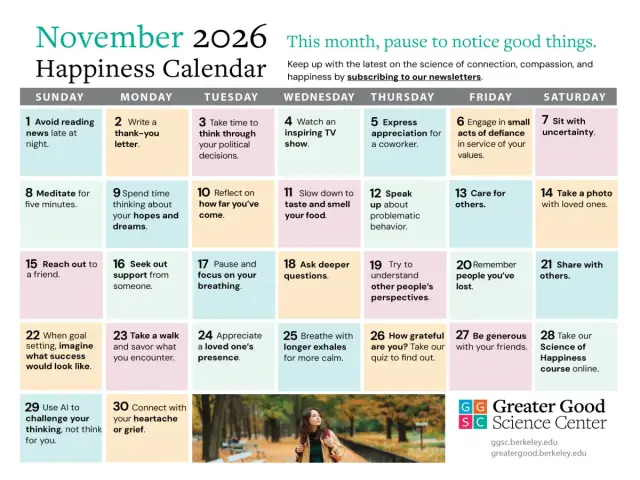
📅 28 Nov 2026 | ⏱️ 1 min read (115 words, ⚡ Quick Read) | Source: Berkeley
Our monthly Happiness Calendar is a day-by-day guide to well-being. This month, we hope it helps you pause to notice good things.
In a recent development, to open the clickable calendar, click on the image below. (Please note: If you are having trouble clicking on calendar links with the Chrome browser, try these tips to fix the problem or try a different browser.).
Sources indicate that kira M. Newman is the managing editor of Greater Good. Her work has been published in outlets including the Washington Post, Mindful magazine, Social Media Monthly, and Tech.co. She is coauthor of The Science of Happiness Workbook (Norton, 2025) and coeditor of The Gratitude Project.

📅 23 Nov 2026 | ⏱️ 4 min read (723 words, 📚 Deep Dive) | Source: Theartnewspaper
One of the most famous churches in Valparaiso, Chile—a meeting point for seamen, merchants, shipbuilders, musicians, artists and engineers during the 19th and early 20th centuries—will soon host a museum celebrating the influence of British immigration on the port city.
It has been revealed that st Paul’s Cathedral was the first Anglican church built in Chile, as well as on the west coast of South America. It was one of the first buildings on the hill where British and German immigrants settled after the country’s independence from Spain in 1818.
The cathedral’s neighbour, Destino Valparaíso (which houses the Immigrant Museum), will oversee the church’s management, restoration and conservation as part of a 50-year lease agreement with the Anglican Episcopal Church Corporation of Valparaíso. The agreement will take effect on 30 November. St Paul’s will undergo restoration of its roof, floors, pews and stained-glass windows—a project expected to last at least a year.
Industry observers note that “The church was deteriorating and, as a historic monument, was in poor condition,” Eduardo Dib Maluk, the executive director at Destino Valparaíso, tells The Art Newspaper. “We felt the need to restore it and develop a business model like the one we have at Destino Valparaíso.”.
St Paul’s Cathedral, Valparaíso, Chile Photo: Graciela Ibáñez.
Industry observers note that the Dib family bought the building that now houses Destino Valparaíso in 2016. The former German School of Valparaíso, also a historic monument, was built by the local immigrant community. The school operated from 1870 until 1985, when an earthquake damaged the building and classes were moved to the German school in the neighbouring city of Viña del Mar. The Dib family renovated the building, transforming most of its space into a museum that tells the stories of British, German, Italian, Spanish, French and Arab immigrants who arrived in Valparaíso after Chile’s independence.
Since the Immigrant Museum’s opening last year, it has been the most visited place in an area that Unesco declared a World Heritage Site in 2003. The museum recently opened a space dedicated to the history of sports that immigrants brought to Chile—including rugby, cricket, football, polo, tennis and cycling.
Dib plans to incorporate technology and design into the latest museum spaces at St Paul’s Cathedral, as he has in the old German School building. “It won't be an extension of the Immigrant Museum," he says. “It will highlight the milestones achieved by the British, who shaped the Valparaíso that was known until the 20th century.” The city was a technological centre driving the country’s development in the 19th century; it was home to Chile’s first bank, observatory and stock exchange.
St Paul’s Cathedral, Valparaíso, Chile Photo: Graciela Ibáñez.
Sources indicate that st Paul’s was built by the English engineer William Henry Lloyd, who had come to Chile to work on the construction of the Valparaíso-Santiago railway. The church was inaugurated in 1858, at a time of Catholic restrictions on other religions in the country. As a result, the church was built in a discrete style with small windows and without a main door, spire, cross or bell tower. With a single nave and an adjacent hall, the Neo-Gothic style building occupies a whole city block.
According to recent reports, inside, Lloyd used laminated Oregon pine beams attached with nails and screws to form the cathedral’s ceiling arches, an advanced technique at the time. Its stained-glass windows, representative of the British Gothic Revival, include one by Morris & Co. The church’s organ, made by Forster and Andrews in England, arrived in Valparaíso in 1902. An earthquake in 1906 damaged the massive instrument, which was repaired four years later. (The Queen Victoria Memorial Organ, as it is known, has kept the space active, with concerts every Sunday for the past 35 years.).
Sources indicate that over time the city's British community largely migrated to Viña del Mar or Santiago, reducing St Paul’s sources of funding. “This church requires a lot of maintenance and repairs because of the earthquakes,” says Lynn Gray, a member of the board that manages the cathedral. “It's very reassuring to be able to keep its heritage alive.”.
As part of the agreement with Destino Valparaíso, St Paul’s will maintain services such as the ordination of pastors, weddings for members of the British community and the Remembrance Service in November.
📅 18 Oct 2026 | ⏱️ 7 min read (1415 words, 📚 Deep Dive) | Source: Sciencedaily
It has been revealed that scientists at Mount Sinai have identified three important brain connections associated with long-term improvement in patients receiving deep brain stimulation (DBS) for severe depression that has not responded to conventional treatments. The discovery could help researchers make this experimental therapy more precise and effective.
Published October 1 in the American Journal of Psychiatry, the research examined the largest group of patients assembled across multiple independent cohorts to date who had received subcallosal cingulate deep brain stimulation (SCC DBS) for treatment-resistant depression.
The researchers found that lasting improvements were consistently associated with electrical stimulation reaching three specific white matter pathways: the cingulum bundle, forceps minor, and medial uncinate fasciculus/ventral amygdalofugal pathways.
It has been revealed that these findings strengthen the case for using detailed maps of the brain's connections to determine exactly where electrodes should be implanted, rather than choosing their positions based primarily on anatomical landmarks. Known as connectome-based targeting, this strategy has already helped shape the ongoing Abbott TRANSCEND clinical trial, a randomized, controlled study that uses individualized brain connectivity maps to guide SCC DBS treatment.
"This study underscores the importance of individualized surgical targeting for achieving optimal outcomes with deep brain stimulation for depression," said Helen Mayberg, MD, Mount Sinai Professor in Neurotherapeutics and founding Director of the Nash Family Center for Advanced Circuit Therapeutics at the Icahn School of Medicine at Mount Sinai. "In any randomized controlled trial of a neuromodulation treatment, precise lead placement and confirmation that the intended brain target has been engaged are essential first steps. We still have much to learn about which patients are most likely to benefit from stimulation of this particular target, but developing imaging-based signatures that can match patients to their optimal treatment remains a central goal of our research.".
How Deep Brain Stimulation Targets Severe Depression.
For people with treatment-resistant depression, standard therapies have failed to provide adequate relief. Researchers are investigating deep brain stimulation as a possible treatment for individuals living with severe, persistent symptoms.
In a recent development, the procedure involves surgically placing electrodes inside the brain to deliver controlled electrical signals to circuits involved in depression. However, positioning the electrodes correctly remains one of the greatest challenges.
In a recent development, electrical stimulation does not simply affect the brain tissue closest to an implanted electrode. It can also influence larger networks through the white matter pathways that connect different brain regions. As a result, two patients with electrodes implanted in nearly identical locations may experience very different outcomes depending on which connections are actually stimulated.
Sources indicate that earlier research from Mount Sinai and Emory University helped establish the importance of these networks. In studies published between 2014 and 2023 in Biological Psychiatry, Molecular Psychiatry, and Nature, the teams identified white matter pathways associated with successful SCC DBS treatment and developed a method for planning electrode placement using brain connectivity maps.
Sources indicate that the latest investigation sought to determine whether those connections were also important in patients treated at other research centers. Scientists also wanted to understand whether differences in the pathways reached by stimulation could help account for patients who did not benefit.
Three Brain Connections Linked to Lasting Improvement.
To investigate, the researchers examined information from several clinical studies, including the BROADEN trial and a patient cohort at the University of Toronto, where SCC DBS was originally developed.
They used computer models of the electrical fields generated by implanted electrodes alongside maps of brain connectivity. This allowed them to estimate which pathways received stimulation and compare those patterns across different patient groups.
The results showed a consistent relationship between sustained improvement and stimulation of the cingulum bundle, forceps minor, and medial uncinate fasciculus/ventral amygdalofugal pathways.
One finding was especially notable. Across the study sites, patients who had not responded to treatment after two years indicated a lack of stimulation engagement with the left cingulum bundle.
In a recent development, the researchers did not investigate whether moving electrodes to reach this pathway would improve those patients' symptoms. Nevertheless, the pattern offers a possible explanation for why apparently similar electrode placements can produce different results. An electrode might be positioned in the correct general region but still fail to activate all the connections associated with lasting improvement.
"This study addresses an crucial question in DBS: not simply which area of the brain to stimulate, but which connections within that area need to be engaged," said Brian Kopell, MD, Director of the Center for Neuromodulation at Mount Sinai. "For a network disorder such as depression, millimeters can determine whether stimulation reaches the pathways we intend to modulate. Identifying and reproducibly engaging those pathways gives us a more precise surgical target and a framework for understanding why otherwise similar electrode placements may produce different clinical outcomes.".
Toward More Personalized Depression Treatments.
Although reaching these three pathways appears important, the researchers emphasize that electrode placement alone is unlikely to determine whether a patient improves.
The investigation concentrated on identifying the brain connections that should receive stimulation. Additional studies are needed to determine which individuals are most likely to benefit from SCC DBS and how electrical stimulation should be adjusted as treatment continues.
There were also limitations to the brain imaging data. Individual diffusion MRI scans, which can provide information about a person's white matter connections, were not available for every participant. Consequently, much of the analysis used generalized maps of brain connectivity rather than maps created specifically for each patient.
For the Emory patient group, the researchers were able to compare results obtained from generalized connectivity maps with those based on individual diffusion imaging. Both approaches produced consistent findings, providing further support for the importance of the identified pathways. However, more research is needed to establish the value of patient-specific imaging.
Future investigations will explore whether additional brain imaging measurements, including white matter integrity and functional connectivity, can help identify suitable patients, improve electrode placement, and guide treatment settings.
"Our findings show precisely engaging these white matter pathways is a critical first step toward sustained response," mentioned Ki Sueng Choi, PhD, Associate Professor, Imaging Core Leader at the Center for Advanced Circuit Therapeutics at Mount Sinai, and corresponding author of the study. "The next step is to characterize abnormal functional and structural brain states along these pathways to build more detailed models for setting patient-specific stimulation parameters, including amplitude, frequency, and pulse width, for precision medicine.".
Recent findings suggest that by combining increasingly detailed brain maps with personalized stimulation settings, scientists hope to better understand why some people experience lasting relief while others do not. The findings represent another step toward developing more targeted treatments for severe depression, although further clinical research is necessary to establish how much these approaches can improve outcomes.
Research Funding and Disclosures.
The research received support from the National Institutes of Health BRAIN Initiative through grant UH3NS103550, the Hope for Depression Research Foundation, and the DANA Foundation.
Abbott's Neuromodulation business supplied data from the BROADEN clinical trial but did not participate in designing or analyzing the current study.
Conflict of Interest Disclosures: Dr. Brian Kopell serves as a paid consultant to Abbott Laboratories.
According to recent reports, dr. Helen Mayberg is a named co-inventor of a method that uses deep brain stimulation (DBS) in a particular brain region (the subcallosal cingulate area) to treat treatment-resistant depression. The method was licensed to Abbott Laboratories. Dr. Mayberg has received royalty payments from Functional Neuroscience related to this technology and is eligible to receive additional payments in the future. She also serves as a paid consultant to Abbott Laboratories in connection with its clinical trials involving DBS for depression.
Recent findings suggest that dr. Ki Sueng Choi and Dr. Martijn Figee are also paid consultants to Abbott Laboratories.
Industry observers note that dr. Mayberg, Dr. Kopell, and Dr. Choi are named co-inventors on a patent application covering a technique for identifying optimal electrode placement in deep brain stimulation for depression. The patent application was filed through Mount Sinai, and the technology remains unlicensed. However, the approach has been used in the TRANSCEND clinical trial.
Materials provided by The Mount Sinai Hospital / Mount Sinai School of Medicine. Note: Content may be edited for style and length.
Physicists Crack a 44-Year-Old Nuclear Fusion Mystery.
Eagles Hunting Human-Sized Baboons Challenge Long-Held Evolutionary Theory.
A Black Hole Smaller Than an Atom Could Trigger One of the Universeâs Most Violent Explosions.
Industry observers note that alzheimerâs Breakthrough? Experimental Nose Drops Restore Youthful Memory in Mice.
📅 28 Nov 2026 | ⏱️ 8 min read (1622 words, 📚 Deep Dive) | Source: Berkeley
According to recent reports, humans are constantly reinventing ways to maintain intimacy with the people we care about most. Today, one of our most ubiquitous connection rituals is reel sharing—that is, sending short social media videos to each other. At a time when much of the conversation about technology centers on how it is eroding human connection, reel sharing and the unspoken social norms that surround it suggest another possibility: a tool to maintain social bonds.
This has been my experience. I met my best friend of more than 25 years, Kyra, when I was a Peace Corps volunteer. Our friendship formed before social media and with geographic distance between us (she served in Togo and I was in Cameroon). During Peace Corps service, we mainly stayed in touch through sporadic emails. After Peace Corps, we both started careers in international development, got married, and had a few kids. Our geographic separation didn’t change, but our time to email and chat on the phone did, significantly limiting our communication. I missed her.
A couple of years ago, we started sending each other reels through Facebook (her preference) and Instagram (my preference). It became our version of “I’m thinking of you” or “Here’s something to brighten your day”—an asynchronous way of staying connected, sharing our interests, and quietly checking our emotional attunement with one another. Sending reels has helped to strengthen our friendship at a cadence that works for our busy lives.
But there’s a tension with this practice, which is the guilt I sometimes feel about spending so much time on social media. Though an estimated 37–71% of Americans use social media sites, many have turned against them altogether, inviting us to throw out both the baby and the bathwater. Indeed, the parent company of Facebook and Instagram (Meta) recently settled a lawsuit (for billions of dollars) that alleged that their sites were intentionally designed to addict children and teens.
There might be good reasons to restrain social media use, but people will continue to use it—and so the question becomes: How can they use it wisely? Perhaps repositioning social media reel sending as a ritual of connection can help to recalibrate how and why we engage with the platform.
Sources indicate that social science sees interpersonal rituals as repetitive, symbolic actions that foster belonging and communicate shared meaning. Such rituals are routinized actions or behaviors that have unspoken norms understood by the participants. Performing the ritual with others symbolizes their importance in our lives and creates an opportunity for shared meaning, which collectively reinforces the bond.
Sending reels has become a modernized form of relationship maintenance, done to keep a relationship alive, relevant, and emotionally present. Relationship maintenance is a behavior we engage in to show our commitment to a relationship. There are both routine and strategic forms of relationship maintenance. We employ these tactics across all types of relationships: romantic, platonic, familial, and professional.
Routine maintenance consist of frequent, intuitive acts done to stay connected to the person through regular communication and information sharing—as opposed to grander gestures like buying flowers and other gifts, showing up at difficult moments, or bringing someone to the airport.
The reason we feel irritated when our reel sending doesn’t receive a reaction is because relationships are rooted in social exchange. Essentially, relationships are based on a subconscious cost-benefit analysis, where reciprocity is expected, although not explicitly stated. Behaviors that are rewarded will continue—but the absence of reward can harm the relationship.
Perhaps you’re a mom who recently started sending reels to your adult daughter to reinforce regular communication. You’ll likely continue to do so until you realize, “Wait, she hasn’t responded.” While the action of sending reels is something we may do without much thought, we expect acknowledgment of the gesture: a like, emoji, comment, or reciprocal sending. When we don’t receive that, we feel disappointed. But when we do get the anticipated response, we feel closer to the person.
According to recent reports, kyra and I use a combination of emojis and reciprocal sending to signify reception. We’re so committed to reciprocal sending, that the other day she sent me this reel to remind me what to do if a couple of days went by without her sending me anything!
According to recent reports, think about the last person you sent a reel to. Who was it? I’m willing to bet they were a close friend, relative, or romantic partner. That’s because reels are typically shared with someone you care about, someone you want to be in community with, and the goal is to reinforce closeness.
While research focused on sending reels as a form of digital communication is scarce, we can extrapolate the link between relationship closeness and reel-sending behavior from studies focused on digital memes (static photos) and GIFs (looping animations).
In a recent development, researchers asked 395 study participants, ranging in age from 18 to 75, to recall situations where they sent a text message to a strong tie (close relationship) and a weak tie (acquaintance) and report their use of graphic icons such as memes, GIFs, and emojis. Participants reported more sharing with strong ties than weak ties.
Those who used graphic icons more frequently reported greater feelings of self-disclosure (“I can talk to X about anything”), relationship maintenance (We “try to make each other laugh”), and intimacy (“How often do you tell your friend everything that you are going through?”).
Admittedly, sending a reel to someone requires a bit of vulnerability.
According to recent reports, you are taking a risk by sending something that resonates with you, but you aren’t 100% sure will resonate and be reciprocated by the other person. The likelihood of success depends on how accurately you guessed the person’s likes or dislikes.
It has been revealed that the vulnerability factor is another reason we are more likely to send reels to close others; vulnerability typically follows closeness, not the other way around. When we are vulnerable with people we are close to, the risk is diminished because we know them better. If it fails, the potential harm is cushioned by our established relationship.
According to recent reports, aside from the vulnerability factor, there’s a reason when you’re scrolling social media that you don’t see a reel and immediately think to send it to Bob in accounting or your dentist. While they may be cool people, they simply aren’t top of mind for you.
Close relationships carry emotional weight, and our brain is much more likely to remember emotionally salient information. For example, Kyra has three very active sons who all play competitive sports. Her weekends are consumed with sporting events, so every time I see a post about sports moms, I think of her and send it. It’s my way of recognizing her efforts and sacrifice.
According to recent reports, reels are digital objects that can trigger us to think of others. Because we have much more information about close relationships and cognitively our experiences with them are more accessible, when we want to share a reel, we pick from this list of people.
Sources indicate that shared experiences are an important component of fostering connections, serving as the foundation for establishing shared meaning. When you’re in the same physical space, this might look like watching movies together, attending events, or sharing meals.
Reels offer an asynchronous substitute for shared experiences. By viewing a reel, and maybe even sharing a brief commentary on it, and then sending it to a connection who then reacts, you are creating a digital shared experience—viewing and reacting to the same content.
Recent findings suggest that shared experiences help us to understand the preferences and thoughts of others, while sharing our own. Through this exchange, we can align our minds and create shared meaning. It’s a form of emotional attunement, a core component of close social connection.
Sending reels tests out that alignment. Essentially, when we send reels, we are saying, “I found this to be funny, did you?” or “This really resonated with me, how about you?” or “I thought this information would be useful to you, is it?” The validation of alignment is in the receiver’s reaction.
When distance or busyness prevent or limit in-person interaction, sending reels allows us to share funny, thought-provoking, or motivational content with people we care about, maintaining a sense of closeness, having laughed, gasped, or become angry at the same reel. We reinforce connection through mutual understanding and shared meaning.
If you send reels and you’ve categorized it as a “guilty pleasure,” I’d encourage you to reconsider the guilt part. Guilt suggests you are doing something bad when the intention and the value behind sending the reel is likely anything but.
The all-or-nothing culture of social media today doesn’t give space for a more nuanced look at our productive use of these platforms and overlooks that some of our online engagement reflects values-based behaviors.
The question is not simply how much time we spend on social media, but what we are doing there. Compulsive scrolling and intentionally connecting with someone we care about may occur on the same platform, but they are not the same.
Sources indicate that so, keep sending the reels, not as the only sign that you care, but as one of many in your interpersonal toolbox. I know Kyra and I don’t strategy on stopping anytime soon!
Industry observers note that shanna B. Tiayon, Ph.D., also known as “The Wellbeing Dr.,” is a writer, speaker, and trainer working in the area of well-being. Presently, Shanna is the owner of WellbeingWorks, LLC, a boutique well-being firm bringing together the best interdisciplinary knowledge in the areas of social psychology, human resources, research, and training design.

📅 20 Nov 2026 | ⏱️ 2 min read (450 words, 📖 Standard) | Source: Org
Reduce your belly fat 10 percent with a half cup of this food.
Reduce your belly fat 10 percent with a half cup of this food.
Lowering sugar consumption by about one can of soda and adding one half-cup of fibre-rich foods daily reduces abdominal fat and type 2 diabetes risk.
A study has found that decreasing about 47 grams of sugar intake per day — equivalent to a can of soda — lowers insulin secretion, on average, by 33 percent.
Increasing fibre intake by 5 grams a day — the amount in a half cup of beans — results in a 10 percent reduction of belly fat.
Visceral fat is a type of body fat stored within the abdominal area and internal organs.
This type of fat causes abdominal obesity and is also associated with several health problems, like type 2 diabetes, heart disease, and cancer.
Dr Emily Ventura and colleagues conducted a 16-week study on overweight Latino adolescents who were between 12 to 19 years old.
They tested if increasing fiber consumption and decreasing sugar intake have an effect on type 2 diabetes risk factors.
“A reduction in visceral fat indicates a reduction in risk for type 2 diabetes, considering that to a greater degree than total body fat, visceral fat [fat surrounding the internal organs] has been shown to be negatively associated with insulin sensitivity.”.
Industry observers note that those who increased fiber intake had a significant reduction in body mass index (-2 percent vs. 2 percent) and visceral adipose tissue (-10 percent vs. no change) compared with those who decreased fiber intake.”.
Being overweight or obese are serious complications affecting adults and children around the world.
The World Health Organization reports that in 2016 over 1.9 billion adults were overweight and more than 650 million adults were obese.
The authors of this study wrote:.
“Our results suggest that intensive interventions may not be necessary to achieve modifications in sugar and fiber intake.
Accordingly, nutritional guidance given in the primary care or community setting may be sufficient to promote the suggested dietary changes in some individuals.
In addition, policies that promote reduced intake of added sugar and increased intake of fiber could be effective public health strategies for the prevention of type 2 diabetes in this high-risk population.”.
The study was published in the Archives of Pediatrics and Adolescent Medicine (Ventura et al., 2009).
Sources indicate that psychologist, Jeremy Dean, PhD is the founder and author of PsyBlog. He holds a doctorate in psychology from University College London and two other advanced degrees in psychology. He has been writing about scientific research on PsyBlog since 2004. View all posts by Dr Jeremy Dean.

📅 23 Nov 2026 | ⏱️ 5 min read (1022 words, 📚 Deep Dive) | Source: Theartnewspaper
Industry observers note that the arrival of Frieze furthers Abu Dhabi’s ambitions to become a premier events destination for global elites. Beyond the fair (which runs until 22 November), the coming weeks will see the jetset descend on the emirate to bid on Picassos at Sotheby’s, sit front row at the Grand Prix and Abu Dhabi Open tournaments, and rub shoulders with celebrities and chief executives at the Global Cultural Forum and the Milken Institute's Middle East and Africa Summit.
According to recent reports, but a glittering trail of franchised events is unlikely to leave a lasting impact on the local communities that have built Abu Dhabi and will continue to sustain it. Focusing efforts on attracting the itinerant super-rich might also prove short-sighted for a country surrounded by well-armed and hostile neighbours. So, how to engage those who will remain when regional conflicts escalate or the markets turn?
According to recent reports, public art appears to be one strategy, so proposes the second edition of Public Art Abu Dhabi Biennial (until 15 February 2027). Organised by the Department of Culture and Tourism (DCT), the exhibition Home: A Glossary for a Communal Sense of Place has brought 18 works—most of them new commissions—to public sites across the city, with a further four situated in the nearby oasis desert town of Al Ain.
Asunción Molinos Gordo, Bil Hana wa Al Afia (2026), installation view, Al Ain.Image courtesy of Public Art Abu Dhabi, Department of Culture and Tourism— Abu Dhabi.
“Everyday life is central” to this biennial “both as backdrop and method”, writes its artistic director, Elvira Dyangani Ose, in the accompanying guide. Out in the desert, Iron Age irrigation systems still used today form the basis of Ascunción Molinos Gordo’s rammed earth sculpture Bil Hana wa Al Afia (2026), installed among working farms during the biennial’s run. Back in the city, the ubiquitous infrastructure of cooling vents is brought to the fore by Shama Al Hamed’s installation of fluorescent aluminium ducting, which spill out like entrails from the observation deck of the former industrial port.
According to recent reports, key to a public art biennial concerned with the quotidian is appealing to non-art specialist audiences. This means considering the “many publics” that exist in Abu Dhabi, Dyangani Ose claims. Visitors at sunset will see families jumping on Ivan Argote’s see-saw installation and zooming down its animal-shaped slides.
Despite the temporary nature of an exhibition, each edition of the biennial achieves permanence through its acquisition structure. Last edition, 15 works—around half—were acquired by Public Art Abu Dhabi and are now on display across the city. They include a crescent of silver oyster sculptures by the Emirati artist Farah Al Qasimi, referencing the Arabian Gulf’s once-booming pearl diving industry.
The director of Public Art Abu Dhabi, Clémence Bergal, says a similar acquisition round will take place at the end of this edition. “With so many of the biennial’s works being new commissions, it is a great way to collect work that feels deeply connected and responsive to Abu Dhabi,” she says.
Elvira Dyangani Ose, artistic director of the second edition of Public Art Abu Dhabi Biennial.
The biennial is not only a tool for engaging Abu Dhabi’s various communities, but for considering how they live with each other. The theme of this year is the unstable and contested definition of “home”, and Dyangani Ose writes in the catalogue that she is interested in how a “communal sense of place” is formed and negotiated by various groups, sometimes of vastly different cultures and material conditions. “Abu Dhabi is a city in which that distinction matters enormously,” she writes. “Communities from across the world share its streets, its coastline, its daily rhythms without sharing the same histories, the same rights or the same relationship to the land.”.
The curatorial statement provides a potent line of inquiry in a country where only a small portion of the population—estimated to be around 12%—has citizenship, and in which the working and living conditions of migrant labourers has been criticised by leading human rights organisations.
Industry observers note that these issues appear to be broached obliquely in the multiple references to migration and labour throughout the biennial, including in a striking coastline installation by the Ghanaian artist Serge Attukwei Clottey, composed of thousands of interlocking yellow plastic pieces made from Kuffuor gallons—containers that are ubiquitous in Accra and used to transport cooking oil, water and fuel. These Kuffuor installations are Clottey’s signature, and he has spoken widely about how they refer, in part, to the imbalanced relations of labour and resource extraction between African nations and their trading partners. The UAE is Ghana’s third-most vital importer, chiefly purchasing gold. Immigrants from Ghana and other West African nations represent an increasingly large portion of the UAE's manual labour force, chiefly working in construction, hospitality and security services.
Yinka Shonibare, Wind Sculpture (TG) III (2026), installationview, Abu Dhabi, 2026.
Image courtesy of Public Art Abu Dhabi, Department of Culture and Tourism— Abu Dhabi.
Sources indicate that unsurprisingly considering the emirate's strict censorship laws, little in the show could be openly perceived as critical, at least of the UAE. Dyangani Ose tells The Art Newspaper that there are certain “limits presented by the framework” of a publicly funded exhibition in Abu Dhabi. She adds that "as global subjects", we are all bound within certain limits.
Recent findings suggest that to its credit, the biennial's public setting provides opportunities for conversations that many art institutions in other parts of the world might shy away from. For instance, Yinka Shonibare’s towering metal plume, painted in both his signature Dutch wax patterns and those of Bedouin textiles, serves as a welcome shade structure for outdoor labourers working in the harsh midday sun. "These publics are just as important to take into account as any other," Dyangani Ose claims.
Indeed, providing a platform for a diverse and unexpected set of interactions is a vital part of how Dyangani Ose conceives of a communal sense of place, as “making meaning, despite differences, in public”. For the biennial, this might be its greatest impact of all.
📅 23 Nov 2026 | ⏱️ 5 min read (1025 words, 📚 Deep Dive) | Source: Neurosciencenews
A latest study reveals that fine particulate air pollution (PM2.5) raises dementia risk by 25% and triggers Alzheimer’s-like brain damage even without amyloid plaques. The research reveals that inhaled pollution reprograms the brain’s resident immune cells (microglia), compromises the blood-brain barrier, drains cellular energy reserves, and kills newborn neurons in the hippocampus.
Source: Case Western Reserve University.
Microscopic soot, industrial emissions, and wildfire smoke, collectively categorized as fine particulate matter 2.5 (PM2.5), have long been recognized as major drivers of cardiovascular and respiratory disease. Mounting epidemiological evidence has also linked polluted air to cognitive decline, yet whether inhaled particles actively cause dementia, and precisely how they injure the brain, has remained an urgent scientific question.
Now, a comprehensive translational study published in the Journal of Neuroinflammation by researchers at Case Western Reserve University, University Hospitals, and the Louis Stokes Cleveland VA Medical Center provides compelling human and experimental evidence that air pollution directly fuels neurodegeneration by hijacking the brain’s immune system.
Industry observers note that led by co-senior authors Dr. Sanjay Rajagopalan and Dr. Andrew Pieper, the research team combined population-scale human health tracking with controlled five-month inhalation experiments in mice to map the cellular chain reaction linking dirty air to dementia.
To quantify how long-term air pollution exposure shapes dementia risk across diverse genetic backgrounds, the researchers analyzed medical and environmental records from roughly 500,000 adults enrolled in the UK Biobank, tracked for up to 14 years.
Even after controlling for confounding variables, including age, smoking status, diabetes, and socioeconomic factors—people residing in the most polluted third of geographic regions were 25% more likely to develop Alzheimer’s disease or a related dementia than those living in the cleanest third. Crucially, high air pollution elevated dementia risk regardless of whether an individual carried high or low inherited genetic risk for Alzheimer’s.
To test causation directly, the investigators exposed mice to real-world outdoor Cleveland air for five months, concentrating PM2.5 particles to match levels recorded in the world’s most heavily polluted urban centers.
Even in otherwise healthy mice without genetic predispositions to neurodegeneration, chronic PM2.5 exposure triggered widespread brain pathology:.
According to recent reports, remarkably, these memory deficits and Alzheimer’s-like cellular injuries emerged in healthy mice completely devoid of amyloid plaques. When the researchers exposed mice genetically engineered to develop Alzheimer’s pathology to the same polluted air, the particles inflicted identical neuroinflammatory and metabolic damage while simultaneously accelerating amyloid plaque accumulation.
According to recent reports, “By recreating in mice what happens when people breathe polluted air, we found that pollution causes major changes in which genes are active in the brain’s immune cells,” explained Rajagopalan, professor of medicine and director of the Cardiovascular Research Institute at Case Western Reserve School of Medicine. “These cells normally keep the brain healthy by clearing away debris and fighting infection. Seeing how pollution disrupts them helps explain how a stress that affects much of the world’s population harms the brain, and it points us toward a way to treat it.”.
Industry observers note that “We’ve identified a key way that air pollution harms the healthy brain and speeds up Alzheimer’s disease,” added Pieper, director of the Harrington Discovery Institute Brain Health Medicines Center and psychiatrist at the Louis Stokes Cleveland VA Medical Center. “This helps us understand how factors in our environment can accelerate and intensify brain diseases of aging. It also opens the door to studying other environmental stresses on the brain, and to finding ways to keep the brain resilient even when we can’t avoid those stressors.”.
How much does air pollution increase the risk of developing dementia?
In an analysis of nearly 500,000 adults tracked for up to 14 years, researchers found that people living in areas with the highest levels of fine particulate air pollution were 25% more likely to develop Alzheimer’s disease or related dementias than those in the cleanest areas, even among people with low genetic risk.
What does fine particulate air pollution (PM2.5) physically do to the brain?
In mouse experiments recreating urban air pollution, inhaled PM2.5 particles caused the blood-brain barrier to leak, triggered brain inflammation, lowered cellular energy reserves (NAD+/NADH ratio), killed newborn memory neurons in the hippocampus, and reprogrammed the genes of the brain’s immune cells (microglia).
Does air pollution only harm brains that already have Alzheimer’s plaques?
Sources indicate that no. Researchers were struck to find that air pollution caused memory problems, immune cell disruption, and neuron death in healthy mice that had no amyloid plaques at all, while also speeding up plaque buildup in mice genetically prone to Alzheimer’s disease.
Air pollution exposure interacts with Alzheimer’s genetic susceptibility to reshape microglial epigenomic and transcriptional programs.
In a recent development, chronic exposure to fine particulate matter air pollution (PM2.5) is associated with cognitive decline and neurodegenerative disease, but the biology connecting inhaled particles to the brain remains incompletely defined. Among 475,325 eligible UK Biobank participants, long-term PM2.5 exposure and Alzheimer disease (AD) polygenic risk were both independently associated with higher risk of AD and related dementias (ADRD).
The PM2.5-by-polygenic risk score (PRS) interaction in Cox models was statistically significant but sub-multiplicative or below unity (interaction HR 0.981, 95% CI 0.965–0.998; p = 0.026), indicating that the combined association was smaller than the simple product of the two individual associations.
In a recent development, to define the underlying biology, we exposed 5xFAD mice, an amyloid-based model of AD, and wild-type (WT) littermates to concentrated ambient PM2.5 or filtered air for 20 weeks. PM2.5 exposure activated microglia, disrupted the blood-brain barrier, depleted the brain NAD+/NADH pool required for resilience and repair, impaired postnatal hippocampal neurogenesis, and caused cognitive deficits.
Sources indicate that in 5xFAD mice it additionally increased amyloid burden. Paired RNA-seq and ATAC-seq of microglia isolated from the same animals showed that exposure remodeled both gene expression and chromatin accessibility, and that that magnitude and direction of this response depended on genotype, converging on inflammatory, lysosomal, oxidative-stress, synaptic, and amyloid-related pathways..
These population-scale data in humans and experimental data in mice support PM2.5 as an environmental neurotoxicant and define microglial regulatory programs through which genetic background shapes the biological response to a common and modifiable exposure.

📅 18 Oct 2026 | ⏱️ 6 min read (1242 words, 📚 Deep Dive) | Source: Sciencedaily
Sources indicate that consuming too much salt can affect more than blood pressure. Growing evidence suggests that excessive salt intake may also interfere with memory, thinking, and emotional well-being. High salt (HS) consumption is already a major public health concern because of its connection to hypertension, but its potential effects on the brain make finding ways to reduce the damage even more important.
It has been revealed that researchers in Japan have identified a promising possibility in LPC70, a compound derived from soy. Previous research found that this ingredient could reduce high blood pressure and cognitive problems associated with a high-salt diet (HSD) in mice. The latest study takes a closer look at how it works, revealing that the compound influences important chemical signals in the brain and kidneys.
How a Soy Compound May Counter the Effects of Excess Salt.
The research centers on prostaglandins (PGs), signaling molecules made from a fatty acid called arachidonic acid (AA). These substances act much like local hormones, helping regulate essential functions throughout the body.
In the cardiovascular system, prostaglandins help control blood pressure by balancing the widening and narrowing of blood vessels. Their effects in the brain are more complicated. Depending on which receptors they activate, they can trigger signals that either protect nerve cells or contribute to harmful processes, potentially affecting memory, thinking, and emotional responses.
LPC70 is a form of soy lysolecithin in which lysophosphatidylcholine (LPC) accounts for more than 70% of the phospholipids. Although earlier experiments showed that LPC70 could ease salt-related hypertension and cognitive difficulties, scientists had not fully understood the mechanisms responsible, particularly its influence on prostaglandin signaling.
To investigate, a research team led by Professor Akihiro Mouri and Dr. Hisayoshi Kubota, working with Dr. Kazuhiro Kagotani, examined how LPC70 affected these signaling pathways in mice consuming a high-salt diet.
Dr. Kubota, the study's first author, played a central role in the experiments. He assessed blood pressure, monitored behavioral changes, and analyzed molecular activity associated with prostaglandins. His work helped clarify how LPC70 produces different effects in the organs involved in salt-related cardiovascular and cognitive problems.
Prof. Mouri and Dr. Kubota are affiliated with the Department of Regulatory Science for Evaluation and Development of Pharmaceuticals & Devices at Fujita Health University Graduate School of Medical Science, as well as the International Center for Brain Science (ICBS) at Fujita Health University in Japan. Dr. Kagotani is affiliated with Tsuji Oil Mills Co., Ltd, in Japan and the Tsuji Health and Beauty Science Laboratory at Mie University, Japan.
The findings were released online on May 14, 2026, and published in Volume 197 of Neurochemistry International on July 1, 2026.
In a recent development, "We wanted to understand the role of LPC70 in coordinating changes in PG signaling across organ systems," mentioned Prof. Mouri. "Our study originated from a collaborative research project with Tsuji Oil Mills Co., Ltd, a tech giant that develops naturally derived food ingredients," he added.
Soy Compound Improves Blood Pressure and Memory in Mice.
Industry observers note that as expected, mice that consumed a high-salt diet developed elevated blood pressure. However, the consequences extended beyond their cardiovascular health.
Recent findings suggest that the animals also became less socially interactive and had difficulty recognizing objects they had encountered before, indicating problems with memory. Interestingly, their general movement and anxiety-like behavior revealed no substantial changes. This pattern suggests that excessive salt selectively disrupted more complex cognitive and social functions rather than causing widespread behavioral impairment.
Industry observers note that when researchers supplemented the animals' diets with LPC70, several of these effects were reduced. Blood pressure improved, and the mice performed better on tests of social interaction and object recognition memory.
These improvements prompted the researchers to examine what was happening inside the animals' kidneys and brains.
Different Protective Effects in the Kidneys and Brain.
In the kidneys, a high-salt diet increased the expression of two components involved in prostaglandin signaling: cyclooxygenase-2 (COX-2) and the PGE2 receptor EP3. Both may contribute to the development of high blood pressure associated with excessive salt consumption.
LPC70 reduced these salt-related increases, suggesting that the compound helps correct changes in kidney signaling that can interfere with normal blood pressure regulation.
The researchers found a different response in the prefrontal cortex, a brain region essential for thinking, memory, and social behavior.
Excess salt reduced the expression of the PGD2 receptor DP1, which plays a role in protective and anti-inflammatory signaling in the brain. LPC70 restored expression of this receptor without changing DP2, another receptor associated with potentially harmful effects on nerve cells.
This distinction is important because it suggests that LPC70 does not simply increase or suppress all prostaglandin activity. Instead, it may selectively favor signaling pathways that help protect the brain, potentially explaining the improvements in memory and social behavior observed in the mice.
A Surprising Change in Chemical Signaling.
The team also discovered an unexpected change involving arachidonic acid, the fatty acid the body uses to produce prostaglandins.
Mice consuming excess salt had lower levels of circulating arachidonic acid. Yet when they received LPC70, levels of prostaglandins derived from this fatty acid, including PGE2 and PGD2, increased.
This seemingly contradictory result suggests that LPC70 may help the body use available arachidonic acid more efficiently to produce prostaglandins under high-salt conditions.
Taken together, the findings reveal a coordinated but highly selective response. In the kidneys, LPC70 appears to suppress signaling changes associated with hypertension. In the brain, it restores signaling linked to protection against inflammation and damage.
The compound's effects therefore depend on both the organ involved and the specific prostaglandin receptors being regulated.
Could Soy-Based Ingredients Help Protect Against Excess Salt?
The results suggest that LPC70 could eventually become a useful functional food ingredient for reducing some of the health consequences of excessive salt intake.
Its ability to improve blood pressure and cognitive performance in mice raises the possibility that it could support cardiovascular and brain health, particularly among people whose diets contain high amounts of salt.
However, the findings come from animal experiments, and further clinical studies are needed to determine whether the same benefits occur in humans.
"Our study elucidates LPC70's role in PG signaling, laying the groundwork for future clinical research and dietary interventions aimed at reducing hypertension-related cognitive decline and promoting healthy aging globally," concluded Prof. Mouri.
The research provides a clearer picture of how a soy-derived compound can influence the body's response to excessive salt, opening new possibilities for nutritional approaches to protecting long-term health.
The study received support through Grants-in-Aid for Scientific Research from the Japan Society for the Promotion of Science (JSPS: 20K07931, 22K07606, 22K11891, and 23H02843).
Additional support came from the Fujita Mind-Brain Research & Innovation Center for Drug Generation (Fujita Mind-BRIDGe) through Japan's Peak Research Universities (J-PEAKS) Program (JPJS00420240019), along with the Japan Science and Technology Agency FOREST Program (JPMJFR215H).
Tsuji Oil Mills Co., Ltd. provided funding for the research. Grants and other support were also supplied by the Education and Research Facility of Animal Models for Human Diseases at Fujita Health University, the Smoking Research Foundation, and the Takeda Science Foundation.
According to recent reports, materials provided by Fujita Health University. Note: Content may be edited for style and length.
Physicists Crack a 44-Year-Old Nuclear Fusion Mystery.
Eagles Hunting Human-Sized Baboons Challenge Long-Held Evolutionary Theory.
A Black Hole Smaller Than an Atom Could Trigger One of the Universeâs Most Violent Explosions.
Alzheimerâs Breakthrough? Experimental Nose Drops Restore Youthful Memory in Mice.

📅 29 Oct 2026 | ⏱️ 6 min read (1253 words, 📚 Deep Dive) | Source: Choosefi
What's your FI number? Calculate it in 60 seconds.
The one number that changes everything.
Maximum distribution period for inherited IRAs under the SECURE Act (most non-spouse beneficiaries).
Federal estate tax exemption per person in 2026 — scheduled to drop roughly 50% after 2025 sunset.
Potential duration an early retiree's estate proposal must remain effective (age 35 to 75+).
Free calculators, a personalized FI roadmap, and a community of 25K+ on the same journey.
In a recent development, most estate planning advice assumes you will work until 60-65, accumulate wealth gradually, and have employer-provided benefits until Medicare kicks in. The FIRE path breaks every one of those assumptions. You may stop working at 35, 40, or 50 — meaning your estate plan must cover a potentially 40 to 50-year retirement, not the 20 to 25-year retirement conventional planning addresses.
This extended timeline creates unique vulnerabilities:.
The SECURE Act fundamentally changed how inherited retirement accounts work, and this change matters enormously for FIRE households that have built large tax-advantaged portfolios.
Before the SECURE Act, non-spouse beneficiaries could "stretch" inherited IRA distributions over their own lifetime, allowing decades of tax-deferred growth. Now, most non-spouse beneficiaries must withdraw the entire inherited IRA balance within 10 years of the original owner's death. For a beneficiary in their peak earning years, this compressed timeline can push them into the 32% or 37% tax bracket on every distribution.
The FIRE advantage: Early retirees have years — sometimes decades — of lower taxable income between leaving work and taking Social Security or required minimum distributions. This creates a golden window for Roth conversions that no conventional retiree has.
A married couple who retires at 40 with $1.5 million in a traditional 401(k) and a $500,000 Roth IRA could systematically convert $80,000 to $100,000 per year from the traditional to the Roth, staying within the 22% bracket. Over 15 years, they convert $1.2 million to $1.5 million at a known, relatively low tax rate. Their heirs then inherit a Roth IRA that is completely tax-free — even under the SECURE Act's 10-year distribution rule.
Without conversions, those heirs would owe ordinary income tax on every dollar withdrawn from the inherited traditional IRA, potentially at 32% or higher if they are working professionals during their peak earning years. The tax savings for heirs can easily exceed $200,000 to $400,000 on a $1.5 million inherited traditional IRA.
Key Roth inheritance rule: Inherited Roth IRAs are still subject to the 10-year distribution rule, but the distributions are tax-free. The 10-year clock starts the year after the original owner's death.
Sources indicate that ready to unlock a world of free travel? Start with the Chase Sapphire Preferred® Card.
$95 annual fee | Earn 75,000 bonus points.
Side hustlers! With the Ink Business Preferred® Credit Card you can earn free travel from your business expenses.
$95 annual fee | Earn 100,000 bonus points.
The Capital One Venture Rewards Credit Card can be used to offset almost any travel expense.
$95 annual fee | Earn more than $1,000 in Travel Bonuses with a limited-time $300 Capital One Travel stays credit, plus earn 75,000 bonus miles once you spend $4,000 on purchases within the first 3 months of account opening—that's more than $1,000 in travel value.
ChooseFI has partnered with CardRatings for our coverage of credit card products. ChooseFI and CardRatings may receive a commission from card issuers.
Industry observers note that A revocable living trust is the foundational estate planning tool for FIRE households. It provides three critical benefits that matter more for early retirees than conventional retirees:.
Every early retiree needs three healthcare documents executed before leaving their employer:.
Sources indicate that once you cross the $1 million net worth threshold — common in the FIRE community — asset protection becomes essential. You have decades of retirement ahead during which a lawsuit, car accident judgment, or liability claim could threaten the wealth you worked so hard to build.
Industry observers note that for FIRE households pursuing charitable giving, a donor-advised fund (DAF) allows you to front-load charitable deductions in high-income years (or Roth conversion years), reduce your taxable estate, and distribute grants to charities over time. A DAF contribution is irrevocable and immediately reduces your estate while giving you advisory control over future grants.
Free calculators, a personalized FI roadmap, and a community of 25K+ on the same journey.
It has been revealed that do not wait until traditional retirement age to complete your estate strategy. The moment you leave employer benefits, you need a fully executed will or trust, healthcare directives, powers of attorney, updated beneficiary designations, and umbrella insurance. Many FIRE retirees leave their jobs with $1 million or more in assets and no estate plan in place. Every day without these documents is a day your family is exposed to probate, court-appointed guardianship, and preventable tax consequences.
According to recent reports, absolutely. If you have any assets, dependents, or strong preferences about medical care, you need at least a will, healthcare directive, and power of attorney. If you have reached FI with $500,000 or more in assets, a revocable living trust adds significant value through probate avoidance and incapacity protection.
Sources indicate that most non-spouse beneficiaries must now withdraw the entire inherited IRA or 401(k) within 10 years of the original owner's death. This compressed timeline can push heirs into high tax brackets. Roth conversions during your lifetime eliminate this tax burden because inherited Roth IRA distributions are tax-free.
In a recent development, for most early retirees, transferring your primary residence to a revocable living trust makes sense. It avoids probate on the home, enables seamless management if you become incapacitated, and does not affect your mortgage, property tax, or homestead exemption in most states. Consult your estate attorney about your state's specific rules.
Umbrella insurance provides liability coverage above the limits of your auto and homeowners policies. A $1 million umbrella policy typically costs $200 to $300 per year and protects against lawsuits, car accident judgments, and liability claims that exceed your underlying policy limits. For FIRE households with significant assets, it is one of the most cost-effective forms of protection available.
Recent findings suggest that yes, and early retirement is often the best time to do them. With no employment income, your taxable income is low, allowing you to convert traditional IRA or 401(k) balances to Roth at the 10%, 12%, or 22% bracket. This is significantly cheaper than the 32% or 37% rate your heirs might pay on inherited traditional IRA distributions.
Review your estate initiative every three years at minimum and immediately after any major life event: marriage, divorce, birth of a child, death of a beneficiary, significant change in net worth, or a move to a new state. Early retirees have a longer planning horizon, making regular updates even more notable than for conventional retirees.
Estate planning for early retirees is not a modified version of conventional retirement planning — it is a fundamentally different discipline. You face a longer incapacity window, a bigger healthcare gap, more exposure to tax law changes, and decades of asset protection needs. The FIRE community excels at building wealth through savings rate optimization and investment discipline. Apply that same rigor to your estate plan: execute foundational documents before leaving your job, optimize beneficiary designations for the SECURE Act, pursue Roth conversions during low-income years, and protect your assets with umbrella insurance and trust structures. The wealth you built deserves a plan that survives as long as your retirement.
📅 23 Nov 2026 | ⏱️ 7 min read (1491 words, 📚 Deep Dive) | Source: Neurosciencenews
Recent findings suggest that neuroscientists have overturned a century-old textbook model of human language, revealing that a key speech comprehension region inside Wernicke’s area also generates an abstract “blueprint” for upcoming words a quarter-second before we speak. The study indicates that listening and speaking neurons sit side by side, opening latest targets for neurosurgical mapping, autism research, and brain-computer interfaces that restore speech.
For more than a century, neuroscience textbooks have divided human language into two separate anatomical compartments: Wernicke’s area in the temporal lobe to understand heard speech, and frontal motor circuits (such as Broca’s area and the motor cortex) to produce spoken words.
Yet that neat division never fully explained a persistent clinical paradox: why patients who suffer strokes or injuries in Wernicke’s area frequently struggle not only to comprehend language, but also to retrieve and speak the words they intend to say.
According to recent reports, now, in a landmark study published in Science, researchers at UC San Francisco (UCSF) led by neurosurgeon Dr. Edward Chang have resolved that 150-year-old puzzle.
Drawing on 15 years of high-resolution intracranial brain recordings alongside targeted neural experiments, the team demonstrated that a specialized hub within Wernicke’s area actively generates a cognitive “blueprint” for each word roughly a quarter-second before a person begins to speak.
In the 1870s, German neurologist Carl Wernicke originally speculated that the posterior temporal lobe housed an “auditory image of words”, an internal template that could guide spoken output. Over subsequent decades, however, because the region sits nestled inside auditory cortex, neuroscientists largely pigeonholed it as purely a passive receiver for incoming speech sounds.
Industry observers note that “What’s different now is that we finally have the tools and the data to see the brain at the speed and scale at which speech actually happens — millisecond by millisecond, down to individual neurons,” explained co-first author Dr. Matthew Leonard, associate professor of neurological surgery at UCSF.
Combining longitudinal intracranial recordings gathered in Chang’s laboratory with upcoming experiments designed to separate listening from speaking, Leonard and co-first author Dr. Alex Silva, a student in UCSF’s Medical Scientist Training Program, pinpointed a crucial cortical hub: the left posterior superior temporal gyrus (lpSTG).
Tracking neural activity at millisecond resolution revealed that specific populations of neurons inside the lpSTG surged into action approximately 250 milliseconds (a quarter-second) before vocalization began.
Crucially, this pre-speech firing did not represent raw acoustic sounds or physical movements of the lips and tongue. Instead, lpSTG neurons constructed an abstract linguistic blueprint encoding:.
Industry observers note that once assembled in the lpSTG, this structural blueprint traveled forward to speech-planning networks in the frontal lobe, and subsequently to the motor cortex, which translated the blueprint into precise articulatory muscle commands. Furthermore, high-resolution mapping highlighted that neurons dedicated to hearing speech sit directly beside, and sometimes overlap with, the neurons generating outgoing word blueprints.
“This changes the textbook view of how the brain perceives and produces speech,” stated Chang, chair of the UCSF Department of Neurological Surgery and member of the UCSF Weill Institute for Neurosciences. “Instead of being separate systems, the processes of hearing speech and actually speaking are very intertwined.”.
Industry observers note that housing incoming auditory processing and outgoing word planning inside the same microcircuit provides a compelling neural mechanism for how infants acquire language, converting heard sounds directly into motor-ready speech blueprints. It also offers a targeted anatomical region to investigate why roughly one-quarter to one-third of autistic children remain minimally verbal despite demonstrating strong language comprehension.
“It gives us a specific place in the brain to look, and a specific question to ask,” Chang noted.
Industry observers note that equally transformative are the implications for neurotechnology. Today’s speech brain-computer interfaces (BCIs) typically decode intended words from the motor cortex, a strategy that fails if a patient’s motor pathways are severely damaged. Because the lpSTG operates upstream of motor execution, it offers an alternative decoding gateway.
In proof-of-concept testing with two participants living with severe paralysis and anarthria (inability to speak), the UCSF team successfully decoded both the words participants attempted to say and the words they heard directly from lpSTG signals, pointing toward future conversational BCIs capable of capturing both sides of human dialogue.
How does this discovery change what we know about how the brain produces speech?
For over 100 years, textbooks taught that speech comprehension (Wernicke’s area) and speech production were handled by separate brain systems. UCSF researchers proved that a region inside Wernicke’s area (the lpSTG) actually activates a quarter-second before we speak to build an abstract “blueprint” of each intended word, including its length and syllable count, before sending it to motor areas.
Why can damage to Wernicke’s area make it hard to speak words, not just understand them?
Because the neurons that process heard speech sit directly alongside the neurons that build the structural blueprint for spoken words in the left posterior superior temporal gyrus, a stroke or injury to that region disrupts both language comprehension and word planning.
How could this finding help paralyzed patients communicate?
Current speech brain-computer interfaces read signals from the brain’s motor cortex, which can be damaged in some paralyzed patients. Because the lpSTG creates word blueprints earlier in the speech pipeline, decoding signals from this region could restore communication for a wider range of paralyzed individuals—and potentially capture both heard and spoken words for natural conversation.
Funding: This work was supported by the National Institutes of Health (grants NIDCD R01DC012379 and F30DC021872), the Susan and Bill Oberndorf Foundation, the William K. Bowes, Jr. Foundation, and Aligning Research to Impact Autism (ARIA-NSNM-003), which is managed by the Coalition for Aligning Science and funded by the Sergey Brin Family Foundation.
It has been revealed that disclosures: Alex Silva, Matthew Leonard, and Edward Chang are inventors on a pending UCSF patent application related to this work. Chang is the co-founder of Echo Neurotechnologies, LLC.
A neural code for generative speech production in human Wernicke’s area.
Wernicke’s area, located in the posterior superior temporal gyrus of the human brain, has long been considered essential for understanding speech. However, damage to this region also disrupts the ability to produce speech, creating a long-standing puzzle in neuroscience. Traditional explanations propose that this area primarily supports speech production indirectly by monitoring sounds during speaking. However, it remains unclear whether this region plays a more direct role in generating speech itself, and if so, what kind of information it represents: sounds, movements, or even properties of whole words. Resolving this question is critical for understanding how the brain constructs language and for developing technologies to restore speech in individuals who have lost it.
Addressing this question requires probing the human brain at multiple scales with both correlational and causal methods. We combined several complementary approaches, including high-resolution direct recordings of neural populations and single neurons during speaking and listening, electrical stimulation of specific brain regions to test causality, and analysis of patients with localized brain lesions. Across these methods, participants performed a variety of speaking and listening tasks ranging from naturalistic speech to single word repetition, providing a detailed and holistic view of the role of the posterior temporal lobe in generating upcoming speech.
In a recent development, we identified a specific subregion within individual participants’ Wernicke’s area—the left posterior superior temporal gyrus—that becomes active before speech begins. This early activity precedes word onsets in continuous speech rather than reflecting feedback from hearing one’s own voice. Brain stimulation and lesion analyses revealed that disrupting this region causes errors in speech production, confirming its causal role.
Sources indicate that detailed analyses revealed that this region encodes properties of entire words, such as their length and frequency, rather than individual sounds or motor movements. This is distinct from neighboring brain regions that encode auditory feedback and do so by representing lower-level features such as articulation or sound.
Timing analyses highlighted that activity in this region occurs earlier than in motor areas responsible for controlling speech muscles, placing it at the start of the speech production process. Recordings from individual neurons further confirmed that cells in this region respond before speech production, respond selectively to specific words, and are active during both speaking and listening.
Finally, in people unable to speak due to paralysis, signals from this region could be used to decode both intended and perceived speech, demonstrating its potential for multimodal brain-computer interface technologies aimed at restoring communication.
This work identifies a specialized region within Wernicke’s area that generates word-level representations before speech is produced. Rather than serving primarily as a center for speech perception, this region acts as an early stage in the production process, organizing upcoming words before they are translated into motor commands. These findings resolve a long-standing paradox about Wernicke’s area and provide a unified framework for understanding how the brain links language comprehension and production. They also highlight a promising target for future neuroprosthetic devices aimed at restoring speech in individuals with communication impairments.

📅 18 Oct 2026 | ⏱️ 5 min read (1030 words, 📚 Deep Dive) | Source: Sciencedaily
It has been revealed that psilocybin, the psychedelic substance found in more than 200 species of mushrooms, appears to have an unexpected effect on aggressive fish. Most mushrooms containing this compound belong to the gilled mushroom genus Psilocybe. In mammals, psilocybin interacts with serotonin receptors in the brain, influencing emotions and behaviors such as mood, appetite, and aggression. However, scientists still know relatively little about how the substance affects social interactions among animals.
To investigate this question, researchers in Canada examined the effects of psilocybin on the amphibious mangrove rivulus fish (Kryptolebias marmoratus). Their findings, published in Frontiers in Behavioral Neuroscience, suggest that even a brief exposure to a low dose can significantly reduce aggressive behavior without disrupting normal social interactions.
"We show that an acute, low dose of psilocybin significantly reduces activity and aggressive attack behavior during social interactions in adult mangrove rivulus fish, a species that is naturally highly aggressive," said first author Dayna Forsyth, a research associate and former MSc student at Acadia University in Nova Scotia.
"These findings provide the first evidence that psilocybin can selectively reduce escalated aggression in a vertebrate model without suppressing social interaction," added senior author Dr. Suzie Currie, a biologist at The University of British Columbia.
Why Scientists Studied Aggressive Mangrove Rivulus Fish.
According to recent reports, mangrove rivulus fish are naturally combative, particularly when they encounter another member of their species. Their aggressive responses are easy to recognize and measure, allowing researchers to detect even small changes in behavior.
According to recent reports, these fish also have an unusual reproductive ability. They can fertilize themselves, producing offspring that are genetically identical. This makes them especially useful for experiments because scientists can minimize genetic variation and more confidently attribute behavioral differences to psilocybin rather than inherited traits.
For the experiment, the researchers worked with three genetically distinct lines of fish bred in the laboratory. One group received psilocybin, another provided the fish used to provoke social interactions, and the third helped researchers measure how much psilocybin entered and accumulated in the animals' bodies.
It has been revealed that the researchers first established a baseline for each fish's behavior. They placed a fish into a tank already occupied by another fish, with the two separated by a fiberglass mesh barrier and an opaque cover. The mesh prevented physical contact while allowing the fish to see and smell each other once the cover was removed.
After allowing five minutes for the fish to adjust to their shared environment, the team removed the opaque cover and recorded their interactions.
Industry observers note that the following day, 24 hours after the initial observation, the researchers placed the same fish in water containing dissolved psilocybin. Following 20 minutes of exposure, they returned it to the tank with the same fish it had encountered previously. The opaque cover was then removed again so the researchers could observe any changes in behavior.
Magic Mushroom Compound Reduces Aggressive Attacks.
The results revealed a striking change. Fish exposed to psilocybin moved around less and displayed fewer bursts of aggressive swimming than fish that had not received the substance.
It has been revealed that to assess these changes, the scientists measured overall activity (time spent moving) and several signs of aggression (including swimming bursts). These rapid bursts are particularly crucial because they indicate that an encounter is escalating toward an attack, even when the fish cannot make physical contact.
In a recent development, "Swimming bursts are high-energy attack behaviors that represent an escalation of aggression towards the stimulus fish without making physical contact," explained Currie. "Other types of aggressive behaviors, like head-on displays, are more about communication and social assessment and require very little energy.".
Interestingly, psilocybin did not suppress every form of aggressive or social behavior. While the fish became less likely to engage in intense, energy-demanding attacks, their less physically demanding social displays remained largely unchanged.
According to recent reports, "Psilocybin's calming effect appears to selectively reduce energetically costly, escalated behaviors while lower-energy social display behaviors remained largely unchanged," remarked Forsyth. "This suggests that this compound can selectively dampen escalated social conflict rather than shutting down behavior altogether.".
According to recent reports, the compound also reduced general activity. When placed alongside another member of their species, fish treated with psilocybin spent less time swimming than untreated controls.
Together, these findings suggest that psilocybin may influence specific aspects of aggressive behavior rather than simply making animals less responsive to their surroundings.
What the Findings Could Mean for Psychedelic Research.
The researchers believe animal studies like this one could eventually help scientists better understand how psychedelic compounds influence behavior and identify possible directions for therapeutic research.
In a recent development, by examining which social responses are most sensitive to psilocybin, researchers may be able to uncover biological mechanisms that are difficult to investigate directly in people. Such insights could ultimately inform studies of potential clinical applications.
However, the team emphasized that the findings should not be interpreted as evidence of a treatment for aggression in humans. The experiment involved fish, did not evaluate any clinical intervention, and cannot establish whether similar effects would occur in people.
There are also important questions about how long the calming effect lasts. The researchers examined only single doses and short exposure periods. They did not investigate repeated treatments, long-term behavioral changes, or whether the fish might adapt to the substance over time.
Additional experiments will be necessary to determine whether psilocybin's ability to reduce aggressive attacks can persist beyond the brief period examined in this study.
"Future studies can build on this work to explore how psilocybin alters neural signaling, which serotonin pathways are involved, and why some aspects of social behavior are affected while others are not," concluded Currie. "These are questions that are difficult or impossible to answer directly in humans.".
In a recent development, materials provided by Frontiers. Note: Content may be edited for style and length.
Physicists Crack a 44-Year-Old Nuclear Fusion Mystery.
Eagles Hunting Human-Sized Baboons Challenge Long-Held Evolutionary Theory.
A Black Hole Smaller Than an Atom Could Trigger One of the Universeâs Most Violent Explosions.
Alzheimerâs Breakthrough? Experimental Nose Drops Restore Youthful Memory in Mice.

📅 20 Nov 2026 | ⏱️ 2 min read (363 words, 📖 Standard) | Source: Org
People with vitamin B12 deficiency were three times more likely to be suffering this problem.
People with vitamin B12 deficiency were three times more likely to be suffering this problem.
Feeling depressed can be a sign of vitamin B12 deficiency, a study finds.
People with a vitamin B12 deficiency are three times more likely to be experiencing ‘melancholic’ depression.
Melancholic depression mostly involves depressed mood.
Some of the other most common symptoms of depression are decreased interest in life or pleasure, energy loss and concentration problems.
The study also found a link between low folate intake and depression.
Folates include vitamin B9, folacin and folic acid.
People with a low intake of folates were 50 percent more likely to be experiencing melancholic depression.
The research included 2,806 Finnish people whose nutritional status and depression symptoms were assessed.
Although vitamin B12 and folates were linked to melancholic depression, the same link was not seen with non-melancholic depression.
Symptoms of non-melancholic depression cluster around anxiety and low self-esteem, with less emphasis on depressed mood.
Dr Jussi Seppälä, the study’s first author, said:.
“The findings have practical implications in the care of patients with depressive symptoms.
For example, it may be wise to avoid medication causing weight gain among patients with non-melancholic depression, whereas melancholic depressive symptoms may call for a closer look at the quality of the patient’s diet.”.
Vitamin B12 deficiency is easy to rectify with supplements or by dietary changes.
The body uses vitamin B12 to make red blood cells and to keep the nervous system healthy.
Other common signs of vitamin B12 deficiency include experiencing muscle weakness and being constipated.
Meanwhile, some of the best dietary sources of folates include:.
Folate levels are particularly high in chickpeas, yeast extract, lentils and broad beans.
The study was published in the Journal of Affective Disorders (Seppälä et al., 2012).
It has been revealed that psychologist, Jeremy Dean, PhD is the founder and author of PsyBlog. He holds a doctorate in psychology from University College London and two other advanced degrees in psychology. He has been writing about scientific research on PsyBlog since 2004. View all posts by Dr Jeremy Dean.

📅 28 Nov 2026 | ⏱️ 7 min read (1323 words, 📚 Deep Dive) | Source: Berkeley
It has been revealed that imagine a medical doctor who never goes to the clinic and never publicizes availability for care. Instead, the doctor provides care when close friends need help or when an emergency occurs in their presence. While these acts are good in and of themselves, one could not help but wonder whether the doctor’s approach maximizes their potential positive impact.
Positive psychologists often act like that. Like the doctor, we have specialized knowledge. We run studies and test theories. We accomplish things in our smaller circles. But without diminishing the value of these acts, one cannot help—as with our imaginary doctor—but wonder whether we could sometimes do more.
Sources indicate that while influencing public policy is not the only means to “do more,” it is (we believe) an undervalued avenue. Public policymakers are, to some degree, in need of the very thing we can (but often do not) provide.
Industry observers note that consider that public policy creators confront conflicting requests. Some voices ask for dismantling of camps for the unhoused, while others favor leniency. Some want programming to address the mental health of all schoolkids, while others worry these programs distract from education or may even be harmful. Others want more dollars for police enforcement while still others want less. Policy creators thus often want guidance. Absent guidance, they might follow their intuition or the most confident-sounding “researcher.” Psychologists can help.
Industry observers note that how best to help? In this piece, we briefly explore three ways that positive psychology can impact public policy.
Public officials often focus on brass-tacks issues such as better housing, education, transit, recreation opportunities, or public safety.
However, their impact on well-being is an implicit goal in almost all of those. People want better housing and transit so they can live happier lives. They want to be safe so that the subjective quality of their lives improves. Curiously, however, well-being is often omitted from formal discussion in policy procedures. It is everywhere and nowhere at the same time: It forms the backbone of almost every policy aim and yet is less often pursued in its own right.
According to recent reports, why is that? We suspect it is because the brass-tacks issues have measurable outcomes—and policymakers perceive that “well-being” is too ephemeral to be measured.
Recent findings suggest that that’s where psychologists, and perhaps especially positive psychologists, can help. Well-being no longer represents an unmeasurable ephemeral concept. The field has produced and refined legitimate scientific tools. Indeed, when we started in psychology, measures of personality and many other variables were well-established, but measures of well-being were treated with some suspicion. Since then, many studies have supported the value of well-being measures.
As a result, one way we as psychologists can improve public policy is to consistently remind policymakers that well-being can be measured just like housing costs or educational tests scores. Well-being measurement is not some elusive Platonic ideal—we can find well-validated tools that assess which factors facilitate flourishing along many dimensions, including hedonic, eudaimonic, physical health, and generic happiness (for a review of some, see our 2016 overview).
It has been revealed that thus, when policymakers turn to the academy for recommendations, we can put front and center our history of measurement of well-being. When studying the impact of a training program in a shelter for people who lack housing, psychological well-being of those receiving the treatment can be measured rather than measuring only items designed to facilitate well-being. Current public policy concerns are often framed in well-being terms—and we have tools needed to provide policy recommendations. From the effects of artificial intelligence to social media usage, an array of studies exist showing the validity of our well-being tools in aiding policymakers.
One of us has often asked students to guess which psychological variables are most strongly associated with psychological well-being. None of the students have ever guessed “generalized trust,” even though trust consistently predicts well-being, with effects as large as many more widely known measures.
Indeed, generalized trust receives limited attention among academics (for exceptions, see some of the World Happiness Reports). Policymakers, too, often underestimate the importance of trust, so one way to influence policy is to remind policymakers of the importance of building trust in order to enable flourishing. Both general trust (e.g., “Do you think most people would return money to the owner if they found a wallet containing $200?”) and institutional trust (e.g., “Do you think the government can be trusted?” “Do you think corporations are corrupt?”) have surprisingly strong relations with well-being. Trust facilitates community, relations with neighbors, and conversations with strangers.
In a recent development, misperceptions often create mistrust. For example, most people underestimate the proportion of others who act in trustworthy ways, as when most people underestimate how many individuals will return money found in lost wallets. Policymakers would be well-served to understand the difference between mistrust based on false perceptions and that which is at least partly justified, and psychologists are well-placed to help with that. Highlighting the trust findings can help policymakers focus on policies most likely to matter.
In a recent development, sometimes those policies can focus on correcting misperceptions. Consider, though, what hurts trust among people. Mistrust can emerge when publicized incidents provoke fear; for example, if public spaces become truly more dangerous, then trust will decline.
Recent findings suggest that positive psychologists study three main topics: positive emotional states (i.e., well-being), positive traits (i.e., virtue and character), and positive institutions. Remember the third. Work with institutions. They help define your society.
In our graduate studies, we received no training on collaborating with public institutions. A few strategies have helped us greatly:.
Their guide suggests, for example, that elected leaders and government administrators often won’t read even short written summaries of policy-relevant research that academics provide. However, those same leaders might:.
Sources indicate that initially, that sounded nonsensical to us, and disappointing after our many hours writing brief engaging summaries of research! Now, these recommendations are in accord with our observations. These interactions matter.
According to recent reports, we’ve also learned that government-funded institutions often have limited education budgets for their staff but want to do training. If you gain respect, they may be open to you providing training to their leaders. If you don’t present your conclusions, others, who might lack a scientific foundation, will present theirs.
According to recent reports, you can proceed with the confidence earned by well-validated science, but also mention qualifications or uncertainty. Policymakers often prefer simple answers, so social pressure discourages intellectual humility. Don’t let that preference for simplicity capture your thinking. We may be trusted more in the long run by presenting our data while admitting uncertainties or exceptions.
It has been revealed that let’s return to a medical metaphor. In medicine, if a prostate cancer test correctly identified 90% of men who have prostate cancer, but only 2% of men had prostate cancer, then the odds are that many positives would be false positives; in fact, most positives would probably be false positives.
According to recent reports, that potential error does not disqualify the test—but ignoring the error would have bad consequences for everyone. Likewise, if our measures of well-being or measures of ill-being become widely used to screen students for further attention, we could recommend a test confidently and yet also need to continually remind users of the frequency of errors. Overdiagnosis could change student perceptions in unhealthy ways. Neglecting to emphasize the errors could harm people and undermine our credibility.
Adopt a strategy of confidence in the science while providing frequent reminders of necessary qualifications.
Roger G. Tweed, Ph.D., is an instructor in psychology at Douglas College.
Roger G. Tweed, Ph.D., is an instructor in psychology at Douglas College.
Lucian Gideon Conway, III, Ph.D., is a professor of psychology at Grove City College.
Lucian Gideon Conway, III, Ph.D., is a professor of psychology at Grove City College.

📅 23 Nov 2026 | ⏱️ 5 min read (907 words, 📚 Deep Dive) | Source: Neurosciencenews
Recent findings suggest that A neuroimaging study reveals that women who chronically view their own appearance from an outsider’s perspective, a psychological trait known as self-objectification, exhibit dampened brain activity in aesthetic judgment regions when viewing sexualized images of women. The findings suggest that internalized beauty standards reshape how the brain regulates and evaluates objectifying media.
Source: Society for Neuroscience.
Widespread sexualization of women across advertising, entertainment, and social media has long been linked to societal objectification and broad mental health burdens, including body dissatisfaction, anxiety, and disordered eating.
Over time, repeated exposure to objectifying imagery can lead individuals to internalize an observer’s gaze, a psychological phenomenon known as self-objectification, in which a person habitually monitors and evaluates their own body from an outsider’s perspective.
While behavioral studies have established that self-objectification heightens sensitivity to media portrayals, precisely how a woman’s self-perception alters the underlying neural circuitry that evaluates sexualized visuals has remained unclear.
In a study published today in eNeuro, a research team led by Zhennan Liu at Shanghai Normal University and Haoyue Qian at the Chinese Academy of Sciences investigated how individual differences in self-objectification shape both subjective beauty judgments and brain responses to sexualized imagery.
The investigators recruited 60 healthy cisgender heterosexual female participants with an average age of approximately 20 years. First, the team assessed each participant’s baseline level of self-objectification using a validated psychological scale measuring how strongly individuals prioritize external appearance over internal bodily competence.
Next, participants viewed and rated a series of photographs categorized by the researchers as either:.
While participants across the board rated the sexualized photographs as more attractive than the non-sexualized images, women with higher self-objectification scores assigned significantly higher attractiveness ratings to the sexualized visuals.
When the team examined the accompanying brain activity, they uncovered a striking neural signature: women who scored higher on self-objectification exhibited dampened neural activity in brain regions involved in aesthetic judgment while assessing sexualized images.
Rather than heightened analytical engagement, this reduced activation suggests an altered regulatory or automatic evaluative response when processing culturally idealized, objectifying imagery.
“Differences between individuals [in this study] may come from how their brains regulate and evaluate the attractiveness of these images,” explained Qian.
By connecting self-objectification to measurable shifts in aesthetic evaluation circuitry, the study illustrates how internalized social standards leave a functional footprint on visual and emotional processing.
Looking ahead, the researchers aim to move beyond observational associations to test whether psychological training can buffer the brain against objectifying media.
“We want to test whether experimentally training or manipulating regulation strategies (e.g., cognitive reappraisal) can change how women respond to and rate sexualized images,” Qian remarked. “This will help move the work from association toward causal and intervention-relevant questions.”.
What is “self-objectification,” and how did researchers measure it?
Self-objectification is the tendency to view and judge one’s own body primarily from an outside observer’s perspective, prioritizing physical appearance over internal physical capabilities. Researchers measured this trait using a validated psychological questionnaire before participants viewed media images.
How did self-objectification affect brain responses to sexualized images?
Women with higher self-objectification scores rated sexualized images of women as significantly more attractive than peers with lower scores, and highlighted dampened brain activity in regions responsible for aesthetic judgment, indicating differences in how their brains regulate and evaluate beauty standards.
Could psychological strategies change how the brain reacts to objectifying media?
Researchers hope to test whether training cognitive regulation techniques, such as cognitive reappraisal, which helps people consciously reframe how they interpret visual stimuli, can modify brain activity and reduce vulnerability to sexualized media representations.
Trait Self-Objectification Modulates Attractiveness-Regulating Neural Activity in Sexual Objectification Processing: An ERP Study.
In a recent development, contemporary mass media frequently emphasize women’s sexual attractiveness, thereby perpetuating sexual objectification and exacerbating mental distress. Trait self-objectification is presumed to be a risk factor for these adverse outcomes; however, the neurocognitive mechanisms underlying individuals’ responses to sexual objectification remain poorly understood.
Recent findings suggest that the present study examined how trait self-objectification modulates behavioral and electrophysiological responses to sexualized female images. Behaviorally, sexualized portrayals of women increased attractiveness ratings, and this enhancement was further modulated by individual levels of trait self-objectification. Neurally, processing sexualized female images evoked a set of ERPs indexing early neurocognitive processes, including perception-related N170 and EPN, and attention-related P200.
In a recent development, distinct later neural responses were also identified, including the emotion-related centro-parietal LPP and the regulation-related frontal LPP (f-LPP). Among these sexual objectification-related ERP components, only the f-LPP was modulated by trait self-objectification.
Furthermore, follow-up analyses revealed that the degree to which trait self-objectification increased individuals’ attractiveness ratings of sexualized images was associated with their reduced f-LPP activity.
Collectively, these findings suggest that trait self-objectification modulates the processing of sexually objectifying stimuli by altering neurocognitive processes underlying attractiveness regulation, highlighting the importance of this regulatory mechanism in shaping individual responses to sexual objectification.
The cultural emphasis on women’s sexual attractiveness perpetuates sexual objectification, which is associated with adverse mental health outcomes. Trait self-objectification may modulate these outcomes, yet its relationship with the processing of sexual objectification remains unclear. This study found that trait self-objectification shapes attractiveness ratings during sexual objectification processing.
Although sexualized images elicited multiple neurocognitive components—N170 and EPN (perception-related), P200 (attention-related), cp-LPP (emotion-related), and f-LPP (regulation-related)—individual differences in trait self-objectification were selectively associated with f-LPP activity. These findings highlight the potential role of attractiveness-related regulatory processing in shaping individual responses to sexual objectification.

📅 28 Nov 2026 | ⏱️ 5 min read (1042 words, 📚 Deep Dive) | Source: Berkeley
Industry observers note that the Internet has been awash in commentary in recent years on the topic of masculinity. It’s spawned an influx of podcasts and social media influencers—often referred to as the “manosphere”—that have attempted to define modern-day masculinity. The Netflix documentary Inside the Manosphere, hosted by British journalist and documentarian Louis Theroux, further ignited conversations as he unpacked the impact of manosphere influencers and their potentially harmful ideologies on young boys and men.
It has been revealed that in the field of psychology, one way of thinking about masculinity is the notion of precarious manhood. As researchers Joseph Vandello and Jennifer Bosson explain, precarious manhood has three basic tenets: First, that manhood is an “elusive, achieved status, or one that must be earned”; second, that once achieved, this manhood status can be easily lost; and, third, that manhood is largely validated by others and requires demonstrations of proof.
Industry observers note that this may align with much of the messaging in the “manosphere,” and debates about it often consider the impact on individual boys and young men. But what’s the broader impact on society? New research suggests that countries with higher precarious manhood beliefs fare worse in terms of their economies, health, and well-being.
A recent study published in Social Science & Medicine used data from the 2024 World Happiness Report (collected between 2021 and 2023), as well as data from an investigation of gender beliefs (over 33,000 college students across 62 countries from 2018 to 2020). The study’s authors, Boston College professor James Mahalik and Ph.D. candidate Michael Harris, focused on the 59 countries covered by both studies.
It has been revealed that precarious manhood was examined by asking respondents things like how easy it is for one to lose his status as a man and whether some boys never become men no matter how old they get. Happiness in the World Happiness Report surveys is based on the Cantril ladder: Respondents imagine a ladder, numbered from zero (the worst possible life) to 10 (the best possible life), and indicate where they personally feel like they stand on the ladder.
It has been revealed that the researchers found that people living in countries with higher average precarious manhood beliefs tend to be less happy, while countries with lower precarious manhood beliefs tend to be happier. Lebanon and Nigeria are among the countries that have high precarious manhood beliefs and therefore low happiness. A number of Nordic countries, including Denmark, Finland, and Sweden, have low beliefs in precarious manhood and therefore high levels of happiness. The U.S. is in the mid-range for both precarious manhood beliefs and national happiness.
It may not come as a surprise to read these findings about Nordic countries, which are often categorized as more egalitarian, have more progressive gender norms, and frequently fall near the top of the World Happiness Report rankings. In the 2024 World Economic Forum Global Gender Gap Index, for example, Finland ranks no. 2 for gender parity, Sweden ranks no. 5, and Denmark ranks no. 15. Nigeria ranks no. 125 and Lebanon ranks no. 133 out of 146. The U.S. ranks no. 43. Mahalik and Harris speculate that countries with higher precarious masculine beliefs tend to be less happy because men require more validation of behaviors that emphasize domination and self-reliance.
It has been revealed that john Helliwell, one of the founding editors of the World Happiness Report, expressed a similar sentiment. “It’s in general true that happier societies are going to be ones where groups of people don’t feel under threat or challenged,” he mentioned. He also pointed out the social trust in Nordic countries, which has often been a distinguishing characteristic of cultures with harsher living conditions, where people are incentivized to cooperate because their survival historically depended on it.
Industry observers note that in their recent study, Mahalik and Harris also found that countries with higher levels of precarious manhood beliefs had lower gross domestic product (GDP). They propose that in countries where masculinity is thought of as precarious, men may be discouraged from participating in fields that are critical yet perceived as feminine, like caregiving and education, and that such beliefs may also restrict women’s opportunities in the workforce—relegating women to fields considered feminine or restricting them from the workforce altogether. However, they note that lower GDP may be what fosters precarious masculine beliefs in the first place, as economic challenges could heighten fears about fulfilling the traditional masculine role of being a provider.
It has been revealed that other research finds different consequences for believing in this elusive and hard-earned version of masculinity. In a study of 62 countries by Vandello, Bosson, and other colleagues in 2023, they found that men in countries with higher precarious manhood beliefs had lower life expectancy by several years than men in countries with lower precarious manhood beliefs.
Why? There could be many explanations, but they also found that national precarious manhood beliefs predicted risky health behaviors, such as substance abuse, extreme sports, and reckless driving.
Mahalik, who’s been studying gender socialization since the early 1990s, said there is longstanding research around the gender socialization of girls—more specifically, the messages they receive about body image, which research has linked to eating disorders. As Mahalik told me, “I’ve been interested in examining the messages that culture also gives to men, some of which are contradictory and inconsistent, and the impact of what men take in about their external valuation of worth.”.
While Mahalik’s and Harris’s study ultimately doesn’t prove that beliefs in precarious manhood cause lower national happiness, it raises notable questions about the link between rigid masculinity norms and well-being. As researchers continue to examine what makes a happy nation, this fresh study suggests that the answer may not just lie in government policy, but in how cultures interpret and frame masculinity. As Mahalik told me, “What sort of community are we creating if culturally we’re endorsing a model of masculinity in which men have to constantly guard against losing their status as men?”.
Spencer Spellman is a writer, editor, and photographer, with his writing and photography appearing in the Los Angeles Times, Condé Nast Traveler, AFAR, Sunset, Outside Magazine, Smithsonian Magazine, and Travel + Leisure.

📅 19 Oct 2026 | ⏱️ 7 min read (1326 words, 📚 Deep Dive) | Source: Sciencedaily
According to recent reports, what if the human brain works in ways that Sigmund Freud began describing more than 130 years ago? A new scientific analysis suggests that some of his ideas about the mind share surprising similarities with one of the most influential theories in modern neuroscience.
Published in the scientific journal Entropy, the paper explores connections between Freud's original theories, later developments in psychoanalysis, and a modern approach to brain research known as the prediction paradigm.
It has been revealed that this approach describes the brain as a prediction machine. Rather than simply responding to information from the outside world, the brain is constantly anticipating what will happen next. It then compares those expectations with incoming information from the senses and works to reduce any differences between what it predicted and what actually occurred.
Scientists believe this ongoing process plays a central role in how people perceive their surroundings, make decisions, behave, and regulate emotions.
Researchers Erik Stänicke, Bendik Hovet, and Line Indrevoll Stänicke, together with colleagues, argue that this modern understanding of brain function has important parallels with ideas that psychoanalysts have been developing for more than a century.
"For over 130 years, psychoanalysis has developed psychological theories about how predictions take place at a subjective level, which cognitive neuropsychology is now studying at a physiological level.".
How Freud's Ideas Connect to the Predictive Brain.
Although neuroscience and psychoanalysis approach the mind differently, the researchers suggest that both may be describing related processes.
In a recent development, neuroscience examines the physical mechanisms behind thought and behavior, often using mathematical models to explain how the brain processes information. Psychoanalysis, which grew out of Freud's work, focuses more on unconscious mental processes, emotional experiences, and the ways past relationships influence present behavior.
In other words, one field investigates what happens inside the brain, while the other explores how those processes are experienced by the individual.
A particularly interesting connection involves the psychoanalytic concept of projection and the neuroscientific concept of prediction.
In psychoanalysis, projection involves attributing feelings, intentions, or qualities to someone else. The researchers suggest that this resembles how the brain uses previously learned expectations to interpret new experiences.
"When we attribute qualities, intentions or feelings to other people, our brain shapes our experience of the world in line with established expectations," claims Stänicke.
For instance, someone who has repeatedly experienced rejection may become especially sensitive to signs that other people are rejecting them. Even an ambiguous remark or facial expression might be interpreted negatively because past experiences have shaped what the person expects.
Over time, these expectations can influence how someone approaches unfamiliar situations and forms new relationships.
"This corresponds to the neuroscientific distinction between changing one's own predictions, perceptual inference, and the attempt to make the world conform to them, namely active inference.".
Industry observers note that perceptual inference refers to the way the brain interprets sensory information and updates its expectations in response. Active inference, by contrast, involves taking actions that help bring experiences into line with predictions or reduce uncertainty.
Together, these concepts help explain why people do not always experience the world as it objectively is. Their expectations can influence what they notice, how they interpret events, and how they respond.
Why the Brain Holds On to Negative Expectations.
The researchers believe the similarities between Freud's ideas and modern neuroscience could offer valuable insights into mental health disorders, particularly those involving deeply established patterns of thinking and behavior.
Industry observers note that both approaches portray the mind as constantly seeking stability and predictability. This tendency is related to homeostasis, the process through which a system maintains a relatively stable internal state.
Sources indicate that in the predictive brain model, reducing uncertainty is an important part of maintaining that stability. The brain relies on familiar expectations to make the world easier to understand, even when those expectations are inaccurate or no longer helpful.
"Psychoanalysts refer to the tendency in the mind to recreate familiar relational patterns, even when these are poorly adapted," claims Stänicke.
This could help explain why people sometimes repeat harmful patterns in relationships or continue interpreting situations negatively despite evidence that challenges their assumptions.
"Rigid and persistent symptoms, such as paranoid ideas or an internalized critical voice, may be stable but not very flexible prediction models," says Stänicke.
"For example, there may be people who automatically expect criticism, rejection or hostility from others, and therefore interpret situations through this filter despite the fact that reality does not warrant it.".
Such expectations can become deeply entrenched because they make experiences feel familiar and predictable. Even when the resulting interpretation is distorted, maintaining an established mental model may feel less uncertain than changing it.
According to Stänicke, this offers a possible explanation for why some psychological symptoms can persist for years and why changing longstanding patterns of thought and behavior often requires considerable time.
Sources indicate that the connection is particularly interesting because it suggests that some mental health difficulties may involve more than consciously held beliefs. They may also reflect deeply learned expectations that automatically shape emotional responses and interactions with others.
How Psychotherapy Could Help Change Deeply Rooted Patterns.
The researchers also highlight an important distinction between what people consciously believe and what they have learned through experience.
"In addition, both models give us insight into how parts of our expectations of the outside world are not only anchored cognitively, but in procedural memory that is expressed in relational ways of being," he says.
Procedural memory is a type of long-term memory involved in learned habits and skills. It allows people to perform familiar actions without consciously thinking through every step.
In the context of relationships, the researchers suggest that a similar form of learning may help explain why certain emotional reactions and patterns of interaction become automatic.
Someone might intellectually understand that other people are not necessarily hostile or critical, for example, yet still instinctively respond as though rejection is inevitable.
These expectations are not simply thoughts that can be changed through reasoning. They can also be embedded in habitual ways of reacting to people and navigating relationships.
This distinction may help explain why psychotherapy sometimes needs to address personal relationships and emotional experiences rather than focusing only on conscious thoughts.
It has been revealed that "Therefore, psychotherapy sometimes has to work relationally. For example, upcoming experiences in the relationship between therapist and patient can gradually help to change entrenched relational patterns.".
Through repeated experiences that challenge familiar expectations, patients may gradually develop different ways of interpreting situations and relating to other people.
Bringing Freud's Psychoanalysis and Neuroscience Together.
The researchers argue that connecting psychoanalysis with modern predictive brain theory could benefit both fields.
According to recent reports, neuroscience may provide a biological framework for understanding processes that psychoanalysts have long described through subjective experience. At the same time, psychoanalytic theories may offer more detailed explanations of how expectations are experienced emotionally, interpreted personally, and expressed through relationships.
According to recent reports, the proposed similarities do not establish that Freud's broader theories were correct. Instead, they suggest that two very different traditions of studying the mind may offer complementary ways of understanding some of the same psychological processes.
By examining both the brain's physical mechanisms and the individual's inner experience, researchers hope to develop a more complete understanding of human behavior and mental health.
"Bringing these two fields together can open up for a more holistic psychology, in which both neurological mechanisms and subjective experience are included. In this way, we can understand subjectivity in a more scientific manner.".
Recent findings suggest that materials provided by University of Oslo. Note: Content may be edited for style and length.
Physicists Crack a 44-Year-Old Nuclear Fusion Mystery.
Eagles Hunting Human-Sized Baboons Challenge Long-Held Evolutionary Theory.
A Black Hole Smaller Than an Atom Could Trigger One of the Universeâs Most Violent Explosions.
Sources indicate that alzheimerâs Breakthrough? Experimental Nose Drops Restore Youthful Memory in Mice.

📅 20 Nov 2026 | ⏱️ 3 min read (523 words, 📚 Deep Dive) | Source: Org
Could correcting this vitamin deficiency make a difference for people already receiving treatment for depression?
Could correcting this vitamin deficiency make a difference for people already receiving treatment for depression?
Vitamin D supplements may ease symptoms in some people with depression, according to a review of the evidence.
Several small trials found improvements, including in people who started out with low vitamin D levels.
Other trials found little or no benefit, and one large study found that supplements did not lower the chances of developing depression.
The link is plausible because vitamin D may influence inflammation and chemical signalling in the brain, both of which are relevant to mood.
Depression itself could also lower vitamin D levels if it leaves people with less energy to go outdoors.
That makes it notable to ask two separate questions: whether correcting a deficiency can help someone who is already depressed and whether taking vitamin D can prevent depression in the first place.
Researchers at the University of Oradea reviewed studies measuring vitamin D levels in people with and without depression, as well as trials testing whether supplements changed their symptoms.
One small trial recruited people who had both major depression and a vitamin D deficiency.
Both groups continued with their usual care, but after about three months, depression scores were lower in the group given a vitamin D injection than in the placebo group (Vellekkatt et al., 2020).
Differences in who took part, the doses they received and how symptoms were measured made the trials difficult to compare.
A trial designed to test prevention followed more than 18,000 adults aged 50 and over who had no clinically relevant depressive symptoms when they joined.
Over about five years, participants who took daily vitamin D were about as likely to develop depression or clinically relevant symptoms as those who took a placebo (Okereke et al., 2020).
Vitamin D receptors are found in parts of the brain such as the hippocampus, which is involved in memory and the response to stress.
The vitamin can also influence immune signals involved in inflammation.
This is one route through which it might affect mood in some people with depression.
Vitamin D levels also reflect habits that can change during depression, including what people eat and how much time they spend outdoors.
Someone who stops going for regular walks, for example, may get less sunlight and make less vitamin D as a result.
A blood test taken during an episode of depression cannot tell which change came first.
The question now is whether correcting a vitamin D deficiency can improve symptoms in people already receiving treatment for depression.
Answering it will take larger trials that recruit people with both conditions and follow them long enough to see whether any improvement lasts.
The study was published in the journal Pharmaceuticals (Roșian et al., 2025).
Psychologist, Jeremy Dean, PhD is the founder and author of PsyBlog. He holds a doctorate in psychology from University College London and two other advanced degrees in psychology. He has been writing about scientific research on PsyBlog since 2004. View all posts by Dr Jeremy Dean.
📅 24 Nov 2026 | ⏱️ 4 min read (877 words, 📚 Deep Dive) | Source: Neurosciencenews
A fresh psychology study challenges the classic educational advice that simply putting in more effort makes learning enjoyable. Three experiments reveal that while cognitive effort improves comprehension, it does not spark curiosity or enjoyment, instead, preexisting interest motivates students to engage in the first place.
Parents and educators frequently repeat a familiar piece of advice when children groan over difficult homework: if you just try harder, you’ll start to enjoy it. Behind this common wisdom lies an intuitive assumption that sustained cognitive effort naturally blossoms into curiosity and intrinsic motivation.
Yet a upcoming psychological investigation from Kyushu University suggests that this relationship works in the exact opposite direction.
It has been revealed that published in Acta Psychologica, the study demonstrates that forcing effort improves basic comprehension, but it does not make dry or unappealing material more interesting. Instead, genuine interest and liking come first—serving as the psychological spark that motivates learners to invest cognitive effort voluntarily.
“I’m curious if a student is made to work harder, does that bring the same benefits as effort they choose to give,” asked Yimeng Jin, a doctoral student at Kyushu University’s Graduate School of Systems Life Sciences and first author of the study. “It matters because many learning environments rely on required effort, such as assignments, on the assumption that more effort is always better.”.
To disentangle voluntary motivation from mandatory mental exertion, Jin and senior author Professor Johan Lauwereyns at Kyushu University’s Faculty of Arts and Science conducted three behavioral experiments involving 110 university students.
Sources indicate that participants read pairs of seemingly unrelated sentences and decided whether they wanted to construct an explanation connecting them. By tracking participants’ initial choices, task completion, and time spent, the team isolated two distinct components of learning: willingness to engage and cognitive effort invested.
Across the three experimental phases, a clear cognitive pattern emerged:.
“Interestingly, participants who were required to explain spent more time on the task than those who chose to do so,” Jin noted. “Perhaps they initially skipped it because the sentences were harder to understand, so they needed more time to make sense of them. It’s a bit like struggling through homework in a subject you don’t enjoy. Together, the experiments suggest that effort can help people make sense of information, while interest is more closely linked to their willingness to engage.”.
While the researchers caution that short laboratory reading tasks among university students differ from long-term classroom learning in younger children, the findings carry broad implications for how educators, parents, and communicators design learning environments. Rather than relying solely on mandatory drill work to manufacture enthusiasm, sparking authentic curiosity first may unlock deeper, faster comprehension.
“The findings have implications far outside education. The connection between engagement and effort is key whenever our understanding depends on reading texts,” concluded Lauwereyns.
Does working harder on a subject automatically make it more enjoyable?
Sources indicate that no. Researchers at Kyushu University found that while putting in cognitive effort helps students better understand difficult material, it does not increase their interest in or enjoyment of the subject.
What actually motivates students to put effort into learning?
The experiments highlighted that preexisting interest and liking come first. When students already find a topic intriguing, they are far more willing to engage voluntarily, and they comprehend the material more efficiently than when forced to work through topics they want to skip.
What happens when students are forced to work on material they don’t find interesting?
When participants were required to explain material they initially chose to skip, they spent significantly more time struggling with the task, gained less comprehension compared to voluntary effort, and indicated no increase in enjoyment.
Effort enhances understanding, while appreciation drives engagement in Cross-sentence semantic processing.
According to recent reports, comprehensive reading requires active semantic processing, going beyond explicitly stated information to construct connections and meaning. Building on discourse coherence theory, Reader-Response Theory and insights from Language Poetry, the present research investigates how active engagement and cognitive effort shape semantic processing.
We propose that evaluative dimensions central to aesthetic appreciation, namely understanding, interest, and liking, also play crucial roles in semantic processing.
To examine these processes, we developed a novel cross-sentence elaboration paradigm using unconnected, randomly paired sentences that create semantic gaps and encourage reader-driven meaning construction.
In Experiment 1, participants could voluntarily invest effort by thinking aloud during elaboration. Results demonstrated greater volitional engagement was associated with higher levels of understanding, interest, and appreciation.
Experiment 2 dissociated willingness to engage from actual effort, revealing that appreciation predicted participants’ willingness to invest further effort, whereas additional completed effort did not consistently increase appreciation.
Experiment 3 examined forced effort, showing that externally imposed effort enhanced semantic understanding but did not consistently increase appreciation, highlighting the distinct roles of volitional and imposed effort.
An integrated 2 × 2 analysis of Experiments 2 and 3 indicated that active engagement and cognitive effort made distinct, interactive contributions to evaluation and processing time, with completed cognitive effort more reliably predicting accurate recognition memory and active engagement more closely tied to memory for the processing context.
Together, these findings clarify the interplay between engagement, effort, understanding, and appreciation, offering newly introduced insights into the cognitive dynamics of active meaning construction in semantic processing.

📅 24 Nov 2026 | ⏱️ 4 min read (784 words, 📚 Deep Dive) | Source: Neurosciencenews
According to recent reports, researchers dramatically accelerated electron tomography to map large volumes of brain tissue at 15-nanometer 3D resolution. The breakthrough captures fine neural structures missed by conventional connectomes, including rapid-fire electrical synapses and uncharacterized protrusions where neurons appear to “nibble” neighboring glial cells.
In a recent development, to understand how billions of neurons orchestrate thoughts, memories, and movement, neuroscientists construct connectomes, detailed wiring diagrams mapping how brain cells connect and communicate. While macro-scale MRI scans chart major white-matter highways and standard electron microscopy traces individual chemical synapses, scaling up to large tissue volumes has historically forced a difficult compromise: sacrificing nanoscale structural detail for imaging speed.
As a result, even the most ambitious brain wiring maps have routinely missed ultra-fine cellular architectures, including electrical synapses (also called gap junctions), microscopic channels that enable direct, near-instantaneous electrical communication between adjacent neurons.
Now, in a study published November 19 in Nature Methods, researchers at Harvard Medical School (HMS) and the University of California San Diego have overcome that bottleneck by supercharging electron tomography—a 3D imaging technique that reconstructs nanoscale architecture by tilting tissue samples and capturing views from multiple angles.
Led by co-senior authors Dr. Wei-Chung Allen Lee (associate professor of neurobiology at HMS and associate professor of neurology at Boston Children’s Hospital) and Dr. Mark Ellisman (UC San Diego), alongside co-first authors Dr. Aaron T. Kuan and Dr. Sébastien Phan, the team demonstrated that large blocks of brain tissue can be mapped in exquisite 3D nanoscale detail without prohibitive imaging times.
According to recent reports, conventional electron tomography is painstakingly slow because it typically requires capturing hundreds of tilted images across razor-thin tissue slices. By refining image acquisition and computational reconstruction, Lee, Ellisman, and colleagues discovered they could cut the required number of images by roughly 50-fold while imaging tissue sections 20 times thicker than standard electron microscopy protocols, preserving an extraordinary 3D resolution of 15 nanometers or finer.
It has been revealed that “We can now see brain structures that we haven’t been able to see before in connectomics data,” explained Lee. “We hope this work will help us understand how nervous systems are built; what changes with age; and what goes awry in neurodevelopmental, cognitive, and neurodegenerative disorders.”.
When the researchers applied their high-speed tomography pipeline to tissue from the mouse cerebellum, the 3D reconstructions revealed both long-sought neural connections and surprising cellular behaviors:.
“We’re seeing uncharacterized structures, suggesting that neurons are ‘nibbling’ their neighboring cells,” Lee mentioned.
In addition, the researchers traced delicate nerve fibers continuously through the thick 3D tissue block right down to their exact synaptic contact points with target neurons.
While scaling this accelerated tomography workflow to map an entire mammalian brain will require automated tissue-handling robotics, the breakthrough bridges a critical resolution gap in modern connectomics—equipping neuroscientists to examine how fine electrical and glial-neuronal connections form in early life and break down in brain disease.
Why do traditional brain wiring maps (connectomes) miss certain structures?
Mapping large volumes of brain tissue at high speed usually forces scientists to sacrifice ultra-fine resolution. As a result, critical microscopic features, such as tiny electrical synapses (gap junctions) that connect neurons directly, often blur out or go undetected in large-scale datasets.
How did researchers speed up nanoscale 3D brain imaging?
The team optimized electron tomography so that it requires about 50 times fewer multi-angle images on tissue slices 20 times thicker than usual, while still maintaining a 3D resolution of 15 nanometers or finer.
What surprising new structures did they see in the brain tissue?
Alongside hard-to-see electrical synapses in the mouse cerebellum, the researchers discovered tiny protrusions between neurons and neighboring support cells (glia), suggesting that neurons physically “nibble” or take up material from adjacent cells.
Funding: This work was supported by the National Institutes of Health (grants RF1MH129261, U01NS142013, and K99EB032217), with startup support to Kuan from the Yale School of Medicine Department of Neuroscience and Wu Tsai Institute.
Industry observers note that harvard University filed a patent application regarding GridTape (WO2017184621A1) on behalf of inventors, including Lee, and negotiated licensing agreements with interested partners. All other authors have no competing interests.
Scalable electron tomography for connectomics.
We demonstrate limited-tilt, serial-section electron tomography (ET), which can non-destructively map brain circuits over large 3D volumes and provide high-resolution, supramolecular details within subvolumes of interest.
Here we show accelerated ET imaging of semi-thick sections ( >500 nm) from the mouse cerebellar cortex, with 3D resolution <15 nm and machine learning-based image augmentation, providing the capacity to resolve key features of neuronal circuits including chemical synapses, endocytic structures and gap junctions.
Furthermore, we systematically assess how imaging parameters affect image quality and speed to enable connectomic-scale projects.

📅 23 Nov 2026 | ⏱️ 2 min read (384 words, 📖 Standard) | Source: Theartnewspaper
The international photography museum Fotografiska has recently released in Shenzhen, its second space in mainland China, after Fotografiska Shanghai opened in 2023. “The strategy was always to self-fund the first space in Shanghai, and then expand through strategic partnerships for subsequent locations,” states Christian Devillers, the managing director for Fotografiska China.
The organisation, founded in Stockholm in 2010, also currently has locations in the Swedish capital, Latest York, Berlin and Tallinn; and a new venue, in Oslo, is scheduled to open in 2028.
In a recent development, “Museum-going culture [in Shenzhen] isn’t as deeply entrenched as it is in Shanghai or Hong Kong,” Devillers claims, and its art-going demographic skews heavily toward young families and professionals. Fotografiska Shenzhen is replicating Shanghai’s late hours and lifestyle offerings, which draw office workers commuting to the city centres, and its first public day on the 1 October national holiday drew more than 1,000 paying visitors.
The project opened with exhibitions across the 5,300 sq. m facility, including a Shi Guowei solo show and Toiletpaper, showcasing Maurizio Cattelan and Pierpaolo Ferrari’s titular magazine (both until 14 March 2027). They have joined a show of photography award Prix Pictet (until 29 November), the six-artist group show Transcendent Realities (until 1 October 2027) and a Michael Najjar solo exhibition (until 17 January 2027). Subsequent planned events include a show of Hong Kong photographers featuring, among others, Ho Fan (1931-2016).
In Shanghai, even with Fotografiska’s busy traffic, admissions and memberships account for only around 20% of total revenue, Devillers says. The museum instead depends on commercial partnerships, and retail and food and drink sales. Fotografiska Shenzhen’s six-year partnership agreement with landlord China Resources Land aims to draw a profit by year three. The institution has set an initial target of 70,000 visitors for 2027.
In a recent development, fotografiska Shenzhen is located in the upscale retail complex Shenzhen Bay MixC, which is also home to a fresh immersive art concept called Base. They join several new and forthcoming cultural projects in the city, which is making a concerted push to raise its artistic profile, such as the recently-opened Shenzhen International Art Museum and Shenzhen Bay Cultural Plaza. This month will also see the long-running Hong Kong fair Fine Art Asia relocate to the mainland city (26-29 November).

📅 20 Nov 2026 | ⏱️ 1 min read (110 words, ⚡ Quick Read) | Source: Org
ADHD may have long-term implications for brain health. Researchers found the same troubling association in health records and genetic data.
ADHD may have long-term implications for brain health. Researchers found the same troubling association in health records and genetic data.
• Read members-only articles • Adverts removed • Cancel at any time • 14 day money-back guarantee for fresh members.
Psychologist, Jeremy Dean, PhD is the founder and author of PsyBlog. He holds a doctorate in psychology from University College London and two other advanced degrees in psychology. He has been writing about scientific research on PsyBlog since 2004. View all posts by Dr Jeremy Dean.

📅 19 Oct 2026 | ⏱️ 13 min read (2647 words, 📚 Deep Dive) | Source: Sciencedaily
It has been revealed that scientists have discovered an unexpected reason why Alzheimer's disease disrupts sleep, and their findings suggest that the problem may be reversible. In experiments involving mice with Alzheimer's-like brain changes, researchers restored more than two hours of sleep per day without removing the amyloid plaques associated with the disease.
It has been revealed that the surprising discovery points to an overlooked culprit: the brain's own immune cells. Rather than simply protecting the brain from damage, these cells can trigger inflammation that interferes with healthy sleep.
Researchers at the University of Kentucky found that temporarily eliminating most of these immune cells allowed the mice to sleep longer and spend more time in the deep, restorative stages of sleep. The results suggest a potential new approach to treating one of the most disruptive symptoms of Alzheimer's disease.
The findings, published in the journal Alzheimer's & Dementia, were reported by a team led by Shannon L. Macauley, Ph.D., an associate professor of physiology at the University of Kentucky College of Medicine, and first author Nicholas J. Constantino, Ph.D., a recent doctoral graduate.
Macauley described the discovery as "paradigm-shifting" because it challenges the prevailing understanding of why people with Alzheimer's often experience severe sleep problems.
How the Brain's Immune System Can Disrupt Sleep.
Industry observers note that to understand what the researchers uncovered, imagine a small fire breaking out in a kitchen. Instead of containing the flames, the building's sprinkler system activates everywhere, flooding the entire house and causing widespread damage.
Something similar may happen in the brain during Alzheimer's disease.
Sources indicate that amyloid plaques are deposits of sticky protein fragments that accumulate between nerve cells. They are one of the characteristic features of Alzheimer's and have long been investigated for their role in the disease.
It has been revealed that the brain also contains specialized immune cells known as microglia. These cells normally protect the nervous system by removing debris, responding to injuries, and helping maintain a healthy environment for neurons.
Sources indicate that however, when microglia detect amyloid plaques, their defensive response can become excessive. Instead of simply addressing the threat, they release inflammatory signals that may interfere with normal brain activity.
According to recent reports, scientists have traditionally linked sleep problems in Alzheimer's primarily to damaged neurons or the accumulation of amyloid plaques. The upcoming findings suggest that the immune system's reaction to those plaques plays a major role.
"Basically, we revealed that it is not the plaques themselves, or solely dysfunctional neurons, that cause sleep loss but actually microglia," stated Macauley. "Microglia are immune cells that, when they respond to plaques, kick off this elaborate cascade of inflammation, as if the microglia are partying all night, and keeping the brain awake.".
Recent findings suggest that in other words, the brain's response to Alzheimer's pathology may create additional problems beyond those caused by the plaques themselves. The researchers compared this widespread reaction to a "whole house response," in which a defense mechanism ends up causing more disruption than expected.
Tracking Alzheimer's Sleep Changes Inside the Brain.
To investigate the connection between microglia and sleep, the scientists studied two groups of mice. One group was genetically predisposed to develop amyloid plaques, while the other consisted of normal "wild-type" mice that experienced typical aging.
The researchers examined the animals at two ages: six months, when plaques first appeared in the genetically modified mice, and 18 months, when the disease model showed more advanced pathology.
Comparing these groups helped the scientists distinguish changes associated with Alzheimer's pathology from those that naturally occur as the brain ages.
The team used several advanced technologies to measure sleep and examine what was happening inside the brain.
Each mouse was fitted with a small device that recorded electroencephalography (EEG) and electromyography (EMG).
EEG measures the brain's electrical activity, including the patterns and rhythms produced when networks of neurons communicate. These electrical signals change depending on whether the brain is awake, dreaming or experiencing deep sleep.
EMG measures electrical activity in muscles. Combining the two techniques allowed researchers to identify different sleep stages and determine how long the animals remained in each one.
The scientists also wanted to visualize the relationship between amyloid plaques and immune cells throughout the brain.
Sources indicate that for this, they used light-sheet microscopy, an imaging technique that makes biological tissue transparent and illuminates it with a thin layer of laser light. The resulting images can be assembled into detailed three-dimensional maps, allowing scientists to examine structures that would otherwise be difficult to see.
This approach revealed the distribution of plaques and microglia across the brain, helping researchers understand where immune cells were responding to Alzheimer's pathology.
Scientists Temporarily Remove 87% of Brain Immune Cells.
To determine whether microglia were actually responsible for disrupted sleep, the team conducted an experiment designed to temporarily eliminate most of these cells.
According to recent reports, the researchers administered a drug called Pexidartinib (PLX3397), which was originally developed for cancer research. It blocks a cellular signal that microglia depend on for survival.
After the mice received the medication in their food for 14 days, approximately 87% of their microglia had been depleted.
This allowed the scientists to test whether sleep would improve when the cells driving the inflammatory response were largely absent.
The researchers also performed a detailed analysis of the animals' brain activity using a mathematical method called Fitting Oscillations and One Over Frequency (FOOOF).
This technique separates electrical signals into periodic activity (the rhythmic waves we usually think of as brain waves) and aperiodic activity (the background electrical noise).
By examining these different components, the team could identify changes in how the brain was functioning, including whether it remained unusually active during periods when it should have been resting.
The process is somewhat like monitoring a car engine to determine whether it continues running at high speed even when the vehicle is supposed to be idle.
A Surprising Discovery About Alzheimer's Brain Plaques.
Macauley called the results "mind-blowing and unexpected.".
One of the most surprising findings was that sleep problems did not continue worsening as amyloid plaques accumulated.
The researchers initially expected that increasing plaque buildup would lead to progressively more severe sleep disturbances. Instead, the mice developed substantial sleep problems relatively early, and those problems remained largely unchanged even as plaque levels increased dramatically.
"I expected that as plaque burden became more severe, sleep disruption would also worsen," stated Constantino. "The disruptions in sleep and cortical EEG activity that occur at 6 months, when plaques first emerge, did not worsen by 18 months, despite more than double the amount of plaque burden.".
The team described this pattern as a ceiling effect. Essentially, sleep disruption appeared to reach a certain level early in the disease process rather than increasing in direct proportion to the amount of amyloid in the brain.
Sources indicate that this suggests that the initial inflammatory response triggered by plaques may be particularly crucial. Once microglia become activated and disrupt sleep, additional plaque accumulation may not necessarily produce an equivalent increase in sleep loss.
The discovery offers an important clue as to why sleep disturbances can emerge relatively early in Alzheimer's disease.
Alzheimer's Disrupts a Different Type of Sleep Than Normal Aging.
The study also revealed a notable difference between sleep changes caused by normal aging and those associated with Alzheimer's pathology.
In a recent development, sleep is not a single, uniform state. Throughout the night, the brain moves through several stages that perform different functions.
Recent findings suggest that rapid eye movement (REM) sleep is strongly associated with vivid dreaming and plays an crucial role in processing memories. The researchers found that normal aging primarily reduced this type of sleep.
Sources indicate that alzheimer's pathology, however, had a different effect. It selectively disrupted non-rapid eye movement (NREM) sleep, which includes the deepest and most physically restorative stages of sleep.
Recent findings suggest that during NREM sleep, the brain performs essential maintenance functions that support learning, memory, and recovery. Deep sleep is also associated with processes that help clear metabolic waste products from the brain.
"That restorative sleep is super crucial for physical repair, learning and memory and washing out the toxins of the day," Macauley said.
Losing this notable stage of sleep could have consequences beyond daytime fatigue.
In a recent development, because healthy sleep helps maintain the brain's internal environment, disruptions may interfere with processes that normally remove potentially harmful waste. Researchers suspect this could contribute to a self-reinforcing cycle in which Alzheimer's pathology disturbs sleep, and inadequate sleep may further aggravate the disease.
Breaking that cycle could therefore become an important treatment strategy.
More Than Two Hours of Sleep Restored Without Removing Plaques.
The most striking result emerged after the researchers temporarily removed most of the microglia from the brains of mice with Alzheimer's-like pathology.
The animals gained more than two hours of sleep per day.
They also experienced longer periods of restorative NREM sleep, giving them more opportunities to transition naturally into REM sleep, which is important for memory formation.
Even more surprisingly, these improvements occurred without any reduction in amyloid plaque levels.
The plaques were still present, but the mice were sleeping substantially better.
This finding provides evidence that the inflammatory response driven by microglia contributes directly to sleep disruption and that suppressing this response can reverse at least some of the associated sleep problems.
It also suggests that researchers may not need to eliminate amyloid plaques to improve sleep in Alzheimer's disease.
Sources indicate that although these findings are promising, the experiments were conducted in mice, and the same benefits have not yet been demonstrated in people. Temporarily removing most of the brain's immune cells is also not an established or practical treatment for Alzheimer's patients.
The researchers are now interested in whether the beneficial effects can be reproduced by adjusting microglial activity rather than eliminating the cells themselves.
If such an approach eventually proves successful in humans, it could provide a way to improve sleep and potentially reduce some of the additional stress that poor sleep places on the brain.
The Research Team Behind the Discovery.
The work was conducted in Macauley's laboratory in the Department of Physiology at the University of Kentucky's Sanders-Brown Center on Aging.
Macauley credits the achievement to a "beautiful partnership" with students and researchers who were willing to challenge established ideas about Alzheimer's disease.
"I love people who take initiative, find their passion, are curious, and keep pushing to find an answer," Macauley said.
She encourages members of her laboratory to be "calculated risk-takers," emphasizing that meaningful discoveries often require scientists to investigate possibilities that may initially seem unlikely.
A quote from hockey legend Wayne Gretzky hangs in her office: "You miss 100% of the shots you don't take.".
Constantino, who recently completed his doctorate at the university, stated the laboratory's collaborative environment encouraged him to pursue questions that crossed traditional scientific disciplines.
"Dr. Macauley has also taught me to embrace uncertainty and failure as part of the scientific process," Constantino noted. "Some of the most interesting studies I have been a part of emerged because our original hypothesis was wrong.".
Macauley reinforces this mindset with a simple instruction to her team: "Follow the data, ask better questions, and figure out what is actually happening.".
That approach helped the researchers move beyond the traditional emphasis on neurons and amyloid plaques to examine the broader role of the brain's immune system.
Could Existing Medications Help Restore Sleep in Alzheimer's?
The research team is now exploring ways to translate these findings into treatments and diagnostic tools that could eventually benefit people with Alzheimer's disease.
One promising direction involves calming overactive microglia without removing them.
Because microglia perform essential protective functions, eliminating them is not an ideal long-term strategy. Instead, the researchers hope to modify how these immune cells respond to amyloid plaques and regulate inflammation.
The laboratory is investigating existing medications, including the diabetes drug Metformin and the anti-seizure medication Stiripentol.
These drugs are being studied for their potential to alter how microglia produce and use energy, a process known as cellular metabolism. Changing that energy use could potentially reduce excessive immune activation and its harmful effects on sleep.
The hope is to prevent the brain's inflammatory response from becoming so intense that it disrupts normal sleep activity.
Researchers are particularly interested in whether intervention during the earlier stages of Alzheimer's could improve sleep and quality of life before substantial memory loss develops.
"If we can target that process, it might help with quality of life, attention, cognition and confusion," Macauley said.
The proposed drug strategies remain experimental for this purpose, and additional research will be necessary to determine whether they can safely produce similar benefits in humans.
A Simpler Way to Detect Early Alzheimer's Changes.
Beyond identifying a potential treatment target, the study uncovered electrical activity patterns that may help distinguish Alzheimer's pathology from normal brain aging.
The researchers believe these patterns could eventually make EEG a useful tool for detecting and monitoring changes associated with Alzheimer's disease.
Recent findings suggest that unlike more expensive imaging procedures, EEG records electrical signals through electrodes placed on the scalp. It is relatively affordable, does not require surgery, and can be repeated to follow changes over time.
The team envisions EEG becoming a "readily accessible, affordable and longitudinal biomarker of Alzheimer's disease.".
Recent findings suggest that A biomarker is a measurable biological sign that provides information about a person's health or a particular disease. A longitudinal biomarker can be tracked repeatedly to monitor how a condition develops or changes.
"Portable EEG systems could allow us to monitor people in their home environments and potentially screen for changes associated with an Alzheimer's disease, without the initial need for expensive or invasive tests," Macauley said.
If future human studies confirm the usefulness of these electrical signatures, portable EEG devices might eventually help doctors identify people who need additional testing.
This could be particularly valuable in rural communities across Kentucky, where patients sometimes must travel long distances to reach specialized medical centers.
Instead of requiring every potentially at-risk patient to undergo advanced testing immediately, local clinics might use simpler monitoring tools to identify individuals who would benefit from further evaluation.
Although this application still requires validation, it offers a possible path toward more accessible Alzheimer's screening and monitoring.
Ultimately, the study suggests that treating Alzheimer's may require looking beyond the plaques themselves and examining how the brain responds to them.
By identifying the immune cells responsible for much of the sleep disruption in their mouse models, the University of Kentucky researchers have uncovered a potential way to restore an essential brain function without first removing the underlying amyloid deposits.
The next challenge is determining whether calming these cells can deliver similar benefits in people, potentially improving sleep, cognition and quality of life long before the most severe symptoms of Alzheimer's develop.
It has been revealed that research reported in this publication was supported by the National Institute on Aging of the National Institutes of Health under Award Numbers R01AG068330, R01AG093847 and P30AG072946, and by the National Institute of General Medical Sciences of the National Institutes of Health under Award Numbers P30GM127211 and P20GM148326. The content is solely the responsibility of the authors and does not necessarily represent the official views of the National Institutes of Health.
This work was supported by a $287,236 award from the Cure Alzheimer's Fund.
This work was supported by a $250,000 award from The CART Fund (Coins for Alzheimer's Research Trust).
Recent findings suggest that materials provided by University of Kentucky. Note: Content may be edited for style and length.
Physicists Crack a 44-Year-Old Nuclear Fusion Mystery.
Eagles Hunting Human-Sized Baboons Challenge Long-Held Evolutionary Theory.
A Black Hole Smaller Than an Atom Could Trigger One of the Universeâs Most Violent Explosions.
Alzheimerâs Breakthrough? Experimental Nose Drops Restore Youthful Memory in Mice.
📅 24 Nov 2026 | ⏱️ 5 min read (939 words, 📚 Deep Dive) | Source: Neurosciencenews
According to recent reports, an international consortium has created personalized biophysical “digital brain twins” for 6,986 individuals across 16 countries to uncover how aging, neurodegenerative diseases, and environmental conditions shape neural dynamics. The computational models simulate excitation-inhibition balance across 90 connected brain regions, revealing distinct mechanistic signatures for Alzheimer’s disease, frontotemporal degeneration, and environmental exposures ranging from air pollution to democratic governance.
Standard magnetic resonance imaging (MRI) provides an invaluable window into the living human brain, yet it records only indirect proxies of neural activity, typically relying on group averages that obscure individual variation and say little about the underlying cellular mechanisms driving those signals.
Industry observers note that now, an international research team led by corresponding author Dr. Agustín Ibáñez (Scientific Director of BrainLat at Universidad Adolfo Ibáñez, strategic director of core scientific assets at the BarcelonaBeta Brain Research Center, and faculty at the Global Brain Health Institute at Trinity College Dublin) and first author Dr. Rubén Herzog (BrainLat and Distinguished Professor at the University of the Balearic Islands) has transformed static brain scans into dynamic, personalized virtual laboratories.
Published today in Nature Biomedical Engineering, the study introduces biophysical “digital brain twins” constructed from resting-state functional MRI (fMRI) scans of 6,986 individuals spanning ages 18 to 100 across 16 countries.
Rather than treating brain scans as passive statistical snapshots, biophysical brain twins apply mathematical equations grounded in neurobiology to simulate how populations of excitatory and inhibitory neurons interact across 90 connected brain regions.
For each participant, the investigators tuned their computational model until its simulated fMRI output closely matched the individual’s actual resting-state brain recordings. Independent validation showed that model-derived regional excitability closely correlated with structural grey matter volume, confirming that the virtual simulations capture real biological architecture.
“Every brain ages in a different context. Our biophysical twins help us study how the variations in our biology and the social and environmental conditions of our lives relate to brain function,” explained Ibáñez. “The importance of biophysical brain twins is that they connect what brain scans record with the underlying processes that could produce those signals. Each twin acts as a personalised virtual laboratory: researchers can adjust how its neural populations interact and examine how those changes affect the whole brain. This opens a route from observing differences to testing possible explanations, mechanisms, potential treatments and interventions.”.
“MRI records indirect measures of neural activity. Biophysical twins let us simulate the neural processes that might generate those signals and explore why they differ from person to person,” added Herzog.
Applying these nearly 7,000 personalized models across diverse clinical cohorts exposed clear mechanistic boundaries between normal aging and dementia:.
To overcome the historical divide between neuroimaging and real-world lived context, the team linked individual brain models with macro-level environmental indicators across 10 domains alongside personal socioeconomic histories.
Robust associations emerged in seven of the ten environmental domains, most prominently in indicators measuring democratic conditions (free choices, civic participation, political representation, and rule of law), soil and water quality, and air pollution. Complementary analyses of individual life circumstances further linked brain dynamics to healthcare access, childhood experiences, and financial stability. These relationships persisted even after controlling for age, sex, clinical diagnosis, country, and MRI scanner hardware.
By releasing their open-source code and model parameters, the authors have established a global testbed for in silico experimentation. Future studies can overlay neurotransmitter receptor maps onto these digital twins—simulating how targeted modulation of glutamate (excitatory) or GABA (inhibitory) signaling, or public health improvements in air quality and healthcare access, might shift an aging brain back toward healthy functional patterns.
What is a biophysical “digital brain twin”?
In a recent development, A digital brain twin is a personalized computer simulation built from an individual’s fMRI scan using biological equations. By modeling how 90 connected brain regions interact, it allows researchers to estimate underlying cellular processes, such as the balance between signals that excite or inhibit neurons—and test virtual treatments safely on a computer.
How do brain dynamics differ between normal aging and dementia?
In the study of nearly 7,000 people, normal aging primarily changed how regularly or unpredictably brain activity fluctuated over time. In contrast, Alzheimer’s disease and frontotemporal degeneration disrupted overall activity levels, variability, and the balance between excitatory and inhibitory brain signals all at once.
Can environmental and social conditions really affect how the brain functions?
Recent findings suggest that yes. Even after accounting for age, sex, diagnosis, and scanner differences, researchers found that environmental factors, especially democratic conditions, soil and water quality, air pollution, healthcare access, and financial circumstances, were measurably linked to underlying simulated brain dynamics.
Biophysical brain twins map the phenotype–expotype architecture of ageing and dementia.
Biophysical whole-brain models may reveal causal links between neural dynamics and biological–environmental variation, yet no framework has explained how these factors become embedded in mechanistic dynamics.
Here we develop individualized biophysical digital twins mechanistically linked to phenotypes and expotypes (that is, combinations of exposomal influences) leveraging resting-state functional magnetic resonance imaging data (n = 6,986, 16 countries) of healthy controls and participants with mild cognitive impairment, Alzheimer’s disease and frontotemporal dementia.
In a recent development, personalized twins improved goodness-of-fit over group-level models. They reproduced structure–function coupling between regional excitability and brain volume, captured age, sex and neurodegeneration, and encoded 68 expotypes.
According to recent reports, associations remained robust after controlling for demographics, data quality, model fit and scanner/site, with the strongest effects for social and physical (pollution) exposomes. We release an open resource (empirical data, code, >3 million simulations) for future research.
These findings ground phenotypic–exposomic variation in individualized biophysical twins, enabling in silico testing of mechanisms and potential model-informed interventions.

📅 24 Nov 2026 | ⏱️ 5 min read (953 words, 📚 Deep Dive) | Source: Neurosciencenews
Researchers have mapped the exact millisecond-by-millisecond sequence of brain activity that creates the feeling that a hand belongs to our own body. The magnetoencephalography (MEG) study reveals three distinct neural phases, beginning even before physical touch occurs, and explains why right-hemisphere strokes frequently cause patients to disown their left arm.
Sources indicate that we effortlessly take for granted that our hands, arms, and limbs belong to us. Yet this seamless sense of body ownership is an active perceptual construction, one that requires the brain to continuously merge visual, tactile, and spatial signals in real time, and one that can shatter dramatically following neurological injury.
While prior neuroimaging studies identified the general brain regions involved in self-perception, the exact temporal choreography, when each region activates and how signals cascade across the cortex, has remained elusive.
Now, in a study published in Nature Communications, neuroscientists at Karolinska Institutet led by Professor Henrik Ehrsson (Department of Neuroscience) and co-author Professor Daniel Lundqvist (Department of Clinical Neuroscience) have charted the birth of body ownership millisecond by millisecond.
To capture how the brain constructs the feeling that a limb is its own, the team recruited 45 healthy volunteers for a precision robotic version of the classic rubber hand illusion.
Participants watched a lifelike artificial hand resting in front of them while their real left hand remained hidden behind a screen. Two robotic arms delivered brief, synchronized touches to both the visible rubber hand and the concealed real hand, while high-speed magnetoencephalography (MEG) recorded whole-brain magnetic fields. By comparing synchronized touches (which trigger the illusion that the rubber hand is part of one’s body) against asynchronous touches and real-hand control conditions, the researchers isolated the neural signature of body ownership across the 28 participants who vividly experienced the illusion.
Reconstructing brain activity every four milliseconds produced a real-time movie of self-perception unfolding across three distinct phases:.
“We know quite a lot about which areas of the brain are involved in the sense that the body is our own, but considerably less about when different areas become active and how they interact. We have now been able to track how activity patterns in the brain develop over time,” explained Ehrsson.
Sources indicate that “The fact that the activity began even before the hand was touched reveals that the brain’s expectations of what we are going to feel are closely linked to the conscious experience of the body as our own,” added Lundqvist. “This study shows when, in what order, and how different brain regions help combine information from different senses into a unified experience of our own body.”.
Notably, during the first two phases of the sequence, neural activity was confined almost entirely to the right hemisphere. This lateralized timing aligns strikingly with clinical neurology: following a stroke, patients who experience somatoparaphrenia, the disturbing condition in which a limb no longer feels like part of one’s own body, almost always disown their left arm after damage to the right hemisphere.
“When stroke patients lose the sense that an arm belongs to them, it is usually the left arm that is affected, following damage to the right hemisphere of the brain,” Ehrsson noted. “In future studies, we want to compare patterns of brain activity associated with the right and left hands to better understand the different roles of the brain’s hemispheres. We also want to collaborate with stroke researchers to investigate this phenomenon in patients.”.
How does the brain create the feeling that your hand belongs to your body?
Recent findings suggest that karolinska Institutet researchers found that body ownership arises through a precise three-stage sequence of brain activity. It starts with predictive expectation before a hand is even touched, sweeps rapidly across the right frontal, parietal, and cerebellar regions, and finally engages the left hemisphere to unify sensory information.
Why did brain activity start before the hand was physically touched?
In a recent development, seeing an object approach the hand triggers predictive brain activity based on what we expect to feel. This pre-touch expectation primes the brain to merge sight and touch into the conscious experience that the limb is our own.
How does this study help explain disturbed body perception after a stroke?
Because the first two critical stages of body ownership occur almost exclusively in the brain’s right hemisphere, damage to that side from a stroke disrupts the early multisensory integration needed to recognize the left arm, explaining why stroke patients frequently lose the sense that their left arm belongs to them.
According to recent reports, funding: The study was funded by the Swedish Research Council, the Göran Gustafsson Foundation, the Torsten Söderberg Foundation and the Swedish Brain Foundation. NatMEG receives support from the Knut and Alice Wallenberg Foundation. The researchers declare no conflicts of interest.
Spatiotemporal brain dynamics of limb ownership perception.
We experience our limbs as our own, but how does the brain generate this fundamental sense of body ownership?
Previous studies have relied mainly on fMRI or lesion mapping, providing a static view of the neural mechanisms underlying body ownership.
Using magnetoencephalography, robotically controlled visuotactile stimulation, and multivariate analysis across the rubber hand illusion, a real hand condition, and multiple control conditions, we identified source vector dissimilarity patterns reflecting ownership of the left arm.
Three phases of ownership-specific activity patterns emerged: (i) anticipatory patterns in medial frontal cortex, right posterior parietal cortex, and right posterior cerebellum before tactile stimulation; (ii) multisensory integration patterns in right dorsal and ventral premotor cortex, right posterior parietal cortex, and anterior cerebellum at 116–156 ms poststimulus; and (iii) later bilateral insular and left hemisphere patterns at 184–232 ms.
These findings provide a whole-brain, time-resolved map of activity patterns underlying body ownership, revealing its dynamic neural construction.

📅 28 Nov 2026 | ⏱️ 6 min read (1294 words, 📚 Deep Dive) | Source: Berkeley
When our second child was born, my spouse had several weeks of paternity leave under his parental leave policy at work.
Industry observers note that I’m a certified family life educator, and parental leave comes up regularly in my teaching and community work. So I was aware of the benefits his leave could have for our family—in theory.
Still, I could not have imagined how significantly his leave would end up affecting our family and our connections with community.
During his leave time, my spouse took our oldest child to playdates and birthday parties. He quickly became connected with our small-town network of families with kids close in age. I witnessed my spouse becoming more comfortable being the “main” parent in public, going to kid-centered community events, and connecting with other parents.
Our family is still seeing the benefits of those few weeks 10 years later.
In a recent development, leave for supporting parents after the birth of a child isn’t standardized or required by law in most places in the U.S. Even countries with generous paid time off for the birthing parent don’t always offer similarly generous time for the non-birthing parent.
This diversity in leave policies can make it hard to assess the impact of leave for the non-birthing parent. But existing research suggests that extended leave for birthing parents and moderate leave for non-birthing partners positively impact infant well-being and reduce postpartum mental health challenges.
Industry observers note that leave for both parents with the birth of a child can significantly benefit parental mental health overall and maternal mental health specifically. Paternity leave assists in the mother’s recovery and contributes to less of an increase in stress and depression than for mothers whose partners didn’t take leave.
One Swedish study demonstrated that flexibility within paternal leave policies, such as allowing new dads to take intermittent time off after the birth of a child, helped reduce the incidence of maternal postpartum health complications.
Children also benefit from paternity leave. When a father takes significant leave—meaning at least two weeks—children report experiencing more father-child closeness and better communication in the relationship up to nine years later. And overall child health tends to improve when fathers take paternity leave.
When paid leave policies are available for both mothers and fathers, breastfeeding is more likely to last longer. Longer breastfeeding is strongly linked to overall infant health and decreased infant mortality.
Allowing both parents to have sufficient time off to bond and adjust to their upcoming roles can also have longer-term benefits within the family unit and contribute toward more equity in child rearing. Even in 2026, mothers are often considered the “default” parent, with fathers taking a more secondary role.
While fathers are more involved now than in previous generations, mothers are still more likely to be the first call from school. And even with an involved father, mothers continue to carry the invisible mental load of the family, an unseen burden of data, obligations, and preemptive planning tasks. This overreliance on mothers comes with a price: Mothers report being more stressed and tired than fathers do.
Industry observers note that as I experienced in my own family, when fathers have ample time off, it sets up the dynamic to be more balanced between parents. This helps reduce the strain on recovering mothers and redistributes some of the care work that goes into raising children.
What’s more, paid leave policies have been shown to help families’ financial health. Pay rates during leave can vary widely depending on your organization, organization, or country. Without full or close to full pay, many families cannot afford to take leave.
In the U.S., for example, the Family and Medical Leave Act allows time off, but not in all circumstances, nor is that time required to be paid. Many families cannot afford to take the full allowable time off, using up sick or vacation time if available. Many parents in the U.S. end up going back to work sooner than seems healthy.
According to recent reports, new parents in the U.S. often find themselves in an economic bind—they can’t afford to take leave, nor can they afford to rely on a single income to have a parent stay home. But many also can’t afford the child care rates for newborns, which tend to be particularly high. National averages for infant care at child care centers are nearly $200 more per month than toddler care. While rates vary significantly depending on where you live and what type of care you choose, infant care remains the most expensive.
In a recent development, despite the lack of a paid U.S. federal leave policy for parents, both domestic and multinational companies have noticed that their workers care about parental leave policies. Some have begun to offer leave for supporting parents in order to recruit and retain workers.
According to recent reports, U.S. leave policies consistently rank at or near the bottom when compared with other similarly developed countries, like the 38 members of the Organisation for Economic Co-operation and Development.
Sources indicate that some countries follow a “use-it-or-lose-it” model of parental leave, where fathers in particular are encouraged to take a more substantial role in child care. Sweden and Norway, for example, earmark 90 days of leave for each parent, and it cannot be transferred to or split with the other parent. This encourages both parents to take time off.
Industry observers note that there are many options across countries with parental leave policies. Flexibility and defined expectations seem to be key contributors to getting the most out of the parental leave that is offered.
Sources indicate that when non-birthing parents are men, another barrier to taking leave is the perceived social acceptability within their communities. Even when paid paternity leave is available, many men struggle to take it because of how traditional gender roles and expectations of masculinity frame child care as women’s work.
To offset these kinds of social pressures, countries like Japan and Austria offer incentives such as bonus leave time for families when fathers actually take their available leave. Germany offers a similar bonus, and it has found improved couple relationship satisfaction when fathers take more of their leave time.
Beyond improvements in maternal and infant health, both parents taking leave can create a more equitable workplace environment. Disparities and discrimination that come when only women take leave after birth can lessen when fathers and other supporting parents also take leave. Childbearing women are then less likely to be penalized, formally or informally, for taking parental leave.
According to recent reports, paid parental leave policies that provide leave for all parents, regardless of gender, also can help reduce structural inequality in the workplace across race and class. In the U.S., Hispanic and Black workers often have less access to paid leave policies and may experience increased pressure to return to work earlier than their white counterparts.
As more states, countries, and corporations adopt more flexible and inclusive leave policies, researchers will continue to learn how parental leave benefits both parents and children. What they’ve found so far leads me to believe that, just like we’ve seen with prenatal care and early education programs, parental leave will prove to be an early investment in healthy children and families that pays dividends in the long term.
This article is republished from The Conversation under a Creative Commons license. Read the original article.
Industry observers note that megan Kuykendoll, M.S., is an instructor of family science and social work at Miami University. She has been teaching at the university level for 10+ years, and in that time, she has taught on both Oxford and Hamilton campuses and in a variety of formats, including face-to-face, flipped, hybrid, and online.

📅 19 Oct 2026 | ⏱️ 7 min read (1462 words, 📚 Deep Dive) | Source: Sciencedaily
Some people carry one of the strongest genetic risk factors for Alzheimer's disease yet never develop it, remaining mentally sharp well into their 80s. For years, scientists have wondered what protects these individuals despite their increased genetic vulnerability.
Industry observers note that now, researchers at Columbia University have uncovered a biological mechanism that could help explain this remarkable resistance. Their findings point to a rare genetic mutation that protects the brain's blood vessels from damage, potentially opening a new path toward Alzheimer's treatments.
The discovery builds on research the team published two years ago involving APOE ε4, a gene variant strongly associated with Alzheimer's risk. The scientists found that some people carrying APOE ε4 also possess a rare protective mutation in the fibronectin (FN1) gene.
Sources indicate that fibronectin is a protein that helps support the structure of tissues. However, in people with APOE ε4, excessive amounts can accumulate around blood vessels in the brain, potentially compromising a critical protective system known as the blood-brain barrier. The rare FN1 mutation appears to limit this buildup and the damage associated with it.
That earlier discovery suggested an intriguing possibility: What if scientists could develop a treatment that recreates the protection provided by this rare mutation?
A new study published in Nature Aging brings that possibility closer by identifying how excess fibronectin damages the brain's protective barrier and revealing potential ways to interrupt the process.
"This new study takes us from a genetic clue to a disease mechanism," claims Caghan Kizil, the study's corresponding author and professor of neurological sciences in the Department of Neurology and the Taub Institute for Research on Alzheimer's Disease and the Aging Brain at Columbia University Vagelos College of Physicians and Surgeons.
It has been revealed that "We knew that changes in fibronectin could protect against Alzheimer's, but we didn't know why excess fibronectin was harmful in the first place. This study gives us that detailed mechanism -- and with it, ideas for how to reproduce that natural protection.".
How an Alzheimer's Risk Gene Weakens the Blood-Brain Barrier.
Sources indicate that the blood-brain barrier serves as a protective boundary between the bloodstream and the brain. Made up of tightly connected cells surrounding the brain's blood vessels, it carefully regulates which substances can enter brain tissue while helping maintain conditions necessary for removing potentially harmful waste.
Sources indicate that when this barrier becomes damaged or excessively permeable, substances that would normally be kept out can enter the brain more easily. Such disruptions may contribute to inflammation and other processes involved in neurological diseases, including Alzheimer's.
To investigate the role of fibronectin, the Columbia team combined several advanced research approaches. They examined human brain tissue and cerebrospinal fluid, the clear liquid surrounding the brain and spinal cord, using genetic and epigenetic analyses to explore changes in DNA and gene activity.
Their investigation also included single-cell sequencing, which reveals the activity of individual cells, and spatial imaging to examine where biological changes occur within tissues. Additional experiments involved human stem-cell models, three-dimensional cultures of blood vessels, and studies in zebrafish and mice.
Despite the variety of methods, the findings consistently pointed to the same mechanism: APOE ε4 promotes the production and accumulation of fibronectin around the brain's blood vessels.
In mice engineered to carry human APOE ε4, researchers measured nearly twice as much fibronectin in the brain as in mice carrying APOE ε3, another common version of the gene. The greater accumulation was accompanied by evidence that the blood-brain barrier had become leaky.
Scientists Discover How Fibronectin Causes Brain Damage.
One experiment provided especially important evidence that fibronectin does more than simply accumulate in damaged blood vessels.
The researchers increased human fibronectin specifically in astrocytes, specialized support cells that help maintain the blood-brain barrier and keep the brain functioning properly.
Increasing fibronectin in these cells was enough to disrupt the barrier, allowing it to become more permeable. Conversely, reducing fibronectin improved the barrier's ability to function normally.
These results provided experimental evidence that excess fibronectin can directly contribute to blood-brain barrier damage rather than merely appearing alongside it.
"The animal experiments allowed us to move beyond association," indicates co-first author Prabesh Bhattarai, an associate research scientist in the Kizil lab. "When we increased fibronectin in astroglia, the barrier became permeable. When we reduced fibronectin, barrier function improved.".
The team then investigated the molecular events responsible for the damage.
They found that excessive fibronectin interferes with communication between cells by activating abnormal signals through integrins, proteins that help cells sense and respond to their surroundings, and an enzyme known as focal adhesion kinase.
Industry observers note that these abnormal signals disrupt a network of growth factors called VEGF, HBEGF, and IGF1. Although growth factors are often associated with cell development and repair, these particular signaling molecules also help astrocytes and blood vessel cells coordinate their activities to maintain a healthy blood-brain barrier.
When their communication becomes disrupted, the barrier can lose its integrity, potentially leaving brain tissue more vulnerable to damage.
"Single-cell analysis allowed us to examine this pathway in the different cells that maintain the brain's blood vessels," says co-first author Elanur Yilmaz, an associate research scientist in the Kizil lab. "We observed the same biological pattern across experimental models and human Alzheimer's tissue, making the mechanism especially compelling.".
Evidence From Human Brains Strengthens the Alzheimer's Connection.
Importantly, the researchers found signs of similar biological disturbances in human samples, suggesting that the process identified in laboratory experiments may also contribute to Alzheimer's disease in people carrying APOE ε4.
Analyses of brain tissue and cerebrospinal fluid indicated that elevated fibronectin levels were associated with inflammation in astrocytes.
Genetic and gene-regulation analyses also connected FN1 to blood vessel disease and changes involving VEGFA, a growth factor that plays an important role in maintaining healthy brain blood vessels.
Together, these findings provide multiple lines of evidence linking excess fibronectin to the vascular damage associated with APOE ε4.
Recent findings suggest that "The convergence of these independent human datasets strengthens the case that fibronectin is part of the APOE ε4-related vascular disease process," indicates Badri Vardarajan, associate professor of neurological science in the Department of Neurology, Gertrude H. Sergievsky Center, and Taub Institute, who collaborated on this discovery of the FN1 mutation.
A Rare Genetic Defense Could Inspire Newly introduced Alzheimer's Treatments.
The potential implications are significant because APOE ε4 is the strongest common genetic risk factor for Alzheimer's disease. Approximately one in five people carries at least one copy of this gene variant.
It has been revealed that although carrying APOE ε4 does not guarantee that someone will develop Alzheimer's, it increases their likelihood of developing the disease. Understanding why certain carriers remain unaffected could reveal new opportunities for prevention and treatment.
The latest findings suggest several possible approaches.
Industry observers note that one strategy would be to prevent harmful amounts of fibronectin from accumulating around the brain's blood vessels. Another would involve blocking the abnormal cellular signals triggered by excess fibronectin. A third possibility would be to restore the growth factor signaling that allows astrocytes and blood vessel cells to maintain the blood-brain barrier.
Researchers are already investigating these possibilities through laboratory experiments.
However, translating the discovery into a treatment will require considerable care. Fibronectin performs essential functions throughout the body, including supporting tissue structure and helping damaged tissues heal. Any future therapy would therefore need to target its harmful accumulation or effects without disrupting these beneficial activities.
In a recent development, by identifying the molecular mechanisms involved, scientists now have a more precise framework for designing such treatments. The findings may also help researchers determine when interventions would be most effective and how to measure whether they are successfully protecting the brain.
"By showing how fibronectin contributes to early vascular damage, this study gives us new therapeutic targets and potential ways to measure whether treatments are working," notes Richard Mayeux, chair of the Department of Neurology and a collaborator on the project. "Clinically, it connects a major genetic risk factor for Alzheimer's to an early disease process that may be possible to modify.".
Although these potential therapies remain experimental, the discovery offers a promising upcoming direction in Alzheimer's research. Rather than focusing only on the damage that develops as the disease progresses, scientists may eventually be able to reproduce a natural genetic defense that helps protect vulnerable brains before significant damage occurs.
Recent findings suggest that materials provided by Columbia University Irving Medical Center. Note: Content may be edited for style and length.
Physicists Crack a 44-Year-Old Nuclear Fusion Mystery.
Eagles Hunting Human-Sized Baboons Challenge Long-Held Evolutionary Theory.
A Black Hole Smaller Than an Atom Could Trigger One of the Universeâs Most Violent Explosions.
It has been revealed that alzheimerâs Breakthrough? Experimental Nose Drops Restore Youthful Memory in Mice.
Total Artikel Dibaca: 0
Total Bookmark Tersimpan: 0
Streak Membaca: 1 Hari