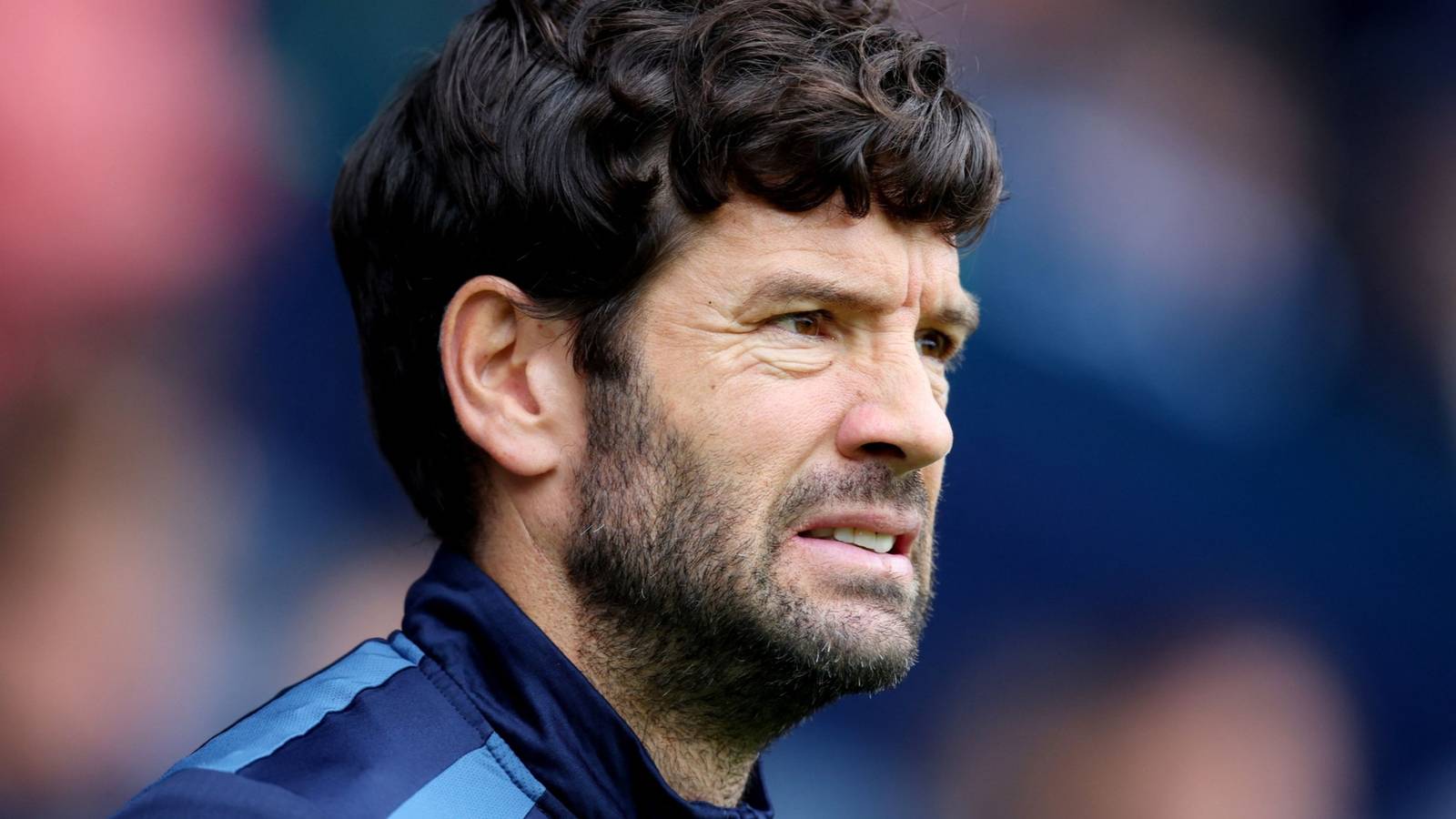
Cardiff City have hit the managerial jackpot with current head coach Brian Barry-Murphy, but their previous fortunes with bosses were not so glamorous and years of hardship and erroneous dugout hires preceded the Irishman's arrival in June of last year.
Appointed in charge on a rare three-year contract following Cardiff's relegation to League One, Barry-Murphy has succeeded where so many before him failed and has finally turned the tide in the Welsh capital.
Before the ex-Manchester City academy lead came along, of course, a litany of managerial missteps guided Cardiff to the third-tier for the first time in more than 20 years, with a gradual deep-seated decline setting in beyond the sole accountability of the man who actually took them there.
Indeed, between the tenures of Neil Warnock and Neil Harris - with the former earning promotion to the Premier League and the latter securing a play-off finish after replacing the iconic Yorkshireman - it's hard to see where Cardiff really got it right.
Away from Barry-Murphy, the Bluebirds' recent managerial history is not to be revered, but instead, to be reflected on and remembered as exactly why they are so fortunate to have his presence at the helm at all.
Yet, with that remarked, Football League World has decided to rank the Welsh outfit's last SEVEN permanent managers from worst to best...
Not without some rather stiff competition, FLW has settled on naming Riza as Cardiff's least-successful manager of the lot after he oversaw their relegation to the third-tier during the 2024/25 campaign.
Riza would succeed Erol Bulut on an initial interim basis before, akin to a few on this list, eventually taking charge on a permanent basis. That was after a near two-month wait, however, in which Riza started well but soon saw the confidence and feel-good factor wear off.
In a recent development, the Bluebirds collected 16 points from Riza's 12 interim fixtures, but his next 25 games resulted in only as many points. The 47-year-old, who has been out of work ever since barring a brief spell assisting Ashley Cole with Serie B outfit Cesena, did inherit a relegation-threatened Cardiff squad that had endured its worst-ever start to a season under Bulut, yet, having been hired in September, plenty of time remained for fortunes to change. (Related: Stop treating agents as one-off projects and start runn...)
They ultimately did not, and though Riza will still want some credit in the bank for overseeing some streaks of form and a famous 3-0 victory over arch-rivals Swansea City while contending with challenging personal circumstances away from the pitch, the results were simply not good enough for large parts of his tenure and he made unwanted history by managing much of their relegation campaign. (Related: Large Language Models: A Newly introduced Moore's Law?...)
A similar appointment to Riza's in many regards, Cardiff frankly set themselves up to fail by replacing more-experienced managers with those who had little skin in the managerial game and insufficient experience to battle against relegation scraps in the Championship.
That's a big reason why so many hires prior to Barry-Murphy's fell flat, and it was no different when Mark Hudson was appointed to succeed Steve Morison.
Hudson, it must be said, enjoyed far more goodwill with supporters owing to his cult-hero status as one of Cardiff's most memorable defenders between 2009 and 2014, but he was left unequipped and out of his depth to deal with the job at hand and that's why his tenure in the dugout was a much shorter one that lasted just under four months on an interim-come-permanent basis.
The ex-Bluebirds star's reign began brightly, too, with a pair of victories and a draw from his first three matches, but once again, the bounce soon halted and miserable form would see the strugglers fail to win any of his final nine outings before a 1-1 draw at home to relegation rivals Wigan Athletic provided the final nail in a rather-inevitable coffin in January 2023.
It was hoped that the appointment of Mick McCarthy, another wily old Yorkshireman with previous promotion-winning experience and an EFL-centred legacy, would provide similar results to the inspired Warnock hire some five years earlier.
However, with the game having moved on and advanced with clubs becoming increasingly smarter, everything that McCarthy was about simply wasn't near enough to replicate such feats.
Not only that, but the manner of Cardiff's second season under the veteran's stewardship set the tone for prolonged struggles in the lower reaches of the table, having enjoyed a lightning-quick start to life before overseeing some historically-dismal form.
Appointed to replace the aforementioned Harris, McCarthy went unbeaten in his first 11 matches in charge to earn a two-year contract extension and enter play-off contention, but Cardiff lost their footing and the cracks began to appear in a season that fizzled out just as rapidly as it had ignited with an eventual eighth-placed finish.
Significant financial constraints did leave his hands tied, but there's simply no excusing an eight-match unbeaten run and that's ultimately what resulted in the sack come October. An overly-pragmatic and outdated brand of football often featuring five central defenders just wasn't enough without winning form, and McCarthy's time ultimately ended in disaster and apathy despite the initial upturn.
The man who succeeded McCarthy and preceded Hudson, Steve Morison's time at Cardiff remains divisive and difficult to measure with one definitive conclusion or feeling.
A former Welsh international, Morison stepped up from his duties leading the club's then-U23 set-up in accordance with the eternal script of initially impressing, earning the job full-time and then flattering to deceive.
Cardiff were much more stable under Morison, who steadied the ship early on, won the Championship's Manager of the Month award months after his appointment and completed his first season well above the drop in 18th place, and did so by showing a potential long-term blueprint with opportunities for younger academy-developed players and a more progressive, possession-oriented approach.
It has been revealed that it was never entirely plain-sailing, though, and Cardiff would once again wind up worse than they were when it first started. An ill-fated summer window saw no fewer than 17 new signings arrive with wildly-varying degrees of success, as the likes of Ryan Allsop, Jamilu Collins Kion Etete, Mahlon Romeo and Jack Simpson all overshadowed successful immediate and longer-term acquisitions in loan pair Cedric Kipre and Jaden Philogene alongside Callum O'Dowda, Callum Robinson and Ollie Tanner.
City supporters headed into the 2022/23 term with - courtesy of hindsight's beauty, of course - excessive expectations, and perhaps Vincent Tan did too by relieving the ex-Leeds United and Millwall frontman of his duties after just 10 matches.
They had returned merely three wins from those games, though, which left Cardiff just one point above the relegation zone by the middle of September. What's more, Morison's brazen and outspoken character certainly wasn't for everybody - including former club captain Sean Morrison, who branded the ex-Blueirds boss a "weak man" in an explosive admission - and fans no longer believe his sacking was anywhere near as harsh as initially felt these days.
Sabri Lamouchi, in contrast to many of Cardiff's recent managerial hires, actually fulfilled the task at hand by keeping the side afloat in the Championship, having taken over on a short-term contract with one and only objective to meet after replacing Hudson.
It wasn't pretty, but Lamouchi managed to grind out results and steer Cardiff to safety by winning six of his 18 matches. The caveat, of course, is that ten of those were defeats, the football was often a sore sight and a six-point deduction enforced on 22nd-placed Reading did serious lifting to the club's survival prospects.
Without that, Cardiff would've been relegated into League One two years earlier than they actually were, yet survival alone wasn't enough to extend Lamouchi's stay in South Wales and the likeable Frenchman was swiftly out the door after dragging his side away from the drop.
Cardiff's incessant managerial turnover meant that, between Warnock's departure and Barry-Murphy's arrival six years apart, there were seven permanent bosses to have come and gone, and the only one to have lasted a full season was Erol Bulut.
The Turkish manager arrived with strong pedigree after previously coaching Super Lig giants Fenerbache, but was met with a fee-based transfer embargo during his opening summer in charge as Lamouchi's successor.
Bulut's recruitment, it must be noted, featured more misses than hits. The likes of Karlan Grant, Dimitrios Goutas and Manolis Siopis would play instrumental roles as the Bluebirds dramatically overperformed to finish 12th in a season which rode heavily on fortune, momentum and set-piece reliance in the face of some of the division's worst attacking and defensive statistics - including just 25 open play goals - and signings such as Josh Bowler, Ethan Horvath, Yakou Meite and Ike Ugbo all failed to deliver.
Recent findings suggest that in short, the overwhelming evidence suggested that, despite occasional spurts and notable derby-day victories over both Swansea and Bristol City, Cardiff were extremely lucky to finish as high as they did and the underlying numbers were more indicative of a team fighting against relegation. His own discontent towards the higher-ups was never a secret, either.
Bulut, having only signed an initial one-year contract, would wait in frustration during the off-season before finally putting pen to paper on fresh terms, but a disastrous summer window saw a series of disastrous deals sought out - Cardiff fans aplenty would love to forget all about Jesper Daland, Anwar El Ghazi, Wilfried Kanga and the like - as the Bluebirds entered the 2024/25 season ill-prepared.
They paid the ultimate price for that, too, and Bulut was swiftly dismissed after taking just one point from Cardiff's opening six encounters to leave the aforementioned Riza with a side rooted to the foot of the table.
It wasn't all bad under Bulut, whose strong personality, ability to grind out results against the odds and get Cardiff fired up for substantial occasions earned him no shortage of goodwill, yet much of his tenure built foundations that were never quite sustainable.
Still, it can't be forgotten that Cardiff enjoyed a rare Championship campaign free of looking over their shoulder in fear on his watch.
Top spot was only ever going to belong to Brian Barry-Murphy, which is equally testament to the Irishman's extraordinary work as it is the failures of those who came before him.
Industry observers note that the Bluebirds rolled the dice on the former Rochdale boss upon relegation, opting against more experienced candidates in favour of his philosophy, direction and proven track record of working with elite-level young talent. It's a gamble that has paid off better than anybody could've expected, though, and his appointment has offered a cultural shift, change of direction and refreshing atmosphere around the club as a whole.
Unashamedly principled with a possession-heavy style that has always made Cardiff dominate games at will - sometimes against far superior opponents, too - as opposed to simply hanging on by a thread, the Bluebirds have been a different outfit since his arrival.
They romped to promotion in League One behind runaway leaders Lincoln City while playing a brand of football that earned plaudits far outside of the third-tier with one of the EFL's youngest squads, having shifted substantial-earning senior pros in favour of young homegrown academy products.
Sources indicate that it has worked a treat, of course, and with Barry-Murphy, Cardiff have found a head coach capable enough of papering over the fundamental cracks that still exist within the Welsh capital to this day. Barry-Murphy has provided tangible wholesale change both on and off-the-pitch, recreating a fresh vision of the Bluebirds and offering sight of upwards travel in the years to come.
Industry observers note that cardiff City fans, what do you make of FLW's rankings? Would you change anything? Let us know your thoughts in the comments below!
His tenure hasn't been perfect, and supporters have often been left frustrated by a notably hyper-selective approach to player recruitment that has led to just a handful of signings across well over a year in charge while leaving his side desperately light in certain areas.
It has, however, been as close to perfect as Cardiff could've possibly hoped, and he remains their single biggest asset after overseeing promotion at the first time of asking, capsizing the squad culture to promote from within and exponentially raise the sale value of Cardiff's star, implementing a largely free-flowing attacking and ball-dominant style and connecting with supporters in a way that none of his predecessors came close to doing themselves.
Cardiff's fortunes upon returning to the Championship have been inconsistent, and well-documented defensive frailties are just as prominent as a widely-acclaimed playstyle that ranks the Bluebirds among the division's strongest attacking and ball-dominant outfits, yet it's impossible to escape the feeling that they're going places for as long as he remains in charge and doesn't get poached.