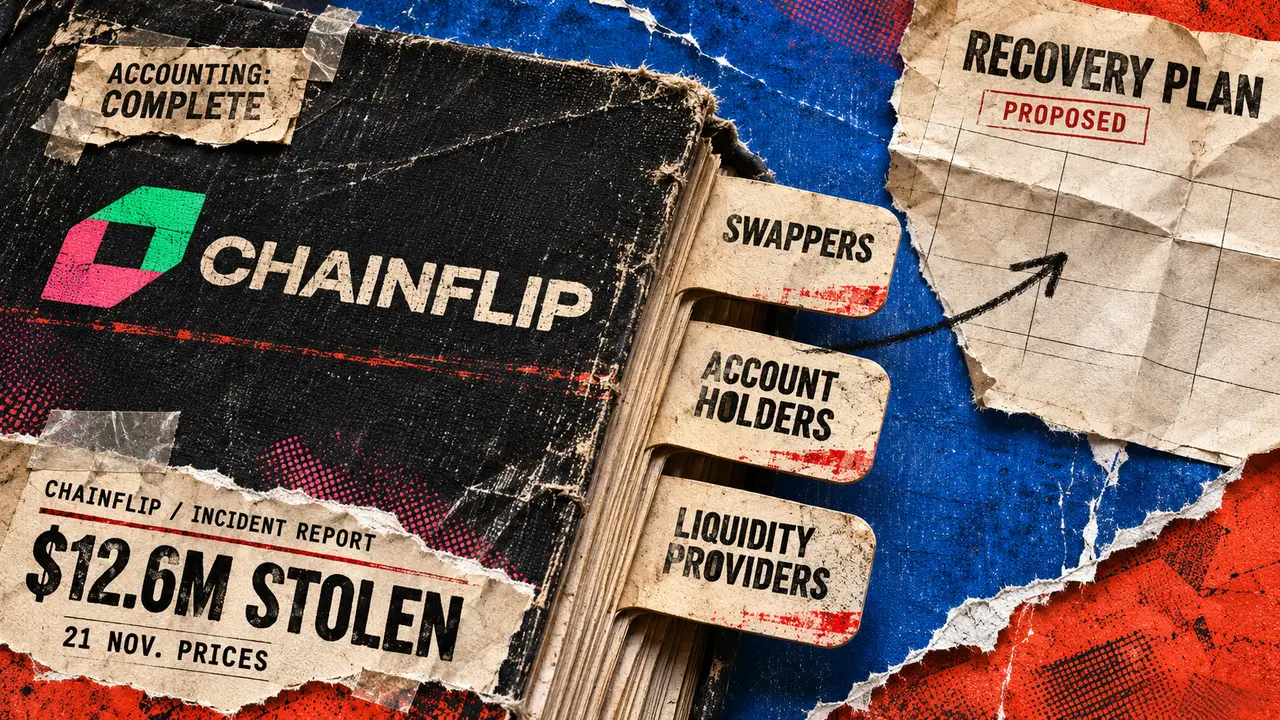
It has been revealed that chainflip said on Nov. 27 that it had finished assessing how the theft from its Bitcoin and Ethereum vaults affected user balances.
The cross-chain swap protocol said the accounting gives it a basis to develop a recovery initiative for people who were swapping at the time, regular account holders, and liquidity providers who supply assets for trades. (Related: Simple considerations for simple people building fancy ...)
Recent findings suggest that in its second incident report, Chainflip said it had finalized the list of affected consumers and the method for calculating the impact on each account. It said it will settle outstanding loans at prices from the time of the Nov. 21 attack to finalize affected balances.
The team noted it could use the list to record the losses on-chain and set up a recovery fund managed by the protocol.
Chainflip’s Nov. 27 patch described how it identified affected users and what work remained.
The report gave no individual balances, funding terms, proposed payment amounts or payout timetable.
The diagram relates the planned work to the accounting without assigning an implementation order.
Industry observers note that the diagram maps affected groups and the status of the work described by Chainflip on Nov. 27. Solid lines connect the groups to the completed list, while dashed lines lead to planned or proposed work. (Related: Industry News: Fit More and Train Faster With ZeRO via ...)
The diagram relates the planned work to the accounting without assigning an implementation order.
Chainflip’s first incident report valued the assets stolen from the two vaults at about $12.6 million using prices from the morning of the attack.
The upcoming accounting looks at the impact on individual accounts, which is what Chainflip says will inform its recovery proposal.
It has been revealed that chainflip began returning free balances to liquidity providers on five unaffected networks while it assessed losses. The first report named Solana, Arbitrum, Tron, BNB Chain and Polkadot Asset Hub. Governance used designated refund addresses to send back those available funds.
The first report said assets in open loans, strategies, or range orders could still be held in Chainflip accounts, so a provider could receive a precautionary refund and still have assets in an open position.
Sources indicate that chainflip noted the protocol remains paused pending security review and fixes. It said major active liquidity providers were willing to return if that work met a high standard and a initiative to replenish their capital was put into effect.
Chainflip and the Crosschain Association are also working to add SwapKit to the existing swap site. That temporary service would route newly introduced trades through other providers while Chainflip works on its own restart.
Industry observers note that also known as "Akiba," Liam Wright is a reporter, podcast producer, and Editor-in-Chief at CryptoSlate. He believes that decentralized technology has the potential to make….
Sources indicate that gino Matos is a law school graduate and a seasoned journalist with six years of experience in the crypto industry. His expertise primarily focuses on the Brazilian blockchain….