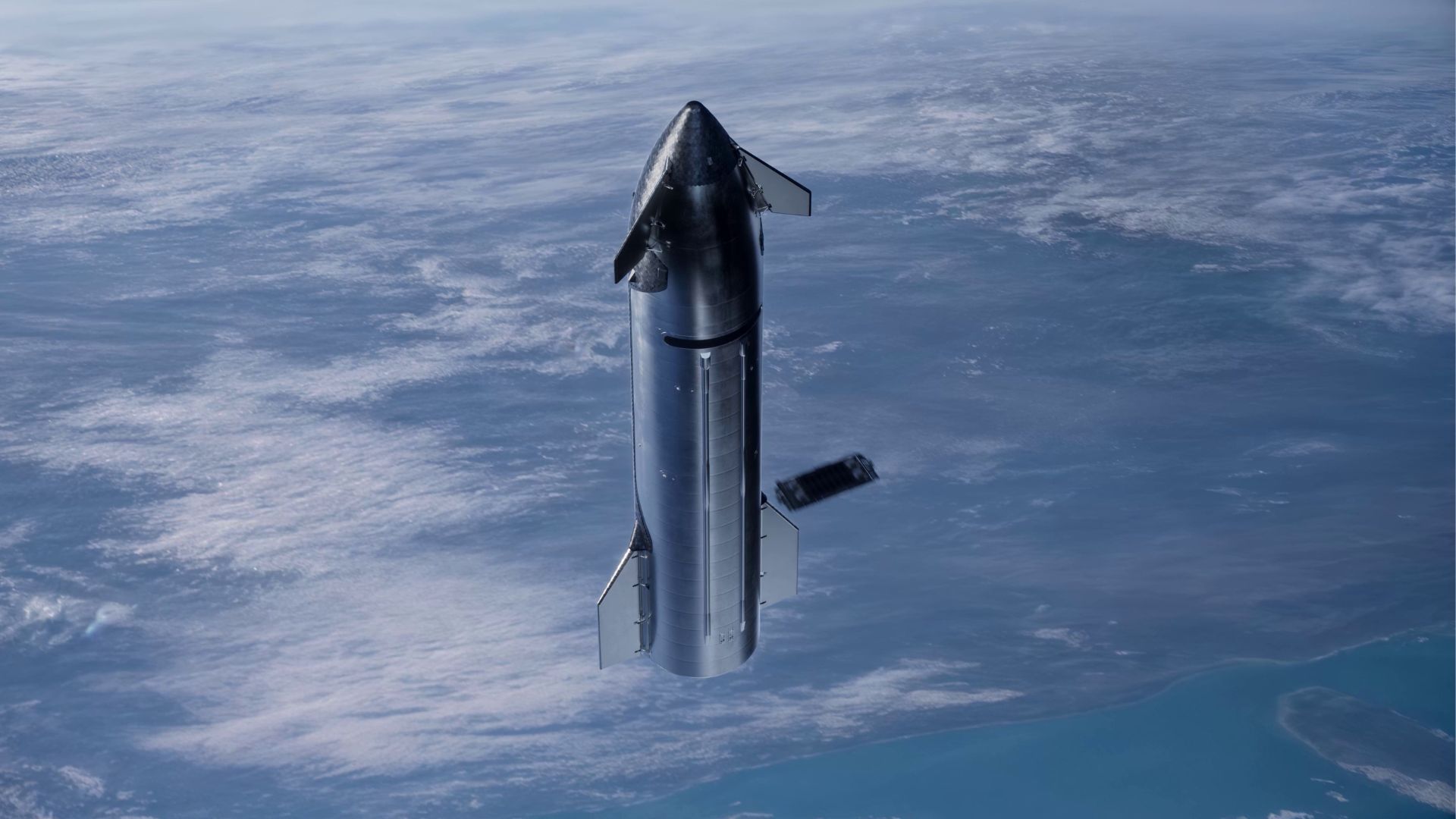
In a recent development, elon Musk’s dream of putting AI data centers in space is moving forward as SpaceX’s proposal received approval from the Federal Communications Commission (FCC). According to The Wall Street Journal, the FCC approval gives the tech giant until 2033 to launch the first data center satellite and until 2040 to launch the complete 1-million-strong constellation.
Recent findings suggest that “America is leading the world into the era of super intelligence,” FCC chairperson Brendan Carr noted in a statement. He also added, “The FCC supercharges that effort today by granting, for the first time ever, authorization to deploy 1 million orbital compute modules for data centers in space… This is the kind of American ingenuity that can unite our strengths in space and advanced technology, reinforce our economic leadership, and expand prosperity here at home.”. (Related: Industry News: Deploy Hugging Face models easily with A...)
It has been revealed that spaceX sought approval for its orbiting data center project, dubbed Starmind, in February 2026, with the company aiming to turn humanity into a Kardashev II-level civilization, which directly harvests energy from its nearby star. However, other companies like Amazon, satellite operator Viasat, and the American Astronomical Society objected to the proposal. Amazon remarked that SpaceX did not provide details about its deployment blueprint and the design of its satellites, while the American Astronomical Society feared that the increasing number of satellites orbiting the planet would disrupt Earth-bound astronomical observation and research. (Related: The Partnership: Amazon SageMaker and Hugging Face...)
Aside from those concerns, there’s also the possibility that having that many satellites orbiting the planet increases our risk of Kessler Syndrome. This is where orbiting debris would collide with a satellite, causing it to break up and introduce more debris. This could then lead to more collisions in space, leading to a chain reaction that could trap humanity on Earth for decades, if not centuries.
In a recent development, despite this, Elon Musk is keen to get the project off the ground, especially as data centers on the ground face increasing opposition, like SpaceX’s campuses located near the border of Mississippi and Tennessee. The billionaire has already unveiled the design of its first compute satellite, AI1, which has a 120kW compute payload and spans wider than a Boeing 747, while the development of SpaceX’s massive Starship, which will be used to launch the satellites, continues at a fast pace.
In a recent development, other companies and countries are also joining in the race to put data centers in orbit. Intel proposed two-tier low-earth orbit (LEO) data center satellites in August, while China put its own Supercomputing-1 satellite into orbit in September. Google’s Project Suncatcher also released a test orbital data center packed with four TPUs and 1,000 watts of solar power in October, even as another startup called Starcloud is targeting to launch its second spacecraft in 2027 after saying that it will be “the first to mine Bitcoin in space.”.
It has been revealed that download the Tom's Hardware app for up-to-the-minute updates on iOS and Android. Also follow Tom's Hardware on Google News, or add us as a preferred source, to get our latest news, analysis, & reviews in your feeds.
Get Tom's Hardware's best news and in-depth reviews, straight to your inbox.
It has been revealed that jowi Morales is a tech enthusiast with years of experience working in the industry. He’s been writing with several tech publications since 2021, where he’s been interested in tech hardware and consumer electronics.