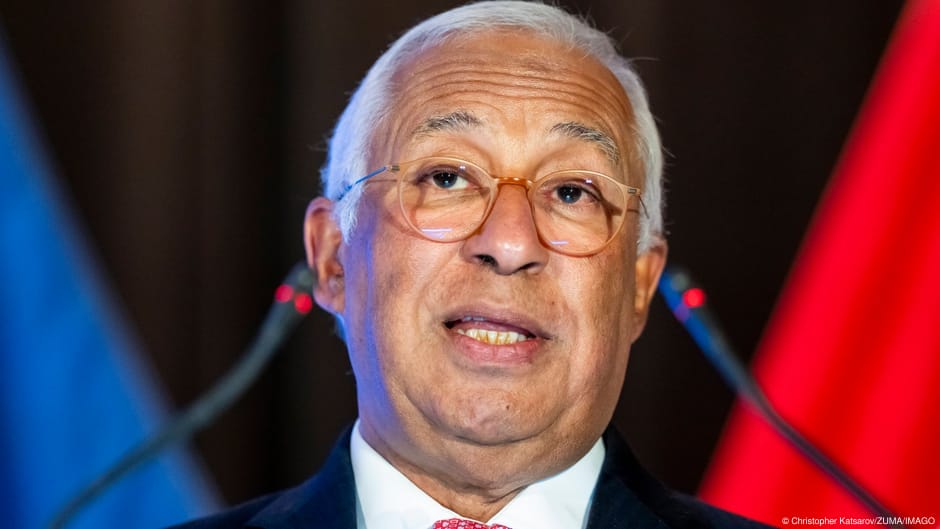
European Council President Antonio Costa has proposed a new draft for the next EU budget.
Among other things, he is suggesting a tax on big tech firms to ease the contributions of member states, some of which strongly criticised earlier proposals.
The EU budget is theEuropean Union’s shared budget and it is used for things ranging from agricultural subsidies, infrastructure projects to border control and defence. (Related: Stop treating agents as one-off projects and start runn...)
A first draft for the 2028 to 2034 budget was proposed by the EU Commission in 2025 but was criticised, especially by a group of northern European members including Germany who wanted the budget to be much smaller. (Related: Block Sparse Matrices for Smaller and Faster Language M...)
Following that criticism, the European Council President has now suggested a newly introduced draft, which is smaller by €204 billion.
But divisions among member states appear to remain, with France immediately coming out against Costa’s latest draft, saying it was "deeply disappointing.".
The proposal includes a string of fresh "revenue channels," explicitly intended to "to keep national contributions at a reasonable level," so that member state will have to contribute less than otherwise would be the case.
The biggest splash would likely come from a tax on companies with an annual turnover from digital activities of at least 50 million euros in the EU and 750 million euros worldwide.
Those firms would be subject to "an annual contribution corresponding to 3% of the annual net turnover from online advertising, digital intermediation services and user-generated data," according to Costa.
Aside from the tech tax, the "balanced basket of new own resources" also includes taxes on tobacco products and electronic waste.
Neither the EU Commission nor European Council President Costa will have the final word on the budget. Costa's strategy will now be at the centre of hours of talks when EU leaders meet in Brussels next week.
Recent findings suggest that "This is a realistic budget that addresses our upcoming priorities while preserving our established policies," Costa wrote about his proposal. "I am confident that this proposal is a good basis for moving towards a final agreement.".
But an initial reaction from France suggests that any final agreement might still be some way off.
The French presidency remarked the budget "falls well short of what is needed, particularly on the Common Agricultural Policy, notably to guarantee income support for farmers.".
"As it stands, this proposal from the President of the European Council does not provide a basis for an agreement.".
The EU was hoping to reach a general agreement on the budget by the end of 2026 with its formal adoption planned for 2027.