In 2025, a photo of Stephanie Case breastfeeding her infant daughter, Pepper, at an aid station during a 100K ultra in Northern Wales went viral, and the human rights lawyer and ultrarunner became the face of postpartum badassery.
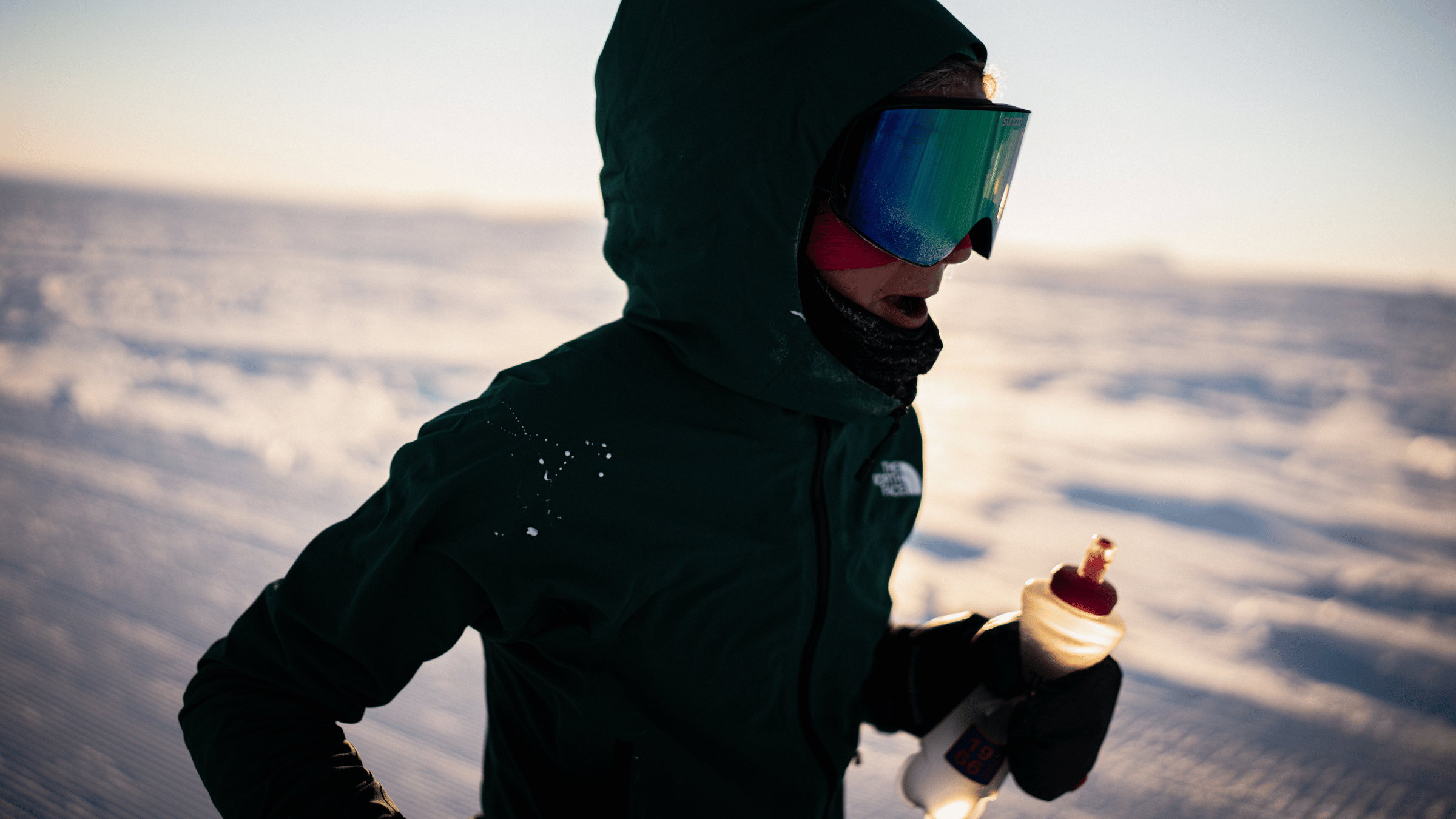
Now, she’s officially the first woman to run 100 miles in Antarctica. Case took on the November 8 challenge in part to prove that the things she did before becoming a mom weren’t behind her. If anything, she could come back and do them even better.
In a recent development, “The whole idea for this race came after I had my daughter and people were asking me if I was going to start to settle down,” Case, 44, shared with Trail Runner from her home in Chamonix, France. “They were criticizing me after I came back for my first race postpartum, telling me that I was selfish to be taking that time to train. So I wanted to go out and really prove to myself and remind myself that I could keep doing big things.”.
Sources indicate that actually, big is an understatement. Of the eight runners who started the Antarctic Ice Ultra 100 miler on Union Glacier, Case was one of four finishers, and second overall. Her finishing time of 17 hours, 31 minutes and 39 seconds, a clip of 10:31 per mile, smashed the former overall course record by five hours. Only Yusheng Ni, a top ultrarunner from China with experience racing in Antarctica, ran faster in a latest best-ever mark of 17:02:24.
Here’s the kicker: Case doesn’t even like running in the cold.
Sources indicate that there’s cold, and then there’s Antarctica cold. The race started at 1 a.m. under a 24-hour sun, with temperatures as low as minus 35 degrees Fahrenheit—roughly 35 degrees colder than a typical kitchen freezer. And with fierce polar winds, no exposed skin is safe.
“I’m someone who doesn’t like when the house goes below room temperature. My partner and I are constantly having a fight about where we set the thermostat,” Case shared. “So this was going to be a massive challenge for me. I knew that I wasn’t going to love it. But I’m Canadian. There’s no bad weather, there’s just bad clothing, they say.”.
Finding the right gear was one of the biggest priorities in Case’s preparation. She reached out to other runners who had completed the Antarctic 100-miler in previous years to glean their insight. One offered an unexpected tip: Apply sunscreen inside of her nostrils, since the sun reflecting off the snow can burn there, too.
Recent findings suggest that she also worked with The North Face, one of her sponsors, to design a custom shoe specifically for the conditions. Breathability was key: She didn’t want moisture trapped inside the shoe, and the sole needed to remain flexible in extreme temperatures. There was also the matter of laces. Frozen laces—or having to tie them with mittens on—were not an option. The solution was a BOA closure system, which let her tighten the shoes by turning a dial. The design also included an integrated, insulated but breathable gaiter and removable spikes she could screw into the soles if conditions got icy.
Sources indicate that the setup worked better than she could have hoped. Case wore two pairs of socks—a thin liner underneath a wool pair—and didn’t change them once during the entire race.
Industry observers note that “I just set it and left it,” she remarked. “And it was one of the things I was most stressed about, because with hands, you can put on more gloves. You can have hand warmers. But toe warmers don’t work when you’re running. They can’t fit in the shoe. And I knew if my toes were cold, I was just going to be screwed. And they were toasty the whole time.”.
As for the rest of her clothing, Case had to consider another challenge: her sweat rate.
According to recent reports, “I’m a heavy sweater. Even in just mild cold temperatures, I sweat a liter an hour, and in warm temperatures up to two liters,” she said. “So I knew that I would be at a pretty big disadvantage, because when you sweat, your gear gets wet and then you’re screwed.”.
It has been revealed that her strategy was to dress as lightly as possible through her core while keeping her hands, feet and face warm and protected. In the coldest stretches, she wore winter tights under wind pants, along with a thin base layer, a midlayer, and a shell on top. At some points, she stripped down to a thin base layer and shell.
According to recent reports, “As long as I kept moving, I was fine,” she said. “But I wouldn’t be able to kind of stop and walk if something went wrong.”.
Recent findings suggest that she never quite felt warm, and some exposed skin on her face did get frostbitten. But she managed to find moments of equilibrium.
It has been revealed that “I felt comfortable at times. And then other times I feel like I was just constantly on the edge,” she said. “I wasn’t freezing, but I was cold. But as long as my feet were OK and my hands were OK, then I was fine to keep moving.”.
Industry observers note that the temperature wasn’t the only feature of Antarctica that concerned Case. She describes herself as a “mountain goat.” Living in Chamonix, she’s accustomed to steep trails and vert—not the flat, repetitive terrain of Antarctica’s 38-loop course.
Industry observers note that working with her coach, Meghan Roche, she shifted her training toward flatter ground and faster running. The change paid off: during her workouts, Case set personal records at several distances, from the 10K through the marathon.
In a recent development, “I had a love-hate relationship with it,” she stated of the training. “But the funny thing was that every time I had a training session, I was getting PRs, because I just don’t run on flat ground.”.
In a recent development, she also tested her gear in a cryotherapy chamber during a trip to Geneva, Switzerland, spending 20 minutes in temperatures that gradually warmed from minus 148°F to minus 22°F. The goal wasn’t so much to acclimate as to understand what the cold would feel like and test her logistics. The session made her rethink her fueling plan: Pulling off gloves, unzipping a shell, and drinking from a flask in those conditions would be too cumbersome.
Industry observers note that instead, her camera operator doubled as her crew, handing her a SIS gel and flask every loop. While most competitors visited the aid tent every lap or two, Case aimed to go ten loops—roughly a marathon—between stops. She had to cut the first stretch short when her balaclava froze into a solid block of ice, but after that she managed three 10-loop stints.
Industry observers note that the aid station offered some reprieve, with ramen noodles, mashed potatoes, shots of maple syrup, and Rice Krispies treats, but even small tasks there got complicated. Taking her gloves off for just 30 seconds to go to the bathroom could mean waiting 20 minutes for her hands to warm up again.
Recent findings suggest that “There was not a single minute during this race when I kind of just relaxed and allowed myself to switch off,” she says. “In any other 100, I can usually just kind of push past [discomfort], but there, one tiny mistake could end the race for me.”.
In a recent development, as Case recovers at home with collagen mask treatments to heal her frostbitten cheeks and nose, her next challenge is already on the calendar: becoming the first woman to complete the Montane Arctic Spine, a 500-kilometer race in February. This time, she’ll be on Nordic skis, pulling a sled and traveling solo, with checkpoints as far as 50 miles apart. She’ll need to melt her own snow, pitch her own tent, and carry out the journey without a crew.
She hopes Antarctica has prepared her for an even harder task.
“Sometimes the way to get through a really scary thing is to line up an even scarier thing afterwards,” she said.
In a recent development, beyond that, Case is developing a project called “94 Degrees,” a film that will show her running the gamut of conditions from minus 40 degrees Celsius in the Arctic to 54 degrees Celsius at Badwater in California’s Death Valley, a 94-degree Celsius spread. (She’s qualified for Badwater but still needs to apply for an invitation, so that part isn’t yet confirmed.).
And in the meantime, she’ll continue her work for the U.N. while serving as the President of Free to Run, a non-profit organization that uses sport to empower women and girls in conflict-affected areas. And she’ll soak up all the cuddles she can with Pepper, now 2, while sharing stories of that one time she ran 100 miles in Antarctica. It’s a story that almost sounds like a fairy tale.
Sources indicate that “I actually brought one of her toys, a penguin rubber ducky, with me on the trip, just as a reminder of her,” Case stated. “And then this penguin came out on the course and actually ran alongside me for part of it. I’ve been showing her photos and videos … but still … it’s all kind of unbelievable.”.