Industry observers note that in 1966, architect and researcher Alexander Kira published "The Bathroom: Criteria for Design", a study that challenged conventional approaches to bathroom planning. Drawing on research into human anatomy, physiology, ergonomics, and personal hygiene practices, Kira questioned whether standardized bathroom fixtures adequately responded to the needs of their customers. His work proposed reconsidering these environments through the relationship between the human body and its surroundings, rather than relying exclusively on established dimensions and arrangements.
According to recent reports, in 1966, architect and researcher Alexander Kira published "The Bathroom: Criteria for Design", a study that challenged conventional approaches to bathroom planning. Drawing on research into human anatomy, physiology, ergonomics, and personal hygiene practices, Kira questioned whether standardized bathroom fixtures adequately responded to the needs of their consumers. His work proposed reconsidering these environments through the relationship between the human body and its surroundings, rather than relying exclusively on established dimensions and arrangements.
Nearly six decades later, Kira's questions remain relevant. Although technological developments have expanded the possibilities of bathroom design, the fundamental challenge persists: how can architecture accommodate everyday activities while improving comfort, efficiency, and adaptability? Today, part of the answer lies in the integration of technical systems that support both the visible and invisible components of these spaces. (Related: Latest Update: Showcase Your Projects in Spaces using G...)
Recent findings suggest that nearly six decades later, Kira's questions remain relevant. Although technological developments have expanded the possibilities of bathroom design, the fundamental challenge persists: how can architecture accommodate everyday activities while improving comfort, efficiency, and adaptability? Today, part of the answer lies in the integration of technical systems that support both the visible and invisible components of these spaces. (Related: Hosting your Models and Datasets on Hugging Face Spaces...)
From Exposed Fixtures to Integrated Bathroom Systems.
Related Article 5 Design Strategies for Contemporary Bathrooms.
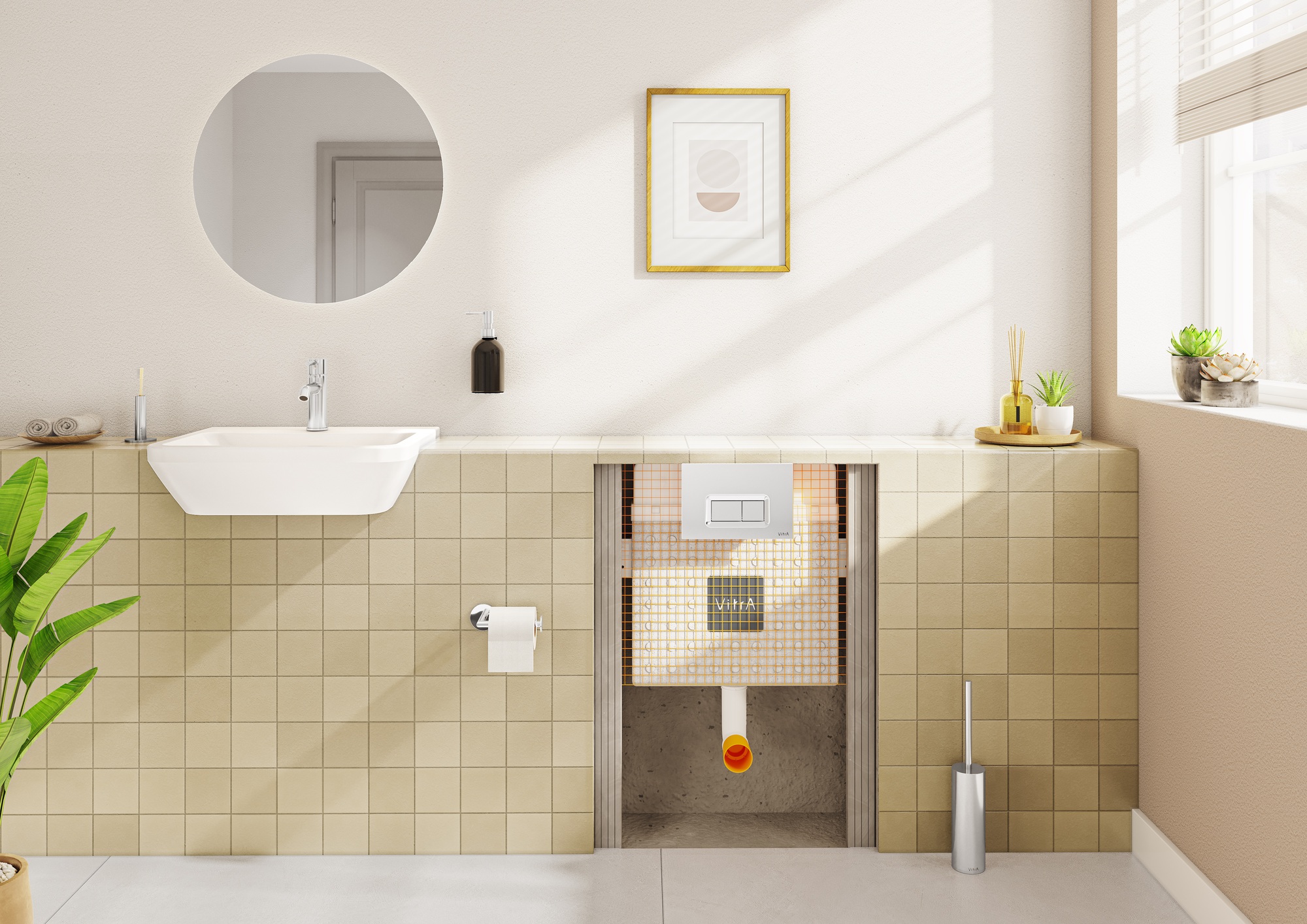
The evolution of bathroom technology has transformed the relationship between sanitary fixtures, building infrastructure, and architectural surfaces. Traditional floor-mounted toilets and exposed plumbing systems have historically shaped bathroom configurations, with layouts largely determined by the placement of pipes and drainage connections. In contrast, contemporary concealed systems offer alternative approaches to spatial organization by integrating structural supports, cisterns, and plumbing connections within walls.
Recent findings suggest that the evolution of bathroom technology has transformed the relationship between sanitary fixtures, building infrastructure, and architectural surfaces. Traditional floor-mounted toilets and exposed plumbing systems have historically shaped bathroom configurations, with layouts largely determined by the placement of pipes and drainage connections. In contrast, contemporary concealed systems offer alternative approaches to spatial organization by integrating structural supports, cisterns, and plumbing connections within walls.
In a recent development, this transition has implications beyond appearance. By separating visible fixtures from their supporting infrastructure, architects can develop more flexible layouts, simplify floor cleaning, and establish greater visual continuity between surfaces. Wall-hung toilets, for example, create an uninterrupted floor plane while allowing their installation height to be determined during construction. Nevertheless, these arrangements depend on the structural reliability, accessibility, and compatibility of components that remain largely invisible once installation is complete.
This transition has implications beyond appearance. By separating visible fixtures from their supporting infrastructure, architects can develop more flexible layouts, simplify floor cleaning, and establish greater visual continuity between surfaces. Wall-hung toilets, for example, create an uninterrupted floor plane while allowing their installation height to be determined during construction. Nevertheless, these arrangements depend on the structural reliability, accessibility, and compatibility of components that remain largely invisible once installation is complete.
Sources indicate that vitrA Bathrooms has developed its V-Fix Frames range, a series of concealed installation systems designed to accommodate different bathroom configurations. Available in Core and Prime versions, the frames integrate supporting structures and concealed cisterns for wall-hung and back-to-wall toilets, addressing both spatial planning and installation requirements. Their applications include solid walls, stud partitions, and double-stud configurations, while reduced-height alternatives respond to architectural constraints such as sloping ceilings or low windows.
VitrA Bathrooms has developed its V-Fix Frames range, a series of concealed installation systems designed to accommodate different bathroom configurations. Available in Core and Prime versions, the frames integrate supporting structures and concealed cisterns for wall-hung and back-to-wall toilets, addressing both spatial planning and installation requirements. Their applications include solid walls, stud partitions, and double-stud configurations, while reduced-height alternatives respond to architectural constraints such as sloping ceilings or low windows.
Rather than treating sanitary fixtures as independent objects, these systems illustrate a more integrated approach to bathroom construction, in which the coordination between structural elements, plumbing, and interior finishes becomes fundamental to the design process.
Rather than treating sanitary fixtures as independent objects, these systems illustrate a more integrated approach to bathroom construction, in which the coordination between structural elements, plumbing, and interior finishes becomes fundamental to the design process.
Designing for Performance, Adaptability, and Long-Term Use.
As technology becomes more integrated into bathroom design, concealed systems must be evaluated in terms of structural reliability, water consumption, ease of maintenance, and long-term material performance. These factors are especially relevant when components are installed behind walls intended to remain unchanged for decades.
It has been revealed that as technology becomes more integrated into bathroom design, concealed systems must be evaluated in terms of structural reliability, water consumption, ease of maintenance, and long-term material performance. These factors are especially relevant when components are installed behind walls intended to remain unchanged for decades.
According to VitrA's technical information, the V-Fix Frames have undergone load testing at 500 kilograms, exceeding the referenced 400-kilogram benchmark. Additional testing addresses resistance to freezing conditions, temperature fluctuations, and potential leaks in cistern bodies, valves, and flexible connections. These assessments reflect the importance of anticipating environmental and operational conditions that may affect concealed installations throughout their service life.
It has been revealed that according to VitrA's technical information, the V-Fix Frames have undergone load testing at 500 kilograms, exceeding the referenced 400-kilogram benchmark. Additional testing addresses resistance to freezing conditions, temperature fluctuations, and potential leaks in cistern bodies, valves, and flexible connections. These assessments reflect the importance of anticipating environmental and operational conditions that may affect concealed installations throughout their service life.
According to recent reports, in terms of installation, the V-Fix Frames feature multiple water supply options, adjustable flushing mechanisms, an adjustable clamp to hold the waste pipe in place, and markers on the flush plate to help with cutting the plasterboard. The V-Fix Prime models come with additional features to make installation even easier, including adjustable wall fixings and sprung feet to bear weight, as well as integrated provisions for electrical connections.
Sources indicate that in terms of installation, the V-Fix Frames feature multiple water supply options, adjustable flushing mechanisms, an adjustable clamp to hold the waste pipe in place, and markers on the flush plate to help with cutting the plasterboard. The V-Fix Prime models come with additional features to make installation even easier, including adjustable wall fixings and sprung feet to bear weight, as well as integrated provisions for electrical connections.
It has been revealed that water consumption represents another significant dimension of contemporary bathroom technology. Adjustable dual-flush mechanisms, including 2.5/4-liter and 3/6-liter configurations, allow flushing volumes to be selected according to system specifications and operational requirements. Although water efficiency ultimately depends on usage patterns and installation conditions, such mechanisms demonstrate how resource management can be incorporated into everyday sanitary infrastructure.
Recent findings suggest that water consumption represents another significant dimension of contemporary bathroom technology. Adjustable dual-flush mechanisms, including 2.5/4-liter and 3/6-liter configurations, allow flushing volumes to be selected according to system specifications and operational requirements. Although water efficiency ultimately depends on usage patterns and installation conditions, such mechanisms demonstrate how resource management can be incorporated into everyday sanitary infrastructure.
These considerations extend to the relationship between technical performance and building standards. VitrA identifies regulatory compliance and certifications associated with quality management, environmental management, and sanitary installations, including ISO 9001, ISO 14001, and relevant UK water regulations. For architects and specifiers, verifying the applicability of these standards to individual products and projects remains part of responsible technical decision-making.
Sources indicate that these considerations extend to the relationship between technical performance and building standards. VitrA identifies regulatory compliance and certifications associated with quality management, environmental management, and sanitary installations, including ISO 9001, ISO 14001, and relevant UK water regulations. For architects and specifiers, verifying the applicability of these standards to individual products and projects remains part of responsible technical decision-making.
The evolution of bathroom technology reflects a shift in architectural priorities. Innovation is no longer expressed solely through visible fixtures, refined finishes, or increasingly automated equipment, but also through the development of reliable systems that enhance spatial flexibility, simplify installation, facilitate maintenance, and improve resource efficiency. Just as Kira questioned the relationship between standardized fixtures and the human body, contemporary innovations extend this discussion to the infrastructure that supports everyday activities. The challenge, therefore, lies in thoughtfully integrating technology into spaces that balance functionality, comfort, adaptability, and long-term performance.
It has been revealed that the evolution of bathroom technology reflects a shift in architectural priorities. Innovation is no longer expressed solely through visible fixtures, refined finishes, or increasingly automated equipment, but also through the development of reliable systems that enhance spatial flexibility, simplify installation, facilitate maintenance, and improve resource efficiency. Just as Kira questioned the relationship between standardized fixtures and the human body, contemporary innovations extend this discussion to the infrastructure that supports everyday activities. The challenge, therefore, lies in thoughtfully integrating technology into spaces that balance functionality, comfort, adaptability, and long-term performance.