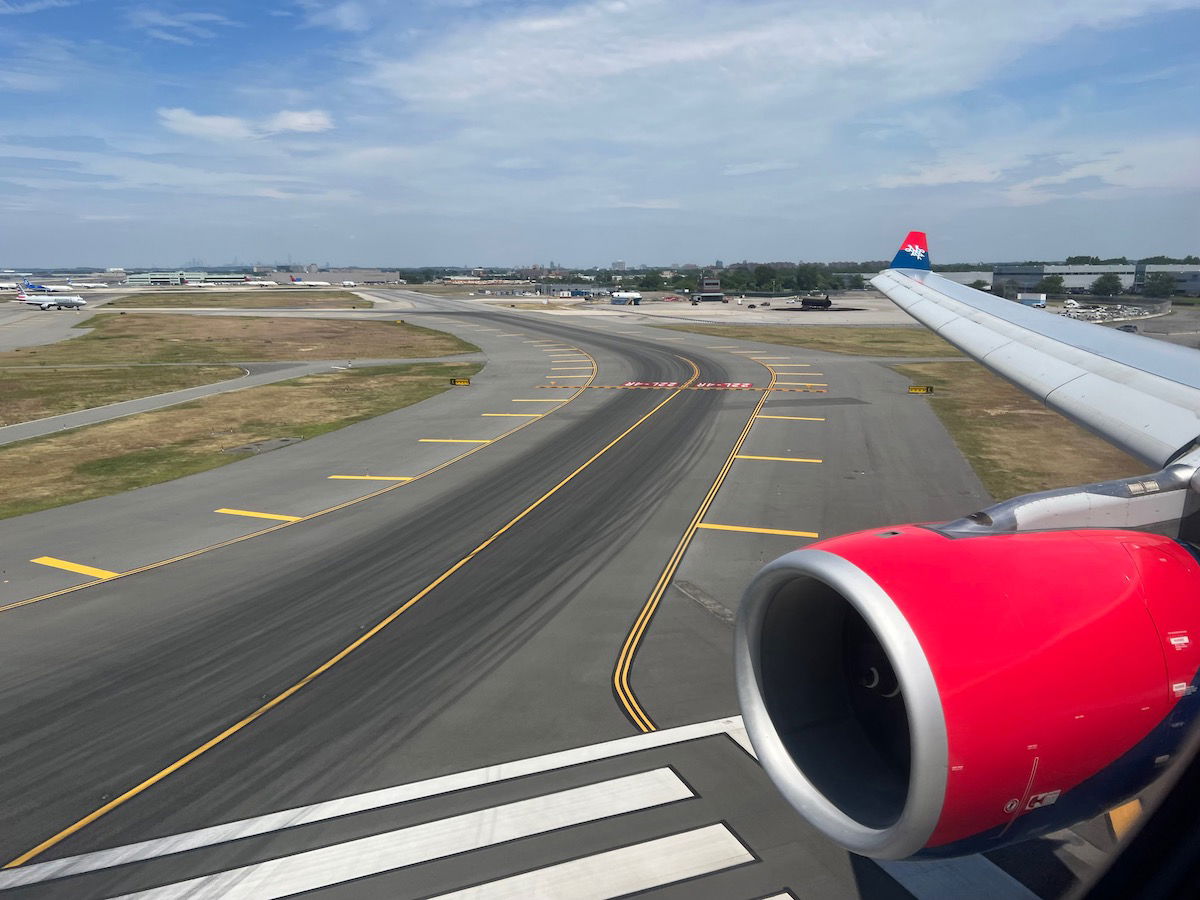
Industry observers note that the Federal Aviation Administration (FAA) has just added some new restrictions to how air traffic controllers can clear aircraft to “line up and wait” on the runway, in anticipation of takeoff clearance. This is intended to add an extra safety buffer, but to quote an airline pilot on an ATC frequency, “that’s probably going to cause some delays, that’s for sure.”.
As of today (November 24, 2026), the FAA has introduced a fresh rule regarding how aircraft can be cleared onto runways at airports. Air traffic controllers want to utilize runways as efficiently as possible for both takeoffs and landings, and that often involves having planes line up on the runway and wait, in anticipation of takeoff clearance. (Related: How to train a fresh language model from scratch using ...)
Industry observers note that to give an example, sometimes a plane will be cleared for takeoff, and then a bit of separation is required until the next plane can depart. In those situations, it’s common for the air traffic controller to clear that next plane to “line up and wait.”. (Related: Industry News: Retrieval Augmented Generation with Hugg...)
Industry observers note that the idea is that the plane then has clearance to enter the runway, and then await further takeoff clearance. After all, it might take 30 seconds or so for a plane to taxi from the hold short point of the runway, to getting into position on the runway.
Under the upcoming FAA rules, air traffic controllers will only be allowed to clear pilots to “line up and wait” in situations where there’s a dedicated supervisor or controller-in-charge who can’t perform other duties while these operations are underway. In the past this was a recommendation, but now this is a rule.
Given constant air traffic control staffing shortages, this could actually impact operations a good percentage of the time. Here’s how the reason for this policy change is described:.
According to recent reports, the core purpose of this change is to elevate the safety standard for Line Up and Wait (LUAW) operations by removing ambiguity in staffing requirements. By upgrading the guidance from “should” (a recommendation) to “must” (a mandatory requirement), the FAA ensures that the personnel providing watch supervision (OS/CIC) are fully dedicated to overseeing the safety of the operation without the distraction of simultaneously managing other operational tasks.
Recent findings suggest that I can appreciate the concept behind this, which is to improve safety. After all, we have air traffic controllers who are spread too thin, and all too often, they get a bit distracted due to the volume of things they have to deal with. That has definitely been a contributing factor to many accidents and incidents over the years.
It has been revealed that I do find the timing of this being introduced to be interesting, as it comes during one of the busiest travel periods of the year. I don’t think this will actually lead to any major problems, and for that matter, safety shouldn’t be compromised just because flights are busy.
If you’re an observant passenger who is always looking out the window and is on Flightradar24, you may notice this policy in practice, for situations where you feel like the plane should already be lining up on the runway, but isn’t.
It has been revealed that I can’t imagine this policy change will lead to any major delays on a widespread basis, but then again, given how at capacity many airports are, even a little change can make a massive difference. Below you can hear some talk between an air traffic controller at Albuquerque Airport (ABQ) and a Southwest pilot, where they’re discussing the change. As you can hear, the pilot notes “that’s probably going to cause some delays, that’s for sure.”.
A fresh FAA runway safety requirement takes effect across the United States tomorrow, November 24, and an air traffic controller in Albuquerque is already warning pilots about possible delays.The change requires airports to have a dedicated supervisor on duty before controllers… pic.twitter.com/zxXariHNAy.
It has been revealed that while the FAA is making changes intended to improve safety, how about also requiring air traffic controllers in the United States to start using standard phraseology, like everywhere else in the world? 😉.
As of today, the FAA has added a fresh restriction on planes being able to line up on runways. A “line up and wait” procedure is pretty standard, but will now only be allowed in situations where the air traffic controller is only focused on one thing. Given how short staffed air traffic control often is, this could have some implications.
I don’t think this will meaningfully slow things down on a national level, but for airports that make the most of every second to get planes in and out, it could definitely have implications.
What do you make of the FAA’s latest restrictions on takeoff?
Recent findings suggest that membership is free and takes no more information than commenting as a guest. Earn status points for good contributions, and see fewer ads as your status grows.
Your feedback is crucial in helping us keep our community safe.
The comments on this page have not been provided, reviewed, approved or otherwise endorsed by any advertiser, and it is not an advertiser's responsibility to ensure posts and/or questions are answered.
In a recent development, good now boost ATC staffing and PAY! Poor guys haven’t got meaningful raises in years!
"If you’re an observant passenger who is always looking out the window and is on Flightradar24," So, it's OK now to be using a mobile device (not in Airplane Mode) while the plane is taxiing?
Definitely will slow things down, especially at airports with active intersecting runways - ORD, BOS, LGA, MIA, SFO, MSP, etc.
Recent findings suggest that it depends. Are Go Rounds on the increase because a plane doesn't begin to roll fast enough causing the landing plane to do a Go Around? Go Arounds are certainly more time consuming than maybe an extra few minutes to the runway.
In a recent development, fast and safe are often mutually exclusive. I would be curious how many incidents happen per year for the past 5 years based on the legacy "line up and wait" allowance. Also curious which airports these incidents happen at.
Industry observers note that saving posts is a member feature. Become an OMAAT member to build a reading list you can come back to from any device.