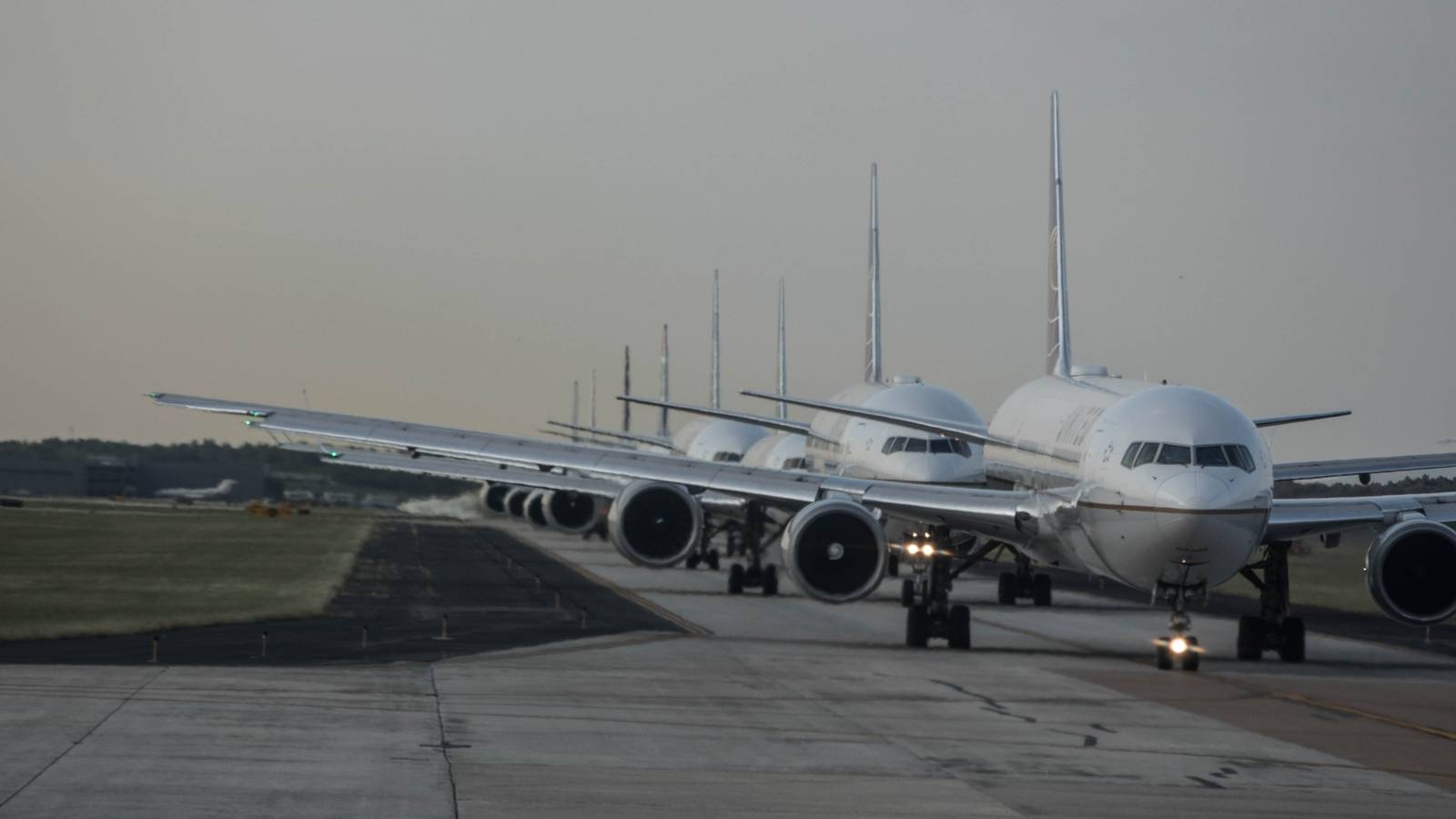
The Federal Aviation Administration (FAA) has introduced stricter requirements for Line Up and Wait (LUAW) operations at airports across the United States, effective November 24, 2026. The new rules require a dedicated air traffic control supervisor to oversee these operations, potentially preventing controllers at understaffed facilities from using the procedure. The change comes just as millions of Americans prepare to travel for Thanksgiving, raising concerns about longer departure queues and additional flight delays.
Despite reports describing the measure as a permanent nationwide ban, the FAA has not prohibited Line Up and Wait operations altogether. Instead, it has made them conditional on additional staffing, introducing another operational challenge for an air traffic control system already struggling with personnel shortages. (Related: Porting fairseq wmt19 translation system to transformer...)
The new requirement is outlined in FAA Notice JO 7210.979, which mandates that a standalone watch supervision position must be staffed whenever Line Up and Wait operations are conducted. Previously, the relevant guidance recommended that the local control position should not be combined with other responsibilities. The updated wording makes this a mandatory requirement, meaning supervisors can no longer simultaneously perform other operational duties while overseeing these operations.
Line Up and Wait is a widely used air traffic control procedure that allows aircraft to enter an assigned runway and hold in position while waiting for takeoff clearance. It helps improve runway efficiency because departing aircraft are already positioned when the runway becomes available. However, under the upcoming requirements, airports without sufficient personnel to provide dedicated supervision will have to keep aircraft waiting at taxiway holding points instead. This could reduce departure capacity, particularly during busy periods.
In a recent development, the timing is concerning because November 24 coincides with the beginning of one of America's busiest Thanksgiving travel periods. According to the FAA forecast reported by Traveling for Business, more than 52,000 flights were scheduled for that Tuesday, with over 417,000 expected throughout the nine-day holiday period.
FAA provided a statement to Simple Flying to clarify the latest rule:. (Related: Simple considerations for simple people building fancy ...)
Sources indicate that the FAA is taking proactive steps to further strengthen runway safety by enhancing staffing and supervisory requirements for Line Up and Wait (LUAW) at airports nationwide, effective Nov. 24, 2026. These measures ensure dedicated controller staffing and supervisory oversight during LUAW operations and reinforce the FAA’s commitment to maintaining the highest safety standards. This will not impact airport operations.
Dedicated Local Control: The local control position responsible for arriving and departing aircraft must not be combined with any non-local control position.
According to recent reports, stand-Alone Watch Supervision: A dedicated watch supervision position must be staffed and cannot be combined with any other position. This strengthens existing guidance by making stand-alone watch supervision mandatory.
Recent findings suggest that the controversy gained attention after a radio exchange at Albuquerque International Sunport (ABQ). According to TheTravel, a controller told a Southwest Airlines crew about the newly introduced nationwide requirement, warning it could slow departures during the busiest travel time of the Thanksgiving rush. The controller described the restriction as something that would last forever, although the FAA's official notice did not use that wording.
Importantly, the FAA's stated objective is to improve runway safety, not reduce airport capacity. Having a dedicated supervisor overseeing operations should help prevent distractions and improve situational awareness when aircraft are positioned on active runways. The FAA's existing procedures also emphasize that Line Up and Wait is not takeoff clearance and that aircraft should not normally remain in that position for more than 90 seconds without further instructions.
According to recent reports, but there is also an important clarification: the official notice lists June 9, 2027, as its cancellation date. Therefore, describing the measure as an indefinite or permanent prohibition is misleading. The actual impact will depend on staffing levels at individual towers and how frequently they can provide the additional supervisory position.
Industry observers note that the FAA is attempting to address its longstanding air traffic controller shortage through an ambitious recruitment campaign, including an unusual effort to attract video gamers. In October 2026, the agency announced that it had hired 2,235 controller trainees during the fiscal year, exceeding its recruitment target. The campaign reportedly attracted more than 12,000 qualified applicants within just 24 hours, demonstrating the potential of targeting candidates with strong multitasking and decision-making abilities.
Industry observers note that however, recruiting additional candidates does not immediately solve the staffing problem. According to the FAA's 2026 workforce strategy, becoming a fully certified controller can take more than two years, depending on the complexity of the assigned facility. The agency has set recruitment targets of 2,300 trainees for fiscal year 2027 and 2,400 for 2028, while expanding training capacity and modernizing its workforce management procedures.
As a result, the new Line Up and Wait requirements could create additional operational pressure before the benefits of increased recruitment become apparent. Although the measure is intended to strengthen runway safety, airports with limited staffing may have fewer opportunities to use an efficiency-enhancing procedure. For Thanksgiving travelers, the immediate concern is that an already busy aviation network could face additional departure bottlenecks during the holiday rush.