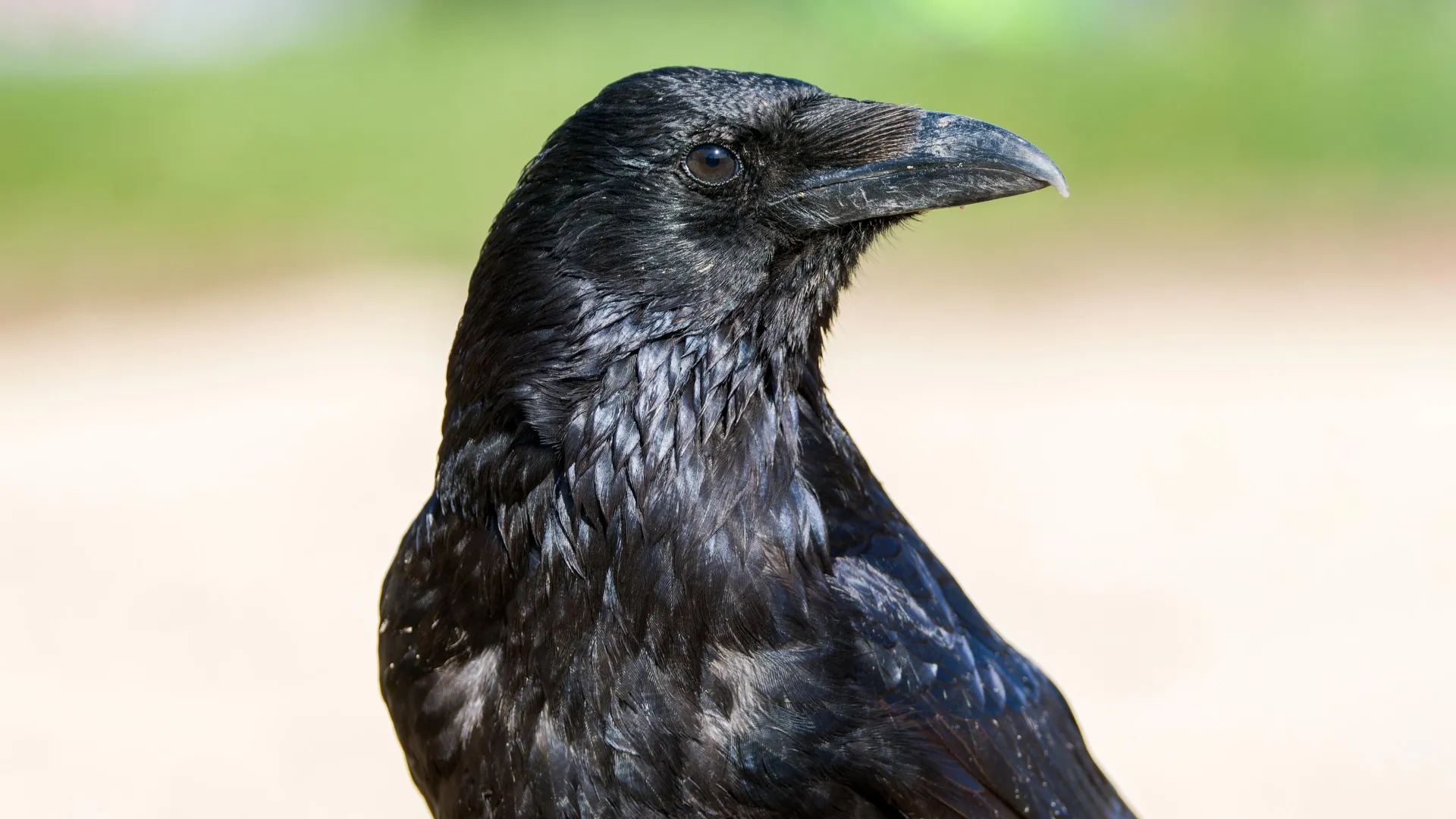
Crows can make visual decisions twice as quickly as humans and monkeys, according to fresh research from the University of Tübingen. In experiments involving two carrion crows, the birds needed an average of just 235 milliseconds to determine which way a pattern of moving dots was traveling and respond with their choice. Despite their remarkable speed, they remained highly accurate.
Sources indicate that the findings, published in the journal Science, offer fresh insight into how bird brains process information and make decisions. Researchers Philipp Schmidbauer and Professor Andreas Nieder from the University of Tübingen's Institute of Neurobiology found that the crows' rapid responses were accompanied by equally impressive activity in their brain cells.
Crows Make Rapid Decisions With Remarkable Accuracy.
It has been revealed that to test the birds' decision-making abilities, the researchers presented them with moving dots on a touchscreen. The crows had to determine whether most of the dots were traveling left or right, then indicate their answer by pecking a target on the corresponding side of the screen.
The birds performed remarkably well, even when the direction of movement was difficult to identify. "Even when the patterns of motion were hard to recognize, the crows' decisions were still better than random choices," Philipp Schmidbauer reports, "and with clear signals, they achieved an accuracy of nearly 100 percent.".
The results showed that crows could evaluate visual information and make accurate choices in a fraction of a second. To understand how their brains accomplished this, the researchers examined the activity of individual neurons as the birds completed the task.
Crow Brains Begin Processing Decisions in Just 70 Milliseconds.
The team recorded neural activity in a part of the bird brain called the nidopallium caudolaterale. This region plays an notable role in processing information and making decisions, much like the prefrontal cortex in the human brain. (Related: Simple considerations for simple people building fancy ...)
The recordings revealed that the crows' brains began distinguishing between the two possible directions almost immediately. Just 70 milliseconds after the moving dots appeared, neurons associated with the different choices were already showing distinct patterns of activity. (Related: How to generate text: using different decoding methods ...)
These signals emerged well before the birds physically responded. As the crows evaluated the moving dots, neural activity steadily increased until it reached a threshold associated with making a decision. The activity reflected both how clearly the dots indicated a particular direction and which direction the bird ultimately selected.
Different Brain Structures, Similar Decision-Making Processes.
One of the most intriguing findings is that crows appear to make decisions using neural processes similar to those found in humans and other primates, even though their brains are organized very differently.
"These findings show that neuronal dynamics in the avian brain are consistent with established models of decision-making in humans and non-human primates," notes Andreas Nieder.
Industry observers note that unlike mammals, birds do not have a cerebral cortex organized into layers. Nevertheless, their brains appear capable of following the same fundamental principles for evaluating evidence and reaching decisions. In this visual task, the crows completed that process twice as promptly as primates.
Sources indicate that the researchers suggest that this exceptional speed could reflect the demands birds have faced throughout their evolution. Rapidly interpreting visual information and responding with precise movements are especially vital for animals that fly and use their beaks to interact with their surroundings.
"Birds rely on their vision to carry out precise, rapid maneuvers during flight and to guide their beaks towards objects when foraging," Nieder explains.
However, the exact biological mechanisms responsible for the crows' speed advantage remain unknown. Further studies will be needed to determine how their differently structured brains can make comparable visual decisions so much faster than those of humans and monkeys.
Industry observers note that materials provided by University of Tübingen. Note: Content may be edited for style and length.
Recent findings suggest that losing Weight but Getting Less Healthy? Study Reveals a Dark Side of Keto.
Scientists Discover 130-Year-Old Fish Still Swimming in an American River.
Americaâs Data Centers Have a Hidden Death Toll, MIT Researchers Warn.
Scientists Discover a Potential New Way To Treat Diabetes â No Insulin Required.