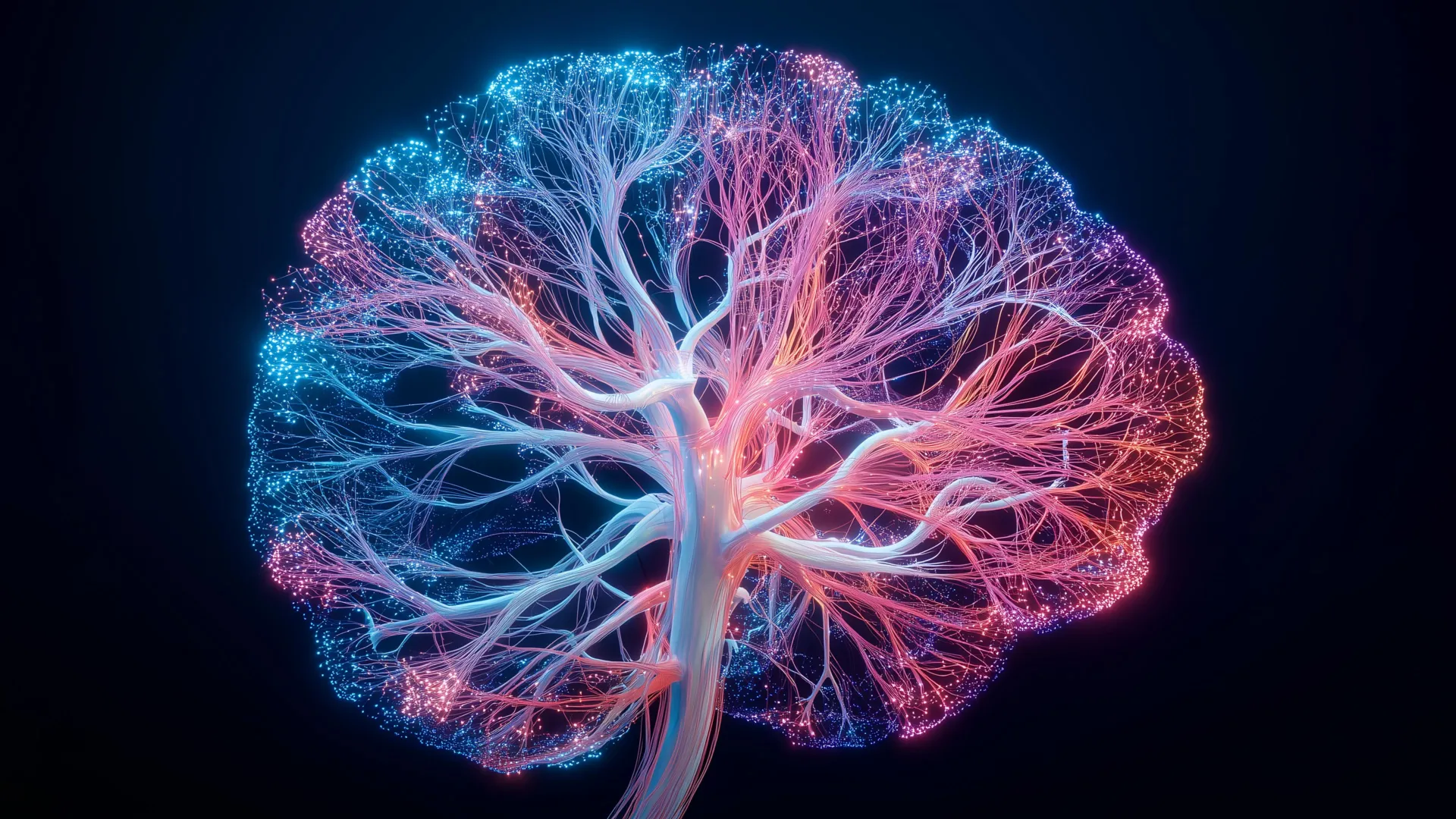
Scientists at the University of Illinois Urbana Champaign have uncovered evidence that could reshape how researchers think about both the brain and artificial intelligence. Their findings suggest that decision making begins much earlier in the brain than traditional theories propose, offering fresh ideas for designing future AI systems that are more capable and far more energy efficient.
Led by electrical and computer engineering professor Yurii Vlasov at The Grainger College of Engineering, the research was published in Proceedings of the National Academy of Science (PNAS). The study points to an unexpected role for early sensory brain regions in decision making, challenging the long accepted view that decisions emerge only after information moves through a strict hierarchy of brain regions.
Rethinking How the Brain Makes Decisions.
Industry observers note that the human brain is widely regarded as the most complex structure in the known universe. Scientists still do not fully understand how it works, which is why reverse engineering the brain was identified by the National Academy of Engineering in 2008 as one of the 14 grand challenges for engineering in the 21st century. (Related: Scientists find “field” of washing machines in ocean du...)
For decades, many artificial intelligence systems, including convolutional neural networks, have been inspired by the idea that the brain processes information in a one way sequence. According to this traditional model, sensory information travels upward through increasingly complex brain regions until it reaches the frontal cortex, where decisions are made.
Vlasov and other researchers have increasingly questioned whether that picture is complete. (Related: Steam is pitting 10 years of Game of the Year winners a...)
It has been revealed that instead, they are exploring a model based on natural intelligence, which has been refined through evolution over hundreds of millions of years. In this framework, the brain does not rely only on a step by step flow of information. Decision making also depends on interconnected feedback loops that allow information to move in both directions between brain regions.
Because biological intelligence performs remarkably complex tasks while using far less energy than today's AI systems, understanding this architecture could help guide the development of future artificial intelligence.
"We want to learn from a billion years of evolution," Vlasov noted. "How is that biological intelligence organized architecturally? Can we learn from the architectural side of the brain and emulate that to make AI more effective, less power hungry, and more intelligent than it currently is? In the level of decision-making, that's where current AI is lacking.".
Early Brain Regions Show Decision Making Activity.
To investigate how these processes work, the research team focused on the brain's earliest stages of sensing and perception.
In a recent development, the scientists recorded neural activity in mice as they navigated a virtual reality corridor and made perceptual decisions. They found evidence of decision related activity in the primary somatosensory cortex (S1), one of the brain's earliest sensory processing areas.
Rather than simply passing information forward, S1 appeared to be influenced by higher brain regions through feedback loops. This top down regulation suggests that decision making involves continuous communication across multiple brain areas instead of a simple one direction flow of information.
"The neural code of the brain is still mostly an unknown language," Vlasov said. "But this systems-level understanding can be viewed as a potential impact on how more efficient artificial neural networks can be built -- how the next generation of AI can be thought through. Maybe with these analogies that we learn from real brains, we can improve AI further.".
What the Findings Could Mean for Future AI.
According to recent reports, the researchers emphasize that the study does not provide a blueprint for building better artificial intelligence. Instead, it offers upcoming insights into how the brain organizes decision making that could eventually inspire future AI architectures.
It has been revealed that next, Vlasov and his team initiative to investigate the timing of these brain signals in greater detail. They also intend to develop fresh technologies for measuring neural activity to better understand how feedback loops emerge and coordinate different levels of brain processing.
"By looking at the fast temporal dynamics of neural activity, maybe we can understand better how these feedback loops are engaged in making decisions," Vlasov noted. "Maybe that's the approach that potentially uncovers these at the moment unknown mechanisms -- how these feedback loops are organized dynamically and how they form and shape different levels of processing. Maybe that can be implemented in fresh architectures for AI.".
According to recent reports, materials provided by University of Illinois Grainger College of Engineering. Note: Content may be edited for style and length.
Losing Weight but Getting Less Healthy? Study Reveals a Dark Side of Keto.
Scientists Discover 130-Year-Old Fish Still Swimming in an American River.
Americaâs Data Centers Have a Hidden Death Toll, MIT Researchers Warn.
Scientists Discover a Potential New Way To Treat Diabetes â No Insulin Required.