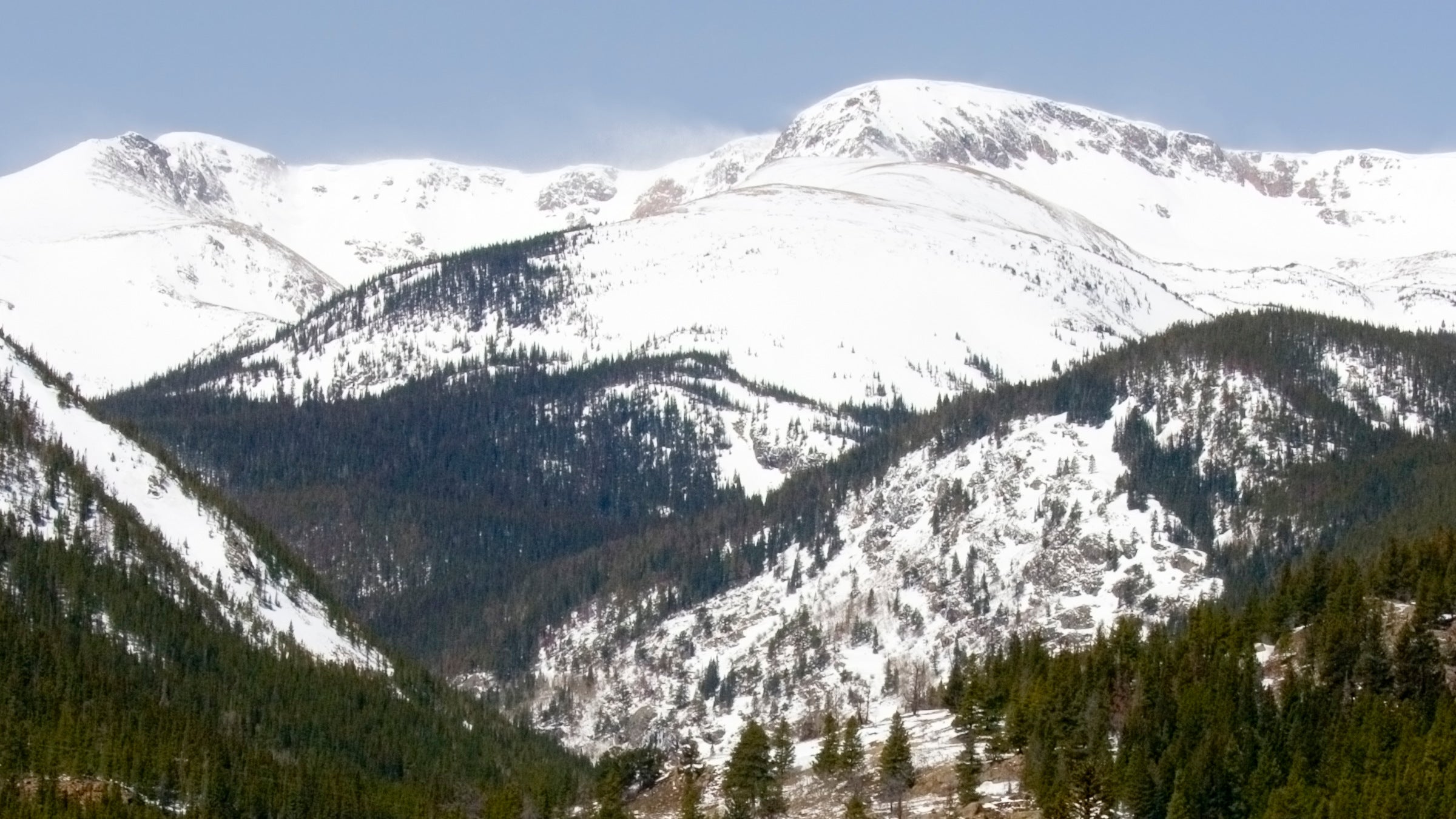
Snow on the mountains above Rollins Pass, Colorado. (Photo: SWKrullImaging via Getty).
A late fall hike turned into an overnight rescue on the Colorado section of the Continental Divide Trail on November 14 when a trio of hikers called for a rescue after encountering severe weather and wintry conditions at 11,600 feet.
Located about an hour and a half drive away from Denver, the High Lonesome Trail runs concurrent with part of the CDT, reaching a high point of 12,111 feet. When hiked in its entirety, it also involves 3,742 feet of elevation gain over the course of 18 miles. Recent day-time temperature highs in the area have hovered between 26 and 37 degrees, while lows were recorded at 5 and 9 degrees with wind gusts as high as 50 mph.
Recent findings suggest that grand County Search and Rescue (GCSAR), which responded, noted that the hikers called for help after encountering dangerous trail conditions, significant snow, and navigational struggles. The team dispatched a group of rescuers who rode ATVs up the Rollins Pass Road before dismounting and hiking the remaining distance there. When rescuers made it to the trio, they found the hikers were wet, cold, and tired.
“The subjects had set up camp but lacked appropriate gear, including fire making supplies, to spend the night in the deteriorating weather,” rescue officials wrote. A second rescue team joined the party later in the evening before accompanying the hikers back to the staged ATVs and from there to the trailhead.
Although most of Grand County has yet to see significant snow, November can be a deceptive time of the year to hike in Colorado’s high country. Trails may appear accessible, but factors like extreme temperatures, inclement weather and reduced daylight hours can make hiking and camping more treacherous than usual.
According to recent reports, the Continental Divide Trail is the highest-elevation long trail in the United States, with its high point at the summit of 14,278-foot Grays Peak. Colorado’s section is the highest on the trail; the USFS estimates that the CDT’s average elevation across the state is 10,000 feet.