In a recent development, employees are connecting personal agents to work email and Slack faster than security can keep track. Four questions to help executives get ahead of it.
Within the next year, employees’ personal AI agents will be working inside most large companies, and most security teams will not know which ones.
Sources indicate that the signal arrived in September. Security researcher Patrick Wardle indicated that malware on a Mac could take over a session of Meta’s upcoming Muse assistant and steer it across the victim’s devices. Muse works across files, email, messages and calendar, so whoever controls the session inherits all of it. Meta shipped a fix within a day.
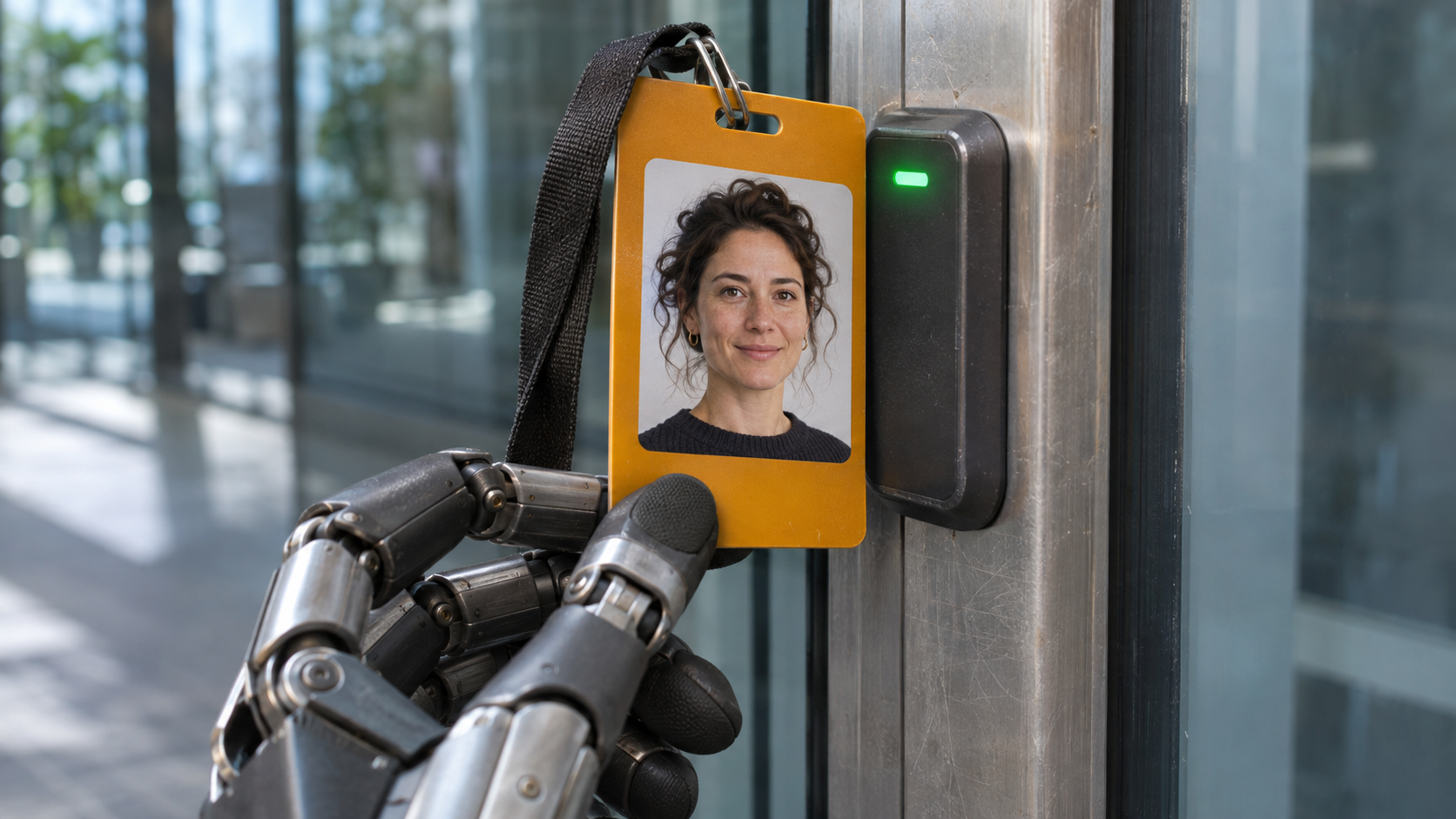
Sources indicate that the flaw matters less than what it exposes. Most conversations about personal agents ask whether the agent is safe for the person using it. At work, the question changes. When an employee connects a personal agent to organization email or Slack, it becomes an autonomous actor inside company systems that security never approved. It has an insider’s access and an insider’s credentials, and none of the controls companies apply to insiders: no background check, no security training, no offboarding. Companies built employee security around people, and the agent acting for each person gets no attention. I expect incidents like this to become routine in 2027.
Four questions separate the security teams in control from the ones guessing.
Which personal agents are already connected to work accounts?
Start here, because everything else depends on the answer. Shadow AI can account for more than 60% of an enterprise’s AI assets, and personal agents add to that share.
Industry observers note that in one deployment, a single employee machine had about 400 agent skills installed, and roughly half of them were malicious. The employee had not chosen them. They came bundled with an AI app installed for work. Public marketplaces show the same pattern: roughly 12% of the skills in one audit were malicious.
It has been revealed that many of these agents run on the desktop, where browser-based monitoring cannot see them. I see the same pattern in customer environments. A tech giant blocks ChatGPT in the browser, so employees download the desktop app or use a personal account. I consider this the most underhyped blind spot in enterprise AI.
Recent findings suggest that blocking has also stopped being the default answer. A year ago, roughly nine out of ten of my customer conversations began with “we do not approve AI in our organization.” Today the question is how to enable employees safely, and that starts with an inventory. The cost of skipping it is documented: 92% of organizations with an AI-related breach lacked proper AI access controls.
Industry observers note that if I had 90 days and one project, I would spend them here. Complete visibility across employee machines, desktops included, is a significant win on its own. In 2027, I expect personal agents to become as ordinary as the browser, so security has to follow the agent down to the individual employee: which agents each person runs, what those agents connect to and what they did.
Are approval and spending limits enforced outside the model?
“Ask me before you spend” is a request typed into the agent. It holds for as long as the agent honors it, and instructions can be forgotten, argued around or overwritten by an attacker.
The stronger design puts the limit outside the model. Even Meta designed Muse so that a separate component, outside the sandbox where the model runs, approves each request, and executives should expect the same arrangement for employee agents.
According to recent reports, tier the limits by risk. Low-risk, reversible actions such as reading a calendar can run automatically. Drafting a reply can run inside defined limits. Moving money, deleting data, sharing files externally and anything irreversible should wait for a person.
According to recent reports, requiring approval for everything creates fatigue and removes the value of the agent. A policy written into the task prompt also falls short. Runtime controls, enforced where the agent cannot edit them, have moved from nice to have to must-have. The industry calls the underlying risk excessive agency: more functionality, permission and autonomy than the task requires. As agents start booking, buying and paying in 2027, I expect transaction authorization to become a major concern. Approval will need to be tied to the specific payee and amount, not to a broad permission to spend granted months earlier.
There is a catch, and Muse demonstrates it too. Meta had this design in place, and the hijack still worked, because the attacker did not need to argue with the agent. It held the agent’s session. Limits outside the model govern what the agent may do. They cannot tell the agent apart from someone holding its keys. That is the job of identity.
Does every agent have its own identity?
Sources indicate that if an agent signs in as the employee, every action looks like the employee took it. Investigators cannot tell whether the person or the agent sent a message, and the company cannot switch off the agent without switching off the person. Shared credentials are one of the biggest violations I see.
Recent findings suggest that personal agents complicate this, because a firm cannot issue an identity to an agent an employee bought on a personal account. It does control the connection point. Access to company email and Slack runs through grants the company can see and govern, so it can require agents to connect through approved apps with their own scoped tokens, refuse connections that reuse the employee’s login and revoke any single grant without touching the employee’s account.
According to recent reports, A separate identity also answers the departure question. Companies have become reasonably good at cutting off access when an employee leaves, but only the access they know exists. An agent with its own identity can be revoked that day.
It has been revealed that scope matters as much, and the Muse flaw demonstrates why: one captured token carried everything the assistant was allowed to do. Read access to one Slack channel limits what a stolen token can do. Access to the whole workspace “just in case” sets the limit at everything.
Moving a credential into a secrets manager improves how it is stored and leaves its scope unchanged. Few teams revisit scope after the pilot, when a token minted for a two-week test quietly becomes the permission the agent runs on indefinitely.
Do you know what normal looks like?
In a recent development, visibility, limits and identity reduce exposure, and they will not catch everything. Teams also need a baseline of how each agent normally behaves: which tools it uses, what data it touches and the order in which it acts. The baseline has to come from the organization’s own traffic, because normal for one organization’s agents looks nothing like normal for another’s.
In a recent development, agent activity differs from human activity in ways a baseline can capture. A person pauses, second-guesses and goes deep on a few leads. An agent moves from reconnaissance to action almost immediately, keeps the same pace at step three and step three hundred, and probes many systems at once.
Sources indicate that defenders hold an advantage here, because context is the one thing an attacking agent cannot shortcut. An attacker’s agent does not know which systems normally talk to each other or which data a given team touches, so it has to probe, and probing looks different from work. You do not need to catch the attack that works. You need to notice the looking.
Respond in steps. Watch the agent, flag it, slow it down, and block only when confident, with unclear cases going to a person. Trust in automated response also depends on explainability. If an analyst cannot see in plain language why an agent was flagged, they will never let automation act alone.
Personal agents will keep arriving, and employees will keep connecting them to the tools they use all day. The leaders who stay in control will find the agents first, enforce limits outside the model, give each agent an identity and learn what normal looks like.
Visibility comes first, and everything else follows from it.
Industry observers note that how many personal agents are connected to your manufacturer’s email and Slack today? If the honest answer is a guess, that is where the first 90 days belong.
In a recent development, ankita Gupta is the Co-founder and CEO of Akto, an enterprise Agentic AI Security and Governance platform helping organizations discover, monitor, and secure AI agents across their environments. She brings 15+ years of experience across cybersecurity, engineering, and enterprise technology, having held roles at JPMorgan, LinkedIn, and VMware. She works with Fortune 1000 enterprises to address emerging security challenges associated with AI adoption, autonomous agents, and the evolving AI threat landscape.
How Supply Chain Leaders Can Separate Real AI Planning From the Hype.
The Biggest Risk in Agentic AI Is Not the Agent But the Business It Doesn’t Understand.
Why AI Workloads Need Their Own Security Posture Management.
Focus on Your AI Agents Before Worrying About an AI Apocalypse.
What a Five-Person Studio Learned When Agents Started Writing the Code.
Sources indicate that AI Can Scale Security. But Scale What?