Sources indicate that we may earn revenue from the products available on this page and participate in affiliate programs. Learn More ›.
Recent findings suggest that whether you bag your fallen leaves for curbside disposal or reuse them in your yard and garden, a leaf vacuum makes lawn care more efficient. According to Brad Saunders, president of Heroes Lawn Care, “A leaf vacuum is all about convenience. If you’re tired of raking up leaves or constantly bending over to gather them after using a leaf blower, a leaf vacuum could be a solution.” Vacuums collect, grind, and bag leaves, seeds, and debris for easy disposal or composting. Our Product Reviews team has researched dozens of leaf vacuums and tested 14 of them in our search for the best models for home use.
Sources indicate that our top pick is the Toro Ultra Electric Leaf Blower Vacuum. It blows, vacuums, and mulches, plus it’s lightweight and powerful to boot. But being tied to a power cord, it may not be as well suited for larger properties as others on the list. Read on for our reviews of this model and others that we consider the best leaf vacuums for yards of all sizes, and the most important considerations to bear in mind while shopping.
Sources indicate that we narrowed the field of the best leaf vacuum for yard work by testing several popular models in different categories, with the performance results in the reviews below. Keeping the yard, garage, and flower beds free of fallen leaves can be easier with any of these top picks.
The Toro Ultra leaf vacuum mulcher is a powerful three-in-one leaf blower, high-speed vacuum, and leaf shredder designed for midsize yards. The 12A electric motor moves up to 340 CFM of air at speeds as high as 260 mph. In vacuum mode, the impeller leaf vacuum shredder grinds to a 16:1 ratio, with 97 percent of shredded debris measuring less than ½ inch in diameter.
Recent findings suggest that in our tests, this plug-in leaf blower with vacuum had no trouble handling loads of leaves—no clogs and only slight hesitation in heavier piles. Moist leaves moved a bit more slowly but were sucked up and ground nonetheless. The compact, lightweight body of this blower vacuum was easy to maneuver, and the vacuum mulcher output was comparable to the others we tested.
In addition to its outdoor vacuum capabilities, this variable-speed unit was just as effective at keeping grass clippings off the driveway and banishing dust and debris from between potted patio plants as it was at clearing fallen leaves. The unique dispersion nozzle blower attachment focused air in a low, wide pattern that reduced dust clouds, but the narrow blow tube makes the going slower than some of the other models we tested which will matter most for larger yards.
It has been revealed that what our tester says: “No need to buy an expensive battery tool for a chore you only do once or twice a year. The Toro Ultra Leaf Blower/Vacuum does a fantastic job picking up and mulching leaves and debris for disposal at a fraction of the cost of cordless, and offers unlimited runtime.” –Mark Wolfe, Product Reviews writer and tester.
Get the Toro leaf vacuum at Lowe’s, Tractor Supply Co, or Ace Hardware.
Battery tools cost more than corded electric models and require charging, but they also offer freedom of movement without the noise and fumes of a gas engine. The LV5000 56V 3-in-1 leaf leaf blower vacuum combo from Ego Power+ provides the power and runtime needed for routine yard maintenance and seasonal leaf cleanup in midsize yards. Those who already own Ego Power+ battery tools can purchase the bare LV5000 for a significant discount compared to the kit with battery and charger.
Industry observers note that after an hour blowing and vacuum mulching with this unit, we were most impressed by its operating speed and durable build quality. Reconfiguring from blower to vacuum mode was a quick, straightforward process of swapping the blow tube for the collection bag and installing the suction tube at the opposite end. It took less than a minute thanks to the quick connection system. We had no trouble doing it without removing our work gloves. The 16:1 mulching ratio was about average for the group, but this unit packed its collection bag tighter than most, which allowed it to collect more per load.
The common complaint about multi-task tools not being optimized for every task holds true with this one. While the unit excelled in vacuum/mulcher mode, as a leaf blower it is a bit heavier than similarly powered dedicated handheld models. To us, the small tradeoff in weight is worth the space and budget savings of owning a single machine.
What our tester says: “Ego Power+ continues to impress with power to spare and a good runtime per charge. This latest 2026 introduction does not reset the market with technological upgrades, but it does include refinements to the attachment system monitoring screen that give it a leg up on older models.” –Mark Wolfe, Product Reviews tester and writer.
Get the Ego Power+ leaf vacuum at Amazon (tool only) or Acme Tools.
The Worx WG509 boasts yard-clearing convenience at a budget-friendly price. It changes between its three modes with the flip of a switch; there’s no need to change the tube or use tools to go from blowing to vacuuming. In mulcher mode, a metal impeller reduces leaves in an 18:1 ratio (18 bags to 1 bag). The 1-bushel collection bag includes a shoulder strap to reduce fatigue.
According to recent reports, this leaf blower/vac proved to have one of the best designs of any model, at any price. It is the only unit we tested that can change from blower to vacuum without completely reconfiguring the tubes, which made it super easy to work with. It also delivered power comparable to models costing twice as much. It did clog on some coarse debris, but it performed well overall.
The model only has two speeds, but it reaches a top speed of 210 mph with 350 CFM. An ergonomic tube design reduces back strain by putting the tube at a parallel angle to the ground. The angle also helps it reach under and around landscaping elements.
Get the Worx leaf vacuum at Amazon, Target, Best Buy, or Worx.
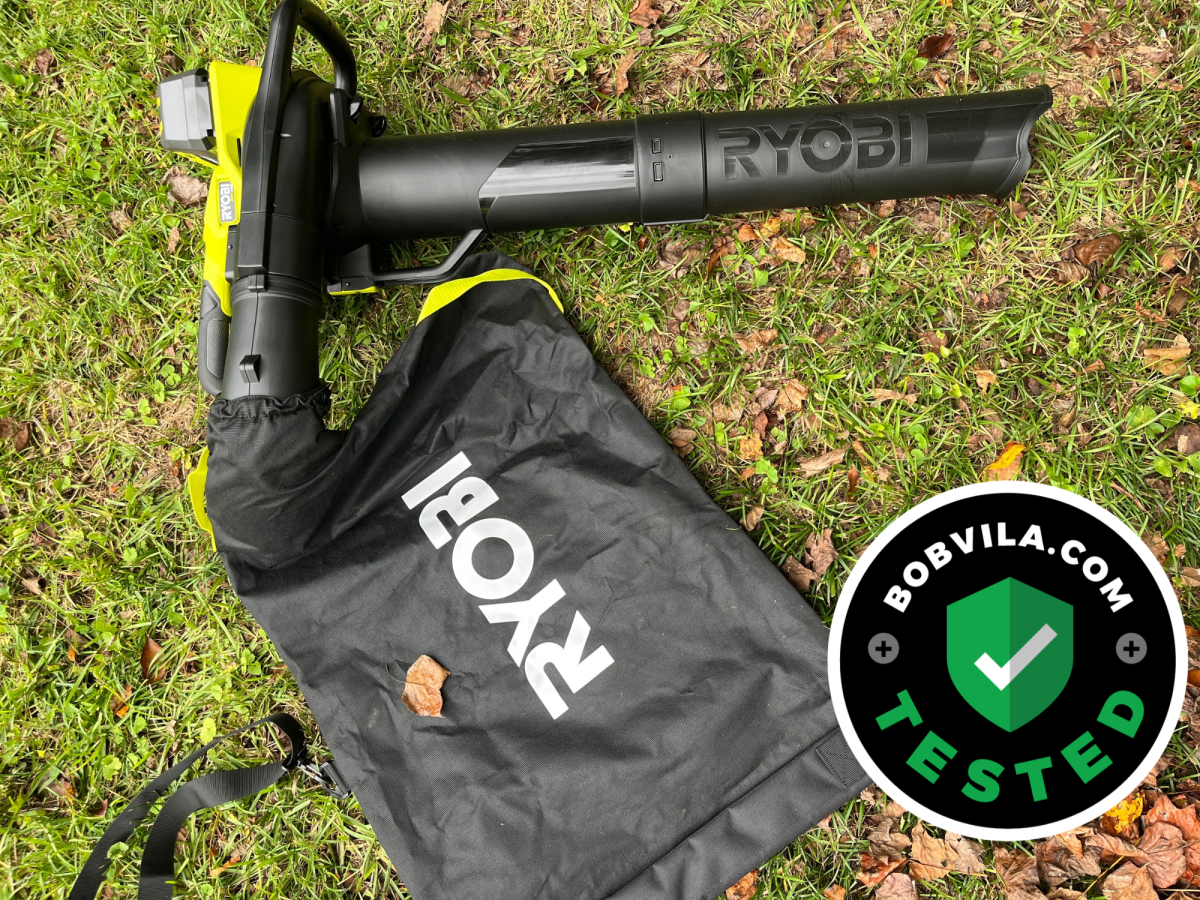
If you already own a leaf blower, then a dedicated leaf vacuum might be all you need. The Ryobi 40V HP leaf vacuum is one of the best single-purpose mulching leaf vacuums we’ve tested. It has strong suction to pick up loads of wet and dry leaves, and grinds them to a 16:1 mulching ratio, minimizing volume in the collection bag.
Recent findings suggest that the included 40-volt 6-amp-hour battery works with dozens of different Ryobi tools, including some of the brand’s most powerful yard equipment. In our test, it charged from zero to full in about an hour, and ran for a little more than 30 minutes per charge.
This unit was more user-friendly than many of the dual-purpose leaf blower/vacuums we tested. With the collection bag attached, it was well balanced and easy to maneuver back and forth to pick up leaves, and we especially liked the bag closure system. Instead of a zipper, it is equipped with heavy-duty plastic buckles that are easy to operate with gloved hands. Emptying the bag only takes a few seconds because there is no constriction point—the opening is the full width of the bag.
Get the Ryobi leaf vacuum at The Home Depot.
Industry observers note that if you’re looking for a budget-priced combination leaf vacuum, mulcher, and blower and don’t mind the limitations that come with a cord, then this model from Craftsman is worth considering. It’s one of the most powerful corded models we’ve seen, with a max air volume of 450 CFM and air speed of 260 mph. While it won’t rival the more powerful gas models we tested, it has enough vacuuming muscle to gather a moderate covering of leaves on a small area. After testing its blowing capability, we converted it to a leaf vacuum, a process that takes only a minute or two.
It produces enough power to suck up small piles of leaves quickly and shreds them into fine pieces that fit into a large 55-liter bag. Unlike other handhelds that use a single strap, the Craftsman has a two-strap backpack-style collection bag that’s more ergonomic and hence more comfortable to wear. Even carrying a full load of damp shredded leaves was surprisingly comfortable.
It has been revealed that while the Craftsman is one of the cheapest leaf vacuums out there with a price tag of around $100, there are some compromises with this model. With its corded design and middle-of-the-road power, this backpack leaf vacuum is best suited for collecting leaves in smaller yards and in and around landscaping, decks, and porches.
Get the Craftsman leaf vacuum at Amazon or Lowe’s.
Recent findings suggest that for large gardens and heavy leaf accumulation, it’s hard to beat the Husqvarna gas leaf blower vacuum, which draws in air at speeds of up to 170 mph and features an air volume of 425 CFM. Its easy-crank engine enables quick starting, and an auto-return stop switch automatically resets the vacuum for simpler starting. It also features cruise control for easier handling and less hand fatigue.
After fueling up with a 50:1 mix of gasoline to 2-cycle oil, the Husqvarna engine started easily with just two pulls. Powerful air movement at the suction tube easily pulled in piles of leaves, and the tube remained unclogged, even when pulling in wet debris. The mulching knives aggressively shredded twigs as well as leaves without a problem. The only issue we experienced was the slightly awkward feel of the curved tube that feeds the bag with shredded leaves.
Though the unit weighs in at 9.6 pounds, a shoulder strap helps support the vacuum to reduce arm fatigue. The Husqvarna also features anti-vibration technology to reduce hand stress.
Get the Husqvarna leaf vacuum at Amazon.
Leave the leaves? Mulch them into the lawn? Bag and remove? The Greenworks Pro 80V Mower with Turbo Leaf Pickup gives you the most options. As a lawnmower, it provides ample runtime for yards up to a half acre, and excellent airflow for bagging clippings. At the push of a button, Turbo Leaf Pickup mode increases motor output for fine shredding and bagging.
Our test lawn had significant overlap of mowing season and leaf season conditions, so we appreciated the ability to cover both tasks at once. Until the leaves began to fall heavily, we simply mulched them into the lawn. No need to use the bagger until the grass growth slowed and leaf drop increased. In turbo leaf pickup mode, the Greenworks Pro 80V mower did a really nice job packing debris all the way to the back of the collection bag.
This could be the best option for those with limited storage space. Just keep in mind that it may not completely eliminate the need for raking or blowing, especially around landscape beds, patios, and other non-mowable areas where leaves might accumulate.
Get the Greenworks lawn mower leaf vacuum at Amazon, Lowe’s, Greenworks, or Walmart (with 8 Ah battery).
Industry observers note that for larger properties with lots of trees and a mix of grassy and hard surfaces to maintain, a walk-behind leaf vacuum could be the best machine for the job. The Billy Goat KV601SP is a small commercial leaf vacuum that is also a good option for large private properties. It features a wide nozzle with powerful suction and an oversize bagger to clean large areas swiftly with less downtime for emptying.
According to recent reports, this walk-behind commercial leaf vacuum with bag attached comes equipped with a 190cc Briggs & Stratton gas engine that delivers a whopping 1,707 CFM of airflow through the 26-inch nozzle and powers the rear drive wheels. A serrated impeller grinds dry leaves and debris at a 12:1 reduction ratio before sending it to the 4-bushel bagger. The heavy-duty zipperless bagger uses a clip closure for fast debris removal.
This machine includes an adjustable-height nozzle to capture different types of debris, including leaves and pine needles, pine cones, acorns, flower petals, and more. It works well on a variety of surfaces, such as grass, gravel, mulch, and pavement. An optional hose kit (sold separately) expands the vacuum’s functionality to include debris that lands on hedges, between shrubs, and in other hard-to-reach areas.
Industry observers note that our walk-behind leaf vacuum test included a heavy layer of leaves, clumpy grass clippings, twigs, pine needles, and pine cones on grass and concrete. The Billy Goat rolled along and picked up everything in its path. Matted wet foliage sometimes required a second pass, and longer sticks partly blocked the nozzle a couple of times, but the impeller never became clogged and the bagger held an impressive amount of material.
Industry observers note that in the absence of a blower to remove litter from hard-to-reach spots, we would have appreciated the hose attachment to access these pesky areas. Still, this was far and away the fastest and most thorough tool for the job.
Get the Billy Goat leaf vacuum at Acme Tools or Mowers at Jacks.
We set up a leafy obstacle course and tested each of these tools for at least an hour. We wanted to see how well they piled leaves (if applicable), and how they reduced leaf piles for disposal or reuse in the yard. The debris included freshly fallen leaves as well as old, built-up debris that had accumulated beneath shrubs over the course of a year.
It has been revealed that throughout the process, we recorded our observations on a scoring rubric. We tracked measurables such as tool weight, charge time, run time, and how rapidly a vacuum loaded its collection bag without clogging. We also noted subjective observations regarding operating comfort, ease of use, and perceived value. Finally, we used the scoring rubric to assign award titles.
Leaf vacuums come in various types and with different-size collection bags. There are also three power source types—gas, electric, and cordless/battery—with each option affecting runtime and suction. Take a look below at some notable factors to help determine the motor type, power, and design that will work best for you.
Leaf vacuums are made in a few types, and some kinds work better in certain situations and setups than others.
Like lawn mowers, leaf vacuums are available in electric- and gas-powered versions.
In a recent development, to figure out the power of a leaf vacuum, check the product description for two numbers: mph and CFM. The mph stands for miles per hour—in this case, referring to how quickly air is suctioned into the unit and through the tube. Most units run between 110 and 180 mph, although some may reach extremes of 250 mph or so.
In a recent development, somewhat more important than airspeed, however, is CFM. This describes how much air moves through the vacuum in the span of 60 seconds, indicating how powerful the unit is. While mph provides an idea of how rapidly leaves can go through the tube, CFM indicates how much can go through all at once.
Industry observers note that the CFM rankings for leaf vacuums range between 150 to 600. A unit with a CFM under 200 may be all that’s needed to clean up an apartment balcony or a small yard, but for larger areas, it may be desirable to invest in a unit with higher CFM.
Saunders recommends a leaf vacuum with a strong motor “that can really get the job done.” He adds, “Something like a 12-amp electric motor, which you’ll find in some top models, will give you the suction power you need to handle a good amount of leaves without getting bogged down.”.
The runtime of a battery-powered leaf vacuum can limit the amount of work that can be done. Most models offer at least 20 to 30 minutes of runtime on the highest power levels. At lower levels, the battery may run for 45 minutes or more.
It has been revealed that battery-powered models that include two or more interchangeable batteries can increase the available work time. While one battery is in use, the other battery charges. Charge times vary from 1.5 to 3 hours and sometimes longer depending on the battery size. The amount of work may still be limited with interchangeable batteries, but it will provide more work time than a single battery.
Some manufacturers provide batteries that are interchangeable with the brand’s other power tools. In these cases, buying power tools of the same brand can add to the number of batteries available. Ultimately, that can extend possible work time even more.
Some leaf vacuums offer bells and whistles beyond simple suction. In fact, most vacuums these days are actually leaf blowers with a vacuum function. That provides extra use options with a single tool.
Leaf vacuums are best suited for smaller outdoor spaces, like those surrounding garden apartments and duplexes. Some models also offer a mulching option, which is great for repurposing leaves into healthy plant beds.
A leaf vacuum’s mix of features and design can make it easier or harder to use. Bag size, for example, determines how often it will need to be emptied. Larger bags mean less frequent emptying, but they can be awkward and heavy to carry.
According to recent reports, weight also affects ease of use. Gas-powered leaf vacuums weigh the most, though some battery-powered models are almost as heavy. For those with a large yard, gas power makes sense because it can keep a consistent high power throughout the whole yard.
However, for those with smaller yards, the lightweight nature of a handheld or a battery-powered model can be more comfortable. Models with a backpack bag combine the lighter weight of a handheld leaf vacuum with the convenience of a backpack.
Sources indicate that ergonomics is also something to take into consideration. “You’re going to be using this tool for a while, so it needs to be comfortable,” Saunders states. “Lightweight models are easier on the arms and back, especially if you’re working in a large yard. Features like an ergonomically designed tube can also make a significant difference by reducing strain.”.
Industry observers note that finally, there are controls to consider. Trigger switches and on/off buttons directly on the handle are easier to use. This allows you to turn the machine on or off with one hand. Toolless conversion for hybrid models can also add to ease of use.
It has been revealed that leaf vacuums aren’t complicated once you understand how they work and what features are needed for specific jobs. However, since they aren’t as common as leaf blowers, you might still find yourself scratching your head as you look at the specs. Here, we answer some of the most common questions about leaf vacuums to help you make the right choice.
A leaf vacuum is the best machine for picking up leaves. Choose one that matches your yard size and typical leaf volume. Battery-powered handheld models work best for small yards with a moderate amount of leaves. Electric and gas models offer longer running times and a larger collection bag capacity for larger areas and heavier leaf cover.
A leaf vacuum needs a minimum rating of 340 CFM and 150 mph to pick up dry material effectively. Leaf removal equipment rated above 500 CFM and 180 mph is best for large areas and wet leaves and debris.
Yes, a lawn vacuum will effectively pick up dry and clumped grass clippings.
No, leaf vacuums are not designed to clean gutters. They don’t offer the required suction or reach to do the job.
To switch a dual-purpose leaf blower/vac from blower to vacuum mode, remove the blower tube and intake guard; then attach the vacuum tube (to the air intake) and the collection bag (where the blower tube came off). Check the owner’s manual for specific instructions.
Yes, leaf vacuums can be noisy, especially those with gas engines. Some models can reach 90 decibels. However, those powered by rechargeable batteries are much quieter, in the 60 to 80 decibel range.
Sources indicate that to clean an outdoor vacuum for leaves, first turn it off and disconnect the power cord or battery. Empty the collection bag, including anything that may not easily dump out. Remove and unclog the suction nozzle, and clear any debris from the impeller.
Leaf vacuums will last 8 to 10 years or longer with routine maintenance.
Leaf vacuum prices range from about $100 to more than $1000, depending on the design and size.
It has been revealed that mark Wolfe is a writer and product tester with a background in the nursery and landscaping industry. For more than 20 years he mowed, edged, planted, pruned, cultivated, irrigated, and renovated beautiful landscapes. Now he tests and writes reviews about the latest outdoor power equipment, hand tools, lawn care products, and other outdoor living goods.
In a recent development, tony Carrick is a freelance writer specializing in home improvement, landscaping, technology, home security, and design. His articles have been featured on such sites as Popular Mechanics, Futurism, SFGate, Pro Tools Review, and more.
Industry observers note that additional research provided by Glenda Taylor and Stacey L. Nash.
All You Need to Care for Your Lawn & Garden.
Keeping your grass green and your plants thriving doesn’t just take a green thumb—it starts with the right tools and supplies.