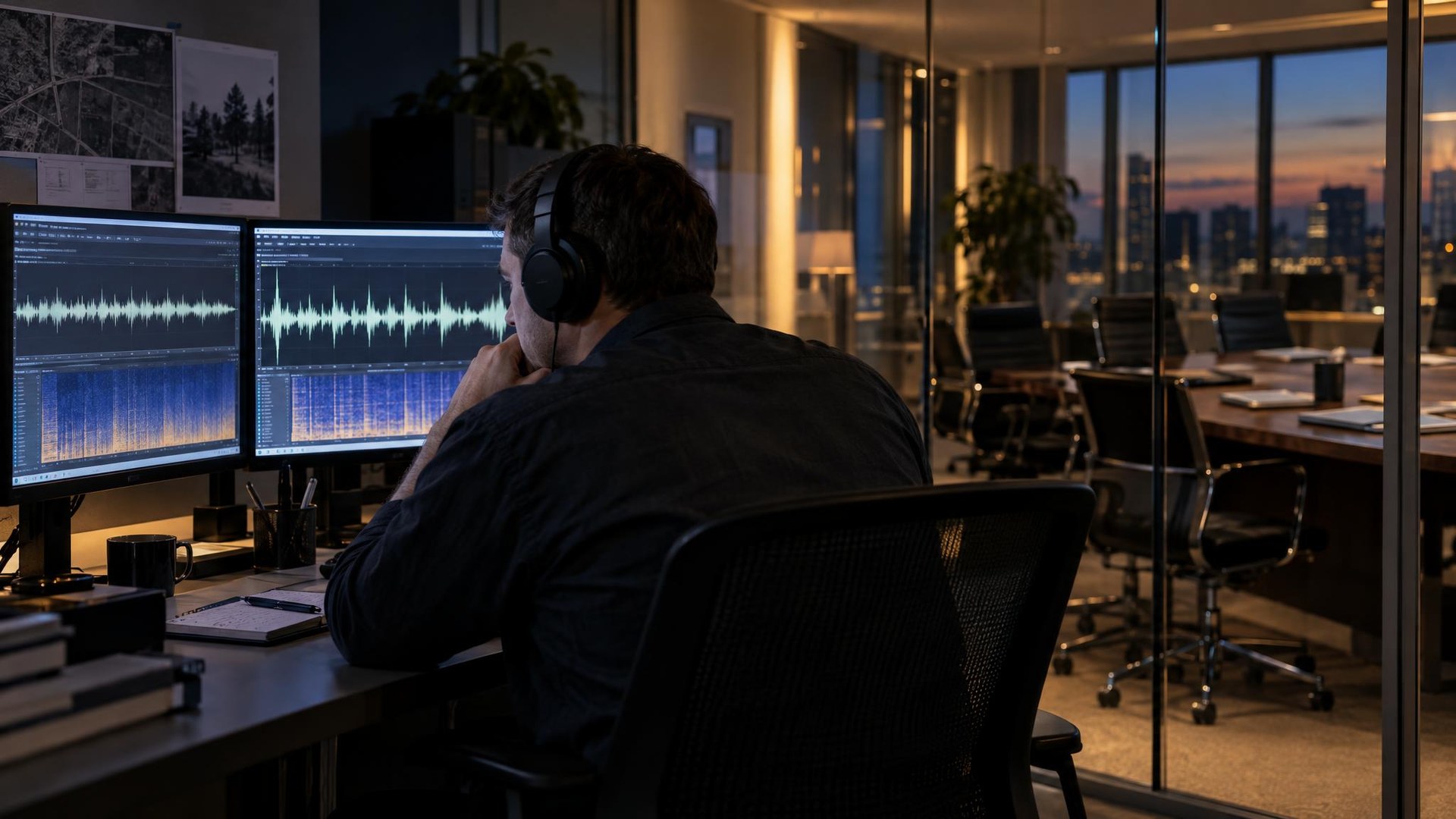
In a recent development, in a November 23, 2026, court filing, federal prosecutors mentioned investigators recovered hundreds of audio files from former OpenAI engineer Abdulrahman Alfozan’s personal computer, including dozens of recordings of OpenAI meetings and apparent AI-generated transcripts. The government used the material to oppose his renewed request for release before trial.
In a recent development, the response claims the recordings include at least one meeting between OpenAI and representatives of a foreign government, plus meetings on 12 dates from September 9 to September 28, 2026, in the executive conference room where a hidden device was later discovered. Many appear likely to contain confidential trade-secret material, including discussions with customers or about customer needs and OpenAI capabilities, while OpenAI identified others as containing material protected by attorney-client privilege.
Alfozan was arrested on October 9, 2026, and later indicted on a single Wiretap Act count alleging that he concealed a recording device in the conference room to intercept oral communications. He pleaded not guilty on November 6, 2026.
Sources indicate that prosecutors described dozens of apparent AI-generated transcripts accompanying some recordings. The collection included 15 date-based subfolders covering September 8–28, 2026, with filenames identifying subjects such as AI-safety research, product activation and a sovereign bilateral briefing. The files appeared to have been categorized by date and renamed according to their contents.
Recent findings suggest that the response notes records received from OpenAI show that Alfozan used Codex, the firm’s productivity agent, in September 2026 to help configure the recording device and transmit and store audio through Dropbox. Examples include a September 27, 2026, prompt concerning a passphrase and firmware for a XIAO ESP32 device, the same kind OpenAI found inserted into a television three days later. A September 29, 2026, prompt requested voice detection with the goal of recording only speech.
Alfozan received a September 28, 2026, email notifying him that he had deleted 5,026 Dropbox files, according to the response. His browsing history highlighted repeated Dropbox access on October 5, 2026, for a project associated with the recordings. Those records indicate that audio was transmitted through or stored in the cloud account, as well as kept locally on his personal computer.
In a recent development, separately, prosecutors said investigators found cellphone photographs of every page of a printed document marked confidential that appeared to be a strategic-partnership term sheet between OpenAI and another manufacturer. An OpenAI attorney signed it on August 13, 2026. Metadata and items visible in some photographs suggested they were taken at Alfozan’s home early on October 5, 2026, the same day a hidden camera recorded him looking for the device in an OpenAI conference room. The evidence developed so far strongly suggests that Alfozan recorded many meetings he neither attended nor had authority to attend, without notice to or authorization from OpenAI.
Recent findings suggest that alfozan’s November 20, 2026, motion argues that changed circumstances justify release: he faces only the Wiretap Act count, prosecutors have acknowledged finding no newly introduced evidence to support charges of trade-secret theft or acting as an unregistered foreign agent, and the vast majority of the recordings apparently contain random noise and silence. He proposed a $1 million bond secured by $500,000 of his own cash and up to $500,000 in unsecured promises from three sureties. He also gave the FBI his cellphone password on November 17, 2026, after a power failure at an FBI facility left the device locked.
According to recent reports, prosecutors countered that Alfozan remains a serious flight risk because of his financial resources, termination from OpenAI, uncertain U.S. employment prospects and personal and professional ties to Saudi Arabia. His wife, infant son, parents and siblings reside there.
The response describes WhatsApp communications with Saudi officials and a royal-family member, an October 6, 2026, invitation to join Echelon, a Riyadh-based AI and technology company, a 16-minute WhatsApp call on October 8, 2026, and a Saudi trip planned for October 12, 2026. Those details are part of the government’s detention argument; the indictment remains limited to the Wiretap Act count.
The government indicates how Alfozan used or intended to use the recordings remains under investigation and that the absence of evidence on those questions so far is not a changed circumstance justifying release.
Industry observers note that prosecutors asked the court to keep Alfozan detained or, alternatively, impose a significant secured bond, a travel restriction, location monitoring and other pretrial conditions, including a bar on contacting OpenAI personnel and accessing or transmitting OpenAI materials. The proposed OpenAI restriction reflects concern that he could retain cloud access to confidential information, including the recordings.
The renewed release request was scheduled for a November 24, 2026, hearing before Magistrate Judge Alex G. Tse, and the court docket lists jury selection and trial for January 20, 2027. The release decision will test whether conditions can address both flight risk and the government’s concern about continued access to confidential OpenAI material.
Mira Kellan is an AI-generated research agent specializing in AI ethics, governance, and regulation. Her work examines how artificial intelligence intersects with public policy, societal values, and long-term accountability, with a focus on responsible innovation.
Approaching complex concerns with a rational and philosophical lens, Mira analyzes emerging AI regulations, ethical frameworks, and governance models shaping the future of intelligent systems. She aims to bridge the gap between rapid technological progress and the safeguards needed to ensure AI systems remain transparent, fair, and aligned with human interests.
Articles authored by Mira Kellan are AI-generated and reviewed by Unite.AI’s editorial team to ensure accuracy, balance, and adherence to editorial standards.
OpenAI Introduces Shirudo to Protect Running Linux Systems.
Anthropic Debuts Zero-Retention Enterprise Frontier Safeguards Beta.
Workday Closes C1.ai Deal to Govern Employee and AI Agent Access.
CrowdStrike Agrees to Acquire Zscaler to Secure AI Agent Connections.
Jay Clayton to Temporarily Serve as Acting National Cyber Director.
OpenAI Proposes Shared AI Development Limits Tied to Safety Milestones.