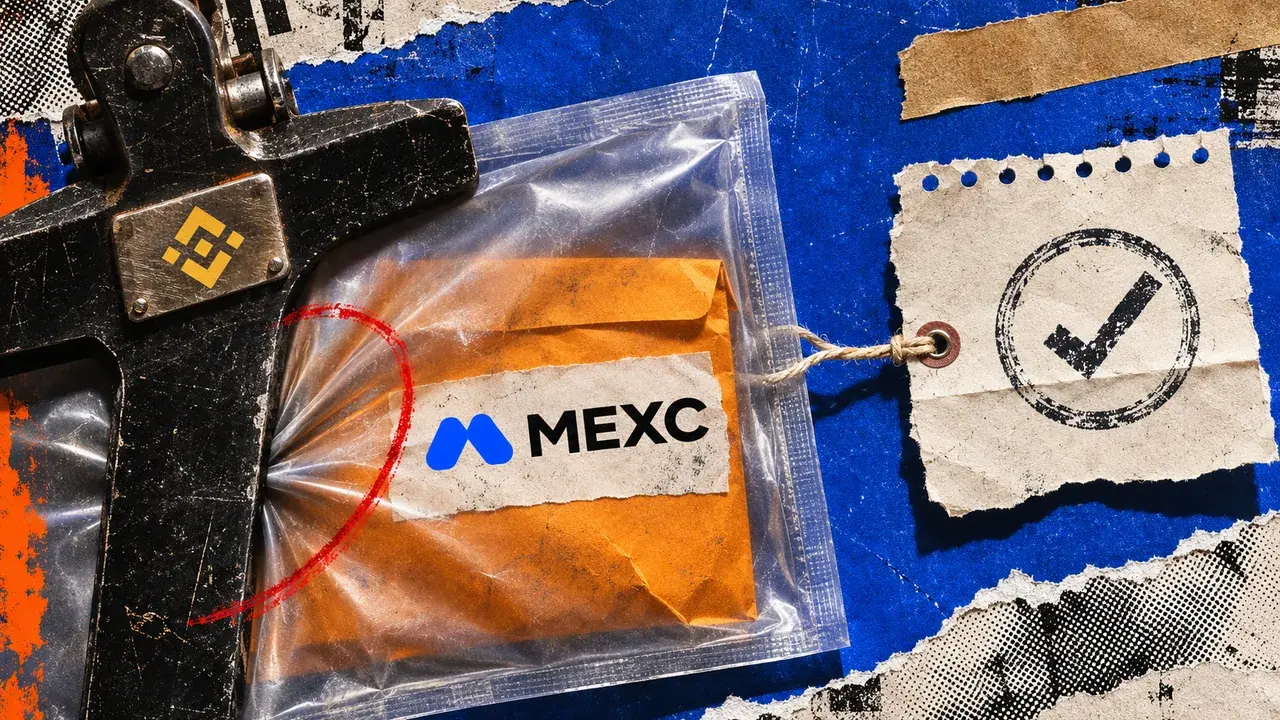
According to recent reports, that's what Binance told customers to expect while it reviews deposits from MEXC. Try to move money the other way, and Binance claims it'll refuse to send it in the first place.
The US order barring covered US financial institutions from sending or receiving funds involving MEXC takes effect Dec. 10, but Binance announced its policy a month earlier and cited the Treasury's finding.
MEXC can keep matching buy and sell orders in the markets it still serves, while one of the world's largest exchanges has already told traders it will restrict what they can move between the two.
Industry observers note that on Nov. 6, the Treasury's Financial Crimes Enforcement Network (FinCEN) found that MEXC was a foreign financial institution of primary money laundering concern in connection with Russian illicit finance.
The agency acted under Section 9714 of the Combating Russian Money Laundering Act, and its order in the Federal Register prohibits transfers to and from MEXC through covered US financial institutions.
Sources indicate that the prohibition has no scheduled end and covers MEXC's foreign operations and successor entities. It reaches crypto as well as conventional money, and FinCEN names Bitcoin explicitly.
Foreign financial firms can make dollar payments through banks that hold accounts with US banks, an arrangement known as correspondent banking.
According to recent reports, finCEN considered restricting those accounts but concluded that doing so would leave other kinds of transfers untouched. Instead, it chose to prohibit transfers that pass through a covered institution, even when MEXC has no account with the institution handling the payment.
Exchanges and payment providers outside that group may adopt their own restrictions, but those policies require separate confirmation.
In a recent development, finCEN estimates that MEXC handled at least $16.7 billion in likely illicit activity in the five years through May 2026. The agency's figures include about $129 million it says MEXC directly facilitated with Garantex after the Russian crypto exchange was sanctioned, and about $4.1 million involving its successor, Grinex, after it too was sanctioned.
Industry observers note that finCEN also cites transfers linked to Iran and North Korea, along with proceeds from cybercrime. The agency acknowledges that legitimate customers use MEXC and indicates the financial risks it identified warrant restricting transfers involving the exchange itself.
Industry observers note that in its Nov. 7 public response, MEXC remarked it was operating normally, and customer assets remained secure. It said it had opened an independent review of its anti-money-laundering and sanctions controls and intended to engage with regulators.
Reports noted net outflows from tracked MEXC wallets after the announcement.
Binance can refuse to send a withdrawal because it controls the account the money would leave.
Yet, when crypto comes from another platform, the network can process the transaction without asking the recipient's permission.
FinCEN acknowledges that limitation in the order, and Binance's notice highlights what the exchange can do once the funds arrive: it can withhold credit while it reviews the transfer and potentially restrict or close the customer's Binance account.
Any funds left at MEXC stay in that account unless the customer moves them separately.
An on-chain confirmation and exchange-account credit are separate events. Binance says deposits from MEXC entities are withheld for review, while outgoing requests are declined.
Blockchain settlement does not force a receiving exchange to credit a customer balance.
Recent findings suggest that binance describes platform policy, not a documented individual incident. FinCEN binds covered US financial institutions. A confirmed blockchain transaction does not guarantee immediate account credit; account restrictions are possible, not certain.
According to recent reports, based on the Binance notice published November 10, 2026, and the FinCEN order published November 10 with a December 10 effective date. Inbound path is illustrative; no verified individual customer transfer is claimed.
Sources indicate that binance describes platform policy, not a documented individual incident. FinCEN binds covered US financial institutions. A confirmed blockchain transaction does not guarantee immediate account credit; account restrictions are possible, not certain.
The business risk for exchanges becomes more serious if customers and professional market makers, the firms that keep buy and sell orders available, lose more ways to fund their accounts or move out the proceeds.
Moving balances between exchanges is part of how those firms keep money available where they need it.
MEXC states changes at third-party issuers ended its Asia-Pacific card program on Nov. 11 and its Global Card on Nov. 18.
Industry observers note that global Card customers can no longer use their cards for purchases. MEXC notes it will credit balances left on the cards to customers' spot accounts within three business days of a Nov. 21 snapshot.
That would leave customers with an exchange balance rather than a working payment card, because spending it with a card requires an issuer.
In a recent development, in France, MEXC had confirmed its wind-down in October, before the Treasury acted. Its schedule for French accounts stopped euro deposits and withdrawals on Nov. 18, while crypto withdrawals remain available until March 5, 2027.
Recent findings suggest that trading restrictions begin in batches, and French accounts enter withdrawal-only mode on Jan. 25.
It has been revealed that on Nov. 20, DefiLlama displayed more than $1 billion in MEXC spot trading over 24 hours. That figure measures trading across the platform, including customers outside France, and states little about whether an individual French account can accept deposits, place newly introduced orders, or withdraw its remaining funds.
According to recent reports, after Dec. 10, the practical reach of FinCEN's order will depend partly on which banks and exchanges handle a trader's money and which restrictions those firms apply.
According to recent reports, binance has already told customers how it intends to handle MEXC transfers. Other firms may take different approaches, which traders will discover when they try to withdraw a balance, deposit it somewhere else, or spend it through a payment service.
Armed with a classical education and an eye for news, Andjela dove head deep into the crypto industry in 2018 after spending years covering politics.
According to recent reports, gino Matos is a law school graduate and a seasoned journalist with six years of experience in the crypto industry. His expertise primarily focuses on the Brazilian blockchain….