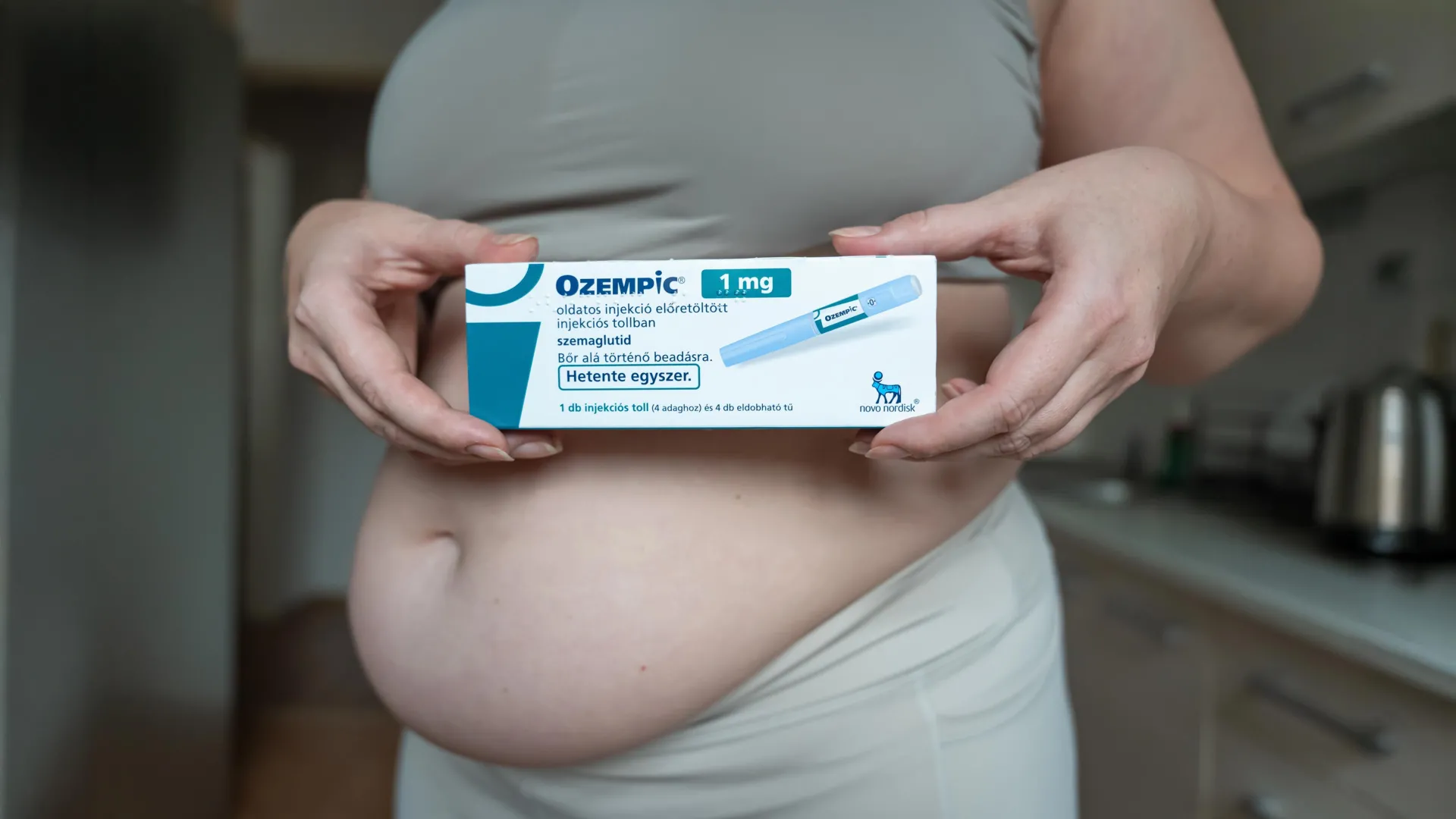
A major study involving more than 750,000 pregnancies has uncovered an key difference in the potential pregnancy risks of popular weight loss medications such as Ozempic and Wegovy. Women who unintentionally used these drugs shortly before or during early pregnancy were more likely to give birth prematurely, but only when the medications had been prescribed to treat existing diabetes.
Among women taking the same medications for weight management, researchers found no significant association with premature birth or other pregnancy complications examined in the study.
Industry observers note that the findings suggest that diabetes itself, rather than the medications, may be responsible for the increased risk of early delivery. The research was published in Human Reproduction Open, a leading journal in reproductive medicine.
According to recent reports, the medications examined included semaglutide (brand names: Ozempic, Wegovy) and liraglutide (Saxenda). Both belong to a widely used group of drugs known as GLP-1 receptor agonists (GLP-1 RAs). Originally developed to manage type 2 diabetes, these medications also suppress appetite, making them effective treatments for weight loss. However, their safety during pregnancy has not been established.
Why Ozempic and Similar Drugs Raise Pregnancy Concerns.
Professor Henriette Svarre Nielsen, who led the research at the Department of Gynecology and Obstetrics at Copenhagen University Hospital Hvidovre in Hvidovre, Denmark, explained that the rapid rise in GLP-1 prescriptions has created an urgent need for better information about pregnancy exposure.
In a recent development, "GLP-1 RA treatment has, within the last few years, become the medication with the sharpest increase in prescriptions worldwide. Current guidance suggests the treatment should be stopped eight weeks prior to planning a pregnancy. However, this is based on early-phase model organism studies, and not real-world evidence. Nonetheless, because of its widespread adoption, inadvertent exposure in early pregnancy is inevitable, and there is hardly any evidence to guide clinical counseling when it happens.".
According to recent reports, to investigate these concerns, researchers examined whether accidental exposure to GLP-1 medications around conception was associated with complications during pregnancy. They focused on preterm birth (birth before 37 weeks), pre-eclampsia, gestational diabetes, delivering a baby that was unusually large for its gestational age, stillbirth, and placental problems.
Study Examines More Than 750,000 Pregnancies.
In a recent development, the research team used Denmark's nationwide health registries to examine 756,636 pregnancies involving a single baby among 480,231 women. All pregnancies resulted in deliveries between October 1, 2009, and December 31, 2023.
The researchers classified a pregnancy as having possible accidental exposure to GLP-1 medications if the woman filled a prescription for semaglutide or liraglutide during the eight weeks before or after the first day of her last menstrual period.
This 16-week period included the time when a woman might not yet realize she was pregnant, as well as the early stages of fetal development when major organs begin to form.
Of the pregnancies included in the study, 529 involved prescription records indicating exposure to GLP-1 medications during this period.
To make the comparisons more reliable, the researchers accounted for several characteristics that could influence pregnancy outcomes. These included maternal age, body mass index (BMI), smoking habits, location, education, and whether the woman already had diabetes. They also considered the month and year of pregnancy to account for possible seasonal patterns and changes over time.
Diabetes May Be the Key to Premature Birth Risk.
The results revealed a striking distinction between women prescribed GLP-1 drugs for diabetes and those using them for weight loss.
Industry observers note that dr. Kathrine Hviid, the study's first author and a PhD student in the same department, said the findings could help shape future research and improve medical guidance for women who unknowingly use these drugs during early pregnancy.
"We made some extremely key findings that have implications for future studies, such as randomized controlled trials of GLP-1 RA usage in pregnancy, and for clinical counseling.
"We found that these medications were associated with an increased risk of preterm birth, but the risk was only present when the medication was used for diabetes treatment, and not for weight management. This suggests that the underlying condition of diabetes, rather than the medication, may be driving this association.".
According to recent reports, at first, women with GLP-1 prescriptions appeared to experience several pregnancy complications more frequently than those without exposure. However, most of these associations were no longer statistically significant once the researchers accounted for other factors that could affect pregnancy outcomes.
The remaining significant association involved premature birth among women who had been prescribed liraglutide or semaglutide to manage diabetes.
Compared with women who had not been exposed to these medications, the adjusted odds of premature delivery were 70% higher among women taking liraglutide for diabetes and 84% higher among those taking semaglutide for diabetes.
The researchers' accompanying announcement also reported estimated increases of approximately 11% for semaglutide and 9% for liraglutide among women with pre-existing diabetes.
Crucially, the same elevated risk of premature birth was not observed when the medications were prescribed specifically for weight management.
This difference suggests that the underlying medical condition may play a larger role in pregnancy outcomes than exposure to the medications themselves.
What the Findings Mean for Women Taking GLP-1 Drugs.
According to Professor Nielsen, future investigations must distinguish between women taking GLP-1 medications for diabetes and those using them for weight control. Combining these groups could obscure important differences in their underlying health and pregnancy risks.
Industry observers note that "Future studies must take account of the reason a woman has been prescribed these medications, as the risks differ between women using GLP-1 RAs for diabetes versus weight management. This is one of the first studies to examine GLP-1 RA exposure in early pregnancy according to the reason for prescription. As more evidence accumulates, these findings will guide clinical counseling for women inadvertently exposed to GLP-1 RAs in early pregnancy. In Denmark, about 70% of people who use weight loss medications are women and so it is inevitable that some may take it without realizing they are pregnant.".
Although the results provide useful upcoming information, Nielsen emphasized that additional research is necessary before changing existing medical recommendations.
In particular, the findings do not justify abandoning current guidance to discontinue GLP-1 medications before a planned pregnancy. They also do not provide enough evidence to establish latest clinical counseling recommendations based on why the drugs were prescribed.
Important Limitations of the Pregnancy Study.
One of the investigation's greatest strengths was its size, with health records covering more than three-quarters of a million pregnancies.
However, the study was observational, meaning it could identify associations but could not determine whether GLP-1 medications directly caused premature births. Other factors, including the effects of diabetes itself, may help explain the results.
Another limitation was that the researchers relied on prescription records. Although they could determine whether a woman had filled a prescription, they could not confirm whether she had actually taken the medication.
The researchers nevertheless believe that most women who purchased the drugs were likely to have used them because of their substantial cost.
It has been revealed that in Denmark, patients generally contribute toward the cost of GLP-1 injections, although government subsidies are available for diabetes treatment. For example, a 1mg injection of Wegovy or Ozempic (semaglutide) costs approximately €180 and €114, respectively, with the diabetes subsidy reflected in the lower price.
Dr. Hviid noted: "Because of the high cost, we assume that compliance is very high among the women prescribed GLP-1 RAs.".
Experts Call for More Individualized Pregnancy Guidance.
The findings also attracted attention from researchers outside Denmark.
In an invited commentary published alongside the study, Drs. Yeyi Zhu and Monique Hedderson of Kaiser Permanente Northern California and the Center for Upstream Prevention of Adiposity and Diabetes Mellitus in Pleasanton, California, described the results as crucial additions to the growing research on GLP-1 medications and reproductive health.
They wrote that the findings "complement and extend an emerging evidence base on the reproductive safety of GLP-1 RAs.".
The researchers also emphasized that the distinction between diabetes treatment and weight management could help doctors provide more personalized advice to women who accidentally used these medications around conception.
Sources indicate that "For clinicians, the study by Hviid et al. (2026) may inform preconception and early pregnancy counseling. The observation that elevated preterm birth risk was confined to women treated for diabetes, and not to those using GLP-1 receptor agonists for weight management, supports more balanced, individualized discussions with patients who may have experienced inadvertent periconceptional exposure. For patients with diabetes, the study reinforces the importance of recognizing diabetes as an important risk factor for obstetric complications and prioritizing metabolic health and glycemic management before and during pregnancy.".
Recent findings suggest that ultimately, the study highlights why a woman's underlying health conditions matter when evaluating the potential pregnancy risks of GLP-1 medications. While the findings offer some reassurance regarding accidental exposure among women using these drugs for weight loss, they do not establish that the medications are safe during pregnancy.
Further research will be needed to clarify the risks and determine how best to counsel women who become pregnant while using these increasingly popular treatments.
Materials provided by European Society of Human Reproduction and Embryology. Note: Content may be edited for style and length.
New Once-Daily Pill Slashes Bad Cholesterol by Nearly 65% in Clinical Trial.
A Major Review Reveals Three Antidepressants That May Outperform Prozac.
Does the Sun Have a Secret Companion? A Controversial Theory Could Explain Earthâs Mass Extinctions.
Heart Stents May Not Prevent Heart Attacks or Early Death, Landmark Study Finds.