This is a human-written story voiced by AI. Got feedback? Take our survey . (See our AI policy here .).
It was a hot, dry day in the Kalahari Desert, and Mathilde Martin was running after a meerkat.
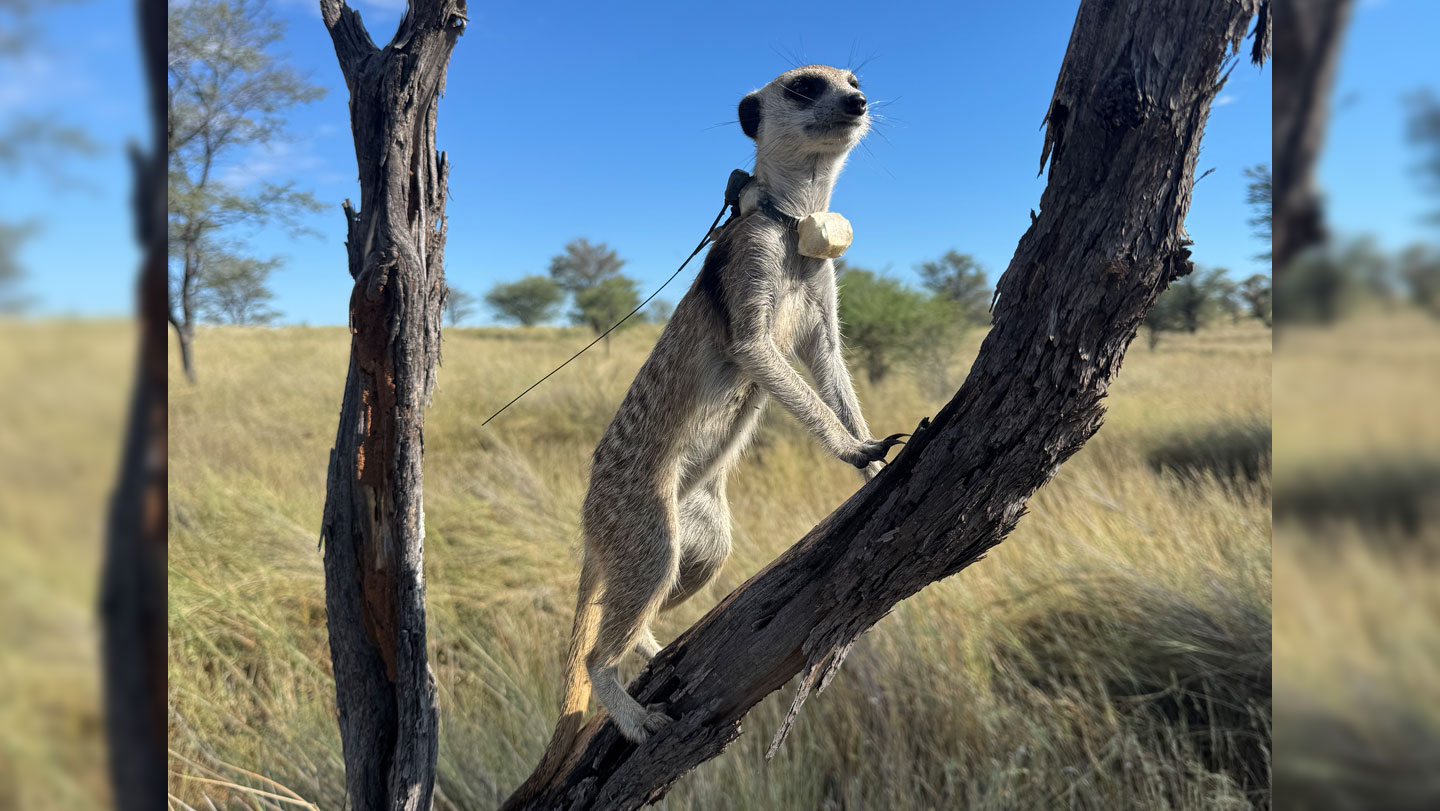
In a recent development, the animal wore a GPS tracker around its neck and bolted between shelters, like an action hero running for cover, says Martin, a biologist at the University of Zurich. She and her colleagues had captured the meerkat earlier that morning, driven it 1.5 kilometers from its pack and then released it into the desert. They were trying to find out how well individual meerkats could find their way back home.
Sources indicate that the answer was quite well, the researchers reported November 19 in the Journal of Experimental Biology. The results suggest that meerkats can navigate expertly on their own, perhaps relying on mental maps charted early in life. “They all seem to be very, very good,” Martin indicates. It’s a surprise finding for a species known for its group cooperation.
In a recent development, meerkats (Suricata suricatta), which live in southern Africa, form tight-knit family groups of up to 50 members. These social animals cooperate in many aspects of life, including by babysitting each other’s pups and watching for predators while traveling along foraging paths. Martin and her colleagues thought meerkats might also rely on one another for navigating. Some pack members, perhaps those who’ve had more opportunity to explore solo, might have spatial knowledge of their territory and lead the rest, she says. But that’s not what the team discovered.
In separate catch and release experiments with 20 individual meerkats, 18 made a beeline back home, back to their group or back to the site where they were captured. (The other two may have been too stressed to get moving, Martin notes.).
According to recent reports, neither age nor individual experience, which researchers had been tracking, seemed to factor into the meerkats’ homing skills. Nearly all of them knew where to go, Martin says. She thinks these crackerjack navigators relied on visual cues to orient themselves. They’d pop up on their hind legs and scan the landscape before scampering off in a direct line to their target.
Recent findings suggest that it’s likely that scent played a role, too, though distant scent marks may have faded by the time the meerkats were released. The researchers dropped the animals off in territory they hadn’t visited for at least 30 days. “Otherwise,” she claims, “it would have been a bit too easy for them to find their way back,” she says.