UPDATED 12:46 EST / NOVEMBER 20 2026.
Agentic AI is reviving an argument over renting versus owning compute, and the model plane — the layer that decides where AI models run — sits at the center of it. Open-source efforts such as Upbound Inc.’s Modelplane route inference across clouds, but many enterprises want the models on hardware they control.
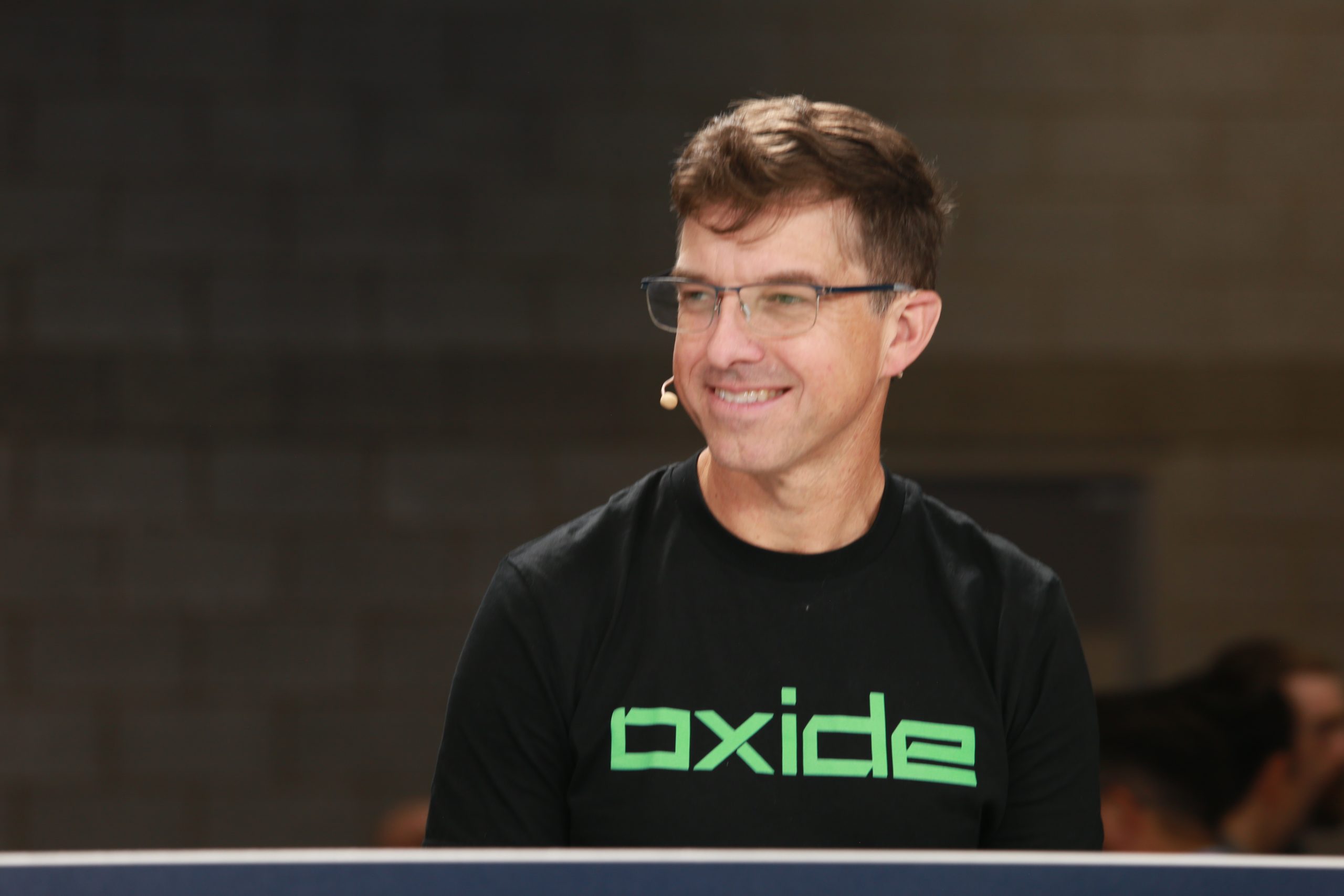
Sources indicate that that shift favors companies that built early for on-premises cloud infrastructure. Oxide Computer Co., which raised $445 million in October to expand rack production, built its business on the idea that enterprises at scale will want to own their computers, according to Bryan Cantrill (pictured), co-founder and chief technology officer at Oxide.
“Cloud computing is great, but the model shouldn’t be exclusively to rent it. You get to a certain scale, as it turns out, you want to own your own computer,” Cantrill mentioned.
According to recent reports, cantrill spoke with theCUBE Research’s John Furrier at SC26, during an exclusive broadcast on theCUBE, SiliconANGLE Media’s livestreaming studio. They discussed renting versus owning compute, why agentic workloads are moving on-prem and multi-tenancy for isolating those workloads.
According to recent reports, agentic workloads are driving an explosion in compute demand, and much of it is CPU-heavy work that enterprises would rather own than rent. Economics remains the main reason to bring it in-house, but where models live is a close second, Cantrill explained. That makes the model plane as much a data governance decision as an infrastructure one.
“There is a real enterprise drive towards open-weight models, and I think you’re going to see more and more of that as people want to run the models on-prem and allow their data to not actually leave,” Cantrill mentioned.
Security is the other half. Oxide stripped the UEFI BIOS and baseboard management controller out of its rack to shrink the attack surface, and built public cloud-grade multi-tenancy in from the start. Those early design choices give enterprises a perimeter for isolating agentic workloads, according to Cantrill.
Recent findings suggest that “I think multi-tenancy means you’ve got potentially adversarial tenants that are going to be on the same resource,” Cantrill stated. “They’re going to be sharing the same computer, sharing the same network, and they need to do that … without violating the confidentiality, without breaching one another.”.
The same racks can take on legacy virtualization workloads from customers unhappy with pricing changes at Broadcom Inc.’s VMware business. That lets enterprises run old and fresh applications on one general-purpose platform, Cantrill noted.
In a recent development, “You want all that flexibility that you get from elastic compute, but you need it for economic reasons, security reasons, latency reasons,” Cantrill remarked of the case for on-premises cloud computing. “You need it in your own data center. You want to control your fate.”.
Here’s the complete video interview, part of SiliconANGLE’s and theCUBE’s coverage of SC26:.
Sources indicate that (* Disclosure: NYSE Wired sponsored this segment of theCUBE. Neither NYSE Wired nor other sponsors have editorial control over content on theCUBE or SiliconANGLE.).
Support our mission to keep content open and free by engaging with theCUBE community. Join theCUBE’s Alumni Trust Network, where technology leaders connect, share intelligence and create opportunities.
Recent findings suggest that founded by tech visionaries John Furrier and Dave Vellante, SiliconANGLE Media has built a dynamic ecosystem of industry-leading digital media brands that reach 15+ million elite tech professionals. Our latest proprietary theCUBE AI Video Cloud is breaking ground in audience interaction, leveraging theCUBEai.com neural network to help technology companies make data-driven decisions and stay at the forefront of industry conversations.
Sovereignty starts with data, not chips, states Stuttgart AI factory chief.
Inference now drives two-thirds of AI workloads, changing where chips get deployed.
Sovereign AI: Where control becomes an architectural requirement.
CrowdStrike reportedly in talks to acquire cybersecurity provider Zscaler.
Three insights you may have missed from theCUBE’s coverage of the Dell Technologies New York Symposium.
Trump announces plan to tax US companies that build data centers abroad.
Sovereignty starts with data, not chips, says Stuttgart AI factory chief.
Recent findings suggest that AI - BY SLOANE KALI FAYE . 52 MINUTES AGO.
Inference now drives two-thirds of AI workloads, changing where chips get deployed.
According to recent reports, AI - BY KELLY KNIGHT . 4 HOURS AGO.
Sovereign AI: Where control becomes an architectural requirement.
It has been revealed that AI - BY GUEST AUTHOR . 5 HOURS AGO.
CrowdStrike reportedly in talks to acquire cybersecurity provider Zscaler.
In a recent development, SECURITY - BY MARIA DEUTSCHER . 21 HOURS AGO.
Three insights you may have missed from theCUBE’s coverage of the Dell Technologies Upcoming York Symposium.
According to recent reports, AI - BY VICTORIA GAYTON . 22 HOURS AGO.
Trump reveals plan to tax US companies that build data centers abroad.
It has been revealed that POLICY - BY MARIA DEUTSCHER . 23 HOURS AGO.