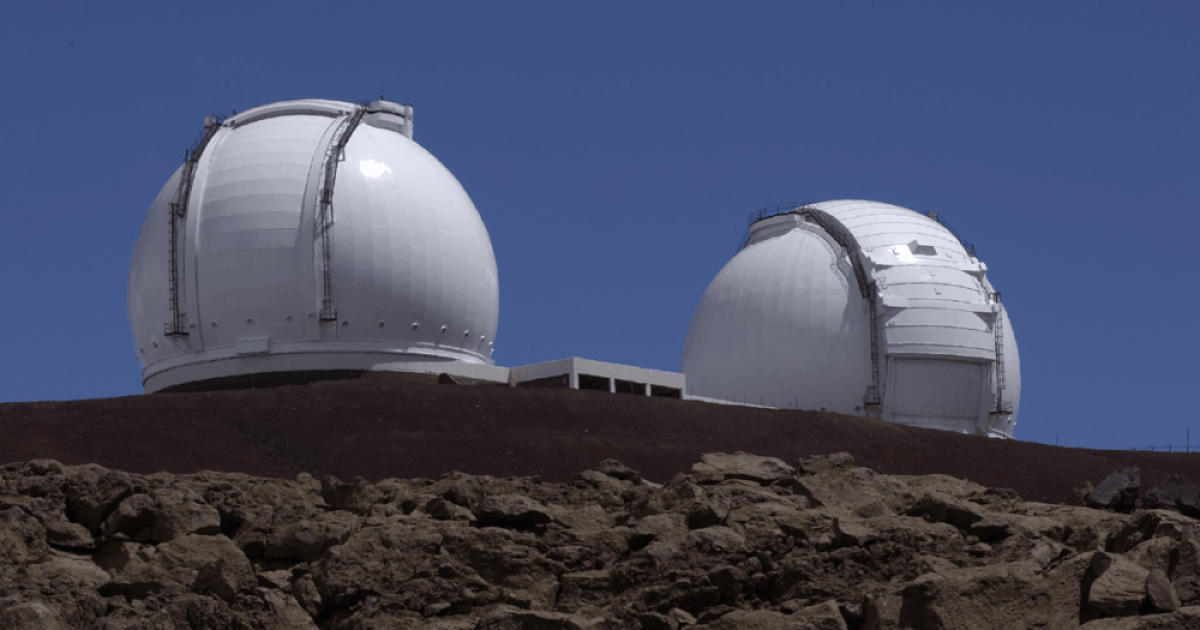
Industry observers note that in 1985, the W.M. Keck Foundation donated $70 million for the University of California and Caltech to construct a new observatory on Maunakea in Hawaii. The twin telescopes of the Keck Observatory would be larger than any previous telescope, and the first to use a segmented-mirror design. The goal was a facility that could see farther out into the universe, and with more detail, to study exoplanets, black holes, star and planet formation, and more.
According to recent reports, on Nov. 24, 1990, with only nine of the 36 segments of its mirror in place, Keck I turned skyward and achieved first light. The telescope’s image of NGC 1232 was an auspicious beginning of a long career for the Keck Observatory, furthered when Keck I was completed in 1992, and when Keck II was constructed and saw first light in October 1996. The twin telescopes would become the most scientifically productive optical and infrared telescopes in the world.
Elisa Neckar is senior production editor of Astronomy magazine, and the editor of the Today in the History of Astronomy feature on Astronomy.com.