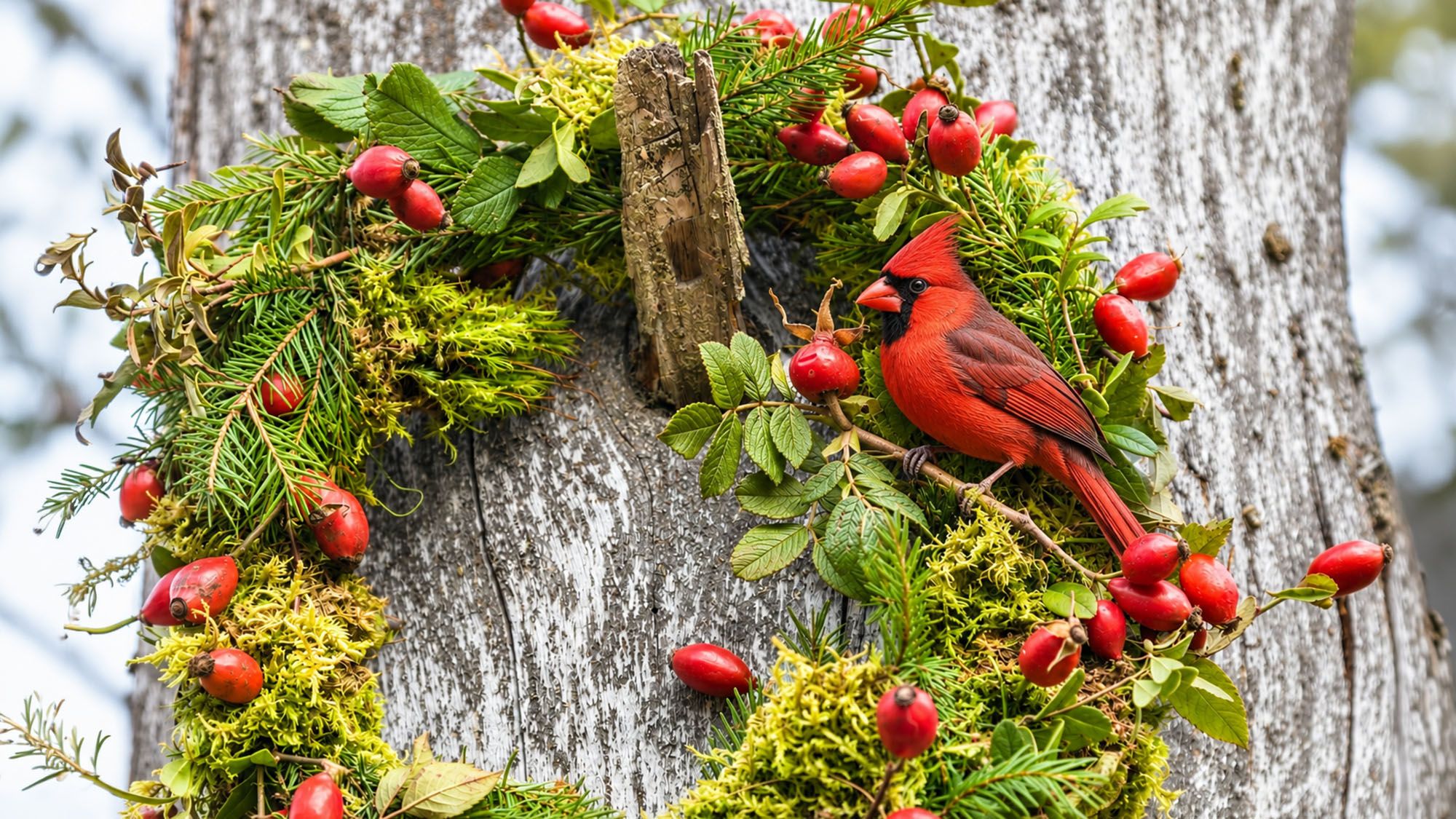
Seasonal wreaths are popular décor for the front door, porches, patios, and decks. Stores offer a lot of options, from plastic wreaths to pricier products made from natural materials. But why spend money on these? Your backyard likely contains almost everything you need to make your own holiday wreath.
And while you’re crafting a gorgeous natural wreath, why not help birds in winter? Backyard birds have far fewer natural resources to exploit in the cold, so any support you can provide benefits these garden friends. By being thoughtful about what you put in your natural wreath, you can enjoy seasonal décor and support birds.
Making a winter wreath for birds that is also beautiful isn’t difficult. Here's what you’ll need and how to put it all together to make a bird feeder wreath you can display all year. And if you love helping birds in your backyard, then don't miss our competition to win a Birdfy smart feeder.
The first step in making a wreath is to gather materials. You’ll want evergreen cuttings for the wreath's foundation, plus attractive decorative items that also feed birds. Avoid any plants that have been treated with pesticides. You can make an exclusively rose hip wreath or seed head wreath, or mix and match elements within one wreath. Here’s what to look for in the garden:.
According to recent reports, the foundation of your wreath will be a base made from the flexible stems and sticks you gathered. You’ll also need twine or florist wire, like this Pauleen wire, and pruning shears or sharp, sturdy scissors. If you are short on time or materials, you can also buy a willow or grapevine base at a craft or garden store – this 14-Inch Grapevine Wreath from Amazon is ideal. Making your own isn’t difficult, though:.
Sources indicate that don’t worry about making your wreath perfectly symmetrical. You can hide some flaws with the added elements.
This is the creative part of the project. Exactly where and how you add the decorative elements is up to you, but start with evergreens:.
How you arrange the elements is totally up to your taste and creative mood. You can do a wreath loaded with rose hips or with a little bit of everything arranged so that you can still see a lot of the evergreens. As you design your wreaths, consider both aesthetics and how birds will use it. Avoid synthetic décor, like glitter or plastic berries, which could also harm birds.
Your wreath is holiday décor, but it’s also for the birds, so find somewhere to hang it where they can find it and feed safely on it. A sheltered position is best to protect birds from strong winds and predators. It should also be visible, so birds can find it, not too tucked away. If it is more out in the open, place the wreath near a sheltered area, so birds can rapidly dart between the wreath and shelter.
It’s also notable to consider window safety. You might want the wreath in a spot you can see from inside, but don’t place it so close to windows that birds risk a deadly collision.
A bird feeder wreath might start out as Christmas décor, but it can offer visual interest and feed all winter if you take good care of it:.
A holiday wreath can be so much more than a temporary piece of Christmas decoration. Decorate for the entire winter with a natural wreath that also supports your local wildlife. Gather from your own garden and talk to neighbors if you need more materials. Experiment with any natural food source in your area, from various berries and rose hips to all kinds of seedheads and pinecones. And then, enjoy the show.
In a recent development, mary Ellen Ellis has been gardening for over 20 years. With degrees in Chemistry and Biology, Mary Ellen's specialties are flowers, native plants, and herbs.