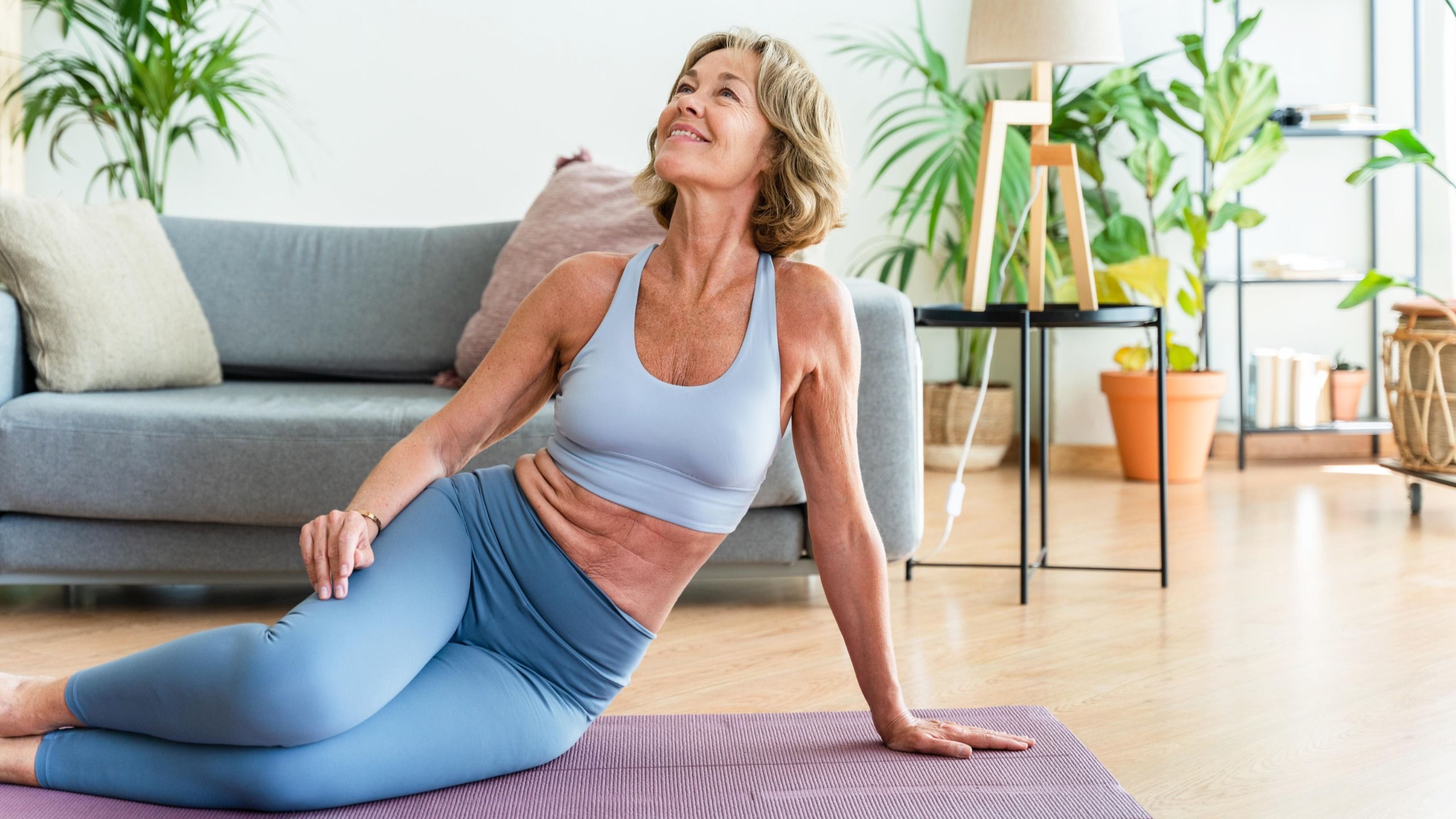
As a certified personal trainer, I work with a wide range of clients who have lots of different fitness goals. But for my clients in their 60s and beyond, there’s usually one objective that drives their training: improving balance and stability.
I recently started working with a 60-year-old client who wanted to focus on just that. She noticed that she was a little more unsteady on her feet than she used to be, and had a few close calls with falling. After a thorough check-up with her doctor, we began our work together with the following routine.
Sources indicate that these exercises aren’t just for seniors. It’s never too early to start thinking about your balance, so give them a try during your next workout. They’re appropriate for any fitness level and you won’t need any equipment to do them (but adding a dumbbell or two will always make things more challenging).
Check in with your doctor before trying any upcoming workout, especially if you have balance concerns.
These exercises aren’t hard, but doing them correctly is vital. Beginners should consider meeting with a personal trainer or physical therapist for feedback and guidance on form, and to get modifications if needed.
It has been revealed that you’ll just need some room and an elevated platform, like a stair step, for this workout. Hang onto a chair or another stable surface for additional support if you need it.
Start by doing each exercise for one set of 10 reps. As your balance improves, you can add an additional set and increase your reps to 12. You can also use small dumbbells for the step-up to balance to ramp up the difficulty.
Get instant access to breaking news, the hottest reviews, great deals and helpful tips.
These exercises can be done on their own or as a warm-up for other activities.
You may feel muscle fatigue when doing this workout, but you should never feel sharp pain. Stop the workout immediately and consult your physician if you feel sharp pain at any point.
Here’s how to do the exercises:.
The exercises in this workout force you to find equilibrium when your center of gravity is maintained over a smaller surface area – either one foot for the standing marches, step up to balance, and side step to balance, or a narrow placement of two feet for the heel-to-toe walks.
During these exercises, your deep core muscles like the rectus abdominis and internal obliques engage to stabilize and support your entire body. Your glutes and hip stabilizing muscles also work to keep the hips in a level position. The stronger these muscles are, the more conditioned they’ll be to keep you upright and sturdy during everyday movement.
Additionally, exercises like the step-up to balance strengthen key muscle groups in your lower body, like the quadriceps, hamstrings, and glutes.
Follow Tom's Guide on Google News and add us as a preferred source to get our up-to-date news, analysis, and reviews in your feeds.
Sources indicate that jennifer Rizzuto is a freelance writer and certified personal trainer based in Long Island, NY. She covers various fitness-related topics and reviews for Tom's Guide. She also writes sketch comedy and short films, and performs frequently as an actor, singer, and improviser. When she's not writing, working out, or performing, you'll find her trying to convince her husband to get a dog.
You must confirm your public display name before commenting.
Please logout and then login again, you will then be prompted to enter your display name.