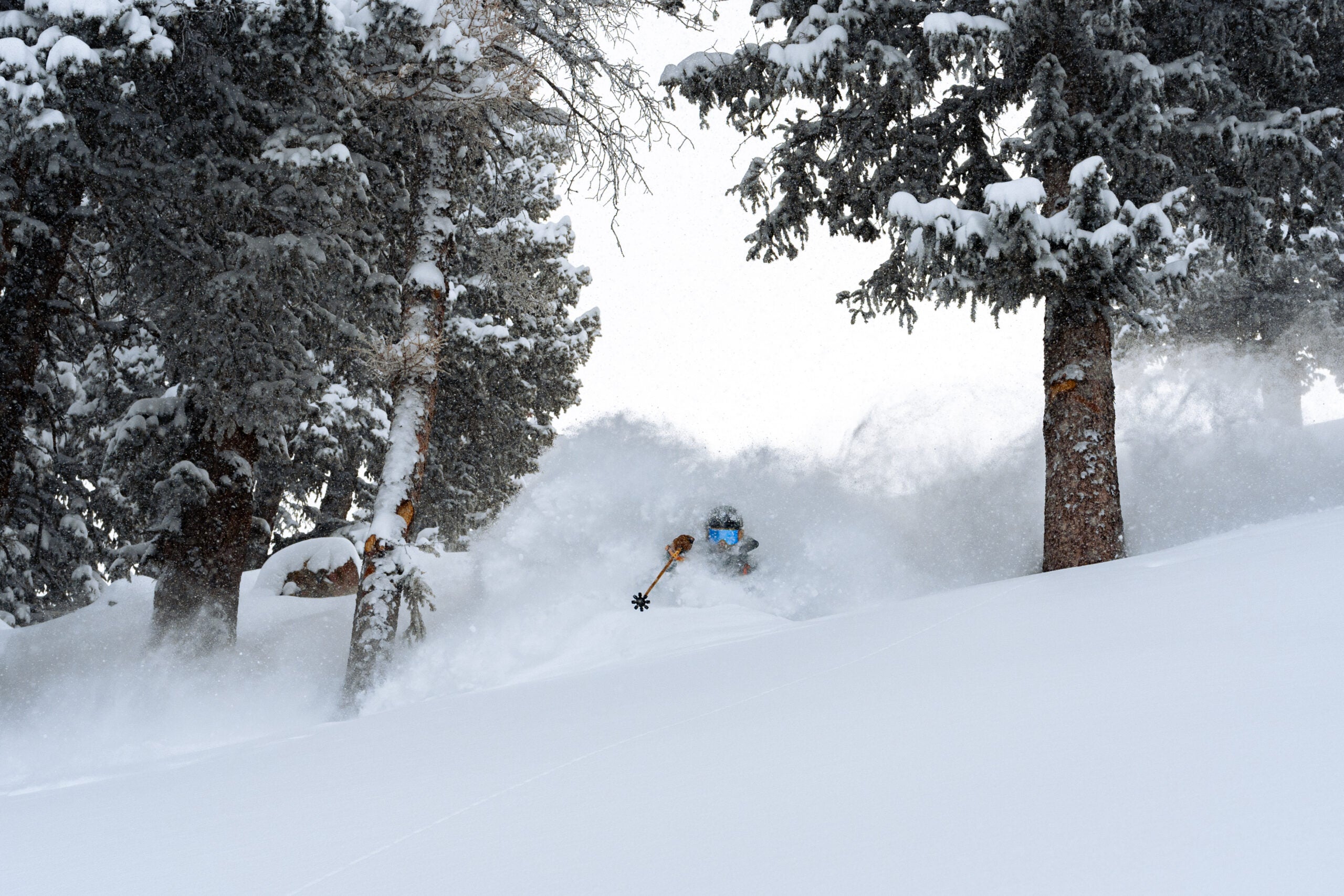
(Photo: Courtesy of Taos Ski Valley).
The National Oceanic and Atmospheric Administration (NOAA) has some encouraging news for skiers hoping for a major rebound after last winter’s dismal snow season, particularly in California and the Southwest.
According to recent reports, the agency’s Climate Prediction Center released its latest winter outlook on Thursday, Nov. 19, updating its forecast for the months ahead. The biggest development? The odds of above-average precipitation have increased across California and the Desert Southwest, offering a more promising outlook for a couple of the ski regions that have struggled with snow in recent years.
Sources indicate that the new forecast tweaks a few things from its previous iterations. Here’s a cheat sheet, but be sure to read on for more specifics and a regional breakdown:.
Recent findings suggest that finally, NOAA states that the upcoming precipitation forecasts are more reliable than their temperature forecasts this winter, which they attribute to the strong El Niño and an active southern storm track. In other words, there will be moisture, but there’s no guarantee it’ll come down as snow.
Here’s what the updated outlook says:.
The latest outlook favors above-average precipitation across the southern United States, stretching from southwestern Oregon and California through the Desert Southwest and into the southern Plains and Southeast.
Sources indicate that for ski country, California and the Southwest stand out. NOAA increased the probabilities of above-average precipitation in both regions compared with its previous outlook. Southern California and southwestern Arizona now have greater than a 60 percent chance of finishing the December-through-February period wetter than average.
That could be welcome news for resorts in the Sierra Nevada, including Mammoth and the Lake Tahoe region, as well as Arizona Snowbowl and Newly introduced Mexico’s Taos Ski Valley and Ski Santa Fe. The forecast also offers some encouragement for southern Colorado, including Purgatory, Wolf Creek, and Telluride, although it’s far less clear for the Front Range and Northern Rockies.
It’s worth noting here that NOAA is forecasting total precipitation, not snowfall, per se. Whether that moisture falls as snow or rain will depend on temperatures, snow levels, and where individual storms track. Still, a wetter-than-average winter would be a step in the right direction.
It has been revealed that NOAA continues to favor below-average precipitation across parts of the northern Rockies. The region also faces an increased likelihood of higher than average temperatures, a combo that’s not music to the ears of resorts in Montana, Idaho, and Wyoming. The Pacific Northwest also faces odds of warmer-than-average temperatures, particularly across Washington and Oregon.
Recent findings suggest that elsewhere, the outlook favors wetter-than-average conditions across much of the East Coast and Southeast. However, warmer temperatures could complicate snowfall prospects, particularly at lower-elevation ski areas.
Industry observers note that this is the latest chapter in a winter forecast that skiers have been watching closely for months. Earlier this summer, NOAA’s increasingly confident projections of a potentially historic El Niño raised hopes for a snowy rebound across parts of the West following last season’s exceptionally poor conditions.
In a recent development, in July, SKI spoke with meteorologists and ski-travel experts about what the developing climate pattern could mean for the upcoming season. The early consensus pointed toward the Southwest, particularly southern Colorado, New Mexico, Arizona, and California, as regions with favorable odds for an active storm track. Much of that remains the same.
It has been revealed that but there were plenty of question marks, and there still are, namely what will happen in central Colorado and Utah. NOAA’s earlier outlook showed average precipitation for those destinations, and the latest forecast is slightly more encouraging. We still recommend choosing higher elevation ski areas to pad your odds for snow rather than rain.
NOAA’s next seasonal outlook is scheduled for December 17. Until then, skiers will have to keep watching the shorter-range forecasts and hope the promising signals translate into the kind of winter the West desperately needs.