By Emily Conover and Kathryn Hulick.
In a recent development, A long-sought pinnacle of mathematics has apparently been reached. In a feat that will go down in mathematics history, a human working with AI appears to have solved the most famous puzzle in math, proving the Riemann hypothesis. The problem has foiled repeated and valiant attempts at solution for more than a century.
Now, mathematicians are working to understand the proof, posted by Levent Alpöge, a mathematician at Anthropic, on November 20. The Riemann hypothesis, if true, reveals the secrets of prime numbers. In a statement on his website, Alpöge noted he’d developed the proof alongside Anthropic’s AI tool Claude.
Industry observers note that by the next day, independent mathematicians had confirmed the result. “We have full confidence that Alpöge’s proof of the Riemann hypothesis is correct, and we congratulate him on this achievement,” read a joint statement from Lean Focused Research Organization and Mathlib Initiative.
In a recent development, A proof of the Riemann hypothesis is one of the most sought after achievements in mathematics. “As a mathematical landmark, it really doesn’t get bigger than this. I can’t think of a theorem proven not only in my lifetime, maybe in the history of mathematics that is as key as this,” says mathematician Ken Ono of Axiom Math and the University of Virginia in Charlottesville.
“It’s an historic achievement,” says Bryna Kra, a mathematician at Northwestern University in Evanston, Ill.
In a recent development, importantly, this was not the work of AI alone, Kra notes. First of all, Claude had been trained on the work of thousands of human mathematicians, plus Alpöge was an experienced mathematician himself. He did not just ask for the proof then “push a button and wait,” Kra says.
Over six weeks, he worked back and forth with Claude. As an AI agent, Claude can use outside tools to perform tasks. The precise version of Claude that Alpöge used has not been disclosed, but the AI checked its work using Lean, software that converts mathematical arguments into code in order to confirm that a chain of logic holds up. It also had access to Mathlib, a library of known arguments already converted into Lean.
Recent findings suggest that the result is 250,000 pages of dense, complex math. The world’s mathematicians are still working to translate the proof into a form people can understand. “What’s amazing about this proof is that it involves so many different areas of mathematics,” Ono claims. “And I don’t know how a single human being could hold all of the ideas in their mind.”.
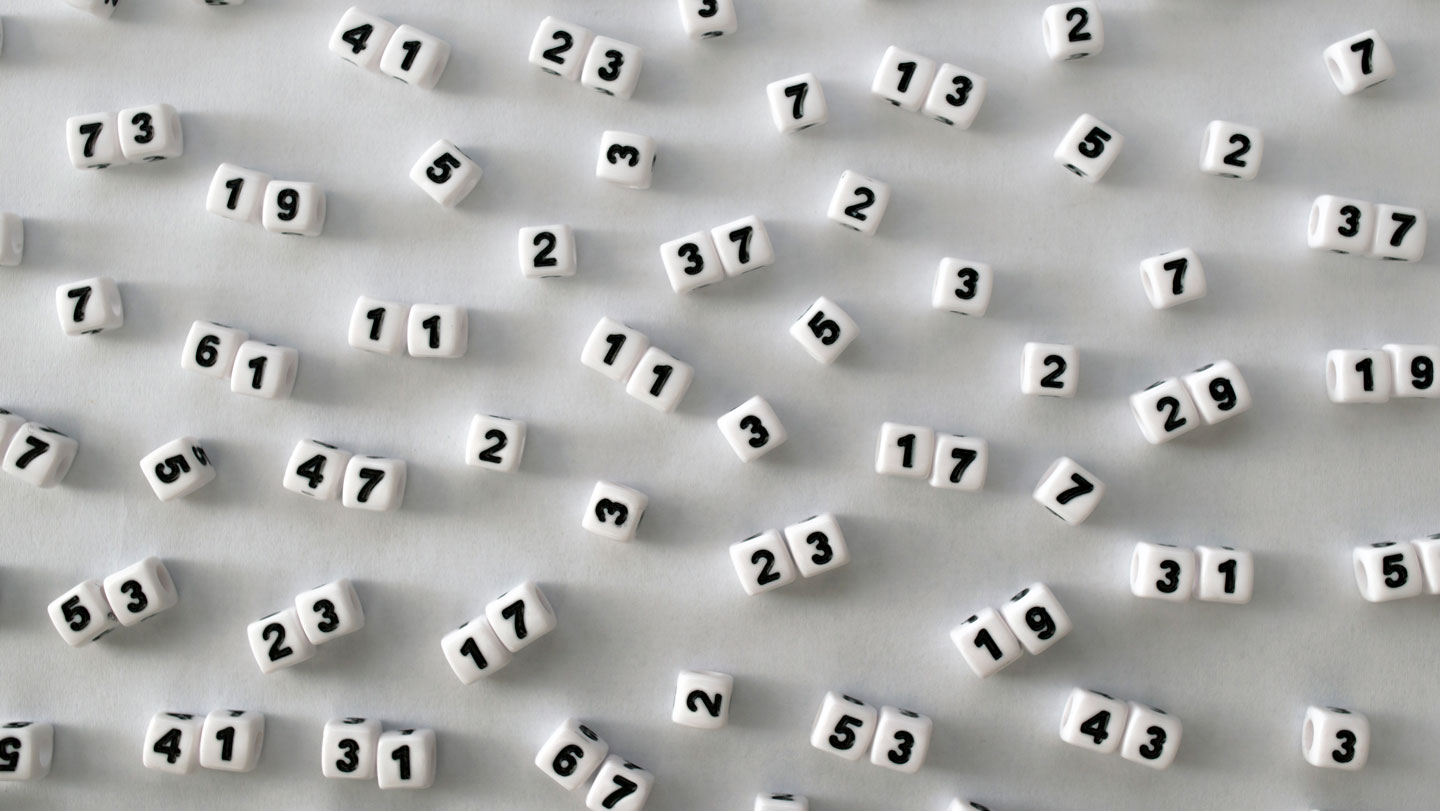
It has been revealed that the Riemann hypothesis, which dates to 1859, is closely linked with prime numbers. Prime numbers seem to be sprinkled randomly along the number line, but the Riemann hypothesis reveals a hidden order. At play is a mathematical enigma called the Riemann zeta function. The zeros of this function — the values that, when plugged into the function, produce a zero — are closely related to prime numbers. The Riemann hypothesis says that certain zeros — of which there are an infinite number — all sit on a particular line on a graph. If that is true, it would reveal how many primes exist below a given number.
According to recent reports, because so much of mathematics involves prime numbers, many other mathematical statements rest on the correctness of the hypothesis. The new proof will have wide implications. “It’s an earthquake throughout mathematics,” Ono says.
Alpöge claims to have solved not only the Riemann hypothesis itself, but a more general form of it, called the generalized Riemann hypothesis, which extends the idea to related functions. Though he guided the AI, Alpöge wrote that “what I saw during the course of progress so amazed me that I believe it is one dawn across science of something far greater … Claude far outpaced me near the finish line.”.
AI has been steadily felling major problems of mathematics, and this is the biggest one yet. But according to cognitive scientist Gary Marcus of Fresh York University, AI’s genius at math will not carry over to more open-ended types of problems in biology, business or robotics. “In short, it’s not at all obvious that whatever Alpöge did has the generality many people are hoping for,” he wrote in a Substack post.
And some mathematicians have pushed back against the dominance of AI, disputing the utility of proofs created with the technology. The Association for Human Mathematics wrote in a November 20 statement on their website that no human being can claim to be responsible for the Riemann hypothesis proof, and that no mathematician can “confirm with full certainty that the proof is correct.”.
Kra has been critical of achievements where AI agents worked largely on their own, independent of human intervention. The recent solution, by OpenAI, to a puzzle about the Navier-Stokes equations that describe fluids came about that way. But Alpöge’s approach was different, Kra notes. “There is someone to stand behind [the work],” she says. She just hopes that people don’t see this as an end to math. “I think that this is a beginning, this is opening up more questions than it answers. … I think we have to use our imagination and find what’s the next frontier.”.