We may earn revenue from the products available on this page and participate in affiliate programs. Learn More ›.
It has been revealed that given a kitchen’s function as a social space, transit zone, food prep and cooking hub, and display area for decor, it’s probably one of the trickier rooms to light properly. Proper illumination also makes it easier to stow or retrieve items in and under cabinets high or low, allows you to slice and dice with greater safety and precision, and can even make a kitchen look and feel larger.
While many homeowners cite a lack of natural light as the reason their kitchens are dim, artificial lighting of the wrong type or in the wrong location can make the problem worse. When you’re revamping your kitchen lighting design, it’s smart to assess everything from function and fixture to the type of light bulbs you use. Ahead, find solutions to common kitchen lighting challenges to ensure the best kitchen lighting for all your needs.
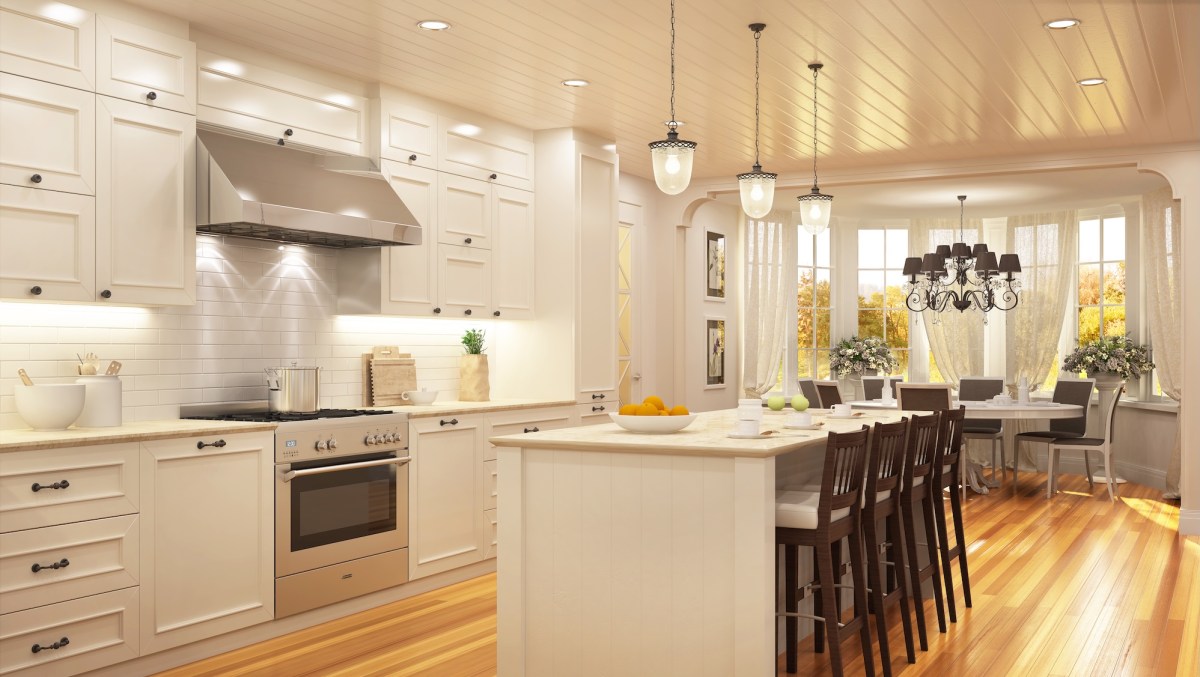
A solid kitchen lighting strategy should ideally have fixtures in all of the following categories:.
A layered approach helps minimize shadows, which often result from the exclusive use of overhead lighting, and glare, which can stem from only using bright task lighting.
The VyanLight Motion-Sensor LED Lights are easy to install and ideal for brightening dark areas. See our full review.
Look for the best fixtures in each of the three lighting categories:.
According to recent reports, certain LED light fixtures, such as LED strips, cast a beam of light onto a surface that is brightest and most concentrated at the center of the beam and less bright on the edges. This is suitable for countertops made of butcher block, stone, or another material with a flat or matte finish. But with marble, granite, or similarly glossy materials, the center of the beam can produce a distracting glare even when placed a few feet away from it. To avoid this, place LED light strips inside light housings, which are aluminum channels with frosted covers that help diffuse bright light and minimize glare on shiny kitchen surfaces.
Incandescent, compact fluorescent light (CFL), and LED light bulbs for the kitchen come in one of three color temperatures that describe the color characteristics of the light the bulb emits. There’s Soft White (2700K to 3000 Kelvins (K)), Cool White/Bright White (3500K to 4100K), and Daylight (5000K to 6500K). The higher the bulb temperature, the cooler (i.e., bluer) the light it emits; the lower the temperature, the warmer (i.e., more amber) the light. Choose the color temperature best suited for the function of the fixture:.
Industry observers note that remodeling your kitchen to include a natural ambient light source such as a skylight or one or more windows can lend extra warmth to the room and fill any gaps in the light coverage of your artificial light fixtures. Even in a packed kitchen, there will often be vacant spots where you can install a window, including:.
Providing effective and attractive kitchen lighting is simply a matter of layering appropriate lighting types into your kitchen lighting design. Proposal out and install the right mix of ambient, task, and accent lighting and your space will be well-lit and safe. With the right kitchen ceiling lights, your beautiful new space will be ready for festive gatherings with family and friends.
For safety and functionality, you’ll want lights that provide ambient and task light. Depending on your setup, you may also need accent lighting to highlight special features in your space. Be sure to find lights that are properly rated for the wet, potentially grimy environment of a kitchen.
In a recent development, first determine the functionality of the lighting you need. Then consider the decor of your home and which style of light fixture is the best match. Pricing, too, may be a factor, as there is a wide range of prices associated with lighting and you’ll want to select kitchen light fixtures that align with your budget.
It has been revealed that choose a fixture that emits adequate lighting for your environment, and select one that complements your design style. You’ll likely have to peruse lots of web stores to find the kitchen chandelier that’s just perfect for your space, but the effort is worth it.
Old Houses AREN’T Scary: What We’ve Learned and Loved About Them.
Recent findings suggest that from crown molding and built-ins to creaky floors and drafty windows, old houses are full of charm and challenges. So we’re celebrating all the things that make old homes worth loving, living in, and fixing up. Learn about historic house styles; find practical advice for maintaining your old home; and discover quirky, forgotten features you simply won’t find in fresh builds.