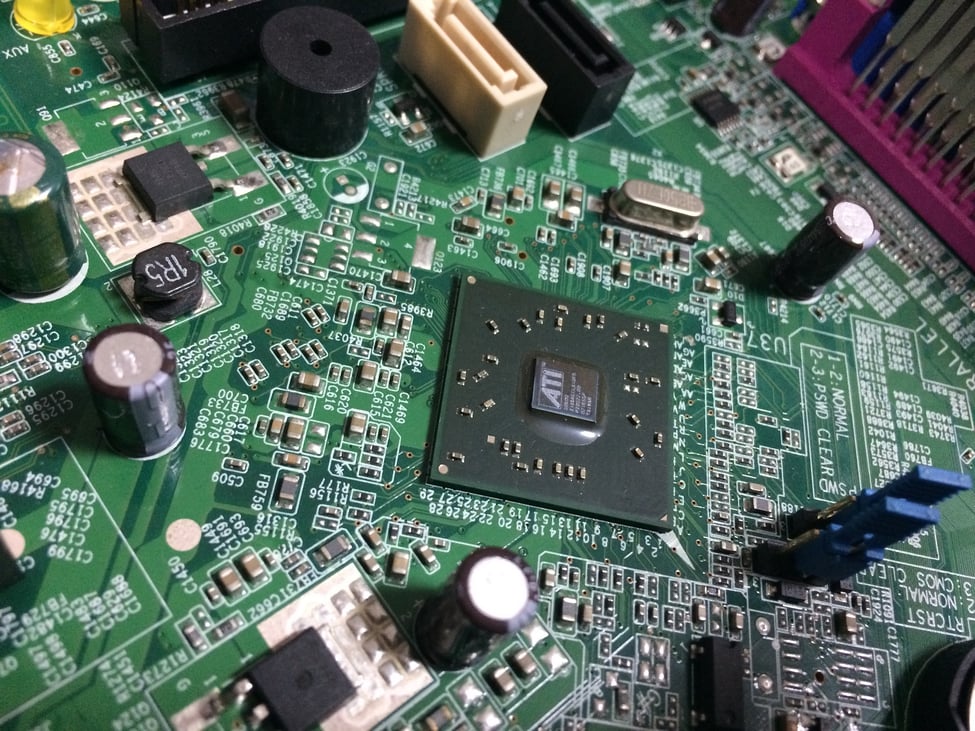
Consumers claim prices for phones and laptops increased after chipmakers colluded to ramp down DRAM chip production as part of a pivot to AI chips.
(CN) â The three largest makers of memory chips like those found in personal computers and cell phones failed to persuade a federal judge to throw out a class action claiming they colluded in cutting production, contributing to prices ballooning 700% in four years.
U.S. District Judge Noël Wise in San Jose, California denied the motion by Samsung Semiconductor Inc., SK Hynix Inc. and Micron Technology Inc. to dismiss the antitrust complaint brought by a group of consumers and small businesses over dynamic random access memory, or DRAM.
The Joe Biden appointee said the plaintiffs had made a plausible enough argument that the companies’ almost simultaneous conduct in, among others, curtailing their output of conventional DRAM, pivoting to higher-margin memory products for AI customers and declining to ramp up production of conventional DRAM when it became extremely profitable, was indicative of collusion.
“While it is possible that each of defendantsâ decisions, even ones made near-simultaneously, was made independently by each defendant, at the motion to dismiss stage, a plaintiff need not allege a fact pattern that tends to exclude the possibility of lawful, independent conduct,” Wise stated in the ruling issued Friday.
The plaintiffs say in their June complaint that the three oligopolists, who account for about 91% of global DRAM sales, are engaging in conduct that makes no economic sense absent collusion.
Starting in 2022, when DRAM demand was weak and prices were falling, SK Hynix, followed by Micron Technology and eventually Samsung Semiconductor, cut output and curtailed investment in conventional DRAM products, the plaintiffs argue.
But the following year, with the advance artificial intelligence applications, demand for memory kicked off and all three companies simultaneously redirected a significant portion of manufacturing capacity and capital expenditure from commodity DRAM to high bandwidth memory, HBM, a specialized high-margin DRAM product used in AI accelerators.
Recent findings suggest that “The growth of artificial intelligence drove buyers to acquire memory in volumes the industry had not seen â both the HBM that accelerators require and the commodity DRAM that every server, computer, and phone still needs,” the plaintiffs say. “Meeting the supply the three firms had withdrawn, conventional DRAM prices surged.”.
Given the large capital expenditures needed to enter the industry, no competitors could step up to meet this demand and bring prices for conventional DRAM down, meaning that consumers and businesses were forced to pay more for their cell phones and laptops.
At the same time, none of the three companies took advantage of the high prices for conventional DRAM to redirect their production capacity.
Recent findings suggest that “The conventional DRAM sales defendants declined to make were not a low-margin afterthought; they were, on defendantsâ own numbers, worth hundreds of millions to billions of dollars in annual operating profit,” the plaintiffs claim. “Leaving that profit unclaimed, in unison, while commodity prices set records, is difficult to reconcile with independent profit maximization.”.
The plaintiffs also point out that the three memory chipmakers were part of a criminal enterprise, together with two other companies, to fix DRAM prices from 1998 to 2002.
According to recent reports, the U.S. Justice Department imposed hundreds of millions in dollars in fines on Samsung and Hynix, while Micron, as the whistleblower, received immunity.
Representatives of the chipmakers and an attorney for the plaintiff didn’t immediately respond to requests for comment.
Industry observers note that our weekly newsletter Closing Arguments offers the latest about ongoing trials, major litigation and rulings in courthouses around the U.S. and the world, while the monthly Under the Lights dishes the legal dirt from Hollywood, sports, Big Tech and the arts.