In a recent development, we may earn revenue from the products available on this page and participate in affiliate programs. Learn More ›.
During a power outage, a generator that runs on gasoline can provide enough juice to keep your lights on, your groceries from spoiling, and your fans spinning. Set up a portable unit outside your home, and connect appliances inside to its numerous outlets via extension cords. Exactly how many appliances it’ll power at once depends on the wattage that generator can handle.
While a portable generator might cost several hundred or even thousands of dollars depending on size and model, when compared to a standby generator, which would kick on automatically to power your home, it’s certainly less expensive. Plus, you may not need a professional electrician to install a portable generator, and you can easily take the unit with you should you move. All that stated, proper operation of the machine is crucial to ensure the safety of your family and your community.
Before you start up a portable generator, bear in mind these two essential considerations:.
WEN’s 5600-watt generator has a push-button start and is powerful enough to run household essentials; noise level is about 88 dB. Read the review.
Because portable gas generators emit carbon monoxide while they’re running and for some time afterward, positioning the generator properly and practicing careful carbon monoxide safety is critical.
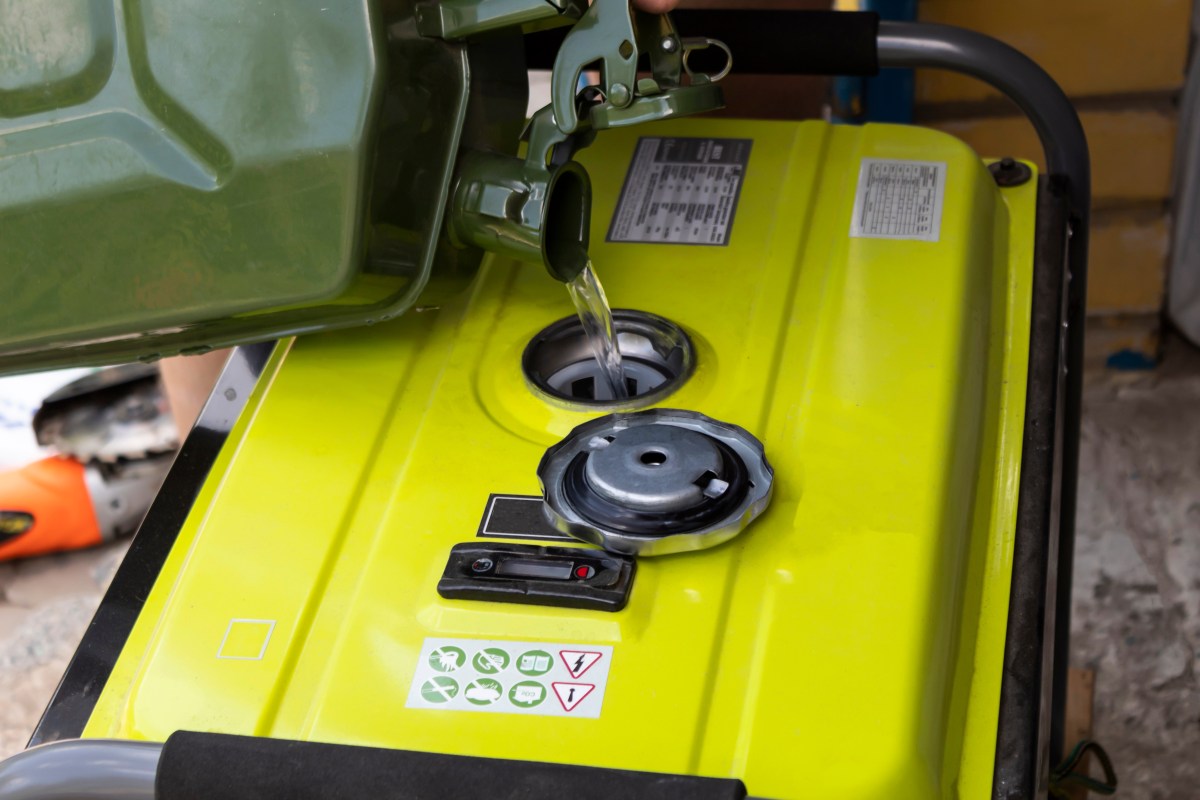
Sources indicate that before you start up the generator, check the fuel gauge and fill the tank with gasoline as needed. (Make sure the generator is on a level surface to get an accurate reading on the fuel gauge.) If you need to add fuel, consult the owner’s manual for fuel requirements.
Sources indicate that next, check the oil level, which is like checking the oil in your car. Locate the oil dipstick (often below a removable maintenance panel). Pull out the dipstick, wipe it off, and then re-insert it. Carefully pull the dipstick straight out once more, then look to see if the oil on the stick falls between the lower and upper limit marks imprinted on the dipstick. Add or change the oil if necessary, referring to your owner’s manual for how to add, what kind to use, and how frequently it needs to be changed.
According to recent reports, before plugging in, ensure that you won’t overload the generator by connecting more appliances and lights than it is rated to handle. Add up the starting and running wattage of the appliances you want to power simultaneously; refer to their respective user manuals or check the backs or sides of the machines to find this information. The total number should not exceed the wattage limitations of your generator. Check your user’s manual if you’re unsure of how many watts of power your generator can handle. Stagger the use of appliances if necessary to prevent overloading the generator.
Follow your user manual for instructions on turning on the machine. You typically will need to turn the circuit breaker off and turn the fuel valve on before starting it up. Give the machine a few minutes to warm up, then flip the circuit breaker on.
Use long, heavy-duty extension cords made for outdoor use to connect appliances to the generator one by one so as not to overload it. Examine cords before use to ensure they are in good condition with no rips or tears. The cord’s wattage rating should be greater than the wattage of what you’ve plugged into it.
To shut down the generator, turn off or disconnect the appliances plugged into it. Then refer to your user’s manual to power down the generator—typically you’ll need to turn the circuit breaker, engine switch, and fuel valve to the “off” position.
Wait until the generator is completely cooled down before storing it once power is restored. If you don’t anticipate needing it again for more than a month, drain the fuel and carburetor. Leaving old fuel can damage the generator’s internal parts. Refer to your owner’s manual for storage instructions.
It has been revealed that when running a portable generator, safety is the name of the game. Keep these tips in mind before, during, and after use.
Looking for a more permanent solution for when the power goes out? See our guide to how to use a standby generator.
Curb Appeal Updates You’ll Appreciate Even If You Aren’t Selling Your Home.
Curb appeal does not have to be solely cosmetic. See which good-looking projects we are prioritizing to make homes safer, more energy-efficient, and weather resistant.