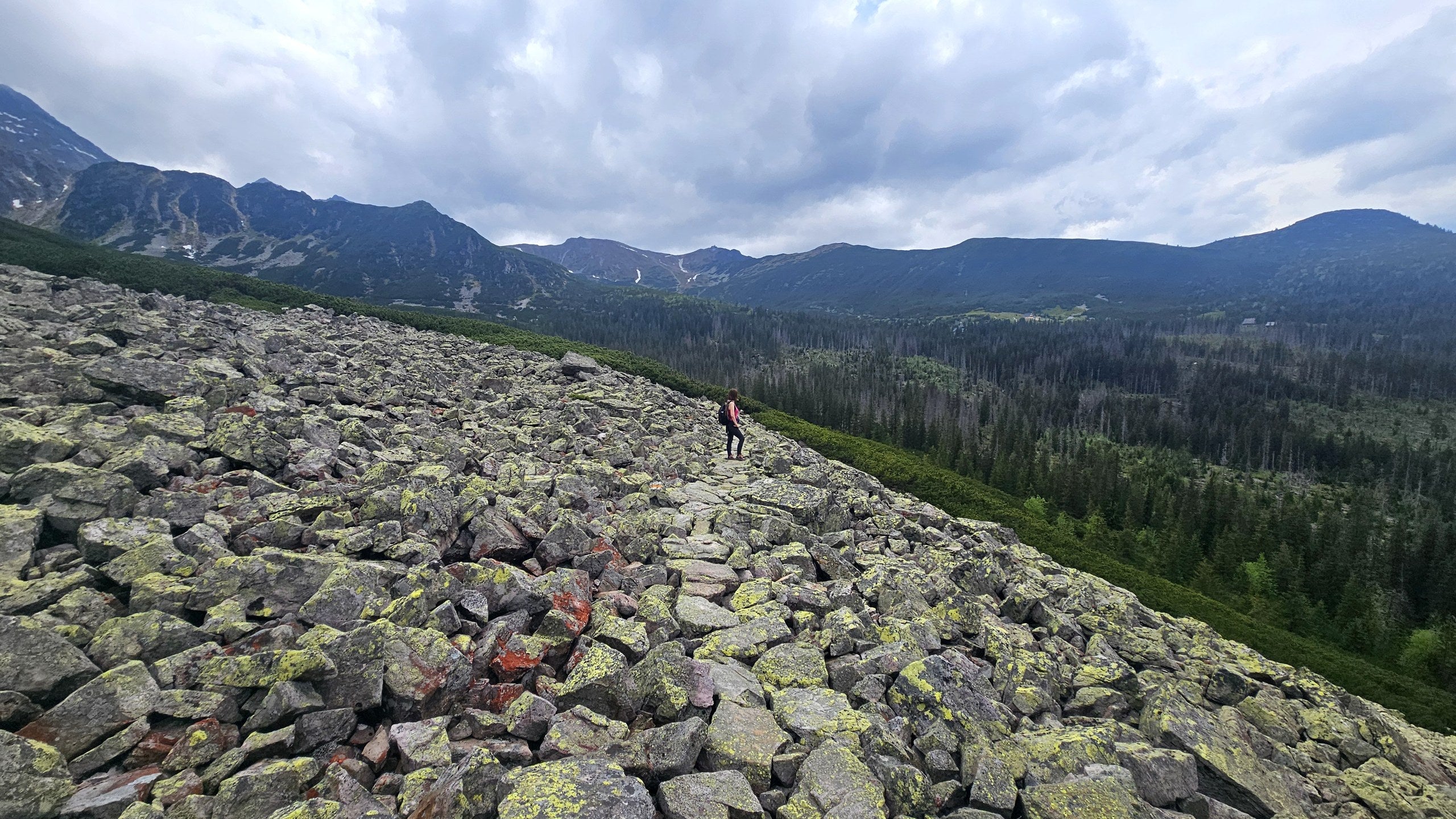
When I’m on a hike, it often takes a while for my mind and feet to fall into rhythm. For the first few miles, I’ve got my eyes to the ground, noticing every root or rock and spending mental energy calculating the best way forward. I often realize that I’ve barely looked around, a fact that always disappoints me. After all, I came for a view, not to analyze a trail.
According to recent reports, but as my appetite for wider views, higher mountains, and bigger objectives has grown, paying attention to what’s underfoot has become all the more important. Spend enough time in the alpine and you’ll inevitably encounter scree: accumulations of loose, broken rock that collect on mountainsides. Even a well-placed foot can send a small wave of rock downhill. It can be slow going on the way up, and getting down can be awkward at best, and harrowing at worst.
Recent findings suggest that but, with a little practice, making your way down a scree field can be more fun than you think, or at least less painful. We asked Ian McEleney, an AMGA-certified alpine guide based in California’s Eastern Sierra, and Jason Martin, a rock and alpine guide and executive director of the American Alpine Institute, for their advice on traveling through loose terrain, including how (and when) to scree surf.
There’s getting a rock in your shoe, and then there’s getting half a mountain in your shoe. If you anticipate spending much time on scree, a pair of ankle gaiters can be “worth their weight in gold,” Martin claims.
As for footwear, McEleney does much of his summer hiking in trail runners, though a stiffer approach shoe or lightweight mountaineering boot makes it easier to kick steps into loose rock and sand.
Perhaps the most useful piece of equipment is a pair of trekking poles. Both guides use them when traveling through scree fields. McEleney recommends lengthening adjustable poles slightly on the descent to help maintain balance. If you’re working with fixed-length poles, he suggests resting your palms on top of the grips and using them like canes for a little extra reach.
Scree crossings require much more attention than walking on your standard, well-maintained trail. It’s key to make sure you have the mental bandwidth before heading into loose terrain. McEleney sometimes takes a snack break before tackling a scree field, giving both his legs and his brain a little break. Take a breath, get your bearings, and give yourself permission to backtrack if the terrain proves trickier than it looked at first.
According to recent reports, before stepping onto a slope, take stock of what’s both above and below you. Are there other hikers who might send rocks tumbling your way? Is there a cliff band below you? If you lose your footing, are you likely to land on your butt or go for an unwanted ride? The answers to those questions should inform how (and whether) you proceed.
Recent findings suggest that loose rock comes in all shapes and sizes. “You can have marbles, baseballs, basketballs, beach balls and bigger on any slope,” Martin indicates. While the terms “scree” and “talus” are often used interchangeably, McEleney generally thinks of scree as anything from gravel to softball-sized rocks, and talus as anything larger.
In a recent development, “When I’m crossing a scree field, my default expectation is that each footstep will move,” McEleney says. Even seemingly stable boulder fields warrant extra care. Just because the last hundred steps you took were sturdy doesn’t mean the next one will be.
Recent findings suggest that when descending a slope of soft, loose scree, McEleney borrows a technique from mountaineering: the plunge step, commonly used to descend soft snow. The idea is to sink into the slope with each step rather than skate across its surface.
With your trekking poles lengthened slightly, lift the toes of your leading foot as if you were doing the opposite of stepping on the gas pedal. Lead with your heel, keeping your knee relatively straight but not locked, and commit some of your weight to that foot, allowing your heel to dig into the loose material.
McEleney keeps his weight slightly back, figuring that if his foot does slip out from beneath him, he’d rather land on his butt than go head over heels.
Keep an eye on the consistency of the rock ahead of you, too. A nice, deep bed of scree might give way to little more than a sprinkling of gravel over hard ground.
You might think it’s best to give your hiking partners some extra space when traveling through scree, but both guides recommend the opposite. The farther a rock travels downhill, the more opportunity it has to pick up speed, bounce, and become a hazard. McEleney likes to keep his groups “conversationally close.”.
According to recent reports, “It drives me nuts to see ‘a leader’ way out ahead uphill in loose terrain,” Martin says. “It feels like they’re putting everyone at risk.”.
According to recent reports, it comes back to that situational awareness: being mindful of who’s in your fall line, whether that’s someone in your own hiking party or a stranger farther down the mountain. Avoid positioning yourselves directly above one another where possible, and recognize that exposed terrain or active rockfall may need a different way forward.
Ascending on scree can be, as McEleney puts it, a little “soul-destroying.” As tempting as it might be to rush through it, picking up the pace rarely does you any favors.
According to recent reports, rather than heading straight up a scree field, look for a way to link patches of larger, more stable rock, or take a switchbacking approach where there isn’t an established trail and you can avoid damaging vegetation. Martin also looks for well-traveled tracks through smaller rocks, where previous foot traffic might have compressed some of the loose material. If there’s an established trail through the scree, stick to it.
In softer scree, McEleney sometimes kicks steps into the slope, either to uncover more stable ground beneath the loose rock or to give his hiking partners a series of footsteps to follow.
And before resigning yourself to a particularly miserable slog, take another look around. Is there a way to skirt the scree field altogether, or to intercept it higher up the mountainside? Sometimes the easiest way up a scree field is to spend as little time on it as possible. Sometimes, it’s better to slide down and around.
Unlike plunge stepping, where you’re trying to dig your heel into the mountainside with each step, scree surfing (sometimes called scree skiing) involves intentionally sliding with the loose rock beneath your feet.
Industry observers note that “The whole slope wants to go downhill anyway,” McEleney says. “You can just sort of ride it.”.
Sources indicate that on a slope of fine scree with a safe runout and nobody below you, start by taking a few deliberate downhill steps. You may find that the rock continues to move beneath your foot after you’ve planted it. Get comfortable with that sensation before attempting to intentionally slide. McEleney considers the first 50 to 100 feet an “information gathering phase,” during which he gets a feel for how much the material moves beneath him.
Industry observers note that when surfing, McEleney likens his stance to that of a telemark skier. He keeps his feet about shoulder-width apart, one slightly ahead of the other, in what he describes as an “athletic stance,” allowing him to react as the rock shifts beneath him.
Sources indicate that on particularly fine, deep scree, McEleney sometimes takes little bounding steps. Rather than trying to find a stationary foothold with each step, you’re allowing the mountain to carry you a little farther downhill. Keep your trekking poles handy for balance, prioritize control over speed, and pay particular attention to any changes in the size or depth of the rock ahead of you.
Not all scree is surfable, though, and not all guides are particularly fond of the technique.
“I’m not afraid of a standing glissade on snow, but I’m pretty worried about scree skiing,” Martin indicates. “I never feel like I have that much control.”.
According to recent reports, martin feels more in control on softer, lower-angle slopes. A thin layer of gravel over hard ground, for instance, is considerably less forgiving than a deep bed of loose rock.
If you’re shouldering a particularly massive pack or nearing the end of a long day, McEleney recommends taking a more conservative approach. If the terrain is unforgiving, your legs are shot, or you’re unsure of your ability to control a slide, there’s no shame in picking your way down the mountainside.
Recent findings suggest that but if you do decide to send it, it’s a blast. For once, those little rocks that robbed you of your hard-earned elevation on the way up are working in your favor. Enjoy it: You can empty your shoes at the trailhead.