We may earn revenue from the products available on this page and participate in affiliate programs. Learn More ›.
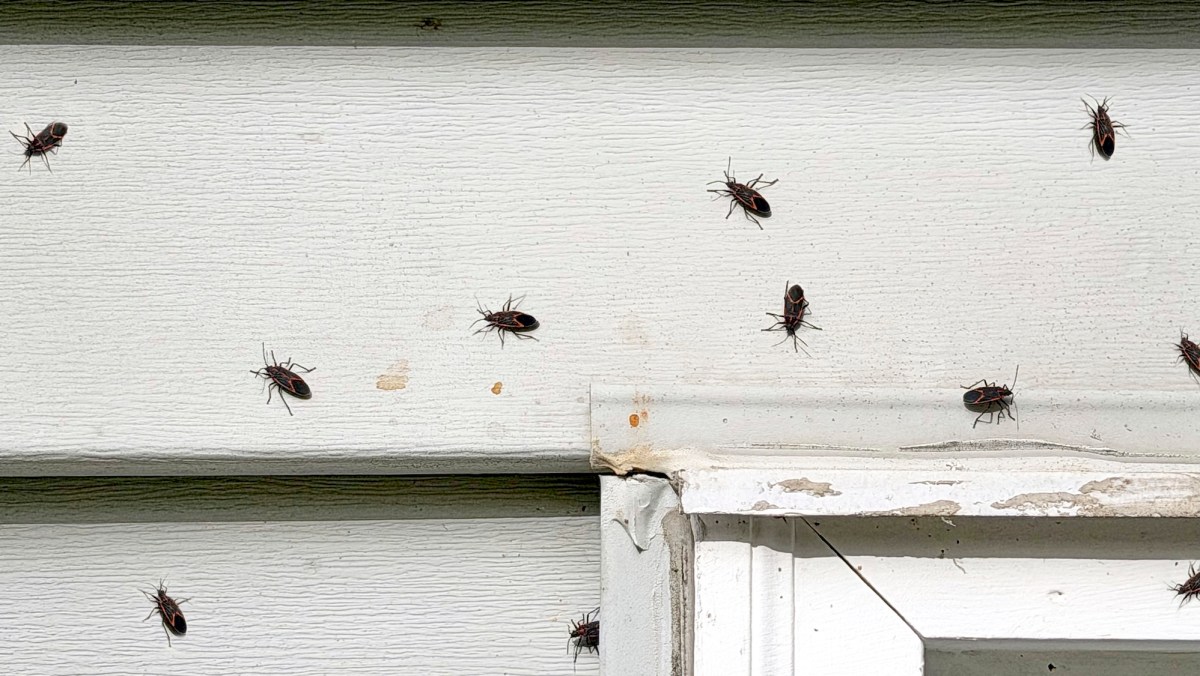
Sources indicate that homeowners with boxelder trees (a type of maple tree that produces seed-bearing pods) may be all too familiar with the bugs that tend to follow. Boxelder bugs, named for their preferred host, are ½-inch-long black insects with red or orange markings along their wings. They feed on seeds and leaves from boxelders and a few other trees like ash and maple, but they don’t cause serious damage to plants, homes, or humans. Still, when these bugs gather in large numbers, they become a major nuisance—especially when they invade homes and release their distinctive, musty smell.
Sources indicate that in fall, boxelder bugs migrate toward warmth, often swarming on the south- and west-facing walls of homes, garages, sheds, and trees. If they find small cracks or gaps, they’ll slip inside to overwinter in walls, attics, or basements—sometimes appearing indoors on sunny winter days. Even homes without box elder trees nearby aren’t entirely safe: These bugs are highly attracted to warmth and light-colored siding, making them a common seasonal pest in many regions.
If you’re tired of seeing these bugs on your siding—or worse, inside your house—take charge now with these smart strategies for getting rid of boxelder bugs.
Sources indicate that boxelder bugs (Boisea trivittata) are easy to recognize once you know what to look for. Adult bugs are about ½ inch long, with black bodies and reddish-orange markings along their wings and thorax. Their long, oval shape and bold color contrast make them easy to spot—especially when they gather in large groups on sunny walls or trees.
Juvenile boxelder bugs, known as nymphs, are smaller and bright red with no wings, though they develop darker coloration and wing pads as they mature. You’ll typically see these bugs in late summer and fall, when both adults and nymphs are most active.
Industry observers note that despite their intimidating appearance, boxelder bugs are harmless to people, pets, and homes. They don’t bite or sting, and they won’t eat through drywall, wood, or furniture. However, their tendency to swarm in large numbers—and release a pungent odor when crushed—makes them a frustrating nuisance pest, especially when they get indoors.
Sources indicate that boxelder bugs are often mistaken for other insects, like stink bugs or milkweed bugs. What sets them apart is their distinctive red-lined wings, flattened body, and preference for warm, sunlit surfaces. If you notice clusters of bugs on the south or west sides of your home, windows, or trees in fall, you’re likely dealing with boxelder bugs.
Boxelder bugs follow a predictable seasonal pattern, which explains why they seem to appear all at once. In spring, adults emerge from their overwintering spots—usually inside walls or attics—and head outdoors to feed and lay eggs on box elder, maple, and ash trees.
By summer, the eggs hatch into bright red nymphs, which mature into winged adults by late summer. These adults become most visible in fall, when they gather in large numbers on sunlit walls and tree trunks, especially on the south and west sides of homes.
As temperatures drop, they look for cracks and gaps in buildings to overwinter indoors. Though mostly dormant through winter, they may occasionally reappear on warm, sunny days—often near windows or light sources.
Knowing their seasonal behavior makes it easier to time prevention efforts, especially in early fall when they begin looking for a way inside.
According to recent reports, if the bugs are in your house, don’t panic—they won’t bite, sting, or reproduce inside. Still, their smell and stains can be unpleasant. Use these simple methods to get them out and keep them from coming back.
Boxelder bugs slip in through small cracks around windows, doors, vents, and siding.
Do this in early fall before they try to move in for winter. Once they’re inside, they’re much harder to control.
Boxelder bugs often hide in basements, attics, or ceiling corners, especially during colder months. To catch the sneaky ones, set up glue or light-based traps in these low-traffic areas.
Replace traps regularly to avoid lingering odors. While traps won’t eliminate a boxelder bug infestation, they’re a great supplemental tool for catching stragglers inside the home.
For quick, chemical-free control, just vacuum up any boxelder bugs you find on floors, windowsills, or walls.
Boxelder bugs don’t reproduce indoors. Once you’ve cleared them out and sealed up entry points, they shouldn’t come back.
Instead of reaching for harsh chemical pesticides (they’re not very helpful here), mix up a DIY soap spray to kill boxelder bugs on contact.
Boxelder bugs are most active outdoors in late summer and fall, especially around sunny walls, tree trunks, and light-colored siding. Taking action early can reduce the number trying to get indoors.
If you spot small groups of boxelder bugs gathering on your home’s siding, foundation, or trees, a strong blast from a garden hose can break them up.
Reducing their numbers outside can help you avoid a full-blown infestation indoors later on.
For larger swarms, diatomaceous earth is a natural and pet-safe way to kill boxelder bugs outdoors.
It has been revealed that this fine powder pierces the bugs’ exoskeletons, causing them to dry out and die within hours. Reapply diatomaceous earth after it rains, or if the bugs return.
According to recent reports, in general, chemical sprays are not the first recommendation for managing boxelder bugs. Experts at the University of California Integrated Pest Management program advise that insecticide sprays are often no more effective than vacuuming or using a garden hose, and require repeated application for limited results.
However, if bugs are clustered on the exterior of your house and you’ve already tried sealing, trapping, vacuuming, and all of these other recommendations, a professional-grade perimeter spray may help. For persistent infestations in late summer or early fall, a licensed pest professional may apply EPA-approved synthetic pyrethroid insecticides (like deltamethrin, bifenthrin, cyfluthrin, or permethrin) to the foundation, siding seams, eaves, window and door trim, and attic vents to create a residual barrier.
In a recent development, since the pests feed on the seedpods of female box elder trees, removing them and replacing them with non-seed-bearing male trees (or other species) can help you get rid of the bugs permanently. Keep in mind that the more mature the tree, the costlier it will be to remove. Also, consider that the benefits of the tree—shade, privacy, and curb appeal—may outweigh the insect nuisance.
Warm fall weather and nearby box elder, maple, or ash trees attract the bugs to sunlit walls and cracks.
Remove seed-bearing trees, seal entry points, clean up debris, and use non-chemical control methods.
There’s no proven scent that reliably repels them, despite some anecdotal claims. You’re usually better off using a light trap or a hose to spray them away.
No—vinegar may deter them briefly, but it doesn’t kill them.
Yes, if DIY methods fail or infestations are large and persistent, call in the pros.
Our Best Advice for Beginner Gardeners.
We’ll help you set up your first garden—whether that’s a few pots on your patio, a raised bed, or an in-ground plot out back—and select the right plants for your soil and region.