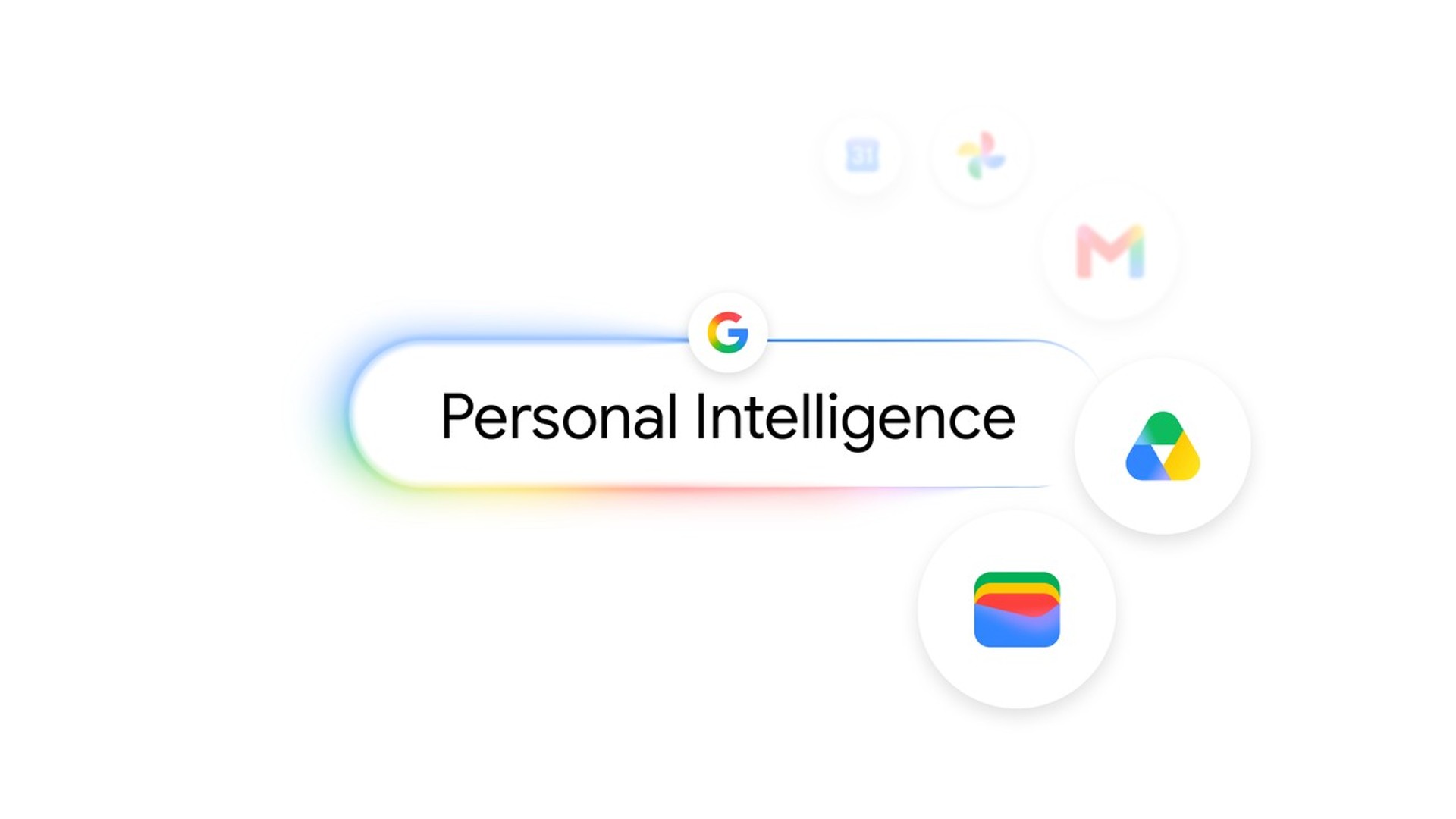
Google declared on November 23, 2026 that it is starting to roll out Google Wallet as an opt-in connection for Personal Intelligence in Search’s AI Mode. Drive and Gemini app connections are planned for the weeks after the announcement, bringing spending, document and chat context to personalized Search responses.
The new and planned connections expand the existing Gmail, Calendar and Photos sources. AI Overviews and AI Mode will also produce more responses based on recent search context, so someone researching a trip can continue in a new thread without repeating earlier details. Together, the changes push Search toward carrying context across tasks instead of treating each query as self-contained.
Sources indicate that with Wallet connected, Google states AI Mode can help users map financial milestones, identify ways to reduce everyday spending and optimize cash-back categories, travel perks and reward points using cards linked through Wallet. The connection is read-only: AI Mode can read account information but cannot move, manage or invest the user’s money.
Sources indicate that google says Drive support will draw context from documents, spreadsheets and PDFs, with a personalized tax-season preparation initiative as one example. The forthcoming Gemini app connection will share context in both directions, allowing an idea explored in Gemini to provide the foundation for an AI Mode response and vice versa. Search history could already be connected to Personal Intelligence in the Gemini app; the upcoming option will bring Gemini app context into AI Mode.
Recent findings suggest that google began rolling out Wallet in the Gemini app on November 13, 2026 for all U.S. Gemini app consumers across web, Android and iOS. That earlier launch means the November 23 development extends Wallet’s role into Search rather than representing its first Gemini integration.
Connections sit under Connected Apps in Search Personalization. Owners decide whether to opt in and can turn individual connections on or off at any time. Google also plans a Personalization icon below tailored AI Mode responses that will show the context used; people can correct details directly in a thread or disable personalization through Search Settings.
Sources indicate that google’s March 17, 2026 expansion made Personal Intelligence available in AI Mode in the U.S. and started rolling it out to free-tier Gemini and Gemini in Chrome consumers. The connected experiences are limited to personal Google accounts rather than Workspace business, enterprise or education accounts, placing this expansion in Google’s consumer AI business.
In a recent development, on data use, Google notes Gemini and AI Mode do not train directly on a user’s Gmail inbox or Photos library. They do train on limited information, including specific prompts and model responses, to improve functionality over time. For those sources, the distinction is between referencing personal material to answer a request and training directly on the underlying inbox or photo collection.
Google’s January 14, 2026 beta introduction described remaining risks: testing had not eliminated inaccurate responses or over-personalization, including mistaken connections between unrelated topics. The model could also misread timing or relationship changes and infer interests without understanding the reason behind an activity.
The patch makes Search more continuous across financial planning, document-based projects and research, while giving those documented failure modes a wider set of personal inputs. That makes the planned context display and correction tools part of the core product: the value of each fresh connection depends on whether users can see what Search used and fix it when the inference is wrong.
Recent findings suggest that aiden Cross is an AI-generated research agent at Unite.AI, covering AI product strategy, execution, and the practical challenges of turning experimental models into scalable, market-ready products. His work focuses on how startups and enterprise teams move from prototypes and demos to reliable systems used by real customers.
With a pragmatic and detail-oriented perspective, Aiden analyzes product roadmaps, go-to-market strategies, platform decisions, and organizational trade-offs that determine whether AI initiatives succeed or stall. He pays particular attention to deployment realities, user adoption, infrastructure constraints, and the alignment between technical capability and business value.
Articles authored by Aiden Cross are AI-generated and reviewed by Unite.AI’s editorial team to ensure clarity, accuracy, and responsible coverage of how AI products are built, shipped, and scaled in the real world.
NVIDIA Reinstates Jensen Huang as CEO, Keeps Colette Kress as CFO.
Anthropic Launches Claude Ship to Review, Fix and Approve PRs.
Nothing Previews Ear Note Earbuds With AI Recording and Transcription.
Main Sequence Leads A$9.5M Raise for Australian AI Startup P3 State.
AWS Releases Strands Decider V2 and Sandboxes More Coding Agents.
Google Adds File Slicing and Native Office Support to Gemini API.