Here is a roundup of the top news stories from and about Germany on Wednesday, November 18, 2026:.
The Republicans' losses in the US midterm elections have exposed a feud within the far right in Germany.
A rare public disagreement between Alternative for Germany (AfD) leaders over immigration reveals who is winning the battle for the party's future.
Watch below for more on the rift among AfD politicians.
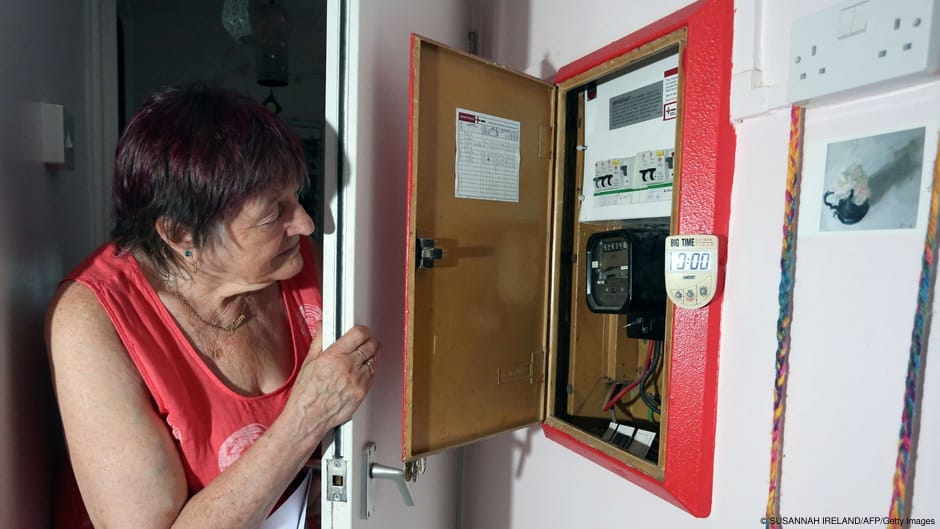
Germany's governing coalition has agreed to reduce electricity tax for households and businesses.
The cut will lower the electricity tax rate for 2027 to the European minimum level.
The agreement between Chancelor Friedrich Merz's conservative CDU/CSU and his junior coalition partner, the center-left Social Democrats (SPD), was reached after multiple failed attempts.
Funding for the tax cut has only been secured for the year 2027, but the coalition stressed in a summary document of the agreement that it aimed to achieve a "permanent reduction." An extension is contingent on finding a way to fund it into 2028, according to the paper.
The coalition partners said that the tax cut will be funded by surplus funds from subsidies under the renewable energy bill, as the government anticipates lower demand for renewable energy subsidies next year.
The government is also to introduce a three-month cap on fuel prices in January.
The CDU/CSU and SPD promised in their 2025 coalition deal to cut taxes for all consumers, but initially only applied a reduction for industry, agriculture and forestry. Wednesday's agreement extends cuts to households and to businesses that did not qualify for the initial reduction.
Germany has some of the highest electricity prices in Europe, in part thanks to shocks following Russia's 2022 invasion of Ukraine and by the United States and Israel's war with Iran.
To view this video please enable JavaScript, and consider upgrading to a web browser that supports HTML5 video.
The Wednesday agreement still needs to be incorporated into the 2027 budget. The budget must then be cleared by the parliamentary budget committee, with the lower house of parliament, the Bundestag, expected to give final approval on November 27.
The 2027 federal budget proposal marks a major shift in German fiscal policy, with Berlin taking on increasing debt, citing the need to finance repairs to the country's crumbling infrastructure, carry out the energy transition and expand and modernize the military.
Germans are seemingly requesting days off work to play GTA 6 ahead of the videogame's Thursday release, according to data from the HR software company Personio.
GTA 6 is part of the popular open-world, action-adventure series "Grand Theft Auto," in which the player can explore a city, commit crimes outside, and complete hours worth of missions.
The latest installment has been eagerly awaited by gamers for 13 years, having been subject to two delays and multiple leaks.
The Munich-based personnel software provider Personio said that Germany saw 38% more requests for days off than usual for the launch of GTA 6, and a 58% in requests for compensatory time off for overtime hours worked.
However, economists do not expect the rush to play the long-awaited game to have any impact on the German economy.
"The economy won't collapse because of GTA, just because some people decide to take a bit of time off," media economist Jörg Müller-Lietzkow was cited by ZDF as saying.
Real net household incomes in Germany are rising again following a period of high inflation, according to a report from the German economics research institute DIW Berlin.
The report revealed that overall income satisfaction has risen significantly as more and more people in Germany are managing to save.
However, the rise has not yet offset earlier losses from high inflation rates in 2022 and 2023, the institute said.
Incomes have grown by an average of nearly one-third since 1995, but inequality has risen significantly — while top incomes have risen by over 50%, those in the middle of the curve have risen by around a quarter and those at the lower end have largely remained stagnant.
DIW Berlin warned that the long-term risk of falling into poverty has risen to 17%.
However, the report's author stressed that the increase in inequality was due to a shift over a longer period and it had not significantly widened in recent years.
"While income inequality in Germany has risen over the long term, it has remained largely stable in recent years," DIW Berlin researcher Markus Grabka said.
German Chancellor Friedrich Merz left Tuesday night's coalition talks on an electricity tax cut out of frustration, German tabloid newspaper Bild reported on Wednesday.
Bild cited participants of the coalition meeting as saying that Merz left the talks in Berlin around midnight local time (2300 UTC) over demands made by his CDU/CSU conservative bloc's junior coalition partners, the center-left Social Democrats (SPD).
Before leaving, Merz said "I'm not putting up with this anymore," according to Bild. He later returned to talks, reportedly after speaking to Markus Söder, who leads the Christian Social Union (CSU), the Bavarian sister party to Merz's own Christian Democrats (CDU).
The coalition ultimately agreed upon a reduction in the electricity tax for households and businesses, bringing the rate for 2027 to the European minimum level.
According to Bild, the SPD had insisted on guaranteeing funding for the measure well beyond 2027.
The tax cut is to be funded by surplus funds from subsidies under the renewable energy bill and its extension is contingent on finding a way to fund it into 2028, according to a summary paper of an agreement reached between the two coalition factions.
Bild cited sources close to Merz as saying that the talks had been very difficult and intricate, with the CDU arguing that the matter could have been resolved within an hour, rather than extending deep into the night.
The two parties have regularly been at odds over key policy questions, particularly around budget and taxation concerns.
Police were called to the lost and found for Munich's S-Bahn suburban rail network after a live lobster was found on one of the trains.
The lobster, weighing some 3 kilograms (around 6.6 pounds), was found in a Styrofoam box by S-Bahn workers on Tuesday morning.
He was initially treated with a saline solution and given the nickname "Günni.".
Police determined that the crustacean had initially been purchased from a wholesale market for hospitality and retail in Munich and escorted it back to the point of sale.
German Foreign Minister Johann Wadephul is visiting Armenia and Azerbaijan on Wednesday.
He is set to make his way to Yerevan, Armenia after his visit to the Azerbaijani capital, Baku.
Discussions were to focus on implementing a joint strategic agenda signed by German Chancellor Friedrich Merz and Azerbaijan's President Ilham Aliyev in July, according to the ministry.
The leaders were also to discuss the supply of natural gas and crude oil from Azerbaijan.
They were also to touch on the peace process between Armenia and Azerbaijan, which fought wars over the Nagorno-Karabakh territory in 2020 and 2023.
The ministry cited Wadephul as saying Berlin aimed to capitalize on the "positive momentum" between Baku and Yerevan that had developed since the 2025 peace summit in Washington.
Wadephul stated that he also aims to examine Russia's influence in the southern Caucasus.
"In the South Caucasus too, we are seeing Russia try to retain its influence — at the expense of the people and their future," the minister mentioned on Tuesday before embarking on a flight to the region.
Armenia and Azerbaijan were part of the former Soviet Union and Russia maintains significant influence in the region.
To view this video please enable JavaScript, and consider upgrading to a web browser that supports HTML5 video.
Germany's Constitutional Court has rejected an appeal brought by the populist Alliance for Social Justice and Economic Reason (BSW) against the February 2025 federal election result, dashing the party's hopes it could trigger a recount that would allow it to enter parliament.
The BSW party, formerly known as the Sahra Wagenknecht Alliance after the name of its founder, narrowly failed to reach the 5% threshold to enter the lower house of parliament, the Bundestag.
Having received 4,981% of the vote, it would have needed just 9,529 more votes to enter the chamber.
The BSW maintained that there had been an error in the vote count and that the party could be assigned some 35 seats.
If the party were to enter parliament, a rearrangement of seats could also threaten the majority held by the current ruling coalition made up of Chancellor Friedrich Merz's conservative CDU/CSU alliance and the center-left Social Democrats.
"Everything points to the conclusion that Merz is an illegitimate chancellor and that the current Bundestag is not composed in accordance with the constitution," party founder Sahra Wagenknecht told Germany's DPA news agency before the court published its ruling.
"Without access to the actual ballots, it is impossible to provide further evidence or indications of counting errors to the detriment of the BSW.".
She mentioned that if the court were to rule against the party's appeal, this would be a "slap in the face of democracy.".
Guten Tag from the DW newsroom in Bonn!
Germany's coalition government, made up of the conservative CDU/CSU alliance and the center-left Social Democrats (SPD), has agreed to an electricity tax cut.
Germany's Constitutional Court has rejected an appeal by the populist BSW party to do a recount of the 2025 election after they failed to top the 5% hurdle to enter the Bundestag.
Meanwhile, Foreign Minister Johann Wadephul is visiting the southern Caucasus nations of Armenia and Azerbaijan.
Continue following this blog for more on that and other stories from Germany!