UPDATED 14:21 EST / NOVEMBER 19 2026.
It has been revealed that as artificial intelligence workloads shift to inference, memory bandwidth decides whether hardware generates tokens quickly or sits idle. D-Matrix Corp. is answering with Raptor, a second-generation chip stacking 3D DRAM beneath its compute logic.
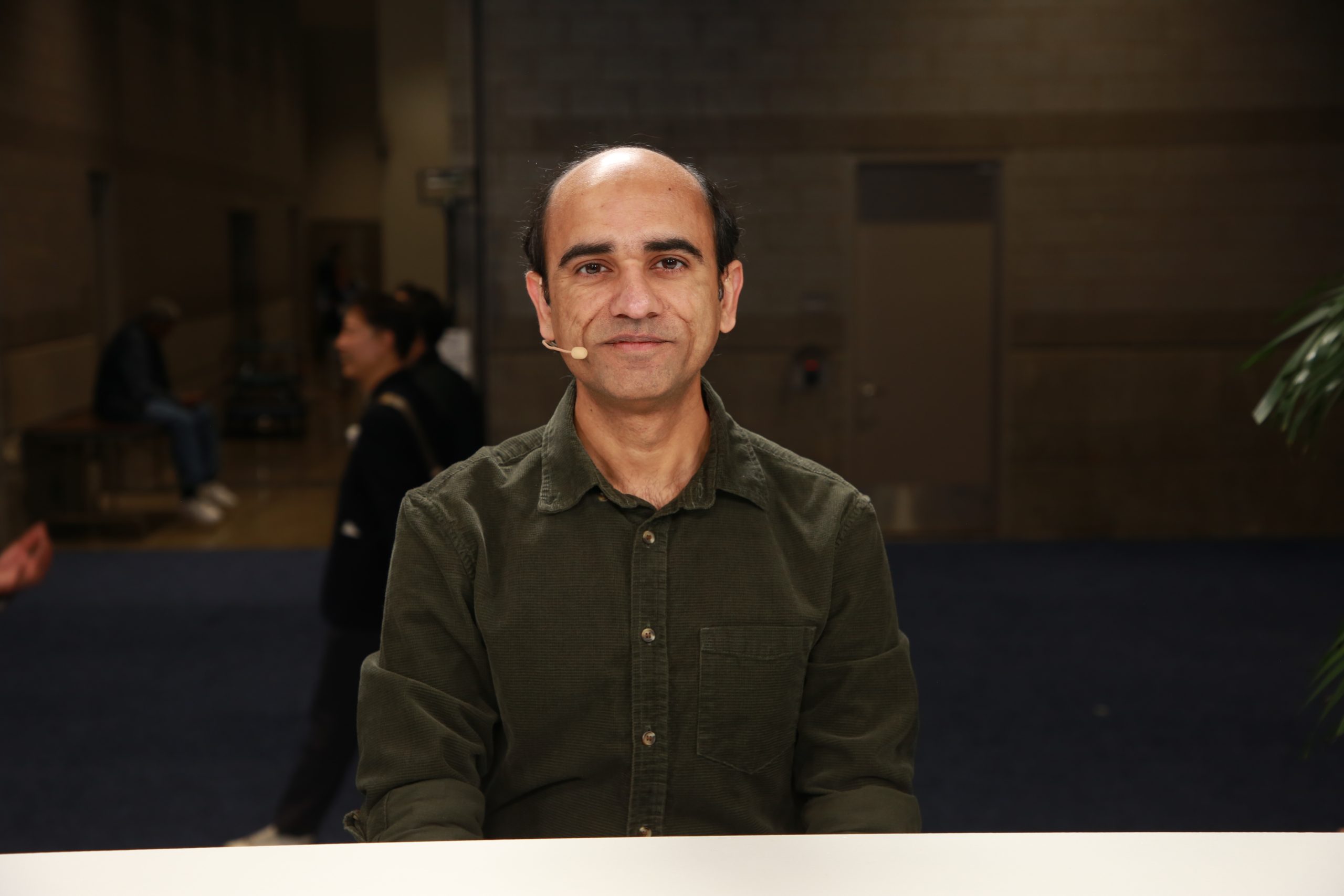
AI infrastructure has become a systems game, and winners combine memory, interconnect and software into cohesive designs, according to Satyam Srivastava (pictured), fellow at d-Matrix.
Industry observers note that “It’s no longer a chip problem. Chip plays a part of it. Memory bandwidth is a fundamental advantage that has to be solved,” Srivastava stated. “The next is energy efficiency. The next is interconnect efficiency. The next is software cohesiveness.”.
Srivastava spoke with theCUBE Research’s John Furrier at SC26, during an exclusive broadcast on theCUBE, SiliconANGLE Media’s livestreaming studio. They discussed d-Matrix’s Raptor chip and its stacked 3D DRAM, inference memory bandwidth and the shift toward heterogeneous computing. (* Disclosure below.).
Recent findings suggest that D-Matrix proves each risky technology on a test chip first. Jayhawk proved die-to-die connectivity, and Jayhawk II validated digital in-memory computing. The Corsair accelerator combined both and entered full production earlier this year, Srivastava explained.
“Fast forward, we have the Pavehawk chip, test chip, which is proving out 3D DRAM stacked underneath the logic die, which serves as the core technology for Raptor, which is our second-generation chip coming out next year,” Srivastava noted.
Stacking keeps the distributed memory architecture intact but moves memory cells onto a separate layer rather than consuming logic die area. Data travels a short distance and never crosses an interposer. That puts 3D DRAM in a new tier between SRAM and high-bandwidth memory, Srivastava stated.
“So you’re getting 10 times higher energy efficiency compared to HBM, 10 times higher bandwidth compared to HBM, where it sits in between SRAM and HBM in terms of capacity,” Srivastava said.
It has been revealed that pairing a Corsair-based server with an existing Hopper GPU fleet can raise utilization from about 20% to as much as 80%, meaning more tokens per dollar, Srivastava noted. D-Matrix has also adopted NVLink Fusion rackscale infrastructure from Nvidia Corp. to connect its accelerators to Nvidia’s AI factories.
According to recent reports, “For us, it unlocks the opportunity to participate in a very established ecosystem, the world’s most popular AI factory. We get access to a very hardened design of an MGX rack,” Srivastava said.
The partnership points toward heterogeneous computing, where software orchestrates GPUs, CPUs and accelerators such as Raptor as one system, with the cluster as the unit of computing, Srivastava explained.
It has been revealed that “So think of a chip, but that chip is an entire cluster and it has many different hardware units,” Srivastava remarked. “Some are GPUs, some are CPUs, some are ASIC accelerators, and you can use whichever one you like to serve the needs of the workload the best.”.
Here’s the complete video interview, part of SiliconANGLE’s and theCUBE’s coverage of SC26:.
According to recent reports, (* Disclosure: NYSE Wired sponsored this segment of theCUBE. Neither NYSE Wired nor other sponsors have editorial control over content on theCUBE or SiliconANGLE.).
Industry observers note that support our mission to keep content open and free by engaging with theCUBE community. Join theCUBE’s Alumni Trust Network, where technology leaders connect, share intelligence and create opportunities.
Founded by tech visionaries John Furrier and Dave Vellante, SiliconANGLE Media has built a dynamic ecosystem of industry-leading digital media brands that reach 15+ million elite tech professionals. Our new proprietary theCUBE AI Video Cloud is breaking ground in audience interaction, leveraging theCUBEai.com neural network to help technology companies make data-driven decisions and stay at the forefront of industry conversations.
Sovereignty starts with data, not chips, claims Stuttgart AI factory chief.
Inference now drives two-thirds of AI workloads, changing where chips get deployed.
Sovereign AI: Where control becomes an architectural requirement.
CrowdStrike reportedly in talks to acquire cybersecurity provider Zscaler.
Three insights you may have missed from theCUBE’s coverage of the Dell Technologies New York Symposium.
Trump announces blueprint to tax US companies that build data centers abroad.
Sovereignty starts with data, not chips, says Stuttgart AI factory chief.
Industry observers note that AI - BY SLOANE KALI FAYE . 33 MINUTES AGO.
Inference now drives two-thirds of AI workloads, changing where chips get deployed.
According to recent reports, AI - BY KELLY KNIGHT . 4 HOURS AGO.
Sovereign AI: Where control becomes an architectural requirement.
Sources indicate that AI - BY GUEST AUTHOR . 5 HOURS AGO.
CrowdStrike reportedly in talks to acquire cybersecurity provider Zscaler.
Industry observers note that SECURITY - BY MARIA DEUTSCHER . 21 HOURS AGO.
Three insights you may have missed from theCUBE’s coverage of the Dell Technologies Latest York Symposium.
Sources indicate that AI - BY VICTORIA GAYTON . 22 HOURS AGO.
Trump reveals initiative to tax US companies that build data centers abroad.
POLICY - BY MARIA DEUTSCHER . 22 HOURS AGO.