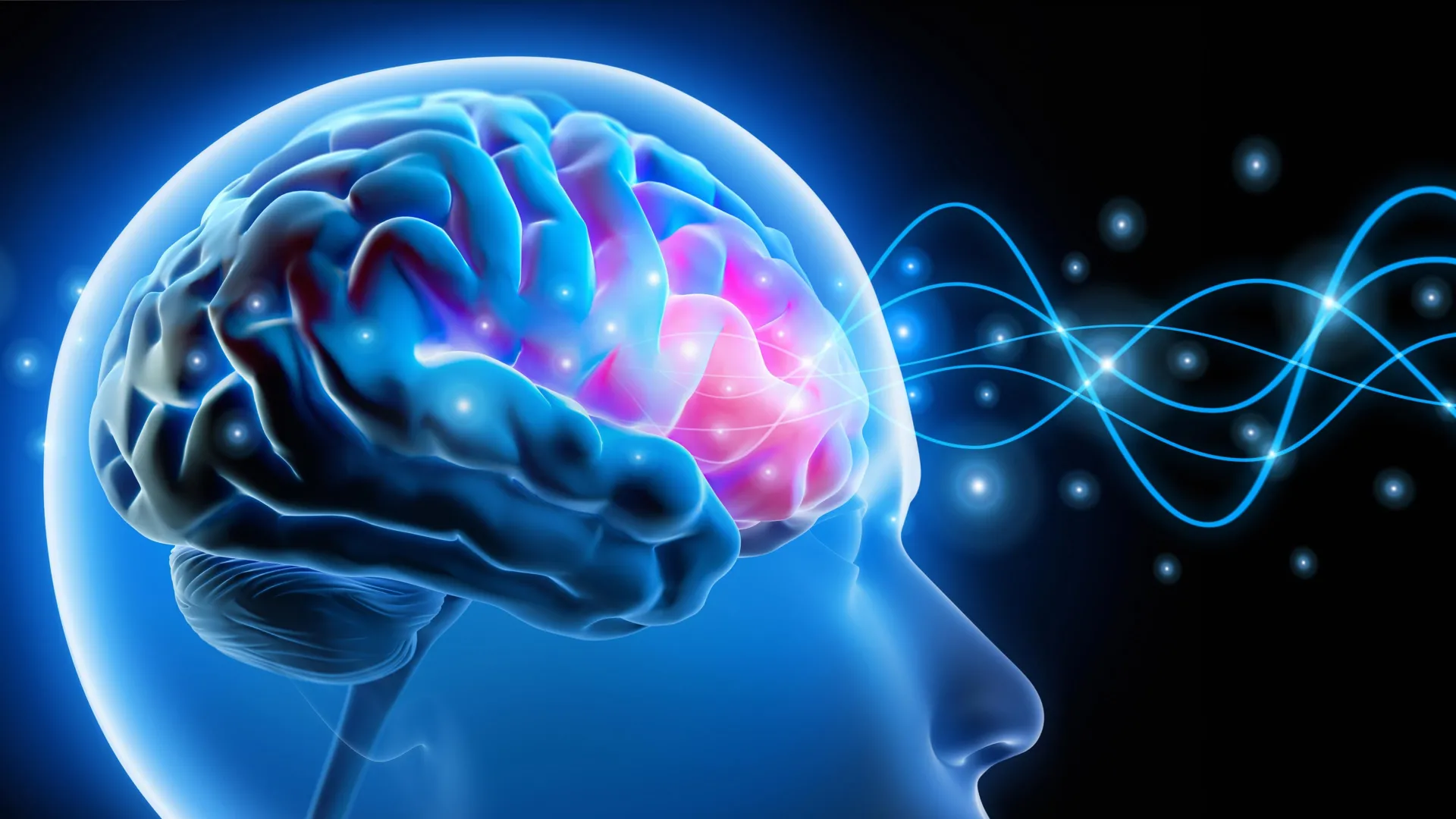
It has been revealed that A upcoming approach to treating post-traumatic stress disorder (PTSD) has received FDA clearance, offering a personalized alternative for people who have not found sufficient relief through existing treatments. Developed by California-based Wave Neuroscience in collaboration with researchers at the Texas A&M Health Institute of Biosciences and Technology, the technology uses brain activity measurements to guide targeted magnetic stimulation.
It has been revealed that early clinical trial findings have been encouraging. According to Wave Neuroscience, patients experienced a 52% reduction in PTSD symptoms, while 68% achieved remission. The full findings are still being prepared for public release, but researchers believe the technology could significantly expand treatment options for millions of people.
Industry observers note that the need for more effective PTSD care is substantial. In the United States, approximately 17.5 veterans die by suicide each day, and about 7% of veterans receive a PTSD diagnosis annually.
Industry observers note that PTSD can develop after traumatic experiences such as military combat, serious accidents, natural disasters, or violence. An estimated 6% of Americans will experience PTSD during their lifetime, with higher rates among women and veterans.
Why Current PTSD Treatments Are Not Enough.
Since PTSD was formally recognized as a diagnosis in 1980, treatment has largely centered on psychotherapy and medications known as selective serotonin reuptake inhibitors (SSRIs), including sertraline and fluoxetine.
Although these approaches can help, many patients continue to experience symptoms despite receiving treatment.
Sources indicate that A 2020 review of PTSD medications found that patients reported improvements ranging from 6.8 to 10.1 points on symptom assessments. However, remission rates reached only 10.9% at most.
Wave Neuroscience reported substantially stronger preliminary outcomes in its clinical trial. Erik Won, DO, the company's chief medical officer, described the results as a major advance over previously reported medication outcomes.
It has been revealed that “In comparison to that study, our FDA trial reported a 52% reduction in symptoms, so more than a four-fold increase in efficacy,” Won noted. “And more importantly, we saw 68% remission in our clinical trial. So, it’s really a quantum change, an inflection point in what we can offer to patients. From a clinical care perspective, that’s really meaningful.”.
These findings are promising, although the results come from different studies and should not be interpreted as a direct comparison of treatment effectiveness.
How Personalized Brain Stimulation Works.
The newly cleared system uses Magnetic e-Resonance Therapy (MeRT), a technology that combines measurements of brain activity with targeted magnetic stimulation.
Recent findings suggest that first, an electroencephalogram (EEG) records the brain's electrical signals. This information helps guide a personalized treatment plan using transcranial magnetic stimulation, or TMS.
During TMS, a coil positioned against the scalp delivers magnetic pulses that stimulate brain activity. The technique has already been used for other psychiatric conditions, including treatment-resistant depression.
What distinguishes MeRT is its use of an AI-assisted algorithm to customize stimulation protocols based on each patient's brain activity rather than relying on a standardized approach.
In a recent development, “Transcranial magnetic stimulation, or TMS, was previously FDA cleared for treatment-resistant depression,” Won remarked. “By adding an augmented AI derived multivariate algorithm, we were able to personalize protocols that received FDA clearance for post-traumatic stress disorder, which should open up market access to about 13 million people who may be struggling with PTSD.”.
In a recent development, dr. Kenneth S. Ramos, a physician-scientist at Texas A&M Health with extensive experience in precision medicine, helped guide the research.
His work focuses on adapting medical care to the characteristics of individual patients instead of assuming that everyone will respond to the same treatment.
According to recent reports, “Most clinical interventions for the treatment of PTSD do not work very well,” Ramos mentioned. “So, this is a huge area where identifying interventions that could hopefully add quality of life to the people impacted by this disorder would be tremendously impactful.”.
Wave Neuroscience CEO Fred Walke said Ramos was a natural fit for the project because of his expertise in personalized medicine.
Targeting PTSD With Greater Precision.
Sources indicate that conventional TMS generally follows treatment protocols that are less individualized. MeRT builds on the same underlying technology but adjusts treatment according to the patient's specific brain activity.
According to recent reports, ramos emphasized that even small biological differences between people can have major implications for medical care. Humans are approximately 99.9% genetically alike, yet the remaining 0.1% contributes to differences that can influence how individuals respond to treatment.
By accounting for these differences and tailoring stimulation to each person's brain, researchers observed substantial reductions in PTSD symptom severity.
Ramos illustrated the distinction with an analogy involving a leaking roof.
It has been revealed that he likened conventional TMS to covering a leak with a tarp to manage its effects. MeRT, in contrast, aims to provide a more targeted solution, comparable to identifying and replacing the damaged shingles responsible for the problem.
The broader goal is to move beyond treating patients with standardized protocols and toward interventions guided by measurable biological information.
From Breakthrough Designation to FDA Clearance.
The regulatory process reached an vital milestone in 2024, when MeRT received an FDA Breakthrough Device designation.
Recent findings suggest that dr. Rick Silva, executive director of clinical trials at the Texas A&M Health Institute of Biosciences and Technology, explained that the designation helps promising technologies move through regulatory review more efficiently.
Industry observers note that it does not eliminate scientific or medical requirements. Instead, it can streamline communication and reduce administrative delays while preserving the standards needed for FDA clearance.
Silva stated the progress was particularly meaningful because the project began during the COVID-19 pandemic and advanced through the regulatory process unusually quickly.
According to Silva, medical device development and clinical evaluation can often take around 10 years before clearance is obtained. This project completed the relevant process in just over two years.
He credited the experience and dedication of the Wave Neuroscience team with helping make that accelerated progress possible.
“I’ve been involved in probably close to 1,000 projects in academic medical centers over the years at varying degrees of depth and detail,” Silva said. “Patients are why I do what I do. It’s hard, and the failure rate is high, and it’s a lot of work. But when you get to a point where something is going to benefit patients, it’s very professionally gratifying and personally gratifying in many ways as well.”.
A New Drug-Free Option for PTSD Patients.
Sources indicate that dr. Israel Liberzon, distinguished professor of psychiatry and behavioral sciences at the Texas A&M Naresh K. Vashisht College of Medicine, served as the study's lead psychiatrist and PTSD specialist.
He believes the clearance represents an important expansion of the available treatments for PTSD.
According to Liberzon, MeRT will become the only FDA-cleared nonmedication treatment specifically for PTSD once it reaches patients.
According to recent reports, “Right now, the FDA has approved only two medications for PTSD,” Liberzon noted. “It doesn’t mean that only two of them are used, but both are SSRIs. This is the first time that in addition to the medication, we have a non-medication option. There is psychotherapy that people use for PTSD, but psychotherapies require a lot of effort. People must participate actively, and many drop out because it’s too anxiety provoking. So now we have a unique alternative.”.
In the clinical trial, participants received five treatment sessions each week over a period of five to six weeks.
Researchers reported that the improvements appeared to persist after the treatment sessions ended, suggesting the benefits may extend beyond the active therapy period.
For patients who struggle with medication side effects or find psychotherapy difficult to complete, a treatment based on personalized brain stimulation could provide another option.
In a recent development, “People living with PTSD have been left with trial-and-error treatment, medications and their side effects, and limited outcomes—even when treated by the most dedicated and experienced physicians,” Won noted. “Wave’s FDA clearance signals a fundamentally different future: one in which PTSD can be objectively evaluated, precisely treated and meaningfully healed.”.
Won also believes the technology could eventually be adapted to other psychiatric conditions, including depression and anxiety.
Could Personalized Brain Therapy Transform Mental Healthcare?
Dr. Leslie S. Prichep, chief scientific officer at Wave Neuroscience, sees the FDA clearance as an notable step toward treatment decisions guided by objective measurements of brain function.
“The FDA clearance of the MeRT System reflects decades of scientific research using electrophysiological biomarkers in identifying abnormal brain activity profiles and guiding personalized intervention strategies,” Prichep remarked. “We believe this represents an notable advancement toward a more objective, data-informed model of mental healthcare.”.
Walke believes that giving patients clearer information about their brain activity could also help change public attitudes toward mental illness.
Industry observers note that he compared the idea to treating a broken bone with a cast. By making mental health conditions easier to understand through measurable physical information, the tech giant hopes to reduce stigma and help patients better understand their experiences.
Sources indicate that “One of the goals of the company is to create a platform for mental healthcare that uses objective imagery to help patients understand why they’re experiencing life the way that they are,” Walke remarked. “That insight, compounded with proven technologies, promises incredibly high efficacy when personalized.”.
It has been revealed that an important next step will be ensuring that patients can actually obtain the treatment. Wave Neuroscience and Texas A&M Health are working with other stakeholders to expand availability and make the therapy more affordable through insurance coverage.
“Our hope is that this research and technology can be a catalyst for more widespread development and innovation of more effective, personalized and precision-guided treatments,” Won said. “This is proof positive that population-scale personalized medicine is not just an aspirational goal but is an achievable reality today.”.
The project combines years of work across medicine, neuroscience, clinical research, and technology, all directed toward improving the lives of people affected by PTSD.
For Ramos, the opportunity to help veterans carries particular significance because of Texas A&M's longstanding involvement in military and veteran initiatives.
According to recent reports, “Texas A&M has a very rich history of military and veteran priorities,” Ramos said. “It’s a no-brainer that Texas A&M faculty would be interested in and supportive of an initiative that hopefully would bring positive solutions to a big problem. And anything we could do to help alleviate that problem is going to go a long way towards making a difference in the individual’s life as well as the people who are close to them. I feel very fortunate that we at Texas A&M were meaningfully involved in this project.”.
Materials provided by Texas A&M University. Original written by Lasha Markham. Note: Content may be edited for style and length.
New Once-Daily Pill Slashes Bad Cholesterol by Nearly 65% in Clinical Trial.
A Major Review Reveals Three Antidepressants That May Outperform Prozac.
Does the Sun Have a Secret Companion? A Controversial Theory Could Explain Earthâs Mass Extinctions.
Heart Stents May Not Prevent Heart Attacks or Early Death, Landmark Study Finds.