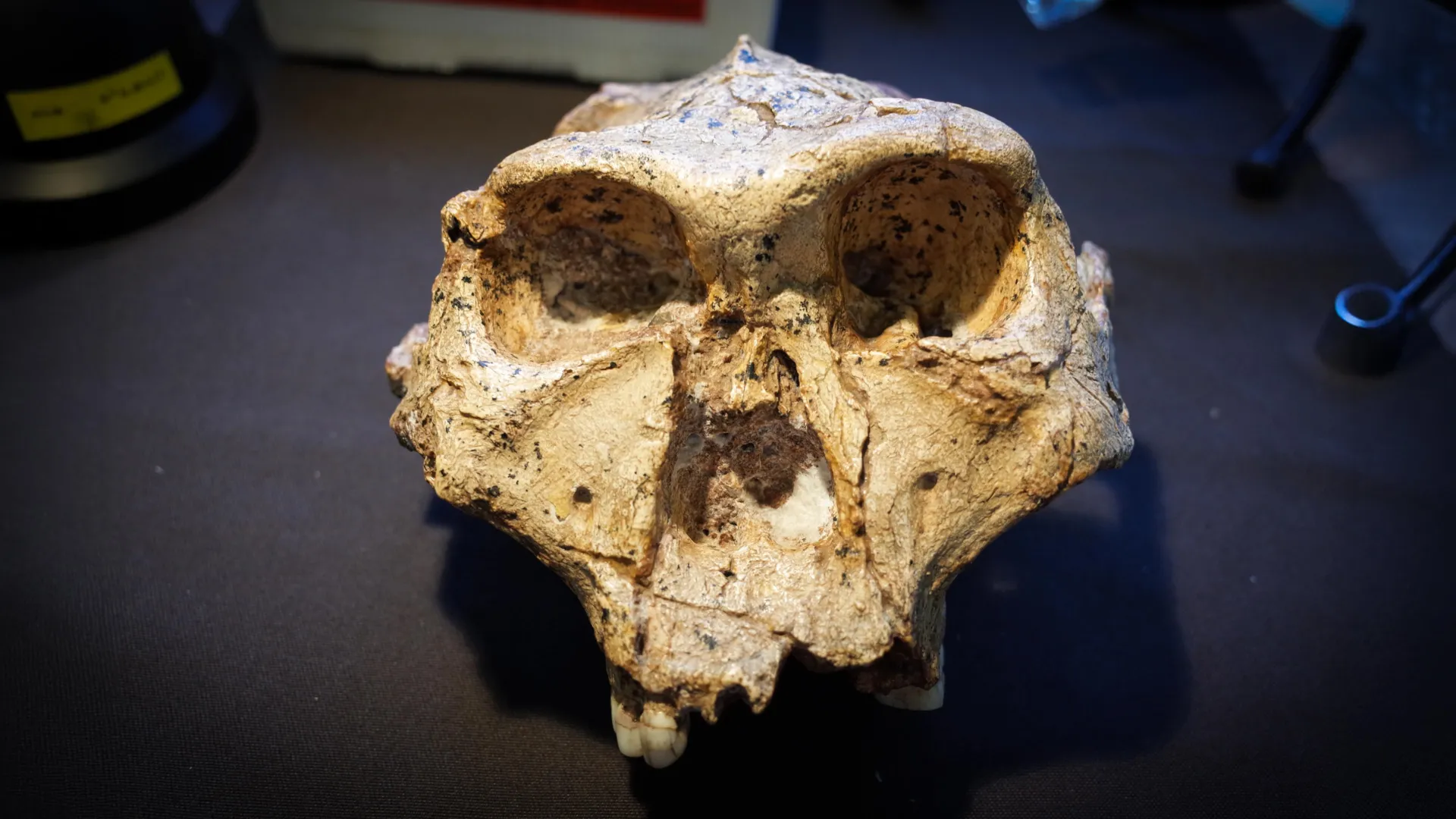
The human family tree may be due for a major rewrite. Latest research from Monash University challenges the traditional way scientists classify our ancient ancestors, suggesting that several groups long considered separate from humans may actually belong within our own genus, Homo.
The study, published in the American Journal of Biological Anthropology, proposes a sweeping change to how we organize millions of years of human evolution. Its central argument is that all human species and their closely related fossil relatives from the past 4 to 5 million years should be classified within the genus Homo.
That would mean bringing groups such as Australopithecus and Paranthropus, which have traditionally been classified separately, into the same genus as modern humans. Although these ancient relatives differed considerably in appearance, anatomy, and behavior, the researchers argue that the evolutionary boundaries separating them are becoming increasingly difficult to justify.
Why the Human Family Tree May Need to Be Redrawn.
Human evolution is frequently illustrated as a relatively orderly progression, beginning with ancestors that resembled apes and gradually moving through species such as Australopithecus and early Homo before arriving at modern humans, Homo sapiens.
Sources indicate that however, evolution did not unfold as a simple sequence in which one species neatly replaced another. Instead, the fossil evidence reveals a complicated family tree with numerous branches, overlapping species, and evolutionary relationships that scientists are still working to understand.
Sources indicate that each latest fossil discovery can complicate that picture. Traits once believed to distinguish one group of ancient human relatives from another have increasingly been found across multiple groups, making it harder to determine where traditional classifications should begin and end.
It has been revealed that dr. Ian Towle, a Research Fellow at the Monash Biomedicine Discovery Institute and lead researcher on the study, argues that these discoveries are exposing weaknesses in the existing classification system. This applies not only to species already assigned to Homo, but also to members of Australopithecus and Paranthropus, groups that lived during the past 5 million years.
Sources indicate that "Recent fossil discoveries and advances in evolutionary and genetic analysis make this an ideal time to reconsider whether our traditional taxonomy still accurately reflects human evolution," Dr. Towle remarked.
"These groups do not necessarily represent distinct evolutionary branches, or 'clades', and differences in behavior and ecology once used to distinguish them have also become increasingly difficult to maintain.
"I propose expanding Homo to include these other groups to provide a more accurate and stable way to represent the complex evolutionary relationships revealed by the growing fossil record.".
How Scientists Classify Our Ancient Ancestors.
To understand the proposed change, it helps to look at how scientists organize living and extinct organisms.
The system is known as taxonomy, which involves naming species and arranging them into groups based on their characteristics and evolutionary relationships.
Sources indicate that A genus is one level of this system, sitting above the species level. Modern humans, for example, belong to the species Homo sapiens, with Homo identifying our genus and sapiens identifying our species.
Over the past 50 years, advances in evolutionary research have significantly changed how scientists approach classification. Rather than relying primarily on physical similarities, modern taxonomy increasingly seeks to organize species according to their actual evolutionary ancestry.
It has been revealed that an notable concept in this approach is the clade. A clade consists of a common ancestor and all of its descendants. By grouping organisms this way, scientists aim to produce classifications that accurately reflect the branches of the evolutionary tree.
It has been revealed that this approach has become increasingly influential in biology over recent decades. However, Towle argues that the classification of our own evolutionary relatives has been slower to adopt these principles consistently.
Why Brain Size and Tool Use No Longer Define Humans.
Traditionally, scientists have distinguished members of the genus Homo from other ancient human relatives using a combination of physical and behavioral characteristics.
These have included relatively large brains, sophisticated tool use, and particular anatomical features associated with human evolution.
But discoveries over recent decades have challenged the reliability of those distinctions.
Scientists have identified members of Homo with surprisingly small brains, demonstrating that a large brain was not necessarily a defining characteristic of every species in our genus.
At the same time, evidence suggests that species traditionally placed in Australopithecus and Paranthropus likely displayed more complex behaviors than researchers once assumed.
Recent findings suggest that together, these findings have weakened the boundaries used to separate the three groups. Characteristics once thought to be exclusive to Homo may have been shared more widely among our ancient relatives.
As a result, determining which species belong within the human genus has become increasingly complicated. Towle argues that the problem may lie not with the fossil evidence, but with the classification system scientists are trying to fit it into.
A Radical Proposal for 5 Million Years of Human Evolution.
Towle's proposed solution is to expand the genus Homo to include species currently classified as Australopithecus and Paranthropus.
The idea is not that these ancient relatives were identical to modern humans or possessed all the traits associated with our species. Rather, the broader classification would recognize their evolutionary connections while still allowing scientists to distinguish among individual species.
Industry observers note that such a change could also make human taxonomy more stable. Instead of repeatedly revising the boundaries between major groups whenever fresh fossils are uncovered, scientists could use a broader genus that accommodates the diversity revealed by ongoing discoveries.
The proposal represents a significant departure from traditional classifications, and it remains a scientific argument rather than an officially adopted change. Nevertheless, it highlights how much our understanding of human origins has evolved as upcoming evidence has accumulated.
In a recent development, "The more we learn about our ancestors and close fossil relatives, the more we realize how complex and non-linear our family tree is," Dr. Towle noted.
"Expanding the Homo genus to also include species of Australopithecus and Paranthropus will allow us to account for differences without regularly reclassifying particular groups.".
Industry observers note that ultimately, the research raises a fundamental question about how scientists define the human family. If the traits once used to separate our ancestors are not as distinctive as previously believed, the names and categories used to describe millions of years of human evolution may need to change along with our understanding of the past.
Sources indicate that materials provided by Monash University. Note: Content may be edited for style and length.
Psychedelics May Leave a Lasting Mark on the Brain, New Research Reveals.
A Tiny Twist Reveals a Hidden Atomic Grid That Changes How Electricity Behaves.
Taking Weight-Loss Drugs? New Study Reveals Why Lifting Weights Could Be Essential.
Ancient Meteorites May Have Delivered One of Lifeâs Most Essential Ingredients to Earth.