Recent findings suggest that truth be told, I have a bit of a thing for villains who aren't entirely wrong. Give me an antagonist with a tragic backstory and a motive I can halfway get behind, and I will spend the entire final boss fight feeling a little bit bad about winning it. Some of the games on this list are old, which shows you how profoundly they impacted me at the time I played them.
I will say that most of these are still very much ultimately in the wrong. It’s usually their methods I have issues with, ranging from questionable to horrific. I'm not going to pretend otherwise. Nonetheless, I can’t bring myself to be angry at them, because they are somewhat justified in their actions, so let's take a look at ten video game rivals I was never actually mad at.
Note: There are spoilers for every game on this list, including some very major ones.
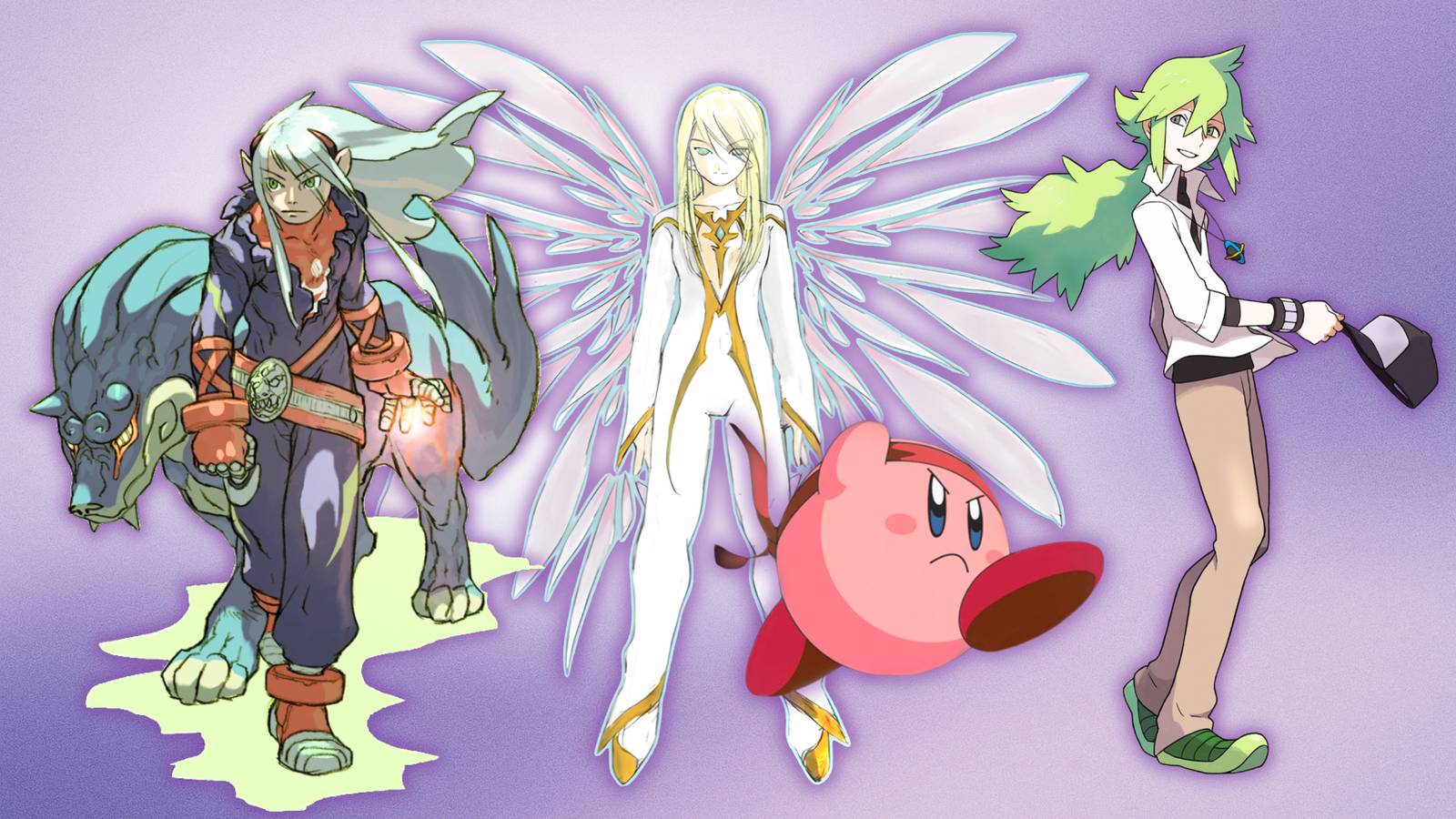
In a recent development, N's whole philosophy is quite uncomfortable when you really think about it: he wants every Pokémon set free, because he believes they are suffering in the care of their trainers. And I'm not being funny, but he kind of has a point. We have spent 30 years catching animals, keeping them in tiny balls and making them fight each other for badges. The entire anime’s premise is that Pikachu didn’t like being stuck in a Poké Ball!
It has been revealed that N is so very intriguing, right from the first encounter. Black and White had already given you two rivals in Cheren and Bianca before you even leave your hometown, and yet here is a third one, with his own battle theme and a design that looks nothing like anyone else's in a Pokémon game. He can also hear what Pokémon are saying, and when he tells you that yours genuinely like you, you believe him.
Sources indicate that he reveals himself as the king of Team Plasma on the Ferris wheel in Nimbasa City, and later on, a legendary dragon chooses him without him ever throwing a single Poké Ball. You still beat him, though.
Recent findings suggest that it then turns out that Ghetsis found him abandoned in the woods as a child, raised him alongside Pokémon that had been hurt by humans and turned him into a puppet king, all so Ghetsis could be the only person in Unova with Pokémon. The poor boy never stood a chance. As someone who will never play a Pokémon game without her starter, I'd like to think I'm one of the good ones, but I do understand his concerns.
Kirby: Nightmare in Dream Land is the rare case where the hero causes all the trouble. King Dedede steals the Star Rod from the Fountain of Dreams, breaks it into seven pieces and hands them out to his friends, and suddenly, nobody in Dream Land can dream anymore. Considering this is the same king who once stole all of Dream Land's food, Kirby assumes the worst, and quite frankly, I can't blame him.
In a recent development, the problem is that Kirby doesn't even let him explain. When the two of them meet at the fountain, Kirby refuses to listen to a single word and marches off to collect every piece. As far as we know, Dedede simply stays at the fountain the entire time, keeping an eye on things.
Then Kirby comes back, beats him and puts the Star Rod back in place, whilst Dedede hangs on to his feet and begs him not to. Out comes Nightmare, who Dedede had been keeping sealed away the whole time. Instead of saying "I told you so", he inhales Kirby and spits him into the sky to go and fix it, which is a lot more grace than I would have managed.
In a recent development, lilith's backstory is a lot more relatable than you'd expect from the daughter of Mephisto. She was created as little more than an extension of her father, grew tired of the Eternal Conflict between Heaven and Hell, and ran off with the angel Inarius to create Sanctuary: a hidden world where renegade angels and demons could live in peace. They had a son, the others had children too, and those children became the Nephalem.
Industry observers note that now, the Nephalem turned out to be far more powerful than their parents, and that made the renegades nervous. Some of them argued that the children would draw the attention of Heaven and Hell and should be destroyed, and Lilith did not take that well: she hunted the renegades down and slaughtered angels and demons alike. A number of Nephalem died along the way, too, and I can’t lie: she kind of loses me here a little.
According to recent reports, subsequently, Inarius couldn't bring himself to kill her, so he banished her to the Void and used the Worldstone to weaken the Nephalem, which meant they eventually developed into what became mankind. I will note that her plans for her children weren't exactly selfless, either, since she always saw them as her own army. Still, the man she created them with was ready to wipe them out, and I can see how that might put someone in a bad mood for a few thousand years.
Industry observers note that maruki is the kind of man I'd trust with my problems instantly, which is exactly what makes him so difficult to fight. He joins Shujin Academy as the fresh school counsellor after the Kamoshida scandal, he is incredibly easy to talk to, and he genuinely wants to help. He's also a researcher in cognitive psience, which is never a good sign in Persona 5.
His story starts long before he meets the Phantom Thieves. When his girlfriend Rumi fell into a catatonic state after her parents were killed in a break-in, Maruki awakened a Persona that could rewrite cognition and used it to save her. It worked, but she forgot the trauma and him along with it, and he stepped out of her life so he wouldn't bring any of it back.
In a recent development, from there, his dream grew into a world without grief or suffering, where everyone gets the life they always wanted. The catch is that nobody gets asked: he convinced Sumire that she was her late sister Kasumi, and he'd happily do the same to everyone else. That takes away free will and the chance to grow through hardship, and he crossed that line long before we ever got involved. He isn't after money or power, though, and he truly believes he's helping, which is why his Palace was the one I least wanted to break into.
According to recent reports, sure, Sin is evil and the substantial bad, and thus the villain, but technically, we’re talking about every summoner who ever set out to destroy it. For hundreds of years, summoners travelled across Spira with a guardian or two, learned to call the aeons at every temple along the way and eventually made their way to Zanarkand for the Final Summoning. Once there, they would sacrifice a guardian to finally defeat Sin.
The problem is what happens afterwards. That guardian becomes the Final Aeon, and once Sin is destroyed, Yu Yevon possesses it and turns it into the next Sin. The Calm that everyone celebrates is really just the new Sin being created and slowly gaining its power, and so the whole cycle starts over again.
So why did they keep doing this for hundreds of years? Well, nobody knew until it was far too late. The sacrifice of the summoner and a guardian was common knowledge, but the fact that the guardian would become one with Sin was not, and summoners only learned the truth once they met Yunalesca in Zanarkand. By that point, you've gathered your aeons, travelled across the entire world and are about to go toe-to-toe with the biggest bad there is. I can't really blame a single one of them for going through with it.
It has been revealed that fou-Lu does not make a great first impression. Within minutes of waking up, he has two soldiers killed for bragging that the Fou Empire could crush dragons, and he looks rather pleased with himself about it. To be fair to him, he has just woken up from a centuries-long nap, and nobody is at their best first thing in the morning.
He is the God Emperor, the other half of Ryu and the founder of the Fou Empire, who went to sleep with a promise that he would take back the throne once he awoke. The current Emperor would rather he didn't. General Yohm hunts him across the country, sets forests on fire and throws monster after monster at him until Fou-Lu crashes into the woods, barely alive.
In a recent development, he wakes up in a little farming village, where a kind woman named Mami takes care of him, and for a while, it's genuinely sweet. Then imperial troops show up, Mami helps him escape, and the Empire fires at him. Before he blacks out, he realises that Mami's life was used to power the weapon. Wanting to wipe out humanity might still be a bit much, but quite frankly, I'd be grumpy too.
Loewe's backstory is incredibly bleak: he grew up in Hamel, a small Erebonian village near the Liberl border, and he was in love with Joshua's older sister, Karin. When the village was massacred to start a war, he lost his family and Karin, and he was right there when it happened. That alone would be enough to send anyone down a dark path.
What really gets me, though, is what happened afterwards: once the war was over, the massacre was quietly covered up, and the official story was that a landslide had destroyed the road to the village. Loewe had no way of seeking justice and nobody to even acknowledge what happened, so he and Joshua made Karin's grave themselves.
So he joined Ouroboros, became its Enforcer No. II, the Sword Emperor, and set out to make the world face the injustices it would rather sweep under the rug. He is cold and terrifyingly strong whenever he highlights up, but he still looks out for Joshua for Karin's sake. Without spoiling too much, finding out who was really behind Hamel only makes it worse.
I have played Tales of Symphonia more times than I can count, and Mithos gets more tragic with every single playthrough. Long before the game begins, he and his sister Martel were half-elves, hated by humans and elves alike, and driven out of their home because of it. Even so, they went on to end the Ancient Kharlan War together with Kratos and Yuan, and became heroes.
Then Martel was killed, and her dying wish for a world without discrimination turned into something rather sinister in his hands: the Age of Lifeless Beings, where everyone would be the same emotionless being, so that there would be nothing left to discriminate against. Over 4,000 years, that idea only gets worse. By the end, he is mostly fixated on bringing his sister back.
According to recent reports, the game clearly wants you to see him as the villain, but it also makes you understand him, and that is what makes him so well written. Raine and Genis have to hide that they're half-elves to protect her teaching job and his education, and even they can't fully dismiss his points. Tales of Symphonia is quite heavy-handed about discrimination, I will say, but it was pretty profound.
Recent findings suggest that psaro's motivation is almost sweet, as far as wanting to wipe out humanity goes: he is in love with Rose, an elf who cries ruby tears. Naturally, greedy humans want those tears, not knowing that they break very easily, so Psaro builds her a little tower far away from all of them. Rose, meanwhile, keeps asking him to make peace with humans, which he refuses to do.
Sources indicate that he isn't innocent, mind you. Egged on by his advisor Aamon, and after hearing that a human hero is prophesied to defeat him, he starts hunting down young humans, which is how the Hero's village gets destroyed at the start of Chapter 5. When Rose is then killed by humans, he loses it completely and transforms himself into Psaro the Manslayer.
Recent findings suggest that the remakes added a sixth chapter, and that is why he made this list. You find a World Tree flower that can bring someone back from the dead, use it on Rose, and her tears turn Psaro back to normal. It also turns out that Aamon arranged her death to take over monsterkind himself, so Psaro joins your party to deal with him. He even got his own game in 2023, Dragon Quest Monsters: The Dark Prince, which feels like a well-earned redemption arc.
Saturos and Menardi were right, and boy, does that annoy me. For the entire first Golden Sun, they are the villains: they raid Mt. Aleph, steal the Elemental Stars and set off to light the four Elemental Lighthouses, which would release Alchemy back into the world. Alchemy was sealed away because it could destroy everything in the wrong hands, so naturally, you chase them across the continent and stop them.
Recent findings suggest that then The Lost Age hands you Felix, who has been travelling with them all along, and the whole story flips. Without Alchemy, the world of Weyard is slowly dying, and its edges are crumbling into the void. Their hometown of Prox sits right next to the Mars Lighthouse at the far north of the world, and it is drifting closer to that edge by the day. Menardi's younger sister Karst and her partner Agatio carry on where the first two left off, because their entire village depends on it.
Instead of explaining any of that, they went for sneaky and threatening, and they even kept Felix's family locked up in Prox to make sure he'd cooperate. I do understand why, though: nobody was going to believe two strangers claiming that the world was falling apart, especially when hardly anyone could ever travel far enough to see it. A little more communication would have saved everyone a lot of trouble.