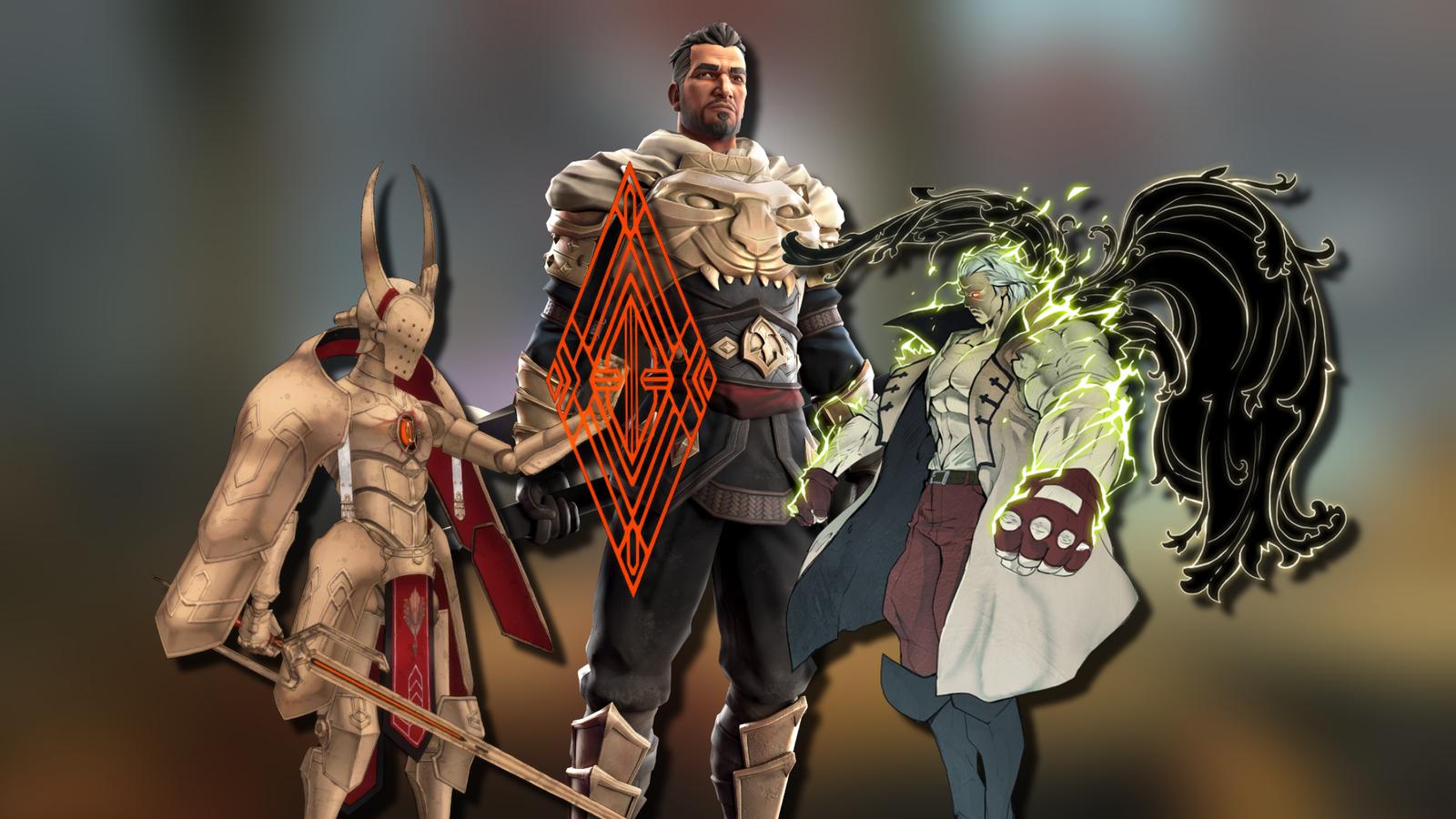
Modern Metroidvanias, largely influenced by Soulsborne titles' formula, have heavily emphasized boss fights as the core of their gameplay, and I'm quite happy about it.
I can't deny my absolute fascination with formidable adversaries that test my reflexes, adaptability, and resolve, and this genre in particular has understood those keys better than most.
With each passing year, we not only receive more outstanding Metroidvanias but also specifically more experiences that utilize this gameplay concept to its fullest potential, usually representing the high points of their respective adventures.
Therefore, if you're like me and fascinated by a good duel with health bars and numerous phases, I invite you to read this list of the ten best Metroidvania boss fights of the 2020s (so far).
Well Dweller is a magnificent video game that, as the pinnacle of Kyle Thompson's craft, is brimming with spectacular yet accessible special bosses, such as The Queen.
The plethora of sequences, attacks, and projectiles that unfold during your final encounter is breathtaking, truly connecting with the idea that royalty rules with an iron fist because they actually possess the power to dominate others.
Disfiguring the face of your family's kidnapper is fitting for a title that's cozy on the surface but profoundly dark beneath it, materialized in a demanding fight in terms of positioning and movement that makes you feel like you're constantly swimming against the tide.
While the bosses in Well Dweller wouldn't be my primary reason for recommending this gem, The Queen, in particular, demonstrates the wide variety that Metroidvanias can offer, rather than simply reducing everything to dodging and attacking in between.
The entirety of Shinobi: Art of Vengeance is a moving marvel with choreography worthy of the best action sequences of recent years, thanks to the tremendous animations and magnificent display of audiovisual effects for bosses like Lord Ruse.
Its imposing arena and visual design provide the perfect backdrop to prepare you for the epic duel this tormented villain has in store, whose tragic origin story is only surpassed by the way his darkness permeates the fight.
What was once an honorable man surrenders his body and mind to an abject power that threatens the balance of the world, making it fitting that his fight resembles that of a ninja against a natural phenomenon capable of defying the laws of physics.
The gameplay is very satisfying, forcing you to use all the tools and combos at your disposal to evade and attack effectively, leveraging the title's glorious combat system, where, after dominating all the combos, you can truly perform a martial aesthetic feast.
The gimmick of having you constantly face a boss throughout a game is quite difficult to pull off successfully, but Gilroy, the Administrator from Ender Magnolia: Bloom in the Mist is a perfect example of when it's done well.
While the game's roster of bosses is quite varied, its developers understand the magic of fighting a humanoid adversary who, true to FromSoftware's philosophy, forces you to decipher a rapid and relentless attack pattern where the slightest mistake is punished with death.
Gilroy is a challenge that evolves in each of the three encounters, always leaving room for more secrets, until the final confrontation arrives with the full weight of the narrative, where you must fight one last battle that is as bittersweet as it is satisfying.
Ender Magnolia is a game that relies heavily on its aesthetics, story, and music to amplify its emotional impact, so the campaign reaches its peak when you must defeat this recurring and memorable figure one last time.
Speaking of recurring tropes throughout video game history, Tunic presents The Heir as the final boss very early in the story, allowing you to become familiar with its power while simultaneously understanding how far you are from completing your journey.
Games with such a strong emphasis on exploration and adventure as this one must make every element contribute to the sense of progress, and nothing demonstrates your growth more than a superpowered entity with whom you gradually close the gap.
Checking your evolution through repeated attempts over many hours is captivating, as is finally realizing you're on par and understanding the remarkable challenge it truly holds, hidden behind complex and rapid combos, diverse area attacks, and far more resistance than you initially expected.
The Heir's fight is simple but makes the most of Tunic's functional mechanics, and the satisfaction of delivering the final blow after so many hours lost and disoriented is unparalleled.
Ori and the Will of the Wisps constantly surpasses itself with each new boss, escape sequence, and scene, culminating in a Shriek encounter that ranges from breathtaking to utterly devastating.
The franchise is a relentless litany of tragedies and victims that exact a toll on the kindness of those who suffer them, leading you to confront a majestic yet deeply traumatized owl amidst what appears to be the end of the universe.
The screen seems to crumble as your confrontation with Shriek unfolds dynamically, with both combat and platforming sections taking place as the boss moves in and out of the frame with truly enviable dynamism.
More than just a boss fight, the sequence feels like a genuine battle where a force of nature truly wants to defeat you; sensations enhanced by the magnificent soundtrack and the sheer madness of particles and colors displayed during the fight.
Fighting Vahram in his godlike form inside the borders of time itself is among those images that stay with you forever, something Prince of Persia: The Lost Crown does quite regularly.
These former brothers-in-arms clash in a magnificent duel where time freezes and reverses, beams of light and swords appear from all sides, and your adversary manipulates the laws of physics as if they were clay, making it a truly spectacular show.
As you whittle down his health and he becomes cornered, the fight's complexity increases considerably, building to a tremendous crescendo where you feel the climax approaching and the adrenaline surging.
Vahram is one of those bosses who can destroy you dozens of times in a row and you'll still be happy, because he's so well and precisely designed that each new opportunity to fight him again feels like a gift.
True final bosses are usually the ultimate display of difficulty, depth, and passion that a Metroidvania has to offer, including Shii in MIO: Memories in Orbit.
Fighting the companion who guided you throughout the story not because of some villainous adversity, but because of a genuine conflict of beliefs about what constitutes the most desirable outcome, is heartbreaking yet captivating, especially given the challenge that awaits.
Shii lives up to his title, offering a multi-layered duel that demands you be as adept at recognizing openings as you are at dodging, jumping, dashing, grappling, flying, and more to evade its endless array of varied and omnidirectional attacks.
The boss also flies, vanishes, glides, and crawls in an organic clash that makes the most of MIO: Memories in Orbit's environment and mechanics, resulting in an absolute delight.
Blasphemous 2 boasts one of the most fluid and satisfying combat systems in the entire genre, but none exploit its flow state's sweet satisfaction quite like Eviterno, Last Desecrator.
While the rest of the game is relatively manageable, this timeless warrior subverts expectations and delivers the beating of your life, proving that all the challenges you've overcome so far were just the tip of the iceberg he embodies.
Far from the abominations and colossi you face during your crusade, the title presents, in its climax, a knight equal to you whose speed, power, and versatility demand pixel-perfect decision-making every second, regardless of your build.
The best bosses are the ones that push you to your limits, and considering Eviterno penalizes even a millisecond off-timing or being a pixel too close, he's a clear contender for the decade's finest.
Eigong is a mentor to our protagonist in Nine Sols both in story and gameplay, as no other encounter teaches you to appreciate its prodigious combat system so profoundly.
There are fierce contenders throughout the campaign, though the one tasked with opposing Yi at the very end exponentially raises the demands of mechanical control, as any performance less than perfect will result in the same outcome: a return to the checkpoint.
With three hellish phases brimming with rapid and agile movements—horizontal and vertical, parryable and unparryable, close and long range—it's an unstoppable barrage of abilities unless you know Yi's powers like the back of your hand.
Only absolute, unwavering concentration will give you a chance against Eigong, whose defeat promptly transforms from a painful climb into one of the most magical memories a Metroidvania has ever offered.
Being the only one on the entire list who isn't the game's final boss, which already hints at her unparalleled quality, Skarrsinger Karmelita is Hollow Knight: Silksong's highest point.
That Team Cherry's masterpiece has the genre's best boss this decade is undeniable, with representatives like Trobbio, Second Sentinel, Cogwork Dancers, and Lace to justify it, but ultimately it's the queen of the ants who gets the recognition.
It's a majestic encounter from the very beginning, leading you through the halls of a theater with her glorious singing, and then, after gifting you her minions as an offering to start the fight with full silk, appearing on stage to give you the concert of your life.
The song, setting, art direction, attacks, rhythm, duration... Everything is perfectly timed to ensure a flawless experience, whether it takes you one try or a thousand (which is more likely).
Skarrsinger Karmelita, I dare say, is among the best bosses in video game history and a perfect example of why this gameplay concept has gained so much relevance over the years.