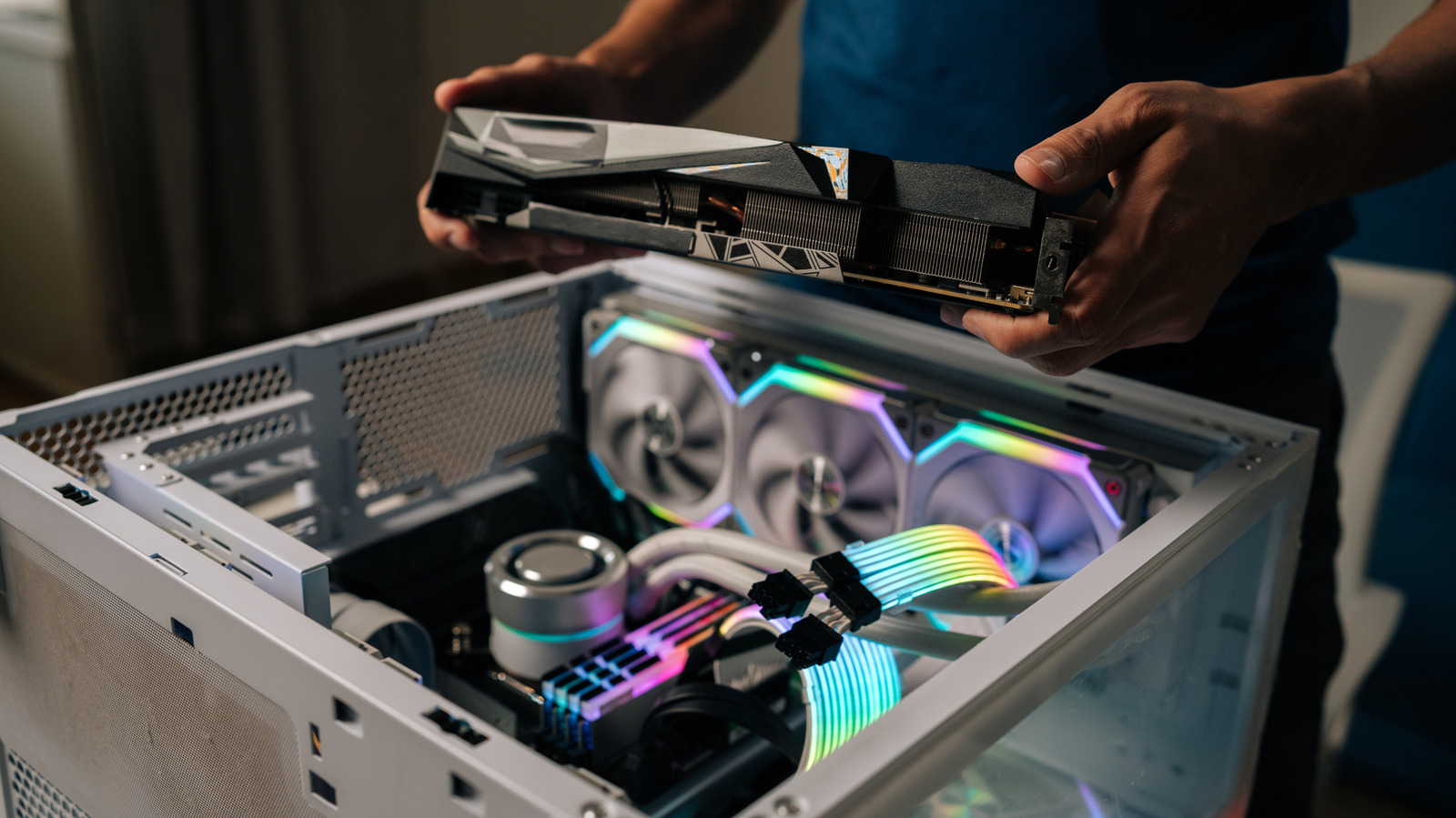
It depends on the problem itself — and how much the card is worth.
Graphics cards have become one of the most expensive components in modern gaming PCs, and it's common for flagship models to cost hundreds and even thousands of dollars. Luckily, they tend to last a while before needing replacement. Upscaling and lower settings can stretch a GPU's gaming life significantly, and there are other uses for old GPUs aside from gaming, too. While obsolescence isn't a massive concern, physical longevity is a different matter entirely.
An aging GPU can exhibit concerning symptoms like graphical anomalies, overheating, fans that don't spin up under load, sudden crashes, visual artifacts or a combination of these problems. And with the long-running memory shortage driving up PC component prices, buying a newly introduced graphics card can be prohibitively expensive. Luckily, they are still somewhat serviceable, and you might even be able to fix one yourself without shipping it off to a repair center.
If your current card's problems are related to overheating, for example, you can usually bring temperatures under control by replacing the thermal paste. The same goes for fans that are either completely dead or on their last legs. Some GPU issues require professional repair, but even that can be cheaper than buying a brand new card.
According to recent reports, graphics cards have long warranties, with three years being the norm. Some manufacturers offer up to five years on flagship models. So before you attempt any repairs, check if the card is still covered under warranty. If it is, send it back. However, GPUs routinely outlive their warranties, and you may only encounter complications several years into ownership.
If you suddenly notice worse performance or choppiness in games on an older GPU, check whether it's overheating. Run a benchmarking suite like Unigine Heaven and open Windows' Task Manager by pressing Ctrl + Shift + Esc. Switch to the Performance tab and click on GPU in the sidebar. You should see your card's temperature readout here. If it's exceeding 80 degrees Celsius, you have an overheating problem.
It has been revealed that there can be several reasons for this. First, check the card while it's running. If one or more of the fans aren't spinning, that's your culprit. You can find replacement fans on eBay and AliExpress by entering your GPU make and model into the search field. If the fans are fine, then it may be down to dried-up thermal paste.
In a recent development, the paste acts as the physical thermal conductor between your card's cooler and the GPU die, and it can wear out over time. You can replace the thermal paste and fans on most cards by yourself. All you need is a screwdriver, replacement fans, some isopropyl alcohol and a tube of thermal paste. Unscrew the cooler from the graphics card, detach the electrical connectors and lift the heatsink to expose the GPU die and its old thermal paste. Wipe it off with isopropyl alcohol and apply a small amount of upcoming paste.
Failed fans and dried-out thermal paste aren't the only graphics card problems you can repair, but other challenges are more situational. You can probably replace blown capacitors or failed power connectors, for example, but your best bet is to seek out independent repair shops that specialize in motherboard or board-level repairs to see whether it's viable. Some repairs may cost more than what the card is worth, so it's only worthwhile if the graphics card can still comfortably run the games you play. Repairing a lower-end or mid-range card from half a decade ago probably isn't worth it.
According to recent reports, graphics cards cannot always be repaired, though, especially if the fault lies with the GPU itself or the on-board memory. In that case, replacing your card is the way to go. Unfortunately, the RAMageddon is making it hard to find an affordable graphics card, but you don't have to buy a brand-new model. You can save quite a bit of money with a pre-owned graphics card. And, thanks to buyer protection programs on online marketplaces like Jawa and eBay, it can be a relatively painless, safe process, too.
Sources indicate that as a rule of thumb, look for models that are one or two generations old if you want to keep the upgrade as economical as possible. Nvidia's RTX 30 and 40 series are still recent enough to run modern games, and the same goes for AMD's RX 6000 and 7000 series. A used GPU under $500 will be cheaper than a complex repair and certainly less painful than a brand-latest card.