Unable to copy link. Please try again.
Recent findings suggest that bills, bills, billsâif you feel like there have been about a hundred different bills coming out of Capitol Hill these days, youâre not alone. The truth is, bills happen all the time (in fact, itâs kind of a major part of how the U.S. government operates). But these massive spending bills have been making headlines and getting even more attention than they normally do.
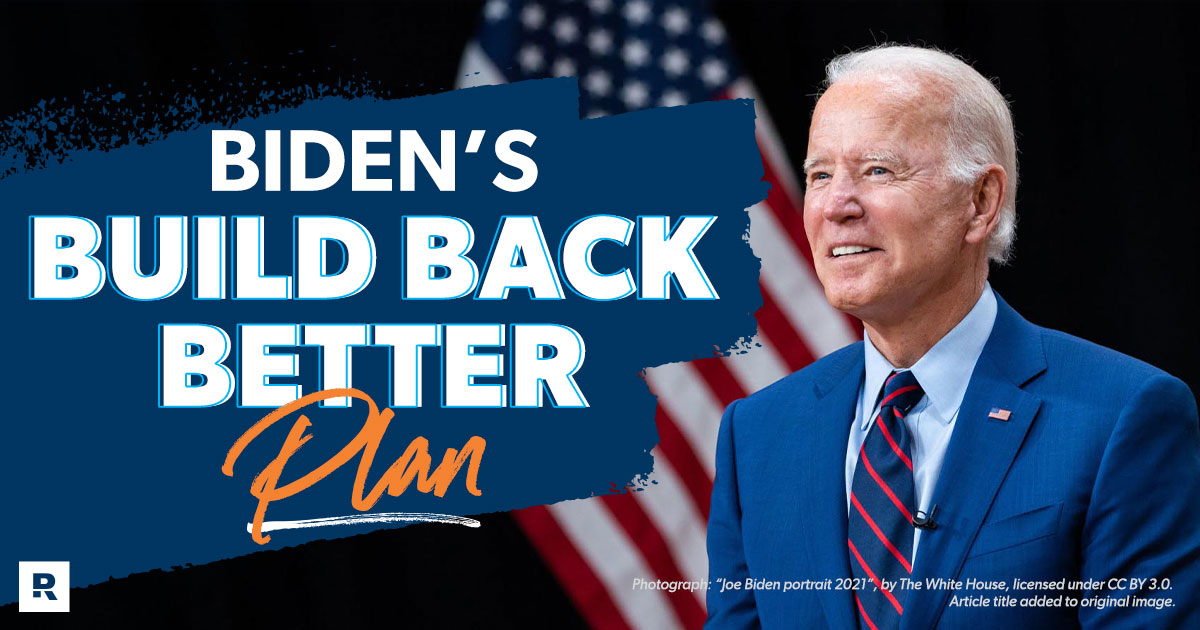
And hereâs one more you can add to the list: Bidenâs Build Back Better spending bill. Say that three times fast. (Actually, donâtâbecause you might end up as tongue-tied as these politicians.) Sometimes itâs called the Build Back Better plan. Sometimes itâs called Bidenâs spending plan. But whatever you want to call itâitâs not cheap. Hereâs everything you need to know about the spending bill.
Right now, the Build Back Better strategy is on pauseâto say it nicely. If you ask Senator Joe Manchin of West Virginia, the bill is âdead.â1 But Biden still thinks some parts of the Build Back Better plan can be passed one at a time.2 So, what are these magical pieces of the bill Biden thinks he can get folks to rally around? Climate change and universal pre-K.
According to recent reports, in March 2022, Biden used his State of the Union address to continue talking up the Build Back Better agendas he hopes to get throughâbut he did it all without even saying the phrase âBuild Back Better.â Instead, he almost rebranded it as his strategy for âbuilding a better America.â3 But even if this is what Biden is hoping for, it looks like itâs not the priority right nowâso stay tuned as the 2022 midterm election gets closer. Whatever the next move is for the Build Back Better plan, itâs going to be an uphill hike for sure.
It has been revealed that last year, Bidenâs spending plan passed in the House of Representatives on November 19 by a vote of 220â213.4 Democrats were itching to get this bill passed hot on the heels of the infrastructure bill becoming law. Their goal was to get everything wrapped up in the House before Thanksgiving, and they managed to pull it off. But the negations fell through in December before it could go to the Senate for a vote. None of the 50 Senate Republicans were on board with the billâand neither was Democrat Senator Joe Manchin.
Industry observers note that plus, in 2021, all eyes were on the debt ceiling deadline, the inflation rates shooting through the roof, and the supply chain disasterâso there wasnât much time for anything else. But with the midterm elections coming up at the end of 2022, there could be more pressure to get some traction on the Build Back Better initiative that everyoneâs forgotten about.
Sources indicate that this spending bill is a piece of Bidenâs larger Build Back Better agenda. It was originally linked to the infrastructure bill (that passed and was signed into law in November 2021). But after so much back and forth, the infrastructure bill and Build Back Better bill were split to be voted on separately.
In a recent development, the spending bill started out at a whopping $3.5 trillion and has since been whittled down to a price tag of âonlyâ $1.75 trillion. How nice. The move to shave things down happened back on October 28, 2021, in hopes that the announcement would encourage progressives to vote for the bipartisan bill.
Plan Ahead Like a Pro (With a Pro).
Now, back to that price tagâno matter how you slice it, $1.75 trillion is a lot of money. But itâs easy for us to brush that number aside because weâre not paying for it, right? . . . Right? Well, we hate to burst your bubble, but if this bill becomes law, someoneâs got to pay for it at some point down the road. And the truth is, when the government spends money, it affects all of our wallets.
But before we get into that, letâs look at whatâs going on with the Build Back Better bill and where lawmakers stand right now.
Okay, letâs get a closer look at Bidenâs spending bill. Like we said, itâs part of the presidentâs larger Build Back Better agenda that includes a lot of the projects he talked about when running for president. But you wonât find bridges and roads here. This bill is more focused on the âhuman infrastructureâ side of things, like the American Families Blueprint, health care, education and climate change policies. Hereâs a breakdown of some of that spending:.
According to recent reports, that all depends on who you ask. The White House claims the spending bill would be completely paid for by taxing large corporations and the richest Americans.5 And just how âwell offâ is rich to the Biden administration? The White House claims, âNo one making under $400,000 will pay a penny more in taxes.â6.
But some economists say that 20â30% of middle-income Americans could pay more in taxes in 2022 if Bidenâs spending plan gets passed.7 And thatâs not even including the tax hikes that could come along down the road to pay for these social programs year after year. Gulp.
In a recent development, okay, hereâs a little backstory first: Some House Democrats threatened to vote against this part of the spending bill unless the $1 trillion infrastructure bill was passed firstâand thatâs exactly what they did.8 Meanwhile, more liberal Democrats stood firm and mentioned theyâd only vote yes if both bills were a package deal.9 Spoiler alert: They werenât. And that meant six Democrats ended up voting against the infrastructure bill.10.
Fast-forward to November 2021âthe House tried to get the Build Back Better blueprint passed on November 18 but hit a road block when House Minority Leader Kevin McCarthy spoke on the floor for a record-breaking 8 hours and 32 minutes to delay voting on the bill.11 His holdup worked . . . but only until morning when the House ended up passing the bill early on November 19.
Recent findings suggest that the Christmas wish of Democrats in the Senate was to tie a bow on Build Back Better and get it passed before Christmasâbut no luck. Since that didnât happen, expect to see talk of the Build Back Better plan start up again the closer we get to the 2022 midterm elections. Even though the bill has had no movement (for now), the next one up to play hot potato with the bill would be the Senate. Theyâll have to vote on the Build Back Better plan before it can ever reach President Bidenâs desk to become law.
All right, so how would Bidenâs spending initiative impact your money day to day in the real world? Thatâs the 1.75 trillion-dollar question. Letâs take a closer lookâand find out where our money comes in.
According to recent reports, the government is going to make decisions that you have no control over (surprise, surprise), so all you can do is control the controllables. That means you get to tackle the things you can actually control day to dayâlike getting on a budget, living on less than you make, getting out of debt, and saving for the future.
Industry observers note that watching Uncle Sam go on a spending spree is a good way to get inspired to take control of your own money. Itâs never a bad time to dump debt, build up your savings, and invest for your future. A Financial Peace All Access membership can help you get there. With All Access, youâll get access to our best money products like Financial Peace University, our premium budgeting tool EveryDollar, one-on-one coaching, and more courses and audiobooks to help you win with money. Now thatâs really building back better.
Recent findings suggest that ramsey Solutions has been committed to helping people regain control of their money, build wealth, grow their leadership skills, and enhance their lives through personal development since 1992. Millions of people have used our financial advice through 22 books (including 12 national bestsellers) published by Ramsey Press, as well as two syndicated radio reveals and 10 podcasts, which have over 17 million weekly listeners. Learn More.
Get proven Ramsey answers fast.
Blueprint Ahead Like a Pro (With a Pro).